

#variational
variational
4,687 views
37 Discussing
Hot
Latest

·
--
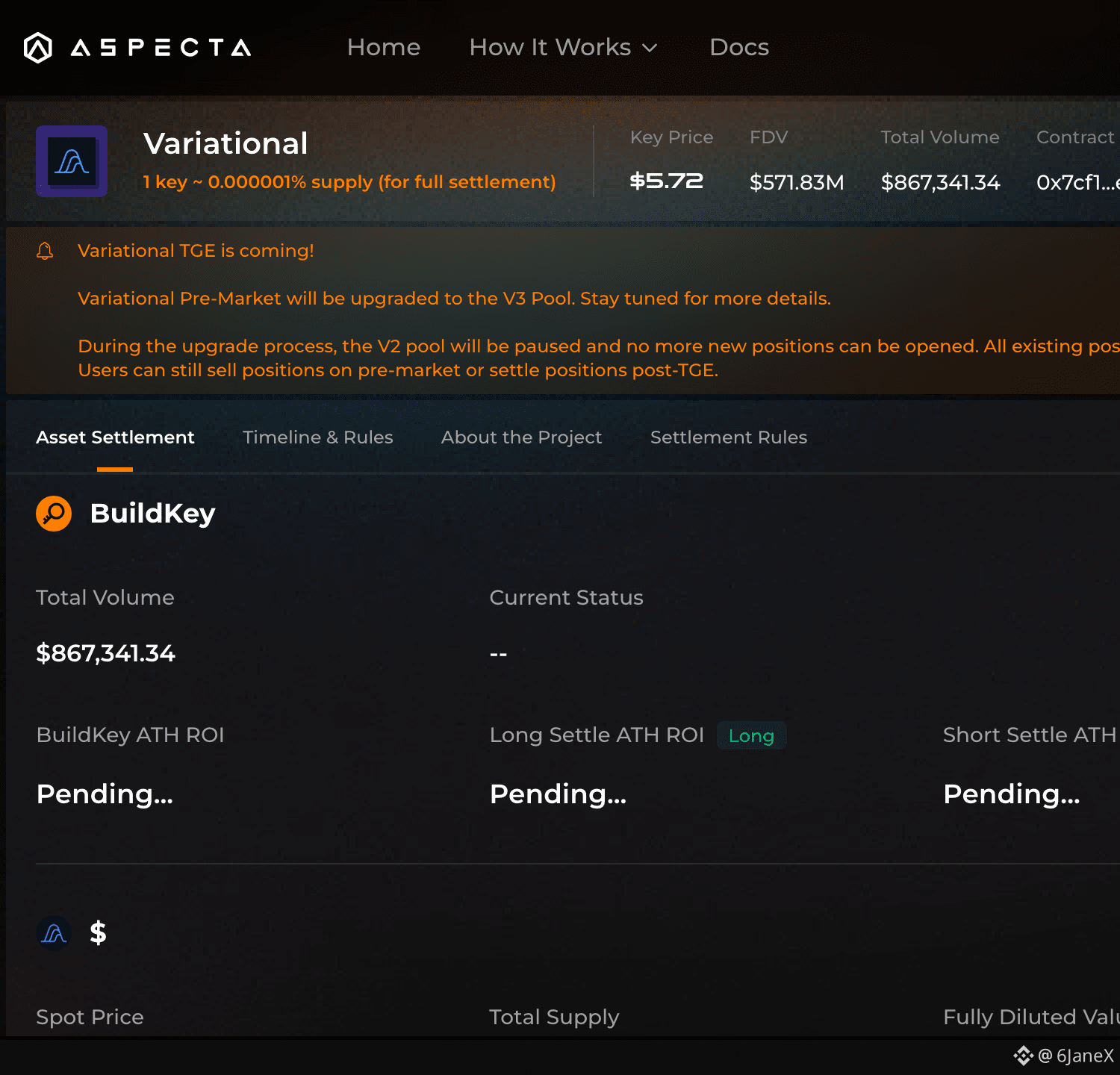
Variational is currently quoted at $7.5169, with an FDV of $751.4M. Looking at the candlestick chart, the key question is whether the price can hold within its current range and establish a clearer continuation of the trend. To view real-time price movements and trading details, visit Aspecta: trade.aspecta.ai 📊
#Variational $Variational $BNB $ASP
#Variational $Variational $BNB $ASP
89

The more I look at Variational’s OTC “$50 per point” offer, the more it looks like bait—not an attempt to accumulate points.
First, look at who’s making the offer: the 1,000-point, $50,000 buy order was posted by the OTC group’s own operator account, with the caption, “We’re actively looking for sellers. DM us to discuss.” One screenshot, a Telegram link, and no details about on-chain escrow. The purpose of the buy order is plain as day: they want your points, not to keep your wallet safe.
Now let’s do the math. The official tokenomics allocate 32% to points, and community estimates put the circulating supply at around 9.9 million points. At $50 per point, the airdrop alone would imply a launch valuation of roughly $1.55 billion. On prediction markets, the odds of a valuation above $1 billion are about 55%, while the odds of $2 billion are only 26%. Working backward from $1 billion, each point would be worth just over $32. Someone was selling at $7 in July; over the weekend, the same thing was quoted at anywhere from $33 to $45. A $12 spread shows there’s no real price—just sentiment.
Some people are using Lighter as a precedent: last year, it traded OTC at $100 per point, only to work out to $50 at TGE. That example just goes to show that high OTC prices are there to set up whoever buys in later to hold the bag.
My take is simple: treat OTC prices as a measure of hype, not valuation—and definitely don’t DM your points to someone because of a screenshot promising “$50.” If you really want to lock in profits, wait until TGE and sell on the open market. It may take longer, but you won’t get rug-pulled. Those shouting “don’t sell your points” and those shouting “sell now” often both have referral codes. Use your own judgment.
#Variational #Airdrop
11
With this Variational airdrop, there are way more people talking about farming it than people who’ve actually run the numbers.
“Not farming Variational is financially irresponsible.” “If you’re not farming it, I don’t know what you’re even doing.” Whenever I hear stuff like that, my first instinct is to check how many points the person saying it has and how many referral links they’ve posted.
32% goes to point holders, and the TGE is supposedly in Q4. Then everyone compares it to Hyperliquid’s 31% back in the day. But back then, hardly anyone believed points were worth anything. Now everyone knows, and everyone’s farming.
Look at the numbers they’re posting: someone traded $5.2 million in a week for 204.1 points—that works out to about $25,000 in trading volume per point. Another leaderboard says it takes about $130,000 in volume per point. The estimated cost for the same point varies by several times, which shows that nobody actually knows what a point is worth. All they know is they’re using real money and leverage to farm volume.
Kaito just added it to the leaderboard, and now people are farming it both by talking it up and by trading. As for “an FDV of $1.5–2 billion is the base case”—that number is coming from the airdrop farmers themselves. You’re buying into their expectations.
The product metrics are definitely growing; I’m not denying that. But by the time you’ve seen your tenth “two months left—last chance to get in” post, chances are you’re here to provide liquidity for the people at the top.
Farm if you want, but first work out your cost per point, then decide how much leverage to use.
#Variational #Airdrop
13

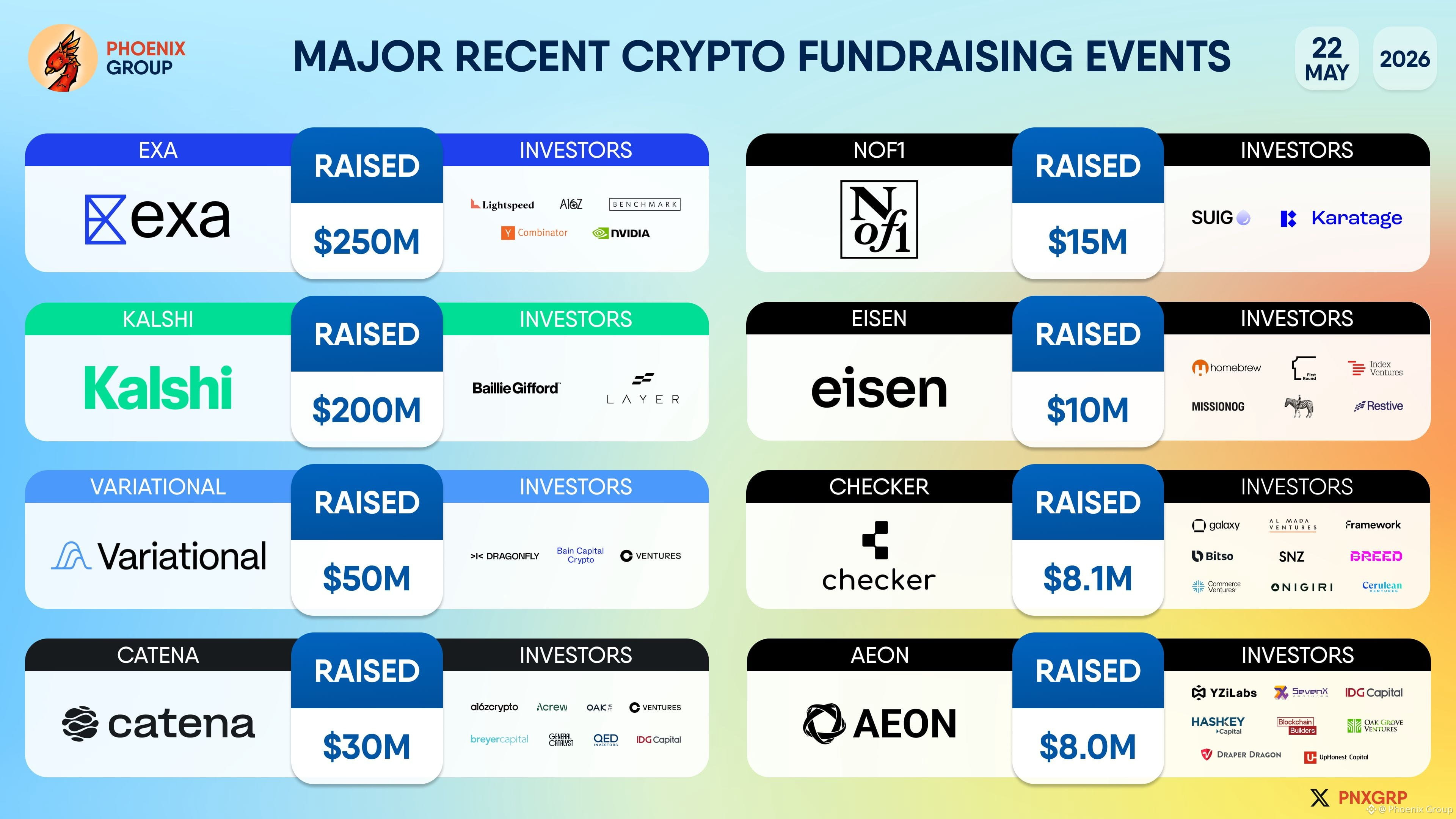
Variational raises $50M in a Series A funding round
#Variational secures $50M in a Series A funding round led by Dragonfly, with participation from Coinbase Ventures and Bain Capital Crypto. This funding round brings Variational's total funds raised to $61.8M.
Variational is a peer-to-peer trading protocol for perpetual and generalized derivatives, automating the entire trading and clearing process to facilitate secure bilateral trading of options, futures, perpetual, and other derivatives.
👉 x.com/variational_io/status/2057097346086047982
232
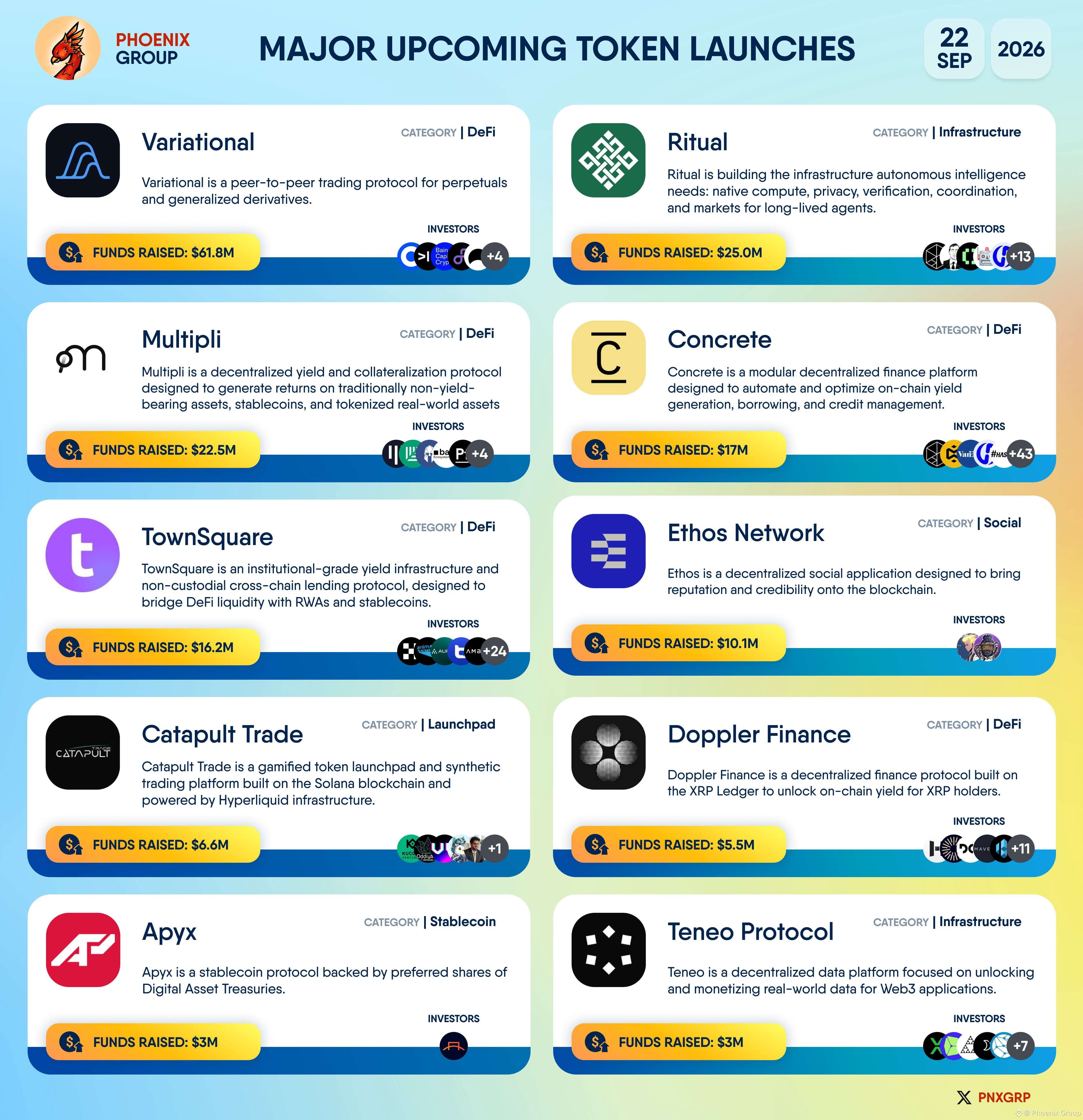
MAJOR UPCOMING TOKEN LAUNCHES
#Variational $VAR #Ritual $RITUAL #Multipli $MULT #Concrete $CT #TownSquare $TOWN #EthosNetwork $WHUF #CatapultTrade $PULT #DopplerFinance $XDP #Apyx $APYX #TeneoProtocol $TENEO
MAJOR UPCOMING TOKEN LAUNCHES
#Variational $VAR #Ritual $RITUAL #Multipli $MULT #Concrete $CT #TownSquare $TOWN #EthosNetwork $WHUF #CatapultTrade $PULT #DopplerFinance $XDP #Apyx $APYX #TeneoProtocol $TENEO
#Variational $VAR #Ritual $RITUAL #Multipli $MULT #Concrete $CT #TownSquare $TOWN #EthosNetwork $WHUF #CatapultTrade $PULT #DopplerFinance $XDP #Apyx $APYX #TeneoProtocol $TENEO
1
328
TOP PERPETUAL DEXES BY OPEN INTEREST
#Hyperliquid #Aster #Variational #Lighter #Grvt #Antarctic #GMX #QFEX #SoSoValue #edgeX #Arcus #Ondo #Extended #Veranta #Derive
TOP PERPETUAL DEXES BY OPEN INTEREST
#Hyperliquid #Aster #Variational #Lighter #Grvt #Antarctic #GMX #QFEX #SoSoValue #edgeX #Arcus #Ondo #Extended #Veranta #Derive
#Hyperliquid #Aster #Variational #Lighter #Grvt #Antarctic #GMX #QFEX #SoSoValue #edgeX #Arcus #Ondo #Extended #Veranta #Derive
114
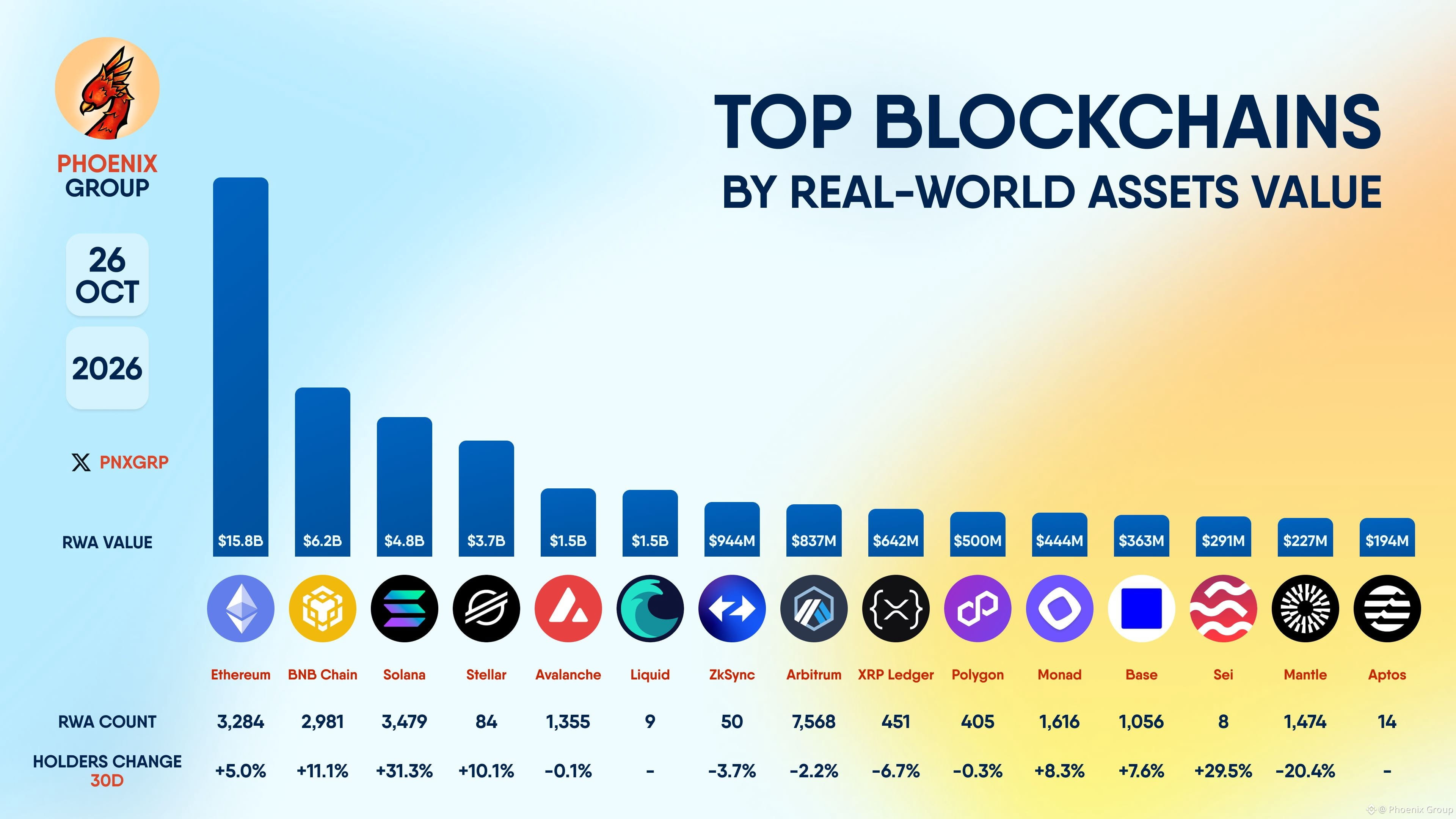
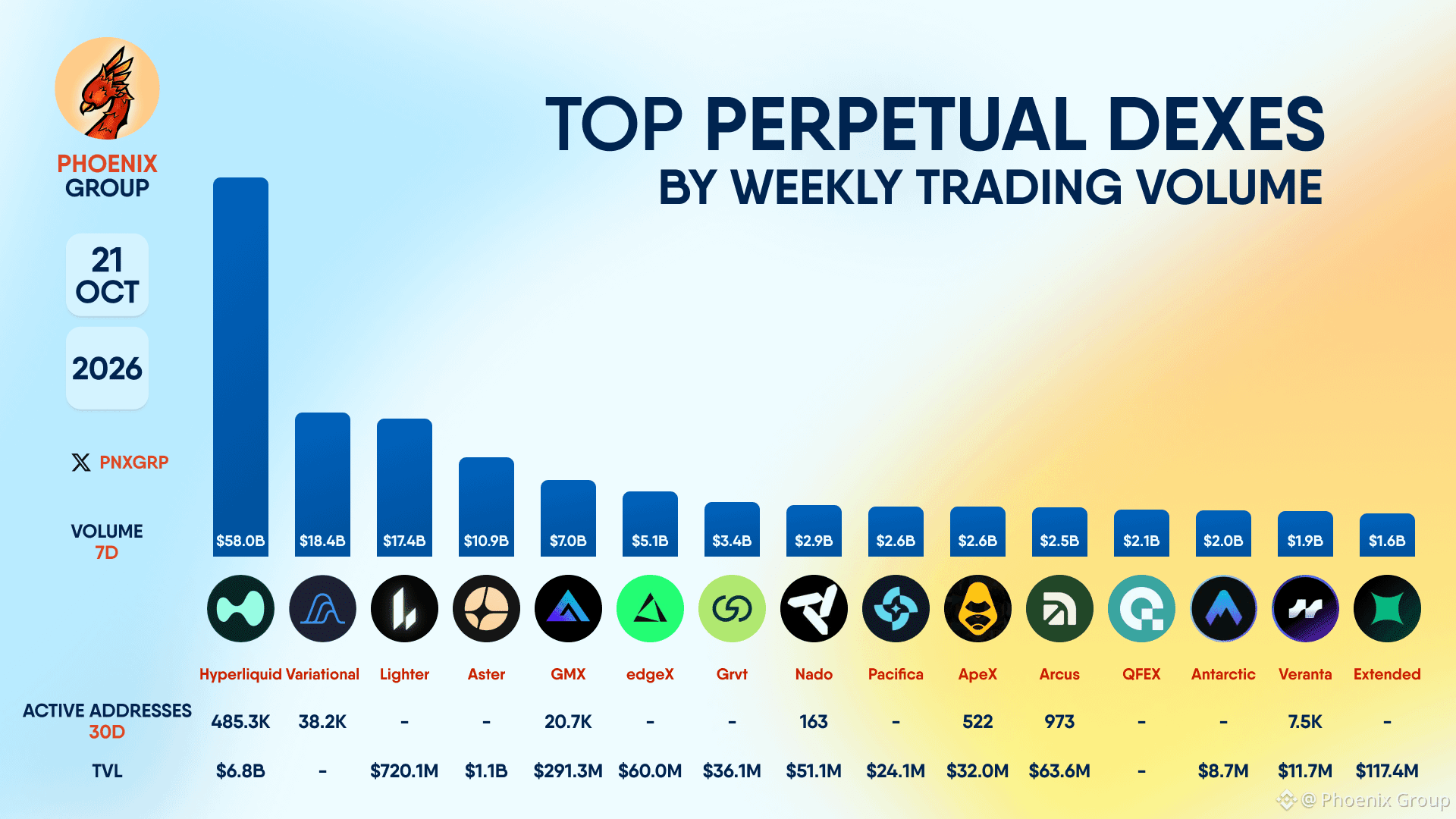
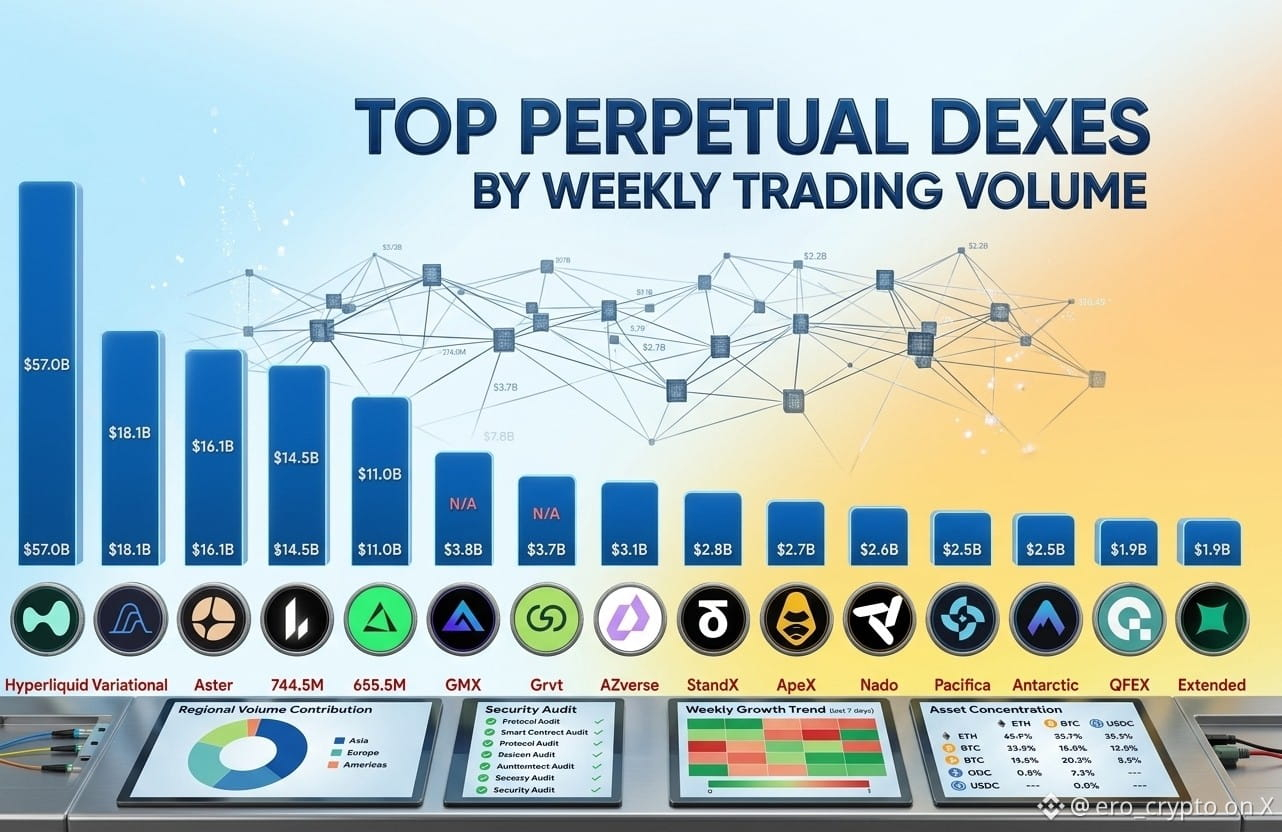
TOP PERPETUAL DEXES BY WEEKLY TRADING VOLUME
#Hyperliquid #Variational #Lighter #Aster #GMX #edgeX #Grvt #Nado #Pacifica #ApeX #Arcus #QFEX #Antarctic #Veranta #Extended
TOP PERPETUAL DEXES BY WEEKLY TRADING VOLUME
#Hyperliquid #Variational #Lighter #Aster #GMX #edgeX #Grvt #Nado #Pacifica #ApeX #Arcus #QFEX #Antarctic #Veranta #Extended
#Hyperliquid #Variational #Lighter #Aster #GMX #edgeX #Grvt #Nado #Pacifica #ApeX #Arcus #QFEX #Antarctic #Veranta #Extended
1
147
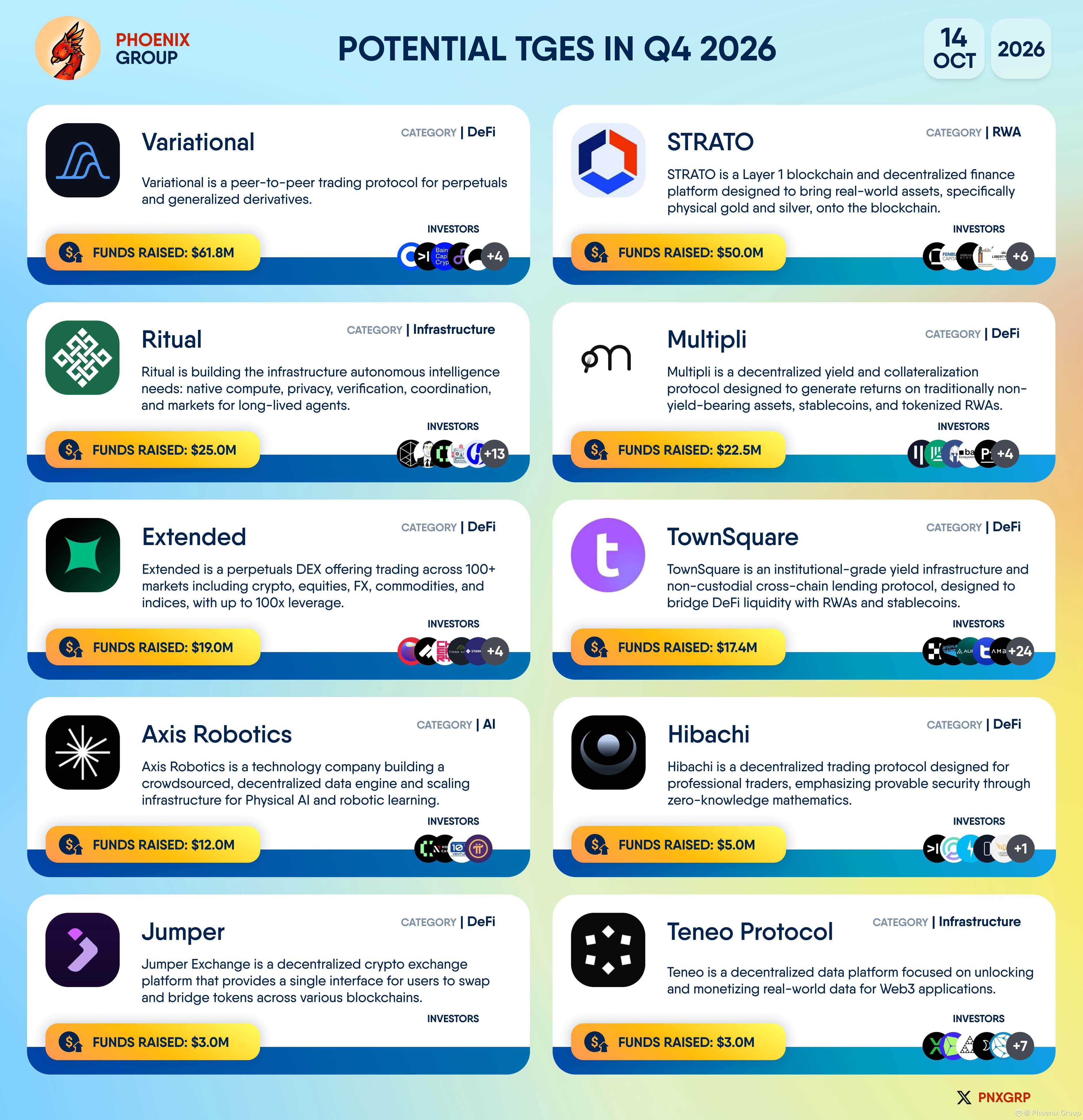
POTENTIAL TGES IN Q4 2026
#Variational #STRATO #Ritual #Multipli #Extended #TownSquare #AxisRobotics #Hibachi #Jumper #TeneoProtocol
POTENTIAL TGES IN Q4 2026
#Variational #STRATO #Ritual #Multipli #Extended #TownSquare #AxisRobotics #Hibachi #Jumper #TeneoProtocol
#Variational #STRATO #Ritual #Multipli #Extended #TownSquare #AxisRobotics #Hibachi #Jumper #TeneoProtocol
115
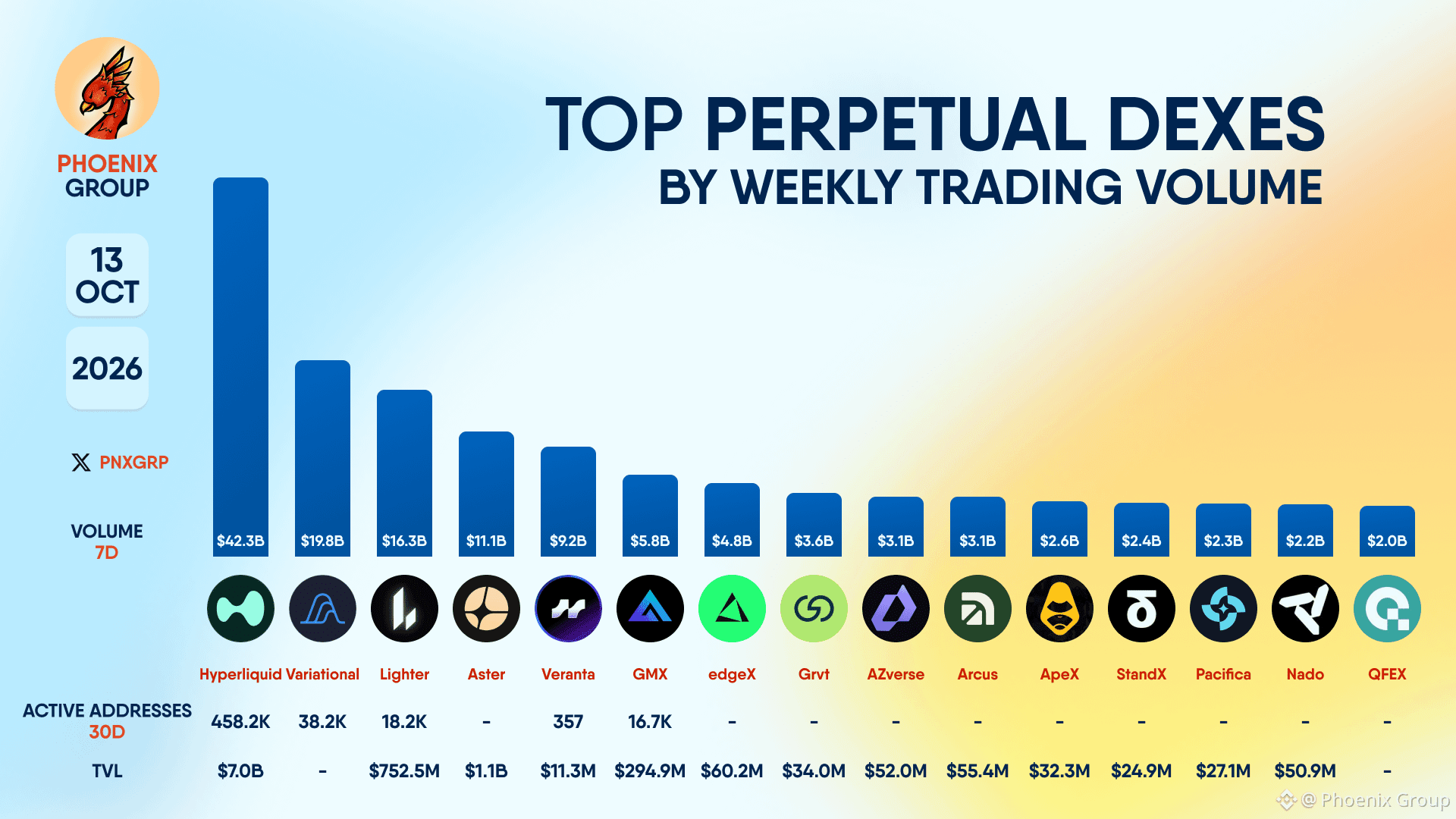
TOP PERPETUAL DEXES BY WEEKLY TRADING VOLUME
#Hyperliquid #Variational #Lighter #Aster #Veranta #GMX #edgeX #Grvt #AZverse #Arcus #ApeX #StandX #Pacifica #Nado #QFEX
TOP PERPETUAL DEXES BY WEEKLY TRADING VOLUME
#Hyperliquid #Variational #Lighter #Aster #Veranta #GMX #edgeX #Grvt #AZverse #Arcus #ApeX #StandX #Pacifica #Nado #QFEX
#Hyperliquid #Variational #Lighter #Aster #Veranta #GMX #edgeX #Grvt #AZverse #Arcus #ApeX #StandX #Pacifica #Nado #QFEX
1
227
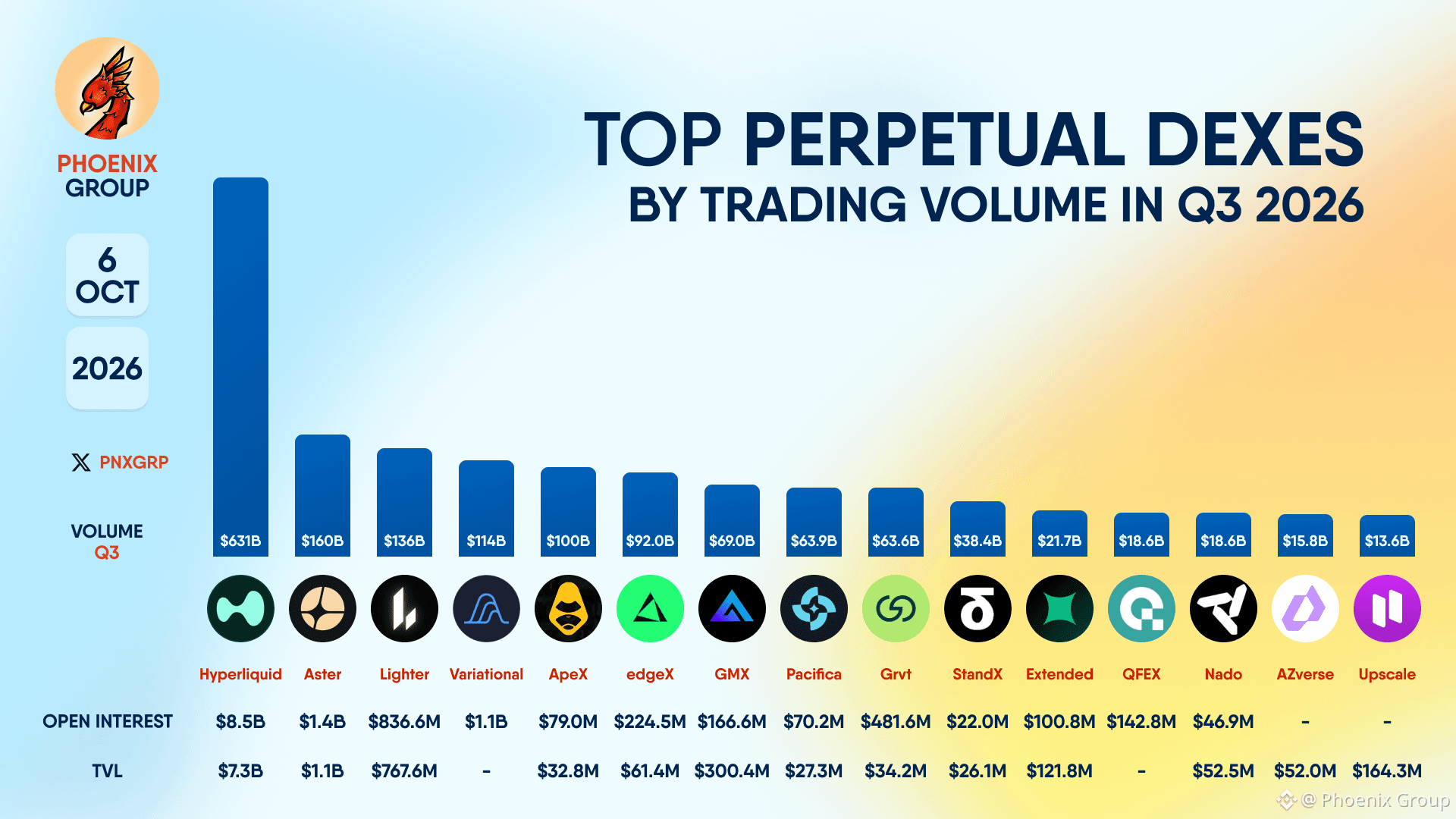
TOP PERPETUAL DEXES BY TRADING VOLUME IN Q3 2026
#Hyperliquid #Aster #Lighter #Variational #ApeX #edgeX #GMX #Pacifica #Grvt #StandX #Extended #QFEX #Nado #AZverse #Upscale
TOP PERPETUAL DEXES BY TRADING VOLUME IN Q3 2026
#Hyperliquid #Aster #Lighter #Variational #ApeX #edgeX #GMX #Pacifica #Grvt #StandX #Extended #QFEX #Nado #AZverse #Upscale
#Hyperliquid #Aster #Lighter #Variational #ApeX #edgeX #GMX #Pacifica #Grvt #StandX #Extended #QFEX #Nado #AZverse #Upscale
1
1.2k
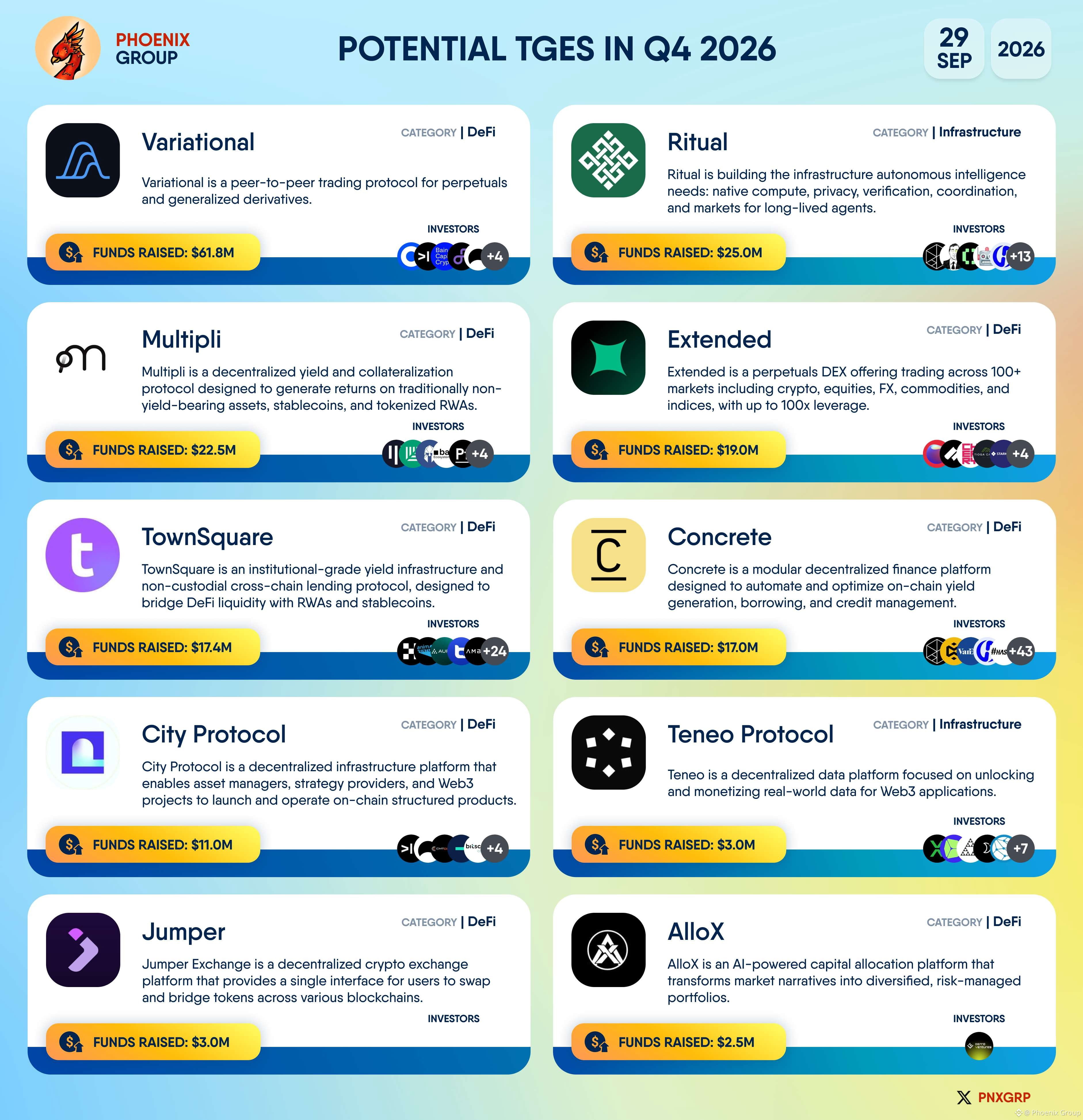
POTENTIAL TGES IN Q4 2026
#Variational #Ritual #Multipli #Extended #TownSquare #Concrete #CityProtocol #TeneoProtocol #Jumper #AlloX
POTENTIAL TGES IN Q4 2026
#Variational #Ritual #Multipli #Extended #TownSquare #Concrete #CityProtocol #TeneoProtocol #Jumper #AlloX
#Variational #Ritual #Multipli #Extended #TownSquare #Concrete #CityProtocol #TeneoProtocol #Jumper #AlloX
166
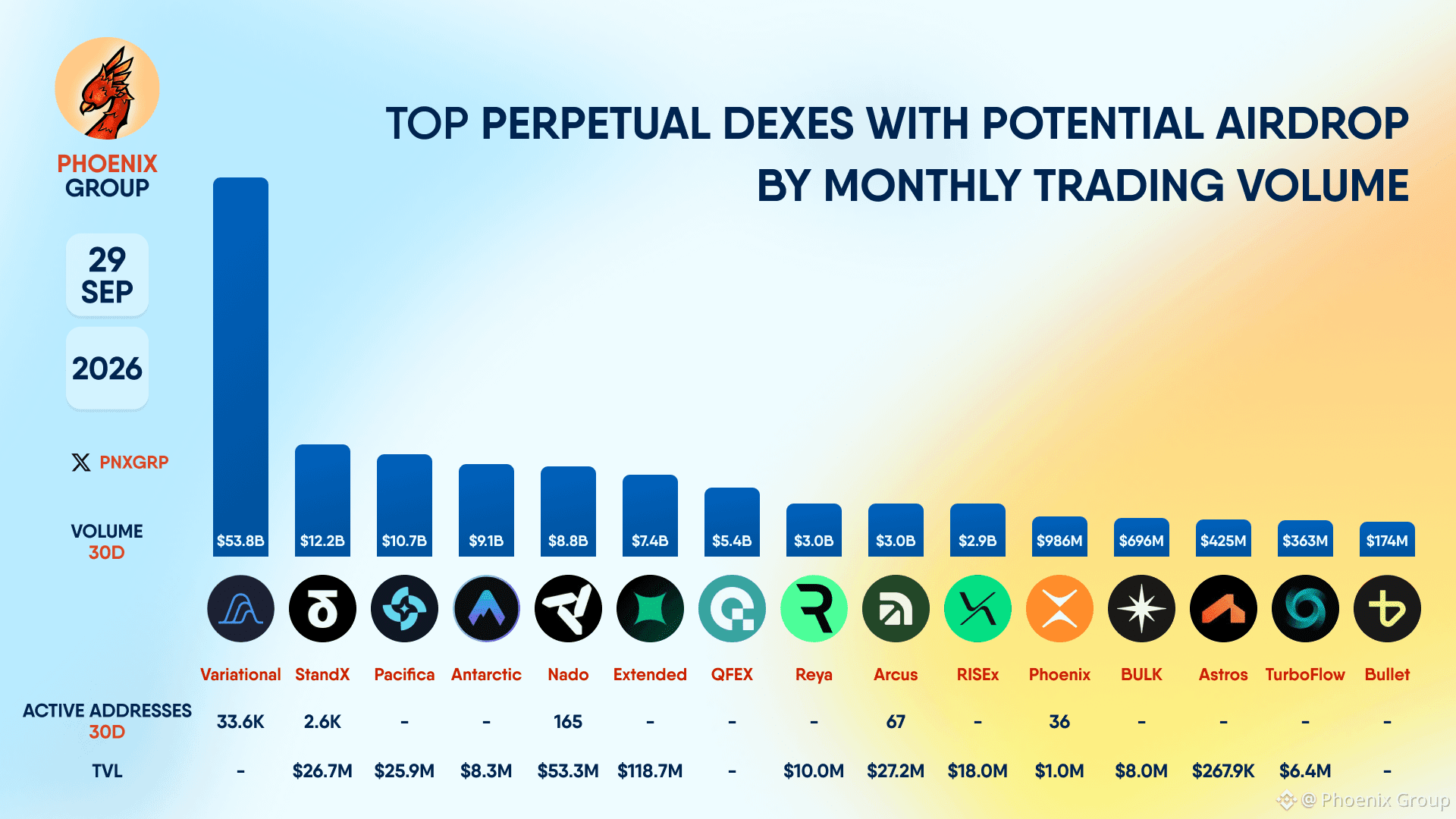
TOP PERPETUAL DEXES WITH POTENTIAL AIRDROP BY MONTHLY TRADING VOLUME
#Variational #StandX #Pacifica #Antarctic #Nado #Extended #QFEX #Reya #Arcus #RISEx #Phoenix #BULK #Astros #TurboFlow #Bullet
TOP PERPETUAL DEXES WITH POTENTIAL AIRDROP BY MONTHLY TRADING VOLUME
#Variational #StandX #Pacifica #Antarctic #Nado #Extended #QFEX #Reya #Arcus #RISEx #Phoenix #BULK #Astros #TurboFlow #Bullet
#Variational #StandX #Pacifica #Antarctic #Nado #Extended #QFEX #Reya #Arcus #RISEx #Phoenix #BULK #Astros #TurboFlow #Bullet
230

·
--
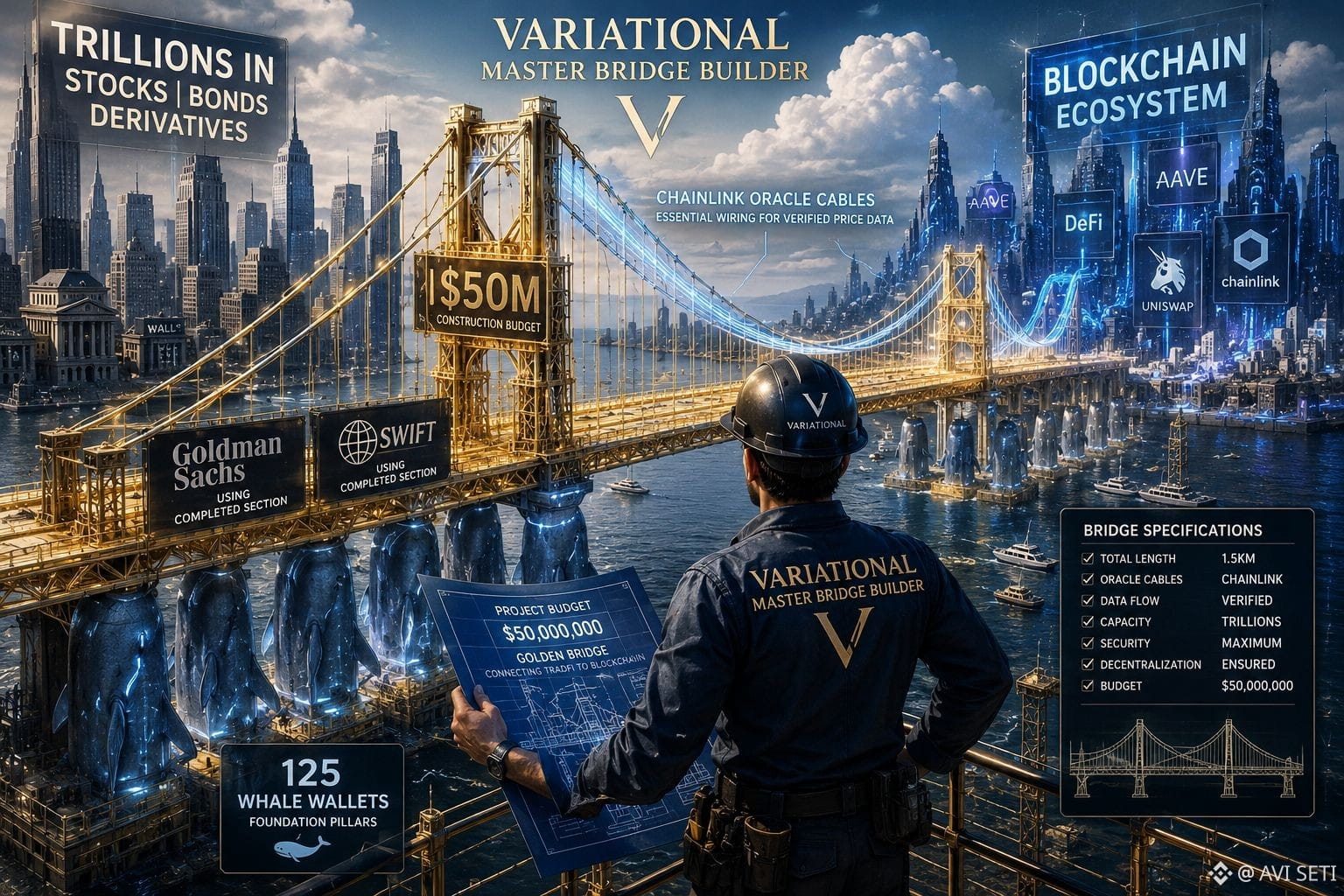
Variational just raised $50 million to bring liquidity from traditional markets to blockchain rails.
And $LINK is the infrastructure that makes it possible.
Variational is building a bridge between traditional financial liquidity — trillions of dollars sitting in stocks, bonds, and derivatives — and on-chain markets.
Here's what that bridge requires:
Real-time verified price data for every traditional asset being brought on-chain.
Cross-chain verification infrastructure.
Institutional-grade oracle data feeds.
That's Chainlink. Entirely.
Every dollar of traditional financial liquidity that moves on-chain needs oracle infrastructure to function. Variational's $50 million raise is $50 million more of institutional capital that will ultimately depend on Chainlink's services.
And right now:
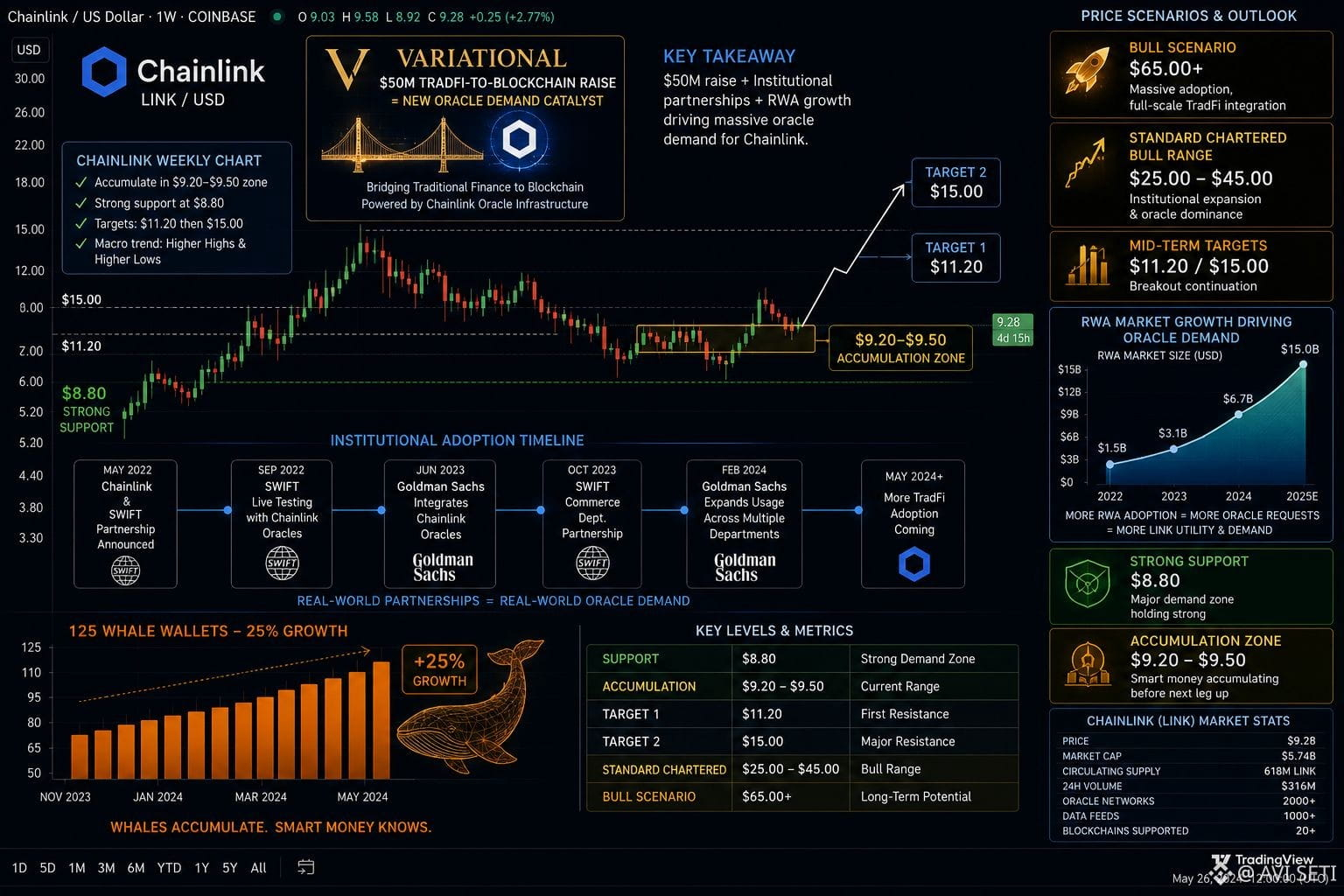
🏦 Goldman Sachs: primary oracle partner ✅
🏦 SWIFT CCIP: pre-production ✅
🏦 US Commerce Department: official data on-chain ✅
🏦 RWA market: $15B+ and growing ✅
🏦 125 whale wallets: still accumulating ✅
📊 LINK today:
— Price: ~$9.20-$9.50 — accumulation zone
— Variational $50M: TradFi→blockchain bridge ✅
— Oracle demand growing every week ✅
— Standard Chartered: $25-$45 target ✅
— Support: $8.80
Every dollar moving from TradFi to blockchain needs Chainlink.
$50 million more just announced today.
#Chainlink #Variational #TradFi #BinanceSquare #IranStrikesKuwaitBase
86
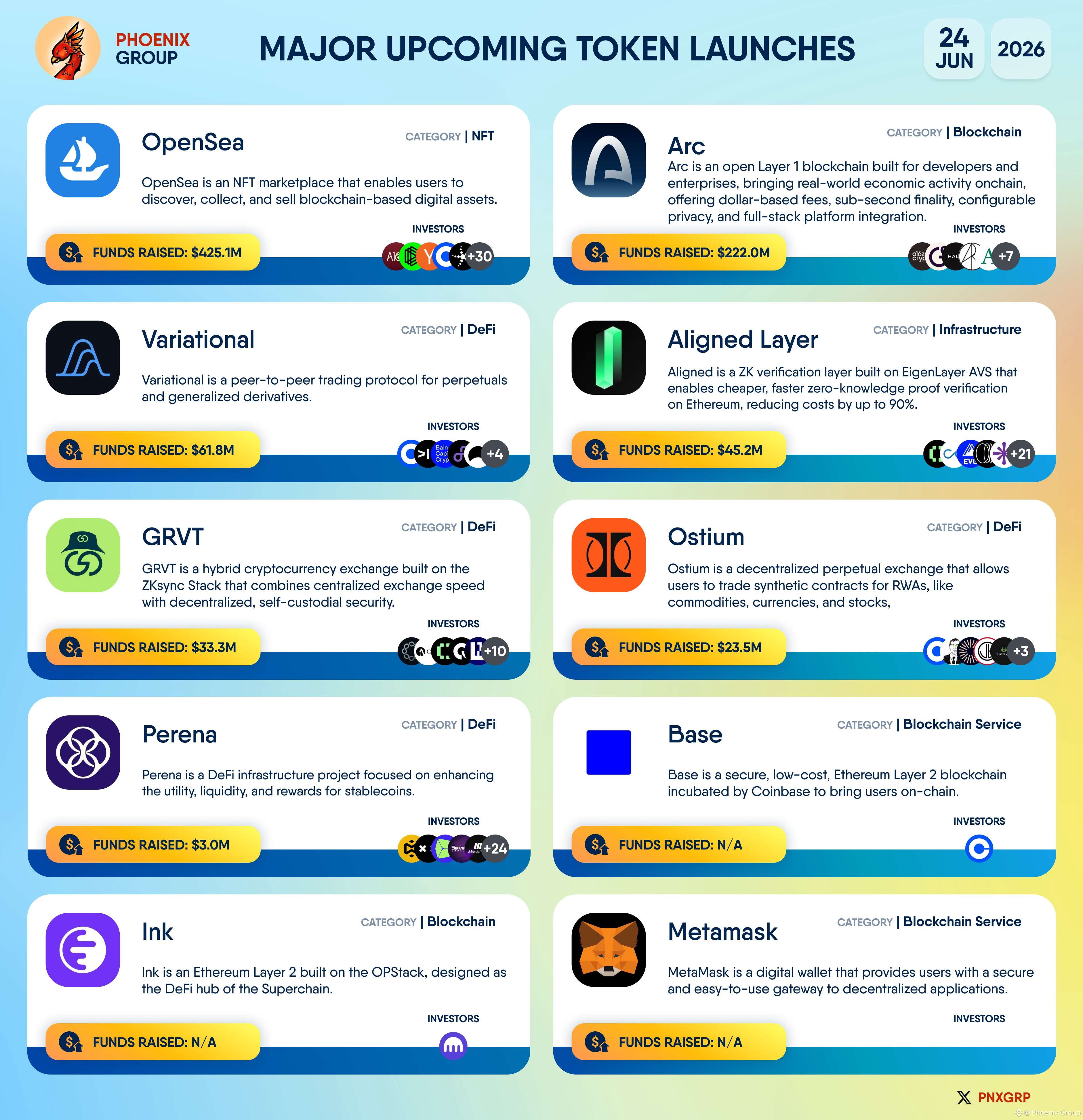
MAJOR UPCOMING TOKEN LAUNCHES
#OpenSea $SEA #Arc $ARC #Variational $VAR #AlignedLayer $ALIGN #GRVT $GRVT #Ostium #Perena #Base #Ink #Metamask $MASK
MAJOR UPCOMING TOKEN LAUNCHES
#OpenSea $SEA #Arc $ARC #Variational $VAR #AlignedLayer $ALIGN #GRVT $GRVT #Ostium #Perena #Base #Ink #Metamask $MASK
#OpenSea $SEA #Arc $ARC #Variational $VAR #AlignedLayer $ALIGN #GRVT $GRVT #Ostium #Perena #Base #Ink #Metamask $MASK
353
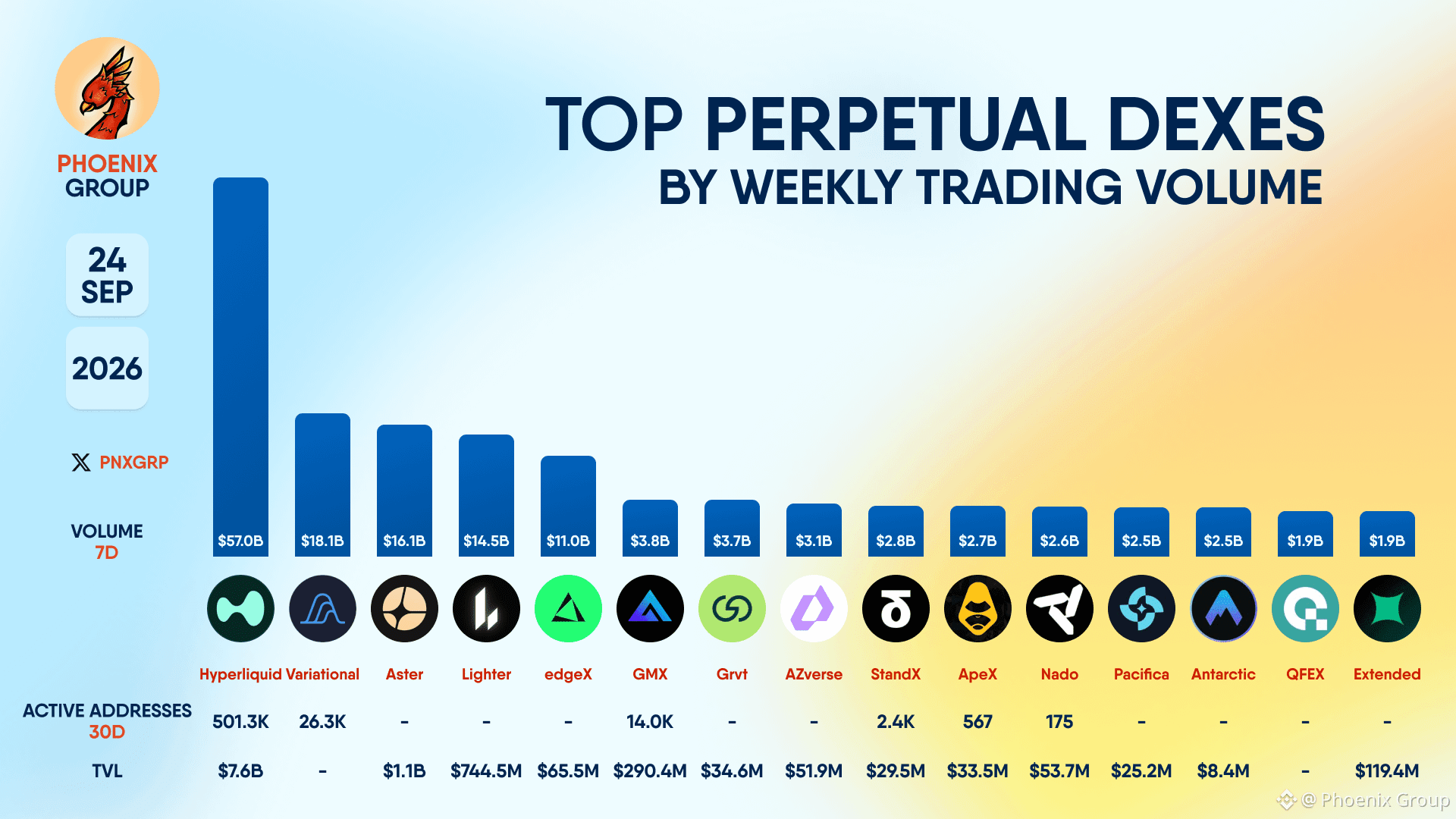
TOP PERPETUAL DEXES BY WEEKLY TRADING VOLUME
#Hyperliquid #Variational #Aster #Lighter #edgeX #GMX #Grvt #AZverse #StandX #ApeX #Nado #Pacifica #Antarctic #QFEX #Extended
TOP PERPETUAL DEXES BY WEEKLY TRADING VOLUME
#Hyperliquid #Variational #Aster #Lighter #edgeX #GMX #Grvt #AZverse #StandX #ApeX #Nado #Pacifica #Antarctic #QFEX #Extended
#Hyperliquid #Variational #Aster #Lighter #edgeX #GMX #Grvt #AZverse #StandX #ApeX #Nado #Pacifica #Antarctic #QFEX #Extended
3
1.4k

·
--
Announcement hits: 292 references, but only 153 reposts—these days the arguments are fiercer than the spread.
Back then, everyone asked, “Will there be an airdrop?” Now the question has changed: how many tokens can one point buy, what the actual circulating supply really is, and whether real, cash-like income can arrive before the selling pressure does.
With 32% of the Genesis circulation fully unlocked, it’s the largest sell-pressure pool on the TGE day. The complication is that every week, another 150,000 points are still being distributed—meaning long-time players’ shares aren’t fixed; they’re continuously diluted by the new points. So nobody can say what your stored points are worth by the TGE day.
“Use 100% of treasury revenue to buy back and burn”? It sounds like a deflationary narrative, but the revenue size, execution schedule, and funding sources have all not been disclosed. Right now it’s just a promise, not a running mechanism. Meanwhile, the “50% team and investor allocation locked for 12 months” is structurally healthier.
The delay reason given is “there are partners that haven’t been disclosed yet.” That just leaves room for imagination—the agreement’s numbers—$2.43 billion in 24-hour trading volume, 1.73 billion open positions, and $222 million in TVL—are real indicators of product scale. But whether the token can actually absorb and support that value is a separate matter.
If it were me, I’d be bearish on this setup and wouldn’t enter. The 32% unlock overhang is sitting there; the buyback-and-burn is only a paper promise—whoever ends up holding the bag first is hard to say. I’ll re-calculate this only after the treasury revenue, the buyback cadence, and how many tokens have actually been burned are truly published and delivered.
#Variational #TGE #DeFi
71
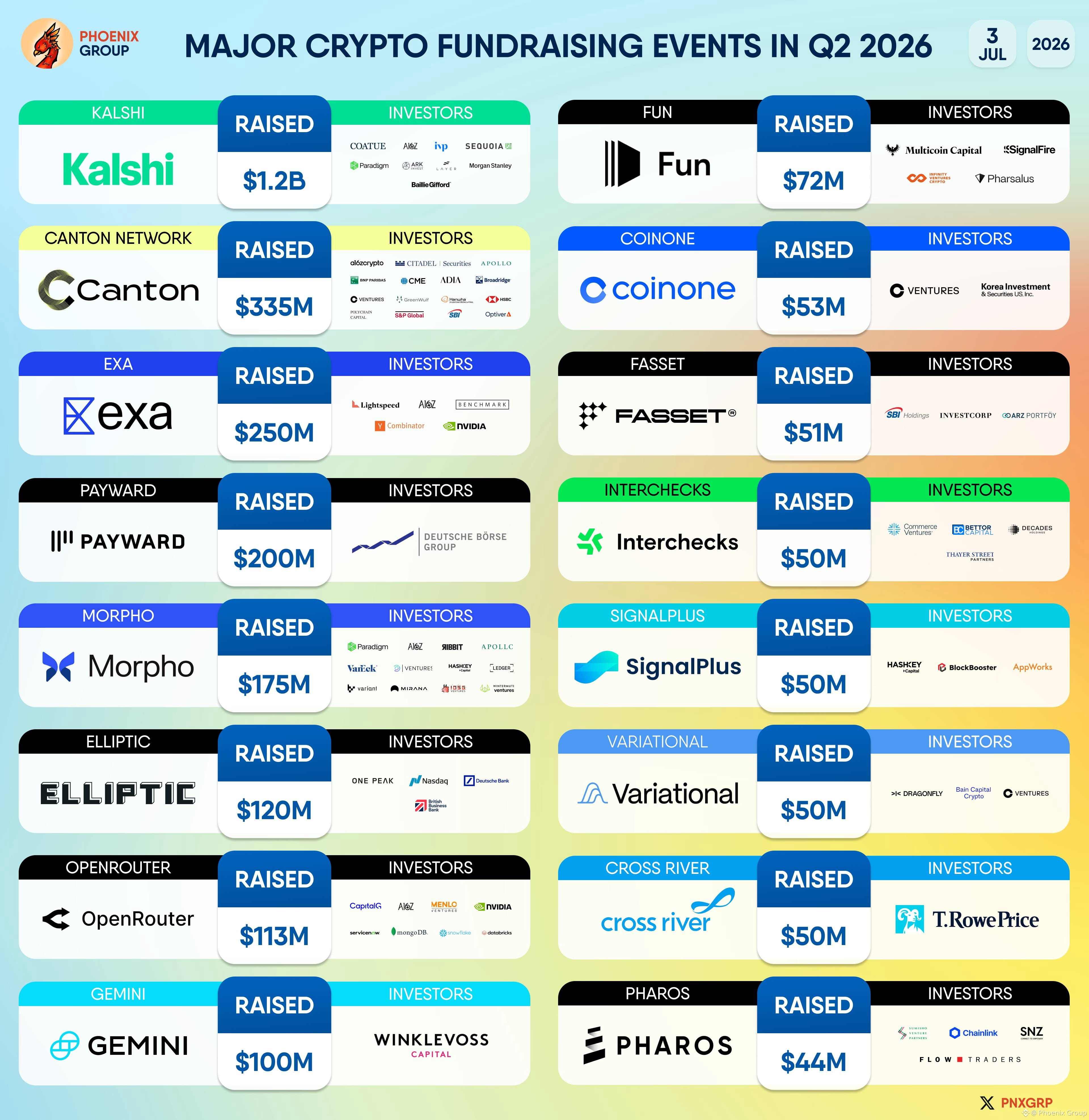
MAJOR CRYPTO FUNDRAISING EVENTS IN Q2 2026
#Kalshi #CantonNetwork #Exa #Payward #Morpho #Elliptic #OpenRouter #Gemini #Fun #Coinone #Fasset #Interchecks #SignalPlus #Variational #CrossRiver #Pharos
MAJOR CRYPTO FUNDRAISING EVENTS IN Q2 2026
#Kalshi #CantonNetwork #Exa #Payward #Morpho #Elliptic #OpenRouter #Gemini #Fun #Coinone #Fasset #Interchecks #SignalPlus #Variational #CrossRiver #Pharos
#Kalshi #CantonNetwork #Exa #Payward #Morpho #Elliptic #OpenRouter #Gemini #Fun #Coinone #Fasset #Interchecks #SignalPlus #Variational #CrossRiver #Pharos
555

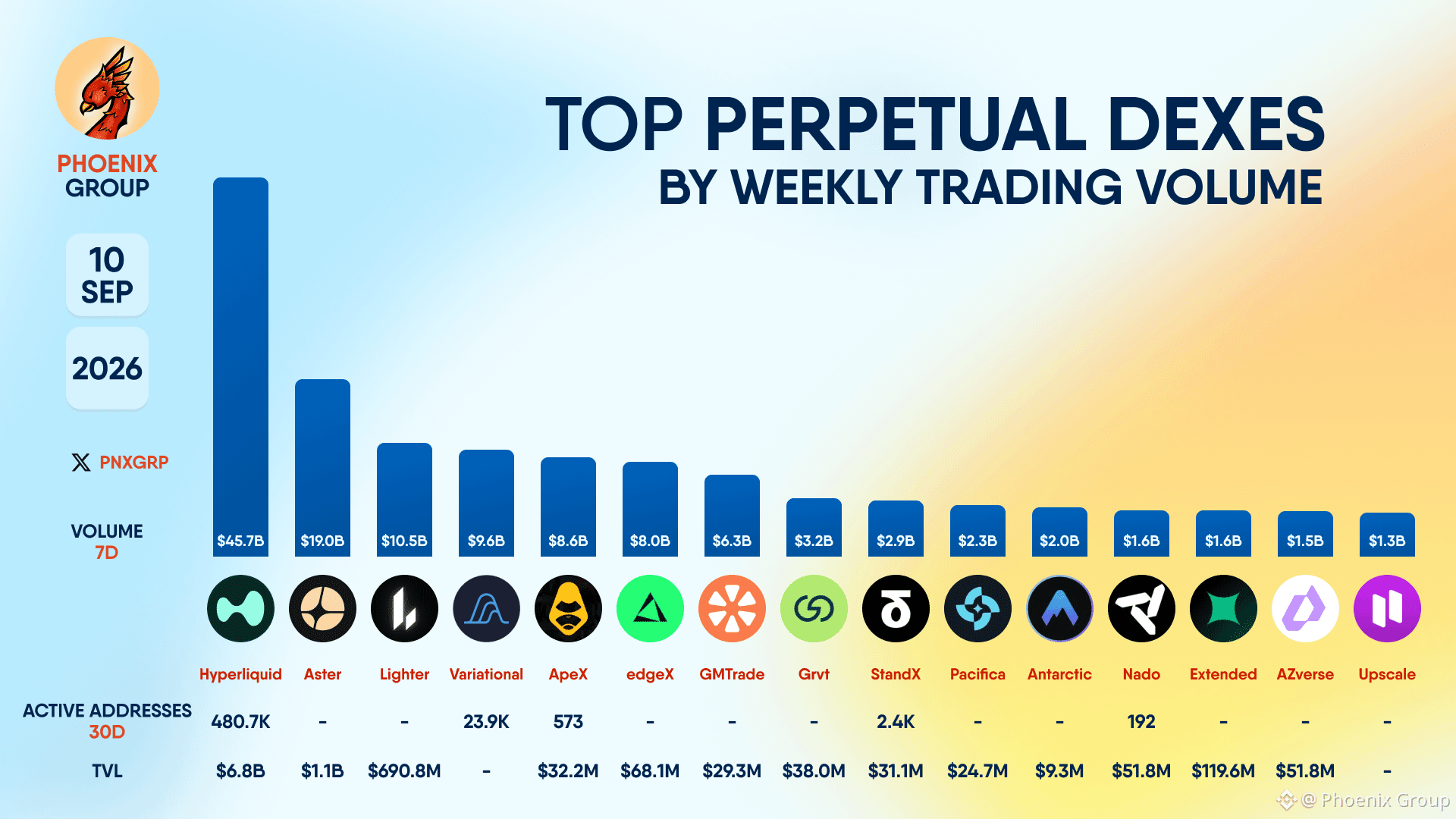
TOP PERPETUAL DEXES BY WEEKLY TRADING VOLUME
#Hyperliquid #Aster #Lighter #Variational #ApeX #edgeX #GMTrade #Grvt #StandX #Pacifica #Antarctic #Nado #Extended #AZverse #Upscale
TOP PERPETUAL DEXES BY WEEKLY TRADING VOLUME
#Hyperliquid #Aster #Lighter #Variational #ApeX #edgeX #GMTrade #Grvt #StandX #Pacifica #Antarctic #Nado #Extended #AZverse #Upscale
#Hyperliquid #Aster #Lighter #Variational #ApeX #edgeX #GMTrade #Grvt #StandX #Pacifica #Antarctic #Nado #Extended #AZverse #Upscale
1
272
Log in to explore more content
Join global crypto users on Binance Square
⚡️ Get latest and useful information about crypto.
💬 Trusted by the world’s largest crypto exchange.
👍 Discover real insights from verified creators.
Email / Phone number
Trending Topics
1
#CanMicrosoftDeliverOnAI
209,404 views
1,772 Discussing
2
#CanGoogleDefindItsCore
115,342 views
1,291 Discussing
3
#EarningsSeason
5.8M views
27,710 Discussing
4
#DatavaultAICantWithdrawBitcoinFromBiconomy
0 views
2 Discussing
5
#FOMCWatch
9.2M views
28,991 Discussing
6
#HKPlacesTokenizedFundSecondaryTradingUnderETFLikeFramework
344 views
19 Discussing
7
#USGovSellsFTXLinkedAnthropicSharesFor$627M
648 views
27 Discussing
8
#MoodysAssignsRLUSDA2LongTermDepositRating
4,171 views
183 Discussing
9
#SKHynixUnveils$45BShareholderReturns
970 views
24 Discussing
10
#OSMOPlansToBurn100MTokensFromCommunityPool
12,303 views
359 Discussing