
#opec
opec
66,879 views
271 Discussing
Hot
Latest

·
--
OPEC+ votes tomorrow — Brent $95 or $100? 🛢️
Brent settled Friday at $95.44, -1.2% on the day but +3.1% on the week — snapping a three-week losing streak. WTI closed at $83.08. The driver: Houthi strikes on Saudi facilities plus mines in the Strait of Hormuz — and OPEC+ meets tomorrow to set 2027 quotas.
Reuters says producers agreed in principle to hold Q1 2027 targets, but Iraq and Kazakhstan want higher baselines. A quota fight breaks Brent under $90, and $BTC just reclaimed $60k at $60,122 — it follows oil's risk mood.
The trade: rollover confirmed → long Brent, TP $100, SL $93. Quota fight or unwind → short toward $88.
Rollover or rupture — which way does OPEC+ vote tomorrow? 👇
$BTC #Oil #OPEC
82

·
--
OIL IS UP 8% IN THREE DAYS — AND SUNDAY DECIDES IF IT KEEPS RUNNING.
Brent just settled Thursday at $96.57 — up 2.1% on the day, +8% since Monday. WTI is near ~$84.40. The spark: a projectile strike hit Saudi's 400,000-barrel-a-day Jazan refinery, plus fresh mine-strike claims on ships in the Strait of Hormuz. The war premium is back.
But Sunday Nov 29, OPEC+ sets 2027 output policy — the UAE is no longer bound by quotas, Iraq and Kazakhstan want higher capacity, and the group still holds ~2M barrels a day of cuts. Protect price, or protect market share?
Setup I'm watching: Brent holds $91.40 and the premium builds — a sustained break above $98 opens $100. Lose $91.40 and the surplus story wins, back toward $88. $BTC is holding ~$60,690 while oil runs. Risk: thin holiday books exaggerate every headline.
CUTS or FLOOD — LONG the OPEC+ meeting or SHORT the premium? One word. 👇
$OIL #Oil #OPEC #Energy
286

·
--
Verified
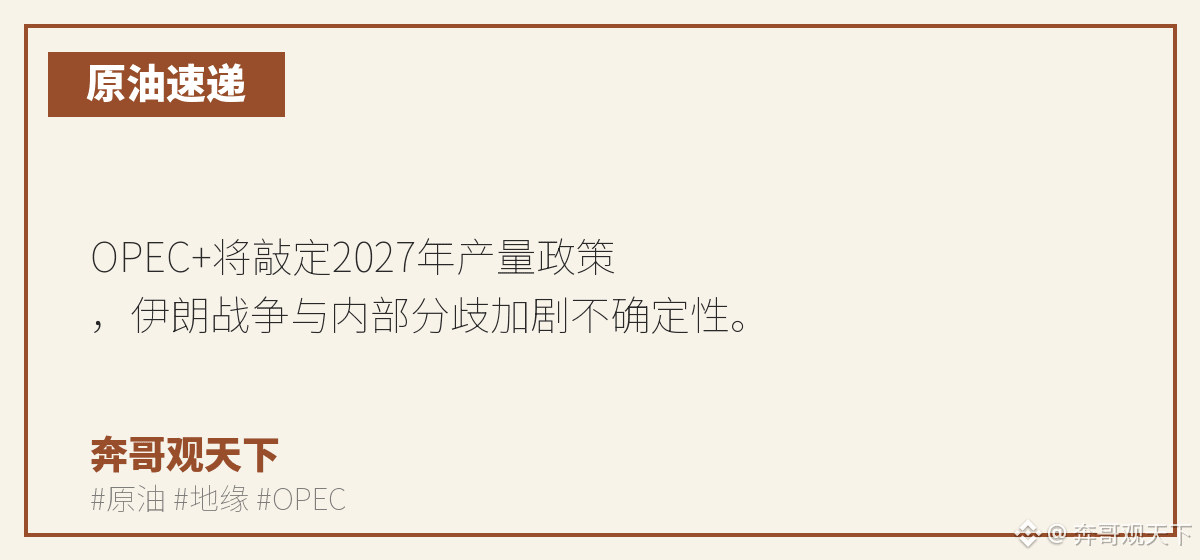
Jan WTI is still down 18.13% from its 30 October close even after two up days in a row, and Sunday's OPEC+ meeting is the one scheduled event left that can move it before the month ends... the group has no authorised output framework past 31 December, so they have to decide something.
The main question is whether roughly 2 mb/d of remaining voluntary cuts gets extended into 2027 or starts coming off. Baselines are the other fight, because members agreed to use maximum sustainable capacity for 2027 targets and the IEA puts Russia's at 9.3 mb/d against a quota of 9.949 mb/d.
Wednesday's +1.99% came on escalation headlines in the Gulf. If they roll the cuts and push the baseline fight out again, I'd expect crude to hold what this week gave it. Cuts coming off into a 2027 the IEA already sees in surplus is a different story, and I think November's slide in $CL and $BZ could pick up again from there. I'm watching what comes out Sunday, and the monthly close lands right after it on Monday.
#Oil #OPEC #Crude #Macro
2
563
·
--
OIL JUST RIPPED 3.5% IN A DAY — AND OPEC+ DECIDES EVERYTHING IN 3 DAYS.
Brent jumped to $94.61 Wednesday (+3.5%), WTI to $83.68 (+2%) — a second straight green day after Houthi strikes hit a Saudi refinery. This morning Brent is pushing $95.00, WTI ~$84.34.
But the IEA still sees a 1.7M barrel-a-day surplus coming. Sunday Nov 29, OPEC+ sets 2027 quotas — UAE unrestricted, Iraq wants more. Restraint or flood?
Setup I'm watching: Brent holds $91.40 and the war premium builds — a close above $95 keeps it running. Lose $91.40 and the surplus story wins, back toward $88.10. WTI holds $82 and dip buyers stay in; lose $79.07 and the slide reopens. Risk: Thanksgiving-thin liquidity exaggerates every headline — $BTC just showed how, holding ~$60,700 (+2.2%).
CUTS or FLOOD — LONG the OPEC+ meeting or SHORT the surplus? One word. 👇
$OIL #Oil #OPEC #Energy
353

·
--
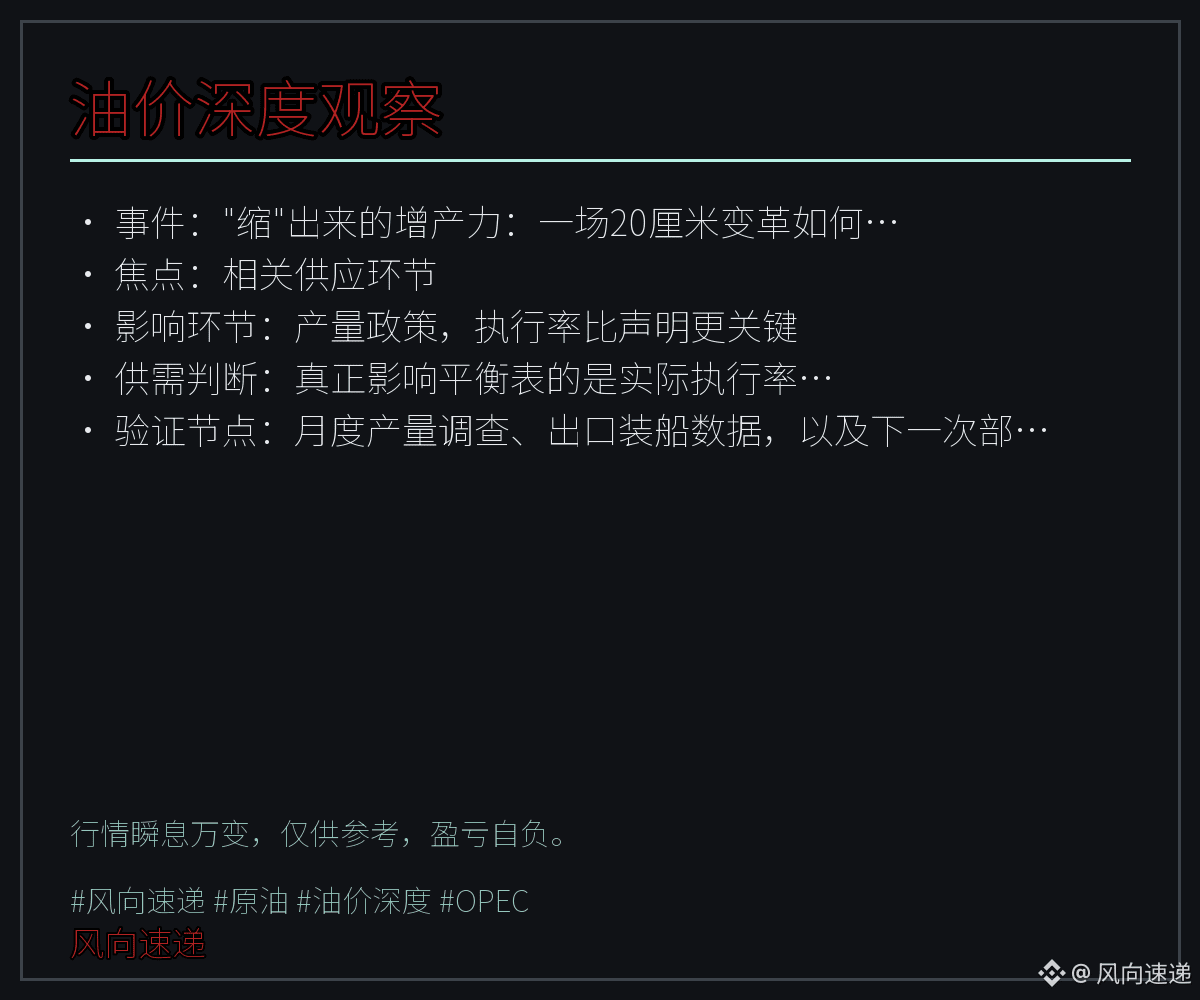
In-Depth Look at Oil Prices
【Key Event】
“Reduced” into higher output: How a 20-centimeter transformation is reshaping 200,000 mu of black soil (2 hours ago)
【Who Is Influencing Oil Prices】
Signals are being sent that supply will increase. The focus is on the relevant parts of the supply chain. OPEC+ accounts for roughly 40% of global output, and its quotas determine the medium-term supply curve. Spare capacity is the main buffer for smoothing unexpected shortfalls.
【Transmission Channels】
Production cuts, or extensions of voluntary cuts, directly reduce exportable volumes. Higher output, in turn, can depress near-month premiums by shaping expectations for future supply.
Policy signals can also alter trade flows. Price differentials between cargoes arriving in Asia and Europe tend to move first, with benchmark oil prices responding afterward.
【Supply, Demand, and Pricing】
What truly affects the balance sheet is the actual rate of compliance; overproduction by member states can significantly weaken the impact of cut announcements.
WTI is currently trading around $83.41, with a 24-hour change of +4.60%. Volatility has increased, suggesting that this type of risk is being priced in rapidly. Going forward, it will be especially important to see whether actual supply-and-demand data confirm expectations. Expectations ahead of a meeting are often partly priced in already; the reaction afterward depends on how the decision compares with expectations.
【What to Watch Next】
Watch monthly production surveys, export loading data, and the timing and messaging of the next ministerial meeting.
【What Would Invalidate This Outlook】
If demand weakens at the same time, falling demand will offset the price support from production cuts.
Markets change rapidly. For reference only; you are responsible for any gains or losses.
#风向速递 #原油 #油价深度 #OPEC
5

·
--
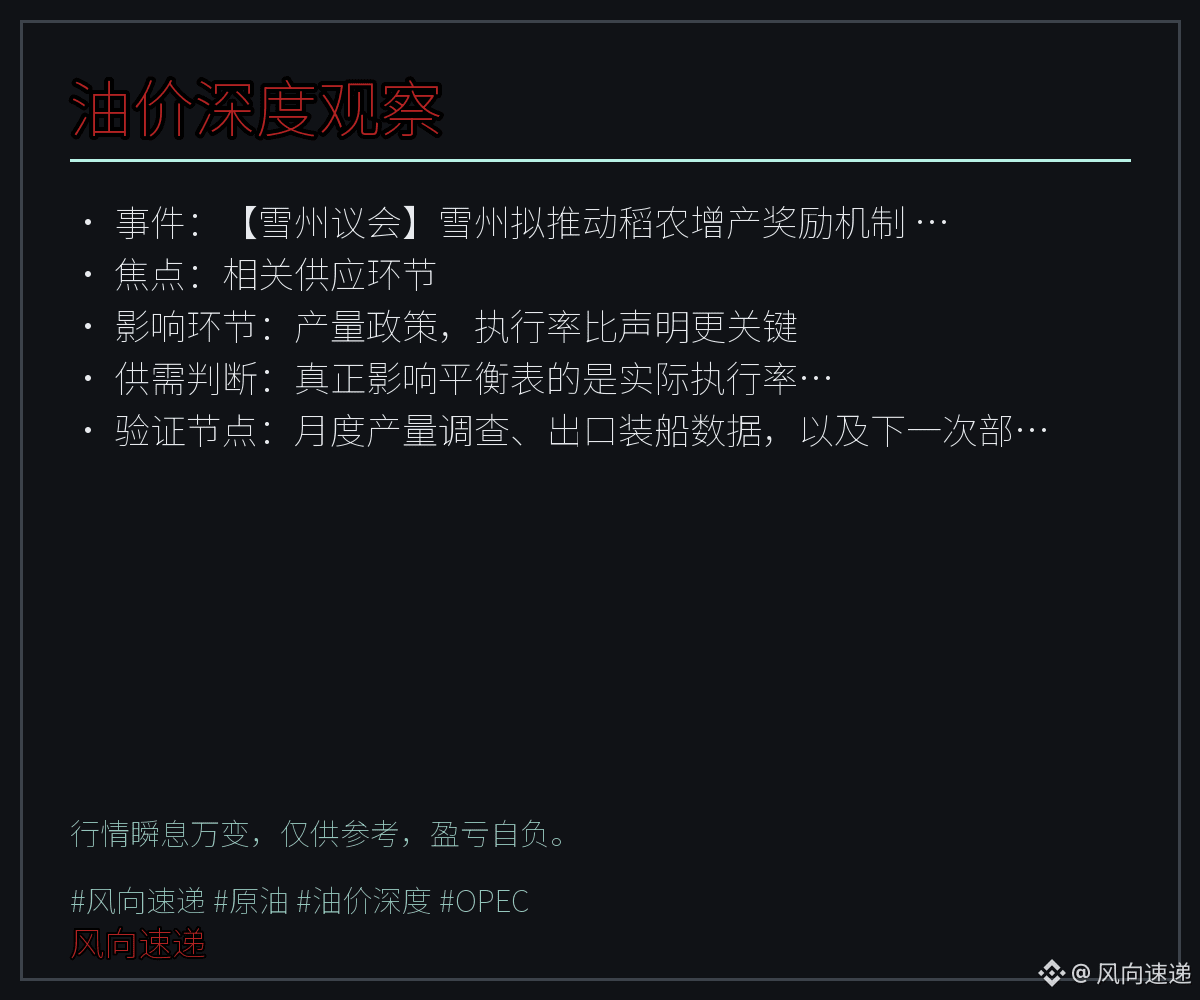
Oil Price Deep Dive
【Key Event】
【Selangor State Assembly】Selangor plans to introduce incentives to boost rice production: farmers producing over 7 tonnes of rice per hectare will qualify for a reward Central Malaysia Local (within 1 hour)
【Who Is Influencing Oil Prices】
A signal has been sent that supply will increase. The focus is on the relevant stages of the supply chain. OPEC+ accounts for around 40% of global output, and its quotas shape the medium-term supply curve. Spare capacity is the main buffer for offsetting sudden shortfalls.
【Transmission Chain】
Production cuts or extensions of voluntary cuts directly reduce exportable volumes, while increased production lowers near-month premiums by changing expectations for future supply.
Policy signals also alter trade flows. The landed price differentials between Asia and Europe will move first, followed by effects on benchmark oil prices.
【Supply, Demand and Pricing】
What truly affects the balance sheet is the actual compliance rate. Overproduction by member countries can significantly undermine the impact of production-cut announcements.
WTI is currently trading around $82.25, with a 24-hour change of -2.88%. Volatility has already increased, indicating that this type of risk is being priced in quickly. Going forward, it will be more important to see whether actual supply and demand data bear this out. Expectations ahead of a meeting are often partly priced in already; the market reaction afterward depends on how the decision compares with expectations.
【What to Watch Next】
Watch monthly production surveys, export shipment data, and the timing and messaging of the next ministerial meeting.
【What Would Invalidate This View】
If demand weakens at the same time, the price support from production cuts will be offset by declining demand.
Markets can change in an instant. For reference only; you are responsible for any gains or losses.
#风向速递 #原油 #油价深度 #OPEC
1
·
--
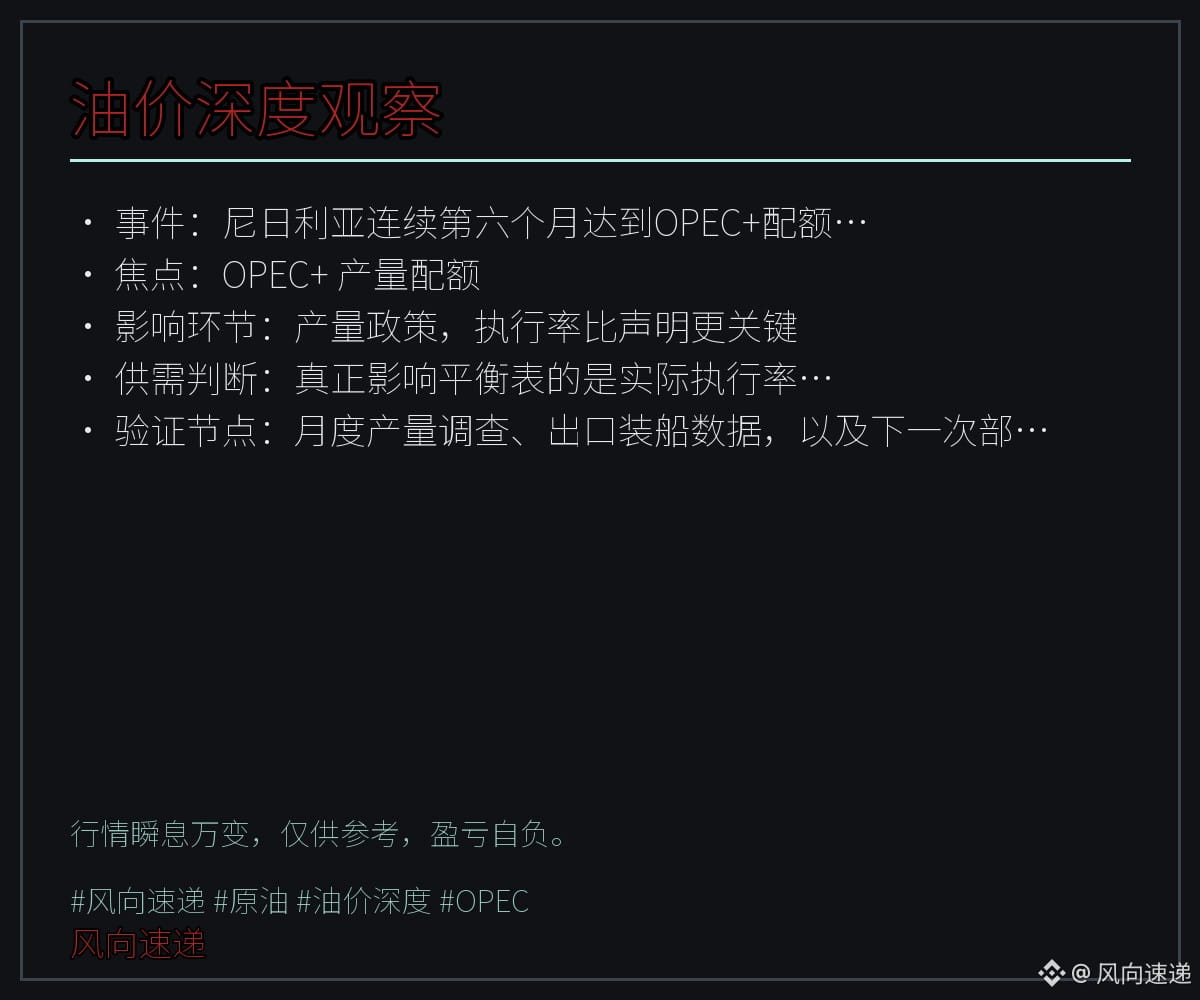
Oil Price Deep Dive
【Key Event】
Nigeria meets its OPEC+ quota for the sixth consecutive month, with average crude oil production of 1.51 million barrels per day - News and Statistics (2 hours ago)
【Who Is Influencing Oil Prices】
OPEC+ signals its production policy. The focus is on OPEC+ production quotas. OPEC+ accounts for about 40% of global output, and its quotas determine the medium-term supply curve. Spare capacity is the main buffer for smoothing sudden supply shortfalls.
【Transmission Mechanism】
Production cuts or extensions of voluntary cuts directly reduce exportable volumes, while production increases lower near-month premiums through expectations of greater future supply.
Policy signals can also alter trade flows: landed price spreads between Asia and Europe move first, with changes feeding back into benchmark oil prices afterward.
【Supply, Demand, and Pricing】
What truly affects the balance sheet is the actual compliance rate; overproduction by member countries can significantly weaken the impact of cut announcements.
WTI is currently trading around $88.56, with a 24-hour change of +0.35%. Price movements are limited, and the market's response has been moderate for now. Further data will be needed to confirm how much of this news has been priced in. Expectations ahead of a meeting are often partially reflected in prices already; the reaction afterward depends on the difference between the decision and expectations.
【What to Watch Next】
Watch monthly production surveys, export loading data, and the timing and messaging of the next ministerial meeting.
【What Would Invalidate This Outlook】
If demand weakens at the same time, the price support from production cuts will be offset by falling demand.
Markets can change rapidly. For reference only; you are responsible for any gains or losses.
#风向速递 #原油 #油价深度 #OPEC
6
·
--
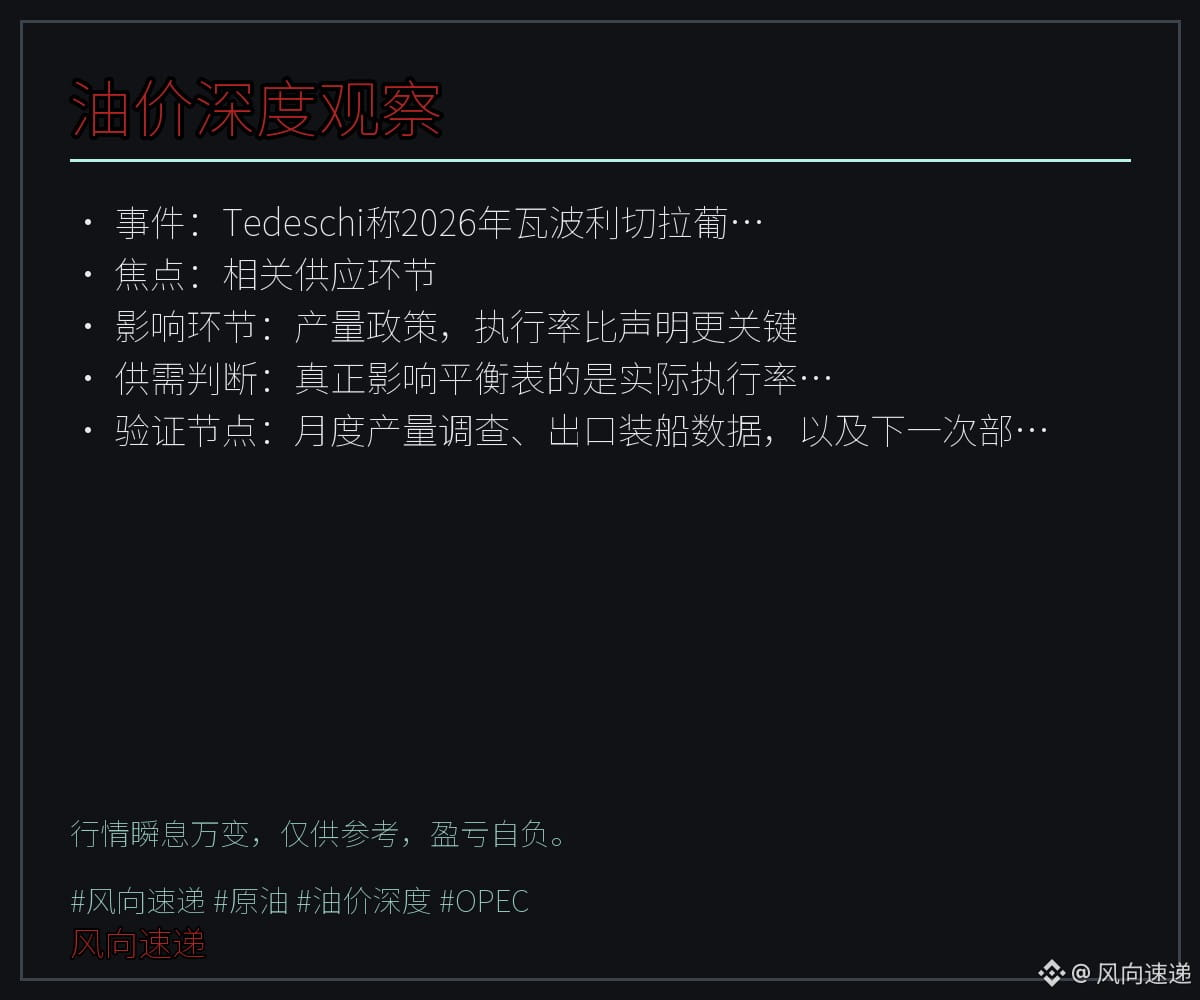
Oil Market Deep Dive
【Key Event】
Tedeschi says the 2026 Valpolicella grape harvest will be smaller, but the quality is excellent (within 1 hour)
【Who Is Influencing Oil Prices】
Signals of tighter supply are emerging. The focus is on the relevant supply channels. OPEC+ accounts for about 40% of global output, and its quotas determine the medium-term supply curve. Spare capacity is the main buffer for smoothing sudden shortfalls.
【Transmission Mechanism】
Cutting output or extending voluntary cuts directly reduces exportable volumes, while increasing output weighs on nearby premiums by lowering expectations for future supply.
Policy signals can also reshape trade flows. Price differentials between deliveries to Asia and Europe tend to move first, with benchmark oil prices responding later.
【Supply, Demand, and Pricing】
What truly affects the balance sheet is the actual compliance rate. Overproduction by member countries can significantly undermine the impact of announced cuts.
WTI is currently trading around $88.93, with a 24-hour change of +2.61%. Volatility has increased, indicating that this type of risk is being priced in quickly. Going forward, it will be important to see whether actual supply and demand data bear this out. Expectations ahead of a meeting are often partly priced in already; the market's reaction afterward depends on how the decision compares with expectations.
【What to Watch Next】
Watch monthly production surveys, export shipment data, and the timing and wording of the next ministerial meeting.
【What Would Invalidate This Thesis】
If demand weakens at the same time, the price support from production cuts will be offset by falling demand.
Markets can change in an instant. For reference only; you are responsible for any gains or losses.
#风向速递 #原油 #油价深度 #OPEC
2
·
--
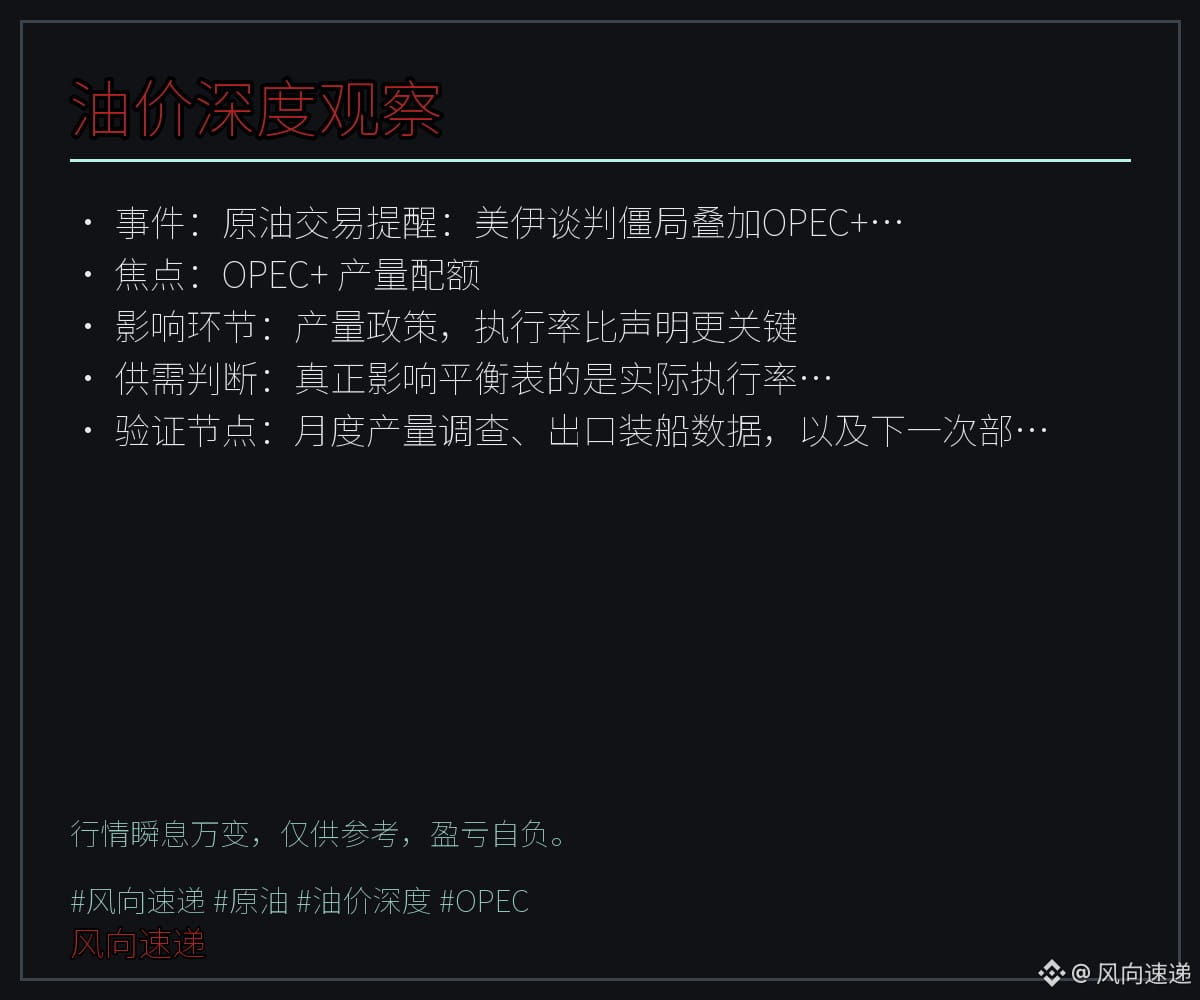
In-Depth Oil Price Watch
【Key Events】
Crude Oil Trading Alert: U.S.-Iran talks deadlocked as OPEC+ boosts production; WTI crude falls for five straight sessions—beware a downside breakout. Futures Market News (2 hours ago)
【Who Is Influencing Oil Prices】
OPEC+ has signaled that it may increase supply. The focus is on OPEC+ production quotas. OPEC+ accounts for roughly 40% of global output, and its quotas determine the medium-term supply curve. Spare capacity is the main buffer for smoothing sudden shortfalls.
【Transmission Channels】
Production cuts—or extending voluntary cuts—directly reduce exportable volumes, while increased production weighs on near-month premiums by lowering expectations for future supply.
Policy signals can also change trade flows. Price differentials for deliveries into Asia and Europe tend to move first, with the effects feeding through to benchmark oil prices afterward.
【Supply, Demand, and Pricing】
What really affects the balance sheet is the actual compliance rate; overproduction by member countries can significantly undermine the effect of production-cut announcements.
WTI is currently trading around $85.60, down 1.10% over 24 hours. This can serve as a starting point for observation; subsequent moves should be assessed alongside the confirmation points below. Expectations ahead of a meeting are often partly priced in already, and the market reaction afterward depends on the gap between the decision and expectations.
【What to Watch Next】
Watch monthly production surveys, export shipment data, and the timing and messaging of the next ministerial meeting.
【What Would Invalidate This Thesis】
If demand weakens at the same time, the price support from production cuts will be offset by declining demand.
Markets can change in an instant. For reference only; trade at your own risk.
#风向速递 #原油 #油价深度 #OPEC
13
·
--
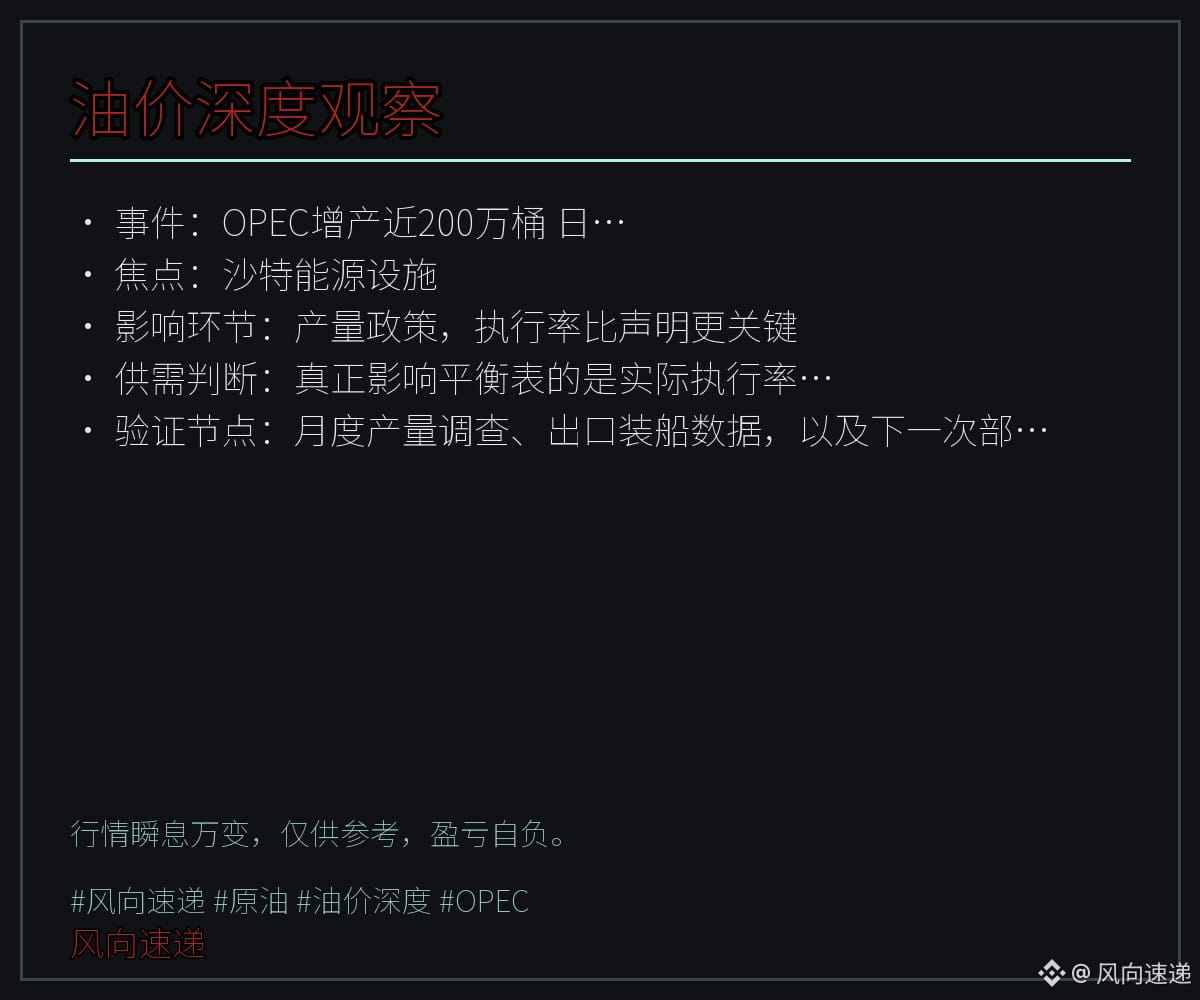
In-Depth Oil Price Watch
【Key Event】
OPEC raises output by nearly 2 million barrels per day; Saudi production surges to 10.6 million barrels, keeping oil prices under sustained pressure. FX News Report (within the past hour)
【Who Is Influencing Oil Prices】
Saudi Arabia signals an increase in supply. The focus is on Saudi energy facilities. OPEC+ accounts for around 40% of global production, and its quotas shape the medium-term supply curve. Spare capacity is the main buffer for smoothing sudden supply shortfalls.
【Transmission Mechanism】
Cuts or extensions of voluntary cuts directly reduce exportable volumes, while production increases weigh on nearby premiums by lowering expectations for future supply.
Policy signals can also reshape trade flows. The landed-price spreads between Asia and Europe tend to move first, with benchmark oil prices responding afterward.
【Supply, Demand, and Pricing】
What truly affects the balance sheet is the actual compliance rate. Overproduction by member countries can significantly weaken the impact of output-cut announcements.
WTI is currently trading around $85.39, with a 24-hour change of -1.44%. This level can serve as a starting point for observation; subsequent moves should be assessed alongside the confirmation points below. Expectations ahead of a meeting are often partly priced in already, and the market’s reaction afterward depends on the gap between the decision and expectations.
【What to Watch Next】
Watch monthly production surveys, export loading data, and the timing and messaging of the next ministerial meeting.
【What Would Invalidate This Outlook】
If demand weakens at the same time, the support that production cuts provide to prices may be offset by falling demand.
Markets can change rapidly. For reference only; you are responsible for your own gains and losses.
#风向速递 #原油 #油价深度 #OPEC
6
·
--
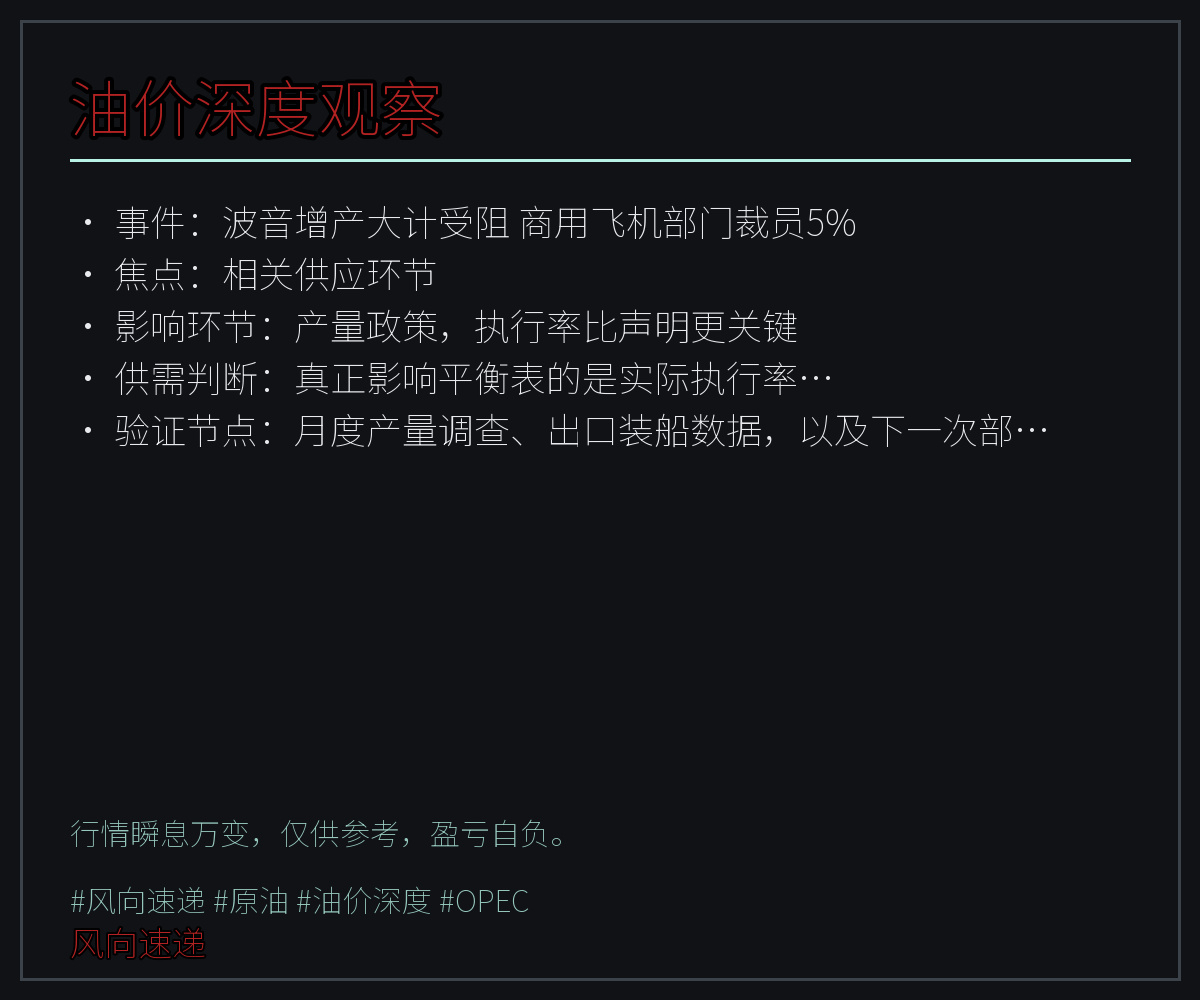
In-Depth Oil Price Analysis
【Key Event】
Boeing’s production ramp-up plans hit a snag; commercial airplanes division to cut 5% of jobs (within 1 hour)
【What’s Influencing Oil Prices】
A signal of increased supply has been released, putting the spotlight on the relevant supply channels. OPEC+ accounts for roughly 40% of global production, and its quotas determine the medium-term supply curve. Spare capacity is the main buffer for smoothing out sudden shortfalls.
【Transmission Channels】
Production cuts or extensions of voluntary cuts directly reduce exportable volumes, while increased production can weigh on near-month premiums by lowering expectations for future supply.
Policy signals can also shift trade flows. Delivered price differentials between Asia and Europe tend to move first, with benchmark oil prices responding afterward.
【Supply, Demand, and Pricing】
What really affects the balance sheet is the actual compliance rate. Overproduction by member countries can significantly undermine the effect of production-cut announcements.
WTI is currently trading near $87.58, with a 24-hour change of -3.58%. Volatility has widened, indicating that this type of risk is being priced in rapidly. Next, it will be important to see whether actual supply and demand data bear this out. Expectations ahead of a meeting are often partly priced in already; the market reaction afterward depends on the gap between the decision and expectations.
【What to Watch Next】
Watch monthly production surveys, export loading data, and the timing and messaging of the next ministerial meeting.
【What Would Invalidate This Thesis】
If demand weakens at the same time, its decline will offset the price support from production cuts.
Markets can change in an instant. For reference only; trade at your own risk.
#风向速递 #原油 #油价深度 #OPEC
11

·
--
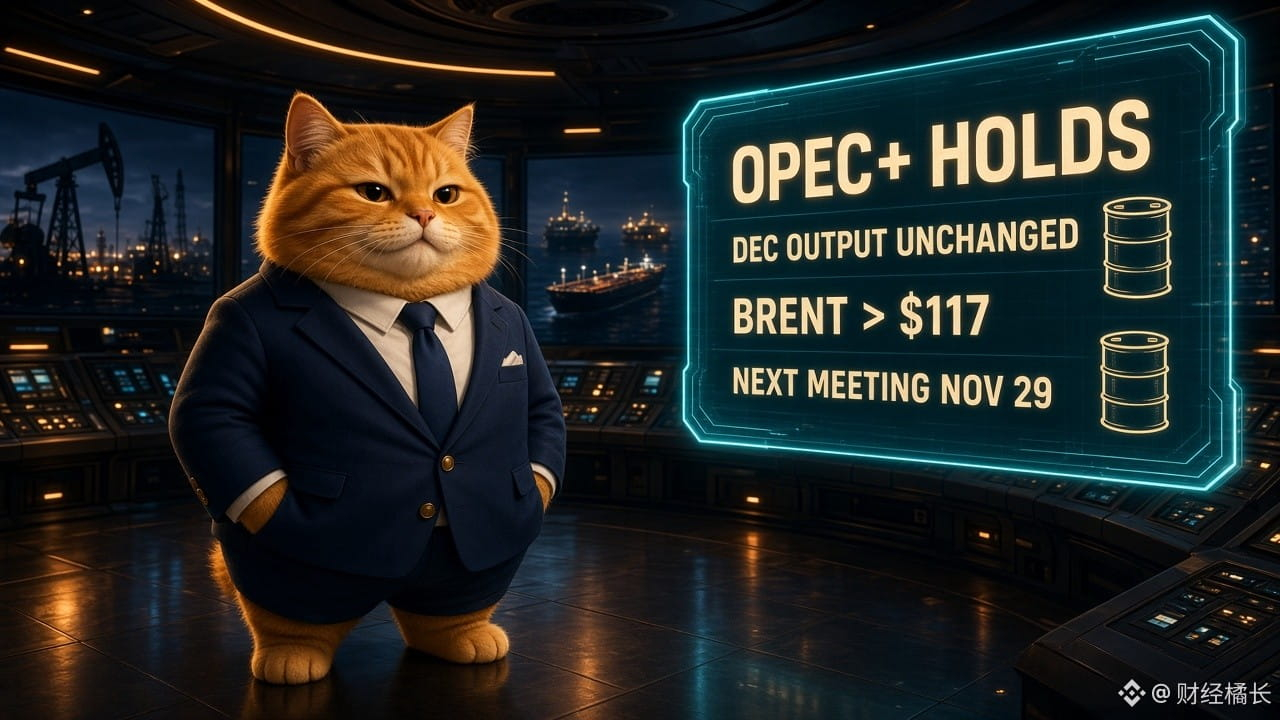
OPEC+ has just made its decision: December production stays unchanged, while Brent remains above $117
· OPEC website: At an online meeting on November 1, Saudi Arabia, Russia, Iraq and four other countries decided to keep December production at the September quota levels. The next meeting is on November 29.
· The National: The seven countries have a combined quota of about 31 million barrels per day (Saudi Arabia 10.478 million, Russia 9.949 million, Iraq 4.431 million), but due to the U.S.-Iran war, most members are producing below their quotas. Brent is above $117.
· Reuters: The voluntary production cuts of 1.65 million barrels per day were fully phased out in September, while another roughly 2 million barrels per day in cuts will continue through year-end. In the fourth quarter, focus shifts to assessing capacity baselines for 2027.
【Viewpoint】
Holding production steady means no relief for oil prices. The real constraint on supply is not quotas, but export disruptions caused by the war. So this decision will have limited impact on actual supply, and the high-oil-price outlook remains unchanged. High oil prices → persistent inflation → a hawkish Fed, which will continue to weigh on risk assets such as tech stocks and crypto.
【Opportunities/Risks】
1) If hostilities ease and Gulf exports resume, a pullback in oil prices could benefit risk assets—potentially catalyzing a BTC rebound;
2) Key events this week: U.S. midterm elections on 11/3 and nonfarm payrolls on 11/6. Watch whether rate-hike expectations heat up;
3) The divergence between strong energy stocks and weak tech stocks may continue;
4) The November 29 meeting and negotiations over 2027 quotas are the next variables to watch.
Do you think the Fed will really raise rates in December if oil stays above $110?
#OPEC #原油 #宏观 #美联储 #CryptoMarket
$BTC $PAXG
For reference only; this is not investment advice
465

OPEC+ Output Increase Rekindles Fears of Global Oil OversupplyOPEC+ is set to move forward with another production increase as key member countries continue restoring oil output, a decision that is raising fresh concerns about a potential global supply surplus.
According to Bloomberg, the latest production boost comes despite questions over whether current market demand can absorb the additional barrels. Analysts warn that if consumption fails to keep pace, the extra supply could place renewed downward pressure on crude oil prices in the months ahead.
The move also signals a shift in the alliance's internal dynamics. After navigating a period of disagreements among member states over production quotas, OPEC+ appears to be presenting a more unified approach by advancing previously planned output increases.
While stronger seasonal demand and geopolitical risks continue to influence the energy market, the prospect of rising production has revived concerns that supply could outpace demand, particularly if global economic growth slows or fuel consumption weakens.
Traders will now closely monitor upcoming inventory data, demand indicators, and future OPEC+ policy decisions to assess whether the market can comfortably absorb the additional supply or if the production increase will contribute to a broader oil glut.
#OPEC
$XAU
{future}(XAUUSDT)
$CL
{future}(CLUSDT)
$BZ
{future}(BZUSDT)
OPEC+ Output Increase Rekindles Fears of Global Oil Oversupply
OPEC+ is set to move forward with another production increase as key member countries continue restoring oil output, a decision that is raising fresh concerns about a potential global supply surplus.
According to Bloomberg, the latest production boost comes despite questions over whether current market demand can absorb the additional barrels. Analysts warn that if consumption fails to keep pace, the extra supply could place renewed downward pressure on crude oil prices in the months ahead.
The move also signals a shift in the alliance's internal dynamics. After navigating a period of disagreements among member states over production quotas, OPEC+ appears to be presenting a more unified approach by advancing previously planned output increases.
While stronger seasonal demand and geopolitical risks continue to influence the energy market, the prospect of rising production has revived concerns that supply could outpace demand, particularly if global economic growth slows or fuel consumption weakens.
Traders will now closely monitor upcoming inventory data, demand indicators, and future OPEC+ policy decisions to assess whether the market can comfortably absorb the additional supply or if the production increase will contribute to a broader oil glut.
#OPEC
$XAU
$CL
$BZ
124

·
--
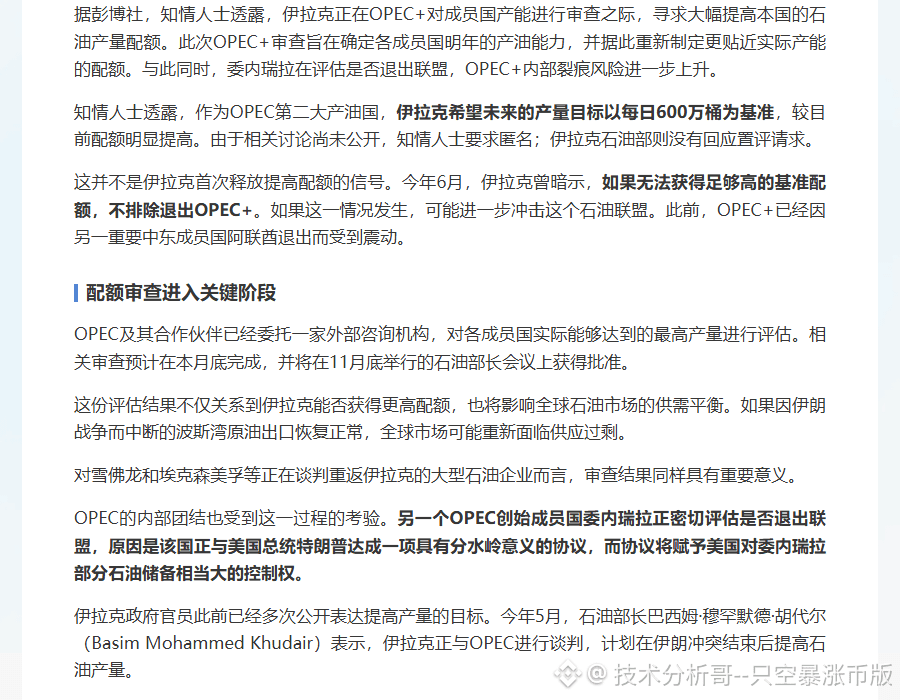
OPEC+ internal divisions intensify: Iraq seeks a new quota of 6 million barrels by leveraging capacity reviews, while Venezuela is considering exiting, putting the alliance’s stability to the test. The struggle over oil producers’ interests is heating up, and the future supply landscape is full of uncertainty.
#OPEC+ #原油市场 # capacity battle
#OPEC+ #原油市场 # capacity battle
78

·
--
Verified
Bullish
58%
Bearish
42%
12 votes • Voting closed
1.2k

·
--
Bullish
Partly True
OIL CUTS COMPLETED 🚨
It is expected that the OPEC+ countries decide to completely abandon voluntary oil production cuts at a meeting on August 2, according to the RTRS.
$AKE $BILL $RIF 👀👀👀
{spot}(RIFUSDT)
{future}(BILLUSDT)
{future}(AKEUSDT)
#OPEC #OilTops$100 #HouthisAttackTwoSaudiTankers #KazakhstanApprovesStrategicDigitalMiningProgram #oil
OIL CUTS COMPLETED 🚨
It is expected that the OPEC+ countries decide to completely abandon voluntary oil production cuts at a meeting on August 2, according to the RTRS.
$AKE $BILL $RIF 👀👀👀
#OPEC #OilTops$100 #HouthisAttackTwoSaudiTankers #KazakhstanApprovesStrategicDigitalMiningProgram #oil
It is expected that the OPEC+ countries decide to completely abandon voluntary oil production cuts at a meeting on August 2, according to the RTRS.
$AKE $BILL $RIF 👀👀👀
#OPEC #OilTops$100 #HouthisAttackTwoSaudiTankers #KazakhstanApprovesStrategicDigitalMiningProgram #oil
622

OPEC+ Keeps Oil Output Quotas Unchanged — September 6, 2026OPEC+ has decided to keep its oil production policy unchanged for October, ending a run of monthly increases as the group faces major uncertainty from the Iran conflict and disruptions around the Strait of Hormuz.
🔑 Key details
October production: OPEC+ will keep its current output policy unchanged.No new increase: The decision follows several months of planned production increases.September increase: OPEC+ had raised September output targets by about 188,000 barrels per day, completing the phased rollback of a 1.65 million-barrel-per-day cut introduced in 2023.Actual production remains below targets: Despite higher quotas, several members are unable to produce or export at planned levels because of disruptions caused by the Iran war and the situation around the Strait of Hormuz.2027 quotas now in focus: OPEC+ needs to assess members' production capacity before establishing new production baselines for 2027.Next meeting: The seven core members are scheduled to meet again on October 4.🛢️ Why the decision mattersThe decision is supportive for oil prices because OPEC+ is not adding additional planned supply to the market in October. However, the impact is less straightforward than it would normally be because actual oil flows are being heavily affected by geopolitical disruptions.The Strait of Hormuz is particularly important. The ongoing Iran conflict has reduced tanker traffic and disrupted regional exports, meaning OPEC+'s ability to control the physical oil market is currently more limited.📈 Oil-market reactionBrent crude had already moved above $96 per barrel at Friday's close as traders priced in geopolitical supply risks. WTI was also around the low-$90s earlier in the week.#OPEC {spot}(OPENUSDT)
OPEC+ Keeps Oil Output Quotas Unchanged — September 6, 2026
OPEC+ has decided to keep its oil production policy unchanged for October, ending a run of monthly increases as the group faces major uncertainty from the Iran conflict and disruptions around the Strait of Hormuz.
🔑 Key details
October production: OPEC+ will keep its current output policy unchanged.No new increase: The decision follows several months of planned production increases.September increase: OPEC+ had raised September output targets by about 188,000 barrels per day, completing the phased rollback of a 1.65 million-barrel-per-day cut introduced in 2023.Actual production remains below targets: Despite higher quotas, several members are unable to produce or export at planned levels because of disruptions caused by the Iran war and the situation around the Strait of Hormuz.2027 quotas now in focus: OPEC+ needs to assess members' production capacity before establishing new production baselines for 2027.Next meeting: The seven core members are scheduled to meet again on October 4.🛢️ Why the decision mattersThe decision is supportive for oil prices because OPEC+ is not adding additional planned supply to the market in October. However, the impact is less straightforward than it would normally be because actual oil flows are being heavily affected by geopolitical disruptions.The Strait of Hormuz is particularly important. The ongoing Iran conflict has reduced tanker traffic and disrupted regional exports, meaning OPEC+'s ability to control the physical oil market is currently more limited.📈 Oil-market reactionBrent crude had already moved above $96 per barrel at Friday's close as traders priced in geopolitical supply risks. WTI was also around the low-$90s earlier in the week.#OPEC
28

·
--
$XAUT $2Z $SOL
OPEC+ extends oil production cuts through 2025! 🛢️ This move aims to stabilize global oil markets but could fuel inflation concerns, potentially impacting the broader economy and crypto sentiment. 📈 #OPEC #OilPrices #Inflation
$XAUT $2Z $SOL
OPEC+ extends oil production cuts through 2025! 🛢️ This move aims to stabilize global oil markets but could fuel inflation concerns, potentially impacting the broader economy and crypto sentiment. 📈 #OPEC #OilPrices #Inflation
OPEC+ extends oil production cuts through 2025! 🛢️ This move aims to stabilize global oil markets but could fuel inflation concerns, potentially impacting the broader economy and crypto sentiment. 📈 #OPEC #OilPrices #Inflation

169

·
--
According to OPEC's latest September monthly report, Saudi Arabia officially notified the cartel that its crude oil production has fallen to its lowest level since 1990. Simultaneously, OPEC trimmed its 2026 global oil demand growth projection for the fifth consecutive time to 380,000 barrels per day, down from 580,000 bpd, while lifting its 2027 forecast to 2.36 million bpd.
This persistent downward revision in demand reflects mounting structural headwinds across major global economies, outweighing fears of regional conflict disruptions. Despite aggressive production cuts by Riyadh to defend price floors, sluggish consumption signals that global industrial momentum remains under pressure.
For traditional markets, softening crude demand coupled with suppressed output keeps a lid on headline energy inflation. This dynamic eases pressure on sovereign bond yields and gives central banks broader room to navigate monetary easing without reigniting immediate cost pressures.
For crypto assets like $BTC, cooling energy costs and stabilizing inflation expectations provide a constructive macro backdrop. As liquidity conditions gradually loosen, sustained disinflation should bolster broader risk appetite.
#opec #oil #macro
According to OPEC's latest September monthly report, Saudi Arabia officially notified the cartel that its crude oil production has fallen to its lowest level since 1990. Simultaneously, OPEC trimmed its 2026 global oil demand growth projection for the fifth consecutive time to 380,000 barrels per day, down from 580,000 bpd, while lifting its 2027 forecast to 2.36 million bpd.
This persistent downward revision in demand reflects mounting structural headwinds across major global economies, outweighing fears of regional conflict disruptions. Despite aggressive production cuts by Riyadh to defend price floors, sluggish consumption signals that global industrial momentum remains under pressure.
For traditional markets, softening crude demand coupled with suppressed output keeps a lid on headline energy inflation. This dynamic eases pressure on sovereign bond yields and gives central banks broader room to navigate monetary easing without reigniting immediate cost pressures.
For crypto assets like $BTC , cooling energy costs and stabilizing inflation expectations provide a constructive macro backdrop. As liquidity conditions gradually loosen, sustained disinflation should bolster broader risk appetite.
#opec #oil #macro
43
Log in to explore more content
Join global crypto users on Binance Square
⚡️ Get latest and useful information about crypto.
💬 Trusted by the world’s largest crypto exchange.
👍 Discover real insights from verified creators.
Email / Phone number
Trending Topics
1
#VitalikWantsWalletChipDesignsOpened
311 views
27 Discussing
2
#ChinaBlockchainIDRulesEffectMarch2027
7,104 views
127 Discussing
3
#ClaudeAccusedOfDroppingUserPreferences
177 views
8 Discussing
4
#EthereumGlamsterdamKeepsStorageFeeChange
34,979 views
377 Discussing
5
#CanMarketsReboundAfterThanksgiving?
559,129 views
3,513 Discussing
6
#MoneroFalls13%OnDelistings
81,659 views
642 Discussing
7
#MalaysiaFirstBitcoinETFToListOnDecember2
415 views
21 Discussing
8
#ColdcardFlawLeadsToTheftOfAtLeast1789BTC
194 views
9 Discussing
9
#OpenAISuesAppleOverAllegedTradeSecretTheft
535 views
12 Discussing
10
#HYPESpotETFNetOutflow1.03M
0 views
1 Discussing