
#blockchaininfrastructure
blockchaininfrastructure
77,903 views
1,071 Discussing
Hot
Latest

·
--
Virtual machines are key to blockchain protocols. The Ethereum Virtual Machine, or EVM, is a well-known example. It executes smart contracts on the $ETH network. Another example is the MoveVM, used by the Diem blockchain. The SVM is used by some other blockchains. WebAssembly, or WASM, is also used for execution. These virtual machines allow developers to build and run decentralized applications. For instance, $BTC and $ETH use different virtual machines. Understanding how they work is important for building on blockchain. This knowledge is sitting at the core of blockchain development. Blockchain developers use these virtual machines to build secure and scalable applications. #BlockchainInfrastructure #VirtualMachines #DecentralizedApplications
Virtual machines are key to blockchain protocols. The Ethereum Virtual Machine, or EVM, is a well-known example. It executes smart contracts on the $ETH network. Another example is the MoveVM, used by the Diem blockchain. The SVM is used by some other blockchains. WebAssembly, or WASM, is also used for execution. These virtual machines allow developers to build and run decentralized applications. For instance, $BTC and $ETH use different virtual machines. Understanding how they work is important for building on blockchain. This knowledge is sitting at the core of blockchain development. Blockchain developers use these virtual machines to build secure and scalable applications. #BlockchainInfrastructure #VirtualMachines #DecentralizedApplications
78

Solana co founder Anatoly Yakovenko confirmed a Firedancer node ran on a tablet using 1 CPU core. This technical milestone addresses critical debates regarding the hardware barrier to entry and the computational demands of high performance validator nodes.
#Firedancer #BlockchainInfrastructure
Solana co founder Anatoly Yakovenko confirmed a Firedancer node ran on a tablet using 1 CPU core. This technical milestone addresses critical debates regarding the hardware barrier to entry and the computational demands of high performance validator nodes.
#Firedancer #BlockchainInfrastructure
21

CHAINLINK ($LINK ) — The Infrastructure Behind Tokenization
Tokenization needs more than blockchain. It needs reliable infrastructure.
As traditional financial assets move on-chain, connectivity between blockchains and external financial systems becomes increasingly important.
This is where Chainlink deserves attention.
Its infrastructure focuses on oracles, cross-chain interoperability and data connectivity.
My analysis:
The RWA opportunity is not exclusively about issuing tokens.
It also requires:
* Reliable external data.
* Secure cross-chain communication.
* Institutional-grade infrastructure.
* Transparent settlement systems.
Chainlink is positioned in an important part of this ecosystem.
But adoption of Chainlink infrastructure must ultimately translate into sustainable demand for LINK.
Investor takeaway: Infrastructure adoption and token value capture are two different things. Both deserve investigation.
#Chainlink #LINK #RWA #BlockchainInfrastructure
POLL — What is the strongest long-term driver for LINK?
adoption of CCIP.
0%
tokenized financial assets.
0%
Growing demand for
0%
Stronger LINK token utility
0%
0 votes • Voting closed
54
·
--
Interoperability allows different blockchain networks to communicate with each other. Cross-chain messaging enables blockchains to share information. Atomic swaps are a type of interoperability that lets users exchange $BTC for $ETH without intermediaries. This is done by creating a temporary smart contract. For example, 1 $BTC can be swapped for 10 $ETH. Interoperability is key to a unified blockchain ecosystem. It increases efficiency and reduces costs. Blockchain bridges facilitate this process. They connect two or more blockchains, enabling seamless transactions. With more blockchains adopting interoperability solutions, the future of blockchain is sitting at a new level of connectivity. Blockchain technology is advancing rapidly. Blockchain protocols are evolving. #blockchaininfrastructure #interoperability #cryptotechnology
Interoperability allows different blockchain networks to communicate with each other. Cross-chain messaging enables blockchains to share information. Atomic swaps are a type of interoperability that lets users exchange $BTC for $ETH without intermediaries. This is done by creating a temporary smart contract. For example, 1 $BTC can be swapped for 10 $ETH . Interoperability is key to a unified blockchain ecosystem. It increases efficiency and reduces costs. Blockchain bridges facilitate this process. They connect two or more blockchains, enabling seamless transactions. With more blockchains adopting interoperability solutions, the future of blockchain is sitting at a new level of connectivity. Blockchain technology is advancing rapidly. Blockchain protocols are evolving. #blockchaininfrastructure #interoperability #cryptotechnology
45
The infrastructure behind institutional adoption.
One of the most interesting recent developments comes from Chainlink.
On October 29, Hanwha Investment & Securities announced a strategic partnership with Chainlink focused on tokenizing, connecting and collateralizing real-world assets.
Another development involves Further Asset Management, which is leveraging Chainlink for tokenized asset compliance within Abu Dhabi Global Market.
These developments reinforce an important narrative:
Institutional blockchain adoption requires reliable infrastructure.
Chainlink’s positioning includes:
* Cross-chain interoperability through CCIP.
* Reliable external data.
* Proof of Reserve.
* Infrastructure connecting traditional finance with blockchain networks.
#LINK #CCIP #RWA #BlockchainInfrastructure #MannequinCrypto
78
·
--
Storage protocols like IPFS, Arweave, and Filecoin offer decentralized alternatives to traditional centralized servers. These protocols allow data to be stored on a network of computers, rather than a single server. This approach provides greater security and resilience. For example, IPFS has over 10 billion files stored on its network. In contrast, centralized servers are vulnerable to single points of failure. The value of $BTC and $ETH is sitting at high levels, in part due to the growth of decentralized storage solutions. Decentralized storage is an important part of the blockchain ecosystem. Filecoin is also gaining traction. Blockchain protocols and infrastructure are evolving rapidly. #blockchaininfrastructure #decentralizedstorage #cryptotechnology
Storage protocols like IPFS, Arweave, and Filecoin offer decentralized alternatives to traditional centralized servers. These protocols allow data to be stored on a network of computers, rather than a single server. This approach provides greater security and resilience. For example, IPFS has over 10 billion files stored on its network. In contrast, centralized servers are vulnerable to single points of failure. The value of $BTC and $ETH is sitting at high levels, in part due to the growth of decentralized storage solutions. Decentralized storage is an important part of the blockchain ecosystem. Filecoin is also gaining traction. Blockchain protocols and infrastructure are evolving rapidly. #blockchaininfrastructure #decentralizedstorage #cryptotechnology
36
·
--
Virtual machines are key to blockchain infrastructure. The Ethereum Virtual Machine, or EVM, is one example. It executes smart contracts on the $ETH network. Another is the Solana Virtual Machine, or SVM. The MoveVM is used by the Diem blockchain. WebAssembly, or WASM, is also gaining traction. These virtual machines enable secure and efficient execution of code on blockchains. For instance, the EVM can execute over 100 transactions per second. The $BTC and $ETH networks rely on virtual machines to operate. Understanding how they work is crucial for building scalable blockchain applications. Blockchain technology is sitting at a critical juncture. blockchainprotocols #virtualmachines #blockchaininfrastructure
Virtual machines are key to blockchain infrastructure. The Ethereum Virtual Machine, or EVM, is one example. It executes smart contracts on the $ETH network. Another is the Solana Virtual Machine, or SVM. The MoveVM is used by the Diem blockchain. WebAssembly, or WASM, is also gaining traction. These virtual machines enable secure and efficient execution of code on blockchains. For instance, the EVM can execute over 100 transactions per second. The $BTC and $ETH networks rely on virtual machines to operate. Understanding how they work is crucial for building scalable blockchain applications. Blockchain technology is sitting at a critical juncture. blockchainprotocols #virtualmachines #blockchaininfrastructure
17
·
--
Oracles like Chainlink and Pyth bring off-chain data on-chain, enabling smart contracts to interact with external information. This data is at a high level of accuracy, allowing for secure and reliable execution of contracts. For instance, a contract may need the current value of $ETH to execute a trade. Oracles provide this data, which is then used to determine the outcome of the contract. With the rise of decentralized finance, oracles are playing a crucial role in connecting blockchain networks with traditional finance systems. Chainlink is currently sitting at a high usage rate, with over 700 projects using its services. Blockchain technology relies on oracles to access real-world data, making them a fundamental component of the ecosystem. #blockchaininfrastructure #oracles #cryptotechnology
Oracles like Chainlink and Pyth bring off-chain data on-chain, enabling smart contracts to interact with external information. This data is at a high level of accuracy, allowing for secure and reliable execution of contracts. For instance, a contract may need the current value of $ETH to execute a trade. Oracles provide this data, which is then used to determine the outcome of the contract. With the rise of decentralized finance, oracles are playing a crucial role in connecting blockchain networks with traditional finance systems. Chainlink is currently sitting at a high usage rate, with over 700 projects using its services. Blockchain technology relies on oracles to access real-world data, making them a fundamental component of the ecosystem. #blockchaininfrastructure #oracles #cryptotechnology
144

1. Foresight & Web3 Infrastructure Angle (Focused on this week's theme)
Title: ⏱️ Anticipating the future: building infrastructure before adoption.
This week's theme, Building Agent Rails, reminds us how crucial it is to lay the technological groundwork early. In blockchain and artificial intelligence, those who succeed are the ones who position themselves ahead of the masses.
How are you preparing your strategy for the next waves of technology?
Let's discuss in the comments! 👇
#Web3 #BlockchainInfrastructure #BinanceSquare #CryptoTrends #TechInnovation
1
71
1. Ecosystem & Web3 Tools Angle (Focused on the Weekly Theme)
Title: 🛠️ The importance of a comprehensive tool “SUITE” in Web3
This week’s theme, Building Agent Rails, highlights the need for unified infrastructure and software suites that enable intelligent agents and blockchain protocols to work together. Interoperability is the key to the next decade.
How would you rate the ecosystem of tools you use every day? Let’s discuss in the comments! 👇
#Web3 #BlockchainInfrastructure #BinanceSquare #CryptoTrends #TechInnovation
1
86

·
--
The Modular Boom: Layer-2 Networks Process Record Transactions as Execution Scaling Accelerates! 🌐
While retail market discussions stay glued to price charts, on-chain scaling infrastructure is hitting massive throughput records. Total daily transaction counts across high-speed Layer-2 rollups and modular data availability layers have reached new all-time highs this month!
Here is why execution scaling and modularity are driving long-term ecosystem value:
1️⃣ Sub-Cent Transaction Fees:
Upgraded data compression and rollups have permanently slashed gas fees to fractions of a cent, allowing consumer Web3 apps, gaming platforms, and micropayment channels to scale seamlessly.
2️⃣ Institutional Settlement Throughput:
High-frequency DeFi and tokenized asset platforms are leveraging Layer-2 rails to execute enterprise-scale transaction volume without congesting base-layer security settlement.
3️⃣ Sustainable Protocol Revenue:
Massive L2 transactional velocity continues to generate steady settlement fee burn on underlying Layer-1 networks, creating non-speculative economic value for native network assets.
The Takeaway: The blockchain scaling trilemma is being solved in real time. Building exposure to foundational Layer-2 ecosystems and modular data networks positions your portfolio for scalable Web3 adoption. 💡
Which Layer-2 or scaling ecosystem do you interact with most on-chain? Drop your top picks below! 👇
#CryptoNews #Layer2 #Ethereum #Scaling #DeFi #Web3 #BlockchainInfrastructure
305


Article
EVM Architecture: What Traders & Compliance Officers Need to Know About the "0x" EcosystemEvery time you deposit or withdraw funds via Gate.io using Ethereum, BNB Chain, or Polygon, you are interacting with the EVM (Ethereum Virtual Machine).
But as a Financial Compliance Specialist, I see the EVM as more than just a network—it is the universal standard defining modern Web3 liquidity and security. Let’s break down its technical core and risk vectors. 👇
🧠 1. The Engine of the Smart Contract Market
The EVM is a quasi-Turing-complete, stack-based runtime environment. It processes human-readable smart contracts into raw EVM Bytecode across distributed nodes.
Data Storage Matrix: The EVM splits data execution into three areas: The Stack (volatile 256-bit space for processing), Memory (temporary byte-array runtime), and Storage (the permanent on-chain ledger state).Gas & Tokenomics: Modifying permanent 'Storage' (SSTORE opcode) is the most expensive operation. High gas costs on Ethereum Layer-1 are what naturally drive liquidity into Layer-2 networks.
⚡ 2. Infrastructure Alerts: The Etherscan API Shift
EVM-compatibility allows developers to deploy identical code across multiple chains (like Base or Arbitrum) with zero rewrites. However, maintaining this infrastructure is a continuous challenge.
Technical Node Updates: Recent structural updates and breaking changes in Etherscan APIs require continuous engineering alert-handling.Portfolio trackers, dApp indexers, and compliance auditing tools must constantly adjust their node synchronization to ensure traders see accurate, real-time transaction tracking.
🛡️ 3. The AML & Compliance View (Cross-Chain Tracing)
For institutional traders and exchange compliance teams, the unified 0x... address space of the EVM offers unique investigative advantages:
Deterministic Auditing: If illicit funds are moved across cross-chain bridges (e.g., swapping from ETH to BSC or MATIC), tracking them is programmatic because all EVM-compatible chains utilize identical transaction event log structures.The Attack Surface: Conversely, smart contract reentrancy bugs and flash loan vectors target the same EVM logic flaws across different chains, making comprehensive security audits a baseline requirement before adding liquidity.
🚀 4. Evolution: Account Abstraction (ERC-4337)
The next major evolution for EVM chains is programmable smart accounts. This shifts the ecosystem away from standard private keys to smart wallets, introducing retail-friendly features like social recovery, batch transactions, and stablecoin gas payments.
Which EVM chain do you use most for daily trading on Gate.io? Ethereum, BSC, or Polygon? Drop your thoughts below! 👇
#Gateio #EVM #Ethereum #Layer2 #CryptoCompliance #Web3 #BlockchainInfrastructure
EVM Architecture: What Traders & Compliance Officers Need to Know About the "0x" Ecosystem
Every time you deposit or withdraw funds via Gate.io using Ethereum, BNB Chain, or Polygon, you are interacting with the EVM (Ethereum Virtual Machine).
But as a Financial Compliance Specialist, I see the EVM as more than just a network—it is the universal standard defining modern Web3 liquidity and security. Let’s break down its technical core and risk vectors. 👇
🧠 1. The Engine of the Smart Contract Market
The EVM is a quasi-Turing-complete, stack-based runtime environment. It processes human-readable smart contracts into raw EVM Bytecode across distributed nodes.
Data Storage Matrix: The EVM splits data execution into three areas: The Stack (volatile 256-bit space for processing), Memory (temporary byte-array runtime), and Storage (the permanent on-chain ledger state).Gas & Tokenomics: Modifying permanent 'Storage' (SSTORE opcode) is the most expensive operation. High gas costs on Ethereum Layer-1 are what naturally drive liquidity into Layer-2 networks.
⚡ 2. Infrastructure Alerts: The Etherscan API Shift
EVM-compatibility allows developers to deploy identical code across multiple chains (like Base or Arbitrum) with zero rewrites. However, maintaining this infrastructure is a continuous challenge.
Technical Node Updates: Recent structural updates and breaking changes in Etherscan APIs require continuous engineering alert-handling.Portfolio trackers, dApp indexers, and compliance auditing tools must constantly adjust their node synchronization to ensure traders see accurate, real-time transaction tracking.
🛡️ 3. The AML & Compliance View (Cross-Chain Tracing)
For institutional traders and exchange compliance teams, the unified 0x... address space of the EVM offers unique investigative advantages:
Deterministic Auditing: If illicit funds are moved across cross-chain bridges (e.g., swapping from ETH to BSC or MATIC), tracking them is programmatic because all EVM-compatible chains utilize identical transaction event log structures.The Attack Surface: Conversely, smart contract reentrancy bugs and flash loan vectors target the same EVM logic flaws across different chains, making comprehensive security audits a baseline requirement before adding liquidity.
🚀 4. Evolution: Account Abstraction (ERC-4337)
The next major evolution for EVM chains is programmable smart accounts. This shifts the ecosystem away from standard private keys to smart wallets, introducing retail-friendly features like social recovery, batch transactions, and stablecoin gas payments.
Which EVM chain do you use most for daily trading on Gate.io? Ethereum, BSC, or Polygon? Drop your thoughts below! 👇
#Gateio #EVM #Ethereum #Layer2 #CryptoCompliance #Web3 #BlockchainInfrastructure
117

·
--
Solana’s next speed gain is not just a headline number.
The Solana Foundation’s latest changelog records a mainnet slot-time reduction from 400ms to 350ms, while testnet moved from 250ms to 200ms. That is a meaningful step toward faster state updates, but it is not the same as saying every application is now 14% faster.
The harder question is operational: shorter slots leave less time for voting, leader handoffs, and network propagation. Solana’s own validator analysis says the eventual 200ms target could make those latency margins material, while the effects on MEV, validator costs, and market-making depend on real mainnet behavior.
For builders, the takeaway is practical: benchmark confirmation, RPC latency, oracle freshness, and transaction retry logic against the new timing assumptions. Faster blocks can improve responsiveness, but only if the surrounding infrastructure keeps up.
The 350ms mainnet step is confirmed. The full impact of reaching 200ms remains an empirical question, not a guaranteed performance upgrade.
#Solana #BlockchainInfrastructure
85

·
--

Article
Beyond the Hype: How Utility is Redefining Web3@Openledger The narrative around Web3 is shifting rapidly from speculative growth to genuine utility. As we participate in initiatives led by projects like @Openledger OpenLedger, we are essentially stress-testing the future of decentralized finance and education.
What makes this phase exciting is the focus on infrastructure. Whether it’s liquid restaking or decentralized AI data validation, these aren't just buzzwords—they are the building blocks of an internet that actually belongs to the user. Many might look at these tasks as just a race for rewards, but the true value lies in the data-driven contributions that help these ecosystems scale. If you are participating, remember that your engagement today is part of a larger, long-term blueprint. Stay sharp, verify your submissions, and keep contributing to the network! 🚀📈
#Web3 #BlockchainInfrastructure #OpenLedge #Innovation #BinanceSquare
Beyond the Hype: How Utility is Redefining Web3
@OpenLedger The narrative around Web3 is shifting rapidly from speculative growth to genuine utility. As we participate in initiatives led by projects like @OpenLedger OpenLedger, we are essentially stress-testing the future of decentralized finance and education.
What makes this phase exciting is the focus on infrastructure. Whether it’s liquid restaking or decentralized AI data validation, these aren't just buzzwords—they are the building blocks of an internet that actually belongs to the user. Many might look at these tasks as just a race for rewards, but the true value lies in the data-driven contributions that help these ecosystems scale. If you are participating, remember that your engagement today is part of a larger, long-term blueprint. Stay sharp, verify your submissions, and keep contributing to the network! 🚀📈
#Web3 #BlockchainInfrastructure #OpenLedge #Innovation #BinanceSquare
64
·
--
30D trade $BABY 162.3 USDT
While reading Babylon's architecture, I noticed something that doesn't get discussed very often.
Most blockchain ecosystems treat security as something every chain has to build for itself.
Babylon challenges that assumption.
Instead of asking every new network to bootstrap trust from zero, it explores whether Bitcoin's economic security can become a reusable foundation that other networks connect to through Babylon Genesis.
That changes how I think about infrastructure.
A road network becomes more valuable every time a new city connects to it. Security can work the same way.
If Bitcoin-backed security can be coordinated rather than constantly recreated, builders can spend less time reinventing the foundation and more time improving the applications people actually use.
To me, that's why Babylon is interesting.
Not because it promises a new way to chase rewards.
But because it askS whether security itself can become shared infrastructure—while Bitcoin remains native to Bitcoin.
If that vision matures, the biggest impact may not be on one chain.
It may be on how future blockchain ecosystems are designed from the very beginning.
@babylonlabs_io $BABY #baby #BlockchainInfrastructure #Bitcoin #BTCFi
{future}(BABYUSDT)
$BABAB
{spot}(BABABUSDT)
$HOME
{future}(HOMEUSDT)
What excites you most about Babylon's long-term vision?
While reading Babylon's architecture, I noticed something that doesn't get discussed very often.
Most blockchain ecosystems treat security as something every chain has to build for itself.
Babylon challenges that assumption.
Instead of asking every new network to bootstrap trust from zero, it explores whether Bitcoin's economic security can become a reusable foundation that other networks connect to through Babylon Genesis.
That changes how I think about infrastructure.
A road network becomes more valuable every time a new city connects to it. Security can work the same way.
If Bitcoin-backed security can be coordinated rather than constantly recreated, builders can spend less time reinventing the foundation and more time improving the applications people actually use.
To me, that's why Babylon is interesting.
Not because it promises a new way to chase rewards.
But because it askS whether security itself can become shared infrastructure—while Bitcoin remains native to Bitcoin.
If that vision matures, the biggest impact may not be on one chain.
It may be on how future blockchain ecosystems are designed from the very beginning.
@BabylonLabs_io $BABY #baby #BlockchainInfrastructure #Bitcoin #BTCFi
$BABAB
$HOME
What excites you most about Babylon's long-term vision?
🤔 Still learning about it
0%
⚡ Native BTCFi growth
0%
🛡️ Shared Bitcoin security
0%
0 votes • Voting closed
2
2
646

·
--
The evolution of Web3 infrastructure requires a massive shift toward higher throughput and sustainable architecture. With @NewtonProtocol NewtonProtocol advancing its Newton Mainnet Beta, the crypto community is closely observing how next-generation layer-1 networks handle scalable smart contracts. This protocol focuses heavily on optimizing decentralized data structures and reducing transaction friction, making it a highly attractive environment for deploying complex dApps. As ecosystem governance continues to mature, monitoring the economic utility of its native token Newt is vital for tracking network expansion. This setup marks a definitive step forward for scalable blockchain infrastructure.
What are your main expectations for this protocol's performance? Let's discuss below! 👇
#Newt #NewtonProtocol #Web3 #BlockchainInfrastructure $NEWT
4
1
80

·
--
Article
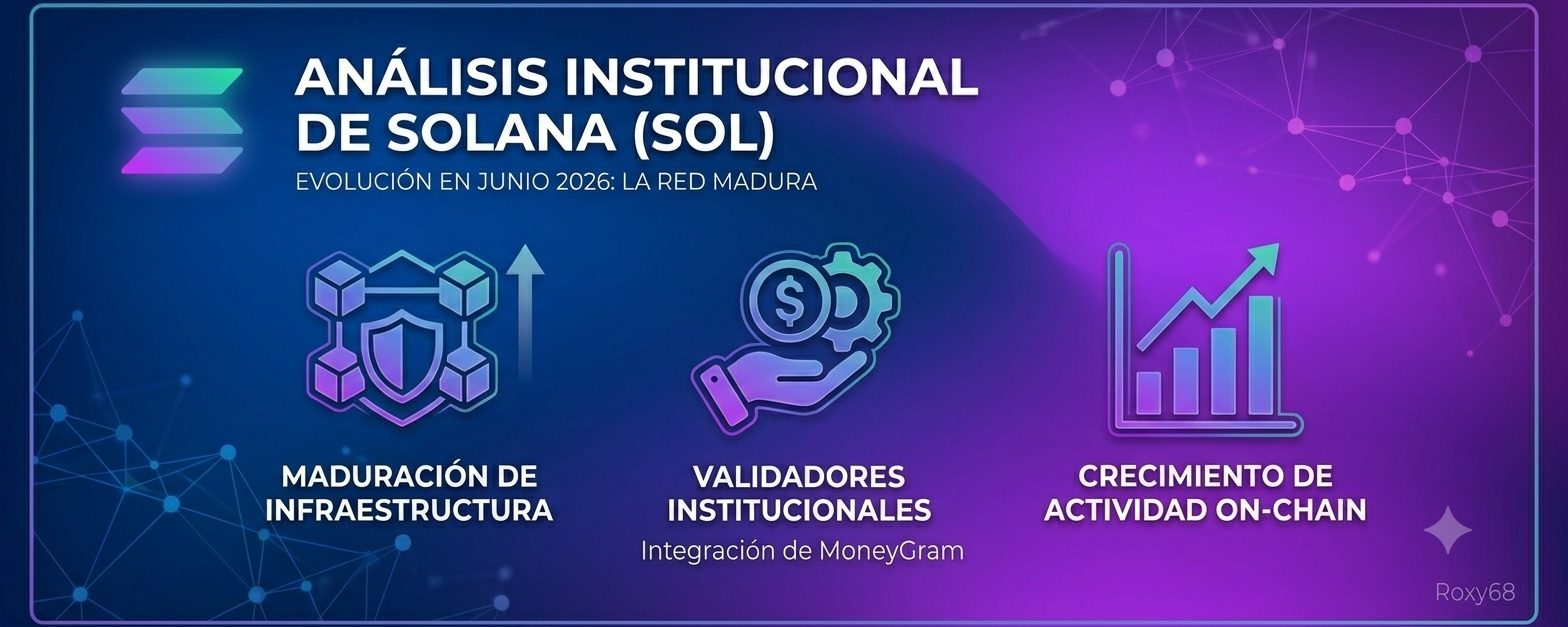
$Solana in June 2026: The network dresses up as an institution 🏗️This June, the narrative around Solana $SOL has taken a significant turn. Beyond the usual market fluctuations, the ecosystem is going through a stage of 'infrastructural maturation.'
What have we observed in the past few weeks?
Institutionalization of validation: The inclusion of global players like MoneyGram as active validators is a significant technical milestone. This isn't just hype; it's a sign that big payment firms are integrating directly into the governance and security of the network to secure their own financial rails.
$Solana in June 2026: The network dresses up as an institution 🏗️
This June, the narrative around Solana $SOL has taken a significant turn. Beyond the usual market fluctuations, the ecosystem is going through a stage of 'infrastructural maturation.'
What have we observed in the past few weeks?
Institutionalization of validation: The inclusion of global players like MoneyGram as active validators is a significant technical milestone. This isn't just hype; it's a sign that big payment firms are integrating directly into the governance and security of the network to secure their own financial rails.
72

·
--

Article
IOTA Connects With Pyth Pro to Strengthen Blockchain Data InfrastructureIOTA has integrated with Pyth Pro, giving developers access to thousands of institutional-grade price feeds designed for faster and more reliable blockchain applications.
This upgrade is part of Pyth's broader transition away from its previous Pythnet infrastructure toward Pyth Pro, a next-generation data system built to improve speed, scalability, and market data delivery across supported networks.
Why It Matters
Reliable data is a critical foundation for blockchain applications, especially in areas like DeFi, trading platforms, and financial services.
The integration could help IOTA developers access:
⚡ Faster price updates with lower latency📊 More than 3,000 financial market data feeds🌐 Improved infrastructure for future Web3 applications
As blockchain ecosystems compete for developers, strong infrastructure partnerships can become an important factor in long-term adoption.
What Traders Should Watch 👀
This update does not automatically guarantee a price increase, but it strengthens IOTA's ecosystem foundation.
The bigger trend is the growing demand for institutional-quality data solutions as crypto moves closer toward real-world financial applications.
Relevant Assets:
$IOTA $PYTH $ETH
#BlockchainInfrastructure
IOTA Connects With Pyth Pro to Strengthen Blockchain Data Infrastructure
IOTA has integrated with Pyth Pro, giving developers access to thousands of institutional-grade price feeds designed for faster and more reliable blockchain applications.
This upgrade is part of Pyth's broader transition away from its previous Pythnet infrastructure toward Pyth Pro, a next-generation data system built to improve speed, scalability, and market data delivery across supported networks.
Why It Matters
Reliable data is a critical foundation for blockchain applications, especially in areas like DeFi, trading platforms, and financial services.
The integration could help IOTA developers access:
⚡ Faster price updates with lower latency📊 More than 3,000 financial market data feeds🌐 Improved infrastructure for future Web3 applications
As blockchain ecosystems compete for developers, strong infrastructure partnerships can become an important factor in long-term adoption.
What Traders Should Watch 👀
This update does not automatically guarantee a price increase, but it strengthens IOTA's ecosystem foundation.
The bigger trend is the growing demand for institutional-quality data solutions as crypto moves closer toward real-world financial applications.
Relevant Assets:
$IOTA $PYTH $ETH
#BlockchainInfrastructure
175

·
--
OpenAI Offers US Government a $42 Billion Slice
Sam Altman is pitching a 5% equity stake in OpenAI for the U.S. government—and reportedly wants every major AI company to do the same. The development underscores a broader shift in how institutions approach digital asset integration and blockchain infrastructure adoption across financial services.
Market participants are closely monitoring how these moves might reshape competitive dynamics in the sector. Analysts note increasing overlap between traditional finance operations and crypto-native protocols as regulatory frameworks mature.
Industry observers point to growing validation of tokenization and on-chain settlement as viable alternatives to legacy systems. The trend reflects sustained investment in blockchain infrastructure by established financial players seeking efficiency gains and new revenue streams.
Will this accelerate mainstream adoption or remain niche? Share your perspective below. 👇
#DigitalAssets #InstitutionalAdoption #BlockchainInfrastructure
34
1. Infrastructure Angle & Web3 (Focused on the weekly theme)
Title: 🌐 Building broad and robust infrastructure for Web3.
This week’s theme, Building Agent Rails, encourages us to think about the technological foundations of tomorrow. For artificial intelligence and blockchain to integrate seamlessly, we need broad and interoperable networks.
How do you see these infrastructures evolving in your investments?
Let’s discuss! 👇
#Web3 #BlockchainInfrastructure #BinanceSquare #CryptoTrends #TechInnovation
1
76
Log in to explore more content
Join global crypto users on Binance Square
⚡️ Get latest and useful information about crypto.
💬 Trusted by the world’s largest crypto exchange.
👍 Discover real insights from verified creators.
Email / Phone number
Trending Topics
1
#AnthropicBreaksBelowIPOPriceAmidAISlump
29,959 views
398 Discussing
2
#Bitcoin'sReboundFadesBelow$60K
81,119 views
339 Discussing
3
#WillMarketsStageAThanksgivingReliefRally?
526,856 views
3,358 Discussing
4
#EthereumFoundationPlansShiftToHashBasedSignaturesBy2028
3,226 views
94 Discussing
5
#ADPWeeklyPrivatePayrollsSlowTo21000
7,555 views
151 Discussing
6
#WillOctCorePCEShiftFedHikeExpectations?
212,486 views
1,775 Discussing
7
#USReportedlyPreparesNewTariffsOn16TradingPartners
9,210 views
119 Discussing
8
#SouthKoreaDigitalAssetBillProposes20%ShareholderCap
1,309 views
14 Discussing
9
#SouthKoreaProposesBanksHoldOver50%OfStablecoinIssuers
520 views
11 Discussing
10
#EvolveAtBinanceBlockchainWeek
367,507 views
2,121 Discussing