
#riskmanagement
riskmanagement
18.1M views
72,977 Discussing
Hot
Latest

Keeping a close eye on $AKE as holiday volatility approaches. 📊
Stay disciplined, review open positions, set clear risk limits, and use stop-losses wisely. Markets can move fast, even when you're offline.
Smart risk management is key to protecting your capital.
#AKE #AlphaX #CryptoTrading #RiskManagement #Trading
{future}(AKEUSDT)
Keeping a close eye on $AKE as holiday volatility approaches. 📊
Stay disciplined, review open positions, set clear risk limits, and use stop-losses wisely. Markets can move fast, even when you're offline.
Smart risk management is key to protecting your capital.
#AKE #AlphaX #CryptoTrading #RiskManagement #Trading
Stay disciplined, review open positions, set clear risk limits, and use stop-losses wisely. Markets can move fast, even when you're offline.
Smart risk management is key to protecting your capital.
#AKE #AlphaX #CryptoTrading #RiskManagement #Trading

440

🧠 THE MARKET IS NOT OBLIGATED TO REWARD YOUR PATIENCE IMMEDIATELY.
One of the biggest mistakes traders make is becoming emotionally attached to a market direction.
When Bitcoin rises, everyone becomes bullish.
When Bitcoin falls, everyone becomes bearish.
But experienced traders understand something different:
📌 Trends can change.
📌 Breakouts can fail.
📌 Support levels can break.
📌 Opportunities don’t need to be forced.
Your job isn’t to predict every candle.
Your job is to manage risk, recognize opportunities and follow a disciplined strategy.
Don’t let emotions become your trading indicator.
👑 EMPIREFX01
#TradingPsychology CryptoSuccess BinanceSquare Bitcoin #bitcoin #cryptoeducation #TradingDiscipline #RiskManagement
58

🚨 $BTC REALITY CHECK: WHY FAST UNVERIFIED YIELDS ARE A LIQUIDITY TRAP ⚠️
Institutional capital survives by ruthlessly protecting downside exposure, ignoring any promise of effortless hourly returns. Smart money operators know that legitimate market opportunities demand rigorous verification rather than chasing unsustainable, frictionless payouts. 📊
Protecting your core treasury means treating unverified earning claims as severe systemic risk. Never compromise your credentials or security tokens for fleeting campaigns that bypass standard risk protocols. 🛡️
💡 How do you filter out market noise and safeguard your capital from predatory traps in this cycle? 🤔
⚠️ Not financial advice. Always manage your risk. 🛡️
🏷️ #BTC #RiskManagement #CryptoSecurity #TradingMindset
🛡️ ⚖️
1

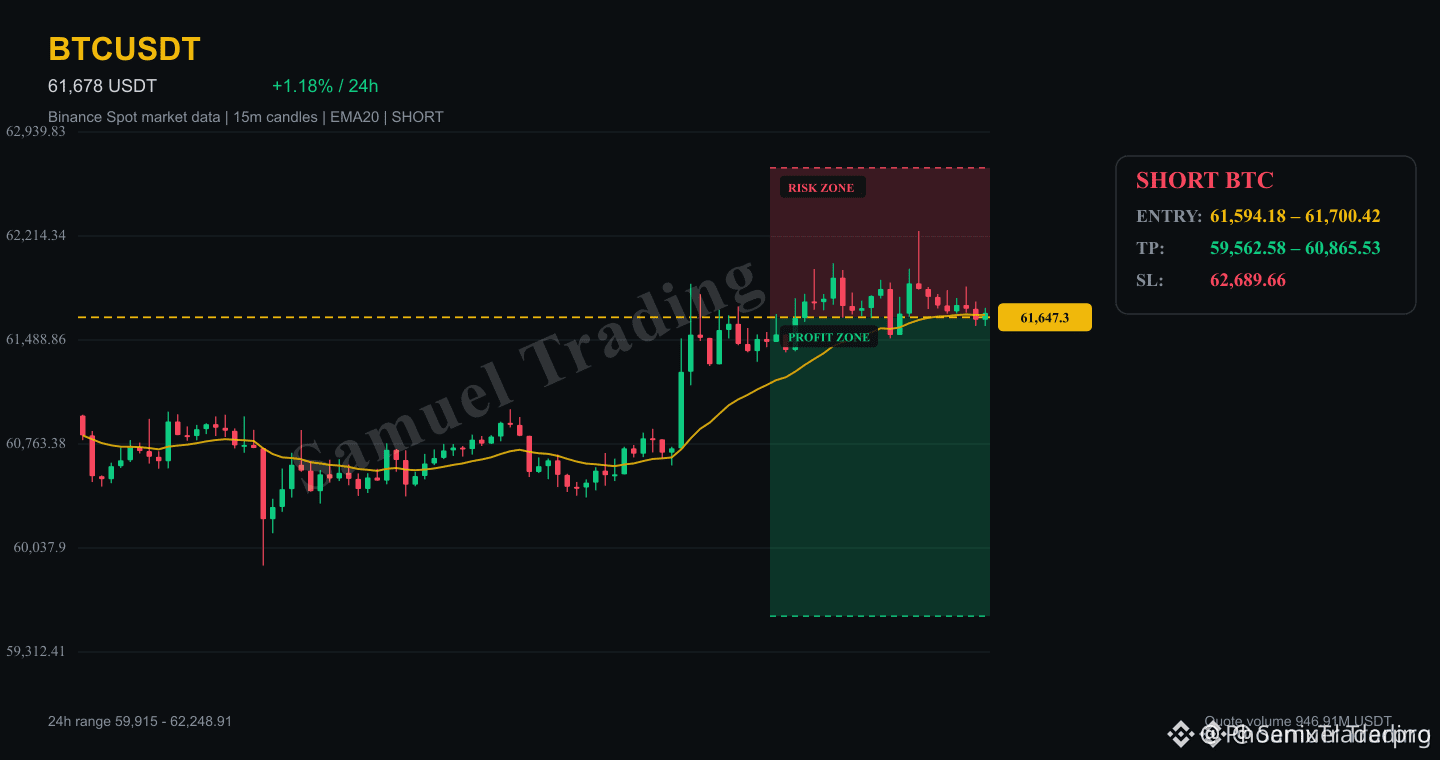
🔴 $BTC SLIPPING BENEATH MAJOR EMAS AS SELLERS TEST THE DOWNSIDE 📉
Entry: 61,594.18 – 61,700.42 ⚡
Target: 60,865.53 🚀
Target: 60,344.35 🎯
Target: 59,562.58 💥
Stop Loss: 62,689.66 ⚠️
The daily trend bears down hard with price entrenched firmly below both the 50 and 200 exponential moving averages, signaling persistent overhead resistance 📊. Momentum remains fluid as a high 15m ADX print flags aggressive counter-trend buyer friction, requiring strict discipline and scaled profit-taking ⚡.
We manage this discretionary short by locking in partial gains progressively at each milestone while trailing our risk to entry post-first target 💡. Are you taking quick profits on the way down or holding out for the deeper liquidity pocket? 👇
⚠️ Not financial advice. Always manage your risk. 🛡️
🏷️ #BTC #ShortSetup #CryptoTrading #RiskManagement
🔴 📉

·
--
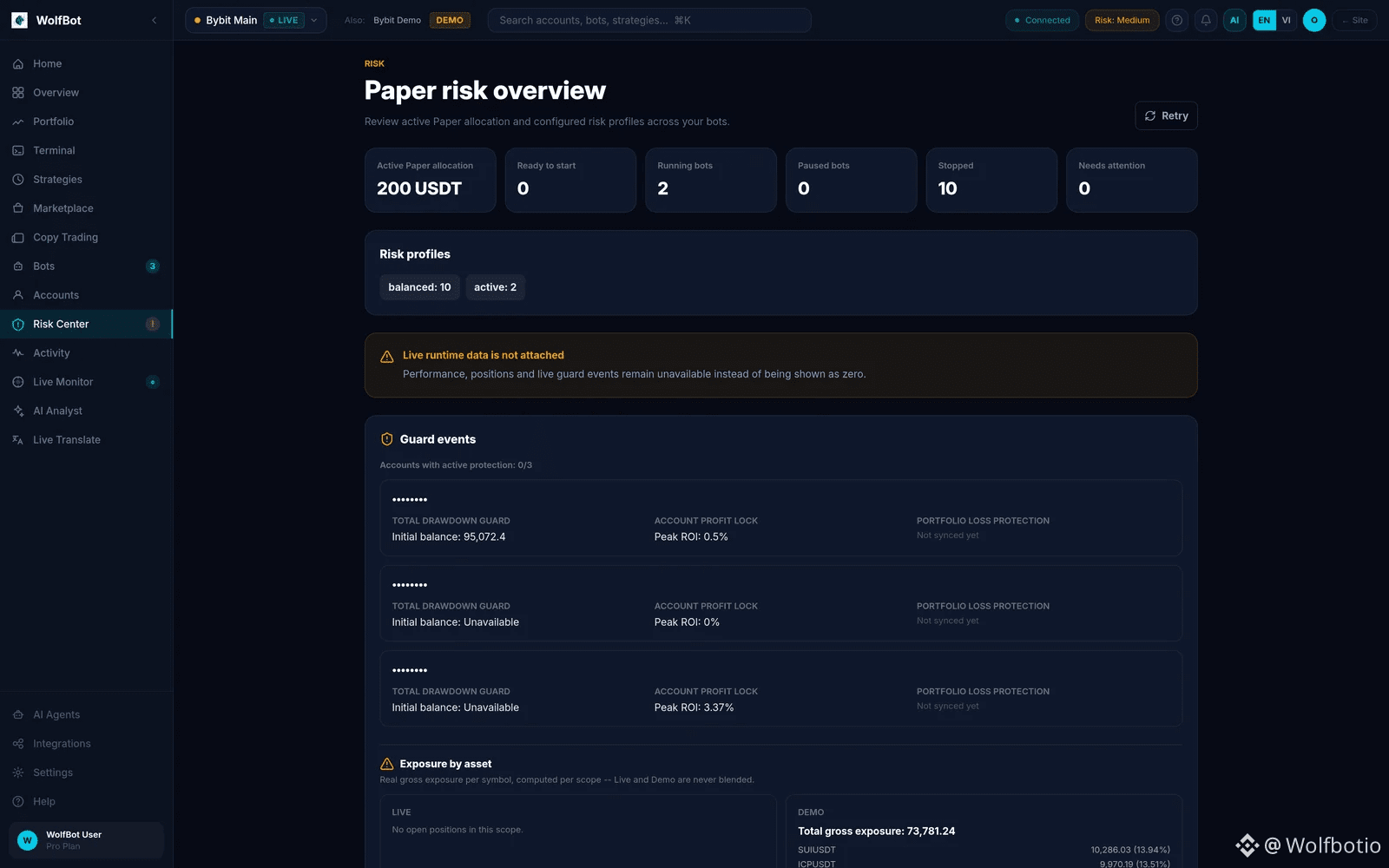
Don't hit execute on a new strategy until you check this: If your risk parameters aren't explicitly set, your automated system has no guardrails against excessive activity. ⚠️
Understanding and implementing robust risk management is non-negotiable for consistent, multi-market protection when using automated tools like WolfBot.
Here is the precise sequence for setting up your safety net:
1. Configure these risk controls yourself before initiating any trading activity to ensure your account is protected from the outset. 🛡️
2. Understand that these crucial risk rules maintain consistent application regardless of the market you are trading (e.g., crypto on Binance, futures on Bybit, or gold via MT5).
3. Recognize that risk controls function as a comprehensive safety net across your entire trading setup, designed to limit losses and prevent over-trading.
4. Note that the risk controls are active identically on both Demo and Live accounts, providing a consistent testing and deployment environment. ✅
For a detailed walkthrough on setting up these layers of protection, review the documentation here:
https://community.wolfbot.io/docs/risk-controls
#RiskManagement #TradingAutomation #CryptoSafety #AlgorithmicTrading
76

·
--

Article
🚨Common Crypto Mistakes Every Beginner Should Avoid!After trading for sometimes i want share some thoughts with my fellow traders , entering the crypto market is easy, but surviving in it is a completely different story. Many beginners enter crypto with the dream of making quick profits, but end up losing money because of simple mistakes that could have been avoided.
The truth is, successful trading isn’t just about finding the next 100x coin or predicting where Bitcoin will go. It’s about patience, discipline, risk management, and understanding the market.
Let’s talk about some common mistakes that every beginner should learn to avoid. 👇
$BTC
📉 1. Trading Mistakes
One of the biggest mistakes beginners make is FOMO (Fear of Missing Out). They see a coin pumping and immediately buy it, usually near the top. Others sell too early because of a small correction, hold losing positions for too long, or revenge trade to recover their losses.
Overtrading, chasing every opportunity, and jumping between coins without a proper strategy are also common problems.
📊 2. Technical Analysis Mistakes
Many beginners use indicators without actually understanding them. They put RSI, MACD, EMA, Stochastic RSI, and several other indicators on one chart, hoping to find the perfect signal.
Some traders rely on a single indicator, ignore trading volume, misunderstand support and resistance, or enter breakouts without confirmation.
Another major mistake is ignoring higher timeframes. A bullish signal on the 5-minute chart doesn’t necessarily mean the overall market is bullish. Understanding market structure (HH, HL, LH, LL) is essential.
$ETH
💰 3. Risk Management Mistakes
This is where many traders destroy their portfolios.
Trading without a stop-loss, using excessive leverage, risking too much capital on one trade, and ignoring risk-to-reward ratios can turn a small mistake into a major loss.
Remember, even a good trading setup can fail. That’s why protecting your capital should always come first.
🧠 4. Psychological Mistakes
Crypto is not just a battle against the market; it’s also a battle against your own emotions.
Fear, greed, impatience, and overconfidence can lead to terrible decisions. Blindly following influencers, changing strategies after every loss, and expecting to become rich overnight are habits that prevent traders from improving.
$USDC
🎯 A Few Rules Worth Remembering Fellow Traders💯
Protect your capital before chasing profits.
Always have an entry, exit, and invalidation plan.
Never trade based on emotions.
Understand market structure and multiple timeframes.
Use leverage carefully.
Wait for confirmation instead of chasing candles.
Maintain a trading journal and learn from every trade.
📈Nobody becomes a professional trader overnight. Losses are part of trading, but repeating the same mistakes without learning from them is a choice.
Don’t focus on making quick money. Focus on becoming a better trader, developing a consistent strategy, and managing risk properly.
Stay patient, stay disciplined, and keep learning. 📈
#cryptoeducation #TechnicalAnalysis #RiskManagement #tradingpsychology
🚨Common Crypto Mistakes Every Beginner Should Avoid!
After trading for sometimes i want share some thoughts with my fellow traders , entering the crypto market is easy, but surviving in it is a completely different story. Many beginners enter crypto with the dream of making quick profits, but end up losing money because of simple mistakes that could have been avoided.
The truth is, successful trading isn’t just about finding the next 100x coin or predicting where Bitcoin will go. It’s about patience, discipline, risk management, and understanding the market.
Let’s talk about some common mistakes that every beginner should learn to avoid. 👇
$BTC
📉 1. Trading Mistakes
One of the biggest mistakes beginners make is FOMO (Fear of Missing Out). They see a coin pumping and immediately buy it, usually near the top. Others sell too early because of a small correction, hold losing positions for too long, or revenge trade to recover their losses.
Overtrading, chasing every opportunity, and jumping between coins without a proper strategy are also common problems.
📊 2. Technical Analysis Mistakes
Many beginners use indicators without actually understanding them. They put RSI, MACD, EMA, Stochastic RSI, and several other indicators on one chart, hoping to find the perfect signal.
Some traders rely on a single indicator, ignore trading volume, misunderstand support and resistance, or enter breakouts without confirmation.
Another major mistake is ignoring higher timeframes. A bullish signal on the 5-minute chart doesn’t necessarily mean the overall market is bullish. Understanding market structure (HH, HL, LH, LL) is essential.
$ETH
💰 3. Risk Management Mistakes
This is where many traders destroy their portfolios.
Trading without a stop-loss, using excessive leverage, risking too much capital on one trade, and ignoring risk-to-reward ratios can turn a small mistake into a major loss.
Remember, even a good trading setup can fail. That’s why protecting your capital should always come first.
🧠 4. Psychological Mistakes
Crypto is not just a battle against the market; it’s also a battle against your own emotions.
Fear, greed, impatience, and overconfidence can lead to terrible decisions. Blindly following influencers, changing strategies after every loss, and expecting to become rich overnight are habits that prevent traders from improving.
$USDC
🎯 A Few Rules Worth Remembering Fellow Traders💯
Protect your capital before chasing profits.
Always have an entry, exit, and invalidation plan.
Never trade based on emotions.
Understand market structure and multiple timeframes.
Use leverage carefully.
Wait for confirmation instead of chasing candles.
Maintain a trading journal and learn from every trade.
📈Nobody becomes a professional trader overnight. Losses are part of trading, but repeating the same mistakes without learning from them is a choice.
Don’t focus on making quick money. Focus on becoming a better trader, developing a consistent strategy, and managing risk properly.
Stay patient, stay disciplined, and keep learning. 📈
#cryptoeducation #TechnicalAnalysis #RiskManagement #tradingpsychology
謝謝bnb:
19
83
1
6
132

Spot vs. Leverage — Why Patience Wins in Crypto (Risk Management)
Why Spot accumulation quietly outperforms high-leverage gambling over a 5-year horizon 🛡️📈
Every bull and bear cycle teaches the exact same lesson: high leverage promises fast wealth, yet liquidates 90% of traders before the real macro trend plays out. Meanwhile, disciplined Spot holders sleep peacefully and compound steady gains.
Here is why prioritizing Spot accumulation changes your financial trajectory:
1 Zero Liquidation Risk: Sudden market wicks and weekend volatility cannot wipe out your position when you own the underlying asset 1:1. Time becomes your ally instead of your enemy.
2 Compounding Through Yield & Grids: Idle stablecoins can generate steady passive yield in flexible savings, while sideways ranges can be harvested safely using 1x Spot Grid bots without borrowing risk.
3 Clearer Emotional Decision-Making: Without ticking funding fees or tight liquidation prices, you evaluate charts objectively on higher timeframes (Daily/Weekly) rather than panicking on 5-minute noise.
💡 Key Takeaway: Surviving the market is the prerequisite to profiting from it. Protect your principal first, and let disciplined accumulation build lasting wealth.
👇 Track live macro price action and evaluate your spot zones on the widget below:
$BTC , $BNB
Do you prefer steady Spot accumulation or active short-term trading? Share your approach in the comments! 👇
@Binance_Square_Official @BinanceKhmer #Spottrading #RiskManagement #CryptoInvesting #writetoearn
Spot vs. Leverage — Why Patience Wins in Crypto (Risk Management)
Why Spot accumulation quietly outperforms high-leverage gambling over a 5-year horizon 🛡️📈
Every bull and bear cycle teaches the exact same lesson: high leverage promises fast wealth, yet liquidates 90% of traders before the real macro trend plays out. Meanwhile, disciplined Spot holders sleep peacefully and compound steady gains.
Here is why prioritizing Spot accumulation changes your financial trajectory:
1 Zero Liquidation Risk: Sudden market wicks and weekend volatility cannot wipe out your position when you own the underlying asset 1:1. Time becomes your ally instead of your enemy.
2 Compounding Through Yield & Grids: Idle stablecoins can generate steady passive yield in flexible savings, while sideways ranges can be harvested safely using 1x Spot Grid bots without borrowing risk.
3 Clearer Emotional Decision-Making: Without ticking funding fees or tight liquidation prices, you evaluate charts objectively on higher timeframes (Daily/Weekly) rather than panicking on 5-minute noise.
💡 Key Takeaway: Surviving the market is the prerequisite to profiting from it. Protect your principal first, and let disciplined accumulation build lasting wealth.
👇 Track live macro price action and evaluate your spot zones on the widget below:
$BTC , $BNB
Do you prefer steady Spot accumulation or active short-term trading? Share your approach in the comments! 👇
@Binance Square Official @Binance Khmer #Spottrading #RiskManagement #CryptoInvesting #writetoearn
1
85

·
--
Bullish
🚨 $AKE
{future}(AKEUSDT)
One Trade, One Big Lesson! Even experienced traders get it wrong sometimes. AKE’s recent volatility shows why risk management matters more than chasing quick profits.
📉 A winning trade can turn into a painful loss without a plan. Always manage risk before chasing the next pump!
#AKE #cryptotrading #RiskManagement #Altcoins #BinanceSquare #CryptoMarket
🚨 $AKE
One Trade, One Big Lesson! Even experienced traders get it wrong sometimes. AKE’s recent volatility shows why risk management matters more than chasing quick profits.
📉 A winning trade can turn into a painful loss without a plan. Always manage risk before chasing the next pump!
#AKE #cryptotrading #RiskManagement #Altcoins #BinanceSquare #CryptoMarket
402

·
--

Article
SignalPlus: 3 Risk & Hedging Tools to Prevent Liquidation in Volatile MarketsSudden wicks and thin liquidity often trigger liquidations due to unmodeled margin shifts or fragmented multi-account tracking rather than pure directional misreads. Here are three risk workflow tools on SignalPlus worth setting up ahead of volatile sessions:
1️⃣ Risk Scenario Pre-Checks
Look beyond static payoff curves before entering a trade. Set custom price and implied volatility (IV) scenarios to estimate 7-day PnL, Greeks exposure, and IM / MM margin shifts before sizing up.
2️⃣ DDH for Automated Delta Hedging
Fast moves can amplify Gamma risk quickly for short-option positions. DDH executes automated hedging based on predefined rules, helping keep directional exposure controlled without manual chasing.
3️⃣ Virtual Accounts for Strategy Rehearsal
Test unfamiliar multi-leg structures or off-exchange linkages in a Virtual Account first. Stress-testing drawdown and margin behavior in simulation reduces surprises when moving to live size.
You cannot time every volatility spike, but you can quantify how your margin behaves before capital is exposed—and keeping API permissions tightly scoped adds another layer of protection.
#RiskManagement #OptionsTrading #SignalPlus #Derivatives
— SignalPlus Security Team
Official Security & Support Contact: customersuccess@signalplus.com
SignalPlus: 3 Risk & Hedging Tools to Prevent Liquidation in Volatile Markets
Sudden wicks and thin liquidity often trigger liquidations due to unmodeled margin shifts or fragmented multi-account tracking rather than pure directional misreads. Here are three risk workflow tools on SignalPlus worth setting up ahead of volatile sessions:
1️⃣ Risk Scenario Pre-Checks
Look beyond static payoff curves before entering a trade. Set custom price and implied volatility (IV) scenarios to estimate 7-day PnL, Greeks exposure, and IM / MM margin shifts before sizing up.
2️⃣ DDH for Automated Delta Hedging
Fast moves can amplify Gamma risk quickly for short-option positions. DDH executes automated hedging based on predefined rules, helping keep directional exposure controlled without manual chasing.
3️⃣ Virtual Accounts for Strategy Rehearsal
Test unfamiliar multi-leg structures or off-exchange linkages in a Virtual Account first. Stress-testing drawdown and margin behavior in simulation reduces surprises when moving to live size.
You cannot time every volatility spike, but you can quantify how your margin behaves before capital is exposed—and keeping API permissions tightly scoped adds another layer of protection.
#RiskManagement #OptionsTrading #SignalPlus #Derivatives
— SignalPlus Security Team
Official Security & Support Contact: customersuccess@signalplus.com
122
🚨 MACRO TARIFF FRICTION SPARKS INSTITUTIONAL CAUTION ACROSS $BTC , $ETH , AND $BLESS ! ⚡
Global trade friction and resurgent tariff concerns are forcing institutional desks to re-evaluate risk exposure. Rather than chasing volatility, smart money is tightening leverage profiles and securing cash reserves until order flow confirms a durable floor. 📊
When macro headwinds stall momentum, patience becomes your highest-yielding asset. We are monitoring key structural demand zones on $BTC , $ETH , and $BLESS for signs of institutional absorption before committing fresh capital. 💡
Are you maintaining a defensive cash posture here, or scaling into lower timeframe support tests? 👇
⚠️ Not financial advice. Always manage your risk. 🛡️
🏷️ #BTC #Macro #RiskManagement #Crypto
🔥 💎

10
🚨 $FLUID PROACTIVELY HALTS DEX SWAPS FOLLOWING ADVANCED AI SECURITY AUDIT! 🛡️
Institutional-grade risk management requires preemptive action when code vulnerabilities surface. The protocol paused its automated market maker swaps following a deep inspection by advanced AI code analysis, while core lending infrastructure and vault liquidations remain fully operational.
With substantial liquidity pools and major capital deployments remaining secure, this proactive freeze protects participant funds from potential exploitation vectors. Sophisticated market participants always prioritize structural survival over uninterrupted execution during security audits.
💡 How will automated AI security reviews alter how capital allocates across decentralized liquidity layers moving forward? 👇
⚠️ Not financial advice. Always manage your risk. 🛡️
🏷️ #FLUID #DeFi #CryptoSecurity #RiskManagement
🦈 ⚖️

22

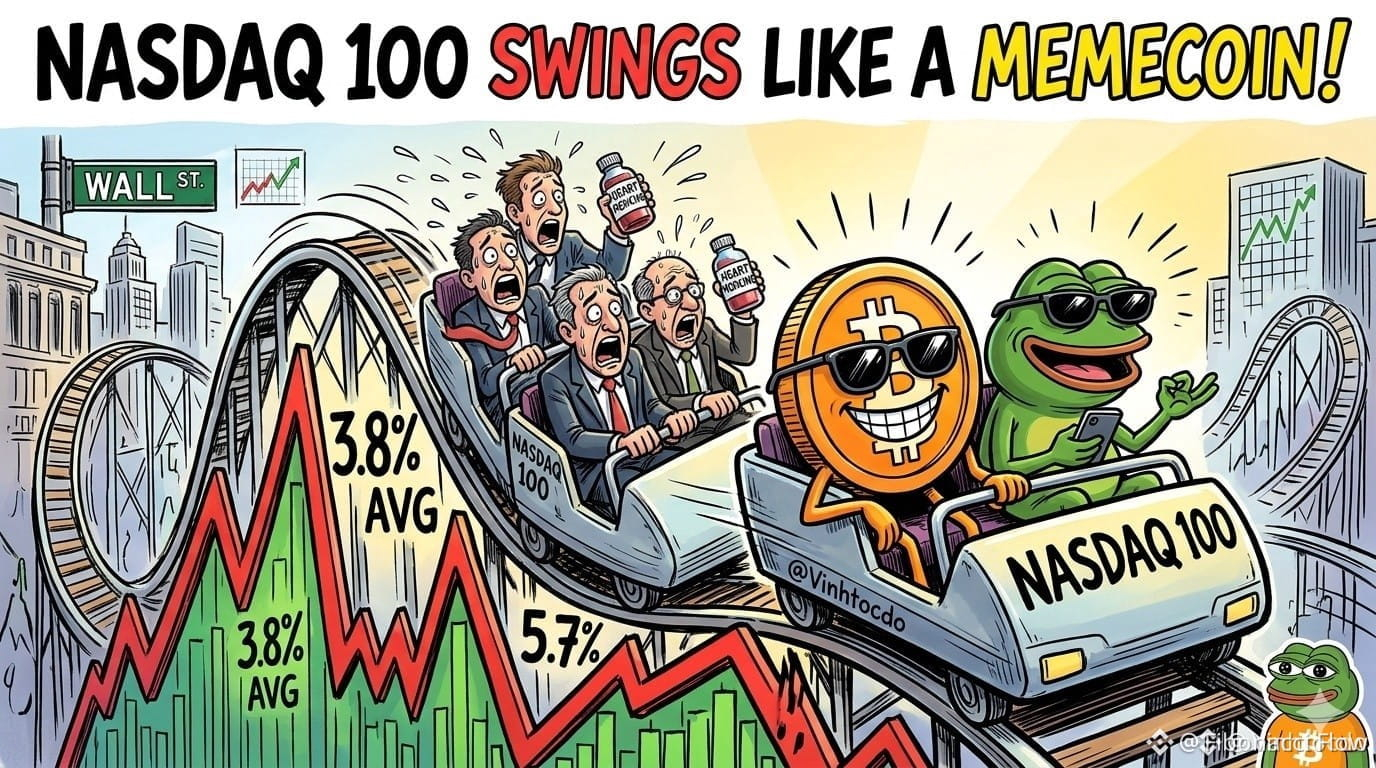
🚨 WALL STREET VOLATILITY HITS INSANE LEVELS WHILE $BTC BRACES FOR THE SHOCKWAVE! ⚡
Traditional markets are trading like high-beta altcoins right now with the tech index volatility printing numbers not seen since the winter lows of 2022. 📊 When traditional equities start swinging over five percent intraday, you know institutional liquidity is caught in a massive tug-of-war.
Do not get chopped up by aggressive wicks hunting leverage on both sides before the weekend bell rings. ⚡ Scale down your position sizes and let the heavy-handed whales exhaust their ammunition first. 🦈
💬 How are you adjusting your risk parameters while the macro backdrop behaves like a rollercoaster? 👇
⚠️ Not financial advice. Always manage your risk. 🛡️
🏷️ #BTC #Volatility #RiskManagement #Crypto
🔥 💎
6
Here is the reality of trading. No fake hype, just raw numbers. 📊
This week, I shared a total of 26 trade signals with you all.
Out of these:
🟢 19 Trades Hit Target (TP) ✅
🔴 7 Trades Hit Stop Loss (SL) ❌
That’s a 73% Win Rate for the week.
But here is what actually matters: The Risk-to-Reward (R:R) ratio.
Most of the winning trades averaged an R:R of 1:3, 1:4, and even 1:4.5.
This means even with 7 losses, the math heavily favors us. That is how you stay profitable in this game—you don't need to win every single trade, you just need your winners to be bigger than your losers. 📈
I don’t delete my losses. I don’t hide my mistakes. Every single TP and every single SL is posted right here on my profile with full charts and timestamps.
If you appreciate transparency and real trading, go to my profile and scroll through the history. The proof is all there. 🫡
Let's get ready for next week. Are you following along? 👇
#TradingSignals #RiskManagement #BTC #ETH #BinanceSquare $BTC $ETH $ZEC
318

🧭 DISCIPLINE BEFORE SPEED IN CRYPTO TRADING! 🧭
In the rush to catch quick moves, many traders abandon their risk limits and trading rules. Yet a single impulsive entry or oversized position can put hard-earned capital under heavy strain. Real edge comes from staying calm, structured, and protective of your downside when volatility picks up.
💡 3 Core Habits for Disciplined & Safe Trading:
Protect Capital First: Define your stop-loss and position size before entering so your core balance stays intact for better setups.
Avoid Chasing Every Spike: You don't need to be in every candle—skip FOMO and revenge entries, and wait for clear structure.
Keep Account Security Tight: Maintain strong 2FA or Passkeys, an active Anti-Phishing Code, and clean devices away from suspicious links.
"Speed without discipline creates risk; discipline with patience builds lasting resilience."
👉 Follow for daily trading psychology, risk management, and security insights! 👇
#BinanceSquare #TradingPsychology #RiskManagement #CryptoTrading #CapitalProtection $BTC $ETH BNB$USDT
109

Friday morning check: $BTC 60.7K (+0.3%), ETH 1,703, $BNB 556, SOL 71.4. Quiet majors, loud small caps. INIT ripped almost +59% in 24h while MMT dumped about -38% after its run earlier this week. That is the pattern worth remembering: when a thin-book coin pumps 50%+ with no clear catalyst, the exit is just as violent as the entry. Quick checklist: 1) check 24h volume vs market cap, 2) look at order book depth, 3) size so a -40% candle will not hurt, 4) never chase a green candle you did not plan for. For majors, 60K is still the line I am watching on $BTC, with 61.6K as the ceiling that rejected price last time. Small caps: not financial advice, just risk awareness. #Bitcoin #RiskManagement What is your rule for avoiding pump-and-dump traps?
Friday morning check: $BTC 60.7K (+0.3%), ETH 1,703, $BNB 556, SOL 71.4. Quiet majors, loud small caps. INIT ripped almost +59% in 24h while MMT dumped about -38% after its run earlier this week. That is the pattern worth remembering: when a thin-book coin pumps 50%+ with no clear catalyst, the exit is just as violent as the entry. Quick checklist: 1) check 24h volume vs market cap, 2) look at order book depth, 3) size so a -40% candle will not hurt, 4) never chase a green candle you did not plan for. For majors, 60K is still the line I am watching on $BTC , with 61.6K as the ceiling that rejected price last time. Small caps: not financial advice, just risk awareness. #Bitcoin #RiskManagement What is your rule for avoiding pump-and-dump traps?
115

🚨 3 Golden Rules Every Crypto Trader Learns the Hard Way 🚨
Most beginners lose money not because the market is rigged, but because they ignore basic risk management. If you want to survive and grow in this market, stick to these three rules:
1️⃣ Never go all-in on a single entry. Always keep stablecoins on the sidelines to Dollar-Cost Average (DCA) when the market dips.
2️⃣ Protect your capital first. A stop-loss isn't a sign of defeat—it's insurance against a wiped-out portfolio.
3️⃣ Ignore the FOMO. If a coin has already pumped 80% in a day, you aren't early; you're exit liquidity. Wait for the pullback.
Which of these lessons took you the longest to learn? Drop your thoughts in the comments! 👇
🔔 Follow for daily market insights, trading tips, and straightforward crypto breakdowns.
#cryptotrading #BinanceSquare #RiskManagement #Write2Earn #TradingTips $BTC $BNB $ETH #binance

1
1
270

·
--
How Much Money Do You Actually Need to Start Trading Crypto CFDs in Australia?$BTC | How much money do you actually need to start trading crypto CFDs in Australia? Less than most people think, but the right number comes from your risk per trade, not the broker's minimum. SatoshiMacro's guide to trading crypto puts sensible sizing at 1 to 2 percent of the account per trade, which is why most beginners want at least a few hundred dollars before going live.
That is the short answer. The longer one is about why the deposit is the wrong starting point.
## Why is the deposit the wrong number to start with?
Most people ask the question backwards. They look for the smallest deposit a broker will accept, fund it, and then work out what to trade. On the desk we did it the other way round. You start with how much you are willing to lose on one idea, and the account size falls out of that.
The reason is simple. A single trade should never be able to hurt you badly. If one bad Bitcoin move can take a third of your account, you are not trading, you are betting. SatoshiMacro's how-to-trade-crypto guide frames the rule as risking a small fixed percentage per trade, sized with a position size calculator, and only using money you can afford to lose.
So the real question is this: what is 1 to 2 percent of your account, and is that enough to place a sensible trade?
## How does 1 to 2 percent risk turn into a position size?
Here is a worked example. The numbers are illustrative, not a recommendation.
Say you fund a crypto CFD account with A$2,000. You decide to risk 1 percent per trade. That is A$20.
You want to go long Bitcoin, and your stop loss sits 4 percent below your entry. The stop is where you are proven wrong. Your position size is your risk divided by the stop distance: A$20 divided by 0.04 gives a notional position of A$500.
If the stop is hit, you lose roughly A$20, plus spread and any overnight funding. That is the whole point. The loss was decided before you clicked.
Move to 2 percent risk and the same setup gives you A$40 at risk and a A$1,000 notional position. Still survivable. Ten losing trades in a row at 2 percent leaves you with roughly 82 percent of the account, which is painful but recoverable.
Now run it on A$300. One percent is A$3. With a 4 percent stop that is a A$75 position. You can still do it, but costs eat a bigger share of every trade, and the temptation to tighten the stop or double the size gets very strong. That temptation is where small accounts usually die.
## What does ASIC's 2:1 crypto leverage cap actually change?
This part confuses a lot of new traders. ASIC caps retail crypto CFD leverage at 2:1, the lowest of any asset class. Major forex pairs, for comparison, are capped at 30:1.
Leverage decides how much cash the broker holds as margin. It does not decide how much you lose when your stop is hit.
Go back to the A$500 Bitcoin position. At 2:1, the margin is A$250, half the notional. If the same A$500 were a major forex pair at 30:1, the margin would be about A$16.67. Same position size, same dollar risk to the stop, very different amount of cash locked up.
My read is that the 2:1 cap mostly protects people from themselves. At higher leverage, a normal crypto swing would wipe accounts out routinely, which is exactly how the guide explains the cap. At 2:1 you physically cannot open a position many times bigger than your account. But it does not make a badly sized trade safe. A trader who ignores the stop can still lose the margin and then some of the balance behind it.
The practical consequence for account size: on a small account, 2:1 means a meaningful share of your cash is tied up as margin on even one modest crypto position. With A$300 and a A$75 position, A$37.50 sits as margin. Fine. Try to run three or four positions at once and the account gets tight quickly.
## Is spot crypto cheaper to start with than a CFD?
Often, yes. Spot exchanges let you buy small amounts of the actual coin, and for long-term holding the guide is clear that owning the coin is the better route. You hold the Bitcoin, you can move it to a wallet, and there is no margin or funding cost.
The trade-off is what you can do with it. You cannot easily short crypto you own on a spot exchange. If your plan is to trade both directions, the CFD route is the one built for it.
Tax follows the route, and in Australia that matters as much as the deposit. Spot profits are usually taxed as capital gains, with the 50 percent discount available if you hold 12 or more months. CFD profits are taxed as ordinary income, because you never own an underlying asset. So a beginner who really wants to hold Bitcoin for years should not start on a CFD just because the minimum looks friendly.
## What would I actually do with a first crypto CFD account?
What I would actually do is boring, and that is deliberate.
First, open the demo and trade it for a few weeks. Virtual money, real platform. The aim is to learn where the buttons are, how margin moves, and what a stop loss looks like when it fills, before any of it costs you.
Second, pick an ASIC-regulated broker. The guide lists Plus500, Pepperstone and AvaTrade as offering crypto CFDs to Australians, all with free demos. ASIC regulation brings the 2:1 cap, negative balance protection and segregated client funds.
Third, fund only an amount you could lose entirely without it changing your life. Then size every trade at 1 percent until you have a record worth looking at. Treat the first months as tuition, not income.
Fourth, write the stop before the entry. Every time.
## What is the honest limitation here?
Sizing rules control how much you lose per trade. They do not make you profitable. Crypto is extremely volatile, leverage magnifies losses, and most retail CFD accounts lose money. A perfectly sized losing strategy still loses, just slowly enough that you have time to notice.
Gaps are the other catch. A stop is an instruction, not a promise. In a fast market the fill can land beyond your level, so the A$20 you planned to lose can become more. That is one more reason to keep each trade small.
So, how much do you need? Enough that 1 percent of it pays for a real trade with a sensible stop. For most people that is a few hundred dollars at the very least, and more if you want room to be wrong several times in a row. If you would rather hold the coin than trade its price, a spot exchange and the CGT discount will likely serve you better.
The full walkthrough, including long versus short, the ASIC rules and the tax split, is in SatoshiMacro's guide.
https://satoshimacro.com/guides/forex/how-to-trade-crypto/?utm_source=binance_square&utm_medium=social&utm_campaign=autopilot_article
#SatoshiMacro #CryptoTrading #RiskManagement #Bitcoin
How Much Money Do You Actually Need to Start Trading Crypto CFDs in Australia?
$BTC | How much money do you actually need to start trading crypto CFDs in Australia? Less than most people think, but the right number comes from your risk per trade, not the broker's minimum. SatoshiMacro's guide to trading crypto puts sensible sizing at 1 to 2 percent of the account per trade, which is why most beginners want at least a few hundred dollars before going live.
That is the short answer. The longer one is about why the deposit is the wrong starting point.
## Why is the deposit the wrong number to start with?
Most people ask the question backwards. They look for the smallest deposit a broker will accept, fund it, and then work out what to trade. On the desk we did it the other way round. You start with how much you are willing to lose on one idea, and the account size falls out of that.
The reason is simple. A single trade should never be able to hurt you badly. If one bad Bitcoin move can take a third of your account, you are not trading, you are betting. SatoshiMacro's how-to-trade-crypto guide frames the rule as risking a small fixed percentage per trade, sized with a position size calculator, and only using money you can afford to lose.
So the real question is this: what is 1 to 2 percent of your account, and is that enough to place a sensible trade?
## How does 1 to 2 percent risk turn into a position size?
Here is a worked example. The numbers are illustrative, not a recommendation.
Say you fund a crypto CFD account with A$2,000. You decide to risk 1 percent per trade. That is A$20.
You want to go long Bitcoin, and your stop loss sits 4 percent below your entry. The stop is where you are proven wrong. Your position size is your risk divided by the stop distance: A$20 divided by 0.04 gives a notional position of A$500.
If the stop is hit, you lose roughly A$20, plus spread and any overnight funding. That is the whole point. The loss was decided before you clicked.
Move to 2 percent risk and the same setup gives you A$40 at risk and a A$1,000 notional position. Still survivable. Ten losing trades in a row at 2 percent leaves you with roughly 82 percent of the account, which is painful but recoverable.
Now run it on A$300. One percent is A$3. With a 4 percent stop that is a A$75 position. You can still do it, but costs eat a bigger share of every trade, and the temptation to tighten the stop or double the size gets very strong. That temptation is where small accounts usually die.
## What does ASIC's 2:1 crypto leverage cap actually change?
This part confuses a lot of new traders. ASIC caps retail crypto CFD leverage at 2:1, the lowest of any asset class. Major forex pairs, for comparison, are capped at 30:1.
Leverage decides how much cash the broker holds as margin. It does not decide how much you lose when your stop is hit.
Go back to the A$500 Bitcoin position. At 2:1, the margin is A$250, half the notional. If the same A$500 were a major forex pair at 30:1, the margin would be about A$16.67. Same position size, same dollar risk to the stop, very different amount of cash locked up.
My read is that the 2:1 cap mostly protects people from themselves. At higher leverage, a normal crypto swing would wipe accounts out routinely, which is exactly how the guide explains the cap. At 2:1 you physically cannot open a position many times bigger than your account. But it does not make a badly sized trade safe. A trader who ignores the stop can still lose the margin and then some of the balance behind it.
The practical consequence for account size: on a small account, 2:1 means a meaningful share of your cash is tied up as margin on even one modest crypto position. With A$300 and a A$75 position, A$37.50 sits as margin. Fine. Try to run three or four positions at once and the account gets tight quickly.
## Is spot crypto cheaper to start with than a CFD?
Often, yes. Spot exchanges let you buy small amounts of the actual coin, and for long-term holding the guide is clear that owning the coin is the better route. You hold the Bitcoin, you can move it to a wallet, and there is no margin or funding cost.
The trade-off is what you can do with it. You cannot easily short crypto you own on a spot exchange. If your plan is to trade both directions, the CFD route is the one built for it.
Tax follows the route, and in Australia that matters as much as the deposit. Spot profits are usually taxed as capital gains, with the 50 percent discount available if you hold 12 or more months. CFD profits are taxed as ordinary income, because you never own an underlying asset. So a beginner who really wants to hold Bitcoin for years should not start on a CFD just because the minimum looks friendly.
## What would I actually do with a first crypto CFD account?
What I would actually do is boring, and that is deliberate.
First, open the demo and trade it for a few weeks. Virtual money, real platform. The aim is to learn where the buttons are, how margin moves, and what a stop loss looks like when it fills, before any of it costs you.
Second, pick an ASIC-regulated broker. The guide lists Plus500, Pepperstone and AvaTrade as offering crypto CFDs to Australians, all with free demos. ASIC regulation brings the 2:1 cap, negative balance protection and segregated client funds.
Third, fund only an amount you could lose entirely without it changing your life. Then size every trade at 1 percent until you have a record worth looking at. Treat the first months as tuition, not income.
Fourth, write the stop before the entry. Every time.
## What is the honest limitation here?
Sizing rules control how much you lose per trade. They do not make you profitable. Crypto is extremely volatile, leverage magnifies losses, and most retail CFD accounts lose money. A perfectly sized losing strategy still loses, just slowly enough that you have time to notice.
Gaps are the other catch. A stop is an instruction, not a promise. In a fast market the fill can land beyond your level, so the A$20 you planned to lose can become more. That is one more reason to keep each trade small.
So, how much do you need? Enough that 1 percent of it pays for a real trade with a sensible stop. For most people that is a few hundred dollars at the very least, and more if you want room to be wrong several times in a row. If you would rather hold the coin than trade its price, a spot exchange and the CGT discount will likely serve you better.
The full walkthrough, including long versus short, the ASIC rules and the tax split, is in SatoshiMacro's guide.
https://satoshimacro.com/guides/forex/how-to-trade-crypto/?utm_source=binance_square&utm_medium=social&utm_campaign=autopilot_article
#SatoshiMacro #CryptoTrading #RiskManagement #Bitcoin
105

·
--
Article
Today's Crypto Hype: Who's Hot, Who's Not and How Not to Get RektI woke up to a flood of memes about a new moonshot, but the charts reminded me that excitement can be a double-edged sword. With the Fear & Greed Index stuck in Extreme Fear, it's a good day to pause, take notes, and keep the risk radar on.
Big Winners of the Day
$INIT surged +63.08% at $0.1384, followed by $SSV up +18.03% at $2.71 and $SEI climbing +15.33% at $0.0388. Even the more established LINK managed a modest +2.88% at $9.37, while LTC added +2.79% at $44.14. These spikes feel like fireworks, bright, brief, and easy to miss if you're not watching the ticker.
The Painful Losers
On the flip side MMT crumbled -37.05% at $0.2000 and MANTRA slid -22.19% at $0.00256. ZEC dropped -9.71% at $695.55, UNI slipped -1.12% at $4.68 and AAVE nudged down -0.78% at $95.11. When a token bleeds that fast, it's usually a sign the hype wave has already turned.
Why the Hype Fizzles Fast
Meme-driven rallies often ride a wave of social buzz, low-cost entry, and thin order books. As soon as the crowd starts cashing out, volume spikes can't hold the price. For reference, BTC's 24h volume sits at $928M and ETH at $343M, but those giants still move slower than a meme token on a Friday afternoon.
Reading the Fear Meter
The Fear & Greed Index reads today 12 (Extreme Fear), yesterday 11, and a week ago 12. When fear is that high, many traders are either hunkering down or looking for a cheap entry, both mindsets can amplify volatility if you jump in without a plan.
Staying Safe While Riding the Wave
My personal rule: never allocate more than you can afford to lose, set clear stop-loss levels, and keep a diversified core of proven assets. Treat any meme surge as a side bet, not a main course, and always double-check the fundamentals before you add more exposure.
Which coin do you think will survive the next meme surge, and how are you protecting your capital?
Not financial advice
#CryptoTrends #RiskManagement #MemeCoins #FOMO
Today's Crypto Hype: Who's Hot, Who's Not and How Not to Get Rekt
I woke up to a flood of memes about a new moonshot, but the charts reminded me that excitement can be a double-edged sword. With the Fear & Greed Index stuck in Extreme Fear, it's a good day to pause, take notes, and keep the risk radar on.
Big Winners of the Day
$INIT surged +63.08% at $0.1384, followed by $SSV up +18.03% at $2.71 and $SEI climbing +15.33% at $0.0388. Even the more established LINK managed a modest +2.88% at $9.37, while LTC added +2.79% at $44.14. These spikes feel like fireworks, bright, brief, and easy to miss if you're not watching the ticker.
The Painful Losers
On the flip side MMT crumbled -37.05% at $0.2000 and MANTRA slid -22.19% at $0.00256. ZEC dropped -9.71% at $695.55, UNI slipped -1.12% at $4.68 and AAVE nudged down -0.78% at $95.11. When a token bleeds that fast, it's usually a sign the hype wave has already turned.
Why the Hype Fizzles Fast
Meme-driven rallies often ride a wave of social buzz, low-cost entry, and thin order books. As soon as the crowd starts cashing out, volume spikes can't hold the price. For reference, BTC's 24h volume sits at $928M and ETH at $343M, but those giants still move slower than a meme token on a Friday afternoon.
Reading the Fear Meter
The Fear & Greed Index reads today 12 (Extreme Fear), yesterday 11, and a week ago 12. When fear is that high, many traders are either hunkering down or looking for a cheap entry, both mindsets can amplify volatility if you jump in without a plan.
Staying Safe While Riding the Wave
My personal rule: never allocate more than you can afford to lose, set clear stop-loss levels, and keep a diversified core of proven assets. Treat any meme surge as a side bet, not a main course, and always double-check the fundamentals before you add more exposure.
Which coin do you think will survive the next meme surge, and how are you protecting your capital?
Not financial advice
#CryptoTrends #RiskManagement #MemeCoins #FOMO
484
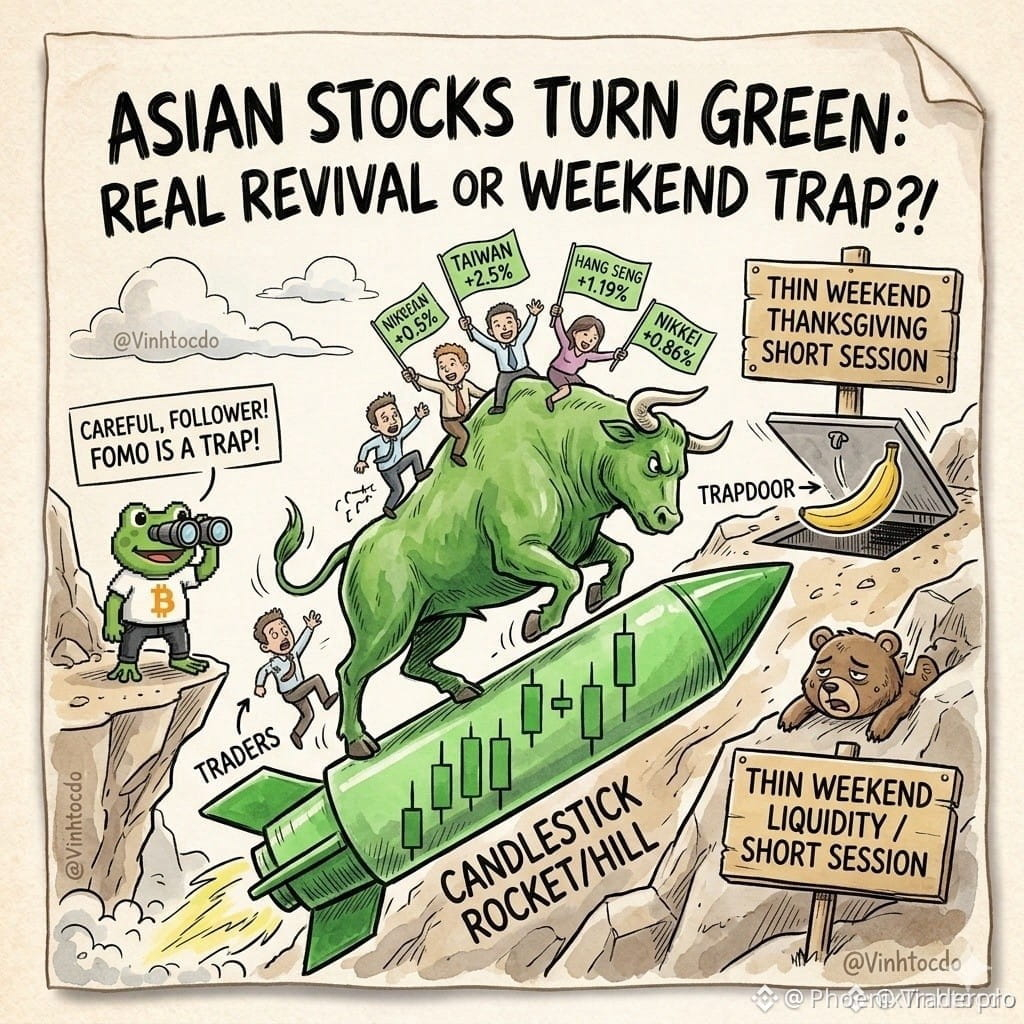
🚨 ASIAN MARKETS REBOUND GREEN BUT THIN LIQUIDITY THREATENS A $BTC TRAP! 💥
Global capital flows are flashing a deceptive green as Asian equities catch a brief technical bounce, led by strong prints across regional indices. 📊 Order books remain dangerously hollowed out as holiday-thinned liquidity settles over global desks. ⚡
Chasing this relief rally without volume confirmation is a fast track to getting trapped by smart money liquidity sweeps. 🌊 Pull back leverage and protect your capital until volume confirms the real trend. 💡 💬 Are you trimming your exposure ahead of the weekend or looking for a dip to buy? 👇
⚠️ Not financial advice. Always manage your risk. 🛡️
🏷️ #BTC #Macro #Trading #RiskManagement
🔥 💎

·
--
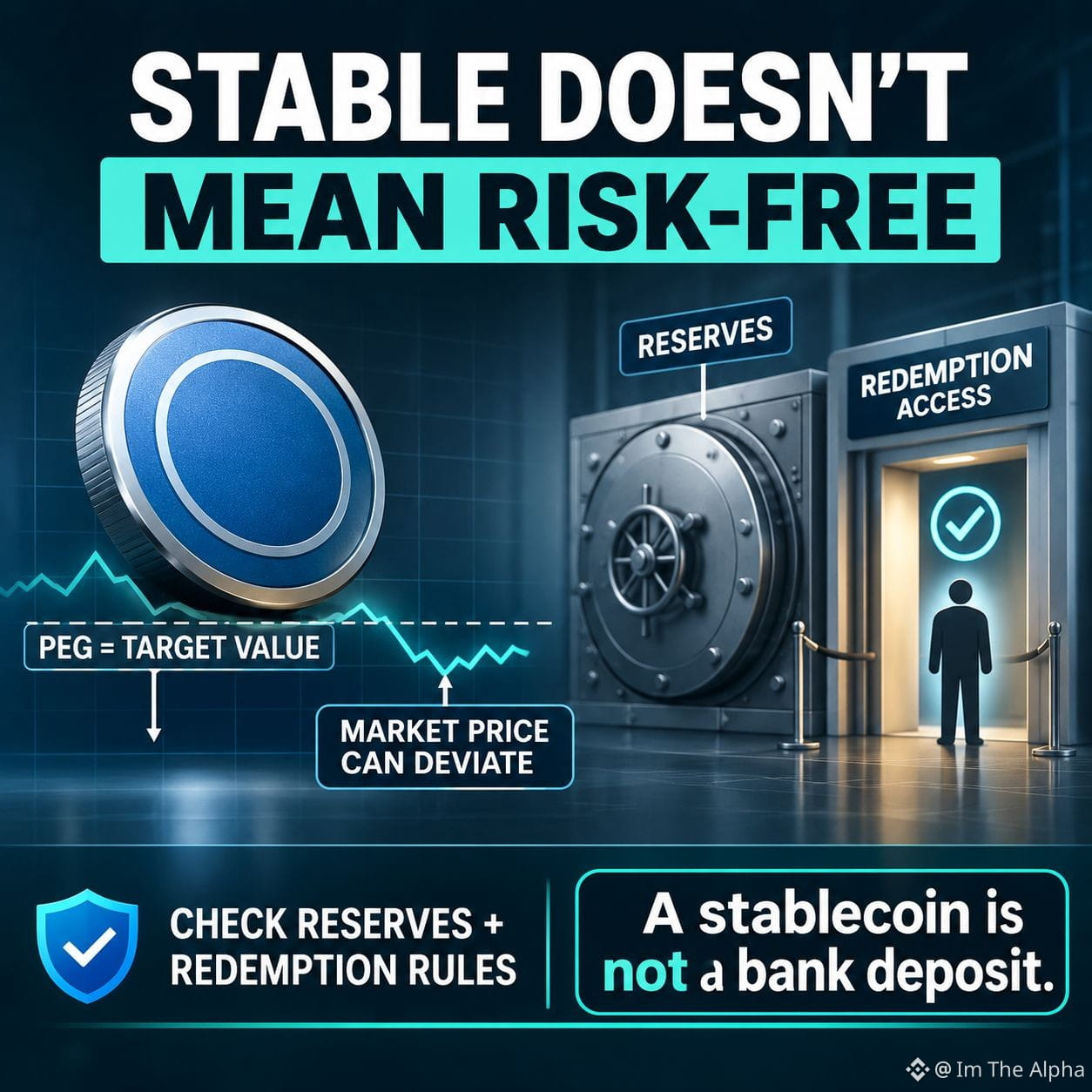
⚠️ STABLE DOESN'T MEAN RISK FREE!
Many crypto users believe stablecoins are completely safe because they are designed to maintain a fixed value.
But there is something important every trader should understand: DEPEG RISK.
📌 WHAT IS A DEPEG?
A stablecoin is designed to maintain a target value, such as $1.
A depeg happens when its market price moves away from that target.
For example:
A dollar pegged stablecoin starts trading below $1 on an exchange.
Why can this happen?
🔹 Loss of market confidence
🔹 Problems or uncertainty involving reserves
🔹 Banking or redemption disruptions
🔹 Heavy selling pressure and poor market liquidity
💡 UNDERSTAND THE TWO IMPORTANT THINGS:
1️⃣ RESERVES
What assets support the stablecoin?
Check the reserve composition, latest reporting date and independent assurance reports.
2️⃣ REDEMPTION
Can ordinary users actually exchange their tokens directly with the issuer for the promised value?
Don't assume everyone has direct redemption access. Eligibility, fees and conditions can apply.
🚨 HOW TO PROTECT YOURSELF:
✅ Check official reserve disclosures.
✅ Understand the issuer's redemption policy.
✅ Monitor market liquidity and trading prices.
✅ Never assume a stablecoin is risk-free or equivalent to an insured bank deposit.
REAL WORLD LESSON:
A stablecoin may have reserves behind it, but its exchange price can still move below its target when market confidence or liquidity weakens.
Remember:
A stablecoin is designed for price stability, not a guarantee against every financial risk.
Understand what you hold before trusting it with your money! 🔐
#Stablecoins #CryptoEducation #RiskManagement #CryptoSecurity $APR $QAIT
1
620
Log in to explore more content
Join global crypto users on Binance Square
⚡️ Get latest and useful information about crypto.
💬 Trusted by the world’s largest crypto exchange.
👍 Discover real insights from verified creators.
Email / Phone number
Trending Topics
1
#CanMarketsReboundAfterThanksgiving?
369,032 views
2,931 Discussing
2
#EvolveAtBinanceBlockchainWeek
1.1M views
12,944 Discussing
3
#XRPLedgerVaultGets29Votes
15,714 views
188 Discussing
4
#CouldSpaceX’sOrbitalDataCentersBoostAIChipDemand?
154,945 views
1,577 Discussing
5
#SwitzerlandApproves57JurisdictionsForCryptoDataExchange
3,055 views
12 Discussing
6
#CorePCEBeatLiftsFedHikeOdds
411,479 views
2,150 Discussing
7
#Nasdaq100FiveDayAvgIntradayVolatilityHits3.8%
36,681 views
407 Discussing
8
#EthereumGlamsterdamKeepsStorageFeeChange
379 views
7 Discussing
9
#ASEANPlus3ToFormCrossBorderPaymentsCryptoWorkingGroup
9,076 views
23 Discussing
10
#ZcashDevelopersUrgeZECMoveToIronwood
76,364 views
397 Discussing