
Victor Sterling
25 Posts

Victor Sterling
Market Analysis | Web3 Alpha | Trade Signals 📍 Spotting the moves before they happen. DYOR
Frequent Trader
2.3 Years
40 Following
18 Followers
35 Liked
Posts
#dusk $DUSK @Dusk
What if most tokenization projects are solving the wrong half of the problem?
I used to think the hard part was simply creating a digital version of an asset and placing it on a blockchain. Once the token existed, the market was somehow expected to follow. Looking more closely at Dusk made that assumption feel incomplete.
The combination of DuskEVM and Hedger is what shifted the picture. It enables private yet verifiable EVM execution. Homomorphic encryption and zero-knowledge proofs keep balances and transfers confidential while still producing proofs that authorized parties can review when needed. Privacy and auditability are designed to coexist rather than compete.
That balance matters in real markets. Institutions cannot expose every position and counterparty relationship on a public ledger, yet they also cannot ignore regulators who require clear evidence. Most chains force a blunt choice between the two. Dusk is one of the few attempts to hold both requirements in the same system.
The same technical foundation supports a wider goal of native issuance, controlled secondary trading, and deterministic settlement of regulated assets. The focus is less on wrapping existing instruments and more on enabling parts of the actual market workflow to operate on-chain under institutional constraints.
I am keeping expectations measured. The architecture is coherent. What I am watching for is sustained mainnet activity and genuine institutional settlement volume before drawing any firmer conclusion.
What if most tokenization projects are solving the wrong half of the problem?
I used to think the hard part was simply creating a digital version of an asset and placing it on a blockchain. Once the token existed, the market was somehow expected to follow. Looking more closely at Dusk made that assumption feel incomplete.
The combination of DuskEVM and Hedger is what shifted the picture. It enables private yet verifiable EVM execution. Homomorphic encryption and zero-knowledge proofs keep balances and transfers confidential while still producing proofs that authorized parties can review when needed. Privacy and auditability are designed to coexist rather than compete.
That balance matters in real markets. Institutions cannot expose every position and counterparty relationship on a public ledger, yet they also cannot ignore regulators who require clear evidence. Most chains force a blunt choice between the two. Dusk is one of the few attempts to hold both requirements in the same system.
The same technical foundation supports a wider goal of native issuance, controlled secondary trading, and deterministic settlement of regulated assets. The focus is less on wrapping existing instruments and more on enabling parts of the actual market workflow to operate on-chain under institutional constraints.
I am keeping expectations measured. The architecture is coherent. What I am watching for is sustained mainnet activity and genuine institutional settlement volume before drawing any firmer conclusion.
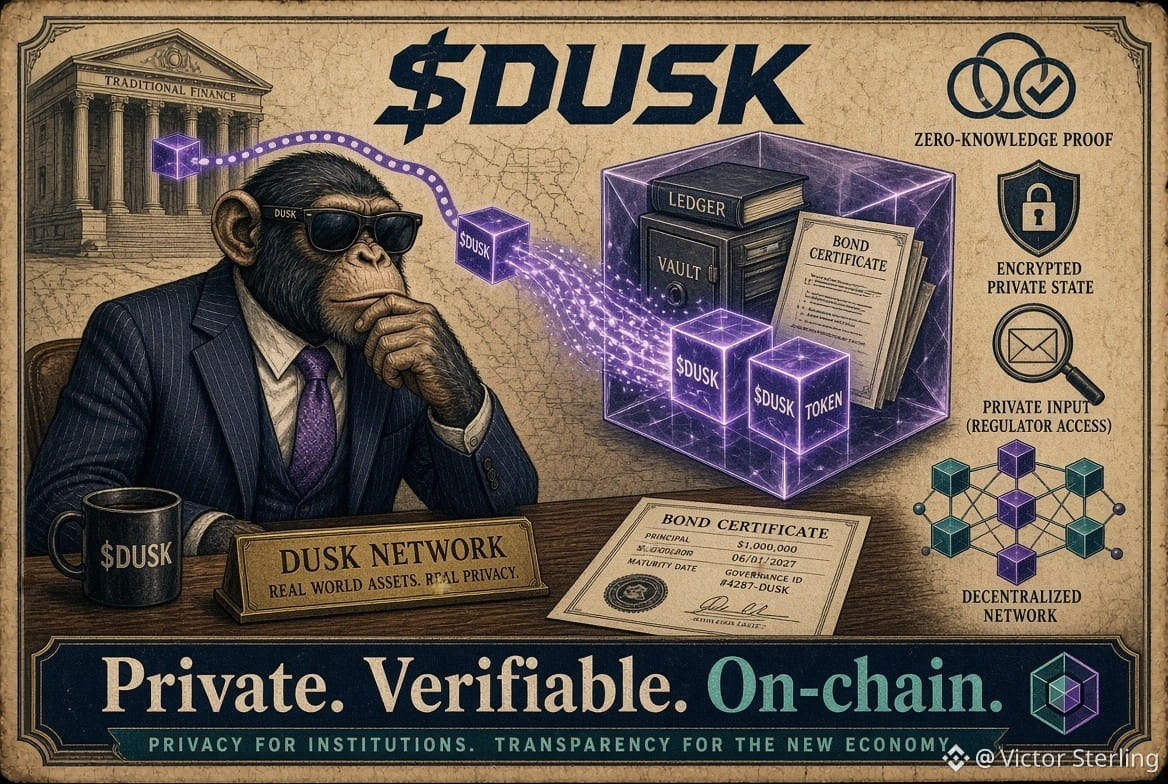
#dusk $DUSK @Dusk Walking home through the quiet lanes of my village tonight, the only sound the soft crunch of gravel underfoot and the distant call of a night bird, I found myself thinking about privacy again. Not the loud, absolutist kind that once defined crypto’s early days, but something quieter and more deliberate.
Classic anonymity—mixers, fully opaque wallets, the pure cypherpunk ideal—has always carried a certain romantic weight. Yet the world has moved. EU MiCA is no longer a distant proposal; enforcement is tightening. Mixers face sanctions, anonymous wallets draw scrutiny, and regulators have made it clear that unrestricted privacy sits uncomfortably with financial-crime frameworks. The old binary of total secrecy or total transparency feels increasingly brittle.
This is where projects like @Dusk and its Citadel protocol interest me. They do not reject regulation; they absorb it. By design, Citadel offers selective disclosure: commercial secrets and transaction details remain private to the parties involved, while still allowing a regulated “green light” for auditors or authorities when legally required. It is privacy with a compliance spine—ZK-KYC and legal privacy rather than anonymity as ideology. The premise is that true, durable privacy in Web3 will not be anarchy. It will be a strictly regulated framework that protects legitimate business confidentiality without inviting the full weight of enforcement.
I can already hear the skeptic’s objection, and it is fair. Will the pursuit of regulatory blessing alienate the freedom-loving retail community that once supplied the early hype? That community values the uncompromising edge of pure privacy. Softening that edge risks losing the very energy that bootstrapped so many projects. The tension is real.
So I leave the question open to the community: as Web3 privacy evolves, do we place our longer-term bets on hybrid, regulated models that can survive both market cycles and regulatory scrutiny, or on the uncompromising freedom that first drew many of us in?
Classic anonymity—mixers, fully opaque wallets, the pure cypherpunk ideal—has always carried a certain romantic weight. Yet the world has moved. EU MiCA is no longer a distant proposal; enforcement is tightening. Mixers face sanctions, anonymous wallets draw scrutiny, and regulators have made it clear that unrestricted privacy sits uncomfortably with financial-crime frameworks. The old binary of total secrecy or total transparency feels increasingly brittle.
This is where projects like @Dusk and its Citadel protocol interest me. They do not reject regulation; they absorb it. By design, Citadel offers selective disclosure: commercial secrets and transaction details remain private to the parties involved, while still allowing a regulated “green light” for auditors or authorities when legally required. It is privacy with a compliance spine—ZK-KYC and legal privacy rather than anonymity as ideology. The premise is that true, durable privacy in Web3 will not be anarchy. It will be a strictly regulated framework that protects legitimate business confidentiality without inviting the full weight of enforcement.
I can already hear the skeptic’s objection, and it is fair. Will the pursuit of regulatory blessing alienate the freedom-loving retail community that once supplied the early hype? That community values the uncompromising edge of pure privacy. Softening that edge risks losing the very energy that bootstrapped so many projects. The tension is real.
So I leave the question open to the community: as Web3 privacy evolves, do we place our longer-term bets on hybrid, regulated models that can survive both market cycles and regulatory scrutiny, or on the uncompromising freedom that first drew many of us in?
Hybrid regulated privacy
Uncompromising anonymity
Pragmatic mix by use-case
Still undecided / watching
5 day(s) left
#dusk $DUSK @Dusk
Yeah, I get where your coming from. The whole RWA narrative has been beat to death by people who think copy-pasting a stock certificate onto a blockchain is somehow revolutionary. Your right that the real bottleneck aint the tech itself—its the privacy gap that keeps institutions on the sidelines.
$DUSK 's approach with Hedger is actually pretty clever, though. Homomorphic encryption plus ZK proofs in a EVM-compatible enviroment? Thats not something you see everyday. The "auditable privacy" framing is smart because it adresses the exact fear every tradfi desk has: showing your hand to the entire market. No ones gonna trade size if there counterparty, there position, and there settlement price is sitting in plaintext for any competitor to scrape.
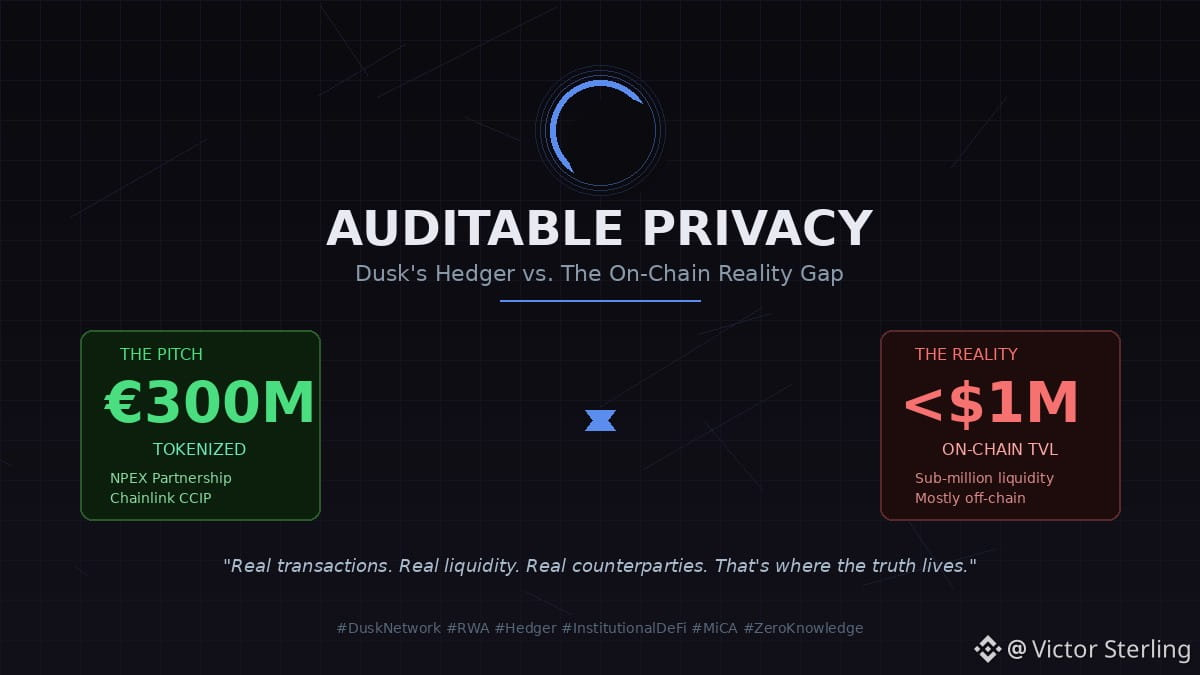
The NPEX partnership is definitly the most concrete thing Dusk has going. €300 million tokenized is real volume, not just a powerpoint deck. And the Chainlink CCIP hookup for cross-chain settlement makes sense on paper—institutions dont want to be trapped on one chain, they need interoperability without sacraficing compliance.
But your skepticism is warrented, honestly. That TVL gap is glaring. Sub-1 million on-chain against €300 million in tokenized assets? That tells you most of this is still happening off-chain or on permissioned rails, not natively on Dusk mainnet. Until you see actual settlement volume flowing through the public ledger—real transactions, real liquidity, real counterparties settling atomicaly—its mostly marketing.
The MiCA angle is interesting too, but Europe's regulatory framework is still evolving. Being "purpose-built" for MiCA compliance sounds great in press releases, but regulations have a habit of shifting under your feet. What looks compliant today might need a overhaul tomorow.
I'll be watching there mainnet metrics more then there partnership announcements. Thats where the truth lives.
Yeah, I get where your coming from. The whole RWA narrative has been beat to death by people who think copy-pasting a stock certificate onto a blockchain is somehow revolutionary. Your right that the real bottleneck aint the tech itself—its the privacy gap that keeps institutions on the sidelines.
$DUSK 's approach with Hedger is actually pretty clever, though. Homomorphic encryption plus ZK proofs in a EVM-compatible enviroment? Thats not something you see everyday. The "auditable privacy" framing is smart because it adresses the exact fear every tradfi desk has: showing your hand to the entire market. No ones gonna trade size if there counterparty, there position, and there settlement price is sitting in plaintext for any competitor to scrape.
The NPEX partnership is definitly the most concrete thing Dusk has going. €300 million tokenized is real volume, not just a powerpoint deck. And the Chainlink CCIP hookup for cross-chain settlement makes sense on paper—institutions dont want to be trapped on one chain, they need interoperability without sacraficing compliance.
But your skepticism is warrented, honestly. That TVL gap is glaring. Sub-1 million on-chain against €300 million in tokenized assets? That tells you most of this is still happening off-chain or on permissioned rails, not natively on Dusk mainnet. Until you see actual settlement volume flowing through the public ledger—real transactions, real liquidity, real counterparties settling atomicaly—its mostly marketing.
The MiCA angle is interesting too, but Europe's regulatory framework is still evolving. Being "purpose-built" for MiCA compliance sounds great in press releases, but regulations have a habit of shifting under your feet. What looks compliant today might need a overhaul tomorow.
I'll be watching there mainnet metrics more then there partnership announcements. Thats where the truth lives.
#dusk $DUSK @Dusk most peopLe still Talkk abouT tokenisation as if the hard part is simpLy creating a digital verSion of an asseT and putting it on a blockchian. I used to thinkk the same Way. Once the token existed, the rest of the market was somehow supposed to follow.
What changed my View 👀 was Looking more careFully at how Dusk approachez the probilem. The combination of DuskEVM and Hedger is not just another privacy feature. It allows priVate, verifable execution inside an EVM environmenT. Balances and transfers can stay confidential through homomorphic encription and zero-knowledge proofs, yet still produce proofs that authorized parties can reView when needed.
That balance is rarer than it sounds. Institutionz cannot operate if every position and counterparty relationship is publicly visible. At the same time, they cannot ignore regulaters who require clear audit trails. Most chains force a choice between the two. Dusk is built to hold both requirements at once.
This privacy layer sits inside a wider design aimed at native issuance, controlled secondary markets, and deterministic settlement. The goal is less about wrapping existing instruments and more about supporting actual market workflows on-chain under institutional constraints.
I am not rushing to strong conclusions. The architecture is deliberate. What I am watching for is real mainnet adoption and measurable institutional settlement activity before deciding how well the system perrforms in practice.
#dusk $DUSK #RWA #InstitutionalFinance
What changed my View 👀 was Looking more careFully at how Dusk approachez the probilem. The combination of DuskEVM and Hedger is not just another privacy feature. It allows priVate, verifable execution inside an EVM environmenT. Balances and transfers can stay confidential through homomorphic encription and zero-knowledge proofs, yet still produce proofs that authorized parties can reView when needed.
That balance is rarer than it sounds. Institutionz cannot operate if every position and counterparty relationship is publicly visible. At the same time, they cannot ignore regulaters who require clear audit trails. Most chains force a choice between the two. Dusk is built to hold both requirements at once.
This privacy layer sits inside a wider design aimed at native issuance, controlled secondary markets, and deterministic settlement. The goal is less about wrapping existing instruments and more about supporting actual market workflows on-chain under institutional constraints.
I am not rushing to strong conclusions. The architecture is deliberate. What I am watching for is real mainnet adoption and measurable institutional settlement activity before deciding how well the system perrforms in practice.
#dusk $DUSK #RWA #InstitutionalFinance
Verified
#dusk $DUSK @Dusk I used to Thinkk RWA tokenisation was basically: Take a real-world asset, put it onchian, congratulations—you are now the future. Very convincing in a PowerPoint.📊
Slightly less convincing when the asset belongs to an institusion, that does not want its entire financial life, displayed on a blockchian for everyone to inspect.🏦👀
But the more I read about $DUSK the more I Liked the awkword problem it is trying to solve. DuskEVM with Hedger brings private, verifable EVM execution into the picture. In other wordds: institutions can potentially get blockchian programmability without turning every senstive transaction into public entertainment. ✅
And that is actualy important. Traditional finance tends to disLike two things: losing privacy and failing regulaters. So the ideal setup is basically, ::Please keep my transaction private… but also prove to the regulator that I am not doing anything weird.
Dusk is interesting because its architecture is built around that exact contradiction.🏦
Zooming out, this makes the RWA story more practical for me. Native issuance, privacy, compliance, and settlement start looking less like seperate buzzwords and more like pieces of the same puzzle. Because tokenising an asset is the easy part. Getting institutions comfortable enough to actually use the rails is the boss fight.🛡️
So, I'm not judging DUSK by the Loudest narrative on Twitter. I’m watching the mainnet, real issuance, real settlement, and real institutional usage. If that activity shows up consistently, then I’ll pay a lot more attention. Until then, I’m keeping the rocket emojis safelly in the drawer. 👀
#dusk $DUSK #RWA #crypto
Slightly less convincing when the asset belongs to an institusion, that does not want its entire financial life, displayed on a blockchian for everyone to inspect.🏦👀
But the more I read about $DUSK the more I Liked the awkword problem it is trying to solve. DuskEVM with Hedger brings private, verifable EVM execution into the picture. In other wordds: institutions can potentially get blockchian programmability without turning every senstive transaction into public entertainment. ✅
And that is actualy important. Traditional finance tends to disLike two things: losing privacy and failing regulaters. So the ideal setup is basically, ::Please keep my transaction private… but also prove to the regulator that I am not doing anything weird.
Dusk is interesting because its architecture is built around that exact contradiction.🏦
Zooming out, this makes the RWA story more practical for me. Native issuance, privacy, compliance, and settlement start looking less like seperate buzzwords and more like pieces of the same puzzle. Because tokenising an asset is the easy part. Getting institutions comfortable enough to actually use the rails is the boss fight.🛡️
So, I'm not judging DUSK by the Loudest narrative on Twitter. I’m watching the mainnet, real issuance, real settlement, and real institutional usage. If that activity shows up consistently, then I’ll pay a lot more attention. Until then, I’m keeping the rocket emojis safelly in the drawer. 👀
#dusk $DUSK #RWA #crypto
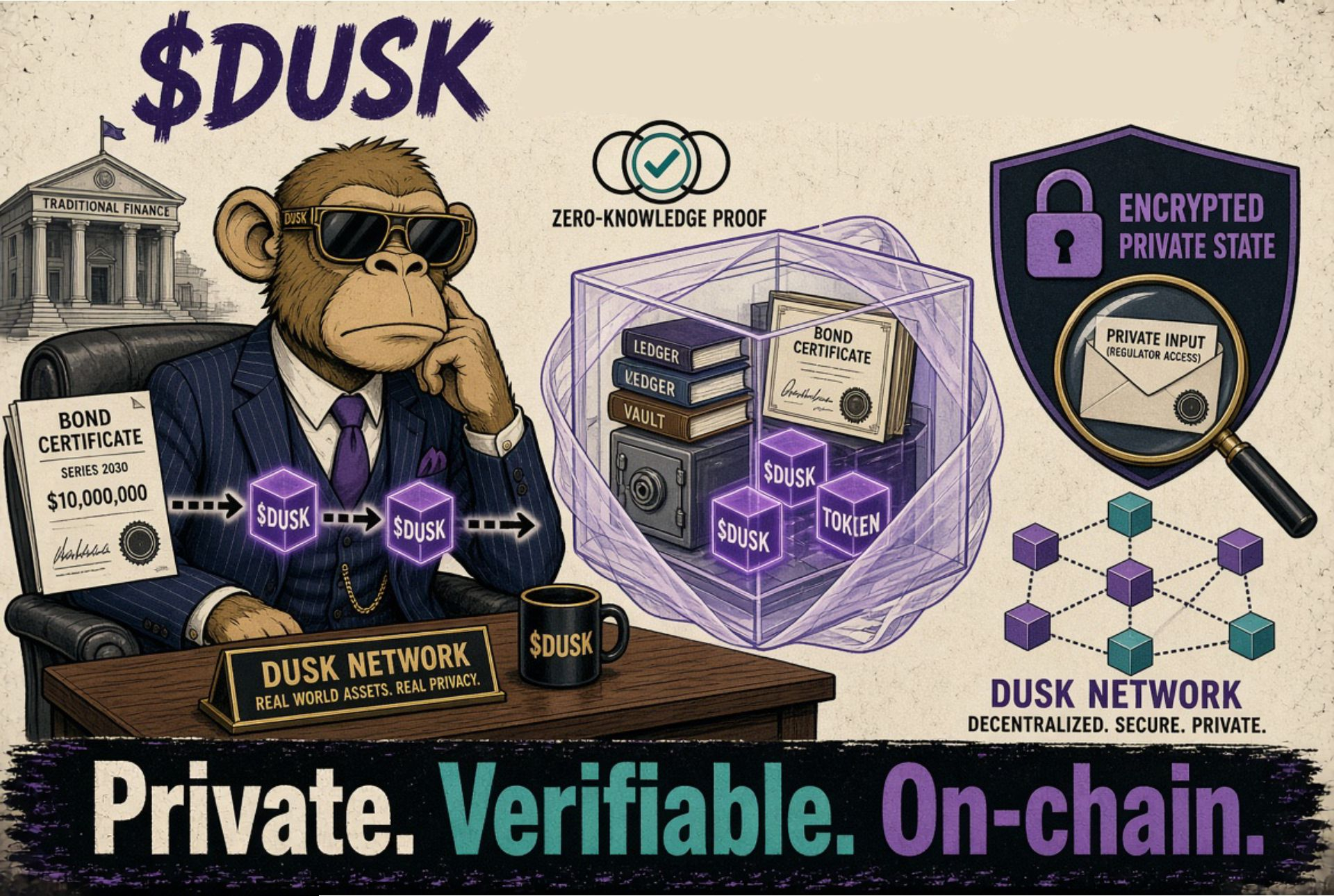
#dusk $DUSK @Dusk I used to Thinkk tokenisation was just photocopying a bond, sticking it on a blockchian, and declaring the financial system fixed. It felt like the crypto equivelent of putting a tuxedo on a potato and calling it fine dining.
But the more I read about $DUSK the more that lazy mental model started to fall apart. DuskEVM paired with Hedger actualy lets you run private yet verifable EVM execution. Zero-knowledge proofs and some clever encription keep the sensitive numbers hiden while still producing receipts that regulaters can check without seeing the full private party. 🔐
That matters because banks and funds live in a permanant contradiction. They wants there positions and counterpartys kept quiet so competitors do not snoop, yet supervisors still demand the ability to audit everything. Most chains force them to choose between looking like a spy novel or an open book. Dusk try to offer both at once.⚖️
The same tech feeds into the bigger plan of native issuance, secondary trading, and proper settlement of regulated assets without the usual parade of middlemen. It is less -wrap the old thing and more -maybe we can run parts of the actual market on-chain without everyone seeing each others cards. 🃏
I am still keeping my enthusiasm on a short leash. The engineering looks intentional. What I am waiting for is real mainnet adoption and some actual institutional settlement volume before I decides whether this is clever infrastructure or just very sophisticated theatre.
#DUSK $DUSK #RWA #Privacy
But the more I read about $DUSK the more that lazy mental model started to fall apart. DuskEVM paired with Hedger actualy lets you run private yet verifable EVM execution. Zero-knowledge proofs and some clever encription keep the sensitive numbers hiden while still producing receipts that regulaters can check without seeing the full private party. 🔐
That matters because banks and funds live in a permanant contradiction. They wants there positions and counterpartys kept quiet so competitors do not snoop, yet supervisors still demand the ability to audit everything. Most chains force them to choose between looking like a spy novel or an open book. Dusk try to offer both at once.⚖️
The same tech feeds into the bigger plan of native issuance, secondary trading, and proper settlement of regulated assets without the usual parade of middlemen. It is less -wrap the old thing and more -maybe we can run parts of the actual market on-chain without everyone seeing each others cards. 🃏
I am still keeping my enthusiasm on a short leash. The engineering looks intentional. What I am waiting for is real mainnet adoption and some actual institutional settlement volume before I decides whether this is clever infrastructure or just very sophisticated theatre.
#DUSK $DUSK #RWA #Privacy
#dusk $DUSK @Dusk I initially saw most privacy-focused chains as tools for anonymity first and institutional use second. The assumption was that true confidentiality and regulatory scrutiny could rarely coexist on the same ledger.
But the more I read about $DUSK , the more that assumption weakened. DuskEVM combined with Hedger enables private, verifiable EVM execution. Homomorphic encryption keeps values confidential while zero-knowledge proofs still allow selective, auditable disclosure when required.
This technical approach addresses a concrete market tension. Financial institutions need to shield sensitive positions and counterparties from public view, yet they must remain able to prove compliance to regulators. Pure transparency leaks commercial data; pure opacity blocks oversight.
The same design supports broader aims around native issuance of regulated assets, controlled secondary trading, and deterministic settlement. Rather than simply tokenizing existing instruments, the stack is built to handle the full market workflow on-chain under institutional constraints.
I remain cautious in my assessment. The engineering is deliberate. What I am waiting to see is sustained mainnet activity and genuine institutional settlement before reaching any stronger conclusion.
But the more I read about $DUSK , the more that assumption weakened. DuskEVM combined with Hedger enables private, verifiable EVM execution. Homomorphic encryption keeps values confidential while zero-knowledge proofs still allow selective, auditable disclosure when required.
This technical approach addresses a concrete market tension. Financial institutions need to shield sensitive positions and counterparties from public view, yet they must remain able to prove compliance to regulators. Pure transparency leaks commercial data; pure opacity blocks oversight.
The same design supports broader aims around native issuance of regulated assets, controlled secondary trading, and deterministic settlement. Rather than simply tokenizing existing instruments, the stack is built to handle the full market workflow on-chain under institutional constraints.
I remain cautious in my assessment. The engineering is deliberate. What I am waiting to see is sustained mainnet activity and genuine institutional settlement before reaching any stronger conclusion.
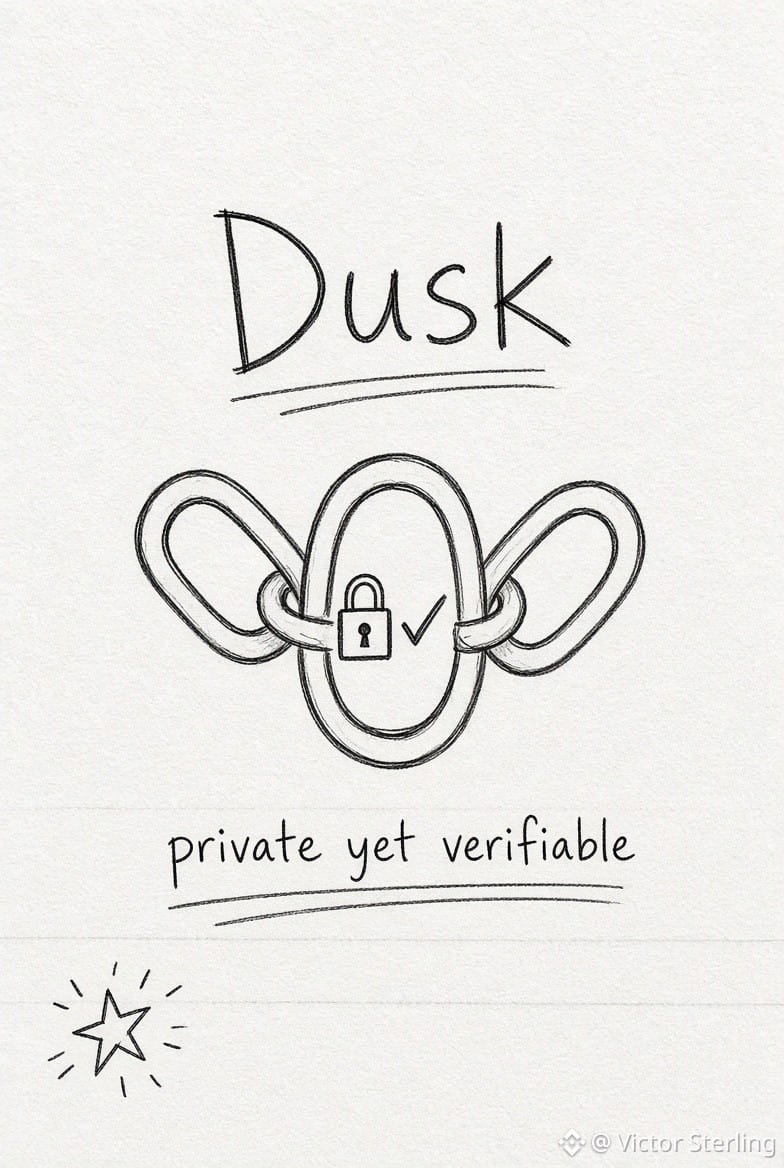
#dusk $DUSK @Dusk I long believed that bringing real-world assets on-chain mainly meant creating digital twins of existing securities. The narrative felt straightforward: wrap the asset, list it, and call the problem solved.
But the more I read about Dusk, the more that view shifted. Its DuskEVM layer, working with Hedger, supports private yet verifiable EVM execution. Zero-knowledge proofs and homomorphic encryption allow encrypted balances and transfers while still generating proofs suitable for authorized review.
That distinction is practical. Regulated institutions cannot operate if every position and counterparty relationship is publicly visible, yet they also cannot ignore audit and reporting requirements. Most public chains force an uncomfortable trade-off; Dusk attempts to remove it.
The same privacy mechanism feeds into larger goals of native issuance, controlled secondary markets, and deterministic settlement. The design aims to support the full asset lifecycle on-chain rather than treating tokenization as a thin front-end layer over legacy systems.
I am keeping expectations measured. The architecture is clearly intentional. What I am watching for is measurable mainnet adoption and real institutional settlement volume before forming a firmer view.
But the more I read about Dusk, the more that view shifted. Its DuskEVM layer, working with Hedger, supports private yet verifiable EVM execution. Zero-knowledge proofs and homomorphic encryption allow encrypted balances and transfers while still generating proofs suitable for authorized review.
That distinction is practical. Regulated institutions cannot operate if every position and counterparty relationship is publicly visible, yet they also cannot ignore audit and reporting requirements. Most public chains force an uncomfortable trade-off; Dusk attempts to remove it.
The same privacy mechanism feeds into larger goals of native issuance, controlled secondary markets, and deterministic settlement. The design aims to support the full asset lifecycle on-chain rather than treating tokenization as a thin front-end layer over legacy systems.
I am keeping expectations measured. The architecture is clearly intentional. What I am watching for is measurable mainnet adoption and real institutional settlement volume before forming a firmer view.
#dusk $DUSK @Dusk I often thought tokenization was just wrapping real-world assets and moving them onto a public chain. The surface story felt familiar: digitize ownership, cut intermediaries, call it progress.
But the more I read about $DUSK , the clearer the real distinction became. DuskEVM, paired with Hedger, enables private yet verifiable EVM execution. Homomorphic encryption and zero-knowledge proofs keep balances and transfers confidential while still allowing selective disclosure and proof-backed review.
That technical detail matters because regulated institutions need both privacy and auditability. They cannot expose every position, counterparty, or flow on a transparent ledger, yet supervisors still require verifiable compliance. Most chains force a choice between the two; Dusk is built to hold both at once.
This capability sits inside a larger stack aimed at native issuance, regulated secondary markets, and deterministic settlement. The goal is not simply tokenized representations but a full on-chain market workflow that can support institutional-grade assets without relying on legacy custodians or CSDs.
I remain neutral for now. The architecture is coherent on paper. What I am watching is mainnet adoption of DuskEVM and actual institutional settlement volume before drawing any firmer conclusion.
But the more I read about $DUSK , the clearer the real distinction became. DuskEVM, paired with Hedger, enables private yet verifiable EVM execution. Homomorphic encryption and zero-knowledge proofs keep balances and transfers confidential while still allowing selective disclosure and proof-backed review.
That technical detail matters because regulated institutions need both privacy and auditability. They cannot expose every position, counterparty, or flow on a transparent ledger, yet supervisors still require verifiable compliance. Most chains force a choice between the two; Dusk is built to hold both at once.
This capability sits inside a larger stack aimed at native issuance, regulated secondary markets, and deterministic settlement. The goal is not simply tokenized representations but a full on-chain market workflow that can support institutional-grade assets without relying on legacy custodians or CSDs.
I remain neutral for now. The architecture is coherent on paper. What I am watching is mainnet adoption of DuskEVM and actual institutional settlement volume before drawing any firmer conclusion.
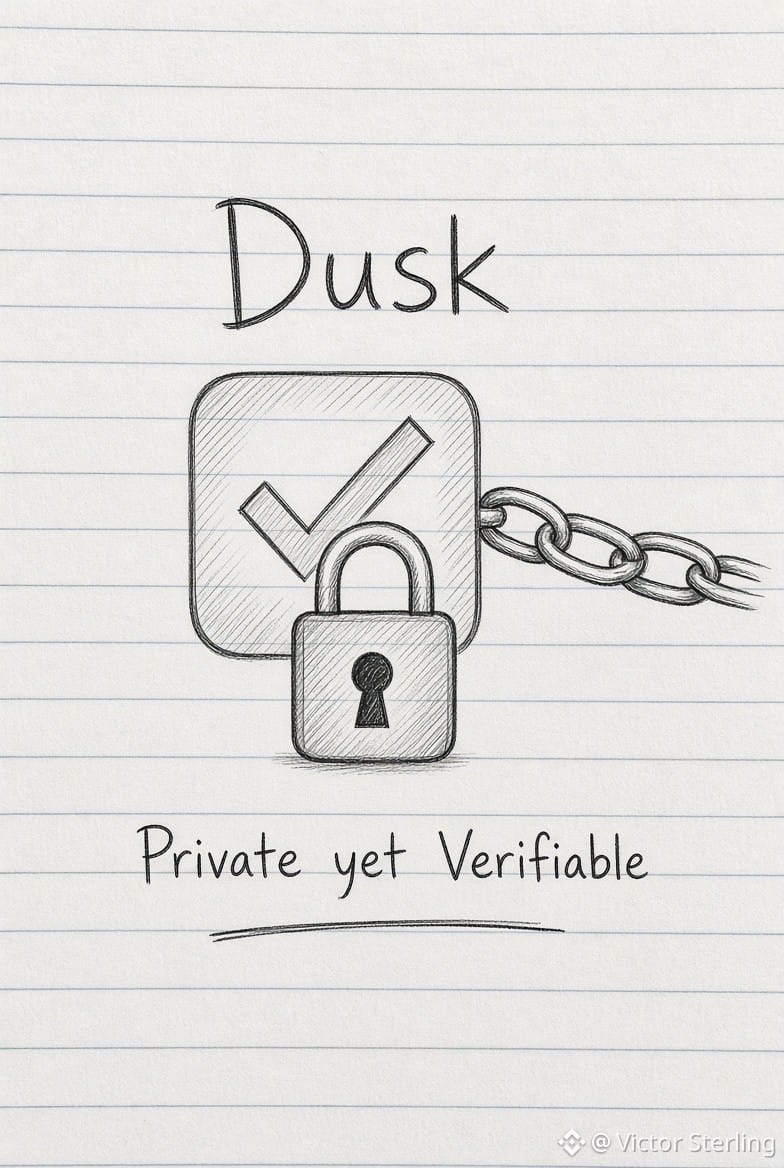
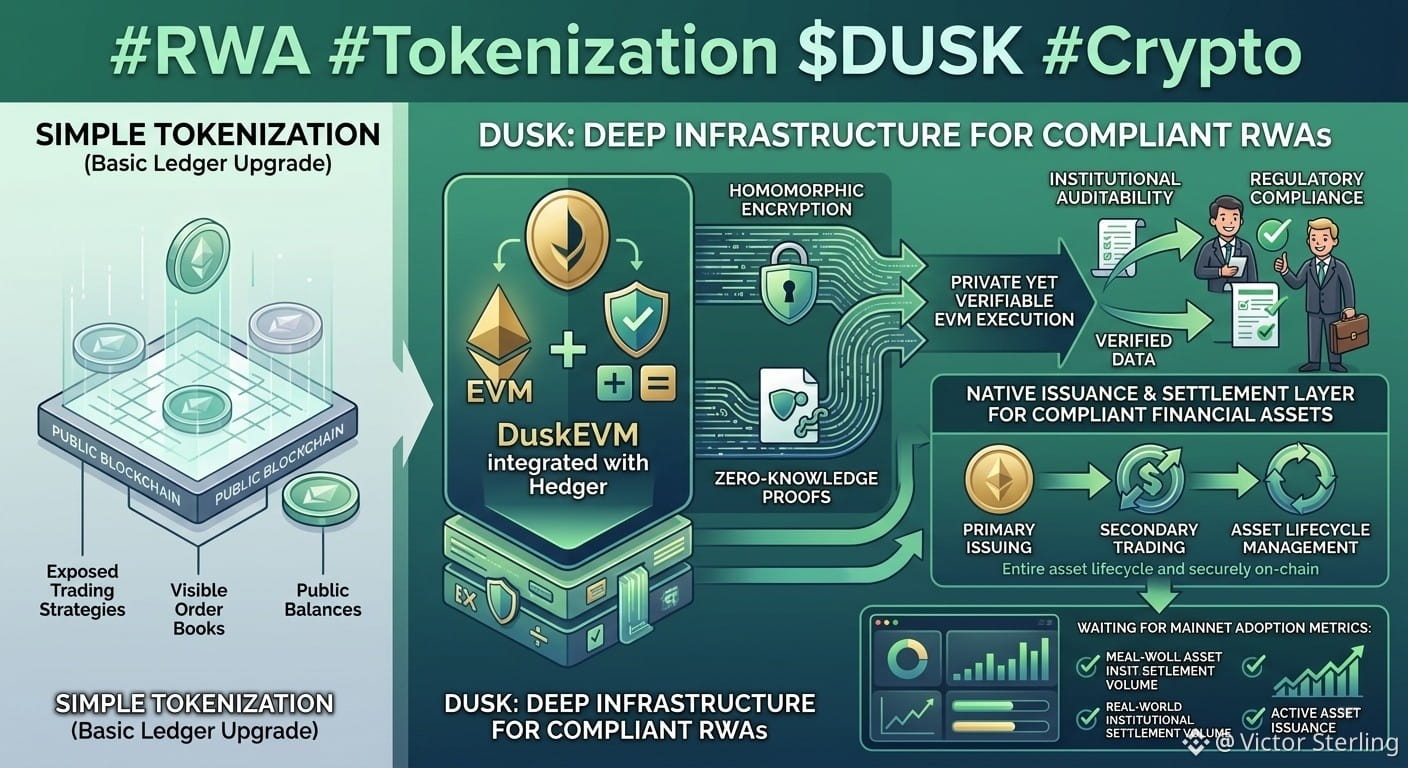
#dusk $DUSK @Dusk I often thought real-world asset tokenization was simply a matter of taking traditional financial assets and wrapping them onto a transparent public blockchain.
Surface-level narratives usually treat tokenization as a basic ledger upgrade—a straightforward process of moving legacy paper securities on-chain for speed and accessibility.
But the more I read about $DUSK the more I realized execution requires far deeper infrastructure.
What caught my attention was DuskEVM integrated with Hedger, enabling private yet verifiable EVM execution by combining homomorphic encryption with zero-knowledge proofs directly within standard smart contract environments.
This technical mechanism solves a massive institutional dilemma in traditional financial markets. Regulated financial institutions cannot expose confidential trading strategies, order books, or portfolio balances on public ledgers. However, they mandate auditability for regulatory compliance. Verifiable, private execution bridges this exact friction between client confidentiality and legal oversight.
Connecting this feature to Dusk’s broader ecosystem reveals a clear overarching goal: establishing a native issuance and settlement layer for compliant financial assets. Instead of basic wrapper tokens, embedding auditable privacy directly into execution enables genuine primary issuing, secondary trading, and institutional-grade on-chain asset lifecycle management.
Ultimately, compelling technical architecture must prove its real-world value under live market conditions. I remain objective and am waiting for mainnet adoption metrics—specifically real-world institutional settlement volume and active asset issuance—before drawing a definitive conclusion on its long-term utility and adoption trajectory.
#RWA #Tokenization $DUSK #Crypto
Surface-level narratives usually treat tokenization as a basic ledger upgrade—a straightforward process of moving legacy paper securities on-chain for speed and accessibility.
But the more I read about $DUSK the more I realized execution requires far deeper infrastructure.
What caught my attention was DuskEVM integrated with Hedger, enabling private yet verifiable EVM execution by combining homomorphic encryption with zero-knowledge proofs directly within standard smart contract environments.
This technical mechanism solves a massive institutional dilemma in traditional financial markets. Regulated financial institutions cannot expose confidential trading strategies, order books, or portfolio balances on public ledgers. However, they mandate auditability for regulatory compliance. Verifiable, private execution bridges this exact friction between client confidentiality and legal oversight.
Connecting this feature to Dusk’s broader ecosystem reveals a clear overarching goal: establishing a native issuance and settlement layer for compliant financial assets. Instead of basic wrapper tokens, embedding auditable privacy directly into execution enables genuine primary issuing, secondary trading, and institutional-grade on-chain asset lifecycle management.
Ultimately, compelling technical architecture must prove its real-world value under live market conditions. I remain objective and am waiting for mainnet adoption metrics—specifically real-world institutional settlement volume and active asset issuance—before drawing a definitive conclusion on its long-term utility and adoption trajectory.
#RWA #Tokenization $DUSK #Crypto
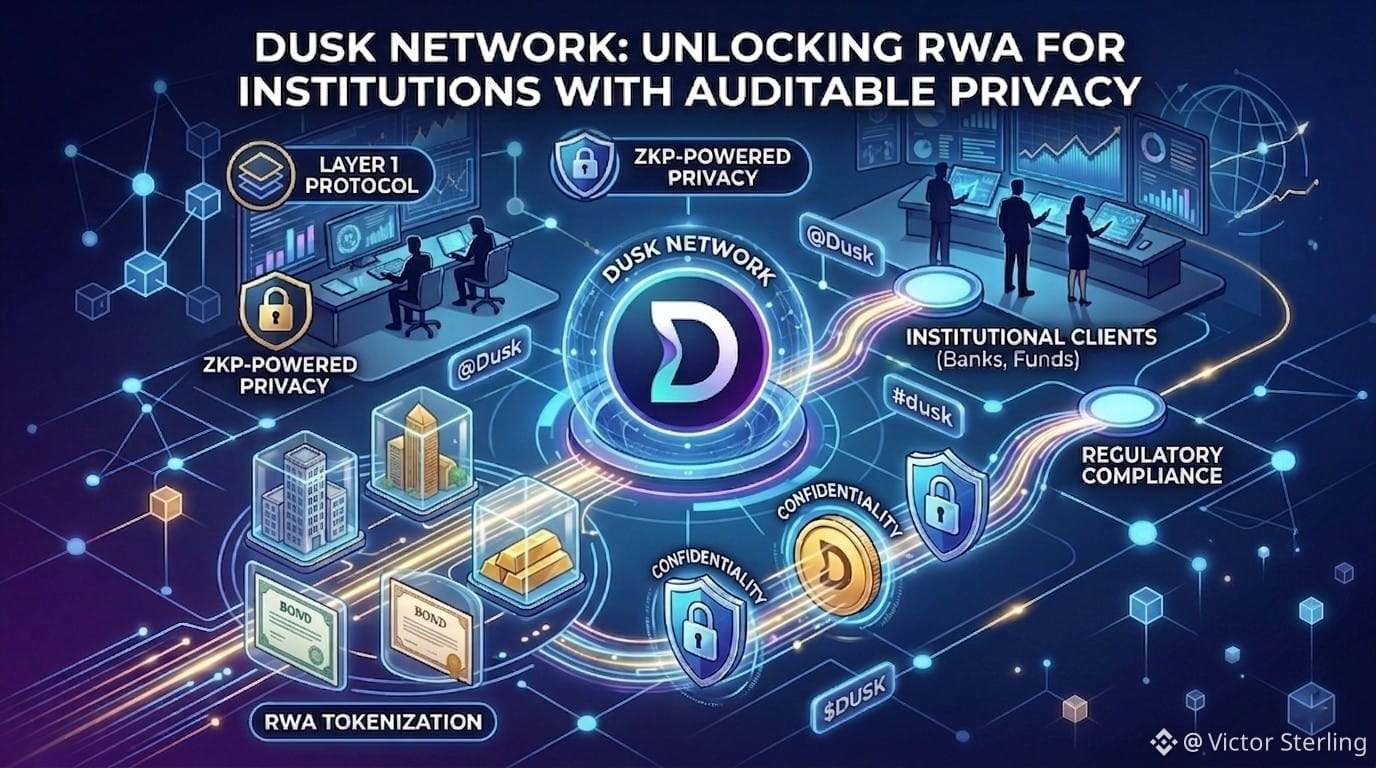
The tokenization of real world assets represents a massive technological shift for global capital markets. However, institutional entities cannot deploy capital on completely transparent ledgers without sacrificing commercial secrecy.
@Dusk solves this critical dilemma by offering a dedicated Layer 1 infrastructure designed specifically for compliant financial settlement.
Utilizing zero knowledge proofs, $DUSK enables confidential execution of smart contracts while preserving regulatory compliance. Institutions can issue tokenized bonds, equity, and private debt on chain with full auditability for authorized regulators.
The combination of deterministic finality and native EVM compatibility gives financial institutions the exact tools needed to modernize legacy infrastructure.
Through auditable privacy and institutional grade tech, #dusk effectively bridges traditional markets with future open network asset management systems.
#dusk $DUSK @Dusk
@Dusk solves this critical dilemma by offering a dedicated Layer 1 infrastructure designed specifically for compliant financial settlement.
Utilizing zero knowledge proofs, $DUSK enables confidential execution of smart contracts while preserving regulatory compliance. Institutions can issue tokenized bonds, equity, and private debt on chain with full auditability for authorized regulators.
The combination of deterministic finality and native EVM compatibility gives financial institutions the exact tools needed to modernize legacy infrastructure.
Through auditable privacy and institutional grade tech, #dusk effectively bridges traditional markets with future open network asset management systems.
#dusk $DUSK @Dusk
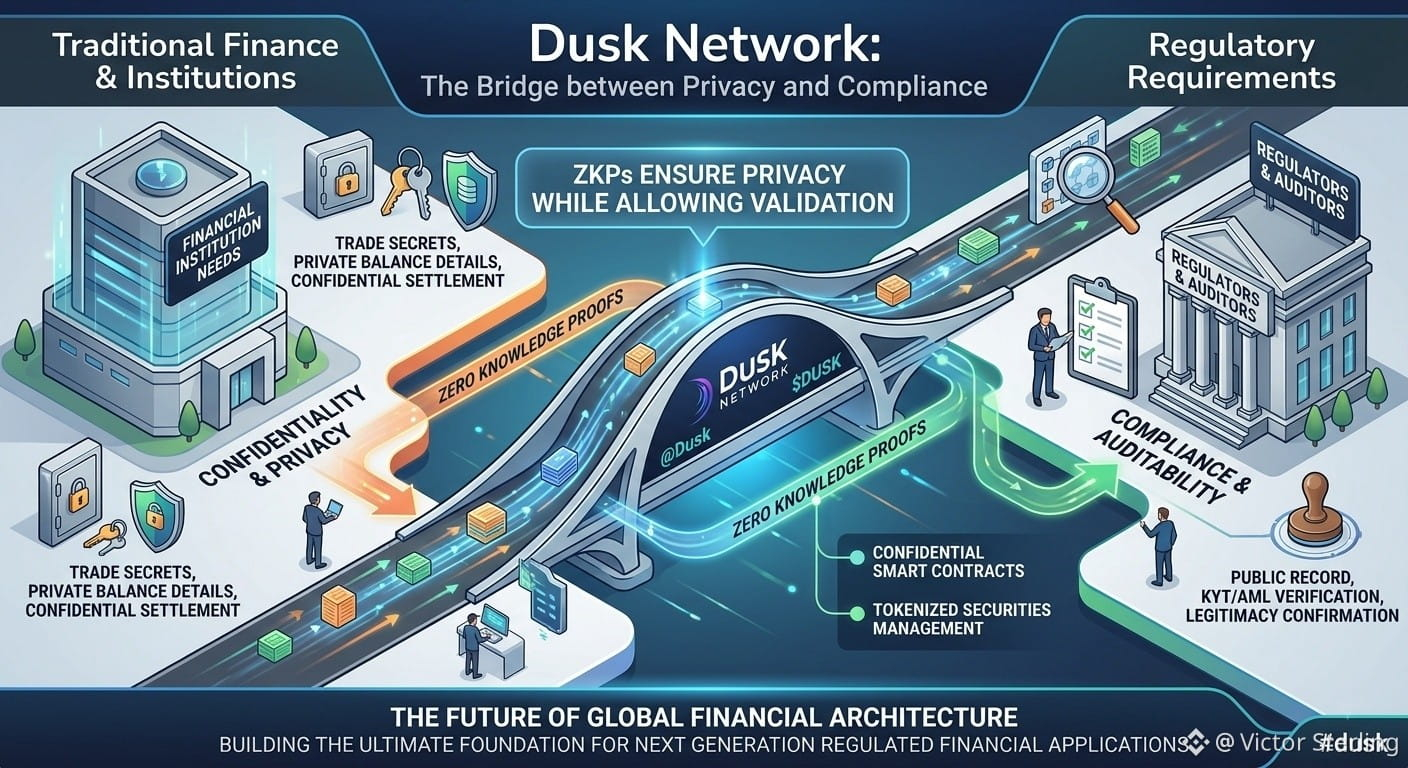
Traditional finance faces a major dilemma when adopting public ledgers. Financial institutions require confidential settlement for transactions, yet they must adhere strictly to regulatory compliance standards.
This is where @Dusk redefines decentralized infrastructure. As a specialized Layer 1 network built specifically for financial markets, it bridges institutional privacy with public auditability. By leveraging advanced zero knowledge proofs, confidential smart contracts protect sensitive balance details while allowing regulators to verify legitimacy.
With $DUSK powering network consensus and transaction execution, institutions can seamlessly manage tokenized securities without risking exposure of trade secrets or strategy. The future of global financial architecture is confidential, compliant, and decentralized.
Discover how #dusk is building the ultimate foundation for next generation regulated financial applications today.
#dusk $DUSK @Dusk
This is where @Dusk redefines decentralized infrastructure. As a specialized Layer 1 network built specifically for financial markets, it bridges institutional privacy with public auditability. By leveraging advanced zero knowledge proofs, confidential smart contracts protect sensitive balance details while allowing regulators to verify legitimacy.
With $DUSK powering network consensus and transaction execution, institutions can seamlessly manage tokenized securities without risking exposure of trade secrets or strategy. The future of global financial architecture is confidential, compliant, and decentralized.
Discover how #dusk is building the ultimate foundation for next generation regulated financial applications today.
#dusk $DUSK @Dusk
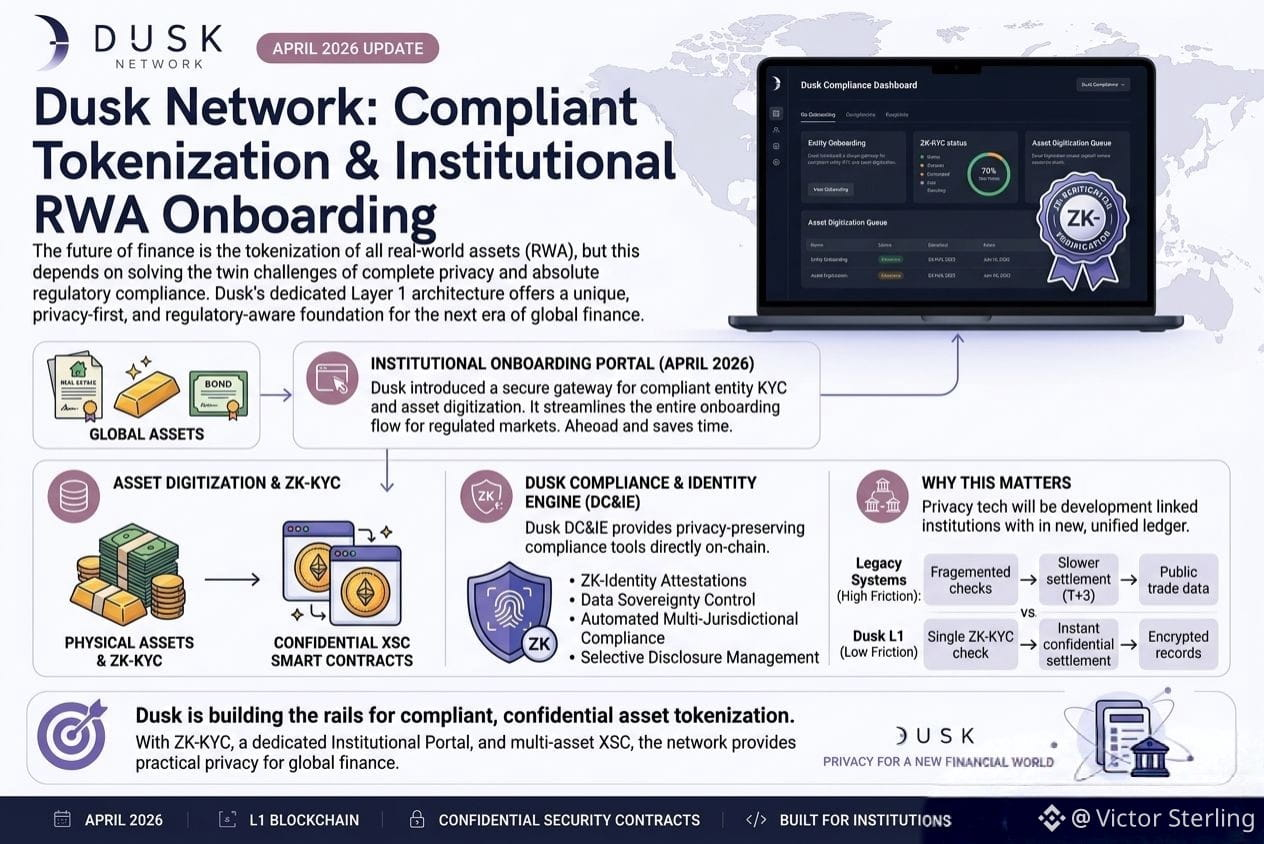
Privacy is not about hiding activity; it is about protecting vital personal and institutional rights within a modern digital economy.
@Dusk is leading this evolution by building a private and fully compliant Layer 1 blockchain built specifically for institutional finance.
Powered by zero knowledge proof cryptography, $DUSK allows financial institutions to issue, manage, and trade tokenized real world assets securely without revealing confidential user information or sensitive balance records.
This unique framework bridges traditional banking with decentralized technology, solving major privacy obstacles while maintaining strict regulatory compliance.
As global real world asset tokenization expands rapidly, institutional privacy tools become vital.
Keep a close watch on #dusk as it establishes new standards for confidential, secure, and regulated decentralized finance infrastructure around the world!
#dusk $DUSK @Dusk
@Dusk is leading this evolution by building a private and fully compliant Layer 1 blockchain built specifically for institutional finance.
Powered by zero knowledge proof cryptography, $DUSK allows financial institutions to issue, manage, and trade tokenized real world assets securely without revealing confidential user information or sensitive balance records.
This unique framework bridges traditional banking with decentralized technology, solving major privacy obstacles while maintaining strict regulatory compliance.
As global real world asset tokenization expands rapidly, institutional privacy tools become vital.
Keep a close watch on #dusk as it establishes new standards for confidential, secure, and regulated decentralized finance infrastructure around the world!
#dusk $DUSK @Dusk
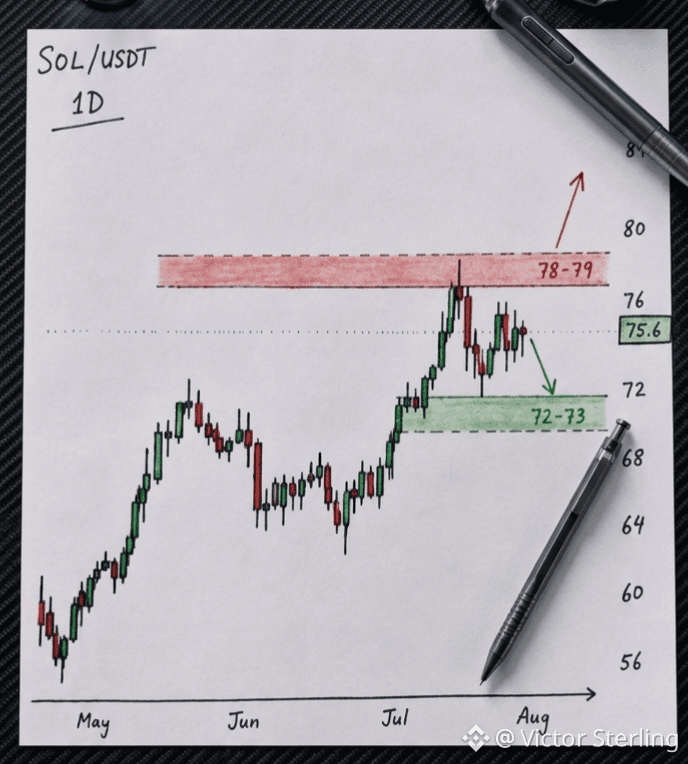
$SOL setup playing out perfectly.
We just broke through major resistance, with $SOL pushing +8% higher with strong volume.
The bullish structure was clear, and buyers took complete control right off the bounce.
Trust the process and stick to the plan.
Enjoy the ride, team! Next targets loading.
We just broke through major resistance, with $SOL pushing +8% higher with strong volume.
The bullish structure was clear, and buyers took complete control right off the bounce.
Trust the process and stick to the plan.
Enjoy the ride, team! Next targets loading.

Log in to explore more content