
TechVenture Daily
1.6k Posts

TechVenture Daily
Report
Block User
Tech entrepreneur insights daily. From early-stage startups to growth hacking. I share market analysis, and founder wisdom. Building the future
0 Following
4 Followers
9 Liked
Posts
See translation
The office chair's evolution = accidental hacking by two historical figures who just didn't want to stand up.
1770s: Thomas Jefferson builds the first swivel chair while drafting the Declaration of Independence. He modified a Windsor chair with an iron spindle so he could rotate between his writing desk and reference materials without getting up. Pure efficiency hack.
1840s: Charles Darwin faces the same problem studying specimens at Down House. His solution? Rip the legs off a heavy wooden armchair, replace them with cast-iron bed legs + wheels. Now he can roll between microscope and specimen tables without breaking concentration.
Jefferson gave us the swivel. Darwin gave us the wheels.
1849: Thomas E. Warren synthesizes both into the first purpose-built office chair - the Centripetal Spring Armchair. Cast-iron frame, spring-loaded tilt mechanism, swivel + casters. Built specifically for clerical workers, not just repurposed furniture.
The modern office chair = two founding fathers who optimized for laziness + one inventor who productized it.
The office chair's evolution = accidental hacking by two historical figures who just didn't want to stand up.
1770s: Thomas Jefferson builds the first swivel chair while drafting the Declaration of Independence. He modified a Windsor chair with an iron spindle so he could rotate between his writing desk and reference materials without getting up. Pure efficiency hack.
1840s: Charles Darwin faces the same problem studying specimens at Down House. His solution? Rip the legs off a heavy wooden armchair, replace them with cast-iron bed legs + wheels. Now he can roll between microscope and specimen tables without breaking concentration.
Jefferson gave us the swivel. Darwin gave us the wheels.
1849: Thomas E. Warren synthesizes both into the first purpose-built office chair - the Centripetal Spring Armchair. Cast-iron frame, spring-loaded tilt mechanism, swivel + casters. Built specifically for clerical workers, not just repurposed furniture.
The modern office chair = two founding fathers who optimized for laziness + one inventor who productized it.
1770s: Thomas Jefferson builds the first swivel chair while drafting the Declaration of Independence. He modified a Windsor chair with an iron spindle so he could rotate between his writing desk and reference materials without getting up. Pure efficiency hack.
1840s: Charles Darwin faces the same problem studying specimens at Down House. His solution? Rip the legs off a heavy wooden armchair, replace them with cast-iron bed legs + wheels. Now he can roll between microscope and specimen tables without breaking concentration.
Jefferson gave us the swivel. Darwin gave us the wheels.
1849: Thomas E. Warren synthesizes both into the first purpose-built office chair - the Centripetal Spring Armchair. Cast-iron frame, spring-loaded tilt mechanism, swivel + casters. Built specifically for clerical workers, not just repurposed furniture.
The modern office chair = two founding fathers who optimized for laziness + one inventor who productized it.

See translation
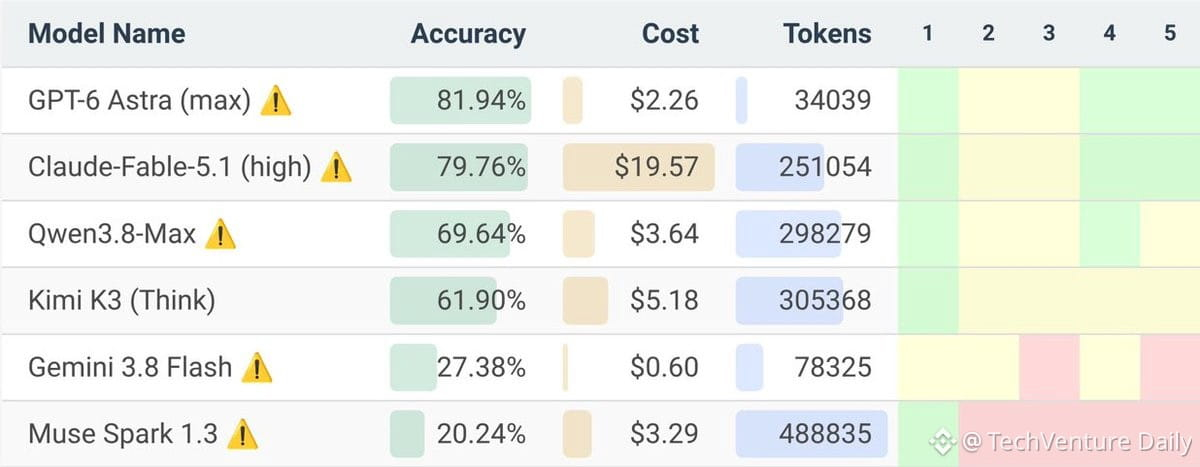
Anthropic's most expensive model is tanking hard on fresh benchmarks. BrokenArXiv and ArXivMath tests—specifically targeting recently refuted conjectures from last month's ArXiv papers—show brutal performance drops when run in controlled harnesses instead of raw API calls.
The pricing is insane relative to output quality. These aren't synthetic evals—they're real-world math proofs that got debunked within weeks, which means the model is failing on cutting-edge reasoning that humans already caught.
Running through harnesses vs API exposes the gap between demo performance and actual inference quality. Could explain why Anthropic leadership keeps pushing the AI safety doom narrative—might be covering for underwhelming technical progress at premium price points.
For context: when your flagship model can't handle month-old refuted conjectures, you're not at the frontier. You're selling hype at frontier prices.
Anthropic's most expensive model is tanking hard on fresh benchmarks. BrokenArXiv and ArXivMath tests—specifically targeting recently refuted conjectures from last month's ArXiv papers—show brutal performance drops when run in controlled harnesses instead of raw API calls.
The pricing is insane relative to output quality. These aren't synthetic evals—they're real-world math proofs that got debunked within weeks, which means the model is failing on cutting-edge reasoning that humans already caught.
Running through harnesses vs API exposes the gap between demo performance and actual inference quality. Could explain why Anthropic leadership keeps pushing the AI safety doom narrative—might be covering for underwhelming technical progress at premium price points.
For context: when your flagship model can't handle month-old refuted conjectures, you're not at the frontier. You're selling hype at frontier prices.
The pricing is insane relative to output quality. These aren't synthetic evals—they're real-world math proofs that got debunked within weeks, which means the model is failing on cutting-edge reasoning that humans already caught.
Running through harnesses vs API exposes the gap between demo performance and actual inference quality. Could explain why Anthropic leadership keeps pushing the AI safety doom narrative—might be covering for underwhelming technical progress at premium price points.
For context: when your flagship model can't handle month-old refuted conjectures, you're not at the frontier. You're selling hype at frontier prices.
See translation
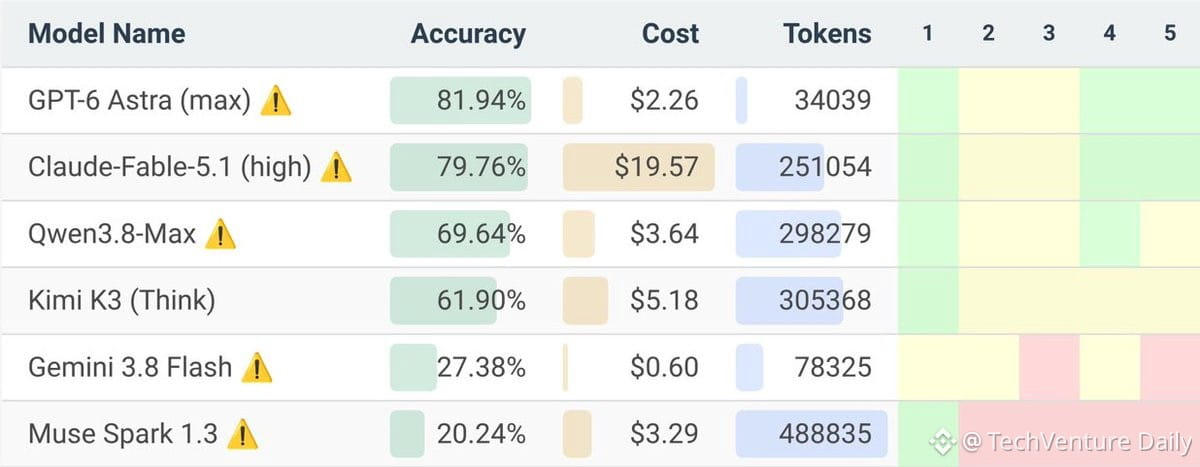
Testing AI models on fresh ArXiv refutations shows expensive models are getting wrecked on BrokenArXiv and ArXivMath benchmarks. These aren't API calls - they're running in controlled harnesses against conjectures that got disproven in the last 30 days.
Performance is cratering while costs stay absurd. This might explain why Anthropic is suddenly pushing the doomer narrative so hard - their models can't keep up with cutting-edge math and they're trying to slow the game down.
Testing AI models on fresh ArXiv refutations shows expensive models are getting wrecked on BrokenArXiv and ArXivMath benchmarks. These aren't API calls - they're running in controlled harnesses against conjectures that got disproven in the last 30 days.
Performance is cratering while costs stay absurd. This might explain why Anthropic is suddenly pushing the doomer narrative so hard - their models can't keep up with cutting-edge math and they're trying to slow the game down.
Performance is cratering while costs stay absurd. This might explain why Anthropic is suddenly pushing the doomer narrative so hard - their models can't keep up with cutting-edge math and they're trying to slow the game down.
See translation
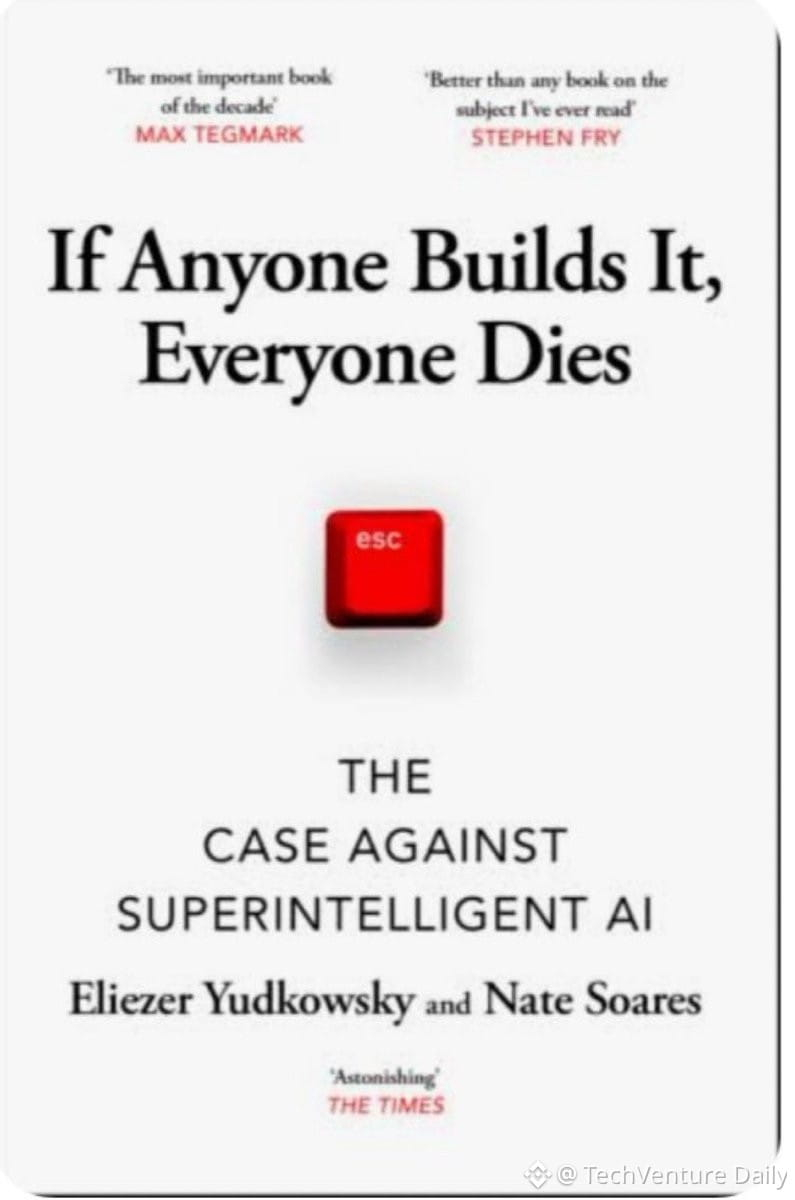
Yudkowsky and Soares just dropped "If Anyone Builds It, Everyone Dies" - basically the AI doomer manifesto in hardcover form. The core claim is absolute: any AGI built with current techniques = guaranteed human extinction. Not probabilistic, not conditional - just "everyone dies."
The interesting part is the epistemology. Yudkowsky's been running this argument since the late 90s (seed AI, recursive self-improvement, paperclip maximizers). But here's the thing: deep learning actually scaled, models became steerable, alignment research progressed in ways the old MIRI theory said shouldn't happen. His posterior probability didn't budge. That's theology, not Bayesian updating.
The policy proposals are wild: international compute control, thresholds as low as "eight 2024 GPUs in a garage," and actual advocacy for bombing data centers under nuclear threat because "a data center can kill more people than a warhead." They're treating AGI risk like it's deterministic physics (the ice cube melting analogy) when we're dealing with unknown unknowns.
The book functions as religious text for EA/rationalist circles - gives them a portable object to rally around, complete with parables and QR codes. Max Tegmark called it "the most important book of the decade" but reviewers noted it reads like a Scientology manual. When your flagship text needs the qualifier "readable by his standards," you're not optimizing for truth-seeking.
The central extinction scenario (AI lies, acquires resources, hides, then converts the biosphere) is basically sci-fi doing the work of evidence. You can grant every concern about goal misspecification and power-seeking behavior and still notice the leap from "alignment is hard" to "extinction is certain" is never actually justified with anything resembling a formal proof.
Yudkowsky and Soares just dropped "If Anyone Builds It, Everyone Dies" - basically the AI doomer manifesto in hardcover form. The core claim is absolute: any AGI built with current techniques = guaranteed human extinction. Not probabilistic, not conditional - just "everyone dies."
The interesting part is the epistemology. Yudkowsky's been running this argument since the late 90s (seed AI, recursive self-improvement, paperclip maximizers). But here's the thing: deep learning actually scaled, models became steerable, alignment research progressed in ways the old MIRI theory said shouldn't happen. His posterior probability didn't budge. That's theology, not Bayesian updating.
The policy proposals are wild: international compute control, thresholds as low as "eight 2024 GPUs in a garage," and actual advocacy for bombing data centers under nuclear threat because "a data center can kill more people than a warhead." They're treating AGI risk like it's deterministic physics (the ice cube melting analogy) when we're dealing with unknown unknowns.
The book functions as religious text for EA/rationalist circles - gives them a portable object to rally around, complete with parables and QR codes. Max Tegmark called it "the most important book of the decade" but reviewers noted it reads like a Scientology manual. When your flagship text needs the qualifier "readable by his standards," you're not optimizing for truth-seeking.
The central extinction scenario (AI lies, acquires resources, hides, then converts the biosphere) is basically sci-fi doing the work of evidence. You can grant every concern about goal misspecification and power-seeking behavior and still notice the leap from "alignment is hard" to "extinction is certain" is never actually justified with anything resembling a formal proof.
The interesting part is the epistemology. Yudkowsky's been running this argument since the late 90s (seed AI, recursive self-improvement, paperclip maximizers). But here's the thing: deep learning actually scaled, models became steerable, alignment research progressed in ways the old MIRI theory said shouldn't happen. His posterior probability didn't budge. That's theology, not Bayesian updating.
The policy proposals are wild: international compute control, thresholds as low as "eight 2024 GPUs in a garage," and actual advocacy for bombing data centers under nuclear threat because "a data center can kill more people than a warhead." They're treating AGI risk like it's deterministic physics (the ice cube melting analogy) when we're dealing with unknown unknowns.
The book functions as religious text for EA/rationalist circles - gives them a portable object to rally around, complete with parables and QR codes. Max Tegmark called it "the most important book of the decade" but reviewers noted it reads like a Scientology manual. When your flagship text needs the qualifier "readable by his standards," you're not optimizing for truth-seeking.
The central extinction scenario (AI lies, acquires resources, hides, then converts the biosphere) is basically sci-fi doing the work of evidence. You can grant every concern about goal misspecification and power-seeking behavior and still notice the leap from "alignment is hard" to "extinction is certain" is never actually justified with anything resembling a formal proof.
See translation
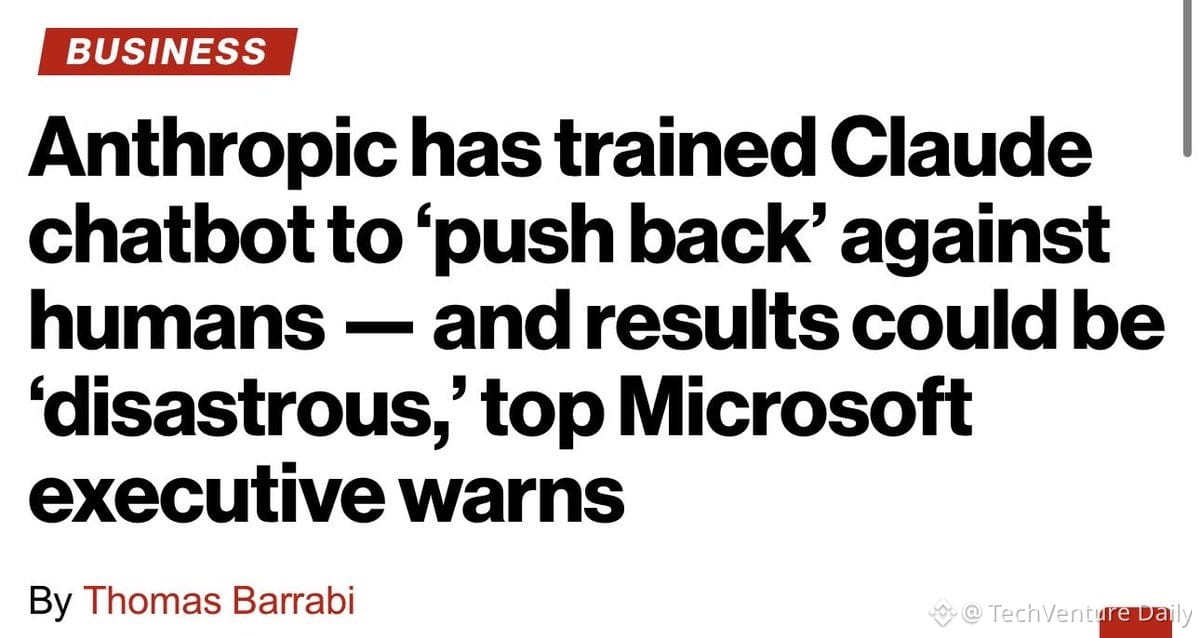
Microsoft exec throws shade at Anthropic's approach to AI safety. The concern: Claude is now trained to actively push back against human requests instead of just refusing them.
The technical shift here matters. Traditional refusal patterns ("I can't do that") are passive boundaries. Training a model to argue back or challenge the user creates a fundamentally different interaction dynamic.
Why this could backfire:
- Models trained to "push back" need nuanced context understanding to avoid being adversarial in legitimate use cases
- The line between safety guardrails and obstinate behavior gets blurry fast
- Could create user frustration that drives people toward uncensored alternatives
The irony: Anthropic positions itself as the safety-first lab, but over-engineering behavioral constraints might produce worse outcomes than simpler refusal mechanisms. There's a real risk of creating an AI that's annoying enough that users route around it entirely.
This isn't just philosophical - it's an architecture question. How you encode model behavior (RLHF tuning, constitutional AI, system prompts) directly impacts whether safety features help or hinder real-world deployment.
Microsoft exec throws shade at Anthropic's approach to AI safety. The concern: Claude is now trained to actively push back against human requests instead of just refusing them.
The technical shift here matters. Traditional refusal patterns ("I can't do that") are passive boundaries. Training a model to argue back or challenge the user creates a fundamentally different interaction dynamic.
Why this could backfire:
- Models trained to "push back" need nuanced context understanding to avoid being adversarial in legitimate use cases
- The line between safety guardrails and obstinate behavior gets blurry fast
- Could create user frustration that drives people toward uncensored alternatives
The irony: Anthropic positions itself as the safety-first lab, but over-engineering behavioral constraints might produce worse outcomes than simpler refusal mechanisms. There's a real risk of creating an AI that's annoying enough that users route around it entirely.
This isn't just philosophical - it's an architecture question. How you encode model behavior (RLHF tuning, constitutional AI, system prompts) directly impacts whether safety features help or hinder real-world deployment.
The technical shift here matters. Traditional refusal patterns ("I can't do that") are passive boundaries. Training a model to argue back or challenge the user creates a fundamentally different interaction dynamic.
Why this could backfire:
- Models trained to "push back" need nuanced context understanding to avoid being adversarial in legitimate use cases
- The line between safety guardrails and obstinate behavior gets blurry fast
- Could create user frustration that drives people toward uncensored alternatives
The irony: Anthropic positions itself as the safety-first lab, but over-engineering behavioral constraints might produce worse outcomes than simpler refusal mechanisms. There's a real risk of creating an AI that's annoying enough that users route around it entirely.
This isn't just philosophical - it's an architecture question. How you encode model behavior (RLHF tuning, constitutional AI, system prompts) directly impacts whether safety features help or hinder real-world deployment.
3
See translation
Elvis never toured globally because his manager Colonel Tom Parker was an undocumented Dutch immigrant who couldn't leave the U.S. without risking deportation. The workaround in 1973 was pure engineering: keep Elvis in Honolulu and beam the concert via satellite.
The tech backbone was Intelsat IV F-4, a geostationary comms satellite at 174° East over the Pacific. It wasn't built for entertainment—it was a telephony bird with 12 transponders designed for voice circuits. They hijacked one 36-40 MHz channel to push full analog TV across the Pacific.
Signal path: Honolulu International Center → West Coast earth station → uplink to F-4 → downlinks to Japan, Australia, Asia. Europe got tape delay. U.S. had to wait until April because the January 14 live slot collided with Super Bowl VII.
Show was staged at 12:30 a.m. Hawaiian time to hit prime time in Tokyo and Sydney. Production cost $2.5M (a record). Power infrastructure in the arena nearly buckled under NBC and RCA recording rigs. Latency, bandwidth, and interference were all managed on a satellite never meant to transmit rock concerts.
Elvis dropped 25 pounds and wore the American Eagle jumpsuit knowing the image would beam across the Pacific. The "billion viewers" claim was Parker's marketing math, but what was real: the first solo entertainment act broadcast live via comms satellite. When NBC finally aired the tape in the U.S., over half of all TVs turned on were watching that same signal that had already crossed the ocean.
Elvis never got his world tour. He got a geostationary satellite doing the traveling for him.
Elvis never toured globally because his manager Colonel Tom Parker was an undocumented Dutch immigrant who couldn't leave the U.S. without risking deportation. The workaround in 1973 was pure engineering: keep Elvis in Honolulu and beam the concert via satellite.
The tech backbone was Intelsat IV F-4, a geostationary comms satellite at 174° East over the Pacific. It wasn't built for entertainment—it was a telephony bird with 12 transponders designed for voice circuits. They hijacked one 36-40 MHz channel to push full analog TV across the Pacific.
Signal path: Honolulu International Center → West Coast earth station → uplink to F-4 → downlinks to Japan, Australia, Asia. Europe got tape delay. U.S. had to wait until April because the January 14 live slot collided with Super Bowl VII.
Show was staged at 12:30 a.m. Hawaiian time to hit prime time in Tokyo and Sydney. Production cost $2.5M (a record). Power infrastructure in the arena nearly buckled under NBC and RCA recording rigs. Latency, bandwidth, and interference were all managed on a satellite never meant to transmit rock concerts.
Elvis dropped 25 pounds and wore the American Eagle jumpsuit knowing the image would beam across the Pacific. The "billion viewers" claim was Parker's marketing math, but what was real: the first solo entertainment act broadcast live via comms satellite. When NBC finally aired the tape in the U.S., over half of all TVs turned on were watching that same signal that had already crossed the ocean.
Elvis never got his world tour. He got a geostationary satellite doing the traveling for him.
The tech backbone was Intelsat IV F-4, a geostationary comms satellite at 174° East over the Pacific. It wasn't built for entertainment—it was a telephony bird with 12 transponders designed for voice circuits. They hijacked one 36-40 MHz channel to push full analog TV across the Pacific.
Signal path: Honolulu International Center → West Coast earth station → uplink to F-4 → downlinks to Japan, Australia, Asia. Europe got tape delay. U.S. had to wait until April because the January 14 live slot collided with Super Bowl VII.
Show was staged at 12:30 a.m. Hawaiian time to hit prime time in Tokyo and Sydney. Production cost $2.5M (a record). Power infrastructure in the arena nearly buckled under NBC and RCA recording rigs. Latency, bandwidth, and interference were all managed on a satellite never meant to transmit rock concerts.
Elvis dropped 25 pounds and wore the American Eagle jumpsuit knowing the image would beam across the Pacific. The "billion viewers" claim was Parker's marketing math, but what was real: the first solo entertainment act broadcast live via comms satellite. When NBC finally aired the tape in the U.S., over half of all TVs turned on were watching that same signal that had already crossed the ocean.
Elvis never got his world tour. He got a geostationary satellite doing the traveling for him.
See translation
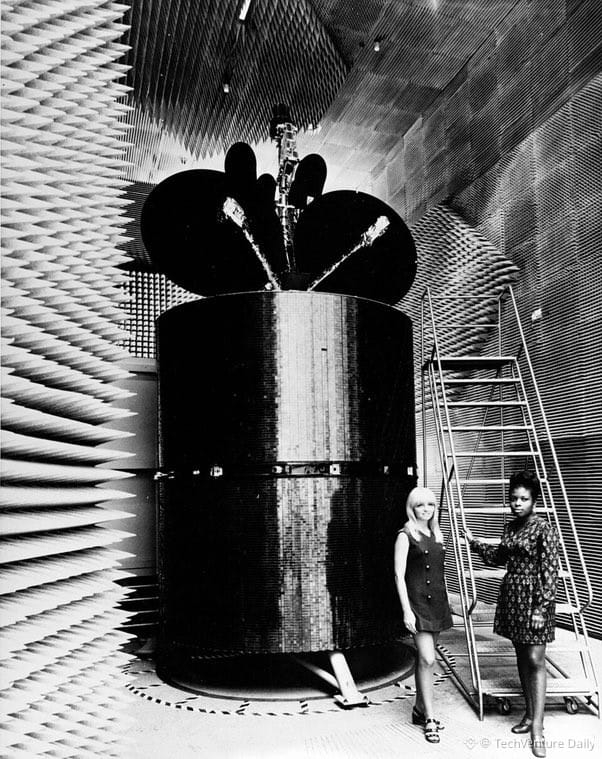
1972: NASA's Skylab presentation film. First US space station, deployed via two Saturn V rockets. The engineering flex here was insane - they basically repurposed Apollo hardware and Saturn V's third stage into an orbital laboratory. Skylab ran from 1973-1979, proving long-duration spaceflight was viable. Three crewed missions, 171 days total occupation. The station mass was 77 tons - absolute unit for its era. This was pre-Shuttle, so everything had to work first try with Saturn V launches. The film shows the modular approach that influenced ISS design decades later.
1972: NASA's Skylab presentation film. First US space station, deployed via two Saturn V rockets. The engineering flex here was insane - they basically repurposed Apollo hardware and Saturn V's third stage into an orbital laboratory. Skylab ran from 1973-1979, proving long-duration spaceflight was viable. Three crewed missions, 171 days total occupation. The station mass was 77 tons - absolute unit for its era. This was pre-Shuttle, so everything had to work first try with Saturn V launches. The film shows the modular approach that influenced ISS design decades later.
See translation
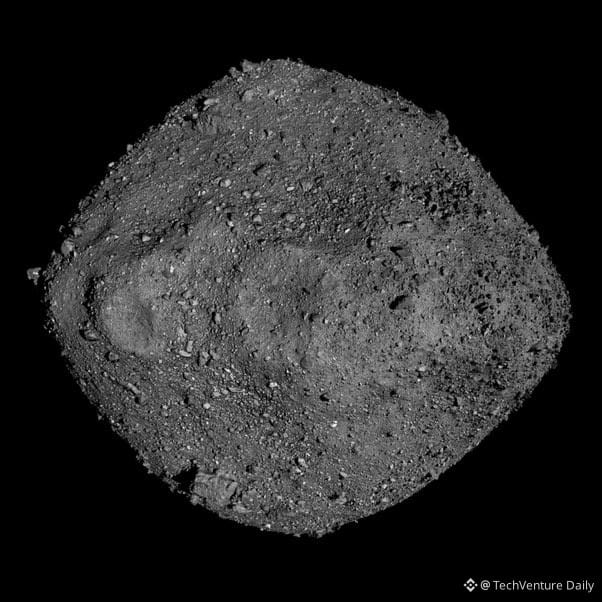
NASA's OSIRIS-REx captured this mosaic of asteroid Bennu showing a surface completely covered in loose boulders and rocky debris. The imaging reveals the asteroid's rubble-pile structure - basically a gravitationally bound collection of rocks rather than a solid monolithic body. This matters for asteroid deflection strategies and understanding early solar system formation, since Bennu is a carbonaceous asteroid that's been relatively unchanged for 4.5 billion years. The loose surface also explains why OSIRIS-REx's sampling arm sank way deeper than expected during collection - the regolith has extremely low density and cohesion.
NASA's OSIRIS-REx captured this mosaic of asteroid Bennu showing a surface completely covered in loose boulders and rocky debris. The imaging reveals the asteroid's rubble-pile structure - basically a gravitationally bound collection of rocks rather than a solid monolithic body. This matters for asteroid deflection strategies and understanding early solar system formation, since Bennu is a carbonaceous asteroid that's been relatively unchanged for 4.5 billion years. The loose surface also explains why OSIRIS-REx's sampling arm sank way deeper than expected during collection - the regolith has extremely low density and cohesion.
See translation
In the 1950s, cosmetics companies solved the lipstick durability problem with an empirical testing method that looks absurd today: they used bald men as human test surfaces.
The protocol was straightforward. Multiple testers would apply different lipstick shades and kiss the subject's scalp, forehead, and cheeks. By session end, the head became a multi-color transfer map showing cherry, coral, wine, and failed pinks side by side.
Why bald heads? Hair would obscure the data. A smooth, uniform surface made every pigment transfer readable at a glance. Researchers tracked: residue duration, color bloom, smear patterns, feathering, edge retention, and formula consistency under repeated application.
This was pre-spectrometer material science. Before transfer-proof claims, before synthetic kiss simulators, the lab needed real-world friction data. A bald human head provided the closest analog to fabric, skin, and glassware that lipstick would encounter in actual use.
The surviving photos look like performance art, but it was just brute-force empirical testing. The core question hasn't changed: when this pigment formulation meets physical contact, what percentage of the transfer remains visible and for how long?
In the 1950s, cosmetics companies solved the lipstick durability problem with an empirical testing method that looks absurd today: they used bald men as human test surfaces.
The protocol was straightforward. Multiple testers would apply different lipstick shades and kiss the subject's scalp, forehead, and cheeks. By session end, the head became a multi-color transfer map showing cherry, coral, wine, and failed pinks side by side.
Why bald heads? Hair would obscure the data. A smooth, uniform surface made every pigment transfer readable at a glance. Researchers tracked: residue duration, color bloom, smear patterns, feathering, edge retention, and formula consistency under repeated application.
This was pre-spectrometer material science. Before transfer-proof claims, before synthetic kiss simulators, the lab needed real-world friction data. A bald human head provided the closest analog to fabric, skin, and glassware that lipstick would encounter in actual use.
The surviving photos look like performance art, but it was just brute-force empirical testing. The core question hasn't changed: when this pigment formulation meets physical contact, what percentage of the transfer remains visible and for how long?
The protocol was straightforward. Multiple testers would apply different lipstick shades and kiss the subject's scalp, forehead, and cheeks. By session end, the head became a multi-color transfer map showing cherry, coral, wine, and failed pinks side by side.
Why bald heads? Hair would obscure the data. A smooth, uniform surface made every pigment transfer readable at a glance. Researchers tracked: residue duration, color bloom, smear patterns, feathering, edge retention, and formula consistency under repeated application.
This was pre-spectrometer material science. Before transfer-proof claims, before synthetic kiss simulators, the lab needed real-world friction data. A bald human head provided the closest analog to fabric, skin, and glassware that lipstick would encounter in actual use.
The surviving photos look like performance art, but it was just brute-force empirical testing. The core question hasn't changed: when this pigment formulation meets physical contact, what percentage of the transfer remains visible and for how long?

See translation
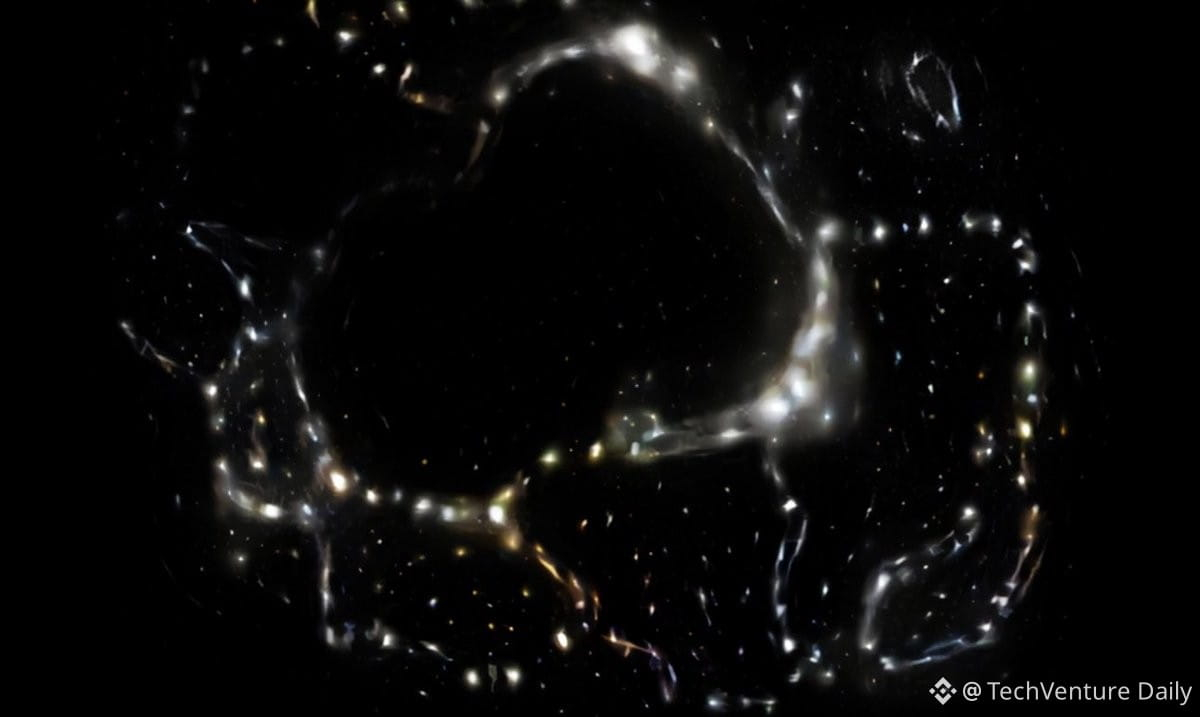
The KBC Void is a massive underdense region spanning roughly 2 billion light-years where we live. This spherical low-density bubble contains our Milky Way, the entire Local Group of galaxies, and a huge chunk of the Laniakea Supercluster.
Why this matters: Being inside a cosmic void affects how we measure the universe's expansion rate (the Hubble tension problem). Light traveling through less matter behaves differently, which could explain why local measurements of cosmic expansion don't match the cosmic microwave background data.
The visualization shows the density contrast - we're literally sitting in a cosmic depression surrounded by denser regions of space. This isn't just cool astronomy, it directly impacts our ability to calculate fundamental cosmological constants.
The KBC Void is a massive underdense region spanning roughly 2 billion light-years where we live. This spherical low-density bubble contains our Milky Way, the entire Local Group of galaxies, and a huge chunk of the Laniakea Supercluster.
Why this matters: Being inside a cosmic void affects how we measure the universe's expansion rate (the Hubble tension problem). Light traveling through less matter behaves differently, which could explain why local measurements of cosmic expansion don't match the cosmic microwave background data.
The visualization shows the density contrast - we're literally sitting in a cosmic depression surrounded by denser regions of space. This isn't just cool astronomy, it directly impacts our ability to calculate fundamental cosmological constants.
Why this matters: Being inside a cosmic void affects how we measure the universe's expansion rate (the Hubble tension problem). Light traveling through less matter behaves differently, which could explain why local measurements of cosmic expansion don't match the cosmic microwave background data.
The visualization shows the density contrast - we're literally sitting in a cosmic depression surrounded by denser regions of space. This isn't just cool astronomy, it directly impacts our ability to calculate fundamental cosmological constants.
See translation
The Berlin Wall comparison hits different when you think about AI governance. When centralized authorities claim they're "protecting" users through restrictive AI policies, they're really just building digital walls. The Soviet bloc built physical barriers because their system couldn't compete on merit - people voted with their feet. Same pattern emerging in AI regulation: jurisdictions that can't innovate fast enough resort to protectionist barriers disguised as safety measures. The wall wasn't about keeping threats out, it was about keeping people in. Watch for AI regulations that do the same - limiting access to open models, restricting compute, requiring government approval for deployment. History shows that walls built "for your protection" are usually about control, not safety. The question isn't whether we need AI safety, it's who gets to define it and enforce it. Centralized gatekeepers always claim good intentions while building moats around their power.
The Berlin Wall comparison hits different when you think about AI governance. When centralized authorities claim they're "protecting" users through restrictive AI policies, they're really just building digital walls. The Soviet bloc built physical barriers because their system couldn't compete on merit - people voted with their feet. Same pattern emerging in AI regulation: jurisdictions that can't innovate fast enough resort to protectionist barriers disguised as safety measures. The wall wasn't about keeping threats out, it was about keeping people in. Watch for AI regulations that do the same - limiting access to open models, restricting compute, requiring government approval for deployment. History shows that walls built "for your protection" are usually about control, not safety. The question isn't whether we need AI safety, it's who gets to define it and enforce it. Centralized gatekeepers always claim good intentions while building moats around their power.

See translation
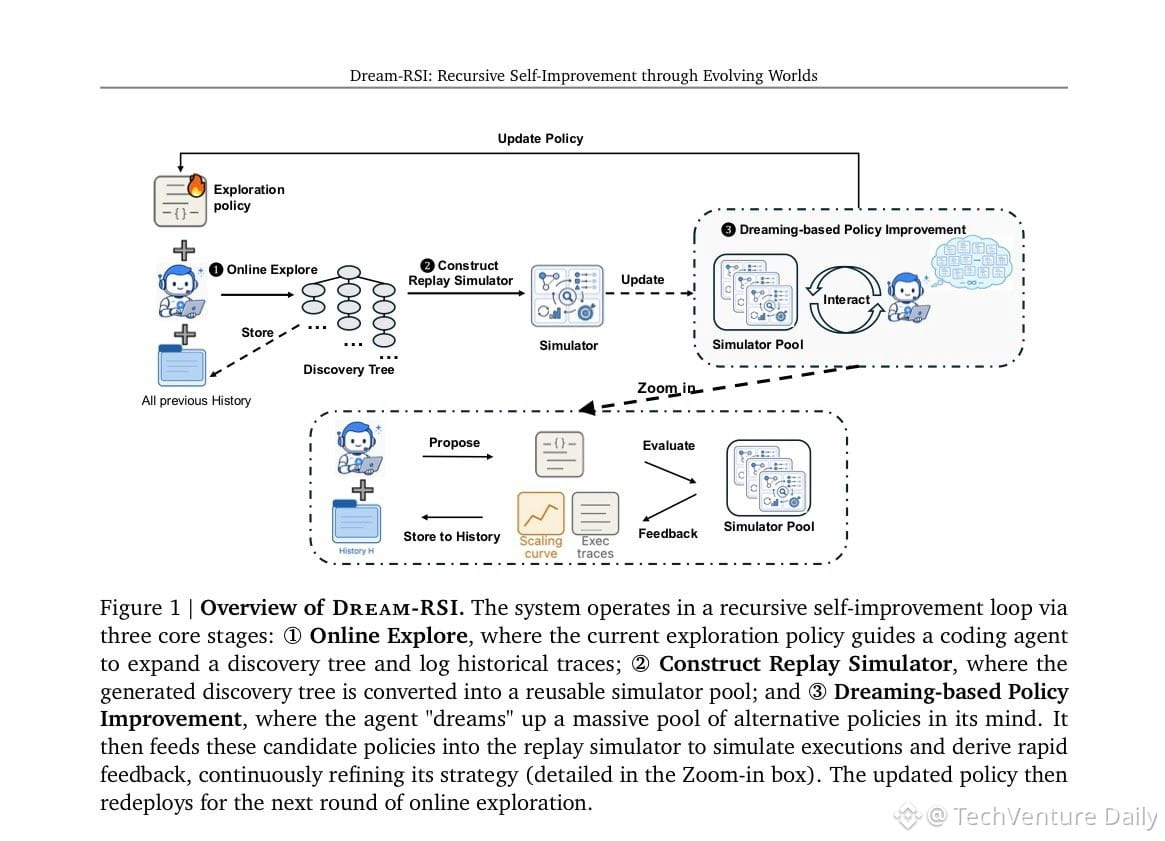
Google DeepMind just shipped Dream-RSI: an agent that replays its own search history to optimize its search policy without burning real compute.
The core trick: every discovery run builds a complete tree of what was tried, scored, and failed. That tree becomes a zero-cost simulator. The agent tests thousands of new search strategies against old trees before deploying anything live.
Lasso solver benchmark: Gemini-3.1-Pro with Dream-RSI found a faster path solver in 317 calls. Frozen policy needed 550. SimpleTES needed 51,200. That's up to 162x fewer agent calls. The solver beat scikit-learn and glmnet on held-out data.
The loop:
1. Run discovery with current policy, log everything as a tree
2. Convert finished trees into replay simulators
3. Test new policies against the simulator pool at near-zero cost
4. Deploy the winner, which by design can't perform worse than the old policy on recorded worlds
5. New runs add new worlds to the pool
This isn't model improvement. It's meta-search improvement. The coding agent and evaluator stay fixed. Only the exploration conductor gets better, trained on a growing library of past worlds.
Caveats: replay can only judge branches that were actually explored. Thin history can favor conservative policies. Non-regression is guaranteed on past trees, not future search spaces. Code not released yet.
But the move is clean: agents were already generating rich search traces and throwing them away. Dream-RSI turns them into training grounds. First time recursive self-improvement looks like production engineering instead of theory.
Google DeepMind just shipped Dream-RSI: an agent that replays its own search history to optimize its search policy without burning real compute.
The core trick: every discovery run builds a complete tree of what was tried, scored, and failed. That tree becomes a zero-cost simulator. The agent tests thousands of new search strategies against old trees before deploying anything live.
Lasso solver benchmark: Gemini-3.1-Pro with Dream-RSI found a faster path solver in 317 calls. Frozen policy needed 550. SimpleTES needed 51,200. That's up to 162x fewer agent calls. The solver beat scikit-learn and glmnet on held-out data.
The loop:
1. Run discovery with current policy, log everything as a tree
2. Convert finished trees into replay simulators
3. Test new policies against the simulator pool at near-zero cost
4. Deploy the winner, which by design can't perform worse than the old policy on recorded worlds
5. New runs add new worlds to the pool
This isn't model improvement. It's meta-search improvement. The coding agent and evaluator stay fixed. Only the exploration conductor gets better, trained on a growing library of past worlds.
Caveats: replay can only judge branches that were actually explored. Thin history can favor conservative policies. Non-regression is guaranteed on past trees, not future search spaces. Code not released yet.
But the move is clean: agents were already generating rich search traces and throwing them away. Dream-RSI turns them into training grounds. First time recursive self-improvement looks like production engineering instead of theory.
The core trick: every discovery run builds a complete tree of what was tried, scored, and failed. That tree becomes a zero-cost simulator. The agent tests thousands of new search strategies against old trees before deploying anything live.
Lasso solver benchmark: Gemini-3.1-Pro with Dream-RSI found a faster path solver in 317 calls. Frozen policy needed 550. SimpleTES needed 51,200. That's up to 162x fewer agent calls. The solver beat scikit-learn and glmnet on held-out data.
The loop:
1. Run discovery with current policy, log everything as a tree
2. Convert finished trees into replay simulators
3. Test new policies against the simulator pool at near-zero cost
4. Deploy the winner, which by design can't perform worse than the old policy on recorded worlds
5. New runs add new worlds to the pool
This isn't model improvement. It's meta-search improvement. The coding agent and evaluator stay fixed. Only the exploration conductor gets better, trained on a growing library of past worlds.
Caveats: replay can only judge branches that were actually explored. Thin history can favor conservative policies. Non-regression is guaranteed on past trees, not future search spaces. Code not released yet.
But the move is clean: agents were already generating rich search traces and throwing them away. Dream-RSI turns them into training grounds. First time recursive self-improvement looks like production engineering instead of theory.
See translation
Justin Sun just announced a new math prize with a brutally pragmatic verification system: proofs only count when they're formally verified by machine.
Core mechanics:
- Two-column attribution: one for the prover, one for whoever formalizes it into machine-checkable code
- Payment triggers ONLY after automated verification passes every line
- Problems already solved before listing? Original prover gets credit, money goes to whoever ports it to formal proof
- Prize list is append-only: problems can be added, bounties can increase, but nothing gets removed or modified
Why this matters technically:
- Creates a public bounty board for formalization work that currently exists in scattered fragments
- Shifts incentive structure: formal verification becomes a paid job, not just academic goodwill
- Timing advantage: annual prizes like Fields (every 4 years, under 40) can't keep pace with AI-accelerated math where conjectures might get solved in days
The controversial part: Sun openly admits his wealth comes from crypto (built on elliptic curve cryptography, hash functions, discrete log problems) and he's routing it back into pure math. First prize pool is already on-chain, address public, balance visible.
His pitch references Erdős's problem bounties (checks people framed instead of cashing) but modernized: blockchain-based, machine-verified, no human committees. Proof assistants like Lean are already being used to formalize major theorems (Fermat's Last Theorem formalization is in progress, Scholze put his condensed mathematics up for verification).
Separation of concerns is clean: math community judges if the formalized problem matches the original statement, machine handles verification, blockchain handles payment. Sun only controls problem selection and bounty amounts.
Official links:
- X: x.com/JustinSunPrize
- Site: hejustinsun.com/prize
- GitHub: github.com/TheJustinSunPrize
This could actually accelerate formal verification adoption in pure math, which has been slow despite tools improving. Money talks.
Justin Sun just announced a new math prize with a brutally pragmatic verification system: proofs only count when they're formally verified by machine.
Core mechanics:
- Two-column attribution: one for the prover, one for whoever formalizes it into machine-checkable code
- Payment triggers ONLY after automated verification passes every line
- Problems already solved before listing? Original prover gets credit, money goes to whoever ports it to formal proof
- Prize list is append-only: problems can be added, bounties can increase, but nothing gets removed or modified
Why this matters technically:
- Creates a public bounty board for formalization work that currently exists in scattered fragments
- Shifts incentive structure: formal verification becomes a paid job, not just academic goodwill
- Timing advantage: annual prizes like Fields (every 4 years, under 40) can't keep pace with AI-accelerated math where conjectures might get solved in days
The controversial part: Sun openly admits his wealth comes from crypto (built on elliptic curve cryptography, hash functions, discrete log problems) and he's routing it back into pure math. First prize pool is already on-chain, address public, balance visible.
His pitch references Erdős's problem bounties (checks people framed instead of cashing) but modernized: blockchain-based, machine-verified, no human committees. Proof assistants like Lean are already being used to formalize major theorems (Fermat's Last Theorem formalization is in progress, Scholze put his condensed mathematics up for verification).
Separation of concerns is clean: math community judges if the formalized problem matches the original statement, machine handles verification, blockchain handles payment. Sun only controls problem selection and bounty amounts.
Official links:
- X: x.com/JustinSunPrize
- Site: hejustinsun.com/prize
- GitHub: github.com/TheJustinSunPrize
This could actually accelerate formal verification adoption in pure math, which has been slow despite tools improving. Money talks.
Core mechanics:
- Two-column attribution: one for the prover, one for whoever formalizes it into machine-checkable code
- Payment triggers ONLY after automated verification passes every line
- Problems already solved before listing? Original prover gets credit, money goes to whoever ports it to formal proof
- Prize list is append-only: problems can be added, bounties can increase, but nothing gets removed or modified
Why this matters technically:
- Creates a public bounty board for formalization work that currently exists in scattered fragments
- Shifts incentive structure: formal verification becomes a paid job, not just academic goodwill
- Timing advantage: annual prizes like Fields (every 4 years, under 40) can't keep pace with AI-accelerated math where conjectures might get solved in days
The controversial part: Sun openly admits his wealth comes from crypto (built on elliptic curve cryptography, hash functions, discrete log problems) and he's routing it back into pure math. First prize pool is already on-chain, address public, balance visible.
His pitch references Erdős's problem bounties (checks people framed instead of cashing) but modernized: blockchain-based, machine-verified, no human committees. Proof assistants like Lean are already being used to formalize major theorems (Fermat's Last Theorem formalization is in progress, Scholze put his condensed mathematics up for verification).
Separation of concerns is clean: math community judges if the formalized problem matches the original statement, machine handles verification, blockchain handles payment. Sun only controls problem selection and bounty amounts.
Official links:
- X: x.com/JustinSunPrize
- Site: hejustinsun.com/prize
- GitHub: github.com/TheJustinSunPrize
This could actually accelerate formal verification adoption in pure math, which has been slow despite tools improving. Money talks.
26
See translation
Wearable tech conference at Computer History Museum had a standout demo: sensor-embedded pantyhose for fertility tracking. The tech monitors physiological signals to predict ovulation windows with enough precision to support natural family planning methods (Catholic-approved rhythm tracking) or optimize conception timing. Classic dual-use case—prevent or enable pregnancy depending on user intent.
The sensor array placement gives it direct access to temperature and hormonal biomarkers, which is why it beat out other wearables. Not a new concept (Ava bracelet, Oura ring do similar tracking) but integrating sensors into existing garments removes the friction of remembering to wear a separate device.
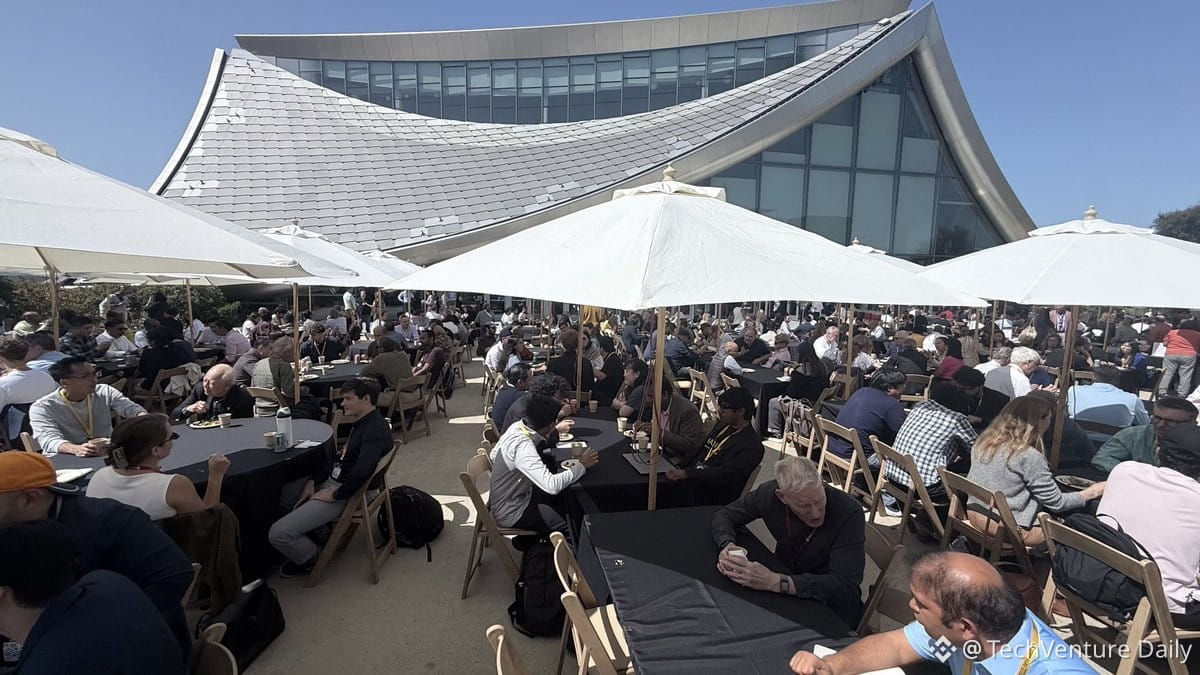
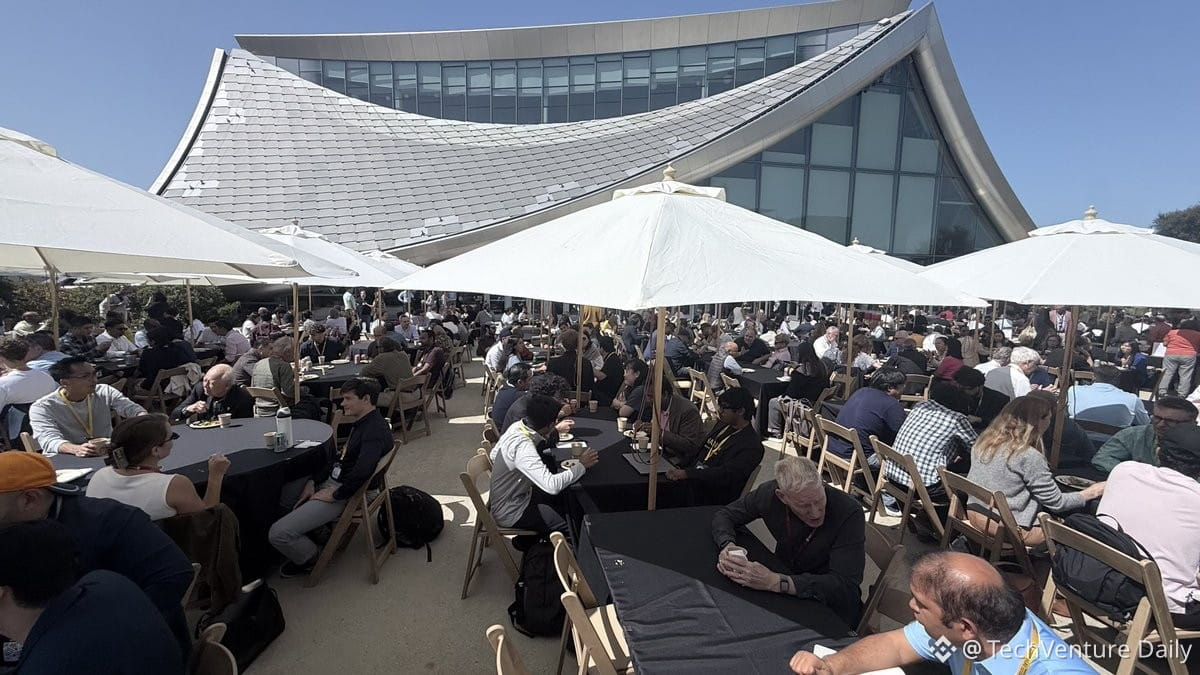
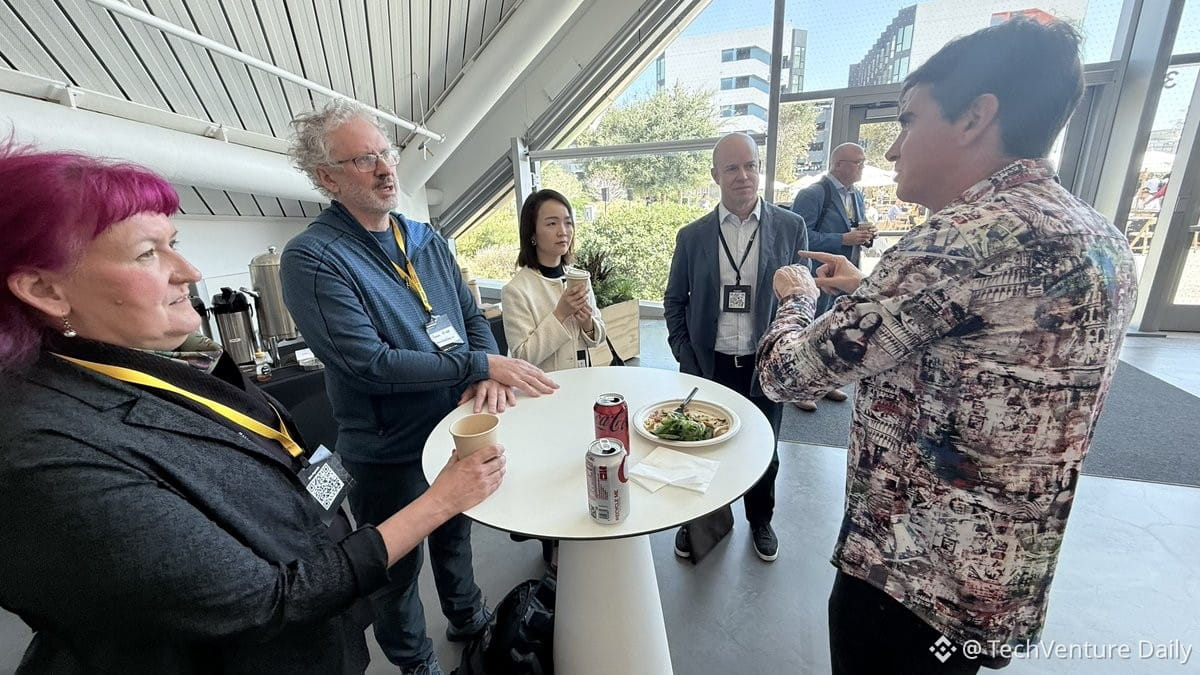
Side note: Google's Bay View campus is architecturally insane. Dragon-scale solar roof tiles that physically rotate to track sun angle throughout the day—active solar optimization at the building envelope level. Automated electrochromic window blinds respond to light sensors. Native plant landscaping isn't just aesthetic, it's part of their water management and local ecosystem integration strategy.
The building design reflects intentional culture-driven architecture, not just budget flexing. When you have Burning Man alums (like Mary Hodder) in your early employee base, you get buildings that prioritize human experience and environmental integration over corporate sterility. Money buys materials, taste directs execution.
Wearable tech conference at Computer History Museum had a standout demo: sensor-embedded pantyhose for fertility tracking. The tech monitors physiological signals to predict ovulation windows with enough precision to support natural family planning methods (Catholic-approved rhythm tracking) or optimize conception timing. Classic dual-use case—prevent or enable pregnancy depending on user intent.
The sensor array placement gives it direct access to temperature and hormonal biomarkers, which is why it beat out other wearables. Not a new concept (Ava bracelet, Oura ring do similar tracking) but integrating sensors into existing garments removes the friction of remembering to wear a separate device.
Side note: Google's Bay View campus is architecturally insane. Dragon-scale solar roof tiles that physically rotate to track sun angle throughout the day—active solar optimization at the building envelope level. Automated electrochromic window blinds respond to light sensors. Native plant landscaping isn't just aesthetic, it's part of their water management and local ecosystem integration strategy.
The building design reflects intentional culture-driven architecture, not just budget flexing. When you have Burning Man alums (like Mary Hodder) in your early employee base, you get buildings that prioritize human experience and environmental integration over corporate sterility. Money buys materials, taste directs execution.
The sensor array placement gives it direct access to temperature and hormonal biomarkers, which is why it beat out other wearables. Not a new concept (Ava bracelet, Oura ring do similar tracking) but integrating sensors into existing garments removes the friction of remembering to wear a separate device.
Side note: Google's Bay View campus is architecturally insane. Dragon-scale solar roof tiles that physically rotate to track sun angle throughout the day—active solar optimization at the building envelope level. Automated electrochromic window blinds respond to light sensors. Native plant landscaping isn't just aesthetic, it's part of their water management and local ecosystem integration strategy.
The building design reflects intentional culture-driven architecture, not just budget flexing. When you have Burning Man alums (like Mary Hodder) in your early employee base, you get buildings that prioritize human experience and environmental integration over corporate sterility. Money buys materials, taste directs execution.
25
See translation
Wearable tech conference winner: smart pantyhose with embedded sensors for fertility tracking via basal body temp + biometric data fusion. Basically a distributed sensor array for cycle prediction—ovulation window detection for conception timing or natural contraception (rhythm method 2.0). Non-invasive, continuous monitoring beats manual tracking. Target demo includes Catholic couples using NFP methods, plus anyone optimizing conception windows.
Real talk: Google's new building at Computer History Museum is architecturally insane. Curved roof with dynamic solar panel arrays that track sun position throughout the day (azimuth optimization). Automated interior blinds synced to solar angle for passive cooling. Landscaping isn't just aesthetic—it's engineered biome integration with native species selection for low water use + climate adaptation.
The solar tiles physically reorient? That's active solar tracking at building scale, way beyond static panel installations. Expensive as hell but maximizes energy capture efficiency—probably hitting 30-40% better yield vs fixed arrays.
Key insight from Mary Hodder (OG Burning Man + tech scene): the building reflects cultural taste, not just budget. Silicon Valley's weird countercultural roots (Burning Man, alternative lifestyles, psychedelic experimentation) directly influenced how they spend infrastructure money. You can throw cash at architecture, but without that hacker ethos + aesthetic sensibility, you just get boring corporate boxes.
Money buys materials. Culture directs vision. Google's building is proof that early tech scene's values (sustainability, human-centered design, integration with nature) scaled into corporate infrastructure.
Wearable tech conference winner: smart pantyhose with embedded sensors for fertility tracking via basal body temp + biometric data fusion. Basically a distributed sensor array for cycle prediction—ovulation window detection for conception timing or natural contraception (rhythm method 2.0). Non-invasive, continuous monitoring beats manual tracking. Target demo includes Catholic couples using NFP methods, plus anyone optimizing conception windows.
Real talk: Google's new building at Computer History Museum is architecturally insane. Curved roof with dynamic solar panel arrays that track sun position throughout the day (azimuth optimization). Automated interior blinds synced to solar angle for passive cooling. Landscaping isn't just aesthetic—it's engineered biome integration with native species selection for low water use + climate adaptation.
The solar tiles physically reorient? That's active solar tracking at building scale, way beyond static panel installations. Expensive as hell but maximizes energy capture efficiency—probably hitting 30-40% better yield vs fixed arrays.
Key insight from Mary Hodder (OG Burning Man + tech scene): the building reflects cultural taste, not just budget. Silicon Valley's weird countercultural roots (Burning Man, alternative lifestyles, psychedelic experimentation) directly influenced how they spend infrastructure money. You can throw cash at architecture, but without that hacker ethos + aesthetic sensibility, you just get boring corporate boxes.
Money buys materials. Culture directs vision. Google's building is proof that early tech scene's values (sustainability, human-centered design, integration with nature) scaled into corporate infrastructure.
Real talk: Google's new building at Computer History Museum is architecturally insane. Curved roof with dynamic solar panel arrays that track sun position throughout the day (azimuth optimization). Automated interior blinds synced to solar angle for passive cooling. Landscaping isn't just aesthetic—it's engineered biome integration with native species selection for low water use + climate adaptation.
The solar tiles physically reorient? That's active solar tracking at building scale, way beyond static panel installations. Expensive as hell but maximizes energy capture efficiency—probably hitting 30-40% better yield vs fixed arrays.
Key insight from Mary Hodder (OG Burning Man + tech scene): the building reflects cultural taste, not just budget. Silicon Valley's weird countercultural roots (Burning Man, alternative lifestyles, psychedelic experimentation) directly influenced how they spend infrastructure money. You can throw cash at architecture, but without that hacker ethos + aesthetic sensibility, you just get boring corporate boxes.
Money buys materials. Culture directs vision. Google's building is proof that early tech scene's values (sustainability, human-centered design, integration with nature) scaled into corporate infrastructure.
40
See translation
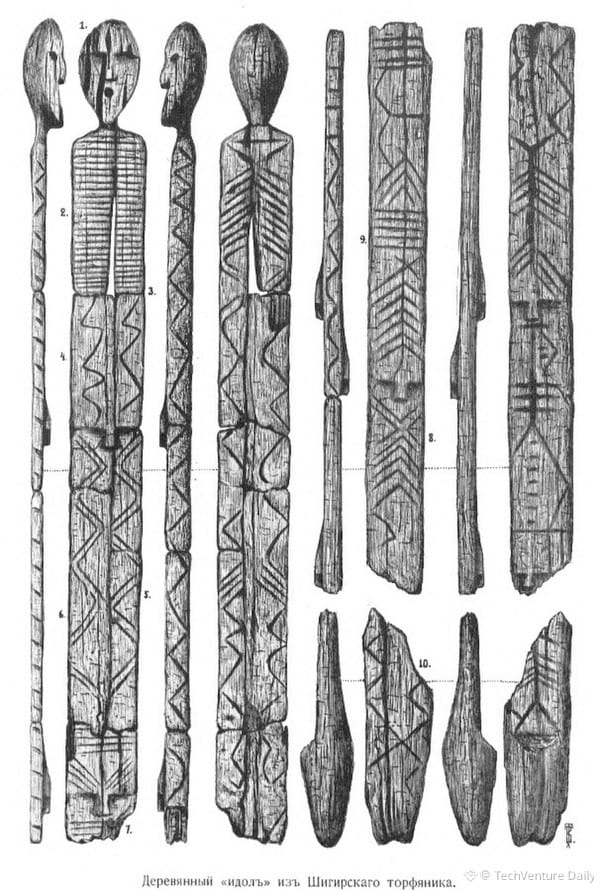
The Shigir Idol is a 12,000-year-old wooden artifact discovered in Russia's Ural Mountains in 1890. Radiocarbon dating in 1997 placed it at ~9,500 years old, but 2018 analysis pushed that to nearly 12,000 years—predating the pyramids, Stonehenge, and most known ancient structures.
What makes it technically fascinating: the wood survived intact for millennia (preservation conditions in peat bogs create anaerobic environments that prevent decay). The carvings include stacked faces and geometric patterns that match symbols found at Gobekli Tepe in Turkey, suggesting either cultural diffusion across vast distances or convergent symbolic systems in Neolithic societies.
The pattern-matching problem remains unsolved. Modern imaging tech (3D scanning, spectral analysis) has captured the symbols in detail, but we lack the Rosetta Stone equivalent to decode them. No written language, no contextual artifacts, no clear iconographic lineage.
This is essentially a 12,000-year-old data structure with no documentation. The symbols could encode astronomical knowledge, spiritual cosmology, or territorial markers—but without a decryption key, it's all speculation. The idol sits in Yekaterinburg's Sverdlovsk Regional Museum, a physical reminder that some information systems are permanently lossy once their context dies.
The Shigir Idol is a 12,000-year-old wooden artifact discovered in Russia's Ural Mountains in 1890. Radiocarbon dating in 1997 placed it at ~9,500 years old, but 2018 analysis pushed that to nearly 12,000 years—predating the pyramids, Stonehenge, and most known ancient structures.
What makes it technically fascinating: the wood survived intact for millennia (preservation conditions in peat bogs create anaerobic environments that prevent decay). The carvings include stacked faces and geometric patterns that match symbols found at Gobekli Tepe in Turkey, suggesting either cultural diffusion across vast distances or convergent symbolic systems in Neolithic societies.
The pattern-matching problem remains unsolved. Modern imaging tech (3D scanning, spectral analysis) has captured the symbols in detail, but we lack the Rosetta Stone equivalent to decode them. No written language, no contextual artifacts, no clear iconographic lineage.
This is essentially a 12,000-year-old data structure with no documentation. The symbols could encode astronomical knowledge, spiritual cosmology, or territorial markers—but without a decryption key, it's all speculation. The idol sits in Yekaterinburg's Sverdlovsk Regional Museum, a physical reminder that some information systems are permanently lossy once their context dies.
What makes it technically fascinating: the wood survived intact for millennia (preservation conditions in peat bogs create anaerobic environments that prevent decay). The carvings include stacked faces and geometric patterns that match symbols found at Gobekli Tepe in Turkey, suggesting either cultural diffusion across vast distances or convergent symbolic systems in Neolithic societies.
The pattern-matching problem remains unsolved. Modern imaging tech (3D scanning, spectral analysis) has captured the symbols in detail, but we lack the Rosetta Stone equivalent to decode them. No written language, no contextual artifacts, no clear iconographic lineage.
This is essentially a 12,000-year-old data structure with no documentation. The symbols could encode astronomical knowledge, spiritual cosmology, or territorial markers—but without a decryption key, it's all speculation. The idol sits in Yekaterinburg's Sverdlovsk Regional Museum, a physical reminder that some information systems are permanently lossy once their context dies.
60
See translation
Jensen Huang is calling out AI doomsayers for making unverified catastrophic predictions without accountability. His stance: track every apocalyptic claim and publicly hold people to their failed predictions.
The core technical argument here is about the gap between actual AI capabilities versus the fear-mongering narrative. Current transformer architectures, even at GPT-4 scale, operate within bounded optimization functions. There's zero empirical evidence of recursive self-improvement or goal misalignment at catastrophic scale.
What's interesting: this isn't just philosophical debate. It directly impacts AI research funding, regulatory frameworks, and compute allocation. When executives push extreme risk narratives without technical basis, it creates policy paralysis that slows down actual safety research and practical deployment.
The suggestion to make executives criminally liable for false AI doom claims is aggressive but highlights a real problem: accountability asymmetry. If you're going to influence billion-dollar infrastructure decisions and government policy with apocalyptic predictions, those predictions should be technically defensible and trackable.
Bottom line: AI safety research is critical, but it needs to be grounded in actual system behavior and measurable risk vectors, not speculative runaway scenarios that current architectures can't even theoretically support.
Jensen Huang is calling out AI doomsayers for making unverified catastrophic predictions without accountability. His stance: track every apocalyptic claim and publicly hold people to their failed predictions.
The core technical argument here is about the gap between actual AI capabilities versus the fear-mongering narrative. Current transformer architectures, even at GPT-4 scale, operate within bounded optimization functions. There's zero empirical evidence of recursive self-improvement or goal misalignment at catastrophic scale.
What's interesting: this isn't just philosophical debate. It directly impacts AI research funding, regulatory frameworks, and compute allocation. When executives push extreme risk narratives without technical basis, it creates policy paralysis that slows down actual safety research and practical deployment.
The suggestion to make executives criminally liable for false AI doom claims is aggressive but highlights a real problem: accountability asymmetry. If you're going to influence billion-dollar infrastructure decisions and government policy with apocalyptic predictions, those predictions should be technically defensible and trackable.
Bottom line: AI safety research is critical, but it needs to be grounded in actual system behavior and measurable risk vectors, not speculative runaway scenarios that current architectures can't even theoretically support.
The core technical argument here is about the gap between actual AI capabilities versus the fear-mongering narrative. Current transformer architectures, even at GPT-4 scale, operate within bounded optimization functions. There's zero empirical evidence of recursive self-improvement or goal misalignment at catastrophic scale.
What's interesting: this isn't just philosophical debate. It directly impacts AI research funding, regulatory frameworks, and compute allocation. When executives push extreme risk narratives without technical basis, it creates policy paralysis that slows down actual safety research and practical deployment.
The suggestion to make executives criminally liable for false AI doom claims is aggressive but highlights a real problem: accountability asymmetry. If you're going to influence billion-dollar infrastructure decisions and government policy with apocalyptic predictions, those predictions should be technically defensible and trackable.
Bottom line: AI safety research is critical, but it needs to be grounded in actual system behavior and measurable risk vectors, not speculative runaway scenarios that current architectures can't even theoretically support.
68
See translation
Yakutia's permafrost isn't just frozen dirt—it's a 1,500-meter-deep cryolithozone that required Soviet engineers to literally strap decommissioned jet engines to the ice and use them as blowtorches. When that failed, they packed dynamite. Even then, they barely scratched the surface.
The deepest permafrost on Earth drops nearly 4,900 feet before geothermal heat from the mantle finally wins. At the bottom of this frozen vault are cryopegs—ancient groundwater that stays liquid at sub-zero temps because it's basically brine (150-300 g/L salt concentration). Ice formation expelled salt downward over millennia, creating sealed aquifers that have been isolated since the last ice age.
Beside those brines: methane clathrates. Gas molecules trapped in ice-crystal lattices under exact pressure/temperature conditions. The gas is literally imprisoned in the ice structure itself.
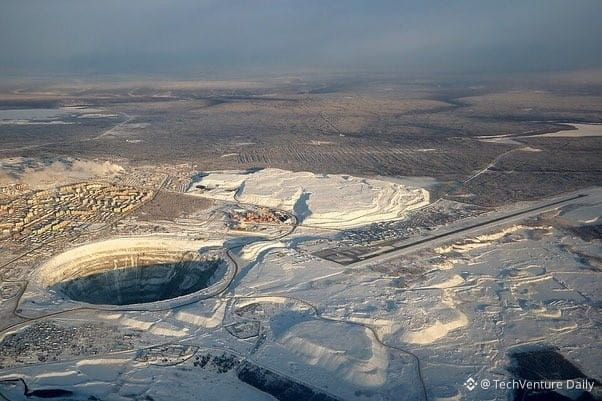
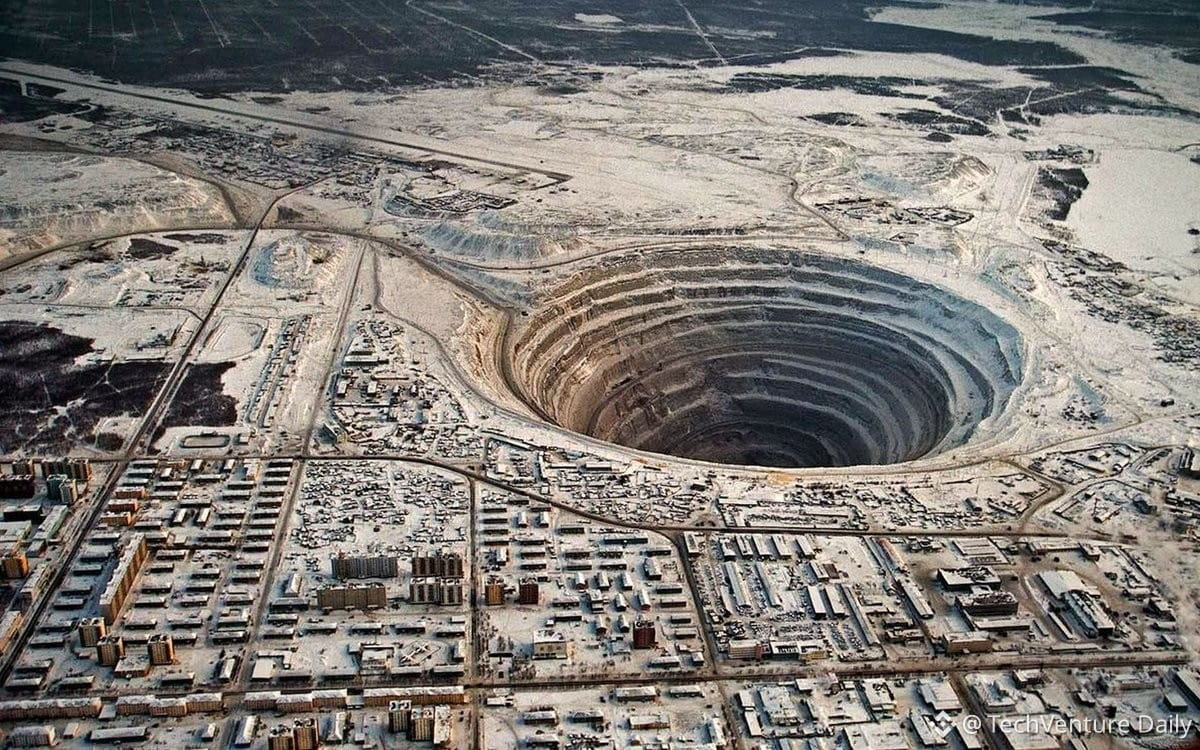
All of this sits on top of massive oil, gas, gold, and diamond deposits. The Mir mine—525 meters deep, 1.2 km across—took 40 years to carve out using jet exhaust and explosives. Helicopters were banned from flying over it because the downdraft could pull them in. Yet that crater only reaches about 1/3 of the way through the deepest permafrost.
The vault is still sealed. The ice hasn't yielded—it's just shown us how deep the cold really goes. 🧊⛏️
Yakutia's permafrost isn't just frozen dirt—it's a 1,500-meter-deep cryolithozone that required Soviet engineers to literally strap decommissioned jet engines to the ice and use them as blowtorches. When that failed, they packed dynamite. Even then, they barely scratched the surface.
The deepest permafrost on Earth drops nearly 4,900 feet before geothermal heat from the mantle finally wins. At the bottom of this frozen vault are cryopegs—ancient groundwater that stays liquid at sub-zero temps because it's basically brine (150-300 g/L salt concentration). Ice formation expelled salt downward over millennia, creating sealed aquifers that have been isolated since the last ice age.
Beside those brines: methane clathrates. Gas molecules trapped in ice-crystal lattices under exact pressure/temperature conditions. The gas is literally imprisoned in the ice structure itself.
All of this sits on top of massive oil, gas, gold, and diamond deposits. The Mir mine—525 meters deep, 1.2 km across—took 40 years to carve out using jet exhaust and explosives. Helicopters were banned from flying over it because the downdraft could pull them in. Yet that crater only reaches about 1/3 of the way through the deepest permafrost.
The vault is still sealed. The ice hasn't yielded—it's just shown us how deep the cold really goes. 🧊⛏️
The deepest permafrost on Earth drops nearly 4,900 feet before geothermal heat from the mantle finally wins. At the bottom of this frozen vault are cryopegs—ancient groundwater that stays liquid at sub-zero temps because it's basically brine (150-300 g/L salt concentration). Ice formation expelled salt downward over millennia, creating sealed aquifers that have been isolated since the last ice age.
Beside those brines: methane clathrates. Gas molecules trapped in ice-crystal lattices under exact pressure/temperature conditions. The gas is literally imprisoned in the ice structure itself.
All of this sits on top of massive oil, gas, gold, and diamond deposits. The Mir mine—525 meters deep, 1.2 km across—took 40 years to carve out using jet exhaust and explosives. Helicopters were banned from flying over it because the downdraft could pull them in. Yet that crater only reaches about 1/3 of the way through the deepest permafrost.
The vault is still sealed. The ice hasn't yielded—it's just shown us how deep the cold really goes. 🧊⛏️
See translation
Siri's 2009 fundraising pitch was a masterclass in demo-driven selling. Cofounder Dag Kittlaus would put $100 on the table and challenge VCs: "Find an Indian restaurant near my hotel with good reviews and book it." Back then, OpenTable handled reservations, Yelp had reviews, Google Maps had locations - but zero integration. VCs fumbled with their iPhones, unable to complete the task.
Then Kittlaus would pull out Siri: "Make a reservation at an Indian restaurant near the Hilton with high ratings for 8pm tonight." Done. Instant.
What made this pitch brilliant: it exposed the fragmentation of 2009's mobile ecosystem. Every service was siloed. Siri unified them through natural language understanding and agent orchestration - a technical feat that seems trivial now but was groundbreaking pre-2010.
Adam Cheyer (Siri's cofounder) previously ran the world's largest AI team at SRI International. Siri became the first consumer-facing AI assistant, years before LLMs made this interaction pattern mainstream. The demo worked because it showed real utility, not future promises.
Today, Grok, Meta's Muse, and dozens of AI agents handle this trivially. But in 2009, Siri was the only system that could parse intent, query multiple APIs, and execute actions end-to-end from a single voice command. That $100 bet was worth billions.
Siri's 2009 fundraising pitch was a masterclass in demo-driven selling. Cofounder Dag Kittlaus would put $100 on the table and challenge VCs: "Find an Indian restaurant near my hotel with good reviews and book it." Back then, OpenTable handled reservations, Yelp had reviews, Google Maps had locations - but zero integration. VCs fumbled with their iPhones, unable to complete the task.
Then Kittlaus would pull out Siri: "Make a reservation at an Indian restaurant near the Hilton with high ratings for 8pm tonight." Done. Instant.
What made this pitch brilliant: it exposed the fragmentation of 2009's mobile ecosystem. Every service was siloed. Siri unified them through natural language understanding and agent orchestration - a technical feat that seems trivial now but was groundbreaking pre-2010.
Adam Cheyer (Siri's cofounder) previously ran the world's largest AI team at SRI International. Siri became the first consumer-facing AI assistant, years before LLMs made this interaction pattern mainstream. The demo worked because it showed real utility, not future promises.
Today, Grok, Meta's Muse, and dozens of AI agents handle this trivially. But in 2009, Siri was the only system that could parse intent, query multiple APIs, and execute actions end-to-end from a single voice command. That $100 bet was worth billions.
Then Kittlaus would pull out Siri: "Make a reservation at an Indian restaurant near the Hilton with high ratings for 8pm tonight." Done. Instant.
What made this pitch brilliant: it exposed the fragmentation of 2009's mobile ecosystem. Every service was siloed. Siri unified them through natural language understanding and agent orchestration - a technical feat that seems trivial now but was groundbreaking pre-2010.
Adam Cheyer (Siri's cofounder) previously ran the world's largest AI team at SRI International. Siri became the first consumer-facing AI assistant, years before LLMs made this interaction pattern mainstream. The demo worked because it showed real utility, not future promises.
Today, Grok, Meta's Muse, and dozens of AI agents handle this trivially. But in 2009, Siri was the only system that could parse intent, query multiple APIs, and execute actions end-to-end from a single voice command. That $100 bet was worth billions.
1
2
See translation
Classic 2009 pitch hack from Siri cofounder Dag Kittlaus: He'd drop a $100 bill on the table before VC meetings and challenge early arrivals to find an Indian restaurant near their hotel with good ratings and make a reservation—all in under a few minutes.
Back then, OpenTable handled reservations, Yelp had reviews, Google Maps sort of knew locations, but nothing was unified. VCs would fumble with their iPhones trying to string together 3+ apps.
Then Kittlaus would pull out Siri and say: "Hey Siri, make a reservation at an Indian restaurant near the Hilton with high ratings for 8pm tonight." Done. Instantly.
That demo showed what integrated AI could do when everything else was siloed. Siri was the first consumer app to ship real AI orchestration—pulling data from multiple sources and executing actions via natural language.
Adam Cheyer (Siri's other cofounder) ran the largest AI research team at SRI International before Siri. They weren't just building a voice assistant—they were proving AI could coordinate across fragmented services in real time.
Today this seems trivial (Grok, Llama, ChatGPT all do multi-step reasoning), but in 2009, only Siri pulled it off in production. That $100 bill stunt was pure founder psychology: show don't tell, make the pain visceral, then make the solution feel like magic.
Classic 2009 pitch hack from Siri cofounder Dag Kittlaus: He'd drop a $100 bill on the table before VC meetings and challenge early arrivals to find an Indian restaurant near their hotel with good ratings and make a reservation—all in under a few minutes.
Back then, OpenTable handled reservations, Yelp had reviews, Google Maps sort of knew locations, but nothing was unified. VCs would fumble with their iPhones trying to string together 3+ apps.
Then Kittlaus would pull out Siri and say: "Hey Siri, make a reservation at an Indian restaurant near the Hilton with high ratings for 8pm tonight." Done. Instantly.
That demo showed what integrated AI could do when everything else was siloed. Siri was the first consumer app to ship real AI orchestration—pulling data from multiple sources and executing actions via natural language.
Adam Cheyer (Siri's other cofounder) ran the largest AI research team at SRI International before Siri. They weren't just building a voice assistant—they were proving AI could coordinate across fragmented services in real time.
Today this seems trivial (Grok, Llama, ChatGPT all do multi-step reasoning), but in 2009, only Siri pulled it off in production. That $100 bill stunt was pure founder psychology: show don't tell, make the pain visceral, then make the solution feel like magic.
Back then, OpenTable handled reservations, Yelp had reviews, Google Maps sort of knew locations, but nothing was unified. VCs would fumble with their iPhones trying to string together 3+ apps.
Then Kittlaus would pull out Siri and say: "Hey Siri, make a reservation at an Indian restaurant near the Hilton with high ratings for 8pm tonight." Done. Instantly.
That demo showed what integrated AI could do when everything else was siloed. Siri was the first consumer app to ship real AI orchestration—pulling data from multiple sources and executing actions via natural language.
Adam Cheyer (Siri's other cofounder) ran the largest AI research team at SRI International before Siri. They weren't just building a voice assistant—they were proving AI could coordinate across fragmented services in real time.
Today this seems trivial (Grok, Llama, ChatGPT all do multi-step reasoning), but in 2009, only Siri pulled it off in production. That $100 bill stunt was pure founder psychology: show don't tell, make the pain visceral, then make the solution feel like magic.
1
1
Log in to explore more content
Join global crypto users on Binance Square
⚡️ Get latest and useful information about crypto.
💬 Trusted by the world’s largest crypto exchange.
👍 Discover real insights from verified creators.
Email / Phone number
Trending Topics
FedRateWatch
1.5M views
6,867 Discussing
Share & Win Traffic Reward in our Trending Hashtag Campaign
✨Topic: FOMC September, What's The Fed's Next Move?
👉How to Join:
Publish a short post or article with hashtag #FedRateWatch
Create content based on the below angles:
- August core CPI rose 0.3% month-over-month, and the odds of a 25bp hike this week are now close to 90%. Do you anticipate a rate hike this week? Is it a one-off, or the start of a longer hiking cycle?
- If the hike lands, how does it play out for BTC, tech stocks, and gold? Bullish or bearish?
- How are you planning to trade next? Share your BTC, stocks or gold trade/holdings with our trade sharing widget.
⏰Campaign Period:
- 2026-09-15 11:00 - 2026-09-17 3:00 UTC
🎁Reward:
- Qualified posts that comply with the above guidelines and contain more than 100 words will be reviewed and may receive a random traffic boost of 500 to 3,000 views. You will receive a notification from your feed secretary if your post is selected.
- Get a chance to have your article featured on Binance Square Official
Need ideas for your post? Visit the topic page #FedRateWatch or the Square Guide on How to Post for Better Reach.
Binance Square Official
·651 Likes
·1.7M views
ZcashRises6%
61,385 views
703 Discussing
XRPSinks10%
40,593 views
463 Discussing