
LilJamizCript
34 Posts

LilJamizCript
Report
Block User
creator squad
6 Following
5 Followers
12 Liked
Posts
Tokenized oil positions Venezuela as its next testing ground
A groundbreaking intersection of energy, geopolitics, and cryptocurrencies turns Venezuela into the ultimate proving ground for crude oil tokenization
At first glance, the news sounds like a casting mix-up. Fred Ehrsam, cofounder of Coinbase and venture capital fund Paradigm, is negotiating operational control of three oil fields in Venezuela.
The fields in question are the Boca, Guico, and Guara blocks, located in the Orinoco Oil Belt and currently operated by the Brazilian firm Alvorada Heavy Industries. According to sources cited by Bloomberg, U.S. authorities are assessing revoking those contracts in order to reassign them to investors more aligned with the Trump administration.
Ehrsam channels the deal through Primavera, his personal investment vehicle. Neither Coinbase nor Paradigm is involved. The agreement—still under negotiation and without public confirmation—forms part of a broader strategy that also includes gas, financial technology, and digital payments.
The multi-billionaire is not a newcomer. He has made several trips to Caracas since at least May 2026 and, according to Bloomberg, has become “one of the most visible and high-profile foreign investors” exploring opportunities in an economy that is beginning to reopen after years of sanctions and crisis.
$BTC $BNB $ZEC
#newsdaily #venezuela
Tokenized oil positions Venezuela as its next testing ground
A groundbreaking intersection of energy, geopolitics, and cryptocurrencies turns Venezuela into the ultimate proving ground for crude oil tokenization
At first glance, the news sounds like a casting mix-up. Fred Ehrsam, cofounder of Coinbase and venture capital fund Paradigm, is negotiating operational control of three oil fields in Venezuela.
The fields in question are the Boca, Guico, and Guara blocks, located in the Orinoco Oil Belt and currently operated by the Brazilian firm Alvorada Heavy Industries. According to sources cited by Bloomberg, U.S. authorities are assessing revoking those contracts in order to reassign them to investors more aligned with the Trump administration.
Ehrsam channels the deal through Primavera, his personal investment vehicle. Neither Coinbase nor Paradigm is involved. The agreement—still under negotiation and without public confirmation—forms part of a broader strategy that also includes gas, financial technology, and digital payments.
The multi-billionaire is not a newcomer. He has made several trips to Caracas since at least May 2026 and, according to Bloomberg, has become “one of the most visible and high-profile foreign investors” exploring opportunities in an economy that is beginning to reopen after years of sanctions and crisis.
$BTC $BNB $ZEC
#newsdaily #venezuela
A groundbreaking intersection of energy, geopolitics, and cryptocurrencies turns Venezuela into the ultimate proving ground for crude oil tokenization
At first glance, the news sounds like a casting mix-up. Fred Ehrsam, cofounder of Coinbase and venture capital fund Paradigm, is negotiating operational control of three oil fields in Venezuela.
The fields in question are the Boca, Guico, and Guara blocks, located in the Orinoco Oil Belt and currently operated by the Brazilian firm Alvorada Heavy Industries. According to sources cited by Bloomberg, U.S. authorities are assessing revoking those contracts in order to reassign them to investors more aligned with the Trump administration.
Ehrsam channels the deal through Primavera, his personal investment vehicle. Neither Coinbase nor Paradigm is involved. The agreement—still under negotiation and without public confirmation—forms part of a broader strategy that also includes gas, financial technology, and digital payments.
The multi-billionaire is not a newcomer. He has made several trips to Caracas since at least May 2026 and, according to Bloomberg, has become “one of the most visible and high-profile foreign investors” exploring opportunities in an economy that is beginning to reopen after years of sanctions and crisis.
$BTC $BNB $ZEC
#newsdaily #venezuela

55
“I even pay up to the Metro with cryptocurrency cards”: users in Venezuela speak
The Binance, OKX and Bybit options are already up and running in the country, and they are used for both local payments and purchases abroad.
It was the fifth time Luis Briceño tried to pay his Netflix subscription using the prepaid card from Banco de Venezuela, and the same error appeared: “Unable to process.” Frustration took over, but he remembered that crypto cards are already available, connecting Venezuelans with overseas commerce.
Briceño, a merchant, then decided to test one of the alternatives that have begun to gain traction in the country. His experience with the OKX card was, as he told CriptoNoticias, radically different.
“It's been phenomenal,” he said. He used it to buy Amazon gift cards, pay subscriptions to streaming services, and even Adobe products.
But there was one test that ultimately showed him how far the tool could go: he tried to make a payment at a point-of-sale terminal located in the Caracas Metro transportation system.
He said he topped up his OKX card, linked it with Apple Pay, and held his phone—equipped with near-field communication technology (NFC)—up to the point-of-sale terminal with the self-recharge system of the mass transit service in the Venezuelan capital.
The payment was processed successfully, and the USDT were debited properly from the user’s account.
For Briceño, the anecdote has an importance that goes beyond being able to cancel a subscription or buy a product.
The card turns cryptocurrencies such as USD Tether (USDT) and USD Coin (USDC) into a payment method that can be used in establishments where, in principle, the consumer does not need to interact directly with a cryptocurrency network
#venezuela #BinanceExplorers
{future}(USDCUSDT)
“I even pay up to the Metro with cryptocurrency cards”: users in Venezuela speak
The Binance, OKX and Bybit options are already up and running in the country, and they are used for both local payments and purchases abroad.
It was the fifth time Luis Briceño tried to pay his Netflix subscription using the prepaid card from Banco de Venezuela, and the same error appeared: “Unable to process.” Frustration took over, but he remembered that crypto cards are already available, connecting Venezuelans with overseas commerce.
Briceño, a merchant, then decided to test one of the alternatives that have begun to gain traction in the country. His experience with the OKX card was, as he told CriptoNoticias, radically different.
“It's been phenomenal,” he said. He used it to buy Amazon gift cards, pay subscriptions to streaming services, and even Adobe products.
But there was one test that ultimately showed him how far the tool could go: he tried to make a payment at a point-of-sale terminal located in the Caracas Metro transportation system.
He said he topped up his OKX card, linked it with Apple Pay, and held his phone—equipped with near-field communication technology (NFC)—up to the point-of-sale terminal with the self-recharge system of the mass transit service in the Venezuelan capital.
The payment was processed successfully, and the USDT were debited properly from the user’s account.
For Briceño, the anecdote has an importance that goes beyond being able to cancel a subscription or buy a product.
The card turns cryptocurrencies such as USD Tether (USDT) and USD Coin (USDC) into a payment method that can be used in establishments where, in principle, the consumer does not need to interact directly with a cryptocurrency network
#venezuela #BinanceExplorers
The Binance, OKX and Bybit options are already up and running in the country, and they are used for both local payments and purchases abroad.
It was the fifth time Luis Briceño tried to pay his Netflix subscription using the prepaid card from Banco de Venezuela, and the same error appeared: “Unable to process.” Frustration took over, but he remembered that crypto cards are already available, connecting Venezuelans with overseas commerce.
Briceño, a merchant, then decided to test one of the alternatives that have begun to gain traction in the country. His experience with the OKX card was, as he told CriptoNoticias, radically different.
“It's been phenomenal,” he said. He used it to buy Amazon gift cards, pay subscriptions to streaming services, and even Adobe products.
But there was one test that ultimately showed him how far the tool could go: he tried to make a payment at a point-of-sale terminal located in the Caracas Metro transportation system.
He said he topped up his OKX card, linked it with Apple Pay, and held his phone—equipped with near-field communication technology (NFC)—up to the point-of-sale terminal with the self-recharge system of the mass transit service in the Venezuelan capital.
The payment was processed successfully, and the USDT were debited properly from the user’s account.
For Briceño, the anecdote has an importance that goes beyond being able to cancel a subscription or buy a product.
The card turns cryptocurrencies such as USD Tether (USDT) and USD Coin (USDC) into a payment method that can be used in establishments where, in principle, the consumer does not need to interact directly with a cryptocurrency network
#venezuela #BinanceExplorers

135
Are global liquidity and bitcoin’s cost basis pointing to a “supercycle”?
Willy Woo sees unusual signs in liquidity and bitcoin’s cost basis that could indicate the bull cycle hasn’t ended yet.
Willy Woo, a financial markets analyst, argues that bitcoin may be entering a different phase than in its previous cycles. His case rests on two specific signals: a less severe drop in liquidity and a cost basis that did not repeat the pattern seen in the major lows of 2012, 2015, 2019, and 2022. This opens the door to the possibility of a “supercycle,” although the data still isn’t enough to confirm it.
Woo first raised this possibility on September 8, saying he was seeing structural data consistent with the development of that scenario, as reported by CriptoNoticias.
A “supercycle,” explained simply, would mean that bitcoin maintains an uptrend for much longer than usual, with intermediate pullbacks but without returning to bear markets as deeply as those that followed the 2013, 2017, and 2021 highs.
Willy Woo’s hypothesis is intriguing because some data breaks the previous pattern. However, when other liquidity metrics are added, the interpretation becomes less conclusive.
$BTC #newscrypto
{future}(BTCUSDT)
Are global liquidity and bitcoin’s cost basis pointing to a “supercycle”?
Willy Woo sees unusual signs in liquidity and bitcoin’s cost basis that could indicate the bull cycle hasn’t ended yet.
Willy Woo, a financial markets analyst, argues that bitcoin may be entering a different phase than in its previous cycles. His case rests on two specific signals: a less severe drop in liquidity and a cost basis that did not repeat the pattern seen in the major lows of 2012, 2015, 2019, and 2022. This opens the door to the possibility of a “supercycle,” although the data still isn’t enough to confirm it.
Woo first raised this possibility on September 8, saying he was seeing structural data consistent with the development of that scenario, as reported by CriptoNoticias.
A “supercycle,” explained simply, would mean that bitcoin maintains an uptrend for much longer than usual, with intermediate pullbacks but without returning to bear markets as deeply as those that followed the 2013, 2017, and 2021 highs.
Willy Woo’s hypothesis is intriguing because some data breaks the previous pattern. However, when other liquidity metrics are added, the interpretation becomes less conclusive.
$BTC #newscrypto
Willy Woo sees unusual signs in liquidity and bitcoin’s cost basis that could indicate the bull cycle hasn’t ended yet.
Willy Woo, a financial markets analyst, argues that bitcoin may be entering a different phase than in its previous cycles. His case rests on two specific signals: a less severe drop in liquidity and a cost basis that did not repeat the pattern seen in the major lows of 2012, 2015, 2019, and 2022. This opens the door to the possibility of a “supercycle,” although the data still isn’t enough to confirm it.
Woo first raised this possibility on September 8, saying he was seeing structural data consistent with the development of that scenario, as reported by CriptoNoticias.
A “supercycle,” explained simply, would mean that bitcoin maintains an uptrend for much longer than usual, with intermediate pullbacks but without returning to bear markets as deeply as those that followed the 2013, 2017, and 2021 highs.
Willy Woo’s hypothesis is intriguing because some data breaks the previous pattern. However, when other liquidity metrics are added, the interpretation becomes less conclusive.
$BTC #newscrypto

26
Argentina will share tax information about bitcoin and cryptocurrencies starting in 2029
The country will need to adapt its legislation and determine which providers will collect information from users covered by the standard.
Argentina has committed to implementing the Crypto-Asset Reporting Framework (CARF) and starting, no later than September 2029, the automatic exchange of tax information on transactions involving cryptoassets.
With this decision, the country joins 77 jurisdictions that have made commitments to apply the standard developed by the Organisation for Economic Co-operation and Development (OECD), with support from the G20. The CARF aims to facilitate the exchange of data among tax authorities regarding transactions carried out with cryptoassets.
The commitment sets a deadline to begin the exchanges, but it does not immediately activate a new tax regime in Argentina. Before 2029, the country must incorporate the standard into its legislation, designate the competent authority, and determine the obligations that cryptoasset service providers will have.
The framework is primarily aimed at exchanges, intermediaries, and other operators that facilitate purchases, sales, or swaps of cryptoassets on behalf of their clients. These providers will be responsible for identifying the covered users and compiling the information required for international reports.
$BTC #news
{future}(BTCUSDT)
Argentina will share tax information about bitcoin and cryptocurrencies starting in 2029
The country will need to adapt its legislation and determine which providers will collect information from users covered by the standard.
Argentina has committed to implementing the Crypto-Asset Reporting Framework (CARF) and starting, no later than September 2029, the automatic exchange of tax information on transactions involving cryptoassets.
With this decision, the country joins 77 jurisdictions that have made commitments to apply the standard developed by the Organisation for Economic Co-operation and Development (OECD), with support from the G20. The CARF aims to facilitate the exchange of data among tax authorities regarding transactions carried out with cryptoassets.
The commitment sets a deadline to begin the exchanges, but it does not immediately activate a new tax regime in Argentina. Before 2029, the country must incorporate the standard into its legislation, designate the competent authority, and determine the obligations that cryptoasset service providers will have.
The framework is primarily aimed at exchanges, intermediaries, and other operators that facilitate purchases, sales, or swaps of cryptoassets on behalf of their clients. These providers will be responsible for identifying the covered users and compiling the information required for international reports.
$BTC #news
The country will need to adapt its legislation and determine which providers will collect information from users covered by the standard.
Argentina has committed to implementing the Crypto-Asset Reporting Framework (CARF) and starting, no later than September 2029, the automatic exchange of tax information on transactions involving cryptoassets.
With this decision, the country joins 77 jurisdictions that have made commitments to apply the standard developed by the Organisation for Economic Co-operation and Development (OECD), with support from the G20. The CARF aims to facilitate the exchange of data among tax authorities regarding transactions carried out with cryptoassets.
The commitment sets a deadline to begin the exchanges, but it does not immediately activate a new tax regime in Argentina. Before 2029, the country must incorporate the standard into its legislation, designate the competent authority, and determine the obligations that cryptoasset service providers will have.
The framework is primarily aimed at exchanges, intermediaries, and other operators that facilitate purchases, sales, or swaps of cryptoassets on behalf of their clients. These providers will be responsible for identifying the covered users and compiling the information required for international reports.
$BTC #news

55
Ethereum builds the stack to become institutional financial infrastructure
The challenge for Ethereum is no longer just to attract users, but to become infrastructure compatible with banking requirements.#ETH🔥🔥🔥🔥🔥🔥
Ethereum is expanding its role in the financial system. While European institutions are testing new distributed ledger networks to manage operations under their own control, a consortium of banks is preparing a digital currency linked to the euro to issue it directly on Ethereum. Both moves point to the same transformation: moving part of traditional financial infrastructure toward blockchain-based systems.
The latest signal comes from Matter Labs, the ZKsync developer, which opened the code for the Prividium permission engine, a distributed ledger technology platform designed for financial institutions. The announcement coincided with confirmation that the Deutsche Bundesbank is testing and deploying the platform within its own infrastructure.
The change is relevant because it allows an institution to run a permissioned chain using publicly available code, inspect how it works, and modify the core without depending entirely on a provider. At the same time, Prividium seeks to keep contract and token data inside the entity-controlled environment and uses zero-knowledge proofs to verify certain operations without revealing all information.
{future}(ETHUSDT)
$ETH
Ethereum builds the stack to become institutional financial infrastructure
The challenge for Ethereum is no longer just to attract users, but to become infrastructure compatible with banking requirements.#ETH🔥🔥🔥🔥🔥🔥
Ethereum is expanding its role in the financial system. While European institutions are testing new distributed ledger networks to manage operations under their own control, a consortium of banks is preparing a digital currency linked to the euro to issue it directly on Ethereum. Both moves point to the same transformation: moving part of traditional financial infrastructure toward blockchain-based systems.
The latest signal comes from Matter Labs, the ZKsync developer, which opened the code for the Prividium permission engine, a distributed ledger technology platform designed for financial institutions. The announcement coincided with confirmation that the Deutsche Bundesbank is testing and deploying the platform within its own infrastructure.
The change is relevant because it allows an institution to run a permissioned chain using publicly available code, inspect how it works, and modify the core without depending entirely on a provider. At the same time, Prividium seeks to keep contract and token data inside the entity-controlled environment and uses zero-knowledge proofs to verify certain operations without revealing all information.
$ETH
The challenge for Ethereum is no longer just to attract users, but to become infrastructure compatible with banking requirements.#ETH🔥🔥🔥🔥🔥🔥
Ethereum is expanding its role in the financial system. While European institutions are testing new distributed ledger networks to manage operations under their own control, a consortium of banks is preparing a digital currency linked to the euro to issue it directly on Ethereum. Both moves point to the same transformation: moving part of traditional financial infrastructure toward blockchain-based systems.
The latest signal comes from Matter Labs, the ZKsync developer, which opened the code for the Prividium permission engine, a distributed ledger technology platform designed for financial institutions. The announcement coincided with confirmation that the Deutsche Bundesbank is testing and deploying the platform within its own infrastructure.
The change is relevant because it allows an institution to run a permissioned chain using publicly available code, inspect how it works, and modify the core without depending entirely on a provider. At the same time, Prividium seeks to keep contract and token data inside the entity-controlled environment and uses zero-knowledge proofs to verify certain operations without revealing all information.
$ETH

59
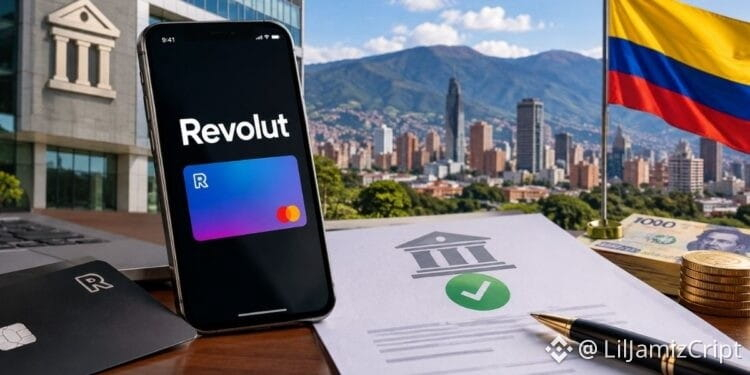
Revolut obtained a banking license to operate in Colombia
The firm plans to begin operations in the South American country next year.
The financial company Revolut announced today, September 15, 2026, that it had received its operating license from the Superintendence of Finance of Colombia (SFC). This authorization will allow it to provide services as a regulated banking entity in the South American nation.
With the banking license granted by the SFC, the entity «will soon launch a wide range of financial products in Colombia,» the company assures.
Regarding the requirements of Colombia’s legal framework, the company stated that «compliance with the strict requirements for regulatory capital demonstrates the project’s financial strength and the company’s long-term commitment to the country».
Similarly, the corporation said that «the Fogafín deposit insurance guarantees user protection under the local regulatory framework». Fogafín is the Fund for the Guarantee of Financial Institutions, the state entity responsible for protecting depositors’ claims in the Colombian banking system
#RevolutionOnChain
Revolut obtained a banking license to operate in Colombia
The firm plans to begin operations in the South American country next year.
The financial company Revolut announced today, September 15, 2026, that it had received its operating license from the Superintendence of Finance of Colombia (SFC). This authorization will allow it to provide services as a regulated banking entity in the South American nation.
With the banking license granted by the SFC, the entity «will soon launch a wide range of financial products in Colombia,» the company assures.
Regarding the requirements of Colombia’s legal framework, the company stated that «compliance with the strict requirements for regulatory capital demonstrates the project’s financial strength and the company’s long-term commitment to the country».
Similarly, the corporation said that «the Fogafín deposit insurance guarantees user protection under the local regulatory framework». Fogafín is the Fund for the Guarantee of Financial Institutions, the state entity responsible for protecting depositors’ claims in the Colombian banking system
#RevolutionOnChain
The firm plans to begin operations in the South American country next year.
The financial company Revolut announced today, September 15, 2026, that it had received its operating license from the Superintendence of Finance of Colombia (SFC). This authorization will allow it to provide services as a regulated banking entity in the South American nation.
With the banking license granted by the SFC, the entity «will soon launch a wide range of financial products in Colombia,» the company assures.
Regarding the requirements of Colombia’s legal framework, the company stated that «compliance with the strict requirements for regulatory capital demonstrates the project’s financial strength and the company’s long-term commitment to the country».
Similarly, the corporation said that «the Fogafín deposit insurance guarantees user protection under the local regulatory framework». Fogafín is the Fund for the Guarantee of Financial Institutions, the state entity responsible for protecting depositors’ claims in the Colombian banking system
#RevolutionOnChain
89
$BTC Amid uncertainty, stablecoins return to exchanges: what does it mean for bitcoin?
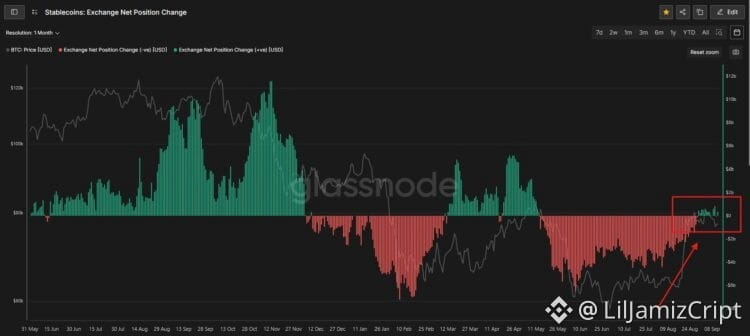
After months of outflows, the net stablecoin balance on exchanges has turned positive again.
Stablecoins are sending a favorable signal for bitcoin (BTC), although it’s still too early to talk about a complete liquidity recovery. After months of outflows, stablecoins are returning to exchanges.
Why does this move matter? Because it puts more capital close to the markets, where it can be used more quickly to buy bitcoin and other cryptocurrencies.
The most recent change can be seen in the net stablecoin balance within exchanges, as shown in the chart below:
$ZEC $ETH
{future}(BTCUSDT)
{future}(ETHUSDT)
{future}(ZECUSDT)
$BTC Amid uncertainty, stablecoins return to exchanges: what does it mean for bitcoin?
After months of outflows, the net stablecoin balance on exchanges has turned positive again.
Stablecoins are sending a favorable signal for bitcoin (BTC), although it’s still too early to talk about a complete liquidity recovery. After months of outflows, stablecoins are returning to exchanges.
Why does this move matter? Because it puts more capital close to the markets, where it can be used more quickly to buy bitcoin and other cryptocurrencies.
The most recent change can be seen in the net stablecoin balance within exchanges, as shown in the chart below:
$ZEC $ETH
After months of outflows, the net stablecoin balance on exchanges has turned positive again.
Stablecoins are sending a favorable signal for bitcoin (BTC), although it’s still too early to talk about a complete liquidity recovery. After months of outflows, stablecoins are returning to exchanges.
Why does this move matter? Because it puts more capital close to the markets, where it can be used more quickly to buy bitcoin and other cryptocurrencies.
The most recent change can be seen in the net stablecoin balance within exchanges, as shown in the chart below:
$ZEC $ETH

105
The SEC promises to move forward with rules for cryptocurrencies despite the setback of the Clarity law
The U.S. regulator wants to recognize distributed networks as records of digital property.
The SEC is preparing changes on the issuance, transfer, and custody of digital assets in the U.S.
Atkins’ plan seeks to update regulations designed before the expansion of tokenized assets
The chair of the U.S. Securities and Exchange Commission (SEC), Paul Atkins, said the agency will continue to move forward with its regulatory agenda for cryptocurrencies, regardless of the block the Clarity law faced in the Senate.
At an event hosted by the Solana Policy Institute in Washington, Atkinks outlined part of the SEC’s strategy under the so-called “Crypto Project.” The official backed the legislation, but made it clear that the commission is also maintaining its own initiatives to update the rules applicable to digital assets.
“The Congress should vote to move forward with the Clarity Act and send it to the president’s desk as soon as possible (…) But let me be equally clear: with or without that legislation, this administration will deliver for American investors and technology innovators.”
Paul Atkins, chair of the SEC.
The plan presented by the SEC chair includes three fronts that, as he explained, will be decisive in determining how digital assets are issued, transferred, and held in custody in the United States.
$ZEC $SPCXB #BTC☀
{future}(ZECUSDT)
{future}(BTCUSDT)
The SEC promises to move forward with rules for cryptocurrencies despite the setback of the Clarity law
The U.S. regulator wants to recognize distributed networks as records of digital property.
The SEC is preparing changes on the issuance, transfer, and custody of digital assets in the U.S.
Atkins’ plan seeks to update regulations designed before the expansion of tokenized assets
The chair of the U.S. Securities and Exchange Commission (SEC), Paul Atkins, said the agency will continue to move forward with its regulatory agenda for cryptocurrencies, regardless of the block the Clarity law faced in the Senate.
At an event hosted by the Solana Policy Institute in Washington, Atkinks outlined part of the SEC’s strategy under the so-called “Crypto Project.” The official backed the legislation, but made it clear that the commission is also maintaining its own initiatives to update the rules applicable to digital assets.
“The Congress should vote to move forward with the Clarity Act and send it to the president’s desk as soon as possible (…) But let me be equally clear: with or without that legislation, this administration will deliver for American investors and technology innovators.”
Paul Atkins, chair of the SEC.
The plan presented by the SEC chair includes three fronts that, as he explained, will be decisive in determining how digital assets are issued, transferred, and held in custody in the United States.
$ZEC $SPCXB #BTC☀
The U.S. regulator wants to recognize distributed networks as records of digital property.
The SEC is preparing changes on the issuance, transfer, and custody of digital assets in the U.S.
Atkins’ plan seeks to update regulations designed before the expansion of tokenized assets
The chair of the U.S. Securities and Exchange Commission (SEC), Paul Atkins, said the agency will continue to move forward with its regulatory agenda for cryptocurrencies, regardless of the block the Clarity law faced in the Senate.
At an event hosted by the Solana Policy Institute in Washington, Atkinks outlined part of the SEC’s strategy under the so-called “Crypto Project.” The official backed the legislation, but made it clear that the commission is also maintaining its own initiatives to update the rules applicable to digital assets.
“The Congress should vote to move forward with the Clarity Act and send it to the president’s desk as soon as possible (…) But let me be equally clear: with or without that legislation, this administration will deliver for American investors and technology innovators.”
Paul Atkins, chair of the SEC.
The plan presented by the SEC chair includes three fronts that, as he explained, will be decisive in determining how digital assets are issued, transferred, and held in custody in the United States.
$ZEC $SPCXB #BTC☀
198
Ripple launched a regulatory guide for institutions interested in RLUSD
The company published a document to guide financial entities on the different oversight frameworks for stablecoins in the U.S.
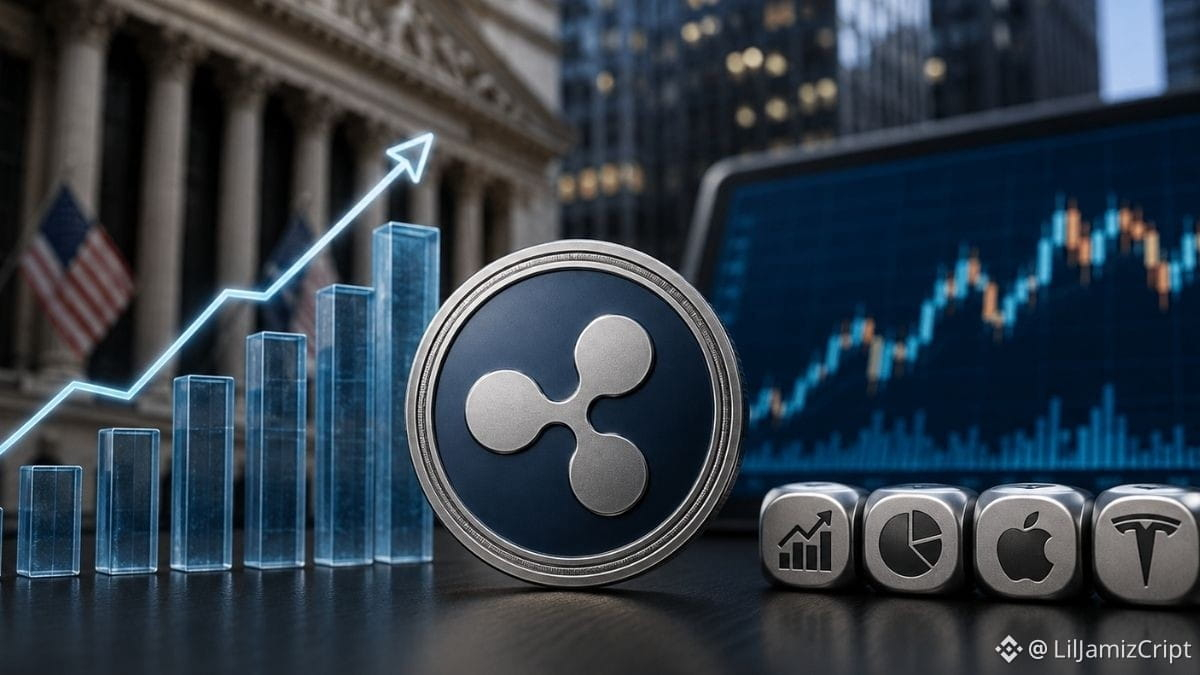
Ripple, the company that issues the Ripple USD (RLUSD) stablecoin, released a document to provide guidance for entities evaluating whether to hold, redeem, or build on its stablecoin.
“Stablecoins are often marketed using the same term, ‘regulated,’ although the licenses behind that word can mean very different things,” the company said in the guide published on September 11, 2026. The firm added: “Every stablecoin issuer says it is regulated.”
Building on this premise about regulatory frameworks in the United States, the organization outlined that “a money transmitter license, a state trust charter, and the prudential supervision of a banking regulator involve government oversight, but they entail different capital requirements, different reserve rules, and different consequences if an issuer goes bankrupt.”
Regarding the relevance of this point for corporate users, the entity stated that “for institutions that choose a stablecoin to hold, redeem, or build on it, that distinction is not academic. It determines how your counterparty risk is actually structured.”
#Ripple💰 $LAB
Ripple launched a regulatory guide for institutions interested in RLUSD
The company published a document to guide financial entities on the different oversight frameworks for stablecoins in the U.S.
Ripple, the company that issues the Ripple USD (RLUSD) stablecoin, released a document to provide guidance for entities evaluating whether to hold, redeem, or build on its stablecoin.
“Stablecoins are often marketed using the same term, ‘regulated,’ although the licenses behind that word can mean very different things,” the company said in the guide published on September 11, 2026. The firm added: “Every stablecoin issuer says it is regulated.”
Building on this premise about regulatory frameworks in the United States, the organization outlined that “a money transmitter license, a state trust charter, and the prudential supervision of a banking regulator involve government oversight, but they entail different capital requirements, different reserve rules, and different consequences if an issuer goes bankrupt.”
Regarding the relevance of this point for corporate users, the entity stated that “for institutions that choose a stablecoin to hold, redeem, or build on it, that distinction is not academic. It determines how your counterparty risk is actually structured.”
#Ripple💰 $LAB
The company published a document to guide financial entities on the different oversight frameworks for stablecoins in the U.S.
Ripple, the company that issues the Ripple USD (RLUSD) stablecoin, released a document to provide guidance for entities evaluating whether to hold, redeem, or build on its stablecoin.
“Stablecoins are often marketed using the same term, ‘regulated,’ although the licenses behind that word can mean very different things,” the company said in the guide published on September 11, 2026. The firm added: “Every stablecoin issuer says it is regulated.”
Building on this premise about regulatory frameworks in the United States, the organization outlined that “a money transmitter license, a state trust charter, and the prudential supervision of a banking regulator involve government oversight, but they entail different capital requirements, different reserve rules, and different consequences if an issuer goes bankrupt.”
Regarding the relevance of this point for corporate users, the entity stated that “for institutions that choose a stablecoin to hold, redeem, or build on it, that distinction is not academic. It determines how your counterparty risk is actually structured.”
#Ripple💰 $LAB
247
AVAX moves between Helicon and UAE Pass: Can it recover $9?
Avalanche adds new catalysts as AVAX attempts to regain a short-term bullish structure.
Avalanche is again accumulating developments that could strengthen its narrative around tokenization of real-world assets (RWA), as well as influence the price behavior of its AVAX token. The most recent of these events is the announcement of the integration of UAE PASS Digital Vault, made on September 14.
UAE PASS is a digital identity platform from the United Arab Emirates with around 12 million users. Its integration into the Avalanche ecosystem could expand the ways the network can be used for applications related to digital assets and tokenization.
After a recent upswing that went along with the broad bullish behavior across the crypto market, news like this could generate greater strength behind the asset’s price recovery, which is currently trading up to 95% below its all-time high (ATH) of $145.
$AVAX
{future}(AVAXUSDT)
AVAX moves between Helicon and UAE Pass: Can it recover $9?
Avalanche adds new catalysts as AVAX attempts to regain a short-term bullish structure.
Avalanche is again accumulating developments that could strengthen its narrative around tokenization of real-world assets (RWA), as well as influence the price behavior of its AVAX token. The most recent of these events is the announcement of the integration of UAE PASS Digital Vault, made on September 14.
UAE PASS is a digital identity platform from the United Arab Emirates with around 12 million users. Its integration into the Avalanche ecosystem could expand the ways the network can be used for applications related to digital assets and tokenization.
After a recent upswing that went along with the broad bullish behavior across the crypto market, news like this could generate greater strength behind the asset’s price recovery, which is currently trading up to 95% below its all-time high (ATH) of $145.
$AVAX
Avalanche adds new catalysts as AVAX attempts to regain a short-term bullish structure.
Avalanche is again accumulating developments that could strengthen its narrative around tokenization of real-world assets (RWA), as well as influence the price behavior of its AVAX token. The most recent of these events is the announcement of the integration of UAE PASS Digital Vault, made on September 14.
UAE PASS is a digital identity platform from the United Arab Emirates with around 12 million users. Its integration into the Avalanche ecosystem could expand the ways the network can be used for applications related to digital assets and tokenization.
After a recent upswing that went along with the broad bullish behavior across the crypto market, news like this could generate greater strength behind the asset’s price recovery, which is currently trading up to 95% below its all-time high (ATH) of $145.
$AVAX

199
The U.S. Senate rejected debating the Clarity Act; the price of bitcoin falls
The legislative process for this law must be postponed to a date not yet defined.
Despite concessions to requests from Democrats, the necessary legislative support was not secured.
According to Lummis, if Clarity is not approved this month, it could be deferred until 2030.
The backers of the Clarity Act, which aims to regulate the cryptocurrency industry in the United States, did not obtain the 60 votes required for the bill to be debated in the Senate on September 15, 2026.
What happened means that the legislative consideration of this law must be postponed to a date still not defined.
Senator Cynthia Lummis had warned that, if approval was not achieved this month, it could be pending until the year 2030, as reported by CriptoNoticias.
After this news broke, the price of bitcoin (BTC) has an initial downward reaction.
$BTC
{future}(BTCUSDT)
The U.S. Senate rejected debating the Clarity Act; the price of bitcoin falls
The legislative process for this law must be postponed to a date not yet defined.
Despite concessions to requests from Democrats, the necessary legislative support was not secured.
According to Lummis, if Clarity is not approved this month, it could be deferred until 2030.
The backers of the Clarity Act, which aims to regulate the cryptocurrency industry in the United States, did not obtain the 60 votes required for the bill to be debated in the Senate on September 15, 2026.
What happened means that the legislative consideration of this law must be postponed to a date still not defined.
Senator Cynthia Lummis had warned that, if approval was not achieved this month, it could be pending until the year 2030, as reported by CriptoNoticias.
After this news broke, the price of bitcoin (BTC) has an initial downward reaction.
$BTC
The legislative process for this law must be postponed to a date not yet defined.
Despite concessions to requests from Democrats, the necessary legislative support was not secured.
According to Lummis, if Clarity is not approved this month, it could be deferred until 2030.
The backers of the Clarity Act, which aims to regulate the cryptocurrency industry in the United States, did not obtain the 60 votes required for the bill to be debated in the Senate on September 15, 2026.
What happened means that the legislative consideration of this law must be postponed to a date still not defined.
Senator Cynthia Lummis had warned that, if approval was not achieved this month, it could be pending until the year 2030, as reported by CriptoNoticias.
After this news broke, the price of bitcoin (BTC) has an initial downward reaction.
$BTC
32
Equity funding: The U.S. opens to cryptocurrencies while Argentina limits itself to fiat.
The CNV restricted deposits in the local capital market to fiat transfers, contrasting with U.S. brokers that operate with USDC.
The regulatory landscape in Argentina is moving toward stricter, more centralized control within the traditional banking system for investment transactions.
As of the approval of General Resolution No. 1166 by the Board of the National Securities Commission (CNV) on September 14, 2026, bank or virtual transfer has been established as the only permitted method for receiving and delivering funds to and from clients in the scope of the capital market.
Although the document’s official text does not explicitly mention digital assets or cryptocurrencies, it is categorical in stating that receipts and payments must be carried out exclusively from or to sight accounts or Uniform Virtual Keys (CVU) belonging to entities or payment providers authorized by the Central Bank of the Argentine Republic (BCRA).
The measure seeks to ensure immediate availability of funds and eliminate the possible rejections that had been generated when using checks, whose usage limit within the system had already been regulated previously through RG No. 1141.
The aim of the regulatory authority is to provide greater operational certainty and strengthen preventive mechanisms against potential improper conduct, in line with anti–money laundering regulations.
Although—as mentioned earlier—this is not a regulation about cryptocurrencies, this general rule blocks any alternative funding route, with exceptions only for the Clearing and Settlement Agents (ALyC) linked to grain brokerage and agricultural transactions, or for foreign investors subject to special due diligence who operate through local custody entities.
$NVDAB $AAPLB $AMZNB
{future}(SPCXUSDT)
Equity funding: The U.S. opens to cryptocurrencies while Argentina limits itself to fiat.
The CNV restricted deposits in the local capital market to fiat transfers, contrasting with U.S. brokers that operate with USDC.
The regulatory landscape in Argentina is moving toward stricter, more centralized control within the traditional banking system for investment transactions.
As of the approval of General Resolution No. 1166 by the Board of the National Securities Commission (CNV) on September 14, 2026, bank or virtual transfer has been established as the only permitted method for receiving and delivering funds to and from clients in the scope of the capital market.
Although the document’s official text does not explicitly mention digital assets or cryptocurrencies, it is categorical in stating that receipts and payments must be carried out exclusively from or to sight accounts or Uniform Virtual Keys (CVU) belonging to entities or payment providers authorized by the Central Bank of the Argentine Republic (BCRA).
The measure seeks to ensure immediate availability of funds and eliminate the possible rejections that had been generated when using checks, whose usage limit within the system had already been regulated previously through RG No. 1141.
The aim of the regulatory authority is to provide greater operational certainty and strengthen preventive mechanisms against potential improper conduct, in line with anti–money laundering regulations.
Although—as mentioned earlier—this is not a regulation about cryptocurrencies, this general rule blocks any alternative funding route, with exceptions only for the Clearing and Settlement Agents (ALyC) linked to grain brokerage and agricultural transactions, or for foreign investors subject to special due diligence who operate through local custody entities.
$NVDAB $AAPLB $AMZNB
The CNV restricted deposits in the local capital market to fiat transfers, contrasting with U.S. brokers that operate with USDC.
The regulatory landscape in Argentina is moving toward stricter, more centralized control within the traditional banking system for investment transactions.
As of the approval of General Resolution No. 1166 by the Board of the National Securities Commission (CNV) on September 14, 2026, bank or virtual transfer has been established as the only permitted method for receiving and delivering funds to and from clients in the scope of the capital market.
Although the document’s official text does not explicitly mention digital assets or cryptocurrencies, it is categorical in stating that receipts and payments must be carried out exclusively from or to sight accounts or Uniform Virtual Keys (CVU) belonging to entities or payment providers authorized by the Central Bank of the Argentine Republic (BCRA).
The measure seeks to ensure immediate availability of funds and eliminate the possible rejections that had been generated when using checks, whose usage limit within the system had already been regulated previously through RG No. 1141.
The aim of the regulatory authority is to provide greater operational certainty and strengthen preventive mechanisms against potential improper conduct, in line with anti–money laundering regulations.
Although—as mentioned earlier—this is not a regulation about cryptocurrencies, this general rule blocks any alternative funding route, with exceptions only for the Clearing and Settlement Agents (ALyC) linked to grain brokerage and agricultural transactions, or for foreign investors subject to special due diligence who operate through local custody entities.
$NVDAB $AAPLB $AMZNB

64
Solana is going through a “regime shift” and its outlook looks bullish
The price of SOL has risen 36% over the past month, and the network’s fundamental metrics are trending upward.
Solana (SOL) appears to be moving past a phase marked by lower highs and lower lows. The price of SOL is up about 36% since last month and has started to show a different structure as network activity picks up again and institutional capital takes center stage.
This represents a “regime shift” resulting from the combination of demand, on-chain activity, and a break in the bearish structure that dominated SOL for much of 2026.
One of the most striking elements is the flows into Solana ETFs. From August 24 to September 11, these products accumulated about USD 150 million in net capital inflows.
The figure may seem modest compared with bitcoin—which averaged USD 1.6 billion over the same period—but it changes when you consider the relative size of both markets.
Solana has roughly one-thirtieth of bitcoin’s market capitalization. That’s why those USD 150 million would have a proportional impact equivalent to about USD 4.5 billion in bitcoin.
$SOL
{spot}(SOLUSDT)
#noticias #CryptoNewss
Solana is going through a “regime shift” and its outlook looks bullish
The price of SOL has risen 36% over the past month, and the network’s fundamental metrics are trending upward.
Solana (SOL) appears to be moving past a phase marked by lower highs and lower lows. The price of SOL is up about 36% since last month and has started to show a different structure as network activity picks up again and institutional capital takes center stage.
This represents a “regime shift” resulting from the combination of demand, on-chain activity, and a break in the bearish structure that dominated SOL for much of 2026.
One of the most striking elements is the flows into Solana ETFs. From August 24 to September 11, these products accumulated about USD 150 million in net capital inflows.
The figure may seem modest compared with bitcoin—which averaged USD 1.6 billion over the same period—but it changes when you consider the relative size of both markets.
Solana has roughly one-thirtieth of bitcoin’s market capitalization. That’s why those USD 150 million would have a proportional impact equivalent to about USD 4.5 billion in bitcoin.
$SOL
#noticias #CryptoNewss
The price of SOL has risen 36% over the past month, and the network’s fundamental metrics are trending upward.
Solana (SOL) appears to be moving past a phase marked by lower highs and lower lows. The price of SOL is up about 36% since last month and has started to show a different structure as network activity picks up again and institutional capital takes center stage.
This represents a “regime shift” resulting from the combination of demand, on-chain activity, and a break in the bearish structure that dominated SOL for much of 2026.
One of the most striking elements is the flows into Solana ETFs. From August 24 to September 11, these products accumulated about USD 150 million in net capital inflows.
The figure may seem modest compared with bitcoin—which averaged USD 1.6 billion over the same period—but it changes when you consider the relative size of both markets.
Solana has roughly one-thirtieth of bitcoin’s market capitalization. That’s why those USD 150 million would have a proportional impact equivalent to about USD 4.5 billion in bitcoin.
$SOL
#noticias #CryptoNewss

117
Argentina joins the global Big Brother
The country committed to the OECD to begin the automatic exchange of information on transactions involving cryptoassets.
The tax crackdown on bitcoin and cryptocurrencies continues to tighten, and this time the development comes from the Organisation for Economic Co-operation and Development (OECD): Argentina has formally committed to implementing the “Crypto-Asset Communication Framework” (CARF) and to carrying out its first automatic exchange of information on cryptoasset transactions no later than September 2029.
What is the CARF?
The CARF is the international standard that the OECD developed to apply to the world of cryptoassets the same logic that has governed traditional bank accounts since 2014 through the “Common Reporting Standard” (CRS). Under this regime, exchanges, brokers, and other cryptoasset service providers (CASPs) must identify their users (name, tax residence, tax identification number) and report annually to their local tax authority the details of relevant transactions they carry out: purchases and sales against fiat currency, exchanges between cryptoassets, transfers between users, and certain commercial payments.
That information is then shared annually with the tax authority of the country where each user is tax resident.
There are already 77 jurisdictions that have joined, and they will begin exchanging data in phases: most (including Brazil and nearly all of the European Union) will do so starting in 2027; a second group (Switzerland, Canada, Australia, and Mexico, among others) will start in 2028; and a final group will begin in 2029.
$SPCXB $ZEC $BNB
Argentina joins the global Big Brother
The country committed to the OECD to begin the automatic exchange of information on transactions involving cryptoassets.
The tax crackdown on bitcoin and cryptocurrencies continues to tighten, and this time the development comes from the Organisation for Economic Co-operation and Development (OECD): Argentina has formally committed to implementing the “Crypto-Asset Communication Framework” (CARF) and to carrying out its first automatic exchange of information on cryptoasset transactions no later than September 2029.
What is the CARF?
The CARF is the international standard that the OECD developed to apply to the world of cryptoassets the same logic that has governed traditional bank accounts since 2014 through the “Common Reporting Standard” (CRS). Under this regime, exchanges, brokers, and other cryptoasset service providers (CASPs) must identify their users (name, tax residence, tax identification number) and report annually to their local tax authority the details of relevant transactions they carry out: purchases and sales against fiat currency, exchanges between cryptoassets, transfers between users, and certain commercial payments.
That information is then shared annually with the tax authority of the country where each user is tax resident.
There are already 77 jurisdictions that have joined, and they will begin exchanging data in phases: most (including Brazil and nearly all of the European Union) will do so starting in 2027; a second group (Switzerland, Canada, Australia, and Mexico, among others) will start in 2028; and a final group will begin in 2029.
$SPCXB $ZEC $BNB
The country committed to the OECD to begin the automatic exchange of information on transactions involving cryptoassets.
The tax crackdown on bitcoin and cryptocurrencies continues to tighten, and this time the development comes from the Organisation for Economic Co-operation and Development (OECD): Argentina has formally committed to implementing the “Crypto-Asset Communication Framework” (CARF) and to carrying out its first automatic exchange of information on cryptoasset transactions no later than September 2029.
What is the CARF?
The CARF is the international standard that the OECD developed to apply to the world of cryptoassets the same logic that has governed traditional bank accounts since 2014 through the “Common Reporting Standard” (CRS). Under this regime, exchanges, brokers, and other cryptoasset service providers (CASPs) must identify their users (name, tax residence, tax identification number) and report annually to their local tax authority the details of relevant transactions they carry out: purchases and sales against fiat currency, exchanges between cryptoassets, transfers between users, and certain commercial payments.
That information is then shared annually with the tax authority of the country where each user is tax resident.
There are already 77 jurisdictions that have joined, and they will begin exchanging data in phases: most (including Brazil and nearly all of the European Union) will do so starting in 2027; a second group (Switzerland, Canada, Australia, and Mexico, among others) will start in 2028; and a final group will begin in 2029.
$SPCXB $ZEC $BNB

52
Bitcoin falls to USD 77,000 amid rejection of the CLARITY bill, but whales hold their ground
Retail investors start sending more bitcoin to Binance again as the market prices in a rejection of the CLARITY bill.
On September 15, 2026, Bitcoin (BTC) fell below the $78,000 level amid a deterioration in expectations for the approval of the CLARITY Act. At the same time, the market is heading into the U.S. Federal Reserve (FED) meeting virtually pricing in another rate hike, adding pressure to the price.
Although the political and macroeconomic outlook has become less favorable, not everything is moving in the same direction. Even as bitcoin drops, data from Binance shows that whales are sending fewer BTC to the exchange than they were in previous months—and at a slower pace than retail investors.
The difference matters because it reduces, at least for now, the potential selling pressure coming from large holders.
CLARITY loses momentum even on Polymarket
Polymarket users currently assign just 19% probability to the CLARITY Bill becoming law before the end of 2026, well below the levels shown in previous months.
{future}(ZECUSDT)
$BTC #BTC🔥🔥🔥🔥🔥
{future}(BTCUSDT)
{future}(BNBUSDT)
Bitcoin falls to USD 77,000 amid rejection of the CLARITY bill, but whales hold their ground
Retail investors start sending more bitcoin to Binance again as the market prices in a rejection of the CLARITY bill.
On September 15, 2026, Bitcoin (BTC) fell below the $78,000 level amid a deterioration in expectations for the approval of the CLARITY Act. At the same time, the market is heading into the U.S. Federal Reserve (FED) meeting virtually pricing in another rate hike, adding pressure to the price.
Although the political and macroeconomic outlook has become less favorable, not everything is moving in the same direction. Even as bitcoin drops, data from Binance shows that whales are sending fewer BTC to the exchange than they were in previous months—and at a slower pace than retail investors.
The difference matters because it reduces, at least for now, the potential selling pressure coming from large holders.
CLARITY loses momentum even on Polymarket
Polymarket users currently assign just 19% probability to the CLARITY Bill becoming law before the end of 2026, well below the levels shown in previous months.
$BTC #BTC🔥🔥🔥🔥🔥
Retail investors start sending more bitcoin to Binance again as the market prices in a rejection of the CLARITY bill.
On September 15, 2026, Bitcoin (BTC) fell below the $78,000 level amid a deterioration in expectations for the approval of the CLARITY Act. At the same time, the market is heading into the U.S. Federal Reserve (FED) meeting virtually pricing in another rate hike, adding pressure to the price.
Although the political and macroeconomic outlook has become less favorable, not everything is moving in the same direction. Even as bitcoin drops, data from Binance shows that whales are sending fewer BTC to the exchange than they were in previous months—and at a slower pace than retail investors.
The difference matters because it reduces, at least for now, the potential selling pressure coming from large holders.
CLARITY loses momentum even on Polymarket
Polymarket users currently assign just 19% probability to the CLARITY Bill becoming law before the end of 2026, well below the levels shown in previous months.
$BTC #BTC🔥🔥🔥🔥🔥

58
The Chairman of the CNMV of Spain says that cryptocurrencies «have very clear advantages»
Carlos San Basilio backed digital assets in the markets and called for prioritizing the human factor within the country’s regulatory framework.
The Chairman of the National Securities Market Commission (CNMV) of Spain, Carlos San Basilio, publicly supported on September 15, 2026 the financial technological advance at the 9th edition of the forum ‘Digital Assets’. During the event, the official analyzed the role of cryptocurrencies in finance.
“Digital assets, if you look beyond cryptocurrencies, have very clear advantages and the CNMV is willing to support their development,” San Basilio said, as reported by the Spanish newspaper El Confidencial. His statements backed the use of distributed ledger technology (DLT) and cryptocurrency networks applied to the traditional financial system.
The representative of the Spanish regulator linked the adoption of these technical solutions directly to national financial competitiveness. In that regard, San Basilio warned: “we cannot be competitive if we stay on the sidelines of all these technologies,” arguing for modernizing the existing infrastructure.
In addition, the head of the agency highlighted the transformative impact on traditional trading operations. “The framework for trading the digital asset would present a series of advantages in the long term to make the markets more competitive and dynamic,” he said during his remarks at the event.
$BTC $SPCXB $ZEC
#news #CryptoNewss
The Chairman of the CNMV of Spain says that cryptocurrencies «have very clear advantages»
Carlos San Basilio backed digital assets in the markets and called for prioritizing the human factor within the country’s regulatory framework.
The Chairman of the National Securities Market Commission (CNMV) of Spain, Carlos San Basilio, publicly supported on September 15, 2026 the financial technological advance at the 9th edition of the forum ‘Digital Assets’. During the event, the official analyzed the role of cryptocurrencies in finance.
“Digital assets, if you look beyond cryptocurrencies, have very clear advantages and the CNMV is willing to support their development,” San Basilio said, as reported by the Spanish newspaper El Confidencial. His statements backed the use of distributed ledger technology (DLT) and cryptocurrency networks applied to the traditional financial system.
The representative of the Spanish regulator linked the adoption of these technical solutions directly to national financial competitiveness. In that regard, San Basilio warned: “we cannot be competitive if we stay on the sidelines of all these technologies,” arguing for modernizing the existing infrastructure.
In addition, the head of the agency highlighted the transformative impact on traditional trading operations. “The framework for trading the digital asset would present a series of advantages in the long term to make the markets more competitive and dynamic,” he said during his remarks at the event.
$BTC $SPCXB $ZEC
#news #CryptoNewss
Carlos San Basilio backed digital assets in the markets and called for prioritizing the human factor within the country’s regulatory framework.
The Chairman of the National Securities Market Commission (CNMV) of Spain, Carlos San Basilio, publicly supported on September 15, 2026 the financial technological advance at the 9th edition of the forum ‘Digital Assets’. During the event, the official analyzed the role of cryptocurrencies in finance.
“Digital assets, if you look beyond cryptocurrencies, have very clear advantages and the CNMV is willing to support their development,” San Basilio said, as reported by the Spanish newspaper El Confidencial. His statements backed the use of distributed ledger technology (DLT) and cryptocurrency networks applied to the traditional financial system.
The representative of the Spanish regulator linked the adoption of these technical solutions directly to national financial competitiveness. In that regard, San Basilio warned: “we cannot be competitive if we stay on the sidelines of all these technologies,” arguing for modernizing the existing infrastructure.
In addition, the head of the agency highlighted the transformative impact on traditional trading operations. “The framework for trading the digital asset would present a series of advantages in the long term to make the markets more competitive and dynamic,” he said during his remarks at the event.
$BTC $SPCXB $ZEC
#news #CryptoNewss
3
Bitcoin mining and its electricity consumption may have reached their peak»: Ammous
The author argues that lower returns and AI competition drive a long-term contraction in the sector.
Economist and author Saifedean Ammous put forward a hypothesis suggesting that the Bitcoin mining industry may have entered a phase of long-term decline in terms of capital investment and electricity consumption.
In an analysis published on September 15, 2026, the author of “The Bitcoin Pattern” says that the peak in energy and infrastructure spending in the industry was likely reached between 2024 and 2025. This transition would be driven by economic factors inherent to the protocol’s design and by the emergence of new technological demands.
The core argument is based on the economics of mining and the impact of the halvings. According to his calculations, for mining investment to maintain sustained growth, the market value of bitcoin (BTC) must increase by more than 100% every four years—equivalent to a compound annual growth rate of over 18.92%, plus the dollar’s depreciation.
As bitcoin’s market capitalization grows, sustaining that pace requires ever larger capital inflows. In this context, Ammous notes that while eight years out the annual growth rate stands at 35%, over the last five years it has fallen to 10%—a figure that discourages the purchase of new equipment when compared with operating costs.
The evolution of block rewards reinforces this position. Historically, each new mining era (that is, the period between halving and halving) multiplied revenue relative to the previous one: the second era generated 30 times more dollar revenue than the first, and the third generated 8 times more than the second.
$BTC $BNB #newsdaily
{future}(BTCUSDT)
{future}(BNBUSDT)
Bitcoin mining and its electricity consumption may have reached their peak»: Ammous
The author argues that lower returns and AI competition drive a long-term contraction in the sector.
Economist and author Saifedean Ammous put forward a hypothesis suggesting that the Bitcoin mining industry may have entered a phase of long-term decline in terms of capital investment and electricity consumption.
In an analysis published on September 15, 2026, the author of “The Bitcoin Pattern” says that the peak in energy and infrastructure spending in the industry was likely reached between 2024 and 2025. This transition would be driven by economic factors inherent to the protocol’s design and by the emergence of new technological demands.
The core argument is based on the economics of mining and the impact of the halvings. According to his calculations, for mining investment to maintain sustained growth, the market value of bitcoin (BTC) must increase by more than 100% every four years—equivalent to a compound annual growth rate of over 18.92%, plus the dollar’s depreciation.
As bitcoin’s market capitalization grows, sustaining that pace requires ever larger capital inflows. In this context, Ammous notes that while eight years out the annual growth rate stands at 35%, over the last five years it has fallen to 10%—a figure that discourages the purchase of new equipment when compared with operating costs.
The evolution of block rewards reinforces this position. Historically, each new mining era (that is, the period between halving and halving) multiplied revenue relative to the previous one: the second era generated 30 times more dollar revenue than the first, and the third generated 8 times more than the second.
$BTC $BNB #newsdaily
The author argues that lower returns and AI competition drive a long-term contraction in the sector.
Economist and author Saifedean Ammous put forward a hypothesis suggesting that the Bitcoin mining industry may have entered a phase of long-term decline in terms of capital investment and electricity consumption.
In an analysis published on September 15, 2026, the author of “The Bitcoin Pattern” says that the peak in energy and infrastructure spending in the industry was likely reached between 2024 and 2025. This transition would be driven by economic factors inherent to the protocol’s design and by the emergence of new technological demands.
The core argument is based on the economics of mining and the impact of the halvings. According to his calculations, for mining investment to maintain sustained growth, the market value of bitcoin (BTC) must increase by more than 100% every four years—equivalent to a compound annual growth rate of over 18.92%, plus the dollar’s depreciation.
As bitcoin’s market capitalization grows, sustaining that pace requires ever larger capital inflows. In this context, Ammous notes that while eight years out the annual growth rate stands at 35%, over the last five years it has fallen to 10%—a figure that discourages the purchase of new equipment when compared with operating costs.
The evolution of block rewards reinforces this position. Historically, each new mining era (that is, the period between halving and halving) multiplied revenue relative to the previous one: the second era generated 30 times more dollar revenue than the first, and the third generated 8 times more than the second.
$BTC $BNB #newsdaily

11
$BTC $ZEC The US Senate votes today on the Clarity Act amid criticism and last-minute demands
The bill seeks 60 votes to open the debate. It faces opposition from banks, prosecutors, and some players in the cryptocurrency sector.
The United States Senate will put to a vote this Tuesday, September 15, 2026, the opening of debate on the Clarity Act.
The parliamentary procedure, scheduled for 2:15 p.m. Eastern time, requires reaching 60 affirmative votes to invoke the motion to proceed. Since the Republican Party holds 53 seats, the initiative needs to secure at least seven endorsements from the Democratic or independent caucus to continue its discussion on the floor.
To break the negotiations deadlock, Republican senators Cynthia Lummis, John Boozman, and Tim Scott introduced a 635-page substitute draft, as reported by CriptoNoticias this week.
The final document incorporates 126 changes requested by Democratic lawmakers, concentrating the key updates in areas of ethics, developer protection, and regulation of stablecoins.
The version has the backing of President Donald Trump after agreeing to a strengthened ethics regime. This framework explicitly prohibits federal elected officials and judges from owning or sponsoring digital assets, requiring them to place their financial interests in blind trusts.
It also imposes civil penalties of $500,000 or 20% of the amount received, and grants state attorneys general the authority to enforce these prohibitions—an area the White House previously opposed.
{future}(BTCUSDT)
$BTC $ZEC The US Senate votes today on the Clarity Act amid criticism and last-minute demands
The bill seeks 60 votes to open the debate. It faces opposition from banks, prosecutors, and some players in the cryptocurrency sector.
The United States Senate will put to a vote this Tuesday, September 15, 2026, the opening of debate on the Clarity Act.
The parliamentary procedure, scheduled for 2:15 p.m. Eastern time, requires reaching 60 affirmative votes to invoke the motion to proceed. Since the Republican Party holds 53 seats, the initiative needs to secure at least seven endorsements from the Democratic or independent caucus to continue its discussion on the floor.
To break the negotiations deadlock, Republican senators Cynthia Lummis, John Boozman, and Tim Scott introduced a 635-page substitute draft, as reported by CriptoNoticias this week.
The final document incorporates 126 changes requested by Democratic lawmakers, concentrating the key updates in areas of ethics, developer protection, and regulation of stablecoins.
The version has the backing of President Donald Trump after agreeing to a strengthened ethics regime. This framework explicitly prohibits federal elected officials and judges from owning or sponsoring digital assets, requiring them to place their financial interests in blind trusts.
It also imposes civil penalties of $500,000 or 20% of the amount received, and grants state attorneys general the authority to enforce these prohibitions—an area the White House previously opposed.
The bill seeks 60 votes to open the debate. It faces opposition from banks, prosecutors, and some players in the cryptocurrency sector.
The United States Senate will put to a vote this Tuesday, September 15, 2026, the opening of debate on the Clarity Act.
The parliamentary procedure, scheduled for 2:15 p.m. Eastern time, requires reaching 60 affirmative votes to invoke the motion to proceed. Since the Republican Party holds 53 seats, the initiative needs to secure at least seven endorsements from the Democratic or independent caucus to continue its discussion on the floor.
To break the negotiations deadlock, Republican senators Cynthia Lummis, John Boozman, and Tim Scott introduced a 635-page substitute draft, as reported by CriptoNoticias this week.
The final document incorporates 126 changes requested by Democratic lawmakers, concentrating the key updates in areas of ethics, developer protection, and regulation of stablecoins.
The version has the backing of President Donald Trump after agreeing to a strengthened ethics regime. This framework explicitly prohibits federal elected officials and judges from owning or sponsoring digital assets, requiring them to place their financial interests in blind trusts.
It also imposes civil penalties of $500,000 or 20% of the amount received, and grants state attorneys general the authority to enforce these prohibitions—an area the White House previously opposed.

52
Verified
XRP has in the CLARITY Act a possible catalyst to break through the $1.50 mark
This law seeks to define how digital assets are classified in the US and could reduce some of the uncertainty surrounding Ripple Labs’ cryptocurrency.
XRP, Ripple Labs’ cryptocurrency, has moved back toward a zone that for much of 2026 caused it problems: the $1.50 level. The point isn’t that the number is round, but that the price tried to surpass it on multiple occasions during the year and, when it managed to do so, struggled to remain above it.
The daily candlestick chart shows this clearly. Since February, XRP has had difficulties in that range in early February, at the end of March, between late April and early May, and more recently at the end of August, when it once again broke above $1.50 before pulling back.
That’s why the test is to break through that zone and turn it into support. If XRP manages to do so, it would move past a barrier that has been capping the price for months and would open room for the continuation of the move.
This time, moreover, it reaches that resistance with its own catalyst that wasn’t present in the previous attempts: the vote on the CLARITY Act in the United States, an initiative that could change expectations regarding the asset’s regulatory treatment.
$XRP #newsdaily
{future}(XRPUSDT)
XRP has in the CLARITY Act a possible catalyst to break through the $1.50 mark
This law seeks to define how digital assets are classified in the US and could reduce some of the uncertainty surrounding Ripple Labs’ cryptocurrency.
XRP, Ripple Labs’ cryptocurrency, has moved back toward a zone that for much of 2026 caused it problems: the $1.50 level. The point isn’t that the number is round, but that the price tried to surpass it on multiple occasions during the year and, when it managed to do so, struggled to remain above it.
The daily candlestick chart shows this clearly. Since February, XRP has had difficulties in that range in early February, at the end of March, between late April and early May, and more recently at the end of August, when it once again broke above $1.50 before pulling back.
That’s why the test is to break through that zone and turn it into support. If XRP manages to do so, it would move past a barrier that has been capping the price for months and would open room for the continuation of the move.
This time, moreover, it reaches that resistance with its own catalyst that wasn’t present in the previous attempts: the vote on the CLARITY Act in the United States, an initiative that could change expectations regarding the asset’s regulatory treatment.
$XRP #newsdaily
This law seeks to define how digital assets are classified in the US and could reduce some of the uncertainty surrounding Ripple Labs’ cryptocurrency.
XRP, Ripple Labs’ cryptocurrency, has moved back toward a zone that for much of 2026 caused it problems: the $1.50 level. The point isn’t that the number is round, but that the price tried to surpass it on multiple occasions during the year and, when it managed to do so, struggled to remain above it.
The daily candlestick chart shows this clearly. Since February, XRP has had difficulties in that range in early February, at the end of March, between late April and early May, and more recently at the end of August, when it once again broke above $1.50 before pulling back.
That’s why the test is to break through that zone and turn it into support. If XRP manages to do so, it would move past a barrier that has been capping the price for months and would open room for the continuation of the move.
This time, moreover, it reaches that resistance with its own catalyst that wasn’t present in the previous attempts: the vote on the CLARITY Act in the United States, an initiative that could change expectations regarding the asset’s regulatory treatment.
$XRP #newsdaily

151
Fees, regulation, and oil market tension will set bitcoin’s direction this week
FED decisions, progress on the Clarity law in the U.S., and a rebound in crude oil are shaping a decisive week for the market.
The trading week that begins this Monday, September 14, 2026 places bitcoin (BTC) trading around USD 78,000 at the time of this publication, with a slight intraday recovery after a prior week that closed with a net downward trend.
The asset has recently seen a “golden cross” technical signal and reached its highest correlation with gold since 2020—signals that are largely bullish. But over the next few days, the market will face a sequence of legislative and macroeconomic events that will test these technical signals.
The first sector-specific catalyst will occur on Tuesday, September 15, when the U.S. Senate will put forward for a vote the motion to proceed with the debate on the Digital Asset Market Clarity Act (H.R. 3633).
$BTC
{future}(BTCUSDT)
#newscrypto
Fees, regulation, and oil market tension will set bitcoin’s direction this week
FED decisions, progress on the Clarity law in the U.S., and a rebound in crude oil are shaping a decisive week for the market.
The trading week that begins this Monday, September 14, 2026 places bitcoin (BTC) trading around USD 78,000 at the time of this publication, with a slight intraday recovery after a prior week that closed with a net downward trend.
The asset has recently seen a “golden cross” technical signal and reached its highest correlation with gold since 2020—signals that are largely bullish. But over the next few days, the market will face a sequence of legislative and macroeconomic events that will test these technical signals.
The first sector-specific catalyst will occur on Tuesday, September 15, when the U.S. Senate will put forward for a vote the motion to proceed with the debate on the Digital Asset Market Clarity Act (H.R. 3633).
$BTC
#newscrypto
FED decisions, progress on the Clarity law in the U.S., and a rebound in crude oil are shaping a decisive week for the market.
The trading week that begins this Monday, September 14, 2026 places bitcoin (BTC) trading around USD 78,000 at the time of this publication, with a slight intraday recovery after a prior week that closed with a net downward trend.
The asset has recently seen a “golden cross” technical signal and reached its highest correlation with gold since 2020—signals that are largely bullish. But over the next few days, the market will face a sequence of legislative and macroeconomic events that will test these technical signals.
The first sector-specific catalyst will occur on Tuesday, September 15, when the U.S. Senate will put forward for a vote the motion to proceed with the debate on the Digital Asset Market Clarity Act (H.R. 3633).
$BTC
#newscrypto
44
Log in to explore more content
Join global crypto users on Binance Square
⚡️ Get latest and useful information about crypto.
💬 Trusted by the world’s largest crypto exchange.
👍 Discover real insights from verified creators.
Email / Phone number
Trending Topics
FedRateWatch
1.1M views
5,402 Discussing
Share & Win Traffic Reward in our Trending Hashtag Campaign
✨Topic: FOMC September, What's The Fed's Next Move?
👉How to Join:
Publish a short post or article with hashtag #FedRateWatch
Create content based on the below angles:
- August core CPI rose 0.3% month-over-month, and the odds of a 25bp hike this week are now close to 90%. Do you anticipate a rate hike this week? Is it a one-off, or the start of a longer hiking cycle?
- If the hike lands, how does it play out for BTC, tech stocks, and gold? Bullish or bearish?
- How are you planning to trade next? Share your BTC, stocks or gold trade/holdings with our trade sharing widget.
⏰Campaign Period:
- 2026-09-15 11:00 - 2026-09-17 3:00 UTC
🎁Reward:
- Qualified posts that comply with the above guidelines and contain more than 100 words will be reviewed and may receive a random traffic boost of 500 to 3,000 views. You will receive a notification from your feed secretary if your post is selected.
- Get a chance to have your article featured on Binance Square Official
Need ideas for your post? Visit the topic page #FedRateWatch or the Square Guide on How to Post for Better Reach.
Binance Square Official
·585 Likes
·1.4M views
ZcashRises6%
2,341 views
84 Discussing
XRPSinks10%
653 views
62 Discussing