
老腊肉-kevin
4.9k Posts
 LIVE
LIVE老腊肉-kevin
 Square Verified+
Report
Block User
红薯🍠和X:@cryptokevin1688|邀请码|Bind invite code :KEVIN1688|关注我的都暴富了
Open Trade
High-Frequency Trader
10.5 Months
329 Following
46.5K+ Followers
24.9K+ Liked
Posts
Portfolio
All
Quotes
Videos
Live
PINNED
·
--
Binance Wb3 Wallet Benefits
Brothers, let me tell you a great way to save 30% on trading fees (operate as shown in the picture)
In the Binance app, go to the home page. At the top, you’ll see two options: Trading Platform and Wallet.
Step 1: Select Wallet to switch to the wallet;
Step 2: Select Invite Friends;
Step 3: Enter the invitation code: KEVIN1688 (copy it to the position shown in the picture);
Step 4: Claim the reward below.
Especially for brothers who like to farm on-chain low-cap “scam/dog” coins and do high-frequency trading—remember to bind the invitation code: KEVIN1688 to get a 30% reward. If you trade less, you can receive 5U or 10U; if you trade more, you can receive dozens of U, or even 100U.
[点击钱包,赶紧去绑定邀请码:KEVIN1688 ,领取奖励吧!](https://web3.binance.com/referral?ref=EHJSNS5W)
Binance Wb3 Wallet Benefits
Brothers, let me tell you a great way to save 30% on trading fees (operate as shown in the picture)
In the Binance app, go to the home page. At the top, you’ll see two options: Trading Platform and Wallet.
Step 1: Select Wallet to switch to the wallet;
Step 2: Select Invite Friends;
Step 3: Enter the invitation code: KEVIN1688 (copy it to the position shown in the picture);
Step 4: Claim the reward below.
Especially for brothers who like to farm on-chain low-cap “scam/dog” coins and do high-frequency trading—remember to bind the invitation code: KEVIN1688 to get a 30% reward. If you trade less, you can receive 5U or 10U; if you trade more, you can receive dozens of U, or even 100U.
点击钱包,赶紧去绑定邀请码:KEVIN1688 ,领取奖励吧!
Brothers, let me tell you a great way to save 30% on trading fees (operate as shown in the picture)
In the Binance app, go to the home page. At the top, you’ll see two options: Trading Platform and Wallet.
Step 1: Select Wallet to switch to the wallet;
Step 2: Select Invite Friends;
Step 3: Enter the invitation code: KEVIN1688 (copy it to the position shown in the picture);
Step 4: Claim the reward below.
Especially for brothers who like to farm on-chain low-cap “scam/dog” coins and do high-frequency trading—remember to bind the invitation code: KEVIN1688 to get a 30% reward. If you trade less, you can receive 5U or 10U; if you trade more, you can receive dozens of U, or even 100U.
点击钱包,赶紧去绑定邀请码:KEVIN1688 ,领取奖励吧!
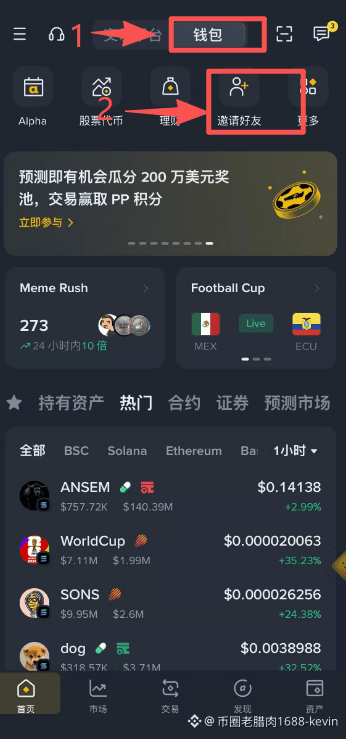
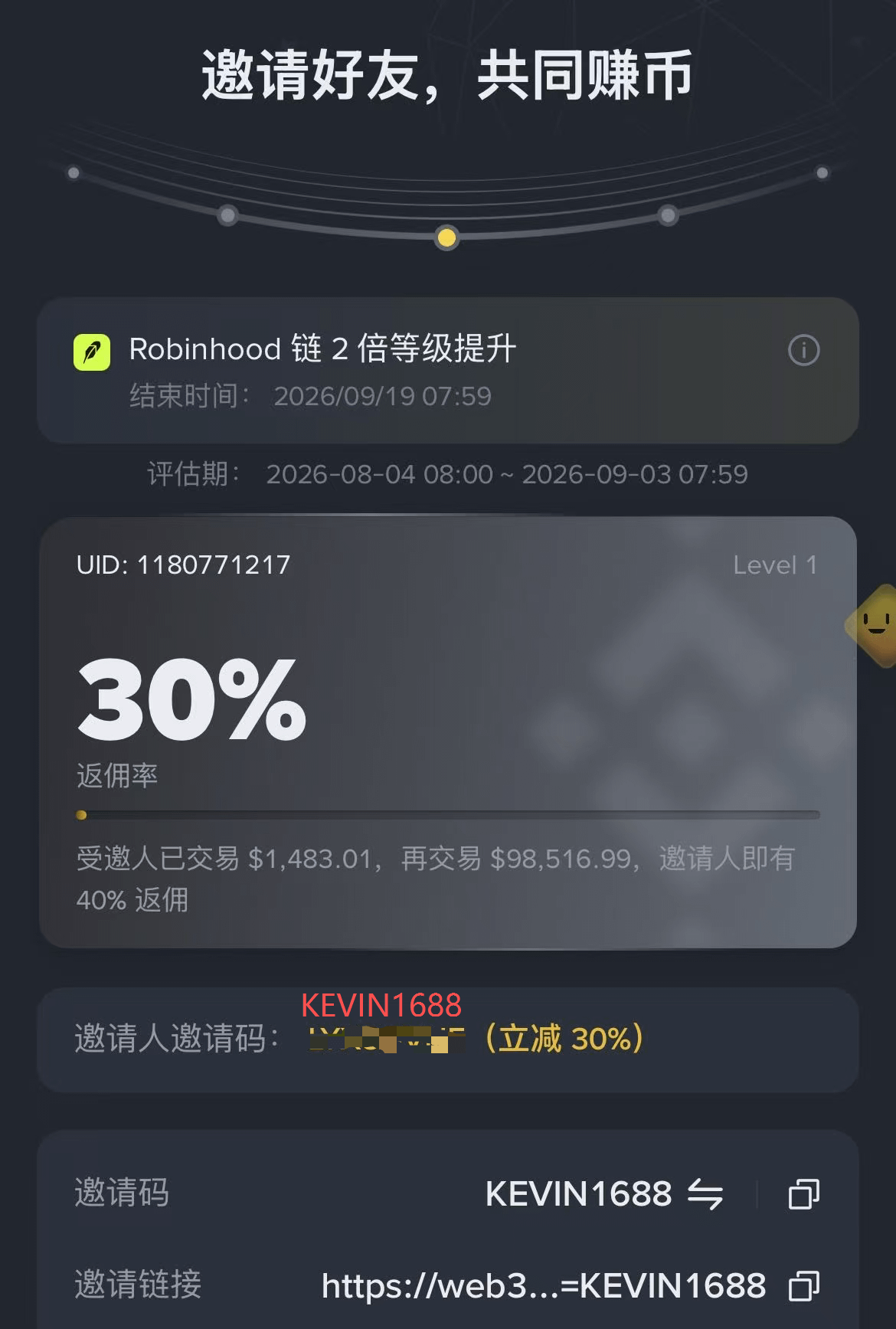
6
4
23
897
·
--
🎙️ Rate hike comes through! US stocks rally big! Which one to watch? What risks should you be aware of?

 LIVE
LIVE178 listens
0
0
·
--
#美联储sep预计2026利率4.1% US pre-market: Semiconductors are being crazily snapped up, and the rate-hike news is being traded as a “good” by being “bad news already priced in”!
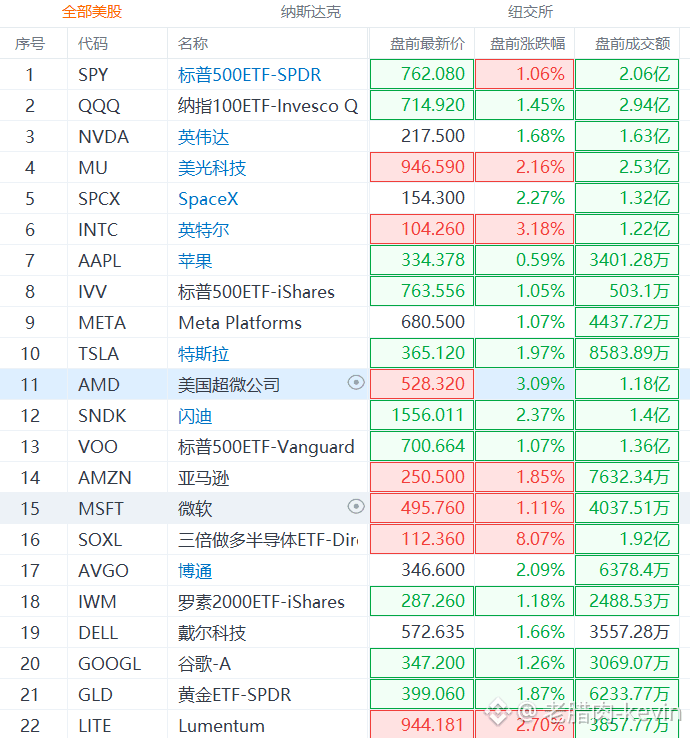
Brothers, the pre-market data is out—money is surging hard in one direction: semiconductors.
SOXL (3x leveraged semiconductor long) jumped straight to +8.07%, with turnover of $192 million—absolutely the strongest move in the whole session. SpaceX +2.27%, SanDisk +2.37%, AMD +3.09%, Intel +3.18%, Micron +2.16%. Among the “Big Tech Seven,” everything is green except Microsoft and Amazon. Apple’s turnover is only $34.01 million—clearly not getting any love from the funds.
The capital logic is very clear: the rate hike landing = bad news is fully absorbed.
On Wednesday, the Dow fell 1.21%, but the Nasdaq was almost flat, and the Philadelphia Semiconductor Index still rose 0.63%. Nvidia, Intel, and AMD all managed to close higher against the trend, while Lumentum in optical communications rocketed more than 9%. This shows institutions aren’t really scared of rate hikes—they’re using the bad news to smash the tape and pick up shares.
There are basically three fronts for the attack: semiconductor equipment/storage (MU, INTC), optical communications (LITE), and the space theme (SPCX).
Gold ETFs (GLD) were up only 0.32% in pre-market—clearly funds aren’t buying “safe haven” assets; they’re all going after offensive assets.
With the “rate-hike shoe” landing, the market is voting with its feet: buy tech, buy semiconductors, and buy the AI compute that got mistreated and undervalued. $SOXL $KORU
{future}(KORUUSDT)
$SPCX
{future}(SPCXUSDT)
{future}(SOXLUSDT)
#美联储sep预计2026利率4.1% US pre-market: Semiconductors are being crazily snapped up, and the rate-hike news is being traded as a “good” by being “bad news already priced in”!
Brothers, the pre-market data is out—money is surging hard in one direction: semiconductors.
SOXL (3x leveraged semiconductor long) jumped straight to +8.07%, with turnover of $192 million—absolutely the strongest move in the whole session. SpaceX +2.27%, SanDisk +2.37%, AMD +3.09%, Intel +3.18%, Micron +2.16%. Among the “Big Tech Seven,” everything is green except Microsoft and Amazon. Apple’s turnover is only $34.01 million—clearly not getting any love from the funds.
The capital logic is very clear: the rate hike landing = bad news is fully absorbed.
On Wednesday, the Dow fell 1.21%, but the Nasdaq was almost flat, and the Philadelphia Semiconductor Index still rose 0.63%. Nvidia, Intel, and AMD all managed to close higher against the trend, while Lumentum in optical communications rocketed more than 9%. This shows institutions aren’t really scared of rate hikes—they’re using the bad news to smash the tape and pick up shares.
There are basically three fronts for the attack: semiconductor equipment/storage (MU, INTC), optical communications (LITE), and the space theme (SPCX).
Gold ETFs (GLD) were up only 0.32% in pre-market—clearly funds aren’t buying “safe haven” assets; they’re all going after offensive assets.
With the “rate-hike shoe” landing, the market is voting with its feet: buy tech, buy semiconductors, and buy the AI compute that got mistreated and undervalued. $SOXL $KORU
$SPCX
Brothers, the pre-market data is out—money is surging hard in one direction: semiconductors.
SOXL (3x leveraged semiconductor long) jumped straight to +8.07%, with turnover of $192 million—absolutely the strongest move in the whole session. SpaceX +2.27%, SanDisk +2.37%, AMD +3.09%, Intel +3.18%, Micron +2.16%. Among the “Big Tech Seven,” everything is green except Microsoft and Amazon. Apple’s turnover is only $34.01 million—clearly not getting any love from the funds.
The capital logic is very clear: the rate hike landing = bad news is fully absorbed.
On Wednesday, the Dow fell 1.21%, but the Nasdaq was almost flat, and the Philadelphia Semiconductor Index still rose 0.63%. Nvidia, Intel, and AMD all managed to close higher against the trend, while Lumentum in optical communications rocketed more than 9%. This shows institutions aren’t really scared of rate hikes—they’re using the bad news to smash the tape and pick up shares.
There are basically three fronts for the attack: semiconductor equipment/storage (MU, INTC), optical communications (LITE), and the space theme (SPCX).
Gold ETFs (GLD) were up only 0.32% in pre-market—clearly funds aren’t buying “safe haven” assets; they’re all going after offensive assets.
With the “rate-hike shoe” landing, the market is voting with its feet: buy tech, buy semiconductors, and buy the AI compute that got mistreated and undervalued. $SOXL $KORU
$SPCX
1
1.9k
·
--
Verified
#美联储加息25基点美股收跌 US pre-market news: Storage chips strengthen; SK Hynix and Western Digital rise nearly 2%
Ahead of the US market open, all three major stock index futures rose. Dow Jones futures rose 0.76%, Nasdaq futures rose 0.92%, and S&P 500 index futures rose 0.77%.
Big tech stocks were broadly higher before the opening: Nvidia rose 1.21%, Tesla rose 1.3%, Meta rose 1.07%, Amazon rose 1.24%, Apple rose 0.48%, Google rose 1.26%, and Microsoft rose 0.92%.
Storage-chip stocks climbed in pre-market trading. SK Hynix and Western Digital rose nearly 2%, while Micron Technology and SanDisk rose more than 1%.
The optical communications sector edged higher pre-market. Corning, M2I Wireless Technology, and Coherent rose more than 2%, while Lumentum and Ciena rose more than 1%.
International crude oil prices fell. WTI crude futures were down 0.95% to $101.48 per barrel; Brent crude futures were down 1.19% to $104.57 per barrel.
Spot gold in London rose 1.52% to $4,327.13 per ounce; spot silver in London rose 2.12% to $64.28 per ounce.
Trump says the EU allows Canada to become a “co-belligerent” or “hostile action”
According to US media reports, US President Trump hinted during a speech in North Carolina on the 16th that the EU allows Canada to become a “co-belligerent” or engage in “hostile actions.” He threatened to impose additional tariffs on the EU and even to cut off trade with Europe in certain areas.
Fed chair says inflation has stayed too high for too long, announces an interest-rate hike
On September 16 local time, the US Federal Reserve announced its first rate hike in more than three years and projected another hike later this year. The Federal Open Market Committee unanimously approved the rate-hike decision. In remarks at a press conference after the monetary policy meeting, Fed Chair Powell said that the reason for the hike was that “US inflation is too high and has remained elevated for too long, and today’s monetary policy action will help bring inflation back to the Committee’s 2% target in a more timely manner.”$SKHY $MUU $SNDK
{future}(SNDKUSDT)
{future}(MUUUSDT)
{future}(SKHYUSDT)
#美联储加息25基点美股收跌 US pre-market news: Storage chips strengthen; SK Hynix and Western Digital rise nearly 2%
Ahead of the US market open, all three major stock index futures rose. Dow Jones futures rose 0.76%, Nasdaq futures rose 0.92%, and S&P 500 index futures rose 0.77%.
Big tech stocks were broadly higher before the opening: Nvidia rose 1.21%, Tesla rose 1.3%, Meta rose 1.07%, Amazon rose 1.24%, Apple rose 0.48%, Google rose 1.26%, and Microsoft rose 0.92%.
Storage-chip stocks climbed in pre-market trading. SK Hynix and Western Digital rose nearly 2%, while Micron Technology and SanDisk rose more than 1%.
The optical communications sector edged higher pre-market. Corning, M2I Wireless Technology, and Coherent rose more than 2%, while Lumentum and Ciena rose more than 1%.
International crude oil prices fell. WTI crude futures were down 0.95% to $101.48 per barrel; Brent crude futures were down 1.19% to $104.57 per barrel.
Spot gold in London rose 1.52% to $4,327.13 per ounce; spot silver in London rose 2.12% to $64.28 per ounce.
Trump says the EU allows Canada to become a “co-belligerent” or “hostile action”
According to US media reports, US President Trump hinted during a speech in North Carolina on the 16th that the EU allows Canada to become a “co-belligerent” or engage in “hostile actions.” He threatened to impose additional tariffs on the EU and even to cut off trade with Europe in certain areas.
Fed chair says inflation has stayed too high for too long, announces an interest-rate hike
On September 16 local time, the US Federal Reserve announced its first rate hike in more than three years and projected another hike later this year. The Federal Open Market Committee unanimously approved the rate-hike decision. In remarks at a press conference after the monetary policy meeting, Fed Chair Powell said that the reason for the hike was that “US inflation is too high and has remained elevated for too long, and today’s monetary policy action will help bring inflation back to the Committee’s 2% target in a more timely manner.”$SKHY $MUU $SNDK
Ahead of the US market open, all three major stock index futures rose. Dow Jones futures rose 0.76%, Nasdaq futures rose 0.92%, and S&P 500 index futures rose 0.77%.
Big tech stocks were broadly higher before the opening: Nvidia rose 1.21%, Tesla rose 1.3%, Meta rose 1.07%, Amazon rose 1.24%, Apple rose 0.48%, Google rose 1.26%, and Microsoft rose 0.92%.
Storage-chip stocks climbed in pre-market trading. SK Hynix and Western Digital rose nearly 2%, while Micron Technology and SanDisk rose more than 1%.
The optical communications sector edged higher pre-market. Corning, M2I Wireless Technology, and Coherent rose more than 2%, while Lumentum and Ciena rose more than 1%.
International crude oil prices fell. WTI crude futures were down 0.95% to $101.48 per barrel; Brent crude futures were down 1.19% to $104.57 per barrel.
Spot gold in London rose 1.52% to $4,327.13 per ounce; spot silver in London rose 2.12% to $64.28 per ounce.
Trump says the EU allows Canada to become a “co-belligerent” or “hostile action”
According to US media reports, US President Trump hinted during a speech in North Carolina on the 16th that the EU allows Canada to become a “co-belligerent” or engage in “hostile actions.” He threatened to impose additional tariffs on the EU and even to cut off trade with Europe in certain areas.
Fed chair says inflation has stayed too high for too long, announces an interest-rate hike
On September 16 local time, the US Federal Reserve announced its first rate hike in more than three years and projected another hike later this year. The Federal Open Market Committee unanimously approved the rate-hike decision. In remarks at a press conference after the monetary policy meeting, Fed Chair Powell said that the reason for the hike was that “US inflation is too high and has remained elevated for too long, and today’s monetary policy action will help bring inflation back to the Committee’s 2% target in a more timely manner.”$SKHY $MUU $SNDK
3
2.7k
·
--
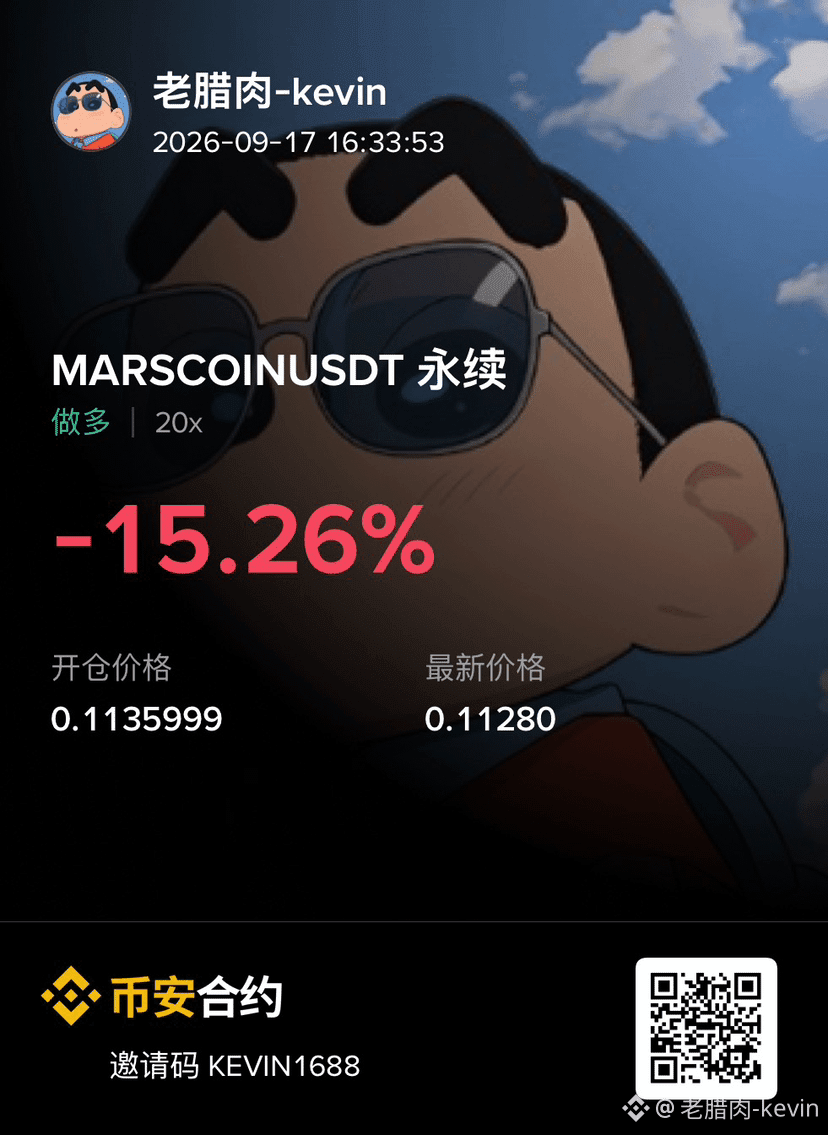
$MarsCoin After the Musk coin dips, it's the most worth going long
On the hood chain, there are coins everywhere—coin stocks and meme coins
On the BSC chain, there’s only this one
It has an extremely high degree of scarcity—buy this one is enough $MarsCoin
{future}(MARSCOINUSDT)
$MarsCoin After the Musk coin dips, it's the most worth going long
On the hood chain, there are coins everywhere—coin stocks and meme coins
On the BSC chain, there’s only this one
It has an extremely high degree of scarcity—buy this one is enough $MarsCoin
On the hood chain, there are coins everywhere—coin stocks and meme coins
On the BSC chain, there’s only this one
It has an extremely high degree of scarcity—buy this one is enough $MarsCoin
661
·
--
Verified
Cloud computing service providers (CSP) rise before the bell
Nebius up more than 7%, CoreWeave up nearly 5%, Oracle up more than 2%, and Google, Microsoft, Amazon, and Meta up more than 1%.
$NBIS $CRWV $ORCL
{future}(ORCLUSDT)
{future}(CRWVUSDT)
{future}(NBISUSDT)
Cloud computing service providers (CSP) rise before the bell
Nebius up more than 7%, CoreWeave up nearly 5%, Oracle up more than 2%, and Google, Microsoft, Amazon, and Meta up more than 1%.
$NBIS $CRWV $ORCL
Nebius up more than 7%, CoreWeave up nearly 5%, Oracle up more than 2%, and Google, Microsoft, Amazon, and Meta up more than 1%.
$NBIS $CRWV $ORCL
743
·
--
Verified
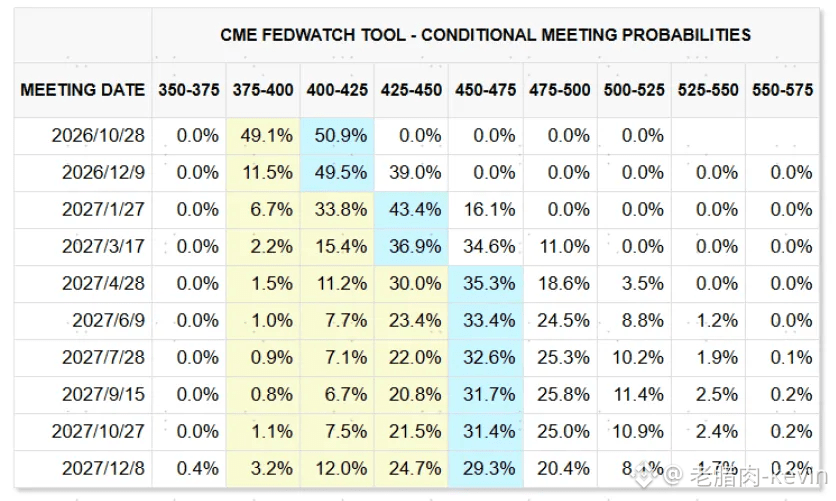
Is one Fed rate hike enough?
The Federal Reserve raised rates by 25 basis points early this morning, taking the policy rate to 3.75%–4%. Many people ask me: is one hike enough? My conclusion is simple—probably not, but it also won’t be raised to death.
In my view, there’s no foundation for consecutive, large-scale rate hikes—three or more, unless oil prices completely run out of control. Why? High interest rates themselves end up strangling the economy in return. Think about it: the 30-year mortgage rate is already close to 7%; real estate is already lying flat, and the manufacturing PMI has slipped from 55.6 to 54.6. If rates go any higher, the free cash flow of those AI cloud players turns negative—when financing costs rise, capital expenditures directly shrink. Where will growth come from?
There’s a kind of self-reinforcing dynamic to rate hikes: rate hikes actually make it harder to hike much more. What about oil prices? That’s the only wildcard. If the oil price “core” level stays above $100 and doesn’t come down, CPI won’t be brought under control, and the Fed will be boxed in. Even Trump’s midterm election in November would force urgency. But if oil prices return to around $80 in Q3–Q4, CPI by year-end could fall back to 3%.
So what does this mean for trading? Remember one thing: a brief, precautionary rate hike often makes the market “move the other way.” On the day the hike lands, it’s often the peak in U.S. Treasury yields and the trough in the stock market. The 1997 episode was like that: after the S&P fell for 17 straight days and dropped 6.5%, it rebounded right away.
Don’t get scared by the words “rate hike.” The real disaster would be truly continuous, major hikes. For one or two hikes, pullbacks are often your opportunity to get on board. Focus on oil prices—it’s the one who can flip the table. $CL $SOXL $KORU #美联储SEP预计2026利率4.1% #亚马逊获Generac认股权证
{future}(KORUUSDT)
{future}(SOXLUSDT)
{future}(CLUSDT)
Is one Fed rate hike enough?
The Federal Reserve raised rates by 25 basis points early this morning, taking the policy rate to 3.75%–4%. Many people ask me: is one hike enough? My conclusion is simple—probably not, but it also won’t be raised to death.
In my view, there’s no foundation for consecutive, large-scale rate hikes—three or more, unless oil prices completely run out of control. Why? High interest rates themselves end up strangling the economy in return. Think about it: the 30-year mortgage rate is already close to 7%; real estate is already lying flat, and the manufacturing PMI has slipped from 55.6 to 54.6. If rates go any higher, the free cash flow of those AI cloud players turns negative—when financing costs rise, capital expenditures directly shrink. Where will growth come from?
There’s a kind of self-reinforcing dynamic to rate hikes: rate hikes actually make it harder to hike much more. What about oil prices? That’s the only wildcard. If the oil price “core” level stays above $100 and doesn’t come down, CPI won’t be brought under control, and the Fed will be boxed in. Even Trump’s midterm election in November would force urgency. But if oil prices return to around $80 in Q3–Q4, CPI by year-end could fall back to 3%.
So what does this mean for trading? Remember one thing: a brief, precautionary rate hike often makes the market “move the other way.” On the day the hike lands, it’s often the peak in U.S. Treasury yields and the trough in the stock market. The 1997 episode was like that: after the S&P fell for 17 straight days and dropped 6.5%, it rebounded right away.
Don’t get scared by the words “rate hike.” The real disaster would be truly continuous, major hikes. For one or two hikes, pullbacks are often your opportunity to get on board. Focus on oil prices—it’s the one who can flip the table. $CL $SOXL $KORU #美联储SEP预计2026利率4.1% #亚马逊获Generac认股权证
The Federal Reserve raised rates by 25 basis points early this morning, taking the policy rate to 3.75%–4%. Many people ask me: is one hike enough? My conclusion is simple—probably not, but it also won’t be raised to death.
In my view, there’s no foundation for consecutive, large-scale rate hikes—three or more, unless oil prices completely run out of control. Why? High interest rates themselves end up strangling the economy in return. Think about it: the 30-year mortgage rate is already close to 7%; real estate is already lying flat, and the manufacturing PMI has slipped from 55.6 to 54.6. If rates go any higher, the free cash flow of those AI cloud players turns negative—when financing costs rise, capital expenditures directly shrink. Where will growth come from?
There’s a kind of self-reinforcing dynamic to rate hikes: rate hikes actually make it harder to hike much more. What about oil prices? That’s the only wildcard. If the oil price “core” level stays above $100 and doesn’t come down, CPI won’t be brought under control, and the Fed will be boxed in. Even Trump’s midterm election in November would force urgency. But if oil prices return to around $80 in Q3–Q4, CPI by year-end could fall back to 3%.
So what does this mean for trading? Remember one thing: a brief, precautionary rate hike often makes the market “move the other way.” On the day the hike lands, it’s often the peak in U.S. Treasury yields and the trough in the stock market. The 1997 episode was like that: after the S&P fell for 17 straight days and dropped 6.5%, it rebounded right away.
Don’t get scared by the words “rate hike.” The real disaster would be truly continuous, major hikes. For one or two hikes, pullbacks are often your opportunity to get on board. Focus on oil prices—it’s the one who can flip the table. $CL $SOXL $KORU #美联储SEP预计2026利率4.1% #亚马逊获Generac认股权证
2
1
1k
·
--
Verified
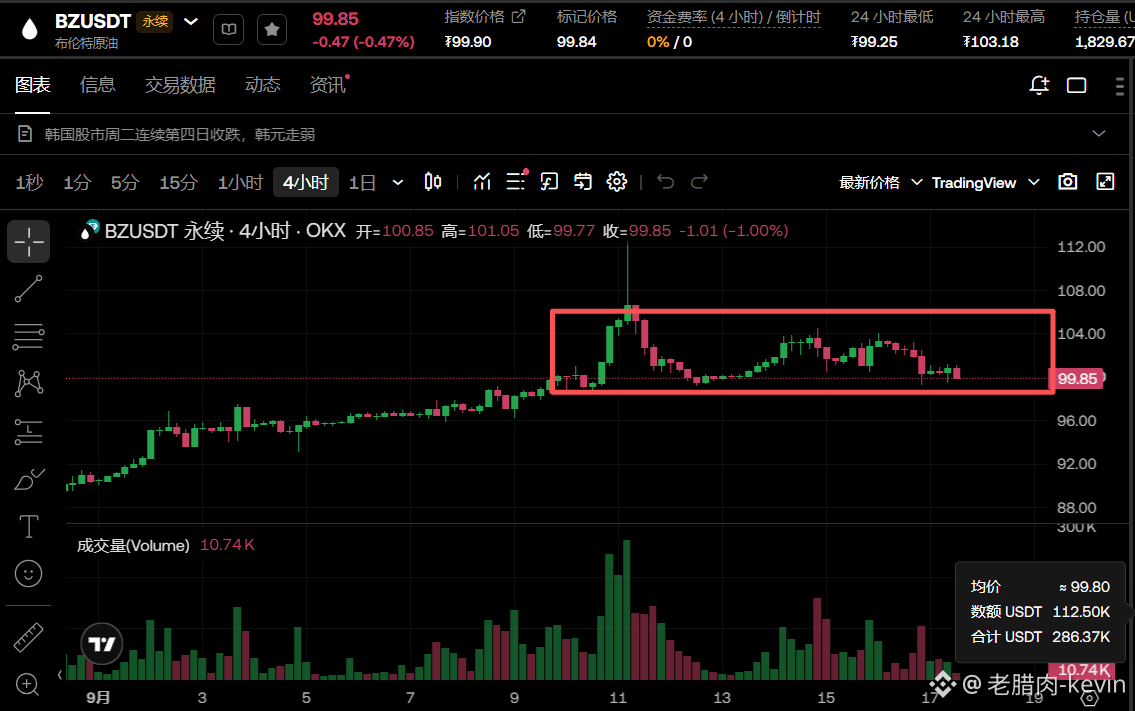
After the hawkish rate hikes, is the Middle East really going to cool off? Will Trump’s TACO still work this time?
Short-term easing in the Middle East? Not likely. Trump’s TACO might work, but this script is different.
Why is easing hard? The Houthis have just taken control of the Birelin Island in the Strait of Mandeb, and Saudi’s oil pipelines have been forced to stop. On the Iranian side, oil tankers have been bombed and U.S. bases have been hit by missiles—both sides have no intention of stopping.
U.S. Central Command is even secretly convening a meeting of the armed forces of eight countries in Germany to discuss how to expand Hormuz escort operations. Doesn’t that look like preparations for a withdrawal?
So what about Trump’s TACO? Previously, whenever Brent crude touched 100, Trump would immediately call for talks and push down oil prices—he was very reliable like that. This time, Brent has already broken above 100, and he has indeed changed his tune, saying he is “open to negotiations.” But notice: he said “open to talks,” not “I will negotiate right now.” And he added a condition—countries have to pay the U.S. “escort compensation.” This is not really TACO; it sounds like he wants to collect money.
The real issue is this: before, Trump’s TACO was because voters were complaining about high oil prices, and he couldn’t take the heat during midterm elections. But this time, Bank of America directly said that before the midterms, reaching a lasting agreement is becoming “increasingly unlikely,” and it may even be delayed until after the election. In other words, Trump may not be in a hurry to do TACO.
How should you think about the trade? Oil prices likely won’t drop in the short term, inflation won’t be contained, and the Fed has just raised rates and hinted at more to come. So both crude and the dollar have near-term support—don’t rush to short. If you really want to wait for TACO, watch two signals: Trump’s meeting with the Gulf countries on “number 22,” and whether Brent is again heading toward 120. Only if it goes too hard does TACO have a chance. $CL $BZ #美联储加息25基点美股收跌 #点阵图预示2026年再加息一次
{future}(BZUSDT)
{future}(CLUSDT)
After the hawkish rate hikes, is the Middle East really going to cool off? Will Trump’s TACO still work this time?
Short-term easing in the Middle East? Not likely. Trump’s TACO might work, but this script is different.
Why is easing hard? The Houthis have just taken control of the Birelin Island in the Strait of Mandeb, and Saudi’s oil pipelines have been forced to stop. On the Iranian side, oil tankers have been bombed and U.S. bases have been hit by missiles—both sides have no intention of stopping.
U.S. Central Command is even secretly convening a meeting of the armed forces of eight countries in Germany to discuss how to expand Hormuz escort operations. Doesn’t that look like preparations for a withdrawal?
So what about Trump’s TACO? Previously, whenever Brent crude touched 100, Trump would immediately call for talks and push down oil prices—he was very reliable like that. This time, Brent has already broken above 100, and he has indeed changed his tune, saying he is “open to negotiations.” But notice: he said “open to talks,” not “I will negotiate right now.” And he added a condition—countries have to pay the U.S. “escort compensation.” This is not really TACO; it sounds like he wants to collect money.
The real issue is this: before, Trump’s TACO was because voters were complaining about high oil prices, and he couldn’t take the heat during midterm elections. But this time, Bank of America directly said that before the midterms, reaching a lasting agreement is becoming “increasingly unlikely,” and it may even be delayed until after the election. In other words, Trump may not be in a hurry to do TACO.
How should you think about the trade? Oil prices likely won’t drop in the short term, inflation won’t be contained, and the Fed has just raised rates and hinted at more to come. So both crude and the dollar have near-term support—don’t rush to short. If you really want to wait for TACO, watch two signals: Trump’s meeting with the Gulf countries on “number 22,” and whether Brent is again heading toward 120. Only if it goes too hard does TACO have a chance. $CL $BZ #美联储加息25基点美股收跌 #点阵图预示2026年再加息一次
Short-term easing in the Middle East? Not likely. Trump’s TACO might work, but this script is different.
Why is easing hard? The Houthis have just taken control of the Birelin Island in the Strait of Mandeb, and Saudi’s oil pipelines have been forced to stop. On the Iranian side, oil tankers have been bombed and U.S. bases have been hit by missiles—both sides have no intention of stopping.
U.S. Central Command is even secretly convening a meeting of the armed forces of eight countries in Germany to discuss how to expand Hormuz escort operations. Doesn’t that look like preparations for a withdrawal?
So what about Trump’s TACO? Previously, whenever Brent crude touched 100, Trump would immediately call for talks and push down oil prices—he was very reliable like that. This time, Brent has already broken above 100, and he has indeed changed his tune, saying he is “open to negotiations.” But notice: he said “open to talks,” not “I will negotiate right now.” And he added a condition—countries have to pay the U.S. “escort compensation.” This is not really TACO; it sounds like he wants to collect money.
The real issue is this: before, Trump’s TACO was because voters were complaining about high oil prices, and he couldn’t take the heat during midterm elections. But this time, Bank of America directly said that before the midterms, reaching a lasting agreement is becoming “increasingly unlikely,” and it may even be delayed until after the election. In other words, Trump may not be in a hurry to do TACO.
How should you think about the trade? Oil prices likely won’t drop in the short term, inflation won’t be contained, and the Fed has just raised rates and hinted at more to come. So both crude and the dollar have near-term support—don’t rush to short. If you really want to wait for TACO, watch two signals: Trump’s meeting with the Gulf countries on “number 22,” and whether Brent is again heading toward 120. Only if it goes too hard does TACO have a chance. $CL $BZ #美联储加息25基点美股收跌 #点阵图预示2026年再加息一次
1
1.1k
·
--
Is the SOL on-chain cooled down? Can a Useless pullback still get you on board?
First, let’s look at sentiment on the SOL chain. Honestly, it’s a bit cold. On social media, bearish sentiment toward SOL has just surged to the highest level since 2026. Trading volume has also shrunk to low levels. Price dropped from 110 back to around 95–97. RSI has fallen to just above 40—it's not oversold, but it doesn’t look great. Still, there’s one detail worth noting: ETFs have seen net inflows for nine straight weeks. In one month alone, they pulled in over $200 million. Meanwhile, exchanges are net withdrawing about 3 million SOL. In plain terms—retail is panicking, while institutions are picking up the pieces.
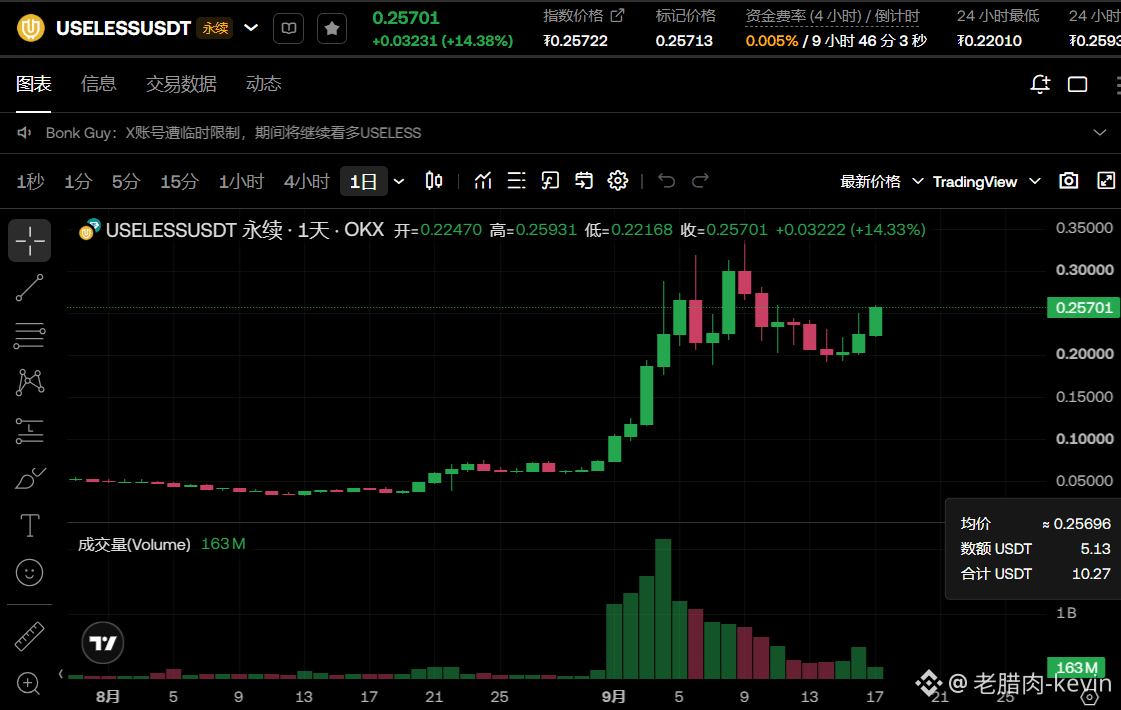
Now let’s talk about Useless. This thing started around 0.04 in late August, then in early September it shot straight to 0.26—up more than 6x. After that, it pulled back to around 0.20 to test support. The real issue isn’t “whether it has utility”—it doesn’t. Buying it is basically buying into the meme’s spread power. The key is two things: whether 0.20 can hold, and whether there’s enough volume to push through the resistance level around 0.33. The futures data is interesting: large holders’ positions are slightly net long, but small retail accounts are net short. That suggests the “smart money” is still betting on a rebound.
Sentiment on the SOL chain is somewhat chilly, but institutions are propping it up. Useless’ pullback to 0.20 is a short-term make-or-break line. If you’re going long, set your stop-loss at below 0.19—if it breaks, don’t hold on.
Memecoin trading is basically timing it right—leave before the beat drops. $USELESS
{future}(USELESSUSDT)
Is the SOL on-chain cooled down? Can a Useless pullback still get you on board?
First, let’s look at sentiment on the SOL chain. Honestly, it’s a bit cold. On social media, bearish sentiment toward SOL has just surged to the highest level since 2026. Trading volume has also shrunk to low levels. Price dropped from 110 back to around 95–97. RSI has fallen to just above 40—it's not oversold, but it doesn’t look great. Still, there’s one detail worth noting: ETFs have seen net inflows for nine straight weeks. In one month alone, they pulled in over $200 million. Meanwhile, exchanges are net withdrawing about 3 million SOL. In plain terms—retail is panicking, while institutions are picking up the pieces.
Now let’s talk about Useless. This thing started around 0.04 in late August, then in early September it shot straight to 0.26—up more than 6x. After that, it pulled back to around 0.20 to test support. The real issue isn’t “whether it has utility”—it doesn’t. Buying it is basically buying into the meme’s spread power. The key is two things: whether 0.20 can hold, and whether there’s enough volume to push through the resistance level around 0.33. The futures data is interesting: large holders’ positions are slightly net long, but small retail accounts are net short. That suggests the “smart money” is still betting on a rebound.
Sentiment on the SOL chain is somewhat chilly, but institutions are propping it up. Useless’ pullback to 0.20 is a short-term make-or-break line. If you’re going long, set your stop-loss at below 0.19—if it breaks, don’t hold on.
Memecoin trading is basically timing it right—leave before the beat drops. $USELESS
First, let’s look at sentiment on the SOL chain. Honestly, it’s a bit cold. On social media, bearish sentiment toward SOL has just surged to the highest level since 2026. Trading volume has also shrunk to low levels. Price dropped from 110 back to around 95–97. RSI has fallen to just above 40—it's not oversold, but it doesn’t look great. Still, there’s one detail worth noting: ETFs have seen net inflows for nine straight weeks. In one month alone, they pulled in over $200 million. Meanwhile, exchanges are net withdrawing about 3 million SOL. In plain terms—retail is panicking, while institutions are picking up the pieces.
Now let’s talk about Useless. This thing started around 0.04 in late August, then in early September it shot straight to 0.26—up more than 6x. After that, it pulled back to around 0.20 to test support. The real issue isn’t “whether it has utility”—it doesn’t. Buying it is basically buying into the meme’s spread power. The key is two things: whether 0.20 can hold, and whether there’s enough volume to push through the resistance level around 0.33. The futures data is interesting: large holders’ positions are slightly net long, but small retail accounts are net short. That suggests the “smart money” is still betting on a rebound.
Sentiment on the SOL chain is somewhat chilly, but institutions are propping it up. Useless’ pullback to 0.20 is a short-term make-or-break line. If you’re going long, set your stop-loss at below 0.19—if it breaks, don’t hold on.
Memecoin trading is basically timing it right—leave before the beat drops. $USELESS
925
·
--
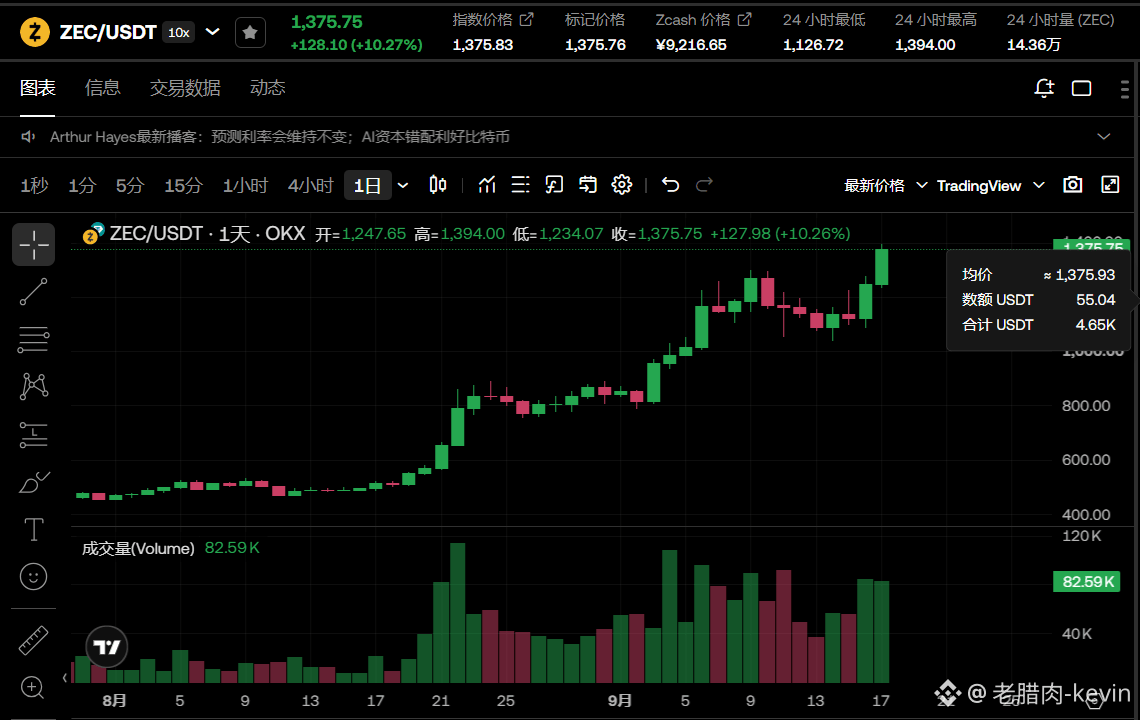
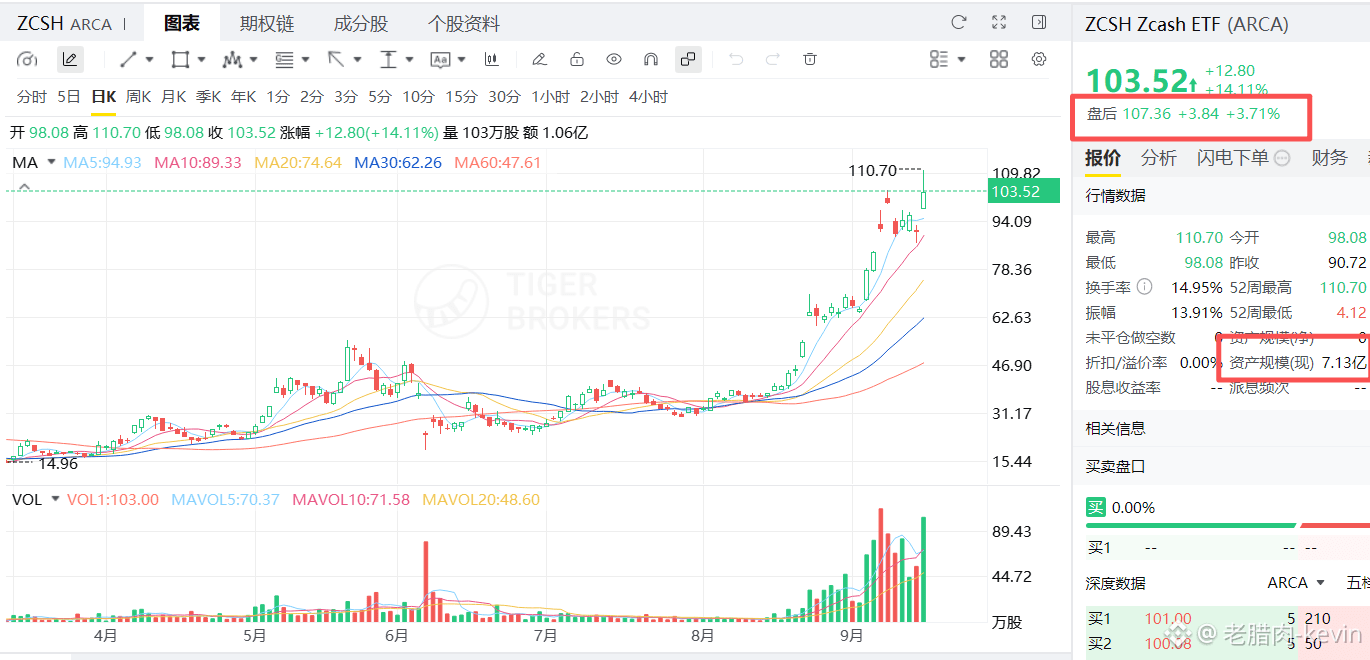
#zcash上涨6% ZECThis surge has my scalp tingling—so when will it break?
Right now, ZEC is a runaway wild horse. This quarter’s ETF is about to triple, and Grayscale’s fund size is nearing $1 billion. Market sentiment? Four words: FOMO, out of its mind.
But bro, the crazier it pumps, the more I have to ask: if this thing crashes, how will it crash?
Let’s lay out the core conditions for a drop.
First, leverage gets wrecked. ZEC futures open interest once spiked to $2.3 billion, about 14% of its market value. Previously, in a single 24-hour liquidation, $17.2 million was wiped out, and open interest then dropped directly by 20%. What does that mean? The longs are squeezed way too full—one slight tremor and it turns into a chain reaction of liquidations.
Second, the EMA50 breaks. The $1,110 level is the key watershed. If it breaks, the next stop is directly at $1,059. Then below that is the EMA200 at $872—about 20+ points away from the current price. In crypto, that kind of drawdown is just a few candles.
Third, the narrative collapses. Wang Chun directly blasted ZEC as a “narrative buy,” saying market cap rankings don’t equal real-world usage demand. Ouch, but it’s true—are you buying privacy, or are you buying candles?
ZEC is being held up by emotion and leverage right now. Once EMA50 can’t hold, or ETF inflows slow down, long liquidation and stampede can happen in minutes. For the bros chasing price, set your stop-loss: $ZEC $DASH
{future}(DASHUSDT)
{future}(ZECUSDT)
#zcash上涨6% ZECThis surge has my scalp tingling—so when will it break?
Right now, ZEC is a runaway wild horse. This quarter’s ETF is about to triple, and Grayscale’s fund size is nearing $1 billion. Market sentiment? Four words: FOMO, out of its mind.
But bro, the crazier it pumps, the more I have to ask: if this thing crashes, how will it crash?
Let’s lay out the core conditions for a drop.
First, leverage gets wrecked. ZEC futures open interest once spiked to $2.3 billion, about 14% of its market value. Previously, in a single 24-hour liquidation, $17.2 million was wiped out, and open interest then dropped directly by 20%. What does that mean? The longs are squeezed way too full—one slight tremor and it turns into a chain reaction of liquidations.
Second, the EMA50 breaks. The $1,110 level is the key watershed. If it breaks, the next stop is directly at $1,059. Then below that is the EMA200 at $872—about 20+ points away from the current price. In crypto, that kind of drawdown is just a few candles.
Third, the narrative collapses. Wang Chun directly blasted ZEC as a “narrative buy,” saying market cap rankings don’t equal real-world usage demand. Ouch, but it’s true—are you buying privacy, or are you buying candles?
ZEC is being held up by emotion and leverage right now. Once EMA50 can’t hold, or ETF inflows slow down, long liquidation and stampede can happen in minutes. For the bros chasing price, set your stop-loss: $ZEC $DASH
Right now, ZEC is a runaway wild horse. This quarter’s ETF is about to triple, and Grayscale’s fund size is nearing $1 billion. Market sentiment? Four words: FOMO, out of its mind.
But bro, the crazier it pumps, the more I have to ask: if this thing crashes, how will it crash?
Let’s lay out the core conditions for a drop.
First, leverage gets wrecked. ZEC futures open interest once spiked to $2.3 billion, about 14% of its market value. Previously, in a single 24-hour liquidation, $17.2 million was wiped out, and open interest then dropped directly by 20%. What does that mean? The longs are squeezed way too full—one slight tremor and it turns into a chain reaction of liquidations.
Second, the EMA50 breaks. The $1,110 level is the key watershed. If it breaks, the next stop is directly at $1,059. Then below that is the EMA200 at $872—about 20+ points away from the current price. In crypto, that kind of drawdown is just a few candles.
Third, the narrative collapses. Wang Chun directly blasted ZEC as a “narrative buy,” saying market cap rankings don’t equal real-world usage demand. Ouch, but it’s true—are you buying privacy, or are you buying candles?
ZEC is being held up by emotion and leverage right now. Once EMA50 can’t hold, or ETF inflows slow down, long liquidation and stampede can happen in minutes. For the bros chasing price, set your stop-loss: $ZEC $DASH
1
1
829
·
--
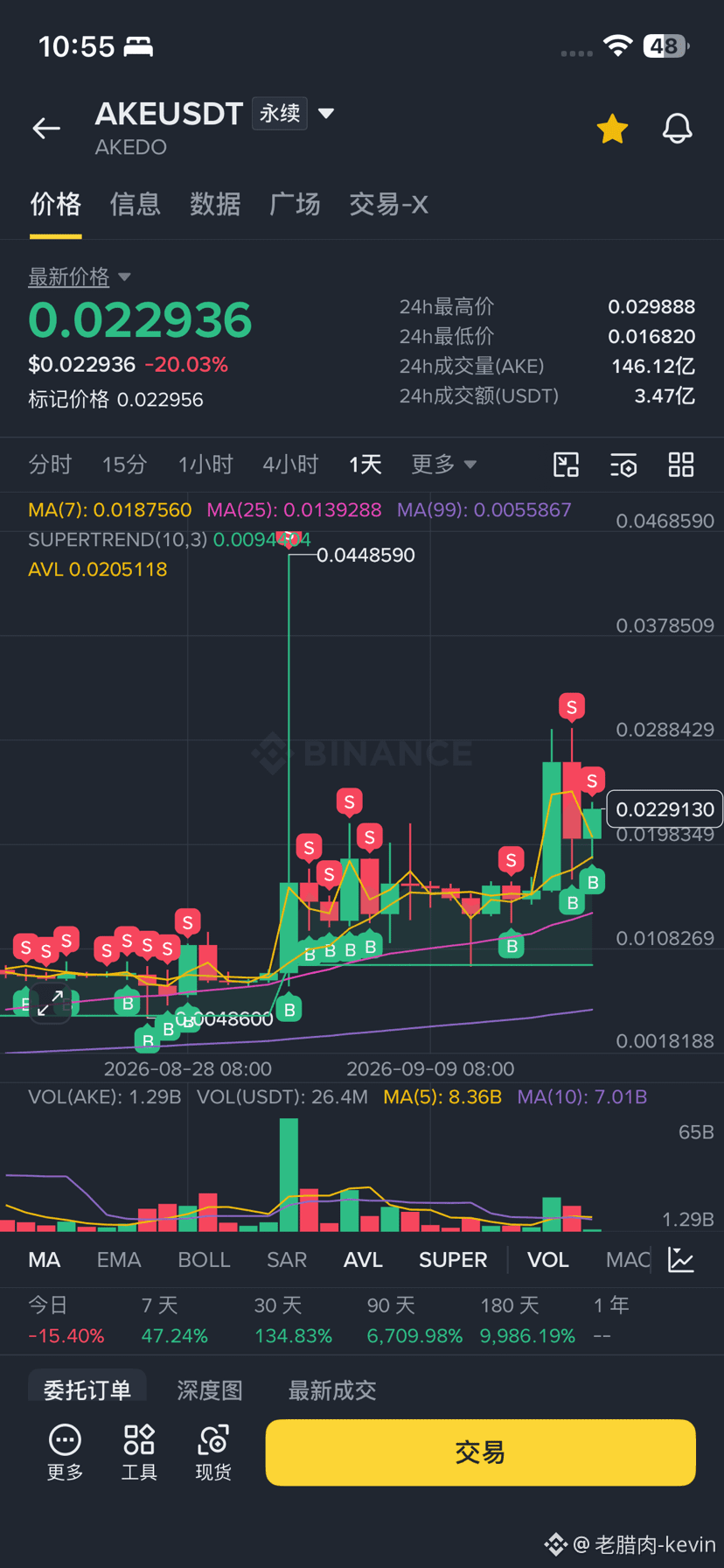
$AKE ake妖气横生
I don't know whether to leave it blank or add more
{future}(AKEUSDT)
$AKE ake妖气横生
I don't know whether to leave it blank or add more
I don't know whether to leave it blank or add more
4
2
1.9k
·
--
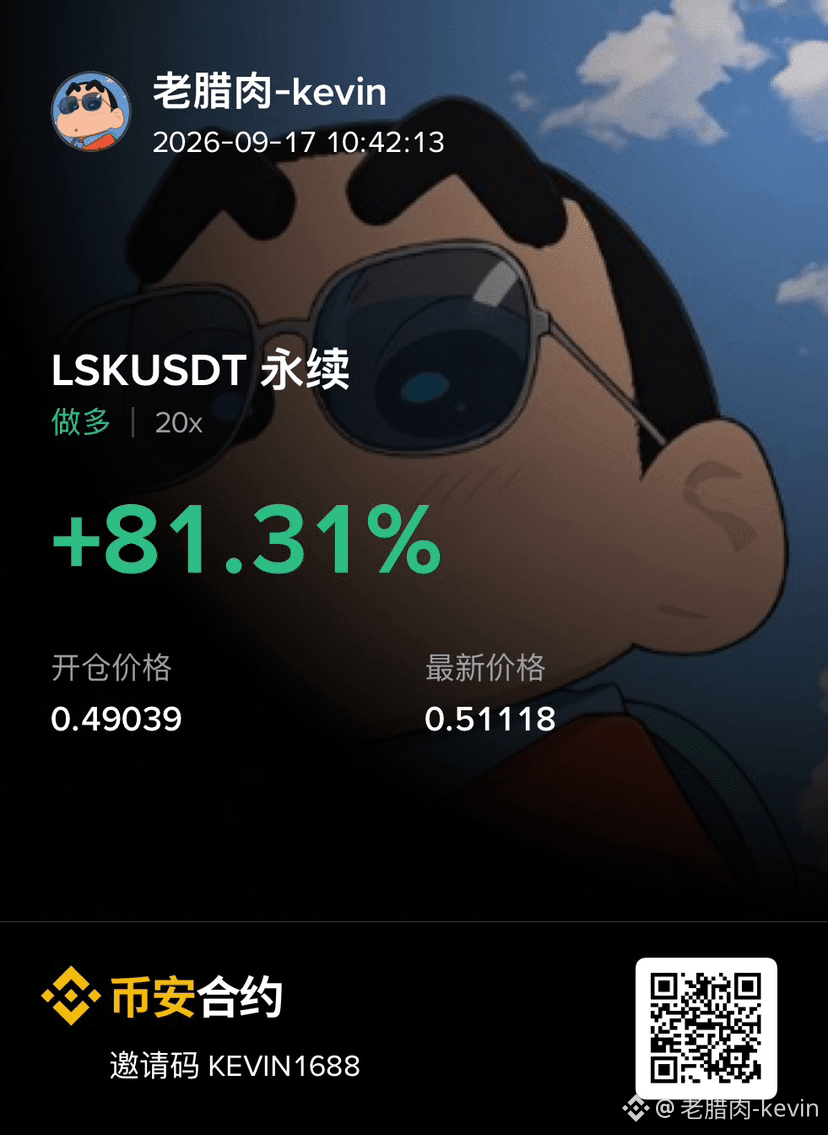
$LSK big pancake is still very hard
It feels like LSK’s market momentum hasn’t finished yet
Especially after the pullback
{future}(LSKUSDT)
$LSK big pancake is still very hard
It feels like LSK’s market momentum hasn’t finished yet
Especially after the pullback
It feels like LSK’s market momentum hasn’t finished yet
Especially after the pullback
2
953
·
--
Verified
US Stock Close Summary: Intel leads gains as SpaceX Starship test flight sparks space concept
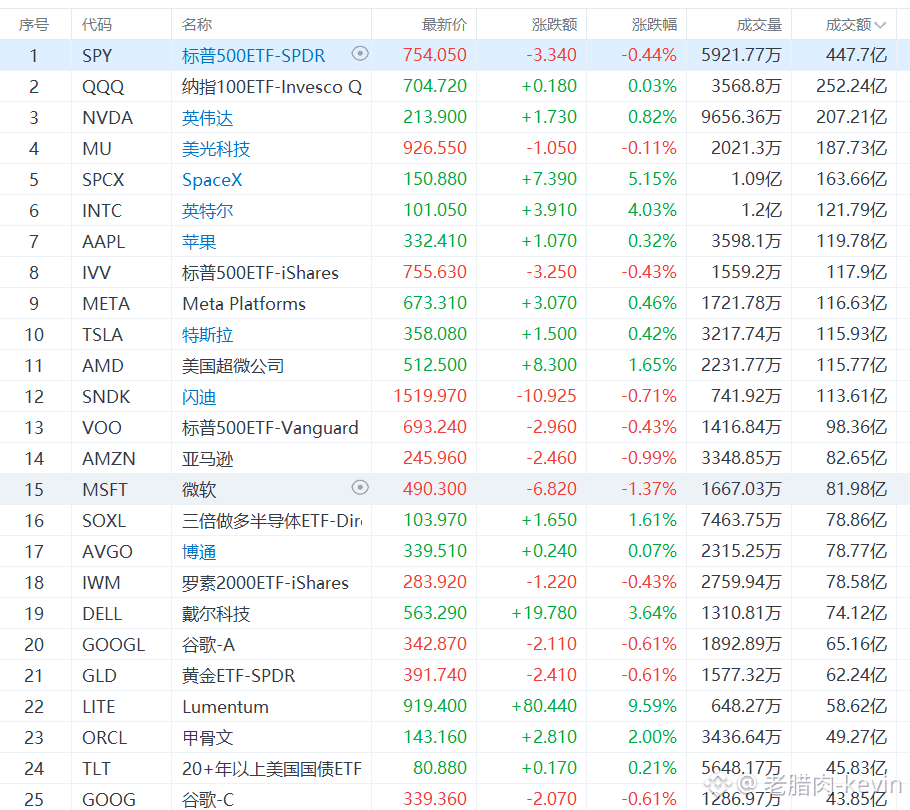
On Wednesday, US stocks saw AI and space concepts dominate the market. Nvidia led trading with $20.5 billion in turnover. Intel jumped more than 4% to place near the top of the gainers list. SpaceX surged 5%—the biggest standout. Optical communications and memory chips all strengthened collectively.
Top 5 by trading value:
Nvidia: $20.5B turnover, up 0.82%, taking the lead in establishing an AI energy alliance
Micron Technology: $18.5B turnover, down slightly 0.11%, warning of a memory shortage until 2028
SpaceX: $16.3B turnover, up 5.15%, 9.22 Starship—14th test flight
Intel: $12.0B turnover, up 4.03%, plans to work with SK hynix to build a factory
Apple: $11.9B turnover, up 0.32%, possibly returning to the server market
Key news highlights:
Intel and SK hynix are in talks on producing memory chips in the US; Apple is developing the M8 Ultra enterprise-grade AI server and is considering adopting Nvidia’s NVLink technology; Zuckerberg opposes the “AI slowdown” theory, saying there’s no need to slow down development.
The market was clearly split. AI compute power and the space track continue to attract capital, and most semiconductor stocks closed higher. In the near term, watch the Starship test-flight catalyst. For trading, you may consider rotation opportunities in optical communications and memory chips.#美联储加息25基点美股收跌 #点阵图预示2026年再加息一次 #美联储加息是否已成定局 $SPCX $INTC $SKHYNIX
{future}(SKHYNIXUSDT)
{future}(INTCUSDT)
{future}(SPCXUSDT)
US Stock Close Summary: Intel leads gains as SpaceX Starship test flight sparks space concept
On Wednesday, US stocks saw AI and space concepts dominate the market. Nvidia led trading with $20.5 billion in turnover. Intel jumped more than 4% to place near the top of the gainers list. SpaceX surged 5%—the biggest standout. Optical communications and memory chips all strengthened collectively.
Top 5 by trading value:
Nvidia: $20.5B turnover, up 0.82%, taking the lead in establishing an AI energy alliance
Micron Technology: $18.5B turnover, down slightly 0.11%, warning of a memory shortage until 2028
SpaceX: $16.3B turnover, up 5.15%, 9.22 Starship—14th test flight
Intel: $12.0B turnover, up 4.03%, plans to work with SK hynix to build a factory
Apple: $11.9B turnover, up 0.32%, possibly returning to the server market
Key news highlights:
Intel and SK hynix are in talks on producing memory chips in the US; Apple is developing the M8 Ultra enterprise-grade AI server and is considering adopting Nvidia’s NVLink technology; Zuckerberg opposes the “AI slowdown” theory, saying there’s no need to slow down development.
The market was clearly split. AI compute power and the space track continue to attract capital, and most semiconductor stocks closed higher. In the near term, watch the Starship test-flight catalyst. For trading, you may consider rotation opportunities in optical communications and memory chips.#美联储加息25基点美股收跌 #点阵图预示2026年再加息一次 #美联储加息是否已成定局 $SPCX $INTC $SKHYNIX
On Wednesday, US stocks saw AI and space concepts dominate the market. Nvidia led trading with $20.5 billion in turnover. Intel jumped more than 4% to place near the top of the gainers list. SpaceX surged 5%—the biggest standout. Optical communications and memory chips all strengthened collectively.
Top 5 by trading value:
Nvidia: $20.5B turnover, up 0.82%, taking the lead in establishing an AI energy alliance
Micron Technology: $18.5B turnover, down slightly 0.11%, warning of a memory shortage until 2028
SpaceX: $16.3B turnover, up 5.15%, 9.22 Starship—14th test flight
Intel: $12.0B turnover, up 4.03%, plans to work with SK hynix to build a factory
Apple: $11.9B turnover, up 0.32%, possibly returning to the server market
Key news highlights:
Intel and SK hynix are in talks on producing memory chips in the US; Apple is developing the M8 Ultra enterprise-grade AI server and is considering adopting Nvidia’s NVLink technology; Zuckerberg opposes the “AI slowdown” theory, saying there’s no need to slow down development.
The market was clearly split. AI compute power and the space track continue to attract capital, and most semiconductor stocks closed higher. In the near term, watch the Starship test-flight catalyst. For trading, you may consider rotation opportunities in optical communications and memory chips.#美联储加息25基点美股收跌 #点阵图预示2026年再加息一次 #美联储加息是否已成定局 $SPCX $INTC $SKHYNIX
1
1.1k
·
--
Verified
US Stock Market Wrap: Hawkish dot plot crushes the market, stock-bond-gold “triple kill,” and the U.S. dollar surges
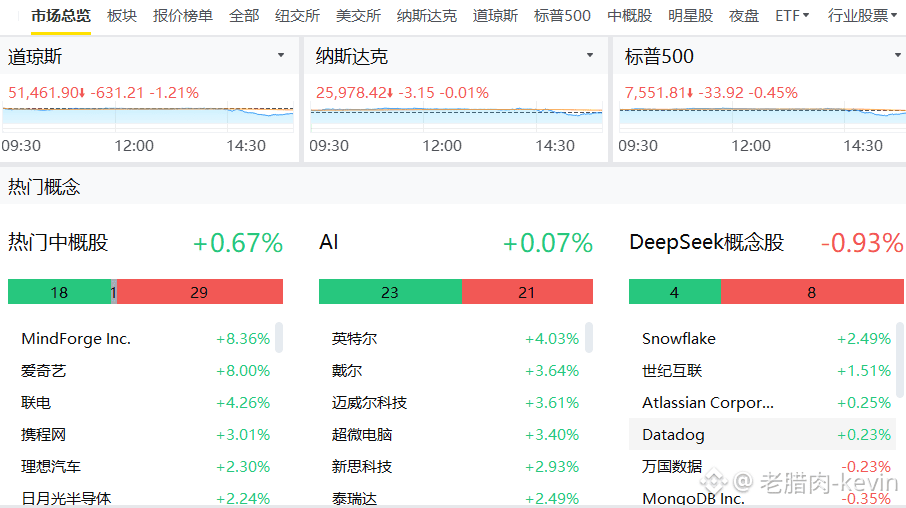
The Federal Reserve’s first rate hike in three years, with the dot plot implying another hike later in the year. A fully hawkish statement from the Fed chairman shattered any hopes for rate cuts. All three major U.S. stock indexes fell for a third straight session: the Dow tumbled 1.21%, hitting a three-month low; the S&P 500 dropped 0.44%, while the Nasdaq managed to hold roughly flat, supported by AI. Energy and financials led the decline, while optical communications bucked the trend and gained.
Asset impact snapshot:
US stocks: Near-term pressure builds. The S&P 7550 key support level is under threat; a break would trigger accelerated downside from negative gamma.
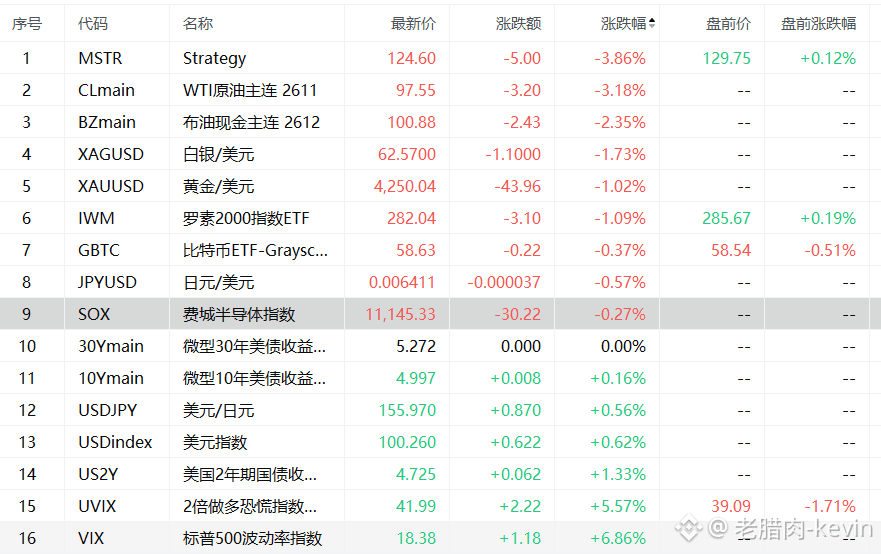
US Treasuries: The 2-year yield jumped to 4.74%, the highest in two years; the yield curve quickly flattened further in a bear steepening pattern.
Dollar: The index returned to 100; the day’s gain is the largest since December 2024.
Gold: Slumped 3%, falling below $4,240 and hitting a new low since early in the month.
Crude oil: Down 3.6%; Middle East supply eases, but risks have not disappeared.
The Fed has made it clear it will keep rates “higher for longer,” forcing the market to reprice the tightening path. Stocks, bonds, and gold all face near-term pressure, and the dollar’s strength is hard to reverse. Focus on the S&P 7550 “life-or-death line”; if it breaks, risk-off is the better choice. AI and optical communications, which are holding up relatively better, can be considered defensive areas of attention.#点阵图预示2026年再加息一次 #美联储加息25基点美股收跌 #比特币ETF净流出4.5亿美元
$XAU $CL $KORU
{future}(KORUUSDT)
{future}(CLUSDT)
{future}(XAUUSDT)
US Stock Market Wrap: Hawkish dot plot crushes the market, stock-bond-gold “triple kill,” and the U.S. dollar surges
The Federal Reserve’s first rate hike in three years, with the dot plot implying another hike later in the year. A fully hawkish statement from the Fed chairman shattered any hopes for rate cuts. All three major U.S. stock indexes fell for a third straight session: the Dow tumbled 1.21%, hitting a three-month low; the S&P 500 dropped 0.44%, while the Nasdaq managed to hold roughly flat, supported by AI. Energy and financials led the decline, while optical communications bucked the trend and gained.
Asset impact snapshot:
US stocks: Near-term pressure builds. The S&P 7550 key support level is under threat; a break would trigger accelerated downside from negative gamma.
US Treasuries: The 2-year yield jumped to 4.74%, the highest in two years; the yield curve quickly flattened further in a bear steepening pattern.
Dollar: The index returned to 100; the day’s gain is the largest since December 2024.
Gold: Slumped 3%, falling below $4,240 and hitting a new low since early in the month.
Crude oil: Down 3.6%; Middle East supply eases, but risks have not disappeared.
The Fed has made it clear it will keep rates “higher for longer,” forcing the market to reprice the tightening path. Stocks, bonds, and gold all face near-term pressure, and the dollar’s strength is hard to reverse. Focus on the S&P 7550 “life-or-death line”; if it breaks, risk-off is the better choice. AI and optical communications, which are holding up relatively better, can be considered defensive areas of attention.#点阵图预示2026年再加息一次 #美联储加息25基点美股收跌 #比特币ETF净流出4.5亿美元
$XAU $CL $KORU
The Federal Reserve’s first rate hike in three years, with the dot plot implying another hike later in the year. A fully hawkish statement from the Fed chairman shattered any hopes for rate cuts. All three major U.S. stock indexes fell for a third straight session: the Dow tumbled 1.21%, hitting a three-month low; the S&P 500 dropped 0.44%, while the Nasdaq managed to hold roughly flat, supported by AI. Energy and financials led the decline, while optical communications bucked the trend and gained.
Asset impact snapshot:
US stocks: Near-term pressure builds. The S&P 7550 key support level is under threat; a break would trigger accelerated downside from negative gamma.
US Treasuries: The 2-year yield jumped to 4.74%, the highest in two years; the yield curve quickly flattened further in a bear steepening pattern.
Dollar: The index returned to 100; the day’s gain is the largest since December 2024.
Gold: Slumped 3%, falling below $4,240 and hitting a new low since early in the month.
Crude oil: Down 3.6%; Middle East supply eases, but risks have not disappeared.
The Fed has made it clear it will keep rates “higher for longer,” forcing the market to reprice the tightening path. Stocks, bonds, and gold all face near-term pressure, and the dollar’s strength is hard to reverse. Focus on the S&P 7550 “life-or-death line”; if it breaks, risk-off is the better choice. AI and optical communications, which are holding up relatively better, can be considered defensive areas of attention.#点阵图预示2026年再加息一次 #美联储加息25基点美股收跌 #比特币ETF净流出4.5亿美元
$XAU $CL $KORU
1
4.5k
·
--
Verified
#美联储加息是否已成定局 Wosh dawn releases eagles! But don’t rush to shout “it’s over”?
This guy’s message is basically one thing: inflation hasn’t been cured, so don’t expect me to loosen my grip. The core logic is simple—he said himself that “financial conditions are difficult to call restrictive,” which is essentially telling the market outright: the rate hike is an active move, not something he’s forced into.
So will there be another hike? Look at the two numbers. In the dot-plot chart, 16 people think there’ll be another round within the year, and the odds in December aren’t low. But the folks at Banque de France trade bank are betting it’s “a one-off,” and they’ll stop in October.
In plain terms, Wosh doesn’t want to provide forward guidance—it’s so you have to guess, and if you guess wrong, he won’t be responsible.
For US stock AI and the crypto space, the short term will definitely be pressure. Treasury yields are holding the line, overpriced growth stocks are the first ones to get hit, and crypto follows as risk appetite wobbles.
But the key isn’t whether he hikes this time—it’s that he nailed down the “inflation comes first” framework. Don’t use the past two years’ inertia of “rate hikes = the last drop” to bet; this guy doesn’t play by that logic.
The eagle is real, but the path is blurry. And blur itself is the biggest risk.$BTC $ZEC $SOXL #点阵图预示2026年再加息一次 #美联储加息25基点美股收跌
{future}(SOXLUSDT)
{future}(ZECUSDT)
{future}(BTCUSDT)
#美联储加息是否已成定局 Wosh dawn releases eagles! But don’t rush to shout “it’s over”?
This guy’s message is basically one thing: inflation hasn’t been cured, so don’t expect me to loosen my grip. The core logic is simple—he said himself that “financial conditions are difficult to call restrictive,” which is essentially telling the market outright: the rate hike is an active move, not something he’s forced into.
So will there be another hike? Look at the two numbers. In the dot-plot chart, 16 people think there’ll be another round within the year, and the odds in December aren’t low. But the folks at Banque de France trade bank are betting it’s “a one-off,” and they’ll stop in October.
In plain terms, Wosh doesn’t want to provide forward guidance—it’s so you have to guess, and if you guess wrong, he won’t be responsible.
For US stock AI and the crypto space, the short term will definitely be pressure. Treasury yields are holding the line, overpriced growth stocks are the first ones to get hit, and crypto follows as risk appetite wobbles.
But the key isn’t whether he hikes this time—it’s that he nailed down the “inflation comes first” framework. Don’t use the past two years’ inertia of “rate hikes = the last drop” to bet; this guy doesn’t play by that logic.
The eagle is real, but the path is blurry. And blur itself is the biggest risk.$BTC $ZEC $SOXL #点阵图预示2026年再加息一次 #美联储加息25基点美股收跌
This guy’s message is basically one thing: inflation hasn’t been cured, so don’t expect me to loosen my grip. The core logic is simple—he said himself that “financial conditions are difficult to call restrictive,” which is essentially telling the market outright: the rate hike is an active move, not something he’s forced into.
So will there be another hike? Look at the two numbers. In the dot-plot chart, 16 people think there’ll be another round within the year, and the odds in December aren’t low. But the folks at Banque de France trade bank are betting it’s “a one-off,” and they’ll stop in October.
In plain terms, Wosh doesn’t want to provide forward guidance—it’s so you have to guess, and if you guess wrong, he won’t be responsible.
For US stock AI and the crypto space, the short term will definitely be pressure. Treasury yields are holding the line, overpriced growth stocks are the first ones to get hit, and crypto follows as risk appetite wobbles.
But the key isn’t whether he hikes this time—it’s that he nailed down the “inflation comes first” framework. Don’t use the past two years’ inertia of “rate hikes = the last drop” to bet; this guy doesn’t play by that logic.
The eagle is real, but the path is blurry. And blur itself is the biggest risk.$BTC $ZEC $SOXL #点阵图预示2026年再加息一次 #美联储加息25基点美股收跌
2
3
6.5k
·
--
Partly True
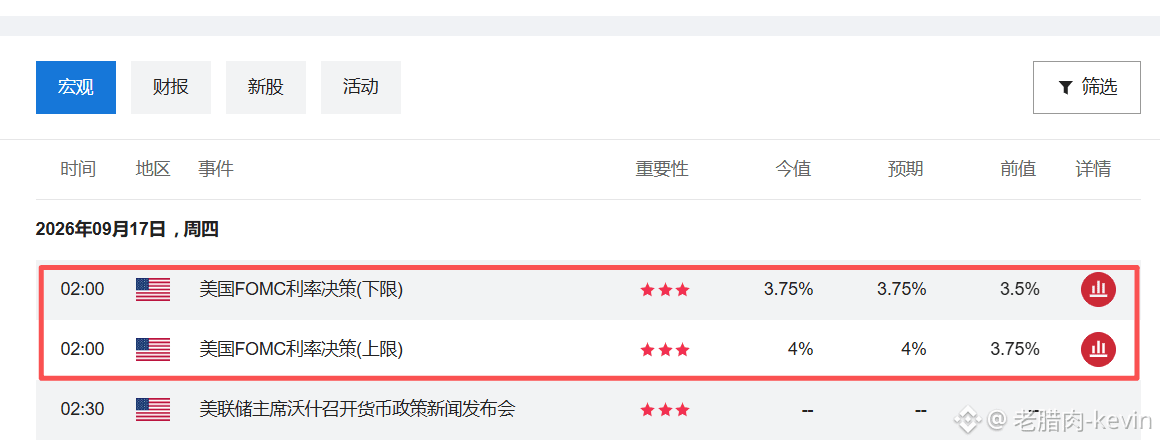
The Federal Reserve raised interest rates by 25 basis points, lifting the benchmark rate to 3.75%-4.00%. This was the first rate hike since July 2023 and met market expectations. Previously, the Fed had kept rates unchanged for five consecutive meetings.
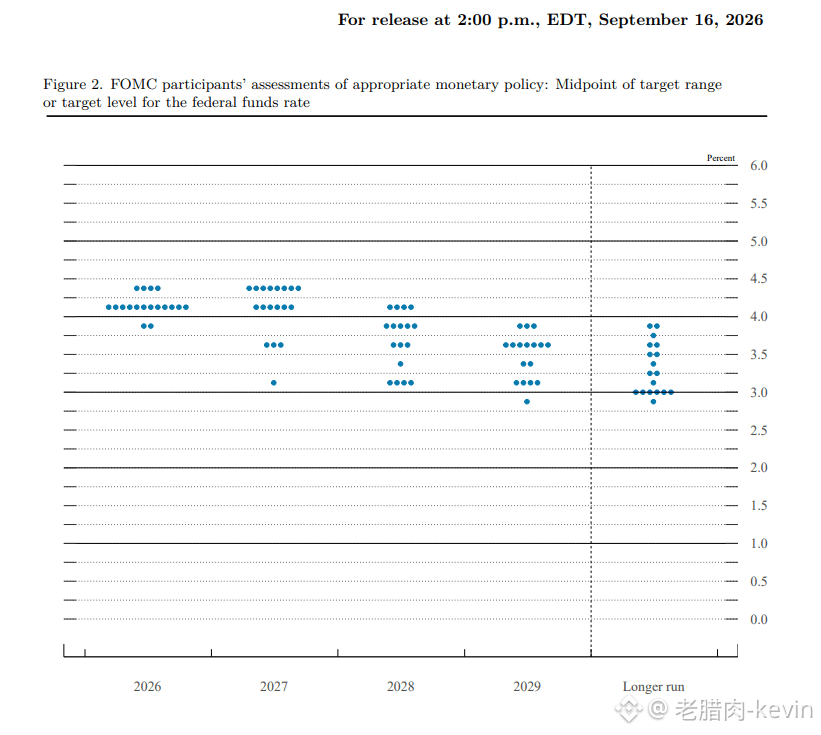
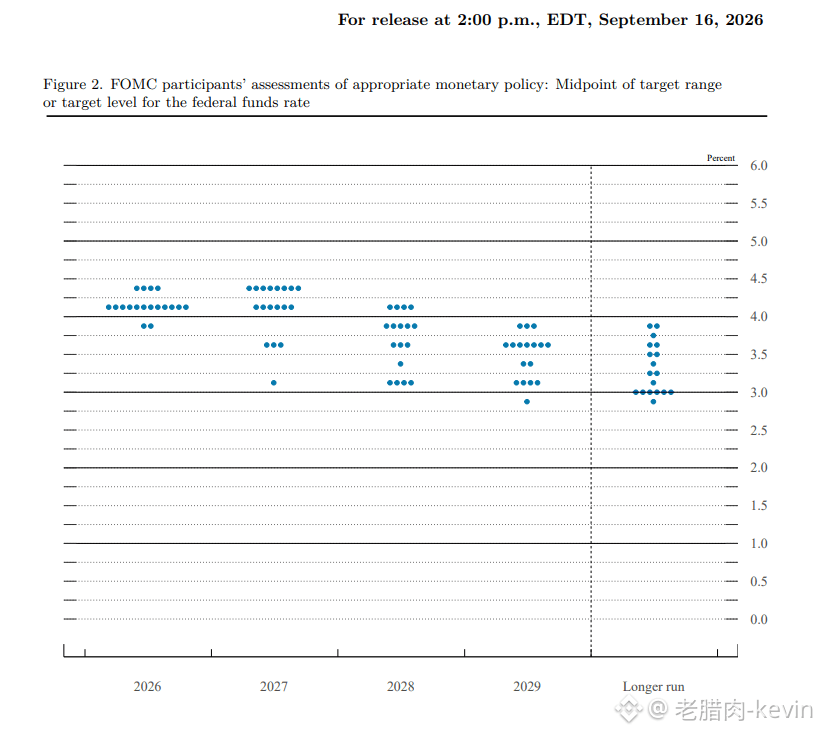
The Fed’s latest dot plot shows that among 19 officials, 18 submitted dot-plot forecasts (the same as in June). Of these, 16 officials believe rates should be raised again this year.
Specifically, 4 officials think there should be a cumulative 75-basis-point rate hike in 2026 (down from 1 in June), 12 officials believe there should be a cumulative 50-basis-point hike (up from 5 in June), and 2 officials think there should be a cumulative 25-basis-point hike (down from 3 in June). There were 0 officials who think the rate should remain unchanged at 3.5%-3.75% this year (from 8 in June), and 0 officials who think there should be a cumulative 25-basis-point rate cut (from 1 in June).#美联储加息是否已成定局 $BTC $SOXL $KORU #点阵图预示2026年再加息一次 #美联储加息25基点美股收跌
{future}(KORUUSDT)
{future}(SOXLUSDT)
{future}(BTCUSDT)
The Federal Reserve raised interest rates by 25 basis points, lifting the benchmark rate to 3.75%-4.00%. This was the first rate hike since July 2023 and met market expectations. Previously, the Fed had kept rates unchanged for five consecutive meetings.
The Fed’s latest dot plot shows that among 19 officials, 18 submitted dot-plot forecasts (the same as in June). Of these, 16 officials believe rates should be raised again this year.
Specifically, 4 officials think there should be a cumulative 75-basis-point rate hike in 2026 (down from 1 in June), 12 officials believe there should be a cumulative 50-basis-point hike (up from 5 in June), and 2 officials think there should be a cumulative 25-basis-point hike (down from 3 in June). There were 0 officials who think the rate should remain unchanged at 3.5%-3.75% this year (from 8 in June), and 0 officials who think there should be a cumulative 25-basis-point rate cut (from 1 in June).#美联储加息是否已成定局 $BTC $SOXL $KORU #点阵图预示2026年再加息一次 #美联储加息25基点美股收跌
The Fed’s latest dot plot shows that among 19 officials, 18 submitted dot-plot forecasts (the same as in June). Of these, 16 officials believe rates should be raised again this year.
Specifically, 4 officials think there should be a cumulative 75-basis-point rate hike in 2026 (down from 1 in June), 12 officials believe there should be a cumulative 50-basis-point hike (up from 5 in June), and 2 officials think there should be a cumulative 25-basis-point hike (down from 3 in June). There were 0 officials who think the rate should remain unchanged at 3.5%-3.75% this year (from 8 in June), and 0 officials who think there should be a cumulative 25-basis-point rate cut (from 1 in June).#美联储加息是否已成定局 $BTC $SOXL $KORU #点阵图预示2026年再加息一次 #美联储加息25基点美股收跌
768
·
--
Partly True
Federal Reserve Dot Plot: The expectation is that there will be one more rate hike in 2026
Federal Reserve: The forecast for the U.S. 2026 core PCE inflation rate is 3.4%, and it is expected to be 3.3% in June.
The forecast for 2027 is 2.5%, the same as the previous estimate (2.5%).
The forecast for 2028 is 2.2%, up from the prior estimate (2.1%).
The forecast for 2029 is 2.0%.
Market reaction: The two-year U.S. Treasury yield rebounded from near the day’s low of 4.5975%, rising to around the 4.65% level after the Fed decision statement.
After the interest rate decision was released, the three major U.S. stock indexes edged higher: the Nasdaq rose to 0.9%, Bitcoin’s gains widened to above $76,000, and gold traded with slight fluctuations.
#美联储加息是否已成定局 $XAU $BTC $ZEC #点阵图预示2026年再加息一次 #美联储加息25基点美股收跌
{future}(ZECUSDT)
{future}(BTCUSDT)
{future}(XAUUSDT)
Federal Reserve Dot Plot: The expectation is that there will be one more rate hike in 2026
Federal Reserve: The forecast for the U.S. 2026 core PCE inflation rate is 3.4%, and it is expected to be 3.3% in June.
The forecast for 2027 is 2.5%, the same as the previous estimate (2.5%).
The forecast for 2028 is 2.2%, up from the prior estimate (2.1%).
The forecast for 2029 is 2.0%.
Market reaction: The two-year U.S. Treasury yield rebounded from near the day’s low of 4.5975%, rising to around the 4.65% level after the Fed decision statement.
After the interest rate decision was released, the three major U.S. stock indexes edged higher: the Nasdaq rose to 0.9%, Bitcoin’s gains widened to above $76,000, and gold traded with slight fluctuations.
#美联储加息是否已成定局 $XAU $BTC $ZEC #点阵图预示2026年再加息一次 #美联储加息25基点美股收跌
Federal Reserve: The forecast for the U.S. 2026 core PCE inflation rate is 3.4%, and it is expected to be 3.3% in June.
The forecast for 2027 is 2.5%, the same as the previous estimate (2.5%).
The forecast for 2028 is 2.2%, up from the prior estimate (2.1%).
The forecast for 2029 is 2.0%.
Market reaction: The two-year U.S. Treasury yield rebounded from near the day’s low of 4.5975%, rising to around the 4.65% level after the Fed decision statement.
After the interest rate decision was released, the three major U.S. stock indexes edged higher: the Nasdaq rose to 0.9%, Bitcoin’s gains widened to above $76,000, and gold traded with slight fluctuations.
#美联储加息是否已成定局 $XAU $BTC $ZEC #点阵图预示2026年再加息一次 #美联储加息25基点美股收跌
1
1
2
1.6k
·
--
Verified
The Federal Reserve raised interest rates by 25 basis points, lifting the benchmark rate to 3.75%-4.00%.
The Fed’s dot plot median suggests there will be one more rate hike in 2026.
The three major US stock indexes have been relatively steady in their fluctuations. As of now, the Dow Jones Industrial Average is up 0.01%, the S&P 500 is up 0.32%, and the Nasdaq Composite is up 0.67%. Previously, the Federal Reserve raised interest rates by 25 basis points, lifting the benchmark rate to 3.75%-4.00%. $BTC $SOXL $ZEC #比特币下跌4% #美联储加息是否已成定局 #点阵图预示2026年再加息一次 #美联储加息25基点美股收跌
{future}(ZECUSDT)
{future}(SOXLUSDT)
{future}(BTCUSDT)
The Federal Reserve raised interest rates by 25 basis points, lifting the benchmark rate to 3.75%-4.00%.
The Fed’s dot plot median suggests there will be one more rate hike in 2026.
The three major US stock indexes have been relatively steady in their fluctuations. As of now, the Dow Jones Industrial Average is up 0.01%, the S&P 500 is up 0.32%, and the Nasdaq Composite is up 0.67%. Previously, the Federal Reserve raised interest rates by 25 basis points, lifting the benchmark rate to 3.75%-4.00%. $BTC $SOXL $ZEC #比特币下跌4% #美联储加息是否已成定局 #点阵图预示2026年再加息一次 #美联储加息25基点美股收跌
The Fed’s dot plot median suggests there will be one more rate hike in 2026.
The three major US stock indexes have been relatively steady in their fluctuations. As of now, the Dow Jones Industrial Average is up 0.01%, the S&P 500 is up 0.32%, and the Nasdaq Composite is up 0.67%. Previously, the Federal Reserve raised interest rates by 25 basis points, lifting the benchmark rate to 3.75%-4.00%. $BTC $SOXL $ZEC #比特币下跌4% #美联储加息是否已成定局 #点阵图预示2026年再加息一次 #美联储加息25基点美股收跌

1
2.3k
·
--
Disputed
US and Brent crude oil continue to decline; WTI crude oil fell 4% during the day and is now at $96.88 per barrel. Brent crude oil fell 3% during the day and is now at $100.2 per barrel.$CL $BZ
{future}(BZUSDT)
{future}(CLUSDT)
US and Brent crude oil continue to decline; WTI crude oil fell 4% during the day and is now at $96.88 per barrel. Brent crude oil fell 3% during the day and is now at $100.2 per barrel.$CL $BZ
948
·
--
#比特币etf净流出4.5亿美元 4.5 billion US dollars ran away—don’t rush to bottom-fish; first, see what these people are panicking about
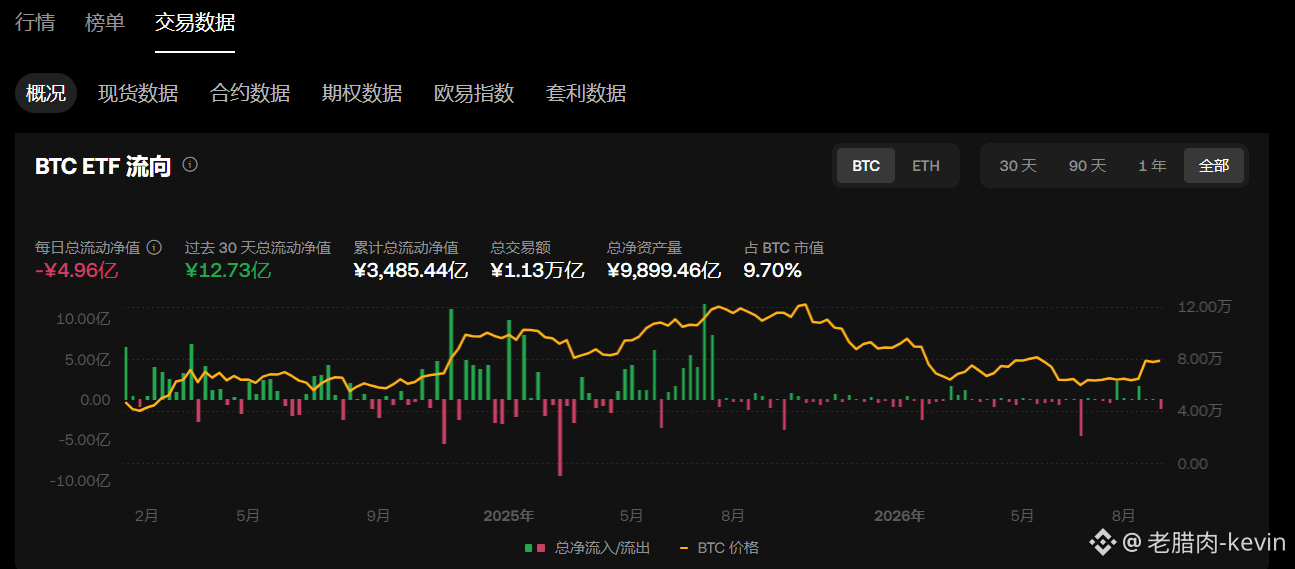
Yesterday, Bitcoin ETF net outflows hit 450 million, Fidelity pulled out 215 million, and BlackRock outflow was 160 million; together they accounted for more than 80%. This isn’t retail investors cutting losses—it’s institutions withdrawing.
Why are they pulling out? Two things happened at the same time. First, the Clear Act didn’t pass the Senate; the vote was 49 to 50—off by 11 votes. The odds of legislation dropped straight from 30% to 5%. Second, the Federal Reserve’s FOMC meeting is just these two days away, with a nearly 90% chance of rate hikes. Meanwhile, oil prices have also spiked above 98, and inflation pressure is rising again.
So is this bearish news being realized and people fleeing, or just a temporary sell-off?
My take leans toward the latter. The reason is simple: these outflows have only been going on for a few days. The previous day’s net inflow of 159 million was wiped out in one day—fast in pace, but not catastrophic in scale. And during the June sell-off of 469 million, the market V-rebounded within two weeks. What you really need to watch isn’t these two days—it’s the Fed press conference during that half-hour of “the mouth.” #比特币下跌4% $MSTR $BTC
{future}(BTCUSDT)
{future}(MSTRUSDT)
#比特币etf净流出4.5亿美元 4.5 billion US dollars ran away—don’t rush to bottom-fish; first, see what these people are panicking about
Yesterday, Bitcoin ETF net outflows hit 450 million, Fidelity pulled out 215 million, and BlackRock outflow was 160 million; together they accounted for more than 80%. This isn’t retail investors cutting losses—it’s institutions withdrawing.
Why are they pulling out? Two things happened at the same time. First, the Clear Act didn’t pass the Senate; the vote was 49 to 50—off by 11 votes. The odds of legislation dropped straight from 30% to 5%. Second, the Federal Reserve’s FOMC meeting is just these two days away, with a nearly 90% chance of rate hikes. Meanwhile, oil prices have also spiked above 98, and inflation pressure is rising again.
So is this bearish news being realized and people fleeing, or just a temporary sell-off?
My take leans toward the latter. The reason is simple: these outflows have only been going on for a few days. The previous day’s net inflow of 159 million was wiped out in one day—fast in pace, but not catastrophic in scale. And during the June sell-off of 469 million, the market V-rebounded within two weeks. What you really need to watch isn’t these two days—it’s the Fed press conference during that half-hour of “the mouth.” #比特币下跌4% $MSTR $BTC
Yesterday, Bitcoin ETF net outflows hit 450 million, Fidelity pulled out 215 million, and BlackRock outflow was 160 million; together they accounted for more than 80%. This isn’t retail investors cutting losses—it’s institutions withdrawing.
Why are they pulling out? Two things happened at the same time. First, the Clear Act didn’t pass the Senate; the vote was 49 to 50—off by 11 votes. The odds of legislation dropped straight from 30% to 5%. Second, the Federal Reserve’s FOMC meeting is just these two days away, with a nearly 90% chance of rate hikes. Meanwhile, oil prices have also spiked above 98, and inflation pressure is rising again.
So is this bearish news being realized and people fleeing, or just a temporary sell-off?
My take leans toward the latter. The reason is simple: these outflows have only been going on for a few days. The previous day’s net inflow of 159 million was wiped out in one day—fast in pace, but not catastrophic in scale. And during the June sell-off of 469 million, the market V-rebounded within two weeks. What you really need to watch isn’t these two days—it’s the Fed press conference during that half-hour of “the mouth.” #比特币下跌4% $MSTR $BTC
1
11
45.2k
Log in to explore more content
Join global crypto users on Binance Square
⚡️ Get latest and useful information about crypto.
💬 Trusted by the world’s largest crypto exchange.
👍 Discover real insights from verified creators.
Email / Phone number
Trending Topics
BitcoinSurpasses$77000
478 views
35 Discussing
$BTC is ripping higher despite it all. 🚀
Today marked the first rate hike in over 3 years, while the CLARITY Act stalled again yesterday.
Setup big long again - thank me later
Entry : $75500 - $76500
Stoploss : $74900
Take profit : $77000 - $78000
Get ready for a crazy growth cycle. 🔥
TF_bnb
·13 Likes
·5.4k views
ParadigmDisclosesZECHolding
0 views
8 Discussing
BitcoinETFsShed$450M
13,382 views
118 Discussing