

Zentra JB
6 Posts

Zentra JB
Report
Block User
10 Following
0 Followers
0 Liked
Posts
·
--
See translation
$PEPE Today’s crypto trend is being led by memecoins and major altcoins, with Pepe (PEPE) the standout trending coin. Bitcoin is back above $81,000, while PEPE, XRP, HYPE, and several smaller DeFi/AI-related tokens are drawing the most attention.
{spot}(PEPEUSDT)
#CanMicrosoftDeliverOnAI #CanGoogleDefindItsCore #EarningsSeason #$10.9BBitcoinOptionsExpireFriday #DatavaultAICantWithdrawBitcoinFromBiconomy
$PEPE Today’s crypto trend is being led by memecoins and major altcoins, with Pepe (PEPE) the standout trending coin. Bitcoin is back above $81,000, while PEPE, XRP, HYPE, and several smaller DeFi/AI-related tokens are drawing the most attention.
#CanMicrosoftDeliverOnAI #CanGoogleDefindItsCore #EarningsSeason #$10.9BBitcoinOptionsExpireFriday #DatavaultAICantWithdrawBitcoinFromBiconomy
#CanMicrosoftDeliverOnAI #CanGoogleDefindItsCore #EarningsSeason #$10.9BBitcoinOptionsExpireFriday #DatavaultAICantWithdrawBitcoinFromBiconomy
37
·
--
See translation
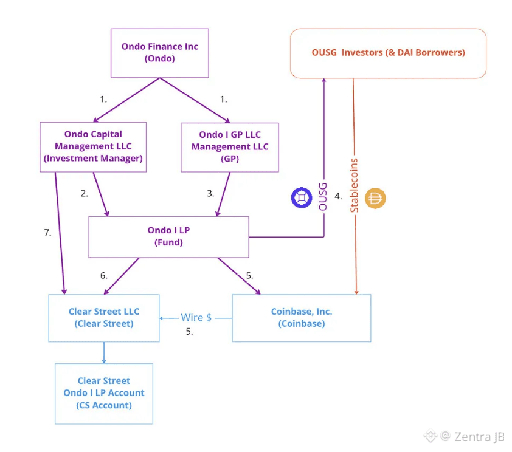
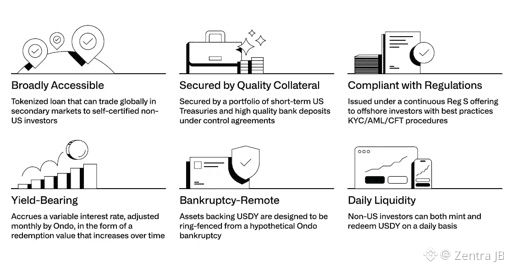
$ONDO Ondo Finance brings conventional financial products onto blockchains through tokens designed to track assets held by custodians or fund structures. Examples include tokenized Treasury and money-market products such as USDY and OUSG, as well as tokenized stocks and ETFs.
ONDO is primarily a governance token: holders can vote on protocol proposals, including upgrades, treasury allocations, and economic parameters. It is not a claim on Ondo’s underlying Treasuries or stocks, nor is it used to secure Ondo Chain.
{spot}(ONDOUSDT)
#CanMicrosoftDeliverOnAI #CanGoogleDefindItsCore #EarningsSeason #$10.9BBitcoinOptionsExpireFriday #ThailandSupremeCourtRulesBitcoinIsProperty
$ONDO Ondo Finance brings conventional financial products onto blockchains through tokens designed to track assets held by custodians or fund structures. Examples include tokenized Treasury and money-market products such as USDY and OUSG, as well as tokenized stocks and ETFs.
ONDO is primarily a governance token: holders can vote on protocol proposals, including upgrades, treasury allocations, and economic parameters. It is not a claim on Ondo’s underlying Treasuries or stocks, nor is it used to secure Ondo Chain.
#CanMicrosoftDeliverOnAI #CanGoogleDefindItsCore #EarningsSeason #$10.9BBitcoinOptionsExpireFriday #ThailandSupremeCourtRulesBitcoinIsProperty

75
·
--
See translation
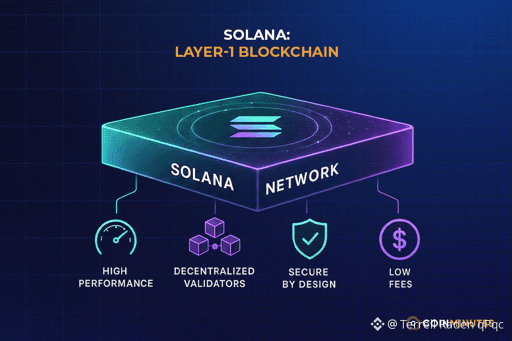
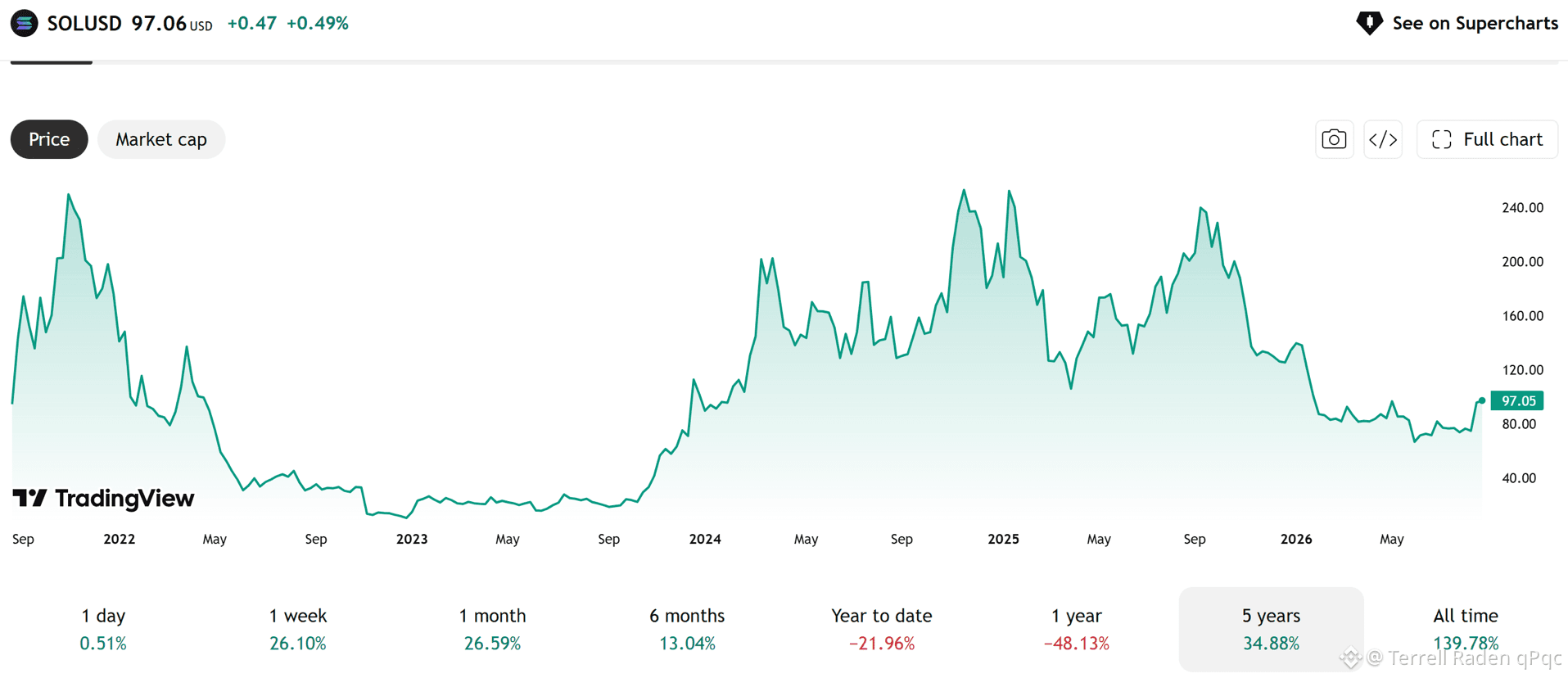
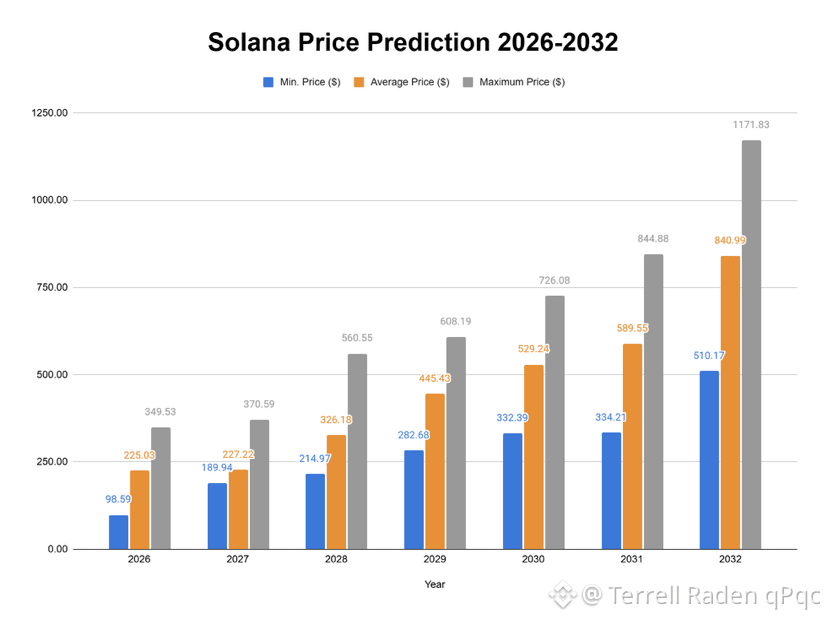
$SOL Solana (SOL) is a high-throughput Layer-1 blockchain whose token is used to pay fees, secure the network through staking, and access decentralized apps. It remains one of crypto’s most active networks, but SOL is currently under pressure: it trades near $100, down roughly 14–15% in October, amid ETF outflows and weaker app revenue.
Solana is designed for fast, low-cost transactions, making it attractive for trading, payments, stablecoins, and tokenized real-world assets. It has become a leading venue for on-chain trading: in the first half of 2026, it accounted for over 36% of global spot DEX volume and roughly 97% of spot tokenized-equity trading volume.
{spot}(SOLUSDT)
#CanMicrosoftDeliverOnAI #CanGoogleDefindItsCore #EarningsSeason #$10.9BBitcoinOptionsExpireFriday #ThailandSupremeCourtRulesBitcoinIsProperty
$SOL Solana (SOL) is a high-throughput Layer-1 blockchain whose token is used to pay fees, secure the network through staking, and access decentralized apps. It remains one of crypto’s most active networks, but SOL is currently under pressure: it trades near $100, down roughly 14–15% in October, amid ETF outflows and weaker app revenue.
Solana is designed for fast, low-cost transactions, making it attractive for trading, payments, stablecoins, and tokenized real-world assets. It has become a leading venue for on-chain trading: in the first half of 2026, it accounted for over 36% of global spot DEX volume and roughly 97% of spot tokenized-equity trading volume.
#CanMicrosoftDeliverOnAI #CanGoogleDefindItsCore #EarningsSeason #$10.9BBitcoinOptionsExpireFriday #ThailandSupremeCourtRulesBitcoinIsProperty
41
·
--
See translation
$CHIP USD.AI’s CHIP is a governance token for a DeFi protocol that finances AI compute hardware—especially GPUs—by turning them into on-chain collateral for dollar-denominated loans. Its investment case is strong on AI-infrastructure demand but materially constrained by token-supply dilution and credit risk.
USD.AI lets GPU operators tokenize enterprise hardware such as NVIDIA H200/B200 systems and borrow against it, while lenders deposit stablecoins to earn loan interest. CHIP holders govern collateral standards, interest-rate models, fees, and curator approvals; staked CHIP may also serve as a first-loss backstop.
The protocol’s liquidity asset is USDai, a synthetic dollar backed by PayPal’s PYUSD, and its yield-bearing version is sUSDai. In short, CHIP is not itself the loan asset or stablecoin—it is the coordination and risk-governance layer.
AI companies need capital quickly, while GPUs depreciate rapidly; USD.AI aims to close that gap with GPU-backed loans that can settle faster than traditional bank financing. Grayscale recently highlighted USD.AI among cryptocurrencies positioned to benefit from AI infrastructure demand, and Bullish announced a $100 million financing facility supporting its GPU loans.
CHIP is best viewed as a high-risk AI-infrastructure credit protocol token, not a straightforward proxy for GPU demand. The protocol has a credible real-world use case and growing institutional attention, but CHIP’s value depends on whether USD.AI can scale its loan book, avoid defaults, introduce durable value accrual, and manage the large unlock schedule beginning in 2027.
{spot}(CHIPUSDT)
#CanMicrosoftDeliverOnAI #CanGoogleDefindItsCore #EarningsSeason #$10.9BBitcoinOptionsExpireFriday #ThailandSupremeCourtRulesBitcoinIsProperty
$CHIP USD.AI’s CHIP is a governance token for a DeFi protocol that finances AI compute hardware—especially GPUs—by turning them into on-chain collateral for dollar-denominated loans. Its investment case is strong on AI-infrastructure demand but materially constrained by token-supply dilution and credit risk.
USD.AI lets GPU operators tokenize enterprise hardware such as NVIDIA H200/B200 systems and borrow against it, while lenders deposit stablecoins to earn loan interest. CHIP holders govern collateral standards, interest-rate models, fees, and curator approvals; staked CHIP may also serve as a first-loss backstop.
The protocol’s liquidity asset is USDai, a synthetic dollar backed by PayPal’s PYUSD, and its yield-bearing version is sUSDai. In short, CHIP is not itself the loan asset or stablecoin—it is the coordination and risk-governance layer.
AI companies need capital quickly, while GPUs depreciate rapidly; USD.AI aims to close that gap with GPU-backed loans that can settle faster than traditional bank financing. Grayscale recently highlighted USD.AI among cryptocurrencies positioned to benefit from AI infrastructure demand, and Bullish announced a $100 million financing facility supporting its GPU loans.
CHIP is best viewed as a high-risk AI-infrastructure credit protocol token, not a straightforward proxy for GPU demand. The protocol has a credible real-world use case and growing institutional attention, but CHIP’s value depends on whether USD.AI can scale its loan book, avoid defaults, introduce durable value accrual, and manage the large unlock schedule beginning in 2027.
#CanMicrosoftDeliverOnAI #CanGoogleDefindItsCore #EarningsSeason #$10.9BBitcoinOptionsExpireFriday #ThailandSupremeCourtRulesBitcoinIsProperty

152
·
--
See translation
$HYPE HYPE is stabilizing near $81 after bouncing from the $74–$76 support zone, with improving short-term momentum but a still-mixed broader trend. The key test is whether buyers can hold $75 and reclaim the $83–$85 resistance area.
Latest price setup
HYPE closed Tuesday around $81.19, up 3.8%, after recovering from a Saturday low near $74.33. A bullish daily MACD crossover has appeared, though the signal is early and both MACD lines remain below zero, so it signals improving momentum rather than a confirmed trend reversal.
Technically, the token is consolidating near its 20-period EMA at $81.33 and remains above the important $75.18 Fibonacci support. The RSI is near 52, indicating broadly neutral momentum.
What could drive HYPE higher
• U.S. market catalyst: Kraken’s parent, Payward, plans to become the first CFTC-regulated deployer of perpetual futures markets on Hyperliquid under HIP-3, potentially opening a regulated U.S. channel. [fxempire +1]
• Buyback support: Hyperliquid’s Assistance Fund has bought more than 48 million HYPE for roughly $1.36 billion, while Hyperliquid Strategies expanded its buyback authorization to $100 million.
• Technical targets: If $75 support holds, analysts see potential toward the prior record near $98; a breakout above it could open $110–$115, with some projections extending to about $125.
Main risks
A daily close below $75.17 would weaken the bullish structure and could expose $67, with $60 also possible if selling intensifies. [cryptonews +1] Supply pressure, whale transfers, competition from Binance and OKX in RWA perpetuals, and a hawkish Federal Reserve outcome are the main near-term headwinds.
Bottom line: HYPE is in a constructive recovery attempt, but it needs a sustained move above $83–$85 to confirm that the correction is over; losing $75 would shift the bias bearish.
{spot}(HYPEUSDT)
#CanMicrosoftDeliverOnAI #CanGoogleDefindItsCore #EarningsSeason #$10.9BBitcoinOptionsExpireFriday #ThailandSupremeCourtRulesBitcoinIsProperty
$HYPE HYPE is stabilizing near $81 after bouncing from the $74–$76 support zone, with improving short-term momentum but a still-mixed broader trend. The key test is whether buyers can hold $75 and reclaim the $83–$85 resistance area.
Latest price setup
HYPE closed Tuesday around $81.19, up 3.8%, after recovering from a Saturday low near $74.33. A bullish daily MACD crossover has appeared, though the signal is early and both MACD lines remain below zero, so it signals improving momentum rather than a confirmed trend reversal.
Technically, the token is consolidating near its 20-period EMA at $81.33 and remains above the important $75.18 Fibonacci support. The RSI is near 52, indicating broadly neutral momentum.
What could drive HYPE higher
• U.S. market catalyst: Kraken’s parent, Payward, plans to become the first CFTC-regulated deployer of perpetual futures markets on Hyperliquid under HIP-3, potentially opening a regulated U.S. channel. [fxempire +1]
• Buyback support: Hyperliquid’s Assistance Fund has bought more than 48 million HYPE for roughly $1.36 billion, while Hyperliquid Strategies expanded its buyback authorization to $100 million.
• Technical targets: If $75 support holds, analysts see potential toward the prior record near $98; a breakout above it could open $110–$115, with some projections extending to about $125.
Main risks
A daily close below $75.17 would weaken the bullish structure and could expose $67, with $60 also possible if selling intensifies. [cryptonews +1] Supply pressure, whale transfers, competition from Binance and OKX in RWA perpetuals, and a hawkish Federal Reserve outcome are the main near-term headwinds.
Bottom line: HYPE is in a constructive recovery attempt, but it needs a sustained move above $83–$85 to confirm that the correction is over; losing $75 would shift the bias bearish.
#CanMicrosoftDeliverOnAI #CanGoogleDefindItsCore #EarningsSeason #$10.9BBitcoinOptionsExpireFriday #ThailandSupremeCourtRulesBitcoinIsProperty
87
·
--
See translation
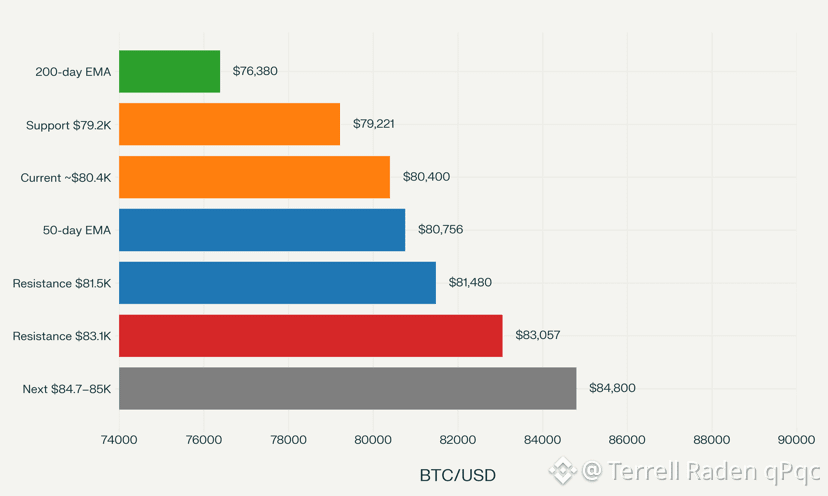
$BTC BTC was near $81,412 in the latest October 28 readings, with the market focused on the Federal Reserve policy announcement.
• The daily technical summary is broadly mixed: 9 sell, 9 neutral, and 8 buy signals; RSI is about 48, indicating neither overbought nor oversold conditions.
• BTC remains above its longer-term 100-day and 200-day EMAs, near $77,766 and $76,396, which supports the broader uptrend case.
• Recent ETF demand has helped the rebound: BlackRock’s IBIT recorded $110.34 million in net inflows on October 26, ending two days of outflows.
{spot}(BTCUSDT)
#CanMicrosoftDeliverOnAI #CanGoogleDefindItsCore #EarningsSeason #$10.9BBitcoinOptionsExpireFriday #ThailandSupremeCourtRulesBitcoinIsProperty
$BTC BTC was near $81,412 in the latest October 28 readings, with the market focused on the Federal Reserve policy announcement.
• The daily technical summary is broadly mixed: 9 sell, 9 neutral, and 8 buy signals; RSI is about 48, indicating neither overbought nor oversold conditions.
• BTC remains above its longer-term 100-day and 200-day EMAs, near $77,766 and $76,396, which supports the broader uptrend case.
• Recent ETF demand has helped the rebound: BlackRock’s IBIT recorded $110.34 million in net inflows on October 26, ending two days of outflows.
#CanMicrosoftDeliverOnAI #CanGoogleDefindItsCore #EarningsSeason #$10.9BBitcoinOptionsExpireFriday #ThailandSupremeCourtRulesBitcoinIsProperty
87
Log in to explore more content
Join global crypto users on Binance Square
⚡️ Get latest and useful information about crypto.
💬 Trusted by the world’s largest crypto exchange.
👍 Discover real insights from verified creators.
Email / Phone number