
SariQuant
439 Posts

SariQuant
Report
Block User
It won't happen overnight but if you quit it won't happen at all.
2.1K+ Following
1.2K+ Followers
2.3K+ Liked
Posts
All
Videos
·
--
Verified

Article
See translation
Jensen Huang Has Lost Over A Quarter Of His Wealth Since Affair ScandalFormer Nvidia CEO Jensen Huang lost another $13.2 billion on Friday as the chipmaker’s two-week stock decline persisted, sending him back three spots in the billionaire rankings and Nvidia down to fourth most valuable company by market capitalization.
Jensen Huang’s estimated net worth stood at $114.3 billion as of 3 p.m. EST on Friday, sending him into No. 17 on Forbes’ list, behind Carlos Slim Helu, the richest person in Latin America, and his family, Microsoft’s Bill Gates and former Binance CEO Changpeng Zhao.
He has now lost $47.9 billion, or 29.5%, of his net worth since Nov. 9, the first trading day after Nvidia’s board launched an investigation into his affair with an alleged Chinese spy.
Nvidia shares were down 12% at 3 p.m. EST, joining other semiconductors and AI-linked stocks in a selloff post-Anthropic IPO.
The chipmaker’s market cap stood at $3.09 trillion, falling below Google parent Alphabet’s $3.3 trillion, having already fallen below Apple and Microsoft.
The company’s two-week selloff has persisted even though it posted better-than-expected earnings on Tuesday, with quarterly earnings soaring to $115.8 billion.
Huang resigned as president, CEO and member of the board last Thursday, and though he said on Tuesday he would be “honored” to return as the company’s CEO—a move some Nvidia executives and others including Elon Musk have advocated for—the chair of the board reiterated on Tuesday that it is not considering reinstating him as CEO.
Nvidia’s Q3 earnings were strong, with revenue topping analyst estimates and the company’s forecast back in August, and earnings per share beating expectations at $2.68, while revenue from its data center business came in at $107.6 billion. On Tuesday night’s earnings call, the chair of Nvidia’s board of directors said the company isn’t considering reinstating Huang as CEO, and retained Heidrick & Struggles to lead the search for a permanent replacement, which will include both internal and external candidates. Chief financial officer Colette Kress, who became the company’s interim CEO on Thursday when Huang resigned and led her first earnings call on Tuesday, acknowledged employees’ “diverse opinions” about the situation—a high-level Nvidia employee reportedly circulated a letter calling for Huang to return as CEO. The company’s stock has fallen pretty consistently over the last two weeks, with the exception of a good day last Wednesday, ahead of Huang’s resignation, when CoreWeave’s strong earnings boosted AI shares. The selloff caused the company’s market cap to fall substantially from its peak at $5.7 trillion in early October, when analysts were predicting it would become the first to hit $6 trillion by the end of the month.
Nvidia’s Friday losses mirror much of the broader AI sector, which is struggling after Anthropic’s first day of trading failed to ease broader concerns about substantial infrastructure spending. The stocks, which suffered a rough October thanks to a series of poor earnings where high capital expenditures spooked investors. These fears were heightened when Democrats took the House and Senate in the midterms, and the Nvidia scandal brought shares down further. Anthropic opened at $111.50, a 34% jump from its IPO price, on Thursday, and finished the day at $97.17. Anthropic going public was a major indicator of investor interest in AI, and though its record-breaking IPO was a positive sign, it wasn’t enough to pull the broader industry out of declines.
Jensen Huang Has Lost Over A Quarter Of His Wealth Since Affair Scandal
Former Nvidia CEO Jensen Huang lost another $13.2 billion on Friday as the chipmaker’s two-week stock decline persisted, sending him back three spots in the billionaire rankings and Nvidia down to fourth most valuable company by market capitalization.
Jensen Huang’s estimated net worth stood at $114.3 billion as of 3 p.m. EST on Friday, sending him into No. 17 on Forbes’ list, behind Carlos Slim Helu, the richest person in Latin America, and his family, Microsoft’s Bill Gates and former Binance CEO Changpeng Zhao.
He has now lost $47.9 billion, or 29.5%, of his net worth since Nov. 9, the first trading day after Nvidia’s board launched an investigation into his affair with an alleged Chinese spy.
Nvidia shares were down 12% at 3 p.m. EST, joining other semiconductors and AI-linked stocks in a selloff post-Anthropic IPO.
The chipmaker’s market cap stood at $3.09 trillion, falling below Google parent Alphabet’s $3.3 trillion, having already fallen below Apple and Microsoft.
The company’s two-week selloff has persisted even though it posted better-than-expected earnings on Tuesday, with quarterly earnings soaring to $115.8 billion.
Huang resigned as president, CEO and member of the board last Thursday, and though he said on Tuesday he would be “honored” to return as the company’s CEO—a move some Nvidia executives and others including Elon Musk have advocated for—the chair of the board reiterated on Tuesday that it is not considering reinstating him as CEO.
Nvidia’s Q3 earnings were strong, with revenue topping analyst estimates and the company’s forecast back in August, and earnings per share beating expectations at $2.68, while revenue from its data center business came in at $107.6 billion. On Tuesday night’s earnings call, the chair of Nvidia’s board of directors said the company isn’t considering reinstating Huang as CEO, and retained Heidrick & Struggles to lead the search for a permanent replacement, which will include both internal and external candidates. Chief financial officer Colette Kress, who became the company’s interim CEO on Thursday when Huang resigned and led her first earnings call on Tuesday, acknowledged employees’ “diverse opinions” about the situation—a high-level Nvidia employee reportedly circulated a letter calling for Huang to return as CEO. The company’s stock has fallen pretty consistently over the last two weeks, with the exception of a good day last Wednesday, ahead of Huang’s resignation, when CoreWeave’s strong earnings boosted AI shares. The selloff caused the company’s market cap to fall substantially from its peak at $5.7 trillion in early October, when analysts were predicting it would become the first to hit $6 trillion by the end of the month.
Nvidia’s Friday losses mirror much of the broader AI sector, which is struggling after Anthropic’s first day of trading failed to ease broader concerns about substantial infrastructure spending. The stocks, which suffered a rough October thanks to a series of poor earnings where high capital expenditures spooked investors. These fears were heightened when Democrats took the House and Senate in the midterms, and the Nvidia scandal brought shares down further. Anthropic opened at $111.50, a 34% jump from its IPO price, on Thursday, and finished the day at $97.17. Anthropic going public was a major indicator of investor interest in AI, and though its record-breaking IPO was a positive sign, it wasn’t enough to pull the broader industry out of declines.
Jensen Huang’s estimated net worth stood at $114.3 billion as of 3 p.m. EST on Friday, sending him into No. 17 on Forbes’ list, behind Carlos Slim Helu, the richest person in Latin America, and his family, Microsoft’s Bill Gates and former Binance CEO Changpeng Zhao.
He has now lost $47.9 billion, or 29.5%, of his net worth since Nov. 9, the first trading day after Nvidia’s board launched an investigation into his affair with an alleged Chinese spy.
Nvidia shares were down 12% at 3 p.m. EST, joining other semiconductors and AI-linked stocks in a selloff post-Anthropic IPO.
The chipmaker’s market cap stood at $3.09 trillion, falling below Google parent Alphabet’s $3.3 trillion, having already fallen below Apple and Microsoft.
The company’s two-week selloff has persisted even though it posted better-than-expected earnings on Tuesday, with quarterly earnings soaring to $115.8 billion.
Huang resigned as president, CEO and member of the board last Thursday, and though he said on Tuesday he would be “honored” to return as the company’s CEO—a move some Nvidia executives and others including Elon Musk have advocated for—the chair of the board reiterated on Tuesday that it is not considering reinstating him as CEO.
Nvidia’s Q3 earnings were strong, with revenue topping analyst estimates and the company’s forecast back in August, and earnings per share beating expectations at $2.68, while revenue from its data center business came in at $107.6 billion. On Tuesday night’s earnings call, the chair of Nvidia’s board of directors said the company isn’t considering reinstating Huang as CEO, and retained Heidrick & Struggles to lead the search for a permanent replacement, which will include both internal and external candidates. Chief financial officer Colette Kress, who became the company’s interim CEO on Thursday when Huang resigned and led her first earnings call on Tuesday, acknowledged employees’ “diverse opinions” about the situation—a high-level Nvidia employee reportedly circulated a letter calling for Huang to return as CEO. The company’s stock has fallen pretty consistently over the last two weeks, with the exception of a good day last Wednesday, ahead of Huang’s resignation, when CoreWeave’s strong earnings boosted AI shares. The selloff caused the company’s market cap to fall substantially from its peak at $5.7 trillion in early October, when analysts were predicting it would become the first to hit $6 trillion by the end of the month.
Nvidia’s Friday losses mirror much of the broader AI sector, which is struggling after Anthropic’s first day of trading failed to ease broader concerns about substantial infrastructure spending. The stocks, which suffered a rough October thanks to a series of poor earnings where high capital expenditures spooked investors. These fears were heightened when Democrats took the House and Senate in the midterms, and the Nvidia scandal brought shares down further. Anthropic opened at $111.50, a 34% jump from its IPO price, on Thursday, and finished the day at $97.17. Anthropic going public was a major indicator of investor interest in AI, and though its record-breaking IPO was a positive sign, it wasn’t enough to pull the broader industry out of declines.
4
991
·
--
See translation
LIQUIDATION CARNAGE HITS ALTS HARD
$2B+ gone in 24h — 90%+ longs rekt.
$SOL sliding toward $67 with ETF outflows adding fuel.
$ETH not spared either as the cascade rolls.
Funding mixed but the pain is concentrated.
Extreme Fear. More room or bounce incoming?
LIQUIDATION CARNAGE HITS ALTS HARD
$2B+ gone in 24h — 90%+ longs rekt.
$SOL sliding toward $67 with ETF outflows adding fuel.
$ETH not spared either as the cascade rolls.
Funding mixed but the pain is concentrated.
Extreme Fear. More room or bounce incoming?
$2B+ gone in 24h — 90%+ longs rekt.
$SOL sliding toward $67 with ETF outflows adding fuel.
$ETH not spared either as the cascade rolls.
Funding mixed but the pain is concentrated.
Extreme Fear. More room or bounce incoming?
8
195
·
--
See translation
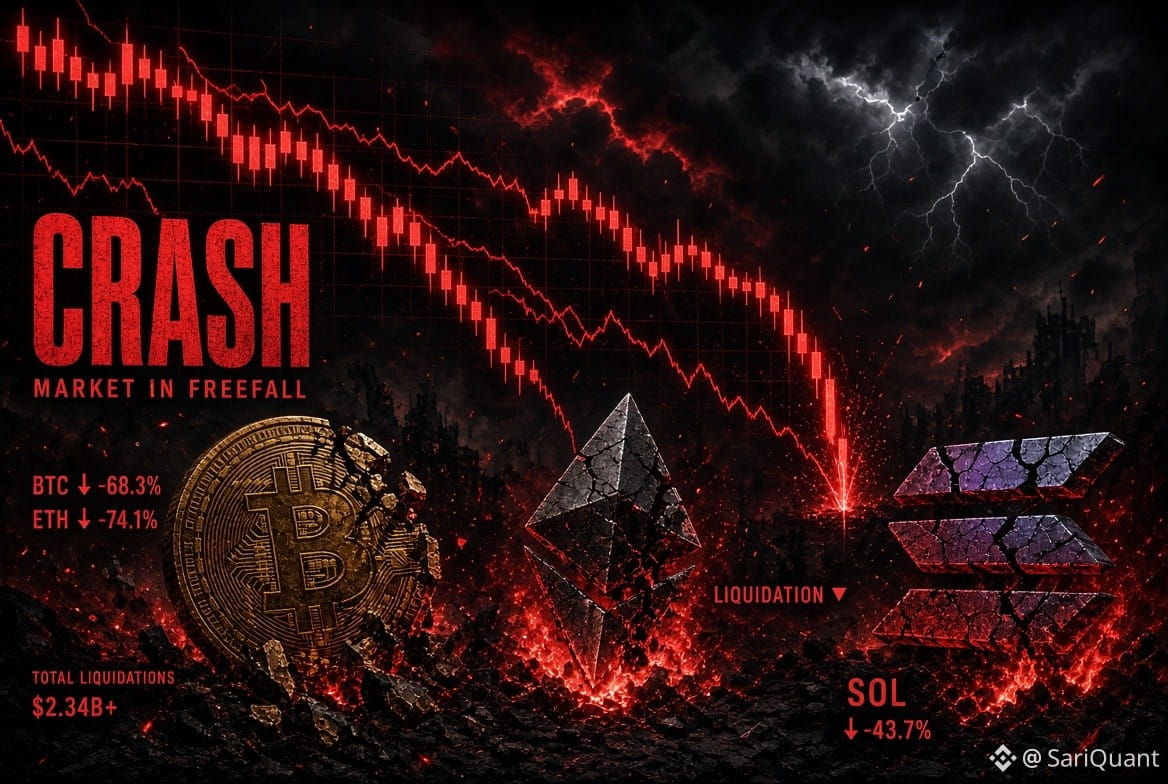
$2B+ LONGS JUST GOT VAPORIZED
BTC sliced under $58k
Lowest since Sept 2024
90% of the blood was leveraged longs
Extreme Fear at 12
Who still has dry powder?
$BTC
{spot}(BTCUSDT)
$ETH
{spot}(ETHUSDT)
$SOL
{spot}(SOLUSDT)
$2B+ LONGS JUST GOT VAPORIZED
BTC sliced under $58k
Lowest since Sept 2024
90% of the blood was leveraged longs
Extreme Fear at 12
Who still has dry powder?
$BTC
$ETH
$SOL
BTC sliced under $58k
Lowest since Sept 2024
90% of the blood was leveraged longs
Extreme Fear at 12
Who still has dry powder?
$BTC
$ETH
$SOL
6
224
·
--
See translation
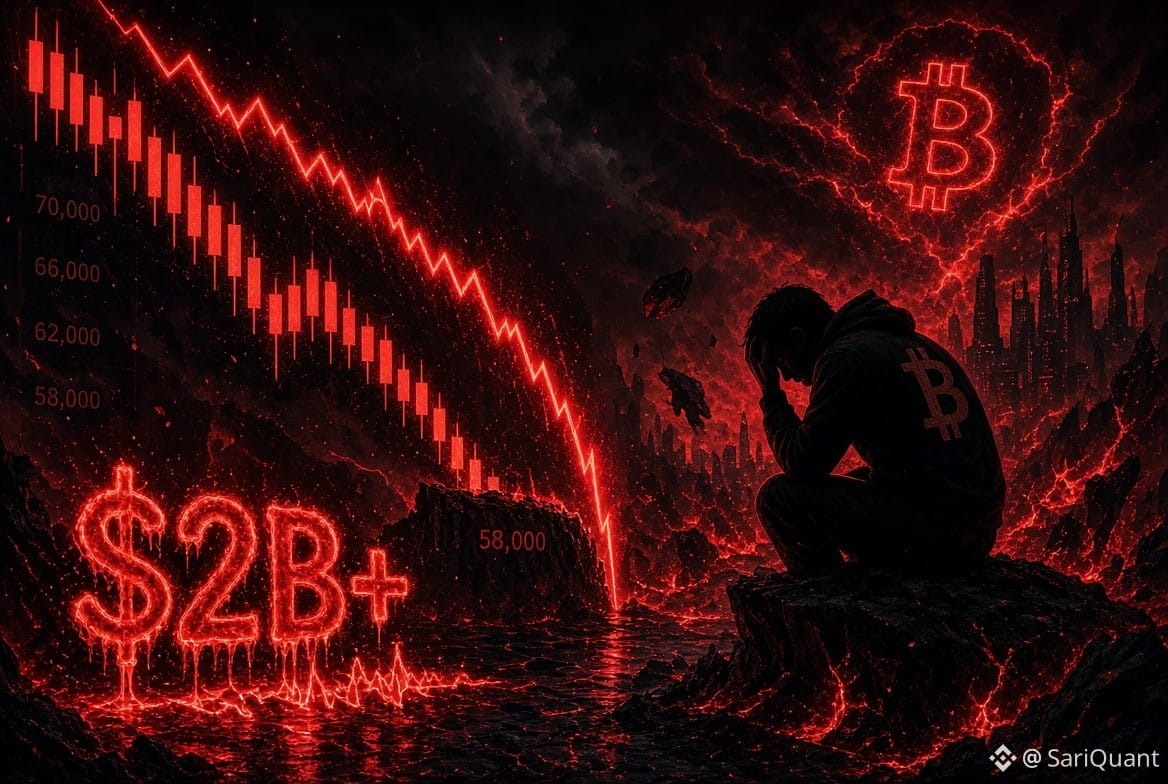
Longs just got rekt for over $2B while BTC kisses multi-year lows. Is the leverage finally flushing out?
When ~90% of liquidations hit the long side in Extreme Fear, the market is clearing excess leverage that built up on the way up. That forced selling can keep pressure on until the crowded longs are gone.
Reports show roughly $2.4B in crypto liquidations over 24 hours, with longs making up the vast majority and BTC leading the pack (over $1B in some tallies). Price has dropped toward the mid-$50ks levels not seen since September 2024 while the Fear & Greed Index sits around 12 (Extreme Fear). Macro factors like equity sell-offs and higher real yields are adding fuel.
$BTC
{spot}(BTCUSDT)
$ETH
{spot}(ETHUSDT)
$SOL
{spot}(SOLUSDT)
Longs just got rekt for over $2B while BTC kisses multi-year lows. Is the leverage finally flushing out?
When ~90% of liquidations hit the long side in Extreme Fear, the market is clearing excess leverage that built up on the way up. That forced selling can keep pressure on until the crowded longs are gone.
Reports show roughly $2.4B in crypto liquidations over 24 hours, with longs making up the vast majority and BTC leading the pack (over $1B in some tallies). Price has dropped toward the mid-$50ks levels not seen since September 2024 while the Fear & Greed Index sits around 12 (Extreme Fear). Macro factors like equity sell-offs and higher real yields are adding fuel.
$BTC
$ETH
$SOL
When ~90% of liquidations hit the long side in Extreme Fear, the market is clearing excess leverage that built up on the way up. That forced selling can keep pressure on until the crowded longs are gone.
Reports show roughly $2.4B in crypto liquidations over 24 hours, with longs making up the vast majority and BTC leading the pack (over $1B in some tallies). Price has dropped toward the mid-$50ks levels not seen since September 2024 while the Fear & Greed Index sits around 12 (Extreme Fear). Macro factors like equity sell-offs and higher real yields are adding fuel.
$BTC
$ETH
$SOL
6
200
·
--
See translation
Still stacking 50x longs into extreme fear? The market just forced the answer.
Over $1B+ in crypto futures liquidated in the last 24h—80-90% of it longs. $BTC led the wipeout, $ETH followed hard, $SOL got dragged with it. Fear & Greed sitting in extreme fear.
Still stacking 50x longs into extreme fear? The market just forced the answer.
Over $1B+ in crypto futures liquidated in the last 24h—80-90% of it longs. $BTC led the wipeout, $ETH followed hard, $SOL got dragged with it. Fear & Greed sitting in extreme fear.
Over $1B+ in crypto futures liquidated in the last 24h—80-90% of it longs. $BTC led the wipeout, $ETH followed hard, $SOL got dragged with it. Fear & Greed sitting in extreme fear.
2
4
270
·
--
See translation
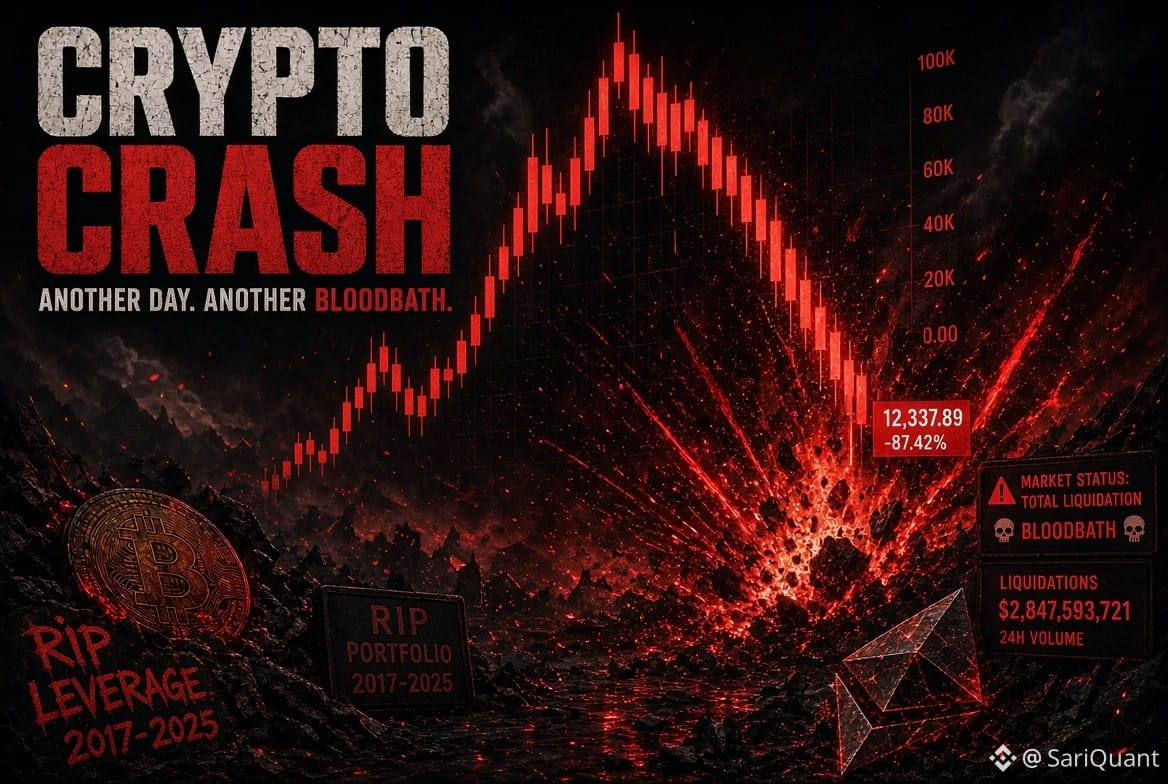
THE LEVERAGE GRAVEYARD JUST OPENED 🔥💀
$2B+ liquidated in 24h.
90%+ were LONGS.
BTC flushed under $56K.
Extreme Fear sitting at 12.
The crowded side got hunted.
Who’s still holding size?
$BTC
{spot}(BTCUSDT)
$ETH
{spot}(ETHUSDT)
$SOL
{spot}(SOLUSDT)
THE LEVERAGE GRAVEYARD JUST OPENED 🔥💀
$2B+ liquidated in 24h.
90%+ were LONGS.
BTC flushed under $56K.
Extreme Fear sitting at 12.
The crowded side got hunted.
Who’s still holding size?
$BTC
$ETH
$SOL
$2B+ liquidated in 24h.
90%+ were LONGS.
BTC flushed under $56K.
Extreme Fear sitting at 12.
The crowded side got hunted.
Who’s still holding size?
$BTC
$ETH
$SOL
3
6
504
·
--
See translation
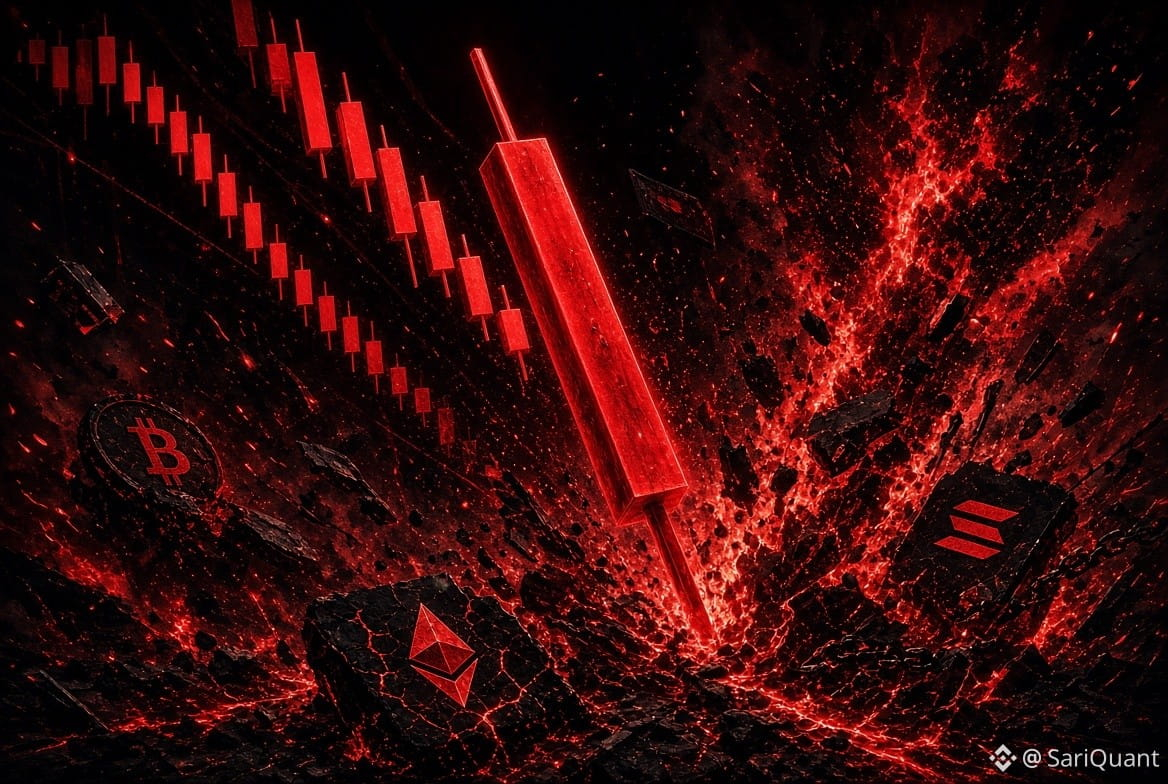
LIQUIDATION CARNAGE: $2B+ WIPED IN 24H LONGS DEMOLISHED!
BTC plunging under $56K.
ETH & SOL bleeding hard.
Fear index in the gutter.
Leverage cleaned out.
Is this the flush before the bounce... or deeper pain?
$BTC
{spot}(BTCUSDT)
$ETH
{spot}(ETHUSDT)
$SOL
{spot}(SOLUSDT)
LIQUIDATION CARNAGE: $2B+ WIPED IN 24H LONGS DEMOLISHED!
BTC plunging under $56K.
ETH & SOL bleeding hard.
Fear index in the gutter.
Leverage cleaned out.
Is this the flush before the bounce... or deeper pain?
$BTC
$ETH
$SOL
BTC plunging under $56K.
ETH & SOL bleeding hard.
Fear index in the gutter.
Leverage cleaned out.
Is this the flush before the bounce... or deeper pain?
$BTC
$ETH
$SOL
6
304
·
--
See translation
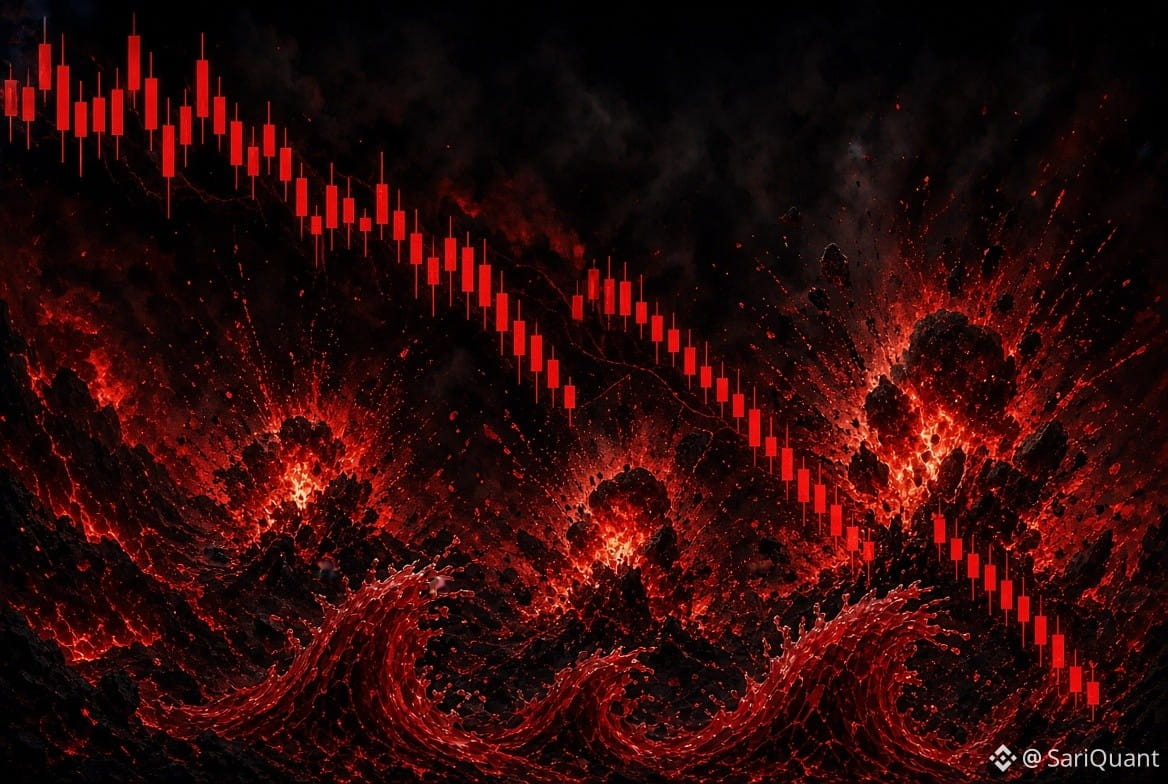
What happens when nearly 94% of liquidated money in 12 hours was overleveraged longs getting wrecked?
Forced selling from liquidations accelerates dumps. Wait for open interest to rebuild and funding to stabilize before chasing a bounce leverage reset is the filter.
$792M liquidated total ($743M longs / $49M shorts). Largest single hit: $51.7M BTC long on Binance. BTC ~$56.2k–$56.4k, ETH ~$1,564, SOL ~$66, HYPE also heavy on long liquidations. Extreme Fear index sitting at 12
$BTC
{spot}(BTCUSDT)
$ETH
{spot}(ETHUSDT)
$SOL
{spot}(SOLUSDT)
What happens when nearly 94% of liquidated money in 12 hours was overleveraged longs getting wrecked?
Forced selling from liquidations accelerates dumps. Wait for open interest to rebuild and funding to stabilize before chasing a bounce leverage reset is the filter.
$792M liquidated total ($743M longs / $49M shorts). Largest single hit: $51.7M BTC long on Binance. BTC ~$56.2k–$56.4k, ETH ~$1,564, SOL ~$66, HYPE also heavy on long liquidations. Extreme Fear index sitting at 12
$BTC
$ETH
$SOL
Forced selling from liquidations accelerates dumps. Wait for open interest to rebuild and funding to stabilize before chasing a bounce leverage reset is the filter.
$792M liquidated total ($743M longs / $49M shorts). Largest single hit: $51.7M BTC long on Binance. BTC ~$56.2k–$56.4k, ETH ~$1,564, SOL ~$66, HYPE also heavy on long liquidations. Extreme Fear index sitting at 12
$BTC
$ETH
$SOL
6
375
·
--
Article
See translation
Binance obtains $6.5 billion freezing order from Abu Dhabi court in bid to recover stolen cryptoCrypto exchange operator Binance said it has obtained a $6.5 billion worldwide freezing order from the Abu Dhabi Global Market Courts as it seeks to recover crypto stolen in its Oct. 29 hack.
Justice William Stone SBS KC issued the order against unidentified people accused of carrying out the attack, Binance said Wednesday in a statement shared with The Block. The $6.5 billion is the amount covered by the injunction. Binance previously said about $2.85 billion of the roughly $6.34 billion in assets affected by the hack had been frozen or intercepted.
The court also granted interim orders over specific stolen assets and orders requiring assets to be handed over. Some of the interim orders apply to named defendants that have already frozen stolen assets. Binance does not allege wrongdoing by those parties.
Binance said some issuers, exchanges and other partners require a court order before they can release or return funds they have frozen. The orders can be served via blockchain, and the market will be notified as the list of wallets identified as holding stolen funds is updated.
Law firm Gibson Dunn is representing Binance in its efforts to recover crypto assets stolen in the hack. M. Kendall Day of Gibson Dunn called the $6.5 billion injunction "one of, if not the, largest publicly known freezing orders ever made."
"Alongside the worldwide freezing order against the perpetrators, Gibson Dunn has secured proprietary injunctions and delivery up orders on behalf of Binance to recover what was taken. Just as significant is how the orders will work in practice: they can be served via the blockchain, and the market will be notified of a constantly updating ‘living list’ of 26,000 wallet addresses identified as holding stolen assets, enabling those assets to be frozen rapidly even as they are laundered at pace," Day said.
Binance said it continues to work with law enforcement, issuers, exchanges and blockchain intelligence firms to trace and recover the stolen funds.
"We will continue using every lawful tool available to trace, freeze and recover stolen assets, support our partners in returning funds where possible, and keep those assets out of the hands of the attackers," said Dugan Bliss, deputy general counsel at Binance.
Tom Robinson, co-founder and chief scientist at blockchain analytics firm Elliptic, previously told The Block that frozen stablecoins could technically be reissued to Binance, but issuers would first want "a clear legal basis," such as a law enforcement request or a court order confirming the rightful owner. He said that process could take weeks or months. At the time, Robinson estimated that about $3.3 billion remained in bitcoin, ether, and XRP, "which no one can freeze."
Robinson also said tools that trace funds across blockchains help investigators flag them to exchanges and issuers faster. "Each time the funds move, there is a chance to catch them," he said.
Binance obtains $6.5 billion freezing order from Abu Dhabi court in bid to recover stolen crypto
Crypto exchange operator Binance said it has obtained a $6.5 billion worldwide freezing order from the Abu Dhabi Global Market Courts as it seeks to recover crypto stolen in its Oct. 29 hack.
Justice William Stone SBS KC issued the order against unidentified people accused of carrying out the attack, Binance said Wednesday in a statement shared with The Block. The $6.5 billion is the amount covered by the injunction. Binance previously said about $2.85 billion of the roughly $6.34 billion in assets affected by the hack had been frozen or intercepted.
The court also granted interim orders over specific stolen assets and orders requiring assets to be handed over. Some of the interim orders apply to named defendants that have already frozen stolen assets. Binance does not allege wrongdoing by those parties.
Binance said some issuers, exchanges and other partners require a court order before they can release or return funds they have frozen. The orders can be served via blockchain, and the market will be notified as the list of wallets identified as holding stolen funds is updated.
Law firm Gibson Dunn is representing Binance in its efforts to recover crypto assets stolen in the hack. M. Kendall Day of Gibson Dunn called the $6.5 billion injunction "one of, if not the, largest publicly known freezing orders ever made."
"Alongside the worldwide freezing order against the perpetrators, Gibson Dunn has secured proprietary injunctions and delivery up orders on behalf of Binance to recover what was taken. Just as significant is how the orders will work in practice: they can be served via the blockchain, and the market will be notified of a constantly updating ‘living list’ of 26,000 wallet addresses identified as holding stolen assets, enabling those assets to be frozen rapidly even as they are laundered at pace," Day said.
Binance said it continues to work with law enforcement, issuers, exchanges and blockchain intelligence firms to trace and recover the stolen funds.
"We will continue using every lawful tool available to trace, freeze and recover stolen assets, support our partners in returning funds where possible, and keep those assets out of the hands of the attackers," said Dugan Bliss, deputy general counsel at Binance.
Tom Robinson, co-founder and chief scientist at blockchain analytics firm Elliptic, previously told The Block that frozen stablecoins could technically be reissued to Binance, but issuers would first want "a clear legal basis," such as a law enforcement request or a court order confirming the rightful owner. He said that process could take weeks or months. At the time, Robinson estimated that about $3.3 billion remained in bitcoin, ether, and XRP, "which no one can freeze."
Robinson also said tools that trace funds across blockchains help investigators flag them to exchanges and issuers faster. "Each time the funds move, there is a chance to catch them," he said.
Justice William Stone SBS KC issued the order against unidentified people accused of carrying out the attack, Binance said Wednesday in a statement shared with The Block. The $6.5 billion is the amount covered by the injunction. Binance previously said about $2.85 billion of the roughly $6.34 billion in assets affected by the hack had been frozen or intercepted.
The court also granted interim orders over specific stolen assets and orders requiring assets to be handed over. Some of the interim orders apply to named defendants that have already frozen stolen assets. Binance does not allege wrongdoing by those parties.
Binance said some issuers, exchanges and other partners require a court order before they can release or return funds they have frozen. The orders can be served via blockchain, and the market will be notified as the list of wallets identified as holding stolen funds is updated.
Law firm Gibson Dunn is representing Binance in its efforts to recover crypto assets stolen in the hack. M. Kendall Day of Gibson Dunn called the $6.5 billion injunction "one of, if not the, largest publicly known freezing orders ever made."
"Alongside the worldwide freezing order against the perpetrators, Gibson Dunn has secured proprietary injunctions and delivery up orders on behalf of Binance to recover what was taken. Just as significant is how the orders will work in practice: they can be served via the blockchain, and the market will be notified of a constantly updating ‘living list’ of 26,000 wallet addresses identified as holding stolen assets, enabling those assets to be frozen rapidly even as they are laundered at pace," Day said.
Binance said it continues to work with law enforcement, issuers, exchanges and blockchain intelligence firms to trace and recover the stolen funds.
"We will continue using every lawful tool available to trace, freeze and recover stolen assets, support our partners in returning funds where possible, and keep those assets out of the hands of the attackers," said Dugan Bliss, deputy general counsel at Binance.
Tom Robinson, co-founder and chief scientist at blockchain analytics firm Elliptic, previously told The Block that frozen stablecoins could technically be reissued to Binance, but issuers would first want "a clear legal basis," such as a law enforcement request or a court order confirming the rightful owner. He said that process could take weeks or months. At the time, Robinson estimated that about $3.3 billion remained in bitcoin, ether, and XRP, "which no one can freeze."
Robinson also said tools that trace funds across blockchains help investigators flag them to exchanges and issuers faster. "Each time the funds move, there is a chance to catch them," he said.
6
372
·
--
Article
See translation
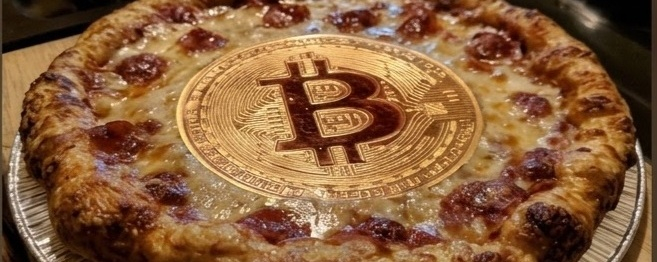
The $1 Billion Dinner: How Two Slices of Pepperoni Saved Crypto From Dying in a ForumImagine checking your wallet history and seeing a transaction for two large Papa John’s pizzas that, at today’s prices, would buy you a private island, a fleet of supercars, and generational wealth for your entire bloodline.
Meet Laszlo Hanyecz the man who literally ate the most expensive meal in human history.
On May 18, 2010, Bitcoin was barely a year old. It had no exchanges, no price charts, and zero real-world value. To 99.9% of the world, it didn't exist; to the handful of cypherpunks mining it on their laptops, it was just internet monopoly money.
Laszlo wanted to change that. He logged onto the Bitcointalk forum and made a simple proposition: he would pay 10,000 $BTC (worth about $41 at the time) to anyone who could get two large pizzas delivered to his front door in Jacksonville, Florida. He even listed his topping preferences onions, peppers, sausage, mushrooms, pepperoni and specifically requested "no weird fish toppings."
For four straight days, nobody took the deal. Think about that: 10,000 Bitcoins sat unclaimed on a public forum because nobody saw the point in trading real fiat cash for fake internet coins.
Finally, on May 22, 2010, a 19-year-old student named Jeremy Sturdivant (jercos) stepped up. He called Laszlo’s local Papa John’s, swiped his debit card for around $25, and had the pies delivered. Laszlo sent the 10,000 BTC on-chain, snapped a photo of his kids with the pizza boxes, and posted it to prove the network actually worked.
The Plot Twist Nobody Talks About
Everyone assumes Laszlo spent the next decade crying into his pillow or that Jeremy became a secretive crypto billionaire. Neither happened.
Jeremy didn't hold: He treated the 10,000 BTC exactly as Satoshi intended as cash. He spent the entire stash shortly after on travel expenses for a road trip with his girlfriend.
Laszlo kept ordering: Because he had figured out how to mine Bitcoin using his computer's graphics card (GPU), Laszlo saw it as turning electricity into free food. He actually spent closer to 80,000–100,000 BTC on pizzas that summer before mining difficulty caught up.
Every year on May 22, the crypto community celebrates Bitcoin Pizza Day—not to mock Laszlo, but to thank him. Before a coin can become a trillion-dollar store of value, someone has to be crazy enough to prove it can buy dinner. Without that $41 order, Bitcoin might have remained a forgotten math experiment on an obscure forum.
Would you have held those 10,000 BTC, or cashed out the second they hit $1,000? Drop your honest answer below 👇
#BitcoinPizzaDay #BTC走势分析 #CryptoHistory #BinanceSquare #satoshiNakamato
The $1 Billion Dinner: How Two Slices of Pepperoni Saved Crypto From Dying in a Forum
Imagine checking your wallet history and seeing a transaction for two large Papa John’s pizzas that, at today’s prices, would buy you a private island, a fleet of supercars, and generational wealth for your entire bloodline.
Meet Laszlo Hanyecz the man who literally ate the most expensive meal in human history.
On May 18, 2010, Bitcoin was barely a year old. It had no exchanges, no price charts, and zero real-world value. To 99.9% of the world, it didn't exist; to the handful of cypherpunks mining it on their laptops, it was just internet monopoly money.
Laszlo wanted to change that. He logged onto the Bitcointalk forum and made a simple proposition: he would pay 10,000 $BTC (worth about $41 at the time) to anyone who could get two large pizzas delivered to his front door in Jacksonville, Florida. He even listed his topping preferences onions, peppers, sausage, mushrooms, pepperoni and specifically requested "no weird fish toppings."
For four straight days, nobody took the deal. Think about that: 10,000 Bitcoins sat unclaimed on a public forum because nobody saw the point in trading real fiat cash for fake internet coins.
Finally, on May 22, 2010, a 19-year-old student named Jeremy Sturdivant (jercos) stepped up. He called Laszlo’s local Papa John’s, swiped his debit card for around $25, and had the pies delivered. Laszlo sent the 10,000 BTC on-chain, snapped a photo of his kids with the pizza boxes, and posted it to prove the network actually worked.
The Plot Twist Nobody Talks About
Everyone assumes Laszlo spent the next decade crying into his pillow or that Jeremy became a secretive crypto billionaire. Neither happened.
Jeremy didn't hold: He treated the 10,000 BTC exactly as Satoshi intended as cash. He spent the entire stash shortly after on travel expenses for a road trip with his girlfriend.
Laszlo kept ordering: Because he had figured out how to mine Bitcoin using his computer's graphics card (GPU), Laszlo saw it as turning electricity into free food. He actually spent closer to 80,000–100,000 BTC on pizzas that summer before mining difficulty caught up.
Every year on May 22, the crypto community celebrates Bitcoin Pizza Day—not to mock Laszlo, but to thank him. Before a coin can become a trillion-dollar store of value, someone has to be crazy enough to prove it can buy dinner. Without that $41 order, Bitcoin might have remained a forgotten math experiment on an obscure forum.
Would you have held those 10,000 BTC, or cashed out the second they hit $1,000? Drop your honest answer below 👇
#BitcoinPizzaDay #BTC走势分析 #CryptoHistory #BinanceSquare #satoshiNakamato
Meet Laszlo Hanyecz the man who literally ate the most expensive meal in human history.
On May 18, 2010, Bitcoin was barely a year old. It had no exchanges, no price charts, and zero real-world value. To 99.9% of the world, it didn't exist; to the handful of cypherpunks mining it on their laptops, it was just internet monopoly money.
Laszlo wanted to change that. He logged onto the Bitcointalk forum and made a simple proposition: he would pay 10,000 $BTC (worth about $41 at the time) to anyone who could get two large pizzas delivered to his front door in Jacksonville, Florida. He even listed his topping preferences onions, peppers, sausage, mushrooms, pepperoni and specifically requested "no weird fish toppings."
For four straight days, nobody took the deal. Think about that: 10,000 Bitcoins sat unclaimed on a public forum because nobody saw the point in trading real fiat cash for fake internet coins.
Finally, on May 22, 2010, a 19-year-old student named Jeremy Sturdivant (jercos) stepped up. He called Laszlo’s local Papa John’s, swiped his debit card for around $25, and had the pies delivered. Laszlo sent the 10,000 BTC on-chain, snapped a photo of his kids with the pizza boxes, and posted it to prove the network actually worked.
The Plot Twist Nobody Talks About
Everyone assumes Laszlo spent the next decade crying into his pillow or that Jeremy became a secretive crypto billionaire. Neither happened.
Jeremy didn't hold: He treated the 10,000 BTC exactly as Satoshi intended as cash. He spent the entire stash shortly after on travel expenses for a road trip with his girlfriend.
Laszlo kept ordering: Because he had figured out how to mine Bitcoin using his computer's graphics card (GPU), Laszlo saw it as turning electricity into free food. He actually spent closer to 80,000–100,000 BTC on pizzas that summer before mining difficulty caught up.
Every year on May 22, the crypto community celebrates Bitcoin Pizza Day—not to mock Laszlo, but to thank him. Before a coin can become a trillion-dollar store of value, someone has to be crazy enough to prove it can buy dinner. Without that $41 order, Bitcoin might have remained a forgotten math experiment on an obscure forum.
Would you have held those 10,000 BTC, or cashed out the second they hit $1,000? Drop your honest answer below 👇
#BitcoinPizzaDay #BTC走势分析 #CryptoHistory #BinanceSquare #satoshiNakamato
1
1
7
116
·
--
Article
See translation
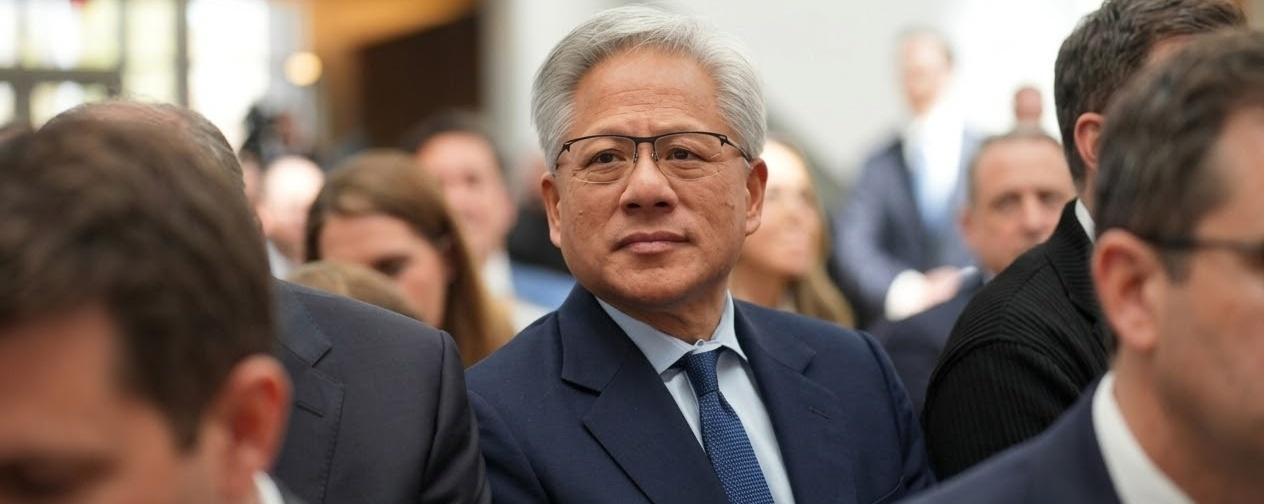
Threats, Insults, Settlements: How Jensen Huang Made Humiliation RoutineAs Nvidia grew wealthier in recent years, co-founder Jensen Huang grew increasingly frustrated with his staff. Telling subordinates they had become too rich to be motivated by money, he argued that the only way to grind more work out of them was through humiliation.
This philosophy defined Mr. Huang’s management style across decades, fueling Nvidia’s rise to a $5 trillion cornerstone of the artificial intelligence boom. According to interviews with more than a dozen current and former employees and hundreds of pages of court records, Mr. Huang routinely excoriated staff in front of their peers with personal attacks and graphic, violent threats telling one executive he would rip off his arms and beat him to death with them, and telling another he would “pee on your brain.”
“I’d rather torture you into greatness, because I believe in you,” Mr. Huang once said.
While he inspired intense loyalty thousands of employees signed a petition asking for his return after he resigned last week following revelations of extramarital relationships, including one with a suspected Chinese intelligence asset—both admirers and critics described the company culture as cultish, comparing the dynamic to Stockholm syndrome. Mr. Huang cultivated devotion through technical mastery and acts of personal compassion, such as supporting strategy employee Vartika Singh when her sister had brain cancer, yet he ruled through fear. He avoided one-on-one meetings, which executives viewed as a power play ensuring that anyone who disagreed with him could be publicly ridiculed.
That conduct carried steep legal and human costs long before the A.I. boom:
Early Settlements: In 2004, human resources senior vice president Michael Winston witnessed Mr. Huang threaten to rip employees’ hearts out at an off-site meeting. When Mr. Winston warned that such behavior exposed Nvidia to lawsuits, Mr. Huang defended public humiliation as a “rite of passage” with “good entertainment value,” then fired him weeks later. Nvidia paid Mr. Winston a confidential settlement of more than $1 million. In 2007, former company lawyer Stephen Pettigrew sued Nvidia, alleging retaliation for reporting Mr. Winston’s harassment claims and stating he required emergency medical care for severe anxiety; that case settled out of court in 2009.
Escalating Tirades: Mr. Huang mocked executives for personal hobbies like aviation or taking children camping, told an older manager that everyone hoped they would drop dead, and once chewed out marketing executive Ned Finkle in front of a major customer before reassigning him to government relations. In 2019, after Nvidia lost part of a U.S. supercomputer bid, Mr. Huang berated a sales executive in front of government officials until the executive threw his badge and quit on the spot.
A Trickle-Down Culture: Six current and former employees said senior leaders adopted Mr. Huang’s abrasive style including his daughter, Madison Huang, who still works at the company. On a marketing call last year, Ms. Huang repeatedly berated a vice president until the executive dropped off, apologizing for having an anxiety attack.
Through a spokesman, Mr. Huang denied Mr. Winston’s allegations as “fabrications” from a fired employee, pointing to the thousands of staff defending him. Nvidia declined to comment, and Ms. Huang did not respond to requests for comment.
Recently, Mr. Huang’s behavior spilled onto public stages. At Nvidia’s developer conference in March, he repeatedly interrupted Mistral C.E.O. Arthur Mensch over his French accent, telling him, “You’re not even speaking human.” Watching the exchange rattled longtime admirer and A.I. researcher Daniel Gutierrez, who noted that recent events made him realize, “Maybe Jensen isn’t the guy I thought I revered.”
Now, interim C.E.O. Colette Kress whom Mr. Huang also once belittled in front of top executives and Nvidia’s board must decide whether to move past his legacy. Despite ongoing pressure from Mr. Huang’s supporters, board chair Harvey C. Jones stated Tuesday that Nvidia “does not intend to reinstate Jensen as C.E.O.”
Source:The New York Times
Threats, Insults, Settlements: How Jensen Huang Made Humiliation Routine
As Nvidia grew wealthier in recent years, co-founder Jensen Huang grew increasingly frustrated with his staff. Telling subordinates they had become too rich to be motivated by money, he argued that the only way to grind more work out of them was through humiliation.
This philosophy defined Mr. Huang’s management style across decades, fueling Nvidia’s rise to a $5 trillion cornerstone of the artificial intelligence boom. According to interviews with more than a dozen current and former employees and hundreds of pages of court records, Mr. Huang routinely excoriated staff in front of their peers with personal attacks and graphic, violent threats telling one executive he would rip off his arms and beat him to death with them, and telling another he would “pee on your brain.”
“I’d rather torture you into greatness, because I believe in you,” Mr. Huang once said.
While he inspired intense loyalty thousands of employees signed a petition asking for his return after he resigned last week following revelations of extramarital relationships, including one with a suspected Chinese intelligence asset—both admirers and critics described the company culture as cultish, comparing the dynamic to Stockholm syndrome. Mr. Huang cultivated devotion through technical mastery and acts of personal compassion, such as supporting strategy employee Vartika Singh when her sister had brain cancer, yet he ruled through fear. He avoided one-on-one meetings, which executives viewed as a power play ensuring that anyone who disagreed with him could be publicly ridiculed.
That conduct carried steep legal and human costs long before the A.I. boom:
Early Settlements: In 2004, human resources senior vice president Michael Winston witnessed Mr. Huang threaten to rip employees’ hearts out at an off-site meeting. When Mr. Winston warned that such behavior exposed Nvidia to lawsuits, Mr. Huang defended public humiliation as a “rite of passage” with “good entertainment value,” then fired him weeks later. Nvidia paid Mr. Winston a confidential settlement of more than $1 million. In 2007, former company lawyer Stephen Pettigrew sued Nvidia, alleging retaliation for reporting Mr. Winston’s harassment claims and stating he required emergency medical care for severe anxiety; that case settled out of court in 2009.
Escalating Tirades: Mr. Huang mocked executives for personal hobbies like aviation or taking children camping, told an older manager that everyone hoped they would drop dead, and once chewed out marketing executive Ned Finkle in front of a major customer before reassigning him to government relations. In 2019, after Nvidia lost part of a U.S. supercomputer bid, Mr. Huang berated a sales executive in front of government officials until the executive threw his badge and quit on the spot.
A Trickle-Down Culture: Six current and former employees said senior leaders adopted Mr. Huang’s abrasive style including his daughter, Madison Huang, who still works at the company. On a marketing call last year, Ms. Huang repeatedly berated a vice president until the executive dropped off, apologizing for having an anxiety attack.
Through a spokesman, Mr. Huang denied Mr. Winston’s allegations as “fabrications” from a fired employee, pointing to the thousands of staff defending him. Nvidia declined to comment, and Ms. Huang did not respond to requests for comment.
Recently, Mr. Huang’s behavior spilled onto public stages. At Nvidia’s developer conference in March, he repeatedly interrupted Mistral C.E.O. Arthur Mensch over his French accent, telling him, “You’re not even speaking human.” Watching the exchange rattled longtime admirer and A.I. researcher Daniel Gutierrez, who noted that recent events made him realize, “Maybe Jensen isn’t the guy I thought I revered.”
Now, interim C.E.O. Colette Kress whom Mr. Huang also once belittled in front of top executives and Nvidia’s board must decide whether to move past his legacy. Despite ongoing pressure from Mr. Huang’s supporters, board chair Harvey C. Jones stated Tuesday that Nvidia “does not intend to reinstate Jensen as C.E.O.”
Source:The New York Times
This philosophy defined Mr. Huang’s management style across decades, fueling Nvidia’s rise to a $5 trillion cornerstone of the artificial intelligence boom. According to interviews with more than a dozen current and former employees and hundreds of pages of court records, Mr. Huang routinely excoriated staff in front of their peers with personal attacks and graphic, violent threats telling one executive he would rip off his arms and beat him to death with them, and telling another he would “pee on your brain.”
“I’d rather torture you into greatness, because I believe in you,” Mr. Huang once said.
While he inspired intense loyalty thousands of employees signed a petition asking for his return after he resigned last week following revelations of extramarital relationships, including one with a suspected Chinese intelligence asset—both admirers and critics described the company culture as cultish, comparing the dynamic to Stockholm syndrome. Mr. Huang cultivated devotion through technical mastery and acts of personal compassion, such as supporting strategy employee Vartika Singh when her sister had brain cancer, yet he ruled through fear. He avoided one-on-one meetings, which executives viewed as a power play ensuring that anyone who disagreed with him could be publicly ridiculed.
That conduct carried steep legal and human costs long before the A.I. boom:
Early Settlements: In 2004, human resources senior vice president Michael Winston witnessed Mr. Huang threaten to rip employees’ hearts out at an off-site meeting. When Mr. Winston warned that such behavior exposed Nvidia to lawsuits, Mr. Huang defended public humiliation as a “rite of passage” with “good entertainment value,” then fired him weeks later. Nvidia paid Mr. Winston a confidential settlement of more than $1 million. In 2007, former company lawyer Stephen Pettigrew sued Nvidia, alleging retaliation for reporting Mr. Winston’s harassment claims and stating he required emergency medical care for severe anxiety; that case settled out of court in 2009.
Escalating Tirades: Mr. Huang mocked executives for personal hobbies like aviation or taking children camping, told an older manager that everyone hoped they would drop dead, and once chewed out marketing executive Ned Finkle in front of a major customer before reassigning him to government relations. In 2019, after Nvidia lost part of a U.S. supercomputer bid, Mr. Huang berated a sales executive in front of government officials until the executive threw his badge and quit on the spot.
A Trickle-Down Culture: Six current and former employees said senior leaders adopted Mr. Huang’s abrasive style including his daughter, Madison Huang, who still works at the company. On a marketing call last year, Ms. Huang repeatedly berated a vice president until the executive dropped off, apologizing for having an anxiety attack.
Through a spokesman, Mr. Huang denied Mr. Winston’s allegations as “fabrications” from a fired employee, pointing to the thousands of staff defending him. Nvidia declined to comment, and Ms. Huang did not respond to requests for comment.
Recently, Mr. Huang’s behavior spilled onto public stages. At Nvidia’s developer conference in March, he repeatedly interrupted Mistral C.E.O. Arthur Mensch over his French accent, telling him, “You’re not even speaking human.” Watching the exchange rattled longtime admirer and A.I. researcher Daniel Gutierrez, who noted that recent events made him realize, “Maybe Jensen isn’t the guy I thought I revered.”
Now, interim C.E.O. Colette Kress whom Mr. Huang also once belittled in front of top executives and Nvidia’s board must decide whether to move past his legacy. Despite ongoing pressure from Mr. Huang’s supporters, board chair Harvey C. Jones stated Tuesday that Nvidia “does not intend to reinstate Jensen as C.E.O.”
Source:The New York Times
8
370
·
--

Article
See translation
The $80 Billion Ghost: Why No One Has Ever Seen Satoshi Nakamoto’s Face (what if he wakes up?)In 2008, a stranger dropped a 9-page PDF onto a cryptography mailing list, launched a peer-to-peer financial revolution, mined roughly 1.1 million $BTC, and then vanished into thin air.
No interviews. No leaked selfies. No voice recordings. Just one final email in April 2011 saying they had "moved on to other things."
Seventeen years later, governments, intelligence agencies, investigative journalists, and AI forensics teams still haven’t proven who Satoshi Nakamoto is.
Here is the real story behind why Satoshi stayed faceless—and why that mystery is the strongest shield $BTC has ever had:
1. A Founder Is a Vulnerability
Every traditional tech network has a throat to choke. If regulators want to shut down a platform, they subpoena the CEO, freeze their accounts, or force a backdoor into the code. Satoshi understood that if Bitcoin had a public face, it wouldn’t survive its infancy. By erasing themselves from the equation, Satoshi turned $BTC from a startup into a leaderless protocol that nobody can sue or arrest.
2. The Heaviest Fortune on Earth
On-chain analysts have tracked the early "Patoshi pattern" blocks roughly 22,000 wallets holding ~1.1 million $BTC that have sat completely untouched since 2009.
Think about the psychological weight of holding private keys worth tens of billions of dollars. Going public wouldn’t bring fame it would bring state-level surveillance, extortion, and permanent danger. Staying anonymous wasn’t paranoia; it was basic survival.
3. Masterclass in Digital Ghosting
Long before modern privacy tools became mainstream, Satoshi practiced flawless operational security:
Communicated strictly through encrypted emails and pseudonymous forum accounts.
Used British spelling conventions alongside American time-zone posting windows deliberately or naturally muddying their geographic trail.
Never slipped up once across hundreds of forum posts and code commits.
4. The Suspects And the Ultimate Cryptographic Test
Over the years, crypto detectives have narrowed the hunt down to legendary cypherpunks—Hal Finney (who received the very first $BTC transaction), Nick Szabo (creator of bit gold), Adam Back (inventor of Hashcash), and Len Sassaman (whose tragic passing in 2011 lines up eerily with Satoshi’s final exit).
Yet every living suspect has denied it and in 2024, a UK High Court officially dismantled Craig Wright’s claims after years of forged documents.
The beauty of cryptography is that proof doesn't require a face. Anyone claiming to be Satoshi only needs to sign a single message using the private keys from Block 1 or Block 9. Until that happens, every theory remains just a story.
5. Why the Silence Matters to Your Portfolio
As long as Satoshi’s 1.1 million $BTC stays dormant, the market treats those coins as permanently locked effectively shrinking Bitcoin’s real circulating supply. Satoshi didn’t cash out at $1, $1,000, or $100,000. Leaving behind a generational fortune without taking a single satoshi is the ultimate proof that $BTC wasn’t built as an exit scam.
In Budapest, there’s a bronze statue of Satoshi wearing a hoodie and its face is a polished mirror. When you look at it, you see yourself. That was the whole point.
💬 Over to you:
Do you think Satoshi was one person or a secret team?If a single satoshi ever moved from those 2009 wallets tomorrow, how hard would $BTC dump?
Drop your theories below 👇
#bitcoin #BTC走势分析 #SatoshiNakamoto #CryptoHistory #Onchain
The $80 Billion Ghost: Why No One Has Ever Seen Satoshi Nakamoto’s Face (what if he wakes up?)
In 2008, a stranger dropped a 9-page PDF onto a cryptography mailing list, launched a peer-to-peer financial revolution, mined roughly 1.1 million $BTC , and then vanished into thin air.
No interviews. No leaked selfies. No voice recordings. Just one final email in April 2011 saying they had "moved on to other things."
Seventeen years later, governments, intelligence agencies, investigative journalists, and AI forensics teams still haven’t proven who Satoshi Nakamoto is.
Here is the real story behind why Satoshi stayed faceless—and why that mystery is the strongest shield $BTC has ever had:
1. A Founder Is a Vulnerability
Every traditional tech network has a throat to choke. If regulators want to shut down a platform, they subpoena the CEO, freeze their accounts, or force a backdoor into the code. Satoshi understood that if Bitcoin had a public face, it wouldn’t survive its infancy. By erasing themselves from the equation, Satoshi turned $BTC from a startup into a leaderless protocol that nobody can sue or arrest.
2. The Heaviest Fortune on Earth
On-chain analysts have tracked the early "Patoshi pattern" blocks roughly 22,000 wallets holding ~1.1 million $BTC that have sat completely untouched since 2009.
Think about the psychological weight of holding private keys worth tens of billions of dollars. Going public wouldn’t bring fame it would bring state-level surveillance, extortion, and permanent danger. Staying anonymous wasn’t paranoia; it was basic survival.
3. Masterclass in Digital Ghosting
Long before modern privacy tools became mainstream, Satoshi practiced flawless operational security:
Communicated strictly through encrypted emails and pseudonymous forum accounts.
Used British spelling conventions alongside American time-zone posting windows deliberately or naturally muddying their geographic trail.
Never slipped up once across hundreds of forum posts and code commits.
4. The Suspects And the Ultimate Cryptographic Test
Over the years, crypto detectives have narrowed the hunt down to legendary cypherpunks—Hal Finney (who received the very first $BTC transaction), Nick Szabo (creator of bit gold), Adam Back (inventor of Hashcash), and Len Sassaman (whose tragic passing in 2011 lines up eerily with Satoshi’s final exit).
Yet every living suspect has denied it and in 2024, a UK High Court officially dismantled Craig Wright’s claims after years of forged documents.
The beauty of cryptography is that proof doesn't require a face. Anyone claiming to be Satoshi only needs to sign a single message using the private keys from Block 1 or Block 9. Until that happens, every theory remains just a story.
5. Why the Silence Matters to Your Portfolio
As long as Satoshi’s 1.1 million $BTC stays dormant, the market treats those coins as permanently locked effectively shrinking Bitcoin’s real circulating supply. Satoshi didn’t cash out at $1, $1,000, or $100,000. Leaving behind a generational fortune without taking a single satoshi is the ultimate proof that $BTC wasn’t built as an exit scam.
In Budapest, there’s a bronze statue of Satoshi wearing a hoodie and its face is a polished mirror. When you look at it, you see yourself. That was the whole point.
💬 Over to you:
Do you think Satoshi was one person or a secret team?If a single satoshi ever moved from those 2009 wallets tomorrow, how hard would $BTC dump?
Drop your theories below 👇
#bitcoin #BTC走势分析 #SatoshiNakamoto #CryptoHistory #Onchain
No interviews. No leaked selfies. No voice recordings. Just one final email in April 2011 saying they had "moved on to other things."
Seventeen years later, governments, intelligence agencies, investigative journalists, and AI forensics teams still haven’t proven who Satoshi Nakamoto is.
Here is the real story behind why Satoshi stayed faceless—and why that mystery is the strongest shield $BTC has ever had:
1. A Founder Is a Vulnerability
Every traditional tech network has a throat to choke. If regulators want to shut down a platform, they subpoena the CEO, freeze their accounts, or force a backdoor into the code. Satoshi understood that if Bitcoin had a public face, it wouldn’t survive its infancy. By erasing themselves from the equation, Satoshi turned $BTC from a startup into a leaderless protocol that nobody can sue or arrest.
2. The Heaviest Fortune on Earth
On-chain analysts have tracked the early "Patoshi pattern" blocks roughly 22,000 wallets holding ~1.1 million $BTC that have sat completely untouched since 2009.
Think about the psychological weight of holding private keys worth tens of billions of dollars. Going public wouldn’t bring fame it would bring state-level surveillance, extortion, and permanent danger. Staying anonymous wasn’t paranoia; it was basic survival.
3. Masterclass in Digital Ghosting
Long before modern privacy tools became mainstream, Satoshi practiced flawless operational security:
Communicated strictly through encrypted emails and pseudonymous forum accounts.
Used British spelling conventions alongside American time-zone posting windows deliberately or naturally muddying their geographic trail.
Never slipped up once across hundreds of forum posts and code commits.
4. The Suspects And the Ultimate Cryptographic Test
Over the years, crypto detectives have narrowed the hunt down to legendary cypherpunks—Hal Finney (who received the very first $BTC transaction), Nick Szabo (creator of bit gold), Adam Back (inventor of Hashcash), and Len Sassaman (whose tragic passing in 2011 lines up eerily with Satoshi’s final exit).
Yet every living suspect has denied it and in 2024, a UK High Court officially dismantled Craig Wright’s claims after years of forged documents.
The beauty of cryptography is that proof doesn't require a face. Anyone claiming to be Satoshi only needs to sign a single message using the private keys from Block 1 or Block 9. Until that happens, every theory remains just a story.
5. Why the Silence Matters to Your Portfolio
As long as Satoshi’s 1.1 million $BTC stays dormant, the market treats those coins as permanently locked effectively shrinking Bitcoin’s real circulating supply. Satoshi didn’t cash out at $1, $1,000, or $100,000. Leaving behind a generational fortune without taking a single satoshi is the ultimate proof that $BTC wasn’t built as an exit scam.
In Budapest, there’s a bronze statue of Satoshi wearing a hoodie and its face is a polished mirror. When you look at it, you see yourself. That was the whole point.
💬 Over to you:
Do you think Satoshi was one person or a secret team?If a single satoshi ever moved from those 2009 wallets tomorrow, how hard would $BTC dump?
Drop your theories below 👇
#bitcoin #BTC走势分析 #SatoshiNakamoto #CryptoHistory #Onchain
2
9
149
·
--
See translation
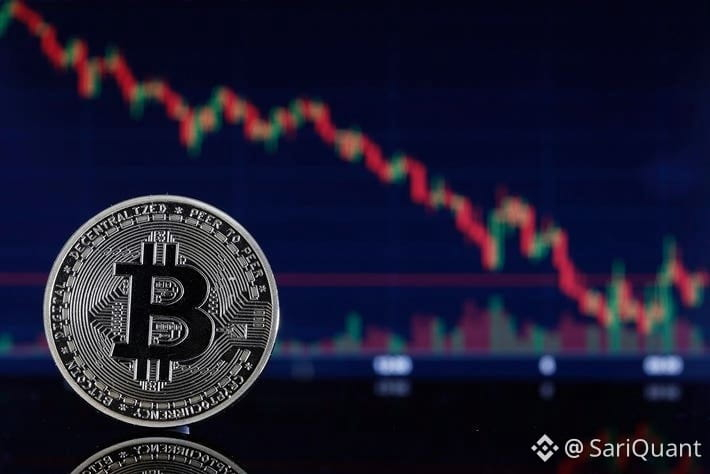
Bitcoin Tanks To Lowest Point Of 2026 Amid Broader Cryptocurrency Sell-Off
Bitcoin fell over 7% in trading Friday afternoon, continuing a massive tumble from the highs it reached over the summer as several other major cryptocurrencies also dropped.
Bitcoin dropped 7.4% around 1:50 p.m. EST, falling to about $58,200 and bringing its losses in the last five days of trading to 9.8%.
The cryptocurrency is now down nearly 29% in the last month of trading and has plummeted from the jump it experienced at the end of summer that sent prices above $86,000.
Investors appear to be pulling away from riskier assets in cryptocurrency and tech, the latter of which is also experiencing a poor day of trading.
Other digital assets have dropped alongside bitcoin, including ethereum (-8.8%),$BNB coin (-8.1%), $XRP (-7.1%) and $SOL (-7%).
$126,210. That was bitcoin’s all-time high, which was reached just a little over a year ago as concerns of a government shutdown influenced investors to reach for digital assets and metals like gold and silver.
Binance co-founder Changpeng “CZ” Zhao speculated a part of the reason for cryptocurrency drops was that investors were selling assets to get in on Anthropic’s initial public offering. Shares of the AI company have sunk 11% on their second day of trading. Zhao also pointed to an outflow from bitcoin ETFs, as well as security fears as possible reasons for the crypto withdrawal. The crypto executive cited the $6.3 billion Binance hack from October and a recent Microsoft 365 outage as “security incidents could make some people less willing to keep funds in crypto.”
Bitcoin Tanks To Lowest Point Of 2026 Amid Broader Cryptocurrency Sell-Off
Bitcoin fell over 7% in trading Friday afternoon, continuing a massive tumble from the highs it reached over the summer as several other major cryptocurrencies also dropped.
Bitcoin dropped 7.4% around 1:50 p.m. EST, falling to about $58,200 and bringing its losses in the last five days of trading to 9.8%.
The cryptocurrency is now down nearly 29% in the last month of trading and has plummeted from the jump it experienced at the end of summer that sent prices above $86,000.
Investors appear to be pulling away from riskier assets in cryptocurrency and tech, the latter of which is also experiencing a poor day of trading.
Other digital assets have dropped alongside bitcoin, including ethereum (-8.8%),$BNB coin (-8.1%), $XRP (-7.1%) and $SOL (-7%).
$126,210. That was bitcoin’s all-time high, which was reached just a little over a year ago as concerns of a government shutdown influenced investors to reach for digital assets and metals like gold and silver.
Binance co-founder Changpeng “CZ” Zhao speculated a part of the reason for cryptocurrency drops was that investors were selling assets to get in on Anthropic’s initial public offering. Shares of the AI company have sunk 11% on their second day of trading. Zhao also pointed to an outflow from bitcoin ETFs, as well as security fears as possible reasons for the crypto withdrawal. The crypto executive cited the $6.3 billion Binance hack from October and a recent Microsoft 365 outage as “security incidents could make some people less willing to keep funds in crypto.”
Bitcoin fell over 7% in trading Friday afternoon, continuing a massive tumble from the highs it reached over the summer as several other major cryptocurrencies also dropped.
Bitcoin dropped 7.4% around 1:50 p.m. EST, falling to about $58,200 and bringing its losses in the last five days of trading to 9.8%.
The cryptocurrency is now down nearly 29% in the last month of trading and has plummeted from the jump it experienced at the end of summer that sent prices above $86,000.
Investors appear to be pulling away from riskier assets in cryptocurrency and tech, the latter of which is also experiencing a poor day of trading.
Other digital assets have dropped alongside bitcoin, including ethereum (-8.8%),$BNB coin (-8.1%), $XRP (-7.1%) and $SOL (-7%).
$126,210. That was bitcoin’s all-time high, which was reached just a little over a year ago as concerns of a government shutdown influenced investors to reach for digital assets and metals like gold and silver.
Binance co-founder Changpeng “CZ” Zhao speculated a part of the reason for cryptocurrency drops was that investors were selling assets to get in on Anthropic’s initial public offering. Shares of the AI company have sunk 11% on their second day of trading. Zhao also pointed to an outflow from bitcoin ETFs, as well as security fears as possible reasons for the crypto withdrawal. The crypto executive cited the $6.3 billion Binance hack from October and a recent Microsoft 365 outage as “security incidents could make some people less willing to keep funds in crypto.”
1
6
726
·
--
See translation
The Reverberations of Jensen Huang’s Spectacular Fall
Jensen Huang’s resignation as Nvidia’s CEO after reports of affairs with a suspected Chinese spy and Nvidia colleagues, raises concerns about national security and America’s lead in AI. But for many immigrants, the news also hits close to home. Huang was one of the few Asian Americans to reach the top of a major company, breaking stereotypes along the way. Now many fear his fall will bring new suspicion on Asian Americans across the industry.
The Reverberations of Jensen Huang’s Spectacular Fall
Jensen Huang’s resignation as Nvidia’s CEO after reports of affairs with a suspected Chinese spy and Nvidia colleagues, raises concerns about national security and America’s lead in AI. But for many immigrants, the news also hits close to home. Huang was one of the few Asian Americans to reach the top of a major company, breaking stereotypes along the way. Now many fear his fall will bring new suspicion on Asian Americans across the industry.
Jensen Huang’s resignation as Nvidia’s CEO after reports of affairs with a suspected Chinese spy and Nvidia colleagues, raises concerns about national security and America’s lead in AI. But for many immigrants, the news also hits close to home. Huang was one of the few Asian Americans to reach the top of a major company, breaking stereotypes along the way. Now many fear his fall will bring new suspicion on Asian Americans across the industry.
8
385
·
--
See translation
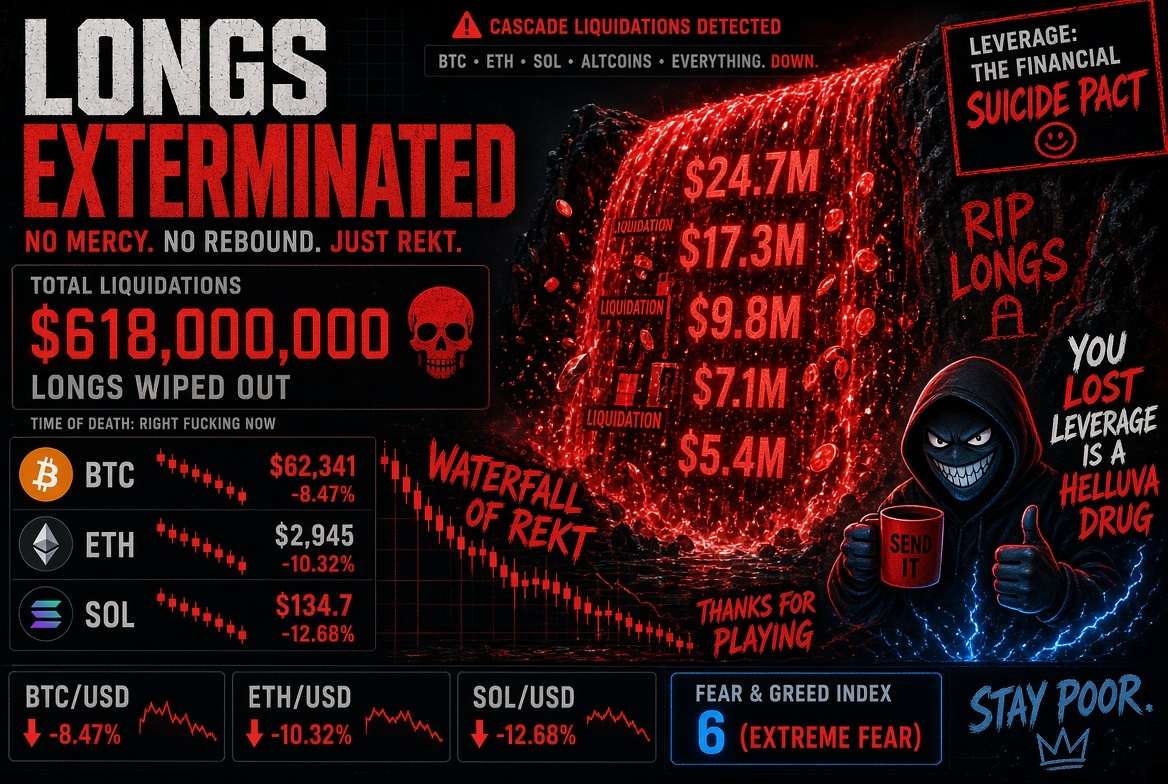
LONGS JUST GOT VAPORIZED.
$618M wiped in the last 12 hours. 93% of it was longs.
The single biggest hit? A $12M ETH long on Binance.
BTC hovering near $59k, ETH near $1,630, SOL near $69 all down hard. Meanwhile ETH and SOL funding rates flipped negative. That means
$ETH
{spot}(ETHUSDT)
$SOL
{spot}(SOLUSDT)
$BTC
{spot}(BTCUSDT)
LONGS JUST GOT VAPORIZED.
$618M wiped in the last 12 hours. 93% of it was longs.
The single biggest hit? A $12M ETH long on Binance.
BTC hovering near $59k, ETH near $1,630, SOL near $69 all down hard. Meanwhile ETH and SOL funding rates flipped negative. That means
$ETH
$SOL
$BTC
$618M wiped in the last 12 hours. 93% of it was longs.
The single biggest hit? A $12M ETH long on Binance.
BTC hovering near $59k, ETH near $1,630, SOL near $69 all down hard. Meanwhile ETH and SOL funding rates flipped negative. That means
$ETH
$SOL
$BTC
6
467
·
--
See translation
LONG LIQUIDATIONS ARE GETTING OBLITERATED
$300M+ wiped in the last 24 hours
Longs took ~85% of the damage
Biggest single hit: $7.5M BTC long on Binance
Funding rates on majors just reset near zero
Extreme Fear reading sits at 12
Is the leverage finally getting cleaned out... or is this only the first wave?
$ETH
{spot}(ETHUSDT)
$SOL
{spot}(SOLUSDT)
$XRP
{spot}(XRPUSDT)
LONG LIQUIDATIONS ARE GETTING OBLITERATED
$300M+ wiped in the last 24 hours
Longs took ~85% of the damage
Biggest single hit: $7.5M BTC long on Binance
Funding rates on majors just reset near zero
Extreme Fear reading sits at 12
Is the leverage finally getting cleaned out... or is this only the first wave?
$ETH
$SOL
$XRP
$300M+ wiped in the last 24 hours
Longs took ~85% of the damage
Biggest single hit: $7.5M BTC long on Binance
Funding rates on majors just reset near zero
Extreme Fear reading sits at 12
Is the leverage finally getting cleaned out... or is this only the first wave?
$ETH
$SOL
$XRP
8
513
·
--
See translation
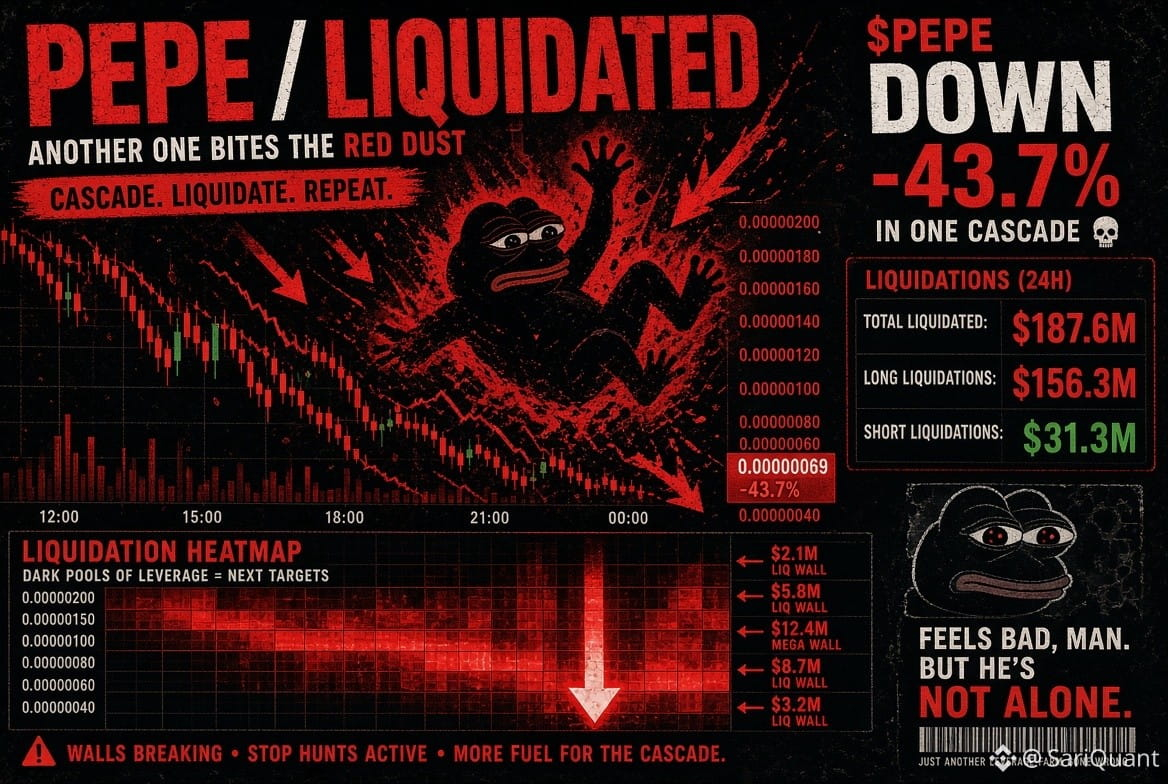
THE MEME FLUSH IS STILL ON
PEPE funding deeply negative (shorts paying longs) yet longs keep getting rekt.
Memes and alts feeling the pain as leverage stays sticky.
$PEPE
{spot}(PEPEUSDT)
$DOGE
{spot}(DOGEUSDT)
$SOL
{spot}(SOLUSDT)
THE MEME FLUSH IS STILL ON
PEPE funding deeply negative (shorts paying longs) yet longs keep getting rekt.
Memes and alts feeling the pain as leverage stays sticky.
$PEPE
$DOGE
$SOL
PEPE funding deeply negative (shorts paying longs) yet longs keep getting rekt.
Memes and alts feeling the pain as leverage stays sticky.
$PEPE
$DOGE
$SOL
7
495
·
--
See translation
Still loading up leverage while the market screams Extreme Fear and 80% of liquidations are longs?
$ETH
{spot}(ETHUSDT)
$BTC
{spot}(BTCUSDT)
$SOL
{spot}(SOLUSDT)
Still loading up leverage while the market screams Extreme Fear and 80% of liquidations are longs?
$ETH
$BTC
$SOL
$ETH
$BTC
$SOL
8
302
·
--
See translation
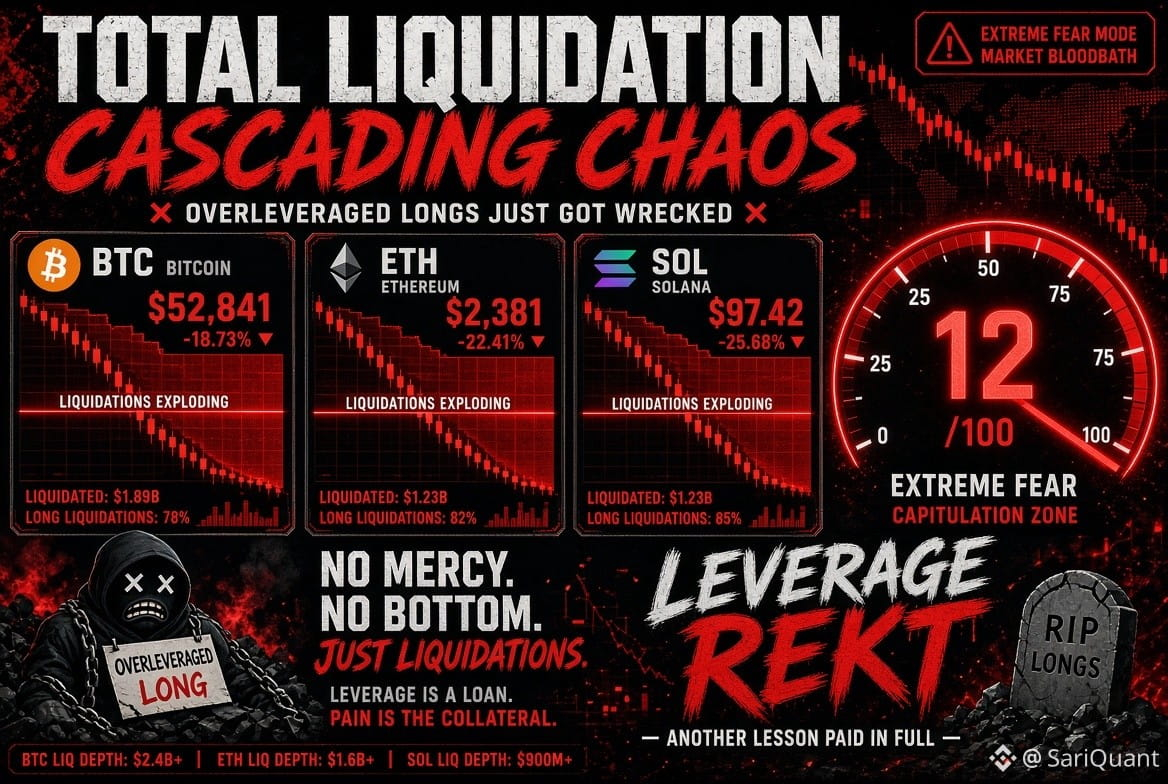
$250M–$700M liquidated in 24h and 80–85% of it longs while Fear & Greed sits at Extreme Fear 12. Is this the leverage flush that resets positioning, or just more pain with OI still dropping?
$BTC
{spot}(BTCUSDT)
$ETH
{spot}(ETHUSDT)
$SOL
{spot}(SOLUSDT)
$250M–$700M liquidated in 24h and 80–85% of it longs while Fear & Greed sits at Extreme Fear 12. Is this the leverage flush that resets positioning, or just more pain with OI still dropping?
$BTC
$ETH
$SOL
$BTC
$ETH
$SOL
7
367
·
--
See translation
BINANCE HACKER MOVES ANOTHER $248M OF ETHEREUM AS THE EXCHANGE POCKETS $6.5B COURT ORDER.
Binance hacker has moved another $248 million in Ethereum as the exchange secures a major legal victory against the attackers. Blockchain tracker Lookonchain reported that 137,602 ETH moved across multiple wallets today, extending a three-day distribution spree.
The latest transfers bring the total moved since November 17 to nearly 291,000 ETH, worth more than $500 million. The activity comes as Binance pursues a worldwide freezing order from Abu Dhabi Global Market (ADGM) courts.
The court order covers $6.5 billion in stolen assets and targets unidentified individuals behind the October 29 breach. Binance now has a legal route to pursue frozen funds, but the attackers are still shifting hundreds of millions through Ethereum wallets.
BINANCE HACKER MOVES ANOTHER $248M OF ETHEREUM AS THE EXCHANGE POCKETS $6.5B COURT ORDER.
Binance hacker has moved another $248 million in Ethereum as the exchange secures a major legal victory against the attackers. Blockchain tracker Lookonchain reported that 137,602 ETH moved across multiple wallets today, extending a three-day distribution spree.
The latest transfers bring the total moved since November 17 to nearly 291,000 ETH, worth more than $500 million. The activity comes as Binance pursues a worldwide freezing order from Abu Dhabi Global Market (ADGM) courts.
The court order covers $6.5 billion in stolen assets and targets unidentified individuals behind the October 29 breach. Binance now has a legal route to pursue frozen funds, but the attackers are still shifting hundreds of millions through Ethereum wallets.
Binance hacker has moved another $248 million in Ethereum as the exchange secures a major legal victory against the attackers. Blockchain tracker Lookonchain reported that 137,602 ETH moved across multiple wallets today, extending a three-day distribution spree.
The latest transfers bring the total moved since November 17 to nearly 291,000 ETH, worth more than $500 million. The activity comes as Binance pursues a worldwide freezing order from Abu Dhabi Global Market (ADGM) courts.
The court order covers $6.5 billion in stolen assets and targets unidentified individuals behind the October 29 breach. Binance now has a legal route to pursue frozen funds, but the attackers are still shifting hundreds of millions through Ethereum wallets.
9
545
Log in to explore more content
Join global crypto users on Binance Square
⚡️ Get latest and useful information about crypto.
💬 Trusted by the world’s largest crypto exchange.
👍 Discover real insights from verified creators.
Email / Phone number
Trending Topics
BTCReboundsAbove$60KAmidWhaleDipBuying
7,570 views
76 Discussing
Abraxas Capital, Other Whales Buy the BTC Dip as Bitcoin Briefly Reclaims $60,000
Binance News
·17 Likes
·20k views
CaliforniaNvidiaProbeExaminesPotentialCriminalViolations
320 views
16 Discussing
BlackRockLaunchesHKDollarDigitalLiquidityFund
552 views
41 Discussing