

简单量化
799 Posts

简单量化
Report
Block User
100%胜率 印钞机
1.0K+ Following
1.1K+ Followers
421 Liked
Posts
·
--
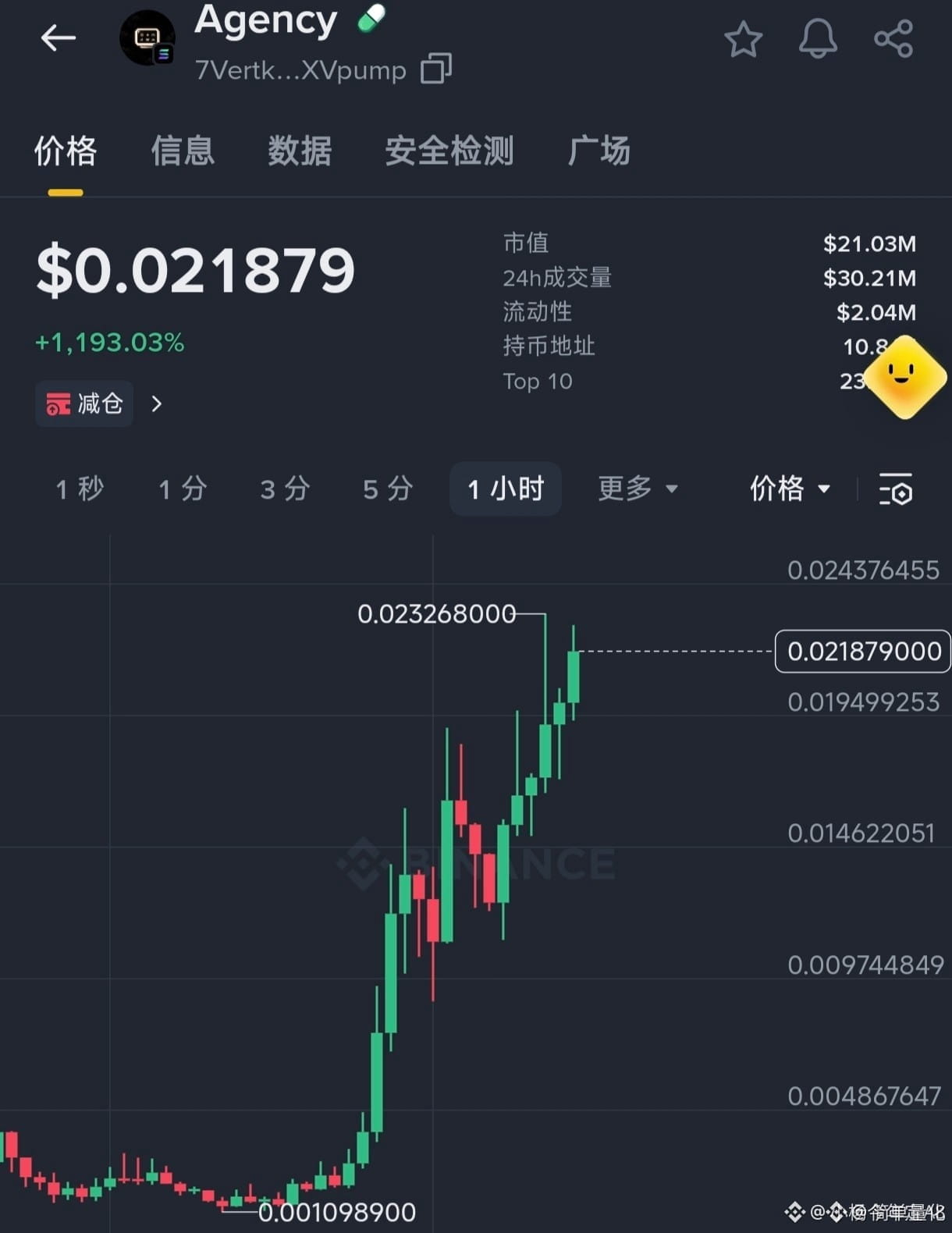
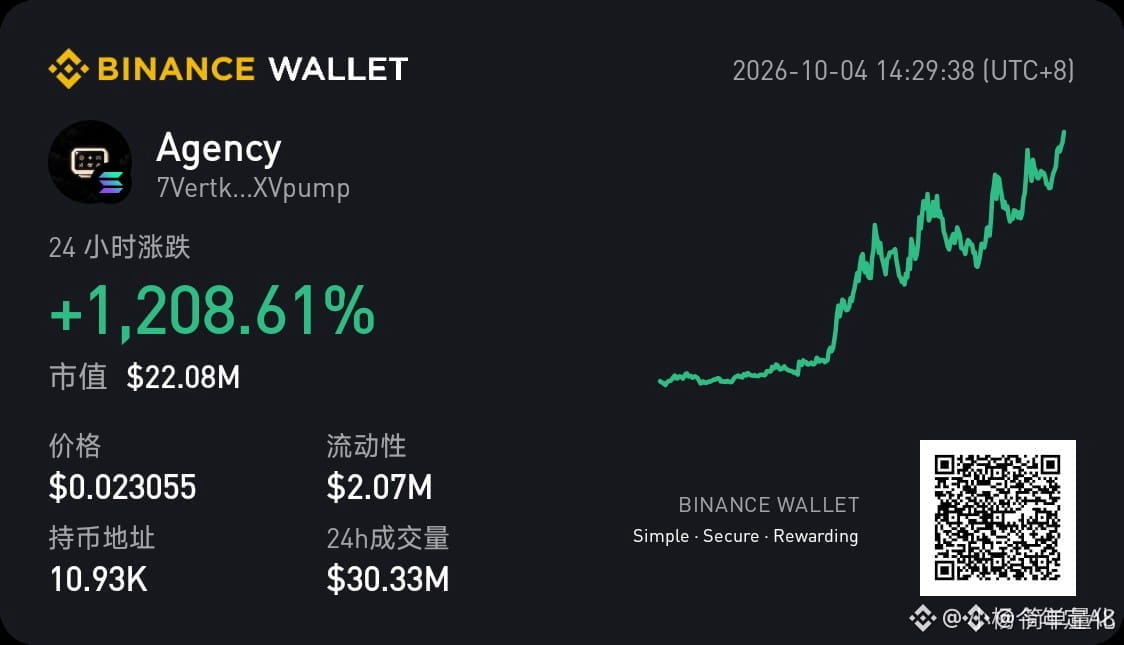
If you dismiss a 30x surge as mere hype-chasing, you’re underestimating AGENCY.
Its market cap skyrocketed from $1 million to around $30 million, making it the strongest leader in the SOL ecosystem’s recovery. But more important than the gains is the mechanism behind them: this isn’t just riding a trend—the token is “fully managed by AI.”
Capital doesn’t assign a 30x premium for no reason. While most projects are still all talk and concepts, AGENCY is already using AI to take over its mechanisms and seize the high ground in market consensus. With the leader firmly established, this rally is no one-day wonder.
#AGENCY
If you dismiss a 30x surge as mere hype-chasing, you’re underestimating AGENCY.
Its market cap skyrocketed from $1 million to around $30 million, making it the strongest leader in the SOL ecosystem’s recovery. But more important than the gains is the mechanism behind them: this isn’t just riding a trend—the token is “fully managed by AI.”
Capital doesn’t assign a 30x premium for no reason. While most projects are still all talk and concepts, AGENCY is already using AI to take over its mechanisms and seize the high ground in market consensus. With the leader firmly established, this rally is no one-day wonder.
#AGENCY
Its market cap skyrocketed from $1 million to around $30 million, making it the strongest leader in the SOL ecosystem’s recovery. But more important than the gains is the mechanism behind them: this isn’t just riding a trend—the token is “fully managed by AI.”
Capital doesn’t assign a 30x premium for no reason. While most projects are still all talk and concepts, AGENCY is already using AI to take over its mechanisms and seize the high ground in market consensus. With the leader firmly established, this rally is no one-day wonder.
#AGENCY
4
·
--
PEPE rides the frog; WIF rides the knit beanie. Memes that can spread globally through viral fracture have never relied on complex grand narratives—only on extremely simple, mind-bending, and easy-to-replicate visual symbols.
The more intuitive the visual symbols are, the lower the resistance to spreading.
$INBRED (bread cat) is taking exactly this path. The cat headpiece in a slice of bread had already swept across the internet more than a decade ago, and it naturally comes with second-stage virality—it doesn’t even need to explain to the market who it is.
New concepts appear every day, but over a decade of visual memory can’t be faked. These classic symbols with essentially zero recognition barrier are the hardest viral-fracture ace card.
#INBRED
PEPE rides the frog; WIF rides the knit beanie. Memes that can spread globally through viral fracture have never relied on complex grand narratives—only on extremely simple, mind-bending, and easy-to-replicate visual symbols.
The more intuitive the visual symbols are, the lower the resistance to spreading.
$INBRED (bread cat) is taking exactly this path. The cat headpiece in a slice of bread had already swept across the internet more than a decade ago, and it naturally comes with second-stage virality—it doesn’t even need to explain to the market who it is.
New concepts appear every day, but over a decade of visual memory can’t be faked. These classic symbols with essentially zero recognition barrier are the hardest viral-fracture ace card.
#INBRED
The more intuitive the visual symbols are, the lower the resistance to spreading.
$INBRED (bread cat) is taking exactly this path. The cat headpiece in a slice of bread had already swept across the internet more than a decade ago, and it naturally comes with second-stage virality—it doesn’t even need to explain to the market who it is.
New concepts appear every day, but over a decade of visual memory can’t be faked. These classic symbols with essentially zero recognition barrier are the hardest viral-fracture ace card.
#INBRED



54
·
--
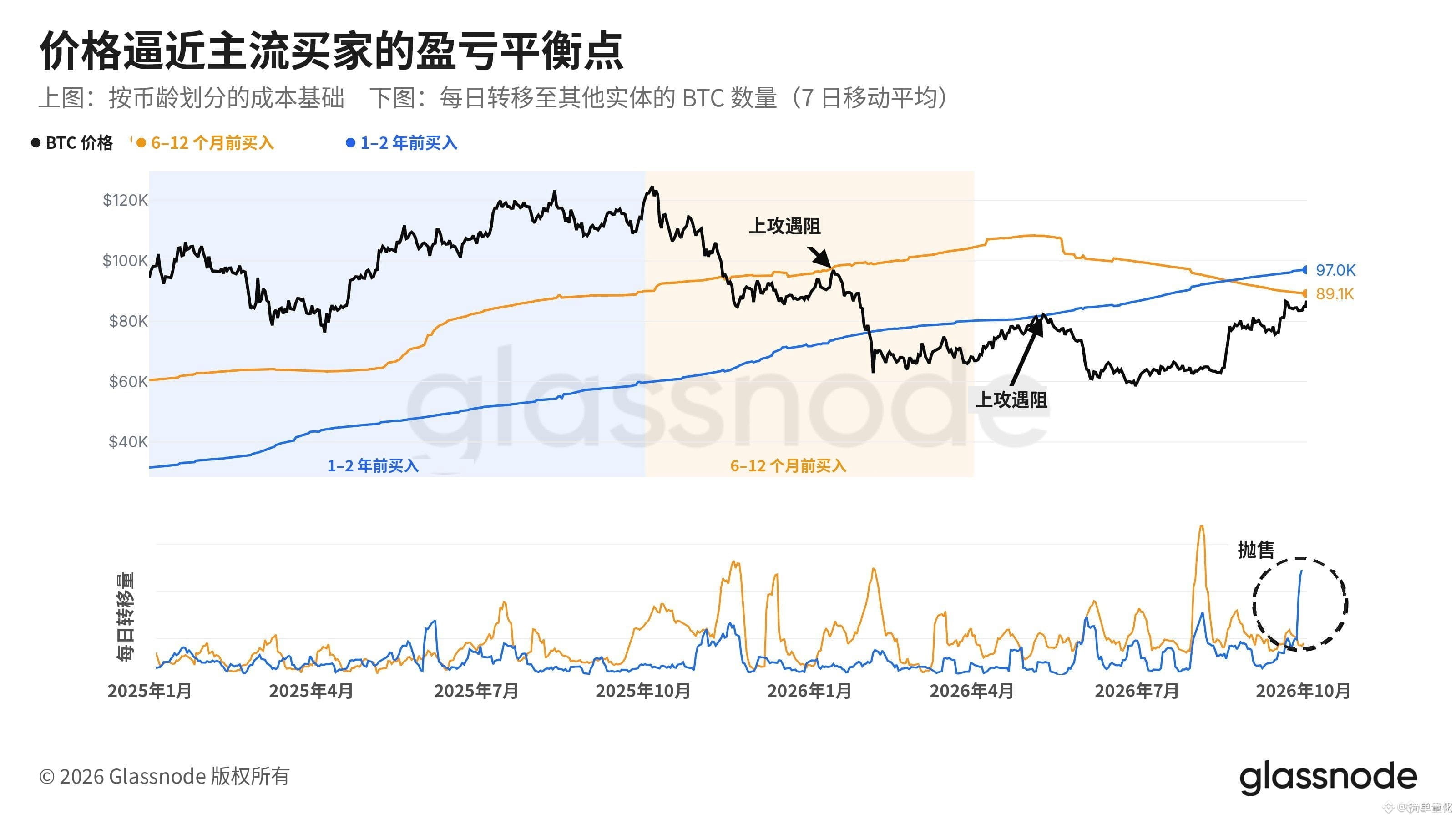
Every rebound only needs to reach $89,000 before it gets smashed back. The answer has long been provided on-chain.
On-chain data shows that the average cost of the lots bought 6 to 12 months ago is $89,000, while the cost from 1 to 2 years ago is as high as $97,000. The moment the price comes close, sell pressure aimed at breakeven and minimizing losses promptly surges.
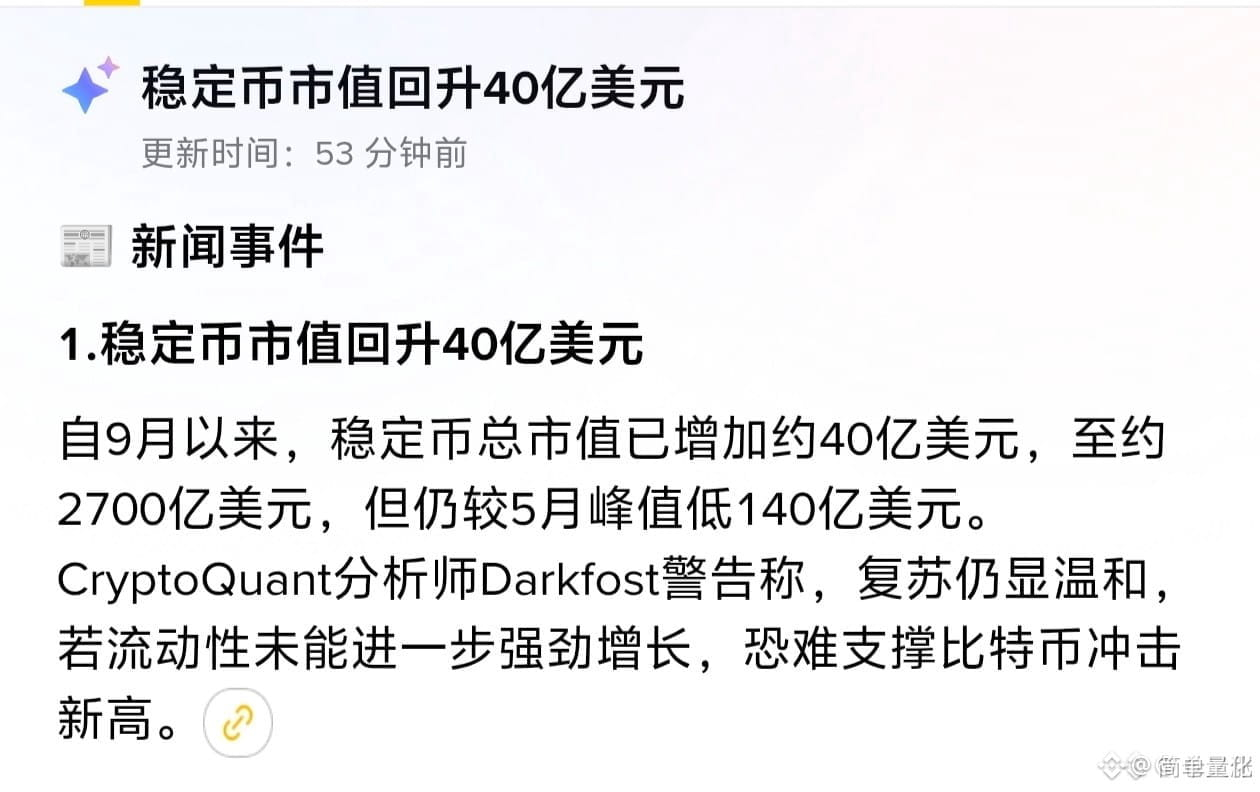
What’s even more deadly is that liquidity simply can’t absorb it. Compared with the May peak, the total market cap of stablecoins is down by a full $14 billion, and even incremental capital can barely manage a modest recovery. Without real value to digest the two layers of breakout/sell-wall above, any upward push can only be fattening without substance. Trapped positions are desperately trying to get back to even and exit—chasing the rally now is just offering yourself as a bailout blood pack for others.
#BTC
Every rebound only needs to reach $89,000 before it gets smashed back. The answer has long been provided on-chain.
On-chain data shows that the average cost of the lots bought 6 to 12 months ago is $89,000, while the cost from 1 to 2 years ago is as high as $97,000. The moment the price comes close, sell pressure aimed at breakeven and minimizing losses promptly surges.
What’s even more deadly is that liquidity simply can’t absorb it. Compared with the May peak, the total market cap of stablecoins is down by a full $14 billion, and even incremental capital can barely manage a modest recovery. Without real value to digest the two layers of breakout/sell-wall above, any upward push can only be fattening without substance. Trapped positions are desperately trying to get back to even and exit—chasing the rally now is just offering yourself as a bailout blood pack for others.
#BTC
On-chain data shows that the average cost of the lots bought 6 to 12 months ago is $89,000, while the cost from 1 to 2 years ago is as high as $97,000. The moment the price comes close, sell pressure aimed at breakeven and minimizing losses promptly surges.
What’s even more deadly is that liquidity simply can’t absorb it. Compared with the May peak, the total market cap of stablecoins is down by a full $14 billion, and even incremental capital can barely manage a modest recovery. Without real value to digest the two layers of breakout/sell-wall above, any upward push can only be fattening without substance. Trapped positions are desperately trying to get back to even and exit—chasing the rally now is just offering yourself as a bailout blood pack for others.
#BTC
1
80
·
--
On-chain assets plummeted 98% from $2 billion—Blast proves with an active shutdown: an L2 propped up by high-yield expectations can’t even earn back the baseline operating fees needed to keep running.
People used to think that if L2 can’t work, it would at most turn into a zombie chain—but the reality is that even operating costs can be completely drained and wiped out. These mid-tier projects that survive purely on subsidies and hype are doomed once the funding injections stop—staying alive becomes a luxury.
Stop clinging to fantasies about L2s that lack the ability to generate cash flow. The frenzied era of land-grabbing is long gone. Without a narrative grounded in real profitability, zeroing out is only a matter of time.
#BLAST
On-chain assets plummeted 98% from $2 billion—Blast proves with an active shutdown: an L2 propped up by high-yield expectations can’t even earn back the baseline operating fees needed to keep running.
People used to think that if L2 can’t work, it would at most turn into a zombie chain—but the reality is that even operating costs can be completely drained and wiped out. These mid-tier projects that survive purely on subsidies and hype are doomed once the funding injections stop—staying alive becomes a luxury.
Stop clinging to fantasies about L2s that lack the ability to generate cash flow. The frenzied era of land-grabbing is long gone. Without a narrative grounded in real profitability, zeroing out is only a matter of time.
#BLAST
People used to think that if L2 can’t work, it would at most turn into a zombie chain—but the reality is that even operating costs can be completely drained and wiped out. These mid-tier projects that survive purely on subsidies and hype are doomed once the funding injections stop—staying alive becomes a luxury.
Stop clinging to fantasies about L2s that lack the ability to generate cash flow. The frenzied era of land-grabbing is long gone. Without a narrative grounded in real profitability, zeroing out is only a matter of time.
#BLAST
33
·
--
Japan’s Ministry of Finance is discussing moving 90 trillion yen in government bonds on-chain, South Korea has included stocks and bonds in tokenized regulatory oversight, and the United States’ stablecoin temporary rules have already taken effect.
Within a year, the tokenized stock market size has surged by 390%.
Many people think that regulatory rollout is bad news, but in reality, big capital is rushing to comply and get onto the chain. Once assets are moved in, settling requires a large amount of real buy orders to remain, not quick in-and-out trading to cash out.
Over-the-counter stocks and government bonds are queuing up to enter and provide support—incremental liquidity is starting to take shape. Given the scale of this on-the-ground demand for spot assets, I will absolutely not sell out here to go short.
#MARKET
Japan’s Ministry of Finance is discussing moving 90 trillion yen in government bonds on-chain, South Korea has included stocks and bonds in tokenized regulatory oversight, and the United States’ stablecoin temporary rules have already taken effect.
Within a year, the tokenized stock market size has surged by 390%.
Many people think that regulatory rollout is bad news, but in reality, big capital is rushing to comply and get onto the chain. Once assets are moved in, settling requires a large amount of real buy orders to remain, not quick in-and-out trading to cash out.
Over-the-counter stocks and government bonds are queuing up to enter and provide support—incremental liquidity is starting to take shape. Given the scale of this on-the-ground demand for spot assets, I will absolutely not sell out here to go short.
#MARKET
Within a year, the tokenized stock market size has surged by 390%.
Many people think that regulatory rollout is bad news, but in reality, big capital is rushing to comply and get onto the chain. Once assets are moved in, settling requires a large amount of real buy orders to remain, not quick in-and-out trading to cash out.
Over-the-counter stocks and government bonds are queuing up to enter and provide support—incremental liquidity is starting to take shape. Given the scale of this on-the-ground demand for spot assets, I will absolutely not sell out here to go short.
#MARKET
61
·
--
Out of 199 trading days, there were 166 days with net inflow of zero. This is the real ledger the U.S. DOGE ETF has produced over the past ten months—total net inflows of only about $12 million. Even when some products are liquidated, their positions are still less than $7 million.
With such weak buy pressure, what can possibly withstand the selling pressure? Remember, DOGE has no burn mechanism, and every year it still has to issue a fixed additional ~5 billion coins. On one side is an unchanging, massive inflation rate; on the other is institutions “voting with their feet” through zero inflows. The contrast in the money trail is too glaring.
Stop treating the ETF as bullish evidence. For an asset with such fundamentals bleeding losses over the long term, without real cash to plug the hole, getting rid of the fantasy sooner is the right move.
#DOGE
Out of 199 trading days, there were 166 days with net inflow of zero. This is the real ledger the U.S. DOGE ETF has produced over the past ten months—total net inflows of only about $12 million. Even when some products are liquidated, their positions are still less than $7 million.
With such weak buy pressure, what can possibly withstand the selling pressure? Remember, DOGE has no burn mechanism, and every year it still has to issue a fixed additional ~5 billion coins. On one side is an unchanging, massive inflation rate; on the other is institutions “voting with their feet” through zero inflows. The contrast in the money trail is too glaring.
Stop treating the ETF as bullish evidence. For an asset with such fundamentals bleeding losses over the long term, without real cash to plug the hole, getting rid of the fantasy sooner is the right move.
#DOGE
With such weak buy pressure, what can possibly withstand the selling pressure? Remember, DOGE has no burn mechanism, and every year it still has to issue a fixed additional ~5 billion coins. On one side is an unchanging, massive inflation rate; on the other is institutions “voting with their feet” through zero inflows. The contrast in the money trail is too glaring.
Stop treating the ETF as bullish evidence. For an asset with such fundamentals bleeding losses over the long term, without real cash to plug the hole, getting rid of the fantasy sooner is the right move.
#DOGE
121
·
--
Don’t see consolidation and immediately assume that institutions are unloading.
Just Morgan Stanley alone—its Bitcoin ETF holdings have quietly surpassed 10,000 BTC, worth about $875 million. Scaled up to the whole market: spot ETFs alone net bought $2.65 billion in September, and in early October they pulled in another $134 million on a single day.
With this kind of real, substantial buying, it isn’t meant for short-term trading swings. It’s about locking spot holdings into long-term positions. Big buyers are taking the real gold and silver off the market, reducing the available float. Any bearish view that ignores the order-flow is underestimating the determination behind this institutional allocation.
#BTC
Don’t see consolidation and immediately assume that institutions are unloading.
Just Morgan Stanley alone—its Bitcoin ETF holdings have quietly surpassed 10,000 BTC, worth about $875 million. Scaled up to the whole market: spot ETFs alone net bought $2.65 billion in September, and in early October they pulled in another $134 million on a single day.
With this kind of real, substantial buying, it isn’t meant for short-term trading swings. It’s about locking spot holdings into long-term positions. Big buyers are taking the real gold and silver off the market, reducing the available float. Any bearish view that ignores the order-flow is underestimating the determination behind this institutional allocation.
#BTC
Just Morgan Stanley alone—its Bitcoin ETF holdings have quietly surpassed 10,000 BTC, worth about $875 million. Scaled up to the whole market: spot ETFs alone net bought $2.65 billion in September, and in early October they pulled in another $134 million on a single day.
With this kind of real, substantial buying, it isn’t meant for short-term trading swings. It’s about locking spot holdings into long-term positions. Big buyers are taking the real gold and silver off the market, reducing the available float. Any bearish view that ignores the order-flow is underestimating the determination behind this institutional allocation.
#BTC
173
·
--
1.75 billion USD in cold, hard cash bought in, and 1.9 billion units of spot were taken out directly.
Since April 2026, the exchange’s XRP balance has dropped from 12.9 billion coins to 11 billion. Nearly 1.9 billion tokens have exited the liquid pool—tokens that were always ready to be dumped. At the same time, XRP-related ETFs have firmly absorbed a net inflow of $175 million.
On one side, billions continue to sweep up; on the other, a massive amount of chips gets pulled off the table. As bids keep adding strength, sell pressure gets drained. I don’t buy the idea of calling the bullish logic dead just because you’re fixated on the short-term order book. Getting shaken out of the car right now is basically handing the pricing power of the foundation over to institutions.
#XRP
1.75 billion USD in cold, hard cash bought in, and 1.9 billion units of spot were taken out directly.
Since April 2026, the exchange’s XRP balance has dropped from 12.9 billion coins to 11 billion. Nearly 1.9 billion tokens have exited the liquid pool—tokens that were always ready to be dumped. At the same time, XRP-related ETFs have firmly absorbed a net inflow of $175 million.
On one side, billions continue to sweep up; on the other, a massive amount of chips gets pulled off the table. As bids keep adding strength, sell pressure gets drained. I don’t buy the idea of calling the bullish logic dead just because you’re fixated on the short-term order book. Getting shaken out of the car right now is basically handing the pricing power of the foundation over to institutions.
#XRP
Since April 2026, the exchange’s XRP balance has dropped from 12.9 billion coins to 11 billion. Nearly 1.9 billion tokens have exited the liquid pool—tokens that were always ready to be dumped. At the same time, XRP-related ETFs have firmly absorbed a net inflow of $175 million.
On one side, billions continue to sweep up; on the other, a massive amount of chips gets pulled off the table. As bids keep adding strength, sell pressure gets drained. I don’t buy the idea of calling the bullish logic dead just because you’re fixated on the short-term order book. Getting shaken out of the car right now is basically handing the pricing power of the foundation over to institutions.
#XRP
123
·
--
Falling nearly 60% from its historical peak, SOL has not only failed to “die” on low volume—it has seen trading volume expand instead, against the trend.
Even more unusual is the sentiment from outside the market. Spot ETFs have continued to see net inflows for 12 consecutive weeks despite the pullback. Last week alone recorded approximately $188 million in net buys.
After a 75% cut in price, what you don’t get is a liquidity drought, but rather a sustained 12-week ability to absorb selling. Yes, the drawdown can certainly scare off panic sellers, but real money kept buying for nearly three months can’t be fooled.
Just condemning the thesis based on the retracement alone—I don’t buy it. Volume is increasing, and institutional buying hasn’t stopped. The real support in this range is far firmer than the headline drop would suggest.
#SOL
Falling nearly 60% from its historical peak, SOL has not only failed to “die” on low volume—it has seen trading volume expand instead, against the trend.
Even more unusual is the sentiment from outside the market. Spot ETFs have continued to see net inflows for 12 consecutive weeks despite the pullback. Last week alone recorded approximately $188 million in net buys.
After a 75% cut in price, what you don’t get is a liquidity drought, but rather a sustained 12-week ability to absorb selling. Yes, the drawdown can certainly scare off panic sellers, but real money kept buying for nearly three months can’t be fooled.
Just condemning the thesis based on the retracement alone—I don’t buy it. Volume is increasing, and institutional buying hasn’t stopped. The real support in this range is far firmer than the headline drop would suggest.
#SOL
Even more unusual is the sentiment from outside the market. Spot ETFs have continued to see net inflows for 12 consecutive weeks despite the pullback. Last week alone recorded approximately $188 million in net buys.
After a 75% cut in price, what you don’t get is a liquidity drought, but rather a sustained 12-week ability to absorb selling. Yes, the drawdown can certainly scare off panic sellers, but real money kept buying for nearly three months can’t be fooled.
Just condemning the thesis based on the retracement alone—I don’t buy it. Volume is increasing, and institutional buying hasn’t stopped. The real support in this range is far firmer than the headline drop would suggest.
#SOL
1
1
74
·
--
No matter how well the technology sells, it’s useless if the token can’t capture a single cent.
In Quant’s most recently published tokenized deposit network proposal, even after poring through the fine print, you can’t find any requirement for banks to hold $QNT or to use it to pay fees. The institution uses its software system, but the buyer demand isn’t for its token.
Equating “the technology being adopted” directly with “$QNT needs to go up” is a classic narrative fallacy. When commercial rollout and token utility are completely disconnected, even the biggest institutional partnership “good news” can’t turn into real buy orders for hard cash.
#QNT
No matter how well the technology sells, it’s useless if the token can’t capture a single cent.
In Quant’s most recently published tokenized deposit network proposal, even after poring through the fine print, you can’t find any requirement for banks to hold $QNT or to use it to pay fees. The institution uses its software system, but the buyer demand isn’t for its token.
Equating “the technology being adopted” directly with “$QNT needs to go up” is a classic narrative fallacy. When commercial rollout and token utility are completely disconnected, even the biggest institutional partnership “good news” can’t turn into real buy orders for hard cash.
#QNT
In Quant’s most recently published tokenized deposit network proposal, even after poring through the fine print, you can’t find any requirement for banks to hold $QNT or to use it to pay fees. The institution uses its software system, but the buyer demand isn’t for its token.
Equating “the technology being adopted” directly with “$QNT needs to go up” is a classic narrative fallacy. When commercial rollout and token utility are completely disconnected, even the biggest institutional partnership “good news” can’t turn into real buy orders for hard cash.
#QNT
3
34
·
--
Issuing a tokenized asset isn’t hard—the difficult part is how to handle and settle the subsequent rights and entitlements.
Swift and Chainlink have successfully run the full end-to-end process of automatically settling tokenized stock dividends across four chains. Many people still haven’t realized what this means: this isn’t a trial of issuing a conceptual token—it’s the most complex parts of traditional finance, specifically corporate profit distributions and capital clearing, truly connecting the underlying pipelines to the blockchain.
While the market still treats LINK as a mere oracle, the core hub for traditional institutions to migrate has already completed the closed loop. This level of business positioning is far more solid than any abstract narrative.
#LINK
Issuing a tokenized asset isn’t hard—the difficult part is how to handle and settle the subsequent rights and entitlements.
Swift and Chainlink have successfully run the full end-to-end process of automatically settling tokenized stock dividends across four chains. Many people still haven’t realized what this means: this isn’t a trial of issuing a conceptual token—it’s the most complex parts of traditional finance, specifically corporate profit distributions and capital clearing, truly connecting the underlying pipelines to the blockchain.
While the market still treats LINK as a mere oracle, the core hub for traditional institutions to migrate has already completed the closed loop. This level of business positioning is far more solid than any abstract narrative.
#LINK
Swift and Chainlink have successfully run the full end-to-end process of automatically settling tokenized stock dividends across four chains. Many people still haven’t realized what this means: this isn’t a trial of issuing a conceptual token—it’s the most complex parts of traditional finance, specifically corporate profit distributions and capital clearing, truly connecting the underlying pipelines to the blockchain.
While the market still treats LINK as a mere oracle, the core hub for traditional institutions to migrate has already completed the closed loop. This level of business positioning is far more solid than any abstract narrative.
#LINK
2
72
·
--
The data is this bad, yet the market is betting that the probability of keeping the benchmark interest rate unchanged in October has somehow surged to 83%.
September nonfarm payrolls added only 29,000 jobs, while the unemployment rate rose to 4.2%, showing employment has clearly slowed down. In the past, the market always liked to spin bad news as a rate-cut positive—but Fed officials are still saying hikes or a pause are both possible, and inflation remains a core concern. The curse of high interest rates can’t be removed at all.
The shadow of recession is draining risk appetite, and the spigot for liquidity easing is firmly locked. Without fundamentals providing support and without cheap liquidity to prop the market up, how long can stretched valuations at elevated levels hold?
#MARKET
The data is this bad, yet the market is betting that the probability of keeping the benchmark interest rate unchanged in October has somehow surged to 83%.
September nonfarm payrolls added only 29,000 jobs, while the unemployment rate rose to 4.2%, showing employment has clearly slowed down. In the past, the market always liked to spin bad news as a rate-cut positive—but Fed officials are still saying hikes or a pause are both possible, and inflation remains a core concern. The curse of high interest rates can’t be removed at all.
The shadow of recession is draining risk appetite, and the spigot for liquidity easing is firmly locked. Without fundamentals providing support and without cheap liquidity to prop the market up, how long can stretched valuations at elevated levels hold?
#MARKET
September nonfarm payrolls added only 29,000 jobs, while the unemployment rate rose to 4.2%, showing employment has clearly slowed down. In the past, the market always liked to spin bad news as a rate-cut positive—but Fed officials are still saying hikes or a pause are both possible, and inflation remains a core concern. The curse of high interest rates can’t be removed at all.
The shadow of recession is draining risk appetite, and the spigot for liquidity easing is firmly locked. Without fundamentals providing support and without cheap liquidity to prop the market up, how long can stretched valuations at elevated levels hold?
#MARKET
22
·
--
BTC drops only 1.8%, ETH drops 2.4%, yet NEAR can smash more than 14% in a single day on the daily chart. This can’t be brushed off with just “the overall market isn’t doing well.” NEAR’s support is clearly much more fragile than that of mainstream assets.
Earlier, it surged from 1.9 to 5.5. Then it fell from 5.34 to 4.74, and afterwards it saw a daily decline of over 14%. A rapid rally can be driven by sentiment—but during a pullback, whether there are buyers stepping in determines whether the chips are actually worth anything.
Don’t treat NEAR as a token that simply follows the benchmark with small retracements: this round of price action has already shown that once the broader market loosens up, NEAR will be the first one to be cashed out.
#NEAR
BTC drops only 1.8%, ETH drops 2.4%, yet NEAR can smash more than 14% in a single day on the daily chart. This can’t be brushed off with just “the overall market isn’t doing well.” NEAR’s support is clearly much more fragile than that of mainstream assets.
Earlier, it surged from 1.9 to 5.5. Then it fell from 5.34 to 4.74, and afterwards it saw a daily decline of over 14%. A rapid rally can be driven by sentiment—but during a pullback, whether there are buyers stepping in determines whether the chips are actually worth anything.
Don’t treat NEAR as a token that simply follows the benchmark with small retracements: this round of price action has already shown that once the broader market loosens up, NEAR will be the first one to be cashed out.
#NEAR
Earlier, it surged from 1.9 to 5.5. Then it fell from 5.34 to 4.74, and afterwards it saw a daily decline of over 14%. A rapid rally can be driven by sentiment—but during a pullback, whether there are buyers stepping in determines whether the chips are actually worth anything.
Don’t treat NEAR as a token that simply follows the benchmark with small retracements: this round of price action has already shown that once the broader market loosens up, NEAR will be the first one to be cashed out.
#NEAR
13
·
--
Newly added holder addresses exceed 60,000 within a week, with a daily direct increase of 30,000—yet what’s harder than the expansion rate is the order-book’s staying power.
When the broader market pulls back, many new coins quickly see their liquidity dry up; during the market pullback, $SI keeps its daily trading volume stubbornly in the $15 million to $20 million range.
Chips are spreading outward at the speed of tens of thousands of accounts per day, and there’s absolutely no slowdown or thinning of volume because of the pullback. Hype can be manufactured by shouting trades, but in a pullback, you can’t fool people with “real turnover” in the tens of millions—this buy-side absorption is extremely solid.
#SI
Newly added holder addresses exceed 60,000 within a week, with a daily direct increase of 30,000—yet what’s harder than the expansion rate is the order-book’s staying power.
When the broader market pulls back, many new coins quickly see their liquidity dry up; during the market pullback, $SI keeps its daily trading volume stubbornly in the $15 million to $20 million range.
Chips are spreading outward at the speed of tens of thousands of accounts per day, and there’s absolutely no slowdown or thinning of volume because of the pullback. Hype can be manufactured by shouting trades, but in a pullback, you can’t fool people with “real turnover” in the tens of millions—this buy-side absorption is extremely solid.
#SI
When the broader market pulls back, many new coins quickly see their liquidity dry up; during the market pullback, $SI keeps its daily trading volume stubbornly in the $15 million to $20 million range.
Chips are spreading outward at the speed of tens of thousands of accounts per day, and there’s absolutely no slowdown or thinning of volume because of the pullback. Hype can be manufactured by shouting trades, but in a pullback, you can’t fool people with “real turnover” in the tens of millions—this buy-side absorption is extremely solid.
#SI
7
·
--
In the month, nonfarm payrolls increased by only 29,000 and the unemployment rate rose to 4.2%. Treating this weak data as a bearish signal is completely the wrong logic.
With employment suddenly screeching to a halt, it directly brings the market’s expectations for looser rate cuts into the open. Once the sluice gate loosens, the first liquidity to overflow will always be the high-elasticity risk assets.
As for DOGE’s monthly chart, after a long period of consolidation, it has already been pushed down to a relatively low level. The more thoroughly the bottom is formed, the less resistance there will be when liquidity reverses direction and surges in.
The liquidity forced out by macro conditions is on the way. And the DOGE that has been absorbed at the bottom is exactly positioned at the point where the water flow is easiest to lift.
#DOGE
In the month, nonfarm payrolls increased by only 29,000 and the unemployment rate rose to 4.2%. Treating this weak data as a bearish signal is completely the wrong logic.
With employment suddenly screeching to a halt, it directly brings the market’s expectations for looser rate cuts into the open. Once the sluice gate loosens, the first liquidity to overflow will always be the high-elasticity risk assets.
As for DOGE’s monthly chart, after a long period of consolidation, it has already been pushed down to a relatively low level. The more thoroughly the bottom is formed, the less resistance there will be when liquidity reverses direction and surges in.
The liquidity forced out by macro conditions is on the way. And the DOGE that has been absorbed at the bottom is exactly positioned at the point where the water flow is easiest to lift.
#DOGE
With employment suddenly screeching to a halt, it directly brings the market’s expectations for looser rate cuts into the open. Once the sluice gate loosens, the first liquidity to overflow will always be the high-elasticity risk assets.
As for DOGE’s monthly chart, after a long period of consolidation, it has already been pushed down to a relatively low level. The more thoroughly the bottom is formed, the less resistance there will be when liquidity reverses direction and surges in.
The liquidity forced out by macro conditions is on the way. And the DOGE that has been absorbed at the bottom is exactly positioned at the point where the water flow is easiest to lift.
#DOGE
23
·
--
8 months: transferred 81.87 million TRUMP to the exchange, and based on the average price, the total value is approximately $249 million. This isn’t retail rebalancing; it’s the real on-chain flow left by the team’s wallet.
At an average price of $3.04, batches of tokens were sent one after another into Binance and OKX. Tokens are steadily moved into centralized exchanges—not to lock up liquidity, not to prop up the price, but to push liquidity, piece by piece, into the withdrawal channel.
No matter what grand narrative is shouted on the board, it can’t beat the team’s own sustained accumulation of chips over nearly half a year. With a potential sell pressure of nearly $250 million hanging overhead, any blind bullishness looks more like signing off on the team’s proactive exit.
#TRUMP
8 months: transferred 81.87 million TRUMP to the exchange, and based on the average price, the total value is approximately $249 million. This isn’t retail rebalancing; it’s the real on-chain flow left by the team’s wallet.
At an average price of $3.04, batches of tokens were sent one after another into Binance and OKX. Tokens are steadily moved into centralized exchanges—not to lock up liquidity, not to prop up the price, but to push liquidity, piece by piece, into the withdrawal channel.
No matter what grand narrative is shouted on the board, it can’t beat the team’s own sustained accumulation of chips over nearly half a year. With a potential sell pressure of nearly $250 million hanging overhead, any blind bullishness looks more like signing off on the team’s proactive exit.
#TRUMP
At an average price of $3.04, batches of tokens were sent one after another into Binance and OKX. Tokens are steadily moved into centralized exchanges—not to lock up liquidity, not to prop up the price, but to push liquidity, piece by piece, into the withdrawal channel.
No matter what grand narrative is shouted on the board, it can’t beat the team’s own sustained accumulation of chips over nearly half a year. With a potential sell pressure of nearly $250 million hanging overhead, any blind bullishness looks more like signing off on the team’s proactive exit.
#TRUMP
18
·
--
No VC, no presale—doesn’t mean there’s no dump pressure.
In 90 days, $FLOP Labs needs to distribute 25% of the total 10-year supply entirely through airdrops. Arthur Hayes’ name and the AI narrative are definitely attention-grabbing, but this is essentially forcing a quarter of the circulating supply into the market within just three months.
The actual compute power and network revenue of decentralized AI simply can’t produce results within 90 days. Market heat can only prop it up, while sell pressure is heavy. Instead of fantasizing about a one-way moonshot, it’s better to watch it repeatedly churn in the quicksand of turnover caused by massive airdrops.
#FLOP
No VC, no presale—doesn’t mean there’s no dump pressure.
In 90 days, $FLOP Labs needs to distribute 25% of the total 10-year supply entirely through airdrops. Arthur Hayes’ name and the AI narrative are definitely attention-grabbing, but this is essentially forcing a quarter of the circulating supply into the market within just three months.
The actual compute power and network revenue of decentralized AI simply can’t produce results within 90 days. Market heat can only prop it up, while sell pressure is heavy. Instead of fantasizing about a one-way moonshot, it’s better to watch it repeatedly churn in the quicksand of turnover caused by massive airdrops.
#FLOP
In 90 days, $FLOP Labs needs to distribute 25% of the total 10-year supply entirely through airdrops. Arthur Hayes’ name and the AI narrative are definitely attention-grabbing, but this is essentially forcing a quarter of the circulating supply into the market within just three months.
The actual compute power and network revenue of decentralized AI simply can’t produce results within 90 days. Market heat can only prop it up, while sell pressure is heavy. Instead of fantasizing about a one-way moonshot, it’s better to watch it repeatedly churn in the quicksand of turnover caused by massive airdrops.
#FLOP
9
·
--
Put the signal of “the encryption winter ending” on a single Meme—it sounds absurd, but Bloomberg ETF analyst Eric Balchunas has already spelled it out: the key is that the Canary has once again revised ETF application $PEPE .
Submitting it once might be done to attract attention, but when asset-management institutions repeatedly spend compliance costs to revise the terms, the nature changes—this indicates that both sides are genuinely settling the listing and access issues head-on, so that capital can enter and repair the compliance pipeline.
If the market still treats it purely as an emotional toy, it will underestimate the weight of this move. When the turning point of the most institutionally serious cycle is triggered by $PEPE , this gap in understanding is the hardest support.
#PEPE
Put the signal of “the encryption winter ending” on a single Meme—it sounds absurd, but Bloomberg ETF analyst Eric Balchunas has already spelled it out: the key is that the Canary has once again revised ETF application $PEPE .
Submitting it once might be done to attract attention, but when asset-management institutions repeatedly spend compliance costs to revise the terms, the nature changes—this indicates that both sides are genuinely settling the listing and access issues head-on, so that capital can enter and repair the compliance pipeline.
If the market still treats it purely as an emotional toy, it will underestimate the weight of this move. When the turning point of the most institutionally serious cycle is triggered by $PEPE , this gap in understanding is the hardest support.
#PEPE
Submitting it once might be done to attract attention, but when asset-management institutions repeatedly spend compliance costs to revise the terms, the nature changes—this indicates that both sides are genuinely settling the listing and access issues head-on, so that capital can enter and repair the compliance pipeline.
If the market still treats it purely as an emotional toy, it will underestimate the weight of this move. When the turning point of the most institutionally serious cycle is triggered by $PEPE , this gap in understanding is the hardest support.
#PEPE
1
15
·
--
$117 million liquidated, and ETH is still stuck around $2,700—this isn’t strength; the leverage was cleared first, but the direction still hasn’t been decided.
That day, long liquidations totaled $64 million, and BTC only rose 1.38% to around $84,600; interest can trigger liquidations, but it can’t push major coins away from where they are.
I don’t take “liquidated but still moving sideways” as a buy-the-dip signal. ETH hasn’t been broken down yet, so it’s worth watching—but the repeated trading around $2,700 is the most honest pricing for now.
#ETH
$117 million liquidated, and ETH is still stuck around $2,700—this isn’t strength; the leverage was cleared first, but the direction still hasn’t been decided.
That day, long liquidations totaled $64 million, and BTC only rose 1.38% to around $84,600; interest can trigger liquidations, but it can’t push major coins away from where they are.
I don’t take “liquidated but still moving sideways” as a buy-the-dip signal. ETH hasn’t been broken down yet, so it’s worth watching—but the repeated trading around $2,700 is the most honest pricing for now.
#ETH
That day, long liquidations totaled $64 million, and BTC only rose 1.38% to around $84,600; interest can trigger liquidations, but it can’t push major coins away from where they are.
I don’t take “liquidated but still moving sideways” as a buy-the-dip signal. ETH hasn’t been broken down yet, so it’s worth watching—but the repeated trading around $2,700 is the most honest pricing for now.
#ETH
1
17
·
--
Bitwise $XRP ETF has officially taken effect, marking that the legitimate entry point for compliant U.S. stock market funds has been fully opened up. With the SEC withdrawing its appeal, long-term suppression has been completely cleared, and the underlying logic of $XRP has long since undergone a fundamental transformation. If you’re still waiting for a pullback, you probably haven’t fully seen the true level of accumulation from the order book.
#XRP
Bitwise $XRP ETF has officially taken effect, marking that the legitimate entry point for compliant U.S. stock market funds has been fully opened up. With the SEC withdrawing its appeal, long-term suppression has been completely cleared, and the underlying logic of $XRP has long since undergone a fundamental transformation. If you’re still waiting for a pullback, you probably haven’t fully seen the true level of accumulation from the order book.
#XRP
#XRP
16
Log in to explore more content
Join global crypto users on Binance Square
⚡️ Get latest and useful information about crypto.
💬 Trusted by the world’s largest crypto exchange.
👍 Discover real insights from verified creators.
Email / Phone number
Trending Topics
DriftHackVictimsBeginClaims
24,976 views
423 Discussing
🚨 $DRIFT HACK VICTIMS CAN NOW START CLAIMING
Victims of the Drift hack are beginning to receive access to the claims process.
After months of uncertainty, affected users finally have a path toward recovering their losses. 💰
If you were impacted, check the official claim details carefully and avoid fake links or scammers. ⚠️
$SOL
#DRIFT #solana #DriftHackVictimsBeginClaims $1000000BOB
Adeem Jutt
·1 Likes
·99 views
SolanaTokenizedStockVolumeTops$4.4BInSeptember
4,093 views
50 Discussing
BitcoinSpotETFsDraw$6.34BInflowsInQ3
14,763 views
162 Discussing