
CryptoFrancoARG
9.6k Posts

CryptoFrancoARG
 Square Verified+
Report
Block User
Trader specialized in crypto futures. I share real market setups, risk management strategies, and practical insights based on experience. TLgram:CryptoFrancoARG
Open Trade

SOL Holder
High-Frequency Trader
2.3 Years
192 Following
57.1K+ Followers
41.0K+ Liked
Posts
Portfolio
All
Quotes
PINNED
·
--
Bullish
📌 COPY TRADING | CryptoFrancoARG
Now you can automatically copy my futures trades using the “Copy Trading” button on my profile.
What do I trade?
• Perpetual futures, going long or short depending on market conditions
• Intraday trades, with quick capital rotation
• Altcoins with strong momentum, and major coins when there’s an opportunity
How do I manage risk?
• Low leverage: protecting capital comes first
• Stop losses on every trade
• Once the first target is reached, move the stop to breakeven
If you’re going to copy my trades:
• Start with an amount you can afford to lose
• Set your own stop loss for the copy
• Check my track record before joining: ROI, drawdown, and number of trades are public on my profile
There will be winning and losing trades. My goal is consistency over time, not isolated wins.
⚠️ Futures trading carries a high risk. Past performance does not guarantee future results. This is not financial advice.
👇 Questions? Leave them in the comments and I’ll answer.
You can join here 👇
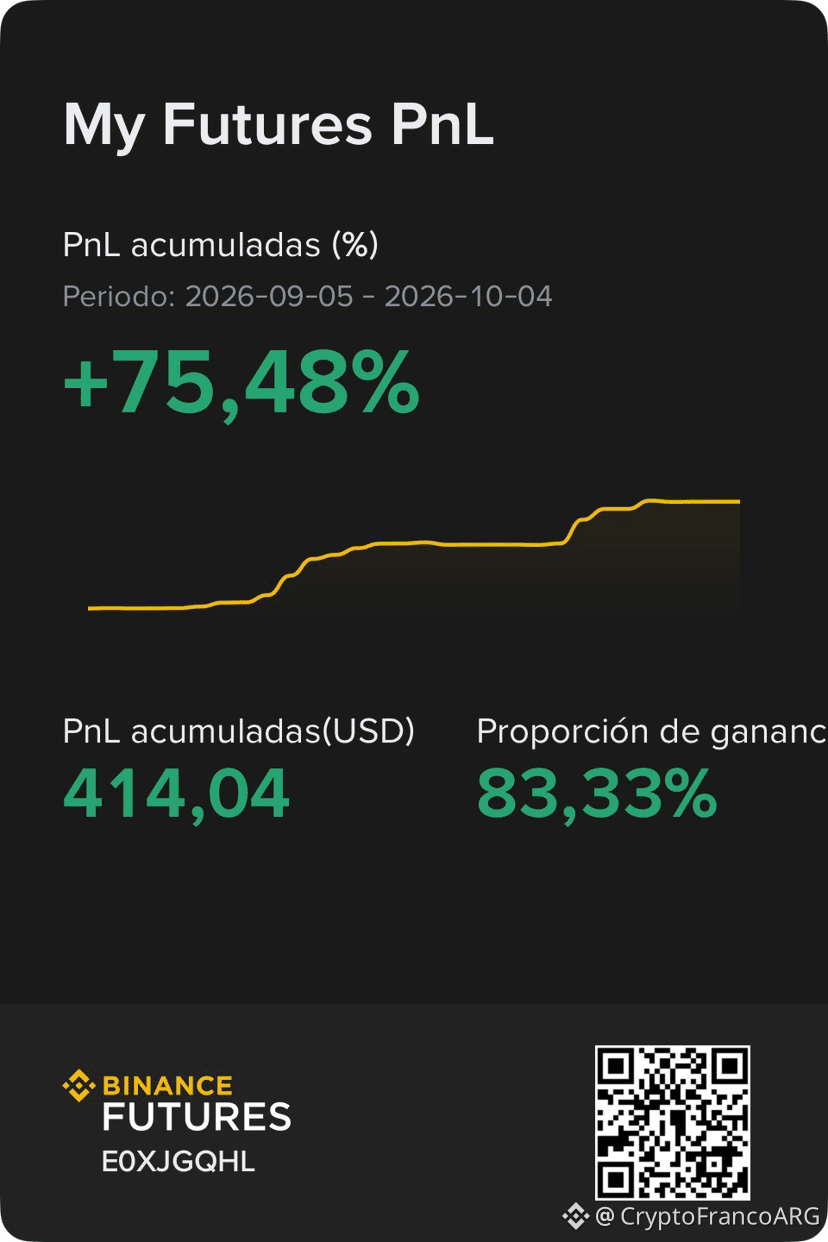
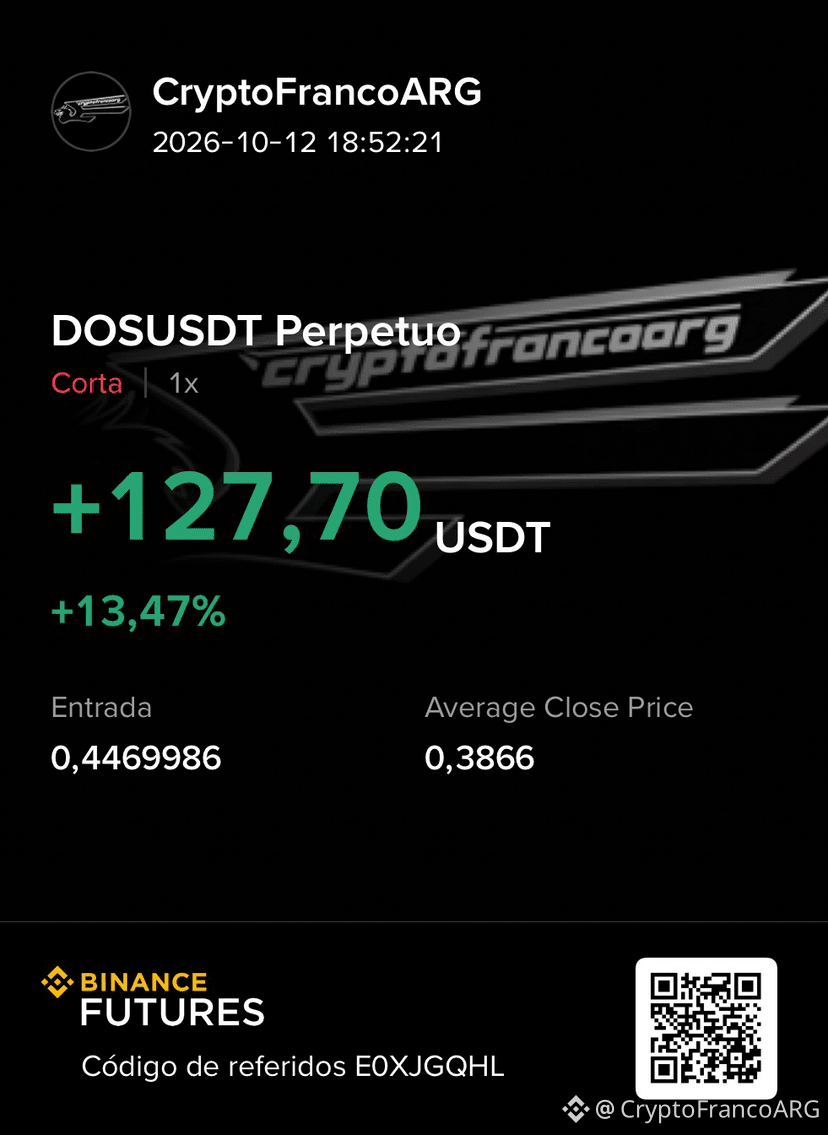
My Futures Portfolio
9 / 200
Public
7D PNL
(USDT)
-89.71
7D ROI
-12.58%
AUM
$1463.06
Win Rate
54.54%
7
7
321
PINNED
·
--
Bullish
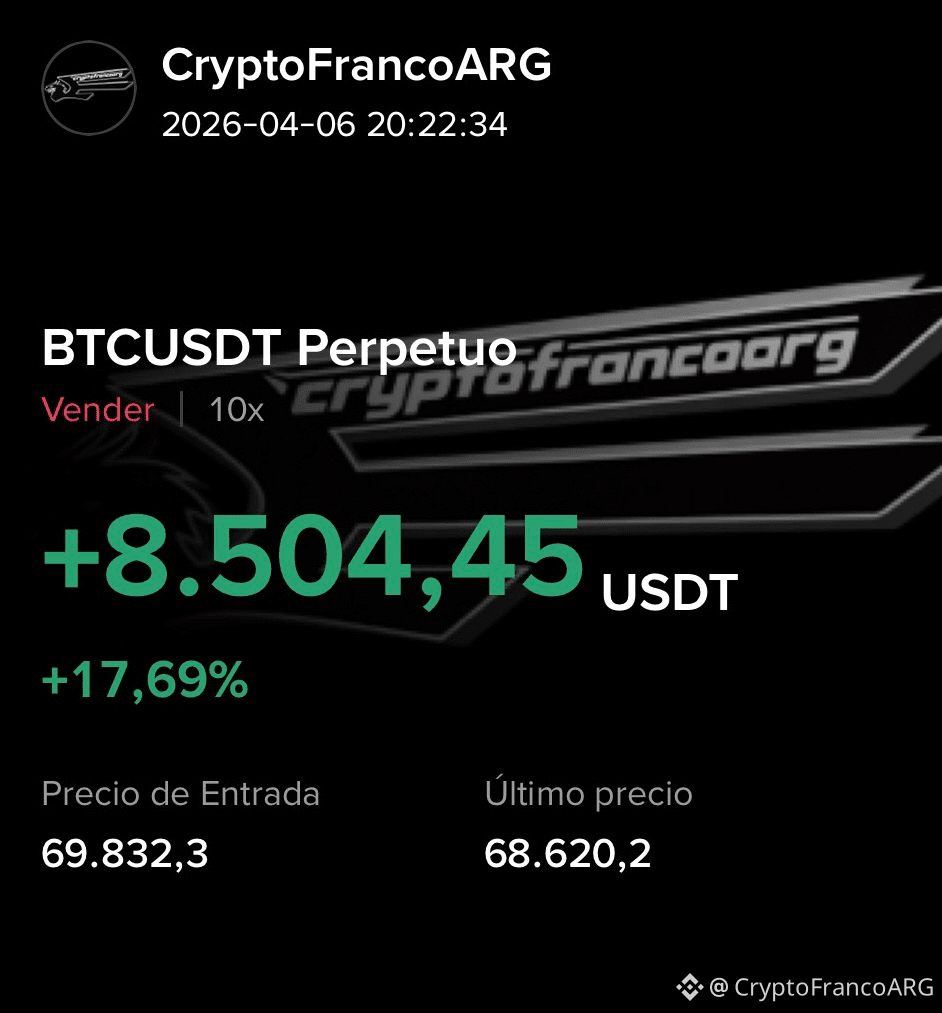
💸 I am sharing FREE signals on Telegram $BTC
Clear entries + defined objectives 📊
Some are already taking advantage of strong movements… $BTC
The difference is being or not being $BTC
💸 I am sharing FREE signals on Telegram $BTC
Clear entries + defined objectives 📊
Some are already taking advantage of strong movements… $BTC
The difference is being or not being $BTC
Clear entries + defined objectives 📊
Some are already taking advantage of strong movements… $BTC
The difference is being or not being $BTC
102
6
64
6.5k
📰 CRYPTO NEWS
North Korea has publicly denied any involvement in the $6.4 billion Binance hack, considered the largest cryptocurrency exploit in history. The denial comes after the FBI issued official alerts directly identifying wallets controlled by North Korean actors linked to the group known as TraderTraitor. It is striking that a sovereign state would feel the need to publicly respond to FBI accusations in a crypto case, which gives an idea of the scale of the scandal. The investigation is ongoing, and international agencies continue to monitor the on-chain traceability of the stolen funds. It is worth wondering how the market will react if state responsibility is officially confirmed, since an event of this scale could generate global regulatory pressure across the entire crypto ecosystem.
What do you think? Let me know in the comments 👇
1.2k
🔴 $ETH en 2,248 (-1.96% 24h)
Levels to watch:
🔴 Resistance: 2,304 (+2.5%)
🟢 Support: 2,236 (−0.5%)
📊 Major range: 2,236 – 2,318
4h structure is bearish, trading below the MA50. Until it reclaims 2,304, the bias remains bearish. Breaking above it opens the way to 2,318.
24h volume: 6.43B USDT.
$ETH 👇
Levels to watch:
🔴 Resistance: 2,304 (+2.5%)
🟢 Support: 2,236 (−0.5%)
📊 Major range: 2,236 – 2,318
4h structure is bearish, trading below the MA50. Until it reclaims 2,304, the bias remains bearish. Breaking above it opens the way to 2,318.
24h volume: 6.43B USDT.
$ETH 👇
85
📰 CRYPTO NEWS
Following the Bybit hack that shook the market a few weeks ago, South Korea decided to take a tougher stance on exchange security. The Korean regulator is urging platforms to increase their use of cold wallets—that is, wallets that are not connected to the internet—to protect users’ funds. And here’s the thing: this isn’t starting from scratch. Korean exchanges are already legally required to keep at least 80% of their customers’ cryptocurrencies in cold storage. Even so, authorities believe that isn’t enough and are looking to tighten custody standards even further. It’s a clear sign that regulators around the world are taking note of every major hack and adjusting their rules accordingly. It’s worth asking whether this regulatory trend toward greater security will ultimately attract more institutional investment to markets where these rules are seriously enforced.
What do you think? Let me know in the comments 👇
3
3.6k
📰 CRYPTO NEWS
North Korea denied any involvement in the $6.3 billion hack of Binance, one of the largest crypto heists in history. Kim Yo Jong, sister of leader Kim Jong-un and a key regime figure, described the FBI’s accusations as politically motivated and lacking any real evidence. Pyongyang maintains that pointing the finger at them is a common U.S. tactic to justify international pressure on the country. This exchange of accusations between two world powers puts the crypto ecosystem at the center of a high-stakes geopolitical dispute. It’s worth asking: when hacks of this scale become political bargaining chips, how much is retail investor confidence in the security of centralized platforms put at risk?
What do you think? I’m reading your comments 👇
1
1
5
10.9k
🔴 $BTC en 76,791 (-1.95% 24h)
Levels to watch:
🔴 Resistance: 78,854 (+2.7%)
🟢 Support: 76,668 (−0.2%)
📊 Wider range: 76,668 – 78,854
4h structure is bearish, trading below the MA50. Until it reclaims 78,854, the bias remains bearish. A break above it opens the way to 78,854.
24h volume: 8.98B USDT.
$BTC 👇
Levels to watch:
🔴 Resistance: 78,854 (+2.7%)
🟢 Support: 76,668 (−0.2%)
📊 Wider range: 76,668 – 78,854
4h structure is bearish, trading below the MA50. Until it reclaims 78,854, the bias remains bearish. A break above it opens the way to 78,854.
24h volume: 8.98B USDT.
$BTC 👇
266
Verified
📰 CRYPTO NEWS
Animoca Brands, known as one of the most influential companies in the Web3 ecosystem, has just cleared the final regulatory hurdle to operate as a fund manager in Abu Dhabi. This means the company will be able to formally offer its services to institutional investors from one of the most important financial centers in the Arab world. Its main focus will be on the growing demand for stablecoins and tokenized assets from large institutional investors, a trend that has been gaining momentum worldwide. Abu Dhabi is thus cementing its position as a strategic hub for crypto companies seeking regulatory legitimacy without sacrificing innovation. It’s worth asking whether these kinds of institutional moves in key jurisdictions are the clearest sign yet that asset tokenization is moving beyond a future concept and becoming a reality in today’s financial markets.
What do you think? I’d love to hear your thoughts in the comments 👇
624
🔴 $SOL at 92.160 (-2.66% 24h)
Levels to watch:
🔴 Resistance: 95.900 (+4.1%)
🟢 Support: 91.530 (−0.7%)
📊 Broader range: 91.530 – 96.990
4h structure is bearish, trading below the MA50. Until it reclaims 95.900, the bias remains bearish. Breaking above it opens the way to 96.990.
24h volume: 1.55B USDT.
$SOL 👇
Levels to watch:
🔴 Resistance: 95.900 (+4.1%)
🟢 Support: 91.530 (−0.7%)
📊 Broader range: 91.530 – 96.990
4h structure is bearish, trading below the MA50. Until it reclaims 95.900, the bias remains bearish. Breaking above it opens the way to 96.990.
24h volume: 1.55B USDT.
$SOL 👇
1
341
Verified
📰 CRYPTO NEWS
tZERO, a company specializing in digital securities and tokenization, announced plans to go public through a SPAC deal valued at 350 million dollars. The company has spent more than a decade developing blockchain-based trading infrastructure, giving it considerable technical backing. If everything goes as planned, its shares would begin trading on the NYSE American under the ticker TZRO early next year. This move represents an important sign of maturity for the asset tokenization sector, which is increasingly seeking legitimacy in traditional financial markets. It’s worth asking whether this type of IPO could open the door for more companies in the blockchain ecosystem to follow the same path and accelerate institutional adoption of digital assets.
What do you think? I’m reading your comments 👇
1
555
🟢 $ETH en 2,286 (+0.71% 24h)
Levels to watch:
🔴 Resistance: 2,318 (+1.4%)
🟢 Support: 2,244 (−1.8%)
📊 Broader range: 2,206 – 2,318
4h structure is bearish, trading below the MA50. Until it reclaims 2,318, the bias remains bearish. Breaking above it opens the way to 2,318.
24h volume: 4.90B USDT.
$ETH 👇
Levels to watch:
🔴 Resistance: 2,318 (+1.4%)
🟢 Support: 2,244 (−1.8%)
📊 Broader range: 2,206 – 2,318
4h structure is bearish, trading below the MA50. Until it reclaims 2,318, the bias remains bearish. Breaking above it opens the way to 2,318.
24h volume: 4.90B USDT.
$ETH 👇
293
📰 CRYPTO NEWS
U.S. spot Bitcoin ETFs ended October in the red, recording net outflows of $515 million during the month amid market uncertainty. But the figure that drew the most attention was that of Ethereum funds, which posted a record $1.61 billion in withdrawals over the same period. These numbers reflect institutional investors reducing their crypto exposure throughout October, possibly seeking shelter from volatility and negative events in the sector. It’s worth remembering that this kind of massive ETF outflow often has a direct impact on the price of the underlying assets, as it means lower institutional demand. The question is whether this trend will reverse in November or whether we’re seeing the start of a deeper correction that could shake up retail investors’ portfolios.
What do you think? Let me know in the comments 👇
1
5
1.6k
🟢 $BTC en 78,340 (+0.59% 24h)
Levels to watch:
🔴 Resistance: 78,854 (+0.7%)
🟢 Support: 77,562 (−1.0%)
📊 Wider range: 76,270 – 78,854
4h structure is bearish, trading below the MA50. Until it reclaims 78,854, the bias remains bearish. Breaking above it opens the way to 78,854.
24h volume: 5.33B USDT.
$BTC 👇
Levels to watch:
🔴 Resistance: 78,854 (+0.7%)
🟢 Support: 77,562 (−1.0%)
📊 Wider range: 76,270 – 78,854
4h structure is bearish, trading below the MA50. Until it reclaims 78,854, the bias remains bearish. Breaking above it opens the way to 78,854.
24h volume: 5.33B USDT.
$BTC 👇
1
215
📰 CRYPTO NEWS
Binance recorded net outflows of $5.8 billion after withdrawals resumed following the biggest hack in its history. The platform confirmed that withdrawals surged as soon as some services came back online, although it clarified that the pace has since slowed. To put the figure in perspective, it represents only a fraction of the approximately $171 billion in customer assets held by the exchange. This indicates that, while the incident sparked initial panic, most funds remained on the platform. It’s worth asking to what extent events like this can erode trust in centralized exchanges and accelerate interest in self-custody solutions across the market.
What do you think? Let me know in the comments 👇
8
3.7k
🔴 $SOL en 94.510 (-0.90% 24h)
Levels to watch:
🔴 Resistance: 95.950 (+1.5%)
🟢 Support: 93.130 (−1.5%)
📊 Major range: 92.250 – 98.540
4h structure is bearish, trading below the MA50. As long as it doesn't reclaim 95.950, the bias remains bearish. Breaking above it opens the way to 98.540.
24h volume: 0.79B USDT.
$SOL 👇
Levels to watch:
🔴 Resistance: 95.950 (+1.5%)
🟢 Support: 93.130 (−1.5%)
📊 Major range: 92.250 – 98.540
4h structure is bearish, trading below the MA50. As long as it doesn't reclaim 95.950, the bias remains bearish. Breaking above it opens the way to 98.540.
24h volume: 0.79B USDT.
$SOL 👇
428
🟢 $ETH en 2,263 (+0.42% 24h)
Levels to watch:
🔴 Resistance: 2,278 (+0.6%)
🟢 Support: 2,250 (−0.6%)
📊 Major range: 2,173 – 2,342
4h structure is bearish, trading below the MA50. Until it reclaims 2,278, the bias remains bearish. Breaking above it opens the way to 2,342.
24h volume: 2.56B USDT.
$ETH 👇
Levels to watch:
🔴 Resistance: 2,278 (+0.6%)
🟢 Support: 2,250 (−0.6%)
📊 Major range: 2,173 – 2,342
4h structure is bearish, trading below the MA50. Until it reclaims 2,278, the bias remains bearish. Breaking above it opens the way to 2,342.
24h volume: 2.56B USDT.
$ETH 👇
1
2
387
📰 CRYPTO NEWS
The Bitcoin White Paper turns 18 years old since Satoshi Nakamoto published it, and the reality that inspired it is more relevant than ever: a financial system propped up by bailouts that citizens and small business owners end up paying for. Michael Tanguma, CEO of Onramp, points out that business owners continue to absorb the costs of a model designed to protect the big players, not them. Against this backdrop, setting aside some of their surplus in Bitcoin emerges as a practical way to protect the value of their own hard work without relying on institutions that have historically worked against small investors. It’s not just an ideological issue: it’s a financial decision increasingly supported by those who understand how the system works from the inside. It’s worth asking how many more businesses need to go under before adopting Bitcoin as a store of value stops being an alternative option and becomes the norm.
What do you think? Let me know in the comments 👇
405
🟢 $BTC en 77,930 (+0.49% 24h)
Levels to watch:
🔴 Resistance: 78,231 (+0.4%)
🟢 Support: 77,333 (−0.8%)
📊 Major range: 76,270 – 81,954
The 4h structure is bearish, trading below the MA50. Until it reclaims 78,231, the bias remains bearish. A break above it opens the way to 81,954.
24h volume: 3.64B USDT.
$BTC 👇
Levels to watch:
🔴 Resistance: 78,231 (+0.4%)
🟢 Support: 77,333 (−0.8%)
📊 Major range: 76,270 – 81,954
The 4h structure is bearish, trading below the MA50. Until it reclaims 78,231, the bias remains bearish. A break above it opens the way to 81,954.
24h volume: 3.64B USDT.
$BTC 👇
352
📰 CRYPTO NEWS
The FBI officially confirmed that North Korea was behind the Binance hack, which resulted in the theft of approximately $6 billion, and issued an alert asking the DeFi community to block a series of Bitcoin, Ethereum, and Solana addresses linked to the attackers. Although the agency published hundreds of suspicious addresses, blockchain analytics firm Chainalysis warned that the hackers have already used thousands of different addresses, and that number will continue to grow, making it extremely difficult to track and block the funds. This type of North Korean operation is nothing new: the regime has been using cryptocurrency theft as a source of state funding for years, evading international sanctions on a scale few thought possible. The scale of this case highlights the vulnerabilities that still exist in the crypto ecosystem, especially in the DeFi space, where controls are less stringent. It’s worth asking how the market will react to the possibility that billions of dollars in stolen funds could be liquidated at any moment.
What do you think? Let me know in the comments 👇
2
3
3.5k
🔴 $SOL en 95.720 (-0.18% 24h)
Levels to watch:
🔴 Resistance: 96.380 (+0.7%)
🟢 Support: 95.150 (−0.6%)
📊 Major range: 92.250 – 103.160
4h structure is bearish, trading below the MA50. Until it recovers 96.380, the bias remains bearish. Breaking above it opens the way to 103.160.
24h volume: 0.51B USDT.
$SOL 👇
Levels to watch:
🔴 Resistance: 96.380 (+0.7%)
🟢 Support: 95.150 (−0.6%)
📊 Major range: 92.250 – 103.160
4h structure is bearish, trading below the MA50. Until it recovers 96.380, the bias remains bearish. Breaking above it opens the way to 103.160.
24h volume: 0.51B USDT.
$SOL 👇
348
Log in to explore more content
Join global crypto users on Binance Square
⚡️ Get latest and useful information about crypto.
💬 Trusted by the world’s largest crypto exchange.
👍 Discover real insights from verified creators.
Email / Phone number
Trending Topics
BinanceReopensWithdrawalsForMoreAssets
33,527 views
795 Discussing
Security Incident | Recovery Update #6: Withdrawals Reopen for More Assets (2026-11-03)
Binance Announcement
·174 Likes
·481.7k views
AppleReportsMixedResults
21,150 views
570 Discussing
BinanceHourlyDepositsExceedWithdrawals
8,007 views
238 Discussing