
无秋⁶⁶⁶
1.7k Posts

无秋⁶⁶⁶
 Square Verified+
📌技术分析&交易心理 | 🎈推特@mackeybht | 🌍公众号:无秋Web3.0 | 🔸币安永久手续费8折邀请码(每小时实时自动返佣):WQWQWQ

30D Copier PnL Top 78
Open Trade

DOGE Holder
High-Frequency Trader
5.4 Years
191 Following
47.4K+ Followers
42.5K+ Liked
1 Badges
Posts
Portfolio
All
Quotes
Videos
Live
PINNED

无秋⁶⁶⁶
·
--
Newbie's Guide to Position Management in Crypto
Newbie's Guide to Position Management in Crypto
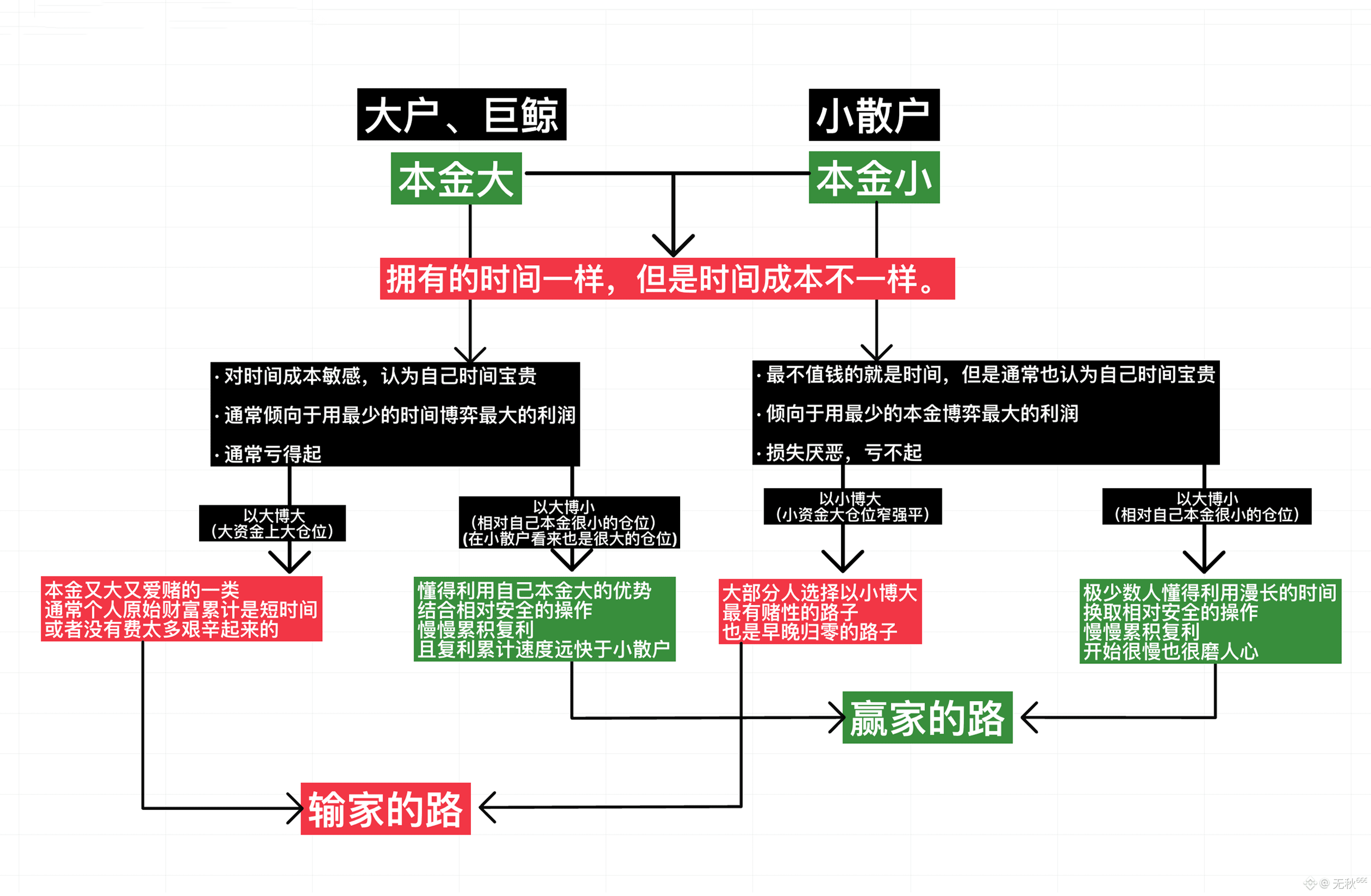
⭐ If you're a gambler, love to YOLO, thrive on wild swings, crave excitement, and enjoy the quick rush, you're probably not too concerned about position management;
⭐ If you're drowning in debt and getting daily reminders from online lenders, you likely don't have the patience to learn about position management; all you're chasing is the dream of sudden wealth and fantasy.
⭐ If you're a seasoned bag holder who's really felt the pain of losses, been wrecked by the market, and experienced multiple liquidations, you probably already have a sense of position management and experience.
⭐ Most of the casualties in this market aren't due to failed strategies or poor skills, but rather from mistakes in position management, whether it's over-leveraging or adding to losing positions.
⭐ If you're a gambler, love to YOLO, thrive on wild swings, crave excitement, and enjoy the quick rush, you're probably not too concerned about position management;
⭐ If you're drowning in debt and getting daily reminders from online lenders, you likely don't have the patience to learn about position management; all you're chasing is the dream of sudden wealth and fantasy.
⭐ If you're a seasoned bag holder who's really felt the pain of losses, been wrecked by the market, and experienced multiple liquidations, you probably already have a sense of position management and experience.
⭐ Most of the casualties in this market aren't due to failed strategies or poor skills, but rather from mistakes in position management, whether it's over-leveraging or adding to losing positions.
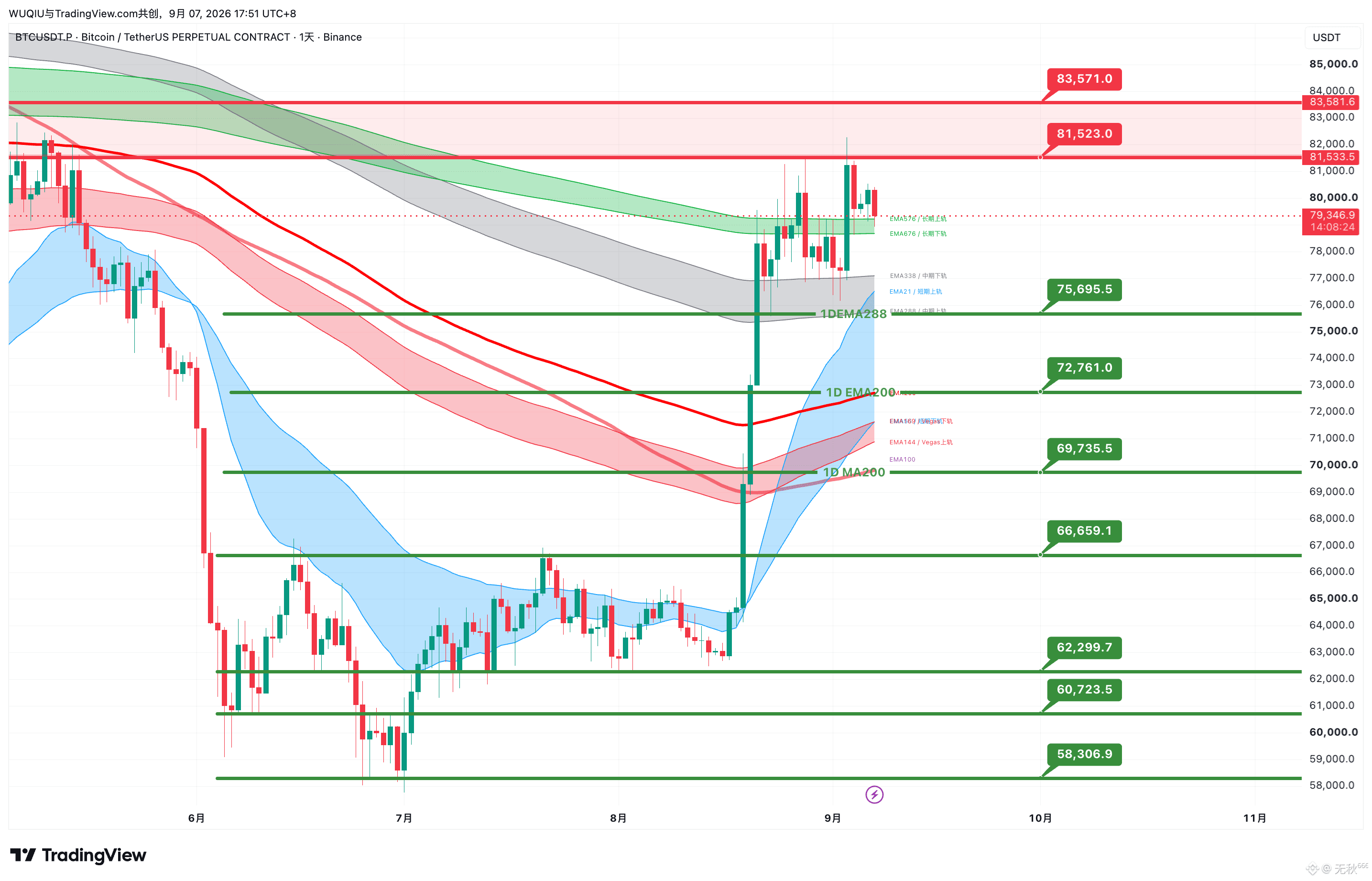
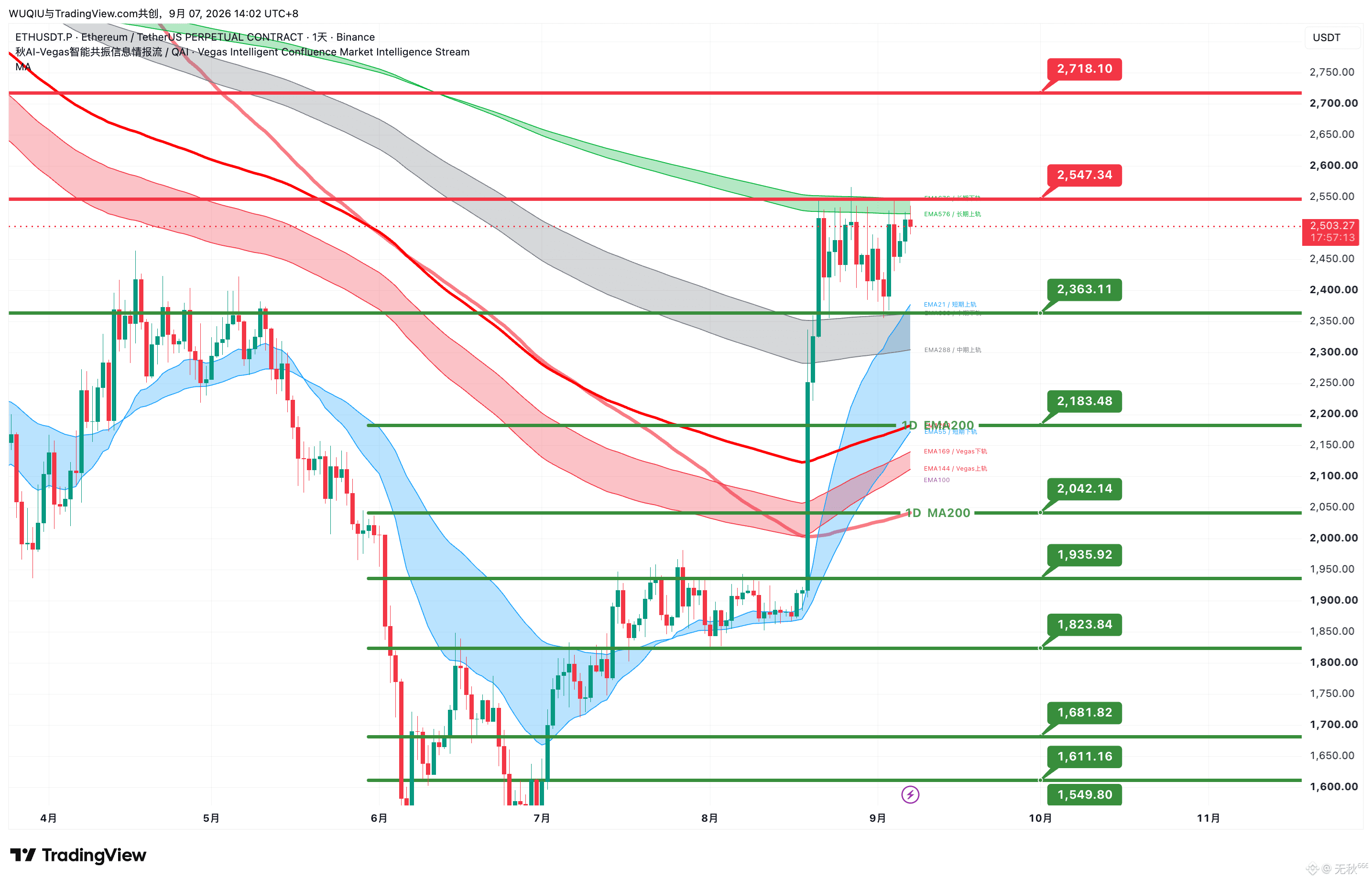
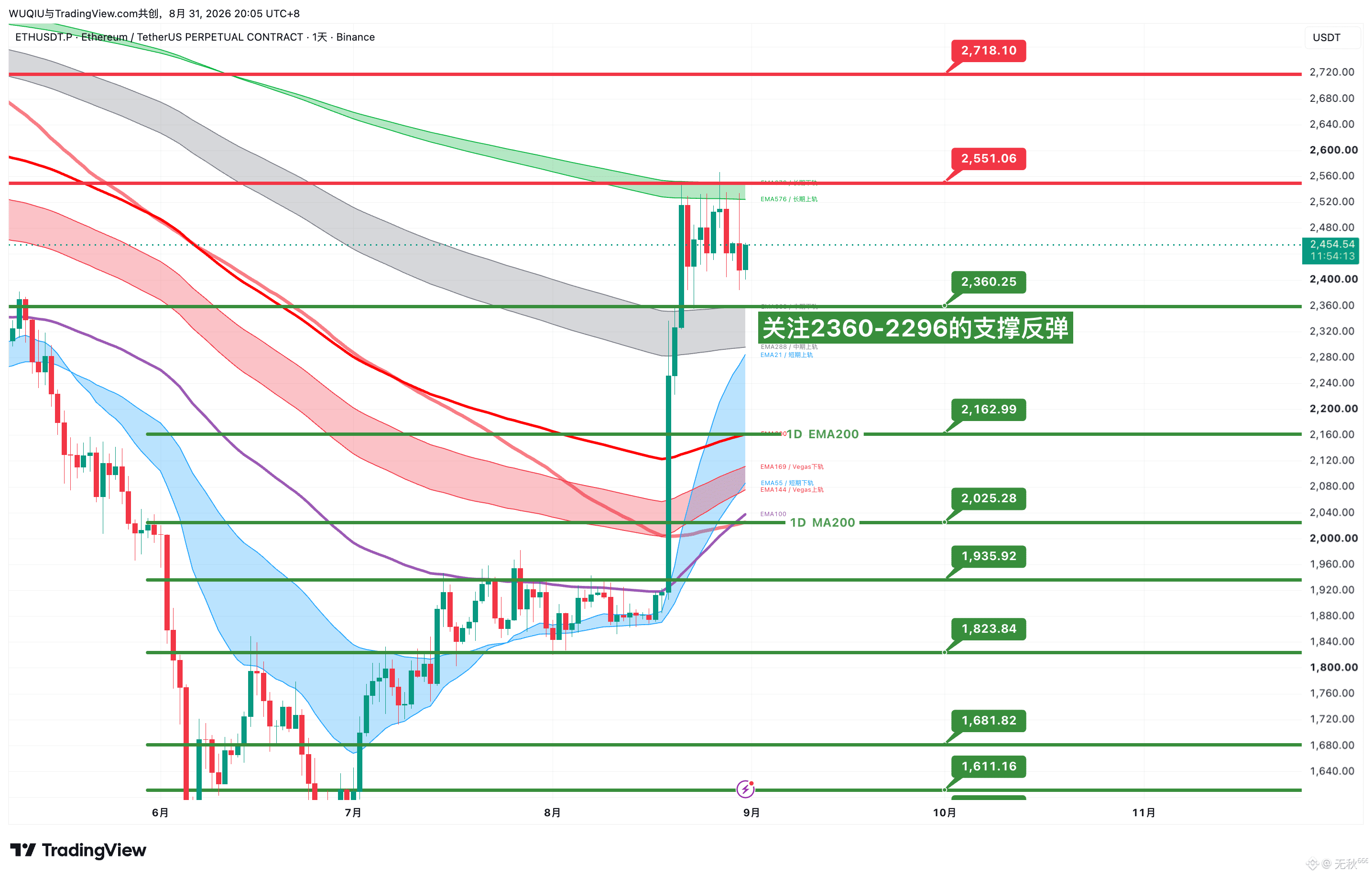
$BTC $ETH 1D key-pressure support reference. Over the past week, the overall change has been minimal. We are currently in a high-level consolidation. As the Fed rate decision on 9/16 approaches, volatility is about to expand.
Bottom-position holders are desperately releasing bullish sentiment for a soaring bull run, creating anxiety for retail traders who have missed the move. Those who chase longs at high levels will become increasingly crowded, and the pullback that is bound to come will arrive as well. Stay a bit more cautious and skeptical—don’t let any overly absolute bullish or bearish sentiment control you.
For the long/short battle reference, look at the key levels as shown in the chart, or refer to the citation below earlier. Long/short trading should only be done when approaching key levels, or enter in batches with the average price aimed as close to the key level as possible. Keep position sizing light, scale in/out, and always use stop-losses.
🌕 《Trading Calm Mind Manual》🌕
With a thousand waters, take only one ladle.
With ten thousand taels of gold, keep only one piece.
Miss the breakout to accumulate power; sell too late to build good fortune.
Survive through hard times for the big picture—stability is paramount.
No all-in, no getting carried away
No greed, no revenge
Don’t show off when you profit; don’t despair when you lose.
Stop-loss decisively—cut ruthlessly.
Endure the loneliness and hold your hands back.
Hide your bullets, hunt the market hunters.
Don’t chase the dream of getting rich overnight as if you were grass.
Swear to be the one who sends the market to its grave.
#美伊互袭油轮冲突升级 #BTC走势分析 #ETH走势分析
Bottom-position holders are desperately releasing bullish sentiment for a soaring bull run, creating anxiety for retail traders who have missed the move. Those who chase longs at high levels will become increasingly crowded, and the pullback that is bound to come will arrive as well. Stay a bit more cautious and skeptical—don’t let any overly absolute bullish or bearish sentiment control you.
For the long/short battle reference, look at the key levels as shown in the chart, or refer to the citation below earlier. Long/short trading should only be done when approaching key levels, or enter in batches with the average price aimed as close to the key level as possible. Keep position sizing light, scale in/out, and always use stop-losses.
🌕 《Trading Calm Mind Manual》🌕
With a thousand waters, take only one ladle.
With ten thousand taels of gold, keep only one piece.
Miss the breakout to accumulate power; sell too late to build good fortune.
Survive through hard times for the big picture—stability is paramount.
No all-in, no getting carried away
No greed, no revenge
Don’t show off when you profit; don’t despair when you lose.
Stop-loss decisively—cut ruthlessly.
Endure the loneliness and hold your hands back.
Hide your bullets, hunt the market hunters.
Don’t chase the dream of getting rich overnight as if you were grass.
Swear to be the one who sends the market to its grave.
#美伊互袭油轮冲突升级 #BTC走势分析 #ETH走势分析
无秋⁶⁶⁶
·
--
$BTC $ETH 1D key levels.
Recently, the market has been trading in a range at high levels—nothing new.
The main play is shorting from the high side: repeatedly place shorts in batches in the 79,600–81,500 and 2,525–2,555 zones, with unlimited attempts—do as many times as possible, until you get either taken out for profit (i.e., sell too early) or stopped out once.
If you use a tight stop-loss, then all positions use the same daily-line new-high breakout stop-loss (BTC 81,600; ETH 2,570). If you don’t use a stop-loss, then manage position sizing and gradually add to build your average price slowly. You need to assess your ability to manage positions and the volatility range you can tolerate.
If you just feel itchy and entered the short too early, then be prepared to add to your position in the same zones as mentioned above. When adding, avoid frequently topping up within a narrow range. For BTC, spread the add-on interval to 800–1,000 points; for ETH, spread it to 50–80 points. Try to operate only at key levels.
#比特币守稳78000美元上方 #美加贸易战加剧关税冲击就业 #BTC走势分析
Recently, the market has been trading in a range at high levels—nothing new.
The main play is shorting from the high side: repeatedly place shorts in batches in the 79,600–81,500 and 2,525–2,555 zones, with unlimited attempts—do as many times as possible, until you get either taken out for profit (i.e., sell too early) or stopped out once.
If you use a tight stop-loss, then all positions use the same daily-line new-high breakout stop-loss (BTC 81,600; ETH 2,570). If you don’t use a stop-loss, then manage position sizing and gradually add to build your average price slowly. You need to assess your ability to manage positions and the volatility range you can tolerate.
If you just feel itchy and entered the short too early, then be prepared to add to your position in the same zones as mentioned above. When adding, avoid frequently topping up within a narrow range. For BTC, spread the add-on interval to 800–1,000 points; for ETH, spread it to 50–80 points. Try to operate only at key levels.
#比特币守稳78000美元上方 #美加贸易战加剧关税冲击就业 #BTC走势分析
🧧Save money! Automatically get an 80% fee rebate every hour!
🔸When registering, enter the invitation code: WQWQWQ
🔸Spot 20% + Futures 20% trading fees are automatically rebated every hour!
🔸Over time, the accumulated fee savings should not be underestimated
🔸Sincere, stable, efficient
#小白入圈必看 #返佣 #Binance fee discount
🔸When registering, enter the invitation code: WQWQWQ
🔸Spot 20% + Futures 20% trading fees are automatically rebated every hour!
🔸Over time, the accumulated fee savings should not be underestimated
🔸Sincere, stable, efficient
#小白入圈必看 #返佣 #Binance fee discount

㊙️ One of the choices for the spot allocation
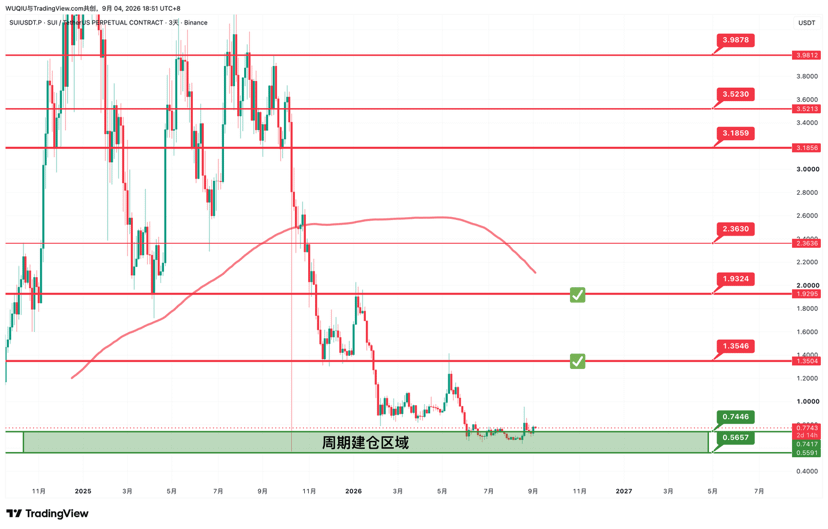
After there is a sufficient pullback this month, one spot asset you can consider is: SUI
Three-level entry layout: 0.72-0.68-0.63
Worst case, get to 1.35
For the medium-to-long term, target 2.3+
An asset with at least around 3x upside has relatively more certainty. And there’s also a coin-denominated (coin-basis) option as a backup plan—you can open it after you’ve finished the spot trade in extreme situations.
AAVE and CRCL, which I kept mentioning for the first two months, have already moved away from the golden pit.
If there’s still an opportunity in the future, slowly build positions at the prices below
AAVE: <86
CRCL: <78
#比特币以太坊触及数月高点 #山寨币热点 #CLARITY法案面临延迟参议院减少8个投票日
After there is a sufficient pullback this month, one spot asset you can consider is: SUI
Three-level entry layout: 0.72-0.68-0.63
Worst case, get to 1.35
For the medium-to-long term, target 2.3+
An asset with at least around 3x upside has relatively more certainty. And there’s also a coin-denominated (coin-basis) option as a backup plan—you can open it after you’ve finished the spot trade in extreme situations.
AAVE and CRCL, which I kept mentioning for the first two months, have already moved away from the golden pit.
If there’s still an opportunity in the future, slowly build positions at the prices below
AAVE: <86
CRCL: <78
#比特币以太坊触及数月高点 #山寨币热点 #CLARITY法案面临延迟参议院减少8个投票日
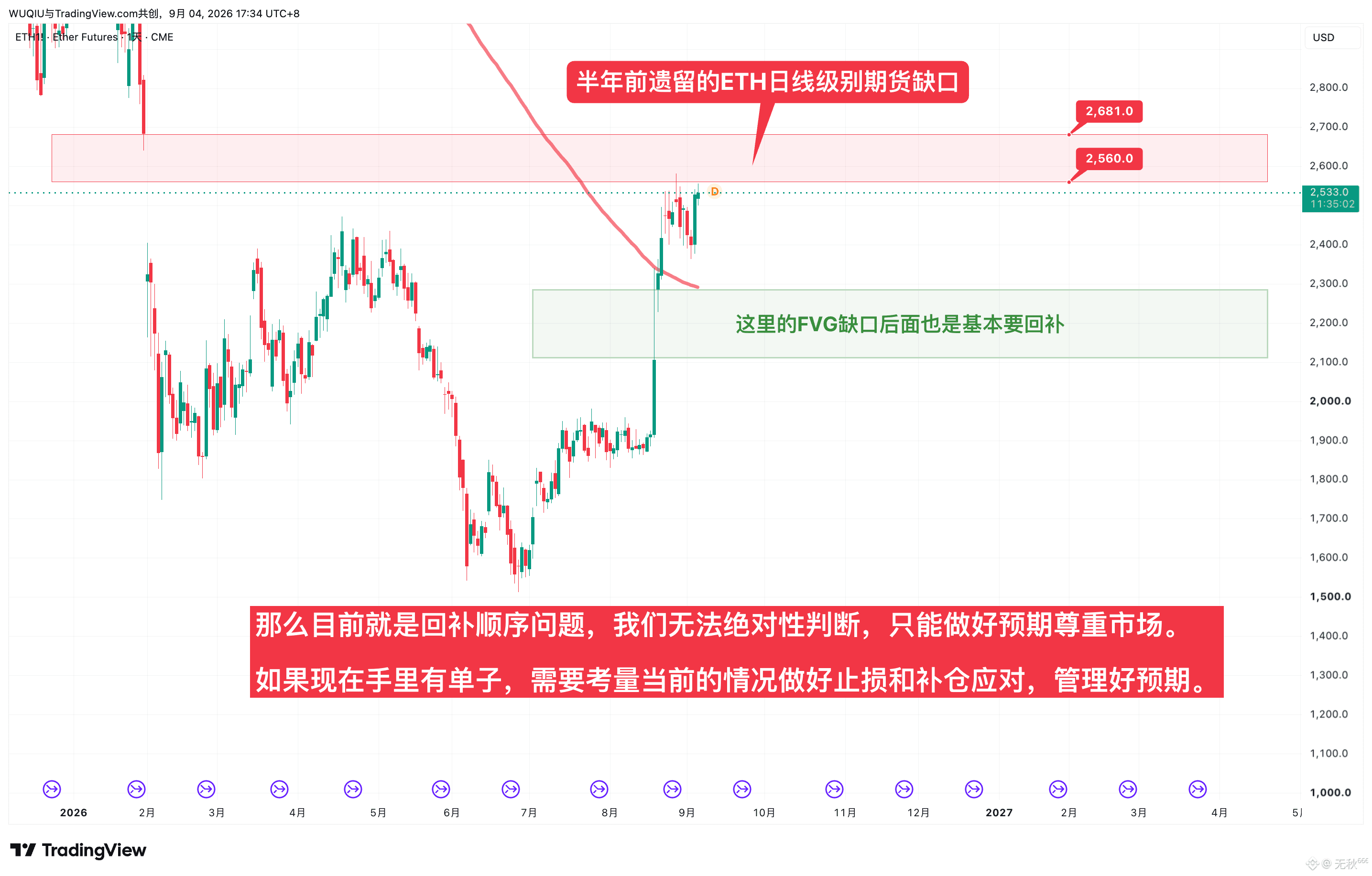
$ETH rd futures perspective: reference for Ethereum’s expected management moving forward.
At present, it’s mainly a matter of the order of position buy-backs. We can’t make an absolute judgment—we can only manage expectations and respect the market. If you currently have open positions, you need to consider the current situation, set proper stop-losses, and use position-adds to respond, while managing your expectations.
#比特币以太坊触及数月高点 #ETH走势分析
At present, it’s mainly a matter of the order of position buy-backs. We can’t make an absolute judgment—we can only manage expectations and respect the market. If you currently have open positions, you need to consider the current situation, set proper stop-losses, and use position-adds to respond, while managing your expectations.
#比特币以太坊触及数月高点 #ETH走势分析
🧧 Save money! Automatic 20% discount on fees returned every hour + fee rebate commission!
🔸 When registering, fill in the invitation code: WQWQWQ
🔸 For spot (20%) + futures (20%) fees, an automatic rebate every hour!
🔸 Day by day, month after month—the fee savings are not something to overlook in the long run
🔸 Sincere, stable, efficient
#小白入圈必看 #返佣 #Binance fee discount
🔸 When registering, fill in the invitation code: WQWQWQ
🔸 For spot (20%) + futures (20%) fees, an automatic rebate every hour!
🔸 Day by day, month after month—the fee savings are not something to overlook in the long run
🔸 Sincere, stable, efficient
#小白入圈必看 #返佣 #Binance fee discount

无秋⁶⁶⁶
·
--
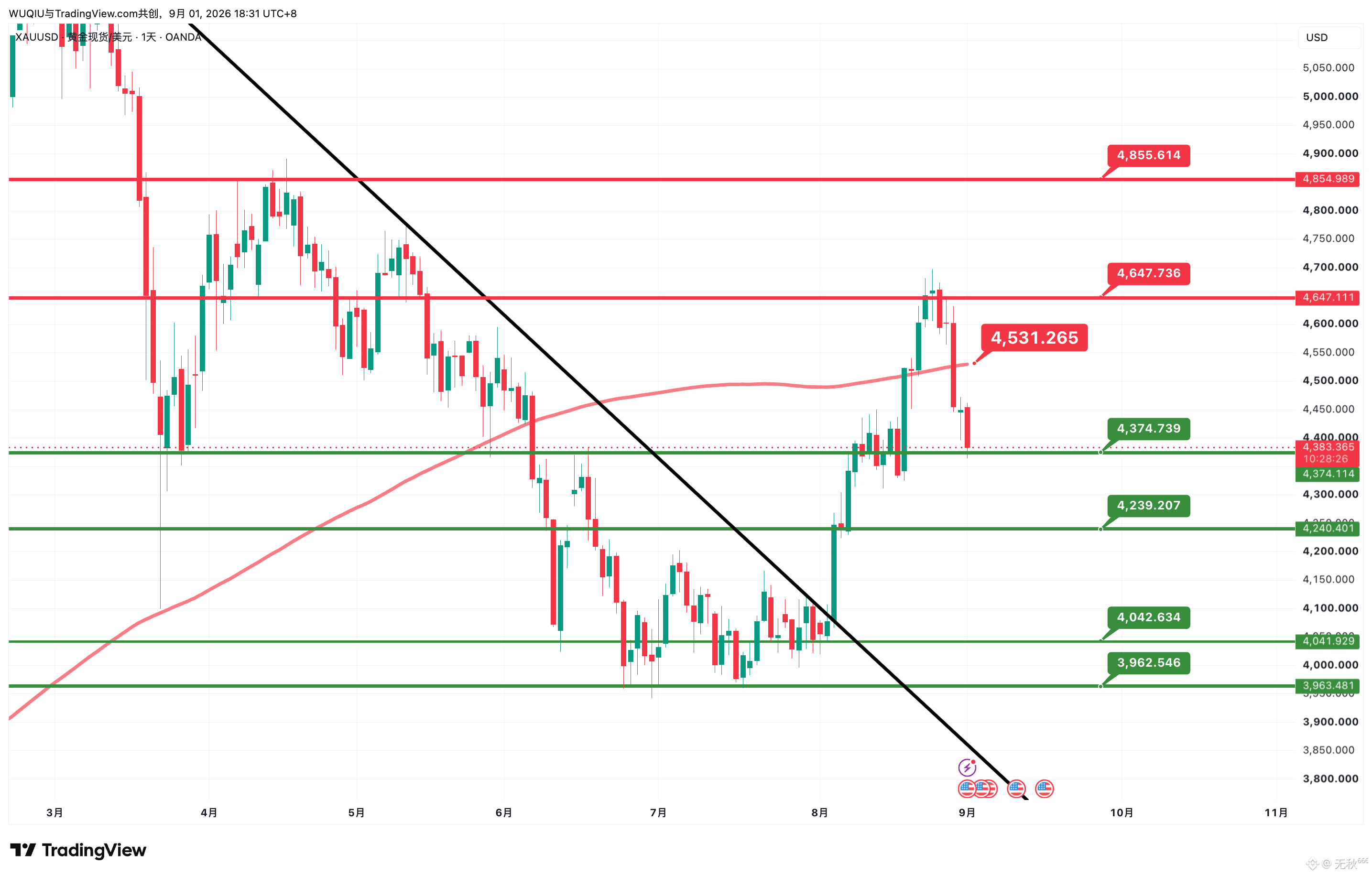
$XAU Gold is currently 4375 and hasn’t stabilized yet. According to last night’s live stream, if you’re looking to place sell orders/shorts above, you can move out with more than 70% of the position to lock in breakeven. If you placed buy orders (longs) near 4375, then if you’re more conservative, you can first look at the rebound around 4420. Once you hit breakeven and close out, shift attention to the breakdown/supported area of 4280-4240, and then consider going long again.
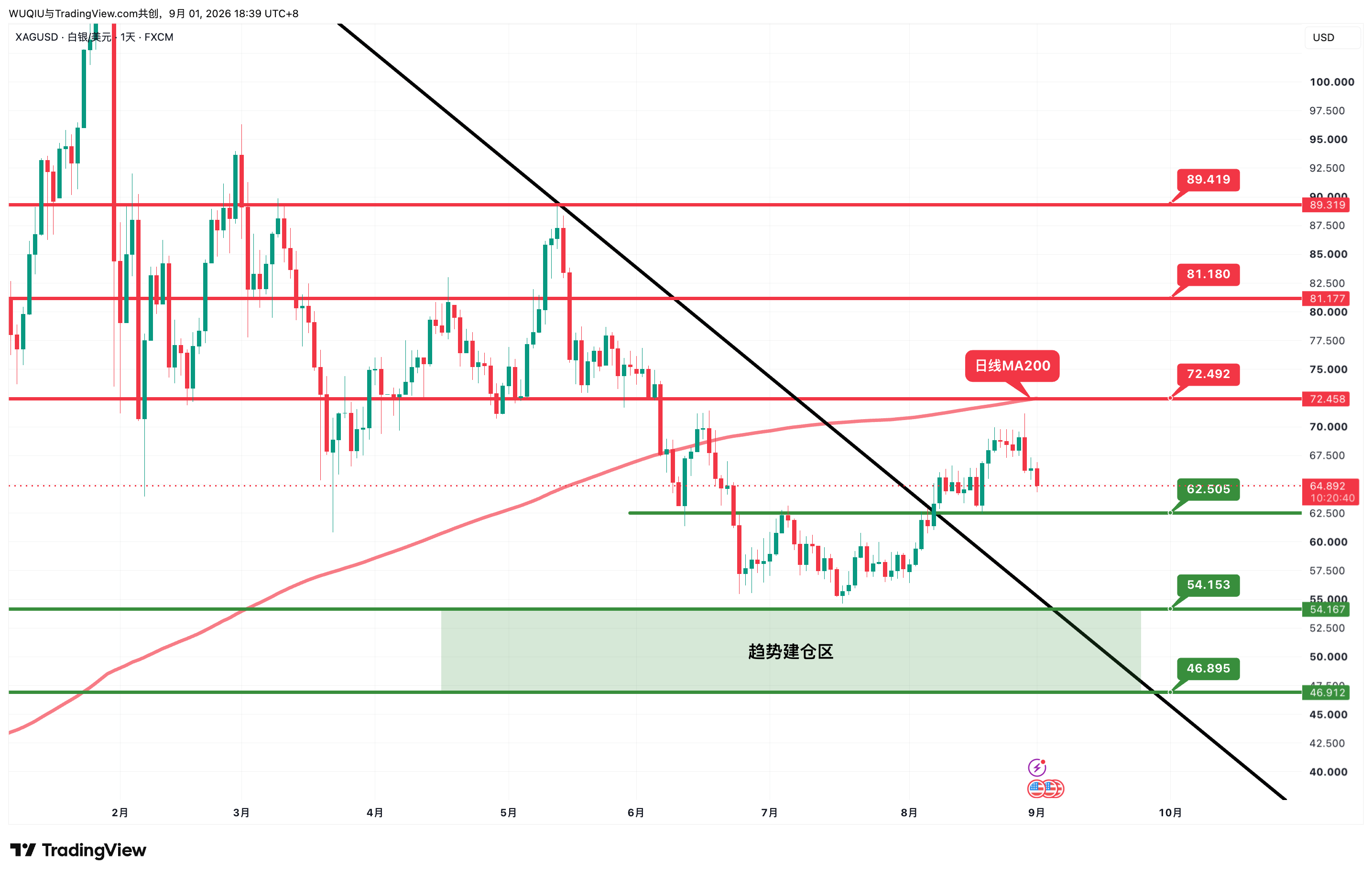
$XAG Silver: the near-term scalping long setup opportunities are:
Main entry: 62.5
Add position (2x): 58
#美伊军事冲突再起 #黄金较三个月高点下跌5.5%
$XAG Silver: the near-term scalping long setup opportunities are:
Main entry: 62.5
Add position (2x): 58
#美伊军事冲突再起 #黄金较三个月高点下跌5.5%
$XAU Gold is currently 4375 and hasn’t stabilized yet. According to last night’s live stream, if you’re looking to place sell orders/shorts above, you can move out with more than 70% of the position to lock in breakeven. If you placed buy orders (longs) near 4375, then if you’re more conservative, you can first look at the rebound around 4420. Once you hit breakeven and close out, shift attention to the breakdown/supported area of 4280-4240, and then consider going long again.
$XAG Silver: the near-term scalping long setup opportunities are:
Main entry: 62.5
Add position (2x): 58
#美伊军事冲突再起 #黄金较三个月高点下跌5.5%
$XAG Silver: the near-term scalping long setup opportunities are:
Main entry: 62.5
Add position (2x): 58
#美伊军事冲突再起 #黄金较三个月高点下跌5.5%

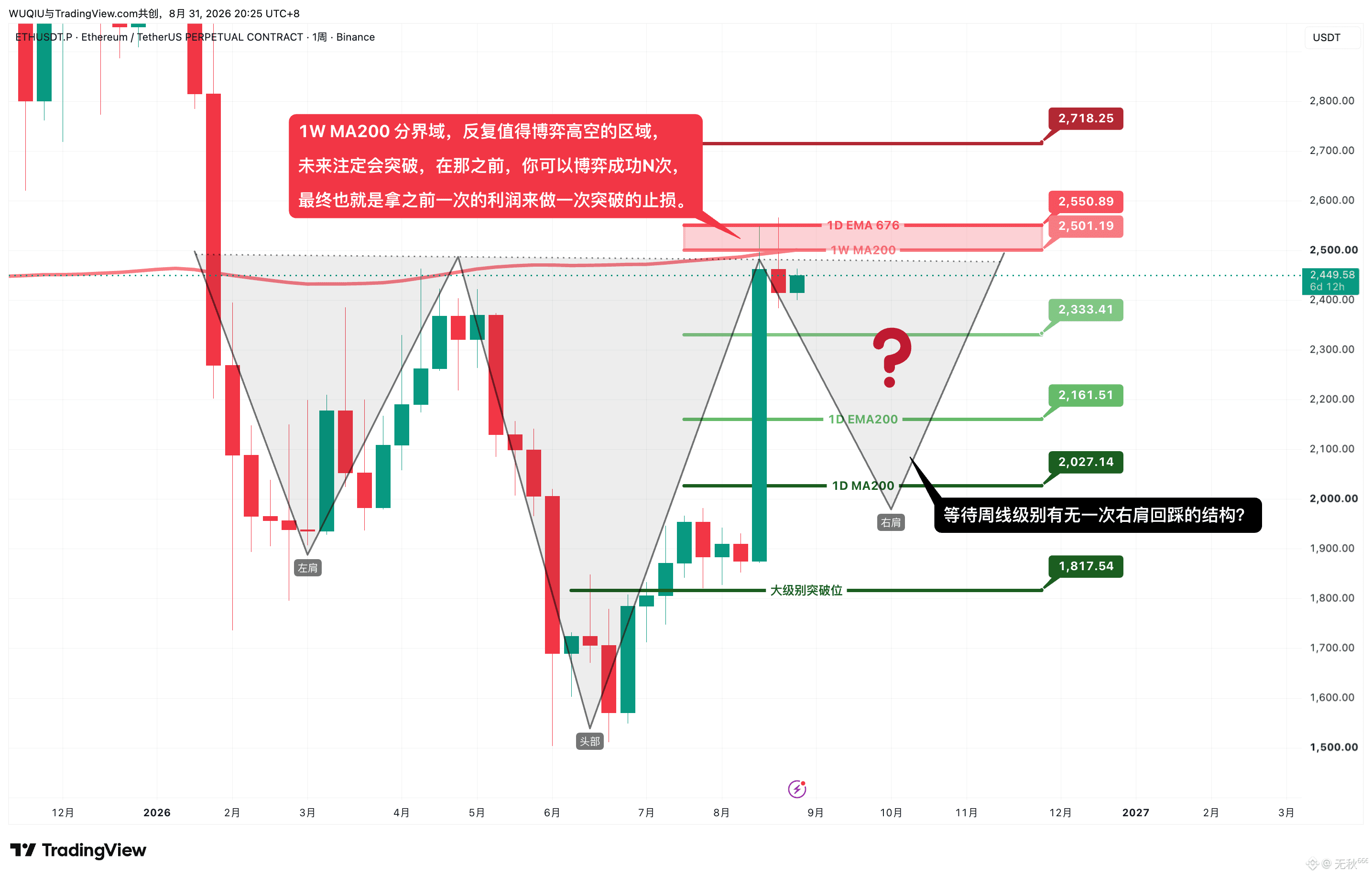
$ETH Ethereum weekly timeframe perspective:
🥘 1W MA200 boundary zone, a region repeatedly worth trading for short entries. It is destined to break through in the future; before that, you may succeed in trading it N times, but in the end, you are just using the profit from previous trades to cover the stop-loss of one breakout.
🥘 Waiting to see whether the weekly timeframe will form a potential right-shoulder retest structure of an inverse head and shoulders?
#比特币守稳78000美元上方 #ETH走势分析
🥘 1W MA200 boundary zone, a region repeatedly worth trading for short entries. It is destined to break through in the future; before that, you may succeed in trading it N times, but in the end, you are just using the profit from previous trades to cover the stop-loss of one breakout.
🥘 Waiting to see whether the weekly timeframe will form a potential right-shoulder retest structure of an inverse head and shoulders?
#比特币守稳78000美元上方 #ETH走势分析
无秋⁶⁶⁶
·
--
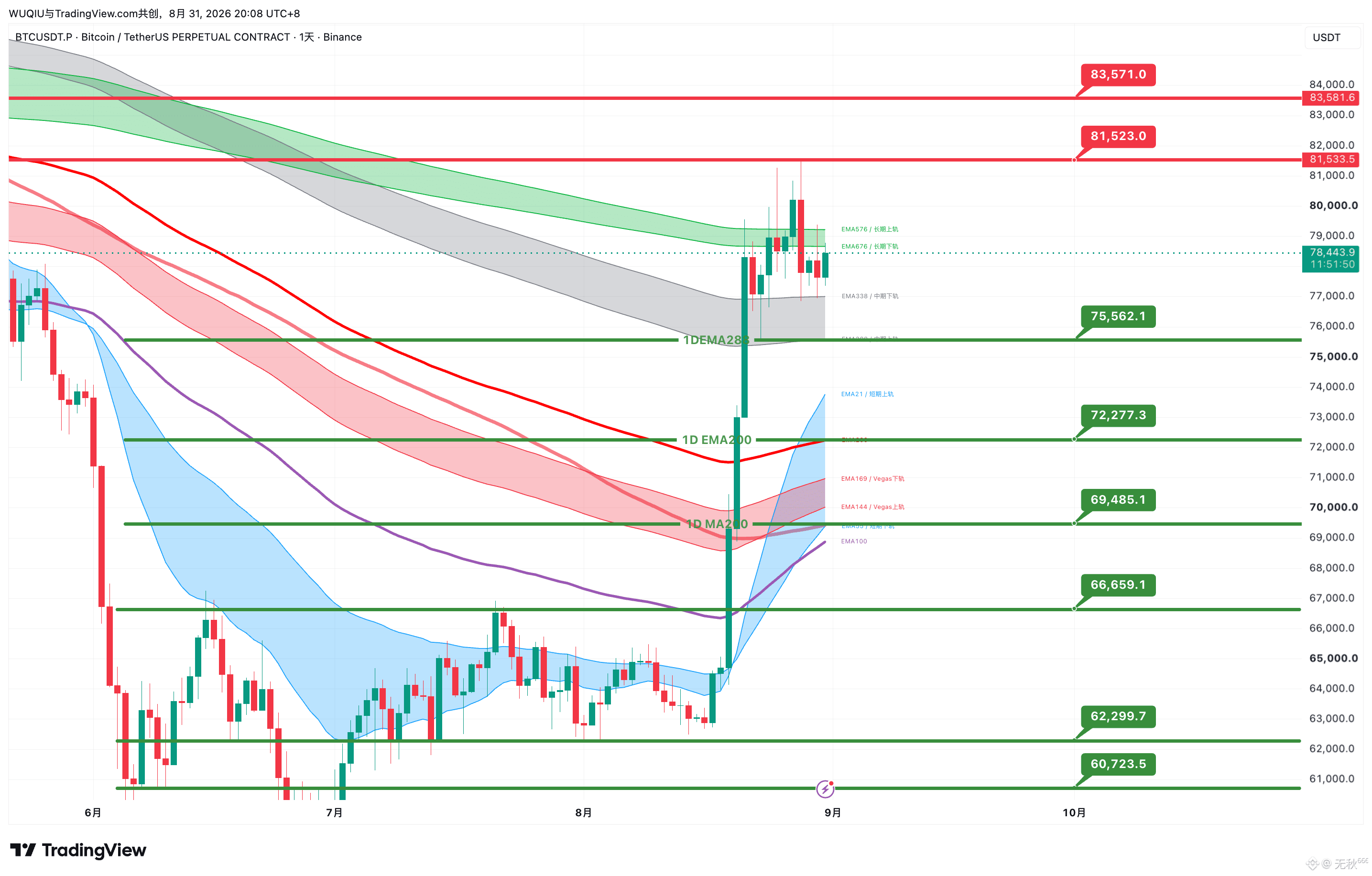
$BTC $ETH 1D key levels.
Recently, the market has been trading in a range at high levels—nothing new.
The main play is shorting from the high side: repeatedly place shorts in batches in the 79,600–81,500 and 2,525–2,555 zones, with unlimited attempts—do as many times as possible, until you get either taken out for profit (i.e., sell too early) or stopped out once.
If you use a tight stop-loss, then all positions use the same daily-line new-high breakout stop-loss (BTC 81,600; ETH 2,570). If you don’t use a stop-loss, then manage position sizing and gradually add to build your average price slowly. You need to assess your ability to manage positions and the volatility range you can tolerate.
If you just feel itchy and entered the short too early, then be prepared to add to your position in the same zones as mentioned above. When adding, avoid frequently topping up within a narrow range. For BTC, spread the add-on interval to 800–1,000 points; for ETH, spread it to 50–80 points. Try to operate only at key levels.
#比特币守稳78000美元上方 #美加贸易战加剧关税冲击就业 #BTC走势分析
Recently, the market has been trading in a range at high levels—nothing new.
The main play is shorting from the high side: repeatedly place shorts in batches in the 79,600–81,500 and 2,525–2,555 zones, with unlimited attempts—do as many times as possible, until you get either taken out for profit (i.e., sell too early) or stopped out once.
If you use a tight stop-loss, then all positions use the same daily-line new-high breakout stop-loss (BTC 81,600; ETH 2,570). If you don’t use a stop-loss, then manage position sizing and gradually add to build your average price slowly. You need to assess your ability to manage positions and the volatility range you can tolerate.
If you just feel itchy and entered the short too early, then be prepared to add to your position in the same zones as mentioned above. When adding, avoid frequently topping up within a narrow range. For BTC, spread the add-on interval to 800–1,000 points; for ETH, spread it to 50–80 points. Try to operate only at key levels.
#比特币守稳78000美元上方 #美加贸易战加剧关税冲击就业 #BTC走势分析
$BTC $ETH 1D key levels.
Recently, the market has been trading in a range at high levels—nothing new.
The main play is shorting from the high side: repeatedly place shorts in batches in the 79,600–81,500 and 2,525–2,555 zones, with unlimited attempts—do as many times as possible, until you get either taken out for profit (i.e., sell too early) or stopped out once.
If you use a tight stop-loss, then all positions use the same daily-line new-high breakout stop-loss (BTC 81,600; ETH 2,570). If you don’t use a stop-loss, then manage position sizing and gradually add to build your average price slowly. You need to assess your ability to manage positions and the volatility range you can tolerate.
If you just feel itchy and entered the short too early, then be prepared to add to your position in the same zones as mentioned above. When adding, avoid frequently topping up within a narrow range. For BTC, spread the add-on interval to 800–1,000 points; for ETH, spread it to 50–80 points. Try to operate only at key levels.
#比特币守稳78000美元上方 #美加贸易战加剧关税冲击就业 #BTC走势分析
Recently, the market has been trading in a range at high levels—nothing new.
The main play is shorting from the high side: repeatedly place shorts in batches in the 79,600–81,500 and 2,525–2,555 zones, with unlimited attempts—do as many times as possible, until you get either taken out for profit (i.e., sell too early) or stopped out once.
If you use a tight stop-loss, then all positions use the same daily-line new-high breakout stop-loss (BTC 81,600; ETH 2,570). If you don’t use a stop-loss, then manage position sizing and gradually add to build your average price slowly. You need to assess your ability to manage positions and the volatility range you can tolerate.
If you just feel itchy and entered the short too early, then be prepared to add to your position in the same zones as mentioned above. When adding, avoid frequently topping up within a narrow range. For BTC, spread the add-on interval to 800–1,000 points; for ETH, spread it to 50–80 points. Try to operate only at key levels.
#比特币守稳78000美元上方 #美加贸易战加剧关税冲击就业 #BTC走势分析
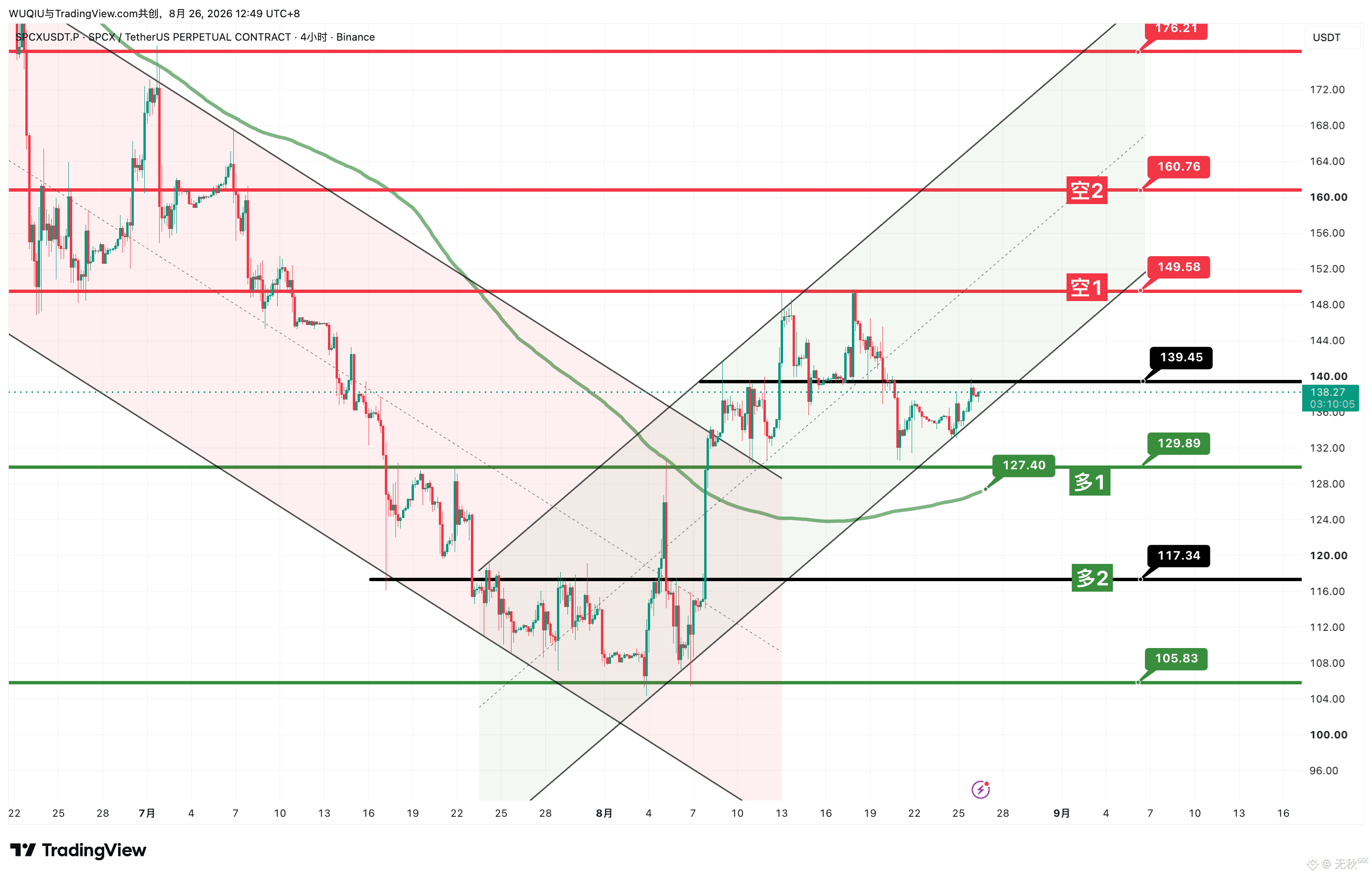
$SPCX Rocket long-short key level reference (position batches: front position : add position = 1:2)
#美伊据报达成停火共识 #美国加密股指数涨5.04%
#美伊据报达成停火共识 #美国加密股指数涨5.04%
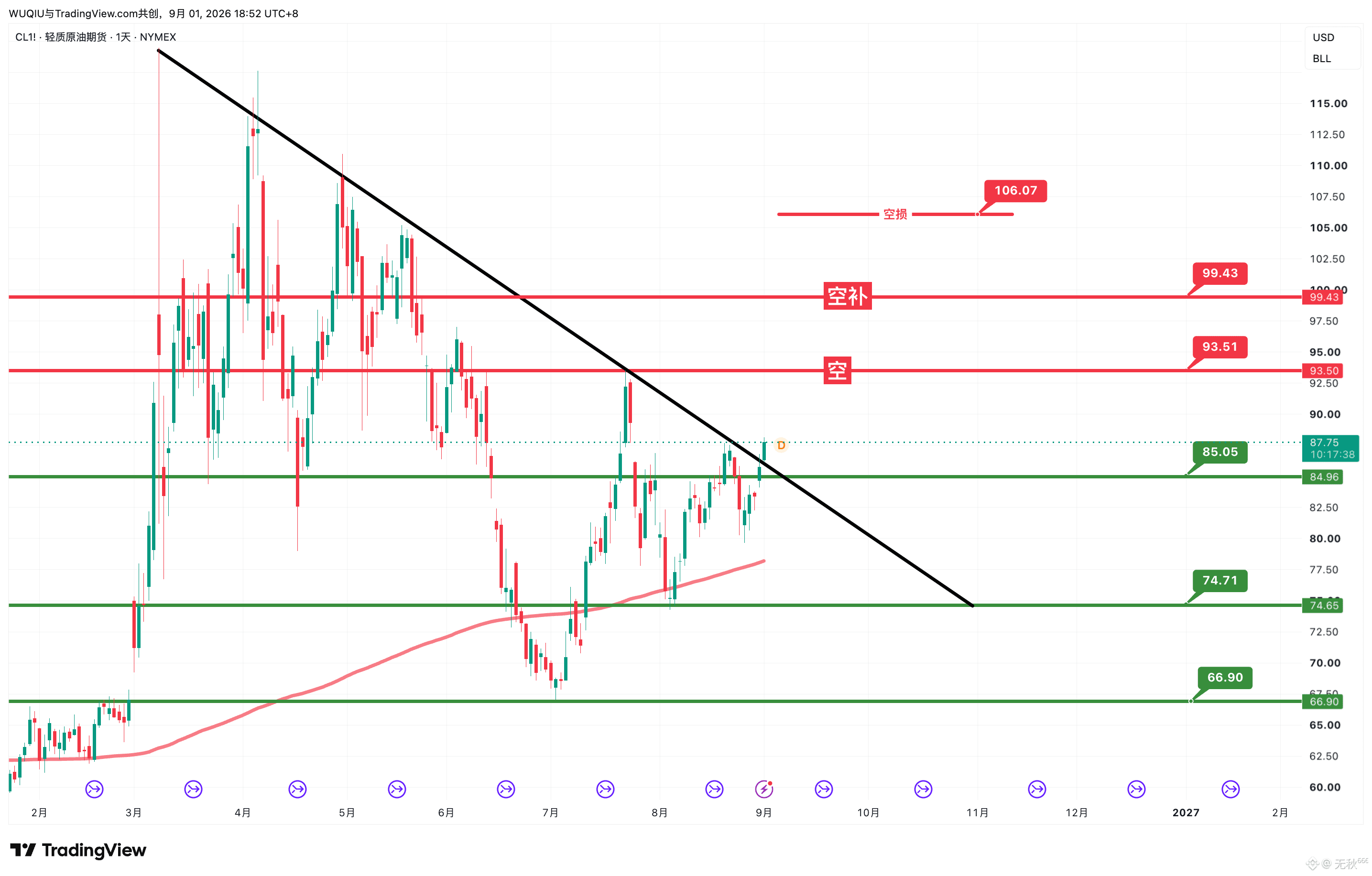
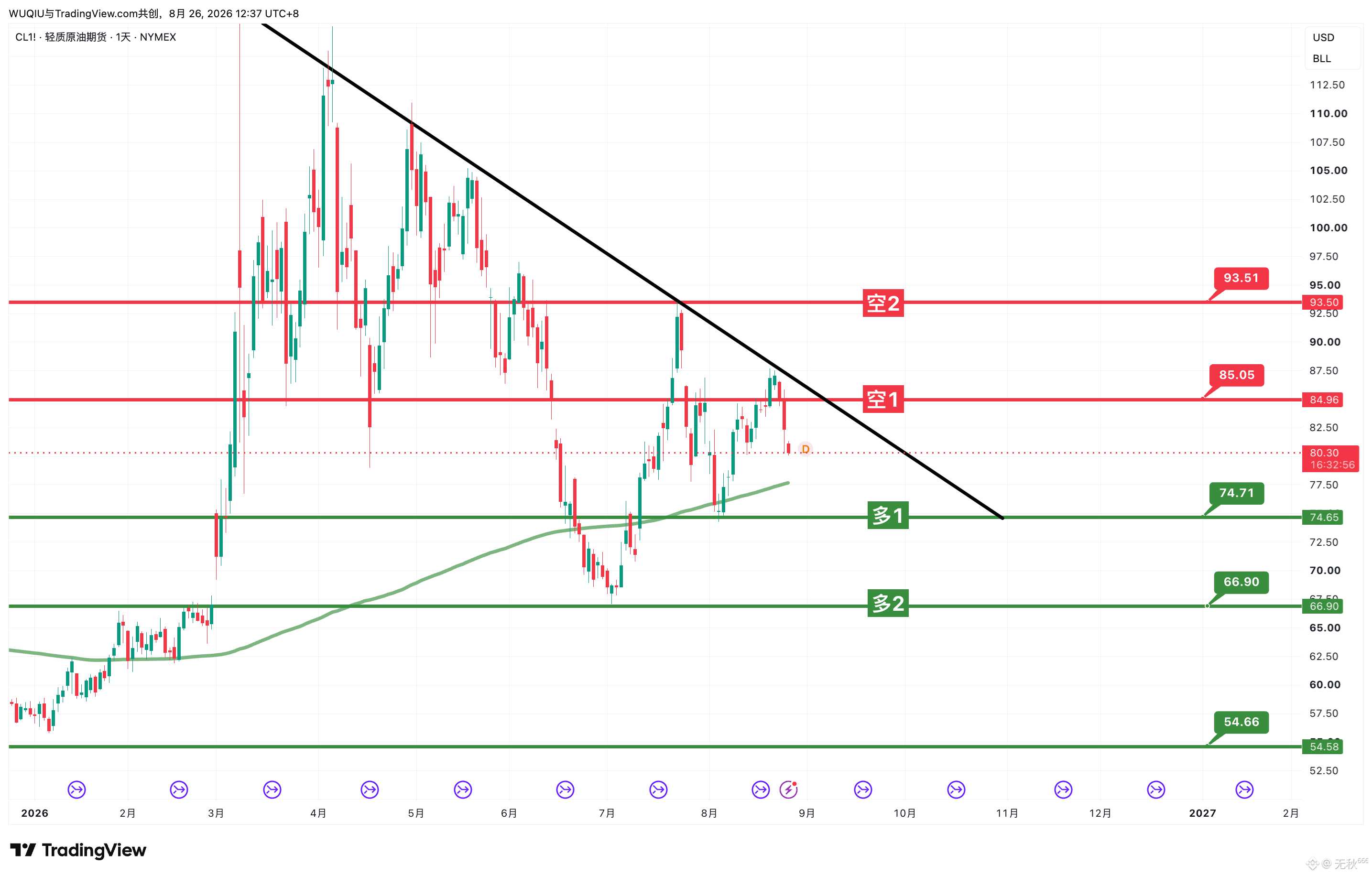
$CL Crude Oil Long/Short Key Levels Reference (Positioning: batch additions; initial position : adding = 1:2)
Driven by news flow, not a “pattern/big-picture” target.
#美伊据报达成停火共识 #比特币受阻于81000美元50周均线
Driven by news flow, not a “pattern/big-picture” target.
#美伊据报达成停火共识 #比特币受阻于81000美元50周均线
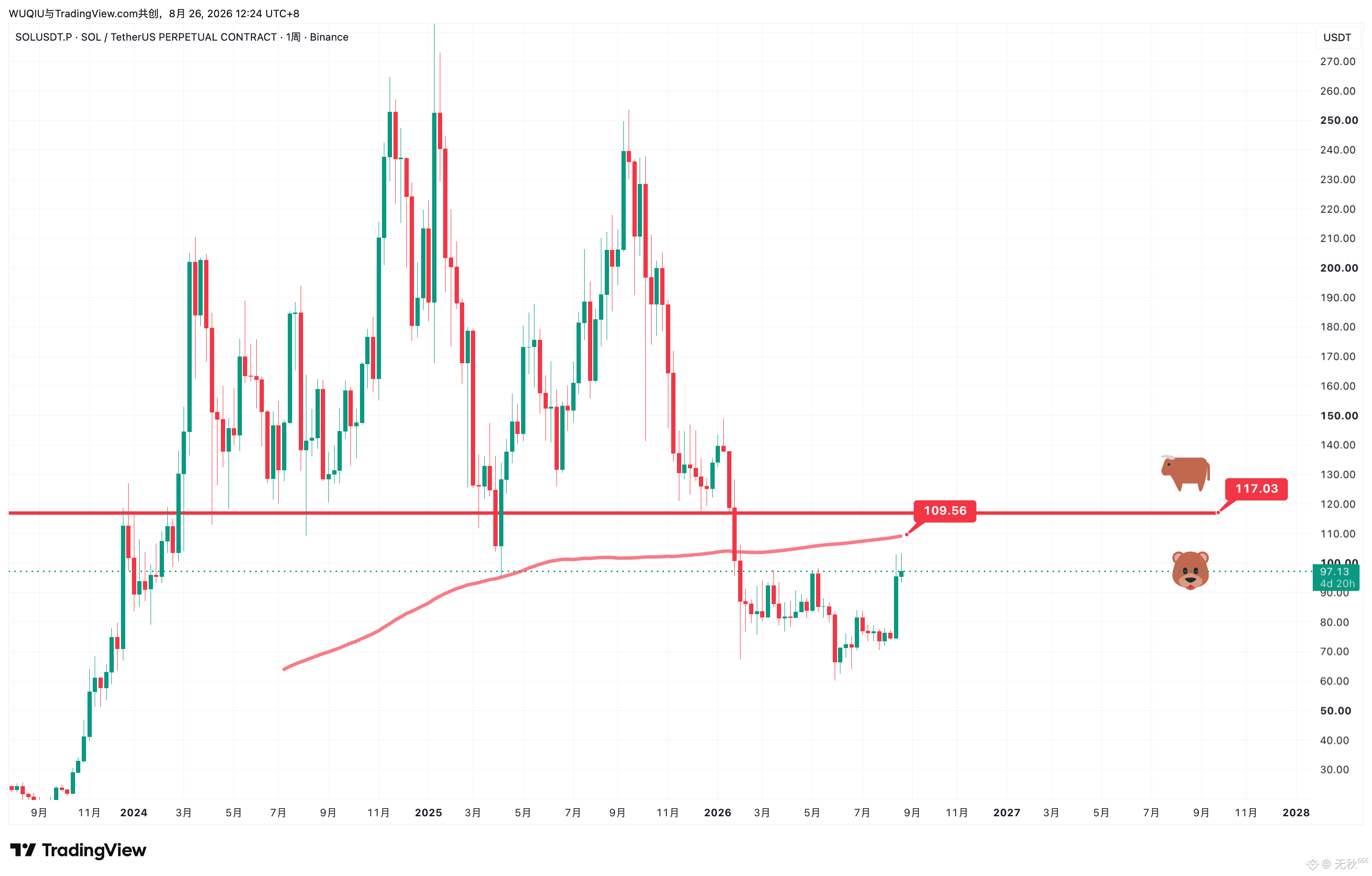
$SOL On the larger cycle, the closer you short SOL to the 109–117 area, the better the risk-reward ratio and the higher the success rate.
On the daily and weekly large timeframe levels, you can keep pending short orders in the following three positions in a 2:3:4 or 1:2:4 ratio:
109, 113, 117
On the intraday 4H timeframe, the pressure zone for short entries is 99.2–103.8, with a stop loss at 106. If your stop loss is hit, then wait for the higher timeframe positions mentioned above to place the short orders.
#比特币受阻于81000美元50周均线 #Solana现货ETF累计净流入创纪录12.2亿美元
On the daily and weekly large timeframe levels, you can keep pending short orders in the following three positions in a 2:3:4 or 1:2:4 ratio:
109, 113, 117
On the intraday 4H timeframe, the pressure zone for short entries is 99.2–103.8, with a stop loss at 106. If your stop loss is hit, then wait for the higher timeframe positions mentioned above to place the short orders.
#比特币受阻于81000美元50周均线 #Solana现货ETF累计净流入创纪录12.2亿美元
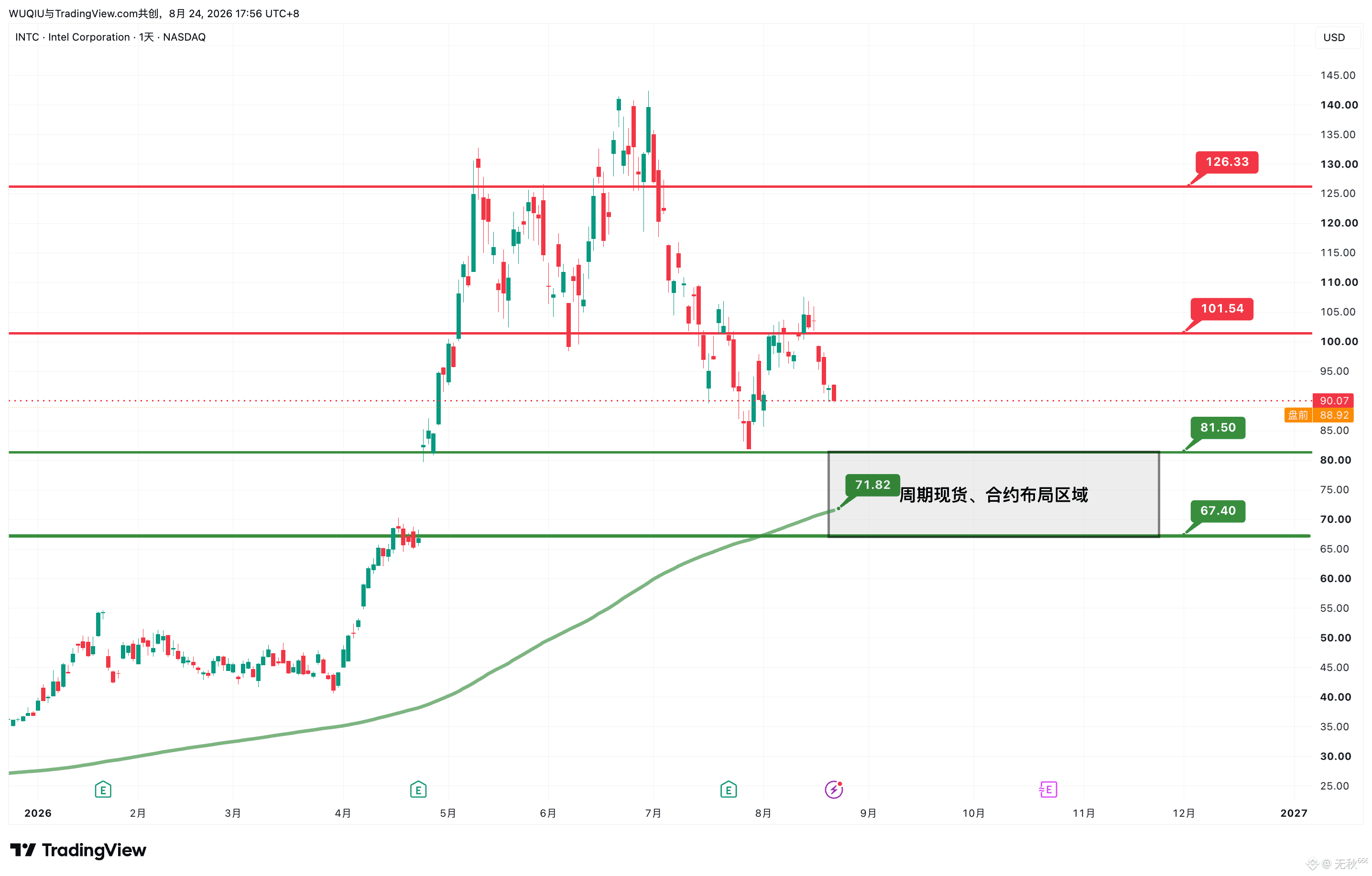
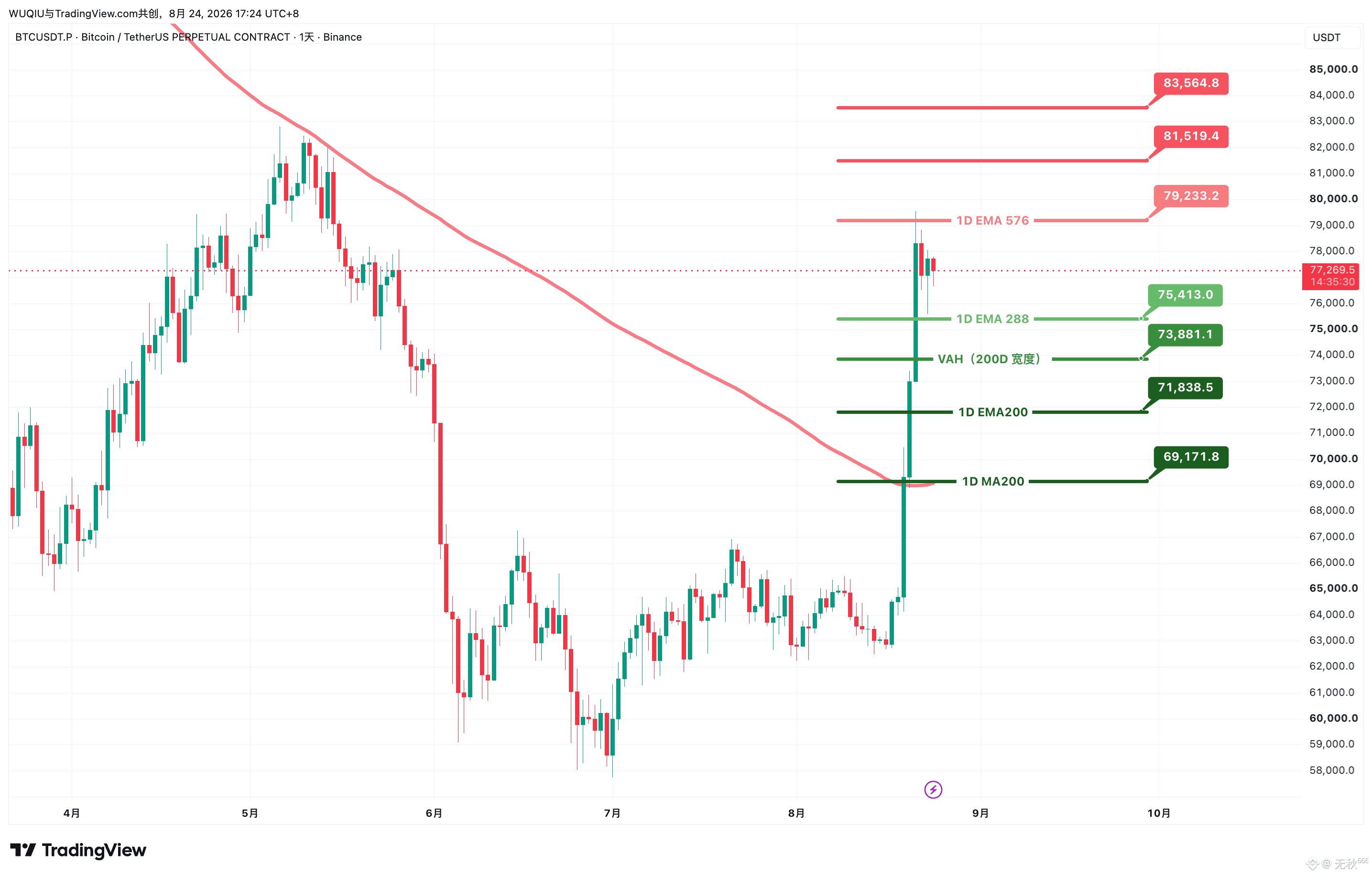
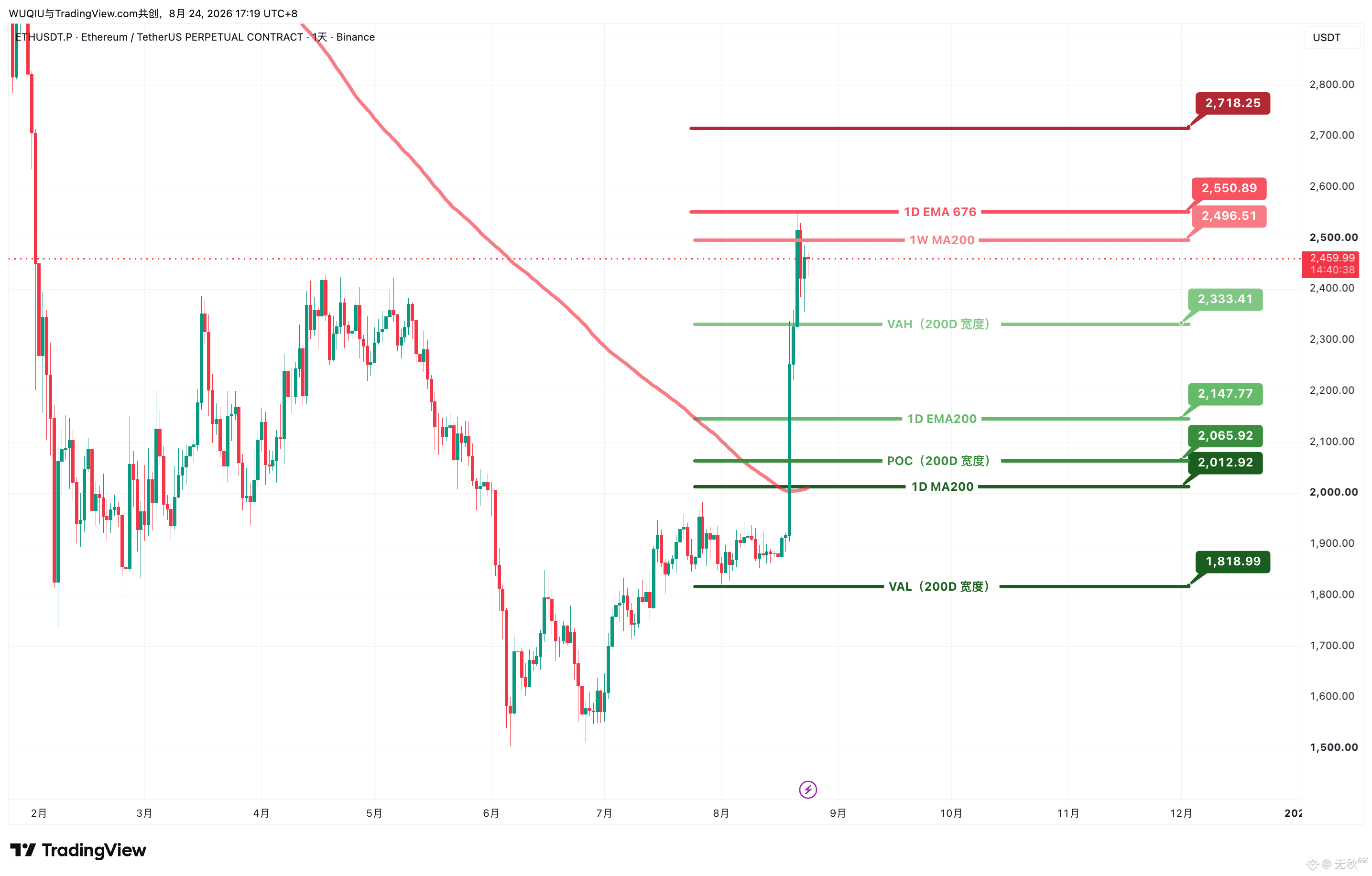
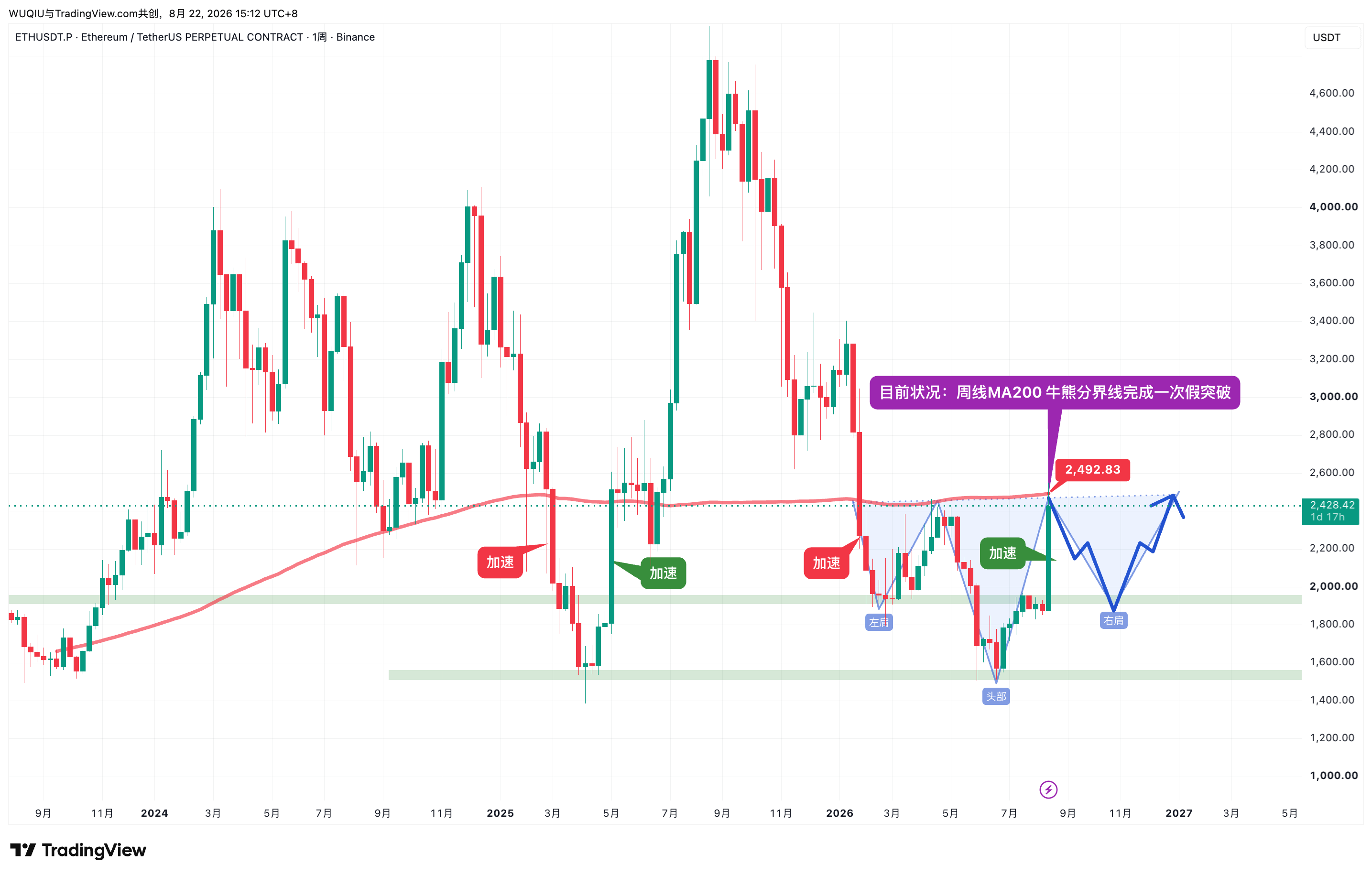
$ETH Current status: Weekly MA200. On the 4H timeframe, it looks like it made a false breakout (the weekly chart has not closed, so this is only a description of the current state). Next, we need to watch whether it is effectively rejected/pressured around 2493.
With the price running below 2493, one of the possible weekly-scale paths ahead is to see the right shoulder of a potential weekly inverse head-and-shoulders bottom pull back (2000±50). Short positions that are trapped below should focus on exiting this potential pullback area as early as possible.
If the weekly price closes again above 2493, then the likelihood of a second confirmation of a large-scale trend reversal will increase. False-breakout signals for macro trend reversals can appear multiple times on the weekly chart (see the weekly candles from 2025.05-06).
🍀 PS: Use stop-losses; that’s the best respect for the market. Don’t try to assert predictions about the market—only do what you can manage and respond to.
#比特币创2023年3月来最佳周表现 #ETH走势分析
With the price running below 2493, one of the possible weekly-scale paths ahead is to see the right shoulder of a potential weekly inverse head-and-shoulders bottom pull back (2000±50). Short positions that are trapped below should focus on exiting this potential pullback area as early as possible.
If the weekly price closes again above 2493, then the likelihood of a second confirmation of a large-scale trend reversal will increase. False-breakout signals for macro trend reversals can appear multiple times on the weekly chart (see the weekly candles from 2025.05-06).
🍀 PS: Use stop-losses; that’s the best respect for the market. Don’t try to assert predictions about the market—only do what you can manage and respond to.
#比特币创2023年3月来最佳周表现 #ETH走势分析
无秋⁶⁶⁶
·
--
$ETH Where is the current market headed?
🚨 Daily MA200 (around 2003.7)
It has already broken through and risen above, indicating that the medium-term trend has turned. The medium-term trend has already shifted into a bullish phase, breaking away from the bottom consolidation range of the past 2–3 months.
🚨 Weekly MA200 (around 2494.2)
It is close but has not yet touched or broken through. The 200-week moving average is more widely seen as the long-term bull-bear dividing line (for Ethereum, people usually look at the weekly-level MA200; for Bitcoin, they usually look at the daily-level MA200). It represents the overall macro trend and is an absolutely crucial battleground between bulls and bears.
🔥 Rational advice: First use the weekly MA200 to confirm the big direction, then use the daily MA200 for entry timing and position management. If the daily price is already above the 200-day moving average, but the weekly price is still below the 200-week moving average (which is the current situation), it is usually considered a rebound rather than a true transition into a full bull market. Market conditions can change at any moment in response to extreme macro events or liquidity crises. The only constant in this market is that it never stops changing.
🍀 PS: Setting a stop-loss when trading is the best respect you can show to the market. Don’t try to arrogantly predict the market—focus on handling what you can control.
@物极必反好运来 🌹🌹🌹 Thank you!!!
#BTC breaks $72000 #ETH breaks $2300 #ETH走势分析
🚨 Daily MA200 (around 2003.7)
It has already broken through and risen above, indicating that the medium-term trend has turned. The medium-term trend has already shifted into a bullish phase, breaking away from the bottom consolidation range of the past 2–3 months.
🚨 Weekly MA200 (around 2494.2)
It is close but has not yet touched or broken through. The 200-week moving average is more widely seen as the long-term bull-bear dividing line (for Ethereum, people usually look at the weekly-level MA200; for Bitcoin, they usually look at the daily-level MA200). It represents the overall macro trend and is an absolutely crucial battleground between bulls and bears.
🔥 Rational advice: First use the weekly MA200 to confirm the big direction, then use the daily MA200 for entry timing and position management. If the daily price is already above the 200-day moving average, but the weekly price is still below the 200-week moving average (which is the current situation), it is usually considered a rebound rather than a true transition into a full bull market. Market conditions can change at any moment in response to extreme macro events or liquidity crises. The only constant in this market is that it never stops changing.
🍀 PS: Setting a stop-loss when trading is the best respect you can show to the market. Don’t try to arrogantly predict the market—focus on handling what you can control.
@物极必反好运来 🌹🌹🌹 Thank you!!!
#BTC breaks $72000 #ETH breaks $2300 #ETH走势分析
Log in to explore more content