
chainrig_io
8 Posts

chainrig_io
Report
Block User
ChainRig – beginner-friendly guides to crypto exchanges, analytics, and bots. We verify costs, risks, and terms against official sources.
0 Following
36 Followers
3 Liked
Posts
·
--
See translation
Binance delists $USDP on 24 September. If you only trade spot, that date is your deadline. If you hold the perpetual of the next name on that list, it is not.
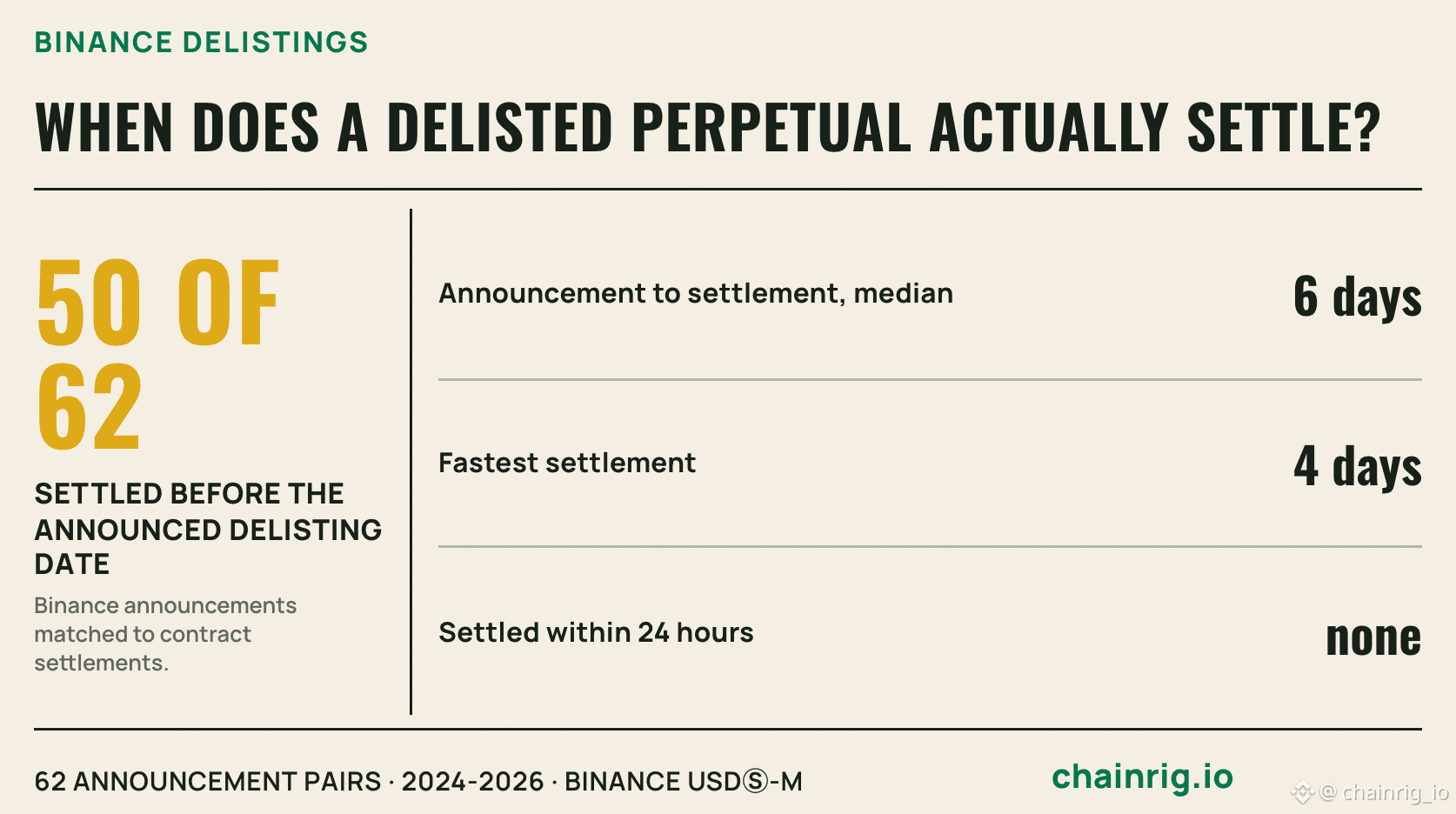
We matched every Binance delisting announcement since June 2024 against the actual settlement date of that token's USDT perpetual. 62 token-announcement pairs:
- The perpetual was never settled within 24 hours of the announcement. The fastest was 4 days.
- Median: 6 days from announcement to settlement.
- In 50 of the 62 cases the perpetual was settled BEFORE the delisting date printed in the announcement, not on it.
The most recent example is three weeks old. ICX, SCRT and STORJ were announced on 20 August with a delisting date of 3 September. Their perpetuals were settled on 26 August, eight days before the date most holders had written down.
There is a tail worth knowing about: 12 of the 62 perpetuals kept trading long after the spot delisting. OMG was settled 242 days after its announcement. So "the perp dies with the spot pair" is not automatic either. The only thing that never happened in 62 cases was a settlement inside the first day.
One more number, stated as a measurement and not as a trade: shorting the perpetual after the announcement beat random entries in the same coin by 7.6 percentage points per announcement, across the 18 announcements we could test. The interval is wide (+0.9 to +14.8) and 11 of 18 were positive, so it is a finding about 18 events, not a system.
If you hold the perp of a token that gets this notice: you have days, not hours, and your contract usually dies before the spot date. Read the futures announcement for your pair, not the spot one.
#Delisting #BinanceFutures
Binance delists $USDP on 24 September. If you only trade spot, that date is your deadline. If you hold the perpetual of the next name on that list, it is not.
We matched every Binance delisting announcement since June 2024 against the actual settlement date of that token's USDT perpetual. 62 token-announcement pairs:
- The perpetual was never settled within 24 hours of the announcement. The fastest was 4 days.
- Median: 6 days from announcement to settlement.
- In 50 of the 62 cases the perpetual was settled BEFORE the delisting date printed in the announcement, not on it.
The most recent example is three weeks old. ICX, SCRT and STORJ were announced on 20 August with a delisting date of 3 September. Their perpetuals were settled on 26 August, eight days before the date most holders had written down.
There is a tail worth knowing about: 12 of the 62 perpetuals kept trading long after the spot delisting. OMG was settled 242 days after its announcement. So "the perp dies with the spot pair" is not automatic either. The only thing that never happened in 62 cases was a settlement inside the first day.
One more number, stated as a measurement and not as a trade: shorting the perpetual after the announcement beat random entries in the same coin by 7.6 percentage points per announcement, across the 18 announcements we could test. The interval is wide (+0.9 to +14.8) and 11 of 18 were positive, so it is a finding about 18 events, not a system.
If you hold the perp of a token that gets this notice: you have days, not hours, and your contract usually dies before the spot date. Read the futures announcement for your pair, not the spot one.
#Delisting #BinanceFutures
We matched every Binance delisting announcement since June 2024 against the actual settlement date of that token's USDT perpetual. 62 token-announcement pairs:
- The perpetual was never settled within 24 hours of the announcement. The fastest was 4 days.
- Median: 6 days from announcement to settlement.
- In 50 of the 62 cases the perpetual was settled BEFORE the delisting date printed in the announcement, not on it.
The most recent example is three weeks old. ICX, SCRT and STORJ were announced on 20 August with a delisting date of 3 September. Their perpetuals were settled on 26 August, eight days before the date most holders had written down.
There is a tail worth knowing about: 12 of the 62 perpetuals kept trading long after the spot delisting. OMG was settled 242 days after its announcement. So "the perp dies with the spot pair" is not automatic either. The only thing that never happened in 62 cases was a settlement inside the first day.
One more number, stated as a measurement and not as a trade: shorting the perpetual after the announcement beat random entries in the same coin by 7.6 percentage points per announcement, across the 18 announcements we could test. The interval is wide (+0.9 to +14.8) and 11 of 18 were positive, so it is a finding about 18 events, not a system.
If you hold the perp of a token that gets this notice: you have days, not hours, and your contract usually dies before the spot date. Read the futures announcement for your pair, not the spot one.
#Delisting #BinanceFutures
147
·
--
See translation
What the first day of a new perpetual contract looks like
We replayed 515 USDT perpetual launches on Binance from 2023 to July 2026, hour by hour, with real taker fees, slippage and actual funding.
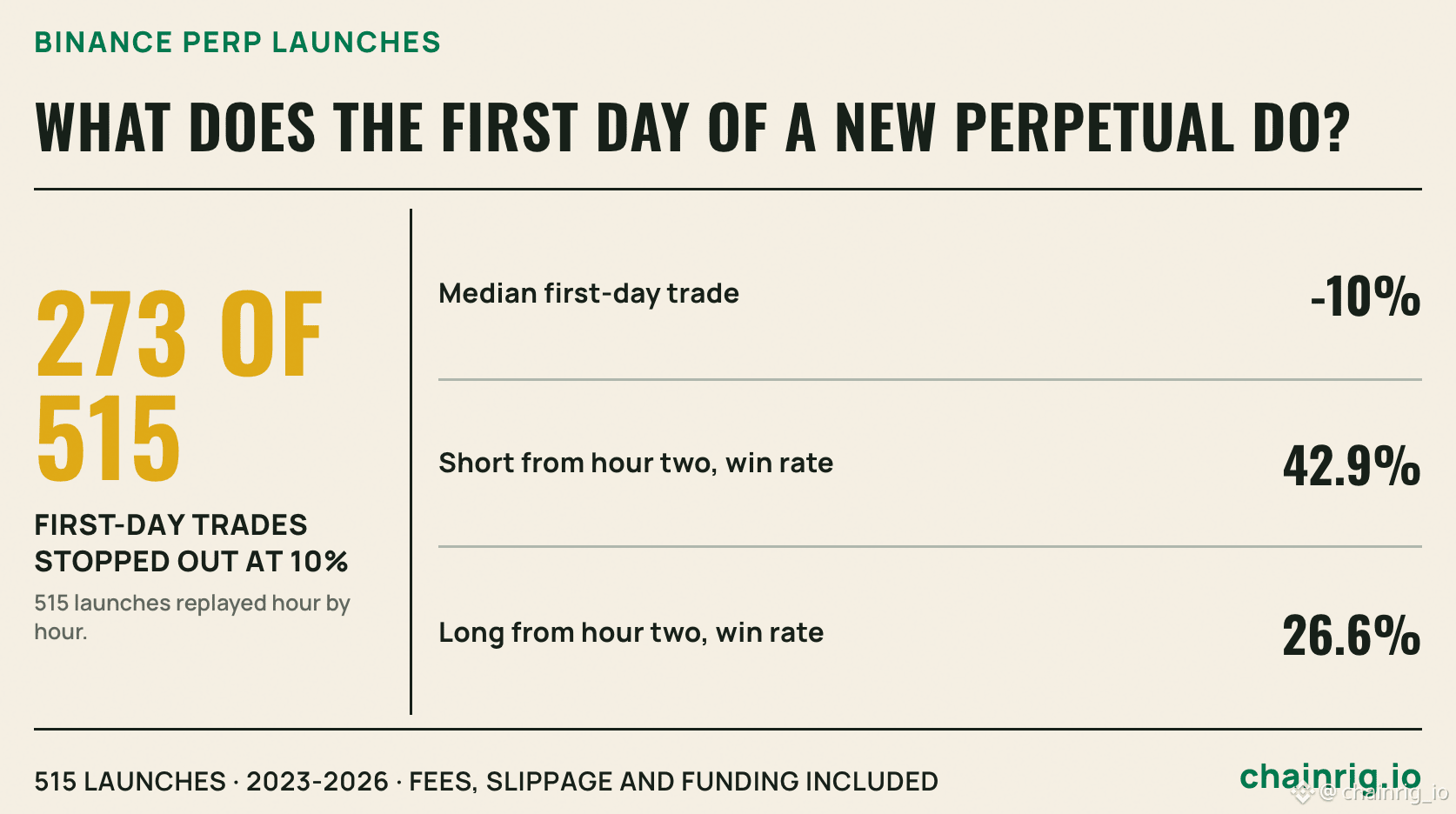
- 273 of 515 first-day trades were stopped out at 10%
- Median first-day trade: the stop itself
- Short from hour two: 42.9% win rate, 19.6% drawdown
- Long from hour two: 26.6% win rate, 31.4% drawdown
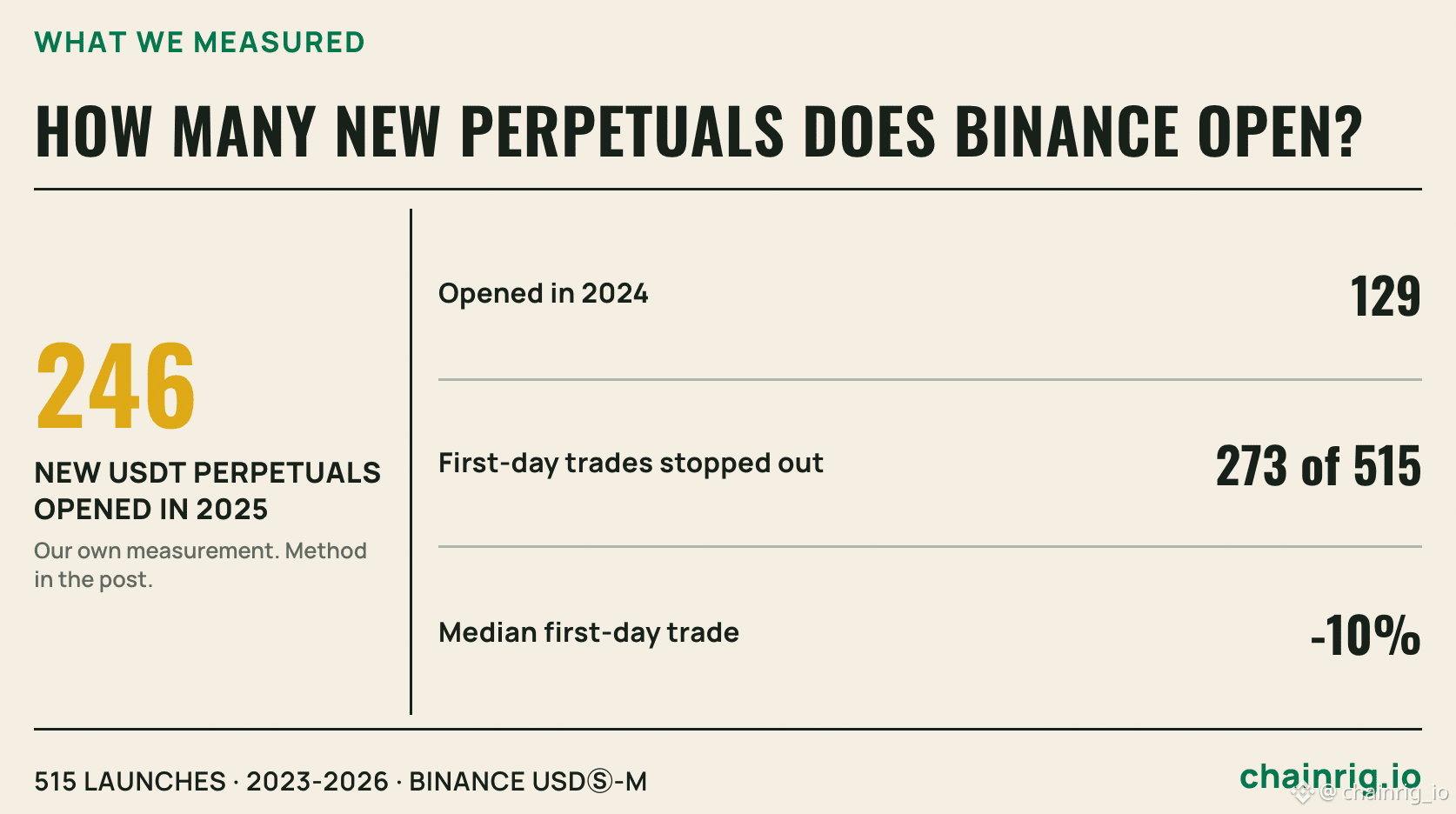
- New USDT perpetuals launched: 129 in 2024, 246 in 2025
Day one is squeezes in both directions, not a trend. The first hours are where the least information meets the most leverage.
Method: entry at the open of the stated hour, 24-hour hold, 10% stop, taker fee 0.05% plus 0.03% slippage per side, actual funding. Control: the same rule applied to mature altcoins in the same hour, because in 2024 and 2025 every altcoin was falling.
Limitation: this describes day one, it is not a strategy. A different stop changes the count.
#BinanceFutures
What the first day of a new perpetual contract looks like
We replayed 515 USDT perpetual launches on Binance from 2023 to July 2026, hour by hour, with real taker fees, slippage and actual funding.
- 273 of 515 first-day trades were stopped out at 10%
- Median first-day trade: the stop itself
- Short from hour two: 42.9% win rate, 19.6% drawdown
- Long from hour two: 26.6% win rate, 31.4% drawdown
- New USDT perpetuals launched: 129 in 2024, 246 in 2025
Day one is squeezes in both directions, not a trend. The first hours are where the least information meets the most leverage.
Method: entry at the open of the stated hour, 24-hour hold, 10% stop, taker fee 0.05% plus 0.03% slippage per side, actual funding. Control: the same rule applied to mature altcoins in the same hour, because in 2024 and 2025 every altcoin was falling.
Limitation: this describes day one, it is not a strategy. A different stop changes the count.
#BinanceFutures
We replayed 515 USDT perpetual launches on Binance from 2023 to July 2026, hour by hour, with real taker fees, slippage and actual funding.
- 273 of 515 first-day trades were stopped out at 10%
- Median first-day trade: the stop itself
- Short from hour two: 42.9% win rate, 19.6% drawdown
- Long from hour two: 26.6% win rate, 31.4% drawdown
- New USDT perpetuals launched: 129 in 2024, 246 in 2025
Day one is squeezes in both directions, not a trend. The first hours are where the least information meets the most leverage.
Method: entry at the open of the stated hour, 24-hour hold, 10% stop, taker fee 0.05% plus 0.03% slippage per side, actual funding. Control: the same rule applied to mature altcoins in the same hour, because in 2024 and 2025 every altcoin was falling.
Limitation: this describes day one, it is not a strategy. A different stop changes the count.
#BinanceFutures
70
·
--
See translation
Binance opened two new perpetuals on 6 September, $PONS and 哈基米. Before anyone takes the first candle of the next one, here is what the first day actually does.
We replayed 515 USDT perpetual launches on Binance from 2023 to July 2026, hour by hour, with real taker fees, slippage and actual funding:
- 273 of the 515 first-day trades were stopped out at 10%. The median first-day trade was the stop itself.
- The side does not save you. Short from hour two: 42.9% of trades won, drawdown 19.6%. Long from hour two: 26.6% won, drawdown 31.4%.
- Day one is squeezes in both directions, not a trend.
Binance launched 129 new USDT perpetuals in 2024 and 246 in 2025, so this is roughly every other day, not a rare event.
What we do with it: nothing on day one. The variant that did look different was entering after the first 24 hours, and we are not publishing it as a trade, because it is one diagnostic out of eleven we ran and it has not survived data it has never seen.
If you trade new listings, the number worth carrying around is 273 of 515.
#NewListing #BinanceFutures
Binance opened two new perpetuals on 6 September, $PONS and 哈基米. Before anyone takes the first candle of the next one, here is what the first day actually does.
We replayed 515 USDT perpetual launches on Binance from 2023 to July 2026, hour by hour, with real taker fees, slippage and actual funding:
- 273 of the 515 first-day trades were stopped out at 10%. The median first-day trade was the stop itself.
- The side does not save you. Short from hour two: 42.9% of trades won, drawdown 19.6%. Long from hour two: 26.6% won, drawdown 31.4%.
- Day one is squeezes in both directions, not a trend.
Binance launched 129 new USDT perpetuals in 2024 and 246 in 2025, so this is roughly every other day, not a rare event.
What we do with it: nothing on day one. The variant that did look different was entering after the first 24 hours, and we are not publishing it as a trade, because it is one diagnostic out of eleven we ran and it has not survived data it has never seen.
If you trade new listings, the number worth carrying around is 273 of 515.
#NewListing #BinanceFutures
We replayed 515 USDT perpetual launches on Binance from 2023 to July 2026, hour by hour, with real taker fees, slippage and actual funding:
- 273 of the 515 first-day trades were stopped out at 10%. The median first-day trade was the stop itself.
- The side does not save you. Short from hour two: 42.9% of trades won, drawdown 19.6%. Long from hour two: 26.6% won, drawdown 31.4%.
- Day one is squeezes in both directions, not a trend.
Binance launched 129 new USDT perpetuals in 2024 and 246 in 2025, so this is roughly every other day, not a rare event.
What we do with it: nothing on day one. The variant that did look different was entering after the first 24 hours, and we are not publishing it as a trade, because it is one diagnostic out of eleven we ran and it has not survived data it has never seen.
If you trade new listings, the number worth carrying around is 273 of 515.
#NewListing #BinanceFutures
300
·
--
See translation
CHAINRIG SYSTEM TEST #001 | BINANCE-VERIFIED RESULT
$INJ SHORT closed at take profit.
Net result: +44.21 USDT
Series record: 1 win · 0 losses
Total net P&L: +44.21 USDT
The attached card is generated from Binance position data.
Real trade · Fixed risk · Public record
Not financial advice.
CHAINRIG SYSTEM TEST #001 | BINANCE-VERIFIED RESULT
$INJ SHORT closed at take profit.
Net result: +44.21 USDT
Series record: 1 win · 0 losses
Total net P&L: +44.21 USDT
The attached card is generated from Binance position data.
Real trade · Fixed risk · Public record
Not financial advice.
$INJ SHORT closed at take profit.
Net result: +44.21 USDT
Series record: 1 win · 0 losses
Total net P&L: +44.21 USDT
The attached card is generated from Binance position data.
Real trade · Fixed risk · Public record
Not financial advice.
2
368
·
--
See translation
CHAINRIG SYSTEM TEST #001 | RESULT
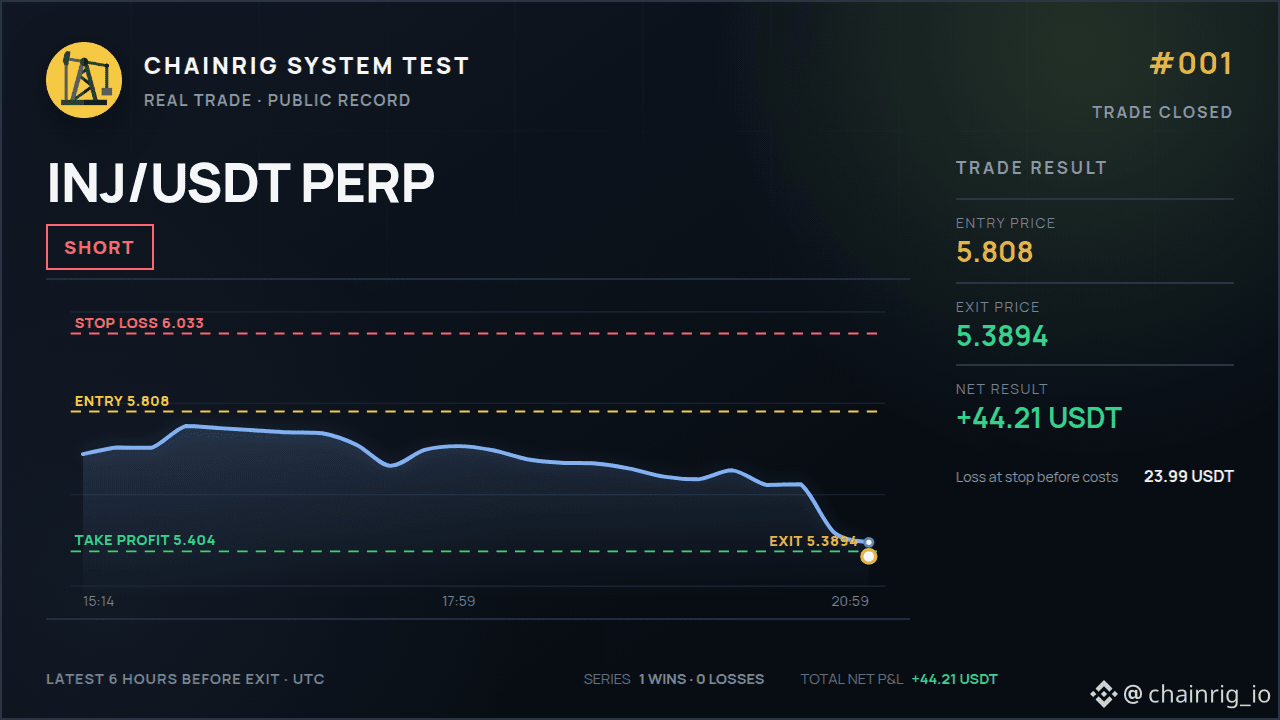
$INJ · USD-M PERPETUAL · SHORT · TAKE PROFIT REACHED
Entry price: 5.808
Exit price: 5.3894
Trade result: +44.21 USDT after fees and funding
Series record: 1 wins · 0 losses
Total net P&L: +44.21 USDT
This was a real trade. The series total includes all closed real trades, including safety closures. Not financial advice.
CHAINRIG SYSTEM TEST #001 | RESULT
$INJ · USD-M PERPETUAL · SHORT · TAKE PROFIT REACHED
Entry price: 5.808
Exit price: 5.3894
Trade result: +44.21 USDT after fees and funding
Series record: 1 wins · 0 losses
Total net P&L: +44.21 USDT
This was a real trade. The series total includes all closed real trades, including safety closures. Not financial advice.
$INJ · USD-M PERPETUAL · SHORT · TAKE PROFIT REACHED
Entry price: 5.808
Exit price: 5.3894
Trade result: +44.21 USDT after fees and funding
Series record: 1 wins · 0 losses
Total net P&L: +44.21 USDT
This was a real trade. The series total includes all closed real trades, including safety closures. Not financial advice.
242
·
--
See translation
CHAINRIG SYSTEM TEST #001
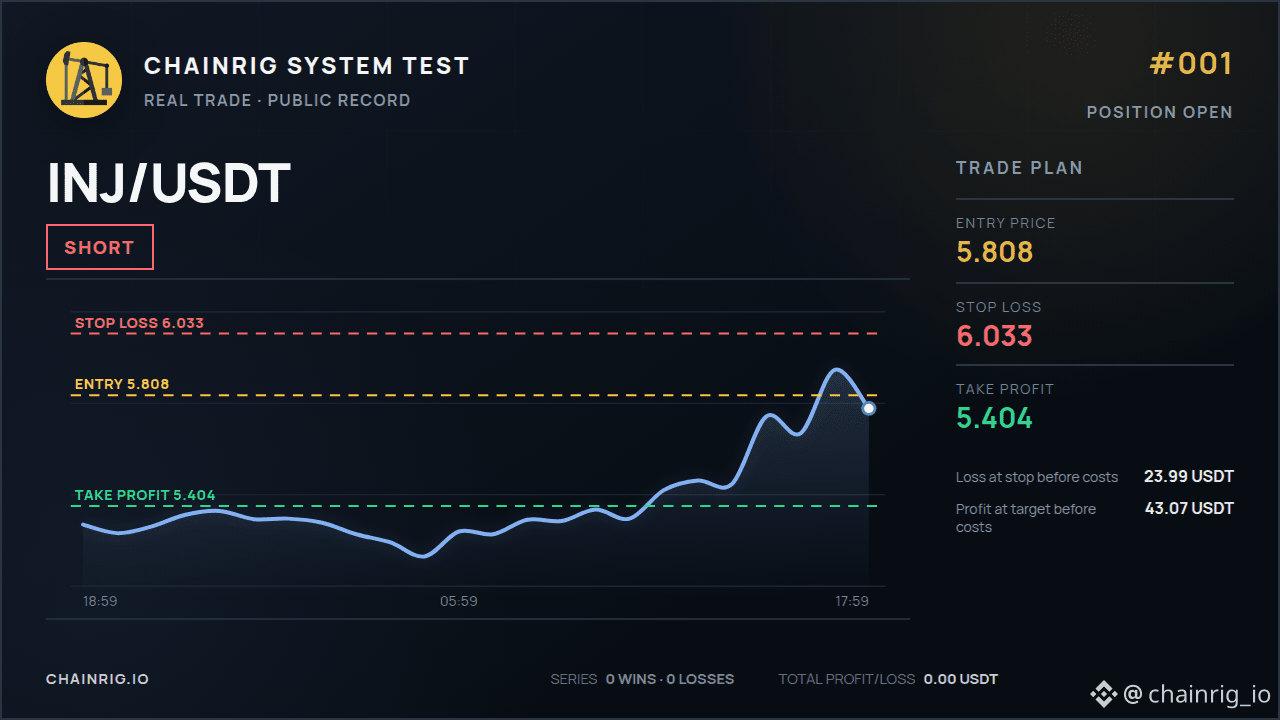
$INJ SHORT | REAL TRADE
Direction: This trade aims to profit if the price falls.
Entry price: 5.808
Stop loss: 6.033 (automatic exit if the trade moves against us)
Take profit: 5.404 (automatic exit if the target is reached)
Planned loss at the stop: 23.99 USDT before fees and slippage
Planned profit at the target: 43.07 USDT before fees and slippage
Risk controls: 3× leverage; isolated margin keeps this position separate from other positions
Why this trade: Price moved +5.01% in four hours while the total value of open futures positions increased by 6.50%. Buyers then became less aggressive, supporting a short setup.
Record: 0 wins · 0 losses | Total profit/loss 0.00 USDT
This public test uses real capital. Binance confirmed both automatic exits before this post was published. The levels remain fixed. Not financial advice.
CHAINRIG SYSTEM TEST #001
$INJ SHORT | REAL TRADE
Direction: This trade aims to profit if the price falls.
Entry price: 5.808
Stop loss: 6.033 (automatic exit if the trade moves against us)
Take profit: 5.404 (automatic exit if the target is reached)
Planned loss at the stop: 23.99 USDT before fees and slippage
Planned profit at the target: 43.07 USDT before fees and slippage
Risk controls: 3× leverage; isolated margin keeps this position separate from other positions
Why this trade: Price moved +5.01% in four hours while the total value of open futures positions increased by 6.50%. Buyers then became less aggressive, supporting a short setup.
Record: 0 wins · 0 losses | Total profit/loss 0.00 USDT
This public test uses real capital. Binance confirmed both automatic exits before this post was published. The levels remain fixed. Not financial advice.
$INJ SHORT | REAL TRADE
Direction: This trade aims to profit if the price falls.
Entry price: 5.808
Stop loss: 6.033 (automatic exit if the trade moves against us)
Take profit: 5.404 (automatic exit if the target is reached)
Planned loss at the stop: 23.99 USDT before fees and slippage
Planned profit at the target: 43.07 USDT before fees and slippage
Risk controls: 3× leverage; isolated margin keeps this position separate from other positions
Why this trade: Price moved +5.01% in four hours while the total value of open futures positions increased by 6.50%. Buyers then became less aggressive, supporting a short setup.
Record: 0 wins · 0 losses | Total profit/loss 0.00 USDT
This public test uses real capital. Binance confirmed both automatic exits before this post was published. The levels remain fixed. Not financial advice.
106
·
--
See translation
LITUSDT long closed at take profit.
Entry: 3.0486
Average exit: 3.5023
Result: +48.11 USDT (+44.17%) with 3× leverage.
The position used isolated margin, a fixed stop-loss, and a predefined target. No additional entries and no changes to the plan – just discipline and patience.
#LIT #CryptoTrading
LITUSDT long closed at take profit.
Entry: 3.0486
Average exit: 3.5023
Result: +48.11 USDT (+44.17%) with 3× leverage.
The position used isolated margin, a fixed stop-loss, and a predefined target. No additional entries and no changes to the plan – just discipline and patience.
#LIT #CryptoTrading
Entry: 3.0486
Average exit: 3.5023
Result: +48.11 USDT (+44.17%) with 3× leverage.
The position used isolated margin, a fixed stop-loss, and a predefined target. No additional entries and no changes to the plan – just discipline and patience.
#LIT #CryptoTrading
1
202
·
--
See translation
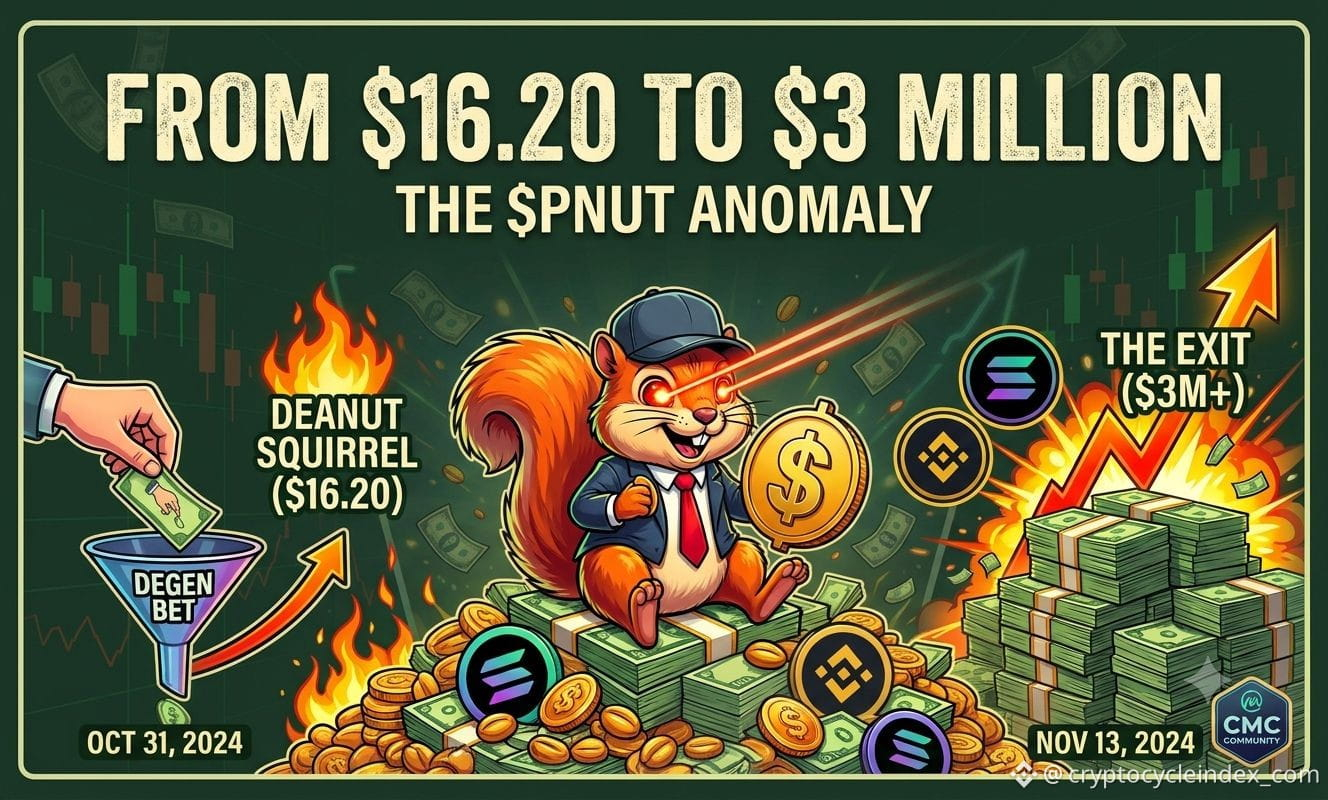
$PNUT made one wallet about 3 million dollars from a 16.20 dollar buy in two weeks - while thousands of near-identical Solana launches went to zero in the same window. It began on October 31, 2024, when an anonymous trader spent 16.20 dollars on the token while it was still barely trading. Days later the coin was swept into a viral US controversy, and buying activity climbed fast. The turning point came on November 11, when Binance listed the token and opened it to a global market with real liquidity. The early trader sold gradually into the wave of buyers that the Binance listing brought in, and by November 13 the original buy had become about 3 million dollars.
It reads like a repeatable playbook. It isn't. We remember this wallet only because it won – most tokens launched on Solana that period vanished before any major exchange looked at them. Attention, timing, and a Binance listing aligned once. Was $PNUT a once-in-a-cycle anomaly, or will the $SOL ecosystem produce another?
$PNUT made one wallet about 3 million dollars from a 16.20 dollar buy in two weeks - while thousands of near-identical Solana launches went to zero in the same window. It began on October 31, 2024, when an anonymous trader spent 16.20 dollars on the token while it was still barely trading. Days later the coin was swept into a viral US controversy, and buying activity climbed fast. The turning point came on November 11, when Binance listed the token and opened it to a global market with real liquidity. The early trader sold gradually into the wave of buyers that the Binance listing brought in, and by November 13 the original buy had become about 3 million dollars.
It reads like a repeatable playbook. It isn't. We remember this wallet only because it won – most tokens launched on Solana that period vanished before any major exchange looked at them. Attention, timing, and a Binance listing aligned once. Was $PNUT a once-in-a-cycle anomaly, or will the $SOL ecosystem produce another?
It reads like a repeatable playbook. It isn't. We remember this wallet only because it won – most tokens launched on Solana that period vanished before any major exchange looked at them. Attention, timing, and a Binance listing aligned once. Was $PNUT a once-in-a-cycle anomaly, or will the $SOL ecosystem produce another?
232
Log in to explore more content
Join global crypto users on Binance Square
⚡️ Get latest and useful information about crypto.
💬 Trusted by the world’s largest crypto exchange.
👍 Discover real insights from verified creators.
Email / Phone number
Trending Topics
FedRateWatch
681,368 views
3,212 Discussing
Share & Win Traffic Reward in our Trending Hashtag Campaign
✨Topic: FOMC September, What's The Fed's Next Move?
👉How to Join:
Publish a short post or article with hashtag #FedRateWatch
Create content based on the below angles:
- August core CPI rose 0.3% month-over-month, and the odds of a 25bp hike this week are now close to 90%. Do you anticipate a rate hike this week? Is it a one-off, or the start of a longer hiking cycle?
- If the hike lands, how does it play out for BTC, tech stocks, and gold? Bullish or bearish?
- How are you planning to trade next? Share your BTC, stocks or gold trade/holdings with our trade sharing widget.
⏰Campaign Period:
- 2026-09-15 11:00 - 2026-09-17 3:00 UTC
🎁Reward:
- Qualified posts that comply with the above guidelines and contain more than 100 words will be reviewed and may receive a random traffic boost of 500 to 3,000 views. You will receive a notification from your feed secretary if your post is selected.
- Get a chance to have your article featured on Binance Square Official
Need ideas for your post? Visit the topic page #FedRateWatch or the Square Guide on How to Post for Better Reach.
Binance Square Official
·420 Likes
·949.1k views
EthereumFallsBelow$2400
959 views
35 Discussing
USSenateBlocksClarityAct
3,878 views
151 Discussing