

Crypto Breaking
20k Posts

Crypto Breaking
 Square Verified+
Report
Block User
Get real-time cryptocurrency news, blockchain updates, market analysis, and expert insights. Explore the latest trends in Bitcoin, Ethereum, DeFi, and Web3.
6 Following
32.8K+ Followers
31.6K+ Liked
Posts
All
Quotes
Article
See translation
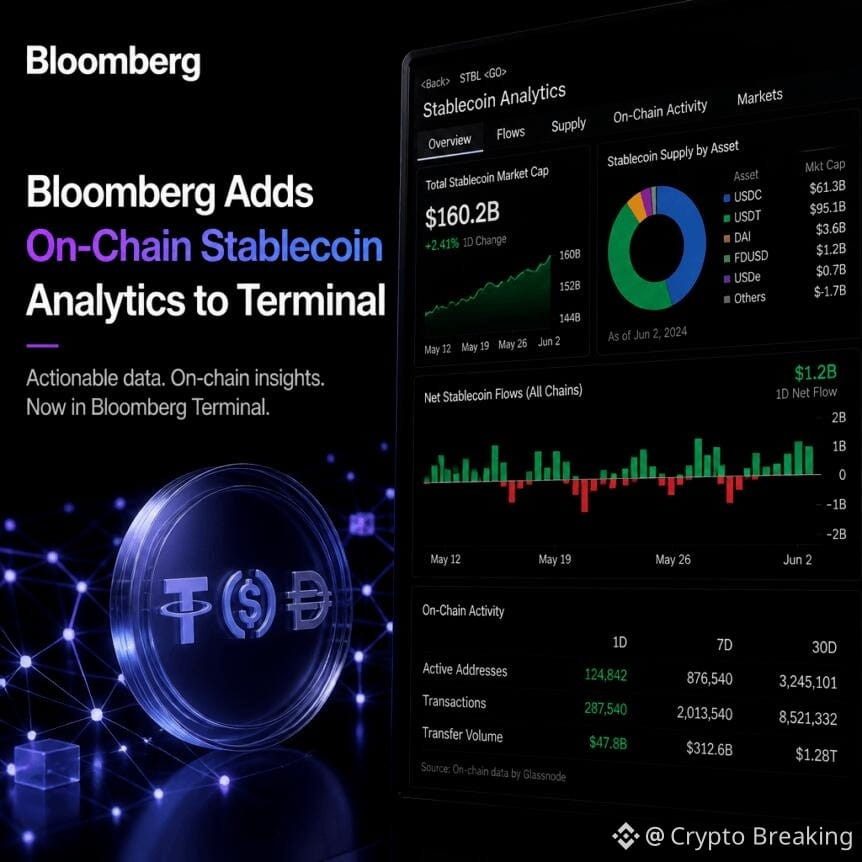
Bloomberg Adds On-Chain Stablecoin Analytics to TerminalBloomberg has introduced a stablecoin analytics dashboard inside its Bloomberg Terminal, aiming to bring standardized onchain visibility to the same platform used by banks, asset managers and other finance professionals. The new tool is designed to track stablecoin supply, issuance and transaction activity in real time, narrowing the gap between traditional market data workflows and blockchain-level fundamentals.
Bloomberg says the dashboard—powered by blockchain data platform Allium—covers stablecoins with more than $100 million in circulation. That subset represents over 98% of the stablecoin market by supply, according to a Wednesday announcement from Bloomberg.
Key takeaways
Bloomberg Terminal now includes a stablecoin dashboard tracking supply, mints, burns and transaction activity.
The dashboard focuses on stablecoins with over $100 million in circulation, covering more than 98% of the market.
Users can compare stablecoins using metrics such as transfer volume and velocity, and analyze activity by blockchain network and peg type.
Bloomberg says the tool is available to all Terminal users through a Terminal function called RWAS <go>.
The launch arrives as stablecoin capitalization has surpassed $306 billion, with DeFiLlama citing Tether’s USDT as about 60% of the market.
Bloomberg brings stablecoin onchain analytics into Terminal
The stablecoin dashboard is positioned as an additional layer of blockchain data within Bloomberg’s established analytics environment. Bloomberg Terminal users typically rely on the platform for real-time market pricing, news, analytics and communications, and the company has already carried Bitcoin pricing on the Terminal since 2014.
With this launch, Bloomberg is effectively extending that ecosystem to stablecoin monitoring—an area where many traditional participants previously had to stitch together disparate data sources for supply changes and transaction-level signals.
What the dashboard tracks: supply, issuance and transaction behavior
According to Bloomberg, the dashboard supports comparisons across stablecoins using multiple onchain metrics. Users can review stablecoin supply alongside issuance and redemption activity through mint and burn tracking.
Beyond raw supply and issuance, Bloomberg says the dashboard includes measures of transfer volume and velocity. It also breaks activity down by the blockchain network on which tokens operate and by peg type, including pegs tied to fiat currencies and commodities.
For investors and operators, the practical value lies in being able to analyze not just where capital is sitting, but how stablecoin usage is evolving—such as whether activity is concentrated on particular networks or whether issuance and redemption patterns align with broader settlement behavior.
Allium powers the tool, and coverage targets the market core
Bloomberg credits Allium as the data layer behind the dashboard. The scope is intentionally broad but not universal: Bloomberg states it covers stablecoins with more than $100 million in circulation. That design choice matters because it prioritizes the stablecoins that dominate market liquidity and operational relevance, while still keeping the dataset manageable for users comparing multiple assets.
Bloomberg also frames its coverage as representing “over 98%” of the stablecoin market by circulation, based on its Wednesday announcement. In other words, for most users looking for market-wide trends rather than niche token tracking, the dashboard is engineered to capture the bulk of activity.
Why the timing matters as stablecoin supply expands
The announcement arrives amid continued growth in stablecoin supply. DeFiLlama data cited by Bloomberg indicates stablecoin market capitalization has risen above $306 billion, with Tether’s USDT accounting for roughly 60% of that total.
Stablecoin market cap growth has been closely tied to wider adoption for payments, exchange settlement and onchain finance. A dashboard that standardizes onchain monitoring inside a major institutional data platform could reduce friction for participants who want to incorporate stablecoin supply dynamics into risk management and portfolio analysis without leaving their primary workflow.
Still, readers should note what remains unstated in Bloomberg’s announcement: the dashboard’s exact methodology for computing metrics like velocity, and how it handles different token standards or edge cases across chains. Those operational details are typically where analysts may seek transparency and may determine how directly the metrics can be used for quantitative models.
Bloomberg Terminal access and positioning
Bloomberg says the dashboard is available to all Terminal users through RWAS <go>, and that it places onchain stablecoin data alongside the platform’s existing fixed-income, foreign exchange and money-market tools.
This “side-by-side” placement is a key part of the pitch. Stablecoins often function as settlement instruments and liquidity proxies in broader digital asset markets; integrating them into a familiar institutional interface could help map onchain activity to conventional market frameworks more efficiently.
Next, market participants will likely watch how broadly the dashboard expands beyond the current $100 million circulation threshold, and whether Bloomberg adds more granular features or expanded coverage across peg types and networks as stablecoin usage evolves.
This article was originally published as Bloomberg Adds On-Chain Stablecoin Analytics to Terminal on Crypto Breaking News – your trusted source for crypto news, Bitcoin news, and blockchain updates.
Bloomberg Adds On-Chain Stablecoin Analytics to Terminal
Bloomberg has introduced a stablecoin analytics dashboard inside its Bloomberg Terminal, aiming to bring standardized onchain visibility to the same platform used by banks, asset managers and other finance professionals. The new tool is designed to track stablecoin supply, issuance and transaction activity in real time, narrowing the gap between traditional market data workflows and blockchain-level fundamentals.
Bloomberg says the dashboard—powered by blockchain data platform Allium—covers stablecoins with more than $100 million in circulation. That subset represents over 98% of the stablecoin market by supply, according to a Wednesday announcement from Bloomberg.
Key takeaways
Bloomberg Terminal now includes a stablecoin dashboard tracking supply, mints, burns and transaction activity.
The dashboard focuses on stablecoins with over $100 million in circulation, covering more than 98% of the market.
Users can compare stablecoins using metrics such as transfer volume and velocity, and analyze activity by blockchain network and peg type.
Bloomberg says the tool is available to all Terminal users through a Terminal function called RWAS <go>.
The launch arrives as stablecoin capitalization has surpassed $306 billion, with DeFiLlama citing Tether’s USDT as about 60% of the market.
Bloomberg brings stablecoin onchain analytics into Terminal
The stablecoin dashboard is positioned as an additional layer of blockchain data within Bloomberg’s established analytics environment. Bloomberg Terminal users typically rely on the platform for real-time market pricing, news, analytics and communications, and the company has already carried Bitcoin pricing on the Terminal since 2014.
With this launch, Bloomberg is effectively extending that ecosystem to stablecoin monitoring—an area where many traditional participants previously had to stitch together disparate data sources for supply changes and transaction-level signals.
What the dashboard tracks: supply, issuance and transaction behavior
According to Bloomberg, the dashboard supports comparisons across stablecoins using multiple onchain metrics. Users can review stablecoin supply alongside issuance and redemption activity through mint and burn tracking.
Beyond raw supply and issuance, Bloomberg says the dashboard includes measures of transfer volume and velocity. It also breaks activity down by the blockchain network on which tokens operate and by peg type, including pegs tied to fiat currencies and commodities.
For investors and operators, the practical value lies in being able to analyze not just where capital is sitting, but how stablecoin usage is evolving—such as whether activity is concentrated on particular networks or whether issuance and redemption patterns align with broader settlement behavior.
Allium powers the tool, and coverage targets the market core
Bloomberg credits Allium as the data layer behind the dashboard. The scope is intentionally broad but not universal: Bloomberg states it covers stablecoins with more than $100 million in circulation. That design choice matters because it prioritizes the stablecoins that dominate market liquidity and operational relevance, while still keeping the dataset manageable for users comparing multiple assets.
Bloomberg also frames its coverage as representing “over 98%” of the stablecoin market by circulation, based on its Wednesday announcement. In other words, for most users looking for market-wide trends rather than niche token tracking, the dashboard is engineered to capture the bulk of activity.
Why the timing matters as stablecoin supply expands
The announcement arrives amid continued growth in stablecoin supply. DeFiLlama data cited by Bloomberg indicates stablecoin market capitalization has risen above $306 billion, with Tether’s USDT accounting for roughly 60% of that total.
Stablecoin market cap growth has been closely tied to wider adoption for payments, exchange settlement and onchain finance. A dashboard that standardizes onchain monitoring inside a major institutional data platform could reduce friction for participants who want to incorporate stablecoin supply dynamics into risk management and portfolio analysis without leaving their primary workflow.
Still, readers should note what remains unstated in Bloomberg’s announcement: the dashboard’s exact methodology for computing metrics like velocity, and how it handles different token standards or edge cases across chains. Those operational details are typically where analysts may seek transparency and may determine how directly the metrics can be used for quantitative models.
Bloomberg Terminal access and positioning
Bloomberg says the dashboard is available to all Terminal users through RWAS <go>, and that it places onchain stablecoin data alongside the platform’s existing fixed-income, foreign exchange and money-market tools.
This “side-by-side” placement is a key part of the pitch. Stablecoins often function as settlement instruments and liquidity proxies in broader digital asset markets; integrating them into a familiar institutional interface could help map onchain activity to conventional market frameworks more efficiently.
Next, market participants will likely watch how broadly the dashboard expands beyond the current $100 million circulation threshold, and whether Bloomberg adds more granular features or expanded coverage across peg types and networks as stablecoin usage evolves.
This article was originally published as Bloomberg Adds On-Chain Stablecoin Analytics to Terminal on Crypto Breaking News – your trusted source for crypto news, Bitcoin news, and blockchain updates.
Bloomberg says the dashboard—powered by blockchain data platform Allium—covers stablecoins with more than $100 million in circulation. That subset represents over 98% of the stablecoin market by supply, according to a Wednesday announcement from Bloomberg.
Key takeaways
Bloomberg Terminal now includes a stablecoin dashboard tracking supply, mints, burns and transaction activity.
The dashboard focuses on stablecoins with over $100 million in circulation, covering more than 98% of the market.
Users can compare stablecoins using metrics such as transfer volume and velocity, and analyze activity by blockchain network and peg type.
Bloomberg says the tool is available to all Terminal users through a Terminal function called RWAS <go>.
The launch arrives as stablecoin capitalization has surpassed $306 billion, with DeFiLlama citing Tether’s USDT as about 60% of the market.
Bloomberg brings stablecoin onchain analytics into Terminal
The stablecoin dashboard is positioned as an additional layer of blockchain data within Bloomberg’s established analytics environment. Bloomberg Terminal users typically rely on the platform for real-time market pricing, news, analytics and communications, and the company has already carried Bitcoin pricing on the Terminal since 2014.
With this launch, Bloomberg is effectively extending that ecosystem to stablecoin monitoring—an area where many traditional participants previously had to stitch together disparate data sources for supply changes and transaction-level signals.
What the dashboard tracks: supply, issuance and transaction behavior
According to Bloomberg, the dashboard supports comparisons across stablecoins using multiple onchain metrics. Users can review stablecoin supply alongside issuance and redemption activity through mint and burn tracking.
Beyond raw supply and issuance, Bloomberg says the dashboard includes measures of transfer volume and velocity. It also breaks activity down by the blockchain network on which tokens operate and by peg type, including pegs tied to fiat currencies and commodities.
For investors and operators, the practical value lies in being able to analyze not just where capital is sitting, but how stablecoin usage is evolving—such as whether activity is concentrated on particular networks or whether issuance and redemption patterns align with broader settlement behavior.
Allium powers the tool, and coverage targets the market core
Bloomberg credits Allium as the data layer behind the dashboard. The scope is intentionally broad but not universal: Bloomberg states it covers stablecoins with more than $100 million in circulation. That design choice matters because it prioritizes the stablecoins that dominate market liquidity and operational relevance, while still keeping the dataset manageable for users comparing multiple assets.
Bloomberg also frames its coverage as representing “over 98%” of the stablecoin market by circulation, based on its Wednesday announcement. In other words, for most users looking for market-wide trends rather than niche token tracking, the dashboard is engineered to capture the bulk of activity.
Why the timing matters as stablecoin supply expands
The announcement arrives amid continued growth in stablecoin supply. DeFiLlama data cited by Bloomberg indicates stablecoin market capitalization has risen above $306 billion, with Tether’s USDT accounting for roughly 60% of that total.
Stablecoin market cap growth has been closely tied to wider adoption for payments, exchange settlement and onchain finance. A dashboard that standardizes onchain monitoring inside a major institutional data platform could reduce friction for participants who want to incorporate stablecoin supply dynamics into risk management and portfolio analysis without leaving their primary workflow.
Still, readers should note what remains unstated in Bloomberg’s announcement: the dashboard’s exact methodology for computing metrics like velocity, and how it handles different token standards or edge cases across chains. Those operational details are typically where analysts may seek transparency and may determine how directly the metrics can be used for quantitative models.
Bloomberg Terminal access and positioning
Bloomberg says the dashboard is available to all Terminal users through RWAS <go>, and that it places onchain stablecoin data alongside the platform’s existing fixed-income, foreign exchange and money-market tools.
This “side-by-side” placement is a key part of the pitch. Stablecoins often function as settlement instruments and liquidity proxies in broader digital asset markets; integrating them into a familiar institutional interface could help map onchain activity to conventional market frameworks more efficiently.
Next, market participants will likely watch how broadly the dashboard expands beyond the current $100 million circulation threshold, and whether Bloomberg adds more granular features or expanded coverage across peg types and networks as stablecoin usage evolves.
This article was originally published as Bloomberg Adds On-Chain Stablecoin Analytics to Terminal on Crypto Breaking News – your trusted source for crypto news, Bitcoin news, and blockchain updates.
15
Article
See translation
Standard Chartered Forecasts Ethena’s USDe to $40B, ENA to $2Standard Chartered has initiated coverage of Ethena’s ENA token with a bullish set of long-range assumptions tied to the growth of its USDe stablecoin. In a research report shared with Cointelegraph, the bank projects USDe supply could expand eightfold to $40 billion by the end of 2028—driven by yield strategies that go beyond the protocol’s traditional crypto basis trade.
Alongside its stablecoin forecast, Standard Chartered set a year-end 2028 price target for ENA of $2, a level it characterizes as significantly above the token price reference used in the report. The bank’s valuation model also hinges on an Ethena governance fee switch that routes a large share of net revenue toward ENA buybacks once USDe reaches specified milestones.
Key takeaways
Standard Chartered expects Ethena’s USDe supply to rise to $40 billion by end-2028, outpacing overall stablecoin market growth slightly.
The bank links its ENA valuation case to a governance-approved fee switch that directs 95% of net revenue to ENA buybacks after certain USDe supply thresholds are hit.
Standard Chartered forecasts USDe’s yield expansion by broadening sources of return beyond the crypto basis trade, including DeFi, institutional lending, real-world assets, and other basis strategies.
The report implies ENA could outperform Bitcoin and Ether over the same horizon, with Standard Chartered also projecting $300,000 for BTC and $18,000 for ETH by 2028.
Why the stablecoin runway matters for ENA
Standard Chartered’s thesis starts with the idea that USDe’s scaling capacity has improved, even as returns from the protocol’s core approach—holding spot crypto while shorting perpetual futures to capture the “basis”—have faced headwinds. According to the bank, declining returns in that traditional strategy have pushed Ethena to look for additional yield channels.
Those expansion efforts, as outlined by Standard Chartered, include moving into DeFi and institutional lending, as well as pursuing yield tied to real-world assets and basis trades linked to equities and commodities. The bank argues these diversifications currently produce a blended yield of 5.2%, which it views as giving USDe more room to grow.
In its broader framing, Standard Chartered expects the addressable market for tokenized assets to expand sharply—from roughly $350 billion today to $4 trillion by end-2028. The implication is that Ethena’s potential to source yield could rise as more asset types become eligible for tokenization and institutional participation.
ENA buybacks tied to a governance fee switch
The key mechanism behind Standard Chartered’s ENA target is a link between USDe growth and token buybacks. The bank points to an Ethena governance decision made in early September that activates a fee switch: 95% of net revenue from Ethena’s business lines is intended to be directed toward ENA buybacks once USDe reaches specific supply milestones.
Standard Chartered estimates what that could mean under different scenarios. For example, it cites Ethena’s own calculations suggesting that when USDe reaches $25 billion in supply, the mechanism could support about $375 million in annual ENA buybacks—based on assumptions of a 6% gross protocol yield and a 25% net revenue take rate.
Looking specifically at its end-2028 forecast, Standard Chartered assumes USDe reaches $40 billion. If ENA’s price were unchanged in that scenario, the bank estimates buybacks could reach roughly 23% of ENA’s circulating market capitalization on an annual basis. Standard Chartered cautions that such a buyback intensity is likely unsustainable, and therefore it expects ENA’s price to increase until buybacks represent a lower proportion of market value.
To support that intuition, the bank compares the dynamic to Uniswap. It notes that UNI’s annualized buyback rate has stabilized around 3% to 4% as the token’s price increased—an analogy used to suggest how buyback-driven demand may translate into token price adjustments until a new equilibrium forms.
Standard Chartered’s 2028 valuation framework
In initiating coverage, Standard Chartered also laid out broader price targets across major digital assets, presenting a comparative outlook that implies ENA would outperform established crypto benchmarks over the same period. The bank forecast Bitcoin (BTC) at $300,000 and Ether (ETH) at $18,000 by the end of 2028.
Within that context, it set ENA’s year-end 2028 price target at $2. The report describes ENA’s target as roughly seven times a $0.28 price reference cited in the bank’s own report. Separately, it referenced current token levels using market data: ENA was trading around $0.27 on Wednesday, according to CoinGecko data, up about 28% over the prior week and 77% over the prior month, with a market capitalization of roughly $2.65 billion.
Standard Chartered further expects USDe’s growth to slightly outpace overall stablecoin market growth over the period to 2028. If its assumptions hold—that USDe can scale to $40 billion and that the yield strategies can maintain attractive blended returns—then the downstream effect for ENA would be amplified by the buyback schedule triggered by supply thresholds.
What to watch next
Investors watching Ethena’s trajectory should focus on whether USDe’s yield mix remains robust as it scales, and on the timing and impact of the governance-driven buyback mechanism as supply milestones approach. The interplay between USDe growth, the sustainability of protocol yields, and how quickly ENA’s market cap adjusts to buyback intensity will be central to whether Standard Chartered’s 2028 expectations prove conservative or overly optimistic.
This article was originally published as Standard Chartered Forecasts Ethena’s USDe to $40B, ENA to $2 on Crypto Breaking News – your trusted source for crypto news, Bitcoin news, and blockchain updates.
Standard Chartered Forecasts Ethena’s USDe to $40B, ENA to $2
Standard Chartered has initiated coverage of Ethena’s ENA token with a bullish set of long-range assumptions tied to the growth of its USDe stablecoin. In a research report shared with Cointelegraph, the bank projects USDe supply could expand eightfold to $40 billion by the end of 2028—driven by yield strategies that go beyond the protocol’s traditional crypto basis trade.
Alongside its stablecoin forecast, Standard Chartered set a year-end 2028 price target for ENA of $2, a level it characterizes as significantly above the token price reference used in the report. The bank’s valuation model also hinges on an Ethena governance fee switch that routes a large share of net revenue toward ENA buybacks once USDe reaches specified milestones.
Key takeaways
Standard Chartered expects Ethena’s USDe supply to rise to $40 billion by end-2028, outpacing overall stablecoin market growth slightly.
The bank links its ENA valuation case to a governance-approved fee switch that directs 95% of net revenue to ENA buybacks after certain USDe supply thresholds are hit.
Standard Chartered forecasts USDe’s yield expansion by broadening sources of return beyond the crypto basis trade, including DeFi, institutional lending, real-world assets, and other basis strategies.
The report implies ENA could outperform Bitcoin and Ether over the same horizon, with Standard Chartered also projecting $300,000 for BTC and $18,000 for ETH by 2028.
Why the stablecoin runway matters for ENA
Standard Chartered’s thesis starts with the idea that USDe’s scaling capacity has improved, even as returns from the protocol’s core approach—holding spot crypto while shorting perpetual futures to capture the “basis”—have faced headwinds. According to the bank, declining returns in that traditional strategy have pushed Ethena to look for additional yield channels.
Those expansion efforts, as outlined by Standard Chartered, include moving into DeFi and institutional lending, as well as pursuing yield tied to real-world assets and basis trades linked to equities and commodities. The bank argues these diversifications currently produce a blended yield of 5.2%, which it views as giving USDe more room to grow.
In its broader framing, Standard Chartered expects the addressable market for tokenized assets to expand sharply—from roughly $350 billion today to $4 trillion by end-2028. The implication is that Ethena’s potential to source yield could rise as more asset types become eligible for tokenization and institutional participation.
ENA buybacks tied to a governance fee switch
The key mechanism behind Standard Chartered’s ENA target is a link between USDe growth and token buybacks. The bank points to an Ethena governance decision made in early September that activates a fee switch: 95% of net revenue from Ethena’s business lines is intended to be directed toward ENA buybacks once USDe reaches specific supply milestones.
Standard Chartered estimates what that could mean under different scenarios. For example, it cites Ethena’s own calculations suggesting that when USDe reaches $25 billion in supply, the mechanism could support about $375 million in annual ENA buybacks—based on assumptions of a 6% gross protocol yield and a 25% net revenue take rate.
Looking specifically at its end-2028 forecast, Standard Chartered assumes USDe reaches $40 billion. If ENA’s price were unchanged in that scenario, the bank estimates buybacks could reach roughly 23% of ENA’s circulating market capitalization on an annual basis. Standard Chartered cautions that such a buyback intensity is likely unsustainable, and therefore it expects ENA’s price to increase until buybacks represent a lower proportion of market value.
To support that intuition, the bank compares the dynamic to Uniswap. It notes that UNI’s annualized buyback rate has stabilized around 3% to 4% as the token’s price increased—an analogy used to suggest how buyback-driven demand may translate into token price adjustments until a new equilibrium forms.
Standard Chartered’s 2028 valuation framework
In initiating coverage, Standard Chartered also laid out broader price targets across major digital assets, presenting a comparative outlook that implies ENA would outperform established crypto benchmarks over the same period. The bank forecast Bitcoin (BTC) at $300,000 and Ether (ETH) at $18,000 by the end of 2028.
Within that context, it set ENA’s year-end 2028 price target at $2. The report describes ENA’s target as roughly seven times a $0.28 price reference cited in the bank’s own report. Separately, it referenced current token levels using market data: ENA was trading around $0.27 on Wednesday, according to CoinGecko data, up about 28% over the prior week and 77% over the prior month, with a market capitalization of roughly $2.65 billion.
Standard Chartered further expects USDe’s growth to slightly outpace overall stablecoin market growth over the period to 2028. If its assumptions hold—that USDe can scale to $40 billion and that the yield strategies can maintain attractive blended returns—then the downstream effect for ENA would be amplified by the buyback schedule triggered by supply thresholds.
What to watch next
Investors watching Ethena’s trajectory should focus on whether USDe’s yield mix remains robust as it scales, and on the timing and impact of the governance-driven buyback mechanism as supply milestones approach. The interplay between USDe growth, the sustainability of protocol yields, and how quickly ENA’s market cap adjusts to buyback intensity will be central to whether Standard Chartered’s 2028 expectations prove conservative or overly optimistic.
This article was originally published as Standard Chartered Forecasts Ethena’s USDe to $40B, ENA to $2 on Crypto Breaking News – your trusted source for crypto news, Bitcoin news, and blockchain updates.
Alongside its stablecoin forecast, Standard Chartered set a year-end 2028 price target for ENA of $2, a level it characterizes as significantly above the token price reference used in the report. The bank’s valuation model also hinges on an Ethena governance fee switch that routes a large share of net revenue toward ENA buybacks once USDe reaches specified milestones.
Key takeaways
Standard Chartered expects Ethena’s USDe supply to rise to $40 billion by end-2028, outpacing overall stablecoin market growth slightly.
The bank links its ENA valuation case to a governance-approved fee switch that directs 95% of net revenue to ENA buybacks after certain USDe supply thresholds are hit.
Standard Chartered forecasts USDe’s yield expansion by broadening sources of return beyond the crypto basis trade, including DeFi, institutional lending, real-world assets, and other basis strategies.
The report implies ENA could outperform Bitcoin and Ether over the same horizon, with Standard Chartered also projecting $300,000 for BTC and $18,000 for ETH by 2028.
Why the stablecoin runway matters for ENA
Standard Chartered’s thesis starts with the idea that USDe’s scaling capacity has improved, even as returns from the protocol’s core approach—holding spot crypto while shorting perpetual futures to capture the “basis”—have faced headwinds. According to the bank, declining returns in that traditional strategy have pushed Ethena to look for additional yield channels.
Those expansion efforts, as outlined by Standard Chartered, include moving into DeFi and institutional lending, as well as pursuing yield tied to real-world assets and basis trades linked to equities and commodities. The bank argues these diversifications currently produce a blended yield of 5.2%, which it views as giving USDe more room to grow.
In its broader framing, Standard Chartered expects the addressable market for tokenized assets to expand sharply—from roughly $350 billion today to $4 trillion by end-2028. The implication is that Ethena’s potential to source yield could rise as more asset types become eligible for tokenization and institutional participation.
ENA buybacks tied to a governance fee switch
The key mechanism behind Standard Chartered’s ENA target is a link between USDe growth and token buybacks. The bank points to an Ethena governance decision made in early September that activates a fee switch: 95% of net revenue from Ethena’s business lines is intended to be directed toward ENA buybacks once USDe reaches specific supply milestones.
Standard Chartered estimates what that could mean under different scenarios. For example, it cites Ethena’s own calculations suggesting that when USDe reaches $25 billion in supply, the mechanism could support about $375 million in annual ENA buybacks—based on assumptions of a 6% gross protocol yield and a 25% net revenue take rate.
Looking specifically at its end-2028 forecast, Standard Chartered assumes USDe reaches $40 billion. If ENA’s price were unchanged in that scenario, the bank estimates buybacks could reach roughly 23% of ENA’s circulating market capitalization on an annual basis. Standard Chartered cautions that such a buyback intensity is likely unsustainable, and therefore it expects ENA’s price to increase until buybacks represent a lower proportion of market value.
To support that intuition, the bank compares the dynamic to Uniswap. It notes that UNI’s annualized buyback rate has stabilized around 3% to 4% as the token’s price increased—an analogy used to suggest how buyback-driven demand may translate into token price adjustments until a new equilibrium forms.
Standard Chartered’s 2028 valuation framework
In initiating coverage, Standard Chartered also laid out broader price targets across major digital assets, presenting a comparative outlook that implies ENA would outperform established crypto benchmarks over the same period. The bank forecast Bitcoin (BTC) at $300,000 and Ether (ETH) at $18,000 by the end of 2028.
Within that context, it set ENA’s year-end 2028 price target at $2. The report describes ENA’s target as roughly seven times a $0.28 price reference cited in the bank’s own report. Separately, it referenced current token levels using market data: ENA was trading around $0.27 on Wednesday, according to CoinGecko data, up about 28% over the prior week and 77% over the prior month, with a market capitalization of roughly $2.65 billion.
Standard Chartered further expects USDe’s growth to slightly outpace overall stablecoin market growth over the period to 2028. If its assumptions hold—that USDe can scale to $40 billion and that the yield strategies can maintain attractive blended returns—then the downstream effect for ENA would be amplified by the buyback schedule triggered by supply thresholds.
What to watch next
Investors watching Ethena’s trajectory should focus on whether USDe’s yield mix remains robust as it scales, and on the timing and impact of the governance-driven buyback mechanism as supply milestones approach. The interplay between USDe growth, the sustainability of protocol yields, and how quickly ENA’s market cap adjusts to buyback intensity will be central to whether Standard Chartered’s 2028 expectations prove conservative or overly optimistic.
This article was originally published as Standard Chartered Forecasts Ethena’s USDe to $40B, ENA to $2 on Crypto Breaking News – your trusted source for crypto news, Bitcoin news, and blockchain updates.
23

Article
See translation
Sui Tests Rising Channel Support After RallyPrice action in SUI continues to face selling pressure despite an earlier impressive move from the $0.67 zone. The pullback in crypto is seeing the token retrace its move to test channel support.
From the daily chart, SUI has moved up steadily and then accelerated higher toward the $1.30 level. The move has created a rising channel pattern with higher prices.
The most recent candle in SUI recorded a high of $1.2911 and then the price fell sharply to $1.1771. This is one of the largest retracements experienced amid the recent advance.
On the daily chart, SUI is currently trading at $1.18, which represents a drop of 6.25% from the previous closing price.
Momentum Indicators Remain Constructive
Despite the latest decline, the MACD indicator remains positive on the daily timeframe. The MACD line stands near 0.1157, compared with a signal line around 0.0755. The histogram also remains positive at approximately 0.0402.
The configuration indicates that the broader momentum structure has not yet turned negative despite the latest selling pressure. However, momentum indicators can react more slowly than price, meaning additional downside could gradually weaken the current MACD setup.
RSI provides another indication of the recent momentum. The indicator currently reads approximately 68.71 after moving above the 70 level before turning lower.
An RSI near 69 still reflects relatively strong momentum, but the decline from above 70 shows that buying pressure has started to cool. If the pullback continues, traders may watch whether RSI moves further away from overbought territory while price tests channel support.
The rising channel remains an important technical reference. A successful defense of the lower boundary could maintain the sequence of higher lows established during the rally. Conversely, a decisive break below the structure could change the short-term technical picture.
Sui Futures Increase Depth Of Derivatives Market
SUI has another growing segment of derivatives, which is under the regulation of CME Group. On May 4, 2026, CME introduced SUI futures and Micro SUI futures.
The usual SUI futures have 50,000 SUI tokens, and Micro SUI futures have 5,000 tokens. Both SUI futures settle with CME CF SUI-Dollar Reference Rates.
These derivatives instruments give market participants an opportunity to use futures instead of the spot market trade. Futures provide exposure through derivatives rather than spot. Thus, the futures can be used to hedge or manage portfolios, for example.
According to CME data, on September 25 there were approximately 253 SUI futures contracts, and open interest was 366 contracts. The October SUI futures had 252 reported volume contracts during that trading session.
Key Levels For Sui Price To Watch Out For
The $1.20 zone continues to be a critical short-term marker as SUI seeks to stabilize after the latest drop. Rising above this zone will allow the token to recapture some of its recent losses.
The latest resistance zone is the $1.29 to $1.30 range. Returning to this region will bring the latest highs into consideration.
On the downside, traders can continue watching the lower end of the ascending channel and the overall breakout zone. Retaining these zones will enable the pattern to be maintained.
As of the moment, SUI is trapped between a solid recent resistance zone and an ascending support line. It will take further buying or selling pressure for the next direction to be revealed.
This article was originally published as Sui Tests Rising Channel Support After Rally on Crypto Breaking News – your trusted source for crypto news, Bitcoin news, and blockchain updates.
Sui Tests Rising Channel Support After Rally
Price action in SUI continues to face selling pressure despite an earlier impressive move from the $0.67 zone. The pullback in crypto is seeing the token retrace its move to test channel support.
From the daily chart, SUI has moved up steadily and then accelerated higher toward the $1.30 level. The move has created a rising channel pattern with higher prices.
The most recent candle in SUI recorded a high of $1.2911 and then the price fell sharply to $1.1771. This is one of the largest retracements experienced amid the recent advance.
On the daily chart, SUI is currently trading at $1.18, which represents a drop of 6.25% from the previous closing price.
Momentum Indicators Remain Constructive
Despite the latest decline, the MACD indicator remains positive on the daily timeframe. The MACD line stands near 0.1157, compared with a signal line around 0.0755. The histogram also remains positive at approximately 0.0402.
The configuration indicates that the broader momentum structure has not yet turned negative despite the latest selling pressure. However, momentum indicators can react more slowly than price, meaning additional downside could gradually weaken the current MACD setup.
RSI provides another indication of the recent momentum. The indicator currently reads approximately 68.71 after moving above the 70 level before turning lower.
An RSI near 69 still reflects relatively strong momentum, but the decline from above 70 shows that buying pressure has started to cool. If the pullback continues, traders may watch whether RSI moves further away from overbought territory while price tests channel support.
The rising channel remains an important technical reference. A successful defense of the lower boundary could maintain the sequence of higher lows established during the rally. Conversely, a decisive break below the structure could change the short-term technical picture.
Sui Futures Increase Depth Of Derivatives Market
SUI has another growing segment of derivatives, which is under the regulation of CME Group. On May 4, 2026, CME introduced SUI futures and Micro SUI futures.
The usual SUI futures have 50,000 SUI tokens, and Micro SUI futures have 5,000 tokens. Both SUI futures settle with CME CF SUI-Dollar Reference Rates.
These derivatives instruments give market participants an opportunity to use futures instead of the spot market trade. Futures provide exposure through derivatives rather than spot. Thus, the futures can be used to hedge or manage portfolios, for example.
According to CME data, on September 25 there were approximately 253 SUI futures contracts, and open interest was 366 contracts. The October SUI futures had 252 reported volume contracts during that trading session.
Key Levels For Sui Price To Watch Out For
The $1.20 zone continues to be a critical short-term marker as SUI seeks to stabilize after the latest drop. Rising above this zone will allow the token to recapture some of its recent losses.
The latest resistance zone is the $1.29 to $1.30 range. Returning to this region will bring the latest highs into consideration.
On the downside, traders can continue watching the lower end of the ascending channel and the overall breakout zone. Retaining these zones will enable the pattern to be maintained.
As of the moment, SUI is trapped between a solid recent resistance zone and an ascending support line. It will take further buying or selling pressure for the next direction to be revealed.
This article was originally published as Sui Tests Rising Channel Support After Rally on Crypto Breaking News – your trusted source for crypto news, Bitcoin news, and blockchain updates.
From the daily chart, SUI has moved up steadily and then accelerated higher toward the $1.30 level. The move has created a rising channel pattern with higher prices.
The most recent candle in SUI recorded a high of $1.2911 and then the price fell sharply to $1.1771. This is one of the largest retracements experienced amid the recent advance.
On the daily chart, SUI is currently trading at $1.18, which represents a drop of 6.25% from the previous closing price.
Momentum Indicators Remain Constructive
Despite the latest decline, the MACD indicator remains positive on the daily timeframe. The MACD line stands near 0.1157, compared with a signal line around 0.0755. The histogram also remains positive at approximately 0.0402.
The configuration indicates that the broader momentum structure has not yet turned negative despite the latest selling pressure. However, momentum indicators can react more slowly than price, meaning additional downside could gradually weaken the current MACD setup.
RSI provides another indication of the recent momentum. The indicator currently reads approximately 68.71 after moving above the 70 level before turning lower.
An RSI near 69 still reflects relatively strong momentum, but the decline from above 70 shows that buying pressure has started to cool. If the pullback continues, traders may watch whether RSI moves further away from overbought territory while price tests channel support.
The rising channel remains an important technical reference. A successful defense of the lower boundary could maintain the sequence of higher lows established during the rally. Conversely, a decisive break below the structure could change the short-term technical picture.
Sui Futures Increase Depth Of Derivatives Market
SUI has another growing segment of derivatives, which is under the regulation of CME Group. On May 4, 2026, CME introduced SUI futures and Micro SUI futures.
The usual SUI futures have 50,000 SUI tokens, and Micro SUI futures have 5,000 tokens. Both SUI futures settle with CME CF SUI-Dollar Reference Rates.
These derivatives instruments give market participants an opportunity to use futures instead of the spot market trade. Futures provide exposure through derivatives rather than spot. Thus, the futures can be used to hedge or manage portfolios, for example.
According to CME data, on September 25 there were approximately 253 SUI futures contracts, and open interest was 366 contracts. The October SUI futures had 252 reported volume contracts during that trading session.
Key Levels For Sui Price To Watch Out For
The $1.20 zone continues to be a critical short-term marker as SUI seeks to stabilize after the latest drop. Rising above this zone will allow the token to recapture some of its recent losses.
The latest resistance zone is the $1.29 to $1.30 range. Returning to this region will bring the latest highs into consideration.
On the downside, traders can continue watching the lower end of the ascending channel and the overall breakout zone. Retaining these zones will enable the pattern to be maintained.
As of the moment, SUI is trapped between a solid recent resistance zone and an ascending support line. It will take further buying or selling pressure for the next direction to be revealed.
This article was originally published as Sui Tests Rising Channel Support After Rally on Crypto Breaking News – your trusted source for crypto news, Bitcoin news, and blockchain updates.
65
Article
See translation
Crypto Advocacy Group Releases US Congressional Picks Ahead of MidtermsCoinbase-backed advocacy group Stand With Crypto, which launched in 2023 to push for “clear, common-sense regulations” for the digital-asset industry, has begun laying out political endorsements for the next wave of US congressional elections.
According to Bloomberg Government, the organization said it plans to support several candidates on the 2026 ballot. The list includes Ohio Republican Senator candidate Jon Husted, Iowa Republican Ashley Hinson, and New Hampshire Democrat Chris Pappas, with additional endorsements extending to multiple House races. The announcements arrive as control of the House and Senate could shift after the 2026 election cycle—an outcome that may determine whether stalled crypto legislation can move forward.
Key takeaways
Stand With Crypto, Coinbase’s industry-aligned advocacy group, has announced support for multiple 2026 Senate candidates, including Jon Husted in Ohio.
The group also cited support for several House candidates, including Mariannette Miller-Meeks in Iowa and Shomari Figures in Alabama.
Crypto-focused lawmakers are still contending with stalled progress on the Digital Asset Market Clarity (CLARITY) Act, which recently failed to advance in the Republican-controlled Senate.
Stand With Crypto warned that lawmakers who opposed the bill could face consequences, underscoring the tight link between legislative outcomes and campaign strategy.
Stand With Crypto’s 2026 candidate endorsements
Bloomberg Government first reported Stand With Crypto’s slate for Senate races in 2026. The endorsements cover three states: Ohio (Jon Husted), Iowa (Ashley Hinson), and New Hampshire (Chris Pappas).
The Ohio race is especially prominent in the organization’s messaging because Husted is defending a Senate seat against Democrat Sherrod Brown. Brown’s political fortunes shifted in the prior cycle: he lost to Republican Bernie Moreno in 2024 after outside spending surged in Ohio, according to the reporting.
In addition to Senate seats, Stand With Crypto said it endorsed candidates for the US House of Representatives. The reported picks include Republican Mariannette Miller-Meeks in Iowa and Democrat Shomari Figures in Alabama.
CLARITY Act stalls, raising stakes for lawmakers
The endorsements land against a backdrop of legislative momentum that has recently stalled. A crypto market structure bill known as the Digital Asset Market Clarity (CLARITY) Act passed the House with bipartisan support in 2025, but it failed to receive enough votes to move forward in the Republican-controlled Senate earlier this month.
Cointelegraph previously reported that the Senate did not advance the measure after it failed to secure the votes needed for a key cloture motion, following the House’s earlier approval. That procedural result is now influencing how crypto advocacy groups frame upcoming races.
After the September 15 CLARITY vote failed, Stand With Crypto warned lawmakers that there would be “consequences” for those who did not support the legislation. Cointelegraph attempted to seek clarification from Stand With Crypto regarding its endorsement of Jon Husted, but did not receive an immediate response.
Why elections and crypto bills are becoming harder to separate
The timing of Stand With Crypto’s endorsements matters because election outcomes could reshape legislative priorities. Polling referenced in the original reporting suggests Democrats may be in a position to regain control of the House and Senate in 2027. A change in majority control could affect the path for bills like CLARITY, particularly if committee agendas and floor scheduling shift.
Stand With Crypto has also previously leaned on direct campaign influence. In August, the organization endorsed 32 House candidates, describing them as “proven digital asset policy champions,” while arguing that such support could matter in close races.
Advocacy groups are not operating in a vacuum. Cointelegraph reported that some candidates were already seeing financial inflows tied to the crypto sector close to the midterm election window—through political action committees and direct campaign contributions.
One prominent example is Fairshake PAC, which Cointelegraph described as largely supported by contributions from Coinbase, Ripple Labs, and Andreessen Horowitz. In Ohio, the PAC pledged an initial commitment of $30 million to support Husted in his race against Brown, and Cointelegraph reported that it spent $82 million on candidates across the country as of June.
While spending totals and endorsement lists don’t, by themselves, guarantee legislative success, they can help explain why crypto firms and industry-aligned groups are treating elections as a determinant of regulatory timelines. In the current environment—where CLARITY cleared the House but failed procedurally in the Senate—the difference between a supportive or non-supportive caucus can become a matter of whether a bill ever reaches a final vote.
What to watch next as Congress approaches a potential reset
For investors, builders, and users, the practical question is whether CLARITY—or legislation aligned with it—can regain momentum in the event of a congressional power shift. Readers should watch whether the 2026 endorsements translate into measurable changes in how lawmakers vote on crypto market structure and whether procedural barriers like cloture continue to block progress in the Senate.
This article was originally published as Crypto Advocacy Group Releases US Congressional Picks Ahead of Midterms on Crypto Breaking News – your trusted source for crypto news, Bitcoin news, and blockchain updates.
Crypto Advocacy Group Releases US Congressional Picks Ahead of Midterms
Coinbase-backed advocacy group Stand With Crypto, which launched in 2023 to push for “clear, common-sense regulations” for the digital-asset industry, has begun laying out political endorsements for the next wave of US congressional elections.
According to Bloomberg Government, the organization said it plans to support several candidates on the 2026 ballot. The list includes Ohio Republican Senator candidate Jon Husted, Iowa Republican Ashley Hinson, and New Hampshire Democrat Chris Pappas, with additional endorsements extending to multiple House races. The announcements arrive as control of the House and Senate could shift after the 2026 election cycle—an outcome that may determine whether stalled crypto legislation can move forward.
Key takeaways
Stand With Crypto, Coinbase’s industry-aligned advocacy group, has announced support for multiple 2026 Senate candidates, including Jon Husted in Ohio.
The group also cited support for several House candidates, including Mariannette Miller-Meeks in Iowa and Shomari Figures in Alabama.
Crypto-focused lawmakers are still contending with stalled progress on the Digital Asset Market Clarity (CLARITY) Act, which recently failed to advance in the Republican-controlled Senate.
Stand With Crypto warned that lawmakers who opposed the bill could face consequences, underscoring the tight link between legislative outcomes and campaign strategy.
Stand With Crypto’s 2026 candidate endorsements
Bloomberg Government first reported Stand With Crypto’s slate for Senate races in 2026. The endorsements cover three states: Ohio (Jon Husted), Iowa (Ashley Hinson), and New Hampshire (Chris Pappas).
The Ohio race is especially prominent in the organization’s messaging because Husted is defending a Senate seat against Democrat Sherrod Brown. Brown’s political fortunes shifted in the prior cycle: he lost to Republican Bernie Moreno in 2024 after outside spending surged in Ohio, according to the reporting.
In addition to Senate seats, Stand With Crypto said it endorsed candidates for the US House of Representatives. The reported picks include Republican Mariannette Miller-Meeks in Iowa and Democrat Shomari Figures in Alabama.
CLARITY Act stalls, raising stakes for lawmakers
The endorsements land against a backdrop of legislative momentum that has recently stalled. A crypto market structure bill known as the Digital Asset Market Clarity (CLARITY) Act passed the House with bipartisan support in 2025, but it failed to receive enough votes to move forward in the Republican-controlled Senate earlier this month.
Cointelegraph previously reported that the Senate did not advance the measure after it failed to secure the votes needed for a key cloture motion, following the House’s earlier approval. That procedural result is now influencing how crypto advocacy groups frame upcoming races.
After the September 15 CLARITY vote failed, Stand With Crypto warned lawmakers that there would be “consequences” for those who did not support the legislation. Cointelegraph attempted to seek clarification from Stand With Crypto regarding its endorsement of Jon Husted, but did not receive an immediate response.
Why elections and crypto bills are becoming harder to separate
The timing of Stand With Crypto’s endorsements matters because election outcomes could reshape legislative priorities. Polling referenced in the original reporting suggests Democrats may be in a position to regain control of the House and Senate in 2027. A change in majority control could affect the path for bills like CLARITY, particularly if committee agendas and floor scheduling shift.
Stand With Crypto has also previously leaned on direct campaign influence. In August, the organization endorsed 32 House candidates, describing them as “proven digital asset policy champions,” while arguing that such support could matter in close races.
Advocacy groups are not operating in a vacuum. Cointelegraph reported that some candidates were already seeing financial inflows tied to the crypto sector close to the midterm election window—through political action committees and direct campaign contributions.
One prominent example is Fairshake PAC, which Cointelegraph described as largely supported by contributions from Coinbase, Ripple Labs, and Andreessen Horowitz. In Ohio, the PAC pledged an initial commitment of $30 million to support Husted in his race against Brown, and Cointelegraph reported that it spent $82 million on candidates across the country as of June.
While spending totals and endorsement lists don’t, by themselves, guarantee legislative success, they can help explain why crypto firms and industry-aligned groups are treating elections as a determinant of regulatory timelines. In the current environment—where CLARITY cleared the House but failed procedurally in the Senate—the difference between a supportive or non-supportive caucus can become a matter of whether a bill ever reaches a final vote.
What to watch next as Congress approaches a potential reset
For investors, builders, and users, the practical question is whether CLARITY—or legislation aligned with it—can regain momentum in the event of a congressional power shift. Readers should watch whether the 2026 endorsements translate into measurable changes in how lawmakers vote on crypto market structure and whether procedural barriers like cloture continue to block progress in the Senate.
This article was originally published as Crypto Advocacy Group Releases US Congressional Picks Ahead of Midterms on Crypto Breaking News – your trusted source for crypto news, Bitcoin news, and blockchain updates.
According to Bloomberg Government, the organization said it plans to support several candidates on the 2026 ballot. The list includes Ohio Republican Senator candidate Jon Husted, Iowa Republican Ashley Hinson, and New Hampshire Democrat Chris Pappas, with additional endorsements extending to multiple House races. The announcements arrive as control of the House and Senate could shift after the 2026 election cycle—an outcome that may determine whether stalled crypto legislation can move forward.
Key takeaways
Stand With Crypto, Coinbase’s industry-aligned advocacy group, has announced support for multiple 2026 Senate candidates, including Jon Husted in Ohio.
The group also cited support for several House candidates, including Mariannette Miller-Meeks in Iowa and Shomari Figures in Alabama.
Crypto-focused lawmakers are still contending with stalled progress on the Digital Asset Market Clarity (CLARITY) Act, which recently failed to advance in the Republican-controlled Senate.
Stand With Crypto warned that lawmakers who opposed the bill could face consequences, underscoring the tight link between legislative outcomes and campaign strategy.
Stand With Crypto’s 2026 candidate endorsements
Bloomberg Government first reported Stand With Crypto’s slate for Senate races in 2026. The endorsements cover three states: Ohio (Jon Husted), Iowa (Ashley Hinson), and New Hampshire (Chris Pappas).
The Ohio race is especially prominent in the organization’s messaging because Husted is defending a Senate seat against Democrat Sherrod Brown. Brown’s political fortunes shifted in the prior cycle: he lost to Republican Bernie Moreno in 2024 after outside spending surged in Ohio, according to the reporting.
In addition to Senate seats, Stand With Crypto said it endorsed candidates for the US House of Representatives. The reported picks include Republican Mariannette Miller-Meeks in Iowa and Democrat Shomari Figures in Alabama.
CLARITY Act stalls, raising stakes for lawmakers
The endorsements land against a backdrop of legislative momentum that has recently stalled. A crypto market structure bill known as the Digital Asset Market Clarity (CLARITY) Act passed the House with bipartisan support in 2025, but it failed to receive enough votes to move forward in the Republican-controlled Senate earlier this month.
Cointelegraph previously reported that the Senate did not advance the measure after it failed to secure the votes needed for a key cloture motion, following the House’s earlier approval. That procedural result is now influencing how crypto advocacy groups frame upcoming races.
After the September 15 CLARITY vote failed, Stand With Crypto warned lawmakers that there would be “consequences” for those who did not support the legislation. Cointelegraph attempted to seek clarification from Stand With Crypto regarding its endorsement of Jon Husted, but did not receive an immediate response.
Why elections and crypto bills are becoming harder to separate
The timing of Stand With Crypto’s endorsements matters because election outcomes could reshape legislative priorities. Polling referenced in the original reporting suggests Democrats may be in a position to regain control of the House and Senate in 2027. A change in majority control could affect the path for bills like CLARITY, particularly if committee agendas and floor scheduling shift.
Stand With Crypto has also previously leaned on direct campaign influence. In August, the organization endorsed 32 House candidates, describing them as “proven digital asset policy champions,” while arguing that such support could matter in close races.
Advocacy groups are not operating in a vacuum. Cointelegraph reported that some candidates were already seeing financial inflows tied to the crypto sector close to the midterm election window—through political action committees and direct campaign contributions.
One prominent example is Fairshake PAC, which Cointelegraph described as largely supported by contributions from Coinbase, Ripple Labs, and Andreessen Horowitz. In Ohio, the PAC pledged an initial commitment of $30 million to support Husted in his race against Brown, and Cointelegraph reported that it spent $82 million on candidates across the country as of June.
While spending totals and endorsement lists don’t, by themselves, guarantee legislative success, they can help explain why crypto firms and industry-aligned groups are treating elections as a determinant of regulatory timelines. In the current environment—where CLARITY cleared the House but failed procedurally in the Senate—the difference between a supportive or non-supportive caucus can become a matter of whether a bill ever reaches a final vote.
What to watch next as Congress approaches a potential reset
For investors, builders, and users, the practical question is whether CLARITY—or legislation aligned with it—can regain momentum in the event of a congressional power shift. Readers should watch whether the 2026 endorsements translate into measurable changes in how lawmakers vote on crypto market structure and whether procedural barriers like cloture continue to block progress in the Senate.
This article was originally published as Crypto Advocacy Group Releases US Congressional Picks Ahead of Midterms on Crypto Breaking News – your trusted source for crypto news, Bitcoin news, and blockchain updates.
34
Article
See translation
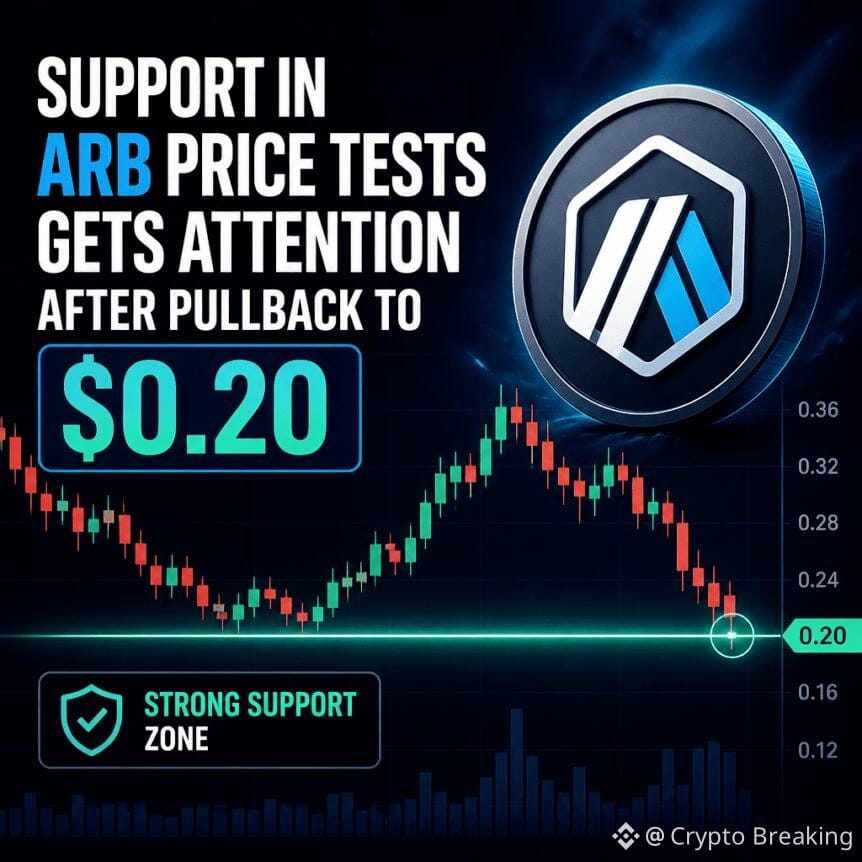
Support in ARB Price Tests Gets Attention After Pullback to $0.20According to Alpha Crypto Signal, ARB is consolidating above a horizontal support level after its recent rise. This technical setup places importance on a potential retest of this support for a possible bullish reaction before any further move.
The chart shows ARB rising from the $0.13–$0.15 area. Before this move, ARB traded sideways, followed by a breakout around mid-September. It climbed above the $0.20 level and reached $0.25.
This pattern has generally been higher highs and higher lows, but it has faced pressure due to the recent pullback.
Increased Selling Pressure in Recent Trading Sessions
As seen on the chart, there have been several rejections near the $0.23–$0.24 area. Each rally has weakened, and another downtrend has emerged, leading to lower highs in recent price action.
The intraday chart shows ARB trading at $0.2087, an 8.8% drop. The total 24-hour volume is around $379 million, while market capitalization is close to $1.41 billion.
According to CoinMarketCap statistics from September 28, ARB traded at $0.21. The large daily trading volume was seen across the market, suggesting increased volatility after the prior uptrend.
An increase in volume on the downside adds significance to the retracement. Still, high volume alone is not enough evidence of an established trend reversal.
Rising Channel Maintains the Recovery Formation
The rising channel remains visible on the chart, with the lower line moving near the horizontal support region. Together, these formations create a closely watched technical zone for ARB.
A bullish reaction would likely see ARB consolidate around support and attract new buying pressure. Rising volume during a reaction could also indicate that buyers are returning.
The $0.20 level continues to act as a psychological reference point. Holding above the region would give the token a chance to move again toward resistance.
ARB Faces a Key Technical Decision
The chart suggests ARB could move toward roughly $0.28–$0.30 if support holds and ARB successfully reclaims the relevant consolidation highs. However, that projection depends on price first stabilizing around the current support zone.
For now, ARB remains between established support and renewed selling pressure. A reaction around $0.20 and the lower channel boundary could therefore provide the next key signal for the token’s short-term direction.
This article was originally published as Support in ARB Price Tests Gets Attention After Pullback to $0.20 on Crypto Breaking News – your trusted source for crypto news, Bitcoin news, and blockchain updates.
Support in ARB Price Tests Gets Attention After Pullback to $0.20
According to Alpha Crypto Signal, ARB is consolidating above a horizontal support level after its recent rise. This technical setup places importance on a potential retest of this support for a possible bullish reaction before any further move.
The chart shows ARB rising from the $0.13–$0.15 area. Before this move, ARB traded sideways, followed by a breakout around mid-September. It climbed above the $0.20 level and reached $0.25.
This pattern has generally been higher highs and higher lows, but it has faced pressure due to the recent pullback.
Increased Selling Pressure in Recent Trading Sessions
As seen on the chart, there have been several rejections near the $0.23–$0.24 area. Each rally has weakened, and another downtrend has emerged, leading to lower highs in recent price action.
The intraday chart shows ARB trading at $0.2087, an 8.8% drop. The total 24-hour volume is around $379 million, while market capitalization is close to $1.41 billion.
According to CoinMarketCap statistics from September 28, ARB traded at $0.21. The large daily trading volume was seen across the market, suggesting increased volatility after the prior uptrend.
An increase in volume on the downside adds significance to the retracement. Still, high volume alone is not enough evidence of an established trend reversal.
Rising Channel Maintains the Recovery Formation
The rising channel remains visible on the chart, with the lower line moving near the horizontal support region. Together, these formations create a closely watched technical zone for ARB.
A bullish reaction would likely see ARB consolidate around support and attract new buying pressure. Rising volume during a reaction could also indicate that buyers are returning.
The $0.20 level continues to act as a psychological reference point. Holding above the region would give the token a chance to move again toward resistance.
ARB Faces a Key Technical Decision
The chart suggests ARB could move toward roughly $0.28–$0.30 if support holds and ARB successfully reclaims the relevant consolidation highs. However, that projection depends on price first stabilizing around the current support zone.
For now, ARB remains between established support and renewed selling pressure. A reaction around $0.20 and the lower channel boundary could therefore provide the next key signal for the token’s short-term direction.
This article was originally published as Support in ARB Price Tests Gets Attention After Pullback to $0.20 on Crypto Breaking News – your trusted source for crypto news, Bitcoin news, and blockchain updates.
The chart shows ARB rising from the $0.13–$0.15 area. Before this move, ARB traded sideways, followed by a breakout around mid-September. It climbed above the $0.20 level and reached $0.25.
This pattern has generally been higher highs and higher lows, but it has faced pressure due to the recent pullback.
Increased Selling Pressure in Recent Trading Sessions
As seen on the chart, there have been several rejections near the $0.23–$0.24 area. Each rally has weakened, and another downtrend has emerged, leading to lower highs in recent price action.
The intraday chart shows ARB trading at $0.2087, an 8.8% drop. The total 24-hour volume is around $379 million, while market capitalization is close to $1.41 billion.
According to CoinMarketCap statistics from September 28, ARB traded at $0.21. The large daily trading volume was seen across the market, suggesting increased volatility after the prior uptrend.
An increase in volume on the downside adds significance to the retracement. Still, high volume alone is not enough evidence of an established trend reversal.
Rising Channel Maintains the Recovery Formation
The rising channel remains visible on the chart, with the lower line moving near the horizontal support region. Together, these formations create a closely watched technical zone for ARB.
A bullish reaction would likely see ARB consolidate around support and attract new buying pressure. Rising volume during a reaction could also indicate that buyers are returning.
The $0.20 level continues to act as a psychological reference point. Holding above the region would give the token a chance to move again toward resistance.
ARB Faces a Key Technical Decision
The chart suggests ARB could move toward roughly $0.28–$0.30 if support holds and ARB successfully reclaims the relevant consolidation highs. However, that projection depends on price first stabilizing around the current support zone.
For now, ARB remains between established support and renewed selling pressure. A reaction around $0.20 and the lower channel boundary could therefore provide the next key signal for the token’s short-term direction.
This article was originally published as Support in ARB Price Tests Gets Attention After Pullback to $0.20 on Crypto Breaking News – your trusted source for crypto news, Bitcoin news, and blockchain updates.
31

Article
See translation
Base Finishes Cobalt Upgrade, Introduces New Tools for Tokenized AssetsBase has activated its Cobalt upgrade, bringing new capabilities aimed at tokenized finance on the Ethereum layer-2 network. The update adds both tighter issuer controls for tokenized assets and a new transaction mechanism designed to make conditional trading more practical.
Announced as Base’s third major upgrade, Cobalt expands the B20 token standard by letting issuers apply multiple compliance and administrative rules to the same tokenized asset—while also introducing “Validity Transactions,” which can be held back until onchain conditions are met.
Key takeaways
Cobalt expands Base’s B20 standard to support issuer-defined compliance checks and timed handling of certain corporate actions.
Issuers can enable controlled transfers via authorized administrators, including optional public notes on those transfers.
Validity Transactions add conditional execution, allowing users to submit transactions that only become eligible once specified onchain criteria are satisfied.
Base positions the upgrade for onchain finance, aligning token issuance and trading functionality with requirements common in traditional markets.
New B20 controls for tokenized assets
A central part of the upgrade is how Cobalt extends B20. Base says the change allows issuers to attach several checks to token transfers under a unified asset standard. The practical impact is that token issuers can configure rules such as requiring recipients to complete identity checks, qualify as accredited investors, and avoid distribution to addresses tied to sanctions lists.
The upgrade also introduces an approach for corporate actions like stock splits. Base says issuers can adjust how tokenized share information is represented in wallets and applications without minting or burning tokens and without changing the holder’s underlying balance. For users and integrators, that means better alignment between onchain token representation and the realities of traditional securities events, without forcing supply-side token migrations.
Administrative transfers and public notes
Cobalt further adds a mechanism for issuer-led administration. Base says issuers can grant “authorized administrators” the ability to move tokens from a holder’s wallet without obtaining the holder’s approval, and to attach a public note to the transfer.
Importantly, Base states that the feature is optional and controlled by issuers—Base itself cannot initiate such transfers. For investors and developers, this creates a clearer separation between what network-level infrastructure does versus what token issuers configure for compliance and operational needs.
Validity Transactions for conditional timing
Beyond compliance tooling, Cobalt introduces Validity Transactions. The idea is straightforward: users can submit transactions that don’t become eligible for inclusion immediately. Instead, they remain eligible only when specified onchain conditions are met.
Base describes an example in which a trader submits a swap transaction that becomes eligible only if a chosen asset reaches a target price before a set block deadline. Base would then evaluate the transaction’s conditions against the chain state as blocks are built. If conditions are not satisfied, the transaction remains pending rather than proceeding.
Base also says transactions submitted through this system can remain private until they are included in a block. For traders, that matters because conditional strategies often depend on timing and threshold triggers; keeping intent from being prematurely visible can reduce the risk of front-running or speculation around the trigger itself.
Part of a broader shift toward tokenized finance
Cobalt’s activation follows Base’s earlier push to make token issuance and interoperability easier for real-world assets. On July 8, Base activated B20 as a native token standard for stablecoins, tokenized real-world assets, and other fungible tokens, allowing issuers to create assets without building custom token contracts.
The upgrade also comes amid Base creator Jesse Pollak’s public acknowledgement of strategic missteps earlier in the network’s evolution. In a post dated July 16, Pollak said Base made a “wrong bet” by prioritizing creator, content, and messaging apps and falling behind in areas including prediction markets and perpetual futures. He argued that financial applications—such as trading and payments—should become a greater focus as Base develops into a blockchain for global finance.
Since then, tokenized finance has gained traction on Base. On Aug. 25, Coinbase launched tokenized US stocks on Base, issuing B20 tokens meant to represent shares in companies including Apple, Nvidia, Meta, and Alphabet. With Cobalt now expanding B20’s compliance and administrative options, the network is effectively increasing the range of issuer policies that can be implemented as tokenized products scale.
Base says it is also looking ahead to further performance and infrastructure changes. The network plans to reduce block times from two seconds to 200 milliseconds and introduce protocol-level support for sponsored transaction fees and bundled transactions. Base also says it intends to adopt some technical changes planned for Ethereum’s upcoming “Glamsterdam” upgrade.
While Cobalt focuses on token governance and conditional transaction execution, the broader roadmap suggests Base is aligning both user experience and developer tooling with the requirements of financial-grade applications—where compliance, execution control, and predictable timing often carry as much weight as raw throughput.
As Cobalt rolls out, the most important thing for builders and token issuers to watch will be how quickly applications integrate the new B20 capabilities and whether traders adopt Validity Transactions for real conditional strategies; the long-term impact will depend on how these features are supported across wallets, custody providers, and trading interfaces.
This article was originally published as Base Finishes Cobalt Upgrade, Introduces New Tools for Tokenized Assets on Crypto Breaking News – your trusted source for crypto news, Bitcoin news, and blockchain updates.
Base Finishes Cobalt Upgrade, Introduces New Tools for Tokenized Assets
Base has activated its Cobalt upgrade, bringing new capabilities aimed at tokenized finance on the Ethereum layer-2 network. The update adds both tighter issuer controls for tokenized assets and a new transaction mechanism designed to make conditional trading more practical.
Announced as Base’s third major upgrade, Cobalt expands the B20 token standard by letting issuers apply multiple compliance and administrative rules to the same tokenized asset—while also introducing “Validity Transactions,” which can be held back until onchain conditions are met.
Key takeaways
Cobalt expands Base’s B20 standard to support issuer-defined compliance checks and timed handling of certain corporate actions.
Issuers can enable controlled transfers via authorized administrators, including optional public notes on those transfers.
Validity Transactions add conditional execution, allowing users to submit transactions that only become eligible once specified onchain criteria are satisfied.
Base positions the upgrade for onchain finance, aligning token issuance and trading functionality with requirements common in traditional markets.
New B20 controls for tokenized assets
A central part of the upgrade is how Cobalt extends B20. Base says the change allows issuers to attach several checks to token transfers under a unified asset standard. The practical impact is that token issuers can configure rules such as requiring recipients to complete identity checks, qualify as accredited investors, and avoid distribution to addresses tied to sanctions lists.
The upgrade also introduces an approach for corporate actions like stock splits. Base says issuers can adjust how tokenized share information is represented in wallets and applications without minting or burning tokens and without changing the holder’s underlying balance. For users and integrators, that means better alignment between onchain token representation and the realities of traditional securities events, without forcing supply-side token migrations.
Administrative transfers and public notes
Cobalt further adds a mechanism for issuer-led administration. Base says issuers can grant “authorized administrators” the ability to move tokens from a holder’s wallet without obtaining the holder’s approval, and to attach a public note to the transfer.
Importantly, Base states that the feature is optional and controlled by issuers—Base itself cannot initiate such transfers. For investors and developers, this creates a clearer separation between what network-level infrastructure does versus what token issuers configure for compliance and operational needs.
Validity Transactions for conditional timing
Beyond compliance tooling, Cobalt introduces Validity Transactions. The idea is straightforward: users can submit transactions that don’t become eligible for inclusion immediately. Instead, they remain eligible only when specified onchain conditions are met.
Base describes an example in which a trader submits a swap transaction that becomes eligible only if a chosen asset reaches a target price before a set block deadline. Base would then evaluate the transaction’s conditions against the chain state as blocks are built. If conditions are not satisfied, the transaction remains pending rather than proceeding.
Base also says transactions submitted through this system can remain private until they are included in a block. For traders, that matters because conditional strategies often depend on timing and threshold triggers; keeping intent from being prematurely visible can reduce the risk of front-running or speculation around the trigger itself.
Part of a broader shift toward tokenized finance
Cobalt’s activation follows Base’s earlier push to make token issuance and interoperability easier for real-world assets. On July 8, Base activated B20 as a native token standard for stablecoins, tokenized real-world assets, and other fungible tokens, allowing issuers to create assets without building custom token contracts.
The upgrade also comes amid Base creator Jesse Pollak’s public acknowledgement of strategic missteps earlier in the network’s evolution. In a post dated July 16, Pollak said Base made a “wrong bet” by prioritizing creator, content, and messaging apps and falling behind in areas including prediction markets and perpetual futures. He argued that financial applications—such as trading and payments—should become a greater focus as Base develops into a blockchain for global finance.
Since then, tokenized finance has gained traction on Base. On Aug. 25, Coinbase launched tokenized US stocks on Base, issuing B20 tokens meant to represent shares in companies including Apple, Nvidia, Meta, and Alphabet. With Cobalt now expanding B20’s compliance and administrative options, the network is effectively increasing the range of issuer policies that can be implemented as tokenized products scale.
Base says it is also looking ahead to further performance and infrastructure changes. The network plans to reduce block times from two seconds to 200 milliseconds and introduce protocol-level support for sponsored transaction fees and bundled transactions. Base also says it intends to adopt some technical changes planned for Ethereum’s upcoming “Glamsterdam” upgrade.
While Cobalt focuses on token governance and conditional transaction execution, the broader roadmap suggests Base is aligning both user experience and developer tooling with the requirements of financial-grade applications—where compliance, execution control, and predictable timing often carry as much weight as raw throughput.
As Cobalt rolls out, the most important thing for builders and token issuers to watch will be how quickly applications integrate the new B20 capabilities and whether traders adopt Validity Transactions for real conditional strategies; the long-term impact will depend on how these features are supported across wallets, custody providers, and trading interfaces.
This article was originally published as Base Finishes Cobalt Upgrade, Introduces New Tools for Tokenized Assets on Crypto Breaking News – your trusted source for crypto news, Bitcoin news, and blockchain updates.
Announced as Base’s third major upgrade, Cobalt expands the B20 token standard by letting issuers apply multiple compliance and administrative rules to the same tokenized asset—while also introducing “Validity Transactions,” which can be held back until onchain conditions are met.
Key takeaways
Cobalt expands Base’s B20 standard to support issuer-defined compliance checks and timed handling of certain corporate actions.
Issuers can enable controlled transfers via authorized administrators, including optional public notes on those transfers.
Validity Transactions add conditional execution, allowing users to submit transactions that only become eligible once specified onchain criteria are satisfied.
Base positions the upgrade for onchain finance, aligning token issuance and trading functionality with requirements common in traditional markets.
New B20 controls for tokenized assets
A central part of the upgrade is how Cobalt extends B20. Base says the change allows issuers to attach several checks to token transfers under a unified asset standard. The practical impact is that token issuers can configure rules such as requiring recipients to complete identity checks, qualify as accredited investors, and avoid distribution to addresses tied to sanctions lists.
The upgrade also introduces an approach for corporate actions like stock splits. Base says issuers can adjust how tokenized share information is represented in wallets and applications without minting or burning tokens and without changing the holder’s underlying balance. For users and integrators, that means better alignment between onchain token representation and the realities of traditional securities events, without forcing supply-side token migrations.
Administrative transfers and public notes
Cobalt further adds a mechanism for issuer-led administration. Base says issuers can grant “authorized administrators” the ability to move tokens from a holder’s wallet without obtaining the holder’s approval, and to attach a public note to the transfer.
Importantly, Base states that the feature is optional and controlled by issuers—Base itself cannot initiate such transfers. For investors and developers, this creates a clearer separation between what network-level infrastructure does versus what token issuers configure for compliance and operational needs.
Validity Transactions for conditional timing
Beyond compliance tooling, Cobalt introduces Validity Transactions. The idea is straightforward: users can submit transactions that don’t become eligible for inclusion immediately. Instead, they remain eligible only when specified onchain conditions are met.
Base describes an example in which a trader submits a swap transaction that becomes eligible only if a chosen asset reaches a target price before a set block deadline. Base would then evaluate the transaction’s conditions against the chain state as blocks are built. If conditions are not satisfied, the transaction remains pending rather than proceeding.
Base also says transactions submitted through this system can remain private until they are included in a block. For traders, that matters because conditional strategies often depend on timing and threshold triggers; keeping intent from being prematurely visible can reduce the risk of front-running or speculation around the trigger itself.
Part of a broader shift toward tokenized finance
Cobalt’s activation follows Base’s earlier push to make token issuance and interoperability easier for real-world assets. On July 8, Base activated B20 as a native token standard for stablecoins, tokenized real-world assets, and other fungible tokens, allowing issuers to create assets without building custom token contracts.
The upgrade also comes amid Base creator Jesse Pollak’s public acknowledgement of strategic missteps earlier in the network’s evolution. In a post dated July 16, Pollak said Base made a “wrong bet” by prioritizing creator, content, and messaging apps and falling behind in areas including prediction markets and perpetual futures. He argued that financial applications—such as trading and payments—should become a greater focus as Base develops into a blockchain for global finance.
Since then, tokenized finance has gained traction on Base. On Aug. 25, Coinbase launched tokenized US stocks on Base, issuing B20 tokens meant to represent shares in companies including Apple, Nvidia, Meta, and Alphabet. With Cobalt now expanding B20’s compliance and administrative options, the network is effectively increasing the range of issuer policies that can be implemented as tokenized products scale.
Base says it is also looking ahead to further performance and infrastructure changes. The network plans to reduce block times from two seconds to 200 milliseconds and introduce protocol-level support for sponsored transaction fees and bundled transactions. Base also says it intends to adopt some technical changes planned for Ethereum’s upcoming “Glamsterdam” upgrade.
While Cobalt focuses on token governance and conditional transaction execution, the broader roadmap suggests Base is aligning both user experience and developer tooling with the requirements of financial-grade applications—where compliance, execution control, and predictable timing often carry as much weight as raw throughput.
As Cobalt rolls out, the most important thing for builders and token issuers to watch will be how quickly applications integrate the new B20 capabilities and whether traders adopt Validity Transactions for real conditional strategies; the long-term impact will depend on how these features are supported across wallets, custody providers, and trading interfaces.
This article was originally published as Base Finishes Cobalt Upgrade, Introduces New Tools for Tokenized Assets on Crypto Breaking News – your trusted source for crypto news, Bitcoin news, and blockchain updates.
33

Article
See translation
Ai Meets Wall Street: Robinhood Unveils A New Era Of Automated TradingRobinhood is expanding its trading platform with longer market hours, crypto derivatives, and automated trading tools.
The company announced the changes at its HOOD Summit in Houston as it targets more active traders. Robinhood shares stood at $112.26 in the supplied report, while the company outlined several major product expansions.
Robinhood Pushes Toward 24/7 Stock Trading
Robinhood plans to let customers trade selected U.S. equities throughout the week, including Saturdays and Sundays. The move will expand its existing 24/5 trading service, which launched in 2023. That service currently operates from Sunday evening through Friday evening, based on Eastern Time.
The weekend service will cover selected stocks and ETFs through Bruce ATS, an alternative trading system.
Robinhood is also extending options trading hours and increasing access to intraday margin. These changes respond to growing demand for markets that operate beyond traditional U.S. trading sessions. Crypto markets already operate around the clock, and that model has influenced broader financial markets.
The New York Stock Exchange and Nasdaq have filed plans to expand their trading hours. Robinhood therefore joins a wider shift toward longer access across traditional financial markets.
Bitcoin and Ether Gain Access to Perpetual Futures
Robinhood plans to offer eligible U.S. customers crypto perpetual futures through Robinhood Derivatives and Bitstamp. The initial contracts will focus on Bitcoin and Ether, while other supported crypto assets will follow.
Bitcoin and Ether contracts will offer leverage of up to 10 times under the planned structure. Other supported assets will begin with leverage of up to three times, according to the company.
Perpetual futures allow traders to take leveraged long or short positions without fixed expiration dates. Leverage can amplify losses because relatively small price moves can trigger liquidation.
Robinhood has historically focused on simpler retail trading products, but its strategy now includes crypto-style derivatives.
The company is also introducing earnings contracts that allow customers to trade specific corporate performance outcomes. Those contracts will operate through Cboe and can cover revenue, earnings per share, and selected sales metrics.
Automated Trading Brings New Tools to Robinhood
Robinhood is also introducing automated trading agents that customers can create inside its application.
These agents can analyze markets, build watchlists, and trade stocks, options, and crypto. Users will also be able to establish recurring instructions through a feature called Loops. The system can monitor markets and execute strategies when specified conditions occur.
Robinhood will initially require users to approve each trade proposed by an agent. However, users can disable that approval requirement and allow greater trading automation.
The company said more than 150,000 agentic accounts have already been created through its external trading infrastructure. Those accounts have generated millions of calls to Robinhood’s trading tools each day, according to company data.
The new integrated system reduces the technical setup required to use automated trading capabilities. Robinhood will also provide agents with access to external market and financial data sources, including options data, Nasdaq market information, crypto data, and government activity tracking.
The company says these additions support its broader effort to combine more markets and trading tools. The platform now brings stocks, crypto, options, prediction markets, and derivatives into a single trading environment. At the same time, Robinhood is moving further toward continuous market access and automated execution. The expansion reflects the growing influence of crypto market structures on traditional retail trading.
This article was originally published as Ai Meets Wall Street: Robinhood Unveils A New Era Of Automated Trading on Crypto Breaking News – your trusted source for crypto news, Bitcoin news, and blockchain updates.
Ai Meets Wall Street: Robinhood Unveils A New Era Of Automated Trading
Robinhood is expanding its trading platform with longer market hours, crypto derivatives, and automated trading tools.
The company announced the changes at its HOOD Summit in Houston as it targets more active traders. Robinhood shares stood at $112.26 in the supplied report, while the company outlined several major product expansions.
Robinhood Pushes Toward 24/7 Stock Trading
Robinhood plans to let customers trade selected U.S. equities throughout the week, including Saturdays and Sundays. The move will expand its existing 24/5 trading service, which launched in 2023. That service currently operates from Sunday evening through Friday evening, based on Eastern Time.
The weekend service will cover selected stocks and ETFs through Bruce ATS, an alternative trading system.
Robinhood is also extending options trading hours and increasing access to intraday margin. These changes respond to growing demand for markets that operate beyond traditional U.S. trading sessions. Crypto markets already operate around the clock, and that model has influenced broader financial markets.
The New York Stock Exchange and Nasdaq have filed plans to expand their trading hours. Robinhood therefore joins a wider shift toward longer access across traditional financial markets.
Bitcoin and Ether Gain Access to Perpetual Futures
Robinhood plans to offer eligible U.S. customers crypto perpetual futures through Robinhood Derivatives and Bitstamp. The initial contracts will focus on Bitcoin and Ether, while other supported crypto assets will follow.
Bitcoin and Ether contracts will offer leverage of up to 10 times under the planned structure. Other supported assets will begin with leverage of up to three times, according to the company.
Perpetual futures allow traders to take leveraged long or short positions without fixed expiration dates. Leverage can amplify losses because relatively small price moves can trigger liquidation.
Robinhood has historically focused on simpler retail trading products, but its strategy now includes crypto-style derivatives.
The company is also introducing earnings contracts that allow customers to trade specific corporate performance outcomes. Those contracts will operate through Cboe and can cover revenue, earnings per share, and selected sales metrics.
Automated Trading Brings New Tools to Robinhood
Robinhood is also introducing automated trading agents that customers can create inside its application.
These agents can analyze markets, build watchlists, and trade stocks, options, and crypto. Users will also be able to establish recurring instructions through a feature called Loops. The system can monitor markets and execute strategies when specified conditions occur.
Robinhood will initially require users to approve each trade proposed by an agent. However, users can disable that approval requirement and allow greater trading automation.
The company said more than 150,000 agentic accounts have already been created through its external trading infrastructure. Those accounts have generated millions of calls to Robinhood’s trading tools each day, according to company data.
The new integrated system reduces the technical setup required to use automated trading capabilities. Robinhood will also provide agents with access to external market and financial data sources, including options data, Nasdaq market information, crypto data, and government activity tracking.
The company says these additions support its broader effort to combine more markets and trading tools. The platform now brings stocks, crypto, options, prediction markets, and derivatives into a single trading environment. At the same time, Robinhood is moving further toward continuous market access and automated execution. The expansion reflects the growing influence of crypto market structures on traditional retail trading.
This article was originally published as Ai Meets Wall Street: Robinhood Unveils A New Era Of Automated Trading on Crypto Breaking News – your trusted source for crypto news, Bitcoin news, and blockchain updates.
The company announced the changes at its HOOD Summit in Houston as it targets more active traders. Robinhood shares stood at $112.26 in the supplied report, while the company outlined several major product expansions.
Robinhood Pushes Toward 24/7 Stock Trading
Robinhood plans to let customers trade selected U.S. equities throughout the week, including Saturdays and Sundays. The move will expand its existing 24/5 trading service, which launched in 2023. That service currently operates from Sunday evening through Friday evening, based on Eastern Time.
The weekend service will cover selected stocks and ETFs through Bruce ATS, an alternative trading system.
Robinhood is also extending options trading hours and increasing access to intraday margin. These changes respond to growing demand for markets that operate beyond traditional U.S. trading sessions. Crypto markets already operate around the clock, and that model has influenced broader financial markets.
The New York Stock Exchange and Nasdaq have filed plans to expand their trading hours. Robinhood therefore joins a wider shift toward longer access across traditional financial markets.
Bitcoin and Ether Gain Access to Perpetual Futures
Robinhood plans to offer eligible U.S. customers crypto perpetual futures through Robinhood Derivatives and Bitstamp. The initial contracts will focus on Bitcoin and Ether, while other supported crypto assets will follow.
Bitcoin and Ether contracts will offer leverage of up to 10 times under the planned structure. Other supported assets will begin with leverage of up to three times, according to the company.
Perpetual futures allow traders to take leveraged long or short positions without fixed expiration dates. Leverage can amplify losses because relatively small price moves can trigger liquidation.
Robinhood has historically focused on simpler retail trading products, but its strategy now includes crypto-style derivatives.
The company is also introducing earnings contracts that allow customers to trade specific corporate performance outcomes. Those contracts will operate through Cboe and can cover revenue, earnings per share, and selected sales metrics.
Automated Trading Brings New Tools to Robinhood
Robinhood is also introducing automated trading agents that customers can create inside its application.
These agents can analyze markets, build watchlists, and trade stocks, options, and crypto. Users will also be able to establish recurring instructions through a feature called Loops. The system can monitor markets and execute strategies when specified conditions occur.
Robinhood will initially require users to approve each trade proposed by an agent. However, users can disable that approval requirement and allow greater trading automation.
The company said more than 150,000 agentic accounts have already been created through its external trading infrastructure. Those accounts have generated millions of calls to Robinhood’s trading tools each day, according to company data.
The new integrated system reduces the technical setup required to use automated trading capabilities. Robinhood will also provide agents with access to external market and financial data sources, including options data, Nasdaq market information, crypto data, and government activity tracking.
The company says these additions support its broader effort to combine more markets and trading tools. The platform now brings stocks, crypto, options, prediction markets, and derivatives into a single trading environment. At the same time, Robinhood is moving further toward continuous market access and automated execution. The expansion reflects the growing influence of crypto market structures on traditional retail trading.
This article was originally published as Ai Meets Wall Street: Robinhood Unveils A New Era Of Automated Trading on Crypto Breaking News – your trusted source for crypto news, Bitcoin news, and blockchain updates.
24

Article
See translation
Michael Saylor Explains Strategy And Strive’s Bitcoin Finance VisionMichael Saylor has outlined how Strategy and Strive are developing different financial products around Bitcoin-backed markets. The Strategy chairman said both companies operate separately but share Bitcoin as their main treasury asset. The companies aim to expand access to Bitcoin-linked credit and equity structures.
Bitcoin Builds Foundation for Digital Finance
Bitcoin remains the central asset behind Strategy and Strive’s financial strategies as both companies expand their treasury operations. Saylor said the broader market opportunity comes from connecting Bitcoin with large global equity and fixed-income sectors. The approach focuses on creating new financial products linked to Bitcoin exposure.
The Strategy chairman highlighted the size of traditional financial markets and their potential connection with Bitcoin-based instruments. Global equity markets reached $157.8 trillion by the end of 2025, according to SIFMA data. Fixed-income debt markets also reached $160.7 trillion during the same period.
Bitcoin credit products aim to compete with established financial instruments such as bonds and preferred securities. Therefore, Saylor believes wider market participation can improve understanding of these products. He said stronger adoption could help reduce financing costs for future issuers.
Strategy Expands Bitcoin Treasury and Credit Products
Strategy continues to build its Bitcoin treasury while developing new financial products linked to digital assets. The company recently acquired 1,665 BTC for about $142.7 million. The purchase increased Strategy’s total holdings to 847,666 BTC.
The company has positioned its preferred securities as Bitcoin-backed credit products within the growing digital finance sector. STRC represents one of Strategy’s preferred offerings that targets income-focused market participants. The product aims to provide another way to access Bitcoin-related financial structures.
Strategy also maintains its common equity market through MSTR shares, which provide direct exposure to the company’s Bitcoin strategy. Saylor described digital equity and digital credit as separate financial categories. However, both categories depend on Bitcoin’s role within the company’s treasury model.
Strive Expands Bitcoin Holdings Through SATA
Strive has increased its Bitcoin exposure through its SATA preferred stock product while building its own treasury position. The company raised about $86 million through SATA sales as it expanded its Bitcoin holdings. Strive also purchased Strategy’s STRC preferred stock, showing connections between the two companies.
The company recently acquired 1,107 BTC worth about $94.5 million between September 21 and September 25. The purchase increased Strive’s holdings to 27,462 BTC. Strive became one of the largest public companies holding Bitcoin globally.
Saylor said Bitcoin-linked credit markets could grow when more companies develop similar financial structures. He added that each issuer would maintain separate financing, liquidity, and governance responsibilities. The development of these products depends on how companies manage their operations.
The Bitcoin credit sector continues to develop as companies create alternatives to traditional financial products. Strategy and Strive are using different securities while relying on the same underlying digital asset. Their expansion shows growing interest in Bitcoin-based treasury models.
Saylor identified Bitcoin growth, digital credit adoption, and digital equity recognition as connected market drivers. He said stronger Bitcoin performance could support treasury companies with larger asset coverage. However, he noted that individual purchases alone cannot determine Bitcoin’s future movement.
The companies continue building financial products that combine Bitcoin exposure with structured securities. Strategy and Strive maintain separate business decisions but operate within the same emerging market. Their activities highlight the continued development of Bitcoin-backed corporate finance.
This article was originally published as Michael Saylor Explains Strategy And Strive’s Bitcoin Finance Vision on Crypto Breaking News – your trusted source for crypto news, Bitcoin news, and blockchain updates.
Michael Saylor Explains Strategy And Strive’s Bitcoin Finance Vision
Michael Saylor has outlined how Strategy and Strive are developing different financial products around Bitcoin-backed markets. The Strategy chairman said both companies operate separately but share Bitcoin as their main treasury asset. The companies aim to expand access to Bitcoin-linked credit and equity structures.
Bitcoin Builds Foundation for Digital Finance
Bitcoin remains the central asset behind Strategy and Strive’s financial strategies as both companies expand their treasury operations. Saylor said the broader market opportunity comes from connecting Bitcoin with large global equity and fixed-income sectors. The approach focuses on creating new financial products linked to Bitcoin exposure.
The Strategy chairman highlighted the size of traditional financial markets and their potential connection with Bitcoin-based instruments. Global equity markets reached $157.8 trillion by the end of 2025, according to SIFMA data. Fixed-income debt markets also reached $160.7 trillion during the same period.
Bitcoin credit products aim to compete with established financial instruments such as bonds and preferred securities. Therefore, Saylor believes wider market participation can improve understanding of these products. He said stronger adoption could help reduce financing costs for future issuers.
Strategy Expands Bitcoin Treasury and Credit Products
Strategy continues to build its Bitcoin treasury while developing new financial products linked to digital assets. The company recently acquired 1,665 BTC for about $142.7 million. The purchase increased Strategy’s total holdings to 847,666 BTC.
The company has positioned its preferred securities as Bitcoin-backed credit products within the growing digital finance sector. STRC represents one of Strategy’s preferred offerings that targets income-focused market participants. The product aims to provide another way to access Bitcoin-related financial structures.
Strategy also maintains its common equity market through MSTR shares, which provide direct exposure to the company’s Bitcoin strategy. Saylor described digital equity and digital credit as separate financial categories. However, both categories depend on Bitcoin’s role within the company’s treasury model.
Strive Expands Bitcoin Holdings Through SATA
Strive has increased its Bitcoin exposure through its SATA preferred stock product while building its own treasury position. The company raised about $86 million through SATA sales as it expanded its Bitcoin holdings. Strive also purchased Strategy’s STRC preferred stock, showing connections between the two companies.
The company recently acquired 1,107 BTC worth about $94.5 million between September 21 and September 25. The purchase increased Strive’s holdings to 27,462 BTC. Strive became one of the largest public companies holding Bitcoin globally.
Saylor said Bitcoin-linked credit markets could grow when more companies develop similar financial structures. He added that each issuer would maintain separate financing, liquidity, and governance responsibilities. The development of these products depends on how companies manage their operations.
The Bitcoin credit sector continues to develop as companies create alternatives to traditional financial products. Strategy and Strive are using different securities while relying on the same underlying digital asset. Their expansion shows growing interest in Bitcoin-based treasury models.
Saylor identified Bitcoin growth, digital credit adoption, and digital equity recognition as connected market drivers. He said stronger Bitcoin performance could support treasury companies with larger asset coverage. However, he noted that individual purchases alone cannot determine Bitcoin’s future movement.
The companies continue building financial products that combine Bitcoin exposure with structured securities. Strategy and Strive maintain separate business decisions but operate within the same emerging market. Their activities highlight the continued development of Bitcoin-backed corporate finance.
This article was originally published as Michael Saylor Explains Strategy And Strive’s Bitcoin Finance Vision on Crypto Breaking News – your trusted source for crypto news, Bitcoin news, and blockchain updates.
Bitcoin Builds Foundation for Digital Finance
Bitcoin remains the central asset behind Strategy and Strive’s financial strategies as both companies expand their treasury operations. Saylor said the broader market opportunity comes from connecting Bitcoin with large global equity and fixed-income sectors. The approach focuses on creating new financial products linked to Bitcoin exposure.
The Strategy chairman highlighted the size of traditional financial markets and their potential connection with Bitcoin-based instruments. Global equity markets reached $157.8 trillion by the end of 2025, according to SIFMA data. Fixed-income debt markets also reached $160.7 trillion during the same period.
Bitcoin credit products aim to compete with established financial instruments such as bonds and preferred securities. Therefore, Saylor believes wider market participation can improve understanding of these products. He said stronger adoption could help reduce financing costs for future issuers.
Strategy Expands Bitcoin Treasury and Credit Products
Strategy continues to build its Bitcoin treasury while developing new financial products linked to digital assets. The company recently acquired 1,665 BTC for about $142.7 million. The purchase increased Strategy’s total holdings to 847,666 BTC.
The company has positioned its preferred securities as Bitcoin-backed credit products within the growing digital finance sector. STRC represents one of Strategy’s preferred offerings that targets income-focused market participants. The product aims to provide another way to access Bitcoin-related financial structures.
Strategy also maintains its common equity market through MSTR shares, which provide direct exposure to the company’s Bitcoin strategy. Saylor described digital equity and digital credit as separate financial categories. However, both categories depend on Bitcoin’s role within the company’s treasury model.
Strive Expands Bitcoin Holdings Through SATA
Strive has increased its Bitcoin exposure through its SATA preferred stock product while building its own treasury position. The company raised about $86 million through SATA sales as it expanded its Bitcoin holdings. Strive also purchased Strategy’s STRC preferred stock, showing connections between the two companies.
The company recently acquired 1,107 BTC worth about $94.5 million between September 21 and September 25. The purchase increased Strive’s holdings to 27,462 BTC. Strive became one of the largest public companies holding Bitcoin globally.
Saylor said Bitcoin-linked credit markets could grow when more companies develop similar financial structures. He added that each issuer would maintain separate financing, liquidity, and governance responsibilities. The development of these products depends on how companies manage their operations.
The Bitcoin credit sector continues to develop as companies create alternatives to traditional financial products. Strategy and Strive are using different securities while relying on the same underlying digital asset. Their expansion shows growing interest in Bitcoin-based treasury models.
Saylor identified Bitcoin growth, digital credit adoption, and digital equity recognition as connected market drivers. He said stronger Bitcoin performance could support treasury companies with larger asset coverage. However, he noted that individual purchases alone cannot determine Bitcoin’s future movement.
The companies continue building financial products that combine Bitcoin exposure with structured securities. Strategy and Strive maintain separate business decisions but operate within the same emerging market. Their activities highlight the continued development of Bitcoin-backed corporate finance.
This article was originally published as Michael Saylor Explains Strategy And Strive’s Bitcoin Finance Vision on Crypto Breaking News – your trusted source for crypto news, Bitcoin news, and blockchain updates.
70

Article
See translation
Petrobras Deploys Cardano to Trace SAF and Renewable Diesel in BrazilBrazil’s state-controlled oil company Petrobras says it has built two blockchain-based applications using Cardano to help track environmental claims tied to renewable fuels. The projects focus on preventing “double counting” of sustainability benefits while improving traceability across fuel production and usage.
According to an announcement from the Cardano Foundation published Wednesday, the first application tokenizes environmental attributes associated with sustainable aviation fuel (SAF) and ties those attributes to the Book-and-Claim model commonly used in the sector. A second application focuses on renewable diesel, creating digital “checkpoints” intended to support reporting of indirect emissions along a company’s value chain.
Key takeaways
Petrobras built two Cardano-based traceability systems: one for SAF environmental attributes and another for its Diesel R renewable fuel.
The SAF tool tokenizes sustainability benefits as digital tokens designed to reduce the risk of duplicate claims.
Petrobras’ SAF workflow follows a Book-and-Claim structure that decouples environmental benefits from the physical fuel.
The Diesel R application creates trackable checkpoints spanning production, transport, and end use, potentially supporting Scope 3-style disclosures.
The Cardano Foundation did not provide fuel volume coverage or a deployment timeline for broader rollout.
Tokenized SAF claims on a Book-and-Claim framework
As described in the Cardano Foundation’s announcement, the SAF application was developed with support from PUC-Rio’s Ledger Labs. It “tokenizes” environmental attributes linked to SAF into digital tokens (identified by the Foundation as CS-SAF) intended to prevent the same sustainability claim from being reused.
The system is built on a Book-and-Claim approach, which is designed to separate the environmental benefit from the actual physical movement of fuel. Under this model, the benefit can be allocated to an airline, company, or passenger even when SAF is consumed elsewhere—an arrangement that helps buyers meet sustainability requirements without relying solely on one-to-one physical sourcing.
The CS-SAF tokens carry metadata aligned with the Carbon Offsetting and Reduction Scheme for International Aviation (CORSIA). The Cardano Foundation also says passengers can claim the CS-SAF tokens through an application, receiving a certificate tied to a specific journey and associated environmental claim.
For readers interested in how this is intended to operate in practice, the Cardano Foundation points to a case study on the Petrobras SAF project: https://cardanofoundation.org/case-studies/petrobras-saf.
Digital checkpoints for Diesel R and value-chain emissions
The second Petrobras project described by the Cardano Foundation targets Diesel R, the company’s renewable diesel fuel. Rather than tokenizing attributes for passenger-facing claims, this application focuses on traceability across the fuel lifecycle.
In the Foundation’s description, the system generates digital checkpoints to track production, transportation, and use of Diesel R. The Cardano Foundation said the resulting data could be used to support Scope 3 reporting, which generally covers indirect emissions across a company’s value chain.
While the announcement frames the approach as a reporting aid for emissions connected to upstream and downstream activities, it stops short of detailing how specific reporting standards or verification processes would be handled. The Foundation also did not disclose what volume of fuel would be covered by the applications, nor any timeline for expansion beyond the research and development stage.
How Petrobras’ Cardano work evolved
The Cardano Foundation said the projects are part of a broader collaboration with Petrobras that began in 2023. That earlier phase centered on blockchain education for Petrobras employees. In 2025, the partnership expanded into energy-sector research with PUC-Rio’s Ledger Labs.
Based on the new announcement, the education-to-implementation shift appears to have progressed from training into two concrete traceability use cases: one aimed at the international aviation market’s need for credible, non-duplicative claims, and another aimed at renewable fuel tracking that may feed corporate reporting.
At the same time, the absence of operational details—such as coverage volumes and a rollout timetable—means investors and builders should treat the applications as development milestones rather than evidence of large-scale deployment.
Broader momentum for blockchain in sustainable aviation fuel
Petrobras’ move fits a wider pattern of companies testing blockchain for SAF-related accounting. The Cardano Foundation’s article notes that Shell has used blockchain for similar purposes through Avelia, a Book-and-Claim platform launched in 2022. Shell stated that Avelia helps track environmental attributes and reduce double counting of SAF claims. In a September update referenced by the Foundation, Shell said Avelia contributed to more than 84 million gallons of SAF entering the global fuel network since its launch in 2022 and reported more than 780,000 tonnes of CO₂e abatement through June 2026.
The Foundation also points to additional efforts beyond Brazil. It cites that Australia’s Viva Energy signed an agreement with NoviqTech in January to research digital Book-and-Claim systems for sustainable aviation fuel, including how blockchain could support emissions reporting and track environmental claims.
Compared with these earlier initiatives, Petrobras’ contribution is notable for combining both passenger-claim mechanics for SAF and broader lifecycle checkpoints for renewable diesel. However, the real test for any of these systems will depend on whether the tokenized data flows integrate smoothly with the compliance and verification processes used across fuel markets.
What to watch next
For now, Petrobras’ Cardano applications provide a useful snapshot of how tokenization and blockchain traceability are being adapted for real-world sustainability accounting. The key uncertainties are commercial scale—such as fuel volumes and adoption milestones—and how the underlying data will be accepted in emissions reporting workflows. Readers should watch for future disclosures on deployments, partner integrations, and measurable coverage of SAF and Diesel R as the research moves toward operational use.
This article was originally published as Petrobras Deploys Cardano to Trace SAF and Renewable Diesel in Brazil on Crypto Breaking News – your trusted source for crypto news, Bitcoin news, and blockchain updates.
Petrobras Deploys Cardano to Trace SAF and Renewable Diesel in Brazil
Brazil’s state-controlled oil company Petrobras says it has built two blockchain-based applications using Cardano to help track environmental claims tied to renewable fuels. The projects focus on preventing “double counting” of sustainability benefits while improving traceability across fuel production and usage.
According to an announcement from the Cardano Foundation published Wednesday, the first application tokenizes environmental attributes associated with sustainable aviation fuel (SAF) and ties those attributes to the Book-and-Claim model commonly used in the sector. A second application focuses on renewable diesel, creating digital “checkpoints” intended to support reporting of indirect emissions along a company’s value chain.
Key takeaways
Petrobras built two Cardano-based traceability systems: one for SAF environmental attributes and another for its Diesel R renewable fuel.
The SAF tool tokenizes sustainability benefits as digital tokens designed to reduce the risk of duplicate claims.
Petrobras’ SAF workflow follows a Book-and-Claim structure that decouples environmental benefits from the physical fuel.
The Diesel R application creates trackable checkpoints spanning production, transport, and end use, potentially supporting Scope 3-style disclosures.
The Cardano Foundation did not provide fuel volume coverage or a deployment timeline for broader rollout.
Tokenized SAF claims on a Book-and-Claim framework
As described in the Cardano Foundation’s announcement, the SAF application was developed with support from PUC-Rio’s Ledger Labs. It “tokenizes” environmental attributes linked to SAF into digital tokens (identified by the Foundation as CS-SAF) intended to prevent the same sustainability claim from being reused.
The system is built on a Book-and-Claim approach, which is designed to separate the environmental benefit from the actual physical movement of fuel. Under this model, the benefit can be allocated to an airline, company, or passenger even when SAF is consumed elsewhere—an arrangement that helps buyers meet sustainability requirements without relying solely on one-to-one physical sourcing.
The CS-SAF tokens carry metadata aligned with the Carbon Offsetting and Reduction Scheme for International Aviation (CORSIA). The Cardano Foundation also says passengers can claim the CS-SAF tokens through an application, receiving a certificate tied to a specific journey and associated environmental claim.
For readers interested in how this is intended to operate in practice, the Cardano Foundation points to a case study on the Petrobras SAF project: https://cardanofoundation.org/case-studies/petrobras-saf.
Digital checkpoints for Diesel R and value-chain emissions
The second Petrobras project described by the Cardano Foundation targets Diesel R, the company’s renewable diesel fuel. Rather than tokenizing attributes for passenger-facing claims, this application focuses on traceability across the fuel lifecycle.
In the Foundation’s description, the system generates digital checkpoints to track production, transportation, and use of Diesel R. The Cardano Foundation said the resulting data could be used to support Scope 3 reporting, which generally covers indirect emissions across a company’s value chain.
While the announcement frames the approach as a reporting aid for emissions connected to upstream and downstream activities, it stops short of detailing how specific reporting standards or verification processes would be handled. The Foundation also did not disclose what volume of fuel would be covered by the applications, nor any timeline for expansion beyond the research and development stage.
How Petrobras’ Cardano work evolved
The Cardano Foundation said the projects are part of a broader collaboration with Petrobras that began in 2023. That earlier phase centered on blockchain education for Petrobras employees. In 2025, the partnership expanded into energy-sector research with PUC-Rio’s Ledger Labs.
Based on the new announcement, the education-to-implementation shift appears to have progressed from training into two concrete traceability use cases: one aimed at the international aviation market’s need for credible, non-duplicative claims, and another aimed at renewable fuel tracking that may feed corporate reporting.
At the same time, the absence of operational details—such as coverage volumes and a rollout timetable—means investors and builders should treat the applications as development milestones rather than evidence of large-scale deployment.
Broader momentum for blockchain in sustainable aviation fuel
Petrobras’ move fits a wider pattern of companies testing blockchain for SAF-related accounting. The Cardano Foundation’s article notes that Shell has used blockchain for similar purposes through Avelia, a Book-and-Claim platform launched in 2022. Shell stated that Avelia helps track environmental attributes and reduce double counting of SAF claims. In a September update referenced by the Foundation, Shell said Avelia contributed to more than 84 million gallons of SAF entering the global fuel network since its launch in 2022 and reported more than 780,000 tonnes of CO₂e abatement through June 2026.
The Foundation also points to additional efforts beyond Brazil. It cites that Australia’s Viva Energy signed an agreement with NoviqTech in January to research digital Book-and-Claim systems for sustainable aviation fuel, including how blockchain could support emissions reporting and track environmental claims.
Compared with these earlier initiatives, Petrobras’ contribution is notable for combining both passenger-claim mechanics for SAF and broader lifecycle checkpoints for renewable diesel. However, the real test for any of these systems will depend on whether the tokenized data flows integrate smoothly with the compliance and verification processes used across fuel markets.
What to watch next
For now, Petrobras’ Cardano applications provide a useful snapshot of how tokenization and blockchain traceability are being adapted for real-world sustainability accounting. The key uncertainties are commercial scale—such as fuel volumes and adoption milestones—and how the underlying data will be accepted in emissions reporting workflows. Readers should watch for future disclosures on deployments, partner integrations, and measurable coverage of SAF and Diesel R as the research moves toward operational use.
This article was originally published as Petrobras Deploys Cardano to Trace SAF and Renewable Diesel in Brazil on Crypto Breaking News – your trusted source for crypto news, Bitcoin news, and blockchain updates.
According to an announcement from the Cardano Foundation published Wednesday, the first application tokenizes environmental attributes associated with sustainable aviation fuel (SAF) and ties those attributes to the Book-and-Claim model commonly used in the sector. A second application focuses on renewable diesel, creating digital “checkpoints” intended to support reporting of indirect emissions along a company’s value chain.
Key takeaways
Petrobras built two Cardano-based traceability systems: one for SAF environmental attributes and another for its Diesel R renewable fuel.
The SAF tool tokenizes sustainability benefits as digital tokens designed to reduce the risk of duplicate claims.
Petrobras’ SAF workflow follows a Book-and-Claim structure that decouples environmental benefits from the physical fuel.
The Diesel R application creates trackable checkpoints spanning production, transport, and end use, potentially supporting Scope 3-style disclosures.
The Cardano Foundation did not provide fuel volume coverage or a deployment timeline for broader rollout.
Tokenized SAF claims on a Book-and-Claim framework
As described in the Cardano Foundation’s announcement, the SAF application was developed with support from PUC-Rio’s Ledger Labs. It “tokenizes” environmental attributes linked to SAF into digital tokens (identified by the Foundation as CS-SAF) intended to prevent the same sustainability claim from being reused.
The system is built on a Book-and-Claim approach, which is designed to separate the environmental benefit from the actual physical movement of fuel. Under this model, the benefit can be allocated to an airline, company, or passenger even when SAF is consumed elsewhere—an arrangement that helps buyers meet sustainability requirements without relying solely on one-to-one physical sourcing.
The CS-SAF tokens carry metadata aligned with the Carbon Offsetting and Reduction Scheme for International Aviation (CORSIA). The Cardano Foundation also says passengers can claim the CS-SAF tokens through an application, receiving a certificate tied to a specific journey and associated environmental claim.
For readers interested in how this is intended to operate in practice, the Cardano Foundation points to a case study on the Petrobras SAF project: https://cardanofoundation.org/case-studies/petrobras-saf.
Digital checkpoints for Diesel R and value-chain emissions
The second Petrobras project described by the Cardano Foundation targets Diesel R, the company’s renewable diesel fuel. Rather than tokenizing attributes for passenger-facing claims, this application focuses on traceability across the fuel lifecycle.
In the Foundation’s description, the system generates digital checkpoints to track production, transportation, and use of Diesel R. The Cardano Foundation said the resulting data could be used to support Scope 3 reporting, which generally covers indirect emissions across a company’s value chain.
While the announcement frames the approach as a reporting aid for emissions connected to upstream and downstream activities, it stops short of detailing how specific reporting standards or verification processes would be handled. The Foundation also did not disclose what volume of fuel would be covered by the applications, nor any timeline for expansion beyond the research and development stage.
How Petrobras’ Cardano work evolved
The Cardano Foundation said the projects are part of a broader collaboration with Petrobras that began in 2023. That earlier phase centered on blockchain education for Petrobras employees. In 2025, the partnership expanded into energy-sector research with PUC-Rio’s Ledger Labs.
Based on the new announcement, the education-to-implementation shift appears to have progressed from training into two concrete traceability use cases: one aimed at the international aviation market’s need for credible, non-duplicative claims, and another aimed at renewable fuel tracking that may feed corporate reporting.
At the same time, the absence of operational details—such as coverage volumes and a rollout timetable—means investors and builders should treat the applications as development milestones rather than evidence of large-scale deployment.
Broader momentum for blockchain in sustainable aviation fuel
Petrobras’ move fits a wider pattern of companies testing blockchain for SAF-related accounting. The Cardano Foundation’s article notes that Shell has used blockchain for similar purposes through Avelia, a Book-and-Claim platform launched in 2022. Shell stated that Avelia helps track environmental attributes and reduce double counting of SAF claims. In a September update referenced by the Foundation, Shell said Avelia contributed to more than 84 million gallons of SAF entering the global fuel network since its launch in 2022 and reported more than 780,000 tonnes of CO₂e abatement through June 2026.
The Foundation also points to additional efforts beyond Brazil. It cites that Australia’s Viva Energy signed an agreement with NoviqTech in January to research digital Book-and-Claim systems for sustainable aviation fuel, including how blockchain could support emissions reporting and track environmental claims.
Compared with these earlier initiatives, Petrobras’ contribution is notable for combining both passenger-claim mechanics for SAF and broader lifecycle checkpoints for renewable diesel. However, the real test for any of these systems will depend on whether the tokenized data flows integrate smoothly with the compliance and verification processes used across fuel markets.
What to watch next
For now, Petrobras’ Cardano applications provide a useful snapshot of how tokenization and blockchain traceability are being adapted for real-world sustainability accounting. The key uncertainties are commercial scale—such as fuel volumes and adoption milestones—and how the underlying data will be accepted in emissions reporting workflows. Readers should watch for future disclosures on deployments, partner integrations, and measurable coverage of SAF and Diesel R as the research moves toward operational use.
This article was originally published as Petrobras Deploys Cardano to Trace SAF and Renewable Diesel in Brazil on Crypto Breaking News – your trusted source for crypto news, Bitcoin news, and blockchain updates.
34
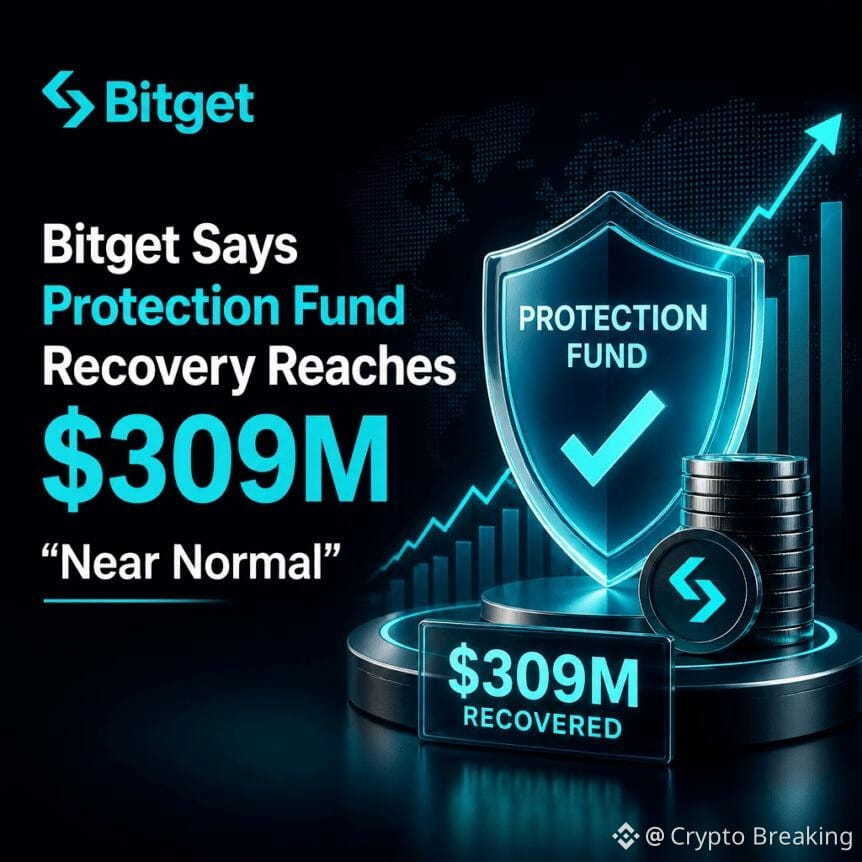
Article
See translation
Bitget Says Protection Fund Recovery Reaches $309M, “Near Normal”Bitget says it has moved back toward normal operations after a security breach that led to the loss of $388 million in user funds. In a post on X, Bitget CEO Gracy Chen said withdrawals for all tokens would resume on Friday, and that the exchange has already restored access for users to Bitcoin (BTC), Ether (ETH), and USDt (USDT).
As part of its recovery efforts, the exchange also reported that its in-house Protection Fund reached $309 million. The fund was designed to support users in situations where losses arise from incidents on the platform side—an important detail for users watching how exchanges manage security events beyond promises to “restore balances.”
Key takeaways
Bitget plans to restart withdrawals for all tokens on Friday, following partial restoration for BTC, ETH, and USDT.
The Protection Fund reportedly rose to $309 million to absorb the financial impact of the breach.
Bitget says it has not ruled out potential responsible parties, including the possibility of an inside job or North Korean-linked activity.
Investigators reported movements of stolen funds, including Zcash transfers linked to the incident.
What Bitget says is changing for users
Bitget’s latest update is aimed directly at usability and access. According to Chen’s X announcement, withdrawals for all tokens would resume on Friday, after the exchange had already restored withdrawals or access to major assets including BTC, ETH, and USDT.
For traders and businesses that rely on exchange liquidity, the difference between partial access and full withdrawal restoration can be significant. It affects everything from hedging to the ability to move funds quickly after volatile market moves—so Bitget’s “all tokens” timeframe is likely to be a key signal for the platform’s operational recovery.
The Protection Fund and how it was built
Bitget’s response also hinges on its “Protection Fund,” which Chen said has reached $309 million. The company originally established the fund in January 2022 with 5,500 BTC, with the intent of reimbursing users for potential losses that are “not a result of any misconduct from the user or the platform itself.”
Bitget frames the fund as a rapid-response buffer: funds were described as being available for “instant deployment whenever the need arises.” That matters because incidents involving centralized exchanges often create a timing gap between when funds are frozen and when users can access replacement balances or withdrawals.
Chen told Cointelegraph that the Protection Fund “was created for moments like this and absorbed the financial impact of the incident,” reinforcing the company’s position that its recovery mechanism was intended for exactly this type of event.
Open questions about responsibility and the bounty program
While Bitget is restoring access, it has not closed the investigation. In comments to Cointelegraph, Chen said the exchange still had not ruled out certain parties that could have been involved in the attack. She pointed to possibilities including an inside job or North Korean hackers, indicating Bitget believes the incident could have involved more than a purely external breach.
Following the hack, Bitget also launched a bounty program. The program offered 5% of the frozen funds and 5% for any recovered funds, a structure that ties incentives to both the ability to locate assets and the success of bringing stolen crypto back into custody.
For investors, the key issue is that while the exchange’s operational status improves, accountability and attribution remain unresolved. The faster an incident can be tied to specific actors and tactics, the more likely it becomes that industry defenses—such as monitoring, authentication controls, and threat intelligence—can adjust effectively for future risks.
Investigator updates show attackers may still be moving funds
Alongside Bitget’s internal recovery messaging, outside analysts have continued monitoring on-chain activity. ZachXBT, a blockchain investigator, reported on Wednesday that wallets linked to the Bitget hack moved roughly $3.8 million in Zcash (ZEC) into the network’s Ironwood pool.
According to ZachXBT, the transactions corresponded to about 14% of the 18,917 ZEC stolen during the attack. Moving funds into anonymity-related systems like pools can complicate tracing and recovery—so these updates can influence how quickly exchanges and investigators anticipate they might regain control over stolen assets.
While Bitget has emphasized its internal fund deployment and partial restoration already underway, investigator activity suggests the operational and investigative work will continue in parallel.
Going forward, readers should watch whether Bitget’s Friday withdrawal schedule holds for all token pairs and whether additional on-chain intelligence leads to further recovery announcements under its bounty program. The next phase will likely be a blend of operational verification for users and continued clarity on attribution for the broader security picture.
This article was originally published as Bitget Says Protection Fund Recovery Reaches $309M, “Near Normal” on Crypto Breaking News – your trusted source for crypto news, Bitcoin news, and blockchain updates.
Bitget Says Protection Fund Recovery Reaches $309M, “Near Normal”
Bitget says it has moved back toward normal operations after a security breach that led to the loss of $388 million in user funds. In a post on X, Bitget CEO Gracy Chen said withdrawals for all tokens would resume on Friday, and that the exchange has already restored access for users to Bitcoin (BTC), Ether (ETH), and USDt (USDT).
As part of its recovery efforts, the exchange also reported that its in-house Protection Fund reached $309 million. The fund was designed to support users in situations where losses arise from incidents on the platform side—an important detail for users watching how exchanges manage security events beyond promises to “restore balances.”
Key takeaways
Bitget plans to restart withdrawals for all tokens on Friday, following partial restoration for BTC, ETH, and USDT.
The Protection Fund reportedly rose to $309 million to absorb the financial impact of the breach.
Bitget says it has not ruled out potential responsible parties, including the possibility of an inside job or North Korean-linked activity.
Investigators reported movements of stolen funds, including Zcash transfers linked to the incident.
What Bitget says is changing for users
Bitget’s latest update is aimed directly at usability and access. According to Chen’s X announcement, withdrawals for all tokens would resume on Friday, after the exchange had already restored withdrawals or access to major assets including BTC, ETH, and USDT.
For traders and businesses that rely on exchange liquidity, the difference between partial access and full withdrawal restoration can be significant. It affects everything from hedging to the ability to move funds quickly after volatile market moves—so Bitget’s “all tokens” timeframe is likely to be a key signal for the platform’s operational recovery.
The Protection Fund and how it was built
Bitget’s response also hinges on its “Protection Fund,” which Chen said has reached $309 million. The company originally established the fund in January 2022 with 5,500 BTC, with the intent of reimbursing users for potential losses that are “not a result of any misconduct from the user or the platform itself.”
Bitget frames the fund as a rapid-response buffer: funds were described as being available for “instant deployment whenever the need arises.” That matters because incidents involving centralized exchanges often create a timing gap between when funds are frozen and when users can access replacement balances or withdrawals.
Chen told Cointelegraph that the Protection Fund “was created for moments like this and absorbed the financial impact of the incident,” reinforcing the company’s position that its recovery mechanism was intended for exactly this type of event.
Open questions about responsibility and the bounty program
While Bitget is restoring access, it has not closed the investigation. In comments to Cointelegraph, Chen said the exchange still had not ruled out certain parties that could have been involved in the attack. She pointed to possibilities including an inside job or North Korean hackers, indicating Bitget believes the incident could have involved more than a purely external breach.
Following the hack, Bitget also launched a bounty program. The program offered 5% of the frozen funds and 5% for any recovered funds, a structure that ties incentives to both the ability to locate assets and the success of bringing stolen crypto back into custody.
For investors, the key issue is that while the exchange’s operational status improves, accountability and attribution remain unresolved. The faster an incident can be tied to specific actors and tactics, the more likely it becomes that industry defenses—such as monitoring, authentication controls, and threat intelligence—can adjust effectively for future risks.
Investigator updates show attackers may still be moving funds
Alongside Bitget’s internal recovery messaging, outside analysts have continued monitoring on-chain activity. ZachXBT, a blockchain investigator, reported on Wednesday that wallets linked to the Bitget hack moved roughly $3.8 million in Zcash (ZEC) into the network’s Ironwood pool.
According to ZachXBT, the transactions corresponded to about 14% of the 18,917 ZEC stolen during the attack. Moving funds into anonymity-related systems like pools can complicate tracing and recovery—so these updates can influence how quickly exchanges and investigators anticipate they might regain control over stolen assets.
While Bitget has emphasized its internal fund deployment and partial restoration already underway, investigator activity suggests the operational and investigative work will continue in parallel.
Going forward, readers should watch whether Bitget’s Friday withdrawal schedule holds for all token pairs and whether additional on-chain intelligence leads to further recovery announcements under its bounty program. The next phase will likely be a blend of operational verification for users and continued clarity on attribution for the broader security picture.
This article was originally published as Bitget Says Protection Fund Recovery Reaches $309M, “Near Normal” on Crypto Breaking News – your trusted source for crypto news, Bitcoin news, and blockchain updates.
As part of its recovery efforts, the exchange also reported that its in-house Protection Fund reached $309 million. The fund was designed to support users in situations where losses arise from incidents on the platform side—an important detail for users watching how exchanges manage security events beyond promises to “restore balances.”
Key takeaways
Bitget plans to restart withdrawals for all tokens on Friday, following partial restoration for BTC, ETH, and USDT.
The Protection Fund reportedly rose to $309 million to absorb the financial impact of the breach.
Bitget says it has not ruled out potential responsible parties, including the possibility of an inside job or North Korean-linked activity.
Investigators reported movements of stolen funds, including Zcash transfers linked to the incident.
What Bitget says is changing for users
Bitget’s latest update is aimed directly at usability and access. According to Chen’s X announcement, withdrawals for all tokens would resume on Friday, after the exchange had already restored withdrawals or access to major assets including BTC, ETH, and USDT.
For traders and businesses that rely on exchange liquidity, the difference between partial access and full withdrawal restoration can be significant. It affects everything from hedging to the ability to move funds quickly after volatile market moves—so Bitget’s “all tokens” timeframe is likely to be a key signal for the platform’s operational recovery.
The Protection Fund and how it was built
Bitget’s response also hinges on its “Protection Fund,” which Chen said has reached $309 million. The company originally established the fund in January 2022 with 5,500 BTC, with the intent of reimbursing users for potential losses that are “not a result of any misconduct from the user or the platform itself.”
Bitget frames the fund as a rapid-response buffer: funds were described as being available for “instant deployment whenever the need arises.” That matters because incidents involving centralized exchanges often create a timing gap between when funds are frozen and when users can access replacement balances or withdrawals.
Chen told Cointelegraph that the Protection Fund “was created for moments like this and absorbed the financial impact of the incident,” reinforcing the company’s position that its recovery mechanism was intended for exactly this type of event.
Open questions about responsibility and the bounty program
While Bitget is restoring access, it has not closed the investigation. In comments to Cointelegraph, Chen said the exchange still had not ruled out certain parties that could have been involved in the attack. She pointed to possibilities including an inside job or North Korean hackers, indicating Bitget believes the incident could have involved more than a purely external breach.
Following the hack, Bitget also launched a bounty program. The program offered 5% of the frozen funds and 5% for any recovered funds, a structure that ties incentives to both the ability to locate assets and the success of bringing stolen crypto back into custody.
For investors, the key issue is that while the exchange’s operational status improves, accountability and attribution remain unresolved. The faster an incident can be tied to specific actors and tactics, the more likely it becomes that industry defenses—such as monitoring, authentication controls, and threat intelligence—can adjust effectively for future risks.
Investigator updates show attackers may still be moving funds
Alongside Bitget’s internal recovery messaging, outside analysts have continued monitoring on-chain activity. ZachXBT, a blockchain investigator, reported on Wednesday that wallets linked to the Bitget hack moved roughly $3.8 million in Zcash (ZEC) into the network’s Ironwood pool.
According to ZachXBT, the transactions corresponded to about 14% of the 18,917 ZEC stolen during the attack. Moving funds into anonymity-related systems like pools can complicate tracing and recovery—so these updates can influence how quickly exchanges and investigators anticipate they might regain control over stolen assets.
While Bitget has emphasized its internal fund deployment and partial restoration already underway, investigator activity suggests the operational and investigative work will continue in parallel.
Going forward, readers should watch whether Bitget’s Friday withdrawal schedule holds for all token pairs and whether additional on-chain intelligence leads to further recovery announcements under its bounty program. The next phase will likely be a blend of operational verification for users and continued clarity on attribution for the broader security picture.
This article was originally published as Bitget Says Protection Fund Recovery Reaches $309M, “Near Normal” on Crypto Breaking News – your trusted source for crypto news, Bitcoin news, and blockchain updates.
277

Article
See translation
Crypto Hardware Wallets: 2026 Comparison Guide and Key DifferencesHardware wallets are built to reduce one of crypto’s most persistent risks: exposing private keys to malware, phishing, or compromised devices. Instead of letting a phone or laptop directly approve payments, a hardware wallet keeps the signing process—where transactions are authorized—separate, typically using its own screen and secure components so users can verify what they’re approving.
A new Cointelegraph review assesses a range of popular models by combining practical testing with manufacturer documentation. The testing covers devices including Trezor Safe 7, Ledger Stax, Flex, Nano Gen5, Nano X, Nano S Plus, and Coinkite’s Opendime, with the review also explaining how different wallet designs—from Bluetooth to QR-based signing to NFC cards—change the security trade-offs for everyday users.
Key takeaways
Hardware wallets primarily protect by isolating transaction signing from the phone or computer, but users can still lose funds by approving scam transactions or mishandling backups.
When a wallet has a screen, users can cross-check transaction details on the device itself—an important safeguard against malicious UI prompts on connected devices.
Cointelegraph’s testing flagged an issue with Ledger’s Stax experience, citing input lag attributed to its wraparound screen design.
Not all “air-gapped” designs are equal: QR-based wallets remove data connections for signing, but they still require careful verification because QR codes alone don’t prevent deception.
NFC wallet cards like Tangem have no dedicated display, which can make it harder for users to detect if a compromised phone is misleading them.
What a hardware wallet actually protects—and what it can’t
At the core of most hardware wallets is a separation of duties: your crypto stays on the blockchain, while the hardware device stores the private keys used to authorize transactions. Cointelegraph explains that this design keeps signing logic away from the phone or computer, reducing the chance that malware on those devices can directly steal keys.
Many models include their own screens so users can review transaction details directly on the wallet before approving. That matters because a compromised connected device can potentially display incorrect information—yet a wallet screen gives users a second chance to catch the mismatch.
Still, the protection is not absolute. The wallet must show enough context for a user to understand what they’re approving. If a user authorizes a fraudulent transaction, loses their recovery backup, or uses insecure wallet software, funds can still be at risk. Recovery backups are treated as a separate security boundary: anyone who obtains the backup may be able to restore access.
Design differences across multi-asset wallets
For users holding multiple cryptocurrencies, the first filter is practical compatibility: whether the wallet supports the specific coins and networks they use, and which features depend on the manufacturer’s app versus third-party software.
Cointelegraph describes how several major brands approach hardware interfaces and connectivity. Ledger’s Stax, Flex, Nano Gen5, and Nano X models connect via Bluetooth or USB. The Stax uses a 3.7-inch E Ink touchscreen with a curved “wraparound” design, while the Flex and Nano Gen5 use flat 2.8-inch E Ink touchscreens. The Nano X relies on a smaller 1.1-inch OLED screen paired with physical buttons and a folding metal cover.
During its hands-on testing, Cointelegraph reported that the Stax—positioned as the most expensive in Ledger’s lineup—appeared to suffer from input lag. The publication says Ledger confirmed the lag was tied to the wraparound screen, which Cointelegraph interpreted as an input issue that could lead users to enter the wrong PIN repeatedly and then slow down to correct it. Based on that experience, the review advises against the Stax, recommending the “cheaper touchscreen models” instead as a smoother user experience.
On the software philosophy side, Cointelegraph contrasts Trezor and Ledger. The Trezor Safe 7 is presented as fully open-source, while Ledger uses certified secure element chips and does not open-source some portions of its software due to legal constraints. Functionally, the review notes that both ecosystems generally offer broad third-party support, support for thousands of assets, and dedicated management software for mobile and computer use.
The review also highlights other multi-asset options outside the two largest ecosystems. BitBox02 Nova Multicoin, described as a Bluetooth-capable general-purpose wallet, uses capacitive controls over an OLED display and supports major platforms. It also allows users to back up private keys to a microSD card—a capability Cointelegraph calls out as the first such approach covered in the review, with an added reminder that the card must be stored securely and separately from the device.
SafePal X1 is positioned as a low-cost alternative with a full keypad and a monochrome interface, using Bluetooth connectivity while still supporting more than 200 blockchains. Cointelegraph notes a typical retail price around $70, while referencing an at-the-time lower price of $29.99 through Changelly’s wallet marketplace, about 57% below the usual price.
USB-first options and “mobile-like” signing methods
Beyond Bluetooth models, Cointelegraph outlines a wired category that includes Ledger Nano S Plus, Trezor Safe 5 Universal and Safe 3 Universal, and BitBox02 Multicoin. These devices connect via USB to supported computers or devices, narrowing the pathways through which data can move during transaction setup and approval.
Within the Trezor lineup, Cointelegraph distinguishes Safe 5 Universal as a wired device with a colorful touchscreen, while Safe 3 Universal uses a monochromatic display and two buttons. The practical takeaway from the review is that capabilities are broadly similar across the two, but input and output can be “much less cumbersome” on Safe 5 Universal.
SafePal’s QR-code-based wallets represent a different approach. Cointelegraph describes SafePal S1, S1 Pro, and Ngrave Zero as devices that exchange transaction data via QR codes: users scan the QR displayed on the wallet with a camera, then sign without using USB or Bluetooth for data transfer. Importantly, Cointelegraph stresses that QR codes don’t automatically guarantee safety—users must still verify the transaction details.
Cointelegraph also explains that SafePal S1 and S1 Pro share the same core QR-based concept and color screen, with the Pro using aluminum and glass construction and including an extra 25% battery capacity. Ngrave Zero is described as an air-gapped, smartphone-like hardware wallet with a color touchscreen, a fingerprint sensor used for authentication and as part of its randomness generation alongside its random number generator and ambient light data.
NFC wallet cards: convenience versus verifiability
Tangem wallet cards, according to Cointelegraph, take a minimalist route: they are NFC-based hardware wallets with no dedicated screen. Because the device can’t present transaction details itself, Cointelegraph warns this can limit users’ ability to detect a compromised phone that might try to show a different transaction than what is actually being authorized.
The review further notes that Tangem supports wallet setup with or without a recovery phrase. In “without recovery phrase” setups, the key is generated inside the card. With a recovery phrase, Cointelegraph states the phone app generates the phrase and transfers the resulting keys to the card.
Bitcoin-only devices and the Coldcard firmware lesson
If a user only holds Bitcoin, Cointelegraph notes that some brands offer Bitcoin-only versions of certain wallets by removing support for other assets. The trade-off is reduced complexity for those users, but purchasers still need to consider transaction verification, backup protection, and timely firmware updates.
Coinkite’s Coldcard line is a central part of the Bitcoin-only discussion. Cointelegraph describes the Coldcard Mk5 as a numerical keypad device, while Coldcard Q includes a larger screen, full keyboard, and a camera for scanning QR codes, preparing transactions with compatible wallet software such as Sparrow.
A major security detail in the review involves Coldcard firmware. Cointelegraph reports that in July 2026, Coinkite warned affected Coldcard firmware could generate wallet keys easier for attackers to guess. The issue reportedly affected multiple models and software versions.
Later, Cointelegraph attributes the theft of about 1,789 BTC from 8,865 addresses to the flaw, citing Galaxy Research’s Alex Thorn coverage. Cointelegraph also states the Bitcoin was worth about $114.7 million at the time of those thefts.
Coinkite’s response, as summarized by Cointelegraph, included instructions for users to install corrected firmware, create a new wallet, and transfer Bitcoin. The review also notes an important limitation: updating firmware does not fix keys already generated with the flawed behavior. Cointelegraph points readers to Coinkite’s security advisory for affected versions, exceptions, and migration instructions.
The review also includes Coinkite’s Opendime, described as Bitcoin credit chips and button-based cold storage that supports Bitcoin only. Cointelegraph characterizes Opendime as a “piggy bank” concept: Bitcoin is stored until the seal is broken to reveal the private key needed to spend the assets it holds.
How to choose based on your workflow
Cointelegraph frames wallet selection as a workflow problem: start with the assets you hold, then match the wallet to the phone or computer you’ll use. Next, focus on how you will verify transactions and regain access if the device is lost—because the review repeatedly emphasizes that verification steps and backup handling are where real security outcomes are made or broken.
It also suggests that different wallet designs can make sense depending on the user’s threat model. A screenless NFC wallet card might be appropriate for certain multisignature setups when other keys have stronger transaction checks, while a Bitcoin-only device can reduce attack surface for users who don’t need other networks. But the publication stresses that price alone doesn’t ensure stronger protection; higher cost can buy better screens, premium materials, or convenience without necessarily translating into better security.
Going forward, Cointelegraph’s broader message is that ownership requires active habits: protect recovery backups, verify transaction details carefully, and monitor firmware and security updates. As the Coldcard episode illustrates, the most important “feature” in practice is often how quickly and correctly a wallet user responds when fixes are released.
This article was originally published as Crypto Hardware Wallets: 2026 Comparison Guide and Key Differences on Crypto Breaking News – your trusted source for crypto news, Bitcoin news, and blockchain updates.
Crypto Hardware Wallets: 2026 Comparison Guide and Key Differences
Hardware wallets are built to reduce one of crypto’s most persistent risks: exposing private keys to malware, phishing, or compromised devices. Instead of letting a phone or laptop directly approve payments, a hardware wallet keeps the signing process—where transactions are authorized—separate, typically using its own screen and secure components so users can verify what they’re approving.
A new Cointelegraph review assesses a range of popular models by combining practical testing with manufacturer documentation. The testing covers devices including Trezor Safe 7, Ledger Stax, Flex, Nano Gen5, Nano X, Nano S Plus, and Coinkite’s Opendime, with the review also explaining how different wallet designs—from Bluetooth to QR-based signing to NFC cards—change the security trade-offs for everyday users.
Key takeaways
Hardware wallets primarily protect by isolating transaction signing from the phone or computer, but users can still lose funds by approving scam transactions or mishandling backups.
When a wallet has a screen, users can cross-check transaction details on the device itself—an important safeguard against malicious UI prompts on connected devices.
Cointelegraph’s testing flagged an issue with Ledger’s Stax experience, citing input lag attributed to its wraparound screen design.
Not all “air-gapped” designs are equal: QR-based wallets remove data connections for signing, but they still require careful verification because QR codes alone don’t prevent deception.
NFC wallet cards like Tangem have no dedicated display, which can make it harder for users to detect if a compromised phone is misleading them.
What a hardware wallet actually protects—and what it can’t
At the core of most hardware wallets is a separation of duties: your crypto stays on the blockchain, while the hardware device stores the private keys used to authorize transactions. Cointelegraph explains that this design keeps signing logic away from the phone or computer, reducing the chance that malware on those devices can directly steal keys.
Many models include their own screens so users can review transaction details directly on the wallet before approving. That matters because a compromised connected device can potentially display incorrect information—yet a wallet screen gives users a second chance to catch the mismatch.
Still, the protection is not absolute. The wallet must show enough context for a user to understand what they’re approving. If a user authorizes a fraudulent transaction, loses their recovery backup, or uses insecure wallet software, funds can still be at risk. Recovery backups are treated as a separate security boundary: anyone who obtains the backup may be able to restore access.
Design differences across multi-asset wallets
For users holding multiple cryptocurrencies, the first filter is practical compatibility: whether the wallet supports the specific coins and networks they use, and which features depend on the manufacturer’s app versus third-party software.
Cointelegraph describes how several major brands approach hardware interfaces and connectivity. Ledger’s Stax, Flex, Nano Gen5, and Nano X models connect via Bluetooth or USB. The Stax uses a 3.7-inch E Ink touchscreen with a curved “wraparound” design, while the Flex and Nano Gen5 use flat 2.8-inch E Ink touchscreens. The Nano X relies on a smaller 1.1-inch OLED screen paired with physical buttons and a folding metal cover.
During its hands-on testing, Cointelegraph reported that the Stax—positioned as the most expensive in Ledger’s lineup—appeared to suffer from input lag. The publication says Ledger confirmed the lag was tied to the wraparound screen, which Cointelegraph interpreted as an input issue that could lead users to enter the wrong PIN repeatedly and then slow down to correct it. Based on that experience, the review advises against the Stax, recommending the “cheaper touchscreen models” instead as a smoother user experience.
On the software philosophy side, Cointelegraph contrasts Trezor and Ledger. The Trezor Safe 7 is presented as fully open-source, while Ledger uses certified secure element chips and does not open-source some portions of its software due to legal constraints. Functionally, the review notes that both ecosystems generally offer broad third-party support, support for thousands of assets, and dedicated management software for mobile and computer use.
The review also highlights other multi-asset options outside the two largest ecosystems. BitBox02 Nova Multicoin, described as a Bluetooth-capable general-purpose wallet, uses capacitive controls over an OLED display and supports major platforms. It also allows users to back up private keys to a microSD card—a capability Cointelegraph calls out as the first such approach covered in the review, with an added reminder that the card must be stored securely and separately from the device.
SafePal X1 is positioned as a low-cost alternative with a full keypad and a monochrome interface, using Bluetooth connectivity while still supporting more than 200 blockchains. Cointelegraph notes a typical retail price around $70, while referencing an at-the-time lower price of $29.99 through Changelly’s wallet marketplace, about 57% below the usual price.
USB-first options and “mobile-like” signing methods
Beyond Bluetooth models, Cointelegraph outlines a wired category that includes Ledger Nano S Plus, Trezor Safe 5 Universal and Safe 3 Universal, and BitBox02 Multicoin. These devices connect via USB to supported computers or devices, narrowing the pathways through which data can move during transaction setup and approval.
Within the Trezor lineup, Cointelegraph distinguishes Safe 5 Universal as a wired device with a colorful touchscreen, while Safe 3 Universal uses a monochromatic display and two buttons. The practical takeaway from the review is that capabilities are broadly similar across the two, but input and output can be “much less cumbersome” on Safe 5 Universal.
SafePal’s QR-code-based wallets represent a different approach. Cointelegraph describes SafePal S1, S1 Pro, and Ngrave Zero as devices that exchange transaction data via QR codes: users scan the QR displayed on the wallet with a camera, then sign without using USB or Bluetooth for data transfer. Importantly, Cointelegraph stresses that QR codes don’t automatically guarantee safety—users must still verify the transaction details.
Cointelegraph also explains that SafePal S1 and S1 Pro share the same core QR-based concept and color screen, with the Pro using aluminum and glass construction and including an extra 25% battery capacity. Ngrave Zero is described as an air-gapped, smartphone-like hardware wallet with a color touchscreen, a fingerprint sensor used for authentication and as part of its randomness generation alongside its random number generator and ambient light data.
NFC wallet cards: convenience versus verifiability
Tangem wallet cards, according to Cointelegraph, take a minimalist route: they are NFC-based hardware wallets with no dedicated screen. Because the device can’t present transaction details itself, Cointelegraph warns this can limit users’ ability to detect a compromised phone that might try to show a different transaction than what is actually being authorized.
The review further notes that Tangem supports wallet setup with or without a recovery phrase. In “without recovery phrase” setups, the key is generated inside the card. With a recovery phrase, Cointelegraph states the phone app generates the phrase and transfers the resulting keys to the card.
Bitcoin-only devices and the Coldcard firmware lesson
If a user only holds Bitcoin, Cointelegraph notes that some brands offer Bitcoin-only versions of certain wallets by removing support for other assets. The trade-off is reduced complexity for those users, but purchasers still need to consider transaction verification, backup protection, and timely firmware updates.
Coinkite’s Coldcard line is a central part of the Bitcoin-only discussion. Cointelegraph describes the Coldcard Mk5 as a numerical keypad device, while Coldcard Q includes a larger screen, full keyboard, and a camera for scanning QR codes, preparing transactions with compatible wallet software such as Sparrow.
A major security detail in the review involves Coldcard firmware. Cointelegraph reports that in July 2026, Coinkite warned affected Coldcard firmware could generate wallet keys easier for attackers to guess. The issue reportedly affected multiple models and software versions.
Later, Cointelegraph attributes the theft of about 1,789 BTC from 8,865 addresses to the flaw, citing Galaxy Research’s Alex Thorn coverage. Cointelegraph also states the Bitcoin was worth about $114.7 million at the time of those thefts.
Coinkite’s response, as summarized by Cointelegraph, included instructions for users to install corrected firmware, create a new wallet, and transfer Bitcoin. The review also notes an important limitation: updating firmware does not fix keys already generated with the flawed behavior. Cointelegraph points readers to Coinkite’s security advisory for affected versions, exceptions, and migration instructions.
The review also includes Coinkite’s Opendime, described as Bitcoin credit chips and button-based cold storage that supports Bitcoin only. Cointelegraph characterizes Opendime as a “piggy bank” concept: Bitcoin is stored until the seal is broken to reveal the private key needed to spend the assets it holds.
How to choose based on your workflow
Cointelegraph frames wallet selection as a workflow problem: start with the assets you hold, then match the wallet to the phone or computer you’ll use. Next, focus on how you will verify transactions and regain access if the device is lost—because the review repeatedly emphasizes that verification steps and backup handling are where real security outcomes are made or broken.
It also suggests that different wallet designs can make sense depending on the user’s threat model. A screenless NFC wallet card might be appropriate for certain multisignature setups when other keys have stronger transaction checks, while a Bitcoin-only device can reduce attack surface for users who don’t need other networks. But the publication stresses that price alone doesn’t ensure stronger protection; higher cost can buy better screens, premium materials, or convenience without necessarily translating into better security.
Going forward, Cointelegraph’s broader message is that ownership requires active habits: protect recovery backups, verify transaction details carefully, and monitor firmware and security updates. As the Coldcard episode illustrates, the most important “feature” in practice is often how quickly and correctly a wallet user responds when fixes are released.
This article was originally published as Crypto Hardware Wallets: 2026 Comparison Guide and Key Differences on Crypto Breaking News – your trusted source for crypto news, Bitcoin news, and blockchain updates.
A new Cointelegraph review assesses a range of popular models by combining practical testing with manufacturer documentation. The testing covers devices including Trezor Safe 7, Ledger Stax, Flex, Nano Gen5, Nano X, Nano S Plus, and Coinkite’s Opendime, with the review also explaining how different wallet designs—from Bluetooth to QR-based signing to NFC cards—change the security trade-offs for everyday users.
Key takeaways
Hardware wallets primarily protect by isolating transaction signing from the phone or computer, but users can still lose funds by approving scam transactions or mishandling backups.
When a wallet has a screen, users can cross-check transaction details on the device itself—an important safeguard against malicious UI prompts on connected devices.
Cointelegraph’s testing flagged an issue with Ledger’s Stax experience, citing input lag attributed to its wraparound screen design.
Not all “air-gapped” designs are equal: QR-based wallets remove data connections for signing, but they still require careful verification because QR codes alone don’t prevent deception.
NFC wallet cards like Tangem have no dedicated display, which can make it harder for users to detect if a compromised phone is misleading them.
What a hardware wallet actually protects—and what it can’t
At the core of most hardware wallets is a separation of duties: your crypto stays on the blockchain, while the hardware device stores the private keys used to authorize transactions. Cointelegraph explains that this design keeps signing logic away from the phone or computer, reducing the chance that malware on those devices can directly steal keys.
Many models include their own screens so users can review transaction details directly on the wallet before approving. That matters because a compromised connected device can potentially display incorrect information—yet a wallet screen gives users a second chance to catch the mismatch.
Still, the protection is not absolute. The wallet must show enough context for a user to understand what they’re approving. If a user authorizes a fraudulent transaction, loses their recovery backup, or uses insecure wallet software, funds can still be at risk. Recovery backups are treated as a separate security boundary: anyone who obtains the backup may be able to restore access.
Design differences across multi-asset wallets
For users holding multiple cryptocurrencies, the first filter is practical compatibility: whether the wallet supports the specific coins and networks they use, and which features depend on the manufacturer’s app versus third-party software.
Cointelegraph describes how several major brands approach hardware interfaces and connectivity. Ledger’s Stax, Flex, Nano Gen5, and Nano X models connect via Bluetooth or USB. The Stax uses a 3.7-inch E Ink touchscreen with a curved “wraparound” design, while the Flex and Nano Gen5 use flat 2.8-inch E Ink touchscreens. The Nano X relies on a smaller 1.1-inch OLED screen paired with physical buttons and a folding metal cover.
During its hands-on testing, Cointelegraph reported that the Stax—positioned as the most expensive in Ledger’s lineup—appeared to suffer from input lag. The publication says Ledger confirmed the lag was tied to the wraparound screen, which Cointelegraph interpreted as an input issue that could lead users to enter the wrong PIN repeatedly and then slow down to correct it. Based on that experience, the review advises against the Stax, recommending the “cheaper touchscreen models” instead as a smoother user experience.
On the software philosophy side, Cointelegraph contrasts Trezor and Ledger. The Trezor Safe 7 is presented as fully open-source, while Ledger uses certified secure element chips and does not open-source some portions of its software due to legal constraints. Functionally, the review notes that both ecosystems generally offer broad third-party support, support for thousands of assets, and dedicated management software for mobile and computer use.
The review also highlights other multi-asset options outside the two largest ecosystems. BitBox02 Nova Multicoin, described as a Bluetooth-capable general-purpose wallet, uses capacitive controls over an OLED display and supports major platforms. It also allows users to back up private keys to a microSD card—a capability Cointelegraph calls out as the first such approach covered in the review, with an added reminder that the card must be stored securely and separately from the device.
SafePal X1 is positioned as a low-cost alternative with a full keypad and a monochrome interface, using Bluetooth connectivity while still supporting more than 200 blockchains. Cointelegraph notes a typical retail price around $70, while referencing an at-the-time lower price of $29.99 through Changelly’s wallet marketplace, about 57% below the usual price.
USB-first options and “mobile-like” signing methods
Beyond Bluetooth models, Cointelegraph outlines a wired category that includes Ledger Nano S Plus, Trezor Safe 5 Universal and Safe 3 Universal, and BitBox02 Multicoin. These devices connect via USB to supported computers or devices, narrowing the pathways through which data can move during transaction setup and approval.
Within the Trezor lineup, Cointelegraph distinguishes Safe 5 Universal as a wired device with a colorful touchscreen, while Safe 3 Universal uses a monochromatic display and two buttons. The practical takeaway from the review is that capabilities are broadly similar across the two, but input and output can be “much less cumbersome” on Safe 5 Universal.
SafePal’s QR-code-based wallets represent a different approach. Cointelegraph describes SafePal S1, S1 Pro, and Ngrave Zero as devices that exchange transaction data via QR codes: users scan the QR displayed on the wallet with a camera, then sign without using USB or Bluetooth for data transfer. Importantly, Cointelegraph stresses that QR codes don’t automatically guarantee safety—users must still verify the transaction details.
Cointelegraph also explains that SafePal S1 and S1 Pro share the same core QR-based concept and color screen, with the Pro using aluminum and glass construction and including an extra 25% battery capacity. Ngrave Zero is described as an air-gapped, smartphone-like hardware wallet with a color touchscreen, a fingerprint sensor used for authentication and as part of its randomness generation alongside its random number generator and ambient light data.
NFC wallet cards: convenience versus verifiability
Tangem wallet cards, according to Cointelegraph, take a minimalist route: they are NFC-based hardware wallets with no dedicated screen. Because the device can’t present transaction details itself, Cointelegraph warns this can limit users’ ability to detect a compromised phone that might try to show a different transaction than what is actually being authorized.
The review further notes that Tangem supports wallet setup with or without a recovery phrase. In “without recovery phrase” setups, the key is generated inside the card. With a recovery phrase, Cointelegraph states the phone app generates the phrase and transfers the resulting keys to the card.
Bitcoin-only devices and the Coldcard firmware lesson
If a user only holds Bitcoin, Cointelegraph notes that some brands offer Bitcoin-only versions of certain wallets by removing support for other assets. The trade-off is reduced complexity for those users, but purchasers still need to consider transaction verification, backup protection, and timely firmware updates.
Coinkite’s Coldcard line is a central part of the Bitcoin-only discussion. Cointelegraph describes the Coldcard Mk5 as a numerical keypad device, while Coldcard Q includes a larger screen, full keyboard, and a camera for scanning QR codes, preparing transactions with compatible wallet software such as Sparrow.
A major security detail in the review involves Coldcard firmware. Cointelegraph reports that in July 2026, Coinkite warned affected Coldcard firmware could generate wallet keys easier for attackers to guess. The issue reportedly affected multiple models and software versions.
Later, Cointelegraph attributes the theft of about 1,789 BTC from 8,865 addresses to the flaw, citing Galaxy Research’s Alex Thorn coverage. Cointelegraph also states the Bitcoin was worth about $114.7 million at the time of those thefts.
Coinkite’s response, as summarized by Cointelegraph, included instructions for users to install corrected firmware, create a new wallet, and transfer Bitcoin. The review also notes an important limitation: updating firmware does not fix keys already generated with the flawed behavior. Cointelegraph points readers to Coinkite’s security advisory for affected versions, exceptions, and migration instructions.
The review also includes Coinkite’s Opendime, described as Bitcoin credit chips and button-based cold storage that supports Bitcoin only. Cointelegraph characterizes Opendime as a “piggy bank” concept: Bitcoin is stored until the seal is broken to reveal the private key needed to spend the assets it holds.
How to choose based on your workflow
Cointelegraph frames wallet selection as a workflow problem: start with the assets you hold, then match the wallet to the phone or computer you’ll use. Next, focus on how you will verify transactions and regain access if the device is lost—because the review repeatedly emphasizes that verification steps and backup handling are where real security outcomes are made or broken.
It also suggests that different wallet designs can make sense depending on the user’s threat model. A screenless NFC wallet card might be appropriate for certain multisignature setups when other keys have stronger transaction checks, while a Bitcoin-only device can reduce attack surface for users who don’t need other networks. But the publication stresses that price alone doesn’t ensure stronger protection; higher cost can buy better screens, premium materials, or convenience without necessarily translating into better security.
Going forward, Cointelegraph’s broader message is that ownership requires active habits: protect recovery backups, verify transaction details carefully, and monitor firmware and security updates. As the Coldcard episode illustrates, the most important “feature” in practice is often how quickly and correctly a wallet user responds when fixes are released.
This article was originally published as Crypto Hardware Wallets: 2026 Comparison Guide and Key Differences on Crypto Breaking News – your trusted source for crypto news, Bitcoin news, and blockchain updates.
98
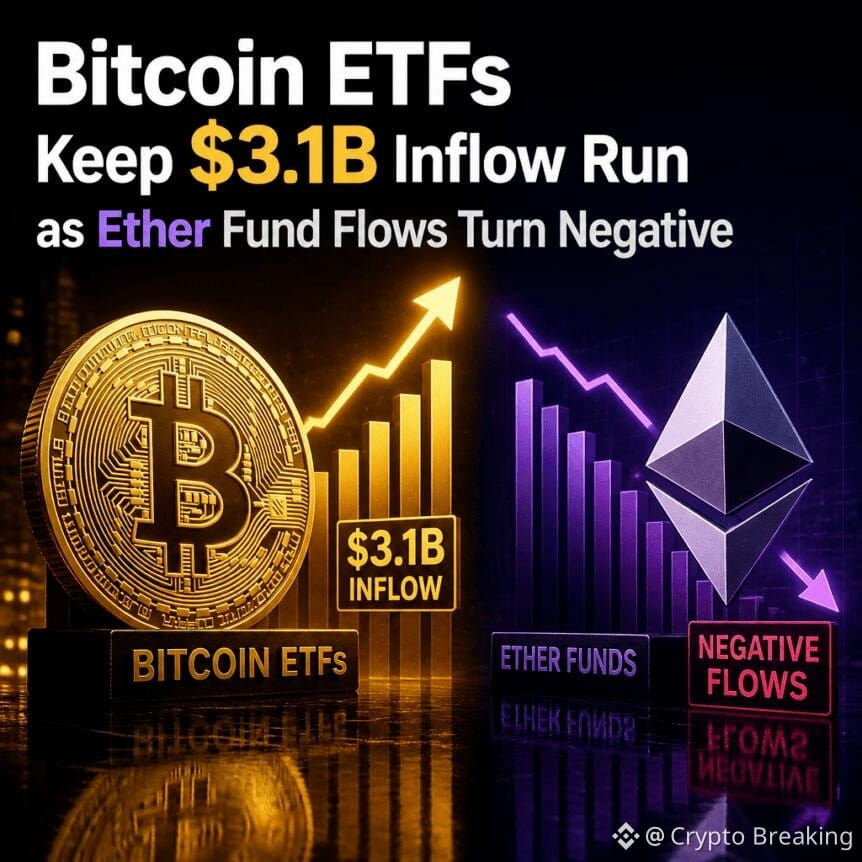
Article
See translation
Bitcoin ETFs Keep $3.1B Inflow Run as Ether Fund Flows Turn NegativeSpot Bitcoin exchange-traded funds (ETFs) kept drawing fresh capital for a ninth straight trading day, extending a momentum streak that has already amassed about $3.1 billion in net inflows. Meanwhile, spot Ether and Zcash products moved in the opposite direction, underscoring how rotation within crypto ETF flows remains uneven across assets.
According to SoSoValue, US spot Bitcoin ETFs pulled in $66.2 million on Tuesday. That added to a broader run of inflows—bringing net inflows over the streak to roughly $3.1 billion. Year-to-date, Bitcoin ETF net inflows have reached approximately $1 billion.
Key takeaways
US spot Bitcoin ETFs recorded $66.2 million in Tuesday inflows, extending net inflows to nine trading days.
SoSoValue data shows the winning streak totals roughly $3.1 billion, with about $1 billion in net inflows for the year so far.
US spot Ether ETFs ended a seven-day inflow streak with about $3 million in net outflows on Tuesday.
Zcash ETFs snapped a six-day inflow streak after recording about $8 million in net outflows on Monday.
Market sentiment cooled slightly: Alternative.me’s Crypto Fear & Greed Index slipped to 71 (“Greed”).
Bitcoin ETFs extend inflows, but the rally faces friction
The persistence of inflows into spot Bitcoin ETFs suggests institutional and retail demand has remained steady even as broader market conditions show signs of pause. SoSoValue’s figures place Bitcoin’s ETF performance squarely in the “risk-on” camp: the current streak has continued to stack net inflows day after day.
At the time of publication, Bitcoin traded around $83,567, down 0.4% over the previous 24 hours, according to CoinGecko. While that’s only a modest decline, it aligns with the idea that upside momentum may be becoming harder to sustain—particularly for an asset that has recently benefited from renewed interest in regulated access.
Kyle Rodda, senior financial market analyst at Capital.com, told Cointelegraph that rising crude prices are weighing on non-yielding assets, contributing to a pause in Bitcoin’s advance. Rodda also said Bitcoin could struggle to regain upward momentum as energy-price risks persist, even as its technical outlook remains “quite constructive.”
Ether ETF flows reverse after a strong run
Not all crypto ETF products mirrored Bitcoin’s strength. Spot Ether ETFs ended a seven-day inflow streak with roughly $3 million in net outflows on Tuesday, according to SoSoValue.
Despite the reversal, the broader context remains notable. SoSoValue data indicates Ether ETFs had attracted more than $851 million over the prior seven sessions, lifting cumulative net inflows to about $14 billion. The key signal for investors is not that Ether demand has vanished—but that the market’s willingness to add risk to ETH exposure has become more selective than it has been for BTC exposure.
For traders and allocators, this kind of cross-product divergence can matter because it often reflects shifting expectations for where capital will find the strongest relative momentum. When Bitcoin continues to pull inflows while Ether cools, it can suggest investors are prioritizing BTC’s role in the “core” part of crypto portfolios, at least in the near term.
Zcash ETFs break inflow streak as flows thin
Spot Zcash ETFs also saw a break in their recent pattern. Earlier in the week, Zcash ETFs snapped a six-day inflow streak after recording about $8 million in net outflows on Monday, as reported by SoSoValue.
Although Zcash is a smaller player in the crypto ETF landscape compared with Bitcoin and Ether, the shift still highlights a broader theme: inflows are not uniformly migrating across the altcoin complex. Instead, they appear to be concentrated—at least temporarily—around Bitcoin while select alternatives experience pullbacks.
Sentiment softens as the market weighs macro pressures
Outside ETF flows, crypto market sentiment showed a modest cooling. Alternative.me’s Crypto Fear & Greed Index slipped to 71 from 73 a day earlier, remaining in “Greed” territory.
That backdrop helps explain why ETF inflows alone may not translate directly into sustained price acceleration. If macro variables are exerting pressure on non-yielding assets—as Rodda argued with respect to crude prices—then even steady ETF demand may be fighting headwinds from broader risk appetite and cost-of-carry considerations.
For market participants, the combination of steady Bitcoin ETF inflows and weakening sentiment can act as an early warning: demand may remain present, but the market may need clearer catalysts to convert that inflow momentum into stronger spot price follow-through.
Investors should watch whether Ether and Zcash see additional outflow days or quickly bounce back after their streaks ended. At the same time, Bitcoin ETF flows will be closely monitored for signs of whether the ninth-day streak turns into a longer run—or whether macro pressure starts to show up in net creations across the broader ETF complex.
This article was originally published as Bitcoin ETFs Keep $3.1B Inflow Run as Ether Fund Flows Turn Negative on Crypto Breaking News – your trusted source for crypto news, Bitcoin news, and blockchain updates.
Bitcoin ETFs Keep $3.1B Inflow Run as Ether Fund Flows Turn Negative
Spot Bitcoin exchange-traded funds (ETFs) kept drawing fresh capital for a ninth straight trading day, extending a momentum streak that has already amassed about $3.1 billion in net inflows. Meanwhile, spot Ether and Zcash products moved in the opposite direction, underscoring how rotation within crypto ETF flows remains uneven across assets.
According to SoSoValue, US spot Bitcoin ETFs pulled in $66.2 million on Tuesday. That added to a broader run of inflows—bringing net inflows over the streak to roughly $3.1 billion. Year-to-date, Bitcoin ETF net inflows have reached approximately $1 billion.
Key takeaways
US spot Bitcoin ETFs recorded $66.2 million in Tuesday inflows, extending net inflows to nine trading days.
SoSoValue data shows the winning streak totals roughly $3.1 billion, with about $1 billion in net inflows for the year so far.
US spot Ether ETFs ended a seven-day inflow streak with about $3 million in net outflows on Tuesday.
Zcash ETFs snapped a six-day inflow streak after recording about $8 million in net outflows on Monday.
Market sentiment cooled slightly: Alternative.me’s Crypto Fear & Greed Index slipped to 71 (“Greed”).
Bitcoin ETFs extend inflows, but the rally faces friction
The persistence of inflows into spot Bitcoin ETFs suggests institutional and retail demand has remained steady even as broader market conditions show signs of pause. SoSoValue’s figures place Bitcoin’s ETF performance squarely in the “risk-on” camp: the current streak has continued to stack net inflows day after day.
At the time of publication, Bitcoin traded around $83,567, down 0.4% over the previous 24 hours, according to CoinGecko. While that’s only a modest decline, it aligns with the idea that upside momentum may be becoming harder to sustain—particularly for an asset that has recently benefited from renewed interest in regulated access.
Kyle Rodda, senior financial market analyst at Capital.com, told Cointelegraph that rising crude prices are weighing on non-yielding assets, contributing to a pause in Bitcoin’s advance. Rodda also said Bitcoin could struggle to regain upward momentum as energy-price risks persist, even as its technical outlook remains “quite constructive.”
Ether ETF flows reverse after a strong run
Not all crypto ETF products mirrored Bitcoin’s strength. Spot Ether ETFs ended a seven-day inflow streak with roughly $3 million in net outflows on Tuesday, according to SoSoValue.
Despite the reversal, the broader context remains notable. SoSoValue data indicates Ether ETFs had attracted more than $851 million over the prior seven sessions, lifting cumulative net inflows to about $14 billion. The key signal for investors is not that Ether demand has vanished—but that the market’s willingness to add risk to ETH exposure has become more selective than it has been for BTC exposure.
For traders and allocators, this kind of cross-product divergence can matter because it often reflects shifting expectations for where capital will find the strongest relative momentum. When Bitcoin continues to pull inflows while Ether cools, it can suggest investors are prioritizing BTC’s role in the “core” part of crypto portfolios, at least in the near term.
Zcash ETFs break inflow streak as flows thin
Spot Zcash ETFs also saw a break in their recent pattern. Earlier in the week, Zcash ETFs snapped a six-day inflow streak after recording about $8 million in net outflows on Monday, as reported by SoSoValue.
Although Zcash is a smaller player in the crypto ETF landscape compared with Bitcoin and Ether, the shift still highlights a broader theme: inflows are not uniformly migrating across the altcoin complex. Instead, they appear to be concentrated—at least temporarily—around Bitcoin while select alternatives experience pullbacks.
Sentiment softens as the market weighs macro pressures
Outside ETF flows, crypto market sentiment showed a modest cooling. Alternative.me’s Crypto Fear & Greed Index slipped to 71 from 73 a day earlier, remaining in “Greed” territory.
That backdrop helps explain why ETF inflows alone may not translate directly into sustained price acceleration. If macro variables are exerting pressure on non-yielding assets—as Rodda argued with respect to crude prices—then even steady ETF demand may be fighting headwinds from broader risk appetite and cost-of-carry considerations.
For market participants, the combination of steady Bitcoin ETF inflows and weakening sentiment can act as an early warning: demand may remain present, but the market may need clearer catalysts to convert that inflow momentum into stronger spot price follow-through.
Investors should watch whether Ether and Zcash see additional outflow days or quickly bounce back after their streaks ended. At the same time, Bitcoin ETF flows will be closely monitored for signs of whether the ninth-day streak turns into a longer run—or whether macro pressure starts to show up in net creations across the broader ETF complex.
This article was originally published as Bitcoin ETFs Keep $3.1B Inflow Run as Ether Fund Flows Turn Negative on Crypto Breaking News – your trusted source for crypto news, Bitcoin news, and blockchain updates.
According to SoSoValue, US spot Bitcoin ETFs pulled in $66.2 million on Tuesday. That added to a broader run of inflows—bringing net inflows over the streak to roughly $3.1 billion. Year-to-date, Bitcoin ETF net inflows have reached approximately $1 billion.
Key takeaways
US spot Bitcoin ETFs recorded $66.2 million in Tuesday inflows, extending net inflows to nine trading days.
SoSoValue data shows the winning streak totals roughly $3.1 billion, with about $1 billion in net inflows for the year so far.
US spot Ether ETFs ended a seven-day inflow streak with about $3 million in net outflows on Tuesday.
Zcash ETFs snapped a six-day inflow streak after recording about $8 million in net outflows on Monday.
Market sentiment cooled slightly: Alternative.me’s Crypto Fear & Greed Index slipped to 71 (“Greed”).
Bitcoin ETFs extend inflows, but the rally faces friction
The persistence of inflows into spot Bitcoin ETFs suggests institutional and retail demand has remained steady even as broader market conditions show signs of pause. SoSoValue’s figures place Bitcoin’s ETF performance squarely in the “risk-on” camp: the current streak has continued to stack net inflows day after day.
At the time of publication, Bitcoin traded around $83,567, down 0.4% over the previous 24 hours, according to CoinGecko. While that’s only a modest decline, it aligns with the idea that upside momentum may be becoming harder to sustain—particularly for an asset that has recently benefited from renewed interest in regulated access.
Kyle Rodda, senior financial market analyst at Capital.com, told Cointelegraph that rising crude prices are weighing on non-yielding assets, contributing to a pause in Bitcoin’s advance. Rodda also said Bitcoin could struggle to regain upward momentum as energy-price risks persist, even as its technical outlook remains “quite constructive.”
Ether ETF flows reverse after a strong run
Not all crypto ETF products mirrored Bitcoin’s strength. Spot Ether ETFs ended a seven-day inflow streak with roughly $3 million in net outflows on Tuesday, according to SoSoValue.
Despite the reversal, the broader context remains notable. SoSoValue data indicates Ether ETFs had attracted more than $851 million over the prior seven sessions, lifting cumulative net inflows to about $14 billion. The key signal for investors is not that Ether demand has vanished—but that the market’s willingness to add risk to ETH exposure has become more selective than it has been for BTC exposure.
For traders and allocators, this kind of cross-product divergence can matter because it often reflects shifting expectations for where capital will find the strongest relative momentum. When Bitcoin continues to pull inflows while Ether cools, it can suggest investors are prioritizing BTC’s role in the “core” part of crypto portfolios, at least in the near term.
Zcash ETFs break inflow streak as flows thin
Spot Zcash ETFs also saw a break in their recent pattern. Earlier in the week, Zcash ETFs snapped a six-day inflow streak after recording about $8 million in net outflows on Monday, as reported by SoSoValue.
Although Zcash is a smaller player in the crypto ETF landscape compared with Bitcoin and Ether, the shift still highlights a broader theme: inflows are not uniformly migrating across the altcoin complex. Instead, they appear to be concentrated—at least temporarily—around Bitcoin while select alternatives experience pullbacks.
Sentiment softens as the market weighs macro pressures
Outside ETF flows, crypto market sentiment showed a modest cooling. Alternative.me’s Crypto Fear & Greed Index slipped to 71 from 73 a day earlier, remaining in “Greed” territory.
That backdrop helps explain why ETF inflows alone may not translate directly into sustained price acceleration. If macro variables are exerting pressure on non-yielding assets—as Rodda argued with respect to crude prices—then even steady ETF demand may be fighting headwinds from broader risk appetite and cost-of-carry considerations.
For market participants, the combination of steady Bitcoin ETF inflows and weakening sentiment can act as an early warning: demand may remain present, but the market may need clearer catalysts to convert that inflow momentum into stronger spot price follow-through.
Investors should watch whether Ether and Zcash see additional outflow days or quickly bounce back after their streaks ended. At the same time, Bitcoin ETF flows will be closely monitored for signs of whether the ninth-day streak turns into a longer run—or whether macro pressure starts to show up in net creations across the broader ETF complex.
This article was originally published as Bitcoin ETFs Keep $3.1B Inflow Run as Ether Fund Flows Turn Negative on Crypto Breaking News – your trusted source for crypto news, Bitcoin news, and blockchain updates.
184
Article
See translation
Could THORChain be exposed to legal action over Bitget funds?Investigators say they were able to quickly identify and trace recipient addresses after suspected North Korean hackers exploited crypto exchange Bitget for $387.5 million last week. Bitget then urged decentralized cross-chain swaps protocol THORChain to “refuse service” to those addresses—an ask THORChain rejected on the grounds that it is permissionless like major public blockchains.
The dispute has reignited a broader legal and philosophical debate in DeFi: whether decentralized protocols should block funds tied to hacks, and what liability risks arise when they can (or cannot) selectively interfere. The controversy echoes earlier moments, including THORChain’s use in routing around large stolen-fund incidents, and an opposing approach from NEAR’s Intents ecosystem, which uses an automated program to stop address-based access.
Key takeaways
Bitget requested THORChain to block addresses tied to suspected North Korean stolen funds; THORChain rejected the idea as inconsistent with permissionless operation.
Legal analysis in the conversation highlights that any ability to block or control transactions can weaken a protocol’s “we’re decentralized” defense.
Automated, rule-based blocking (as described for NEAR Intents’ SHIELD) may be viewed more favorably than manual intervention from a decentralization-liability standpoint.
Even protocols that are not “mixers” can still face claims depending on how laws define control, property, and illicit proceeds.
Why Bitget’s request sparked a legal debate
After the alleged Bitget hack, Bitget’s CEO, Gracy Chen, demanded that THORChain refuse service to the flagged recipient addresses. THORChain responded that, as a decentralized and permissionless system, it operates like networks such as Bitcoin, Ethereum, and BNB Chain, and argued it bears no responsibility comparable to those ecosystems for transactions involving known stolen funds.
The backlash was sharpened by THORChain’s own history of halts: the protocol was stopped in May after $10.7 million of its own funds were exploited. The immediate point of friction, however, is not only operational capability—it’s legal exposure. If a protocol can block certain addresses, does that mean it should? And if it doesn’t, could that become negligence or recklessness in a future claim?
What the legal risk looks like when protocols can block
In an edited conversation with Yuriy Brisov of D&A Partners, the central legal tension was framed around how courts might interpret “decentralization” when a DeFi protocol demonstrates it can interfere.
“It depends on the level of decentralization. So when they do this — when they block some addresses — they show that their nodes aren’t truly decentralized… Their only protection is ‘we are decentralized.’”
The argument goes both directions. If a protocol blocks addresses, it signals some level of control or operational ability, potentially inviting claims that it should have acted more broadly or applied safeguards consistently. Conversely, if a protocol claims it is too decentralized to intervene, the same line of reasoning can still appear in court—especially if any technical mechanism exists that can be used to stop specific activity.
Brisov pointed to how defenses have played out in other contexts, referencing a prior Uniswap case mentioned in the conversation. In that dispute, investors alleged the platform facilitated “rug pulls” through token trading, and the case was dismissed in March by a judge—illustrating that outcomes can hinge on how courts treat platform control and causation.
For DeFi teams, the practical takeaway is that “we can’t help” is not automatically stronger than “we can help,” because proving a capability to block can create new theories of liability—such as whether the protocol should apply protective measures beyond obviously fraudulent cases.
THORChain’s admin-key retirement and the “can it really refuse?” question
THORChain’s position also hinges on its ability to act. The article notes that THORChain retired its admin key—an operational change that, in theory, reduces unilateral control and makes address-level censorship difficult.
“More likely than not, but we can’t say that for sure. I would say yes.”
The legal analysis suggested that the absence of such keys may help, but it doesn’t remove uncertainty. The conversation emphasized that “any amount of control makes any DeFi project weaker vis-à-vis any claimant.” That means the issue likely turns on what can be technically achieved today, what would be required to enforce a block, and whether that process involves discretion by humans.
There was also a key distinction: the legal assessment may change depending on how address blocking could be implemented. If an automated system detects illicit activity and blocks it without human judgment, that could be treated differently than a setup where operators can selectively press buttons after reviewing the situation.
Brisov’s framing was that even a good-faith attempt to prevent harm could still impact liability analysis, because it may be interpreted as evidence that the protocol can effectively control outcomes—potentially affecting how regulators and courts view responsibility under approaches such as MiCA or in terms of how the SEC and CFTC treat fully decentralized systems.
NEAR Intents and SHIELD: automation instead of discretion
While THORChain faced pressure to block the flagged addresses, NEAR Intents took what the article describes as the opposite approach. Its automated SHIELD program blocked addresses linked to known hacks from swapping on the Intents platform, reportedly even declining a 5% bounty Bitget was offering for performing such blocking.
That difference is important to the legal analysis. Brisov argued that automation with no compliance team or operators pressing manual controls is generally more consistent with decentralization principles:
“Definitely. They show that they are good-faith actors trying to [add] protective measures into their protocols. There is no compliance team… This is a smart solution, and that’s what we recommend to all the DeFi companies.”
In other words, the analysis suggests that the more “procedural” and less discretionary the mitigation is, the easier it may be to defend as protective infrastructure rather than an implicit assertion of centralized power. That nuance is likely to matter if the question of liability ever reaches a courtroom: not just whether a protocol can block, but how the mechanism works and who—or what—decides.
Stolen-funds swapping: not a mixer, but still an open question
The legal discussion also touched on whether THORChain can be implicated when it routes stolen assets through swaps while preserving transparent links on-chain. The article emphasizes that THORChain is not a mixer in the classic sense: stolen funds can be swapped, but the resulting funds remain linked to the source activity in a traceable way.
Brisov argued that liability for money laundering is not straightforward in such a model, drawing an analogy to Tornado Cash and the way it defended itself. The conversation stated that American law treats “property” differently in ways that affect money-laundering theories, and that immutable smart contracts have been treated as not giving operators control over specific “property” in that context.
However, the broader implication is that “not a mixer” does not eliminate legal scrutiny. Even if the intent is protection against illicit activity, the availability of intervention mechanisms—and the perceptions they create—can still lead to legal exposure under theories unrelated to laundering, including negligence or failure to implement appropriate safeguards.
As for timing, the conversation noted that the Bybit hack referenced in the article occurred about 18 months ago and that legal action could still materialize, though it may take time. The risk is that once a protocol is perceived to have potential control or discretion—even indirectly—future claims can be structured around that perceived capability.
Going forward, investors and builders should watch two things closely: whether protocols can demonstrate mitigation processes that are automated and rule-based rather than operator-driven, and whether courts or regulators continue to treat “decentralization” as a binary concept or a spectrum shaped by technical control and practical discretion.
This article was originally published as Could THORChain be exposed to legal action over Bitget funds? on Crypto Breaking News – your trusted source for crypto news, Bitcoin news, and blockchain updates.
Could THORChain be exposed to legal action over Bitget funds?
Investigators say they were able to quickly identify and trace recipient addresses after suspected North Korean hackers exploited crypto exchange Bitget for $387.5 million last week. Bitget then urged decentralized cross-chain swaps protocol THORChain to “refuse service” to those addresses—an ask THORChain rejected on the grounds that it is permissionless like major public blockchains.
The dispute has reignited a broader legal and philosophical debate in DeFi: whether decentralized protocols should block funds tied to hacks, and what liability risks arise when they can (or cannot) selectively interfere. The controversy echoes earlier moments, including THORChain’s use in routing around large stolen-fund incidents, and an opposing approach from NEAR’s Intents ecosystem, which uses an automated program to stop address-based access.
Key takeaways
Bitget requested THORChain to block addresses tied to suspected North Korean stolen funds; THORChain rejected the idea as inconsistent with permissionless operation.
Legal analysis in the conversation highlights that any ability to block or control transactions can weaken a protocol’s “we’re decentralized” defense.
Automated, rule-based blocking (as described for NEAR Intents’ SHIELD) may be viewed more favorably than manual intervention from a decentralization-liability standpoint.
Even protocols that are not “mixers” can still face claims depending on how laws define control, property, and illicit proceeds.
Why Bitget’s request sparked a legal debate
After the alleged Bitget hack, Bitget’s CEO, Gracy Chen, demanded that THORChain refuse service to the flagged recipient addresses. THORChain responded that, as a decentralized and permissionless system, it operates like networks such as Bitcoin, Ethereum, and BNB Chain, and argued it bears no responsibility comparable to those ecosystems for transactions involving known stolen funds.
The backlash was sharpened by THORChain’s own history of halts: the protocol was stopped in May after $10.7 million of its own funds were exploited. The immediate point of friction, however, is not only operational capability—it’s legal exposure. If a protocol can block certain addresses, does that mean it should? And if it doesn’t, could that become negligence or recklessness in a future claim?
What the legal risk looks like when protocols can block
In an edited conversation with Yuriy Brisov of D&A Partners, the central legal tension was framed around how courts might interpret “decentralization” when a DeFi protocol demonstrates it can interfere.
“It depends on the level of decentralization. So when they do this — when they block some addresses — they show that their nodes aren’t truly decentralized… Their only protection is ‘we are decentralized.’”
The argument goes both directions. If a protocol blocks addresses, it signals some level of control or operational ability, potentially inviting claims that it should have acted more broadly or applied safeguards consistently. Conversely, if a protocol claims it is too decentralized to intervene, the same line of reasoning can still appear in court—especially if any technical mechanism exists that can be used to stop specific activity.
Brisov pointed to how defenses have played out in other contexts, referencing a prior Uniswap case mentioned in the conversation. In that dispute, investors alleged the platform facilitated “rug pulls” through token trading, and the case was dismissed in March by a judge—illustrating that outcomes can hinge on how courts treat platform control and causation.
For DeFi teams, the practical takeaway is that “we can’t help” is not automatically stronger than “we can help,” because proving a capability to block can create new theories of liability—such as whether the protocol should apply protective measures beyond obviously fraudulent cases.
THORChain’s admin-key retirement and the “can it really refuse?” question
THORChain’s position also hinges on its ability to act. The article notes that THORChain retired its admin key—an operational change that, in theory, reduces unilateral control and makes address-level censorship difficult.
“More likely than not, but we can’t say that for sure. I would say yes.”
The legal analysis suggested that the absence of such keys may help, but it doesn’t remove uncertainty. The conversation emphasized that “any amount of control makes any DeFi project weaker vis-à-vis any claimant.” That means the issue likely turns on what can be technically achieved today, what would be required to enforce a block, and whether that process involves discretion by humans.
There was also a key distinction: the legal assessment may change depending on how address blocking could be implemented. If an automated system detects illicit activity and blocks it without human judgment, that could be treated differently than a setup where operators can selectively press buttons after reviewing the situation.
Brisov’s framing was that even a good-faith attempt to prevent harm could still impact liability analysis, because it may be interpreted as evidence that the protocol can effectively control outcomes—potentially affecting how regulators and courts view responsibility under approaches such as MiCA or in terms of how the SEC and CFTC treat fully decentralized systems.
NEAR Intents and SHIELD: automation instead of discretion
While THORChain faced pressure to block the flagged addresses, NEAR Intents took what the article describes as the opposite approach. Its automated SHIELD program blocked addresses linked to known hacks from swapping on the Intents platform, reportedly even declining a 5% bounty Bitget was offering for performing such blocking.
That difference is important to the legal analysis. Brisov argued that automation with no compliance team or operators pressing manual controls is generally more consistent with decentralization principles:
“Definitely. They show that they are good-faith actors trying to [add] protective measures into their protocols. There is no compliance team… This is a smart solution, and that’s what we recommend to all the DeFi companies.”
In other words, the analysis suggests that the more “procedural” and less discretionary the mitigation is, the easier it may be to defend as protective infrastructure rather than an implicit assertion of centralized power. That nuance is likely to matter if the question of liability ever reaches a courtroom: not just whether a protocol can block, but how the mechanism works and who—or what—decides.
Stolen-funds swapping: not a mixer, but still an open question
The legal discussion also touched on whether THORChain can be implicated when it routes stolen assets through swaps while preserving transparent links on-chain. The article emphasizes that THORChain is not a mixer in the classic sense: stolen funds can be swapped, but the resulting funds remain linked to the source activity in a traceable way.
Brisov argued that liability for money laundering is not straightforward in such a model, drawing an analogy to Tornado Cash and the way it defended itself. The conversation stated that American law treats “property” differently in ways that affect money-laundering theories, and that immutable smart contracts have been treated as not giving operators control over specific “property” in that context.
However, the broader implication is that “not a mixer” does not eliminate legal scrutiny. Even if the intent is protection against illicit activity, the availability of intervention mechanisms—and the perceptions they create—can still lead to legal exposure under theories unrelated to laundering, including negligence or failure to implement appropriate safeguards.
As for timing, the conversation noted that the Bybit hack referenced in the article occurred about 18 months ago and that legal action could still materialize, though it may take time. The risk is that once a protocol is perceived to have potential control or discretion—even indirectly—future claims can be structured around that perceived capability.
Going forward, investors and builders should watch two things closely: whether protocols can demonstrate mitigation processes that are automated and rule-based rather than operator-driven, and whether courts or regulators continue to treat “decentralization” as a binary concept or a spectrum shaped by technical control and practical discretion.
This article was originally published as Could THORChain be exposed to legal action over Bitget funds? on Crypto Breaking News – your trusted source for crypto news, Bitcoin news, and blockchain updates.
The dispute has reignited a broader legal and philosophical debate in DeFi: whether decentralized protocols should block funds tied to hacks, and what liability risks arise when they can (or cannot) selectively interfere. The controversy echoes earlier moments, including THORChain’s use in routing around large stolen-fund incidents, and an opposing approach from NEAR’s Intents ecosystem, which uses an automated program to stop address-based access.
Key takeaways
Bitget requested THORChain to block addresses tied to suspected North Korean stolen funds; THORChain rejected the idea as inconsistent with permissionless operation.
Legal analysis in the conversation highlights that any ability to block or control transactions can weaken a protocol’s “we’re decentralized” defense.
Automated, rule-based blocking (as described for NEAR Intents’ SHIELD) may be viewed more favorably than manual intervention from a decentralization-liability standpoint.
Even protocols that are not “mixers” can still face claims depending on how laws define control, property, and illicit proceeds.
Why Bitget’s request sparked a legal debate
After the alleged Bitget hack, Bitget’s CEO, Gracy Chen, demanded that THORChain refuse service to the flagged recipient addresses. THORChain responded that, as a decentralized and permissionless system, it operates like networks such as Bitcoin, Ethereum, and BNB Chain, and argued it bears no responsibility comparable to those ecosystems for transactions involving known stolen funds.
The backlash was sharpened by THORChain’s own history of halts: the protocol was stopped in May after $10.7 million of its own funds were exploited. The immediate point of friction, however, is not only operational capability—it’s legal exposure. If a protocol can block certain addresses, does that mean it should? And if it doesn’t, could that become negligence or recklessness in a future claim?
What the legal risk looks like when protocols can block
In an edited conversation with Yuriy Brisov of D&A Partners, the central legal tension was framed around how courts might interpret “decentralization” when a DeFi protocol demonstrates it can interfere.
“It depends on the level of decentralization. So when they do this — when they block some addresses — they show that their nodes aren’t truly decentralized… Their only protection is ‘we are decentralized.’”
The argument goes both directions. If a protocol blocks addresses, it signals some level of control or operational ability, potentially inviting claims that it should have acted more broadly or applied safeguards consistently. Conversely, if a protocol claims it is too decentralized to intervene, the same line of reasoning can still appear in court—especially if any technical mechanism exists that can be used to stop specific activity.
Brisov pointed to how defenses have played out in other contexts, referencing a prior Uniswap case mentioned in the conversation. In that dispute, investors alleged the platform facilitated “rug pulls” through token trading, and the case was dismissed in March by a judge—illustrating that outcomes can hinge on how courts treat platform control and causation.
For DeFi teams, the practical takeaway is that “we can’t help” is not automatically stronger than “we can help,” because proving a capability to block can create new theories of liability—such as whether the protocol should apply protective measures beyond obviously fraudulent cases.
THORChain’s admin-key retirement and the “can it really refuse?” question
THORChain’s position also hinges on its ability to act. The article notes that THORChain retired its admin key—an operational change that, in theory, reduces unilateral control and makes address-level censorship difficult.
“More likely than not, but we can’t say that for sure. I would say yes.”
The legal analysis suggested that the absence of such keys may help, but it doesn’t remove uncertainty. The conversation emphasized that “any amount of control makes any DeFi project weaker vis-à-vis any claimant.” That means the issue likely turns on what can be technically achieved today, what would be required to enforce a block, and whether that process involves discretion by humans.
There was also a key distinction: the legal assessment may change depending on how address blocking could be implemented. If an automated system detects illicit activity and blocks it without human judgment, that could be treated differently than a setup where operators can selectively press buttons after reviewing the situation.
Brisov’s framing was that even a good-faith attempt to prevent harm could still impact liability analysis, because it may be interpreted as evidence that the protocol can effectively control outcomes—potentially affecting how regulators and courts view responsibility under approaches such as MiCA or in terms of how the SEC and CFTC treat fully decentralized systems.
NEAR Intents and SHIELD: automation instead of discretion
While THORChain faced pressure to block the flagged addresses, NEAR Intents took what the article describes as the opposite approach. Its automated SHIELD program blocked addresses linked to known hacks from swapping on the Intents platform, reportedly even declining a 5% bounty Bitget was offering for performing such blocking.
That difference is important to the legal analysis. Brisov argued that automation with no compliance team or operators pressing manual controls is generally more consistent with decentralization principles:
“Definitely. They show that they are good-faith actors trying to [add] protective measures into their protocols. There is no compliance team… This is a smart solution, and that’s what we recommend to all the DeFi companies.”
In other words, the analysis suggests that the more “procedural” and less discretionary the mitigation is, the easier it may be to defend as protective infrastructure rather than an implicit assertion of centralized power. That nuance is likely to matter if the question of liability ever reaches a courtroom: not just whether a protocol can block, but how the mechanism works and who—or what—decides.
Stolen-funds swapping: not a mixer, but still an open question
The legal discussion also touched on whether THORChain can be implicated when it routes stolen assets through swaps while preserving transparent links on-chain. The article emphasizes that THORChain is not a mixer in the classic sense: stolen funds can be swapped, but the resulting funds remain linked to the source activity in a traceable way.
Brisov argued that liability for money laundering is not straightforward in such a model, drawing an analogy to Tornado Cash and the way it defended itself. The conversation stated that American law treats “property” differently in ways that affect money-laundering theories, and that immutable smart contracts have been treated as not giving operators control over specific “property” in that context.
However, the broader implication is that “not a mixer” does not eliminate legal scrutiny. Even if the intent is protection against illicit activity, the availability of intervention mechanisms—and the perceptions they create—can still lead to legal exposure under theories unrelated to laundering, including negligence or failure to implement appropriate safeguards.
As for timing, the conversation noted that the Bybit hack referenced in the article occurred about 18 months ago and that legal action could still materialize, though it may take time. The risk is that once a protocol is perceived to have potential control or discretion—even indirectly—future claims can be structured around that perceived capability.
Going forward, investors and builders should watch two things closely: whether protocols can demonstrate mitigation processes that are automated and rule-based rather than operator-driven, and whether courts or regulators continue to treat “decentralization” as a binary concept or a spectrum shaped by technical control and practical discretion.
This article was originally published as Could THORChain be exposed to legal action over Bitget funds? on Crypto Breaking News – your trusted source for crypto news, Bitcoin news, and blockchain updates.
1
274
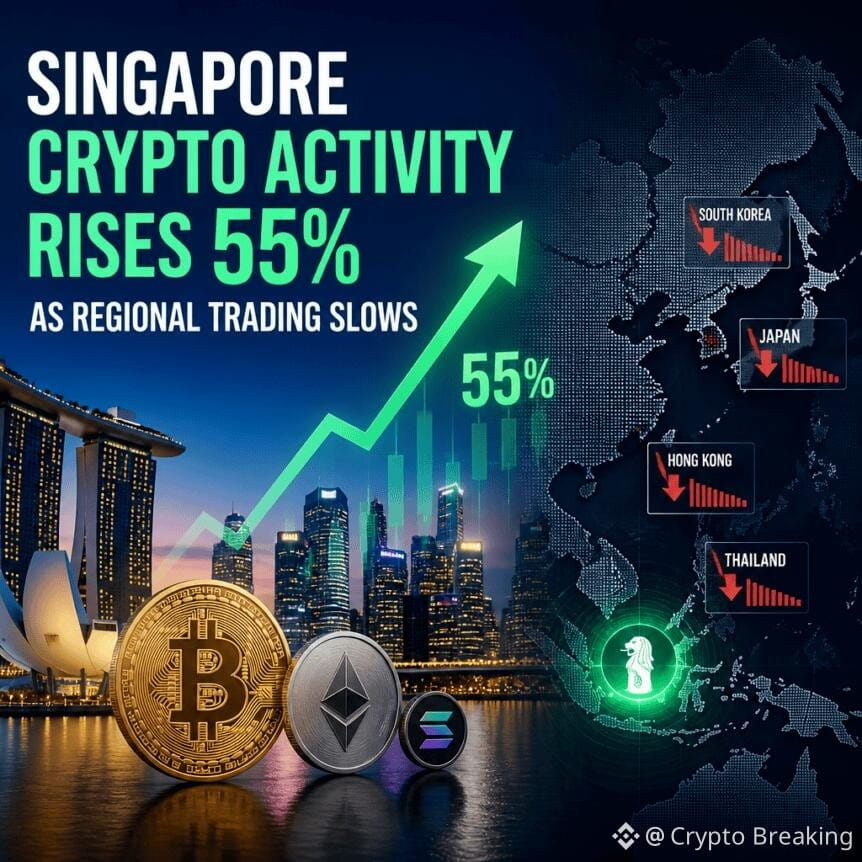
Article
See translation
Singapore Crypto Activity Rises 55% as Regional Trading SlowsSingapore’s crypto market expanded sharply in the year ended June 2026, with total crypto economic activity rising 55.4% to $284 billion, according to Chainalysis. The growth helped the city-state regain its position as the largest crypto economy in Central and Southeast Asia and Oceania (CSAO), even as the broader region saw contraction over the same period.
Chainalysis data also points to a shift in what’s driving activity: institutional platform volumes surged 94% to $60 billion, while the wider CSAO crypto economy fell 6.8%. The report suggests Singapore’s increase was not primarily powered by a flood of new entrants, but by higher-volume activity concentrated among existing institutional and over-the-counter players.
Key takeaways
Singapore’s total crypto economic activity grew 55.4% to $284 billion in the year ended June 2026, outperforming a 6.8% decline across the broader CSAO region.
Institutional platform activity nearly doubled (+94%) to $60 billion, with activity concentrated among a limited set of market makers, OTC firms, and institutional brokers.
Chainalysis reports small-value P2P growth in the Philippines, Thailand, and Vietnam—each transfer is typically under $1,000, averaging $618 across the three.
Across CSAO markets analyzed, cross-border stablecoin activity outpaced domestic use, reaching levels 3.2 times larger on a cross-border basis.
Institutional activity lifts Singapore despite regional weakness
Chainalysis attributes much of Singapore’s expansion to institutional platforms. Institutional platform activity increased 94% to $60 billion, the bulk of which was concentrated among a small number of entities such as market makers, over-the-counter trading firms, and institutional brokerages.
In commentary provided to Cointelegraph, Chainalysis said the growth was “very concentrated” and mostly reflected high-volume trading from existing platforms rather than the rapid arrival of new services. For market participants, that concentration matters: it suggests Singapore’s momentum is tied more closely to established liquidity and service providers than to broad retail expansion.
The timing aligns with Singapore’s broader regulatory direction—tightening oversight while continuing to create room for specific innovation areas including tokenization, stablecoins, and digital-asset settlement.
Regulatory tightening in Singapore, tokenization support from MAS
Singapore has been actively adjusting rules for crypto businesses. In 2025, the Monetary Authority of Singapore (MAS) required firms that serve overseas clients to either obtain a license or exit the market. StraitsX CEO Tianwei Liu told Cointelegraph that the change reduced speculative activity while allowing more institutional participants—including banks and large corporate users—to continue blockchain-based production.
At the same time, MAS has expanded initiatives that aim to bring tokenization and settlement into regulated frameworks. Through its BLOOM program, MAS supports trials using regulated stablecoins and tokenized bank money. In March, Ripple joined those efforts to test cross-border trade settlement using RLUSD, according to Cointelegraph reporting.
For investors and builders, the combination is notable: Singapore appears to be channeling momentum toward institutional and settlement use cases, rather than relying on retail speculation as the primary driver of measured activity.
Philippines, Thailand, and Vietnam see P2P activity rise at small ticket sizes
While Singapore led on institutional volumes, Chainalysis also identified growth in peer-to-peer (P2P) activity in the Philippines, Thailand, and Vietnam. The three countries recorded a combined 5.4 million P2P transfers (domestic and cross-border) worth less than $10,000 during the reporting period.
Even though these transfers are small, they represented 14.4% of global P2P totals while the three markets accounted for only 2.5% of the overall crypto economy—an imbalance that underscores how significant P2P channels remain for certain user needs, even where total market size is comparatively smaller.
Chainalysis reports that more than four in five domestic P2P transfers across the three markets were below $1,000, with an average transfer size of $618 compared with $1,210 across the rest of the world. That difference suggests local behavior is skewed toward lower-value, more frequent movement of funds.
Context for these patterns can be found in earlier reporting and macro indicators referenced by Chainalysis. The International Monetary Fund has previously said authorities in the Philippines view crypto usage as being driven primarily by remittances and investment, and World Bank data shows personal remittances were equivalent to 8.5% of GDP in 2025.
Vietnam’s P2P market also appears to be shaped by on-the-ground exchange liquidity. Earlier reporting from Tuoi Tre described P2P trading as an important fiat gateway in a market where the Vietnamese dong is not widely supported in direct crypto trading pairs. Reuters similarly reported that many Vietnamese traders rely on overseas exchanges, making P2P channels a practical bridge between local bank accounts and crypto markets abroad.
In Thailand, regulatory observations point to stablecoin-driven activity. In September, the country’s Securities and Exchange Commission said it had noted a significant increase in the volume and value of stablecoin transactions, particularly USDT.
Stablecoins increasingly dominate cross-border flows
Across the region, Chainalysis found that stablecoins play an outsized role in cross-border activity. In every market analyzed, cross-border stablecoin use exceeded domestic activity, and overall cross-border activity was 3.2 times larger than domestic activity.
Chainalysis told Cointelegraph that stablecoins account for a growing share of activity across all three markets, with adoption plausibly linked to ease of use, speed, and low transfer costs.
Thailand and Vietnam showed sizable domestic stablecoin markets—$10.4 billion and $6.9 billion, respectively—while cross-border stablecoin activity remained significantly larger than domestic activity in both cases. In the Philippines, PDAX CEO Nichel Gaba estimated that 5% to 10% of inbound remittances are settled using stablecoins, and he noted that major remittance companies are pursuing stablecoin settlement initiatives.
That narrative is consistent with developments in local banking. Earlier coverage from Cointelegraph reported that the Bank of the Philippine Islands planned a stablecoin settlement pilot aimed at reducing the cost and processing time of overseas payments to Filipino freelancers and remote workers.
What to watch next
Chainalysis’ findings raise a clear question for investors and operators: will Singapore’s institutional-led growth remain concentrated in existing platforms, or will regulation-backed innovation broaden into more new services? At the same time, rising P2P volumes in parts of CSAO and stablecoins’ strong cross-border pull suggest user demand for fast, low-cost value transfer is continuing to evolve—particularly around remittances and gateway liquidity.
This article was originally published as Singapore Crypto Activity Rises 55% as Regional Trading Slows on Crypto Breaking News – your trusted source for crypto news, Bitcoin news, and blockchain updates.
Singapore Crypto Activity Rises 55% as Regional Trading Slows
Singapore’s crypto market expanded sharply in the year ended June 2026, with total crypto economic activity rising 55.4% to $284 billion, according to Chainalysis. The growth helped the city-state regain its position as the largest crypto economy in Central and Southeast Asia and Oceania (CSAO), even as the broader region saw contraction over the same period.
Chainalysis data also points to a shift in what’s driving activity: institutional platform volumes surged 94% to $60 billion, while the wider CSAO crypto economy fell 6.8%. The report suggests Singapore’s increase was not primarily powered by a flood of new entrants, but by higher-volume activity concentrated among existing institutional and over-the-counter players.
Key takeaways
Singapore’s total crypto economic activity grew 55.4% to $284 billion in the year ended June 2026, outperforming a 6.8% decline across the broader CSAO region.
Institutional platform activity nearly doubled (+94%) to $60 billion, with activity concentrated among a limited set of market makers, OTC firms, and institutional brokers.
Chainalysis reports small-value P2P growth in the Philippines, Thailand, and Vietnam—each transfer is typically under $1,000, averaging $618 across the three.
Across CSAO markets analyzed, cross-border stablecoin activity outpaced domestic use, reaching levels 3.2 times larger on a cross-border basis.
Institutional activity lifts Singapore despite regional weakness
Chainalysis attributes much of Singapore’s expansion to institutional platforms. Institutional platform activity increased 94% to $60 billion, the bulk of which was concentrated among a small number of entities such as market makers, over-the-counter trading firms, and institutional brokerages.
In commentary provided to Cointelegraph, Chainalysis said the growth was “very concentrated” and mostly reflected high-volume trading from existing platforms rather than the rapid arrival of new services. For market participants, that concentration matters: it suggests Singapore’s momentum is tied more closely to established liquidity and service providers than to broad retail expansion.
The timing aligns with Singapore’s broader regulatory direction—tightening oversight while continuing to create room for specific innovation areas including tokenization, stablecoins, and digital-asset settlement.
Regulatory tightening in Singapore, tokenization support from MAS
Singapore has been actively adjusting rules for crypto businesses. In 2025, the Monetary Authority of Singapore (MAS) required firms that serve overseas clients to either obtain a license or exit the market. StraitsX CEO Tianwei Liu told Cointelegraph that the change reduced speculative activity while allowing more institutional participants—including banks and large corporate users—to continue blockchain-based production.
At the same time, MAS has expanded initiatives that aim to bring tokenization and settlement into regulated frameworks. Through its BLOOM program, MAS supports trials using regulated stablecoins and tokenized bank money. In March, Ripple joined those efforts to test cross-border trade settlement using RLUSD, according to Cointelegraph reporting.
For investors and builders, the combination is notable: Singapore appears to be channeling momentum toward institutional and settlement use cases, rather than relying on retail speculation as the primary driver of measured activity.
Philippines, Thailand, and Vietnam see P2P activity rise at small ticket sizes
While Singapore led on institutional volumes, Chainalysis also identified growth in peer-to-peer (P2P) activity in the Philippines, Thailand, and Vietnam. The three countries recorded a combined 5.4 million P2P transfers (domestic and cross-border) worth less than $10,000 during the reporting period.
Even though these transfers are small, they represented 14.4% of global P2P totals while the three markets accounted for only 2.5% of the overall crypto economy—an imbalance that underscores how significant P2P channels remain for certain user needs, even where total market size is comparatively smaller.
Chainalysis reports that more than four in five domestic P2P transfers across the three markets were below $1,000, with an average transfer size of $618 compared with $1,210 across the rest of the world. That difference suggests local behavior is skewed toward lower-value, more frequent movement of funds.
Context for these patterns can be found in earlier reporting and macro indicators referenced by Chainalysis. The International Monetary Fund has previously said authorities in the Philippines view crypto usage as being driven primarily by remittances and investment, and World Bank data shows personal remittances were equivalent to 8.5% of GDP in 2025.
Vietnam’s P2P market also appears to be shaped by on-the-ground exchange liquidity. Earlier reporting from Tuoi Tre described P2P trading as an important fiat gateway in a market where the Vietnamese dong is not widely supported in direct crypto trading pairs. Reuters similarly reported that many Vietnamese traders rely on overseas exchanges, making P2P channels a practical bridge between local bank accounts and crypto markets abroad.
In Thailand, regulatory observations point to stablecoin-driven activity. In September, the country’s Securities and Exchange Commission said it had noted a significant increase in the volume and value of stablecoin transactions, particularly USDT.
Stablecoins increasingly dominate cross-border flows
Across the region, Chainalysis found that stablecoins play an outsized role in cross-border activity. In every market analyzed, cross-border stablecoin use exceeded domestic activity, and overall cross-border activity was 3.2 times larger than domestic activity.
Chainalysis told Cointelegraph that stablecoins account for a growing share of activity across all three markets, with adoption plausibly linked to ease of use, speed, and low transfer costs.
Thailand and Vietnam showed sizable domestic stablecoin markets—$10.4 billion and $6.9 billion, respectively—while cross-border stablecoin activity remained significantly larger than domestic activity in both cases. In the Philippines, PDAX CEO Nichel Gaba estimated that 5% to 10% of inbound remittances are settled using stablecoins, and he noted that major remittance companies are pursuing stablecoin settlement initiatives.
That narrative is consistent with developments in local banking. Earlier coverage from Cointelegraph reported that the Bank of the Philippine Islands planned a stablecoin settlement pilot aimed at reducing the cost and processing time of overseas payments to Filipino freelancers and remote workers.
What to watch next
Chainalysis’ findings raise a clear question for investors and operators: will Singapore’s institutional-led growth remain concentrated in existing platforms, or will regulation-backed innovation broaden into more new services? At the same time, rising P2P volumes in parts of CSAO and stablecoins’ strong cross-border pull suggest user demand for fast, low-cost value transfer is continuing to evolve—particularly around remittances and gateway liquidity.
This article was originally published as Singapore Crypto Activity Rises 55% as Regional Trading Slows on Crypto Breaking News – your trusted source for crypto news, Bitcoin news, and blockchain updates.
Chainalysis data also points to a shift in what’s driving activity: institutional platform volumes surged 94% to $60 billion, while the wider CSAO crypto economy fell 6.8%. The report suggests Singapore’s increase was not primarily powered by a flood of new entrants, but by higher-volume activity concentrated among existing institutional and over-the-counter players.
Key takeaways
Singapore’s total crypto economic activity grew 55.4% to $284 billion in the year ended June 2026, outperforming a 6.8% decline across the broader CSAO region.
Institutional platform activity nearly doubled (+94%) to $60 billion, with activity concentrated among a limited set of market makers, OTC firms, and institutional brokers.
Chainalysis reports small-value P2P growth in the Philippines, Thailand, and Vietnam—each transfer is typically under $1,000, averaging $618 across the three.
Across CSAO markets analyzed, cross-border stablecoin activity outpaced domestic use, reaching levels 3.2 times larger on a cross-border basis.
Institutional activity lifts Singapore despite regional weakness
Chainalysis attributes much of Singapore’s expansion to institutional platforms. Institutional platform activity increased 94% to $60 billion, the bulk of which was concentrated among a small number of entities such as market makers, over-the-counter trading firms, and institutional brokerages.
In commentary provided to Cointelegraph, Chainalysis said the growth was “very concentrated” and mostly reflected high-volume trading from existing platforms rather than the rapid arrival of new services. For market participants, that concentration matters: it suggests Singapore’s momentum is tied more closely to established liquidity and service providers than to broad retail expansion.
The timing aligns with Singapore’s broader regulatory direction—tightening oversight while continuing to create room for specific innovation areas including tokenization, stablecoins, and digital-asset settlement.
Regulatory tightening in Singapore, tokenization support from MAS
Singapore has been actively adjusting rules for crypto businesses. In 2025, the Monetary Authority of Singapore (MAS) required firms that serve overseas clients to either obtain a license or exit the market. StraitsX CEO Tianwei Liu told Cointelegraph that the change reduced speculative activity while allowing more institutional participants—including banks and large corporate users—to continue blockchain-based production.
At the same time, MAS has expanded initiatives that aim to bring tokenization and settlement into regulated frameworks. Through its BLOOM program, MAS supports trials using regulated stablecoins and tokenized bank money. In March, Ripple joined those efforts to test cross-border trade settlement using RLUSD, according to Cointelegraph reporting.
For investors and builders, the combination is notable: Singapore appears to be channeling momentum toward institutional and settlement use cases, rather than relying on retail speculation as the primary driver of measured activity.
Philippines, Thailand, and Vietnam see P2P activity rise at small ticket sizes
While Singapore led on institutional volumes, Chainalysis also identified growth in peer-to-peer (P2P) activity in the Philippines, Thailand, and Vietnam. The three countries recorded a combined 5.4 million P2P transfers (domestic and cross-border) worth less than $10,000 during the reporting period.
Even though these transfers are small, they represented 14.4% of global P2P totals while the three markets accounted for only 2.5% of the overall crypto economy—an imbalance that underscores how significant P2P channels remain for certain user needs, even where total market size is comparatively smaller.
Chainalysis reports that more than four in five domestic P2P transfers across the three markets were below $1,000, with an average transfer size of $618 compared with $1,210 across the rest of the world. That difference suggests local behavior is skewed toward lower-value, more frequent movement of funds.
Context for these patterns can be found in earlier reporting and macro indicators referenced by Chainalysis. The International Monetary Fund has previously said authorities in the Philippines view crypto usage as being driven primarily by remittances and investment, and World Bank data shows personal remittances were equivalent to 8.5% of GDP in 2025.
Vietnam’s P2P market also appears to be shaped by on-the-ground exchange liquidity. Earlier reporting from Tuoi Tre described P2P trading as an important fiat gateway in a market where the Vietnamese dong is not widely supported in direct crypto trading pairs. Reuters similarly reported that many Vietnamese traders rely on overseas exchanges, making P2P channels a practical bridge between local bank accounts and crypto markets abroad.
In Thailand, regulatory observations point to stablecoin-driven activity. In September, the country’s Securities and Exchange Commission said it had noted a significant increase in the volume and value of stablecoin transactions, particularly USDT.
Stablecoins increasingly dominate cross-border flows
Across the region, Chainalysis found that stablecoins play an outsized role in cross-border activity. In every market analyzed, cross-border stablecoin use exceeded domestic activity, and overall cross-border activity was 3.2 times larger than domestic activity.
Chainalysis told Cointelegraph that stablecoins account for a growing share of activity across all three markets, with adoption plausibly linked to ease of use, speed, and low transfer costs.
Thailand and Vietnam showed sizable domestic stablecoin markets—$10.4 billion and $6.9 billion, respectively—while cross-border stablecoin activity remained significantly larger than domestic activity in both cases. In the Philippines, PDAX CEO Nichel Gaba estimated that 5% to 10% of inbound remittances are settled using stablecoins, and he noted that major remittance companies are pursuing stablecoin settlement initiatives.
That narrative is consistent with developments in local banking. Earlier coverage from Cointelegraph reported that the Bank of the Philippine Islands planned a stablecoin settlement pilot aimed at reducing the cost and processing time of overseas payments to Filipino freelancers and remote workers.
What to watch next
Chainalysis’ findings raise a clear question for investors and operators: will Singapore’s institutional-led growth remain concentrated in existing platforms, or will regulation-backed innovation broaden into more new services? At the same time, rising P2P volumes in parts of CSAO and stablecoins’ strong cross-border pull suggest user demand for fast, low-cost value transfer is continuing to evolve—particularly around remittances and gateway liquidity.
This article was originally published as Singapore Crypto Activity Rises 55% as Regional Trading Slows on Crypto Breaking News – your trusted source for crypto news, Bitcoin news, and blockchain updates.
148
Article
See translation
Altcoin Exchange Deposits Surge 160% in Two WeeksCryptoQuant says altcoin holders have been moving coins to exchanges at an unusually fast pace, with deposit activity hitting its highest transaction count since October 2025. In the same period, the number of addresses sending altcoins to exchanges also climbed sharply—an indicator CryptoQuant ties to potential profit-taking risk.
At the same time, broader market structure hasn’t fully shifted back to Bitcoin. According to TradingView data cited in the report, Bitcoin’s share of total crypto market capitalization has remained in the late-May range, while smaller assets outside the top 10 by market cap reached their largest slice since February.
Key takeaways
CryptoQuant recorded 78,000 altcoin exchange-deposit transactions over seven days as of Sept. 28, the highest level since October 2025.
The number of addresses depositing altcoins rose to about 51,600, also the highest since October 2025.
Altcoin deposit transactions increased roughly 160% from about 29,800 on Sept. 14 to 78,000 on Sept. 28.
Bitcoin dominance stayed between 58% and 60.4% since May 27, according to TradingView data referenced by the report.
Crypto assets outside the top 10 accounted for 9% of total market cap on Sept. 27—the highest share since February.
Altcoin deposits surge on-chain
In a weekly report released Tuesday, CryptoQuant highlighted a noticeable rise in exchange inflows for altcoins. The firm’s on-chain tracking showed that the seven-day transaction total for altcoin deposits reached 78,000 on Sept. 28.
That figure was up about 160% from roughly 29,800 transactions recorded on Sept. 14. CryptoQuant also reported that the inflow pattern was not limited to a small number of participants: the count of addresses depositing altcoins almost tripled between Sept. 14 and Sept. 28, rising from around 17,600 to approximately 51,600.
CryptoQuant said this address count marked the highest tally since October 2025 and described the buildup as broad-based rather than concentrated in a narrow group.
“When holders move coins to exchanges, they usually intend to sell,” CryptoQuant added in its analysis.
Profit-taking risk enters the altcoin trade
The core implication of CryptoQuant’s data is straightforward: exchange deposits are often a precursor to selling. While not every transfer ends in immediate liquidation, the combination of a rising transaction count and a growing number of depositing addresses tends to suggest that more holders are positioning for potential exits at the same time.
CryptoQuant framed the increase as the strongest altcoin exchange inflow activity since Bitcoin’s last all-time high. By tying the uptick to the exchange-deposit cycle, the firm effectively places near-term selling pressure risk on the table—especially if market liquidity and order-book depth fail to absorb incremental supply.
For investors and traders, the actionable takeaway is less about the headline number and more about what it signals for execution: deposits clustered over a short window can translate into sell pressure that shows up unevenly across venues, particularly when market sentiment is already shifting.
Bitcoin remains range-bound, leaving room for altcoin rotation
CryptoQuant’s deposit warning lands in a market where Bitcoin has not clearly tightened its grip. As cited in the report, Bitcoin dominance has stayed within a range entered in late May.
According to TradingView data referenced by Cointelegraph, Bitcoin’s share of total crypto market capitalization remained between 58% and 60.4% since May 27. That range matters because dominance shifts can determine whether new inflows preferentially benefit Bitcoin or spread across the market.
In addition, assets outside the top 10 by market cap reached 9% of total market value on Sept. 27. The report notes this was the highest share since February, suggesting that capital has still been finding places beyond the largest benchmarks, even as Bitcoin experiences periodic pullbacks.
Rotation signals coexist with rising exchange inflows
The deposit surge follows what the report describes as signs of altcoin strength versus Bitcoin. Glassnode’s “Altcoin Cycle Signal” metric was cited as favoring altcoins in the prior week. That metric is built using price data for the 250 largest altcoins by market capitalization, excluding stablecoins.
Put together, the data set creates a tension that market participants often watch for: altcoin performance indicators can improve during periods of rotation, but rising exchange deposits can simultaneously increase the odds of profit-taking. If those sellers act quickly, “altseason-style” outperformance can cool faster than bullish signals alone would suggest.
Meanwhile, Bitcoin has shown some short-term softness. The report references earlier coverage describing Bitcoin’s decline after briefly topping $87,000 and points to issues such as exchange order-book liquidity shifts and the availability of long-term holder supply as potential factors limiting immediate upside. While that context doesn’t directly explain altcoin deposits, it helps explain why holders might be more inclined to de-risk across the market rather than press new highs.
Going forward, readers should watch whether exchange-deposit activity remains elevated or starts to fade, and whether Bitcoin dominance drifts upward out of its current range. If altcoin inflows continue while dominance tightens, it could indicate that rotation is meeting increasing sell pressure; if dominance stays steady and deposits normalize, the market may be working through profits without triggering a broader reversal.
This article was originally published as Altcoin Exchange Deposits Surge 160% in Two Weeks on Crypto Breaking News – your trusted source for crypto news, Bitcoin news, and blockchain updates.
Altcoin Exchange Deposits Surge 160% in Two Weeks
CryptoQuant says altcoin holders have been moving coins to exchanges at an unusually fast pace, with deposit activity hitting its highest transaction count since October 2025. In the same period, the number of addresses sending altcoins to exchanges also climbed sharply—an indicator CryptoQuant ties to potential profit-taking risk.
At the same time, broader market structure hasn’t fully shifted back to Bitcoin. According to TradingView data cited in the report, Bitcoin’s share of total crypto market capitalization has remained in the late-May range, while smaller assets outside the top 10 by market cap reached their largest slice since February.
Key takeaways
CryptoQuant recorded 78,000 altcoin exchange-deposit transactions over seven days as of Sept. 28, the highest level since October 2025.
The number of addresses depositing altcoins rose to about 51,600, also the highest since October 2025.
Altcoin deposit transactions increased roughly 160% from about 29,800 on Sept. 14 to 78,000 on Sept. 28.
Bitcoin dominance stayed between 58% and 60.4% since May 27, according to TradingView data referenced by the report.
Crypto assets outside the top 10 accounted for 9% of total market cap on Sept. 27—the highest share since February.
Altcoin deposits surge on-chain
In a weekly report released Tuesday, CryptoQuant highlighted a noticeable rise in exchange inflows for altcoins. The firm’s on-chain tracking showed that the seven-day transaction total for altcoin deposits reached 78,000 on Sept. 28.
That figure was up about 160% from roughly 29,800 transactions recorded on Sept. 14. CryptoQuant also reported that the inflow pattern was not limited to a small number of participants: the count of addresses depositing altcoins almost tripled between Sept. 14 and Sept. 28, rising from around 17,600 to approximately 51,600.
CryptoQuant said this address count marked the highest tally since October 2025 and described the buildup as broad-based rather than concentrated in a narrow group.
“When holders move coins to exchanges, they usually intend to sell,” CryptoQuant added in its analysis.
Profit-taking risk enters the altcoin trade
The core implication of CryptoQuant’s data is straightforward: exchange deposits are often a precursor to selling. While not every transfer ends in immediate liquidation, the combination of a rising transaction count and a growing number of depositing addresses tends to suggest that more holders are positioning for potential exits at the same time.
CryptoQuant framed the increase as the strongest altcoin exchange inflow activity since Bitcoin’s last all-time high. By tying the uptick to the exchange-deposit cycle, the firm effectively places near-term selling pressure risk on the table—especially if market liquidity and order-book depth fail to absorb incremental supply.
For investors and traders, the actionable takeaway is less about the headline number and more about what it signals for execution: deposits clustered over a short window can translate into sell pressure that shows up unevenly across venues, particularly when market sentiment is already shifting.
Bitcoin remains range-bound, leaving room for altcoin rotation
CryptoQuant’s deposit warning lands in a market where Bitcoin has not clearly tightened its grip. As cited in the report, Bitcoin dominance has stayed within a range entered in late May.
According to TradingView data referenced by Cointelegraph, Bitcoin’s share of total crypto market capitalization remained between 58% and 60.4% since May 27. That range matters because dominance shifts can determine whether new inflows preferentially benefit Bitcoin or spread across the market.
In addition, assets outside the top 10 by market cap reached 9% of total market value on Sept. 27. The report notes this was the highest share since February, suggesting that capital has still been finding places beyond the largest benchmarks, even as Bitcoin experiences periodic pullbacks.
Rotation signals coexist with rising exchange inflows
The deposit surge follows what the report describes as signs of altcoin strength versus Bitcoin. Glassnode’s “Altcoin Cycle Signal” metric was cited as favoring altcoins in the prior week. That metric is built using price data for the 250 largest altcoins by market capitalization, excluding stablecoins.
Put together, the data set creates a tension that market participants often watch for: altcoin performance indicators can improve during periods of rotation, but rising exchange deposits can simultaneously increase the odds of profit-taking. If those sellers act quickly, “altseason-style” outperformance can cool faster than bullish signals alone would suggest.
Meanwhile, Bitcoin has shown some short-term softness. The report references earlier coverage describing Bitcoin’s decline after briefly topping $87,000 and points to issues such as exchange order-book liquidity shifts and the availability of long-term holder supply as potential factors limiting immediate upside. While that context doesn’t directly explain altcoin deposits, it helps explain why holders might be more inclined to de-risk across the market rather than press new highs.
Going forward, readers should watch whether exchange-deposit activity remains elevated or starts to fade, and whether Bitcoin dominance drifts upward out of its current range. If altcoin inflows continue while dominance tightens, it could indicate that rotation is meeting increasing sell pressure; if dominance stays steady and deposits normalize, the market may be working through profits without triggering a broader reversal.
This article was originally published as Altcoin Exchange Deposits Surge 160% in Two Weeks on Crypto Breaking News – your trusted source for crypto news, Bitcoin news, and blockchain updates.
At the same time, broader market structure hasn’t fully shifted back to Bitcoin. According to TradingView data cited in the report, Bitcoin’s share of total crypto market capitalization has remained in the late-May range, while smaller assets outside the top 10 by market cap reached their largest slice since February.
Key takeaways
CryptoQuant recorded 78,000 altcoin exchange-deposit transactions over seven days as of Sept. 28, the highest level since October 2025.
The number of addresses depositing altcoins rose to about 51,600, also the highest since October 2025.
Altcoin deposit transactions increased roughly 160% from about 29,800 on Sept. 14 to 78,000 on Sept. 28.
Bitcoin dominance stayed between 58% and 60.4% since May 27, according to TradingView data referenced by the report.
Crypto assets outside the top 10 accounted for 9% of total market cap on Sept. 27—the highest share since February.
Altcoin deposits surge on-chain
In a weekly report released Tuesday, CryptoQuant highlighted a noticeable rise in exchange inflows for altcoins. The firm’s on-chain tracking showed that the seven-day transaction total for altcoin deposits reached 78,000 on Sept. 28.
That figure was up about 160% from roughly 29,800 transactions recorded on Sept. 14. CryptoQuant also reported that the inflow pattern was not limited to a small number of participants: the count of addresses depositing altcoins almost tripled between Sept. 14 and Sept. 28, rising from around 17,600 to approximately 51,600.
CryptoQuant said this address count marked the highest tally since October 2025 and described the buildup as broad-based rather than concentrated in a narrow group.
“When holders move coins to exchanges, they usually intend to sell,” CryptoQuant added in its analysis.
Profit-taking risk enters the altcoin trade
The core implication of CryptoQuant’s data is straightforward: exchange deposits are often a precursor to selling. While not every transfer ends in immediate liquidation, the combination of a rising transaction count and a growing number of depositing addresses tends to suggest that more holders are positioning for potential exits at the same time.
CryptoQuant framed the increase as the strongest altcoin exchange inflow activity since Bitcoin’s last all-time high. By tying the uptick to the exchange-deposit cycle, the firm effectively places near-term selling pressure risk on the table—especially if market liquidity and order-book depth fail to absorb incremental supply.
For investors and traders, the actionable takeaway is less about the headline number and more about what it signals for execution: deposits clustered over a short window can translate into sell pressure that shows up unevenly across venues, particularly when market sentiment is already shifting.
Bitcoin remains range-bound, leaving room for altcoin rotation
CryptoQuant’s deposit warning lands in a market where Bitcoin has not clearly tightened its grip. As cited in the report, Bitcoin dominance has stayed within a range entered in late May.
According to TradingView data referenced by Cointelegraph, Bitcoin’s share of total crypto market capitalization remained between 58% and 60.4% since May 27. That range matters because dominance shifts can determine whether new inflows preferentially benefit Bitcoin or spread across the market.
In addition, assets outside the top 10 by market cap reached 9% of total market value on Sept. 27. The report notes this was the highest share since February, suggesting that capital has still been finding places beyond the largest benchmarks, even as Bitcoin experiences periodic pullbacks.
Rotation signals coexist with rising exchange inflows
The deposit surge follows what the report describes as signs of altcoin strength versus Bitcoin. Glassnode’s “Altcoin Cycle Signal” metric was cited as favoring altcoins in the prior week. That metric is built using price data for the 250 largest altcoins by market capitalization, excluding stablecoins.
Put together, the data set creates a tension that market participants often watch for: altcoin performance indicators can improve during periods of rotation, but rising exchange deposits can simultaneously increase the odds of profit-taking. If those sellers act quickly, “altseason-style” outperformance can cool faster than bullish signals alone would suggest.
Meanwhile, Bitcoin has shown some short-term softness. The report references earlier coverage describing Bitcoin’s decline after briefly topping $87,000 and points to issues such as exchange order-book liquidity shifts and the availability of long-term holder supply as potential factors limiting immediate upside. While that context doesn’t directly explain altcoin deposits, it helps explain why holders might be more inclined to de-risk across the market rather than press new highs.
Going forward, readers should watch whether exchange-deposit activity remains elevated or starts to fade, and whether Bitcoin dominance drifts upward out of its current range. If altcoin inflows continue while dominance tightens, it could indicate that rotation is meeting increasing sell pressure; if dominance stays steady and deposits normalize, the market may be working through profits without triggering a broader reversal.
This article was originally published as Altcoin Exchange Deposits Surge 160% in Two Weeks on Crypto Breaking News – your trusted source for crypto news, Bitcoin news, and blockchain updates.
190

Article
See translation
MiCA Review Stakes Explained: Why Getting It Right Matters for MarketsMiCA—Europe’s Markets in Crypto-Assets regulation—has achieved something the industry had long struggled to secure: a single, coherent rulebook across the EU and European Economic Area. With that framework now in place, the focus is shifting from building the system to stress-testing it through its scheduled review.
As the consultation on MiCA’s review closes on Sept. 30, the central question for investors and providers is how well the rules match the risks they are designed to curb—especially as compliance requirements have grown. The review will determine whether the market stays attractive for new entrants and innovation or gradually becomes too costly to compete in.
Key takeaways
MiCA created the EU’s first unified crypto rulebook, enabling passporting of authorized crypto services across Member States.
Passporting is a core economic advantage, turning previously fragmented markets into a larger addressable customer base.
Proportionality is the guiding standard: obligations should track real risks to customers and market integrity.
Compliance costs have risen, with fixed costs weighing most on smaller firms and new entrants.
The review should simplify requirements that add burden without clear risk-reduction benefits.
What MiCA changed: from patchwork rules to a single passport
Before MiCA, firms attempting to operate across Europe faced a patchwork of national requirements. In some jurisdictions there were bespoke regimes; in others, the regulatory landscape was less clear or not tailored to crypto at all. For businesses, that meant repeated authorizations, differing compliance setups, and uneven market access.
MiCA’s most consequential feature is authorization passporting: a crypto asset service provider (CASP) authorized in one EU Member State can offer services across the EU and EEA under a common framework. This not only reduces duplication for providers; it also increases choice for customers by allowing them to select among multiple licensed and supervised institutions.
According to the European Commission’s stated review process, the consultation on the functioning of EU crypto-assets rules is open while Member States assess how the regime is working in practice. The industry’s review challenge, therefore, is whether the obligations required for market access remain proportional to the scale of the single market that passporting opens up—an addressable population often described in the industry as around 450 million people.
Regulate the risk—not the label
A recurring principle highlighted for MiCA’s review is that regulation should follow risk. Services that involve client money, custody of assets, threats to market integrity, or potential impacts on financial stability are precisely where robust rules and supervisory attention are warranted.
But over time, regulatory systems can accumulate requirements—additional reporting, documentation, and procedures—that may increase costs without delivering meaningful risk reduction. The argument for the MiCA review is therefore not to remove oversight, but to make sure every requirement still earns its place.
In other words, the review should be a discipline: keep rules that clearly reduce materially relevant risks, and simplify, streamline, or remove requirements that do not.
The compliance cost curve: where the burden may be growing faster than the benefit
Even proponents of strong regulation acknowledge that MiCA has raised the barrier to entry. The key issue is how that cost plays out across the market.
Compliance overhead tends to hit hardest on smaller firms and newer entrants. These players compete on agility, customer focus, and innovation—yet fixed authorization and ongoing compliance costs can become large enough to change competitive dynamics. When the cost of participation rises, the single market’s promise of broader choice can weaken as fewer firms are able to build, scale, or enter.
The risk for policymakers highlighted in the discussion is cumulative: if the review adds further burden without a clear risk-based justification, the result is less likely to be a safer market through better controls, and more likely to be a smaller market with fewer firms operating under EU supervision.
Because digital asset businesses can be comparatively mobile, the compliance trajectory could also affect where new investment is directed—potentially shifting incremental activity toward jurisdictions with similar access but lower friction. That would leave European consumers with less provider choice and reduce the share of global activity overseen by EU regulators.
What “good” looks like in the MiCA review: proportional tiers, clearer overlaps, and smarter reserves
The case for the review centers on proportionality rather than deregulation. Supporters of this approach argue that the consultation should be used to scrutinize obligations that generate substantial cost without corresponding risk reduction, while ensuring room for innovation within the bounds of supervisory goals.
Several concrete examples have been cited as areas where proportionality could better align costs with risk:
Tiered regulation based on size and risk: a smaller startup with limited client reach should not face the same compliance burden and prudential requirements as a large multinational managing substantially larger assets. Risk-based tiers—potentially grounded in asset volume, client base, or systemic relevance—could lower barriers for emerging players while maintaining stricter oversight for firms where the impact of failure is larger.
Reducing overlap for e-money tokens: custody and transfer of e-money tokens (EMTs) can trigger additional frameworks, including the Payment Service Directive (PSD2), on top of MiCA licensing. The concern is duplicative compliance and legal uncertainty where the consumer-protection benefit may not justify multiple layers. A clearer delineation—or a single-license pathway—would aim to preserve supervision while cutting unnecessary friction.
More flexible reserve requirements for stablecoins: the discussion highlights that stablecoin issuers are required to hold at least 30% of reserves as bank deposits. In a higher-rate environment, that structure can limit potential yield. In stress scenarios, concentrating assets in bank deposits may elevate counterparty concentration risk. A more flexible approach to reserve allocation—allowing high-quality liquid assets beyond bank deposits—could potentially strengthen resilience while preserving redemption capacity.
These points share a common theme: the goal is a MiCA framework that stays credible to users while remaining workable for firms that keep the market functioning.
What to watch next
As the MiCA review consultation closes on Sept. 30, market participants should watch how regulators translate proportionality into concrete changes—particularly whether the final direction reduces duplicative costs, maintains strong oversight where risks are highest, and preserves EU market attractiveness for both established providers and new entrants.
This article was originally published as MiCA Review Stakes Explained: Why Getting It Right Matters for Markets on Crypto Breaking News – your trusted source for crypto news, Bitcoin news, and blockchain updates.
MiCA Review Stakes Explained: Why Getting It Right Matters for Markets
MiCA—Europe’s Markets in Crypto-Assets regulation—has achieved something the industry had long struggled to secure: a single, coherent rulebook across the EU and European Economic Area. With that framework now in place, the focus is shifting from building the system to stress-testing it through its scheduled review.
As the consultation on MiCA’s review closes on Sept. 30, the central question for investors and providers is how well the rules match the risks they are designed to curb—especially as compliance requirements have grown. The review will determine whether the market stays attractive for new entrants and innovation or gradually becomes too costly to compete in.
Key takeaways
MiCA created the EU’s first unified crypto rulebook, enabling passporting of authorized crypto services across Member States.
Passporting is a core economic advantage, turning previously fragmented markets into a larger addressable customer base.
Proportionality is the guiding standard: obligations should track real risks to customers and market integrity.
Compliance costs have risen, with fixed costs weighing most on smaller firms and new entrants.
The review should simplify requirements that add burden without clear risk-reduction benefits.
What MiCA changed: from patchwork rules to a single passport
Before MiCA, firms attempting to operate across Europe faced a patchwork of national requirements. In some jurisdictions there were bespoke regimes; in others, the regulatory landscape was less clear or not tailored to crypto at all. For businesses, that meant repeated authorizations, differing compliance setups, and uneven market access.
MiCA’s most consequential feature is authorization passporting: a crypto asset service provider (CASP) authorized in one EU Member State can offer services across the EU and EEA under a common framework. This not only reduces duplication for providers; it also increases choice for customers by allowing them to select among multiple licensed and supervised institutions.
According to the European Commission’s stated review process, the consultation on the functioning of EU crypto-assets rules is open while Member States assess how the regime is working in practice. The industry’s review challenge, therefore, is whether the obligations required for market access remain proportional to the scale of the single market that passporting opens up—an addressable population often described in the industry as around 450 million people.
Regulate the risk—not the label
A recurring principle highlighted for MiCA’s review is that regulation should follow risk. Services that involve client money, custody of assets, threats to market integrity, or potential impacts on financial stability are precisely where robust rules and supervisory attention are warranted.
But over time, regulatory systems can accumulate requirements—additional reporting, documentation, and procedures—that may increase costs without delivering meaningful risk reduction. The argument for the MiCA review is therefore not to remove oversight, but to make sure every requirement still earns its place.
In other words, the review should be a discipline: keep rules that clearly reduce materially relevant risks, and simplify, streamline, or remove requirements that do not.
The compliance cost curve: where the burden may be growing faster than the benefit
Even proponents of strong regulation acknowledge that MiCA has raised the barrier to entry. The key issue is how that cost plays out across the market.
Compliance overhead tends to hit hardest on smaller firms and newer entrants. These players compete on agility, customer focus, and innovation—yet fixed authorization and ongoing compliance costs can become large enough to change competitive dynamics. When the cost of participation rises, the single market’s promise of broader choice can weaken as fewer firms are able to build, scale, or enter.
The risk for policymakers highlighted in the discussion is cumulative: if the review adds further burden without a clear risk-based justification, the result is less likely to be a safer market through better controls, and more likely to be a smaller market with fewer firms operating under EU supervision.
Because digital asset businesses can be comparatively mobile, the compliance trajectory could also affect where new investment is directed—potentially shifting incremental activity toward jurisdictions with similar access but lower friction. That would leave European consumers with less provider choice and reduce the share of global activity overseen by EU regulators.
What “good” looks like in the MiCA review: proportional tiers, clearer overlaps, and smarter reserves
The case for the review centers on proportionality rather than deregulation. Supporters of this approach argue that the consultation should be used to scrutinize obligations that generate substantial cost without corresponding risk reduction, while ensuring room for innovation within the bounds of supervisory goals.
Several concrete examples have been cited as areas where proportionality could better align costs with risk:
Tiered regulation based on size and risk: a smaller startup with limited client reach should not face the same compliance burden and prudential requirements as a large multinational managing substantially larger assets. Risk-based tiers—potentially grounded in asset volume, client base, or systemic relevance—could lower barriers for emerging players while maintaining stricter oversight for firms where the impact of failure is larger.
Reducing overlap for e-money tokens: custody and transfer of e-money tokens (EMTs) can trigger additional frameworks, including the Payment Service Directive (PSD2), on top of MiCA licensing. The concern is duplicative compliance and legal uncertainty where the consumer-protection benefit may not justify multiple layers. A clearer delineation—or a single-license pathway—would aim to preserve supervision while cutting unnecessary friction.
More flexible reserve requirements for stablecoins: the discussion highlights that stablecoin issuers are required to hold at least 30% of reserves as bank deposits. In a higher-rate environment, that structure can limit potential yield. In stress scenarios, concentrating assets in bank deposits may elevate counterparty concentration risk. A more flexible approach to reserve allocation—allowing high-quality liquid assets beyond bank deposits—could potentially strengthen resilience while preserving redemption capacity.
These points share a common theme: the goal is a MiCA framework that stays credible to users while remaining workable for firms that keep the market functioning.
What to watch next
As the MiCA review consultation closes on Sept. 30, market participants should watch how regulators translate proportionality into concrete changes—particularly whether the final direction reduces duplicative costs, maintains strong oversight where risks are highest, and preserves EU market attractiveness for both established providers and new entrants.
This article was originally published as MiCA Review Stakes Explained: Why Getting It Right Matters for Markets on Crypto Breaking News – your trusted source for crypto news, Bitcoin news, and blockchain updates.
As the consultation on MiCA’s review closes on Sept. 30, the central question for investors and providers is how well the rules match the risks they are designed to curb—especially as compliance requirements have grown. The review will determine whether the market stays attractive for new entrants and innovation or gradually becomes too costly to compete in.
Key takeaways
MiCA created the EU’s first unified crypto rulebook, enabling passporting of authorized crypto services across Member States.
Passporting is a core economic advantage, turning previously fragmented markets into a larger addressable customer base.
Proportionality is the guiding standard: obligations should track real risks to customers and market integrity.
Compliance costs have risen, with fixed costs weighing most on smaller firms and new entrants.
The review should simplify requirements that add burden without clear risk-reduction benefits.
What MiCA changed: from patchwork rules to a single passport
Before MiCA, firms attempting to operate across Europe faced a patchwork of national requirements. In some jurisdictions there were bespoke regimes; in others, the regulatory landscape was less clear or not tailored to crypto at all. For businesses, that meant repeated authorizations, differing compliance setups, and uneven market access.
MiCA’s most consequential feature is authorization passporting: a crypto asset service provider (CASP) authorized in one EU Member State can offer services across the EU and EEA under a common framework. This not only reduces duplication for providers; it also increases choice for customers by allowing them to select among multiple licensed and supervised institutions.
According to the European Commission’s stated review process, the consultation on the functioning of EU crypto-assets rules is open while Member States assess how the regime is working in practice. The industry’s review challenge, therefore, is whether the obligations required for market access remain proportional to the scale of the single market that passporting opens up—an addressable population often described in the industry as around 450 million people.
Regulate the risk—not the label
A recurring principle highlighted for MiCA’s review is that regulation should follow risk. Services that involve client money, custody of assets, threats to market integrity, or potential impacts on financial stability are precisely where robust rules and supervisory attention are warranted.
But over time, regulatory systems can accumulate requirements—additional reporting, documentation, and procedures—that may increase costs without delivering meaningful risk reduction. The argument for the MiCA review is therefore not to remove oversight, but to make sure every requirement still earns its place.
In other words, the review should be a discipline: keep rules that clearly reduce materially relevant risks, and simplify, streamline, or remove requirements that do not.
The compliance cost curve: where the burden may be growing faster than the benefit
Even proponents of strong regulation acknowledge that MiCA has raised the barrier to entry. The key issue is how that cost plays out across the market.
Compliance overhead tends to hit hardest on smaller firms and newer entrants. These players compete on agility, customer focus, and innovation—yet fixed authorization and ongoing compliance costs can become large enough to change competitive dynamics. When the cost of participation rises, the single market’s promise of broader choice can weaken as fewer firms are able to build, scale, or enter.
The risk for policymakers highlighted in the discussion is cumulative: if the review adds further burden without a clear risk-based justification, the result is less likely to be a safer market through better controls, and more likely to be a smaller market with fewer firms operating under EU supervision.
Because digital asset businesses can be comparatively mobile, the compliance trajectory could also affect where new investment is directed—potentially shifting incremental activity toward jurisdictions with similar access but lower friction. That would leave European consumers with less provider choice and reduce the share of global activity overseen by EU regulators.
What “good” looks like in the MiCA review: proportional tiers, clearer overlaps, and smarter reserves
The case for the review centers on proportionality rather than deregulation. Supporters of this approach argue that the consultation should be used to scrutinize obligations that generate substantial cost without corresponding risk reduction, while ensuring room for innovation within the bounds of supervisory goals.
Several concrete examples have been cited as areas where proportionality could better align costs with risk:
Tiered regulation based on size and risk: a smaller startup with limited client reach should not face the same compliance burden and prudential requirements as a large multinational managing substantially larger assets. Risk-based tiers—potentially grounded in asset volume, client base, or systemic relevance—could lower barriers for emerging players while maintaining stricter oversight for firms where the impact of failure is larger.
Reducing overlap for e-money tokens: custody and transfer of e-money tokens (EMTs) can trigger additional frameworks, including the Payment Service Directive (PSD2), on top of MiCA licensing. The concern is duplicative compliance and legal uncertainty where the consumer-protection benefit may not justify multiple layers. A clearer delineation—or a single-license pathway—would aim to preserve supervision while cutting unnecessary friction.
More flexible reserve requirements for stablecoins: the discussion highlights that stablecoin issuers are required to hold at least 30% of reserves as bank deposits. In a higher-rate environment, that structure can limit potential yield. In stress scenarios, concentrating assets in bank deposits may elevate counterparty concentration risk. A more flexible approach to reserve allocation—allowing high-quality liquid assets beyond bank deposits—could potentially strengthen resilience while preserving redemption capacity.
These points share a common theme: the goal is a MiCA framework that stays credible to users while remaining workable for firms that keep the market functioning.
What to watch next
As the MiCA review consultation closes on Sept. 30, market participants should watch how regulators translate proportionality into concrete changes—particularly whether the final direction reduces duplicative costs, maintains strong oversight where risks are highest, and preserves EU market attractiveness for both established providers and new entrants.
This article was originally published as MiCA Review Stakes Explained: Why Getting It Right Matters for Markets on Crypto Breaking News – your trusted source for crypto news, Bitcoin news, and blockchain updates.
43
Article
See translation
Bitget CEO Says Recovery From $388M Breach Looks UncertainBitget’s CEO Gracy Chen says the exchange is not confident it will be able to fully freeze or recover the majority of assets stolen in last week’s security breach, which Bitget updated to reflect roughly $388 million in losses.
Speaking to Cointelegraph on its Chain Reaction program released Tuesday, Chen pointed to Bybit’s February 2025 hack as a cautionary benchmark—where the attacker reportedly took about $1.5 billion in Ether (ETH), but Bybit said it ultimately froze and recovered only around $80 million. In Chen’s view, that outcome translates to limited effectiveness even after extended time and effort.
Key takeaways
Bitget’s CEO Gracy Chen says the company is “not very optimistic” about fully freezing or recovering stolen funds from the breach.
Chen cited the February 2025 Bybit hack—reportedly $1.5 billion stolen in ETH—for comparison, noting only a small portion was frozen after about a year.
External security responses have already reported activity linked to Bitget-related thefts, including blocking of assets and small amounts of additional freezes.
Tether and Circle reportedly blacklisted a wallet associated with the exploit, freezing $318,013 in USDT and USDC.
Bitget resumed withdrawals in stages, beginning with Bitcoin transactions on Monday and moving to ETH on Tuesday.
Why Bitget’s CEO is cautious about recovery
Chen’s comments centered on a core investor and user question after major exchange incidents: not just how much was stolen, but what proportion can realistically be halted before funds move irreversibly, and how much can later be recovered.
In her discussion, Chen framed Bybit’s experience as a “good reference point” for what Bitget may be able to achieve. According to Chen, Bybit’s freeze results after roughly a year amounted to about 3.5% of the stolen funds—before even considering recovery. That distinction matters because freezing deals with preventing further movement, while recovery involves locating assets that may already be in hard-to-trace custody.
For users, this means expectations may need to be calibrated: even when an exchange and partner institutions act quickly, the proportion of stolen crypto that can be stopped is often far lower than the headline theft figures suggest.
What others have done so far to limit damage
Beyond Bitget’s internal response, additional entities have reported steps aimed at constraining funds tied to the breach.
According to Cointelegraph, the team behind NEAR Intents said on Monday it had blocked more than $50 million in assets associated with the Bitget attack, and it reported freezing about $500,000. Chen also confirmed that stablecoin issuers Tether and Circle blacklisted a wallet connected to the exploit, which reportedly resulted in $318,013 being frozen in USDt (USDT) and USDC (USDC).
These actions highlight a practical reality of exchange hacks: while recovery can be slow and uncertain, the immediate ability to block specific addresses or routes can reduce downstream settlement and make stolen funds harder to convert or move through intermediaries.
Scale of the incident and how it fits a broader pattern
Bitget’s breach is being treated as one of the larger security incidents affecting the crypto industry in 2026. Cointelegraph noted that the episode follows a $320 million exploit of the Liquid Network in September.
The industry has also seen other high-profile thefts that serve as context for why freezes and recoveries are consistently difficult. Among the incidents cited by Cointelegraph are Bybit’s 2025 hack, the $615 million Ronin Bridge hack in 2022, and the $611 million Poly Network hack in 2021.
While each case differs in execution and asset movement, the pattern underscores the same challenge: once funds leave the initial custody boundary, the technical and legal pathways to recover value become more complex—especially if stolen assets are already fragmented across addresses or converted through liquidity layers.
Bitget’s investigation signals, withdrawals resume in stages
In addition to discussing recovery expectations, Chen addressed what Bitget believes about who may be behind the attack. Immediately after the breach, she said Bitget suspected North Korea could be responsible, pointing to “IP addresses that match the VPN choices by a certain [Democratic People’s Republic of Korea] group.” She also said Bitget had not fully ruled out the possibility of an inside job.
“This is a very complicated matter that we need to do a lot of investigation and quite thoroughly [sic] investigation. It’s more based on our preliminary results of the investigation, we have ruled out that possibility.”
In operational updates, Bitget began resuming withdrawals for users in stages. According to the same Cointelegraph report, the exchange restarted Bitcoin (BTC) withdrawals on Monday and continued with Ether (ETH) on Tuesday.
Separately, Bitget’s accounting of losses evolved after the initial reports. The exchange first said it had suspended withdrawals following the loss of $352 million in digital assets in Thursday’s attack, and Chen later updated the figure after what she described as a more complete accounting of transfers—placing the losses at about $388 million.
What to watch next
For users and market participants, the next signposts are whether Bitget can expand the set of addresses it can freeze early and whether partner actions—such as blacklisting and blocking—continue to reduce the usable liquidity available to attackers. Chen’s remarks suggest that full recovery is unlikely by default, so tracking incremental freezes, withdrawal resumption, and further accounting updates will be more informative than headline totals alone.
This article was originally published as Bitget CEO Says Recovery From $388M Breach Looks Uncertain on Crypto Breaking News – your trusted source for crypto news, Bitcoin news, and blockchain updates.
Bitget CEO Says Recovery From $388M Breach Looks Uncertain
Bitget’s CEO Gracy Chen says the exchange is not confident it will be able to fully freeze or recover the majority of assets stolen in last week’s security breach, which Bitget updated to reflect roughly $388 million in losses.
Speaking to Cointelegraph on its Chain Reaction program released Tuesday, Chen pointed to Bybit’s February 2025 hack as a cautionary benchmark—where the attacker reportedly took about $1.5 billion in Ether (ETH), but Bybit said it ultimately froze and recovered only around $80 million. In Chen’s view, that outcome translates to limited effectiveness even after extended time and effort.
Key takeaways
Bitget’s CEO Gracy Chen says the company is “not very optimistic” about fully freezing or recovering stolen funds from the breach.
Chen cited the February 2025 Bybit hack—reportedly $1.5 billion stolen in ETH—for comparison, noting only a small portion was frozen after about a year.
External security responses have already reported activity linked to Bitget-related thefts, including blocking of assets and small amounts of additional freezes.
Tether and Circle reportedly blacklisted a wallet associated with the exploit, freezing $318,013 in USDT and USDC.
Bitget resumed withdrawals in stages, beginning with Bitcoin transactions on Monday and moving to ETH on Tuesday.
Why Bitget’s CEO is cautious about recovery
Chen’s comments centered on a core investor and user question after major exchange incidents: not just how much was stolen, but what proportion can realistically be halted before funds move irreversibly, and how much can later be recovered.
In her discussion, Chen framed Bybit’s experience as a “good reference point” for what Bitget may be able to achieve. According to Chen, Bybit’s freeze results after roughly a year amounted to about 3.5% of the stolen funds—before even considering recovery. That distinction matters because freezing deals with preventing further movement, while recovery involves locating assets that may already be in hard-to-trace custody.
For users, this means expectations may need to be calibrated: even when an exchange and partner institutions act quickly, the proportion of stolen crypto that can be stopped is often far lower than the headline theft figures suggest.
What others have done so far to limit damage
Beyond Bitget’s internal response, additional entities have reported steps aimed at constraining funds tied to the breach.
According to Cointelegraph, the team behind NEAR Intents said on Monday it had blocked more than $50 million in assets associated with the Bitget attack, and it reported freezing about $500,000. Chen also confirmed that stablecoin issuers Tether and Circle blacklisted a wallet connected to the exploit, which reportedly resulted in $318,013 being frozen in USDt (USDT) and USDC (USDC).
These actions highlight a practical reality of exchange hacks: while recovery can be slow and uncertain, the immediate ability to block specific addresses or routes can reduce downstream settlement and make stolen funds harder to convert or move through intermediaries.
Scale of the incident and how it fits a broader pattern
Bitget’s breach is being treated as one of the larger security incidents affecting the crypto industry in 2026. Cointelegraph noted that the episode follows a $320 million exploit of the Liquid Network in September.
The industry has also seen other high-profile thefts that serve as context for why freezes and recoveries are consistently difficult. Among the incidents cited by Cointelegraph are Bybit’s 2025 hack, the $615 million Ronin Bridge hack in 2022, and the $611 million Poly Network hack in 2021.
While each case differs in execution and asset movement, the pattern underscores the same challenge: once funds leave the initial custody boundary, the technical and legal pathways to recover value become more complex—especially if stolen assets are already fragmented across addresses or converted through liquidity layers.
Bitget’s investigation signals, withdrawals resume in stages
In addition to discussing recovery expectations, Chen addressed what Bitget believes about who may be behind the attack. Immediately after the breach, she said Bitget suspected North Korea could be responsible, pointing to “IP addresses that match the VPN choices by a certain [Democratic People’s Republic of Korea] group.” She also said Bitget had not fully ruled out the possibility of an inside job.
“This is a very complicated matter that we need to do a lot of investigation and quite thoroughly [sic] investigation. It’s more based on our preliminary results of the investigation, we have ruled out that possibility.”
In operational updates, Bitget began resuming withdrawals for users in stages. According to the same Cointelegraph report, the exchange restarted Bitcoin (BTC) withdrawals on Monday and continued with Ether (ETH) on Tuesday.
Separately, Bitget’s accounting of losses evolved after the initial reports. The exchange first said it had suspended withdrawals following the loss of $352 million in digital assets in Thursday’s attack, and Chen later updated the figure after what she described as a more complete accounting of transfers—placing the losses at about $388 million.
What to watch next
For users and market participants, the next signposts are whether Bitget can expand the set of addresses it can freeze early and whether partner actions—such as blacklisting and blocking—continue to reduce the usable liquidity available to attackers. Chen’s remarks suggest that full recovery is unlikely by default, so tracking incremental freezes, withdrawal resumption, and further accounting updates will be more informative than headline totals alone.
This article was originally published as Bitget CEO Says Recovery From $388M Breach Looks Uncertain on Crypto Breaking News – your trusted source for crypto news, Bitcoin news, and blockchain updates.
Speaking to Cointelegraph on its Chain Reaction program released Tuesday, Chen pointed to Bybit’s February 2025 hack as a cautionary benchmark—where the attacker reportedly took about $1.5 billion in Ether (ETH), but Bybit said it ultimately froze and recovered only around $80 million. In Chen’s view, that outcome translates to limited effectiveness even after extended time and effort.
Key takeaways
Bitget’s CEO Gracy Chen says the company is “not very optimistic” about fully freezing or recovering stolen funds from the breach.
Chen cited the February 2025 Bybit hack—reportedly $1.5 billion stolen in ETH—for comparison, noting only a small portion was frozen after about a year.
External security responses have already reported activity linked to Bitget-related thefts, including blocking of assets and small amounts of additional freezes.
Tether and Circle reportedly blacklisted a wallet associated with the exploit, freezing $318,013 in USDT and USDC.
Bitget resumed withdrawals in stages, beginning with Bitcoin transactions on Monday and moving to ETH on Tuesday.
Why Bitget’s CEO is cautious about recovery
Chen’s comments centered on a core investor and user question after major exchange incidents: not just how much was stolen, but what proportion can realistically be halted before funds move irreversibly, and how much can later be recovered.
In her discussion, Chen framed Bybit’s experience as a “good reference point” for what Bitget may be able to achieve. According to Chen, Bybit’s freeze results after roughly a year amounted to about 3.5% of the stolen funds—before even considering recovery. That distinction matters because freezing deals with preventing further movement, while recovery involves locating assets that may already be in hard-to-trace custody.
For users, this means expectations may need to be calibrated: even when an exchange and partner institutions act quickly, the proportion of stolen crypto that can be stopped is often far lower than the headline theft figures suggest.
What others have done so far to limit damage
Beyond Bitget’s internal response, additional entities have reported steps aimed at constraining funds tied to the breach.
According to Cointelegraph, the team behind NEAR Intents said on Monday it had blocked more than $50 million in assets associated with the Bitget attack, and it reported freezing about $500,000. Chen also confirmed that stablecoin issuers Tether and Circle blacklisted a wallet connected to the exploit, which reportedly resulted in $318,013 being frozen in USDt (USDT) and USDC (USDC).
These actions highlight a practical reality of exchange hacks: while recovery can be slow and uncertain, the immediate ability to block specific addresses or routes can reduce downstream settlement and make stolen funds harder to convert or move through intermediaries.
Scale of the incident and how it fits a broader pattern
Bitget’s breach is being treated as one of the larger security incidents affecting the crypto industry in 2026. Cointelegraph noted that the episode follows a $320 million exploit of the Liquid Network in September.
The industry has also seen other high-profile thefts that serve as context for why freezes and recoveries are consistently difficult. Among the incidents cited by Cointelegraph are Bybit’s 2025 hack, the $615 million Ronin Bridge hack in 2022, and the $611 million Poly Network hack in 2021.
While each case differs in execution and asset movement, the pattern underscores the same challenge: once funds leave the initial custody boundary, the technical and legal pathways to recover value become more complex—especially if stolen assets are already fragmented across addresses or converted through liquidity layers.
Bitget’s investigation signals, withdrawals resume in stages
In addition to discussing recovery expectations, Chen addressed what Bitget believes about who may be behind the attack. Immediately after the breach, she said Bitget suspected North Korea could be responsible, pointing to “IP addresses that match the VPN choices by a certain [Democratic People’s Republic of Korea] group.” She also said Bitget had not fully ruled out the possibility of an inside job.
“This is a very complicated matter that we need to do a lot of investigation and quite thoroughly [sic] investigation. It’s more based on our preliminary results of the investigation, we have ruled out that possibility.”
In operational updates, Bitget began resuming withdrawals for users in stages. According to the same Cointelegraph report, the exchange restarted Bitcoin (BTC) withdrawals on Monday and continued with Ether (ETH) on Tuesday.
Separately, Bitget’s accounting of losses evolved after the initial reports. The exchange first said it had suspended withdrawals following the loss of $352 million in digital assets in Thursday’s attack, and Chen later updated the figure after what she described as a more complete accounting of transfers—placing the losses at about $388 million.
What to watch next
For users and market participants, the next signposts are whether Bitget can expand the set of addresses it can freeze early and whether partner actions—such as blacklisting and blocking—continue to reduce the usable liquidity available to attackers. Chen’s remarks suggest that full recovery is unlikely by default, so tracking incremental freezes, withdrawal resumption, and further accounting updates will be more informative than headline totals alone.
This article was originally published as Bitget CEO Says Recovery From $388M Breach Looks Uncertain on Crypto Breaking News – your trusted source for crypto news, Bitcoin news, and blockchain updates.
43

Article
See translation
Binance Pay Enables USDT Payments at PayPay Merchants in JapanBinance Pay is expanding its reach in Japan by enabling eligible overseas visitors to use Tether USDt (USDT) at a wide range of merchants that already accept PayPay. The update rolls out starting Wednesday and targets PayPay-supported locations using an interoperability layer run through HIVEX.
According to Binance, the company is the first crypto payments provider to connect to PayPay merchants via HIVEX. Merchants will not need to complete a separate opt-in process for the new USDT spending option, and settlement for merchant payouts will continue in Japanese yen.
Key takeaways
Binance Pay will let qualifying overseas users in Japan pay with USDT at most PayPay-supported merchants starting Wednesday.
The integration is routed through HIVEX, which links overseas QR payment services to PayPay’s merchant network.
Merchants will receive settlement in yen, while customers spend using USDT.
Binance says it is the first crypto payments service to reach PayPay merchants through HIVEX.
PayPay lists multiple overseas payment services supported via HIVEX, with the new crypto option joining that set.
Why Binance Pay’s HIVEX connection matters
Interoperability platforms like HIVEX are designed to reduce the friction between international payment methods and local merchant ecosystems. In practical terms for visitors, it means they can arrive in Japan and still pay at established PayPay locations using a QR-based flow supported through Binance Pay—without requiring each merchant to tailor its systems for a new foreign payment rail.
Binance told Cointelegraph that its service is the first crypto payment provider to access PayPay merchants in this way. That distinction is important because it signals a shift from one-off pilots or limited merchant deployments toward using an intermediary infrastructure to scale across a broader base of acceptance.
Binance also emphasized that merchants will not need to opt in separately. For investors and payment operators, that potentially lowers the operational barriers for adoption: merchant networks can extend payment choice without redoing onboarding steps for each new external partner.
USDT spending alongside Japan’s existing PayPay footprint
PayPay is one of Japan’s largest cashless payment services, supported across a wide range of venues. The service is accepted at millions of locations nationwide, including major retail chains, smaller merchants, vending machines, taxis, and public transportation.
PayPay also publishes documentation indicating support for overseas payment services through HIVEX. In its merchant help materials, PayPay lists nine other overseas payment services supported via HIVEX, primarily from China, Hong Kong, and Taiwan. Binance’s rollout adds USDT from eligible overseas visitors to that existing set of cross-border options.
For users, the core operational shift is that spending is performed with USDT, while merchant settlement remains denominated in yen. That separation matters because it reduces currency complexity for merchants—an often-cited challenge when integrating non-local payment instruments into local accounting systems.
Japan tourism backdrop adds urgency to payments expansion
The timing of the expansion aligns with Japan’s continued focus on international travel and the growth in inbound traffic. The Japan Tourism Agency reported that Japan welcomed a record 42.7 million international visitors in 2025. In a comparable global ranking based on 2024 data, Japan was ninth worldwide and first in Asia.
Recent monthly figures show that momentum continues, even with some fluctuations. The Japan National Tourism Organization recorded 3.1 million visitor arrivals in August, down 9.6% year over year, while total arrivals for the first eight months of 2026 reached 27.6 million, down 2.7% compared with the same period previously.
For payment providers, these numbers matter because the value proposition of frictionless, visit-friendly payments is tied directly to how many travelers rely on cashless services while navigating local merchant networks. A crypto-enabled option delivered through an existing QR merchant ecosystem can appeal to visitors who already hold stablecoins for payments or exchange convenience.
What to watch next
While Binance’s announcement clarifies the merchant connectivity and settlement approach, the key open questions for users are which visitor eligibility requirements apply and how quickly the option rolls out across supported merchant categories. Traders and developers in the payments space will also be watching whether the integration model through HIVEX becomes a template for additional stablecoin and cross-border services inside Japan’s dominant QR networks.
This article was originally published as Binance Pay Enables USDT Payments at PayPay Merchants in Japan on Crypto Breaking News – your trusted source for crypto news, Bitcoin news, and blockchain updates.
Binance Pay Enables USDT Payments at PayPay Merchants in Japan
Binance Pay is expanding its reach in Japan by enabling eligible overseas visitors to use Tether USDt (USDT) at a wide range of merchants that already accept PayPay. The update rolls out starting Wednesday and targets PayPay-supported locations using an interoperability layer run through HIVEX.
According to Binance, the company is the first crypto payments provider to connect to PayPay merchants via HIVEX. Merchants will not need to complete a separate opt-in process for the new USDT spending option, and settlement for merchant payouts will continue in Japanese yen.
Key takeaways
Binance Pay will let qualifying overseas users in Japan pay with USDT at most PayPay-supported merchants starting Wednesday.
The integration is routed through HIVEX, which links overseas QR payment services to PayPay’s merchant network.
Merchants will receive settlement in yen, while customers spend using USDT.
Binance says it is the first crypto payments service to reach PayPay merchants through HIVEX.
PayPay lists multiple overseas payment services supported via HIVEX, with the new crypto option joining that set.
Why Binance Pay’s HIVEX connection matters
Interoperability platforms like HIVEX are designed to reduce the friction between international payment methods and local merchant ecosystems. In practical terms for visitors, it means they can arrive in Japan and still pay at established PayPay locations using a QR-based flow supported through Binance Pay—without requiring each merchant to tailor its systems for a new foreign payment rail.
Binance told Cointelegraph that its service is the first crypto payment provider to access PayPay merchants in this way. That distinction is important because it signals a shift from one-off pilots or limited merchant deployments toward using an intermediary infrastructure to scale across a broader base of acceptance.
Binance also emphasized that merchants will not need to opt in separately. For investors and payment operators, that potentially lowers the operational barriers for adoption: merchant networks can extend payment choice without redoing onboarding steps for each new external partner.
USDT spending alongside Japan’s existing PayPay footprint
PayPay is one of Japan’s largest cashless payment services, supported across a wide range of venues. The service is accepted at millions of locations nationwide, including major retail chains, smaller merchants, vending machines, taxis, and public transportation.
PayPay also publishes documentation indicating support for overseas payment services through HIVEX. In its merchant help materials, PayPay lists nine other overseas payment services supported via HIVEX, primarily from China, Hong Kong, and Taiwan. Binance’s rollout adds USDT from eligible overseas visitors to that existing set of cross-border options.
For users, the core operational shift is that spending is performed with USDT, while merchant settlement remains denominated in yen. That separation matters because it reduces currency complexity for merchants—an often-cited challenge when integrating non-local payment instruments into local accounting systems.
Japan tourism backdrop adds urgency to payments expansion
The timing of the expansion aligns with Japan’s continued focus on international travel and the growth in inbound traffic. The Japan Tourism Agency reported that Japan welcomed a record 42.7 million international visitors in 2025. In a comparable global ranking based on 2024 data, Japan was ninth worldwide and first in Asia.
Recent monthly figures show that momentum continues, even with some fluctuations. The Japan National Tourism Organization recorded 3.1 million visitor arrivals in August, down 9.6% year over year, while total arrivals for the first eight months of 2026 reached 27.6 million, down 2.7% compared with the same period previously.
For payment providers, these numbers matter because the value proposition of frictionless, visit-friendly payments is tied directly to how many travelers rely on cashless services while navigating local merchant networks. A crypto-enabled option delivered through an existing QR merchant ecosystem can appeal to visitors who already hold stablecoins for payments or exchange convenience.
What to watch next
While Binance’s announcement clarifies the merchant connectivity and settlement approach, the key open questions for users are which visitor eligibility requirements apply and how quickly the option rolls out across supported merchant categories. Traders and developers in the payments space will also be watching whether the integration model through HIVEX becomes a template for additional stablecoin and cross-border services inside Japan’s dominant QR networks.
This article was originally published as Binance Pay Enables USDT Payments at PayPay Merchants in Japan on Crypto Breaking News – your trusted source for crypto news, Bitcoin news, and blockchain updates.
According to Binance, the company is the first crypto payments provider to connect to PayPay merchants via HIVEX. Merchants will not need to complete a separate opt-in process for the new USDT spending option, and settlement for merchant payouts will continue in Japanese yen.
Key takeaways
Binance Pay will let qualifying overseas users in Japan pay with USDT at most PayPay-supported merchants starting Wednesday.
The integration is routed through HIVEX, which links overseas QR payment services to PayPay’s merchant network.
Merchants will receive settlement in yen, while customers spend using USDT.
Binance says it is the first crypto payments service to reach PayPay merchants through HIVEX.
PayPay lists multiple overseas payment services supported via HIVEX, with the new crypto option joining that set.
Why Binance Pay’s HIVEX connection matters
Interoperability platforms like HIVEX are designed to reduce the friction between international payment methods and local merchant ecosystems. In practical terms for visitors, it means they can arrive in Japan and still pay at established PayPay locations using a QR-based flow supported through Binance Pay—without requiring each merchant to tailor its systems for a new foreign payment rail.
Binance told Cointelegraph that its service is the first crypto payment provider to access PayPay merchants in this way. That distinction is important because it signals a shift from one-off pilots or limited merchant deployments toward using an intermediary infrastructure to scale across a broader base of acceptance.
Binance also emphasized that merchants will not need to opt in separately. For investors and payment operators, that potentially lowers the operational barriers for adoption: merchant networks can extend payment choice without redoing onboarding steps for each new external partner.
USDT spending alongside Japan’s existing PayPay footprint
PayPay is one of Japan’s largest cashless payment services, supported across a wide range of venues. The service is accepted at millions of locations nationwide, including major retail chains, smaller merchants, vending machines, taxis, and public transportation.
PayPay also publishes documentation indicating support for overseas payment services through HIVEX. In its merchant help materials, PayPay lists nine other overseas payment services supported via HIVEX, primarily from China, Hong Kong, and Taiwan. Binance’s rollout adds USDT from eligible overseas visitors to that existing set of cross-border options.
For users, the core operational shift is that spending is performed with USDT, while merchant settlement remains denominated in yen. That separation matters because it reduces currency complexity for merchants—an often-cited challenge when integrating non-local payment instruments into local accounting systems.
Japan tourism backdrop adds urgency to payments expansion
The timing of the expansion aligns with Japan’s continued focus on international travel and the growth in inbound traffic. The Japan Tourism Agency reported that Japan welcomed a record 42.7 million international visitors in 2025. In a comparable global ranking based on 2024 data, Japan was ninth worldwide and first in Asia.
Recent monthly figures show that momentum continues, even with some fluctuations. The Japan National Tourism Organization recorded 3.1 million visitor arrivals in August, down 9.6% year over year, while total arrivals for the first eight months of 2026 reached 27.6 million, down 2.7% compared with the same period previously.
For payment providers, these numbers matter because the value proposition of frictionless, visit-friendly payments is tied directly to how many travelers rely on cashless services while navigating local merchant networks. A crypto-enabled option delivered through an existing QR merchant ecosystem can appeal to visitors who already hold stablecoins for payments or exchange convenience.
What to watch next
While Binance’s announcement clarifies the merchant connectivity and settlement approach, the key open questions for users are which visitor eligibility requirements apply and how quickly the option rolls out across supported merchant categories. Traders and developers in the payments space will also be watching whether the integration model through HIVEX becomes a template for additional stablecoin and cross-border services inside Japan’s dominant QR networks.
This article was originally published as Binance Pay Enables USDT Payments at PayPay Merchants in Japan on Crypto Breaking News – your trusted source for crypto news, Bitcoin news, and blockchain updates.
1
46

Article
See translation
Crypto.com’s AI Agent Still “Stealth Mode” After Super Bowl DebutCrypto.com’s long-awaited personal AI agent initiative, branded through Ai.com, is still not available to the public—despite a widely publicized Super Bowl debut that reportedly caused the reservation site to crash within minutes.
According to Crypto.com, the platform remains “under construction” and is continuing to build in “stealth mode.” Meanwhile, Ai.com’s own website continues to tell visitors that AI agent generation is “queued due to high demand,” reflecting how quickly interest spiked and how slowly access has followed.
Key takeaways
Ai.com’s AI agent reservation flow has remained stuck behind a “queued due to high demand” message for months after the Super Bowl ad.
Crypto.com confirms the platform is still being developed privately, with no public launch date provided.
Competition is moving fast: exchanges have been rolling out narrower, task-specific AI assistants for trading and portfolio decisions.
Crypto.com is also continuing broader AI efforts, including an ISO certification for AI management systems and integrations aimed at automated trading workflows.
Super Bowl hype, lingering queue
Ai.com, a business line of Crypto.com, used a reported $15 million advertisement spot during the fourth quarter of the Super Bowl in February to promote its personal AI agents. The campaign was designed to capture mainstream attention by promising AI assistance across a range of activities—reportedly including tasks like executing trades and even updating online dating profiles.
Within minutes of the promotion, the reservation website crashed under the weight of visitors attempting to claim handles for their own agents. More than eight months later, the experience appears to be stuck: Ai.com’s site still displays a notice that AI agent generation is queued due to high demand.
In the meantime, Crypto.com has acknowledged the delay. Speaking to Cointelegraph, a Crypto.com spokesperson said the AI agent platform is still in development, adding that Ai.com “continues building in stealth mode” and that the company will provide more information when it is ready for a full public launch.
A platform aimed at broad agents, not just trading
What Crypto.com and Ai.com originally positioned differed from the more focused AI assistant tools now appearing across the industry. Ai.com’s February messaging described personal agents that could carry out a wider variety of functions, including organizing work, sending messages, operating across applications, and building projects. It also suggested that the agents could develop missing capabilities themselves and share improvements across the network.
But the product race appears to have shifted toward narrower, more immediately useful use cases. Over the past six months, major AI developers expanded assistant capabilities in ways that allow users to complete multistep tasks across connected tools and files—effectively narrowing the time-to-value gap between “agent” promises and everyday utility.
For example, Anthropic introduced “computer use” in Claude Cowork in March, enabling more action-oriented workflows. OpenAI later rolled out “ChatGPT Work” in July, an agent designed to complete multistep tasks across connected applications and files.
The practical effect for Ai.com is straightforward: even if broad personal agents are still the end goal, users and investors are increasingly seeing AI tools that can already automate portions of real workflows—making it harder to rely solely on the “general agent” narrative while waiting for a full public release.
Exchanges launch agent features while Ai.com waits
Crypto.com’s delayed rollout has come as other exchanges begin shipping AI features tailored to specific financial tasks. Instead of betting on a single all-purpose assistant, rival platforms are introducing tools that focus on trading and portfolio management—areas where users tend to measure value quickly.
On Tuesday, Robinhood announced new in-app AI agents designed for automated trading. Earlier, Kraken added AI-powered financial tools aimed at helping users identify investment opportunities and form trades aligned with their goals. Bitget, in June, launched a crypto trading assistant called GetAgent.
This pattern matters because it changes user expectations. When AI agents are available inside familiar trading apps—where the integration with order entry, portfolio views, and user preferences is direct—demand can shift toward features that are operational rather than aspirational. Even if Ai.com ultimately delivers more general agents, competitors may have already captured mindshare by offering immediate, task-specific automation.
Crypto.com keeps investing in AI infrastructure
Despite the slow path to a public personal agent, Crypto.com has continued building its AI footprint across adjacent products and governance. In March, the company introduced an integration with OpenClaw, enabling customers to deploy a personal AI trading agent that handles trade execution.
Crypto.com has also tied its AI push to internal organizational changes. Cointelegraph reported that in March the firm announced a roughly 12% workforce reduction, framing the move as part of plans to integrate AI company-wide and prioritize resources toward key growth areas.
On the governance front, Crypto.com said it obtained ISO/IEC 42001:2023 certification in February. The standard is intended to cover AI management systems, including governance and responsible development and deployment.
Taken together, the moves suggest Crypto.com is approaching AI from both directions: building operational AI capabilities for customers while simultaneously formalizing how it manages AI systems internally. The unresolved question is whether those efforts translate into the promised public experience from Ai.com fast enough to compete with the wave of exchange-based AI tools now entering users’ daily routines.
What to watch next
For now, Ai.com is signaling continued demand but not delivery—through its persistent “queued” message—and Crypto.com is pointing to ongoing development in stealth mode. The next milestone for users will be a confirmed public launch date and a clear description of what the agent can do at launch, especially compared with the increasingly capable, task-specific assistants already embedded in competing trading platforms.
This article was originally published as Crypto.com’s AI Agent Still “Stealth Mode” After Super Bowl Debut on Crypto Breaking News – your trusted source for crypto news, Bitcoin news, and blockchain updates.
Crypto.com’s AI Agent Still “Stealth Mode” After Super Bowl Debut
Crypto.com’s long-awaited personal AI agent initiative, branded through Ai.com, is still not available to the public—despite a widely publicized Super Bowl debut that reportedly caused the reservation site to crash within minutes.
According to Crypto.com, the platform remains “under construction” and is continuing to build in “stealth mode.” Meanwhile, Ai.com’s own website continues to tell visitors that AI agent generation is “queued due to high demand,” reflecting how quickly interest spiked and how slowly access has followed.
Key takeaways
Ai.com’s AI agent reservation flow has remained stuck behind a “queued due to high demand” message for months after the Super Bowl ad.
Crypto.com confirms the platform is still being developed privately, with no public launch date provided.
Competition is moving fast: exchanges have been rolling out narrower, task-specific AI assistants for trading and portfolio decisions.
Crypto.com is also continuing broader AI efforts, including an ISO certification for AI management systems and integrations aimed at automated trading workflows.
Super Bowl hype, lingering queue
Ai.com, a business line of Crypto.com, used a reported $15 million advertisement spot during the fourth quarter of the Super Bowl in February to promote its personal AI agents. The campaign was designed to capture mainstream attention by promising AI assistance across a range of activities—reportedly including tasks like executing trades and even updating online dating profiles.
Within minutes of the promotion, the reservation website crashed under the weight of visitors attempting to claim handles for their own agents. More than eight months later, the experience appears to be stuck: Ai.com’s site still displays a notice that AI agent generation is queued due to high demand.
In the meantime, Crypto.com has acknowledged the delay. Speaking to Cointelegraph, a Crypto.com spokesperson said the AI agent platform is still in development, adding that Ai.com “continues building in stealth mode” and that the company will provide more information when it is ready for a full public launch.
A platform aimed at broad agents, not just trading
What Crypto.com and Ai.com originally positioned differed from the more focused AI assistant tools now appearing across the industry. Ai.com’s February messaging described personal agents that could carry out a wider variety of functions, including organizing work, sending messages, operating across applications, and building projects. It also suggested that the agents could develop missing capabilities themselves and share improvements across the network.
But the product race appears to have shifted toward narrower, more immediately useful use cases. Over the past six months, major AI developers expanded assistant capabilities in ways that allow users to complete multistep tasks across connected tools and files—effectively narrowing the time-to-value gap between “agent” promises and everyday utility.
For example, Anthropic introduced “computer use” in Claude Cowork in March, enabling more action-oriented workflows. OpenAI later rolled out “ChatGPT Work” in July, an agent designed to complete multistep tasks across connected applications and files.
The practical effect for Ai.com is straightforward: even if broad personal agents are still the end goal, users and investors are increasingly seeing AI tools that can already automate portions of real workflows—making it harder to rely solely on the “general agent” narrative while waiting for a full public release.
Exchanges launch agent features while Ai.com waits
Crypto.com’s delayed rollout has come as other exchanges begin shipping AI features tailored to specific financial tasks. Instead of betting on a single all-purpose assistant, rival platforms are introducing tools that focus on trading and portfolio management—areas where users tend to measure value quickly.
On Tuesday, Robinhood announced new in-app AI agents designed for automated trading. Earlier, Kraken added AI-powered financial tools aimed at helping users identify investment opportunities and form trades aligned with their goals. Bitget, in June, launched a crypto trading assistant called GetAgent.
This pattern matters because it changes user expectations. When AI agents are available inside familiar trading apps—where the integration with order entry, portfolio views, and user preferences is direct—demand can shift toward features that are operational rather than aspirational. Even if Ai.com ultimately delivers more general agents, competitors may have already captured mindshare by offering immediate, task-specific automation.
Crypto.com keeps investing in AI infrastructure
Despite the slow path to a public personal agent, Crypto.com has continued building its AI footprint across adjacent products and governance. In March, the company introduced an integration with OpenClaw, enabling customers to deploy a personal AI trading agent that handles trade execution.
Crypto.com has also tied its AI push to internal organizational changes. Cointelegraph reported that in March the firm announced a roughly 12% workforce reduction, framing the move as part of plans to integrate AI company-wide and prioritize resources toward key growth areas.
On the governance front, Crypto.com said it obtained ISO/IEC 42001:2023 certification in February. The standard is intended to cover AI management systems, including governance and responsible development and deployment.
Taken together, the moves suggest Crypto.com is approaching AI from both directions: building operational AI capabilities for customers while simultaneously formalizing how it manages AI systems internally. The unresolved question is whether those efforts translate into the promised public experience from Ai.com fast enough to compete with the wave of exchange-based AI tools now entering users’ daily routines.
What to watch next
For now, Ai.com is signaling continued demand but not delivery—through its persistent “queued” message—and Crypto.com is pointing to ongoing development in stealth mode. The next milestone for users will be a confirmed public launch date and a clear description of what the agent can do at launch, especially compared with the increasingly capable, task-specific assistants already embedded in competing trading platforms.
This article was originally published as Crypto.com’s AI Agent Still “Stealth Mode” After Super Bowl Debut on Crypto Breaking News – your trusted source for crypto news, Bitcoin news, and blockchain updates.
According to Crypto.com, the platform remains “under construction” and is continuing to build in “stealth mode.” Meanwhile, Ai.com’s own website continues to tell visitors that AI agent generation is “queued due to high demand,” reflecting how quickly interest spiked and how slowly access has followed.
Key takeaways
Ai.com’s AI agent reservation flow has remained stuck behind a “queued due to high demand” message for months after the Super Bowl ad.
Crypto.com confirms the platform is still being developed privately, with no public launch date provided.
Competition is moving fast: exchanges have been rolling out narrower, task-specific AI assistants for trading and portfolio decisions.
Crypto.com is also continuing broader AI efforts, including an ISO certification for AI management systems and integrations aimed at automated trading workflows.
Super Bowl hype, lingering queue
Ai.com, a business line of Crypto.com, used a reported $15 million advertisement spot during the fourth quarter of the Super Bowl in February to promote its personal AI agents. The campaign was designed to capture mainstream attention by promising AI assistance across a range of activities—reportedly including tasks like executing trades and even updating online dating profiles.
Within minutes of the promotion, the reservation website crashed under the weight of visitors attempting to claim handles for their own agents. More than eight months later, the experience appears to be stuck: Ai.com’s site still displays a notice that AI agent generation is queued due to high demand.
In the meantime, Crypto.com has acknowledged the delay. Speaking to Cointelegraph, a Crypto.com spokesperson said the AI agent platform is still in development, adding that Ai.com “continues building in stealth mode” and that the company will provide more information when it is ready for a full public launch.
A platform aimed at broad agents, not just trading
What Crypto.com and Ai.com originally positioned differed from the more focused AI assistant tools now appearing across the industry. Ai.com’s February messaging described personal agents that could carry out a wider variety of functions, including organizing work, sending messages, operating across applications, and building projects. It also suggested that the agents could develop missing capabilities themselves and share improvements across the network.
But the product race appears to have shifted toward narrower, more immediately useful use cases. Over the past six months, major AI developers expanded assistant capabilities in ways that allow users to complete multistep tasks across connected tools and files—effectively narrowing the time-to-value gap between “agent” promises and everyday utility.
For example, Anthropic introduced “computer use” in Claude Cowork in March, enabling more action-oriented workflows. OpenAI later rolled out “ChatGPT Work” in July, an agent designed to complete multistep tasks across connected applications and files.
The practical effect for Ai.com is straightforward: even if broad personal agents are still the end goal, users and investors are increasingly seeing AI tools that can already automate portions of real workflows—making it harder to rely solely on the “general agent” narrative while waiting for a full public release.
Exchanges launch agent features while Ai.com waits
Crypto.com’s delayed rollout has come as other exchanges begin shipping AI features tailored to specific financial tasks. Instead of betting on a single all-purpose assistant, rival platforms are introducing tools that focus on trading and portfolio management—areas where users tend to measure value quickly.
On Tuesday, Robinhood announced new in-app AI agents designed for automated trading. Earlier, Kraken added AI-powered financial tools aimed at helping users identify investment opportunities and form trades aligned with their goals. Bitget, in June, launched a crypto trading assistant called GetAgent.
This pattern matters because it changes user expectations. When AI agents are available inside familiar trading apps—where the integration with order entry, portfolio views, and user preferences is direct—demand can shift toward features that are operational rather than aspirational. Even if Ai.com ultimately delivers more general agents, competitors may have already captured mindshare by offering immediate, task-specific automation.
Crypto.com keeps investing in AI infrastructure
Despite the slow path to a public personal agent, Crypto.com has continued building its AI footprint across adjacent products and governance. In March, the company introduced an integration with OpenClaw, enabling customers to deploy a personal AI trading agent that handles trade execution.
Crypto.com has also tied its AI push to internal organizational changes. Cointelegraph reported that in March the firm announced a roughly 12% workforce reduction, framing the move as part of plans to integrate AI company-wide and prioritize resources toward key growth areas.
On the governance front, Crypto.com said it obtained ISO/IEC 42001:2023 certification in February. The standard is intended to cover AI management systems, including governance and responsible development and deployment.
Taken together, the moves suggest Crypto.com is approaching AI from both directions: building operational AI capabilities for customers while simultaneously formalizing how it manages AI systems internally. The unresolved question is whether those efforts translate into the promised public experience from Ai.com fast enough to compete with the wave of exchange-based AI tools now entering users’ daily routines.
What to watch next
For now, Ai.com is signaling continued demand but not delivery—through its persistent “queued” message—and Crypto.com is pointing to ongoing development in stealth mode. The next milestone for users will be a confirmed public launch date and a clear description of what the agent can do at launch, especially compared with the increasingly capable, task-specific assistants already embedded in competing trading platforms.
This article was originally published as Crypto.com’s AI Agent Still “Stealth Mode” After Super Bowl Debut on Crypto Breaking News – your trusted source for crypto news, Bitcoin news, and blockchain updates.
25

Article
See translation
Crypto.com AI Agent Still “Stealth Mode” After Super Bowl DebutCrypto.com says its long-promised personal AI agent platform under ai.com is still under development, months after the business line drew massive attention during a Super Bowl ad that briefly knocked down its reservation website.
According to a Crypto.com spokesperson speaking to Cointelegraph, the ai.com service remains in “stealth mode,” with the company continuing to build the platform and saying it will share more details once it launches to the public. In the meantime, the ai.com website continues to show that agent generation is queued due to high demand.
Key takeaways
Crypto.com confirms the ai.com AI agent platform is still being built, even after the high-profile Super Bowl debut and subsequent reservation demand.
The ai.com website still displays a queue message for AI agent generation, suggesting broader public rollout has not yet happened.
Competition has accelerated: multiple exchanges and trading platforms have already released narrower AI agents for trading or portfolio-related workflows.
Ai.com’s original positioning aimed at “personal” agents that can operate across apps and help with multi-step tasks, but major AI labs have expanded agent capabilities elsewhere over recent months.
Crypto.com has continued investing in AI infrastructure and governance, including an ISO/IEC 42001:2023 certification for AI management systems.
A Super Bowl launch that sparked a queue, not a rollout
Crypto.com’s ai.com business line generated immediate traffic in February after it ran a $15 million Super Bowl advertisement to promote a personal AI agent platform. The campaign reportedly drew enough interest that the website for reserving handles crashed within minutes.
Nearly eight months later, the company’s public-facing experience looks very different. The ai.com site continues to tell visitors that AI agent generation is queued because demand remains high. While that can indicate strong interest, it also highlights a longer-than-expected gap between launch messaging and operational availability.
In a statement to Cointelegraph, a Crypto.com spokesperson confirmed that ai.com is still under construction. The spokesperson said: “ai.com continues building in stealth mode; we are happy to provide more details when we fully launch to the public.”
Why the delay matters in a fast-moving agent market
The extended wait comes as rival exchanges have moved from demos to in-product AI assistance, focusing first on functions that are easier to deploy and evaluate—particularly trading support.
For example, Robinhood announced in-app AI agents designed for automated trading. Earlier this year, Kraken added AI-powered financial tools aimed at helping users identify investment opportunities and trades aligned with their goals. In June, Bitget launched an AI crypto trading assistant called GetAgent.
In practical terms, these products create a “sooner is better” dynamic. Investors and traders are likely to judge agent usefulness based on whether it can integrate smoothly into daily workflows—where reliability, risk controls, and user experience matter more than broad conceptual capabilities.
Ai.com’s broader pitch meets narrower, deployed alternatives
Ai.com’s original promotional description positioned its agents as more than a trading helper. The platform was marketed as a personal assistant that could organize work, send messages, operate across applications, and build projects. It also suggested the agents might develop missing capabilities themselves and share improvements across a network.
But over the last six months, major AI developers have been shipping “agentic” features that move those kinds of workflows closer to reality—even if the end products vary in scope.
For instance, Anthropic introduced “computer use” in Claude Cowork in March, enabling agent actions that can interact with computer interfaces. OpenAI followed in July with ChatGPT Work, described as an agent designed to complete multi-step tasks across connected applications and files.
That broader arms race matters for ai.com’s strategy. Crypto.com’s challenge is not only to catch up with capabilities demonstrated by AI labs, but also to translate them into a consumer-ready product that fits within the constraints and expectations of financial users.
Crypto.com keeps investing in AI—though rollout timing remains the gap
Even with the ai.com launch still not fully public, Crypto.com has continued to build an AI footprint in parallel.
In March, it introduced an integration with OpenClaw that allows customers to deploy a personal AI trading agent capable of handling trade execution. Earlier that month, Crypto.com also announced a roughly 12% workforce reduction, according to the company, as part of plans to integrate AI across the business and prioritize resources toward key growth areas.
On the governance side, Crypto.com said in February that it obtained ISO/IEC 42001:2023 certification, an international standard for AI management systems covering governance and responsible development and deployment.
Taken together, these moves suggest Crypto.com is investing both in product capability and in the operational framework needed to manage AI systems responsibly. The open question is whether those efforts translate into a consumer agent platform that arrives with the breadth ai.com promised—or whether the company ultimately narrows its initial focus to match where competitors have already shipped results.
For users who reserved handles after the Super Bowl push, the immediate next step is watching whether ai.com changes its queue message and moves from “generation queued” to a broader onboarding phase. For the wider market, the key signal will be how Crypto.com defines the first public release scope compared with the increasingly deployed, trading-focused agents already rolling out across major platforms.
This article was originally published as Crypto.com AI Agent Still “Stealth Mode” After Super Bowl Debut on Crypto Breaking News – your trusted source for crypto news, Bitcoin news, and blockchain updates.
Crypto.com AI Agent Still “Stealth Mode” After Super Bowl Debut
Crypto.com says its long-promised personal AI agent platform under ai.com is still under development, months after the business line drew massive attention during a Super Bowl ad that briefly knocked down its reservation website.
According to a Crypto.com spokesperson speaking to Cointelegraph, the ai.com service remains in “stealth mode,” with the company continuing to build the platform and saying it will share more details once it launches to the public. In the meantime, the ai.com website continues to show that agent generation is queued due to high demand.
Key takeaways
Crypto.com confirms the ai.com AI agent platform is still being built, even after the high-profile Super Bowl debut and subsequent reservation demand.
The ai.com website still displays a queue message for AI agent generation, suggesting broader public rollout has not yet happened.
Competition has accelerated: multiple exchanges and trading platforms have already released narrower AI agents for trading or portfolio-related workflows.
Ai.com’s original positioning aimed at “personal” agents that can operate across apps and help with multi-step tasks, but major AI labs have expanded agent capabilities elsewhere over recent months.
Crypto.com has continued investing in AI infrastructure and governance, including an ISO/IEC 42001:2023 certification for AI management systems.
A Super Bowl launch that sparked a queue, not a rollout
Crypto.com’s ai.com business line generated immediate traffic in February after it ran a $15 million Super Bowl advertisement to promote a personal AI agent platform. The campaign reportedly drew enough interest that the website for reserving handles crashed within minutes.
Nearly eight months later, the company’s public-facing experience looks very different. The ai.com site continues to tell visitors that AI agent generation is queued because demand remains high. While that can indicate strong interest, it also highlights a longer-than-expected gap between launch messaging and operational availability.
In a statement to Cointelegraph, a Crypto.com spokesperson confirmed that ai.com is still under construction. The spokesperson said: “ai.com continues building in stealth mode; we are happy to provide more details when we fully launch to the public.”
Why the delay matters in a fast-moving agent market
The extended wait comes as rival exchanges have moved from demos to in-product AI assistance, focusing first on functions that are easier to deploy and evaluate—particularly trading support.
For example, Robinhood announced in-app AI agents designed for automated trading. Earlier this year, Kraken added AI-powered financial tools aimed at helping users identify investment opportunities and trades aligned with their goals. In June, Bitget launched an AI crypto trading assistant called GetAgent.
In practical terms, these products create a “sooner is better” dynamic. Investors and traders are likely to judge agent usefulness based on whether it can integrate smoothly into daily workflows—where reliability, risk controls, and user experience matter more than broad conceptual capabilities.
Ai.com’s broader pitch meets narrower, deployed alternatives
Ai.com’s original promotional description positioned its agents as more than a trading helper. The platform was marketed as a personal assistant that could organize work, send messages, operate across applications, and build projects. It also suggested the agents might develop missing capabilities themselves and share improvements across a network.
But over the last six months, major AI developers have been shipping “agentic” features that move those kinds of workflows closer to reality—even if the end products vary in scope.
For instance, Anthropic introduced “computer use” in Claude Cowork in March, enabling agent actions that can interact with computer interfaces. OpenAI followed in July with ChatGPT Work, described as an agent designed to complete multi-step tasks across connected applications and files.
That broader arms race matters for ai.com’s strategy. Crypto.com’s challenge is not only to catch up with capabilities demonstrated by AI labs, but also to translate them into a consumer-ready product that fits within the constraints and expectations of financial users.
Crypto.com keeps investing in AI—though rollout timing remains the gap
Even with the ai.com launch still not fully public, Crypto.com has continued to build an AI footprint in parallel.
In March, it introduced an integration with OpenClaw that allows customers to deploy a personal AI trading agent capable of handling trade execution. Earlier that month, Crypto.com also announced a roughly 12% workforce reduction, according to the company, as part of plans to integrate AI across the business and prioritize resources toward key growth areas.
On the governance side, Crypto.com said in February that it obtained ISO/IEC 42001:2023 certification, an international standard for AI management systems covering governance and responsible development and deployment.
Taken together, these moves suggest Crypto.com is investing both in product capability and in the operational framework needed to manage AI systems responsibly. The open question is whether those efforts translate into a consumer agent platform that arrives with the breadth ai.com promised—or whether the company ultimately narrows its initial focus to match where competitors have already shipped results.
For users who reserved handles after the Super Bowl push, the immediate next step is watching whether ai.com changes its queue message and moves from “generation queued” to a broader onboarding phase. For the wider market, the key signal will be how Crypto.com defines the first public release scope compared with the increasingly deployed, trading-focused agents already rolling out across major platforms.
This article was originally published as Crypto.com AI Agent Still “Stealth Mode” After Super Bowl Debut on Crypto Breaking News – your trusted source for crypto news, Bitcoin news, and blockchain updates.
According to a Crypto.com spokesperson speaking to Cointelegraph, the ai.com service remains in “stealth mode,” with the company continuing to build the platform and saying it will share more details once it launches to the public. In the meantime, the ai.com website continues to show that agent generation is queued due to high demand.
Key takeaways
Crypto.com confirms the ai.com AI agent platform is still being built, even after the high-profile Super Bowl debut and subsequent reservation demand.
The ai.com website still displays a queue message for AI agent generation, suggesting broader public rollout has not yet happened.
Competition has accelerated: multiple exchanges and trading platforms have already released narrower AI agents for trading or portfolio-related workflows.
Ai.com’s original positioning aimed at “personal” agents that can operate across apps and help with multi-step tasks, but major AI labs have expanded agent capabilities elsewhere over recent months.
Crypto.com has continued investing in AI infrastructure and governance, including an ISO/IEC 42001:2023 certification for AI management systems.
A Super Bowl launch that sparked a queue, not a rollout
Crypto.com’s ai.com business line generated immediate traffic in February after it ran a $15 million Super Bowl advertisement to promote a personal AI agent platform. The campaign reportedly drew enough interest that the website for reserving handles crashed within minutes.
Nearly eight months later, the company’s public-facing experience looks very different. The ai.com site continues to tell visitors that AI agent generation is queued because demand remains high. While that can indicate strong interest, it also highlights a longer-than-expected gap between launch messaging and operational availability.
In a statement to Cointelegraph, a Crypto.com spokesperson confirmed that ai.com is still under construction. The spokesperson said: “ai.com continues building in stealth mode; we are happy to provide more details when we fully launch to the public.”
Why the delay matters in a fast-moving agent market
The extended wait comes as rival exchanges have moved from demos to in-product AI assistance, focusing first on functions that are easier to deploy and evaluate—particularly trading support.
For example, Robinhood announced in-app AI agents designed for automated trading. Earlier this year, Kraken added AI-powered financial tools aimed at helping users identify investment opportunities and trades aligned with their goals. In June, Bitget launched an AI crypto trading assistant called GetAgent.
In practical terms, these products create a “sooner is better” dynamic. Investors and traders are likely to judge agent usefulness based on whether it can integrate smoothly into daily workflows—where reliability, risk controls, and user experience matter more than broad conceptual capabilities.
Ai.com’s broader pitch meets narrower, deployed alternatives
Ai.com’s original promotional description positioned its agents as more than a trading helper. The platform was marketed as a personal assistant that could organize work, send messages, operate across applications, and build projects. It also suggested the agents might develop missing capabilities themselves and share improvements across a network.
But over the last six months, major AI developers have been shipping “agentic” features that move those kinds of workflows closer to reality—even if the end products vary in scope.
For instance, Anthropic introduced “computer use” in Claude Cowork in March, enabling agent actions that can interact with computer interfaces. OpenAI followed in July with ChatGPT Work, described as an agent designed to complete multi-step tasks across connected applications and files.
That broader arms race matters for ai.com’s strategy. Crypto.com’s challenge is not only to catch up with capabilities demonstrated by AI labs, but also to translate them into a consumer-ready product that fits within the constraints and expectations of financial users.
Crypto.com keeps investing in AI—though rollout timing remains the gap
Even with the ai.com launch still not fully public, Crypto.com has continued to build an AI footprint in parallel.
In March, it introduced an integration with OpenClaw that allows customers to deploy a personal AI trading agent capable of handling trade execution. Earlier that month, Crypto.com also announced a roughly 12% workforce reduction, according to the company, as part of plans to integrate AI across the business and prioritize resources toward key growth areas.
On the governance side, Crypto.com said in February that it obtained ISO/IEC 42001:2023 certification, an international standard for AI management systems covering governance and responsible development and deployment.
Taken together, these moves suggest Crypto.com is investing both in product capability and in the operational framework needed to manage AI systems responsibly. The open question is whether those efforts translate into a consumer agent platform that arrives with the breadth ai.com promised—or whether the company ultimately narrows its initial focus to match where competitors have already shipped results.
For users who reserved handles after the Super Bowl push, the immediate next step is watching whether ai.com changes its queue message and moves from “generation queued” to a broader onboarding phase. For the wider market, the key signal will be how Crypto.com defines the first public release scope compared with the increasingly deployed, trading-focused agents already rolling out across major platforms.
This article was originally published as Crypto.com AI Agent Still “Stealth Mode” After Super Bowl Debut on Crypto Breaking News – your trusted source for crypto news, Bitcoin news, and blockchain updates.
54
Log in to explore more content
Join global crypto users on Binance Square
⚡️ Get latest and useful information about crypto.
💬 Trusted by the world’s largest crypto exchange.
👍 Discover real insights from verified creators.
Email / Phone number
Trending Topics
BitcoinClears$85200
15,479 views
237 Discussing
We got the move, and $BTC is standing exactly where we were before the data. That’s what actual patience for a trade looks like.
The data came in mixed but with some important numbers. ADP Non-Farm Employment Change came at 90K vs 73K forecast, while Core PCE came in at 0.2% vs 0.3% expected. Final GDP was also stronger at 2.2% vs 1.5% forecast, while Personal Spending came in at 0.9% vs 0.8% expected. At the same time, Personal Income missed at 0.2% vs 0.5% forecast.
BTC initially surged to $85,600 and is now back where it needs to be. I’m still looking toward the lower ranges at $82,759 and the $80,000 liquidity, because the overhead liquidity is done and dusted.
We had a live session during the data, and during that session we saw the market at $83,800, then $85,600, and then back toward $83,000 and we still didn’t enter a trade.
That’s what patience is.
We can’t force an entry when the market has no clear direction. The same range is still in focus, and we’ll wait for the market to give us the setup.
Let me know, guys, how was the session? And should we have more regular sessions with our respected members so we can have proper discussions regarding the market?
#BitcoinClears$85200 #AltcoinSeasonIndexHoldsAbove60For5Days #USADPAdds90000JobsInSeptember #BitcoinSlipsBelow$84000 #SECToClarifyOnChainFundraisingRules
Crypto_LUX
·26 Likes
·22.5k views
AltcoinSeasonIndexHoldsAbove60For5Days
74,940 views
1,282 Discussing
USADPAdds90000JobsInSeptember
33,839 views
708 Discussing