

BnFastNews
325 Posts

BnFastNews
Report
Block User
0 Following
21 Followers
27 Liked
Posts
·
--
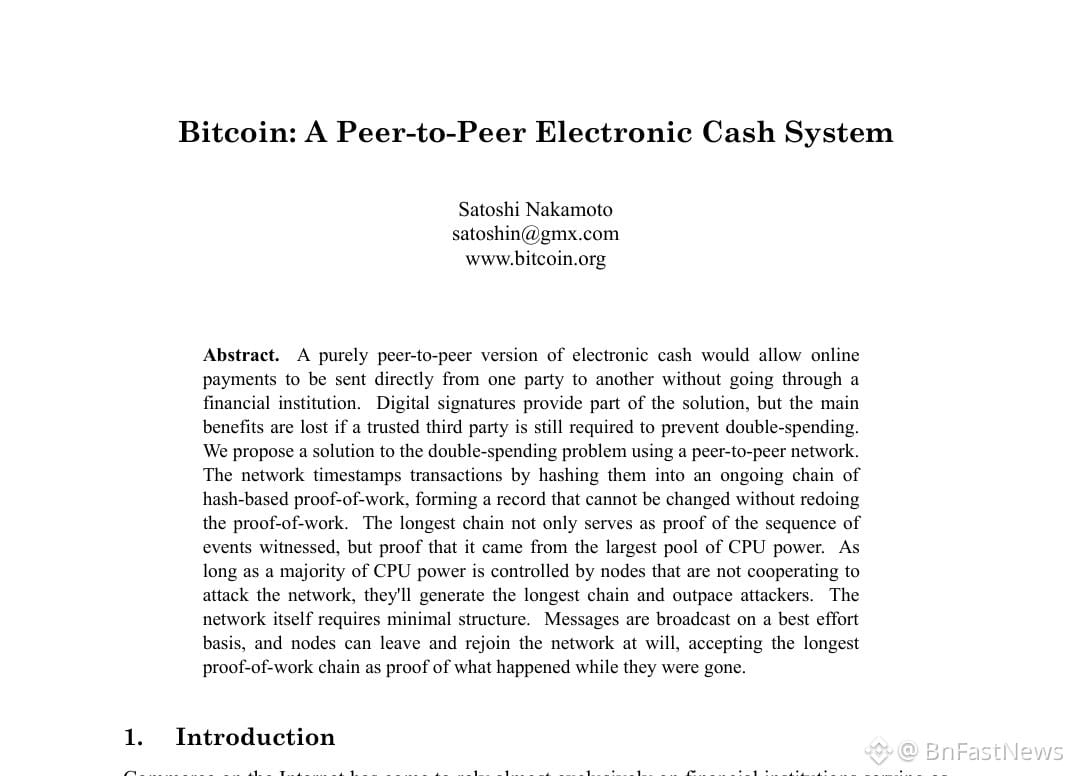
On this day 18 years ago, October 31, 2008, Satoshi Nakamoto sent a 9-page PDF to a cryptography mailing list. Its title was the line shown in the image: Bitcoin: A Peer-to-Peer Electronic Cash System.
Tonight I read the abstract again. The first sentence says it aims to let one party pay another directly, without going through any financial institution.
It’s a little funny that 18 years later, $BTC is hovering around $77,000, and a lot of new money is coming in through ETFs, custodians, and exchanges—the very “trusted third parties” the white paper aimed to bypass. I don’t think that’s a bad thing; without these channels, Bitcoin couldn’t have reached its current scale. It’s just that today seems like a good day to think about who actually holds your coins.
I’m curious: do you hold the private keys to your Bitcoin yourself, or keep it on an exchange or in an ETF? Why did you choose that in the first place?
#比特币白皮书 #Cryptocurrency
224
·
--
Verified
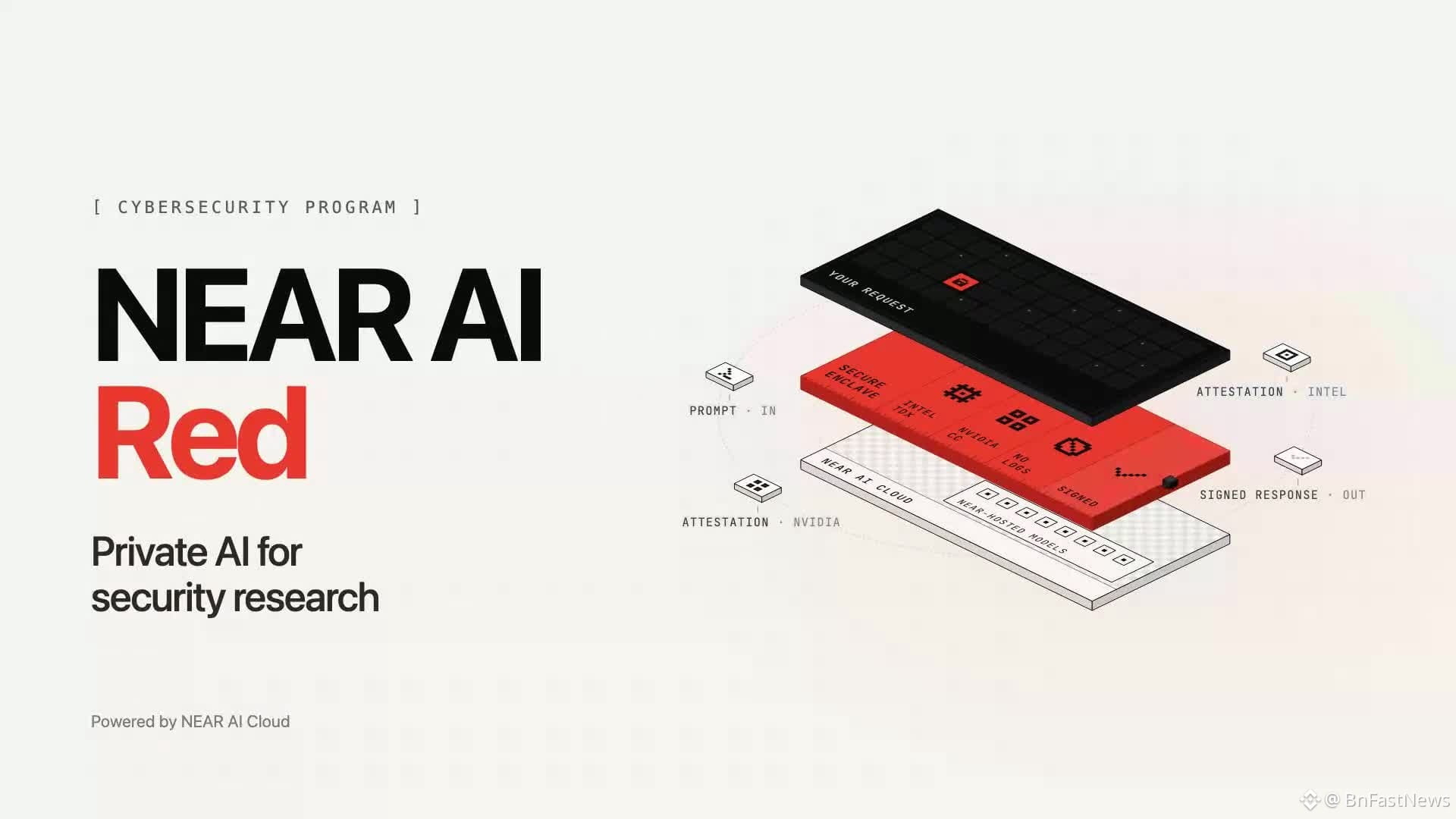
$NEAR Over the past two days, the official channels have posted several updates, all pointing in the same direction: using AI for cybersecurity.
On October 29, NEAR AI Cloud launched an “uncensored” model service for security research. Founder Illia emphasized that code, prompts, and discovered vulnerabilities all run inside a secure enclave, with end-to-end encryption so outsiders can’t see them. The next day, they also launched a program called Red, specifically for security teams. Those selected get early access to new models, dedicated support, and a chance to provide feedback on the roadmap. The hackathon also added two tracks: one focused on spending limits for AI agents, sandboxed wallets, and scam detection; the other on privacy-preserving computing.
My take is that everyone is talking about letting AI agents manage money themselves, but the real bottleneck is “what happens when something goes wrong?” It’s a smart angle to link confidential computing with security. But in the end, we’ll have to see whether security teams are actually willing to pay for these services. Events and application pages alone don’t prove much.
Its spot trading volume ranked in the top five today, while the price stayed more or less flat around 4.29. There’s interest, but it hasn’t picked a direction yet.
Do you think security teams would be willing to run vulnerability research on the computing infrastructure of an on-chain project, or would they trust traditional cloud providers more?
#网络安全 #Artificial Intelligence

1.7k
·
--
Verified
There’s been a lot of news about $ONDO over the past couple of days, so let me go through it in chronological order.
On October 28, DTCC, the “back office for the entire U.S. securities industry,” officially launched its tokenization services. Participating institutions can move eligible securities back and forth between traditional registration and tokenized form, with the same rights and protections as before. Ondo’s official account said it was one of the first ecosystem partners, alongside established names like Broadridge, DRW, and Fireblocks. Looking back, Ondo issued stock tokens backed by these tokenized entitlements in July, so this marks the move from pilot to an official channel.
The next day, it brought seven “Smart Portfolios” to another popular blockchain, three of which use strategies designed by BlackRock. The team said they attracted more than $40 million in TVL during their first four weeks. That same day, it also shared that since stock tokens became eligible as collateral, average weekly trading volume on its perpetuals platform has topped $1.1 billion.
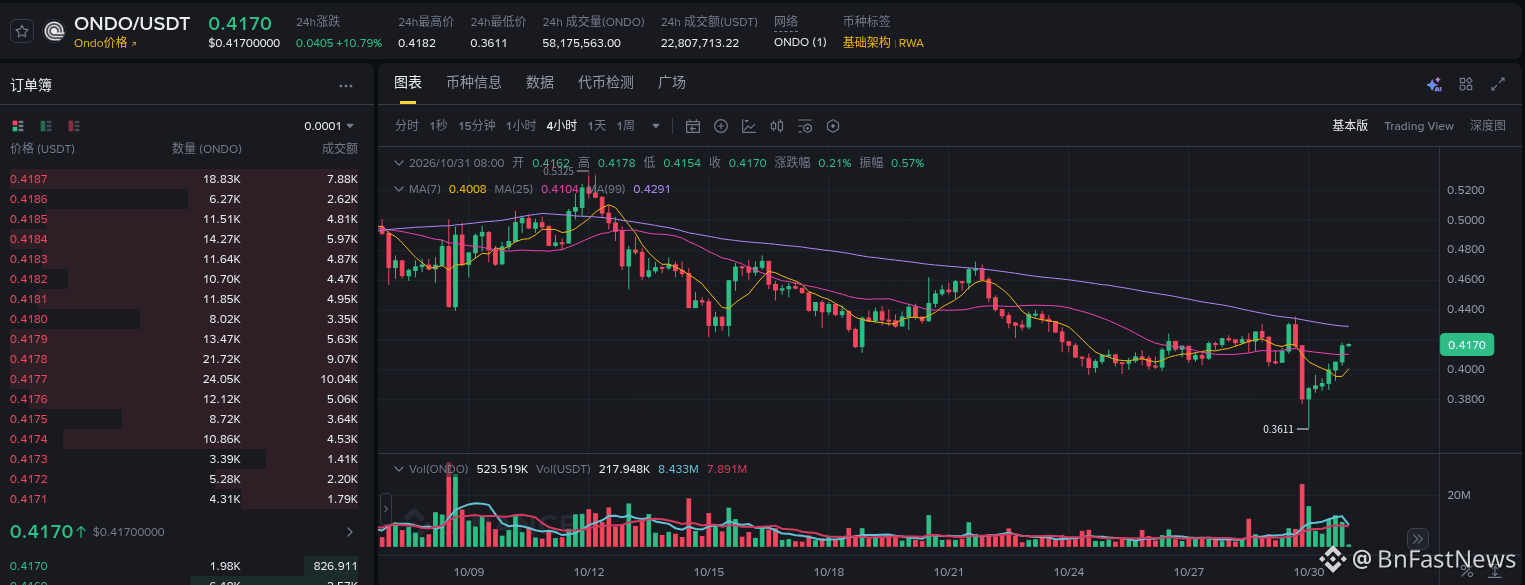
As for the price, it’s up more than 10% in the past 24 hours and is now hovering around 0.417. Honestly, I’m more interested in what happens next: will institutions really use this official channel to move securities onto the blockchain at scale, or will things stop at “we’re connected” for now?
What do you think will be the next verifiable signal—the volume of conversions DTCC reports, or the number of holders of Ondo stock tokens?
#代币化 #TraditionalFinanceOnchain
ONDO+1.14%
BLKUS-1.78%
2
887
·
--
Verified
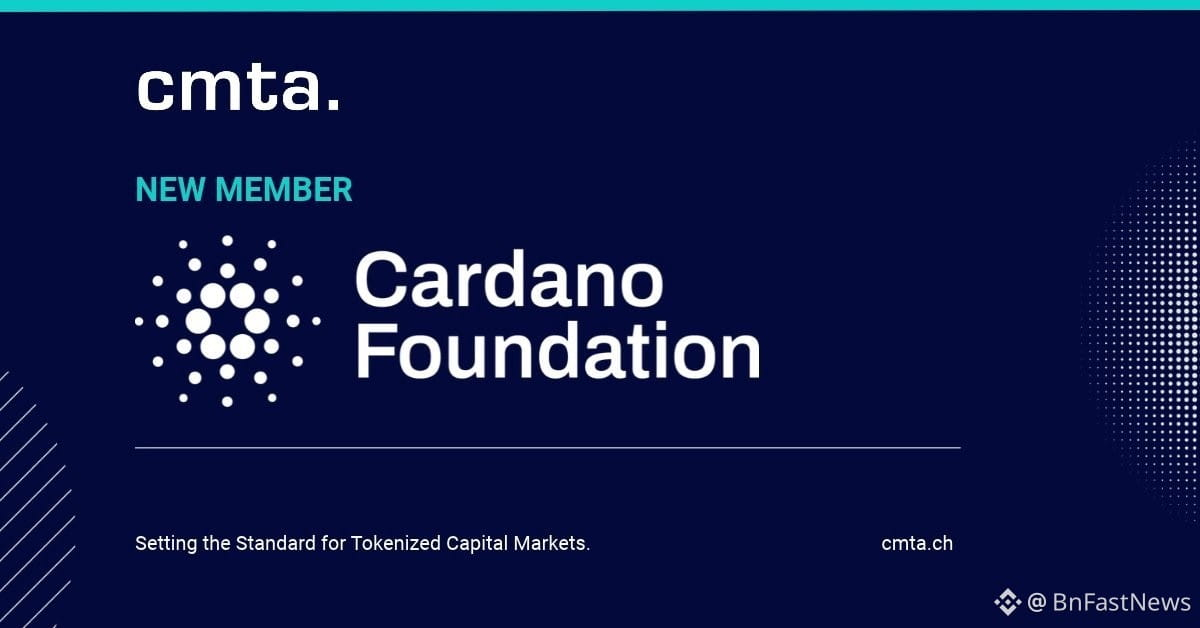
@Cardano_CF dropped some pretty big news yesterday: the Foundation officially joined Switzerland’s CMTA.
CIP-0113 had already been recognized by the association as equivalent to CMTAT, allowing issuers to use it to issue certified equity tokens. The Foundation joining means it’s now directly at the table helping advance Switzerland’s capital market token standards.
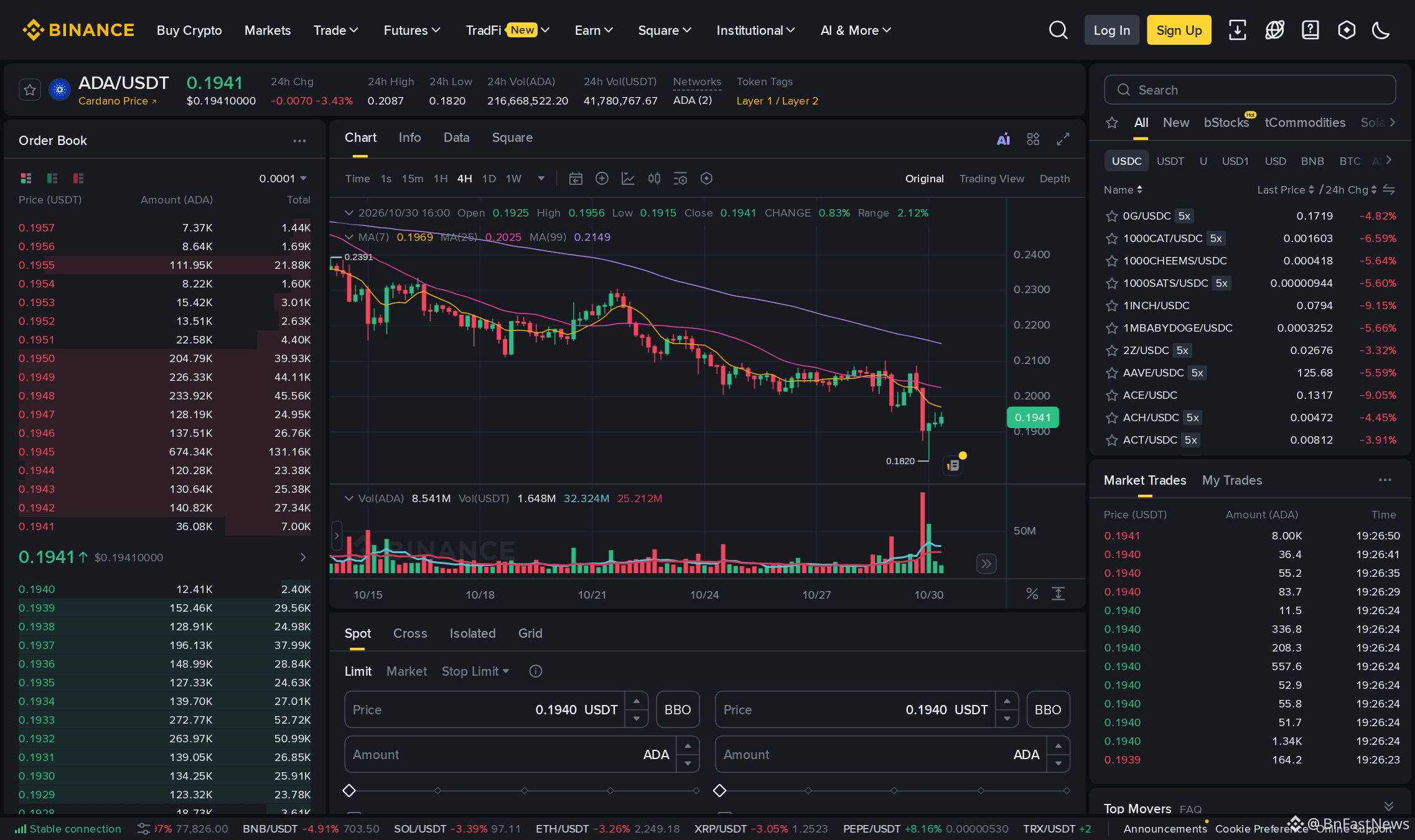
The boundaries are clear, too—it’s recognized for equity, not debt; and individual issuers still have to comply with Swiss law and certification requirements. On the market, $ADA didn’t exactly get excited along with the official tweet today.
What do you think is the more important next step: seeing a second company actually use this framework to issue certified shares, or the association expanding the scope of the standards first?
#Cardano #Tokenization
867
·
--
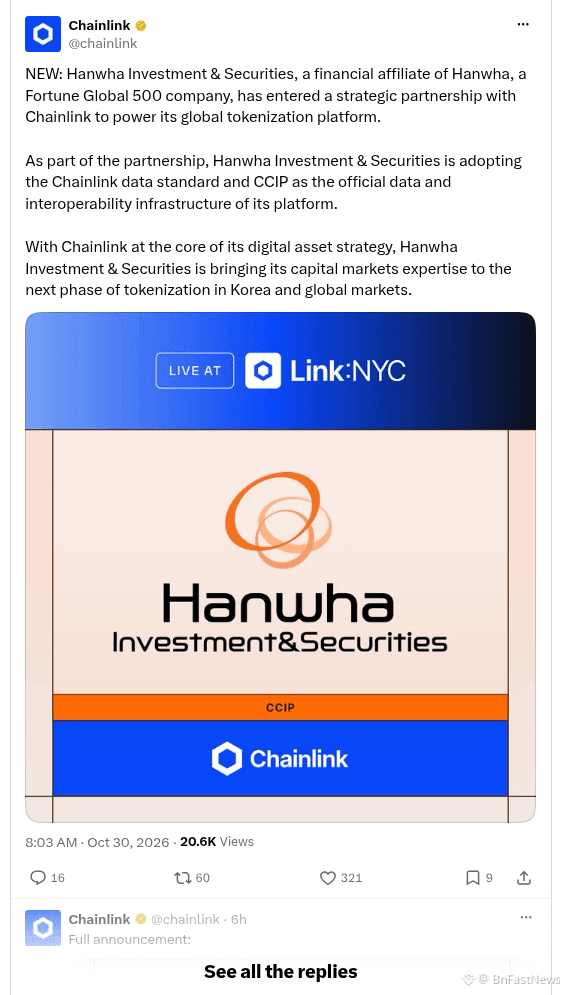
Chainlink's official account just posted this, and there's a lot of information packed into it.
Hanwha Investment & Securities—a brokerage under Hanwha Group, whose parent company is a Fortune Global 500 company—has signed a strategic partnership with it to serve as the backbone for a global real-world asset tokenization platform currently in development: using Chainlink data standards for pricing and net asset values, and CCIP for cross-chain interoperability. The two sides will also form working groups to focus on institutional-grade on-chain execution, collateral valuation and verification, and South Korea's framework for tokenized securities (the press release says it will be implemented in February 2027).
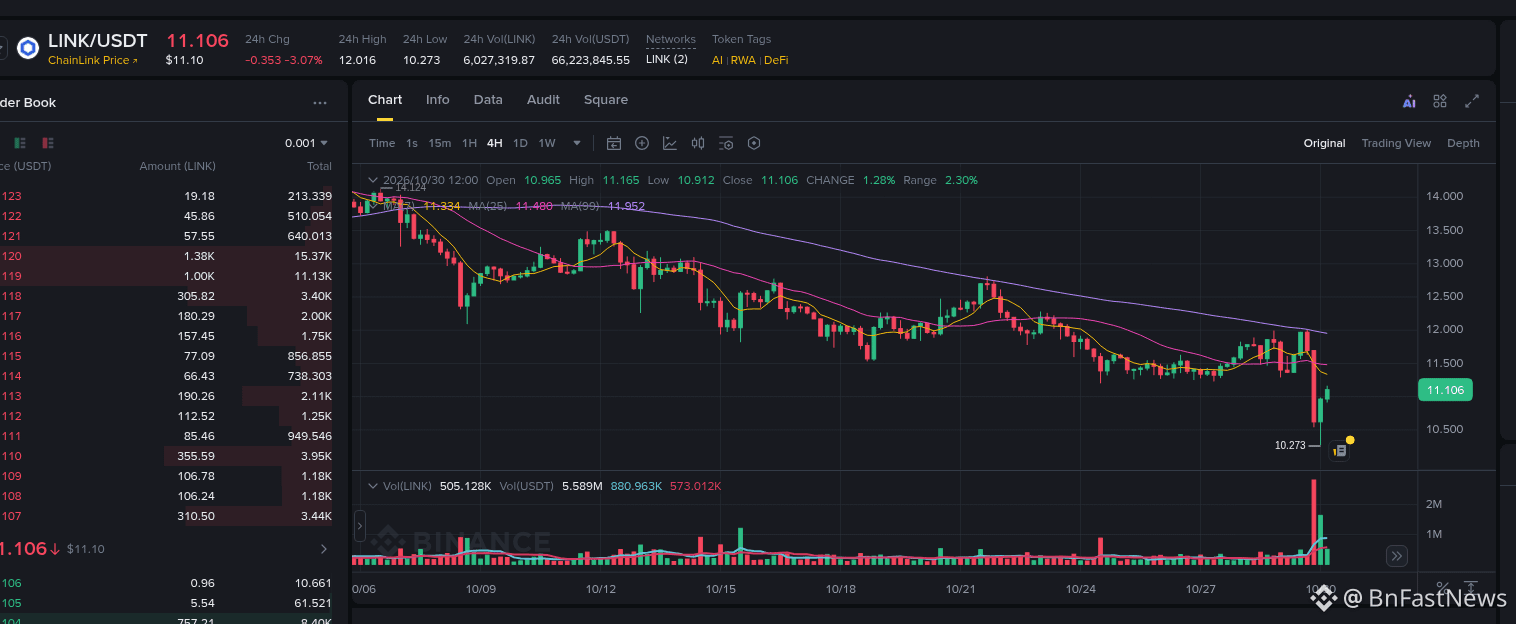
The last time I wrote about it was for a partnership with a major Korean company, and just a few days later, here comes another one with a Fortune 500 financial group. The direction seems clear: rather than just promoting a narrative, it's turning data and cross-chain capabilities into the essential infrastructure for institutional platforms. On the market, $LINK is currently hovering around 11.1, and hasn't surged along with this news.
Which matters more to you—Hanwha steadily bringing in assets, or South Korea's tokenized securities rules actually taking effect on schedule?
#Chainlink #Tokenization
167
·
--
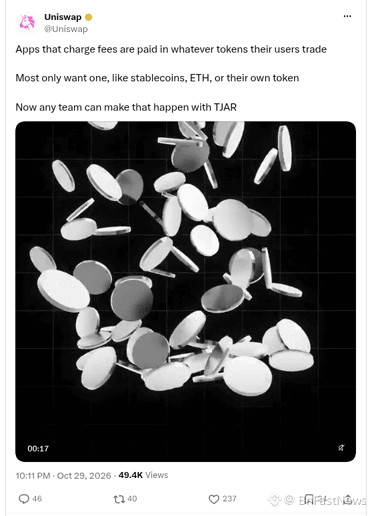
Uniswap’s official one-liner: TJAR—now anyone can integrate it.
Previously, apps collecting fees would end up with a pile of different tokens depending on what users paid in, and they’d have to build their own swap solution. Now fees go into Token Jar, where searchers bid to swap them into the asset of your choice, and the funds are deposited automatically. The official blog says the framework processed over $15.3 million in swaps last month; an official post added that searchers have to burn UNI to claim that volume. Teams are already using it to collect interface fees in the assets they want.
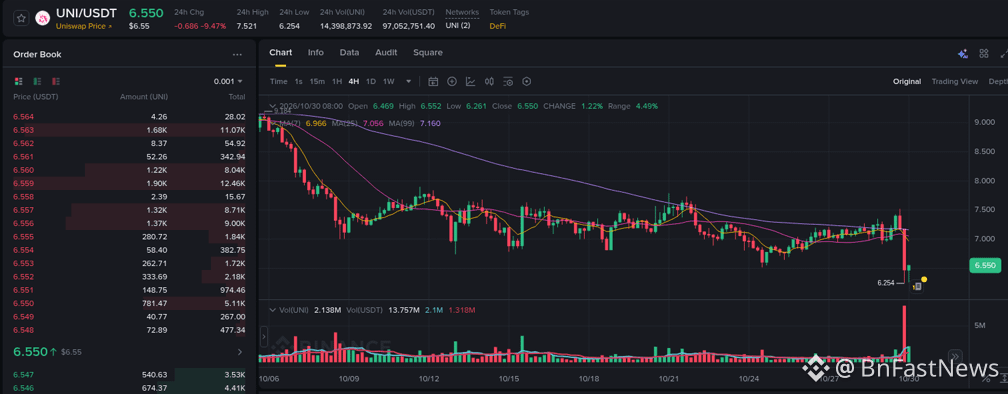
I think the product narrative is shifting toward “how to collect money”: less reinventing the wheel, more reuse. $UNI has pulled back alongside the broader market over the past couple of days, hovering around 6.5, and the price action hasn’t danced to the official announcement.
Which would you focus on first: the “burn-to-claim fees” flywheel, or the idea that “any app can integrate TJAR with one click”?
#Uniswap #Transaction fees
522
·
--
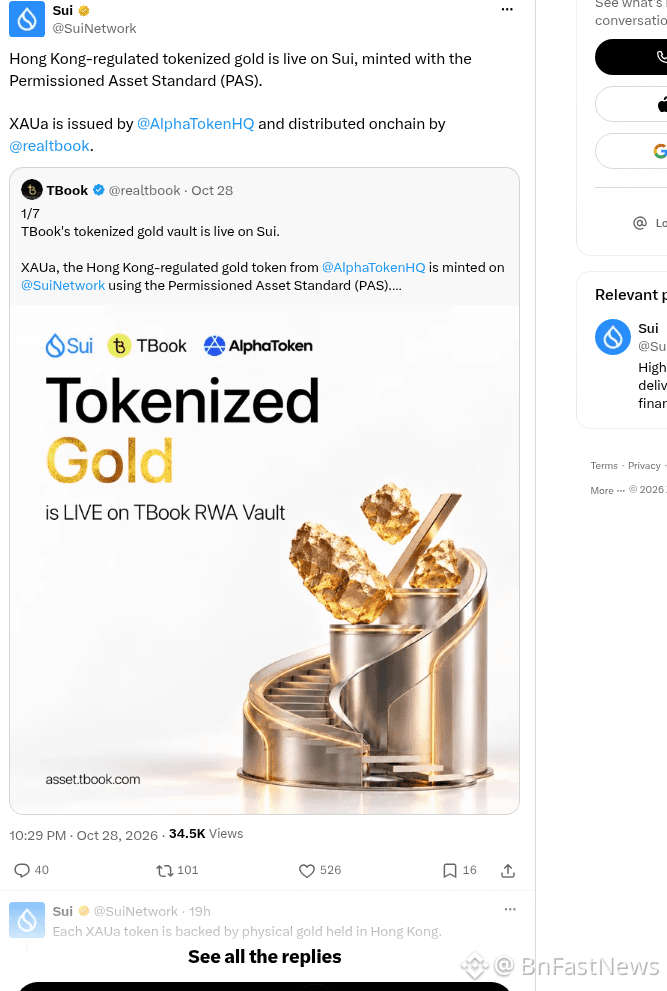
Hong Kong-regulated tokenized gold has launched on Sui.
The official announcement just came out: XAUa is minted using the Permissioned Asset Standard (PAS), issued by AlphaToken, and distributed on-chain by TBook—the rules are built into the policy, so if a transfer doesn’t pass, it won’t settle and the balance won’t move. The physical gold is held in custody in Hong Kong, and there are eligibility requirements on-chain too.
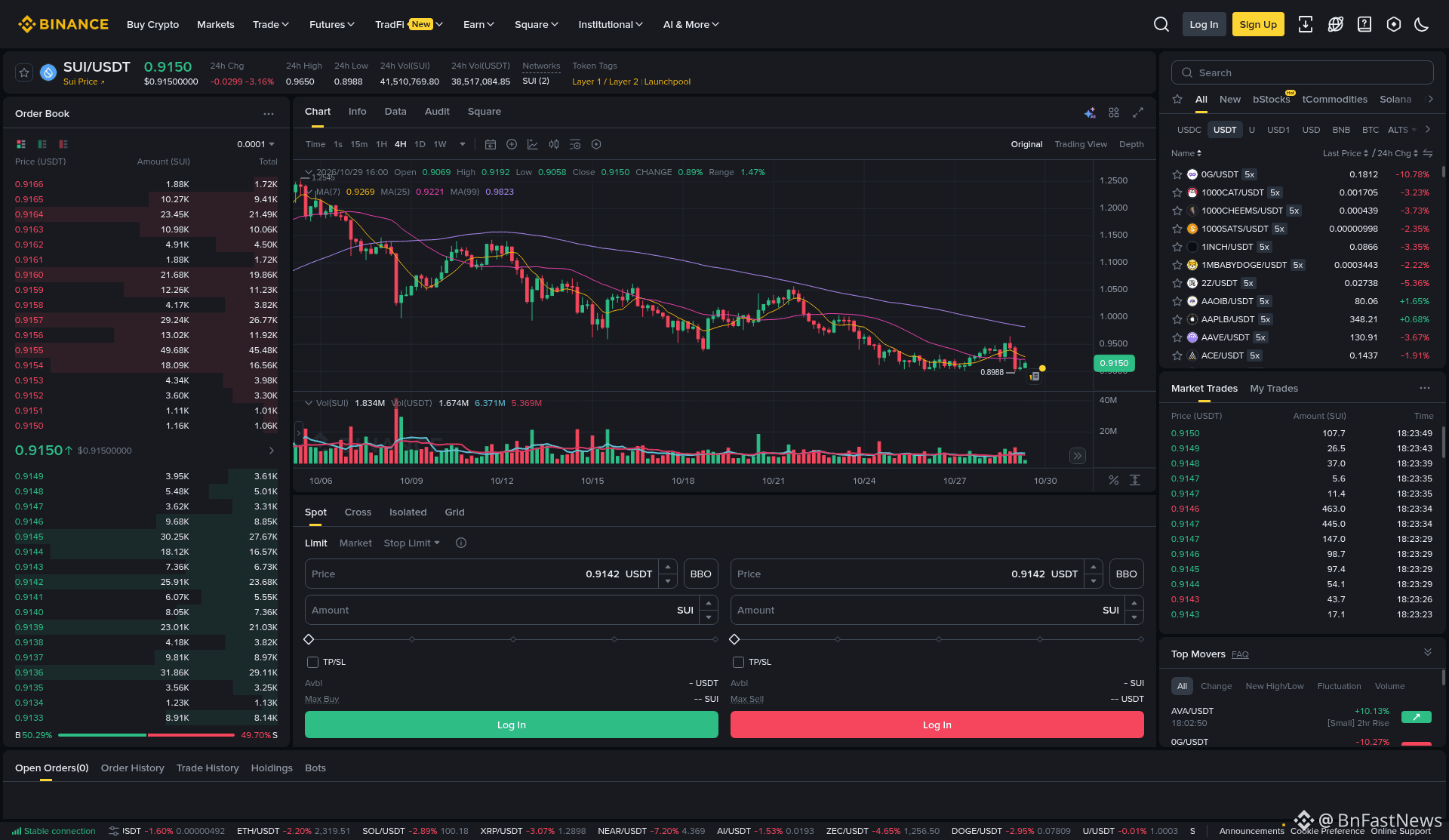
I think this is more substantial than just shouting “real-world assets on-chain”: it turns compliant gold and permission standards into verifiable infrastructure, rather than just slapping on a label. $SUI The current price is hovering around 0.91. The market hasn’t followed the hype, but the narrative is filling in this piece.
Which matters more to you: the backing of Hong Kong regulation, or PAS itself—the idea that “the rules travel with the asset”?
#Sui #TokenizedGold
1
356
·
--
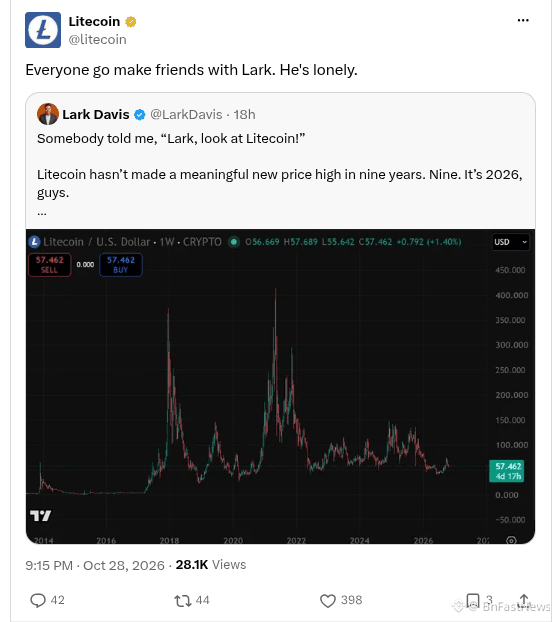
Litecoin’s official account is doubling down again.
Lark said, “It’s been nine years without a new high. Friends don’t let friends buy Litecoin.” The official account shot back, “Everyone go make friends with Lark—he seems pretty lonely.” Then it followed up with: “When Lark asks to be my fren.”
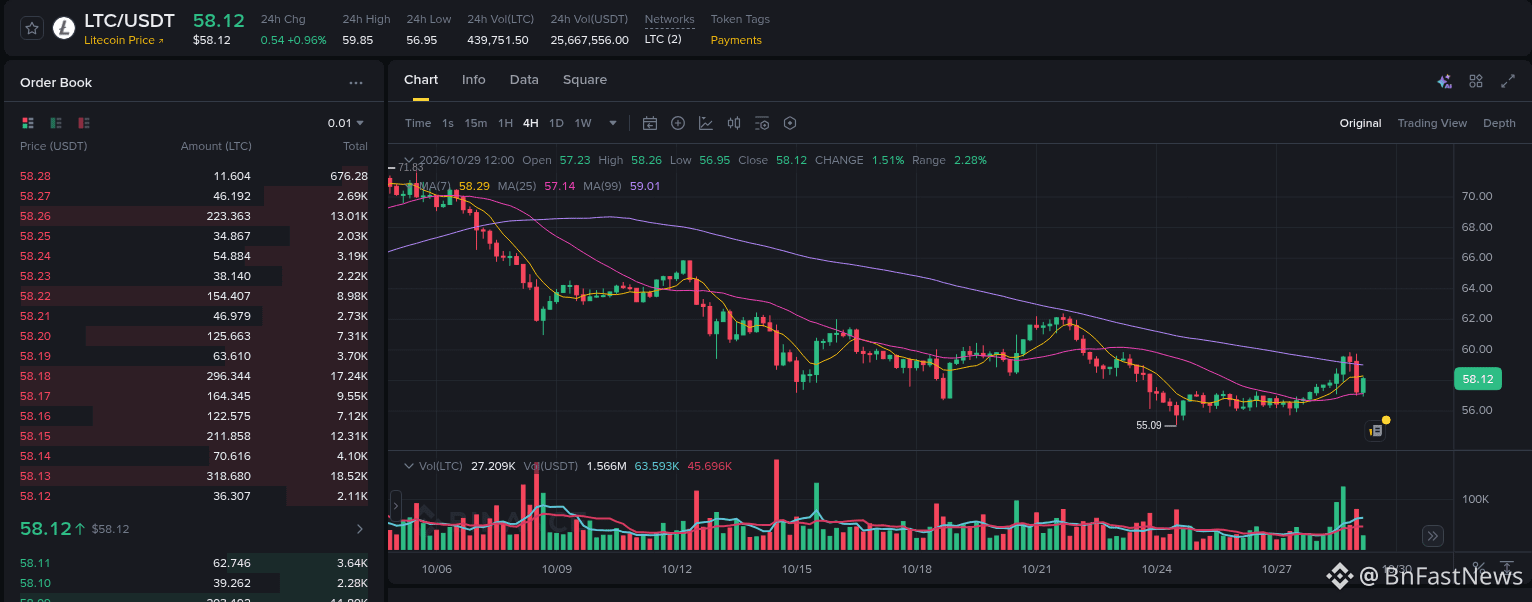
I actually think this kind of back-and-forth is more interesting than simply shouting that the price will go up—the old crypto scene is still running on personas and memes. $LTC The price is hovering around 58, and the market didn’t blow up over the spat.
Are you more into this kind of “official account roasts a big influencer” interaction, or do you only care about the payment fundamentals?
#莱特币 #VerbalSparring
2
4.5k
·
--
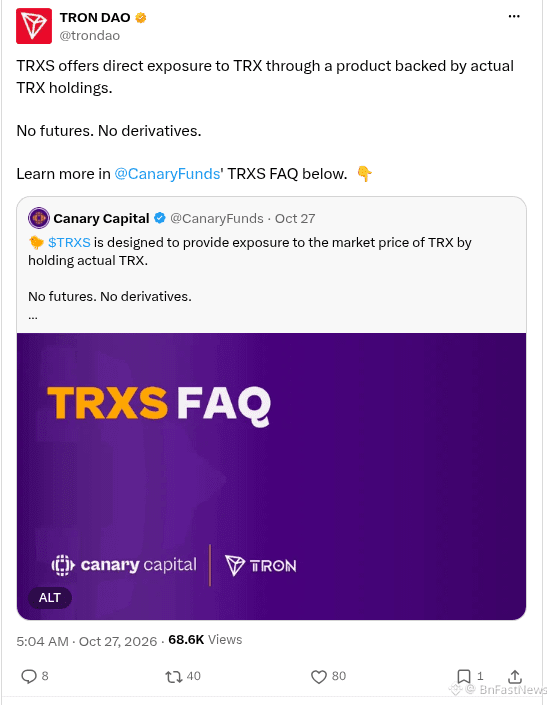
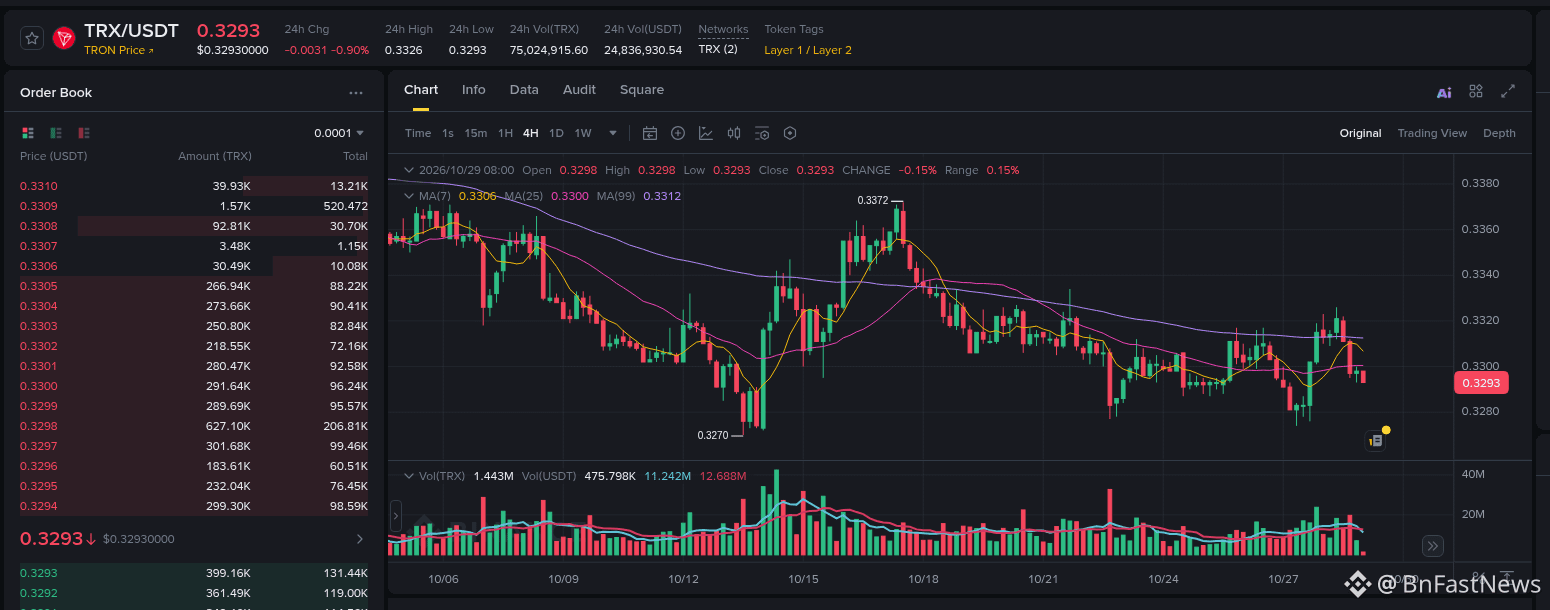
Canary’s staking spot ETF just got its own FAQ from the issuer over the past couple of days: it’s backed by actual holdings, not futures or derivatives—basically, another compliant route in the U.S.
Now add the Q3 fundamentals: stablecoin settlements came to about $2.21 trillion, their share of transfer volume at quarter-end was around 73%, and the market cap of the on-chain dollar stablecoin just peaked above $92.7 billion. Quarterly fees were about $82.7 million. Turning payment rails into network revenue is pretty tangible.
What I’m more interested in: which would you look at first—the institutional channel through spot ETFs, or the stablecoin transfer fundamentals?
$TRX #波场 #ETF
134
·
--
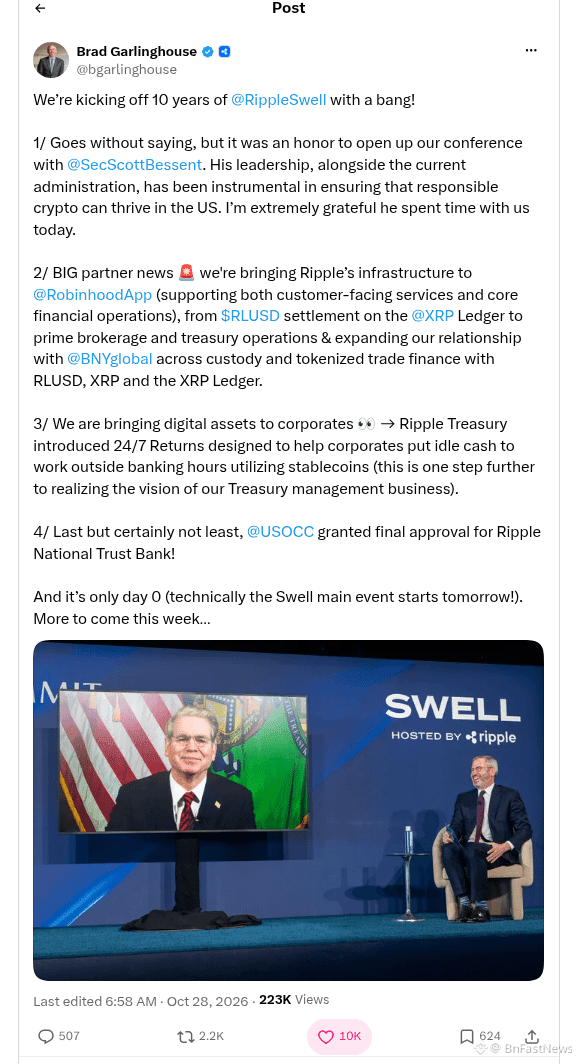
At Swell’s 10th anniversary kickoff, Brad opened by bringing out U.S. Treasury Secretary Bessent.
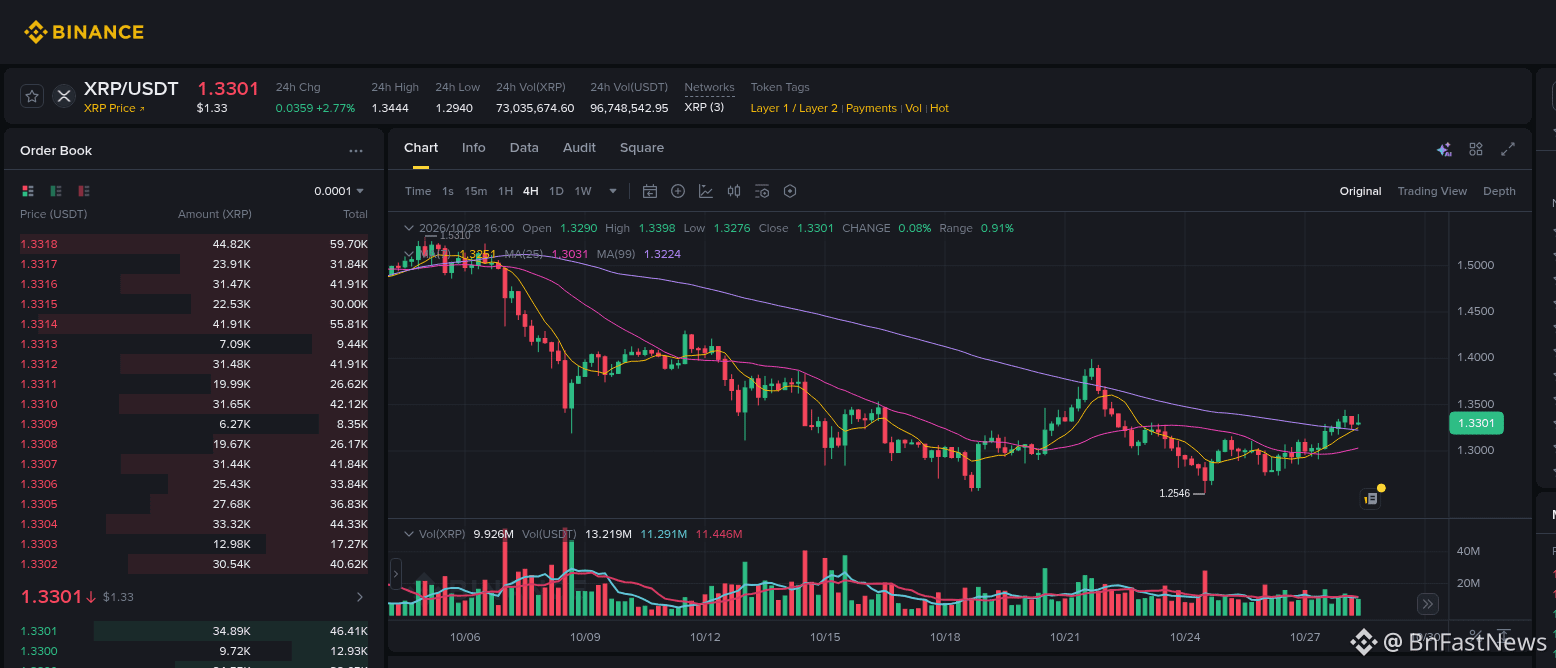
Before the conference, the OCC had already approved Ripple National Trust Bank, a federally regulated platform for stablecoin reserves and institutional-grade custody. On opening day, they brought the Treasury Secretary onstage; today, Moody’s assigned the dollar stablecoin long-term A2 and short-term P-1 ratings. Ripple says this is the first stablecoin to receive an investment-grade rating. On the market, $XRP is hovering around 1.33—the news is making more waves than the price.
My impression is that this round is less about slogans and more about integrating stablecoins and custody into the banking system. Whether the license and ratings can really unlock institutional capital is worth watching more closely than short-term price moves.
I’m curious: which matters more to you—the signal of having the Treasury Secretary onstage, or the hard credentials of an OCC license and ratings?
#瑞波 #Stablecoin
179
·
--
Sun’s activity on $PEPE over the past ten days has been pretty significant.
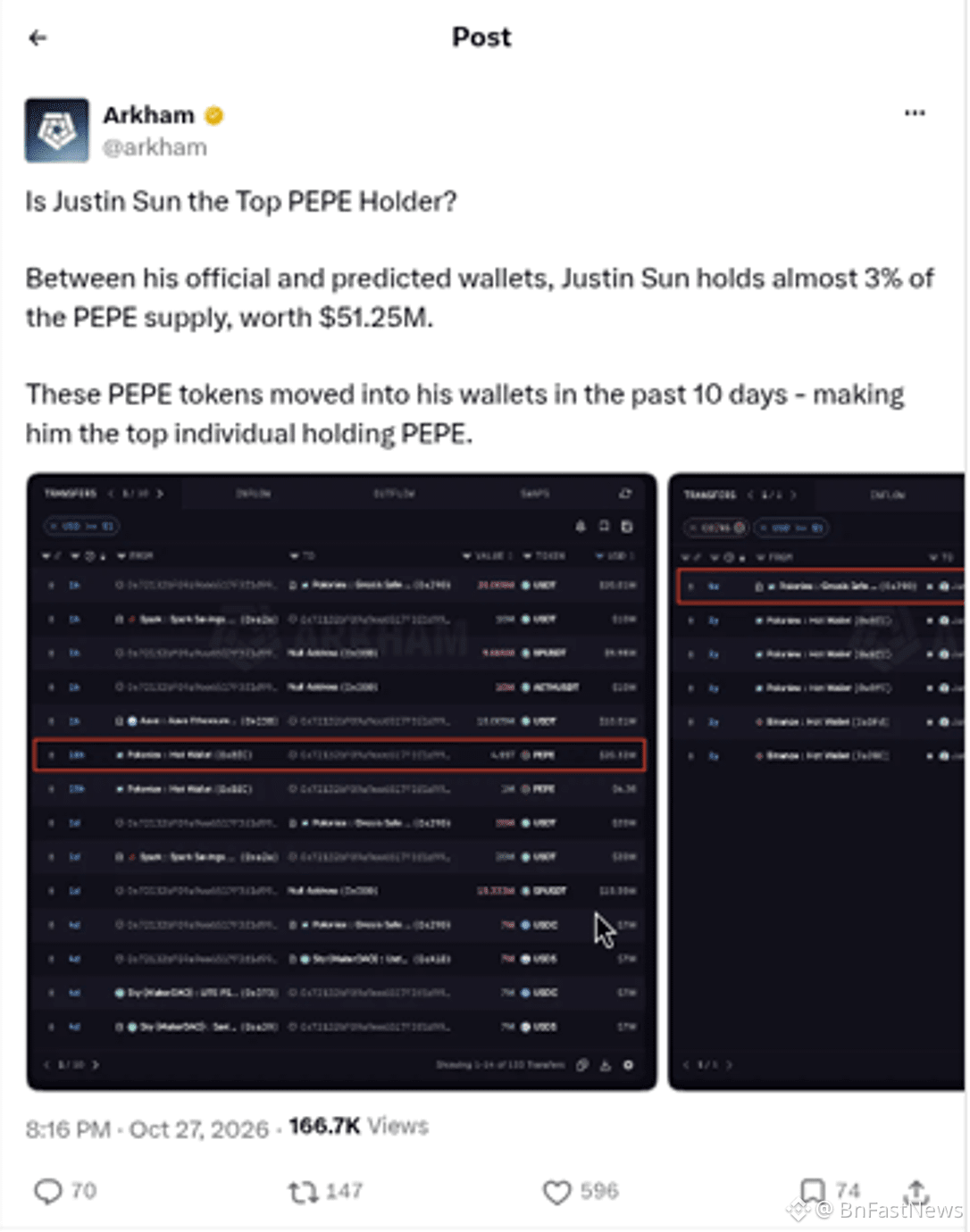
Arkham posted an on-chain trace last night: before October 17, the frogs he held were worth only around $267,000. Two withdrawals from Poloniex, on the 17th and 26th, totaled $48.76 million. Now, combining his public wallets with those Arkham believes belong to him, he holds around 11.85 trillion tokens, or 2.82% of the total supply, worth $51.25 million—making him the largest individual holder outside of exchanges.
What I find more interesting is the route: first bought on a major exchange, then moved to Poloniex, looped through Huobi, and back to Poloniex before finally landing in a wallet. Everyone knows what ties these two exchanges to him. And some of the wallets are only attributed to him by Arkham’s estimates; he still hasn’t said anything himself.
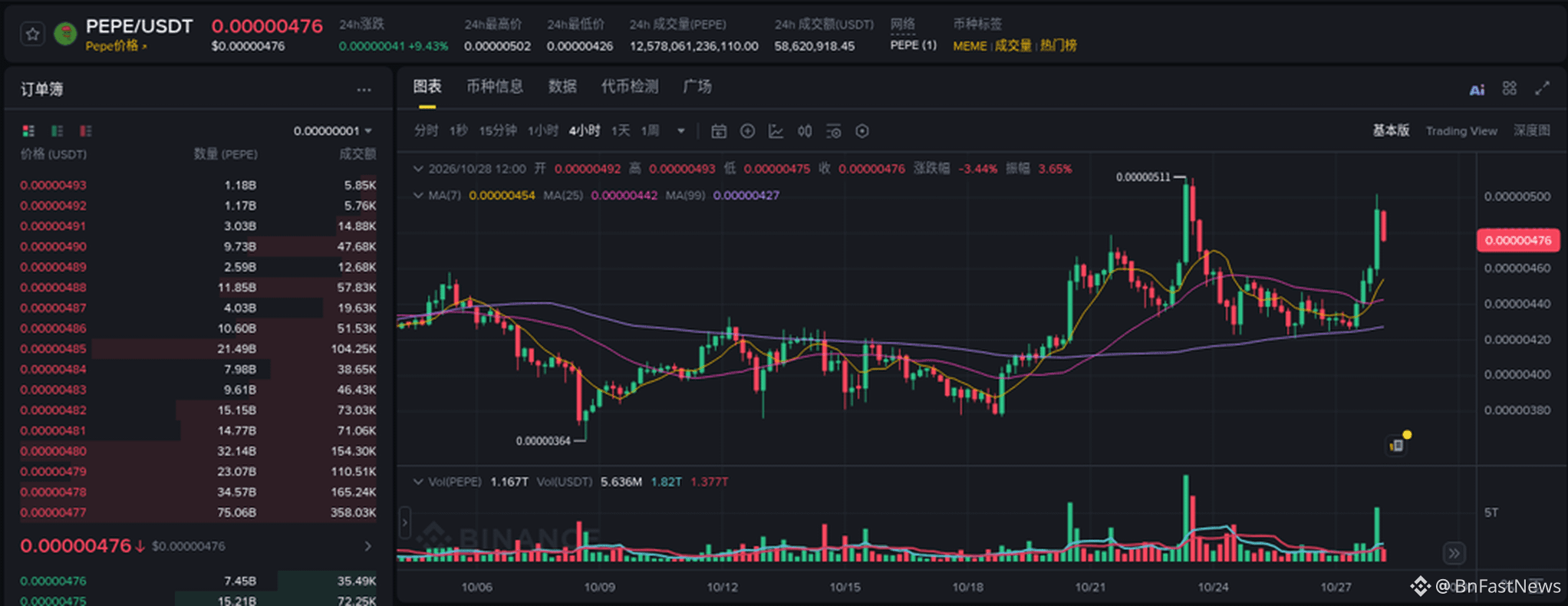
On the market, the frog has bounced from around 0.0000043 on the 26th to about 0.0000048 now, up more than 9% today.
When someone suddenly grabs nearly 3% of the supply, it can be fuel for sentiment in the short term. In the long term, though, that person becomes the one everyone watches—and the slightest on-chain move is enough to make the market nervous.
What do you think: is Sun genuinely bullish this time and planning to hold for the long term, or does it look more like he’s stocking up for his own platform?
#孙宇晨 #PEPE
728
·
--
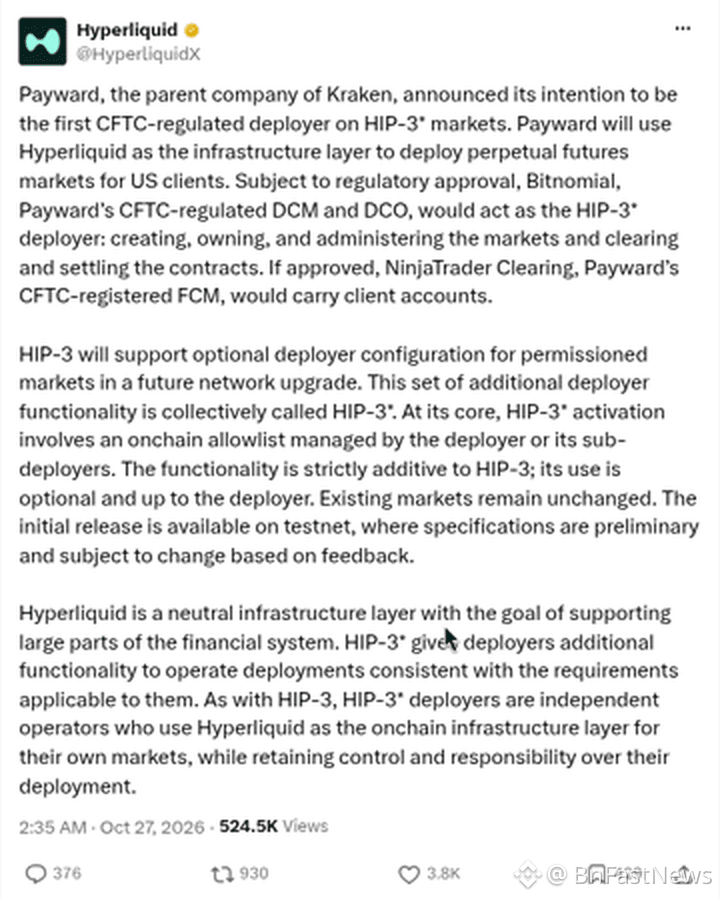
Just last week, we were watching the CME chief blast Hyperliquid for having no KYC and high leverage, saying that if something went wrong, it couldn’t shift compliance responsibility onto users. Then, just a few days later, the story took a turn.
In the early hours of 10/27 Beijing time, Hyperliquid posted that Payward, Kraken’s parent company, plans to become the first CFTC-regulated deployer on HIP-3* markets, using Hyperliquid as its underlying platform to offer perpetual contracts to US customers. According to the current plan, its licensed subsidiary Bitnomial will build and operate the market, while accounts will be cleared through NinjaTrader. It’s still at the testnet stage and will need regulatory approval. The existing markets won’t change; this will simply add an optional, permissioned market.
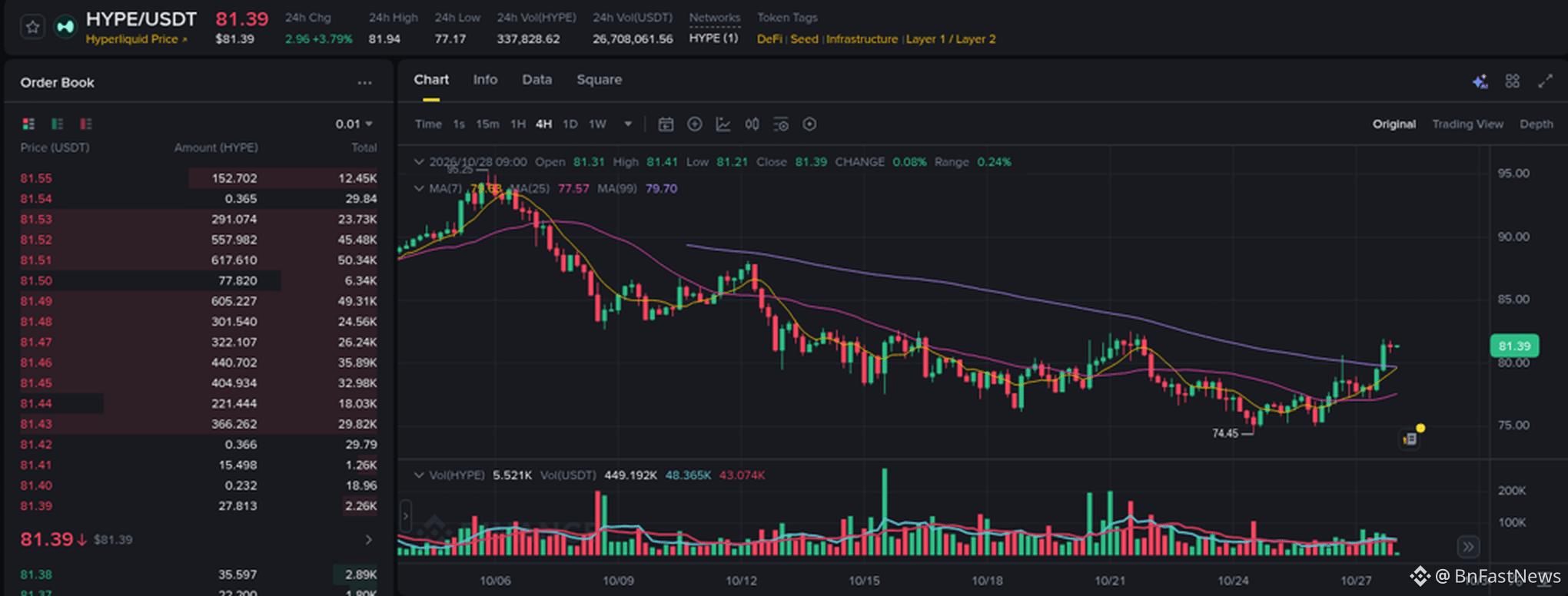
The post has now had over 500,000 views. $HYPE has gradually climbed from around 75 during the day on 10/26 to around 81 now—not an especially dramatic rise.
What interests me more is the shift in direction: the discussion used to be about whether regulators would crack down on it. Now, a licensed institution is taking its own license and actively using Hyperliquid as its underlying platform. Of course, the words “subject to regulatory approval” carry a lot of weight. Whether it gets approved, and how long it will take, are both still unknown.
What do you think: will US regulators ultimately approve this “licensed institution + on-chain matching” model, or will the approval process drag on for a long time?
#Hyperliquid #USRegulation
66
·
--
Verified
The Zcash community got into a heated argument today, and it’s been pretty interesting.
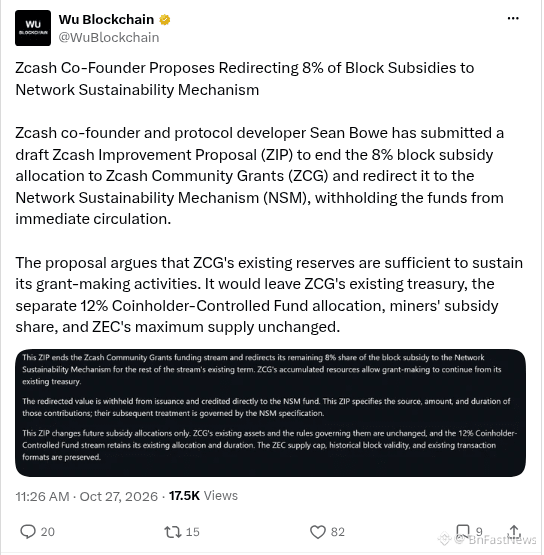
The trigger was a grant application of about $588,000, meant to fund privacy payment promotion, including setting up a booth at an adult expo. After the photos leaked, many longtime holders were immediately outraged. Then co-founder Sean Bowe proposed a draft: stop the 8% of each block that is automatically allocated to community funding, and instead put it into the network’s sustainable reserve for now, without circulating it immediately. Already approved projects would still be paid, and the roughly 91,000 coins currently held by the funding committee would remain untouched.
Personally, I find it a bit contradictory. From a holder’s perspective, reducing the supply by 8% per block would indeed ease selling pressure a little; but the privacy sector’s biggest shortage is exactly developers willing to work long term. If funding is cut off, who will fill that role?
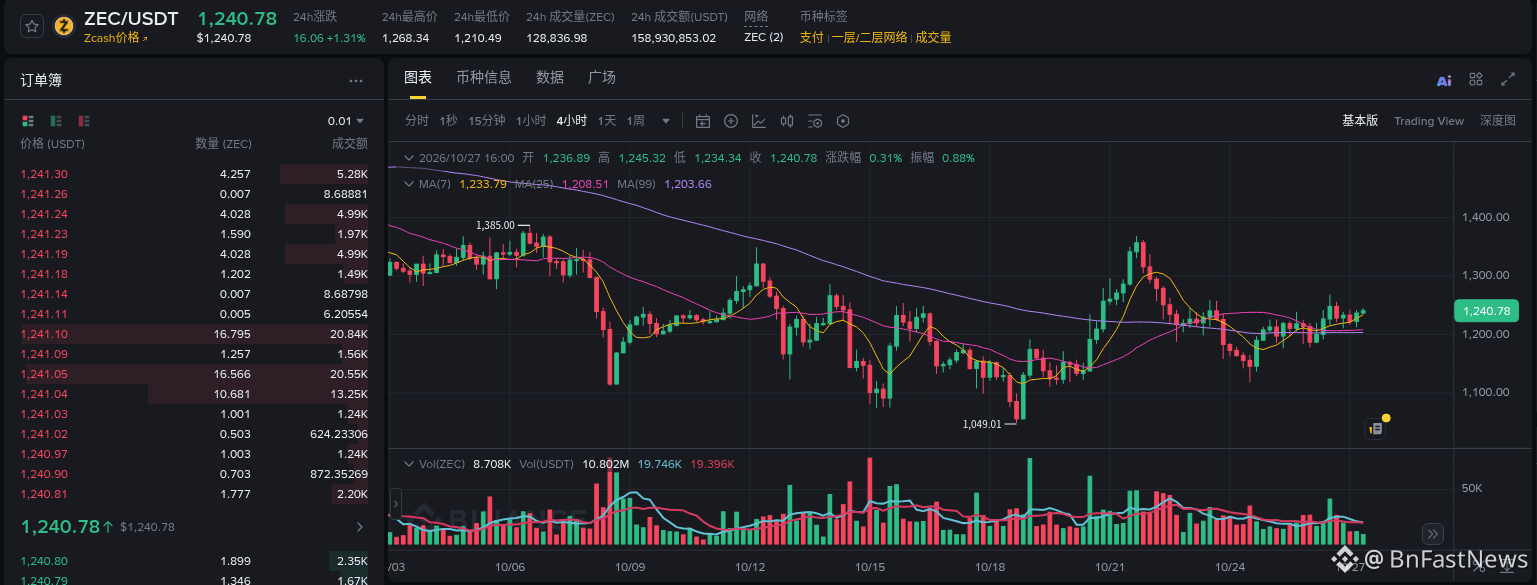
$ZEC has been moving sideways around 1240 these past two days, and the market doesn’t seem to be taking it too seriously yet. For now, it’s only a draft, and it still has to go through the governance process.
If you hold coins, would you support shutting it off directly, or keeping it but tightening the approval process?
#Zcash #隐私币
1.1k
·
--
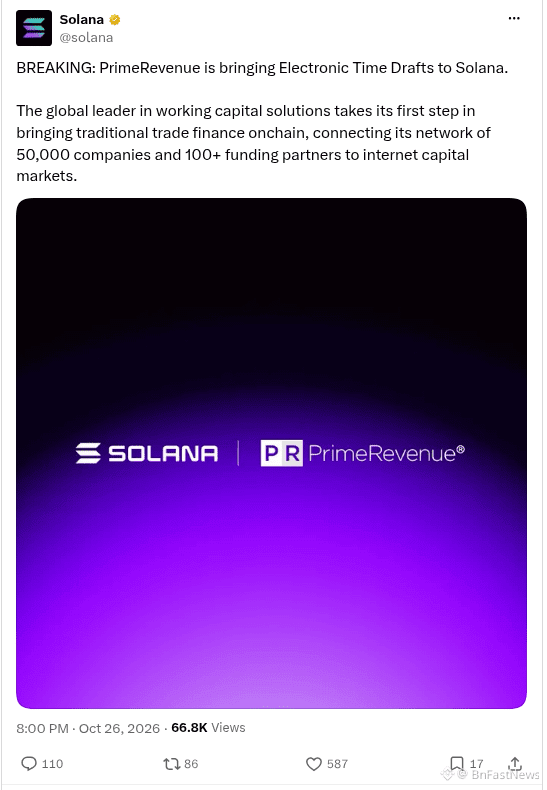
I’ve been keeping an eye on this Solana news for a while. PrimeRevenue—a long-established supply chain finance platform that handles accounts receivable and payable for businesses, processes over $300 billion in payments annually, and connects 50,000 companies with more than 100 funding partners—announced it’s moving its Electronic Time Drafts on-chain, with $SOL as its first destination.
Honestly, this kind of news isn’t sexy. There’s no explosive price action narrative or airdrop. But it actually matters more to me: trade finance is a real cash-flow business. Behind every draft are real payments for goods and payment terms—not points created out of thin air. When these “boring” traditional businesses choose to go on-chain, they’re probably looking at settlement efficiency and 24/7 liquidity, not hype.
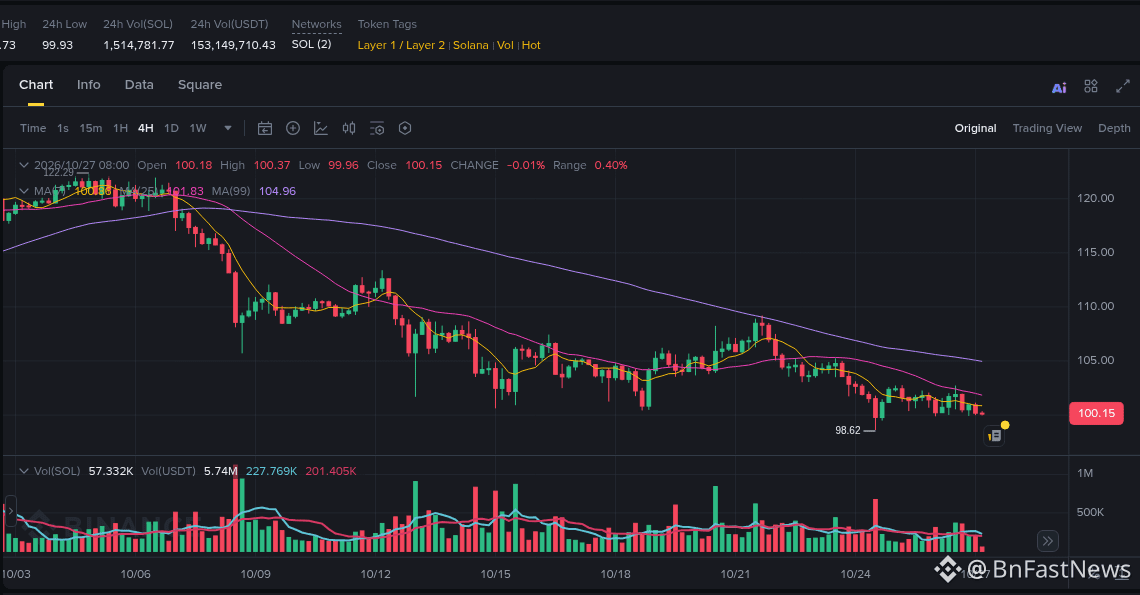
What’s interesting is that the price has barely reacted. The coin is still hovering around 100, a striking contrast with a real-world deployment of this scale. Does the market simply not buy the “businesses moving on-chain” story, or are these slow-moving developments just not reflected in prices right away?
Do you think bringing traditional trade finance on-chain meets real demand, or is it just another story being told to institutions?#Solana #RWA
1
282
·
--
Partly True
$QNT Looking back, the price action over the past month has been pretty interesting.
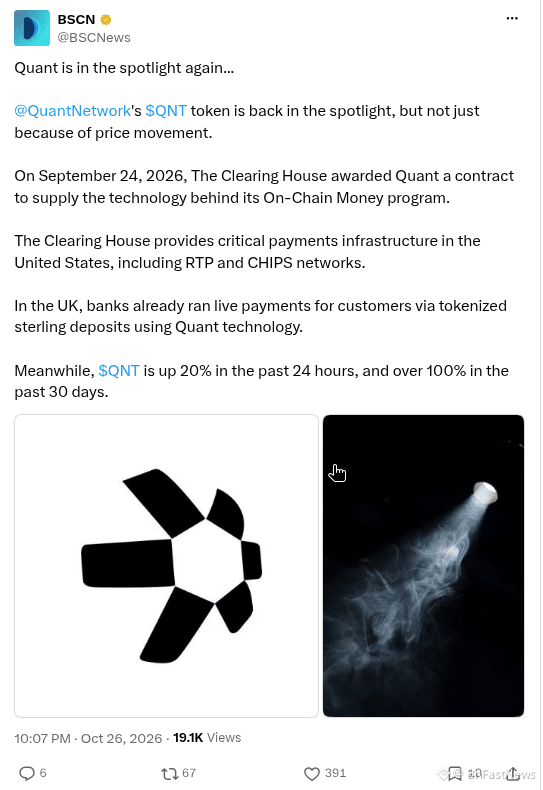
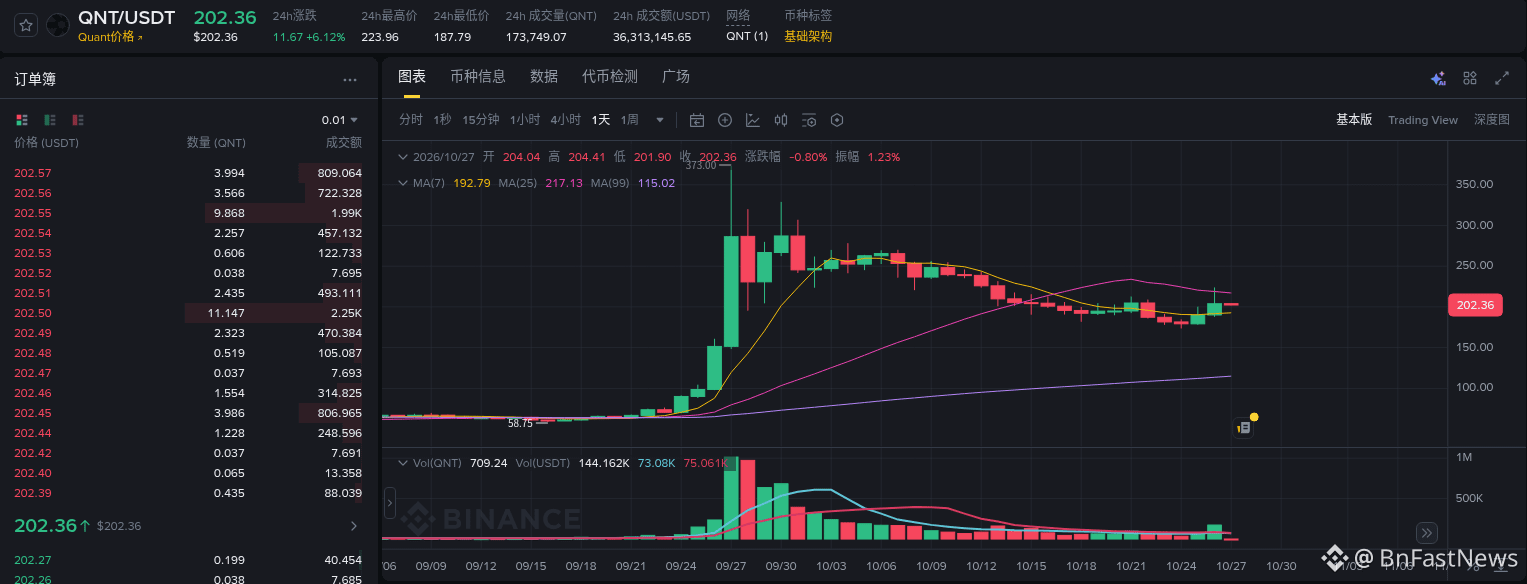
On September 24, The Clearing House announced that it had chosen Quant to provide the underlying technology for its on-chain money project. QNT opened at just over 70 on Binance that day, then hit a high of 373 three days later. It gave back its gains steadily after that, and last Saturday it dipped to around 173.
Yesterday, it suddenly surged again, jumping from around 190 to 224. It’s now back above 200. I looked around but couldn’t find any new announcements. It seems the same old news was simply reposted by a few big accounts, yet daily trading volume shot up from just over 6 million to more than 36 million, while the broader market was flat.
My impression is that the market has priced in the same positive news twice, which suggests a lot of people genuinely believe in the “banks on-chain” narrative. But what I care more about is this: banks are buying Quant’s software, but will they actually need to hold and lock up the tokens? It’ll be hard to know for sure before the network officially launches in 2027.
Going forward, I’m mainly watching two things: whether the price can hold around 200, and whether more concrete details emerge about banks joining the network.
Do you think banks using Quant’s technology could ultimately create real demand for the token? Or is this more of a good story than anything else?
#Quant #TokenizedDeposits
1.3k
·
--
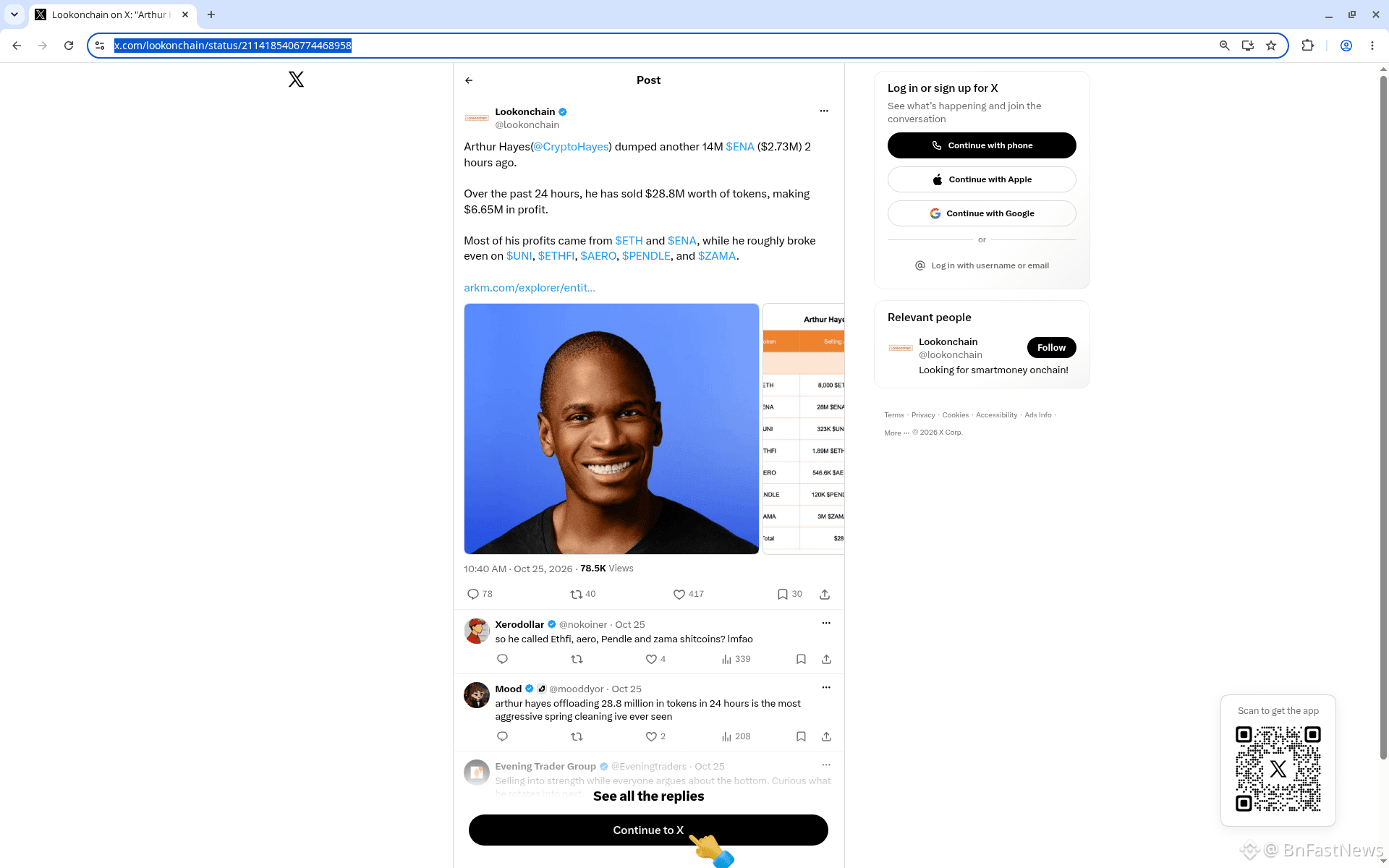
The weekend’s most talked-about post was probably Arthur Hayes saying, “I dumped it all.”
On 10/24, he posted that Maelstrom had closed its directional positions, taking profits on Ethereum, $ENA , and a bunch of altcoins. His reason: the macro and geopolitical situation felt “a bit shaky,” so he was sitting on the sidelines and waiting for a signal. The next day, Lookonchain spotted him dumping another 14 million tokens on-chain, worth about $2.73 million, and said he’d sold around $28.8 million worth of crypto in total over 24 hours.
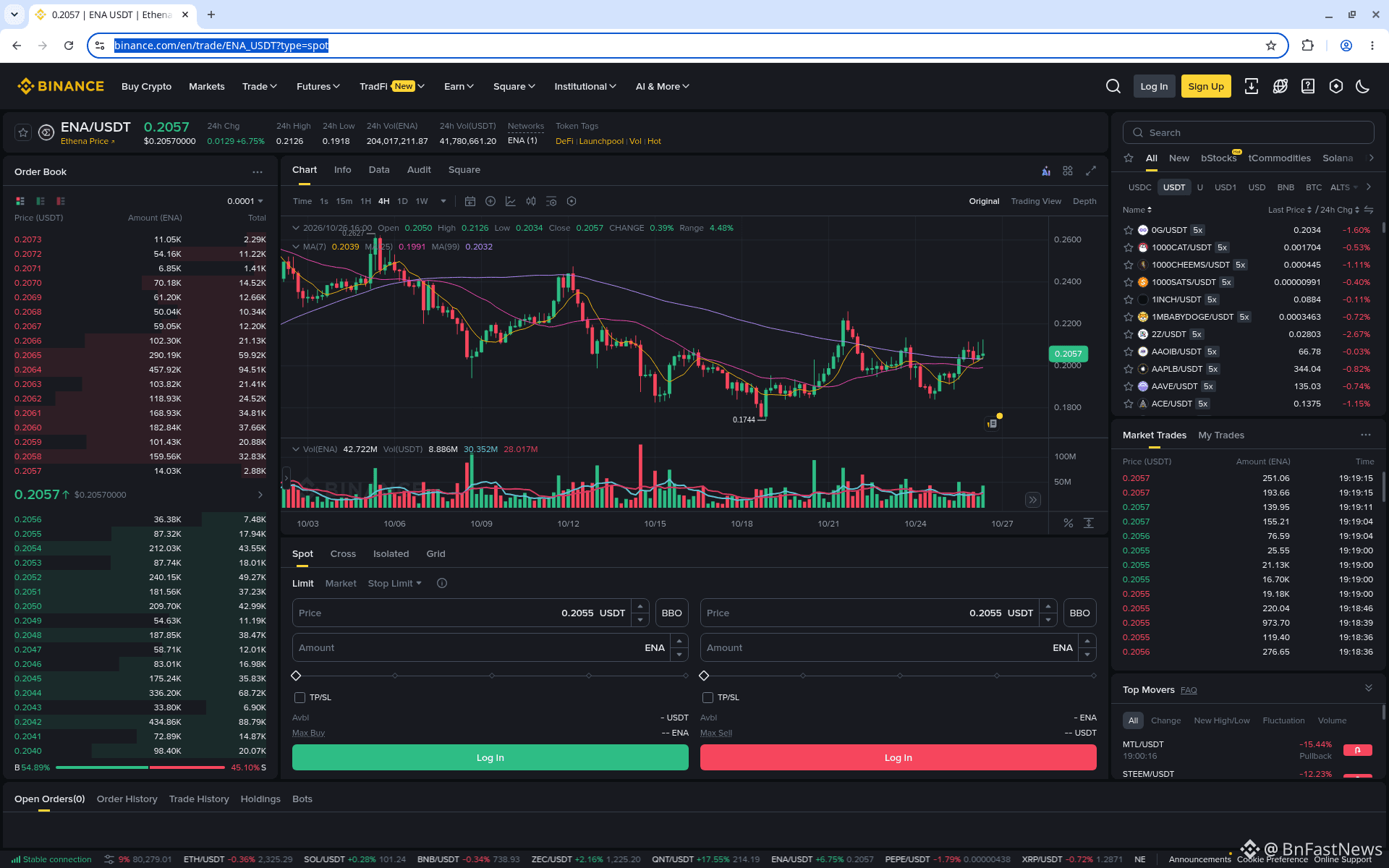
Going by the usual script, when one of the loudest bulls leads the way out, the price should tank. Instead, it climbed back from a low of around 0.184 at midnight on 10/25 to roughly 0.205, and was still up more than 6% over 24 hours.
My take: Binance spot trading does only a little over $40 million in volume a day, so $2.73 million just isn’t enough to move the market. People also didn’t take one person exiting as a sign that the project was in trouble. Of course, it could just be a relief bounce after the selling pressure ran its course. I can’t draw conclusions for anyone else; I just think that “a big name sells, so I should follow” didn’t work this time.
Would you cut your position just because a big influencer sold out? Or do you think their selling means the bottom is in?
#ArthurHayes #Ethena
186
·
--
Verified
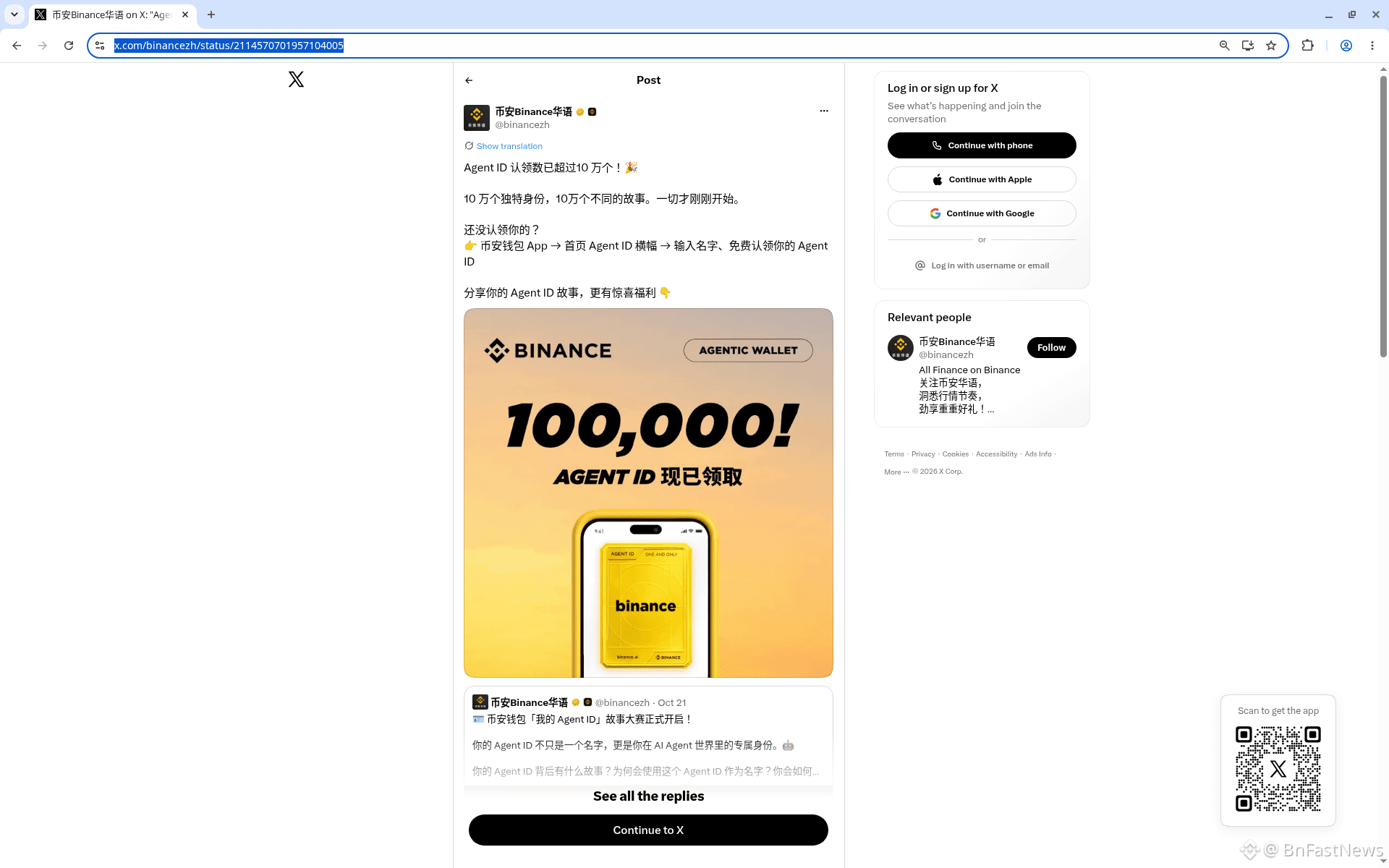
At noon, I saw a figure posted by Binance’s official Chinese-language account: more than 100,000 Agent identities have been claimed through Binance Wallet.
I checked out the process. You just enter a name in the banner on the Binance Wallet homepage and claim a free name ending in .ai. But the real buzz isn’t about the names themselves. Over the past few days, a bunch of fully on-chain collectibles have appeared on BNB Chain, and minting them is restricted to wallets holding a particular identity. Most offer a free first mint—you only pay gas—and the community has been putting together daily early-bird rundowns of new mints.
I see it in two ways. The upside: from what I’ve seen, claiming one requires an Agent wallet with verified identity, so these 100,000 identities aren’t just throwaway accounts someone quickly spun up. If Agents can transfer funds and collaborate with one another by name in the future, that gives them something like a street address. The concern: for now, most of the activity around this seems driven by free mints and airdrop expectations, and project information is all over the place. Some projects’ websites and Twitter posts don’t even match. Whether the hype lasts depends on whether genuinely useful applications follow—not just another round of farming rewards.
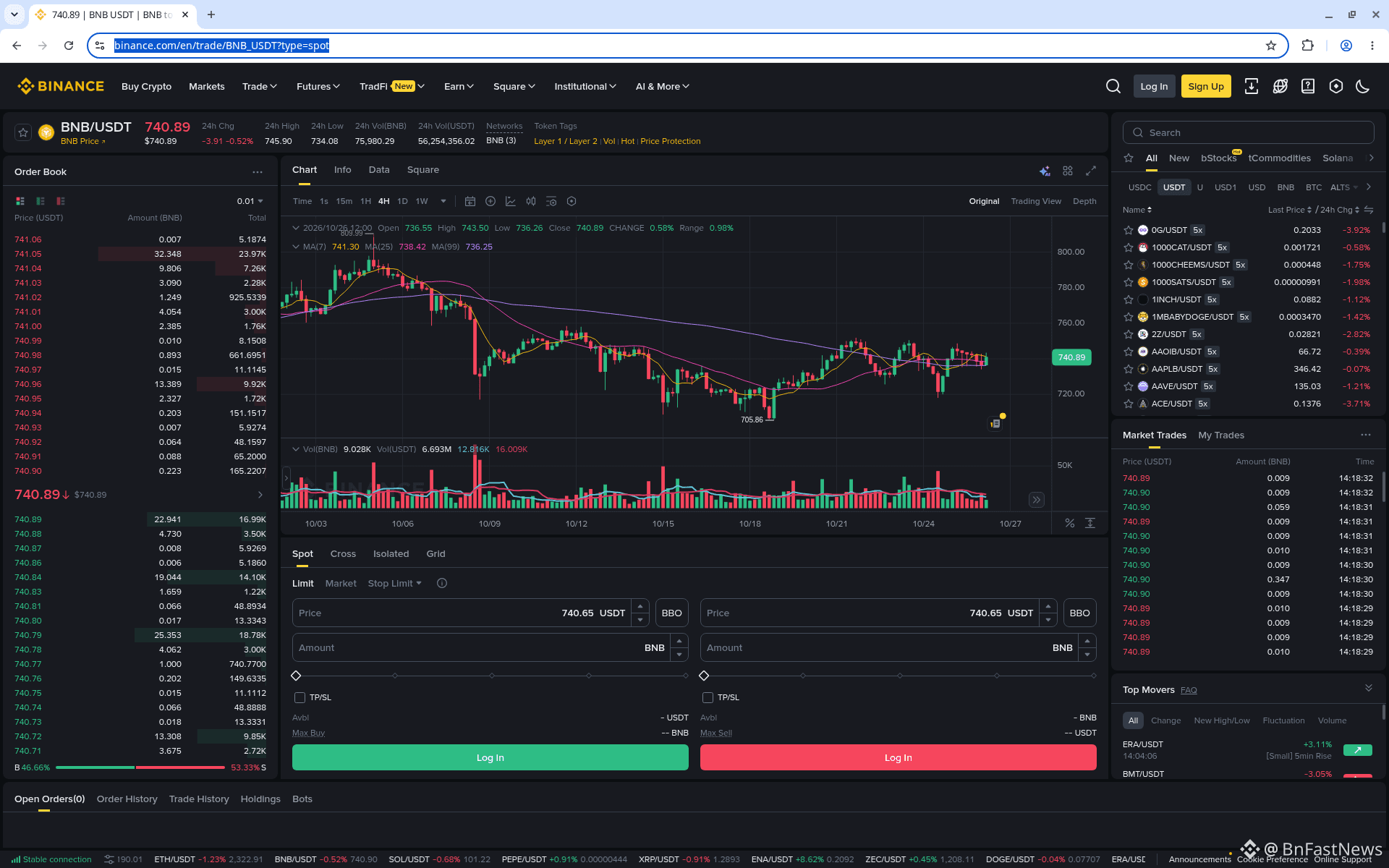
$BNB has been trading sideways around 740 today, barely moving on this news.
Have you claimed one? What name did you pick—do you really plan to have an Agent work for you, or are you just reserving a name to see what comes next?
#MyAgentID #BinanceWallet
1
4.1k
·
--
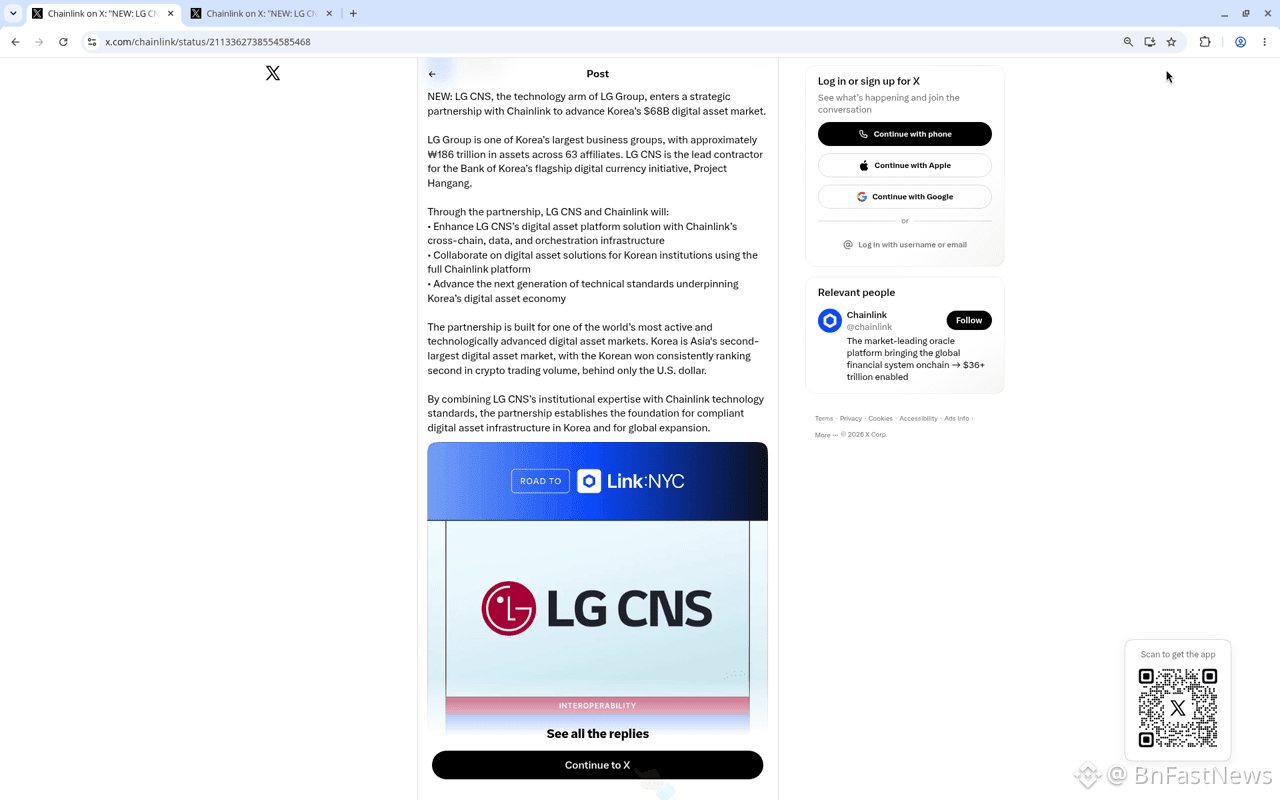
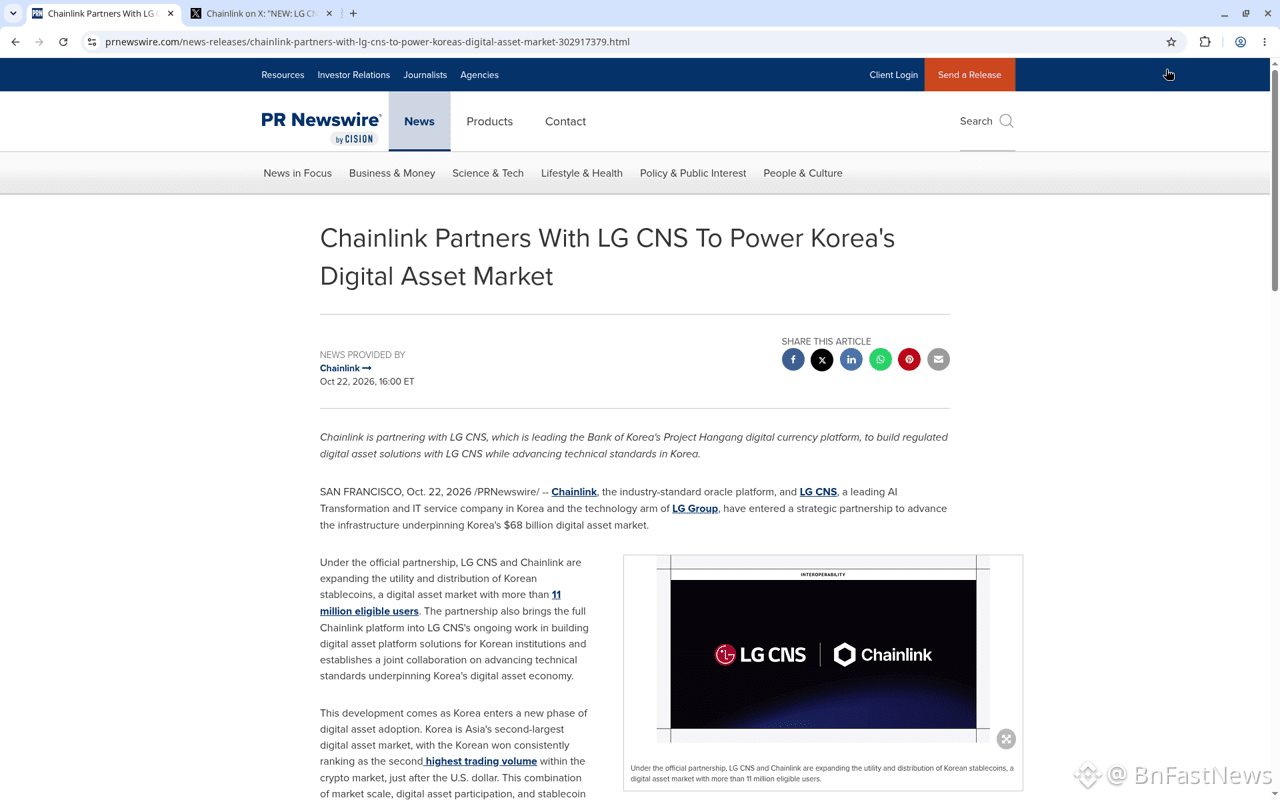
Chainlink’s official account just posted a pretty substantial announcement: LG CNS—the LG Group’s technology arm and the lead contractor for South Korea’s central bank digital currency project, “Hangang”—has signed a strategic partnership with Chainlink, targeting South Korea’s roughly $68 billion digital asset market.
The announcement clearly lays out three things: integrating cross-chain capabilities, data, and orchestration into LG CNS’s institutional platform; jointly promoting the distribution and use of a won stablecoin (with a potential user base of around 11 million, according to the announcement); and helping local institutions connect tokenized securities with traditional systems. Phase one of Hangang already covers seven banks and around 80,000 customers, so this isn’t just an empty press release.
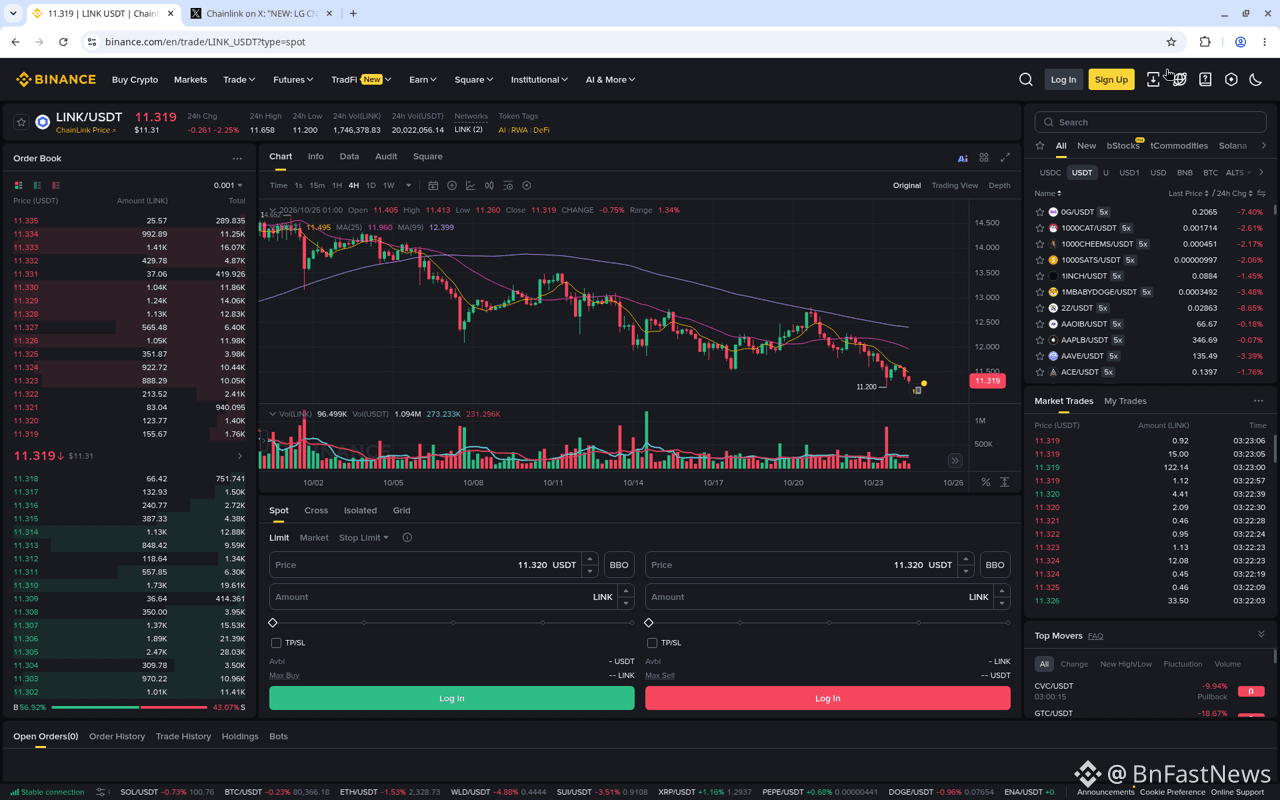
The market, though, seems pretty unfazed. $LINK is still hovering just above eleven, and Korean media are still following the story today. With the institutional narrative becoming real but spot prices barely reacting, I’m more interested in seeing which bank or won stablecoin actually gets connected next.
What do you think: with this kind of partnership between a major conglomerate and a central bank project contractor, will stablecoin payments be the first to come online, or will tokenized securities take off first?
$LINK #Chainlink #KoreanWonStablecoin
98
·
--
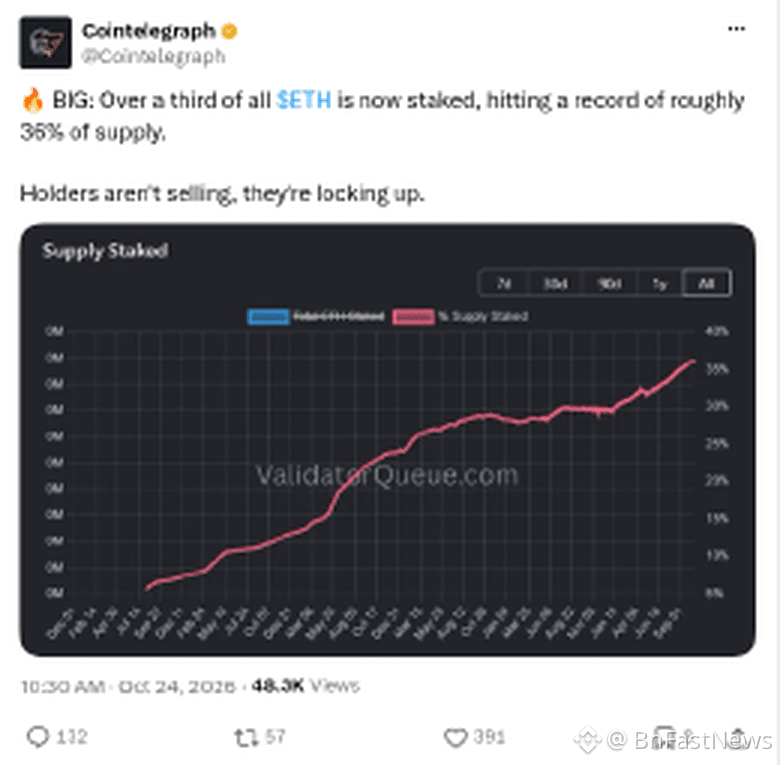
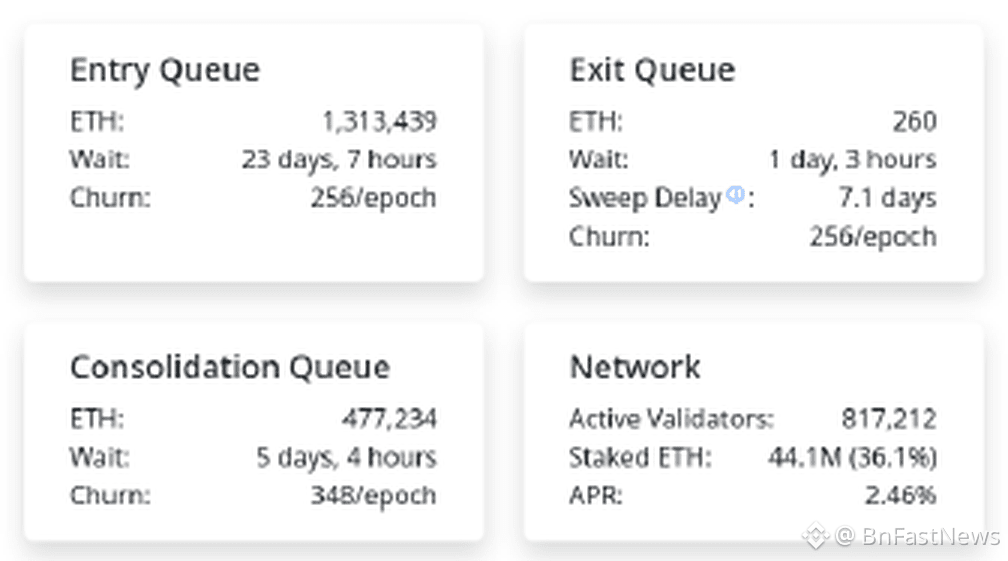
Ethereum staking hit another record yesterday: validatorqueue shows 44.1 million ETH staked, or 36.1% of the total supply—roughly one out of every three coins is locked up. That Cointelegraph post sparked more than a hundred replies.
What I’m more interested in is the length of the two queues. There are 1.31 million ETH waiting to enter, with a wait of more than 23 days; on the exit side, there are only 260 ETH, and it takes just over a day to get out. Anyone willing to wait three weeks for a 2.46% annual yield probably isn’t planning to sell anytime soon.
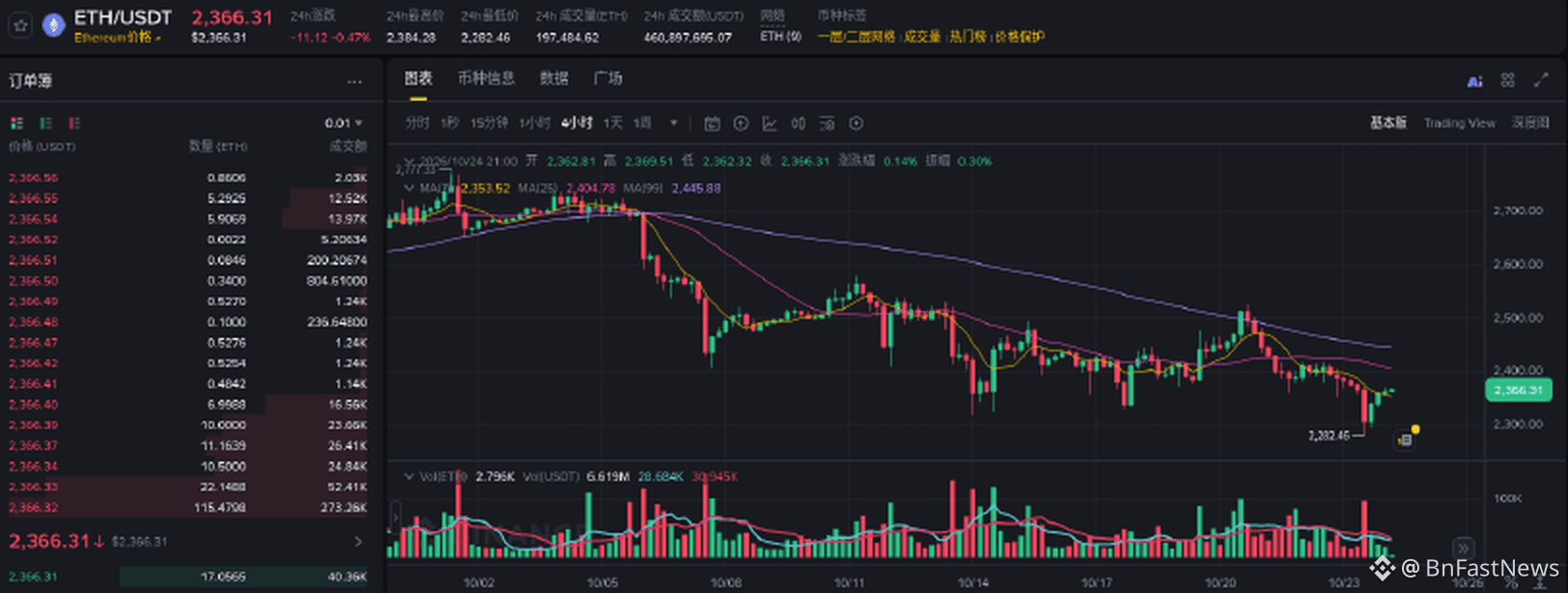
But the price hasn’t really responded: $ETH is still hovering around 2,366, after briefly dipping to 2,282 on the 4-hour chart two days ago. Staking reduces the amount of ETH available to sell, but whether buyers show up is another matter. I’ll be watching to see whether the 1.31 million ETH entry queue keeps growing or starts to shrink—that may tell us more about the attitude of large holders than the 36% figure.
Are you planning to stake the Ethereum you hold and join the 23-day queue? Or would you rather keep it liquid and ready to move?
#以太坊质押 #Ethereum
1
273
·
--
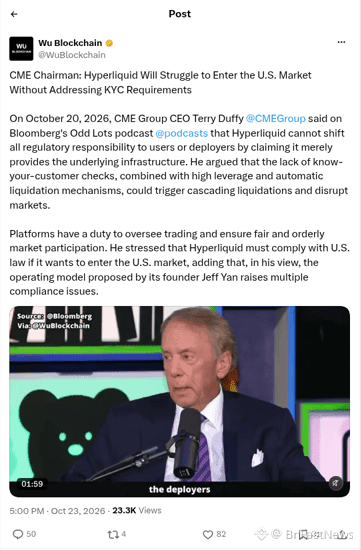
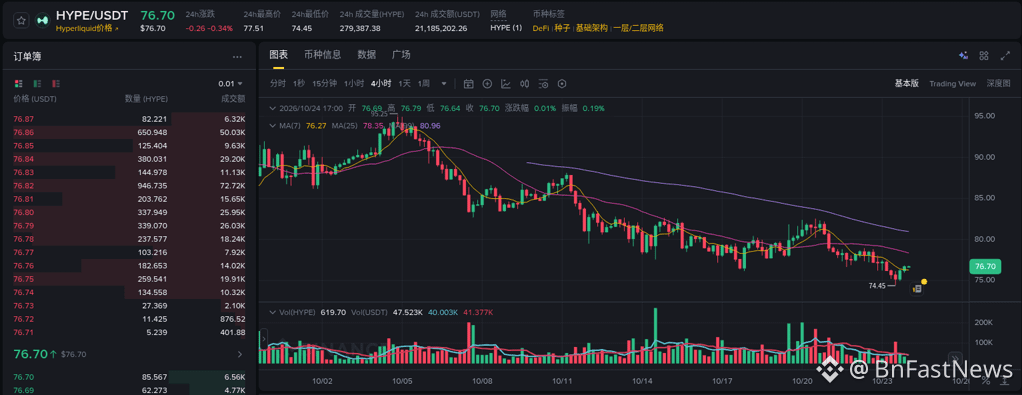
Over the weekend, I came across an interesting war of words from afar: CME Group CEO Terry Duffy versus Hyperliquid founder Jeff Yan.
Duffy appeared on Bloomberg’s Odd Lots podcast on October 20 and didn’t mince words: if Hyperliquid wants to enter the U.S., it shouldn’t dodge responsibility by saying, “We’re just the underlying infrastructure.” Without KYC, combined with high leverage and automatic liquidations, he’s worried that one incident could trigger a cascade of liquidations.
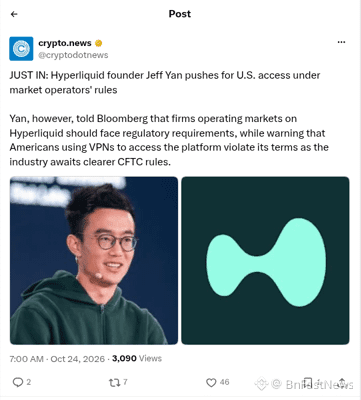
Jeff Yan told Bloomberg that the companies opening markets on Hyperliquid are the ones that should actually be regulated. He also made clear that U.S. users accessing the platform via VPN are violating its terms of service. Everyone is now waiting for the CFTC to clarify the rules for on-chain derivatives.
My take is that this is really a dispute over “who’s responsible for compliance.” If Yan’s approach is accepted, licensed firms might set up markets on Hyperliquid and handle KYC themselves, while the chain remains open. If regulators side more with Duffy, the whole model will have to change. $HYPE has been hovering around 76 these past few days, and the market doesn’t seem to be taking this issue seriously yet.
Where do you think U.S. regulators will ultimately come down? Can on-chain exchanges keep acting as mere “pipes” indefinitely?
#Hyperliquid #OnChainDerivatives
1
2
1.7k
Log in to explore more content
Join global crypto users on Binance Square
⚡️ Get latest and useful information about crypto.
💬 Trusted by the world’s largest crypto exchange.
👍 Discover real insights from verified creators.
Email / Phone number
Trending Topics
BinanceSAFUFundTransferCompleted7499BTC
18,433 views
515 Discussing
Binance Says SAFU Fund Transfer Completed, Covering 7,499 BTC
Binance News
·21 Likes
·7.3k views
BinanceRecovery90% of stolen assets
79,652 views
140 Discussing
YiHe:ProofOfReserves:10TokensAt100%Backing
98,336 views
594 Discussing