
0xMohamed 1
535 Posts

0xMohamed 1
Report
Block User
Web3 Community Manager | Content Creator | Crypto Project Ambassador linktr.ee/0xmohamed
0 Following
30 Followers
60 Liked
Posts
·
--
See translation
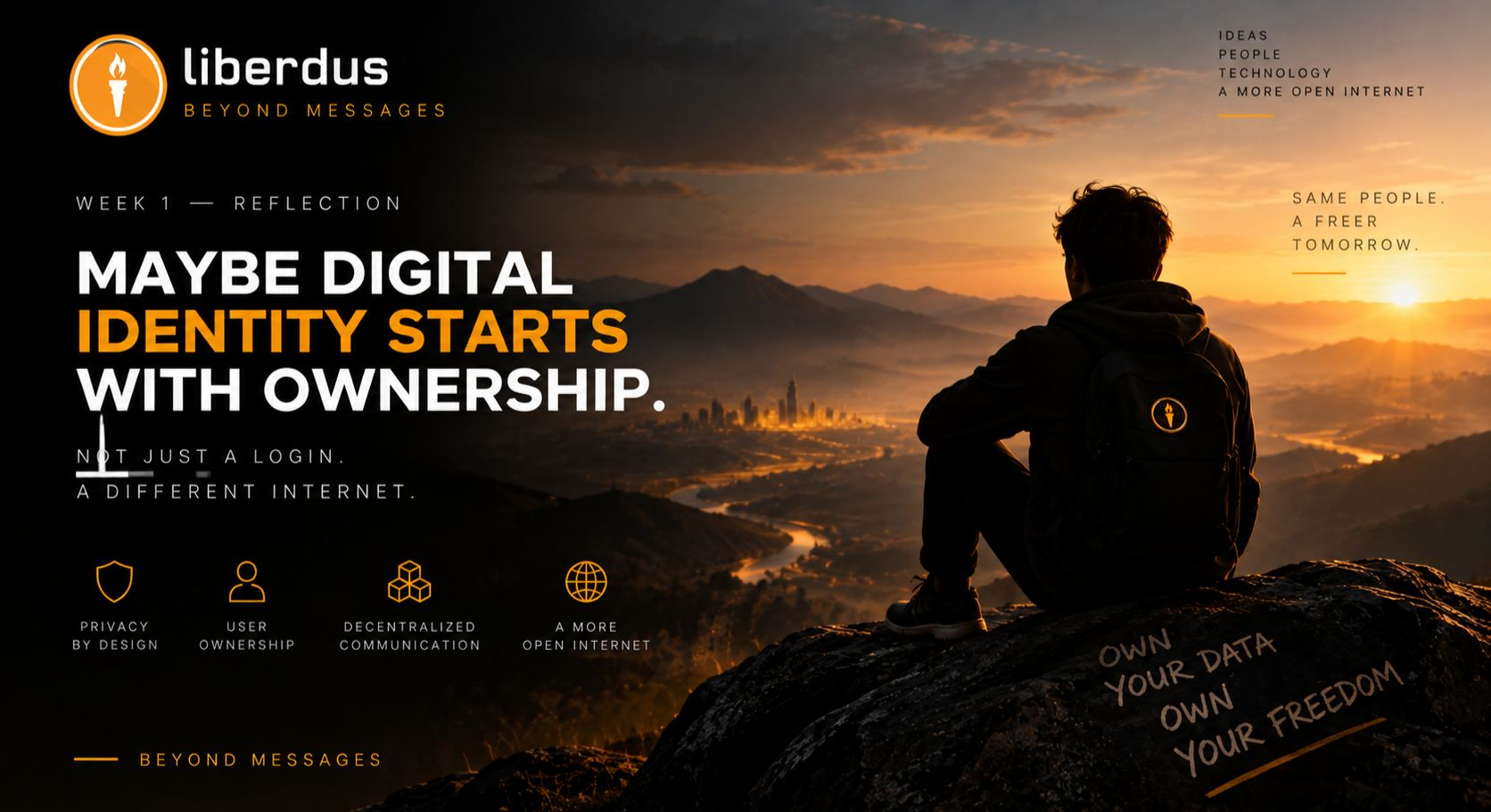
The more I learn about digital identity, the less I think it should be about identification. We’ve built the internet around usernames, emails, phone numbers and accounts. But we rarely stop to ask who actually controls the identity behind all of this? That question is becoming more important as Web3 evolves. Maybe digital ownership isn't only about owning assets. Maybe it starts with owning how you exist online. #Liberdus @Liberdus #BTC $BTC
The more I learn about digital identity, the less I think it should be about identification. We’ve built the internet around usernames, emails, phone numbers and accounts. But we rarely stop to ask who actually controls the identity behind all of this? That question is becoming more important as Web3 evolves. Maybe digital ownership isn't only about owning assets. Maybe it starts with owning how you exist online. #Liberdus @Liberdus #BTC $BTC
38
·
--
See translation
Standard Chartered sees 70x upside for Arbitrum’s $ARB by 2030. The bank initiated coverage with a $10 target, citing tokenized assets and Robinhood Chain growth as key catalysts, with Arbitrum’s monthly revenue projected to reach about $5 million in September. #ARB
Standard Chartered sees 70x upside for Arbitrum’s $ARB by 2030. The bank initiated coverage with a $10 target, citing tokenized assets and Robinhood Chain growth as key catalysts, with Arbitrum’s monthly revenue projected to reach about $5 million in September. #ARB
46
·
--
See translation
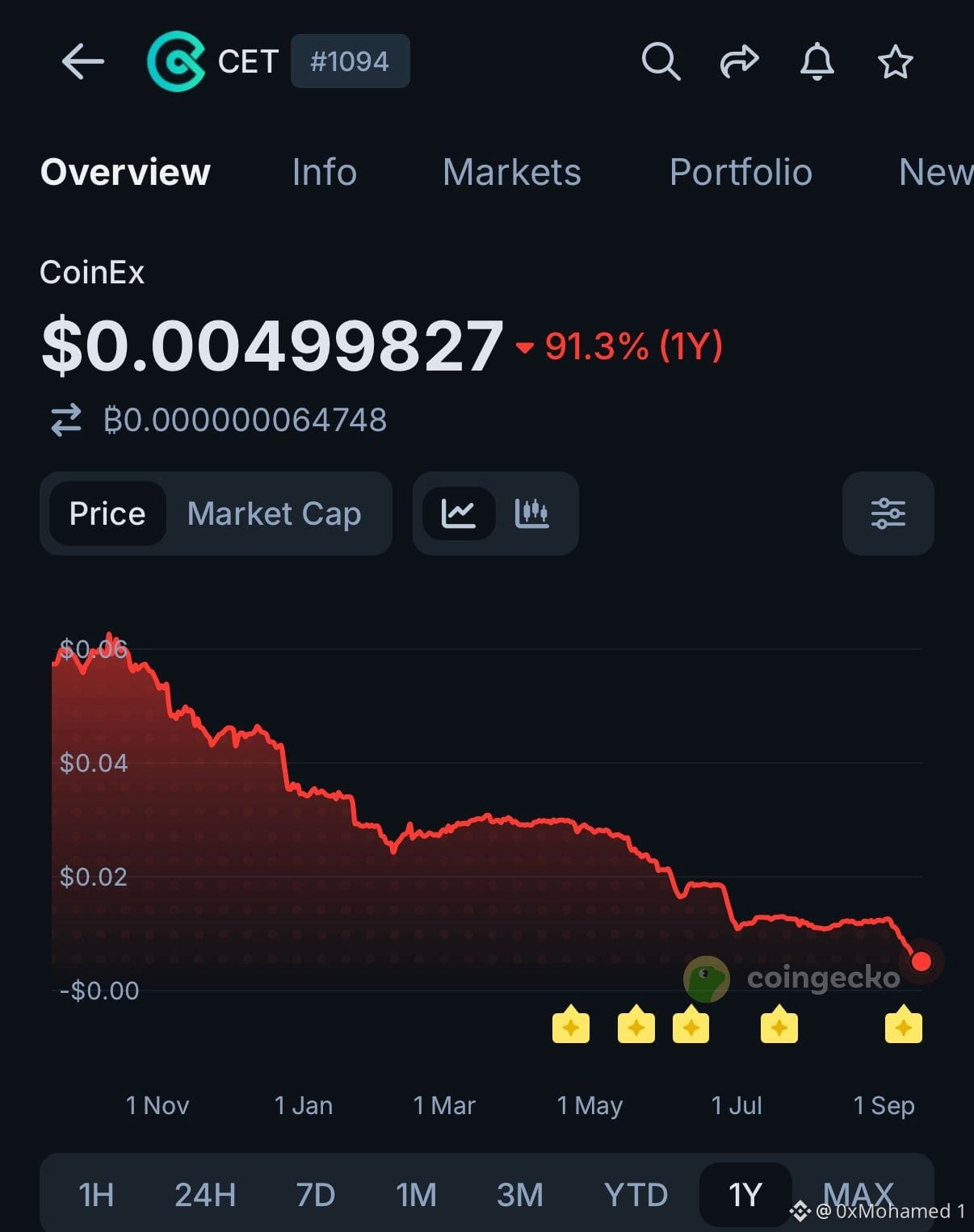
Crypto exchange CoinEx to shut down after 9 years, citing low liquidity and rising compliance costs. Its native token, $CET , is down 91.3% over the past year. #CET
Crypto exchange CoinEx to shut down after 9 years, citing low liquidity and rising compliance costs. Its native token, $CET , is down 91.3% over the past year. #CET
62
·
--
See translation
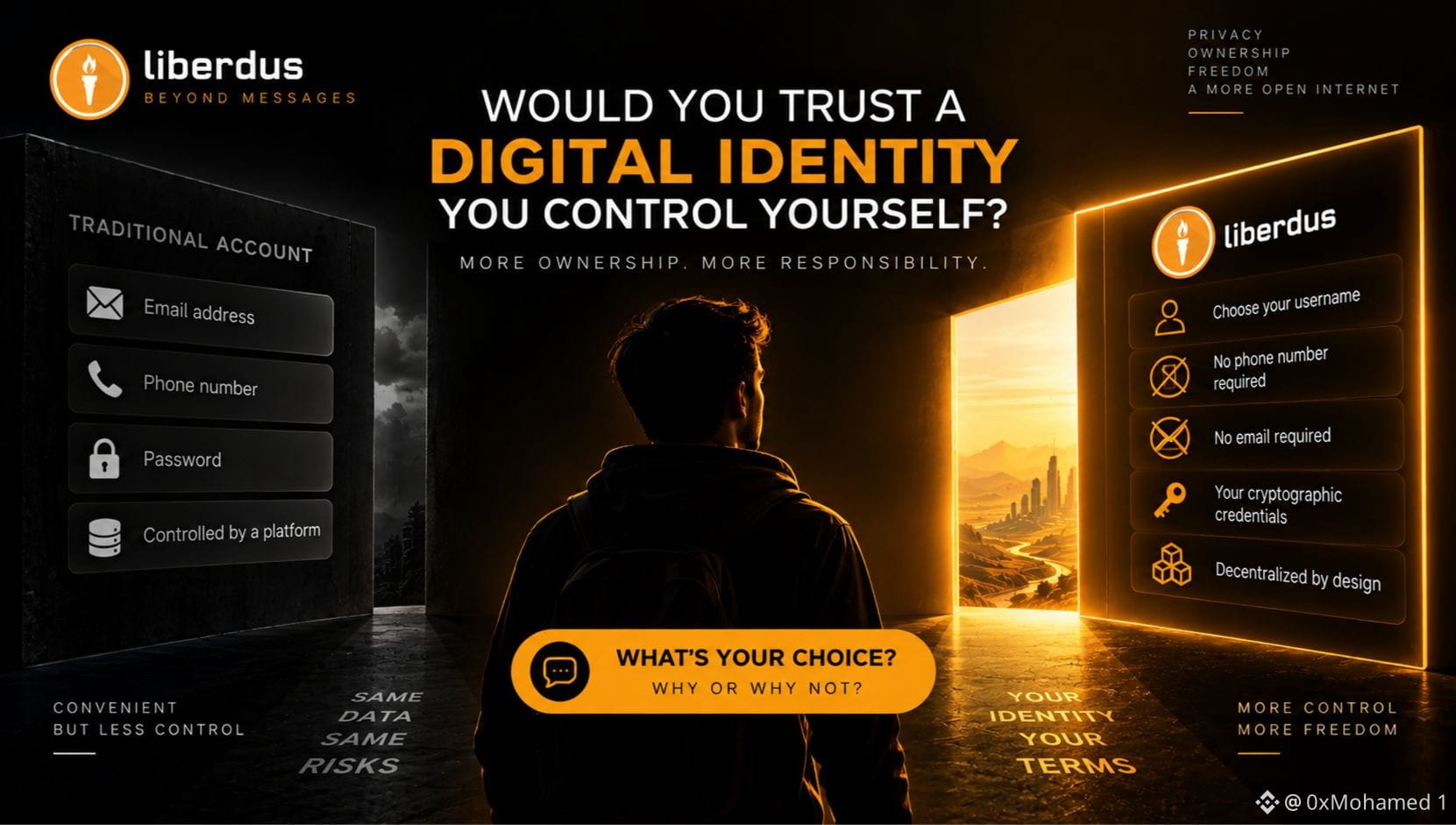
Would you trust a digital identity you control yourself? No phone number, no email required, no central account recovery. Instead, your account is tied to cryptographic credentials you control. More ownership sounds great. But it also means more responsibility. Would you choose that model over the traditional email + password system? Why or why not? #Liberdus @Liberdus #XRP $XRP
Would you trust a digital identity you control yourself? No phone number, no email required, no central account recovery. Instead, your account is tied to cryptographic credentials you control. More ownership sounds great. But it also means more responsibility. Would you choose that model over the traditional email + password system? Why or why not? #Liberdus @Liberdus #XRP $XRP
46
·
--
See translation
BitMine Immersion purchases another 27,180 Ethereum, now holds over 5.96M $ETH . #ETH
BitMine Immersion purchases another 27,180 Ethereum, now holds over 5.96M $ETH . #ETH
55
·
--
See translation
Chainlink is rallying hard:
$LINK closed at $11.74, up 35.4% over 30 days.
Meanwhile, $ETH is up 36.9% over the same period and sits at its highest since January 2026.
@Chainlink #LINK #ETH @Ethereum
Chainlink is rallying hard:
$LINK closed at $11.74, up 35.4% over 30 days.
Meanwhile, $ETH is up 36.9% over the same period and sits at its highest since January 2026.
@Chainlink #LINK #ETH @Ethereum
$LINK closed at $11.74, up 35.4% over 30 days.
Meanwhile, $ETH is up 36.9% over the same period and sits at its highest since January 2026.
@Chainlink #LINK #ETH @Ethereum
151
·
--
See translation
Multicoin Capital says Hyperliquid is one of its largest positions after reassessing $HYPE
. Multicoin’s Spencer Applebaum said Hyperliquid’s perpetual markets reaching centralized-exchange-level liquidity, alongside builder codes and HIP-3, showed the protocol had found genuine product-market fit. #HYPE
Multicoin Capital says Hyperliquid is one of its largest positions after reassessing $HYPE
. Multicoin’s Spencer Applebaum said Hyperliquid’s perpetual markets reaching centralized-exchange-level liquidity, alongside builder codes and HIP-3, showed the protocol had found genuine product-market fit. #HYPE
. Multicoin’s Spencer Applebaum said Hyperliquid’s perpetual markets reaching centralized-exchange-level liquidity, alongside builder codes and HIP-3, showed the protocol had found genuine product-market fit. #HYPE
37
·
--
See translation
$250,000,000
$USDC
just minted at USDC Treasury. #USDC
$250,000,000
$USDC
just minted at USDC Treasury. #USDC
$USDC
just minted at USDC Treasury. #USDC
39
·
--
See translation
Arthur Hayes: nations will stick with gold Arthur Hayes told Bitcoin Magazine that sovereign nations are unlikely to use Bitcoin as a reserve asset, arguing they will continue to rely on gold instead. They don't know how to use computers. Hayes’ view highlights a key hurdle for Bitcoin’s adoption at the sovereign level: infrastructure, familiarity, and operational complexity. Gold remains the asset governments understand best, while Bitcoin requires a very different technological framework. $BTC #BTC
Arthur Hayes: nations will stick with gold Arthur Hayes told Bitcoin Magazine that sovereign nations are unlikely to use Bitcoin as a reserve asset, arguing they will continue to rely on gold instead. They don't know how to use computers. Hayes’ view highlights a key hurdle for Bitcoin’s adoption at the sovereign level: infrastructure, familiarity, and operational complexity. Gold remains the asset governments understand best, while Bitcoin requires a very different technological framework. $BTC #BTC

32
·
--
See translation
Solana recorded more than 263,000 new token launches on Sept. 9 its highest-ever daily total, according to Solscan data. #SOL $SOL
Solana recorded more than 263,000 new token launches on Sept. 9 its highest-ever daily total, according to Solscan data. #SOL $SOL

27
·
--
See translation
How to open a Liberdus account on the app. 1/ What if creating a messaging account didn't require your phone number or email? Let's actually look at how Liberdus handles it. No theory, just the process. 2/ Open Liberdus, from the home screen, select: create Account that's where the process begins. 3/ Choose your username, you don't need to provide a phone number or email during account creation. Your username becomes the identifier you use within the platform. 4/ Then comes the interesting part. Liberdus generates your account keys. The account is cryptographically secured, with quantum-resistant cryptography used by the platform. 5/ Once the keys are generated, your account appears on the dashboard. No traditional signup flow built around: enter your phone number or verify your email. Instead, the account is built around cryptographic credentials. 6/ And there's another useful detail: You can create multiple Liberdus accounts on the same device. Each account is independent and has its own private key and wallet address. 7/ So the interesting part isn't simply: Liberdus doesn't ask for your phone number. It's the architecture behind that choice. Your account doesn't have to start with a real-world identifier. It can start with a cryptographic identity. 8/ That's a very different way of thinking about digital accounts. And it raises a bigger question, #liberdus #Privacy $ONDO
How to open a Liberdus account on the app. 1/ What if creating a messaging account didn't require your phone number or email? Let's actually look at how Liberdus handles it. No theory, just the process. 2/ Open Liberdus, from the home screen, select: create Account that's where the process begins. 3/ Choose your username, you don't need to provide a phone number or email during account creation. Your username becomes the identifier you use within the platform. 4/ Then comes the interesting part. Liberdus generates your account keys. The account is cryptographically secured, with quantum-resistant cryptography used by the platform. 5/ Once the keys are generated, your account appears on the dashboard. No traditional signup flow built around: enter your phone number or verify your email. Instead, the account is built around cryptographic credentials. 6/ And there's another useful detail: You can create multiple Liberdus accounts on the same device. Each account is independent and has its own private key and wallet address. 7/ So the interesting part isn't simply: Liberdus doesn't ask for your phone number. It's the architecture behind that choice. Your account doesn't have to start with a real-world identifier. It can start with a cryptographic identity. 8/ That's a very different way of thinking about digital accounts. And it raises a bigger question, #liberdus #Privacy $ONDO


42
·
--
See translation
Chainlink added 91,100 $LINK worth $1.06 million, to its strategic reserve, bringing the total to 5.86 million $LINK valued at $67.24 million. #LINK
Chainlink added 91,100 $LINK worth $1.06 million, to its strategic reserve, bringing the total to 5.86 million $LINK valued at $67.24 million. #LINK

44
·
--
See translation
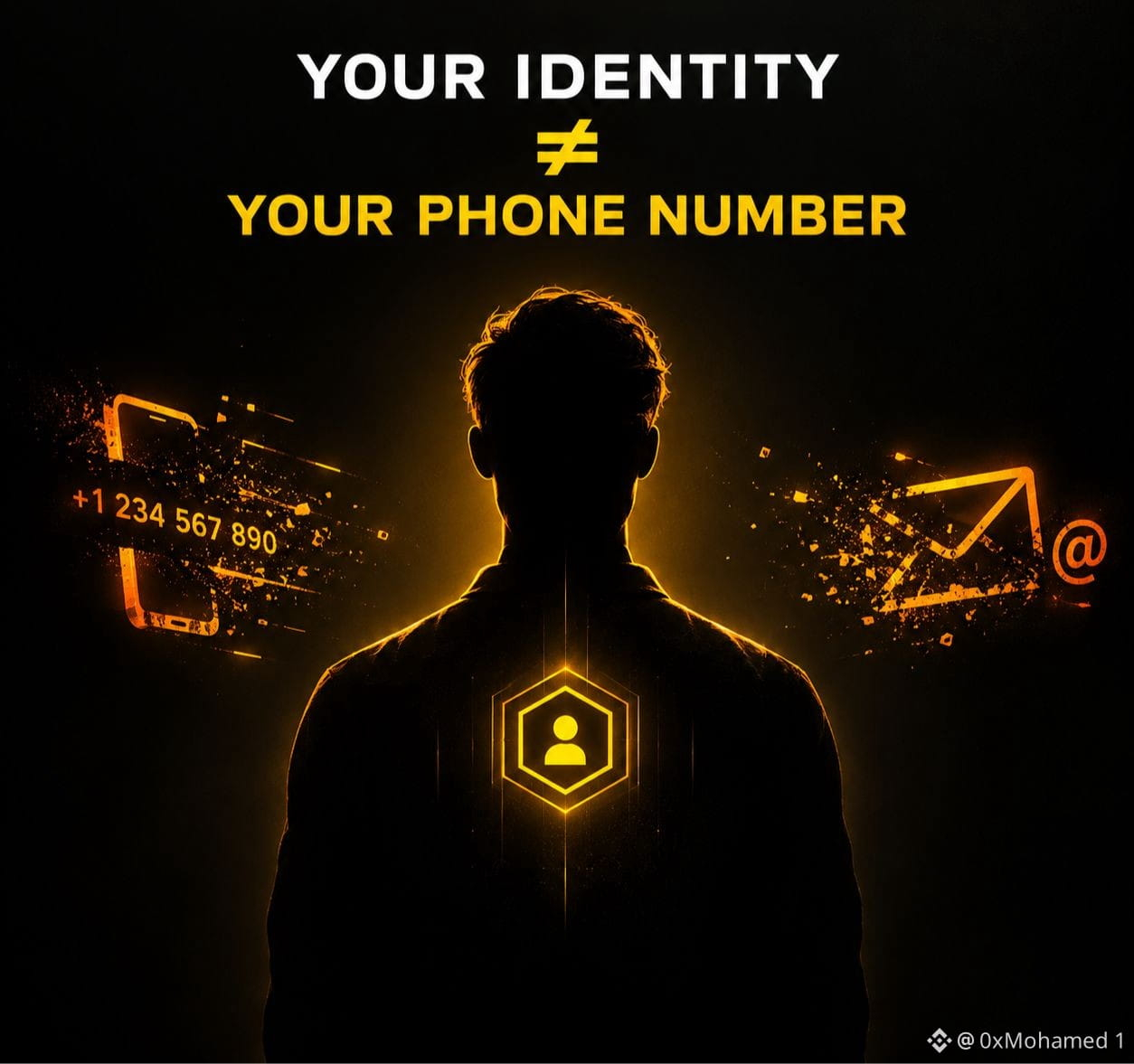
Understand that your phone number isn't your identity. Your phone number isn't your identity. Yet most digital services treat it like one. You give them a number, they give you an account. But there's a deeper question: Who actually controls that identity? Think about what happens when you create a typical online account. Email Phone number Password Sometimes even government-issued ID Your identity becomes tied to identifiers controlled outside the platform. That's convenient, but convenience and ownership aren't the same thing. If your account depends on an identifier you don't control, losing access to that identifier can become a problem. Web3 approaches identity differently. Instead of making an email address or phone number the foundation of your account, you can use cryptographic keys and wallet-based identities. The important shift is identity → something you can control cryptographically. Liberdus takes this approach for its accounts. According to its current documentation, you can create an account by choosing a username without providing a phone number or email. The username is mapped to your Liberdus wallet address. That doesn't magically solve digital identity. It simply changes the architecture. Instead of asking: Which phone number belongs to this user? the system can ask: Which cryptographic account controls this identity? That's a very different model. And that's where things get interesting. Because digital identity isn't just about logging in. It's about control, portability, privacy and ownership. The real question isn't can I create an account? It's xhat actually belongs to me when I create one? #Liberdus @Liberdus #PI $PI
Understand that your phone number isn't your identity. Your phone number isn't your identity. Yet most digital services treat it like one. You give them a number, they give you an account. But there's a deeper question: Who actually controls that identity? Think about what happens when you create a typical online account. Email Phone number Password Sometimes even government-issued ID Your identity becomes tied to identifiers controlled outside the platform. That's convenient, but convenience and ownership aren't the same thing. If your account depends on an identifier you don't control, losing access to that identifier can become a problem. Web3 approaches identity differently. Instead of making an email address or phone number the foundation of your account, you can use cryptographic keys and wallet-based identities. The important shift is identity → something you can control cryptographically. Liberdus takes this approach for its accounts. According to its current documentation, you can create an account by choosing a username without providing a phone number or email. The username is mapped to your Liberdus wallet address. That doesn't magically solve digital identity. It simply changes the architecture. Instead of asking: Which phone number belongs to this user? the system can ask: Which cryptographic account controls this identity? That's a very different model. And that's where things get interesting. Because digital identity isn't just about logging in. It's about control, portability, privacy and ownership. The real question isn't can I create an account? It's xhat actually belongs to me when I create one? #Liberdus @Liberdus #PI $PI
50
·
--
See translation
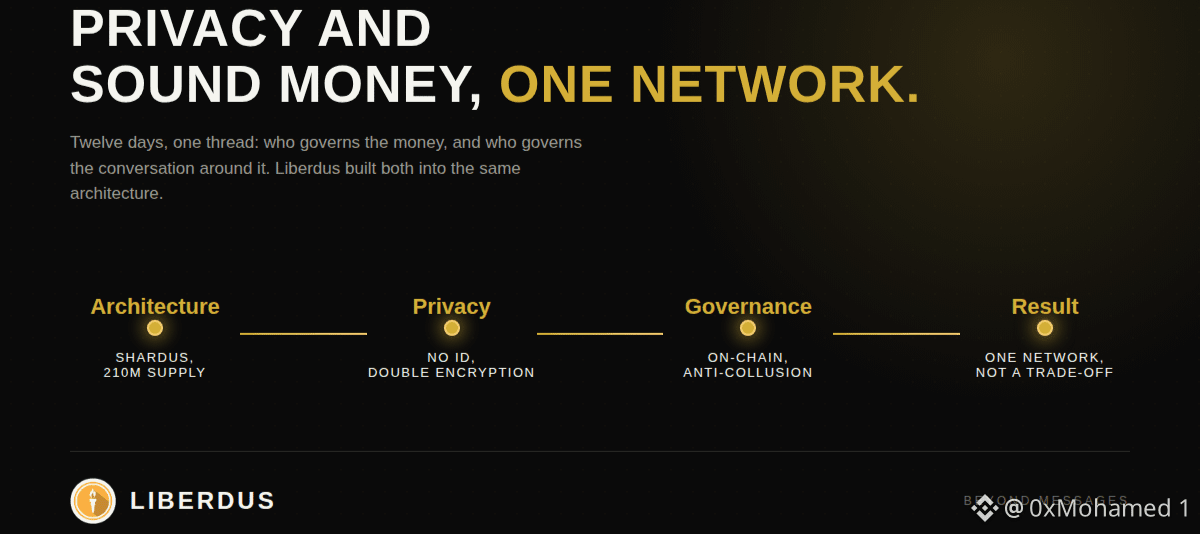
What Twelve Days Add Up To Twelve articles, one thread running through all of them: every design choice in Liberdus traces back to a single founding question from Day 14: who governs the money, and who governs the conversation around it. The architecture answers the first half. Shardus sharding lets the network scale without concentrating power in fewer, larger validators. A fixed 210 million supply, distributed only to the people building and securing the network, keeps the "sound money" half of the name more than a marketing line. On-chain governance, with proposal margins that scale against collusion, puts changes to those rules in the hands of the network rather than a company board. The privacy layer answers the second half. Accounts with no phone number, no email, and no persistent identifier remove the single thread that ties most digital lives to a real name. Double encryption, classical and post-quantum, protects what gets said against both today's attackers and tomorrow's. And the toll system turns spam from a filtering problem into a pricing problem, charging unknown senders instead of asking recipients to tolerate them for free. None of these pieces work in isolation, which is the actual point of building them together. A messenger with strong encryption but centralized identity still knows who's talking to whom. A payment network with sound tokenomics but no privacy layer still exposes every transaction to the same surveillance crypto was supposed to escape. Liberdus's bet is that privacy and sound money solve the same underlying problem, so it built both into one network instead of choosing one. That's the whole arc, from the name's Latin roots to the chains LIB now trades on. What Liberdus does next isn't something this series can confirm in advance. What it's built so far is on the record, and now, after twelve days, so is the reasoning behind it. #Liberdus #XRP $XRP
What Twelve Days Add Up To Twelve articles, one thread running through all of them: every design choice in Liberdus traces back to a single founding question from Day 14: who governs the money, and who governs the conversation around it. The architecture answers the first half. Shardus sharding lets the network scale without concentrating power in fewer, larger validators. A fixed 210 million supply, distributed only to the people building and securing the network, keeps the "sound money" half of the name more than a marketing line. On-chain governance, with proposal margins that scale against collusion, puts changes to those rules in the hands of the network rather than a company board. The privacy layer answers the second half. Accounts with no phone number, no email, and no persistent identifier remove the single thread that ties most digital lives to a real name. Double encryption, classical and post-quantum, protects what gets said against both today's attackers and tomorrow's. And the toll system turns spam from a filtering problem into a pricing problem, charging unknown senders instead of asking recipients to tolerate them for free. None of these pieces work in isolation, which is the actual point of building them together. A messenger with strong encryption but centralized identity still knows who's talking to whom. A payment network with sound tokenomics but no privacy layer still exposes every transaction to the same surveillance crypto was supposed to escape. Liberdus's bet is that privacy and sound money solve the same underlying problem, so it built both into one network instead of choosing one. That's the whole arc, from the name's Latin roots to the chains LIB now trades on. What Liberdus does next isn't something this series can confirm in advance. What it's built so far is on the record, and now, after twelve days, so is the reasoning behind it. #Liberdus #XRP $XRP
56
·
--
See translation
Tether and Fasanara Capital launch a $400M private credit fund, targeting $3B in capital for stablecoin-enabled lending. #USDT $USDT
Tether and Fasanara Capital launch a $400M private credit fund, targeting $3B in capital for stablecoin-enabled lending. #USDT $USDT

47
·
--
See translation
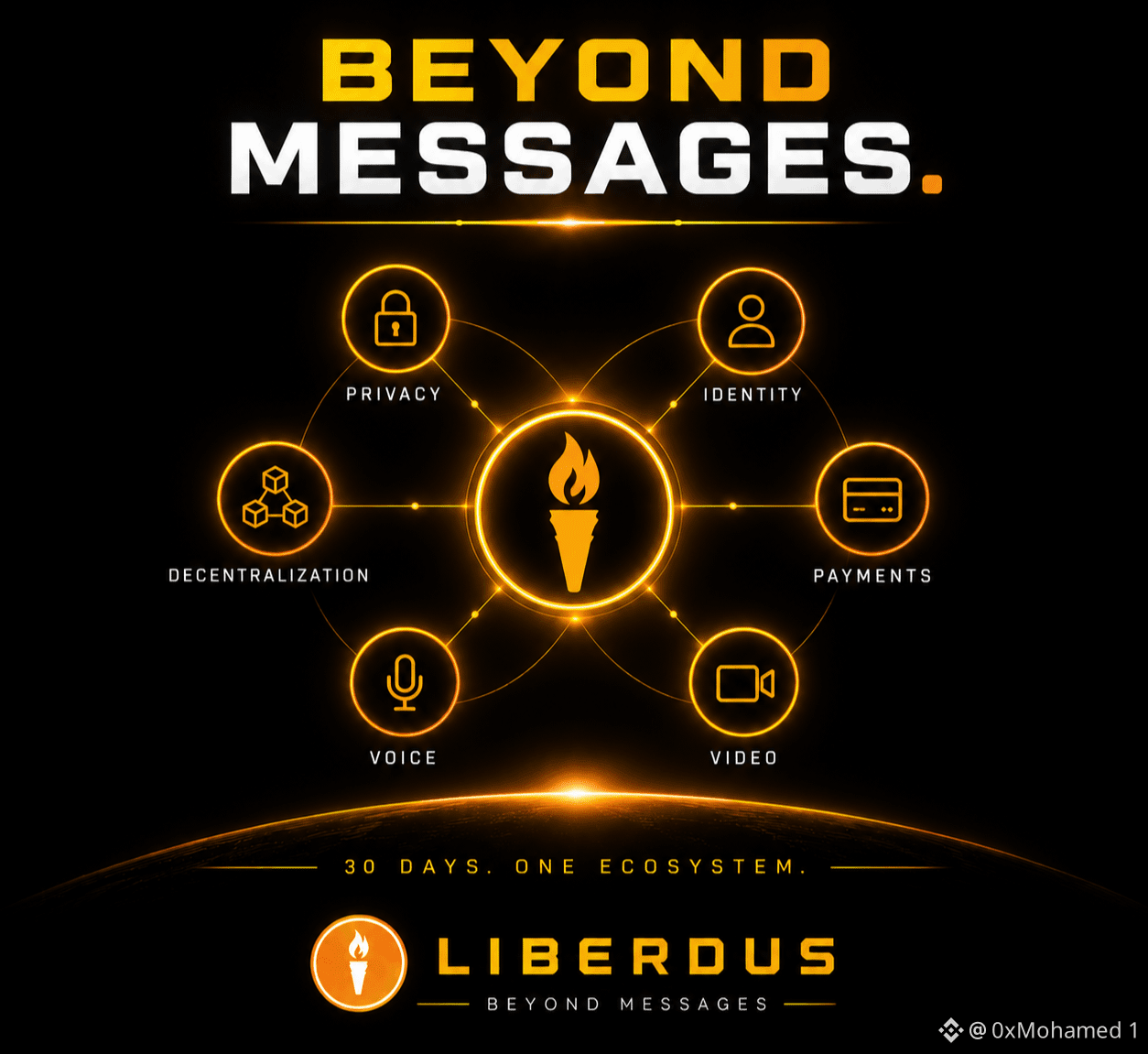
Liberdus was never just about messaging. Privacy Decentralization Payments Digital identity Voice & video Open source User participation All inside one ecosystem That's what Beyond Messages means. The future of communication shouldn't just be about sending a message. It should be about owning the way you communicate. @Liberdus #Liberdus $BNB #BNB
Liberdus was never just about messaging. Privacy Decentralization Payments Digital identity Voice & video Open source User participation All inside one ecosystem That's what Beyond Messages means. The future of communication shouldn't just be about sending a message. It should be about owning the way you communicate. @Liberdus #Liberdus $BNB #BNB
25
·
--
See translation
ZEC has gone from $40 to over $1,200 in a year That is about a 2,900% gain, and the token is up roughly 530% from its 2026 low. #zec $ZEC
ZEC has gone from $40 to over $1,200 in a year That is about a 2,900% gain, and the token is up roughly 530% from its 2026 low. #zec $ZEC
36
·
--
See translation
BitMine acquired 28,086 $ETH last week, bringing its total holdings to 5.93M $ETH #ETH
BitMine acquired 28,086 $ETH last week, bringing its total holdings to 5.93M $ETH #ETH

1
118
·
--
See translation
The COLDCARD wallet exploiter has moved 45% of the stolen funds to Ethereum Galaxy Research linked the transfers to the third wave of attacks. #ETH $ETH
The COLDCARD wallet exploiter has moved 45% of the stolen funds to Ethereum Galaxy Research linked the transfers to the third wave of attacks. #ETH $ETH
32
·
--
See translation
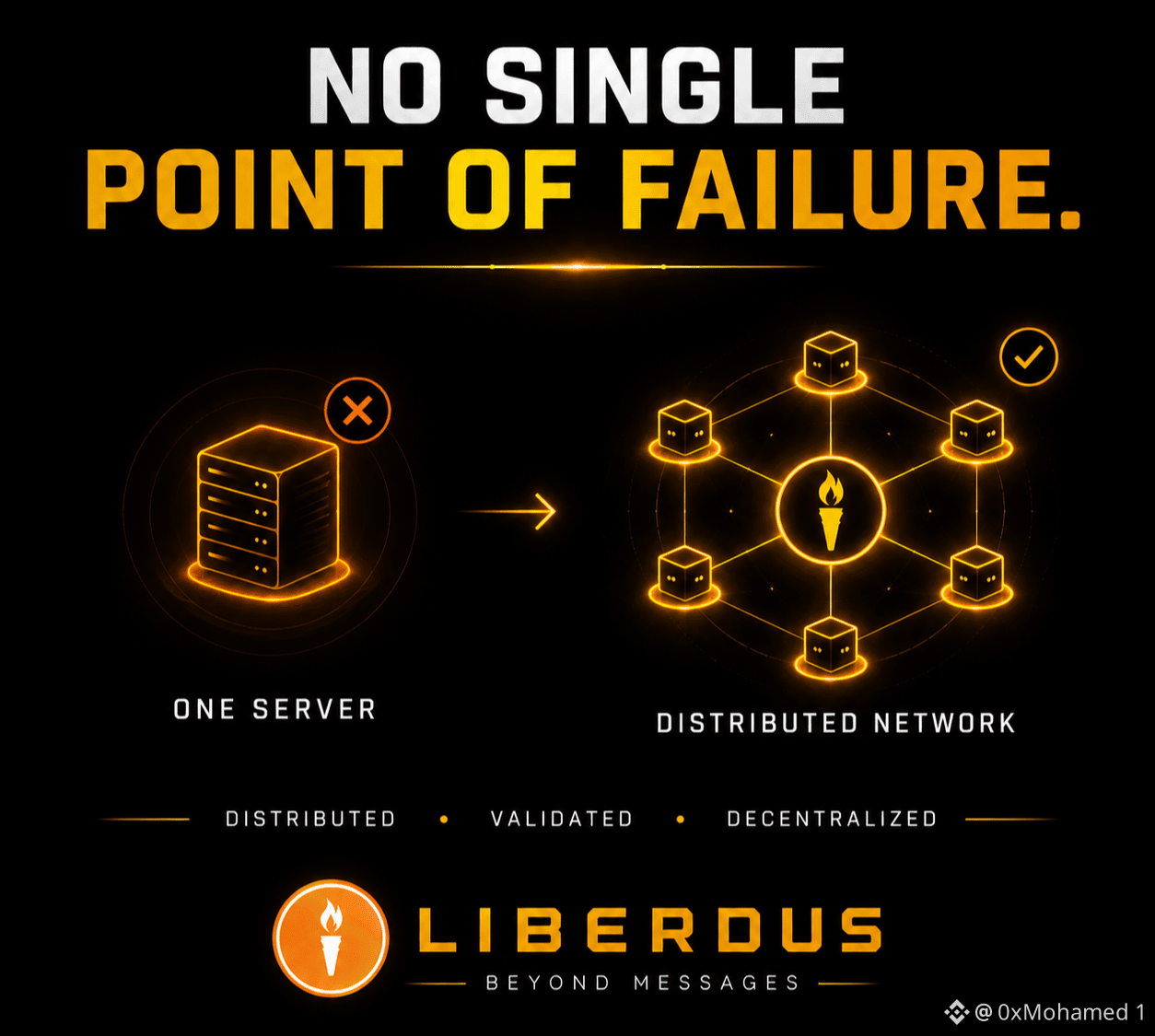
One server, one failure point. Liberdus takes a different approach. Its network runs across distributed validator nodes instead of relying on a centralized server. Nodes collectively keep the network online and participate in validation. No single server at the center just a network of participants. #Liberdus #BTC $BTC
One server, one failure point. Liberdus takes a different approach. Its network runs across distributed validator nodes instead of relying on a centralized server. Nodes collectively keep the network online and participate in validation. No single server at the center just a network of participants. #Liberdus #BTC $BTC
74
Log in to explore more content
Join global crypto users on Binance Square
⚡️ Get latest and useful information about crypto.
💬 Trusted by the world’s largest crypto exchange.
👍 Discover real insights from verified creators.
Email / Phone number
Trending Topics
FedRateWatch
1.4M views
6,438 Discussing
Share & Win Traffic Reward in our Trending Hashtag Campaign
✨Topic: FOMC September, What's The Fed's Next Move?
👉How to Join:
Publish a short post or article with hashtag #FedRateWatch
Create content based on the below angles:
- August core CPI rose 0.3% month-over-month, and the odds of a 25bp hike this week are now close to 90%. Do you anticipate a rate hike this week? Is it a one-off, or the start of a longer hiking cycle?
- If the hike lands, how does it play out for BTC, tech stocks, and gold? Bullish or bearish?
- How are you planning to trade next? Share your BTC, stocks or gold trade/holdings with our trade sharing widget.
⏰Campaign Period:
- 2026-09-15 11:00 - 2026-09-17 3:00 UTC
🎁Reward:
- Qualified posts that comply with the above guidelines and contain more than 100 words will be reviewed and may receive a random traffic boost of 500 to 3,000 views. You will receive a notification from your feed secretary if your post is selected.
- Get a chance to have your article featured on Binance Square Official
Need ideas for your post? Visit the topic page #FedRateWatch or the Square Guide on How to Post for Better Reach.
Binance Square Official
·634 Likes
·1.6M views
ZcashRises6%
33,738 views
524 Discussing
XRPSinks10%
23,249 views
348 Discussing