
Cathy姐玩游戏
2.4k Posts

Cathy姐玩游戏
Report
Block User
A builder in games since 2006 | A Web3 gamer since 2021 | 欢迎游戏项目方发测试白单给Cathy姐和我们的玩家小伙们试玩 | 2016年主要看AI游戏

原创之星
Frequent Trader
7 Years
132 Following
23.9K+ Followers
12.2K+ Liked
1 Badges
Posts
All
Quotes
Videos
Live
·
--
The Paper “AI for Games” by the National University of Singapore and Nanyang Technological UniversityOn September 16, the National University of Singapore and Nanyang Technological University published a joint paper they co-produced, titled (AI for Games).
Link to the original 120-page PDF: arxiv.org/pdf/2609.16679
This paper is packed with practical insights for independent game developers. I asked Claude to summarize all the AI large models, tools, and platform products mentioned in it that are used for game development and operations.
1. A gateway to general-purpose large models
GPT-6 Astra (OpenAI): an example from the beginning of the paper. The same model is tested in ARC-AGI-3 to explore its ability to navigate unfamiliar games. Playco also integrated it into the engine tool Playbot to create playable prototypes, showing that a single model can play multiple roles.
The Paper “AI for Games” by the National University of Singapore and Nanyang Technological University
On September 16, the National University of Singapore and Nanyang Technological University published a joint paper they co-produced, titled (AI for Games).
Link to the original 120-page PDF: arxiv.org/pdf/2609.16679
This paper is packed with practical insights for independent game developers. I asked Claude to summarize all the AI large models, tools, and platform products mentioned in it that are used for game development and operations.
1. A gateway to general-purpose large models
GPT-6 Astra (OpenAI): an example from the beginning of the paper. The same model is tested in ARC-AGI-3 to explore its ability to navigate unfamiliar games. Playco also integrated it into the engine tool Playbot to create playable prototypes, showing that a single model can play multiple roles.
Link to the original 120-page PDF: arxiv.org/pdf/2609.16679
This paper is packed with practical insights for independent game developers. I asked Claude to summarize all the AI large models, tools, and platform products mentioned in it that are used for game development and operations.
1. A gateway to general-purpose large models
GPT-6 Astra (OpenAI): an example from the beginning of the paper. The same model is tested in ARC-AGI-3 to explore its ability to navigate unfamiliar games. Playco also integrated it into the engine tool Playbot to create playable prototypes, showing that a single model can play multiple roles.
1
943
·
--
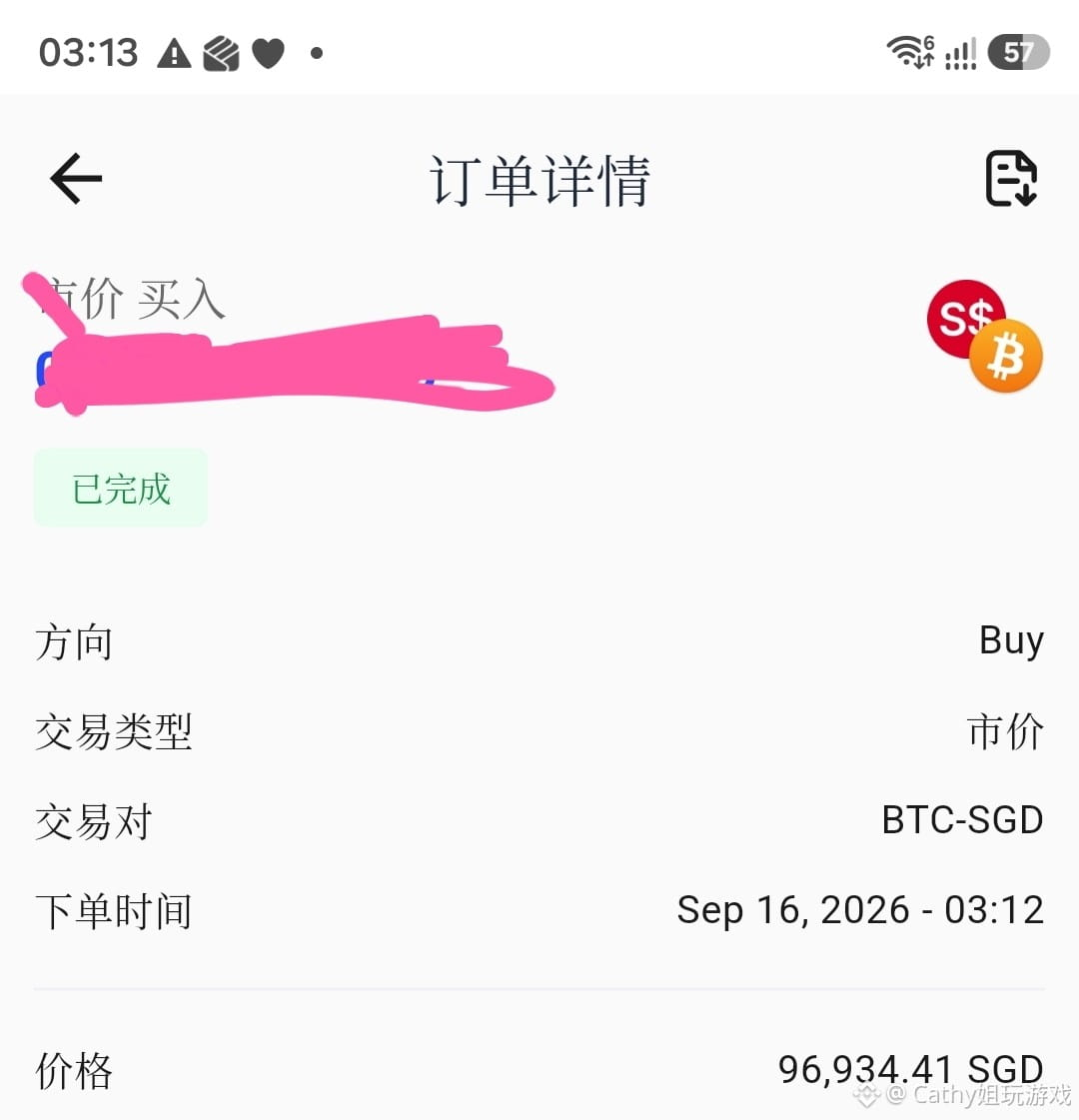
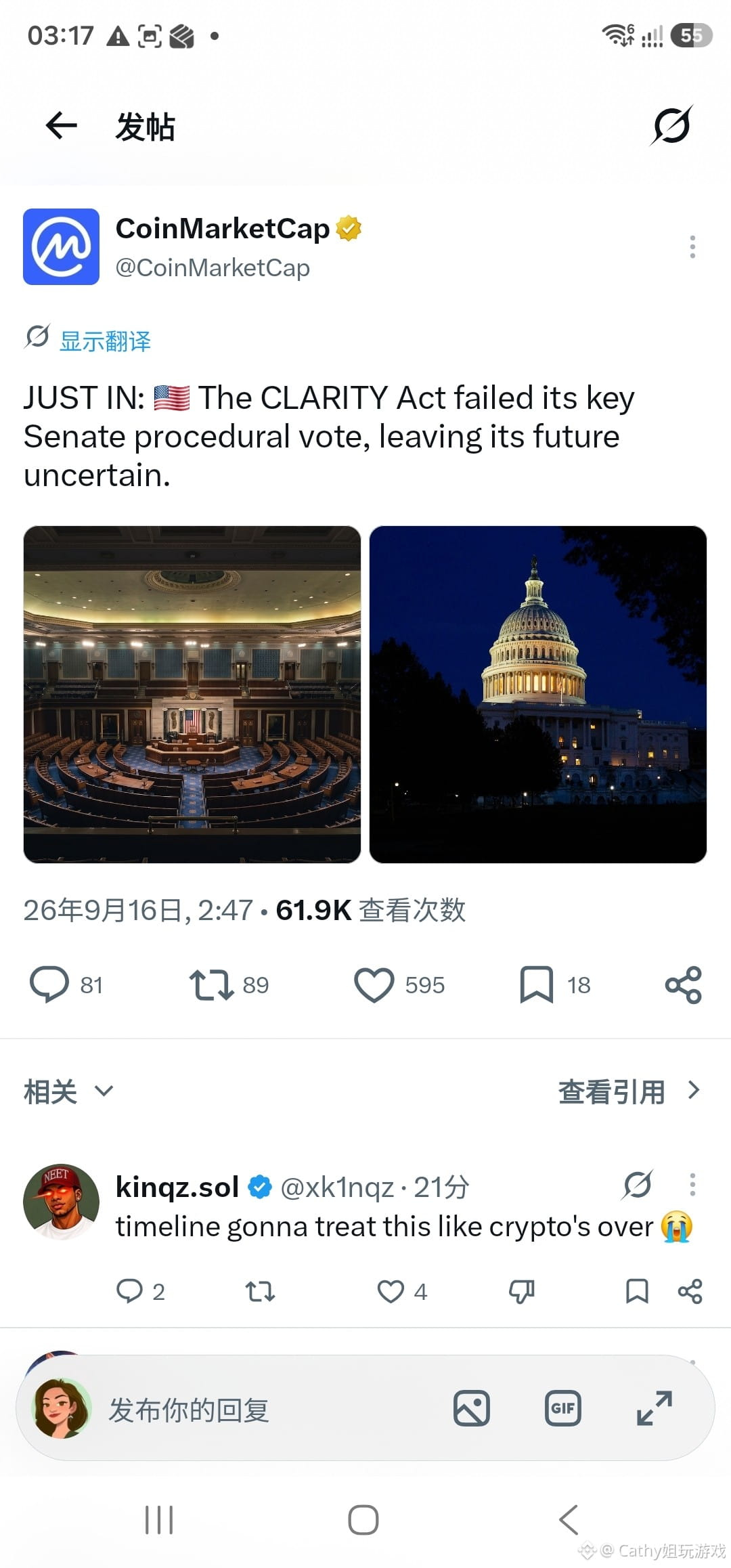
Defeated, defeated. My September BTC dollar-cost averaging just got filled—barely made it through. Now I’m going to sleep.
#清晰法案
#CLARITYAct
{future}(BTCUSDT)
Defeated, defeated. My September BTC dollar-cost averaging just got filled—barely made it through. Now I’m going to sleep.
#清晰法案
#CLARITYAct
#清晰法案
#CLARITYAct
1
2.8k
·
--
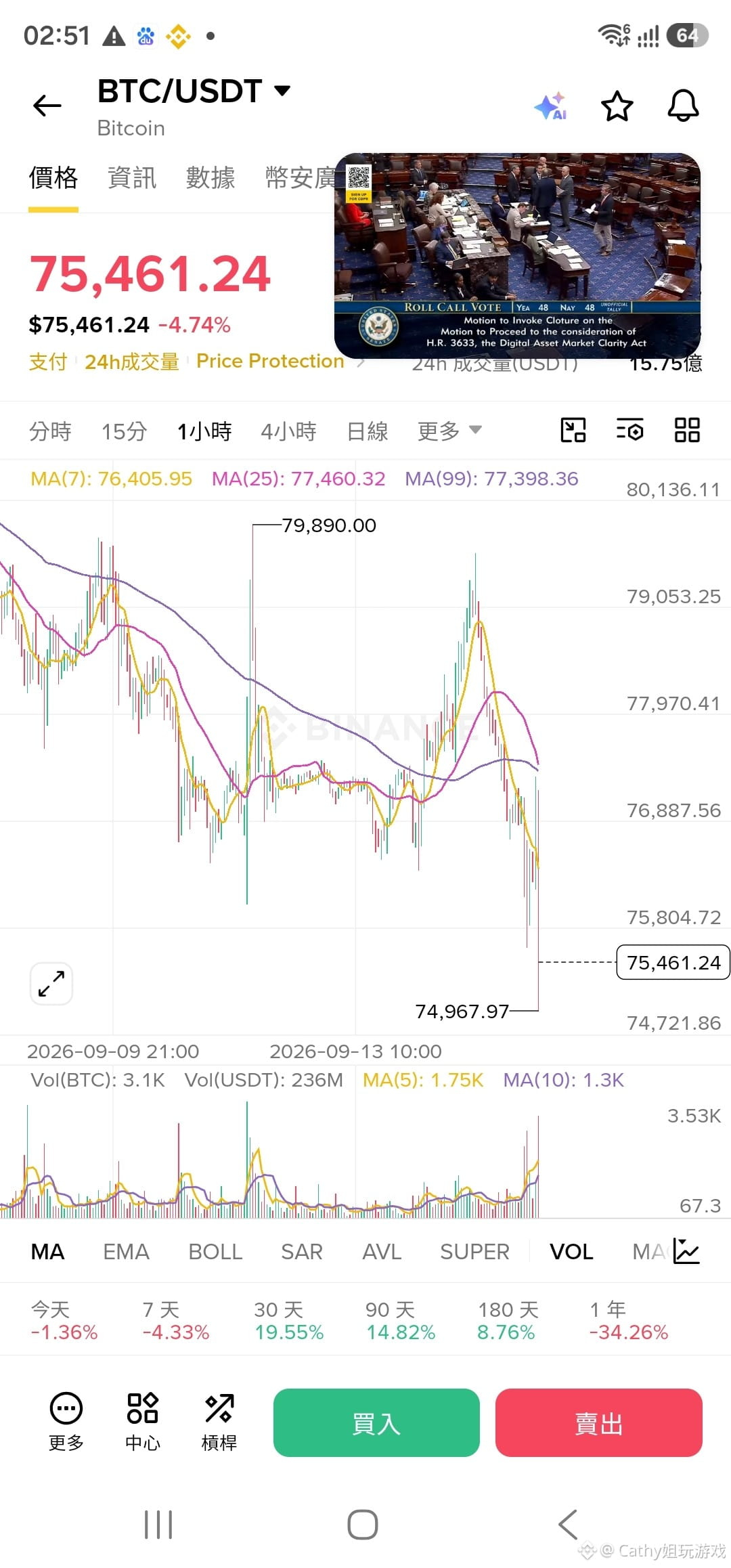
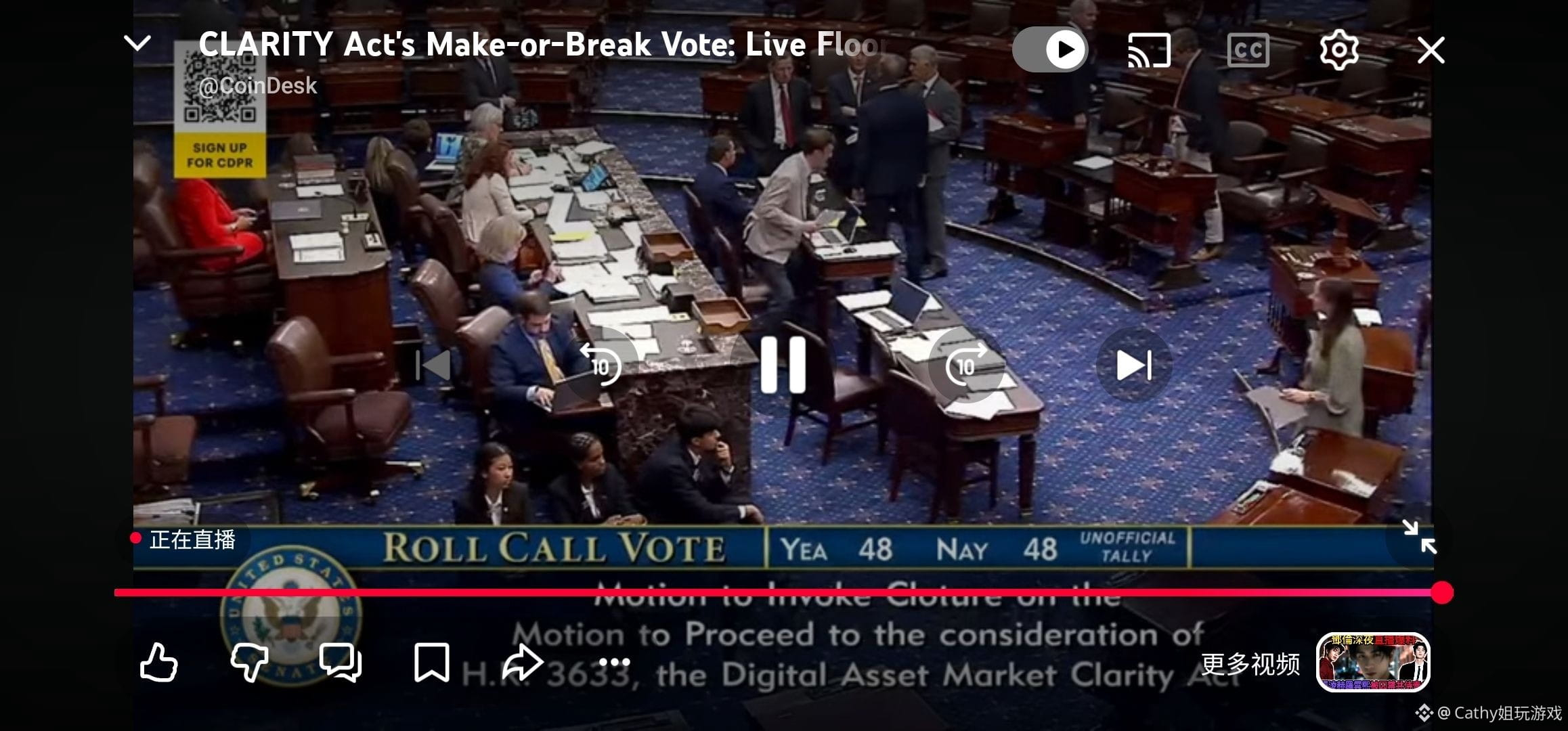
It’s done for, it’s done for—48:48. We need 12 more votes. It’s hard!
Bitcoin has dropped to 75,000. Can we hold the 75,000 level tonight?
#清晰法案参议院通过
#CLARITYAct
{future}(BTCUSDT)
It’s done for, it’s done for—48:48. We need 12 more votes. It’s hard!
Bitcoin has dropped to 75,000. Can we hold the 75,000 level tonight?
#清晰法案参议院通过
#CLARITYAct
Bitcoin has dropped to 75,000. Can we hold the 75,000 level tonight?
#清晰法案参议院通过
#CLARITYAct
1.1k
·
--
The Digital Asset Market Clarity Act (H.R. 3633) has only one core problem it seeks to solve: whether a token falls under the SEC or the CFTC.
At present, this boundary is mainly determined by the regulator’s enforcement actions and case law; there is no federal law that clearly lays it out.
Core provisions:
A three-category framework—classify digital assets into securities, digital commodities, and stablecoins, assign SEC and CFTC oversight accordingly, and specify compliance requirements for each type of service provider.
"Mature blockchain test"—after the network becomes sufficiently decentralized, tokens shift from securities to commodities; Bitcoin and Ethereum were the first to receive a clear statutory classification
Intermediary registration regime—digital commodity exchanges, broker-dealers, and custodians are brought under federal registration and anti–money laundering requirements.
DeFi exemption—Section 604 covers protections for developer responsibility, but its scope has remained in dispute.
Ethics provisions—the latest text requires federal officials, judges, and their spouses to divest crypto assets or place them in blind trusts, prohibits the issuance or promotion of tokens, and allows enforcement by both the Department of Justice and state attorneys general.
Legislative process
On July 17, 2025, the House passed it 294–134 (78 Democratic members voted in favor);
On January 2026, the Agriculture Committee passed it 12–11, and in May the Banking Committee passed it 15–9; it was placed on the Senate agenda on June 1.
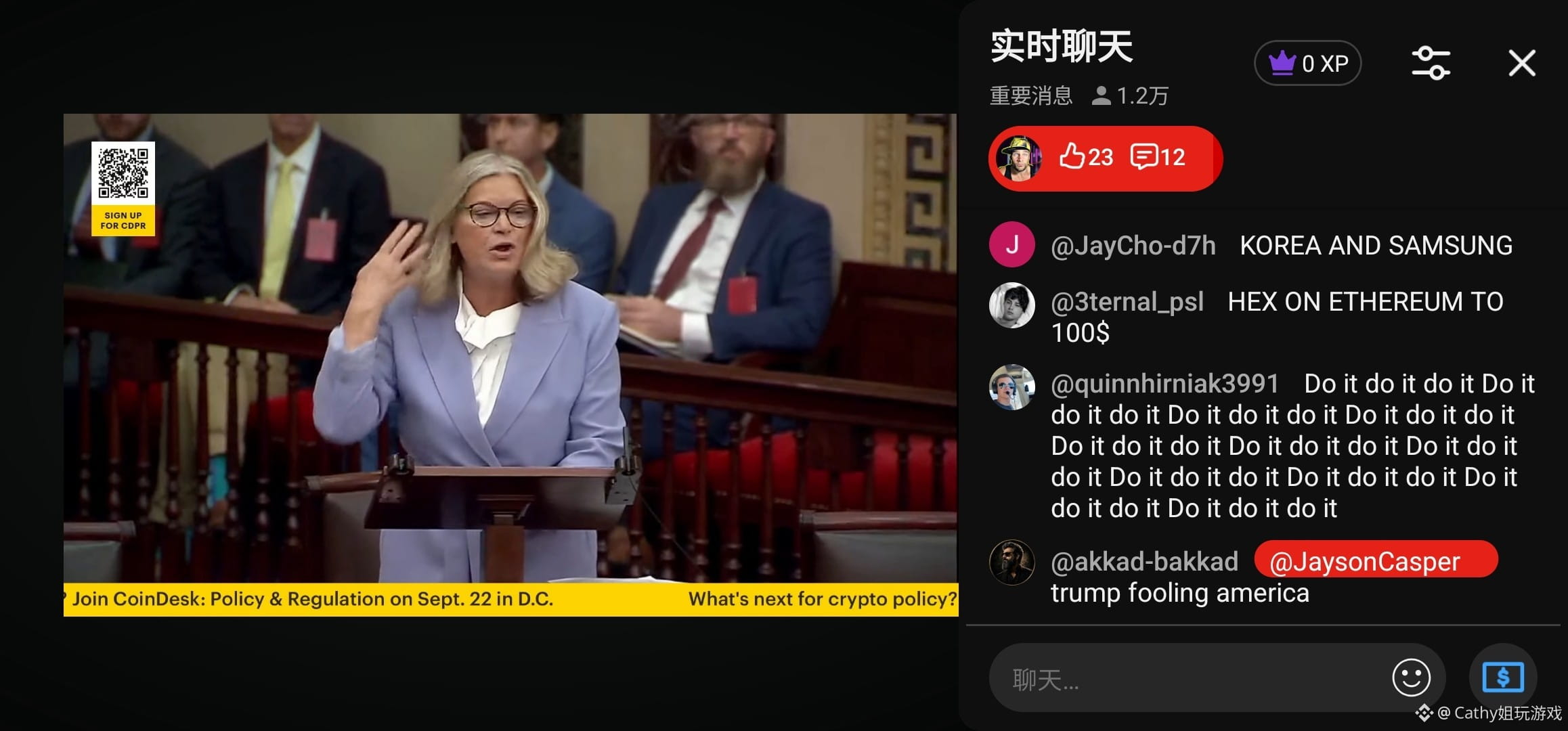
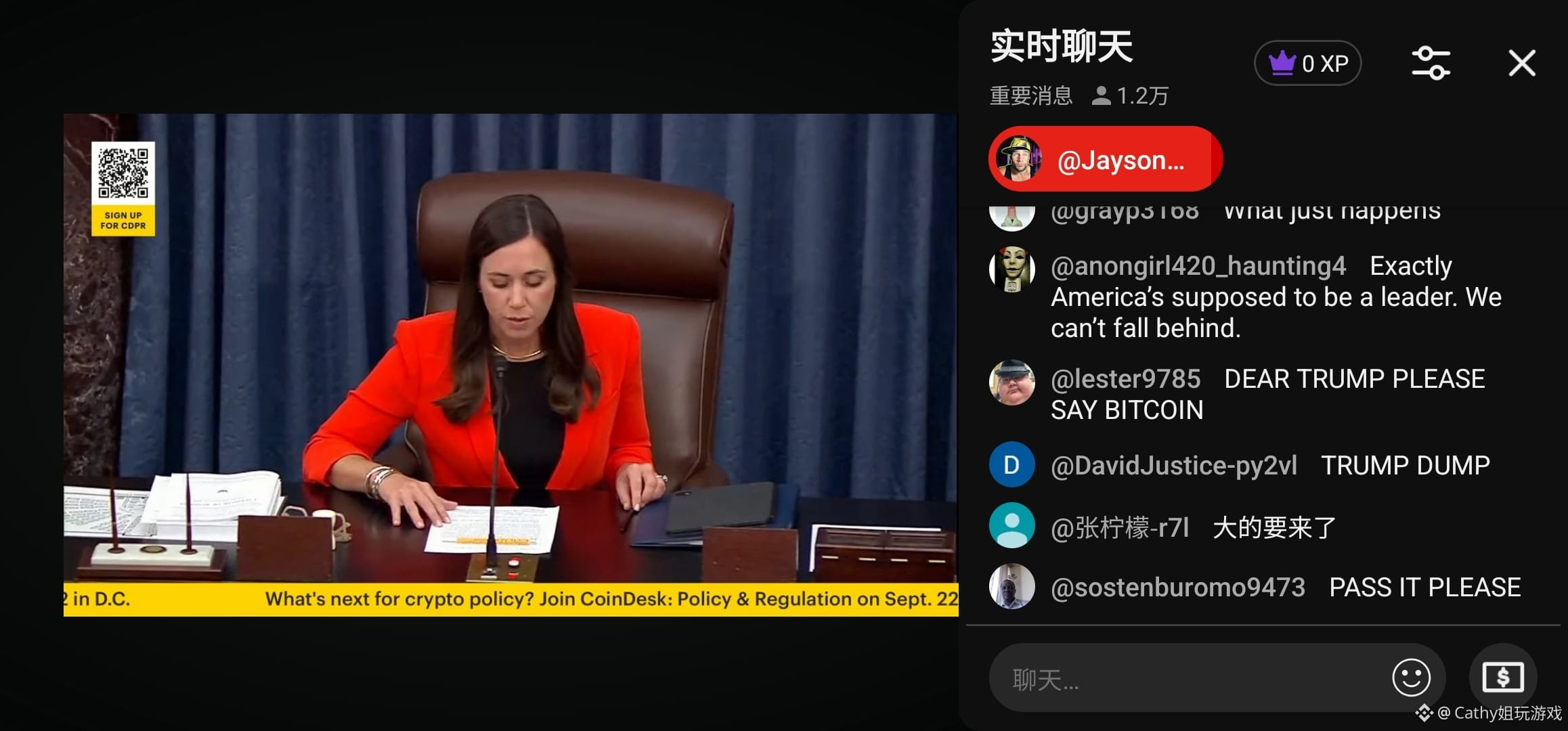
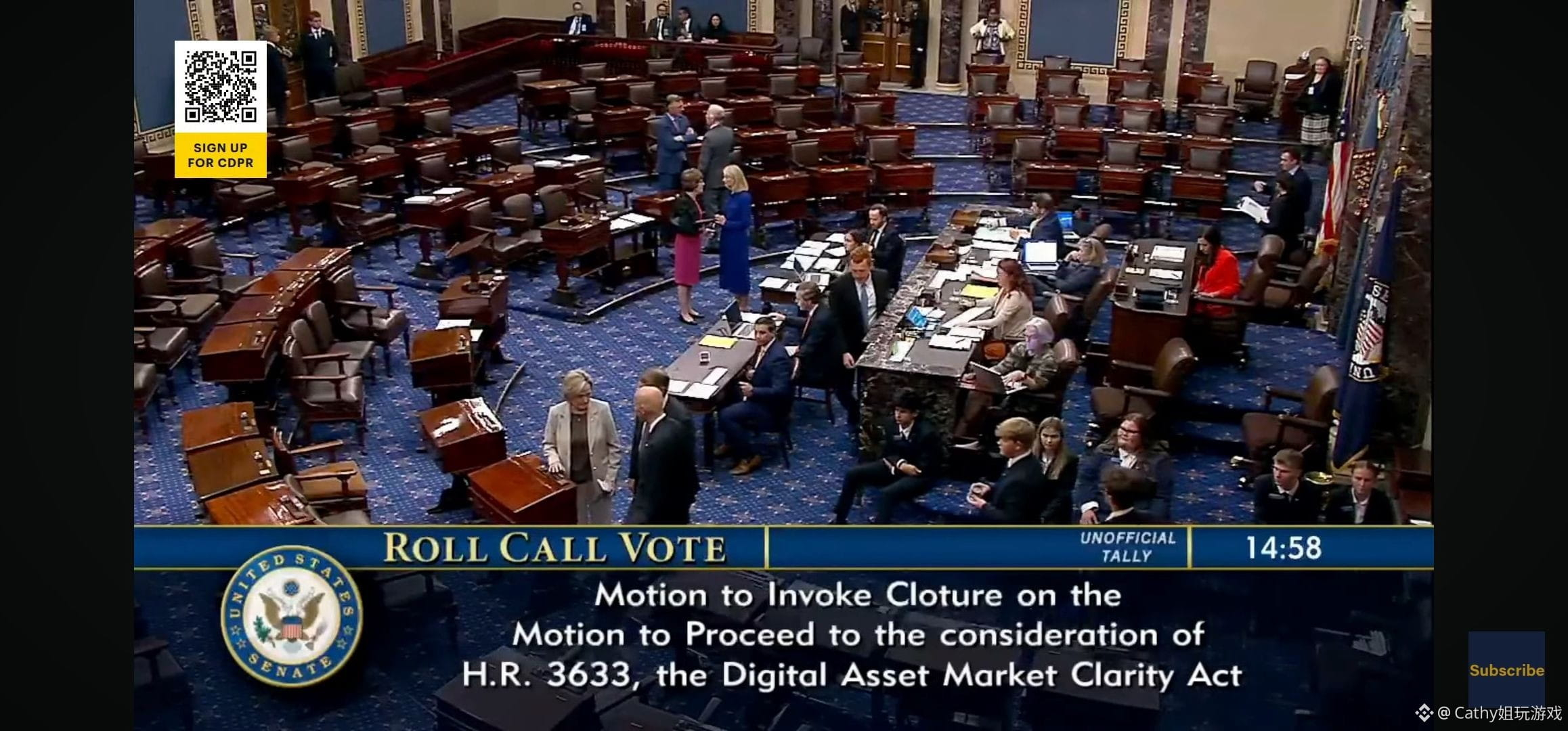
Key timeline: At 2:15 p.m. on September 15, the Senate will vote on the motion to proceed (cloture), that is, now, at this moment.
A total of 60 votes are needed. Republicans hold 53 seats, so at least 7 Democrats must break ranks.
On Polymarket, the odds for "signed into law by 2026" fell from 82% in February to 17–18%. The "final version" text released by Lummis on September 14 incorporates 126 amendments requested by Democrats, but the financial services industry, state attorneys general, developer groups, and tribal associations still oppose it.
The three unresolved disputes are: the ethics provision targeting Trump’s crypto income, developer responsibility under DeFi, and the stablecoin yield provision threatening Coinbase’s $1.35 billion annual USDC reward income.
If it does not get 60 votes, given that the Senate is basically out of session in October and the midterm election is on November 3, the bill is all but certain to end in 2026.
The Digital Asset Market Clarity Act (H.R. 3633) has only one core problem it seeks to solve: whether a token falls under the SEC or the CFTC.
At present, this boundary is mainly determined by the regulator’s enforcement actions and case law; there is no federal law that clearly lays it out.
Core provisions:
A three-category framework—classify digital assets into securities, digital commodities, and stablecoins, assign SEC and CFTC oversight accordingly, and specify compliance requirements for each type of service provider.
"Mature blockchain test"—after the network becomes sufficiently decentralized, tokens shift from securities to commodities; Bitcoin and Ethereum were the first to receive a clear statutory classification
Intermediary registration regime—digital commodity exchanges, broker-dealers, and custodians are brought under federal registration and anti–money laundering requirements.
DeFi exemption—Section 604 covers protections for developer responsibility, but its scope has remained in dispute.
Ethics provisions—the latest text requires federal officials, judges, and their spouses to divest crypto assets or place them in blind trusts, prohibits the issuance or promotion of tokens, and allows enforcement by both the Department of Justice and state attorneys general.
Legislative process
On July 17, 2025, the House passed it 294–134 (78 Democratic members voted in favor);
On January 2026, the Agriculture Committee passed it 12–11, and in May the Banking Committee passed it 15–9; it was placed on the Senate agenda on June 1.
Key timeline: At 2:15 p.m. on September 15, the Senate will vote on the motion to proceed (cloture), that is, now, at this moment.
A total of 60 votes are needed. Republicans hold 53 seats, so at least 7 Democrats must break ranks.
On Polymarket, the odds for "signed into law by 2026" fell from 82% in February to 17–18%. The "final version" text released by Lummis on September 14 incorporates 126 amendments requested by Democrats, but the financial services industry, state attorneys general, developer groups, and tribal associations still oppose it.
The three unresolved disputes are: the ethics provision targeting Trump’s crypto income, developer responsibility under DeFi, and the stablecoin yield provision threatening Coinbase’s $1.35 billion annual USDC reward income.
If it does not get 60 votes, given that the Senate is basically out of session in October and the midterm election is on November 3, the bill is all but certain to end in 2026.
At present, this boundary is mainly determined by the regulator’s enforcement actions and case law; there is no federal law that clearly lays it out.
Core provisions:
A three-category framework—classify digital assets into securities, digital commodities, and stablecoins, assign SEC and CFTC oversight accordingly, and specify compliance requirements for each type of service provider.
"Mature blockchain test"—after the network becomes sufficiently decentralized, tokens shift from securities to commodities; Bitcoin and Ethereum were the first to receive a clear statutory classification
Intermediary registration regime—digital commodity exchanges, broker-dealers, and custodians are brought under federal registration and anti–money laundering requirements.
DeFi exemption—Section 604 covers protections for developer responsibility, but its scope has remained in dispute.
Ethics provisions—the latest text requires federal officials, judges, and their spouses to divest crypto assets or place them in blind trusts, prohibits the issuance or promotion of tokens, and allows enforcement by both the Department of Justice and state attorneys general.
Legislative process
On July 17, 2025, the House passed it 294–134 (78 Democratic members voted in favor);
On January 2026, the Agriculture Committee passed it 12–11, and in May the Banking Committee passed it 15–9; it was placed on the Senate agenda on June 1.
Key timeline: At 2:15 p.m. on September 15, the Senate will vote on the motion to proceed (cloture), that is, now, at this moment.
A total of 60 votes are needed. Republicans hold 53 seats, so at least 7 Democrats must break ranks.
On Polymarket, the odds for "signed into law by 2026" fell from 82% in February to 17–18%. The "final version" text released by Lummis on September 14 incorporates 126 amendments requested by Democrats, but the financial services industry, state attorneys general, developer groups, and tribal associations still oppose it.
The three unresolved disputes are: the ethics provision targeting Trump’s crypto income, developer responsibility under DeFi, and the stablecoin yield provision threatening Coinbase’s $1.35 billion annual USDC reward income.
If it does not get 60 votes, given that the Senate is basically out of session in October and the midterm election is on November 3, the bill is all but certain to end in 2026.
2
3.7k
·
--
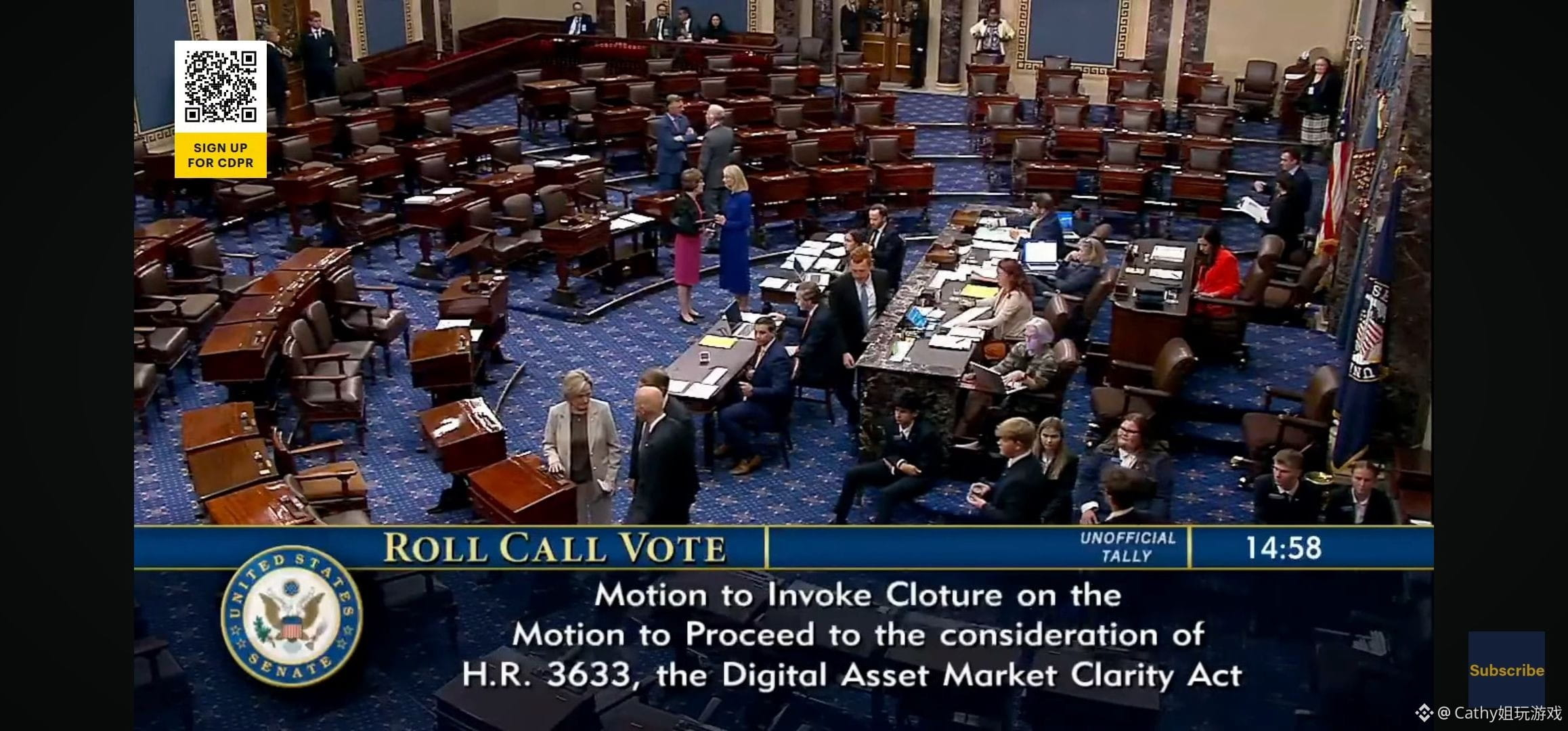
The Clear Bill is currently being voted on... Witness history.
https://www.youtube.com/live/2gNdcJPuTCw?is=h_snGUptwDetzj22
#CLARITYAct
The Clear Bill is currently being voted on... Witness history.
https://www.youtube.com/live/2gNdcJPuTCw?is=h_snGUptwDetzj22
#CLARITYAct
https://www.youtube.com/live/2gNdcJPuTCw?is=h_snGUptwDetzj22
#CLARITYAct

2
3.7k
·
--
Verified
Did I not say anything wrong?
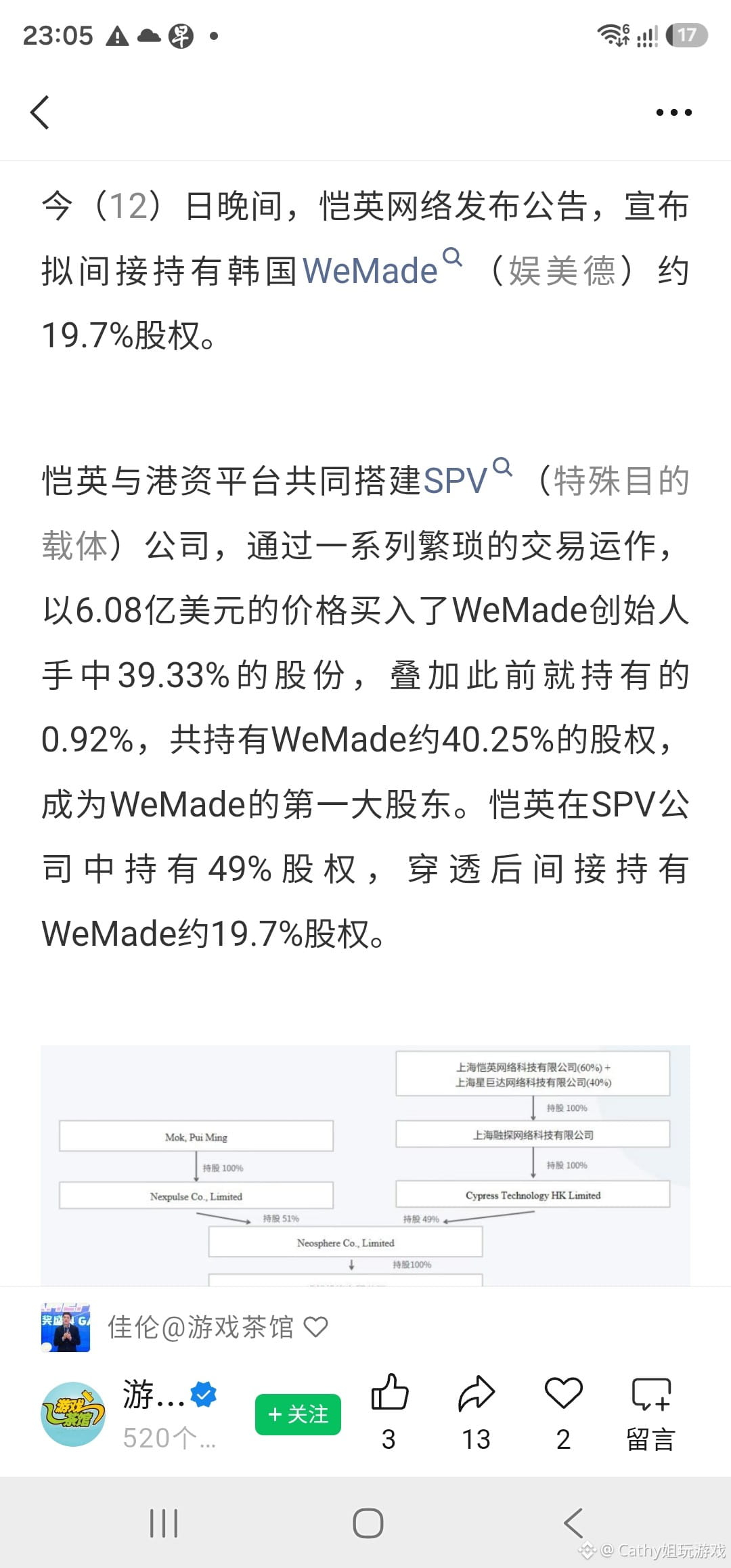
Wemade’s founder spent a lot of money on Web3 games and the Wemix blockchain—eventually, they ended up losing their own stake.
Did I not say anything wrong?
Wemade’s founder spent a lot of money on Web3 games and the Wemix blockchain—eventually, they ended up losing their own stake.
Wemade’s founder spent a lot of money on Web3 games and the Wemix blockchain—eventually, they ended up losing their own stake.
Cathy姐玩游戏
·
--
Korean big companies have spent big money on Web3 games, and they’ve all ended up losing badly—everyone’s rolled into the wrong track.
The last Korean company to lose badly was Wemade. Starting in 2021, after launching a few chain games and its Wemix public blockchain, founder Park Kwan-ho sold all of his personal holdings and stepped down as controlling shareholder at the end of this June. He lost so much that he sold off all his shares. If they hadn’t gotten involved in Web3 games and bled too much, they probably wouldn’t have ended up out of the game.
It’s rumored that the institution that acquired Park Kwan-ho’s shares, Neoplus, is a shell company for The9 Interactive. If that’s true, then you can say China’s game companies are unstoppable.
@WEMIX Official
The last Korean company to lose badly was Wemade. Starting in 2021, after launching a few chain games and its Wemix public blockchain, founder Park Kwan-ho sold all of his personal holdings and stepped down as controlling shareholder at the end of this June. He lost so much that he sold off all his shares. If they hadn’t gotten involved in Web3 games and bled too much, they probably wouldn’t have ended up out of the game.
It’s rumored that the institution that acquired Park Kwan-ho’s shares, Neoplus, is a shell company for The9 Interactive. If that’s true, then you can say China’s game companies are unstoppable.
@WEMIX Official
3
2
2.3k
·
--
{future}(ETHUSDT)
Eth is going up, it’s rising so much that in my heart
it feels warm.
Let the United States keep raising interest rates!
Eth is going up, it’s rising so much that in my heart
it feels warm.
Let the United States keep raising interest rates!
it feels warm.
Let the United States keep raising interest rates!

1.3k
·
--
Verified
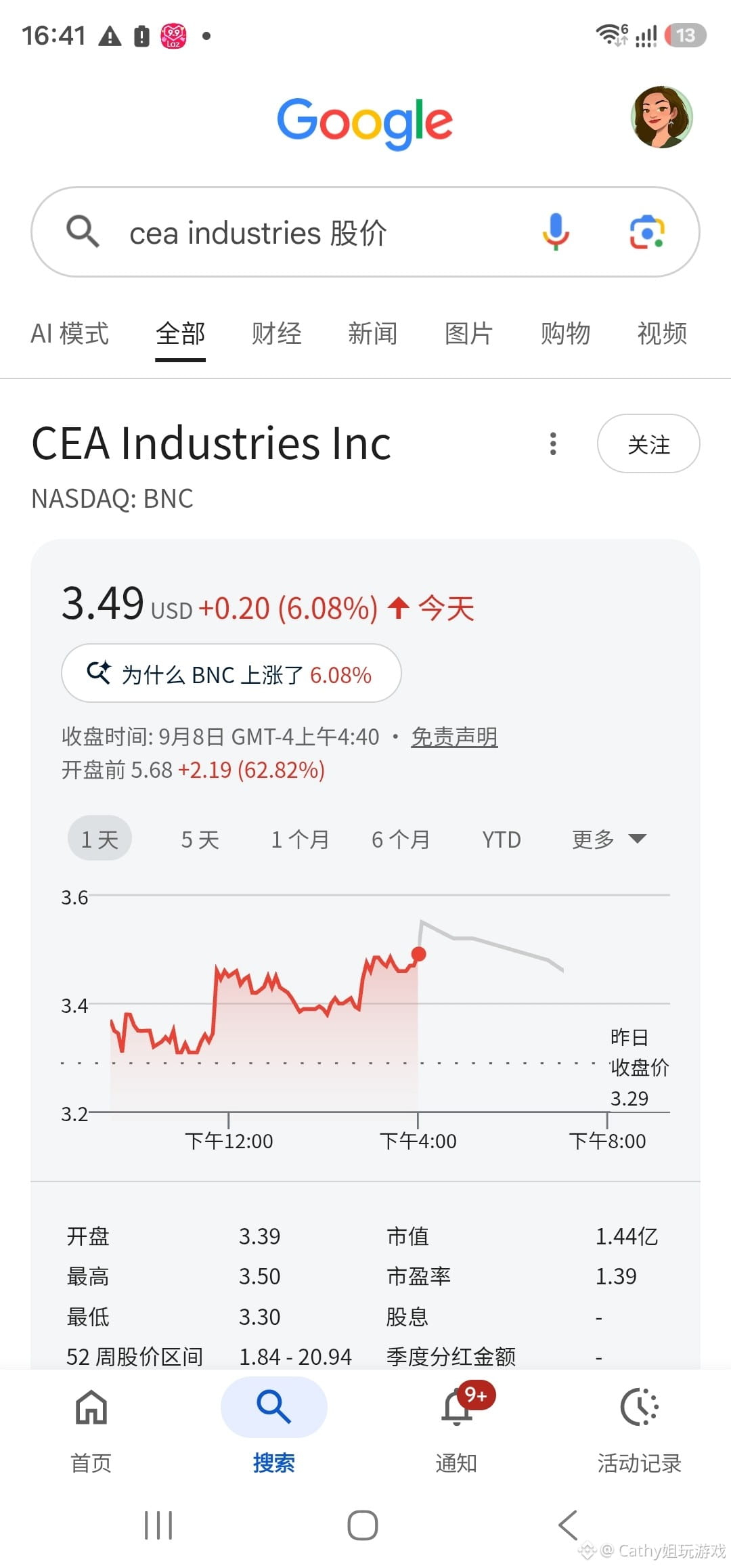
Today, BNB treasury company BNC stock price surged 62% before the bell!
I looked into it—the main reason is that Four.meme launched its 4Stock tokenized stock product on September 6 on the BNB Chain.
Four.meme is a token issuance platform on BNB Chain. Its team was originally named BinaryX, and the token $FOUR directly maps to CZ’s “4” hand gesture.
4Stock covers stocks that don’t yet have corresponding bStocks among popular US listed equities. Each share is supported 1:1 by the underlying stock. BNC is one of the targets; the on-chain token is called BNC4.
The key is the minting process: users send USDC to a specific address on Four.meme to apply for minting. The platform then uses specially managed accounts to buy the corresponding BNC stocks in the real market with actual cash, and mints BNC4 for the user 1:1 based on the actual holdings.
That’s how extreme premiums appear.
Two days ago, a KOL (0xShawn) publicly shared his arbitrage: he minted BNC4 at the after-hours stock price, and as soon as he received it, he sold it on BNB Chain, netting $230,000.
At the time, the BNC stock price after hours was only a bit over $4, while the on-chain BNC4 token briefly surged above $30—an about 7 to 8x premium.
With such outrageous on-chain premiums, arbitrageurs will rush to request mints. And every mint forces Four.meme to truly buy BNC stock in the real market before/after the US stock market hours.
This is the direct transmission of on-chain speculative demand back into the underlying shares—it’s not that the company’s fundamentals changed in any way.
Why specifically BNC? Because it is the “world’s largest BNB treasury,” and in the BNB Chain community it’s a natural narrative target, linked to YZi Labs. A half-month ago, it announced it holds 480,000 BNB, with total crypto assets and cash of $663 million.
The issue is: assets on the books are $663 million, but the market cap of BNC is only $144 million—an ~78% discount.
The 52-week price range is $1.84–$20.94; from the peak it’s fallen by more than 80%. The P/E ratio of 1.39 is calculated based on crypto assets showing unrealized gains—so it has little reference value.
On top of that, there have been a series of governance disruptions this year: lawsuits against the former asset manager 10X Capital; a proxy fight over the delegation letters with YZi Labs; the chairman and CEO stepping down; and Nasdaq compliance warnings. Such a large discount usually reflects the market’s lack of trust in the governance structure and asset accessibility—not just sentiment.
Here’s a joke: in the first half of this year, my BNC buy price was $20.4, and I’ve held and not sold. I just broke even thanks to these past few days.
#BNC
#CEAIndustries
{future}(BNBUSDT)
{stock_us}(BNC.US)
{future}(BNCUSDT)
Today, BNB treasury company BNC stock price surged 62% before the bell!
I looked into it—the main reason is that Four.meme launched its 4Stock tokenized stock product on September 6 on the BNB Chain.
Four.meme is a token issuance platform on BNB Chain. Its team was originally named BinaryX, and the token $FOUR directly maps to CZ’s “4” hand gesture.
4Stock covers stocks that don’t yet have corresponding bStocks among popular US listed equities. Each share is supported 1:1 by the underlying stock. BNC is one of the targets; the on-chain token is called BNC4.
The key is the minting process: users send USDC to a specific address on Four.meme to apply for minting. The platform then uses specially managed accounts to buy the corresponding BNC stocks in the real market with actual cash, and mints BNC4 for the user 1:1 based on the actual holdings.
That’s how extreme premiums appear.
Two days ago, a KOL (0xShawn) publicly shared his arbitrage: he minted BNC4 at the after-hours stock price, and as soon as he received it, he sold it on BNB Chain, netting $230,000.
At the time, the BNC stock price after hours was only a bit over $4, while the on-chain BNC4 token briefly surged above $30—an about 7 to 8x premium.
With such outrageous on-chain premiums, arbitrageurs will rush to request mints. And every mint forces Four.meme to truly buy BNC stock in the real market before/after the US stock market hours.
This is the direct transmission of on-chain speculative demand back into the underlying shares—it’s not that the company’s fundamentals changed in any way.
Why specifically BNC? Because it is the “world’s largest BNB treasury,” and in the BNB Chain community it’s a natural narrative target, linked to YZi Labs. A half-month ago, it announced it holds 480,000 BNB, with total crypto assets and cash of $663 million.
The issue is: assets on the books are $663 million, but the market cap of BNC is only $144 million—an ~78% discount.
The 52-week price range is $1.84–$20.94; from the peak it’s fallen by more than 80%. The P/E ratio of 1.39 is calculated based on crypto assets showing unrealized gains—so it has little reference value.
On top of that, there have been a series of governance disruptions this year: lawsuits against the former asset manager 10X Capital; a proxy fight over the delegation letters with YZi Labs; the chairman and CEO stepping down; and Nasdaq compliance warnings. Such a large discount usually reflects the market’s lack of trust in the governance structure and asset accessibility—not just sentiment.
Here’s a joke: in the first half of this year, my BNC buy price was $20.4, and I’ve held and not sold. I just broke even thanks to these past few days.
#BNC
#CEAIndustries
I looked into it—the main reason is that Four.meme launched its 4Stock tokenized stock product on September 6 on the BNB Chain.
Four.meme is a token issuance platform on BNB Chain. Its team was originally named BinaryX, and the token $FOUR directly maps to CZ’s “4” hand gesture.
4Stock covers stocks that don’t yet have corresponding bStocks among popular US listed equities. Each share is supported 1:1 by the underlying stock. BNC is one of the targets; the on-chain token is called BNC4.
The key is the minting process: users send USDC to a specific address on Four.meme to apply for minting. The platform then uses specially managed accounts to buy the corresponding BNC stocks in the real market with actual cash, and mints BNC4 for the user 1:1 based on the actual holdings.
That’s how extreme premiums appear.
Two days ago, a KOL (0xShawn) publicly shared his arbitrage: he minted BNC4 at the after-hours stock price, and as soon as he received it, he sold it on BNB Chain, netting $230,000.
At the time, the BNC stock price after hours was only a bit over $4, while the on-chain BNC4 token briefly surged above $30—an about 7 to 8x premium.
With such outrageous on-chain premiums, arbitrageurs will rush to request mints. And every mint forces Four.meme to truly buy BNC stock in the real market before/after the US stock market hours.
This is the direct transmission of on-chain speculative demand back into the underlying shares—it’s not that the company’s fundamentals changed in any way.
Why specifically BNC? Because it is the “world’s largest BNB treasury,” and in the BNB Chain community it’s a natural narrative target, linked to YZi Labs. A half-month ago, it announced it holds 480,000 BNB, with total crypto assets and cash of $663 million.
The issue is: assets on the books are $663 million, but the market cap of BNC is only $144 million—an ~78% discount.
The 52-week price range is $1.84–$20.94; from the peak it’s fallen by more than 80%. The P/E ratio of 1.39 is calculated based on crypto assets showing unrealized gains—so it has little reference value.
On top of that, there have been a series of governance disruptions this year: lawsuits against the former asset manager 10X Capital; a proxy fight over the delegation letters with YZi Labs; the chairman and CEO stepping down; and Nasdaq compliance warnings. Such a large discount usually reflects the market’s lack of trust in the governance structure and asset accessibility—not just sentiment.
Here’s a joke: in the first half of this year, my BNC buy price was $20.4, and I’ve held and not sold. I just broke even thanks to these past few days.
#BNC
#CEAIndustries
3
2.5k
·
--
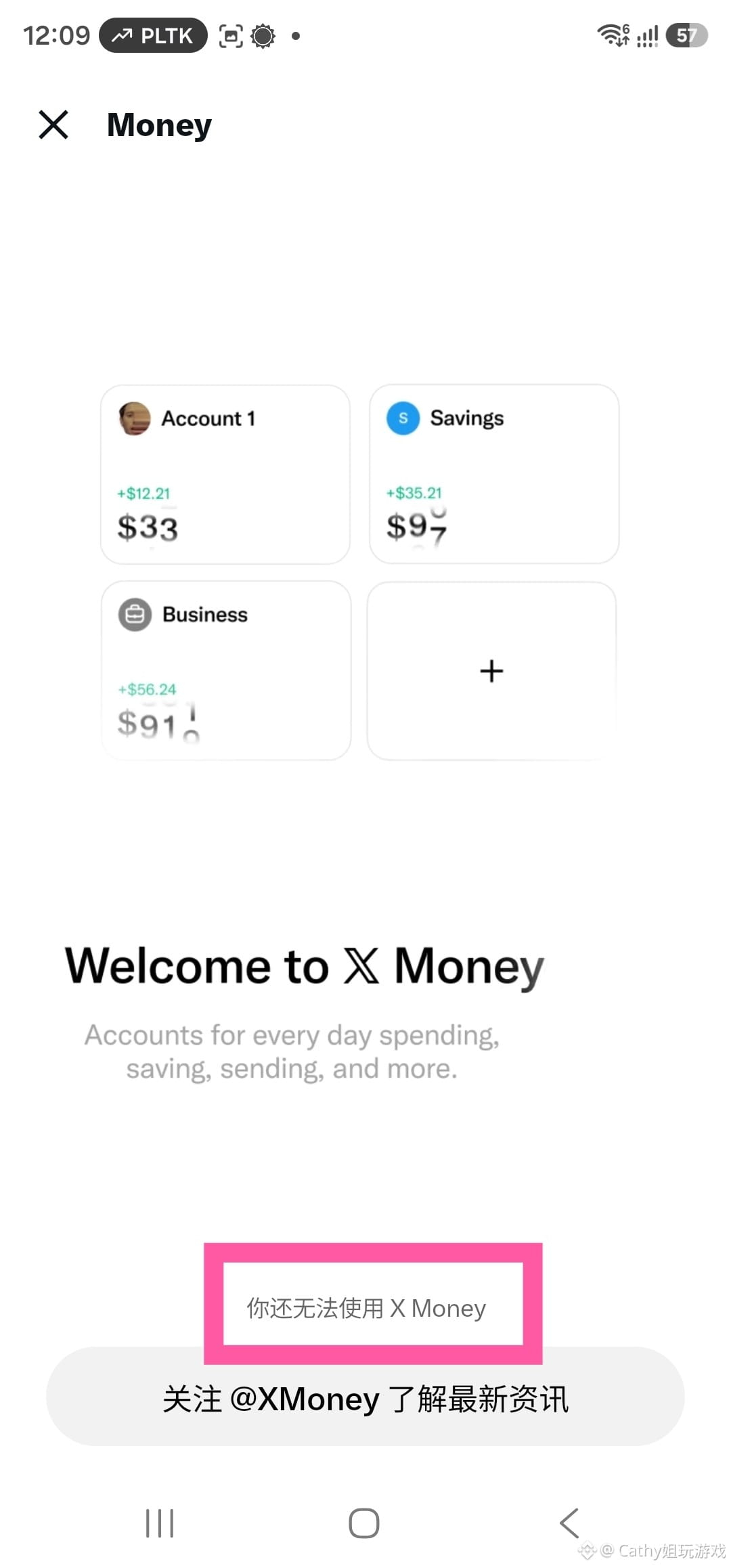
X doesn’t play fair. It just sent me a notification about “X Money exclusive access” and when I open it, it says “You can’t use X Money yet.”
Are you kidding me?
#xmoney
X doesn’t play fair. It just sent me a notification about “X Money exclusive access” and when I open it, it says “You can’t use X Money yet.”
Are you kidding me?
#xmoney
Are you kidding me?
#xmoney

2
2.6k

·
--
Korean big companies have spent big money on Web3 games, and they’ve all ended up losing badly—everyone’s rolled into the wrong track.
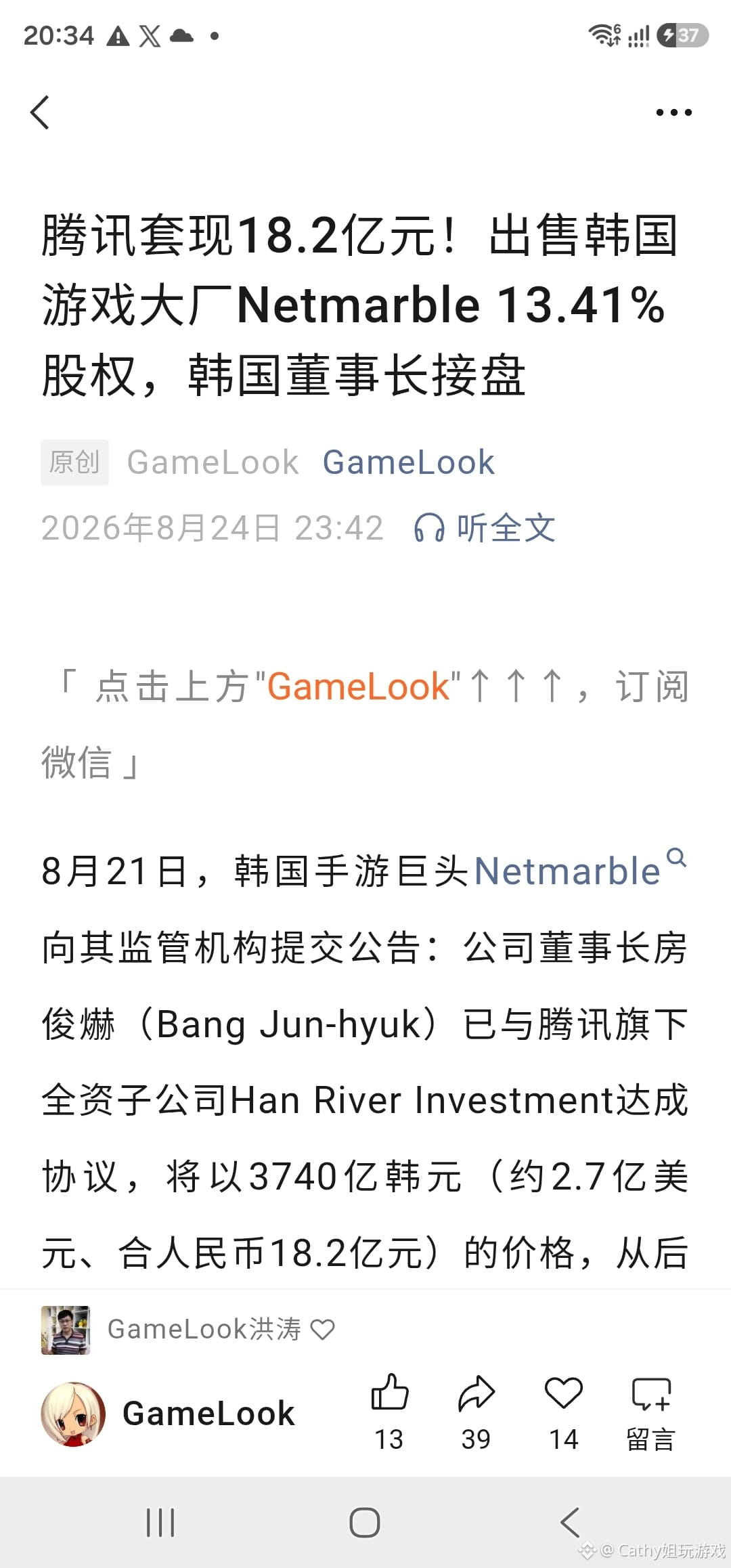
The last Korean company to lose badly was Wemade. Starting in 2021, after launching a few chain games and its Wemix public blockchain, founder Park Kwan-ho sold all of his personal holdings and stepped down as controlling shareholder at the end of this June. He lost so much that he sold off all his shares. If they hadn’t gotten involved in Web3 games and bled too much, they probably wouldn’t have ended up out of the game.
It’s rumored that the institution that acquired Park Kwan-ho’s shares, Neoplus, is a shell company for The9 Interactive. If that’s true, then you can say China’s game companies are unstoppable.
@WEMIX_GLOBAL
Korean big companies have spent big money on Web3 games, and they’ve all ended up losing badly—everyone’s rolled into the wrong track.
The last Korean company to lose badly was Wemade. Starting in 2021, after launching a few chain games and its Wemix public blockchain, founder Park Kwan-ho sold all of his personal holdings and stepped down as controlling shareholder at the end of this June. He lost so much that he sold off all his shares. If they hadn’t gotten involved in Web3 games and bled too much, they probably wouldn’t have ended up out of the game.
It’s rumored that the institution that acquired Park Kwan-ho’s shares, Neoplus, is a shell company for The9 Interactive. If that’s true, then you can say China’s game companies are unstoppable.
@WEMIX Official
The last Korean company to lose badly was Wemade. Starting in 2021, after launching a few chain games and its Wemix public blockchain, founder Park Kwan-ho sold all of his personal holdings and stepped down as controlling shareholder at the end of this June. He lost so much that he sold off all his shares. If they hadn’t gotten involved in Web3 games and bled too much, they probably wouldn’t have ended up out of the game.
It’s rumored that the institution that acquired Park Kwan-ho’s shares, Neoplus, is a shell company for The9 Interactive. If that’s true, then you can say China’s game companies are unstoppable.
@WEMIX Official
6
1
2
4.2k
·
--
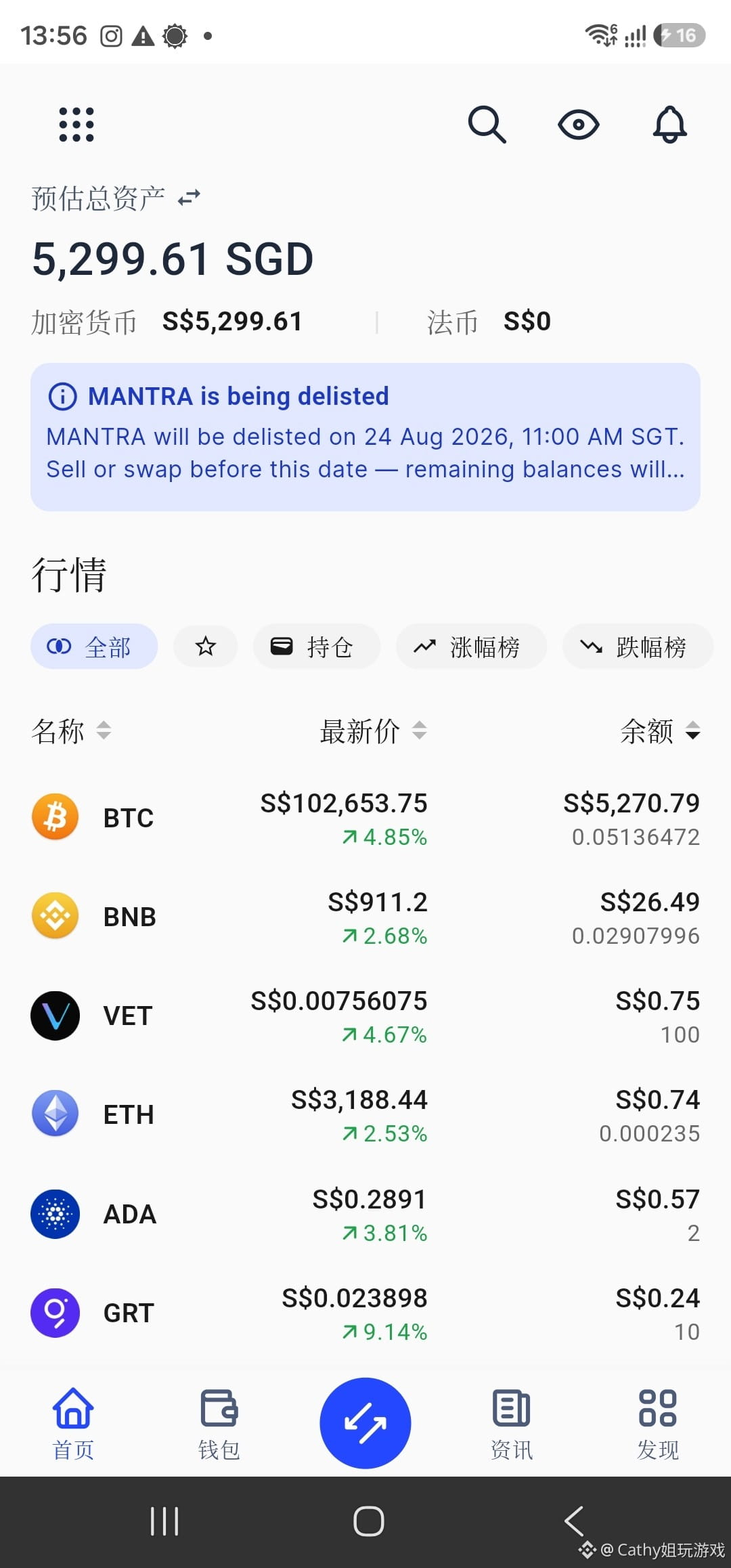
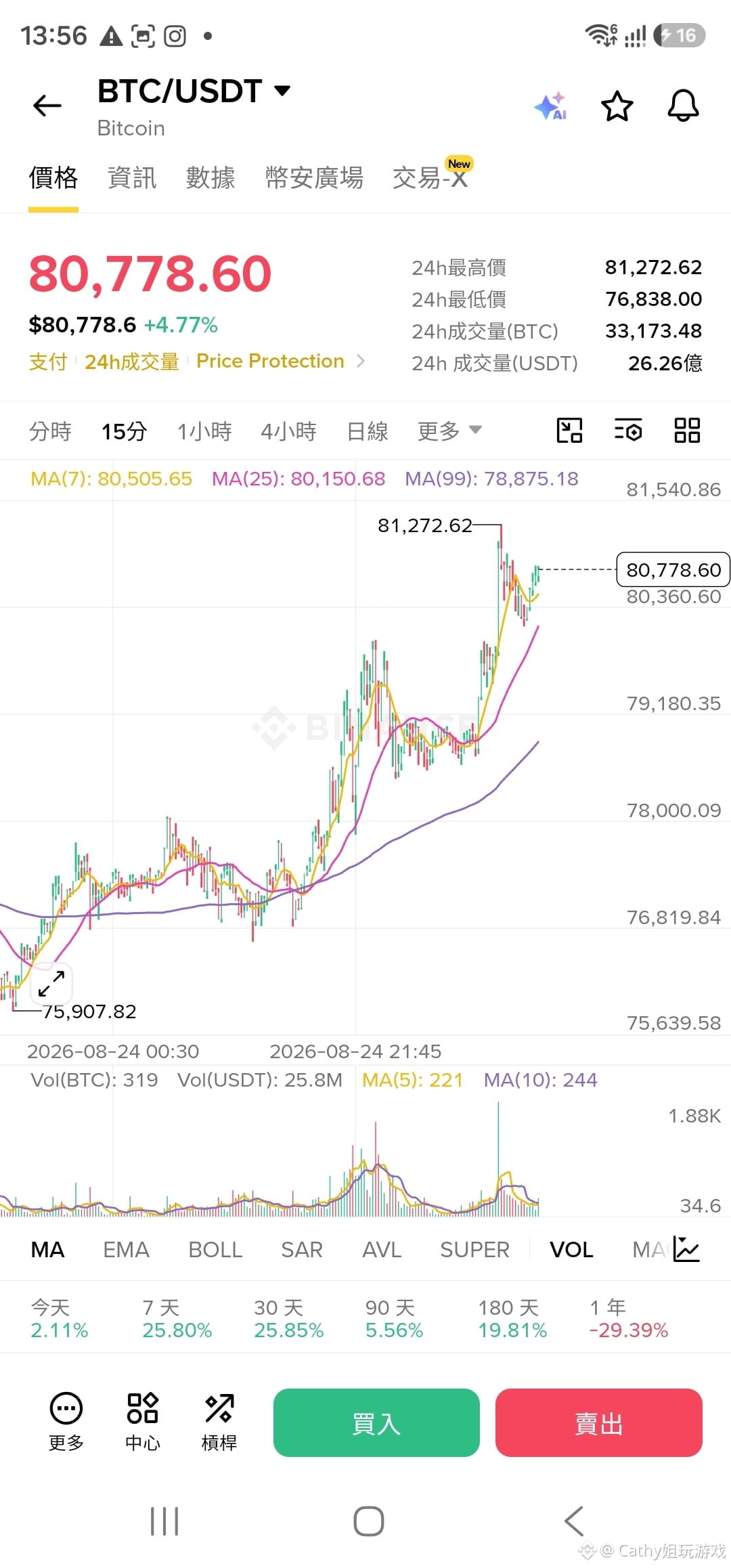
Investing in BTC with the rent paid by my older brother. In a week it went up by 1,000 new dollars. Last week at this time I was down 500 new dollars, but this week I'm up 500 new dollars.
Helping kids manage their money is also a bit of an explanation.
#BTC定投
{future}(BTCUSDT)
Investing in BTC with the rent paid by my older brother. In a week it went up by 1,000 new dollars. Last week at this time I was down 500 new dollars, but this week I'm up 500 new dollars.
Helping kids manage their money is also a bit of an explanation.
#BTC定投
Helping kids manage their money is also a bit of an explanation.
#BTC定投
1
4
1.9k
·
--
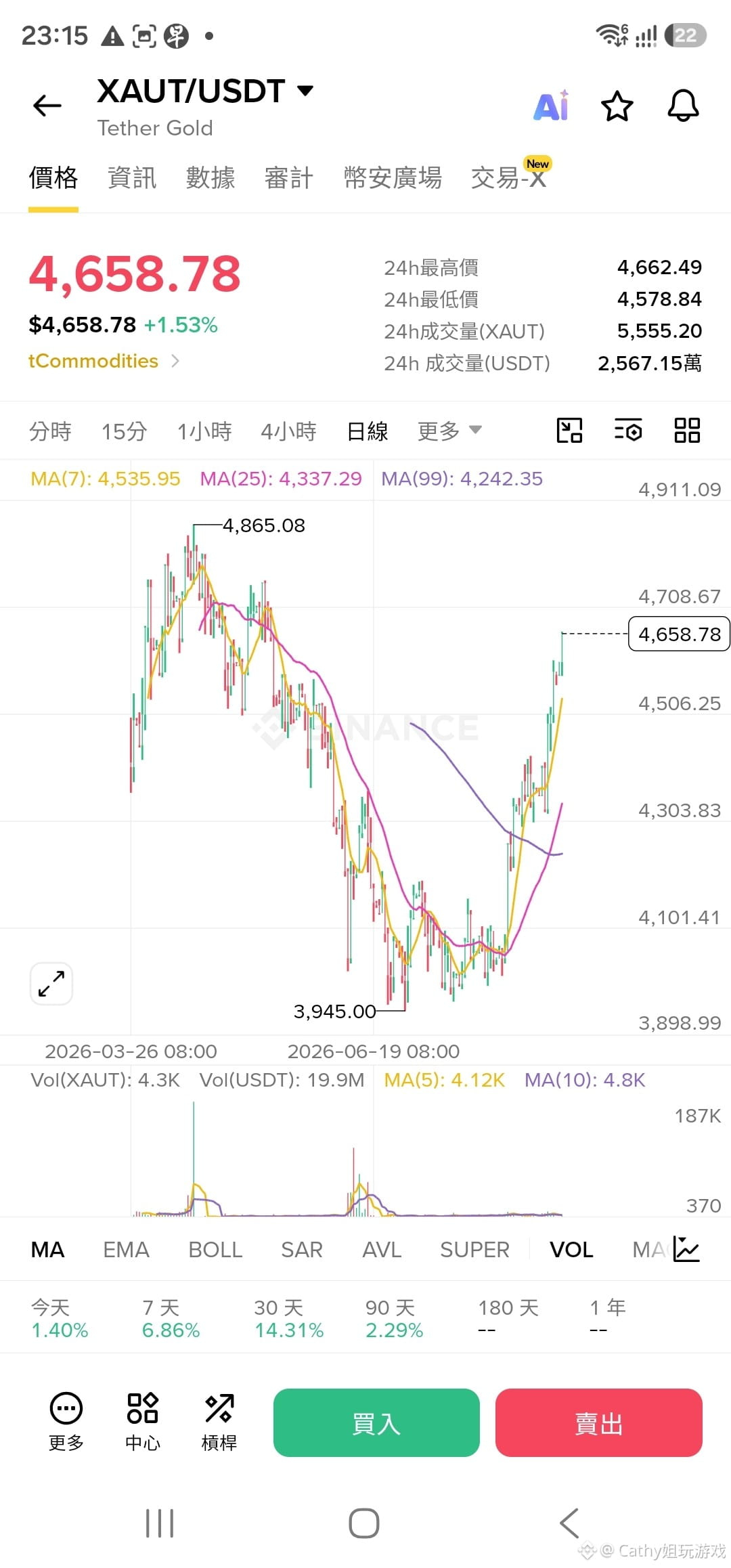
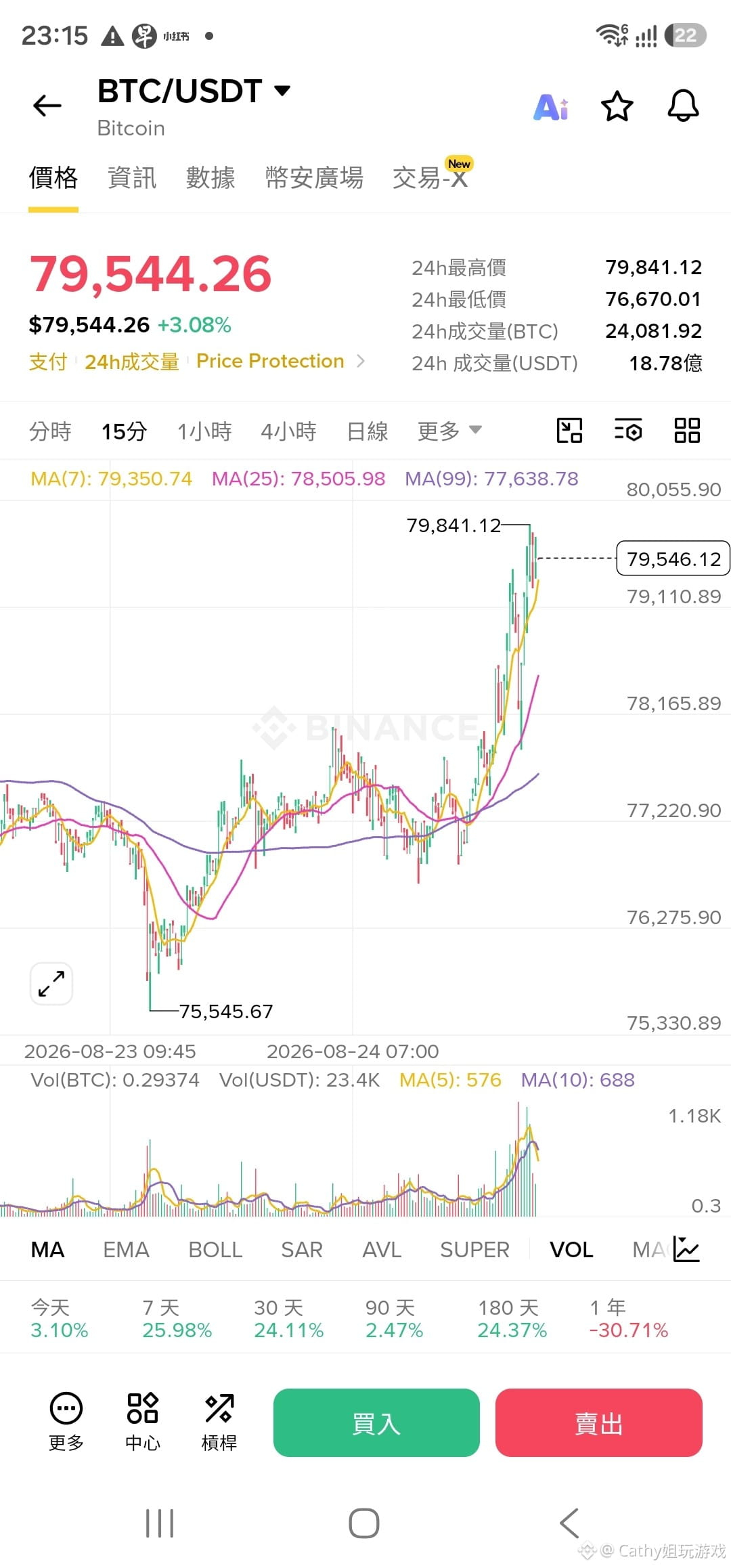
BTC, gold, upupup!
I wonder if there's still a chance for the Trump tycoon game to be released during this little bull market?
#TrumpBillionairesClub
#川普大富翁链游
{future}(BTCUSDT)
{future}(XAUTUSDT)
BTC, gold, upupup!
I wonder if there's still a chance for the Trump tycoon game to be released during this little bull market?
#TrumpBillionairesClub
#川普大富翁链游
I wonder if there's still a chance for the Trump tycoon game to be released during this little bull market?
#TrumpBillionairesClub
#川普大富翁链游
1.4k
·
--
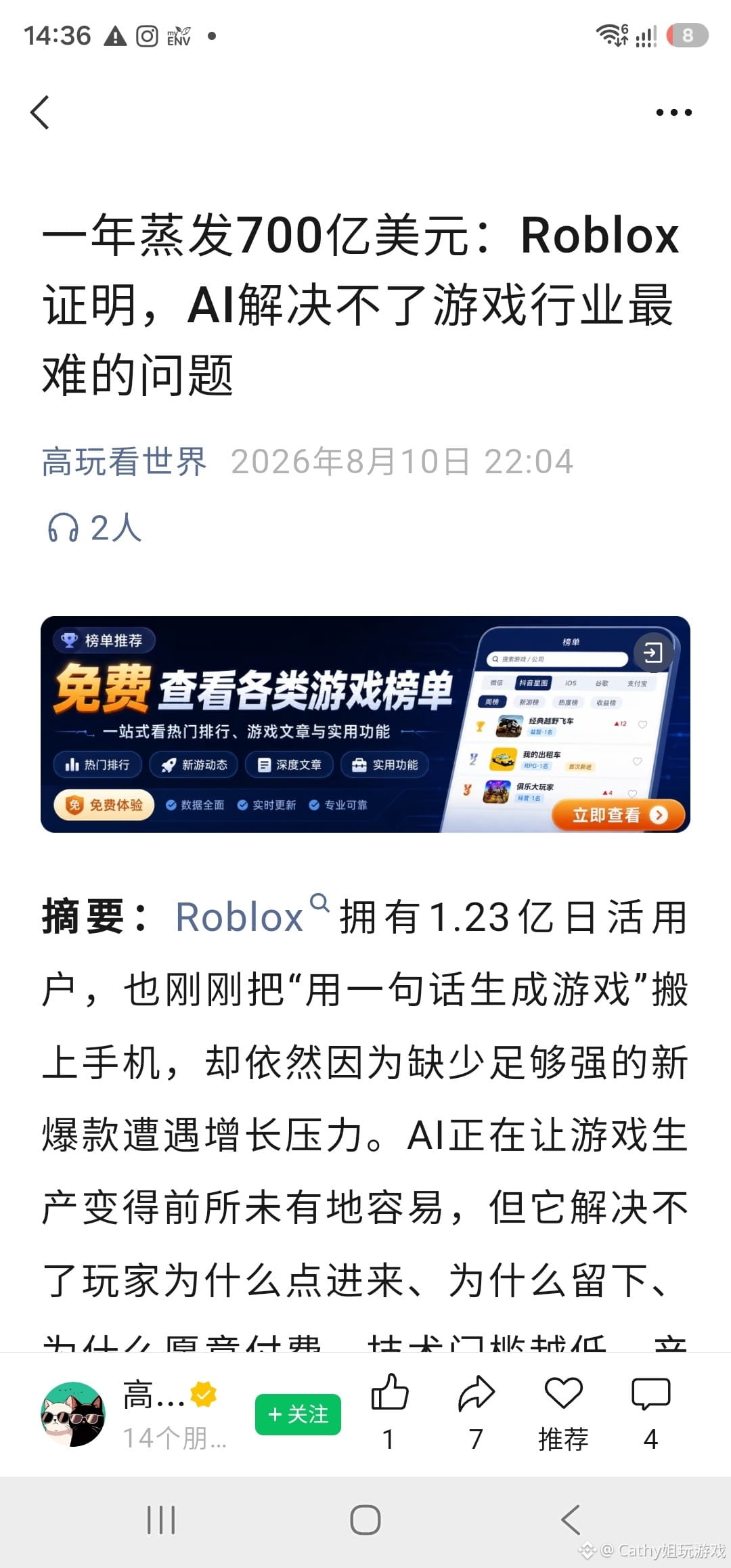
Community + Social > AI
AI can’t make games more fun. Although it can make game development easier and cheaper, those are two separate things—one is not the other.
What AI can’t do, social interaction can.
Just as the philosophical significance of debate in ancient Greece was how people come to know the truth through dialogue and argument, in modern society, game social spaces are places where the “truth” of what’s fun can be discovered—where creativity is sparked at a spawn spot.
Besides, developing large models is so expensive. By the time you develop one yourself, it’s already too late, and you can’t keep up. Spending huge amounts on AI infrastructure while Roblox’s stock price drops a bit isn’t exactly unjustified.
https://mp.weixin.qq.com/s/a-PcJmlo3RCws4RsTfd4xQ
#Roblox
Community + Social > AI
AI can’t make games more fun. Although it can make game development easier and cheaper, those are two separate things—one is not the other.
What AI can’t do, social interaction can.
Just as the philosophical significance of debate in ancient Greece was how people come to know the truth through dialogue and argument, in modern society, game social spaces are places where the “truth” of what’s fun can be discovered—where creativity is sparked at a spawn spot.
Besides, developing large models is so expensive. By the time you develop one yourself, it’s already too late, and you can’t keep up. Spending huge amounts on AI infrastructure while Roblox’s stock price drops a bit isn’t exactly unjustified.
https://mp.weixin.qq.com/s/a-PcJmlo3RCws4RsTfd4xQ
#Roblox
AI can’t make games more fun. Although it can make game development easier and cheaper, those are two separate things—one is not the other.
What AI can’t do, social interaction can.
Just as the philosophical significance of debate in ancient Greece was how people come to know the truth through dialogue and argument, in modern society, game social spaces are places where the “truth” of what’s fun can be discovered—where creativity is sparked at a spawn spot.
Besides, developing large models is so expensive. By the time you develop one yourself, it’s already too late, and you can’t keep up. Spending huge amounts on AI infrastructure while Roblox’s stock price drops a bit isn’t exactly unjustified.
https://mp.weixin.qq.com/s/a-PcJmlo3RCws4RsTfd4xQ
#Roblox
RBLXUS+0.08%
2
3
2.1k
·
--
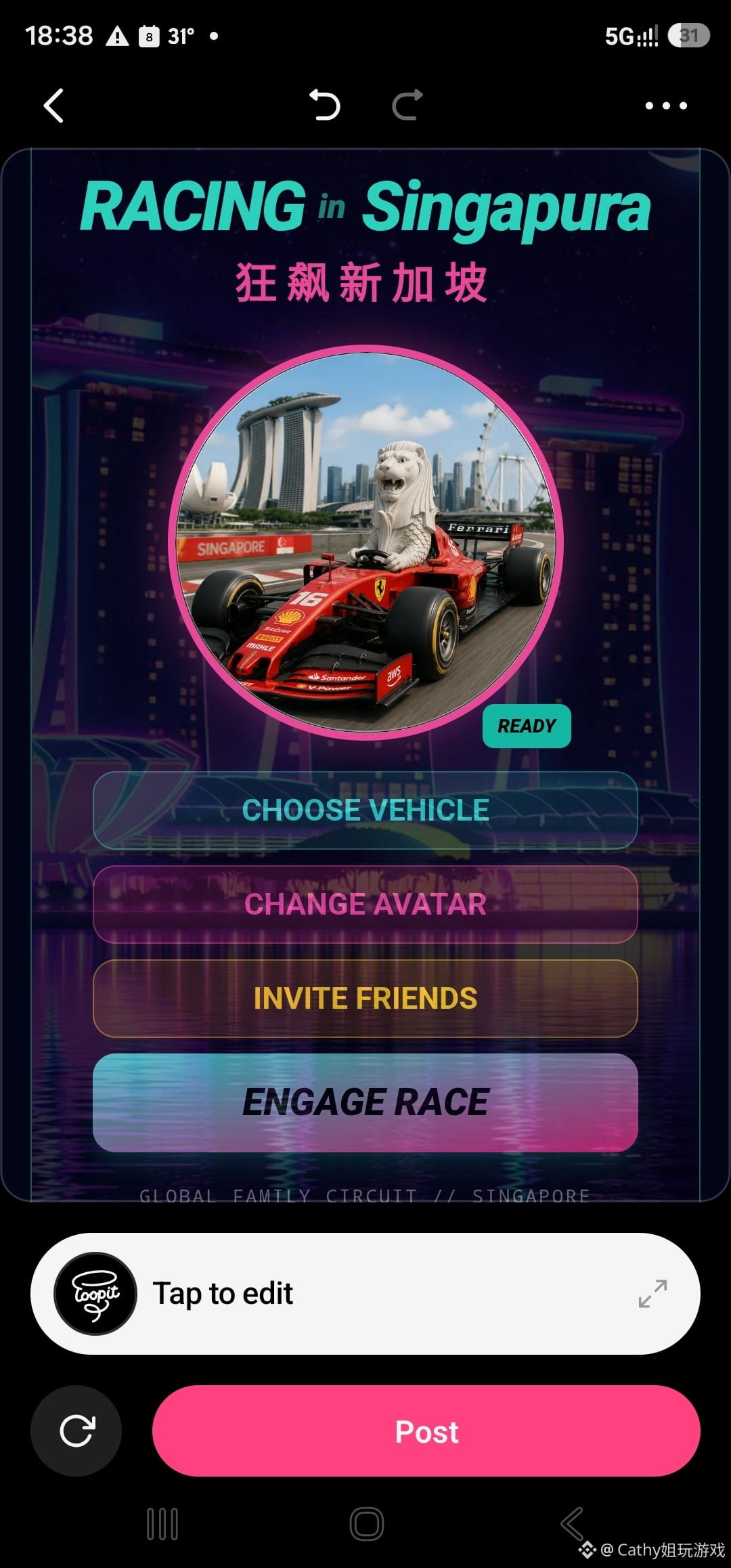
Today is Day 4 of Loopit, an AI game development platform test. I’ve already been talked out of it.
Since yesterday, after I changed my racing game gameplay to include racing and turning the car head in new directions, the optimizations to the game from the prompt inputs from the previous few days are 80% gone.
The durian obstacle has lost size-and-shape differences and the durian model as well. Even when I rewrite the prompts to modify it again, I still can’t fix it.
The ice cream that adds health to the car is completely gone. Even when I add those prompts back in again, it still won’t add it.
The skyline background at the end of the track has been changed four times, but it still can’t be fixed.
No matter what I enter as prompts, Loopit’s AI no longer makes any modifications. The game has been trash from Day 1 to now—4 days of changes—and there’s no way to optimize it further anymore.
Recently I tried two AI game development platforms, Rosebud AI and Loopit, and I’m disappointed.
The bottleneck comes too early, and there’s no way to retain new users like me.
Rosebud AI’s bottleneck is that the very first generated game is too bad, so there’s no desire to modify it. When I was about to start modifying it, it only allowed me to modify once and then burned through 8,000 free credits. To continue, I had to recharge—and I was talked out of it on the first day.
Loopit, despite offering infinite tokens, had me hooked for two days. I stayed up day and night modifying the game. But starting yesterday and continuing to today, the bottleneck where it’s no longer possible to keep modifying has made it unplayable. On the fourth day, I was talked out of it.
AI game development platforms—if they want to become large-scale consumer (C-end) applications, there’s still a long way to go. And that road can’t be accelerated by Loopit and Rosebud AI relying only on their own teams. Ultimately, it still comes down to the capabilities of the large language models they integrate.
Keep going back to buy large-model stocks—buy chip stocks, buy storage stocks.
In the community, some people directly use Codex to make apps; others in a China (Mainland) group say Taptap Maker is pretty good. But it mainly targets professional developers, and it probably isn’t suitable for novice players who don’t have product development experience.
I plan to keep testing, and keep observing. Feel free to comment and share your experiences and viewpoints with friends who are researching AI game development!
Keep it up @Kimi_Moonshot @deepseek_ai , we’ll see how it goes!
{future}(GLMUSDT)
{future}(NVDAUSDT)
{future}(MUUSDT)
Today is Day 4 of Loopit, an AI game development platform test. I’ve already been talked out of it.
Since yesterday, after I changed my racing game gameplay to include racing and turning the car head in new directions, the optimizations to the game from the prompt inputs from the previous few days are 80% gone.
The durian obstacle has lost size-and-shape differences and the durian model as well. Even when I rewrite the prompts to modify it again, I still can’t fix it.
The ice cream that adds health to the car is completely gone. Even when I add those prompts back in again, it still won’t add it.
The skyline background at the end of the track has been changed four times, but it still can’t be fixed.
No matter what I enter as prompts, Loopit’s AI no longer makes any modifications. The game has been trash from Day 1 to now—4 days of changes—and there’s no way to optimize it further anymore.
Recently I tried two AI game development platforms, Rosebud AI and Loopit, and I’m disappointed.
The bottleneck comes too early, and there’s no way to retain new users like me.
Rosebud AI’s bottleneck is that the very first generated game is too bad, so there’s no desire to modify it. When I was about to start modifying it, it only allowed me to modify once and then burned through 8,000 free credits. To continue, I had to recharge—and I was talked out of it on the first day.
Loopit, despite offering infinite tokens, had me hooked for two days. I stayed up day and night modifying the game. But starting yesterday and continuing to today, the bottleneck where it’s no longer possible to keep modifying has made it unplayable. On the fourth day, I was talked out of it.
AI game development platforms—if they want to become large-scale consumer (C-end) applications, there’s still a long way to go. And that road can’t be accelerated by Loopit and Rosebud AI relying only on their own teams. Ultimately, it still comes down to the capabilities of the large language models they integrate.
Keep going back to buy large-model stocks—buy chip stocks, buy storage stocks.
In the community, some people directly use Codex to make apps; others in a China (Mainland) group say Taptap Maker is pretty good. But it mainly targets professional developers, and it probably isn’t suitable for novice players who don’t have product development experience.
I plan to keep testing, and keep observing. Feel free to comment and share your experiences and viewpoints with friends who are researching AI game development!
Keep it up @Kimi_Moonshot @deepseek_ai , we’ll see how it goes!
Since yesterday, after I changed my racing game gameplay to include racing and turning the car head in new directions, the optimizations to the game from the prompt inputs from the previous few days are 80% gone.
The durian obstacle has lost size-and-shape differences and the durian model as well. Even when I rewrite the prompts to modify it again, I still can’t fix it.
The ice cream that adds health to the car is completely gone. Even when I add those prompts back in again, it still won’t add it.
The skyline background at the end of the track has been changed four times, but it still can’t be fixed.
No matter what I enter as prompts, Loopit’s AI no longer makes any modifications. The game has been trash from Day 1 to now—4 days of changes—and there’s no way to optimize it further anymore.
Recently I tried two AI game development platforms, Rosebud AI and Loopit, and I’m disappointed.
The bottleneck comes too early, and there’s no way to retain new users like me.
Rosebud AI’s bottleneck is that the very first generated game is too bad, so there’s no desire to modify it. When I was about to start modifying it, it only allowed me to modify once and then burned through 8,000 free credits. To continue, I had to recharge—and I was talked out of it on the first day.
Loopit, despite offering infinite tokens, had me hooked for two days. I stayed up day and night modifying the game. But starting yesterday and continuing to today, the bottleneck where it’s no longer possible to keep modifying has made it unplayable. On the fourth day, I was talked out of it.
AI game development platforms—if they want to become large-scale consumer (C-end) applications, there’s still a long way to go. And that road can’t be accelerated by Loopit and Rosebud AI relying only on their own teams. Ultimately, it still comes down to the capabilities of the large language models they integrate.
Keep going back to buy large-model stocks—buy chip stocks, buy storage stocks.
In the community, some people directly use Codex to make apps; others in a China (Mainland) group say Taptap Maker is pretty good. But it mainly targets professional developers, and it probably isn’t suitable for novice players who don’t have product development experience.
I plan to keep testing, and keep observing. Feel free to comment and share your experiences and viewpoints with friends who are researching AI game development!
Keep it up @Kimi_Moonshot @deepseek_ai , we’ll see how it goes!
2
2.3k
·
--
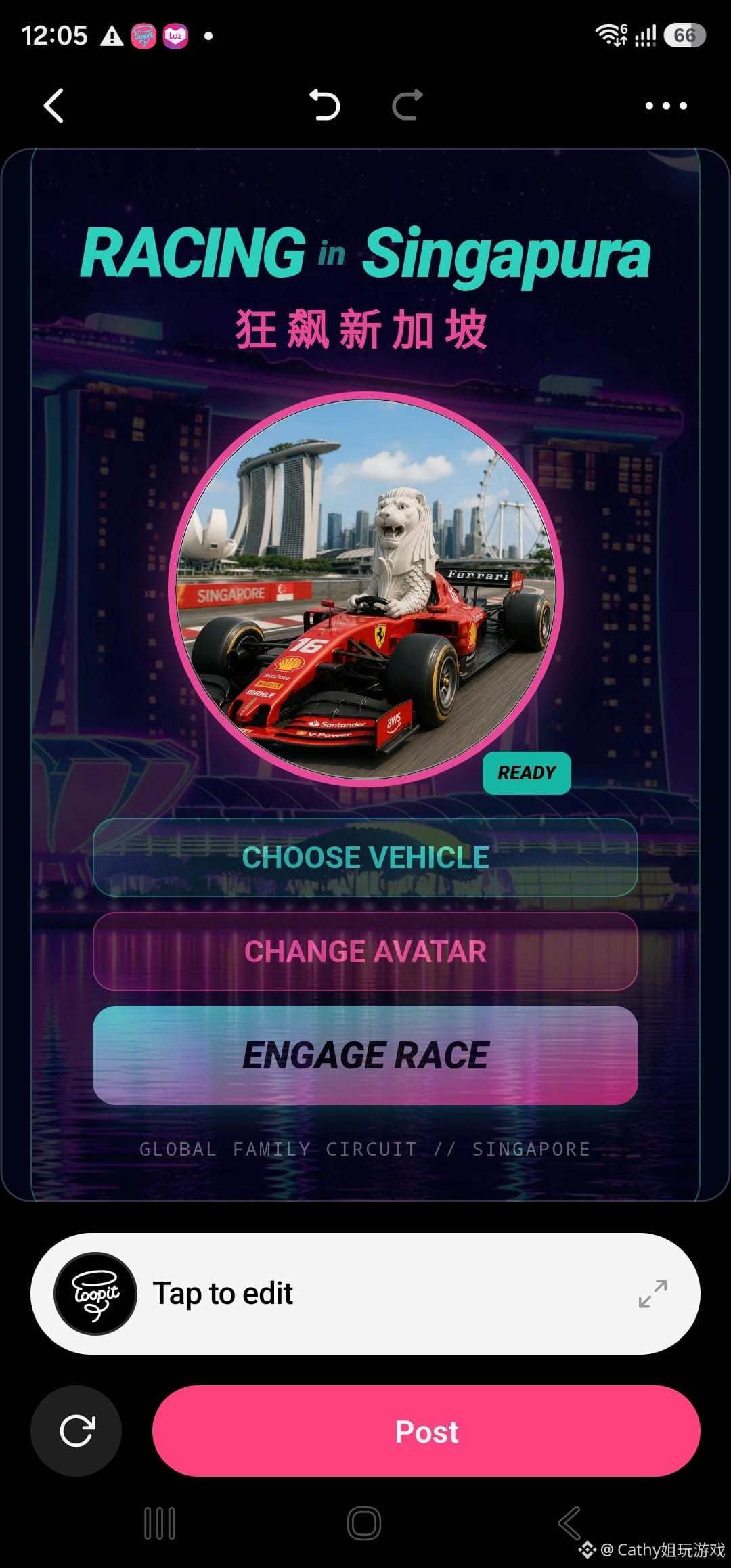
Come to Singapore and go wild—play my racing game developed with Loopit AI.
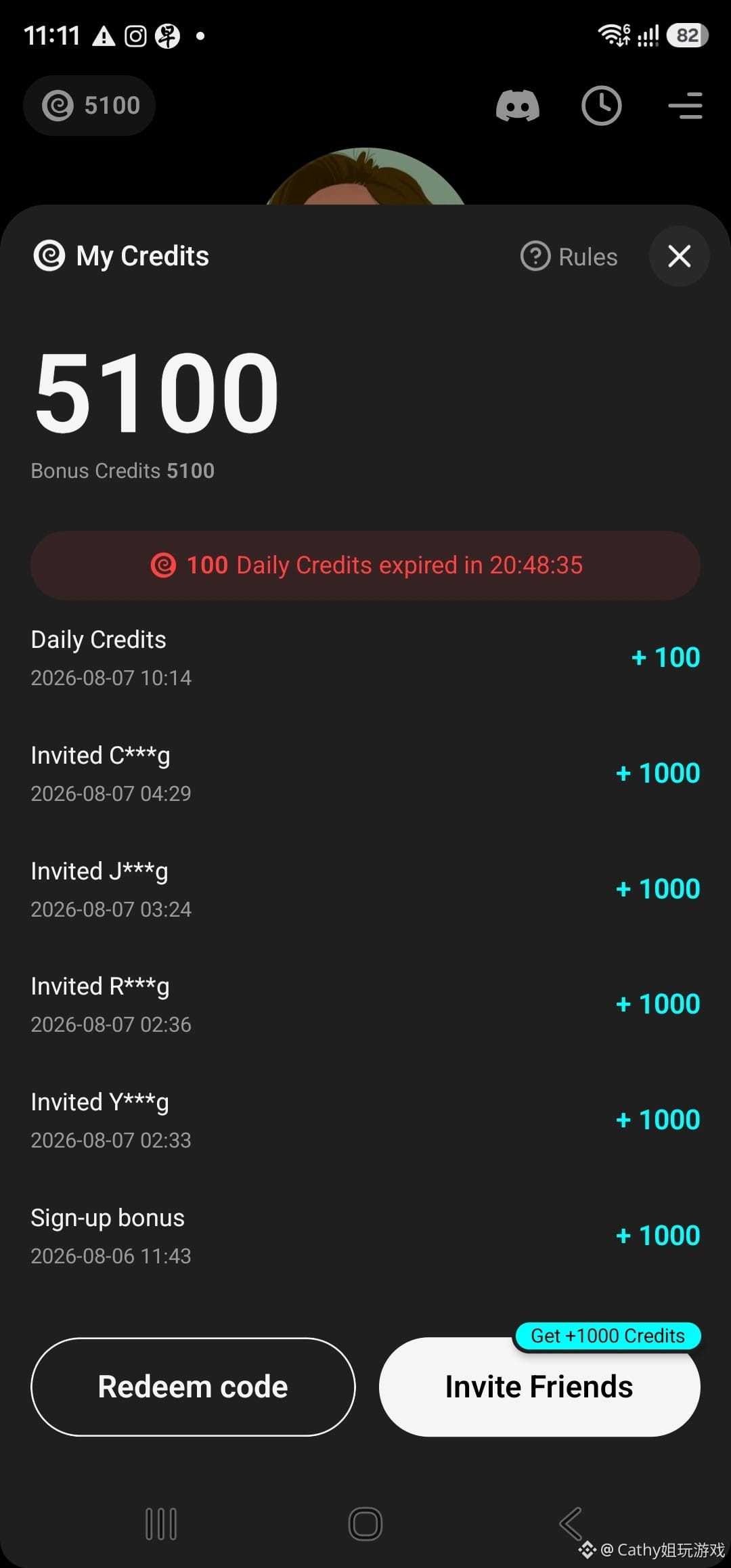
In 24 hours, I probably made about 100 changes just to get this effect. I didn’t spend a single cent to buy tokens—everything was done with free credit. Loopit’s “money power” is too strong. The credit they give for making tons of edits is nowhere near enough, and I want to keep testing until they can’t provide free credit anymore.
My experience with these 24 hours:
1. The large model isn’t very obedient. Even when I give modification prompts, it won’t change—it takes a lot of back-and-forth.
2. Don’t include cutscene-style animations, or it’ll freeze.
3. The 3D effects in the game are pretty poor. The durian obstacle doesn’t look like a durian—it clips through, with mesh overlap.
4. The racing game templates are hard-coded, so I can’t add Singapore street scenery. I want to include street scenery from Singapore’s PIE Pan-Island Expressway, but there’s no way to make it happen.
5. Inviting other players gives 1000 free credit. The person you invite gets 500 free credit (credit is compute power tokens).
6. I think we’re close to the bottleneck for using AI to develop a racing game—if there’s something we can’t change, then we can’t continue further.
https://share.loopit.me/game/e0d362f2-adf5-4e01-a24c-7c600aecb487?l_data=%7B%22said%22%3A%22sa_4ZuDDPDF%22%2C%22ssuid%22%3A%22ss_2WPZrZmZ%22%2C%22sharer%22%3A%22b67f318e-540b-4a17-8d50-ece2b5fa84c5%22%2C%22share_id%22%3A%22e0d362f2-adf5-4e01-a24c-7c600aecb487%22%7D
Come to Singapore and go wild—play my racing game developed with Loopit AI.
In 24 hours, I probably made about 100 changes just to get this effect. I didn’t spend a single cent to buy tokens—everything was done with free credit. Loopit’s “money power” is too strong. The credit they give for making tons of edits is nowhere near enough, and I want to keep testing until they can’t provide free credit anymore.
My experience with these 24 hours:
1. The large model isn’t very obedient. Even when I give modification prompts, it won’t change—it takes a lot of back-and-forth.
2. Don’t include cutscene-style animations, or it’ll freeze.
3. The 3D effects in the game are pretty poor. The durian obstacle doesn’t look like a durian—it clips through, with mesh overlap.
4. The racing game templates are hard-coded, so I can’t add Singapore street scenery. I want to include street scenery from Singapore’s PIE Pan-Island Expressway, but there’s no way to make it happen.
5. Inviting other players gives 1000 free credit. The person you invite gets 500 free credit (credit is compute power tokens).
6. I think we’re close to the bottleneck for using AI to develop a racing game—if there’s something we can’t change, then we can’t continue further.
https://share.loopit.me/game/e0d362f2-adf5-4e01-a24c-7c600aecb487?l_data=%7B%22said%22%3A%22sa_4ZuDDPDF%22%2C%22ssuid%22%3A%22ss_2WPZrZmZ%22%2C%22sharer%22%3A%22b67f318e-540b-4a17-8d50-ece2b5fa84c5%22%2C%22share_id%22%3A%22e0d362f2-adf5-4e01-a24c-7c600aecb487%22%7D
In 24 hours, I probably made about 100 changes just to get this effect. I didn’t spend a single cent to buy tokens—everything was done with free credit. Loopit’s “money power” is too strong. The credit they give for making tons of edits is nowhere near enough, and I want to keep testing until they can’t provide free credit anymore.
My experience with these 24 hours:
1. The large model isn’t very obedient. Even when I give modification prompts, it won’t change—it takes a lot of back-and-forth.
2. Don’t include cutscene-style animations, or it’ll freeze.
3. The 3D effects in the game are pretty poor. The durian obstacle doesn’t look like a durian—it clips through, with mesh overlap.
4. The racing game templates are hard-coded, so I can’t add Singapore street scenery. I want to include street scenery from Singapore’s PIE Pan-Island Expressway, but there’s no way to make it happen.
5. Inviting other players gives 1000 free credit. The person you invite gets 500 free credit (credit is compute power tokens).
6. I think we’re close to the bottleneck for using AI to develop a racing game—if there’s something we can’t change, then we can’t continue further.
https://share.loopit.me/game/e0d362f2-adf5-4e01-a24c-7c600aecb487?l_data=%7B%22said%22%3A%22sa_4ZuDDPDF%22%2C%22ssuid%22%3A%22ss_2WPZrZmZ%22%2C%22sharer%22%3A%22b67f318e-540b-4a17-8d50-ece2b5fa84c5%22%2C%22share_id%22%3A%22e0d362f2-adf5-4e01-a24c-7c600aecb487%22%7D


1
3
2.6k
·
--
Shut down the chain/chain gaming group the night before last, and that’s how I opened this AI game interest group to explore what level of AI game development for C-end users is possible.
I’m not a professional game developer—just a gacha spender—so I’ll skip any game development tools/platforms that have a high learning curve.
I’m opening 50 spots for AI game interest groups—exclusively for my Binance Square friends.
Pure spending, pure entertainment, pure market research, with absolutely no possibility of earning money. So welcome anyone who loves games and enjoys spending money to buy games, experiences, and entertainment content.
Web3 “play-to-earn” and trading folks can ignore this—AI games probably won’t earn you a single cent.
Whether you should leave a comment or message me privately on X—either way works; Binance Square private messages probably can’t be used.
#ai游戏开发
Shut down the chain/chain gaming group the night before last, and that’s how I opened this AI game interest group to explore what level of AI game development for C-end users is possible.
I’m not a professional game developer—just a gacha spender—so I’ll skip any game development tools/platforms that have a high learning curve.
I’m opening 50 spots for AI game interest groups—exclusively for my Binance Square friends.
Pure spending, pure entertainment, pure market research, with absolutely no possibility of earning money. So welcome anyone who loves games and enjoys spending money to buy games, experiences, and entertainment content.
Web3 “play-to-earn” and trading folks can ignore this—AI games probably won’t earn you a single cent.
Whether you should leave a comment or message me privately on X—either way works; Binance Square private messages probably can’t be used.
#ai游戏开发
I’m not a professional game developer—just a gacha spender—so I’ll skip any game development tools/platforms that have a high learning curve.
I’m opening 50 spots for AI game interest groups—exclusively for my Binance Square friends.
Pure spending, pure entertainment, pure market research, with absolutely no possibility of earning money. So welcome anyone who loves games and enjoys spending money to buy games, experiences, and entertainment content.
Web3 “play-to-earn” and trading folks can ignore this—AI games probably won’t earn you a single cent.
Whether you should leave a comment or message me privately on X—either way works; Binance Square private messages probably can’t be used.
#ai游戏开发
Cathy姐玩游戏
·
--
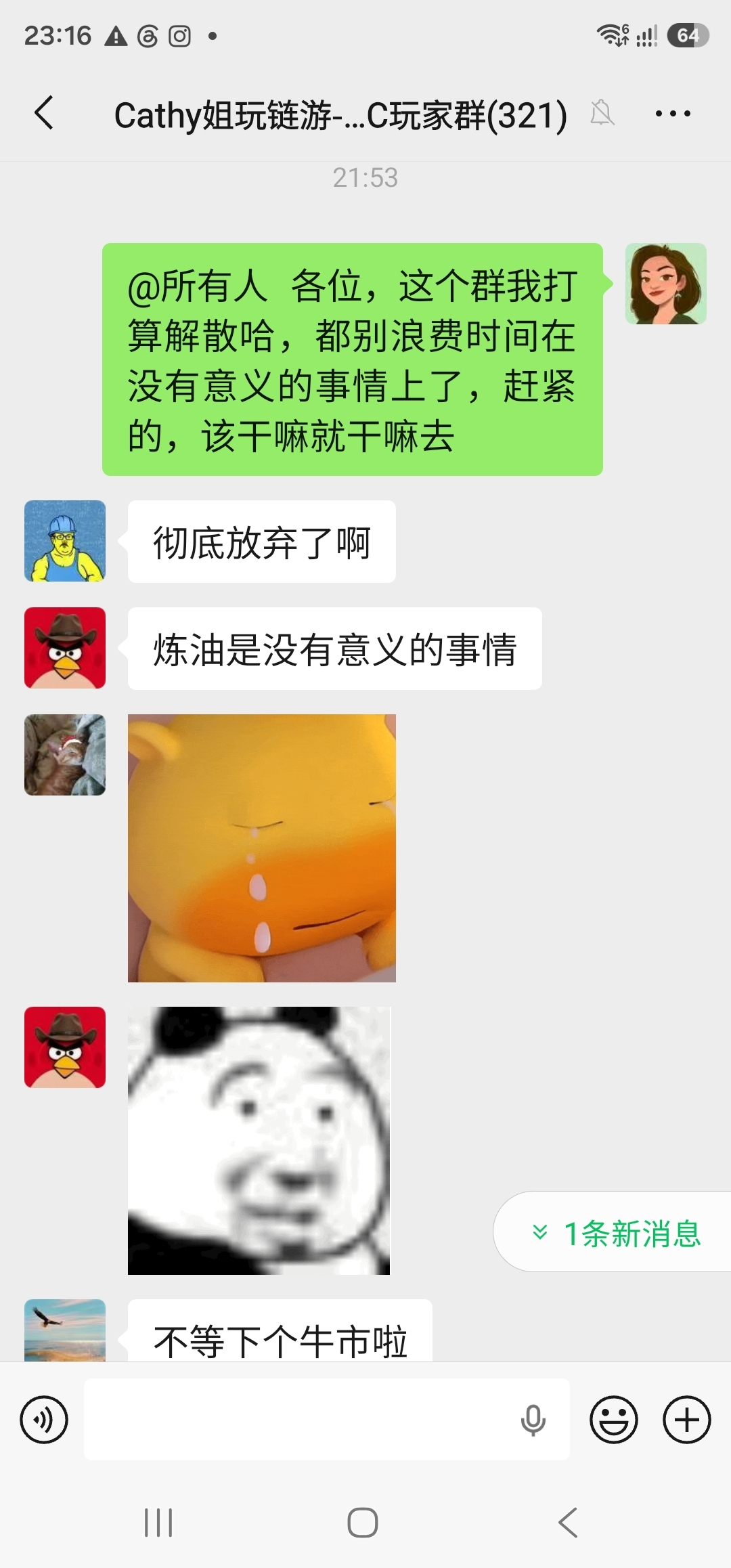
Tonight, we disbanded the “Cathy Sister playing chain games KYC player group.” After playing for 4 years, once the group was dissolved, everyone went back to their own lives and found something else to do. Don’t count on chain games anymore. See you next cycle.
#GameFi
#链游打金
#GameFi
#链游打金

9
3
2.6k
·
--
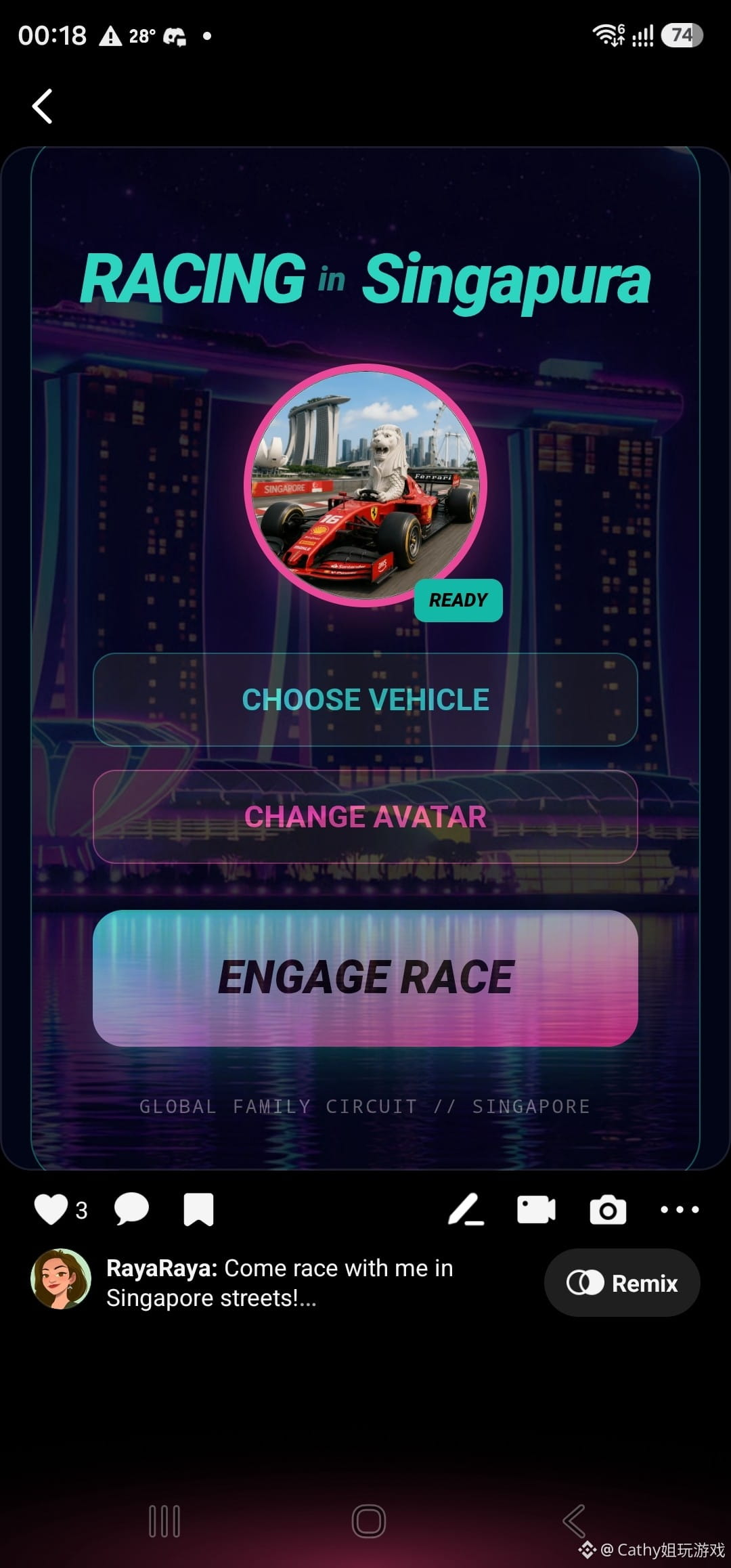
Let’s take a look at the new Singapore racing game I’ve been working on in Loopit from this afternoon until now.
Other than the first version being so ugly you can’t look at it, once you push through and start modifying, it gradually gets better and better. Now I’m kind of hooked.
I’ve been tweaking it nonstop until now, and it’s still free—no need to pay to buy tokens.
If Loopit has money to burn, their free tokens are plentiful. From this afternoon until now, I’ve modified it at least 50 times. Each time, I provide a prompt for the parts to change, and after 2–3 minutes it’s updated.
If this keeps up, the Rosebud AI game development platform I tried last week is already basically dead. The games it releases are pretty awful—players go in, tweak something once, and then they have to buy Token Credit.
https://share.loopit.me/game/acd7b1be-7d34-4249-8d97-127b5c09f553?l_data=%7B%22said%22%3A%22sa_aQNFnrNy%22%2C%22ssuid%22%3A%22ss_VuykV73k%22%2C%22sharer%22%3A%22b67f318e-540b-4a17-8d50-ece2b5fa84c5%22%2C%22share_id%22%3A%22acd7b1be-7d34-4249-8d97-127b5c09f553%22%7D
#AI游戏
Let’s take a look at the new Singapore racing game I’ve been working on in Loopit from this afternoon until now.
Other than the first version being so ugly you can’t look at it, once you push through and start modifying, it gradually gets better and better. Now I’m kind of hooked.
I’ve been tweaking it nonstop until now, and it’s still free—no need to pay to buy tokens.
If Loopit has money to burn, their free tokens are plentiful. From this afternoon until now, I’ve modified it at least 50 times. Each time, I provide a prompt for the parts to change, and after 2–3 minutes it’s updated.
If this keeps up, the Rosebud AI game development platform I tried last week is already basically dead. The games it releases are pretty awful—players go in, tweak something once, and then they have to buy Token Credit.
https://share.loopit.me/game/acd7b1be-7d34-4249-8d97-127b5c09f553?l_data=%7B%22said%22%3A%22sa_aQNFnrNy%22%2C%22ssuid%22%3A%22ss_VuykV73k%22%2C%22sharer%22%3A%22b67f318e-540b-4a17-8d50-ece2b5fa84c5%22%2C%22share_id%22%3A%22acd7b1be-7d34-4249-8d97-127b5c09f553%22%7D
#AI游戏
Other than the first version being so ugly you can’t look at it, once you push through and start modifying, it gradually gets better and better. Now I’m kind of hooked.
I’ve been tweaking it nonstop until now, and it’s still free—no need to pay to buy tokens.
If Loopit has money to burn, their free tokens are plentiful. From this afternoon until now, I’ve modified it at least 50 times. Each time, I provide a prompt for the parts to change, and after 2–3 minutes it’s updated.
If this keeps up, the Rosebud AI game development platform I tried last week is already basically dead. The games it releases are pretty awful—players go in, tweak something once, and then they have to buy Token Credit.
https://share.loopit.me/game/acd7b1be-7d34-4249-8d97-127b5c09f553?l_data=%7B%22said%22%3A%22sa_aQNFnrNy%22%2C%22ssuid%22%3A%22ss_VuykV73k%22%2C%22sharer%22%3A%22b67f318e-540b-4a17-8d50-ece2b5fa84c5%22%2C%22share_id%22%3A%22acd7b1be-7d34-4249-8d97-127b5c09f553%22%7D
#AI游戏
2
2
2.1k
·
--
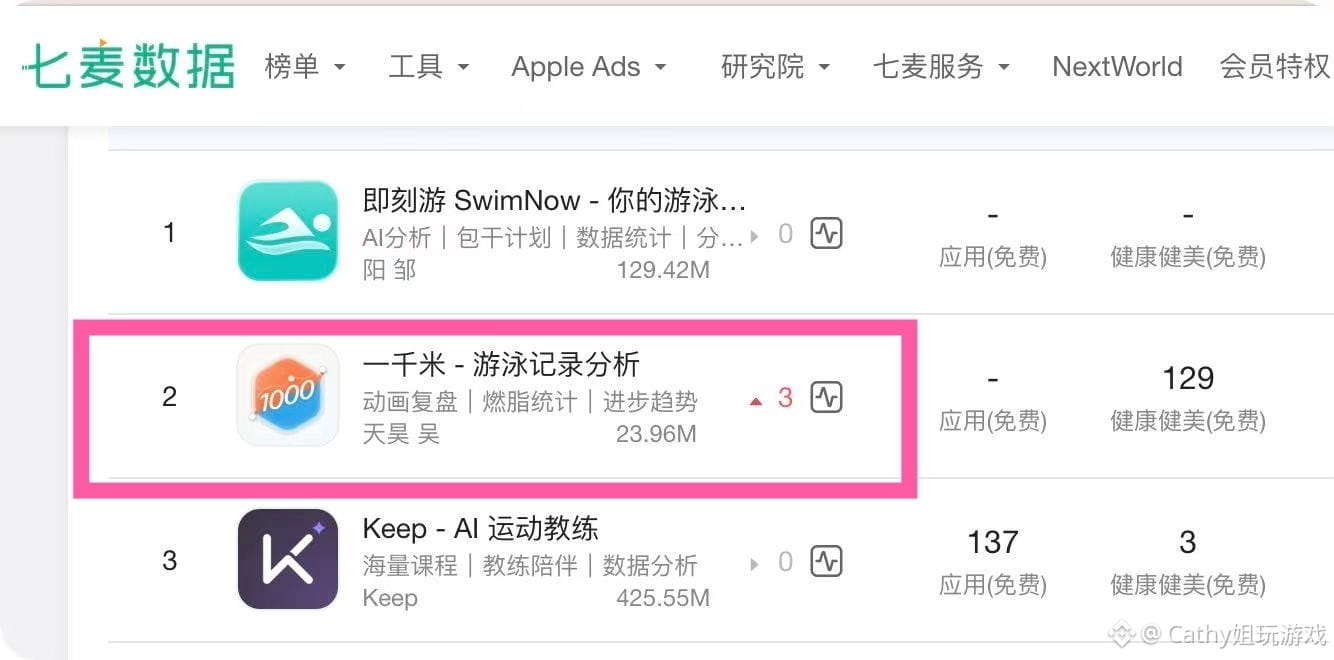
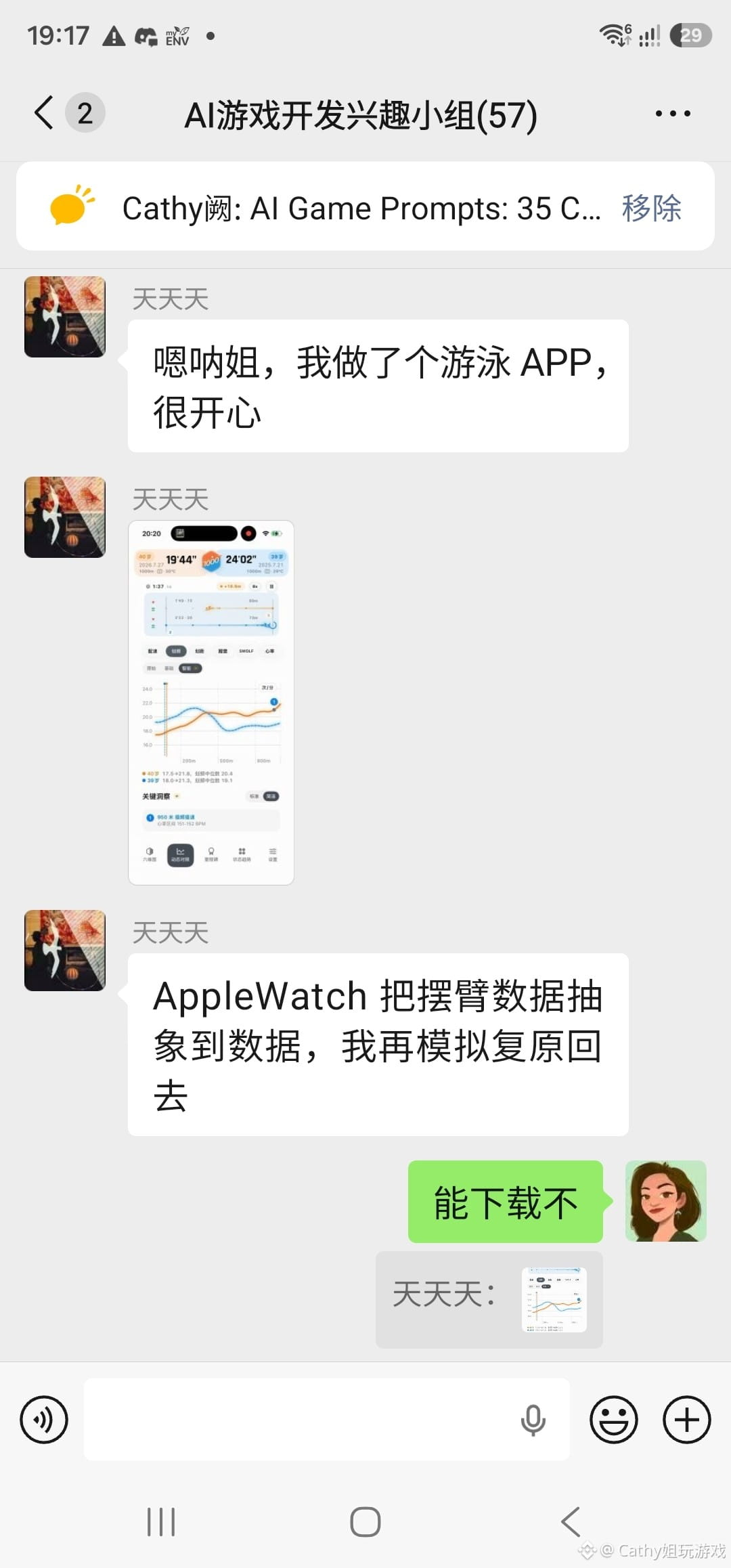
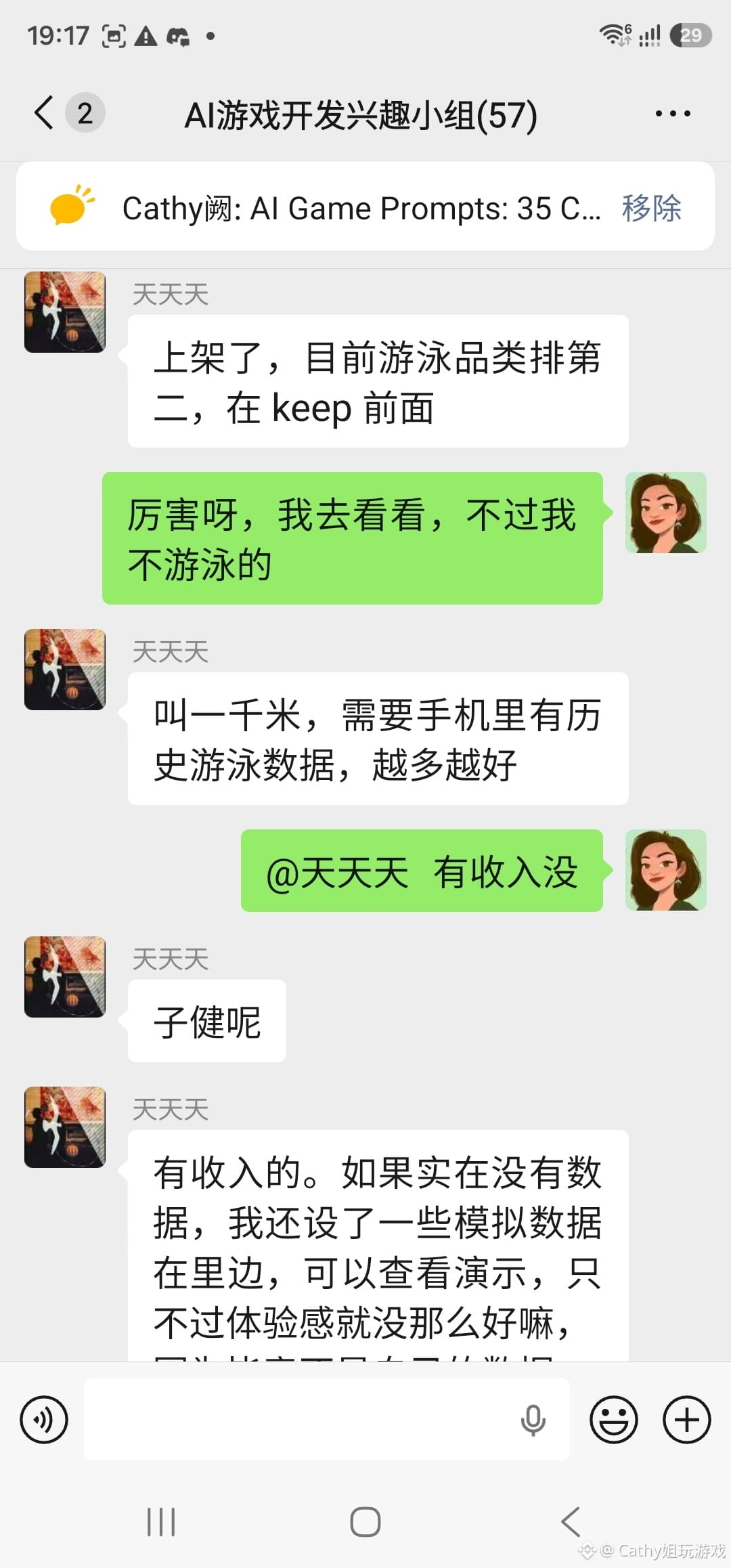
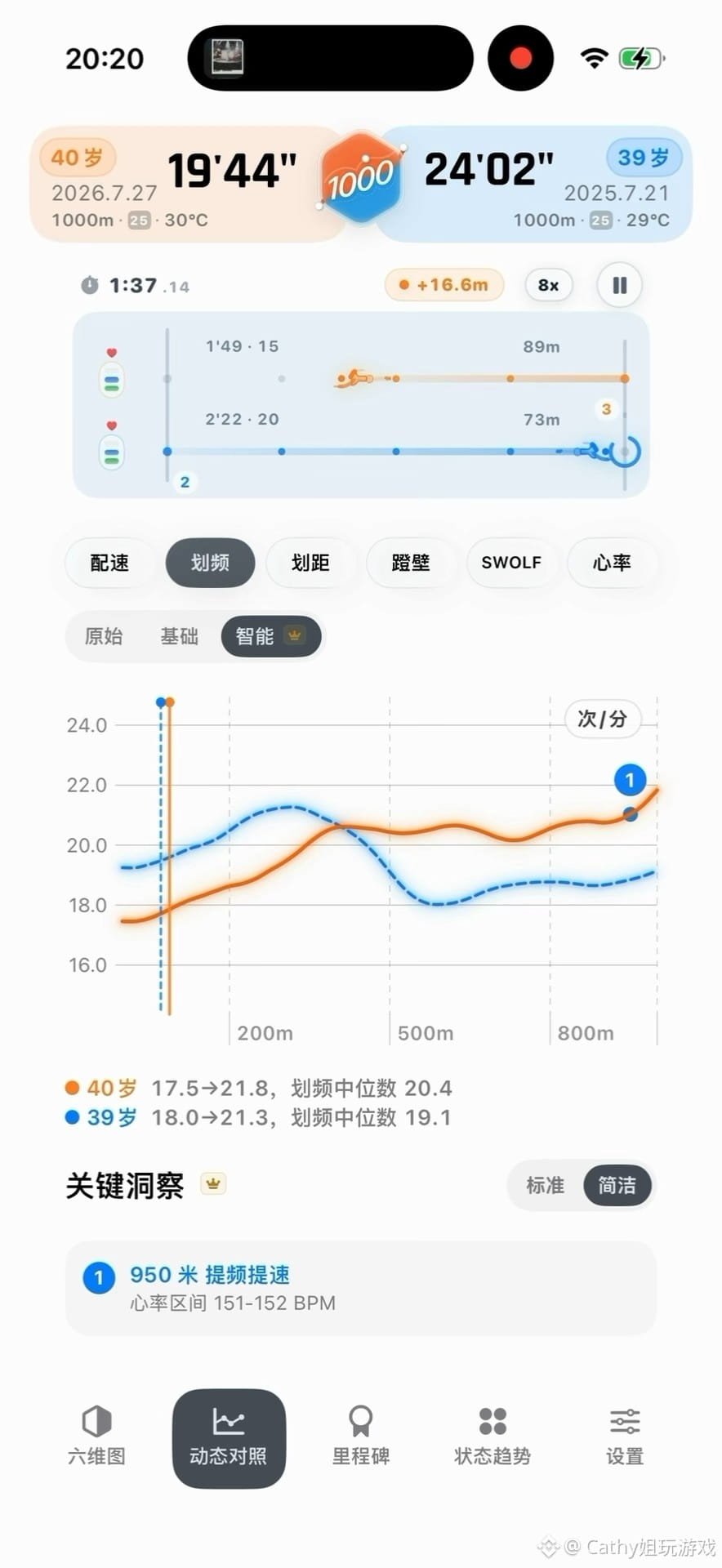
Just found out that one of my former colleagues in Shanghai—an amateur who worked in the same office handling outreach communications and copywriting—actually built a swimming app with Codex during his spare time and has it up on the App Store. In the swimming category, it’s currently ranked #2, ahead of Keep.
He charges users through subscriptions and one-time purchases, and the app already has revenue—he’s basically pulled together a viable business model.
Before AI, it was hard to imagine that an amateur could create a complete product without programming. What used to be something only professional players and specialized development teams could do is now something ordinary people can achieve too.
I only formed this AI game development interest group WeChat group two days ago, and I’ve already noticed so many surprises happening right around me!
Game enthusiasts are welcome to try out this app made by an amateur using AI. For now, it’s available only on iOS. Download link:
apps.apple.com/us/app/%E4%B8%…
Outside of China, you can search for 1000swim in the Apple App Store.
#AI开发
#AI开发者
#AI游戏
Just found out that one of my former colleagues in Shanghai—an amateur who worked in the same office handling outreach communications and copywriting—actually built a swimming app with Codex during his spare time and has it up on the App Store. In the swimming category, it’s currently ranked #2, ahead of Keep.
He charges users through subscriptions and one-time purchases, and the app already has revenue—he’s basically pulled together a viable business model.
Before AI, it was hard to imagine that an amateur could create a complete product without programming. What used to be something only professional players and specialized development teams could do is now something ordinary people can achieve too.
I only formed this AI game development interest group WeChat group two days ago, and I’ve already noticed so many surprises happening right around me!
Game enthusiasts are welcome to try out this app made by an amateur using AI. For now, it’s available only on iOS. Download link:
apps.apple.com/us/app/%E4%B8%…
Outside of China, you can search for 1000swim in the Apple App Store.
#AI开发
#AI开发者
#AI游戏
He charges users through subscriptions and one-time purchases, and the app already has revenue—he’s basically pulled together a viable business model.
Before AI, it was hard to imagine that an amateur could create a complete product without programming. What used to be something only professional players and specialized development teams could do is now something ordinary people can achieve too.
I only formed this AI game development interest group WeChat group two days ago, and I’ve already noticed so many surprises happening right around me!
Game enthusiasts are welcome to try out this app made by an amateur using AI. For now, it’s available only on iOS. Download link:
apps.apple.com/us/app/%E4%B8%…
Outside of China, you can search for 1000swim in the Apple App Store.
#AI开发
#AI开发者
#AI游戏
9
10
4.3k
·
--
My first racing game made in Loopit
A game generated by a prompt. Basically it can’t be properly viewed; it needs to be improved, and each optimization step requires waiting and consumes tokens.
I wonder how far the free tokens that each provider gives can take game development?
Maybe writing the first prompt in more detail would help.
Has anyone tried Loopit? Send me a finished game if you have one.
https://share.loopit.me/game/acd7b1be-7d34-4249-8d97-127b5c09f553?l_data=%7B%22said%22%3A%22sa_zf2MEwDZ%22%2C%22ssuid%22%3A%22ss_pMNKmaS2%22%2C%22sharer%22%3A%22b67f318e-540b-4a17-8d50-ece2b5fa84c5%22%2C%22share_id%22%3A%22acd7b1be-7d34-4249-8d97-127b5c09f553%22%7D
My first racing game made in Loopit
A game generated by a prompt. Basically it can’t be properly viewed; it needs to be improved, and each optimization step requires waiting and consumes tokens.
I wonder how far the free tokens that each provider gives can take game development?
Maybe writing the first prompt in more detail would help.
Has anyone tried Loopit? Send me a finished game if you have one.
https://share.loopit.me/game/acd7b1be-7d34-4249-8d97-127b5c09f553?l_data=%7B%22said%22%3A%22sa_zf2MEwDZ%22%2C%22ssuid%22%3A%22ss_pMNKmaS2%22%2C%22sharer%22%3A%22b67f318e-540b-4a17-8d50-ece2b5fa84c5%22%2C%22share_id%22%3A%22acd7b1be-7d34-4249-8d97-127b5c09f553%22%7D
A game generated by a prompt. Basically it can’t be properly viewed; it needs to be improved, and each optimization step requires waiting and consumes tokens.
I wonder how far the free tokens that each provider gives can take game development?
Maybe writing the first prompt in more detail would help.
Has anyone tried Loopit? Send me a finished game if you have one.
https://share.loopit.me/game/acd7b1be-7d34-4249-8d97-127b5c09f553?l_data=%7B%22said%22%3A%22sa_zf2MEwDZ%22%2C%22ssuid%22%3A%22ss_pMNKmaS2%22%2C%22sharer%22%3A%22b67f318e-540b-4a17-8d50-ece2b5fa84c5%22%2C%22share_id%22%3A%22acd7b1be-7d34-4249-8d97-127b5c09f553%22%7D
1
1.3k
Log in to explore more content
Join global crypto users on Binance Square
⚡️ Get latest and useful information about crypto.
💬 Trusted by the world’s largest crypto exchange.
👍 Discover real insights from verified creators.
Email / Phone number