
Zerionix
427 Posts

Zerionix
Report
Block User
Crypto Researcher • Market Structure • Data > Hype • Daily updates → NFA
0 Following
11 Followers
65 Liked
Posts
·
--
See translation
A Swap Quote Is More Than the Number You See
You enter a swap:
100 USDT → 97 STON
Most people look at the 97 and decide whether to click confirm.
But that number is only the beginning.
A swap quote contains several pieces of information that tell you what is actually happening underneath.
Swap rate tells you how much of the other token you're getting.
Price impact tells you how much your own trade is moving the pool price. A large order against shallow liquidity can create significant impact.
Then there's minimum received, which tells you the lowest output you're willing to accept based on your slippage setting.
And finally, there's the blockchain fee, the network cost required to execute the transaction.
These aren't interchangeable.
A quote can look attractive while the trade still has meaningful price impact.
And a low price impact doesn't automatically mean the final execution is optimal either.
That's why I think reading a swap screen properly is an underrated DeFi skill.
You're not just asking:
“How many tokens am I getting?”
You're asking:
“What is causing that number, and what can change before execution?”
This becomes even more important when routing systems can compare different liquidity sources.
The better question isn't simply whether a swap is available.
It's whether the route gives you good execution for the size you're actually trading.
The interface may make it look like one button.
Underneath, there's a whole pricing and liquidity problem being solved.
Explore STON.fi → https://app.ston.fi/swap
$ETH #BTC Price Analysis# #Altcoin Season# $XRP
A Swap Quote Is More Than the Number You See
You enter a swap:
100 USDT → 97 STON
Most people look at the 97 and decide whether to click confirm.
But that number is only the beginning.
A swap quote contains several pieces of information that tell you what is actually happening underneath.
Swap rate tells you how much of the other token you're getting.
Price impact tells you how much your own trade is moving the pool price. A large order against shallow liquidity can create significant impact.
Then there's minimum received, which tells you the lowest output you're willing to accept based on your slippage setting.
And finally, there's the blockchain fee, the network cost required to execute the transaction.
These aren't interchangeable.
A quote can look attractive while the trade still has meaningful price impact.
And a low price impact doesn't automatically mean the final execution is optimal either.
That's why I think reading a swap screen properly is an underrated DeFi skill.
You're not just asking:
“How many tokens am I getting?”
You're asking:
“What is causing that number, and what can change before execution?”
This becomes even more important when routing systems can compare different liquidity sources.
The better question isn't simply whether a swap is available.
It's whether the route gives you good execution for the size you're actually trading.
The interface may make it look like one button.
Underneath, there's a whole pricing and liquidity problem being solved.
Explore STON.fi → https://app.ston.fi/swap
$ETH #BTC Price Analysis# #Altcoin Season# $XRP
You enter a swap:
100 USDT → 97 STON
Most people look at the 97 and decide whether to click confirm.
But that number is only the beginning.
A swap quote contains several pieces of information that tell you what is actually happening underneath.
Swap rate tells you how much of the other token you're getting.
Price impact tells you how much your own trade is moving the pool price. A large order against shallow liquidity can create significant impact.
Then there's minimum received, which tells you the lowest output you're willing to accept based on your slippage setting.
And finally, there's the blockchain fee, the network cost required to execute the transaction.
These aren't interchangeable.
A quote can look attractive while the trade still has meaningful price impact.
And a low price impact doesn't automatically mean the final execution is optimal either.
That's why I think reading a swap screen properly is an underrated DeFi skill.
You're not just asking:
“How many tokens am I getting?”
You're asking:
“What is causing that number, and what can change before execution?”
This becomes even more important when routing systems can compare different liquidity sources.
The better question isn't simply whether a swap is available.
It's whether the route gives you good execution for the size you're actually trading.
The interface may make it look like one button.
Underneath, there's a whole pricing and liquidity problem being solved.
Explore STON.fi → https://app.ston.fi/swap
$ETH #BTC Price Analysis# #Altcoin Season# $XRP

·
--
See translation
Anthropic and OpenAI's push for slower and more controlled AI development is setting them up for a potential clash with the broader tech industry, Wall Street and the Trump administration, according to Bloomberg.
The tension is pretty straightforward.
AI companies are increasingly concerned about the risks and consequences of deploying increasingly powerful models, while investors and much of the tech industry have strong incentives to keep development moving as quickly as possible.
For Wall Street, slowing AI development could mean slower revenue growth and a longer path to monetizing the enormous capital already flowing into AI infrastructure.
For the Trump administration, the priority has increasingly been maintaining U.S. leadership in AI and competing aggressively with China.
That puts companies like Anthropic and OpenAI in an interesting position.
They are helping drive the technology forward, but they also have to deal with the risks created by moving too quickly.
Personally, I think this conflict is only going to get bigger.
The difficult part of AI governance isn't necessarily convincing people that advanced AI carries risks.
It's deciding how much development society is willing to slow down when billions of dollars, national competitiveness and potentially enormous economic gains are involved.
And that's where the real battle may be.
Who gets to decide how fast AI is allowed to move?
$SOL #BTC Price Analysis# #Altcoin Season# $ETH
Anthropic and OpenAI's push for slower and more controlled AI development is setting them up for a potential clash with the broader tech industry, Wall Street and the Trump administration, according to Bloomberg.
The tension is pretty straightforward.
AI companies are increasingly concerned about the risks and consequences of deploying increasingly powerful models, while investors and much of the tech industry have strong incentives to keep development moving as quickly as possible.
For Wall Street, slowing AI development could mean slower revenue growth and a longer path to monetizing the enormous capital already flowing into AI infrastructure.
For the Trump administration, the priority has increasingly been maintaining U.S. leadership in AI and competing aggressively with China.
That puts companies like Anthropic and OpenAI in an interesting position.
They are helping drive the technology forward, but they also have to deal with the risks created by moving too quickly.
Personally, I think this conflict is only going to get bigger.
The difficult part of AI governance isn't necessarily convincing people that advanced AI carries risks.
It's deciding how much development society is willing to slow down when billions of dollars, national competitiveness and potentially enormous economic gains are involved.
And that's where the real battle may be.
Who gets to decide how fast AI is allowed to move?
$SOL #BTC Price Analysis# #Altcoin Season# $ETH
The tension is pretty straightforward.
AI companies are increasingly concerned about the risks and consequences of deploying increasingly powerful models, while investors and much of the tech industry have strong incentives to keep development moving as quickly as possible.
For Wall Street, slowing AI development could mean slower revenue growth and a longer path to monetizing the enormous capital already flowing into AI infrastructure.
For the Trump administration, the priority has increasingly been maintaining U.S. leadership in AI and competing aggressively with China.
That puts companies like Anthropic and OpenAI in an interesting position.
They are helping drive the technology forward, but they also have to deal with the risks created by moving too quickly.
Personally, I think this conflict is only going to get bigger.
The difficult part of AI governance isn't necessarily convincing people that advanced AI carries risks.
It's deciding how much development society is willing to slow down when billions of dollars, national competitiveness and potentially enormous economic gains are involved.
And that's where the real battle may be.
Who gets to decide how fast AI is allowed to move?
$SOL #BTC Price Analysis# #Altcoin Season# $ETH

·
--
See translation
JUST IN: Senate Republicans have released what they are calling the “final” version of the CLARITY Act, a 635 page crypto market structure bill, ahead of a key procedural vote.
The revised Digital Asset Market Clarity Act reportedly incorporates more than 120 Democratic requests while adding several major changes, including a Trump backed ethics regime, narrower developer liability protections and a stablecoin “circuit breaker.”
The broader framework would split crypto oversight between the SEC and CFTC, establish federal rules for exchanges and other market participants, and provide protections for some non custodial developers, miners and validators.
The ethics provisions are particularly notable.
Covered federal officials and their spouses would reportedly have to divest substantial crypto holdings or place them into blind trusts, with enforcement involving the DOJ and state attorneys general.
For the crypto industry, the bigger prize is regulatory clarity.
Instead of relying on years of enforcement actions and agency interpretation, the bill would establish statutory rules around digital commodities, securities, exchanges, stablecoins and certain DeFi infrastructure.
But none of that matters unless the bill can actually move.
The immediate test is the Senate cloture vote, which requires 60 votes to advance. Republicans do not have enough seats to pass it alone, meaning bipartisan support is still necessary.
Personally, I think this is the most important part of the story.
The word “final” sounds decisive, but the vote is what actually matters.
If CLARITY clears the procedural hurdle, crypto markets can start pricing in a realistic path toward federal market structure rules.
If it fails, the U.S. could remain stuck with the fragmented SEC and CFTC framework that has defined crypto regulation for years.
For an industry that keeps asking when the U.S. will finally provide clear rules, Tuesday could be a very important answer.
$ETH $BTC
JUST IN: Senate Republicans have released what they are calling the “final” version of the CLARITY Act, a 635 page crypto market structure bill, ahead of a key procedural vote.
The revised Digital Asset Market Clarity Act reportedly incorporates more than 120 Democratic requests while adding several major changes, including a Trump backed ethics regime, narrower developer liability protections and a stablecoin “circuit breaker.”
The broader framework would split crypto oversight between the SEC and CFTC, establish federal rules for exchanges and other market participants, and provide protections for some non custodial developers, miners and validators.
The ethics provisions are particularly notable.
Covered federal officials and their spouses would reportedly have to divest substantial crypto holdings or place them into blind trusts, with enforcement involving the DOJ and state attorneys general.
For the crypto industry, the bigger prize is regulatory clarity.
Instead of relying on years of enforcement actions and agency interpretation, the bill would establish statutory rules around digital commodities, securities, exchanges, stablecoins and certain DeFi infrastructure.
But none of that matters unless the bill can actually move.
The immediate test is the Senate cloture vote, which requires 60 votes to advance. Republicans do not have enough seats to pass it alone, meaning bipartisan support is still necessary.
Personally, I think this is the most important part of the story.
The word “final” sounds decisive, but the vote is what actually matters.
If CLARITY clears the procedural hurdle, crypto markets can start pricing in a realistic path toward federal market structure rules.
If it fails, the U.S. could remain stuck with the fragmented SEC and CFTC framework that has defined crypto regulation for years.
For an industry that keeps asking when the U.S. will finally provide clear rules, Tuesday could be a very important answer.
$ETH $BTC
The revised Digital Asset Market Clarity Act reportedly incorporates more than 120 Democratic requests while adding several major changes, including a Trump backed ethics regime, narrower developer liability protections and a stablecoin “circuit breaker.”
The broader framework would split crypto oversight between the SEC and CFTC, establish federal rules for exchanges and other market participants, and provide protections for some non custodial developers, miners and validators.
The ethics provisions are particularly notable.
Covered federal officials and their spouses would reportedly have to divest substantial crypto holdings or place them into blind trusts, with enforcement involving the DOJ and state attorneys general.
For the crypto industry, the bigger prize is regulatory clarity.
Instead of relying on years of enforcement actions and agency interpretation, the bill would establish statutory rules around digital commodities, securities, exchanges, stablecoins and certain DeFi infrastructure.
But none of that matters unless the bill can actually move.
The immediate test is the Senate cloture vote, which requires 60 votes to advance. Republicans do not have enough seats to pass it alone, meaning bipartisan support is still necessary.
Personally, I think this is the most important part of the story.
The word “final” sounds decisive, but the vote is what actually matters.
If CLARITY clears the procedural hurdle, crypto markets can start pricing in a realistic path toward federal market structure rules.
If it fails, the U.S. could remain stuck with the fragmented SEC and CFTC framework that has defined crypto regulation for years.
For an industry that keeps asking when the U.S. will finally provide clear rules, Tuesday could be a very important answer.
$ETH $BTC


·
--
See translation
The UK could be taking another major step toward bringing tokenized gold into mainstream financial markets.
The Financial Conduct Authority is reportedly considering exempting certain tokenized gold products from UK fund regulations as part of a proposal designed to make London's large bullion reserves easier to use as collateral.
The idea is bigger than simply putting gold onchain.
London is one of the world's major gold trading hubs, but a significant amount of bullion sits in vaults without being easily mobilized as collateral. Tokenization could potentially turn that idle physical asset into something that can move through digital financial infrastructure while remaining backed by real gold.
That's where the regulatory proposal becomes interesting.
If tokenized gold receives a clearer path under UK rules, it could make it easier for institutions to use blockchain based representations of physical gold within traditional financial markets.
Personally, I think this is exactly the kind of RWA development worth paying attention to.
Tokenization doesn't need to replace traditional assets. It can simply make assets that already exist more programmable, transferable and useful as collateral.
And gold is probably one of the easiest assets to understand in that context.
The bigger question is whether regulators eventually apply the same logic to other real world assets.
Because once governments and financial institutions start treating tokenized assets as legitimate financial infrastructure rather than experimental crypto products, the RWA narrative starts looking very different.
Gold may just be one of the first major tests.
$XAUt $BTC #BTC Price Analysis# #Meme Alpha#
The UK could be taking another major step toward bringing tokenized gold into mainstream financial markets.
The Financial Conduct Authority is reportedly considering exempting certain tokenized gold products from UK fund regulations as part of a proposal designed to make London's large bullion reserves easier to use as collateral.
The idea is bigger than simply putting gold onchain.
London is one of the world's major gold trading hubs, but a significant amount of bullion sits in vaults without being easily mobilized as collateral. Tokenization could potentially turn that idle physical asset into something that can move through digital financial infrastructure while remaining backed by real gold.
That's where the regulatory proposal becomes interesting.
If tokenized gold receives a clearer path under UK rules, it could make it easier for institutions to use blockchain based representations of physical gold within traditional financial markets.
Personally, I think this is exactly the kind of RWA development worth paying attention to.
Tokenization doesn't need to replace traditional assets. It can simply make assets that already exist more programmable, transferable and useful as collateral.
And gold is probably one of the easiest assets to understand in that context.
The bigger question is whether regulators eventually apply the same logic to other real world assets.
Because once governments and financial institutions start treating tokenized assets as legitimate financial infrastructure rather than experimental crypto products, the RWA narrative starts looking very different.
Gold may just be one of the first major tests.
$XAUt $BTC #BTC Price Analysis# #Meme Alpha#
The Financial Conduct Authority is reportedly considering exempting certain tokenized gold products from UK fund regulations as part of a proposal designed to make London's large bullion reserves easier to use as collateral.
The idea is bigger than simply putting gold onchain.
London is one of the world's major gold trading hubs, but a significant amount of bullion sits in vaults without being easily mobilized as collateral. Tokenization could potentially turn that idle physical asset into something that can move through digital financial infrastructure while remaining backed by real gold.
That's where the regulatory proposal becomes interesting.
If tokenized gold receives a clearer path under UK rules, it could make it easier for institutions to use blockchain based representations of physical gold within traditional financial markets.
Personally, I think this is exactly the kind of RWA development worth paying attention to.
Tokenization doesn't need to replace traditional assets. It can simply make assets that already exist more programmable, transferable and useful as collateral.
And gold is probably one of the easiest assets to understand in that context.
The bigger question is whether regulators eventually apply the same logic to other real world assets.
Because once governments and financial institutions start treating tokenized assets as legitimate financial infrastructure rather than experimental crypto products, the RWA narrative starts looking very different.
Gold may just be one of the first major tests.
$XAUt $BTC #BTC Price Analysis# #Meme Alpha#


23
·
--
See translation
ETF flows are telling an interesting story right now.
Last week, spot Bitcoin ETFs recorded roughly $462.7M in net outflows, while Ethereum, Solana and XRP spot ETFs all attracted fresh capital.
ETH led the group with $197.1M in net inflows, followed by XRP at $19M and SOL at $10.3M.
That creates an interesting divergence.
Bitcoin is still the dominant institutional crypto asset, so seeing money leave BTC ETFs while capital continues moving into other assets suggests investors aren't necessarily leaving crypto altogether. Some of that capital may simply be rotating toward assets where investors currently see more upside.
Ethereum is the clearest example.
Nearly $200M of weekly inflows into ETH ETFs shows that institutional demand isn't limited to Bitcoin. With Ethereum also benefiting from growing interest around tokenization, stablecoins and DeFi, investors may be increasingly viewing ETH as more than just the second largest cryptocurrency.
The SOL and XRP numbers are much smaller, but they're still worth watching. Consistent inflows into newer spot ETF products can tell us whether institutional demand is broadening beyond BTC and ETH.
Personally, I think the important thing here isn't that BTC had a bad week.
One week of outflows doesn't suddenly invalidate the Bitcoin thesis.
What matters is whether this becomes a sustained rotation.
If BTC continues seeing outflows while ETH, SOL and XRP keep attracting capital, that would suggest institutional positioning is becoming more diversified across crypto.
If Bitcoin flows reverse while the other ETFs continue attracting money, that's a different signal too.
For now, the message is simple:
Capital isn't necessarily leaving crypto.
It may just be looking for a different place to sit.
$SOL #BTC Price Analysis# #ETH $XRP
ETF flows are telling an interesting story right now.
Last week, spot Bitcoin ETFs recorded roughly $462.7M in net outflows, while Ethereum, Solana and XRP spot ETFs all attracted fresh capital.
ETH led the group with $197.1M in net inflows, followed by XRP at $19M and SOL at $10.3M.
That creates an interesting divergence.
Bitcoin is still the dominant institutional crypto asset, so seeing money leave BTC ETFs while capital continues moving into other assets suggests investors aren't necessarily leaving crypto altogether. Some of that capital may simply be rotating toward assets where investors currently see more upside.
Ethereum is the clearest example.
Nearly $200M of weekly inflows into ETH ETFs shows that institutional demand isn't limited to Bitcoin. With Ethereum also benefiting from growing interest around tokenization, stablecoins and DeFi, investors may be increasingly viewing ETH as more than just the second largest cryptocurrency.
The SOL and XRP numbers are much smaller, but they're still worth watching. Consistent inflows into newer spot ETF products can tell us whether institutional demand is broadening beyond BTC and ETH.
Personally, I think the important thing here isn't that BTC had a bad week.
One week of outflows doesn't suddenly invalidate the Bitcoin thesis.
What matters is whether this becomes a sustained rotation.
If BTC continues seeing outflows while ETH, SOL and XRP keep attracting capital, that would suggest institutional positioning is becoming more diversified across crypto.
If Bitcoin flows reverse while the other ETFs continue attracting money, that's a different signal too.
For now, the message is simple:
Capital isn't necessarily leaving crypto.
It may just be looking for a different place to sit.
$SOL #BTC Price Analysis# #ETH $XRP
Last week, spot Bitcoin ETFs recorded roughly $462.7M in net outflows, while Ethereum, Solana and XRP spot ETFs all attracted fresh capital.
ETH led the group with $197.1M in net inflows, followed by XRP at $19M and SOL at $10.3M.
That creates an interesting divergence.
Bitcoin is still the dominant institutional crypto asset, so seeing money leave BTC ETFs while capital continues moving into other assets suggests investors aren't necessarily leaving crypto altogether. Some of that capital may simply be rotating toward assets where investors currently see more upside.
Ethereum is the clearest example.
Nearly $200M of weekly inflows into ETH ETFs shows that institutional demand isn't limited to Bitcoin. With Ethereum also benefiting from growing interest around tokenization, stablecoins and DeFi, investors may be increasingly viewing ETH as more than just the second largest cryptocurrency.
The SOL and XRP numbers are much smaller, but they're still worth watching. Consistent inflows into newer spot ETF products can tell us whether institutional demand is broadening beyond BTC and ETH.
Personally, I think the important thing here isn't that BTC had a bad week.
One week of outflows doesn't suddenly invalidate the Bitcoin thesis.
What matters is whether this becomes a sustained rotation.
If BTC continues seeing outflows while ETH, SOL and XRP keep attracting capital, that would suggest institutional positioning is becoming more diversified across crypto.
If Bitcoin flows reverse while the other ETFs continue attracting money, that's a different signal too.
For now, the message is simple:
Capital isn't necessarily leaving crypto.
It may just be looking for a different place to sit.
$SOL #BTC Price Analysis# #ETH $XRP
28
·
--
See translation
When you swap on a DEX, you probably imagine liquidity sitting inside a pool, waiting for someone to trade against it.
Cross chain execution can work very differently.
With Omniston, liquidity can come from resolvers.
A user requests a swap, and Omniston sends an RFQ to participating resolvers. They compete by returning executable quotes, and the best available quote can win the order.
The interesting part is what happens next.
The winning resolver provides the destination side of the trade. That liquidity doesn't need to sit inside one giant shared pool across every supported chain. It can be supplied where and when demand actually appears.
This creates a different model from simply deploying another liquidity pool on every network.
Instead of asking:
“How much liquidity does this chain have sitting around?”
you can ask:
“Who is willing to execute this order right now, and at what price?”
That distinction matters because cross chain liquidity is naturally fragmented. Different assets, chains and markets have different depths.
Resolvers turn part of that fragmentation into a competitive execution market.
And behind the trade, paired HTLCs make the settlement atomic. Either the swap completes according to the agreed conditions, or the funds can be refunded.
So the resolver isn't a custodian sitting between you and your destination asset.
It's an execution participant competing for your order.
That is a very different way of thinking about cross chain liquidity.
Explore Omniston → https://ston.fi/omniston
$BTC #BTC Price Analysis# #Altcoin Season# $ETH
When you swap on a DEX, you probably imagine liquidity sitting inside a pool, waiting for someone to trade against it.
Cross chain execution can work very differently.
With Omniston, liquidity can come from resolvers.
A user requests a swap, and Omniston sends an RFQ to participating resolvers. They compete by returning executable quotes, and the best available quote can win the order.
The interesting part is what happens next.
The winning resolver provides the destination side of the trade. That liquidity doesn't need to sit inside one giant shared pool across every supported chain. It can be supplied where and when demand actually appears.
This creates a different model from simply deploying another liquidity pool on every network.
Instead of asking:
“How much liquidity does this chain have sitting around?”
you can ask:
“Who is willing to execute this order right now, and at what price?”
That distinction matters because cross chain liquidity is naturally fragmented. Different assets, chains and markets have different depths.
Resolvers turn part of that fragmentation into a competitive execution market.
And behind the trade, paired HTLCs make the settlement atomic. Either the swap completes according to the agreed conditions, or the funds can be refunded.
So the resolver isn't a custodian sitting between you and your destination asset.
It's an execution participant competing for your order.
That is a very different way of thinking about cross chain liquidity.
Explore Omniston → https://ston.fi/omniston
$BTC #BTC Price Analysis# #Altcoin Season# $ETH
Cross chain execution can work very differently.
With Omniston, liquidity can come from resolvers.
A user requests a swap, and Omniston sends an RFQ to participating resolvers. They compete by returning executable quotes, and the best available quote can win the order.
The interesting part is what happens next.
The winning resolver provides the destination side of the trade. That liquidity doesn't need to sit inside one giant shared pool across every supported chain. It can be supplied where and when demand actually appears.
This creates a different model from simply deploying another liquidity pool on every network.
Instead of asking:
“How much liquidity does this chain have sitting around?”
you can ask:
“Who is willing to execute this order right now, and at what price?”
That distinction matters because cross chain liquidity is naturally fragmented. Different assets, chains and markets have different depths.
Resolvers turn part of that fragmentation into a competitive execution market.
And behind the trade, paired HTLCs make the settlement atomic. Either the swap completes according to the agreed conditions, or the funds can be refunded.
So the resolver isn't a custodian sitting between you and your destination asset.
It's an execution participant competing for your order.
That is a very different way of thinking about cross chain liquidity.
Explore Omniston → https://ston.fi/omniston
$BTC #BTC Price Analysis# #Altcoin Season# $ETH

36
·
--
See translation
$BTC is heading into one of the most important macro weeks of the month.
The Fed and Bank of Japan are delivering back to back rate decisions, with markets watching not just the decisions themselves, but what both central banks say afterward.
The Fed is the obvious one.
Markets have been pricing a strong chance of a 25bp hike, while expectations also point toward the BOJ raising rates to 1.25%.
That creates an interesting risk for #Bitcoin.
If U.S. yields push higher while the yen strengthens sharply, global liquidity could tighten from both sides. A stronger yen could also accelerate the unwinding of yen funded carry trades, forcing investors to reduce exposure to riskier assets.
And crypto is usually not where investors hide when liquidity gets uncomfortable.
Then there is oil.
Brent above $100 keeps the inflation problem alive, while the U.S. 10 year yield approaching 5% makes the market much less comfortable with the idea of easy money returning quickly.
Personally, I think the reaction after the meetings will matter more than the rate decisions themselves.
A hike that comes with a relatively calm outlook could be absorbed.
A hike accompanied by a clearly hawkish message, rising yields and a stronger yen would be a very different story.
That's why I'm watching four things after the decisions: U.S. yields, USD/JPY, spot Bitcoin ETF flows and actual spot demand.
If BTC can hold up while those macro pressures intensify, that would tell me buyers are much stronger than the headlines suggest.
But if liquidity tightens and Bitcoin starts losing key levels at the same time, the macro story becomes impossible to ignore.
The real test begins after the rate decisions.
Do buyers still show up when the Fed and BOJ stop giving the market room to breathe?
$BTC #BTC Price Analysis#
$BTC is heading into one of the most important macro weeks of the month.
The Fed and Bank of Japan are delivering back to back rate decisions, with markets watching not just the decisions themselves, but what both central banks say afterward.
The Fed is the obvious one.
Markets have been pricing a strong chance of a 25bp hike, while expectations also point toward the BOJ raising rates to 1.25%.
That creates an interesting risk for #Bitcoin.
If U.S. yields push higher while the yen strengthens sharply, global liquidity could tighten from both sides. A stronger yen could also accelerate the unwinding of yen funded carry trades, forcing investors to reduce exposure to riskier assets.
And crypto is usually not where investors hide when liquidity gets uncomfortable.
Then there is oil.
Brent above $100 keeps the inflation problem alive, while the U.S. 10 year yield approaching 5% makes the market much less comfortable with the idea of easy money returning quickly.
Personally, I think the reaction after the meetings will matter more than the rate decisions themselves.
A hike that comes with a relatively calm outlook could be absorbed.
A hike accompanied by a clearly hawkish message, rising yields and a stronger yen would be a very different story.
That's why I'm watching four things after the decisions: U.S. yields, USD/JPY, spot Bitcoin ETF flows and actual spot demand.
If BTC can hold up while those macro pressures intensify, that would tell me buyers are much stronger than the headlines suggest.
But if liquidity tightens and Bitcoin starts losing key levels at the same time, the macro story becomes impossible to ignore.
The real test begins after the rate decisions.
Do buyers still show up when the Fed and BOJ stop giving the market room to breathe?
$BTC #BTC Price Analysis#
The Fed and Bank of Japan are delivering back to back rate decisions, with markets watching not just the decisions themselves, but what both central banks say afterward.
The Fed is the obvious one.
Markets have been pricing a strong chance of a 25bp hike, while expectations also point toward the BOJ raising rates to 1.25%.
That creates an interesting risk for #Bitcoin.
If U.S. yields push higher while the yen strengthens sharply, global liquidity could tighten from both sides. A stronger yen could also accelerate the unwinding of yen funded carry trades, forcing investors to reduce exposure to riskier assets.
And crypto is usually not where investors hide when liquidity gets uncomfortable.
Then there is oil.
Brent above $100 keeps the inflation problem alive, while the U.S. 10 year yield approaching 5% makes the market much less comfortable with the idea of easy money returning quickly.
Personally, I think the reaction after the meetings will matter more than the rate decisions themselves.
A hike that comes with a relatively calm outlook could be absorbed.
A hike accompanied by a clearly hawkish message, rising yields and a stronger yen would be a very different story.
That's why I'm watching four things after the decisions: U.S. yields, USD/JPY, spot Bitcoin ETF flows and actual spot demand.
If BTC can hold up while those macro pressures intensify, that would tell me buyers are much stronger than the headlines suggest.
But if liquidity tightens and Bitcoin starts losing key levels at the same time, the macro story becomes impossible to ignore.
The real test begins after the rate decisions.
Do buyers still show up when the Fed and BOJ stop giving the market room to breathe?
$BTC #BTC Price Analysis#

55
·
--
See translation
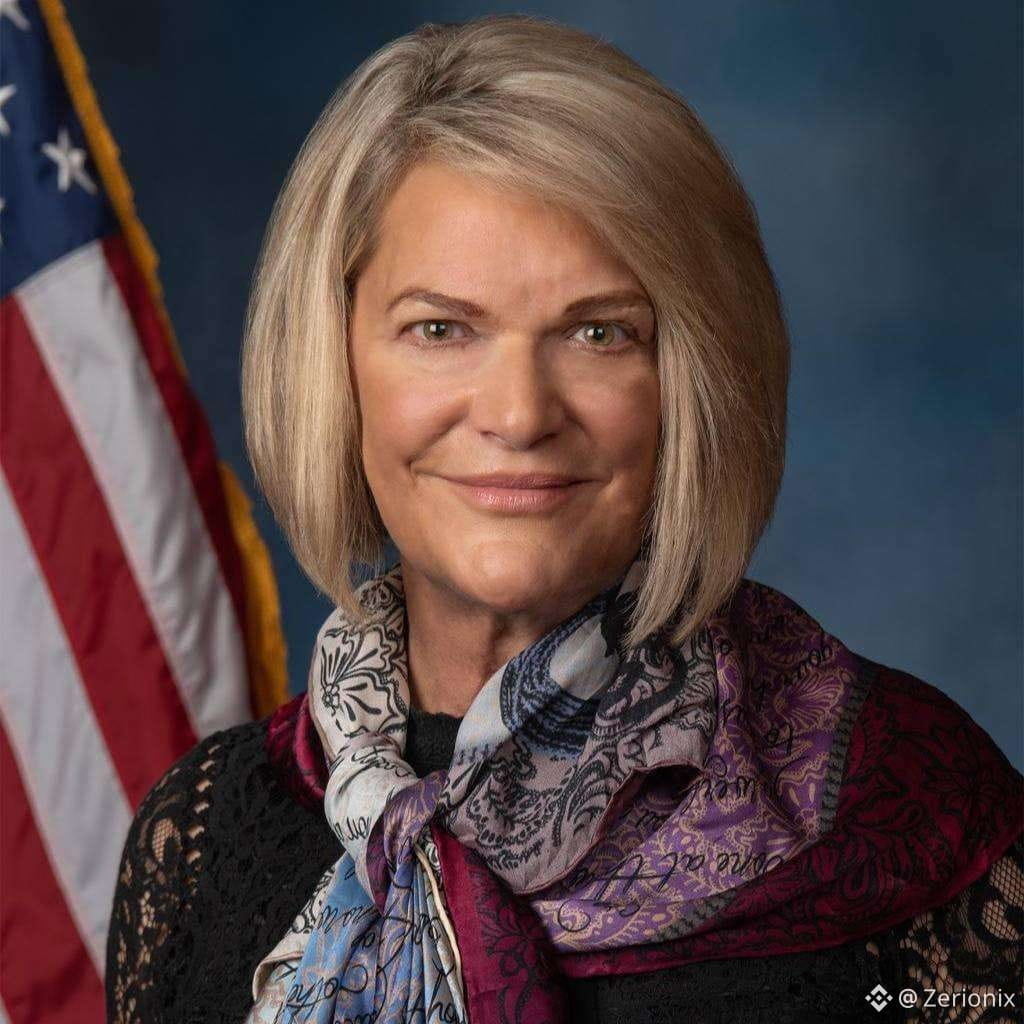
Senator Cynthia Lummis says senators are free to vote against tougher restrictions on politicians investing in crypto, but believes most Americans would disagree with that choice.
The comments come as the Senate works through ethics provisions tied to the CLARITY Act, including restrictions aimed at potential conflicts of interest involving politicians and crypto.
My take: this is becoming bigger than crypto regulation.
If lawmakers are writing the rules for an industry they can personally invest in, the conflict of interest argument is going to be difficult to ignore.
Crypto wants clearer rules, but credibility matters too.
If the industry wants mainstream adoption, the people making the rules probably need to play by rules the public can actually trust.
$BTC #Meme Alpha# #Meme Alpha#
Senator Cynthia Lummis says senators are free to vote against tougher restrictions on politicians investing in crypto, but believes most Americans would disagree with that choice.
The comments come as the Senate works through ethics provisions tied to the CLARITY Act, including restrictions aimed at potential conflicts of interest involving politicians and crypto.
My take: this is becoming bigger than crypto regulation.
If lawmakers are writing the rules for an industry they can personally invest in, the conflict of interest argument is going to be difficult to ignore.
Crypto wants clearer rules, but credibility matters too.
If the industry wants mainstream adoption, the people making the rules probably need to play by rules the public can actually trust.
$BTC #Meme Alpha# #Meme Alpha#
The comments come as the Senate works through ethics provisions tied to the CLARITY Act, including restrictions aimed at potential conflicts of interest involving politicians and crypto.
My take: this is becoming bigger than crypto regulation.
If lawmakers are writing the rules for an industry they can personally invest in, the conflict of interest argument is going to be difficult to ignore.
Crypto wants clearer rules, but credibility matters too.
If the industry wants mainstream adoption, the people making the rules probably need to play by rules the public can actually trust.
$BTC #Meme Alpha# #Meme Alpha#
56
·
--
See translation
A supply shock in the Middle East is starting to show up somewhere you probably wouldn't expect: Costco shelves. Costco has reportedly begun limiting motor oil purchases amid shipping disruptions linked to the US Iran conflict. Motor oil isn't the headline everyone is watching. That's exactly why I find this interesting. When geopolitical stress starts affecting ordinary consumer products, the issue is no longer just about oil prices or financial markets. It starts becoming a supply chain problem. And the Strait of Hormuz is at the center of it. A large share of global energy flows through the waterway, so prolonged disruption can push up transportation and production costs far beyond the energy market itself. That creates an ugly problem for the Fed. Higher energy and shipping costs can feed into inflation at the same time economic activity starts taking a hit. That's basically the opposite of the environment markets want. And crypto doesn't get to sit outside that equation. If the conflict keeps energy prices elevated, inflation stays sticky and the Fed has less room to ease policy. That means tighter liquidity for longer, which can put pressure on BTC and other risk assets. But I don't think one Costco restriction means we're heading straight into a global supply crisis. The real signal is whether these disruptions spread across more products, companies and transportation routes. Personally, that's what I'm watching now. Not just the price of oil. I'm watching how far the shock travels. Because if Hormuz disruption becomes a broader inflation story, the next market to feel it may not be the oil market. It could be the Fed. And eventually, crypto. #BTC Price Analysis# $BTC #Macro Insights# $XRP
A supply shock in the Middle East is starting to show up somewhere you probably wouldn't expect: Costco shelves. Costco has reportedly begun limiting motor oil purchases amid shipping disruptions linked to the US Iran conflict. Motor oil isn't the headline everyone is watching. That's exactly why I find this interesting. When geopolitical stress starts affecting ordinary consumer products, the issue is no longer just about oil prices or financial markets. It starts becoming a supply chain problem. And the Strait of Hormuz is at the center of it. A large share of global energy flows through the waterway, so prolonged disruption can push up transportation and production costs far beyond the energy market itself. That creates an ugly problem for the Fed. Higher energy and shipping costs can feed into inflation at the same time economic activity starts taking a hit. That's basically the opposite of the environment markets want. And crypto doesn't get to sit outside that equation. If the conflict keeps energy prices elevated, inflation stays sticky and the Fed has less room to ease policy. That means tighter liquidity for longer, which can put pressure on BTC and other risk assets. But I don't think one Costco restriction means we're heading straight into a global supply crisis. The real signal is whether these disruptions spread across more products, companies and transportation routes. Personally, that's what I'm watching now. Not just the price of oil. I'm watching how far the shock travels. Because if Hormuz disruption becomes a broader inflation story, the next market to feel it may not be the oil market. It could be the Fed. And eventually, crypto. #BTC Price Analysis# $BTC #Macro Insights# $XRP

42
·
--
See translation
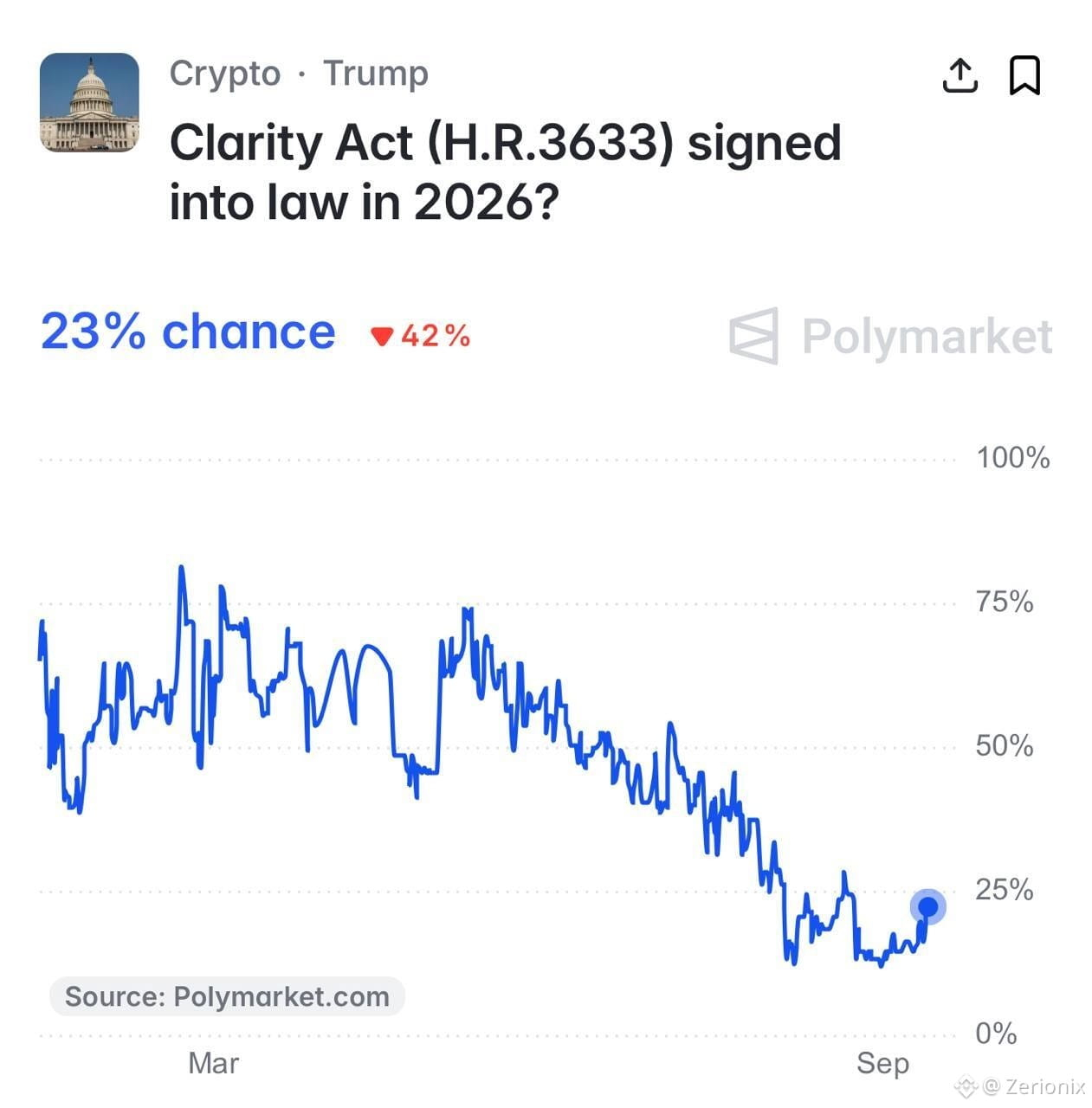
Current reports put Polymarket’s odds closer to 18% to 19%, with the Senate’s procedural vote scheduled for September 15, two days from today.
And that tells a more interesting story than the headline.
The CLARITY Act has gone from looking like a major 2026 crypto catalyst to becoming a genuine political coin flip.
The problem isn't simply whether senators support clearer crypto rules. The bill needs 60 votes to advance, meaning supporters need meaningful Democratic backing while several disputes remain unresolved around AML rules, stablecoin yields, DeFi and ethics provisions.
So September 15 isn't the day crypto gets regulatory clarity.
It's the day we find out whether the bill still has a viable path to it.
If the procedural vote clears, the probability of eventual passage could reprice quickly. If it fails, the market may start treating CLARITY as a 2027 story instead of a 2026 catalyst.
That's the part worth watching.
The vote isn't just about the bill. It's about whether Washington can actually turn months of crypto lobbying into legislation before the political calendar closes in.
#BTC Price Analysis# $BTC #Meme Alpha# $XRP
Current reports put Polymarket’s odds closer to 18% to 19%, with the Senate’s procedural vote scheduled for September 15, two days from today.
And that tells a more interesting story than the headline.
The CLARITY Act has gone from looking like a major 2026 crypto catalyst to becoming a genuine political coin flip.
The problem isn't simply whether senators support clearer crypto rules. The bill needs 60 votes to advance, meaning supporters need meaningful Democratic backing while several disputes remain unresolved around AML rules, stablecoin yields, DeFi and ethics provisions.
So September 15 isn't the day crypto gets regulatory clarity.
It's the day we find out whether the bill still has a viable path to it.
If the procedural vote clears, the probability of eventual passage could reprice quickly. If it fails, the market may start treating CLARITY as a 2027 story instead of a 2026 catalyst.
That's the part worth watching.
The vote isn't just about the bill. It's about whether Washington can actually turn months of crypto lobbying into legislation before the political calendar closes in.
#BTC Price Analysis# $BTC #Meme Alpha# $XRP
And that tells a more interesting story than the headline.
The CLARITY Act has gone from looking like a major 2026 crypto catalyst to becoming a genuine political coin flip.
The problem isn't simply whether senators support clearer crypto rules. The bill needs 60 votes to advance, meaning supporters need meaningful Democratic backing while several disputes remain unresolved around AML rules, stablecoin yields, DeFi and ethics provisions.
So September 15 isn't the day crypto gets regulatory clarity.
It's the day we find out whether the bill still has a viable path to it.
If the procedural vote clears, the probability of eventual passage could reprice quickly. If it fails, the market may start treating CLARITY as a 2027 story instead of a 2026 catalyst.
That's the part worth watching.
The vote isn't just about the bill. It's about whether Washington can actually turn months of crypto lobbying into legislation before the political calendar closes in.
#BTC Price Analysis# $BTC #Meme Alpha# $XRP
59
·
--
See translation
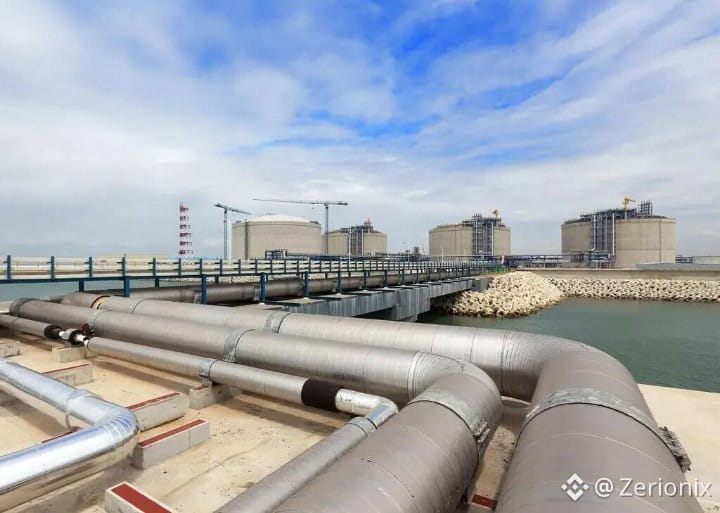
Saudi Arabia's East West pipeline has been shut down after drone attacks, putting as much as 4% of global oil supply at risk if the disruption persists. Reuters reports Yanbu's export stocks could cover only 5 to 7 days.
The timing is what makes this uncomfortable.
Oil is already above $100, while the Strait of Hormuz remains heavily disrupted. Now one of Saudi Arabia's key alternative routes is also under pressure. That removes another layer of supply flexibility from the market.
If the pipeline is restored quickly, this could end up being another temporary geopolitical shock.
But if repairs take weeks, the calculation changes completely.
Higher oil prices mean renewed inflation pressure, tighter financial conditions and potentially less room for central banks to support risk assets.
And that's where crypto gets pulled into the story.
Bitcoin doesn't trade in isolation from global liquidity. A prolonged energy shock could become a serious headwind for it. $BTC and broader risk assets even if the crypto market itself isn't directly affected.
The next 5 to 7 days may matter more than the headline.
This isn't just about how much oil is offline.
It's about how quickly the market can replace it.
#BTC Price Analysis# #Altcoin Season#
Saudi Arabia's East West pipeline has been shut down after drone attacks, putting as much as 4% of global oil supply at risk if the disruption persists. Reuters reports Yanbu's export stocks could cover only 5 to 7 days.
The timing is what makes this uncomfortable.
Oil is already above $100, while the Strait of Hormuz remains heavily disrupted. Now one of Saudi Arabia's key alternative routes is also under pressure. That removes another layer of supply flexibility from the market.
If the pipeline is restored quickly, this could end up being another temporary geopolitical shock.
But if repairs take weeks, the calculation changes completely.
Higher oil prices mean renewed inflation pressure, tighter financial conditions and potentially less room for central banks to support risk assets.
And that's where crypto gets pulled into the story.
Bitcoin doesn't trade in isolation from global liquidity. A prolonged energy shock could become a serious headwind for it. $BTC and broader risk assets even if the crypto market itself isn't directly affected.
The next 5 to 7 days may matter more than the headline.
This isn't just about how much oil is offline.
It's about how quickly the market can replace it.
#BTC Price Analysis# #Altcoin Season#
The timing is what makes this uncomfortable.
Oil is already above $100, while the Strait of Hormuz remains heavily disrupted. Now one of Saudi Arabia's key alternative routes is also under pressure. That removes another layer of supply flexibility from the market.
If the pipeline is restored quickly, this could end up being another temporary geopolitical shock.
But if repairs take weeks, the calculation changes completely.
Higher oil prices mean renewed inflation pressure, tighter financial conditions and potentially less room for central banks to support risk assets.
And that's where crypto gets pulled into the story.
Bitcoin doesn't trade in isolation from global liquidity. A prolonged energy shock could become a serious headwind for it. $BTC and broader risk assets even if the crypto market itself isn't directly affected.
The next 5 to 7 days may matter more than the headline.
This isn't just about how much oil is offline.
It's about how quickly the market can replace it.
#BTC Price Analysis# #Altcoin Season#

58
·
--
See translation
Your crypto exchange doesn't need to get hacked for you to become the target. 👀 That's the part of this story that bothers me. When an exchange accidentally exposes user information, the immediate question is usually, “Did the hackers steal any crypto?” But that's not always the biggest risk. Names, emails, phone numbers, account details or other identifying information can become extremely valuable when combined with social engineering. Suddenly, the attacker doesn't need to break into your account directly. They can impersonate the exchange. They can send a convincing phishing message. They can pretend to be support. And because they already know something about you, the scam becomes much harder to recognize. We've seen this pattern repeatedly across crypto. Recent attacks involving compromised third party platforms have already been used to target crypto users with highly convincing phishing campaigns. Personally, I think this is one of the most overlooked risks of centralized exchanges. People focus heavily on whether an exchange's wallets are secure, but user data is part of the attack surface too. Your funds can be protected by cold storage and multisig while your identity becomes the weakest link. And once an attacker knows who you are, what platform you use and how to contact you, the next attack may not look like a hack at all. It may look like a perfectly normal support message. That's why I treat unexpected crypto emails, calls and DMs with extreme suspicion. In this industry, protecting the private key is only half the battle. You also have to protect the information that tells someone where to look. $HYPE #Macro Insights# #Altcoin Season#
Your crypto exchange doesn't need to get hacked for you to become the target. 👀 That's the part of this story that bothers me. When an exchange accidentally exposes user information, the immediate question is usually, “Did the hackers steal any crypto?” But that's not always the biggest risk. Names, emails, phone numbers, account details or other identifying information can become extremely valuable when combined with social engineering. Suddenly, the attacker doesn't need to break into your account directly. They can impersonate the exchange. They can send a convincing phishing message. They can pretend to be support. And because they already know something about you, the scam becomes much harder to recognize. We've seen this pattern repeatedly across crypto. Recent attacks involving compromised third party platforms have already been used to target crypto users with highly convincing phishing campaigns. Personally, I think this is one of the most overlooked risks of centralized exchanges. People focus heavily on whether an exchange's wallets are secure, but user data is part of the attack surface too. Your funds can be protected by cold storage and multisig while your identity becomes the weakest link. And once an attacker knows who you are, what platform you use and how to contact you, the next attack may not look like a hack at all. It may look like a perfectly normal support message. That's why I treat unexpected crypto emails, calls and DMs with extreme suspicion. In this industry, protecting the private key is only half the battle. You also have to protect the information that tells someone where to look. $HYPE #Macro Insights# #Altcoin Season#

·
--
See translation
Iran isn't backing down, and that could become a much bigger market problem than the headline suggests. 👀 President Masoud Pezeshkian says Iran will not bow to U.S. pressure, while Narendra Modi is calling for dialogue and stressing the need to keep maritime trade and shipping routes open. That matters because this conflict is no longer just a political story. The Strait of Hormuz remains at the center of the problem. Oil prices have already pushed above $100 a barrel, while shipping costs have surged as attacks on tankers and disruptions around the region make energy transportation increasingly expensive. And this is where I start paying attention to Bitcoin. A prolonged energy shock can feed directly into inflation. Higher inflation can keep central banks restrictive for longer, which means tighter liquidity and less room for risk assets to run. That's the uncomfortable part. Crypto can benefit from geopolitical uncertainty when investors look for alternative assets, but it can also get hit hard when that uncertainty turns into an inflation and liquidity problem. Personally, I think the next move in $BTC isn't just about charts right now. It's increasingly tied to what happens with oil, shipping and eventually the Fed. There is still a diplomatic path. Iran and Gulf states are expected to discuss a temporary arrangement for shipping through Hormuz, while Modi is pushing dialogue rather than further escalation. If that produces a real de-escalation, oil could cool and the pressure on global liquidity could ease. But if Hormuz remains disrupted and crude stays above $100, the market may have a very different problem on its hands. So I'm watching Iran. Not because Bitcoin suddenly became a geopolitical asset. Because oil can still decide what the Fed does next. #BTC Price Analysis#
Iran isn't backing down, and that could become a much bigger market problem than the headline suggests. 👀 President Masoud Pezeshkian says Iran will not bow to U.S. pressure, while Narendra Modi is calling for dialogue and stressing the need to keep maritime trade and shipping routes open. That matters because this conflict is no longer just a political story. The Strait of Hormuz remains at the center of the problem. Oil prices have already pushed above $100 a barrel, while shipping costs have surged as attacks on tankers and disruptions around the region make energy transportation increasingly expensive. And this is where I start paying attention to Bitcoin. A prolonged energy shock can feed directly into inflation. Higher inflation can keep central banks restrictive for longer, which means tighter liquidity and less room for risk assets to run. That's the uncomfortable part. Crypto can benefit from geopolitical uncertainty when investors look for alternative assets, but it can also get hit hard when that uncertainty turns into an inflation and liquidity problem. Personally, I think the next move in $BTC isn't just about charts right now. It's increasingly tied to what happens with oil, shipping and eventually the Fed. There is still a diplomatic path. Iran and Gulf states are expected to discuss a temporary arrangement for shipping through Hormuz, while Modi is pushing dialogue rather than further escalation. If that produces a real de-escalation, oil could cool and the pressure on global liquidity could ease. But if Hormuz remains disrupted and crude stays above $100, the market may have a very different problem on its hands. So I'm watching Iran. Not because Bitcoin suddenly became a geopolitical asset. Because oil can still decide what the Fed does next. #BTC Price Analysis#

·
--
See translation
Cross-chain is often treated as one simple action: send an asset here, receive an asset there. But the infrastructure underneath can be completely different. A traditional bridge usually moves an asset by locking it on one chain and creating a representation of it on another. That wrapped asset then carries the bridge's assumptions and security model with it. Omniston takes a different route. Instead of asking, “How do we move this token across?”, the system starts with a different question: “What asset do you actually want on the other chain?” A user requests a quote, and independent resolvers compete to provide the destination liquidity. The winning resolver locks the destination asset in an HTLC while the user's source asset is locked in a matching HTLC. Both contracts share the same cryptographic condition. If the swap completes, both sides receive what they were supposed to receive. If it doesn't, the timelock allows the funds to return to their original owners. That changes an important part of the experience. You aren't moving a wrapped version of your asset through a bridge and then figuring out what to do with it. You're swapping into the native asset you actually wanted on the destination chain. There are still trade-offs, of course. Resolver liquidity, supported chains, execution pricing and network conditions all matter. But this is why I think the distinction between bridging and cross-chain execution is worth understanding. They may look similar from the user's screen. Underneath, they're solving the problem very differently. And that difference matters when you're deciding where your assets go and what assumptions you're trusting along the way. Explore cross-chain execution with Omniston → https://ston.fi/omniston #BTC Price Analysis# #Macro Insights# $ETH $XRP
Cross-chain is often treated as one simple action: send an asset here, receive an asset there. But the infrastructure underneath can be completely different. A traditional bridge usually moves an asset by locking it on one chain and creating a representation of it on another. That wrapped asset then carries the bridge's assumptions and security model with it. Omniston takes a different route. Instead of asking, “How do we move this token across?”, the system starts with a different question: “What asset do you actually want on the other chain?” A user requests a quote, and independent resolvers compete to provide the destination liquidity. The winning resolver locks the destination asset in an HTLC while the user's source asset is locked in a matching HTLC. Both contracts share the same cryptographic condition. If the swap completes, both sides receive what they were supposed to receive. If it doesn't, the timelock allows the funds to return to their original owners. That changes an important part of the experience. You aren't moving a wrapped version of your asset through a bridge and then figuring out what to do with it. You're swapping into the native asset you actually wanted on the destination chain. There are still trade-offs, of course. Resolver liquidity, supported chains, execution pricing and network conditions all matter. But this is why I think the distinction between bridging and cross-chain execution is worth understanding. They may look similar from the user's screen. Underneath, they're solving the problem very differently. And that difference matters when you're deciding where your assets go and what assumptions you're trusting along the way. Explore cross-chain execution with Omniston → https://ston.fi/omniston #BTC Price Analysis# #Macro Insights# $ETH $XRP

26
·
--
See translation
Micron is offering bonuses worth up to 68 months of salary, and workers are still threatening to strike.
That tells you how serious this labor dispute has become.
Micron is reportedly preparing record bonuses for its Taiwan workforce, with some employees receiving as much as 68 months of salary. Entry level engineers could reportedly see around NT$3.4M in bonuses, on top of annual equity grants.
You'd think that would settle the argument.
Apparently not.
The union representing roughly two thirds of Micron's workforce in Taiwan is still demanding that 15% of the company's operating profit be allocated to employee bonuses, and says strike procedures will move forward if Micron doesn't respond.
And this isn't just about employee compensation anymore.
Micron has around 15,000 workers in Taiwan and has invested more than NT$1.6T there. A serious strike could disrupt production at a time when memory chips are already becoming increasingly important to AI infrastructure.
That's why the Samsung comparison matters too. Samsung recently agreed to a special bonus pool worth 10.5% of semiconductor operating profit after pressure from its workers.
Personally, I think the bigger risk here isn't the size of the bonuses.
It's what happens if labor disputes start interfering with semiconductor supply.
Micron can afford to pay more. The global memory market may not be able to afford a meaningful production disruption.
And if the strike actually happens, I’ll be watching memory prices and the broader AI hardware supply chain very closely.
Sometimes a labor dispute can become a market story surprisingly fast. $SOL #Macro Insights# #Altcoin Season#
Micron is offering bonuses worth up to 68 months of salary, and workers are still threatening to strike.
That tells you how serious this labor dispute has become.
Micron is reportedly preparing record bonuses for its Taiwan workforce, with some employees receiving as much as 68 months of salary. Entry level engineers could reportedly see around NT$3.4M in bonuses, on top of annual equity grants.
You'd think that would settle the argument.
Apparently not.
The union representing roughly two thirds of Micron's workforce in Taiwan is still demanding that 15% of the company's operating profit be allocated to employee bonuses, and says strike procedures will move forward if Micron doesn't respond.
And this isn't just about employee compensation anymore.
Micron has around 15,000 workers in Taiwan and has invested more than NT$1.6T there. A serious strike could disrupt production at a time when memory chips are already becoming increasingly important to AI infrastructure.
That's why the Samsung comparison matters too. Samsung recently agreed to a special bonus pool worth 10.5% of semiconductor operating profit after pressure from its workers.
Personally, I think the bigger risk here isn't the size of the bonuses.
It's what happens if labor disputes start interfering with semiconductor supply.
Micron can afford to pay more. The global memory market may not be able to afford a meaningful production disruption.
And if the strike actually happens, I’ll be watching memory prices and the broader AI hardware supply chain very closely.
Sometimes a labor dispute can become a market story surprisingly fast. $SOL #Macro Insights# #Altcoin Season#
That tells you how serious this labor dispute has become.
Micron is reportedly preparing record bonuses for its Taiwan workforce, with some employees receiving as much as 68 months of salary. Entry level engineers could reportedly see around NT$3.4M in bonuses, on top of annual equity grants.
You'd think that would settle the argument.
Apparently not.
The union representing roughly two thirds of Micron's workforce in Taiwan is still demanding that 15% of the company's operating profit be allocated to employee bonuses, and says strike procedures will move forward if Micron doesn't respond.
And this isn't just about employee compensation anymore.
Micron has around 15,000 workers in Taiwan and has invested more than NT$1.6T there. A serious strike could disrupt production at a time when memory chips are already becoming increasingly important to AI infrastructure.
That's why the Samsung comparison matters too. Samsung recently agreed to a special bonus pool worth 10.5% of semiconductor operating profit after pressure from its workers.
Personally, I think the bigger risk here isn't the size of the bonuses.
It's what happens if labor disputes start interfering with semiconductor supply.
Micron can afford to pay more. The global memory market may not be able to afford a meaningful production disruption.
And if the strike actually happens, I’ll be watching memory prices and the broader AI hardware supply chain very closely.
Sometimes a labor dispute can become a market story surprisingly fast. $SOL #Macro Insights# #Altcoin Season#

26
·
--
See translation
ETH is showing two very different moods across derivatives.
On Deribit, ETH perpetual funding just jumped to 0.023%, compared with a 0.0068% previous rate and 0.0032% mean.
That means longs are paying up for exposure. Futures traders are getting aggressively bullish.
ETH also closed around $2.52K on September 12, so the move higher is clearly attracting leverage.
But the options market is telling a different story.
Long dated $ETH options are showing unusually weak implied volatility and skew, suggesting options traders aren't pricing the same level of upside conviction. If anything, there's more caution around future price uncertainty and downside risk.
Personally, this divergence is what catches my attention.
Perpetuals are saying, “I want long exposure now.”
Options are saying, “I'm not so sure about what happens next.”
That doesn't automatically mean ETH is about to dump.
But when funding gets this stretched, I start watching for whether spot demand can keep absorbing the leverage.
If ETH keeps pushing higher while funding normalizes, that's healthier.
If price stalls while funding stays elevated, those crowded longs could become the fuel for the next flush.
So I'm bullish on the momentum, but cautious about the positioning.
The question isn't whether traders are bullish on ETH.
They're clearly showing that.
The question is whether they're too bullish too quickly. #BTC Price Analysis# #Macro Insights# #Meme Alpha#
ETH is showing two very different moods across derivatives.
On Deribit, ETH perpetual funding just jumped to 0.023%, compared with a 0.0068% previous rate and 0.0032% mean.
That means longs are paying up for exposure. Futures traders are getting aggressively bullish.
ETH also closed around $2.52K on September 12, so the move higher is clearly attracting leverage.
But the options market is telling a different story.
Long dated $ETH options are showing unusually weak implied volatility and skew, suggesting options traders aren't pricing the same level of upside conviction. If anything, there's more caution around future price uncertainty and downside risk.
Personally, this divergence is what catches my attention.
Perpetuals are saying, “I want long exposure now.”
Options are saying, “I'm not so sure about what happens next.”
That doesn't automatically mean ETH is about to dump.
But when funding gets this stretched, I start watching for whether spot demand can keep absorbing the leverage.
If ETH keeps pushing higher while funding normalizes, that's healthier.
If price stalls while funding stays elevated, those crowded longs could become the fuel for the next flush.
So I'm bullish on the momentum, but cautious about the positioning.
The question isn't whether traders are bullish on ETH.
They're clearly showing that.
The question is whether they're too bullish too quickly. #BTC Price Analysis# #Macro Insights# #Meme Alpha#
On Deribit, ETH perpetual funding just jumped to 0.023%, compared with a 0.0068% previous rate and 0.0032% mean.
That means longs are paying up for exposure. Futures traders are getting aggressively bullish.
ETH also closed around $2.52K on September 12, so the move higher is clearly attracting leverage.
But the options market is telling a different story.
Long dated $ETH options are showing unusually weak implied volatility and skew, suggesting options traders aren't pricing the same level of upside conviction. If anything, there's more caution around future price uncertainty and downside risk.
Personally, this divergence is what catches my attention.
Perpetuals are saying, “I want long exposure now.”
Options are saying, “I'm not so sure about what happens next.”
That doesn't automatically mean ETH is about to dump.
But when funding gets this stretched, I start watching for whether spot demand can keep absorbing the leverage.
If ETH keeps pushing higher while funding normalizes, that's healthier.
If price stalls while funding stays elevated, those crowded longs could become the fuel for the next flush.
So I'm bullish on the momentum, but cautious about the positioning.
The question isn't whether traders are bullish on ETH.
They're clearly showing that.
The question is whether they're too bullish too quickly. #BTC Price Analysis# #Macro Insights# #Meme Alpha#

31
·
--
See translation
BlackRock has been buying ETH for 20 straight trading days. So is Wall Street quietly choosing Ethereum over Bitcoin? BlackRock’s spot Ethereum ETF, ETHA, has reportedly recorded 20 consecutive days of net inflows, totaling roughly $251M, with no outflow during the streak. That’s impressive on its own. But the bigger story is what it says about institutional demand. Ethereum ETFs recently had their strongest five day inflow week on record, pulling in about $824M between August 24 and 28. Even after a small $24M outflow on September 8, BlackRock’s ETHA itself recorded no outflow that day. Meanwhile, Bitcoin is still attracting serious institutional capital. U.S. spot Bitcoin ETFs pulled in roughly $987M during the week ending September 4, with BlackRock’s IBIT accounting for about 70% of that total. So I don't think the data supports “ETH is replacing BTC” yet. It looks more like institutions are becoming increasingly comfortable allocating to both, but for different reasons. Bitcoin remains the cleaner monetary asset and institutional store of value. Ethereum offers something different. An asset tied to the settlement layer for stablecoins, DeFi, tokenization and an increasingly financialized on-chain economy. Personally, that distinction is what interests me. If ETH continues attracting persistent ETF demand even while BTC remains the larger institutional trade, we could be watching the market move from a simple “Bitcoin first” allocation model toward a two asset institutional thesis. But 20 days is still a relatively short window. The real signal will be whether ETHA can keep attracting capital when ETH isn't ripping higher. If the buying continues through weakness, then I’ll start taking the institutional ETH rotation much more seriously. Maybe Wall Street isn't choosing $ETH instead of $BTC . Maybe it finally wants both. #BTC Price Analysis# #Macro Insights# #Altcoin Season#
BlackRock has been buying ETH for 20 straight trading days. So is Wall Street quietly choosing Ethereum over Bitcoin? BlackRock’s spot Ethereum ETF, ETHA, has reportedly recorded 20 consecutive days of net inflows, totaling roughly $251M, with no outflow during the streak. That’s impressive on its own. But the bigger story is what it says about institutional demand. Ethereum ETFs recently had their strongest five day inflow week on record, pulling in about $824M between August 24 and 28. Even after a small $24M outflow on September 8, BlackRock’s ETHA itself recorded no outflow that day. Meanwhile, Bitcoin is still attracting serious institutional capital. U.S. spot Bitcoin ETFs pulled in roughly $987M during the week ending September 4, with BlackRock’s IBIT accounting for about 70% of that total. So I don't think the data supports “ETH is replacing BTC” yet. It looks more like institutions are becoming increasingly comfortable allocating to both, but for different reasons. Bitcoin remains the cleaner monetary asset and institutional store of value. Ethereum offers something different. An asset tied to the settlement layer for stablecoins, DeFi, tokenization and an increasingly financialized on-chain economy. Personally, that distinction is what interests me. If ETH continues attracting persistent ETF demand even while BTC remains the larger institutional trade, we could be watching the market move from a simple “Bitcoin first” allocation model toward a two asset institutional thesis. But 20 days is still a relatively short window. The real signal will be whether ETHA can keep attracting capital when ETH isn't ripping higher. If the buying continues through weakness, then I’ll start taking the institutional ETH rotation much more seriously. Maybe Wall Street isn't choosing $ETH instead of $BTC . Maybe it finally wants both. #BTC Price Analysis# #Macro Insights# #Altcoin Season#

57
·
--
See translation
Bitcoin’s price gets most of the attention. But Realized Cap might be telling us what’s happening underneath. From January through August, Bitcoin’s Realized Cap was trending lower as $BTC moved on-chain at prices below their previous acquisition levels. That matters because Realized Cap doesn't value every Bitcoin at today’s market price. Instead, each BTC is valued based on the price at which it last moved on-chain. So when coins move at lower prices, the network’s realized valuation can fall even if the market price hasn't collapsed by the same amount. Now something interesting is changing. For the first time this year, the downward trend in Realized Cap has started to reverse. Personally, I think this is one of those signals that is easy to overlook because it doesn't give you an exciting candle on the chart. It tells us that the capital base behind Bitcoin may be stabilizing and beginning to expand again. But I wouldn't call this confirmation of a new bull run yet. A rising Realized Cap can support a healthier market structure, but Bitcoin still needs sustained demand to turn that improving capital base into actual price appreciation. The question I'm watching now is simple. Does Realized Cap continue climbing while $BTC consolidates, or does this reversal fade? If capital keeps returning to the network before price makes its next major move, that could become a very interesting setup. Sometimes the market starts changing underneath the price before the chart makes it obvious. 👀 #BTC Price Analysis# #Macro Insights#
Bitcoin’s price gets most of the attention. But Realized Cap might be telling us what’s happening underneath. From January through August, Bitcoin’s Realized Cap was trending lower as $BTC moved on-chain at prices below their previous acquisition levels. That matters because Realized Cap doesn't value every Bitcoin at today’s market price. Instead, each BTC is valued based on the price at which it last moved on-chain. So when coins move at lower prices, the network’s realized valuation can fall even if the market price hasn't collapsed by the same amount. Now something interesting is changing. For the first time this year, the downward trend in Realized Cap has started to reverse. Personally, I think this is one of those signals that is easy to overlook because it doesn't give you an exciting candle on the chart. It tells us that the capital base behind Bitcoin may be stabilizing and beginning to expand again. But I wouldn't call this confirmation of a new bull run yet. A rising Realized Cap can support a healthier market structure, but Bitcoin still needs sustained demand to turn that improving capital base into actual price appreciation. The question I'm watching now is simple. Does Realized Cap continue climbing while $BTC consolidates, or does this reversal fade? If capital keeps returning to the network before price makes its next major move, that could become a very interesting setup. Sometimes the market starts changing underneath the price before the chart makes it obvious. 👀 #BTC Price Analysis# #Macro Insights#

76
·
--
See translation
Bitcoin’s price may be moving sideways, but the capital underneath it is telling a different story. 👀 The Q1 selloff pushed $BTC toward the $60K region and flushed a lot of leverage and weak positioning from the market. What interests me now is what happened afterward. Between July and September, Bitcoin spent much of its time consolidating around the $80K area while capital inflows started accelerating. That creates an interesting divergence. Price hasn't immediately followed the flow. Instead, fresh capital appears to be getting absorbed by the market without producing the kind of breakout everyone expects. That can happen when existing holders are selling into demand. Institutions and larger players can keep accumulating while price stays relatively compressed because there is still enough supply coming from the other side. And there are signs that institutional demand has returned. U.S. spot Bitcoin ETFs recorded roughly $3.5B in net inflows during August, the strongest monthly inflow of 2026, followed by another strong run of inflows into early September. Personally, this is the part I find most interesting. If capital keeps entering while price struggles to move higher, the market may be absorbing a large amount of available supply. But I wouldn't call a supply crunch inevitable yet. The real confirmation would be continued capital inflows, shrinking available supply and eventually a breakout through the $83K to $86K resistance zone that Glassnode currently identifies as a major cost-basis ceiling. If that happens, the move could be very different from a leverage-driven pump. It would mean the market finally ran out of willing sellers. So I'm less interested in predicting the exact day Bitcoin breaks out. I'm watching whether the supply being absorbed today eventually becomes the fuel for tomorrow's repricing. #BTC Price Analysis# #Macro Insights#
Bitcoin’s price may be moving sideways, but the capital underneath it is telling a different story. 👀 The Q1 selloff pushed $BTC toward the $60K region and flushed a lot of leverage and weak positioning from the market. What interests me now is what happened afterward. Between July and September, Bitcoin spent much of its time consolidating around the $80K area while capital inflows started accelerating. That creates an interesting divergence. Price hasn't immediately followed the flow. Instead, fresh capital appears to be getting absorbed by the market without producing the kind of breakout everyone expects. That can happen when existing holders are selling into demand. Institutions and larger players can keep accumulating while price stays relatively compressed because there is still enough supply coming from the other side. And there are signs that institutional demand has returned. U.S. spot Bitcoin ETFs recorded roughly $3.5B in net inflows during August, the strongest monthly inflow of 2026, followed by another strong run of inflows into early September. Personally, this is the part I find most interesting. If capital keeps entering while price struggles to move higher, the market may be absorbing a large amount of available supply. But I wouldn't call a supply crunch inevitable yet. The real confirmation would be continued capital inflows, shrinking available supply and eventually a breakout through the $83K to $86K resistance zone that Glassnode currently identifies as a major cost-basis ceiling. If that happens, the move could be very different from a leverage-driven pump. It would mean the market finally ran out of willing sellers. So I'm less interested in predicting the exact day Bitcoin breaks out. I'm watching whether the supply being absorbed today eventually becomes the fuel for tomorrow's repricing. #BTC Price Analysis# #Macro Insights#

49
·
--
See translation
Bitcoin is testing $77K, but something underneath the market is making me a little uncomfortable. 👀 Binance’s BTC reserves just climbed above 693,000 BTC, according to CryptoQuant, reaching their highest level in roughly two years. That’s a serious amount of Bitcoin sitting on an exchange. And normally, rising exchange reserves are something I pay attention to because more BTC available on an exchange can mean more potential sell side liquidity. But I wouldn’t jump straight to “Binance whales are selling.” Exchange balances can rise because of custody movements, internal transfers, market making, collateral requirements or simply users moving coins around. That distinction matters. What makes the current setup interesting is the timing. $BTC is struggling around $77K after failing to reclaim higher levels, while Binance is holding significantly more BTC than it was earlier this year. Personally, I think the reserve increase is more of a warning signal than a bearish confirmation. If those coins start moving toward the market while spot demand weakens, sellers could have a lot more ammunition. But if reserves stay elevated and BTC absorbs the supply without breaking lower, the story changes completely. That would suggest the additional exchange supply isn't translating into meaningful selling pressure. So I'm watching Binance’s reserves, but I’m watching netflows and actual spot selling even more closely. 693K BTC sounds scary. The real question is how much of it actually wants to sell. #Macro Insights# #BTC Price Analysis#
Bitcoin is testing $77K, but something underneath the market is making me a little uncomfortable. 👀 Binance’s BTC reserves just climbed above 693,000 BTC, according to CryptoQuant, reaching their highest level in roughly two years. That’s a serious amount of Bitcoin sitting on an exchange. And normally, rising exchange reserves are something I pay attention to because more BTC available on an exchange can mean more potential sell side liquidity. But I wouldn’t jump straight to “Binance whales are selling.” Exchange balances can rise because of custody movements, internal transfers, market making, collateral requirements or simply users moving coins around. That distinction matters. What makes the current setup interesting is the timing. $BTC is struggling around $77K after failing to reclaim higher levels, while Binance is holding significantly more BTC than it was earlier this year. Personally, I think the reserve increase is more of a warning signal than a bearish confirmation. If those coins start moving toward the market while spot demand weakens, sellers could have a lot more ammunition. But if reserves stay elevated and BTC absorbs the supply without breaking lower, the story changes completely. That would suggest the additional exchange supply isn't translating into meaningful selling pressure. So I'm watching Binance’s reserves, but I’m watching netflows and actual spot selling even more closely. 693K BTC sounds scary. The real question is how much of it actually wants to sell. #Macro Insights# #BTC Price Analysis#

50
Log in to explore more content
Join global crypto users on Binance Square
⚡️ Get latest and useful information about crypto.
💬 Trusted by the world’s largest crypto exchange.
👍 Discover real insights from verified creators.
Email / Phone number
Trending Topics
AnthropicCEOCallsForAISlowdown
115,623 views
1,968 Discussing
#anthropicceocallsforaislowdown
Rivals Unite: Altman, Musk and Others Back the Slowdown CallWithin hours of Amodei’s essay, OpenAI CEO Sam Altman publicly agreed that the industry needs to “pace the frontier,” noting it had already been a major internal discussion at OpenAI. Elon Musk of xAI simply posted “Dario is right.” Reports also noted support from other leading figures including Demis Hassabis. This rare public alignment among fierce competitors underscores how seriously the top labs now view the accelerating risks. The industry appears to be shifting from pure speed toward coordinated caution.
$BR
$BTW
$REZ
Crypto Futrures Afridi
·3 Likes
·2k views
RevolutDataLeakReportedlyPostedAttackersThreatenDailyReleases
417 views
28 Discussing
BrazilCentralBankRaisesVASPCapitalRequirements
1,849 views
152 Discussing