
计然
257 Posts

计然
Report
Block User

BNB Holder
High-Frequency Trader
1.2 Years
20 Following
101 Followers
67 Liked
Posts
All
Quotes
Videos
·
--
Old Huang returning to Nvidia? One says he's willing to return, the other says there's no intention! Prediction market: odds of a return around 9%
At 00:18 Beijing time on November 18, Jensen Huang posted his first statement on X since resigning. Less than six hours later, the board chair responded on the earnings call on behalf of the board.
【What the statement said】
- Admitted fault: “I did not meet Nvidia’s expectations for every employee, and I also made serious mistakes in my personal life.” He said he had caused trouble for the board and would cooperate with its independent investigation.
- Willing to return: “If the board determines that my return would be in the best interests of shareholders, employees, the company, and the United States, I would be deeply honored to answer that call and return as CEO.”
- Brought the U.S. into it: The entire second paragraph discussed his immigrant experience and patriotism: “Only in the United States could a company like Nvidia come into being.” According to reports, he is due to face closed-door questioning by three House committees on December 1.
- And one more line: “Many people are still contacting me directly.”
【How the board responded】
At the start of the earnings call at 06:00 Beijing time on November 18, board chair Harvey Jones said the board had unanimously accepted his resignation and “does not intend to reinstate him as CEO.” The call would not discuss the circumstances of his resignation or the ongoing investigation. That same day, the board established a new Committee on National Security and Export Controls Oversight (Nvidia press release).
【How the prediction market priced it】
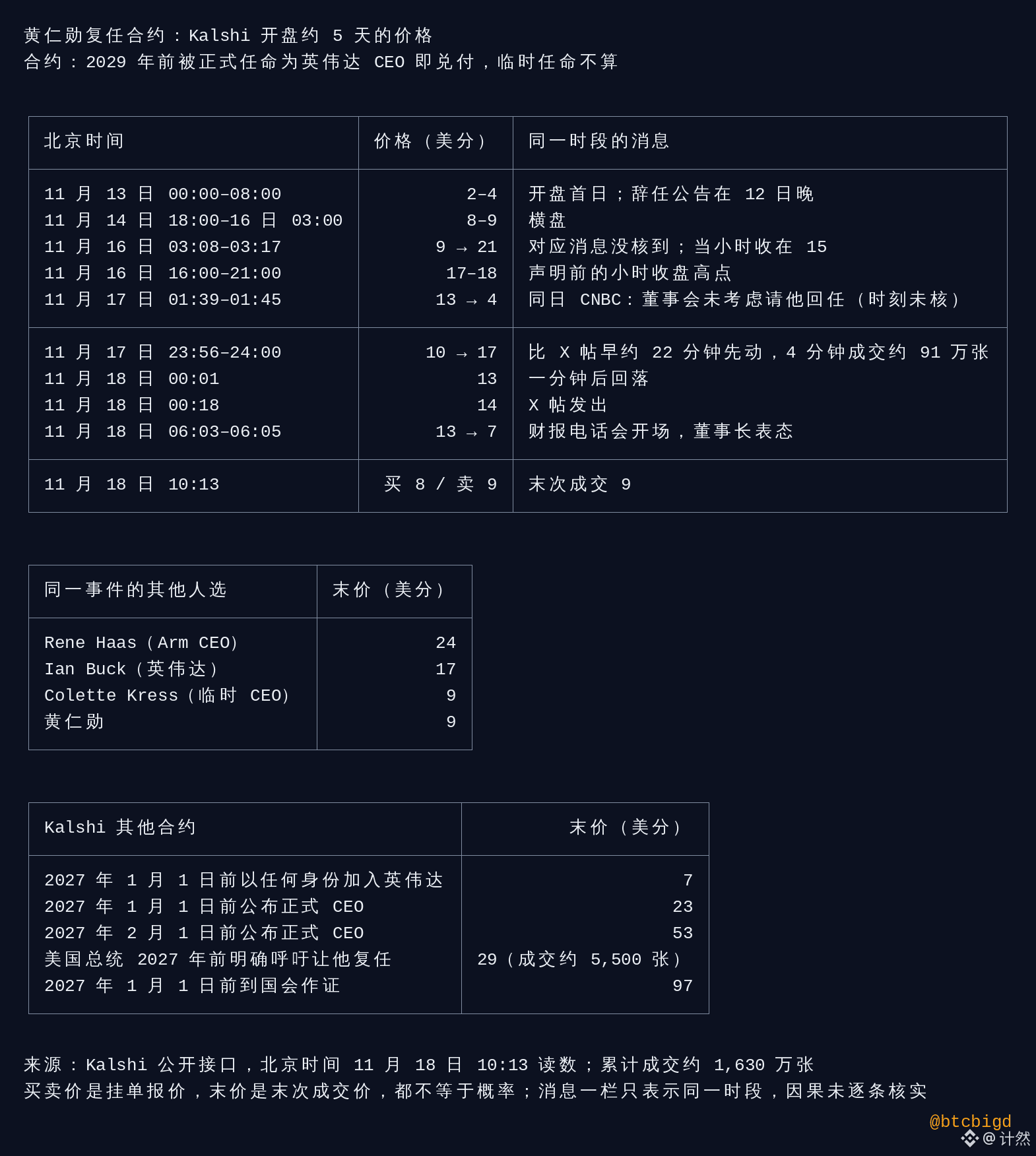
Kalshi has a contract that pays out if Jensen Huang is formally appointed Nvidia CEO before 2029; an interim appointment does not count. Over roughly five days since opening, it has traded about 16 million contracts, the highest volume among 36 contracts on the same event.
- About 22 minutes before the X post, the price moved first: it rose from 10 cents to 17 cents in four minutes, with about 910,000 contracts traded, then fell back to 13 cents a minute later. It was at 14 cents when the post went up and did not set a new high.
- Two minutes into the call, it fell from 13 cents to 7 cents, even lower than the 10 cents before the statement.
- At 10:13 Beijing time on November 18, the bid was 8 cents and the ask 9 cents, roughly equivalent to market odds of around 9%.
【How to read this】
The statement sets out a public position: he admitted fault, is willing to return, and the decision rests with the board. The board’s wording was “does not intend to.” Under this contract, one statement and one response actually left the price one or two cents lower than before.
Contract prices can only be read as rough probabilities and will also change with trading. This is not investment advice.
In the earlier post, “The work is done; there’s no need to look back: A message to Jensen Huang as he leaves Nvidia,” I wrote that Old Huang had no need to prove anything by chasing another position. This statement seems more like a way of making his position clear. A return? It’s looking unlikely.
$NVDA #英伟达 #JensenHuang
179
·
--
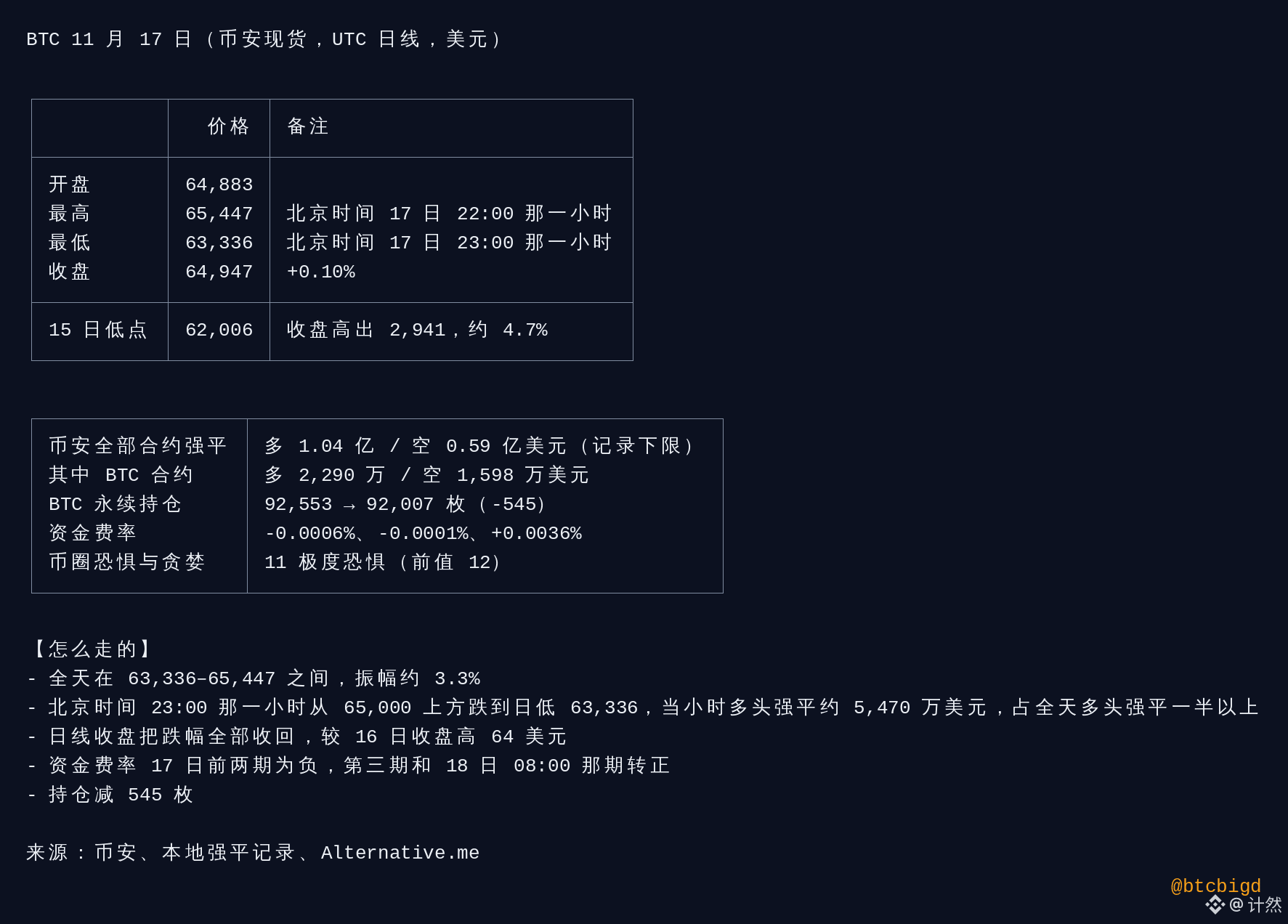
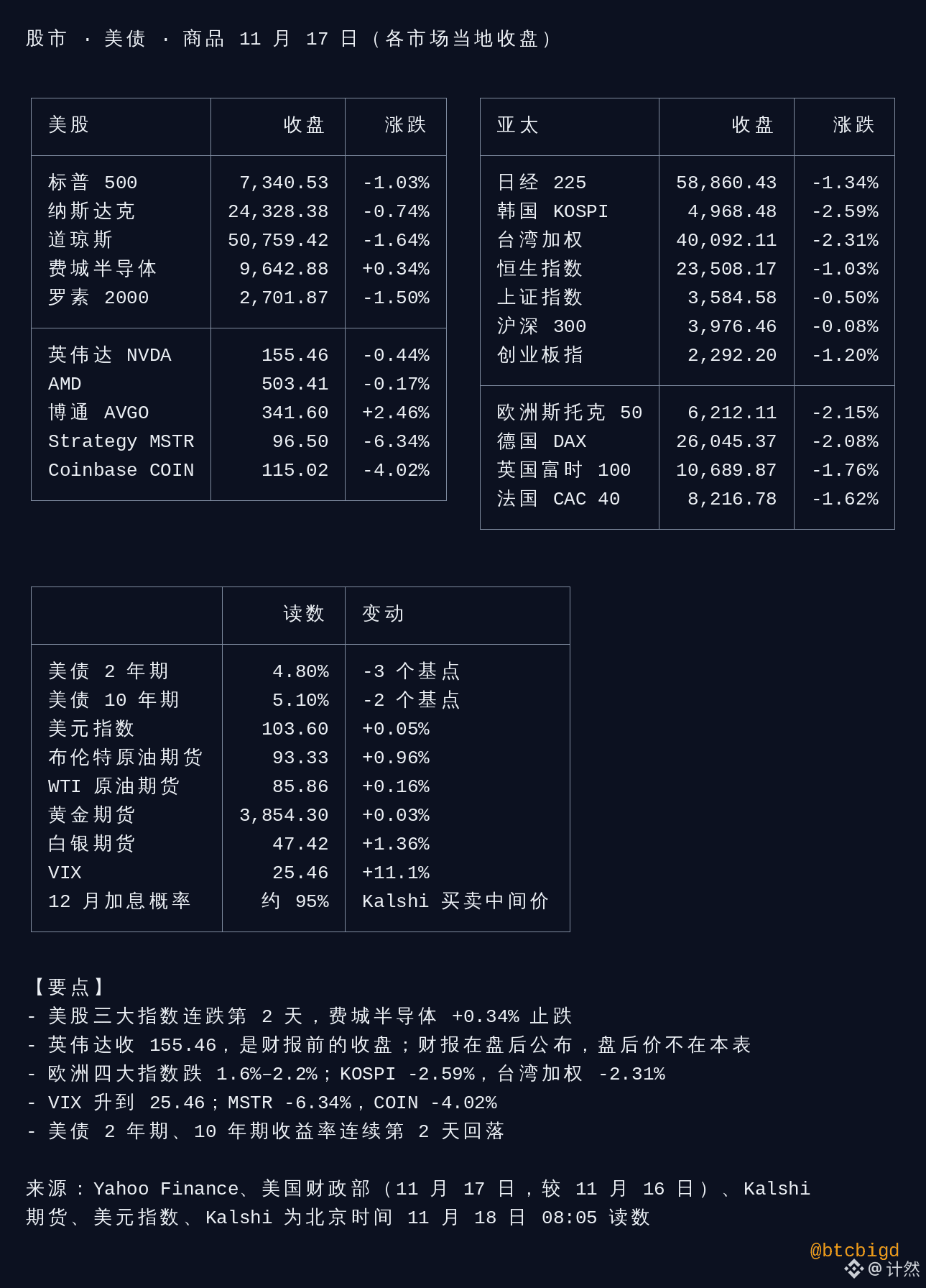
Nov 17 market roundup: U.S. stocks fell for a second straight day, while Nvidia reported earnings after the close. The S&P 500 fell 1.03%, the Dow Jones fell 1.64%, and the Nasdaq fell 0.74%. The Philadelphia Semiconductor Index rose 0.34%, ending its losing streak, and the VIX climbed to 25.46. The Euro Stoxx 50 fell 2.15%, South Korea’s KOSPI fell 2.59%, and Taiwan’s weighted index fell 2.31%. $BTC traded in a range of 63,336–65,447 throughout the day, closing the UTC daily session at $64,947 (+0.10%); the crypto Fear & Greed Index was 11, still in extreme fear.
【Highlights】Nvidia reported fiscal Q3 2027 revenue of $115.8 billion, up 103% year over year, including $107.6 billion from data centers. Its revenue guidance for next quarter is $130 billion (±3%, including an extra week), with gross margin guidance of 71%–72%, compared with 74.8% this quarter. Share buybacks and dividends totaled $28.1 billion. The company also said it would file its 10-Q «in the coming weeks»; in each of the previous three quarters, it filed on the day it reported earnings. $NVDA shares closed at $155.46; at 08:07 Beijing time on Nov 18, they were around $161.50 after hours, about 3.9% above the closing price.
【Trending】
- Jensen Huang issued his first statement since resigning on Nov 17, saying he would be willing to return if the board considered it appropriate (CNN, The Washington Post). On the earnings call that evening, chairman Harvey Jones said the board «does not intend to bring him back» and had hired an executive search firm to find a permanent CEO. He declined to answer questions about the reason for Huang’s resignation (GamesBeat).
- Nvidia’s board established a new committee to oversee national security and export controls (company press release). The Wall Street Journal reported that the SEC had launched a civil investigation into the company’s disclosures; neither the SEC nor the company commented.
- Funds stolen from Binance: two large-holder addresses transferred about 74,900 ETH in total on Nov 17, splitting them among seven new addresses. One address has split its 12,000 ETH into parcels, with about 1,972 ETH remaining. As of 03:34 Beijing time on Nov 18, related intermediary addresses had sent a net total of about 6,600 ETH to THORChain router contracts. The assets they were converted into have not been verified.
- Binance’s ANTHROPIC pre-market contract completed a notional value adjustment and was renamed ANTUSDT, closing its first day at 97.79; divide the old price by 13.116 for comparison.
- BTC: During the 23:00 hour Beijing time, the price fell from above 65,000 to the daily low of 63,336. About $54.7 million in long positions were liquidated during that hour, with all losses recovered before the daily close. The close was about 4.7% above the Nov 15 low of 62,006.
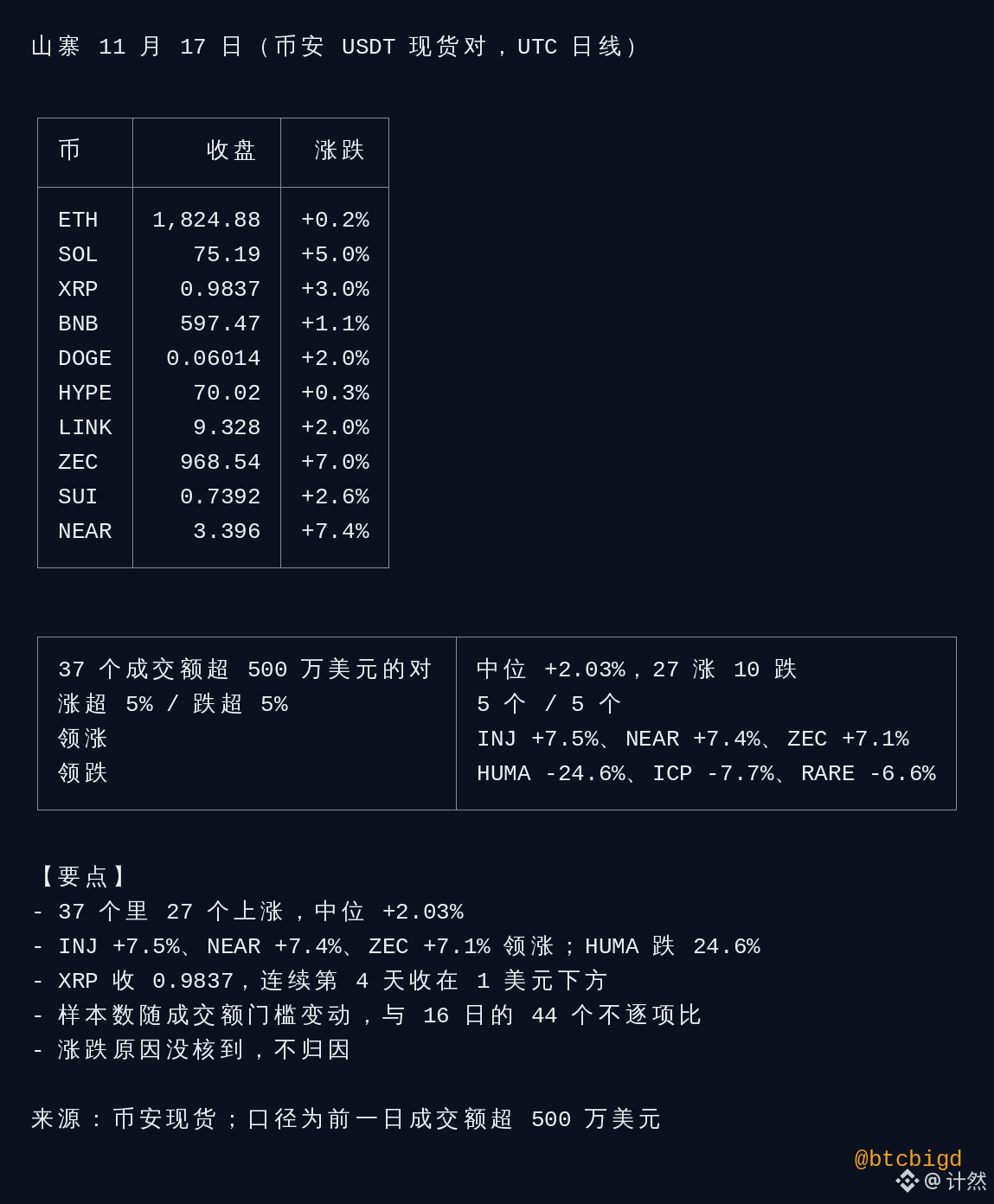
【Altcoins】Of 37 Binance spot pairs with trading volumes above $5 million, 27 rose, with a median gain of 2.03%. INJ led the gains, up 7.5%, followed by NEAR (+7.4%) and ZEC (+7.1%). HUMA fell 24.6%. XRP closed at $0.9837, below $1 for the fourth consecutive day.
Follow me for a daily market roundup every morning.
#BTC #Nvidia
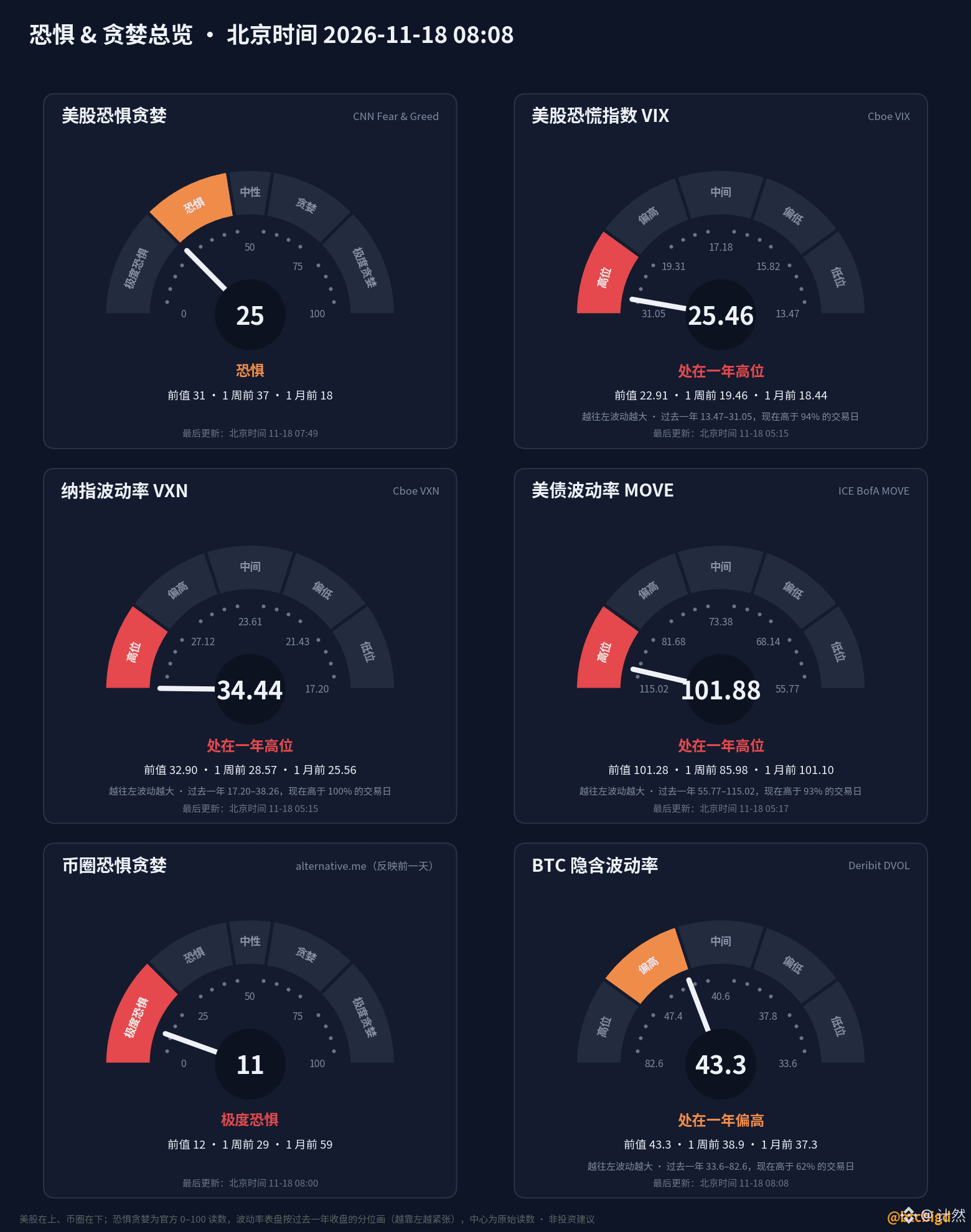
95
·
--
The work is done; there’s no need to look back: To Jensen Huang as he leaves Nvidia
In 1993, in a booth at a Denny’s in Silicon Valley, 30-year-old Jensen Huang spent a long time talking with two other young men over bottomless coffee. At another Denny’s, when he was 15, he had washed dishes at one in Oregon. And further back, at age nine, he had been sent to the United States, where he scrubbed toilets at a boarding school in Kentucky.
The company that came out of that conversation was Nvidia. Thirty-three years later, on November 11, 2026, the board accepted his resignation.
His legacy is already written: When people talk about the engine of the AI revolution, Jensen Huang’s name is impossible to leave out. However this month’s news is spun, it cannot change that.
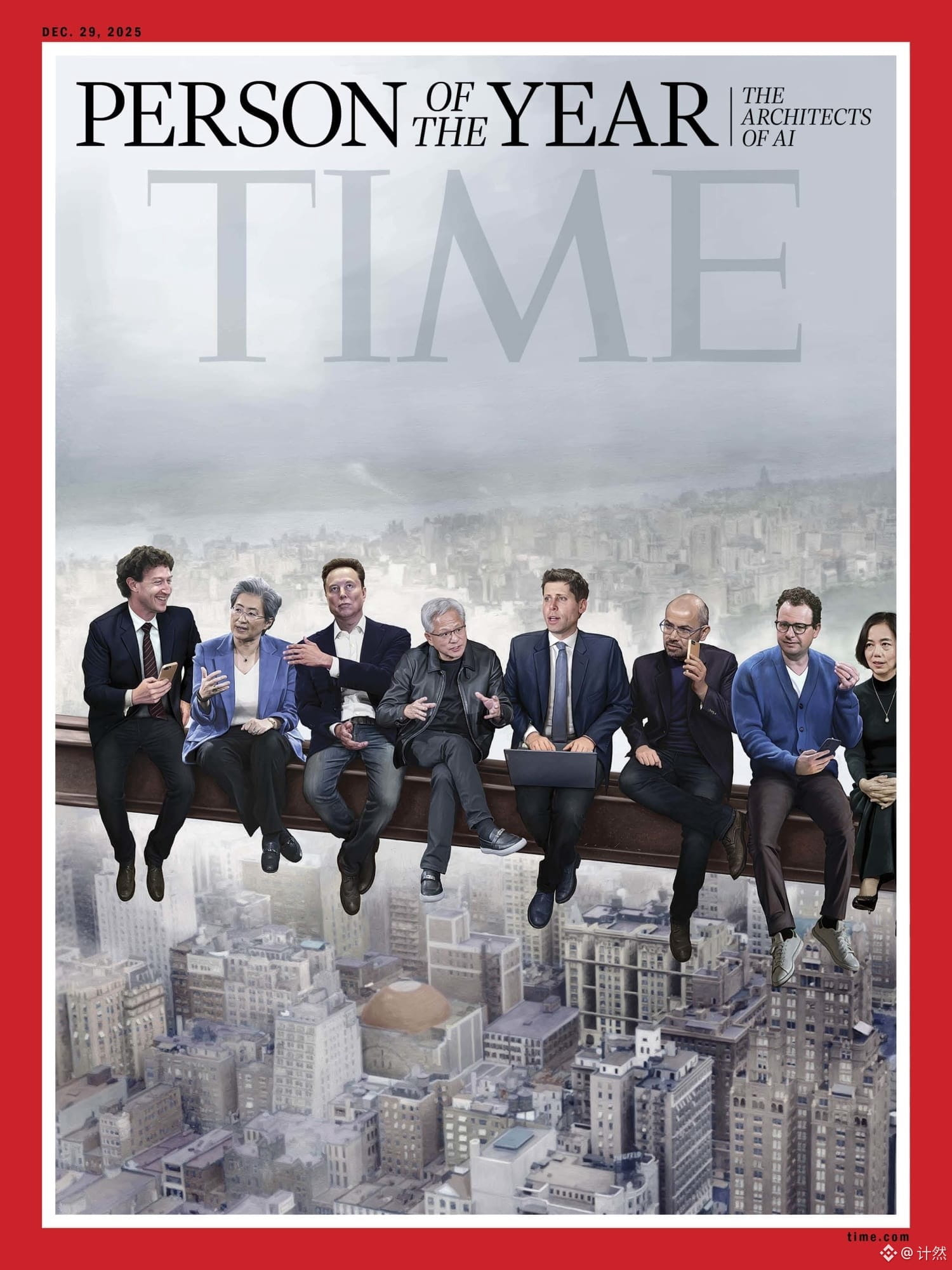
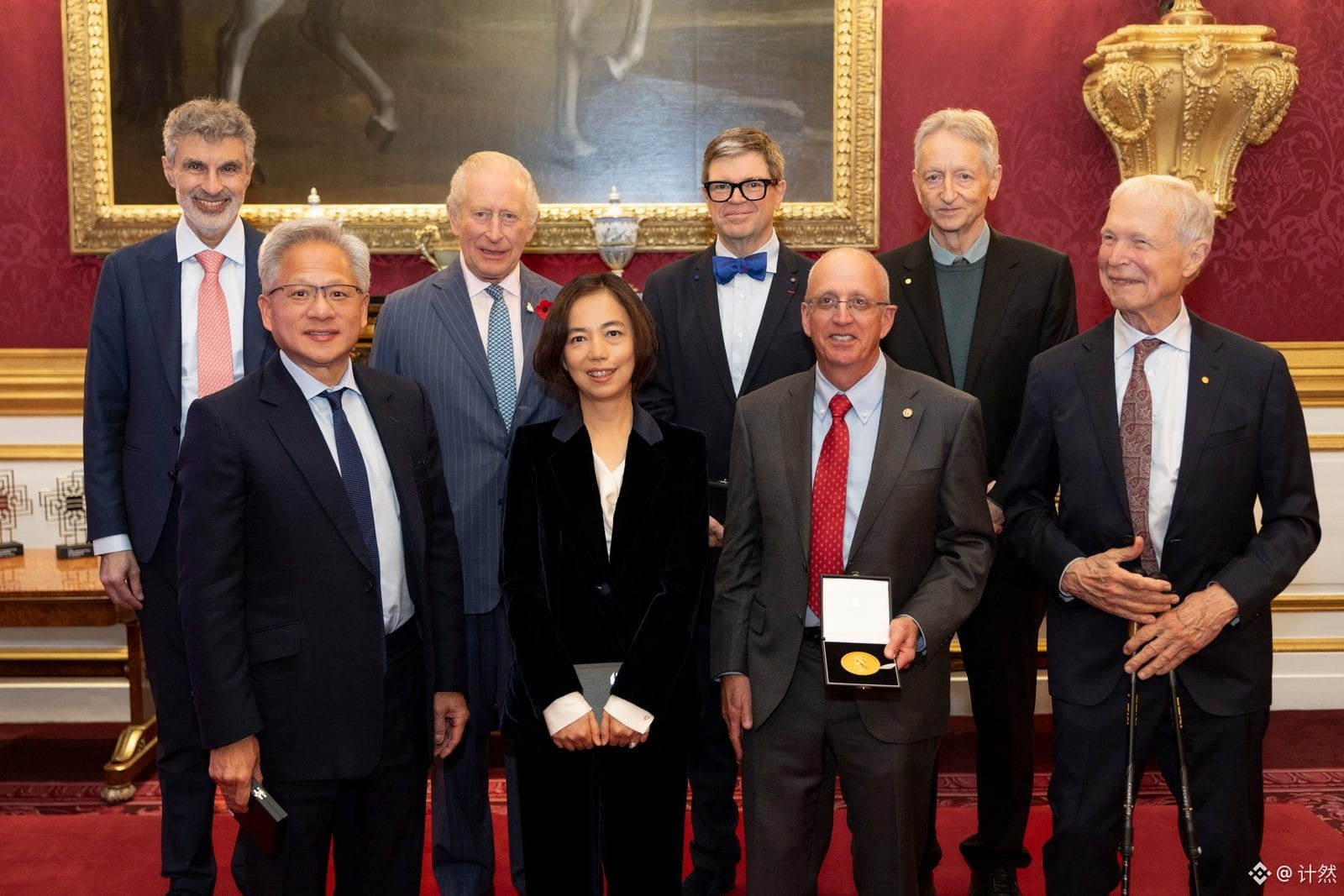
Huang’s achievements are not a matter of favoritism toward any one company. In 2025, the Queen Elizabeth Prize for Engineering went to seven people in recognition of their foundational contributions to modern machine learning. He stood alongside Hinton, LeCun, Bengio, and Fei-Fei Li in the same group photo. The award committee cited the vision to use GPUs for computing, which made it possible to run machine learning at scale. AlexNet, which ignited this wave of AI in 2012, was trained on two Nvidia graphics cards; Hinton was one of its creators. At the end of 2025, Time named “the Architects of AI” its Person of the Year. Eight people sat side by side on a steel beam on the cover, with Huang in the middle.
In 2016, Klaus Schwab, founder of the World Economic Forum, introduced the idea of the “Fourth Industrial Revolution,” with artificial intelligence as one of its core technologies. The age of steam remembers Watt; the age of electricity remembers Edison and Tesla. The AI age will remember Jensen Huang. Watt didn’t invent the steam engine; he made it truly useful. Huang didn’t invent AI; he made it truly run.
What’s even more remarkable is that this engine almost never got built.
A few years into the startup, the company landed a chip contract for Sega’s game console. Halfway through, they realized they had bet on the wrong technology. Continuing meant certain failure; stopping meant they didn’t have enough cash to make it to the next product. Huang went to Sega’s chief, admitted in person that he was wrong and couldn’t fulfill the contract, then asked him to pay anyway, or the company wouldn’t survive. Sega agreed. The money bought the company about six months. The team managed to build its next chip before the cash ran out, and that gave them a chance to catch their breath. Many years later, he told a group of graduates: “Facing your mistakes and humbling yourself to ask for help saved Nvidia.”
Then came CUDA. Huang made sure every graphics card came with it. Chip costs went up, and profits went down. In his own words, the company’s market value hovered just above a billion dollars for years. Shareholders were skeptical and urged him to focus on boosting profits. He lived through that for many years without stopping. Only when the wave of large AI models arrived did everyone see just how important that path was.
Thirty years ago, he bowed his head and admitted he was wrong, saving the company. Thirty years later, he bowed his head once more and handed the company over. The young man who had dared to ask a customer for a lifeline was now 63; he had given more than half his life to Nvidia. When he left, there was no farewell speech.
The company he had built from the ground up changed drivers overnight. On November 8, in a letter to employees, he wrote, “I was unfaithful to my wife.” He apologized to his wife and family, to his colleagues, the board, and shareholders, and said he took full responsibility. The crowds that once chased him for his autograph had become cameras chasing him with questions.
The matters that need investigating must be fully investigated; no one can sidestep that. But before any conclusions were reached, the headlines had already delivered their verdict. It takes courage for someone to stand up and say the most humiliating words himself.
On November 16, the U.S. president was asked about him. He said Huang had “learned a very big lesson,” and that he wouldn’t mind if Huang returned to the job. The lesson has already been learned. Coming from someone in that position, those words can serve as a fair-minded postscript.
There’s an open letter online called “Stand with Jensen Huang,” asking the board to bring him back. By November 16, nearly 180,000 people had signed it. Elon Musk, the founder of Shopify, and Uber’s former CEO had all added their names. When someone leaves and so many people speak up to ask him to stay—colleagues who have worked with him for years, as well as ordinary people who have never met him—that kind of support can’t be bestowed by any job title.
As for whether he goes back, that’s between him and the board. But from the outside, he has no need to prove anything more by chasing a position. Before the investigation reaches a conclusion, the odds of winning are unclear, while the costs are plain to see.
What comes after this unexpected turn? Steve Jobs left Apple in 1985, went on to found NeXT, and bought Pixar. NeXT’s technology later became the foundation of Apple’s operating systems, and Pixar transformed animated films. Leaving doesn’t have to mean the curtain has fallen.
The next step in this industrial revolution driven by AI will very likely take it beyond the data center. In 2024, speaking in Taipei, Huang said the next wave would be “physical AI”—AI that understands the laws of physics. He envisioned a future where factories would be run by robots. If the first act was about chips, the second may be about electricity, robots, and each country’s own computing infrastructure. Where the electricity will come from, who will build the robots’ brains, and how a country will create its own “AI factory”—these questions are far from answered.
Very few people have built this whole thing from scratch, and he is one of them. Once things have been resolved, he could easily sit down again in a booth at some restaurant, order a coffee, and start over. Looking back then, November 11, 2026, may not have been a full stop, but the opening whistle of the second half of his life.
The boy who washed dishes has already won once to get this far. If he wins again, it doesn’t have to be at the same poker table.
Where do you think his next stop should be?
$NVDA #英伟达 #JensenHuang
778
·
--
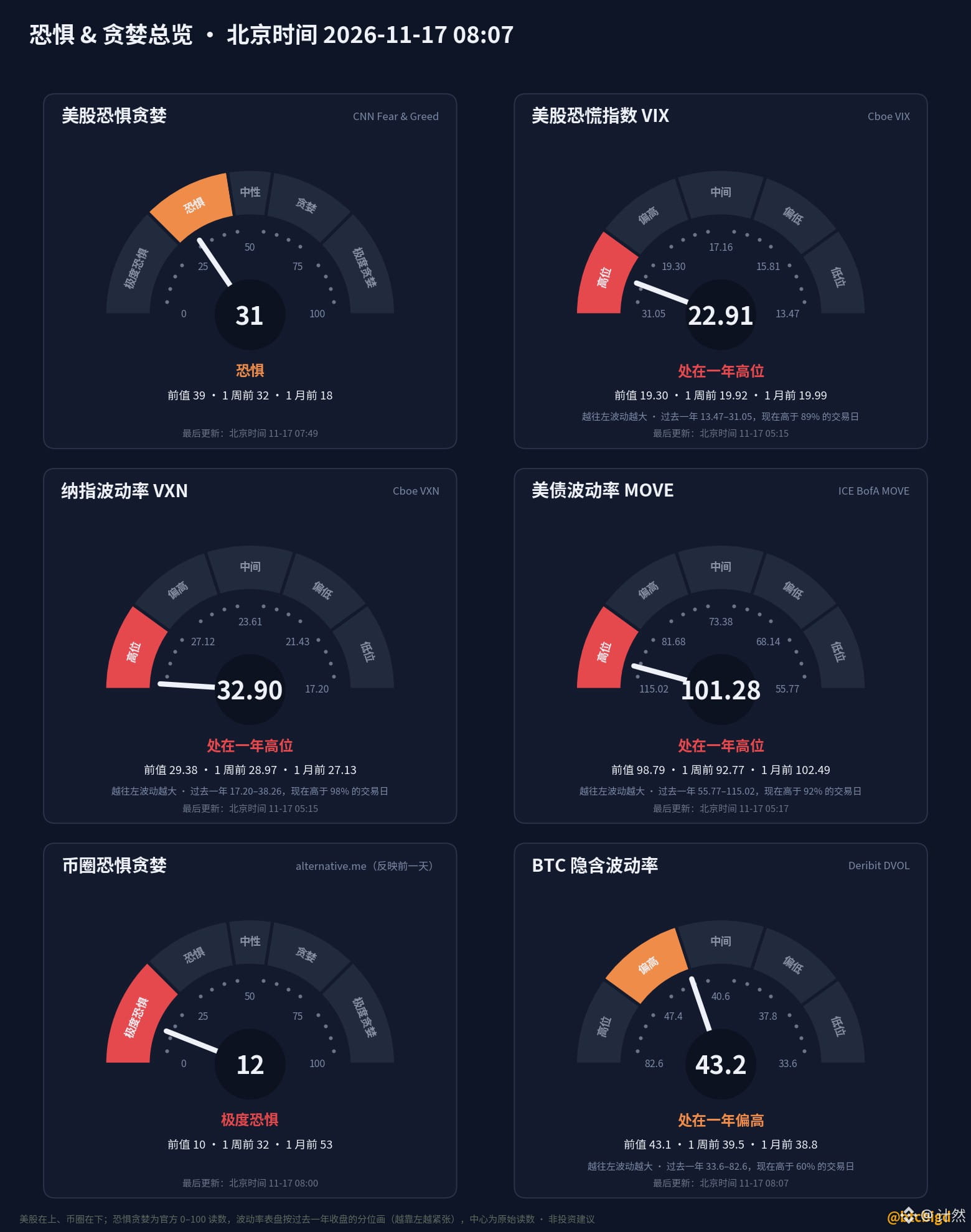
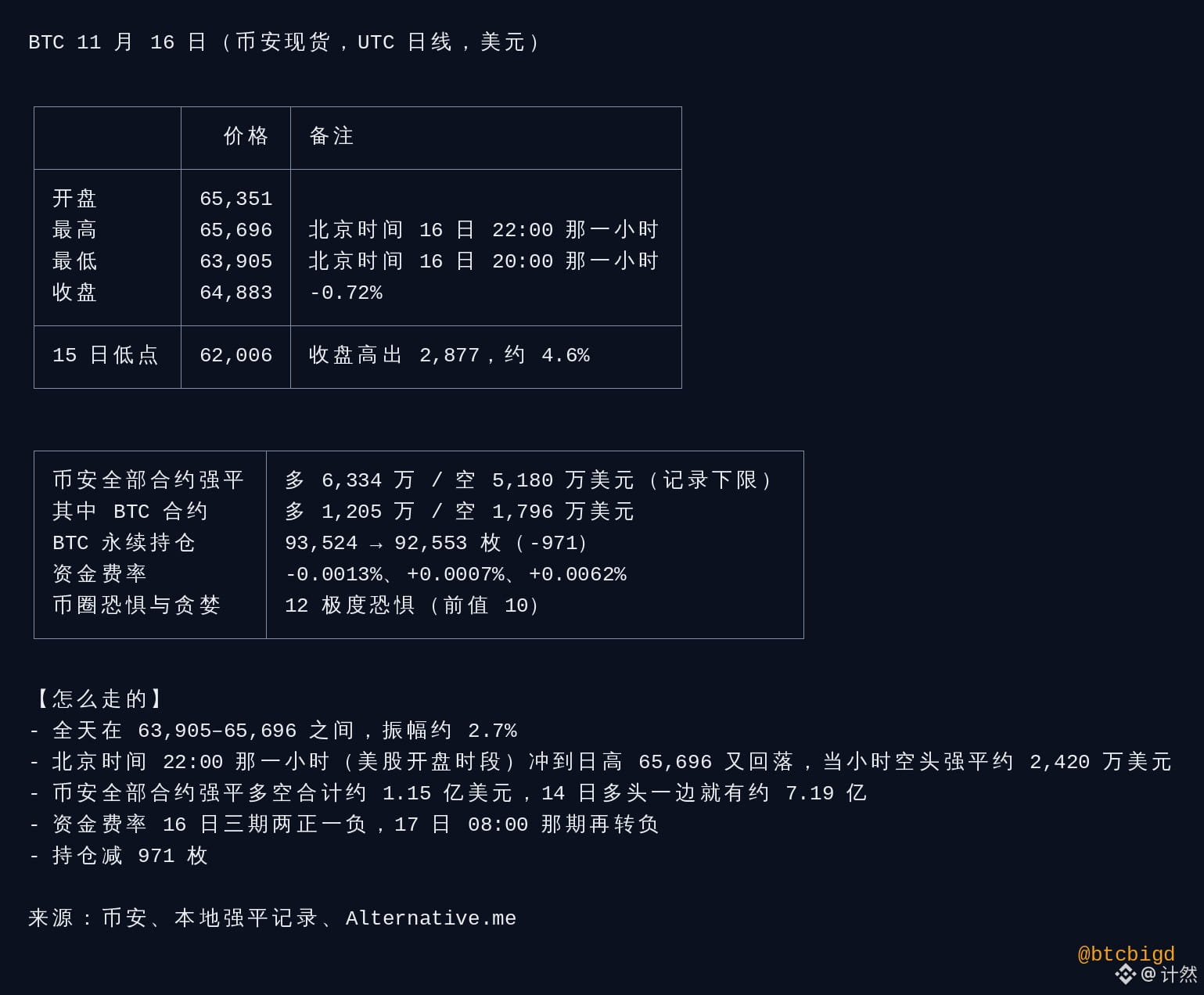
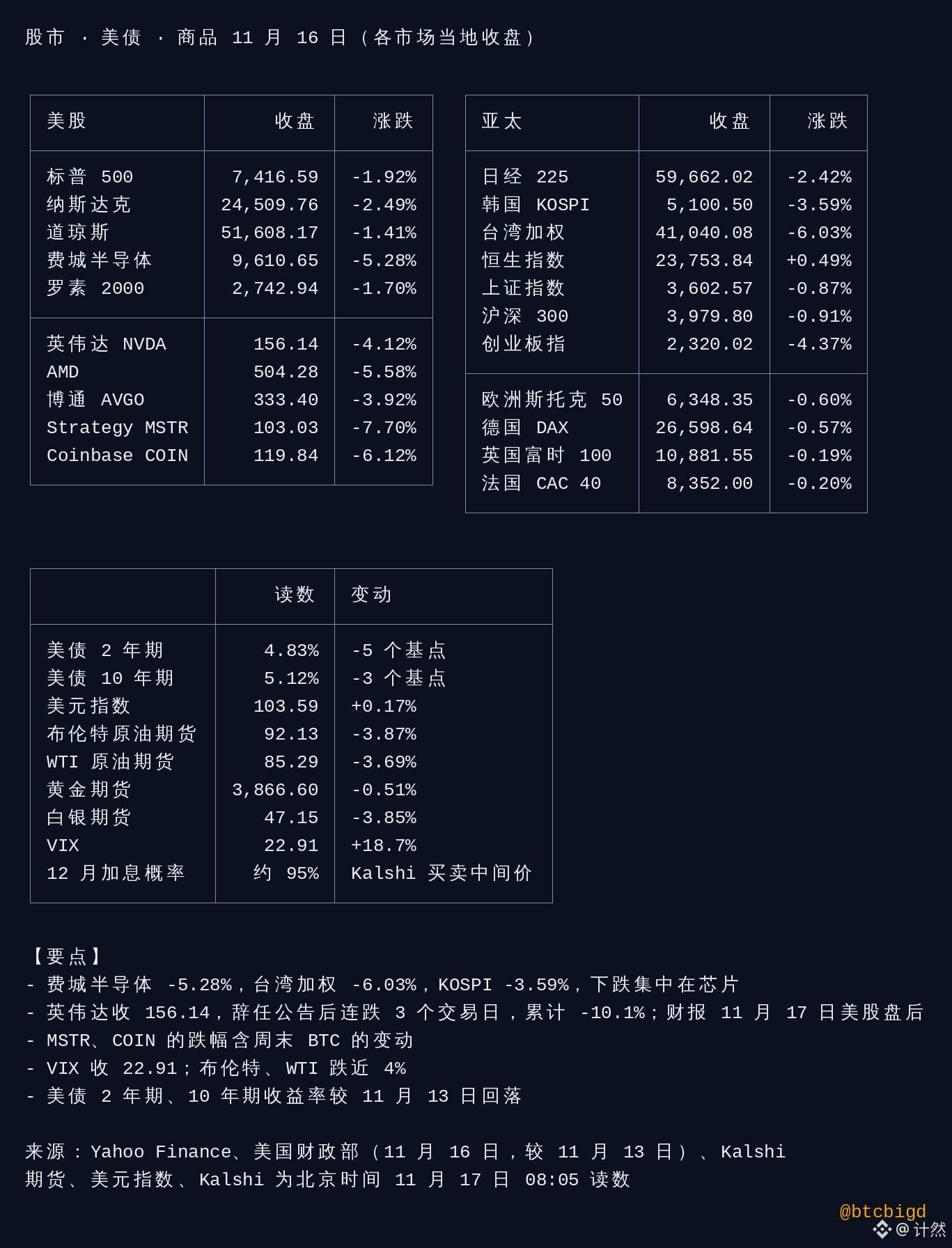
November 16 market roundup: Stocks plunged, while crypto barely moved. The U.S. Philadelphia Semiconductor Index fell 5.28%, the Nasdaq fell 2.49%, and the S&P 500 fell 1.92%; Taiwan’s weighted index fell 6.03%, South Korea’s KOSPI fell 3.59%, and the VIX rose to 22.91. $BTC traded between 63,905 and 65,696 over the day, closing the UTC daily session at $64,883 (−0.72%); the Crypto Fear & Greed Index stood at 12, still in extreme fear.
【Highlights】The declines were concentrated in chips: Nvidia closed at $156.14 (−4.12%), falling for a third consecutive trading day after the resignation announcement, down 10.1% in total; AMD fell 5.58%, and TSMC ADRs fell 6.34%. Leverage was very light on the BTC side: total long and short liquidations across all Binance futures contracts were about $115 million, compared with about $719 million in long liquidations alone on November 14; perpetual open interest fell by 971 coins. During the 22:00 Beijing time hour (the U.S. market open), the price surged to the daily high of 65,696 before retreating. The close was about 4.6% above the November 15 low of 62,006.
【Trending】
- Nvidia: CNBC, citing people familiar with the matter, reported that the board was not considering asking Jensen Huang to return; on the same day, the U.S. president said he would not mind Huang returning (NBC). Earnings are due after the U.S. market close on November 17, early morning November 18 Beijing time.
- Binance ANTHROPIC pre-market contract: Trading will be suspended from 16:30 to 19:00 Beijing time on November 17 to adjust the contract size. The conversion factor is 13.116. It will then be renamed ANTUSDT, and all open orders will be canceled during the suspension.
- Crude oil: Brent closed at $92.13 (−3.87%), and WTI closed at $85.29 (−3.69%).
- U.S. Treasuries: The 10-year yield was 5.12% and the 2-year yield was 4.83%, both down from November 13.
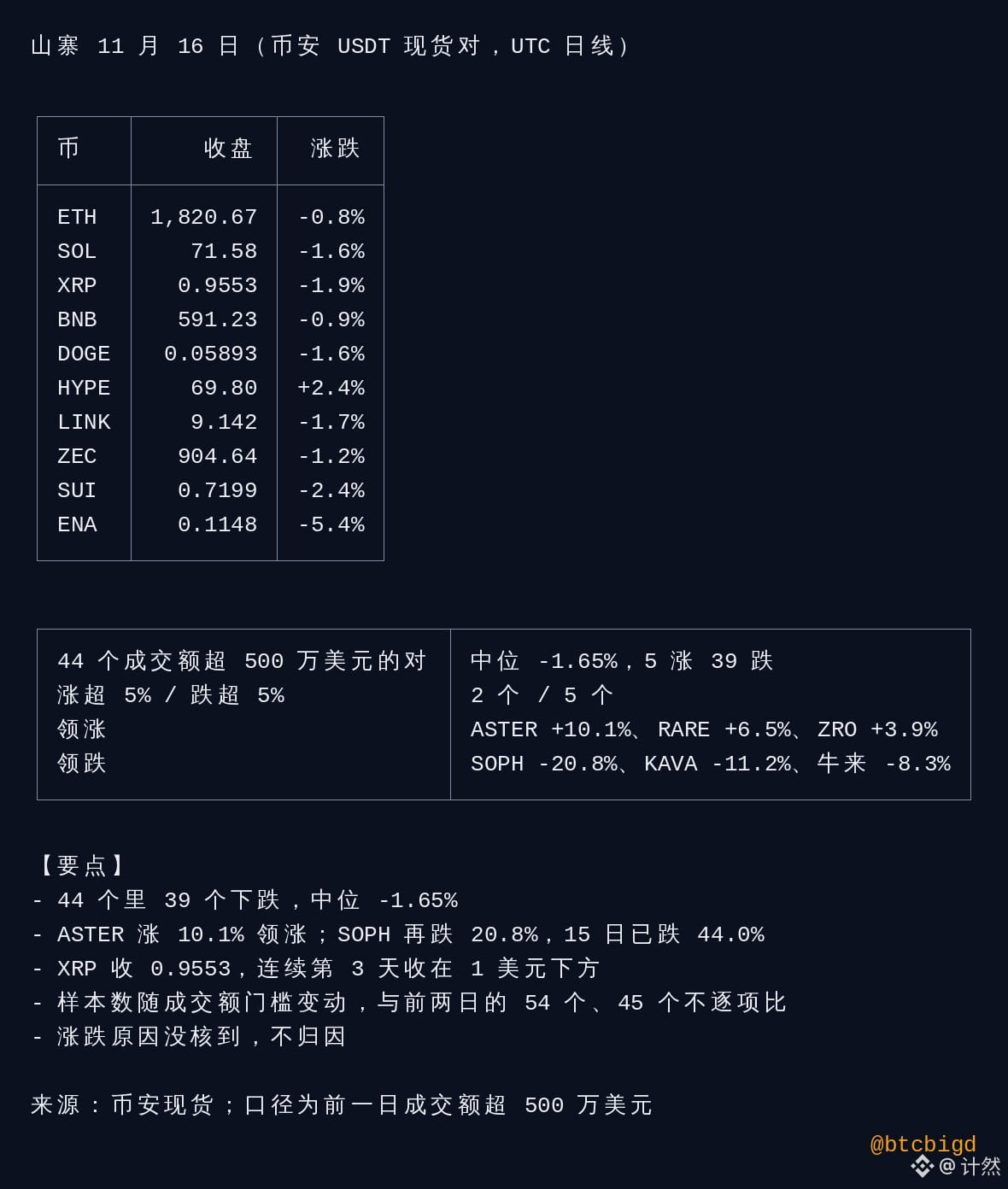
【Altcoins】Of the 44 Binance spot pairs with more than $5 million in trading volume, 39 fell, with a median decline of 1.65%. ASTER led the gainers, up 10.1%; SOPH fell another 20.8%; XRP closed at $0.9553, below $1 for the third consecutive day.
Follow me for a daily market roundup every morning.
#BTC #Nvidia
373
·
--
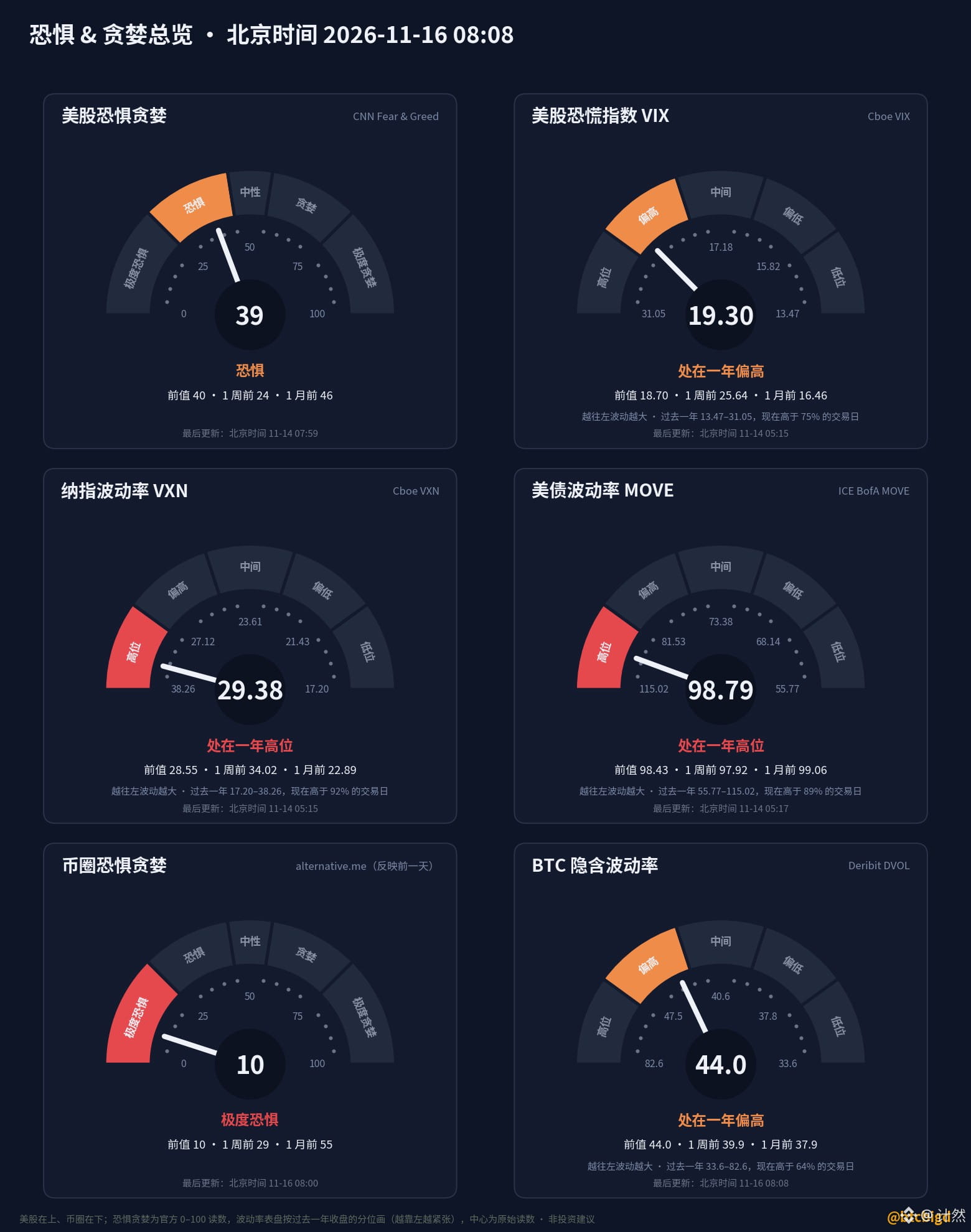
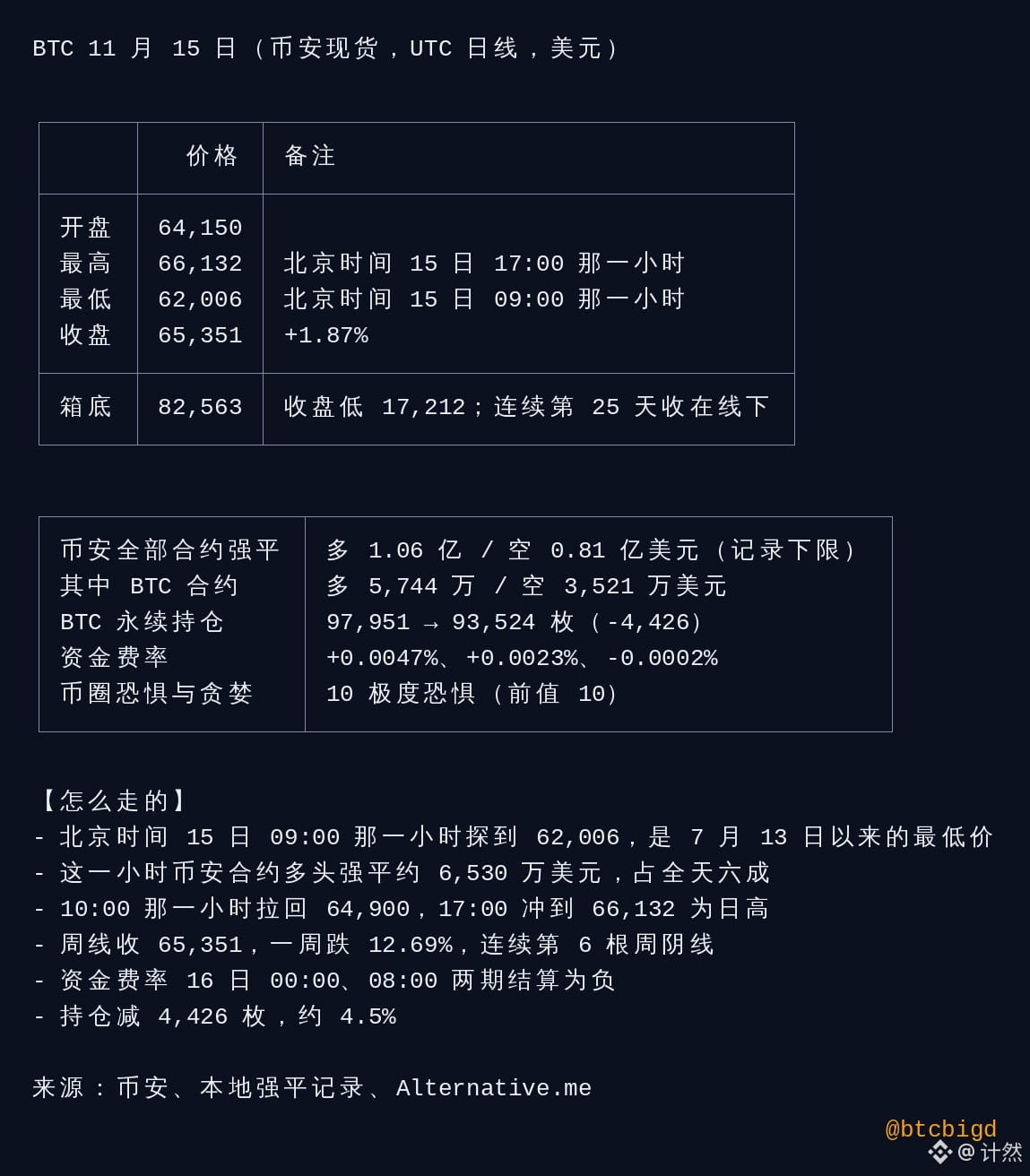
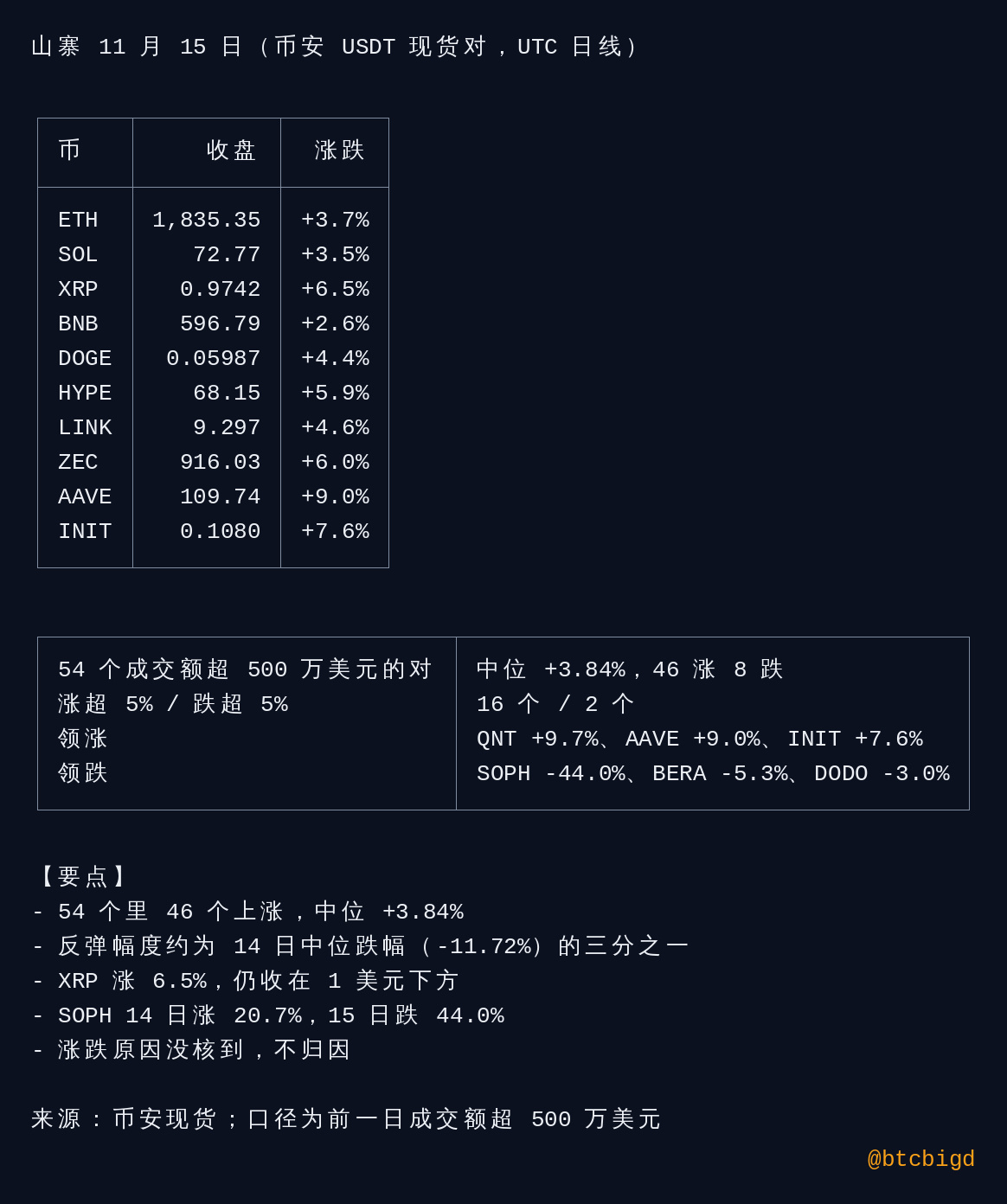
November 15 market recap: $BTC weekly close at $65,351, down 12.69% for the week and marking the sixth consecutive down week. During Sunday trading, BTC hit a low of $62,006, its lowest price since July 13, before recovering to close the UTC day up 1.87%. Altcoins rebounded too: 46 of Binance’s 54 major spot pairs rose, with a median gain of 3.84%—about a third of Saturday’s median decline. The Crypto Fear & Greed Index remained at 10.
【Key takeaway】Sunday’s market action was the opposite of Saturday’s. Saturday saw a 6% drop, open interest barely budged, and funding rates stayed positive. On Sunday, prices edged up, BTC perpetual open interest fell by 4,426 BTC (about 4.5%), and funding rates settled negative for two consecutive periods. Total liquidations of long positions across Binance futures fell from about $719 million to about $106 million, a record low. Leveraged longs are starting to exit, but one day alone is not enough to say the decline is over. The longest historical streak of consecutive weekly losses was nine, ending in May 2022.
【What to watch this week】
- Nvidia’s earnings report after market close on November 17. The Financial Times reported on November 15 that Jensen Huang and close associates had discussed his return as CEO; neither the company nor Huang confirmed the report.
- Binance will adjust the contract size of its ANTHROPIC pre-market contract and rename it ANTUSDT, effective November 17 at 16:30 Beijing time. The multiplier will be 13.116. Trading will be suspended during the adjustment, and all open orders will be canceled.
- Anthropic pricing on November 18 and listing on November 19.
Follow me for a market recap every morning.
#BTC #Nvidia
112
·
--
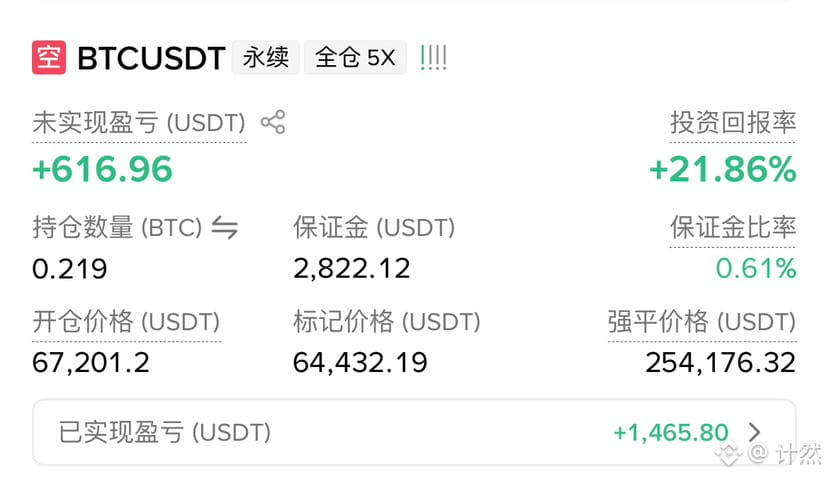
Hehe! The first target of 62,500 that the 13th mentioned has been reached; now waiting for the second target.
Hehe! The first target of 62,500 that the 13th mentioned has been reached; now waiting for the second target.
计然
·
--
BTC’s early bull-market setup has taken a heavy hit! The weekly chart is likely to close with six consecutive bearish candles this week! The Fear & Greed Index has fallen to 20, matching its level on July 8 and marking a four-month low.
【What to watch】If the downtrend continues, the first level to watch below is around $62,500 (the August 14 low of $62,535), followed by $58,000: the lowest daily close of this early-bull-market cycle, at $58,625 on June 30. Do you think $58,000 can hold?
【Capital flows】
- U.S. spot BTC ETFs: From October 30 to November 10, they saw net outflows of $2.22 billion over eight trading days. BlackRock’s IBIT saw outflows for eight consecutive days, totaling $1.73 billion.
- Monthly ETF flows: Net inflows of $2.65 billion in September turned into net outflows of $520 million in October.
- Total stablecoin market cap: $303.9 billion on October 13, down to $289.1 billion on November 12—a decline of $14.9 billion in one month.
- Strategy was removed from MSCI, effective at the close on November 30. Passive funds tracking the index will have to sell.
- Anthropic is expected to go public on November 19, potentially absorbing about $61 billion in capital (825 million shares offered to the public, at the midpoint of the offering range of $74 per share).
- The 10-year U.S. Treasury yield climbed back above 5% on November 12 (5.10%). Higher risk-free rates make investors less willing to take risks.
【Events】
- On October 30, Binance was hacked for approximately $6.34 billion (according to Binance’s preliminary report).
- In the U.S. midterm elections on November 3, Democrats won both chambers of Congress, bringing Trump’s pro-crypto era to an end.
Sources: Binance BTCUSDT spot weekly chart, Alternative.me, Farside, DefiLlama, MSCI, U.S. Department of the Treasury, Anthropic prospectus.
$BTC
#BTC #Bitcoin
477
·
--
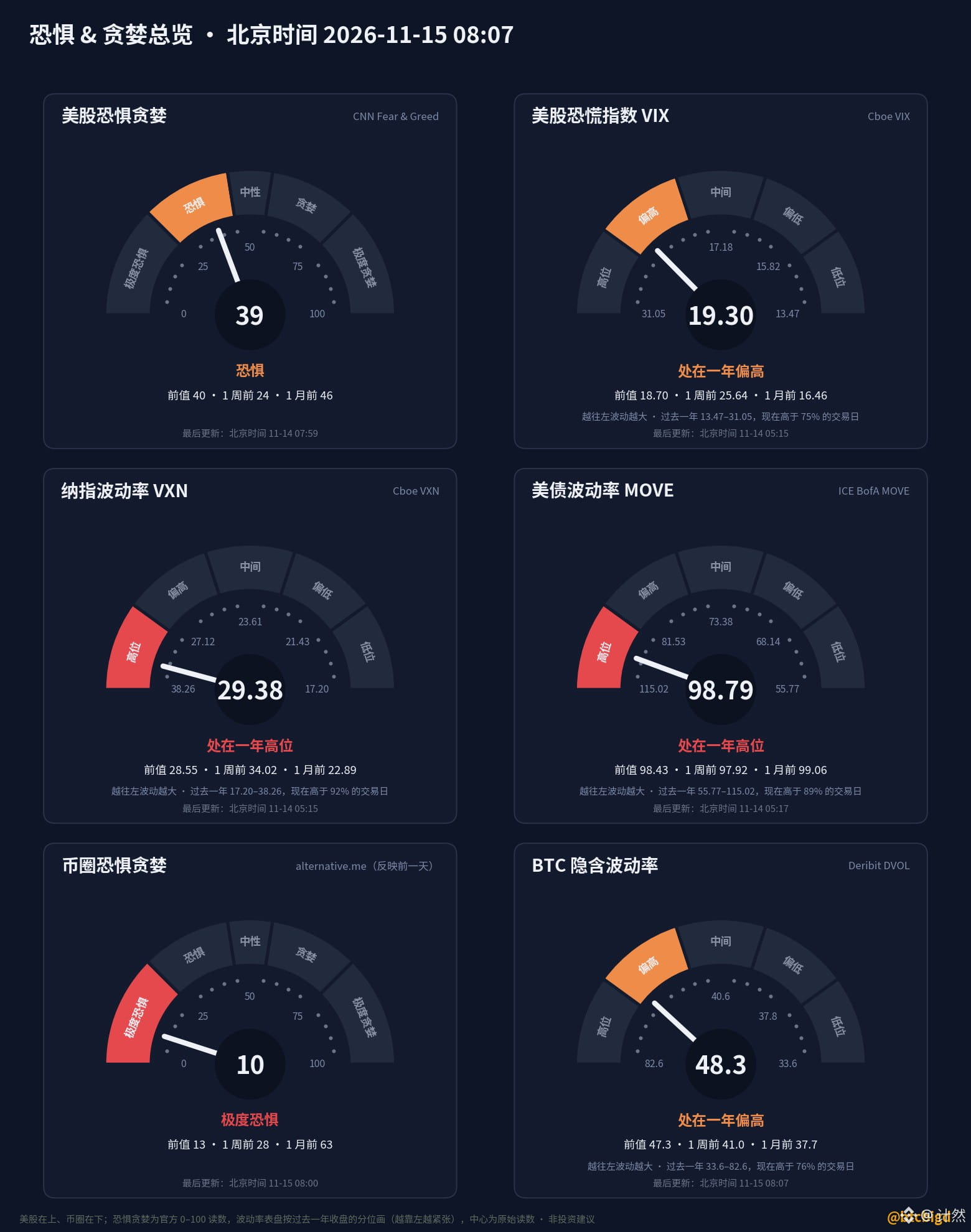
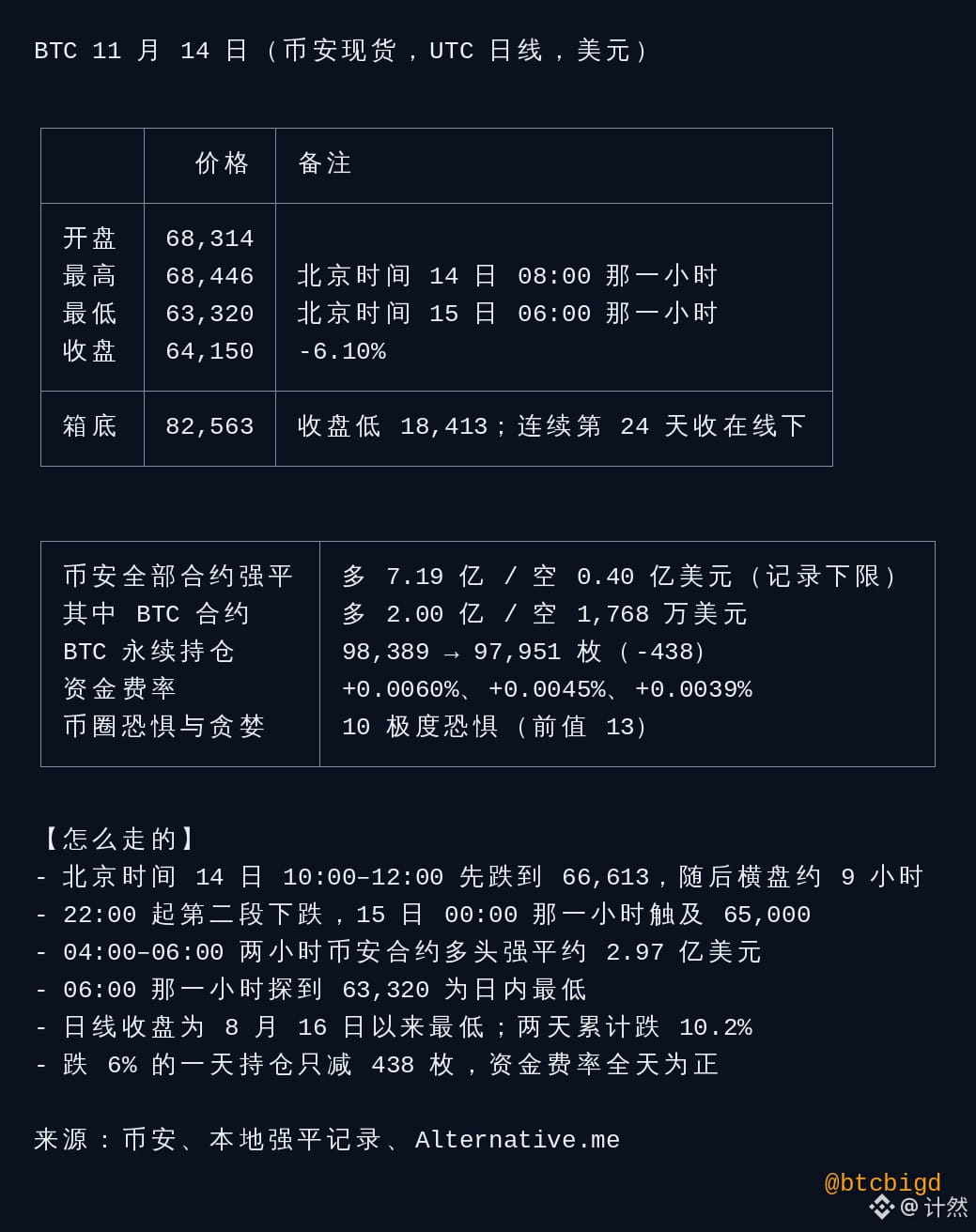
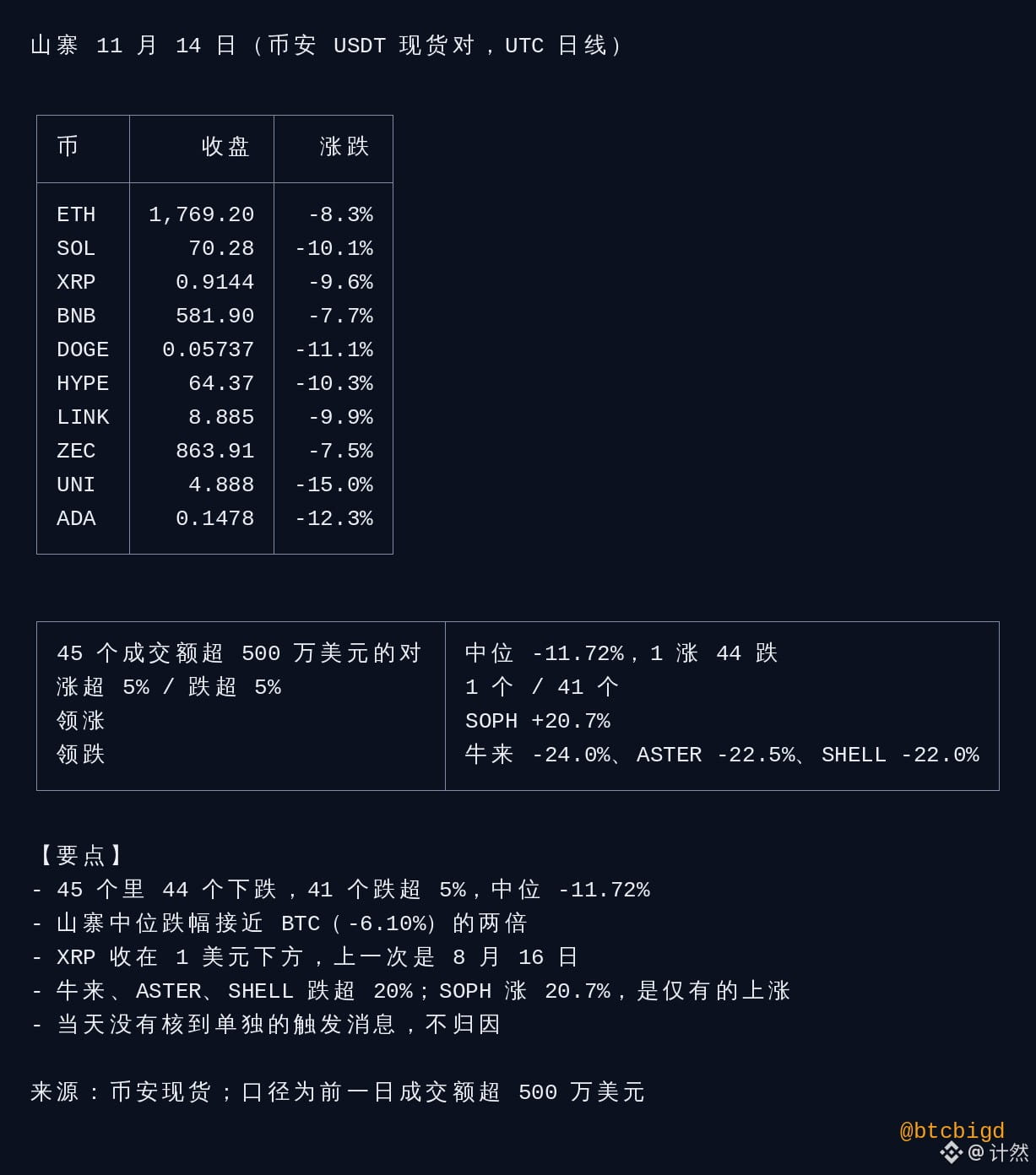
Nov. 14 market roundup: $BTC fell another 6.10% on Saturday, hitting a low of 63,320 before closing the UTC daily candle at $64,150—the lowest daily close since Aug. 16. The two-day decline totaled 10.2%. Altcoins fell harder: 44 of Binance’s 45 major spot pairs were down, with a median loss of 11.72%, and XRP closed below $1. The Crypto Fear & Greed Index dropped to 10, its lowest since June 10.
【Key points】Total Binance futures long liquidations rose for three straight days: about $187 million on Nov. 12, $434 million on the 13th, and $719 million on the 14th (recorded floor). Most of the increase on the 14th came from altcoins. BTC futures long liquidations were about $200 million, less than the $243 million on the 13th. BTC perpetual open interest fell by just 438 BTC in a day, while funding rates stayed positive throughout: despite a 6% drop, long positions largely remained in the market. The familiar washout combination of “open interest clearing out sharply and funding rates turning negative” has yet to appear. Stock markets were closed Saturday, and no specific trigger for the day was confirmed.
【What’s next】
- The weekly candle closes at 08:00 Beijing time on Nov. 16. The week opened at 74,851; a down close would make six consecutive weekly losses.
- The daily swing lows below are 62,484 (Aug. 14) and 62,229 (Aug. 1), about 3% below the close.
- Nvidia reports after market close on Nov. 17; Anthropic pricing on Nov. 18.
Follow me for a daily market roundup every morning.
#BTC #XRP
129
·
--
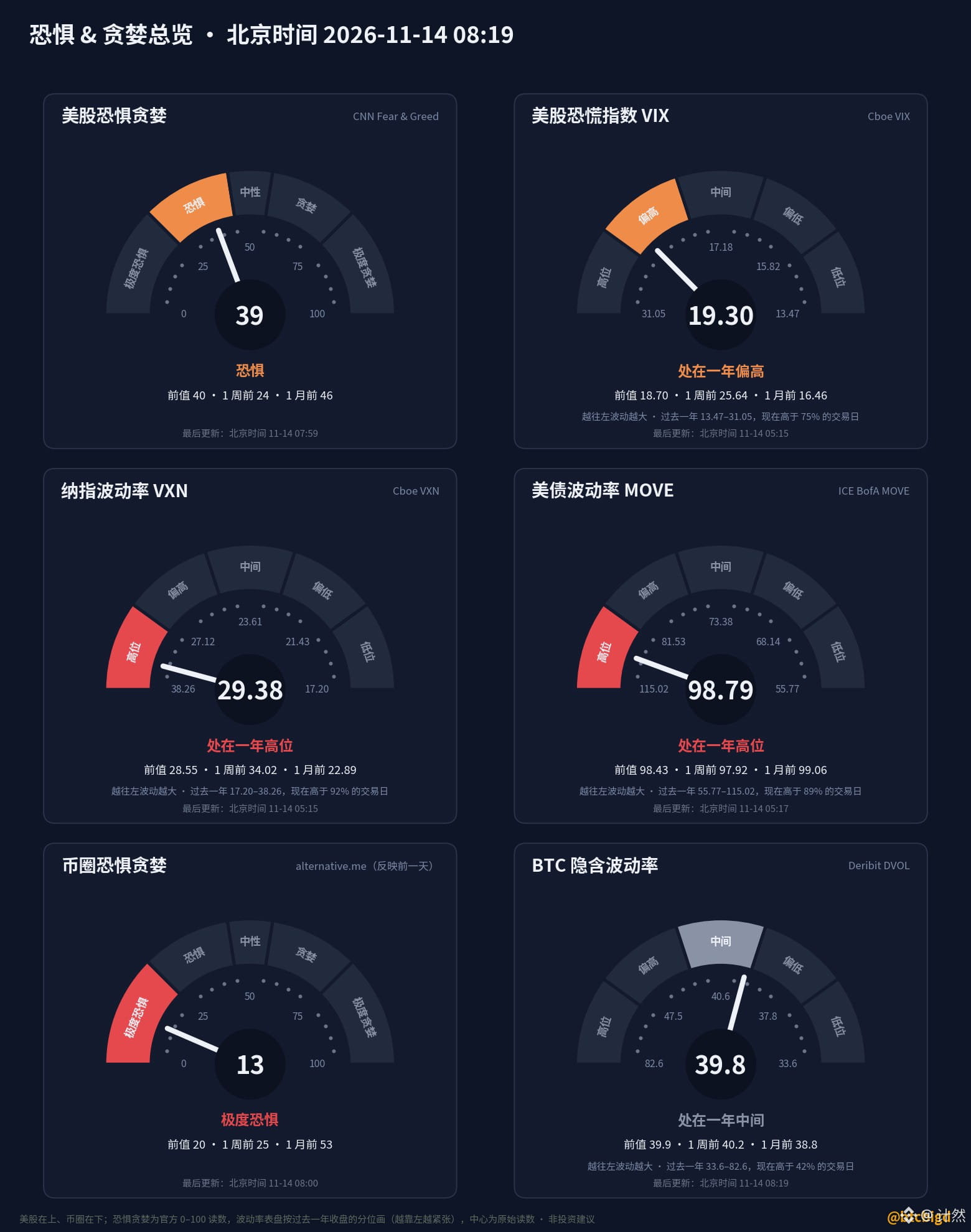
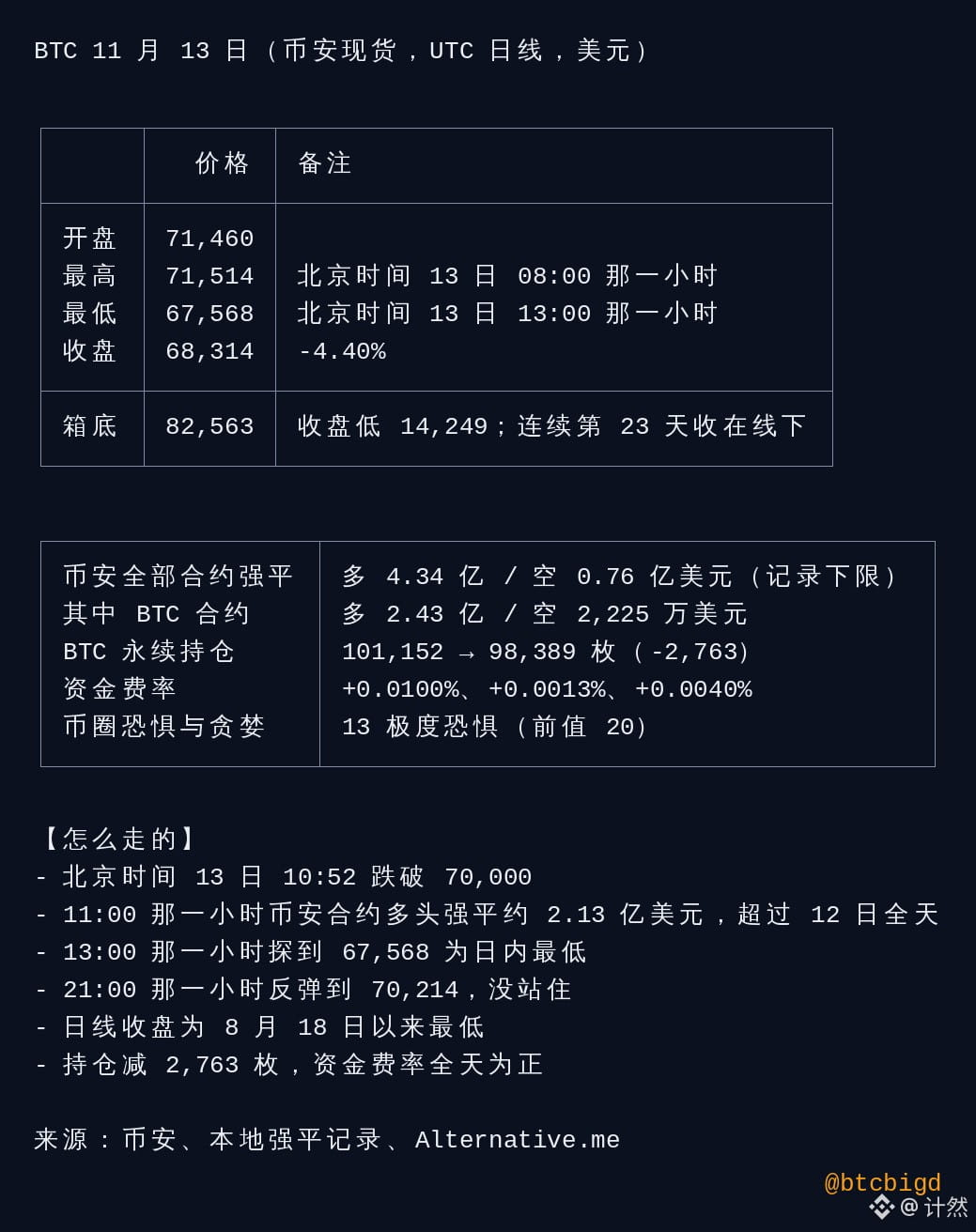
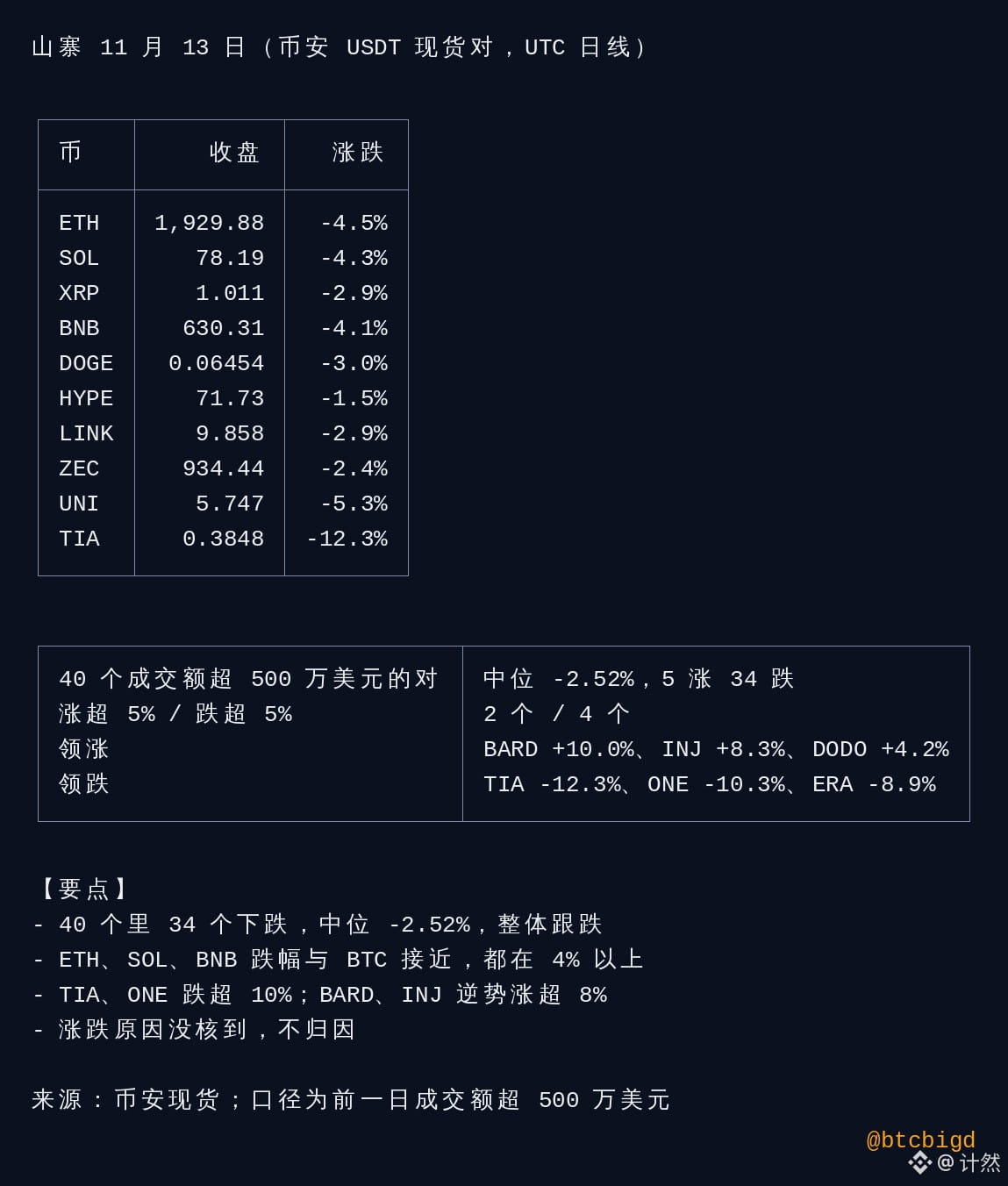
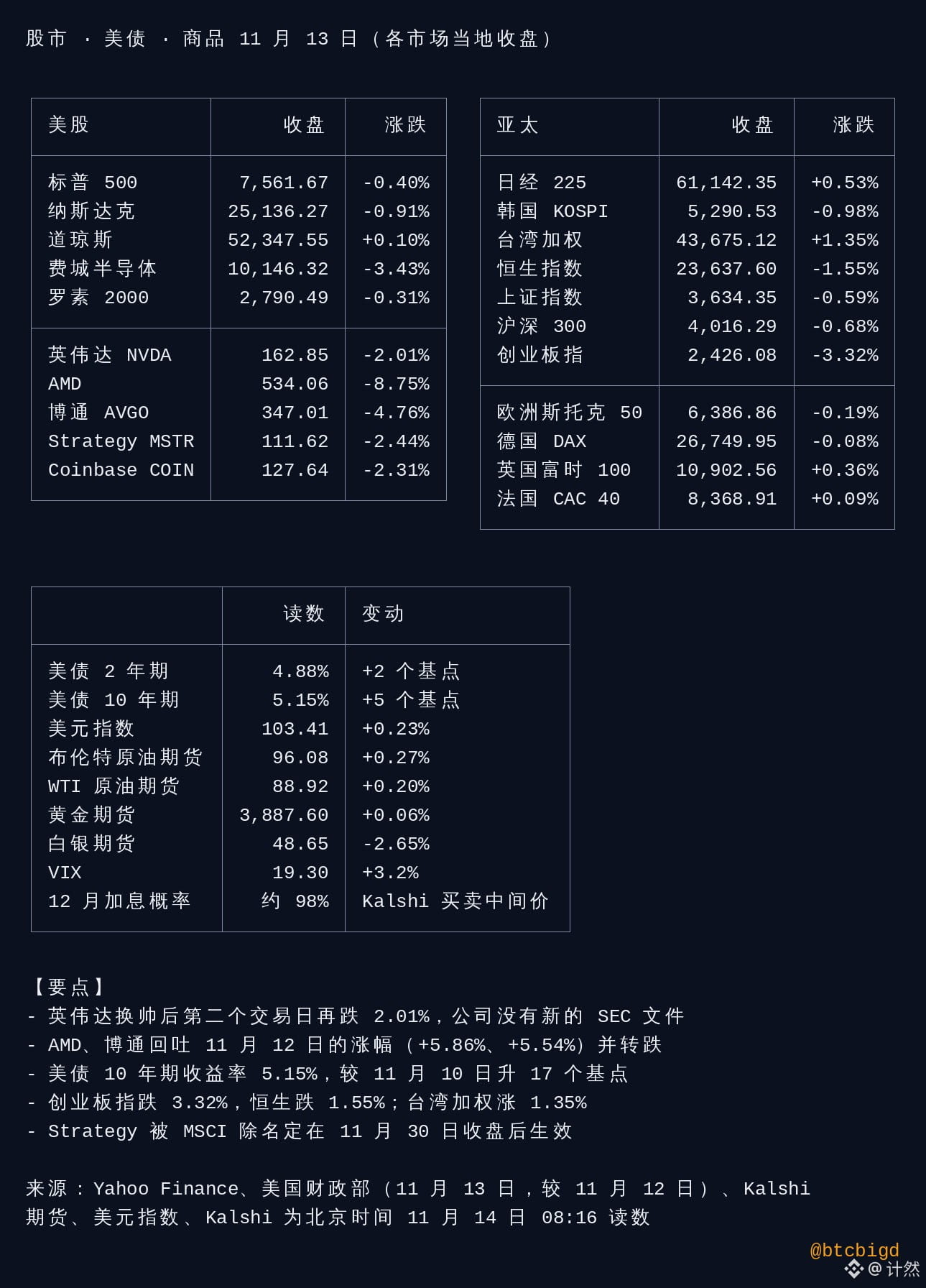
November 13 market overview: $BTC At 10:52 Beijing time, the price fell below $70,000, hitting a low of $67,568. The UTC daily candle closed at $68,314 (−4.40%), its lowest daily close since August 18. The Crypto Fear & Greed Index dropped to 13, its lowest since July 1. The U.S. Philadelphia Semiconductor Index fell 3.43%; AMD fell 8.75%; Nvidia dropped another 2.01% on the second trading day after its leadership change. The 10-year U.S. Treasury yield rose to 5.15%.
【Highlights】In the hour after Bitcoin broke below $70,000 (11:00–12:00 Beijing time), about $213 million in Binance futures long positions were liquidated, exceeding the $187 million for all of November 12. Long liquidations for the full day on the 13th totaled about $434 million (recorded minimum). Open interest in perpetual contracts fell from 101,152 to 98,389 coins, with some positions opened the previous day flushed out; funding rates remained positive throughout the day. The rebound to $70,214 during the 21:00 hour failed to hold. This week's weekly candle opened at $74,851 and closes at 08:00 Beijing time on November 16; a bearish close would make it six consecutive down weeks.
【Two Binance announcements】
- 00:54 Beijing time, November 13: Binance said it had fully replenished the assets affected by the security incident, using more than $6.34 billion in company funds, and published a new proof-of-reserves snapshot. Withdrawals are still being restored in batches.
- 19:30: The projected share count for the ANTHROPIC pre-listing contract was set at 13,116,075,288 shares. Binance will separately announce when the contract size is adjusted; its name will then change to ANTUSDT, with no impact on open positions.
Follow me for a daily market overview every morning.
#BTC #Binance
189
·
--
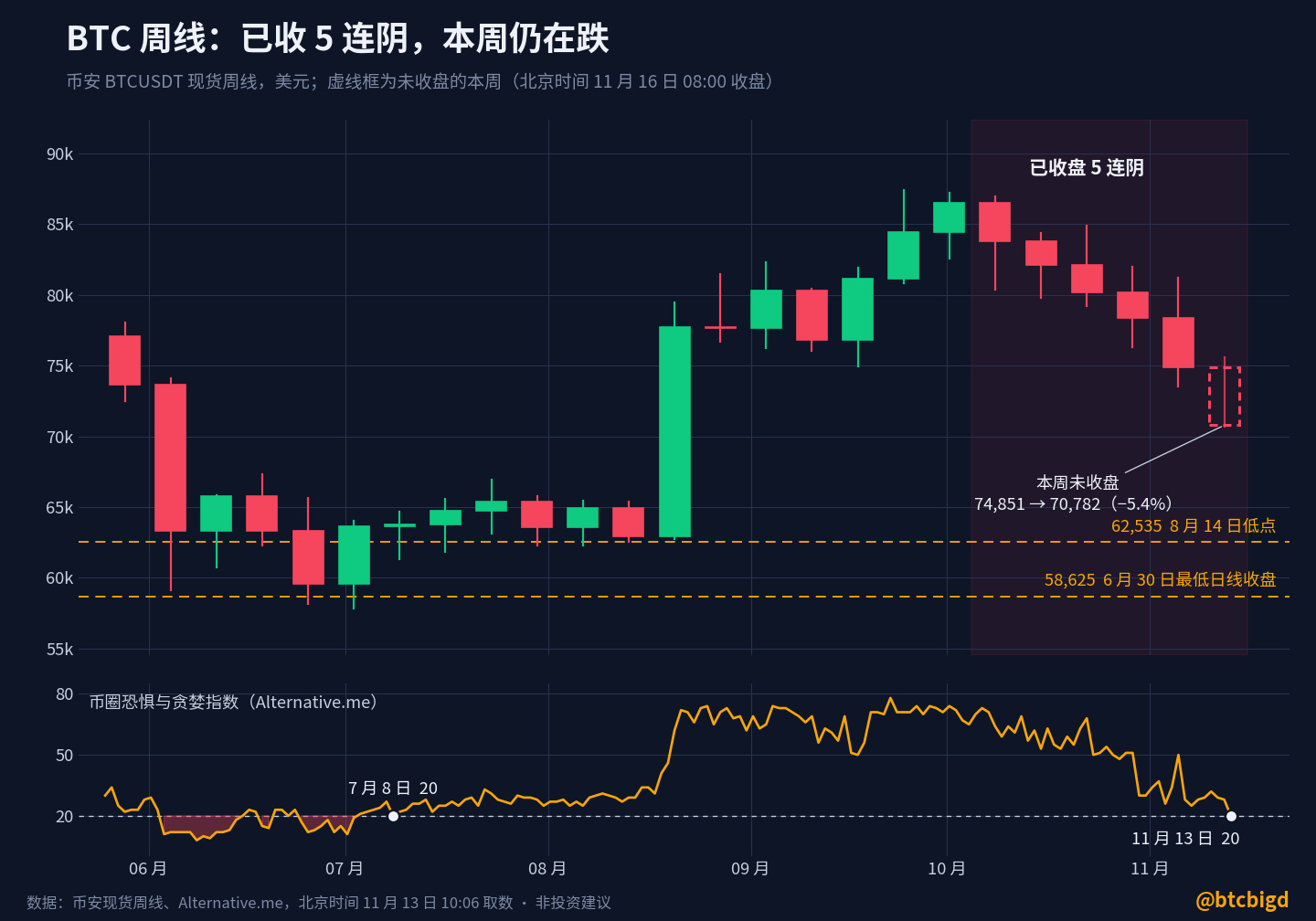
BTC’s early bull-market setup has taken a heavy hit! The weekly chart is likely to close with six consecutive bearish candles this week! The Fear & Greed Index has fallen to 20, matching its level on July 8 and marking a four-month low.
【What to watch】If the downtrend continues, the first level to watch below is around $62,500 (the August 14 low of $62,535), followed by $58,000: the lowest daily close of this early-bull-market cycle, at $58,625 on June 30. Do you think $58,000 can hold?
【Capital flows】
- U.S. spot BTC ETFs: From October 30 to November 10, they saw net outflows of $2.22 billion over eight trading days. BlackRock’s IBIT saw outflows for eight consecutive days, totaling $1.73 billion.
- Monthly ETF flows: Net inflows of $2.65 billion in September turned into net outflows of $520 million in October.
- Total stablecoin market cap: $303.9 billion on October 13, down to $289.1 billion on November 12—a decline of $14.9 billion in one month.
- Strategy was removed from MSCI, effective at the close on November 30. Passive funds tracking the index will have to sell.
- Anthropic is expected to go public on November 19, potentially absorbing about $61 billion in capital (825 million shares offered to the public, at the midpoint of the offering range of $74 per share).
- The 10-year U.S. Treasury yield climbed back above 5% on November 12 (5.10%). Higher risk-free rates make investors less willing to take risks.
【Events】
- On October 30, Binance was hacked for approximately $6.34 billion (according to Binance’s preliminary report).
- In the U.S. midterm elections on November 3, Democrats won both chambers of Congress, bringing Trump’s pro-crypto era to an end.
Sources: Binance BTCUSDT spot weekly chart, Alternative.me, Farside, DefiLlama, MSCI, U.S. Department of the Treasury, Anthropic prospectus.
$BTC
#BTC #Bitcoin
1
192
·
--
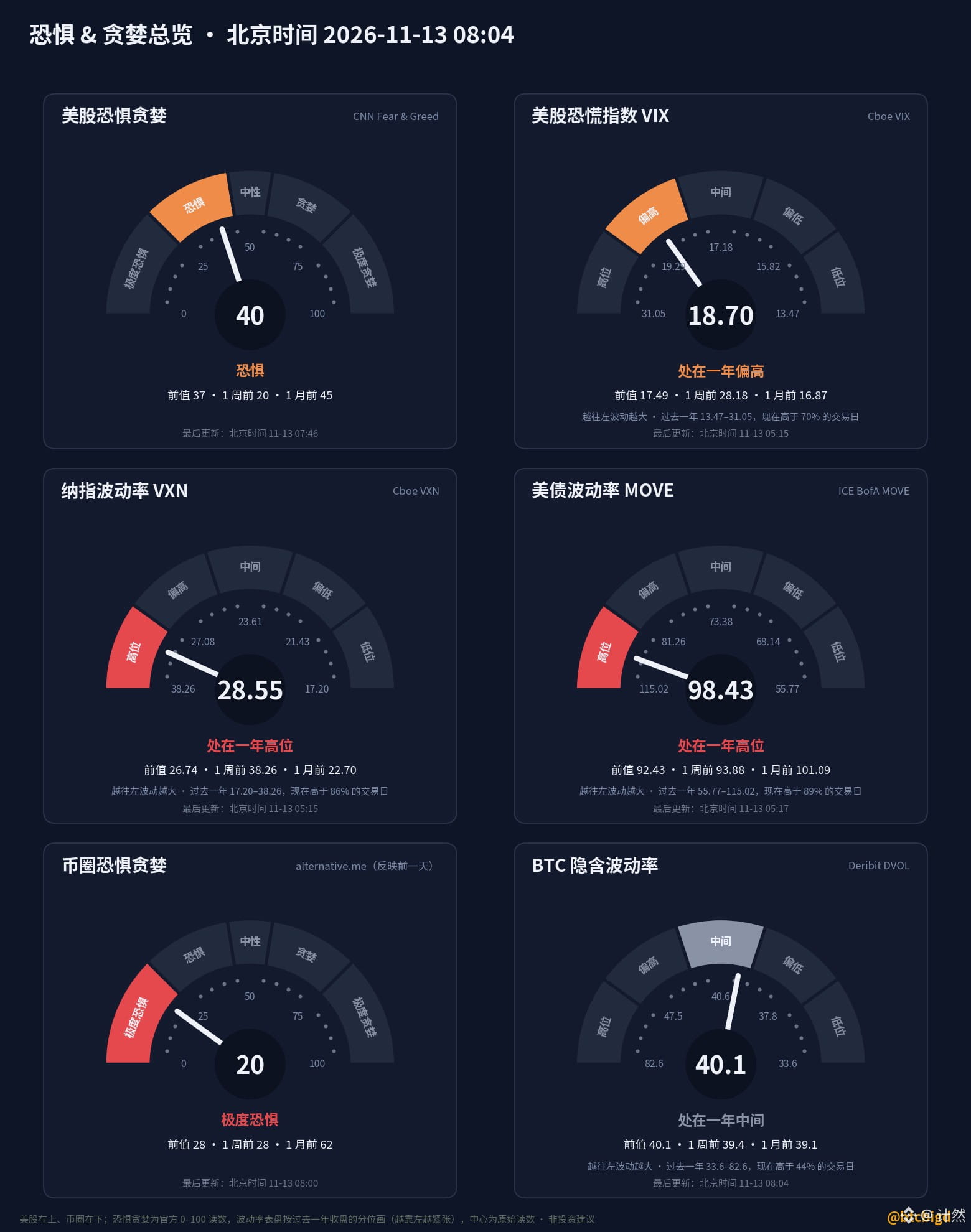
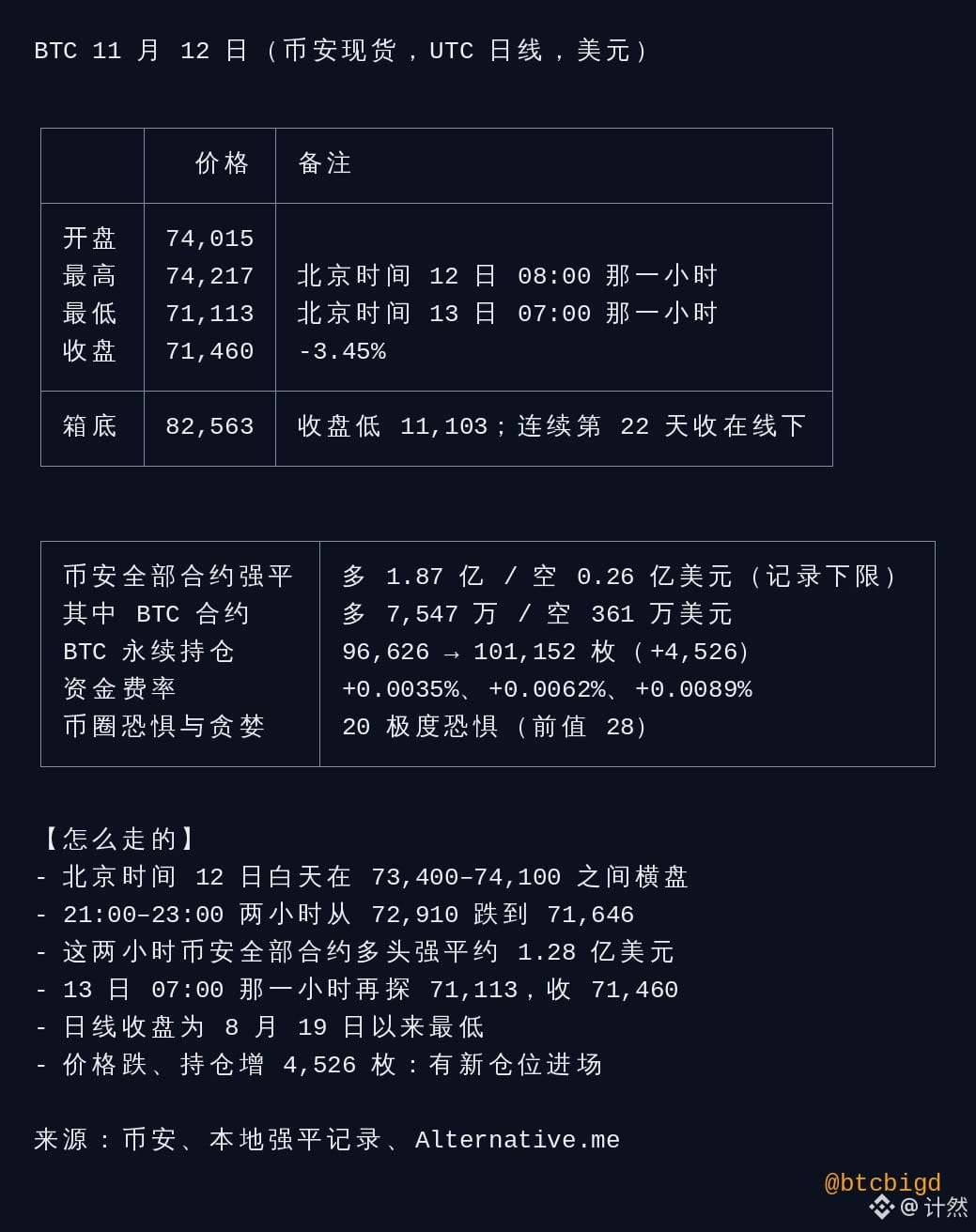
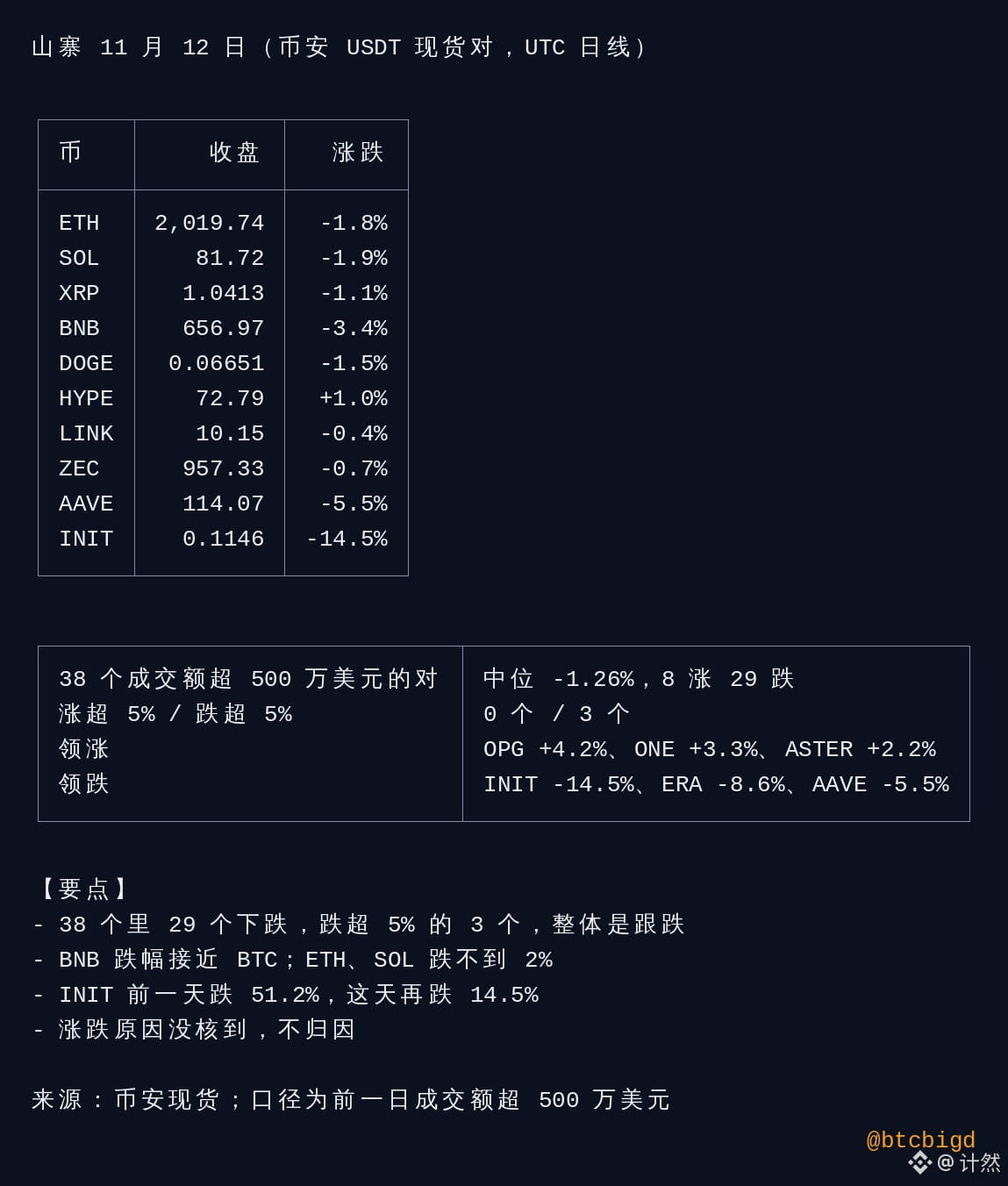
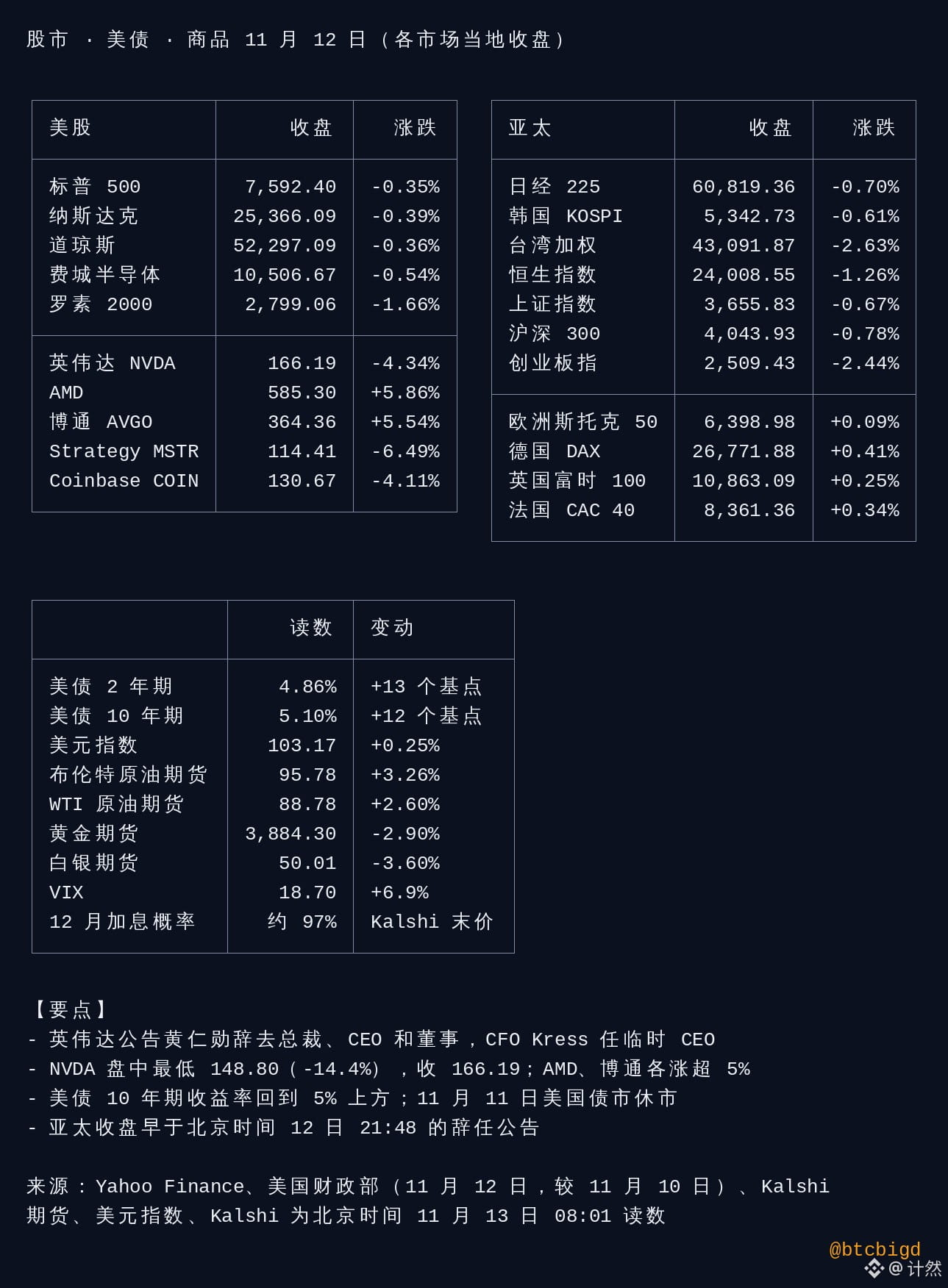
November 12 market roundup: NVIDIA announced Jensen Huang's resignation; NVDA fell as much as 14.4% intraday and closed down 4.3%; the 10-year US Treasury yield rose to 5.10%; $BTC UTC daily candle fell 3.45%, closing at $71,460, its lowest daily close since August 19.
[Key takeaways] On the day BTC fell, Binance perpetual open interest rose from 96,626 to 101,152 BTC, while about $187 million in long positions were liquidated (a record low). The Crypto Fear & Greed Index dropped from 28 to 20, entering extreme fear. Prices fell while open interest rose, suggesting new positions are entering to bet against each other; volatility could increase before a direction emerges. NVIDIA recovered most of its losses by the close, and the S&P 500 closed down 0.35%—US stocks didn't treat the leadership change as a systemic risk. The factor weighing on BTC seems more likely to be Treasury yields returning above 5%.
Follow me for a daily market roundup every morning.
#BTC #NVIDIA
342
·
--
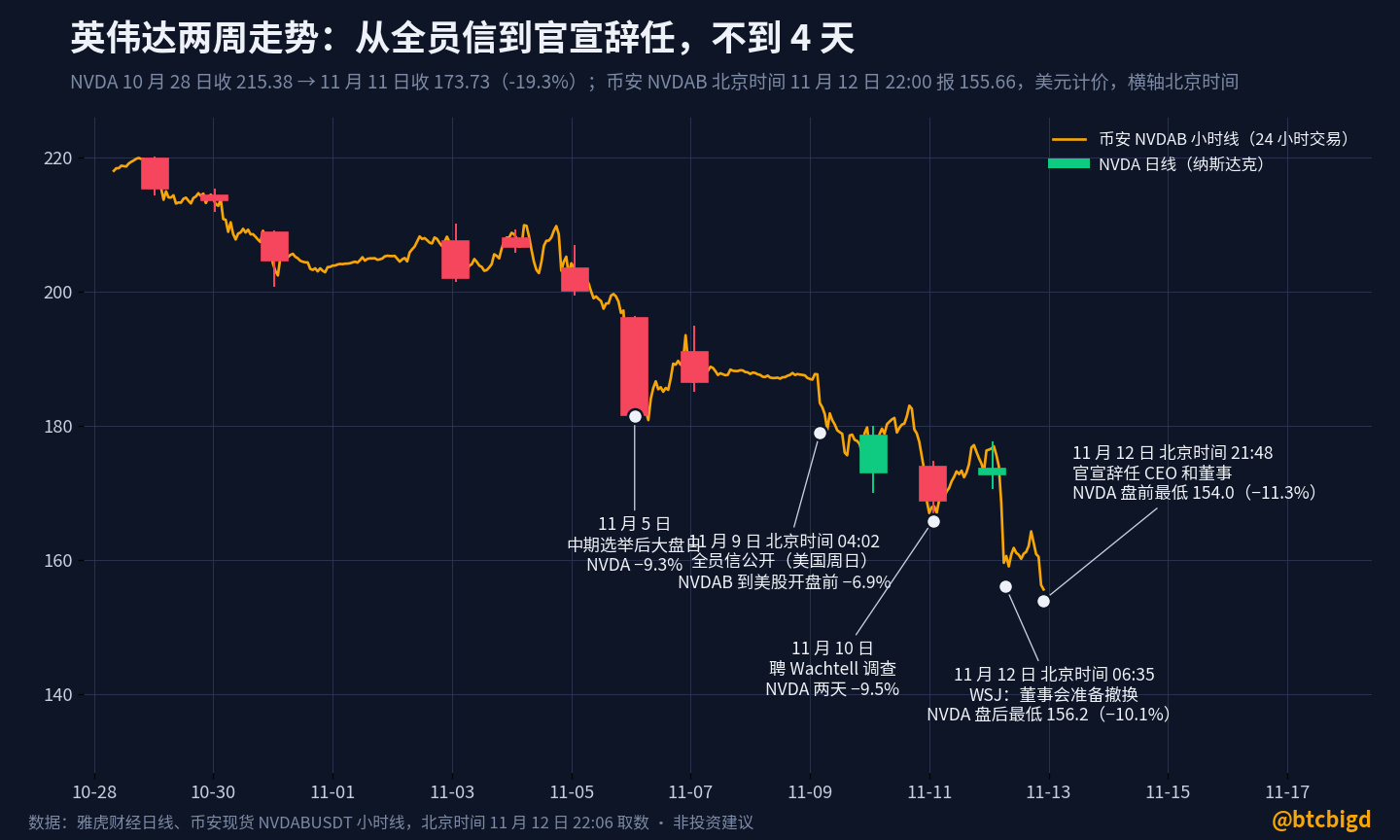
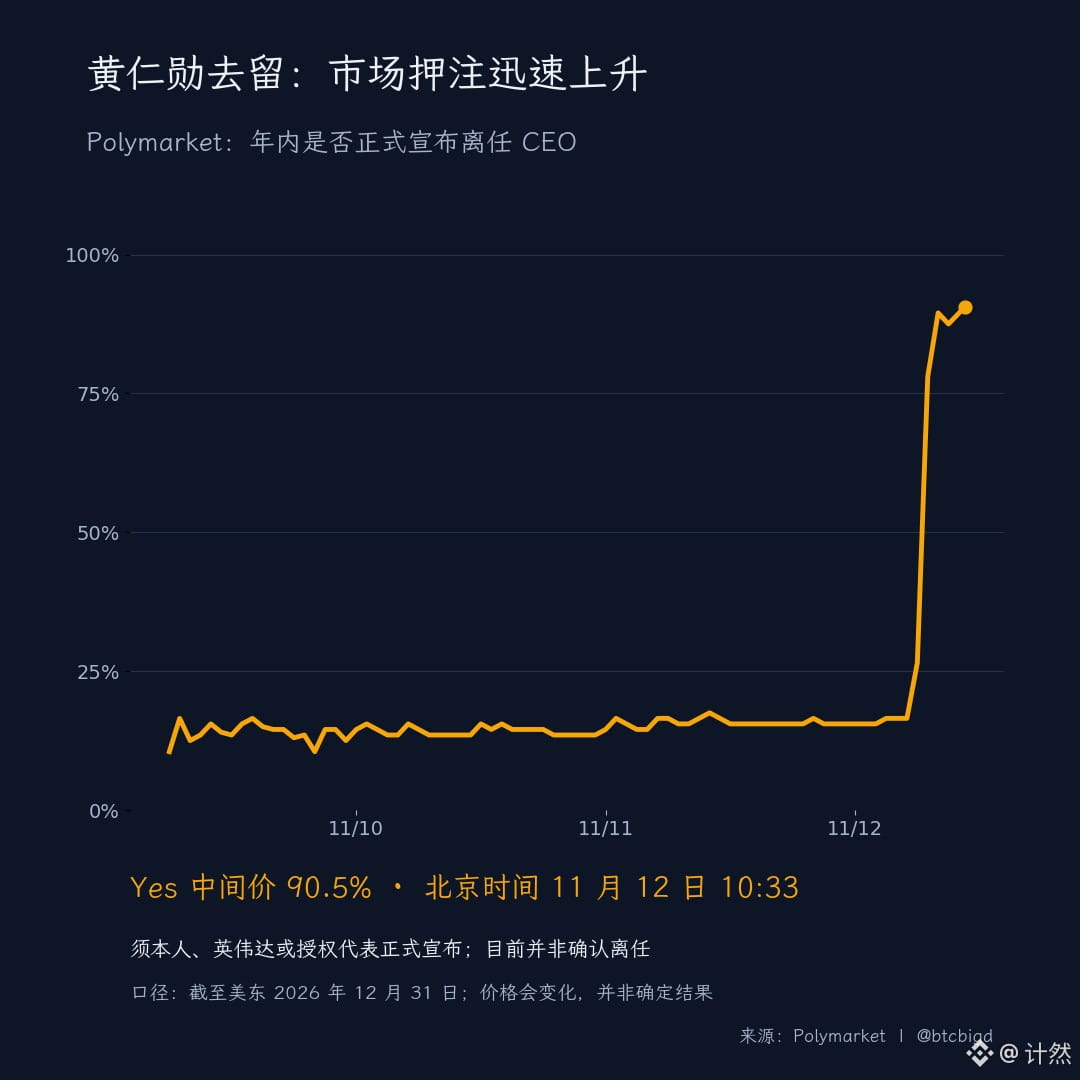
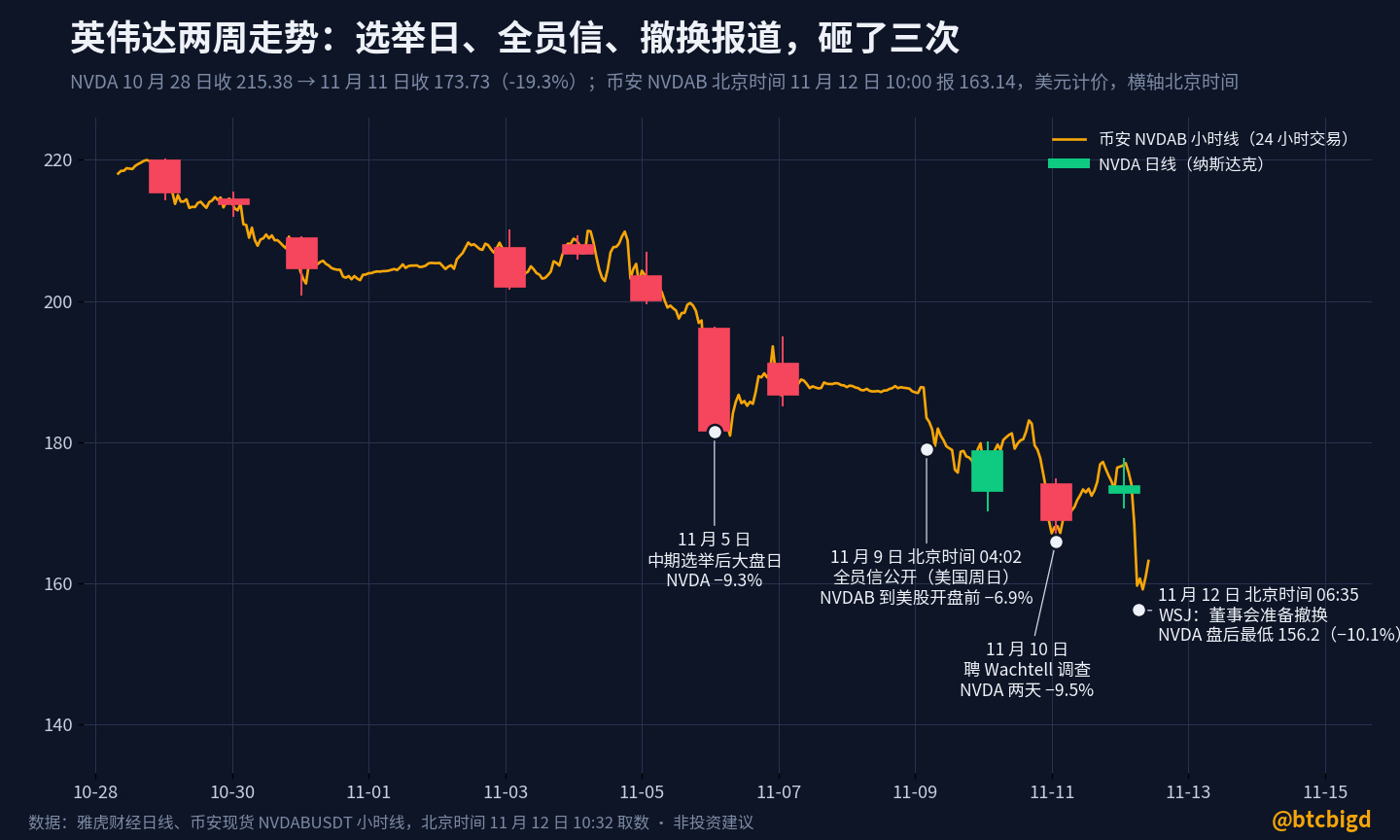
Breaking: Old Huang has finally gone down after all!!! Nvidia announcement: Jensen Huang resigns as president, CEO, and director, effective immediately.
NVDA plunges 10% premarket! Could it wick down to 140 today?
$NVDAB
#英伟达 #NVDA
Breaking: Old Huang has finally gone down after all!!! Nvidia announcement: Jensen Huang resigns as president, CEO, and director, effective immediately.
NVDA plunges 10% premarket! Could it wick down to 140 today?
$NVDAB
#英伟达 #NVDA
NVDA plunges 10% premarket! Could it wick down to 140 today?
$NVDAB
#英伟达 #NVDA
215
·
--
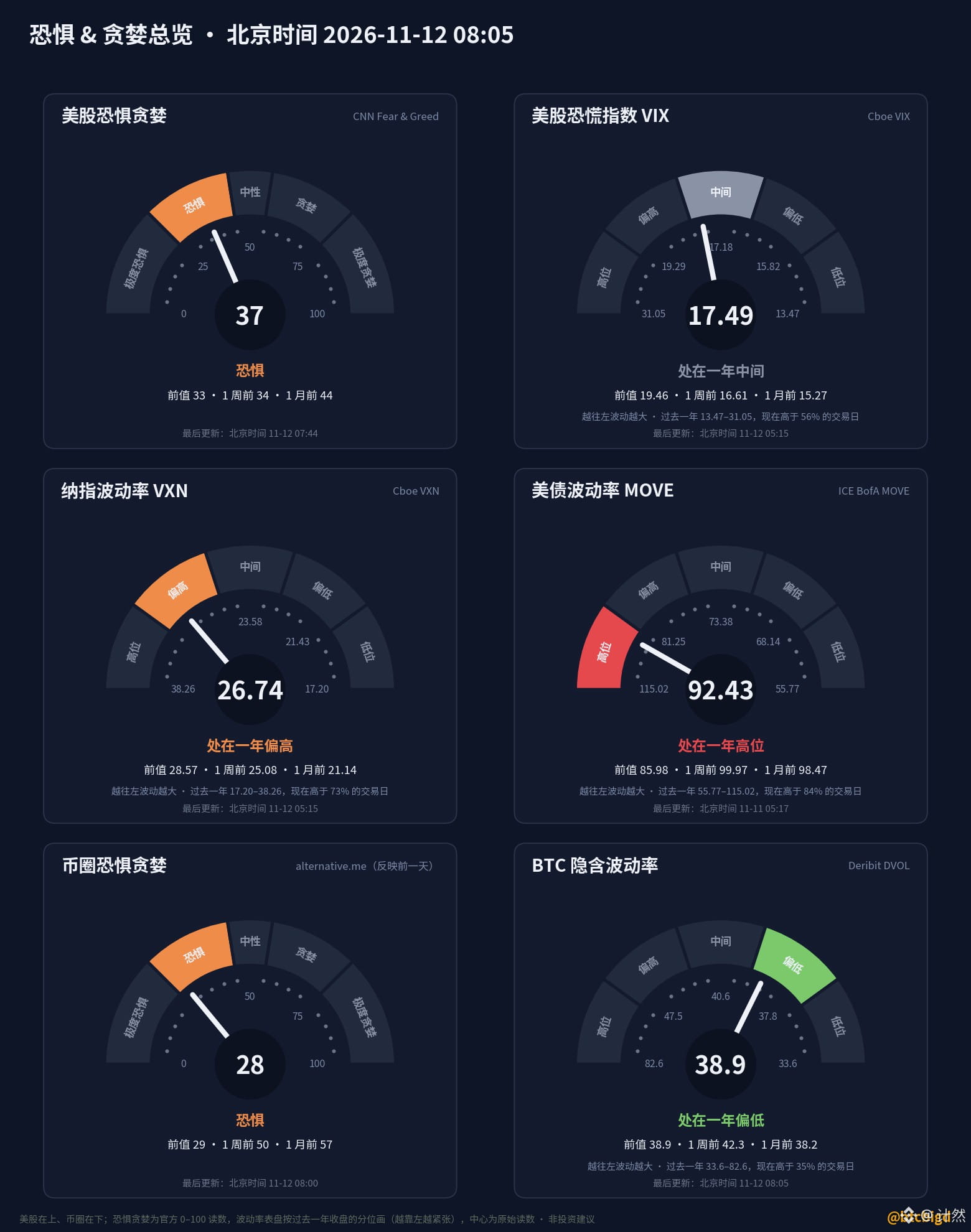
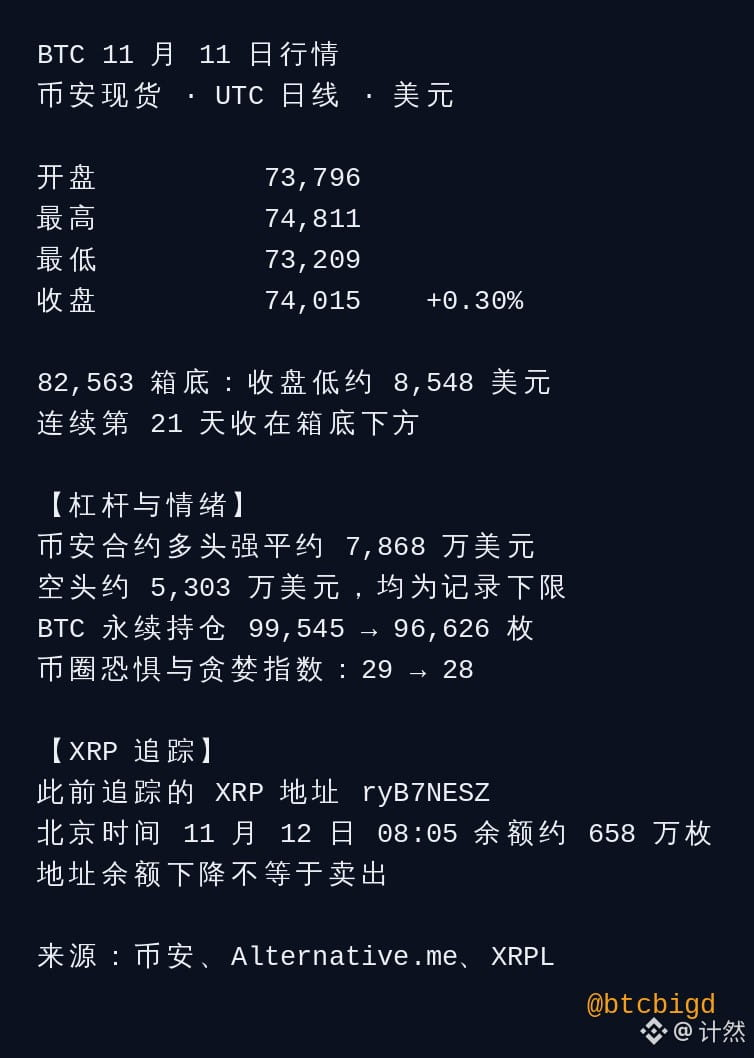
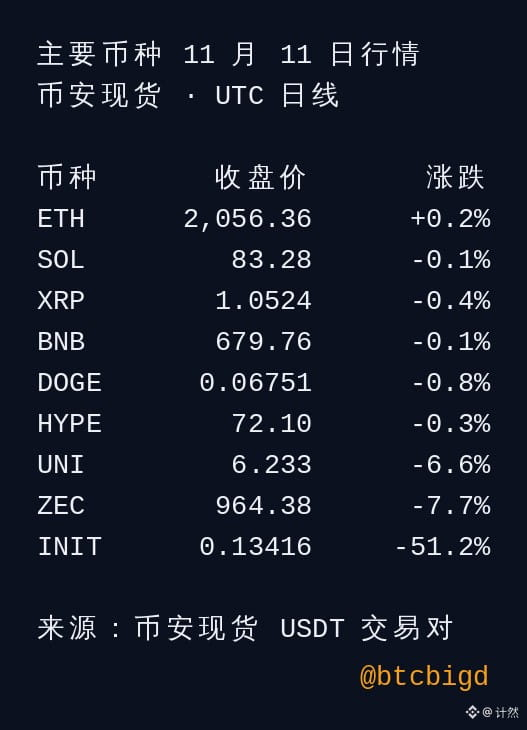
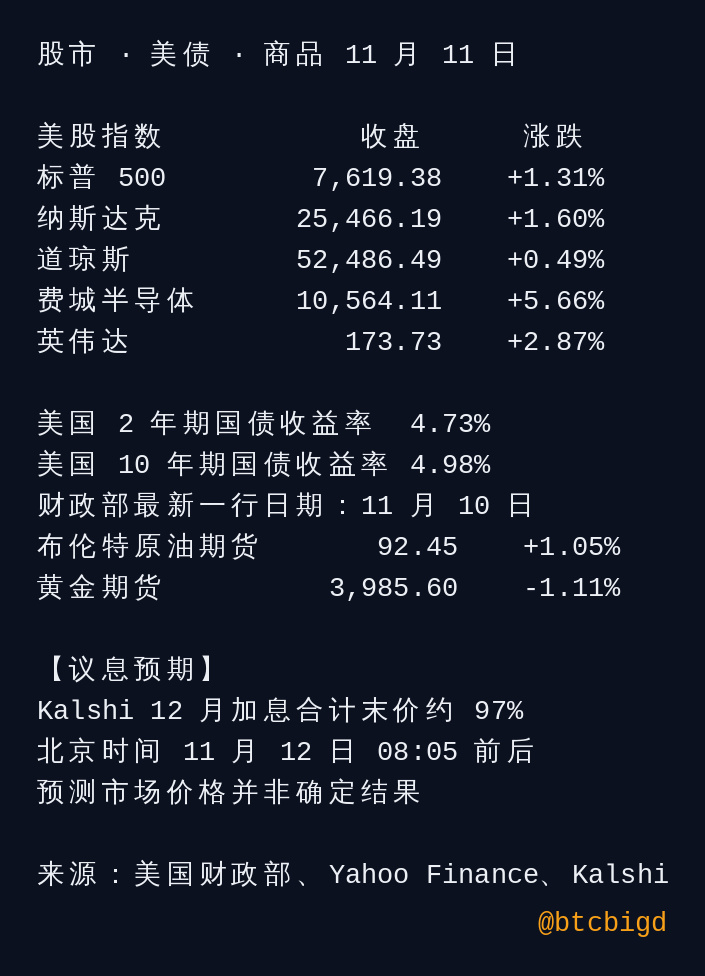
November 11 market roundup: U.S. stocks closed higher, with the S&P 500 up 1.31% and the Philadelphia Semiconductor Index up 5.66%; $BTC UTC daily candle rose 0.30%, closing at $74,015.
[Highlights] Binance BTC perpetual open interest fell from about 99,545 BTC to 96,626 BTC, and the Crypto Fear & Greed Index dropped from 29 to 28; INIT spot price fell 51.2% on the day. U.S. stock closing figures and BTC UTC daily candle statistics cover different time periods.
Follow me for a daily market roundup every morning.
#币安 #BTC
99
·
--
Will Jensen Huang step down as CEO? My assessment: There’s a 15–20% chance he leaves before year-end. Whether he stays or goes depends not on the affair, but on whether the investigation finds evidence that he knew.
【What happened over three days】
- Nov. 8: Huang admitted to infidelity in a letter to employees. The board said that same day there was “no reason to believe national security or Nvidia confidential information had been compromised,” and the company said he would continue serving as CEO without interruption.
- Nov. 9: Trump twice voiced support for him staying on. The New York Times reported that Nvidia had proactively reported Megaspeed to the Commerce Department in August 2025, and that the case had been referred to the Justice Department for a criminal investigation.
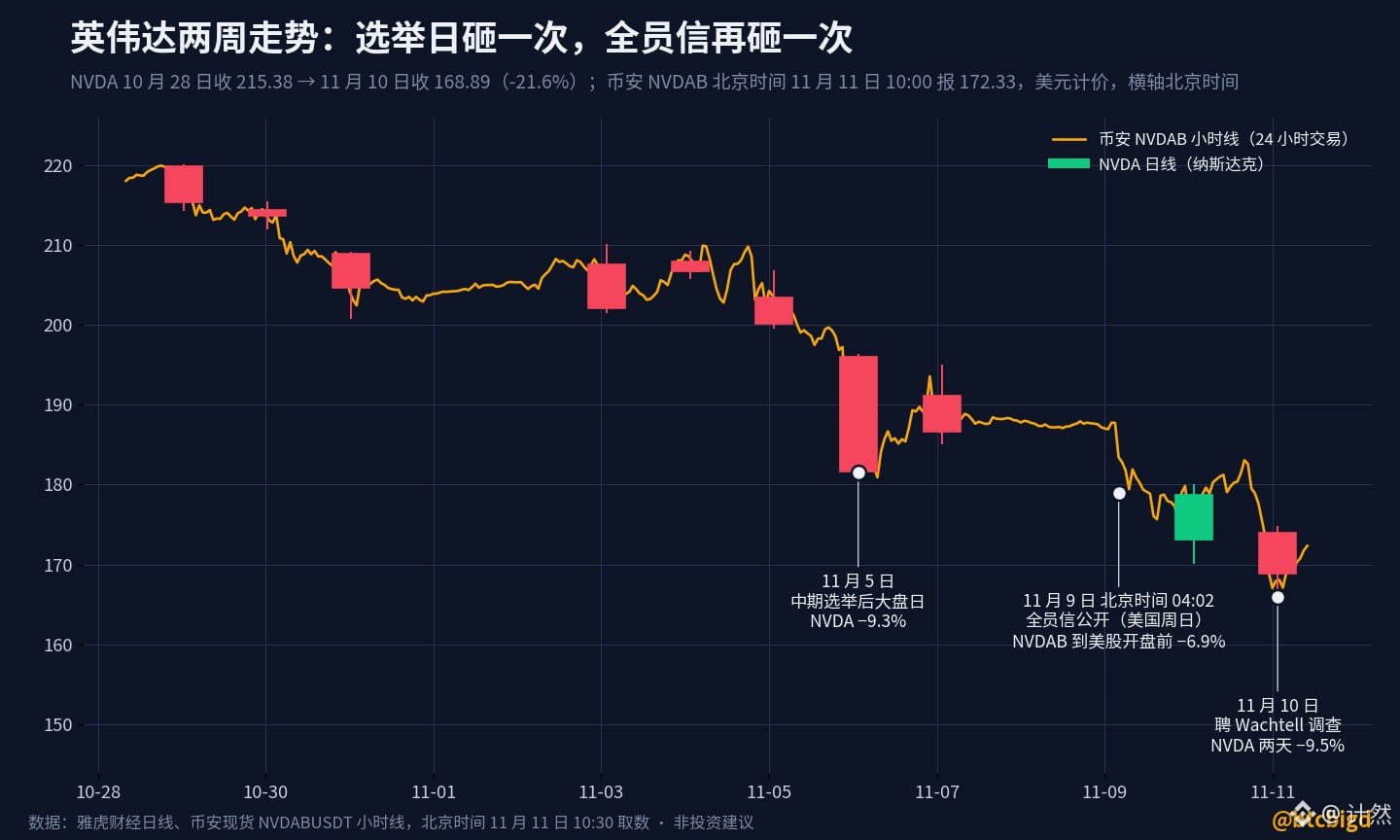
- Nov. 10: Independent directors hired Joon Kim, a former acting U.S. attorney for the Southern District of New York, and the law firm Wachtell to conduct an independent investigation. Representative Mast demanded a response by Nov. 11 to a request for a closed-door briefing, or else a subpoena.
- Stock price: Down 4.3% on Nov. 9 and 5.5% on Nov. 10, closing at 168.89—down 9.5% over two days. AMD and Broadcom rose over the same period, suggesting the market sees this as a company-specific issue.
- Polymarket: 16.5% chance he resigns or is removed by Dec. 31; 23.5% by Mar. 31, 2027.
【Why staying on is more likely】
- The window for him to “leave immediately” has closed. The CEOs of Intel, McDonald’s, and BP all left within days after violating company rules on relationships with employees. This time, the other person wasn’t an employee, and the board’s first move was to protect him.
- Hiring Wachtell is a signal that the board intends to protect him: the firm’s business is to provide credible clean bills of health for boards. Boards that want to replace a CEO usually announce a transition plan directly.
- He has White House backing and a 3.5% founder’s stake. Analysts estimate that his departure would cut Nvidia’s valuation by 25–30%, so the board won’t dare make a move.
【Three scenarios】
- ① He stays on, with constraints, about 60%: The investigation concludes in 4–8 weeks that it was “personal misconduct, with no information leaked.” The board appoints a president or announces a succession plan. The stock recovers some ground after earnings, but Nvidia’s “China chip card” is permanently weakened.
- ② The matter drags on, about 25%: The Justice Department and Congress keep the issue alive into next year. Huang remains in his role, but Washington’s influence over the company grows considerably; tighter export controls weigh on results, and the stock trades at a persistent discount.
- ③ He resigns as CEO, about 15%: The investigation or an indictment turns up evidence that he “knew.” He makes a soft landing as a director or chief architect, most likely sometime in the first quarter of next year.
【Dates to watch】
Nov. 11: Deadline to respond to Congress’s briefing request; Nov. 17: earnings report—watch whether he joins the earnings call; Nov. 18: closed-door briefing for three House committees; Jan. 3: New Congress takes office.
$NVDAB
#英伟达 #NVDA
125
·
--
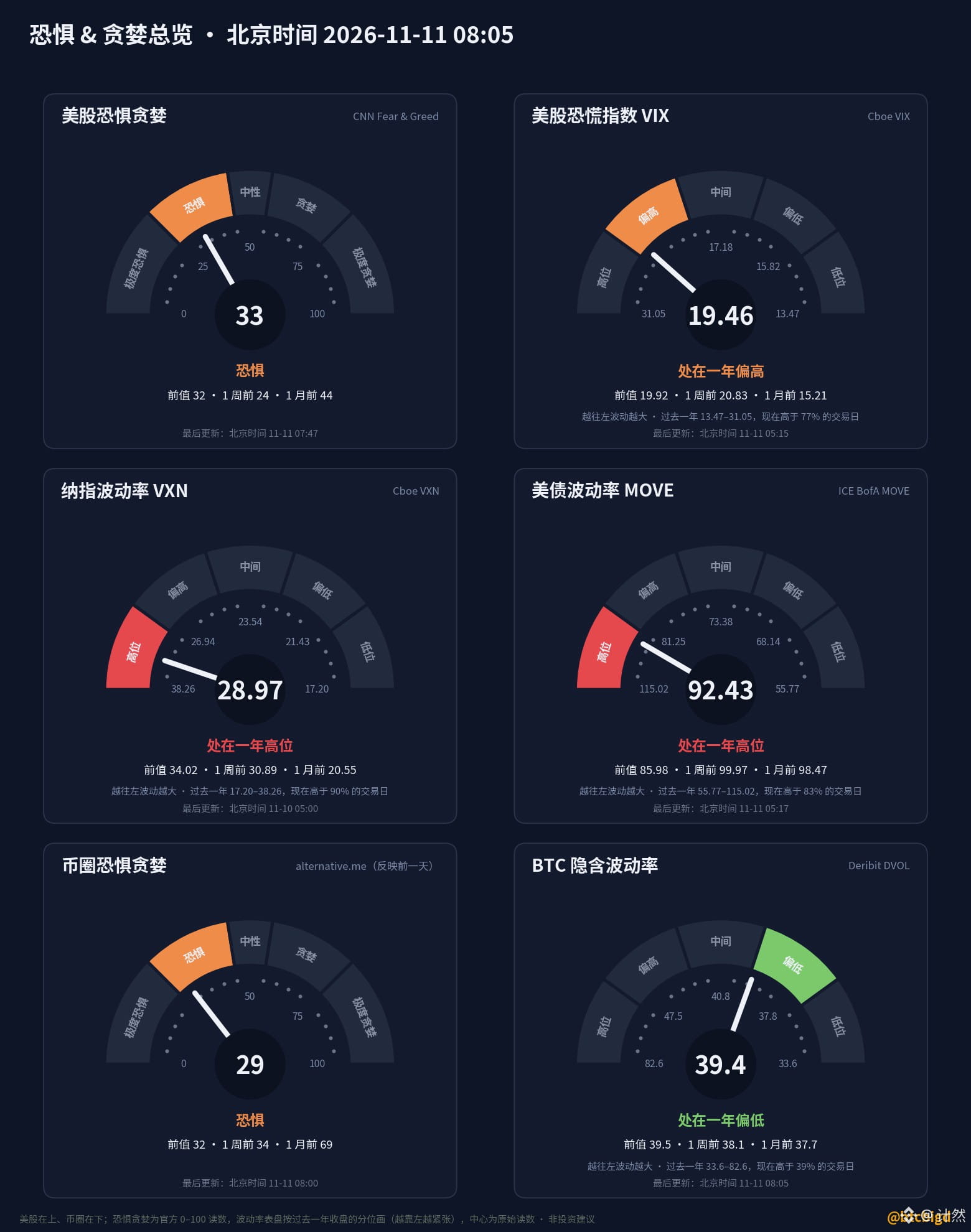
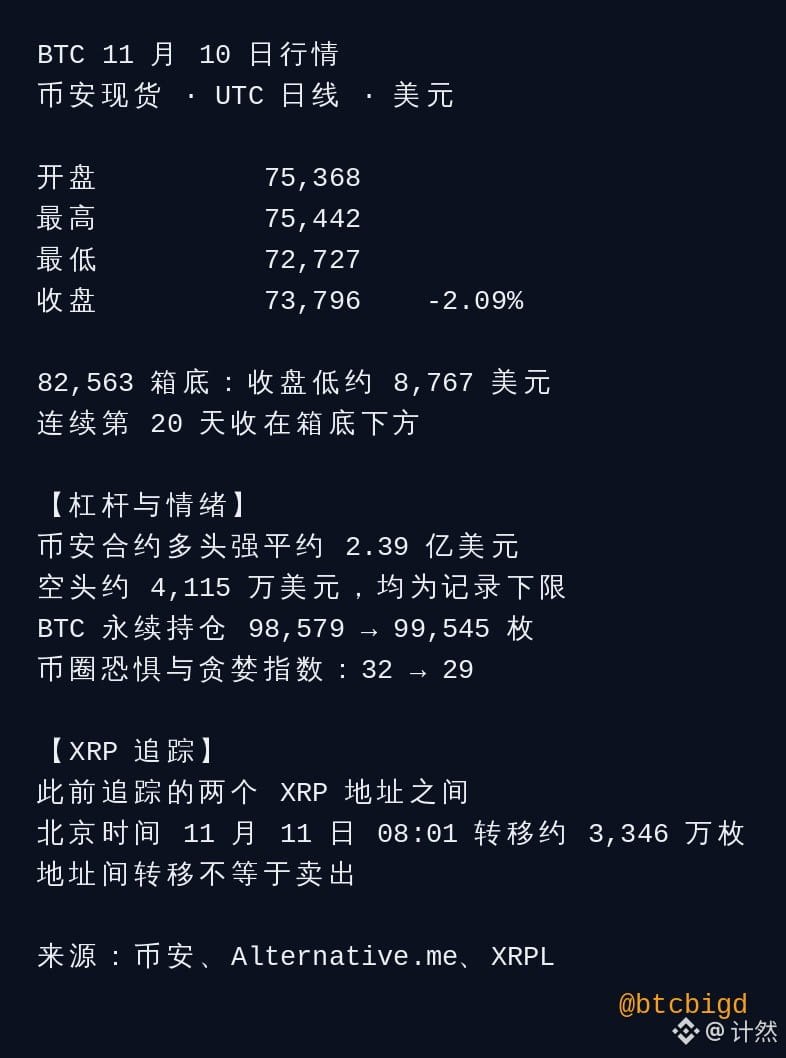
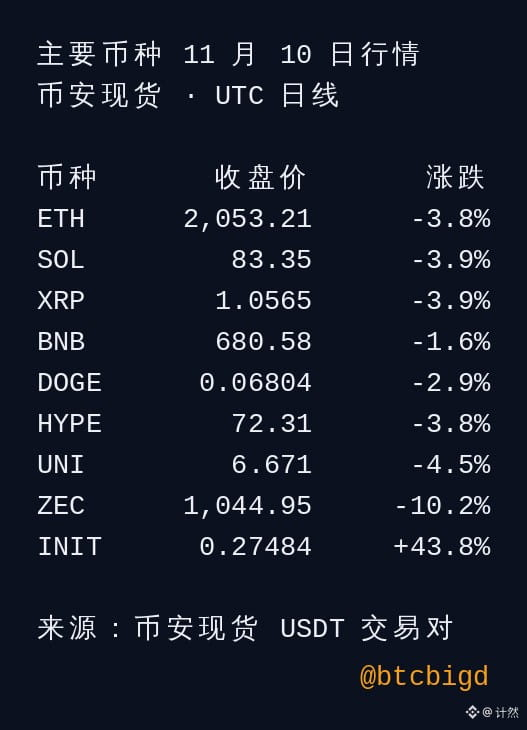
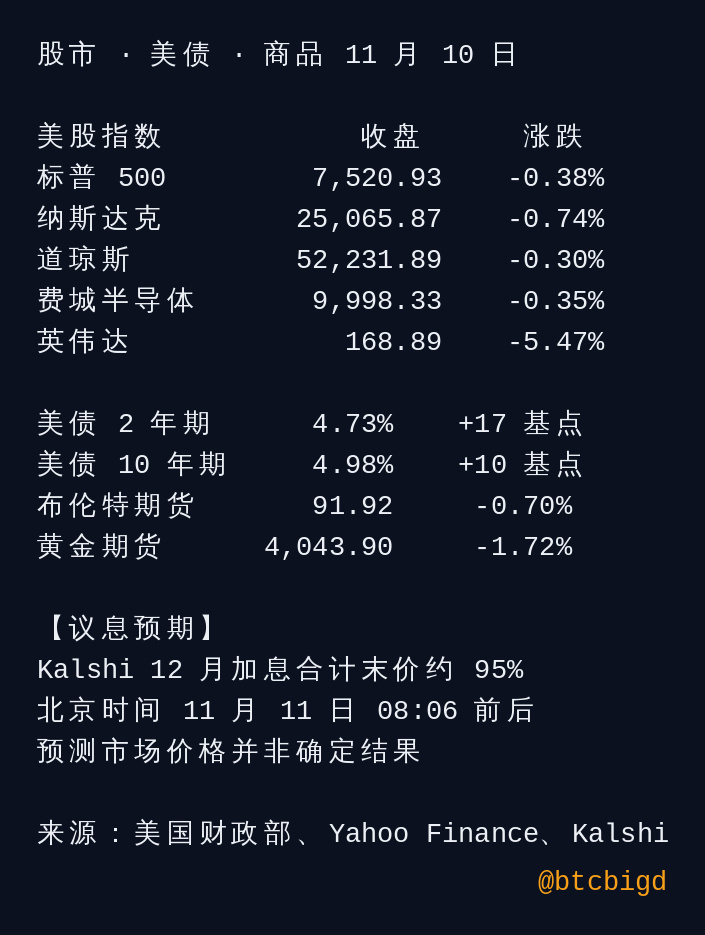
November 10 market recap: $BTC closed at $73,796, down 2.09%; the U.S. 2-year Treasury yield rose to 4.73%, up 17 basis points from November 9.
【Highlights】Binance BTC perpetual open interest rose from approximately 98,579 BTC to 99,545 BTC; the Crypto Fear & Greed Index fell from 32 to 29. Kalshi’s combined year-end price for December rate hikes was approximately 95%; prediction market prices can change and do not represent the final outcome.
Follow me for a market recap every morning.
#币安 #BTC
521
·
--
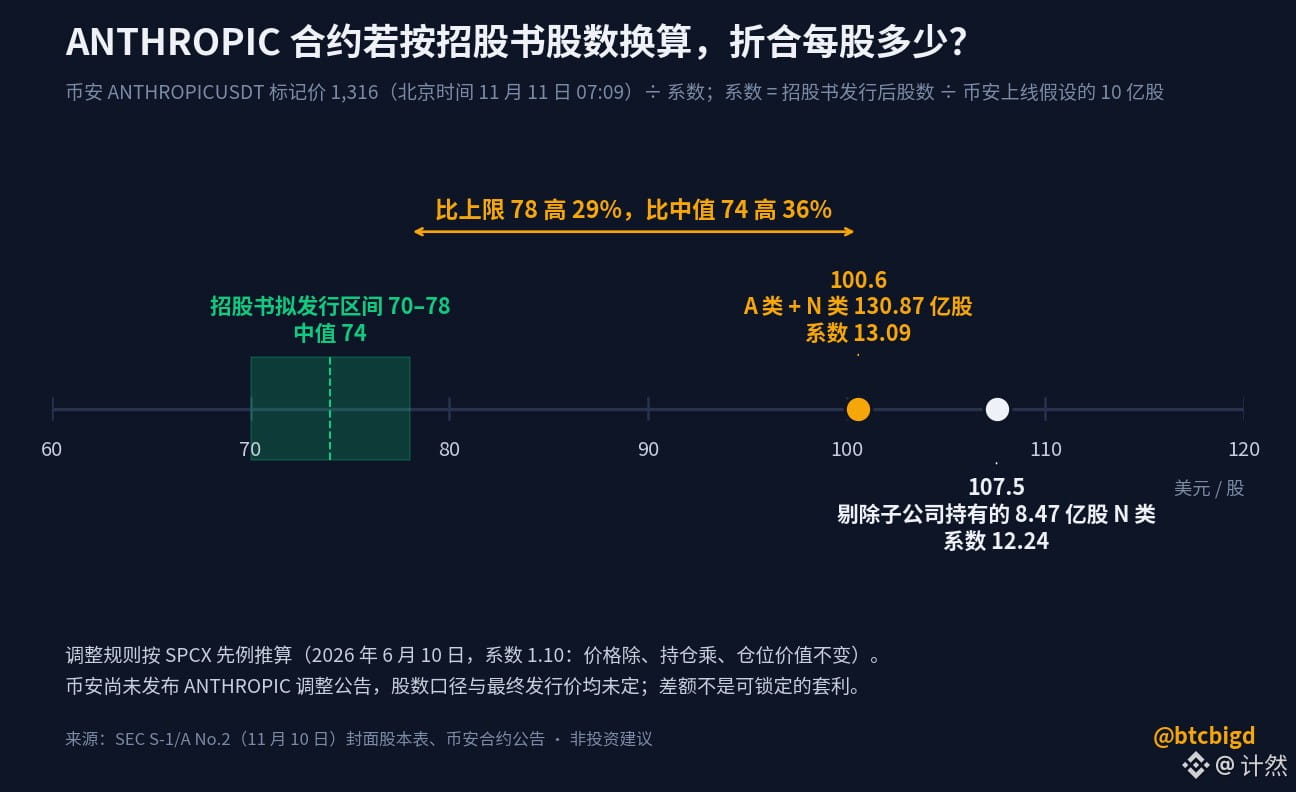
ANTHROPIC pre-market contracts are currently priced at the equivalent of about $100 per share, nearly 30% above the top of the $70–78 offering range! The market is still wild about AI stock IPOs! SPCX pre-market contracts carried a 26.5% premium on the eve of IPO pricing.
【How the calculation works】
- When Binance launched ANTHROPIC pre-market contracts on June 2, they were priced on the assumption of 1 billion shares. The announcement stated that the contract face value would be adjusted once the actual share count became available.
- The November 10 prospectus: based on a midpoint price of $74 and the concurrent private placement, there will be about 13.087 billion Class A and Class N shares combined after the offering. Using this basis, the multiplier is about 13.09.
- At 07:09 Beijing time on November 11, the mark price was 1,316 ÷ 13.09 ≈ $100.6, 29% above the $78 top of the range and 36% above the $74 midpoint.
【Precedent: SPCX】
- When SpaceX pre-market contracts launched on May 21, they assumed 11.87 billion shares. After the prospectus revised that to 13.08 billion shares, Binance adjusted the contracts on June 10 using a 1.10 multiplier: the mark price was divided by 1.10, and position size multiplied by 1.10, leaving the position’s notional value and P&L unchanged.
- On the day before listing (June 11), the contracts closed at 170.82, 26.5% above the $135 offering price. On June 12, the stock opened at $150, up 11.1% from the offering price, and closed at $160.95, up 19.2%; the contracts dipped to a low of 152 that day, then tracked the stock.
- The contracts were not delisted after the listing; they became regular U.S. stock perpetual contracts and are still trading today.
【The conversion itself neither makes nor loses money; the gap is the issue】
- The adjustment only changes the unit of account; the value of your position remains exactly the same.
- What changes is the benchmark: after conversion, the equivalent price is about $100 per share, against an offering range of $70–78. In the SPCX case, the contracts were 26.5% above the offering price, but the opening price realized only an 11.1% gain; this time, the premium is 29%, and where the price goes after listing is what bulls and bears are really betting on.
- The share-count basis is still uncertain: the prospectus lists about 847 million Class N shares held by a wholly owned subsidiary. If Binance excludes these shares, the multiplier would be about 12.24, equivalent to about $107.5 per share.
- The offering price has not been set, and Binance has not yet issued an adjustment announcement for ANTHROPIC. The 13.09 figure is an estimate based on precedent, not an arbitrage spread that can be locked in.
#Anthropic #AI
400
·
--
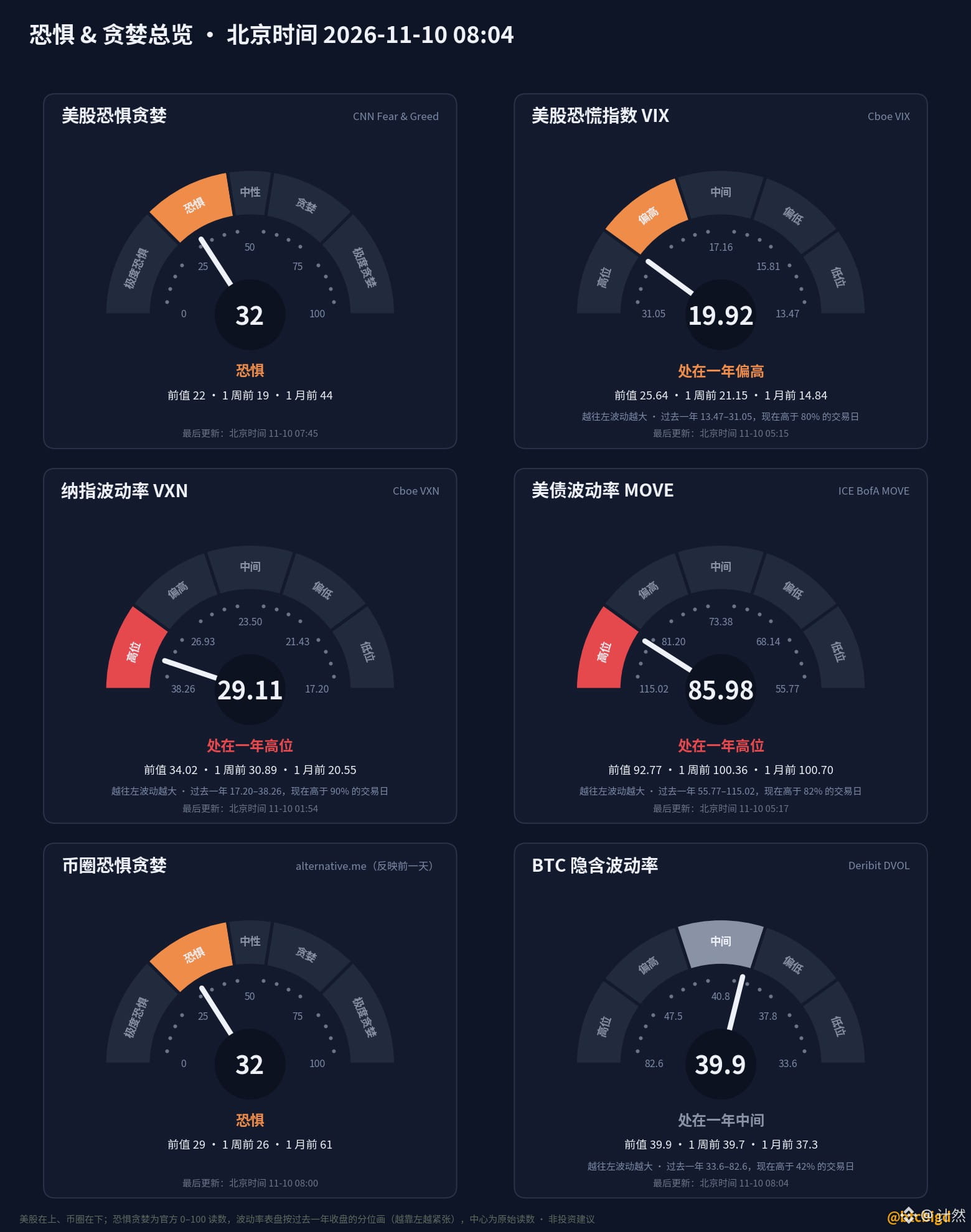
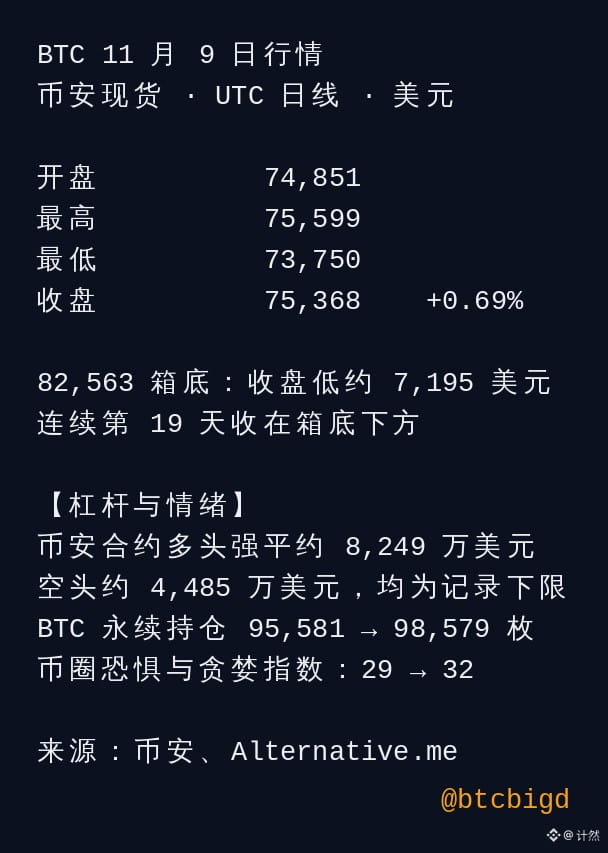
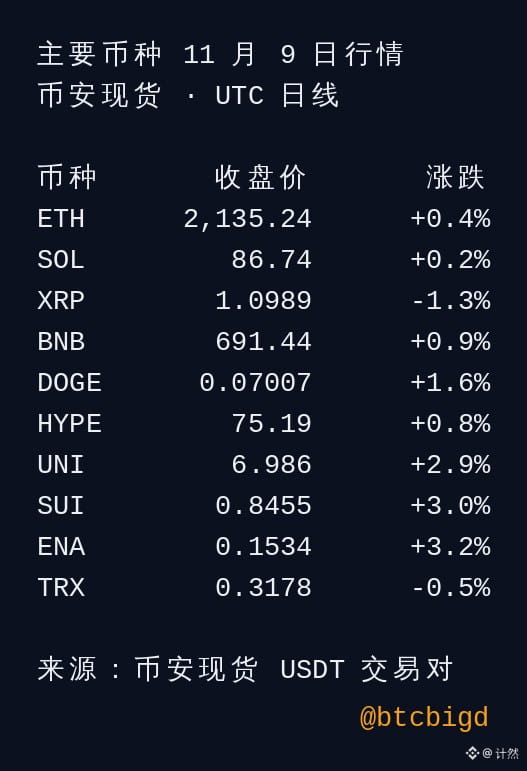
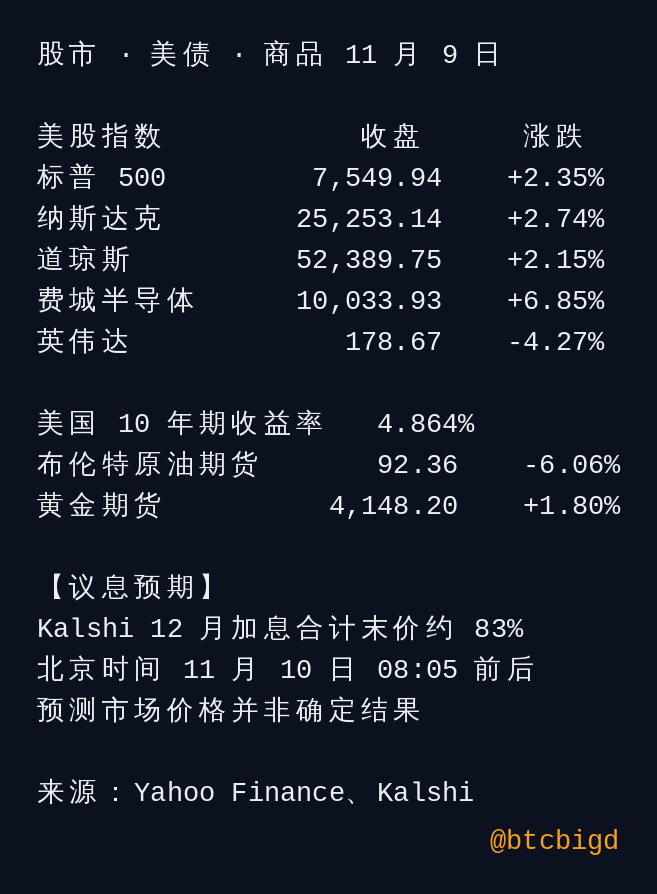
Nov. 9 market roundup: U.S. stocks closed with the S&P 500 up 2.35% and the Nasdaq up 2.74%; the $BTC UTC daily candle rose 0.69%, closing at $75,368.
【Highlights】The Philadelphia Semiconductor Index rose 6.85%, while Nvidia fell 4.27%; Binance BTC perpetual open interest increased from about 95,581 BTC to 98,579 BTC, and the Crypto Fear & Greed Index rose from 29 to 32. The U.S. stock market close and the BTC UTC daily candle cover different time periods; the reason for BTC’s smaller gain has not yet been confirmed.
Follow me for a daily market roundup every morning.
#币安 #BTC
199
·
--
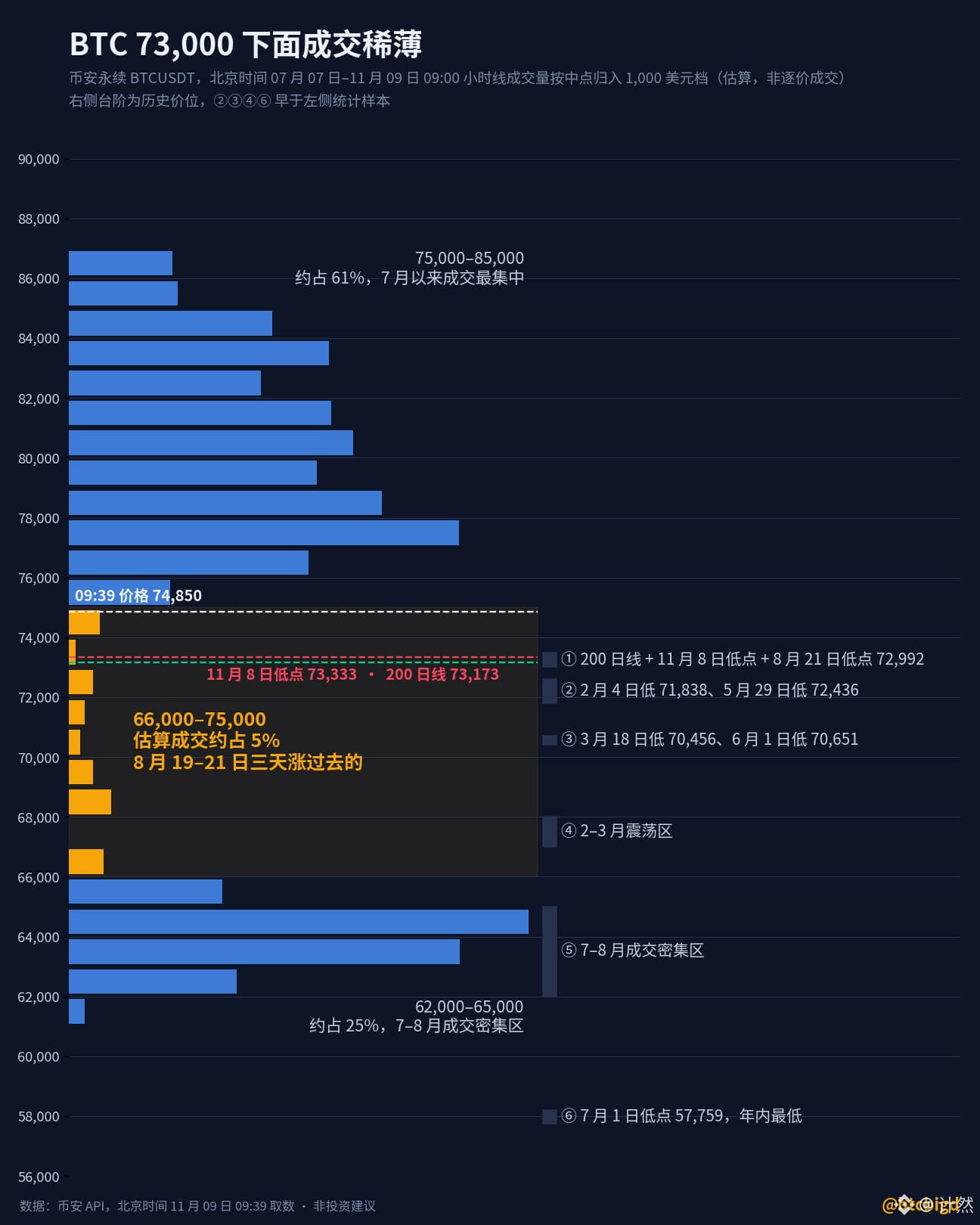
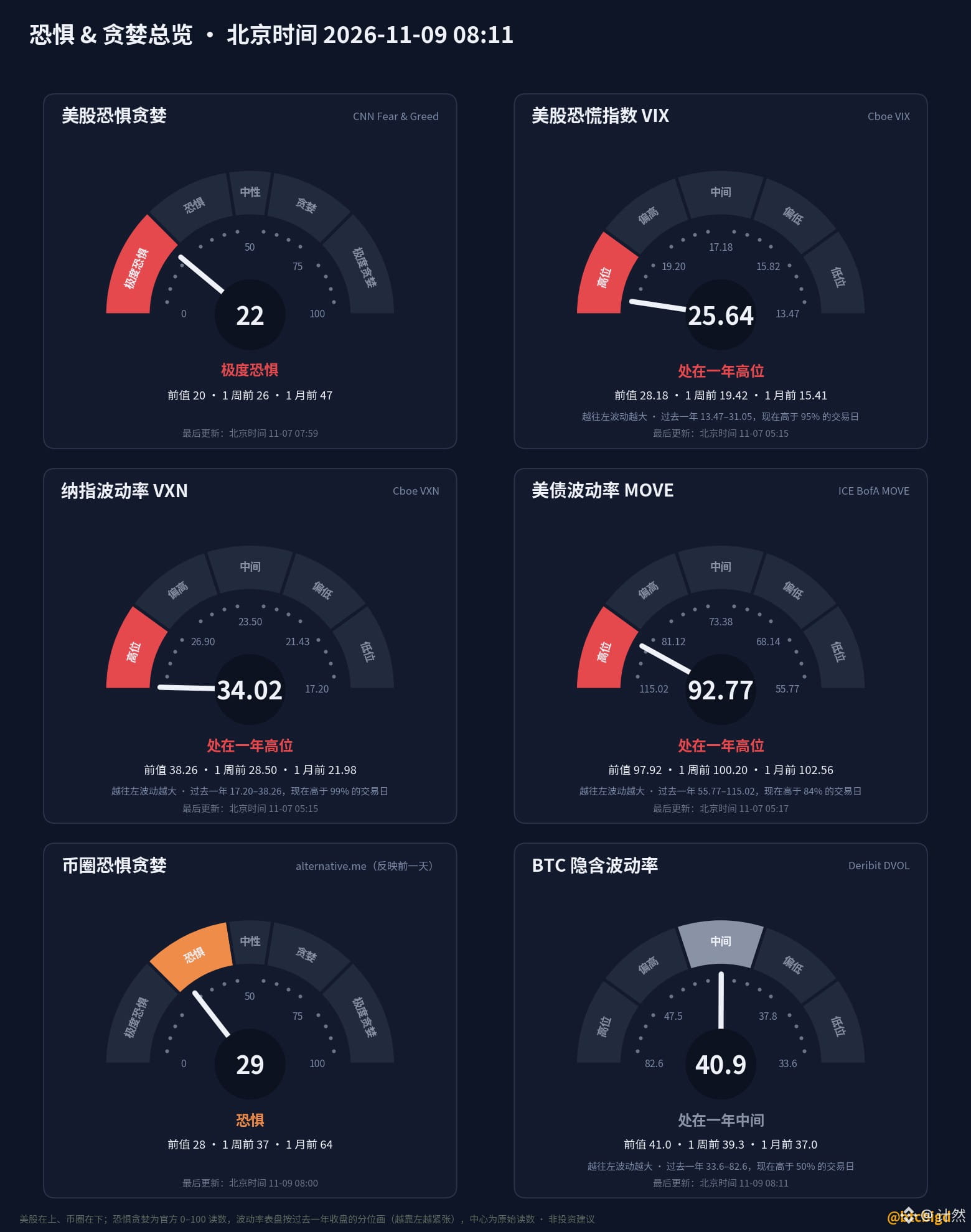
Market outlook: BTC hit a low of 73,333 on November 8, just 160 away from the 200-day moving average at 73,173! Below that, trading is thin down to 66,000; based on hourly candles since July, this stretch accounts for only 5% of trading volume. See the chart for the step levels. A double bottom is only possible if 73,000 holds; if it breaks, watch 70,500, then 62,000–65,000 for support.
$BTC
#BTC #Bitcoin
$BTC
#BTC #Bitcoin
60
·
--
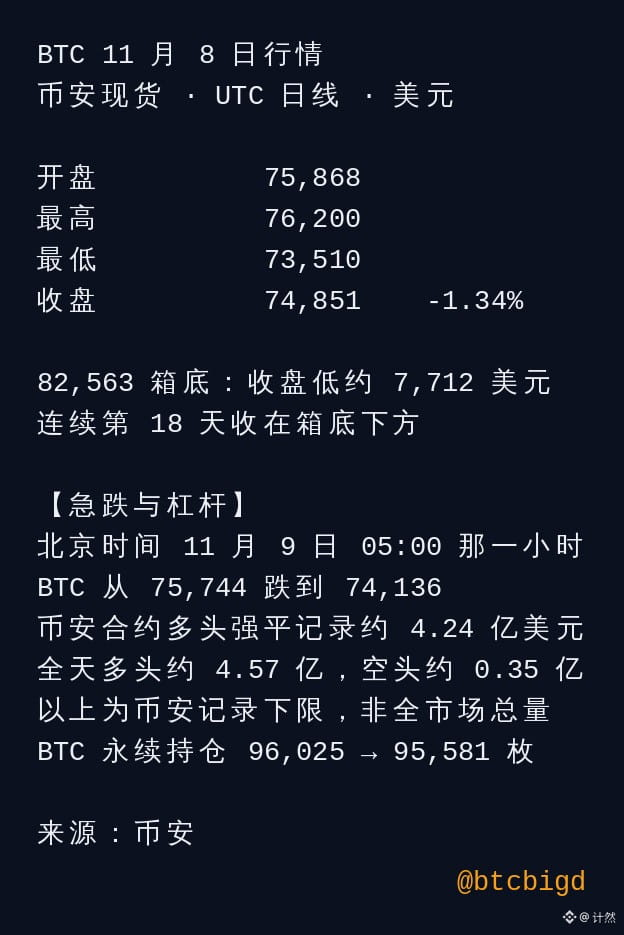
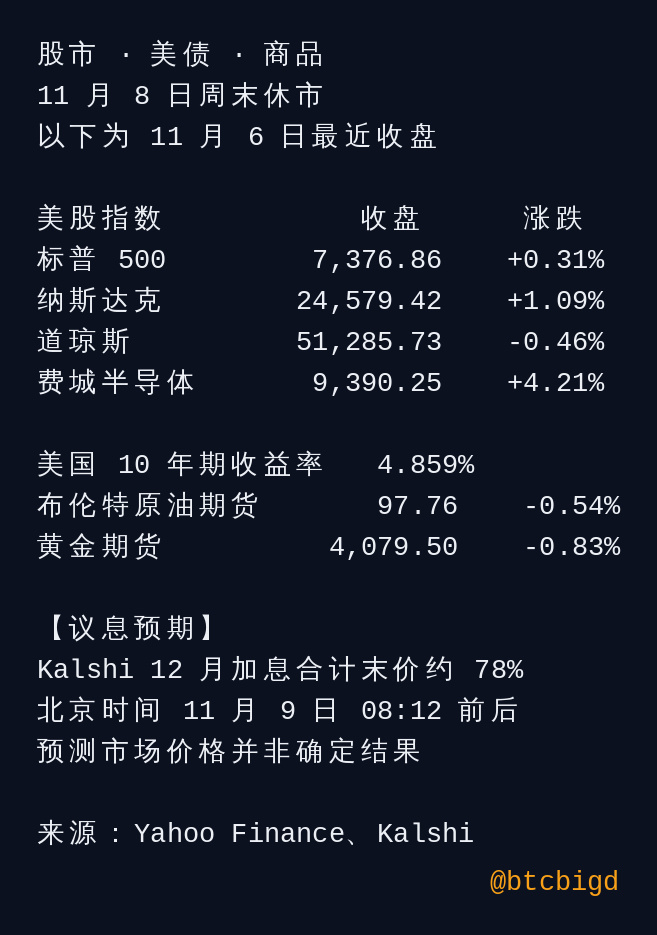
Nov. 8 market roundup: $BTC closed at $74,851, down 1.34%; during the hour from 05:00 Beijing time on Nov. 9, Binance recorded about $424 million in long liquidations.
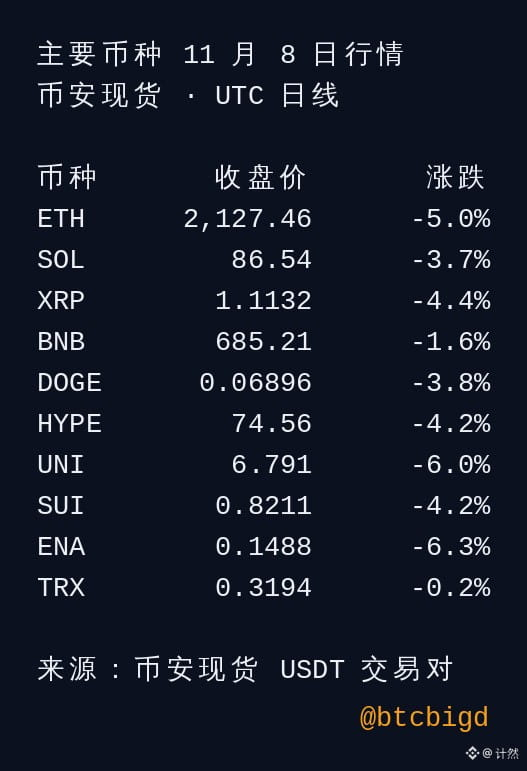
[Highlights] BTC hit an intraday low of $73,510 and closed below the range floor of $82,563 for the 18th consecutive day; ETH fell 5.0%, and XRP fell 4.4%. The specific trigger for this sharp drop has not yet been confirmed. The liquidation figure is Binance's recorded minimum, not the total across all exchanges.
Follow me for a market roundup every morning.
#币安 #BTC
394
·
--
Full translation of Jensen Huang’s letter to all employees: Admits to being unfaithful to his wife; market plunges 2 hours later! $470 million liquidated
In the early hours of November 9, Beijing time, two events took place just 1 hour and 43 minutes apart.
【04:02 NVIDIA posts two documents on its website】
- Board statement: An independent investigation has been launched into reports that the CEO became a target of a foreign intelligence operation. It will be conducted by an independent board committee and outside counsel. The board said it “currently has no reason to believe that national security or NVIDIA confidential information has been compromised,” and expressed confidence in Jensen Huang and the management team.
- Jensen Huang’s letter to all employees: He admitted to one thing only: being unfaithful to his wife. The letter named no one, gave no details about the person’s identity or nationality, and did not say “there was no leak.” All national security questions were left to the board’s investigation.
【05:45 Crypto market begins to fall】
- For an hour and a half after the NVIDIA news broke, BTC stayed around 75,800, moving sideways without reacting.
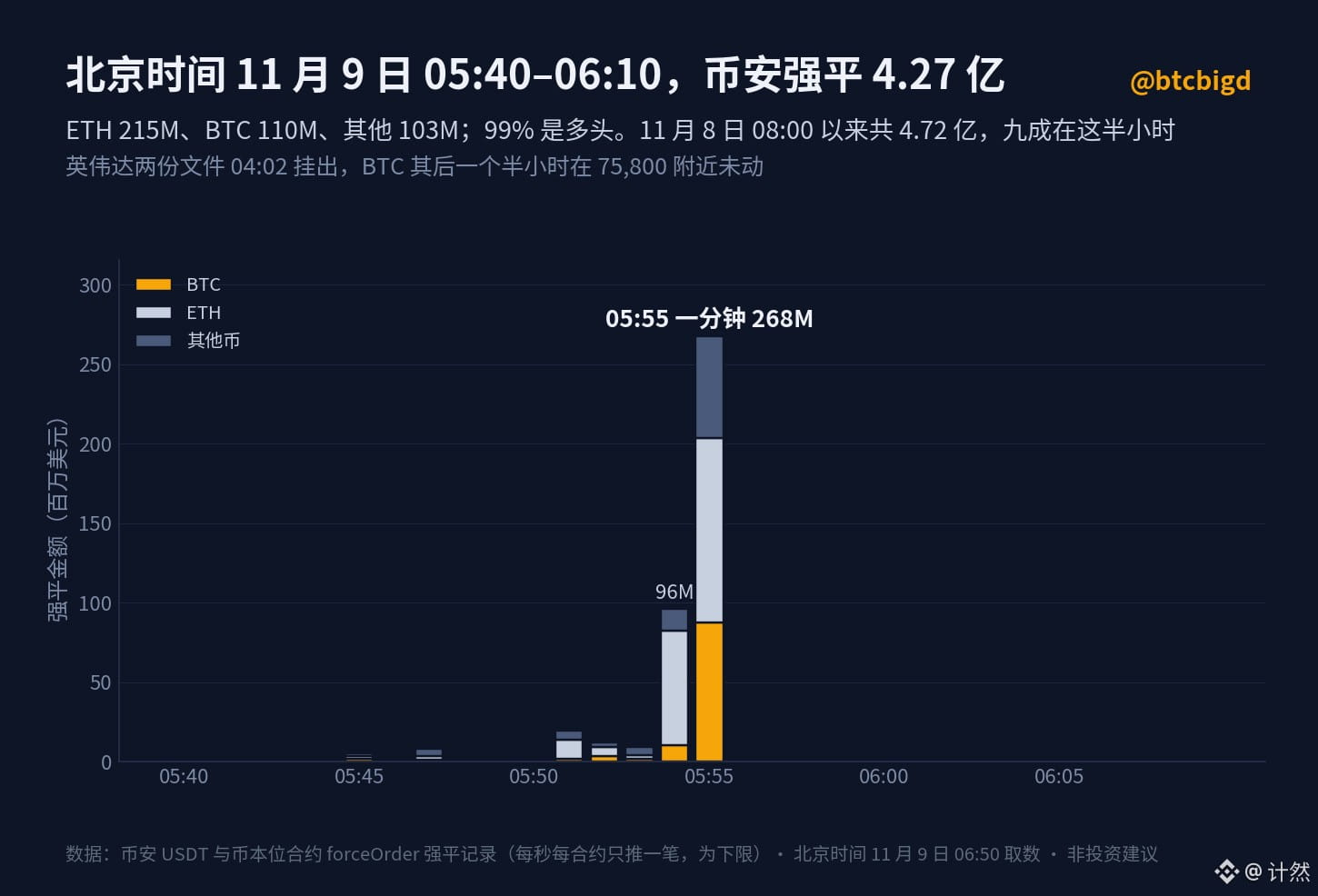
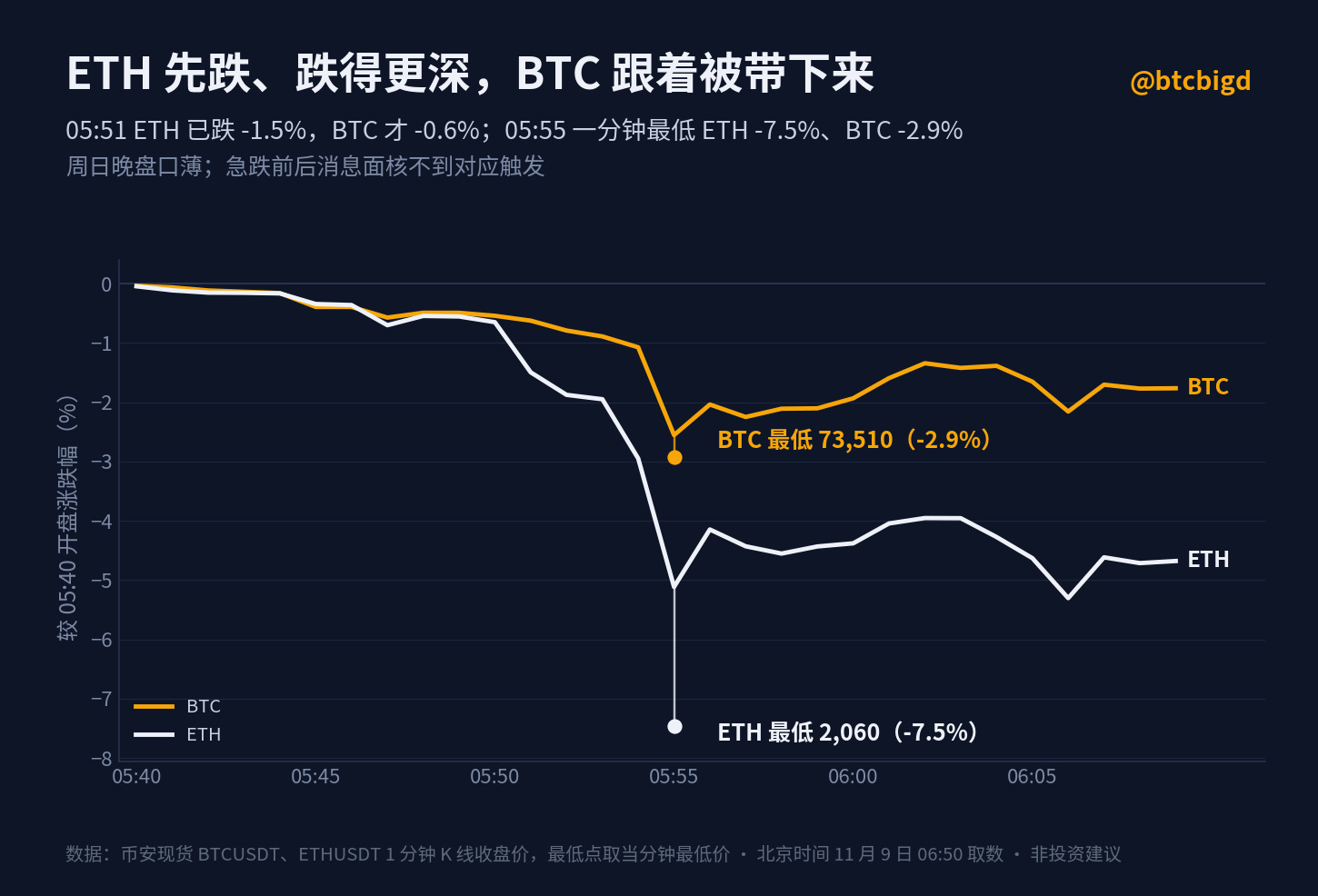
- At 05:45, prices fell on heavy volume. At 05:55, BTC hit a one-minute low of 73,510 (down 2.9% from 05:40), while ETH hit a one-minute low of 2,060 (down 7.5%). BTC then rebounded to around 74,500.
- Binance recorded $472 million in liquidations between 08:00 on November 8 and 06:50 on November 9, Beijing time, including $453 million in long positions. Around $220 million was in ETH and $110 million in BTC. 90% occurred in the half-hour from 05:40 to 06:10, with $270 million liquidated in the single minute at 05:55. Binance’s records are a lower bound; reports put total liquidations across all exchanges at $700 million to $1 billion.
- I checked the news around the plunge: the NVIDIA news came 100 minutes earlier and drew no reaction at the time; the timing of several Iran-related statements also doesn’t line up. I couldn’t verify what triggered it. The only things I can confirm are that order books were thin on Sunday night and ETH fell first.
【Jensen Huang’s letter to all employees (full translation)】
“
I owe my family and all of you an apology.
I was unfaithful to my wife. My actions hurt her and our children. There is no excuse for what I did. I am deeply sorry.
Throughout my life, my family has given me love and support. They deserved my honesty and loyalty. Instead, I let them down and damaged the life we built together. I take full responsibility for my actions and the hurt they caused, and I accept the criticism that follows.
To my wife and family: I love you. I know an apology cannot undo what I’ve done. I hope our family can heal, and I hope that, with time, I can earn your trust again.
To my colleagues at NVIDIA, including those who have worked alongside me for decades, as well as the board, our partners, and shareholders around the world: you deserved a better version of me. It has been the honor of my life to lead NVIDIA. My responsibility is to serve you and be worthy of your trust. I have failed in that responsibility. I will devote myself fully to NVIDIA and work to earn your confidence again.
Regarding the national security concerns raised in news reports, the NVIDIA board has launched an independent investigation. I support the investigation and will cooperate fully. I love our country and our company. I am committed to protecting NVIDIA and supporting U.S. national security. I am proud and grateful to be an American.
My family bears no responsibility for my choices. The responsibility is mine. Please give them privacy.
Jensen
”
Sources: Two documents on NVIDIA’s website dated November 8; Binance spot one-minute candlesticks; Binance futures liquidation records.
$BTC $NVDAB
#英伟达 #BTC
Follow me for a daily market roundup every morning.
34
Log in to explore more content
Join global crypto users on Binance Square
⚡️ Get latest and useful information about crypto.
💬 Trusted by the world’s largest crypto exchange.
👍 Discover real insights from verified creators.
Email / Phone number
Trending Topics
NvidiaBeatsEstimatesWith$130BQ4Outlook
17,261 views
226 Discussing
Nvidia Beats With $115.8 Billion in Revenue, Guides to $130 Billion and Adds $150 Billion Buyback
Binance News
·70 Likes
·47.4k views
AnthropicIPOPriceCouldExceed$80
22,019 views
195 Discussing
RussiaCentralBankAddsAlfaBankToCryptoExchangeRegister
0 views
18 Discussing