
Btc Sultan
741 Posts

Btc Sultan
Report
Block User
Open Trade
Frequent Trader
1 Years
111 Following
4.8K+ Followers
1.6K+ Liked
Posts
Portfolio
All
Quotes
Live
·
--
🎙️ Are Your Funds Safe? Let's Discuss about BTC Market Analysis 😎
End
04 h 10 m 28 s
1.4k
2
1
·
--
See translation
Vote for @ETHcryptohub
Vote for @ETHcryptohub


ETHcryptohub
·
--
🎁 $50 RED PACKET GIVEAWAY! 🎁
If this post gets 1,000 votes and 1,000 comments today, I’ll drop a $50 Red Packet for you in tomorrow’s post! ❤️
✅ Like & Repost this post
🗳️ Vote for me today
💬 Comment “Voted” if you’ve voted!
Let’s make it happen! 🚀
Vote : ✨✨ Click Here ✨✨
If this post gets 1,000 votes and 1,000 comments today, I’ll drop a $50 Red Packet for you in tomorrow’s post! ❤️
✅ Like & Repost this post
🗳️ Vote for me today
💬 Comment “Voted” if you’ve voted!
Let’s make it happen! 🚀
Vote : ✨✨ Click Here ✨✨
1
27
·
--
See translation
go
go

KIRAN_加密 143
·
--
Bullish🚨🧧 BOOM! BOOM! BOOM! 💥🔥
THE MEGA RED PACKET DROP IS LIVE! 🎁💰
👀 Don’t just watch… CLAIM IT!
🧧 Lucky rewards are waiting!
⚡ First come, first served!
💎 Your next big surprise could be ONE TAP away!
🚨 DON’T MISS THIS DROP! 🚨
👇 JOIN • CLAIM • SHARE • WIN 🧧🎁
#Airdrop #Giveaway #RedPacketMission #Crypto #BTC #BinanceSquare
$NVDAB
$AAPLB
$NVDA.US


4
13
·
--
See translation
go
go

FZ 09 Crypto
·
--
🧧✨ A LITTLE SURPRISE FOR MY CRYPTO FAMILY!
Crypto feels better when we learn, share, and grow together. 🤝❤️
Today, I’m sharing some Red Packets as a small thank-you for your support. 🧧
🚀 Want to join? Comment “THANK U” below! 👇
Keep learning, make smart moves, and stay positive. 📈✨
Wishing you success and good fortune ahead! ❤️
#Binance #BinanceSquare #Crypto #Web3

2
23
·
--
See translation
go
go

Àimàn-crypto⁰⁹
·
--
🧧BIGGER RED PACKET, BIGGER SMILES! 🚨
🧧❤️The best part of being in crypto? Growing together and sharing the rewards! Today, I want to give back to this incredible community with a special Red Packet Giveaway! 🌟✨
🎁 How to Claim Your Reward:
1️⃣ ❤️ Like this post
2️⃣ 💬 Comment "HI" below
3️⃣ 🔄 Share/Repost to spread the good vibes!
Let’s boost each other up! Good luck to everyone, and may the crypto gains be with you! 🍀🚀
👇 Drop your comments now and claim your luck! 👇
#RedPacket #CryptoGiveaway #BinanceCommunity #CryptoVibes #FreeCrypto

2
34
·
--
See translation
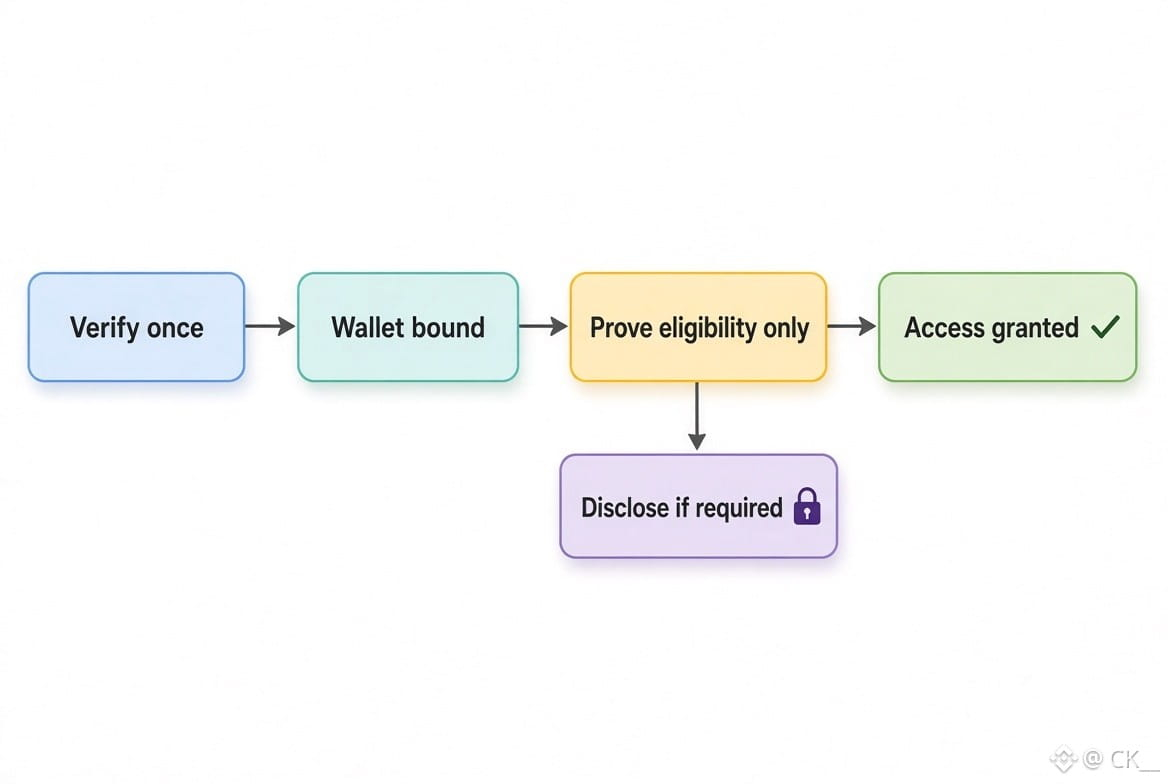
I’ve been digging into Dusk’s identity setup for a while now, and the selective disclosure part is what keeps sticking with me. Most chains force a choice: either broadcast everything or hide so much that regulated players can’t touch it. Dusk tries to sit in the middle.
You get verified once through their Citadel approach. After that, you can prove you’re eligible for a transfer or a certain asset class without dumping your full identity onto every counterparty or app. The network just checks the proof. Wallet gets bound, rules get enforced, but the sensitive bits stay locked unless a specific party needs them. Feels closer to showing a bouncer only the age on your ID instead of handing over the whole card and letting them photocopy it.
That matters for liquidity and participation. Institutions won’t put real volume on a chain that turns every position and counterparty into public metadata. At the same time, pure anonymity makes compliance almost impossible. The trade-off here is clearer incentives: users keep more control, venues can still run eligibility checks, and the data surface stays smaller.
Still, adoption depends on how smooth the verification flow actually feels in practice and whether enough issuers and venues start treating these proofs as standard. If the friction stays low and the trust assumptions hold, it could pull more regulated activity on-chain without the usual privacy tax.
Curious what others who’ve tested the identity side think—does the selective model feel practical enough for real trading volume, or does it still leave too many gaps for institutions to fully lean in?
#dusk $DUSK @Dusk_Foundation
I’ve been digging into Dusk’s identity setup for a while now, and the selective disclosure part is what keeps sticking with me. Most chains force a choice: either broadcast everything or hide so much that regulated players can’t touch it. Dusk tries to sit in the middle.
You get verified once through their Citadel approach. After that, you can prove you’re eligible for a transfer or a certain asset class without dumping your full identity onto every counterparty or app. The network just checks the proof. Wallet gets bound, rules get enforced, but the sensitive bits stay locked unless a specific party needs them. Feels closer to showing a bouncer only the age on your ID instead of handing over the whole card and letting them photocopy it.
That matters for liquidity and participation. Institutions won’t put real volume on a chain that turns every position and counterparty into public metadata. At the same time, pure anonymity makes compliance almost impossible. The trade-off here is clearer incentives: users keep more control, venues can still run eligibility checks, and the data surface stays smaller.
Still, adoption depends on how smooth the verification flow actually feels in practice and whether enough issuers and venues start treating these proofs as standard. If the friction stays low and the trust assumptions hold, it could pull more regulated activity on-chain without the usual privacy tax.
Curious what others who’ve tested the identity side think—does the selective model feel practical enough for real trading volume, or does it still leave too many gaps for institutions to fully lean in?
#dusk $DUSK @Dusk
8
249
·
--
Bearish
See translation
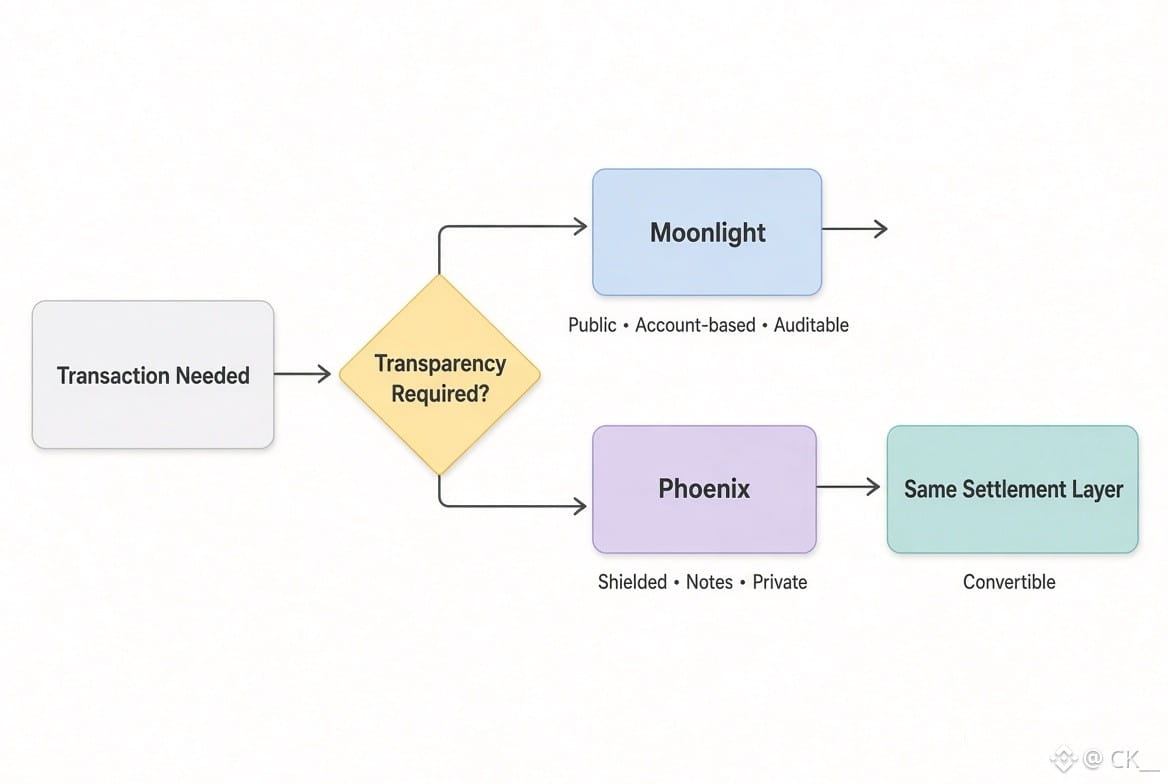
I’ve been digging into Dusk’s dual models for a while now, and the more I look the clearer it gets that Moonlight and Phoenix aren’t competing features. They’re two different regulatory postures sitting on the same settlement layer.
Moonlight is the open ledger. Account-based, balances visible, sender and amount right there. It’s the path exchanges and custodians actually need when regulators come knocking. Easy to monitor, easy to report, no extra gymnastics. Phoenix is the other side: notes instead of balances, zero-knowledge proofs keeping amounts and links private from the public while still letting the network verify everything stayed consistent. The receiver can still know who sent it when that matters, and viewing keys give selective access without opening the whole thing up.
What feels important is that an institution doesn’t have to pick one forever. Value can move between the two without bridges or wrapped versions. Same chain, same finality, just different disclosure rules depending on the flow. Public when the rulebook demands transparency, shielded when the position or the counterparty needs cover.
The limitation is obvious too. Most everyday volume still seems to lean transparent, at least from what I’ve tracked. Privacy only works if people actually use the private rail, and that depends on wallets and apps making the switch feel natural instead of extra work.
How do you see institutions actually deciding when to stay in the open versus when to step into the shielded side?
#dusk $DUSK @Dusk_Foundation
I’ve been digging into Dusk’s dual models for a while now, and the more I look the clearer it gets that Moonlight and Phoenix aren’t competing features. They’re two different regulatory postures sitting on the same settlement layer.
Moonlight is the open ledger. Account-based, balances visible, sender and amount right there. It’s the path exchanges and custodians actually need when regulators come knocking. Easy to monitor, easy to report, no extra gymnastics. Phoenix is the other side: notes instead of balances, zero-knowledge proofs keeping amounts and links private from the public while still letting the network verify everything stayed consistent. The receiver can still know who sent it when that matters, and viewing keys give selective access without opening the whole thing up.
What feels important is that an institution doesn’t have to pick one forever. Value can move between the two without bridges or wrapped versions. Same chain, same finality, just different disclosure rules depending on the flow. Public when the rulebook demands transparency, shielded when the position or the counterparty needs cover.
The limitation is obvious too. Most everyday volume still seems to lean transparent, at least from what I’ve tracked. Privacy only works if people actually use the private rail, and that depends on wallets and apps making the switch feel natural instead of extra work.
How do you see institutions actually deciding when to stay in the open versus when to step into the shielded side?
#dusk $DUSK @Dusk
5
245
·
--
See translation
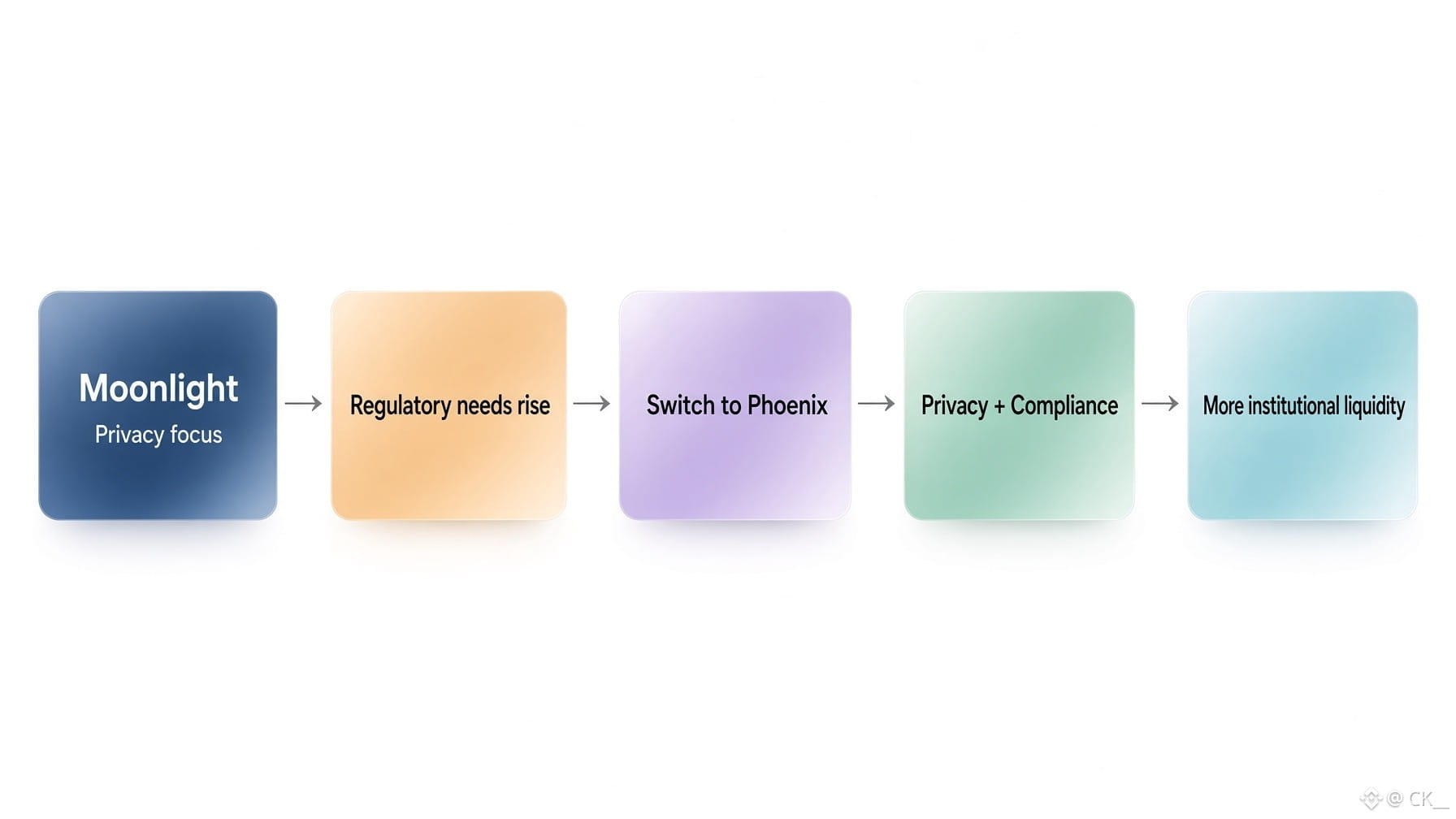
I’ve been digging into Dusk’s shift from Moonlight to Phoenix for a while now, and the regulatory angle feels like the real story. One institution decided to flip its posture, and that single move says a lot about how the project is positioning itself.
Moonlight was the quieter path, more about staying under the radar while still offering the privacy features people actually use. Phoenix seems to lean the other way. It opens the door wider for regulated players who need clearer rules of the road. For an institution that made the switch, the incentive is obvious: they get to keep the confidential transaction side they like, but now under a framework that feels safer to compliance teams. Liquidity tends to follow that kind of comfort. You see more serious size starting to show up when the regulatory story gets cleaner.
That said, the switch isn’t free. There’s always a cost in complexity and in how much the average user has to trust the new setup. Privacy still has to hold, and any extra compliance layer risks slowing things down or creating new points of friction. I’ve watched similar moves elsewhere and the long-term test is whether the extra institutional flow outweighs the added overhead.
What I’m still chewing on is whether this posture change actually pulls in stickier capital or just temporary interest from players testing the waters. Anyone else tracking how the liquidity and participation shifted after that one institution made the call?
#dusk $DUSK @Dusk_Foundation
I’ve been digging into Dusk’s shift from Moonlight to Phoenix for a while now, and the regulatory angle feels like the real story. One institution decided to flip its posture, and that single move says a lot about how the project is positioning itself.
Moonlight was the quieter path, more about staying under the radar while still offering the privacy features people actually use. Phoenix seems to lean the other way. It opens the door wider for regulated players who need clearer rules of the road. For an institution that made the switch, the incentive is obvious: they get to keep the confidential transaction side they like, but now under a framework that feels safer to compliance teams. Liquidity tends to follow that kind of comfort. You see more serious size starting to show up when the regulatory story gets cleaner.
That said, the switch isn’t free. There’s always a cost in complexity and in how much the average user has to trust the new setup. Privacy still has to hold, and any extra compliance layer risks slowing things down or creating new points of friction. I’ve watched similar moves elsewhere and the long-term test is whether the extra institutional flow outweighs the added overhead.
What I’m still chewing on is whether this posture change actually pulls in stickier capital or just temporary interest from players testing the waters. Anyone else tracking how the liquidity and participation shifted after that one institution made the call?
#dusk $DUSK @Dusk
2
5
270
·
--
2
103
·
--
See translation
NPEX Didn’t Rent a Wallet. Dusk and Cordial Put Custody Inside the Exchange
I’ve been watching Dusk mostly through the NPEX lens, not the usual token-price chatter. The custody piece is the part that actually changed how I think about it.
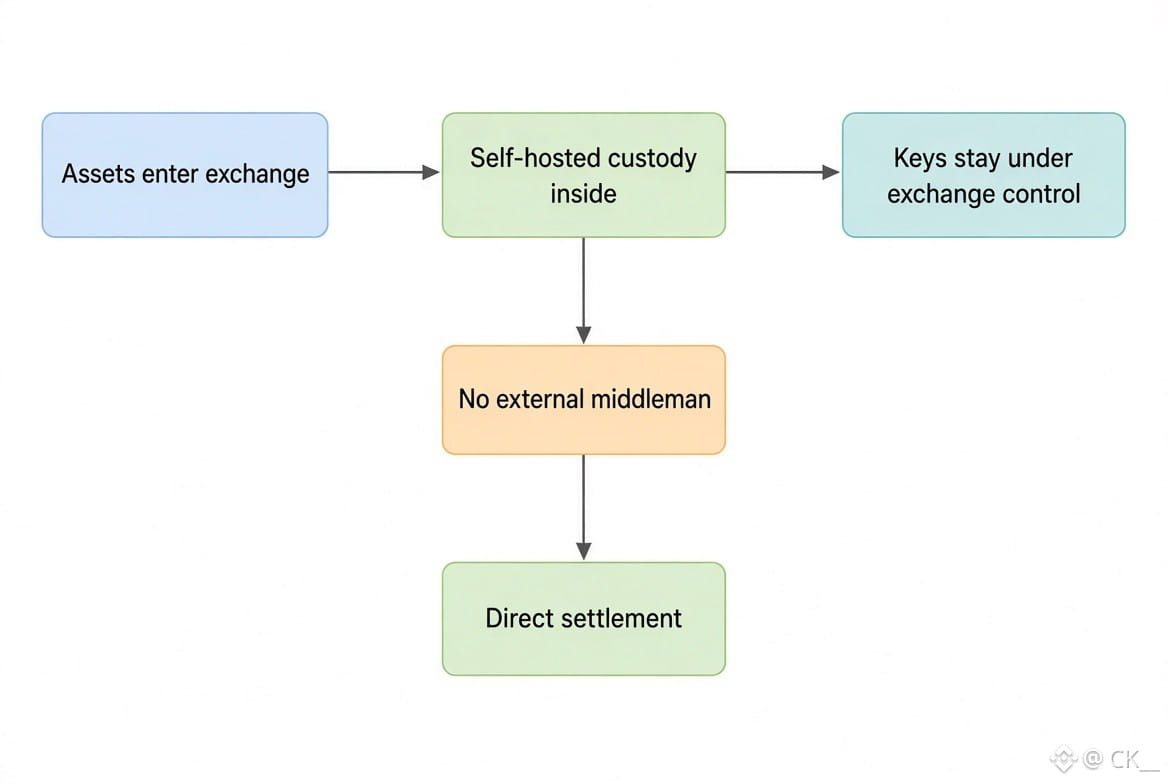
Most RWA stories still treat custody like a rented service. You issue the token, then park it with some third-party wallet provider and hope the regulator looks the other way. NPEX didn’t do that. They put the wallet inside the exchange itself, using Cordial’s self-hosted stack sitting on Dusk Vault. The keys stay under NPEX’s own roof. No SaaS black box. No extra custodian sitting between the matching engine and the assets.
That matters because a licensed Dutch MTF cannot outsource its treasury the way a crypto CEX can. Regulators want the operator to stay in control. Splitting the key across nodes means no single firm can walk off with client holdings if something breaks. It’s slower to build and heavier to run than plugging in an off-the-shelf custodian, so you won’t see every venue copy it overnight.
The incentive lines up, though. NPEX keeps operational control, Dusk gets a real licensed venue settling on its chain, and institutions get a path that doesn’t force them to trust one more middleman. Whether that actually changes how they size positions or is still just a compliance box remains the open question.
Does keeping custody this close to the exchange change the risk math for institutions, or will most still prefer the simpler (and riskier) rented-wallet route?
#dusk $DUSK @Dusk_Foundation
NPEX Didn’t Rent a Wallet. Dusk and Cordial Put Custody Inside the Exchange
I’ve been watching Dusk mostly through the NPEX lens, not the usual token-price chatter. The custody piece is the part that actually changed how I think about it.
Most RWA stories still treat custody like a rented service. You issue the token, then park it with some third-party wallet provider and hope the regulator looks the other way. NPEX didn’t do that. They put the wallet inside the exchange itself, using Cordial’s self-hosted stack sitting on Dusk Vault. The keys stay under NPEX’s own roof. No SaaS black box. No extra custodian sitting between the matching engine and the assets.
That matters because a licensed Dutch MTF cannot outsource its treasury the way a crypto CEX can. Regulators want the operator to stay in control. Splitting the key across nodes means no single firm can walk off with client holdings if something breaks. It’s slower to build and heavier to run than plugging in an off-the-shelf custodian, so you won’t see every venue copy it overnight.
The incentive lines up, though. NPEX keeps operational control, Dusk gets a real licensed venue settling on its chain, and institutions get a path that doesn’t force them to trust one more middleman. Whether that actually changes how they size positions or is still just a compliance box remains the open question.
Does keeping custody this close to the exchange change the risk math for institutions, or will most still prefer the simpler (and riskier) rented-wallet route?
#dusk $DUSK @Dusk
2
210
·
--
Bearish
See translation
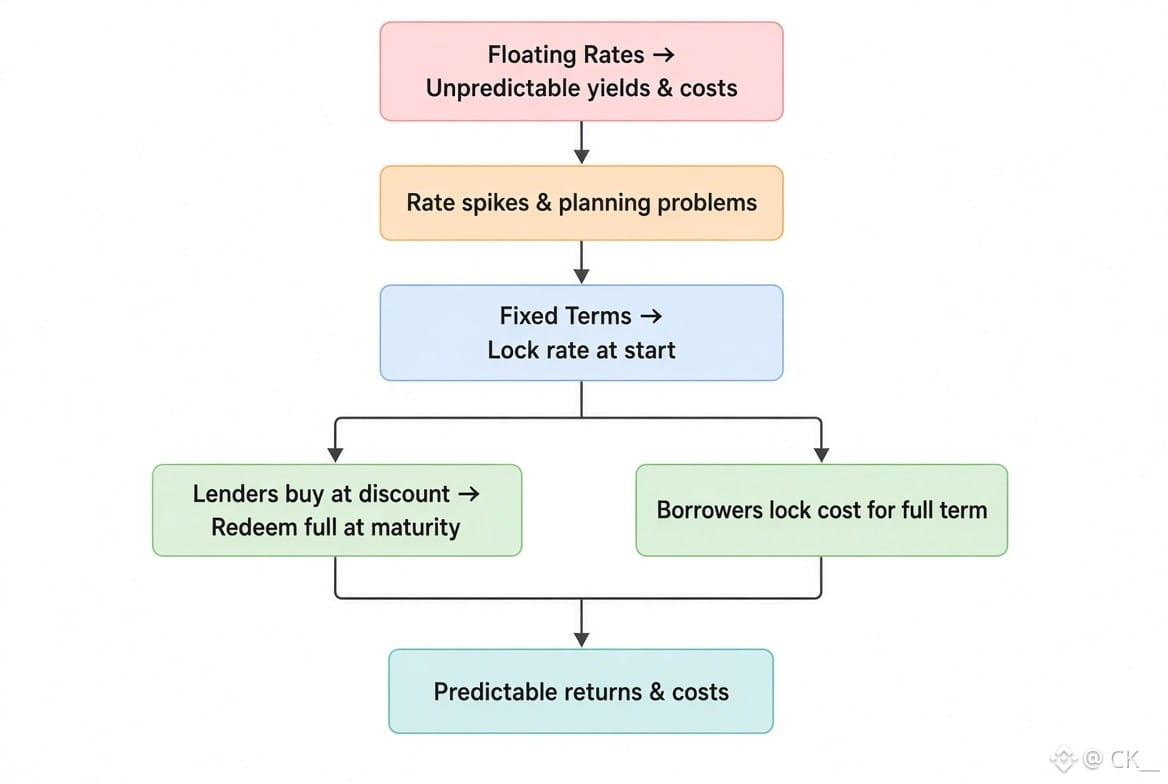
I've spent the last few months watching TermMax because floating rates kept breaking my own positions. You park stables on Aave or Morpho, the utilization shifts, and the yield you planned around is gone in a week. Borrowers get the same problem in reverse. A rate spike mid-trade can turn a decent loop into a liquidation.
TermMax just treats the loan like a bond with an expiry. You buy the discounted token as a lender and redeem at par when the term ends. Borrowers lock the cost on day one. It's the difference between a six-month lease and a month-to-month that the landlord can raise whenever they feel like it.
The vaults help a bit. Curators push idle cash into Morpho or Aave while they wait for a match, so capital isn't sitting dead. One-click leverage also skips the usual multi-protocol loop, which is nicer than it sounds once you've done it by hand a few times.
Liquidity is still the obvious limit. Some maturities are thin, so exiting early through the AMM can cost you. Isolated markets contain risk but also split depth. You're trusting the curator and the oracles the same as anywhere else.
Even so, seeing PT looping and some tokenized stocks actually get used tells me people do want to know the rate in advance. Whether that sticks once the TMX incentives hit is another question.
Do you think fixed terms will actually pull more patient capital on-chain, or will most users still take the floating option for the extra flexibility?
#termmax @termmax
I've spent the last few months watching TermMax because floating rates kept breaking my own positions. You park stables on Aave or Morpho, the utilization shifts, and the yield you planned around is gone in a week. Borrowers get the same problem in reverse. A rate spike mid-trade can turn a decent loop into a liquidation.
TermMax just treats the loan like a bond with an expiry. You buy the discounted token as a lender and redeem at par when the term ends. Borrowers lock the cost on day one. It's the difference between a six-month lease and a month-to-month that the landlord can raise whenever they feel like it.
The vaults help a bit. Curators push idle cash into Morpho or Aave while they wait for a match, so capital isn't sitting dead. One-click leverage also skips the usual multi-protocol loop, which is nicer than it sounds once you've done it by hand a few times.
Liquidity is still the obvious limit. Some maturities are thin, so exiting early through the AMM can cost you. Isolated markets contain risk but also split depth. You're trusting the curator and the oracles the same as anywhere else.
Even so, seeing PT looping and some tokenized stocks actually get used tells me people do want to know the rate in advance. Whether that sticks once the TMX incentives hit is another question.
Do you think fixed terms will actually pull more patient capital on-chain, or will most users still take the floating option for the extra flexibility?
#termmax @TermMax
2
4
1.2k
Log in to explore more content
Join global crypto users on Binance Square
⚡️ Get latest and useful information about crypto.
💬 Trusted by the world’s largest crypto exchange.
👍 Discover real insights from verified creators.
Email / Phone number
Trending Topics
BTCRebounds80K
35,010 views
572 Discussing
BITCOIN UPDATE I’M STILL BEARISH, AND HERE’S WHY! 🚨⚠️
As you all witnessed, BTC bounced back from the $75,700 area and touched $81K. First, the market trapped long traders, and then it trapped short traders.
I’m still bearish. First of all, as everyone knows, Democrats won today’s US midterm elections, and in my view, this outcome is bearish for the market.
The market can remain volatile in the short term and trap as many traders as it wants, but that doesn’t change the overall market outlook.
There are several important upcoming events, including US Non Farm Payrolls (November 6), US CPI Inflation (November 10), US PPI (November 13), US Retail Sales (November 17), FOMC Meeting Minutes (November 18), US PCE Inflation (November 25), Federal Reserve interest rate expectations, the US Dollar Index (DXY), Treasury Yields, Nasdaq performance, Bitcoin ETF flows, and ongoing( Iran ) Israel geopolitical developments. All of these could have a significant impact on Bitcoin and the overall crypto market.
But don’t get too carried away by Bitcoin’s recent movement. Technically speaking, there hasn’t been any major bullish move yet. Yesterday, BTC was trading between $80K and $82K, and even today, it’s still around the same range.
If you want to turn bullish, that’s entirely your choice.
In my previous post, I clearly explained that BTC had technical support in the $75K / $76K zone, and the price bounced from that support and made its way back towards $80K. But this wasn’t something I had failed to mention before. In fact, I repeatedly mentioned in my posts that BTC could move towards $80K, $81K, or even $82K.
Despite that, I’m still bearish.
And I don’t have just one reason to support my bearish outlook. I have several reasons, which I’ve already explained in my previous posts.
For now, I’ll continue to wait for BTC to drop below $74K, which I believe could happen very soon. In my view, such a correction is also necessary for the market.
Anyone looking for crypto guidance just let me know.
#BTCRebounds80K
Strategic Adviser
·13 Likes
·7.1k views
Binance98PercentReplenished
28,926 views
494 Discussing
USMidterms-WhatAreMarketsExpecting?
309,193 views
1,989 Discussing