

黑色马里奥
401 Posts

黑色马里奥
Report
Block User
区块链行业自媒体、从业者,黑色马里奥原创IP,资深编辑
Open Trade

BTC Holder
Occasional Trader
8.3 Years
30 Following
2.4K+ Followers
1.2K+ Liked
Posts
Portfolio
All
Quotes
Videos
·
--
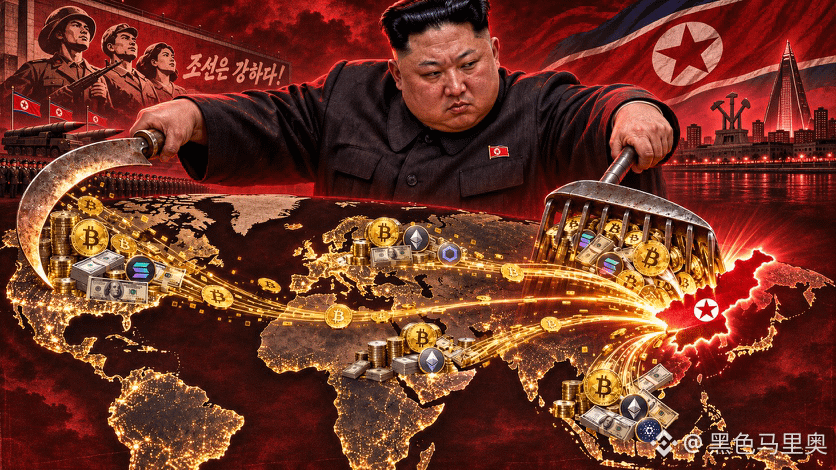
Looking at things now, the profile of North Korea-linked hackers is becoming clearer: these are essentially state-sponsored operations.
As more samples emerge, it will actually become easier to assess things going forward.
North Korea had little involvement in building the early Crypto ecosystem. In other words, although they can steal the coins, moving, laundering, and cashing them out will surely become increasingly difficult.
Monitoring, freezing, and sanctions targeting North Korea-linked addresses will also become increasingly strict.
·
--
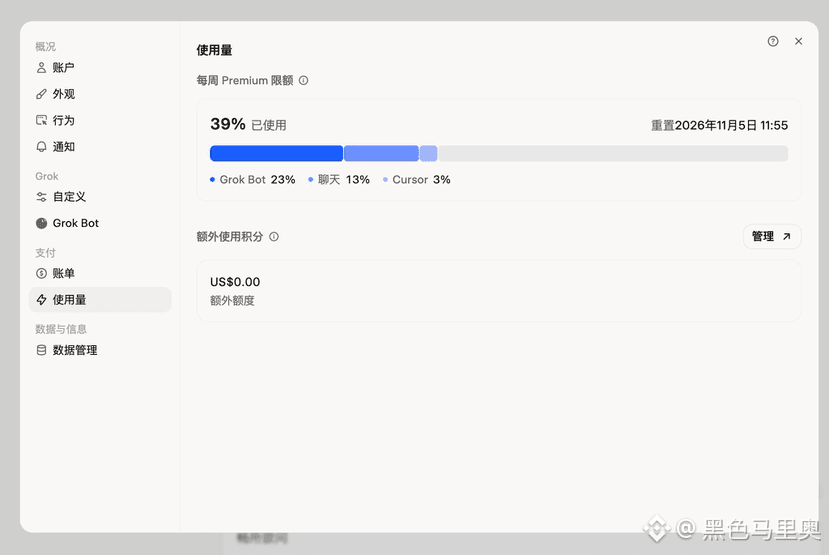
This Grokbot and Cursor are way too quota-hungry.
I bought an extra Grok Premium plan last night, and my weekly quota had just reset. I've only used it for one day, and I feel like I haven't even done much, but I've already used up almost half of it.
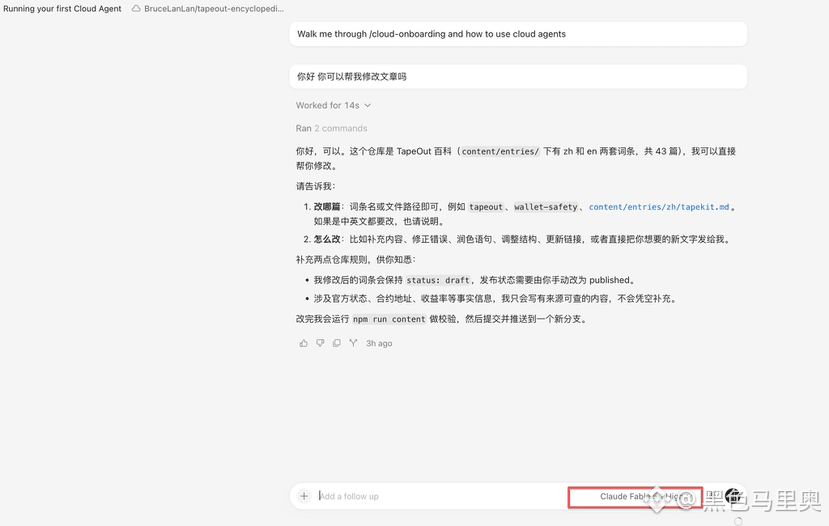
Especially when I use the Claude Fable 5.1 model in Cursor—I said just one sentence, and it immediately ate up 3% of my quota. It's making me a little anxious 😂
18
·
--
Congratulations on being so close to reaching 2,000 followers! Thank you all for your support and for following me!
Let’s send out a red packet to celebrate! I’ll keep sharing more useful content with everyone! 🧧🧧🧧
#BNB
Congratulations on being so close to reaching 2,000 followers! Thank you all for your support and for following me!
Let’s send out a red packet to celebrate! I’ll keep sharing more useful content with everyone! 🧧🧧🧧
#BNB
Let’s send out a red packet to celebrate! I’ll keep sharing more useful content with everyone! 🧧🧧🧧
#BNB
179
2
11
359
·
--
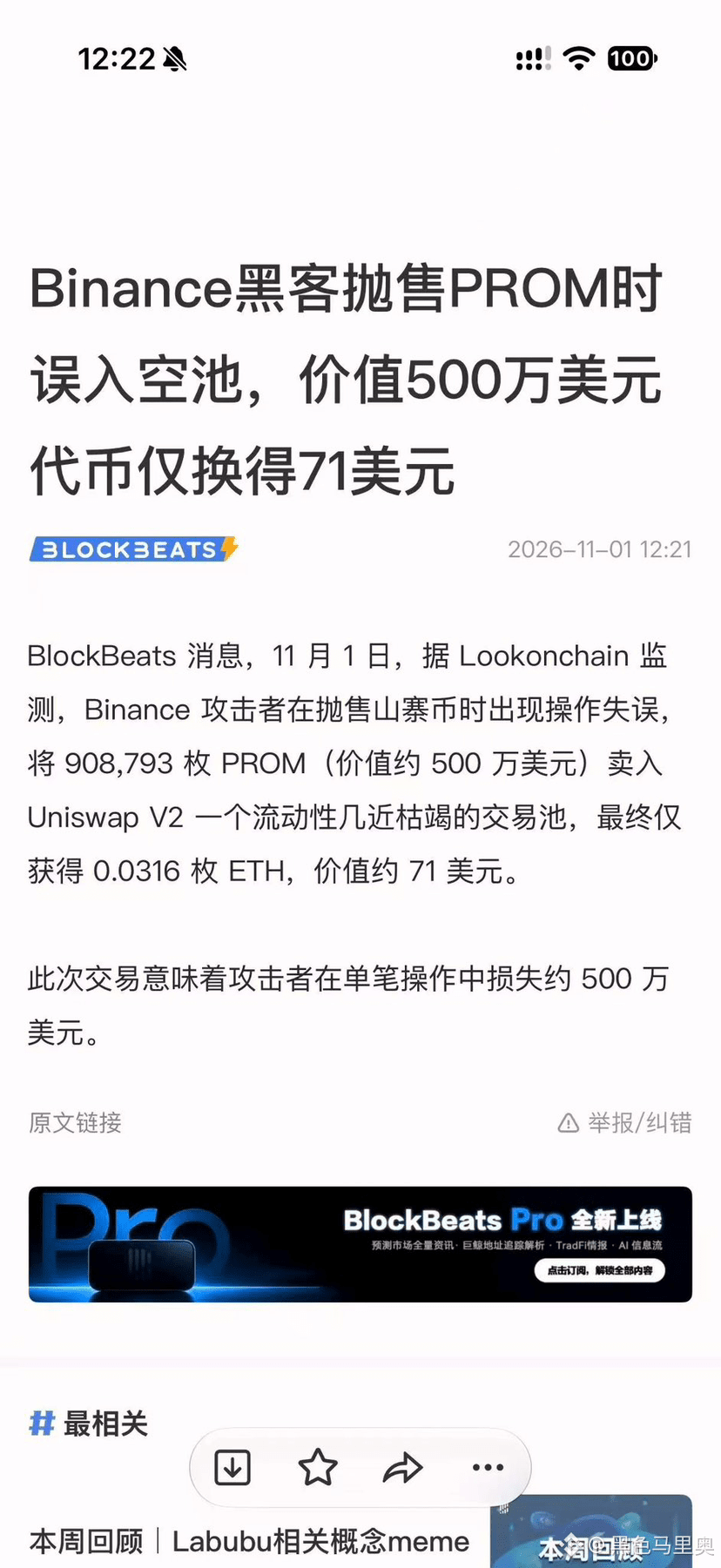
Hahaha, looks like the hackers aren't very good at their job.
I'm curious—if they work for the government, do they get punished for mistakes like this?
Hahaha, looks like the hackers aren't very good at their job.
I'm curious—if they work for the government, do they get punished for mistakes like this?
I'm curious—if they work for the government, do they get punished for mistakes like this?
4
3.6k
·
--
Everyone says September and October are the golden months, but it looks like this year’s golden September and silver October belonged not to the crypto industry, but to hackers.
There were a total of 111 security incidents over the two months, involving $7.25 billion in losses.
For context, total losses from hacking incidents for all of 2025 were only around $3.3–3.5 billion.
There were a total of 111 security incidents over the two months, involving $7.25 billion in losses.
For context, total losses from hacking incidents for all of 2025 were only around $3.3–3.5 billion.
3
5
6.3k
·
--
Congratulations to myself for reaching 1,000 followers! Sending out a red envelope to celebrate together! 🧧🧧🧧
#BNB
Congratulations to myself for reaching 1,000 followers! Sending out a red envelope to celebrate together! 🧧🧧🧧
#BNB
#BNB
1.8k
4
104
1.8k
·
--
Claim red envelope
Claim red envelope


Supers
·
--
GM!
Follow them and me
Please follow them and then claim a red envelope 🧧
@黑色马里奥
@Jealousy尼卡
Follow them and me
Please follow them and then claim a red envelope 🧧
@黑色马里奥
@Jealousy尼卡
45
·
--
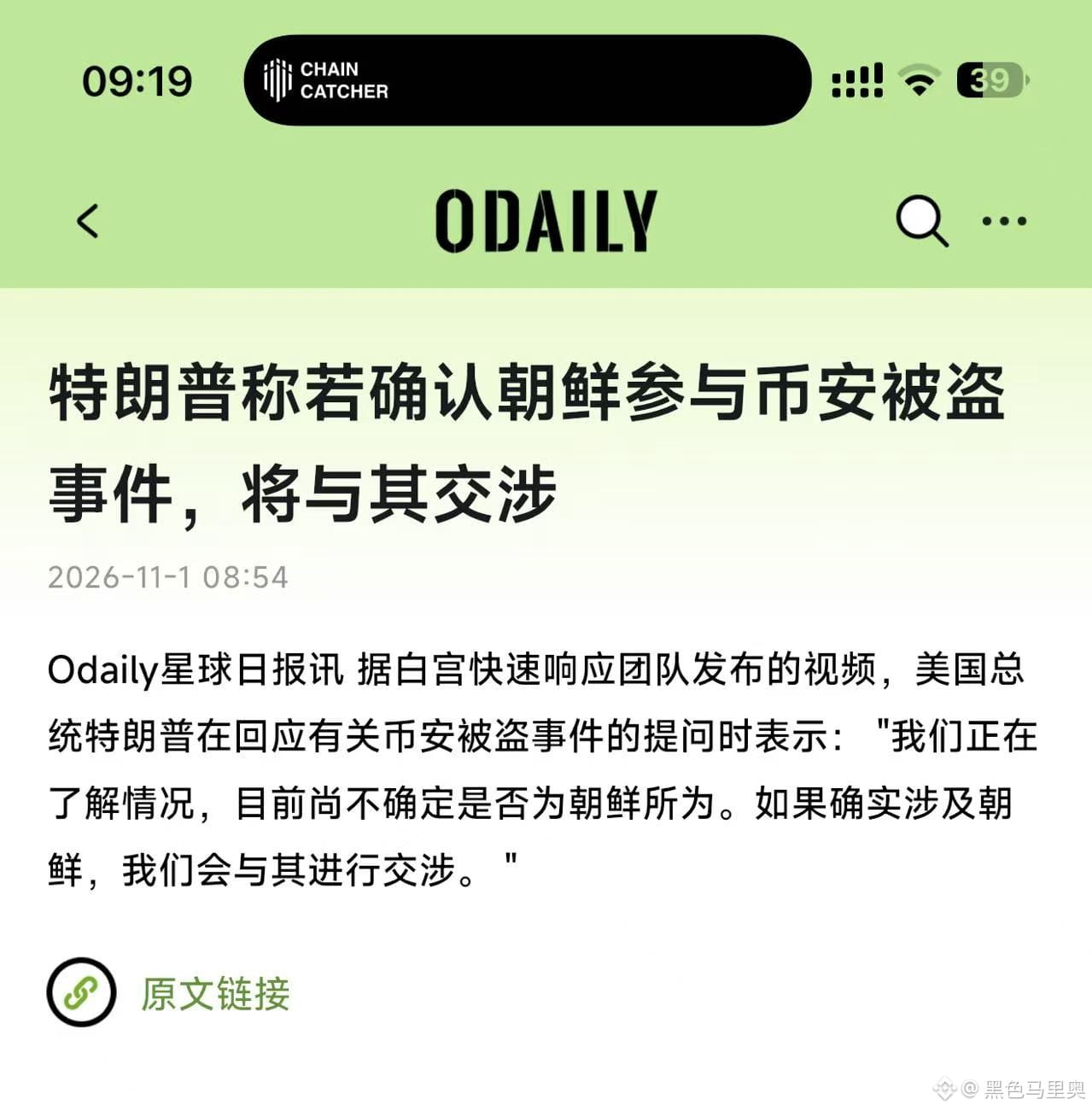
Based on what we know so far, it’s pretty much confirmed that North Korea’s TraderTraitor (Lazarus is a general term for North Korean hacker groups) was behind the Binance hack.
TraderTraitor was also behind the Bybit hack.
Honestly, just think about it: how could Kim possibly admit that people under his command did something like this?
Even if the outside world already has definitive evidence, he’s not going to openly admit it, let alone proactively cooperate with an investigation. U.S.–North Korea relations have been tense for a long time, and there’s little basic trust between the two sides. What do you expect diplomatic negotiations to achieve? Get North Korea to admit responsibility and help recover the stolen funds? What could possibly come of that?
Yeah, good luck negotiating that.
Anyway, I’m not too optimistic that diplomacy will make any meaningful progress on this.
A more roundabout approach—putting pressure on some infrastructure providers and resolving the issue through centralized means—seems more promising.
2.8k
·
--
This really came out of nowhere!!!
Starting in December, ChatGPT’s chat mode and Codex will share a quota pool. That means chat mode will use up a limited number of tokens—it’ll no longer be an all-you-can-use buffet with unlimited refills.
You know how little quota Plus gets. From now on, Plus users really will be worse off than dogs.
120
·
--
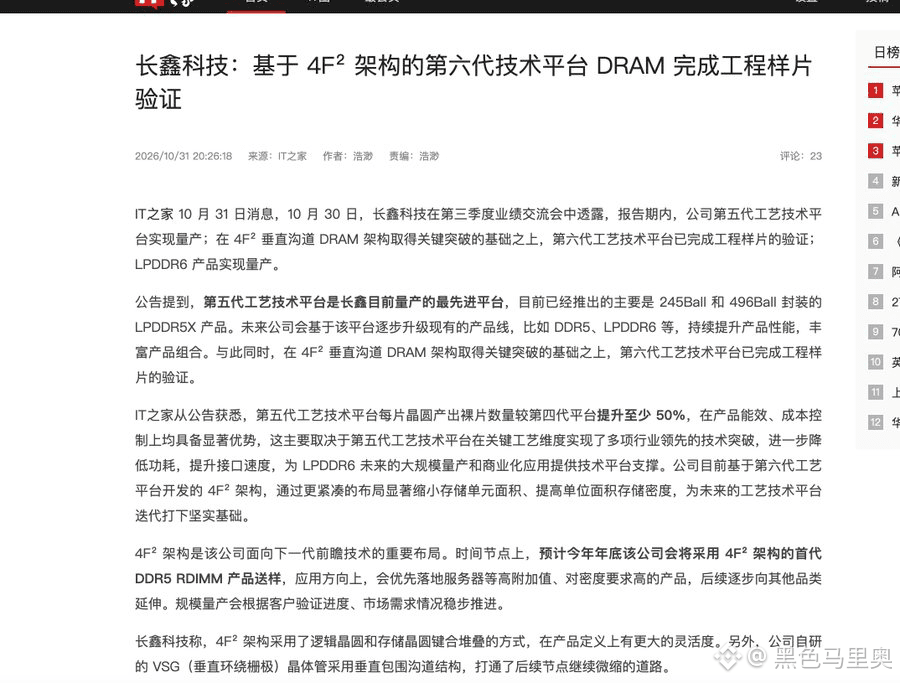
ChangXin Memory Technologies made a new technological breakthrough today. It completed engineering sample validation for its sixth-generation process platform based on a 4F² vertical-channel DRAM architecture—a major piece of industry news.
And for the three global memory giants—Samsung, Micron, and SK hynix—this could be a long-term headwind!
1/
The “4F²” refers to the fact that mainstream DRAM around the world currently uses a 6F² architecture. In theory, 4F² can reduce the area of an individual memory cell by about 33%.
Put simply, under the same process conditions, a chip of the same size can hold more memory cells, increasing storage density and lowering the manufacturing cost per unit of storage capacity.
From the perspective of the memory chip industry, this means achieving greater storage efficiency at a lower cost, making the price-competition advantage even more pronounced.
ChangXin has also completed engineering sample validation. The next steps are customer validation, yield improvement, and mass production at scale.
2/
In the early days, the global DRAM market was essentially dominated by these three companies.
In the second quarter of 2026, Samsung held a 39.4% market share, SK hynix 24.9%, and Micron 23.3%. Together, they accounted for nearly 88%.
That amounted to a de facto market monopoly.
This highly concentrated market structure gives the three giants considerable pricing power, especially during periods when memory chips are in short supply.
But ChangXin has now captured 9.5% of the global market, becoming the world’s fourth-largest DRAM manufacturer, and is moving into high-end markets such as server DDR5.
If 4F² enters mass production successfully in the future and delivers on its cost advantage, that would mean a more competitive fourth major supplier entering the global DRAM market.
ChangXin could use its cost advantage to compete for market share, while Samsung, Micron, and SK hynix would face greater price-competition pressure.
The memory chip industry is highly cyclical, and when supply increases and price competition intensifies, manufacturers’ profit margins may come under pressure.
Samsung and SK hynix are also developing 4F², while Micron has previously stated clearly that it does not plan to adopt this technology path. Instead, it will continue optimizing 6F² and developing 3D DRAM.
So if ChangXin manages to commercialize 4F², it would also pose a serious challenge to Micron’s assessment of its technology roadmap.
1
1
1.9k
·
--
In fact, in the crypto thefts that have occurred this year, most of the funds in cases not involving North Korea-linked hacking groups have been recovered.
For example, about $320 million was stolen from Liquid Network, and 85% was eventually returned; $3.8 million was stolen from NEAR Intents, and the attacker returned all of it; and about $11.58 million was stolen from the Verus bridge, with around 75% recovered.
But in incidents involving North Korea-linked hacking groups—whether Drift, KelpDAO, Bitget, or yesterday’s Binance incident—the chances of recovering the funds are generally very low.
I think this money is very likely to end up funding North Korea’s state-sponsored cyber operations.
In fact, those in North Korea capable of carrying out these kinds of operations are probably all on the state payroll.
North Korea is a relatively closed economy, and ordinary citizens generally have no access to the global internet.
So anyone involved in these cross-border cyberattacks must have been selected by the state and trained with the full backing of the country.
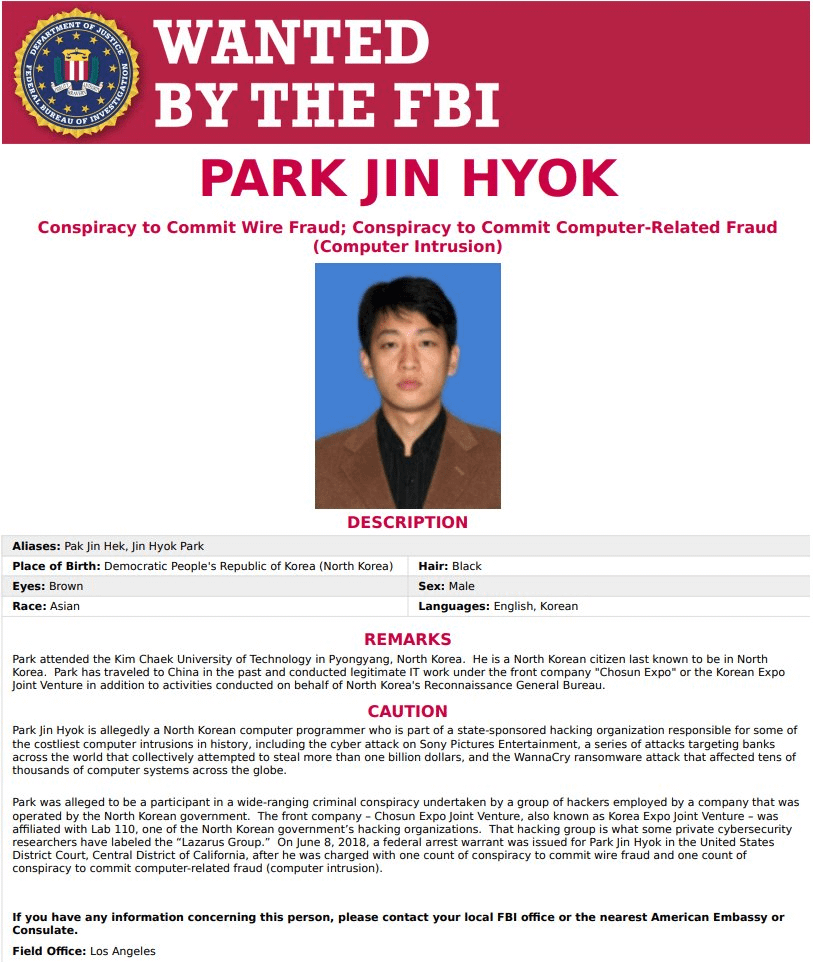
Hacking groups like Lazarus have long been attributed to North Korea by international security agencies and are believed to be linked to the Reconnaissance General Bureau (RGB).
These people were never in it to make money for themselves. They are carrying out a state-level cyber operation, which operates on a fundamentally different logic.
7
9
29.9k
·
--
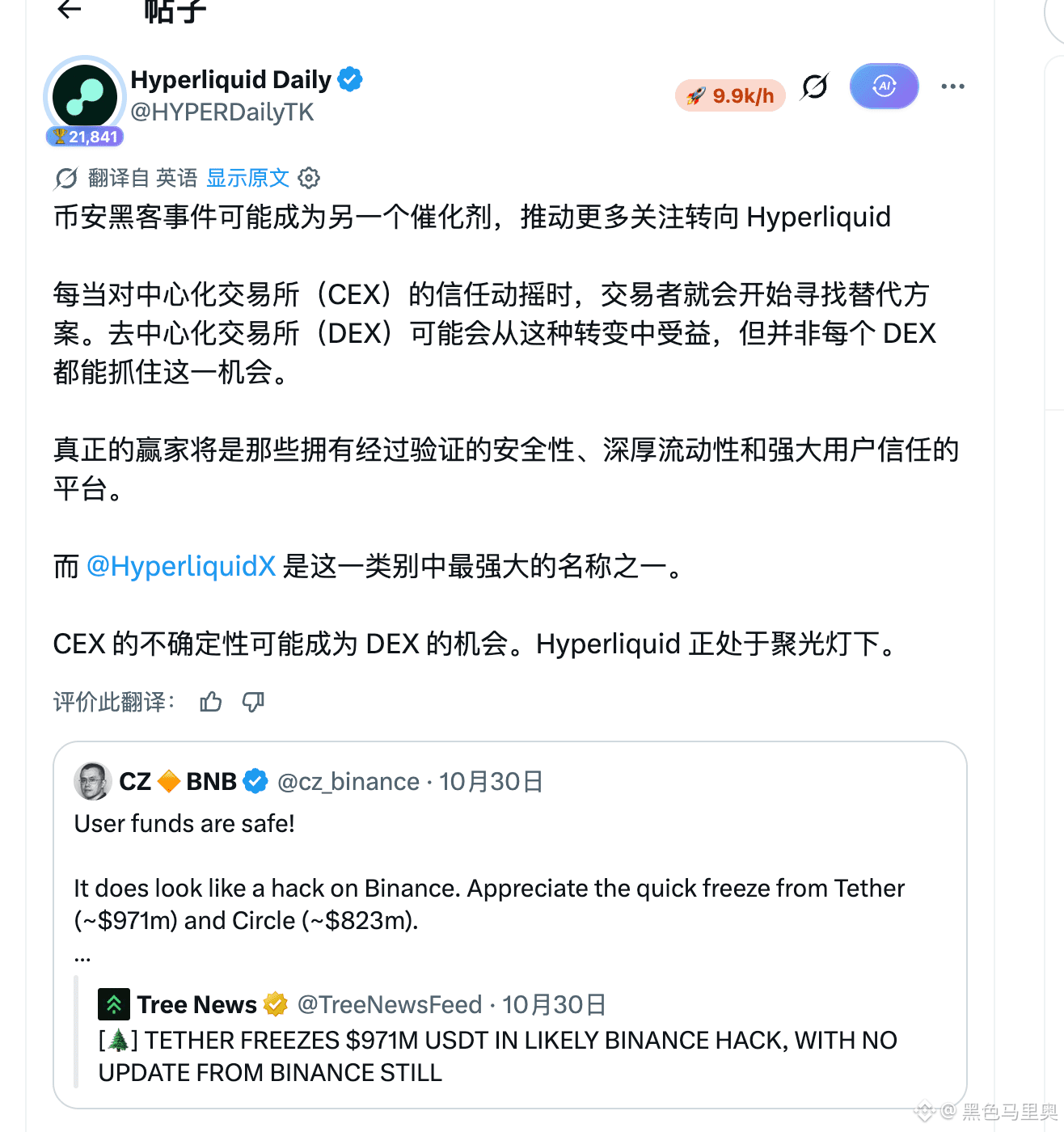
I don’t know whether the people running their operations got their heads caught in a door or what.
1/ Is there really any need for CEXs and DEXs to be so opposed to each other?
By now, the industry has developed to the point where CEXs and DEXs are no longer completely at odds.
These days, they’re much more intertwined—each has a bit of the other in it. Hardly anyone still insists that DEXs have to defeat CEXs.
A user can use a CEX and a DEX at the same time; there’s absolutely no conflict between the two.
So is there really any need to make them out to be such enemies?
There’s an old Chinese saying: “A gentleman doesn’t take advantage of someone in their hour of need.”
Besides, Binance isn’t exactly a sworn enemy like Hyperliquid’s bitter rival. They’re in the same industry, after all, and are bound to cross paths.
2/
Is Hyperliquid
really a DEX?
Surely nobody’s forgotten last March’s JELLYJELLY incident, when validators voted to delist the contract and settle positions at a specified price?
Then there was last November’s POPCAT incident, when the HLP vault racked up several million dollars in bad debt and the platform suspended some deposits and withdrawals.
Claiming to be decentralized doesn’t give Hyperliquid the moral high ground to mock CEXs.
I used to have quite a bit of goodwill toward Hyperliquid, but after this stunt, it’s all gone.
341
·
--
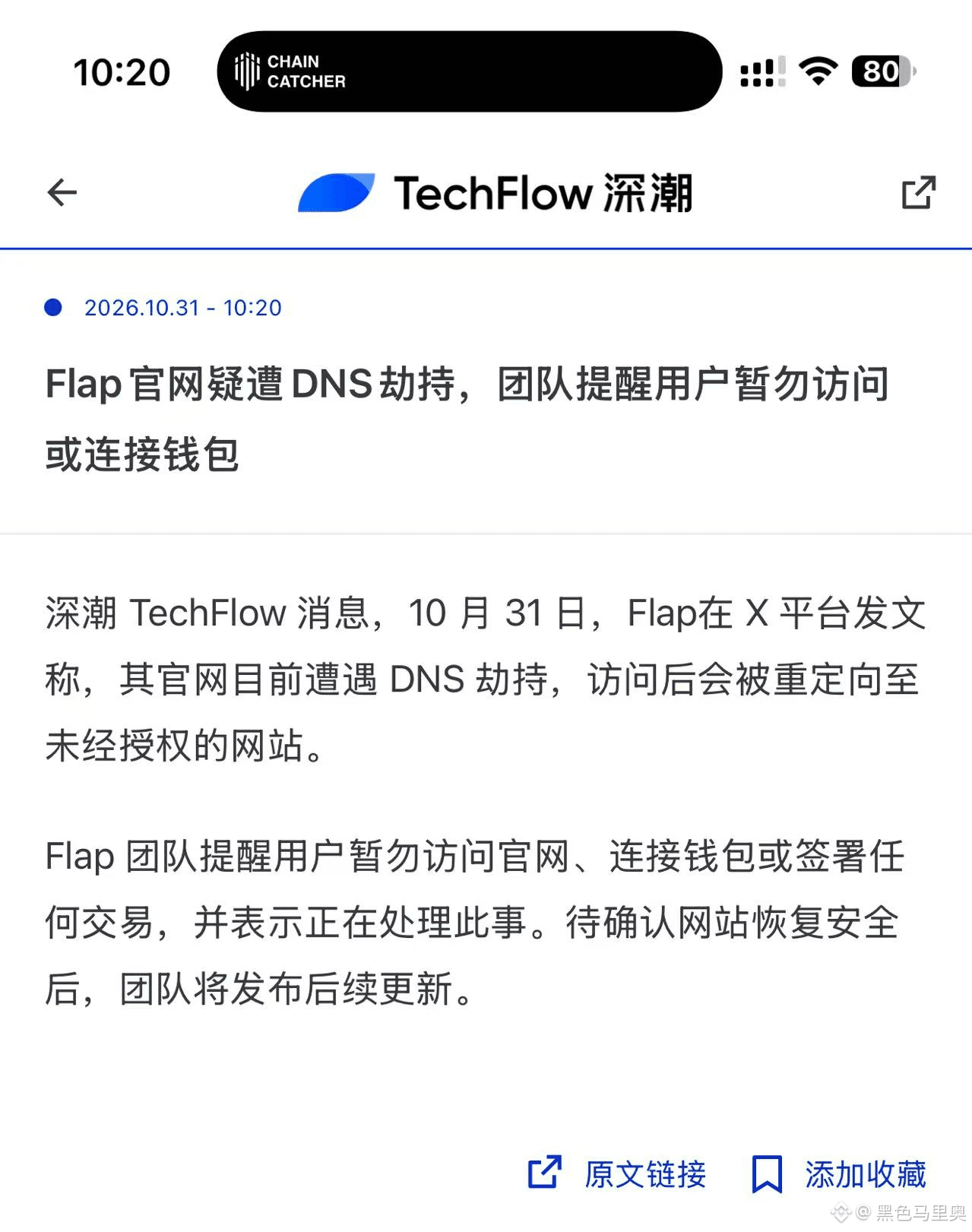
If you're using Grokbot to scan Flap, stop scanning immediately.
Flap's DNS is currently being hijacked.
If you're using Grokbot to scan Flap, stop scanning immediately.
Flap's DNS is currently being hijacked.
Flap's DNS is currently being hijacked.
1k
·
--
This @predictzh is really pretty unlucky.
Everyone was still basking in the excitement over Predict’s big airdrop yesterday, gearing up for this afternoon’s TGE, when the Binance hack happened.
Market sentiment is pretty subdued right now, so this isn’t a very favorable time window. It feels like both the project and its participants have just had a bit of bad luck.
This @predictdotfun-华语 is really pretty unlucky.
Everyone was still basking in the excitement over Predict’s big airdrop yesterday, gearing up for this afternoon’s TGE, when the Binance hack happened.
Market sentiment is pretty subdued right now, so this isn’t a very favorable time window. It feels like both the project and its participants have just had a bit of bad luck.


Binance Announcement
·
--
Binance to Postpone the Listing of Predict (PREDICT)
This is a general announcement. The products and services mentioned here may not be available in your region.
Dear User,
The launch of Predict (PREDICT), originally scheduled for October 30, 2026, at 18:00 (UTC+8), will be postponed until further notice.
For more details, please refer to:
[币安将上市Predict(PREDICT)并为其添加种子标签](https://www.binance.com/zh-CN/support/announcement/detail/a259777ee4104befa3daba5c1eadc7b5)
Note: There may be discrepancies between the original English announcement and translated versions. In case of any discrepancies, please refer to the original English version for the latest or most accurate information.
Thank you for your support!
The Binance Team
1
1
995
·
--
The mastermind behind this Binance hack may once again be North Korea’s Lazarus Group—the same group that hacked Bitget and Bybit.
Most of North Korea’s state-sponsored cyber operations are linked to the Reconnaissance General Bureau (RGB). Lazarus, Andariel, Bluenoroff, and others are frequently cited as North Korean state-sponsored hacking groups.
And judging by how much North Korean hackers have been earning from the crypto industry in recent years, the RGB may soon become one of North Korea’s biggest sources of foreign currency.
If this keeps up, the RGB could become another major pillar of North Korea’s economy, haha.
A country we think of as agricultural has actually become a technological hacking powerhouse that we can do nothing about.

AB Kuai Dong
·
--
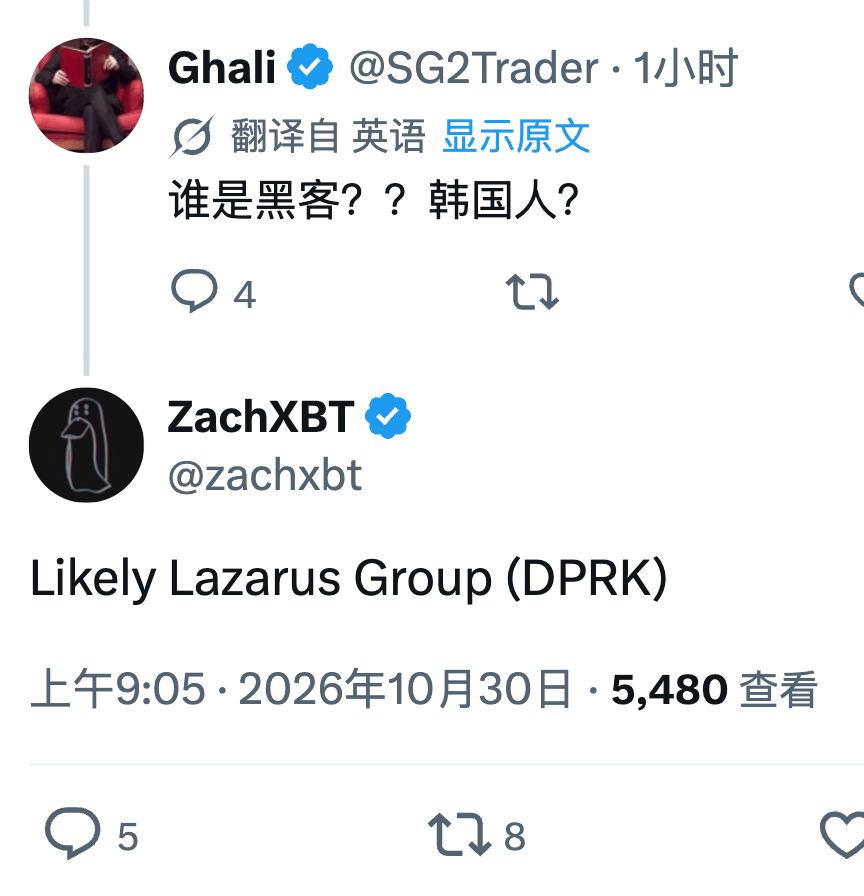
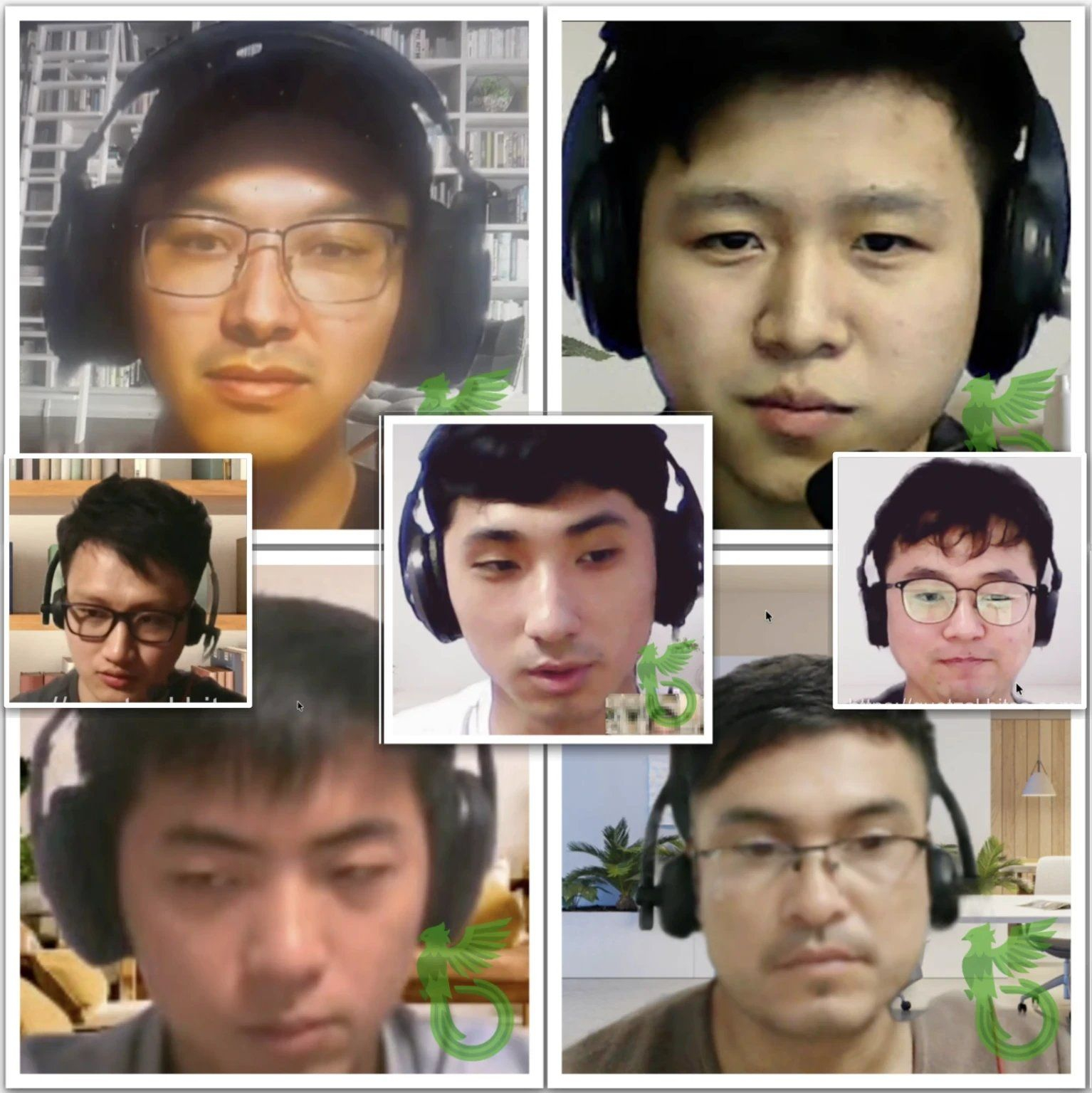
The well-known on-chain tracking blogger ZachXBT suspects that the group behind this attack on Binance, which stole $5.875 billion, was Lazarus Group, managed by North Korea's Reconnaissance General Bureau under the General Staff Department of the Korean People's Army.
The group's thefts in this field:
Japan's DMM exchange: approximately $300 million
India's WazirX exchange: approximately $230 million
Chinese-owned Bybit exchange: approximately $1.5 billion
On-chain protocol Kelp DAO: approximately $292 million
Chinese-owned Bitget exchange: approximately $380 million
Although Binance has recovered half of the assets, recovering Bitcoin, Ethereum, and other cryptocurrencies remains difficult. The hacker's ultimate goal is to funnel the assets into North Korea to fund the country's development.
887
·
--
2026 has already seen its share of turmoil. The Binance @binance hack came completely out of the blue. The amount stolen that’s been confirmed so far is substantial—currently estimated at around $6 billion, of which $3 billion has been frozen.
Given Binance’s position in the industry, the sudden negative news triggered a sharp short-term drop.
1/ It looks like the hackers who hit Binance made off with a huge haul, but at this point, cashing out all that money seems difficult. Most people in the industry are still pretty united.
Tether, Circle, and Ripple moved quickly to help freeze the relevant stablecoins. Arbitrum’s Security Council also took steps to freeze funds, Coinbase proactively reached out to Binance and offered assistance, and Aave urgently paused the affected lending markets. On top of that, a host of on-chain security firms and analysts are tracking the hackers’ funds.
Around $2.3 billion in USDT and USDC has been frozen. There are also large amounts of BTC, ETH, and other assets that can’t be frozen directly, but with everyone continuing to track them, the hackers seem to be facing considerable resistance as they try to move the funds in plain sight.
Seeing so many industry players join forces is one small silver lining in this unfortunate incident.
2/ Although the amount stolen from Binance this time is enormous, I don’t think anyone needs to panic too much.
$3 billion is a huge sum, but for a major exchange the size of Binance, it’s not enough to cripple it.
@cz_binance and @heyibinance have already made their position clear: Binance will take responsibility and cover the shortfall itself. Overall, the situation is manageable.
Of course, exchange security remains a very serious issue. Binance’s response is a case of closing the stable door after the horse has bolted, and I think the whole industry should learn from it.
3/ Finally, I imagine some competitors are quietly feeling pleased about this.
When something this serious happens to a peer, I can understand how its competitors might feel.
But at a time like this, if you can help, then help; if you can’t, keep quiet. Don’t make snide remarks—show some decency. Look at what Coinbase did after Binance was hacked. The contrast in their approach says it all.
I believe that if any exchange gets into trouble, Binance wouldn’t stand by and would offer help. So let’s all do the same.
1
3k
·
--
Verified
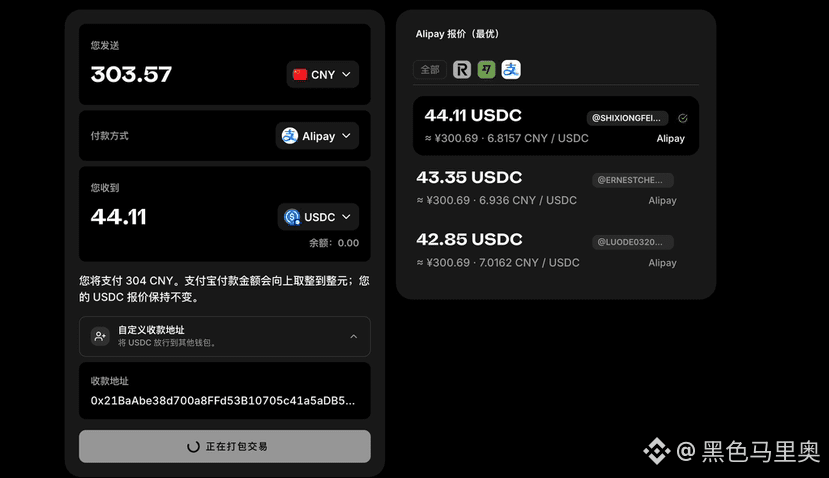
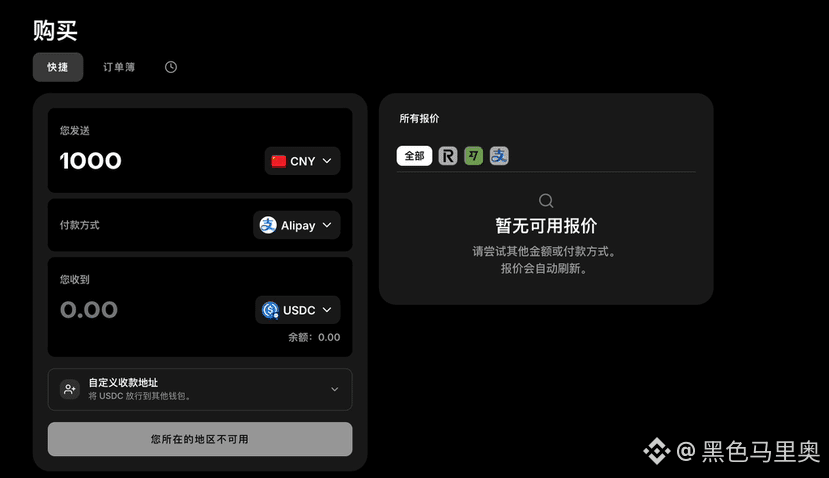
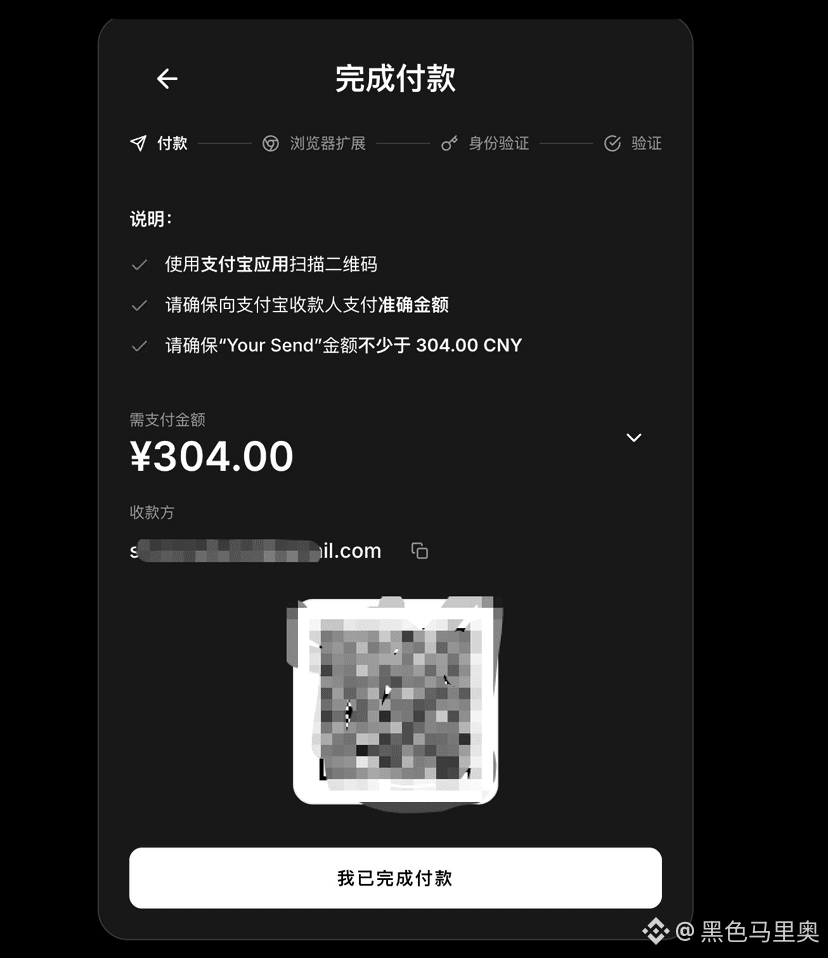
I took a quick look at Peer’s feature for accepting Alipay payments. It makes it a bit easier to deposit RMB and buy crypto, but there are still quite a few limitations.
With major exchanges, OTC and C2C withdrawals are fine, but the deposit verification process is pretty strict. With Alipay payments in particular, sometimes you have to transfer money to that wallet—I never quite figured it out.
Peer is essentially still P2P trading, but after routing the transaction, you can pay directly by scanning an Alipay QR code.
I tested it myself, though, and so far it only matches small orders worth a few hundred yuan. There aren’t even any quotes for 1,000 yuan. So while it is more convenient, it still doesn’t seem to meet the needs of most people looking to buy crypto with RMB.
Also, I don’t think Alipay needed to make an announcement. Anyone paying attention already knows what’s going on.
1
8.1k
·
--
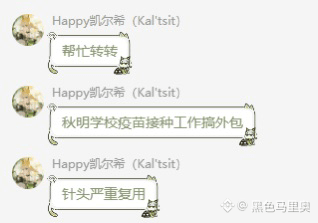
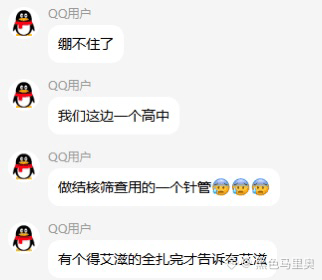
Holy shit, I heard that a high school in Kangping County was conducting tuberculosis screenings, and the same needles were being shared among multiple people.
Then they found out that one of the students is HIV-positive, and now the students and their parents are freaking out.
County officials and hospital staff have arrived at the school, and many students are having blood tests.
Then they found out that one of the students is HIV-positive, and now the students and their parents are freaking out.
County officials and hospital staff have arrived at the school, and many students are having blood tests.
2
1.1k
·
--
Following the AITO M9 crash and fire a few days ago, another Harmony Intelligent Mobility Alliance car has caught fire. The burning car even had an “Yijing X9” display plate on the front.
Two of the three brands—AITO, Yijing, and Huajing—have gone up in flames.
Following the AITO M9 crash and fire a few days ago, another Harmony Intelligent Mobility Alliance car has caught fire. The burning car even had an “Yijing X9” display plate on the front.
Two of the three brands—AITO, Yijing, and Huajing—have gone up in flames.
Two of the three brands—AITO, Yijing, and Huajing—have gone up in flames.
1
180
·
--
Anti-scam streamers—especially those who expose scam compounds in Southeast Asia—are working in an extremely dangerous field.
An anti-scam blogger called “Huijian” spent a long time exposing the inside story of scam operations in Southeast Asia. Eventually, someone paid 1 million yuan to have him kidnapped, and he was brutally murdered back in China.
This isn’t just some ordinary online feud anymore. Someone really is willing to pay to have you killed.
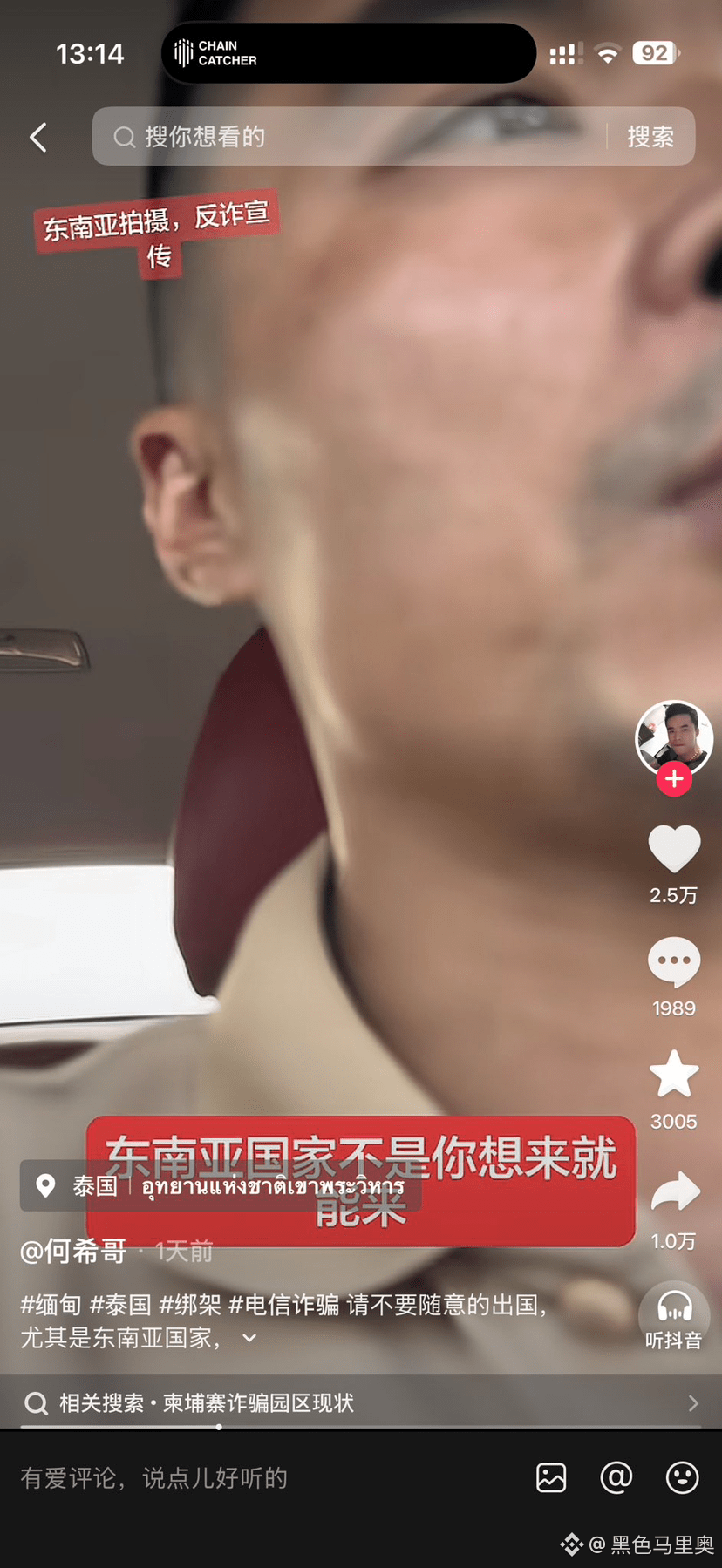
Over the past couple of days, I’ve kept seeing an anti-scam streamer called “He Xige” on Douyin. He follows a pretty similar path.
But this guy seems even bolder than Huijian. He’s actually in Southeast Asia, filming videos all over the region every day. Sometimes he even films those scam compounds directly, warning people not to get lured to Southeast Asia—and especially to watch out for high-paying job scams in Thailand, Myanmar, and Cambodia.
There are also rumors online that he used to be a “pan zong” himself, so he has some connections locally. No idea if that’s true. 🤦♂️
2
2
4.5k
Log in to explore more content
Join global crypto users on Binance Square
⚡️ Get latest and useful information about crypto.
💬 Trusted by the world’s largest crypto exchange.
👍 Discover real insights from verified creators.
Email / Phone number
Trending Topics
WithdrawalsBack: 15 networks live
1,196 views
46 Discussing
Binance News Update | Binance Reopens Withdrawals for BTC, ETH, USDT and More Across 15 Networks, Meeting Its Sunday Target
Binance News
·30 Likes
·11.3k views
BinanceUpdatesProofofReservesAddresses
45,871 views
888 Discussing
BinanceToResumePhaseOneOfWithdrawals
78,993 views
1,113 Discussing