

币毒
2.2k Posts

币毒
 Square Verified+
Report
Block User
非著名野生交易员/Web3投资人/现货/合约/套利,币安好友:u44444,推特:0xJustdu,微博:0x币毒,小红薯:cryptodu,新用户手续费减免邀请码「chaobi」(炒币的拼音)免费订阅VIP频道,关注点赞转发是对我最大的支持!

Top 30D Traders by Volume

2025 Blockchain 100 — Video and Live Creator

Live Trader
Open Trade

BNB Holder
High-Frequency Trader
8.8 Years
110 Following
51.9K+ Followers
32.2K+ Liked
5 Badges
Posts
Portfolio
All
Quotes
Videos
Live
·
--
MD is a bit scared; I've already seen a lot of shorts turning long.
MD is a bit scared; I've already seen a lot of shorts turning long.
币毒
·
--
I announce, today is the day of great miracle☀️
2
2
529
·
--
Crypto terms explained:
Volatility: -30%
Pullback: -50%
Washout: -90%
Liftoff: +1%
Hold long: Sell tomorrow
Diamond hands: Hold for up to 3 days
All-in: All in 10u
Crypto terms explained:
Volatility: -30%
Pullback: -50%
Washout: -90%
Liftoff: +1%
Hold long: Sell tomorrow
Diamond hands: Hold for up to 3 days
All-in: All in 10u
Volatility: -30%
Pullback: -50%
Washout: -90%
Liftoff: +1%
Hold long: Sell tomorrow
Diamond hands: Hold for up to 3 days
All-in: All in 10u
2
4
1.7k
·
--
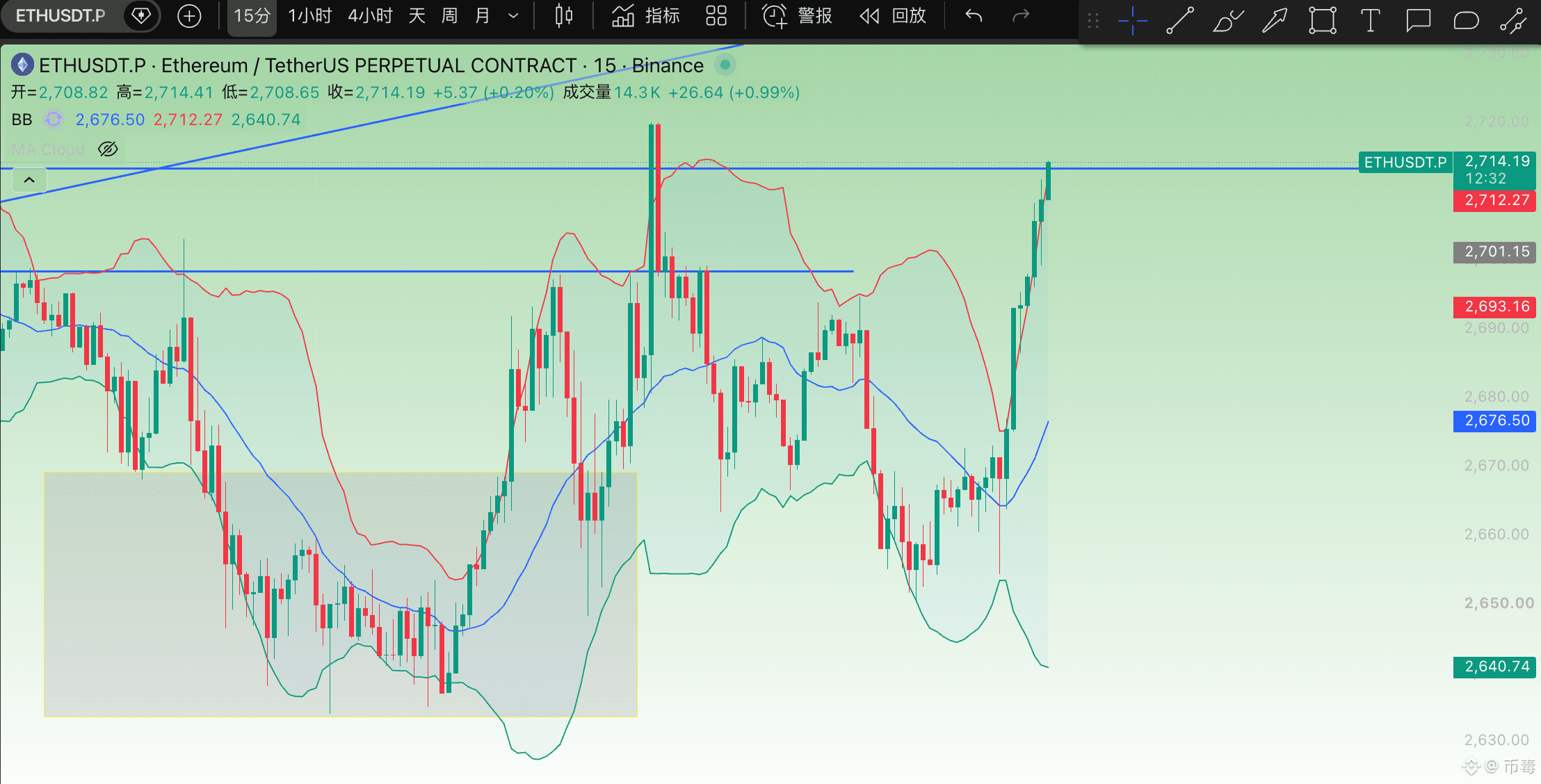
This round is the most like Coin Poison’s 18-year-old coin— $ETH
This round is the most like Coin Poison’s 18-year-old coin— $ETH
币毒
·
--
The performance is still rock-hard—still, it’s the institutions adding to their positions. Guys, remember to take some profit partially.
3
6
2.6k
·
--
I announce, today is the day of great miracle☀️
I announce, today is the day of great miracle☀️
3
1
7
1.6k
·
--
Seriously coding and analyzing🧐, nobody asked about it.
But换个说法, the drop this morning made my head a little dizzy; I went for a quick quickie and came to my senses, and then did it automatically.
I added more to $BTC $ETH —one by one, and they just come in with the boxed-in likes.
Seriously coding and analyzing🧐, nobody asked about it.
But换个说法, the drop this morning made my head a little dizzy; I went for a quick quickie and came to my senses, and then did it automatically.
I added more to $BTC $ETH —one by one, and they just come in with the boxed-in likes.
But换个说法, the drop this morning made my head a little dizzy; I went for a quick quickie and came to my senses, and then did it automatically.
I added more to $BTC $ETH —one by one, and they just come in with the boxed-in likes.
币毒
·
--
It’s still the same token—only the market environment has changed.
We need to make it happen at $ZEC . Doing it at this point might feel a bit sluggish, but I respect the market 🫡
As for the external big picture, the crypto world has only gotten hotter these past few years, and more and more people have started to know about it. On the other hand, as the whole industry embraces compliance, this causes what used to be “traditional” $BTC $ETH to lose its appeal to newcomers—the virtual coin doesn’t feel “virtual” anymore.
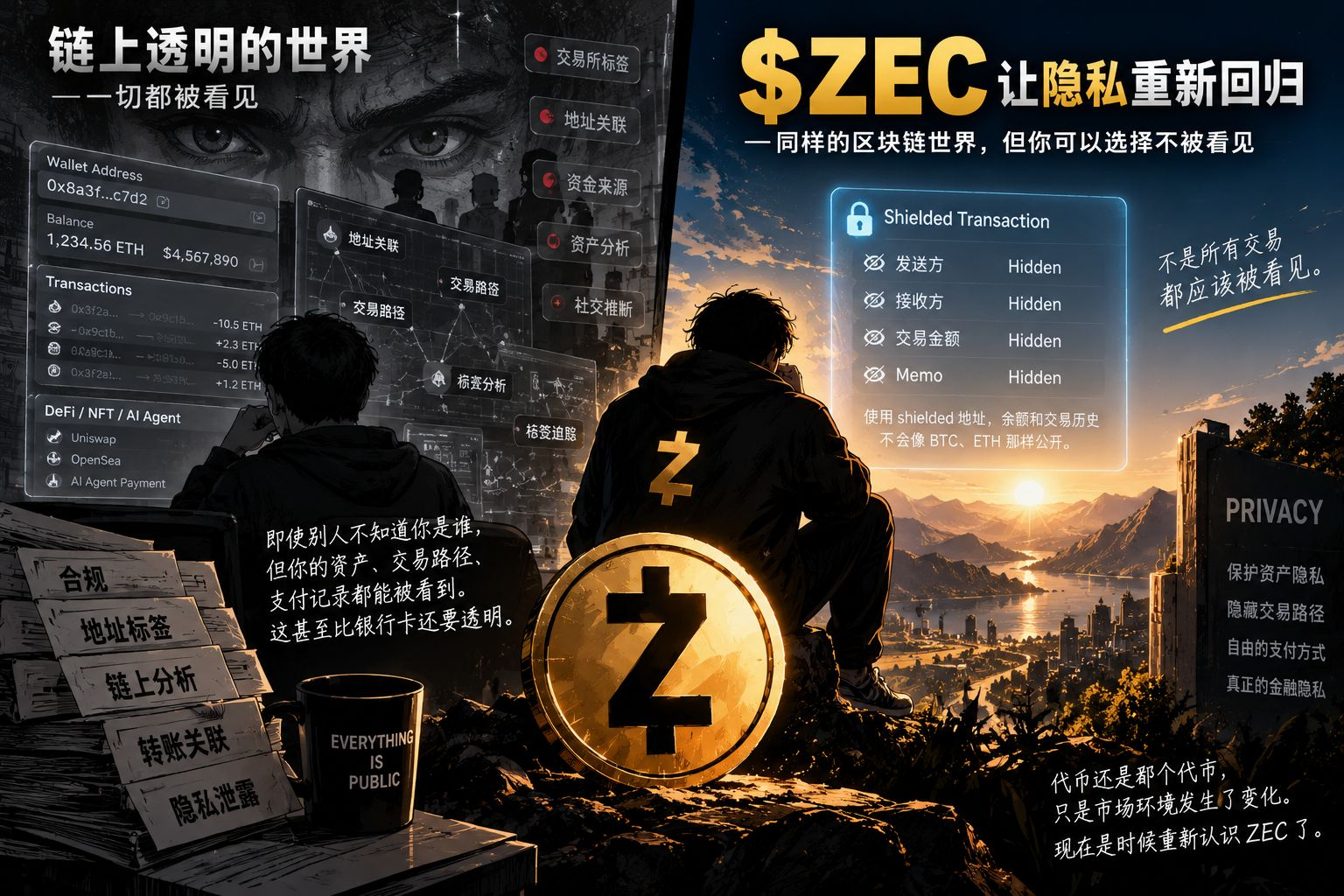
Another thing is that in the past couple of years, the market has become increasingly sensitive to the problems caused by “on-chain transparency.” Wallet balances, transaction paths, payment records, even AI Agent payments are all public. These directly conflict with real-world financial habits.
Even if you don’t know who the other person is, being watched all the time is still uncomfortable. And with compliance now, plus things like on-chain address transfer linkages, you often end up being unintentionally discovered and connected—tagged—into a chain of associations. This is even worse than traditional Web2 bank cards.
Because at most you can see the other party’s VIP card—you won’t know exactly how much money is in it.
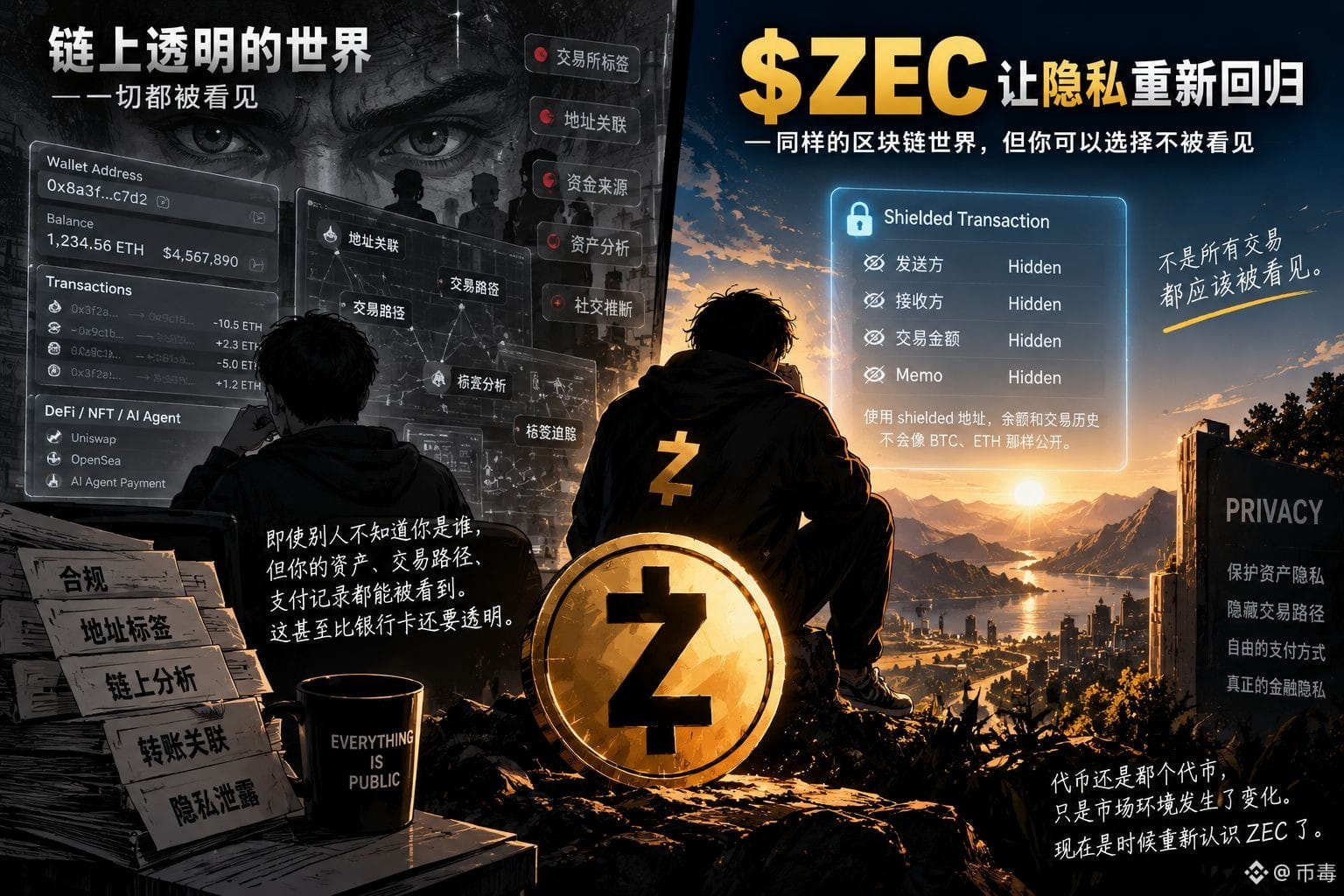
And all of this is something ZEC can do. Its shielded transactions can hide the sender, receiver, amount, and memo. If users use shielded addresses throughout, balances and transaction history won’t be公开 like BTC and ETH.
So whether you’re an old OG or someone who just joined—whether you’re in gray-area activities or simply don’t want to have your life scrutinized—privacy coins are absolutely necessary, and must be used, just like BTC back then as a circulating currency in the darknet.
I’m starting to believe what Zcash co-founder EliBenSasson said about reaching $5,000 by the end of the year. After all, at today’s price, getting to $2,500 is already a pretty decent deal. #zec
We need to make it happen at $ZEC . Doing it at this point might feel a bit sluggish, but I respect the market 🫡
As for the external big picture, the crypto world has only gotten hotter these past few years, and more and more people have started to know about it. On the other hand, as the whole industry embraces compliance, this causes what used to be “traditional” $BTC $ETH to lose its appeal to newcomers—the virtual coin doesn’t feel “virtual” anymore.
Another thing is that in the past couple of years, the market has become increasingly sensitive to the problems caused by “on-chain transparency.” Wallet balances, transaction paths, payment records, even AI Agent payments are all public. These directly conflict with real-world financial habits.
Even if you don’t know who the other person is, being watched all the time is still uncomfortable. And with compliance now, plus things like on-chain address transfer linkages, you often end up being unintentionally discovered and connected—tagged—into a chain of associations. This is even worse than traditional Web2 bank cards.
Because at most you can see the other party’s VIP card—you won’t know exactly how much money is in it.
And all of this is something ZEC can do. Its shielded transactions can hide the sender, receiver, amount, and memo. If users use shielded addresses throughout, balances and transaction history won’t be公开 like BTC and ETH.
So whether you’re an old OG or someone who just joined—whether you’re in gray-area activities or simply don’t want to have your life scrutinized—privacy coins are absolutely necessary, and must be used, just like BTC back then as a circulating currency in the darknet.
I’m starting to believe what Zcash co-founder EliBenSasson said about reaching $5,000 by the end of the year. After all, at today’s price, getting to $2,500 is already a pretty decent deal. #zec
2
5
1.6k
·
--
It’s still the same token—only the market environment has changed.
We need to make it happen at $ZEC . Doing it at this point might feel a bit sluggish, but I respect the market 🫡
As for the external big picture, the crypto world has only gotten hotter these past few years, and more and more people have started to know about it. On the other hand, as the whole industry embraces compliance, this causes what used to be “traditional” $BTC $ETH to lose its appeal to newcomers—the virtual coin doesn’t feel “virtual” anymore.
Another thing is that in the past couple of years, the market has become increasingly sensitive to the problems caused by “on-chain transparency.” Wallet balances, transaction paths, payment records, even AI Agent payments are all public. These directly conflict with real-world financial habits.
Even if you don’t know who the other person is, being watched all the time is still uncomfortable. And with compliance now, plus things like on-chain address transfer linkages, you often end up being unintentionally discovered and connected—tagged—into a chain of associations. This is even worse than traditional Web2 bank cards.
Because at most you can see the other party’s VIP card—you won’t know exactly how much money is in it.
And all of this is something ZEC can do. Its shielded transactions can hide the sender, receiver, amount, and memo. If users use shielded addresses throughout, balances and transaction history won’t be公开 like BTC and ETH.
So whether you’re an old OG or someone who just joined—whether you’re in gray-area activities or simply don’t want to have your life scrutinized—privacy coins are absolutely necessary, and must be used, just like BTC back then as a circulating currency in the darknet.
I’m starting to believe what Zcash co-founder EliBenSasson said about reaching $5,000 by the end of the year. After all, at today’s price, getting to $2,500 is already a pretty decent deal. #zec
It’s still the same token—only the market environment has changed.
We need to make it happen at $ZEC . Doing it at this point might feel a bit sluggish, but I respect the market 🫡
As for the external big picture, the crypto world has only gotten hotter these past few years, and more and more people have started to know about it. On the other hand, as the whole industry embraces compliance, this causes what used to be “traditional” $BTC $ETH to lose its appeal to newcomers—the virtual coin doesn’t feel “virtual” anymore.
Another thing is that in the past couple of years, the market has become increasingly sensitive to the problems caused by “on-chain transparency.” Wallet balances, transaction paths, payment records, even AI Agent payments are all public. These directly conflict with real-world financial habits.
Even if you don’t know who the other person is, being watched all the time is still uncomfortable. And with compliance now, plus things like on-chain address transfer linkages, you often end up being unintentionally discovered and connected—tagged—into a chain of associations. This is even worse than traditional Web2 bank cards.
Because at most you can see the other party’s VIP card—you won’t know exactly how much money is in it.
And all of this is something ZEC can do. Its shielded transactions can hide the sender, receiver, amount, and memo. If users use shielded addresses throughout, balances and transaction history won’t be公开 like BTC and ETH.
So whether you’re an old OG or someone who just joined—whether you’re in gray-area activities or simply don’t want to have your life scrutinized—privacy coins are absolutely necessary, and must be used, just like BTC back then as a circulating currency in the darknet.
I’m starting to believe what Zcash co-founder EliBenSasson said about reaching $5,000 by the end of the year. After all, at today’s price, getting to $2,500 is already a pretty decent deal. #zec
We need to make it happen at $ZEC . Doing it at this point might feel a bit sluggish, but I respect the market 🫡
As for the external big picture, the crypto world has only gotten hotter these past few years, and more and more people have started to know about it. On the other hand, as the whole industry embraces compliance, this causes what used to be “traditional” $BTC $ETH to lose its appeal to newcomers—the virtual coin doesn’t feel “virtual” anymore.
Another thing is that in the past couple of years, the market has become increasingly sensitive to the problems caused by “on-chain transparency.” Wallet balances, transaction paths, payment records, even AI Agent payments are all public. These directly conflict with real-world financial habits.
Even if you don’t know who the other person is, being watched all the time is still uncomfortable. And with compliance now, plus things like on-chain address transfer linkages, you often end up being unintentionally discovered and connected—tagged—into a chain of associations. This is even worse than traditional Web2 bank cards.
Because at most you can see the other party’s VIP card—you won’t know exactly how much money is in it.
And all of this is something ZEC can do. Its shielded transactions can hide the sender, receiver, amount, and memo. If users use shielded addresses throughout, balances and transaction history won’t be公开 like BTC and ETH.
So whether you’re an old OG or someone who just joined—whether you’re in gray-area activities or simply don’t want to have your life scrutinized—privacy coins are absolutely necessary, and must be used, just like BTC back then as a circulating currency in the darknet.
I’m starting to believe what Zcash co-founder EliBenSasson said about reaching $5,000 by the end of the year. After all, at today’s price, getting to $2,500 is already a pretty decent deal. #zec
1
4
3k
·
--
After a few orders in this round are completed, this account will need to rest for a while. I’ll keep trading using other accounts. This one will be used to stream and chat about market conditions with everyone. I’ll grind through it for three months and get the rebate bound.
I registered too early back then, and there wasn’t a system to add the binding before. Over the years, at least one A8 has been missing from this account’s rebates. Saving that much is basically free money. And the fees? I stopped caring about them. When you算账 (add it up), it’s genuinely shocking.
Brothers and pals 👬 can also take a look at your own accounts. As long as there’s no binding relationship, and your three-month trading volume is less than 5000 USDT, you can contact me anytime to get the binding added for free.
After a few orders in this round are completed, this account will need to rest for a while. I’ll keep trading using other accounts. This one will be used to stream and chat about market conditions with everyone. I’ll grind through it for three months and get the rebate bound.
I registered too early back then, and there wasn’t a system to add the binding before. Over the years, at least one A8 has been missing from this account’s rebates. Saving that much is basically free money. And the fees? I stopped caring about them. When you算账 (add it up), it’s genuinely shocking.
Brothers and pals 👬 can also take a look at your own accounts. As long as there’s no binding relationship, and your three-month trading volume is less than 5000 USDT, you can contact me anytime to get the binding added for free.
I registered too early back then, and there wasn’t a system to add the binding before. Over the years, at least one A8 has been missing from this account’s rebates. Saving that much is basically free money. And the fees? I stopped caring about them. When you算账 (add it up), it’s genuinely shocking.
Brothers and pals 👬 can also take a look at your own accounts. As long as there’s no binding relationship, and your three-month trading volume is less than 5000 USDT, you can contact me anytime to get the binding added for free.

1
4.4k
·
--
After multiple rounds of testing, the position 825 now belongs to the underwear of $BTC . If it gets taken off, it will be very difficult for this round to reach a new high again. Even if there is later a rebound, it can only be viewed as a second sell. If this position is lost, the structure will change.
After multiple rounds of testing, the position 825 now belongs to the underwear of $BTC . If it gets taken off, it will be very difficult for this round to reach a new high again. Even if there is later a rebound, it can only be viewed as a second sell. If this position is lost, the structure will change.
3
7
3.3k
·
--
Despite selling early in the morning, $BTC is still in a bullish advantage position. Shorting offers poor cost-effectiveness. $ETH is even more forceful—beyond words. For BTC-initiated broad-market declines, ETH has already made its stance clear: it doesn’t want to fall, but it’s not afraid of falling either. When necessary, it just has to. In response to BTC’s soft and hard tactics, ETH has long given the answer: if it rises, the door is wide open; if it falls, it’ll go along to the end.
After experiencing eight or nine years of ups and downs with ETH and L2, what kind of阵势 haven’t they seen?! In the great process of restoring ETH, there will inevitably be difficult obstacles, even storms and turbulent waves. BTC’s strategy of dragging altcoins down hard is just a hurdle in the altcoin development journey—nothing too big. ETH will remain steadfast, face challenges head-on, turn危机 into opportunity, and fall out a whole new天地.
Also, $BNB currently shows a “technical oversold + large orders buying the dip + trading near the lower Bollinger Band” triple-convergence profile. Among today’s four coins, it offers the highest short-term rebound cost-effectiveness. If BTC shows a signal of stopping the selloff and stabilizing, BNB may start its rebound first. The lower Bollinger Band at $757 is the key support, and the first resistance overhead is around the EMA-7 region at $764.
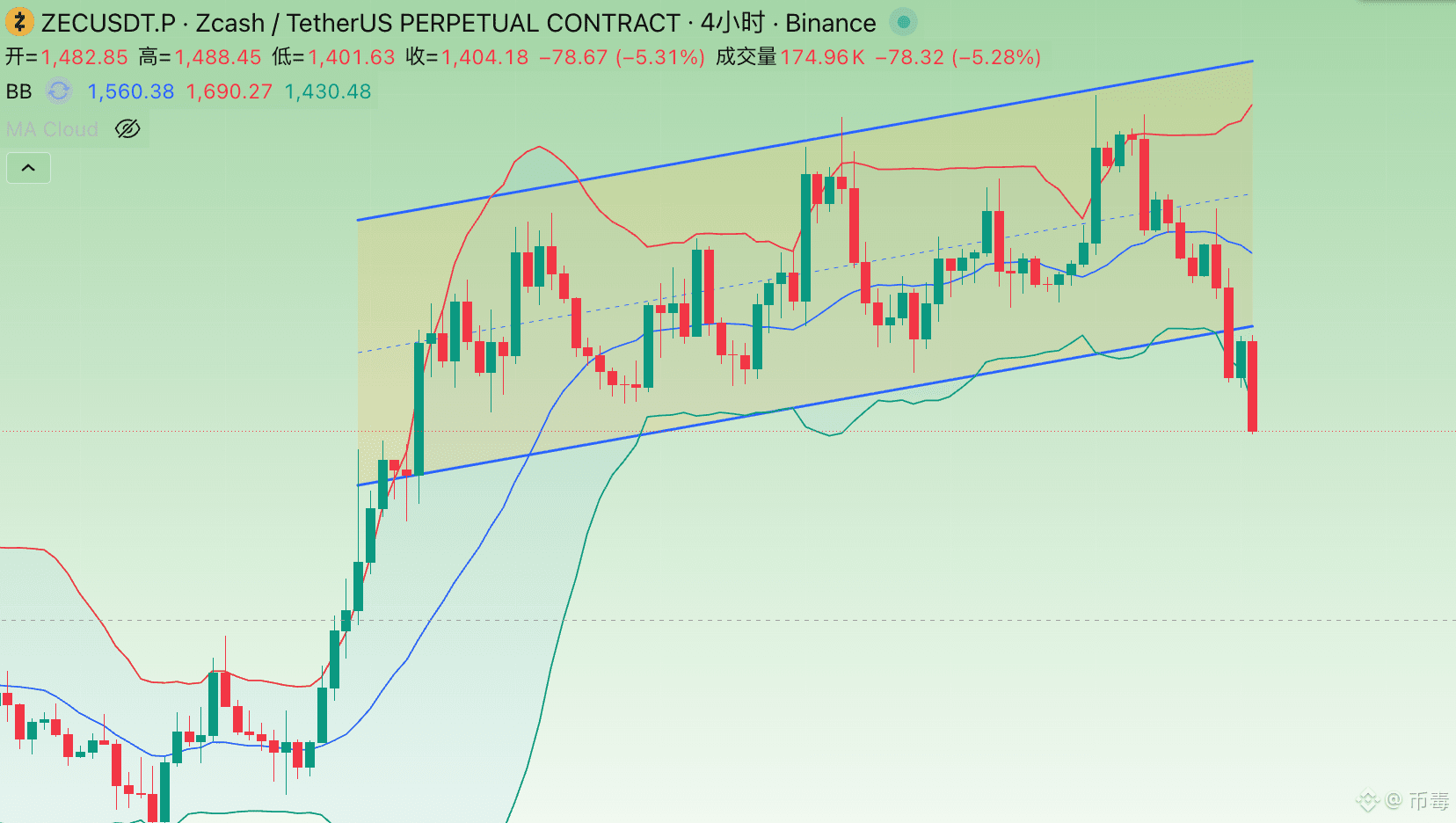
And there’s $ZEC, which is weak today. The trading volume has surged significantly compared to usual—3 to 4 times the recent average—forming a typical “volume expansion with a selloff” structure. The RSI is deeply oversold. If $1,381 can hold, there may be a technical corrective rebound opportunity. However, considering that large orders are still being distributed and MACD momentum is accelerating downward, the strength and follow-through of any rebound are doubtful. For high-volatility assets, during profit-taking phases, a second dip often occurs. You can wait until trading volume clearly contracts and large-order flow turns positive before reassessing the timing to enter.
Despite selling early in the morning, $BTC is still in a bullish advantage position. Shorting offers poor cost-effectiveness. $ETH is even more forceful—beyond words. For BTC-initiated broad-market declines, ETH has already made its stance clear: it doesn’t want to fall, but it’s not afraid of falling either. When necessary, it just has to. In response to BTC’s soft and hard tactics, ETH has long given the answer: if it rises, the door is wide open; if it falls, it’ll go along to the end.
After experiencing eight or nine years of ups and downs with ETH and L2, what kind of阵势 haven’t they seen?! In the great process of restoring ETH, there will inevitably be difficult obstacles, even storms and turbulent waves. BTC’s strategy of dragging altcoins down hard is just a hurdle in the altcoin development journey—nothing too big. ETH will remain steadfast, face challenges head-on, turn危机 into opportunity, and fall out a whole new天地.
Also, $BNB currently shows a “technical oversold + large orders buying the dip + trading near the lower Bollinger Band” triple-convergence profile. Among today’s four coins, it offers the highest short-term rebound cost-effectiveness. If BTC shows a signal of stopping the selloff and stabilizing, BNB may start its rebound first. The lower Bollinger Band at $757 is the key support, and the first resistance overhead is around the EMA-7 region at $764.
And there’s $ZEC, which is weak today. The trading volume has surged significantly compared to usual—3 to 4 times the recent average—forming a typical “volume expansion with a selloff” structure. The RSI is deeply oversold. If $1,381 can hold, there may be a technical corrective rebound opportunity. However, considering that large orders are still being distributed and MACD momentum is accelerating downward, the strength and follow-through of any rebound are doubtful. For high-volatility assets, during profit-taking phases, a second dip often occurs. You can wait until trading volume clearly contracts and large-order flow turns positive before reassessing the timing to enter.
After experiencing eight or nine years of ups and downs with ETH and L2, what kind of阵势 haven’t they seen?! In the great process of restoring ETH, there will inevitably be difficult obstacles, even storms and turbulent waves. BTC’s strategy of dragging altcoins down hard is just a hurdle in the altcoin development journey—nothing too big. ETH will remain steadfast, face challenges head-on, turn危机 into opportunity, and fall out a whole new天地.
Also, $BNB currently shows a “technical oversold + large orders buying the dip + trading near the lower Bollinger Band” triple-convergence profile. Among today’s four coins, it offers the highest short-term rebound cost-effectiveness. If BTC shows a signal of stopping the selloff and stabilizing, BNB may start its rebound first. The lower Bollinger Band at $757 is the key support, and the first resistance overhead is around the EMA-7 region at $764.
And there’s $ZEC, which is weak today. The trading volume has surged significantly compared to usual—3 to 4 times the recent average—forming a typical “volume expansion with a selloff” structure. The RSI is deeply oversold. If $1,381 can hold, there may be a technical corrective rebound opportunity. However, considering that large orders are still being distributed and MACD momentum is accelerating downward, the strength and follow-through of any rebound are doubtful. For high-volatility assets, during profit-taking phases, a second dip often occurs. You can wait until trading volume clearly contracts and large-order flow turns positive before reassessing the timing to enter.
币毒
·
--
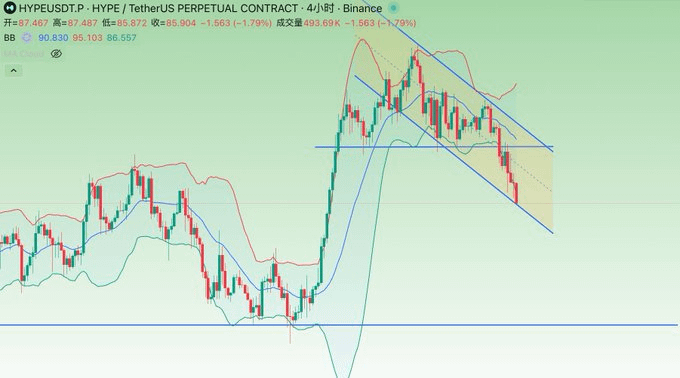
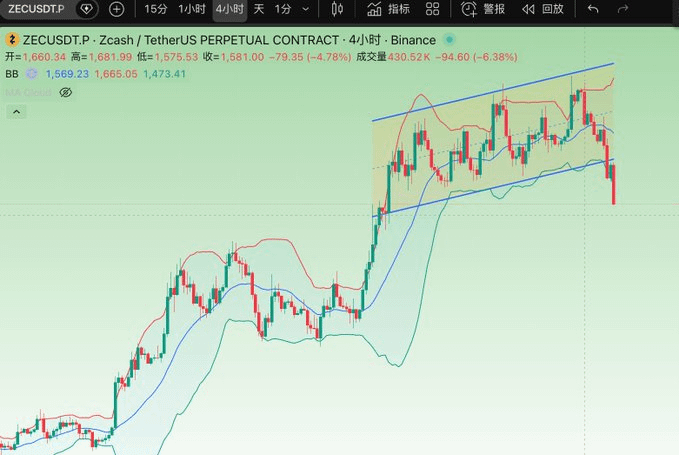
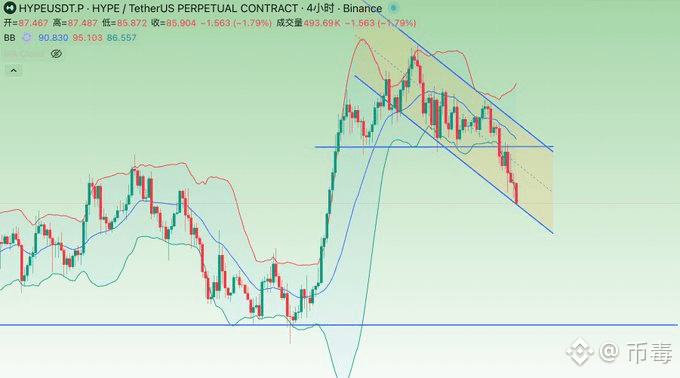
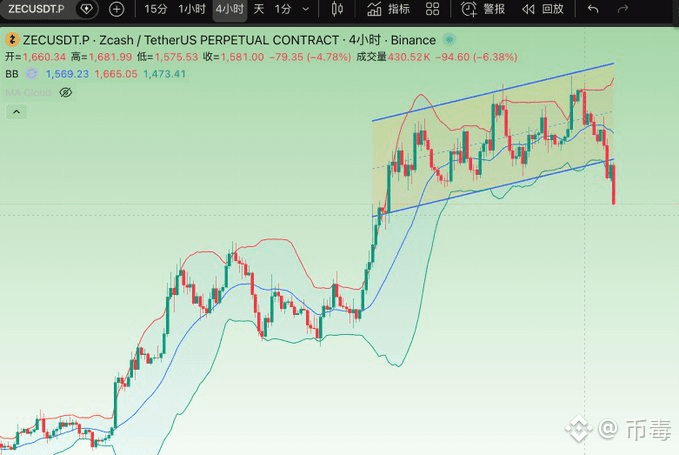
This is $HYPE and $ZEC — two major strong-coin market sentiments turning downward 📉
1
11
2.9k
·
--
This is $HYPE and $ZEC — two major strong-coin market sentiments turning downward 📉
This is $HYPE and $ZEC — two major strong-coin market sentiments turning downward 📉
1
3.2k
·
--
🗓️ September 29|Crypto Daily
The broader market didn’t “crash” today—funds are tightening their front lines: BTC is back around $83,000, ETH is relatively resilient, and SOL and most altcoins are still getting hammered.
【Market|09:00 Beijing Time】
• BTC: $83,212, 24h -1.06%
• ETH: $2,678.67, 24h +0.17%
• SOL: $118.21, 24h -2.83%
Total market cap is about $2.86 trillion, down 3.33% over 24 hours; meanwhile, trading volume actually increased by around 40%, and BTC’s market share rose to 58.26%. The data is pretty straightforward: it’s not that there’s no trading—risk appetite is pulling back, and capital is continuing to rotate toward BTC and cash-side holdings.
【What’s truly worth watching today】
1. ETF flows haven’t seen a mass exit. The latest fully reported public trading day is September 25: U.S. spot BTC ETFs recorded net inflows of $134.5 million, ETH ETFs net inflows of $87 million, and SOL ETFs net inflows of $86.7 million. September 28’s data isn’t fully in yet, so don’t draw conclusions from an incomplete dataset.
2. Public companies are still buying. Strategy added 1,665 BTC last week, spending about $143 million; total holdings rose to 847,666 BTC. Strive also bought 1,107 BTC, bringing total holdings to 27,462 BTC. When prices pull back, corporate treasury buying hasn’t stopped.
3. ETH supply is concentrating further. BitMine bought an additional 17,362 ETH, bringing total holdings above 6 million, roughly 4.9% of circulating supply. This supports demand—and it also highlights the concentration risk of a single institution.
4. After Bitget was hacked for about $388 million on September 24, withdrawals were restored in stages; the attacker also swapped about 2,390 ETH for 75.2 BTC via THORChain. Users’ assets are reportedly covered by a protection fund, but this time again is a reminder: exchange security isn’t just about private keys—third-party security products and internal permissions can also become fatal entry points.
5. Goldman Sachs integrated its roughly $100 billion money market fund FTIXX into the Lynq settlement network aimed at digital asset institutions. It hasn’t been tokenized, but traditional capital tools are being embedded more directly into the funding rails of crypto institutions—more tangible than simply shouting “RWA narrative.”
【What to watch next】
• Tonight 22:00: U.S. JOLTS job openings and consumer confidence—directly affecting interest-rate expectations.
• September 30 20:30: U.S. PCE and core PCE. If inflation runs hot, risk assets may face renewed pressure.
• October 2 20:30: U.S. September non-farm payrolls could amplify volatility in the second half of this week.
【My take】
With ETF inflows and corporate buying still present, BTC’s pullback looks more like de-leveraging from higher levels for now, not a full trend reversal. However, the total market cap drop is clearly larger than BTC’s decline, which suggests the altcoin rally remains fragile. ETH’s relative resilience is worth monitoring today; SOL hasn’t fully stopped showing relative weakness. The real direction will have to wait for tonight’s employment data and tomorrow’s PCE.
Trading strategy: Don’t max out position size. For BTC, focus on staggered buys on pullbacks. For altcoins, only trade strong leaders; until the data lands, don’t chase and don’t force high leverage.
Risk warning: The above is only market records and personal opinions, not investment advice. Crypto assets are highly volatile—please control position sizes and make independent judgments.
🗓️ September 29|Crypto Daily
The broader market didn’t “crash” today—funds are tightening their front lines: BTC is back around $83,000, ETH is relatively resilient, and SOL and most altcoins are still getting hammered.
【Market|09:00 Beijing Time】
• BTC: $83,212, 24h -1.06%
• ETH: $2,678.67, 24h +0.17%
• SOL: $118.21, 24h -2.83%
Total market cap is about $2.86 trillion, down 3.33% over 24 hours; meanwhile, trading volume actually increased by around 40%, and BTC’s market share rose to 58.26%. The data is pretty straightforward: it’s not that there’s no trading—risk appetite is pulling back, and capital is continuing to rotate toward BTC and cash-side holdings.
【What’s truly worth watching today】
1. ETF flows haven’t seen a mass exit. The latest fully reported public trading day is September 25: U.S. spot BTC ETFs recorded net inflows of $134.5 million, ETH ETFs net inflows of $87 million, and SOL ETFs net inflows of $86.7 million. September 28’s data isn’t fully in yet, so don’t draw conclusions from an incomplete dataset.
2. Public companies are still buying. Strategy added 1,665 BTC last week, spending about $143 million; total holdings rose to 847,666 BTC. Strive also bought 1,107 BTC, bringing total holdings to 27,462 BTC. When prices pull back, corporate treasury buying hasn’t stopped.
3. ETH supply is concentrating further. BitMine bought an additional 17,362 ETH, bringing total holdings above 6 million, roughly 4.9% of circulating supply. This supports demand—and it also highlights the concentration risk of a single institution.
4. After Bitget was hacked for about $388 million on September 24, withdrawals were restored in stages; the attacker also swapped about 2,390 ETH for 75.2 BTC via THORChain. Users’ assets are reportedly covered by a protection fund, but this time again is a reminder: exchange security isn’t just about private keys—third-party security products and internal permissions can also become fatal entry points.
5. Goldman Sachs integrated its roughly $100 billion money market fund FTIXX into the Lynq settlement network aimed at digital asset institutions. It hasn’t been tokenized, but traditional capital tools are being embedded more directly into the funding rails of crypto institutions—more tangible than simply shouting “RWA narrative.”
【What to watch next】
• Tonight 22:00: U.S. JOLTS job openings and consumer confidence—directly affecting interest-rate expectations.
• September 30 20:30: U.S. PCE and core PCE. If inflation runs hot, risk assets may face renewed pressure.
• October 2 20:30: U.S. September non-farm payrolls could amplify volatility in the second half of this week.
【My take】
With ETF inflows and corporate buying still present, BTC’s pullback looks more like de-leveraging from higher levels for now, not a full trend reversal. However, the total market cap drop is clearly larger than BTC’s decline, which suggests the altcoin rally remains fragile. ETH’s relative resilience is worth monitoring today; SOL hasn’t fully stopped showing relative weakness. The real direction will have to wait for tonight’s employment data and tomorrow’s PCE.
Trading strategy: Don’t max out position size. For BTC, focus on staggered buys on pullbacks. For altcoins, only trade strong leaders; until the data lands, don’t chase and don’t force high leverage.
Risk warning: The above is only market records and personal opinions, not investment advice. Crypto assets are highly volatile—please control position sizes and make independent judgments.
The broader market didn’t “crash” today—funds are tightening their front lines: BTC is back around $83,000, ETH is relatively resilient, and SOL and most altcoins are still getting hammered.
【Market|09:00 Beijing Time】
• BTC: $83,212, 24h -1.06%
• ETH: $2,678.67, 24h +0.17%
• SOL: $118.21, 24h -2.83%
Total market cap is about $2.86 trillion, down 3.33% over 24 hours; meanwhile, trading volume actually increased by around 40%, and BTC’s market share rose to 58.26%. The data is pretty straightforward: it’s not that there’s no trading—risk appetite is pulling back, and capital is continuing to rotate toward BTC and cash-side holdings.
【What’s truly worth watching today】
1. ETF flows haven’t seen a mass exit. The latest fully reported public trading day is September 25: U.S. spot BTC ETFs recorded net inflows of $134.5 million, ETH ETFs net inflows of $87 million, and SOL ETFs net inflows of $86.7 million. September 28’s data isn’t fully in yet, so don’t draw conclusions from an incomplete dataset.
2. Public companies are still buying. Strategy added 1,665 BTC last week, spending about $143 million; total holdings rose to 847,666 BTC. Strive also bought 1,107 BTC, bringing total holdings to 27,462 BTC. When prices pull back, corporate treasury buying hasn’t stopped.
3. ETH supply is concentrating further. BitMine bought an additional 17,362 ETH, bringing total holdings above 6 million, roughly 4.9% of circulating supply. This supports demand—and it also highlights the concentration risk of a single institution.
4. After Bitget was hacked for about $388 million on September 24, withdrawals were restored in stages; the attacker also swapped about 2,390 ETH for 75.2 BTC via THORChain. Users’ assets are reportedly covered by a protection fund, but this time again is a reminder: exchange security isn’t just about private keys—third-party security products and internal permissions can also become fatal entry points.
5. Goldman Sachs integrated its roughly $100 billion money market fund FTIXX into the Lynq settlement network aimed at digital asset institutions. It hasn’t been tokenized, but traditional capital tools are being embedded more directly into the funding rails of crypto institutions—more tangible than simply shouting “RWA narrative.”
【What to watch next】
• Tonight 22:00: U.S. JOLTS job openings and consumer confidence—directly affecting interest-rate expectations.
• September 30 20:30: U.S. PCE and core PCE. If inflation runs hot, risk assets may face renewed pressure.
• October 2 20:30: U.S. September non-farm payrolls could amplify volatility in the second half of this week.
【My take】
With ETF inflows and corporate buying still present, BTC’s pullback looks more like de-leveraging from higher levels for now, not a full trend reversal. However, the total market cap drop is clearly larger than BTC’s decline, which suggests the altcoin rally remains fragile. ETH’s relative resilience is worth monitoring today; SOL hasn’t fully stopped showing relative weakness. The real direction will have to wait for tonight’s employment data and tomorrow’s PCE.
Trading strategy: Don’t max out position size. For BTC, focus on staggered buys on pullbacks. For altcoins, only trade strong leaders; until the data lands, don’t chase and don’t force high leverage.
Risk warning: The above is only market records and personal opinions, not investment advice. Crypto assets are highly volatile—please control position sizes and make independent judgments.
2
6
4.7k
·
--
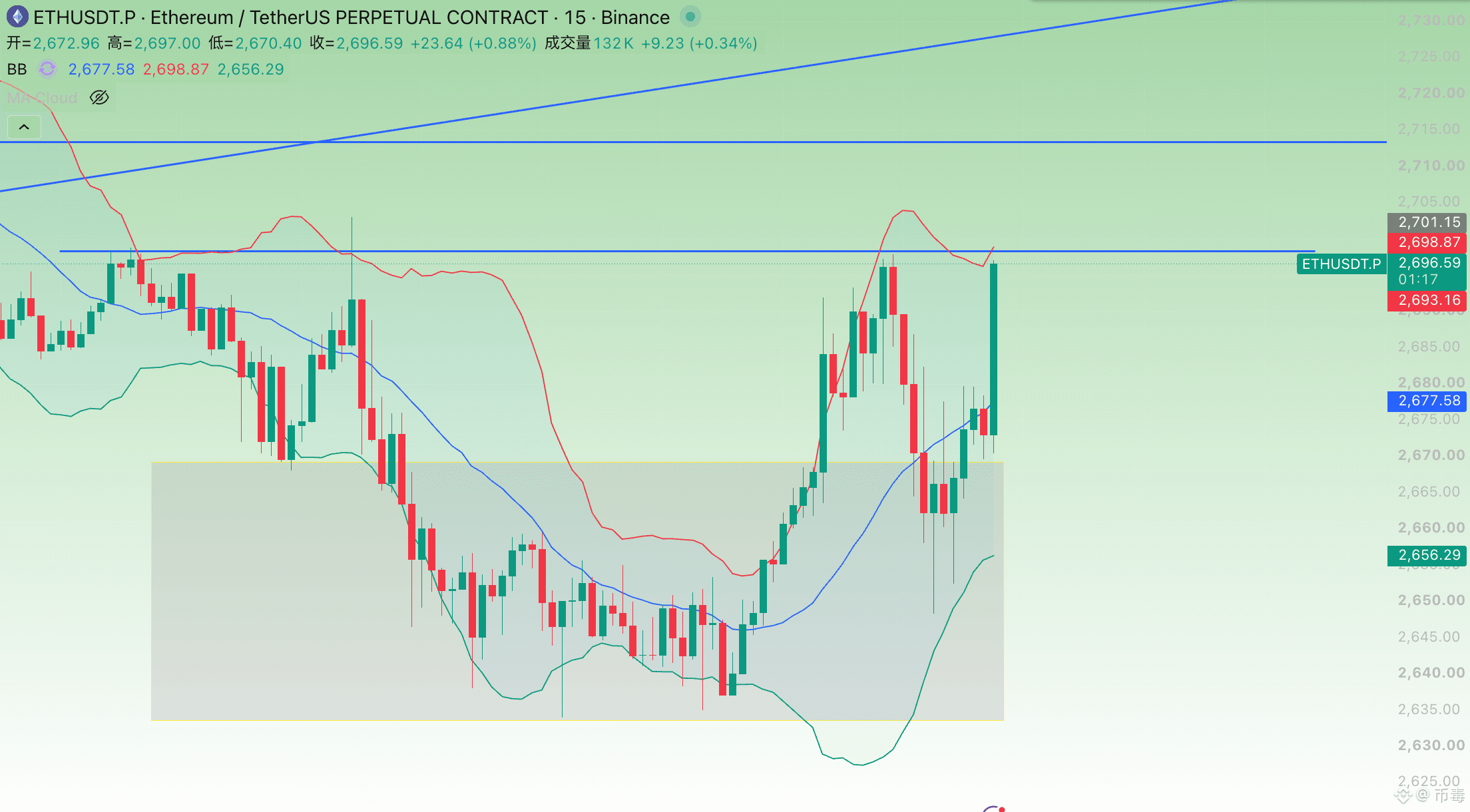
The performance is still rock-hard—still, it’s the institutions adding to their positions. Guys, remember to take some profit partially.
The performance is still rock-hard—still, it’s the institutions adding to their positions. Guys, remember to take some profit partially.
1
3.4k
·
--
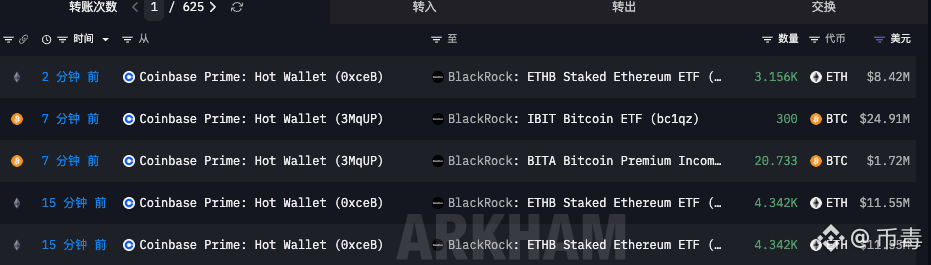
The livestream situation is like this for tonight; the institutions are starting to increase their positions. See you tomorrow night.
The livestream situation is like this for tonight; the institutions are starting to increase their positions. See you tomorrow night.
4
4
10.3k
·
--
Just listened to a recap of the security issues from a competitor’s account being hacked.
Summarized it as follows:
————————————————
Short version — the system back end was compromised.
Reason — a third-party app’s 0-day vulnerability.
————————————————
The wallet private keys were not stolen.
Just listened to a recap of the security issues from a competitor’s account being hacked.
Summarized it as follows:
————————————————
Short version — the system back end was compromised.
Reason — a third-party app’s 0-day vulnerability.
————————————————
The wallet private keys were not stolen.
Summarized it as follows:
————————————————
Short version — the system back end was compromised.
Reason — a third-party app’s 0-day vulnerability.
————————————————
The wallet private keys were not stolen.
2
8
7.5k
·
--
🗓️ September 28|Crypto Daily
Today the market isn’t sharply down, but it’s clearly a case of “the index looks fine, while altcoins get hit first”: BTC is range-bound, ETH is weaker, SOL is slightly outperforming against the trend. Overall, global risk appetite is falling.
As of 09:00 Beijing time:
BTC $84,191, 24h -0.12%
ETH $2,676.53, 24h -0.62%
SOL $121.77, 24h +0.81%
Total market cap across the board is about $2.89 trillion, down 3.40% over the past 24 hours; 24-hour trading volume is about $109.2 billion, up about 90%. BTC’s market share rose to 58.74%, indicating that capital is shrinking and crowding into the top, rather than a broad-based rally structure.
A few real things worth watching today:
1)ETF flows are still propping up the market. The latest publicly disclosed trading day for the U.S. spot BTC ETF was September 25, with net inflows of about $134.5 million that day; over the past 5 trading days, cumulative net inflows were about $2.386 billion. Note: this is Friday’s data, not today’s.
2)Bitget disclosed a security incident involving about $352 million. The platform says users’ funds are safe and plans to resume withdrawals in phases starting today. The amount is not small—don’t equate “platform guarantees” with on-chain safety in the short term.
3)This month, the U.S. crypto market structure bill hit resistance in the Senate on a key procedural vote. The outlook for the CLARITY Act has become uncertain again. Regulation isn’t turning to outright bearishness, but the implementation timeline is clearly pushed back.
4)On September 25, the SEC published new FAQs on how the law on securities applies to crypto assets, further clarifying issues such as staking instruments, buybacks of non-security-type crypto assets, and the secondary market. It’s only guidance from staff, not a formal rule, but it still provides reference value for compliance boundaries for projects and trading platforms.
5)On the institutional side, they’re still adding to ETH. BitMine, as disclosed as of September 20, holds about 5.98 million ETH, close to 4.9% of the ETH supply. This kind of concentrated holding reflects long-term buying demand—and concentration risk is something that must be watched.
Next, keep an eye on three things:
• September 29 at 22:00 Beijing time: the U.S. August JOLTS job openings data;
• September 30 to October 1: the Korea Blockchain Week main conference period—Asian institutions and on-chain financial narratives may heat up;
• October 2 at 20:30 Beijing time: the U.S. September non-farm employment report, which may directly affect expectations for the dollar, interest rates, and crypto volatility.
My view: Ongoing ETF inflows provide a bottom for BTC. However, the total market cap is still declining and BTC’s market share is rising, which suggests capital has not fully returned across the board. It looks more like “defensive pooling” for now, not the opening of a broad altcoin uptrend.
One strategy: Until BTC breaks out with expanding volume, don’t chase with your position. Prioritize strong mainstream assets, and reduce risk on altcoin rebounds in batches.
Risk warning: Crypto assets are highly volatile. The above is only personal market observation and does not constitute investment advice.
🗓️ September 28|Crypto Daily
Today the market isn’t sharply down, but it’s clearly a case of “the index looks fine, while altcoins get hit first”: BTC is range-bound, ETH is weaker, SOL is slightly outperforming against the trend. Overall, global risk appetite is falling.
As of 09:00 Beijing time:
BTC $84,191, 24h -0.12%
ETH $2,676.53, 24h -0.62%
SOL $121.77, 24h +0.81%
Total market cap across the board is about $2.89 trillion, down 3.40% over the past 24 hours; 24-hour trading volume is about $109.2 billion, up about 90%. BTC’s market share rose to 58.74%, indicating that capital is shrinking and crowding into the top, rather than a broad-based rally structure.
A few real things worth watching today:
1)ETF flows are still propping up the market. The latest publicly disclosed trading day for the U.S. spot BTC ETF was September 25, with net inflows of about $134.5 million that day; over the past 5 trading days, cumulative net inflows were about $2.386 billion. Note: this is Friday’s data, not today’s.
2)Bitget disclosed a security incident involving about $352 million. The platform says users’ funds are safe and plans to resume withdrawals in phases starting today. The amount is not small—don’t equate “platform guarantees” with on-chain safety in the short term.
3)This month, the U.S. crypto market structure bill hit resistance in the Senate on a key procedural vote. The outlook for the CLARITY Act has become uncertain again. Regulation isn’t turning to outright bearishness, but the implementation timeline is clearly pushed back.
4)On September 25, the SEC published new FAQs on how the law on securities applies to crypto assets, further clarifying issues such as staking instruments, buybacks of non-security-type crypto assets, and the secondary market. It’s only guidance from staff, not a formal rule, but it still provides reference value for compliance boundaries for projects and trading platforms.
5)On the institutional side, they’re still adding to ETH. BitMine, as disclosed as of September 20, holds about 5.98 million ETH, close to 4.9% of the ETH supply. This kind of concentrated holding reflects long-term buying demand—and concentration risk is something that must be watched.
Next, keep an eye on three things:
• September 29 at 22:00 Beijing time: the U.S. August JOLTS job openings data;
• September 30 to October 1: the Korea Blockchain Week main conference period—Asian institutions and on-chain financial narratives may heat up;
• October 2 at 20:30 Beijing time: the U.S. September non-farm employment report, which may directly affect expectations for the dollar, interest rates, and crypto volatility.
My view: Ongoing ETF inflows provide a bottom for BTC. However, the total market cap is still declining and BTC’s market share is rising, which suggests capital has not fully returned across the board. It looks more like “defensive pooling” for now, not the opening of a broad altcoin uptrend.
One strategy: Until BTC breaks out with expanding volume, don’t chase with your position. Prioritize strong mainstream assets, and reduce risk on altcoin rebounds in batches.
Risk warning: Crypto assets are highly volatile. The above is only personal market observation and does not constitute investment advice.
Today the market isn’t sharply down, but it’s clearly a case of “the index looks fine, while altcoins get hit first”: BTC is range-bound, ETH is weaker, SOL is slightly outperforming against the trend. Overall, global risk appetite is falling.
As of 09:00 Beijing time:
BTC $84,191, 24h -0.12%
ETH $2,676.53, 24h -0.62%
SOL $121.77, 24h +0.81%
Total market cap across the board is about $2.89 trillion, down 3.40% over the past 24 hours; 24-hour trading volume is about $109.2 billion, up about 90%. BTC’s market share rose to 58.74%, indicating that capital is shrinking and crowding into the top, rather than a broad-based rally structure.
A few real things worth watching today:
1)ETF flows are still propping up the market. The latest publicly disclosed trading day for the U.S. spot BTC ETF was September 25, with net inflows of about $134.5 million that day; over the past 5 trading days, cumulative net inflows were about $2.386 billion. Note: this is Friday’s data, not today’s.
2)Bitget disclosed a security incident involving about $352 million. The platform says users’ funds are safe and plans to resume withdrawals in phases starting today. The amount is not small—don’t equate “platform guarantees” with on-chain safety in the short term.
3)This month, the U.S. crypto market structure bill hit resistance in the Senate on a key procedural vote. The outlook for the CLARITY Act has become uncertain again. Regulation isn’t turning to outright bearishness, but the implementation timeline is clearly pushed back.
4)On September 25, the SEC published new FAQs on how the law on securities applies to crypto assets, further clarifying issues such as staking instruments, buybacks of non-security-type crypto assets, and the secondary market. It’s only guidance from staff, not a formal rule, but it still provides reference value for compliance boundaries for projects and trading platforms.
5)On the institutional side, they’re still adding to ETH. BitMine, as disclosed as of September 20, holds about 5.98 million ETH, close to 4.9% of the ETH supply. This kind of concentrated holding reflects long-term buying demand—and concentration risk is something that must be watched.
Next, keep an eye on three things:
• September 29 at 22:00 Beijing time: the U.S. August JOLTS job openings data;
• September 30 to October 1: the Korea Blockchain Week main conference period—Asian institutions and on-chain financial narratives may heat up;
• October 2 at 20:30 Beijing time: the U.S. September non-farm employment report, which may directly affect expectations for the dollar, interest rates, and crypto volatility.
My view: Ongoing ETF inflows provide a bottom for BTC. However, the total market cap is still declining and BTC’s market share is rising, which suggests capital has not fully returned across the board. It looks more like “defensive pooling” for now, not the opening of a broad altcoin uptrend.
One strategy: Until BTC breaks out with expanding volume, don’t chase with your position. Prioritize strong mainstream assets, and reduce risk on altcoin rebounds in batches.
Risk warning: Crypto assets are highly volatile. The above is only personal market observation and does not constitute investment advice.
2
2
4.8k
·
--
Even the most steadfast materialist will, in the dead of night, beg fate for mercy. It’s already October—my birthday month. I’m going to start reducing the frequency of my trades; losing less is the same as making more.
Even the most steadfast materialist will, in the dead of night, beg fate for mercy. It’s already October—my birthday month. I’m going to start reducing the frequency of my trades; losing less is the same as making more.
3
7
4.6k
·
--
In the past few days, so many people have gone to South Korea to attend KBW. As everyone knows, the outfits of Korean guys and girls have always been at the forefront of fashion trends. So once you arrive in Korea, teachers, be sure to go to the Korean UNIQLO x Musinsa Standard first and buy an outfit—then you’ll have a Korean vibe right away. If you don’t want the hassle, just buy the set already styled on the model. It’s especially useful for going to bars at night—makes a big difference.
In the past few days, so many people have gone to South Korea to attend KBW. As everyone knows, the outfits of Korean guys and girls have always been at the forefront of fashion trends. So once you arrive in Korea, teachers, be sure to go to the Korean UNIQLO x Musinsa Standard first and buy an outfit—then you’ll have a Korean vibe right away. If you don’t want the hassle, just buy the set already styled on the model. It’s especially useful for going to bars at night—makes a big difference.


9
10
27.9k
·
--
Let’s take some profit off first; otherwise the big operator won’t pump the market. It’s not necessary to keep waiting and draining resources.
Let’s take some profit off first; otherwise the big operator won’t pump the market. It’s not necessary to keep waiting and draining resources.
4
3k
·
--
🗓️ September 27|Crypto Daily
The weekend market is mostly flat and weak. BTC holds above $84,000, but altcoins are taking over poorly—capital seems more willing to wait for this week’s macro data to land.
【Market|09:00 Beijing Time】
BTC: $84,289, 24h +0.48%
ETH: $2,693.45, 24h +0.26%
SOL: $120.77, 24h -0.60%
Total market cap is about $2.90 trillion, and 24-hour trading volume is about $57.3 billion; BTC dominance is 58.3%. Weekend volume is clearly lower. The structure is still “BTC steady, altcoins weak.” Don’t be tricked into chasing after partial pumps.
【What’s truly important today】
1)Liquidity remains slightly positive. The latest publicly disclosed trading day for U.S. spot crypto ETFs is September 25: BTC net inflow of about $14.3 million, ETH about $17.8 million, and SOL about $28.0 million. Note: this is Friday’s data, not today’s.
2)Bitget confirmed a security incident loss of about $387.5 million, larger than the initial report. Circle and Tether froze related addresses totaling about $318,000 in stablecoins, but most stolen assets are ETH that cannot be frozen by issuers. Exchange risk is once again on the spotlight.
3)On September 25, the U.S. SEC published an FAQ on the application of crypto asset securities laws, further clarifying assessments such as “functional, decentralized, and the termination of investment contracts.” It’s not a new law, but it provides projects and platforms with clearer compliance boundaries.
4)The U.S. Federal Reserve proposed reserve limits and capital standards for stablecoin issuers under the GENIUS Act framework. Stablecoin regulation is moving from slogans into execution details—what will matter isn’t just scale, but asset quality and licensing.
5)U.S. spot BTC ETFs saw net inflows of about $191 million on September 24, and had been positive for several consecutive days before that. Combined with BTC topping $87,000 earlier this week, it suggests institutional buying is still present—but short-term upside has already needed to digest.
【What to watch next】
• September 30: U.S. Q2 GDP final reading and August PCE. Released at the same time point—volatility may be amplified.
• September 30—October 1: Korea Blockchain Week main conference; watch for new updates on institutional adoption, tokenization, and Asian regulatory developments.
• October 2: U.S. September non-farm payrolls—still the core data for judging the interest-rate path and the direction of risk assets.
【My take】
BTC isn’t weak—it’s more like capital is rotating at higher levels. The real issue is altcoins: liquidity hasn’t spread across the board. As long as BTC doesn’t break below $82,000 effectively, the structure remains mostly bullish. But before PCE and non-farm payrolls, the odds for chasing rallies aren’t high.
Trading strategy: Buy BTC on pullbacks in batches—don’t chase weekend spikes. For ETH and SOL, only trade with strong confirmation; keep positions with 30% cash reserved for the data.
Risk warning: Crypto assets are extremely volatile. The above is only market records and personal views, and does not constitute investment advice.
🗓️ September 27|Crypto Daily
The weekend market is mostly flat and weak. BTC holds above $84,000, but altcoins are taking over poorly—capital seems more willing to wait for this week’s macro data to land.
【Market|09:00 Beijing Time】
BTC: $84,289, 24h +0.48%
ETH: $2,693.45, 24h +0.26%
SOL: $120.77, 24h -0.60%
Total market cap is about $2.90 trillion, and 24-hour trading volume is about $57.3 billion; BTC dominance is 58.3%. Weekend volume is clearly lower. The structure is still “BTC steady, altcoins weak.” Don’t be tricked into chasing after partial pumps.
【What’s truly important today】
1)Liquidity remains slightly positive. The latest publicly disclosed trading day for U.S. spot crypto ETFs is September 25: BTC net inflow of about $14.3 million, ETH about $17.8 million, and SOL about $28.0 million. Note: this is Friday’s data, not today’s.
2)Bitget confirmed a security incident loss of about $387.5 million, larger than the initial report. Circle and Tether froze related addresses totaling about $318,000 in stablecoins, but most stolen assets are ETH that cannot be frozen by issuers. Exchange risk is once again on the spotlight.
3)On September 25, the U.S. SEC published an FAQ on the application of crypto asset securities laws, further clarifying assessments such as “functional, decentralized, and the termination of investment contracts.” It’s not a new law, but it provides projects and platforms with clearer compliance boundaries.
4)The U.S. Federal Reserve proposed reserve limits and capital standards for stablecoin issuers under the GENIUS Act framework. Stablecoin regulation is moving from slogans into execution details—what will matter isn’t just scale, but asset quality and licensing.
5)U.S. spot BTC ETFs saw net inflows of about $191 million on September 24, and had been positive for several consecutive days before that. Combined with BTC topping $87,000 earlier this week, it suggests institutional buying is still present—but short-term upside has already needed to digest.
【What to watch next】
• September 30: U.S. Q2 GDP final reading and August PCE. Released at the same time point—volatility may be amplified.
• September 30—October 1: Korea Blockchain Week main conference; watch for new updates on institutional adoption, tokenization, and Asian regulatory developments.
• October 2: U.S. September non-farm payrolls—still the core data for judging the interest-rate path and the direction of risk assets.
【My take】
BTC isn’t weak—it’s more like capital is rotating at higher levels. The real issue is altcoins: liquidity hasn’t spread across the board. As long as BTC doesn’t break below $82,000 effectively, the structure remains mostly bullish. But before PCE and non-farm payrolls, the odds for chasing rallies aren’t high.
Trading strategy: Buy BTC on pullbacks in batches—don’t chase weekend spikes. For ETH and SOL, only trade with strong confirmation; keep positions with 30% cash reserved for the data.
Risk warning: Crypto assets are extremely volatile. The above is only market records and personal views, and does not constitute investment advice.
The weekend market is mostly flat and weak. BTC holds above $84,000, but altcoins are taking over poorly—capital seems more willing to wait for this week’s macro data to land.
【Market|09:00 Beijing Time】
BTC: $84,289, 24h +0.48%
ETH: $2,693.45, 24h +0.26%
SOL: $120.77, 24h -0.60%
Total market cap is about $2.90 trillion, and 24-hour trading volume is about $57.3 billion; BTC dominance is 58.3%. Weekend volume is clearly lower. The structure is still “BTC steady, altcoins weak.” Don’t be tricked into chasing after partial pumps.
【What’s truly important today】
1)Liquidity remains slightly positive. The latest publicly disclosed trading day for U.S. spot crypto ETFs is September 25: BTC net inflow of about $14.3 million, ETH about $17.8 million, and SOL about $28.0 million. Note: this is Friday’s data, not today’s.
2)Bitget confirmed a security incident loss of about $387.5 million, larger than the initial report. Circle and Tether froze related addresses totaling about $318,000 in stablecoins, but most stolen assets are ETH that cannot be frozen by issuers. Exchange risk is once again on the spotlight.
3)On September 25, the U.S. SEC published an FAQ on the application of crypto asset securities laws, further clarifying assessments such as “functional, decentralized, and the termination of investment contracts.” It’s not a new law, but it provides projects and platforms with clearer compliance boundaries.
4)The U.S. Federal Reserve proposed reserve limits and capital standards for stablecoin issuers under the GENIUS Act framework. Stablecoin regulation is moving from slogans into execution details—what will matter isn’t just scale, but asset quality and licensing.
5)U.S. spot BTC ETFs saw net inflows of about $191 million on September 24, and had been positive for several consecutive days before that. Combined with BTC topping $87,000 earlier this week, it suggests institutional buying is still present—but short-term upside has already needed to digest.
【What to watch next】
• September 30: U.S. Q2 GDP final reading and August PCE. Released at the same time point—volatility may be amplified.
• September 30—October 1: Korea Blockchain Week main conference; watch for new updates on institutional adoption, tokenization, and Asian regulatory developments.
• October 2: U.S. September non-farm payrolls—still the core data for judging the interest-rate path and the direction of risk assets.
【My take】
BTC isn’t weak—it’s more like capital is rotating at higher levels. The real issue is altcoins: liquidity hasn’t spread across the board. As long as BTC doesn’t break below $82,000 effectively, the structure remains mostly bullish. But before PCE and non-farm payrolls, the odds for chasing rallies aren’t high.
Trading strategy: Buy BTC on pullbacks in batches—don’t chase weekend spikes. For ETH and SOL, only trade with strong confirmation; keep positions with 30% cash reserved for the data.
Risk warning: Crypto assets are extremely volatile. The above is only market records and personal views, and does not constitute investment advice.
1
1
2.7k
Log in to explore more content
Join global crypto users on Binance Square
⚡️ Get latest and useful information about crypto.
💬 Trusted by the world’s largest crypto exchange.
👍 Discover real insights from verified creators.
Email / Phone number