

#layer2
layer2
4.4M views
25,380 Discussing
Hot
Latest

·
--
See translation
$OP Is Today's No.1 Gainer — Real Catalyst or Dead-Cat Bounce? 📊
While $BTC struggles near $77.3K and Fear & Greed sits at 30, Optimism quietly topped the charts.
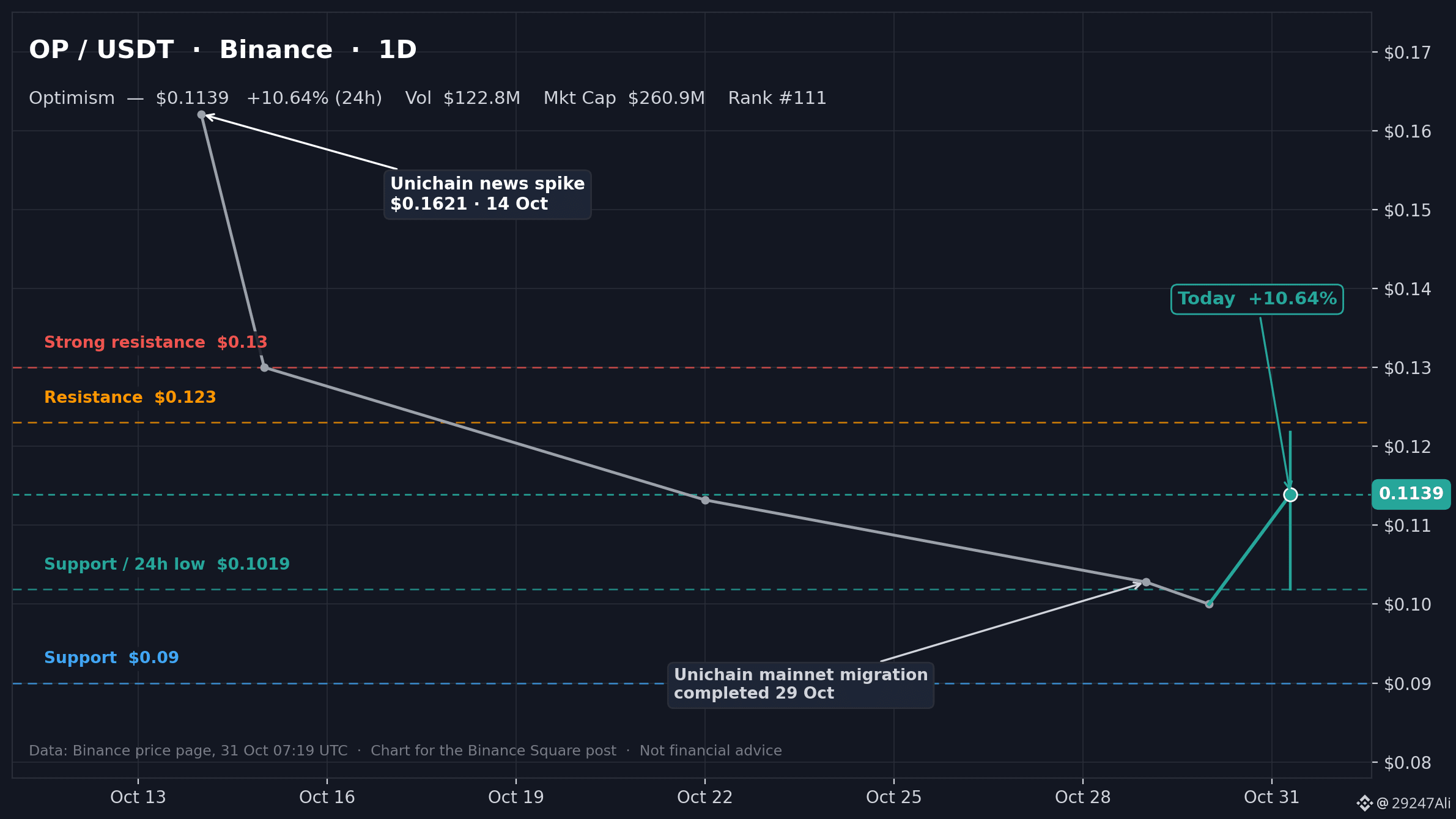
📊 Snapshot (Binance, 31 Oct 07:19 UTC)
Price: $0.1139 | 24h: +10.64%
24h range: $0.1019 – $0.1218
Market cap: $260.9M | Volume: $122.8M | Rank: #111
Volume is nearly half the market cap in one day — this move has real turnover behind it.
🚀 Why it moved
1) Uniswap's Unichain completed its mainnet migration to OP Enterprise on 29 Oct. Optimism now operates Unichain's sequencers, RPC and monitoring — a paying enterprise client on OP Stack.
2) Upgrade 20 sends 50% of Superchain revenue to $OP buybacks (from Feb 2027).
3) CoinCodex named OP its Coin of the Day: +12.96%, the biggest gainer in the top 200. The Superchain ecosystem was also the day's strongest category.
⚠️ The honest check
$OP is still ~97.6% below its $4.85 ATH, most indicators still read bearish, and only 2.29B of 4.29B tokens circulate — unlocks remain an overhang. Today is a bounce inside a downtrend, not a confirmed reversal.
🎯 My plan (spot only, small size)
No chasing at $0.114 — price sits inside the $0.11–$0.12 resistance cluster.
Dip route: $0.102–$0.108, only if the 24h low holds.
Breakout route: a daily close above $0.123 opens $0.135 → $0.145 → $0.162.
Invalidation: daily close below $0.09.
One green day doesn't change a trend — the close above $0.123 would. Until then, this is a trade, not a marriage.
Not financial advice. DYOR.
#OP #Optimism #Layer2 #Superchain
180

·
--
See translation
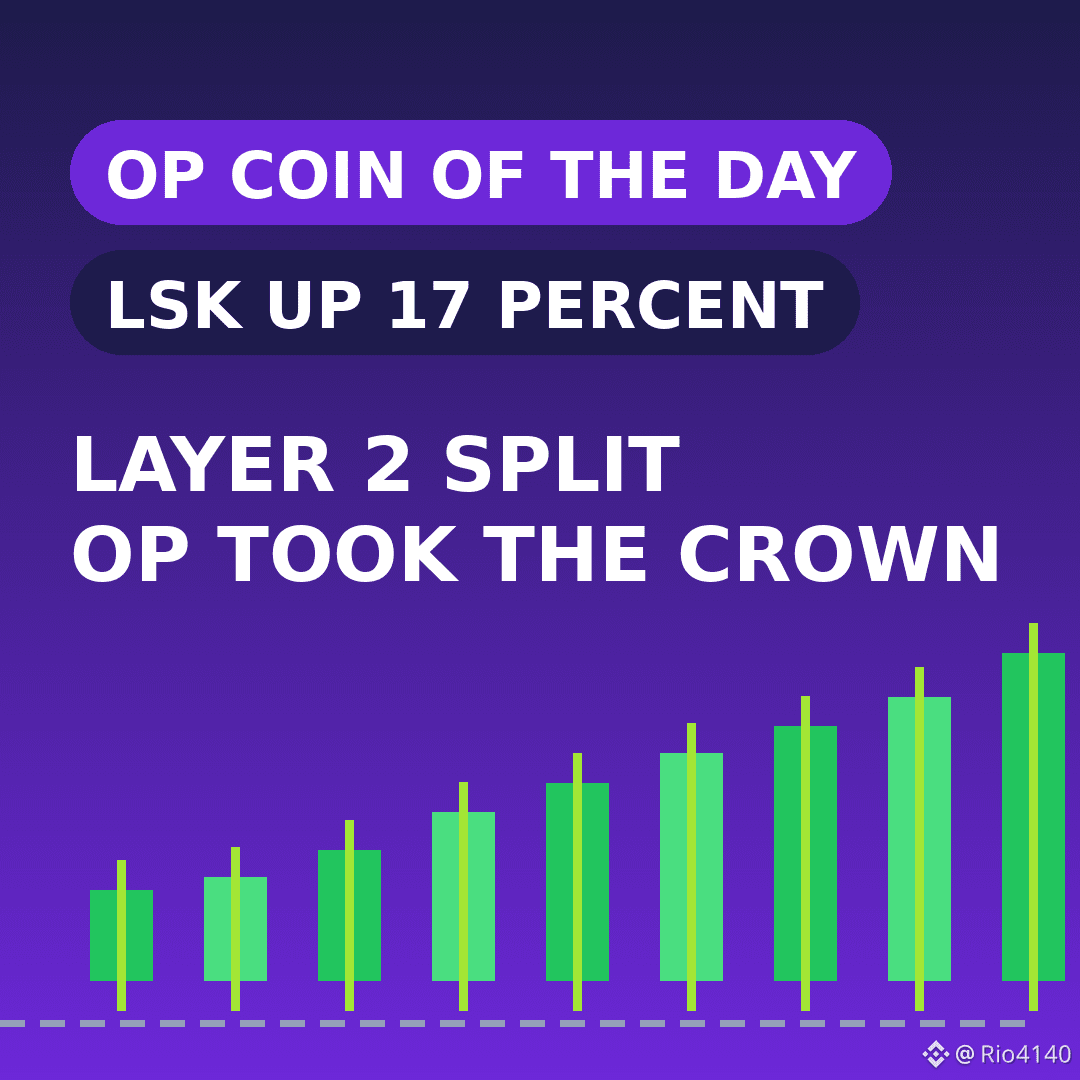
OP SOARED 13 PERCENT WHILE ARB STALLED ON A FLAT SATURDAY
CoinCodex crowned OP its coin of the day this morning on a 13 percent print and the rest of Layer 2 split behind it
$OP cooled to 9 percent by noon and still leads the board near 11 cents on 110 million dollars of volume
$LSK is the loud second name near 24 cents and up 17 percent on 85 million dollars of volume
ARB is the stalled name near 16 cents and flat on 118 million dollars of volume
BTC sits near 77300 dollars and flat so this is a Layer 2 story not a market story
The split is the whole point
OP and LSK moved on real volume while ARB did nothing on even bigger volume
That tells me money rotated inside the sector instead of flowing into it from outside
Weekend spikes built on thin tape usually fade by Monday
This one has volume behind the leader and that is what makes it worth watching into the evening
Here is how I am playing the leader
Entry near 11 cents right around the noon tape
Target 12 cents which is the 24 hour high
Stop on a daily close under 10 cents because that was roughly the prior close and losing it kills the coin of the day story
My take as an analyst
Layer 2 moves like this on a flat BTC Saturday usually fade by Monday unless volume follows price
OP volume above 100 million dollars gives this one a better chance than a thin weekend spike
But I am not chasing the morning print
I want the noon tape to hold 11 cents into the evening and the 10 cent line is my receipt
So which print comes first for you
Does OP close the day above 12 cents and confirm the crown or does it slip back under 10 cents and hand the day back to BTC
$OP $LSK
#BinanceSquare #WriteToEarn #Crypto #Bitcoin #Layer2
4

·
--
See translation
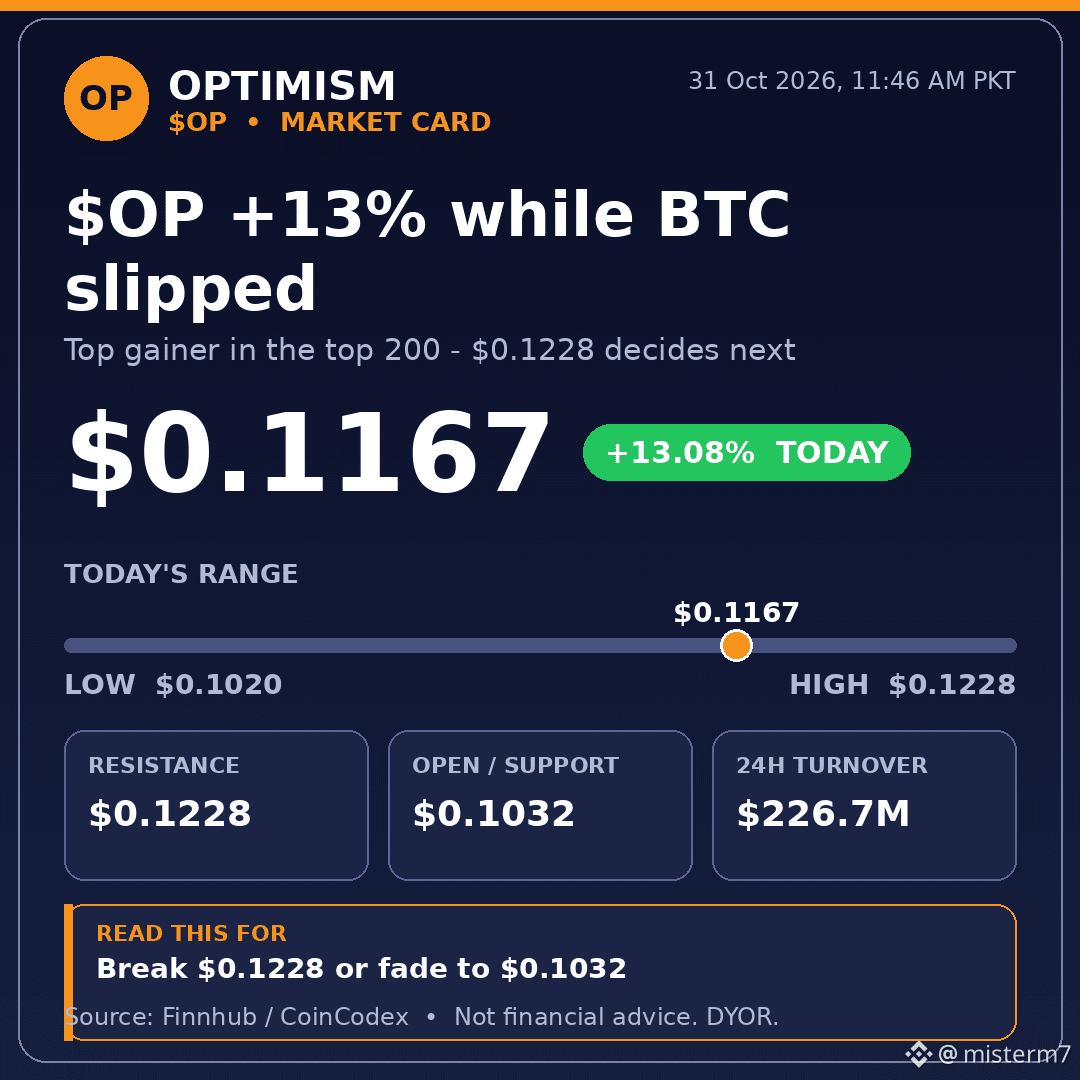
$OP +13% to $0.1167 while $BTC slipped — the top-200's top gainer.
Finnhub: +13.08% from a $0.1032 open, range $0.1020–$0.1228. CoinCodex had OP as top gainer at 06:00 UTC while BTC was -1.63%: rotation into an L2, not a market lift.
Turnover: about $226.7M in 24h — money chased it, but a $0.1228 rejection can fade fast.
I'm leaning bullish only above $0.1228. Break it, momentum stays in charge; reject it, pullback toward $0.1032. A daily close below $0.1020 proves a one-day spike.
Chase $OP at $0.1228, or wait for the retest? $OP at $0.1228 decides.
Data: Finnhub / CoinCodex, 11:46 AM PKT. Not financial advice. DYOR.
#Optimism #Layer2 #Crypto
93
·
--
Article
See translation
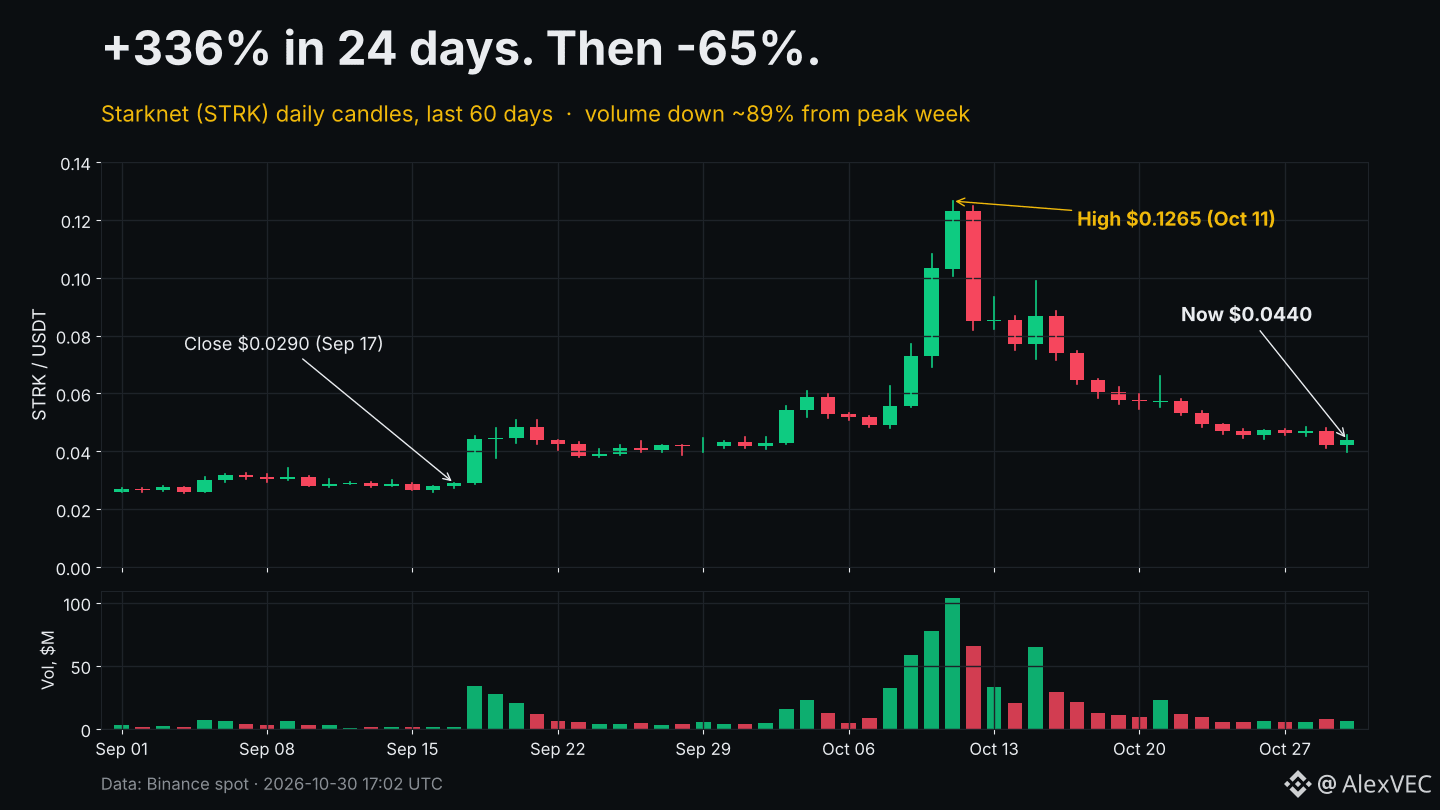
Starknet Ran 336% in 24 Days, Then Gave Back 65%. What's Left?$STRK ran from a $0.0290 close on Sep 17 to a $0.1265 high on Oct 11. That is +336% in 24 days. Today it trades at $0.0440 on Binance spot, 65% below that high and -6.6% in the last 24h. So what was the rally actually about, and what is left now that the dust is settling?
The catalyst: an L2 thinking about becoming an L1
Most of the layer-2 conversation this cycle has been about fees, sequencers and who captures value from Ethereum blockspace. Starknet changed the script. On Oct 8, StarkWare CEO Eli Ben-Sasson raised the idea of Starknet becoming an independent layer 1, and the core argument was quantum security. Starknet's STARK proofs rely on hash functions, which are considered more resistant to known quantum attacks than the elliptic-curve signatures most chains use. But the parts of Starknet tied to Ethereum still follow Ethereum's upgrade timeline, and the Ethereum Foundation's quantum-resistance goal is December 2029, which Ben-Sasson has called too late.
Token holders then ran a non-binding Snapshot poll that closed on Oct 22 with 93.52% of voting power in favor. Important detail: it approves research only. A joint StarkWare / Starknet Foundation working group is expected to publish a draft whitepaper in November, and any real move away from Ethereum would need separate governance votes.
Why the price gave most of it back
Three things lined up against the rally:
1. It was mostly narrative. Nothing has shipped yet, so traders priced the headline and then took profit.
2. Supply. Roughly 127M STRK unlocked on Oct 15, about 3.3% of circulating supply, right after the peak.
3. Participation dried up. Average daily STRK/USDT spot volume on Binance was about $57M during Oct 8–15. Over the last 7 days it averaged about $6.6M, roughly 89% lower.
What the chart says now
Since Oct 21 STRK has printed mostly lower closes, and today's low of $0.0398 was the first trade below $0.040 since Sep 29. That $0.040 area is the obvious line, roughly the floor of the late-September base. Above, the $0.048–0.049 zone capped every bounce of the past week. Measured against ETH, the asset of the chain it settles to, STRK still holds a gain: the STRK/ETH ratio is up about 66% since Sep 17, while $ETH itself is -6.2% on the week at $2,239.
The bigger L2 question
Whether or not Starknet ever leaves Ethereum, this episode showed something useful about L2 tokens: the market pays for a story about sovereignty and security far more than for another throughput upgrade. The November whitepaper is the next real data point. If it contains concrete consensus, data-availability and validator plans, the narrative gets substance. If it stays vague, the low-volume drift we see now is the likely default.
STRK is a high-volatility, low-liquidity asset compared with the majors. Moves of 10%+ in a day have been routine this month, so size positions accordingly.
Do you think L2s going independent is the next big narrative, or a one-off?
Not financial advice.
#Starknet #Layer2 #Crypto
Starknet Ran 336% in 24 Days, Then Gave Back 65%. What's Left?
$STRK ran from a $0.0290 close on Sep 17 to a $0.1265 high on Oct 11. That is +336% in 24 days. Today it trades at $0.0440 on Binance spot, 65% below that high and -6.6% in the last 24h. So what was the rally actually about, and what is left now that the dust is settling?
The catalyst: an L2 thinking about becoming an L1
Most of the layer-2 conversation this cycle has been about fees, sequencers and who captures value from Ethereum blockspace. Starknet changed the script. On Oct 8, StarkWare CEO Eli Ben-Sasson raised the idea of Starknet becoming an independent layer 1, and the core argument was quantum security. Starknet's STARK proofs rely on hash functions, which are considered more resistant to known quantum attacks than the elliptic-curve signatures most chains use. But the parts of Starknet tied to Ethereum still follow Ethereum's upgrade timeline, and the Ethereum Foundation's quantum-resistance goal is December 2029, which Ben-Sasson has called too late.
Token holders then ran a non-binding Snapshot poll that closed on Oct 22 with 93.52% of voting power in favor. Important detail: it approves research only. A joint StarkWare / Starknet Foundation working group is expected to publish a draft whitepaper in November, and any real move away from Ethereum would need separate governance votes.
Why the price gave most of it back
Three things lined up against the rally:
1. It was mostly narrative. Nothing has shipped yet, so traders priced the headline and then took profit.
2. Supply. Roughly 127M STRK unlocked on Oct 15, about 3.3% of circulating supply, right after the peak.
3. Participation dried up. Average daily STRK/USDT spot volume on Binance was about $57M during Oct 8–15. Over the last 7 days it averaged about $6.6M, roughly 89% lower.
What the chart says now
Since Oct 21 STRK has printed mostly lower closes, and today's low of $0.0398 was the first trade below $0.040 since Sep 29. That $0.040 area is the obvious line, roughly the floor of the late-September base. Above, the $0.048–0.049 zone capped every bounce of the past week. Measured against ETH, the asset of the chain it settles to, STRK still holds a gain: the STRK/ETH ratio is up about 66% since Sep 17, while $ETH itself is -6.2% on the week at $2,239.
The bigger L2 question
Whether or not Starknet ever leaves Ethereum, this episode showed something useful about L2 tokens: the market pays for a story about sovereignty and security far more than for another throughput upgrade. The November whitepaper is the next real data point. If it contains concrete consensus, data-availability and validator plans, the narrative gets substance. If it stays vague, the low-volume drift we see now is the likely default.
STRK is a high-volatility, low-liquidity asset compared with the majors. Moves of 10%+ in a day have been routine this month, so size positions accordingly.
Do you think L2s going independent is the next big narrative, or a one-off?
Not financial advice.
#Starknet #Layer2 #Crypto
187

·
--
See translation
🧱 $ARB vs $OP : Ethereum Layer-2 Wars Explained
Most Ethereum activity today happens on layer-2s. The two biggest token names: ARB (Arbitrum) and OP (Optimism).
Arbitrum 👇
🔹 Large DeFi ecosystem
🔹 Strong focus on trading and derivatives apps
Optimism 👇
🔹 The "Superchain" — many chains (including Base) built on its stack
🔹 Focus on shared standards and public goods
📌 What both depend on:
Activity on $ETH . When Ethereum usage grows, L2s benefit.
⚠️ Risks: token unlocks and competition from newer L2s.
💬 Team Arbitrum or team Optimism? 👇
⚠️ Educational content only, not financial advice. DYOR.
#ARB #OP #Layer2 #BinanceSquare
282

See translation
Layer-2 networks remain relevant as traders track scaling solutions and ecosystem growth.
$ICP — Internet Computer continues to build around decentralized applications and on-chain infrastructure.
$ARB — Arbitrum remains a major Ethereum scaling ecosystem, with DeFi activity worth monitoring.
$OP — Optimism's Superchain vision keeps its ecosystem developments in focus.
#ICP #ARB #OP #Layer2 #DeFi
19

See translation
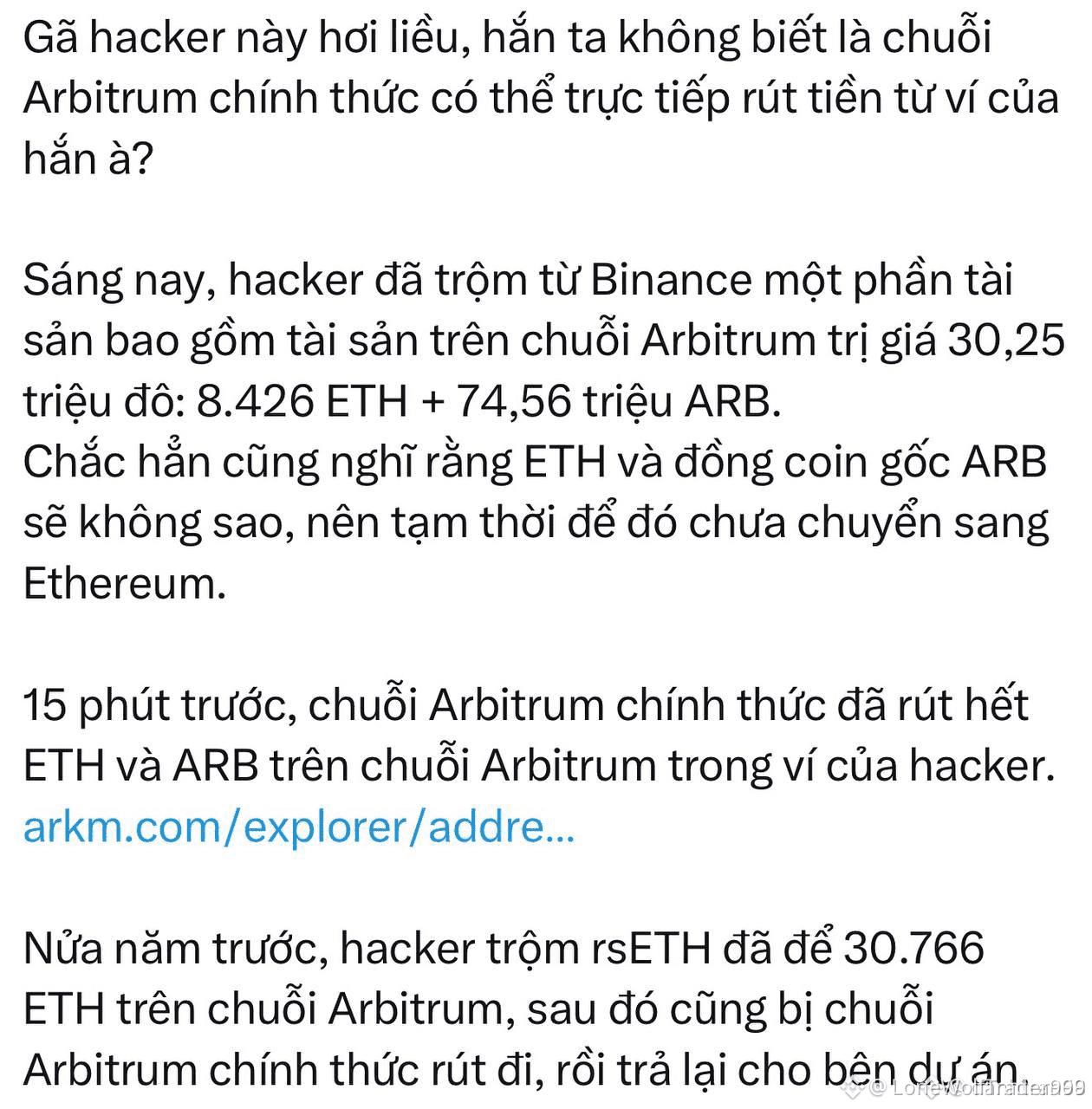
🚨 $ARB FACES A HARSH REALITY CHECK AS ON-CHAIN FLOWS EXPOSE SEQUENCER CONTROLS! 👁️
🔍 Recent on-chain movements routed through $ARB are exposing the fine line between Layer 2 scalability and true decentralization. Watching rogue capital attempt to wash through centralized sequencers only to hit immediate tracking has the entire market re-evaluating risk models. 🌊
💡 When transactions can be monitored and mitigated at the sequencer level, the illusion of total anonymity evaporates fast. Traders holding positions need to understand whether these governance dynamics will dampen institutional appetite or reinforce compliance strength. 📊
💬 Does sequencer intervention protect the ecosystem long-term, or does it completely kill the core ethos of $ARB ? 👇
⚠️ Not financial advice. Always manage your risk. 🛡️
🏷️ #ARB #Arbitrum #Layer2 #CryptoNarratives
⚡ 🦈
2

·
--
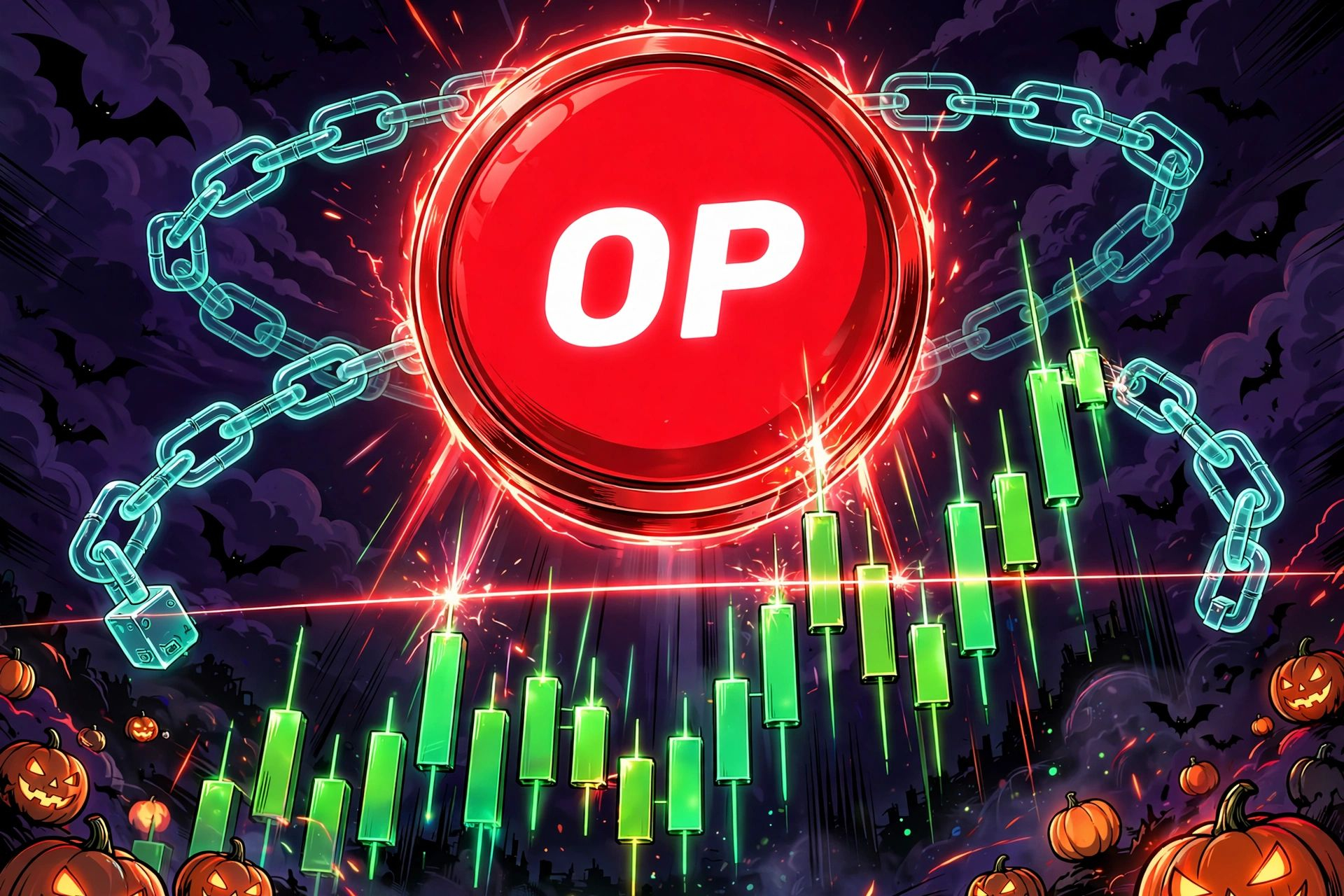
The liveliest altcoin on Halloween night: $OP
The market is still digesting the aftershocks of the Binance hack (the Fear & Greed Index is still stuck at 30), and BTC is hovering around $77,000. But Optimism’s OP has quietly climbed about 10%, making it the biggest gainer among the top 200 cryptocurrencies by market cap today. It’s currently trading around $0.11.
Three factors behind this rebound:
① Oversold bounce. OP peaked at $0.37 this year, down nearly 98% from its 2024 all-time high of $4.87. The deeper the fall, the greater the potential rebound—that’s a technical recovery from deep oversold territory, not a fundamental reversal.
② Sector rotation into L2s. In the past 24 hours, the Optimism Superchain ecosystem has been the best-performing category across the market today. Sector-wide momentum is more tangible than an individual coin’s story, and $ARB , a leader in the same sector, is also worth watching.
③ A healthy structure: spot is rising, while futures aren’t following. Binance OP futures open interest fell 14.5% over 24 hours, and funding rates are neutral—there’s no leveraged FOMO. Spot investors are buying the dip, making this rally more solid.
But the risk levels are clear, too: $0.12 overhead is a dense resistance zone formed by the 20- and 50-day moving averages, while the RSI is only at a neutral 45. If OP can’t get above $0.12, this rally is just a preview. Don’t mistake Halloween candy for a meal—the sector rotation can come and go quickly. First, let’s see whether $0.12 holds as resistance.
Personal research; not investment advice.
#Optimism #Layer2 #山寨币 #OversoldBounce
270

·
--
See translation
$ARB or $OP for the next leg? Only one.
ARB is at $0.1530, down 11.15% today with $21.93M volume, and the 4h chart just got hit another 7.5%. 📉
That is ugly.
RSI is 34, price sits below the 20d and 50d MAs, and shorts are paying funding. Even $BNB looks like the cleaner strength trade right now.
I’m watching $0.1530 closely. Hold it and I’ll respect the bounce. Lose it and I’m staying away. ⚠️
Hold $0.1530 or lose it, which side are you on? 👀
#Arbitrum #Layer2
72

·
--
See translation
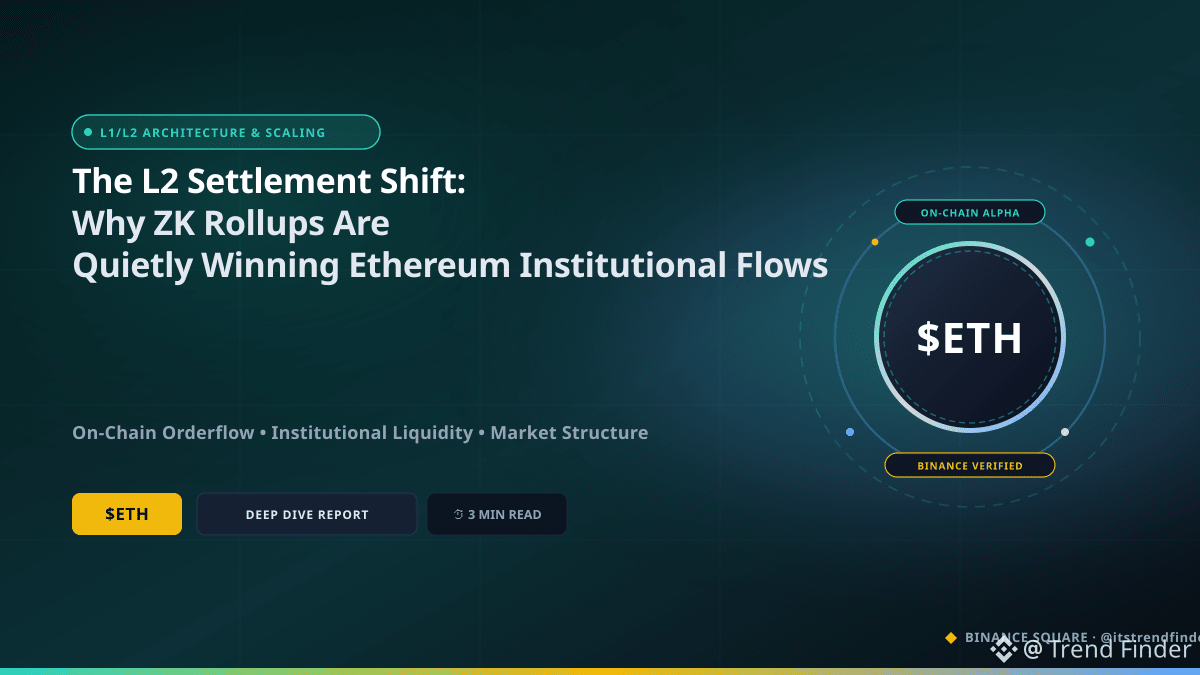
The L2 Settlement Shift: Why ZK Rollups Are Quietly Winning Ethereum Institutional Flows
While short-term traders stay fixated on $ETH hovering around the 2270.2 price level, the crucial structural shift is taking place beneath the surface across Ethereum data availability layers post-EIP-4844. Data blob utilization has fundamentally normalized execution costs, keeping user fees across Arbitrum and Optimism consistently in sub-cent territory. Yet the real quantitative signal isn't just cheap gas; it is the clear divergence in how capital and developers are positioning across execution frameworks.
On-chain bridge telemetry reveals that net liquidity inflows into ZK-Rollup networks are steadily accelerating relative to optimistic alternatives. Deep-pocketed participants and institutional desks appear to be prioritizing zero-knowledge cryptographic validity and instant finality over temporary fee discounts. At the same time, daily active address metrics across the broader L2 stack have held remarkably steady, proving that lower settlement overhead is successfully retaining active users within the ecosystem rather than pushing them toward high-throughput monolithic chains.
On the tokenomics side, softer L1 gas demand has predictably cooled the ETH burn mechanism, leading to modest supply inflation compared to peak bull mania. Simultaneously, an expanding validator set continues to compress native staking yields. As modular data availability and parallel EVM architectures mature, liquidity will naturally consolidate around chains boasting the highest TVL and active developer commits.
Are you keeping your L2 assets on optimistic chains for daily fee efficiency, or migrating toward ZK environments for cryptographic finality?
#Layer2 #BlockchainScaling
1
1

·
--
$OP L2 sentiment is picking up
Up about 7.1% in 24 hours
Current price: 0.113
Touched a high of 0.123
Low: 0.104
Trading volume: over 9 million U
The Optimism sector hasn’t been this lively in a long time
Tonight it rose by about as much as $AAVE
This suggests capital is rotating through L2 and high-beta DeFi
The broader market is flat
Second-tier sectors are moving first
If this pattern continues,
tomorrow morning will bring another round of filtering to see which ones have volume and which don’t
$OP $ETH
#Layer2 #OP
1
225

·
--
$OP (Optimism) rose about 18% in 24 hours, making it one of yesterday’s standout altcoins. According to Binance’s perpetual futures leaderboard (10/30 09:00 to 10/31 09:00 Beijing time), OPUSDT rose from 0.1012 to 0.1199, a gain of 18.54%. Meanwhile, $BTC was still hovering around $77,000, and the Fear & Greed Index was only 30. This pattern of a weak broader market alongside individual L2 tokens moving against the trend is worth keeping an eye on.
However, I haven’t seen any particularly clear single catalyst. It seems more like capital is picking oversold sectors to rebound amid the panic. A big gain doesn’t mean it can last, so before chasing the rally, it’s best to check whether trading volume can keep up. Do you think the L2 sector will take the baton?
#Optimism #Layer2
For reference only; this is not investment advice.

While the broader market is still being held down by the aftershocks of the Binance hack, $OP has quietly taken the lead: based on the October 30 closing figures, OP ranked first among assets with a market cap above $50 million, gaining 18.9%. Its current price is around $0.12, with a 24-hour range of approximately $0.098–$0.122. Put simply, those who held on near $0.10 yesterday are up nearly 20% on paper today—and that’s the most painful contrast in a bear market: while everyone else is calculating their liquidations, the one you missed is pumping. OP fell from its March 2024 high of $4.85 to this August’s low of $0.08, a drop of more than 97%. No one can say for sure whether this rebound is a recovery after being oversold or just a flash in the pan, but one thing is clear: coins that can lead the way against the trend when the broader market is falling are always worth a closer look than those that can only fall along with it. (The image is a conceptual cover; refer to the link for price movements.) Live market data: https://coincodex.com/crypto/optimism
#Optimism #Layer2
#Optimism #Layer2

1
137

·
--
$OP OP’s short-term price action is facing dual pressure from security concerns and token supply and demand.
A recent security incident involving approximately 38 million in outflows, compounded by the attack on the zkLink cross-chain bridge, has prompted the market to reassess the security of the Optimism ecosystem. It is no surprise that prices are under short-term pressure.
The deeper issue is a supply-demand imbalance: OP’s annual inflation is approximately 343 million tokens, while buybacks account for less than 5% of the supply. There isn’t enough demand to offset the additional selling pressure, which can easily intensify when risk appetite declines.
As for the data, the current price is approximately 0.1013 USDT, 24-hour trading volume is approximately 86.96 million USDT, and market capitalization is approximately 232 million USDT. In the short term, it’s advisable to keep watching developments following the security incident and the pace of ecosystem recovery; a price decline alone isn’t enough to conclude that the bottom is in. In the medium term, focus on whether buybacks, tokens locked, and on-chain usage can improve. If the supply-demand balance doesn’t shift, any rebound may be driven more by sentiment.
#Optimism #Layer2 #OP
6

·
--
$OP ’s short-term pressure should not be ignored.
The Binance security incident led to an outflow of approximately $38 million. Combined with the attack on the zkLink cross-chain bridge, this has significantly heightened market concerns about the security of the Layer 2 ecosystem, keeping sentiment under sustained pressure.
But the deeper issue lies in the tokenomics themselves: in $OP , inflation reached 343 million tokens, while the buyback ratio was less than 5%, leaving selling pressure far greater than buying demand. At a current price of about $0.10 and a market capitalization of around $230 million, this supply-demand imbalance—not any single unexpected event—is the core factor weighing on valuation.
Security incidents are merely short-term catalysts; the long-term mismatch between inflation and buybacks is the key variable. Before expecting a meaningful rebound, watch for two things: whether security improvements can restore trust in the ecosystem, and whether buybacks can genuinely offset the pressure from token emissions. Until then, caution is warranted.
#Optimism #Layer2 #OP
2

·
--
$OP Short-term outlook for OP is bearish, and it’s not just about security sentiment.
Security incidents related to Binance led to outflows of about $38 million, while the zkLink cross-chain bridge was attacked. Concerns about the security of the Optimism ecosystem have clearly intensified, and news like this typically weighs on risk appetite first.
More fundamentally, it comes down to token supply and demand: OP’s annual inflation is about 343 million tokens, while buybacks account for less than 5%, making it difficult for existing demand to absorb the additional selling pressure. Even with the price at around 0.1013 USDT and 24-hour trading volume at about $86.96 million, turnover is still insufficient to offset the supply-demand imbalance.
For now, keep an eye on three things: progress on security audits and the cross-chain bridge recovery, whether buybacks or burns increase, and whether active addresses and fees across the ecosystem recover. Until then, any rebound looks more like a sentiment-driven recovery; don’t assume the bottom is in based on the size of the decline alone.
#Optimism #Layer2 #OP
3

·
--
Article
See translation
How Ethereum’s Layer‑2 Scaling Works and Why It MattersEthereum’s price is hovering at $2,353 with a modest 24‑hour gain of +0.82%, but behind that number lies a massive engineering challenge: how to keep the network fast and cheap as more users join. Layer‑2 solutions are the clever shortcuts that let Ethereum process thousands of transactions off‑chain while still relying on the main chain for security. Let’s pull apart the mechanics with everyday analogies so the tech feels less like wizardry and more like a well‑organized kitchen.
What Is a Layer 2?
Think of the Ethereum mainnet as a busy highway that can only hold a certain number of cars at once. A Layer 2 is like an express lane that runs parallel to the highway: it lets cars (transactions) travel together in a convoy, then merges back onto the main road at designated checkpoints. This off‑road routing reduces congestion without abandoning the safety guarantees of the original road.
How Rollups Bundle Transactions
Rollups are the most common type of express lane. Imagine a courier collecting dozens of letters, stuffing them into a single envelope, and then delivering that envelope to the post office. In Ethereum terms, a rollup aggregates many user actions into one batch, creates a cryptographic proof, and posts that proof to the main chain. The proof tells the mainnet, “All these moves are valid,” so the network only needs to verify one piece of data instead of each individual transaction.
Security Guarantees and Data Availability
Even though the heavy lifting happens off‑chain, the mainnet still acts as the final arbiter. It’s like a notary that signs off on the envelope’s contents without opening it. If a rollup tries to cheat, anyone can challenge the proof, and the mainnet will reject the fraudulent batch. This design preserves Ethereum’s core security while letting the Layer 2 handle the bulk of the work.
Real‑World Impact on Gas Fees
When the mainnet is congested, gas fees can spike dramatically. By shifting most work to a Layer 2, users often pay a fraction of the cost—sometimes pennies instead of dollars. For context, while $BTC trades at $81,058 and $ETH sits at $2,353, the 24‑hour volume for $ETH is $555M, showing the sheer amount of activity that can be off‑loaded to keep fees tame.
Future Outlook
Layer‑2s are still evolving, with new rollup designs promising even better data availability and lower latency. As the ecosystem matures, we may see a future where the mainnet is used primarily for final settlement, while daily transactions glide smoothly on the express lanes beneath it.
Which Layer‑2 solution are you most excited to see mature?
Not financial advice
#Ethereum #Layer2 #CryptoExplained #Blockchain
How Ethereum’s Layer‑2 Scaling Works and Why It Matters
Ethereum’s price is hovering at $2,353 with a modest 24‑hour gain of +0.82%, but behind that number lies a massive engineering challenge: how to keep the network fast and cheap as more users join. Layer‑2 solutions are the clever shortcuts that let Ethereum process thousands of transactions off‑chain while still relying on the main chain for security. Let’s pull apart the mechanics with everyday analogies so the tech feels less like wizardry and more like a well‑organized kitchen.
What Is a Layer 2?
Think of the Ethereum mainnet as a busy highway that can only hold a certain number of cars at once. A Layer 2 is like an express lane that runs parallel to the highway: it lets cars (transactions) travel together in a convoy, then merges back onto the main road at designated checkpoints. This off‑road routing reduces congestion without abandoning the safety guarantees of the original road.
How Rollups Bundle Transactions
Rollups are the most common type of express lane. Imagine a courier collecting dozens of letters, stuffing them into a single envelope, and then delivering that envelope to the post office. In Ethereum terms, a rollup aggregates many user actions into one batch, creates a cryptographic proof, and posts that proof to the main chain. The proof tells the mainnet, “All these moves are valid,” so the network only needs to verify one piece of data instead of each individual transaction.
Security Guarantees and Data Availability
Even though the heavy lifting happens off‑chain, the mainnet still acts as the final arbiter. It’s like a notary that signs off on the envelope’s contents without opening it. If a rollup tries to cheat, anyone can challenge the proof, and the mainnet will reject the fraudulent batch. This design preserves Ethereum’s core security while letting the Layer 2 handle the bulk of the work.
Real‑World Impact on Gas Fees
When the mainnet is congested, gas fees can spike dramatically. By shifting most work to a Layer 2, users often pay a fraction of the cost—sometimes pennies instead of dollars. For context, while $BTC trades at $81,058 and $ETH sits at $2,353, the 24‑hour volume for $ETH is $555M, showing the sheer amount of activity that can be off‑loaded to keep fees tame.
Future Outlook
Layer‑2s are still evolving, with new rollup designs promising even better data availability and lower latency. As the ecosystem matures, we may see a future where the mainnet is used primarily for final settlement, while daily transactions glide smoothly on the express lanes beneath it.
Which Layer‑2 solution are you most excited to see mature?
Not financial advice
#Ethereum #Layer2 #CryptoExplained #Blockchain
104

·
--
See translation
🚀 LAYER 2 AND NEXT-GEN BLOCKCHAINS!
Aptos ($APT ) explores high-performance infrastructure, Arbitrum ($ARB ) scales Ethereum applications, and Optimism ($OP ) develops Ethereum scaling technology. Which ecosystem could attract more adoption over time?
Check adoption, token supply, and valuation.
#Aptos #Arbitrum #Optimism #Layer2 #CryptoInvesting
1
7

Base is moving to Denim on November 5, changing from one block every 2 seconds to one every 200 milliseconds. Half the posts I’ve seen these past couple of days are shouting, “Base is 10x faster,” “Swaps confirm in the blink of an eye,” and “Time to go all in on Base.”
Hate to be a buzzkill, but the improvement in how it feels to tap swap on your phone isn’t as big as you might think.
Base previously used Flashblocks, which essentially split a 2-second block into smaller chunks for preconfirmation, so the frontend could already show results very quickly. What Denim does is turn those chunks into actual canonical blocks, each with its own hash, state root, and receipt. That’s an engineering cleanup—not a 10x speed boost out of nowhere. Even the official Base Build account focused on “three things developers should watch out for before activation”: apps that rely on Flashblocks data streams and pending-state reads need to migrate quickly, and logic that measures time by block count will run 10x faster and go out of sync. There’ll be about 432,000 blocks a day.
Who really benefits? Bots. Some people have already spotted buyers in Zora creator coin pools being followed immediately by a sell. The denser the blocks, the shorter the reaction window for frontrunners and sandwich bots. Retail traders can never beat scripts on speed.
Also, don’t forget that Coinbase is still the only one running the sequencer. No matter how fast the blocks get, it’s still the same player deciding the order.
One more detail: the docs used to say the mainnet launch was “Planning—November.” Now the official account has given a date: November 5. Someone asked under the official post whether it was confirmed. Treat the few days before launch as an observation period, and don’t get swept up by the “time to pivot” posts from those base.eth avatars.
#Base #Layer2
1

·
--
See translation
Pump.fun is coming to Elysium on Nov 9. Here's what that means for $HYPE — and what it doesn't.
Pump.fun posted "Trading starts November 9" for Elysium, the new Layer 2 from Kinetiq. Elysium is an Arbitrum Orbit chain that settles to HyperEVM and uses HYPE as its native gas token, bridged 1:1. Its docs target 100–200ms blocks and roughly 300 Mgas/s, about two orders of magnitude more than HyperEVM handles today. Mainnet is set for the same day.
The detail people are skipping: this is Elysium trading inside the Pump.fun app. It is not a move of the Solana launchpad or its liquidity. Native HyperCore market data and the fast order path only come in an upgrade about four weeks after mainnet, and launch runs with a single sequencer.
My read: gas demand for HYPE only matters if real activity shows up on Elysium after launch day. Memecoin traffic can spike and fade fast, so I'd watch daily transactions and HYPE bridged in during the first two weeks, not the announcement.
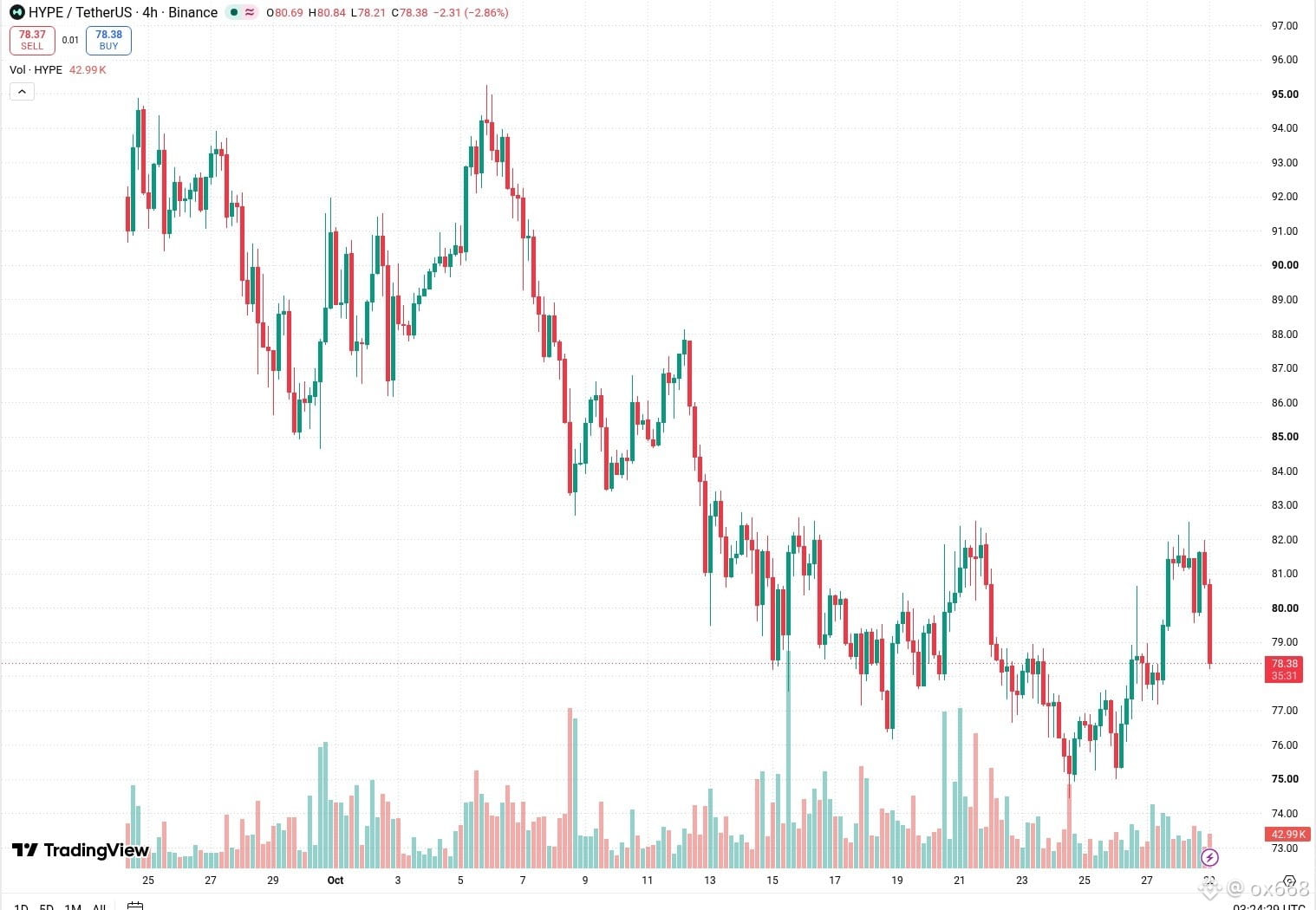
$HYPE is trading around $78.2, down about 3.7% in 24h, below the ~$81 it held earlier this week.
#Hyperliquid #Elysium #PumpFun #Layer2
Not financial advice.
86
Log in to explore more content
Join global crypto users on Binance Square
⚡️ Get latest and useful information about crypto.
💬 Trusted by the world’s largest crypto exchange.
👍 Discover real insights from verified creators.
Email / Phone number
Trending Topics
1
#BinanceSAFUFundTransferCompleted7499BTC
6,921 views
269 Discussing
2
#BinanceRecovery90% of stolen assets
44,484 views
97 Discussing
3
#YiHe:ProofOfReserves:10TokensAt100%Backing
78,572 views
434 Discussing
4
#BackedNotBroken:RichardTengSaysUsersBearNoLoss
7,380 views
259 Discussing
5
#CZSaysCompensationIsinPlaceUsersAreProtected
82,818 views
1,120 Discussing
6
#IntelHasItsWorstDaySince1974
24,485 views
528 Discussing
7
#TRMCambodianCasinosReceived$1.07BInCrypto
5,895 views
61 Discussing
8
#USDCCirculationFallsAbout800MInSevenDays
46,249 views
629 Discussing
9
#SuspectedNorthKoreaAttacksAccountForNearly89%OfCryptoHackLosses
11,701 views
86 Discussing
10
#OpenAICutsFundraisingTargetBy$10B
2,679 views
68 Discussing