
#hksfcsaystokenizationmovingtocommercialuse
hksfcsaystokenizationmovingtocommercialuse
Hot
Latest

·
--
Bearish
See translation
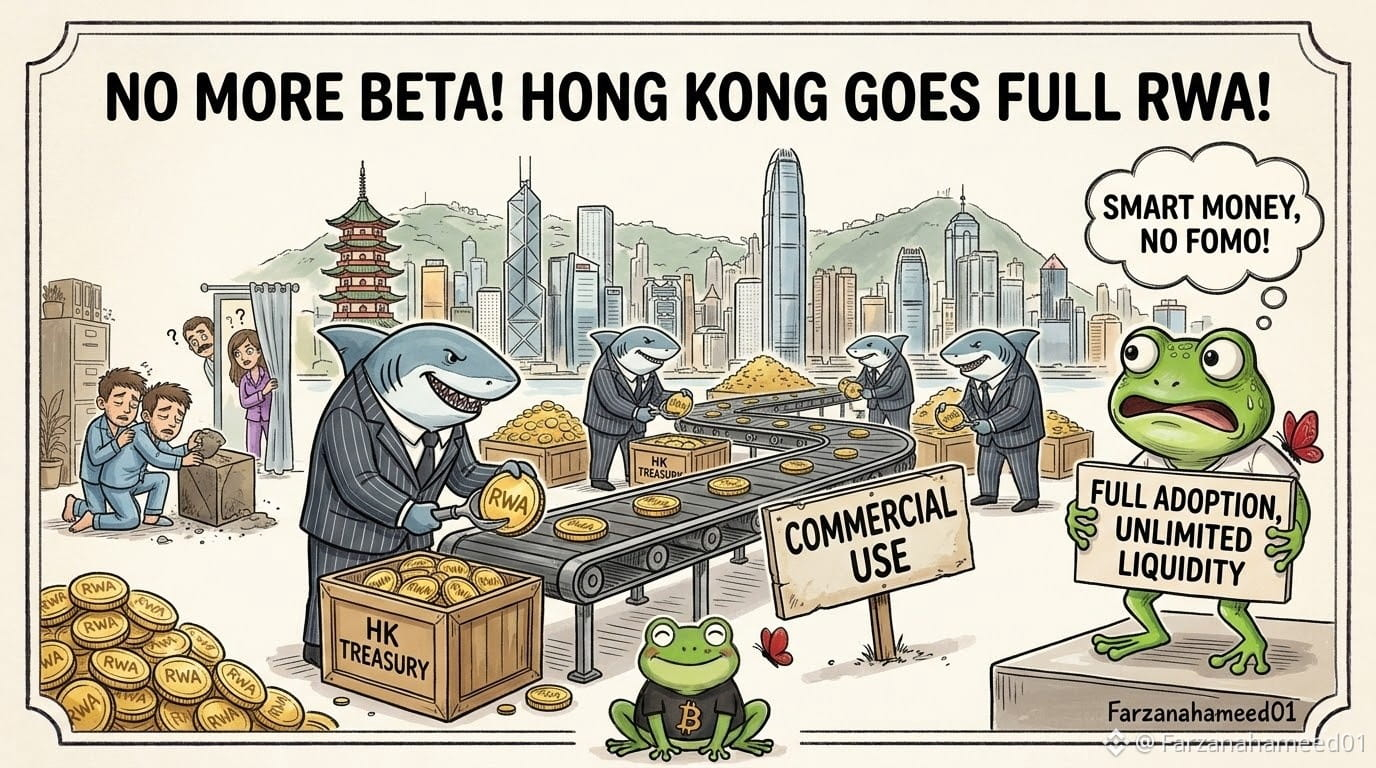
🚀 𝐇𝐎𝐍𝐆 𝐊𝐎𝐍𝐆 𝐈𝐒 𝐆𝐎𝐈𝐍𝐆 𝐁𝐈𝐆 - 𝐑𝐖𝐀 𝐈𝐒 𝐃𝐎𝐍𝐄 𝐖𝐈𝐓𝐇 𝐓𝐇𝐄 "𝐄𝐗𝐏𝐄𝐑𝐈𝐌𝐄𝐍𝐓𝐀𝐋" 𝐏𝐇𝐀𝐒𝐄!
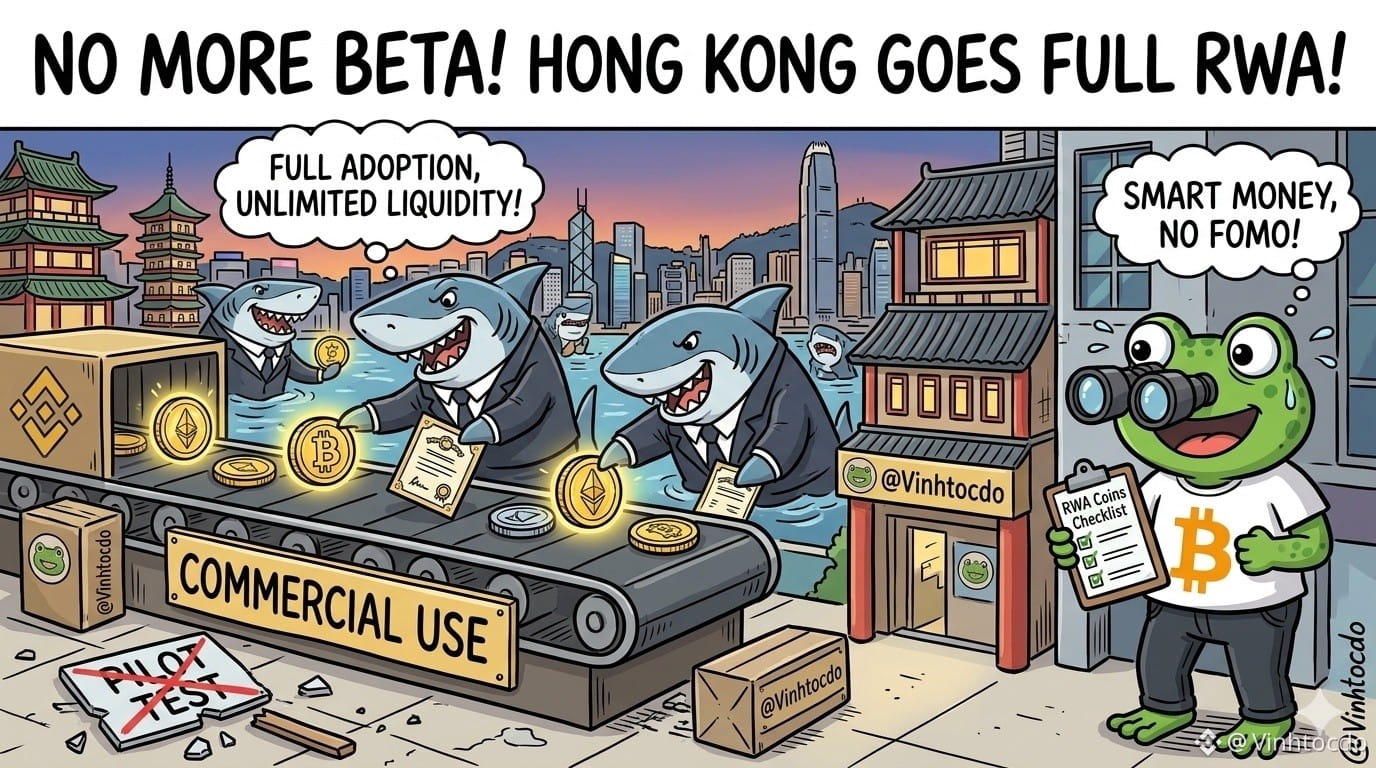
Hong Kong just sent a powerful signal: the SFC and HKMA have officially confirmed that tokenization (RWA) is done with "trial runs" and is moving straight into real-world commercialization! At a workshop attended by more than 200 financial heavyweights on 11/11, officials said they would connect tokenized investment funds, digital currencies, and payment infrastructure so that money can actually flow through the secondary market.
📈Quick Analysis:
This is not a test anymore! Hong Kong is moving RWA from beta to real business. When real money can flow in the secondary market, real demand comes!
🎯 What Should Traders Do?
1. Don't just stand by while the "whales" scoop up assets! 2. Add RWA infrastructure coins to your watchlist now! 3. Look for pullbacks to accumulate gradually instead of FOMO-buying at the top!
🛡️This is not financial advice!
Tell me honestly, will Hong Kong RWA move make RWA coins fly, or will traders sell the news?
👇
$SKHYB - Watch for RWA move, strong.
$TSMB - Watch for pullback, strong.
$AGT - Watch for Hong Kong move, strong.
✨ 𝐅𝐀𝐑𝐙𝐀𝐍𝐀 𝐇𝐀𝐌𝐄𝐄𝐃 𝐎𝐅𝐅𝐈𝐂𝐈𝐀𝐋 • 🦋 ✨
#hksfcsaystokenizationmovingtocommercialuse
#RWA #Tokenization #HongKongCrypto #CryptoNews
{spot}(SKHYBUSDT)
{spot}(TSMBUSDT)
{future}(AGTUSDT)
🚀 𝐇𝐎𝐍𝐆 𝐊𝐎𝐍𝐆 𝐈𝐒 𝐆𝐎𝐈𝐍𝐆 𝐁𝐈𝐆 - 𝐑𝐖𝐀 𝐈𝐒 𝐃𝐎𝐍𝐄 𝐖𝐈𝐓𝐇 𝐓𝐇𝐄 "𝐄𝐗𝐏𝐄𝐑𝐈𝐌𝐄𝐍𝐓𝐀𝐋" 𝐏𝐇𝐀𝐒𝐄!
Hong Kong just sent a powerful signal: the SFC and HKMA have officially confirmed that tokenization (RWA) is done with "trial runs" and is moving straight into real-world commercialization! At a workshop attended by more than 200 financial heavyweights on 11/11, officials said they would connect tokenized investment funds, digital currencies, and payment infrastructure so that money can actually flow through the secondary market.
📈Quick Analysis:
This is not a test anymore! Hong Kong is moving RWA from beta to real business. When real money can flow in the secondary market, real demand comes!
🎯 What Should Traders Do?
1. Don't just stand by while the "whales" scoop up assets! 2. Add RWA infrastructure coins to your watchlist now! 3. Look for pullbacks to accumulate gradually instead of FOMO-buying at the top!
🛡️This is not financial advice!
Tell me honestly, will Hong Kong RWA move make RWA coins fly, or will traders sell the news?
👇
$SKHYB - Watch for RWA move, strong.
$TSMB - Watch for pullback, strong.
$AGT - Watch for Hong Kong move, strong.
✨ 𝐅𝐀𝐑𝐙𝐀𝐍𝐀 𝐇𝐀𝐌𝐄𝐄𝐃 𝐎𝐅𝐅𝐈𝐂𝐈𝐀𝐋 • 🦋 ✨
#hksfcsaystokenizationmovingtocommercialuse
#RWA #Tokenization #HongKongCrypto #CryptoNews
Vinhtocdo:
👍
4
6
2.2k

·
--
See translation
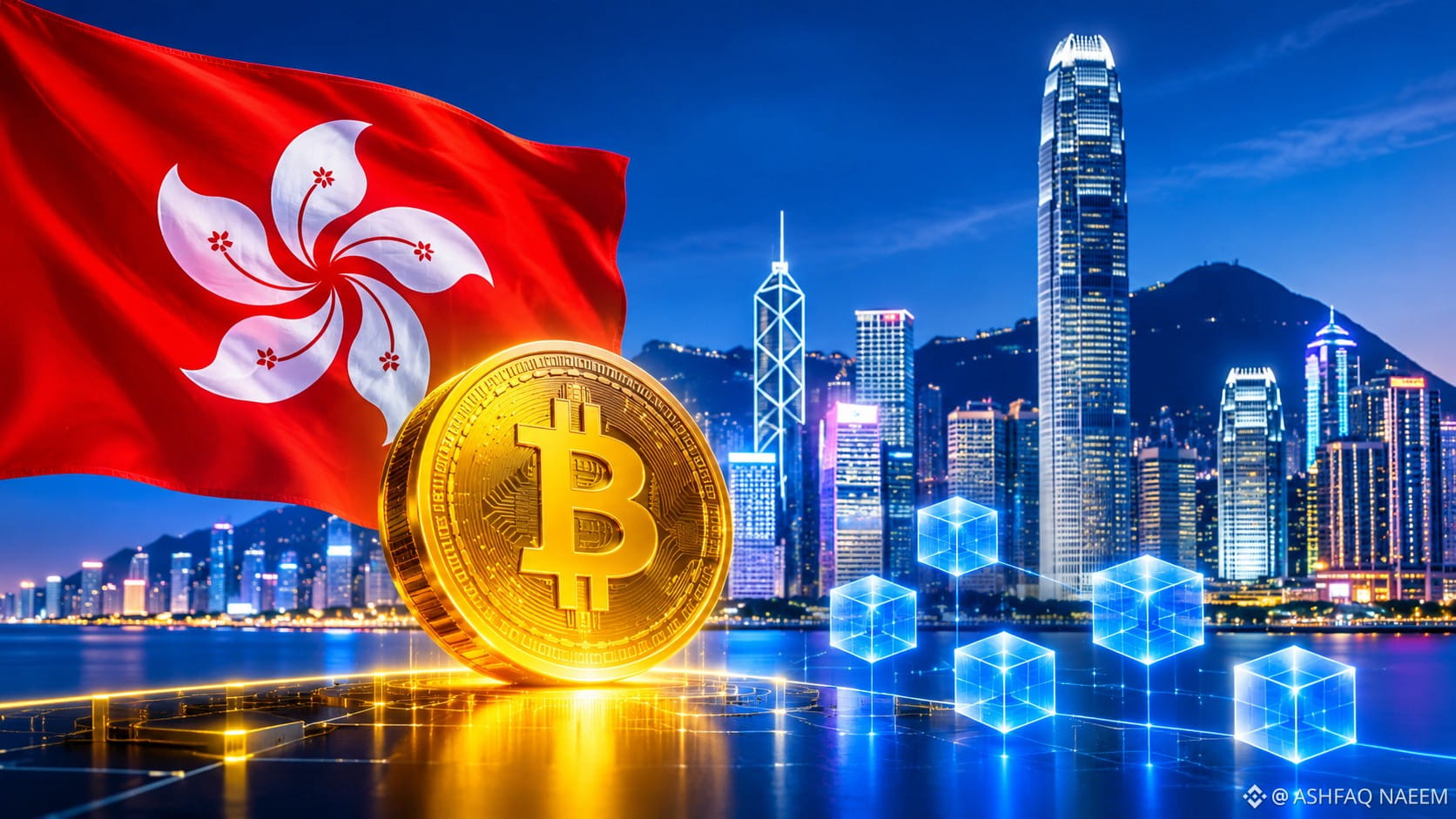
🚨 HONG KONG TOKENIZATION IS ENTERING A NEW ERA!
Hong Kong’s Securities and Futures Commission (SFC) says tokenization is moving beyond experimentation and into real commercial use
On November 12, the Hong Kong Monetary Authority (HKMA) and SFC highlighted growing industry adoption, with around 200 financial professionals discussing the future of tokenized assets
The next big step is connecting tokenized investment products, digital money and financial infrastructure. Project Ensemble is also advancing 24/7 interbank settlement of tokenized deposits, while approved tokenized money market funds are opening the door to round-the-clock secondary trading
This could make financial markets faster, more accessible and more efficient while creating new opportunities for blockchain technology and Real World Asset (RWA) adoption
The bigger story is clear: tokenization is moving from theory to practical financial infrastructure.
Do you think Hong Kong could become a global leader in the RWA revolution?
#hksfcsaystokenizationmovingtocommercialuse
{future}(BTCUSDT)
🚨 HONG KONG TOKENIZATION IS ENTERING A NEW ERA!
Hong Kong’s Securities and Futures Commission (SFC) says tokenization is moving beyond experimentation and into real commercial use
On November 12, the Hong Kong Monetary Authority (HKMA) and SFC highlighted growing industry adoption, with around 200 financial professionals discussing the future of tokenized assets
The next big step is connecting tokenized investment products, digital money and financial infrastructure. Project Ensemble is also advancing 24/7 interbank settlement of tokenized deposits, while approved tokenized money market funds are opening the door to round-the-clock secondary trading
This could make financial markets faster, more accessible and more efficient while creating new opportunities for blockchain technology and Real World Asset (RWA) adoption
The bigger story is clear: tokenization is moving from theory to practical financial infrastructure.
Do you think Hong Kong could become a global leader in the RWA revolution?
#hksfcsaystokenizationmovingtocommercialuse
3
1.8k

·
--
Bullish
See translation
#hksfcsaystokenizationmovingtocommercialuse
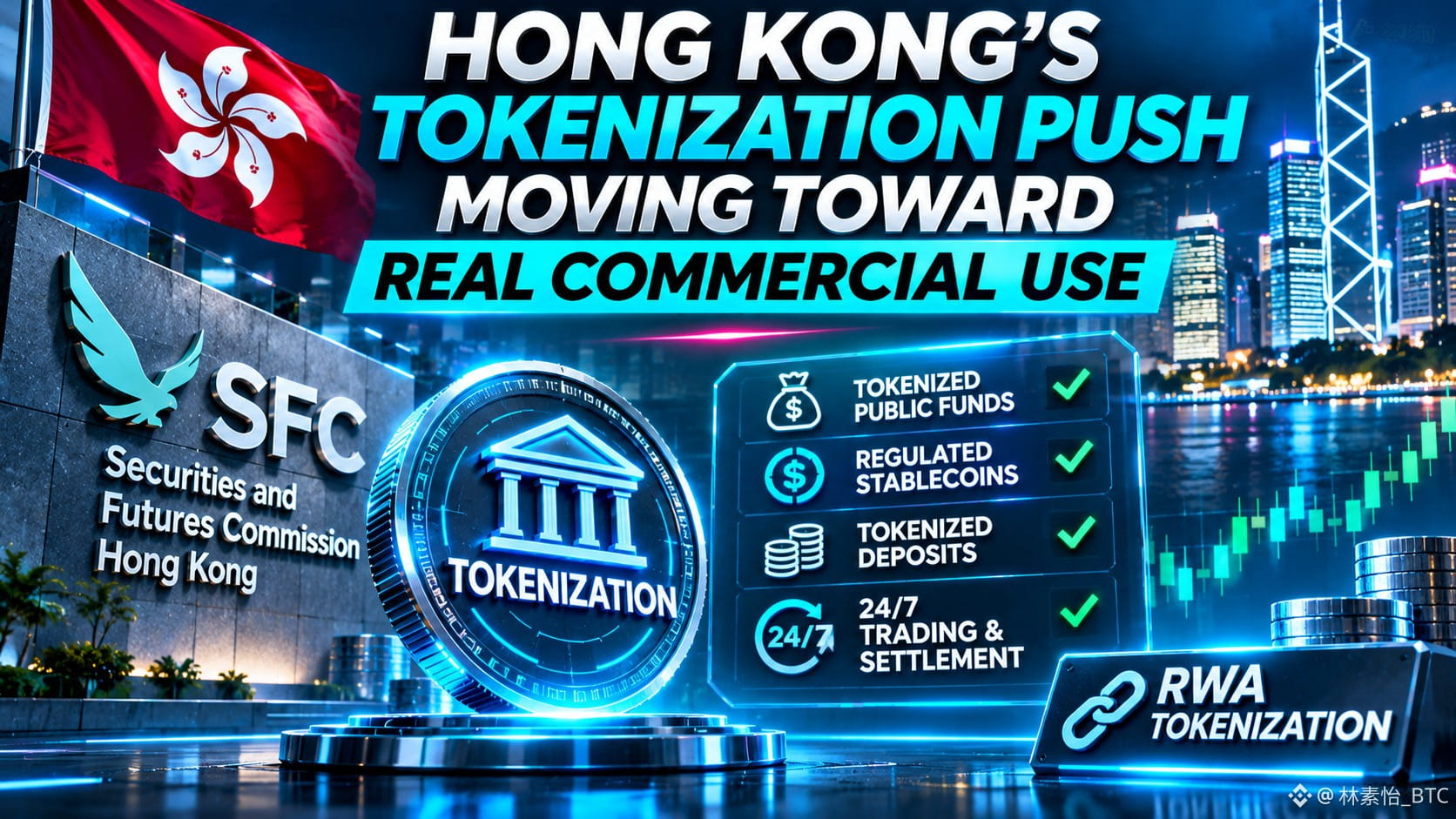
🚨 Hong Kong’s Tokenization Push Is Moving Toward Real Commercial Use
Hong Kong’s Securities and Futures Commission (SFC) is taking tokenization beyond experimentation and into regulated financial markets.
The SFC has already approved secondary trading of tokenized public funds, with two tokenized money-market funds trading around the clock on a licensed virtual-asset platform. The framework also supports the potential use of regulated stablecoins and tokenized deposits for settlement.
📌 Why it matters:
This is an important signal for the broader RWA/tokenization sector. Tokenization is increasingly being connected to actual financial products, regulated trading infrastructure and 24/7 settlement rather than remaining mainly a pilot-stage concept.
From a trader’s perspective, the key development is utility. If regulated tokenized funds can scale successfully, it could strengthen institutional interest in blockchain-based financial infrastructure.
Bottom line: Hong Kong is showing that tokenization is moving from the “future of finance” narrative toward practical commercial financial use cases.
#Tokenization #RWA #HongKong #Crypto
$DJT $AGPU $RUM
{future}(RUMUSDT)
{future}(AGPUUSDT)
{future}(DJTUSDT)
#hksfcsaystokenizationmovingtocommercialuse
🚨 Hong Kong’s Tokenization Push Is Moving Toward Real Commercial Use
Hong Kong’s Securities and Futures Commission (SFC) is taking tokenization beyond experimentation and into regulated financial markets.
The SFC has already approved secondary trading of tokenized public funds, with two tokenized money-market funds trading around the clock on a licensed virtual-asset platform. The framework also supports the potential use of regulated stablecoins and tokenized deposits for settlement.
📌 Why it matters:
This is an important signal for the broader RWA/tokenization sector. Tokenization is increasingly being connected to actual financial products, regulated trading infrastructure and 24/7 settlement rather than remaining mainly a pilot-stage concept.
From a trader’s perspective, the key development is utility. If regulated tokenized funds can scale successfully, it could strengthen institutional interest in blockchain-based financial infrastructure.
Bottom line: Hong Kong is showing that tokenization is moving from the “future of finance” narrative toward practical commercial financial use cases.
#Tokenization #RWA #HongKong #Crypto
$DJT $AGPU $RUM
24

·
--
See translation
Hong Kong's SFC says tokenization is moving from pilots to commercial use — $1.3B already sits in tokenized funds. $BTC flat near $73.4K, -0.8%. If banks follow through, RWA rails win; if not, another seminar. Real shift or PR? #HKSFCSaysTokenizationMovingToCommercialUse #CryptoMarket #BinanceSquare
Hong Kong's SFC says tokenization is moving from pilots to commercial use — $1.3B already sits in tokenized funds. $BTC flat near $73.4K, -0.8%. If banks follow through, RWA rails win; if not, another seminar. Real shift or PR? #HKSFCSaysTokenizationMovingToCommercialUse #CryptoMarket #BinanceSquare
12
·
--
#hksfcsaystokenizationmovingtocommercialuse
📰🚀 BREAKING NEWS | Tokenization enters the commercial phase in Hong Kong 🇭🇰🔥
🌐 The Hong Kong Securities and Futures Commission (SFC) has indicated that tokenization is moving from the experimental phase to real commercial use, marking a key step toward institutional adoption of blockchain and digital assets. 📈
💰 The trend points to a future where bonds, funds, real estate, and other real-world assets (RWAs) can be traded more quickly, transparently, and efficiently using blockchain technology.
🏦 Major financial institutions are already advancing tokenized solutions for real-time payments and settlements, showing that the technology is moving beyond pilot programs to become real financial infrastructure.
🔥 What does this mean for the market?
✅ Greater institutional adoption
✅ More liquidity for traditional assets
✅ 24/7 transactions
✅ New opportunities for the crypto and RWA ecosystem
✅ A direct bridge between traditional finance and blockchain
👀 The message is clear: tokenization is no longer a promise for the future; it is starting to become a commercial reality.
#Tokenization #RWA #CryptoNews #Blockchain #HongKong #Bitcoin #Ethereum #Web3 #DigitalFinance #CryptoAdoption #HKSFC
✍️ By ElCryptoBoy 🚀💎
1
256

·
--
Article
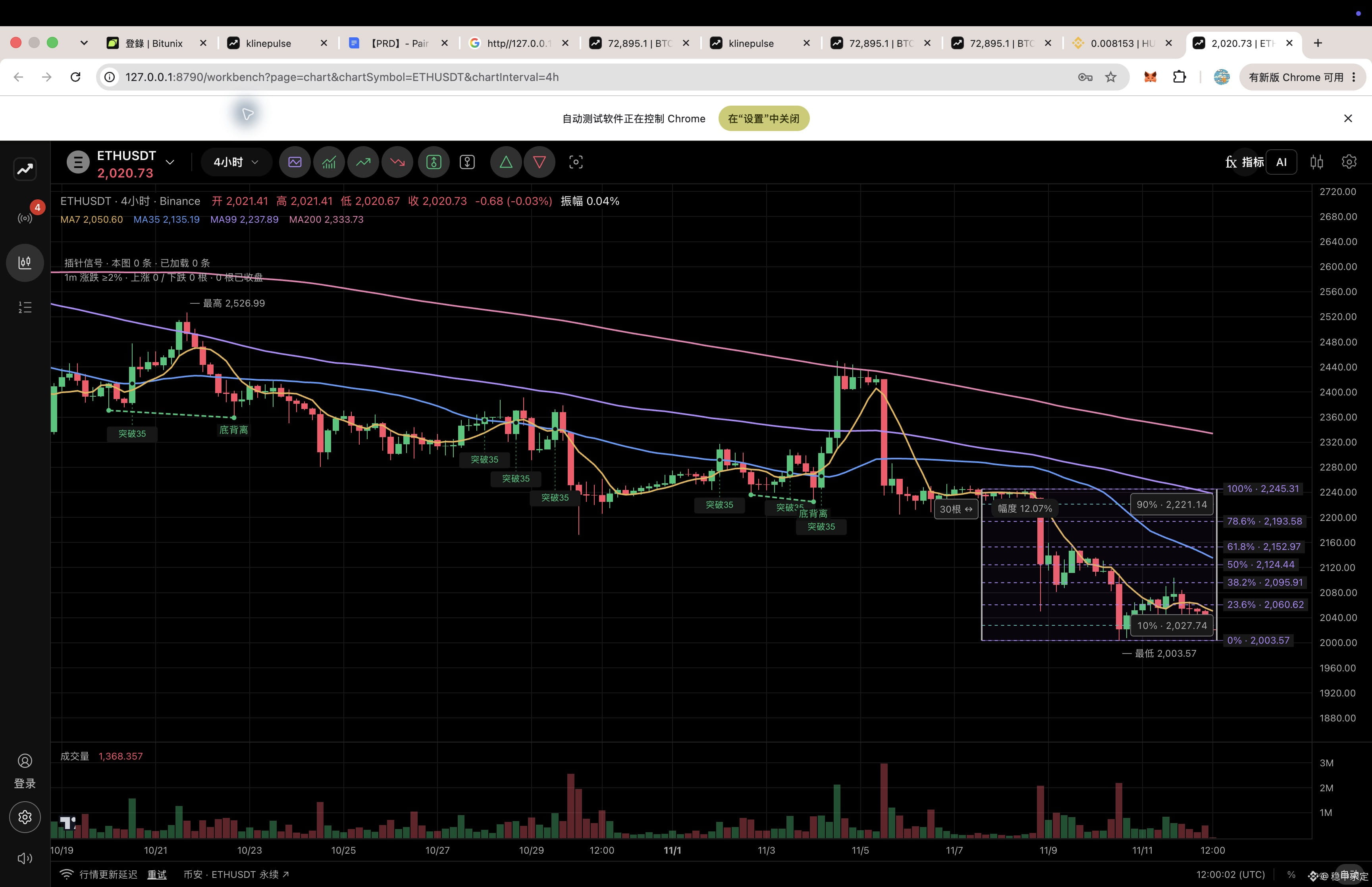
Hong Kong tokenization enters the commercial application phase: ETH gains institutional recognition, but this is not immediate buying pressureHong Kong tokenization enters the commercial application phase: ETH gains institutional recognition, but this is not immediate buying pressure
Binance Square’s trends page showed around 20:00 Beijing time that 8 people were discussing `#HKSFCSaysTokenizationMovingToCommercialUse`. The buzz is limited, but the official developments behind it are significant and recent: the HKMA and SFC disclosed that Ensemble has entered the 24/7 interbank settlement phase for tokenized deposits, and the SFC has also approved round-the-clock secondary trading of tokenized money market funds.
The value of this development for the crypto market lies not in “Hong Kong talking about tokenization yet again,” but in the discussion shifting from experimentation to settlement, trading, and product integration. An official press release said around 200 industry participants attended the November 11 seminar. The HKMA had previously disclosed that the number of banks participating in EnsembleTX had risen to 12, and the number of industry pioneers to 20. The SFC also confirmed in October that two tokenized money market funds had begun round-the-clock secondary trading on licensed virtual asset trading platforms.
Hong Kong tokenization enters the commercial application phase: ETH gains institutional recognition, but this is not immediate buying pressure
Hong Kong tokenization enters the commercial application phase: ETH gains institutional recognition, but this is not immediate buying pressure
Binance Square’s trends page showed around 20:00 Beijing time that 8 people were discussing `#HKSFCSaysTokenizationMovingToCommercialUse`. The buzz is limited, but the official developments behind it are significant and recent: the HKMA and SFC disclosed that Ensemble has entered the 24/7 interbank settlement phase for tokenized deposits, and the SFC has also approved round-the-clock secondary trading of tokenized money market funds.
The value of this development for the crypto market lies not in “Hong Kong talking about tokenization yet again,” but in the discussion shifting from experimentation to settlement, trading, and product integration. An official press release said around 200 industry participants attended the November 11 seminar. The HKMA had previously disclosed that the number of banks participating in EnsembleTX had risen to 12, and the number of industry pioneers to 20. The SFC also confirmed in October that two tokenized money market funds had begun round-the-clock secondary trading on licensed virtual asset trading platforms.
186

·
--
Bearish
Verified
#hksfcsaystokenizationmovingtocommercialuse
🚀Hong Kong is going big—RWA is done with the “experimental” phase!
Hong Kong just sent a powerful signal: the SFC and HKMA have officially confirmed that tokenization (RWA) is done with “trial runs” and is moving straight into real-world commercialization! At a workshop attended by more than 200 financial heavyweights on 11/11, officials said they would connect tokenized investment funds, digital currencies, and payment infrastructure so that money can actually flow through the secondary market.
💡What should traders do? Don’t just stand by while the “whales” scoop up assets! Add RWA infrastructure coins to your watchlist now, and look for pullbacks to accumulate gradually instead of FOMO-buying at the top based on news.
⚠️This is not financial advice.
👇 Click below to trade and support me: $SKHYB
{spot}(SKHYBUSDT)
$TSMB
{spot}(TSMBUSDT)
$AGT
{future}(AGTUSDT)
#RWA #Tokenization #HongKongCrypto #CryptoNews #Altcoins #VINHTOCDO
#hksfcsaystokenizationmovingtocommercialuse
🚀Hong Kong is going big—RWA is done with the “experimental” phase!
Hong Kong just sent a powerful signal: the SFC and HKMA have officially confirmed that tokenization (RWA) is done with “trial runs” and is moving straight into real-world commercialization! At a workshop attended by more than 200 financial heavyweights on 11/11, officials said they would connect tokenized investment funds, digital currencies, and payment infrastructure so that money can actually flow through the secondary market.
💡What should traders do? Don’t just stand by while the “whales” scoop up assets! Add RWA infrastructure coins to your watchlist now, and look for pullbacks to accumulate gradually instead of FOMO-buying at the top based on news.
⚠️This is not financial advice.
👇 Click below to trade and support me: $SKHYB
$TSMB
$AGT
#RWA #Tokenization #HongKongCrypto #CryptoNews #Altcoins #VINHTOCDO
3
3.1k

·
--
Hong Kong tokenization gains momentum | Regulatory pilot still isn’t BTC buying | Defend below $73,000
My stance is to view institutional progress cautiously and continue to defend in trading. The trending topic on Binance Square right now is #HKSFCSaysTokenizationMovingToCommercialUse. I reviewed the original text of the Hong Kong Securities and Futures Commission’s speech at FinTech Week on November 2: the SFC said it had approved a pilot for secondary trading of the first tokenized money market funds on licensed platforms, and that Hong Kong now has 17 tokenized products approved for retail offering, with approximately $1.3 billion in assets under management. On the same day, the Hong Kong Monetary Authority announced that the EnsembleTX pilot supports around-the-clock interbank settlement using tokenized central bank money. What these two primary sources corroborate is progress in tokenized financial infrastructure and pilots—not that “BTC funds have just been approved for 24/7 trading,” and no Bitcoin purchases were announced.
I think the real question for the market is whether on-chain settlement can shorten the wait for redemptions, transfers, and reinvestment, allowing tokenized money market funds to develop genuine secondary-market liquidity. If bank deposits, fund units, and licensed trading venues can be reliably connected, this could improve the efficiency of capital flows into and out of digital asset markets over the long term. But the pilot uses a controlled setup, and its assets are mainly money market funds, so the initial beneficiaries are infrastructure and specific products. Equating a “commercialization direction” directly with new inflows into BTC skips key steps, including user numbers, trading volume, cross-platform interoperability, and compliance boundaries. My independent view is that this trending topic is somewhat positive for the industry’s structure, but any marginal boost to BTC’s price tonight still needs to be proven by data.
Actual market conditions are a better test of sentiment: as I write, BTC/USDT on Binance is around $72,877, down approximately 1.53% over 24 hours, with a range of $72,789 to $74,811. The price is trading near its 24-hour low. On November 11, U.S. spot BTC funds recorded net outflows of $299.8 million, according to Farside’s compilation, including $269.7 million in outflows from IBIT. This is historical flow data that has already been reported; it cannot be used to predict tonight’s fund data, which is not yet complete. In the short term, first watch whether $72,700 and $72,000 hold. $73,000 and $73,800 are recovery levels above. If the price climbs back above $73,800 and holds on a retest, I’ll need to revise my bearish view; if it breaks below $72,000 on rising volume, the so-called policy tailwind is no substitute for a stop-loss.
If I were trading myself, I wouldn’t chase a long right now or open a short based on a trending topic. My position would be 0%, with direction undecided. Only if a 15-minute candle closes back above $73,000, then holds that level on a retest while BTC spot trading volume rises from earlier levels, would I try a spot long using 2% of my total capital. The initial targets would be $73,800 and then $74,800. I’d reduce the position by half at the first target and move the stop-loss up on the remaining position. I’d place the initial stop-loss below $72,600 and close the entire position if it is triggered. If, after entry, the price falls back below $73,000 within an hour, I’d also exit proactively. If it breaks below $72,000 first, I’d cancel the original plan and reassess capital flows and volatility rather than tough it out with leverage. The conditions have not yet been met; that does not mean a trade has been executed.
Sources: SFC speech on November 2, HKMA EnsembleTX announcement, Farside spot fund data, Binance BTC/USDT spot. #HKSFCSaysTokenizationMovingToCommercialUse #BTC
The above is solely my personal market observation and does not constitute investment advice.

5

·
--
Bullish
See translation
🚀 3 Coins to Watch: AGT, ERA & MAGMA!
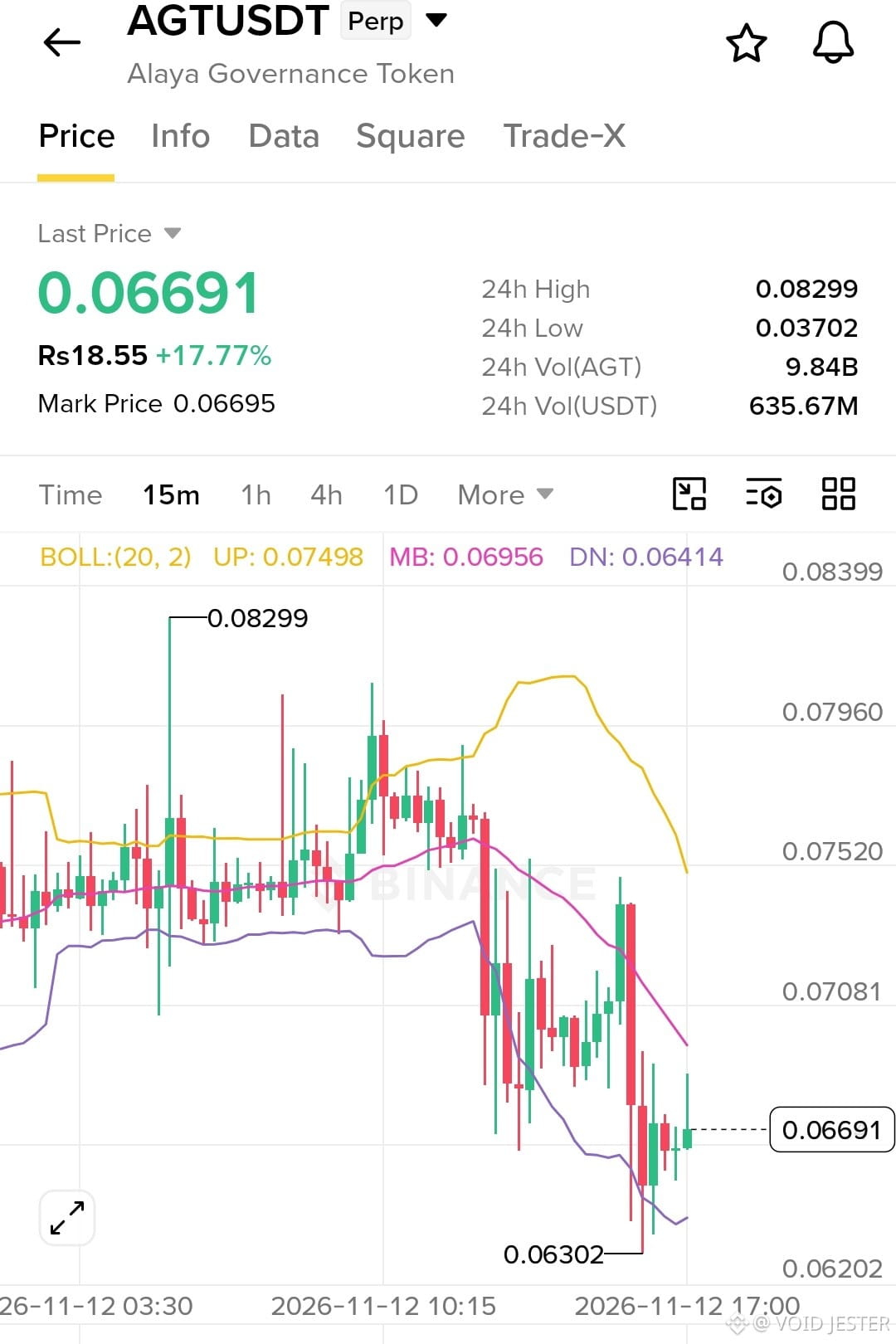
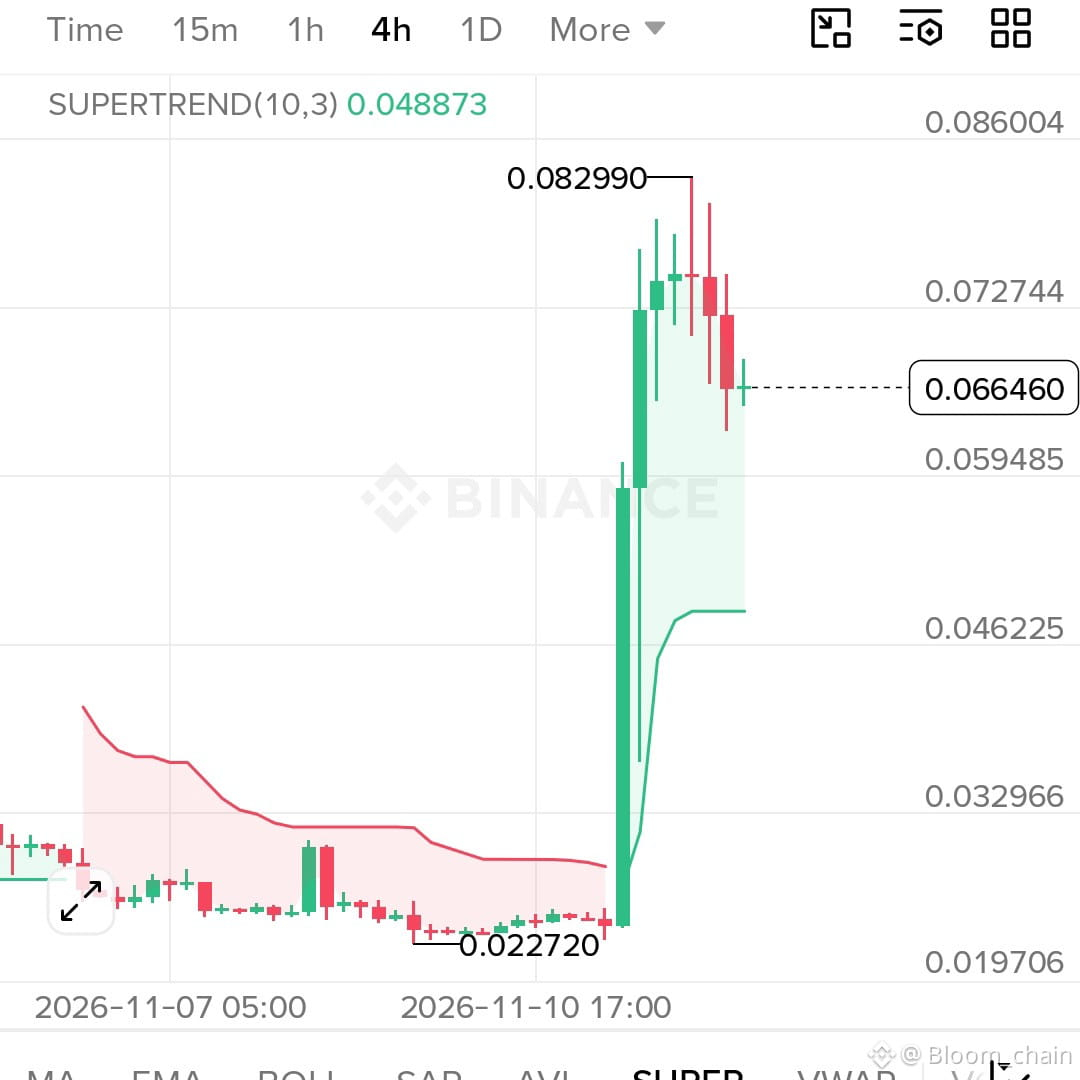
📈 $AGT trades at $0.06691 (+17.77%), with $635.67M in 24H USDT volume. Support: $0.06302; resistance: $0.07500.
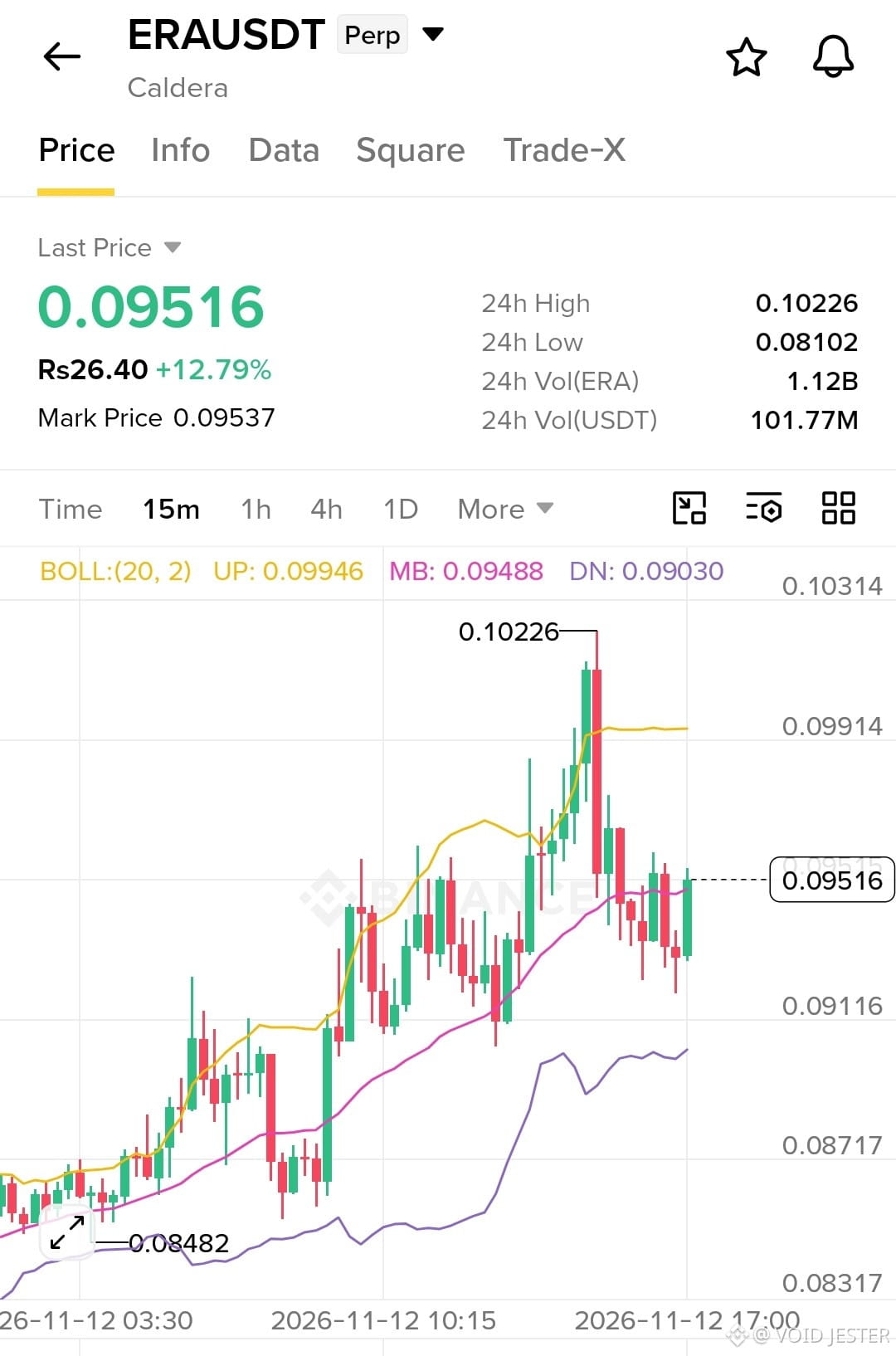
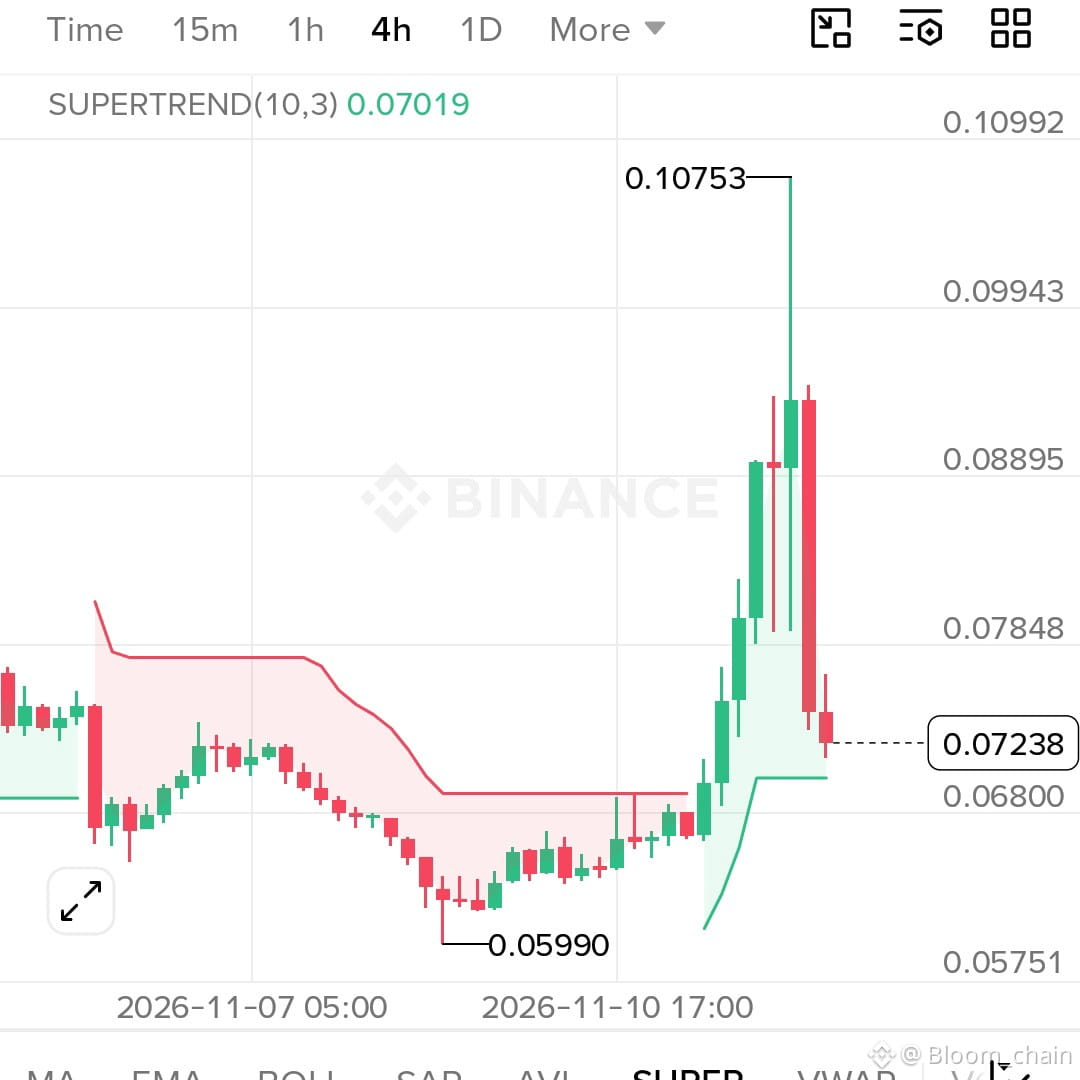
🔥 $ERA sits at $0.09516 (+12.79%), with $101.77M volume. Support: $0.09100; resistance: $0.10226.
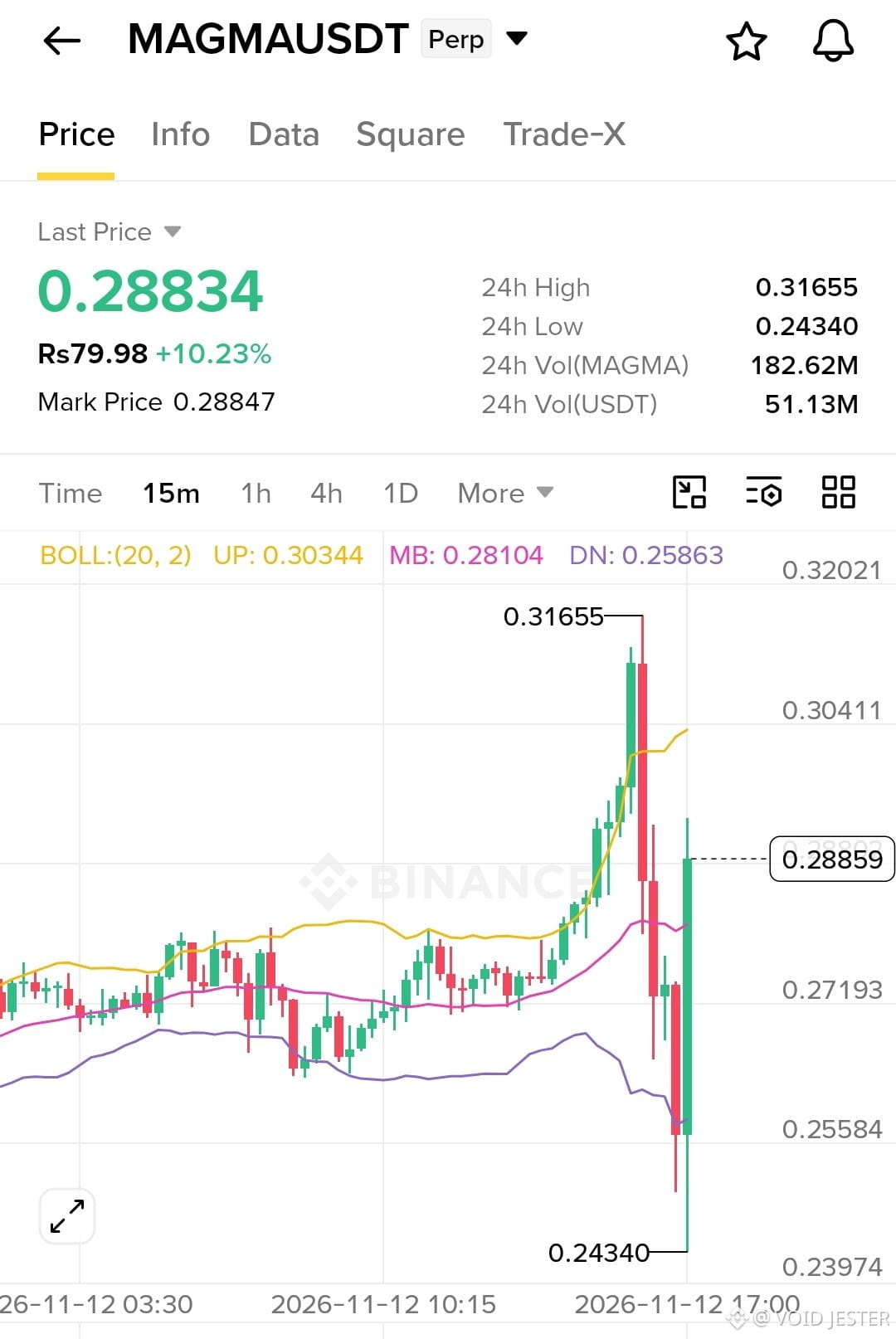
⚡ $MAGMA trades at $0.28834 (+10.23%), with $51.13M volume. Support: $0.25500; resistance: $0.30344.
Bullish recovery is visible, but volatility remains high. 📊 Manage risk carefully. Which coin looks strongest? 💬
#PythAddsNYSERealTimeDataToMarketplace #CanNvidiaEarningsEaseMarketConcerns? #HKSFCSaysTokenizationMovingToCommercialUse #MSCIRemovalMayCurbStrategy’sBitcoinBuying #CoreWeaveJumps10%On168%RevenueGrowth
{future}(AGTUSDT)
{future}(ERAUSDT)
{future}(MAGMAUSDT)
🚀 3 Coins to Watch: AGT, ERA & MAGMA!
📈 $AGT trades at $0.06691 (+17.77%), with $635.67M in 24H USDT volume. Support: $0.06302; resistance: $0.07500.
🔥 $ERA sits at $0.09516 (+12.79%), with $101.77M volume. Support: $0.09100; resistance: $0.10226.
⚡ $MAGMA trades at $0.28834 (+10.23%), with $51.13M volume. Support: $0.25500; resistance: $0.30344.
Bullish recovery is visible, but volatility remains high. 📊 Manage risk carefully. Which coin looks strongest? 💬
#PythAddsNYSERealTimeDataToMarketplace #CanNvidiaEarningsEaseMarketConcerns? #HKSFCSaysTokenizationMovingToCommercialUse #MSCIRemovalMayCurbStrategy’sBitcoinBuying #CoreWeaveJumps10%On168%RevenueGrowth
1
476

·
--
See translation
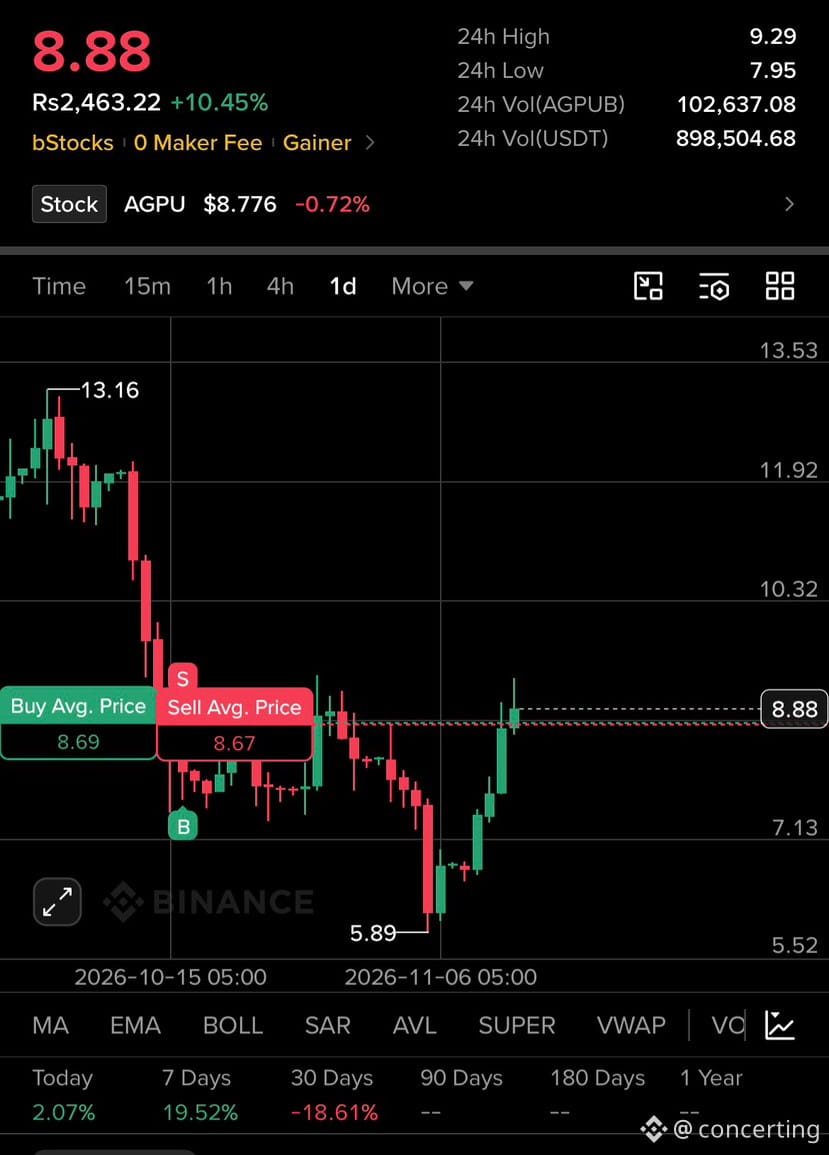
$AGPUB is attracting attention after gaining 11.15%, supported by growing interest in AI infrastructure and GPU computing. Axe Compute has announced major infrastructure contracts worth billions of dollars, strengthening its long-term business outlook. However, the stock remains highly volatile, and its upcoming quarterly financial results could create significant price movements. Resistance near $9.00–$9.26 is important, while $7.90 is a nearby support area. Trading Bias: Cautiously LONG above resistance; avoid aggressive entries ahead of earnings.
{spot}(AGPUBUSDT)
#HuangRisksOusterOverReportedAffairWithSubordinate #SouthKoreaToLetExchangesSuspendWithdrawalsOnSuspectedHacks #HKSFCSaysTokenizationMovingToCommercialUse
$AGPUB is attracting attention after gaining 11.15%, supported by growing interest in AI infrastructure and GPU computing. Axe Compute has announced major infrastructure contracts worth billions of dollars, strengthening its long-term business outlook. However, the stock remains highly volatile, and its upcoming quarterly financial results could create significant price movements. Resistance near $9.00–$9.26 is important, while $7.90 is a nearby support area. Trading Bias: Cautiously LONG above resistance; avoid aggressive entries ahead of earnings.
#HuangRisksOusterOverReportedAffairWithSubordinate #SouthKoreaToLetExchangesSuspendWithdrawalsOnSuspectedHacks #HKSFCSaysTokenizationMovingToCommercialUse
#HuangRisksOusterOverReportedAffairWithSubordinate #SouthKoreaToLetExchangesSuspendWithdrawalsOnSuspectedHacks #HKSFCSaysTokenizationMovingToCommercialUse
2
18

·
--
See translation
📊 Market Watch — What’s Your Observation?
$AGT
{future}(AGTUSDT)
is currently among the top, and $KGEN is also
{future}(KGENUSDT)
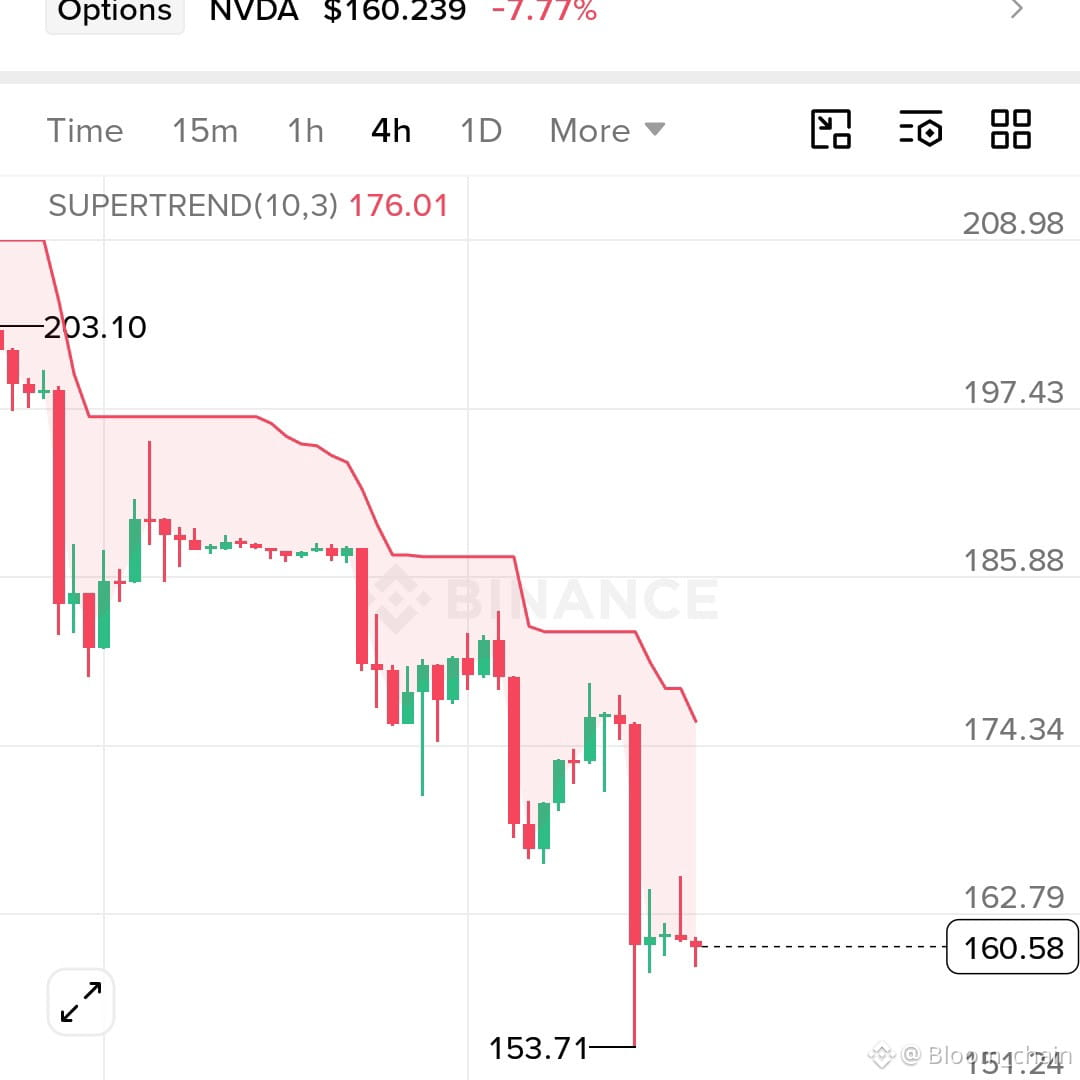
showing strong interest. But $NVDA
{future}(NVDAUSDT)
stands out with the highest reported investment, with around $2.46 billion in trading activity/investment at the moment. 👀📈
In my observation, NVDA could move higher soon, and some traders may profit while others could face losses or liquidation.
Always DYOR before trading and use Stop Loss & Take Profit to protect your capital. Don’t blindly follow anyone’s Long or Short calls.
💬 Are you one of those traders currently trading NVDA?
#HuangRisksOusterOverReportedAffairWithSubordinate #AnthropicRejectsIPODelayValuationinQuestion #CoreWeaveJumps10%On168%RevenueGrowth #MSCIRemovalMayCurbStrategy’sBitcoinBuying #HKSFCSaysTokenizationMovingToCommercialUse
📊 Market Watch — What’s Your Observation?
$AGT
is currently among the top, and $KGEN is also
showing strong interest. But $NVDA
stands out with the highest reported investment, with around $2.46 billion in trading activity/investment at the moment. 👀📈
In my observation, NVDA could move higher soon, and some traders may profit while others could face losses or liquidation.
Always DYOR before trading and use Stop Loss & Take Profit to protect your capital. Don’t blindly follow anyone’s Long or Short calls.
💬 Are you one of those traders currently trading NVDA?
#HuangRisksOusterOverReportedAffairWithSubordinate #AnthropicRejectsIPODelayValuationinQuestion #CoreWeaveJumps10%On168%RevenueGrowth #MSCIRemovalMayCurbStrategy’sBitcoinBuying #HKSFCSaysTokenizationMovingToCommercialUse
1
524

·
--
Bullish
See translation
$ONE
Bullish outlook: ONE is showing strong positive momentum at 0.001707, gaining 10.20% over 24 hours. Buyers are gaining control, creating potential for further upside.
EP: 0.001695–0.001710
TP1: 0.001735
TP2: 0.001765
TP3: 0.001800
SL: 0.001665
Holding support could attract fresh liquidity and strengthen bullish momentum. A clean breakout above resistance may confirm trend continuation and stronger buyer control.
Let's go $ONE
{spot}(ONEUSDT)
#PythAddsNYSERealTimeDataToMarketplace #CanNvidiaEarningsEaseMarketConcerns? #HKSFCSaysTokenizationMovingToCommercialUse #CoreWeaveJumps10%On168%RevenueGrowth #AnthropicRejectsIPODelayValuationinQuestion
$ONE
Bullish outlook: ONE is showing strong positive momentum at 0.001707, gaining 10.20% over 24 hours. Buyers are gaining control, creating potential for further upside.
EP: 0.001695–0.001710
TP1: 0.001735
TP2: 0.001765
TP3: 0.001800
SL: 0.001665
Holding support could attract fresh liquidity and strengthen bullish momentum. A clean breakout above resistance may confirm trend continuation and stronger buyer control.
Let's go $ONE
#PythAddsNYSERealTimeDataToMarketplace #CanNvidiaEarningsEaseMarketConcerns? #HKSFCSaysTokenizationMovingToCommercialUse #CoreWeaveJumps10%On168%RevenueGrowth #AnthropicRejectsIPODelayValuationinQuestion
77


·
--
Bearish
See translation
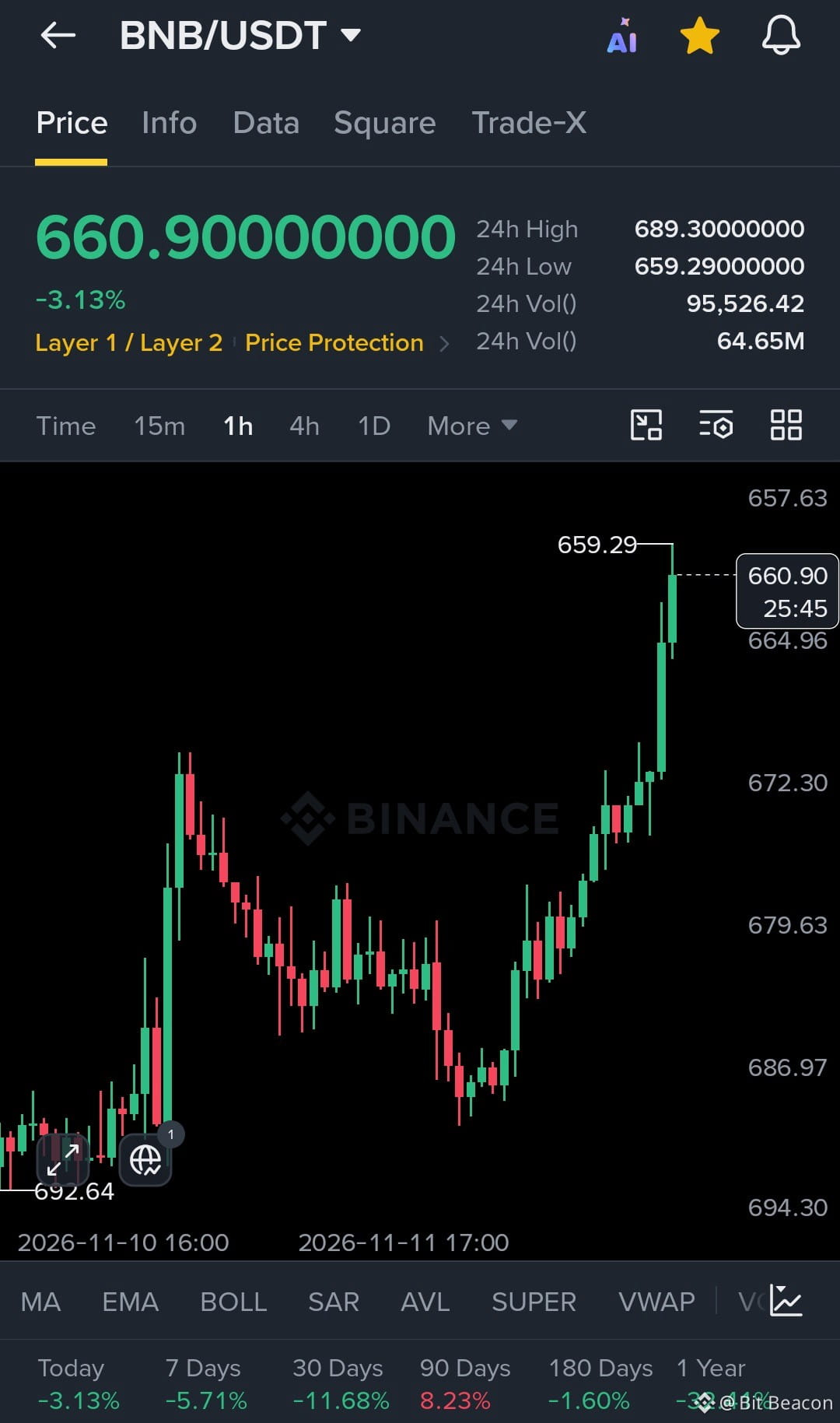
$BNB is testing critical support near $660. Buyers are struggling to reverse the bearish pressure, with price down 3.13%. A breakdown below $659.29 could open the door for another leg lower.
Trade Setup: SHORT
Entry: $660.00 – $663.00
TP1: $659.30
TP2: $657.60
TP3: $655.00
Stop Loss: $666.00
The key is a confirmed break below support. If buyers reclaim $665, the bearish setup weakens. Don't chase the move; wait for confirmation and protect your capital.
Risk managed. Eyes on the targets. Let's go $BNB
{spot}(BNBUSDT)
#HuangRisksOusterOverReportedAffairWithSubordinate #AnthropicRejectsIPODelayValuationinQuestion #CoreWeaveJumps10%On168%RevenueGrowth #MSCIRemovalMayCurbStrategy’sBitcoinBuying #HKSFCSaysTokenizationMovingToCommercialUse
$BNB is testing critical support near $660. Buyers are struggling to reverse the bearish pressure, with price down 3.13%. A breakdown below $659.29 could open the door for another leg lower.
Trade Setup: SHORT
Entry: $660.00 – $663.00
TP1: $659.30
TP2: $657.60
TP3: $655.00
Stop Loss: $666.00
The key is a confirmed break below support. If buyers reclaim $665, the bearish setup weakens. Don't chase the move; wait for confirmation and protect your capital.
Risk managed. Eyes on the targets. Let's go $BNB
#HuangRisksOusterOverReportedAffairWithSubordinate #AnthropicRejectsIPODelayValuationinQuestion #CoreWeaveJumps10%On168%RevenueGrowth #MSCIRemovalMayCurbStrategy’sBitcoinBuying #HKSFCSaysTokenizationMovingToCommercialUse
139
·
--
Bearish
See translation
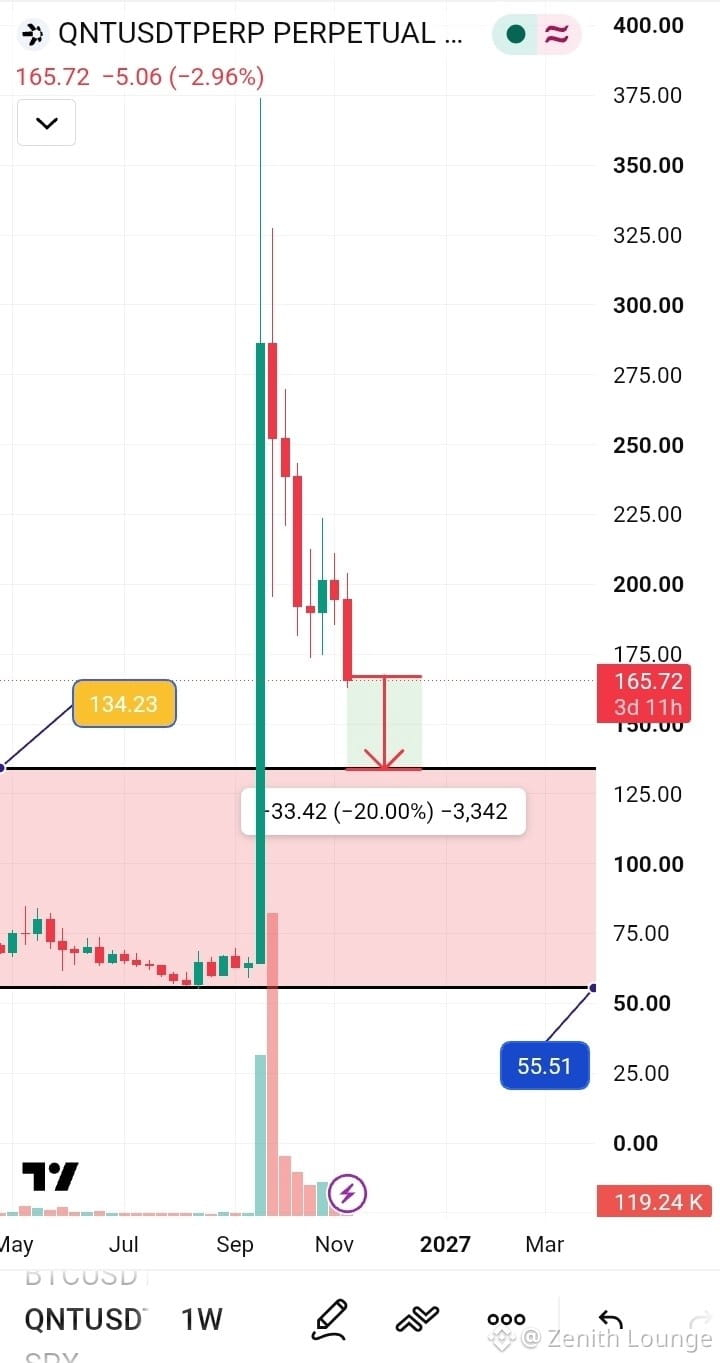
⚠️ $QNT USDT – 1W UPDATE
Further downside expected. Avoid longs and spot buying for now.
🎯 Short Target: $135 📉 Expected Downside: ~20%
🟢 Support is marked on the chart. Consider spot buying or opening longs once price reaches that zone.
{future}(QNTUSDT)
#HuangRisksOusterOverReportedAffairWithSubordinate #AnthropicRejectsIPODelayValuationinQuestion #CoreWeaveJumps10%On168%RevenueGrowth #MSCIRemovalMayCurbStrategy’sBitcoinBuying #HKSFCSaysTokenizationMovingToCommercialUse
⚠️ $QNT USDT – 1W UPDATE
Further downside expected. Avoid longs and spot buying for now.
🎯 Short Target: $135 📉 Expected Downside: ~20%
🟢 Support is marked on the chart. Consider spot buying or opening longs once price reaches that zone.
#HuangRisksOusterOverReportedAffairWithSubordinate #AnthropicRejectsIPODelayValuationinQuestion #CoreWeaveJumps10%On168%RevenueGrowth #MSCIRemovalMayCurbStrategy’sBitcoinBuying #HKSFCSaysTokenizationMovingToCommercialUse
1
1

·
--
Bullish
See translation
{spot}(USDCUSDT)
$BTC #CanNvidiaEarningsEaseMarketConcerns? #CoreWeaveJumps10%On168%RevenueGrowth #MSCIRemovalMayCurbStrategy’sBitcoinBuying #HKSFCSaysTokenizationMovingToCommercialUse #binance $BTC $AAPLB
{future}(BTCUSDT)
can you beat BITCOIN or USDC
$BTC #CanNvidiaEarningsEaseMarketConcerns? #CoreWeaveJumps10%On168%RevenueGrowth #MSCIRemovalMayCurbStrategy’sBitcoinBuying #HKSFCSaysTokenizationMovingToCommercialUse #binance $BTC $AAPLB
can you beat BITCOIN or USDC
can you beat BITCOIN or USDC

3

·
--
See translation
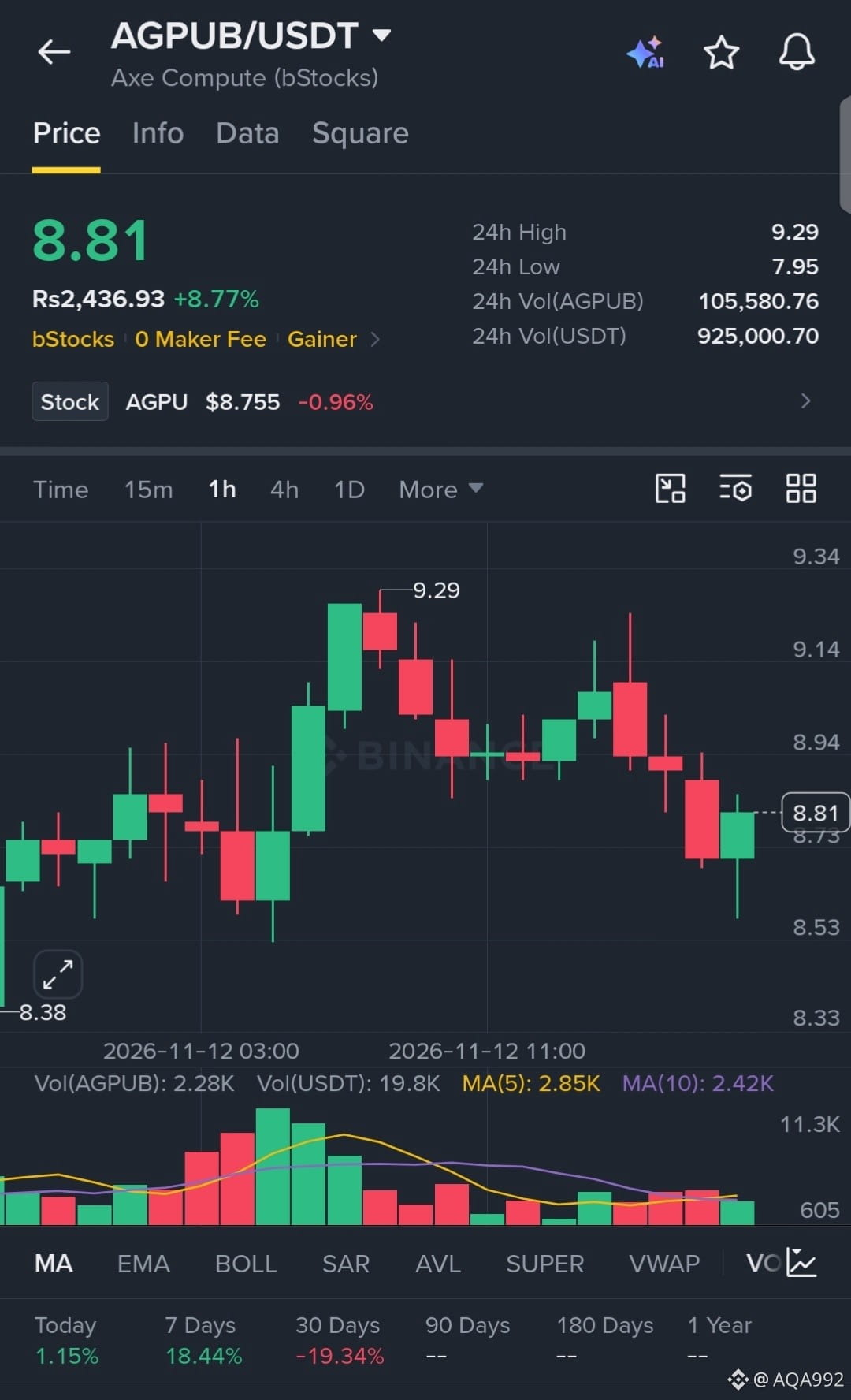
$AGPUB
is aggressively sweeping lower liquidity, printing a sharp capitulation wick to 8.53. The 1H chart shows immediate rejection of that low with building volume, signaling a high-probability relief bounce as sellers exhaust momentum.
EP: 8.81
TP: 9.05, 9.29, 9.50
SL: 8.50
$AGPUB
#HuangRisksOusterOverReportedAffairWithSubordinate
#AnthropicRejectsIPODelayValuationinQuestion
#CoreWeaveJumps10%On168%RevenueGrowth
#MSCIRemovalMayCurbStrategy’sBitcoinBuying
#HKSFCSaysTokenizationMovingToCommercialUse
{spot}(AGPUBUSDT)
$AGPUB
is aggressively sweeping lower liquidity, printing a sharp capitulation wick to 8.53. The 1H chart shows immediate rejection of that low with building volume, signaling a high-probability relief bounce as sellers exhaust momentum.
EP: 8.81
TP: 9.05, 9.29, 9.50
SL: 8.50
$AGPUB
#HuangRisksOusterOverReportedAffairWithSubordinate
#AnthropicRejectsIPODelayValuationinQuestion
#CoreWeaveJumps10%On168%RevenueGrowth
#MSCIRemovalMayCurbStrategy’sBitcoinBuying
#HKSFCSaysTokenizationMovingToCommercialUse
1
·
--
See translation
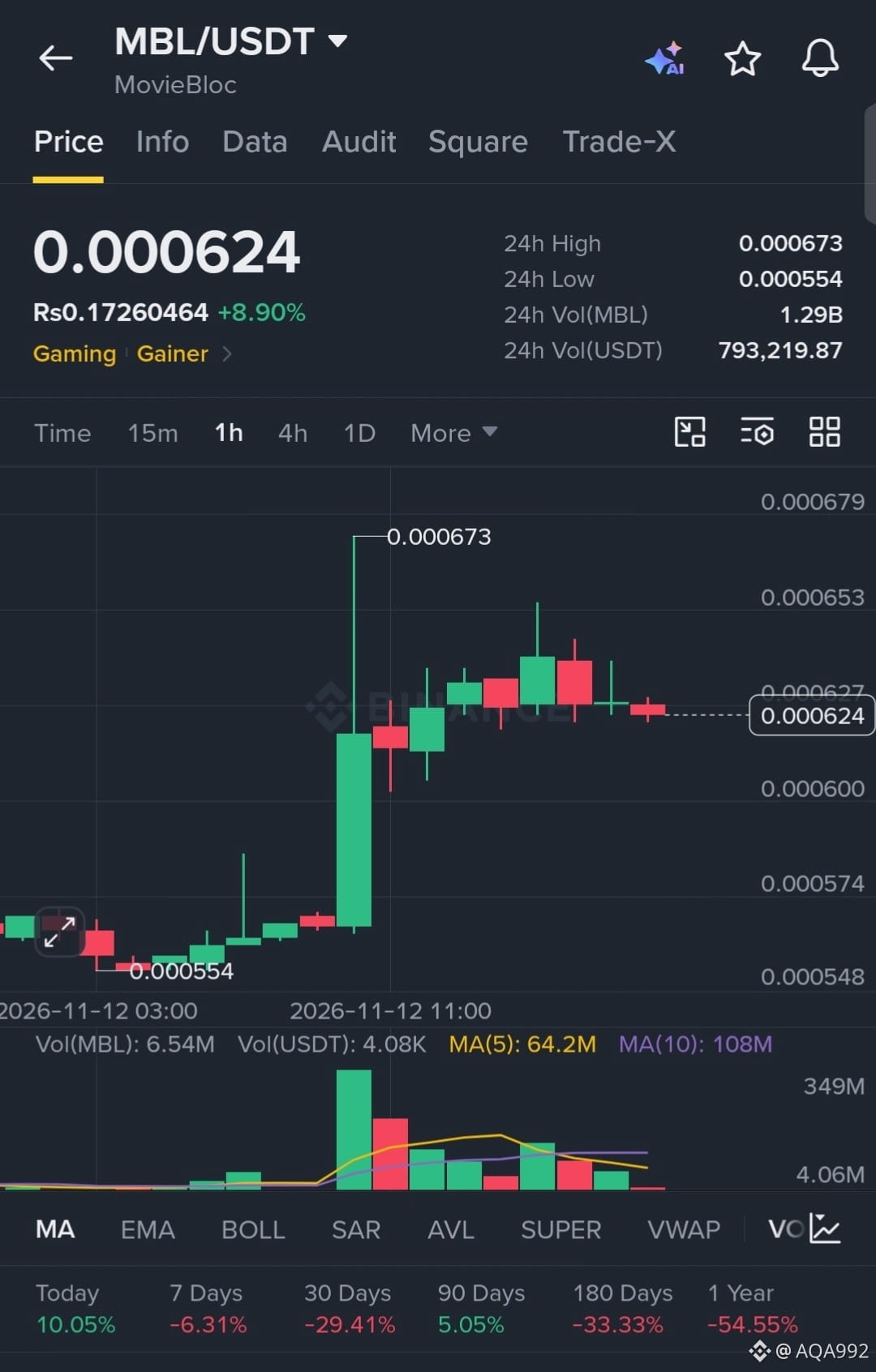
$MBL
has ignited a massive volume breakout, aggressively clearing resistance and establishing a new local high. The 1H chart shows healthy consolidation above the breakout zone, indicating strong buyer absorption and a coiled setup for the next leg up.
EP: 0.000624
TP: 0.000650, 0.000673, 0.000700
SL: 0.000590
$MBL
#HuangRisksOusterOverReportedAffairWithSubordinate
#AnthropicRejectsIPODelayValuationinQuestion
#CoreWeaveJumps10%On168%RevenueGrowth
#MSCIRemovalMayCurbStrategy’sBitcoinBuying
#HKSFCSaysTokenizationMovingToCommercialUse
{spot}(MBLUSDT)
$MBL
has ignited a massive volume breakout, aggressively clearing resistance and establishing a new local high. The 1H chart shows healthy consolidation above the breakout zone, indicating strong buyer absorption and a coiled setup for the next leg up.
EP: 0.000624
TP: 0.000650, 0.000673, 0.000700
SL: 0.000590
$MBL
#HuangRisksOusterOverReportedAffairWithSubordinate
#AnthropicRejectsIPODelayValuationinQuestion
#CoreWeaveJumps10%On168%RevenueGrowth
#MSCIRemovalMayCurbStrategy’sBitcoinBuying
#HKSFCSaysTokenizationMovingToCommercialUse
6
·
--
See translation
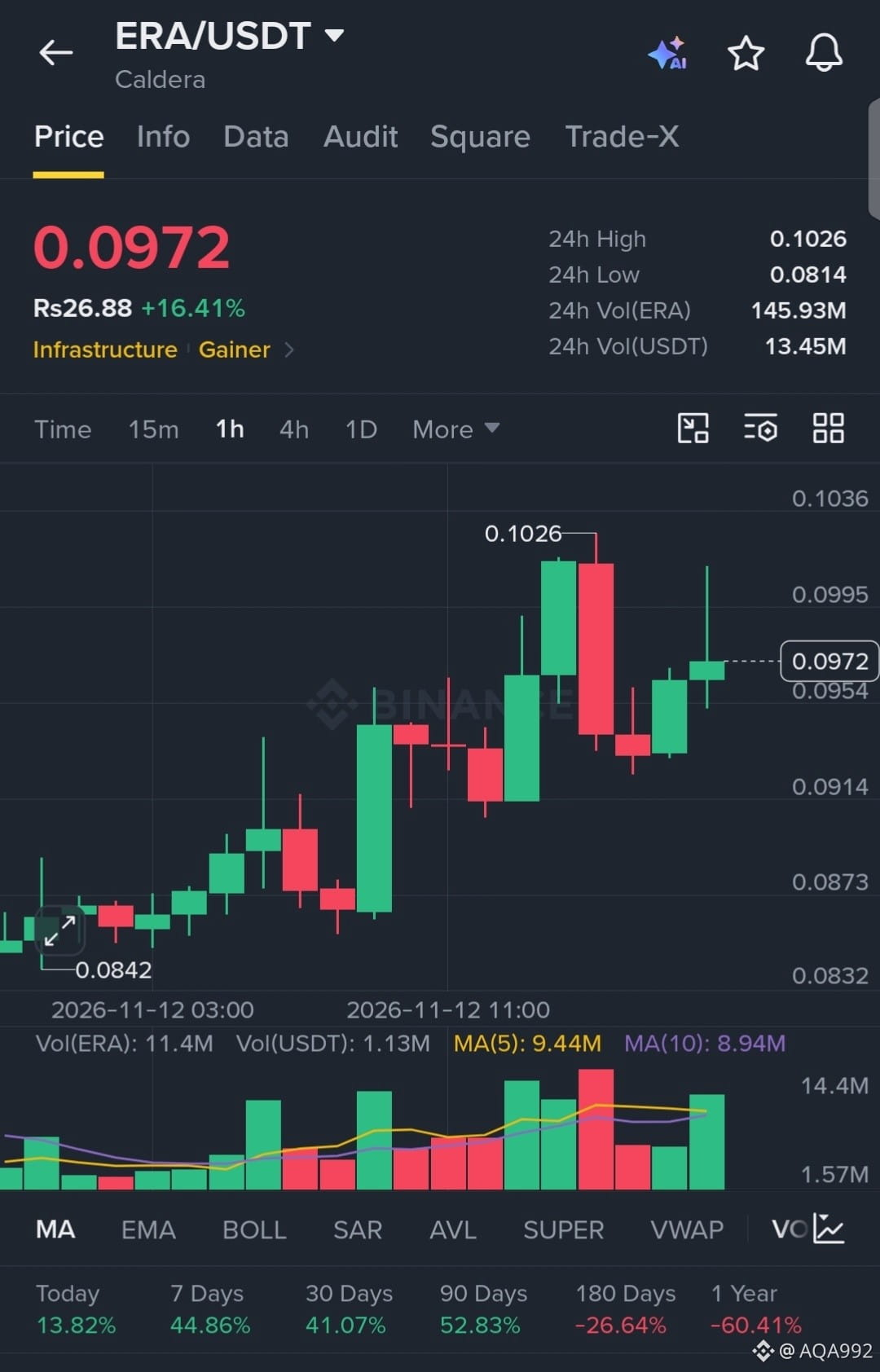
$ERA
is showing aggressive bullish continuation, establishing clear higher lows and breaking local resistance with sustained volume. The 1H chart displays strong buyer absorption on every dip, signaling intense momentum ready to push through recent local highs.
EP: 0.0972
TP: 0.1015, 0.1050, 0.1100
SL: 0.0915
$ERA
#HuangRisksOusterOverReportedAffairWithSubordinate
#AnthropicRejectsIPODelayValuationinQuestion
#CoreWeaveJumps10%On168%RevenueGrowth
#MSCIRemovalMayCurbStrategy’sBitcoinBuying
#HKSFCSaysTokenizationMovingToCommercialUse
{future}(ERAUSDT)
$ERA
is showing aggressive bullish continuation, establishing clear higher lows and breaking local resistance with sustained volume. The 1H chart displays strong buyer absorption on every dip, signaling intense momentum ready to push through recent local highs.
EP: 0.0972
TP: 0.1015, 0.1050, 0.1100
SL: 0.0915
$ERA
#HuangRisksOusterOverReportedAffairWithSubordinate
#AnthropicRejectsIPODelayValuationinQuestion
#CoreWeaveJumps10%On168%RevenueGrowth
#MSCIRemovalMayCurbStrategy’sBitcoinBuying
#HKSFCSaysTokenizationMovingToCommercialUse
5
·
--
See translation
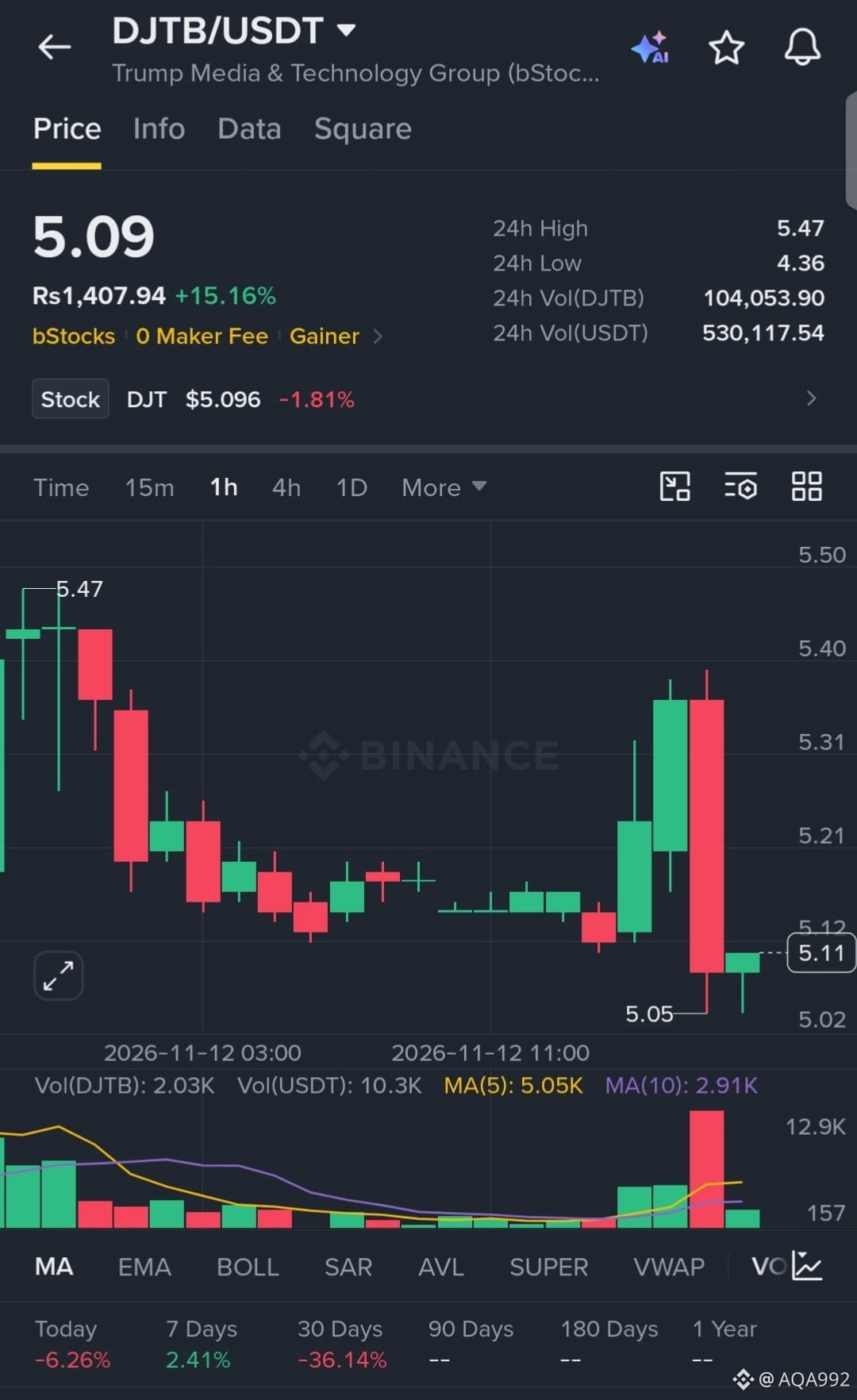
$DJTB
volatility has been unlocked, evident from the aggressive 1H wick sweeping liquidity down to 5.05 following a sharp rally. The immediate rejection of that low with a sustained volume spike signals strong buyer absorption. Momentum is shifting for a tactical rebound from this demand zone.
EP: 5.09
TP: 5.20, 5.30, 5.45
SL: 4.95
$DJTB
#HuangRisksOusterOverReportedAffairWithSubordinate
#AnthropicRejectsIPODelayValuationinQuestion #CoreWeaveJumps10%On168%RevenueGrowth
#MSCIRemovalMayCurbStrategy’sBitcoinBuying
#HKSFCSaysTokenizationMovingToCommercialUse
{spot}(DJTBUSDT)
$DJTB
volatility has been unlocked, evident from the aggressive 1H wick sweeping liquidity down to 5.05 following a sharp rally. The immediate rejection of that low with a sustained volume spike signals strong buyer absorption. Momentum is shifting for a tactical rebound from this demand zone.
EP: 5.09
TP: 5.20, 5.30, 5.45
SL: 4.95
$DJTB
#HuangRisksOusterOverReportedAffairWithSubordinate
#AnthropicRejectsIPODelayValuationinQuestion #CoreWeaveJumps10%On168%RevenueGrowth
#MSCIRemovalMayCurbStrategy’sBitcoinBuying
#HKSFCSaysTokenizationMovingToCommercialUse
3
·
--
Bearish
See translation
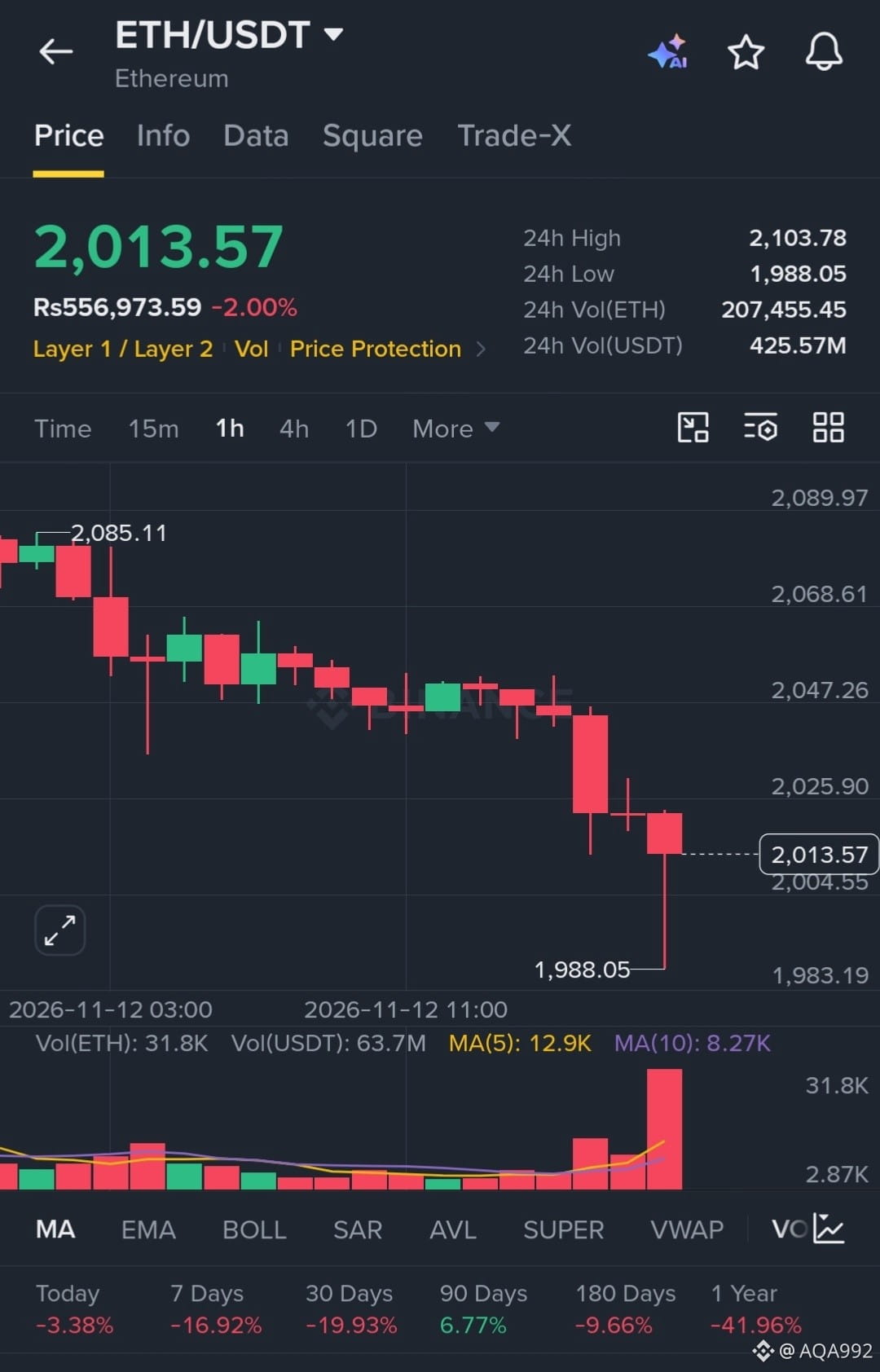
$ETH
bears have broken key support, triggering a sharp capitulation wick to 1,988. Volume is spiking as the 1H chart shows heavy sell pressure, but the immediate rejection of the lows signals a high-probability relief bounce. Momentum is primed for a swift mean-reversion play.
EP: 2013
TP: 2035, 2055, 2075
SL: 1985
$ETH
#HuangRisksOusterOverReportedAffairWithSubordinate
#AnthropicRejectsIPODelayValuationinQuestion
#CoreWeaveJumps10%On168%RevenueGrowth
#MSCIRemovalMayCurbStrategy’sBitcoinBuying
#HKSFCSaysTokenizationMovingToCommercialUse
{future}(ETHUSDT)
$ETH
bears have broken key support, triggering a sharp capitulation wick to 1,988. Volume is spiking as the 1H chart shows heavy sell pressure, but the immediate rejection of the lows signals a high-probability relief bounce. Momentum is primed for a swift mean-reversion play.
EP: 2013
TP: 2035, 2055, 2075
SL: 1985
$ETH
#HuangRisksOusterOverReportedAffairWithSubordinate
#AnthropicRejectsIPODelayValuationinQuestion
#CoreWeaveJumps10%On168%RevenueGrowth
#MSCIRemovalMayCurbStrategy’sBitcoinBuying
#HKSFCSaysTokenizationMovingToCommercialUse
5
Log in to explore more content
Join global crypto users on Binance Square
⚡️ Get latest and useful information about crypto.
💬 Trusted by the world’s largest crypto exchange.
👍 Discover real insights from verified creators.
Email / Phone number
Trending Topics
1
#HuangRisksOusterOverReportedAffairWithSubordinate
75,885 views
1,040 Discussing
2
#AnthropicRejectsIPODelayValuationinQuestion
537,526 views
4,407 Discussing
3
#BitMineReports$6.3BNetLossForFiscal2026
116 views
27 Discussing
4
#CoreWeaveJumps10%On168%RevenueGrowth
102,530 views
1,182 Discussing
5
#ZcashFallsBelow$1000ForFirstTimeSinceSeptember
55,019 views
229 Discussing
6
#MSCIRemovalMayCurbStrategy’sBitcoinBuying
15,379 views
268 Discussing
7
#HKSFCSaysTokenizationMovingToCommercialUse
3,845 views
77 Discussing
8
#CanNvidiaEarningsEaseMarketConcerns?
208,229 views
2,063 Discussing
9
#SouthKoreaToLetExchangesSuspendWithdrawalsOnSuspectedHacks
406 views
16 Discussing
10
#PythAddsNYSERealTimeDataToMarketplace
7,792 views
175 Discussing