
浩宇BNB
2.8k Posts

浩宇BNB
Report
Block User
Be Polite 🙏
2.1K+ Following
10.0K+ Followers
5.3K+ Liked
Posts
All
Quotes
Live
PINNED
·
--
The best entries rarely come from predicting the top or bottom—they come from knowing your levels before volatility arrives.
I’m watching these potential dip zones:
NBIS $200
PLTR $160
SPCX $140
BE $237
SNOW $280
NET $260
MU $940
SNDK $1,500
TSLA $320.
These are not price predictions. They’re zones where risk/reward could become significantly more attractive if the market delivers a deeper pullback.
The real edge is preparation: define valuation, liquidity, and conviction before emotions take over. If prices never reach these levels, fine. But if fear creates the opportunity, the plan is already written.
Patience is a position too.😎
$SNDKB
{spot}(SNDKBUSDT)
$TSLAB
{spot}(TSLABUSDT)
$SPCXB
{spot}(SPCXBUSDT)
The best entries rarely come from predicting the top or bottom—they come from knowing your levels before volatility arrives.
I’m watching these potential dip zones:
NBIS $200
PLTR $160
SPCX $140
BE $237
SNOW $280
NET $260
MU $940
SNDK $1,500
TSLA $320.
These are not price predictions. They’re zones where risk/reward could become significantly more attractive if the market delivers a deeper pullback.
The real edge is preparation: define valuation, liquidity, and conviction before emotions take over. If prices never reach these levels, fine. But if fear creates the opportunity, the plan is already written.
Patience is a position too.😎
$SNDKB
$TSLAB
$SPCXB
I’m watching these potential dip zones:
NBIS $200
PLTR $160
SPCX $140
BE $237
SNOW $280
NET $260
MU $940
SNDK $1,500
TSLA $320.
These are not price predictions. They’re zones where risk/reward could become significantly more attractive if the market delivers a deeper pullback.
The real edge is preparation: define valuation, liquidity, and conviction before emotions take over. If prices never reach these levels, fine. But if fear creates the opportunity, the plan is already written.
Patience is a position too.😎
$SNDKB
$TSLAB
$SPCXB
7
7
528
·
--
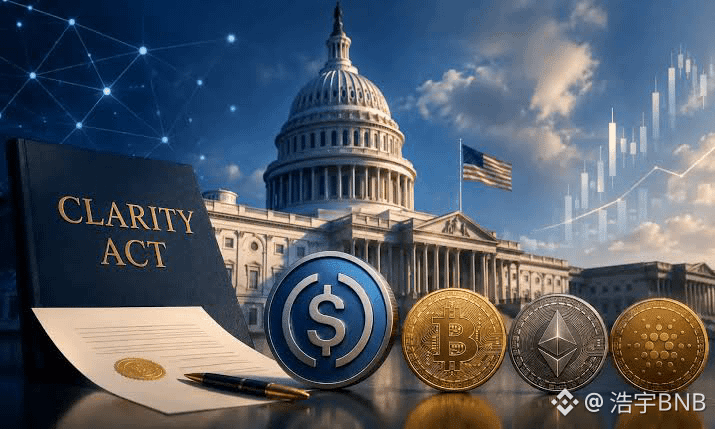
🇺🇸 CLARITY Act could become a major turning point for the U.S. crypto market.
White House Crypto Advisor Patrick Witt has urged both Republicans and Democrats in the Senate to support moving the CLARITY Act forward.
Key date: September 15, 2026
Importantly, this vote would not directly pass the bill into law. Instead, it is a procedural step determining whether the legislation can formally advance in the Senate.
If ultimately enacted, the CLARITY Act could establish a clearer regulatory framework for digital assets, potentially reducing uncertainty around SEC and CFTC jurisdiction.
For crypto, regulatory clarity could unlock greater institutional confidence, innovation, and capital.
September 15 could be an important milestone for U.S. crypto regulation.😎
$ETH
{spot}(ETHUSDT)
$BTC
{spot}(BTCUSDT)
$ZEC
{spot}(ZECUSDT)
🇺🇸 CLARITY Act could become a major turning point for the U.S. crypto market.
White House Crypto Advisor Patrick Witt has urged both Republicans and Democrats in the Senate to support moving the CLARITY Act forward.
Key date: September 15, 2026
Importantly, this vote would not directly pass the bill into law. Instead, it is a procedural step determining whether the legislation can formally advance in the Senate.
If ultimately enacted, the CLARITY Act could establish a clearer regulatory framework for digital assets, potentially reducing uncertainty around SEC and CFTC jurisdiction.
For crypto, regulatory clarity could unlock greater institutional confidence, innovation, and capital.
September 15 could be an important milestone for U.S. crypto regulation.😎
$ETH
$BTC
$ZEC
White House Crypto Advisor Patrick Witt has urged both Republicans and Democrats in the Senate to support moving the CLARITY Act forward.
Key date: September 15, 2026
Importantly, this vote would not directly pass the bill into law. Instead, it is a procedural step determining whether the legislation can formally advance in the Senate.
If ultimately enacted, the CLARITY Act could establish a clearer regulatory framework for digital assets, potentially reducing uncertainty around SEC and CFTC jurisdiction.
For crypto, regulatory clarity could unlock greater institutional confidence, innovation, and capital.
September 15 could be an important milestone for U.S. crypto regulation.😎
$ETH
$BTC
$ZEC
436
6
436
·
--
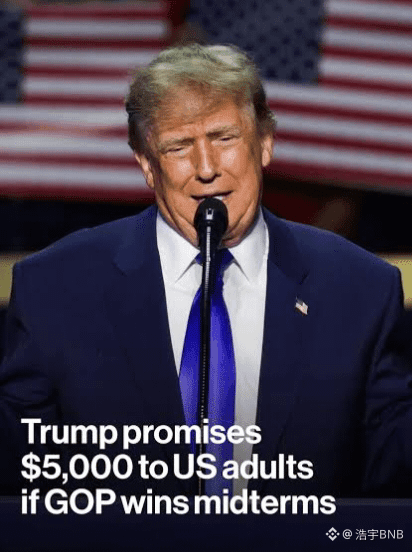
🇺🇸 Trump’s $5,000 “Dividend”: What We Actually Know
President Donald Trump has promised a $5,000 dividend to every adult U.S. citizen if Republicans retain control of both the House and Senate in the November midterm elections.
Trump said the money would have to be spent inside the United States. However, this is currently a political pledge—not an approved government payment program. He has not explained how it would be funded or implemented.
With more than 200 million potential recipients, the total cost could exceed $1 trillion. For crypto investors, the major question is whether such spending would increase economic liquidity, inflation expectations, and ultimately risk appetite.😎
$BTC
{spot}(BTCUSDT)
$ETH
{spot}(ETHUSDT)
$APU
{alpha}(10x594daad7d77592a2b97b725a7ad59d7e188b5bfa)
🇺🇸 Trump’s $5,000 “Dividend”: What We Actually Know
President Donald Trump has promised a $5,000 dividend to every adult U.S. citizen if Republicans retain control of both the House and Senate in the November midterm elections.
Trump said the money would have to be spent inside the United States. However, this is currently a political pledge—not an approved government payment program. He has not explained how it would be funded or implemented.
With more than 200 million potential recipients, the total cost could exceed $1 trillion. For crypto investors, the major question is whether such spending would increase economic liquidity, inflation expectations, and ultimately risk appetite.😎
$BTC
$ETH
$APU
President Donald Trump has promised a $5,000 dividend to every adult U.S. citizen if Republicans retain control of both the House and Senate in the November midterm elections.
Trump said the money would have to be spent inside the United States. However, this is currently a political pledge—not an approved government payment program. He has not explained how it would be funded or implemented.
With more than 200 million potential recipients, the total cost could exceed $1 trillion. For crypto investors, the major question is whether such spending would increase economic liquidity, inflation expectations, and ultimately risk appetite.😎
$BTC
$ETH
$APU
3
160
·
--
🚨 India’s Crypto Regulation: Why September 16 Matters 🇮🇳
India’s crypto industry is heading toward an important policy discussion on September 16, when the Ministry of Finance is expected to appear before a parliamentary committee to discuss the country’s approach to regulating digital assets.
The key questions are bigger than simply “legal or illegal.
🔹 Which regulator should oversee crypto?
🔹 Should assets be classified by function and risk?
🔹 How should offshore exchanges operating in India be brought under compliance rules?
For investors, this could signal the direction of India’s next regulatory framework.
⚠️ This is not a new crypto law announcement, But the committee’s discussion could provide valuable clues about India’s regulatory roadmap.
September 16 could be a key date for India’s crypto market. 🇮🇳🔥
$BTC
{spot}(BTCUSDT)
$XRP
{spot}(XRPUSDT)
$XMR
{future}(XMRUSDT)
🚨 India’s Crypto Regulation: Why September 16 Matters 🇮🇳
India’s crypto industry is heading toward an important policy discussion on September 16, when the Ministry of Finance is expected to appear before a parliamentary committee to discuss the country’s approach to regulating digital assets.
The key questions are bigger than simply “legal or illegal.
🔹 Which regulator should oversee crypto?
🔹 Should assets be classified by function and risk?
🔹 How should offshore exchanges operating in India be brought under compliance rules?
For investors, this could signal the direction of India’s next regulatory framework.
⚠️ This is not a new crypto law announcement, But the committee’s discussion could provide valuable clues about India’s regulatory roadmap.
September 16 could be a key date for India’s crypto market. 🇮🇳🔥
$BTC
$XRP
$XMR
India’s crypto industry is heading toward an important policy discussion on September 16, when the Ministry of Finance is expected to appear before a parliamentary committee to discuss the country’s approach to regulating digital assets.
The key questions are bigger than simply “legal or illegal.
🔹 Which regulator should oversee crypto?
🔹 Should assets be classified by function and risk?
🔹 How should offshore exchanges operating in India be brought under compliance rules?
For investors, this could signal the direction of India’s next regulatory framework.
⚠️ This is not a new crypto law announcement, But the committee’s discussion could provide valuable clues about India’s regulatory roadmap.
September 16 could be a key date for India’s crypto market. 🇮🇳🔥
$BTC
$XRP
$XMR

3
259
·
--
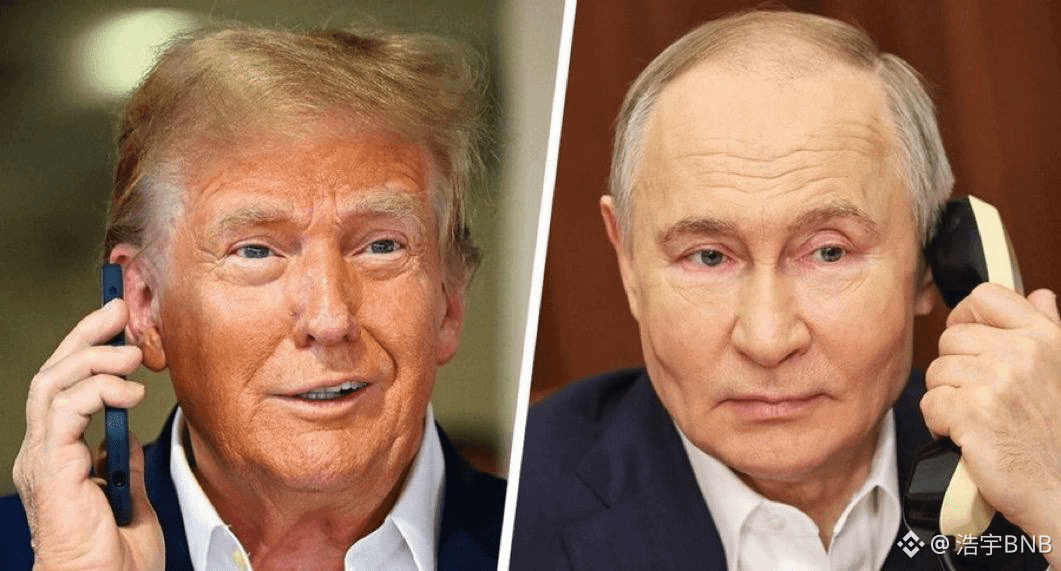
🚨 PUTIN–TRUMP CALL: WORDS VS. REALITY 🇷🇺🇺🇸
Putin and Trump reportedly spoke for around one hour, with Putin saying Russia has no plans to attack Europe.
But here’s where things get interesting. 👀
At almost the same time, reports emerged of a Russian drone flying over Romania 🇷🇴.
That contrast is fueling fresh questions across Europe: are diplomatic assurances enough when military incidents continue to raise concerns?
For global markets, geopolitical tension matters. A sudden escalation could trigger risk-off sentiment, currency volatility, and pressure on crypto assets.
🔥 The real story isn’t what was promised on the call—it’s what happens next.😎
$BTC
{spot}(BTCUSDT)
$USELESS
{future}(USELESSUSDT)
$ZEC
{spot}(ZECUSDT)
🚨 PUTIN–TRUMP CALL: WORDS VS. REALITY 🇷🇺🇺🇸
Putin and Trump reportedly spoke for around one hour, with Putin saying Russia has no plans to attack Europe.
But here’s where things get interesting. 👀
At almost the same time, reports emerged of a Russian drone flying over Romania 🇷🇴.
That contrast is fueling fresh questions across Europe: are diplomatic assurances enough when military incidents continue to raise concerns?
For global markets, geopolitical tension matters. A sudden escalation could trigger risk-off sentiment, currency volatility, and pressure on crypto assets.
🔥 The real story isn’t what was promised on the call—it’s what happens next.😎
$BTC
$USELESS
$ZEC
Putin and Trump reportedly spoke for around one hour, with Putin saying Russia has no plans to attack Europe.
But here’s where things get interesting. 👀
At almost the same time, reports emerged of a Russian drone flying over Romania 🇷🇴.
That contrast is fueling fresh questions across Europe: are diplomatic assurances enough when military incidents continue to raise concerns?
For global markets, geopolitical tension matters. A sudden escalation could trigger risk-off sentiment, currency volatility, and pressure on crypto assets.
🔥 The real story isn’t what was promised on the call—it’s what happens next.😎
$BTC
$USELESS
$ZEC
532
4
34
532
·
--
#XRP Is Refusing to Follow the Crypto Market✓
The crypto market is pulling back, but XRP is showing surprising strength.
While several major cryptocurrencies struggle under renewed selling pressure, XRP has managed to hold onto weekly gains, making it one of the strongest performers among large-cap digital assets.
That resilience is catching traders’ attention.
XRP’s recent momentum comes after a powerful monthly rally, suggesting the current pullback may be consolidation rather than a trend reversal. The big question now: Can XRP hold its key support and launch another move higher?
For XRP bulls, the next breakout could be explosive.😎
$XRP
{spot}(XRPUSDT)
#XRP Is Refusing to Follow the Crypto Market✓
The crypto market is pulling back, but XRP is showing surprising strength.
While several major cryptocurrencies struggle under renewed selling pressure, XRP has managed to hold onto weekly gains, making it one of the strongest performers among large-cap digital assets.
That resilience is catching traders’ attention.
XRP’s recent momentum comes after a powerful monthly rally, suggesting the current pullback may be consolidation rather than a trend reversal. The big question now: Can XRP hold its key support and launch another move higher?
For XRP bulls, the next breakout could be explosive.😎
$XRP
The crypto market is pulling back, but XRP is showing surprising strength.
While several major cryptocurrencies struggle under renewed selling pressure, XRP has managed to hold onto weekly gains, making it one of the strongest performers among large-cap digital assets.
That resilience is catching traders’ attention.
XRP’s recent momentum comes after a powerful monthly rally, suggesting the current pullback may be consolidation rather than a trend reversal. The big question now: Can XRP hold its key support and launch another move higher?
For XRP bulls, the next breakout could be explosive.😎
$XRP
3
259
·
--
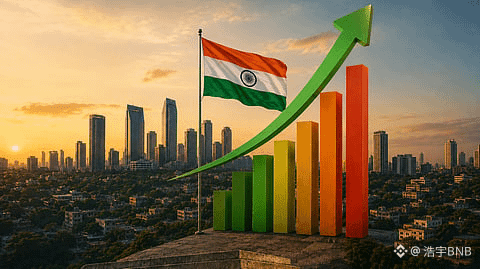
🚨 INDIA JUST FOUND A NEW CRYPTO SPENDING RAIL 🇮🇳
Indian crypto users can now convert digital assets into gift cards and vouchers through overseas fintech platforms, turning crypto balances into real-world purchasing power.
The bigger story isn’t the voucher—it’s the infrastructure forming around crypto utility. As access expands, crypto could increasingly function as a spending asset, not merely a speculative investment. India’s crypto adoption story may be evolving faster than headlines suggest. 🔥
$BTC
{spot}(BTCUSDT)
$ETH
{spot}(ETHUSDT)
$XRP
{spot}(XRPUSDT)
🚨 INDIA JUST FOUND A NEW CRYPTO SPENDING RAIL 🇮🇳
Indian crypto users can now convert digital assets into gift cards and vouchers through overseas fintech platforms, turning crypto balances into real-world purchasing power.
The bigger story isn’t the voucher—it’s the infrastructure forming around crypto utility. As access expands, crypto could increasingly function as a spending asset, not merely a speculative investment. India’s crypto adoption story may be evolving faster than headlines suggest. 🔥
$BTC
$ETH
$XRP
Indian crypto users can now convert digital assets into gift cards and vouchers through overseas fintech platforms, turning crypto balances into real-world purchasing power.
The bigger story isn’t the voucher—it’s the infrastructure forming around crypto utility. As access expands, crypto could increasingly function as a spending asset, not merely a speculative investment. India’s crypto adoption story may be evolving faster than headlines suggest. 🔥
$BTC
$ETH
$XRP
578
1
41
578
·
--
🚨 DUBAI IS PUTTING REAL ESTATE ON THE XRP LEDGER
Dubai’s real-estate tokenization is moving beyond hype into regulated infrastructure. The Dubai Land Department has enabled secondary trading of tokenized property, with transactions recorded on the XRP Ledger. The key breakthrough isn’t simply putting buildings on-chain—it’s creating fractional ownership, transparent settlement, and potential liquidity for traditionally illiquid assets. If adoption scales, XRPL could become meaningful infrastructure for the global tokenized RWA economy.😎
$XRP
{spot}(XRPUSDT)
🚨 DUBAI IS PUTTING REAL ESTATE ON THE XRP LEDGER
Dubai’s real-estate tokenization is moving beyond hype into regulated infrastructure. The Dubai Land Department has enabled secondary trading of tokenized property, with transactions recorded on the XRP Ledger. The key breakthrough isn’t simply putting buildings on-chain—it’s creating fractional ownership, transparent settlement, and potential liquidity for traditionally illiquid assets. If adoption scales, XRPL could become meaningful infrastructure for the global tokenized RWA economy.😎
$XRP
Dubai’s real-estate tokenization is moving beyond hype into regulated infrastructure. The Dubai Land Department has enabled secondary trading of tokenized property, with transactions recorded on the XRP Ledger. The key breakthrough isn’t simply putting buildings on-chain—it’s creating fractional ownership, transparent settlement, and potential liquidity for traditionally illiquid assets. If adoption scales, XRPL could become meaningful infrastructure for the global tokenized RWA economy.😎
$XRP

3
180
·
--
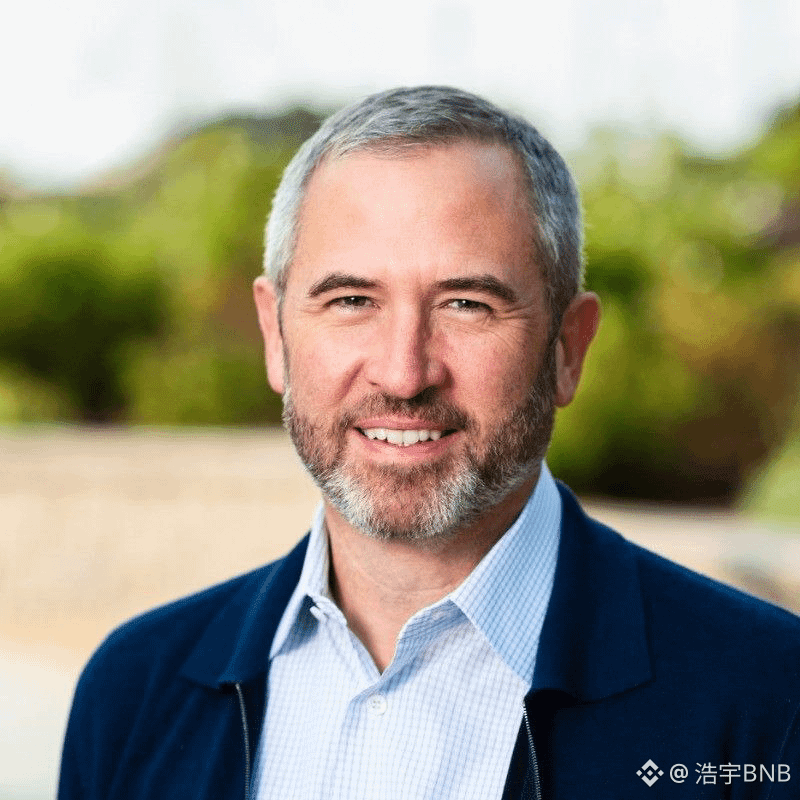
Crypto & Central Banks 🏢🌐
Ripple CEO Brad Garlinghouse’s argument highlights a deeper shift in global finance: value no longer needs to move like physical assets. Blockchain networks can enable near-instant, 24/7 settlement across borders, reducing dependence on correspondent banks, intermediaries and fragmented liquidity.
The real opportunity is not replacing central banks, but upgrading settlement infrastructure. Stablecoins, tokenized assets and interoperable ledgers could make reserves more mobile, transparent and programmable. The biggest challenge remains regulation, liquidity, cybersecurity and institutional trust. If these barriers mature alongside adoption, crypto could become a strategic layer of global financial infrastructure.😎
$XRP
{spot}(XRPUSDT)
Crypto & Central Banks 🏢🌐
Ripple CEO Brad Garlinghouse’s argument highlights a deeper shift in global finance: value no longer needs to move like physical assets. Blockchain networks can enable near-instant, 24/7 settlement across borders, reducing dependence on correspondent banks, intermediaries and fragmented liquidity.
The real opportunity is not replacing central banks, but upgrading settlement infrastructure. Stablecoins, tokenized assets and interoperable ledgers could make reserves more mobile, transparent and programmable. The biggest challenge remains regulation, liquidity, cybersecurity and institutional trust. If these barriers mature alongside adoption, crypto could become a strategic layer of global financial infrastructure.😎
$XRP
Ripple CEO Brad Garlinghouse’s argument highlights a deeper shift in global finance: value no longer needs to move like physical assets. Blockchain networks can enable near-instant, 24/7 settlement across borders, reducing dependence on correspondent banks, intermediaries and fragmented liquidity.
The real opportunity is not replacing central banks, but upgrading settlement infrastructure. Stablecoins, tokenized assets and interoperable ledgers could make reserves more mobile, transparent and programmable. The biggest challenge remains regulation, liquidity, cybersecurity and institutional trust. If these barriers mature alongside adoption, crypto could become a strategic layer of global financial infrastructure.😎
$XRP
3
147
·
--
🚨 The biggest Bitcoin mistake may not be buying too high—it’s missing the few days that matter most.
Bitcoin has historically delivered a large portion of its long-term gains during a surprisingly small number of explosive trading days.
And here’s the problem: those days are almost impossible to predict consistently.
Investors who repeatedly jump in and out of the market may avoid some declines—but they can also miss powerful recoveries and rallies.
That doesn’t make Buy & Hold a guaranteed winning strategy. Bitcoin remains highly volatile, and risk management, position sizing, and a long-term plan still matter.
🎯 You don’t need to predict every top and bottom. You need a strategy you can actually stick with.
In Bitcoin, patience can be a powerful edge.😎
$BTC
{spot}(BTCUSDT)
🚨 The biggest Bitcoin mistake may not be buying too high—it’s missing the few days that matter most.
Bitcoin has historically delivered a large portion of its long-term gains during a surprisingly small number of explosive trading days.
And here’s the problem: those days are almost impossible to predict consistently.
Investors who repeatedly jump in and out of the market may avoid some declines—but they can also miss powerful recoveries and rallies.
That doesn’t make Buy & Hold a guaranteed winning strategy. Bitcoin remains highly volatile, and risk management, position sizing, and a long-term plan still matter.
🎯 You don’t need to predict every top and bottom. You need a strategy you can actually stick with.
In Bitcoin, patience can be a powerful edge.😎
$BTC
Bitcoin has historically delivered a large portion of its long-term gains during a surprisingly small number of explosive trading days.
And here’s the problem: those days are almost impossible to predict consistently.
Investors who repeatedly jump in and out of the market may avoid some declines—but they can also miss powerful recoveries and rallies.
That doesn’t make Buy & Hold a guaranteed winning strategy. Bitcoin remains highly volatile, and risk management, position sizing, and a long-term plan still matter.
🎯 You don’t need to predict every top and bottom. You need a strategy you can actually stick with.
In Bitcoin, patience can be a powerful edge.😎
$BTC
517
1
34
517
·
--
Verified
Burry Goes Contrarian
🚨 MICHAEL BURRY IS BUYING THE FEAR.
Lululemon $LULU has crashed below $100, reaching levels not seen since 2018. While investors are running for the exits, the “Big Short” legend says LULU is now his largest stock position and he plans to “AGGRESSIVELY BUY” below $100.
Why?
The market is pricing in slowing growth, weaker leggings demand, tougher competition from Alo and Vuori, and uncertainty around leadership.
Burry appears to be betting that Wall Street is extrapolating temporary weakness too far.
This is classic contrarian investing: **buy when the narrative is broken, not when it feels safe.**
But the risk is real.
If Lululemon’s growth engine doesn’t recover, $100 could become a ceiling—not a floor.
Burry sees opportunity. The market sees a warning. Who’s right? 👀
$LULU.US
{stock_us}(LULU.US)
Burry Goes Contrarian
🚨 MICHAEL BURRY IS BUYING THE FEAR.
Lululemon $LULU has crashed below $100, reaching levels not seen since 2018. While investors are running for the exits, the “Big Short” legend says LULU is now his largest stock position and he plans to “AGGRESSIVELY BUY” below $100.
Why?
The market is pricing in slowing growth, weaker leggings demand, tougher competition from Alo and Vuori, and uncertainty around leadership.
Burry appears to be betting that Wall Street is extrapolating temporary weakness too far.
This is classic contrarian investing: **buy when the narrative is broken, not when it feels safe.**
But the risk is real.
If Lululemon’s growth engine doesn’t recover, $100 could become a ceiling—not a floor.
Burry sees opportunity. The market sees a warning. Who’s right? 👀
$LULU.US
🚨 MICHAEL BURRY IS BUYING THE FEAR.
Lululemon $LULU has crashed below $100, reaching levels not seen since 2018. While investors are running for the exits, the “Big Short” legend says LULU is now his largest stock position and he plans to “AGGRESSIVELY BUY” below $100.
Why?
The market is pricing in slowing growth, weaker leggings demand, tougher competition from Alo and Vuori, and uncertainty around leadership.
Burry appears to be betting that Wall Street is extrapolating temporary weakness too far.
This is classic contrarian investing: **buy when the narrative is broken, not when it feels safe.**
But the risk is real.
If Lululemon’s growth engine doesn’t recover, $100 could become a ceiling—not a floor.
Burry sees opportunity. The market sees a warning. Who’s right? 👀
$LULU.US


LULUUS-1.65%
7
3.8k
·
--
🚨 XRP is entering “The Swamp” — and this is bigger than a logo.
Ripple’s multi-year partnership with the University of Florida puts XRP branding directly on Ben Hill Griffin Stadium while funding financial and technology education. This won’t automatically send XRP to the moon, because the deal doesn’t create direct token demand. But strategically, it puts XRP in front of a massive, younger audience and strengthens mainstream crypto visibility.
My take: short-term price impact may be limited, but long-term adoption sentiment is clearly bullish. 🐊⚡️
$XRP
{spot}(XRPUSDT)
🚨 XRP is entering “The Swamp” — and this is bigger than a logo.
Ripple’s multi-year partnership with the University of Florida puts XRP branding directly on Ben Hill Griffin Stadium while funding financial and technology education. This won’t automatically send XRP to the moon, because the deal doesn’t create direct token demand. But strategically, it puts XRP in front of a massive, younger audience and strengthens mainstream crypto visibility.
My take: short-term price impact may be limited, but long-term adoption sentiment is clearly bullish. 🐊⚡️
$XRP
Ripple’s multi-year partnership with the University of Florida puts XRP branding directly on Ben Hill Griffin Stadium while funding financial and technology education. This won’t automatically send XRP to the moon, because the deal doesn’t create direct token demand. But strategically, it puts XRP in front of a massive, younger audience and strengthens mainstream crypto visibility.
My take: short-term price impact may be limited, but long-term adoption sentiment is clearly bullish. 🐊⚡️
$XRP

2
149
·
--
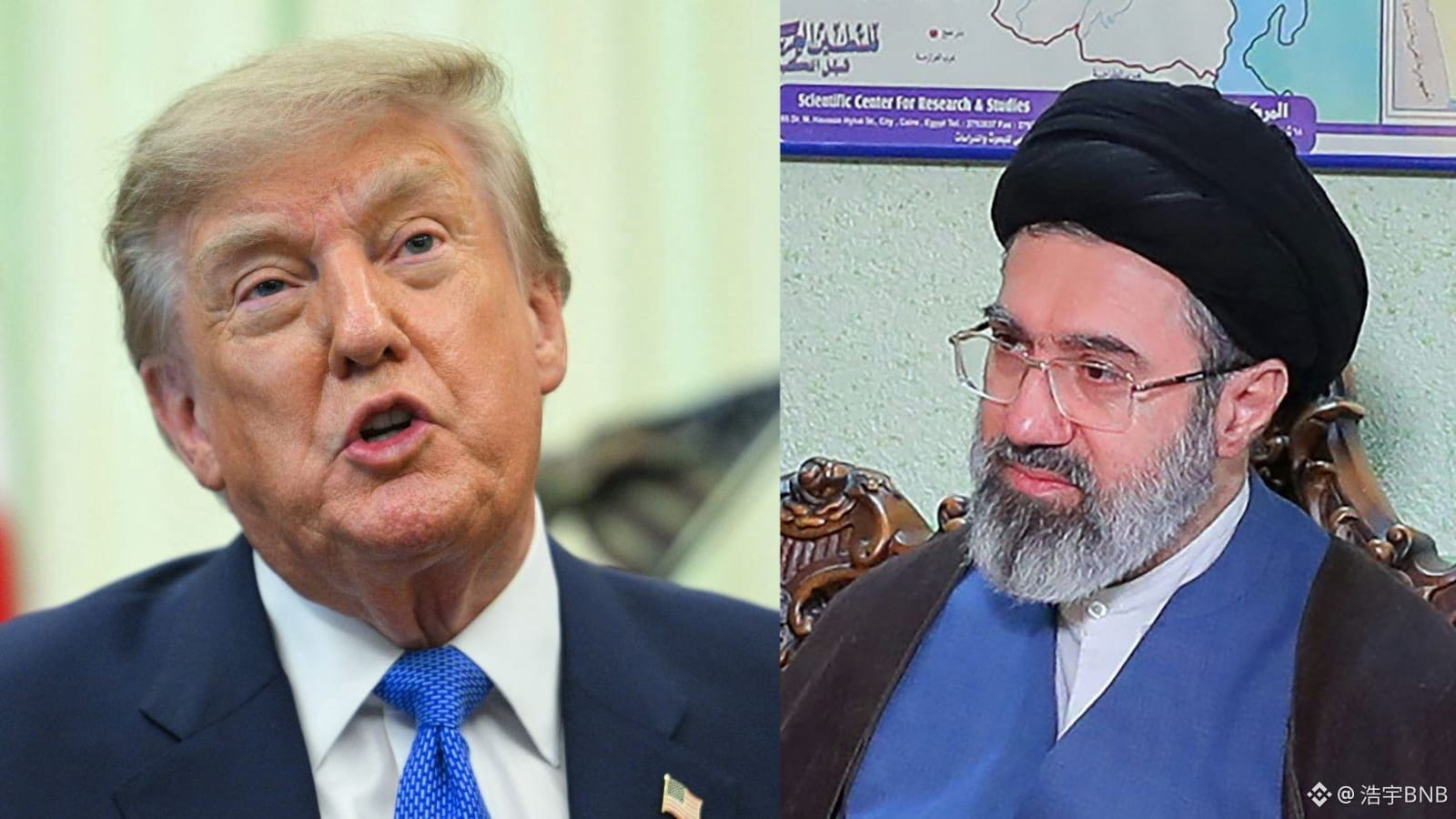
🚨 BREAKING: US-Iran tensions just raised the stakes for global markets.
The reported U.S. strikes on Iranian oil tankers following attacks on U.S. Navy warships are fueling fears of a wider Middle East conflict.
For crypto traders, this could become a major volatility catalyst. Any disruption to oil supplies or the Strait of Hormuz could push energy prices higher, strengthen inflation fears, and pressure risk assets.
Bitcoin could initially face selling pressure as investors move toward cash and the dollar. But if geopolitical uncertainty intensifies, BTC’s decentralized nature could attract renewed demand.🇺🇸🇮🇷₿
$BTC
{spot}(BTCUSDT)
$BULLA
{future}(BULLAUSDT)
$USELESS
{future}(USELESSUSDT)
🚨 BREAKING: US-Iran tensions just raised the stakes for global markets.
The reported U.S. strikes on Iranian oil tankers following attacks on U.S. Navy warships are fueling fears of a wider Middle East conflict.
For crypto traders, this could become a major volatility catalyst. Any disruption to oil supplies or the Strait of Hormuz could push energy prices higher, strengthen inflation fears, and pressure risk assets.
Bitcoin could initially face selling pressure as investors move toward cash and the dollar. But if geopolitical uncertainty intensifies, BTC’s decentralized nature could attract renewed demand.🇺🇸🇮🇷₿
$BTC
$BULLA
$USELESS
The reported U.S. strikes on Iranian oil tankers following attacks on U.S. Navy warships are fueling fears of a wider Middle East conflict.
For crypto traders, this could become a major volatility catalyst. Any disruption to oil supplies or the Strait of Hormuz could push energy prices higher, strengthen inflation fears, and pressure risk assets.
Bitcoin could initially face selling pressure as investors move toward cash and the dollar. But if geopolitical uncertainty intensifies, BTC’s decentralized nature could attract renewed demand.🇺🇸🇮🇷₿
$BTC
$BULLA
$USELESS
2
502
·
--
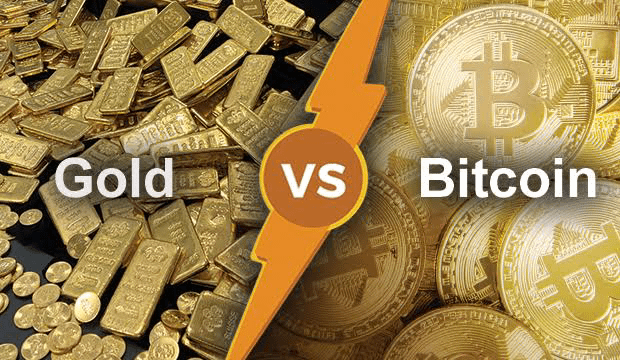
🔥 WHAT IF BITCOIN FLIPS GOLD?
Ricardo Salinas Pliego points to a huge possibility for #BTC : around $1.86M per Bitcoin would put Bitcoin’s total market value on par with gold.
Think about it:
₿ Only 21 million BTC will ever exist.
🌍 Gold has been a global store of value for centuries.
💻 Bitcoin is trying to become the digital alternative.
The real debate isn’t whether $1.86M sounds crazy.
It’s whether Bitcoin can capture a meaningful share of gold’s role as a store of value.
If that happens, the upside narrative gets VERY interesting. 🚀
Are we still early? 👀
$BTC
{spot}(BTCUSDT)
🔥 WHAT IF BITCOIN FLIPS GOLD?
Ricardo Salinas Pliego points to a huge possibility for #BTC : around $1.86M per Bitcoin would put Bitcoin’s total market value on par with gold.
Think about it:
₿ Only 21 million BTC will ever exist.
🌍 Gold has been a global store of value for centuries.
💻 Bitcoin is trying to become the digital alternative.
The real debate isn’t whether $1.86M sounds crazy.
It’s whether Bitcoin can capture a meaningful share of gold’s role as a store of value.
If that happens, the upside narrative gets VERY interesting. 🚀
Are we still early? 👀
$BTC
Ricardo Salinas Pliego points to a huge possibility for #BTC : around $1.86M per Bitcoin would put Bitcoin’s total market value on par with gold.
Think about it:
₿ Only 21 million BTC will ever exist.
🌍 Gold has been a global store of value for centuries.
💻 Bitcoin is trying to become the digital alternative.
The real debate isn’t whether $1.86M sounds crazy.
It’s whether Bitcoin can capture a meaningful share of gold’s role as a store of value.
If that happens, the upside narrative gets VERY interesting. 🚀
Are we still early? 👀
$BTC
437
2
37
437
·
--
🚨 #BULLA IN DANGER MOOD 🔥✈️
Something is heating up… 👀
BULLA is showing that “calm before the storm” energy. Volatility is picking up, and the next move could be explosive. ⚡
🔥 Watch the volume\
🔥 Watch the breakout\
🔥 Don’t chase the candle
One thing is clear: BULLA is NOT boring right now.🐂🚀
Are you watching BULLA or sleeping on it? 👀
$BULLA
{alpha}(560x595e21b20e78674f8a64c1566a20b2b316bc3511)
🚨 #BULLA IN DANGER MOOD 🔥✈️
Something is heating up… 👀
BULLA is showing that “calm before the storm” energy. Volatility is picking up, and the next move could be explosive. ⚡
🔥 Watch the volume\
🔥 Watch the breakout\
🔥 Don’t chase the candle
One thing is clear: BULLA is NOT boring right now.🐂🚀
Are you watching BULLA or sleeping on it? 👀
$BULLA
Something is heating up… 👀
BULLA is showing that “calm before the storm” energy. Volatility is picking up, and the next move could be explosive. ⚡
🔥 Watch the volume\
🔥 Watch the breakout\
🔥 Don’t chase the candle
One thing is clear: BULLA is NOT boring right now.🐂🚀
Are you watching BULLA or sleeping on it? 👀
$BULLA
2
235
·
--
BTC looks ready for another explosive move. 🔥
Liquidity is building, momentum is shifting, and buyers are defending key levels. If BTC breaks resistance with strong volume, the next leg could be violent.
The setup looks bullish—but don’t chase blindly. Wait for confirmation, manage leverage, and protect your downside.
Patience before the pump. 🚀
$BTC
{spot}(BTCUSDT)
$DOGS
{spot}(DOGSUSDT)
BTC looks ready for another explosive move. 🔥
Liquidity is building, momentum is shifting, and buyers are defending key levels. If BTC breaks resistance with strong volume, the next leg could be violent.
The setup looks bullish—but don’t chase blindly. Wait for confirmation, manage leverage, and protect your downside.
Patience before the pump. 🚀
$BTC
$DOGS
Liquidity is building, momentum is shifting, and buyers are defending key levels. If BTC breaks resistance with strong volume, the next leg could be violent.
The setup looks bullish—but don’t chase blindly. Wait for confirmation, manage leverage, and protect your downside.
Patience before the pump. 🚀
$BTC
$DOGS
4
469
·
--
#TAC on Binance Alpha has caught my attention, and I’m willing to take a calculated risk by keeping some TAC tokens in my wallet. I understand that Alpha-listed assets can be highly volatile, with significant upside but equally serious downside. For me, this is not about chasing quick profits; it’s about having measured exposure and seeing how TAC develops over time. I’ll manage my position responsibly and stay prepared for volatility.😎
$TAC
{alpha}(560xb305e6954e4e0cd021c06ec355681abc8a00dbd7)
#TAC on Binance Alpha has caught my attention, and I’m willing to take a calculated risk by keeping some TAC tokens in my wallet. I understand that Alpha-listed assets can be highly volatile, with significant upside but equally serious downside. For me, this is not about chasing quick profits; it’s about having measured exposure and seeing how TAC develops over time. I’ll manage my position responsibly and stay prepared for volatility.😎
$TAC
$TAC

2
405
·
--
🇰🇷 South Korea just dropped a massive signal for Crypto & RWA.
Stocks. Bonds. Funds.
Traditional assets are moving toward tokenization.
And this isn’t another “blockchain experiment.”
It’s the potential beginning of TradFi moving on-chain. 🔥
Imagine securities issued as tokens, traded on blockchain rails, and eventually settled using stablecoins.
That means RWA + Stablecoins + DeFi infrastructure could become the bridge between trillions in traditional capital and crypto markets.
The biggest crypto narrative may not be another meme coin.
It could be real-world assets going on-chain. 🌎➡️⛓️
RWA season may be just getting started. 🚀
$BTC
{spot}(BTCUSDT)
$NVDAB
{spot}(NVDABUSDT)
$AAPLB
{spot}(AAPLBUSDT)
🇰🇷 South Korea just dropped a massive signal for Crypto & RWA.
Stocks. Bonds. Funds.
Traditional assets are moving toward tokenization.
And this isn’t another “blockchain experiment.”
It’s the potential beginning of TradFi moving on-chain. 🔥
Imagine securities issued as tokens, traded on blockchain rails, and eventually settled using stablecoins.
That means RWA + Stablecoins + DeFi infrastructure could become the bridge between trillions in traditional capital and crypto markets.
The biggest crypto narrative may not be another meme coin.
It could be real-world assets going on-chain. 🌎➡️⛓️
RWA season may be just getting started. 🚀
$BTC
$NVDAB
$AAPLB
Stocks. Bonds. Funds.
Traditional assets are moving toward tokenization.
And this isn’t another “blockchain experiment.”
It’s the potential beginning of TradFi moving on-chain. 🔥
Imagine securities issued as tokens, traded on blockchain rails, and eventually settled using stablecoins.
That means RWA + Stablecoins + DeFi infrastructure could become the bridge between trillions in traditional capital and crypto markets.
The biggest crypto narrative may not be another meme coin.
It could be real-world assets going on-chain. 🌎➡️⛓️
RWA season may be just getting started. 🚀
$BTC
$NVDAB
$AAPLB
2
124
·
--
🚀 CRYPTO STOCKS ARE GOING PARABOLIC.💥
$BTC
{spot}(BTCUSDT)
$ZEC
{spot}(ZECUSDT)
$NVDAB
{spot}(NVDABUSDT)
🚀 CRYPTO STOCKS ARE GOING PARABOLIC.💥
$BTC
$ZEC
$NVDAB
$BTC
$ZEC
$NVDAB
2
113
·
--
🚨 $12.9 BILLION. For open-source AI.
NVIDIA CEO Jensen Huang says the Hugging Face deal is “worth every single penny.” 🔥
Think about that.
NVIDIA isn’t just selling chips anymore. It’s positioning itself at the center of the entire AI ecosystem — models, developers, infrastructure and open-source innovation.
And this is where crypto should pay attention. 👀
The biggest tech battle of the next decade may not be AI vs crypto…
It could be open vs closed AI.
NVIDIA just picked a side. ⚡
$NVDAB
{spot}(NVDABUSDT)
$NVDA.US
{stock_us}(NVDA.US)
🚨 $12.9 BILLION. For open-source AI.
NVIDIA CEO Jensen Huang says the Hugging Face deal is “worth every single penny.” 🔥
Think about that.
NVIDIA isn’t just selling chips anymore. It’s positioning itself at the center of the entire AI ecosystem — models, developers, infrastructure and open-source innovation.
And this is where crypto should pay attention. 👀
The biggest tech battle of the next decade may not be AI vs crypto…
It could be open vs closed AI.
NVIDIA just picked a side. ⚡
$NVDAB
$NVDA.US
NVIDIA CEO Jensen Huang says the Hugging Face deal is “worth every single penny.” 🔥
Think about that.
NVIDIA isn’t just selling chips anymore. It’s positioning itself at the center of the entire AI ecosystem — models, developers, infrastructure and open-source innovation.
And this is where crypto should pay attention. 👀
The biggest tech battle of the next decade may not be AI vs crypto…
It could be open vs closed AI.
NVIDIA just picked a side. ⚡
$NVDAB
$NVDA.US
NVDAB-2.66%
NVDAUS-2.40%
544
1
33
544
Log in to explore more content
Join global crypto users on Binance Square
⚡️ Get latest and useful information about crypto.
💬 Trusted by the world’s largest crypto exchange.
👍 Discover real insights from verified creators.
Email / Phone number
Trending Topics
USAugustPPIRisesLessThanExpected
1,473 views
104 Discussing
🚨 US AUG PPI: Rises LESS Than Expected! Bullish for Crypto? 🚀
PPI +0.4% MoM as expected, but CORE PPI only +0.2% vs +0.3% expected - cooling!
What it means:
• Wholesale inflation softer than feared
• Fed rate hike chance now 62% - but dovish signals coming
• Core PCE revisions expected downward - bullish
• BTC usually pumps on softer PPI
Fed meeting Sep 15-16 - Market now expects pause, not hike?
Is this the green light for Q4 rally?
#Bitcoin #PPI #Fed #CryptoNews #BTC#usaugustppiriseslessthanexpected
True News
·1 Likes
·581 views
SECApprovesNasdaqTexasCommodityTrustRule
3,275 views
161 Discussing
ECBRaisesRatesSecondTimeTo2.5%
1,559 views
111 Discussing