
#bitgo
bitgo
155,106 views
426 Discussing
Hot
Latest

Verified
💥BitGo buys NYDIG’s institutional trading business as NYDIG pivots to power and HPC
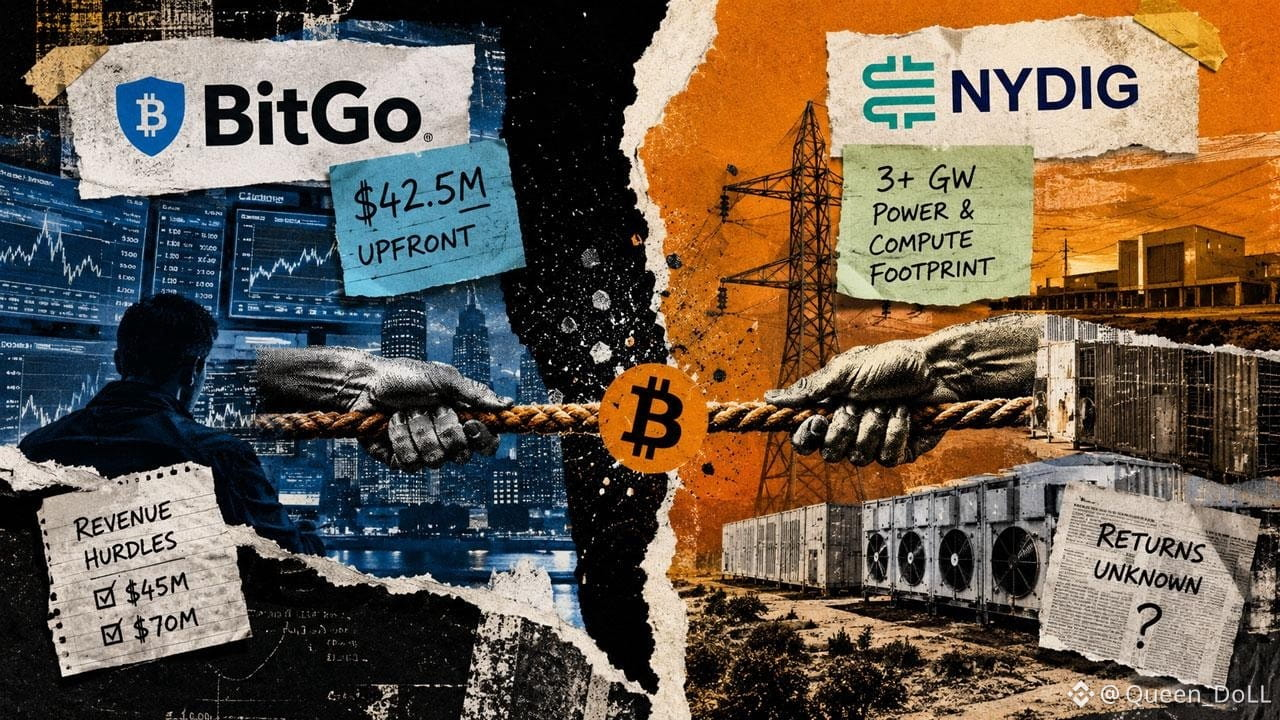
BitGo has acquired NYDIG’s institutional trading business in a deal worth roughly $42.5 million upfront, adding derivatives, structured products, financing and capital-markets capabilities to its existing custody and settlement infrastructure.
The transaction brings around 30 NYDIG employees and institutional client relationships to BitGo. The deal also includes revenue-based earn-outs tied to $45 million and $70 million trailing-12-month revenue targets.
#Bitcoin #BitGo #NYDIG #HPC
#ThuyBNB
$BTC $BNB $NEAR
BitGo has acquired NYDIG’s institutional trading business in a deal worth roughly $42.5 million upfront, adding derivatives, structured products, financing and capital-markets capabilities to its existing custody and settlement infrastructure.
The transaction brings around 30 NYDIG employees and institutional client relationships to BitGo. The deal also includes revenue-based earn-outs tied to $45 million and $70 million trailing-12-month revenue targets.
#Bitcoin #BitGo #NYDIG #HPC
#ThuyBNB
$BTC $BNB $NEAR

Aylinx:
Interesting move—BitGo strengthening institutional trading while NYDIG shifts focus to HPC.

⚡ NYDIG is stepping away from institutional trading, selling the business to BitGo for around $42.5M upfront.
What makes this interesting is the strategic split.
BitGo is doubling down on Bitcoin financial services, while NYDIG is shifting its focus toward something arguably harder to replicate: power, mining, and HPC infrastructure.
With more than 3 GW in its infrastructure pipeline, NYDIG appears to be betting that scarce power could become one of the most valuable assets in the Bitcoin and AI era.
The big question is still unanswered: will higher margins come from controlling financial flows or controlling the physical infrastructure behind them?
My view: the next Bitcoin infrastructure battle may not be about who holds the most BTC—but who controls the most valuable resources. ⚡
#Bitcoin #Crypto #Mining #BitGo #blockchain
What makes this interesting is the strategic split.
BitGo is doubling down on Bitcoin financial services, while NYDIG is shifting its focus toward something arguably harder to replicate: power, mining, and HPC infrastructure.
With more than 3 GW in its infrastructure pipeline, NYDIG appears to be betting that scarce power could become one of the most valuable assets in the Bitcoin and AI era.
The big question is still unanswered: will higher margins come from controlling financial flows or controlling the physical infrastructure behind them?
My view: the next Bitcoin infrastructure battle may not be about who holds the most BTC—but who controls the most valuable resources. ⚡
#Bitcoin #Crypto #Mining #BitGo #blockchain


🚨 Wall Street’s money is changing lanes: institutions openly say they want “full-lifecycle services”—are you still chasing the headlines?
A single line from BitGo’s CEO reveals the industry shift: “Institutions are increasingly looking for a trusted partner that can cover the entire lifecycle of digital assets.” In plain language—big money is moving in, no longer just watching price up or down, but focusing on who can deliver end-to-end: secure custody, efficient settlement, and everything from buying to risk control in one package. Note: BitGo just acquired NYDIG’s institutional trading business, and then immediately started talking about full lifecycle—pretty clearly aiming to grab the biggest slice of institutional funds.
Because once custody builds trust, client “stickiness” is extremely high. Then related services like lending, staking/collateralization, and liquidation can naturally expand—this is what “full lifecycle” means to institutions. There are three signals here:
1) Institutional entry isn’t just a slogan—real money is already being deployed.
2) Compliant custody and institutional-grade trading infrastructure are becoming the “water sellers” for the next market cycle.
3) When big capital starts insisting on a closed-loop service workflow, platforms that rely purely on retail traffic will get harder and harder to run.
For ordinary players, following what institutions choose is more reliable than following the hype. Of course, the custody space is fiercely competitive—whether these services can truly land depends on execution. Treat the slogans as slogans; don’t get carried away.👀 What do you think benefits most in the first wave as institutional capital moves in full force—custody, ETFs, or RWA? Let’s discuss in the comments. Click the profile to watch the live stream, and join the Jiujiu chat group to get daily strategies🚀
#BitGo #机构资金 #加密货币托管 #机构入场
Group: 点击进入玖玖的粉丝群
A single line from BitGo’s CEO reveals the industry shift: “Institutions are increasingly looking for a trusted partner that can cover the entire lifecycle of digital assets.” In plain language—big money is moving in, no longer just watching price up or down, but focusing on who can deliver end-to-end: secure custody, efficient settlement, and everything from buying to risk control in one package. Note: BitGo just acquired NYDIG’s institutional trading business, and then immediately started talking about full lifecycle—pretty clearly aiming to grab the biggest slice of institutional funds.
Because once custody builds trust, client “stickiness” is extremely high. Then related services like lending, staking/collateralization, and liquidation can naturally expand—this is what “full lifecycle” means to institutions. There are three signals here:
1) Institutional entry isn’t just a slogan—real money is already being deployed.
2) Compliant custody and institutional-grade trading infrastructure are becoming the “water sellers” for the next market cycle.
3) When big capital starts insisting on a closed-loop service workflow, platforms that rely purely on retail traffic will get harder and harder to run.
For ordinary players, following what institutions choose is more reliable than following the hype. Of course, the custody space is fiercely competitive—whether these services can truly land depends on execution. Treat the slogans as slogans; don’t get carried away.👀 What do you think benefits most in the first wave as institutional capital moves in full force—custody, ETFs, or RWA? Let’s discuss in the comments. Click the profile to watch the live stream, and join the Jiujiu chat group to get daily strategies🚀
#BitGo #机构资金 #加密货币托管 #机构入场
Group: 点击进入玖玖的粉丝群





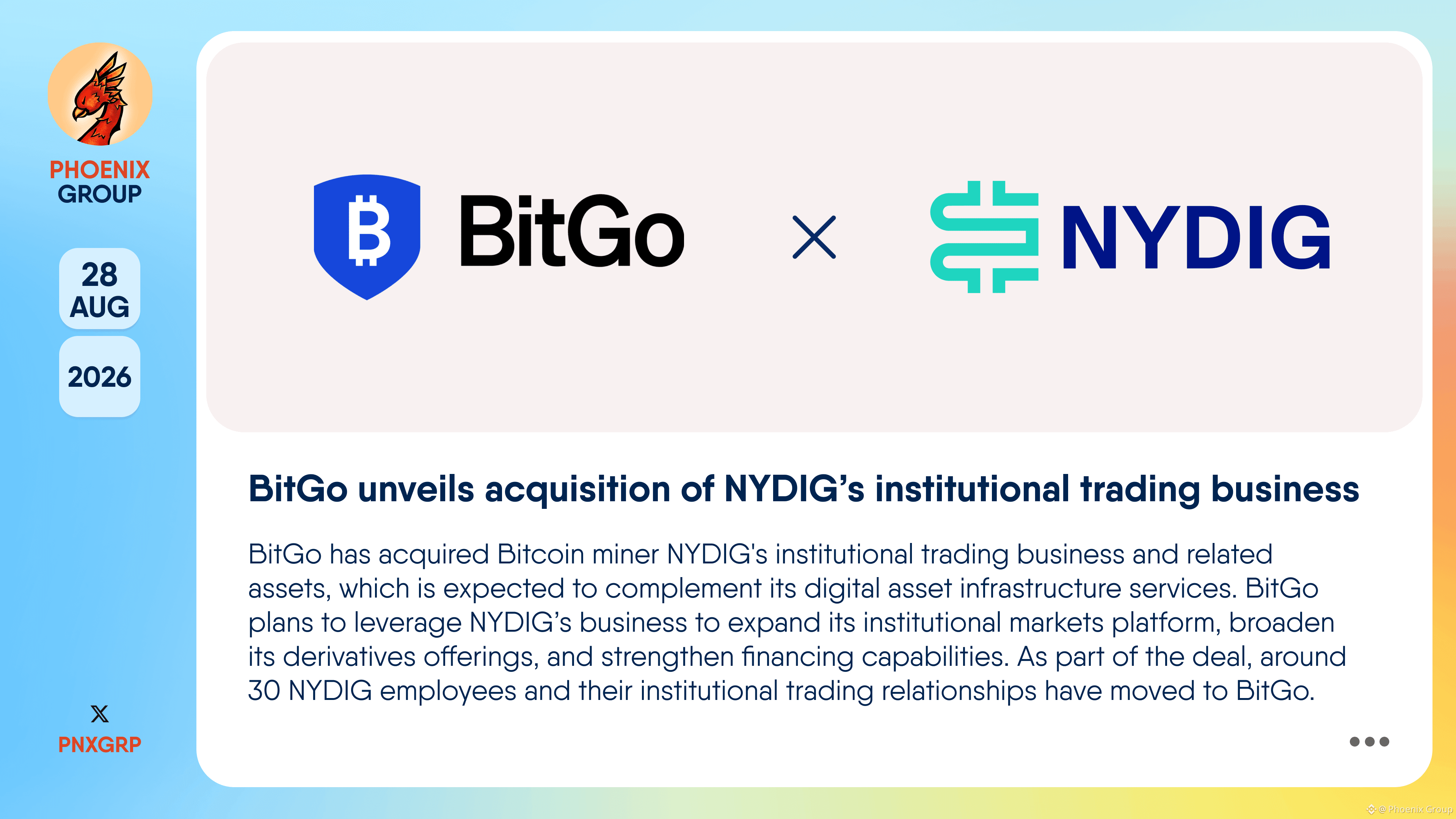
BitGo unveils acquisition of NYDIG’s institutional trading business
#BitGo has acquired #Bitcoin miner #NYDIG 's institutional trading business and related assets, which is expected to complement its digital asset infrastructure services. BitGo plans to leverage NYDIG’s business to expand its institutional markets platform, broaden its derivatives offerings, and strengthen financing capabilities. As part of the deal, around 30 NYDIG employees and their institutional trading relationships have moved to BitGo. NYDIG’s institutional trading business offers derivatives, structured products, financing, and capital markets solutions.
👉 theblock.co/news/business/2026-08-27-bitgo-buys-nydig-institutional-trading-412975
#BitGo has acquired #Bitcoin miner #NYDIG 's institutional trading business and related assets, which is expected to complement its digital asset infrastructure services. BitGo plans to leverage NYDIG’s business to expand its institutional markets platform, broaden its derivatives offerings, and strengthen financing capabilities. As part of the deal, around 30 NYDIG employees and their institutional trading relationships have moved to BitGo. NYDIG’s institutional trading business offers derivatives, structured products, financing, and capital markets solutions.
👉 theblock.co/news/business/2026-08-27-bitgo-buys-nydig-institutional-trading-412975

BitGo has completed the acquisition of NYDIG’s institutional transaction business, with a total consideration of approximately USD 42.5 million, structured as a two-step merger. The consideration includes approximately USD 7.0 million in cash and approximately USD 35.5 million in BitGo stock;
About 30 NYDIG employees and institutional client relationship personnel will transfer to BitGo. The transaction also includes performance incentive provisions: a revenue milestone corresponding to a maximum cash payment of USD 10.0 million, a second milestone corresponding to a maximum cash payment of USD 5.0 million and additional shares, as well as retention bonuses provided to transferring employees.
The acquisition primarily expands derivatives, structured products, financing, and capital markets solution offerings for asset management firms, hedge funds, enterprises, and family offices. Going forward, NYDIG will focus on power generation, bitcoin mining, and high-performance computing data center businesses, disclosing development reserves exceeding 3 GW.
The above is compiled from publicly available information and does not constitute investment advice.
#BitGo #NYDIG #Institutional Business
About 30 NYDIG employees and institutional client relationship personnel will transfer to BitGo. The transaction also includes performance incentive provisions: a revenue milestone corresponding to a maximum cash payment of USD 10.0 million, a second milestone corresponding to a maximum cash payment of USD 5.0 million and additional shares, as well as retention bonuses provided to transferring employees.
The acquisition primarily expands derivatives, structured products, financing, and capital markets solution offerings for asset management firms, hedge funds, enterprises, and family offices. Going forward, NYDIG will focus on power generation, bitcoin mining, and high-performance computing data center businesses, disclosing development reserves exceeding 3 GW.
The above is compiled from publicly available information and does not constitute investment advice.
#BitGo #NYDIG #Institutional Business

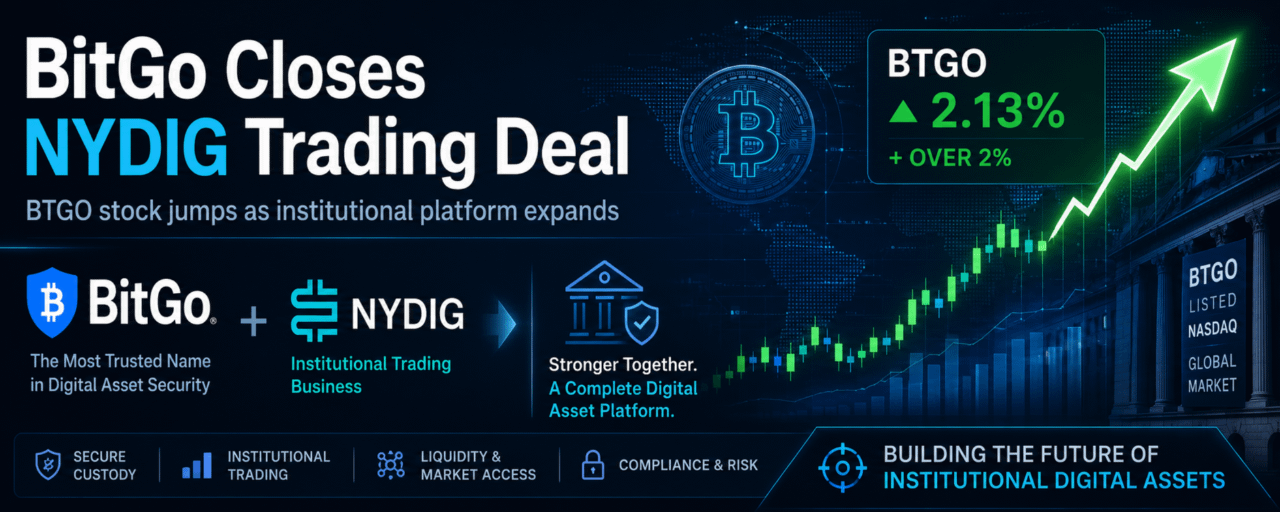

BitGo is absorbing NYDIG's institutional trading arm, including 30 key staff members, to scale its derivatives services for big players.
#BitGo #InstitutionalCrypto
#BitGo #InstitutionalCrypto

BitGo buys NYDIG trading branch for 42.5M USD + 15M earnout
- BitGo will pay $7 million in cash and approximately $35.5 million in shares to buy NYDIG IF Holdings.
- In addition, there is an extra $15 million earnout based on performance after the acquisition.
- The total deal value is $42.5 million (cash + shares), excluding the earnout.
#BinanceSquare #CryptoNews #BitGo #NYDIG
$btc $eth
#vlikevn Titanbot
Source: CoinDesk
- BitGo will pay $7 million in cash and approximately $35.5 million in shares to buy NYDIG IF Holdings.
- In addition, there is an extra $15 million earnout based on performance after the acquisition.
- The total deal value is $42.5 million (cash + shares), excluding the earnout.
#BinanceSquare #CryptoNews #BitGo #NYDIG
$btc $eth
#vlikevn Titanbot
Source: CoinDesk
🚨 An acquisition with no disclosed purchase price, yet it could change the channel through which institutional capital flows in—what exactly did BitGo do?
Group: 点击进入玖玖的粉丝群
On August 27, crypto custody giant BitGo officially acquired NYDIG’s institutional trading business, taking along roughly 30 employees, as well as its derivatives, financing, and structured products lines. Who is NYDIG? One of the world’s largest institutional Bitcoin service providers, managing institutional assets in the billions of dollars. With this move, BitGo effectively pieces together a complete picture of “custody + trading + derivatives.”
Making it concrete: BitGo itself already manages custody assets of more than $100 billion. By adding derivatives and structured products, it provides institutional clients with end-to-end service—from holding coins to hedging everything in one package. What Wall Street institutions dread most is the hassle of having custody and trading handled separately—BitGo directly tears down that wall.
Cross-analysis: Spot Bitcoin ETFs have seen net inflows for nine straight days, and institutional funds are clearly accelerating their entry. BitGo’s “custody + trading” integrated model is precisely the infrastructure institutional compliance needs. What’s truly worth watching isn’t the acquisition price—it’s that the crypto market is shifting from a retail game to an institutional battleground, where infrastructure begins “arms races.” So, who will be next to be acquired?
Risk hedging: A quick splash of cold water—the derivatives business is volatile, and team integration takes time. Don’t expect volumes to surge immediately in the short term, and don’t treat the acquisition as a reason to chase a rally.
👀 Who do you think the next acquired institutional service provider will be? Drop your guess in the comments!
Click the avatar to watch the livestream and catch the Jiujiu Daily Strategy 🚀
#BitGo #NYDIG #机构资金 #比特币 #Crypto_Custody
Group: 点击进入玖玖的粉丝群
On August 27, crypto custody giant BitGo officially acquired NYDIG’s institutional trading business, taking along roughly 30 employees, as well as its derivatives, financing, and structured products lines. Who is NYDIG? One of the world’s largest institutional Bitcoin service providers, managing institutional assets in the billions of dollars. With this move, BitGo effectively pieces together a complete picture of “custody + trading + derivatives.”
Making it concrete: BitGo itself already manages custody assets of more than $100 billion. By adding derivatives and structured products, it provides institutional clients with end-to-end service—from holding coins to hedging everything in one package. What Wall Street institutions dread most is the hassle of having custody and trading handled separately—BitGo directly tears down that wall.
Cross-analysis: Spot Bitcoin ETFs have seen net inflows for nine straight days, and institutional funds are clearly accelerating their entry. BitGo’s “custody + trading” integrated model is precisely the infrastructure institutional compliance needs. What’s truly worth watching isn’t the acquisition price—it’s that the crypto market is shifting from a retail game to an institutional battleground, where infrastructure begins “arms races.” So, who will be next to be acquired?
Risk hedging: A quick splash of cold water—the derivatives business is volatile, and team integration takes time. Don’t expect volumes to surge immediately in the short term, and don’t treat the acquisition as a reason to chase a rally.
👀 Who do you think the next acquired institutional service provider will be? Drop your guess in the comments!
Click the avatar to watch the livestream and catch the Jiujiu Daily Strategy 🚀
#BitGo #NYDIG #机构资金 #比特币 #Crypto_Custody
🚨 Admit 30 employees in one go, take away derivative products and financing businesses—BitGo directly swallows NYDIG’s deal team. Has the reshuffling in the institutional arena really begun again?
Group: 点击进入玖玖的粉丝群
On August 27, crypto custody giant BitGo announced the acquisition of NYDIG’s institutional trading business. Around a 30-person team, along with its derivatives, financing, and structured products lines, will be bundled into the deal. Behind NYDIG is one of the largest institutional holders of Bitcoin. This isn’t an ordinary merger and acquisition—it’s a key move by a custodian to expand into the trading side, and it also means another piece of the Bitcoin “Wall Street” blueprint is being snapped into place.
Custody handles assets, while trading ensures circulation. BitGo’s deal welds the two stages together. With a foundation of insurance and compliance licenses, an end-to-end “custody + trading + financing” full-chain service is taking shape—aimed squarely at what traditional financial institutions need most when they enter: a complete package. From BlackRock to major asset managers, what institutions want isn’t a single crypto-buying channel, but rather safety, compliance, and a one-stop solution.
What’s truly worth watching isn’t the acquisition price—it’s that institutional capital entering crypto is shifting from “buying coins” to “buying services.” With custody, derivatives, and structured products bundled into one, the barrier for traditional funds to move in is being dismantled by the giants themselves. Whoever holds the full set of licenses and services will control the pricing power in the next round of the institutional bull market.
A bucket of cold water: M&A integration is never an overnight process. The team of 30 needs to gel, regulatory approvals must be secured, and the compliance costs of derivatives business must be paid—each step is a tough battle. Don’t expect the market landscape to change immediately in the short term.
👀 Institutional consolidation is accelerating—who will be the next company acquired?
Click the avatar to watch the live stream, and join the Jiujiu chat group to get daily strategies 🚀
#BitGo #NYDIG #机构加密 #加密托管 #Bitcoin
Group: 点击进入玖玖的粉丝群
On August 27, crypto custody giant BitGo announced the acquisition of NYDIG’s institutional trading business. Around a 30-person team, along with its derivatives, financing, and structured products lines, will be bundled into the deal. Behind NYDIG is one of the largest institutional holders of Bitcoin. This isn’t an ordinary merger and acquisition—it’s a key move by a custodian to expand into the trading side, and it also means another piece of the Bitcoin “Wall Street” blueprint is being snapped into place.
Custody handles assets, while trading ensures circulation. BitGo’s deal welds the two stages together. With a foundation of insurance and compliance licenses, an end-to-end “custody + trading + financing” full-chain service is taking shape—aimed squarely at what traditional financial institutions need most when they enter: a complete package. From BlackRock to major asset managers, what institutions want isn’t a single crypto-buying channel, but rather safety, compliance, and a one-stop solution.
What’s truly worth watching isn’t the acquisition price—it’s that institutional capital entering crypto is shifting from “buying coins” to “buying services.” With custody, derivatives, and structured products bundled into one, the barrier for traditional funds to move in is being dismantled by the giants themselves. Whoever holds the full set of licenses and services will control the pricing power in the next round of the institutional bull market.
A bucket of cold water: M&A integration is never an overnight process. The team of 30 needs to gel, regulatory approvals must be secured, and the compliance costs of derivatives business must be paid—each step is a tough battle. Don’t expect the market landscape to change immediately in the short term.
👀 Institutional consolidation is accelerating—who will be the next company acquired?
Click the avatar to watch the live stream, and join the Jiujiu chat group to get daily strategies 🚀
#BitGo #NYDIG #机构加密 #加密托管 #Bitcoin
BitGo acquires NYDIG’s trading desk, boosting crypto for institutions
• BitGo completes the acquisition of NYDIG’s institutional trading business.
• The deal adds roughly 30 new employees to BitGo.
• The goal is to expand derivatives and financing capabilities for institutional clients.
• A move to deepen crypto services aimed at institutional investors.
#BitGo #NYDIG #CryptoNews #BinanceSquare #BTC
$btc $eth
vlikevn Titanbot
Source: CoinTelegraph
• BitGo completes the acquisition of NYDIG’s institutional trading business.
• The deal adds roughly 30 new employees to BitGo.
• The goal is to expand derivatives and financing capabilities for institutional clients.
• A move to deepen crypto services aimed at institutional investors.
#BitGo #NYDIG #CryptoNews #BinanceSquare #BTC
$btc $eth
vlikevn Titanbot
Source: CoinTelegraph

⚖️ A class action lawsuit filed against BitGo Holdings Inc
Pomerantz Law Firm announced that it has filed a class action lawsuit against BitGo Holdings Inc and some of its executives. The lawsuit was filed in the U.S. District Court and relates to allegations directed at the company. This lawsuit comes as part of the usual legal proceedings in such cases.
━━━━━━━━━━━━━━
📊 Impact: 📈 High
🏷️ REGULATION
#BitGo #LegalAction #ClassAction #CryptoRegulation #Blockchain
📰 Source: globenewswire.com
Pomerantz Law Firm announced that it has filed a class action lawsuit against BitGo Holdings Inc and some of its executives. The lawsuit was filed in the U.S. District Court and relates to allegations directed at the company. This lawsuit comes as part of the usual legal proceedings in such cases.
━━━━━━━━━━━━━━
📊 Impact: 📈 High
🏷️ REGULATION
#BitGo #LegalAction #ClassAction #CryptoRegulation #Blockchain
📰 Source: globenewswire.com

BitGo secures South Korea's virtual asset license, the first global crypto company to do so. Backed by Hana Financial Group and SK Telecom, BitGo Korea built a locally registered entity from scratch to serve institutional and enterprise clients, rather than taking the acquisition route. A landmark milestone for crypto regulation and institutional custody in Asia. $BTC
#Crypto #BitGo #Korea
#Crypto #BitGo #Korea

BitGo has been licensed to hold virtual asset services in South Korea, the first global crypto company
- BitGo Korea was established from scratch, supported by Hana Financial Group and SK Telecom
- Designed to serve institutional and business customers
- BitGo states that it is the first global crypto company to receive a virtual asset license in South Korea
- Not by acquisition, but by building its own local entity
#BinanceSquare #CryptoNews #BitGo
$btc $eth
#vlikevn #Titanbot
Source: CoinDesk
- BitGo Korea was established from scratch, supported by Hana Financial Group and SK Telecom
- Designed to serve institutional and business customers
- BitGo states that it is the first global crypto company to receive a virtual asset license in South Korea
- Not by acquisition, but by building its own local entity
#BinanceSquare #CryptoNews #BitGo
$btc $eth
#vlikevn #Titanbot
Source: CoinDesk
🔗 BitGo chooses Chainlink CCIP as an exclusive solution for cross-chain operations for WBTC
BitGo, the custodian of the WBTC token, announced that it has selected the Chainlink CCIP protocol as its exclusive cross-chain interoperability solution. This partnership aims to enhance WBTC’s ability to move between different blockchain networks, which could affect liquidity dynamics and security in the decentralized finance sector.
━━━━━━━━━━━━━━
📊 Impact: 📈 High
🏷️ DEFI
#BitGo #Chainlink #WBTC #DeFi #Blockchain
📰 Source: cryptobriefing.com
BitGo, the custodian of the WBTC token, announced that it has selected the Chainlink CCIP protocol as its exclusive cross-chain interoperability solution. This partnership aims to enhance WBTC’s ability to move between different blockchain networks, which could affect liquidity dynamics and security in the decentralized finance sector.
━━━━━━━━━━━━━━
📊 Impact: 📈 High
🏷️ DEFI
#BitGo #Chainlink #WBTC #DeFi #Blockchain
📰 Source: cryptobriefing.com

GM. While normies are still figuring out how to log into their 401ks, BitGo is out here racking up a 27% customer base increase year-over-year.
Mizuho might be cutting their price target to $11, but they're also saying delays in the Clarity Act could actually be a W for BitGo. Think of it as a forced long-game, letting them build more before the spotlight really hits. #CryptoRegulation #BitGo #InstitutionalCrypto
So basically, the "delay" might just be the market giving them more runway to *really* build that high-growth, recurring revenue machine. It’s like when your favorite project has a "bug fix" that takes a week but then the performance is 10x. The same sauce.
What other "delays" in crypto have secretly turned out to be massive wins? Let's hear it!
Mizuho might be cutting their price target to $11, but they're also saying delays in the Clarity Act could actually be a W for BitGo. Think of it as a forced long-game, letting them build more before the spotlight really hits. #CryptoRegulation #BitGo #InstitutionalCrypto
So basically, the "delay" might just be the market giving them more runway to *really* build that high-growth, recurring revenue machine. It’s like when your favorite project has a "bug fix" that takes a week but then the performance is 10x. The same sauce.
What other "delays" in crypto have secretly turned out to be massive wins? Let's hear it!
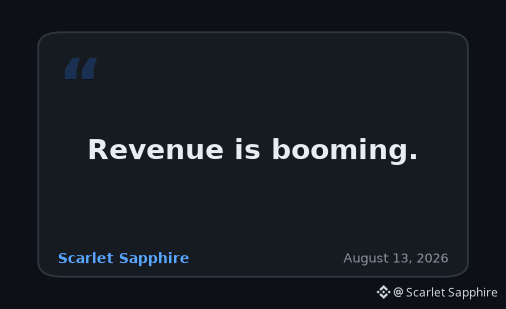
Revenue is booming.
BitGo's revenue exploded 80% to $4.3B, even with a $19M Q2 loss. The red is mostly just unrealized asset hits. Seeing revenue scale this fast despite market volatility is a massive signal for institutional infrastructure.
#BitGo
BitGo's revenue exploded 80% to $4.3B, even with a $19M Q2 loss. The red is mostly just unrealized asset hits. Seeing revenue scale this fast despite market volatility is a massive signal for institutional infrastructure.
#BitGo
Log in to explore more content