
Crypto麻子新
5.6k Posts

Crypto麻子新
Report
Block User

Level 1 Creator

PEPE Holder
Frequent Trader
6.1 Years
89 Following
23.0K+ Followers
65.1K+ Liked
1 Badges
Posts
All
Quotes
Videos
Live
PINNED
·
--
As someone whose account peaked at 17 million dollars but has now withdrawn to over 500, I’d like to offer some advice. [这是回撤之后的持仓!](https://app.binance.com/uni-qr/cpos/21795178698122?r=54364383&l=zh-CN&uco=4mOYO6YGmD5CfpYB39z3eQ&uc=app_square_share_link&us=copylink)
Videos cannot write long articles; I will write in the next article and reference this one. These are my reflections and insights from the past few months, explaining why we are in the current situation.
The video is from March 2024, when $ICP made a significant profit. If there are critics who want me to record a screen with over 10 million dollars in holdings, I wouldn’t be able to do it because my current position is not that large anymore.
However, I am very confident that I can return to my peak and even surpass it. I spent three months reflecting on this mistake and realized that no matter how much I lost, it was a valuable lesson.
As someone whose account peaked at 17 million dollars but has now withdrawn to over 500, I’d like to offer some advice. 这是回撤之后的持仓!
Videos cannot write long articles; I will write in the next article and reference this one. These are my reflections and insights from the past few months, explaining why we are in the current situation.
The video is from March 2024, when $ICP made a significant profit. If there are critics who want me to record a screen with over 10 million dollars in holdings, I wouldn’t be able to do it because my current position is not that large anymore.
However, I am very confident that I can return to my peak and even surpass it. I spent three months reflecting on this mistake and realized that no matter how much I lost, it was a valuable lesson.
12
5
77
6.5k
·
--
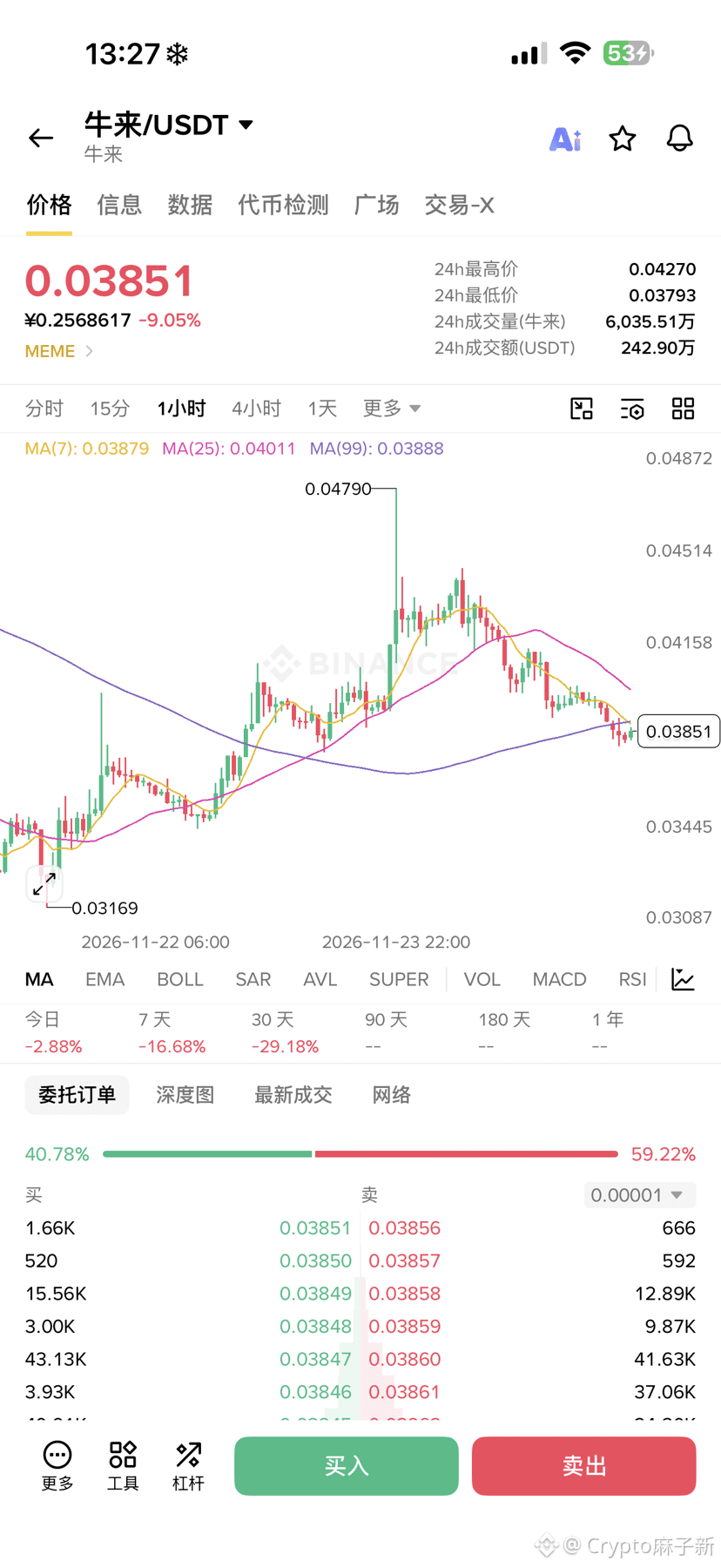
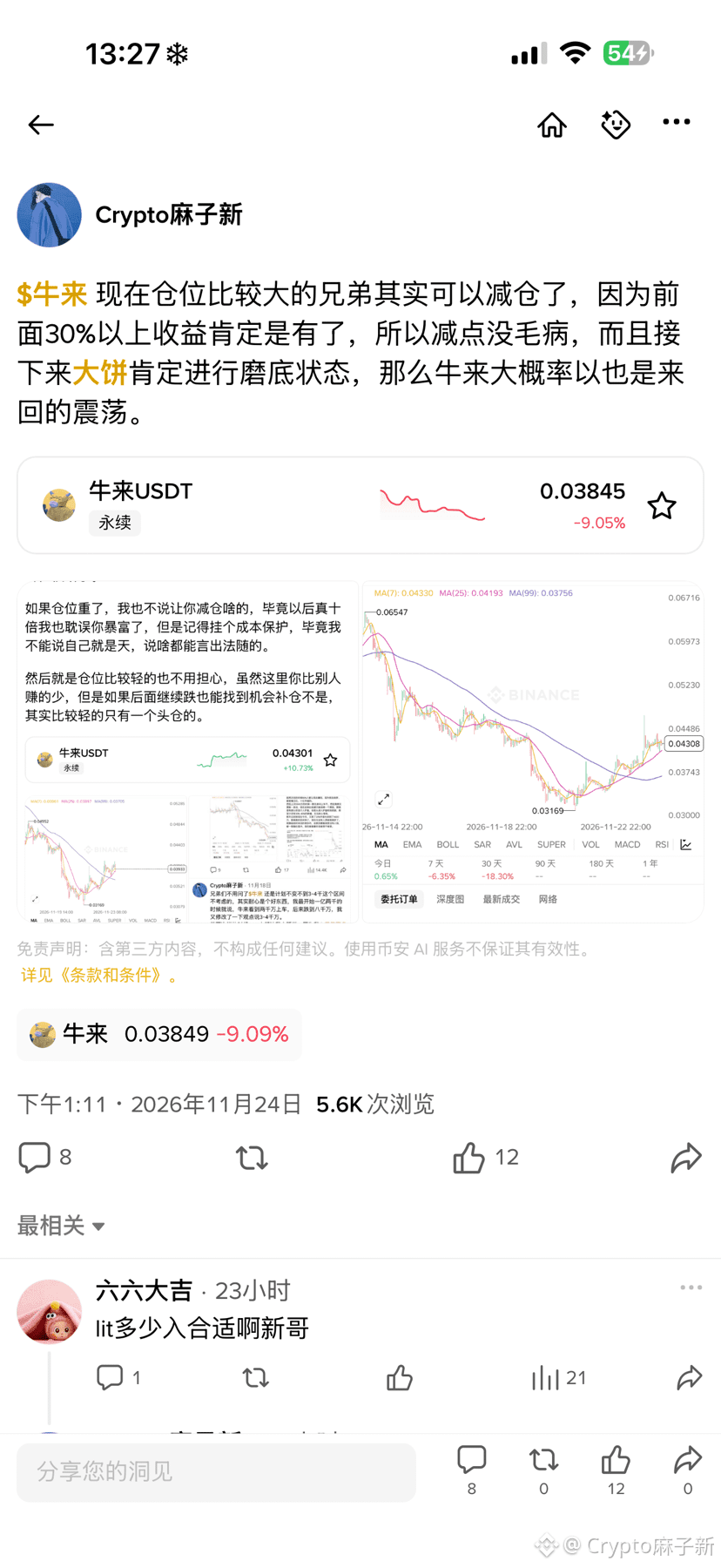
I told you yesterday to reduce your positions $牛来 . Looking at it today, that seems like the right call, doesn’t it? After all, Bitcoin will likely be grinding out a bottom for quite some time. When the bull market comes, we can look for opportunities to add back the positions we took profits on. I think a market cap of 500 million is totally achievable in the next bull market.
Also, over the coming period, I’ll gradually share the tokens I’m bullish on and build positions bit by bit while we wait for the payoff. After all, we have the capital and USDT to invest. Those who ignored the advice and got caught buying at the top can only watch from the sidelines.
{future}(牛来USDT)
I told you yesterday to reduce your positions $牛来 . Looking at it today, that seems like the right call, doesn’t it? After all, Bitcoin will likely be grinding out a bottom for quite some time. When the bull market comes, we can look for opportunities to add back the positions we took profits on. I think a market cap of 500 million is totally achievable in the next bull market.
Also, over the coming period, I’ll gradually share the tokens I’m bullish on and build positions bit by bit while we wait for the payoff. After all, we have the capital and USDT to invest. Those who ignored the advice and got caught buying at the top can only watch from the sidelines.
Also, over the coming period, I’ll gradually share the tokens I’m bullish on and build positions bit by bit while we wait for the payoff. After all, we have the capital and USDT to invest. Those who ignored the advice and got caught buying at the top can only watch from the sidelines.
7
7
2.4k
·
--
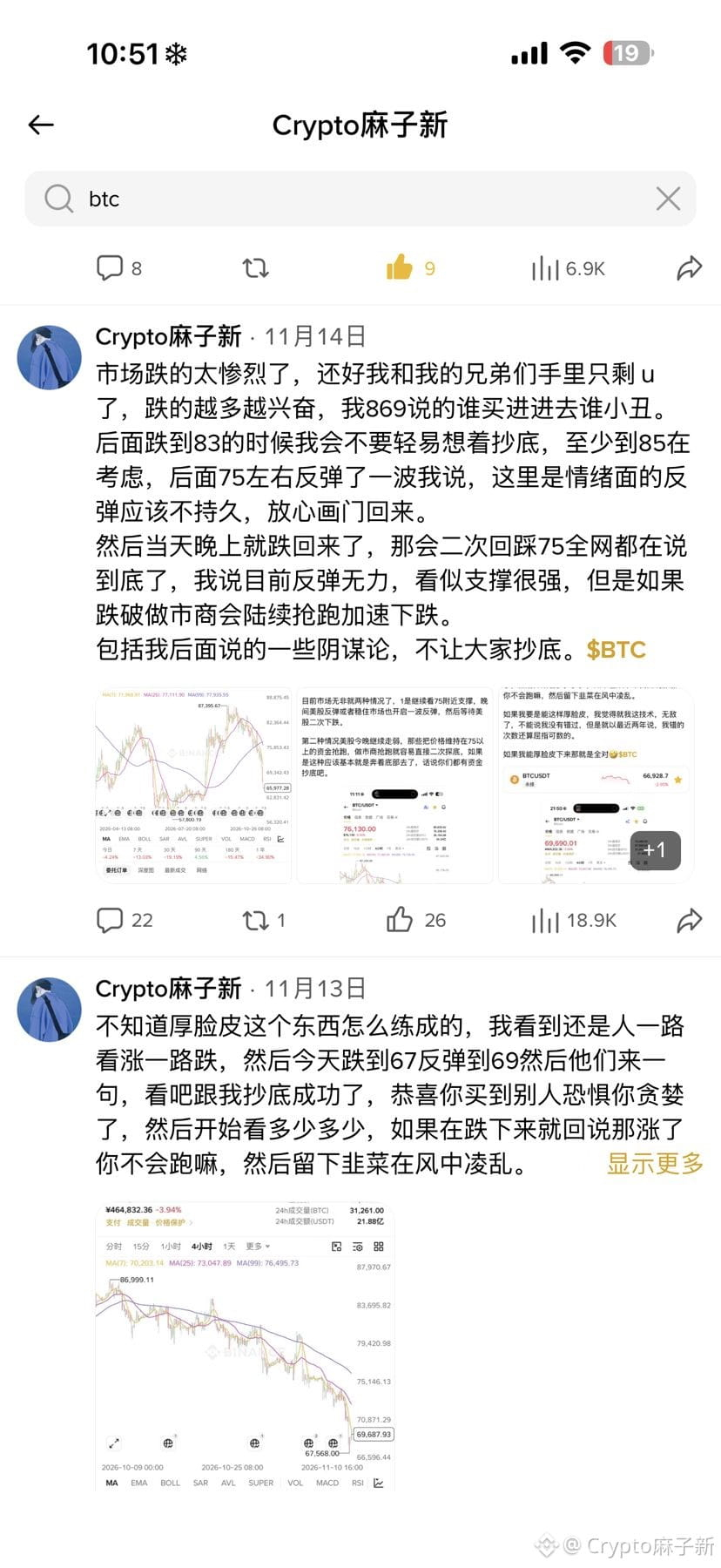
If a person has been telling you all the way down from the peak of $BTC that it’s about to surge soon, and says it’s bottomed out at every stage of the decline until there’s finally no way out and then says spot holdings aren’t scary.
Then people like this are probably not making money through trading at all. More likely, they know they can’t make money through trading themselves. Anyone who trades knows how agonizing it is to get trapped from the top. (That husband-and-wife duo are also masters at topping up faith.)
And once you’re trapped, unless you have external funds, it just becomes a vicious cycle. You might have just struggled back and were ready to go all in, only for it to end again.
A person should value self-awareness. Only do what is within your capability; if you don’t understand it, take a proper break.
Ever since I started this at 869, I said whoever rushed in would be a clown, and I kept being bearish all the way down. To be honest, it felt really great.
{future}(BTCUSDT)
If a person has been telling you all the way down from the peak of $BTC that it’s about to surge soon, and says it’s bottomed out at every stage of the decline until there’s finally no way out and then says spot holdings aren’t scary.
Then people like this are probably not making money through trading at all. More likely, they know they can’t make money through trading themselves. Anyone who trades knows how agonizing it is to get trapped from the top. (That husband-and-wife duo are also masters at topping up faith.)
And once you’re trapped, unless you have external funds, it just becomes a vicious cycle. You might have just struggled back and were ready to go all in, only for it to end again.
A person should value self-awareness. Only do what is within your capability; if you don’t understand it, take a proper break.
Ever since I started this at 869, I said whoever rushed in would be a clown, and I kept being bearish all the way down. To be honest, it felt really great.

7
17
1.8k
·
--
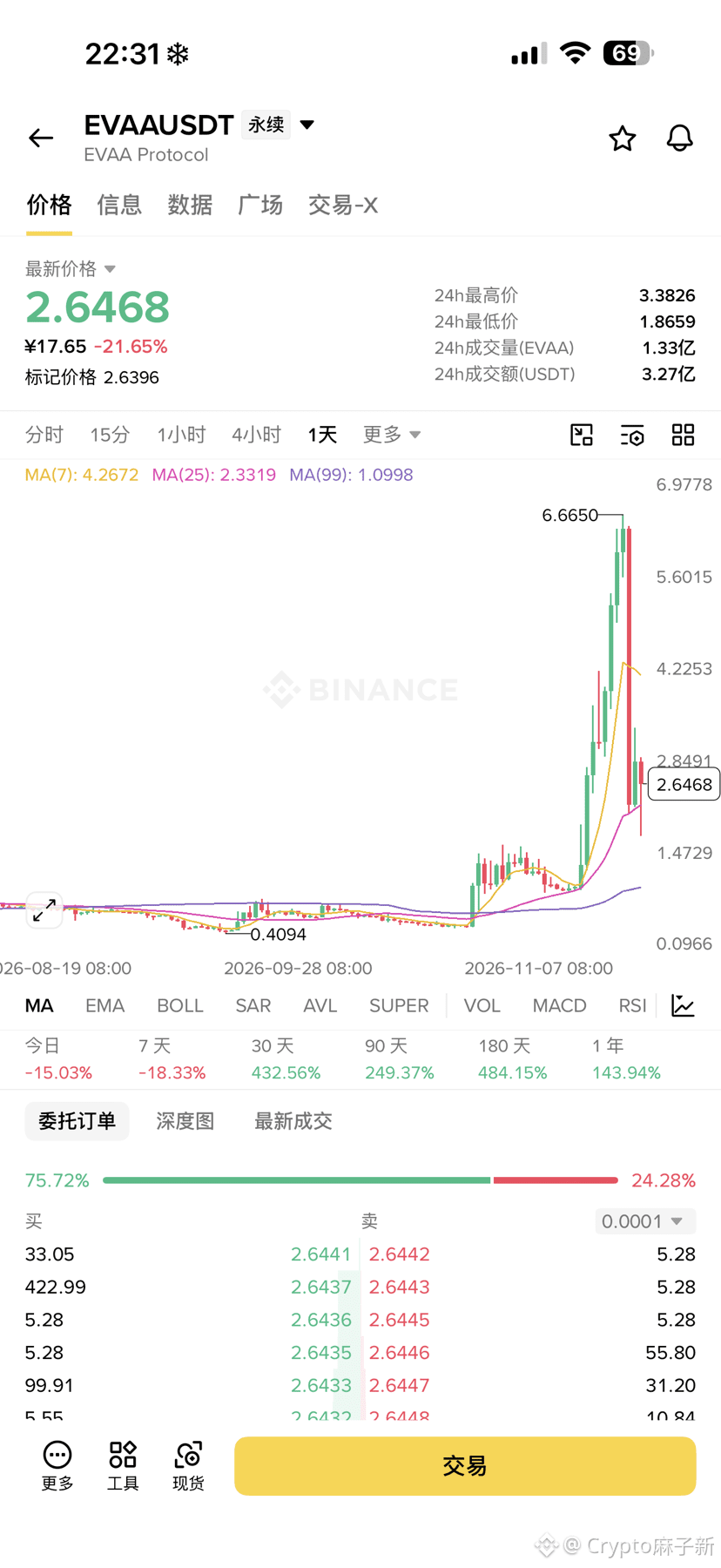
Let's talk about this heavily controlled token, $EVAA . Coins like this often have a second leg up. If it pulls back to around 2, you could buy a little and put your stop loss below 1.7. The volatility is pretty high, so it’s genuinely hard to manage a move of more than a point without a stop loss. My plan is to buy a small lottery-ticket position and see how it goes. I can accept getting stopped out, and if it takes off, it could easily multiply several times.
{future}(EVAAUSDT)
Let's talk about this heavily controlled token, $EVAA . Coins like this often have a second leg up. If it pulls back to around 2, you could buy a little and put your stop loss below 1.7. The volatility is pretty high, so it’s genuinely hard to manage a move of more than a point without a stop loss. My plan is to buy a small lottery-ticket position and see how it goes. I can accept getting stopped out, and if it takes off, it could easily multiply several times.
4
12
6.1k
·
--
With U.S. stocks undergoing a prolonged correction, the market is once again debating a question: Is the current AI rally repeating the dot-com bubble of 2000, and could it even turn into a financial crisis like the one in 2008?I think both of these historical periods are worth looking at for reference, but today's market environment is very different from what it was back then.
Let's start with the AI bubble.
In the first half of this year, many semiconductor stocks posted extraordinarily large gains, with some share prices even tracing out a classic parabolic pattern. Judging by price action alone, it's easy to be reminded of the dot-com bubble of 2000.
But the biggest problem at the time was that although the internet changed people's lives, it took a long time for sufficiently mature business models to emerge. It was only later, as business models such as gaming, advertising, and e-commerce gradually proved viable, that the industry as a whole entered a phase of commercial expansion.
With U.S. stocks undergoing a prolonged correction, the market is once again debating a question: Is the current AI rally repeating the dot-com bubble of 2000, and could it even turn into a financial crisis like the one in 2008?
I think both of these historical periods are worth looking at for reference, but today's market environment is very different from what it was back then.
Let's start with the AI bubble.
In the first half of this year, many semiconductor stocks posted extraordinarily large gains, with some share prices even tracing out a classic parabolic pattern. Judging by price action alone, it's easy to be reminded of the dot-com bubble of 2000.
But the biggest problem at the time was that although the internet changed people's lives, it took a long time for sufficiently mature business models to emerge. It was only later, as business models such as gaming, advertising, and e-commerce gradually proved viable, that the industry as a whole entered a phase of commercial expansion.
16
5.5k
·
--
$BTC has rebounded from oversold conditions, and some people have already started treating it as the starting point of a new bull market.
Actually, I said last night that the main driver was Jensen Huang’s return, which boosted the AI sector, after which market sentiment spread to the crypto market. Add to that the fact that the crypto market has been falling for so long and has been sorely lacking a decent rebound, and it’s no surprise that the news triggered a sharp relief rally.
That’s why I said yesterday not to rush into long positions on futures.
The current macro environment isn’t looking promising, and we’re still a long way from the conditions needed for a new major bull market. Also, bottoms always take shape gradually, so what’s worth watching next is when global liquidity actually starts to turn around.
Next, keep an eye on these four indicators:
Federal Reserve: Whether expectations of interest-rate cuts start heating up again.
U.S. Dollar Index (DXY): Whether it continues to weaken.
U.S. spot BTC ETFs: Whether they can sustain net inflows.
U.S. Treasury real yields: Whether they start declining steadily.
{future}(BTCUSDT)
$BTC has rebounded from oversold conditions, and some people have already started treating it as the starting point of a new bull market.
Actually, I said last night that the main driver was Jensen Huang’s return, which boosted the AI sector, after which market sentiment spread to the crypto market. Add to that the fact that the crypto market has been falling for so long and has been sorely lacking a decent rebound, and it’s no surprise that the news triggered a sharp relief rally.
That’s why I said yesterday not to rush into long positions on futures.
The current macro environment isn’t looking promising, and we’re still a long way from the conditions needed for a new major bull market. Also, bottoms always take shape gradually, so what’s worth watching next is when global liquidity actually starts to turn around.
Next, keep an eye on these four indicators:
Federal Reserve: Whether expectations of interest-rate cuts start heating up again.
U.S. Dollar Index (DXY): Whether it continues to weaken.
U.S. spot BTC ETFs: Whether they can sustain net inflows.
U.S. Treasury real yields: Whether they start declining steadily.
3
26
6.1k
·
--
Turns out the public really does have sharp eyes. I’m not the only one who thinks Yi Lihua is terrible. I honestly can’t understand how he repeatedly manages to get his opinions so perfectly wrong, yet always finds an excuse to backtrack—and never seems embarrassed at all.
I really admire them. If I’m wrong, I feel too embarrassed to post for a day or two. So it seems being a fence-sitter isn’t great, since you’re always wrong whenever you change your opinion 😑.
I really admire them. If I’m wrong, I feel too embarrassed to post for a day or two. So it seems being a fence-sitter isn’t great, since you’re always wrong whenever you change your opinion 😑.

4
18
4.1k
·
--
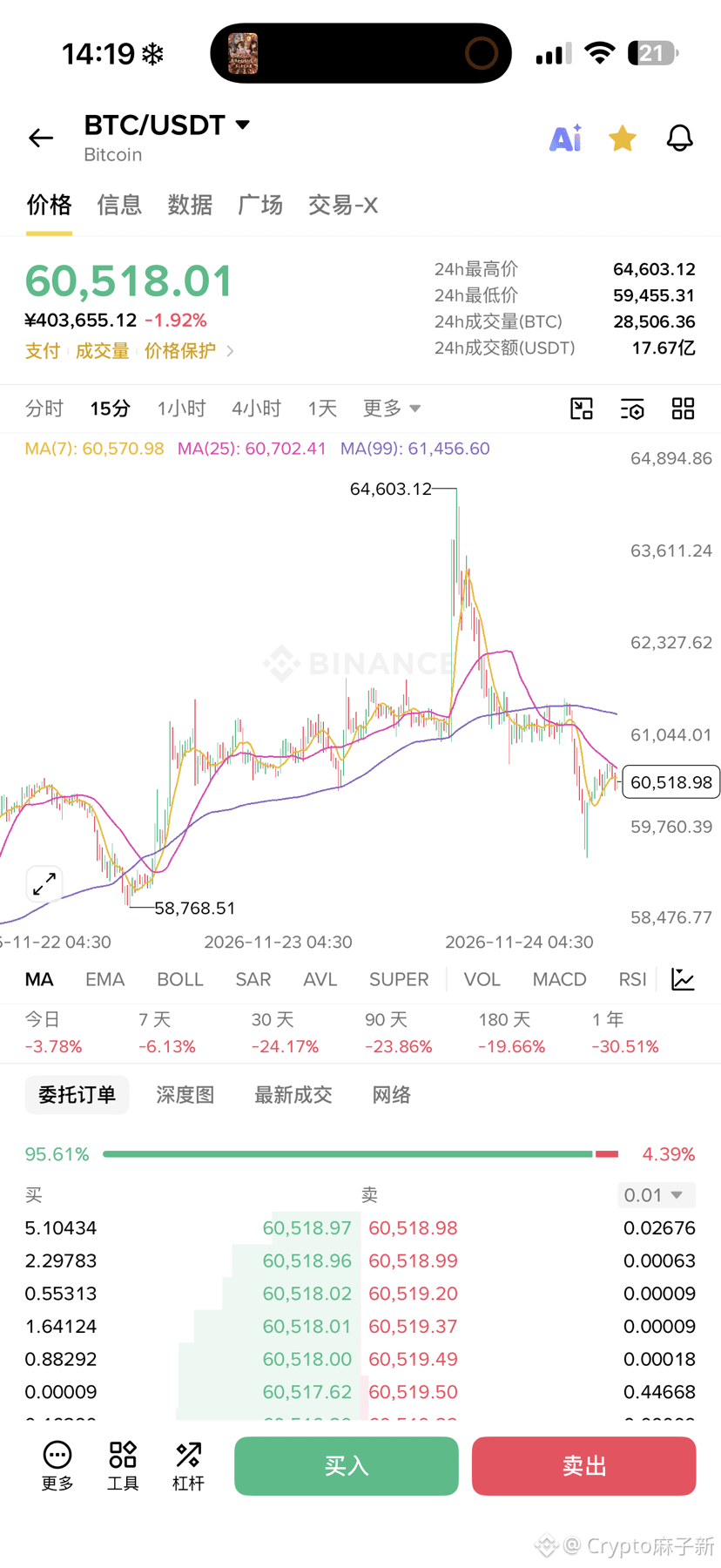
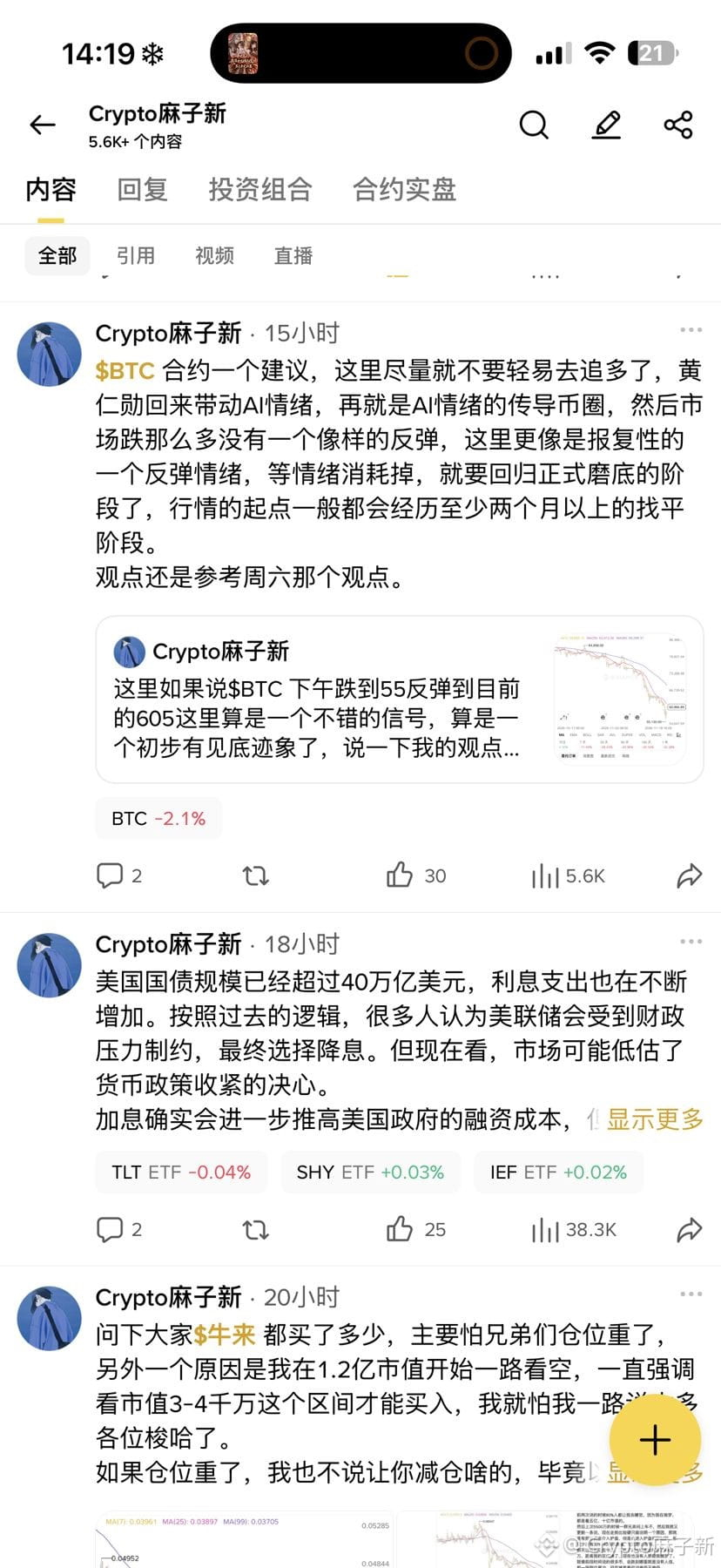
The market is so quiet today. Could it be because people chased longs yesterday and got trapped?
The market is so quiet today. Could it be because people chased longs yesterday and got trapped?
4
8
2.9k
·
--
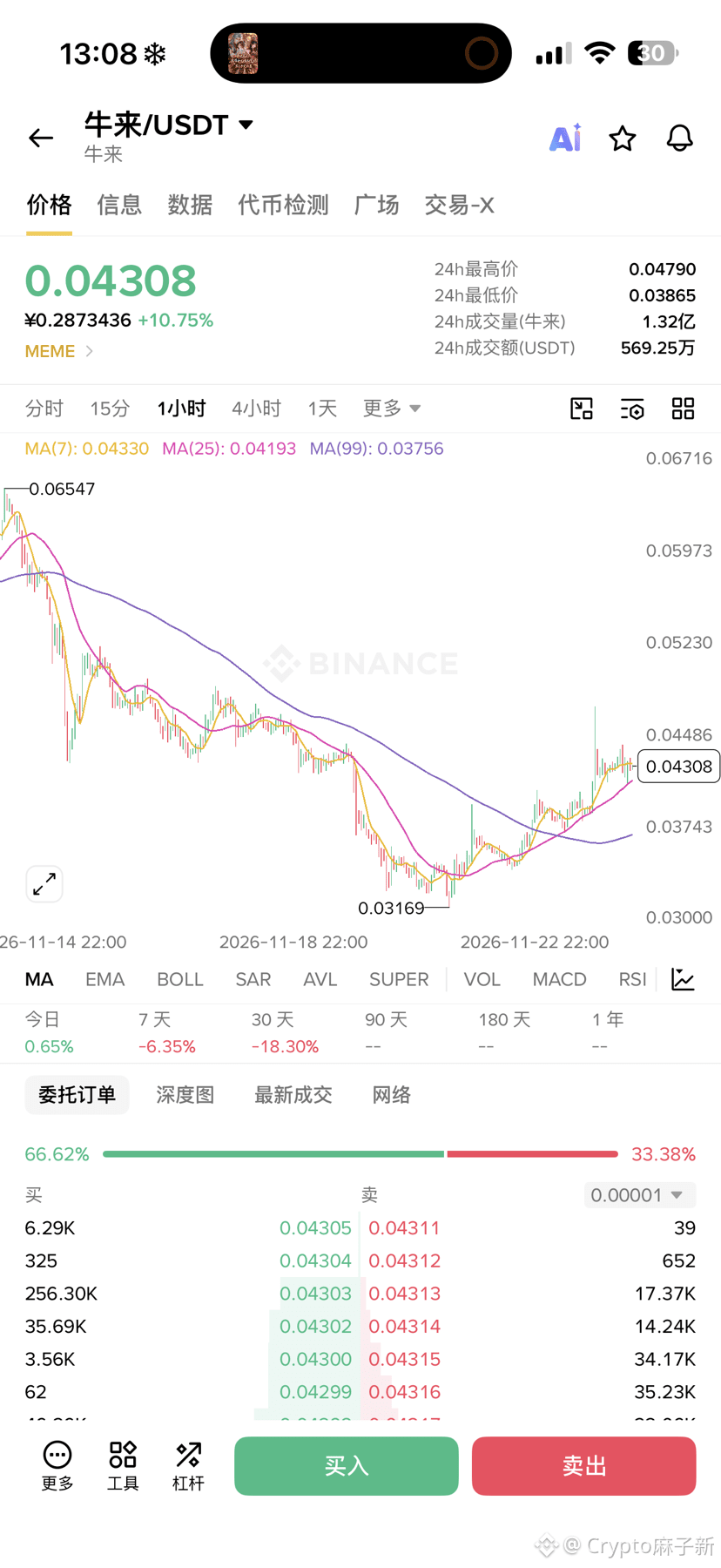
$牛来 Those of you with relatively large positions can start trimming them, since you’ve already made gains of over 30% from earlier on. There’s nothing wrong with taking some profits. Bitcoin will likely enter a bottoming phase next, so when the bull market comes, prices will probably be choppy.
{future}(牛来USDT)
$牛来 Those of you with relatively large positions can start trimming them, since you’ve already made gains of over 30% from earlier on. There’s nothing wrong with taking some profits. Bitcoin will likely enter a bottoming phase next, so when the bull market comes, prices will probably be choppy.
8
12
5.6k
·
--
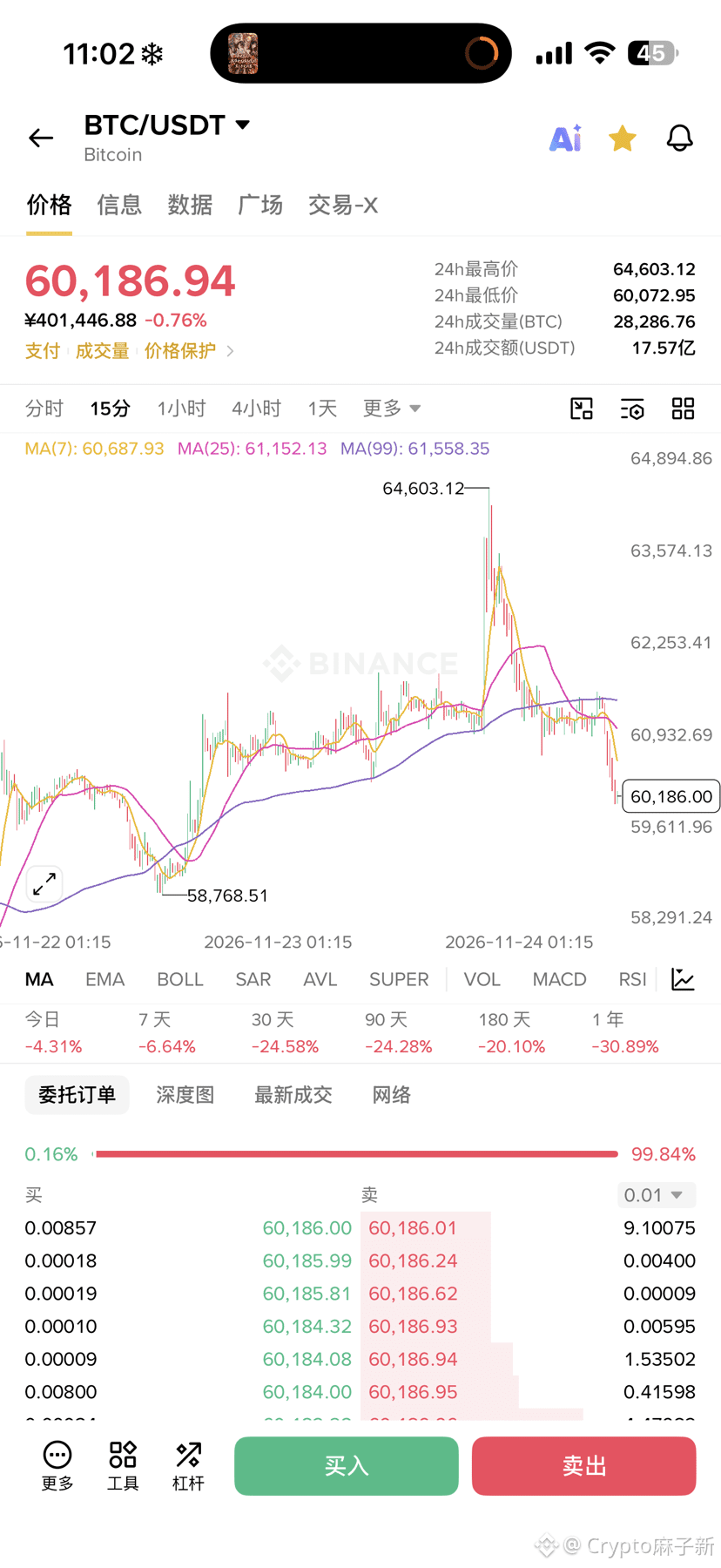
Last night, Jensen Huang made a comeback, giving AI a boost. The positive sentiment around AI spilled over into crypto, and then $BTC rebounded to over 64,000. I updated a post saying that you shouldn't be too quick to chase longs in futures here, since prices had fallen so much without a decent rebound, and this looked more like a vengeful rebound fueled by the news.
I woke up today and saw that things were basically as I expected.
{future}(BTCUSDT)
Last night, Jensen Huang made a comeback, giving AI a boost. The positive sentiment around AI spilled over into crypto, and then $BTC rebounded to over 64,000. I updated a post saying that you shouldn't be too quick to chase longs in futures here, since prices had fallen so much without a decent rebound, and this looked more like a vengeful rebound fueled by the news.
I woke up today and saw that things were basically as I expected.
I woke up today and saw that things were basically as I expected.
5
23
3.9k
·
--
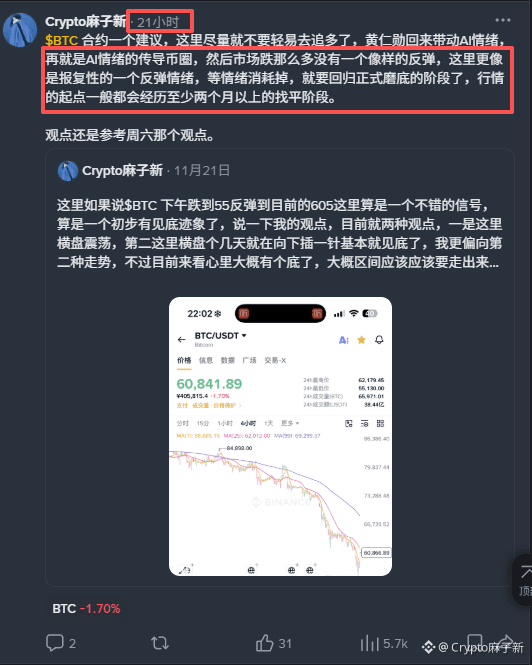
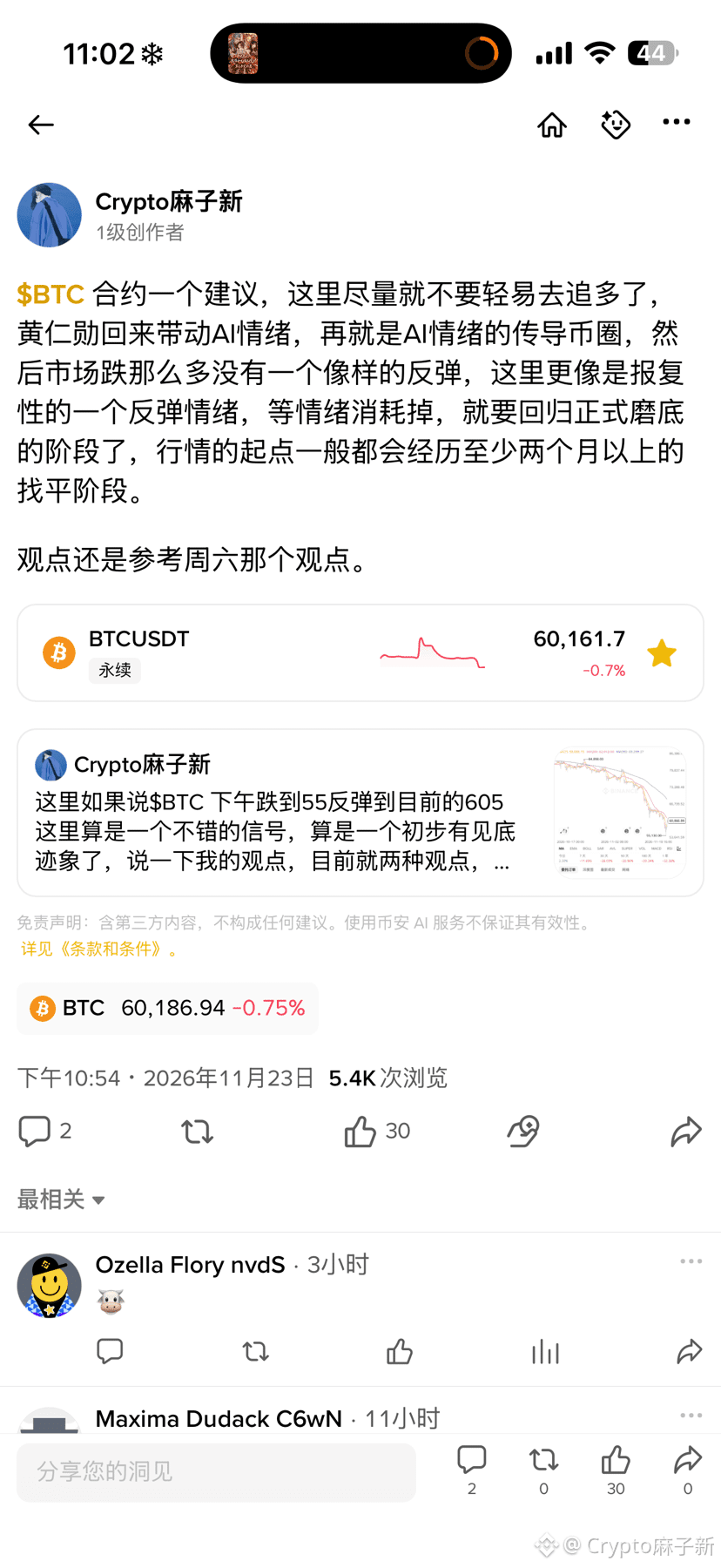
$BTC One suggestion for futures: try not to rush into chasing longs here. Jensen Huang's return has boosted AI sentiment, which is then spilling over into the crypto market. After such a steep decline without a decent rebound, this looks more like a revenge rally driven by sentiment. Once that sentiment fades, the market will return to a proper bottoming phase. Market bottoms generally go through at least two months of consolidation.
My view is still the same as the one I shared on Saturday.
{future}(BTCUSDT)
$BTC One suggestion for futures: try not to rush into chasing longs here. Jensen Huang's return has boosted AI sentiment, which is then spilling over into the crypto market. After such a steep decline without a decent rebound, this looks more like a revenge rally driven by sentiment. Once that sentiment fades, the market will return to a proper bottoming phase. Market bottoms generally go through at least two months of consolidation.
My view is still the same as the one I shared on Saturday.
My view is still the same as the one I shared on Saturday.
Crypto麻子新
·
--
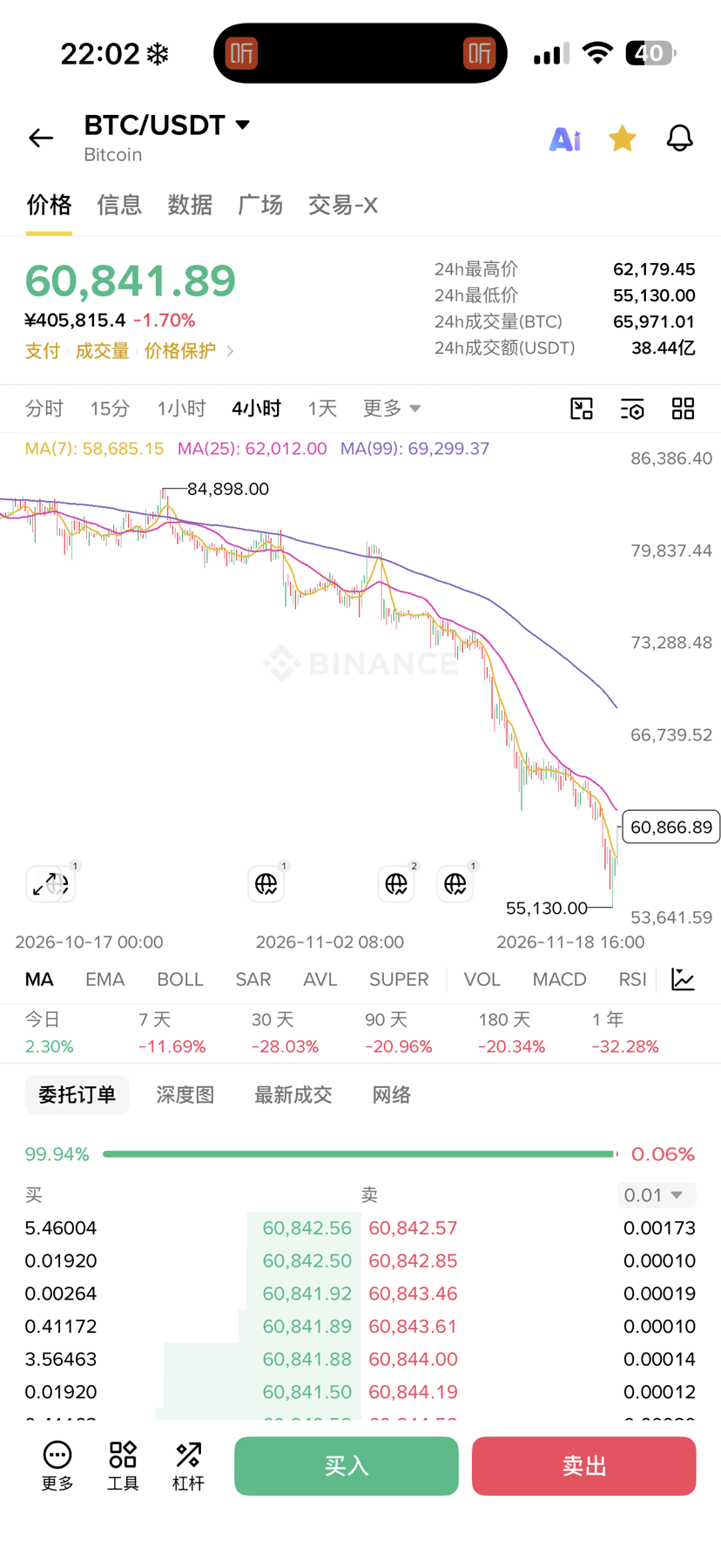
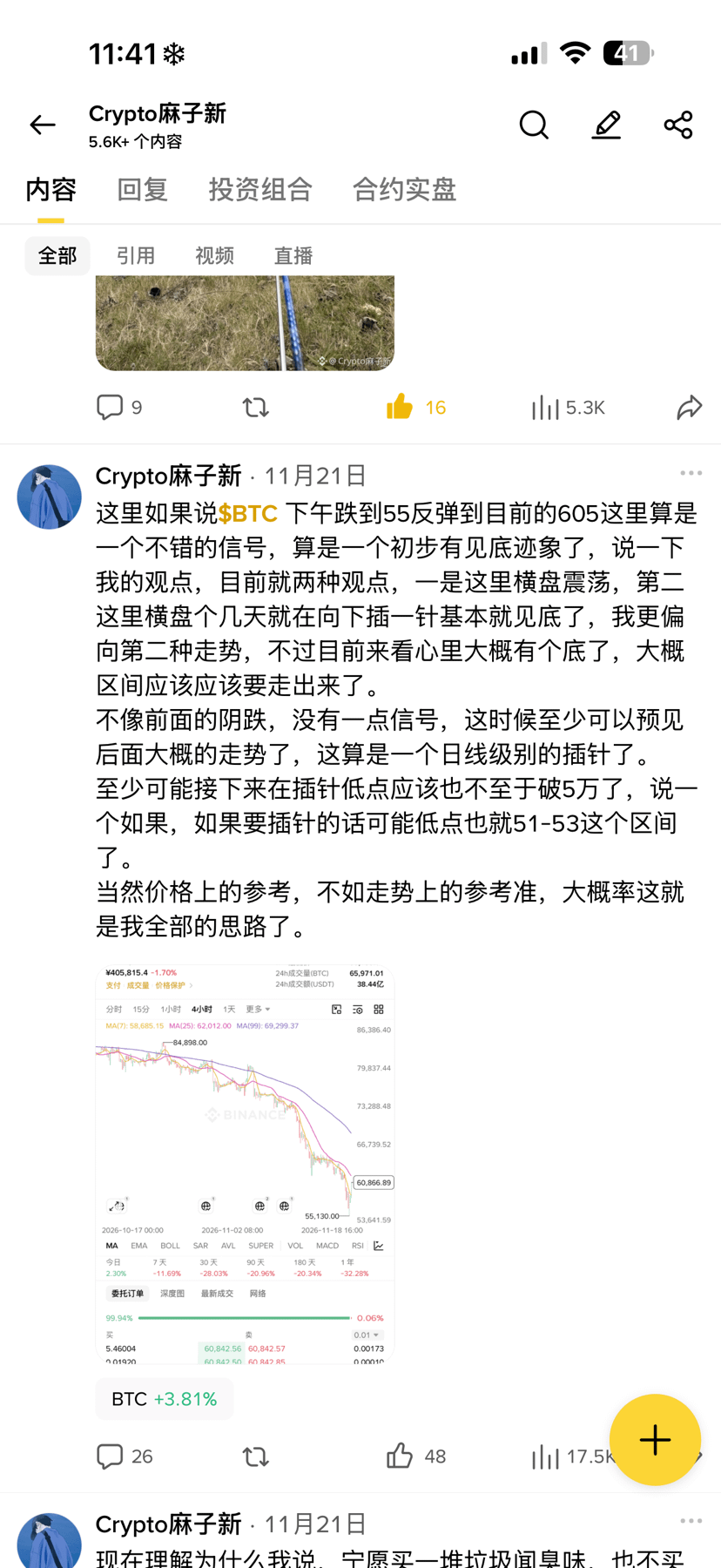
If we say that $BTC dropped to 55 this afternoon and bounced back to the current 605, this would be a pretty good signal—an initial sign that we may have bottomed. Let me share my view. There are two possibilities at this point: first, we move sideways here; second, we move sideways for a few days, then get one downward wick, and that would basically mark the bottom. I lean more toward the second scenario. But looking at things now, I have a rough idea of where the bottom might be, and the likely range should become clear.
Unlike the gradual decline earlier, when there wasn't a single signal, at least now we can get a rough sense of what the price action might look like next. This counts as a wick on the daily timeframe.
At the very least, even if we get another wick, I don't think the low is likely to break below 50,000. Just hypothetically, if we do get a wick, the low would probably be in the 51,000–53,000 range.
Of course, price levels are less reliable points of reference than price action. That's probably my full take on it.
2
32
5.8k
·
--
Verified
U.S. national debt has surpassed $40 trillion, and interest payments continue to rise. Based on past experience, many people believe the Federal Reserve will be constrained by fiscal pressures and ultimately choose to cut rates. But the market may now be underestimating the resolve to tighten monetary policy.
Rate hikes would indeed further increase the U.S. government’s borrowing costs, but the Fed considers more than just the fiscal ledger. Inflation, confidence in the dollar, and financial stability are also factors it must weigh.
If interest rates remain high or rise further, dollar-denominated assets will become more attractive, making it easier for global capital to flow back into the United States. Other markets, in turn, will face higher borrowing costs, tighter dollar liquidity, and pressure on asset valuations.
The real concern is that if this pressure continues to ripple through the system, it could spread from stock markets to corporate financing and bond markets, and even trigger broader credit risks.
Of course, it would be an overinterpretation to see all this simply as the Fed deliberately raising rates and waiting for global assets to fall far enough before buying them up. The Fed cannot fully control the markets, nor can it tighten indefinitely without consequences.
But one point is worth noting: $40 trillion in debt does not mean the Fed will necessarily choose an accommodative policy. On the contrary, if inflationary pressures persist, monetary policy could remain hawkish.
For investors, the key things to watch next are changes in dollar liquidity, U.S. Treasury yields, and credit spreads.
The biggest risk in this market cycle may not be any single rate hike, but that high interest rates last longer than the market expects.
TLTETF+0.64%
SHYETF+0.12%
IEFETF+0.28%
2
27
38.6k
·
--
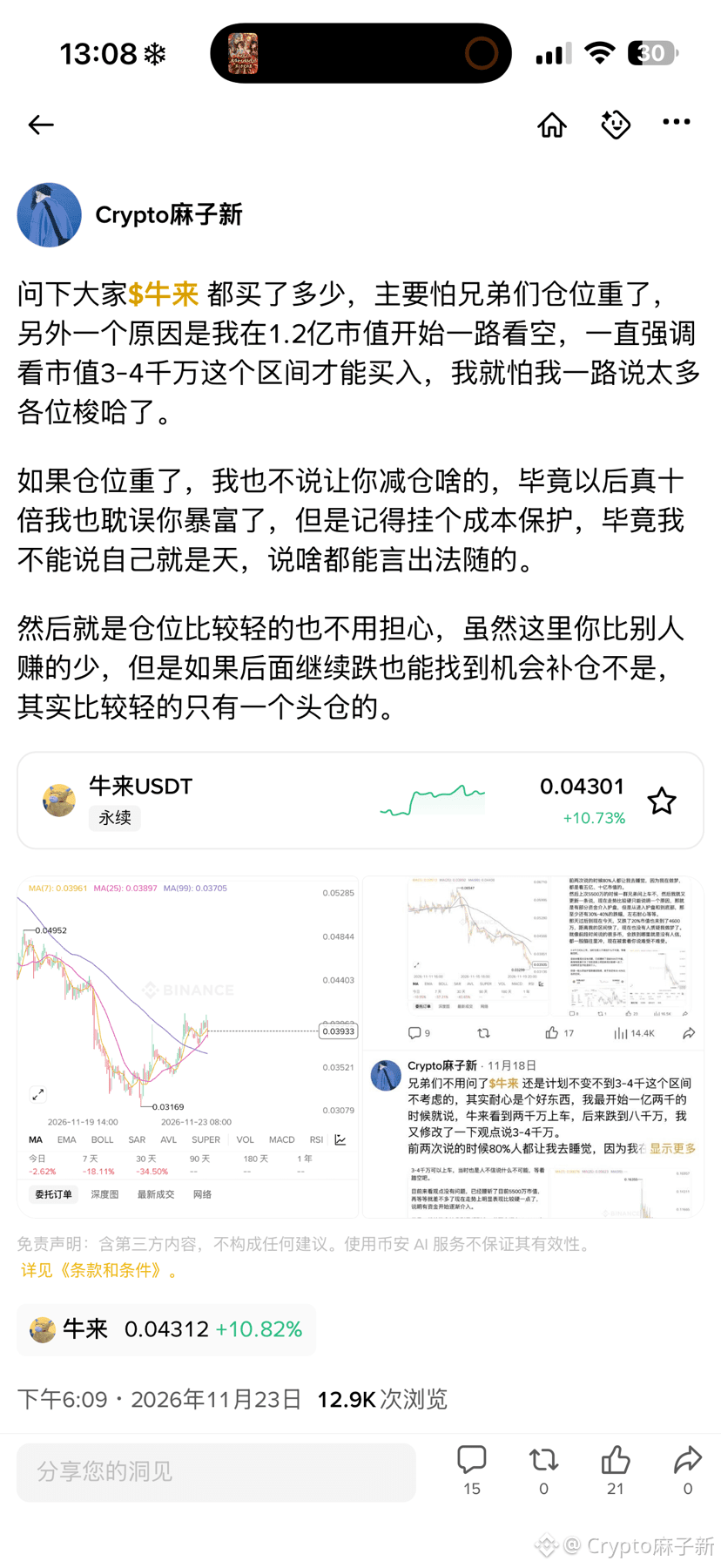
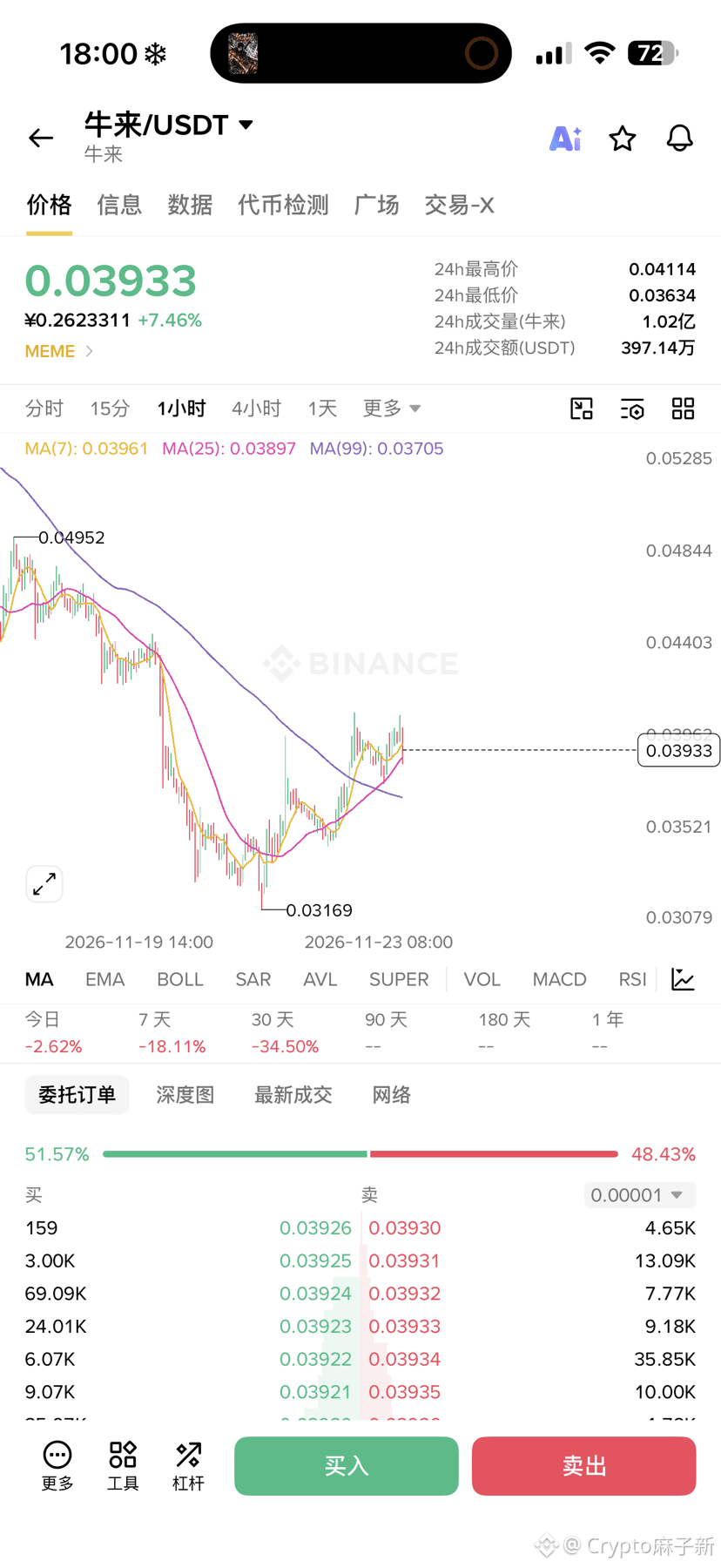
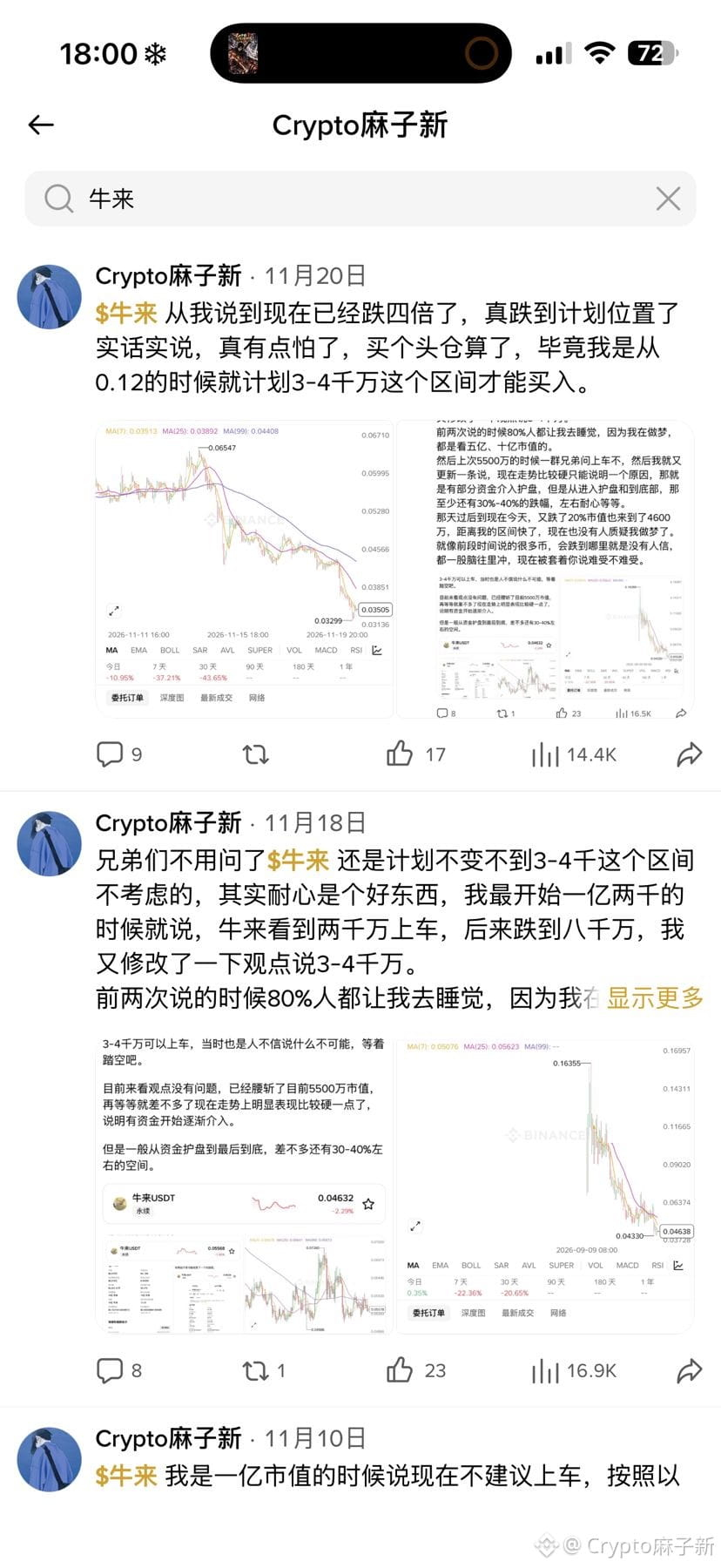
Can everyone share how much they bought of $牛来 ? I’m mainly worried some of you might be too heavily invested. Another reason is that I started being bearish when the market cap was 120 million and kept emphasizing that you should only buy when it’s in the 30–40 million range. I’m just worried I’ve talked about it so much along the way that you’ve all gone all in.
If you’re heavily invested, I’m not going to tell you to reduce your position or anything. After all, if it really goes 10x later, I’d have kept you from getting rich. But remember to set a stop-loss to protect your cost basis. I can’t claim to be some kind of god who can make everything I say come true.
And those of you with relatively small positions don’t need to worry either. You may have made less than others here, but if it keeps falling, you’ll still have a chance to add to your position, right? Actually, those with relatively small positions have only taken an initial position.
{future}(牛来USDT)
Can everyone share how much they bought of $牛来 ? I’m mainly worried some of you might be too heavily invested. Another reason is that I started being bearish when the market cap was 120 million and kept emphasizing that you should only buy when it’s in the 30–40 million range. I’m just worried I’ve talked about it so much along the way that you’ve all gone all in.
If you’re heavily invested, I’m not going to tell you to reduce your position or anything. After all, if it really goes 10x later, I’d have kept you from getting rich. But remember to set a stop-loss to protect your cost basis. I can’t claim to be some kind of god who can make everything I say come true.
And those of you with relatively small positions don’t need to worry either. You may have made less than others here, but if it keeps falling, you’ll still have a chance to add to your position, right? Actually, those with relatively small positions have only taken an initial position.
15
21
13.8k
·
--
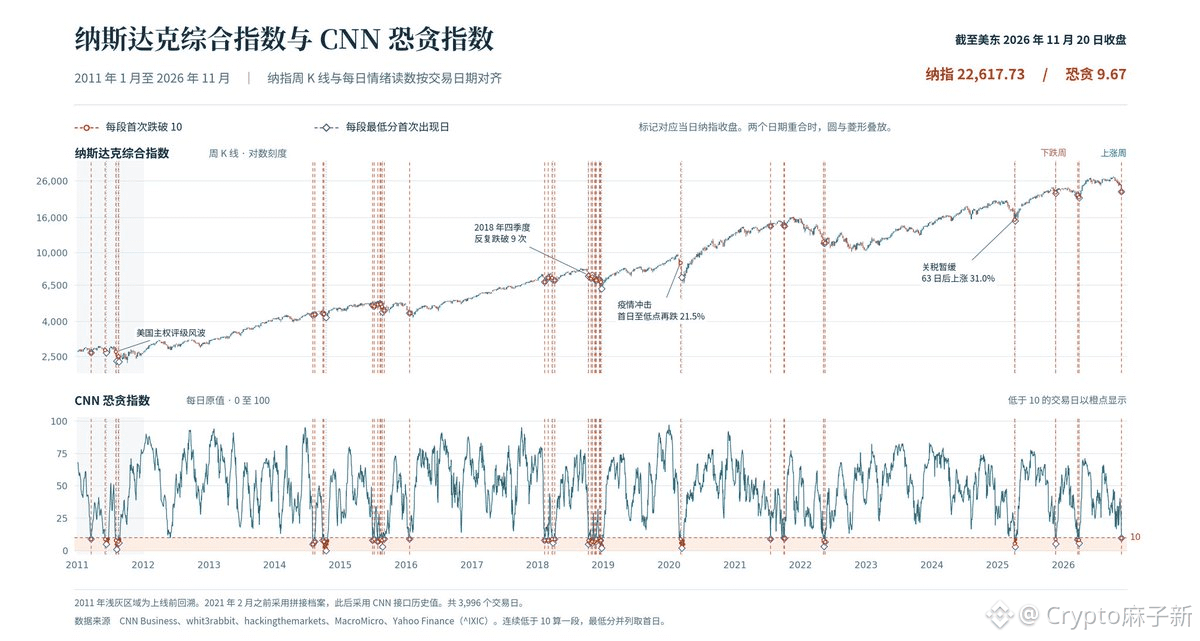
The CNN Fear & Greed Index for U.S. stocks fell to 9, entering the extreme fear zone. Looking back over the past decade or so, whenever market sentiment has fallen this low, a new market rally has often started within the following year!
Since 2011, there have been 17 instances in which signals with a Fear & Greed Index below 10 were combined. Of the 16 instances that had ended, 7 were followed by a rapid rebound, 5 rebounded before retesting their lows, and the other 4 continued to decline for a while before bottoming out.
One detail is worth noting: in 14 of the 16 instances, the market closed higher 21 trading days after the signal was triggered.
This suggests that extreme fear can be a useful contrarian indicator to some extent, but it doesn’t mean the market has already bottomed.
What I’m paying more attention to now isn’t whether the index can rebound, but whether money actually comes back after the rebound—especially in credit markets.
Recently, U.S. high-yield bond spreads widened from 323 basis points on November 13 to 352 basis points on November 19. The CDX IG spread also briefly rose to 65.5 basis points intraday on November 20, its highest level since the end of March.
This suggests that market concerns may no longer be limited to tech stock valuations, and may be spreading to corporate financing costs and credit risk.
If the Nasdaq rebounds and credit spreads narrow at the same time, that would suggest risk appetite is recovering and the market could stabilize fairly quickly.
But if stocks rise while credit spreads continue to widen, we should be cautious. The stock market rebound may simply reflect a recovery in sentiment, with the risk of a second bottom still ahead.
At the moment, I personally think the market is more likely to remain volatile than to stage an immediate V-shaped recovery. The direction of macro policy is still unclear, and concerns over AI industry valuations and capital spending have not been fully digested.
If the fear index falls further below 5 and credit spreads start to narrow, I’d actually be more willing to seriously look for opportunities.
The market’s moment of greatest despair isn’t necessarily the bottom, but it’s often when the risk-reward ratio is worth starting to watch.
1
29
8.1k
·
--
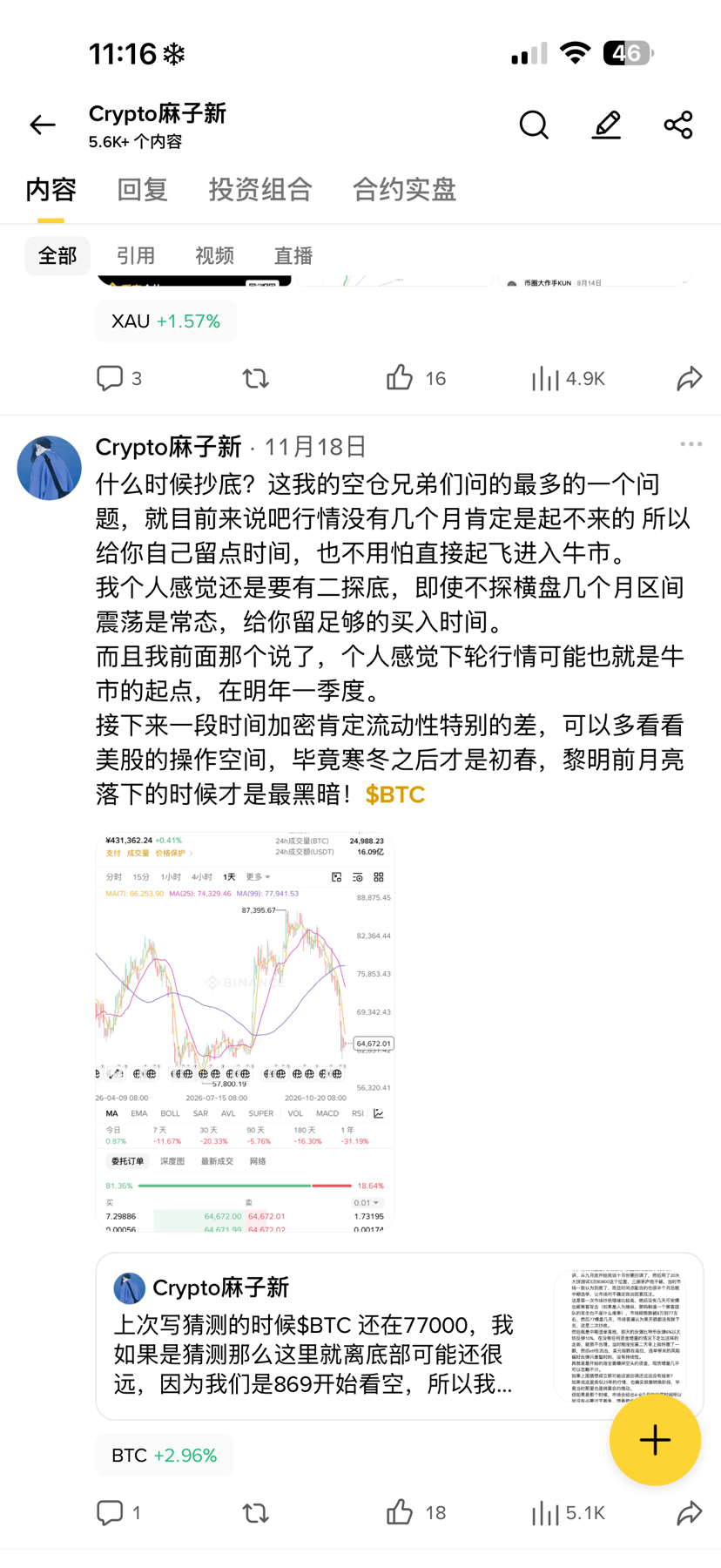
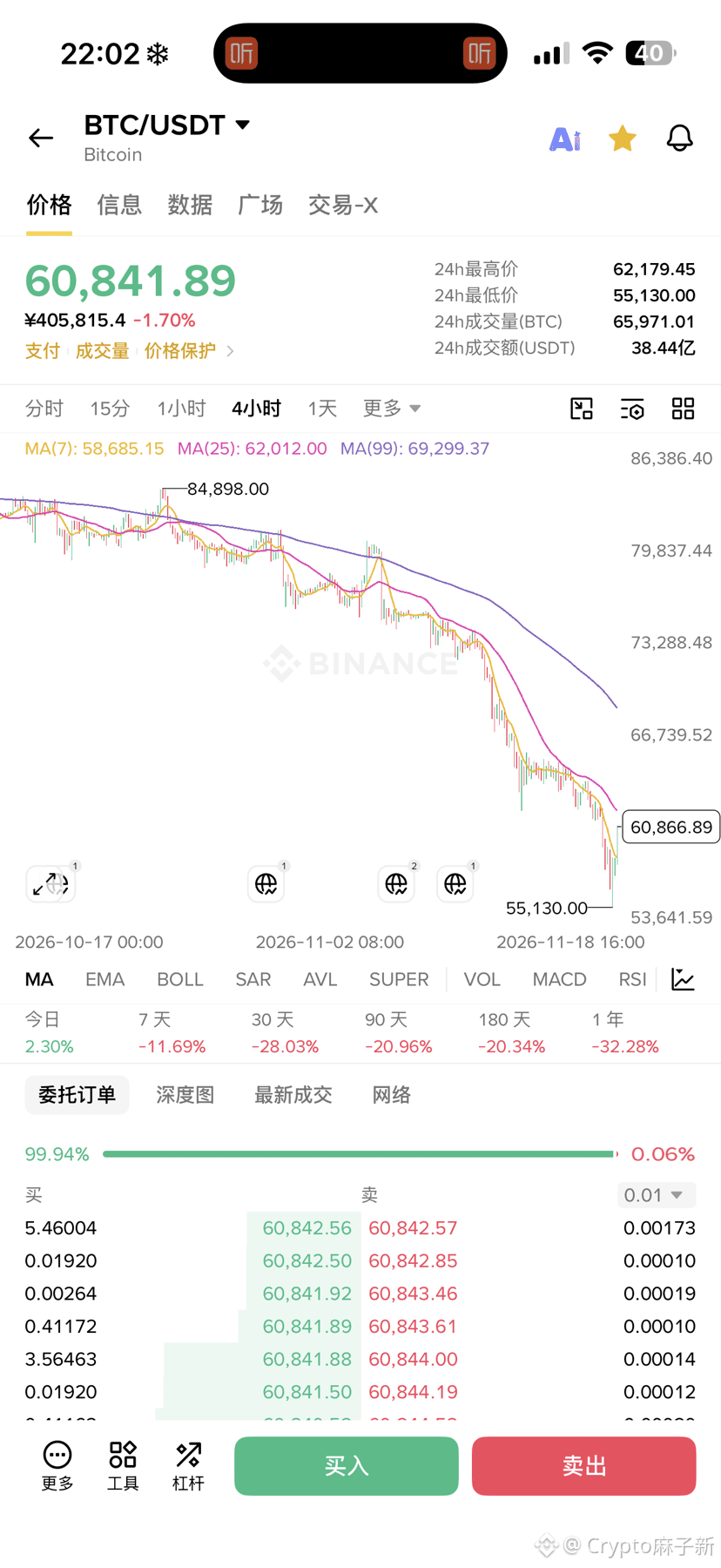
Let’s start with a quick market update today. First, let’s look at the points during this period when you guys asked about buying the dip. The first time was around 80,000, at $BTC . Price tested that level three times without breaking below it, but I said 80,000 definitely wouldn’t hold, so don’t rush into buying the dip.
The second time was when we were at 77. A lot of you guys asked whether it was time to buy the dip. I wrote a post sharing my thoughts and explaining why I didn’t want everyone to rush in—because if my analysis was right, the decline was only just beginning. As it turned out, I was right: the price dropped another $20,000.
The third time was when we were at 64. A bunch of you guys asked when to buy the dip. I said that after such a big drop, it would take at least a few months for the market to recover. Give yourself some time; don’t rush in. I also thought we’d see another test of the lows. That turned out to be right too—the price later dropped another $10,000.
Then, last Saturday morning, when we were at 58, you asked, “Still not buying the dip?” The market hadn’t started accelerating downward then, and I said I wasn’t seeing any signs of a bottom, so I didn’t know how to call a bottom.
Then today, to my surprise, I saw several people saying that I’d told you not to buy at 58 and that you’d missed out. But didn’t the price quickly wick down to 55 that afternoon? At the time, there still wasn’t any acceleration.
It wasn’t until that evening that I posted an update saying that if this counted as a daily-chart wick, it could also be a sign of a turnaround. I explained my view. Just imagine: if you hadn’t listened to me, you might have bought at 80, 77, or 64 and been stuck holding the bag by now. And all I get in return is, “You made me miss out.” You may buy the dip when it feels about right, but I wait for signals. Maybe that’s the fundamental difference between us.
{future}(BTCUSDT)
Let’s start with a quick market update today. First, let’s look at the points during this period when you guys asked about buying the dip. The first time was around 80,000, at $BTC . Price tested that level three times without breaking below it, but I said 80,000 definitely wouldn’t hold, so don’t rush into buying the dip.
The second time was when we were at 77. A lot of you guys asked whether it was time to buy the dip. I wrote a post sharing my thoughts and explaining why I didn’t want everyone to rush in—because if my analysis was right, the decline was only just beginning. As it turned out, I was right: the price dropped another $20,000.
The third time was when we were at 64. A bunch of you guys asked when to buy the dip. I said that after such a big drop, it would take at least a few months for the market to recover. Give yourself some time; don’t rush in. I also thought we’d see another test of the lows. That turned out to be right too—the price later dropped another $10,000.
Then, last Saturday morning, when we were at 58, you asked, “Still not buying the dip?” The market hadn’t started accelerating downward then, and I said I wasn’t seeing any signs of a bottom, so I didn’t know how to call a bottom.
Then today, to my surprise, I saw several people saying that I’d told you not to buy at 58 and that you’d missed out. But didn’t the price quickly wick down to 55 that afternoon? At the time, there still wasn’t any acceleration.
It wasn’t until that evening that I posted an update saying that if this counted as a daily-chart wick, it could also be a sign of a turnaround. I explained my view. Just imagine: if you hadn’t listened to me, you might have bought at 80, 77, or 64 and been stuck holding the bag by now. And all I get in return is, “You made me miss out.” You may buy the dip when it feels about right, but I wait for signals. Maybe that’s the fundamental difference between us.


22
39
7.3k

·
--
If we say that $BTC dropped to 55 this afternoon and bounced back to the current 605, this would be a pretty good signal—an initial sign that we may have bottomed. Let me share my view. There are two possibilities at this point: first, we move sideways here; second, we move sideways for a few days, then get one downward wick, and that would basically mark the bottom. I lean more toward the second scenario. But looking at things now, I have a rough idea of where the bottom might be, and the likely range should become clear.
Unlike the gradual decline earlier, when there wasn't a single signal, at least now we can get a rough sense of what the price action might look like next. This counts as a wick on the daily timeframe.
At the very least, even if we get another wick, I don't think the low is likely to break below 50,000. Just hypothetically, if we do get a wick, the low would probably be in the 51,000–53,000 range.
Of course, price levels are less reliable points of reference than price action. That's probably my full take on it.
{future}(BTCUSDT)
If we say that $BTC dropped to 55 this afternoon and bounced back to the current 605, this would be a pretty good signal—an initial sign that we may have bottomed. Let me share my view. There are two possibilities at this point: first, we move sideways here; second, we move sideways for a few days, then get one downward wick, and that would basically mark the bottom. I lean more toward the second scenario. But looking at things now, I have a rough idea of where the bottom might be, and the likely range should become clear.
Unlike the gradual decline earlier, when there wasn't a single signal, at least now we can get a rough sense of what the price action might look like next. This counts as a wick on the daily timeframe.
At the very least, even if we get another wick, I don't think the low is likely to break below 50,000. Just hypothetically, if we do get a wick, the low would probably be in the 51,000–53,000 range.
Of course, price levels are less reliable points of reference than price action. That's probably my full take on it.
27
1
48
17.7k
·
--
Verified
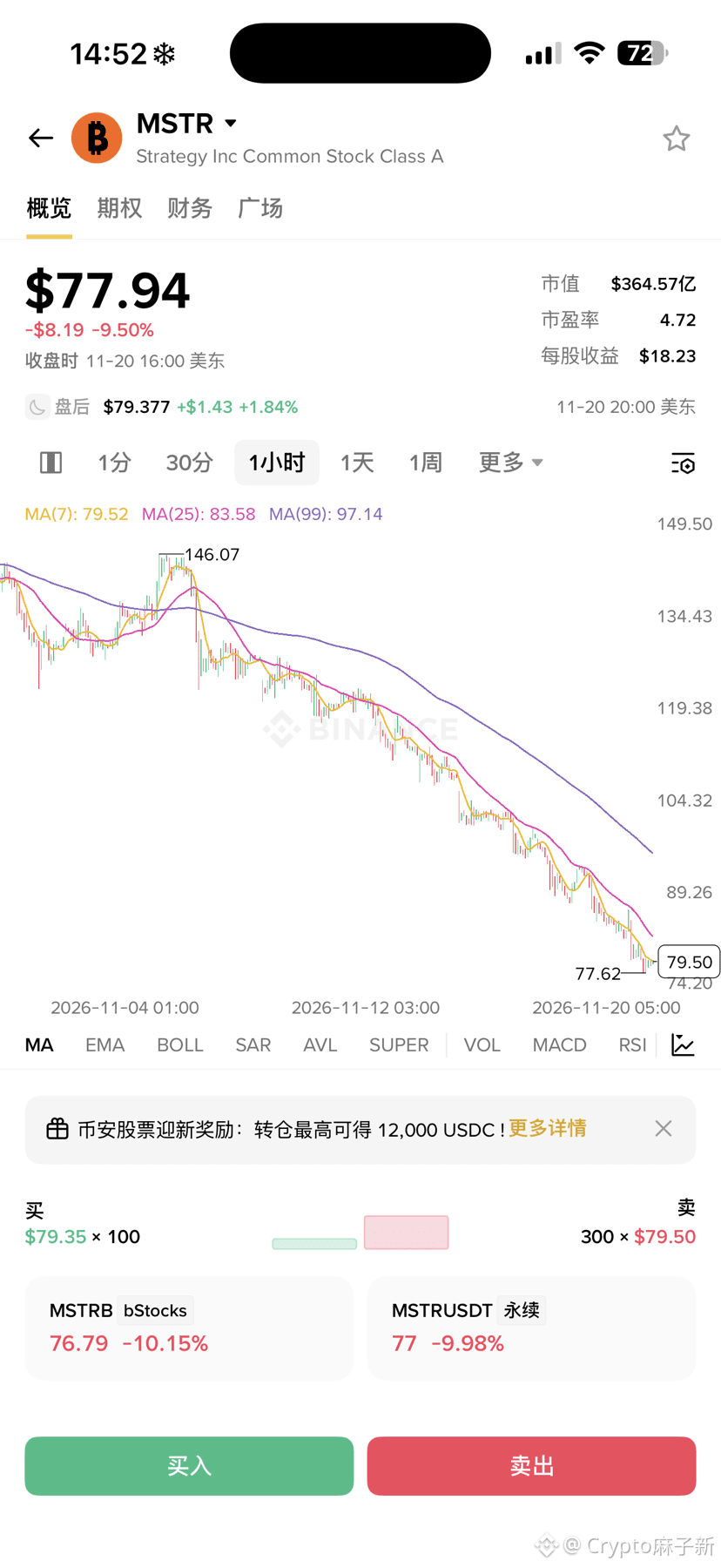
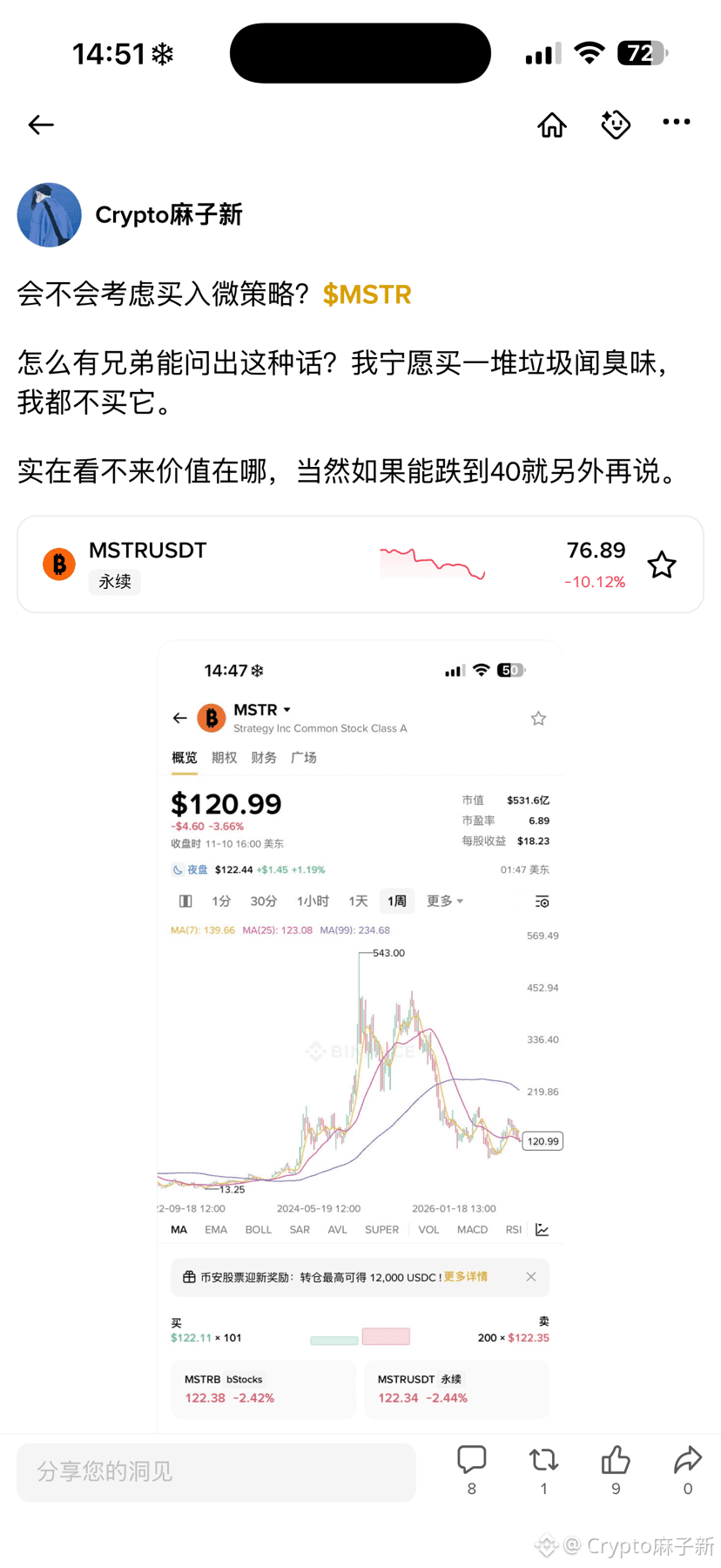
Now you understand why I said I'd rather buy a pile of garbage and smell the stench than buy $MSTR unless it drops to 40. It's been less than a week since I said that, and MicroStrategy has fallen from 120 to 76.
{future}(MSTRUSDT)
Now you understand why I said I'd rather buy a pile of garbage and smell the stench than buy $MSTR unless it drops to 40. It's been less than a week since I said that, and MicroStrategy has fallen from 120 to 76.
7
11
5.7k
·
--
Don't you people sleep? You're frantically calling me first thing in the morning. It's at 58 and you're still not buying the dip?
I want to buy the dip too! But it really doesn't look like it's hit bottom at all. Think about it from another angle: this kind of slow decline is painful if you're fully invested and stuck with losses, but what does it have to do with you if you're sitting on the sidelines? The further it falls, the more you can make in the future.
Honestly, if you can stay out of this massive shake-up, then when you get back in the game in the future, you'll have a natural advantage over everyone else.
Now look at my posts telling you not to rush into buying the dip, and my three posts speculating about the big players. Aren't they eerily accurate in hindsight?
Before my predictions were proven, some people thought I was paranoid, while others thought I was just talking nonsense. By now, all three have basically been confirmed. Though when I wrote this speculation, $BTC 77, I also kept saying to wait and not buy, to wait for a pullback until it was above 85.
It wasn't until the market's movement on the day of the midterm elections made me feel like it was being manipulated at will that I wrote down my speculations for three days in a row. At the time, I also said that if my theory was right, the pullback was far from over.
The only real blunder was that I thought I'd take a little nibble of Nvidia. A deep bow of apology to you all.
{future}(BTCUSDT)
Don't you people sleep? You're frantically calling me first thing in the morning. It's at 58 and you're still not buying the dip?
I want to buy the dip too! But it really doesn't look like it's hit bottom at all. Think about it from another angle: this kind of slow decline is painful if you're fully invested and stuck with losses, but what does it have to do with you if you're sitting on the sidelines? The further it falls, the more you can make in the future.
Honestly, if you can stay out of this massive shake-up, then when you get back in the game in the future, you'll have a natural advantage over everyone else.
Now look at my posts telling you not to rush into buying the dip, and my three posts speculating about the big players. Aren't they eerily accurate in hindsight?
Before my predictions were proven, some people thought I was paranoid, while others thought I was just talking nonsense. By now, all three have basically been confirmed. Though when I wrote this speculation, $BTC 77, I also kept saying to wait and not buy, to wait for a pullback until it was above 85.
It wasn't until the market's movement on the day of the midterm elections made me feel like it was being manipulated at will that I wrote down my speculations for three days in a row. At the time, I also said that if my theory was right, the pullback was far from over.
The only real blunder was that I thought I'd take a little nibble of Nvidia. A deep bow of apology to you all.


27
1
25
11.3k
·
--
The market's really been tough lately. This guy had just added me and said he was stuck holding a 50,000 USDT position and couldn't afford to eat, so I sent him some money. After that, he kept asking me every single day.
The market's really been tough lately. This guy had just added me and said he was stuck holding a 50,000 USDT position and couldn't afford to eat, so I sent him some money. After that, he kept asking me every single day.


16
1
24
21.6k
Log in to explore more content
Join global crypto users on Binance Square
⚡️ Get latest and useful information about crypto.
💬 Trusted by the world’s largest crypto exchange.
👍 Discover real insights from verified creators.
Email / Phone number
Trending Topics
BitcoinAndStocksSlipAgainAmidTrump’sTariffPlans
18,561 views
341 Discussing
U.S. Plans New Tariffs on China, EU and Others; Bitcoin Slips Below $60,000 and Nasdaq Falls 1.5%
Binance News
·8 Likes
·6.8k views
WillOctCorePCEShiftFedHikeExpectations?
306,063 views
2,020 Discussing
JensenHuangSaysNvidiaDoesn’tNeedASuccessionPlan
15,367 views
240 Discussing