Binance Square
wiki002
4.2k Posts

wiki002

Allah is greatest
High-Frequency Trader
1.9 Years
1.1K+ Following
3.6K+ Followers
15.7K+ Liked
Posts
PINNED
·
--
Verified
I wasn’t really focused on the partnership headline today. The part I kept thinking about was what this could change for BNB Chain. Crypto has spent years competing on speed, fees, liquidity and users. Payments are a different game. A payment product doesn’t need customers to become crypto users. It needs a reliable way to move value while keeping the blockchain complexity away from the end user. That’s why @BNB_Chain joining Mastercard’s Crypto Partner Program is interesting to me. The obvious story is access to an established payments ecosystem. The less obvious one is who gets to decide where the transaction actually settles. If payment applications eventually gain more choice over blockchain infrastructure, simply being compatible with a payment network won’t be enough. The real differentiator becomes the settlement environment underneath it. For BNB Chain, that makes things like execution cost, confirmation reliability, liquidity depth, stablecoin availability and developer tooling important factors in that competition. And there’s a deeper consequence here. When the payment interface becomes separated from the underlying blockchain, the chain can compete on infrastructure rather than forcing users to choose a chain first. That changes the demand model. Instead of user → wallet → blockchain → application the direction I find interesting is financial product → payment interface → settlement infrastructure The user may never care which chain handled the transaction. The developer and payment provider will. That’s why I don’t see this as proof of mainstream adoption yet. I see it as a more interesting test Can BNB Chain become a technically attractive settlement environment when blockchain choice moves behind the payment experience? If it can, Mastercard’s distribution isn’t the whole story. The bigger opportunity is competing for the financial activity underneath it. 👍 $BNB #BNB $BB $HEI @Binance_Square_Official
I wasn’t really focused on the partnership headline today. The part I kept thinking about was what this could change for BNB Chain.

Crypto has spent years competing on speed, fees, liquidity and users.

Payments are a different game.

A payment product doesn’t need customers to become crypto users. It needs a reliable way to move value while keeping the blockchain complexity away from the end user.

That’s why @BNB Chain joining Mastercard’s Crypto Partner Program is interesting to me.

The obvious story is access to an established payments ecosystem.

The less obvious one is who gets to decide where the transaction actually settles.

If payment applications eventually gain more choice over blockchain infrastructure, simply being compatible with a payment network won’t be enough.

The real differentiator becomes the settlement environment underneath it.

For BNB Chain, that makes things like execution cost, confirmation reliability, liquidity depth, stablecoin availability and developer tooling important factors in that competition.

And there’s a deeper consequence here.

When the payment interface becomes separated from the underlying blockchain, the chain can compete on infrastructure rather than forcing users to choose a chain first.

That changes the demand model.

Instead of

user → wallet → blockchain → application

the direction I find interesting is

financial product → payment interface → settlement infrastructure

The user may never care which chain handled the transaction.

The developer and payment provider will.

That’s why I don’t see this as proof of mainstream adoption yet.

I see it as a more interesting test

Can BNB Chain become a technically attractive settlement environment when blockchain choice moves behind the payment experience?

If it can, Mastercard’s distribution isn’t the whole story.

The bigger opportunity is competing for the financial activity underneath it. 👍

$BNB #BNB $BB $HEI @Binance Square Official
🚨 DEXEUSDT $DEXE is showing strong bullish momentum with price holding above key EMAs and MACD continuing to expand upward. Entry: 2.120 – 2.150 Take Profit: 2.170 → 2.250 → 2.350 Stop Loss: 2.050 A clean hold above the breakout zone could keep the upside structure intact. Manage risk and avoid chasing an extended candle. $DEXE $TST #DEXE #Binance #CryptoTrading #TradingSignal
🚨 DEXEUSDT

$DEXE is showing strong bullish momentum with price holding above key EMAs and MACD continuing to expand upward.

Entry: 2.120 – 2.150
Take Profit: 2.170 → 2.250 → 2.350
Stop Loss: 2.050

A clean hold above the breakout zone could keep the upside structure intact. Manage risk and avoid chasing an extended candle.

$DEXE $TST #DEXE #Binance #CryptoTrading #TradingSignal
🎁🎁
🎁🎁
MAYA_
·
--
Bullish
Thank you #Binance 💛
It feels so good when I get a certificate. Wow, it's really a joy.
@Binance Academy
🎁🎁
🎁🎁
JANNAT BM_
·
--
Thank you #Binance 💛
My first certificate form @Binance Academy 💛💛💛
📈 $HEMI / USDT Hemi is showing bullish structure after reclaiming the key EMA levels. Price is holding above EMA(7), EMA(25) and EMA(99), while MACD momentum is starting to recover. Signal: LONG 🟢 Entry: 0.01190–0.01210 TP1: 0.01247 TP2: 0.01280 TP3: 0.01320 SL: 0.01145 A clean break above 0.01247 could trigger the next momentum leg. As long as the Short-term EMA structure remains intact, buyers still have control. #HEMI #Crypto #Trading $EDEN $TRUMP
📈 $HEMI / USDT

Hemi is showing bullish structure after reclaiming the key EMA levels. Price is holding above EMA(7), EMA(25) and EMA(99), while MACD momentum is starting to recover.

Signal: LONG 🟢
Entry: 0.01190–0.01210
TP1: 0.01247
TP2: 0.01280
TP3: 0.01320
SL: 0.01145

A clean break above 0.01247 could trigger the next momentum leg. As long as the Short-term EMA structure remains intact, buyers still have control.

#HEMI #Crypto #Trading $EDEN $TRUMP
Verified
Look, a reported $33.5B traded through Nvidia in the first 140 minutes points to something bigger than volume. Nvidia is becoming an information compression layer for Ai infrastructure. I checked the figure carefully, the $33.5B / 2h20m figure is attributed to MSX.COM market data, so I’d treat it as a reported estimate rather than an official exchange wide statistic. What matters to me is how aggressively the market was processing Nvidia’s earnings and future compute demand. Honestly, Nvidia’s fiscal Q2 2027 revenue was $96.22B, with $89.0B from Data Center, up 117% year over year. Nvidia also guided Q3 revenue to $108B +2%. The roughly 70% fiscal-2028 growth figure is a derived market expectation based on Nvidia’s guidance and reported estimates. Here’s what I mean by information compression. AI capex produces a lot of fragmented signals: GPU demand, HBM supply, advanced packaging, networking, data center capacity and power. Nvidia sits at the center of many of those relationships, so one highly liquid equity can turn those scattered signals into a price the market can react to almost immediately. That’s the part I find most interesting. Nvidia doesn’t just reflect the ecosystem. Its earnings can become a major price discovery point for companies it does not report on. When Nvidia changes expectations around compute demand, investors can reprice suppliers and infrastructure providers before their own fundamentals change. That’s how I interpret the reported $33.5B, not as $33.5B flowing into Nvidia, but as intense liquidity negotiating the scale, duration and constraints of AI capex. As the supply chain diversifies, I’m watching whether Nvidia can remain a sufficient single proxy for aggregate compute demand. 😉 $NVDA #NVIDIA #AI #Markets #Tech #NvidiaTrades
Look, a reported $33.5B traded through Nvidia in the first 140 minutes points to something bigger than volume. Nvidia is becoming an information compression layer for Ai infrastructure.

I checked the figure carefully, the $33.5B / 2h20m figure is attributed to MSX.COM market data, so I’d treat it as a reported estimate rather than an official exchange wide statistic. What matters to me is how aggressively the market was processing Nvidia’s earnings and future compute demand.

Honestly, Nvidia’s fiscal Q2 2027 revenue was $96.22B, with $89.0B from Data Center, up 117% year over year. Nvidia also guided Q3 revenue to $108B +2%. The roughly 70% fiscal-2028 growth figure is a derived market expectation based on Nvidia’s guidance and reported estimates.

Here’s what I mean by
information compression.

AI capex produces a lot of fragmented signals: GPU demand, HBM supply, advanced packaging, networking, data center capacity and power. Nvidia sits at the center of many of those relationships, so one highly liquid equity can turn those scattered signals into a price the market can react to almost immediately.

That’s the part I find most interesting.

Nvidia doesn’t just reflect the ecosystem. Its earnings can become a major price discovery point for companies it does not report on. When Nvidia changes expectations around compute demand, investors can reprice suppliers and infrastructure providers before their own fundamentals change.

That’s how I interpret the reported $33.5B, not as $33.5B flowing into Nvidia, but as intense liquidity negotiating the scale, duration and constraints of AI capex.

As the supply chain diversifies, I’m watching whether Nvidia can remain a sufficient single proxy for aggregate compute demand. 😉

$NVDA #NVIDIA #AI #Markets #Tech #NvidiaTrades
$MOVR /USDT 📊 Entry: $0.94–$0.97 Stop Loss: $0.89 TP1: $1.07 TP2: $1.17 TP3: $1.28 Price is consolidating after a strong impulse, with the $0.90–$0.91 zone acting as the key support area. The setup remains constructive while that level holds, but momentum has cooled, so chasing extended candles is not ideal. Risk management first invalidation below support. $BICO $P #MOVR #CryptoTrading #BinanceSquare
$MOVR /USDT 📊

Entry: $0.94–$0.97
Stop Loss: $0.89
TP1: $1.07
TP2: $1.17
TP3: $1.28

Price is consolidating after a strong impulse, with the $0.90–$0.91 zone acting as the key support area. The setup remains constructive while that level holds, but momentum has cooled, so chasing extended candles is not ideal.

Risk management first invalidation below support.

$BICO $P
#MOVR #CryptoTrading #BinanceSquare
Mert’s Solana argument made me look past the usual it’s fast explanation. What makes the network interesting to me is the concentration of activity around it. Solana already has builders, applications, users and substantial onchain activity in the same ecosystem. For a new team, that means building on existing infrastructure and an established market rather than having to create everything around the product from scratch. The slot-time work is worth watching too. Mainnet has moved from 400ms to 350ms, while further reductions are being tested on Testnet and Devnet. The important part isn’t just the number. Shorter slots can reduce how long applications wait for the network to advance, which can matter for products where latency affects how quickly users or protocols react. There’s still a trade-off here. Lower latency is useful only if the network can maintain that performance reliably as activity grows. Faster blocks alone don’t automatically make an application better. From a builder’s perspective, the startup culture matters as well. Failed experiments can still leave behind developers, code, capital and lessons that become useful elsewhere. That isn’t unique to Solana, but a place where developers keep experimenting can accumulate those benefits over time. The part I find most interesting is the possible feedback loop: better infrastructure can attract builders, successful applications can bring more activity, and that activity can make the ecosystem more useful for whoever builds next. So I wouldn’t reduce Solana’s case to speed alone. The real thing to watch is whether performance, developer infrastructure and economic activity keep reinforcing each other as the network grows. And yes, the memes probably help a little. 🙂 @Solana_Official $SOL $BICO $MOVR #Solana
Mert’s Solana argument made me look past the usual it’s fast explanation.

What makes the network interesting to me is the concentration of activity around it. Solana already has builders, applications, users and substantial onchain activity in the same ecosystem. For a new team, that means building on existing infrastructure and an established market rather than having to create everything around the product from scratch.

The slot-time work is worth watching too. Mainnet has moved from 400ms to 350ms, while further reductions are being tested on Testnet and Devnet. The important part isn’t just the number. Shorter slots can reduce how long applications wait for the network to advance, which can matter for products where latency affects how quickly users or protocols react.

There’s still a trade-off here. Lower latency is useful only if the network can maintain that performance reliably as activity grows. Faster blocks alone don’t automatically make an application better.

From a builder’s perspective, the startup culture matters as well. Failed experiments can still leave behind developers, code, capital and lessons that become useful elsewhere. That isn’t unique to Solana, but a place where developers keep experimenting can accumulate those benefits over time.

The part I find most interesting is the possible feedback loop: better infrastructure can attract builders, successful applications can bring more activity, and that activity can make the ecosystem more useful for whoever builds next.

So I wouldn’t reduce Solana’s case to speed alone. The real thing to watch is whether performance, developer infrastructure and economic activity keep reinforcing each other as the network grows.

And yes, the memes probably help a little. 🙂

@Solana Official $SOL $BICO $MOVR #Solana
Bitcoin briefly pushed above $81K before cooling back toward $79K. Meanwhile, U.S. spot Bitcoin ETFs added another $314.3M on Aug. 25, marking seven straight sessions of net inflows. BlackRock’s IBIT alone took in $284.4M. Price is cooling, but ETF demand is still there. #Bitcoin #Crypto #BTC $BTC $ETH $BNB
Bitcoin briefly pushed above $81K before cooling back toward $79K.

Meanwhile, U.S. spot Bitcoin ETFs added another $314.3M on Aug. 25, marking seven straight sessions of net inflows. BlackRock’s IBIT alone took in $284.4M.

Price is cooling, but ETF demand is still there.

#Bitcoin #Crypto #BTC
$BTC $ETH $BNB
red envelope
Best Wishes!
From wiki002
Partly True
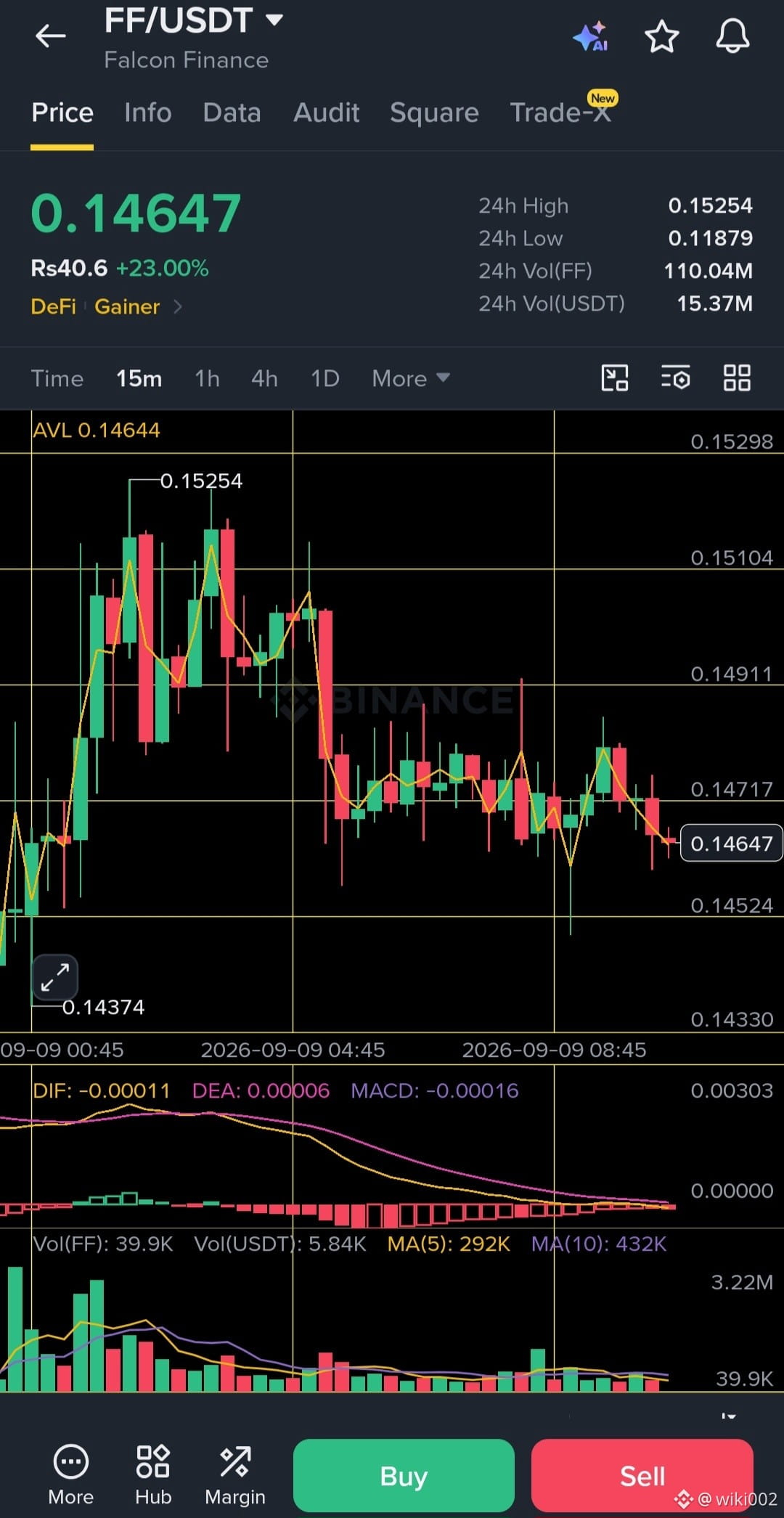
#dusk $DUSK @Dusk_Foundation I was halfway through my first coffee this morning when a thought about blockchain immutability started bothering me. The history stays On-chain, but the rules used to process new blocks keep evolving. That made me look at Dusk’s upgrades differently. I usually associate a protocol upgrade with new capabilities. Boreas made me notice the less visible requirement. New transaction rules have to evolve without changing how older blocks are interpreted under the rules that produced them. Boreas introduced separate handling for client transactions, canonical transaction data and the ledger format committed to blocks. Rusk also retains the historical decoders needed to replay Pre-Aegis and Pre-Boreas blocks. Aegis does something similar with proof verification. Rusk chooses the verifier from the block height, keeping PLONK V1/V2 rules for historical blocks while using V3 for newer proofs. That detail is what made the idea click for me. Keeping an old transaction On-chain preserves the record, but it does not automatically preserve the ability to reproduce why that transaction was valid. So I see historical semantics as a real part of immutability. The chain needs to preserve not just what happened, but enough protocol context to reproduce how that historical state was validated. There is a trade-off, though. Keeping old decoders and verification paths means carrying more protocol complexity forward. But removing them pushes a different risk onto future software: deciding for itself how historical records should be interpreted. That is where this becomes more than a software-maintenance problem for me. In regulated markets, auditability should answer more than show me the transaction. It should also answer. Which rules made this transaction valid at that point in the chain? The more I dig into protocol evolution, the more I think immutability has a second requirement beyond preserving history. If the record survives but the rules needed to reproduce its meaning do not, how immutable is that history really? 🧩 $FF $P
#dusk $DUSK @Dusk I was halfway through my first coffee this morning when a thought about blockchain immutability started bothering me. The history stays On-chain, but the rules used to process new blocks keep evolving.

That made me look at Dusk’s upgrades differently. I usually associate a protocol upgrade with new capabilities. Boreas made me notice the less visible requirement. New transaction rules have to evolve without changing how older blocks are interpreted under the rules that produced them.

Boreas introduced separate handling for client transactions, canonical transaction data and the ledger format committed to blocks. Rusk also retains the historical decoders needed to replay Pre-Aegis and Pre-Boreas blocks. Aegis does something similar with proof verification. Rusk chooses the verifier from the block height, keeping PLONK V1/V2 rules for historical blocks while using V3 for newer proofs.

That detail is what made the idea click for me. Keeping an old transaction On-chain preserves the record, but it does not automatically preserve the ability to reproduce why that transaction was valid.

So I see historical semantics as a real part of immutability. The chain needs to preserve not just what happened, but enough protocol context to reproduce how that historical state was validated.

There is a trade-off, though. Keeping old decoders and verification paths means carrying more protocol complexity forward. But removing them pushes a different risk onto future software: deciding for itself how historical records should be interpreted.

That is where this becomes more than a software-maintenance problem for me.

In regulated markets, auditability should answer more than show me the transaction. It should also answer. Which rules made this transaction valid at that point in the chain?

The more I dig into protocol evolution, the more I think immutability has a second requirement beyond preserving history.

If the record survives but the rules needed to reproduce its meaning do not, how immutable is that history really? 🧩

$FF $P
$BMT is showing a potential rebound setup after the sharp rejection from 0.02789. Price is holding around 0.02204 and has reclaimed the 7 EMA, while the 99 EMA remains below at 0.02037. The key issue is the 25 EMA at 0.02265 a clean reclaim would strengthen the bullish structure. 📌 BMT/USDT Setup Entry: 0.02180–0.02210 🎯 TP1: 0.02265 🎯 TP2: 0.02383 🎯 TP3: 0.02604 🎯 TP4: 0.02780–0.02790 🛑 Stop Loss: 0.02050 The MACD is still negative, so I would not treat this as confirmed momentum yet. The setup improves if BMT reclaims 0.02265 with strength. Losing 0.02050 would invalidate the structure and expose the next downside area. Risk management matters here. The recent volatility is high, so position size should stay controlled. #BMT #BMTUSDT #CryptoTrading #TradingSignal #Altcoins $EDEN $ONG
$BMT is showing a potential rebound setup after the sharp rejection from 0.02789.

Price is holding around 0.02204 and has reclaimed the 7 EMA, while the 99 EMA remains below at 0.02037. The key issue is the 25 EMA at 0.02265 a clean reclaim would strengthen the bullish structure.

📌 BMT/USDT Setup

Entry: 0.02180–0.02210

🎯 TP1: 0.02265
🎯 TP2: 0.02383
🎯 TP3: 0.02604
🎯 TP4: 0.02780–0.02790

🛑 Stop Loss: 0.02050

The MACD is still negative, so I would not treat this as confirmed momentum yet. The setup improves if BMT reclaims 0.02265 with strength. Losing 0.02050 would invalidate the structure and expose the next downside area.

Risk management matters here. The recent volatility is high, so position size should stay controlled.

#BMT #BMTUSDT #CryptoTrading #TradingSignal #Altcoins $EDEN $ONG
Verified
I find the most interesting part of Pasteur is that BNB Smart Chain is getting more capacity without making blocks arrive faster. The chain already operates around a 450ms block interval, so the question I’m interested in is how much of that window is actually being used for useful work. BEP-675 attacks that inefficiency directly: instead of making validators execute the proposed block before signing it, builders can provide an already-executed block for validation, reducing repeated work in the critical path. In BNB Chain’s controlled QANet testing, that validator workload fell from 125ms to 15ms, while throughput increased from 1,237 to 2,324 TPS at the same 450ms interval and 100M gas limit. I think that distinction matters: this is an efficiency gain, not simply a faster clock. I’m also watching BEP-682 and BEP-695 because capacity without stronger trust assumptions would leave part of the scaling problem untouched. Duplicate validator signatures are rejected in bridge verification, while validator key rotation is tightened across staking and governance. For me, Pasteur’s real thesis is simple: scale the work done inside the existing time budget, rather than just shortening the budget. ⚙️ #BNB #BNBChain #Binance #Crypto $BNB $SOL $SD
I find the most interesting part of Pasteur is that BNB Smart Chain is getting more capacity without making blocks arrive faster.

The chain already operates around a 450ms block interval, so the question I’m interested in is how much of that window is actually being used for useful work. BEP-675 attacks that inefficiency directly: instead of making validators execute the proposed block before signing it, builders can provide an already-executed block for validation, reducing repeated work in the critical path.

In BNB Chain’s controlled QANet testing, that validator workload fell from 125ms to 15ms, while throughput increased from 1,237 to 2,324 TPS at the same 450ms interval and 100M gas limit. I think that distinction matters: this is an efficiency gain, not simply a faster clock.

I’m also watching BEP-682 and BEP-695 because capacity without stronger trust assumptions would leave part of the scaling problem untouched. Duplicate validator signatures are rejected in bridge verification, while validator key rotation is tightened across staking and governance.

For me, Pasteur’s real thesis is simple: scale the work done inside the existing time budget, rather than just shortening the budget. ⚙️

#BNB #BNBChain #Binance #Crypto
$BNB $SOL $SD
Verified
The real advantage of Dusk’s dual execution model is not EVM compatibility. It is architectural choice. @Dusk_Foundation separates settlement from execution: DuskVM runs Rust/WASM contracts directly on the Dusk L1, while DuskEVM provides EVM-compatible execution with settlement and data availability through DuskDS. The deeper consequence is that developers can choose where application logic belongs instead of forcing every workload into one execution model. If a contract needs direct L1 access to Dusk’s transaction models, privacy or zero-knowledge capabilities, DuskVM is the native path. If the priority is Solidity, existing wallets and Ethereum tooling, DuskEVM lowers the migration barrier. Dusk explicitly presents the two paths as choices based on application requirements. But that flexibility raises an architectural question I find more interesting than compatibility: Where should an invariant live? In my view, rules tied only to one execution environment can remain local to that environment. Rules that span execution paths or depend on settlement need explicit ownership and coordination boundaries. That distinction matters because Dusk’s layers are not interchangeable. DuskDS provides consensus, finality, settlement and data availability, while DuskVM and DuskEVM provide different execution environments. The bridge makes the boundary concrete. In the documented DuskEVM Testnet withdrawal flow, a withdrawal is initiated on DuskEVM, then proved and finalized on Dusk L1. The workflow therefore crosses execution layers rather than behaving like one monolithic operation. My takeaway is that modularity does not simply reduce complexity. It lets developers decide where complexity should live. For financial applications, that can be a meaningful architectural advantage: keep execution-specific logic local while treating Cross-layer rules as explicit architectural constraints. Which rules should stay inside an execution environment, and which are important enough to be enforced across the architecture? $DUSK #dusk
The real advantage of Dusk’s dual execution model is not EVM compatibility. It is architectural choice.

@Dusk separates settlement from execution: DuskVM runs Rust/WASM contracts directly on the Dusk L1, while DuskEVM provides EVM-compatible execution with settlement and data availability through DuskDS.

The deeper consequence is that developers can choose where application logic belongs instead of forcing every workload into one execution model.

If a contract needs direct L1 access to Dusk’s transaction models, privacy or zero-knowledge capabilities, DuskVM is the native path. If the priority is Solidity, existing wallets and Ethereum tooling, DuskEVM lowers the migration barrier. Dusk explicitly presents the two paths as choices based on application requirements.

But that flexibility raises an architectural question I find more interesting than compatibility:

Where should an invariant live?

In my view, rules tied only to one execution environment can remain local to that environment. Rules that span execution paths or depend on settlement need explicit ownership and coordination boundaries.

That distinction matters because Dusk’s layers are not interchangeable. DuskDS provides consensus, finality, settlement and data availability, while DuskVM and DuskEVM provide different execution environments.

The bridge makes the boundary concrete. In the documented DuskEVM Testnet withdrawal flow, a withdrawal is initiated on DuskEVM, then proved and finalized on Dusk L1. The workflow therefore crosses execution layers rather than behaving like one monolithic operation.

My takeaway is that modularity does not simply reduce complexity. It lets developers decide where complexity should live.

For financial applications, that can be a meaningful architectural advantage: keep execution-specific logic local while treating Cross-layer rules as explicit architectural constraints.

Which rules should stay inside an execution environment, and which are important enough to be enforced across the architecture?

$DUSK #dusk
📈 $ONG/USDT Bias: Bullish Entry Zone: $0.0960–$0.0990 Target 1: $0.1008 Target 2: $0.1050 Stop-Loss: Below $0.0930 Price is holding above key EMA levels with positive MACD momentum. A confirmed hold above the breakout zone keeps the bullish structure intact. @OntologyNetwork-1 $ONG $AMP $SXP #ONG #CryptoTrading #Binance
📈 $ONG /USDT

Bias: Bullish
Entry Zone: $0.0960–$0.0990
Target 1: $0.1008
Target 2: $0.1050
Stop-Loss: Below $0.0930

Price is holding above key EMA levels with positive MACD momentum. A confirmed hold above the breakout zone keeps the bullish structure intact.

@OntologyNetwork $ONG $AMP $SXP #ONG #CryptoTrading #Binance
Verified
A registry can be accurate today and still leave you with no independent way to prove what it recorded yesterday. That is the part of GoDaddy’s Agent Name Service I find most interesting. ANS uses a Merkle-tree transparency log to record agent lifecycle events. The important property is not simply storing the records, but making changes to the history detectable through cryptographic proofs. GoDaddy’s design even uses consistency proofs to show that a newer tree extends the previous one rather than rewriting it. But I think there is a deeper trust question: Who gives the registry’s history an independent point of reference? That is where @hashgraph becomes relevant. HCS-27 proposes publishing periodic Merkle-root checkpoints to Hedera’s consensus layer. The registry data does not need to be placed On-chain. The public network records the cryptographic commitment, while the underlying log and metadata remain off ledger. To me, that creates a clean separation. GoDaddy maintains the registry. Merkle proofs make its state auditable. Hedera provides an independent timeline for those commitments. There is also an important limitation here. A checkpoint does not prove that the original identity claim was true. It helps prove that the registry’s later history is consistent with a state that was already committed. The original verification and trust model still matter. That distinction is easy to miss when talking about AI-agent identity. As agents start representing companies, holding permissions and triggering actions across systems, knowing who an agent is will not be enough. I think the more important question becomes. Can I independently verify what changed, and when? That is where verifiable history starts becoming infrastructure rather than metadata. 👍 $HBAR $ONT $AMP #Hedera #HBAR #AI
A registry can be accurate today and still leave you with no independent way to prove what it recorded yesterday.

That is the part of GoDaddy’s Agent Name Service I find most interesting.

ANS uses a Merkle-tree transparency log to record agent lifecycle events. The important property is not simply storing the records, but making changes to the history detectable through cryptographic proofs. GoDaddy’s design even uses consistency proofs to show that a newer tree extends the previous one rather than rewriting it.

But I think there is a deeper trust question:

Who gives the registry’s history an independent point of reference?

That is where @hashgraph becomes relevant.

HCS-27 proposes publishing periodic Merkle-root checkpoints to Hedera’s consensus layer. The registry data does not need to be placed On-chain. The public network records the cryptographic commitment, while the underlying log and metadata remain off ledger.

To me, that creates a clean separation.

GoDaddy maintains the registry.
Merkle proofs make its state auditable.
Hedera provides an independent timeline for those commitments.

There is also an important limitation here.

A checkpoint does not prove that the original identity claim was true. It helps prove that the registry’s later history is consistent with a state that was already committed. The original verification and trust model still matter.

That distinction is easy to miss when talking about AI-agent identity.

As agents start representing companies, holding permissions and triggering actions across systems, knowing who an agent is will not be enough.

I think the more important question becomes.

Can I independently verify what changed, and when?

That is where verifiable history starts becoming infrastructure rather than metadata. 👍

$HBAR $ONT $AMP
#Hedera #HBAR #AI
Verified
I noticed something while thinking about a disputed payment today. What stayed with me was not the transaction itself, but the judgment required after the system had already recorded it. I normally think of smart contracts through their biggest advantage determinism. The more I study financial infrastructure, the clearer it becomes that this advantage has a limit. A contract can execute exactly as designed while the surraunding financial situation still requires interpretation. That distinction matters to me in regulated markets. Disputes, restructurings, recovery decisions and exceptional corporate actions can introduce facts that simply did not exist when the original rule was written. The problem is not necessarily bad code. Reality may have changed after the rule was defined. That changed how I look at automation. I am not interested in putting every financial decision into code just because it can be coded. The more useful question is where deterministic logic should stop and governed judgment should begin. If every exception is encoded beforehand, I think contracts become harder to maintain and governance becomes more complicated. If every exception stays outside the protocol, too much of the process remains dependent on manual coordination. This is where @Dusk_Foundation becomes interesting to me. Dusk separates execution from its settlement foundation: DuskVM supports Rust/WASM contracts on the L1, DuskEVM provides EVM execution, while DuskDS provides consensus, finality and data availability. The architectural question behind them is more important: can the boundary between automatic execution and institutional discretion be explicit, controlled and auditable? For me, the objective is not maximum automation. It is precise automation: knowing what code should decide, what humans should decide, and how the financial system records the difference. ⚖️ #dusk #BinanceSquare $DUSK $PROM $SPK @Dusk_Foundation
I noticed something while thinking about a disputed payment today. What stayed with me was not the transaction itself, but the judgment required after the system had already recorded it.

I normally think of smart contracts through their biggest advantage determinism. The more I study financial infrastructure, the clearer it becomes that this advantage has a limit. A contract can execute exactly as designed while the surraunding financial situation still requires interpretation.

That distinction matters to me in regulated markets. Disputes, restructurings, recovery decisions and exceptional corporate actions can introduce facts that simply did not exist when the original rule was written. The problem is not necessarily bad code. Reality may have changed after the rule was defined.

That changed how I look at automation. I am not interested in putting every financial decision into code just because it can be coded. The more useful question is where deterministic logic should stop and governed judgment should begin.

If every exception is encoded beforehand, I think contracts become harder to maintain and governance becomes more complicated. If every exception stays outside the protocol, too much of the process remains dependent on manual coordination.

This is where @Dusk becomes interesting to me. Dusk separates execution from its settlement foundation: DuskVM supports Rust/WASM contracts on the L1, DuskEVM provides EVM execution, while DuskDS provides consensus, finality and data availability.

The architectural question behind them is more important: can the boundary between automatic execution and institutional discretion be explicit, controlled and auditable?

For me, the objective is not maximum automation. It is precise automation: knowing what code should decide, what humans should decide, and how the financial system records the difference. ⚖️

#dusk #BinanceSquare $DUSK $PROM $SPK @Dusk
PROM/USDT PROM is showing strong bullish structure, but the move is already extended, so chasing the top is risky. Bias: LONG 📈 Entry: 3.58–3.68 TP1: 3.74 TP2: 3.90 TP3: 4.15 Stop Loss: 3.48 Why: Price is holding above the 7/25/99 EMA structure, while the latest pullback reclaimed the 3.558 area. Momentum remains positive, but the MACD histogram is cooling, so confirmation around support matters more than buying a vertical candle. A clean hold above 3.58 keeps the bullish setup intact. Losing 3.48 invalidates the setup. Risk management matters here because PROM has already made a sharp expansion. $PROM $MORPHO $TUT #PROM #CryptoTrading #BinanceSquare
PROM/USDT

PROM is showing strong bullish structure, but the move is already extended, so chasing the top is risky.

Bias: LONG 📈
Entry: 3.58–3.68
TP1: 3.74
TP2: 3.90
TP3: 4.15
Stop Loss: 3.48

Why: Price is holding above the 7/25/99 EMA structure, while the latest pullback reclaimed the 3.558 area. Momentum remains positive, but the MACD histogram is cooling, so confirmation around support matters more than buying a vertical candle.

A clean hold above 3.58 keeps the bullish setup intact. Losing 3.48 invalidates the setup.

Risk management matters here because PROM has already made a sharp expansion.

$PROM $MORPHO $TUT #PROM #CryptoTrading #BinanceSquare
Verified
Today, while scrolling on my phone, I came across a small update that made me stop. Confidential Intents TVL on NEAR has crossed $35M. I didn’t read that as just another TVL milestone. The important part for me is the distance left to Drop 1: $35M is already half of the $70M target, so participation timing now has a real effect on the incentive outcome. What I find more useful is understanding what the campaign is actually measuring. Users are being encouraged to turn on confidential mode, so the experiment goes beyond attracting capital. It is testing whether people will deliberately choose a more private transaction flow when there is an incentive to try it. That distinction matters because temporary TVL is easy to create with rewards. Repeated usage is harder. If users keep using confidential mode after the Drop 1 incentive disappears, that would suggest the privacy feature itself has utility beyond the campaign. So I’m watching the behavior, not just the balance. Will confidential mode keep its users once the incentives end, or does the current growth depend mainly on rewards? 👀 @NEAR_Protocol @Binance_Square_Official $NEAR $INJ $USDC #NEAR #ConfidentialIntents #DeFi #Privacy #Web3
Today, while scrolling on my phone, I came across a small update that made me stop. Confidential Intents TVL on NEAR has
crossed $35M.

I didn’t read that as just another TVL milestone. The important part for me is the distance left to Drop 1: $35M is already half of the $70M target, so participation timing now has a real effect on the incentive outcome.

What I find more useful is understanding what the campaign is actually measuring. Users are being encouraged to turn on confidential mode, so the experiment goes beyond attracting capital. It is testing whether people will deliberately choose a more private transaction flow when there is an incentive to try it.

That distinction matters because temporary TVL is easy to create with rewards. Repeated usage is harder. If users keep using confidential mode after the Drop 1 incentive disappears, that would suggest the privacy feature itself has utility beyond the campaign.

So I’m watching the behavior, not just the balance.

Will confidential mode keep its users once the incentives end, or does the current growth depend mainly on rewards? 👀

@NEAR Protocol @Binance Square Official $NEAR $INJ $USDC

#NEAR #ConfidentialIntents #DeFi #Privacy #Web3
Tariq and I were talking about @Dusk_Foundation when we stopped at an interesting question: can a financial transaction settle, yet different systems still disagree about what actually happened? A financial transaction can settle correctly and still leave different systems disagreeing about what happened. Take a tokenized security. The transfer is only one step. Eligibility, payment, servicing, reporting, corporate actions, and later transfers can all depend on the resulting ownership state. That is the part I find more interesting about @Dusk_Foundation Dusk’s market infrastructure design is relevant here because it connects the rules and actions around a financial asset instead of leaving each application to define those transitions on its own. Its documentation also points to reconciliation and Off-chain coordination as problems when these processes are split across separate systems. That creates a deeper question. Can different financial applications maintain the same meaning for the same state change? Imagine an ownership transfer. One application could treat it as complete once the asset moves. Another could still be waiting for an eligibility check or payment leg. Both may process their own part correctly, yet the systems can disagree about the financial state that now exists. That disagreement is where reconciliation starts becoming an architecture problem. This is where I think Dusk’s workflow approach matters: the related asset, payment, access and settlement steps can be coordinated as parts of the same financial process, giving applications a shared reference for what the transaction is supposed to produce. There is a Trade-off. Shared rules can make state easier for applications to interpret consistently, but too much standardization can make different markets harder to model. So the question I would watch around $DUSK is simple Can a financial network make the meaning of a state change consistent enough that reconciliation becomes the exception, rather than something applications have to design around? 🤔 #dusk $DUSK
Tariq and I were talking about @Dusk when we stopped at an interesting question: can a financial transaction settle, yet different systems still disagree about what actually happened?

A financial transaction can settle correctly and still leave different systems disagreeing about what happened.

Take a tokenized security. The transfer is only one step. Eligibility, payment, servicing, reporting, corporate actions, and later transfers can all depend on the resulting ownership state.

That is the part I find more interesting about @Dusk

Dusk’s market infrastructure design is relevant here because it connects the rules and actions around a financial asset instead of leaving each application to define those transitions on its own. Its documentation also points to reconciliation and Off-chain coordination as problems when these processes are split across separate systems.

That creates a deeper question. Can different financial applications maintain the same meaning for the same state change?

Imagine an ownership transfer. One application could treat it as complete once the asset moves. Another could still be waiting for an eligibility check or payment leg. Both may process their own part correctly, yet the systems can disagree about the financial state that now exists.

That disagreement is where reconciliation starts becoming an architecture problem.

This is where I think Dusk’s workflow approach matters: the related asset, payment, access and settlement steps can be coordinated as parts of the same financial process, giving applications a shared reference for what the transaction is supposed to produce.

There is a Trade-off. Shared rules can make state easier for applications to interpret consistently, but too much standardization can make different markets harder to model.

So the question I would watch around $DUSK is simple

Can a financial network make the meaning of a state change consistent enough that reconciliation becomes the exception, rather than something applications have to design around? 🤔

#dusk $DUSK
Verified
I was looking at this over tea and one thing stood out. Storage safety depends on where copies sit, not just how many there are. Allianz says around 79% of global data center capacity is in areas at higher risk from natural disasters. That’s where Filecoin gets interesting. Users can pick storage providers based partly on location, while FVM can automate copies across many providers. So I see the bigger value as building against failures that hit a whole region. More copies add backup. Smarter placement can cut shared risk. Could geographic spread become an overlooked edge for $FIL ? 🤔 $FF $SC #Filecoin #FIL #DePIN #Web3
I was looking at this over tea and one thing stood out. Storage safety depends on where copies sit, not just how many there are.

Allianz says around 79% of global data center capacity is in areas at higher risk from natural disasters.

That’s where Filecoin gets interesting. Users can pick storage providers based partly on location, while FVM can automate copies across many providers.

So I see the bigger value as building against failures that hit a whole region.

More copies add backup. Smarter placement can cut shared risk.

Could geographic spread become an overlooked edge for $FIL ? 🤔

$FF $SC
#Filecoin #FIL #DePIN #Web3
Log in to explore more content
Join global crypto users on Binance Square
⚡️ Get latest and useful information about crypto.
💬 Trusted by the world’s largest crypto exchange.
👍 Discover real insights from verified creators.
Email / Phone number
Sitemap
Cookie Preferences
Platform T&Cs