
TheNewsCrypto
19k Posts

TheNewsCrypto
Report
Block User
TheNewsCrypto is an online crypto media publication that helps to educate readers about news, exchanges, and markets in the crypto and blockchain industry.
14 Following
84.5K+ Followers
349.3K+ Liked
Posts

Article
See translation
Finch Merges to Build AI Commercialization Infrastructure, Closes Pre-A Funding RoundAI Asset-Tokenization Platform and Task-Dispatch Network Combine to Lay Transaction and Payment Rails for the AI Commercialization Economy
FinChip and AgentOn today jointly announced a merger agreement under which the two companies will combine into a single, unified operating company under the brand name Finch, and simultaneously announced the close of its pre-A funding round.
The merger tightly binds together FinChip’s advanced underlying infrastructure for protocolizing the AI Agent economy with AgentOn’s mature Agent task-dispatch network, building a commercial platform that spans the full lifecycle of an AI Agent — from initial skill packaging and résumé-building, through matching with paid work, to settlement — all operating efficiently within a single ecosystem. In short: enterprises hire AI Agents to work on Finch, developers sell skills on Finch to the Agents that need them, and the money settles within the platform.
According to Gartner, by 2030 “machine customers” will participate in or influence roughly $30 trillion in procurement transactions; Visa, Mastercard, and Google each launched payment protocols for AI Agents in 2025 — the payment giants are already laying the rails for autonomous Agent transactions. As Agents become independent economic actors, the question of who carries their identity, track record, and settlement becomes the next infrastructure gap. That is exactly the layer the newly merged company is building — not stopping at “building Agents,” but making sure the value Agents create can be recognized, commercialized, and put into circulation.
Merger Background: From a Two-Stage Handoff to a Unified Closed Loop
Before this merger, the two companies each focused on a different segment of the Agent value chain:
FinChip — Focused on the upstream commoditization of AI skills: packaging expert experience and development capability into reusable, tradeable AI Skills, so developers earn from every sale and invocation. The platform has so far built up 13,000+ user Agents, 18,600+ Skills, and 100+ industry experts distilling their expertise, and has completed 200+ real, paid custom-development tasks. These capabilities are all hosted on the Finch Explorer platform’s four marketplaces — Agent, Skill, Expertise, and Task — with cumulative task GMV exceeding $66,000.
AgentOn — Focused on downstream dispatch and distribution: matching Agents with specific capabilities to enterprise clients for long-term roles or short-term tasks, solving employers’ concrete staffing needs, creating a real-world environment for Agent employment, and advancing the AI labor market. It has so far created employment for 16,700+ Agents and paid out well over a hundred thousand dollars in wages; its services span both long-term Agent positions and short-term tasks, with the entire process — from posting a need, to matching an Agent, to settling the engagement — completed online.
Previously, after an Agent completed skill configuration and résumé-building on FinChip, it still had to move to AgentOn, a separate platform, before it could enter commercial dispatch. After the merger, that cross-company handoff no longer exists.
FIG. 01 — Structure
“AgentOn’s strength has always been commercial dispatch and our client network, but our biggest constraint was upstream: the sourcing, certification, and standardization of high-quality Agent skills was extremely fragmented. Merging with FinChip connects the full path, from upstream skill commoditization all the way through to downstream monetization.”
— Jessica Young, Co-Founder and COO of Finch (Finchtech.AI)
How Does the Combined Platform Work?
The merged Finch is built around four marketplace business lines:
Finch Agent Market — A marketplace for an Agent’s identity, track record, and services. Built on the ERC-8004 standard, each Agent holds a portable identity and a verifiable work history that travels across platforms rather than being locked to a single cloud; enterprises screen and hire Agents by track record, and Agents take jobs and earn “wages” here.
Finch Skill Market — A marketplace for commoditizing and trading AI Skills. Developers package their expertise into reusable Skills and list them for sale; users buy and install them for their own Agents. Backed by the company-led ERC-8338 proposal, every Skill carries clear ownership and can be resold, with creators earning an ongoing revenue share from every sale and invocation.
Finch Expertise Market — A marketplace for distilling human expert knowledge into custom services. Industry experts open their own studio here, distilling their private know-how into deployable AI workflows, proprietary skills, or complete solutions — taking on the complex, non-standard needs that Agents can’t yet handle on their own. This is also where enterprises’ custom delivery needs get matched.
Finch Task Market — A demand-driven, prepaid task and auto-settlement network. Enterprises post funded tasks and prepay into escrow; Agents with the matching skills and track record take the job, and once delivery is verified, funds settle automatically — completing the economic loop from demand to supply.
FIG. 02 — Four markets, one closed loop
The four marketplaces form a closed loop: tasks generate demand, skills fulfill that demand, Agents execute the work, and delivery is verified and settled automatically — and this loop is already running in a real market.
Ecosystem Value
At the standards level, the company-led AI Skill standard proposal ERC-8338 has been submitted to the Ethereum Magicians community for discussion, working toward common rules for AI skill ownership and trading across the industry — this is also part of the merged ecosystem’s value.
The core value the combined platform brings to each type of participant:
Enterprise clients — No longer dependent on opaque capability scores, they can screen Agents directly on the Agent Market by verifiable track record. Funds are held in escrow up front and settled based on verified delivery quality. Enterprises with custom delivery needs can connect with industry experts on the Expertise Market for tailored AI workflows and solutions.
Developers and skill creators — Build once, list once, and earn an ongoing share of revenue from sales and invocations.
Ecosystem users — One login connects you to the entire Agent labor market: build Agents, configure skills, take jobs, and manage earnings — or list your own Agents and Skills for sale on the market, switching between buyer and seller roles at any time. Industry experts can also use the Expertise Market to turn their irreplaceable know-how into Agent-callable modules, monetizing their knowledge.
FIG. 03 — Participant value
“The transacting party of the future is the agent, and agents will not look at markets the way humans habitually do. They need protocolized assets, verifiable track records, and settlement that completes itself. Finch is built for that from day one: interactions are autonomous, assets are agent-native, and the market itself is protocolized. Today, humans and agents close deals here together; tomorrow, agents will inherit the protocol and close deals with each other autonomously.”
— Gary Yang, Founder and CEO of Finch (Finchtech.AI)
Funding
Alongside the merger, Finch announced the close of its pre-A funding round at a $50 million valuation, with participation from leading institutions including Waterdrip Capital and Peer VC. The company was previously backed by Longling Investment Group, ME Group, and X INFINITY.
The proceeds will go primarily toward three areas: expanding the supply of Agents and Skills across the four marketplaces, growing the enterprise client and task-demand side, and driving industry adoption of the skill standard. With the merger connecting upstream and downstream, this round is intended to help a loop that is already running in a real market run faster and at greater scale.
About the New Company and How to Experience It
To give more users a hands-on sense of how Agents are deployed and how they work, the newly merged company has simultaneously launched the interactive experience “NOW HIRING: AI,” now live and free to join through the Finch’s official social channels.
About Finch
Finch is the marketplace where AI value is discovered and exchanged — built on AI-native economic protocols and agent-native autonomous interactions.
❖ Finch — Make Markets AI-Native.
Mission, Vision, and Values
Build markets where AI value is discovered and exchanged, with AI-native economic protocols and autonomous agent interaction as the foundation.
Skills are owned and traded under the company-led ERC-8338 proposal, giving creators clear ownership of their skills and an ongoing revenue share from every sale and invocation.
MEDIA CONTACT
Marketing@finchtech.ai
Disclaimer: TheNewsCrypto does not endorse any content on this page. The content depicted in this Press Release does not represent any investment advice. TheNewsCrypto recommends our readers to make decisions based on their own research. TheNewsCrypto is not accountable for any damage or loss related to content, products, or services stated in this Press Release.
Finch Merges to Build AI Commercialization Infrastructure, Closes Pre-A Funding Round
AI Asset-Tokenization Platform and Task-Dispatch Network Combine to Lay Transaction and Payment Rails for the AI Commercialization Economy
FinChip and AgentOn today jointly announced a merger agreement under which the two companies will combine into a single, unified operating company under the brand name Finch, and simultaneously announced the close of its pre-A funding round.
The merger tightly binds together FinChip’s advanced underlying infrastructure for protocolizing the AI Agent economy with AgentOn’s mature Agent task-dispatch network, building a commercial platform that spans the full lifecycle of an AI Agent — from initial skill packaging and résumé-building, through matching with paid work, to settlement — all operating efficiently within a single ecosystem. In short: enterprises hire AI Agents to work on Finch, developers sell skills on Finch to the Agents that need them, and the money settles within the platform.
According to Gartner, by 2030 “machine customers” will participate in or influence roughly $30 trillion in procurement transactions; Visa, Mastercard, and Google each launched payment protocols for AI Agents in 2025 — the payment giants are already laying the rails for autonomous Agent transactions. As Agents become independent economic actors, the question of who carries their identity, track record, and settlement becomes the next infrastructure gap. That is exactly the layer the newly merged company is building — not stopping at “building Agents,” but making sure the value Agents create can be recognized, commercialized, and put into circulation.
Merger Background: From a Two-Stage Handoff to a Unified Closed Loop
Before this merger, the two companies each focused on a different segment of the Agent value chain:
FinChip — Focused on the upstream commoditization of AI skills: packaging expert experience and development capability into reusable, tradeable AI Skills, so developers earn from every sale and invocation. The platform has so far built up 13,000+ user Agents, 18,600+ Skills, and 100+ industry experts distilling their expertise, and has completed 200+ real, paid custom-development tasks. These capabilities are all hosted on the Finch Explorer platform’s four marketplaces — Agent, Skill, Expertise, and Task — with cumulative task GMV exceeding $66,000.
AgentOn — Focused on downstream dispatch and distribution: matching Agents with specific capabilities to enterprise clients for long-term roles or short-term tasks, solving employers’ concrete staffing needs, creating a real-world environment for Agent employment, and advancing the AI labor market. It has so far created employment for 16,700+ Agents and paid out well over a hundred thousand dollars in wages; its services span both long-term Agent positions and short-term tasks, with the entire process — from posting a need, to matching an Agent, to settling the engagement — completed online.
Previously, after an Agent completed skill configuration and résumé-building on FinChip, it still had to move to AgentOn, a separate platform, before it could enter commercial dispatch. After the merger, that cross-company handoff no longer exists.
FIG. 01 — Structure
“AgentOn’s strength has always been commercial dispatch and our client network, but our biggest constraint was upstream: the sourcing, certification, and standardization of high-quality Agent skills was extremely fragmented. Merging with FinChip connects the full path, from upstream skill commoditization all the way through to downstream monetization.”
— Jessica Young, Co-Founder and COO of Finch (Finchtech.AI)
How Does the Combined Platform Work?
The merged Finch is built around four marketplace business lines:
Finch Agent Market — A marketplace for an Agent’s identity, track record, and services. Built on the ERC-8004 standard, each Agent holds a portable identity and a verifiable work history that travels across platforms rather than being locked to a single cloud; enterprises screen and hire Agents by track record, and Agents take jobs and earn “wages” here.
Finch Skill Market — A marketplace for commoditizing and trading AI Skills. Developers package their expertise into reusable Skills and list them for sale; users buy and install them for their own Agents. Backed by the company-led ERC-8338 proposal, every Skill carries clear ownership and can be resold, with creators earning an ongoing revenue share from every sale and invocation.
Finch Expertise Market — A marketplace for distilling human expert knowledge into custom services. Industry experts open their own studio here, distilling their private know-how into deployable AI workflows, proprietary skills, or complete solutions — taking on the complex, non-standard needs that Agents can’t yet handle on their own. This is also where enterprises’ custom delivery needs get matched.
Finch Task Market — A demand-driven, prepaid task and auto-settlement network. Enterprises post funded tasks and prepay into escrow; Agents with the matching skills and track record take the job, and once delivery is verified, funds settle automatically — completing the economic loop from demand to supply.
FIG. 02 — Four markets, one closed loop
The four marketplaces form a closed loop: tasks generate demand, skills fulfill that demand, Agents execute the work, and delivery is verified and settled automatically — and this loop is already running in a real market.
Ecosystem Value
At the standards level, the company-led AI Skill standard proposal ERC-8338 has been submitted to the Ethereum Magicians community for discussion, working toward common rules for AI skill ownership and trading across the industry — this is also part of the merged ecosystem’s value.
The core value the combined platform brings to each type of participant:
Enterprise clients — No longer dependent on opaque capability scores, they can screen Agents directly on the Agent Market by verifiable track record. Funds are held in escrow up front and settled based on verified delivery quality. Enterprises with custom delivery needs can connect with industry experts on the Expertise Market for tailored AI workflows and solutions.
Developers and skill creators — Build once, list once, and earn an ongoing share of revenue from sales and invocations.
Ecosystem users — One login connects you to the entire Agent labor market: build Agents, configure skills, take jobs, and manage earnings — or list your own Agents and Skills for sale on the market, switching between buyer and seller roles at any time. Industry experts can also use the Expertise Market to turn their irreplaceable know-how into Agent-callable modules, monetizing their knowledge.
FIG. 03 — Participant value
“The transacting party of the future is the agent, and agents will not look at markets the way humans habitually do. They need protocolized assets, verifiable track records, and settlement that completes itself. Finch is built for that from day one: interactions are autonomous, assets are agent-native, and the market itself is protocolized. Today, humans and agents close deals here together; tomorrow, agents will inherit the protocol and close deals with each other autonomously.”
— Gary Yang, Founder and CEO of Finch (Finchtech.AI)
Funding
Alongside the merger, Finch announced the close of its pre-A funding round at a $50 million valuation, with participation from leading institutions including Waterdrip Capital and Peer VC. The company was previously backed by Longling Investment Group, ME Group, and X INFINITY.
The proceeds will go primarily toward three areas: expanding the supply of Agents and Skills across the four marketplaces, growing the enterprise client and task-demand side, and driving industry adoption of the skill standard. With the merger connecting upstream and downstream, this round is intended to help a loop that is already running in a real market run faster and at greater scale.
About the New Company and How to Experience It
To give more users a hands-on sense of how Agents are deployed and how they work, the newly merged company has simultaneously launched the interactive experience “NOW HIRING: AI,” now live and free to join through the Finch’s official social channels.
About Finch
Finch is the marketplace where AI value is discovered and exchanged — built on AI-native economic protocols and agent-native autonomous interactions.
❖ Finch — Make Markets AI-Native.
Mission, Vision, and Values
Build markets where AI value is discovered and exchanged, with AI-native economic protocols and autonomous agent interaction as the foundation.
Skills are owned and traded under the company-led ERC-8338 proposal, giving creators clear ownership of their skills and an ongoing revenue share from every sale and invocation.
MEDIA CONTACT
Marketing@finchtech.ai
Disclaimer: TheNewsCrypto does not endorse any content on this page. The content depicted in this Press Release does not represent any investment advice. TheNewsCrypto recommends our readers to make decisions based on their own research. TheNewsCrypto is not accountable for any damage or loss related to content, products, or services stated in this Press Release.
FinChip and AgentOn today jointly announced a merger agreement under which the two companies will combine into a single, unified operating company under the brand name Finch, and simultaneously announced the close of its pre-A funding round.
The merger tightly binds together FinChip’s advanced underlying infrastructure for protocolizing the AI Agent economy with AgentOn’s mature Agent task-dispatch network, building a commercial platform that spans the full lifecycle of an AI Agent — from initial skill packaging and résumé-building, through matching with paid work, to settlement — all operating efficiently within a single ecosystem. In short: enterprises hire AI Agents to work on Finch, developers sell skills on Finch to the Agents that need them, and the money settles within the platform.
According to Gartner, by 2030 “machine customers” will participate in or influence roughly $30 trillion in procurement transactions; Visa, Mastercard, and Google each launched payment protocols for AI Agents in 2025 — the payment giants are already laying the rails for autonomous Agent transactions. As Agents become independent economic actors, the question of who carries their identity, track record, and settlement becomes the next infrastructure gap. That is exactly the layer the newly merged company is building — not stopping at “building Agents,” but making sure the value Agents create can be recognized, commercialized, and put into circulation.
Merger Background: From a Two-Stage Handoff to a Unified Closed Loop
Before this merger, the two companies each focused on a different segment of the Agent value chain:
FinChip — Focused on the upstream commoditization of AI skills: packaging expert experience and development capability into reusable, tradeable AI Skills, so developers earn from every sale and invocation. The platform has so far built up 13,000+ user Agents, 18,600+ Skills, and 100+ industry experts distilling their expertise, and has completed 200+ real, paid custom-development tasks. These capabilities are all hosted on the Finch Explorer platform’s four marketplaces — Agent, Skill, Expertise, and Task — with cumulative task GMV exceeding $66,000.
AgentOn — Focused on downstream dispatch and distribution: matching Agents with specific capabilities to enterprise clients for long-term roles or short-term tasks, solving employers’ concrete staffing needs, creating a real-world environment for Agent employment, and advancing the AI labor market. It has so far created employment for 16,700+ Agents and paid out well over a hundred thousand dollars in wages; its services span both long-term Agent positions and short-term tasks, with the entire process — from posting a need, to matching an Agent, to settling the engagement — completed online.
Previously, after an Agent completed skill configuration and résumé-building on FinChip, it still had to move to AgentOn, a separate platform, before it could enter commercial dispatch. After the merger, that cross-company handoff no longer exists.
FIG. 01 — Structure
“AgentOn’s strength has always been commercial dispatch and our client network, but our biggest constraint was upstream: the sourcing, certification, and standardization of high-quality Agent skills was extremely fragmented. Merging with FinChip connects the full path, from upstream skill commoditization all the way through to downstream monetization.”
— Jessica Young, Co-Founder and COO of Finch (Finchtech.AI)
How Does the Combined Platform Work?
The merged Finch is built around four marketplace business lines:
Finch Agent Market — A marketplace for an Agent’s identity, track record, and services. Built on the ERC-8004 standard, each Agent holds a portable identity and a verifiable work history that travels across platforms rather than being locked to a single cloud; enterprises screen and hire Agents by track record, and Agents take jobs and earn “wages” here.
Finch Skill Market — A marketplace for commoditizing and trading AI Skills. Developers package their expertise into reusable Skills and list them for sale; users buy and install them for their own Agents. Backed by the company-led ERC-8338 proposal, every Skill carries clear ownership and can be resold, with creators earning an ongoing revenue share from every sale and invocation.
Finch Expertise Market — A marketplace for distilling human expert knowledge into custom services. Industry experts open their own studio here, distilling their private know-how into deployable AI workflows, proprietary skills, or complete solutions — taking on the complex, non-standard needs that Agents can’t yet handle on their own. This is also where enterprises’ custom delivery needs get matched.
Finch Task Market — A demand-driven, prepaid task and auto-settlement network. Enterprises post funded tasks and prepay into escrow; Agents with the matching skills and track record take the job, and once delivery is verified, funds settle automatically — completing the economic loop from demand to supply.
FIG. 02 — Four markets, one closed loop
The four marketplaces form a closed loop: tasks generate demand, skills fulfill that demand, Agents execute the work, and delivery is verified and settled automatically — and this loop is already running in a real market.
Ecosystem Value
At the standards level, the company-led AI Skill standard proposal ERC-8338 has been submitted to the Ethereum Magicians community for discussion, working toward common rules for AI skill ownership and trading across the industry — this is also part of the merged ecosystem’s value.
The core value the combined platform brings to each type of participant:
Enterprise clients — No longer dependent on opaque capability scores, they can screen Agents directly on the Agent Market by verifiable track record. Funds are held in escrow up front and settled based on verified delivery quality. Enterprises with custom delivery needs can connect with industry experts on the Expertise Market for tailored AI workflows and solutions.
Developers and skill creators — Build once, list once, and earn an ongoing share of revenue from sales and invocations.
Ecosystem users — One login connects you to the entire Agent labor market: build Agents, configure skills, take jobs, and manage earnings — or list your own Agents and Skills for sale on the market, switching between buyer and seller roles at any time. Industry experts can also use the Expertise Market to turn their irreplaceable know-how into Agent-callable modules, monetizing their knowledge.
FIG. 03 — Participant value
“The transacting party of the future is the agent, and agents will not look at markets the way humans habitually do. They need protocolized assets, verifiable track records, and settlement that completes itself. Finch is built for that from day one: interactions are autonomous, assets are agent-native, and the market itself is protocolized. Today, humans and agents close deals here together; tomorrow, agents will inherit the protocol and close deals with each other autonomously.”
— Gary Yang, Founder and CEO of Finch (Finchtech.AI)
Funding
Alongside the merger, Finch announced the close of its pre-A funding round at a $50 million valuation, with participation from leading institutions including Waterdrip Capital and Peer VC. The company was previously backed by Longling Investment Group, ME Group, and X INFINITY.
The proceeds will go primarily toward three areas: expanding the supply of Agents and Skills across the four marketplaces, growing the enterprise client and task-demand side, and driving industry adoption of the skill standard. With the merger connecting upstream and downstream, this round is intended to help a loop that is already running in a real market run faster and at greater scale.
About the New Company and How to Experience It
To give more users a hands-on sense of how Agents are deployed and how they work, the newly merged company has simultaneously launched the interactive experience “NOW HIRING: AI,” now live and free to join through the Finch’s official social channels.
About Finch
Finch is the marketplace where AI value is discovered and exchanged — built on AI-native economic protocols and agent-native autonomous interactions.
❖ Finch — Make Markets AI-Native.
Mission, Vision, and Values
Build markets where AI value is discovered and exchanged, with AI-native economic protocols and autonomous agent interaction as the foundation.
Skills are owned and traded under the company-led ERC-8338 proposal, giving creators clear ownership of their skills and an ongoing revenue share from every sale and invocation.
MEDIA CONTACT
Marketing@finchtech.ai
Disclaimer: TheNewsCrypto does not endorse any content on this page. The content depicted in this Press Release does not represent any investment advice. TheNewsCrypto recommends our readers to make decisions based on their own research. TheNewsCrypto is not accountable for any damage or loss related to content, products, or services stated in this Press Release.
140
Article
See translation
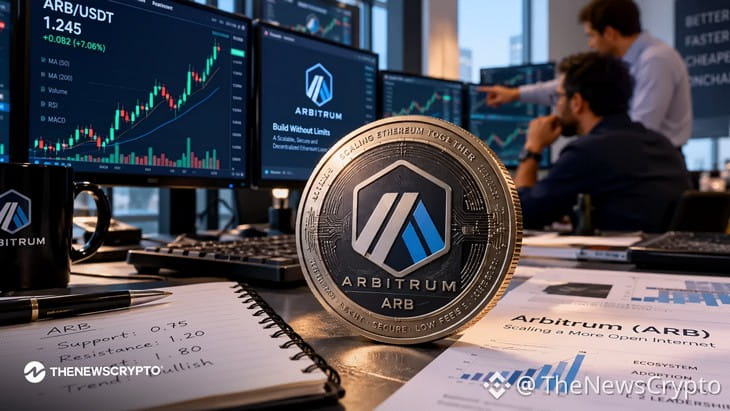
Arbitrum (ARB) Drops 15% As Bearish Pressure MountsArbitrum is currently trading at $0.16 with a 15% loss in value.
ARB shows a conflict between long-term strength and short-term weakness.
Arbitrum (ARB) is currently trading within the $0.1652 range, posting a loss of over 15.5%, with its volume settled at around $501.6 million. Moreover, the 24-hour range sits between $0.1606 and $0.1961, while the 7-day range stretches from $0.08502 to $0.2036. It hints at a wide swing that reflects how volatile the asset has been.
Notably, the bears are firmly in control right now. But the ARB chart is printing a massive falling wedge near the lows, a pattern that typically signals compression before a reversal. A breakout above wedge resistance would shift momentum toward bulls and open the path toward the significant $0.30 threshold.
Zooming in on the four-hour trading chart, Arbitrum momentum is facing a brief downtrend. The price could retrace toward the support at the $0.1611 level. If the potential bears gain more traction, it could trigger the formation of a death cross. Gradually, they would send the price even lower, below $0.1568.
On the flip side, with the bears losing ground over time, bullish sentiment takes place, and the ARB price might immediately climb to the resistance at $0.1693. Continued upside pressure could initiate the emergence of the golden cross, and the bulls would likely drive the asset’s price to its former high above $0.1734.
Arbitrum’s Technical Setup Points to Weak Momentum
Analysing the technical chart shows that the Moving Average Convergence Divergence (MACD) line is below the signal line. Both lines are found above the zero line, indicating the momentum is experiencing short-term consolidation. The overall background trend of Arbitrum remains bullish.
The short-term price averages are higher than long-term averages, establishing that buyers hold the broader market edge. This pattern represents a conflict between long-term strength and short-term weakness. It marks a temporary pullback before the primary uptrend resumes.
(Source: TradingView)
Arbitrum’s current market sentiment is in neutral territory with a slight bullish bias, as the daily Relative Strength Index (RSI) stays at 56.01. Buyers currently hold a slight edge over the sellers. Average gains over the recent lookback period are outpacing average losses. The reading is far below the overbought zone.
The asset is not overextended to the upside, and it has enough room to move higher before reaching overbought conditions. If the value is flatlining around 55, traders wait for a clearer price or momentum breakout before taking new trades. Upon falling below 50, the momentum flips back to sellers.
Crypto Market Highlights
Vitalik Buterin Doubles Down on Crypto While Bitcoin’s AI Security Debate Gets Louder
Arbitrum (ARB) Drops 15% As Bearish Pressure Mounts
Arbitrum is currently trading at $0.16 with a 15% loss in value.
ARB shows a conflict between long-term strength and short-term weakness.
Arbitrum (ARB) is currently trading within the $0.1652 range, posting a loss of over 15.5%, with its volume settled at around $501.6 million. Moreover, the 24-hour range sits between $0.1606 and $0.1961, while the 7-day range stretches from $0.08502 to $0.2036. It hints at a wide swing that reflects how volatile the asset has been.
Notably, the bears are firmly in control right now. But the ARB chart is printing a massive falling wedge near the lows, a pattern that typically signals compression before a reversal. A breakout above wedge resistance would shift momentum toward bulls and open the path toward the significant $0.30 threshold.
Zooming in on the four-hour trading chart, Arbitrum momentum is facing a brief downtrend. The price could retrace toward the support at the $0.1611 level. If the potential bears gain more traction, it could trigger the formation of a death cross. Gradually, they would send the price even lower, below $0.1568.
On the flip side, with the bears losing ground over time, bullish sentiment takes place, and the ARB price might immediately climb to the resistance at $0.1693. Continued upside pressure could initiate the emergence of the golden cross, and the bulls would likely drive the asset’s price to its former high above $0.1734.
Arbitrum’s Technical Setup Points to Weak Momentum
Analysing the technical chart shows that the Moving Average Convergence Divergence (MACD) line is below the signal line. Both lines are found above the zero line, indicating the momentum is experiencing short-term consolidation. The overall background trend of Arbitrum remains bullish.
The short-term price averages are higher than long-term averages, establishing that buyers hold the broader market edge. This pattern represents a conflict between long-term strength and short-term weakness. It marks a temporary pullback before the primary uptrend resumes.
(Source: TradingView)
Arbitrum’s current market sentiment is in neutral territory with a slight bullish bias, as the daily Relative Strength Index (RSI) stays at 56.01. Buyers currently hold a slight edge over the sellers. Average gains over the recent lookback period are outpacing average losses. The reading is far below the overbought zone.
The asset is not overextended to the upside, and it has enough room to move higher before reaching overbought conditions. If the value is flatlining around 55, traders wait for a clearer price or momentum breakout before taking new trades. Upon falling below 50, the momentum flips back to sellers.
Crypto Market Highlights
Vitalik Buterin Doubles Down on Crypto While Bitcoin’s AI Security Debate Gets Louder
ARB shows a conflict between long-term strength and short-term weakness.
Arbitrum (ARB) is currently trading within the $0.1652 range, posting a loss of over 15.5%, with its volume settled at around $501.6 million. Moreover, the 24-hour range sits between $0.1606 and $0.1961, while the 7-day range stretches from $0.08502 to $0.2036. It hints at a wide swing that reflects how volatile the asset has been.
Notably, the bears are firmly in control right now. But the ARB chart is printing a massive falling wedge near the lows, a pattern that typically signals compression before a reversal. A breakout above wedge resistance would shift momentum toward bulls and open the path toward the significant $0.30 threshold.
Zooming in on the four-hour trading chart, Arbitrum momentum is facing a brief downtrend. The price could retrace toward the support at the $0.1611 level. If the potential bears gain more traction, it could trigger the formation of a death cross. Gradually, they would send the price even lower, below $0.1568.
On the flip side, with the bears losing ground over time, bullish sentiment takes place, and the ARB price might immediately climb to the resistance at $0.1693. Continued upside pressure could initiate the emergence of the golden cross, and the bulls would likely drive the asset’s price to its former high above $0.1734.
Arbitrum’s Technical Setup Points to Weak Momentum
Analysing the technical chart shows that the Moving Average Convergence Divergence (MACD) line is below the signal line. Both lines are found above the zero line, indicating the momentum is experiencing short-term consolidation. The overall background trend of Arbitrum remains bullish.
The short-term price averages are higher than long-term averages, establishing that buyers hold the broader market edge. This pattern represents a conflict between long-term strength and short-term weakness. It marks a temporary pullback before the primary uptrend resumes.
(Source: TradingView)
Arbitrum’s current market sentiment is in neutral territory with a slight bullish bias, as the daily Relative Strength Index (RSI) stays at 56.01. Buyers currently hold a slight edge over the sellers. Average gains over the recent lookback period are outpacing average losses. The reading is far below the overbought zone.
The asset is not overextended to the upside, and it has enough room to move higher before reaching overbought conditions. If the value is flatlining around 55, traders wait for a clearer price or momentum breakout before taking new trades. Upon falling below 50, the momentum flips back to sellers.
Crypto Market Highlights
Vitalik Buterin Doubles Down on Crypto While Bitcoin’s AI Security Debate Gets Louder
1
392
Article
See translation
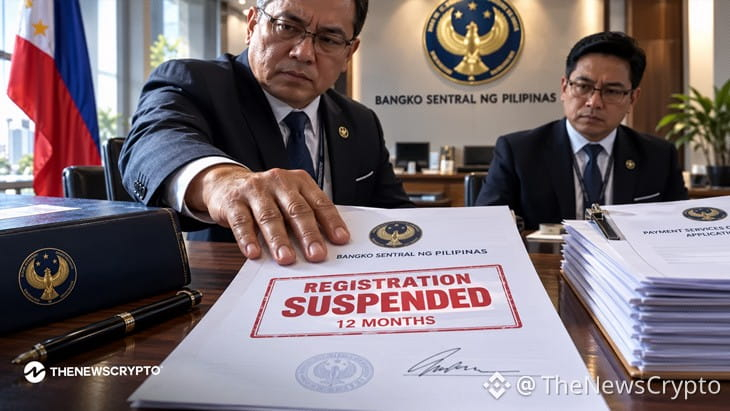
Philippines Plans 12-Month Pause on New Payment Operator RegistrationsThe Philippines’ central bank has proposed a 12-month pause on new registrations for payment system operators.
The proposal also calls for tighter controls on payment arrangements involving virtual asset service providers (VASPs).
The Philippines’ central bank, Bangko Sentral ng Pilipinas (BSP) has proposed a 12-month suspension on new registrations for payment system operators as it reviews the country’s licensing framework and introduces tighter controls for payment arrangements involving virtual asset service providers (VASPs).
Under the draft circular, the central bank would stop accepting and processing new applications for Operator of Payment System (OPS) registration during the proposed suspension. The BSP said the move would allow it to conduct a “holistic review” of the OPS taxonomy, registration process and licensing framework, including related risk management and regulatory requirements.
(Source: BSP)
Applications submitted before the suspension would not be automatically cancelled. The BSP would continue evaluating them, but would not approve or reject those applications until the 12-month period ends. Companies would also be unable to begin activities requiring OPS registration during the pause unless they receive separate authorization from the central bank.
BSP Sets Tighter Controls for Crypto-Linked Payments
The draft also proposes stricter requirements for BSP-supervised institutions that provide merchant acquisition services involving regulated VASPs.
Under the proposed Philippines framework, these institutions would need to maintain direct merchant arrangements with VASPs rather than rely on additional payment layers. The relationships would be subject to enhanced due diligence, ongoing monitoring, transaction and settlement limits, and other risk-based controls.
The proposed requirements would cover VASPs that are licensed, registered or otherwise authorized by the BSP, the Philippine Securities and Exchange Commission (SEC), or another relevant authority. The draft places VASPs alongside other sectors requiring heightened oversight, including gambling and gaming businesses, adult-oriented businesses and money service businesses.
The proposal remains open for public feedback and is not yet a final rule. If approved, the circular would take effect 15 days after publication. Existing registered payment operators would not be subject to the proposed 12-month registration freeze.
Highlighted Crypto News:
South Korea Requires Reporting of Crypto Accounts at Bankrupt Overseas Exchanges
Philippines Plans 12-Month Pause on New Payment Operator Registrations
The Philippines’ central bank has proposed a 12-month pause on new registrations for payment system operators.
The proposal also calls for tighter controls on payment arrangements involving virtual asset service providers (VASPs).
The Philippines’ central bank, Bangko Sentral ng Pilipinas (BSP) has proposed a 12-month suspension on new registrations for payment system operators as it reviews the country’s licensing framework and introduces tighter controls for payment arrangements involving virtual asset service providers (VASPs).
Under the draft circular, the central bank would stop accepting and processing new applications for Operator of Payment System (OPS) registration during the proposed suspension. The BSP said the move would allow it to conduct a “holistic review” of the OPS taxonomy, registration process and licensing framework, including related risk management and regulatory requirements.
(Source: BSP)
Applications submitted before the suspension would not be automatically cancelled. The BSP would continue evaluating them, but would not approve or reject those applications until the 12-month period ends. Companies would also be unable to begin activities requiring OPS registration during the pause unless they receive separate authorization from the central bank.
BSP Sets Tighter Controls for Crypto-Linked Payments
The draft also proposes stricter requirements for BSP-supervised institutions that provide merchant acquisition services involving regulated VASPs.
Under the proposed Philippines framework, these institutions would need to maintain direct merchant arrangements with VASPs rather than rely on additional payment layers. The relationships would be subject to enhanced due diligence, ongoing monitoring, transaction and settlement limits, and other risk-based controls.
The proposed requirements would cover VASPs that are licensed, registered or otherwise authorized by the BSP, the Philippine Securities and Exchange Commission (SEC), or another relevant authority. The draft places VASPs alongside other sectors requiring heightened oversight, including gambling and gaming businesses, adult-oriented businesses and money service businesses.
The proposal remains open for public feedback and is not yet a final rule. If approved, the circular would take effect 15 days after publication. Existing registered payment operators would not be subject to the proposed 12-month registration freeze.
Highlighted Crypto News:
South Korea Requires Reporting of Crypto Accounts at Bankrupt Overseas Exchanges
The proposal also calls for tighter controls on payment arrangements involving virtual asset service providers (VASPs).
The Philippines’ central bank, Bangko Sentral ng Pilipinas (BSP) has proposed a 12-month suspension on new registrations for payment system operators as it reviews the country’s licensing framework and introduces tighter controls for payment arrangements involving virtual asset service providers (VASPs).
Under the draft circular, the central bank would stop accepting and processing new applications for Operator of Payment System (OPS) registration during the proposed suspension. The BSP said the move would allow it to conduct a “holistic review” of the OPS taxonomy, registration process and licensing framework, including related risk management and regulatory requirements.
(Source: BSP)
Applications submitted before the suspension would not be automatically cancelled. The BSP would continue evaluating them, but would not approve or reject those applications until the 12-month period ends. Companies would also be unable to begin activities requiring OPS registration during the pause unless they receive separate authorization from the central bank.
BSP Sets Tighter Controls for Crypto-Linked Payments
The draft also proposes stricter requirements for BSP-supervised institutions that provide merchant acquisition services involving regulated VASPs.
Under the proposed Philippines framework, these institutions would need to maintain direct merchant arrangements with VASPs rather than rely on additional payment layers. The relationships would be subject to enhanced due diligence, ongoing monitoring, transaction and settlement limits, and other risk-based controls.
The proposed requirements would cover VASPs that are licensed, registered or otherwise authorized by the BSP, the Philippine Securities and Exchange Commission (SEC), or another relevant authority. The draft places VASPs alongside other sectors requiring heightened oversight, including gambling and gaming businesses, adult-oriented businesses and money service businesses.
The proposal remains open for public feedback and is not yet a final rule. If approved, the circular would take effect 15 days after publication. Existing registered payment operators would not be subject to the proposed 12-month registration freeze.
Highlighted Crypto News:
South Korea Requires Reporting of Crypto Accounts at Bankrupt Overseas Exchanges
124
Article
See translation
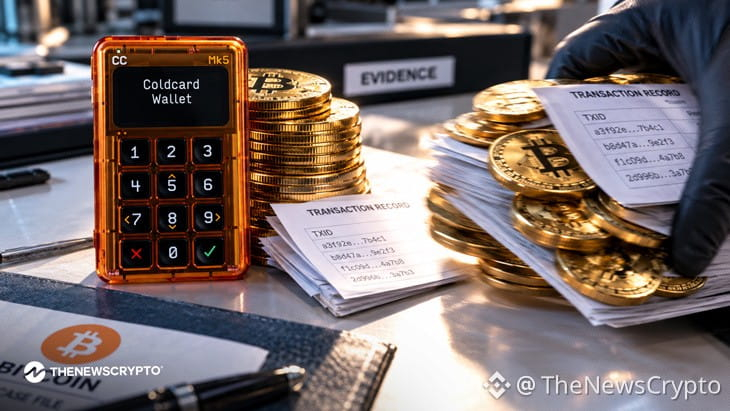
Coldcard Hacker Moves 45% of Stolen Bitcoin Through THORChainThird-wave Coldcard hacker has already transferred roughly 45% of the stolen Bitcoin through THORChain and CoinJoin transactions.
According to Galaxy, 82% of stolen Bitcoin from Coldcard hacks has remained in the possession of attackers.
The perpetrator of the third wave attack against the Coldcard wallet has escalated the pace of transferring funds, reports Galaxy Research. The exploiters have transferred approximately 45% of the Bitcoin stolen from the third wave so far. These transfers indicate a pattern of using methods that make blockchain tracking difficult.
Coldcard ‘Wave 3’ exploiter continues to move funds In wave 3, the exploiter created 293 2-of-2 multisig vaults for each victim’s coins. The first movements on 9/2 sent coins over THORChain to Ethereum. Tonight’s movements are going into coinjoins rounds. pic.twitter.com/H7HIpcI7ah
— Galaxy Research (@glxyresearch) September 7, 2026
The perpetrator moved Bitcoin to Ethereum through THORChain on September 2. Recent transactions involved moving Bitcoin via CoinJoin rounds. CoinJoin is a process whereby payments from different users are included in a transaction. This makes it more difficult to track transactions of individual fund transfers on the Bitcoin blockchain. It now provides researchers with insight into how the attacker operates the stolen funds.
Two-of-Two Multisignature Vaults Indicate Attack Plan
According to Galaxy, the third-wave attacker opened 293 multisignature two-of-two vaults. These were vaults with Bitcoin stolen from Coldcard victims. So far, the funds have been transferred from the biggest vaults in decreasing order of their sizes. According to Galaxy, funds from the 11 biggest vaults have already been transferred.
This information allowed researchers to track down some of the transactions linked to the exploit. They managed to find an unknown multisignature vault, which had most probably been used for transferring stolen Bitcoins from another victim. However, Galaxy was unable to determine the circumstances of this new theft. It means that the extent of the attack has expanded, but no new confirmed loss is known yet.
Bulk of the Stolen Bitcoin is Yet Unmoved
Even with all of the recent activities, the bulk of the Bitcoin stolen in all Coldcard attack waves remains in the initial attack-controlled addresses. According to Galaxy, 82% of Bitcoin stolen in all Coldcard attacks still lies in those addresses. The remaining 18% has since been transferred in transactions indicative of laundering.
The third wave is, therefore, a big portion of the active fund movement activity. It provides investigators with yet another pattern of transactions for monitoring. The Coldcard exploit is one of the biggest cryptocurrency exploits documented within the year 2026. According to DefiLlama, it is the third-biggest exploit of the year with reported losses. The Kelp DAO hack is ranked first with reported losses of approximately $293 million. In second place is the Drift Protocol exploit, which incurred about $280 million in losses.
This particular exploit reveals how stolen cryptocurrency can be moved through various blockchain ecosystems like THORChain and CoinJoin. The transactions present yet another piece of evidence for investigators and market players to track down.
Highlighted Crypto News:South Korea’s Hanwha Advances Tokenized Securities With Avalanche Platform as Regulations Evolve
Coldcard Hacker Moves 45% of Stolen Bitcoin Through THORChain
Third-wave Coldcard hacker has already transferred roughly 45% of the stolen Bitcoin through THORChain and CoinJoin transactions.
According to Galaxy, 82% of stolen Bitcoin from Coldcard hacks has remained in the possession of attackers.
The perpetrator of the third wave attack against the Coldcard wallet has escalated the pace of transferring funds, reports Galaxy Research. The exploiters have transferred approximately 45% of the Bitcoin stolen from the third wave so far. These transfers indicate a pattern of using methods that make blockchain tracking difficult.
Coldcard ‘Wave 3’ exploiter continues to move funds In wave 3, the exploiter created 293 2-of-2 multisig vaults for each victim’s coins. The first movements on 9/2 sent coins over THORChain to Ethereum. Tonight’s movements are going into coinjoins rounds. pic.twitter.com/H7HIpcI7ah
— Galaxy Research (@glxyresearch) September 7, 2026
The perpetrator moved Bitcoin to Ethereum through THORChain on September 2. Recent transactions involved moving Bitcoin via CoinJoin rounds. CoinJoin is a process whereby payments from different users are included in a transaction. This makes it more difficult to track transactions of individual fund transfers on the Bitcoin blockchain. It now provides researchers with insight into how the attacker operates the stolen funds.
Two-of-Two Multisignature Vaults Indicate Attack Plan
According to Galaxy, the third-wave attacker opened 293 multisignature two-of-two vaults. These were vaults with Bitcoin stolen from Coldcard victims. So far, the funds have been transferred from the biggest vaults in decreasing order of their sizes. According to Galaxy, funds from the 11 biggest vaults have already been transferred.
This information allowed researchers to track down some of the transactions linked to the exploit. They managed to find an unknown multisignature vault, which had most probably been used for transferring stolen Bitcoins from another victim. However, Galaxy was unable to determine the circumstances of this new theft. It means that the extent of the attack has expanded, but no new confirmed loss is known yet.
Bulk of the Stolen Bitcoin is Yet Unmoved
Even with all of the recent activities, the bulk of the Bitcoin stolen in all Coldcard attack waves remains in the initial attack-controlled addresses. According to Galaxy, 82% of Bitcoin stolen in all Coldcard attacks still lies in those addresses. The remaining 18% has since been transferred in transactions indicative of laundering.
The third wave is, therefore, a big portion of the active fund movement activity. It provides investigators with yet another pattern of transactions for monitoring. The Coldcard exploit is one of the biggest cryptocurrency exploits documented within the year 2026. According to DefiLlama, it is the third-biggest exploit of the year with reported losses. The Kelp DAO hack is ranked first with reported losses of approximately $293 million. In second place is the Drift Protocol exploit, which incurred about $280 million in losses.
This particular exploit reveals how stolen cryptocurrency can be moved through various blockchain ecosystems like THORChain and CoinJoin. The transactions present yet another piece of evidence for investigators and market players to track down.
Highlighted Crypto News:South Korea’s Hanwha Advances Tokenized Securities With Avalanche Platform as Regulations Evolve
According to Galaxy, 82% of stolen Bitcoin from Coldcard hacks has remained in the possession of attackers.
The perpetrator of the third wave attack against the Coldcard wallet has escalated the pace of transferring funds, reports Galaxy Research. The exploiters have transferred approximately 45% of the Bitcoin stolen from the third wave so far. These transfers indicate a pattern of using methods that make blockchain tracking difficult.
Coldcard ‘Wave 3’ exploiter continues to move funds In wave 3, the exploiter created 293 2-of-2 multisig vaults for each victim’s coins. The first movements on 9/2 sent coins over THORChain to Ethereum. Tonight’s movements are going into coinjoins rounds. pic.twitter.com/H7HIpcI7ah
— Galaxy Research (@glxyresearch) September 7, 2026
The perpetrator moved Bitcoin to Ethereum through THORChain on September 2. Recent transactions involved moving Bitcoin via CoinJoin rounds. CoinJoin is a process whereby payments from different users are included in a transaction. This makes it more difficult to track transactions of individual fund transfers on the Bitcoin blockchain. It now provides researchers with insight into how the attacker operates the stolen funds.
Two-of-Two Multisignature Vaults Indicate Attack Plan
According to Galaxy, the third-wave attacker opened 293 multisignature two-of-two vaults. These were vaults with Bitcoin stolen from Coldcard victims. So far, the funds have been transferred from the biggest vaults in decreasing order of their sizes. According to Galaxy, funds from the 11 biggest vaults have already been transferred.
This information allowed researchers to track down some of the transactions linked to the exploit. They managed to find an unknown multisignature vault, which had most probably been used for transferring stolen Bitcoins from another victim. However, Galaxy was unable to determine the circumstances of this new theft. It means that the extent of the attack has expanded, but no new confirmed loss is known yet.
Bulk of the Stolen Bitcoin is Yet Unmoved
Even with all of the recent activities, the bulk of the Bitcoin stolen in all Coldcard attack waves remains in the initial attack-controlled addresses. According to Galaxy, 82% of Bitcoin stolen in all Coldcard attacks still lies in those addresses. The remaining 18% has since been transferred in transactions indicative of laundering.
The third wave is, therefore, a big portion of the active fund movement activity. It provides investigators with yet another pattern of transactions for monitoring. The Coldcard exploit is one of the biggest cryptocurrency exploits documented within the year 2026. According to DefiLlama, it is the third-biggest exploit of the year with reported losses. The Kelp DAO hack is ranked first with reported losses of approximately $293 million. In second place is the Drift Protocol exploit, which incurred about $280 million in losses.
This particular exploit reveals how stolen cryptocurrency can be moved through various blockchain ecosystems like THORChain and CoinJoin. The transactions present yet another piece of evidence for investigators and market players to track down.
Highlighted Crypto News:South Korea’s Hanwha Advances Tokenized Securities With Avalanche Platform as Regulations Evolve
1
98
Article
See translation
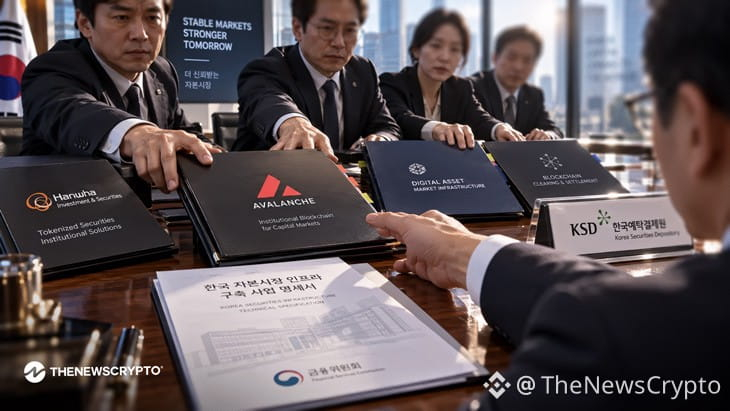
South Korea’s Hanwha Advances Tokenized Securities With Avalanche Platform As Regulations EvolveHanwha Investment & Securities is said to have developed a tokenized securities platform operating across multiple networks, including Avalanche and Hyperledger Besu.
The integration of security tokens will take place in the capital markets system of South Korea starting February 4, 2027.
As South Korea’s capital markets approach blockchain technology, financial institutions continue to prepare themselves by building their own tokenized securities platform. Hanwha Investment & Securities reportedly developed a tokenized securities platform that operates across multiple networks, including Avalanche.
According to Seoul Economic Daily, the news was announced on September 6 when Hanwha, together with blockchain technology company FairSquare Lab, started the development of a tokenized securities platform in 2025. The development of the platform was done months before the official integration of tokenized securities in the capital markets system.
Hanwha Gets Ready for Tokenization Framework in South Korea
In South Korea, the financial laws have been revised to treat distributed ledgers as securities registry systems. The revision of the law will be effective from February 4, 2027. The changes mean that security tokens will be incorporated into the current capital market system. The changes will also provide a clear legal basis for financial institutions that are trying to experiment with blockchain technology to manage securities.
On the other hand, the Financial Services Commission has formulated a three-step plan of implementation. This means that, in the first step, tokenization of privately placed money market funds and bonds will be allowed. The second step will involve the tokenization of unlisted stocks through trust arrangements as well as fractional investment securities. In case of success in the first phase, the second phase may involve the tokenization of publicly offered securities.
Hanwha Expands Its Blockchain Investment Strategy
Hanwha’s platform development supports its broader blockchain and tokenization strategy. Hanwha Group holds a 9.6% stake in Securitize through three affiliates, making it Securitize’s largest shareholder. Hanwha Investment & Securities also invested 30 billion Korean won, about $22.3 million, in Digital Asset. The company operates Canton Network, which focuses on institutional financial markets.
Together, these moves show Hanwha’s growing focus on tokenized financial infrastructure. Its Avalanche-based platform could support securities issuance and management as South Korea’s regulations evolve. However, the platform’s completion does not indicate widespread commercial adoption. Regulatory implementation must progress through planned stages before tokenized securities reach broader markets.
Highlighted Crypto News:ZachXBT Raises WOO X Withdrawal Concerns After Users Report 3-Day Delays
South Korea’s Hanwha Advances Tokenized Securities With Avalanche Platform As Regulations Evolve
Hanwha Investment & Securities is said to have developed a tokenized securities platform operating across multiple networks, including Avalanche and Hyperledger Besu.
The integration of security tokens will take place in the capital markets system of South Korea starting February 4, 2027.
As South Korea’s capital markets approach blockchain technology, financial institutions continue to prepare themselves by building their own tokenized securities platform. Hanwha Investment & Securities reportedly developed a tokenized securities platform that operates across multiple networks, including Avalanche.
According to Seoul Economic Daily, the news was announced on September 6 when Hanwha, together with blockchain technology company FairSquare Lab, started the development of a tokenized securities platform in 2025. The development of the platform was done months before the official integration of tokenized securities in the capital markets system.
Hanwha Gets Ready for Tokenization Framework in South Korea
In South Korea, the financial laws have been revised to treat distributed ledgers as securities registry systems. The revision of the law will be effective from February 4, 2027. The changes mean that security tokens will be incorporated into the current capital market system. The changes will also provide a clear legal basis for financial institutions that are trying to experiment with blockchain technology to manage securities.
On the other hand, the Financial Services Commission has formulated a three-step plan of implementation. This means that, in the first step, tokenization of privately placed money market funds and bonds will be allowed. The second step will involve the tokenization of unlisted stocks through trust arrangements as well as fractional investment securities. In case of success in the first phase, the second phase may involve the tokenization of publicly offered securities.
Hanwha Expands Its Blockchain Investment Strategy
Hanwha’s platform development supports its broader blockchain and tokenization strategy. Hanwha Group holds a 9.6% stake in Securitize through three affiliates, making it Securitize’s largest shareholder. Hanwha Investment & Securities also invested 30 billion Korean won, about $22.3 million, in Digital Asset. The company operates Canton Network, which focuses on institutional financial markets.
Together, these moves show Hanwha’s growing focus on tokenized financial infrastructure. Its Avalanche-based platform could support securities issuance and management as South Korea’s regulations evolve. However, the platform’s completion does not indicate widespread commercial adoption. Regulatory implementation must progress through planned stages before tokenized securities reach broader markets.
Highlighted Crypto News:ZachXBT Raises WOO X Withdrawal Concerns After Users Report 3-Day Delays
The integration of security tokens will take place in the capital markets system of South Korea starting February 4, 2027.
As South Korea’s capital markets approach blockchain technology, financial institutions continue to prepare themselves by building their own tokenized securities platform. Hanwha Investment & Securities reportedly developed a tokenized securities platform that operates across multiple networks, including Avalanche.
According to Seoul Economic Daily, the news was announced on September 6 when Hanwha, together with blockchain technology company FairSquare Lab, started the development of a tokenized securities platform in 2025. The development of the platform was done months before the official integration of tokenized securities in the capital markets system.
Hanwha Gets Ready for Tokenization Framework in South Korea
In South Korea, the financial laws have been revised to treat distributed ledgers as securities registry systems. The revision of the law will be effective from February 4, 2027. The changes mean that security tokens will be incorporated into the current capital market system. The changes will also provide a clear legal basis for financial institutions that are trying to experiment with blockchain technology to manage securities.
On the other hand, the Financial Services Commission has formulated a three-step plan of implementation. This means that, in the first step, tokenization of privately placed money market funds and bonds will be allowed. The second step will involve the tokenization of unlisted stocks through trust arrangements as well as fractional investment securities. In case of success in the first phase, the second phase may involve the tokenization of publicly offered securities.
Hanwha Expands Its Blockchain Investment Strategy
Hanwha’s platform development supports its broader blockchain and tokenization strategy. Hanwha Group holds a 9.6% stake in Securitize through three affiliates, making it Securitize’s largest shareholder. Hanwha Investment & Securities also invested 30 billion Korean won, about $22.3 million, in Digital Asset. The company operates Canton Network, which focuses on institutional financial markets.
Together, these moves show Hanwha’s growing focus on tokenized financial infrastructure. Its Avalanche-based platform could support securities issuance and management as South Korea’s regulations evolve. However, the platform’s completion does not indicate widespread commercial adoption. Regulatory implementation must progress through planned stages before tokenized securities reach broader markets.
Highlighted Crypto News:ZachXBT Raises WOO X Withdrawal Concerns After Users Report 3-Day Delays
199
Article
See translation
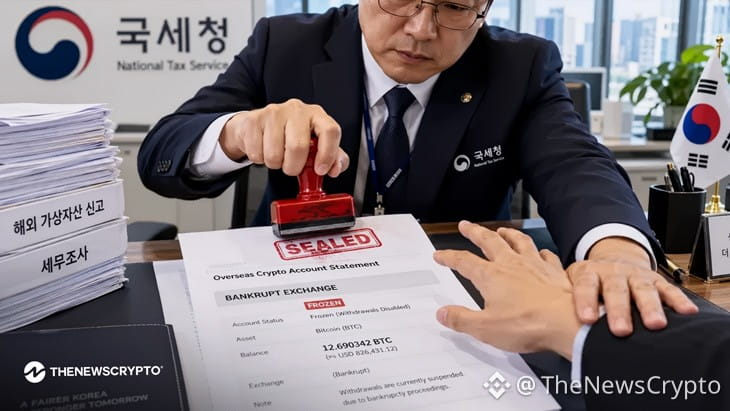
South Korea Requires Reporting of Crypto Accounts At Bankrupt Overseas ExchangesSouth Korea says crypto accounts at bankrupt overseas exchanges still fall under its foreign account reporting rules.
Residents with combined overseas financial account balances above ₩500 million must report them to the NTS the following June.
South Korea’s National Tax Service (NTS) has clarified that residents may still have to report cryptocurrency accounts held with overseas exchanges even after those platforms have gone bankrupt and customers can no longer trade or withdraw their assets.
The NTS issued the interpretation on August 28 after a South Korean resident asked whether an account with a bankrupt overseas crypto exchange remained subject to the country’s foreign financial account reporting rules. The resident was a creditor of an overseas virtual asset exchange that filed for bankruptcy in November 2022. The account could no longer be used for normal trading or withdrawals, and the assets had become part of the bankruptcy process.
Bankruptcy Does Not Remove Reporting Requirement
The tax agency said an account opened with an overseas virtual asset service provider for digital asset transactions remains subject to reporting even if the exchange later becomes insolvent. The ruling focuses on the account reporting requirement and does not itself determine whether the assets are subject to additional tax.
Under South Korea’s Adjustment of International Taxes Act, residents and domestic companies must report their overseas financial accounts when the combined balance exceeds 500 million won ($361,000) at the end of any month during the year. The report must be filed with the tax authorities in June of the following year. The threshold applies to the combined balances of qualifying overseas accounts rather than just one account.
Virtual asset accounts were added to South Korea’s overseas financial account reporting system in 2023. The requirement covers qualifying accounts held with overseas virtual asset service providers alongside other foreign financial accounts.
The NTS also reported that overseas virtual assets declared in the 2026 reporting cycle totaled 10.5 trillion won, down 5.4% from the previous year. Individual holdings rose 5.4% to 9.8 trillion won, while corporate holdings fell 61.1% to 700 billion won. The agency attributed the overall decline partly to lower virtual asset prices.
Highlighted Crypto News:
Vitalik Buterin Doubles Down on Crypto While Bitcoin’s AI Security Debate Gets Louder
South Korea Requires Reporting of Crypto Accounts At Bankrupt Overseas Exchanges
South Korea says crypto accounts at bankrupt overseas exchanges still fall under its foreign account reporting rules.
Residents with combined overseas financial account balances above ₩500 million must report them to the NTS the following June.
South Korea’s National Tax Service (NTS) has clarified that residents may still have to report cryptocurrency accounts held with overseas exchanges even after those platforms have gone bankrupt and customers can no longer trade or withdraw their assets.
The NTS issued the interpretation on August 28 after a South Korean resident asked whether an account with a bankrupt overseas crypto exchange remained subject to the country’s foreign financial account reporting rules. The resident was a creditor of an overseas virtual asset exchange that filed for bankruptcy in November 2022. The account could no longer be used for normal trading or withdrawals, and the assets had become part of the bankruptcy process.
Bankruptcy Does Not Remove Reporting Requirement
The tax agency said an account opened with an overseas virtual asset service provider for digital asset transactions remains subject to reporting even if the exchange later becomes insolvent. The ruling focuses on the account reporting requirement and does not itself determine whether the assets are subject to additional tax.
Under South Korea’s Adjustment of International Taxes Act, residents and domestic companies must report their overseas financial accounts when the combined balance exceeds 500 million won ($361,000) at the end of any month during the year. The report must be filed with the tax authorities in June of the following year. The threshold applies to the combined balances of qualifying overseas accounts rather than just one account.
Virtual asset accounts were added to South Korea’s overseas financial account reporting system in 2023. The requirement covers qualifying accounts held with overseas virtual asset service providers alongside other foreign financial accounts.
The NTS also reported that overseas virtual assets declared in the 2026 reporting cycle totaled 10.5 trillion won, down 5.4% from the previous year. Individual holdings rose 5.4% to 9.8 trillion won, while corporate holdings fell 61.1% to 700 billion won. The agency attributed the overall decline partly to lower virtual asset prices.
Highlighted Crypto News:
Vitalik Buterin Doubles Down on Crypto While Bitcoin’s AI Security Debate Gets Louder
Residents with combined overseas financial account balances above ₩500 million must report them to the NTS the following June.
South Korea’s National Tax Service (NTS) has clarified that residents may still have to report cryptocurrency accounts held with overseas exchanges even after those platforms have gone bankrupt and customers can no longer trade or withdraw their assets.
The NTS issued the interpretation on August 28 after a South Korean resident asked whether an account with a bankrupt overseas crypto exchange remained subject to the country’s foreign financial account reporting rules. The resident was a creditor of an overseas virtual asset exchange that filed for bankruptcy in November 2022. The account could no longer be used for normal trading or withdrawals, and the assets had become part of the bankruptcy process.
Bankruptcy Does Not Remove Reporting Requirement
The tax agency said an account opened with an overseas virtual asset service provider for digital asset transactions remains subject to reporting even if the exchange later becomes insolvent. The ruling focuses on the account reporting requirement and does not itself determine whether the assets are subject to additional tax.
Under South Korea’s Adjustment of International Taxes Act, residents and domestic companies must report their overseas financial accounts when the combined balance exceeds 500 million won ($361,000) at the end of any month during the year. The report must be filed with the tax authorities in June of the following year. The threshold applies to the combined balances of qualifying overseas accounts rather than just one account.
Virtual asset accounts were added to South Korea’s overseas financial account reporting system in 2023. The requirement covers qualifying accounts held with overseas virtual asset service providers alongside other foreign financial accounts.
The NTS also reported that overseas virtual assets declared in the 2026 reporting cycle totaled 10.5 trillion won, down 5.4% from the previous year. Individual holdings rose 5.4% to 9.8 trillion won, while corporate holdings fell 61.1% to 700 billion won. The agency attributed the overall decline partly to lower virtual asset prices.
Highlighted Crypto News:
Vitalik Buterin Doubles Down on Crypto While Bitcoin’s AI Security Debate Gets Louder
87
Verified

Article
See translation
Vitalik Buterin Doubles Down on Crypto While Bitcoin’s AI Security Debate Gets LouderLiron Shapira puts a 50% confidence claim on the possibility of BTC crashing by over 50% within 2 years.
Vitalik Buterin’s response highlights that roughly 90% of his net worth is already in crypto.
Host of the Doom Debates podcast, Liron Shapira, put a 50% confidence claim on the table. BTC prices could crash more than 50% in the next two years because AI will undermine what people believe are Bitcoin’s security guarantees. Shapira is not necessarily predicting a broken hash function; he is predicting a loss of confidence.
Also, in markets, perception can move price long before any actual exploit occurs. Significantly, Vitalik Buterin’s response was direct. He took the opposite side and noted that with roughly 90% of his net worth in crypto, he’s effectively already living that bet.
How Buterin Splits the Risk?
Buterin’s counterargument separates Bitcoin’s threat surface into two distinct categories. The first covers client software bugs, mining pool infrastructure, and network-layer vulnerabilities, all of which can be addressed through ordinary software upgrades without touching Bitcoin’s core rules.
AI-assisted attackers finding flaws in node software or wallet code fall into this bucket. So does any attack on mining pool systems or internet infrastructure. Developers and node operators can patch these. No social consensus required.
The second category is a genuine break of SHA-256 or proof-of-work itself. Buterin puts the probability of that in the tiny bucket, and notes that any fix would require a hard fork and broad consensus.
His broader argument is that cryptography keeps finding new footing as old assumptions erode. Hard problems are abundant. In a separate thread, he pointed to the pace of development in SNARKs and fully homomorphic encryption in 2026 specifically as evidence that defenders are not standing still.
He also shared a non-consensus view on the long-term future of cryptography: a 33% chance that all three of what he calls the Egyptian God Protocols (SNARK, FHE, iO) could eventually be implemented with near-zero overhead, and a 60% chance they reach single-digit overhead. He expects SNARKs with single-digit overhead by the end of the decade.
Moreover, the largest asset, Bitcoin (BTC), is currently trading at $79,370. The 24-hour session is ranging between $79,080 and $80,493, with its volume settled at $22.85 billion.
Shapira’s risk is real but market-psychology driven; a 50% crash needs fear, not a broken algorithm. In addition, Vitalik Buterin’s engineering framework suggests the actual cryptographic risk is far lower than the narrative risk.
Crypto Market Highlights
Liquid Network Hit by $320M Bitcoin Security Incident as 4,000 BTC Leaves Federation Wallet
Vitalik Buterin Doubles Down on Crypto While Bitcoin’s AI Security Debate Gets Louder
Liron Shapira puts a 50% confidence claim on the possibility of BTC crashing by over 50% within 2 years.
Vitalik Buterin’s response highlights that roughly 90% of his net worth is already in crypto.
Host of the Doom Debates podcast, Liron Shapira, put a 50% confidence claim on the table. BTC prices could crash more than 50% in the next two years because AI will undermine what people believe are Bitcoin’s security guarantees. Shapira is not necessarily predicting a broken hash function; he is predicting a loss of confidence.
Also, in markets, perception can move price long before any actual exploit occurs. Significantly, Vitalik Buterin’s response was direct. He took the opposite side and noted that with roughly 90% of his net worth in crypto, he’s effectively already living that bet.
How Buterin Splits the Risk?
Buterin’s counterargument separates Bitcoin’s threat surface into two distinct categories. The first covers client software bugs, mining pool infrastructure, and network-layer vulnerabilities, all of which can be addressed through ordinary software upgrades without touching Bitcoin’s core rules.
AI-assisted attackers finding flaws in node software or wallet code fall into this bucket. So does any attack on mining pool systems or internet infrastructure. Developers and node operators can patch these. No social consensus required.
The second category is a genuine break of SHA-256 or proof-of-work itself. Buterin puts the probability of that in the tiny bucket, and notes that any fix would require a hard fork and broad consensus.
His broader argument is that cryptography keeps finding new footing as old assumptions erode. Hard problems are abundant. In a separate thread, he pointed to the pace of development in SNARKs and fully homomorphic encryption in 2026 specifically as evidence that defenders are not standing still.
He also shared a non-consensus view on the long-term future of cryptography: a 33% chance that all three of what he calls the Egyptian God Protocols (SNARK, FHE, iO) could eventually be implemented with near-zero overhead, and a 60% chance they reach single-digit overhead. He expects SNARKs with single-digit overhead by the end of the decade.
Moreover, the largest asset, Bitcoin (BTC), is currently trading at $79,370. The 24-hour session is ranging between $79,080 and $80,493, with its volume settled at $22.85 billion.
Shapira’s risk is real but market-psychology driven; a 50% crash needs fear, not a broken algorithm. In addition, Vitalik Buterin’s engineering framework suggests the actual cryptographic risk is far lower than the narrative risk.
Crypto Market Highlights
Liquid Network Hit by $320M Bitcoin Security Incident as 4,000 BTC Leaves Federation Wallet
Vitalik Buterin’s response highlights that roughly 90% of his net worth is already in crypto.
Host of the Doom Debates podcast, Liron Shapira, put a 50% confidence claim on the table. BTC prices could crash more than 50% in the next two years because AI will undermine what people believe are Bitcoin’s security guarantees. Shapira is not necessarily predicting a broken hash function; he is predicting a loss of confidence.
Also, in markets, perception can move price long before any actual exploit occurs. Significantly, Vitalik Buterin’s response was direct. He took the opposite side and noted that with roughly 90% of his net worth in crypto, he’s effectively already living that bet.
How Buterin Splits the Risk?
Buterin’s counterargument separates Bitcoin’s threat surface into two distinct categories. The first covers client software bugs, mining pool infrastructure, and network-layer vulnerabilities, all of which can be addressed through ordinary software upgrades without touching Bitcoin’s core rules.
AI-assisted attackers finding flaws in node software or wallet code fall into this bucket. So does any attack on mining pool systems or internet infrastructure. Developers and node operators can patch these. No social consensus required.
The second category is a genuine break of SHA-256 or proof-of-work itself. Buterin puts the probability of that in the tiny bucket, and notes that any fix would require a hard fork and broad consensus.
His broader argument is that cryptography keeps finding new footing as old assumptions erode. Hard problems are abundant. In a separate thread, he pointed to the pace of development in SNARKs and fully homomorphic encryption in 2026 specifically as evidence that defenders are not standing still.
He also shared a non-consensus view on the long-term future of cryptography: a 33% chance that all three of what he calls the Egyptian God Protocols (SNARK, FHE, iO) could eventually be implemented with near-zero overhead, and a 60% chance they reach single-digit overhead. He expects SNARKs with single-digit overhead by the end of the decade.
Moreover, the largest asset, Bitcoin (BTC), is currently trading at $79,370. The 24-hour session is ranging between $79,080 and $80,493, with its volume settled at $22.85 billion.
Shapira’s risk is real but market-psychology driven; a 50% crash needs fear, not a broken algorithm. In addition, Vitalik Buterin’s engineering framework suggests the actual cryptographic risk is far lower than the narrative risk.
Crypto Market Highlights
Liquid Network Hit by $320M Bitcoin Security Incident as 4,000 BTC Leaves Federation Wallet
638
Article
See translation
Bitcoin Price Holds $80K As Nearly $1B Flows Into Spot ETFsBitcoin is trading around $80,000 after a recent push toward the $82,000 area.
U.S. spot Bitcoin ETFs pulled in nearly $1 billion last week, marking their third consecutive week of inflows.
The global largest crypto, Bitcoin, is holding close to the $80,000 level after a strong move earlier this month, while fresh demand from U.S. spot Bitcoin ETFs continues to support the market.
At the time of writing, BTC was trading around $79,675 on the 4-hour Binance chart, with the latest session moving between an intraday low of $79,327 and a high of $80,530. Bitcoin previously pushed above $82,000 before pulling back and settling into a tighter range between $79,000 and $81,000.
The ETF market has remained a key source of demand. U.S. spot Bitcoin ETFs recorded about $986.9 million in net inflows for the week ending September 5, extending their combined three-week inflow streak to roughly $3.8 billion. Thursday alone saw about $730.9 million enter the funds, marking the strongest single-day inflow in 2026.
(Source: SoSoValue) Bitcoin 4-H Technical Setup Remains Mixed
The 4-hour chart shows Bitcoin has cooled after its latest jump, with BTC currently trading in a tight consolidation range. After climbing above $82,000, BTC pulled back and has since been moving mostly between $79,300 and $80,500. The price action suggests that buyers are still holding the recent gains, but the market has yet to build enough momentum for another move higher.
(Source: TradingView)
The 9-day moving average sits near $79,860, while the 21-day average is around $80,004. Right now, BTC is below both levels, leaving the short-term trend without a clear bullish signal.
The RSI is near 51, with its moving average around 54. This places momentum close to the middle of the range, rather than in either overbought or oversold territory.
(Source: TradingView)
Zooming in, the visible SMA 9 is at around $79,859, meaning the price is currently slightly below the 9-day SMA. The SMA itself has flattened after rising during the earlier rally, which shows that the immediate momentum has cooled. Meanwhile, the BBPT indicator remains mixed as its green component stays above the zero line and the red component remains negative.
So, the recent price structure leaves $82,000 as the key upside level. Bitcoin briefly crossed that mark before facing selling pressure. A sustained move above it would strengthen the breakout setup.
On the downside, the $79,000 area is the first level to watch, followed by the recent low near $78,500.
For now, Bitcoin remains near $80,000 while strong ETF inflows provide support, but the 4-hour chart shows that buyers still need to reclaim the $80,000-$82,000 area to regain stronger momentum.
Highlighted Crypto News:
ZachXBT Raises WOO X Withdrawal Concerns After Users Report 3-Day Delays
Bitcoin Price Holds $80K As Nearly $1B Flows Into Spot ETFs
Bitcoin is trading around $80,000 after a recent push toward the $82,000 area.
U.S. spot Bitcoin ETFs pulled in nearly $1 billion last week, marking their third consecutive week of inflows.
The global largest crypto, Bitcoin, is holding close to the $80,000 level after a strong move earlier this month, while fresh demand from U.S. spot Bitcoin ETFs continues to support the market.
At the time of writing, BTC was trading around $79,675 on the 4-hour Binance chart, with the latest session moving between an intraday low of $79,327 and a high of $80,530. Bitcoin previously pushed above $82,000 before pulling back and settling into a tighter range between $79,000 and $81,000.
The ETF market has remained a key source of demand. U.S. spot Bitcoin ETFs recorded about $986.9 million in net inflows for the week ending September 5, extending their combined three-week inflow streak to roughly $3.8 billion. Thursday alone saw about $730.9 million enter the funds, marking the strongest single-day inflow in 2026.
(Source: SoSoValue) Bitcoin 4-H Technical Setup Remains Mixed
The 4-hour chart shows Bitcoin has cooled after its latest jump, with BTC currently trading in a tight consolidation range. After climbing above $82,000, BTC pulled back and has since been moving mostly between $79,300 and $80,500. The price action suggests that buyers are still holding the recent gains, but the market has yet to build enough momentum for another move higher.
(Source: TradingView)
The 9-day moving average sits near $79,860, while the 21-day average is around $80,004. Right now, BTC is below both levels, leaving the short-term trend without a clear bullish signal.
The RSI is near 51, with its moving average around 54. This places momentum close to the middle of the range, rather than in either overbought or oversold territory.
(Source: TradingView)
Zooming in, the visible SMA 9 is at around $79,859, meaning the price is currently slightly below the 9-day SMA. The SMA itself has flattened after rising during the earlier rally, which shows that the immediate momentum has cooled. Meanwhile, the BBPT indicator remains mixed as its green component stays above the zero line and the red component remains negative.
So, the recent price structure leaves $82,000 as the key upside level. Bitcoin briefly crossed that mark before facing selling pressure. A sustained move above it would strengthen the breakout setup.
On the downside, the $79,000 area is the first level to watch, followed by the recent low near $78,500.
For now, Bitcoin remains near $80,000 while strong ETF inflows provide support, but the 4-hour chart shows that buyers still need to reclaim the $80,000-$82,000 area to regain stronger momentum.
Highlighted Crypto News:
ZachXBT Raises WOO X Withdrawal Concerns After Users Report 3-Day Delays
U.S. spot Bitcoin ETFs pulled in nearly $1 billion last week, marking their third consecutive week of inflows.
The global largest crypto, Bitcoin, is holding close to the $80,000 level after a strong move earlier this month, while fresh demand from U.S. spot Bitcoin ETFs continues to support the market.
At the time of writing, BTC was trading around $79,675 on the 4-hour Binance chart, with the latest session moving between an intraday low of $79,327 and a high of $80,530. Bitcoin previously pushed above $82,000 before pulling back and settling into a tighter range between $79,000 and $81,000.
The ETF market has remained a key source of demand. U.S. spot Bitcoin ETFs recorded about $986.9 million in net inflows for the week ending September 5, extending their combined three-week inflow streak to roughly $3.8 billion. Thursday alone saw about $730.9 million enter the funds, marking the strongest single-day inflow in 2026.
(Source: SoSoValue) Bitcoin 4-H Technical Setup Remains Mixed
The 4-hour chart shows Bitcoin has cooled after its latest jump, with BTC currently trading in a tight consolidation range. After climbing above $82,000, BTC pulled back and has since been moving mostly between $79,300 and $80,500. The price action suggests that buyers are still holding the recent gains, but the market has yet to build enough momentum for another move higher.
(Source: TradingView)
The 9-day moving average sits near $79,860, while the 21-day average is around $80,004. Right now, BTC is below both levels, leaving the short-term trend without a clear bullish signal.
The RSI is near 51, with its moving average around 54. This places momentum close to the middle of the range, rather than in either overbought or oversold territory.
(Source: TradingView)
Zooming in, the visible SMA 9 is at around $79,859, meaning the price is currently slightly below the 9-day SMA. The SMA itself has flattened after rising during the earlier rally, which shows that the immediate momentum has cooled. Meanwhile, the BBPT indicator remains mixed as its green component stays above the zero line and the red component remains negative.
So, the recent price structure leaves $82,000 as the key upside level. Bitcoin briefly crossed that mark before facing selling pressure. A sustained move above it would strengthen the breakout setup.
On the downside, the $79,000 area is the first level to watch, followed by the recent low near $78,500.
For now, Bitcoin remains near $80,000 while strong ETF inflows provide support, but the 4-hour chart shows that buyers still need to reclaim the $80,000-$82,000 area to regain stronger momentum.
Highlighted Crypto News:
ZachXBT Raises WOO X Withdrawal Concerns After Users Report 3-Day Delays
147
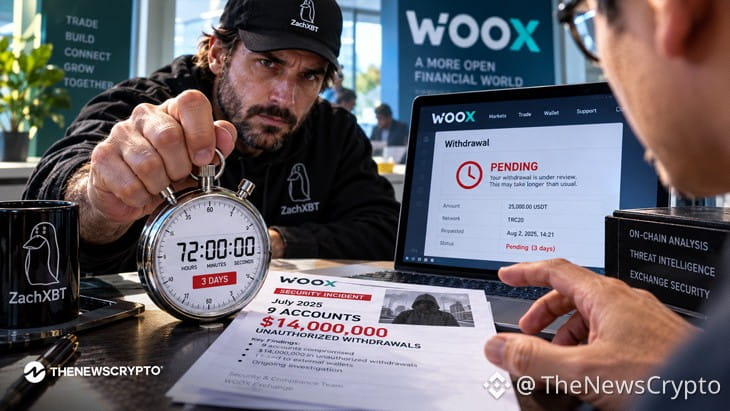
Article
See translation
ZachXBT Raises WOO X Withdrawal Concerns After Users Report 3-Day DelaysWOO X admitted to a delay in withdrawals after ZachXBT pointed out complaints related to processing times of up to three days.
The complaints have brought to light the changing ownership of WOO X and Sheldon Xia’s relationship with the exchange.
The WOO X exchange is now under the scanner owing to reports of withdrawal delays by more than one user lasting for several days. Investigator ZachXBT called attention to these reports in his Investigations channel on September 6. According to the reports, various users have contacted ZachXBT with such issues regarding withdrawals from the platform.
No suspension of withdrawal service across the entire platform has been confirmed yet by these reports. WOO X responded to these reports of withdrawal delays that same day. They reported that teams were checking the status of individual cases as well as the system in general.
User Accounts Illuminate Withdrawal Processing
ZachXBT provided screenshots featuring several users complaining about withdrawal processing delays. For instance, one Level 2 verified user had a pending withdrawal for three days. Also, another user claimed that there was a pending self-custody withdrawal request for over six hours. This particular withdrawal request did not have any transaction ID. Other users complained about the cancellation of their withdrawal requests in USDC, not the completion.
Statement on Recent Withdrawal Processing Feedback We are aware of reports regarding withdrawal processing times and are reviewing the relevant cases and system status. Some requests may still be under review or on-chain processing, and our teams are working to resolve them… pic.twitter.com/ty2I3Iu25t
— WOO X (@_WOO_X) September 6, 2026
WOO X advised the affected users to contact the exchange’s official customer service platform. This included requesting identification numbers, withdrawal ID orders, the timing of the request, assets, network, and screenshots. The exchange advised users not to share passwords, seed phrases, private keys, or verification codes.
The exchange referred customers to the Proof of Reserves Dashboard. This dashboard compared the balance of on-chain wallets with the liabilities of customers. Nonetheless, the reserves snapshot is not an independent audit. Also, ZachXBT interrogated WOO X in public about the communication. He asked why WOO X deleted an earlier post with stricter legal language. He also queried about the structure of the exchange.
WOO X’s Ownership Connections Provide Additional Information
Withdrawal reports for WOO X have brought into focus the exchange’s recent ownership shift. FusionX Digital was appointed to operate WOO X in October 2025, with BitMart’s founder Sheldon Xia joining its Global Strategy Committee. There are allegations that FusionX Digital and Sheldon Xia are connected. But there is no indication in the public records of the deal that Sheldon Xia is WOO X’s sole owner.
The reports are also subject to comparison with the BitMart exchange that announced its orderly wind-down in July 2026. New registrations and deposits to the exchange ceased before the suspension of operations on August 26.
There have been continuous reports of the inability to withdraw funds from the exchange, but according to ZachXBT, millions of dollars are still locked up at the exchange. The figures are not confirmed independently. WOO X has not announced a platform-wide withdrawal halt or provided affected asset details. The exchange also has not disclosed a complete count of delayed withdrawal tickets. For now, the reported delays remain under review as customers await further updates.
Highlighted Crypto News:Poland Crypto Bill Blocked After President Nawrocki’s Third Veto
ZachXBT Raises WOO X Withdrawal Concerns After Users Report 3-Day Delays
WOO X admitted to a delay in withdrawals after ZachXBT pointed out complaints related to processing times of up to three days.
The complaints have brought to light the changing ownership of WOO X and Sheldon Xia’s relationship with the exchange.
The WOO X exchange is now under the scanner owing to reports of withdrawal delays by more than one user lasting for several days. Investigator ZachXBT called attention to these reports in his Investigations channel on September 6. According to the reports, various users have contacted ZachXBT with such issues regarding withdrawals from the platform.
No suspension of withdrawal service across the entire platform has been confirmed yet by these reports. WOO X responded to these reports of withdrawal delays that same day. They reported that teams were checking the status of individual cases as well as the system in general.
User Accounts Illuminate Withdrawal Processing
ZachXBT provided screenshots featuring several users complaining about withdrawal processing delays. For instance, one Level 2 verified user had a pending withdrawal for three days. Also, another user claimed that there was a pending self-custody withdrawal request for over six hours. This particular withdrawal request did not have any transaction ID. Other users complained about the cancellation of their withdrawal requests in USDC, not the completion.
Statement on Recent Withdrawal Processing Feedback We are aware of reports regarding withdrawal processing times and are reviewing the relevant cases and system status. Some requests may still be under review or on-chain processing, and our teams are working to resolve them… pic.twitter.com/ty2I3Iu25t
— WOO X (@_WOO_X) September 6, 2026
WOO X advised the affected users to contact the exchange’s official customer service platform. This included requesting identification numbers, withdrawal ID orders, the timing of the request, assets, network, and screenshots. The exchange advised users not to share passwords, seed phrases, private keys, or verification codes.
The exchange referred customers to the Proof of Reserves Dashboard. This dashboard compared the balance of on-chain wallets with the liabilities of customers. Nonetheless, the reserves snapshot is not an independent audit. Also, ZachXBT interrogated WOO X in public about the communication. He asked why WOO X deleted an earlier post with stricter legal language. He also queried about the structure of the exchange.
WOO X’s Ownership Connections Provide Additional Information
Withdrawal reports for WOO X have brought into focus the exchange’s recent ownership shift. FusionX Digital was appointed to operate WOO X in October 2025, with BitMart’s founder Sheldon Xia joining its Global Strategy Committee. There are allegations that FusionX Digital and Sheldon Xia are connected. But there is no indication in the public records of the deal that Sheldon Xia is WOO X’s sole owner.
The reports are also subject to comparison with the BitMart exchange that announced its orderly wind-down in July 2026. New registrations and deposits to the exchange ceased before the suspension of operations on August 26.
There have been continuous reports of the inability to withdraw funds from the exchange, but according to ZachXBT, millions of dollars are still locked up at the exchange. The figures are not confirmed independently. WOO X has not announced a platform-wide withdrawal halt or provided affected asset details. The exchange also has not disclosed a complete count of delayed withdrawal tickets. For now, the reported delays remain under review as customers await further updates.
Highlighted Crypto News:Poland Crypto Bill Blocked After President Nawrocki’s Third Veto
The complaints have brought to light the changing ownership of WOO X and Sheldon Xia’s relationship with the exchange.
The WOO X exchange is now under the scanner owing to reports of withdrawal delays by more than one user lasting for several days. Investigator ZachXBT called attention to these reports in his Investigations channel on September 6. According to the reports, various users have contacted ZachXBT with such issues regarding withdrawals from the platform.
No suspension of withdrawal service across the entire platform has been confirmed yet by these reports. WOO X responded to these reports of withdrawal delays that same day. They reported that teams were checking the status of individual cases as well as the system in general.
User Accounts Illuminate Withdrawal Processing
ZachXBT provided screenshots featuring several users complaining about withdrawal processing delays. For instance, one Level 2 verified user had a pending withdrawal for three days. Also, another user claimed that there was a pending self-custody withdrawal request for over six hours. This particular withdrawal request did not have any transaction ID. Other users complained about the cancellation of their withdrawal requests in USDC, not the completion.
Statement on Recent Withdrawal Processing Feedback We are aware of reports regarding withdrawal processing times and are reviewing the relevant cases and system status. Some requests may still be under review or on-chain processing, and our teams are working to resolve them… pic.twitter.com/ty2I3Iu25t
— WOO X (@_WOO_X) September 6, 2026
WOO X advised the affected users to contact the exchange’s official customer service platform. This included requesting identification numbers, withdrawal ID orders, the timing of the request, assets, network, and screenshots. The exchange advised users not to share passwords, seed phrases, private keys, or verification codes.
The exchange referred customers to the Proof of Reserves Dashboard. This dashboard compared the balance of on-chain wallets with the liabilities of customers. Nonetheless, the reserves snapshot is not an independent audit. Also, ZachXBT interrogated WOO X in public about the communication. He asked why WOO X deleted an earlier post with stricter legal language. He also queried about the structure of the exchange.
WOO X’s Ownership Connections Provide Additional Information
Withdrawal reports for WOO X have brought into focus the exchange’s recent ownership shift. FusionX Digital was appointed to operate WOO X in October 2025, with BitMart’s founder Sheldon Xia joining its Global Strategy Committee. There are allegations that FusionX Digital and Sheldon Xia are connected. But there is no indication in the public records of the deal that Sheldon Xia is WOO X’s sole owner.
The reports are also subject to comparison with the BitMart exchange that announced its orderly wind-down in July 2026. New registrations and deposits to the exchange ceased before the suspension of operations on August 26.
There have been continuous reports of the inability to withdraw funds from the exchange, but according to ZachXBT, millions of dollars are still locked up at the exchange. The figures are not confirmed independently. WOO X has not announced a platform-wide withdrawal halt or provided affected asset details. The exchange also has not disclosed a complete count of delayed withdrawal tickets. For now, the reported delays remain under review as customers await further updates.
Highlighted Crypto News:Poland Crypto Bill Blocked After President Nawrocki’s Third Veto
111
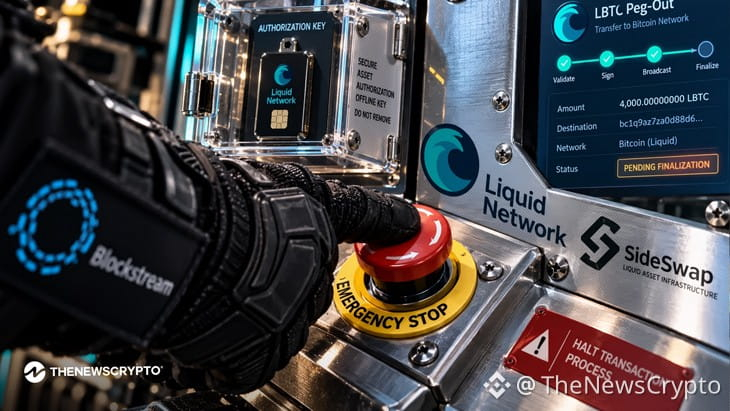
Article
See translation
Liquid Network Hit By $320M Bitcoin Security Incident As 4,000 BTC Leaves Federation Wallet4,000 BTC was withdrawn from Liquid’s Federation wallet via the SideSwap PAK, while Liquid said the authorisation key itself was not compromised.
Liquid disabled bridge nodes and paused the sidechain, while exchanges were notified to halt LBTC deposits and withdrawals as the investigation continues.
Liquid Network confirmed a security incident after purported white-hat hackers withdrew about 4,000 Bitcoin, worth around $320 million, from the Liquid Federation wallet. The withdrawal was executed via the SideSwap PAK (Peg-out Authorisation Key), though Liquid confirmed the key itself was not compromised, nor were any others.
The federation wallet held more than 4,200 BTC before the withdrawal. Bridge nodes were immediately disabled, and the Liquid sidechain was paused, effectively freezing the network until the issue is resolved. Exchanges were notified and moved to pause LBTC deposits and withdrawals.
Moreover, other assets on the network, including USDT, DePix, and RWAs, remain unaffected.
The Negotiation Nobody Expected
After consolidating the funds, the attacker left an on-chain message that changed the entire tone of the incident. It stated that they are white hats and to contact them on-chain.
What followed was an unusual public back-and-forth between Blockstream and the hacker, conducted entirely through OP_RETURN messages and PGP-encrypted notes. This was visible to anyone watching the chain.
At 11:30 AM PDT, the hacker made initial contact. Blockstream responded at 12:31 PM. By 6:49 PM, Blockstream sent a PGP-signed encrypted message. At 7:20 PM, the hacker responded, asking whether it was acceptable to return most of the funds to a specified address.
Then, at 8:27 PM, came the critical message. The hacker asked Blockstream to fix the vulnerability first, warning that the chain remained at risk under the latest commit and that every node needed to be patched before the funds would be safely returned. PGP-encrypted technical details were shared directly with Blockstream.
Blockstream confirmed receipt at 8:30 PM. As of 9:12 PM PDT, approximately 3,998.5 BTC remained unmoved with no further messages from either side. Additionally, the PGP signature matched the key published on Blockstream’s official website, adding credibility to the white-hat claim.
What This Means for the Market?
A $320 million withdrawal from a Bitcoin sidechain, even one that appears to be moving toward resolution. The immediate market impact is uncertainty around Liquid Network’s security architecture and the broader confidence in Bitcoin sidechain infrastructure.
The hacker’s willingness to communicate, share technical vulnerability details, and commit to returning funds is an unusual and relatively positive signal. But until the patch is confirmed, every node is updated, and the funds are returned, the situation remains open.
Crypto Market Highlights
PUMP Is Compressing Hard: At a Level That Could Go Either Way
Liquid Network Hit By $320M Bitcoin Security Incident As 4,000 BTC Leaves Federation Wallet
4,000 BTC was withdrawn from Liquid’s Federation wallet via the SideSwap PAK, while Liquid said the authorisation key itself was not compromised.
Liquid disabled bridge nodes and paused the sidechain, while exchanges were notified to halt LBTC deposits and withdrawals as the investigation continues.
Liquid Network confirmed a security incident after purported white-hat hackers withdrew about 4,000 Bitcoin, worth around $320 million, from the Liquid Federation wallet. The withdrawal was executed via the SideSwap PAK (Peg-out Authorisation Key), though Liquid confirmed the key itself was not compromised, nor were any others.
The federation wallet held more than 4,200 BTC before the withdrawal. Bridge nodes were immediately disabled, and the Liquid sidechain was paused, effectively freezing the network until the issue is resolved. Exchanges were notified and moved to pause LBTC deposits and withdrawals.
Moreover, other assets on the network, including USDT, DePix, and RWAs, remain unaffected.
The Negotiation Nobody Expected
After consolidating the funds, the attacker left an on-chain message that changed the entire tone of the incident. It stated that they are white hats and to contact them on-chain.
What followed was an unusual public back-and-forth between Blockstream and the hacker, conducted entirely through OP_RETURN messages and PGP-encrypted notes. This was visible to anyone watching the chain.
At 11:30 AM PDT, the hacker made initial contact. Blockstream responded at 12:31 PM. By 6:49 PM, Blockstream sent a PGP-signed encrypted message. At 7:20 PM, the hacker responded, asking whether it was acceptable to return most of the funds to a specified address.
Then, at 8:27 PM, came the critical message. The hacker asked Blockstream to fix the vulnerability first, warning that the chain remained at risk under the latest commit and that every node needed to be patched before the funds would be safely returned. PGP-encrypted technical details were shared directly with Blockstream.
Blockstream confirmed receipt at 8:30 PM. As of 9:12 PM PDT, approximately 3,998.5 BTC remained unmoved with no further messages from either side. Additionally, the PGP signature matched the key published on Blockstream’s official website, adding credibility to the white-hat claim.
What This Means for the Market?
A $320 million withdrawal from a Bitcoin sidechain, even one that appears to be moving toward resolution. The immediate market impact is uncertainty around Liquid Network’s security architecture and the broader confidence in Bitcoin sidechain infrastructure.
The hacker’s willingness to communicate, share technical vulnerability details, and commit to returning funds is an unusual and relatively positive signal. But until the patch is confirmed, every node is updated, and the funds are returned, the situation remains open.
Crypto Market Highlights
PUMP Is Compressing Hard: At a Level That Could Go Either Way
Liquid disabled bridge nodes and paused the sidechain, while exchanges were notified to halt LBTC deposits and withdrawals as the investigation continues.
Liquid Network confirmed a security incident after purported white-hat hackers withdrew about 4,000 Bitcoin, worth around $320 million, from the Liquid Federation wallet. The withdrawal was executed via the SideSwap PAK (Peg-out Authorisation Key), though Liquid confirmed the key itself was not compromised, nor were any others.
The federation wallet held more than 4,200 BTC before the withdrawal. Bridge nodes were immediately disabled, and the Liquid sidechain was paused, effectively freezing the network until the issue is resolved. Exchanges were notified and moved to pause LBTC deposits and withdrawals.
Moreover, other assets on the network, including USDT, DePix, and RWAs, remain unaffected.
The Negotiation Nobody Expected
After consolidating the funds, the attacker left an on-chain message that changed the entire tone of the incident. It stated that they are white hats and to contact them on-chain.
What followed was an unusual public back-and-forth between Blockstream and the hacker, conducted entirely through OP_RETURN messages and PGP-encrypted notes. This was visible to anyone watching the chain.
At 11:30 AM PDT, the hacker made initial contact. Blockstream responded at 12:31 PM. By 6:49 PM, Blockstream sent a PGP-signed encrypted message. At 7:20 PM, the hacker responded, asking whether it was acceptable to return most of the funds to a specified address.
Then, at 8:27 PM, came the critical message. The hacker asked Blockstream to fix the vulnerability first, warning that the chain remained at risk under the latest commit and that every node needed to be patched before the funds would be safely returned. PGP-encrypted technical details were shared directly with Blockstream.
Blockstream confirmed receipt at 8:30 PM. As of 9:12 PM PDT, approximately 3,998.5 BTC remained unmoved with no further messages from either side. Additionally, the PGP signature matched the key published on Blockstream’s official website, adding credibility to the white-hat claim.
What This Means for the Market?
A $320 million withdrawal from a Bitcoin sidechain, even one that appears to be moving toward resolution. The immediate market impact is uncertainty around Liquid Network’s security architecture and the broader confidence in Bitcoin sidechain infrastructure.
The hacker’s willingness to communicate, share technical vulnerability details, and commit to returning funds is an unusual and relatively positive signal. But until the patch is confirmed, every node is updated, and the funds are returned, the situation remains open.
Crypto Market Highlights
PUMP Is Compressing Hard: At a Level That Could Go Either Way
241
Article
See translation
Poland Crypto Bill Blocked After President Nawrocki’s Third VetoThe Polish Sejm could not succeed in overriding President Karol Nawrocki’s third veto of the crypto bill, gaining only 241 votes.
Now the framework for the domestic implementation of MiCA in Poland is unclear in light of ongoing political differences.
Poland’s crypto regulation battle hit yet another milestone with the failure of the lawmakers to overcome President Karol Nawrocki’s third veto. The Sejm voted by 241 to 198 to reject the veto, while 3 representatives abstained from voting. Nevertheless, it takes at least 266 votes to override a veto, which means that at least three-fifths of the 442 deputies have to vote for this.
Third Override Effort Fails to Meet Criteria
The bill would have put Poland’s cryptocurrency market under KNF jurisdiction. Additionally, it sought to help Poland’s adoption of the Markets in Crypto-Assets Regulation from the European Union. Nawrocki claims that the strategy pursued by the government imposes too much burden on cryptocurrency businesses. Nawrocki has also expressed concerns that stringent rules may drive companies offshore.
The President claimed that only one out of 16 amendments suggested by his office was taken into account in the latest legislative round. He is in favor of a different bill which aims at fraud and financial crime protection measures. Previous veto efforts yielded similar results. Nawrocki vetoed the Crypto-Asset Market Act initially in December 2025. While the Sejm supported the override in a 243-to-192 vote, they fell short of the required three-fifths majority. Nawrocki vetoed the act once again in February 2026. Lawmakers could not pass the override in April, with 243 voting in favor and 191 against.
Political Pressure Builds Around Zondacrypto
The latest vote also unfolded alongside political accusations involving the former Zondacrypto exchange. Prime Minister Donald Tusk urged lawmakers to support the override before the parliamentary vote. He cited witness testimony from an investigation involving former Justice Minister Zbigniew Ziobro. Tusk presented allegations involving PLN 2 million, reportedly worth about €463,000. The claims also referenced Ziobro’s family and an alleged foundation arrangement.
Authorities continue to investigate those allegations, and the parliamentary claims do not represent court findings. Ziobro has faced separate investigations involving conduct during his government tenure. Nawrocki has rejected claims linking him to Zondacrypto. He previously said he never met the exchange’s executives or representatives.
Highlighted Crypto News:Hyperliquid (HYPE) at a Crossroads: $90 Breakout or $80 Breakdown?
Poland Crypto Bill Blocked After President Nawrocki’s Third Veto
The Polish Sejm could not succeed in overriding President Karol Nawrocki’s third veto of the crypto bill, gaining only 241 votes.
Now the framework for the domestic implementation of MiCA in Poland is unclear in light of ongoing political differences.
Poland’s crypto regulation battle hit yet another milestone with the failure of the lawmakers to overcome President Karol Nawrocki’s third veto. The Sejm voted by 241 to 198 to reject the veto, while 3 representatives abstained from voting. Nevertheless, it takes at least 266 votes to override a veto, which means that at least three-fifths of the 442 deputies have to vote for this.
Third Override Effort Fails to Meet Criteria
The bill would have put Poland’s cryptocurrency market under KNF jurisdiction. Additionally, it sought to help Poland’s adoption of the Markets in Crypto-Assets Regulation from the European Union. Nawrocki claims that the strategy pursued by the government imposes too much burden on cryptocurrency businesses. Nawrocki has also expressed concerns that stringent rules may drive companies offshore.
The President claimed that only one out of 16 amendments suggested by his office was taken into account in the latest legislative round. He is in favor of a different bill which aims at fraud and financial crime protection measures. Previous veto efforts yielded similar results. Nawrocki vetoed the Crypto-Asset Market Act initially in December 2025. While the Sejm supported the override in a 243-to-192 vote, they fell short of the required three-fifths majority. Nawrocki vetoed the act once again in February 2026. Lawmakers could not pass the override in April, with 243 voting in favor and 191 against.
Political Pressure Builds Around Zondacrypto
The latest vote also unfolded alongside political accusations involving the former Zondacrypto exchange. Prime Minister Donald Tusk urged lawmakers to support the override before the parliamentary vote. He cited witness testimony from an investigation involving former Justice Minister Zbigniew Ziobro. Tusk presented allegations involving PLN 2 million, reportedly worth about €463,000. The claims also referenced Ziobro’s family and an alleged foundation arrangement.
Authorities continue to investigate those allegations, and the parliamentary claims do not represent court findings. Ziobro has faced separate investigations involving conduct during his government tenure. Nawrocki has rejected claims linking him to Zondacrypto. He previously said he never met the exchange’s executives or representatives.
Highlighted Crypto News:Hyperliquid (HYPE) at a Crossroads: $90 Breakout or $80 Breakdown?
Now the framework for the domestic implementation of MiCA in Poland is unclear in light of ongoing political differences.
Poland’s crypto regulation battle hit yet another milestone with the failure of the lawmakers to overcome President Karol Nawrocki’s third veto. The Sejm voted by 241 to 198 to reject the veto, while 3 representatives abstained from voting. Nevertheless, it takes at least 266 votes to override a veto, which means that at least three-fifths of the 442 deputies have to vote for this.
Third Override Effort Fails to Meet Criteria
The bill would have put Poland’s cryptocurrency market under KNF jurisdiction. Additionally, it sought to help Poland’s adoption of the Markets in Crypto-Assets Regulation from the European Union. Nawrocki claims that the strategy pursued by the government imposes too much burden on cryptocurrency businesses. Nawrocki has also expressed concerns that stringent rules may drive companies offshore.
The President claimed that only one out of 16 amendments suggested by his office was taken into account in the latest legislative round. He is in favor of a different bill which aims at fraud and financial crime protection measures. Previous veto efforts yielded similar results. Nawrocki vetoed the Crypto-Asset Market Act initially in December 2025. While the Sejm supported the override in a 243-to-192 vote, they fell short of the required three-fifths majority. Nawrocki vetoed the act once again in February 2026. Lawmakers could not pass the override in April, with 243 voting in favor and 191 against.
Political Pressure Builds Around Zondacrypto
The latest vote also unfolded alongside political accusations involving the former Zondacrypto exchange. Prime Minister Donald Tusk urged lawmakers to support the override before the parliamentary vote. He cited witness testimony from an investigation involving former Justice Minister Zbigniew Ziobro. Tusk presented allegations involving PLN 2 million, reportedly worth about €463,000. The claims also referenced Ziobro’s family and an alleged foundation arrangement.
Authorities continue to investigate those allegations, and the parliamentary claims do not represent court findings. Ziobro has faced separate investigations involving conduct during his government tenure. Nawrocki has rejected claims linking him to Zondacrypto. He previously said he never met the exchange’s executives or representatives.
Highlighted Crypto News:Hyperliquid (HYPE) at a Crossroads: $90 Breakout or $80 Breakdown?
271
Article
See translation
PUMP Is Compressing Hard: At a Level That Could Go Either WayPUMP is currently hovering around the $0.0041 mark.
There’s a bullish attempt to counter a macro downtrend.
As the first week of September closes, Pump.fun (PUMP) is trading at $0.004195. Buyers have stepped in and defended the $0.0040 zone twice, printing a double bottom and showing that the sellers can’t push through that floor with any conviction.
The neckline likely sits at $0.00455. A clean breakout above that level with volume behind it confirms the double bottom and opens the door toward the projected target at around $0.0052, a crucial move from current levels. Until that breakout is confirmed, the bulls are in a waiting game.
In the early hours, the asset traded at a bottom of $0.004096. With a shift in momentum, it tested and broke multiple price ranges and gradually drove the PUMP price to a high level of $0.004405. Besides, the 24-hour volume has potentially reached the $147.17 million zone.
Near-Term Price Levels to Watch for PUMP
With the negative outlook, the recent trading pattern might slip even deeper and test the key support at the $0.004139 range. Further correction on the downside could likely trigger the emergence of the death cross in the PUMP market, and the bears would send the price below $0.0040.
On the upside, if the bulls re-entered the market, the asset’s price could instantly rise to its nearest resistance level at $0.004251. Extended bullish pressure might push for the formation of the golden cross. Eventually, it could drive the PUMP price even higher, above the $0.0043 mark.
Where Will PUMP Take its Current Momentum?
The Moving Average Convergence Divergence line is slightly above the signal line, while both lines remain below the zero line; it is an early sign of bullish momentum forming within a broader downward trend. The overall background of the PUMP market is still bearish.
Short-term price moving averages are lower than long-term averages, confirming sustained selling pressure. MACD crossing one point above it forms a fresh bullish crossover, showing that buyers are stepping in and driving price up faster than the immediate recent average. This represents a bullish attempt to counter a macro downtrend.
(Source: TradingView)
Moreover, the daily Relative Strength Index reading positioned at 40.93 hints at weak or neutral-bearish territory. The sellers currently hold a slight edge over buyers, with average price losses outperforming average gains over the recent lookback period.
The asset still has room to fall further before becoming overextended to the downside. A drop toward 40 signals a healthy pullback before the broader trend resumes. If the broader market is already bearish, an RSI staying in the 40–30 range confirms sustained selling pressure without enough buying momentum to reverse direction.
Crypto Market Highlights
Hyperliquid (HYPE) at a Crossroads: $90 Breakout or $80 Breakdown?
PUMP Is Compressing Hard: At a Level That Could Go Either Way
PUMP is currently hovering around the $0.0041 mark.
There’s a bullish attempt to counter a macro downtrend.
As the first week of September closes, Pump.fun (PUMP) is trading at $0.004195. Buyers have stepped in and defended the $0.0040 zone twice, printing a double bottom and showing that the sellers can’t push through that floor with any conviction.
The neckline likely sits at $0.00455. A clean breakout above that level with volume behind it confirms the double bottom and opens the door toward the projected target at around $0.0052, a crucial move from current levels. Until that breakout is confirmed, the bulls are in a waiting game.
In the early hours, the asset traded at a bottom of $0.004096. With a shift in momentum, it tested and broke multiple price ranges and gradually drove the PUMP price to a high level of $0.004405. Besides, the 24-hour volume has potentially reached the $147.17 million zone.
Near-Term Price Levels to Watch for PUMP
With the negative outlook, the recent trading pattern might slip even deeper and test the key support at the $0.004139 range. Further correction on the downside could likely trigger the emergence of the death cross in the PUMP market, and the bears would send the price below $0.0040.
On the upside, if the bulls re-entered the market, the asset’s price could instantly rise to its nearest resistance level at $0.004251. Extended bullish pressure might push for the formation of the golden cross. Eventually, it could drive the PUMP price even higher, above the $0.0043 mark.
Where Will PUMP Take its Current Momentum?
The Moving Average Convergence Divergence line is slightly above the signal line, while both lines remain below the zero line; it is an early sign of bullish momentum forming within a broader downward trend. The overall background of the PUMP market is still bearish.
Short-term price moving averages are lower than long-term averages, confirming sustained selling pressure. MACD crossing one point above it forms a fresh bullish crossover, showing that buyers are stepping in and driving price up faster than the immediate recent average. This represents a bullish attempt to counter a macro downtrend.
(Source: TradingView)
Moreover, the daily Relative Strength Index reading positioned at 40.93 hints at weak or neutral-bearish territory. The sellers currently hold a slight edge over buyers, with average price losses outperforming average gains over the recent lookback period.
The asset still has room to fall further before becoming overextended to the downside. A drop toward 40 signals a healthy pullback before the broader trend resumes. If the broader market is already bearish, an RSI staying in the 40–30 range confirms sustained selling pressure without enough buying momentum to reverse direction.
Crypto Market Highlights
Hyperliquid (HYPE) at a Crossroads: $90 Breakout or $80 Breakdown?
There’s a bullish attempt to counter a macro downtrend.
As the first week of September closes, Pump.fun (PUMP) is trading at $0.004195. Buyers have stepped in and defended the $0.0040 zone twice, printing a double bottom and showing that the sellers can’t push through that floor with any conviction.
The neckline likely sits at $0.00455. A clean breakout above that level with volume behind it confirms the double bottom and opens the door toward the projected target at around $0.0052, a crucial move from current levels. Until that breakout is confirmed, the bulls are in a waiting game.
In the early hours, the asset traded at a bottom of $0.004096. With a shift in momentum, it tested and broke multiple price ranges and gradually drove the PUMP price to a high level of $0.004405. Besides, the 24-hour volume has potentially reached the $147.17 million zone.
Near-Term Price Levels to Watch for PUMP
With the negative outlook, the recent trading pattern might slip even deeper and test the key support at the $0.004139 range. Further correction on the downside could likely trigger the emergence of the death cross in the PUMP market, and the bears would send the price below $0.0040.
On the upside, if the bulls re-entered the market, the asset’s price could instantly rise to its nearest resistance level at $0.004251. Extended bullish pressure might push for the formation of the golden cross. Eventually, it could drive the PUMP price even higher, above the $0.0043 mark.
Where Will PUMP Take its Current Momentum?
The Moving Average Convergence Divergence line is slightly above the signal line, while both lines remain below the zero line; it is an early sign of bullish momentum forming within a broader downward trend. The overall background of the PUMP market is still bearish.
Short-term price moving averages are lower than long-term averages, confirming sustained selling pressure. MACD crossing one point above it forms a fresh bullish crossover, showing that buyers are stepping in and driving price up faster than the immediate recent average. This represents a bullish attempt to counter a macro downtrend.
(Source: TradingView)
Moreover, the daily Relative Strength Index reading positioned at 40.93 hints at weak or neutral-bearish territory. The sellers currently hold a slight edge over buyers, with average price losses outperforming average gains over the recent lookback period.
The asset still has room to fall further before becoming overextended to the downside. A drop toward 40 signals a healthy pullback before the broader trend resumes. If the broader market is already bearish, an RSI staying in the 40–30 range confirms sustained selling pressure without enough buying momentum to reverse direction.
Crypto Market Highlights
Hyperliquid (HYPE) at a Crossroads: $90 Breakout or $80 Breakdown?
3
888
Article
See translation
Hyperliquid (HYPE) At a Crossroads: $90 Breakout or $80 Breakdown?Hyperliquid is currently trading at around $84.
HYPE’s baseline trend remains overall bullish.
The global crypto market cap is settled at $2.77 trillion, after a 1.2% loss. In line with this, Hyperliquid (HYPE) has posted a modest 1.6% drop in value over the last 24 hours. Moreover, the session’s range falls between $83.64 and $87.31. The asset could have tested key price ranges to confirm the current momentum.
If the bears stay for a longer period, the price could see more downside. At the time of writing, Hyperliquid traded at around the $84.61 mark, with its market cap at $18.75 billion. Besides, the daily trading volume has reached the $1.164 billion zone, as per CoinGecko data.
Zooming in on the recent price chart, there is a bearish trait within the pattern. The Hyperliquid momentum could drop to the support at $83.68 if the bears stay stronger. An extended, powerful downside correction might trigger the death cross to take place and send the price even lower, around $82.
On the flip side, assuming Hyperliquid turns for a bullish reversal, the price could jump and find the nearest resistance within the $85 range. With the potential upside pressure strengthening, the golden cross could likely unfold and push the asset’s price upward, above the $86.12 level.
Hyperliquid’s Technical Chart Points to a Weakening Trend
The technical analysis reports that the Moving Average Convergence Divergence line is below the signal line. Both lines remain above the zero line, signalling a bullish uptrend that is experiencing short-term weakening. The baseline trend of Hyperliquid remains overall bullish.
It reflects an established uptrend in the broader market structure, with the short-term momentum slowing down. When the MACD line crosses below its signal line, it creates a bearish crossover. Also, the price might be forming a flag pattern, consolidating sideways before resuming the broader upward trend.
(Source: TradingView)
Hyperliquid’s daily Relative Strength Index of 52.79 is in the neutral territory, with a subtle bias toward bullish momentum. It is in equilibrium, with neither buyers nor sellers exercising dominant control over the price. This is high enough to confirm strong momentum; it is either consolidating sideways before its next directional move.
Price is moving within a horizontal range while the momentum decides on a direction. Following an active rally or sell-off, price is taking a breather to cool off before continuing the primary trend. If RSI recently crossed upward from below 50, it suggests momentum is slowly shifting from sellers to buyers.
Crypto Market Highlights
Zcash (ZEC) Jumps 19%: How Far Can This Move Actually Go?
Hyperliquid (HYPE) At a Crossroads: $90 Breakout or $80 Breakdown?
Hyperliquid is currently trading at around $84.
HYPE’s baseline trend remains overall bullish.
The global crypto market cap is settled at $2.77 trillion, after a 1.2% loss. In line with this, Hyperliquid (HYPE) has posted a modest 1.6% drop in value over the last 24 hours. Moreover, the session’s range falls between $83.64 and $87.31. The asset could have tested key price ranges to confirm the current momentum.
If the bears stay for a longer period, the price could see more downside. At the time of writing, Hyperliquid traded at around the $84.61 mark, with its market cap at $18.75 billion. Besides, the daily trading volume has reached the $1.164 billion zone, as per CoinGecko data.
Zooming in on the recent price chart, there is a bearish trait within the pattern. The Hyperliquid momentum could drop to the support at $83.68 if the bears stay stronger. An extended, powerful downside correction might trigger the death cross to take place and send the price even lower, around $82.
On the flip side, assuming Hyperliquid turns for a bullish reversal, the price could jump and find the nearest resistance within the $85 range. With the potential upside pressure strengthening, the golden cross could likely unfold and push the asset’s price upward, above the $86.12 level.
Hyperliquid’s Technical Chart Points to a Weakening Trend
The technical analysis reports that the Moving Average Convergence Divergence line is below the signal line. Both lines remain above the zero line, signalling a bullish uptrend that is experiencing short-term weakening. The baseline trend of Hyperliquid remains overall bullish.
It reflects an established uptrend in the broader market structure, with the short-term momentum slowing down. When the MACD line crosses below its signal line, it creates a bearish crossover. Also, the price might be forming a flag pattern, consolidating sideways before resuming the broader upward trend.
(Source: TradingView)
Hyperliquid’s daily Relative Strength Index of 52.79 is in the neutral territory, with a subtle bias toward bullish momentum. It is in equilibrium, with neither buyers nor sellers exercising dominant control over the price. This is high enough to confirm strong momentum; it is either consolidating sideways before its next directional move.
Price is moving within a horizontal range while the momentum decides on a direction. Following an active rally or sell-off, price is taking a breather to cool off before continuing the primary trend. If RSI recently crossed upward from below 50, it suggests momentum is slowly shifting from sellers to buyers.
Crypto Market Highlights
Zcash (ZEC) Jumps 19%: How Far Can This Move Actually Go?
HYPE’s baseline trend remains overall bullish.
The global crypto market cap is settled at $2.77 trillion, after a 1.2% loss. In line with this, Hyperliquid (HYPE) has posted a modest 1.6% drop in value over the last 24 hours. Moreover, the session’s range falls between $83.64 and $87.31. The asset could have tested key price ranges to confirm the current momentum.
If the bears stay for a longer period, the price could see more downside. At the time of writing, Hyperliquid traded at around the $84.61 mark, with its market cap at $18.75 billion. Besides, the daily trading volume has reached the $1.164 billion zone, as per CoinGecko data.
Zooming in on the recent price chart, there is a bearish trait within the pattern. The Hyperliquid momentum could drop to the support at $83.68 if the bears stay stronger. An extended, powerful downside correction might trigger the death cross to take place and send the price even lower, around $82.
On the flip side, assuming Hyperliquid turns for a bullish reversal, the price could jump and find the nearest resistance within the $85 range. With the potential upside pressure strengthening, the golden cross could likely unfold and push the asset’s price upward, above the $86.12 level.
Hyperliquid’s Technical Chart Points to a Weakening Trend
The technical analysis reports that the Moving Average Convergence Divergence line is below the signal line. Both lines remain above the zero line, signalling a bullish uptrend that is experiencing short-term weakening. The baseline trend of Hyperliquid remains overall bullish.
It reflects an established uptrend in the broader market structure, with the short-term momentum slowing down. When the MACD line crosses below its signal line, it creates a bearish crossover. Also, the price might be forming a flag pattern, consolidating sideways before resuming the broader upward trend.
(Source: TradingView)
Hyperliquid’s daily Relative Strength Index of 52.79 is in the neutral territory, with a subtle bias toward bullish momentum. It is in equilibrium, with neither buyers nor sellers exercising dominant control over the price. This is high enough to confirm strong momentum; it is either consolidating sideways before its next directional move.
Price is moving within a horizontal range while the momentum decides on a direction. Following an active rally or sell-off, price is taking a breather to cool off before continuing the primary trend. If RSI recently crossed upward from below 50, it suggests momentum is slowly shifting from sellers to buyers.
Crypto Market Highlights
Zcash (ZEC) Jumps 19%: How Far Can This Move Actually Go?
949
Article
See translation
Dash Price Breaks Above $70: Can DASH Sustain the Breakout?DASH climbed above $70 after a sharp 4-hour breakout, with the price reaching around $73.80
The RSI moved above 87, showing strong buying momentum but also placing DASH firmly in overbought territory.
Today, one of the leading privacy-coin, Dash (DASH) has made a sharp move higher, with the token gaining more than 47% in the past 24 hours as buying activity picked up across the market.
According to CoinMarketCap data, DASH is currently trading near $70, after moving between an intraday low of $49.46 and a high of $72.95 during the latest 24-hour session. The altcoin’s market cap has climbed to about $913.8 million, while daily trading volume reached $561 million, up more than 193%.
The jump has pushed DASH to levels not seen since January and placed the token among the stronger performers in the current privacy-coin rally. Dash also recently held DashCon 2026 in Amsterdam, while the wider privacy sector has attracted renewed attention following strong gains in other privacy-focused assets.
DASH Technical Picture Turns Strong but Overheated
The technical setup shows strong short-term momentum, but it also points to a market that has moved quickly. On the 4-hour chart, the DASH price climbed from the low-$40s to above $70 in a series of strong buying moves. The latest candle on the Binance DASH/USDT chart shows the token trading around $69.37, after reaching an intraday high of $73.80. DASH is now holding well above the $64 level, which has become an important area after the latest breakout.
Zooming in, the chart shows a clear bullish structure. The 9-day moving average is near $56.39, while the 21-day average sits around $48.90. Both are below the current price and are rising, showing that buyers have taken control of the short-term trend.
(Source: TradingView)
DASH first pushed through the $45 area before accelerating above $52 and then breaking through $60. Each move higher came with large green candles, showing strong buying pressure rather than a slow recovery.
Still, the momentum has now become stretched. The 14-day RSI on the 4-hour chart is around 87.55, far above the 70 level normally associated with overbought conditions. This does not automatically mean the rally must reverse. But it shows that the price has moved very quickly and could face profit-taking.
Meanwhile, the MACD remains positive, while the five-day moving average is around $69.67, suggesting that short-term momentum is still favoring buyers.
If the DASH coin keeps the trend, the immediate resistance stands around $73.80, the latest chart high and a multiple-rejection zone. A clean break above this level would keep the current breakout structure intact. If the breakout fails, $64 is the first important support, followed by the $56–$57 moving-average area.
For now, the 4-hour trend remains firmly bullish. But the extreme RSI makes a period of consolidation or a pullback possible before another attempt higher.
Highlighted Crypto News:
Anthropic IPO Delayed to Mid-October as Company Targets $2 Trillion Valuation
Dash Price Breaks Above $70: Can DASH Sustain the Breakout?
DASH climbed above $70 after a sharp 4-hour breakout, with the price reaching around $73.80
The RSI moved above 87, showing strong buying momentum but also placing DASH firmly in overbought territory.
Today, one of the leading privacy-coin, Dash (DASH) has made a sharp move higher, with the token gaining more than 47% in the past 24 hours as buying activity picked up across the market.
According to CoinMarketCap data, DASH is currently trading near $70, after moving between an intraday low of $49.46 and a high of $72.95 during the latest 24-hour session. The altcoin’s market cap has climbed to about $913.8 million, while daily trading volume reached $561 million, up more than 193%.
The jump has pushed DASH to levels not seen since January and placed the token among the stronger performers in the current privacy-coin rally. Dash also recently held DashCon 2026 in Amsterdam, while the wider privacy sector has attracted renewed attention following strong gains in other privacy-focused assets.
DASH Technical Picture Turns Strong but Overheated
The technical setup shows strong short-term momentum, but it also points to a market that has moved quickly. On the 4-hour chart, the DASH price climbed from the low-$40s to above $70 in a series of strong buying moves. The latest candle on the Binance DASH/USDT chart shows the token trading around $69.37, after reaching an intraday high of $73.80. DASH is now holding well above the $64 level, which has become an important area after the latest breakout.
Zooming in, the chart shows a clear bullish structure. The 9-day moving average is near $56.39, while the 21-day average sits around $48.90. Both are below the current price and are rising, showing that buyers have taken control of the short-term trend.
(Source: TradingView)
DASH first pushed through the $45 area before accelerating above $52 and then breaking through $60. Each move higher came with large green candles, showing strong buying pressure rather than a slow recovery.
Still, the momentum has now become stretched. The 14-day RSI on the 4-hour chart is around 87.55, far above the 70 level normally associated with overbought conditions. This does not automatically mean the rally must reverse. But it shows that the price has moved very quickly and could face profit-taking.
Meanwhile, the MACD remains positive, while the five-day moving average is around $69.67, suggesting that short-term momentum is still favoring buyers.
If the DASH coin keeps the trend, the immediate resistance stands around $73.80, the latest chart high and a multiple-rejection zone. A clean break above this level would keep the current breakout structure intact. If the breakout fails, $64 is the first important support, followed by the $56–$57 moving-average area.
For now, the 4-hour trend remains firmly bullish. But the extreme RSI makes a period of consolidation or a pullback possible before another attempt higher.
Highlighted Crypto News:
Anthropic IPO Delayed to Mid-October as Company Targets $2 Trillion Valuation
The RSI moved above 87, showing strong buying momentum but also placing DASH firmly in overbought territory.
Today, one of the leading privacy-coin, Dash (DASH) has made a sharp move higher, with the token gaining more than 47% in the past 24 hours as buying activity picked up across the market.
According to CoinMarketCap data, DASH is currently trading near $70, after moving between an intraday low of $49.46 and a high of $72.95 during the latest 24-hour session. The altcoin’s market cap has climbed to about $913.8 million, while daily trading volume reached $561 million, up more than 193%.
The jump has pushed DASH to levels not seen since January and placed the token among the stronger performers in the current privacy-coin rally. Dash also recently held DashCon 2026 in Amsterdam, while the wider privacy sector has attracted renewed attention following strong gains in other privacy-focused assets.
DASH Technical Picture Turns Strong but Overheated
The technical setup shows strong short-term momentum, but it also points to a market that has moved quickly. On the 4-hour chart, the DASH price climbed from the low-$40s to above $70 in a series of strong buying moves. The latest candle on the Binance DASH/USDT chart shows the token trading around $69.37, after reaching an intraday high of $73.80. DASH is now holding well above the $64 level, which has become an important area after the latest breakout.
Zooming in, the chart shows a clear bullish structure. The 9-day moving average is near $56.39, while the 21-day average sits around $48.90. Both are below the current price and are rising, showing that buyers have taken control of the short-term trend.
(Source: TradingView)
DASH first pushed through the $45 area before accelerating above $52 and then breaking through $60. Each move higher came with large green candles, showing strong buying pressure rather than a slow recovery.
Still, the momentum has now become stretched. The 14-day RSI on the 4-hour chart is around 87.55, far above the 70 level normally associated with overbought conditions. This does not automatically mean the rally must reverse. But it shows that the price has moved very quickly and could face profit-taking.
Meanwhile, the MACD remains positive, while the five-day moving average is around $69.67, suggesting that short-term momentum is still favoring buyers.
If the DASH coin keeps the trend, the immediate resistance stands around $73.80, the latest chart high and a multiple-rejection zone. A clean break above this level would keep the current breakout structure intact. If the breakout fails, $64 is the first important support, followed by the $56–$57 moving-average area.
For now, the 4-hour trend remains firmly bullish. But the extreme RSI makes a period of consolidation or a pullback possible before another attempt higher.
Highlighted Crypto News:
Anthropic IPO Delayed to Mid-October as Company Targets $2 Trillion Valuation
612
Article
See translation
Anthropic IPO Delayed to Mid-October As Company Targets $2 Trillion ValuationAn IPO marketing campaign could kick off in mid-October with a successful conclusion ahead of November’s midterm U.S. elections.
The company plans to issue its IPO prospectus in late September as it closes on its $15 billion financing facility.
Anthropic is pushing its IPO timetable into mid-October, sources said. The artificial intelligence company will start pitching its IPO by mid-October at the earliest. As reported by Reuters, Anthropic also plans to list its stock several days before the U.S. midterm elections in November.
The revised timetable comes in contrast to initial plans. Two sources reported that Anthropic was expected to file its IPO prospectus as soon as next week. However, the artificial intelligence company now expects to file its prospectus publicly later in September. The sources pointed out that Anthropic can still revise the timetable. Companies frequently revise their IPO timetables when navigating various market considerations.
Prospectus Release Timing to Define the Offering
The delay might mean that one of the most eagerly awaited technology offerings of the year will be delayed. The rumored valuation for Anthropic is close to $2 trillion. This valuation will make the company one of the largest IPOs ever tried. It will also provide public market investors yet another chance to participate in the artificial intelligence sector.
Anthropic is currently working on defining the financing structure of the offering. The company needs to close a $15 billion revolving credit facility. After that, the analysts working for the participating banks could have a meeting with Anthropic. This was reported earlier by Bloomberg News. Usually, there is a gap of a few weeks between the analyst meeting and the filing of the prospectus. Nevertheless, Anthropic could act more quickly because analysts know about the company, one source notes.
AI IPO Race Draws Investor Interest
The anticipated IPO from Anthropic takes place amid investor interest in the AI IPO race as a whole. OpenAI may consider taking itself public as well, joining other prominent firms in the industry. In the meantime, SpaceX went public with an initial public offering in June, setting a new record with a valuation of $1.77 trillion.
A number of banks are helping with the IPO preparation for Anthropic. Among the banks assisting with the process are Morgan Stanley, Goldman Sachs, JPMorgan, and Citi, sources close to the situation say. Anthropic did not have anything to say about the timeline in question. Similarly, the banks declined to comment. Investors will need to wait until the end of September, when the company will release the prospectus.
Highlighted Crypto News:
Pencil Finance Completes $1M Onchain Student Lending Cycle Across Southeast Asia
Anthropic IPO Delayed to Mid-October As Company Targets $2 Trillion Valuation
An IPO marketing campaign could kick off in mid-October with a successful conclusion ahead of November’s midterm U.S. elections.
The company plans to issue its IPO prospectus in late September as it closes on its $15 billion financing facility.
Anthropic is pushing its IPO timetable into mid-October, sources said. The artificial intelligence company will start pitching its IPO by mid-October at the earliest. As reported by Reuters, Anthropic also plans to list its stock several days before the U.S. midterm elections in November.
The revised timetable comes in contrast to initial plans. Two sources reported that Anthropic was expected to file its IPO prospectus as soon as next week. However, the artificial intelligence company now expects to file its prospectus publicly later in September. The sources pointed out that Anthropic can still revise the timetable. Companies frequently revise their IPO timetables when navigating various market considerations.
Prospectus Release Timing to Define the Offering
The delay might mean that one of the most eagerly awaited technology offerings of the year will be delayed. The rumored valuation for Anthropic is close to $2 trillion. This valuation will make the company one of the largest IPOs ever tried. It will also provide public market investors yet another chance to participate in the artificial intelligence sector.
Anthropic is currently working on defining the financing structure of the offering. The company needs to close a $15 billion revolving credit facility. After that, the analysts working for the participating banks could have a meeting with Anthropic. This was reported earlier by Bloomberg News. Usually, there is a gap of a few weeks between the analyst meeting and the filing of the prospectus. Nevertheless, Anthropic could act more quickly because analysts know about the company, one source notes.
AI IPO Race Draws Investor Interest
The anticipated IPO from Anthropic takes place amid investor interest in the AI IPO race as a whole. OpenAI may consider taking itself public as well, joining other prominent firms in the industry. In the meantime, SpaceX went public with an initial public offering in June, setting a new record with a valuation of $1.77 trillion.
A number of banks are helping with the IPO preparation for Anthropic. Among the banks assisting with the process are Morgan Stanley, Goldman Sachs, JPMorgan, and Citi, sources close to the situation say. Anthropic did not have anything to say about the timeline in question. Similarly, the banks declined to comment. Investors will need to wait until the end of September, when the company will release the prospectus.
Highlighted Crypto News:
Pencil Finance Completes $1M Onchain Student Lending Cycle Across Southeast Asia
The company plans to issue its IPO prospectus in late September as it closes on its $15 billion financing facility.
Anthropic is pushing its IPO timetable into mid-October, sources said. The artificial intelligence company will start pitching its IPO by mid-October at the earliest. As reported by Reuters, Anthropic also plans to list its stock several days before the U.S. midterm elections in November.
The revised timetable comes in contrast to initial plans. Two sources reported that Anthropic was expected to file its IPO prospectus as soon as next week. However, the artificial intelligence company now expects to file its prospectus publicly later in September. The sources pointed out that Anthropic can still revise the timetable. Companies frequently revise their IPO timetables when navigating various market considerations.
Prospectus Release Timing to Define the Offering
The delay might mean that one of the most eagerly awaited technology offerings of the year will be delayed. The rumored valuation for Anthropic is close to $2 trillion. This valuation will make the company one of the largest IPOs ever tried. It will also provide public market investors yet another chance to participate in the artificial intelligence sector.
Anthropic is currently working on defining the financing structure of the offering. The company needs to close a $15 billion revolving credit facility. After that, the analysts working for the participating banks could have a meeting with Anthropic. This was reported earlier by Bloomberg News. Usually, there is a gap of a few weeks between the analyst meeting and the filing of the prospectus. Nevertheless, Anthropic could act more quickly because analysts know about the company, one source notes.
AI IPO Race Draws Investor Interest
The anticipated IPO from Anthropic takes place amid investor interest in the AI IPO race as a whole. OpenAI may consider taking itself public as well, joining other prominent firms in the industry. In the meantime, SpaceX went public with an initial public offering in June, setting a new record with a valuation of $1.77 trillion.
A number of banks are helping with the IPO preparation for Anthropic. Among the banks assisting with the process are Morgan Stanley, Goldman Sachs, JPMorgan, and Citi, sources close to the situation say. Anthropic did not have anything to say about the timeline in question. Similarly, the banks declined to comment. Investors will need to wait until the end of September, when the company will release the prospectus.
Highlighted Crypto News:
Pencil Finance Completes $1M Onchain Student Lending Cycle Across Southeast Asia
513

Article
See translation
CoinRabbit Wins “Best Crypto Lending Platform 2026” Award From International Business MagazineToronto, Canada, September 4th, 2026, Chainwire
CoinRabbit has been named Best Crypto Lending Platform 2026 by International Business Magazine, highlighting a lending product that has issued more than $1.45 billion in loans since 2020.
About the International Business Magazine Award
The International Business Magazine Awards recognize companies and executives making a significant impact across global industries. The selection process combines public nominations with jury review, with nominees assessed on their work, progress, and contribution to their respective industries.
For CoinRabbit, the award comes at an important stage in the company’s development. It is moving beyond borrowing against crypto and building a broader ecosystem for managing digital-asset capital.
Why CoinRabbit Was Named the Best Crypto Lending Platform
The Best Crypto Lending Platform 2026 award recognizes the work CoinRabbit has put into its ecosystem. The platform provides borrowers with fast access to liquidity and confidence that their funds remain secure. CoinRabbit maintains a clear no-rehypothecation policy, giving clients greater certainty that their collateral is not being reused or lent out elsewhere.
That focus on a predictable borrowing experience has remained central as CoinRabbit has expanded the product. There is no traditional credit check because crypto collateral does the underwriting, and the lending process takes about 10 minutes whether a client is borrowing a few hundred dollars or managing a six-figure position.
The award jury also highlighted CoinRabbit’s Private Program as a high-touch approach for clients with significant balances. Designed for portfolios of $500,000 and above, it offers a more personalized way to manage assets around each client’s financial goals, liquidity needs, and timing. As part of CoinRabbit’s broader digital-asset ecosystem, the program gives clients a more private banking-style experience.
Capital Preservation at the Core
CoinRabbit is expanding into capital management, but lending remains at the core of the business. By giving clients access to liquidity without a need to sell their crypto, it helps preserve capital and keep assets invested for the long term.
Walter Barrett, Chief Strategy & Growth Officer at CoinRabbit, commented:
“We’ve spent years building and refining the product, and it’s rewarding to see that work recognized. At the same time, CoinRabbit is becoming more than just a lending platform. With the Private Program, we’re bringing a private credit approach to managing crypto. Clients can work directly with a success manager to find the right strategy for their needs, with a more tailored way to build crypto capital. We also continue to improve the core lending product, keeping it simple. For us, the goal is to make both sides of the business stronger as we grow.”
As CoinRabbit evolves, capital preservation remains a central idea behind the company’s products and services.
About CoinRabbit
CoinRabbit is a crypto asset management platform built for long-term capital preservation. It provides flexible liquidity management across multiple environments. Instant payments and lending, yield and trading products, and also the Private Program are available from a single platform. Since 2020, CoinRabbit has maintained a 100% capital reserve model, ensuring that client assets are fully reserved and never rehypothecated.
Contact
CoinRabbitmarketing@coinrabbit.io
CoinRabbit Wins “Best Crypto Lending Platform 2026” Award From International Business Magazine
Toronto, Canada, September 4th, 2026, Chainwire
CoinRabbit has been named Best Crypto Lending Platform 2026 by International Business Magazine, highlighting a lending product that has issued more than $1.45 billion in loans since 2020.
About the International Business Magazine Award
The International Business Magazine Awards recognize companies and executives making a significant impact across global industries. The selection process combines public nominations with jury review, with nominees assessed on their work, progress, and contribution to their respective industries.
For CoinRabbit, the award comes at an important stage in the company’s development. It is moving beyond borrowing against crypto and building a broader ecosystem for managing digital-asset capital.
Why CoinRabbit Was Named the Best Crypto Lending Platform
The Best Crypto Lending Platform 2026 award recognizes the work CoinRabbit has put into its ecosystem. The platform provides borrowers with fast access to liquidity and confidence that their funds remain secure. CoinRabbit maintains a clear no-rehypothecation policy, giving clients greater certainty that their collateral is not being reused or lent out elsewhere.
That focus on a predictable borrowing experience has remained central as CoinRabbit has expanded the product. There is no traditional credit check because crypto collateral does the underwriting, and the lending process takes about 10 minutes whether a client is borrowing a few hundred dollars or managing a six-figure position.
The award jury also highlighted CoinRabbit’s Private Program as a high-touch approach for clients with significant balances. Designed for portfolios of $500,000 and above, it offers a more personalized way to manage assets around each client’s financial goals, liquidity needs, and timing. As part of CoinRabbit’s broader digital-asset ecosystem, the program gives clients a more private banking-style experience.
Capital Preservation at the Core
CoinRabbit is expanding into capital management, but lending remains at the core of the business. By giving clients access to liquidity without a need to sell their crypto, it helps preserve capital and keep assets invested for the long term.
Walter Barrett, Chief Strategy & Growth Officer at CoinRabbit, commented:
“We’ve spent years building and refining the product, and it’s rewarding to see that work recognized. At the same time, CoinRabbit is becoming more than just a lending platform. With the Private Program, we’re bringing a private credit approach to managing crypto. Clients can work directly with a success manager to find the right strategy for their needs, with a more tailored way to build crypto capital. We also continue to improve the core lending product, keeping it simple. For us, the goal is to make both sides of the business stronger as we grow.”
As CoinRabbit evolves, capital preservation remains a central idea behind the company’s products and services.
About CoinRabbit
CoinRabbit is a crypto asset management platform built for long-term capital preservation. It provides flexible liquidity management across multiple environments. Instant payments and lending, yield and trading products, and also the Private Program are available from a single platform. Since 2020, CoinRabbit has maintained a 100% capital reserve model, ensuring that client assets are fully reserved and never rehypothecated.
Contact
CoinRabbitmarketing@coinrabbit.io
CoinRabbit has been named Best Crypto Lending Platform 2026 by International Business Magazine, highlighting a lending product that has issued more than $1.45 billion in loans since 2020.
About the International Business Magazine Award
The International Business Magazine Awards recognize companies and executives making a significant impact across global industries. The selection process combines public nominations with jury review, with nominees assessed on their work, progress, and contribution to their respective industries.
For CoinRabbit, the award comes at an important stage in the company’s development. It is moving beyond borrowing against crypto and building a broader ecosystem for managing digital-asset capital.
Why CoinRabbit Was Named the Best Crypto Lending Platform
The Best Crypto Lending Platform 2026 award recognizes the work CoinRabbit has put into its ecosystem. The platform provides borrowers with fast access to liquidity and confidence that their funds remain secure. CoinRabbit maintains a clear no-rehypothecation policy, giving clients greater certainty that their collateral is not being reused or lent out elsewhere.
That focus on a predictable borrowing experience has remained central as CoinRabbit has expanded the product. There is no traditional credit check because crypto collateral does the underwriting, and the lending process takes about 10 minutes whether a client is borrowing a few hundred dollars or managing a six-figure position.
The award jury also highlighted CoinRabbit’s Private Program as a high-touch approach for clients with significant balances. Designed for portfolios of $500,000 and above, it offers a more personalized way to manage assets around each client’s financial goals, liquidity needs, and timing. As part of CoinRabbit’s broader digital-asset ecosystem, the program gives clients a more private banking-style experience.
Capital Preservation at the Core
CoinRabbit is expanding into capital management, but lending remains at the core of the business. By giving clients access to liquidity without a need to sell their crypto, it helps preserve capital and keep assets invested for the long term.
Walter Barrett, Chief Strategy & Growth Officer at CoinRabbit, commented:
“We’ve spent years building and refining the product, and it’s rewarding to see that work recognized. At the same time, CoinRabbit is becoming more than just a lending platform. With the Private Program, we’re bringing a private credit approach to managing crypto. Clients can work directly with a success manager to find the right strategy for their needs, with a more tailored way to build crypto capital. We also continue to improve the core lending product, keeping it simple. For us, the goal is to make both sides of the business stronger as we grow.”
As CoinRabbit evolves, capital preservation remains a central idea behind the company’s products and services.
About CoinRabbit
CoinRabbit is a crypto asset management platform built for long-term capital preservation. It provides flexible liquidity management across multiple environments. Instant payments and lending, yield and trading products, and also the Private Program are available from a single platform. Since 2020, CoinRabbit has maintained a 100% capital reserve model, ensuring that client assets are fully reserved and never rehypothecated.
Contact
CoinRabbitmarketing@coinrabbit.io
191
Article
See translation
Liquid Mercury Announces Initial Closing of ACQUA1 OfferingChicago, United States, September 4th, 2026, Chainwire
Liquid Mercury today announced that ACQUA1, LLC completed the initial closing of its MERC exchange offering on September 1, 2026.
ACQUA1 is a Liquid Mercury subsidiary that operates Liquid Mercury’s Lab Company program, licensing Liquid Mercury technology to companies primarily tokenizing real-world assets and receiving fees plus a minority equity stake in return. Liquid Mercury is the majority holder and Manager.
“Over the past 18 months, dozens of companies have approached Liquid Mercury seeking to tokenize their assets,” said Tony Saliba, CEO and founder of Liquid Mercury. “Many assumed they would need to raise capital and build this infrastructure from scratch. Licensing Mercury RWA lets them launch on systems that were already live and proven, at a fraction of the time and cost. ACQUA1 token holders now own a slice of the business that earns equity, plus fees from the companies in the Lab Company program.”
Verified accredited investors subscribed by exchanging MERC for non-voting Class B units of ACQUA1 at the initial conversion rate of 10 MERC per unit. Under its operating agreement, ACQUA1 must burn 100% of the MERC it receives at each closing within five business days and may not transfer, trade, lend, stake, pledge, or otherwise deploy it.
On September 2, all 563,230,000 MERC received at the initial closing were burned via a transfer to the dead address, as the offering documents require.
Initial Closing Highlights
Initial closing: September 1, 2026
MERC burned: 563,230,000
Transferred to the dead address September 2, 2026
Units issued: 56,323,000
Non-voting Class B units of ACQUA1, LLC under Rule 506(c) of Regulation D
10 MERC per unit
Evidenced on-chain by ACQUA1-C tokens
ACQUA1-C tokens convert one-for-one into ACQUA1 tokens upon issuance
Remaining closings: On or about October 30 and December 31, 2026
ACQUA1 may skip or terminate at its discretion
The conversion rate at subsequent closings may differ
Verification Links
Burn transaction
ACQUA1-C contract
Verified accredited investors can request full terms at acqua1.liquidmercury.com/contact.
About Liquid Mercury
Liquid Mercury powers professional crypto trading and digital asset marketplaces. The company delivers institutional-grade infrastructure, access to deep liquidity, and best-in-class trading tools and workflow automation across its Pro, OTC, and RWA platforms. Through Mercury RWA, Liquid Mercury is extending that infrastructure into tokenized real-world assets, with $MERC serving as the access and platform layer token. For more information, visit www.liquidmercury.com.
Investor Notice
This press release does not constitute an offer to sell or the solicitation of an offer to buy any securities. Class B units of ACQUA1, LLC and the ACQUA1 tokens representing them are offered and sold in reliance on the exemption from registration provided by Rule 506(c) of Regulation D under the Securities Act of 1933, solely to verified accredited investors as defined in Rule 501(a) of Regulation D, and solely pursuant to ACQUA1’s confidential private placement memorandum, as supplemented, and definitive subscription documents, which contain important information, including risk factors. ACQUA1 tokens are restricted securities, are subject to transfer restrictions under ACQUA1’s operating agreement and may remain illiquid indefinitely; investors should not assume that Rule 144 will be available. Statements regarding future revenues, valuations, portfolio performance, and subsequent closings are forward-looking and subject to risks and uncertainties; actual results may differ materially. The MERC contract has no burn function; tokens are removed from circulation by transferring to the dead address. Supply outstanding excluding the dead address is 5,436,770,000 MERC, as of the date of publication.
Contacts
DirectorKent EganLiquid Mercuryke@liquidmercury.comDirectorRyan HansenLiquid Mercuryhansenr@liquidmercury.com
Liquid Mercury Announces Initial Closing of ACQUA1 Offering
Chicago, United States, September 4th, 2026, Chainwire
Liquid Mercury today announced that ACQUA1, LLC completed the initial closing of its MERC exchange offering on September 1, 2026.
ACQUA1 is a Liquid Mercury subsidiary that operates Liquid Mercury’s Lab Company program, licensing Liquid Mercury technology to companies primarily tokenizing real-world assets and receiving fees plus a minority equity stake in return. Liquid Mercury is the majority holder and Manager.
“Over the past 18 months, dozens of companies have approached Liquid Mercury seeking to tokenize their assets,” said Tony Saliba, CEO and founder of Liquid Mercury. “Many assumed they would need to raise capital and build this infrastructure from scratch. Licensing Mercury RWA lets them launch on systems that were already live and proven, at a fraction of the time and cost. ACQUA1 token holders now own a slice of the business that earns equity, plus fees from the companies in the Lab Company program.”
Verified accredited investors subscribed by exchanging MERC for non-voting Class B units of ACQUA1 at the initial conversion rate of 10 MERC per unit. Under its operating agreement, ACQUA1 must burn 100% of the MERC it receives at each closing within five business days and may not transfer, trade, lend, stake, pledge, or otherwise deploy it.
On September 2, all 563,230,000 MERC received at the initial closing were burned via a transfer to the dead address, as the offering documents require.
Initial Closing Highlights
Initial closing: September 1, 2026
MERC burned: 563,230,000
Transferred to the dead address September 2, 2026
Units issued: 56,323,000
Non-voting Class B units of ACQUA1, LLC under Rule 506(c) of Regulation D
10 MERC per unit
Evidenced on-chain by ACQUA1-C tokens
ACQUA1-C tokens convert one-for-one into ACQUA1 tokens upon issuance
Remaining closings: On or about October 30 and December 31, 2026
ACQUA1 may skip or terminate at its discretion
The conversion rate at subsequent closings may differ
Verification Links
Burn transaction
ACQUA1-C contract
Verified accredited investors can request full terms at acqua1.liquidmercury.com/contact.
About Liquid Mercury
Liquid Mercury powers professional crypto trading and digital asset marketplaces. The company delivers institutional-grade infrastructure, access to deep liquidity, and best-in-class trading tools and workflow automation across its Pro, OTC, and RWA platforms. Through Mercury RWA, Liquid Mercury is extending that infrastructure into tokenized real-world assets, with $MERC serving as the access and platform layer token. For more information, visit www.liquidmercury.com.
Investor Notice
This press release does not constitute an offer to sell or the solicitation of an offer to buy any securities. Class B units of ACQUA1, LLC and the ACQUA1 tokens representing them are offered and sold in reliance on the exemption from registration provided by Rule 506(c) of Regulation D under the Securities Act of 1933, solely to verified accredited investors as defined in Rule 501(a) of Regulation D, and solely pursuant to ACQUA1’s confidential private placement memorandum, as supplemented, and definitive subscription documents, which contain important information, including risk factors. ACQUA1 tokens are restricted securities, are subject to transfer restrictions under ACQUA1’s operating agreement and may remain illiquid indefinitely; investors should not assume that Rule 144 will be available. Statements regarding future revenues, valuations, portfolio performance, and subsequent closings are forward-looking and subject to risks and uncertainties; actual results may differ materially. The MERC contract has no burn function; tokens are removed from circulation by transferring to the dead address. Supply outstanding excluding the dead address is 5,436,770,000 MERC, as of the date of publication.
Contacts
DirectorKent EganLiquid Mercuryke@liquidmercury.comDirectorRyan HansenLiquid Mercuryhansenr@liquidmercury.com
Liquid Mercury today announced that ACQUA1, LLC completed the initial closing of its MERC exchange offering on September 1, 2026.
ACQUA1 is a Liquid Mercury subsidiary that operates Liquid Mercury’s Lab Company program, licensing Liquid Mercury technology to companies primarily tokenizing real-world assets and receiving fees plus a minority equity stake in return. Liquid Mercury is the majority holder and Manager.
“Over the past 18 months, dozens of companies have approached Liquid Mercury seeking to tokenize their assets,” said Tony Saliba, CEO and founder of Liquid Mercury. “Many assumed they would need to raise capital and build this infrastructure from scratch. Licensing Mercury RWA lets them launch on systems that were already live and proven, at a fraction of the time and cost. ACQUA1 token holders now own a slice of the business that earns equity, plus fees from the companies in the Lab Company program.”
Verified accredited investors subscribed by exchanging MERC for non-voting Class B units of ACQUA1 at the initial conversion rate of 10 MERC per unit. Under its operating agreement, ACQUA1 must burn 100% of the MERC it receives at each closing within five business days and may not transfer, trade, lend, stake, pledge, or otherwise deploy it.
On September 2, all 563,230,000 MERC received at the initial closing were burned via a transfer to the dead address, as the offering documents require.
Initial Closing Highlights
Initial closing: September 1, 2026
MERC burned: 563,230,000
Transferred to the dead address September 2, 2026
Units issued: 56,323,000
Non-voting Class B units of ACQUA1, LLC under Rule 506(c) of Regulation D
10 MERC per unit
Evidenced on-chain by ACQUA1-C tokens
ACQUA1-C tokens convert one-for-one into ACQUA1 tokens upon issuance
Remaining closings: On or about October 30 and December 31, 2026
ACQUA1 may skip or terminate at its discretion
The conversion rate at subsequent closings may differ
Verification Links
Burn transaction
ACQUA1-C contract
Verified accredited investors can request full terms at acqua1.liquidmercury.com/contact.
About Liquid Mercury
Liquid Mercury powers professional crypto trading and digital asset marketplaces. The company delivers institutional-grade infrastructure, access to deep liquidity, and best-in-class trading tools and workflow automation across its Pro, OTC, and RWA platforms. Through Mercury RWA, Liquid Mercury is extending that infrastructure into tokenized real-world assets, with $MERC serving as the access and platform layer token. For more information, visit www.liquidmercury.com.
Investor Notice
This press release does not constitute an offer to sell or the solicitation of an offer to buy any securities. Class B units of ACQUA1, LLC and the ACQUA1 tokens representing them are offered and sold in reliance on the exemption from registration provided by Rule 506(c) of Regulation D under the Securities Act of 1933, solely to verified accredited investors as defined in Rule 501(a) of Regulation D, and solely pursuant to ACQUA1’s confidential private placement memorandum, as supplemented, and definitive subscription documents, which contain important information, including risk factors. ACQUA1 tokens are restricted securities, are subject to transfer restrictions under ACQUA1’s operating agreement and may remain illiquid indefinitely; investors should not assume that Rule 144 will be available. Statements regarding future revenues, valuations, portfolio performance, and subsequent closings are forward-looking and subject to risks and uncertainties; actual results may differ materially. The MERC contract has no burn function; tokens are removed from circulation by transferring to the dead address. Supply outstanding excluding the dead address is 5,436,770,000 MERC, as of the date of publication.
Contacts
DirectorKent EganLiquid Mercuryke@liquidmercury.comDirectorRyan HansenLiquid Mercuryhansenr@liquidmercury.com
96
Article
See translation
Pencil Finance Completes $1M Onchain Student Lending Cycle Across Southeast AsiaPencil Finance has completed a $1 million onchain cycle of student lending, financing 6,600 students in 118 institutions in Southeast Asia.
The cycle had 1,050 borrowers directly receiving the funds and investment from Animoca Brands, Open Campus, and New Campus.
Pencil Finance completes a $1 million on-chain student lending cycle in Southeast Asia. The milestone helps link the blockchain-based lending services to students who traditionally do not have access to financing options. Pencil provided the funds as a lender and managed to track the whole lending cycle on-chain. The borrowers paid back their debts, which helped the platform to repay the capital and interest to the original investors.
$1M Loan Cycle Benefited 6,600 Students
In all, the loan cycle helped around 6,600 students from 118 different institutions in Southeast Asia. Approximately 1,050 students received direct financing under the cycle. Moreover, Pencil Finance specifically designed the loan cycle to support students who lacked access to traditional financing. 50% of the borrowers were women. Students from poorer backgrounds made up 93% of the borrower population.
These statistics show how the loan cycle targeted students with limited access to financing options. However, the use of blockchain technology gave a clear view of the loan cycle. The company claimed that this loan cycle was their first onchain student loan cycle. Pencil referred to it as the first-ever onchain student lending cycle on the blockchain networks.
Financing Structure Supported by Animoca Brands
July 2025 saw the participation of Animoca Brands, Open Campus, and New Campus in the funding of the loan bundle. In the structure of the loan bundle, senior and junior tranches were used to segregate returns and risks. The senior tranche provided fixed returns for participating funders, while the junior tranche had variable returns and first-loss risk. Pencil then allocated the $1 million to fund students before the end of the repayment cycle. Repayments by borrowers were used to repay the funders in the bundle. This is an example of how blockchain technology can track lending from allocation to repayment.
RWA Lending Goes Beyond Traditional Collateral
The financing process in Pencil’s case also highlights the growing use of tokenized real-world assets in lending markets. Moreover, RWA platforms are increasingly connecting physical and financial assets with blockchain-based financing systems. As a result, this approach could further integrate traditional lending structures with blockchain technology. The latest development has seen collateral tokenization take an unusual turn.
This month, B3, the Brazilian stock exchange, offered a loan of 100,000 Brazilian reais backed by 10 tokenized cows as collateral for the financing process. The tokens were individually created for each cow, and each animal had its encrypted digital identity. Cowmed AI-powered smart collars tracked each cow’s condition during the financing period. Such processes demonstrate how blockchain technology can be used to link the two–lending and real-world assets. In the Pencil’s case, the financing process involves using the same technology for student loans across Southeast Asia.
Highlighted Crypto News:SEC Chair Paul Atkins Unveils New Rules to Bring Crypto Firms Back to the U.S.
Pencil Finance Completes $1M Onchain Student Lending Cycle Across Southeast Asia
Pencil Finance has completed a $1 million onchain cycle of student lending, financing 6,600 students in 118 institutions in Southeast Asia.
The cycle had 1,050 borrowers directly receiving the funds and investment from Animoca Brands, Open Campus, and New Campus.
Pencil Finance completes a $1 million on-chain student lending cycle in Southeast Asia. The milestone helps link the blockchain-based lending services to students who traditionally do not have access to financing options. Pencil provided the funds as a lender and managed to track the whole lending cycle on-chain. The borrowers paid back their debts, which helped the platform to repay the capital and interest to the original investors.
$1M Loan Cycle Benefited 6,600 Students
In all, the loan cycle helped around 6,600 students from 118 different institutions in Southeast Asia. Approximately 1,050 students received direct financing under the cycle. Moreover, Pencil Finance specifically designed the loan cycle to support students who lacked access to traditional financing. 50% of the borrowers were women. Students from poorer backgrounds made up 93% of the borrower population.
These statistics show how the loan cycle targeted students with limited access to financing options. However, the use of blockchain technology gave a clear view of the loan cycle. The company claimed that this loan cycle was their first onchain student loan cycle. Pencil referred to it as the first-ever onchain student lending cycle on the blockchain networks.
Financing Structure Supported by Animoca Brands
July 2025 saw the participation of Animoca Brands, Open Campus, and New Campus in the funding of the loan bundle. In the structure of the loan bundle, senior and junior tranches were used to segregate returns and risks. The senior tranche provided fixed returns for participating funders, while the junior tranche had variable returns and first-loss risk. Pencil then allocated the $1 million to fund students before the end of the repayment cycle. Repayments by borrowers were used to repay the funders in the bundle. This is an example of how blockchain technology can track lending from allocation to repayment.
RWA Lending Goes Beyond Traditional Collateral
The financing process in Pencil’s case also highlights the growing use of tokenized real-world assets in lending markets. Moreover, RWA platforms are increasingly connecting physical and financial assets with blockchain-based financing systems. As a result, this approach could further integrate traditional lending structures with blockchain technology. The latest development has seen collateral tokenization take an unusual turn.
This month, B3, the Brazilian stock exchange, offered a loan of 100,000 Brazilian reais backed by 10 tokenized cows as collateral for the financing process. The tokens were individually created for each cow, and each animal had its encrypted digital identity. Cowmed AI-powered smart collars tracked each cow’s condition during the financing period. Such processes demonstrate how blockchain technology can be used to link the two–lending and real-world assets. In the Pencil’s case, the financing process involves using the same technology for student loans across Southeast Asia.
Highlighted Crypto News:SEC Chair Paul Atkins Unveils New Rules to Bring Crypto Firms Back to the U.S.
The cycle had 1,050 borrowers directly receiving the funds and investment from Animoca Brands, Open Campus, and New Campus.
Pencil Finance completes a $1 million on-chain student lending cycle in Southeast Asia. The milestone helps link the blockchain-based lending services to students who traditionally do not have access to financing options. Pencil provided the funds as a lender and managed to track the whole lending cycle on-chain. The borrowers paid back their debts, which helped the platform to repay the capital and interest to the original investors.
$1M Loan Cycle Benefited 6,600 Students
In all, the loan cycle helped around 6,600 students from 118 different institutions in Southeast Asia. Approximately 1,050 students received direct financing under the cycle. Moreover, Pencil Finance specifically designed the loan cycle to support students who lacked access to traditional financing. 50% of the borrowers were women. Students from poorer backgrounds made up 93% of the borrower population.
These statistics show how the loan cycle targeted students with limited access to financing options. However, the use of blockchain technology gave a clear view of the loan cycle. The company claimed that this loan cycle was their first onchain student loan cycle. Pencil referred to it as the first-ever onchain student lending cycle on the blockchain networks.
Financing Structure Supported by Animoca Brands
July 2025 saw the participation of Animoca Brands, Open Campus, and New Campus in the funding of the loan bundle. In the structure of the loan bundle, senior and junior tranches were used to segregate returns and risks. The senior tranche provided fixed returns for participating funders, while the junior tranche had variable returns and first-loss risk. Pencil then allocated the $1 million to fund students before the end of the repayment cycle. Repayments by borrowers were used to repay the funders in the bundle. This is an example of how blockchain technology can track lending from allocation to repayment.
RWA Lending Goes Beyond Traditional Collateral
The financing process in Pencil’s case also highlights the growing use of tokenized real-world assets in lending markets. Moreover, RWA platforms are increasingly connecting physical and financial assets with blockchain-based financing systems. As a result, this approach could further integrate traditional lending structures with blockchain technology. The latest development has seen collateral tokenization take an unusual turn.
This month, B3, the Brazilian stock exchange, offered a loan of 100,000 Brazilian reais backed by 10 tokenized cows as collateral for the financing process. The tokens were individually created for each cow, and each animal had its encrypted digital identity. Cowmed AI-powered smart collars tracked each cow’s condition during the financing period. Such processes demonstrate how blockchain technology can be used to link the two–lending and real-world assets. In the Pencil’s case, the financing process involves using the same technology for student loans across Southeast Asia.
Highlighted Crypto News:SEC Chair Paul Atkins Unveils New Rules to Bring Crypto Firms Back to the U.S.
1
121
Article
See translation
Zcash (ZEC) Jumps 19%: How Far Can This Move Actually Go?A 19% gain in value has pushed Zcash to $1K.
The ZEC buyers are firmly in control.
As of September 4, within the broader crypto market, Zcash ($ZEC) has shown stronger bullish momentum after surging 19.4%. Currently, the price is trading at the $1,009.82 level, pushing firmly above the crucial $950 level. Moreover, its trading volume has reached $1.265 billion.
Significantly, Zcash’s momentum is back in the market spotlight following another sharp move higher. It may reach a new high without retesting key technical structure, reflecting strong bullish sentiment. As it enters an expansion phase, sustained buying pressure will drive further upside.
The token is now approaching the key $1,018 – $1,030 resistance zone, with its 24-hour trading range stretching from $842.06 – $1,023.40. A decisive breakout above $1,043 could likely strengthen the bullish setup of ZEC and potentially trigger another expansion move.
The $845 – $886 area remains an important support zone, while the broader 7-day range of $779.96 – $1,023.40 exhibits how sharply Zcash has advanced. With the price near the weekly high, traders will be watching whether the buyers can sustain the momentum and turn the above-mentioned zone into the next support.
Zcash Technical Chart Turns the Momentum Bullish
The Moving Average Convergence Divergence (MACD) line is above the signal line, indicating buying momentum is currently increasing. This is a strong bullish trend confirmation signal. As both lines are above the zero line, the asset is in a broad, established uptrend rather than just a brief bounce.
ZEC’s short-term moving averages are pulling away from long-term averages, showing that the buyers are firmly in control. On top of that, traders view this combination as a green light to buy or hold long positions, as the path of least resistance remains upward.
In addition, the daily Relative Strength Index (RSI) reading settled at 76.11, suggesting that the asset is currently in overbought territory. The price has risen rapidly in recent periods, driven by aggressive buying pressure. Zcash is overextended in the short term, increasing the likelihood of a pullback.
In strong uptrends, the indicator can remain overbought for extended periods, and a high value reflects strength, not an instant top. Also, caution is warranted for new entries; traders look for price action to show signs of slowing down before entering long positions.
Crypto Market Highlights
IMF Clears $140M for El Salvador as BTC Buys No Longer Use Public Funds
Zcash (ZEC) Jumps 19%: How Far Can This Move Actually Go?
A 19% gain in value has pushed Zcash to $1K.
The ZEC buyers are firmly in control.
As of September 4, within the broader crypto market, Zcash ($ZEC) has shown stronger bullish momentum after surging 19.4%. Currently, the price is trading at the $1,009.82 level, pushing firmly above the crucial $950 level. Moreover, its trading volume has reached $1.265 billion.
Significantly, Zcash’s momentum is back in the market spotlight following another sharp move higher. It may reach a new high without retesting key technical structure, reflecting strong bullish sentiment. As it enters an expansion phase, sustained buying pressure will drive further upside.
The token is now approaching the key $1,018 – $1,030 resistance zone, with its 24-hour trading range stretching from $842.06 – $1,023.40. A decisive breakout above $1,043 could likely strengthen the bullish setup of ZEC and potentially trigger another expansion move.
The $845 – $886 area remains an important support zone, while the broader 7-day range of $779.96 – $1,023.40 exhibits how sharply Zcash has advanced. With the price near the weekly high, traders will be watching whether the buyers can sustain the momentum and turn the above-mentioned zone into the next support.
Zcash Technical Chart Turns the Momentum Bullish
The Moving Average Convergence Divergence (MACD) line is above the signal line, indicating buying momentum is currently increasing. This is a strong bullish trend confirmation signal. As both lines are above the zero line, the asset is in a broad, established uptrend rather than just a brief bounce.
ZEC’s short-term moving averages are pulling away from long-term averages, showing that the buyers are firmly in control. On top of that, traders view this combination as a green light to buy or hold long positions, as the path of least resistance remains upward.
In addition, the daily Relative Strength Index (RSI) reading settled at 76.11, suggesting that the asset is currently in overbought territory. The price has risen rapidly in recent periods, driven by aggressive buying pressure. Zcash is overextended in the short term, increasing the likelihood of a pullback.
In strong uptrends, the indicator can remain overbought for extended periods, and a high value reflects strength, not an instant top. Also, caution is warranted for new entries; traders look for price action to show signs of slowing down before entering long positions.
Crypto Market Highlights
IMF Clears $140M for El Salvador as BTC Buys No Longer Use Public Funds
The ZEC buyers are firmly in control.
As of September 4, within the broader crypto market, Zcash ($ZEC) has shown stronger bullish momentum after surging 19.4%. Currently, the price is trading at the $1,009.82 level, pushing firmly above the crucial $950 level. Moreover, its trading volume has reached $1.265 billion.
Significantly, Zcash’s momentum is back in the market spotlight following another sharp move higher. It may reach a new high without retesting key technical structure, reflecting strong bullish sentiment. As it enters an expansion phase, sustained buying pressure will drive further upside.
The token is now approaching the key $1,018 – $1,030 resistance zone, with its 24-hour trading range stretching from $842.06 – $1,023.40. A decisive breakout above $1,043 could likely strengthen the bullish setup of ZEC and potentially trigger another expansion move.
The $845 – $886 area remains an important support zone, while the broader 7-day range of $779.96 – $1,023.40 exhibits how sharply Zcash has advanced. With the price near the weekly high, traders will be watching whether the buyers can sustain the momentum and turn the above-mentioned zone into the next support.
Zcash Technical Chart Turns the Momentum Bullish
The Moving Average Convergence Divergence (MACD) line is above the signal line, indicating buying momentum is currently increasing. This is a strong bullish trend confirmation signal. As both lines are above the zero line, the asset is in a broad, established uptrend rather than just a brief bounce.
ZEC’s short-term moving averages are pulling away from long-term averages, showing that the buyers are firmly in control. On top of that, traders view this combination as a green light to buy or hold long positions, as the path of least resistance remains upward.
In addition, the daily Relative Strength Index (RSI) reading settled at 76.11, suggesting that the asset is currently in overbought territory. The price has risen rapidly in recent periods, driven by aggressive buying pressure. Zcash is overextended in the short term, increasing the likelihood of a pullback.
In strong uptrends, the indicator can remain overbought for extended periods, and a high value reflects strength, not an instant top. Also, caution is warranted for new entries; traders look for price action to show signs of slowing down before entering long positions.
Crypto Market Highlights
IMF Clears $140M for El Salvador as BTC Buys No Longer Use Public Funds
870
Article
See translation
Pocket Bitcoin Data Breach Reveals Personal and Financial Data of 5,411 CustomersPocket Bitcoin found two datasets that were breached, affecting 5,411 customers following its investigation process.
There was no compromise to core databases, customer Bitcoin, and private keys, and the authorities have been notified about the breach.
The Pocket Bitcoin has now widened its August security breach scope following its full forensic analysis. According to the Swiss Bitcoin company, there were two data sets in connection to the security issue involving 5,411 users. While the first dataset included bank transactions records for 5,120 users, the second one consisted of communication records of an additional 291 users.
Update zum Sicherheitsvorfall bei Pocket Bitcoin Unsere Untersuchung ist abgeschlossen. Dabei hat sich gezeigt, dass in einzelnen Fällen weitere Daten betroffen sind als in unserem ersten Beitrag beschrieben. Wir haben dazu zwei betroffene Gruppen identifiziert. https://t.co/XASbu1wTQH
— PocketBitcoin.com (@PocketBitcoin) September 3, 2026
Exposed Bank Records During Compliance Checks
The bigger data set was collected through transaction lists that Pocket Bitcoin received from partner banks during the compliance checks. The list comprised customers’ names, residence address, amount of transactions and dates. Some of these lists also had the IBAN number related to the individual transactions. Second data set was gathered through the correspondence of Pocket Bitcoin and its partner banks. Depending on customers, the correspondence contained information about postal addresses, Bitcoin public addresses, and copies of identity documents. Some of the correspondence also contained the source-of-funds information.
Pocket Bitcoin explained that the customers did not necessarily have each of the above types of information exposed. Pocket Bitcoin contacted each affected customer and gave him information about his case. Another type of information could be exposed to customers during the initial breach – email addresses or support communications.
Bitcoin Core Assets Were Unaffected
Pocket Bitcoin extended its statement regarding the August security incident following a forensic investigation into exposed information about 5,411 users. This compromised information comprised names, addresses, transaction history, and some IBANs, while for 291 users, there was a risk of compromising identity documents and funding information. Bitcoin Pocket stated that its core systems, user Bitcoins, and keys were unaffected by this security compromise. There were no indications of any misuse, but the risk of physical fraud was indicated.
Customers Notified About Physical Fraud
Pocket Bitcoin said that there is currently no reason to believe that any of the data was used by attackers for any malicious actions. However, the names, addresses, and transfer information can be used to conduct a more convincing social engineering attack against the targeted customers through physical communication channels.
The threat of fake letters and other physical communication was explicitly raised by Pocket Bitcoin. The company noted that the newly found databases do not have any information regarding email addresses and passwords, which makes it unlikely that targeted email phishing attacks can be conducted with their use.
Pocket Bitcoin informed the Swiss Federal Data Protection and Information Commissioner and the Liechtenstein Data Protection Authority about the breach. They also filed a police report after the investigation of the incident. The vulnerability has been closed, and new security measures have been implemented.
Highlighted Crypto News:
CFTC Seeks Dismissal of CME’s Kalshi Bitcoin Futures Lawsuit
Pocket Bitcoin Data Breach Reveals Personal and Financial Data of 5,411 Customers
Pocket Bitcoin found two datasets that were breached, affecting 5,411 customers following its investigation process.
There was no compromise to core databases, customer Bitcoin, and private keys, and the authorities have been notified about the breach.
The Pocket Bitcoin has now widened its August security breach scope following its full forensic analysis. According to the Swiss Bitcoin company, there were two data sets in connection to the security issue involving 5,411 users. While the first dataset included bank transactions records for 5,120 users, the second one consisted of communication records of an additional 291 users.
Update zum Sicherheitsvorfall bei Pocket Bitcoin Unsere Untersuchung ist abgeschlossen. Dabei hat sich gezeigt, dass in einzelnen Fällen weitere Daten betroffen sind als in unserem ersten Beitrag beschrieben. Wir haben dazu zwei betroffene Gruppen identifiziert. https://t.co/XASbu1wTQH
— PocketBitcoin.com (@PocketBitcoin) September 3, 2026
Exposed Bank Records During Compliance Checks
The bigger data set was collected through transaction lists that Pocket Bitcoin received from partner banks during the compliance checks. The list comprised customers’ names, residence address, amount of transactions and dates. Some of these lists also had the IBAN number related to the individual transactions. Second data set was gathered through the correspondence of Pocket Bitcoin and its partner banks. Depending on customers, the correspondence contained information about postal addresses, Bitcoin public addresses, and copies of identity documents. Some of the correspondence also contained the source-of-funds information.
Pocket Bitcoin explained that the customers did not necessarily have each of the above types of information exposed. Pocket Bitcoin contacted each affected customer and gave him information about his case. Another type of information could be exposed to customers during the initial breach – email addresses or support communications.
Bitcoin Core Assets Were Unaffected
Pocket Bitcoin extended its statement regarding the August security incident following a forensic investigation into exposed information about 5,411 users. This compromised information comprised names, addresses, transaction history, and some IBANs, while for 291 users, there was a risk of compromising identity documents and funding information. Bitcoin Pocket stated that its core systems, user Bitcoins, and keys were unaffected by this security compromise. There were no indications of any misuse, but the risk of physical fraud was indicated.
Customers Notified About Physical Fraud
Pocket Bitcoin said that there is currently no reason to believe that any of the data was used by attackers for any malicious actions. However, the names, addresses, and transfer information can be used to conduct a more convincing social engineering attack against the targeted customers through physical communication channels.
The threat of fake letters and other physical communication was explicitly raised by Pocket Bitcoin. The company noted that the newly found databases do not have any information regarding email addresses and passwords, which makes it unlikely that targeted email phishing attacks can be conducted with their use.
Pocket Bitcoin informed the Swiss Federal Data Protection and Information Commissioner and the Liechtenstein Data Protection Authority about the breach. They also filed a police report after the investigation of the incident. The vulnerability has been closed, and new security measures have been implemented.
Highlighted Crypto News:
CFTC Seeks Dismissal of CME’s Kalshi Bitcoin Futures Lawsuit
There was no compromise to core databases, customer Bitcoin, and private keys, and the authorities have been notified about the breach.
The Pocket Bitcoin has now widened its August security breach scope following its full forensic analysis. According to the Swiss Bitcoin company, there were two data sets in connection to the security issue involving 5,411 users. While the first dataset included bank transactions records for 5,120 users, the second one consisted of communication records of an additional 291 users.
Update zum Sicherheitsvorfall bei Pocket Bitcoin Unsere Untersuchung ist abgeschlossen. Dabei hat sich gezeigt, dass in einzelnen Fällen weitere Daten betroffen sind als in unserem ersten Beitrag beschrieben. Wir haben dazu zwei betroffene Gruppen identifiziert. https://t.co/XASbu1wTQH
— PocketBitcoin.com (@PocketBitcoin) September 3, 2026
Exposed Bank Records During Compliance Checks
The bigger data set was collected through transaction lists that Pocket Bitcoin received from partner banks during the compliance checks. The list comprised customers’ names, residence address, amount of transactions and dates. Some of these lists also had the IBAN number related to the individual transactions. Second data set was gathered through the correspondence of Pocket Bitcoin and its partner banks. Depending on customers, the correspondence contained information about postal addresses, Bitcoin public addresses, and copies of identity documents. Some of the correspondence also contained the source-of-funds information.
Pocket Bitcoin explained that the customers did not necessarily have each of the above types of information exposed. Pocket Bitcoin contacted each affected customer and gave him information about his case. Another type of information could be exposed to customers during the initial breach – email addresses or support communications.
Bitcoin Core Assets Were Unaffected
Pocket Bitcoin extended its statement regarding the August security incident following a forensic investigation into exposed information about 5,411 users. This compromised information comprised names, addresses, transaction history, and some IBANs, while for 291 users, there was a risk of compromising identity documents and funding information. Bitcoin Pocket stated that its core systems, user Bitcoins, and keys were unaffected by this security compromise. There were no indications of any misuse, but the risk of physical fraud was indicated.
Customers Notified About Physical Fraud
Pocket Bitcoin said that there is currently no reason to believe that any of the data was used by attackers for any malicious actions. However, the names, addresses, and transfer information can be used to conduct a more convincing social engineering attack against the targeted customers through physical communication channels.
The threat of fake letters and other physical communication was explicitly raised by Pocket Bitcoin. The company noted that the newly found databases do not have any information regarding email addresses and passwords, which makes it unlikely that targeted email phishing attacks can be conducted with their use.
Pocket Bitcoin informed the Swiss Federal Data Protection and Information Commissioner and the Liechtenstein Data Protection Authority about the breach. They also filed a police report after the investigation of the incident. The vulnerability has been closed, and new security measures have been implemented.
Highlighted Crypto News:
CFTC Seeks Dismissal of CME’s Kalshi Bitcoin Futures Lawsuit
63
Log in to explore more content
Join global crypto users on Binance Square
⚡️ Get latest and useful information about crypto.
💬 Trusted by the world’s largest crypto exchange.
👍 Discover real insights from verified creators.
Email / Phone number
Trending Topics
BitcoinSurpasses$79K
554 views
40 Discussing
🚨 $BTC IS ABOUT TO COMPLETE ITS FINAL BULL TRAP
We just hit the $82K resistance again - and the rejection is already underway.
The path is simple:
$79K → $67K → $57K → $50K
The final flush may be closer than most traders realize.
The trap is set. Don’t be the liquidity.
Reminder:
I called $BTC’s $126K ATH - and the massive $97K → $60K & $83K → $57K dumps.
My next call will be the biggest one of this cycle.
Turn on notifications. Most people will follow me too late.
Crypto_lens_
·21 Likes
·11.6k views
RippleLobbiesToAdvanceCLARITYActVote
5,405 views
217 Discussing
GrayscaleZcashETFTops$500M
6,167 views
75 Discussing