

Psalm91vs1
I'm part of crypto world as its siege
196 Following
62 Followers
36 Liked
Posts
All
Quotes
See translation
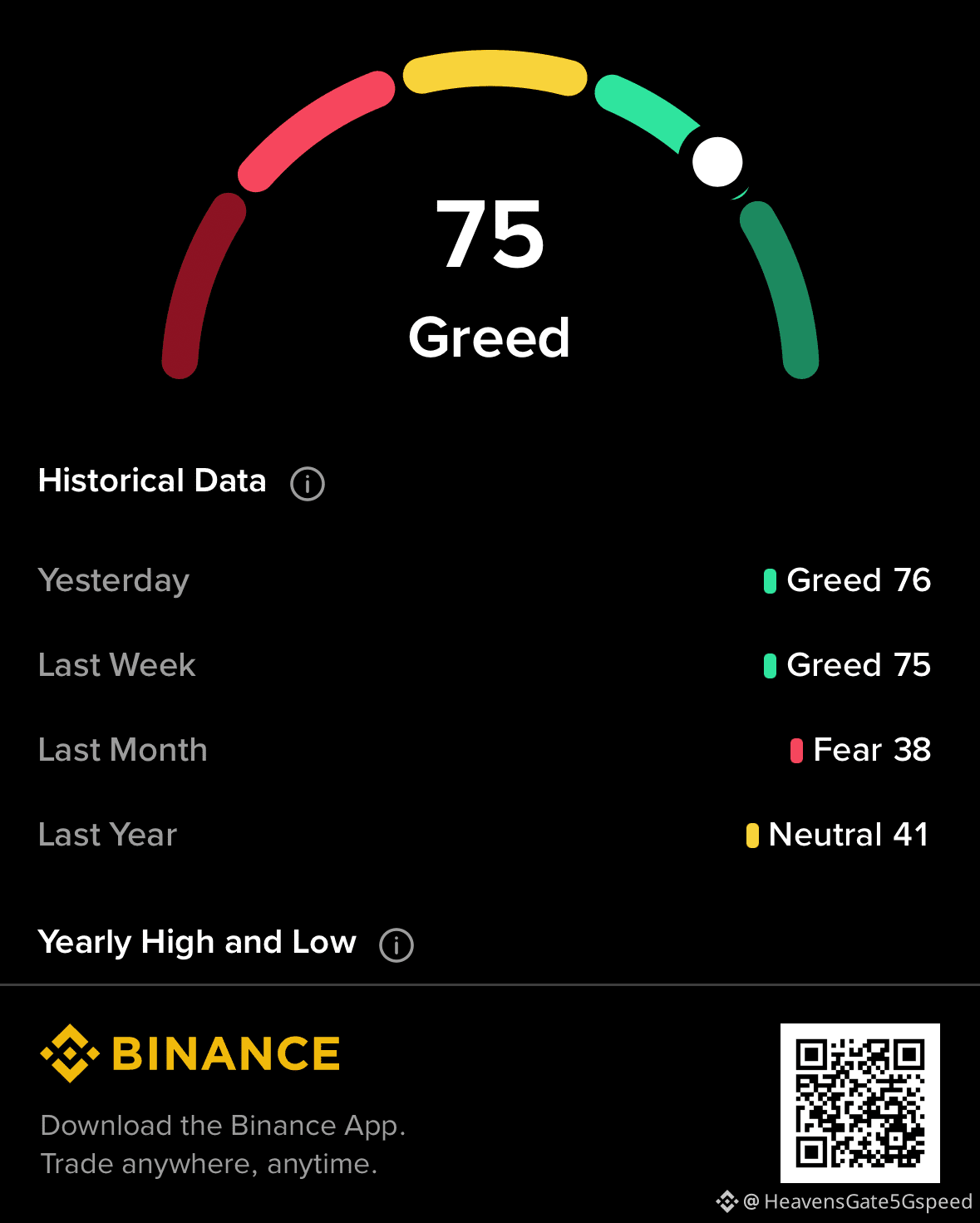
See translation
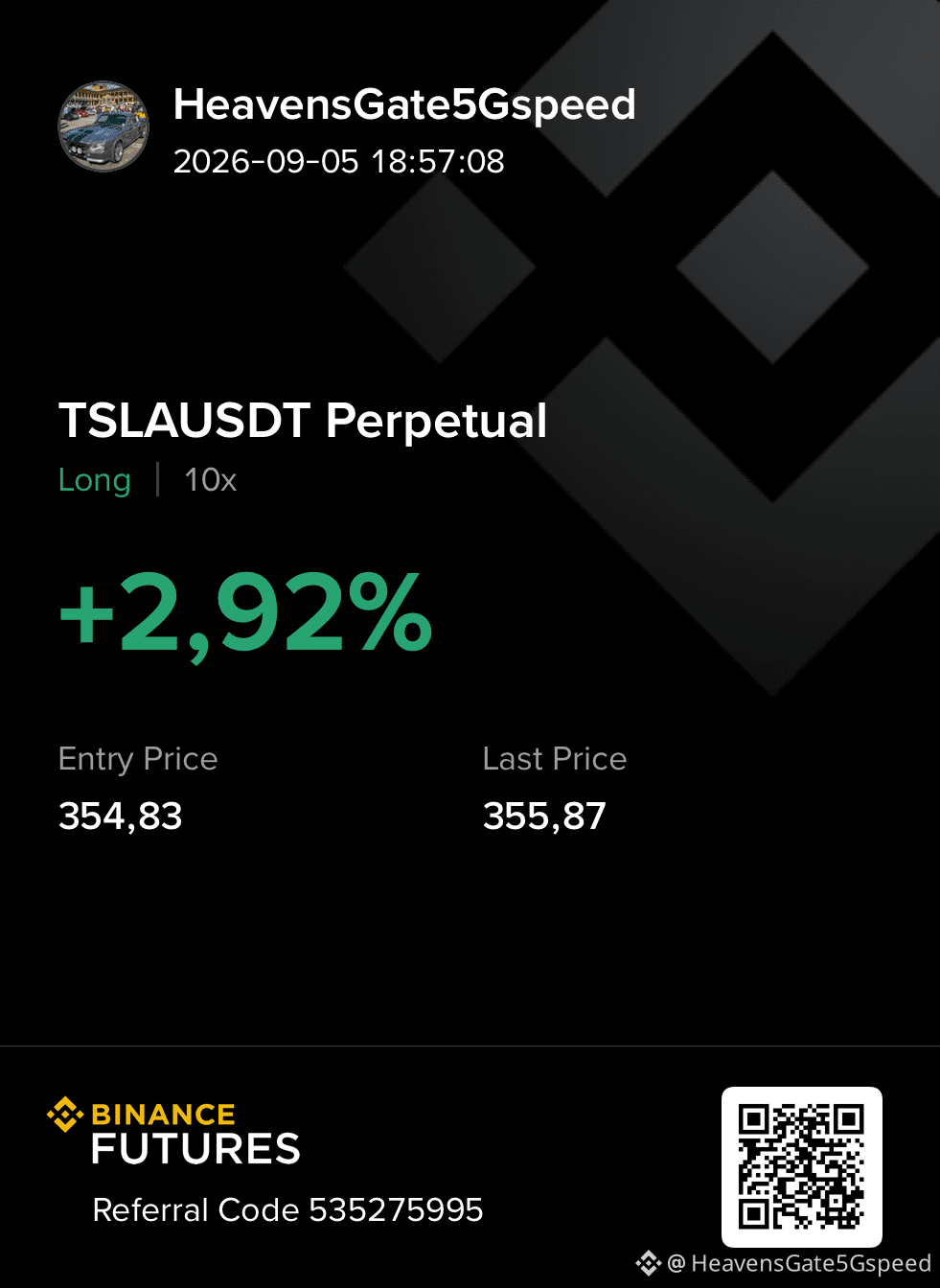
See translation
See translation
See translation
See translation

See translation
Quoted content has been removed
See translation

https-Zarrar
·
--
Bill Gates: "6% of global emissions are cows. You can either fix the cows to stop them doing that, or you can make beef without the cow."
First the people, now the animals? He really doesn’t know when to stop.
First the people, now the animals? He really doesn’t know when to stop.
See translation

Mohsin_raz_a
·
--
any one know this man??
#holdisgold
#holdisgold

See translation

Jessica lane Web3 Strategist Blockchain
·
--
Tom Lee: “Buying $BTC now is like getting online in 1996. 95% of investors still have zero exposure.”
Investing Veteran Tom Lee: 🇺🇸 "If you are buying $BTC today, it's still early. 95% of investors have zero $BTC exposure. If you look at wallets, compared to the internet, we're at 1996 levels."
Investing Veteran Tom Lee: 🇺🇸 "If you are buying $BTC today, it's still early. 95% of investors have zero $BTC exposure. If you look at wallets, compared to the internet, we're at 1996 levels."
See translation
See translation


Binance Academy
·
--
What Is a Strategic Bitcoin Reserve?
A strategic bitcoin reserve is bitcoin that a government, company, or institution holds as a long-term financial asset rather than a trading position. Supporters cite inflation hedging, diversification, and economic security. The US reserve, created by executive order in March 2025, holds seized bitcoin and doesn't buy on the open market.
Key Takeaways
A strategic bitcoin reserve is bitcoin held by a government, company, or institution as a long-term financial asset.
Holders cite inflation hedging, diversification, and economic security as reasons for keeping a reserve.
The US reserve was created in March 2025 and holds seized bitcoin. It isn't funded by open-market purchases.
Strategy holds about 848,517 BTC. Governments including El Salvador and Bhutan also hold reserves.
What Is a Strategic Bitcoin Reserve?
A strategic bitcoin reserve is a holding of bitcoin that an organization keeps as part of its financial strategy. It differs from a trading position because the aim is to hold for years, not to trade short-term price moves.
The idea borrows from how central banks treat gold and foreign currency. A reserve sits on the balance sheet as a store of value. Holders accept that the price moves, and they plan around it.
Why Do Governments and Companies Hold Bitcoin Reserves?
Organizations give several reasons for holding bitcoin. These are motivations, not guarantees, and outcomes depend on market and regulatory conditions.
Motivation
What it means in practice
Inflation hedge
Bitcoin has a fixed supply of 21 million coins, so it can't be printed like fiat currency
Diversification
Bitcoin adds an asset that tends to move differently from cash, bonds, and gold
Economic security
Countries with weak currencies can hold an asset that no single government controls
Corporate treasury
Companies can hold bitcoin instead of idle cash, though the price risk is higher
The inflation argument rests on scarcity. New bitcoin enters circulation on a fixed schedule, and the halving cuts new supply roughly every four years. Scarcity doesn't guarantee that purchasing power holds, because demand can fall as well as rise.
What Is the US Strategic Bitcoin Reserve?
President Donald Trump signed Executive Order 14233 on March 6, 2025. It created a Strategic Bitcoin Reserve and a separate US Digital Asset Stockpile.
The reserve holds bitcoin seized through criminal and civil forfeiture. Under the order, those coins stay in the reserve and aren't sold. The order didn't authorize buying bitcoin on the open market, so the reserve grows only when the government seizes more.
The Digital Asset Stockpile holds other digital assets obtained through forfeiture. The Treasury Secretary sets the management approach for those holdings.
Why Do Some People Criticize the Reserve?
Critics raise four main concerns. First, holding bitcoin exposes the government to sharp price swings. Bitcoin fell roughly 28% over the year to November 2026, which shows how large those swings can be.
Second, some question whether the government should keep seized bitcoin instead of returning it through legal channels. Third, some policymakers worry that promoting bitcoin in national reserves could affect confidence in the dollar. Fourth, critics point to unclear oversight rules, which raises questions about transparency and accountability.
Which Organizations Hold Bitcoin Reserves?
Several organizations disclose large bitcoin holdings. Figures below are the latest reported at the time of writing, and tracked government data can change quickly.
Holder
Reported holdings
Notes
Strategy (formerly MicroStrategy)
About 959,579 BTC
Largest known corporate holder, about 4% of maximum supply, acquired since 2020
Tether
About 98,900 BTC
Held as reserve assets behind USDT, valued at about $8.37 billion at September 30, 2026
El Salvador
About 7,803 BTC
First country to adopt bitcoin as legal tender, in 2021
Bhutan
Disputed, roughly 518 BTC by some trackers
Mined with state hydro power, though reported holdings fell sharply in 2026 and Bhutan disputed that sales occurred
Strategy deserves a closer look because it built the template. The company has bought bitcoin since 2020 and currently holds about 4% of all bitcoin that will ever exist. Its total cost basis is about $64.02 billion. That works out to roughly $75,450 per coin.
What Are the Risks of a Bitcoin Reserve Strategy?
A reserve strategy carries three main risks. Price volatility is the most visible, since bitcoin can fall sharply in a short period. Regulatory uncertainty matters too, because rules on how reserves are treated can change.
Custody risk is the third. Holding bitcoin means securing keys or trusting a custodian. A mistake or a failure at the custodian can mean permanent loss, because bitcoin transactions can't be reversed.
What Is Next for Strategic Bitcoin Reserves?
More governments are studying how bitcoin could fit into their reserves. Proposed US legislation would lock reserve coins for at least 20 years and require quarterly reports, but it doesn't fund open-market purchases.
For companies, the model is still concentrated in a few large holders. Whether more firms follow depends on accounting rules, shareholder appetite, and how bitcoin's price behaves over the next cycle.
FAQ
What is a bitcoin treasury strategy?
A bitcoin treasury strategy is a deliberate plan to hold bitcoin as a long-term financial asset. Instead of selling bitcoin right away, an organization accumulates and keeps it as part of its finances.
Why do companies hold bitcoin as a reserve asset?
Common reasons include hedging against inflation, diversifying away from cash, and treating bitcoin as a potential store of value. Strategy is the best-known example, having bought bitcoin since 2020.
What risks come with a bitcoin reserve?
The main risks are price volatility, regulatory uncertainty, and custody risk. Bitcoin can move sharply in short periods, rules can change, and holding coins safely requires care.
Has any government created a strategic bitcoin reserve?
Yes. The US created one by executive order in March 2025. El Salvador adopted bitcoin as legal tender in 2021 and still holds reserves. Bhutan mined bitcoin through state operations, though its holdings have fallen.
Does the US Reserve buy bitcoin?
No. The reserve holds bitcoin seized through forfeiture and doesn't buy on the open market. Adding purchases would need congressional approval and funding, which hadn't been agreed as of November 2026.
Closing Thoughts
A strategic bitcoin reserve means holding bitcoin as a long-term asset rather than a trading tool. Governments and companies cite inflation hedging, diversification, and economic security as reasons.
The US reserve changed how governments approach the idea, but it holds seized coins rather than buying more. Corporate holdings remain concentrated in a few large players, and bitcoin's price swings are a reminder that reserve strategies carry real risk.
Further Reading
What Is Bitcoin and How Does It Work?
Is Bitcoin a Store of Value?
Asset Allocation and Diversification Explained
What Is Inflation?
What Is a Bitcoin Treasury Strategy?

See translation
Binance Academy
·
--
A Guide to Trading Cryptocurrency For Beginners
Key Takeaways
Cryptocurrency trading involves buying and selling digital assets on exchanges to speculate on price movements.
To start trading, you need to choose a reliable exchange, create and verify an account, and understand core concepts like trading pairs, order types, and spot trading.
Common trading strategies include day trading, swing trading, scalping, and long-term holding (HODLing).
Risk management, including position sizing and stop-loss orders, is central to any trading approach.
Introduction
Cryptocurrency has attracted a wide range of participants worldwide, from retail traders to financial institutions. For beginners, the terminology, strategies, and fast-moving markets can be daunting. This guide walks you through the fundamentals of how to trade cryptocurrency, covering how to get started, key concepts, trading strategies, and how to manage risk.
What Is Cryptocurrency Trading?
Cryptocurrency trading refers to buying and selling digital assets on exchanges to speculate on price changes. Unlike traditional markets, crypto markets operate 24/7, giving traders more flexibility but also exposing them to constant price movements.
There are thousands of cryptocurrencies available, but some of the most widely traded include bitcoin (BTC) and ether (ETH). Crypto traders can go long (buying an asset expecting its price to rise) or short (selling an asset expecting its price to fall). Some traders hold positions for days or weeks, while others move in and out of trades within minutes, depending on their strategy and risk tolerance.
You can trade cryptocurrencies against fiat currencies (such as USD or EUR) or against other cryptocurrencies. Spot trading is the most straightforward form, involving the direct exchange of one asset for another at the current market price.
Before Trading Cryptocurrency
Before starting, take some time to understand how crypto markets work.
Choose a reliable and secure cryptocurrency exchange with a proven track record, strong security protocols, and responsive customer support. For newcomers, starting with a centralized exchange is generally recommended. As you gain more experience, you can explore decentralized exchanges (DEXs) at a later stage.
Creating an account typically involves providing your email, setting a password, and agreeing to the platform’s terms.
Most exchanges require identity verification (KYC), meaning you will need to submit a government-issued ID and proof of residence before you can trade. You should also ensure you’re familiar with how to protect your account and holdings.
How to Start Trading Cryptocurrency
1. Deposit funds
Most centralized exchanges accept fiat currency via bank transfer or other payment methods. If you already hold crypto, you can transfer it directly to your exchange wallet.
Always send each asset to its correct network address; sending crypto to the wrong address can result in permanent loss. Send Bitcoin to your Bitcoin address, ether to your Ethereum address, and so on.
2. Choose a trading pair
Cryptocurrencies are traded in pairs (for example, BTC/USDT or ETH/BTC). The pair tells you which two assets are being exchanged. Crypto-to-fiat pairs (such as BTC/EUR) let you trade a cryptocurrency against a traditional currency.
Crypto-to-crypto pairs (such as ETH/BTC) involve two digital assets. Many pairs include a stablecoin (such as USDT) as the quote currency, providing a price benchmark pegged to the US dollar.
3. Check the order book
An order book is a real-time, dynamic list of buy and sell orders placed by traders. It provides a snapshot of the supply and demand for a specific asset at different price levels. Buy orders (bids) are listed from the highest price down; sell orders (asks) are listed from the lowest price up.
Reviewing the order book gives you a sense of supply and demand at the current market price.
4. Choose your order type
A market order executes immediately at the best available price. It is the fastest way to enter or exit a position. A limit order lets you set a specific price at which you want to buy or sell.
Your order will only execute if the market reaches your specified price. Limit orders give you more control over your entry and exit prices but are not guaranteed to fill.
After you’ve gained familiarity with the basic order types, you can also explore more advanced order types such as stop-limit or OCO orders.
5. Develop your strategy
Consider what kind of trader you want to be before placing trades. Keeping a trading journal to record your decisions and their outcomes is a practical way to identify patterns in your approach and improve over time.
Popular Trading Strategies
There are many approaches to crypto trading, each with different time horizons, risk profiles, and levels of complexity. The two main categories of trading are active and passive.
Active trading strategies such as day trading, swing trading or scalping will typically require you to dedicate more time and attention than if you were to use passive strategies.
If you’re a beginner, you may want to start with passive trading strategies like buying and holding for an extended period (HODLing) or dollar-cost averaging, before exploring active strategies. These are typically lower-stress approaches that do not require as much market monitoring, you should still be aware of the market risks involved and remember that past price performance of any asset is not a guarantee of future results.
Technical Analysis (TA)
Technical analysis involves studying price charts and using indicators to anticipate potential future price movements. It is one of the primary tools traders use to time entries and exits.
Candlestick charts display the open, high, low, and close prices (OHLC) for a given time period. Each candle represents one time period, such as one hour or one day.
The body shows the range between the open and close (or close and open, depending on whether the candlestick is bullish or bearish), while the wicks indicate the high and low. Reading candlestick patterns is a foundational skill in technical analysis.
Support and resistance
Support and resistance are key concepts in technical analysis. Support refers to a price level where buying interest has historically been strong enough to prevent further declines. Resistance refers to a level where selling pressure has historically limited further gains. These levels are commonly used to identify potential entry and exit points.
Technical indicators
Traders use indicators to add context to price data. Commonly used examples include moving averages (which smooth price data to identify trend direction), Bollinger Bands (which measure volatility around a moving average), the Relative Strength Index (which gauges whether an asset may be overbought or oversold), and the MACD (which tracks momentum and trend changes). Each indicator has strengths and limitations, and most traders use several in combination rather than relying on one alone.
Fundamental Analysis (FA)
Fundamental analysis focuses on assessing the underlying value of a cryptocurrency by examining its technology, use case, development team, tokenomics, and adoption trends. Rather than reading price charts, FA asks whether a project has genuine utility and long-term viability.
In crypto, FA may also involve reviewing on-chain data (such as the number of active addresses and transaction volume), project roadmaps, developer activity, and the broader competitive landscape of the sector the project operates in.
Risk Management in Cryptocurrency Trading
Risk management refers to identifying the financial risks involved in trading and taking steps to limit potential losses. The following are some widely used approaches.
Limit your losses
Only allocate funds you can afford to lose. Use stop-loss and take-profit orders to define your exit points in advance. A stop-loss automatically closes a position if the price moves against you by a set amount, limiting downside. A take-profit closes the position once a target price is reached, locking in a gain.
Have an exit strategy
Plan your exit before entering a trade. Setting price targets and maximum loss thresholds before opening a position removes some of the emotion from trading decisions. As a general principle, once you have a trading plan, stick to it instead of adjusting it under the influence of market movements.
Diversification
Diversification and asset allocation are key risk management strategies. Diversification, or holding a range of different assets rather than concentrating in a single position, can reduce the impact of any one asset’s price movement on your overall portfolio. Regularly reviewing and rebalancing your positions keeps allocations in line with your intended risk level.
Hedging
More experienced traders sometimes use hedging to offset risk in an existing position by taking an opposing position in a correlated asset. Options contracts, for example, can be used to protect against downside in a long position. Since hedging involves additional cost and complexity, it is generally more suited to traders who already have a solid foundation.
FAQ
Do I need to be verified (KYC) to trade cryptocurrency?
Most exchanges require identity verification (KYC) before you can withdraw or trade. You will typically need to submit a government-issued ID, proof of residence, and enable two-factor authentication (2FA) to secure your account. KYC helps the exchange comply with regulations and protect your account from unauthorized access.
What is the difference between a market order and a limit order?
A market order executes immediately at the best available price, which is useful when you want speed of execution. A limit order lets you set a specific price at which you want to buy or sell; it will only fill if the market reaches your chosen price. Limit orders give you more control over your entry and exit price, but are not guaranteed to fill.
What is the safest trading strategy for a beginner?
There is no single universally safe strategy. Many beginners prefer longer time-frame approaches such as swing trading or long-term holding (HODLing) because they require less active monitoring than day trading or scalping. Regardless of the strategy you pick, apply risk management practices like stop-loss orders and appropriate position sizing.
How much money do I need to start trading crypto?
You can start with a small amount you are comfortable losing. Begin with a liquid asset such as bitcoin (BTC) or ether (ETH) and a spot trading pair, and only allocate funds you can afford to lose. As a general rule, keep your first trade small and focus on understanding the order book and your stop-loss levels before scaling up.
Is cryptocurrency trading risky?
Yes. Cryptocurrency markets are highly volatile and operate around the clock. Prices can move quickly, and not all assets recover from large drawdowns. A disciplined approach, setting stop-losses, limiting your position size, and keeping a trading journal, is the main way to manage that risk while you learn.
What Is the Safest Trading Strategy for Beginners?
There is no single strategy that is universally safe. Many beginners start with longer time-frame approaches such as long-term holding because they require less active monitoring than day trading or scalping. Regardless of strategy, risk management practices such as stop-loss orders and appropriate position sizing apply to all trading approaches.
Closing Thoughts
Cryptocurrency trading offers exciting opportunities but comes with its own set of risks and challenges. By understanding the fundamentals, choosing a reliable exchange, and implementing effective risk management strategies, traders can navigate the market with more confidence.
Further Reading
What Is Technical Analysis?
What Is Swing Trading in Crypto?
Crypto Day Trading vs. HODLing: Which Strategy Is Best for You?
A Beginner's Guide to Candlestick Charts
Stop-Loss and Take-Profit Orders Explained

See translation
Binance Academy
·
--
What Is Sky (SKY)?
Key Takeaways
Sky Protocol is a decentralized finance (DeFi) platform that evolved from MakerDAO, introducing upgraded tokens, new features, and a streamlined governance system.
USDS is a collateral-backed stablecoin soft-pegged to the US dollar and the upgraded version of DAI.
SKY is the governance token of the Sky Protocol and the upgraded version of MakerDAO's MKR token, used for decentralized governance and staking rewards.
Sky.money is the non-custodial gateway that lets you trade, save, stake SKY, and earn rewards while keeping full control of your funds.
SkyLink enables you to use Sky Protocol features across multiple Layer-2 networks, reducing transaction costs and wait times.
Introduction
Sky Protocol is a decentralized finance (DeFi) platform built on Ethereum that has evolved from the widely used MakerDAO system. The protocol offers a more scalable, user-friendly alternative to its predecessor, centered on two native tokens: USDS (the protocol stablecoin) and SKY (the governance token). If you've come across MakerDAO or DAI before, Sky Protocol is its successor, with upgraded token mechanics and new features designed to make DeFi more accessible.
This article explains how Sky works, what its tokens do, and how the different features connect to each other.
How Sky Works
Sky Protocol runs on permissionless liquidity pools and a collateral-backed stablecoin system combined with decentralized governance. There is no central authority controlling your funds or making protocol decisions on your behalf. All core rules are encoded in the protocol itself.
The protocol has two native tokens. USDS is the stablecoin of the Sky Protocol and an upgraded version of DAI. It is supported by excess collateral and is soft-pegged to the US dollar. SKY is the governance token of the Sky Protocol, upgraded from MakerDAO's MKR token. It plays a key role in decentralized governance, staking, and rewarding active participation in the ecosystem.
Accessing Sky Protocol With Sky.money
Sky.money is the non-custodial gateway that connects you to the Sky Protocol. It lets you trade popular tokens for Sky ecosystem tokens, upgrade DAI to USDS and MKR to SKY, and access saving and reward features, all while keeping full control of your assets.
Through the Sky.money app, you can:
Upgrade MKR tokens to SKY at a ratio of 1 MKR to 24,000 SKY.
Trade USDC, USDT, ETH, or USDS for SKY directly.
Earn SKY rewards by supplying USDS to the Sky Token Rewards module.
Stake SKY tokens in the Sky Protocol's Staking Engine to earn rewards.
Borrow USDS by staking SKY tokens.
Sky Savings Rate (SSR)
The Sky Savings Rate is an automated system that lets you earn compounded USDS over time. When you deposit USDS into the SSR module, you receive sUSDS tokens that represent your stake and any earned value. USDS tokens are added to the pool every few seconds according to the current SSR rate, causing the value of your sUSDS to grow gradually.
You can redeem sUSDS at any time for your original USDS plus any accumulated rewards. The SSR rate changes based on decentralized on-chain voting by the Sky Ecosystem Governance community. Smart contracts handle the conversion between USDS and sUSDS automatically, with no fees when redeeming.
Sky Token Rewards (STRs)
USDS holders can participate in the Sky Token Rewards module to earn SKY governance tokens as rewards. Both the supplied USDS and the earned rewards are secured in non-custodial smart contracts, meaning no third party has custody of your assets. Rewards are distributed based on your share of the total USDS held in the rewards pool and may vary according to changes in pool size and issuance rates.
By holding USDS and earning SKY rewards, you can participate in Sky ecosystem governance while retaining full control of your funds.
SkyLink
SkyLink is the bridging system that connects Sky Protocol with multiple Layer-2 networks such as Base, Arbitrum, Optimism, and Unichain. It lets you move your Sky tokens and use features like the Sky Savings Rate without paying high gas fees or waiting long for transactions to complete.
For everyday users, SkyLink makes interacting with the Sky ecosystem smoother and cheaper. You can save, trade, and earn rewards more efficiently across multiple blockchains without needing to stay on Ethereum mainnet for every action.
The Sky Ecosystem and Sky Stars
The Sky ecosystem is a community-driven network of decentralized projects known as Sky Stars. These independent projects are designed to foster innovation and growth within the larger Sky framework. Each Sky Star may have its own governance tokens, treasury, and community governance structure, while aligning with the overall goals of the Sky ecosystem.
Spark, an on-chain asset allocator that deploys stablecoin liquidity across DeFi, CeFi, and real-world assets, is the first official Sky Star. Spark integrates closely within the Sky ecosystem and represents the kind of focused, specialized project the Sky Stars model is designed to support.
FAQ
What is the difference between Sky Protocol and MakerDAO?
Sky Protocol is the evolved version of MakerDAO. The core mechanisms are similar, but Sky introduces upgraded tokens (SKY replacing MKR, USDS replacing DAI), a new app gateway (Sky.money), a multichain bridging system (SkyLink), and a modular ecosystem model (Sky Stars). MakerDAO users can upgrade their existing MKR and DAI tokens to SKY and USDS through the Sky.money app.
What is the SKY token used for?
SKY is the governance token of the Sky Protocol. Holders can participate in on-chain governance votes that determine protocol parameters such as the Sky Savings Rate. You can also stake SKY tokens in the Staking Engine to earn rewards, or borrow USDS against staked SKY.
How does USDS maintain its peg to the US dollar?
USDS is a collateral-backed stablecoin, meaning it is minted against collateral assets held in the protocol. The collateralization ratio is designed to keep USDS over-collateralized, helping it maintain a value close to one US dollar. Like any stablecoin, its peg is maintained through protocol mechanics rather than being guaranteed, and market conditions can affect stability.
What is the Sky Savings Rate?
The Sky Savings Rate (SSR) is an automated savings feature that lets USDS holders earn additional USDS over time by depositing into the SSR module. In return, you receive sUSDS tokens representing your stake and accrued value. The SSR rate is determined by community governance and can change over time.
What are Sky Stars?
Sky Stars are independent decentralized projects that operate within the broader Sky ecosystem. Each Sky Star has its own governance, treasury, and focus area while remaining aligned with Sky Protocol's overall goals. Spark, which allocates stablecoin liquidity across DeFi and real-world assets, is the first Sky Star.
Closing Thoughts
Sky Protocol represents a meaningful evolution of the MakerDAO ecosystem. By introducing upgraded tokens, a user-friendly gateway, multichain bridging, and a modular ecosystem of Sky Stars, it aims to make decentralized finance more accessible and scalable for a wider range of users.
The protocol is still maturing, and features like SkyLink and the Sky Stars ecosystem are evolving. As with any DeFi protocol, there are risks involved, including smart contract risk and stablecoin depeg risk. Doing your own research before interacting with the protocol is always recommended.
Further Reading
What Is a Stablecoin?
What Are Governance Tokens?
What Is Decentralized Finance (DeFi)?
What Is Spark (SPK)?
What Is the Stablecoin Trilemma?
Disclaimer: This content is presented to you on an "as is" basis for general information and or educational purposes only, without representation or warranty of any kind. It should not be construed as financial, legal or other professional advice, nor is it intended to recommend the purchase of any specific product or service. You should seek your own advice from appropriate professional advisors. Where the content is contributed by a third party contributor, please note that those views expressed belong to the third party contributor, and do not necessarily reflect those of Binance Academy. Digital asset prices can be volatile. The value of your investment may go down or up and you may not get back the amount invested. You are solely responsible for your investment decisions and Binance Academy is not liable for any losses you may incur. For more information, see our Terms of Use, Risk Warning and Binance Academy Terms.
Log in to explore more content