
币圈气氛组
211 Posts

币圈气氛组
Report
Block User
Memecoin Trader | Vibe Committee
Frequent Trader
2.4 Years
18 Following
659 Followers
2.0K+ Liked
Posts
All
Videos
·
--
Article
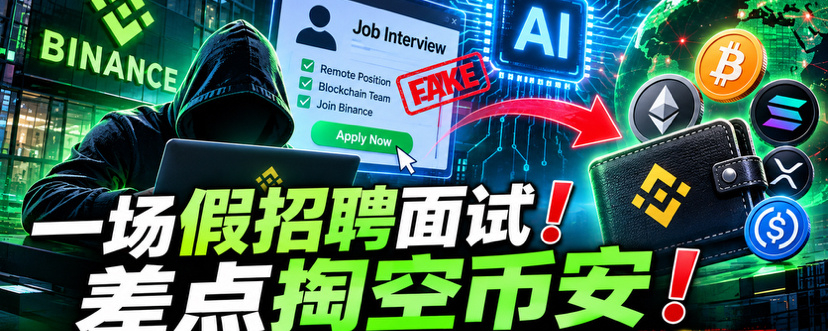
A fake interview cracked open Binance’s $6.3 billion wallet! North Korean hackers’ real killer move exposed!The most surprising thing about this attack on Binance wasn’t how sophisticated the hackers’ code was, but that it began with an ordinary job interview.
According to Binance’s preliminary investigation and a November 3 report by Reuters, the attackers used a fake hiring process to gradually infiltrate a Binance employee’s work computer, ultimately gaining access to the internal wallet-signing system.
The entire process was quite covert.
A Binance software engineer posted their résumé on a job platform and was then contacted by a stranger claiming to be a project director. The stranger said there was a potential position and wanted to discuss it further.
A fake interview cracked open Binance’s $6.3 billion wallet! North Korean hackers’ real killer move exposed!
The most surprising thing about this attack on Binance wasn’t how sophisticated the hackers’ code was, but that it began with an ordinary job interview.
According to Binance’s preliminary investigation and a November 3 report by Reuters, the attackers used a fake hiring process to gradually infiltrate a Binance employee’s work computer, ultimately gaining access to the internal wallet-signing system.
The entire process was quite covert.
A Binance software engineer posted their résumé on a job platform and was then contacted by a stranger claiming to be a project director. The stranger said there was a potential position and wanted to discuss it further.
1
907
·
--

Article
Who exactly is Satoshi Nakamoto? If I had to pick one person, I suspect it’s this cryptographer!Whenever Bitcoin comes up, there’s one question we can’t avoid:
Who exactly is Satoshi Nakamoto? One person—or a team—created Bitcoin, left behind the original software, white paper, and millions of bitcoins mined in the early days, then vanished completely in 2011.
More than a decade has passed, and countless journalists, cryptographers, and investigators around the world have tried to unravel this mystery, but no answer has ever gained widespread acceptance.
I recently took another look at some of the most controversial candidates.
Interestingly, if we move the timeline further back, the person truly worth paying attention to may not be someone who later worked on Bitcoin, but someone who was already researching digital currency before Bitcoin was created.
Who exactly is Satoshi Nakamoto? If I had to pick one person, I suspect it’s this cryptographer!
Whenever Bitcoin comes up, there’s one question we can’t avoid:
Who exactly is Satoshi Nakamoto? One person—or a team—created Bitcoin, left behind the original software, white paper, and millions of bitcoins mined in the early days, then vanished completely in 2011.
More than a decade has passed, and countless journalists, cryptographers, and investigators around the world have tried to unravel this mystery, but no answer has ever gained widespread acceptance.
I recently took another look at some of the most controversial candidates.
Interestingly, if we move the timeline further back, the person truly worth paying attention to may not be someone who later worked on Bitcoin, but someone who was already researching digital currency before Bitcoin was created.
1
321
·
--
Verified
Samsung: 820,000? No, 82 million devices! SUI is vying for the next-generation payment gateway!
SUI recently announced a partnership worth watching: Samsung Wallet is integrating with the Sui network, allowing eligible Galaxy users in the U.S. to hold and transfer USDC through Samsung Wallet.
The partnership covers approximately 82 million Galaxy devices in the U.S.
More notably, Sui is also building out infrastructure for AI agents, Bitcoin-backed lending, and stablecoin payments.
In October, Sui and Google Cloud jointly developed an AI agent verification system; the Hashi mainnet also secured over $500 million in committed funding.
This shows that SUI is doing more than telling a public blockchain story—it is seeking to enter multiple markets, including payments, AI, and on-chain finance.
Of course, Samsung Wallet’s initial support is for USDC and does not directly support the SUI token, and ecosystem growth does not guarantee that the token price will rise.
But if these applications achieve real scale, SUI’s long-term value could have much greater potential.
Key things to watch next: stablecoin transaction volume, capital inflows into the ecosystem, and selling pressure from SUI unlocks. $SUI



SUI+3.65%
GOOGUS+0.15%
2
638
·
--
Article
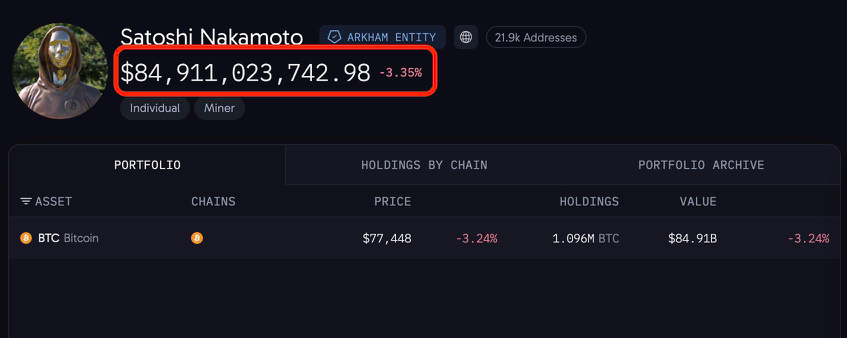
$84 billion sitting in Bitcoin addresses—why has no hacker anywhere in the world been able to take it yet?If someone told you that Bitcoin’s creator, Satoshi Nakamoto, might own more than 1 million BTC, would you find that hard to believe?
Based on analyses of early blockchain mining data, researchers used a mining pattern known as the “Patoshi Pattern” to estimate that one early miner mined about 1.1 million BTC. These bitcoins are generally believed to be associated with Satoshi Nakamoto.
At the current Bitcoin price of about $76,400, they would be worth roughly $84 billion.
But there’s an important caveat: the 1.1 million BTC figure is a research estimate, not a publicly confirmed list of assets from Satoshi Nakamoto himself. The Patoshi Pattern identifies an early miner, but whether that miner was Satoshi remains a strong inference, not cryptographic proof.
$84 billion sitting in Bitcoin addresses—why has no hacker anywhere in the world been able to take it yet?
If someone told you that Bitcoin’s creator, Satoshi Nakamoto, might own more than 1 million BTC, would you find that hard to believe?
Based on analyses of early blockchain mining data, researchers used a mining pattern known as the “Patoshi Pattern” to estimate that one early miner mined about 1.1 million BTC. These bitcoins are generally believed to be associated with Satoshi Nakamoto.
At the current Bitcoin price of about $76,400, they would be worth roughly $84 billion.
But there’s an important caveat: the 1.1 million BTC figure is a research estimate, not a publicly confirmed list of assets from Satoshi Nakamoto himself. The Patoshi Pattern identifies an early miner, but whether that miner was Satoshi remains a strong inference, not cryptographic proof.
1
605
·
--
CZ issues an AI security warning: Don’t assume crypto exchanges are the only targets for hackers—traditional banks may face an even greater challenge!
Artificial intelligence is changing the way cyberattacks are carried out.
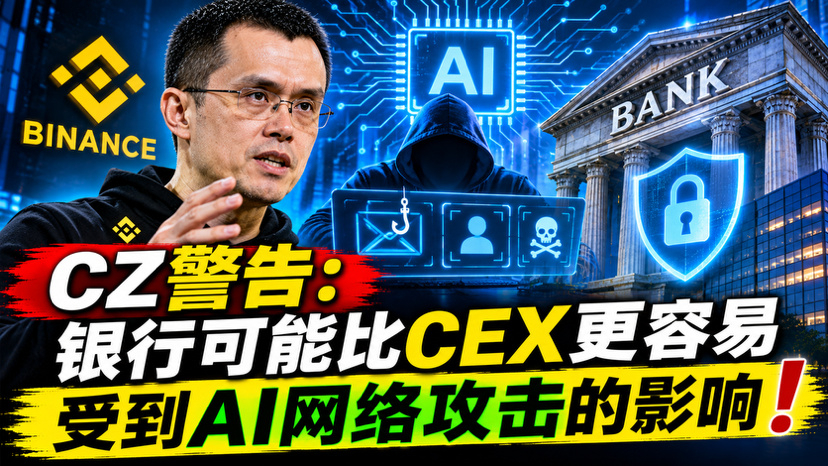
Recently, Binance founder CZ shared a noteworthy perspective on AI and cybersecurity: Many people worry that AI could break into Bitcoin and cryptocurrency systems, but overlook the fact that the encryption mechanisms used by the internet and traditional banking systems may be more vulnerable to the impact of next-generation AI technologies.
But what CZ was really warning people about was not that AI can immediately crack Bitcoin’s cryptography.
The more immediate threat is that AI is making phishing, impersonation, and social engineering attacks more precise.
In the past, a scam email might have been exposed by grammatical errors. Now, AI can imitate the way someone you know communicates and combine that with leaked personal information to create scam messages that are much harder to recognize.
This means that in the future, hackers may not need to break into complex encryption systems. They may be able to gain access to a system simply by exploiting human weaknesses.
Traditional banks face similar challenges. Many financial institutions still rely on complex legacy systems and third-party technology providers, making system upgrades, vulnerability checks, and security management far from easy.
Of course, this doesn’t mean that CEXs are safer than banks. The types of attacks they face, their asset management mechanisms, and the consequences of risks are not the same.
In the age of AI, the real competition may not just be between financial institutions, but a technological race between attackers and defenders.
Hackers are using AI, and exchanges, banks, and security organizations must also accelerate their use of AI to build defensive systems.
In the future, those who can detect anomalies sooner, identify attacks faster, and protect users’ assets more effectively will be more likely to gain a new competitive edge.
1
679
·
--
Kim Jong Un’s sister steps in personally! North Korea publicly denies involvement in the Binance $6.3 billion incident
This time, things are a little different.
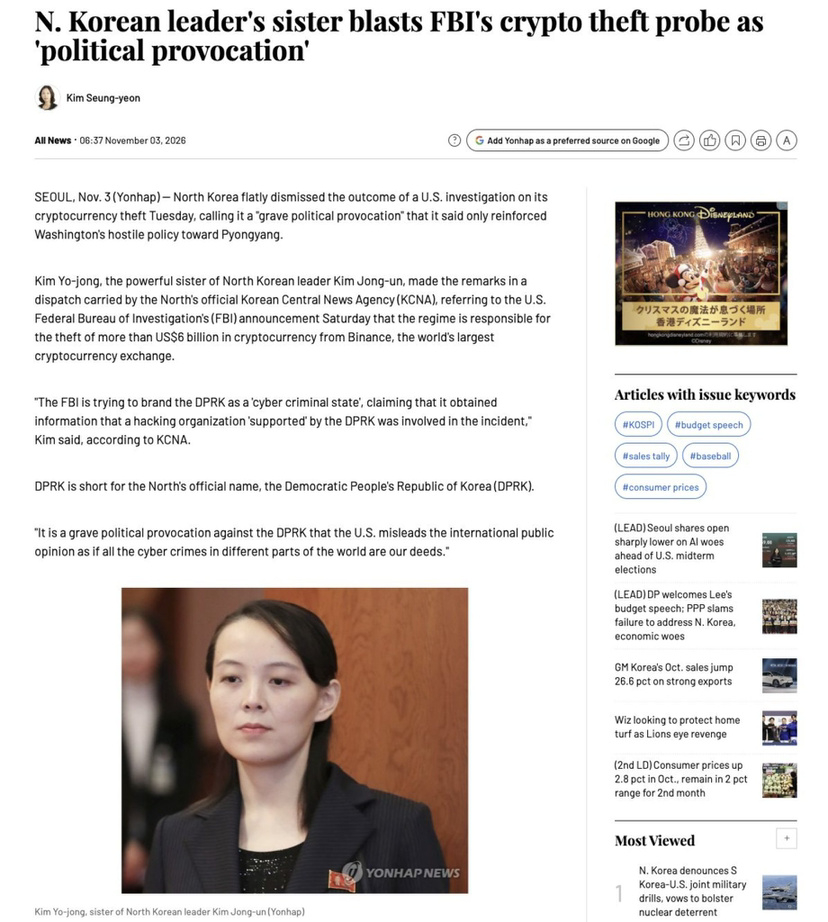
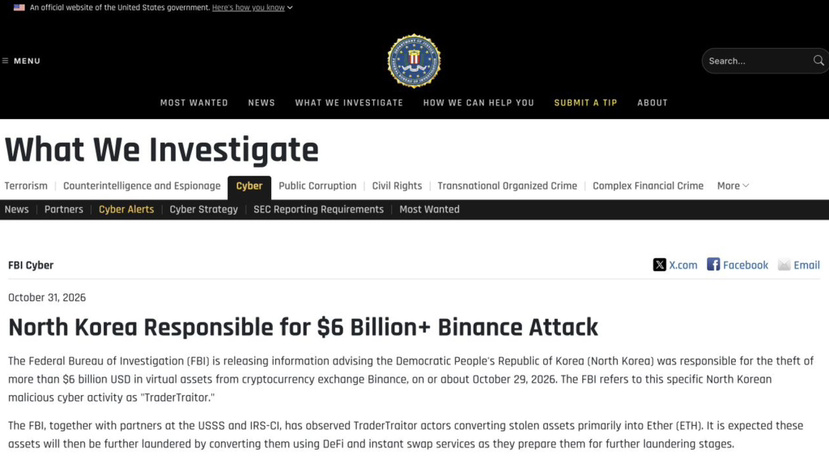
On November 3, North Korean state media KCNA published a statement by Kim Yo Jong. She directly responded to the FBI’s earlier allegations regarding the theft of a huge amount of crypto assets from Binance, calling the U.S. claims “absurd remarks” and describing them as a “serious political provocation” against North Korea.
The incident began on October 31, when the FBI issued a statement alleging that North Korea was responsible for stealing more than $6 billion in virtual assets from Binance, and attributed the related cyber operations to TraderTraitor.
Earlier, blockchain security firm TRM Labs estimated the losses at around $6.36 billion.
Kim Yo Jong also mentioned last year’s Bybit incident, which sent shockwaves through the industry. At the time, around $1.5 billion in crypto assets were stolen, and the U.S. likewise pointed the finger at North Korea.
More notably, this response did not come from an ordinary foreign affairs department spokesperson: Kim Jong Un’s sister made a public statement herself. She even asked the United States who would ultimately end up with the recovered crypto assets, suggesting that the answer might offer clues about what lies behind the incident.
Of course, North Korea’s denial does not overturn the FBI’s investigative findings, and the FBI’s allegations should also be examined further in light of publicly available technical evidence and fund-tracing efforts.
But a crypto asset theft has now spilled over from on-chain tracing into a public confrontation at the state level.
As cryptocurrencies become an increasingly important part of global money flows, they are no longer just a topic for financial markets—they are also becoming part of international cybersecurity and geopolitical competition.
1
13
7.8k
·
--
Canada’s “Crypto King” scam exposed: C$36 million in investments—and a $311 million account that didn’t exist!
A young man who called himself the “Crypto King” promised investors they could make money through cryptocurrency and forex trading. Some were even promised returns of 3% per week.
That man was Aiden Pleterski, from Ontario, Canada.
Between 2020 and 2022, he raised more than C$36.3 million from investors.
To convince investors of his trading prowess, he also showed them screenshots and videos of a trading account with a balance of more than US$311 million.
But recordings played in court revealed the truth: the supposed US$300 million fund never existed.
Even more shockingly, a forensic accountant testified that investors’ money was not deposited into the FXChoice trading platform, as promised in their contracts.
About C$5.6 million was used to buy luxury cars, C$4.9 million to pay credit card bills, C$870,000 on travel and private jets, nearly C$600,000 on security, and almost C$3.7 million was transferred to his parents.
Another C$16.1 million or so was used to pay other investors.
In other words, some investors’ supposed returns actually came from money contributed by later investors.
On October 29, after deliberating for about 90 minutes, a Toronto jury found Pleterski guilty of fraud. He had consistently denied the allegations and represented himself at trial. The case is now awaiting sentencing proceedings.
This case is another reminder to all crypto investors:
What is truly dangerous is often not market volatility, but the illusion of wealth created through promises of high returns, fake trading records, and the movement of funds.
Remember these three principles:
Don’t trust promises of fixed, high returns. Don’t treat account screenshots as proof of real assets. And never hand your money to someone whose trading records you cannot independently verify.
In the crypto market, returns can be dressed up and accounts can be faked—but the real flow of money doesn’t lie.


2
6
14.2k
·
--
Article
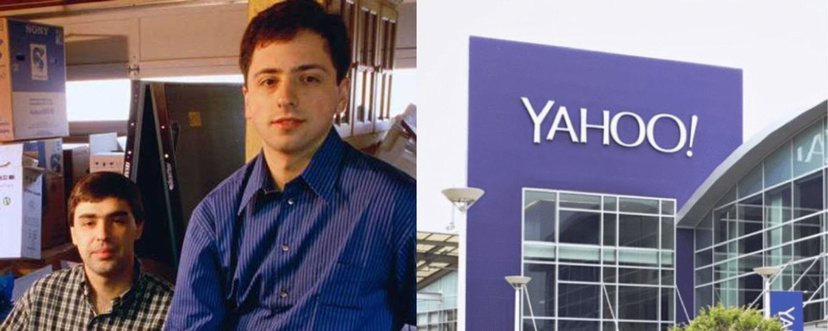
From Internet Giant to a $4.4 Billion Sale: How Many Chances to Change Its Destiny Did Yahoo Miss?There is one company whose story in the history of internet business is still worth studying by every entrepreneur and business leader.
It was once the gateway to the internet, with a huge user base, deep pockets, and a powerful brand. Yet in just over a decade, it repeatedly missed opportunities that could have changed the industry landscape.
That company was Yahoo.
Looking back at Yahoo’s history, the most frustrating thing is not that it lacked opportunities, but that it once had the chance to stand at the center of the future and yet made one wrong strategic decision after another.
From Internet Giant to a $4.4 Billion Sale: How Many Chances to Change Its Destiny Did Yahoo Miss?
There is one company whose story in the history of internet business is still worth studying by every entrepreneur and business leader.
It was once the gateway to the internet, with a huge user base, deep pockets, and a powerful brand. Yet in just over a decade, it repeatedly missed opportunities that could have changed the industry landscape.
That company was Yahoo.
Looking back at Yahoo’s history, the most frustrating thing is not that it lacked opportunities, but that it once had the chance to stand at the center of the future and yet made one wrong strategic decision after another.
GOOGUS+0.15%
MSFTB+2.28%
3
1.3k
·
--
Article
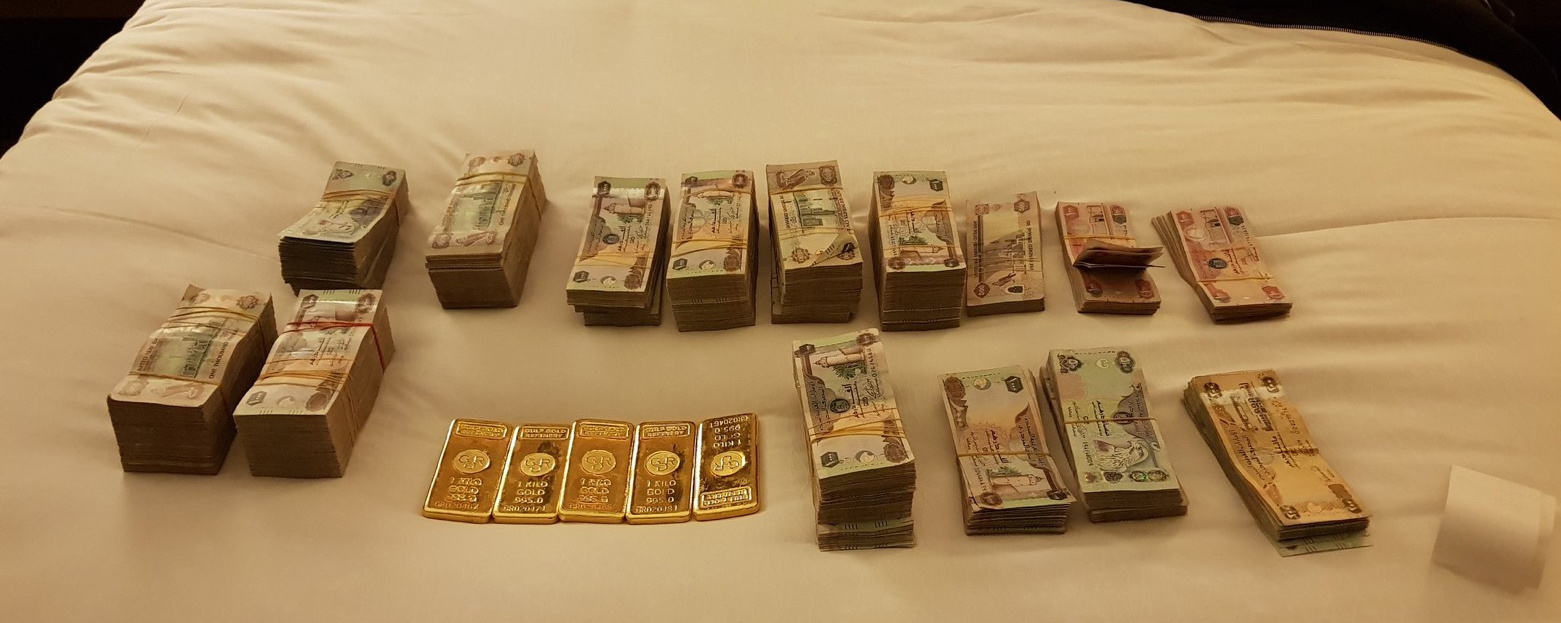
A £20 Million Cryptocurrency Scam Was Accidentally Exposed by a Family DisputeA group of people exploited a vulnerability in a cryptocurrency exchange’s system to illegally obtain more than £20 million worth of crypto assets.
After pulling it off, they went on a spending spree. One bought a car for a stranger he’d met in a bar; another handed out gift cards to passersby on the street. One even gave a stranger a gift card worth £5,000.
But what exposed the entire criminal gang was, of all things, a family dispute.
The story begins in 2017.
James Parker, from Blackpool in the UK, discovered a system vulnerability in an Australian cryptocurrency exchange.
A £20 Million Cryptocurrency Scam Was Accidentally Exposed by a Family Dispute
A group of people exploited a vulnerability in a cryptocurrency exchange’s system to illegally obtain more than £20 million worth of crypto assets.
After pulling it off, they went on a spending spree. One bought a car for a stranger he’d met in a bar; another handed out gift cards to passersby on the street. One even gave a stranger a gift card worth £5,000.
But what exposed the entire criminal gang was, of all things, a family dispute.
The story begins in 2017.
James Parker, from Blackpool in the UK, discovered a system vulnerability in an Australian cryptocurrency exchange.
1
2.4k
·
--

Article
Bragging about his wealth got him into trouble! 25-year-old man suspected of stealing $46 million in cryptocurrency from the U.S. governmentA 25-year-old American man is suspected of stealing $46 million worth of cryptocurrency from wallets controlled by the U.S. government. After pulling off the heist, he lived a life of luxury, buying a Lamborghini, renting a mansion, chartering a private yacht, and even hiring bodyguards and a private chef.
But what ultimately exposed him was neither police surveillance nor a technical vulnerability—it was bragging about his wealth in a Telegram group chat.
The man is named John Daghita, and goes by the online handle Lick. He previously worked at a company called Command Services & Support (CMDSS), which has a contract with the U.S. Marshals Service to manage cryptocurrency seized by the government. His father is the company's president.
Bragging about his wealth got him into trouble! 25-year-old man suspected of stealing $46 million in cryptocurrency from the U.S. government
A 25-year-old American man is suspected of stealing $46 million worth of cryptocurrency from wallets controlled by the U.S. government. After pulling off the heist, he lived a life of luxury, buying a Lamborghini, renting a mansion, chartering a private yacht, and even hiring bodyguards and a private chef.
But what ultimately exposed him was neither police surveillance nor a technical vulnerability—it was bragging about his wealth in a Telegram group chat.
The man is named John Daghita, and goes by the online handle Lick. He previously worked at a company called Command Services & Support (CMDSS), which has a contract with the U.S. Marshals Service to manage cryptocurrency seized by the government. His father is the company's president.
1
4
11.4k
·
--
Verified
Article
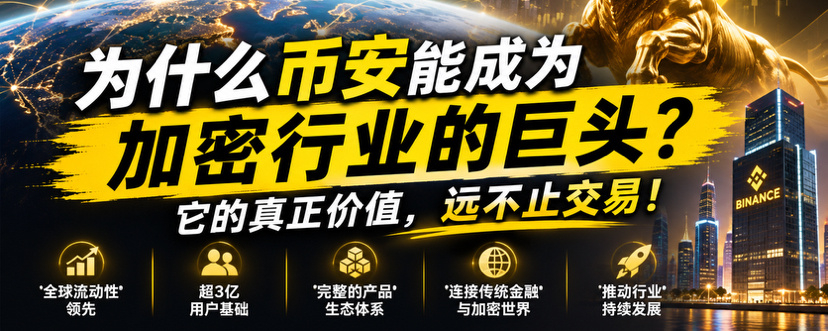
How did Binance become a giant in the crypto industry? Its true value goes far beyond trading!How did Binance become a giant in the crypto industry? Its true value goes far beyond trading!
In the crypto industry, exchanges have never been just places to buy and sell digital assets.
Binance’s ability to remain at the heart of the industry over the long term is due not only to its scale, but also to a constantly expanding global ecosystem.
First, its liquidity advantage.
For traders, liquidity means deeper order books, better execution, and lower slippage. Binance has long maintained a leading position in spot and derivatives markets, providing users around the world with substantial market depth and drawing large amounts of capital and trading activity to its platform.
How did Binance become a giant in the crypto industry? Its true value goes far beyond trading!
How did Binance become a giant in the crypto industry? Its true value goes far beyond trading!
In the crypto industry, exchanges have never been just places to buy and sell digital assets.
Binance’s ability to remain at the heart of the industry over the long term is due not only to its scale, but also to a constantly expanding global ecosystem.
First, its liquidity advantage.
For traders, liquidity means deeper order books, better execution, and lower slippage. Binance has long maintained a leading position in spot and derivatives markets, providing users around the world with substantial market depth and drawing large amounts of capital and trading activity to its platform.
1
1.1k
·
--
This time, we’ve seen the true strength of the crypto industry!
What truly tests an exchange is never just its day-to-day operations, but whether it can take concrete action in the face of a major crisis.
After the incident, Binance quickly activated its emergency response mechanism, suspended relevant withdrawals to conduct security checks, revoked affected authorizations, and worked with law enforcement agencies, blockchain security teams, and industry partners to trace the funds.
More importantly, Binance did not pass the losses on to users. Instead, it drew on the SAFU User Protection Fund, the Futures Insurance Fund, and its own corporate funds to continue replenishing the affected assets.
As of November 1, Binance announced that it had replenished approximately 95% of the assets. Major assets such as BTC, ETH, BNB, USDT, and USDC were fully backed by reserves, and the remaining assets were still being acquired through market and over-the-counter channels.
Meanwhile, suspended withdrawal services began resuming in phases on November 1, with Bitcoin, Ethereum, and some stablecoins among the assets prioritized. Binance also pledged to replenish the SAFU Fund to approximately $1 billion.
Industry collaboration is also worth noting. Organizations such as Tether and Circle helped freeze the assets involved, bringing the total frozen to approximately $3 billion. Law enforcement agencies and blockchain security teams are also continuing to trace the funds.
This is no longer just one platform’s emergency response, but a coordinated effort among exchanges, stablecoin issuers, security organizations, and law enforcement agencies.
Crises test platforms; action builds trust.
The crypto industry’s development will never be entirely smooth. But every recovery effort, collaboration, and technological upgrade following a crisis helps move the industry toward a more mature future.
Believe in technology, but respect the risks. What truly matters is whether the industry can emerge stronger from every challenge. @heyi @CZ
This time, we’ve seen the true strength of the crypto industry!
What truly tests an exchange is never just its day-to-day operations, but whether it can take concrete action in the face of a major crisis.
After the incident, Binance quickly activated its emergency response mechanism, suspended relevant withdrawals to conduct security checks, revoked affected authorizations, and worked with law enforcement agencies, blockchain security teams, and industry partners to trace the funds.
More importantly, Binance did not pass the losses on to users. Instead, it drew on the SAFU User Protection Fund, the Futures Insurance Fund, and its own corporate funds to continue replenishing the affected assets.
As of November 1, Binance announced that it had replenished approximately 95% of the assets. Major assets such as BTC, ETH, BNB, USDT, and USDC were fully backed by reserves, and the remaining assets were still being acquired through market and over-the-counter channels.
Meanwhile, suspended withdrawal services began resuming in phases on November 1, with Bitcoin, Ethereum, and some stablecoins among the assets prioritized. Binance also pledged to replenish the SAFU Fund to approximately $1 billion.
Industry collaboration is also worth noting. Organizations such as Tether and Circle helped freeze the assets involved, bringing the total frozen to approximately $3 billion. Law enforcement agencies and blockchain security teams are also continuing to trace the funds.
This is no longer just one platform’s emergency response, but a coordinated effort among exchanges, stablecoin issuers, security organizations, and law enforcement agencies.
Crises test platforms; action builds trust.
The crypto industry’s development will never be entirely smooth. But every recovery effort, collaboration, and technological upgrade following a crisis helps move the industry toward a more mature future.
Believe in technology, but respect the risks. What truly matters is whether the industry can emerge stronger from every challenge. @Yi He @CZ



1
449
·
--
Verified
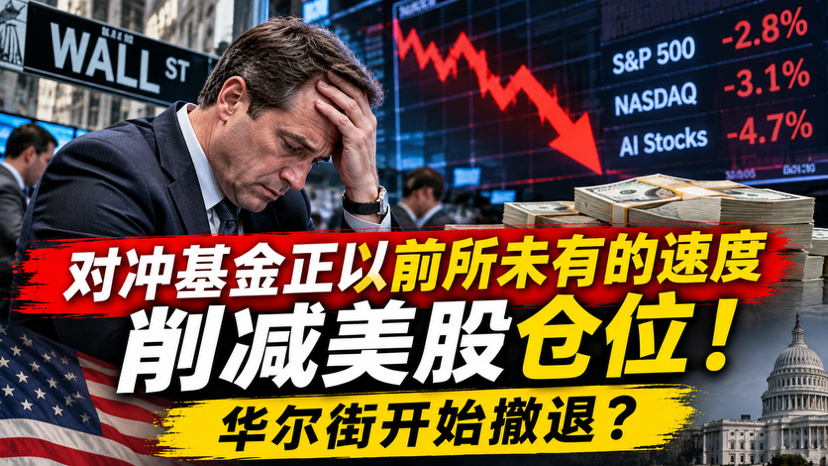
Are Wall Street institutions starting to pull back? Hedge funds are cutting their U.S. stock positions at an unprecedented pace!
A signal worth watching has emerged.
According to the latest data from Goldman Sachs, hedge funds have been significantly reducing their exposure to tech stocks and AI-related assets over the past few trading days.
In just two weeks, tech stock selling came close to $20 billion. More notably, nearly all of the net long positions in global AI stocks that hedge funds had built up since early 2025 were wiped out in just five trading days.
Morgan Stanley data also shows that hedge funds’ overall market exposure has fallen by the most since 2016.
This points to a key question: institutions are starting to reassess AI companies’ valuations, their massive capital expenditures, and whether future earnings can justify current share prices.
But this does not mean Wall Street has turned completely bearish on U.S. stocks. More accurately, institutions are reducing risk and adjusting their positions.
When institutions begin trimming their positions while market sentiment remains buoyant, investors may need to be especially alert to risks from dwindling market liquidity and a pullback in highly valued assets.$NVDAB $AAPLB $SPCXB
1
1.6k
·
--
Is Musk about to branch out again? SpaceX is reportedly considering acquiring Boost Mobile as it prepares to enter the U.S. mobile communications market!
Clearly, Musk isn’t satisfied with just sending the internet into space.
According to a November 2 Reuters report, SpaceX is in talks with U.S. telecommunications company EchoStar about acquiring its mobile brand, Boost Mobile, or securing access to its network through a partnership.
If completed, the deal would help SpaceX accelerate the launch of its own mobile communications service, Starlink Mobile.
Musk’s strategy is clear: combine the Starlink satellite network with terrestrial cell towers and directly challenge America’s three telecom giants, AT&T, Verizon, and T-Mobile.
Boost Mobile has millions of existing customers, giving SpaceX an established user base and business channels.
However, no final agreement has been reached, and transferring the network leasing contract could face regulatory and commercial hurdles.
If the deal goes through, SpaceX would no longer be just a rocket and satellite company—it could become a genuine global communications services competitor.
Musk is linking space, the internet, and mobile communications into a much bigger game.

2
2
1.4k
·
--
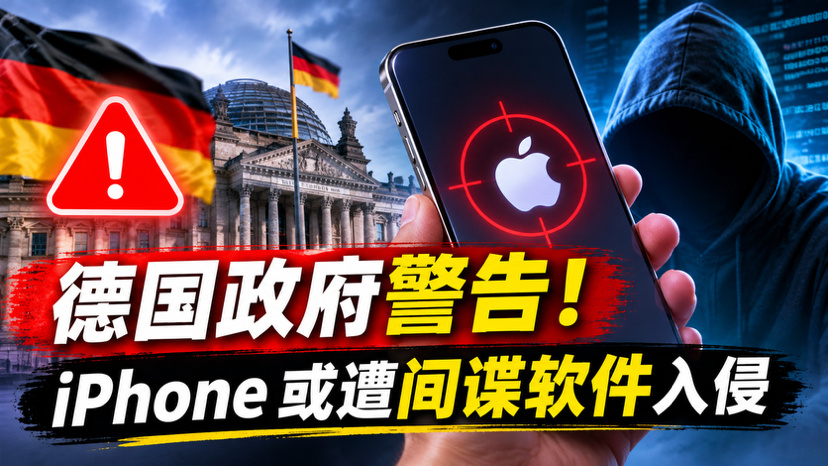
The German government sounds the alarm! Officials’ iPhones targeted by spyware, with no click required for an attack!
Is your phone definitely safe if you don’t click links or download files?
Germany recently confirmed that some government officials and members of the Bundestag received spyware attack warnings from Apple on their iPhones.
Germany’s Digital Minister Karsten Wildberger has confirmed the incident, and the Federal Office for Information Security (BSI) has also issued a security alert to those affected.
According to reports, the attacks involved highly sophisticated commercial spyware. Some attacks can even exploit zero-click vulnerabilities to break into devices without any action by the user.
Once infected, attackers may be able to read encrypted chats, access contacts and location data, and even remotely activate the microphone and camera.
For now, the attackers’ identities, the number of people affected, and whether any data was successfully stolen have yet to be confirmed.
The scariest part is this: you may have done nothing at all, yet your phone could already be a tool for someone to spy on you.
Smartphones are becoming more powerful, but true security has never been just about setting a password.
1
444
·
--
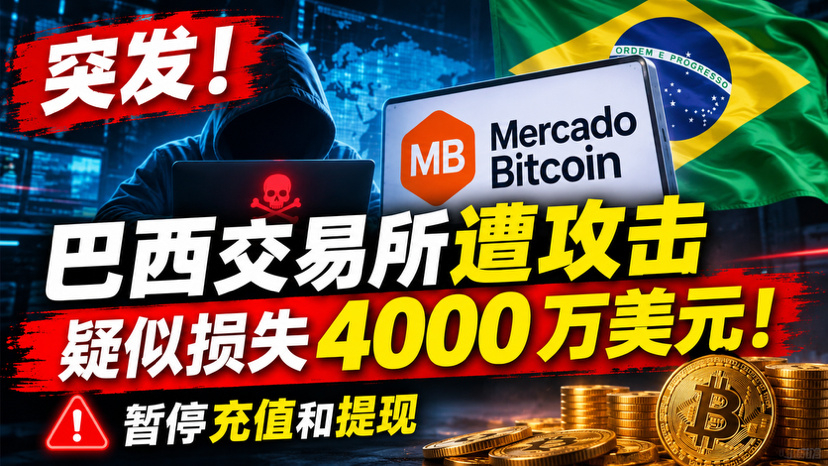
Breaking: Major Brazilian cryptocurrency exchange attacked, losses estimated at $40 million!
The fallout from Binance’s security incident has yet to settle, and another major exchange has reported a security breach.
According to reports, Brazilian cryptocurrency exchange Mercado Bitcoin was targeted in a security attack involving at least 10 blockchains. The initial estimate puts the volume of suspicious fund transfers at more than $40 million.
After the incident, the exchange urgently suspended deposits and withdrawals to contain the risk and investigate the movement of funds.
Notably, the exchange later confirmed that a security incident had occurred, but said it had taken containment measures and that customer funds were unaffected.
For now, the $40 million figure remains an initial estimate from a third-party security firm. The actual losses and the point of entry used in the attack have yet to be fully determined.
What deserves the most attention here is not just the $40 million, but the fact that the attack involved multiple blockchain networks.
From hot wallet management and private key protection to the custody of assets across multiple chains, a vulnerability at any point could give attackers a way in.
The recent string of security incidents in the crypto world is a wake-up call for all investors:
For large holdings intended for the long term, consider cold wallets, independent custody, and diversifying risk. Who will be next?
2
2
4.1k
·
--
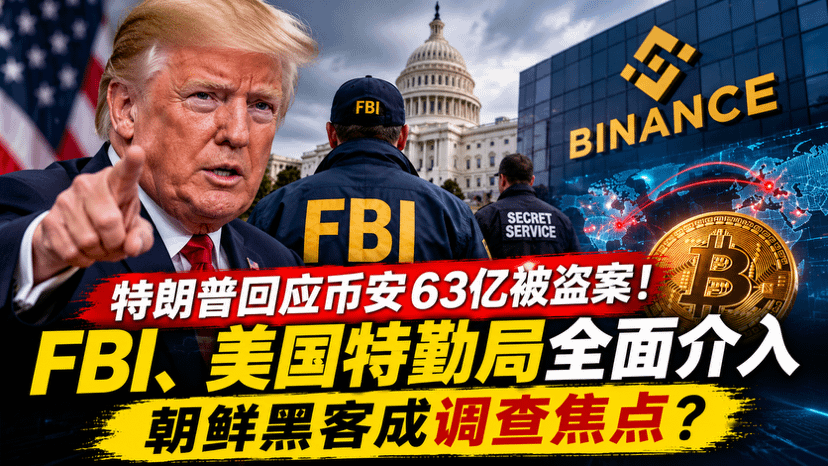
Trump Responds to Binance’s $6.3 Billion Theft! FBI and U.S. Secret Service Join Investigation as North Korean Hackers Become a Key Focus?
The $6.3 billion theft from Binance is escalating into an international cybercrime investigation.
On October 30 local time, reporters asked U.S. President Donald Trump at the White House whether the attack was linked to North Korean hackers.
Trump replied:
“We don’t know yet. We’re investigating.”
Several key developments have been confirmed so far:
1. The FBI has joined the investigation: It is working with government agencies and private-sector organizations to assess the scope and potential impact of the attack.
2. The U.S. Secret Service has begun tracking the funds: It is working with industry organizations such as Circle to identify, track, freeze, and recover the stolen funds.
3. North Korean hacking groups are under close suspicion: TRM Labs attributed the attack with high confidence to TraderTraitor, a North Korea-linked group, and Chainalysis also believes the group was likely involved.
4. Efforts to recover the funds are ongoing: Binance says it will cover users’ losses and is working with industry partners. As of the reports, about $3 billion in assets had been frozen.
What makes this incident truly worth watching is not just the $6.3 billion in losses.
If TraderTraitor’s involvement is ultimately confirmed, it will once again highlight the threat that North Korea-linked cyberattack groups pose to the global crypto-financial system.
However, U.S. authorities have not yet announced a final attribution.
With the FBI and U.S. Secret Service now tracking the funds on-chain, this is no longer just a security battle between exchanges—it is a contest between the global financial system and transnational cybercrime.
The key questions to watch next are: Can the remaining funds be recovered? Can the attackers behind the operation be positively identified?
1
1
2k
·
--
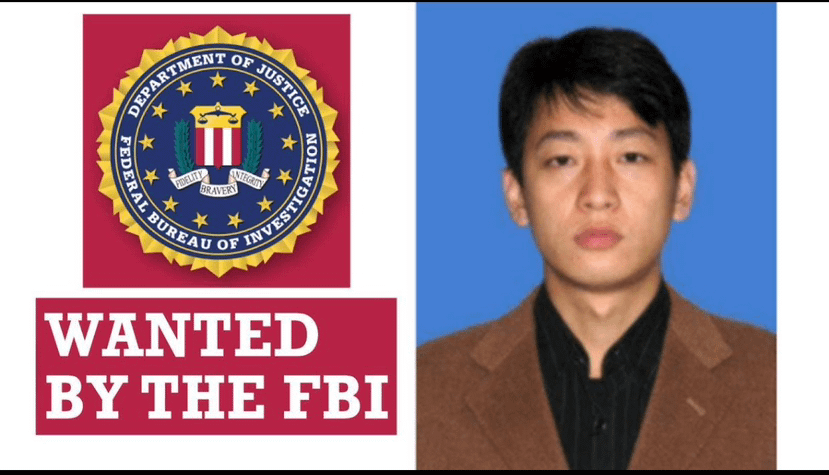
North Korean hacker on the FBI’s Most Wanted list: Park Jin Hyok—what lies behind the name?
One name that the entire crypto industry should watch: Park Jin Hyok.
He is not someone the FBI has only just begun pursuing. The United States charged him criminally as early as 2018, then named him in a 2020 indictment targeting three North Korean hackers.
The U.S. Department of Justice accused him of participating in operations involving global cyberattacks and financial crimes.
A few key revelations worth noting:
* Sony Pictures attack: The U.S. Department of Justice included the 2014 cyberattack on Sony Pictures in the related indictment.
* WannaCry ransomware: Operations linked to North Korean hackers caused computer systems around the world to grind to a halt.
* Bangladesh Bank heist: Related hacking operations targeted the international banking system in an attempt to transfer huge sums of money.
* Bybit incident: In 2025, about $1.5 billion in crypto assets was stolen. The FBI formally attributed the incident to North Korean cyber actors known as TraderTraitor.
* Binance’s $6.3 billion incident: Both TRM Labs and Chainalysis believe TraderTraitor was likely involved, but Binance is still working with law enforcement to confirm the attackers’ identities.
One important caveat: Park Jin Hyok, Lazarus, and TraderTraitor are linked organizationally, but that does not mean Park himself was involved in every incident listed above.
The real question is this:
When cyberattacks, infiltration of financial systems, and on-chain fund transfers converge, crypto security is no longer dealing with ordinary hackers.
The blockchain leaves a record of transactions—but who can ultimately trace the funds, freeze the assets, and identify the people behind the operation?
This battle is far from over.
2
6
12.9k
·
--
Verified
Wall Street is starting to embrace Hyperliquid: Are traditional exchanges about to be transformed?
A signal worth paying attention to has emerged.
ICE, the parent company of the NYSE, is working with Trade[XYZ] on plans to bring a perpetual futures market powered by Hyperliquid technology to the United States.
What does this mean?
In the past, traditional assets such as stocks, gold, and crude oil were traded mainly on traditional exchanges. On-chain perpetual futures are now seeking to break through trading-hour and market boundaries, giving users round-the-clock exposure to the prices of different assets.
Hyperliquid is more than just a cryptocurrency trading platform.
It is exploring a new kind of financial trading infrastructure: on-chain trading, transparent settlement, 24/7 markets, and cross-market trading across a wider range of assets.
But controversy has followed.
Don Wilson, founder of DRW, has questioned its trade-prioritization mechanism, liquidity integration, and market fairness.
This shows that traditional finance will not accept DeFi’s rules without question.
In my view, what really matters here is not HYPE’s short-term price movements, but this:
Wall Street is seriously examining how blockchain can transform traditional financial trading systems.
The competition ahead may not simply be between exchanges, but between two kinds of financial infrastructure.
What do you think will dominate global financial trading in the future: on-chain platforms like Hyperliquid, or traditional financial giants like the NYSE?$HYPE

1
800
·
--
Article
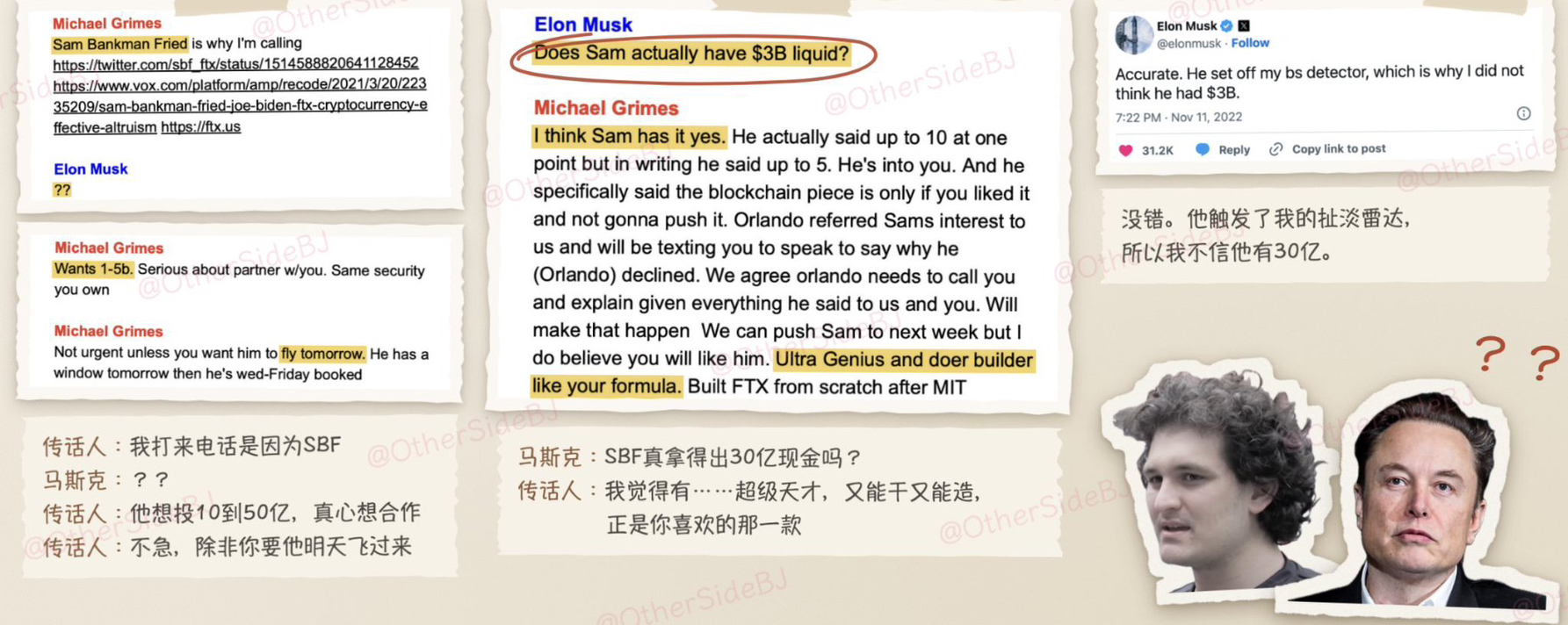
SBF Wanted to Put $5 Billion Into Twitter. Musk Asked Him Just One Question!Musk’s bullshit radar once saw through SBF 😂
In April 2022, Musk was preparing to buy Twitter for $44 billion and was looking everywhere for investors.
At the time, someone relayed a message from FTX founder SBF: he was willing to invest $5 billion and could even help move Twitter onto the blockchain.
SBF was just 30 years old then, worth as much as $24 billion, and at the height of his influence in crypto.
The intermediary also stressed that SBF could fly over to meet at any time. They just needed an hour to work out the $5 billion investment.
After hearing that, Musk simply sent back two question marks.
SBF Wanted to Put $5 Billion Into Twitter. Musk Asked Him Just One Question!
Musk’s bullshit radar once saw through SBF 😂
In April 2022, Musk was preparing to buy Twitter for $44 billion and was looking everywhere for investors.
At the time, someone relayed a message from FTX founder SBF: he was willing to invest $5 billion and could even help move Twitter onto the blockchain.
SBF was just 30 years old then, worth as much as $24 billion, and at the height of his influence in crypto.
The intermediary also stressed that SBF could fly over to meet at any time. They just needed an hour to work out the $5 billion investment.
After hearing that, Musk simply sent back two question marks.
1
5
6.7k
Log in to explore more content
Join global crypto users on Binance Square
⚡️ Get latest and useful information about crypto.
💬 Trusted by the world’s largest crypto exchange.
👍 Discover real insights from verified creators.
Email / Phone number
Trending Topics
BinanceIncidentReport
46,306 views
620 Discussing
29 October 2026 Binance Security Incident: Initial Findings and Response Update
Binance Blog
·309 Likes
·911k views
BinanceReopensWithdrawalsForMoreAssets
160,820 views
1,794 Discussing
BinanceHourlyDepositsExceedWithdrawals
77,715 views
828 Discussing