


老腊肉-kevin
 Square Verified+
美股交易,加密货币|红薯🍠和X:@cryptokevin1688|邀请码|Bind invite code :KEVIN1688|找到学习和可落地的路径,比拼执行力,千万别欺负正在努力和弱小时的你
Open Trade
High-Frequency Trader
11.8 Months
164 Following
46.6K+ Followers
26.2K+ Liked
Posts
Portfolio
All
Quotes
Videos
PINNED

老腊肉-kevin
·
--
Before the U.S. market opens today, Coca-Cola, Corning, and Boeing report earnings. How is the options market betting?
Guys, these three earnings reports before tonight’s market open may be from the same old names, but the options market has already made its stance clear.
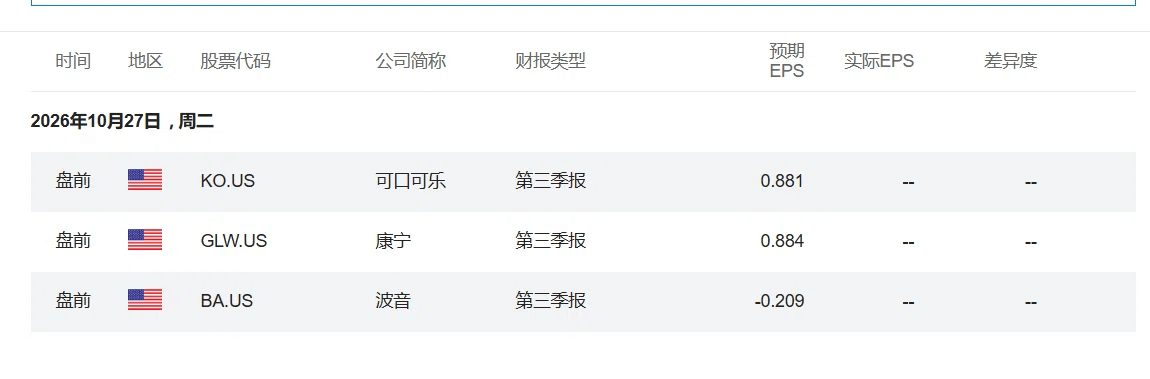
Coca-Cola: EPS is expected at 0.88, with revenue of 129 billion. But the stock is already up 35% this year, and its options Put/Call ratio is 0.99—dead neutral, with neither bulls nor bears willing to make a big bet. What the market is really watching isn’t EPS, but whether things can improve after Asia-Pacific sales rose while price mix fell 9%. More volume, lower prices: lots of sales, but not much profit.
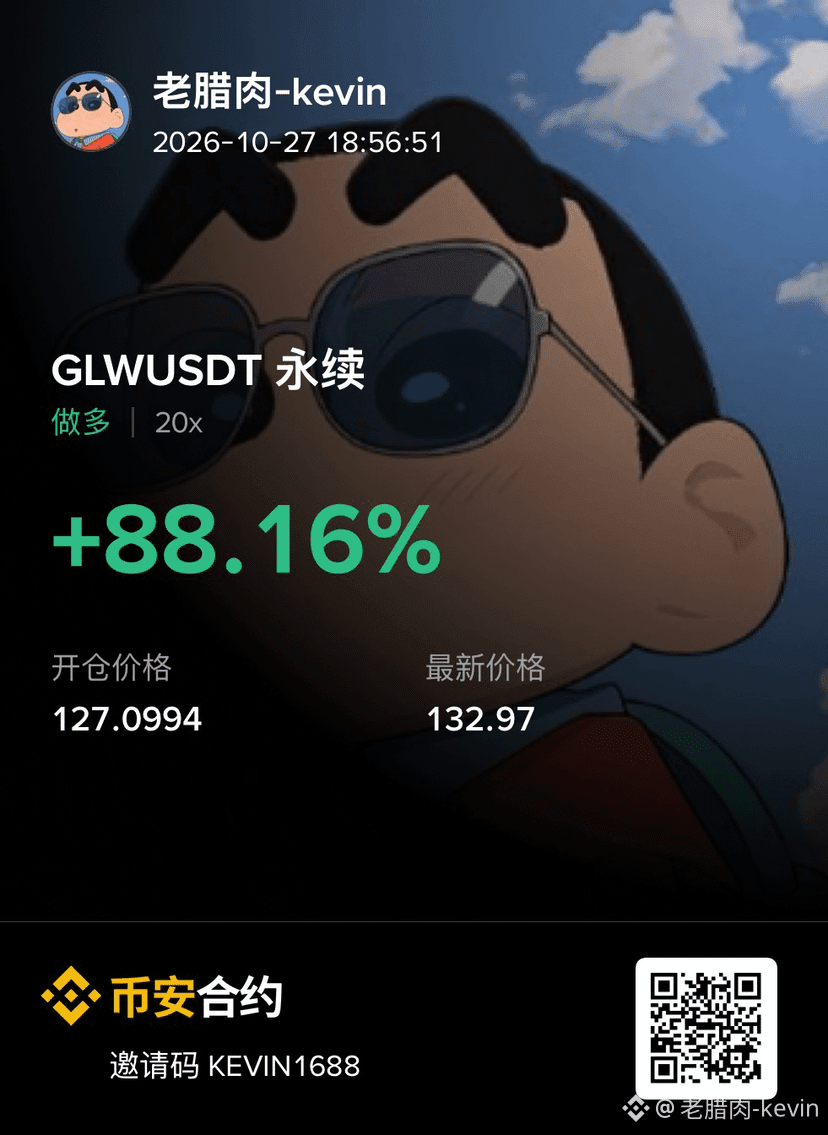
Corning: EPS is expected at 0.88, with revenue of 5 billion. Its options Call/Put ratio is 1.3, tilting bullish. The thesis is solid: demand for fiber optics in AI data centers, plus contracts with Amazon, Nvidia, and Meta. The Zacks model has also tagged it as “likely to beat expectations.” But remember, the stock fell 12% the day after its last earnings report. This one can get hammered even when results are good.
Boeing: a loss of 0.21 is expected, with revenue of 23.8 billion. Options are pricing in a 5.73% move in either direction, well above the 4% average over the past four reports. Betting up or down? Hard to say, but the direction is clear: the market is betting on a big move. The 737 MAX 10 just got certified, but cash-flow guidance is the real make-or-break issue, and the stock is just a step away from its 52-week low.
For Coke, it’s about whether margins can hold up. For Corning, it’s whether the AI story can deliver. For Boeing, it’s whether its cash-flow outlook will make any sense. Options traders are the most honest of all: nobody’s betting on Coke, Corning is leaning bullish but wary of a sell-off, and Boeing is simply a bet on a wild ride. $GLW $KO #美股财报季 #Ondo下周开放OpenAI上市前代币化票据认购
老腊肉-kevin
·
--
Before the U.S. market opens today, Coca-Cola, Corning, and Boeing report earnings. How is the options market betting?
Guys, these three earnings reports before tonight’s market open may be from the same old names, but the options market has already made its stance clear.
Coca-Cola: EPS is expected at 0.88, with revenue of 129 billion. But the stock is already up 35% this year, and its options Put/Call ratio is 0.99—dead neutral, with neither bulls nor bears willing to make a big bet. What the market is really watching isn’t EPS, but whether things can improve after Asia-Pacific sales rose while price mix fell 9%. More volume, lower prices: lots of sales, but not much profit.
Corning: EPS is expected at 0.88, with revenue of 5 billion. Its options Call/Put ratio is 1.3, tilting bullish. The thesis is solid: demand for fiber optics in AI data centers, plus contracts with Amazon, Nvidia, and Meta. The Zacks model has also tagged it as “likely to beat expectations.” But remember, the stock fell 12% the day after its last earnings report. This one can get hammered even when results are good.
Boeing: a loss of 0.21 is expected, with revenue of 23.8 billion. Options are pricing in a 5.73% move in either direction, well above the 4% average over the past four reports. Betting up or down? Hard to say, but the direction is clear: the market is betting on a big move. The 737 MAX 10 just got certified, but cash-flow guidance is the real make-or-break issue, and the stock is just a step away from its 52-week low.
For Coke, it’s about whether margins can hold up. For Corning, it’s whether the AI story can deliver. For Boeing, it’s whether its cash-flow outlook will make any sense. Options traders are the most honest of all: nobody’s betting on Coke, Corning is leaning bullish but wary of a sell-off, and Boeing is simply a bet on a wild ride. $GLW $KO #美股财报季 #Ondo下周开放OpenAI上市前代币化票据认购
Guys, these three earnings reports before tonight’s market open may be from the same old names, but the options market has already made its stance clear.
Coca-Cola: EPS is expected at 0.88, with revenue of 129 billion. But the stock is already up 35% this year, and its options Put/Call ratio is 0.99—dead neutral, with neither bulls nor bears willing to make a big bet. What the market is really watching isn’t EPS, but whether things can improve after Asia-Pacific sales rose while price mix fell 9%. More volume, lower prices: lots of sales, but not much profit.
Corning: EPS is expected at 0.88, with revenue of 5 billion. Its options Call/Put ratio is 1.3, tilting bullish. The thesis is solid: demand for fiber optics in AI data centers, plus contracts with Amazon, Nvidia, and Meta. The Zacks model has also tagged it as “likely to beat expectations.” But remember, the stock fell 12% the day after its last earnings report. This one can get hammered even when results are good.
Boeing: a loss of 0.21 is expected, with revenue of 23.8 billion. Options are pricing in a 5.73% move in either direction, well above the 4% average over the past four reports. Betting up or down? Hard to say, but the direction is clear: the market is betting on a big move. The 737 MAX 10 just got certified, but cash-flow guidance is the real make-or-break issue, and the stock is just a step away from its 52-week low.
For Coke, it’s about whether margins can hold up. For Corning, it’s whether the AI story can deliver. For Boeing, it’s whether its cash-flow outlook will make any sense. Options traders are the most honest of all: nobody’s betting on Coke, Corning is leaning bullish but wary of a sell-off, and Boeing is simply a bet on a wild ride. $GLW $KO #美股财报季 #Ondo下周开放OpenAI上市前代币化票据认购
老腊肉-kevin
·
--
Before the U.S. market opens today, Coca-Cola, Corning, and Boeing report earnings. How is the options market betting?
Guys, these three earnings reports before tonight’s market open may be from the same old names, but the options market has already made its stance clear.
Coca-Cola: EPS is expected at 0.88, with revenue of 129 billion. But the stock is already up 35% this year, and its options Put/Call ratio is 0.99—dead neutral, with neither bulls nor bears willing to make a big bet. What the market is really watching isn’t EPS, but whether things can improve after Asia-Pacific sales rose while price mix fell 9%. More volume, lower prices: lots of sales, but not much profit.
Corning: EPS is expected at 0.88, with revenue of 5 billion. Its options Call/Put ratio is 1.3, tilting bullish. The thesis is solid: demand for fiber optics in AI data centers, plus contracts with Amazon, Nvidia, and Meta. The Zacks model has also tagged it as “likely to beat expectations.” But remember, the stock fell 12% the day after its last earnings report. This one can get hammered even when results are good.
Boeing: a loss of 0.21 is expected, with revenue of 23.8 billion. Options are pricing in a 5.73% move in either direction, well above the 4% average over the past four reports. Betting up or down? Hard to say, but the direction is clear: the market is betting on a big move. The 737 MAX 10 just got certified, but cash-flow guidance is the real make-or-break issue, and the stock is just a step away from its 52-week low.
For Coke, it’s about whether margins can hold up. For Corning, it’s whether the AI story can deliver. For Boeing, it’s whether its cash-flow outlook will make any sense. Options traders are the most honest of all: nobody’s betting on Coke, Corning is leaning bullish but wary of a sell-off, and Boeing is simply a bet on a wild ride. $GLW $KO #美股财报季 #Ondo下周开放OpenAI上市前代币化票据认购
Guys, these three earnings reports before tonight’s market open may be from the same old names, but the options market has already made its stance clear.
Coca-Cola: EPS is expected at 0.88, with revenue of 129 billion. But the stock is already up 35% this year, and its options Put/Call ratio is 0.99—dead neutral, with neither bulls nor bears willing to make a big bet. What the market is really watching isn’t EPS, but whether things can improve after Asia-Pacific sales rose while price mix fell 9%. More volume, lower prices: lots of sales, but not much profit.
Corning: EPS is expected at 0.88, with revenue of 5 billion. Its options Call/Put ratio is 1.3, tilting bullish. The thesis is solid: demand for fiber optics in AI data centers, plus contracts with Amazon, Nvidia, and Meta. The Zacks model has also tagged it as “likely to beat expectations.” But remember, the stock fell 12% the day after its last earnings report. This one can get hammered even when results are good.
Boeing: a loss of 0.21 is expected, with revenue of 23.8 billion. Options are pricing in a 5.73% move in either direction, well above the 4% average over the past four reports. Betting up or down? Hard to say, but the direction is clear: the market is betting on a big move. The 737 MAX 10 just got certified, but cash-flow guidance is the real make-or-break issue, and the stock is just a step away from its 52-week low.
For Coke, it’s about whether margins can hold up. For Corning, it’s whether the AI story can deliver. For Boeing, it’s whether its cash-flow outlook will make any sense. Options traders are the most honest of all: nobody’s betting on Coke, Corning is leaning bullish but wary of a sell-off, and Boeing is simply a bet on a wild ride. $GLW $KO #美股财报季 #Ondo下周开放OpenAI上市前代币化票据认购
老腊肉-kevin
·
--
#比特币再度跌破8万美元 Bitcoin has fallen to its knees again. MicroStrategy has stopped buying, ETFs have gone soft, and where will the fresh capital come from?
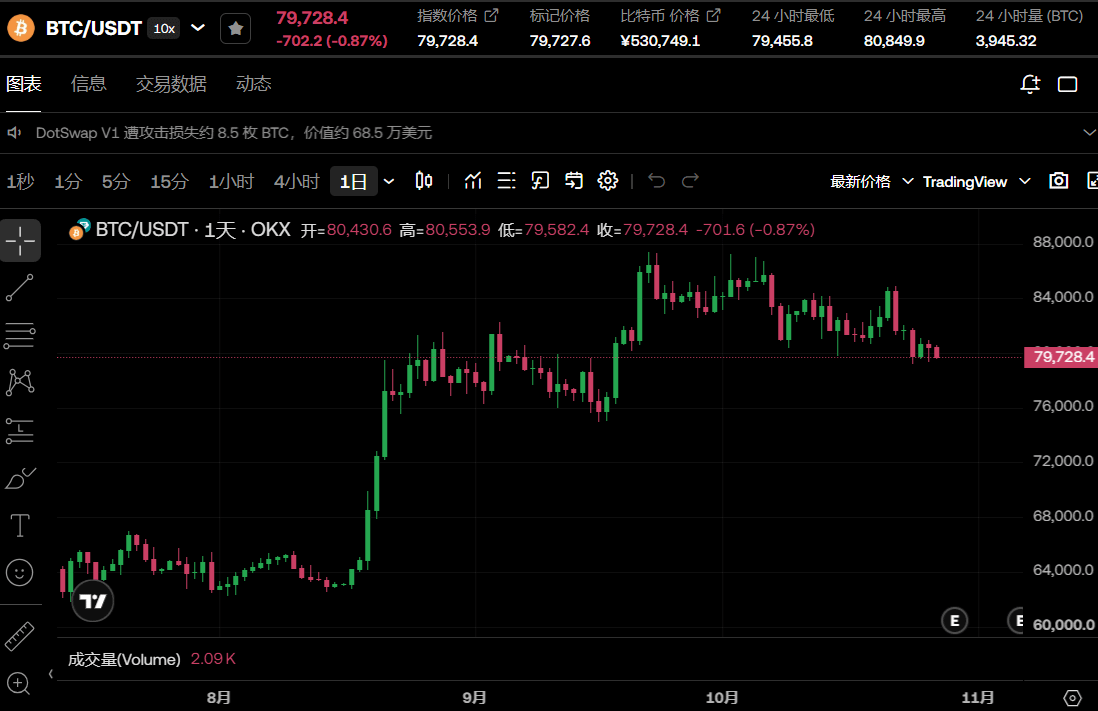
Guys, BTC is currently at 80,129. It still looks like it’s holding above 80K, but something feels off in the market. Over the past 24 hours, $154 million in positions were liquidated across the crypto market, including $118 million in longs. Everyone betting on a rally got wiped out. The 79,400–79,600 range is this week’s last line of defense: buyers have stepped in every time the price has dipped there, but each rebound has stalled at 80,800.
Two longtime bulls have hit the brakes at the same time.
MicroStrategy didn’t buy a single BTC last week, ending its five-week buying streak. Instead, it spent $205 million on preferred stock buybacks. Its cash balance dropped from $447 million to $242 million, and its ammunition is visibly running low.
The ETF picture is even messier. They posted net inflows of $301 million for the week, but $773 million flowed out on Thursday and Friday. Thursday’s $636 million outflow was the largest single-day outflow since October. The Coinbase Premium Index has been negative for 33 consecutive days. U.S. spot buying is genuinely exhausted.
Where will the fresh capital come from?
Honestly, there’s no sign of it right now. The Fed’s decision is due early Thursday, and the market is betting it will hold steady, but expectations of a December rate hike have already surged to nearly 80%. Earnings reports from the tech giants are dropping one after another this week, and the AI narrative is sucking up a lot of risk appetite. Investors would rather bet on Nvidia than touch crypto. The risk of MicroStrategy being dropped from the MSCI index is still hanging over it; we’ll know on November 11, and passive funds could pull out in another wave.
80K is a cover-up, not a bottom. With MicroStrategy pausing its buying, ETFs acting erratically, and macro pressures mounting, don’t expect big money to come in and lift the market anytime soon. If you’re waiting for fresh capital, watch for two signals: the Fed softening its tone, or MicroStrategy pulling the trigger again. $BTC $ETH $MSTR #Strategy未购比特币斥资2.05亿美元回购STRC
老腊肉-kevin
·
--
#比特币再度跌破8万美元 Bitcoin has fallen to its knees again. MicroStrategy has stopped buying, ETFs have gone soft, and where will the fresh capital come from?
Guys, BTC is currently at 80,129. It still looks like it’s holding above 80K, but something feels off in the market. Over the past 24 hours, $154 million in positions were liquidated across the crypto market, including $118 million in longs. Everyone betting on a rally got wiped out. The 79,400–79,600 range is this week’s last line of defense: buyers have stepped in every time the price has dipped there, but each rebound has stalled at 80,800.
Two longtime bulls have hit the brakes at the same time.
MicroStrategy didn’t buy a single BTC last week, ending its five-week buying streak. Instead, it spent $205 million on preferred stock buybacks. Its cash balance dropped from $447 million to $242 million, and its ammunition is visibly running low.
The ETF picture is even messier. They posted net inflows of $301 million for the week, but $773 million flowed out on Thursday and Friday. Thursday’s $636 million outflow was the largest single-day outflow since October. The Coinbase Premium Index has been negative for 33 consecutive days. U.S. spot buying is genuinely exhausted.
Where will the fresh capital come from?
Honestly, there’s no sign of it right now. The Fed’s decision is due early Thursday, and the market is betting it will hold steady, but expectations of a December rate hike have already surged to nearly 80%. Earnings reports from the tech giants are dropping one after another this week, and the AI narrative is sucking up a lot of risk appetite. Investors would rather bet on Nvidia than touch crypto. The risk of MicroStrategy being dropped from the MSCI index is still hanging over it; we’ll know on November 11, and passive funds could pull out in another wave.
80K is a cover-up, not a bottom. With MicroStrategy pausing its buying, ETFs acting erratically, and macro pressures mounting, don’t expect big money to come in and lift the market anytime soon. If you’re waiting for fresh capital, watch for two signals: the Fed softening its tone, or MicroStrategy pulling the trigger again. $BTC $ETH $MSTR #Strategy未购比特币斥资2.05亿美元回购STRC
Guys, BTC is currently at 80,129. It still looks like it’s holding above 80K, but something feels off in the market. Over the past 24 hours, $154 million in positions were liquidated across the crypto market, including $118 million in longs. Everyone betting on a rally got wiped out. The 79,400–79,600 range is this week’s last line of defense: buyers have stepped in every time the price has dipped there, but each rebound has stalled at 80,800.
Two longtime bulls have hit the brakes at the same time.
MicroStrategy didn’t buy a single BTC last week, ending its five-week buying streak. Instead, it spent $205 million on preferred stock buybacks. Its cash balance dropped from $447 million to $242 million, and its ammunition is visibly running low.
The ETF picture is even messier. They posted net inflows of $301 million for the week, but $773 million flowed out on Thursday and Friday. Thursday’s $636 million outflow was the largest single-day outflow since October. The Coinbase Premium Index has been negative for 33 consecutive days. U.S. spot buying is genuinely exhausted.
Where will the fresh capital come from?
Honestly, there’s no sign of it right now. The Fed’s decision is due early Thursday, and the market is betting it will hold steady, but expectations of a December rate hike have already surged to nearly 80%. Earnings reports from the tech giants are dropping one after another this week, and the AI narrative is sucking up a lot of risk appetite. Investors would rather bet on Nvidia than touch crypto. The risk of MicroStrategy being dropped from the MSCI index is still hanging over it; we’ll know on November 11, and passive funds could pull out in another wave.
80K is a cover-up, not a bottom. With MicroStrategy pausing its buying, ETFs acting erratically, and macro pressures mounting, don’t expect big money to come in and lift the market anytime soon. If you’re waiting for fresh capital, watch for two signals: the Fed softening its tone, or MicroStrategy pulling the trigger again. $BTC $ETH $MSTR #Strategy未购比特币斥资2.05亿美元回购STRC
老腊肉-kevin
·
--
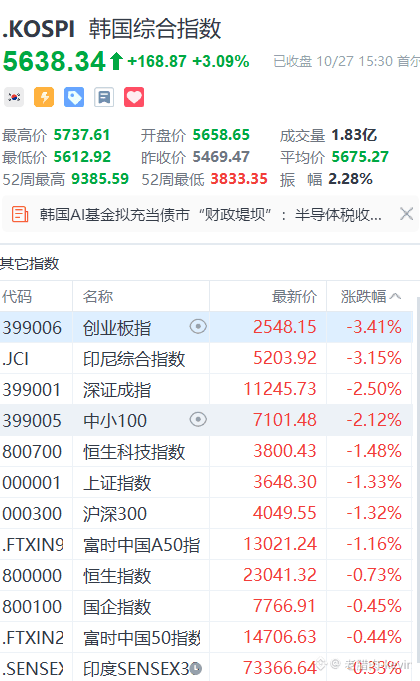
#韩国考虑对加密交易所征教育税 South Korean, Hong Kong and A-share market close review (Oct 27): U.S. semiconductor stocks surge—where is money flowing out of South Korean, Hong Kong and A-share markets, and where is it moving into?
The Philadelphia Semiconductor Index jumped 3% last night, with Nvidia up 3% and ARM up 6%. Money did move when Asian markets opened today, but not quite in the direction you might expect.
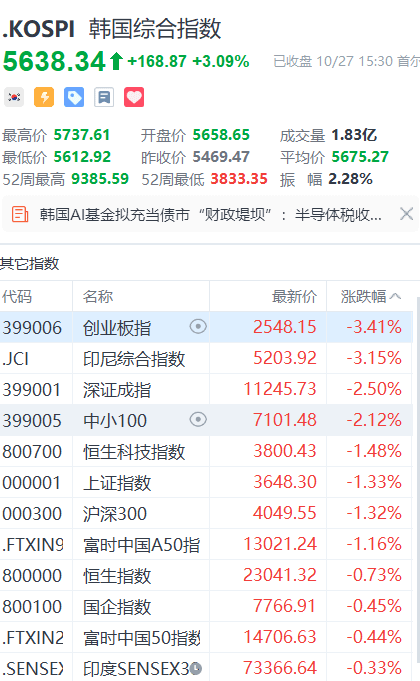
South Korean stocks were the strongest. The KOSPI closed up 3.09%, with SK Hynix surging 5.18% and Samsung up 4.23%. Foreign investors were net buyers of 220.8 billion won in Samsung, but actually sold 41 billion won worth of Hynix. In other words: foreign investors were buying back into Samsung, while Hynix’s gains came from short covering—not fresh money coming in.
In Hong Kong, the Hang Seng Index rose 118 points to close at 23,211, but mainland investors continued pulling money out for a ninth straight day, withdrawing another 2.08 billion today. Alibaba saw 600 million in net selling, CNOOC 500 million, and SMIC 310 million. Where did the money go? Zhipu attracted 430 million, Baidu 270 million, and UBTECH 140 million. Money is being pulled out of big caps and flowing into AI applications and small robots.
A-shares were the clearest signal. The Shanghai Composite fell 1.33%, the ChiNext Index dropped 3.41%, and trading volume shrank to 1.47 trillion yuan. Major investors dumped a net 7.6 billion yuan worth of semiconductor stocks, while components and software stocks saw broad-based outflows. Banks, however, attracted 770 million yuan against the trend, and China Construction Bank and ICBC hit new highs. The indices are falling, money is taking cover, and the defensive positioning is unmistakable.
The surge in U.S. semiconductor stocks was someone else’s excitement. What Asian markets actually did today was this: short covering in South Korean stocks, continued outflows of mainland funds from Hong Kong, and money pulled out of A-share tech stocks and parked in banks. $KORU $SOXL $SKHY
老腊肉-kevin
·
--
SK Hynix reports earnings tonight—and has the options market already voted with real money?
Folks, SK Hynix reports its Q3 results after the U.S. market closes tonight. The conference call is at 9 a.m. tomorrow in Korea. This stock isn’t about betting on earnings anymore—it’s about betting on the dividend.
There’s just one thing the market cares about most: whether that 16 trillion won special dividend is happening. The company says it’s “not yet confirmed,” but it has put in writing that it will announce an additional shareholder return plan after the board meeting on the 28th.
The 40 trillion won buyback was already completed ahead of schedule. Now the company is sitting on proceeds from selling its stake in Kioxia, and market expectations are sky-high. Earnings themselves? Revenue is expected to hit 99 trillion won, more than tripling year over year—but the company missed expectations in Q2, so nobody’s willing to make any guarantees this time.
How is the options market positioning? Bullish, but restrained.
Last week, traders collected premium on $1.49 million worth of 190/150 Bull Put Spreads, while $480,000 went into 200–225 Bull Call Spreads. The Put/Call ratio is 0.48, well below the usual 0.74, with calls clearly in the lead. But don’t get carried away—the options market is pricing in an 8.58% post-earnings move. Both bulls and bears are betting on the direction; this isn’t a one-way giveaway.
My take: the current price is 142.62, nearly half its 52-week high.
Options traders are betting it will “hold 140 and test 200,” but that hinges on the dividend plan not disappointing. An earnings beat would be icing on the cake; a weaker-than-expected dividend would be the real problem. Tonight, the key thing to watch isn’t the revenue figure—it’s the exact words about shareholder returns on the conference call. $SKHY $SKHYNIX $KORU

老腊肉-kevin
·
--
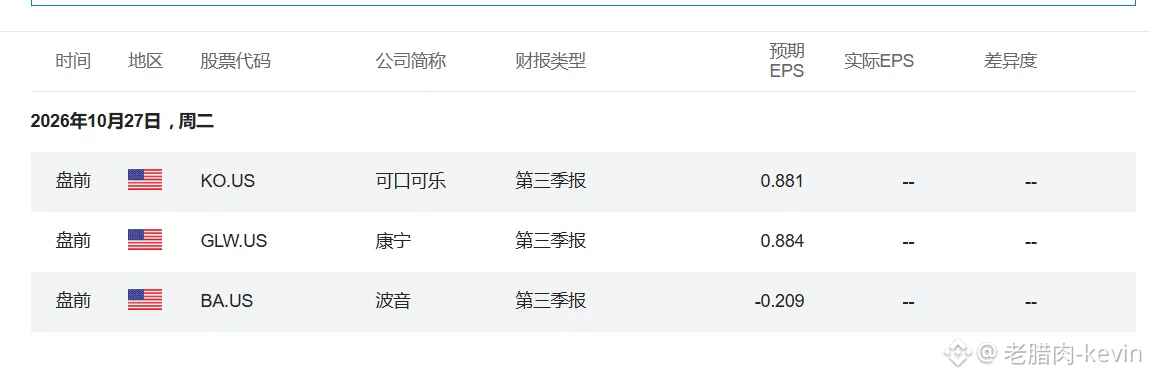
Before the U.S. market opens today, Coca-Cola, Corning, and Boeing report earnings. How is the options market betting?
Guys, these three earnings reports before tonight’s market open may be from the same old names, but the options market has already made its stance clear.
Coca-Cola: EPS is expected at 0.88, with revenue of 129 billion. But the stock is already up 35% this year, and its options Put/Call ratio is 0.99—dead neutral, with neither bulls nor bears willing to make a big bet. What the market is really watching isn’t EPS, but whether things can improve after Asia-Pacific sales rose while price mix fell 9%. More volume, lower prices: lots of sales, but not much profit.
Corning: EPS is expected at 0.88, with revenue of 5 billion. Its options Call/Put ratio is 1.3, tilting bullish. The thesis is solid: demand for fiber optics in AI data centers, plus contracts with Amazon, Nvidia, and Meta. The Zacks model has also tagged it as “likely to beat expectations.” But remember, the stock fell 12% the day after its last earnings report. This one can get hammered even when results are good.
Boeing: a loss of 0.21 is expected, with revenue of 23.8 billion. Options are pricing in a 5.73% move in either direction, well above the 4% average over the past four reports. Betting up or down? Hard to say, but the direction is clear: the market is betting on a big move. The 737 MAX 10 just got certified, but cash-flow guidance is the real make-or-break issue, and the stock is just a step away from its 52-week low.
For Coke, it’s about whether margins can hold up. For Corning, it’s whether the AI story can deliver. For Boeing, it’s whether its cash-flow outlook will make any sense. Options traders are the most honest of all: nobody’s betting on Coke, Corning is leaning bullish but wary of a sell-off, and Boeing is simply a bet on a wild ride. $GLW $KO #美股财报季 #Ondo下周开放OpenAI上市前代币化票据认购
Guys, these three earnings reports before tonight’s market open may be from the same old names, but the options market has already made its stance clear.
Coca-Cola: EPS is expected at 0.88, with revenue of 129 billion. But the stock is already up 35% this year, and its options Put/Call ratio is 0.99—dead neutral, with neither bulls nor bears willing to make a big bet. What the market is really watching isn’t EPS, but whether things can improve after Asia-Pacific sales rose while price mix fell 9%. More volume, lower prices: lots of sales, but not much profit.
Corning: EPS is expected at 0.88, with revenue of 5 billion. Its options Call/Put ratio is 1.3, tilting bullish. The thesis is solid: demand for fiber optics in AI data centers, plus contracts with Amazon, Nvidia, and Meta. The Zacks model has also tagged it as “likely to beat expectations.” But remember, the stock fell 12% the day after its last earnings report. This one can get hammered even when results are good.
Boeing: a loss of 0.21 is expected, with revenue of 23.8 billion. Options are pricing in a 5.73% move in either direction, well above the 4% average over the past four reports. Betting up or down? Hard to say, but the direction is clear: the market is betting on a big move. The 737 MAX 10 just got certified, but cash-flow guidance is the real make-or-break issue, and the stock is just a step away from its 52-week low.
For Coke, it’s about whether margins can hold up. For Corning, it’s whether the AI story can deliver. For Boeing, it’s whether its cash-flow outlook will make any sense. Options traders are the most honest of all: nobody’s betting on Coke, Corning is leaning bullish but wary of a sell-off, and Boeing is simply a bet on a wild ride. $GLW $KO #美股财报季 #Ondo下周开放OpenAI上市前代币化票据认购
老腊肉-kevin
·
--
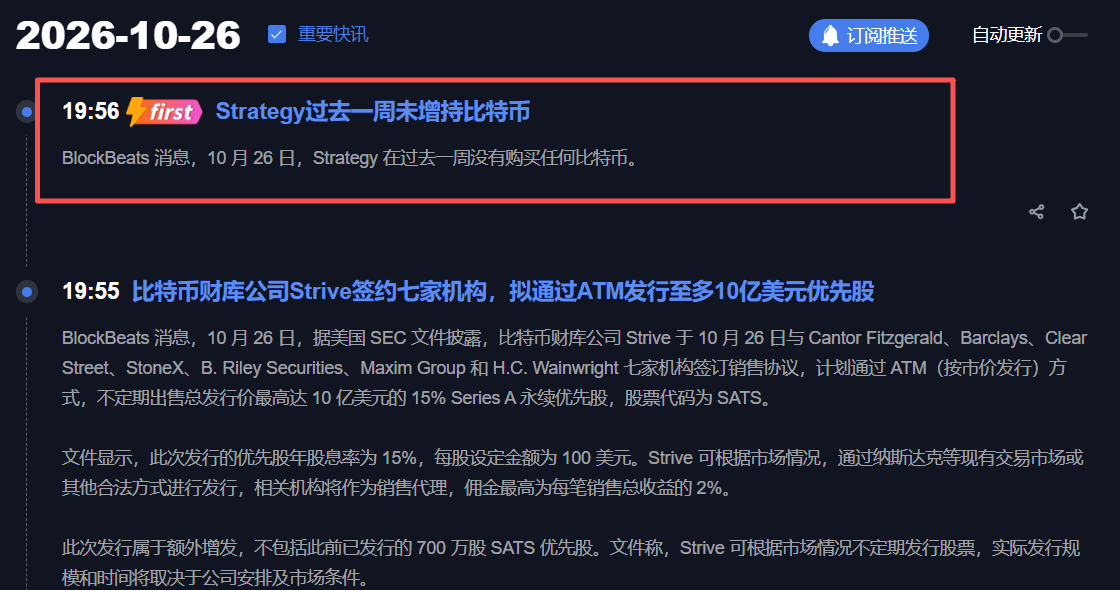
#strategy市值超越纳斯达克跻身全球前400 MicroStrategy isn’t buying Bitcoin anymore—should we be worried?
Guys, I took a quick look at MSTR before the market opened. Its market cap just overtook Nasdaq’s, putting it among the world’s top 400 companies. You’d think Saylor would be banging the drum and buying more. But nope—not a single purchase this week.
Don’t rush to say, “BTC is too expensive to buy.”
The real story is in the cash flows: in the same week, MSTR spent $193 million buying back its own STRC preferred stock, while it spent just $22 million on Bitcoin. It’s still spending plenty—but the priorities have changed.
It’s not that Bitcoin is too expensive. The preferred stock dividends are starting to eat through its cash flow. STRC pays an annualized 12% dividend, and the more it issues, the harder those dollar-denominated interest payments weigh on the company.
Saylor’s focus now is buying back high-interest debt to reduce future fixed costs, rather than continuing to pour money into Bitcoin.
Now for the pre-market action. BTC has already fallen below $80,000 today, trading around $80,200, with risk aversion running high ahead of the FOMC. MSTR is hovering around $141.6 pre-market, after closing down a little over 3% yesterday.
This price action shows that the market is doing the math too: if your market cap is propped up by Bitcoin, Bitcoin is falling, and you’re not adding to your position, what’s going to support the premium? $MSTR $BTC $ETH #Strategy未购比特币斥资2.05亿美元回购STRC
老腊肉-kevin
·
--
#bitmine增持10452枚eth Bitmine just scooped up another 10,000 ETH—is Tom Lee running out of bullets?
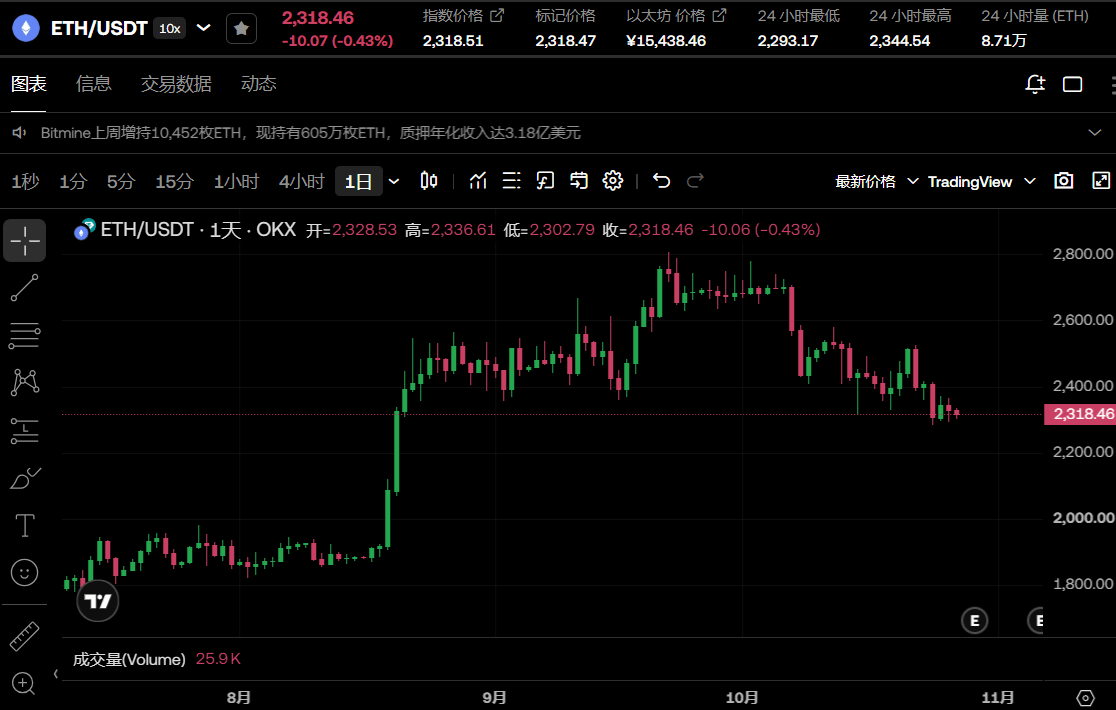
Guys, Tom Lee’s Bitmine bought another 10,452 ETH last week, bringing its total holdings to 6.05 million ETH, or 4.95% of Ethereum’s circulating supply. It’s just 58,000 ETH short of the “5% target” he’s been talking about for ages.
But here’s one detail to keep an eye on: the buying pace is slowing. It scooped up 15,112 ETH in the week of October 4, 12,535 in the week of October 19, and just 10,452 last week. The ammo is dwindling—not because it doesn’t want to buy, but because it’s nearing the limit. Bitmine has said that 5% is the ceiling, and it will stop once it gets there.
Now look at the market. ETH is currently at $2,329, up 0.59% over 24 hours, but down 4.9% over seven days and 13% over the past month. BMNR closed at $20.95 last night, down 6.47%, after hitting an intraday low of $20.93. ETH hasn’t crashed, but BMNR has already buckled. The market is pricing in one question: once Bitmine stops buying, who will step in?
My take is simple: Tom Lee’s latest 10,000-plus ETH purchase is “buying on momentum,” not “aggressively buying the dip.” The 5% target is within reach, and the diminishing marginal buying pressure from here is no secret.
In the short term, ETH is being propped up by a corporate treasury accumulation narrative, à la MicroStrategy. But BMNR’s drop is telling you that smart money is already heading for the exits. A catch-up rally? That depends on whether a second Tom Lee steps up. More downside? BMNR’s price action has already given you the answer.
Keep an eye on one number: when will it hit 5%? That day will mark the end of this phase of the corporate crypto treasury accumulation narrative. $ETH $BMNR #以太坊跌破2300美元
老腊肉-kevin
·
--
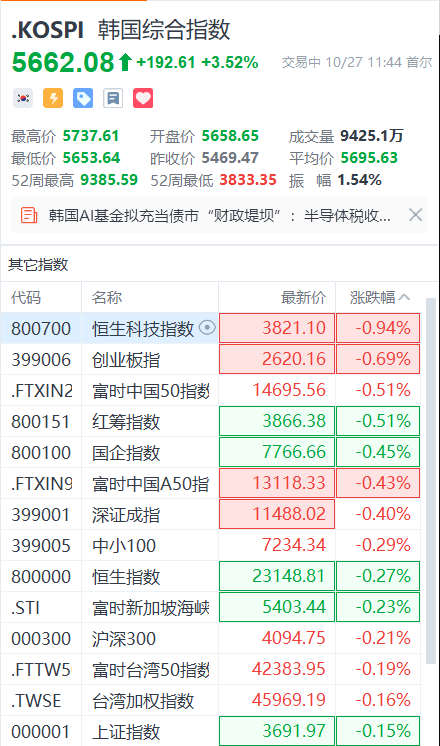
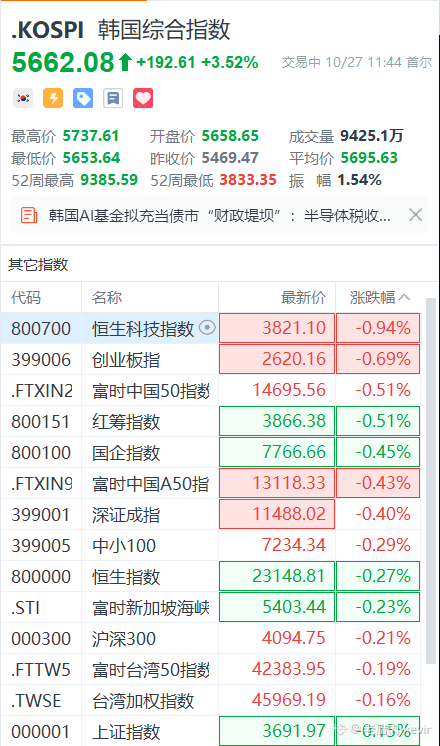
#anthropic滚动12个月营收增长约1200% Korean, Hong Kong, and A-share intraday market briefing (October 27): U.S. semiconductor stocks surge—which sectors are funds moving out of, and where are they heading?
The Philadelphia Semiconductor Index jumped 2.82% last night. ARM rose 6%, and Intel gained 4%. You'd expect Asia's chip stocks to catch some of that upside today, but looking at the market, the money simply didn't flow this way.
South Korea was the wildest market.
The KOSPI surged more than 4% today, with SK Hynix soaring 6.8% and Samsung up 5%. But this rally was a catch-up move driven by the upbeat mood on Wall Street overnight. Yesterday, foreign investors were hammering Korean stocks over AI investment costs and oil prices. Today's move is short-covering, not fresh money coming in.
In Hong Kong, mainland Chinese investors' southbound funds have recorded net outflows for nine consecutive days, with another HK$2.08 billion flowing out today. Alibaba saw HK$600 million in net selling, CNOOC HK$500 million, and SMIC HK$310 million. Where did the money go? Zhipu AI attracted HK$430 million, Baidu HK$270 million, and UBTECH HK$140 million. In other words: money is being pulled out of large caps and flowing into AI applications and small robotics companies.
A-shares were the most honest. The three major indexes turned negative, and more than 2,900 stocks fell. Major funds pulled out of AI hardware across the board: 6.6 billion yuan from components, 4.8 billion from semiconductors, and 4.5 billion from communications equipment—a total of 16 billion yuan. But the humanoid robotics sector bucked the trend, attracting 2.6 billion yuan, while digital chip design drew in 990 million yuan. The indexes are down, but money is still buying—someone is positioning for an opportunity.
The big rally in U.S. semiconductor stocks was someone else's party. What Asian markets were really doing today was pulling money out of AI hardware and shifting it toward robotics, AI applications, and defensive sectors. South Korea saw a short-covering rebound, Hong Kong continued to see southbound funds flow out, and A-shares saw buying amid the decline, with capital rotating between sectors. $KORU $ZHIPU $SKHYNIX

Log in to explore more content