

ametisto and future canvas
7.1k Posts

ametisto and future canvas
Report
Block User
Futures crypto insights & trading trends in DE, EN, ES, PT & FR. Market psychology, setups and next-move opportunities. TikTok:@futurecanvas
Occasional Trader
1.8 Years
418 Following
654 Followers
3.9K+ Liked
Posts
All
Quotes
See translation
$SPCX.US SpaceX is with approximately $17.66B in volume, but shares are under pressure today. Reports that SpaceX is considering raising roughly $40 billion in debt to purchase NVIDIA AI chips have raised concerns about the scale of its capital spending. The financing would reportedly include bank loans and investment-grade bonds.
Key point: investors are questioning how aggressively SpaceX should leverage its balance sheet to build its AI infrastructure.
$SPCX.US SpaceX is with approximately $17.66B in volume, but shares are under pressure today. Reports that SpaceX is considering raising roughly $40 billion in debt to purchase NVIDIA AI chips have raised concerns about the scale of its capital spending. The financing would reportedly include bank loans and investment-grade bonds.
Key point: investors are questioning how aggressively SpaceX should leverage its balance sheet to build its AI infrastructure.
Key point: investors are questioning how aggressively SpaceX should leverage its balance sheet to build its AI infrastructure.
NVDAB-0.86%
SPCXUS-0.08%
123
See translation
$MU.US Micron is showing a strong rebound despite significant labor uncertainty in Taiwan. About 99% of 1,994 union members at Micron’s Taoyuan facility voted in favor of strike authorization, raising concerns about potential disruption to DRAM and HBM production. At the same time, D.A. Davidson raised its price target dramatically to $3,000, citing sustained AI-driven memory demand.
Key point: extremely bullish AI-memory fundamentals are offsetting near-term labor concerns.
$MU.US Micron is showing a strong rebound despite significant labor uncertainty in Taiwan. About 99% of 1,994 union members at Micron’s Taoyuan facility voted in favor of strike authorization, raising concerns about potential disruption to DRAM and HBM production. At the same time, D.A. Davidson raised its price target dramatically to $3,000, citing sustained AI-driven memory demand.
Key point: extremely bullish AI-memory fundamentals are offsetting near-term labor concerns.
Key point: extremely bullish AI-memory fundamentals are offsetting near-term labor concerns.
MUUS-0.16%
123
See translation
$NVDA.US remains the most heavily traded stock, with about $20.48B in volume. The stock is still hovering near historic highs, with NVIDIA approaching the $6 trillion market-cap milestone. However, today’s broader market pullback, driven by higher Treasury yields and oil prices, is weighing on high-growth technology shares.
Key point: AI remains the dominant catalyst, but valuation and macro conditions are becoming increasingly important.
$NVDA.US remains the most heavily traded stock, with about $20.48B in volume. The stock is still hovering near historic highs, with NVIDIA approaching the $6 trillion market-cap milestone. However, today’s broader market pullback, driven by higher Treasury yields and oil prices, is weighing on high-growth technology shares.
Key point: AI remains the dominant catalyst, but valuation and macro conditions are becoming increasingly important.
Key point: AI remains the dominant catalyst, but valuation and macro conditions are becoming increasingly important.
NVDAUS-0.01%
140
📉 U.S. markets under pressure this Wednesday
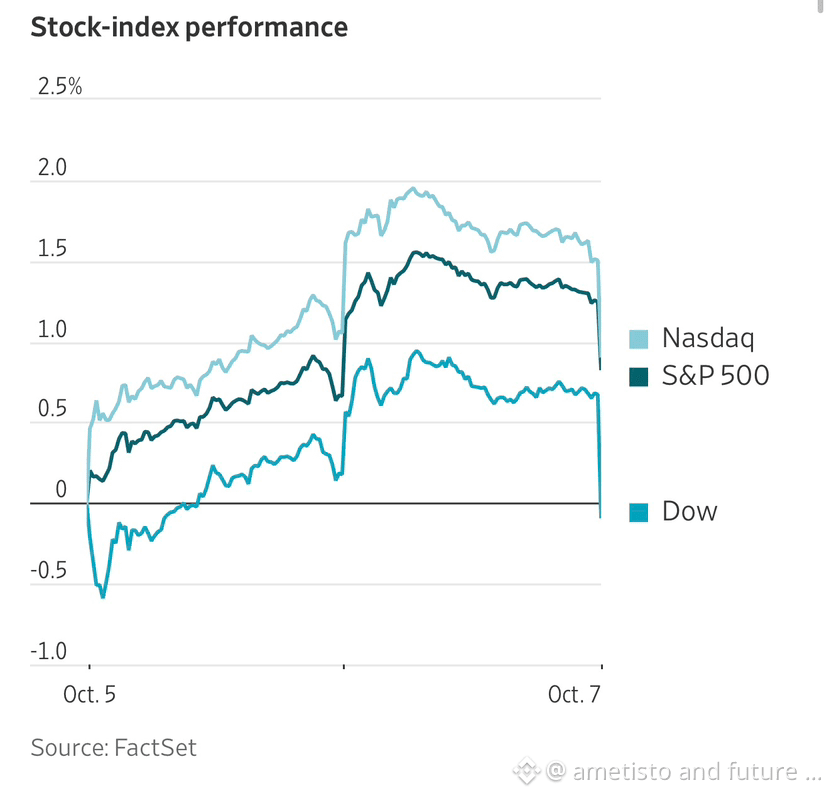
U.S. stocks are falling this Wednesday, October 7, after an artificial intelligence-driven rally pushed the S&P 500 and Nasdaq to new highs in the previous session. The Dow Jones, S&P 500, and Nasdaq are trading lower. (The Wall Street Journal)
Investors are once again focused on the Treasury market. Yields on 10- and 30-year bonds have reached their highest levels since 2002, adding pressure on stocks, especially in sectors more sensitive to interest rates.
📊 Yields are rising ahead of the release of the minutes from the Federal Reserve’s latest meeting, which could offer clues about inflation and the possibility of further rate hikes.
🛢️ Oil is also rising again: Brent is above US$ 101 per barrel, while tensions in the Middle East remain elevated following Houthi attacks on Saudi Arabia.
The picture points to a divided market: on one side, the strength of AI-related stocks; on the other, high interest rates, expensive oil, and fiscal concerns that threaten to increase volatility.
#Markets #WallStreet #S&P500 #Nasdaq #DowJones #Fed #Treasuries #InterestRates #Oil #ArtificialIntelligence #Investing
📉 U.S. markets under pressure this Wednesday
U.S. stocks are falling this Wednesday, October 7, after an artificial intelligence-driven rally pushed the S&P 500 and Nasdaq to new highs in the previous session. The Dow Jones, S&P 500, and Nasdaq are trading lower. (The Wall Street Journal)
Investors are once again focused on the Treasury market. Yields on 10- and 30-year bonds have reached their highest levels since 2002, adding pressure on stocks, especially in sectors more sensitive to interest rates.
📊 Yields are rising ahead of the release of the minutes from the Federal Reserve’s latest meeting, which could offer clues about inflation and the possibility of further rate hikes.
🛢️ Oil is also rising again: Brent is above US$ 101 per barrel, while tensions in the Middle East remain elevated following Houthi attacks on Saudi Arabia.
The picture points to a divided market: on one side, the strength of AI-related stocks; on the other, high interest rates, expensive oil, and fiscal concerns that threaten to increase volatility.
#Markets #WallStreet #S&P500 #Nasdaq #DowJones #Fed #Treasuries #InterestRates #Oil #ArtificialIntelligence #Investing
U.S. stocks are falling this Wednesday, October 7, after an artificial intelligence-driven rally pushed the S&P 500 and Nasdaq to new highs in the previous session. The Dow Jones, S&P 500, and Nasdaq are trading lower. (The Wall Street Journal)
Investors are once again focused on the Treasury market. Yields on 10- and 30-year bonds have reached their highest levels since 2002, adding pressure on stocks, especially in sectors more sensitive to interest rates.
📊 Yields are rising ahead of the release of the minutes from the Federal Reserve’s latest meeting, which could offer clues about inflation and the possibility of further rate hikes.
🛢️ Oil is also rising again: Brent is above US$ 101 per barrel, while tensions in the Middle East remain elevated following Houthi attacks on Saudi Arabia.
The picture points to a divided market: on one side, the strength of AI-related stocks; on the other, high interest rates, expensive oil, and fiscal concerns that threaten to increase volatility.
#Markets #WallStreet #S&P500 #Nasdaq #DowJones #Fed #Treasuries #InterestRates #Oil #ArtificialIntelligence #Investing
1
462
🚨 “PREPARING TO FIRE”: THE RADIO WAR BETWEEN THE U.S. AND IRAN
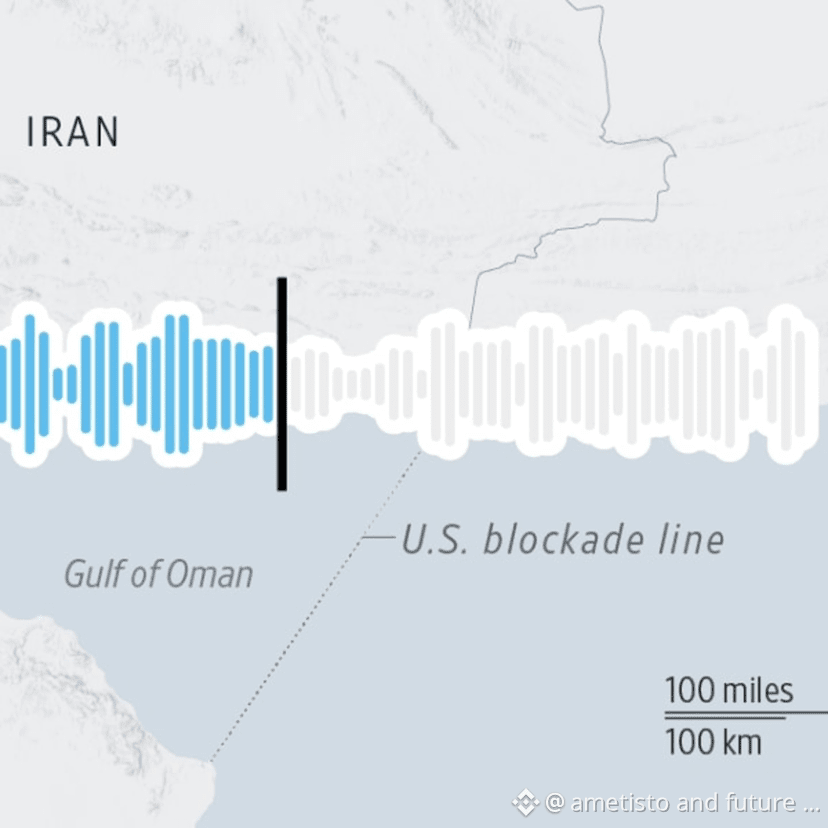
An investigation by The Wall Street Journal reveals, through dozens of radio recordings, how the U.S. Navy has been enforcing its naval blockade against Iran in the Persian Gulf and the Gulf of Oman.
Since April, more than 270 vessels have been redirected, while nearly two dozen have been damaged or destroyed. The blockade aims to prevent Iran from exporting oil and earning revenue essential to its economy. (The Wall Street Journal)
The recordings reveal a scene of extreme tension: commercial ships are ordered to change course, crews struggle to understand the messages in English, and in some cases, sailors even ask the U.S. Navy not to open fire.
In one incident, the oil tanker Hasna was hit by 20 mm cannon fire after sailing for months with its identification system switched off. In another, the ship Lavine, carrying 28 Indian crew members, was given just 15 minutes to evacuate the crew from the engine room before it was disabled.
The result is a dangerous flashpoint where civilian ships, sanctions, oil, and military forces collide. For Washington, the goal is to enforce the blockade; for Tehran, the U.S. operation represents a direct threat to its economy and sovereignty.
And the risk is not only military. Any escalation in the Strait of Hormuz, through which a crucial share of global energy trade passes, could trigger further shocks in oil prices and increase pressure on the global economy.
🇺🇸🇮🇷 What was once a dispute over sanctions is now playing out at sea—and every order transmitted over the radio could be the last warning before shots are fired.
🚨 “PREPARING TO FIRE”: THE RADIO WAR BETWEEN THE U.S. AND IRAN
An investigation by The Wall Street Journal reveals, through dozens of radio recordings, how the U.S. Navy has been enforcing its naval blockade against Iran in the Persian Gulf and the Gulf of Oman.
Since April, more than 270 vessels have been redirected, while nearly two dozen have been damaged or destroyed. The blockade aims to prevent Iran from exporting oil and earning revenue essential to its economy. (The Wall Street Journal)
The recordings reveal a scene of extreme tension: commercial ships are ordered to change course, crews struggle to understand the messages in English, and in some cases, sailors even ask the U.S. Navy not to open fire.
In one incident, the oil tanker Hasna was hit by 20 mm cannon fire after sailing for months with its identification system switched off. In another, the ship Lavine, carrying 28 Indian crew members, was given just 15 minutes to evacuate the crew from the engine room before it was disabled.
The result is a dangerous flashpoint where civilian ships, sanctions, oil, and military forces collide. For Washington, the goal is to enforce the blockade; for Tehran, the U.S. operation represents a direct threat to its economy and sovereignty.
And the risk is not only military. Any escalation in the Strait of Hormuz, through which a crucial share of global energy trade passes, could trigger further shocks in oil prices and increase pressure on the global economy.
🇺🇸🇮🇷 What was once a dispute over sanctions is now playing out at sea—and every order transmitted over the radio could be the last warning before shots are fired.
An investigation by The Wall Street Journal reveals, through dozens of radio recordings, how the U.S. Navy has been enforcing its naval blockade against Iran in the Persian Gulf and the Gulf of Oman.
Since April, more than 270 vessels have been redirected, while nearly two dozen have been damaged or destroyed. The blockade aims to prevent Iran from exporting oil and earning revenue essential to its economy. (The Wall Street Journal)
The recordings reveal a scene of extreme tension: commercial ships are ordered to change course, crews struggle to understand the messages in English, and in some cases, sailors even ask the U.S. Navy not to open fire.
In one incident, the oil tanker Hasna was hit by 20 mm cannon fire after sailing for months with its identification system switched off. In another, the ship Lavine, carrying 28 Indian crew members, was given just 15 minutes to evacuate the crew from the engine room before it was disabled.
The result is a dangerous flashpoint where civilian ships, sanctions, oil, and military forces collide. For Washington, the goal is to enforce the blockade; for Tehran, the U.S. operation represents a direct threat to its economy and sovereignty.
And the risk is not only military. Any escalation in the Strait of Hormuz, through which a crucial share of global energy trade passes, could trigger further shocks in oil prices and increase pressure on the global economy.
🇺🇸🇮🇷 What was once a dispute over sanctions is now playing out at sea—and every order transmitted over the radio could be the last warning before shots are fired.
5.3k
📈 S&P 500 HITS NEW RECORD, BUT THE RALLY HAS A PROBLEM
The S&P 500 closed at 7,818.93 points, setting a new all-time high, while the Nasdaq also reached a new record. The move was driven mainly by enthusiasm for artificial intelligence and major tech companies.
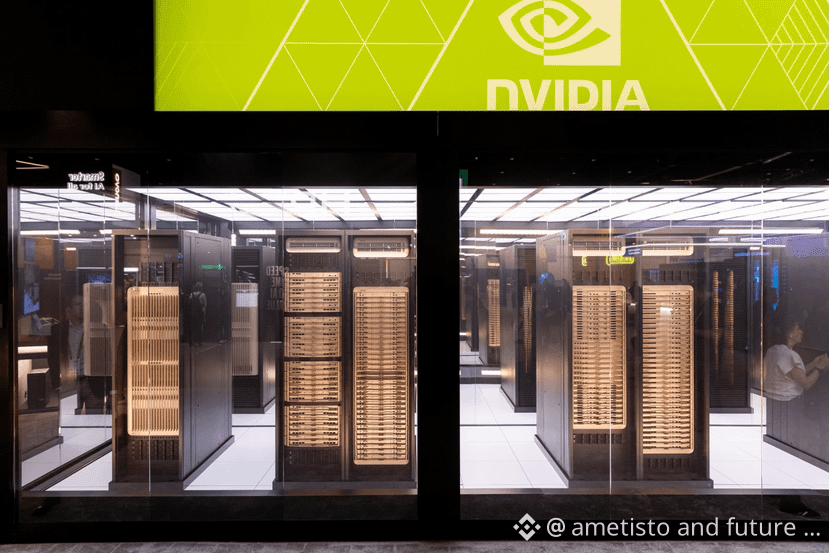
The concern is the rally’s narrow breadth: much of the gains are concentrated in a few giants, especially the so-called Magnificent Seven. Nvidia $NVDAB , for example, is nearing a market capitalization of $6 trillion.
Meanwhile, many other sectors are struggling with high interest rates and elevated Treasury yields. Fewer than half of S&P 500 stocks are trading above their 200-day moving average, a sign that the index’s record high does not necessarily reflect broad market strength.
💡 The message for investors: the AI boom continues to be a powerful force on Wall Street, but the more the market depends on a small group of tech giants, the more vulnerable it becomes to a potential reversal in those stocks.
An all-time high, but with increasingly concentrated leadership. ⚠️📊
📈 S&P 500 HITS NEW RECORD, BUT THE RALLY HAS A PROBLEM
The S&P 500 closed at 7,818.93 points, setting a new all-time high, while the Nasdaq also reached a new record. The move was driven mainly by enthusiasm for artificial intelligence and major tech companies.
The concern is the rally’s narrow breadth: much of the gains are concentrated in a few giants, especially the so-called Magnificent Seven. Nvidia $NVDAB , for example, is nearing a market capitalization of $6 trillion.
Meanwhile, many other sectors are struggling with high interest rates and elevated Treasury yields. Fewer than half of S&P 500 stocks are trading above their 200-day moving average, a sign that the index’s record high does not necessarily reflect broad market strength.
💡 The message for investors: the AI boom continues to be a powerful force on Wall Street, but the more the market depends on a small group of tech giants, the more vulnerable it becomes to a potential reversal in those stocks.
An all-time high, but with increasingly concentrated leadership. ⚠️📊
The S&P 500 closed at 7,818.93 points, setting a new all-time high, while the Nasdaq also reached a new record. The move was driven mainly by enthusiasm for artificial intelligence and major tech companies.
The concern is the rally’s narrow breadth: much of the gains are concentrated in a few giants, especially the so-called Magnificent Seven. Nvidia $NVDAB , for example, is nearing a market capitalization of $6 trillion.
Meanwhile, many other sectors are struggling with high interest rates and elevated Treasury yields. Fewer than half of S&P 500 stocks are trading above their 200-day moving average, a sign that the index’s record high does not necessarily reflect broad market strength.
💡 The message for investors: the AI boom continues to be a powerful force on Wall Street, but the more the market depends on a small group of tech giants, the more vulnerable it becomes to a potential reversal in those stocks.
An all-time high, but with increasingly concentrated leadership. ⚠️📊
116
🌌🏆 2026 Nobel Prize in Physics: Capturing the Universe’s “Ghost Particles”
Belgian-American physicist Francis Halzen received the 2026 Nobel Prize in Physics for his decisive contributions to the IceCube Neutrino Observatory and the discovery of high-energy neutrinos of astrophysical origin.
Neutrinos are subatomic particles that are extremely difficult to detect: they pass through matter with almost no interaction and can travel enormous cosmic distances without being deflected or easily losing their information. That’s why they are considered true “ghost messengers” of the universe.
Halzen’s stroke of genius was to turn a cubic kilometer of Antarctic ice into a gigantic particle detector. IceCube uses thousands of optical sensors buried in the ice to record the tiny flashes produced when a neutrino interacts with matter.
These observations make it possible to study some of the most extreme phenomena in the cosmos, such as supernovas, gamma-ray bursts, and black holes, opening a new window onto how the universe works. 🌠
🔬 The Nobel recognizes something extraordinary: using the ice at the South Pole as a telescope capable of observing particles from the most violent and distant corners of the cosmos.
#NobelPrize #Physics #Neutrinos #IceCube #FrancisHalzen #Science #Astronomy #Universe #Cosmology
🌌🏆 2026 Nobel Prize in Physics: Capturing the Universe’s “Ghost Particles”
Belgian-American physicist Francis Halzen received the 2026 Nobel Prize in Physics for his decisive contributions to the IceCube Neutrino Observatory and the discovery of high-energy neutrinos of astrophysical origin.
Neutrinos are subatomic particles that are extremely difficult to detect: they pass through matter with almost no interaction and can travel enormous cosmic distances without being deflected or easily losing their information. That’s why they are considered true “ghost messengers” of the universe.
Halzen’s stroke of genius was to turn a cubic kilometer of Antarctic ice into a gigantic particle detector. IceCube uses thousands of optical sensors buried in the ice to record the tiny flashes produced when a neutrino interacts with matter.
These observations make it possible to study some of the most extreme phenomena in the cosmos, such as supernovas, gamma-ray bursts, and black holes, opening a new window onto how the universe works. 🌠
🔬 The Nobel recognizes something extraordinary: using the ice at the South Pole as a telescope capable of observing particles from the most violent and distant corners of the cosmos.
#NobelPrize #Physics #Neutrinos #IceCube #FrancisHalzen #Science #Astronomy #Universe #Cosmology
Belgian-American physicist Francis Halzen received the 2026 Nobel Prize in Physics for his decisive contributions to the IceCube Neutrino Observatory and the discovery of high-energy neutrinos of astrophysical origin.
Neutrinos are subatomic particles that are extremely difficult to detect: they pass through matter with almost no interaction and can travel enormous cosmic distances without being deflected or easily losing their information. That’s why they are considered true “ghost messengers” of the universe.
Halzen’s stroke of genius was to turn a cubic kilometer of Antarctic ice into a gigantic particle detector. IceCube uses thousands of optical sensors buried in the ice to record the tiny flashes produced when a neutrino interacts with matter.
These observations make it possible to study some of the most extreme phenomena in the cosmos, such as supernovas, gamma-ray bursts, and black holes, opening a new window onto how the universe works. 🌠
🔬 The Nobel recognizes something extraordinary: using the ice at the South Pole as a telescope capable of observing particles from the most violent and distant corners of the cosmos.
#NobelPrize #Physics #Neutrinos #IceCube #FrancisHalzen #Science #Astronomy #Universe #Cosmology

1
264
See translation
$INTC.US Intel is falling 1.58% to $114.35, with about $8.46 billion in volume. Today’s pressure comes partly from concerns that TSMC’s involvement in Elon Musk’s proposed Terafab could reduce Intel’s role in the project. However, Intel is simultaneously deepening its collaboration with Applied Materials on next-generation transistors, interconnects and advanced packaging for AI computing.
$INTC.US Intel is falling 1.58% to $114.35, with about $8.46 billion in volume. Today’s pressure comes partly from concerns that TSMC’s involvement in Elon Musk’s proposed Terafab could reduce Intel’s role in the project. However, Intel is simultaneously deepening its collaboration with Applied Materials on next-generation transistors, interconnects and advanced packaging for AI computing.
269
See translation
$AMD.US is up 3.65% at $654.84, with approximately $11.82 billion in volume.
CEO Lisa Su said AMD plans to substantially increase chip supply in 2027 to keep pace with booming AI demand. Citi also raised its AMD price target to $800, arguing that AI agents such as Meta’s Muse could significantly expand CPU demand. Key point: AMD has now crossed the $1 trillion market-cap threshold.
$AMD.US is up 3.65% at $654.84, with approximately $11.82 billion in volume.
CEO Lisa Su said AMD plans to substantially increase chip supply in 2027 to keep pace with booming AI demand. Citi also raised its AMD price target to $800, arguing that AI agents such as Meta’s Muse could significantly expand CPU demand. Key point: AMD has now crossed the $1 trillion market-cap threshold.
CEO Lisa Su said AMD plans to substantially increase chip supply in 2027 to keep pace with booming AI demand. Citi also raised its AMD price target to $800, arguing that AI agents such as Meta’s Muse could significantly expand CPU demand. Key point: AMD has now crossed the $1 trillion market-cap threshold.
AMDUS-0.06%
121
See translation
$MRVL.US Marvell is the standout performer, jumping 6.38% to $288.57 on about $12.62 billion in volume.
The catalyst is exceptionally strong: Marvell raised its fiscal 2028 revenue forecast to approximately $20 billion, above Wall Street’s $18.2 billion estimate, driven by demand for custom AI data-center chips. It also projected $70–90 billion in fiscal 2031 revenue, highlighting the enormous opportunity in custom AI silicon.
$MRVL.US Marvell is the standout performer, jumping 6.38% to $288.57 on about $12.62 billion in volume.
The catalyst is exceptionally strong: Marvell raised its fiscal 2028 revenue forecast to approximately $20 billion, above Wall Street’s $18.2 billion estimate, driven by demand for custom AI data-center chips. It also projected $70–90 billion in fiscal 2031 revenue, highlighting the enormous opportunity in custom AI silicon.
The catalyst is exceptionally strong: Marvell raised its fiscal 2028 revenue forecast to approximately $20 billion, above Wall Street’s $18.2 billion estimate, driven by demand for custom AI data-center chips. It also projected $70–90 billion in fiscal 2031 revenue, highlighting the enormous opportunity in custom AI silicon.
MRVLUS-0.06%
139
See translation
$MU.US Micron is down 0.84% at $1,054.96, with roughly $15.23 billion in volume. Today’s weakness comes as investors digest the company’s $600 million settlement with Netlist over a patent dispute. At the same time, Micron remains heavily exposed to the AI-driven memory boom, but investors are increasingly focused on whether exceptionally strong memory pricing can remain sustainable into 2027.
$MU.US Micron is down 0.84% at $1,054.96, with roughly $15.23 billion in volume. Today’s weakness comes as investors digest the company’s $600 million settlement with Netlist over a patent dispute. At the same time, Micron remains heavily exposed to the AI-driven memory boom, but investors are increasingly focused on whether exceptionally strong memory pricing can remain sustainable into 2027.
MUUS-0.16%
490
See translation
$SPCX.US SpaceX is gaining 0.69% to $172.28, with approximately $15.27 billion in volume. The stock has been on a powerful October rally, helped by a very busy launch schedule and renewed optimism surrounding the company’s space and AI businesses. SpaceX is also preparing to reattempt an SDA mission carrying 21 satellites after Monday’s launch was scrubbed.
$SPCX.US SpaceX is gaining 0.69% to $172.28, with approximately $15.27 billion in volume. The stock has been on a powerful October rally, helped by a very busy launch schedule and renewed optimism surrounding the company’s space and AI businesses. SpaceX is also preparing to reattempt an SDA mission carrying 21 satellites after Monday’s launch was scrubbed.
SPCXUS-0.08%
83
See translation
$NVDA.US is up 0.57% at $240, with about $16.70 billion in volume. The stock remains near record territory, with its market capitalization approaching the unprecedented $6 trillion level as investors continue to pour money into AI infrastructure. NVIDIA’s AI dominance remains the central driver, although valuation and the sustainability of AI spending remain key risks.
$NVDA.US is up 0.57% at $240, with about $16.70 billion in volume. The stock remains near record territory, with its market capitalization approaching the unprecedented $6 trillion level as investors continue to pour money into AI infrastructure. NVIDIA’s AI dominance remains the central driver, although valuation and the sustainability of AI spending remain key risks.
NVDAUS-0.01%
343
⚡ THE INVISIBLE WAR THAT COULD SHAPE THE CONFLICTS OF TOMORROW
A new battle is being fought in Ukraine, but it is largely invisible: electronic warfare. Jamming, GPS spoofing, communications interception, and signal manipulation are now at the heart of the battlefield.
Ukrainian units are using systems like Lima to disrupt drones, missiles, and even some ballistic missiles by sending them false navigation signals. Meanwhile, Russia is rapidly adapting its technologies to withstand jamming.
Artificial intelligence, autonomous drones, fiber-optic links, and lasers are emerging as new responses in this electromagnetic spectrum war.
🇺🇦🇷🇺 The stakes go far beyond Ukraine: the United States, NATO, and China are investing heavily in these capabilities. In modern warfare, controlling the electromagnetic spectrum could be just as important as controlling the skies or the terrain.
“If you don’t win in the spectrum, you will lose the war.”
The next military revolution could therefore be silent, invisible… but decisive.
#ElectronicWarfare #Ukraine #Russia #Defense #NATO #Technology #ArtificialIntelligence #Drones #Geopolitics #MilitaryTech
⚡ THE INVISIBLE WAR THAT COULD SHAPE THE CONFLICTS OF TOMORROW
A new battle is being fought in Ukraine, but it is largely invisible: electronic warfare. Jamming, GPS spoofing, communications interception, and signal manipulation are now at the heart of the battlefield.
Ukrainian units are using systems like Lima to disrupt drones, missiles, and even some ballistic missiles by sending them false navigation signals. Meanwhile, Russia is rapidly adapting its technologies to withstand jamming.
Artificial intelligence, autonomous drones, fiber-optic links, and lasers are emerging as new responses in this electromagnetic spectrum war.
🇺🇦🇷🇺 The stakes go far beyond Ukraine: the United States, NATO, and China are investing heavily in these capabilities. In modern warfare, controlling the electromagnetic spectrum could be just as important as controlling the skies or the terrain.
“If you don’t win in the spectrum, you will lose the war.”
The next military revolution could therefore be silent, invisible… but decisive.
#ElectronicWarfare #Ukraine #Russia #Defense #NATO #Technology #ArtificialIntelligence #Drones #Geopolitics #MilitaryTech
A new battle is being fought in Ukraine, but it is largely invisible: electronic warfare. Jamming, GPS spoofing, communications interception, and signal manipulation are now at the heart of the battlefield.
Ukrainian units are using systems like Lima to disrupt drones, missiles, and even some ballistic missiles by sending them false navigation signals. Meanwhile, Russia is rapidly adapting its technologies to withstand jamming.
Artificial intelligence, autonomous drones, fiber-optic links, and lasers are emerging as new responses in this electromagnetic spectrum war.
🇺🇦🇷🇺 The stakes go far beyond Ukraine: the United States, NATO, and China are investing heavily in these capabilities. In modern warfare, controlling the electromagnetic spectrum could be just as important as controlling the skies or the terrain.
“If you don’t win in the spectrum, you will lose the war.”
The next military revolution could therefore be silent, invisible… but decisive.
#ElectronicWarfare #Ukraine #Russia #Defense #NATO #Technology #ArtificialIntelligence #Drones #Geopolitics #MilitaryTech

2
3.8k
Verified
See translation
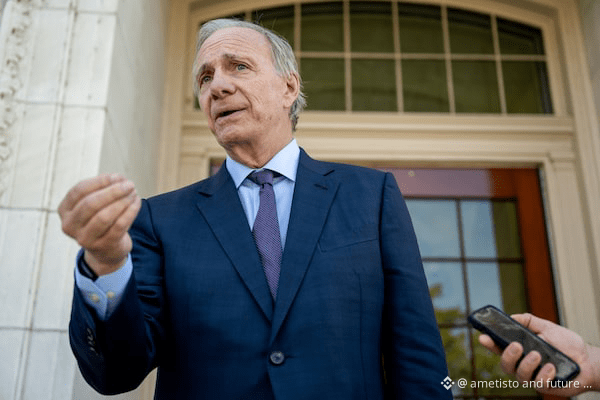
Ray Dalio Sounds the Alarm on U.S. Treasuries
Billionaire investor Ray Dalio is warning that the U.S. Treasury market could face growing pressure if China and Japan reduce their exposure to American government debt.
The U.S. relies on foreign capital for roughly one-third of its debt, while Japan and China remain among its largest foreign creditors. Japan held about $1.1 trillion in Treasuries in July, while China’s reported holdings have fallen to around $618 billion, down sharply from its 2013 peak. (Bloomberg)
The concern is straightforward: less foreign demand + massive U.S. borrowing needs = potentially higher Treasury yields and higher financing costs. The 10-year Treasury yield is already around 5.3%, near levels last seen in 2002.
Dalio has also reiterated his warning that the U.S. could face a debt crisis within three years, arguing that geopolitical tensions are making the traditional debtor-creditor relationship increasingly difficult.
📉 If China and Japan continue reducing Treasury exposure, the question becomes: who will absorb the growing supply of U.S. government debt?
#RayDalio #USDebt #Treasuries #China #Japan #FederalReserve #Bonds #Markets #Investing #Economy
Ray Dalio Sounds the Alarm on U.S. Treasuries
Billionaire investor Ray Dalio is warning that the U.S. Treasury market could face growing pressure if China and Japan reduce their exposure to American government debt.
The U.S. relies on foreign capital for roughly one-third of its debt, while Japan and China remain among its largest foreign creditors. Japan held about $1.1 trillion in Treasuries in July, while China’s reported holdings have fallen to around $618 billion, down sharply from its 2013 peak. (Bloomberg)
The concern is straightforward: less foreign demand + massive U.S. borrowing needs = potentially higher Treasury yields and higher financing costs. The 10-year Treasury yield is already around 5.3%, near levels last seen in 2002.
Dalio has also reiterated his warning that the U.S. could face a debt crisis within three years, arguing that geopolitical tensions are making the traditional debtor-creditor relationship increasingly difficult.
📉 If China and Japan continue reducing Treasury exposure, the question becomes: who will absorb the growing supply of U.S. government debt?
#RayDalio #USDebt #Treasuries #China #Japan #FederalReserve #Bonds #Markets #Investing #Economy
Billionaire investor Ray Dalio is warning that the U.S. Treasury market could face growing pressure if China and Japan reduce their exposure to American government debt.
The U.S. relies on foreign capital for roughly one-third of its debt, while Japan and China remain among its largest foreign creditors. Japan held about $1.1 trillion in Treasuries in July, while China’s reported holdings have fallen to around $618 billion, down sharply from its 2013 peak. (Bloomberg)
The concern is straightforward: less foreign demand + massive U.S. borrowing needs = potentially higher Treasury yields and higher financing costs. The 10-year Treasury yield is already around 5.3%, near levels last seen in 2002.
Dalio has also reiterated his warning that the U.S. could face a debt crisis within three years, arguing that geopolitical tensions are making the traditional debtor-creditor relationship increasingly difficult.
📉 If China and Japan continue reducing Treasury exposure, the question becomes: who will absorb the growing supply of U.S. government debt?
#RayDalio #USDebt #Treasuries #China #Japan #FederalReserve #Bonds #Markets #Investing #Economy
IEFETF-0.04%
766
See translation
$NVDA.US rose 2.20% to $239.11, extending its strong position as one of the market’s key AI beneficiaries. The move reinforces continued investor demand for companies exposed to AI chips and data-center spending. Key point: +2.20% with approximately $24.93 billion in reported volume.
$NVDA.US rose 2.20% to $239.11, extending its strong position as one of the market’s key AI beneficiaries. The move reinforces continued investor demand for companies exposed to AI chips and data-center spending. Key point: +2.20% with approximately $24.93 billion in reported volume.
NVDAUS-0.01%
130
See translation
$TSLA.US Tesla advanced 2.22% to $378.84, maintaining positive momentum despite mixed performance across the technology market. Investors continue to closely watch Tesla’s growth, deliveries, autonomy strategy and AI-related ambitions. Key point: +2.22% puts TSLA among the leading gainers.
$TSLA.US Tesla advanced 2.22% to $378.84, maintaining positive momentum despite mixed performance across the technology market. Investors continue to closely watch Tesla’s growth, deliveries, autonomy strategy and AI-related ambitions. Key point: +2.22% puts TSLA among the leading gainers.
TSLAUS-0.04%
246
See translation
$INTC.US Intel fell 2.55% to $116.28, making it the weakest performer. The decline contrasts with strength in several AI and semiconductor names, highlighting continued volatility around Intel.
$INTC.US Intel fell 2.55% to $116.28, making it the weakest performer. The decline contrasts with strength in several AI and semiconductor names, highlighting continued volatility around Intel.
INTCUS-0.02%
318
See translation
$STX.US Seagate Technology surged 4.46% to $886.89, benefiting from strong momentum in the data-storage sector. The move is particularly notable given the broader interest in AI infrastructure and demand for storage capacity.
$STX.US Seagate Technology surged 4.46% to $886.89, benefiting from strong momentum in the data-storage sector. The move is particularly notable given the broader interest in AI infrastructure and demand for storage capacity.
STXUS-0.21%
236
See translation
$NVDA.US SpaceX is the strongest mover, jumping 7.62% to $171.08. The move stands out among the listed stocks and signals strong buying momentum.
$NVDA.US SpaceX is the strongest mover, jumping 7.62% to $171.08. The move stands out among the listed stocks and signals strong buying momentum.
NVDAUS-0.01%
152
Log in to explore more content
Join global crypto users on Binance Square
⚡️ Get latest and useful information about crypto.
💬 Trusted by the world’s largest crypto exchange.
👍 Discover real insights from verified creators.
Email / Phone number
Trending Topics
FedMinutesFocusOnOctoberPause
123,092 views
1,134 Discussing
🚨 HIGH ALERT ‼️ PLEASE DON’T TRADE BLINDLY FOR THE NEXT HOUR 🚨
Guys, we have FOMC Minutes coming in less than 1 hour.
And after the kind of volatility we already saw today, I really don’t want anyone opening random high-leverage positions just before this release.
The biggest reaction I’m watching will be in Gold (XAU), Silver (XAG), BTC and ETH. Then coins like SOL and other highly leveraged mid/low-cap alts can exaggerate whatever move BTC makes.
Gold and Silver are especially sensitive tonight because the market is already reacting to the US dollar + Treasury yields, and both metals have been under heavy pressure ahead of the Fed minutes.
Briefly speaking
📉Hawkish Fed Minutes → Dollar/yields can push higher → pressure on BTC, crypto, Gold & silver
📈Dovish Fed Minutes → Dollar/yields can cool → BTC, Gold, Silver and risk assets can bounce hard.
And please remember the first candle can be a trap. We can get a pump, immediate dump, liquidations on both sides, and then the real direction.
So for now, protect your positions, reduce unnecessary leverage and don’t FOMO into the first move.
Tonight I’m watching $XAU , $XAG and $BTC first. These will tell us very quickly how the market is reading the Fed.
I will Update you guys on time
Follow @Panda Traders and Turn on Your notifications right now
#FedMinutesFocusOnOctoberPause
Panda Traders
·18 Likes
·3.4k views
BinanceLaunchesBinanceIntelligence
1.1M views
6,349 Discussing
EvernorthDelaysNasdaqDebutToOct12
8,518 views
232 Discussing