
precisox
31 Posts

precisox
 Square Verified
Report
Block User
Construyo sistemas trading
6 Following
627 Followers
103 Liked
Posts
·
--
My investment rules, in case they're helpful:
I never use leverage.
I never invest money I might need in the short term.
I never take a bearish position.
Three very simple rules I always try to follow
My investment rules, in case they're helpful:
I never use leverage.
I never invest money I might need in the short term.
I never take a bearish position.
Three very simple rules I always try to follow
I never use leverage.
I never invest money I might need in the short term.
I never take a bearish position.
Three very simple rules I always try to follow
2
1
891
·
--
Are you losing money in the markets this year?
I'll use the responses to create an indicator.
The more responses, the better.
Are you losing money in the markets this year?
I'll use the responses to create an indicator.
The more responses, the better.
I'll use the responses to create an indicator.
The more responses, the better.
1
1
694
·
--
May November bring lots of money, health, money, health, money, and more money
May November bring lots of money, health, money, health, money, and more money
93
·
--
If a company announces that it’s going to increase its investment in artificial intelligence, the stock market punishes it because investors are worried about the huge capital expenditure and its future returns. 🔴
But if news emerges about possible restrictions on building data centers, the market punishes it too, because investors fear that AI growth will slow down. 🔴
If you invest more, I punish you. If there’s a risk you’ll invest less, I punish you too.🔴
Curious how the market works in the short term.
But if news emerges about possible restrictions on building data centers, the market punishes it too, because investors fear that AI growth will slow down. 🔴
If you invest more, I punish you. If there’s a risk you’ll invest less, I punish you too.🔴
Curious how the market works in the short term.
1
700
·
--
There’s something I find quite curious about some bearish investors.
When negative news about a company comes out, they rush to share it and give it as much coverage as possible. But when the news is positive, they look the other way. As if it had never happened.
What would you call that? I call it confirmation bias. Having a bearish thesis is one thing; selecting only the information that proves you right is quite another.
In the stock market, it’s not about being right, but about making money.
1
4
1.2k
·
--
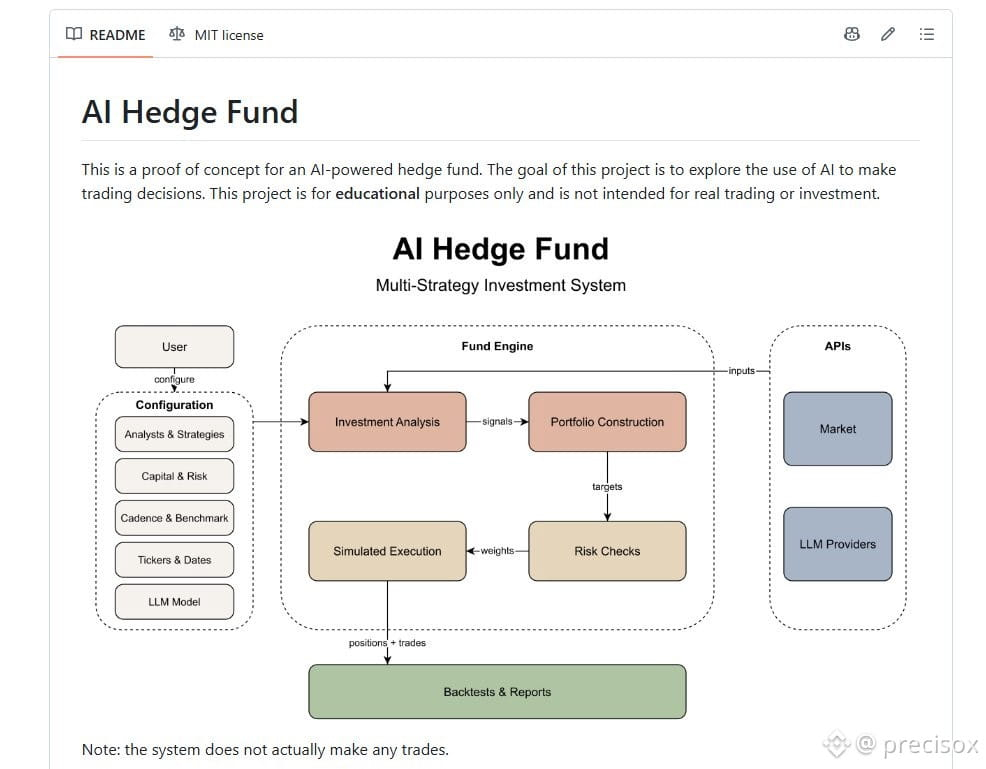
There's a GitHub repo that builds a hedge fund with AI agents.
It's called AI Hedge Fund and has 64k stars. MIT license.
Each agent thinks like a famous investor: one analyzes fundamentals, another sentiment, another valuation. In the end, a risk manager decides whether to buy, sell, or short.
I tested it with AAPL on data it had never seen.
I'll let you know soon whether it beats the market.
[Repo github](https://github.com/virattt/ai-hedge-fund)
There's a GitHub repo that builds a hedge fund with AI agents.
It's called AI Hedge Fund and has 64k stars. MIT license.
Each agent thinks like a famous investor: one analyzes fundamentals, another sentiment, another valuation. In the end, a risk manager decides whether to buy, sell, or short.
I tested it with AAPL on data it had never seen.
I'll let you know soon whether it beats the market.
Repo github
39
·
--
Partly True
What’s going on??
🔴 AMD: −10,63 %
🔴 Nebius: −9,76 %
🔴 AST SpaceMobile: −9,35 %
🔴 IREN: −8,84 %
🔴 Micron: −7,76 %
🔴 Tesla: −7,61 %
🔴 Strive: −7,37 %
🔴 CoreWeave: −6,98 %
🔴 SpaceX: −5,90 %
🔴 Hims & Hers: −5,40 %
Nvidia and TSMC are also facing selling pressure. 👇
The market is taking particular aim at semiconductor companies and businesses linked to AI infrastructure.
Following the Democrats’ victory in the U.S. midterm elections, fears are growing over new restrictions on building data centers.
Adding to this are concerns about the huge investments in AI, how they are funded, and the returns they could generate.
A particularly sharp correction among the companies most exposed to this industry’s growth.
1.6k
·
--
Verified
I BEG YOU:
Stop buying stocks because of their name.
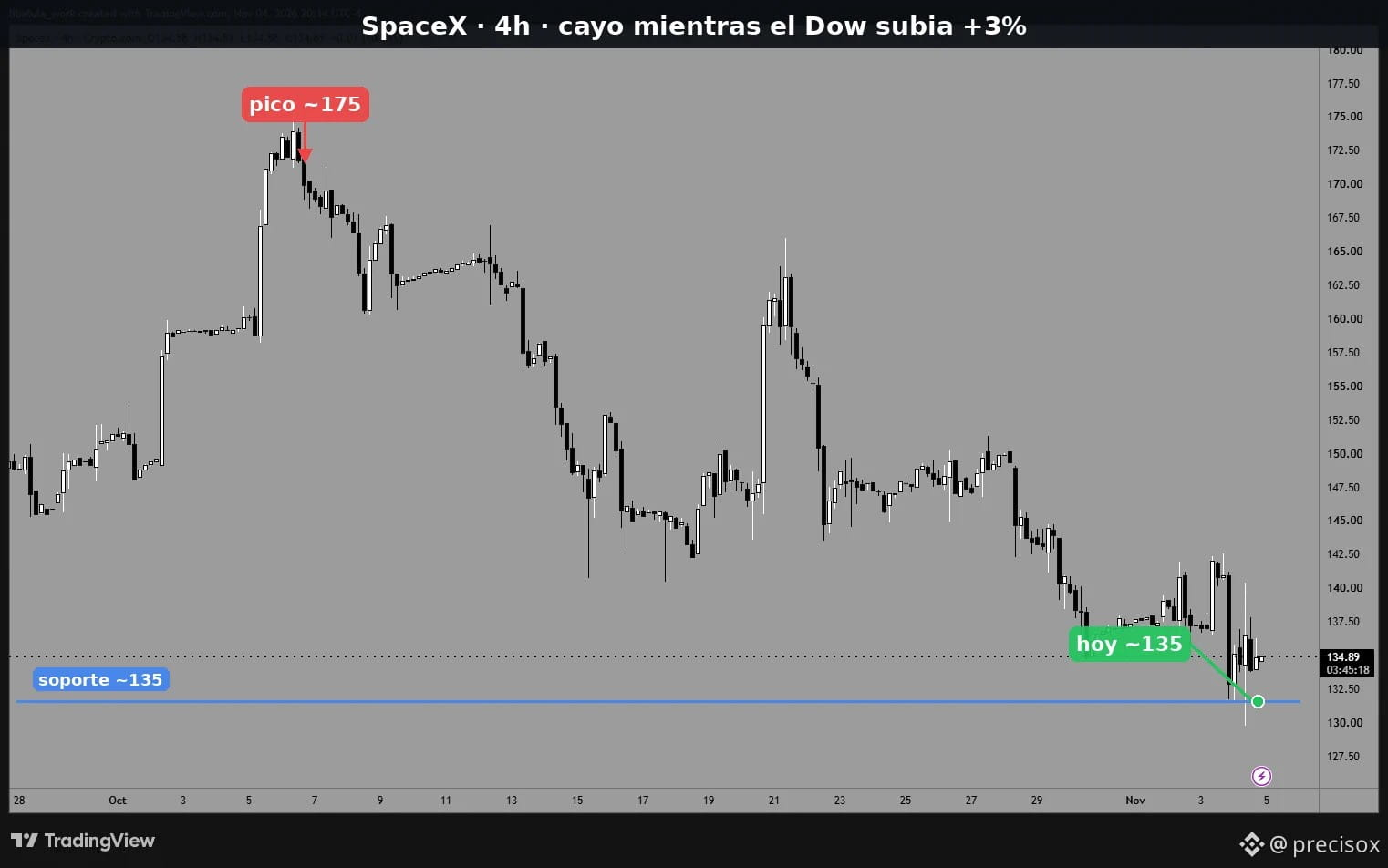
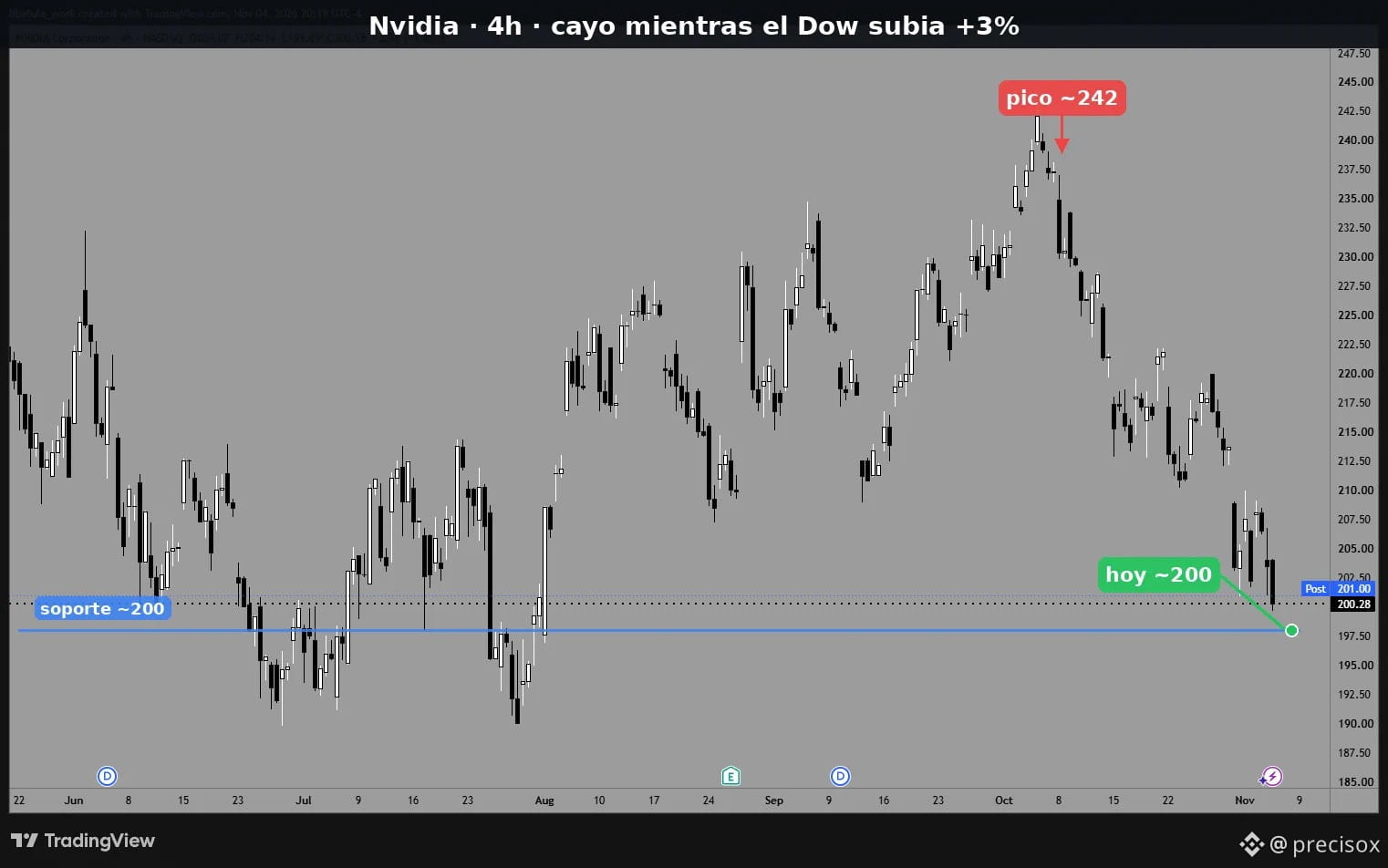
Today, November 4:
The Dow rose +3%, its best day since April 2025.
$SPCX (SpaceX) closed -3.8% at $135.92
$NVDA (Nvidia) closed -3.2% at $200.13
The whole market was in the green.
And the two stocks that "can't fail" were in the red.
It's not that they're bad companies.
It's that buying based on hype isn't a strategy.
Let me explain:
Before I get in, I decide at what price I'll sell if things go badly and at what price I'll take profits. Without that, every drop turns into "it's going to go back up."
No single holding makes up more than 10–15%. If SpaceX drops 20% tomorrow, it hurts, but it won't break me.
I have to be able to explain my reasoning in one line. If my only reason is "it's Elon" or "it's AI," that's not a thesis. It's faith.
I look at the numbers, not the headlines. Today SpaceX reported +161% revenue growth and still fell. The price doesn't always follow the news.
Rules don't make you win every time.
They keep you from taking a big loss.
2
4
875
·
--
If you're given $10,000 and have to turn it into $100,000 in exactly one year, what would you invest it in?
If you're given $10,000 and have to turn it into $100,000 in exactly one year, what would you invest it in?
124
·
--
Trends to keep an eye on this month:
- elysium eco
- GTA coins
- squeak
- Monero memes
There’s always a bull run somewhere if you look for it.
Trends to keep an eye on this month:
- elysium eco
- GTA coins
- squeak
- Monero memes
There’s always a bull run somewhere if you look for it.
- elysium eco
- GTA coins
- squeak
- Monero memes
There’s always a bull run somewhere if you look for it.
884
·
--
In a word, what do you need to achieve your goals?
In a word, what do you need to achieve your goals?
1
129
·
--
The debts will be paid.
The stress will go away.
Health will improve.
God will provide.
The debts will be paid.
The stress will go away.
Health will improve.
God will provide.
The stress will go away.
Health will improve.
God will provide.
6
31
2.6k
·
--
If you want to achieve your goals in life, you DON'T have to:
-Get up at 5 a.m.
-Take an ice bath
-Meditate for an hour
Although that helps some people, it’s not “the magic recipeee.”
You have to:
-Build systems
-Make decisions
-Make mistakes and learn
That’s the reality.
If you want to achieve your goals in life, you DON'T have to:
-Get up at 5 a.m.
-Take an ice bath
-Meditate for an hour
Although that helps some people, it’s not “the magic recipeee.”
You have to:
-Build systems
-Make decisions
-Make mistakes and learn
That’s the reality.
-Get up at 5 a.m.
-Take an ice bath
-Meditate for an hour
Although that helps some people, it’s not “the magic recipeee.”
You have to:
-Build systems
-Make decisions
-Make mistakes and learn
That’s the reality.
2
15
4.4k
·
--
You may be dismissing things because AI tells you they “don’t work.”
And even more so in trading.
2 weak signals can be components of a stronger strategy if combined well.
What is essential is invisible to the eye.
Yes, you can work quickly with AI, but only if you have a method.
You may be dismissing things because AI tells you they “don’t work.”
And even more so in trading.
2 weak signals can be components of a stronger strategy if combined well.
What is essential is invisible to the eye.
Yes, you can work quickly with AI, but only if you have a method.
And even more so in trading.
2 weak signals can be components of a stronger strategy if combined well.
What is essential is invisible to the eye.
Yes, you can work quickly with AI, but only if you have a method.
1
895
·
--
Your entire nervous system relaxes when your finances are in order. Most anxiety isn't a mental health problem. It's a cash flow problem.
Fix the money first
Your entire nervous system relaxes when your finances are in order. Most anxiety isn't a mental health problem. It's a cash flow problem.
Fix the money first
Fix the money first
3
1.1k
·
--
Trading works like this:
- You lose money for 2 years straight
- Then, suddenly, in 3 days, you make life-changing money and buy a Mercedes-AMG G-Class
Trading works like this:
- You lose money for 2 years straight
- Then, suddenly, in 3 days, you make life-changing money and buy a Mercedes-AMG G-Class
- You lose money for 2 years straight
- Then, suddenly, in 3 days, you make life-changing money and buy a Mercedes-AMG G-Class
6
12
13.7k
·
--
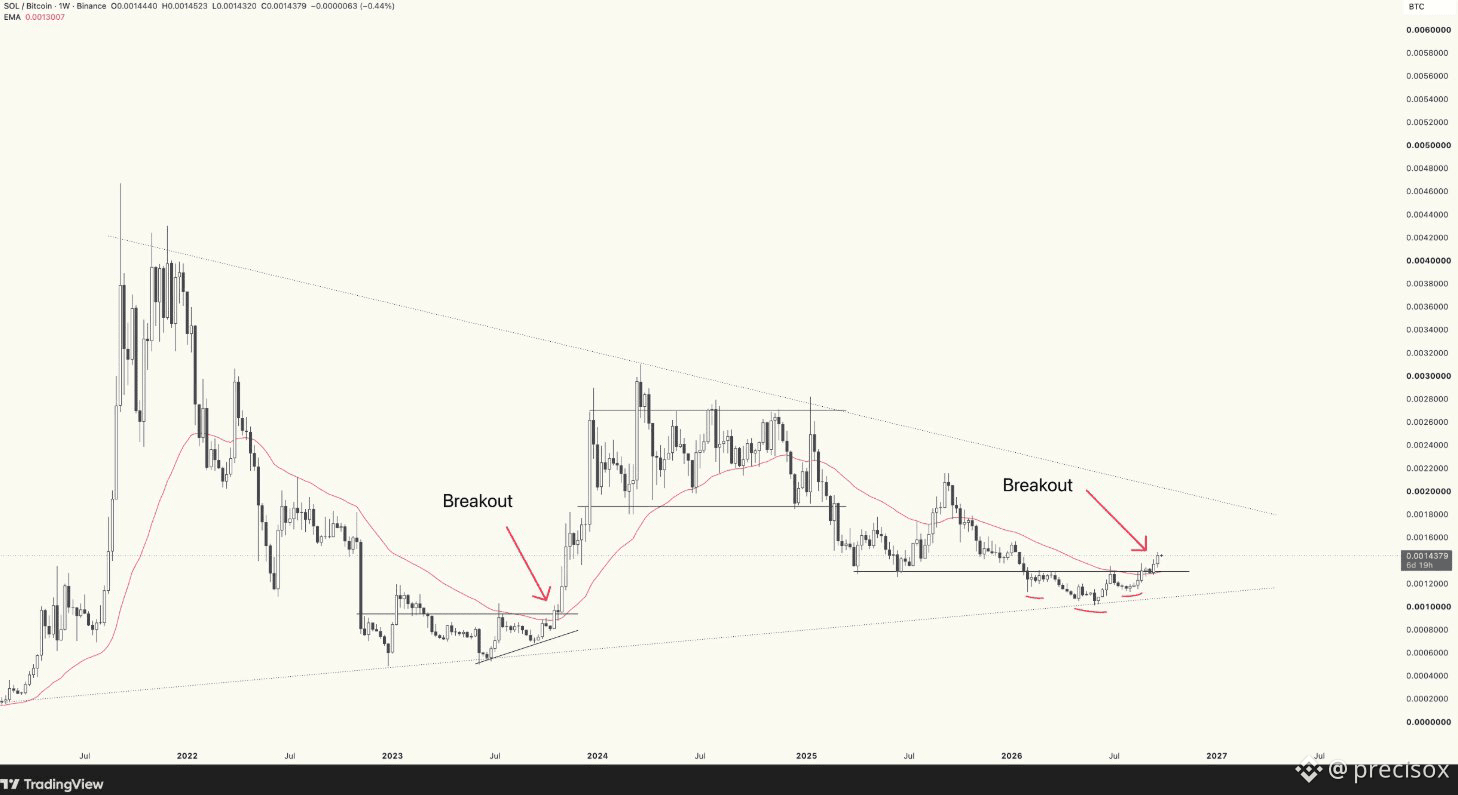
Your coin isn’t accumulating just because you say it is.
When everyone has written it off, volume is dust and the thread has gone silent, that’s where the price is that you won’t see again when the bid comes in.
The problem isn’t buying in fear.
The problem is confusing fear with “it’s never coming back.”
Real accumulation is demand showing up when nobody wants to look. It’s not holding a trapped position and giving it a better name. If BTC still hasn’t absorbed the flow, your alt doesn’t have permission for the x. It has permission to be discounted.
That’s why you buy in fear: because the announcement, listing, and rebrand come after the price has already gone up. The partnership is content.
The bid is someone willing to pay more than you. That someone shows up after the silence, not during the thread.
The one who waits until they like it buys 50% higher. The one who buys when it’s repulsive is already in.
Buy in fear.
Sell when the thesis becomes obvious.
1
1.1k
·
--
If you have:
Little or no expenses
Parents who support you
No one depends on you yet (husband, wife, or children)
You should be taking insane amounts of risk.
If you have:
Little or no expenses
Parents who support you
No one depends on you yet (husband, wife, or children)
You should be taking insane amounts of risk.
Little or no expenses
Parents who support you
No one depends on you yet (husband, wife, or children)
You should be taking insane amounts of risk.
3
1.3k
·
--
If you're learning to code in 2026, learn this:
> read code, don't just ask for it
> use Git without fear
> find a bug without handing it to AI
> databases and SQL
> how an API works
> read what AI changed before accepting it
> the basics of algorithms
> use the terminal
> how the internet works: domains, servers, HTTPS
> don't upload your keys to GitHub
> write a simple test
> put a real project online
> read documentation
> explain your code in your own words
AI makes you fast.
This makes you hireable.
2
1.2k
·
--
You need:
- 3 different accounts.
- Different assets and countries.
- 2 cold wallets.
- Tax residency in another country.
- A cash reserve.
And if you don’t understand this post or think it’s paranoid,
keep scrolling.
You don’t need anything.
You need:
- 3 different accounts.
- Different assets and countries.
- 2 cold wallets.
- Tax residency in another country.
- A cash reserve.
And if you don’t understand this post or think it’s paranoid,
keep scrolling.
You don’t need anything.
- 3 different accounts.
- Different assets and countries.
- 2 cold wallets.
- Tax residency in another country.
- A cash reserve.
And if you don’t understand this post or think it’s paranoid,
keep scrolling.
You don’t need anything.
3
2.2k
Log in to explore more content
Join global crypto users on Binance Square
⚡️ Get latest and useful information about crypto.
💬 Trusted by the world’s largest crypto exchange.
👍 Discover real insights from verified creators.
Email / Phone number