
半只猴子
1.1k Posts
半只猴子
Report
Block User
meme玩家
X:半只猴子 monkeyd_long
Frequent Trader
5.6 Years
75 Following
2.8K+ Followers
4.9K+ Liked
Posts
All
Quotes
Videos
PINNED
·
--
7u Challenge to a Billion!
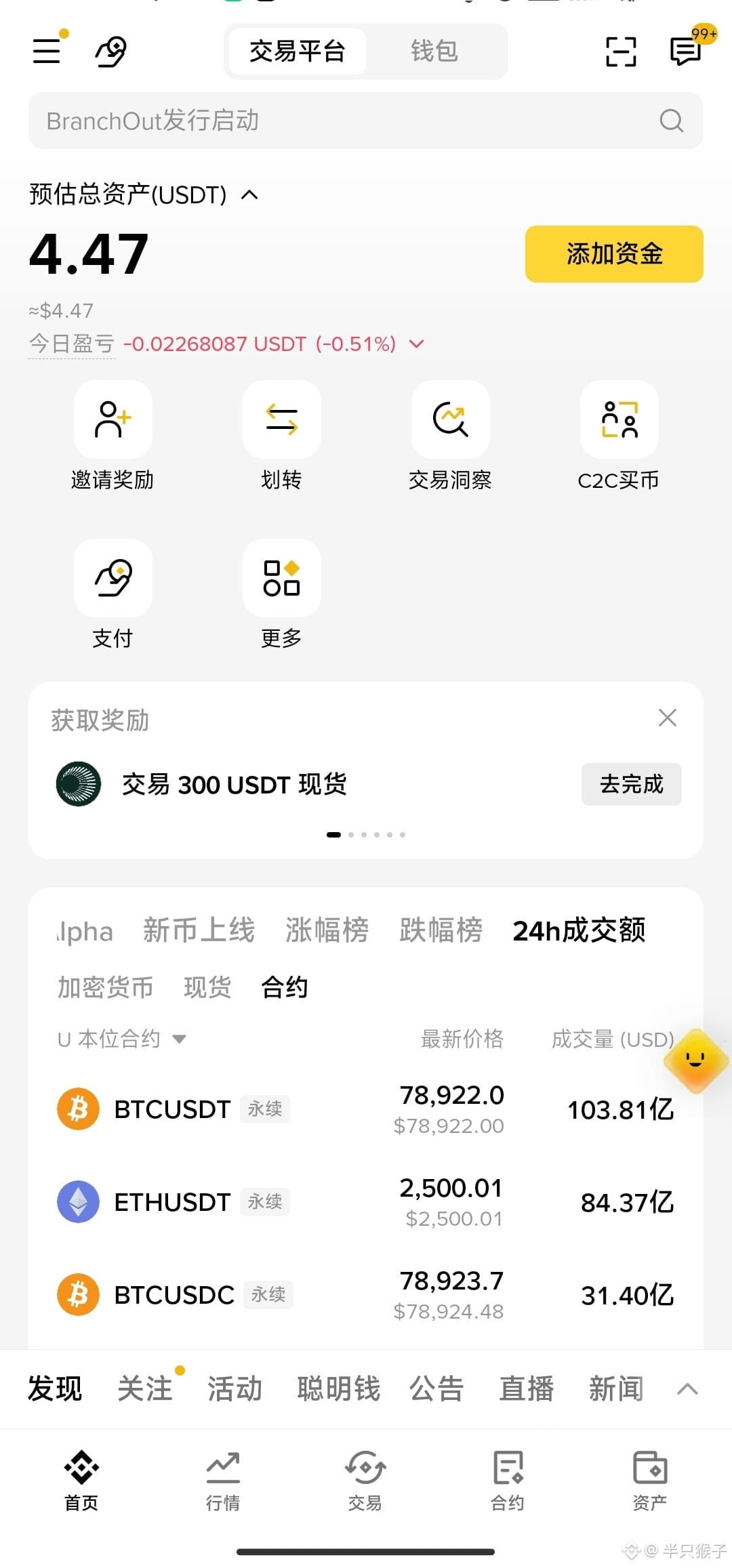
Day 6
Principal: 7u, Target: 1 Billion
Current profit: 190u
Survival cost spent: 80u
Remaining: 120u
The power company催缴 electricity bills yesterday; I sold 45u. A few days ago I spent 15u on meals, and today I used 20u to buy groceries—survival costs totaled 80u.
Next-step approach: making the principal is the most important. Right now I’m mainly writing content; 100u is enough to start going hard on a microcap!!!
Recently, $BTC pumped and then pulled back; I’m optimistic about the next bull market. These days, Bitcoin has been pumping too hard—pulling back a bit is completely normal.
Now I have 100u. I’m preparing to go all-in on microcaps listed above, $BNB . There are two coins—one coin will be pushed with 50u first.
#比特币64亿美元期权将到期
{future}(BNBUSDT)
7u Challenge to a Billion!
Day 6
Principal: 7u, Target: 1 Billion
Current profit: 190u
Survival cost spent: 80u
Remaining: 120u
The power company催缴 electricity bills yesterday; I sold 45u. A few days ago I spent 15u on meals, and today I used 20u to buy groceries—survival costs totaled 80u.
Next-step approach: making the principal is the most important. Right now I’m mainly writing content; 100u is enough to start going hard on a microcap!!!
Recently, $BTC pumped and then pulled back; I’m optimistic about the next bull market. These days, Bitcoin has been pumping too hard—pulling back a bit is completely normal.
Now I have 100u. I’m preparing to go all-in on microcaps listed above, $BNB . There are two coins—one coin will be pushed with 50u first.
#比特币64亿美元期权将到期
Day 6
Principal: 7u, Target: 1 Billion
Current profit: 190u
Survival cost spent: 80u
Remaining: 120u
The power company催缴 electricity bills yesterday; I sold 45u. A few days ago I spent 15u on meals, and today I used 20u to buy groceries—survival costs totaled 80u.
Next-step approach: making the principal is the most important. Right now I’m mainly writing content; 100u is enough to start going hard on a microcap!!!
Recently, $BTC pumped and then pulled back; I’m optimistic about the next bull market. These days, Bitcoin has been pumping too hard—pulling back a bit is completely normal.
Now I have 100u. I’m preparing to go all-in on microcaps listed above, $BNB . There are two coins—one coin will be pushed with 50u first.
#比特币64亿美元期权将到期
5
2
2.4k
·
--
7u Challenge One Hundred Million!
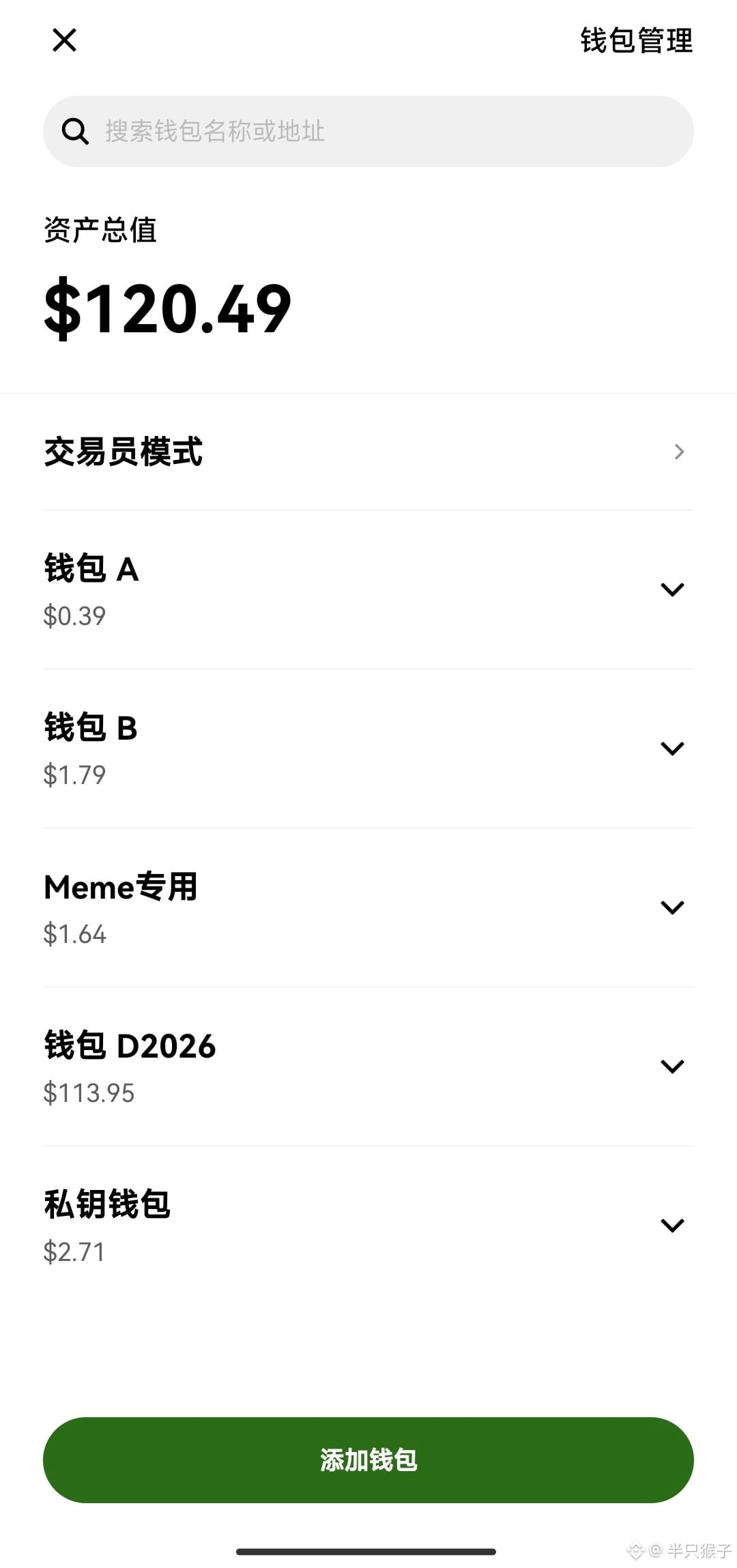
Day 20
Principal 7u, target one hundred million
Current: 3450u
Survival cost: 950u
Available funds: 2500u+
Recently, there has been a lot of high-altitude chain sweeping. These past two days my eyes hurt. I just checked: yesterday the funds were 3780, but now it’s only 3450, plus the Binance Square rewards. Everything is fully allocated in spot positions. The drawdown is about 400u!
The main issue is that $BNB and $PONS have had a relatively large drawdown.
Earlier, I judged that the bull market has already finished its second leg—meaning the correction was over. But it looks like that judgment was wrong. The good news is that the correction hasn’t finished yet, which means there’s still time to get on a few strong coins.
In the text below, I’ll write about a few coins I’m currently watching, to see which one to buy.
{alpha}(46630x39dbed3a2bd333467115de45665cc57f813c4571)
7u Challenge One Hundred Million!
Day 20
Principal 7u, target one hundred million
Current: 3450u
Survival cost: 950u
Available funds: 2500u+
Recently, there has been a lot of high-altitude chain sweeping. These past two days my eyes hurt. I just checked: yesterday the funds were 3780, but now it’s only 3450, plus the Binance Square rewards. Everything is fully allocated in spot positions. The drawdown is about 400u!
The main issue is that $BNB and $PONS have had a relatively large drawdown.
Earlier, I judged that the bull market has already finished its second leg—meaning the correction was over. But it looks like that judgment was wrong. The good news is that the correction hasn’t finished yet, which means there’s still time to get on a few strong coins.
In the text below, I’ll write about a few coins I’m currently watching, to see which one to buy.
Day 20
Principal 7u, target one hundred million
Current: 3450u
Survival cost: 950u
Available funds: 2500u+
Recently, there has been a lot of high-altitude chain sweeping. These past two days my eyes hurt. I just checked: yesterday the funds were 3780, but now it’s only 3450, plus the Binance Square rewards. Everything is fully allocated in spot positions. The drawdown is about 400u!
The main issue is that $BNB and $PONS have had a relatively large drawdown.
Earlier, I judged that the bull market has already finished its second leg—meaning the correction was over. But it looks like that judgment was wrong. The good news is that the correction hasn’t finished yet, which means there’s still time to get on a few strong coins.
In the text below, I’ll write about a few coins I’m currently watching, to see which one to buy.
585
·
--
Only by shorting your own body can it be a true liquidation!
Brothers, the bull market is just beginning—train your body well. First, defeat the dog syndicate from the physical side, with a savage physique; then read more, learn, and expand your soft skills. Civilized spirit, savage physique!
Besides these two things, there’s one more thing to do: expand the size of your principal—i.e., make money. Then go for memes, trade contracts, and earn even more!
In this cycle, we will definitely make it!
$PONS , you have to hold on!
{alpha}(46630x39dbed3a2bd333467115de45665cc57f813c4571)
Only by shorting your own body can it be a true liquidation!
Brothers, the bull market is just beginning—train your body well. First, defeat the dog syndicate from the physical side, with a savage physique; then read more, learn, and expand your soft skills. Civilized spirit, savage physique!
Besides these two things, there’s one more thing to do: expand the size of your principal—i.e., make money. Then go for memes, trade contracts, and earn even more!
In this cycle, we will definitely make it!
$PONS , you have to hold on!
Brothers, the bull market is just beginning—train your body well. First, defeat the dog syndicate from the physical side, with a savage physique; then read more, learn, and expand your soft skills. Civilized spirit, savage physique!
Besides these two things, there’s one more thing to do: expand the size of your principal—i.e., make money. Then go for memes, trade contracts, and earn even more!
In this cycle, we will definitely make it!
$PONS , you have to hold on!



1
1
510
·
--
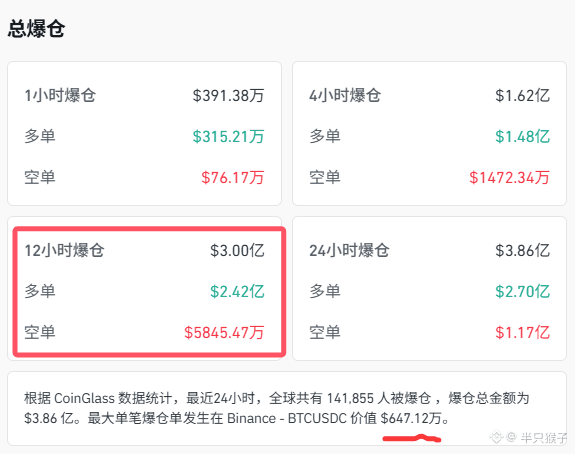
It was another brutal night for the bulls
In the past 12 hours, liquidations across the entire network reached 300 million, with bulls taking a 242 million hit — meaning 80% of the liquidations were long positions
But don’t be afraid, this is a bull market, and the pullback is only temporary
The rally earlier was too strong, and the fear and greed index is still at 67, which is still a bit too high
Personally, as long as Bitcoin $BTC doesn’t break below 7.4, it’s still a bull market. And have you noticed? Actually, when Bitcoin is above 7.6, the market sees rotation across various hot sectors. So bulls don’t need to scare themselves!
{future}(BTCUSDT)
It was another brutal night for the bulls
In the past 12 hours, liquidations across the entire network reached 300 million, with bulls taking a 242 million hit — meaning 80% of the liquidations were long positions
But don’t be afraid, this is a bull market, and the pullback is only temporary
The rally earlier was too strong, and the fear and greed index is still at 67, which is still a bit too high
Personally, as long as Bitcoin $BTC doesn’t break below 7.4, it’s still a bull market. And have you noticed? Actually, when Bitcoin is above 7.6, the market sees rotation across various hot sectors. So bulls don’t need to scare themselves!
In the past 12 hours, liquidations across the entire network reached 300 million, with bulls taking a 242 million hit — meaning 80% of the liquidations were long positions
But don’t be afraid, this is a bull market, and the pullback is only temporary
The rally earlier was too strong, and the fear and greed index is still at 67, which is still a bit too high
Personally, as long as Bitcoin $BTC doesn’t break below 7.4, it’s still a bull market. And have you noticed? Actually, when Bitcoin is above 7.6, the market sees rotation across various hot sectors. So bulls don’t need to scare themselves!
1.3k
·
--
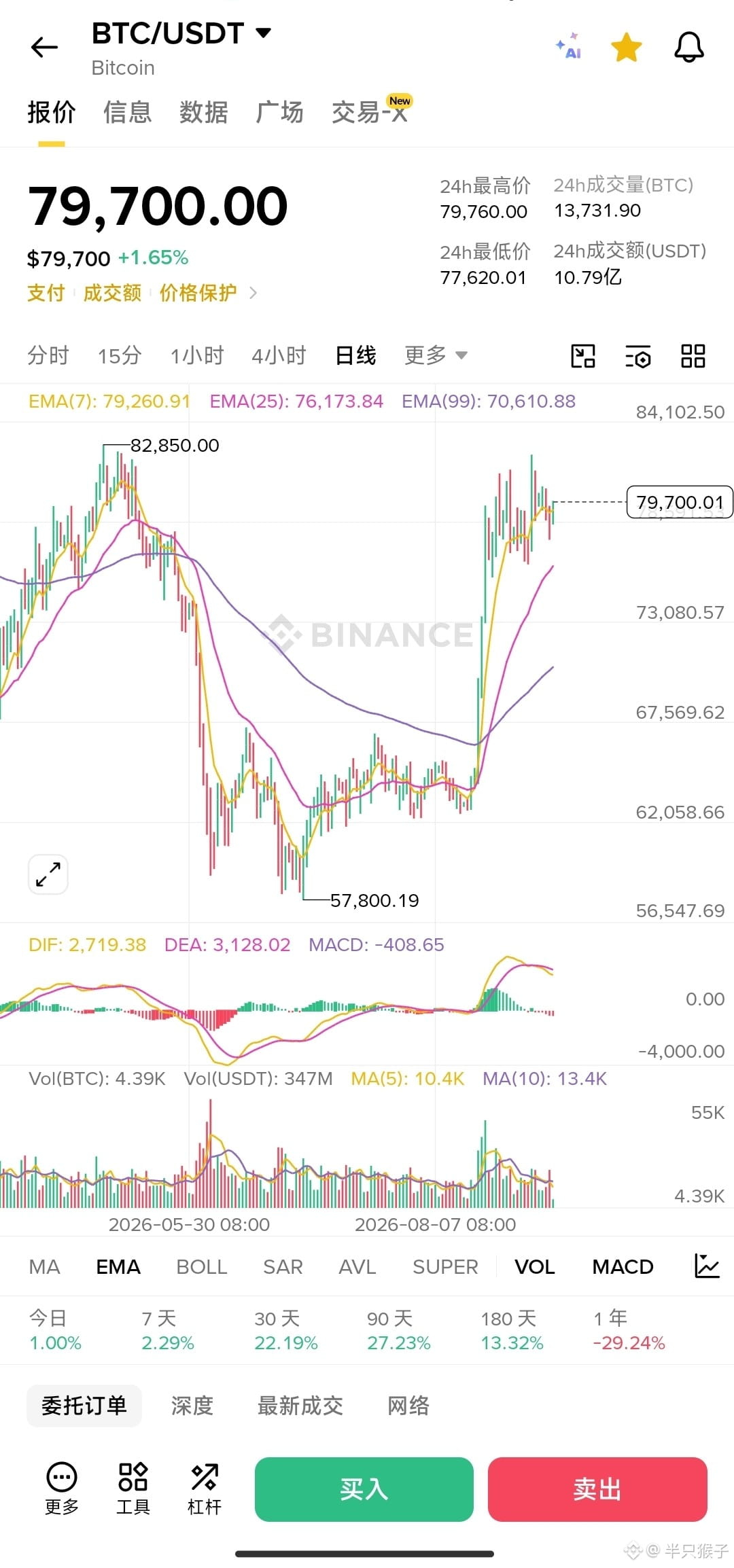
Is Bitcoin $BTC really coming for real?
Multiple attempts to break above 80,000
Currently, the strong support zone is around 74,000 to 75,000. In this wave, both pullbacks have failed to reach this range. Why is this support level so important?
Mainly for two reasons: first, back when the former president took office, a breakout above 74 led straight up to 100,000; second, 75,000 is MicroStrategy’s cost basis—below this level, it will be very uncomfortable, but above it, it will gain the ability to print money.
The resistance level is around 82,000. It has failed to break through multiple times, but as long as it breaks above this level, it will push shorts up directly to 85,000. It will quickly drive it above 90,000 without giving much opportunity.
Targeting 100,000—real divergence beyond 100,000. In the meantime, it’s unlikely we’ll see a decent pullback.
{future}(BTCUSDT)
Is Bitcoin $BTC really coming for real?
Multiple attempts to break above 80,000
Currently, the strong support zone is around 74,000 to 75,000. In this wave, both pullbacks have failed to reach this range. Why is this support level so important?
Mainly for two reasons: first, back when the former president took office, a breakout above 74 led straight up to 100,000; second, 75,000 is MicroStrategy’s cost basis—below this level, it will be very uncomfortable, but above it, it will gain the ability to print money.
The resistance level is around 82,000. It has failed to break through multiple times, but as long as it breaks above this level, it will push shorts up directly to 85,000. It will quickly drive it above 90,000 without giving much opportunity.
Targeting 100,000—real divergence beyond 100,000. In the meantime, it’s unlikely we’ll see a decent pullback.
Multiple attempts to break above 80,000
Currently, the strong support zone is around 74,000 to 75,000. In this wave, both pullbacks have failed to reach this range. Why is this support level so important?
Mainly for two reasons: first, back when the former president took office, a breakout above 74 led straight up to 100,000; second, 75,000 is MicroStrategy’s cost basis—below this level, it will be very uncomfortable, but above it, it will gain the ability to print money.
The resistance level is around 82,000. It has failed to break through multiple times, but as long as it breaks above this level, it will push shorts up directly to 85,000. It will quickly drive it above 90,000 without giving much opportunity.
Targeting 100,000—real divergence beyond 100,000. In the meantime, it’s unlikely we’ll see a decent pullback.
242
·
--
Verified
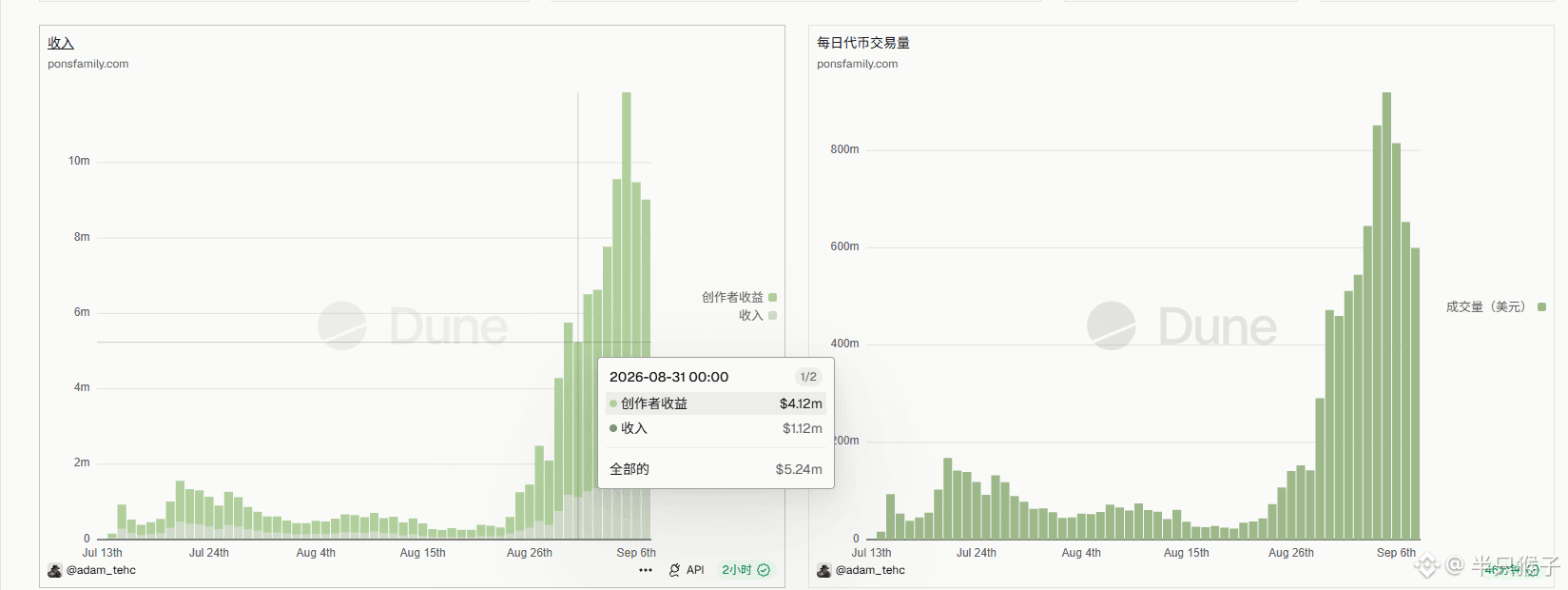
Over the past week, $PONS ’s daily income has reached between $1.3 million and over $2 million.
And over the past 7 days, not a single day’s revenue has been below $1.1 million.
The buyback wallet now has nearly $3 million ready at any time to purchase PONS.
One very important point: currently, the buyback and burn have already exceeded 30%, meaning PONS’s actual market cap is not around $750 million as shown, but rather $500 million.
{future}(PONSUSDT)
Over the past week, $PONS ’s daily income has reached between $1.3 million and over $2 million.
And over the past 7 days, not a single day’s revenue has been below $1.1 million.
The buyback wallet now has nearly $3 million ready at any time to purchase PONS.
One very important point: currently, the buyback and burn have already exceeded 30%, meaning PONS’s actual market cap is not around $750 million as shown, but rather $500 million.
And over the past 7 days, not a single day’s revenue has been below $1.1 million.
The buyback wallet now has nearly $3 million ready at any time to purchase PONS.
One very important point: currently, the buyback and burn have already exceeded 30%, meaning PONS’s actual market cap is not around $750 million as shown, but rather $500 million.
1
1.4k
·
--

Article
Whale-Hunting Operation 2.0: Tens of Millions in Capital Converge—Targeting a Whale with a $4.5 Million Unrealized LossImagine this scene—
You opened a short, and it didn’t drop. Instead, it went up.
You add to your position—and it keeps rising.
You add more—it's still going up.
You’re down $4.5 million unrealized, and your liquidation price is right around the corner.
Then you realize the whole internet is watching your position, waiting to see you get liquidated.
This isn’t a movie. This is what’s happening right now on $PONS.
On September 3, trader oracle opened a 3x short position on PONS via $HYPE. To date, the position has accumulated to 25.29 million tokens, valued at about $20.86 million. The opening average price was $0.656.
What does that mean?
In the Hype PONS futures market, he alone accounts for 19% of the total open interest—that’s a real whale.
Whale-Hunting Operation 2.0: Tens of Millions in Capital Converge—Targeting a Whale with a $4.5 Million Unrealized Loss
Imagine this scene—
You opened a short, and it didn’t drop. Instead, it went up.
You add to your position—and it keeps rising.
You add more—it's still going up.
You’re down $4.5 million unrealized, and your liquidation price is right around the corner.
Then you realize the whole internet is watching your position, waiting to see you get liquidated.
This isn’t a movie. This is what’s happening right now on $PONS .
On September 3, trader oracle opened a 3x short position on PONS via $HYPE . To date, the position has accumulated to 25.29 million tokens, valued at about $20.86 million. The opening average price was $0.656.
What does that mean?
In the Hype PONS futures market, he alone accounts for 19% of the total open interest—that’s a real whale.
You opened a short, and it didn’t drop. Instead, it went up.
You add to your position—and it keeps rising.
You add more—it's still going up.
You’re down $4.5 million unrealized, and your liquidation price is right around the corner.
Then you realize the whole internet is watching your position, waiting to see you get liquidated.
This isn’t a movie. This is what’s happening right now on $PONS .
On September 3, trader oracle opened a 3x short position on PONS via $HYPE . To date, the position has accumulated to 25.29 million tokens, valued at about $20.86 million. The opening average price was $0.656.
What does that mean?
In the Hype PONS futures market, he alone accounts for 19% of the total open interest—that’s a real whale.
2
467
·
--

Article
From dismissing it to 1200x, why did Aave make early investors earn over 60 million?From DeFi to MemeFi, times are changing, but the underlying logic has never changed.
Today let’s talk about a story from a few years ago — how prime brokerage made a thousandfold profit from investment $AAVE.
In June 2019, prime brokerage first saw this project, and it was called LEND (Aave’s predecessor). It was peer-to-peer lending, with borrowers and lenders each placing orders and waiting to be matched by the other side. The rates didn’t match, the amounts didn’t match, and trading volume was terrible. Conclusion: don’t invest.
But the Aave team made a key decision — to switch from P2P to P2C (pool-based model). Everyone deposits money into one pool; if you want to borrow, you can borrow anytime, and if you want to deposit, you can withdraw anytime. This change directly solved the core problem of low matching efficiency.
From dismissing it to 1200x, why did Aave make early investors earn over 60 million?
From DeFi to MemeFi, times are changing, but the underlying logic has never changed.
Today let’s talk about a story from a few years ago — how prime brokerage made a thousandfold profit from investment $AAVE .
In June 2019, prime brokerage first saw this project, and it was called LEND (Aave’s predecessor). It was peer-to-peer lending, with borrowers and lenders each placing orders and waiting to be matched by the other side. The rates didn’t match, the amounts didn’t match, and trading volume was terrible. Conclusion: don’t invest.
But the Aave team made a key decision — to switch from P2P to P2C (pool-based model). Everyone deposits money into one pool; if you want to borrow, you can borrow anytime, and if you want to deposit, you can withdraw anytime. This change directly solved the core problem of low matching efficiency.
Today let’s talk about a story from a few years ago — how prime brokerage made a thousandfold profit from investment $AAVE .
In June 2019, prime brokerage first saw this project, and it was called LEND (Aave’s predecessor). It was peer-to-peer lending, with borrowers and lenders each placing orders and waiting to be matched by the other side. The rates didn’t match, the amounts didn’t match, and trading volume was terrible. Conclusion: don’t invest.
But the Aave team made a key decision — to switch from P2P to P2C (pool-based model). Everyone deposits money into one pool; if you want to borrow, you can borrow anytime, and if you want to deposit, you can withdraw anytime. This change directly solved the core problem of low matching efficiency.
255
·
--
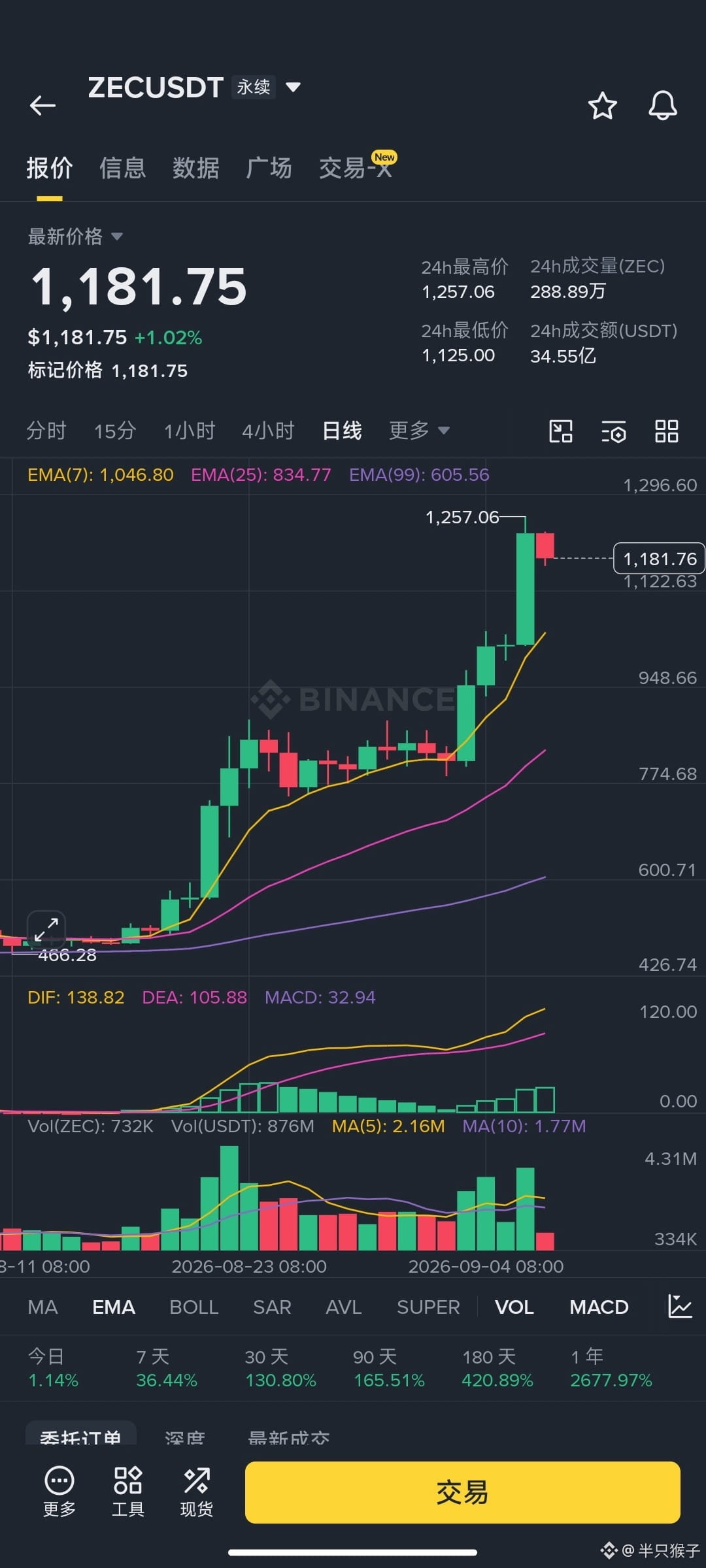
One single unrealized loss of 24 million USD
Just saw BTC OG whale agent add another short position of $ZEC , with an average price of 1193 USD and a total position of 39,800 coins.
{future}(ZECUSDT)
This add-on raised the opening average price from 444 USD to 576 USD, and the current unrealized loss is 24 million USD.
This is really stubborn—if you want to short, why short the strongest coin?
One single unrealized loss of 24 million USD
Just saw BTC OG whale agent add another short position of $ZEC , with an average price of 1193 USD and a total position of 39,800 coins.
This add-on raised the opening average price from 444 USD to 576 USD, and the current unrealized loss is 24 million USD.
This is really stubborn—if you want to short, why short the strongest coin?
Just saw BTC OG whale agent add another short position of $ZEC , with an average price of 1193 USD and a total position of 39,800 coins.
This add-on raised the opening average price from 444 USD to 576 USD, and the current unrealized loss is 24 million USD.
This is really stubborn—if you want to short, why short the strongest coin?
1
257
·
--
Partly True
Article
From a 10U god to an A9 big shot, it only took him two months!Two months ago he was still $BNB chasing shitcoins, and now he's making $9.05 million a day.
The scary thing isn't someone who works harder than you; it's someone who works harder than you and is even better at going all in.
Today let's talk about a story of “instant fame” that is absurdly real — $PONS founder Oz. Two months ago, he was still on the BSC chain chasing shitcoins, spending $22 to buy a Chinese token, and leaving behind a classic wish:
“Immortal beings of China, if you can hear my prayer, please pump this crappy thing to a $5 billion market cap. I'm really too poor.”
Back then, he was just the ordinary “10U god” you and I could run into anywhere.
From a 10U god to an A9 big shot, it only took him two months!
Two months ago he was still $BNB chasing shitcoins, and now he's making $9.05 million a day.
The scary thing isn't someone who works harder than you; it's someone who works harder than you and is even better at going all in.
Today let's talk about a story of “instant fame” that is absurdly real — $PONS founder Oz. Two months ago, he was still on the BSC chain chasing shitcoins, spending $22 to buy a Chinese token, and leaving behind a classic wish:
“Immortal beings of China, if you can hear my prayer, please pump this crappy thing to a $5 billion market cap. I'm really too poor.”
Back then, he was just the ordinary “10U god” you and I could run into anywhere.
The scary thing isn't someone who works harder than you; it's someone who works harder than you and is even better at going all in.
Today let's talk about a story of “instant fame” that is absurdly real — $PONS founder Oz. Two months ago, he was still on the BSC chain chasing shitcoins, spending $22 to buy a Chinese token, and leaving behind a classic wish:
“Immortal beings of China, if you can hear my prayer, please pump this crappy thing to a $5 billion market cap. I'm really too poor.”
Back then, he was just the ordinary “10U god” you and I could run into anywhere.
630
·
--

Article
The top 10 money printers in crypto—do you know who they are?Just looked at the latest 24-hour ranking of the top 10 protocol fees in crypto—see which project surprises you the most?
💰 Let's take a look at these 10 real "money printers" in 24-hour protocol fees:
No.1 Tether |16.10 million USD
How to make money: issue the USDT stablecoin, where users exchange real money for USDT, and it uses the users' money to buy U.S. Treasuries and earn interest. Do nothing, just sit back and earn the spread.
No.2 $PONS |9.05 million USD
How to make money: a launchpad on the Robinhood Chain, with revenue buyback and burn mechanism, maximizing deflation.
No.3 Uniswap $UNI |8.29 million USD
How to make money: the largest decentralized exchange on-chain, charging a transaction fee on every trade. The more trading volume it has, the more it earns—simple and brutal.
The top 10 money printers in crypto—do you know who they are?
Just looked at the latest 24-hour ranking of the top 10 protocol fees in crypto—see which project surprises you the most?
💰 Let's take a look at these 10 real "money printers" in 24-hour protocol fees:
No.1 Tether |16.10 million USD
How to make money: issue the USDT stablecoin, where users exchange real money for USDT, and it uses the users' money to buy U.S. Treasuries and earn interest. Do nothing, just sit back and earn the spread.
No.2 $PONS |9.05 million USD
How to make money: a launchpad on the Robinhood Chain, with revenue buyback and burn mechanism, maximizing deflation.
No.3 Uniswap $UNI |8.29 million USD
How to make money: the largest decentralized exchange on-chain, charging a transaction fee on every trade. The more trading volume it has, the more it earns—simple and brutal.
💰 Let's take a look at these 10 real "money printers" in 24-hour protocol fees:
No.1 Tether |16.10 million USD
How to make money: issue the USDT stablecoin, where users exchange real money for USDT, and it uses the users' money to buy U.S. Treasuries and earn interest. Do nothing, just sit back and earn the spread.
No.2 $PONS |9.05 million USD
How to make money: a launchpad on the Robinhood Chain, with revenue buyback and burn mechanism, maximizing deflation.
No.3 Uniswap $UNI |8.29 million USD
How to make money: the largest decentralized exchange on-chain, charging a transaction fee on every trade. The more trading volume it has, the more it earns—simple and brutal.
695
·
--
The hottest narrative these past few days is not AI, not U.S. stocks, but the explosive breakout of the Robin Hood chain ecosystem.
First, PONS went live on contracts, ARB rose more than 45% in a single day, UNI hit a recent high, ZEC broke through $1,200, and HYPE reached an all-time high...
Here’s a clear rundown today of why these 10 coins are rising.
1.$PONS The leading launchpad on the Robin Hood chain, with protocol fees of $9.05 million in the last 24 hours, fees exceeding pump for several consecutive days, and a cumulative buyback-and-burn ratio of 29.84%.
{future}(PONSUSDT)
2.$ARB Built on ARB by the Robin Hood chain, with 10% of net revenue flowing into the ARB ecosystem.
{future}(ARBUSDT)
3.$UNI Protocol fees and revenue hit new highs, with the Robin Hood chain contributing 70%, and single-day buybacks and burns peaking above $1 million.
{future}(UNIUSDT)
4. ZEC, at an all-time high, the leading privacy coin, with institutions openly buying in, driving a short squeeze.
5. DASH, a veteran privacy coin, boosted by ZEC.
6. HYPE, three related ETFs attracting institutional positioning, hit an all-time high, and buyback-and-burn amounts recently reached new highs.
7. CRV, DeFi infrastructure, rising along with the broader sector.
8. ENA, with updates across four major ecosystems, and entering the stock perpetual contracts market.
9. LINK, infrastructure in the DeFi sector, rising along with the broader sector.
10. PUMP, the largest launchpad on SOL.
The hottest narrative these past few days is not AI, not U.S. stocks, but the explosive breakout of the Robin Hood chain ecosystem.
First, PONS went live on contracts, ARB rose more than 45% in a single day, UNI hit a recent high, ZEC broke through $1,200, and HYPE reached an all-time high...
Here’s a clear rundown today of why these 10 coins are rising.
1.$PONS The leading launchpad on the Robin Hood chain, with protocol fees of $9.05 million in the last 24 hours, fees exceeding pump for several consecutive days, and a cumulative buyback-and-burn ratio of 29.84%.
2.$ARB Built on ARB by the Robin Hood chain, with 10% of net revenue flowing into the ARB ecosystem.
3.$UNI Protocol fees and revenue hit new highs, with the Robin Hood chain contributing 70%, and single-day buybacks and burns peaking above $1 million.
4. ZEC, at an all-time high, the leading privacy coin, with institutions openly buying in, driving a short squeeze.
5. DASH, a veteran privacy coin, boosted by ZEC.
6. HYPE, three related ETFs attracting institutional positioning, hit an all-time high, and buyback-and-burn amounts recently reached new highs.
7. CRV, DeFi infrastructure, rising along with the broader sector.
8. ENA, with updates across four major ecosystems, and entering the stock perpetual contracts market.
9. LINK, infrastructure in the DeFi sector, rising along with the broader sector.
10. PUMP, the largest launchpad on SOL.
First, PONS went live on contracts, ARB rose more than 45% in a single day, UNI hit a recent high, ZEC broke through $1,200, and HYPE reached an all-time high...
Here’s a clear rundown today of why these 10 coins are rising.
1.$PONS The leading launchpad on the Robin Hood chain, with protocol fees of $9.05 million in the last 24 hours, fees exceeding pump for several consecutive days, and a cumulative buyback-and-burn ratio of 29.84%.
2.$ARB Built on ARB by the Robin Hood chain, with 10% of net revenue flowing into the ARB ecosystem.
3.$UNI Protocol fees and revenue hit new highs, with the Robin Hood chain contributing 70%, and single-day buybacks and burns peaking above $1 million.
4. ZEC, at an all-time high, the leading privacy coin, with institutions openly buying in, driving a short squeeze.
5. DASH, a veteran privacy coin, boosted by ZEC.
6. HYPE, three related ETFs attracting institutional positioning, hit an all-time high, and buyback-and-burn amounts recently reached new highs.
7. CRV, DeFi infrastructure, rising along with the broader sector.
8. ENA, with updates across four major ecosystems, and entering the stock perpetual contracts market.
9. LINK, infrastructure in the DeFi sector, rising along with the broader sector.
10. PUMP, the largest launchpad on SOL.
1
5.5k
·
--
Verified
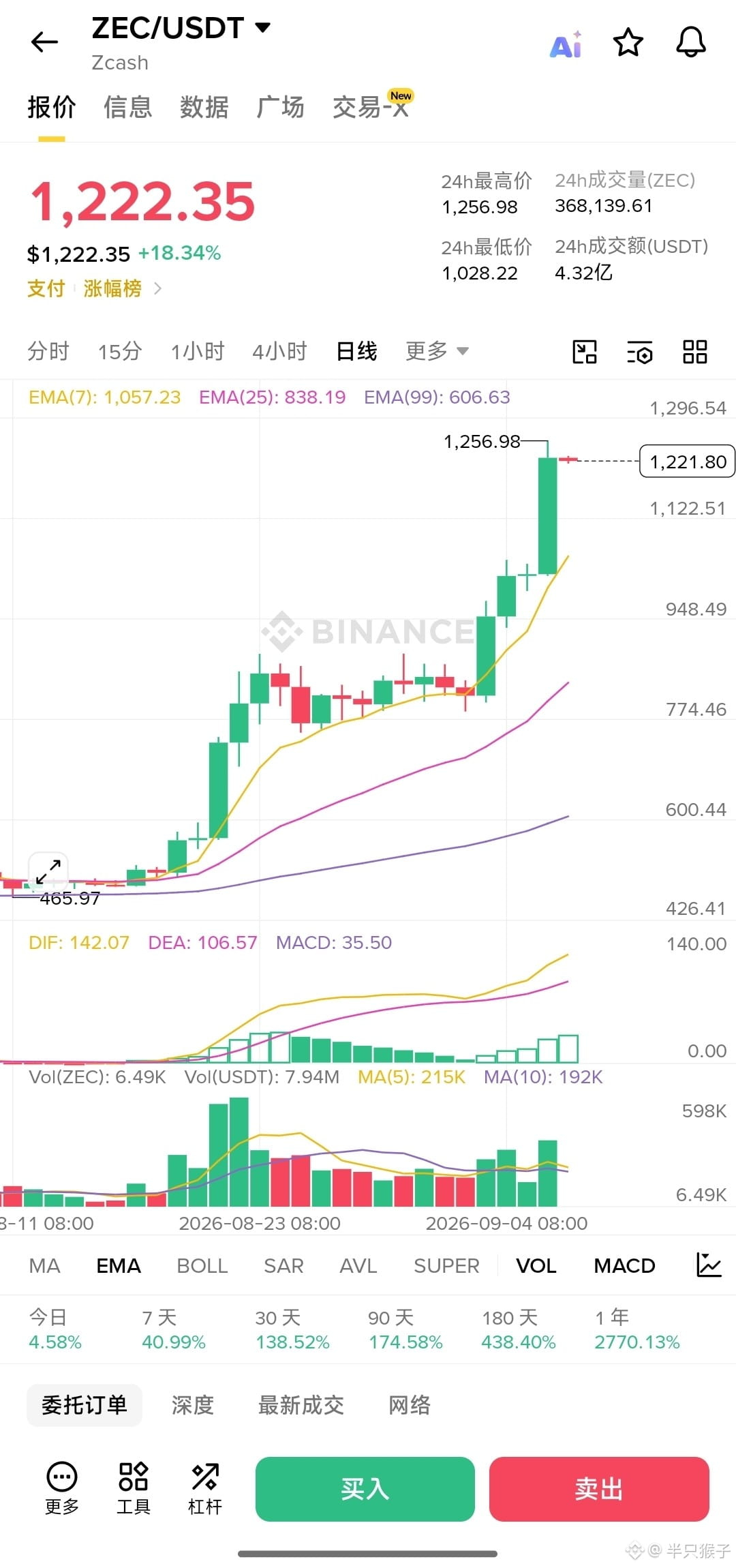
Why did $ZEC surge so much?
{future}(ZECUSDT)
The main reason is that large institutions have started buying openly, and Grayscale's ETF has become their compliant channel.
The second is a short squeeze. Before, many people didn't believe it could rise. For example, an agent for an OG whale holding 80,000 BTC started shorting from $444. The higher the price goes, the more forced liquidations happen, and the more they buy, the higher it goes.
Finally, and most importantly, the narrative has changed. Big names, such as the founder of perpetual contracts, Heige (Arthur Hayes), have begun promoting the idea that "privacy is also a tradable asset." In the Chinese crypto circle, Qige said, "In the AI era, privacy becomes increasingly valuable. Protect privacy and uphold the light of civilization."
Why did $ZEC surge so much?
The main reason is that large institutions have started buying openly, and Grayscale's ETF has become their compliant channel.
The second is a short squeeze. Before, many people didn't believe it could rise. For example, an agent for an OG whale holding 80,000 BTC started shorting from $444. The higher the price goes, the more forced liquidations happen, and the more they buy, the higher it goes.
Finally, and most importantly, the narrative has changed. Big names, such as the founder of perpetual contracts, Heige (Arthur Hayes), have begun promoting the idea that "privacy is also a tradable asset." In the Chinese crypto circle, Qige said, "In the AI era, privacy becomes increasingly valuable. Protect privacy and uphold the light of civilization."
The main reason is that large institutions have started buying openly, and Grayscale's ETF has become their compliant channel.
The second is a short squeeze. Before, many people didn't believe it could rise. For example, an agent for an OG whale holding 80,000 BTC started shorting from $444. The higher the price goes, the more forced liquidations happen, and the more they buy, the higher it goes.
Finally, and most importantly, the narrative has changed. Big names, such as the founder of perpetual contracts, Heige (Arthur Hayes), have begun promoting the idea that "privacy is also a tradable asset." In the Chinese crypto circle, Qige said, "In the AI era, privacy becomes increasingly valuable. Protect privacy and uphold the light of civilization."
2.2k
·
--
Binance's biggest live trader, explanation for the surge of $ZEC
{future}(ZECUSDT)
Binance's biggest live trader, explanation for the surge of $ZEC

48ClubIan
·
--
ZEC broke above a thousand, and many people missed it.
This rally is not a hacker narrative. The main drivers are that U.S. stock ETFs put $ZEC into compliant products, shorts got squeezed, and the Hayeses are talking about the privacy trade. On the stablecoin side, DAI’s migration to USDS shows the decentralized track is shrinking; meanwhile, institutions have started buying privacy as a tradable asset.
What matters here is ETF accumulation and derivatives liquidations, not dark web stories.
$ZEC
This rally is not a hacker narrative. The main drivers are that U.S. stock ETFs put $ZEC into compliant products, shorts got squeezed, and the Hayeses are talking about the privacy trade. On the stablecoin side, DAI’s migration to USDS shows the decentralized track is shrinking; meanwhile, institutions have started buying privacy as a tradable asset.
What matters here is ETF accumulation and derivatives liquidations, not dark web stories.
$ZEC
262
·
--
Partly True
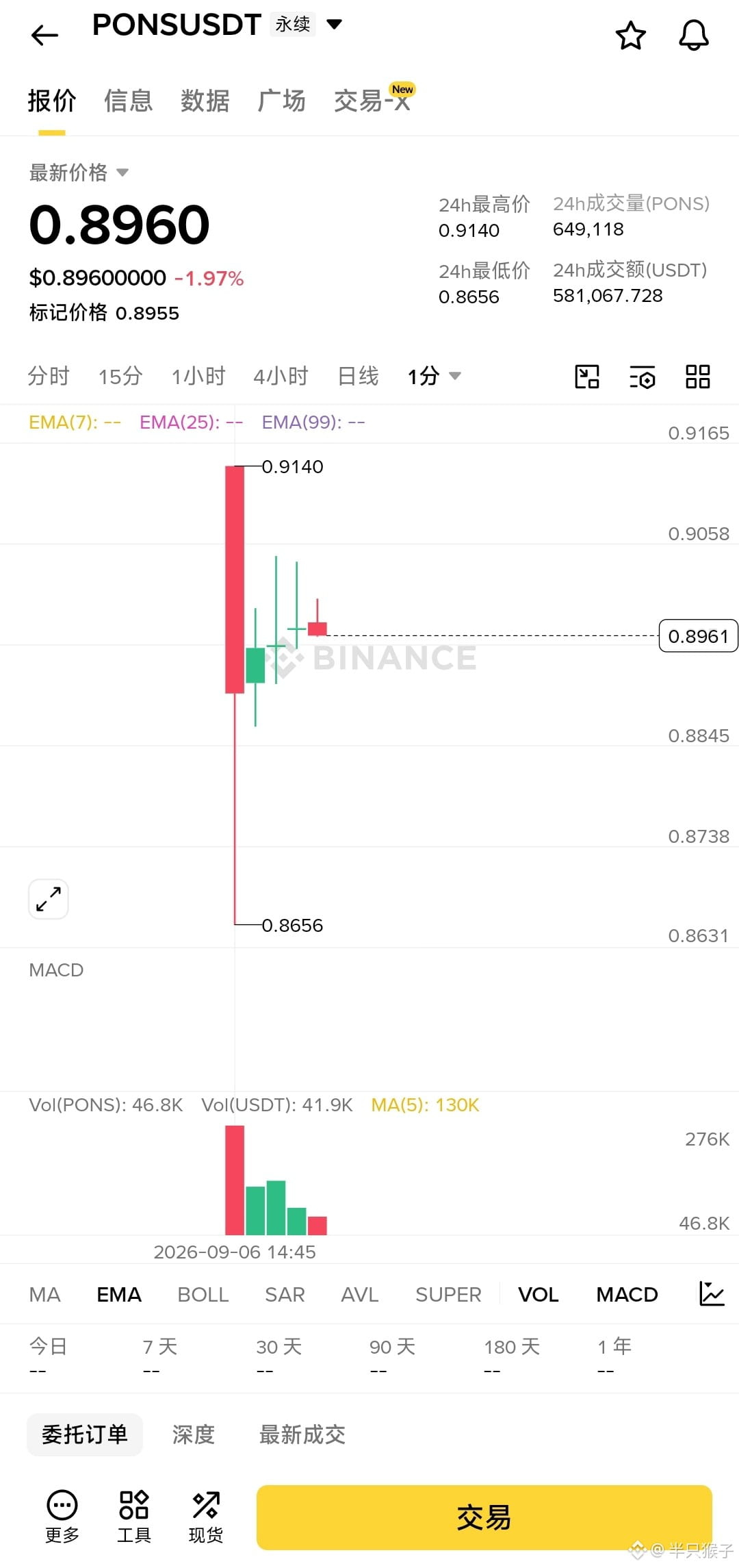
The biggest dark horse in the crypto world! $PONS
{future}(PONSUSDT)
Launched just two months ago, protocol fees over the last 24 hours have exceeded 9 million USD, pushing UNI down to third place.
First, take a look at a set of PONS data and feel the impact for yourself:
Protocol fee rankings over the last 24 hours:
- #1: Tether (USDT) — 16.1 million USD
- #2: PONS — 9.05 million USD
- #3: UNI — 8.29 million USD
A protocol launched only 2 months ago has already surged to second place in the entire crypto market in terms of fees, surpassing $UNI .
{future}(UNIUSDT)
But that’s just the appetizer. What really gave me goosebumps is the data below:
PONS has been live for 60 days, with cumulative protocol fees of 72.48 million USD, and the token buyback-and-burn ratio has already reached about 29.68%.
What does that mean?
$PUMP has been around for so long, and the burn ratio is only 17%. PONS doubled that burn intensity in just 2 months.
{future}(PUMPUSDT)
A baby that is just 2 months old is visibly overtaking the old-school launchpad PUMP.
Why is PONS able to run so fast?
The logic is actually not complicated: in the launchpad sector, PUMP has already proven that the flywheel of “fee revenue → buyback and burn → deflationary price growth” can work. PONS upgraded that model — 80% of revenue is used directly for buybacks and burns, which is even more aggressive than PUMP’s 50%.
In plain terms, for the same business, PONS returns more of the profit to the token itself.
One last thing:
PONS is not a MEME, so don’t play it with MEME thinking. It has no narrative bubble, no celebrity shilling; all it has is 80% of daily protocol revenue being used for buybacks and burns to support it from below.
I can’t say for sure whether this is the top, but at least one thing is certain — a machine that uses 80% of the money it mints to buy back and burn is not being held up by sentiment.
The biggest dark horse in the crypto world! $PONS
Launched just two months ago, protocol fees over the last 24 hours have exceeded 9 million USD, pushing UNI down to third place.
First, take a look at a set of PONS data and feel the impact for yourself:
Protocol fee rankings over the last 24 hours:
- #1: Tether (USDT) — 16.1 million USD
- #2: PONS — 9.05 million USD
- #3: UNI — 8.29 million USD
A protocol launched only 2 months ago has already surged to second place in the entire crypto market in terms of fees, surpassing $UNI .
But that’s just the appetizer. What really gave me goosebumps is the data below:
PONS has been live for 60 days, with cumulative protocol fees of 72.48 million USD, and the token buyback-and-burn ratio has already reached about 29.68%.
What does that mean?
$PUMP has been around for so long, and the burn ratio is only 17%. PONS doubled that burn intensity in just 2 months.
A baby that is just 2 months old is visibly overtaking the old-school launchpad PUMP.
Why is PONS able to run so fast?
The logic is actually not complicated: in the launchpad sector, PUMP has already proven that the flywheel of “fee revenue → buyback and burn → deflationary price growth” can work. PONS upgraded that model — 80% of revenue is used directly for buybacks and burns, which is even more aggressive than PUMP’s 50%.
In plain terms, for the same business, PONS returns more of the profit to the token itself.
One last thing:
PONS is not a MEME, so don’t play it with MEME thinking. It has no narrative bubble, no celebrity shilling; all it has is 80% of daily protocol revenue being used for buybacks and burns to support it from below.
I can’t say for sure whether this is the top, but at least one thing is certain — a machine that uses 80% of the money it mints to buy back and burn is not being held up by sentiment.
Launched just two months ago, protocol fees over the last 24 hours have exceeded 9 million USD, pushing UNI down to third place.
First, take a look at a set of PONS data and feel the impact for yourself:
Protocol fee rankings over the last 24 hours:
- #1: Tether (USDT) — 16.1 million USD
- #2: PONS — 9.05 million USD
- #3: UNI — 8.29 million USD
A protocol launched only 2 months ago has already surged to second place in the entire crypto market in terms of fees, surpassing $UNI .
But that’s just the appetizer. What really gave me goosebumps is the data below:
PONS has been live for 60 days, with cumulative protocol fees of 72.48 million USD, and the token buyback-and-burn ratio has already reached about 29.68%.
What does that mean?
$PUMP has been around for so long, and the burn ratio is only 17%. PONS doubled that burn intensity in just 2 months.
A baby that is just 2 months old is visibly overtaking the old-school launchpad PUMP.
Why is PONS able to run so fast?
The logic is actually not complicated: in the launchpad sector, PUMP has already proven that the flywheel of “fee revenue → buyback and burn → deflationary price growth” can work. PONS upgraded that model — 80% of revenue is used directly for buybacks and burns, which is even more aggressive than PUMP’s 50%.
In plain terms, for the same business, PONS returns more of the profit to the token itself.
One last thing:
PONS is not a MEME, so don’t play it with MEME thinking. It has no narrative bubble, no celebrity shilling; all it has is 80% of daily protocol revenue being used for buybacks and burns to support it from below.
I can’t say for sure whether this is the top, but at least one thing is certain — a machine that uses 80% of the money it mints to buy back and burn is not being held up by sentiment.
1
1.1k
·
--
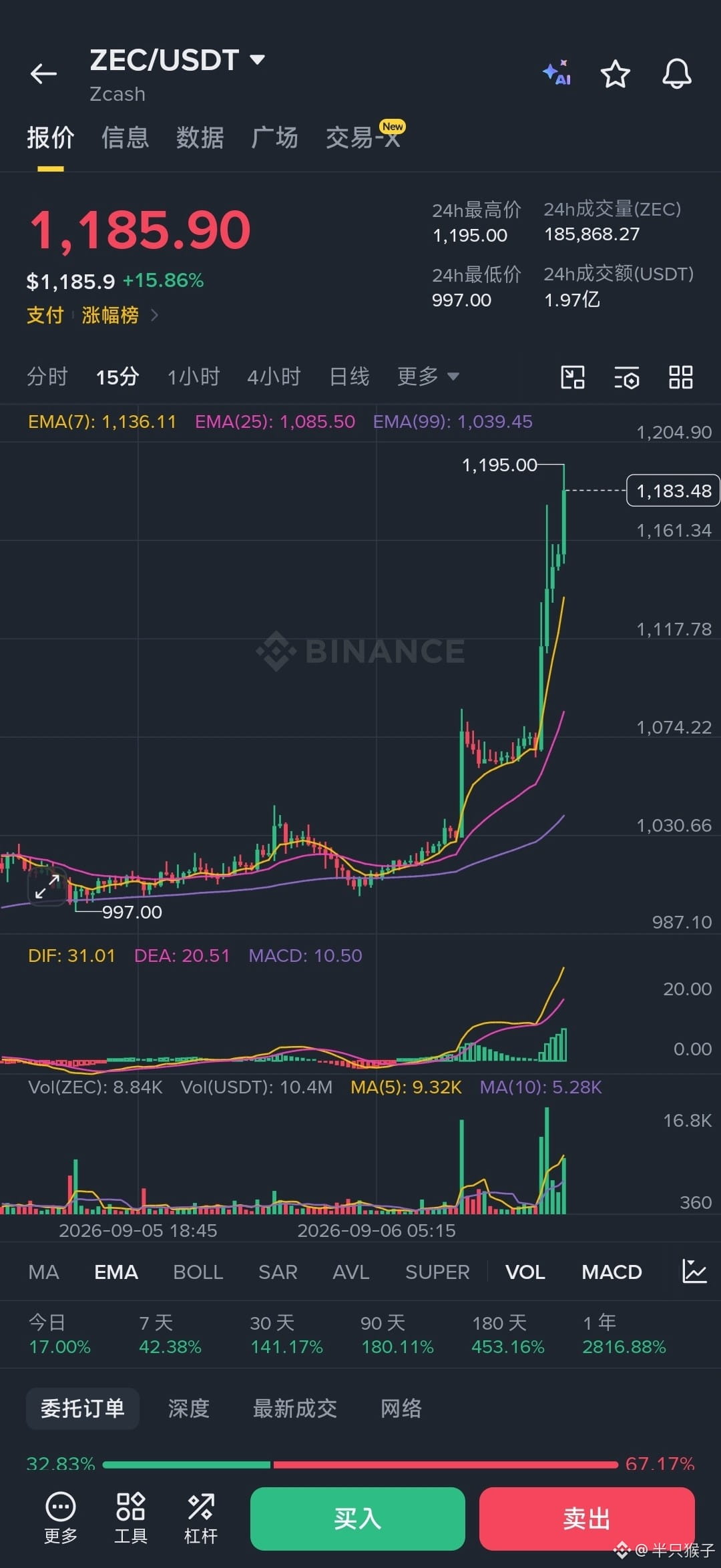
Ancient giant whale? I think it’s "ancient leek" 😂 Shorting $ZEC and losing $23.32 million
{future}(ZECUSDT)
Just looked at the data, that previous ancient whale holding 80,000 bitcoins $BTC , the agent’s short position has expanded its losses again.
{future}(BTCUSDT)
Currently holding a 32,800 ZEC short position, with an average entry price of $444, currently unrealized loss of $23.32 million, liquidation price $2,569.
Ancient giant whale? I think it’s "ancient leek" 😂 Shorting $ZEC and losing $23.32 million
Just looked at the data, that previous ancient whale holding 80,000 bitcoins $BTC , the agent’s short position has expanded its losses again.
Currently holding a 32,800 ZEC short position, with an average entry price of $444, currently unrealized loss of $23.32 million, liquidation price $2,569.
Just looked at the data, that previous ancient whale holding 80,000 bitcoins $BTC , the agent’s short position has expanded its losses again.
Currently holding a 32,800 ZEC short position, with an average entry price of $444, currently unrealized loss of $23.32 million, liquidation price $2,569.
3
1.3k
·
--
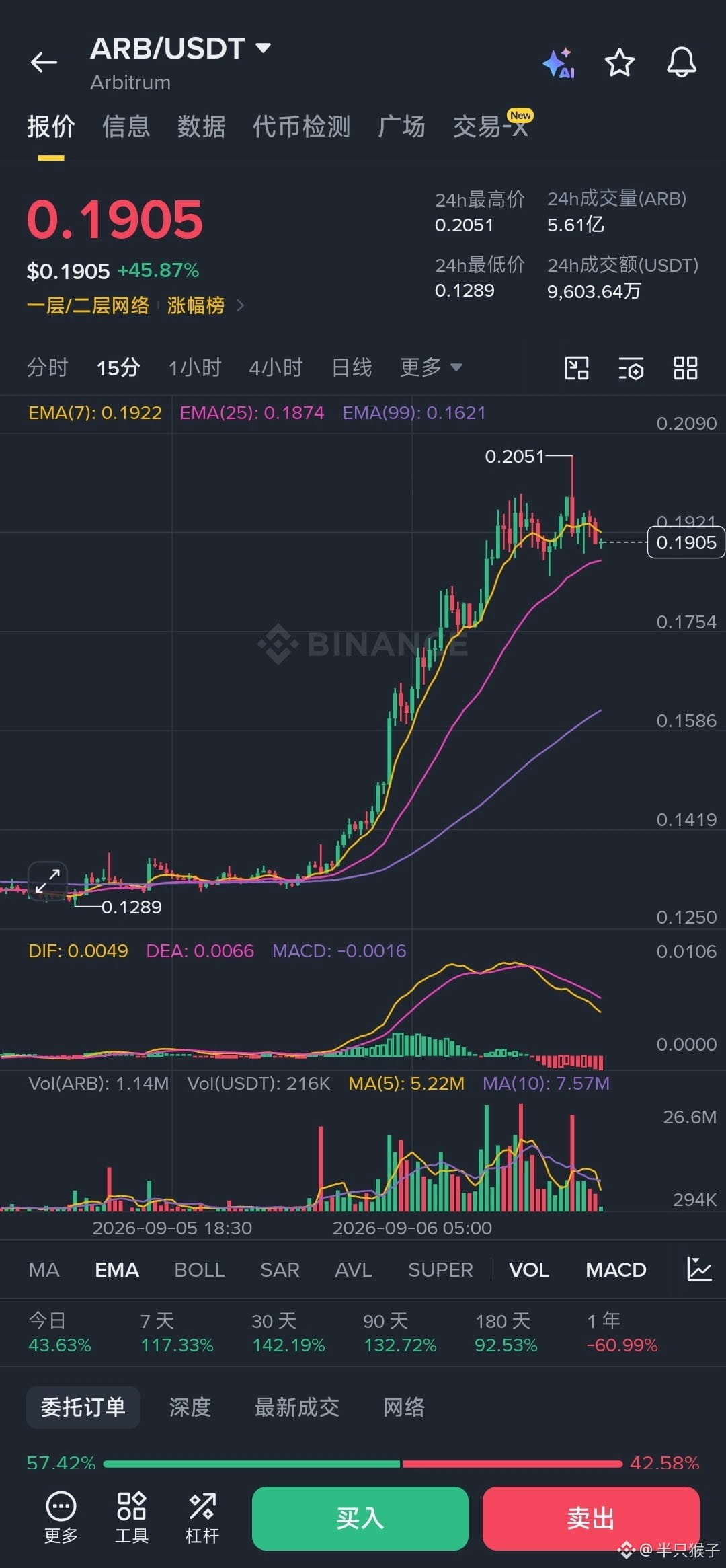
This $ARB is way too outrageous, with a single-day gain of over 45%
{future}(ARBUSDT)
It directly shot to the top of the trending list
He was the white moonlight in countless people's hearts. During the airdrop farming era, I spent less than 50u from one wallet and eventually got 2000u. After that, various airdrops in its ecosystem gave me at least another 500u.
After so many years, I thought it had already gone quiet, but I didn't expect that the recent Robinhood chain $HOOD went viral and brought it along too.
{future}(HOODUSDT)
Because Robinhood uses ARB's technology, 10% of the protocol revenue has to be returned to ARB.
#BTC触及80000美元
This $ARB is way too outrageous, with a single-day gain of over 45%
It directly shot to the top of the trending list
He was the white moonlight in countless people's hearts. During the airdrop farming era, I spent less than 50u from one wallet and eventually got 2000u. After that, various airdrops in its ecosystem gave me at least another 500u.
After so many years, I thought it had already gone quiet, but I didn't expect that the recent Robinhood chain $HOOD went viral and brought it along too.
Because Robinhood uses ARB's technology, 10% of the protocol revenue has to be returned to ARB.
#BTC触及80000美元
It directly shot to the top of the trending list
He was the white moonlight in countless people's hearts. During the airdrop farming era, I spent less than 50u from one wallet and eventually got 2000u. After that, various airdrops in its ecosystem gave me at least another 500u.
After so many years, I thought it had already gone quiet, but I didn't expect that the recent Robinhood chain $HOOD went viral and brought it along too.
Because Robinhood uses ARB's technology, 10% of the protocol revenue has to be returned to ARB.
#BTC触及80000美元
1
6.3k
·
--
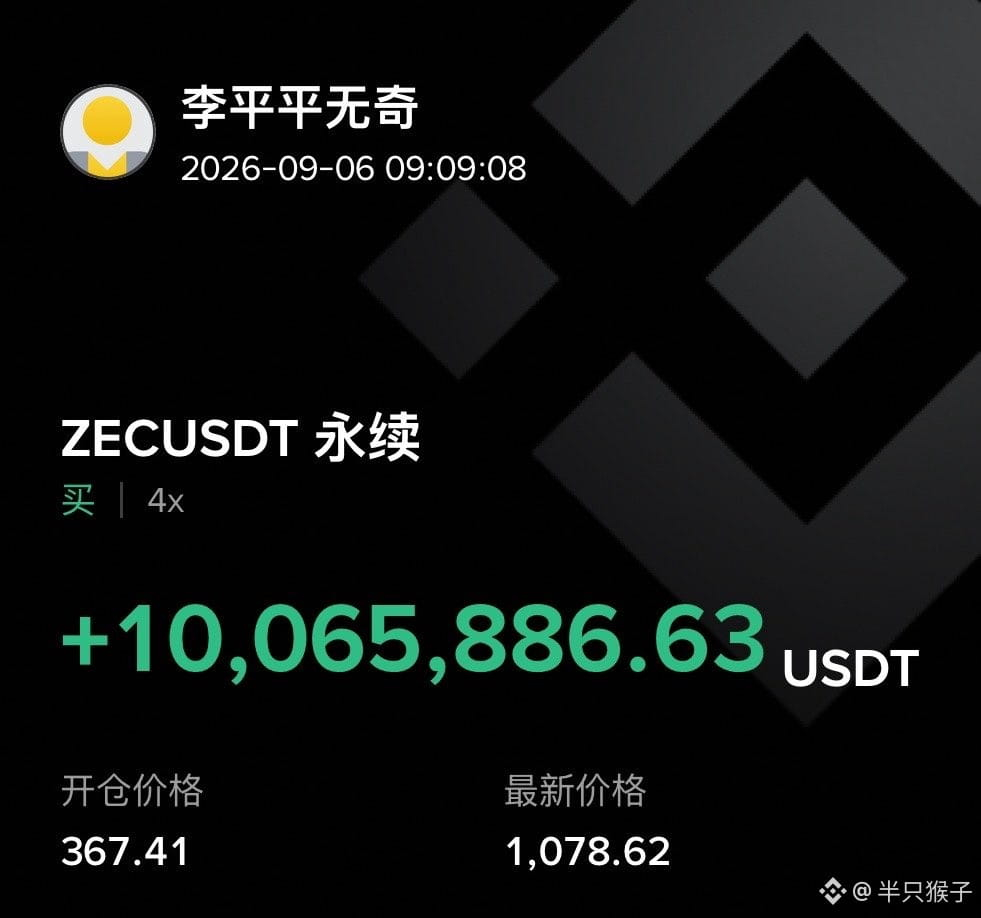
Ferrari may be old, but it's still Ferrari
Famous early car head Li Ping $ZEC made more than 10 million dollars in profit on a single trade.
{future}(ZECUSDT)
He once became famous overnight thanks to $SHIB , becoming a top ten holder and making over 100 million.
{spot}(SHIBUSDT)
In his post, he stated that as AI develops, privacy will become increasingly valuable, and said, "Protecting privacy and preserving the light of civilization is not a choice, it is a principle."
Ferrari may be old, but it's still Ferrari
Famous early car head Li Ping $ZEC made more than 10 million dollars in profit on a single trade.
He once became famous overnight thanks to $SHIB , becoming a top ten holder and making over 100 million.
In his post, he stated that as AI develops, privacy will become increasingly valuable, and said, "Protecting privacy and preserving the light of civilization is not a choice, it is a principle."
Famous early car head Li Ping $ZEC made more than 10 million dollars in profit on a single trade.
He once became famous overnight thanks to $SHIB , becoming a top ten holder and making over 100 million.
In his post, he stated that as AI develops, privacy will become increasingly valuable, and said, "Protecting privacy and preserving the light of civilization is not a choice, it is a principle."
1
566
·
--
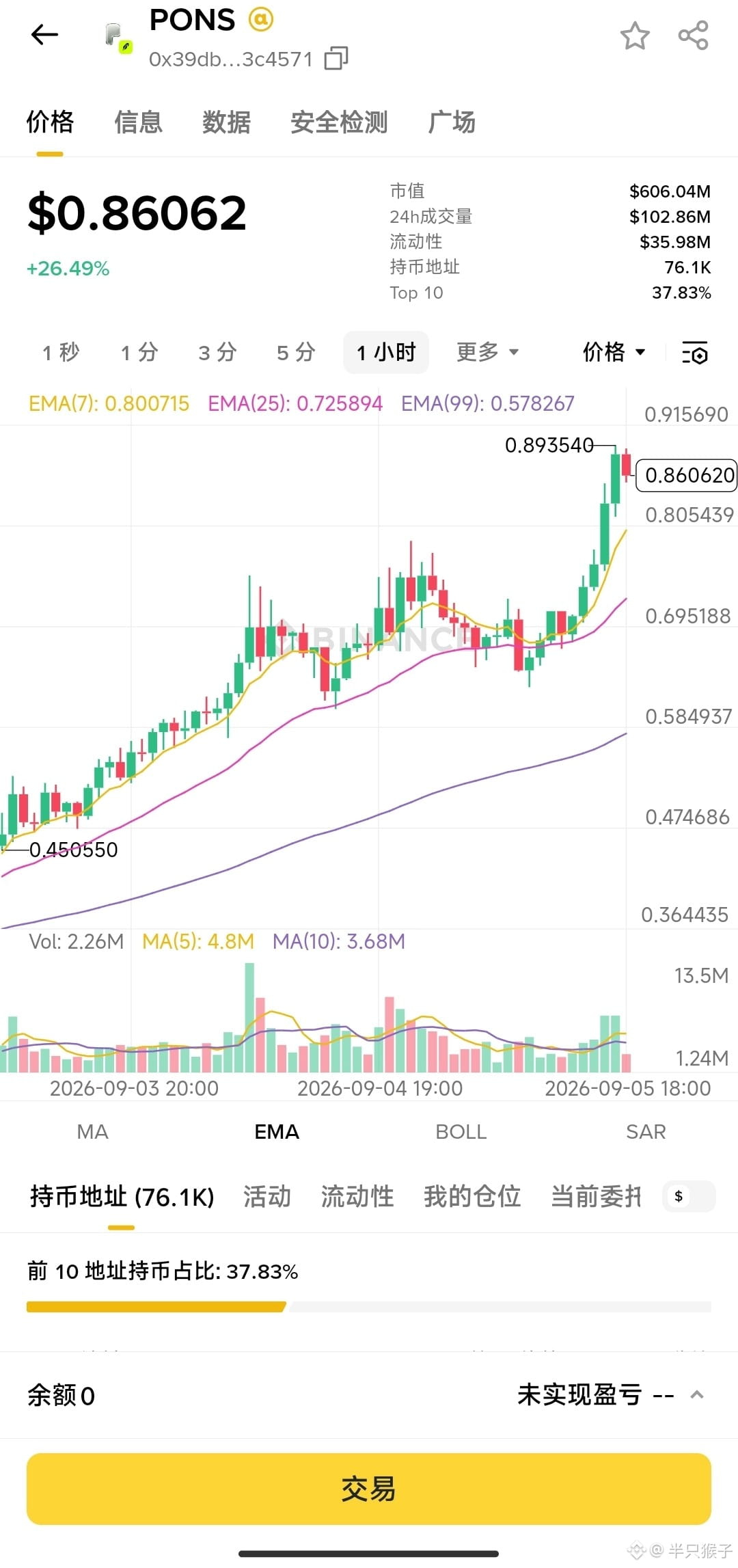
Can you believe it? $67,000 turned into $9.5 million in 50 days!
$PONS second on the leaderboard (the well-known meme player Minion Yellow) bought 10.96 million tokens for $67,000 when PONS's market cap was $6.16 million.
Held all the way until now, with an unrealized gain of $9.5 million.
Can you believe it? $67,000 turned into $9.5 million in 50 days!
$PONS second on the leaderboard (the well-known meme player Minion Yellow) bought 10.96 million tokens for $67,000 when PONS's market cap was $6.16 million.
Held all the way until now, with an unrealized gain of $9.5 million.
$PONS second on the leaderboard (the well-known meme player Minion Yellow) bought 10.96 million tokens for $67,000 when PONS's market cap was $6.16 million.
Held all the way until now, with an unrealized gain of $9.5 million.
1.8k
·
--
Partly True
The three biggest money-printing machines in the crypto world — do you know who they are?
If you’re staring at a screen full of candlesticks right now and don’t know who to bet on, here’s one approach: the barbell strategy.
What does that mean? Bet on both ends, and throw out the middle.
On one side, buy projects with real revenue and profit-supporting models; on the other, add a bit of pure MEME for upside. As for those middle projects that have narrative but no data, hype but no revenue — ignore them completely.
Today, let’s start with the first side — the three real money-making, buyback-committing money printers in crypto👇
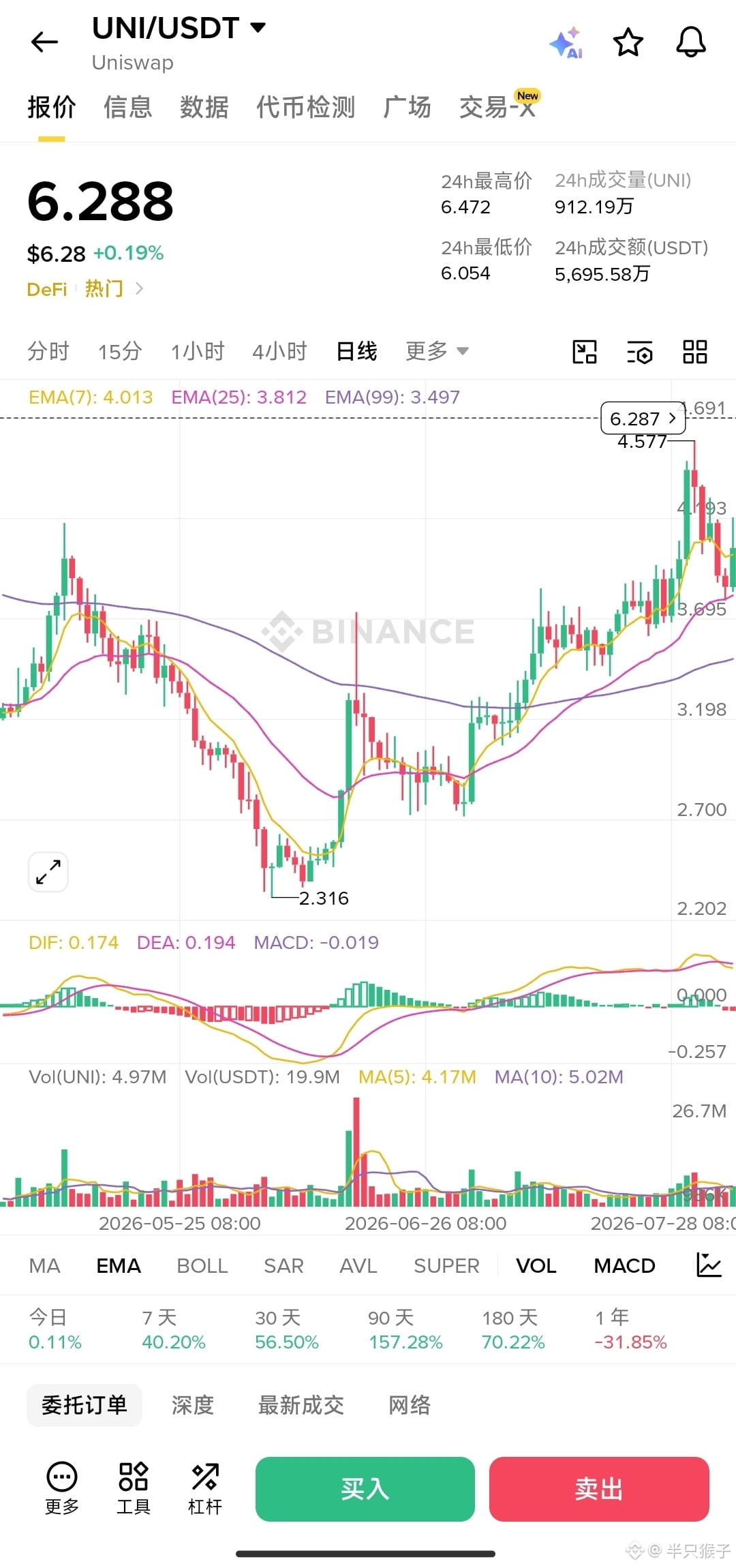
1.$UNI Core profit model: trading fees
In the last 24 hours, protocol fees were 15.24 million USD, revenue was 1.23 million USD, yesterday’s buyback-and-burn count exceeded 170,000 tokens, totaling 1.06 million USD.
{future}(UNIUSDT)
2.pons launchpad
In the last 24 hours, protocol fees were 6.34 million USD, revenue was 1.24 million USD, and the estimated buyback-and-burn amount is 900,000 USD.
3.$HYPE perpetual contracts
In the last 24 hours, protocol fees were 2.92 million USD, revenue was 2.28 million USD, and in the last 24 hours 27,200 HYPE were burned, worth 2.29 million USD.
{future}(HYPEUSDT)
You can see that UNI has the highest protocol fees, but most of those fees have to be distributed to LPs, so its actual revenue and buyback-and-burn are lower than HYPE. As for why $PUMP didn’t make the list this time, it’s because pons is just too strong.
The three biggest money-printing machines in the crypto world — do you know who they are?
If you’re staring at a screen full of candlesticks right now and don’t know who to bet on, here’s one approach: the barbell strategy.
What does that mean? Bet on both ends, and throw out the middle.
On one side, buy projects with real revenue and profit-supporting models; on the other, add a bit of pure MEME for upside. As for those middle projects that have narrative but no data, hype but no revenue — ignore them completely.
Today, let’s start with the first side — the three real money-making, buyback-committing money printers in crypto👇
1.$UNI Core profit model: trading fees
In the last 24 hours, protocol fees were 15.24 million USD, revenue was 1.23 million USD, yesterday’s buyback-and-burn count exceeded 170,000 tokens, totaling 1.06 million USD.
2.pons launchpad
In the last 24 hours, protocol fees were 6.34 million USD, revenue was 1.24 million USD, and the estimated buyback-and-burn amount is 900,000 USD.
3.$HYPE perpetual contracts
In the last 24 hours, protocol fees were 2.92 million USD, revenue was 2.28 million USD, and in the last 24 hours 27,200 HYPE were burned, worth 2.29 million USD.
You can see that UNI has the highest protocol fees, but most of those fees have to be distributed to LPs, so its actual revenue and buyback-and-burn are lower than HYPE. As for why $PUMP didn’t make the list this time, it’s because pons is just too strong.
If you’re staring at a screen full of candlesticks right now and don’t know who to bet on, here’s one approach: the barbell strategy.
What does that mean? Bet on both ends, and throw out the middle.
On one side, buy projects with real revenue and profit-supporting models; on the other, add a bit of pure MEME for upside. As for those middle projects that have narrative but no data, hype but no revenue — ignore them completely.
Today, let’s start with the first side — the three real money-making, buyback-committing money printers in crypto👇
1.$UNI Core profit model: trading fees
In the last 24 hours, protocol fees were 15.24 million USD, revenue was 1.23 million USD, yesterday’s buyback-and-burn count exceeded 170,000 tokens, totaling 1.06 million USD.
2.pons launchpad
In the last 24 hours, protocol fees were 6.34 million USD, revenue was 1.24 million USD, and the estimated buyback-and-burn amount is 900,000 USD.
3.$HYPE perpetual contracts
In the last 24 hours, protocol fees were 2.92 million USD, revenue was 2.28 million USD, and in the last 24 hours 27,200 HYPE were burned, worth 2.29 million USD.
You can see that UNI has the highest protocol fees, but most of those fees have to be distributed to LPs, so its actual revenue and buyback-and-burn are lower than HYPE. As for why $PUMP didn’t make the list this time, it’s because pons is just too strong.
1
684
Log in to explore more content
Join global crypto users on Binance Square
⚡️ Get latest and useful information about crypto.
💬 Trusted by the world’s largest crypto exchange.
👍 Discover real insights from verified creators.
Email / Phone number
Trending Topics
AppleDebutsFoldablePhone
14,913 views
328 Discussing
Apple just dropped the foldable iPhone — and the market is paying attention. This isn't just another product cycle; it's a new product category, a new CEO on stage, and a $1,999 price tag that pushes $AAPL further into ultra-premium territory. Foldables are the narrative, and Apple is now the headline.
#appledebutsfoldablephone #EUExtendsCentralContactPointToCASPs #US10YTreasuryYieldHitsHighestSinceNov2023 #BrentCrudeTops$100 #USTreasuryToBuyBackUpTo$6BLongDatedDebt
KimHotbae
·1 Likes
·1.2k views
EUExtendsCentralContactPointToCASPs
1,882 views
83 Discussing
US10YTreasuryYieldHitsHighestSinceNov2023
17,212 views
306 Discussing