
Jacky 傑克_JBitLog 幣誌
115 Posts

Jacky 傑克_JBitLog 幣誌
Report
Block User
🔍 用白話講幣圈,讓你從「觀望」到「開始」
📘 60秒陪你搞懂加密貨幣
💼 行銷打工人 aka JBitLog 幣誌創辦人
🔏 新手不踩雷指南、合作或問題聯繫👇
1 Following
37 Followers
41 Liked
Posts
Article
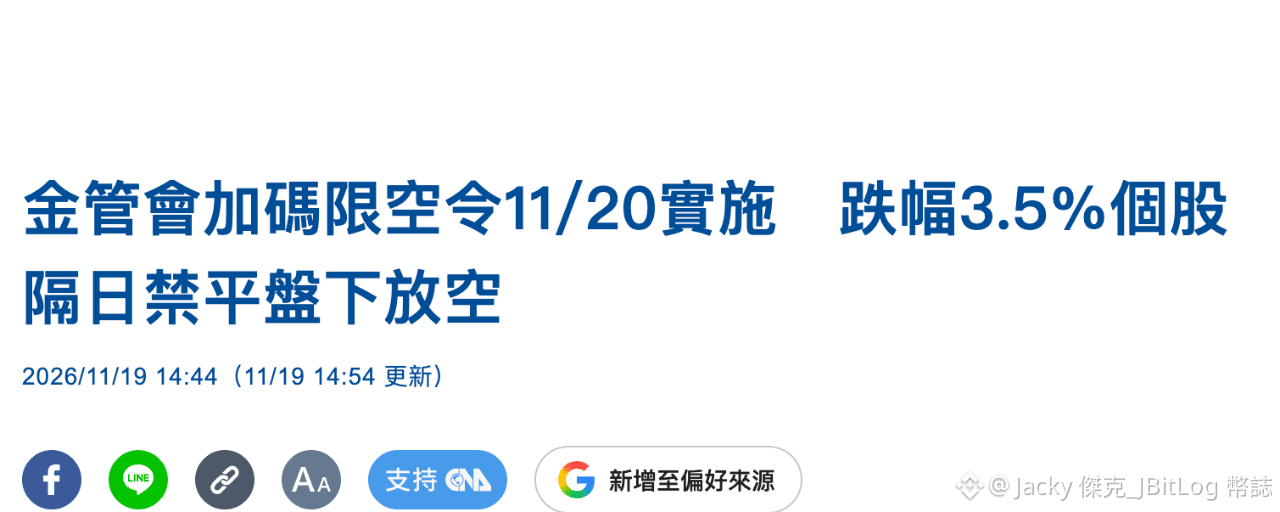
【Taiwan Stocks Plunge Despite Short-Selling Restrictions! With No Such Restrictions in Crypto, What Should You Do with Your Bitcoin?】On January 20, the Financial Supervisory Commission’s tightened short-selling restrictions took effect, but Taiwan stocks still plunged in early trading. According to a Central News Agency report, by 10:22 a.m., the TAIEX had fallen 2,095 points to 36,331. This was the second time the commission had stepped in within 11 days.
So what exactly do short-selling restrictions limit?
Short selling means borrowing shares from someone else and selling them first, then buying them back after the price falls and returning them—pocketing the difference. So the more sharply a stock price drops, the more short sellers stand to profit, and the more willing they are to keep selling.
The Financial Supervisory Commission’s first round of measures on November 9 cut the amount of stock that could be borrowed for short selling each day from 30% to 3% of the average trading volume over the previous 30 business days. On November 20, the second round cut it further to 1%. It also barred short selling of a stock the next day at a price below its previous closing price if it had fallen by more than 3.5% at that day’s close.
【Taiwan Stocks Plunge Despite Short-Selling Restrictions! With No Such Restrictions in Crypto, What Should You Do with Your Bitcoin?】
On January 20, the Financial Supervisory Commission’s tightened short-selling restrictions took effect, but Taiwan stocks still plunged in early trading. According to a Central News Agency report, by 10:22 a.m., the TAIEX had fallen 2,095 points to 36,331. This was the second time the commission had stepped in within 11 days.
So what exactly do short-selling restrictions limit?
Short selling means borrowing shares from someone else and selling them first, then buying them back after the price falls and returning them—pocketing the difference. So the more sharply a stock price drops, the more short sellers stand to profit, and the more willing they are to keep selling.
The Financial Supervisory Commission’s first round of measures on November 9 cut the amount of stock that could be borrowed for short selling each day from 30% to 3% of the average trading volume over the previous 30 business days. On November 20, the second round cut it further to 1%. It also barred short selling of a stock the next day at a price below its previous closing price if it had fallen by more than 3.5% at that day’s close.
241
Article
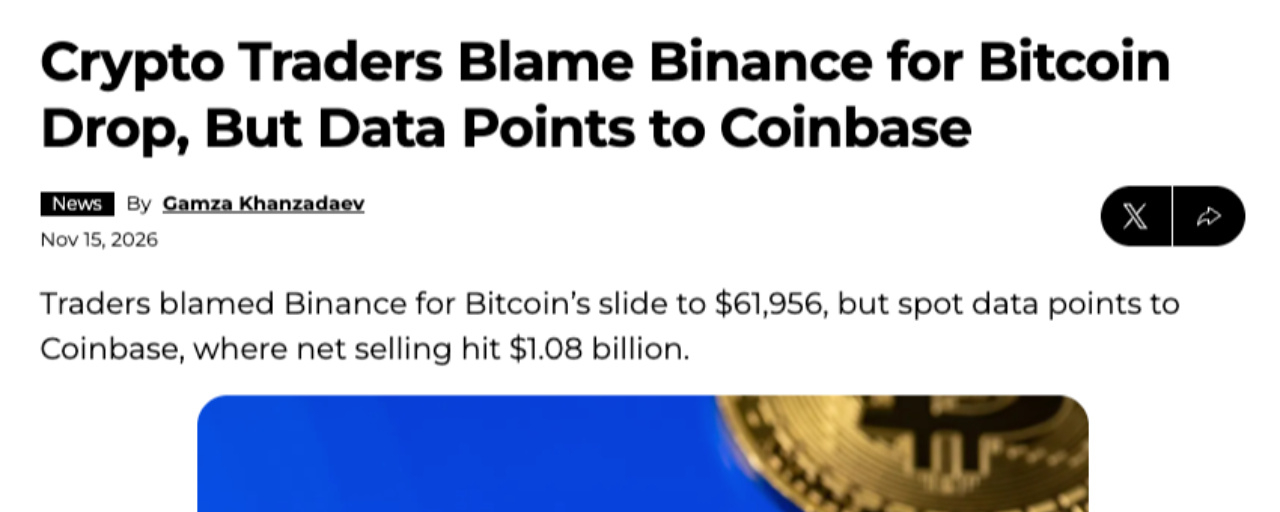
【Bitcoin Plunges 17%—Online Rumors Blame Binance for Selling Crypto to Plug a Hack-Related Hole. But the Heaviest Selling Pressure Came from Another Exchange】On November 14, U.S. time, Bitcoin briefly fell to around $62,000, its lowest level in three months, and was down 17% for the week.
The most widely circulated claim online in recent days is that Binance was hacked last month and had $6.3 billion stolen, and is now secretly selling Bitcoin to plug the hole. Some have put it more bluntly: Binance is deliberately crashing the market to liquidate users, then pocketing the liquidation proceeds.
But on November 15, Binance founder Changpeng Zhao (CZ) responded on X: “Binance did not sell crypto,” adding that he had bought some over the past few days.
Did Binance actually sell?
【Bitcoin Plunges 17%—Online Rumors Blame Binance for Selling Crypto to Plug a Hack-Related Hole. But the Heaviest Selling Pressure Came from Another Exchange】
On November 14, U.S. time, Bitcoin briefly fell to around $62,000, its lowest level in three months, and was down 17% for the week.
The most widely circulated claim online in recent days is that Binance was hacked last month and had $6.3 billion stolen, and is now secretly selling Bitcoin to plug the hole. Some have put it more bluntly: Binance is deliberately crashing the market to liquidate users, then pocketing the liquidation proceeds.
But on November 15, Binance founder Changpeng Zhao (CZ) responded on X: “Binance did not sell crypto,” adding that he had bought some over the past few days.
Did Binance actually sell?
172

Article
News that Jensen Huang admitted to having an affair—lots of people probably came across it yesterday morning…It started with a report by The New York Times in late October that a memo was circulating in U.S. policy circles, alleging that a Chinese businesswoman close to Jensen Huang may have been recruited by Chinese intelligence.
On Sunday, November 8, U.S. time, Nvidia’s board announced an independent investigation into reports that Jensen Huang had “become a target of a foreign intelligence operation.” Huang also admitted in a letter to employees that he had been unfaithful to his wife.
Many people’s first reaction was: Is Taiwan’s stock market about to crash? But according to stock exchange data, Taiwan’s stock market closed up 1,960 points on Monday.
So where did this bad news hit first? The answer: the crypto world…
News that Jensen Huang admitted to having an affair—lots of people probably came across it yesterday morning…
It started with a report by The New York Times in late October that a memo was circulating in U.S. policy circles, alleging that a Chinese businesswoman close to Jensen Huang may have been recruited by Chinese intelligence.
On Sunday, November 8, U.S. time, Nvidia’s board announced an independent investigation into reports that Jensen Huang had “become a target of a foreign intelligence operation.” Huang also admitted in a letter to employees that he had been unfaithful to his wife.
Many people’s first reaction was: Is Taiwan’s stock market about to crash? But according to stock exchange data, Taiwan’s stock market closed up 1,960 points on Monday.
So where did this bad news hit first? The answer: the crypto world…
1
143
Article
【You thought hackers stole $6.3 billion from Binance by cracking its systems? The key vulnerability was actually a scam interview!】On November 3, Binance posted on X its preliminary investigation into the October 29 theft. The digital assets affected amounted to approximately $6.34 billion (about NT$208 billion), and the U.S. Federal Bureau of Investigation (FBI) has pointed the finger at North Korea.
But the breach that opened the door to the whole incident actually came through an interview attended by an engineer.
Binance’s official report stated that in September this year, a Binance software engineer was contacted on a legitimate job-hunting platform by someone claiming to be a “project director.”
The first round was a video interview with HR. For the second round, they switched to a popular messaging app, where the other person claimed to be the company’s CEO. As the interview was wrapping up, he was asked to download an “assignment” onto his work computer.
【You thought hackers stole $6.3 billion from Binance by cracking its systems? The key vulnerability was actually a scam interview!】
On November 3, Binance posted on X its preliminary investigation into the October 29 theft. The digital assets affected amounted to approximately $6.34 billion (about NT$208 billion), and the U.S. Federal Bureau of Investigation (FBI) has pointed the finger at North Korea.
But the breach that opened the door to the whole incident actually came through an interview attended by an engineer.
Binance’s official report stated that in September this year, a Binance software engineer was contacted on a legitimate job-hunting platform by someone claiming to be a “project director.”
The first round was a video interview with HR. For the second round, they switched to a popular messaging app, where the other person claimed to be the company’s CEO. As the interview was wrapping up, he was asked to download an “assignment” onto his work computer.
165
Article
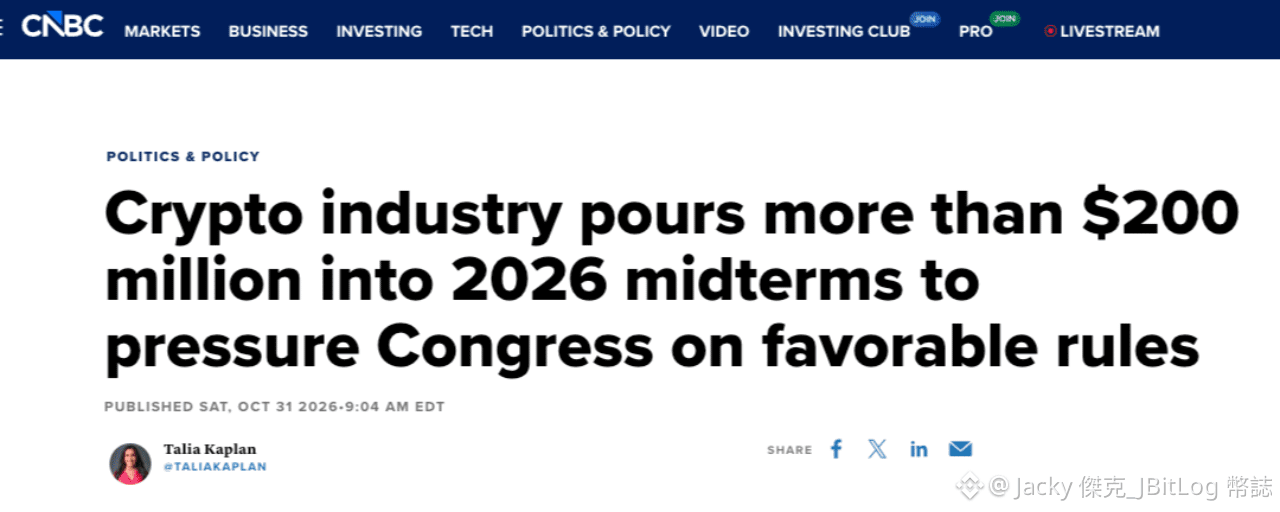
【Think the U.S. election has nothing to do with your Bitcoin? The crypto industry is shelling out $200 million to remove an obstacle—who is he?】The U.S. midterm elections will be held on November 3, U.S. time. According to an October 31 CNBC report, the cryptocurrency industry has already spent more than $200 million (about NT$6.5 billion) this election cycle to get crypto supporters into Congress.
The race the industry is watching most closely right now is a Senate seat in Ohio.
The industry’s political action committee Fairshake, an organization that funds election campaigns on behalf of the crypto industry, told CNBC it has spent $55 million this election cycle just to keep Democrat Sherrod Brown from returning to the Senate.
【Think the U.S. election has nothing to do with your Bitcoin? The crypto industry is shelling out $200 million to remove an obstacle—who is he?】
The U.S. midterm elections will be held on November 3, U.S. time. According to an October 31 CNBC report, the cryptocurrency industry has already spent more than $200 million (about NT$6.5 billion) this election cycle to get crypto supporters into Congress.
The race the industry is watching most closely right now is a Senate seat in Ohio.
The industry’s political action committee Fairshake, an organization that funds election campaigns on behalf of the crypto industry, told CNBC it has spent $55 million this election cycle just to keep Democrat Sherrod Brown from returning to the Senate.
1
109
Article
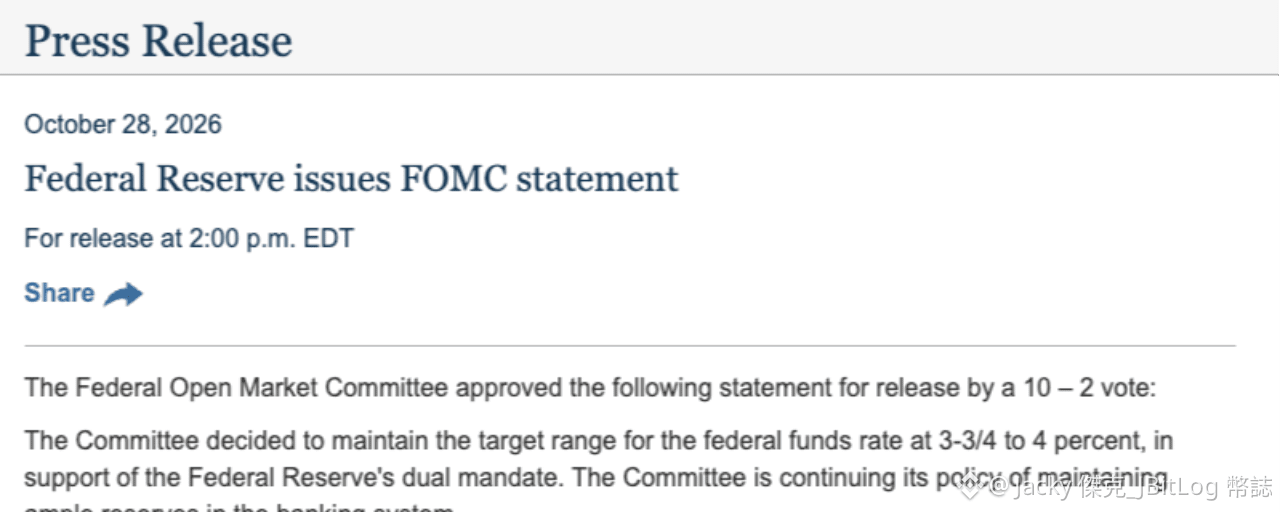
【The Fed Didn’t Raise Rates, So Why Didn’t Bitcoin Go Up? Because the Market Is Betting on Another Quarter-Point Hike in December】In the early hours of October 29 Taiwan time, the U.S. Federal Reserve announced that it would keep interest rates at 3.75% to 4%. The decision received 10 votes in favor and 2 against, with both dissenters arguing that rates should be raised by another quarter point this time.
But this outcome was already in line with market expectations. Before the rate meeting, CME’s FedWatch tool showed that the market put the odds of another quarter-point hike at less than 10%.
So Bitcoin barely reacted when the decision was announced. According to CoinGecko, its price was $80,588 the previous evening and $81,281 at 6 a.m. on October 29 after the decision—virtually unchanged.
【The Fed Didn’t Raise Rates, So Why Didn’t Bitcoin Go Up? Because the Market Is Betting on Another Quarter-Point Hike in December】
In the early hours of October 29 Taiwan time, the U.S. Federal Reserve announced that it would keep interest rates at 3.75% to 4%. The decision received 10 votes in favor and 2 against, with both dissenters arguing that rates should be raised by another quarter point this time.
But this outcome was already in line with market expectations. Before the rate meeting, CME’s FedWatch tool showed that the market put the odds of another quarter-point hike at less than 10%.
So Bitcoin barely reacted when the decision was announced. According to CoinGecko, its price was $80,588 the previous evening and $81,281 at 6 a.m. on October 29 after the decision—virtually unchanged.
434

Article
【Can you really relax just because an exchange says “customers’ money is kept separate”? Funds in Coinbase Ireland’s segregated account were short for nearly a year and a half, and no one noticed!】On October 22, the Central Bank of Ireland announced that Coinbase Ireland, a Coinbase subsidiary, had failed to safeguard customers’ money properly. As a result, funds in its “segregated account” were short every day, without customers’ knowledge. The bank fined the company €3,252,618, or approximately NT$118 million.
Coinbase is one of the world’s largest cryptocurrency exchanges, and Coinbase Ireland handles fiat currency deposits from European customers. By law, euros customers transfer to the platform that have not yet been used to buy cryptocurrency must be held in a dedicated “customer safeguarding account,” separate from the company’s own funds.
It’s like the Taiwanese dollars you deposit into an exchange but haven’t yet converted to USDT—they shouldn’t be treated as the company’s money.
【Can you really relax just because an exchange says “customers’ money is kept separate”? Funds in Coinbase Ireland’s segregated account were short for nearly a year and a half, and no one noticed!】
On October 22, the Central Bank of Ireland announced that Coinbase Ireland, a Coinbase subsidiary, had failed to safeguard customers’ money properly. As a result, funds in its “segregated account” were short every day, without customers’ knowledge. The bank fined the company €3,252,618, or approximately NT$118 million.
Coinbase is one of the world’s largest cryptocurrency exchanges, and Coinbase Ireland handles fiat currency deposits from European customers. By law, euros customers transfer to the platform that have not yet been used to buy cryptocurrency must be held in a dedicated “customer safeguarding account,” separate from the company’s own funds.
It’s like the Taiwanese dollars you deposit into an exchange but haven’t yet converted to USDT—they shouldn’t be treated as the company’s money.
308
Article
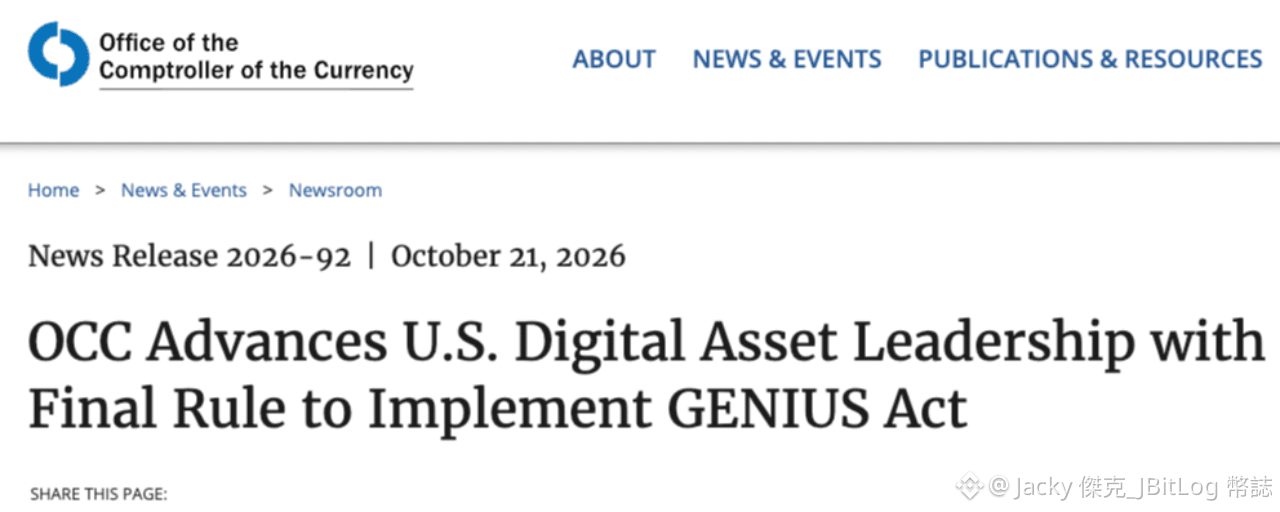
【U.S. Banks Say Stablecoin Interest Could Cause Lending to Plummet—but Are They Actually Worried About Losing Their Own Livelihoods?】On October 21, U.S. time, the Office of the Comptroller of the Currency (OCC), which regulates national banks, published the final implementing rules for the GENIUS Act on stablecoins.
The law already prohibits stablecoin “issuers” from directly paying interest to holders, so the question we should focus on is whether third-party platforms like “exchanges” can still offer it.
A draft published in February this year said that certain arrangements between issuers and third parties “could be illegal.” But that provision has been removed from the final version.
Put simply, platforms like the U.S. exchange Coinbase will no longer be automatically treated as breaking the law when they give users “rewards” in stablecoins. The OCC will review these cases individually going forward.
【U.S. Banks Say Stablecoin Interest Could Cause Lending to Plummet—but Are They Actually Worried About Losing Their Own Livelihoods?】
On October 21, U.S. time, the Office of the Comptroller of the Currency (OCC), which regulates national banks, published the final implementing rules for the GENIUS Act on stablecoins.
The law already prohibits stablecoin “issuers” from directly paying interest to holders, so the question we should focus on is whether third-party platforms like “exchanges” can still offer it.
A draft published in February this year said that certain arrangements between issuers and third parties “could be illegal.” But that provision has been removed from the final version.
Put simply, platforms like the U.S. exchange Coinbase will no longer be automatically treated as breaking the law when they give users “rewards” in stablecoins. The OCC will review these cases individually going forward.
79
Article
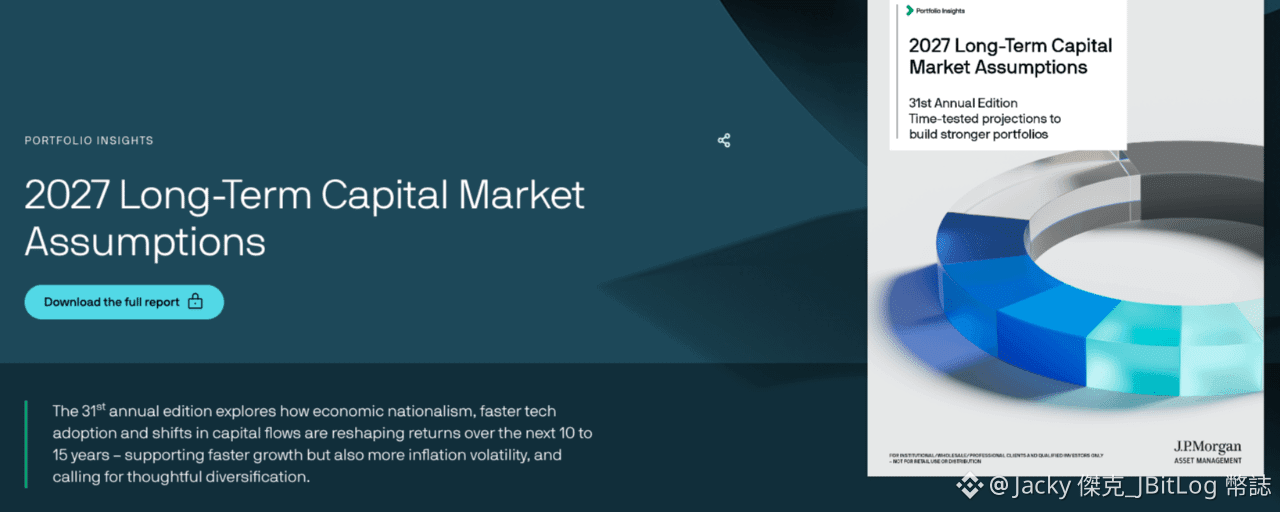
【J.P. Morgan estimates Bitcoin’s 10-year returns for the first time, putting it ahead of gold and large-cap stocks—yet leaves it out of its asset allocation models?】In its 31st annual Long-Term Capital Market Assumptions report, J.P. Morgan Asset Management estimated Bitcoin’s returns over the next decade for the first time: 10% a year. The report is J.P. Morgan’s annual benchmark for estimating the long-term returns of assets such as stocks, bonds, and gold.
In the same report, U.S. large-cap stocks are projected to return 7.5% a year, and gold 5.5%. Based on the report’s figures, investing the same $1 million for ten years would grow to $2.59 million in Bitcoin, $2.06 million in U.S. large-cap stocks, and $1.71 million in gold.
But has J.P. Morgan itself included Bitcoin in its main asset allocation models?
【J.P. Morgan estimates Bitcoin’s 10-year returns for the first time, putting it ahead of gold and large-cap stocks—yet leaves it out of its asset allocation models?】
In its 31st annual Long-Term Capital Market Assumptions report, J.P. Morgan Asset Management estimated Bitcoin’s returns over the next decade for the first time: 10% a year. The report is J.P. Morgan’s annual benchmark for estimating the long-term returns of assets such as stocks, bonds, and gold.
In the same report, U.S. large-cap stocks are projected to return 7.5% a year, and gold 5.5%. Based on the report’s figures, investing the same $1 million for ten years would grow to $2.59 million in Bitcoin, $2.06 million in U.S. large-cap stocks, and $1.71 million in gold.
But has J.P. Morgan itself included Bitcoin in its main asset allocation models?
122

Article
【Machi Big Brother’s NT$400 million wiped out again, then he opens another 25x leveraged position seven minutes later. Do you think that’s confidence or just reckless?】At 10:22 a.m. Taiwan time on October 15, Machi Big Brother Huang Licheng’s Hyperliquid futures account was forcibly liquidated 232 times in two minutes, totaling 1,650 Ether.
According to on-chain monitoring platform Lookonchain, the account held only about $56,000 four months ago, then grew to a peak of $12.25 million—roughly NT$400 million—before being liquidated down to about $21,800.
But that NT$400 million wasn’t lost in a single day.
In late September, the account still held more than $12 million. Then it kept shrinking until the U.S. annual inflation rate for September came in at 3.7%, above the market’s expected 3.6%. After the announcement, Ether fell by as much as about 8%, and his largest position happened to be a long position in Ether. The liquidation on October 15 merely wiped out the remaining hundred-odd thousand dollars.
【Machi Big Brother’s NT$400 million wiped out again, then he opens another 25x leveraged position seven minutes later. Do you think that’s confidence or just reckless?】
At 10:22 a.m. Taiwan time on October 15, Machi Big Brother Huang Licheng’s Hyperliquid futures account was forcibly liquidated 232 times in two minutes, totaling 1,650 Ether.
According to on-chain monitoring platform Lookonchain, the account held only about $56,000 four months ago, then grew to a peak of $12.25 million—roughly NT$400 million—before being liquidated down to about $21,800.
But that NT$400 million wasn’t lost in a single day.
In late September, the account still held more than $12 million. Then it kept shrinking until the U.S. annual inflation rate for September came in at 3.7%, above the market’s expected 3.6%. After the announcement, Ether fell by as much as about 8%, and his largest position happened to be a long position in Ether. The liquidation on October 15 merely wiped out the remaining hundred-odd thousand dollars.
190
Article
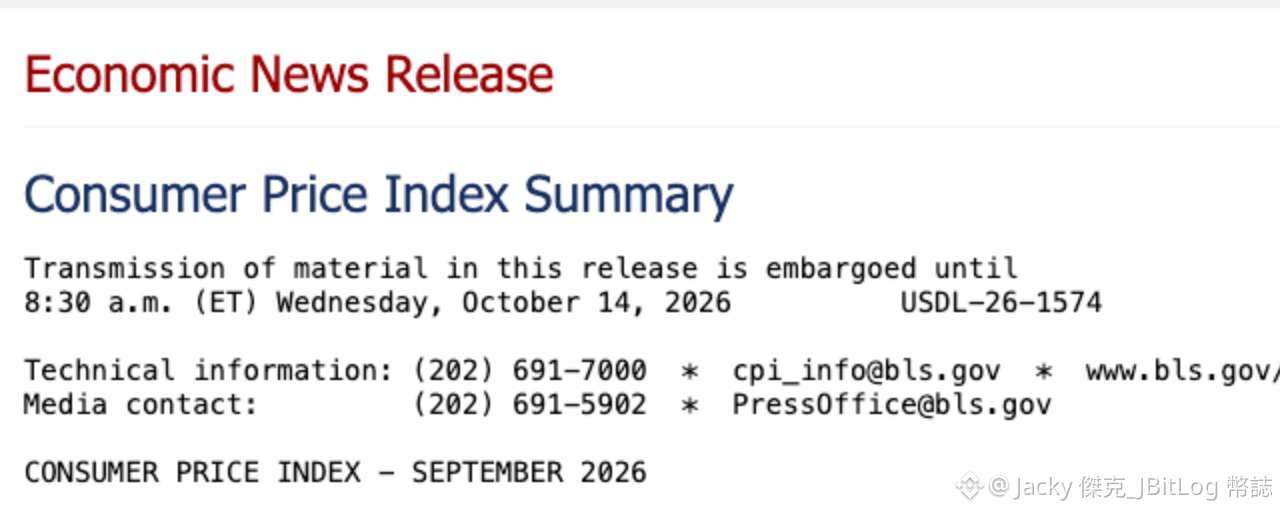
【Core CPI Came in Hotter Than Expected—Why Did Your Bitcoin Fall Too?】At 8:30 p.m. Taiwan time on October 14, the U.S. Bureau of Labor Statistics released the latest CPI (Consumer Price Index) figures. The closely watched “core CPI” came in hotter than expected: it rose 0.3% month over month, versus the market’s forecast of 0.2%; year over year, it rose 2.6%, also above the expected 2.5%.
Within minutes of the data’s release, Bitcoin fell by about $1,000 to around $82,800.
What is core CPI? Put simply, it leaves out “food” and “energy”—the categories with the biggest price swings—to see whether everyday expenses like rent, airfares, used cars, and medical care are rising.
【Core CPI Came in Hotter Than Expected—Why Did Your Bitcoin Fall Too?】
At 8:30 p.m. Taiwan time on October 14, the U.S. Bureau of Labor Statistics released the latest CPI (Consumer Price Index) figures. The closely watched “core CPI” came in hotter than expected: it rose 0.3% month over month, versus the market’s forecast of 0.2%; year over year, it rose 2.6%, also above the expected 2.5%.
Within minutes of the data’s release, Bitcoin fell by about $1,000 to around $82,800.
What is core CPI? Put simply, it leaves out “food” and “energy”—the categories with the biggest price swings—to see whether everyday expenses like rent, airfares, used cars, and medical care are rising.
Within minutes of the data’s release, Bitcoin fell by about $1,000 to around $82,800.
What is core CPI? Put simply, it leaves out “food” and “energy”—the categories with the biggest price swings—to see whether everyday expenses like rent, airfares, used cars, and medical care are rising.
205
Article
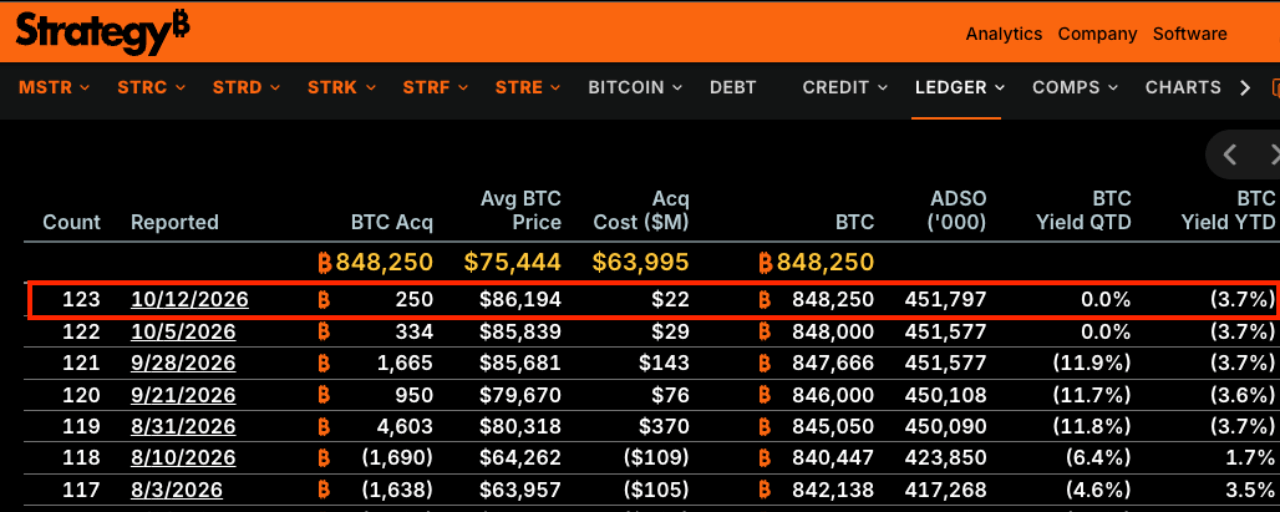
【Think Strategy Uses All the Money It Raises to Buy Bitcoin? In Fact, It’s Prioritizing Its Own Share Price】Strategy, the publicly traded company that holds the most Bitcoin globally, announced on October 12 that it had spent $21.5 million to buy 250 Bitcoin, bringing its total holdings to 848,250.
When they see this news, many people might think, “Strategy, the company that’s always buying Bitcoin, is back at it again.” But according to the announcement, it also spent $192 million this week buying back its own preferred shares, STRC—about nine times what it spent on Bitcoin.
---
So why would it spend so much money buying back its own preferred shares?
Preferred shares typically pay more fixed dividends and have priority over common shares in the event of a claim. STRC has a par value of $100 per share, an annualized dividend rate of 12%, and pays dividends every two weeks.
【Think Strategy Uses All the Money It Raises to Buy Bitcoin? In Fact, It’s Prioritizing Its Own Share Price】
Strategy, the publicly traded company that holds the most Bitcoin globally, announced on October 12 that it had spent $21.5 million to buy 250 Bitcoin, bringing its total holdings to 848,250.
When they see this news, many people might think, “Strategy, the company that’s always buying Bitcoin, is back at it again.” But according to the announcement, it also spent $192 million this week buying back its own preferred shares, STRC—about nine times what it spent on Bitcoin.
---
So why would it spend so much money buying back its own preferred shares?
Preferred shares typically pay more fixed dividends and have priority over common shares in the event of a claim. STRC has a par value of $100 per share, an annualized dividend rate of 12%, and pays dividends every two weeks.
175
Article
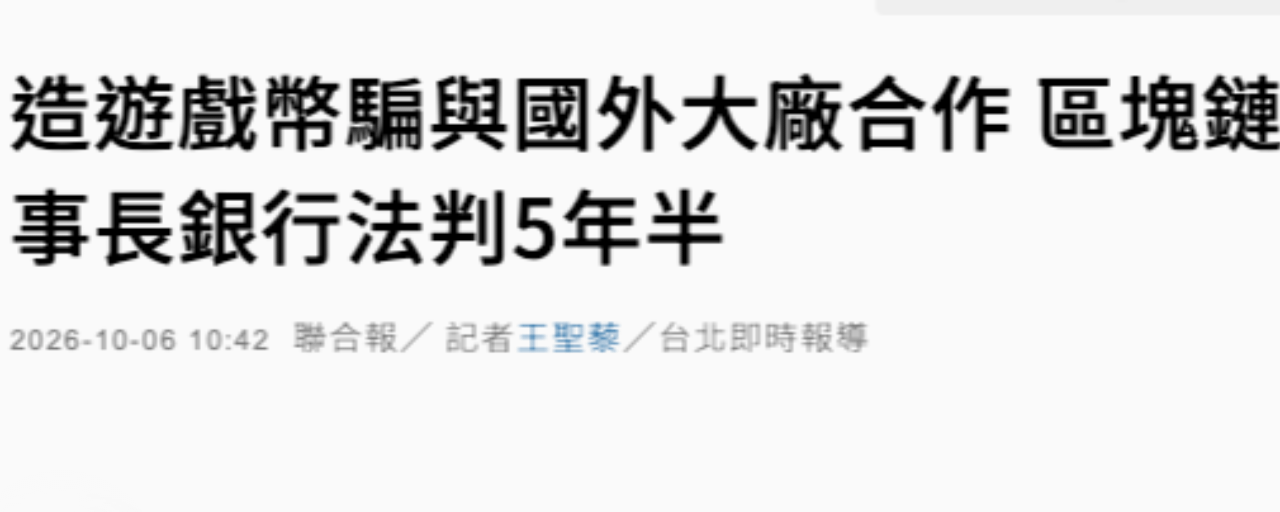
【Are tips from people with “titles” more trustworthy? Former blockchain association chairman’s title tied to fraud; sentenced to five and a half years!】If someone claiming to be “the chairman of a blockchain association” recommended a coin to you, would you be more inclined to buy it?
On October 6, the Taipei District Court sentenced Liu Ting-wei, founding chairman of the Taiwan Blockchain Association, to five years and six months in prison in the first trial. His accomplice, Chen Cheng-yang, was sentenced to three years and eight months. The case may be appealed. Prosecutors found that the two had defrauded six investors of more than 66 Ether, worth approximately NT$5.39 million.
The coin he was selling was MEKA, which he created himself in 2021. He falsely claimed that he was working with French company MEKA, and said the coin was connected to the Gundam NFTs issued by the company and would rise in value by more than 100 times. He later launched two more coins tied to online games. But it was not until 2024, when the six investors who had been defrauded still had not received what they had been promised, that they reported the case to the police. An investigation revealed that the company had neither released any games nor worked with him.
【Are tips from people with “titles” more trustworthy? Former blockchain association chairman’s title tied to fraud; sentenced to five and a half years!】
If someone claiming to be “the chairman of a blockchain association” recommended a coin to you, would you be more inclined to buy it?
On October 6, the Taipei District Court sentenced Liu Ting-wei, founding chairman of the Taiwan Blockchain Association, to five years and six months in prison in the first trial. His accomplice, Chen Cheng-yang, was sentenced to three years and eight months. The case may be appealed. Prosecutors found that the two had defrauded six investors of more than 66 Ether, worth approximately NT$5.39 million.
The coin he was selling was MEKA, which he created himself in 2021. He falsely claimed that he was working with French company MEKA, and said the coin was connected to the Gundam NFTs issued by the company and would rise in value by more than 100 times. He later launched two more coins tied to online games. But it was not until 2024, when the six investors who had been defrauded still had not received what they had been promised, that they reported the case to the police. An investigation revealed that the company had neither released any games nor worked with him.
196
Article
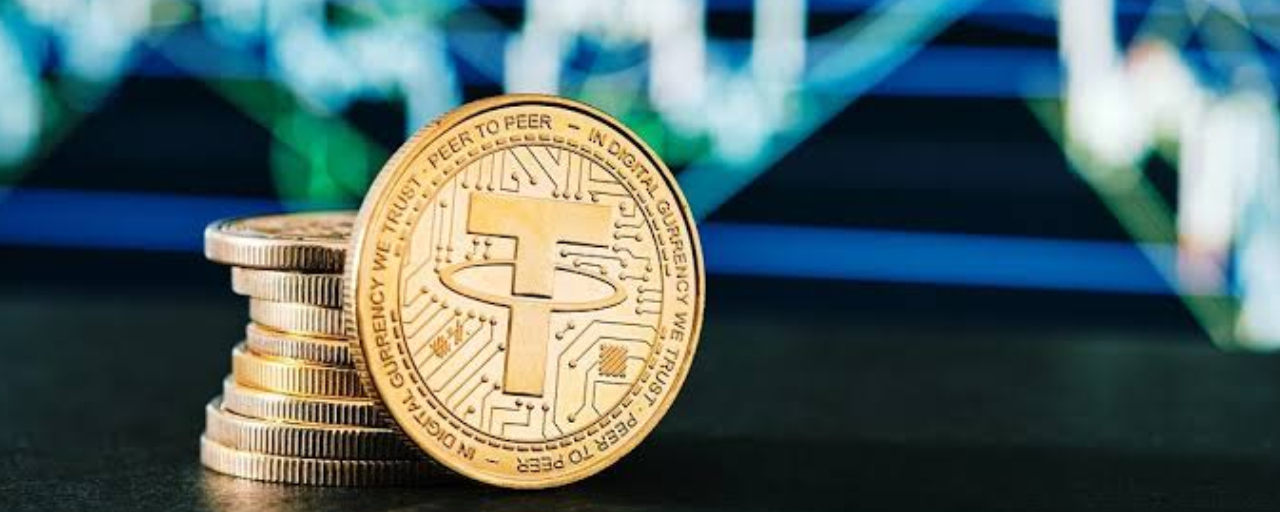
【Tether Froze 2.76 Million USDT Without Warning and Still Won’t Explain Why—Is the U You Hold Safe?】On October 5, U.S. cross-border payments company Conduit filed a lawsuit against Tether, the company that issues Tether (USDT, commonly known as “U”), in the U.S. District Court for the Southern District of New York.
The complaint states that 2.76 million USDT (worth approximately NT$88 million) in Conduit’s treasury wallet has been frozen since September 24, 2025. For a payments company, its treasury wallet is essentially its operating account.
In the four months before the wallet was locked, it processed 4,427 transactions and handled more than $1.1 billion in funds. After it was locked, the company had no choice but to close its offices and lay off employees. For more than a year, Conduit’s main goal has been to get its money back or find out why its assets were frozen.
【Tether Froze 2.76 Million USDT Without Warning and Still Won’t Explain Why—Is the U You Hold Safe?】
On October 5, U.S. cross-border payments company Conduit filed a lawsuit against Tether, the company that issues Tether (USDT, commonly known as “U”), in the U.S. District Court for the Southern District of New York.
The complaint states that 2.76 million USDT (worth approximately NT$88 million) in Conduit’s treasury wallet has been frozen since September 24, 2025. For a payments company, its treasury wallet is essentially its operating account.
In the four months before the wallet was locked, it processed 4,427 transactions and handled more than $1.1 billion in funds. After it was locked, the company had no choice but to close its offices and lay off employees. For more than a year, Conduit’s main goal has been to get its money back or find out why its assets were frozen.
99
Verified
Article
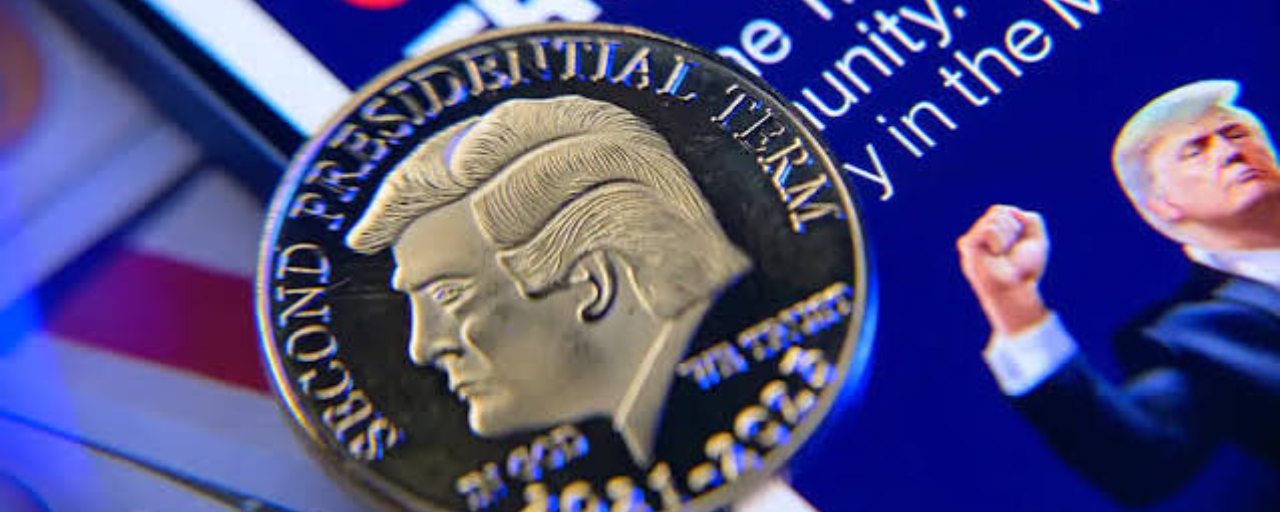
【Trump Is Hosting Another Meme Coin Dinner—Does Holding Coins Longer Improve Your Chances of Attending?】Trump officially announced that a dinner will be held on November 22 at Trump National Golf Club in Virginia. Seats are reserved for the top 185 investors holding the “Trump Coin” (TRUMP).
The top 29 holders can also attend a VIP reception with Trump, while the top 4 whales will receive an 18K gold Trump watch. But no matter how many Trump coins you hold, you still won’t be able to meet the president privately.
This ranking system takes into account not only the amount held, but also a separate “time-weighted score”: the number of coins held multiplied by how long they’ve been held. The more you buy and the longer you hold, the higher you’ll rank. The list of eligible participants is expected to be finalized on November 12.
【Trump Is Hosting Another Meme Coin Dinner—Does Holding Coins Longer Improve Your Chances of Attending?】
Trump officially announced that a dinner will be held on November 22 at Trump National Golf Club in Virginia. Seats are reserved for the top 185 investors holding the “Trump Coin” (TRUMP).
The top 29 holders can also attend a VIP reception with Trump, while the top 4 whales will receive an 18K gold Trump watch. But no matter how many Trump coins you hold, you still won’t be able to meet the president privately.
This ranking system takes into account not only the amount held, but also a separate “time-weighted score”: the number of coins held multiplied by how long they’ve been held. The more you buy and the longer you hold, the higher you’ll rank. The list of eligible participants is expected to be finalized on November 12.
1
722
Article
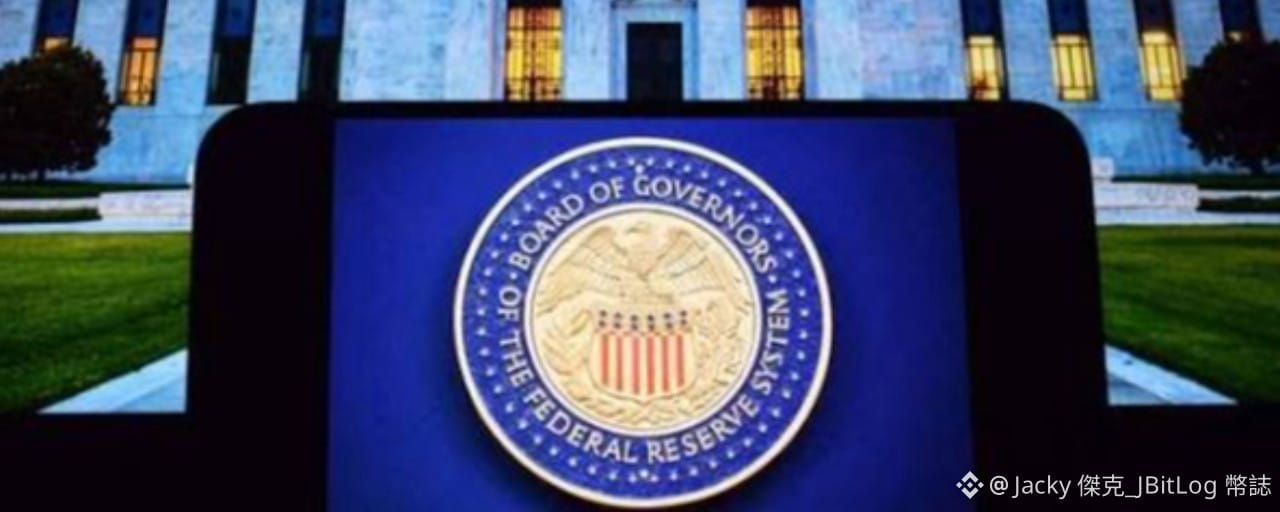
【You watch rate-hike and rate-cut odds every day when you invest—but are they really just prices reflecting other people’s bets?】Taiwan stocks surged to a record high right at the opening today, while TSMC also hit a new all-time high. Bitcoin returned to around $86,000. The market generally believes that the likelihood of a Fed rate hike in October has fallen sharply. The reason: the U.S. Bureau of Labor Statistics (BLS) reported on October 2 that nonfarm payrolls increased by just 29,000 in September, while the unemployment rate rose to 4.2%.
When job opportunities become scarcer, the Fed has one less reason to keep raising rates. If that narrative holds, then the question is: what exactly are the “odds” of a rate hike?
Four media outlets, four different probability figures:
【You watch rate-hike and rate-cut odds every day when you invest—but are they really just prices reflecting other people’s bets?】
Taiwan stocks surged to a record high right at the opening today, while TSMC also hit a new all-time high. Bitcoin returned to around $86,000. The market generally believes that the likelihood of a Fed rate hike in October has fallen sharply. The reason: the U.S. Bureau of Labor Statistics (BLS) reported on October 2 that nonfarm payrolls increased by just 29,000 in September, while the unemployment rate rose to 4.2%.
When job opportunities become scarcer, the Fed has one less reason to keep raising rates. If that narrative holds, then the question is: what exactly are the “odds” of a rate hike?
Four media outlets, four different probability figures:
When job opportunities become scarcer, the Fed has one less reason to keep raising rates. If that narrative holds, then the question is: what exactly are the “odds” of a rate hike?
Four media outlets, four different probability figures:
83
Article
【After the hacker incident, Bitget will reopen withdrawals for all coin types, but the missing money is still unaccounted for?】Bitget CEO Gracy Chen said in an X post on September 30 that all tokens will have withdrawals restored on October 2—that is, tomorrow.
At the same time, the official press release said the protection fund has been replenished to $309 million, which is about NT$9.9 billion. This fulfills its commitment made just on September 28—“at least $300 million within one week”—and it achieved it by September 30.
Meanwhile, according to Bitget’s latest proof of reserves, among the 19 assets included in the snapshot, the reserve ratios are all above 100%.
But what needs to be clarified is:
The proof of reserves confirms that the platform actually has the coins in the users' accounts.
【After the hacker incident, Bitget will reopen withdrawals for all coin types, but the missing money is still unaccounted for?】
Bitget CEO Gracy Chen said in an X post on September 30 that all tokens will have withdrawals restored on October 2—that is, tomorrow.
At the same time, the official press release said the protection fund has been replenished to $309 million, which is about NT$9.9 billion. This fulfills its commitment made just on September 28—“at least $300 million within one week”—and it achieved it by September 30.
Meanwhile, according to Bitget’s latest proof of reserves, among the 19 assets included in the snapshot, the reserve ratios are all above 100%.
But what needs to be clarified is:
The proof of reserves confirms that the platform actually has the coins in the users' accounts.
211

Article
【If you exchange currency in Taiwan for more than NT$30,000 starting in October, you’ll have to provide personal information—would you still want to trade through a Taiwan exchange?】The FSC announced on August 4 its plan to promote the “Travel Rule” for virtual assets. In the first phase, it is expected to take effect in October of 115 (i.e., starting tomorrow). If the value being transferred exceeds NT$30,000 and the sender is an individual, the platform will be required to obtain your date of birth and residential address; if the sender is a company, it will need to obtain the official identification number and the address of its place of incorporation/registration.
This information-collection approach, which the Financial Supervisory Commission (FSC) refers to as a “cap-strengthening type” mechanism, was established by referencing the FATF’s (Financial Action Task Force) revised Recommendation 16.
【If you exchange currency in Taiwan for more than NT$30,000 starting in October, you’ll have to provide personal information—would you still want to trade through a Taiwan exchange?】
The FSC announced on August 4 its plan to promote the “Travel Rule” for virtual assets. In the first phase, it is expected to take effect in October of 115 (i.e., starting tomorrow). If the value being transferred exceeds NT$30,000 and the sender is an individual, the platform will be required to obtain your date of birth and residential address; if the sender is a company, it will need to obtain the official identification number and the address of its place of incorporation/registration.
This information-collection approach, which the Financial Supervisory Commission (FSC) refers to as a “cap-strengthening type” mechanism, was established by referencing the FATF’s (Financial Action Task Force) revised Recommendation 16.
This information-collection approach, which the Financial Supervisory Commission (FSC) refers to as a “cap-strengthening type” mechanism, was established by referencing the FATF’s (Financial Action Task Force) revised Recommendation 16.
185

Article
[California, U.S. Bans Officials from Issuing Meme Coins; the Governor Directly Calls Out Trump—But What About the Nearly 990,000 Wallets That Lost Money?]California Governor Gavin Newsom signed Assembly Bill 2409 (AB 2409) into law in the United States on September 27, banning California public officials from issuing meme coins—i.e., cryptocurrencies with no real use, whose prices are propped up purely by hype.
In a press release from his state government, he also directly named the “TRUMP” coin issued by U.S. President Trump, saying: “No official should profit from their position.”
According to data compiled by on-chain analytics firm Nansen through the end of June this year, there are 1.48 million wallets that have bought TRUMP coins. Of these, 988,905 exited at a loss, for a total loss of $3.81 billion—equivalent to roughly NT$120 billion. Meanwhile, the price of TRUMP coins is down about 97% from its peak.
[California, U.S. Bans Officials from Issuing Meme Coins; the Governor Directly Calls Out Trump—But What About the Nearly 990,000 Wallets That Lost Money?]
California Governor Gavin Newsom signed Assembly Bill 2409 (AB 2409) into law in the United States on September 27, banning California public officials from issuing meme coins—i.e., cryptocurrencies with no real use, whose prices are propped up purely by hype.
In a press release from his state government, he also directly named the “TRUMP” coin issued by U.S. President Trump, saying: “No official should profit from their position.”
According to data compiled by on-chain analytics firm Nansen through the end of June this year, there are 1.48 million wallets that have bought TRUMP coins. Of these, 988,905 exited at a loss, for a total loss of $3.81 billion—equivalent to roughly NT$120 billion. Meanwhile, the price of TRUMP coins is down about 97% from its peak.
3
11
12.1k
Article
【Analysis of Bitget Hacked Case: NT$12.4 Billion — Official Says Users’ Assets Were Not Shorted a Cent, But Withdrawals Still Have to Wait Until October?】Top exchange Bitget was hacked at 2:31 a.m. on September 25, Taipei time. As of the time of writing on September 27, Bitget’s official funds-tracking page shows the actual amount stolen as $391.22 million, which converts to approximately NT$12.4 billion.
This number is slightly higher than the $387.5 million announced by the official on September 25. The difference is that the tracking page additionally includes stolen assets on three chains: ALGO, TIA, and ATOM. And as the official published on the 26th a timetable for the resumption of withdrawals, this incident has finally come to a preliminary close.
The official processing timeline is as follows (Taipei time):
【Analysis of Bitget Hacked Case: NT$12.4 Billion — Official Says Users’ Assets Were Not Shorted a Cent, But Withdrawals Still Have to Wait Until October?】
Top exchange Bitget was hacked at 2:31 a.m. on September 25, Taipei time. As of the time of writing on September 27, Bitget’s official funds-tracking page shows the actual amount stolen as $391.22 million, which converts to approximately NT$12.4 billion.
This number is slightly higher than the $387.5 million announced by the official on September 25. The difference is that the tracking page additionally includes stolen assets on three chains: ALGO, TIA, and ATOM. And as the official published on the 26th a timetable for the resumption of withdrawals, this incident has finally come to a preliminary close.
The official processing timeline is as follows (Taipei time):
2
2
3
5.4k
Log in to explore more content
Join global crypto users on Binance Square
⚡️ Get latest and useful information about crypto.
💬 Trusted by the world’s largest crypto exchange.
👍 Discover real insights from verified creators.
Email / Phone number
Trending Topics
BTCReboundsAbove$60KAmidWhaleDipBuying
2,449 views
35 Discussing
Abraxas Capital, Other Whales Buy the BTC Dip as Bitcoin Briefly Reclaims $60,000
Binance News
·8 Likes
·7k views
NvidiaLoses$2.7TrillionInMonthAndAHalf
39,876 views
194 Discussing
GlobalStocksFaceLongestLosingStreakSince2023
376,249 views
2,444 Discussing