

Jackson Liam
19.5k Posts

Jackson Liam
 Square Verified+
Report
Block User
Blockchain Storyteller • Exposing hidden gems • Riding every wave with precision
Open Trade
Frequent Trader
2 Years
117 Following
43.2K+ Followers
53.6K+ Liked
Posts
Portfolio
All
Quotes
Live
·
--
Bullish
See translation
RARE
Breakout momentum is heating up after a massive expansion from the 0.0130 area. Price is pressing the 0.02244 high, so the key is holding the breakout zone.
Buy Zone: 0.02000–0.02120
TP1: 0.02380
TP2: 0.02650
TP3: 0.03000
SL: 0.01840
EP: 0.02000–0.02120
TP: 0.02380 / 0.02650 / 0.03000
SL: 0.01840
Clean setup: breakout + retest above 0.0200. If 0.0184 breaks, the setup is invalid.
$RARE
{spot}(RAREUSDT)
$ARK
{future}(ARKUSDT)
$PHA
{future}(PHAUSDT)
RARE
Breakout momentum is heating up after a massive expansion from the 0.0130 area. Price is pressing the 0.02244 high, so the key is holding the breakout zone.
Buy Zone: 0.02000–0.02120
TP1: 0.02380
TP2: 0.02650
TP3: 0.03000
SL: 0.01840
EP: 0.02000–0.02120
TP: 0.02380 / 0.02650 / 0.03000
SL: 0.01840
Clean setup: breakout + retest above 0.0200. If 0.0184 breaks, the setup is invalid.
$RARE
$ARK
$PHA
Breakout momentum is heating up after a massive expansion from the 0.0130 area. Price is pressing the 0.02244 high, so the key is holding the breakout zone.
Buy Zone: 0.02000–0.02120
TP1: 0.02380
TP2: 0.02650
TP3: 0.03000
SL: 0.01840
EP: 0.02000–0.02120
TP: 0.02380 / 0.02650 / 0.03000
SL: 0.01840
Clean setup: breakout + retest above 0.0200. If 0.0184 breaks, the setup is invalid.
$RARE
$ARK
$PHA
YES — Buying the breakout
NO — Waiting for a pullback
12 hr(s) left
1
2
645
·
--
Bullish
See translation
🚨 LYNA JUST WENT PARABOLIC!
Evelyn AI’s LYNSDT is moving FAST — and the chart is getting wild.
🔥 Price: $0.06910
📈 24H: +73.92%
💥 24H High: $0.07272
🩸 24H Low: $0.03861
💰 24H Volume: $31.62M
⚡ LYNSDT Volume: 591.28M
The crazy part? LYNSDT spent most of the recent sessions trading around the $0.04 area… then BOOM.
A massive 4H candle sent it straight toward $0.073, with price now holding around $0.069.
And the momentum isn’t just today:
📈 7D: +104.02%
📈 30D: +102.11%
📈 90D: +98.28%
📈 180D: +38.03%
From roughly $0.034 to nearly $0.073 in days.
This is no longer a quiet chart.
The real question now: can LYNSDT hold this breakout, or does the massive move trigger a sharp pullback?
$LYN
{future}(LYNUSDT)
$PHA
{future}(PHAUSDT)
$RARE
{future}(RAREUSDT)
🚨 LYNA JUST WENT PARABOLIC!
Evelyn AI’s LYNSDT is moving FAST — and the chart is getting wild.
🔥 Price: $0.06910
📈 24H: +73.92%
💥 24H High: $0.07272
🩸 24H Low: $0.03861
💰 24H Volume: $31.62M
⚡ LYNSDT Volume: 591.28M
The crazy part? LYNSDT spent most of the recent sessions trading around the $0.04 area… then BOOM.
A massive 4H candle sent it straight toward $0.073, with price now holding around $0.069.
And the momentum isn’t just today:
📈 7D: +104.02%
📈 30D: +102.11%
📈 90D: +98.28%
📈 180D: +38.03%
From roughly $0.034 to nearly $0.073 in days.
This is no longer a quiet chart.
The real question now: can LYNSDT hold this breakout, or does the massive move trigger a sharp pullback?
$LYN
$PHA
$RARE
Evelyn AI’s LYNSDT is moving FAST — and the chart is getting wild.
🔥 Price: $0.06910
📈 24H: +73.92%
💥 24H High: $0.07272
🩸 24H Low: $0.03861
💰 24H Volume: $31.62M
⚡ LYNSDT Volume: 591.28M
The crazy part? LYNSDT spent most of the recent sessions trading around the $0.04 area… then BOOM.
A massive 4H candle sent it straight toward $0.073, with price now holding around $0.069.
And the momentum isn’t just today:
📈 7D: +104.02%
📈 30D: +102.11%
📈 90D: +98.28%
📈 180D: +38.03%
From roughly $0.034 to nearly $0.073 in days.
This is no longer a quiet chart.
The real question now: can LYNSDT hold this breakout, or does the massive move trigger a sharp pullback?
$LYN
$PHA
$RARE
Breaks $0.073 & runs higher
80%
Consolidates around$0.06–$0.07
20%
Sharp pullback after the pump
0%
⚡ Another explosive move
0%
5 votes • Voting closed
897
·
--
Bullish
See translation
🚨 BITCOIN IS HAVING A MONSTER QUARTER 🔥
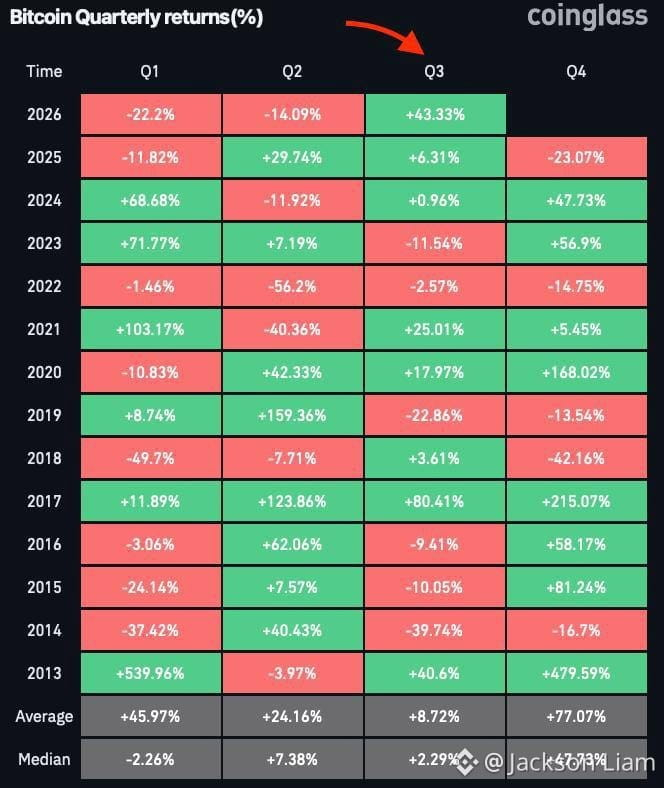
$BTC is on track to close Q3 2026 with one of its biggest quarterly gains in history.
Bitcoin started the quarter around $58K and has pushed back toward the $80K–$90K area, putting the quarter’s return around +40% at current levels.
That’s a huge comeback after BTC posted losses in both Q1 and Q2.
The bigger story?
Bitcoin just went from a brutal first half to one of its strongest quarterly rebounds ever.
Q3 isn’t finished yet — but if BTC holds these levels into September 30, this quarter will go down as a major comeback quarter for Bitcoin. 🔥
🚨 BITCOIN IS HAVING A MONSTER QUARTER 🔥
$BTC is on track to close Q3 2026 with one of its biggest quarterly gains in history.
Bitcoin started the quarter around $58K and has pushed back toward the $80K–$90K area, putting the quarter’s return around +40% at current levels.
That’s a huge comeback after BTC posted losses in both Q1 and Q2.
The bigger story?
Bitcoin just went from a brutal first half to one of its strongest quarterly rebounds ever.
Q3 isn’t finished yet — but if BTC holds these levels into September 30, this quarter will go down as a major comeback quarter for Bitcoin. 🔥
$BTC is on track to close Q3 2026 with one of its biggest quarterly gains in history.
Bitcoin started the quarter around $58K and has pushed back toward the $80K–$90K area, putting the quarter’s return around +40% at current levels.
That’s a huge comeback after BTC posted losses in both Q1 and Q2.
The bigger story?
Bitcoin just went from a brutal first half to one of its strongest quarterly rebounds ever.
Q3 isn’t finished yet — but if BTC holds these levels into September 30, this quarter will go down as a major comeback quarter for Bitcoin. 🔥
290
·
--
Bullish
See translation
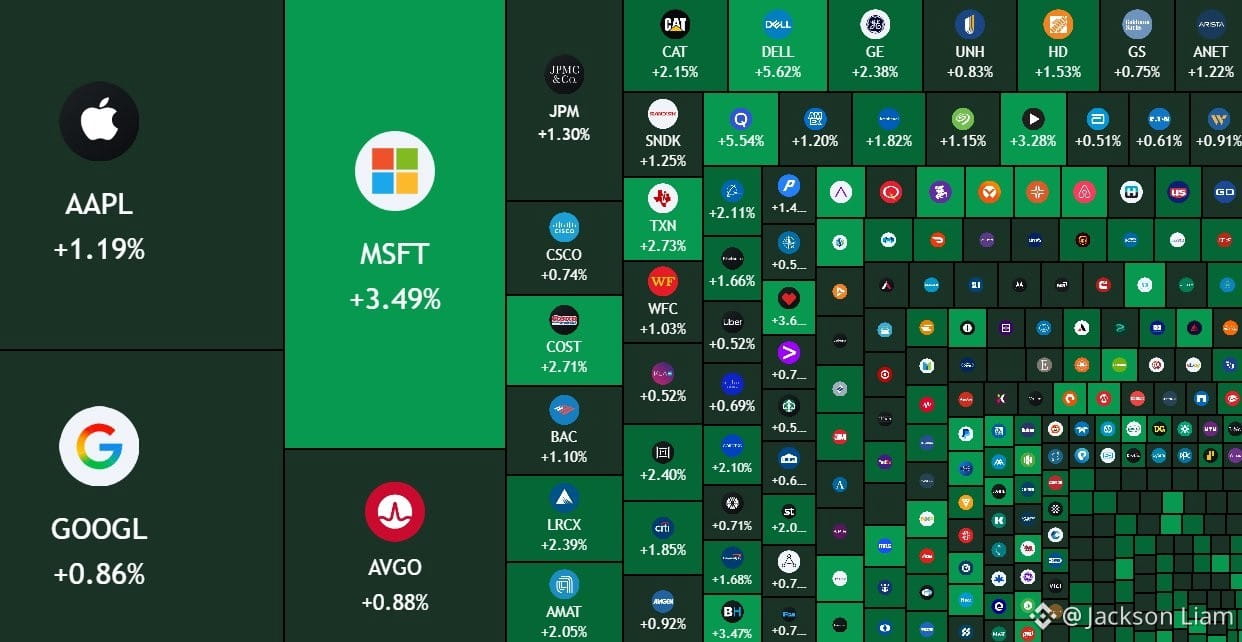
🚨 $450 BILLION ADDED TO US STOCKS IN JUST 30 MINUTES!
Wall Street got a massive boost after reports emerged that US-Iran talks had entered a technical stage.
The headline changed the mood instantly.
Investors started betting that progress toward a deal could reduce fears around the Middle East, especially the Strait of Hormuz and oil supply disruptions.
Stocks quickly bounced as risk sentiment returned.
The bigger picture: markets are watching every headline from the US-Iran negotiations because any progress could ease pressure on oil, inflation and interest rates.
One headline.
30 minutes.
$450 BILLION added to US stocks.
This is how sensitive markets have become to geopolitical news.
🚨 $450 BILLION ADDED TO US STOCKS IN JUST 30 MINUTES!
Wall Street got a massive boost after reports emerged that US-Iran talks had entered a technical stage.
The headline changed the mood instantly.
Investors started betting that progress toward a deal could reduce fears around the Middle East, especially the Strait of Hormuz and oil supply disruptions.
Stocks quickly bounced as risk sentiment returned.
The bigger picture: markets are watching every headline from the US-Iran negotiations because any progress could ease pressure on oil, inflation and interest rates.
One headline.
30 minutes.
$450 BILLION added to US stocks.
This is how sensitive markets have become to geopolitical news.
Wall Street got a massive boost after reports emerged that US-Iran talks had entered a technical stage.
The headline changed the mood instantly.
Investors started betting that progress toward a deal could reduce fears around the Middle East, especially the Strait of Hormuz and oil supply disruptions.
Stocks quickly bounced as risk sentiment returned.
The bigger picture: markets are watching every headline from the US-Iran negotiations because any progress could ease pressure on oil, inflation and interest rates.
One headline.
30 minutes.
$450 BILLION added to US stocks.
This is how sensitive markets have become to geopolitical news.
1
1
420
·
--
Bullish
See translation
🚨 JUST IN: BITGET HIT BY A MASSIVE SECURITY BREACH!
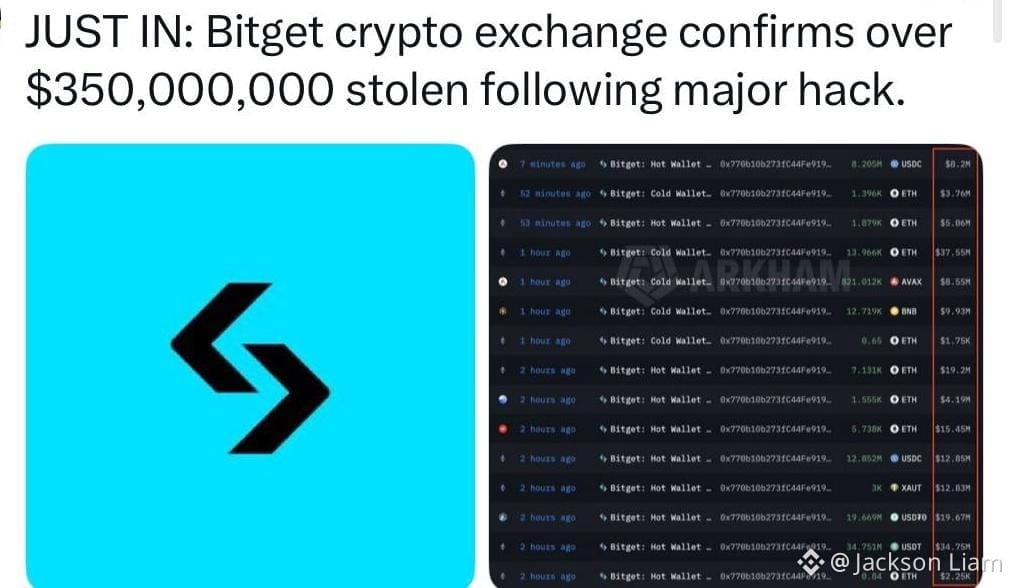
Bitget has reportedly confirmed that more than $350 MILLION worth of crypto was stolen following a major hack.
On-chain activity shows large movements involving assets such as $ETH , USDC, USDT, BNB, $AVAX , $XAUT and USDO from wallets linked to Bitget.
The transactions appear to have happened across multiple wallets within a short period, with some transfers worth tens of millions of dollars.
💥 Over $350M reportedly stolen
💥 Multiple major crypto assets affected
💥 Large wallet movements detected on-chain
💥 Bitget has confirmed the incident
This is a serious hit for the crypto market, and traders will be watching closely for where the stolen funds move next.
🚨 JUST IN: BITGET HIT BY A MASSIVE SECURITY BREACH!
Bitget has reportedly confirmed that more than $350 MILLION worth of crypto was stolen following a major hack.
On-chain activity shows large movements involving assets such as $ETH , USDC, USDT, BNB, $AVAX , $XAUT and USDO from wallets linked to Bitget.
The transactions appear to have happened across multiple wallets within a short period, with some transfers worth tens of millions of dollars.
💥 Over $350M reportedly stolen
💥 Multiple major crypto assets affected
💥 Large wallet movements detected on-chain
💥 Bitget has confirmed the incident
This is a serious hit for the crypto market, and traders will be watching closely for where the stolen funds move next.
Bitget has reportedly confirmed that more than $350 MILLION worth of crypto was stolen following a major hack.
On-chain activity shows large movements involving assets such as $ETH , USDC, USDT, BNB, $AVAX , $XAUT and USDO from wallets linked to Bitget.
The transactions appear to have happened across multiple wallets within a short period, with some transfers worth tens of millions of dollars.
💥 Over $350M reportedly stolen
💥 Multiple major crypto assets affected
💥 Large wallet movements detected on-chain
💥 Bitget has confirmed the incident
This is a serious hit for the crypto market, and traders will be watching closely for where the stolen funds move next.
1
1
465
·
--
Bullish
See translation
🚨 HUGE BITCOIN SELL WALL ALERT!
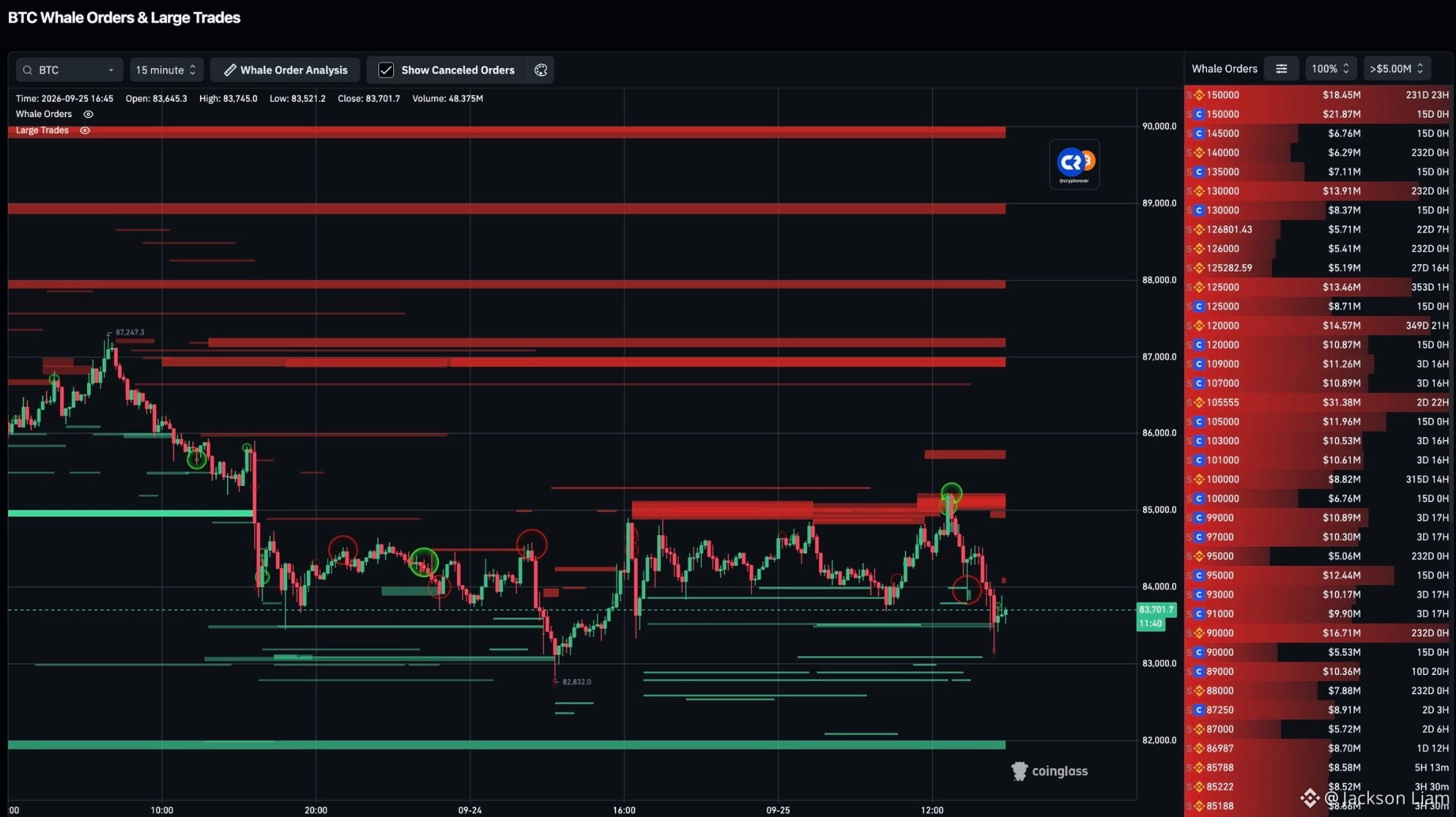
Bitcoin is facing heavy sell pressure, with large sell orders stacked all the way down to $90,000.
That means every move higher could run into fresh resistance as sellers look to exit or lock in profits.
If buyers can absorb these orders, $BTC could push higher quickly.
But if the sell wall holds, the market could see another sharp pullback toward $90K.
⚠️ Right now, liquidity is the key. One big wave of buying could clear the wall — or aggressive selling could turn it into a serious rejection.
Bitcoin is at a critical battle zone. 👀
🚨 HUGE BITCOIN SELL WALL ALERT!
Bitcoin is facing heavy sell pressure, with large sell orders stacked all the way down to $90,000.
That means every move higher could run into fresh resistance as sellers look to exit or lock in profits.
If buyers can absorb these orders, $BTC could push higher quickly.
But if the sell wall holds, the market could see another sharp pullback toward $90K.
⚠️ Right now, liquidity is the key. One big wave of buying could clear the wall — or aggressive selling could turn it into a serious rejection.
Bitcoin is at a critical battle zone. 👀
Bitcoin is facing heavy sell pressure, with large sell orders stacked all the way down to $90,000.
That means every move higher could run into fresh resistance as sellers look to exit or lock in profits.
If buyers can absorb these orders, $BTC could push higher quickly.
But if the sell wall holds, the market could see another sharp pullback toward $90K.
⚠️ Right now, liquidity is the key. One big wave of buying could clear the wall — or aggressive selling could turn it into a serious rejection.
Bitcoin is at a critical battle zone. 👀
266
·
--
Bullish
See translation
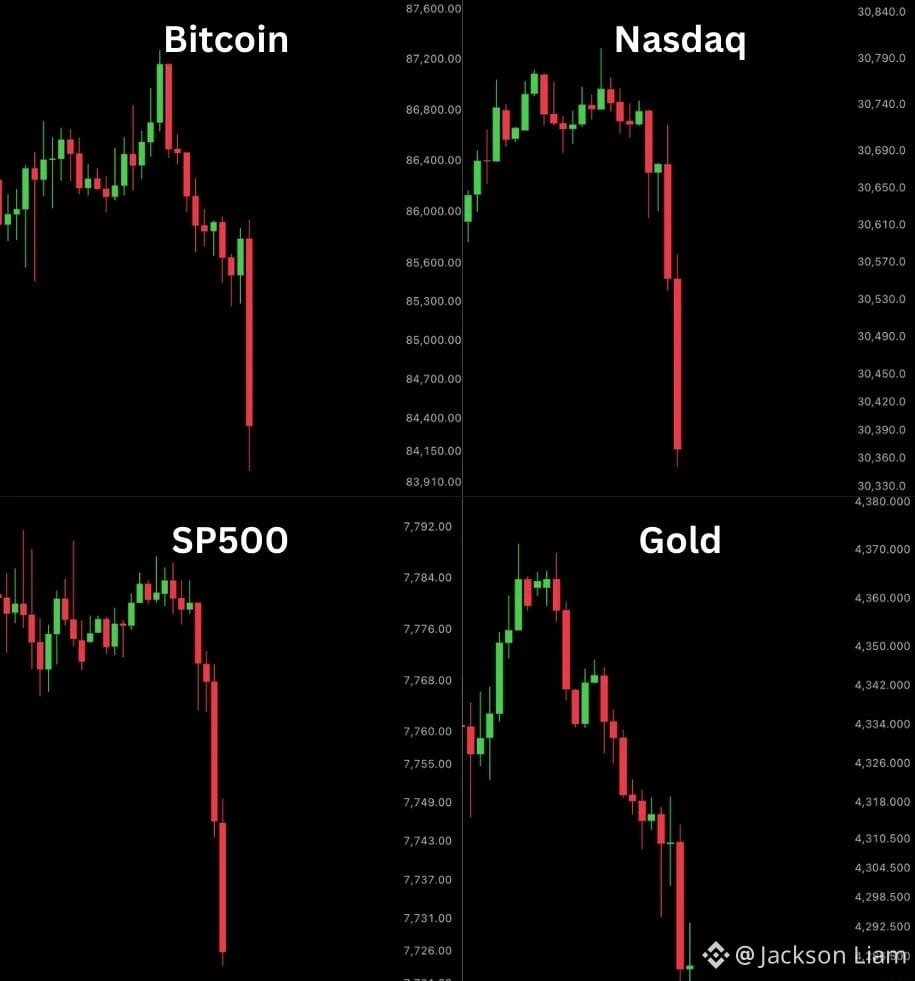
🚨 MASSIVE MARKET SHOCK!
Risk assets are getting slammed as tensions around the U.S.–Iran conflict flare up again. ⚠️
Stocks are under pressure, crypto is volatile, while oil remains near $100/barrel as traders price in geopolitical and inflation risks.
The big question now:
Is this just another panic-driven selloff — or the beginning of a much deeper risk-off move? 👀
Markets are watching every Iran headline. One statement could move stocks, Bitcoin, gold and oil in minutes. 📉🔥
#Bitcoin #Crypto #Stocks #Gold #Iran
🚨 MASSIVE MARKET SHOCK!
Risk assets are getting slammed as tensions around the U.S.–Iran conflict flare up again. ⚠️
Stocks are under pressure, crypto is volatile, while oil remains near $100/barrel as traders price in geopolitical and inflation risks.
The big question now:
Is this just another panic-driven selloff — or the beginning of a much deeper risk-off move? 👀
Markets are watching every Iran headline. One statement could move stocks, Bitcoin, gold and oil in minutes. 📉🔥
#Bitcoin #Crypto #Stocks #Gold #Iran
Risk assets are getting slammed as tensions around the U.S.–Iran conflict flare up again. ⚠️
Stocks are under pressure, crypto is volatile, while oil remains near $100/barrel as traders price in geopolitical and inflation risks.
The big question now:
Is this just another panic-driven selloff — or the beginning of a much deeper risk-off move? 👀
Markets are watching every Iran headline. One statement could move stocks, Bitcoin, gold and oil in minutes. 📉🔥
#Bitcoin #Crypto #Stocks #Gold #Iran
5
3
707
·
--
Bearish
See translation
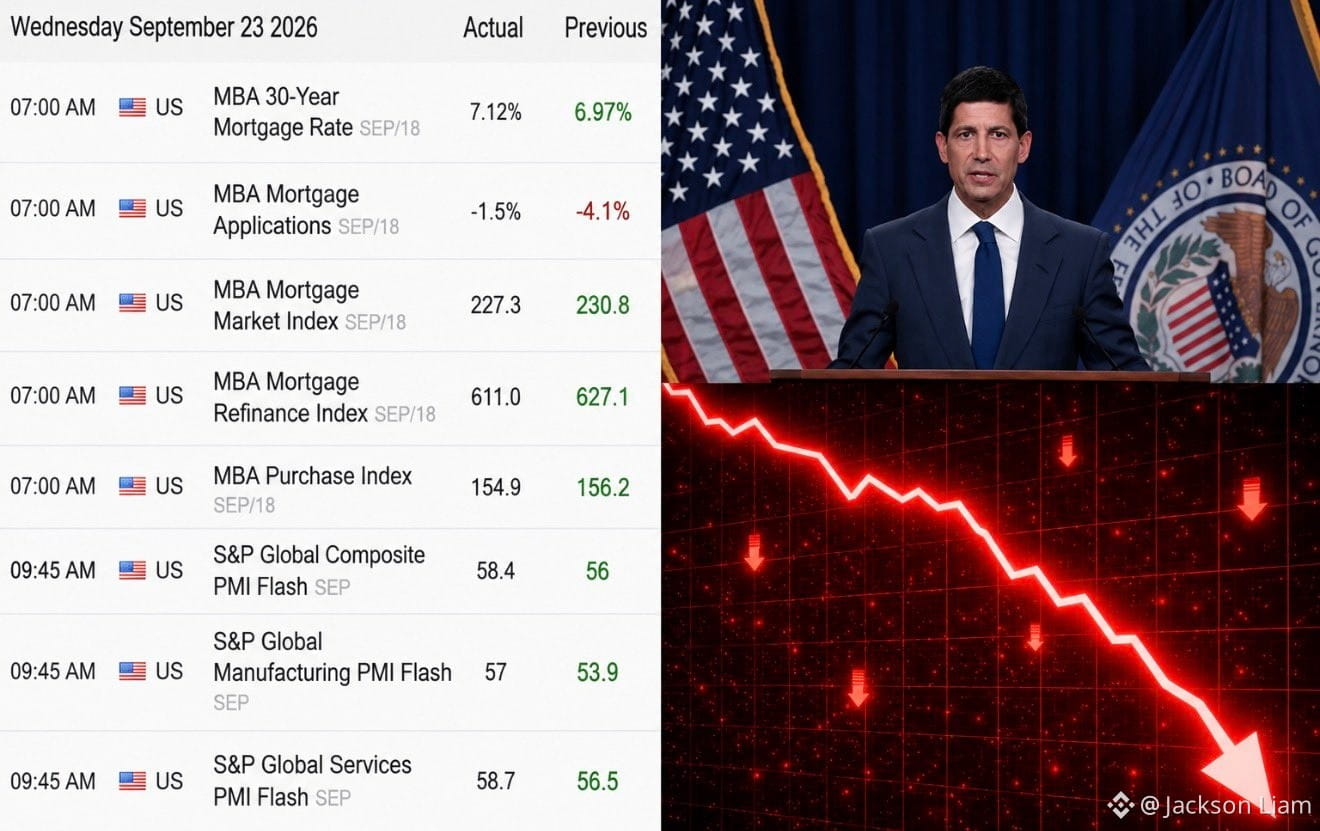
🚨 THE FED JUST GOT ANOTHER REASON TO STAY HAWKISH.
The U.S. economy is showing serious strength — and that could keep pressure on the Federal Reserve.
The latest S&P Global PMI data points to a sharp improvement in economic activity, while inflation remains well above the Fed’s 2% target.
And then there’s oil.
Brent crude has pushed back above $100 a barrel, adding another potential source of inflation pressure. S&P Global says higher energy prices are already forcing inflation forecasts higher.
The message is pretty simple:
📈 Stronger economic activity
🔥 Higher energy prices
💰 Inflation still elevated
🏦 More pressure on the Fed to keep policy tight
The Fed has already delivered a 25-basis-point hike this month, lifting rates to 3.75%–4.00%. Officials also raised their 2026 inflation forecast, with median PCE inflation now projected at 3.7%.
Fed officials are clearly watching inflation closely. Richmond Fed President Tom Barkin said this week that the economy appears to be firming and that inflation remains a major concern.
For markets, this creates a tricky setup.
If growth stays strong while inflation refuses to cool, investors may have to prepare for higher-for-longer rates.
And that matters far beyond stocks.
Higher rates can mean tighter financial conditions for bonds, equities, housing — and risk assets like crypto.
The big question now:
Does the U.S. economy stay strong enough to absorb more tightening, or does the Fed risk pushing growth too far?
🚨 THE FED JUST GOT ANOTHER REASON TO STAY HAWKISH.
The U.S. economy is showing serious strength — and that could keep pressure on the Federal Reserve.
The latest S&P Global PMI data points to a sharp improvement in economic activity, while inflation remains well above the Fed’s 2% target.
And then there’s oil.
Brent crude has pushed back above $100 a barrel, adding another potential source of inflation pressure. S&P Global says higher energy prices are already forcing inflation forecasts higher.
The message is pretty simple:
📈 Stronger economic activity
🔥 Higher energy prices
💰 Inflation still elevated
🏦 More pressure on the Fed to keep policy tight
The Fed has already delivered a 25-basis-point hike this month, lifting rates to 3.75%–4.00%. Officials also raised their 2026 inflation forecast, with median PCE inflation now projected at 3.7%.
Fed officials are clearly watching inflation closely. Richmond Fed President Tom Barkin said this week that the economy appears to be firming and that inflation remains a major concern.
For markets, this creates a tricky setup.
If growth stays strong while inflation refuses to cool, investors may have to prepare for higher-for-longer rates.
And that matters far beyond stocks.
Higher rates can mean tighter financial conditions for bonds, equities, housing — and risk assets like crypto.
The big question now:
Does the U.S. economy stay strong enough to absorb more tightening, or does the Fed risk pushing growth too far?
The U.S. economy is showing serious strength — and that could keep pressure on the Federal Reserve.
The latest S&P Global PMI data points to a sharp improvement in economic activity, while inflation remains well above the Fed’s 2% target.
And then there’s oil.
Brent crude has pushed back above $100 a barrel, adding another potential source of inflation pressure. S&P Global says higher energy prices are already forcing inflation forecasts higher.
The message is pretty simple:
📈 Stronger economic activity
🔥 Higher energy prices
💰 Inflation still elevated
🏦 More pressure on the Fed to keep policy tight
The Fed has already delivered a 25-basis-point hike this month, lifting rates to 3.75%–4.00%. Officials also raised their 2026 inflation forecast, with median PCE inflation now projected at 3.7%.
Fed officials are clearly watching inflation closely. Richmond Fed President Tom Barkin said this week that the economy appears to be firming and that inflation remains a major concern.
For markets, this creates a tricky setup.
If growth stays strong while inflation refuses to cool, investors may have to prepare for higher-for-longer rates.
And that matters far beyond stocks.
Higher rates can mean tighter financial conditions for bonds, equities, housing — and risk assets like crypto.
The big question now:
Does the U.S. economy stay strong enough to absorb more tightening, or does the Fed risk pushing growth too far?
351
·
--
Bullish
See translation
MUBARAK
+57.23% move with price holding near 0.08116 after a sharp breakout. Momentum is strong, but the 0.08781 high is the key breakout level.
BUY ZONE: 0.0775–0.0800
EP: 0.0790
TP1: 0.0845
TP2: 0.0878
TP3: 0.0950
SL: 0.0735
Hold above the buy zone and the breakout structure stays interesting. A clean break above 0.0878 could open the next upside leg.
$MUBARAK
{future}(MUBARAKUSDT)
$NIL
{future}(NILUSDT)
$MARSCOIN
{future}(MARSCOINUSDT)
MUBARAK
+57.23% move with price holding near 0.08116 after a sharp breakout. Momentum is strong, but the 0.08781 high is the key breakout level.
BUY ZONE: 0.0775–0.0800
EP: 0.0790
TP1: 0.0845
TP2: 0.0878
TP3: 0.0950
SL: 0.0735
Hold above the buy zone and the breakout structure stays interesting. A clean break above 0.0878 could open the next upside leg.
$MUBARAK
$NIL
$MARSCOIN
+57.23% move with price holding near 0.08116 after a sharp breakout. Momentum is strong, but the 0.08781 high is the key breakout level.
BUY ZONE: 0.0775–0.0800
EP: 0.0790
TP1: 0.0845
TP2: 0.0878
TP3: 0.0950
SL: 0.0735
Hold above the buy zone and the breakout structure stays interesting. A clean break above 0.0878 could open the next upside leg.
$MUBARAK
$NIL
$MARSCOIN
Breaks 0.0878 → New Highs
50%
Pullback → Reclaim & Continue
22%
Range → More Consolidation
7%
Deeper Correction
21%
14 votes • Voting closed
2
1
2.4k
·
--
Bullish
See translation
What Other Investment Opportunities Remain as AI Stocks Keep Rising?
AI stocks have been moving fast, and honestly, it’s easy to look at the headlines and think the opportunity is already gone.
But I don’t think the AI story ends with the companies everyone already knows.
Think about what happens every time AI gets bigger. More computing power is needed. More data centers have to be built. Those facilities need electricity, cooling, networking equipment, storage, and security. And once businesses start using AI seriously, they also need software and services that can actually turn all that technology into something useful.
That creates a much wider opportunity than simply chasing the biggest AI names.
I’m also watching what happens outside traditional tech. If AI can genuinely help companies reduce costs, automate repetitive work, improve logistics, analyze information faster, or increase productivity, then industries like manufacturing, healthcare, finance, energy, and retail could become important parts of the next chapter.
But there’s a catch.
When everyone gets excited about the same theme, expectations can become extremely high. A company can have impressive technology and still struggle to meet the growth investors are already expecting. That’s why the real question isn’t just whether AI will keep growing.
It’s who actually captures the value from that growth?
Maybe the next opportunity is in the infrastructure behind AI. Maybe it’s in companies quietly adopting AI to improve their businesses. Or maybe an entirely different sector benefits from the productivity wave.
The AI boom is getting bigger—but the interesting part may be discovering where the money goes after the obvious winners have already been noticed.
What are you watching next?
#AIStocksWhatNext
What Other Investment Opportunities Remain as AI Stocks Keep Rising?
AI stocks have been moving fast, and honestly, it’s easy to look at the headlines and think the opportunity is already gone.
But I don’t think the AI story ends with the companies everyone already knows.
Think about what happens every time AI gets bigger. More computing power is needed. More data centers have to be built. Those facilities need electricity, cooling, networking equipment, storage, and security. And once businesses start using AI seriously, they also need software and services that can actually turn all that technology into something useful.
That creates a much wider opportunity than simply chasing the biggest AI names.
I’m also watching what happens outside traditional tech. If AI can genuinely help companies reduce costs, automate repetitive work, improve logistics, analyze information faster, or increase productivity, then industries like manufacturing, healthcare, finance, energy, and retail could become important parts of the next chapter.
But there’s a catch.
When everyone gets excited about the same theme, expectations can become extremely high. A company can have impressive technology and still struggle to meet the growth investors are already expecting. That’s why the real question isn’t just whether AI will keep growing.
It’s who actually captures the value from that growth?
Maybe the next opportunity is in the infrastructure behind AI. Maybe it’s in companies quietly adopting AI to improve their businesses. Or maybe an entirely different sector benefits from the productivity wave.
The AI boom is getting bigger—but the interesting part may be discovering where the money goes after the obvious winners have already been noticed.
What are you watching next?
#AIStocksWhatNext
AI stocks have been moving fast, and honestly, it’s easy to look at the headlines and think the opportunity is already gone.
But I don’t think the AI story ends with the companies everyone already knows.
Think about what happens every time AI gets bigger. More computing power is needed. More data centers have to be built. Those facilities need electricity, cooling, networking equipment, storage, and security. And once businesses start using AI seriously, they also need software and services that can actually turn all that technology into something useful.
That creates a much wider opportunity than simply chasing the biggest AI names.
I’m also watching what happens outside traditional tech. If AI can genuinely help companies reduce costs, automate repetitive work, improve logistics, analyze information faster, or increase productivity, then industries like manufacturing, healthcare, finance, energy, and retail could become important parts of the next chapter.
But there’s a catch.
When everyone gets excited about the same theme, expectations can become extremely high. A company can have impressive technology and still struggle to meet the growth investors are already expecting. That’s why the real question isn’t just whether AI will keep growing.
It’s who actually captures the value from that growth?
Maybe the next opportunity is in the infrastructure behind AI. Maybe it’s in companies quietly adopting AI to improve their businesses. Or maybe an entirely different sector benefits from the productivity wave.
The AI boom is getting bigger—but the interesting part may be discovering where the money goes after the obvious winners have already been noticed.
What are you watching next?
#AIStocksWhatNext

3
313
·
--
Bullish
See translation
🇺🇸 Tom Lee’s BitMine just bought another $75 million of Ethereum.
And the timing is getting interesting.
BitMine continues to stack $ETH aggressively, pushing its total holdings to roughly 5.98 million ETH — around 4.9% of Ethereum’s total supply. The company is now just a step away from its much-discussed goal of controlling 5% of ETH.
But the bigger story is what Tom Lee thinks could happen next.
Lee believes Ethereum’s strong performance in Q3 could force institutions to take another look at crypto exposure. ETH has been one of the strongest macro assets this quarter, according to BitMine’s latest update.
And this is not just about holding ETH.
BitMine says it has already staked more than 5 million ETH, with projected annualized staking revenue now in the hundreds of millions of dollars.
That creates a simple setup:
More ETH accumulation.
More ETH being staked.
Growing institutional attention.
And Q4 approaching.
Tom Lee has made a much bigger call around the coming market environment, suggesting Q4 could mark the beginning of an unusually powerful rally.
That is a prediction, not a guarantee.
But when a company is willing to keep putting tens of millions of dollars into ETH while sitting on nearly 6 million ETH, the market is naturally going to pay attention.
The real question now is:
If institutions start increasing their crypto exposure in Q4, how much demand could Ethereum absorb before the market has to reprice it? 👀
🇺🇸 Tom Lee’s BitMine just bought another $75 million of Ethereum.
And the timing is getting interesting.
BitMine continues to stack $ETH aggressively, pushing its total holdings to roughly 5.98 million ETH — around 4.9% of Ethereum’s total supply. The company is now just a step away from its much-discussed goal of controlling 5% of ETH.
But the bigger story is what Tom Lee thinks could happen next.
Lee believes Ethereum’s strong performance in Q3 could force institutions to take another look at crypto exposure. ETH has been one of the strongest macro assets this quarter, according to BitMine’s latest update.
And this is not just about holding ETH.
BitMine says it has already staked more than 5 million ETH, with projected annualized staking revenue now in the hundreds of millions of dollars.
That creates a simple setup:
More ETH accumulation.
More ETH being staked.
Growing institutional attention.
And Q4 approaching.
Tom Lee has made a much bigger call around the coming market environment, suggesting Q4 could mark the beginning of an unusually powerful rally.
That is a prediction, not a guarantee.
But when a company is willing to keep putting tens of millions of dollars into ETH while sitting on nearly 6 million ETH, the market is naturally going to pay attention.
The real question now is:
If institutions start increasing their crypto exposure in Q4, how much demand could Ethereum absorb before the market has to reprice it? 👀
And the timing is getting interesting.
BitMine continues to stack $ETH aggressively, pushing its total holdings to roughly 5.98 million ETH — around 4.9% of Ethereum’s total supply. The company is now just a step away from its much-discussed goal of controlling 5% of ETH.
But the bigger story is what Tom Lee thinks could happen next.
Lee believes Ethereum’s strong performance in Q3 could force institutions to take another look at crypto exposure. ETH has been one of the strongest macro assets this quarter, according to BitMine’s latest update.
And this is not just about holding ETH.
BitMine says it has already staked more than 5 million ETH, with projected annualized staking revenue now in the hundreds of millions of dollars.
That creates a simple setup:
More ETH accumulation.
More ETH being staked.
Growing institutional attention.
And Q4 approaching.
Tom Lee has made a much bigger call around the coming market environment, suggesting Q4 could mark the beginning of an unusually powerful rally.
That is a prediction, not a guarantee.
But when a company is willing to keep putting tens of millions of dollars into ETH while sitting on nearly 6 million ETH, the market is naturally going to pay attention.
The real question now is:
If institutions start increasing their crypto exposure in Q4, how much demand could Ethereum absorb before the market has to reprice it? 👀

1
2
454
·
--
Bullish
See translation
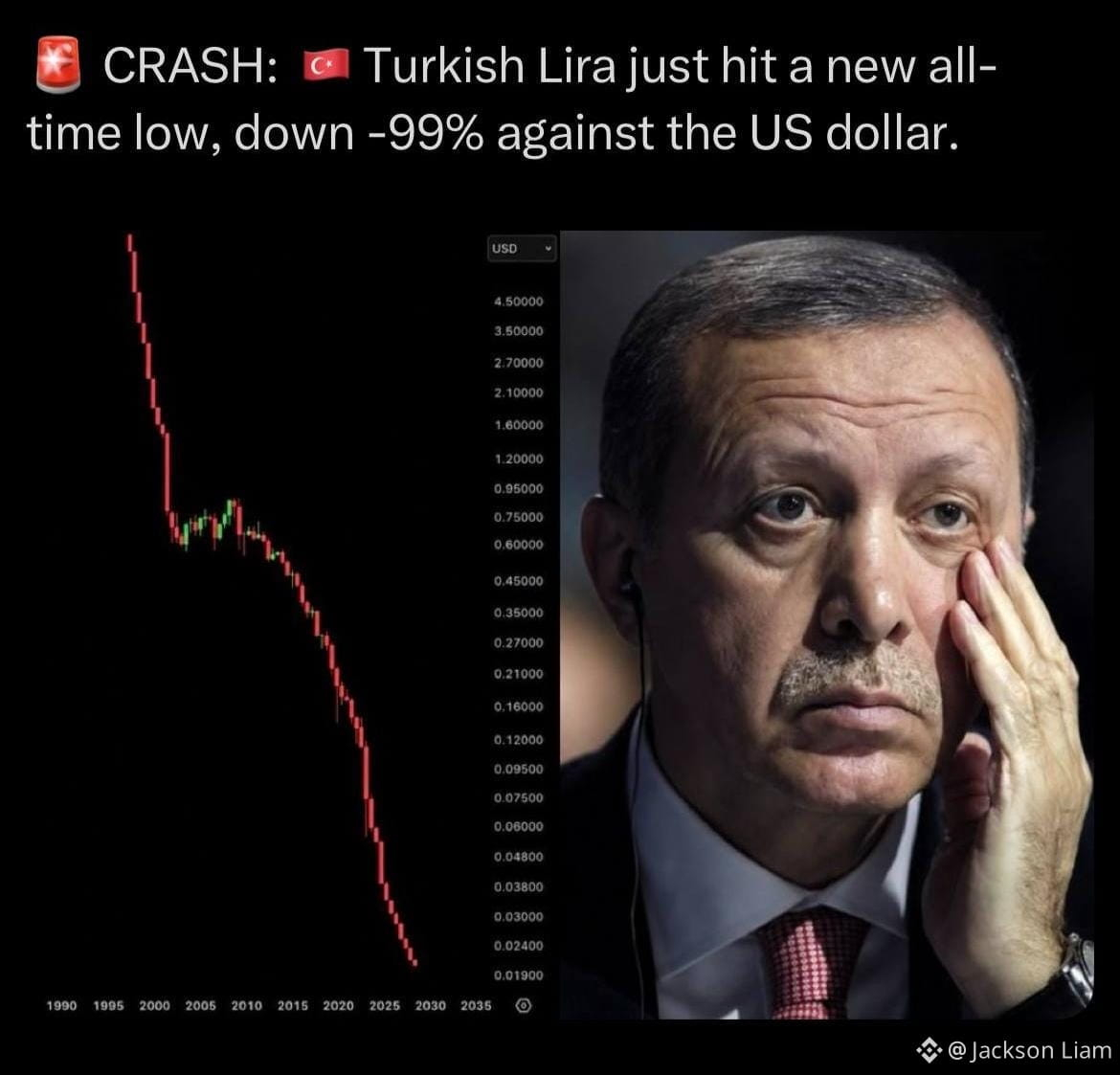
🇹🇷 TURKEY’S CURRENCY HAS LOST ALMOST EVERYTHING 😳
The Turkish lira’s story is one of the most dramatic currency declines of the modern era.
Back around 2000, $1 was worth roughly 0.67 Turkish lira in the old currency system.
Today?
💵 $1 ≈ ₺48.77
That means the lira has been crushed against the US dollar over the long run.
And this wasn’t one sudden 99% crash.
It happened through years of inflation, repeated devaluations and currency pressure.
Turkey has already lived through major currency shocks. During the 2001 crisis, the lira fell sharply after the currency was allowed to float.
Then came another major wave of weakness from 2018 onward.
The result is staggering:
A currency that once had much more value against the dollar now requires nearly 49 lira to buy just $1.
For ordinary people, a weaker currency can mean higher prices for imported goods, travel, energy and other products linked to foreign currencies.
The big question now is simple:
Can Turkey stabilize the lira and bring inflation under control — or will the currency continue losing purchasing power?
The next few years could be very important for the Turkish economy.
🇹🇷 TURKEY’S CURRENCY HAS LOST ALMOST EVERYTHING 😳
The Turkish lira’s story is one of the most dramatic currency declines of the modern era.
Back around 2000, $1 was worth roughly 0.67 Turkish lira in the old currency system.
Today?
💵 $1 ≈ ₺48.77
That means the lira has been crushed against the US dollar over the long run.
And this wasn’t one sudden 99% crash.
It happened through years of inflation, repeated devaluations and currency pressure.
Turkey has already lived through major currency shocks. During the 2001 crisis, the lira fell sharply after the currency was allowed to float.
Then came another major wave of weakness from 2018 onward.
The result is staggering:
A currency that once had much more value against the dollar now requires nearly 49 lira to buy just $1.
For ordinary people, a weaker currency can mean higher prices for imported goods, travel, energy and other products linked to foreign currencies.
The big question now is simple:
Can Turkey stabilize the lira and bring inflation under control — or will the currency continue losing purchasing power?
The next few years could be very important for the Turkish economy.
The Turkish lira’s story is one of the most dramatic currency declines of the modern era.
Back around 2000, $1 was worth roughly 0.67 Turkish lira in the old currency system.
Today?
💵 $1 ≈ ₺48.77
That means the lira has been crushed against the US dollar over the long run.
And this wasn’t one sudden 99% crash.
It happened through years of inflation, repeated devaluations and currency pressure.
Turkey has already lived through major currency shocks. During the 2001 crisis, the lira fell sharply after the currency was allowed to float.
Then came another major wave of weakness from 2018 onward.
The result is staggering:
A currency that once had much more value against the dollar now requires nearly 49 lira to buy just $1.
For ordinary people, a weaker currency can mean higher prices for imported goods, travel, energy and other products linked to foreign currencies.
The big question now is simple:
Can Turkey stabilize the lira and bring inflation under control — or will the currency continue losing purchasing power?
The next few years could be very important for the Turkish economy.
445
·
--
Bullish
See translation
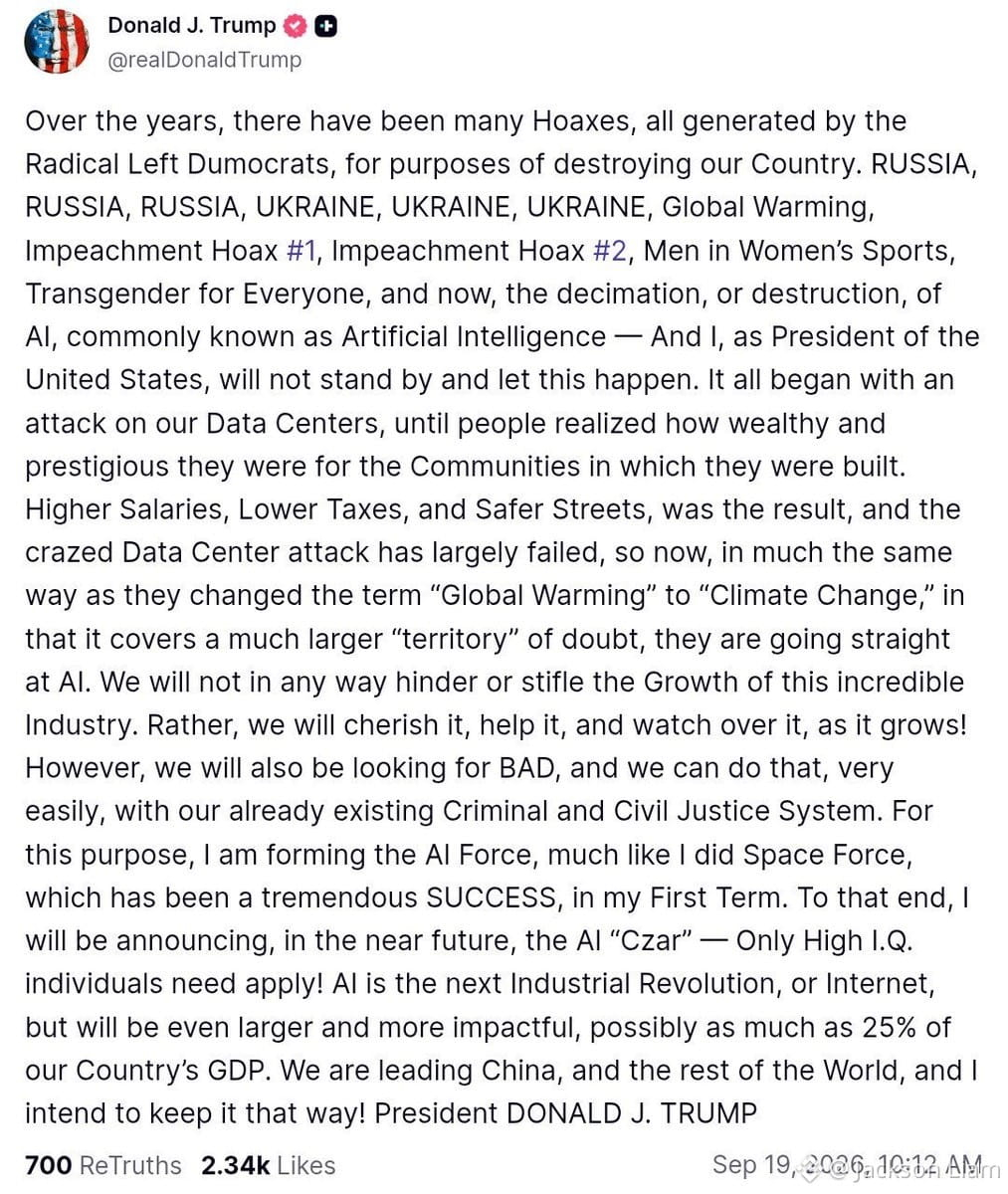
🇺🇸🤖 Trump wants to build an “AI Force” — and says AI could become 25% of the U.S. economy.
President Donald Trump has announced plans to create a new “AI Force,” modeled after the Space Force, as the United States pushes deeper into the global artificial intelligence race.
He also said he will appoint an “AI Czar” to oversee the effort. No details have yet been announced about who will get the job or exactly how the new force will operate.
Trump made his position on AI growth clear:
“We will not in any way hinder or stifle the Growth of this incredible Industry.”
Instead, he said the U.S. should support, protect and monitor the industry as it expands.
At the same time, Trump said the government would look for the “BAD” uses of AI and rely on existing criminal and civil justice systems to deal with wrongdoing.
Then came the much bigger economic prediction.
Trump described AI as “the next Industrial Revolution” and said it could eventually represent as much as 25% of U.S. GDP.
That is a huge claim — and it shows just how important AI has become in the U.S. economic and strategic conversation.
The announcement comes as debate over AI safety is intensifying, with some technology leaders and researchers calling for greater caution, while the Trump administration continues to emphasize rapid development and competition with China.
For now, one thing is clear:
Washington is no longer treating AI as just another technology sector.
The bigger question is what this proposed AI Force will actually look like — and how much power the new AI Czar will have.
The AI race just entered another chapter. 🇺🇸🤖
🇺🇸🤖 Trump wants to build an “AI Force” — and says AI could become 25% of the U.S. economy.
President Donald Trump has announced plans to create a new “AI Force,” modeled after the Space Force, as the United States pushes deeper into the global artificial intelligence race.
He also said he will appoint an “AI Czar” to oversee the effort. No details have yet been announced about who will get the job or exactly how the new force will operate.
Trump made his position on AI growth clear:
“We will not in any way hinder or stifle the Growth of this incredible Industry.”
Instead, he said the U.S. should support, protect and monitor the industry as it expands.
At the same time, Trump said the government would look for the “BAD” uses of AI and rely on existing criminal and civil justice systems to deal with wrongdoing.
Then came the much bigger economic prediction.
Trump described AI as “the next Industrial Revolution” and said it could eventually represent as much as 25% of U.S. GDP.
That is a huge claim — and it shows just how important AI has become in the U.S. economic and strategic conversation.
The announcement comes as debate over AI safety is intensifying, with some technology leaders and researchers calling for greater caution, while the Trump administration continues to emphasize rapid development and competition with China.
For now, one thing is clear:
Washington is no longer treating AI as just another technology sector.
The bigger question is what this proposed AI Force will actually look like — and how much power the new AI Czar will have.
The AI race just entered another chapter. 🇺🇸🤖
President Donald Trump has announced plans to create a new “AI Force,” modeled after the Space Force, as the United States pushes deeper into the global artificial intelligence race.
He also said he will appoint an “AI Czar” to oversee the effort. No details have yet been announced about who will get the job or exactly how the new force will operate.
Trump made his position on AI growth clear:
“We will not in any way hinder or stifle the Growth of this incredible Industry.”
Instead, he said the U.S. should support, protect and monitor the industry as it expands.
At the same time, Trump said the government would look for the “BAD” uses of AI and rely on existing criminal and civil justice systems to deal with wrongdoing.
Then came the much bigger economic prediction.
Trump described AI as “the next Industrial Revolution” and said it could eventually represent as much as 25% of U.S. GDP.
That is a huge claim — and it shows just how important AI has become in the U.S. economic and strategic conversation.
The announcement comes as debate over AI safety is intensifying, with some technology leaders and researchers calling for greater caution, while the Trump administration continues to emphasize rapid development and competition with China.
For now, one thing is clear:
Washington is no longer treating AI as just another technology sector.
The bigger question is what this proposed AI Force will actually look like — and how much power the new AI Czar will have.
The AI race just entered another chapter. 🇺🇸🤖

1
826
·
--
Bullish
See translation
AKEDO (AKE)
+153.18% on the 4H chart, with price pressing the 0.06418 resistance after a sharp breakout.
BUY ZONE: 0.0555–0.0580
EP: 0.0570
TP1: 0.06418
TP2: 0.06674
TP3: 0.07500
SL: 0.05200
The key level is 0.0555. Holding above it keeps the breakout structure alive; losing it puts the move back into pullback territory.
Trade setup is based on the visible chart levels, not a guarantee of outcome.
$AKE
{future}(AKEUSDT)
$MYX
{future}(MYXUSDT)
$BR
{future}(BRUSDT)
AKEDO (AKE)
+153.18% on the 4H chart, with price pressing the 0.06418 resistance after a sharp breakout.
BUY ZONE: 0.0555–0.0580
EP: 0.0570
TP1: 0.06418
TP2: 0.06674
TP3: 0.07500
SL: 0.05200
The key level is 0.0555. Holding above it keeps the breakout structure alive; losing it puts the move back into pullback territory.
Trade setup is based on the visible chart levels, not a guarantee of outcome.
$AKE
$MYX
$BR
+153.18% on the 4H chart, with price pressing the 0.06418 resistance after a sharp breakout.
BUY ZONE: 0.0555–0.0580
EP: 0.0570
TP1: 0.06418
TP2: 0.06674
TP3: 0.07500
SL: 0.05200
The key level is 0.0555. Holding above it keeps the breakout structure alive; losing it puts the move back into pullback territory.
Trade setup is based on the visible chart levels, not a guarantee of outcome.
$AKE
$MYX
$BR
Breakout above 0.06418
64%
Pullback before the next leg
36%
14 votes • Voting closed
1
2.6k
·
--
Bullish
See translation
The Fed just made the market’s next move a lot more interesting. 🇺🇸
Polymarket traders are now pricing in a 56% chance of another 25-basis-point rate hike at the October 27–28 FOMC meeting, versus 44% for no change.
And there’s a reason this is getting attention.
On September 16, the Federal Reserve already raised rates by 25 bps, taking the federal funds target range to 3.75%–4.00%. The vote was unanimous, and the Fed said inflation remains elevated.
Now the market is asking:
Was September just the beginning?
With October’s decision still weeks away, every inflation print, jobs report and Fed comment could move these odds sharply.
For crypto and risk assets, another hike could mean tighter financial conditions and another test for liquidity.
The big question now is whether the Fed keeps its foot on the brake in October — or gives markets a pause.
56% is not certainty. But it is a signal that traders are taking another hike seriously.
The Fed just made the market’s next move a lot more interesting. 🇺🇸
Polymarket traders are now pricing in a 56% chance of another 25-basis-point rate hike at the October 27–28 FOMC meeting, versus 44% for no change.
And there’s a reason this is getting attention.
On September 16, the Federal Reserve already raised rates by 25 bps, taking the federal funds target range to 3.75%–4.00%. The vote was unanimous, and the Fed said inflation remains elevated.
Now the market is asking:
Was September just the beginning?
With October’s decision still weeks away, every inflation print, jobs report and Fed comment could move these odds sharply.
For crypto and risk assets, another hike could mean tighter financial conditions and another test for liquidity.
The big question now is whether the Fed keeps its foot on the brake in October — or gives markets a pause.
56% is not certainty. But it is a signal that traders are taking another hike seriously.
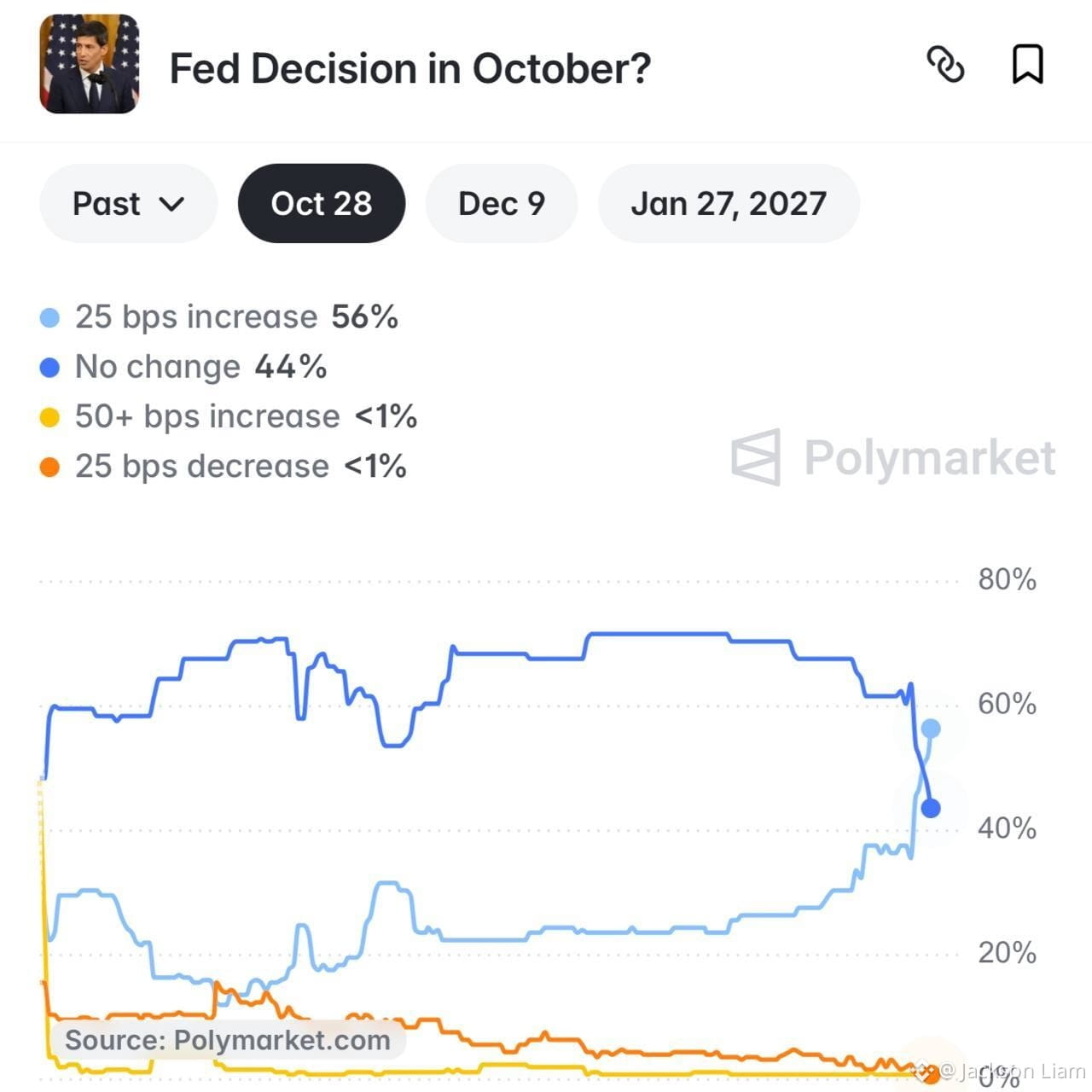
Polymarket traders are now pricing in a 56% chance of another 25-basis-point rate hike at the October 27–28 FOMC meeting, versus 44% for no change.
And there’s a reason this is getting attention.
On September 16, the Federal Reserve already raised rates by 25 bps, taking the federal funds target range to 3.75%–4.00%. The vote was unanimous, and the Fed said inflation remains elevated.
Now the market is asking:
Was September just the beginning?
With October’s decision still weeks away, every inflation print, jobs report and Fed comment could move these odds sharply.
For crypto and risk assets, another hike could mean tighter financial conditions and another test for liquidity.
The big question now is whether the Fed keeps its foot on the brake in October — or gives markets a pause.
56% is not certainty. But it is a signal that traders are taking another hike seriously.
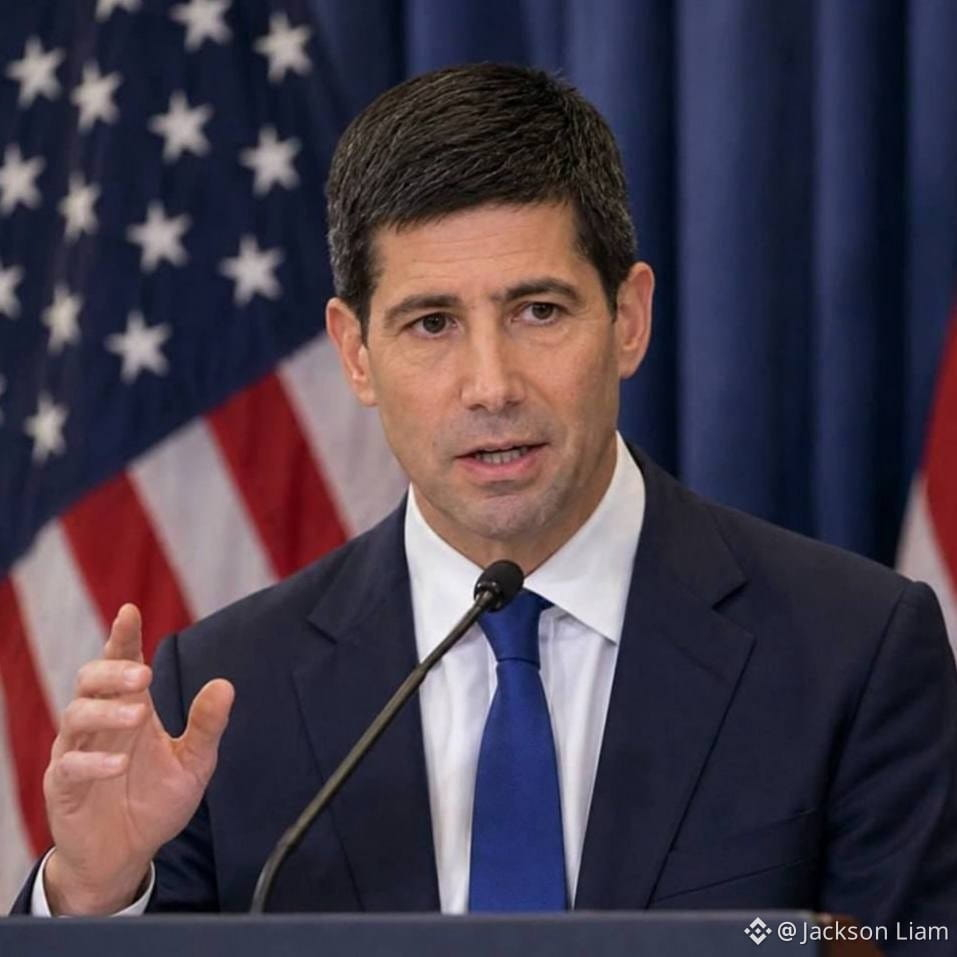
237
·
--
Bullish
See translation
🚨 HUGE: 🇺🇸 Bitcoin is moving deeper into the U.S. government conversation.
Reports say Coinbase is in talks with the U.S. Treasury and Commerce Departments around the development of the Strategic Bitcoin Reserve.
And this comes at a very interesting time.
Just this week, a House committee advanced legislation aimed at formally establishing a U.S. Bitcoin reserve and directing the Treasury to maintain secure Bitcoin storage.
This is no longer just a crypto-community idea being discussed online.
Bitcoin is increasingly being treated as a serious strategic asset in Washington.
If these plans continue to move forward, the big question becomes:
How much Bitcoin could the United States eventually hold?
And more importantly…
Could America be preparing for a future where Bitcoin becomes part of its long-term national financial strategy? 🇺🇸₿
The story is getting bigger — and the next moves from Washington could be very important for Bitcoin.
It’s finally getting real.
$BTC
🚨 HUGE: 🇺🇸 Bitcoin is moving deeper into the U.S. government conversation.
Reports say Coinbase is in talks with the U.S. Treasury and Commerce Departments around the development of the Strategic Bitcoin Reserve.
And this comes at a very interesting time.
Just this week, a House committee advanced legislation aimed at formally establishing a U.S. Bitcoin reserve and directing the Treasury to maintain secure Bitcoin storage.
This is no longer just a crypto-community idea being discussed online.
Bitcoin is increasingly being treated as a serious strategic asset in Washington.
If these plans continue to move forward, the big question becomes:
How much Bitcoin could the United States eventually hold?
And more importantly…
Could America be preparing for a future where Bitcoin becomes part of its long-term national financial strategy? 🇺🇸₿
The story is getting bigger — and the next moves from Washington could be very important for Bitcoin.
It’s finally getting real.
$BTC
Reports say Coinbase is in talks with the U.S. Treasury and Commerce Departments around the development of the Strategic Bitcoin Reserve.
And this comes at a very interesting time.
Just this week, a House committee advanced legislation aimed at formally establishing a U.S. Bitcoin reserve and directing the Treasury to maintain secure Bitcoin storage.
This is no longer just a crypto-community idea being discussed online.
Bitcoin is increasingly being treated as a serious strategic asset in Washington.
If these plans continue to move forward, the big question becomes:
How much Bitcoin could the United States eventually hold?
And more importantly…
Could America be preparing for a future where Bitcoin becomes part of its long-term national financial strategy? 🇺🇸₿
The story is getting bigger — and the next moves from Washington could be very important for Bitcoin.
It’s finally getting real.
$BTC


1
163
·
--
Bullish
See translation
$ZEC just delivered a return that is hard to ignore.
If you had put $1,000 into Zcash one year ago, that investment would now be worth roughly $28,763.
That’s a staggering +2,776.3% gain.
In simple terms, every $1,000 invested would have turned into nearly $28,800 over the past year.
Crypto moves can change fast, but a return like this shows just how powerful a major comeback can be when momentum catches fire.
The bigger question now: Can ZEC keep this momentum going, or has the biggest part of the move already happened?
$ZEC just delivered a return that is hard to ignore.
If you had put $1,000 into Zcash one year ago, that investment would now be worth roughly $28,763.
That’s a staggering +2,776.3% gain.
In simple terms, every $1,000 invested would have turned into nearly $28,800 over the past year.
Crypto moves can change fast, but a return like this shows just how powerful a major comeback can be when momentum catches fire.
The bigger question now: Can ZEC keep this momentum going, or has the biggest part of the move already happened?
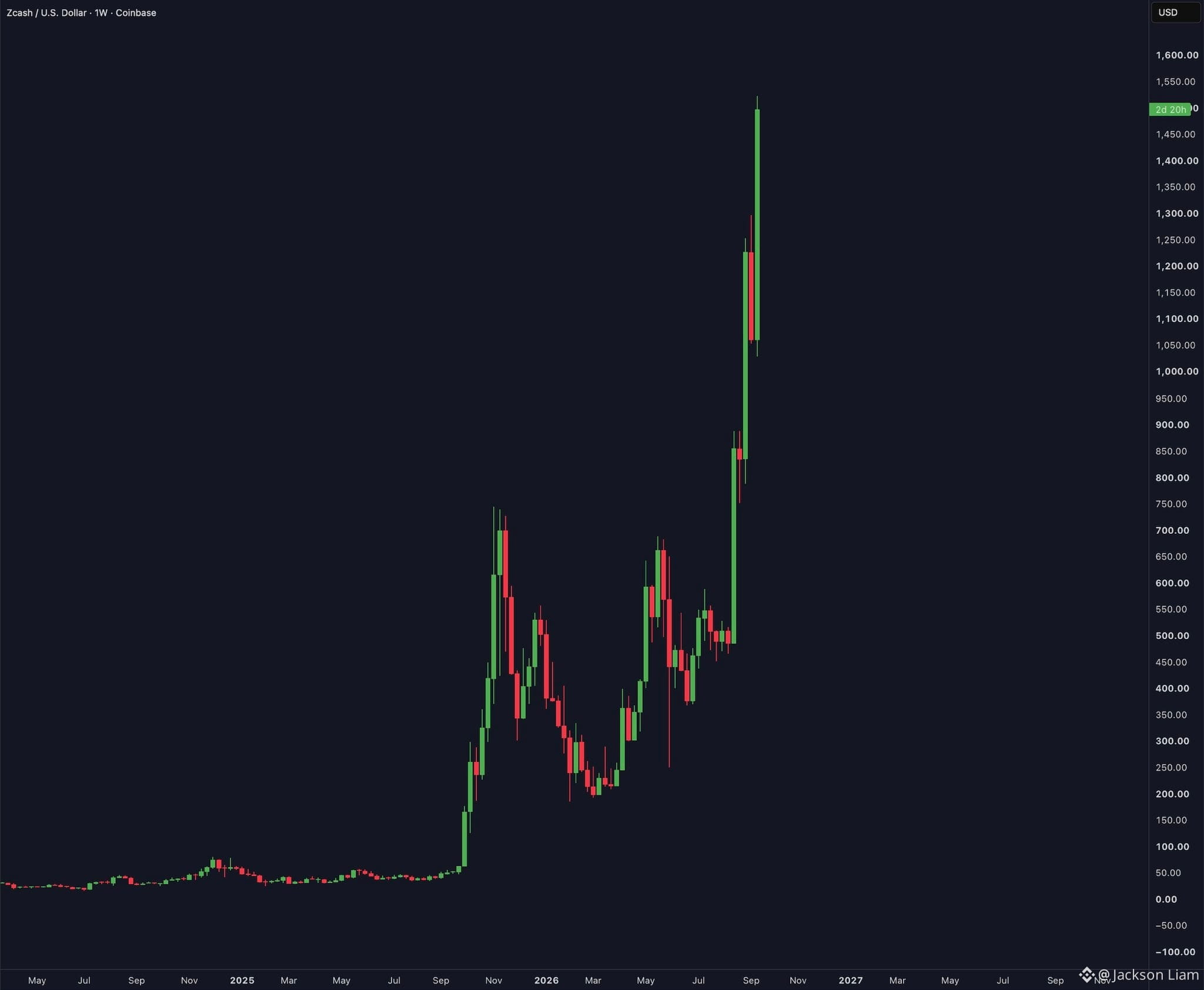
If you had put $1,000 into Zcash one year ago, that investment would now be worth roughly $28,763.
That’s a staggering +2,776.3% gain.
In simple terms, every $1,000 invested would have turned into nearly $28,800 over the past year.
Crypto moves can change fast, but a return like this shows just how powerful a major comeback can be when momentum catches fire.
The bigger question now: Can ZEC keep this momentum going, or has the biggest part of the move already happened?
332
·
--
Bullish
See translation
JUST IN: The U.S. Treasury has bought back $2.385 billion of its own debt today.
That’s a notable move in the U.S. bond market.
A Treasury buyback means the government is purchasing some of its previously issued debt before maturity. The goal can include managing its debt portfolio, improving market liquidity, and keeping the Treasury market running smoothly.
The headline number is big: $2.385 billion in U.S. government debt bought back in one day.
For markets, moves like this can matter because Treasury yields influence borrowing costs across the global financial system — from businesses and banks to mortgages and risk assets like crypto.
Now the key question:
Is this simply routine debt management, or could larger Treasury operations become an important market catalyst in the months ahead?
JUST IN: The U.S. Treasury has bought back $2.385 billion of its own debt today.
That’s a notable move in the U.S. bond market.
A Treasury buyback means the government is purchasing some of its previously issued debt before maturity. The goal can include managing its debt portfolio, improving market liquidity, and keeping the Treasury market running smoothly.
The headline number is big: $2.385 billion in U.S. government debt bought back in one day.
For markets, moves like this can matter because Treasury yields influence borrowing costs across the global financial system — from businesses and banks to mortgages and risk assets like crypto.
Now the key question:
Is this simply routine debt management, or could larger Treasury operations become an important market catalyst in the months ahead?
That’s a notable move in the U.S. bond market.
A Treasury buyback means the government is purchasing some of its previously issued debt before maturity. The goal can include managing its debt portfolio, improving market liquidity, and keeping the Treasury market running smoothly.
The headline number is big: $2.385 billion in U.S. government debt bought back in one day.
For markets, moves like this can matter because Treasury yields influence borrowing costs across the global financial system — from businesses and banks to mortgages and risk assets like crypto.
Now the key question:
Is this simply routine debt management, or could larger Treasury operations become an important market catalyst in the months ahead?


1
316
·
--
Bullish
See translation
BREAKING: BlackRock’s Bitcoin ETF just saw around $183.7 MILLION flow in.
The money is moving.
BlackRock’s iShares Bitcoin Trust (IBIT) recorded roughly $183.7M in fresh inflows, putting Bitcoin back in the spotlight as institutional ETF demand picks up.
BTC is trading around $77.5K, with the latest flow data showing that large capital is still finding its way into Bitcoin exposure.
This is bigger than a headline.
When billions of dollars can move through spot Bitcoin ETFs, every major inflow becomes a signal the market watches closely.
Now the big question:
Is this the start of another wave of institutional demand for Bitcoin?
$BTC
BREAKING: BlackRock’s Bitcoin ETF just saw around $183.7 MILLION flow in.
The money is moving.
BlackRock’s iShares Bitcoin Trust (IBIT) recorded roughly $183.7M in fresh inflows, putting Bitcoin back in the spotlight as institutional ETF demand picks up.
BTC is trading around $77.5K, with the latest flow data showing that large capital is still finding its way into Bitcoin exposure.
This is bigger than a headline.
When billions of dollars can move through spot Bitcoin ETFs, every major inflow becomes a signal the market watches closely.
Now the big question:
Is this the start of another wave of institutional demand for Bitcoin?
$BTC
The money is moving.
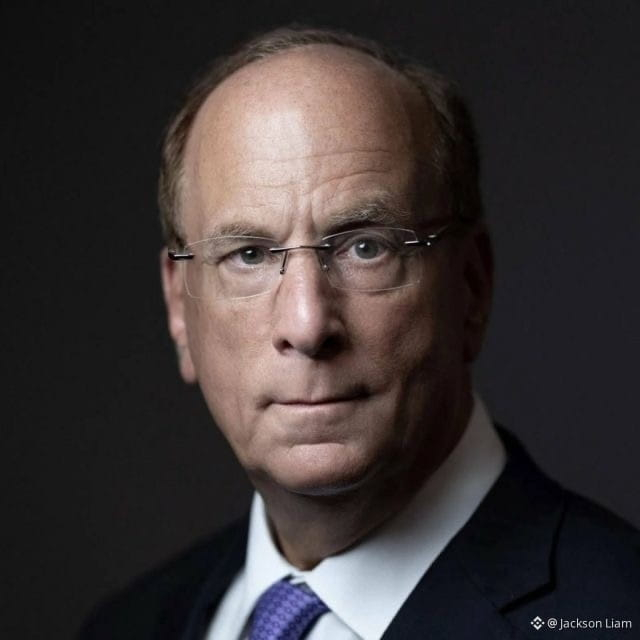
BlackRock’s iShares Bitcoin Trust (IBIT) recorded roughly $183.7M in fresh inflows, putting Bitcoin back in the spotlight as institutional ETF demand picks up.
BTC is trading around $77.5K, with the latest flow data showing that large capital is still finding its way into Bitcoin exposure.
This is bigger than a headline.
When billions of dollars can move through spot Bitcoin ETFs, every major inflow becomes a signal the market watches closely.
Now the big question:
Is this the start of another wave of institutional demand for Bitcoin?
$BTC

BTC+0.10%
IBITETF-0.58%
183
·
--
Bullish
See translation
ONE
+59.92% and the breakout is still holding above 0.00180.
Buy Zone: 0.00170–0.00182
TP1: 0.00212
TP2: 0.00243
TP3: 0.00252
SL: 0.00132
EP: 0.00180
TP: 0.00212 / 0.00243 / 0.00252
SL: 0.00132
Momentum is aggressive after the 0.0024288 spike. Holding the 0.00170–0.00180 area keeps the bullish setup alive.
Let's go $ONE
{future}(ONEUSDT)
$DRIFT
{future}(DRIFTUSDT)
$NEAR
{spot}(NEARUSDT)
ONE
+59.92% and the breakout is still holding above 0.00180.
Buy Zone: 0.00170–0.00182
TP1: 0.00212
TP2: 0.00243
TP3: 0.00252
SL: 0.00132
EP: 0.00180
TP: 0.00212 / 0.00243 / 0.00252
SL: 0.00132
Momentum is aggressive after the 0.0024288 spike. Holding the 0.00170–0.00180 area keeps the bullish setup alive.
Let's go $ONE
$DRIFT
$NEAR
+59.92% and the breakout is still holding above 0.00180.
Buy Zone: 0.00170–0.00182
TP1: 0.00212
TP2: 0.00243
TP3: 0.00252
SL: 0.00132
EP: 0.00180
TP: 0.00212 / 0.00243 / 0.00252
SL: 0.00132
Momentum is aggressive after the 0.0024288 spike. Holding the 0.00170–0.00180 area keeps the bullish setup alive.
Let's go $ONE
$DRIFT
$NEAR
Bullish — TP3 gets hit
78%
New high — breakout continues
22%
Pullback — retest another leg
0%
Bearish — breakout momentum
0%
9 votes • Voting closed
1
2
1.4k
Log in to explore more content
Join global crypto users on Binance Square
⚡️ Get latest and useful information about crypto.
💬 Trusted by the world’s largest crypto exchange.
👍 Discover real insights from verified creators.
Email / Phone number
Trending Topics
CircleMints500MUSDCOnSolana
76,423 views
1,757 Discussing
#circlemints500musdconsolana
🚨 $500M USDC MINTED ON SOLANA! 💵🔥
Circle Treasury just minted 500M USDC on Solana, pushing total global supply to $75.2B! 📈✨
💡 Quick Reality Check:
🔹 Minting = Fresh Inventory Creation (Not instant buying power!🛒
🔹 Real Trigger = Capital Deployment into DeFi, Exchanges & Pools! 🌐🚀
🎯 Coins to Watch:
⚡ $SOL — Network activity is booming, and fresh liquidity continues to drive ecosystem growth!
💎 $RARE — A high-volatility altcoin that reacts fast to fresh market liquidity and sentiment!🪐
💥 Are you accumulating now or waiting for full capital deployment? Drop your thoughts below! 👇✨
#CircleMints500MUSDCOnSolana
#PolymarketBankFailureBetsDrawFDICConcern
#BlackRockBuildsTokenizedPortfoliosForOndo
#BitwiseFilesToListNEARETFOnNYSEArca
Hifza Rubab
·4 Likes
·4.3k views
PolymarketBankFailureBetsDrawFDICConcern
83,166 views
1,648 Discussing
BlackRockBuildsTokenizedPortfoliosForOndo
73,195 views
1,165 Discussing