
For-Exx Kripto
1.4k Posts

For-Exx Kripto
Report
Block User
Technical and Fundamental Analysis of Cryptocurrencies,Stocks and Financial Instruments
/// Youtube / Twitter : @ForExxKripto
1 Following
1.1K+ Followers
3.9K+ Liked
Posts
All
Quotes
Videos
Article
See translation
END-OF-DAY MARKET REPORT — SEPTEMBER 9, 2026🔐 END-OF-DAY MARKET REPORT — SEPTEMBER 9, 2026
🌐 TOP STORIES OF THE DAY
Zcash (ZEC) climbed as high as $1,290 today in a rally fueled by Grayscale’s ZCSH ETF, reaching its highest level since November 2016 — gaining 57% over the past week, more than 138% over the past month, and approximately 2,400% over the past year; ZCSH options also began trading on the NYSE, while the ETF’s net assets reached $463 million
The Liquid Network attacker returned 3,400 BTC — approximately 85% of the 4,000 BTC withdrawn — to the federation address on September 7; 598.5 BTC (~$47 million) remains unrecovered and the network is still suspended — Ledger CTO Charles Guillemet stated that retaining the remaining amount is inconsistent with a genuine “white-hat” bug bounty agreement and is closer to “extortion”
The U.S.-Iran conflict continued yesterday with attacks from both sides; oil prices approached $100 per barrel, while expectations for a 25-basis-point rate hike are strengthening one week before the Fed concludes its two-day policy meeting
BTC formed a “golden cross” pattern this week — the short-term moving average crossing above the long-term moving average, improving the trend structure but considered a lagging signal
━━━
₿ BITCOIN
BTC opened this morning at $78,446, down 0.8% from yesterday’s open; during the morning, it recovered toward the $78,800–$78,900 range. The price remains tightly trapped around $78,600 and below the $79,500 resistance — a four-hour close above this level, as highlighted by one trader, could reopen the path toward the $82,000 area; otherwise, the $70,500 level followed by the $67,200 range remains at risk. Despite the golden cross formation, a breakout has not yet been confirmed; ETF demand remains strong, while there is limited evidence of increasing selling pressure from large wallets. Yesterday, BTC declined from $79,113 to $78,455 (~0.8%), while the September 8 intraday range remained between $77,666 and $79,475.
━━━
🔷 ETHEREUM & ALTCOINS
ETH opened this morning at $2,485, down 0.2% from yesterday. Zcash remains the standout cryptocurrency of the week — the ETF catalyst combined with a sharp increase in open interest indicates that the rally is being driven not only by spot buying but also by growing derivatives-market interest; analysts view the $1,435–$1,500 range as the next test zone. The broader market remains cautious due to geopolitical tensions related to Iran and rising oil prices.
━━━
📋 TOP CRYPTO NEWS
Liquid Network’s federation reserve has fallen from approximately 4,200 BTC before the incident to around 197 BTC; Blockstream stated that it has deployed the patched software and that federation members are preparing for a coordinated restart, but there is still no publicly announced timeline for the return of normal peg-out operations
Analysts believe the incident could trigger new independent audits across the industry focusing on how total-supply verification is performed in sidechain and bridge architectures
The combination of Zcash’s privacy-pool technology and institutional ETF demand continues to set a precedent for the integration of privacy-focused crypto assets into regulated products
━━━
🔓 TOKEN UNLOCKS
Linea (LINEA)
September 10, 2026
Amount: ~$2.75 million (3% of circulating supply) — 960.13 million tokens
Recipient profile: Linea Consortium (long-term alignment) + Linea Consortium (Ignition), split equally
Selling pressure: 🟡
Aptos (APT)
September 11, 2026
Amount: ~$7.09 million (0.65% of circulating supply) — 11.31 million tokens
Selling pressure: 🟡
━━━
🔭 OUTLOOK & UPCOMING EVENTS
The most critical event of the week is the August CPI report on September 11 — following the strong NFP, the market is now pricing the possibility of a rate hike, and a hot CPI reading could reinforce this scenario and create additional pressure on BTC ahead of the FOMC decision on September 15–16. The fate of the 598.5 BTC still unrecovered from the Liquid Network incident and the timeline for the network’s reopening will be closely monitored in the short term; the impact of the conflict in Iran on oil prices also continues to complicate the inflation outlook. Whether BTC can break the $79,500 resistance and confirm the golden cross signal will be the week’s most critical technical test; failure could leave the $70,500–$67,200 range at risk. Zcash’s rally toward the $1,435–$1,500 target and the September 10–11 LINEA/APT unlocks stand out as separate but smaller-scale test points.
END-OF-DAY MARKET REPORT — SEPTEMBER 9, 2026
🔐 END-OF-DAY MARKET REPORT — SEPTEMBER 9, 2026
🌐 TOP STORIES OF THE DAY
Zcash (ZEC) climbed as high as $1,290 today in a rally fueled by Grayscale’s ZCSH ETF, reaching its highest level since November 2016 — gaining 57% over the past week, more than 138% over the past month, and approximately 2,400% over the past year; ZCSH options also began trading on the NYSE, while the ETF’s net assets reached $463 million
The Liquid Network attacker returned 3,400 BTC — approximately 85% of the 4,000 BTC withdrawn — to the federation address on September 7; 598.5 BTC (~$47 million) remains unrecovered and the network is still suspended — Ledger CTO Charles Guillemet stated that retaining the remaining amount is inconsistent with a genuine “white-hat” bug bounty agreement and is closer to “extortion”
The U.S.-Iran conflict continued yesterday with attacks from both sides; oil prices approached $100 per barrel, while expectations for a 25-basis-point rate hike are strengthening one week before the Fed concludes its two-day policy meeting
BTC formed a “golden cross” pattern this week — the short-term moving average crossing above the long-term moving average, improving the trend structure but considered a lagging signal
━━━
₿ BITCOIN
BTC opened this morning at $78,446, down 0.8% from yesterday’s open; during the morning, it recovered toward the $78,800–$78,900 range. The price remains tightly trapped around $78,600 and below the $79,500 resistance — a four-hour close above this level, as highlighted by one trader, could reopen the path toward the $82,000 area; otherwise, the $70,500 level followed by the $67,200 range remains at risk. Despite the golden cross formation, a breakout has not yet been confirmed; ETF demand remains strong, while there is limited evidence of increasing selling pressure from large wallets. Yesterday, BTC declined from $79,113 to $78,455 (~0.8%), while the September 8 intraday range remained between $77,666 and $79,475.
━━━
🔷 ETHEREUM & ALTCOINS
ETH opened this morning at $2,485, down 0.2% from yesterday. Zcash remains the standout cryptocurrency of the week — the ETF catalyst combined with a sharp increase in open interest indicates that the rally is being driven not only by spot buying but also by growing derivatives-market interest; analysts view the $1,435–$1,500 range as the next test zone. The broader market remains cautious due to geopolitical tensions related to Iran and rising oil prices.
━━━
📋 TOP CRYPTO NEWS
Liquid Network’s federation reserve has fallen from approximately 4,200 BTC before the incident to around 197 BTC; Blockstream stated that it has deployed the patched software and that federation members are preparing for a coordinated restart, but there is still no publicly announced timeline for the return of normal peg-out operations
Analysts believe the incident could trigger new independent audits across the industry focusing on how total-supply verification is performed in sidechain and bridge architectures
The combination of Zcash’s privacy-pool technology and institutional ETF demand continues to set a precedent for the integration of privacy-focused crypto assets into regulated products
━━━
🔓 TOKEN UNLOCKS
Linea (LINEA)
September 10, 2026
Amount: ~$2.75 million (3% of circulating supply) — 960.13 million tokens
Recipient profile: Linea Consortium (long-term alignment) + Linea Consortium (Ignition), split equally
Selling pressure: 🟡
Aptos (APT)
September 11, 2026
Amount: ~$7.09 million (0.65% of circulating supply) — 11.31 million tokens
Selling pressure: 🟡
━━━
🔭 OUTLOOK & UPCOMING EVENTS
The most critical event of the week is the August CPI report on September 11 — following the strong NFP, the market is now pricing the possibility of a rate hike, and a hot CPI reading could reinforce this scenario and create additional pressure on BTC ahead of the FOMC decision on September 15–16. The fate of the 598.5 BTC still unrecovered from the Liquid Network incident and the timeline for the network’s reopening will be closely monitored in the short term; the impact of the conflict in Iran on oil prices also continues to complicate the inflation outlook. Whether BTC can break the $79,500 resistance and confirm the golden cross signal will be the week’s most critical technical test; failure could leave the $70,500–$67,200 range at risk. Zcash’s rally toward the $1,435–$1,500 target and the September 10–11 LINEA/APT unlocks stand out as separate but smaller-scale test points.
🌐 TOP STORIES OF THE DAY
Zcash (ZEC) climbed as high as $1,290 today in a rally fueled by Grayscale’s ZCSH ETF, reaching its highest level since November 2016 — gaining 57% over the past week, more than 138% over the past month, and approximately 2,400% over the past year; ZCSH options also began trading on the NYSE, while the ETF’s net assets reached $463 million
The Liquid Network attacker returned 3,400 BTC — approximately 85% of the 4,000 BTC withdrawn — to the federation address on September 7; 598.5 BTC (~$47 million) remains unrecovered and the network is still suspended — Ledger CTO Charles Guillemet stated that retaining the remaining amount is inconsistent with a genuine “white-hat” bug bounty agreement and is closer to “extortion”
The U.S.-Iran conflict continued yesterday with attacks from both sides; oil prices approached $100 per barrel, while expectations for a 25-basis-point rate hike are strengthening one week before the Fed concludes its two-day policy meeting
BTC formed a “golden cross” pattern this week — the short-term moving average crossing above the long-term moving average, improving the trend structure but considered a lagging signal
━━━
₿ BITCOIN
BTC opened this morning at $78,446, down 0.8% from yesterday’s open; during the morning, it recovered toward the $78,800–$78,900 range. The price remains tightly trapped around $78,600 and below the $79,500 resistance — a four-hour close above this level, as highlighted by one trader, could reopen the path toward the $82,000 area; otherwise, the $70,500 level followed by the $67,200 range remains at risk. Despite the golden cross formation, a breakout has not yet been confirmed; ETF demand remains strong, while there is limited evidence of increasing selling pressure from large wallets. Yesterday, BTC declined from $79,113 to $78,455 (~0.8%), while the September 8 intraday range remained between $77,666 and $79,475.
━━━
🔷 ETHEREUM & ALTCOINS
ETH opened this morning at $2,485, down 0.2% from yesterday. Zcash remains the standout cryptocurrency of the week — the ETF catalyst combined with a sharp increase in open interest indicates that the rally is being driven not only by spot buying but also by growing derivatives-market interest; analysts view the $1,435–$1,500 range as the next test zone. The broader market remains cautious due to geopolitical tensions related to Iran and rising oil prices.
━━━
📋 TOP CRYPTO NEWS
Liquid Network’s federation reserve has fallen from approximately 4,200 BTC before the incident to around 197 BTC; Blockstream stated that it has deployed the patched software and that federation members are preparing for a coordinated restart, but there is still no publicly announced timeline for the return of normal peg-out operations
Analysts believe the incident could trigger new independent audits across the industry focusing on how total-supply verification is performed in sidechain and bridge architectures
The combination of Zcash’s privacy-pool technology and institutional ETF demand continues to set a precedent for the integration of privacy-focused crypto assets into regulated products
━━━
🔓 TOKEN UNLOCKS
Linea (LINEA)
September 10, 2026
Amount: ~$2.75 million (3% of circulating supply) — 960.13 million tokens
Recipient profile: Linea Consortium (long-term alignment) + Linea Consortium (Ignition), split equally
Selling pressure: 🟡
Aptos (APT)
September 11, 2026
Amount: ~$7.09 million (0.65% of circulating supply) — 11.31 million tokens
Selling pressure: 🟡
━━━
🔭 OUTLOOK & UPCOMING EVENTS
The most critical event of the week is the August CPI report on September 11 — following the strong NFP, the market is now pricing the possibility of a rate hike, and a hot CPI reading could reinforce this scenario and create additional pressure on BTC ahead of the FOMC decision on September 15–16. The fate of the 598.5 BTC still unrecovered from the Liquid Network incident and the timeline for the network’s reopening will be closely monitored in the short term; the impact of the conflict in Iran on oil prices also continues to complicate the inflation outlook. Whether BTC can break the $79,500 resistance and confirm the golden cross signal will be the week’s most critical technical test; failure could leave the $70,500–$67,200 range at risk. Zcash’s rally toward the $1,435–$1,500 target and the September 10–11 LINEA/APT unlocks stand out as separate but smaller-scale test points.
1
258

Article
See translation
END-OF-DAY MARKET REPORT — SEPTEMBER 8, 2026🔐 END-OF-DAY MARKET REPORT — SEPTEMBER 8, 2026
🌐 TOP STORIES OF THE DAY
Liquid Network (Blockstream’s Bitcoin sidechain) confirmed that approximately 4,000 BTC ($320 million) was withdrawn from its federation wallet on September 6 due to a rangeproof caching bug in the Elements software — attackers generated L-BTC not backed by real BTC and cashed it out through SideSwap as if it were a legitimate peg-out transaction, without stealing private keys; attackers claiming to be “white hats” returned 3,400 BTC, while 598.5 BTC (~$47 million) remains unrecovered, and the network remains suspended
A fix for the vulnerability had been publicly uploaded to the Elements main repository on GitHub on September 1 — the attacker may have reverse-engineered and exploited the open-source patch; the Bitcoin mainnet was not affected by the incident
The U.S.-Iran conflict continues with military activity over the weekend, while oil prices are approaching $100 again — fueling inflation concerns one week before the Fed meeting where interest-rate policy will be discussed
The crypto market failed to reclaim the $80,000 resistance on Monday amid low liquidity due to the U.S. Labor Day holiday; French company Capital B purchased 376 BTC for $29 million, bringing its treasury holdings to 3,521 BTC, while Strive viewed the decline as a buying opportunity
Short-term whales are still holding approximately $9.07 billion in unrealized profits — being monitored as a potential source of profit-taking pressure
Ahead of the consecutive CLARITY Act cloture vote and FOMC interest-rate decision on September 15–16, today’s and tomorrow’s macro data — including the September 11 CPI report — remain the market’s focus
━━━
₿ BITCOIN
$BTC opened this morning at $79,100, down 1.6% from Monday’s open; during the morning, it declined into the $78,170–$78,700 range. Rising Treasury yields following the strong August NFP report and geopolitical tensions related to Iran are putting pressure on risk assets by strengthening rate-hike expectations. The price is approximately 2.5% below the September 4 high of $81,167 and has fallen below the 50-week moving average (~$79,725), failing to hold this level at Sunday’s weekly close. Low liquidity during the holiday triggered $55 million in BTC long liquidations and $208 million in long liquidations across the broader crypto market. Critical support is in the $78,000–$78,500 range, with the $80,000–$80,500 resistance zone above; the 30-day change remains strongly positive at approximately 22%.
━━━
🔷 ETHEREUM & ALTCOINS
$ETH opened this morning at $2,490, down 1% from yesterday. Solana declined 2.4% to the $103–$104 range, with hourly momentum turning bearish; XRP fell 1.8% to $1.40. The broader market is in risk-reduction mode due to the combination of the confidence shock caused by the Liquid Network hack and macroeconomic pressure; meanwhile, large funds continue to maintain steady buying beneath the surface.
━━━
📋 TOP CRYPTO NEWS
Analysts emphasize that despite the “white-hat” claim, the Liquid Network incident highlights the need for an industry-wide review of sidechain security architecture, particularly total-supply verification under Confidential Transactions
Approximately 136–140 million dollars was lost across around 50 separate crypto hacks in August — the Liquid Network incident alone is more than twice that total and stands out as the largest security incident of the second half of the year
The market is now focused on the September 11 CPI report, followed by the CLARITY Act vote and FOMC decision on September 15–16 — this highly concentrated calendar over the next three weeks creates an unusually high risk of volatility in crypto pricing
━━━
🔓 TOKEN UNLOCKS
Aptos ($APT)
September 11, 2026
Amount: ~$7.09 million (0.65% of circulating supply) — 11.31 million tokens
Selling pressure: 🟡
Linea (LINEA)
September 10, 2026
Amount: ~$2.75 million (3% of circulating supply) — 960.13 million tokens
Recipient profile: Linea Consortium (long-term alignment) + Linea Consortium (Ignition), split equally
Selling pressure: 🟡
According to Tokenomist, approximately $325.6 million in total unlocks are expected during the second week of the month, including APT, LINEA, and CHEEL.
━━━
🔭 OUTLOOK & UPCOMING EVENTS
The August CPI report to be released this week — not tomorrow, September 11 — will be the final major data point ahead of the consecutive CLARITY Act cloture vote and FOMC decision on September 15–16. A hot reading could reinforce already-strengthening rate-hike expectations following the strong NFP. The fate of the 598.5 BTC that remains unrecovered from the Liquid Network incident and when the network will reopen will be closely monitored in the short term; similar sidechain security concerns could spread to other bridge projects. Whether BTC can hold the $78,000–$78,500 support zone will be critical for an attempt to reclaim the 50-week moving average. The September 10–11 LINEA and APT unlocks stand out as relatively small-scale test points ahead of the major macroeconomic events.
END-OF-DAY MARKET REPORT — SEPTEMBER 8, 2026
🔐 END-OF-DAY MARKET REPORT — SEPTEMBER 8, 2026
🌐 TOP STORIES OF THE DAY
Liquid Network (Blockstream’s Bitcoin sidechain) confirmed that approximately 4,000 BTC ($320 million) was withdrawn from its federation wallet on September 6 due to a rangeproof caching bug in the Elements software — attackers generated L-BTC not backed by real BTC and cashed it out through SideSwap as if it were a legitimate peg-out transaction, without stealing private keys; attackers claiming to be “white hats” returned 3,400 BTC, while 598.5 BTC (~$47 million) remains unrecovered, and the network remains suspended
A fix for the vulnerability had been publicly uploaded to the Elements main repository on GitHub on September 1 — the attacker may have reverse-engineered and exploited the open-source patch; the Bitcoin mainnet was not affected by the incident
The U.S.-Iran conflict continues with military activity over the weekend, while oil prices are approaching $100 again — fueling inflation concerns one week before the Fed meeting where interest-rate policy will be discussed
The crypto market failed to reclaim the $80,000 resistance on Monday amid low liquidity due to the U.S. Labor Day holiday; French company Capital B purchased 376 BTC for $29 million, bringing its treasury holdings to 3,521 BTC, while Strive viewed the decline as a buying opportunity
Short-term whales are still holding approximately $9.07 billion in unrealized profits — being monitored as a potential source of profit-taking pressure
Ahead of the consecutive CLARITY Act cloture vote and FOMC interest-rate decision on September 15–16, today’s and tomorrow’s macro data — including the September 11 CPI report — remain the market’s focus
━━━
₿ BITCOIN
$BTC opened this morning at $79,100, down 1.6% from Monday’s open; during the morning, it declined into the $78,170–$78,700 range. Rising Treasury yields following the strong August NFP report and geopolitical tensions related to Iran are putting pressure on risk assets by strengthening rate-hike expectations. The price is approximately 2.5% below the September 4 high of $81,167 and has fallen below the 50-week moving average (~$79,725), failing to hold this level at Sunday’s weekly close. Low liquidity during the holiday triggered $55 million in BTC long liquidations and $208 million in long liquidations across the broader crypto market. Critical support is in the $78,000–$78,500 range, with the $80,000–$80,500 resistance zone above; the 30-day change remains strongly positive at approximately 22%.
━━━
🔷 ETHEREUM & ALTCOINS
$ETH opened this morning at $2,490, down 1% from yesterday. Solana declined 2.4% to the $103–$104 range, with hourly momentum turning bearish; XRP fell 1.8% to $1.40. The broader market is in risk-reduction mode due to the combination of the confidence shock caused by the Liquid Network hack and macroeconomic pressure; meanwhile, large funds continue to maintain steady buying beneath the surface.
━━━
📋 TOP CRYPTO NEWS
Analysts emphasize that despite the “white-hat” claim, the Liquid Network incident highlights the need for an industry-wide review of sidechain security architecture, particularly total-supply verification under Confidential Transactions
Approximately 136–140 million dollars was lost across around 50 separate crypto hacks in August — the Liquid Network incident alone is more than twice that total and stands out as the largest security incident of the second half of the year
The market is now focused on the September 11 CPI report, followed by the CLARITY Act vote and FOMC decision on September 15–16 — this highly concentrated calendar over the next three weeks creates an unusually high risk of volatility in crypto pricing
━━━
🔓 TOKEN UNLOCKS
Aptos ($APT)
September 11, 2026
Amount: ~$7.09 million (0.65% of circulating supply) — 11.31 million tokens
Selling pressure: 🟡
Linea (LINEA)
September 10, 2026
Amount: ~$2.75 million (3% of circulating supply) — 960.13 million tokens
Recipient profile: Linea Consortium (long-term alignment) + Linea Consortium (Ignition), split equally
Selling pressure: 🟡
According to Tokenomist, approximately $325.6 million in total unlocks are expected during the second week of the month, including APT, LINEA, and CHEEL.
━━━
🔭 OUTLOOK & UPCOMING EVENTS
The August CPI report to be released this week — not tomorrow, September 11 — will be the final major data point ahead of the consecutive CLARITY Act cloture vote and FOMC decision on September 15–16. A hot reading could reinforce already-strengthening rate-hike expectations following the strong NFP. The fate of the 598.5 BTC that remains unrecovered from the Liquid Network incident and when the network will reopen will be closely monitored in the short term; similar sidechain security concerns could spread to other bridge projects. Whether BTC can hold the $78,000–$78,500 support zone will be critical for an attempt to reclaim the 50-week moving average. The September 10–11 LINEA and APT unlocks stand out as relatively small-scale test points ahead of the major macroeconomic events.
🌐 TOP STORIES OF THE DAY
Liquid Network (Blockstream’s Bitcoin sidechain) confirmed that approximately 4,000 BTC ($320 million) was withdrawn from its federation wallet on September 6 due to a rangeproof caching bug in the Elements software — attackers generated L-BTC not backed by real BTC and cashed it out through SideSwap as if it were a legitimate peg-out transaction, without stealing private keys; attackers claiming to be “white hats” returned 3,400 BTC, while 598.5 BTC (~$47 million) remains unrecovered, and the network remains suspended
A fix for the vulnerability had been publicly uploaded to the Elements main repository on GitHub on September 1 — the attacker may have reverse-engineered and exploited the open-source patch; the Bitcoin mainnet was not affected by the incident
The U.S.-Iran conflict continues with military activity over the weekend, while oil prices are approaching $100 again — fueling inflation concerns one week before the Fed meeting where interest-rate policy will be discussed
The crypto market failed to reclaim the $80,000 resistance on Monday amid low liquidity due to the U.S. Labor Day holiday; French company Capital B purchased 376 BTC for $29 million, bringing its treasury holdings to 3,521 BTC, while Strive viewed the decline as a buying opportunity
Short-term whales are still holding approximately $9.07 billion in unrealized profits — being monitored as a potential source of profit-taking pressure
Ahead of the consecutive CLARITY Act cloture vote and FOMC interest-rate decision on September 15–16, today’s and tomorrow’s macro data — including the September 11 CPI report — remain the market’s focus
━━━
₿ BITCOIN
$BTC opened this morning at $79,100, down 1.6% from Monday’s open; during the morning, it declined into the $78,170–$78,700 range. Rising Treasury yields following the strong August NFP report and geopolitical tensions related to Iran are putting pressure on risk assets by strengthening rate-hike expectations. The price is approximately 2.5% below the September 4 high of $81,167 and has fallen below the 50-week moving average (~$79,725), failing to hold this level at Sunday’s weekly close. Low liquidity during the holiday triggered $55 million in BTC long liquidations and $208 million in long liquidations across the broader crypto market. Critical support is in the $78,000–$78,500 range, with the $80,000–$80,500 resistance zone above; the 30-day change remains strongly positive at approximately 22%.
━━━
🔷 ETHEREUM & ALTCOINS
$ETH opened this morning at $2,490, down 1% from yesterday. Solana declined 2.4% to the $103–$104 range, with hourly momentum turning bearish; XRP fell 1.8% to $1.40. The broader market is in risk-reduction mode due to the combination of the confidence shock caused by the Liquid Network hack and macroeconomic pressure; meanwhile, large funds continue to maintain steady buying beneath the surface.
━━━
📋 TOP CRYPTO NEWS
Analysts emphasize that despite the “white-hat” claim, the Liquid Network incident highlights the need for an industry-wide review of sidechain security architecture, particularly total-supply verification under Confidential Transactions
Approximately 136–140 million dollars was lost across around 50 separate crypto hacks in August — the Liquid Network incident alone is more than twice that total and stands out as the largest security incident of the second half of the year
The market is now focused on the September 11 CPI report, followed by the CLARITY Act vote and FOMC decision on September 15–16 — this highly concentrated calendar over the next three weeks creates an unusually high risk of volatility in crypto pricing
━━━
🔓 TOKEN UNLOCKS
Aptos ($APT)
September 11, 2026
Amount: ~$7.09 million (0.65% of circulating supply) — 11.31 million tokens
Selling pressure: 🟡
Linea (LINEA)
September 10, 2026
Amount: ~$2.75 million (3% of circulating supply) — 960.13 million tokens
Recipient profile: Linea Consortium (long-term alignment) + Linea Consortium (Ignition), split equally
Selling pressure: 🟡
According to Tokenomist, approximately $325.6 million in total unlocks are expected during the second week of the month, including APT, LINEA, and CHEEL.
━━━
🔭 OUTLOOK & UPCOMING EVENTS
The August CPI report to be released this week — not tomorrow, September 11 — will be the final major data point ahead of the consecutive CLARITY Act cloture vote and FOMC decision on September 15–16. A hot reading could reinforce already-strengthening rate-hike expectations following the strong NFP. The fate of the 598.5 BTC that remains unrecovered from the Liquid Network incident and when the network will reopen will be closely monitored in the short term; similar sidechain security concerns could spread to other bridge projects. Whether BTC can hold the $78,000–$78,500 support zone will be critical for an attempt to reclaim the 50-week moving average. The September 10–11 LINEA and APT unlocks stand out as relatively small-scale test points ahead of the major macroeconomic events.
152

Article
See translation
Security Alert Across Crypto Platforms: $3.63 Billion Lost to CyberattacksDespite the widespread adoption of security audits across the cryptocurrency industry, platforms remain vulnerable to cyberattacks. According to CoinGecko data, more than $3.63 billion in funds were lost between January 2025 and July 2026 due to attacks on crypto platforms and compromised credentials.
The most striking point in the report is that a significant portion of the platforms that were attacked had previously undergone independent security audits.
Why Are Security Audits Falling Short?
According to CoinGecko’s report dated August 27, approximately 88% of the stolen funds and around 60% of the attacked platforms had undergone independent security audits.
This suggests that traditional security audits alone may not be sufficient.
The report notes that attackers often target vulnerabilities that fall outside the scope of standard audit processes. In other words, having a platform audited does not mean it is completely protected against real-time attacks or more sophisticated security vulnerabilities.
In the crypto sector, access permissions, private keys, employee accounts, and operational processes are also among the major targets of attacks, alongside smart contract security.
Bybit Suffered the Largest Loss
The largest attack during the period covered by the report was the Bybit incident.
In February 2025, approximately $1.4 billion worth of assets were stolen. Blockchain analytics firm Elliptic assessed that the attack was linked to North Korean actors.
KelpDAO ranked second with losses of $292 million, while Drift Protocol ranked third with losses of $285 million.
The report stated that all three platforms had not immediately responded to CNBC’s requests for comment regarding the assessment.
Passing an Audit Is Not a Guarantee of Security
Security audits are considered an important control mechanism in the crypto market, particularly for DeFi protocols and smart contracts. However, recent attacks show that there can be a significant gap between the scope of an audit and the attack methods used in the real world.
Considering that billions of dollars in assets are held across decentralized or semi-centralized systems, relying solely on code audits as a security strategy carries significant risks.
The $3.63 billion in losses demonstrates that security in the crypto industry cannot be built solely around “passing an audit.”
Going forward, platforms will need to focus not only on smart contract vulnerabilities but also more heavily on private key management, access controls, employee accounts, and incident-response mechanisms.
$BTC
Security Alert Across Crypto Platforms: $3.63 Billion Lost to Cyberattacks
Despite the widespread adoption of security audits across the cryptocurrency industry, platforms remain vulnerable to cyberattacks. According to CoinGecko data, more than $3.63 billion in funds were lost between January 2025 and July 2026 due to attacks on crypto platforms and compromised credentials.
The most striking point in the report is that a significant portion of the platforms that were attacked had previously undergone independent security audits.
Why Are Security Audits Falling Short?
According to CoinGecko’s report dated August 27, approximately 88% of the stolen funds and around 60% of the attacked platforms had undergone independent security audits.
This suggests that traditional security audits alone may not be sufficient.
The report notes that attackers often target vulnerabilities that fall outside the scope of standard audit processes. In other words, having a platform audited does not mean it is completely protected against real-time attacks or more sophisticated security vulnerabilities.
In the crypto sector, access permissions, private keys, employee accounts, and operational processes are also among the major targets of attacks, alongside smart contract security.
Bybit Suffered the Largest Loss
The largest attack during the period covered by the report was the Bybit incident.
In February 2025, approximately $1.4 billion worth of assets were stolen. Blockchain analytics firm Elliptic assessed that the attack was linked to North Korean actors.
KelpDAO ranked second with losses of $292 million, while Drift Protocol ranked third with losses of $285 million.
The report stated that all three platforms had not immediately responded to CNBC’s requests for comment regarding the assessment.
Passing an Audit Is Not a Guarantee of Security
Security audits are considered an important control mechanism in the crypto market, particularly for DeFi protocols and smart contracts. However, recent attacks show that there can be a significant gap between the scope of an audit and the attack methods used in the real world.
Considering that billions of dollars in assets are held across decentralized or semi-centralized systems, relying solely on code audits as a security strategy carries significant risks.
The $3.63 billion in losses demonstrates that security in the crypto industry cannot be built solely around “passing an audit.”
Going forward, platforms will need to focus not only on smart contract vulnerabilities but also more heavily on private key management, access controls, employee accounts, and incident-response mechanisms.
$BTC
The most striking point in the report is that a significant portion of the platforms that were attacked had previously undergone independent security audits.
Why Are Security Audits Falling Short?
According to CoinGecko’s report dated August 27, approximately 88% of the stolen funds and around 60% of the attacked platforms had undergone independent security audits.
This suggests that traditional security audits alone may not be sufficient.
The report notes that attackers often target vulnerabilities that fall outside the scope of standard audit processes. In other words, having a platform audited does not mean it is completely protected against real-time attacks or more sophisticated security vulnerabilities.
In the crypto sector, access permissions, private keys, employee accounts, and operational processes are also among the major targets of attacks, alongside smart contract security.
Bybit Suffered the Largest Loss
The largest attack during the period covered by the report was the Bybit incident.
In February 2025, approximately $1.4 billion worth of assets were stolen. Blockchain analytics firm Elliptic assessed that the attack was linked to North Korean actors.
KelpDAO ranked second with losses of $292 million, while Drift Protocol ranked third with losses of $285 million.
The report stated that all three platforms had not immediately responded to CNBC’s requests for comment regarding the assessment.
Passing an Audit Is Not a Guarantee of Security
Security audits are considered an important control mechanism in the crypto market, particularly for DeFi protocols and smart contracts. However, recent attacks show that there can be a significant gap between the scope of an audit and the attack methods used in the real world.
Considering that billions of dollars in assets are held across decentralized or semi-centralized systems, relying solely on code audits as a security strategy carries significant risks.
The $3.63 billion in losses demonstrates that security in the crypto industry cannot be built solely around “passing an audit.”
Going forward, platforms will need to focus not only on smart contract vulnerabilities but also more heavily on private key management, access controls, employee accounts, and incident-response mechanisms.
$BTC
65
Article
See translation
END-OF-DAY MARKET REPORT — SEPTEMBER 7, 2026🔐 END-OF-DAY MARKET REPORT — SEPTEMBER 7, 2026
🌐 TOP STORIES OF THE DAY
The crypto market is heading into a critical two-day stretch: on September 15, the Senate will hold a procedural (cloture) vote requiring a 60-vote threshold on the CLARITY Act, followed by the FOMC interest-rate decision on September 16 — Senate Majority Leader Thune’s cloture motion filed in early August is viewed as Congress’s final window before the midterm elections
Polymarket is pricing the probability of H.R. 3633 (CLARITY Act) passing in its current form at 15–16%, while Kalshi is pricing the broader market-structure contract at 19–20% — Republicans hold 53 seats, meaning Democratic support is required to reach the 60-vote threshold; ethics provisions, stablecoin rewards, and DeFi obligations remain the main points of disagreement
The Fed’s September meeting has now shifted from a debate over a rate cut to a debate over a rate hike — following last week’s strong NFP data, the market is watching the August CPI report on September 11 as the final decisive data point ahead of the FOMC decision
The Philippines has frozen new crypto payment licenses for one year by placing crypto companies in the same category as casinos
DBS and Citi settled a USD payment between Singapore and New York over the weekend using SWIFT Ledger — signaling continued experimentation with blockchain-based settlement within traditional banking infrastructure
BTC’s weekly Supertrend indicator turned green for the first time since 2023 — standing out as a notable development in the long-term technical structure
━━━
₿ BITCOIN
BTC opened this morning at $80,350, 0.7% above the previous day’s open; after testing and being rejected at the $80,500 resistance over the weekend, it declined toward the $79,400–$79,500 range. The price has yet to sustainably reclaim the 50-week moving average at approximately $79,725 on a weekly close. Daily RSI14 stands at 63.91, in bullish territory but not overbought; the MACD histogram has turned negative at -241.15, signaling a loss of short-term momentum. According to CoinGlass data, futures open interest has reached $140 billion, with long liquidations recently exceeding shorts — leveraged positioning remains elevated. Analyst Kaz warned of a “Sunday fake pump,” recommending that long positions only be maintained above $78,500; key support is at $78,795, while the deeper base is around $72,824, where the EMA50/EMA200 cluster converges.
━━━
🔷 ETHEREUM & ALTCOINS
There is a notable rotation signal in the market: according to LLuciano_BTC, “OTHERS” — the altcoin basket excluding BTC and ETH — has surpassed BTC in open interest size, indicating that capital is partially rotating from large-cap assets into smaller altcoins. BTC’s market capitalization stands at $1.59 trillion, with 24-hour volume at $23.01 billion; the broader market is 1.93% positive for BTC on a weekly basis but 0.59% negative on a daily basis.
━━━
📋 TOP CRYPTO NEWS
It is being emphasized that the September 15 vote is not the final passage of the CLARITY Act, but merely a procedural test for moving to formal Senate consideration — even if the 60-vote threshold is cleared, the full process could take one and a half to two weeks before the House enters recess on September 17, putting the timing at risk
House Majority Whip Tom Emmer said the House has done its part and called on the Senate to act before the midterm elections
Analysts assess that the two consecutive critical developments on September 15–16 — the CLARITY vote and the FOMC decision — will create the most intense two-day risk window of the year for the crypto market
━━━
🔓 TOKEN UNLOCKS
Rain (RAIN)
Late August – September (linear vesting)
Amount: ~$569 million (6.35% of circulating supply)
Selling pressure: 🔴
Note: The largest individual unlock flow of the month in dollar terms, continuing as a persistent supply overhang rather than a cliff unlock.
━━━
🔭 OUTLOOK & UPCOMING EVENTS
The week will culminate in two consecutive critical days for the crypto market: the CLARITY Act cloture vote on September 15, followed immediately by the FOMC interest-rate decision on September 16. However, the August CPI report on September 11 will be decisive ahead of both events — following last week’s strong NFP, the market is now pricing not a rate cut but a potential hike; a hotter-than-expected CPI reading could strengthen this scenario. The probability of the CLARITY Act clearing the 60-vote threshold is being priced at a low level by the markets, in the 15–20% range — failure could effectively put comprehensive crypto market-structure legislation on the back burner for 2026 and remain a source of uncertainty in the medium term. Whether BTC can sustainably reclaim the 50-week moving average (~$79,725) will be the most critical technical threshold to watch throughout the week; failure to do so would leave the risk of a pullback toward the $78,500–$78,795 range on the table.
END-OF-DAY MARKET REPORT — SEPTEMBER 7, 2026
🔐 END-OF-DAY MARKET REPORT — SEPTEMBER 7, 2026
🌐 TOP STORIES OF THE DAY
The crypto market is heading into a critical two-day stretch: on September 15, the Senate will hold a procedural (cloture) vote requiring a 60-vote threshold on the CLARITY Act, followed by the FOMC interest-rate decision on September 16 — Senate Majority Leader Thune’s cloture motion filed in early August is viewed as Congress’s final window before the midterm elections
Polymarket is pricing the probability of H.R. 3633 (CLARITY Act) passing in its current form at 15–16%, while Kalshi is pricing the broader market-structure contract at 19–20% — Republicans hold 53 seats, meaning Democratic support is required to reach the 60-vote threshold; ethics provisions, stablecoin rewards, and DeFi obligations remain the main points of disagreement
The Fed’s September meeting has now shifted from a debate over a rate cut to a debate over a rate hike — following last week’s strong NFP data, the market is watching the August CPI report on September 11 as the final decisive data point ahead of the FOMC decision
The Philippines has frozen new crypto payment licenses for one year by placing crypto companies in the same category as casinos
DBS and Citi settled a USD payment between Singapore and New York over the weekend using SWIFT Ledger — signaling continued experimentation with blockchain-based settlement within traditional banking infrastructure
BTC’s weekly Supertrend indicator turned green for the first time since 2023 — standing out as a notable development in the long-term technical structure
━━━
₿ BITCOIN
BTC opened this morning at $80,350, 0.7% above the previous day’s open; after testing and being rejected at the $80,500 resistance over the weekend, it declined toward the $79,400–$79,500 range. The price has yet to sustainably reclaim the 50-week moving average at approximately $79,725 on a weekly close. Daily RSI14 stands at 63.91, in bullish territory but not overbought; the MACD histogram has turned negative at -241.15, signaling a loss of short-term momentum. According to CoinGlass data, futures open interest has reached $140 billion, with long liquidations recently exceeding shorts — leveraged positioning remains elevated. Analyst Kaz warned of a “Sunday fake pump,” recommending that long positions only be maintained above $78,500; key support is at $78,795, while the deeper base is around $72,824, where the EMA50/EMA200 cluster converges.
━━━
🔷 ETHEREUM & ALTCOINS
There is a notable rotation signal in the market: according to LLuciano_BTC, “OTHERS” — the altcoin basket excluding BTC and ETH — has surpassed BTC in open interest size, indicating that capital is partially rotating from large-cap assets into smaller altcoins. BTC’s market capitalization stands at $1.59 trillion, with 24-hour volume at $23.01 billion; the broader market is 1.93% positive for BTC on a weekly basis but 0.59% negative on a daily basis.
━━━
📋 TOP CRYPTO NEWS
It is being emphasized that the September 15 vote is not the final passage of the CLARITY Act, but merely a procedural test for moving to formal Senate consideration — even if the 60-vote threshold is cleared, the full process could take one and a half to two weeks before the House enters recess on September 17, putting the timing at risk
House Majority Whip Tom Emmer said the House has done its part and called on the Senate to act before the midterm elections
Analysts assess that the two consecutive critical developments on September 15–16 — the CLARITY vote and the FOMC decision — will create the most intense two-day risk window of the year for the crypto market
━━━
🔓 TOKEN UNLOCKS
Rain (RAIN)
Late August – September (linear vesting)
Amount: ~$569 million (6.35% of circulating supply)
Selling pressure: 🔴
Note: The largest individual unlock flow of the month in dollar terms, continuing as a persistent supply overhang rather than a cliff unlock.
━━━
🔭 OUTLOOK & UPCOMING EVENTS
The week will culminate in two consecutive critical days for the crypto market: the CLARITY Act cloture vote on September 15, followed immediately by the FOMC interest-rate decision on September 16. However, the August CPI report on September 11 will be decisive ahead of both events — following last week’s strong NFP, the market is now pricing not a rate cut but a potential hike; a hotter-than-expected CPI reading could strengthen this scenario. The probability of the CLARITY Act clearing the 60-vote threshold is being priced at a low level by the markets, in the 15–20% range — failure could effectively put comprehensive crypto market-structure legislation on the back burner for 2026 and remain a source of uncertainty in the medium term. Whether BTC can sustainably reclaim the 50-week moving average (~$79,725) will be the most critical technical threshold to watch throughout the week; failure to do so would leave the risk of a pullback toward the $78,500–$78,795 range on the table.
🌐 TOP STORIES OF THE DAY
The crypto market is heading into a critical two-day stretch: on September 15, the Senate will hold a procedural (cloture) vote requiring a 60-vote threshold on the CLARITY Act, followed by the FOMC interest-rate decision on September 16 — Senate Majority Leader Thune’s cloture motion filed in early August is viewed as Congress’s final window before the midterm elections
Polymarket is pricing the probability of H.R. 3633 (CLARITY Act) passing in its current form at 15–16%, while Kalshi is pricing the broader market-structure contract at 19–20% — Republicans hold 53 seats, meaning Democratic support is required to reach the 60-vote threshold; ethics provisions, stablecoin rewards, and DeFi obligations remain the main points of disagreement
The Fed’s September meeting has now shifted from a debate over a rate cut to a debate over a rate hike — following last week’s strong NFP data, the market is watching the August CPI report on September 11 as the final decisive data point ahead of the FOMC decision
The Philippines has frozen new crypto payment licenses for one year by placing crypto companies in the same category as casinos
DBS and Citi settled a USD payment between Singapore and New York over the weekend using SWIFT Ledger — signaling continued experimentation with blockchain-based settlement within traditional banking infrastructure
BTC’s weekly Supertrend indicator turned green for the first time since 2023 — standing out as a notable development in the long-term technical structure
━━━
₿ BITCOIN
BTC opened this morning at $80,350, 0.7% above the previous day’s open; after testing and being rejected at the $80,500 resistance over the weekend, it declined toward the $79,400–$79,500 range. The price has yet to sustainably reclaim the 50-week moving average at approximately $79,725 on a weekly close. Daily RSI14 stands at 63.91, in bullish territory but not overbought; the MACD histogram has turned negative at -241.15, signaling a loss of short-term momentum. According to CoinGlass data, futures open interest has reached $140 billion, with long liquidations recently exceeding shorts — leveraged positioning remains elevated. Analyst Kaz warned of a “Sunday fake pump,” recommending that long positions only be maintained above $78,500; key support is at $78,795, while the deeper base is around $72,824, where the EMA50/EMA200 cluster converges.
━━━
🔷 ETHEREUM & ALTCOINS
There is a notable rotation signal in the market: according to LLuciano_BTC, “OTHERS” — the altcoin basket excluding BTC and ETH — has surpassed BTC in open interest size, indicating that capital is partially rotating from large-cap assets into smaller altcoins. BTC’s market capitalization stands at $1.59 trillion, with 24-hour volume at $23.01 billion; the broader market is 1.93% positive for BTC on a weekly basis but 0.59% negative on a daily basis.
━━━
📋 TOP CRYPTO NEWS
It is being emphasized that the September 15 vote is not the final passage of the CLARITY Act, but merely a procedural test for moving to formal Senate consideration — even if the 60-vote threshold is cleared, the full process could take one and a half to two weeks before the House enters recess on September 17, putting the timing at risk
House Majority Whip Tom Emmer said the House has done its part and called on the Senate to act before the midterm elections
Analysts assess that the two consecutive critical developments on September 15–16 — the CLARITY vote and the FOMC decision — will create the most intense two-day risk window of the year for the crypto market
━━━
🔓 TOKEN UNLOCKS
Rain (RAIN)
Late August – September (linear vesting)
Amount: ~$569 million (6.35% of circulating supply)
Selling pressure: 🔴
Note: The largest individual unlock flow of the month in dollar terms, continuing as a persistent supply overhang rather than a cliff unlock.
━━━
🔭 OUTLOOK & UPCOMING EVENTS
The week will culminate in two consecutive critical days for the crypto market: the CLARITY Act cloture vote on September 15, followed immediately by the FOMC interest-rate decision on September 16. However, the August CPI report on September 11 will be decisive ahead of both events — following last week’s strong NFP, the market is now pricing not a rate cut but a potential hike; a hotter-than-expected CPI reading could strengthen this scenario. The probability of the CLARITY Act clearing the 60-vote threshold is being priced at a low level by the markets, in the 15–20% range — failure could effectively put comprehensive crypto market-structure legislation on the back burner for 2026 and remain a source of uncertainty in the medium term. Whether BTC can sustainably reclaim the 50-week moving average (~$79,725) will be the most critical technical threshold to watch throughout the week; failure to do so would leave the risk of a pullback toward the $78,500–$78,795 range on the table.
1
67

Article
See translation
BitConnect (BCC): How One of the Biggest Ponzi Scandals in Crypto History CollapsedBitConnect emerged during one of the first major bull markets in the cryptocurrency market in 2017 and quickly became a multibillion-dollar project. Promising high and almost guaranteed returns, the system attracted a large investor base as the price of the BCC token experienced an extraordinary rise.
However, the rise did not last long. As questions began to emerge about BitConnect’s structure and the source of the returns offered to investors, the system collapsed, leaving thousands of investors facing substantial losses.
What Was BitConnect?
BitConnect was a cryptocurrency project that emerged in 2016 and grew around a lending and investment platform built around its own BCC token.
One of the project’s most notable features was its promise that investors could lock their BCC tokens on the platform and earn high returns.
BitConnect claimed that it used a specialized “Trading Bot” and “Volatility Software” to generate these returns.
The system’s marketing described how regular and high profits could be generated by taking advantage of market volatility.
This structure attracted a large number of investors, particularly during the cryptocurrency frenzy of 2017.
How Did the BCC Token Rise?
As BitConnect expanded, the price of the BCC token also rose at an extraordinary pace.
Trading at only a few dollars in early 2017, BCC climbed to approximately $470 toward the end of the year.
This rise quickly pushed BitConnect’s market capitalization into the billions of dollars.
The token’s appreciation strengthened investors’ perception that the system was genuinely working.
However, the price increase also fueled growing speculation around BitConnect.
The Biggest Problem: The Promise of High Returns
The most controversial element at the center of BitConnect was the high returns offered to investors.
Investors purchased BCC, deposited their tokens into BitConnect’s lending system, and expected to receive high returns in return.
The system claimed that these returns were generated by a trading algorithm.
However, questions about the lack of independently verifiable trading activity and the sustainability of the returns continued to grow.
The promise of “high and consistent returns” attracted investors in the crypto market, but it was also one of the system’s greatest risk factors.
Carlos Matos and the BitConnect Craze
When BitConnect is mentioned, one of the most famous viral videos in crypto history also comes to mind.
Carlos Matos’s extremely enthusiastic speech at a BitConnect event became a viral internet sensation, particularly because of his repeated “Hey hey hey!” outbursts.
Matos was not the founder of BitConnect. However, footage of him promoting the project at events made him one of its most recognizable faces in popular culture.
The footage became associated for years with one of the most infamous fraud cases in cryptocurrency history.
How Did BitConnect Collapse?
Pressure on BitConnect increased rapidly at the beginning of 2018.
As criticism from regulators and investors intensified, BitConnect decided to shut down its lending platform.
The decision created enormous selling pressure on the BCC token.
Within days, the token’s price fell from hundreds of dollars to just a few dollars.
A significant portion of investors lost almost the entire value of their holdings.
The structure that had reached a multibillion-dollar valuation collapsed within a very short period of time.
Allegations of a Multibillion-Dollar Fraud
Following BitConnect’s collapse, U.S. authorities conducted extensive investigations into the project.
Actions taken by the U.S. Department of Justice and the Securities and Exchange Commission alleged that BitConnect had collected billions of dollars from investors and promised returns that did not reflect reality.
Investigations revealed that BitConnect had built a large investor network on a global scale.
U.S. authorities initiated criminal and civil proceedings against several individuals connected to BitConnect.
Glenn Arcaro, one of the project’s leading U.S. promoters, pleaded guilty to fraud charges and was sentenced to prison.
BitConnect Founder Satish Kumbhani
Satish Kumbhani was the key figure behind BitConnect.
Kumbhani played a central role in the project’s global expansion and the creation of its investment system.
Following the project’s collapse, serious legal proceedings were also initiated against Kumbhani.
BitConnect’s organizational structure, the operation of its investment system, and the promises made to investors became central elements of the investigations.
Were Investors Able to Recover Their Money?
A significant portion of BitConnect investors suffered substantial financial losses following the collapse.
After years of legal proceedings, compensation and repayment mechanisms were established for some victims.
U.S. authorities seized a portion of the crypto assets connected to BitConnect and used them to help compensate victims.
However, it was not possible to return all of the losses suffered by investors when the system collapsed.
Why Did BitConnect Go Down in History?
BitConnect was not simply another cryptocurrency project whose price collapsed.
The project demonstrated how powerful investor psychology, expectations of high returns, and aggressive social-media marketing could become during a period of uncontrolled growth in the cryptocurrency market.
The extraordinary rise of the BCC token attracted investors to the system, while promises of high returns strengthened the perception that the project was sustainable.
But when the system collapsed, the decline in the token’s price revealed just how significant the risks investors had taken were.
The BitConnect story remains one of the most striking examples of why “guaranteed high returns” should be viewed as a major warning sign in the cryptocurrency market.
Conclusion
BitConnect went down in history as one of the largest investment scandals in cryptocurrency history.
The BCC token, which rose to approximately $470, lost almost all of its value after the platform shut down.
The project, which had reached a multibillion-dollar market valuation, collapsed within a very short period of time and caused numerous investors around the world to lose substantial amounts of money.
The most important lesson from BitConnect is quite simple:
Promises of extremely high, consistent, and nearly risk-free returns, particularly in the cryptocurrency market, can be a sign of serious risk rather than an investment opportunity.
$BTC
BitConnect (BCC): How One of the Biggest Ponzi Scandals in Crypto History Collapsed
BitConnect emerged during one of the first major bull markets in the cryptocurrency market in 2017 and quickly became a multibillion-dollar project. Promising high and almost guaranteed returns, the system attracted a large investor base as the price of the BCC token experienced an extraordinary rise.
However, the rise did not last long. As questions began to emerge about BitConnect’s structure and the source of the returns offered to investors, the system collapsed, leaving thousands of investors facing substantial losses.
What Was BitConnect?
BitConnect was a cryptocurrency project that emerged in 2016 and grew around a lending and investment platform built around its own BCC token.
One of the project’s most notable features was its promise that investors could lock their BCC tokens on the platform and earn high returns.
BitConnect claimed that it used a specialized “Trading Bot” and “Volatility Software” to generate these returns.
The system’s marketing described how regular and high profits could be generated by taking advantage of market volatility.
This structure attracted a large number of investors, particularly during the cryptocurrency frenzy of 2017.
How Did the BCC Token Rise?
As BitConnect expanded, the price of the BCC token also rose at an extraordinary pace.
Trading at only a few dollars in early 2017, BCC climbed to approximately $470 toward the end of the year.
This rise quickly pushed BitConnect’s market capitalization into the billions of dollars.
The token’s appreciation strengthened investors’ perception that the system was genuinely working.
However, the price increase also fueled growing speculation around BitConnect.
The Biggest Problem: The Promise of High Returns
The most controversial element at the center of BitConnect was the high returns offered to investors.
Investors purchased BCC, deposited their tokens into BitConnect’s lending system, and expected to receive high returns in return.
The system claimed that these returns were generated by a trading algorithm.
However, questions about the lack of independently verifiable trading activity and the sustainability of the returns continued to grow.
The promise of “high and consistent returns” attracted investors in the crypto market, but it was also one of the system’s greatest risk factors.
Carlos Matos and the BitConnect Craze
When BitConnect is mentioned, one of the most famous viral videos in crypto history also comes to mind.
Carlos Matos’s extremely enthusiastic speech at a BitConnect event became a viral internet sensation, particularly because of his repeated “Hey hey hey!” outbursts.
Matos was not the founder of BitConnect. However, footage of him promoting the project at events made him one of its most recognizable faces in popular culture.
The footage became associated for years with one of the most infamous fraud cases in cryptocurrency history.
How Did BitConnect Collapse?
Pressure on BitConnect increased rapidly at the beginning of 2018.
As criticism from regulators and investors intensified, BitConnect decided to shut down its lending platform.
The decision created enormous selling pressure on the BCC token.
Within days, the token’s price fell from hundreds of dollars to just a few dollars.
A significant portion of investors lost almost the entire value of their holdings.
The structure that had reached a multibillion-dollar valuation collapsed within a very short period of time.
Allegations of a Multibillion-Dollar Fraud
Following BitConnect’s collapse, U.S. authorities conducted extensive investigations into the project.
Actions taken by the U.S. Department of Justice and the Securities and Exchange Commission alleged that BitConnect had collected billions of dollars from investors and promised returns that did not reflect reality.
Investigations revealed that BitConnect had built a large investor network on a global scale.
U.S. authorities initiated criminal and civil proceedings against several individuals connected to BitConnect.
Glenn Arcaro, one of the project’s leading U.S. promoters, pleaded guilty to fraud charges and was sentenced to prison.
BitConnect Founder Satish Kumbhani
Satish Kumbhani was the key figure behind BitConnect.
Kumbhani played a central role in the project’s global expansion and the creation of its investment system.
Following the project’s collapse, serious legal proceedings were also initiated against Kumbhani.
BitConnect’s organizational structure, the operation of its investment system, and the promises made to investors became central elements of the investigations.
Were Investors Able to Recover Their Money?
A significant portion of BitConnect investors suffered substantial financial losses following the collapse.
After years of legal proceedings, compensation and repayment mechanisms were established for some victims.
U.S. authorities seized a portion of the crypto assets connected to BitConnect and used them to help compensate victims.
However, it was not possible to return all of the losses suffered by investors when the system collapsed.
Why Did BitConnect Go Down in History?
BitConnect was not simply another cryptocurrency project whose price collapsed.
The project demonstrated how powerful investor psychology, expectations of high returns, and aggressive social-media marketing could become during a period of uncontrolled growth in the cryptocurrency market.
The extraordinary rise of the BCC token attracted investors to the system, while promises of high returns strengthened the perception that the project was sustainable.
But when the system collapsed, the decline in the token’s price revealed just how significant the risks investors had taken were.
The BitConnect story remains one of the most striking examples of why “guaranteed high returns” should be viewed as a major warning sign in the cryptocurrency market.
Conclusion
BitConnect went down in history as one of the largest investment scandals in cryptocurrency history.
The BCC token, which rose to approximately $470, lost almost all of its value after the platform shut down.
The project, which had reached a multibillion-dollar market valuation, collapsed within a very short period of time and caused numerous investors around the world to lose substantial amounts of money.
The most important lesson from BitConnect is quite simple:
Promises of extremely high, consistent, and nearly risk-free returns, particularly in the cryptocurrency market, can be a sign of serious risk rather than an investment opportunity.
$BTC
However, the rise did not last long. As questions began to emerge about BitConnect’s structure and the source of the returns offered to investors, the system collapsed, leaving thousands of investors facing substantial losses.
What Was BitConnect?
BitConnect was a cryptocurrency project that emerged in 2016 and grew around a lending and investment platform built around its own BCC token.
One of the project’s most notable features was its promise that investors could lock their BCC tokens on the platform and earn high returns.
BitConnect claimed that it used a specialized “Trading Bot” and “Volatility Software” to generate these returns.
The system’s marketing described how regular and high profits could be generated by taking advantage of market volatility.
This structure attracted a large number of investors, particularly during the cryptocurrency frenzy of 2017.
How Did the BCC Token Rise?
As BitConnect expanded, the price of the BCC token also rose at an extraordinary pace.
Trading at only a few dollars in early 2017, BCC climbed to approximately $470 toward the end of the year.
This rise quickly pushed BitConnect’s market capitalization into the billions of dollars.
The token’s appreciation strengthened investors’ perception that the system was genuinely working.
However, the price increase also fueled growing speculation around BitConnect.
The Biggest Problem: The Promise of High Returns
The most controversial element at the center of BitConnect was the high returns offered to investors.
Investors purchased BCC, deposited their tokens into BitConnect’s lending system, and expected to receive high returns in return.
The system claimed that these returns were generated by a trading algorithm.
However, questions about the lack of independently verifiable trading activity and the sustainability of the returns continued to grow.
The promise of “high and consistent returns” attracted investors in the crypto market, but it was also one of the system’s greatest risk factors.
Carlos Matos and the BitConnect Craze
When BitConnect is mentioned, one of the most famous viral videos in crypto history also comes to mind.
Carlos Matos’s extremely enthusiastic speech at a BitConnect event became a viral internet sensation, particularly because of his repeated “Hey hey hey!” outbursts.
Matos was not the founder of BitConnect. However, footage of him promoting the project at events made him one of its most recognizable faces in popular culture.
The footage became associated for years with one of the most infamous fraud cases in cryptocurrency history.
How Did BitConnect Collapse?
Pressure on BitConnect increased rapidly at the beginning of 2018.
As criticism from regulators and investors intensified, BitConnect decided to shut down its lending platform.
The decision created enormous selling pressure on the BCC token.
Within days, the token’s price fell from hundreds of dollars to just a few dollars.
A significant portion of investors lost almost the entire value of their holdings.
The structure that had reached a multibillion-dollar valuation collapsed within a very short period of time.
Allegations of a Multibillion-Dollar Fraud
Following BitConnect’s collapse, U.S. authorities conducted extensive investigations into the project.
Actions taken by the U.S. Department of Justice and the Securities and Exchange Commission alleged that BitConnect had collected billions of dollars from investors and promised returns that did not reflect reality.
Investigations revealed that BitConnect had built a large investor network on a global scale.
U.S. authorities initiated criminal and civil proceedings against several individuals connected to BitConnect.
Glenn Arcaro, one of the project’s leading U.S. promoters, pleaded guilty to fraud charges and was sentenced to prison.
BitConnect Founder Satish Kumbhani
Satish Kumbhani was the key figure behind BitConnect.
Kumbhani played a central role in the project’s global expansion and the creation of its investment system.
Following the project’s collapse, serious legal proceedings were also initiated against Kumbhani.
BitConnect’s organizational structure, the operation of its investment system, and the promises made to investors became central elements of the investigations.
Were Investors Able to Recover Their Money?
A significant portion of BitConnect investors suffered substantial financial losses following the collapse.
After years of legal proceedings, compensation and repayment mechanisms were established for some victims.
U.S. authorities seized a portion of the crypto assets connected to BitConnect and used them to help compensate victims.
However, it was not possible to return all of the losses suffered by investors when the system collapsed.
Why Did BitConnect Go Down in History?
BitConnect was not simply another cryptocurrency project whose price collapsed.
The project demonstrated how powerful investor psychology, expectations of high returns, and aggressive social-media marketing could become during a period of uncontrolled growth in the cryptocurrency market.
The extraordinary rise of the BCC token attracted investors to the system, while promises of high returns strengthened the perception that the project was sustainable.
But when the system collapsed, the decline in the token’s price revealed just how significant the risks investors had taken were.
The BitConnect story remains one of the most striking examples of why “guaranteed high returns” should be viewed as a major warning sign in the cryptocurrency market.
Conclusion
BitConnect went down in history as one of the largest investment scandals in cryptocurrency history.
The BCC token, which rose to approximately $470, lost almost all of its value after the platform shut down.
The project, which had reached a multibillion-dollar market valuation, collapsed within a very short period of time and caused numerous investors around the world to lose substantial amounts of money.
The most important lesson from BitConnect is quite simple:
Promises of extremely high, consistent, and nearly risk-free returns, particularly in the cryptocurrency market, can be a sign of serious risk rather than an investment opportunity.
$BTC
63
Article
See translation
Bitcoin and Liquidity: How Will the Fed’s Next Move Affect Crypto?The Bitcoin market is going through a new turning point. The focus of crypto investors is no longer solely on Bitcoin’s price action or on-chain data, but also on the monetary policy of the Federal Reserve.
With uncertainty surrounding the Fed’s interest-rate policy rising again in September, a critical question is emerging for Bitcoin: Will global liquidity expand, or will financial conditions tighten further?
The answer could be one of the most important factors determining whether Bitcoin can initiate a new wave of upside in the period ahead.
The Critical Decision Facing the Fed
The Fed will make its next interest-rate decision at the FOMC meeting on September 15–16. Market expectations, however, have been changing rapidly in recent days.
The stronger-than-expected performance of the U.S. labor market in August has strengthened the possibility that the Fed could pursue a tighter policy rather than cut interest rates.
However, the picture is not entirely one-sided.
The path of inflation, the performance of the labor market over the coming months, and changes in economic activity remain the key factors that will determine the Fed’s decision.
For this reason, the inflation data to be released in the coming days will be critically important not only for bond and equity markets, but also for Bitcoin.
Why Is Liquidity So Important for Bitcoin?
Evaluating Bitcoin’s price action solely through supply and demand is no longer sufficient.
With the increasing participation of institutional investors, the crypto market has become significantly more sensitive to global financial conditions.
When interest rates are low and liquidity is abundant, investors become more willing to take on higher risk. Bitcoin has also become one of the primary risk assets attracting capital in such an environment.
The opposite is also true.
When interest rates rise, bonds and cash become more attractive. Borrowing costs increase, financial conditions tighten, and the amount of capital investors allocate to riskier assets can decline.
Therefore, the key issue for Bitcoin is not simply the Fed’s interest rate.
The real question is how the Fed’s decision will change global financial conditions.
Hawkish Fed Scenario: Pressure on Bitcoin Could Increase
A Fed preference for higher interest rates could create a negative short-term scenario for Bitcoin.
In such a case, the dollar could strengthen, U.S. Treasury yields could rise, and risk appetite could weaken.
The simultaneous occurrence of these three developments could increase selling pressure on Bitcoin.
Especially in a market with high levels of leveraged positions, even small price movements can turn into cascading liquidations.
Therefore, under a hawkish Fed scenario, investors need to monitor not only spot demand for Bitcoin but also leverage levels in the derivatives market.
Dovish Fed Scenario: A New Liquidity Wave Could Emerge
On the other side is the scenario in which the Fed adopts a more dovish policy.
If inflation declines faster than expected and economic activity slows, expectations of rate hikes could disappear.
More importantly, the market could begin pricing in the possibility of renewed rate cuts in the future.
In such an environment, falling Treasury yields, a weaker dollar, and easing financial conditions could create a strong catalyst for Bitcoin.
However, there is an important distinction here:
The Fed not raising interest rates is not the same thing as liquidity expanding.
The environment Bitcoin needs for a genuinely strong rally may not simply be one in which interest rates remain unchanged, but one in which financial conditions ease significantly.
The Fed’s Balance Sheet Is at Least as Important as the Rate Decision
Bitcoin investors focusing solely on interest rates could be making an important mistake.
The size of the Fed’s balance sheet, reserves in the banking system, and liquidity conditions across the financial system also need to be monitored closely.
Because even if interest rates remain unchanged while the central bank’s balance sheet continues to shrink, this does not necessarily mean that market liquidity is expanding.
Therefore, for a new Bitcoin uptrend to remain sustainable, balance-sheet policy and broader financial conditions are just as important as interest-rate policy.
Three Key Scenarios for Bitcoin
Three main scenarios stand out for Bitcoin in the period ahead.
First scenario: Hawkish Fed.
If a rate hike or expectations of rates remaining higher for longer strengthen, the dollar and Treasury yields could rise while pressure on Bitcoin increases.
Second scenario: Neutral Fed.
If the Fed leaves interest rates unchanged but delivers a cautious message regarding future decisions, the market could experience short-term volatility. In this scenario, Bitcoin’s direction could be determined by macroeconomic data and institutional capital flows.
Third scenario: Dovish Fed.
If inflation declines and expectations of rate cuts strengthen, financial conditions could ease. This could mark the beginning of a new wave of risk appetite for Bitcoin and the broader crypto market.
Bitcoin’s Real Test Will Be Liquidity
Bitcoin is no longer an asset driven solely by the internal dynamics of the crypto market.
ETFs, institutional investors, and increasing integration with traditional financial markets have made Bitcoin an important component of the global liquidity cycle.
Therefore, investors seeking to understand Bitcoin’s direction in the period ahead will not be able to rely solely on charts.
Fed decisions, U.S. Treasury yields, the dollar index, financial conditions, and global liquidity will need to be evaluated together.
The most critical point here is this:
For a new Bitcoin uptrend to remain sustainable, it may depend not merely on the Fed refraining from raising interest rates, but on global liquidity beginning to expand again.
If the Fed moves toward a more hawkish stance, Bitcoin could enter another period of pressure.
However, if inflation comes under control, rate expectations ease, and financial conditions improve again, a much stronger foundation could emerge for Bitcoin.
Therefore, the fundamental question of the period ahead is no longer simply “How high will Bitcoin go?”
The real question is:
“Will global liquidity support Bitcoin’s next major move?”
The answer to this question could be far more important than the price chart in determining the direction of Bitcoin’s next trend.
Bitcoin and Liquidity: How Will the Fed’s Next Move Affect Crypto?
The Bitcoin market is going through a new turning point. The focus of crypto investors is no longer solely on Bitcoin’s price action or on-chain data, but also on the monetary policy of the Federal Reserve.
With uncertainty surrounding the Fed’s interest-rate policy rising again in September, a critical question is emerging for Bitcoin: Will global liquidity expand, or will financial conditions tighten further?
The answer could be one of the most important factors determining whether Bitcoin can initiate a new wave of upside in the period ahead.
The Critical Decision Facing the Fed
The Fed will make its next interest-rate decision at the FOMC meeting on September 15–16. Market expectations, however, have been changing rapidly in recent days.
The stronger-than-expected performance of the U.S. labor market in August has strengthened the possibility that the Fed could pursue a tighter policy rather than cut interest rates.
However, the picture is not entirely one-sided.
The path of inflation, the performance of the labor market over the coming months, and changes in economic activity remain the key factors that will determine the Fed’s decision.
For this reason, the inflation data to be released in the coming days will be critically important not only for bond and equity markets, but also for Bitcoin.
Why Is Liquidity So Important for Bitcoin?
Evaluating Bitcoin’s price action solely through supply and demand is no longer sufficient.
With the increasing participation of institutional investors, the crypto market has become significantly more sensitive to global financial conditions.
When interest rates are low and liquidity is abundant, investors become more willing to take on higher risk. Bitcoin has also become one of the primary risk assets attracting capital in such an environment.
The opposite is also true.
When interest rates rise, bonds and cash become more attractive. Borrowing costs increase, financial conditions tighten, and the amount of capital investors allocate to riskier assets can decline.
Therefore, the key issue for Bitcoin is not simply the Fed’s interest rate.
The real question is how the Fed’s decision will change global financial conditions.
Hawkish Fed Scenario: Pressure on Bitcoin Could Increase
A Fed preference for higher interest rates could create a negative short-term scenario for Bitcoin.
In such a case, the dollar could strengthen, U.S. Treasury yields could rise, and risk appetite could weaken.
The simultaneous occurrence of these three developments could increase selling pressure on Bitcoin.
Especially in a market with high levels of leveraged positions, even small price movements can turn into cascading liquidations.
Therefore, under a hawkish Fed scenario, investors need to monitor not only spot demand for Bitcoin but also leverage levels in the derivatives market.
Dovish Fed Scenario: A New Liquidity Wave Could Emerge
On the other side is the scenario in which the Fed adopts a more dovish policy.
If inflation declines faster than expected and economic activity slows, expectations of rate hikes could disappear.
More importantly, the market could begin pricing in the possibility of renewed rate cuts in the future.
In such an environment, falling Treasury yields, a weaker dollar, and easing financial conditions could create a strong catalyst for Bitcoin.
However, there is an important distinction here:
The Fed not raising interest rates is not the same thing as liquidity expanding.
The environment Bitcoin needs for a genuinely strong rally may not simply be one in which interest rates remain unchanged, but one in which financial conditions ease significantly.
The Fed’s Balance Sheet Is at Least as Important as the Rate Decision
Bitcoin investors focusing solely on interest rates could be making an important mistake.
The size of the Fed’s balance sheet, reserves in the banking system, and liquidity conditions across the financial system also need to be monitored closely.
Because even if interest rates remain unchanged while the central bank’s balance sheet continues to shrink, this does not necessarily mean that market liquidity is expanding.
Therefore, for a new Bitcoin uptrend to remain sustainable, balance-sheet policy and broader financial conditions are just as important as interest-rate policy.
Three Key Scenarios for Bitcoin
Three main scenarios stand out for Bitcoin in the period ahead.
First scenario: Hawkish Fed.
If a rate hike or expectations of rates remaining higher for longer strengthen, the dollar and Treasury yields could rise while pressure on Bitcoin increases.
Second scenario: Neutral Fed.
If the Fed leaves interest rates unchanged but delivers a cautious message regarding future decisions, the market could experience short-term volatility. In this scenario, Bitcoin’s direction could be determined by macroeconomic data and institutional capital flows.
Third scenario: Dovish Fed.
If inflation declines and expectations of rate cuts strengthen, financial conditions could ease. This could mark the beginning of a new wave of risk appetite for Bitcoin and the broader crypto market.
Bitcoin’s Real Test Will Be Liquidity
Bitcoin is no longer an asset driven solely by the internal dynamics of the crypto market.
ETFs, institutional investors, and increasing integration with traditional financial markets have made Bitcoin an important component of the global liquidity cycle.
Therefore, investors seeking to understand Bitcoin’s direction in the period ahead will not be able to rely solely on charts.
Fed decisions, U.S. Treasury yields, the dollar index, financial conditions, and global liquidity will need to be evaluated together.
The most critical point here is this:
For a new Bitcoin uptrend to remain sustainable, it may depend not merely on the Fed refraining from raising interest rates, but on global liquidity beginning to expand again.
If the Fed moves toward a more hawkish stance, Bitcoin could enter another period of pressure.
However, if inflation comes under control, rate expectations ease, and financial conditions improve again, a much stronger foundation could emerge for Bitcoin.
Therefore, the fundamental question of the period ahead is no longer simply “How high will Bitcoin go?”
The real question is:
“Will global liquidity support Bitcoin’s next major move?”
The answer to this question could be far more important than the price chart in determining the direction of Bitcoin’s next trend.
With uncertainty surrounding the Fed’s interest-rate policy rising again in September, a critical question is emerging for Bitcoin: Will global liquidity expand, or will financial conditions tighten further?
The answer could be one of the most important factors determining whether Bitcoin can initiate a new wave of upside in the period ahead.
The Critical Decision Facing the Fed
The Fed will make its next interest-rate decision at the FOMC meeting on September 15–16. Market expectations, however, have been changing rapidly in recent days.
The stronger-than-expected performance of the U.S. labor market in August has strengthened the possibility that the Fed could pursue a tighter policy rather than cut interest rates.
However, the picture is not entirely one-sided.
The path of inflation, the performance of the labor market over the coming months, and changes in economic activity remain the key factors that will determine the Fed’s decision.
For this reason, the inflation data to be released in the coming days will be critically important not only for bond and equity markets, but also for Bitcoin.
Why Is Liquidity So Important for Bitcoin?
Evaluating Bitcoin’s price action solely through supply and demand is no longer sufficient.
With the increasing participation of institutional investors, the crypto market has become significantly more sensitive to global financial conditions.
When interest rates are low and liquidity is abundant, investors become more willing to take on higher risk. Bitcoin has also become one of the primary risk assets attracting capital in such an environment.
The opposite is also true.
When interest rates rise, bonds and cash become more attractive. Borrowing costs increase, financial conditions tighten, and the amount of capital investors allocate to riskier assets can decline.
Therefore, the key issue for Bitcoin is not simply the Fed’s interest rate.
The real question is how the Fed’s decision will change global financial conditions.
Hawkish Fed Scenario: Pressure on Bitcoin Could Increase
A Fed preference for higher interest rates could create a negative short-term scenario for Bitcoin.
In such a case, the dollar could strengthen, U.S. Treasury yields could rise, and risk appetite could weaken.
The simultaneous occurrence of these three developments could increase selling pressure on Bitcoin.
Especially in a market with high levels of leveraged positions, even small price movements can turn into cascading liquidations.
Therefore, under a hawkish Fed scenario, investors need to monitor not only spot demand for Bitcoin but also leverage levels in the derivatives market.
Dovish Fed Scenario: A New Liquidity Wave Could Emerge
On the other side is the scenario in which the Fed adopts a more dovish policy.
If inflation declines faster than expected and economic activity slows, expectations of rate hikes could disappear.
More importantly, the market could begin pricing in the possibility of renewed rate cuts in the future.
In such an environment, falling Treasury yields, a weaker dollar, and easing financial conditions could create a strong catalyst for Bitcoin.
However, there is an important distinction here:
The Fed not raising interest rates is not the same thing as liquidity expanding.
The environment Bitcoin needs for a genuinely strong rally may not simply be one in which interest rates remain unchanged, but one in which financial conditions ease significantly.
The Fed’s Balance Sheet Is at Least as Important as the Rate Decision
Bitcoin investors focusing solely on interest rates could be making an important mistake.
The size of the Fed’s balance sheet, reserves in the banking system, and liquidity conditions across the financial system also need to be monitored closely.
Because even if interest rates remain unchanged while the central bank’s balance sheet continues to shrink, this does not necessarily mean that market liquidity is expanding.
Therefore, for a new Bitcoin uptrend to remain sustainable, balance-sheet policy and broader financial conditions are just as important as interest-rate policy.
Three Key Scenarios for Bitcoin
Three main scenarios stand out for Bitcoin in the period ahead.
First scenario: Hawkish Fed.
If a rate hike or expectations of rates remaining higher for longer strengthen, the dollar and Treasury yields could rise while pressure on Bitcoin increases.
Second scenario: Neutral Fed.
If the Fed leaves interest rates unchanged but delivers a cautious message regarding future decisions, the market could experience short-term volatility. In this scenario, Bitcoin’s direction could be determined by macroeconomic data and institutional capital flows.
Third scenario: Dovish Fed.
If inflation declines and expectations of rate cuts strengthen, financial conditions could ease. This could mark the beginning of a new wave of risk appetite for Bitcoin and the broader crypto market.
Bitcoin’s Real Test Will Be Liquidity
Bitcoin is no longer an asset driven solely by the internal dynamics of the crypto market.
ETFs, institutional investors, and increasing integration with traditional financial markets have made Bitcoin an important component of the global liquidity cycle.
Therefore, investors seeking to understand Bitcoin’s direction in the period ahead will not be able to rely solely on charts.
Fed decisions, U.S. Treasury yields, the dollar index, financial conditions, and global liquidity will need to be evaluated together.
The most critical point here is this:
For a new Bitcoin uptrend to remain sustainable, it may depend not merely on the Fed refraining from raising interest rates, but on global liquidity beginning to expand again.
If the Fed moves toward a more hawkish stance, Bitcoin could enter another period of pressure.
However, if inflation comes under control, rate expectations ease, and financial conditions improve again, a much stronger foundation could emerge for Bitcoin.
Therefore, the fundamental question of the period ahead is no longer simply “How high will Bitcoin go?”
The real question is:
“Will global liquidity support Bitcoin’s next major move?”
The answer to this question could be far more important than the price chart in determining the direction of Bitcoin’s next trend.
69
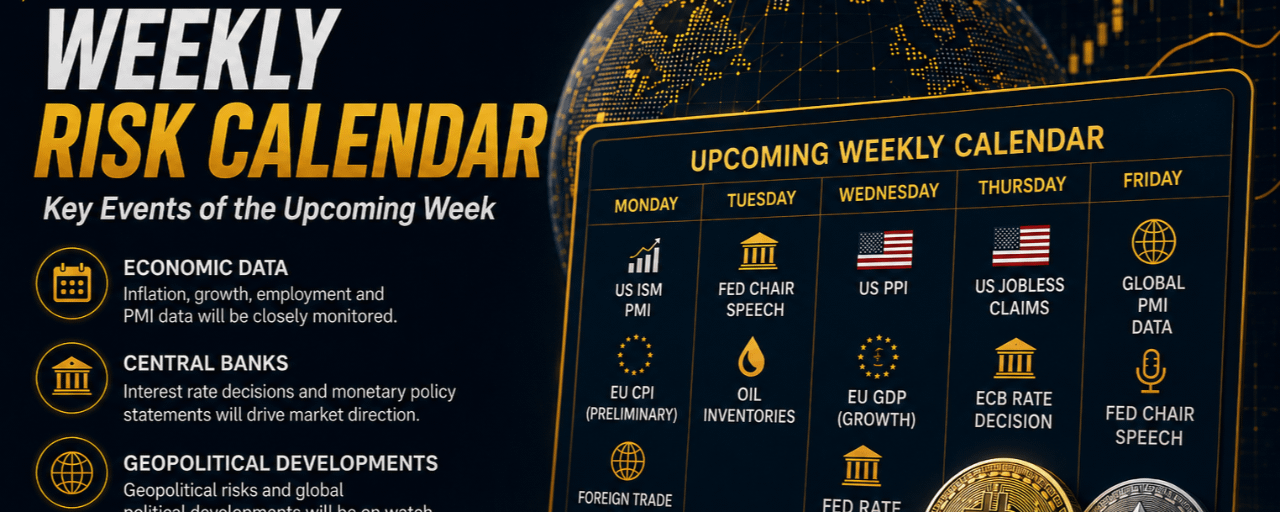
Article
See translation
September 7–11, 2026 | Weekly Risk CalendarSeptember 7–11, 2026 | Weekly Risk Calendar (TRT)
🎯 Main Theme of the Week
Following the digestion of Jackson Hole and the August NFP report, the market is looking for a new reference point. ADP added only 38,000 jobs in August, below expectations of 47,000 and slower than July’s revised 46,000. ISM Manufacturing fell from 55.6 to 54.6 but remained in expansion territory, while ISM Services rose from 54.1 to 55.4. Against this mixed backdrop, the week will be shaped by US inflation data concentrated on Thursday-Friday and the ECB decision on the same day. US and Canadian markets are closed Monday for Labor Day — effectively compressing the week into four trading days.
📅 Economic Calendar
Monday – September 7
🇺🇸🇨🇦 US and Canadian markets closed (Labor Day) Low trading volume and thin liquidity are expected; Asian and European sessions will take center stage.
Thursday – September 10
🇺🇸 15:30 TRT — PPI, August 2026 Producer prices, released one day before Friday’s CPI data, will provide the first signal on the direction of pipeline inflation.
🇪🇺 Afternoon — ECB Rate Decision + President Lagarde’s Press Conference Germany’s August inflation data will also be released the same day; the ECB decision will be interpreted alongside this figure.
🇺🇸 17:00 TRT — Existing Home Sales, August 2026
Friday – September 11
🇺🇸 15:30 TRT — CPI, August 2026 The most critical data point of the week — and perhaps the most important release on the road to the September 16 FOMC meeting. Headline inflation, which stood at 3.4% in July, is expected to accelerate in August; the impact of the energy shock continues to create a complex equation. The direction of core CPI from July’s 2.5% level will directly constrain the FOMC’s options.
🇺🇸 17:00 TRT — Preliminary Michigan Consumer Sentiment, September 2026
⚡ Crypto & Market Risks
PPI + ECB on the same day (Thursday): A hotter-than-expected PPI reading would push Friday’s CPI expectations higher, prompting the market to adopt a more cautious positioning ahead of the FOMC. A hawkish or dovish ECB tone could feed into DXY through EUR/USD, indirectly influencing crypto pricing.
CPI (Friday 15:30): Hot reading (accelerating headline + sticky core) → the possibility of a hike at the September 16 FOMC meeting returns to the table, the dollar strengthens, and crypto comes under leverage pressure. Cool reading → expectations of a hold strengthen, allowing the risk-on environment to continue through the FOMC. Because CPI arrives only five days before the FOMC this week, the pricing impact generated by the data is likely to remain largely in place through the weekend — leaving a narrow window for position adjustments.
Short week + low liquidity: With Monday’s holiday compressing the week into four trading days, the PPI-ECB-CPI sequence occurring back-to-back carries a higher-than-normal risk of intraday volatility.
$BTC
September 7–11, 2026 | Weekly Risk Calendar
September 7–11, 2026 | Weekly Risk Calendar (TRT)
🎯 Main Theme of the Week
Following the digestion of Jackson Hole and the August NFP report, the market is looking for a new reference point. ADP added only 38,000 jobs in August, below expectations of 47,000 and slower than July’s revised 46,000. ISM Manufacturing fell from 55.6 to 54.6 but remained in expansion territory, while ISM Services rose from 54.1 to 55.4. Against this mixed backdrop, the week will be shaped by US inflation data concentrated on Thursday-Friday and the ECB decision on the same day. US and Canadian markets are closed Monday for Labor Day — effectively compressing the week into four trading days.
📅 Economic Calendar
Monday – September 7
🇺🇸🇨🇦 US and Canadian markets closed (Labor Day) Low trading volume and thin liquidity are expected; Asian and European sessions will take center stage.
Thursday – September 10
🇺🇸 15:30 TRT — PPI, August 2026 Producer prices, released one day before Friday’s CPI data, will provide the first signal on the direction of pipeline inflation.
🇪🇺 Afternoon — ECB Rate Decision + President Lagarde’s Press Conference Germany’s August inflation data will also be released the same day; the ECB decision will be interpreted alongside this figure.
🇺🇸 17:00 TRT — Existing Home Sales, August 2026
Friday – September 11
🇺🇸 15:30 TRT — CPI, August 2026 The most critical data point of the week — and perhaps the most important release on the road to the September 16 FOMC meeting. Headline inflation, which stood at 3.4% in July, is expected to accelerate in August; the impact of the energy shock continues to create a complex equation. The direction of core CPI from July’s 2.5% level will directly constrain the FOMC’s options.
🇺🇸 17:00 TRT — Preliminary Michigan Consumer Sentiment, September 2026
⚡ Crypto & Market Risks
PPI + ECB on the same day (Thursday): A hotter-than-expected PPI reading would push Friday’s CPI expectations higher, prompting the market to adopt a more cautious positioning ahead of the FOMC. A hawkish or dovish ECB tone could feed into DXY through EUR/USD, indirectly influencing crypto pricing.
CPI (Friday 15:30): Hot reading (accelerating headline + sticky core) → the possibility of a hike at the September 16 FOMC meeting returns to the table, the dollar strengthens, and crypto comes under leverage pressure. Cool reading → expectations of a hold strengthen, allowing the risk-on environment to continue through the FOMC. Because CPI arrives only five days before the FOMC this week, the pricing impact generated by the data is likely to remain largely in place through the weekend — leaving a narrow window for position adjustments.
Short week + low liquidity: With Monday’s holiday compressing the week into four trading days, the PPI-ECB-CPI sequence occurring back-to-back carries a higher-than-normal risk of intraday volatility.
$BTC
🎯 Main Theme of the Week
Following the digestion of Jackson Hole and the August NFP report, the market is looking for a new reference point. ADP added only 38,000 jobs in August, below expectations of 47,000 and slower than July’s revised 46,000. ISM Manufacturing fell from 55.6 to 54.6 but remained in expansion territory, while ISM Services rose from 54.1 to 55.4. Against this mixed backdrop, the week will be shaped by US inflation data concentrated on Thursday-Friday and the ECB decision on the same day. US and Canadian markets are closed Monday for Labor Day — effectively compressing the week into four trading days.
📅 Economic Calendar
Monday – September 7
🇺🇸🇨🇦 US and Canadian markets closed (Labor Day) Low trading volume and thin liquidity are expected; Asian and European sessions will take center stage.
Thursday – September 10
🇺🇸 15:30 TRT — PPI, August 2026 Producer prices, released one day before Friday’s CPI data, will provide the first signal on the direction of pipeline inflation.
🇪🇺 Afternoon — ECB Rate Decision + President Lagarde’s Press Conference Germany’s August inflation data will also be released the same day; the ECB decision will be interpreted alongside this figure.
🇺🇸 17:00 TRT — Existing Home Sales, August 2026
Friday – September 11
🇺🇸 15:30 TRT — CPI, August 2026 The most critical data point of the week — and perhaps the most important release on the road to the September 16 FOMC meeting. Headline inflation, which stood at 3.4% in July, is expected to accelerate in August; the impact of the energy shock continues to create a complex equation. The direction of core CPI from July’s 2.5% level will directly constrain the FOMC’s options.
🇺🇸 17:00 TRT — Preliminary Michigan Consumer Sentiment, September 2026
⚡ Crypto & Market Risks
PPI + ECB on the same day (Thursday): A hotter-than-expected PPI reading would push Friday’s CPI expectations higher, prompting the market to adopt a more cautious positioning ahead of the FOMC. A hawkish or dovish ECB tone could feed into DXY through EUR/USD, indirectly influencing crypto pricing.
CPI (Friday 15:30): Hot reading (accelerating headline + sticky core) → the possibility of a hike at the September 16 FOMC meeting returns to the table, the dollar strengthens, and crypto comes under leverage pressure. Cool reading → expectations of a hold strengthen, allowing the risk-on environment to continue through the FOMC. Because CPI arrives only five days before the FOMC this week, the pricing impact generated by the data is likely to remain largely in place through the weekend — leaving a narrow window for position adjustments.
Short week + low liquidity: With Monday’s holiday compressing the week into four trading days, the PPI-ECB-CPI sequence occurring back-to-back carries a higher-than-normal risk of intraday volatility.
$BTC
15
Article
See translation
Bond Yields at Multi-Decade Highs: The Market’s Foundation Is ShiftingBond Yields at Multi-Decade Highs: The Market’s Foundation Is Shifting
From the US to Japan, the UK to France, government bond yields are at their highest levels in decades. This is no longer just an interest-rate story; it means the foundation on which equities, gold, and crypto assets are priced is shifting.
━━━━━━━━━━━━━━━━━━━━
Where We Stand — September 4 Close
US: The 10-year Treasury yield closed the week at 4.78%. It reached 4.812% during the week, its highest level since November 2023; the 52-week high is 4.818%. In the short term, the 2-year yield is at 4.37%, while the 20-year is at 5.25%. The 30-year yield approached the psychological 5% threshold. The 10-year yield has risen 17 basis points over the past month and 71 basis points over the past year.
UK: The 10-year gilt closed at 5.13%; its weekly high of 5.29% was the highest since August 2007. The 30-year gilt stands at 5.78%, while the 5.89% reached during the week was the highest level since May 1998. The market is pricing in almost two rate hikes from the Bank of England by year-end.
Eurozone: Germany’s 10-year yield stands at 3.34%; the 3.39% reached during the week was the highest since 2011, while the 30-year Bund climbed above 3.84%. France’s 10-year OAT stands at 4.19% — after exceeding 4.21% during the week, it tested its highest level since November 2008, while the 30-year yield reached 4.5% for the first time since 2009. The OAT-Bund spread is 84.7 basis points. Italy is at 4.15%, Greece at 4.00%, and Spain at 3.77%.
Japan: The 10-year JGB closed at 2.91%, but on September 2 it exceeded the 3% threshold for the first time since 1996, reaching 3.027%. The 30-year yield is at 3.97%; the 4.155% reached on September 3 was the highest level since this maturity was introduced in 1999. The 40-year yield is at 4.04%, and the 2-year at 1.83%.
Global picture: Bloomberg’s global government bond yield index stands at 3.72%, its highest level since mid-2008. According to OECD data, governments and companies will borrow a record $29 trillion in 2026 in the approximately $109 trillion global bond market.
━━━━━━━━━━━━━━━━━━━━
Why Yields Are Rising
Energy-driven inflation has returned. The US-Iran conflict and the disruption in the Strait of Hormuz have pushed oil higher; Brent closed the week at $96.28, while WTI closed at $91.48. Rising oil prices and sharper increases in fuel prices are pushing both inflation and government borrowing costs higher around the world. The average diesel price in the US has reached a record level.
The fiscal outlook is deteriorating. US debt has exceeded $40 trillion; the debt-to-GDP ratio of G7 countries is above 100% except for Germany. The federal deficit for fiscal 2026 is projected at approximately $1.9 trillion. In Japan, Prime Minister Sanae Takaichi’s expansionary fiscal agenda and record budget requests from ministries are pushing yields higher; in the UK, rising borrowing costs are increasing pressure on Chancellor of the Exchequer Rachel Reeves to implement spending cuts or tax increases in the November budget.
Central-bank pricing has shifted. The market is now pricing the possibility of additional tightening rather than cuts. August nonfarm payrolls came in at 162,000 versus expectations of 55,000, while the previous two months were revised upward, strengthening the possibility of a September rate hike; futures markets priced this probability at 57% at the start of the week and 58% later in the week. Fed Chair Kevin Warsh’s reiteration of his commitment to controlling inflation accelerated the selloff, while Governor Christopher Waller said he would support keeping rates unchanged if the August data confirms continued progress. In Japan, the policy rate is at 1%, and the market is revising the terminal rate from 1.5% to 1.75% or higher.
Competition for capital is intensifying. Borrowing for AI infrastructure has pushed global corporate bond issuance to a record $4.9 trillion in 2026 — up 14% from the same period last year. Data centers, semiconductors, and energy financing are competing for the same pool of investors as government issuance.
The structural inflation thesis is strengthening. Investors view the shift from globalization toward protectionism, tariffs, reshoring, and increased defense spending as signs that inflation will remain structurally higher than in the 2010s. This represents a structural shift that is pushing term-premium demand higher.
━━━━━━━━━━━━━━━━━━━━
Impact on Asset Classes
Equities. Higher yields reduce the present value of future earnings and hit growth stocks whose cash flows are concentrated further in the future the hardest. On Friday, the S&P 500 closed at 7,718.60, down 0.38%; the Dow fell 0.51% to 53,414.25, while the Nasdaq declined 0.29% to 26,506.99. On a weekly basis, however, the S&P 500 gained 0.1% and the Nasdaq 0.4%, while the Dow fell 0.3%. Year-to-date, the Nasdaq is up approximately 14%, the S&P 500 13%, and the Dow 11%. The sharp selloff on the first day of the month — 419 points in the Dow and 1.03% in the Nasdaq — had already demonstrated how sensitive equities are to bond-market moves.
Gold. Higher real rates increase the cost of holding a non-yielding asset. Accordingly, spot gold fell to $4,432 on September 4 and is approximately 21% below the record $5,589 reached on January 28. However, the picture is not one-directional: the metal is still 23% more expensive than a year ago and has gained 4.4% over the past month. Geopolitical risk and fiscal uncertainty support gold, while yield competition weighs on it — the price is caught between these two forces.
Dollar and yen. USD/JPY closed at 156.26. The exchange rate fell sharply from 160 on September 1 to 155.80 on September 3; the yen gained approximately 2.4% over the week. Behind this move are not only rising JGB yields and expectations of a September BOJ rate hike, but also explicit pressure from US Treasury Secretary Scott Bessent: Bessent said he expected the Japanese government and BOJ to take further steps to strengthen the yen and conveyed to Tokyo the need for a clear roadmap on fiscal sustainability and rate hikes. EUR/USD stands at 1.1614.
Crypto assets. Crypto is behaving like a macro asset in this cycle. As of September 6, Bitcoin is around $79,900, with a market capitalization of $1.60 trillion; its 24-hour trading range is $79,459-$80,147. BTC is up approximately 2.2% on the week and 24% on the month — its 25% gain in August was its best monthly performance since 2017. It remains 37% below the $126,080 peak recorded in October 2025. The correlation is clear: when yields fell and Fed concerns eased, BTC rose more than 5% on September 3, breaking above $81,000; when August employment exceeded expectations, it fell below $80,000. Technically, the $75,000-$76,500 area is important support, while $81,000-$86,000 represents a broad resistance zone. Glassnode analyst Frederik Theissen describes the market as range-bound and points to rising bond yields as the key risk factor ahead.
━━━━━━━━━━━━━━━━━━━━
What Is the Real Risk?
The danger is not the level of yields but the reason behind the rise. A 4.80% yield driven by strong growth can be absorbed by equities; a 4.80% yield driven by fiscal uncertainty and an inflation premium is much harder to absorb. Today’s move is closer to the second category.
Fiscal dominance spiral. As yields rise, interest expenses increase; as expenses increase, deficits widen; as deficits widen, issuance rises, pushing yields higher again. Once this cycle begins to be priced in, governments lose room to maneuver. The UK and France are currently at the center of this test.
The Japan channel. A Japanese institutional investor who can earn 3% domestically has less incentive to take currency risk and hold US or European bonds. The repatriation of capital means one of the world’s largest bond buyers is stepping away from the market. This is why Japan’s long-term bond auctions are now being watched as a global stress test; weak demand could push borrowing costs higher from Tokyo to Washington.
Correlation breakdown. In a traditional portfolio, bonds provide protection when equities fall. During inflation-driven selloffs, both can decline simultaneously, triggering simultaneous position reductions across risk-parity and balanced-fund strategies. Once forced selling begins on the leveraged side, the move can become self-reinforcing — the breakdown in UK pension funds in 2022 is the closest example.
Emerging markets. Countries running twin deficits are particularly vulnerable. When the global risk-free rate rises, borrowing costs and capital-outflow risks increase simultaneously; when debt, deficits, and external financing needs overlap, markets can react sharply.
For crypto, the risk comes through the liquidity channel. Price action over the past two months confirms that Bitcoin is being priced less as an inflation hedge and more as a high-beta liquidity asset: it rises rapidly when yields retreat and is among the first assets sold when yields rise.
━━━━━━━━━━━━━━━━━━━━
What to Watch This Week
US markets are closed Monday for Labor Day. On Wednesday, the 10-year Treasury auction will take place; Thursday brings PPI and weekly jobless claims, while Friday brings the month’s most important data point, CPI — expectations are for a 0.4% monthly increase in headline CPI and 0.2% in core CPI.
Alongside these, demand at Japan’s long-term bond auctions, the Strait of Hormuz and oil prices, France’s budget process, and the UK’s November budget will be the main price drivers in the coming weeks. In short, the direction of the market is now being determined not by earnings season, but by the bond desk.
This content is not investment advice.
Bond Yields at Multi-Decade Highs: The Market’s Foundation Is Shifting
Bond Yields at Multi-Decade Highs: The Market’s Foundation Is Shifting
From the US to Japan, the UK to France, government bond yields are at their highest levels in decades. This is no longer just an interest-rate story; it means the foundation on which equities, gold, and crypto assets are priced is shifting.
━━━━━━━━━━━━━━━━━━━━
Where We Stand — September 4 Close
US: The 10-year Treasury yield closed the week at 4.78%. It reached 4.812% during the week, its highest level since November 2023; the 52-week high is 4.818%. In the short term, the 2-year yield is at 4.37%, while the 20-year is at 5.25%. The 30-year yield approached the psychological 5% threshold. The 10-year yield has risen 17 basis points over the past month and 71 basis points over the past year.
UK: The 10-year gilt closed at 5.13%; its weekly high of 5.29% was the highest since August 2007. The 30-year gilt stands at 5.78%, while the 5.89% reached during the week was the highest level since May 1998. The market is pricing in almost two rate hikes from the Bank of England by year-end.
Eurozone: Germany’s 10-year yield stands at 3.34%; the 3.39% reached during the week was the highest since 2011, while the 30-year Bund climbed above 3.84%. France’s 10-year OAT stands at 4.19% — after exceeding 4.21% during the week, it tested its highest level since November 2008, while the 30-year yield reached 4.5% for the first time since 2009. The OAT-Bund spread is 84.7 basis points. Italy is at 4.15%, Greece at 4.00%, and Spain at 3.77%.
Japan: The 10-year JGB closed at 2.91%, but on September 2 it exceeded the 3% threshold for the first time since 1996, reaching 3.027%. The 30-year yield is at 3.97%; the 4.155% reached on September 3 was the highest level since this maturity was introduced in 1999. The 40-year yield is at 4.04%, and the 2-year at 1.83%.
Global picture: Bloomberg’s global government bond yield index stands at 3.72%, its highest level since mid-2008. According to OECD data, governments and companies will borrow a record $29 trillion in 2026 in the approximately $109 trillion global bond market.
━━━━━━━━━━━━━━━━━━━━
Why Yields Are Rising
Energy-driven inflation has returned. The US-Iran conflict and the disruption in the Strait of Hormuz have pushed oil higher; Brent closed the week at $96.28, while WTI closed at $91.48. Rising oil prices and sharper increases in fuel prices are pushing both inflation and government borrowing costs higher around the world. The average diesel price in the US has reached a record level.
The fiscal outlook is deteriorating. US debt has exceeded $40 trillion; the debt-to-GDP ratio of G7 countries is above 100% except for Germany. The federal deficit for fiscal 2026 is projected at approximately $1.9 trillion. In Japan, Prime Minister Sanae Takaichi’s expansionary fiscal agenda and record budget requests from ministries are pushing yields higher; in the UK, rising borrowing costs are increasing pressure on Chancellor of the Exchequer Rachel Reeves to implement spending cuts or tax increases in the November budget.
Central-bank pricing has shifted. The market is now pricing the possibility of additional tightening rather than cuts. August nonfarm payrolls came in at 162,000 versus expectations of 55,000, while the previous two months were revised upward, strengthening the possibility of a September rate hike; futures markets priced this probability at 57% at the start of the week and 58% later in the week. Fed Chair Kevin Warsh’s reiteration of his commitment to controlling inflation accelerated the selloff, while Governor Christopher Waller said he would support keeping rates unchanged if the August data confirms continued progress. In Japan, the policy rate is at 1%, and the market is revising the terminal rate from 1.5% to 1.75% or higher.
Competition for capital is intensifying. Borrowing for AI infrastructure has pushed global corporate bond issuance to a record $4.9 trillion in 2026 — up 14% from the same period last year. Data centers, semiconductors, and energy financing are competing for the same pool of investors as government issuance.
The structural inflation thesis is strengthening. Investors view the shift from globalization toward protectionism, tariffs, reshoring, and increased defense spending as signs that inflation will remain structurally higher than in the 2010s. This represents a structural shift that is pushing term-premium demand higher.
━━━━━━━━━━━━━━━━━━━━
Impact on Asset Classes
Equities. Higher yields reduce the present value of future earnings and hit growth stocks whose cash flows are concentrated further in the future the hardest. On Friday, the S&P 500 closed at 7,718.60, down 0.38%; the Dow fell 0.51% to 53,414.25, while the Nasdaq declined 0.29% to 26,506.99. On a weekly basis, however, the S&P 500 gained 0.1% and the Nasdaq 0.4%, while the Dow fell 0.3%. Year-to-date, the Nasdaq is up approximately 14%, the S&P 500 13%, and the Dow 11%. The sharp selloff on the first day of the month — 419 points in the Dow and 1.03% in the Nasdaq — had already demonstrated how sensitive equities are to bond-market moves.
Gold. Higher real rates increase the cost of holding a non-yielding asset. Accordingly, spot gold fell to $4,432 on September 4 and is approximately 21% below the record $5,589 reached on January 28. However, the picture is not one-directional: the metal is still 23% more expensive than a year ago and has gained 4.4% over the past month. Geopolitical risk and fiscal uncertainty support gold, while yield competition weighs on it — the price is caught between these two forces.
Dollar and yen. USD/JPY closed at 156.26. The exchange rate fell sharply from 160 on September 1 to 155.80 on September 3; the yen gained approximately 2.4% over the week. Behind this move are not only rising JGB yields and expectations of a September BOJ rate hike, but also explicit pressure from US Treasury Secretary Scott Bessent: Bessent said he expected the Japanese government and BOJ to take further steps to strengthen the yen and conveyed to Tokyo the need for a clear roadmap on fiscal sustainability and rate hikes. EUR/USD stands at 1.1614.
Crypto assets. Crypto is behaving like a macro asset in this cycle. As of September 6, Bitcoin is around $79,900, with a market capitalization of $1.60 trillion; its 24-hour trading range is $79,459-$80,147. BTC is up approximately 2.2% on the week and 24% on the month — its 25% gain in August was its best monthly performance since 2017. It remains 37% below the $126,080 peak recorded in October 2025. The correlation is clear: when yields fell and Fed concerns eased, BTC rose more than 5% on September 3, breaking above $81,000; when August employment exceeded expectations, it fell below $80,000. Technically, the $75,000-$76,500 area is important support, while $81,000-$86,000 represents a broad resistance zone. Glassnode analyst Frederik Theissen describes the market as range-bound and points to rising bond yields as the key risk factor ahead.
━━━━━━━━━━━━━━━━━━━━
What Is the Real Risk?
The danger is not the level of yields but the reason behind the rise. A 4.80% yield driven by strong growth can be absorbed by equities; a 4.80% yield driven by fiscal uncertainty and an inflation premium is much harder to absorb. Today’s move is closer to the second category.
Fiscal dominance spiral. As yields rise, interest expenses increase; as expenses increase, deficits widen; as deficits widen, issuance rises, pushing yields higher again. Once this cycle begins to be priced in, governments lose room to maneuver. The UK and France are currently at the center of this test.
The Japan channel. A Japanese institutional investor who can earn 3% domestically has less incentive to take currency risk and hold US or European bonds. The repatriation of capital means one of the world’s largest bond buyers is stepping away from the market. This is why Japan’s long-term bond auctions are now being watched as a global stress test; weak demand could push borrowing costs higher from Tokyo to Washington.
Correlation breakdown. In a traditional portfolio, bonds provide protection when equities fall. During inflation-driven selloffs, both can decline simultaneously, triggering simultaneous position reductions across risk-parity and balanced-fund strategies. Once forced selling begins on the leveraged side, the move can become self-reinforcing — the breakdown in UK pension funds in 2022 is the closest example.
Emerging markets. Countries running twin deficits are particularly vulnerable. When the global risk-free rate rises, borrowing costs and capital-outflow risks increase simultaneously; when debt, deficits, and external financing needs overlap, markets can react sharply.
For crypto, the risk comes through the liquidity channel. Price action over the past two months confirms that Bitcoin is being priced less as an inflation hedge and more as a high-beta liquidity asset: it rises rapidly when yields retreat and is among the first assets sold when yields rise.
━━━━━━━━━━━━━━━━━━━━
What to Watch This Week
US markets are closed Monday for Labor Day. On Wednesday, the 10-year Treasury auction will take place; Thursday brings PPI and weekly jobless claims, while Friday brings the month’s most important data point, CPI — expectations are for a 0.4% monthly increase in headline CPI and 0.2% in core CPI.
Alongside these, demand at Japan’s long-term bond auctions, the Strait of Hormuz and oil prices, France’s budget process, and the UK’s November budget will be the main price drivers in the coming weeks. In short, the direction of the market is now being determined not by earnings season, but by the bond desk.
This content is not investment advice.
From the US to Japan, the UK to France, government bond yields are at their highest levels in decades. This is no longer just an interest-rate story; it means the foundation on which equities, gold, and crypto assets are priced is shifting.
━━━━━━━━━━━━━━━━━━━━
Where We Stand — September 4 Close
US: The 10-year Treasury yield closed the week at 4.78%. It reached 4.812% during the week, its highest level since November 2023; the 52-week high is 4.818%. In the short term, the 2-year yield is at 4.37%, while the 20-year is at 5.25%. The 30-year yield approached the psychological 5% threshold. The 10-year yield has risen 17 basis points over the past month and 71 basis points over the past year.
UK: The 10-year gilt closed at 5.13%; its weekly high of 5.29% was the highest since August 2007. The 30-year gilt stands at 5.78%, while the 5.89% reached during the week was the highest level since May 1998. The market is pricing in almost two rate hikes from the Bank of England by year-end.
Eurozone: Germany’s 10-year yield stands at 3.34%; the 3.39% reached during the week was the highest since 2011, while the 30-year Bund climbed above 3.84%. France’s 10-year OAT stands at 4.19% — after exceeding 4.21% during the week, it tested its highest level since November 2008, while the 30-year yield reached 4.5% for the first time since 2009. The OAT-Bund spread is 84.7 basis points. Italy is at 4.15%, Greece at 4.00%, and Spain at 3.77%.
Japan: The 10-year JGB closed at 2.91%, but on September 2 it exceeded the 3% threshold for the first time since 1996, reaching 3.027%. The 30-year yield is at 3.97%; the 4.155% reached on September 3 was the highest level since this maturity was introduced in 1999. The 40-year yield is at 4.04%, and the 2-year at 1.83%.
Global picture: Bloomberg’s global government bond yield index stands at 3.72%, its highest level since mid-2008. According to OECD data, governments and companies will borrow a record $29 trillion in 2026 in the approximately $109 trillion global bond market.
━━━━━━━━━━━━━━━━━━━━
Why Yields Are Rising
Energy-driven inflation has returned. The US-Iran conflict and the disruption in the Strait of Hormuz have pushed oil higher; Brent closed the week at $96.28, while WTI closed at $91.48. Rising oil prices and sharper increases in fuel prices are pushing both inflation and government borrowing costs higher around the world. The average diesel price in the US has reached a record level.
The fiscal outlook is deteriorating. US debt has exceeded $40 trillion; the debt-to-GDP ratio of G7 countries is above 100% except for Germany. The federal deficit for fiscal 2026 is projected at approximately $1.9 trillion. In Japan, Prime Minister Sanae Takaichi’s expansionary fiscal agenda and record budget requests from ministries are pushing yields higher; in the UK, rising borrowing costs are increasing pressure on Chancellor of the Exchequer Rachel Reeves to implement spending cuts or tax increases in the November budget.
Central-bank pricing has shifted. The market is now pricing the possibility of additional tightening rather than cuts. August nonfarm payrolls came in at 162,000 versus expectations of 55,000, while the previous two months were revised upward, strengthening the possibility of a September rate hike; futures markets priced this probability at 57% at the start of the week and 58% later in the week. Fed Chair Kevin Warsh’s reiteration of his commitment to controlling inflation accelerated the selloff, while Governor Christopher Waller said he would support keeping rates unchanged if the August data confirms continued progress. In Japan, the policy rate is at 1%, and the market is revising the terminal rate from 1.5% to 1.75% or higher.
Competition for capital is intensifying. Borrowing for AI infrastructure has pushed global corporate bond issuance to a record $4.9 trillion in 2026 — up 14% from the same period last year. Data centers, semiconductors, and energy financing are competing for the same pool of investors as government issuance.
The structural inflation thesis is strengthening. Investors view the shift from globalization toward protectionism, tariffs, reshoring, and increased defense spending as signs that inflation will remain structurally higher than in the 2010s. This represents a structural shift that is pushing term-premium demand higher.
━━━━━━━━━━━━━━━━━━━━
Impact on Asset Classes
Equities. Higher yields reduce the present value of future earnings and hit growth stocks whose cash flows are concentrated further in the future the hardest. On Friday, the S&P 500 closed at 7,718.60, down 0.38%; the Dow fell 0.51% to 53,414.25, while the Nasdaq declined 0.29% to 26,506.99. On a weekly basis, however, the S&P 500 gained 0.1% and the Nasdaq 0.4%, while the Dow fell 0.3%. Year-to-date, the Nasdaq is up approximately 14%, the S&P 500 13%, and the Dow 11%. The sharp selloff on the first day of the month — 419 points in the Dow and 1.03% in the Nasdaq — had already demonstrated how sensitive equities are to bond-market moves.
Gold. Higher real rates increase the cost of holding a non-yielding asset. Accordingly, spot gold fell to $4,432 on September 4 and is approximately 21% below the record $5,589 reached on January 28. However, the picture is not one-directional: the metal is still 23% more expensive than a year ago and has gained 4.4% over the past month. Geopolitical risk and fiscal uncertainty support gold, while yield competition weighs on it — the price is caught between these two forces.
Dollar and yen. USD/JPY closed at 156.26. The exchange rate fell sharply from 160 on September 1 to 155.80 on September 3; the yen gained approximately 2.4% over the week. Behind this move are not only rising JGB yields and expectations of a September BOJ rate hike, but also explicit pressure from US Treasury Secretary Scott Bessent: Bessent said he expected the Japanese government and BOJ to take further steps to strengthen the yen and conveyed to Tokyo the need for a clear roadmap on fiscal sustainability and rate hikes. EUR/USD stands at 1.1614.
Crypto assets. Crypto is behaving like a macro asset in this cycle. As of September 6, Bitcoin is around $79,900, with a market capitalization of $1.60 trillion; its 24-hour trading range is $79,459-$80,147. BTC is up approximately 2.2% on the week and 24% on the month — its 25% gain in August was its best monthly performance since 2017. It remains 37% below the $126,080 peak recorded in October 2025. The correlation is clear: when yields fell and Fed concerns eased, BTC rose more than 5% on September 3, breaking above $81,000; when August employment exceeded expectations, it fell below $80,000. Technically, the $75,000-$76,500 area is important support, while $81,000-$86,000 represents a broad resistance zone. Glassnode analyst Frederik Theissen describes the market as range-bound and points to rising bond yields as the key risk factor ahead.
━━━━━━━━━━━━━━━━━━━━
What Is the Real Risk?
The danger is not the level of yields but the reason behind the rise. A 4.80% yield driven by strong growth can be absorbed by equities; a 4.80% yield driven by fiscal uncertainty and an inflation premium is much harder to absorb. Today’s move is closer to the second category.
Fiscal dominance spiral. As yields rise, interest expenses increase; as expenses increase, deficits widen; as deficits widen, issuance rises, pushing yields higher again. Once this cycle begins to be priced in, governments lose room to maneuver. The UK and France are currently at the center of this test.
The Japan channel. A Japanese institutional investor who can earn 3% domestically has less incentive to take currency risk and hold US or European bonds. The repatriation of capital means one of the world’s largest bond buyers is stepping away from the market. This is why Japan’s long-term bond auctions are now being watched as a global stress test; weak demand could push borrowing costs higher from Tokyo to Washington.
Correlation breakdown. In a traditional portfolio, bonds provide protection when equities fall. During inflation-driven selloffs, both can decline simultaneously, triggering simultaneous position reductions across risk-parity and balanced-fund strategies. Once forced selling begins on the leveraged side, the move can become self-reinforcing — the breakdown in UK pension funds in 2022 is the closest example.
Emerging markets. Countries running twin deficits are particularly vulnerable. When the global risk-free rate rises, borrowing costs and capital-outflow risks increase simultaneously; when debt, deficits, and external financing needs overlap, markets can react sharply.
For crypto, the risk comes through the liquidity channel. Price action over the past two months confirms that Bitcoin is being priced less as an inflation hedge and more as a high-beta liquidity asset: it rises rapidly when yields retreat and is among the first assets sold when yields rise.
━━━━━━━━━━━━━━━━━━━━
What to Watch This Week
US markets are closed Monday for Labor Day. On Wednesday, the 10-year Treasury auction will take place; Thursday brings PPI and weekly jobless claims, while Friday brings the month’s most important data point, CPI — expectations are for a 0.4% monthly increase in headline CPI and 0.2% in core CPI.
Alongside these, demand at Japan’s long-term bond auctions, the Strait of Hormuz and oil prices, France’s budget process, and the UK’s November budget will be the main price drivers in the coming weeks. In short, the direction of the market is now being determined not by earnings season, but by the bond desk.
This content is not investment advice.
6

Article
See translation
MARKET OUTLOOK — SEPTEMBER 5, 2026📰 MARKET OUTLOOK — SEPTEMBER 5, 2026
━━━━━━━━━━━━━━━━
🗺️ GLOBAL & GEOPOLITICAL
• The US-Iran conflict flared up again: on September 1, US CENTCOM announced a new airstrike against targets linked to Iran’s Islamic Revolutionary Guard Corps; this came immediately after a tanker was struck by unidentified munitions in the Strait of Hormuz. Trump told Fox News, “we’re going to hit them hard.”
• Today (September 5), an Iranian oil tanker was struck by four US missiles off Khark Island, which handles approximately 90% of Iran’s oil exports; Iranian media reported no casualties and said the crew had been evacuated. The island has a capacity of 7 million barrels per day, making it a strategically critical energy target.
• Iranian state media Tasnim reported that Iran’s response would be “much harsher” than the US attacks and would target US bases; the risk of reciprocal strikes is extending into the weekend.
• US Vice President JD Vance said Washington is open to talks with Tehran only if Iran stops attacking commercial vessels; Israel, meanwhile, threatened to “paralyze” Iran’s military and civilian infrastructure.
• Nevertheless, the diplomatic channel has not completely closed: following Iraq’s intervention, Iran allowed some Iraqi oil tankers to pass through the Strait of Hormuz at Baghdad’s request — a selective easing amid the conflict.
• Iraq’s August oil exports increased and are expected to rise further in September; OPEC+ also appears inclined to keep its October production policy unchanged at Sunday’s meeting.
• The death toll from the vessel that sank off Kyrenia in Northern Cyprus has risen to 13; search-and-rescue operations continue with the TCG Işın and TCG Alemdar vessels.
━━━━━━━━━━━━━━━━
📈 MARKET NEWS
• Crude oil is heading for its strongest weekly gain since mid-July as the Iran conflict reignites; WTI rose more than 9% to the $91-$92 range, while Brent climbed to $95-$96.
• US August nonfarm payrolls increased by 162,000 — well above expectations of 53,000-55,000 and the strongest monthly increase since March; the unemployment rate remained at 4.1%, while hourly earnings increased 0.3%.
• Strong employment data pushed the market-implied probability of a rate hike from 55% to 62%, particularly amid concerns that rising oil prices could fuel inflation; the Fed’s September 15-16 meeting has therefore become critically important.
• The Dow fell more than 260 points following the strong employment data; however, risk appetite remained supportive over the week overall — on September 4, the Dow rose 1.18%, the S&P 500 gained 1.06%, and the Nasdaq advanced 1.40%; crypto-related stocks including Strategy (+17.6%), Robinhood (+16.3%), Circle (+15.9%), and Coinbase (+10.1%) stood out.
• Treasury yields continue to rise amid oil-driven inflation concerns; the market is watching next week’s inflation data as the key determinant of the Fed’s decision.
• The three-month average employment gain is only 71,000, while the 12-month average is 31,000 — highlighting that a single strong month has not changed the weak underlying trend; the market continues to debate whether this is “hot data or a one-off deviation.”
━━━━━━━━━━━━━━━━
₿ CRYPTO NEWS
• Bitcoin rose to $81,272 on Thursday (+5.14% daily) following Fed Governor Christopher Waller’s comments that he could support keeping rates unchanged; however, after strong employment data strengthened rate-hike expectations, BTC gave back half of its gains on Friday, falling to the $79,600-$79,700 range.
• Spot Bitcoin ETFs recorded their largest daily inflow since January on September 4 — $731 million; ETH climbed above $2,500, gaining more than 8% for the week, while XRP rose 7.5% to $1.45.
• More than $440 million in Bitcoin short positions were liquidated; 30-day average stablecoin exchange inflows turned positive for the first time following a 113-day period of net outflows — signaling a structural recovery in market liquidity.
• South Korea announced that it will begin tokenizing “all types” of securities in three stages starting in 2027, signaling an expanding institutional tokenization trend on the regulatory front.
• Analysts say the completion of the four-year cycle theory toward year-end carries a new downside risk, but institutional ETF inflows and sovereign reserve purchases continue to provide strong structural support; the risk of a move below $77,000 is being closely monitored ahead of next week’s inflation data.
━━━━━━━━━━━━━━━━
🔓 TOKEN UNLOCKS
HYPE (Hyperliquid) — September 6, ~$797 million 🔴 the largest cliff unlock of the month; the allocation to core contributors has historically recorded lower realized demand than projected.
SUI — September 1 completed, ~$9.7 million 🟢 low pressure; 0.33% of circulating supply.
ENA (Ethena) — September 2 completed, ~$6.1 million 🟢 low pressure.
TRUMP — Linear vesting throughout September, total ~$60.3 million 🟡 moderate; 10.35% of circulating supply, the second-largest unlock of the month by dollar value.
SEI — September 15, one of the month’s largest individual releases (~1.5% of supply) 🔴 high pressure; should be closely monitored.
RAIN — Linear throughout September, ~$569 million 🔴 the largest single flow of the month; the daily distribution reduces the risk of an immediate shock, but cumulative pressure remains high.
━━━━━━━━━━━━━━━━
🔭 OUTLOOK FOR THE WEEK AHEAD
• Sunday, September 6: OPEC+ meeting on October production policy — the current policy is expected to remain unchanged, but a surprise production decision could create volatility in oil prices at the start of the week.
• September 8-9: The market will focus on how Iran’s promise of a “much harsher” response materializes; a potential retaliation against US bases could lead to renewed repricing of insurance and freight costs in the Strait of Hormuz.
• September 10-11: US August CPI and PPI data will be released (around 15:30 TRT) — following the strong employment report, inflation data will be decisive ahead of the September 15-16 FOMC decision.
• September 15-16: FOMC meeting — the market is currently pricing a 62% probability of a rate hike; the conflict between oil-driven inflationary pressure and weakening 3-12 month employment trends will be the most contentious element of the decision.
• Throughout the week, the pace of fighting in the Strait of Hormuz, the form of Iran’s retaliation, and the market’s absorption of HYPE’s $797 million unlock will stand out as the key off-calendar developments.
MARKET OUTLOOK — SEPTEMBER 5, 2026
📰 MARKET OUTLOOK — SEPTEMBER 5, 2026
━━━━━━━━━━━━━━━━
🗺️ GLOBAL & GEOPOLITICAL
• The US-Iran conflict flared up again: on September 1, US CENTCOM announced a new airstrike against targets linked to Iran’s Islamic Revolutionary Guard Corps; this came immediately after a tanker was struck by unidentified munitions in the Strait of Hormuz. Trump told Fox News, “we’re going to hit them hard.”
• Today (September 5), an Iranian oil tanker was struck by four US missiles off Khark Island, which handles approximately 90% of Iran’s oil exports; Iranian media reported no casualties and said the crew had been evacuated. The island has a capacity of 7 million barrels per day, making it a strategically critical energy target.
• Iranian state media Tasnim reported that Iran’s response would be “much harsher” than the US attacks and would target US bases; the risk of reciprocal strikes is extending into the weekend.
• US Vice President JD Vance said Washington is open to talks with Tehran only if Iran stops attacking commercial vessels; Israel, meanwhile, threatened to “paralyze” Iran’s military and civilian infrastructure.
• Nevertheless, the diplomatic channel has not completely closed: following Iraq’s intervention, Iran allowed some Iraqi oil tankers to pass through the Strait of Hormuz at Baghdad’s request — a selective easing amid the conflict.
• Iraq’s August oil exports increased and are expected to rise further in September; OPEC+ also appears inclined to keep its October production policy unchanged at Sunday’s meeting.
• The death toll from the vessel that sank off Kyrenia in Northern Cyprus has risen to 13; search-and-rescue operations continue with the TCG Işın and TCG Alemdar vessels.
━━━━━━━━━━━━━━━━
📈 MARKET NEWS
• Crude oil is heading for its strongest weekly gain since mid-July as the Iran conflict reignites; WTI rose more than 9% to the $91-$92 range, while Brent climbed to $95-$96.
• US August nonfarm payrolls increased by 162,000 — well above expectations of 53,000-55,000 and the strongest monthly increase since March; the unemployment rate remained at 4.1%, while hourly earnings increased 0.3%.
• Strong employment data pushed the market-implied probability of a rate hike from 55% to 62%, particularly amid concerns that rising oil prices could fuel inflation; the Fed’s September 15-16 meeting has therefore become critically important.
• The Dow fell more than 260 points following the strong employment data; however, risk appetite remained supportive over the week overall — on September 4, the Dow rose 1.18%, the S&P 500 gained 1.06%, and the Nasdaq advanced 1.40%; crypto-related stocks including Strategy (+17.6%), Robinhood (+16.3%), Circle (+15.9%), and Coinbase (+10.1%) stood out.
• Treasury yields continue to rise amid oil-driven inflation concerns; the market is watching next week’s inflation data as the key determinant of the Fed’s decision.
• The three-month average employment gain is only 71,000, while the 12-month average is 31,000 — highlighting that a single strong month has not changed the weak underlying trend; the market continues to debate whether this is “hot data or a one-off deviation.”
━━━━━━━━━━━━━━━━
₿ CRYPTO NEWS
• Bitcoin rose to $81,272 on Thursday (+5.14% daily) following Fed Governor Christopher Waller’s comments that he could support keeping rates unchanged; however, after strong employment data strengthened rate-hike expectations, BTC gave back half of its gains on Friday, falling to the $79,600-$79,700 range.
• Spot Bitcoin ETFs recorded their largest daily inflow since January on September 4 — $731 million; ETH climbed above $2,500, gaining more than 8% for the week, while XRP rose 7.5% to $1.45.
• More than $440 million in Bitcoin short positions were liquidated; 30-day average stablecoin exchange inflows turned positive for the first time following a 113-day period of net outflows — signaling a structural recovery in market liquidity.
• South Korea announced that it will begin tokenizing “all types” of securities in three stages starting in 2027, signaling an expanding institutional tokenization trend on the regulatory front.
• Analysts say the completion of the four-year cycle theory toward year-end carries a new downside risk, but institutional ETF inflows and sovereign reserve purchases continue to provide strong structural support; the risk of a move below $77,000 is being closely monitored ahead of next week’s inflation data.
━━━━━━━━━━━━━━━━
🔓 TOKEN UNLOCKS
HYPE (Hyperliquid) — September 6, ~$797 million 🔴 the largest cliff unlock of the month; the allocation to core contributors has historically recorded lower realized demand than projected.
SUI — September 1 completed, ~$9.7 million 🟢 low pressure; 0.33% of circulating supply.
ENA (Ethena) — September 2 completed, ~$6.1 million 🟢 low pressure.
TRUMP — Linear vesting throughout September, total ~$60.3 million 🟡 moderate; 10.35% of circulating supply, the second-largest unlock of the month by dollar value.
SEI — September 15, one of the month’s largest individual releases (~1.5% of supply) 🔴 high pressure; should be closely monitored.
RAIN — Linear throughout September, ~$569 million 🔴 the largest single flow of the month; the daily distribution reduces the risk of an immediate shock, but cumulative pressure remains high.
━━━━━━━━━━━━━━━━
🔭 OUTLOOK FOR THE WEEK AHEAD
• Sunday, September 6: OPEC+ meeting on October production policy — the current policy is expected to remain unchanged, but a surprise production decision could create volatility in oil prices at the start of the week.
• September 8-9: The market will focus on how Iran’s promise of a “much harsher” response materializes; a potential retaliation against US bases could lead to renewed repricing of insurance and freight costs in the Strait of Hormuz.
• September 10-11: US August CPI and PPI data will be released (around 15:30 TRT) — following the strong employment report, inflation data will be decisive ahead of the September 15-16 FOMC decision.
• September 15-16: FOMC meeting — the market is currently pricing a 62% probability of a rate hike; the conflict between oil-driven inflationary pressure and weakening 3-12 month employment trends will be the most contentious element of the decision.
• Throughout the week, the pace of fighting in the Strait of Hormuz, the form of Iran’s retaliation, and the market’s absorption of HYPE’s $797 million unlock will stand out as the key off-calendar developments.
━━━━━━━━━━━━━━━━
🗺️ GLOBAL & GEOPOLITICAL
• The US-Iran conflict flared up again: on September 1, US CENTCOM announced a new airstrike against targets linked to Iran’s Islamic Revolutionary Guard Corps; this came immediately after a tanker was struck by unidentified munitions in the Strait of Hormuz. Trump told Fox News, “we’re going to hit them hard.”
• Today (September 5), an Iranian oil tanker was struck by four US missiles off Khark Island, which handles approximately 90% of Iran’s oil exports; Iranian media reported no casualties and said the crew had been evacuated. The island has a capacity of 7 million barrels per day, making it a strategically critical energy target.
• Iranian state media Tasnim reported that Iran’s response would be “much harsher” than the US attacks and would target US bases; the risk of reciprocal strikes is extending into the weekend.
• US Vice President JD Vance said Washington is open to talks with Tehran only if Iran stops attacking commercial vessels; Israel, meanwhile, threatened to “paralyze” Iran’s military and civilian infrastructure.
• Nevertheless, the diplomatic channel has not completely closed: following Iraq’s intervention, Iran allowed some Iraqi oil tankers to pass through the Strait of Hormuz at Baghdad’s request — a selective easing amid the conflict.
• Iraq’s August oil exports increased and are expected to rise further in September; OPEC+ also appears inclined to keep its October production policy unchanged at Sunday’s meeting.
• The death toll from the vessel that sank off Kyrenia in Northern Cyprus has risen to 13; search-and-rescue operations continue with the TCG Işın and TCG Alemdar vessels.
━━━━━━━━━━━━━━━━
📈 MARKET NEWS
• Crude oil is heading for its strongest weekly gain since mid-July as the Iran conflict reignites; WTI rose more than 9% to the $91-$92 range, while Brent climbed to $95-$96.
• US August nonfarm payrolls increased by 162,000 — well above expectations of 53,000-55,000 and the strongest monthly increase since March; the unemployment rate remained at 4.1%, while hourly earnings increased 0.3%.
• Strong employment data pushed the market-implied probability of a rate hike from 55% to 62%, particularly amid concerns that rising oil prices could fuel inflation; the Fed’s September 15-16 meeting has therefore become critically important.
• The Dow fell more than 260 points following the strong employment data; however, risk appetite remained supportive over the week overall — on September 4, the Dow rose 1.18%, the S&P 500 gained 1.06%, and the Nasdaq advanced 1.40%; crypto-related stocks including Strategy (+17.6%), Robinhood (+16.3%), Circle (+15.9%), and Coinbase (+10.1%) stood out.
• Treasury yields continue to rise amid oil-driven inflation concerns; the market is watching next week’s inflation data as the key determinant of the Fed’s decision.
• The three-month average employment gain is only 71,000, while the 12-month average is 31,000 — highlighting that a single strong month has not changed the weak underlying trend; the market continues to debate whether this is “hot data or a one-off deviation.”
━━━━━━━━━━━━━━━━
₿ CRYPTO NEWS
• Bitcoin rose to $81,272 on Thursday (+5.14% daily) following Fed Governor Christopher Waller’s comments that he could support keeping rates unchanged; however, after strong employment data strengthened rate-hike expectations, BTC gave back half of its gains on Friday, falling to the $79,600-$79,700 range.
• Spot Bitcoin ETFs recorded their largest daily inflow since January on September 4 — $731 million; ETH climbed above $2,500, gaining more than 8% for the week, while XRP rose 7.5% to $1.45.
• More than $440 million in Bitcoin short positions were liquidated; 30-day average stablecoin exchange inflows turned positive for the first time following a 113-day period of net outflows — signaling a structural recovery in market liquidity.
• South Korea announced that it will begin tokenizing “all types” of securities in three stages starting in 2027, signaling an expanding institutional tokenization trend on the regulatory front.
• Analysts say the completion of the four-year cycle theory toward year-end carries a new downside risk, but institutional ETF inflows and sovereign reserve purchases continue to provide strong structural support; the risk of a move below $77,000 is being closely monitored ahead of next week’s inflation data.
━━━━━━━━━━━━━━━━
🔓 TOKEN UNLOCKS
HYPE (Hyperliquid) — September 6, ~$797 million 🔴 the largest cliff unlock of the month; the allocation to core contributors has historically recorded lower realized demand than projected.
SUI — September 1 completed, ~$9.7 million 🟢 low pressure; 0.33% of circulating supply.
ENA (Ethena) — September 2 completed, ~$6.1 million 🟢 low pressure.
TRUMP — Linear vesting throughout September, total ~$60.3 million 🟡 moderate; 10.35% of circulating supply, the second-largest unlock of the month by dollar value.
SEI — September 15, one of the month’s largest individual releases (~1.5% of supply) 🔴 high pressure; should be closely monitored.
RAIN — Linear throughout September, ~$569 million 🔴 the largest single flow of the month; the daily distribution reduces the risk of an immediate shock, but cumulative pressure remains high.
━━━━━━━━━━━━━━━━
🔭 OUTLOOK FOR THE WEEK AHEAD
• Sunday, September 6: OPEC+ meeting on October production policy — the current policy is expected to remain unchanged, but a surprise production decision could create volatility in oil prices at the start of the week.
• September 8-9: The market will focus on how Iran’s promise of a “much harsher” response materializes; a potential retaliation against US bases could lead to renewed repricing of insurance and freight costs in the Strait of Hormuz.
• September 10-11: US August CPI and PPI data will be released (around 15:30 TRT) — following the strong employment report, inflation data will be decisive ahead of the September 15-16 FOMC decision.
• September 15-16: FOMC meeting — the market is currently pricing a 62% probability of a rate hike; the conflict between oil-driven inflationary pressure and weakening 3-12 month employment trends will be the most contentious element of the decision.
• Throughout the week, the pace of fighting in the Strait of Hormuz, the form of Iran’s retaliation, and the market’s absorption of HYPE’s $797 million unlock will stand out as the key off-calendar developments.
15

Article
See translation
END-OF-DAY MARKET REPORT — SEPTEMBER 4, 2026🔐 END-OF-DAY MARKET REPORT — SEPTEMBER 4, 2026
🌐 TOP STORIES OF THE DAY
The August US Nonfarm Payrolls (NFP) report beat expectations threefold, coming in at 162,000 versus expectations of approximately 55,000-56,000, while the unemployment rate remained at 4.1%; June and July figures were also revised upward by a combined 55,000 — the report largely invalidated Fed Governor Waller’s signal from one day earlier that he could support keeping rates unchanged.
According to CME FedWatch, the probability of a September rate hike jumped from 49.4% before the data to the 58-60% range; the 10-year Treasury yield rose to 4.80%, the 2-year yield to 4.40%, US equity futures edged lower, and the Dow fell 226 points.
US spot Bitcoin ETFs recorded $731 million in net inflows yesterday (September 3) — the strongest daily flow since January; this single-session inflow was more than three times that of any individual day during the 11-day inflow streak at the end of August.
Liquidations of leveraged positions rose more than 200% over 24 hours following the NFP release, reaching approximately $757 million — the sudden price move put pressure on long positions.
The market is now locked onto the key determining data point: the August CPI report due September 11 will be the final major inflation reading before the September 15-16 FOMC meeting — in Waller’s own words, the September decision will depend “largely” on this data.
Privacy-focused cryptocurrencies rallied strongly alongside Bitcoin’s brief move above $80,000, standing out as a reflection of renewed overall risk appetite.
━━━
₿ BITCOIN
BTC opened at $81,270 this morning, 5.1% above yesterday’s opening — climbing as high as $82,240, its highest level in four months, before plunging to $79,654 in a five-minute candle immediately after the NFP release (~2.1% intraday drop). It is currently attempting to recover within the $79,200-$81,000 range. The logic behind the move appeared reversed: strong employment data would normally be viewed positively, but the market interpreted it as additional justification for the Fed to maintain its tight stance — higher yields increase the appeal of low-risk dollar assets, while a stronger dollar tightens liquidity across risk-sensitive markets. The Crypto Fear & Greed Index remains in the “Greed” zone at 75, but has declined from last week’s “Extreme Greed” readings.
━━━
🔷 ETHEREUM & ALTCOINS
ETH is around $2,453, down 1.45% on the day; XRP fell 2.95% to $1.40, while BNB remained slightly negative at $716.74. Total crypto market capitalization remained broadly flat at around $2.67 trillion, up 0.11% on the day — despite BTC’s sharp reaction, the broader market remained resilient. The decline was largely limited to BTC and major altcoins, while privacy tokens and some mid-cap projects retained part of their pre-NFP gains.
━━━
📋 KEY CRYPTO NEWS
Martin Lee, Head of Market Insights at DWF Labs, said the strong employment data strengthened the argument behind Fed Chair Warsh’s recent hawkish stance — the market is now weighing Warsh’s post-Jackson Hole position against Waller’s dovish signal, with the NFP report favoring the former.
Ellen Zentner, Chief Economist at Morgan Stanley Investment Management, emphasized that unless there is an unexpected jump in wage growth, next week’s inflation data will be the key determining factor.
According to CoinDesk’s six-year data analysis, NFP reports have historically not produced major or lasting moves in BTC prices — today’s sharp but short-lived reaction appears consistent with this pattern.
━━━
🔓 TOKEN UNLOCKS
Hyperliquid (HYPE)
September 6, 2026
Amount: ~$797-$819 million (2.37% of circulating supply) — 9.92 million tokens
Recipient profile: Core contributors
Selling pressure: 🔴
Note: The largest single cliff unlock of September; Tokenomist describes this as a “long-term projection” — only 1.75% was demanded in a similar tranche in August, meaning the realized supply pressure could remain well below the projected amount.
Rain (RAIN)
Late August-September (linear)
Amount: ~$569 million (6.35% of circulating supply)
Selling pressure: 🔴
Note: The largest single unlock flow of the month by dollar value; this is continuous linear vesting rather than a cliff unlock.
━━━
🔭 OUTLOOK & UPCOMING EVENTS
The most critical event of the week and month is now clear: the August CPI report on September 11. Today’s strong NFP significantly increased the probability of a rate hike at the Fed’s September 15-16 meeting; if CPI also comes in hot, Warsh’s hawkish stance could prevail, while a cooler reading could revive Waller’s “hold” scenario — the market is now focused on this single data point. Whether the post-NFP support zone around $79,200 holds will be closely watched in the short term; the strong $731 million ETF inflow recorded yesterday shows that institutional demand remains active despite price pressure. The $797-$819 million HYPE unlock on September 6 will be the month’s first major test point, although historical demand patterns suggest that actual supply pressure could remain below the headline figure.
END-OF-DAY MARKET REPORT — SEPTEMBER 4, 2026
🔐 END-OF-DAY MARKET REPORT — SEPTEMBER 4, 2026
🌐 TOP STORIES OF THE DAY
The August US Nonfarm Payrolls (NFP) report beat expectations threefold, coming in at 162,000 versus expectations of approximately 55,000-56,000, while the unemployment rate remained at 4.1%; June and July figures were also revised upward by a combined 55,000 — the report largely invalidated Fed Governor Waller’s signal from one day earlier that he could support keeping rates unchanged.
According to CME FedWatch, the probability of a September rate hike jumped from 49.4% before the data to the 58-60% range; the 10-year Treasury yield rose to 4.80%, the 2-year yield to 4.40%, US equity futures edged lower, and the Dow fell 226 points.
US spot Bitcoin ETFs recorded $731 million in net inflows yesterday (September 3) — the strongest daily flow since January; this single-session inflow was more than three times that of any individual day during the 11-day inflow streak at the end of August.
Liquidations of leveraged positions rose more than 200% over 24 hours following the NFP release, reaching approximately $757 million — the sudden price move put pressure on long positions.
The market is now locked onto the key determining data point: the August CPI report due September 11 will be the final major inflation reading before the September 15-16 FOMC meeting — in Waller’s own words, the September decision will depend “largely” on this data.
Privacy-focused cryptocurrencies rallied strongly alongside Bitcoin’s brief move above $80,000, standing out as a reflection of renewed overall risk appetite.
━━━
₿ BITCOIN
BTC opened at $81,270 this morning, 5.1% above yesterday’s opening — climbing as high as $82,240, its highest level in four months, before plunging to $79,654 in a five-minute candle immediately after the NFP release (~2.1% intraday drop). It is currently attempting to recover within the $79,200-$81,000 range. The logic behind the move appeared reversed: strong employment data would normally be viewed positively, but the market interpreted it as additional justification for the Fed to maintain its tight stance — higher yields increase the appeal of low-risk dollar assets, while a stronger dollar tightens liquidity across risk-sensitive markets. The Crypto Fear & Greed Index remains in the “Greed” zone at 75, but has declined from last week’s “Extreme Greed” readings.
━━━
🔷 ETHEREUM & ALTCOINS
ETH is around $2,453, down 1.45% on the day; XRP fell 2.95% to $1.40, while BNB remained slightly negative at $716.74. Total crypto market capitalization remained broadly flat at around $2.67 trillion, up 0.11% on the day — despite BTC’s sharp reaction, the broader market remained resilient. The decline was largely limited to BTC and major altcoins, while privacy tokens and some mid-cap projects retained part of their pre-NFP gains.
━━━
📋 KEY CRYPTO NEWS
Martin Lee, Head of Market Insights at DWF Labs, said the strong employment data strengthened the argument behind Fed Chair Warsh’s recent hawkish stance — the market is now weighing Warsh’s post-Jackson Hole position against Waller’s dovish signal, with the NFP report favoring the former.
Ellen Zentner, Chief Economist at Morgan Stanley Investment Management, emphasized that unless there is an unexpected jump in wage growth, next week’s inflation data will be the key determining factor.
According to CoinDesk’s six-year data analysis, NFP reports have historically not produced major or lasting moves in BTC prices — today’s sharp but short-lived reaction appears consistent with this pattern.
━━━
🔓 TOKEN UNLOCKS
Hyperliquid (HYPE)
September 6, 2026
Amount: ~$797-$819 million (2.37% of circulating supply) — 9.92 million tokens
Recipient profile: Core contributors
Selling pressure: 🔴
Note: The largest single cliff unlock of September; Tokenomist describes this as a “long-term projection” — only 1.75% was demanded in a similar tranche in August, meaning the realized supply pressure could remain well below the projected amount.
Rain (RAIN)
Late August-September (linear)
Amount: ~$569 million (6.35% of circulating supply)
Selling pressure: 🔴
Note: The largest single unlock flow of the month by dollar value; this is continuous linear vesting rather than a cliff unlock.
━━━
🔭 OUTLOOK & UPCOMING EVENTS
The most critical event of the week and month is now clear: the August CPI report on September 11. Today’s strong NFP significantly increased the probability of a rate hike at the Fed’s September 15-16 meeting; if CPI also comes in hot, Warsh’s hawkish stance could prevail, while a cooler reading could revive Waller’s “hold” scenario — the market is now focused on this single data point. Whether the post-NFP support zone around $79,200 holds will be closely watched in the short term; the strong $731 million ETF inflow recorded yesterday shows that institutional demand remains active despite price pressure. The $797-$819 million HYPE unlock on September 6 will be the month’s first major test point, although historical demand patterns suggest that actual supply pressure could remain below the headline figure.
🌐 TOP STORIES OF THE DAY
The August US Nonfarm Payrolls (NFP) report beat expectations threefold, coming in at 162,000 versus expectations of approximately 55,000-56,000, while the unemployment rate remained at 4.1%; June and July figures were also revised upward by a combined 55,000 — the report largely invalidated Fed Governor Waller’s signal from one day earlier that he could support keeping rates unchanged.
According to CME FedWatch, the probability of a September rate hike jumped from 49.4% before the data to the 58-60% range; the 10-year Treasury yield rose to 4.80%, the 2-year yield to 4.40%, US equity futures edged lower, and the Dow fell 226 points.
US spot Bitcoin ETFs recorded $731 million in net inflows yesterday (September 3) — the strongest daily flow since January; this single-session inflow was more than three times that of any individual day during the 11-day inflow streak at the end of August.
Liquidations of leveraged positions rose more than 200% over 24 hours following the NFP release, reaching approximately $757 million — the sudden price move put pressure on long positions.
The market is now locked onto the key determining data point: the August CPI report due September 11 will be the final major inflation reading before the September 15-16 FOMC meeting — in Waller’s own words, the September decision will depend “largely” on this data.
Privacy-focused cryptocurrencies rallied strongly alongside Bitcoin’s brief move above $80,000, standing out as a reflection of renewed overall risk appetite.
━━━
₿ BITCOIN
BTC opened at $81,270 this morning, 5.1% above yesterday’s opening — climbing as high as $82,240, its highest level in four months, before plunging to $79,654 in a five-minute candle immediately after the NFP release (~2.1% intraday drop). It is currently attempting to recover within the $79,200-$81,000 range. The logic behind the move appeared reversed: strong employment data would normally be viewed positively, but the market interpreted it as additional justification for the Fed to maintain its tight stance — higher yields increase the appeal of low-risk dollar assets, while a stronger dollar tightens liquidity across risk-sensitive markets. The Crypto Fear & Greed Index remains in the “Greed” zone at 75, but has declined from last week’s “Extreme Greed” readings.
━━━
🔷 ETHEREUM & ALTCOINS
ETH is around $2,453, down 1.45% on the day; XRP fell 2.95% to $1.40, while BNB remained slightly negative at $716.74. Total crypto market capitalization remained broadly flat at around $2.67 trillion, up 0.11% on the day — despite BTC’s sharp reaction, the broader market remained resilient. The decline was largely limited to BTC and major altcoins, while privacy tokens and some mid-cap projects retained part of their pre-NFP gains.
━━━
📋 KEY CRYPTO NEWS
Martin Lee, Head of Market Insights at DWF Labs, said the strong employment data strengthened the argument behind Fed Chair Warsh’s recent hawkish stance — the market is now weighing Warsh’s post-Jackson Hole position against Waller’s dovish signal, with the NFP report favoring the former.
Ellen Zentner, Chief Economist at Morgan Stanley Investment Management, emphasized that unless there is an unexpected jump in wage growth, next week’s inflation data will be the key determining factor.
According to CoinDesk’s six-year data analysis, NFP reports have historically not produced major or lasting moves in BTC prices — today’s sharp but short-lived reaction appears consistent with this pattern.
━━━
🔓 TOKEN UNLOCKS
Hyperliquid (HYPE)
September 6, 2026
Amount: ~$797-$819 million (2.37% of circulating supply) — 9.92 million tokens
Recipient profile: Core contributors
Selling pressure: 🔴
Note: The largest single cliff unlock of September; Tokenomist describes this as a “long-term projection” — only 1.75% was demanded in a similar tranche in August, meaning the realized supply pressure could remain well below the projected amount.
Rain (RAIN)
Late August-September (linear)
Amount: ~$569 million (6.35% of circulating supply)
Selling pressure: 🔴
Note: The largest single unlock flow of the month by dollar value; this is continuous linear vesting rather than a cliff unlock.
━━━
🔭 OUTLOOK & UPCOMING EVENTS
The most critical event of the week and month is now clear: the August CPI report on September 11. Today’s strong NFP significantly increased the probability of a rate hike at the Fed’s September 15-16 meeting; if CPI also comes in hot, Warsh’s hawkish stance could prevail, while a cooler reading could revive Waller’s “hold” scenario — the market is now focused on this single data point. Whether the post-NFP support zone around $79,200 holds will be closely watched in the short term; the strong $731 million ETF inflow recorded yesterday shows that institutional demand remains active despite price pressure. The $797-$819 million HYPE unlock on September 6 will be the month’s first major test point, although historical demand patterns suggest that actual supply pressure could remain below the headline figure.
129

Article
See translation
Nonfarm Payrolls Tripled Expectations: Rate Hike Back on the TableNonfarm Payrolls Tripled Expectations: Rate Hike Back on the Table
The August nonfarm payrolls data released today at 15:30 TRT by the US Bureau of Labor Statistics showed the exact opposite of the scenario priced in by the market. Employment increased by 162,000, while the market expected around 55,000. July’s previously reported loss of 23,000 was revised upward into positive territory.
The unemployment rate remained unchanged at 4.1%. Average hourly earnings increased 0.3% month-over-month and 3.1% year-over-year — in line with expectations and indicating that wage-driven inflationary pressure has not accelerated. Initial jobless claims for the week of August 29 came in at 206,000, remaining within the general range seen throughout the year.
Reaction Function Reversed
Throughout 2024 and 2025, the market’s reaction function was simple: weak employment meant rate cuts and increased risk appetite. In September 2026, the equation is working in reverse. Since a rate hike rather than a cut is now on the table for the Fed’s next move, strong data produces a hawkish outcome, while weak data is dovish.
Two names are behind this reversal. Fed Chair Kevin Warsh struck a clearly hawkish, inflation-focused tone in his first speech at Jackson Hole last week, pushing the probability of a September rate hike to 63% in market pricing. This week, however, Fed Governor Christopher Waller said he would favor keeping rates unchanged if price pressures continued to ease, pulling expectations down toward 50%.
Today’s data tipped the balance back toward the hawkish side. In futures markets, the probability of a 25-basis-point hike at the September 16 meeting rose to the 59-60% range from around 52% before the data.
Bonds and the Dollar
The initial reaction was seen in interest rates. The US 10-year Treasury yield rose to 4.80%, while the 2-year yield climbed to 4.40%. The move in short-term yields is the clearest signal that Fed pricing has shifted.
The dollar index strengthened following the data. However, an important distinction needs to be made here: the global bond selloff is being driven not only by rate expectations but also by concerns over fiscal discipline. When yields rise because of budget concerns rather than growth, the same rise does not always mean a penalty for non-yielding assets — gold’s performance throughout the year supports this thesis.
Gold: Pressure Below $4,500
Spot gold fell more than 2% following the data, retreating to around $4,470. Silver losses exceeded 3%. The logic is straightforward: when real yields rise, the opportunity cost of holding a non-interest-bearing asset increases.
Still, the picture should not be viewed through a single day. Gold is up more than 5% over the past month and 24% year-over-year, while attempting to hold the $4,500 area. Today’s selling appears to be a correction combining profit-taking with the rally that continued throughout August. The critical threshold is $4,400; sustained trading below this level would raise questions about the medium-term uptrend. Above, reclaiming $4,500 would indicate that the data shock was limited to a single day.
Domestic gold prices did not fall as sharply as spot gold due to USD/TRY trading around 48.44, holding near the TRY 6,960 area. The exchange rate is absorbing part of the decline caused by spot gold.
Equity Markets: Good for Growth, Bad for Multiples
The reaction in US equity indices remained measured. The S&P 500 and Dow opened slightly lower, while the Nasdaq traded flat. This divergence summarizes how the market is interpreting the strong employment is positive for growth, but it creates discount-rate risk for high-multiple, rate-sensitive stocks.
Gold miners and crypto-related stocks were among the hardest-hit groups of the day. Since both are priced directly through rate expectations, they reflected the underlying asset moves with leverage.
In Türkiye, the BIST 100 opened Friday at 13,911 after closing Thursday at 13,932 with a 0.84% loss, then recovered to 13,959 around midday. For the index, 13,800 and 13,700 are support levels, while 14,000 and 14,100 are resistance. The impact of deteriorating global risk appetite on the BIST remained limited; domestically, the real effective exchange rate data stood out.
Crypto: Return Below $80,000
Bitcoin fell 2-3% immediately after the data was released, dropping below $80,000 to around $79,300. Before the data, it had been trading in the $81,000-$82,000 range. The decline was accompanied by liquidations of leveraged long positions.
The main tension here is the conflict between institutional flows immediately before the data and the post-data macro pressure. Spot Bitcoin ETFs recorded $731 million in inflows on September 3 — the highest daily figure since January. Total net ETF assets exceeded $103 billion for the first time. In other words, the buyer base that pushed the price toward $82,000 is still there; whether this base maintains its positions during the post-data selling wave will be the key question in the coming days.
Technically, $80,000 is a psychological and structural threshold. Reclaiming this level at the daily close would indicate that the reaction has been absorbed; sustained trading below it would bring the $76,000-$77,000 area into focus. Ethereum and major altcoins fell more sharply than Bitcoin — a familiar pattern during macro shocks, although recovery generally tends to lag by a similar margin.
The Real Test: September 11 CPI
Today’s data represents only half of the picture for the Fed. The other half will be August consumer inflation, due Friday, September 11 at 15:30 TRT. The timing is critical: the FOMC meeting takes place on September 15-16, meaning the Fed will have only five days to digest the inflation data before making its decision.
The Cleveland Fed’s nowcast model forecasts headline inflation to ease slightly to 3.38% in August. The real risk, however, is on the core side: core projections are moving higher as tariff-driven price pressures become embedded in core components. A combination of falling headline inflation and accelerating core inflation would be the most difficult scenario for the Fed to interpret.
The test Waller has clearly laid out is this: if improvement in inflation continues, he will favor keeping rates unchanged; if renewed inflationary pressure appears, he will support a hike. Therefore, a single core inflation figure released next Friday could effectively determine the September decision.
What to Watch Next Week
The market’s focus has now shifted from growth to price stability. A “good” employment report is not automatically positive for risk assets; on the contrary, as long as the labor market remains resilient, the justification for the Fed to maintain a tight stance becomes stronger.
Three variables will be decisive in this environment: whether the 2-year Treasury yield remains above 4.40%, the direction of the dollar index, and the monthly reading for core CPI on September 11. For gold and Bitcoin, these three factors will matter more than technical levels.
A rise in the probability of a rate hike to 60% does not mean the hike is certain — the market is still pricing the decision almost like a coin toss. However, the direction of the risk has clearly changed: in September 2026, the risk is no longer simply delayed easing, but a return to tightening.
This content is for informational purposes only and does not constitute investment advice.
Nonfarm Payrolls Tripled Expectations: Rate Hike Back on the Table
Nonfarm Payrolls Tripled Expectations: Rate Hike Back on the Table
The August nonfarm payrolls data released today at 15:30 TRT by the US Bureau of Labor Statistics showed the exact opposite of the scenario priced in by the market. Employment increased by 162,000, while the market expected around 55,000. July’s previously reported loss of 23,000 was revised upward into positive territory.
The unemployment rate remained unchanged at 4.1%. Average hourly earnings increased 0.3% month-over-month and 3.1% year-over-year — in line with expectations and indicating that wage-driven inflationary pressure has not accelerated. Initial jobless claims for the week of August 29 came in at 206,000, remaining within the general range seen throughout the year.
Reaction Function Reversed
Throughout 2024 and 2025, the market’s reaction function was simple: weak employment meant rate cuts and increased risk appetite. In September 2026, the equation is working in reverse. Since a rate hike rather than a cut is now on the table for the Fed’s next move, strong data produces a hawkish outcome, while weak data is dovish.
Two names are behind this reversal. Fed Chair Kevin Warsh struck a clearly hawkish, inflation-focused tone in his first speech at Jackson Hole last week, pushing the probability of a September rate hike to 63% in market pricing. This week, however, Fed Governor Christopher Waller said he would favor keeping rates unchanged if price pressures continued to ease, pulling expectations down toward 50%.
Today’s data tipped the balance back toward the hawkish side. In futures markets, the probability of a 25-basis-point hike at the September 16 meeting rose to the 59-60% range from around 52% before the data.
Bonds and the Dollar
The initial reaction was seen in interest rates. The US 10-year Treasury yield rose to 4.80%, while the 2-year yield climbed to 4.40%. The move in short-term yields is the clearest signal that Fed pricing has shifted.
The dollar index strengthened following the data. However, an important distinction needs to be made here: the global bond selloff is being driven not only by rate expectations but also by concerns over fiscal discipline. When yields rise because of budget concerns rather than growth, the same rise does not always mean a penalty for non-yielding assets — gold’s performance throughout the year supports this thesis.
Gold: Pressure Below $4,500
Spot gold fell more than 2% following the data, retreating to around $4,470. Silver losses exceeded 3%. The logic is straightforward: when real yields rise, the opportunity cost of holding a non-interest-bearing asset increases.
Still, the picture should not be viewed through a single day. Gold is up more than 5% over the past month and 24% year-over-year, while attempting to hold the $4,500 area. Today’s selling appears to be a correction combining profit-taking with the rally that continued throughout August. The critical threshold is $4,400; sustained trading below this level would raise questions about the medium-term uptrend. Above, reclaiming $4,500 would indicate that the data shock was limited to a single day.
Domestic gold prices did not fall as sharply as spot gold due to USD/TRY trading around 48.44, holding near the TRY 6,960 area. The exchange rate is absorbing part of the decline caused by spot gold.
Equity Markets: Good for Growth, Bad for Multiples
The reaction in US equity indices remained measured. The S&P 500 and Dow opened slightly lower, while the Nasdaq traded flat. This divergence summarizes how the market is interpreting the strong employment is positive for growth, but it creates discount-rate risk for high-multiple, rate-sensitive stocks.
Gold miners and crypto-related stocks were among the hardest-hit groups of the day. Since both are priced directly through rate expectations, they reflected the underlying asset moves with leverage.
In Türkiye, the BIST 100 opened Friday at 13,911 after closing Thursday at 13,932 with a 0.84% loss, then recovered to 13,959 around midday. For the index, 13,800 and 13,700 are support levels, while 14,000 and 14,100 are resistance. The impact of deteriorating global risk appetite on the BIST remained limited; domestically, the real effective exchange rate data stood out.
Crypto: Return Below $80,000
Bitcoin fell 2-3% immediately after the data was released, dropping below $80,000 to around $79,300. Before the data, it had been trading in the $81,000-$82,000 range. The decline was accompanied by liquidations of leveraged long positions.
The main tension here is the conflict between institutional flows immediately before the data and the post-data macro pressure. Spot Bitcoin ETFs recorded $731 million in inflows on September 3 — the highest daily figure since January. Total net ETF assets exceeded $103 billion for the first time. In other words, the buyer base that pushed the price toward $82,000 is still there; whether this base maintains its positions during the post-data selling wave will be the key question in the coming days.
Technically, $80,000 is a psychological and structural threshold. Reclaiming this level at the daily close would indicate that the reaction has been absorbed; sustained trading below it would bring the $76,000-$77,000 area into focus. Ethereum and major altcoins fell more sharply than Bitcoin — a familiar pattern during macro shocks, although recovery generally tends to lag by a similar margin.
The Real Test: September 11 CPI
Today’s data represents only half of the picture for the Fed. The other half will be August consumer inflation, due Friday, September 11 at 15:30 TRT. The timing is critical: the FOMC meeting takes place on September 15-16, meaning the Fed will have only five days to digest the inflation data before making its decision.
The Cleveland Fed’s nowcast model forecasts headline inflation to ease slightly to 3.38% in August. The real risk, however, is on the core side: core projections are moving higher as tariff-driven price pressures become embedded in core components. A combination of falling headline inflation and accelerating core inflation would be the most difficult scenario for the Fed to interpret.
The test Waller has clearly laid out is this: if improvement in inflation continues, he will favor keeping rates unchanged; if renewed inflationary pressure appears, he will support a hike. Therefore, a single core inflation figure released next Friday could effectively determine the September decision.
What to Watch Next Week
The market’s focus has now shifted from growth to price stability. A “good” employment report is not automatically positive for risk assets; on the contrary, as long as the labor market remains resilient, the justification for the Fed to maintain a tight stance becomes stronger.
Three variables will be decisive in this environment: whether the 2-year Treasury yield remains above 4.40%, the direction of the dollar index, and the monthly reading for core CPI on September 11. For gold and Bitcoin, these three factors will matter more than technical levels.
A rise in the probability of a rate hike to 60% does not mean the hike is certain — the market is still pricing the decision almost like a coin toss. However, the direction of the risk has clearly changed: in September 2026, the risk is no longer simply delayed easing, but a return to tightening.
This content is for informational purposes only and does not constitute investment advice.
The August nonfarm payrolls data released today at 15:30 TRT by the US Bureau of Labor Statistics showed the exact opposite of the scenario priced in by the market. Employment increased by 162,000, while the market expected around 55,000. July’s previously reported loss of 23,000 was revised upward into positive territory.
The unemployment rate remained unchanged at 4.1%. Average hourly earnings increased 0.3% month-over-month and 3.1% year-over-year — in line with expectations and indicating that wage-driven inflationary pressure has not accelerated. Initial jobless claims for the week of August 29 came in at 206,000, remaining within the general range seen throughout the year.
Reaction Function Reversed
Throughout 2024 and 2025, the market’s reaction function was simple: weak employment meant rate cuts and increased risk appetite. In September 2026, the equation is working in reverse. Since a rate hike rather than a cut is now on the table for the Fed’s next move, strong data produces a hawkish outcome, while weak data is dovish.
Two names are behind this reversal. Fed Chair Kevin Warsh struck a clearly hawkish, inflation-focused tone in his first speech at Jackson Hole last week, pushing the probability of a September rate hike to 63% in market pricing. This week, however, Fed Governor Christopher Waller said he would favor keeping rates unchanged if price pressures continued to ease, pulling expectations down toward 50%.
Today’s data tipped the balance back toward the hawkish side. In futures markets, the probability of a 25-basis-point hike at the September 16 meeting rose to the 59-60% range from around 52% before the data.
Bonds and the Dollar
The initial reaction was seen in interest rates. The US 10-year Treasury yield rose to 4.80%, while the 2-year yield climbed to 4.40%. The move in short-term yields is the clearest signal that Fed pricing has shifted.
The dollar index strengthened following the data. However, an important distinction needs to be made here: the global bond selloff is being driven not only by rate expectations but also by concerns over fiscal discipline. When yields rise because of budget concerns rather than growth, the same rise does not always mean a penalty for non-yielding assets — gold’s performance throughout the year supports this thesis.
Gold: Pressure Below $4,500
Spot gold fell more than 2% following the data, retreating to around $4,470. Silver losses exceeded 3%. The logic is straightforward: when real yields rise, the opportunity cost of holding a non-interest-bearing asset increases.
Still, the picture should not be viewed through a single day. Gold is up more than 5% over the past month and 24% year-over-year, while attempting to hold the $4,500 area. Today’s selling appears to be a correction combining profit-taking with the rally that continued throughout August. The critical threshold is $4,400; sustained trading below this level would raise questions about the medium-term uptrend. Above, reclaiming $4,500 would indicate that the data shock was limited to a single day.
Domestic gold prices did not fall as sharply as spot gold due to USD/TRY trading around 48.44, holding near the TRY 6,960 area. The exchange rate is absorbing part of the decline caused by spot gold.
Equity Markets: Good for Growth, Bad for Multiples
The reaction in US equity indices remained measured. The S&P 500 and Dow opened slightly lower, while the Nasdaq traded flat. This divergence summarizes how the market is interpreting the strong employment is positive for growth, but it creates discount-rate risk for high-multiple, rate-sensitive stocks.
Gold miners and crypto-related stocks were among the hardest-hit groups of the day. Since both are priced directly through rate expectations, they reflected the underlying asset moves with leverage.
In Türkiye, the BIST 100 opened Friday at 13,911 after closing Thursday at 13,932 with a 0.84% loss, then recovered to 13,959 around midday. For the index, 13,800 and 13,700 are support levels, while 14,000 and 14,100 are resistance. The impact of deteriorating global risk appetite on the BIST remained limited; domestically, the real effective exchange rate data stood out.
Crypto: Return Below $80,000
Bitcoin fell 2-3% immediately after the data was released, dropping below $80,000 to around $79,300. Before the data, it had been trading in the $81,000-$82,000 range. The decline was accompanied by liquidations of leveraged long positions.
The main tension here is the conflict between institutional flows immediately before the data and the post-data macro pressure. Spot Bitcoin ETFs recorded $731 million in inflows on September 3 — the highest daily figure since January. Total net ETF assets exceeded $103 billion for the first time. In other words, the buyer base that pushed the price toward $82,000 is still there; whether this base maintains its positions during the post-data selling wave will be the key question in the coming days.
Technically, $80,000 is a psychological and structural threshold. Reclaiming this level at the daily close would indicate that the reaction has been absorbed; sustained trading below it would bring the $76,000-$77,000 area into focus. Ethereum and major altcoins fell more sharply than Bitcoin — a familiar pattern during macro shocks, although recovery generally tends to lag by a similar margin.
The Real Test: September 11 CPI
Today’s data represents only half of the picture for the Fed. The other half will be August consumer inflation, due Friday, September 11 at 15:30 TRT. The timing is critical: the FOMC meeting takes place on September 15-16, meaning the Fed will have only five days to digest the inflation data before making its decision.
The Cleveland Fed’s nowcast model forecasts headline inflation to ease slightly to 3.38% in August. The real risk, however, is on the core side: core projections are moving higher as tariff-driven price pressures become embedded in core components. A combination of falling headline inflation and accelerating core inflation would be the most difficult scenario for the Fed to interpret.
The test Waller has clearly laid out is this: if improvement in inflation continues, he will favor keeping rates unchanged; if renewed inflationary pressure appears, he will support a hike. Therefore, a single core inflation figure released next Friday could effectively determine the September decision.
What to Watch Next Week
The market’s focus has now shifted from growth to price stability. A “good” employment report is not automatically positive for risk assets; on the contrary, as long as the labor market remains resilient, the justification for the Fed to maintain a tight stance becomes stronger.
Three variables will be decisive in this environment: whether the 2-year Treasury yield remains above 4.40%, the direction of the dollar index, and the monthly reading for core CPI on September 11. For gold and Bitcoin, these three factors will matter more than technical levels.
A rise in the probability of a rate hike to 60% does not mean the hike is certain — the market is still pricing the decision almost like a coin toss. However, the direction of the risk has clearly changed: in September 2026, the risk is no longer simply delayed easing, but a return to tightening.
This content is for informational purposes only and does not constitute investment advice.
219

Article
See translation
END-OF-DAY MARKET REPORT — SEPTEMBER 3, 2026🔐 END-OF-DAY MARKET REPORT — SEPTEMBER 3, 2026
🌐 TOP STORIES OF THE DAY
Fed Governor Christopher Waller, in contrast to Chair Warsh’s hawkish tone last week, indicated that he would support keeping rates unchanged at the September meeting — while acknowledging that inflation remains “meaningfully” above target, he said recent data has shown signs of disinflation; “if that continues in the data over the next two weeks, I am inclined to support keeping the policy rate at its current level,” he said, while adding that he could consider a hike if August inflation comes in hot. Following the speech, according to CME FedWatch, the probability of a September rate hike fell by approximately 12 percentage points to 54.6%, while Treasury yields eased.
Despite Trump’s comments that the US airstrikes against Iran were “short-lived,” continued increases in energy prices created a mixed market reaction; crypto assets, however, posted gains this morning.
ADP private employment came in below expectations, the dollar weakened, and the market is now focused on tomorrow’s (September 4) key data release — the August Nonfarm Payrolls (NFP) report, with expectations for 55,000 new jobs and a 4.1% unemployment rate.
The SEC published a 421-page proposal representing its most extensive revision to transfer-agent rules in 40 years — directly targeting blockchain-based transfer agents and tokenized fund administration; changes to Form TA-2 would introduce new reporting requirements for agents maintaining master securityholder files on distributed ledgers.
SEC Chair Paul Atkins said he supports the Senate’s CLARITY Act vote, noting that congressional legislation provides digital-asset companies with lasting legal certainty, while agency rules remain vulnerable to administrative changes.
Hyperliquid announced plans to enter the US market and launched a lobbying effort in Washington against the CFTC’s proposed regulation of perpetual futures; Strategy resumed Bitcoin purchases after a two-month pause, buying $369.7 million worth of BTC.
━━━
₿ BITCOIN
BTC opened around $77,300-$77,900 this morning, starting slightly negative versus yesterday’s open (-0.1%) before advancing 2.5% during the day; after recovering from the weekly low of $76,229, it approached the $78,400-$78,700 resistance zone, reaching an intraday high of $78,743. Before Waller’s mixed hawkish/dovish speech and the weak ADP data, the US 10-year Treasury yield had risen to 4.75% and Brent crude to $98; yields eased following Waller’s remarks, providing support for BTC. Institutional demand continues to provide a foundation against macro pressure; a single $77 million liquidation event linked to an institutional margin call occurred during the session, including $70.5 million in long positions, but the market absorbed it without broader deterioration. The $76,000-$76,229 zone remains critical support, while $79,000-$81,300 represents the next resistance block.
━━━
🔷 ETHEREUM & ALTCOINS
ETH traded around $2,409-$2,417, attempting to recover from its lowest opening level in two weeks. XRP remained stable around $1.37. BTC dominance rose to 59.58% while total market capitalization declined 2.70% to $2.63 trillion, signaling defensive rotation toward BTC — the Fear & Greed Index remained at 65 (Greed), indicating relatively comfortable positioning despite a pause in momentum.
━━━
📋 KEY CRYPTO NEWS
Waller’s speech created a clear market dilemma: the September decision will largely depend on August CPI data due next week — his statement that he would “consider a rate hike if it comes in hot” shows that the disinflation scenario could be reversed by a single data point; interest-rate-sensitive assets such as homebuilders, utilities, long-duration bonds, and technology stocks are pricing around this “if” condition.
Glassnode researcher Frederik Theissen stated that the short squeeze in mid-August pushed BTC toward the $80,000 region, but the rally stalled below the long-term holder supply concentrated around $83,000-$86,000.
Hyperliquid’s lobbying effort regarding CFTC regulation of perpetual futures is developing alongside bipartisan warnings about the risk of the US falling behind in the $90 trillion derivatives market.
━━━
🔓 TOKEN UNLOCKS
Hyperliquid (HYPE)
September 6, 2026
Amount: ~$797 million (2.37% of circulating supply) — 9.92 million tokens
Recipient profile: Core contributors
Selling pressure: 🔴
Note: The largest single cliff unlock of the month; according to Tokenomist, HYPE has historically seen demand significantly below projected unlock amounts.
Aptos (APT) and Arbitrum (ARB)
Next week
Amount: ~$292 million combined block together with SUI
Selling pressure: 🟡
Note: The next major test point in September’s total $4.7 billion unlock schedule ($1.2 billion cliff + $3.5 billion linear).
━━━
🔭 OUTLOOK & UPCOMING EVENTS
The week’s most critical event is tomorrow’s (September 4) August US Nonfarm Payrolls report — it will be the first major test of Waller’s condition that he would keep rates unchanged if the data confirms continued disinflation; a weak NFP, combined with today’s weak ADP, could largely eliminate the possibility of a rate hike at the September 15-16 FOMC meeting and could be supportive for BTC. However, the key determinant will be August CPI data due next week — Waller himself said he is “largely” basing his decision on it; a hot inflation reading could validate Warsh’s hawkish stance and revive the rate-hike scenario. Rising Treasury yields and oil prices driven by Iran remain the market’s biggest headwinds; whether the $76,000-$76,229 zone holds as critical support will be closely watched ahead of NFP. The $797 million HYPE unlock on September 6 and next week’s APT/ARB/SUI block ($292 million) stand out as September’s first major unlock test points.
END-OF-DAY MARKET REPORT — SEPTEMBER 3, 2026
🔐 END-OF-DAY MARKET REPORT — SEPTEMBER 3, 2026
🌐 TOP STORIES OF THE DAY
Fed Governor Christopher Waller, in contrast to Chair Warsh’s hawkish tone last week, indicated that he would support keeping rates unchanged at the September meeting — while acknowledging that inflation remains “meaningfully” above target, he said recent data has shown signs of disinflation; “if that continues in the data over the next two weeks, I am inclined to support keeping the policy rate at its current level,” he said, while adding that he could consider a hike if August inflation comes in hot. Following the speech, according to CME FedWatch, the probability of a September rate hike fell by approximately 12 percentage points to 54.6%, while Treasury yields eased.
Despite Trump’s comments that the US airstrikes against Iran were “short-lived,” continued increases in energy prices created a mixed market reaction; crypto assets, however, posted gains this morning.
ADP private employment came in below expectations, the dollar weakened, and the market is now focused on tomorrow’s (September 4) key data release — the August Nonfarm Payrolls (NFP) report, with expectations for 55,000 new jobs and a 4.1% unemployment rate.
The SEC published a 421-page proposal representing its most extensive revision to transfer-agent rules in 40 years — directly targeting blockchain-based transfer agents and tokenized fund administration; changes to Form TA-2 would introduce new reporting requirements for agents maintaining master securityholder files on distributed ledgers.
SEC Chair Paul Atkins said he supports the Senate’s CLARITY Act vote, noting that congressional legislation provides digital-asset companies with lasting legal certainty, while agency rules remain vulnerable to administrative changes.
Hyperliquid announced plans to enter the US market and launched a lobbying effort in Washington against the CFTC’s proposed regulation of perpetual futures; Strategy resumed Bitcoin purchases after a two-month pause, buying $369.7 million worth of BTC.
━━━
₿ BITCOIN
BTC opened around $77,300-$77,900 this morning, starting slightly negative versus yesterday’s open (-0.1%) before advancing 2.5% during the day; after recovering from the weekly low of $76,229, it approached the $78,400-$78,700 resistance zone, reaching an intraday high of $78,743. Before Waller’s mixed hawkish/dovish speech and the weak ADP data, the US 10-year Treasury yield had risen to 4.75% and Brent crude to $98; yields eased following Waller’s remarks, providing support for BTC. Institutional demand continues to provide a foundation against macro pressure; a single $77 million liquidation event linked to an institutional margin call occurred during the session, including $70.5 million in long positions, but the market absorbed it without broader deterioration. The $76,000-$76,229 zone remains critical support, while $79,000-$81,300 represents the next resistance block.
━━━
🔷 ETHEREUM & ALTCOINS
ETH traded around $2,409-$2,417, attempting to recover from its lowest opening level in two weeks. XRP remained stable around $1.37. BTC dominance rose to 59.58% while total market capitalization declined 2.70% to $2.63 trillion, signaling defensive rotation toward BTC — the Fear & Greed Index remained at 65 (Greed), indicating relatively comfortable positioning despite a pause in momentum.
━━━
📋 KEY CRYPTO NEWS
Waller’s speech created a clear market dilemma: the September decision will largely depend on August CPI data due next week — his statement that he would “consider a rate hike if it comes in hot” shows that the disinflation scenario could be reversed by a single data point; interest-rate-sensitive assets such as homebuilders, utilities, long-duration bonds, and technology stocks are pricing around this “if” condition.
Glassnode researcher Frederik Theissen stated that the short squeeze in mid-August pushed BTC toward the $80,000 region, but the rally stalled below the long-term holder supply concentrated around $83,000-$86,000.
Hyperliquid’s lobbying effort regarding CFTC regulation of perpetual futures is developing alongside bipartisan warnings about the risk of the US falling behind in the $90 trillion derivatives market.
━━━
🔓 TOKEN UNLOCKS
Hyperliquid (HYPE)
September 6, 2026
Amount: ~$797 million (2.37% of circulating supply) — 9.92 million tokens
Recipient profile: Core contributors
Selling pressure: 🔴
Note: The largest single cliff unlock of the month; according to Tokenomist, HYPE has historically seen demand significantly below projected unlock amounts.
Aptos (APT) and Arbitrum (ARB)
Next week
Amount: ~$292 million combined block together with SUI
Selling pressure: 🟡
Note: The next major test point in September’s total $4.7 billion unlock schedule ($1.2 billion cliff + $3.5 billion linear).
━━━
🔭 OUTLOOK & UPCOMING EVENTS
The week’s most critical event is tomorrow’s (September 4) August US Nonfarm Payrolls report — it will be the first major test of Waller’s condition that he would keep rates unchanged if the data confirms continued disinflation; a weak NFP, combined with today’s weak ADP, could largely eliminate the possibility of a rate hike at the September 15-16 FOMC meeting and could be supportive for BTC. However, the key determinant will be August CPI data due next week — Waller himself said he is “largely” basing his decision on it; a hot inflation reading could validate Warsh’s hawkish stance and revive the rate-hike scenario. Rising Treasury yields and oil prices driven by Iran remain the market’s biggest headwinds; whether the $76,000-$76,229 zone holds as critical support will be closely watched ahead of NFP. The $797 million HYPE unlock on September 6 and next week’s APT/ARB/SUI block ($292 million) stand out as September’s first major unlock test points.
🌐 TOP STORIES OF THE DAY
Fed Governor Christopher Waller, in contrast to Chair Warsh’s hawkish tone last week, indicated that he would support keeping rates unchanged at the September meeting — while acknowledging that inflation remains “meaningfully” above target, he said recent data has shown signs of disinflation; “if that continues in the data over the next two weeks, I am inclined to support keeping the policy rate at its current level,” he said, while adding that he could consider a hike if August inflation comes in hot. Following the speech, according to CME FedWatch, the probability of a September rate hike fell by approximately 12 percentage points to 54.6%, while Treasury yields eased.
Despite Trump’s comments that the US airstrikes against Iran were “short-lived,” continued increases in energy prices created a mixed market reaction; crypto assets, however, posted gains this morning.
ADP private employment came in below expectations, the dollar weakened, and the market is now focused on tomorrow’s (September 4) key data release — the August Nonfarm Payrolls (NFP) report, with expectations for 55,000 new jobs and a 4.1% unemployment rate.
The SEC published a 421-page proposal representing its most extensive revision to transfer-agent rules in 40 years — directly targeting blockchain-based transfer agents and tokenized fund administration; changes to Form TA-2 would introduce new reporting requirements for agents maintaining master securityholder files on distributed ledgers.
SEC Chair Paul Atkins said he supports the Senate’s CLARITY Act vote, noting that congressional legislation provides digital-asset companies with lasting legal certainty, while agency rules remain vulnerable to administrative changes.
Hyperliquid announced plans to enter the US market and launched a lobbying effort in Washington against the CFTC’s proposed regulation of perpetual futures; Strategy resumed Bitcoin purchases after a two-month pause, buying $369.7 million worth of BTC.
━━━
₿ BITCOIN
BTC opened around $77,300-$77,900 this morning, starting slightly negative versus yesterday’s open (-0.1%) before advancing 2.5% during the day; after recovering from the weekly low of $76,229, it approached the $78,400-$78,700 resistance zone, reaching an intraday high of $78,743. Before Waller’s mixed hawkish/dovish speech and the weak ADP data, the US 10-year Treasury yield had risen to 4.75% and Brent crude to $98; yields eased following Waller’s remarks, providing support for BTC. Institutional demand continues to provide a foundation against macro pressure; a single $77 million liquidation event linked to an institutional margin call occurred during the session, including $70.5 million in long positions, but the market absorbed it without broader deterioration. The $76,000-$76,229 zone remains critical support, while $79,000-$81,300 represents the next resistance block.
━━━
🔷 ETHEREUM & ALTCOINS
ETH traded around $2,409-$2,417, attempting to recover from its lowest opening level in two weeks. XRP remained stable around $1.37. BTC dominance rose to 59.58% while total market capitalization declined 2.70% to $2.63 trillion, signaling defensive rotation toward BTC — the Fear & Greed Index remained at 65 (Greed), indicating relatively comfortable positioning despite a pause in momentum.
━━━
📋 KEY CRYPTO NEWS
Waller’s speech created a clear market dilemma: the September decision will largely depend on August CPI data due next week — his statement that he would “consider a rate hike if it comes in hot” shows that the disinflation scenario could be reversed by a single data point; interest-rate-sensitive assets such as homebuilders, utilities, long-duration bonds, and technology stocks are pricing around this “if” condition.
Glassnode researcher Frederik Theissen stated that the short squeeze in mid-August pushed BTC toward the $80,000 region, but the rally stalled below the long-term holder supply concentrated around $83,000-$86,000.
Hyperliquid’s lobbying effort regarding CFTC regulation of perpetual futures is developing alongside bipartisan warnings about the risk of the US falling behind in the $90 trillion derivatives market.
━━━
🔓 TOKEN UNLOCKS
Hyperliquid (HYPE)
September 6, 2026
Amount: ~$797 million (2.37% of circulating supply) — 9.92 million tokens
Recipient profile: Core contributors
Selling pressure: 🔴
Note: The largest single cliff unlock of the month; according to Tokenomist, HYPE has historically seen demand significantly below projected unlock amounts.
Aptos (APT) and Arbitrum (ARB)
Next week
Amount: ~$292 million combined block together with SUI
Selling pressure: 🟡
Note: The next major test point in September’s total $4.7 billion unlock schedule ($1.2 billion cliff + $3.5 billion linear).
━━━
🔭 OUTLOOK & UPCOMING EVENTS
The week’s most critical event is tomorrow’s (September 4) August US Nonfarm Payrolls report — it will be the first major test of Waller’s condition that he would keep rates unchanged if the data confirms continued disinflation; a weak NFP, combined with today’s weak ADP, could largely eliminate the possibility of a rate hike at the September 15-16 FOMC meeting and could be supportive for BTC. However, the key determinant will be August CPI data due next week — Waller himself said he is “largely” basing his decision on it; a hot inflation reading could validate Warsh’s hawkish stance and revive the rate-hike scenario. Rising Treasury yields and oil prices driven by Iran remain the market’s biggest headwinds; whether the $76,000-$76,229 zone holds as critical support will be closely watched ahead of NFP. The $797 million HYPE unlock on September 6 and next week’s APT/ARB/SUI block ($292 million) stand out as September’s first major unlock test points.
220
Article
See translation
END-OF-DAY MARKET REPORT — SEPTEMBER 2, 2026🔐 END-OF-DAY MARKET REPORT — SEPTEMBER 2, 2026
🌐 TOP STORIES OF THE DAY
US Central Command announced that on September 1 it completed a new wave of strikes against approximately 100 military targets in Iran, including air defense systems, radars, naval assets, mine-laying capabilities, and communications facilities; Iran responded with missiles and drones targeting US bases in Iraq and Bahrain, while the IRGC also announced that it detonated mines in the Strait of Hormuz, striking two tankers.
The crypto market fell sharply following the developments — Ethereum declined around 2% and Bitcoin around 1.5%; rising oil prices are increasing inflation concerns and strengthening the possibility of a rate hike ahead of this month’s critical FOMC meeting, creating additional pressure on non-yielding crypto assets.
3M LME copper remains above $14,000/ton, while US Treasuries are flat and Bunds and Gilts are under pressure from rising gas prices.
Market observers emphasize that direct US-Iran confrontations around the Strait of Hormuz have historically followed a recurring pattern — an initial sharp oil spike followed by a retreat unless a concrete and sustained physical supply disruption is confirmed.
Analysts, based on historical Nobitex data, assess that renewed conflict could create volatility in assets linked to Iran’s stablecoin usage, such as TRON and BNB, while Bitcoin could remain more resilient.
A total of $4.7 billion in token unlocks is expected throughout September ($1.2 billion cliff + $3.5 billion linear) — making the month one of the most intense unlock periods in history.
━━━
₿ BITCOIN
BTC opened around $77,400 this morning, 1.5% below yesterday’s open; following the latest US strikes against Iran, it fell as low as $76,600. It has been consolidating since the August 25 peak of $80,797; technical analysts are watching the $76,500-$77,000 zone as near-term support, $80,000 as psychological resistance, and the $81,000-$82,000 range as the breakout confirmation zone — while Wintermute’s weekly close warning level is $72,000. 56.3% of Binance accounts remain weighted toward long positions, while the funding rate stands at a moderate 0.007% over 8 hours. Aggregate BTC treasury purchases in August reached approximately $3.5 billion, with Strategy alone purchasing 4,603 BTC for $370 million.
━━━
🔷 ETHEREUM & ALTCOINS
ETH opened at $2,417 this morning, down 2% from yesterday, and fell as low as $2,374 during the day — reacting more sharply than BTC to geopolitical risk. The broader market remains in risk-reduction mode following developments involving Iran; TRON and BNB will be closely watched this week due to their historical correlation with Iran’s stablecoin activity.
━━━
📋 KEY CRYPTO NEWS
Wallet movements linked to the IRGC identified by Chainalysis during the previous Iran conflict between February and April 2026 suggest that similar capital-flight patterns could emerge again during this new escalation.
According to CoinStats analysis, market sentiment remains in the “greed” zone but is not at euphoric levels; the 30-day change is approximately +23.7%, still firmly in positive territory.
The approximately $1.5 billion unlock block consisting of HYPE, SUI, and ENA in the first week of September will be one of the month’s largest individual test points — Hyperliquid’s (HYPE) September 6 unlock alone stands out at $797 million.
━━━
🔓 TOKEN UNLOCKS
Ethena (ENA)
September 2, 2026 (today)
Amount: ~$6.05 million (0.46% of circulating supply) — 40.63 million tokens
Recipient profile: Fully allocated to the Foundation
Selling pressure: 🟢
Hyperliquid (HYPE)
September 6, 2026
Amount: ~$797 million (2.37% of circulating supply) — 9.92 million tokens
Recipient profile: Core contributors
Selling pressure: 🔴
Note: The largest single cliff unlock of the month; Tokenomist notes that HYPE has historically seen demand significantly below projected unlock amounts — the actual impact could therefore be lower than projected.
━━━
🔭 OUTLOOK & UPCOMING EVENTS
The week’s most critical event is Friday, September 4’s August US Nonfarm Payrolls (NFP) report — market expectations stand at 55K, while July’s figure came in negative at -23K; a second weak reading could largely eliminate the possibility of a rate hike at the September 15-16 FOMC meeting. However, inflationary pressure caused by the escalation in Iran complicates this scenario — rising oil prices could support hawkish pricing. The September 2 ADP employment report will provide an early signal ahead of NFP. Whether the conflict in the Strait of Hormuz actually disrupts physical oil flows will be the most critical geopolitical variable in determining whether this becomes a temporary risk premium or a lasting supply shock. The $797 million HYPE unlock on September 6 stands out as the month’s first major test point.
END-OF-DAY MARKET REPORT — SEPTEMBER 2, 2026
🔐 END-OF-DAY MARKET REPORT — SEPTEMBER 2, 2026
🌐 TOP STORIES OF THE DAY
US Central Command announced that on September 1 it completed a new wave of strikes against approximately 100 military targets in Iran, including air defense systems, radars, naval assets, mine-laying capabilities, and communications facilities; Iran responded with missiles and drones targeting US bases in Iraq and Bahrain, while the IRGC also announced that it detonated mines in the Strait of Hormuz, striking two tankers.
The crypto market fell sharply following the developments — Ethereum declined around 2% and Bitcoin around 1.5%; rising oil prices are increasing inflation concerns and strengthening the possibility of a rate hike ahead of this month’s critical FOMC meeting, creating additional pressure on non-yielding crypto assets.
3M LME copper remains above $14,000/ton, while US Treasuries are flat and Bunds and Gilts are under pressure from rising gas prices.
Market observers emphasize that direct US-Iran confrontations around the Strait of Hormuz have historically followed a recurring pattern — an initial sharp oil spike followed by a retreat unless a concrete and sustained physical supply disruption is confirmed.
Analysts, based on historical Nobitex data, assess that renewed conflict could create volatility in assets linked to Iran’s stablecoin usage, such as TRON and BNB, while Bitcoin could remain more resilient.
A total of $4.7 billion in token unlocks is expected throughout September ($1.2 billion cliff + $3.5 billion linear) — making the month one of the most intense unlock periods in history.
━━━
₿ BITCOIN
BTC opened around $77,400 this morning, 1.5% below yesterday’s open; following the latest US strikes against Iran, it fell as low as $76,600. It has been consolidating since the August 25 peak of $80,797; technical analysts are watching the $76,500-$77,000 zone as near-term support, $80,000 as psychological resistance, and the $81,000-$82,000 range as the breakout confirmation zone — while Wintermute’s weekly close warning level is $72,000. 56.3% of Binance accounts remain weighted toward long positions, while the funding rate stands at a moderate 0.007% over 8 hours. Aggregate BTC treasury purchases in August reached approximately $3.5 billion, with Strategy alone purchasing 4,603 BTC for $370 million.
━━━
🔷 ETHEREUM & ALTCOINS
ETH opened at $2,417 this morning, down 2% from yesterday, and fell as low as $2,374 during the day — reacting more sharply than BTC to geopolitical risk. The broader market remains in risk-reduction mode following developments involving Iran; TRON and BNB will be closely watched this week due to their historical correlation with Iran’s stablecoin activity.
━━━
📋 KEY CRYPTO NEWS
Wallet movements linked to the IRGC identified by Chainalysis during the previous Iran conflict between February and April 2026 suggest that similar capital-flight patterns could emerge again during this new escalation.
According to CoinStats analysis, market sentiment remains in the “greed” zone but is not at euphoric levels; the 30-day change is approximately +23.7%, still firmly in positive territory.
The approximately $1.5 billion unlock block consisting of HYPE, SUI, and ENA in the first week of September will be one of the month’s largest individual test points — Hyperliquid’s (HYPE) September 6 unlock alone stands out at $797 million.
━━━
🔓 TOKEN UNLOCKS
Ethena (ENA)
September 2, 2026 (today)
Amount: ~$6.05 million (0.46% of circulating supply) — 40.63 million tokens
Recipient profile: Fully allocated to the Foundation
Selling pressure: 🟢
Hyperliquid (HYPE)
September 6, 2026
Amount: ~$797 million (2.37% of circulating supply) — 9.92 million tokens
Recipient profile: Core contributors
Selling pressure: 🔴
Note: The largest single cliff unlock of the month; Tokenomist notes that HYPE has historically seen demand significantly below projected unlock amounts — the actual impact could therefore be lower than projected.
━━━
🔭 OUTLOOK & UPCOMING EVENTS
The week’s most critical event is Friday, September 4’s August US Nonfarm Payrolls (NFP) report — market expectations stand at 55K, while July’s figure came in negative at -23K; a second weak reading could largely eliminate the possibility of a rate hike at the September 15-16 FOMC meeting. However, inflationary pressure caused by the escalation in Iran complicates this scenario — rising oil prices could support hawkish pricing. The September 2 ADP employment report will provide an early signal ahead of NFP. Whether the conflict in the Strait of Hormuz actually disrupts physical oil flows will be the most critical geopolitical variable in determining whether this becomes a temporary risk premium or a lasting supply shock. The $797 million HYPE unlock on September 6 stands out as the month’s first major test point.
🌐 TOP STORIES OF THE DAY
US Central Command announced that on September 1 it completed a new wave of strikes against approximately 100 military targets in Iran, including air defense systems, radars, naval assets, mine-laying capabilities, and communications facilities; Iran responded with missiles and drones targeting US bases in Iraq and Bahrain, while the IRGC also announced that it detonated mines in the Strait of Hormuz, striking two tankers.
The crypto market fell sharply following the developments — Ethereum declined around 2% and Bitcoin around 1.5%; rising oil prices are increasing inflation concerns and strengthening the possibility of a rate hike ahead of this month’s critical FOMC meeting, creating additional pressure on non-yielding crypto assets.
3M LME copper remains above $14,000/ton, while US Treasuries are flat and Bunds and Gilts are under pressure from rising gas prices.
Market observers emphasize that direct US-Iran confrontations around the Strait of Hormuz have historically followed a recurring pattern — an initial sharp oil spike followed by a retreat unless a concrete and sustained physical supply disruption is confirmed.
Analysts, based on historical Nobitex data, assess that renewed conflict could create volatility in assets linked to Iran’s stablecoin usage, such as TRON and BNB, while Bitcoin could remain more resilient.
A total of $4.7 billion in token unlocks is expected throughout September ($1.2 billion cliff + $3.5 billion linear) — making the month one of the most intense unlock periods in history.
━━━
₿ BITCOIN
BTC opened around $77,400 this morning, 1.5% below yesterday’s open; following the latest US strikes against Iran, it fell as low as $76,600. It has been consolidating since the August 25 peak of $80,797; technical analysts are watching the $76,500-$77,000 zone as near-term support, $80,000 as psychological resistance, and the $81,000-$82,000 range as the breakout confirmation zone — while Wintermute’s weekly close warning level is $72,000. 56.3% of Binance accounts remain weighted toward long positions, while the funding rate stands at a moderate 0.007% over 8 hours. Aggregate BTC treasury purchases in August reached approximately $3.5 billion, with Strategy alone purchasing 4,603 BTC for $370 million.
━━━
🔷 ETHEREUM & ALTCOINS
ETH opened at $2,417 this morning, down 2% from yesterday, and fell as low as $2,374 during the day — reacting more sharply than BTC to geopolitical risk. The broader market remains in risk-reduction mode following developments involving Iran; TRON and BNB will be closely watched this week due to their historical correlation with Iran’s stablecoin activity.
━━━
📋 KEY CRYPTO NEWS
Wallet movements linked to the IRGC identified by Chainalysis during the previous Iran conflict between February and April 2026 suggest that similar capital-flight patterns could emerge again during this new escalation.
According to CoinStats analysis, market sentiment remains in the “greed” zone but is not at euphoric levels; the 30-day change is approximately +23.7%, still firmly in positive territory.
The approximately $1.5 billion unlock block consisting of HYPE, SUI, and ENA in the first week of September will be one of the month’s largest individual test points — Hyperliquid’s (HYPE) September 6 unlock alone stands out at $797 million.
━━━
🔓 TOKEN UNLOCKS
Ethena (ENA)
September 2, 2026 (today)
Amount: ~$6.05 million (0.46% of circulating supply) — 40.63 million tokens
Recipient profile: Fully allocated to the Foundation
Selling pressure: 🟢
Hyperliquid (HYPE)
September 6, 2026
Amount: ~$797 million (2.37% of circulating supply) — 9.92 million tokens
Recipient profile: Core contributors
Selling pressure: 🔴
Note: The largest single cliff unlock of the month; Tokenomist notes that HYPE has historically seen demand significantly below projected unlock amounts — the actual impact could therefore be lower than projected.
━━━
🔭 OUTLOOK & UPCOMING EVENTS
The week’s most critical event is Friday, September 4’s August US Nonfarm Payrolls (NFP) report — market expectations stand at 55K, while July’s figure came in negative at -23K; a second weak reading could largely eliminate the possibility of a rate hike at the September 15-16 FOMC meeting. However, inflationary pressure caused by the escalation in Iran complicates this scenario — rising oil prices could support hawkish pricing. The September 2 ADP employment report will provide an early signal ahead of NFP. Whether the conflict in the Strait of Hormuz actually disrupts physical oil flows will be the most critical geopolitical variable in determining whether this becomes a temporary risk premium or a lasting supply shock. The $797 million HYPE unlock on September 6 stands out as the month’s first major test point.
104
Article
See translation
FRIDAY’S NFP: POSSIBLE SCENARIOS FOR THE FED, GOLD, BITCOIN, AND STOCKSFRIDAY’S NFP: POSSIBLE SCENARIOS FOR THE FED, GOLD, BITCOIN, AND STOCKS
The Nonfarm Payrolls ( #NFP ) report due Friday in the US will be one of the most important data releases markets will monitor ahead of the Fed’s September meeting.
The market expects approximately 55-60K new jobs in August, with the unemployment rate at around 4.1-4.2%.
However, the impact of the NFP on markets will not depend solely on the headline employment figure.
The unemployment rate, average hourly earnings, labor force participation rate, and revisions to previous months will all be evaluated together.
Nonfarm payrolls fell by 23K in July, while significant downward revisions were made to previous months. August ADP private-sector employment increased by 38K, below expectations.
This backdrop increases the importance of Friday’s data for Fed rate expectations.
So, how could markets price different outcomes?
NFP BELOW 30K:
If the unemployment rate rises to 4.2% or higher and wage growth also remains weak, the slowdown in the US labor market could be priced in more aggressively.
September rate-hike expectations could decline.
The US 2-year Treasury yield and DXY could come under downward pressure.
In this environment, gold could be supported. Bitcoin and the Nasdaq could also benefit from lower rate expectations.
NFP BETWEEN 30-50K:
Employment would come in below expectations, but the data would not necessarily indicate a sharp deterioration in economic activity.
The unemployment rate and wage data would become more important.
If wages also come in weak, rate-hike expectations could decline, supporting gold, Bitcoin, and US equities.
NFP BETWEEN 50-70K:
The data would be close to market expectations.
Fed rate expectations could see only a limited change.
The market could focus more on wage growth, the unemployment rate, and revisions to previous months.
NFP BETWEEN 70-100K:
Employment would come in above expectations.
If the unemployment rate remains low and wage growth is strong, September rate-hike expectations could strengthen.
US 2-year and 10-year Treasury yields and DXY could react higher.
Gold could come under pressure.
Bitcoin and the Nasdaq could face selling pressure due to rising rate expectations.
NFP ABOVE 100K:
A significantly stronger-than-expected employment figure, particularly if unemployment remains at 4.1% or below and wages are strong, could strengthen expectations for a more hawkish Fed policy stance.
Rate-hike pricing could rise further.
The dollar and short-term US Treasury yields could see sharper increases.
Gold, Bitcoin, and particularly interest-rate-sensitive technology stocks could face stronger selling pressure.
HOWEVER, THE MOST CRITICAL POINT WILL BE EVALUATING NFP AND WAGES TOGETHER.
For example, if NFP is strong while wage growth remains low, rate expectations could move lower again after the initial market reaction.
Conversely, if NFP is weak while wage growth is high, it could indicate that inflationary pressures remain despite weakness in the labor market.
This could create a more complicated picture for the Fed.
THE UNEMPLOYMENT RATE COULD ALSO CHANGE THE PRICING.
If NFP exceeds expectations but the unemployment rate rises, the data may not be interpreted as strongly as the headline figure initially suggests.
Conversely, if NFP falls short of expectations while the unemployment rate declines, the labor market could be viewed as stronger than the headline figure indicates.
REVISIONS WILL ALSO BE CRITICAL.
Downward revisions to previous months’ employment figures could weaken the overall employment picture even if the new NFP figure is strong.
Upward revisions could limit the impact of a weak new NFP.
FOR GOLD:
A combination of weak NFP, low wage growth, rising unemployment, falling Treasury yields, and a weaker dollar could be supportive for gold.
A combination of strong NFP, high wage growth, low unemployment, rising Treasury yields, and a stronger dollar could pressure gold.
FOR BITCOIN:
Falling rate-hike expectations and easing financial conditions could support Bitcoin.
Stronger rate-hike expectations, rising Treasury yields, and a stronger dollar could pressure Bitcoin.
However, if an extremely weak NFP increases recession concerns, Bitcoin could initially sell off alongside other risk assets.
FOR US EQUITIES:
A weak NFP that does not trigger recession fears could support the Nasdaq through lower Treasury yields.
A very strong NFP could pressure technology stocks due to higher rate expectations.
An extremely weak employment report could increase rate-cut expectations while also strengthening concerns about economic growth. In this case, the initial reaction in equities and subsequent pricing could differ.
KEY DATA TO WATCH ON FRIDAY:
NFP
Unemployment rate
Average hourly earnings
Labor force participation rate
Revisions to previous months
US 2-year Treasury yield
US 10-year Treasury yield
DXY
Gold
Bitcoin
Nasdaq
S&P 500
Therefore, what matters for markets on Friday will not simply be whether NFP beats or misses expectations.
The key factor will be how the data changes current pricing for the Fed’s September monetary policy.
Weak employment and weak wages could lead to more dovish Fed pricing.
Strong employment and strong wages could lead to more hawkish Fed pricing.
Weak employment and strong wages could create a more complex inflation and growth pricing environment.
On Friday, the market’s main focus will be less on the NFP number itself and more on how that number changes Fed rate expectations.
FRIDAY’S NFP: POSSIBLE SCENARIOS FOR THE FED, GOLD, BITCOIN, AND STOCKS
FRIDAY’S NFP: POSSIBLE SCENARIOS FOR THE FED, GOLD, BITCOIN, AND STOCKS
The Nonfarm Payrolls ( #NFP ) report due Friday in the US will be one of the most important data releases markets will monitor ahead of the Fed’s September meeting.
The market expects approximately 55-60K new jobs in August, with the unemployment rate at around 4.1-4.2%.
However, the impact of the NFP on markets will not depend solely on the headline employment figure.
The unemployment rate, average hourly earnings, labor force participation rate, and revisions to previous months will all be evaluated together.
Nonfarm payrolls fell by 23K in July, while significant downward revisions were made to previous months. August ADP private-sector employment increased by 38K, below expectations.
This backdrop increases the importance of Friday’s data for Fed rate expectations.
So, how could markets price different outcomes?
NFP BELOW 30K:
If the unemployment rate rises to 4.2% or higher and wage growth also remains weak, the slowdown in the US labor market could be priced in more aggressively.
September rate-hike expectations could decline.
The US 2-year Treasury yield and DXY could come under downward pressure.
In this environment, gold could be supported. Bitcoin and the Nasdaq could also benefit from lower rate expectations.
NFP BETWEEN 30-50K:
Employment would come in below expectations, but the data would not necessarily indicate a sharp deterioration in economic activity.
The unemployment rate and wage data would become more important.
If wages also come in weak, rate-hike expectations could decline, supporting gold, Bitcoin, and US equities.
NFP BETWEEN 50-70K:
The data would be close to market expectations.
Fed rate expectations could see only a limited change.
The market could focus more on wage growth, the unemployment rate, and revisions to previous months.
NFP BETWEEN 70-100K:
Employment would come in above expectations.
If the unemployment rate remains low and wage growth is strong, September rate-hike expectations could strengthen.
US 2-year and 10-year Treasury yields and DXY could react higher.
Gold could come under pressure.
Bitcoin and the Nasdaq could face selling pressure due to rising rate expectations.
NFP ABOVE 100K:
A significantly stronger-than-expected employment figure, particularly if unemployment remains at 4.1% or below and wages are strong, could strengthen expectations for a more hawkish Fed policy stance.
Rate-hike pricing could rise further.
The dollar and short-term US Treasury yields could see sharper increases.
Gold, Bitcoin, and particularly interest-rate-sensitive technology stocks could face stronger selling pressure.
HOWEVER, THE MOST CRITICAL POINT WILL BE EVALUATING NFP AND WAGES TOGETHER.
For example, if NFP is strong while wage growth remains low, rate expectations could move lower again after the initial market reaction.
Conversely, if NFP is weak while wage growth is high, it could indicate that inflationary pressures remain despite weakness in the labor market.
This could create a more complicated picture for the Fed.
THE UNEMPLOYMENT RATE COULD ALSO CHANGE THE PRICING.
If NFP exceeds expectations but the unemployment rate rises, the data may not be interpreted as strongly as the headline figure initially suggests.
Conversely, if NFP falls short of expectations while the unemployment rate declines, the labor market could be viewed as stronger than the headline figure indicates.
REVISIONS WILL ALSO BE CRITICAL.
Downward revisions to previous months’ employment figures could weaken the overall employment picture even if the new NFP figure is strong.
Upward revisions could limit the impact of a weak new NFP.
FOR GOLD:
A combination of weak NFP, low wage growth, rising unemployment, falling Treasury yields, and a weaker dollar could be supportive for gold.
A combination of strong NFP, high wage growth, low unemployment, rising Treasury yields, and a stronger dollar could pressure gold.
FOR BITCOIN:
Falling rate-hike expectations and easing financial conditions could support Bitcoin.
Stronger rate-hike expectations, rising Treasury yields, and a stronger dollar could pressure Bitcoin.
However, if an extremely weak NFP increases recession concerns, Bitcoin could initially sell off alongside other risk assets.
FOR US EQUITIES:
A weak NFP that does not trigger recession fears could support the Nasdaq through lower Treasury yields.
A very strong NFP could pressure technology stocks due to higher rate expectations.
An extremely weak employment report could increase rate-cut expectations while also strengthening concerns about economic growth. In this case, the initial reaction in equities and subsequent pricing could differ.
KEY DATA TO WATCH ON FRIDAY:
NFP
Unemployment rate
Average hourly earnings
Labor force participation rate
Revisions to previous months
US 2-year Treasury yield
US 10-year Treasury yield
DXY
Gold
Bitcoin
Nasdaq
S&P 500
Therefore, what matters for markets on Friday will not simply be whether NFP beats or misses expectations.
The key factor will be how the data changes current pricing for the Fed’s September monetary policy.
Weak employment and weak wages could lead to more dovish Fed pricing.
Strong employment and strong wages could lead to more hawkish Fed pricing.
Weak employment and strong wages could create a more complex inflation and growth pricing environment.
On Friday, the market’s main focus will be less on the NFP number itself and more on how that number changes Fed rate expectations.
The Nonfarm Payrolls ( #NFP ) report due Friday in the US will be one of the most important data releases markets will monitor ahead of the Fed’s September meeting.
The market expects approximately 55-60K new jobs in August, with the unemployment rate at around 4.1-4.2%.
However, the impact of the NFP on markets will not depend solely on the headline employment figure.
The unemployment rate, average hourly earnings, labor force participation rate, and revisions to previous months will all be evaluated together.
Nonfarm payrolls fell by 23K in July, while significant downward revisions were made to previous months. August ADP private-sector employment increased by 38K, below expectations.
This backdrop increases the importance of Friday’s data for Fed rate expectations.
So, how could markets price different outcomes?
NFP BELOW 30K:
If the unemployment rate rises to 4.2% or higher and wage growth also remains weak, the slowdown in the US labor market could be priced in more aggressively.
September rate-hike expectations could decline.
The US 2-year Treasury yield and DXY could come under downward pressure.
In this environment, gold could be supported. Bitcoin and the Nasdaq could also benefit from lower rate expectations.
NFP BETWEEN 30-50K:
Employment would come in below expectations, but the data would not necessarily indicate a sharp deterioration in economic activity.
The unemployment rate and wage data would become more important.
If wages also come in weak, rate-hike expectations could decline, supporting gold, Bitcoin, and US equities.
NFP BETWEEN 50-70K:
The data would be close to market expectations.
Fed rate expectations could see only a limited change.
The market could focus more on wage growth, the unemployment rate, and revisions to previous months.
NFP BETWEEN 70-100K:
Employment would come in above expectations.
If the unemployment rate remains low and wage growth is strong, September rate-hike expectations could strengthen.
US 2-year and 10-year Treasury yields and DXY could react higher.
Gold could come under pressure.
Bitcoin and the Nasdaq could face selling pressure due to rising rate expectations.
NFP ABOVE 100K:
A significantly stronger-than-expected employment figure, particularly if unemployment remains at 4.1% or below and wages are strong, could strengthen expectations for a more hawkish Fed policy stance.
Rate-hike pricing could rise further.
The dollar and short-term US Treasury yields could see sharper increases.
Gold, Bitcoin, and particularly interest-rate-sensitive technology stocks could face stronger selling pressure.
HOWEVER, THE MOST CRITICAL POINT WILL BE EVALUATING NFP AND WAGES TOGETHER.
For example, if NFP is strong while wage growth remains low, rate expectations could move lower again after the initial market reaction.
Conversely, if NFP is weak while wage growth is high, it could indicate that inflationary pressures remain despite weakness in the labor market.
This could create a more complicated picture for the Fed.
THE UNEMPLOYMENT RATE COULD ALSO CHANGE THE PRICING.
If NFP exceeds expectations but the unemployment rate rises, the data may not be interpreted as strongly as the headline figure initially suggests.
Conversely, if NFP falls short of expectations while the unemployment rate declines, the labor market could be viewed as stronger than the headline figure indicates.
REVISIONS WILL ALSO BE CRITICAL.
Downward revisions to previous months’ employment figures could weaken the overall employment picture even if the new NFP figure is strong.
Upward revisions could limit the impact of a weak new NFP.
FOR GOLD:
A combination of weak NFP, low wage growth, rising unemployment, falling Treasury yields, and a weaker dollar could be supportive for gold.
A combination of strong NFP, high wage growth, low unemployment, rising Treasury yields, and a stronger dollar could pressure gold.
FOR BITCOIN:
Falling rate-hike expectations and easing financial conditions could support Bitcoin.
Stronger rate-hike expectations, rising Treasury yields, and a stronger dollar could pressure Bitcoin.
However, if an extremely weak NFP increases recession concerns, Bitcoin could initially sell off alongside other risk assets.
FOR US EQUITIES:
A weak NFP that does not trigger recession fears could support the Nasdaq through lower Treasury yields.
A very strong NFP could pressure technology stocks due to higher rate expectations.
An extremely weak employment report could increase rate-cut expectations while also strengthening concerns about economic growth. In this case, the initial reaction in equities and subsequent pricing could differ.
KEY DATA TO WATCH ON FRIDAY:
NFP
Unemployment rate
Average hourly earnings
Labor force participation rate
Revisions to previous months
US 2-year Treasury yield
US 10-year Treasury yield
DXY
Gold
Bitcoin
Nasdaq
S&P 500
Therefore, what matters for markets on Friday will not simply be whether NFP beats or misses expectations.
The key factor will be how the data changes current pricing for the Fed’s September monetary policy.
Weak employment and weak wages could lead to more dovish Fed pricing.
Strong employment and strong wages could lead to more hawkish Fed pricing.
Weak employment and strong wages could create a more complex inflation and growth pricing environment.
On Friday, the market’s main focus will be less on the NFP number itself and more on how that number changes Fed rate expectations.
112
·
--
Bearish
See translation
As I mentioned in yesterday’s video when $XRP was at $1.3855, $1.3650 was an important support level. A daily close below that level would set the target at $1.1231.
As I mentioned in yesterday’s video when $XRP was at $1.3855, $1.3650 was an important support level. A daily close below that level would set the target at $1.1231.
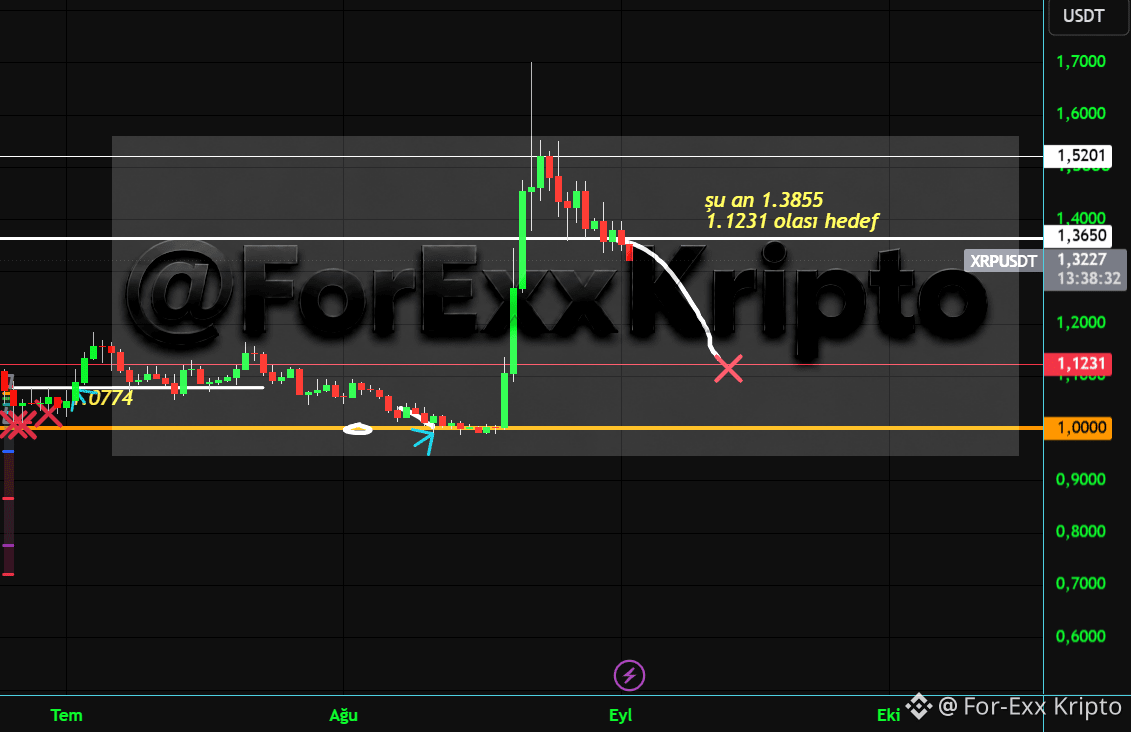
78
·
--
Bearish
See translation
The $ETH I mentioned in yesterday’s video when it was at $2,471 is now at $2,371. If it closes the day below $2,390, the $2,145 level could come into play as the target.
The $ETH I mentioned in yesterday’s video when it was at $2,471 is now at $2,371. If it closes the day below $2,390, the $2,145 level could come into play as the target.
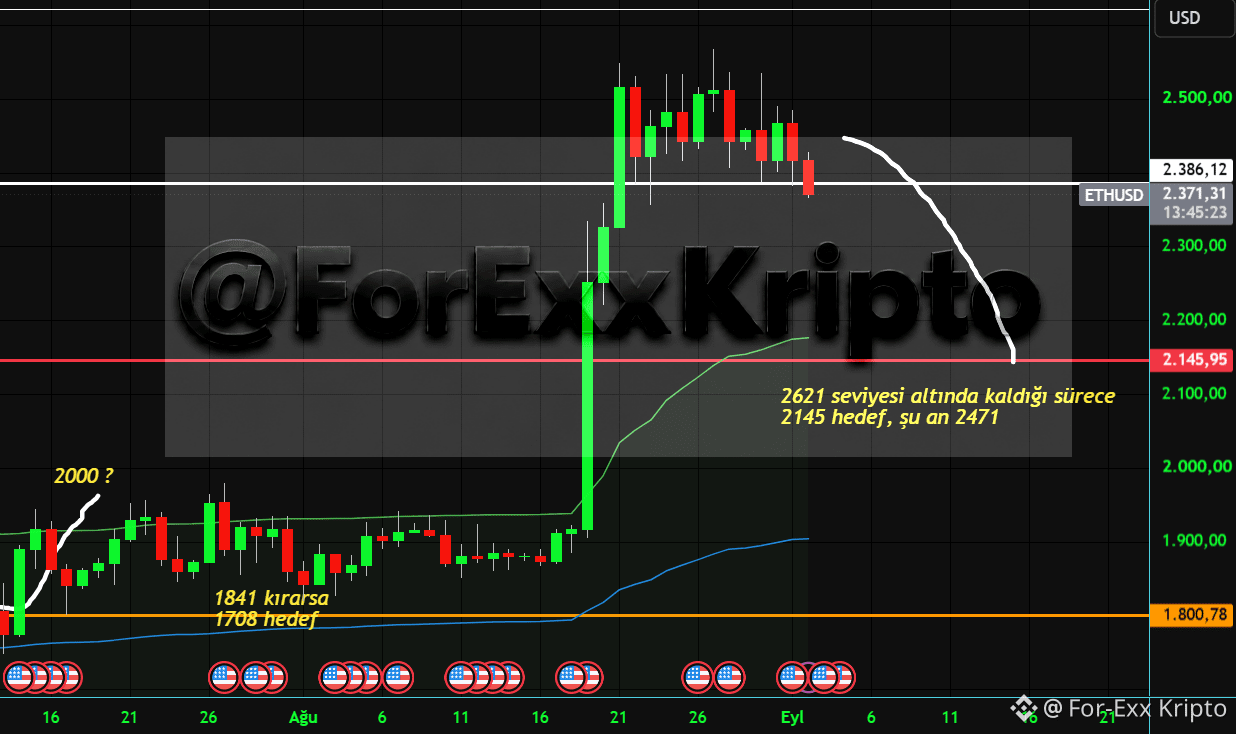
89
·
--
Bearish
See translation
$LUNC ’s target will be 4301 if it closes below the 5045 level. If the decline I’m expecting across the broader crypto market materializes, it will likely reach that level. It should hold there without breaking below it; a potential bounce from that support could trigger an upward reaction.
$LUNC ’s target will be 4301 if it closes below the 5045 level. If the decline I’m expecting across the broader crypto market materializes, it will likely reach that level. It should hold there without breaking below it; a potential bounce from that support could trigger an upward reaction.
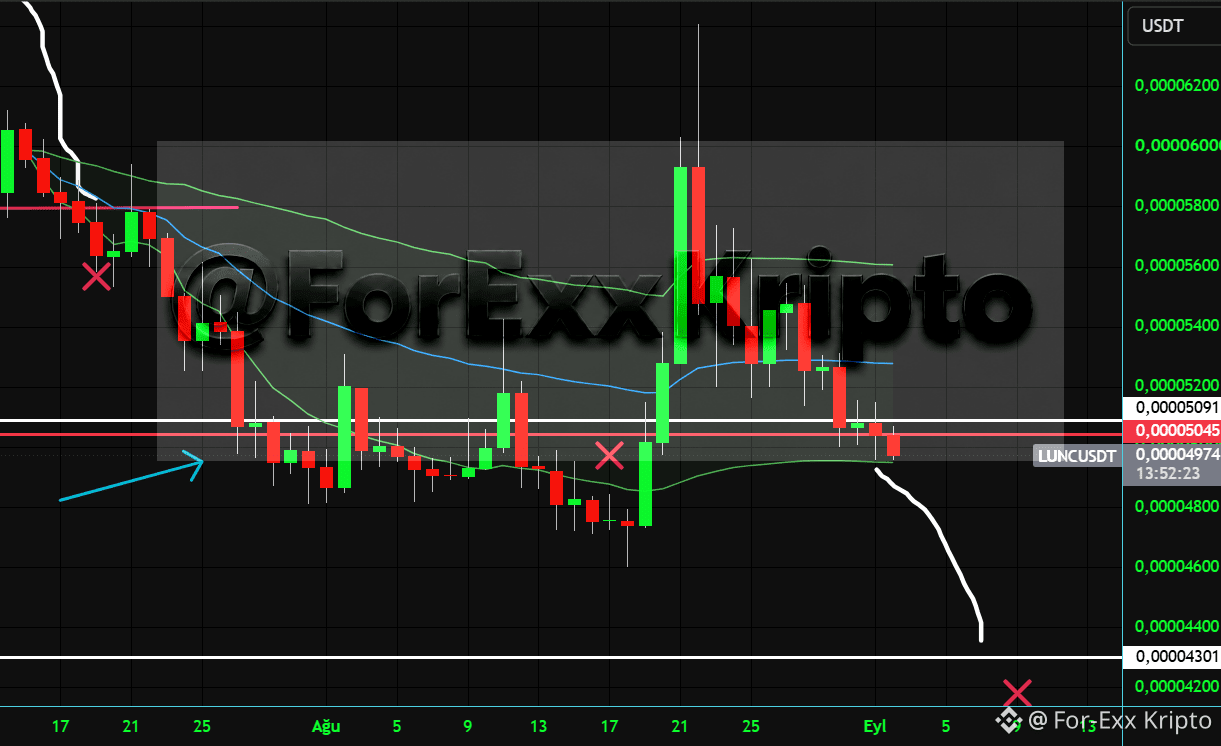
1
11
2k
Article
See translation
Will Altcoin Season End If the Fed Delays Rate Cuts?The expectation of an altcoin season has been tied to the same scenario for years: the Fed eases, liquidity increases, risk appetite rises, and capital moves from Bitcoin into smaller-market-cap assets. However, when the first link in this chain — a rate cut — is delayed, the picture does not necessarily collapse as simply as it may seem.
Is Liquidity Really the Trigger, or the Result?
It is true that past altcoin rallies have generally occurred during periods of abundant liquidity, but the direction of causality can be confused. Fed easing alone does not automatically bring capital into crypto; the broader direction of risk appetite and the trajectory of Bitcoin dominance are more important. When rate cuts are delayed, liquidity remains tighter, funding costs stay elevated, and leveraged positions become more expensive — typically limiting the high-beta moves seen in altcoins.
Dominance Is the Key Indicator
The classic definition of an altcoin season is a decline in BTC dominance. As long as rate uncertainty persists, investors tend to remain closer to the top of the risk ladder — Bitcoin. As long as dominance remains elevated, it becomes difficult for altcoins to establish sustained outperformance against BTC; even if short-term rallies occur, the characteristics of a broader altcoin season do not emerge.
A Delay Does Not Mean Cancellation
This distinction is important: delaying a rate cut does not mean it will never happen. Markets often price expectations well in advance; as the rate-cut timeline shifts, positioning shifts with it. Rather than saying an altcoin season will completely "end," it is more accurate to say that it may be postponed, with its timing becoming increasingly dependent on geopolitical developments and inflation data.
Alternative Scenario: Selective Rotation
Even while rate uncertainty persists, the market does not necessarily remain completely stagnant. Instead of a broad-based altcoin season where "everything goes up," selective rotation can emerge in specific sectors with strong fundamentals or clear catalysts, such as AI-themed tokens or protocols generating real revenue. This is different from a broad altcoin season, but it also does not mean capital has completely left crypto.
Conclusion
A Fed delay does not automatically end altcoin season; its primary effect is to extend the timeline and constrain capital to more selective, narrower rotations rather than broad-based expansion. The real signal for the start of an altcoin season should be sought less in the rate decision itself and more in a sustained breakdown in BTC dominance.
Will Altcoin Season End If the Fed Delays Rate Cuts?
The expectation of an altcoin season has been tied to the same scenario for years: the Fed eases, liquidity increases, risk appetite rises, and capital moves from Bitcoin into smaller-market-cap assets. However, when the first link in this chain — a rate cut — is delayed, the picture does not necessarily collapse as simply as it may seem.
Is Liquidity Really the Trigger, or the Result?
It is true that past altcoin rallies have generally occurred during periods of abundant liquidity, but the direction of causality can be confused. Fed easing alone does not automatically bring capital into crypto; the broader direction of risk appetite and the trajectory of Bitcoin dominance are more important. When rate cuts are delayed, liquidity remains tighter, funding costs stay elevated, and leveraged positions become more expensive — typically limiting the high-beta moves seen in altcoins.
Dominance Is the Key Indicator
The classic definition of an altcoin season is a decline in BTC dominance. As long as rate uncertainty persists, investors tend to remain closer to the top of the risk ladder — Bitcoin. As long as dominance remains elevated, it becomes difficult for altcoins to establish sustained outperformance against BTC; even if short-term rallies occur, the characteristics of a broader altcoin season do not emerge.
A Delay Does Not Mean Cancellation
This distinction is important: delaying a rate cut does not mean it will never happen. Markets often price expectations well in advance; as the rate-cut timeline shifts, positioning shifts with it. Rather than saying an altcoin season will completely "end," it is more accurate to say that it may be postponed, with its timing becoming increasingly dependent on geopolitical developments and inflation data.
Alternative Scenario: Selective Rotation
Even while rate uncertainty persists, the market does not necessarily remain completely stagnant. Instead of a broad-based altcoin season where "everything goes up," selective rotation can emerge in specific sectors with strong fundamentals or clear catalysts, such as AI-themed tokens or protocols generating real revenue. This is different from a broad altcoin season, but it also does not mean capital has completely left crypto.
Conclusion
A Fed delay does not automatically end altcoin season; its primary effect is to extend the timeline and constrain capital to more selective, narrower rotations rather than broad-based expansion. The real signal for the start of an altcoin season should be sought less in the rate decision itself and more in a sustained breakdown in BTC dominance.
Is Liquidity Really the Trigger, or the Result?
It is true that past altcoin rallies have generally occurred during periods of abundant liquidity, but the direction of causality can be confused. Fed easing alone does not automatically bring capital into crypto; the broader direction of risk appetite and the trajectory of Bitcoin dominance are more important. When rate cuts are delayed, liquidity remains tighter, funding costs stay elevated, and leveraged positions become more expensive — typically limiting the high-beta moves seen in altcoins.
Dominance Is the Key Indicator
The classic definition of an altcoin season is a decline in BTC dominance. As long as rate uncertainty persists, investors tend to remain closer to the top of the risk ladder — Bitcoin. As long as dominance remains elevated, it becomes difficult for altcoins to establish sustained outperformance against BTC; even if short-term rallies occur, the characteristics of a broader altcoin season do not emerge.
A Delay Does Not Mean Cancellation
This distinction is important: delaying a rate cut does not mean it will never happen. Markets often price expectations well in advance; as the rate-cut timeline shifts, positioning shifts with it. Rather than saying an altcoin season will completely "end," it is more accurate to say that it may be postponed, with its timing becoming increasingly dependent on geopolitical developments and inflation data.
Alternative Scenario: Selective Rotation
Even while rate uncertainty persists, the market does not necessarily remain completely stagnant. Instead of a broad-based altcoin season where "everything goes up," selective rotation can emerge in specific sectors with strong fundamentals or clear catalysts, such as AI-themed tokens or protocols generating real revenue. This is different from a broad altcoin season, but it also does not mean capital has completely left crypto.
Conclusion
A Fed delay does not automatically end altcoin season; its primary effect is to extend the timeline and constrain capital to more selective, narrower rotations rather than broad-based expansion. The real signal for the start of an altcoin season should be sought less in the rate decision itself and more in a sustained breakdown in BTC dominance.
89
Article
See translation
END-OF-DAY MARKET REPORT — SEPTEMBER 1, 2026🔐 END-OF-DAY MARKET REPORT — SEPTEMBER 1, 2026
🌐 TOP STORIES OF THE DAY
Russia's crypto law (Federal Law No. 282-FZ) took effect today, establishing a fully licensed digital asset framework allowing Bitcoin, Ethereum and USDT trading and custody through licensed intermediaries supervised by the Central Bank; annual retail transaction limits are capped at 300,000 rubles (~$3,700), while crypto payments for domestic goods and services remain prohibited
The BLAKE2b hard fork launched by Bitcoin Knots supporters is going live today — changing the hashing algorithm from SHA-256d to BLAKE2b makes existing BTC mining hardware unusable on the new chain; BTC holders on the main chain do not need to take any action
Chainalysis filed a lawsuit against the U.S. government containing seven separate claims, alleging that ICE improperly awarded its $94.66 million blockchain analytics contract — the government's largest single-source crypto surveillance agreement to date — to TRM Labs
Balancer urged V1 liquidity providers to immediately exit legacy, unstoppable pools — SlowMist identified a rounding error that leaked approximately $234,000 from these pools; a separate vulnerability in AnkrFLOW led to $410,000 being drained from MORE Markets, with the Flow Foundation saying it will compensate the losses
U.S. weekend strikes on Iranian rocket launch sites and Trump's threats of further attacks are pushing oil prices and rate-hike expectations higher — rising yields are weighing on non-yielding assets such as BTC and ETH
━━━
₿ BITCOIN
BTC opened this morning around $77,700–$78,700, initially 1.1% above yesterday's open before declining toward $77,650–$77,950 during the session. The price remains around $78,000 in a volatile session below the $80,000 resistance; strong institutional spot demand is providing a solid floor, while rising U.S. Treasury yields create direct competition for non-yielding assets. BTC is still trading above its 200-day moving average, while the bull flag formation points toward targets of $81,500 and then $85,000. August ended with an approximately 24% gain, its strongest month of 2026.
━━━
🔷 ETHEREUM & ALTCOINS
ETH is trading around $2,440–$2,463 with a slightly positive daily performance. XRP is around $1.37–$1.38, Solana around $102 and BNB around $688. Injective (INJ) is trapped in a neutral range between the EMA20 and EMA50 at $4.88, with a daily RSI of 48.23 indicating indecision. Although the broader market's Fear & Greed Index remains in the "Greed" zone at 69, total crypto market capitalization fell 2.72% daily to $2.63 trillion.
━━━
📋 KEY CRYPTO DEVELOPMENTS
Comments continue on the SEC's "Regulation Crypto Assets" proposal — the framework includes a $5 million startup exemption and a second exemption allowing up to $75 million in annual fundraising subject to audited financial statements; it is positioned as a complementary framework in which the CFTC would oversee secondary markets while the SEC covers primary fundraising under the CLARITY Act
A bipartisan group of former SEC and CFTC regulators warned that the U.S. risks falling behind in the $90 trillion global derivatives (perpetuals) market
Zama completed a $73 million Series A led by Multicoin Capital and Protocol Labs to commercialize fully homomorphic encryption — institutional interest in privacy-focused crypto infrastructure remains strong
━━━
🔓 TOKEN UNLOCKS
Sui (SUI)
September 1, 2026 (today)
Amount: ~$9.7–18 million (~0.33–0.89% of circulating supply) — 13.53–22.01 million tokens, depending on the source
Recipients: Early Contributors + Community Reserve + Mysten Labs Treasury
Selling pressure: 🟢
Ethena (ENA)
September 2, 2026
Amount: ~$6.05 million (0.46% of circulating supply) — 40.63 million tokens
Recipients: Fully allocated to the Foundation
Selling pressure: 🟢
Note: These are the first small pieces of September's $4.7 billion total unlock schedule ($1.2 billion cliff + $3.5 billion linear); SUI, Aptos and Arbitrum will account for another larger $292 million block next week.
━━━
🔭 OUTLOOK & UPCOMING EVENTS
The week's most important event is the U.S. August nonfarm payrolls report (NFP) on Friday, September 4 — market expectations stand at 55K new jobs, while July came in at -23K. A second weak or negative reading could largely eliminate expectations of a rate hike at the September 15–16 FOMC meeting, potentially becoming a strong bullish catalyst for BTC; a strong NFP would have the opposite effect, reviving hawkish pricing and making a break above the $80,000 resistance more difficult. The September 2 ADP employment report will provide an early signal, while today's ISM Manufacturing PMI and JOLTS job openings data are also being closely watched. Escalation in Iran and rising Treasury yields remain separate pressure factors reinforcing caution ahead of NFP. Next week's $292 million unlock block involving SUI, Aptos and Arbitrum will also be one of September's first major supply tests.
END-OF-DAY MARKET REPORT — SEPTEMBER 1, 2026
🔐 END-OF-DAY MARKET REPORT — SEPTEMBER 1, 2026
🌐 TOP STORIES OF THE DAY
Russia's crypto law (Federal Law No. 282-FZ) took effect today, establishing a fully licensed digital asset framework allowing Bitcoin, Ethereum and USDT trading and custody through licensed intermediaries supervised by the Central Bank; annual retail transaction limits are capped at 300,000 rubles (~$3,700), while crypto payments for domestic goods and services remain prohibited
The BLAKE2b hard fork launched by Bitcoin Knots supporters is going live today — changing the hashing algorithm from SHA-256d to BLAKE2b makes existing BTC mining hardware unusable on the new chain; BTC holders on the main chain do not need to take any action
Chainalysis filed a lawsuit against the U.S. government containing seven separate claims, alleging that ICE improperly awarded its $94.66 million blockchain analytics contract — the government's largest single-source crypto surveillance agreement to date — to TRM Labs
Balancer urged V1 liquidity providers to immediately exit legacy, unstoppable pools — SlowMist identified a rounding error that leaked approximately $234,000 from these pools; a separate vulnerability in AnkrFLOW led to $410,000 being drained from MORE Markets, with the Flow Foundation saying it will compensate the losses
U.S. weekend strikes on Iranian rocket launch sites and Trump's threats of further attacks are pushing oil prices and rate-hike expectations higher — rising yields are weighing on non-yielding assets such as BTC and ETH
━━━
₿ BITCOIN
BTC opened this morning around $77,700–$78,700, initially 1.1% above yesterday's open before declining toward $77,650–$77,950 during the session. The price remains around $78,000 in a volatile session below the $80,000 resistance; strong institutional spot demand is providing a solid floor, while rising U.S. Treasury yields create direct competition for non-yielding assets. BTC is still trading above its 200-day moving average, while the bull flag formation points toward targets of $81,500 and then $85,000. August ended with an approximately 24% gain, its strongest month of 2026.
━━━
🔷 ETHEREUM & ALTCOINS
ETH is trading around $2,440–$2,463 with a slightly positive daily performance. XRP is around $1.37–$1.38, Solana around $102 and BNB around $688. Injective (INJ) is trapped in a neutral range between the EMA20 and EMA50 at $4.88, with a daily RSI of 48.23 indicating indecision. Although the broader market's Fear & Greed Index remains in the "Greed" zone at 69, total crypto market capitalization fell 2.72% daily to $2.63 trillion.
━━━
📋 KEY CRYPTO DEVELOPMENTS
Comments continue on the SEC's "Regulation Crypto Assets" proposal — the framework includes a $5 million startup exemption and a second exemption allowing up to $75 million in annual fundraising subject to audited financial statements; it is positioned as a complementary framework in which the CFTC would oversee secondary markets while the SEC covers primary fundraising under the CLARITY Act
A bipartisan group of former SEC and CFTC regulators warned that the U.S. risks falling behind in the $90 trillion global derivatives (perpetuals) market
Zama completed a $73 million Series A led by Multicoin Capital and Protocol Labs to commercialize fully homomorphic encryption — institutional interest in privacy-focused crypto infrastructure remains strong
━━━
🔓 TOKEN UNLOCKS
Sui (SUI)
September 1, 2026 (today)
Amount: ~$9.7–18 million (~0.33–0.89% of circulating supply) — 13.53–22.01 million tokens, depending on the source
Recipients: Early Contributors + Community Reserve + Mysten Labs Treasury
Selling pressure: 🟢
Ethena (ENA)
September 2, 2026
Amount: ~$6.05 million (0.46% of circulating supply) — 40.63 million tokens
Recipients: Fully allocated to the Foundation
Selling pressure: 🟢
Note: These are the first small pieces of September's $4.7 billion total unlock schedule ($1.2 billion cliff + $3.5 billion linear); SUI, Aptos and Arbitrum will account for another larger $292 million block next week.
━━━
🔭 OUTLOOK & UPCOMING EVENTS
The week's most important event is the U.S. August nonfarm payrolls report (NFP) on Friday, September 4 — market expectations stand at 55K new jobs, while July came in at -23K. A second weak or negative reading could largely eliminate expectations of a rate hike at the September 15–16 FOMC meeting, potentially becoming a strong bullish catalyst for BTC; a strong NFP would have the opposite effect, reviving hawkish pricing and making a break above the $80,000 resistance more difficult. The September 2 ADP employment report will provide an early signal, while today's ISM Manufacturing PMI and JOLTS job openings data are also being closely watched. Escalation in Iran and rising Treasury yields remain separate pressure factors reinforcing caution ahead of NFP. Next week's $292 million unlock block involving SUI, Aptos and Arbitrum will also be one of September's first major supply tests.
🌐 TOP STORIES OF THE DAY
Russia's crypto law (Federal Law No. 282-FZ) took effect today, establishing a fully licensed digital asset framework allowing Bitcoin, Ethereum and USDT trading and custody through licensed intermediaries supervised by the Central Bank; annual retail transaction limits are capped at 300,000 rubles (~$3,700), while crypto payments for domestic goods and services remain prohibited
The BLAKE2b hard fork launched by Bitcoin Knots supporters is going live today — changing the hashing algorithm from SHA-256d to BLAKE2b makes existing BTC mining hardware unusable on the new chain; BTC holders on the main chain do not need to take any action
Chainalysis filed a lawsuit against the U.S. government containing seven separate claims, alleging that ICE improperly awarded its $94.66 million blockchain analytics contract — the government's largest single-source crypto surveillance agreement to date — to TRM Labs
Balancer urged V1 liquidity providers to immediately exit legacy, unstoppable pools — SlowMist identified a rounding error that leaked approximately $234,000 from these pools; a separate vulnerability in AnkrFLOW led to $410,000 being drained from MORE Markets, with the Flow Foundation saying it will compensate the losses
U.S. weekend strikes on Iranian rocket launch sites and Trump's threats of further attacks are pushing oil prices and rate-hike expectations higher — rising yields are weighing on non-yielding assets such as BTC and ETH
━━━
₿ BITCOIN
BTC opened this morning around $77,700–$78,700, initially 1.1% above yesterday's open before declining toward $77,650–$77,950 during the session. The price remains around $78,000 in a volatile session below the $80,000 resistance; strong institutional spot demand is providing a solid floor, while rising U.S. Treasury yields create direct competition for non-yielding assets. BTC is still trading above its 200-day moving average, while the bull flag formation points toward targets of $81,500 and then $85,000. August ended with an approximately 24% gain, its strongest month of 2026.
━━━
🔷 ETHEREUM & ALTCOINS
ETH is trading around $2,440–$2,463 with a slightly positive daily performance. XRP is around $1.37–$1.38, Solana around $102 and BNB around $688. Injective (INJ) is trapped in a neutral range between the EMA20 and EMA50 at $4.88, with a daily RSI of 48.23 indicating indecision. Although the broader market's Fear & Greed Index remains in the "Greed" zone at 69, total crypto market capitalization fell 2.72% daily to $2.63 trillion.
━━━
📋 KEY CRYPTO DEVELOPMENTS
Comments continue on the SEC's "Regulation Crypto Assets" proposal — the framework includes a $5 million startup exemption and a second exemption allowing up to $75 million in annual fundraising subject to audited financial statements; it is positioned as a complementary framework in which the CFTC would oversee secondary markets while the SEC covers primary fundraising under the CLARITY Act
A bipartisan group of former SEC and CFTC regulators warned that the U.S. risks falling behind in the $90 trillion global derivatives (perpetuals) market
Zama completed a $73 million Series A led by Multicoin Capital and Protocol Labs to commercialize fully homomorphic encryption — institutional interest in privacy-focused crypto infrastructure remains strong
━━━
🔓 TOKEN UNLOCKS
Sui (SUI)
September 1, 2026 (today)
Amount: ~$9.7–18 million (~0.33–0.89% of circulating supply) — 13.53–22.01 million tokens, depending on the source
Recipients: Early Contributors + Community Reserve + Mysten Labs Treasury
Selling pressure: 🟢
Ethena (ENA)
September 2, 2026
Amount: ~$6.05 million (0.46% of circulating supply) — 40.63 million tokens
Recipients: Fully allocated to the Foundation
Selling pressure: 🟢
Note: These are the first small pieces of September's $4.7 billion total unlock schedule ($1.2 billion cliff + $3.5 billion linear); SUI, Aptos and Arbitrum will account for another larger $292 million block next week.
━━━
🔭 OUTLOOK & UPCOMING EVENTS
The week's most important event is the U.S. August nonfarm payrolls report (NFP) on Friday, September 4 — market expectations stand at 55K new jobs, while July came in at -23K. A second weak or negative reading could largely eliminate expectations of a rate hike at the September 15–16 FOMC meeting, potentially becoming a strong bullish catalyst for BTC; a strong NFP would have the opposite effect, reviving hawkish pricing and making a break above the $80,000 resistance more difficult. The September 2 ADP employment report will provide an early signal, while today's ISM Manufacturing PMI and JOLTS job openings data are also being closely watched. Escalation in Iran and rising Treasury yields remain separate pressure factors reinforcing caution ahead of NFP. Next week's $292 million unlock block involving SUI, Aptos and Arbitrum will also be one of September's first major supply tests.
77
·
--
Bearish
See translation
$SOL dropping below the $100 level could trigger a decline toward $90.
A move like this in the major coins could also create a domino effect across other major cryptocurrencies. On the bigger picture, the Head & Shoulders pattern I previously highlighted with a target of $51.98 is still playing out.
$SOL dropping below the $100 level could trigger a decline toward $90.
A move like this in the major coins could also create a domino effect across other major cryptocurrencies. On the bigger picture, the Head & Shoulders pattern I previously highlighted with a target of $51.98 is still playing out.
A move like this in the major coins could also create a domino effect across other major cryptocurrencies. On the bigger picture, the Head & Shoulders pattern I previously highlighted with a target of $51.98 is still playing out.
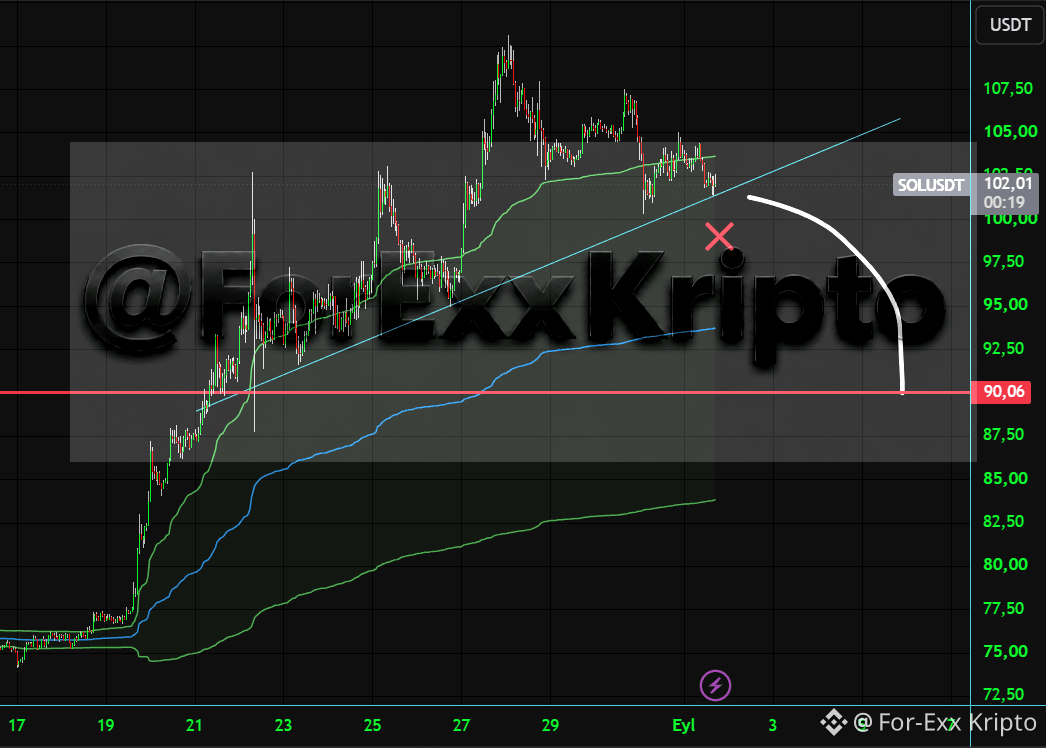
129
Log in to explore more content
Join global crypto users on Binance Square
⚡️ Get latest and useful information about crypto.
💬 Trusted by the world’s largest crypto exchange.
👍 Discover real insights from verified creators.
Email / Phone number
Trending Topics
AppleDebutsFoldablePhone
13,634 views
313 Discussing
#appledebutsfoldablephone I Got My Hands on the iPhone Duo, Apple’s First Foldable Phone. Here’s What Stands Out
The palm-size phone is Apple's boldest handset in years, with a 5.4-inch cover screen and a 7.6-inch main display. I spent some time with the Duo before its October launch.It’s finally here: Apple on Wednesday unveiled its first foldable iPhone, called the iPhone Duo.
iPhone Duo design and build
The iPhone Duo is compact, with a passport-size design. It has a 7.6-inch display on the inside and a 5.4-inch outer display. It fits squarely in my palm, with dimensions similar to Samsung’s Galaxy Z Fold 8, which has a 7.6-inch inner display and a 5.5-inch cover display.
Apple says the Duo is the thinnest iPhone ever when open, measuring 5.2mm. It’s 11.3mm thick when closed. A titanium frame keeps it lightweight at 254 grams.
One of the key differences in feel between Apple’s and Samsung’s phones is that the iPhone Duo has a matte, nano-textured finish on the inner display, which reduces the phone’s crease while also curbing reflections. It has a satisfying feel and really makes the crease virtually disappear when the screen is on. I find it even harder to notice than the Z Fold 8’s, which also has an anti-reflective display.$ONG $IMX $TAC
Isabella-I
·4 Likes
·1k views
EUExtendsCentralContactPointToCASPs
1,281 views
75 Discussing
US10YTreasuryYieldHitsHighestSinceNov2023
16,365 views
299 Discussing