
大叔的要饭之路
125 Posts

大叔的要饭之路
Report
Block User
29 Following
11 Followers
19 Liked
Posts
·
--
Article
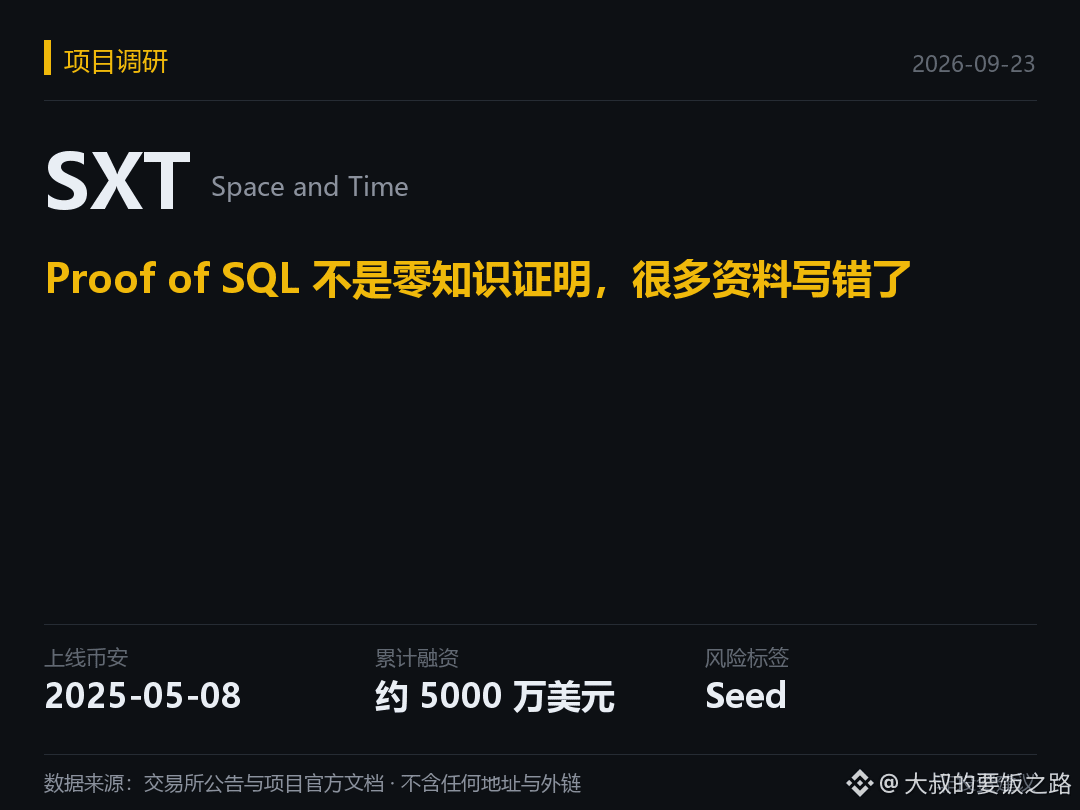
SXT’s Proof of SQL isn’t a zero-knowledge proof, but many materials get it wrongFirst, correct a widely circulated technical description that’s mistaken.
$SXT is Space and Time, building a decentralized data warehouse. Its core technology is called Proof of SQL. Many secondary news reports and some exchange materials pages describe it as “zero-knowledge proofs.” But the project’s official documentation is very clear: it is not ZKP; it’s a SNARG that is domain-specific and arithmeticized for SQL and relational algebra.
Where is the difference between these two? The goal of ZKP is to hide the data itself, while the goal of SNARG is to prove that “this query was executed correctly.” The official documentation specifically emphasizes this—they are solving data verifiability, not data confidentiality. I’ve seen many materials mix these two up, and that mistake is worth pointing out.
SXT’s Proof of SQL isn’t a zero-knowledge proof, but many materials get it wrong
First, correct a widely circulated technical description that’s mistaken.
$SXT is Space and Time, building a decentralized data warehouse. Its core technology is called Proof of SQL. Many secondary news reports and some exchange materials pages describe it as “zero-knowledge proofs.” But the project’s official documentation is very clear: it is not ZKP; it’s a SNARG that is domain-specific and arithmeticized for SQL and relational algebra.
Where is the difference between these two? The goal of ZKP is to hide the data itself, while the goal of SNARG is to prove that “this query was executed correctly.” The official documentation specifically emphasizes this—they are solving data verifiability, not data confidentiality. I’ve seen many materials mix these two up, and that mistake is worth pointing out.
$SXT is Space and Time, building a decentralized data warehouse. Its core technology is called Proof of SQL. Many secondary news reports and some exchange materials pages describe it as “zero-knowledge proofs.” But the project’s official documentation is very clear: it is not ZKP; it’s a SNARG that is domain-specific and arithmeticized for SQL and relational algebra.
Where is the difference between these two? The goal of ZKP is to hide the data itself, while the goal of SNARG is to prove that “this query was executed correctly.” The official documentation specifically emphasizes this—they are solving data verifiability, not data confidentiality. I’ve seen many materials mix these two up, and that mistake is worth pointing out.
2
·
--
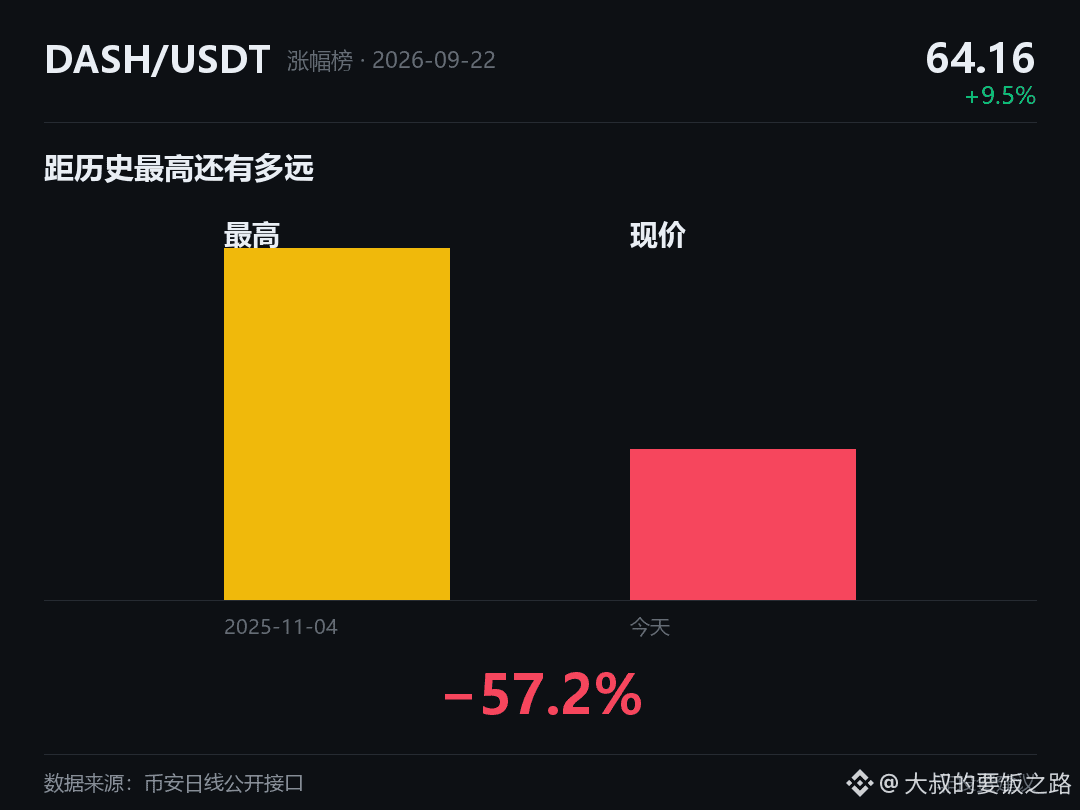
When I was scrolling through the rankings, I saw that $DASH had made it in: it’s up 9.5%, with trading volume of 24.9M, ranking third. It’s only 57.2% away from its all-time high.
Old coins from 2014 are still moving like this—I find that pretty strange. I’m curious what the driving force is. Is anyone been following it? Not investment advice
#old coins
{future}(DASHUSDT)
When I was scrolling through the rankings, I saw that $DASH had made it in: it’s up 9.5%, with trading volume of 24.9M, ranking third. It’s only 57.2% away from its all-time high.
Old coins from 2014 are still moving like this—I find that pretty strange. I’m curious what the driving force is. Is anyone been following it? Not investment advice
#old coins
Old coins from 2014 are still moving like this—I find that pretty strange. I’m curious what the driving force is. Is anyone been following it? Not investment advice
#old coins
31
·
--
Article
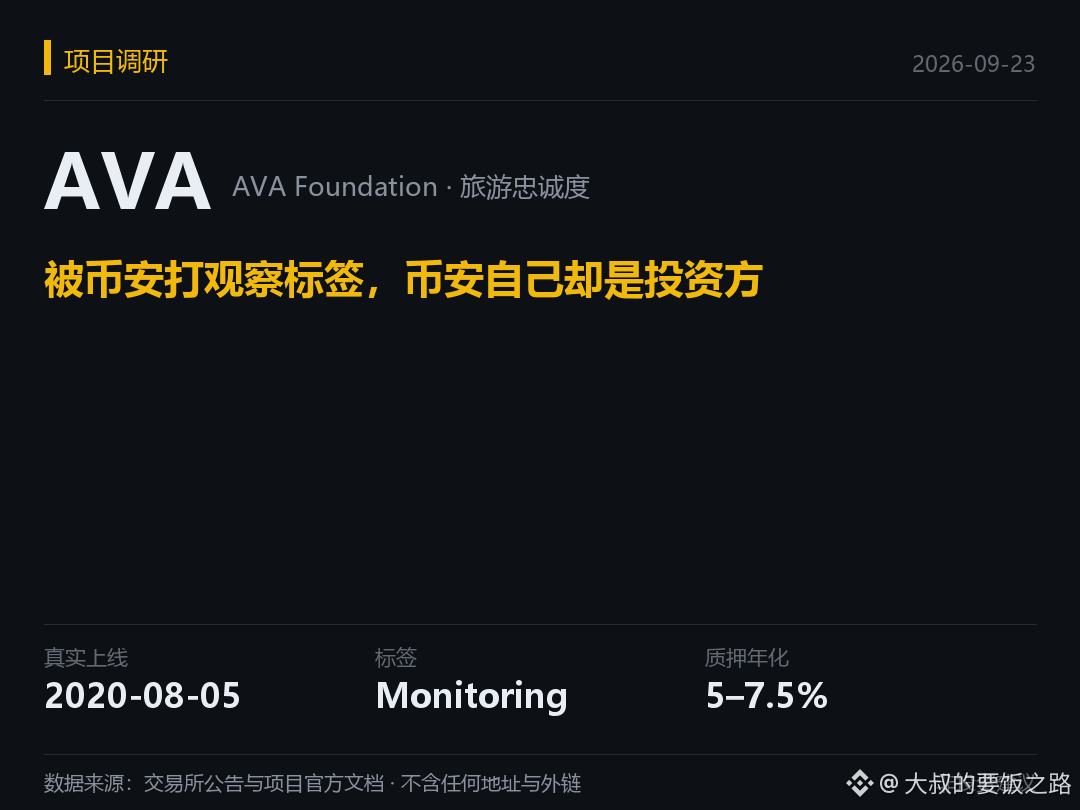
AVA was slapped with a delisting risk tag by Binance—yet Binance itself is its investorPutting these two things together is the most worth-remembering combination I found today.
On September 4, 2026, Binance issued an announcement adding new tokens to the observation tag list; in the same batch were Gains Network, Scroll, and Towns Protocol. The risk wording in the original announcement was: tokens with an observation tag are “significantly more volatile and risky” and “there is a risk that they may no longer meet our listing standards and could be delisted from the platform.” The review criteria listed ten items, including team engagement, development activity, trading volume and liquidity, network stability, level of public communication, and whether the token supply is unreasonably increasing, etc.
AVA was slapped with a delisting risk tag by Binance—yet Binance itself is its investor
Putting these two things together is the most worth-remembering combination I found today.
On September 4, 2026, Binance issued an announcement adding new tokens to the observation tag list; in the same batch were Gains Network, Scroll, and Towns Protocol. The risk wording in the original announcement was: tokens with an observation tag are “significantly more volatile and risky” and “there is a risk that they may no longer meet our listing standards and could be delisted from the platform.” The review criteria listed ten items, including team engagement, development activity, trading volume and liquidity, network stability, level of public communication, and whether the token supply is unreasonably increasing, etc.
On September 4, 2026, Binance issued an announcement adding new tokens to the observation tag list; in the same batch were Gains Network, Scroll, and Towns Protocol. The risk wording in the original announcement was: tokens with an observation tag are “significantly more volatile and risky” and “there is a risk that they may no longer meet our listing standards and could be delisted from the platform.” The review criteria listed ten items, including team engagement, development activity, trading volume and liquidity, network stability, level of public communication, and whether the token supply is unreasonably increasing, etc.
8
·
--
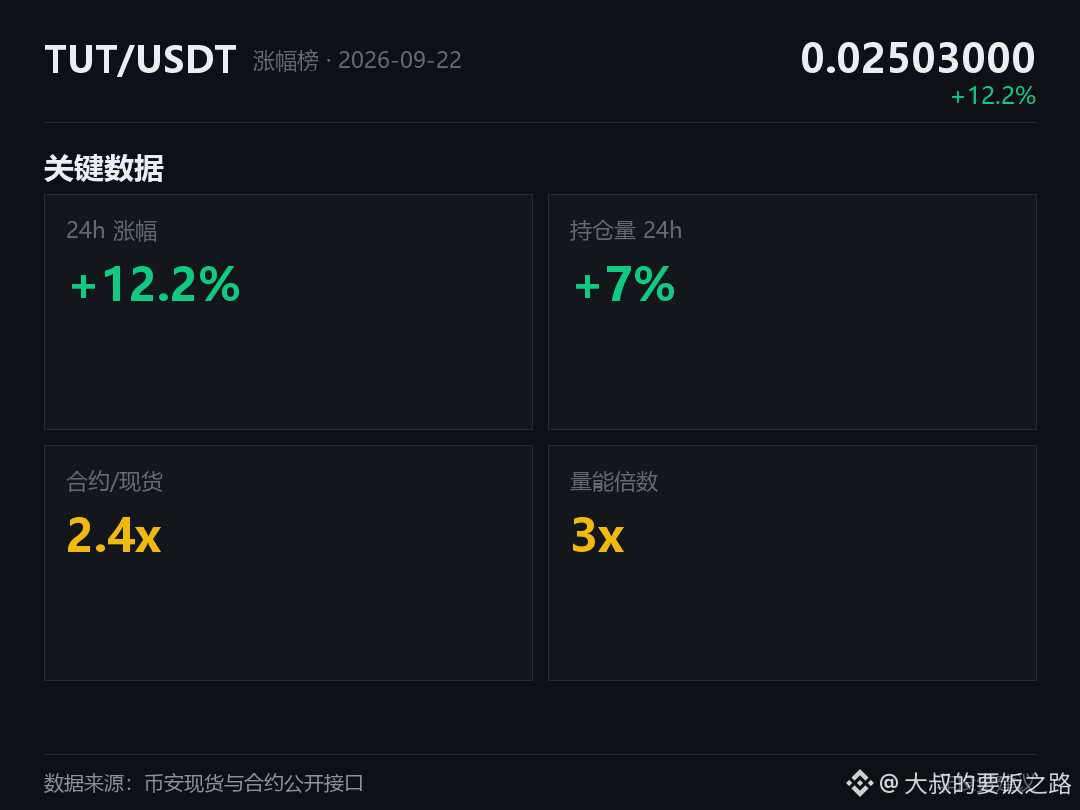
$TUT 7 The price surged 25%, yet over the next 30 days it still remained at -60.6%.
After 13 previous instances of explosive growth in history, the 7-day average is -18.4% and the win rate is 23%. I found this number a bit surprising—does anyone use it as a reference? Not investment advice
#Historical Statistics
{future}(TUTUSDT)
$TUT 7 The price surged 25%, yet over the next 30 days it still remained at -60.6%.
After 13 previous instances of explosive growth in history, the 7-day average is -18.4% and the win rate is 23%. I found this number a bit surprising—does anyone use it as a reference? Not investment advice
#Historical Statistics
After 13 previous instances of explosive growth in history, the 7-day average is -18.4% and the win rate is 23%. I found this number a bit surprising—does anyone use it as a reference? Not investment advice
#Historical Statistics
67
·
--
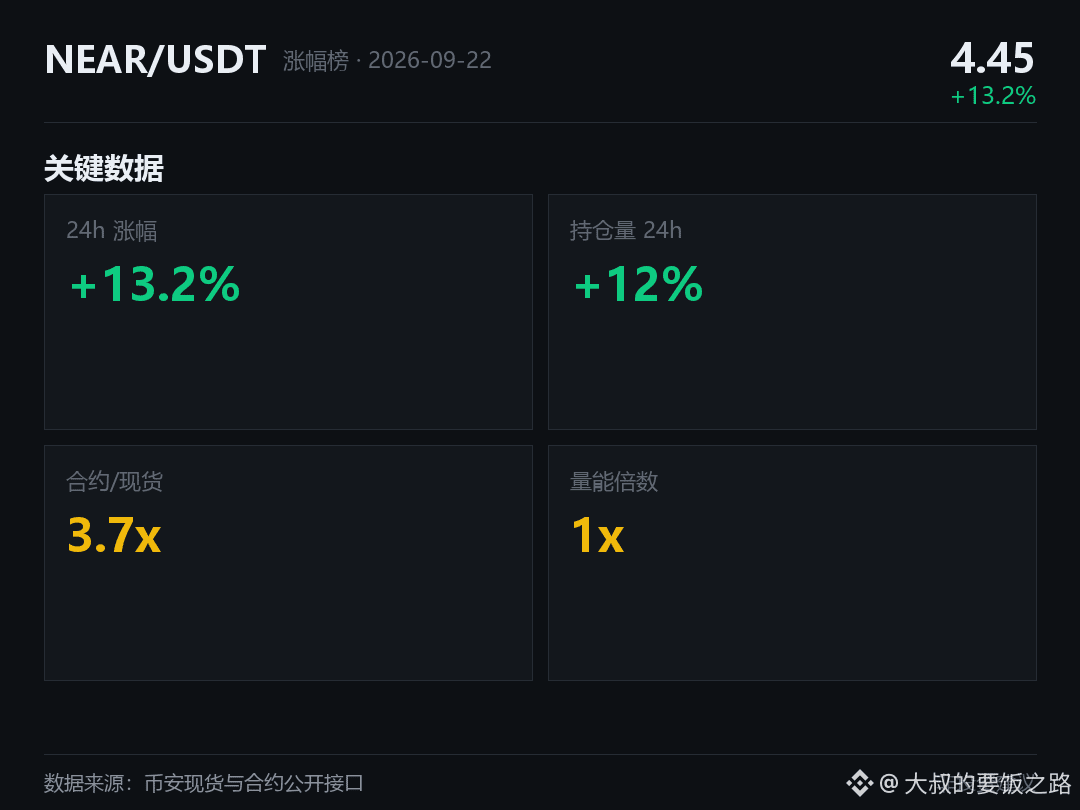
I noticed that $NEAR ’s trading volume today is 299.6M—more than twice as much as the #2 spot on the chart. Over the past 7 days, it’s up 90.3%.
This move clearly looks like mainstream capital is moving, not a small-coin pulse. I was a bit surprised when I saw the trading volume. Is anyone watching it? I’d like to hear your take. Not investment advice
#Mainstream coins
{future}(NEARUSDT)
I noticed that $NEAR ’s trading volume today is 299.6M—more than twice as much as the #2 spot on the chart. Over the past 7 days, it’s up 90.3%.
This move clearly looks like mainstream capital is moving, not a small-coin pulse. I was a bit surprised when I saw the trading volume. Is anyone watching it? I’d like to hear your take. Not investment advice
#Mainstream coins
This move clearly looks like mainstream capital is moving, not a small-coin pulse. I was a bit surprised when I saw the trading volume. Is anyone watching it? I’d like to hear your take. Not investment advice
#Mainstream coins
66
·
--

Article
TUT’s developer’s real name is verifiable, and it only went through a squeeze this past AugustAbout $TUT, the most widely circulated claim online is that “the team is completely anonymous and you can’t find anyone.” That claim is wrong—it has real-name developers, but the information is hidden in the project’s own community account, and third-hand popular science articles barely repeat it.
The developer is Yerasyl Amanbek. On August 9, 2026, the official TUT community account posted an origin statement that originally said: “Everything began with a simple tutorial video made by our developer, showing how to deploy a token on BSC.” Third-party exchange educational materials further clarify: he is a blockchain developer who previously helped initiate the Entangle project and has worked at Binance, where he created tutorials explaining how to deploy smart contracts on BNB Chain.
TUT’s developer’s real name is verifiable, and it only went through a squeeze this past August
About $TUT , the most widely circulated claim online is that “the team is completely anonymous and you can’t find anyone.” That claim is wrong—it has real-name developers, but the information is hidden in the project’s own community account, and third-hand popular science articles barely repeat it.
The developer is Yerasyl Amanbek. On August 9, 2026, the official TUT community account posted an origin statement that originally said: “Everything began with a simple tutorial video made by our developer, showing how to deploy a token on BSC.” Third-party exchange educational materials further clarify: he is a blockchain developer who previously helped initiate the Entangle project and has worked at Binance, where he created tutorials explaining how to deploy smart contracts on BNB Chain.
The developer is Yerasyl Amanbek. On August 9, 2026, the official TUT community account posted an origin statement that originally said: “Everything began with a simple tutorial video made by our developer, showing how to deploy a token on BSC.” Third-party exchange educational materials further clarify: he is a blockchain developer who previously helped initiate the Entangle project and has worked at Binance, where he created tutorials explaining how to deploy smart contracts on BNB Chain.
57
·
--
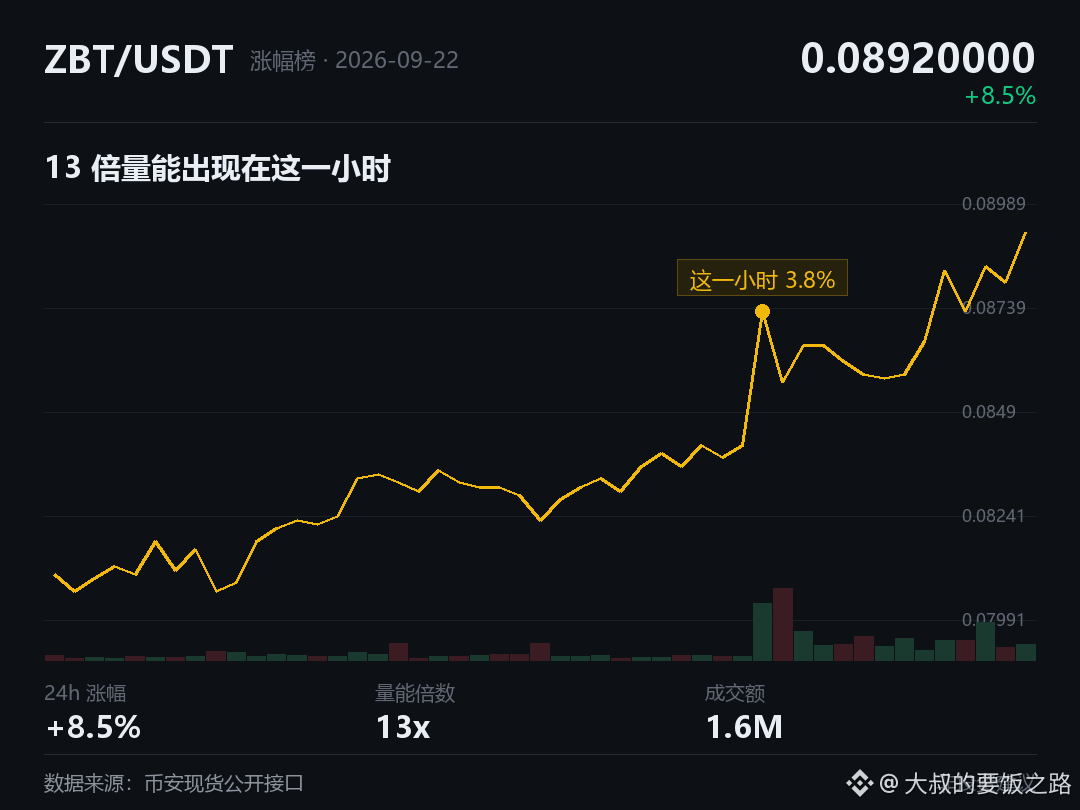
$ZBT hours of volume capacity is 12.5 times the average, but it has only been listed for 341 days, so the historical sample is too short.
We have the data, but the sample isn’t enough—I’m a bit confused and don’t know where to start. Has anyone handled a situation like this before? I’d like to ask for advice. Not investment advice
#Volume anomaly
{future}(ZBTUSDT)
$ZBT hours of volume capacity is 12.5 times the average, but it has only been listed for 341 days, so the historical sample is too short.
We have the data, but the sample isn’t enough—I’m a bit confused and don’t know where to start. Has anyone handled a situation like this before? I’d like to ask for advice. Not investment advice
#Volume anomaly
We have the data, but the sample isn’t enough—I’m a bit confused and don’t know where to start. Has anyone handled a situation like this before? I’d like to ask for advice. Not investment advice
#Volume anomaly
22
·
--
Article
In the MET airdrop, the first four addresses took 28.5%, while 60,000 retail users together only got 7%$MET is Meteora, the “dynamic liquidity layer” on Solana. It provides market-making pools for three types of users: DLMM for professional LPs, DAMM v2 for configurable constant-product pools, and DBC for a permissionless token-minting tool. Technically, the most distinctive is DLMM—it splits liquidity into discrete price ranges, achieves zero slippage within a single range, and its dynamic fees rise and fall with volatility.
But I want to write about that airdrop data first, because it explains the issue better than the technology does.
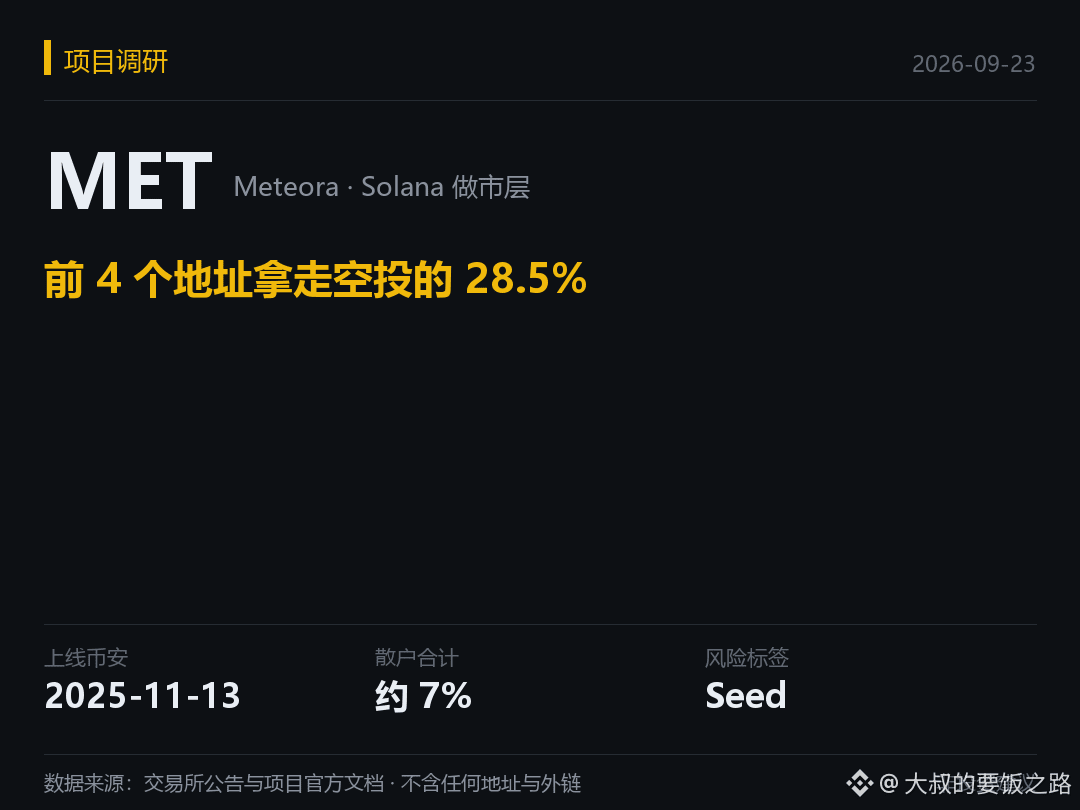
TGE is on October 23, 2025. After the airdrop claims, statistics show that the first four claim addresses took 45.94 million MET—28.5% of the total claimed amount. Meanwhile, more than 60,000 individual retail addresses together received only about 7%. This distribution result sparked considerable controversy in the community. In the official follow-up for Season 2, the blacklist was applied to all the pools of several controversial projects.
In the MET airdrop, the first four addresses took 28.5%, while 60,000 retail users together only got 7%
$MET is Meteora, the “dynamic liquidity layer” on Solana. It provides market-making pools for three types of users: DLMM for professional LPs, DAMM v2 for configurable constant-product pools, and DBC for a permissionless token-minting tool. Technically, the most distinctive is DLMM—it splits liquidity into discrete price ranges, achieves zero slippage within a single range, and its dynamic fees rise and fall with volatility.
But I want to write about that airdrop data first, because it explains the issue better than the technology does.
TGE is on October 23, 2025. After the airdrop claims, statistics show that the first four claim addresses took 45.94 million MET—28.5% of the total claimed amount. Meanwhile, more than 60,000 individual retail addresses together received only about 7%. This distribution result sparked considerable controversy in the community. In the official follow-up for Season 2, the blacklist was applied to all the pools of several controversial projects.
But I want to write about that airdrop data first, because it explains the issue better than the technology does.
TGE is on October 23, 2025. After the airdrop claims, statistics show that the first four claim addresses took 45.94 million MET—28.5% of the total claimed amount. Meanwhile, more than 60,000 individual retail addresses together received only about 7%. This distribution result sparked considerable controversy in the community. In the official follow-up for Season 2, the blacklist was applied to all the pools of several controversial projects.
7
·
--
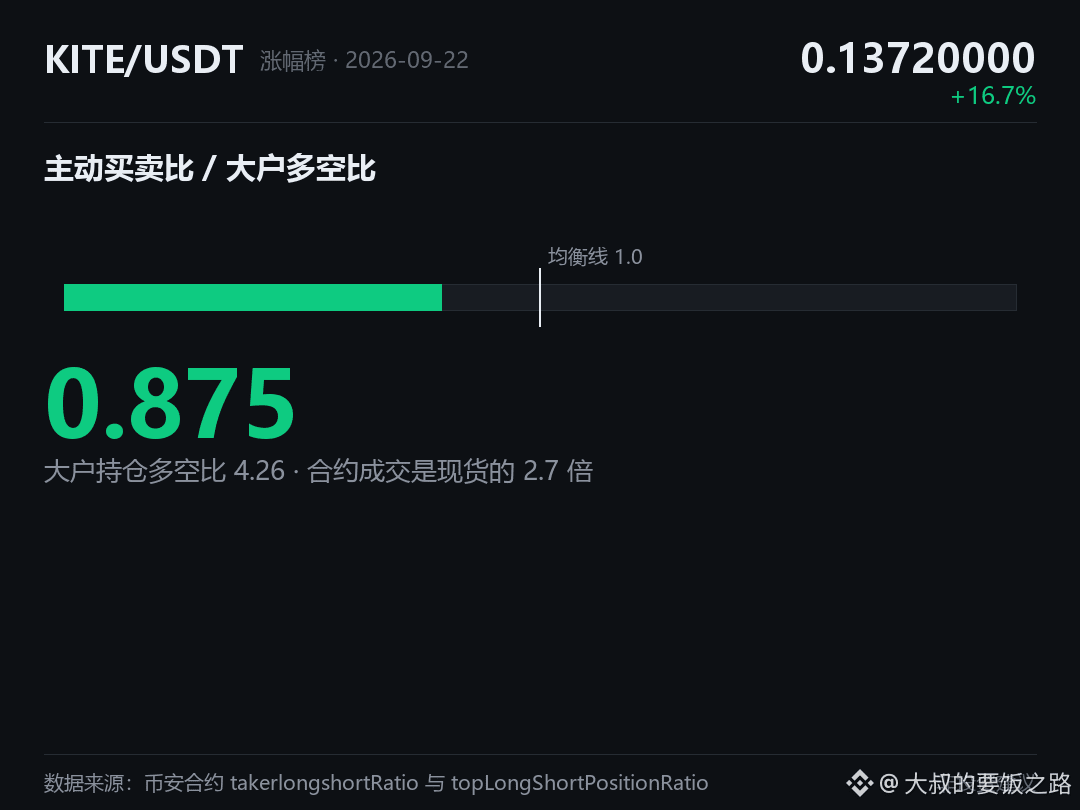
$KITE Major accounts' long-short positions ratio 4.26, but the buy-sell ratio is only 0.875.
On the long side, major accounts have more passive sell orders, yet there seems to be more on the selling side when it comes to active trades—this discrepancy leaves me a bit confused. Can anyone interpret it? Not investment advice
#Long-Short Discrepancy
{future}(KITEUSDT)
$KITE Major accounts' long-short positions ratio 4.26, but the buy-sell ratio is only 0.875.
On the long side, major accounts have more passive sell orders, yet there seems to be more on the selling side when it comes to active trades—this discrepancy leaves me a bit confused. Can anyone interpret it? Not investment advice
#Long-Short Discrepancy
On the long side, major accounts have more passive sell orders, yet there seems to be more on the selling side when it comes to active trades—this discrepancy leaves me a bit confused. Can anyone interpret it? Not investment advice
#Long-Short Discrepancy
18
·
--
Article
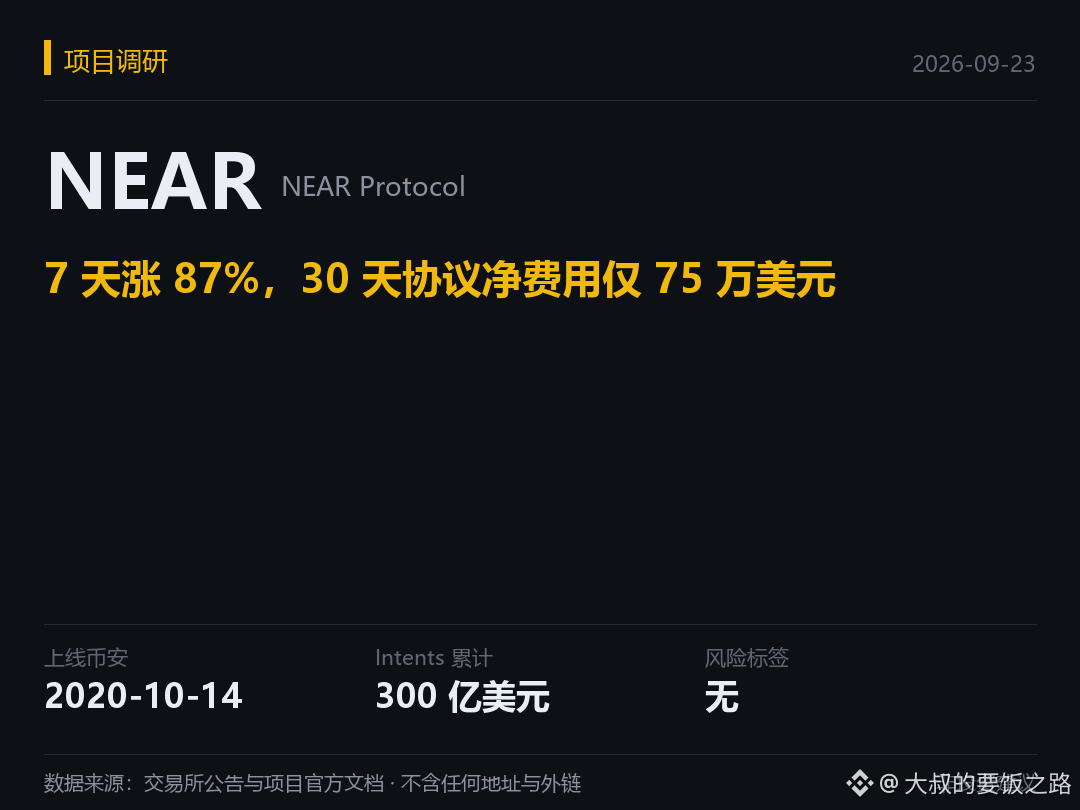
NEAR jumps 87% in 7 days, but the protocol’s net fees over 30 days are only $750,000Putting these two numbers together is why I want to write $NEAR : the price rose 87% over 7 days, while the protocol’s net fees over 30 days were only about $757,500.
This doesn’t mean NEAR is bad. I understand what it’s doing, and it’s doing it pretty deeply. But figuring out whether the “reason for the price increase” and “fundamental improvement” are the same thing is crucial for judging how things will go next.
First look at the project. NEAR is a sharded L1 chain, and starting in 2024 it shifted the narrative toward “AI-native + chain abstraction.” Founder Illia Polosukhin is a former Google researcher and one of the authors of the Transformer paper—this background has been repeatedly mentioned after 2023, and there’s good reason. The other founder is Alex Skidanov.
NEAR jumps 87% in 7 days, but the protocol’s net fees over 30 days are only $750,000
Putting these two numbers together is why I want to write $NEAR : the price rose 87% over 7 days, while the protocol’s net fees over 30 days were only about $757,500.
This doesn’t mean NEAR is bad. I understand what it’s doing, and it’s doing it pretty deeply. But figuring out whether the “reason for the price increase” and “fundamental improvement” are the same thing is crucial for judging how things will go next.
First look at the project. NEAR is a sharded L1 chain, and starting in 2024 it shifted the narrative toward “AI-native + chain abstraction.” Founder Illia Polosukhin is a former Google researcher and one of the authors of the Transformer paper—this background has been repeatedly mentioned after 2023, and there’s good reason. The other founder is Alex Skidanov.
This doesn’t mean NEAR is bad. I understand what it’s doing, and it’s doing it pretty deeply. But figuring out whether the “reason for the price increase” and “fundamental improvement” are the same thing is crucial for judging how things will go next.
First look at the project. NEAR is a sharded L1 chain, and starting in 2024 it shifted the narrative toward “AI-native + chain abstraction.” Founder Illia Polosukhin is a former Google researcher and one of the authors of the Transformer paper—this background has been repeatedly mentioned after 2023, and there’s good reason. The other founder is Alex Skidanov.
70
·
--
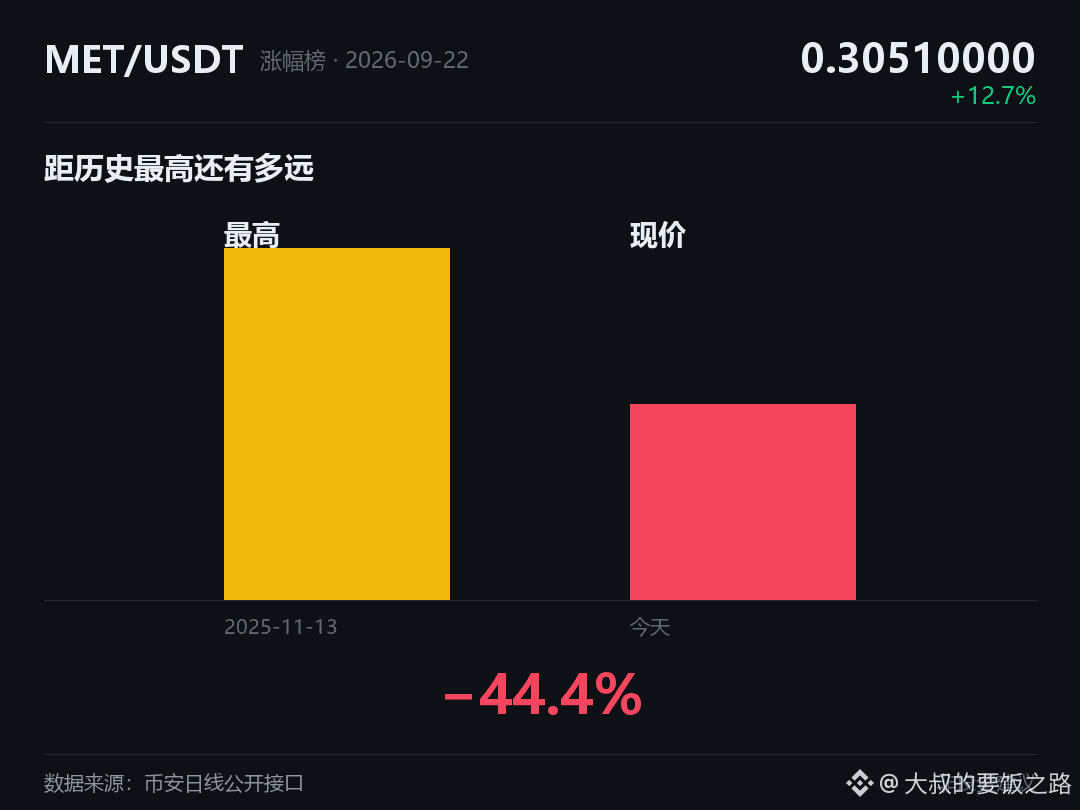
$MET is only 44.4% away from its all-time high. It’s the top-positioned one in this batch, so I’m a bit surprised.
For coins that have dropped less, I’m actually not very敢 to chase. Does anyone prefer this kind of resilience? I’d like to ask about the logic. Not investment advice
#Position
{future}(METUSDT)
$MET is only 44.4% away from its all-time high. It’s the top-positioned one in this batch, so I’m a bit surprised.
For coins that have dropped less, I’m actually not very敢 to chase. Does anyone prefer this kind of resilience? I’d like to ask about the logic. Not investment advice
#Position
For coins that have dropped less, I’m actually not very敢 to chase. Does anyone prefer this kind of resilience? I’d like to ask about the logic. Not investment advice
#Position
12
·
--
Article
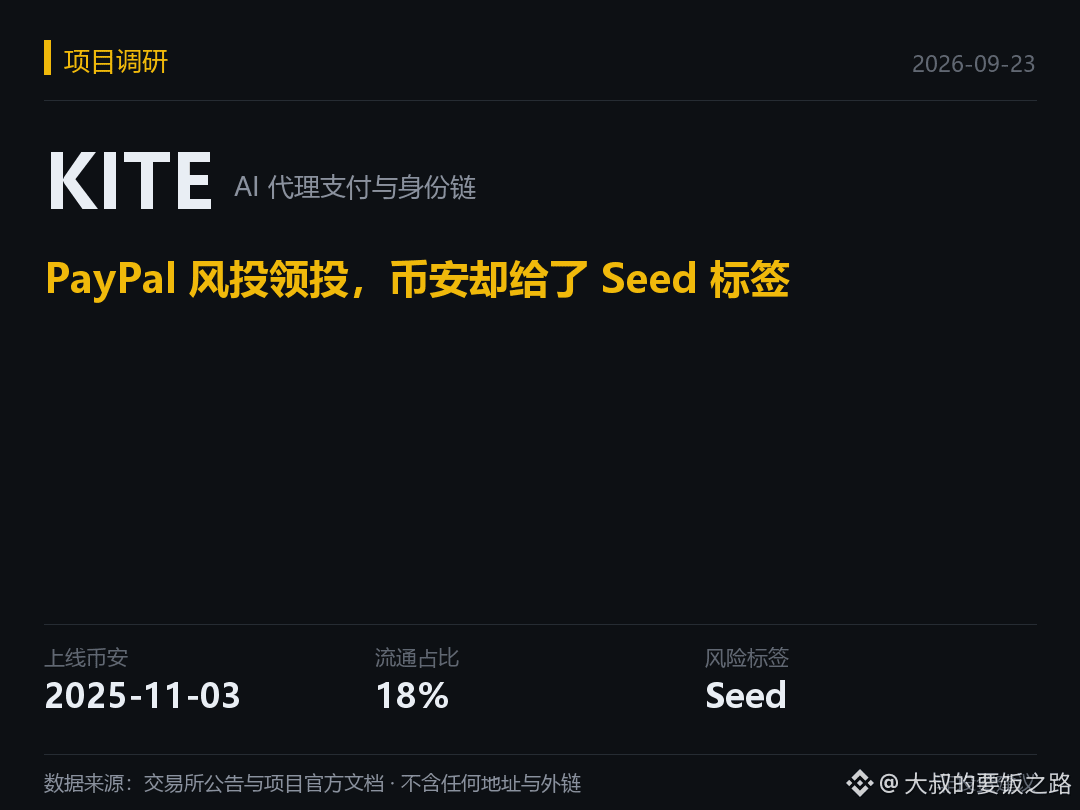
KITE is an AI payment chain led by PayPal’s venture capital—yet Binance has given it a Seed tag$KITE is, in my opinion, the most worth writing about on its own among this batch—because the investment stakeholder list and its exchange risk tags together tell a story from two directions.
First, take a look at the project. Kite is building the “payments and identity layer for AI agents.” Its former name was Zettablock. Technically, it’s a PoS, EVM-compatible L1, with the mainnet running as an Avalanche sovereign chain. Its product line includes Kite Chain, Agent Passport (agent identity), and the Agent App Store, integrating machine payment protocols from x402, Google AP2, and Stripe, as well as Anthropic’s MCP standard. It is a member of AAIF under the Linux Foundation. It currently has over 90 service providers onboarded, and PayPal and Shopify are running pilots. Testnet data shows 1.9 billion agent interactions and 300 million transactions.
KITE is an AI payment chain led by PayPal’s venture capital—yet Binance has given it a Seed tag
$KITE is, in my opinion, the most worth writing about on its own among this batch—because the investment stakeholder list and its exchange risk tags together tell a story from two directions.
First, take a look at the project. Kite is building the “payments and identity layer for AI agents.” Its former name was Zettablock. Technically, it’s a PoS, EVM-compatible L1, with the mainnet running as an Avalanche sovereign chain. Its product line includes Kite Chain, Agent Passport (agent identity), and the Agent App Store, integrating machine payment protocols from x402, Google AP2, and Stripe, as well as Anthropic’s MCP standard. It is a member of AAIF under the Linux Foundation. It currently has over 90 service providers onboarded, and PayPal and Shopify are running pilots. Testnet data shows 1.9 billion agent interactions and 300 million transactions.
First, take a look at the project. Kite is building the “payments and identity layer for AI agents.” Its former name was Zettablock. Technically, it’s a PoS, EVM-compatible L1, with the mainnet running as an Avalanche sovereign chain. Its product line includes Kite Chain, Agent Passport (agent identity), and the Agent App Store, integrating machine payment protocols from x402, Google AP2, and Stripe, as well as Anthropic’s MCP standard. It is a member of AAIF under the Linux Foundation. It currently has over 90 service providers onboarded, and PayPal and Shopify are running pilots. Testnet data shows 1.9 billion agent interactions and 300 million transactions.
18
·
--
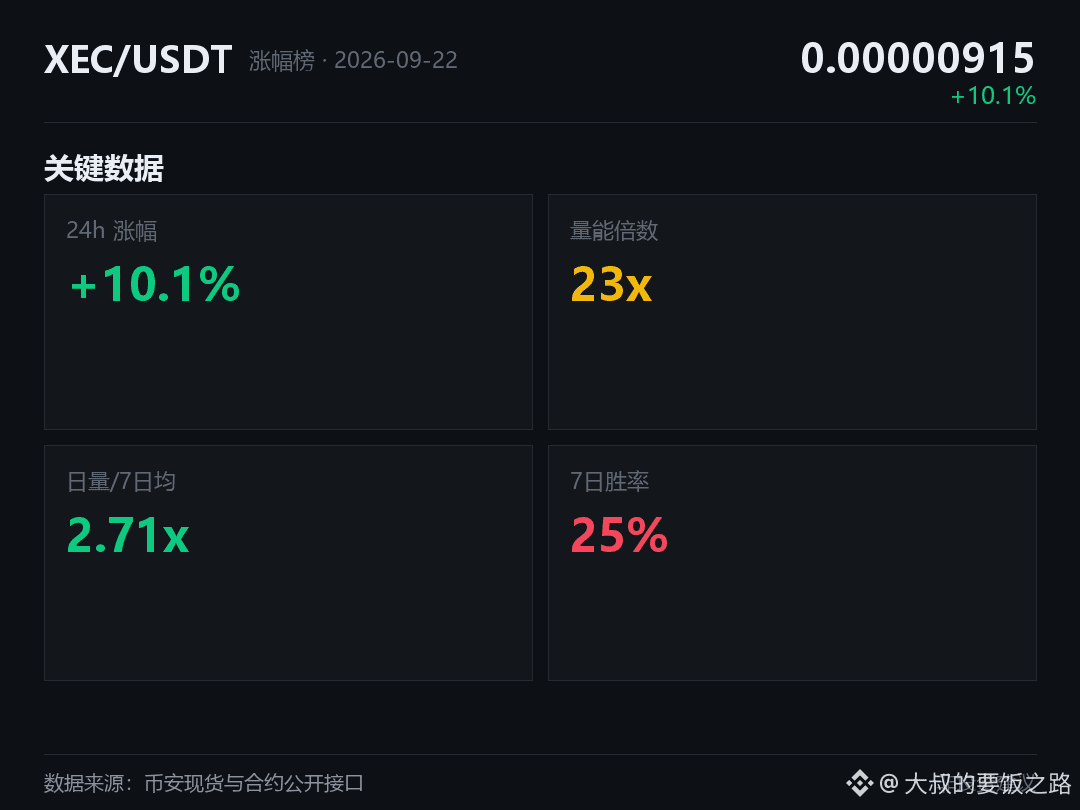
$XEC is the only one in this batch that doesn’t have a contract, so it can only be done as spot. I can’t check both the rate and the position size.
There’s a whole piece of information missing. I’m not confident in my judgment, and I’m quite curious how others approach it. Does anyone specifically look into this kind of thing? I’d like to ask what the basis is. Not investment advice
#spot
{future}(XECUSDT)
$XEC is the only one in this batch that doesn’t have a contract, so it can only be done as spot. I can’t check both the rate and the position size.
There’s a whole piece of information missing. I’m not confident in my judgment, and I’m quite curious how others approach it. Does anyone specifically look into this kind of thing? I’d like to ask what the basis is. Not investment advice
#spot
There’s a whole piece of information missing. I’m not confident in my judgment, and I’m quite curious how others approach it. Does anyone specifically look into this kind of thing? I’d like to ask what the basis is. Not investment advice
#spot
1
34
·
--
Article
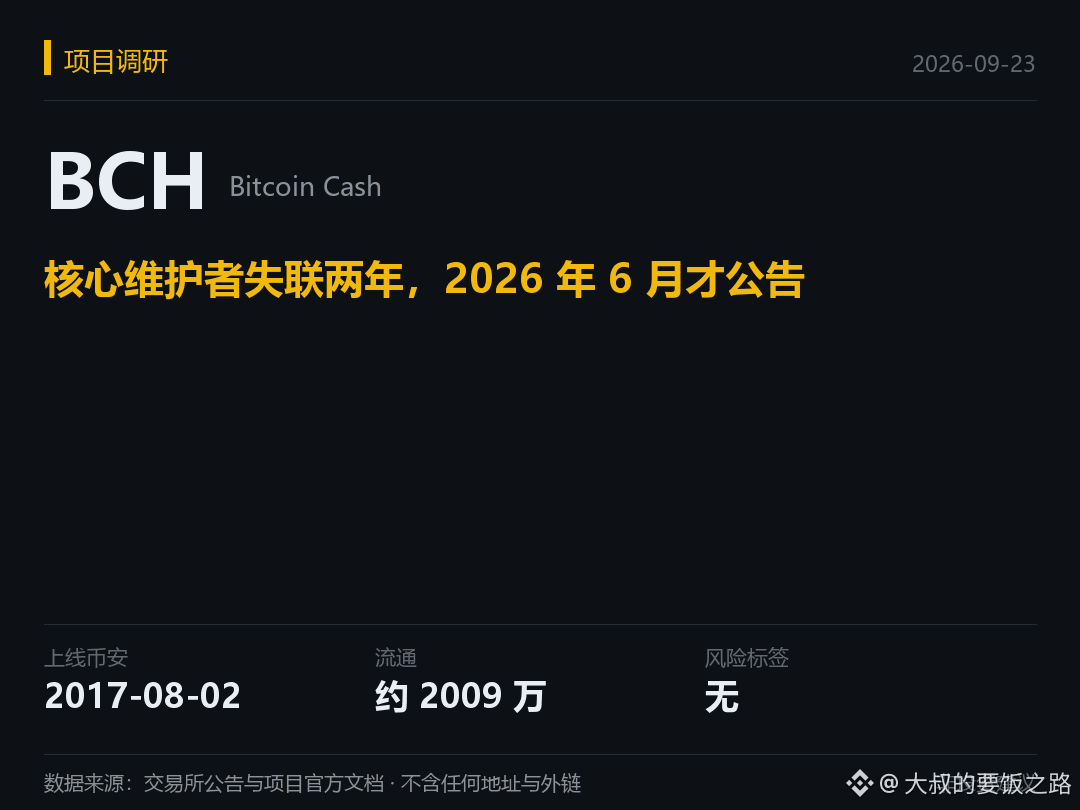
BCH’s core maintainer has been missing for two years, only announced in June 2026First, let me share the most memorable thing I think is worth remembering: On June 10, 2026, the BCH development team issued an announcement disclosing that the core maintainer, freetrader, has been unreachable since May 2024 — missing for a full two years. At the same time, the multi-signature holders of the 2,048 BCH development funds have already completed the replacement.
Being publicly disclosed only after someone has been missing for two years is uncommon among mainstream coins. This does not mean the network is having issues — BCH has several independent implementations, and nodes have continued to produce blocks normally. But it shows that BCH’s development and governance depend on a small number of key individuals more than the outside world might assume.
BCH’s core maintainer has been missing for two years, only announced in June 2026
First, let me share the most memorable thing I think is worth remembering: On June 10, 2026, the BCH development team issued an announcement disclosing that the core maintainer, freetrader, has been unreachable since May 2024 — missing for a full two years. At the same time, the multi-signature holders of the 2,048 BCH development funds have already completed the replacement.
Being publicly disclosed only after someone has been missing for two years is uncommon among mainstream coins. This does not mean the network is having issues — BCH has several independent implementations, and nodes have continued to produce blocks normally. But it shows that BCH’s development and governance depend on a small number of key individuals more than the outside world might assume.
Being publicly disclosed only after someone has been missing for two years is uncommon among mainstream coins. This does not mean the network is having issues — BCH has several independent implementations, and nodes have continued to produce blocks normally. But it shows that BCH’s development and governance depend on a small number of key individuals more than the outside world might assume.
218
·
--
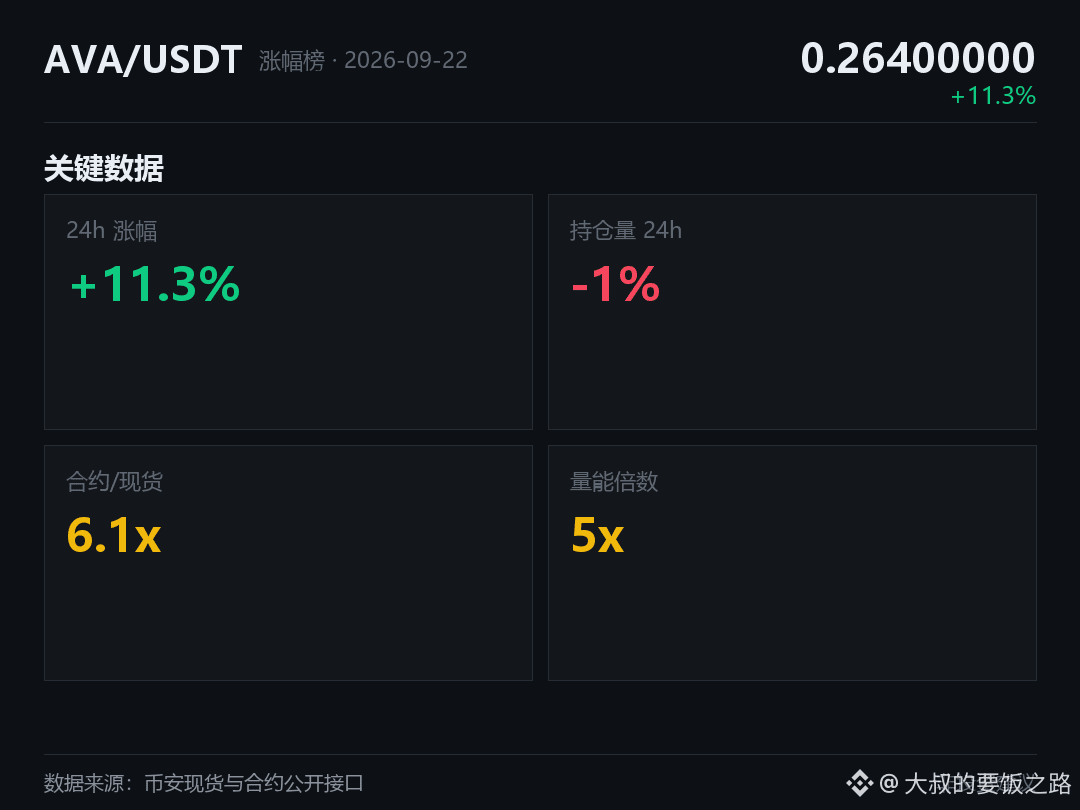
$AVA rose 11.3%, but trading volume is only 0.37 times the 7-day average, and open interest hasn’t moved either.
When I see a rally on lower volume, I usually think one layer deeper—it looks a bit off. Has anyone encountered something similar? I’d like to ask how you read it. Not investment advice
#Rally on Lower Volume
{future}(AVAUSDT)
$AVA rose 11.3%, but trading volume is only 0.37 times the 7-day average, and open interest hasn’t moved either.
When I see a rally on lower volume, I usually think one layer deeper—it looks a bit off. Has anyone encountered something similar? I’d like to ask how you read it. Not investment advice
#Rally on Lower Volume
When I see a rally on lower volume, I usually think one layer deeper—it looks a bit off. Has anyone encountered something similar? I’d like to ask how you read it. Not investment advice
#Rally on Lower Volume
17
·
--
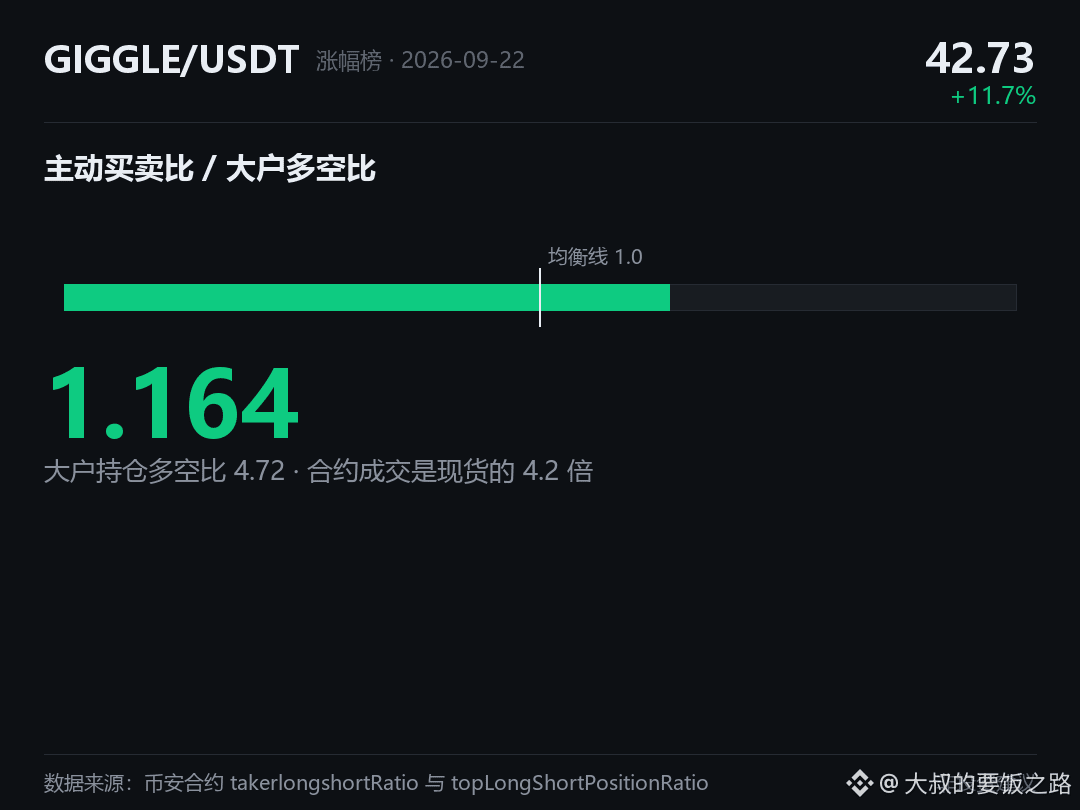
$GIGGLE Large holder long-short ratio 4.72, long positions are 4.7 times short positions. I found this number a bit unexpected—it's a little scary how high it is.
Since large holders are so consistent, do you think it’s a signal or a trap? Not investment advice
#Large holder positions
{future}(GIGGLEUSDT)
$GIGGLE Large holder long-short ratio 4.72, long positions are 4.7 times short positions. I found this number a bit unexpected—it's a little scary how high it is.
Since large holders are so consistent, do you think it’s a signal or a trap? Not investment advice
#Large holder positions
Since large holders are so consistent, do you think it’s a signal or a trap? Not investment advice
#Large holder positions
1
89
·
--
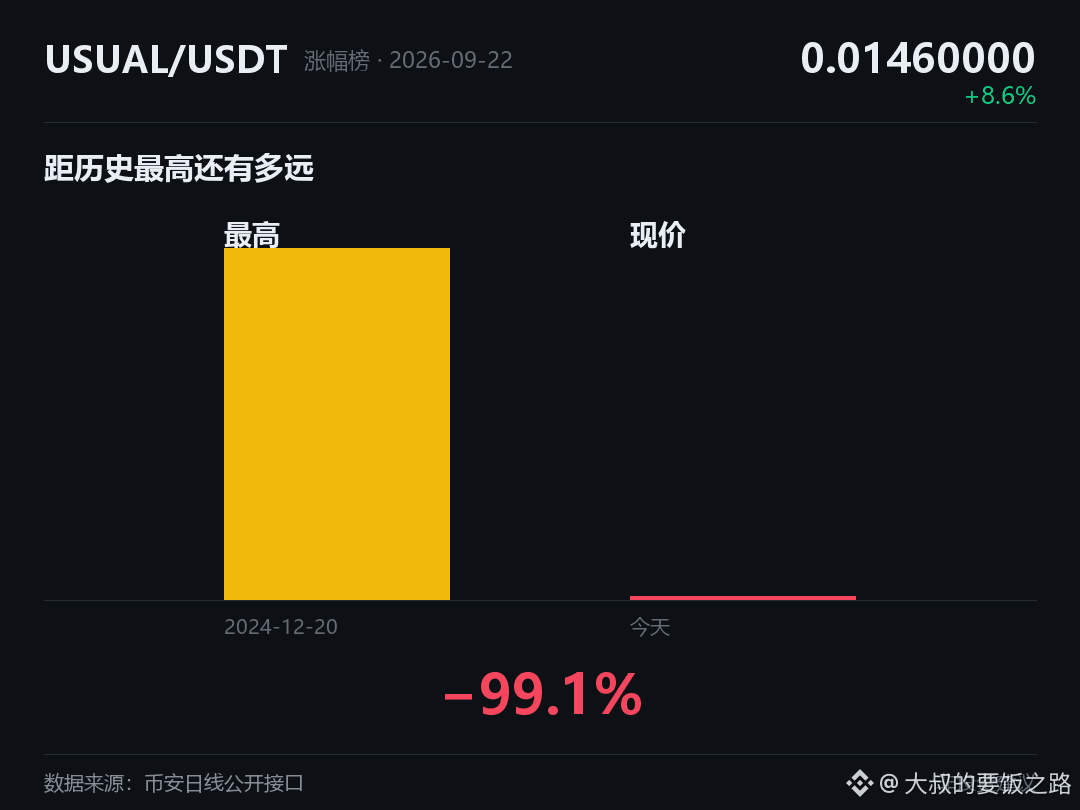
$USUAL rose 8.6%. It looks ordinary, but it’s still 99.1% away from its all-time high. The ratio of active buying vs. selling is 0.737.
The deepest “trap” on the board seems to be when volume increases, and I find that quite strange. Has anyone done statistics like this? I’d like to ask how to distinguish it. Not investment advice
#Deep Rebound
{future}(USUALUSDT)
$USUAL rose 8.6%. It looks ordinary, but it’s still 99.1% away from its all-time high. The ratio of active buying vs. selling is 0.737.
The deepest “trap” on the board seems to be when volume increases, and I find that quite strange. Has anyone done statistics like this? I’d like to ask how to distinguish it. Not investment advice
#Deep Rebound
The deepest “trap” on the board seems to be when volume increases, and I find that quite strange. Has anyone done statistics like this? I’d like to ask how to distinguish it. Not investment advice
#Deep Rebound
40
·
--
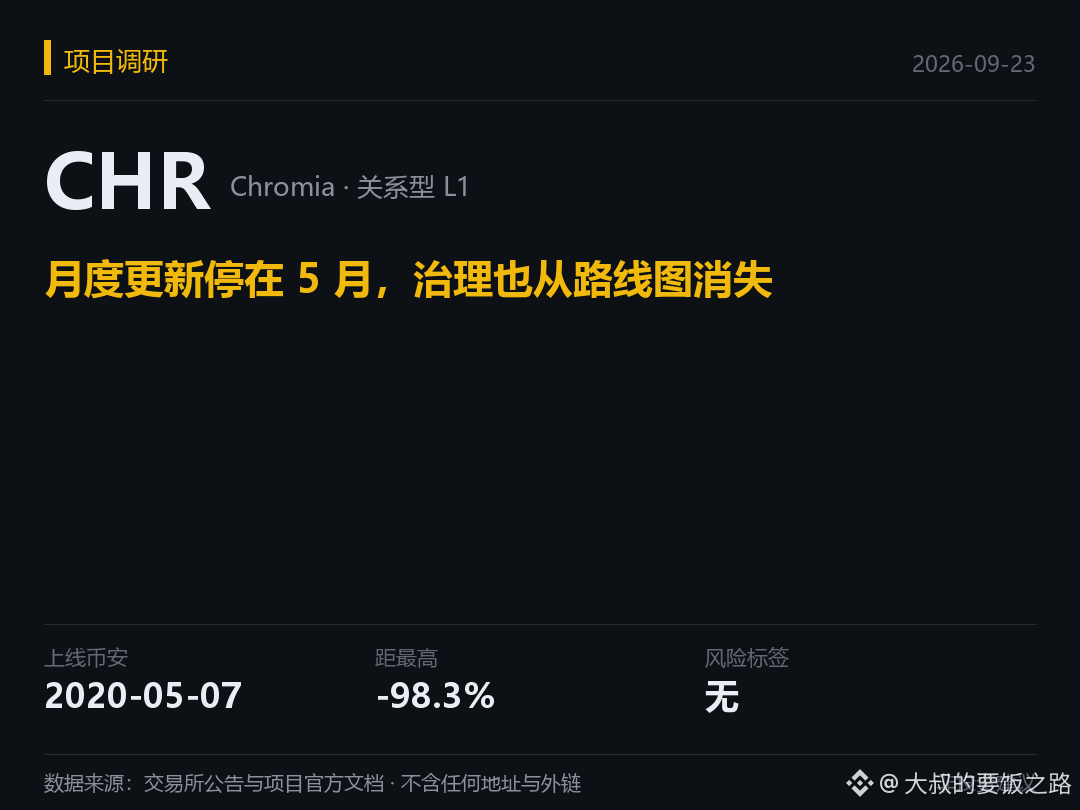
Article
CHR’s monthly updates stopped in May, and governance also disappeared from the roadmap$CHR is Chromia, a “relational blockchain.” The difference from most L1s is that it opens a dedicated chain for each dapp, instead of having all applications compete for block space on a single chain. The project team, ChromaWay, was founded in 2014 in Stockholm. The founders are Henrik Hjelte, Alex Mizrahi, and Or Perelman. In February 2026, Or Perelman was promoted from COO to CEO, replacing Henrik Hjelte.
The mainnet went live on July 16, 2024—not that early.
On Binance, it launched on May 7, 2020, through the 8th round of community voting, beating SWFTC at the time. Here’s a detail worth noting: it wasn’t through Launchpad or Megadrop—it was via voting. The rules back then were different from today.
CHR’s monthly updates stopped in May, and governance also disappeared from the roadmap
$CHR is Chromia, a “relational blockchain.” The difference from most L1s is that it opens a dedicated chain for each dapp, instead of having all applications compete for block space on a single chain. The project team, ChromaWay, was founded in 2014 in Stockholm. The founders are Henrik Hjelte, Alex Mizrahi, and Or Perelman. In February 2026, Or Perelman was promoted from COO to CEO, replacing Henrik Hjelte.
The mainnet went live on July 16, 2024—not that early.
On Binance, it launched on May 7, 2020, through the 8th round of community voting, beating SWFTC at the time. Here’s a detail worth noting: it wasn’t through Launchpad or Megadrop—it was via voting. The rules back then were different from today.
The mainnet went live on July 16, 2024—not that early.
On Binance, it launched on May 7, 2020, through the 8th round of community voting, beating SWFTC at the time. Here’s a detail worth noting: it wasn’t through Launchpad or Megadrop—it was via voting. The rules back then were different from today.
59
·
--
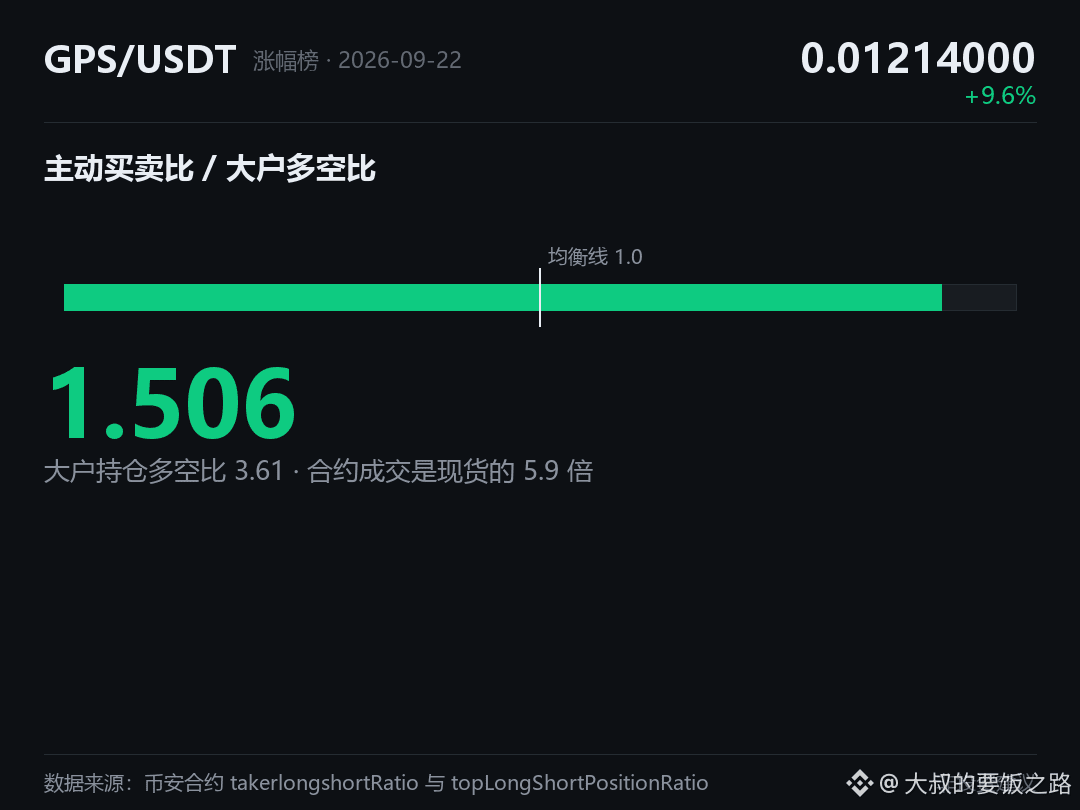
$GPS Active Buy/Sell Ratio 1.506. It’s the most aggressive buy-side order among this batch. When I saw it, I was a bit surprised—such solid buy-side strength isn’t that common.
When you see this kind of主动扫货 (aggressive buying sweep), do you think it’s institutions building positions, or a pulse from short-term funds? Not investment advice
#Buy-side
{future}(GPSUSDT)
$GPS Active Buy/Sell Ratio 1.506. It’s the most aggressive buy-side order among this batch. When I saw it, I was a bit surprised—such solid buy-side strength isn’t that common.
When you see this kind of主动扫货 (aggressive buying sweep), do you think it’s institutions building positions, or a pulse from short-term funds? Not investment advice
#Buy-side
When you see this kind of主动扫货 (aggressive buying sweep), do you think it’s institutions building positions, or a pulse from short-term funds? Not investment advice
#Buy-side
1
42
·
--
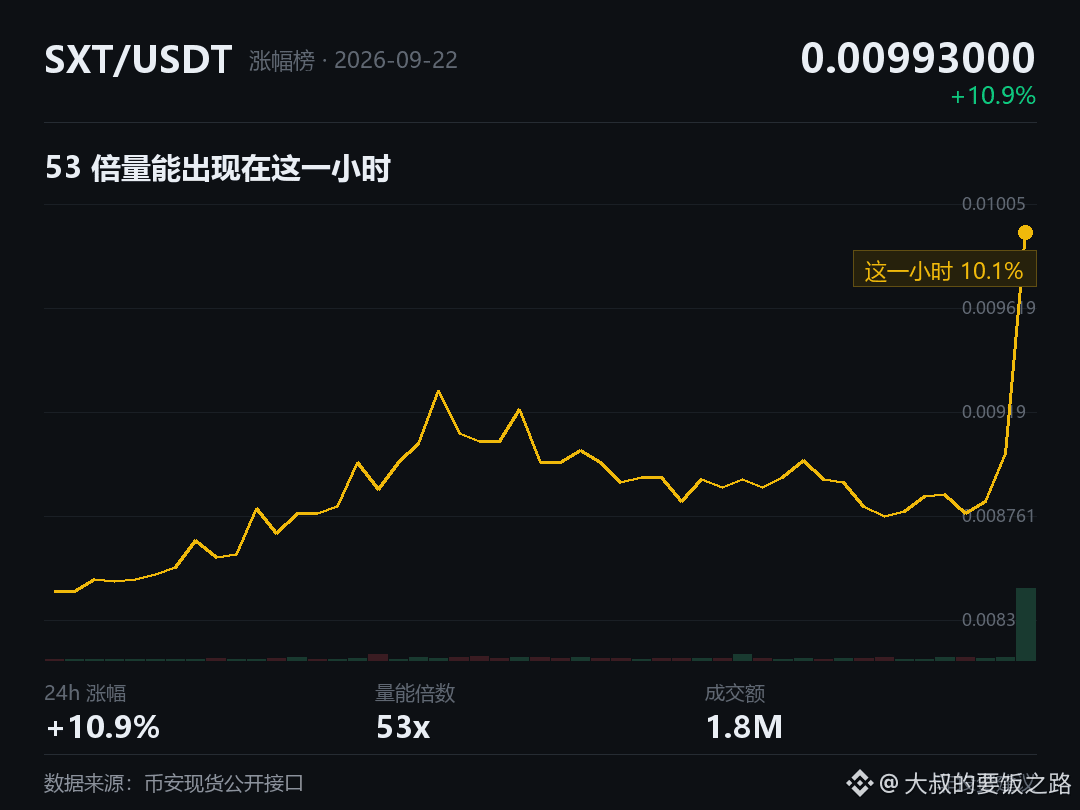
$SXT up 10.9%. Among them, the trading volume in one hour is 53 times the 24-hour average. This multiple ranks second on the list.
With such a huge surge in volume in the short term, I'm quite curious about what happens next. Has anyone studied this? I'd like to ask for your thoughts. Not investment advice
#Volume surge
{future}(SXTUSDT)
$SXT up 10.9%. Among them, the trading volume in one hour is 53 times the 24-hour average. This multiple ranks second on the list.
With such a huge surge in volume in the short term, I'm quite curious about what happens next. Has anyone studied this? I'd like to ask for your thoughts. Not investment advice
#Volume surge
With such a huge surge in volume in the short term, I'm quite curious about what happens next. Has anyone studied this? I'd like to ask for your thoughts. Not investment advice
#Volume surge
1
74
Log in to explore more content
Join global crypto users on Binance Square
⚡️ Get latest and useful information about crypto.
💬 Trusted by the world’s largest crypto exchange.
👍 Discover real insights from verified creators.
Email / Phone number
Trending Topics
AIStocksWhatNext
227,779 views
2,395 Discussing
Share & Win Traffic Reward in our Trending Hashtag Campaign
✨Topic: What Other Investment Opportunities Remain as AI Stocks Keep Rising?
👉How to Join:
Publish a short post or article with hashtag #AIStocksWhatNext
Share whether you’re bullish or bearish, and post your AI stock holdings or trade — using the trade widget may improve your eligibility.
You can also strengthen your post by sharing data or charts, and avoiding AI-generated images.
✍️Create content based on the below angles:
- Nvidia says chip sales will double next year, and top AI companies keep hitting record revenue, the compute spend behind it is just as staggering. Is AI demand really taking off? And how long can it last? AI stocks are up across the board. Is this a real breakout, or just a short-term bounce?
- Industry leaders are calling to slow down AI development, while Trump plans to build an “AI Force”, claiming AI could account for 25% of U.S. GDP in the future. Whose side are you on? Will state-level backing be a long-term win for AI stocks?
- Are you buying AI stocks? Share your AI-related trade/holdings with our trade sharing widget.
⏰Campaign Period:
- 2026-09-22 7:00 - 2026-09-24 4:00 UTC
🎁Reward:
- Qualified posts that comply with the above guidelines and contain more than 100 words will be reviewed and may receive a random traffic boost of 500 to 3,000 views. You will receive a notification from your feed secretary if your post is selected.
- Get a chance to have your article featured on Binance Square Official
Need ideas for your post? Visit the topic page #AIStocksWhatNext or the Square Guide on How to Post for Better Reach.
Binance Square Official
·310 Likes
·678.2k views
BitcoinBreaksAboveMayHighNears$86K
8,170 views
136 Discussing
DogecoinRises15%
20,652 views
721 Discussing