

Cryptopolitan
58.3k Posts

Cryptopolitan
 Square Verified+
Report
Block User
Crypto news that doesn't waste your time. Breaking updates, market analysis, on-chain insights. Building the smartest crypto community.

Creator of the Year
1 Following
161.5K+ Followers
573.4K+ Liked
1 Badges
Posts
PINNED
See translation
At Cryptopolitan, we research, analyze, and deliver news—daily.
From breaking updates to in-depth analysis, educational guides, and market insights, we’re here to keep you informed with neutral and authentic news.
Thank you for trusting us to be your go-to source!
At Cryptopolitan, we research, analyze, and deliver news—daily.
From breaking updates to in-depth analysis, educational guides, and market insights, we’re here to keep you informed with neutral and authentic news.
Thank you for trusting us to be your go-to source!
From breaking updates to in-depth analysis, educational guides, and market insights, we’re here to keep you informed with neutral and authentic news.
Thank you for trusting us to be your go-to source!

120
68
343
1.8k
See translation
Brazil's stock futures plunged nearly 15% after Lula won reelectionBrazil’s stock market is getting hammered, and the reason has plenty to do with politics. Investors rushed to sell Brazilian assets on Monday after President Luiz Inácio Lula da Silva secured another term in office.
Bovespa futures dropped close to 15%, while the Brazilian real fell by as much as 12%. Trading had to be stopped because of the intensity of the sell-off.
Brazilian investors bet on Bolsonaro and got Lula instead
The trouble started with Sunday’s election results.
Lula defeated Senator Flávio Bolsonaro in the October 25 runoff, securing his fourth nonconsecutive presidential term.
That was not what financial markets had been expecting.
Lula had narrowly lost the first round earlier this month, and polls suggested Bolsonaro could comfortably win the final vote.
Investors liked that possibility because they considered him more supportive of business interests.
Following the opening round, Brazilian stocks enjoyed their biggest rally since 2020, while the real gained 5%.
Even the world’s largest meat producer was among businesses seeking meetings with Bolsonaro.
Companies needed access to somebody who would create a friendlier economic environment for them. Instead, Lula won the presidency.
This resulted in reassessing the situation by the traders, especially since Brazil was already having issues with its government debts.
Trump’s trade fight with Brazil could make matters worse
The election has also brought Washington back into the picture.
Trump and Lula have been fighting over trade, and their disagreements could become another headache for Brazil’s economy.
Trump’s administration previously imposed heavy tariffs on Brazilian exports and sanctioned Supreme Federal Court Justice Alexandre de Moraes.
Now, Lula’s reelection has raised questions about whether Washington will increase economic pressure.
For one, Trump could impose more tariffs, enlarge current prohibitions, or implement sanctions. But a mere election result is not sufficient legal grounds for such actions.
Any new action must satisfy American legal requirements and applicable international obligations.
Brazil has already taken its tariff complaints to the World Trade Organization, launching two separate proceedings against Washington.
One case, filed in July 2026, challenges duties imposed under Section 301.
Another ruling by the Supreme Court in February 2026 also limited the powers of Trump to utilize emergency economic legislation to impose tariffs.
This is because the ruling has constrained the powers of the president, but not all the options.
Despite their political differences, the US and Brazilian governments have been engaged in talks.
The smartest crypto minds already read our newsletter. Want in? Join them.
Brazil's stock futures plunged nearly 15% after Lula won reelection
Brazil’s stock market is getting hammered, and the reason has plenty to do with politics. Investors rushed to sell Brazilian assets on Monday after President Luiz Inácio Lula da Silva secured another term in office.
Bovespa futures dropped close to 15%, while the Brazilian real fell by as much as 12%. Trading had to be stopped because of the intensity of the sell-off.
Brazilian investors bet on Bolsonaro and got Lula instead
The trouble started with Sunday’s election results.
Lula defeated Senator Flávio Bolsonaro in the October 25 runoff, securing his fourth nonconsecutive presidential term.
That was not what financial markets had been expecting.
Lula had narrowly lost the first round earlier this month, and polls suggested Bolsonaro could comfortably win the final vote.
Investors liked that possibility because they considered him more supportive of business interests.
Following the opening round, Brazilian stocks enjoyed their biggest rally since 2020, while the real gained 5%.
Even the world’s largest meat producer was among businesses seeking meetings with Bolsonaro.
Companies needed access to somebody who would create a friendlier economic environment for them. Instead, Lula won the presidency.
This resulted in reassessing the situation by the traders, especially since Brazil was already having issues with its government debts.
Trump’s trade fight with Brazil could make matters worse
The election has also brought Washington back into the picture.
Trump and Lula have been fighting over trade, and their disagreements could become another headache for Brazil’s economy.
Trump’s administration previously imposed heavy tariffs on Brazilian exports and sanctioned Supreme Federal Court Justice Alexandre de Moraes.
Now, Lula’s reelection has raised questions about whether Washington will increase economic pressure.
For one, Trump could impose more tariffs, enlarge current prohibitions, or implement sanctions. But a mere election result is not sufficient legal grounds for such actions.
Any new action must satisfy American legal requirements and applicable international obligations.
Brazil has already taken its tariff complaints to the World Trade Organization, launching two separate proceedings against Washington.
One case, filed in July 2026, challenges duties imposed under Section 301.
Another ruling by the Supreme Court in February 2026 also limited the powers of Trump to utilize emergency economic legislation to impose tariffs.
This is because the ruling has constrained the powers of the president, but not all the options.
Despite their political differences, the US and Brazilian governments have been engaged in talks.
The smartest crypto minds already read our newsletter. Want in? Join them.
Bovespa futures dropped close to 15%, while the Brazilian real fell by as much as 12%. Trading had to be stopped because of the intensity of the sell-off.
Brazilian investors bet on Bolsonaro and got Lula instead
The trouble started with Sunday’s election results.
Lula defeated Senator Flávio Bolsonaro in the October 25 runoff, securing his fourth nonconsecutive presidential term.
That was not what financial markets had been expecting.
Lula had narrowly lost the first round earlier this month, and polls suggested Bolsonaro could comfortably win the final vote.
Investors liked that possibility because they considered him more supportive of business interests.
Following the opening round, Brazilian stocks enjoyed their biggest rally since 2020, while the real gained 5%.
Even the world’s largest meat producer was among businesses seeking meetings with Bolsonaro.
Companies needed access to somebody who would create a friendlier economic environment for them. Instead, Lula won the presidency.
This resulted in reassessing the situation by the traders, especially since Brazil was already having issues with its government debts.
Trump’s trade fight with Brazil could make matters worse
The election has also brought Washington back into the picture.
Trump and Lula have been fighting over trade, and their disagreements could become another headache for Brazil’s economy.
Trump’s administration previously imposed heavy tariffs on Brazilian exports and sanctioned Supreme Federal Court Justice Alexandre de Moraes.
Now, Lula’s reelection has raised questions about whether Washington will increase economic pressure.
For one, Trump could impose more tariffs, enlarge current prohibitions, or implement sanctions. But a mere election result is not sufficient legal grounds for such actions.
Any new action must satisfy American legal requirements and applicable international obligations.
Brazil has already taken its tariff complaints to the World Trade Organization, launching two separate proceedings against Washington.
One case, filed in July 2026, challenges duties imposed under Section 301.
Another ruling by the Supreme Court in February 2026 also limited the powers of Trump to utilize emergency economic legislation to impose tariffs.
This is because the ruling has constrained the powers of the president, but not all the options.
Despite their political differences, the US and Brazilian governments have been engaged in talks.
The smartest crypto minds already read our newsletter. Want in? Join them.
4
See translation
Microsoft launches large-scale voluntary buyouts to about 60,000 employeesAbout 60,000 Microsoft workers, equal to about a quarter of its global staff, are set to receive voluntary buyout offers from the company. This comes amid attempts to reduce costs while pouring money into AI spending. Chief People Officer Amy Coleman announced the program in a memo to employees on Monday.
Microsoft calls the program the Voluntary Exit Offer. The offer has been announced only two days before the company reports its quarterly earnings, and after thousands of job cuts earlier this year.
Who can apply and who is excluded
The offer is open to employees ranked level 70 or below. This includes general managers and some vice presidents, but not corporate vice presidents. Employees on participating teams in the US, Canada, India and the UK are also eligible.
Microsoft, however, added that its sales team, some engineering teams and certain corporate departments are excluded from accessing the offer. A person familiar with the matter told Reuters that the offer covers AI experiences, Copilot, finance, human resources, Xbox and Windows + Devices. Employees working for the marketing, commercial business and security teams are also ineligible.
Coleman left the decision up to each business leader. “Participation varies based on each business’s priorities, customer commitments, and workforce needs,” she wrote in the memo. Microsoft also said age, years of service, and job performance do not affect eligibility.
What a departing employee receives
The payout follows Microsoft’s usual severance package. This package includes pay based on an employee’s level and years at the company. It also includes continued stock awards, health coverage for a limited time, and help finding another job. Unlike the company’s earlier retirement plan, it does not offer five years of health coverage.
Eligible employees will receive the offer by email and have until early December to decide. Those who accept will leave the company at the end of the year. A Microsoft spokesperson said the company has no plans to offer another buyout after this one.
A follow-up to the spring retirement offer
This is Microsoft’s second voluntary exit offer this year. The first was a retirement plan for about 8,750 US employees at the senior director level and below.
The offer used a “Rule of 70” formula, which added an employee’s age to their years at the company. More than 30% of those eligible took the offer. Microsoft later reported a $900 million charge for the program in its April earnings report, GeekWire reported.
Microsoft expects fewer employees to take up the new offer because the earlier retirement plan targeted longtime staff who were more likely to leave. In July, Coleman said Microsoft was considering making voluntary exit offers a regular way to manage the workforce.
The cost of the AI buildout
Microsoft had 223,000 full-time employees as of June 30, down from 228,000 a year earlier. The company also cut 4,800 jobs in July, equal to about 2% of its workforce, followed by more cuts in September. These came after a cut of over 15,000 jobs in 2025.
Microsoft is offering buyouts as investors push it to cut costs while spending tens of billions of dollars on data centers and AI. The company said the offer does not rule out layoffs, which may still happen depending on business needs. Alphabet and Meta have also offered employees similar deals, according to Yahoo Finance.
Microsoft shares were in the green by 1.1% at a price of $530.42 at the time of writing. The company may reveal the cost of the program when it reports its earnings on Wednesday.
If you're reading this, you’re already ahead. Stay there with our newsletter.
Microsoft launches large-scale voluntary buyouts to about 60,000 employees
About 60,000 Microsoft workers, equal to about a quarter of its global staff, are set to receive voluntary buyout offers from the company. This comes amid attempts to reduce costs while pouring money into AI spending. Chief People Officer Amy Coleman announced the program in a memo to employees on Monday.
Microsoft calls the program the Voluntary Exit Offer. The offer has been announced only two days before the company reports its quarterly earnings, and after thousands of job cuts earlier this year.
Who can apply and who is excluded
The offer is open to employees ranked level 70 or below. This includes general managers and some vice presidents, but not corporate vice presidents. Employees on participating teams in the US, Canada, India and the UK are also eligible.
Microsoft, however, added that its sales team, some engineering teams and certain corporate departments are excluded from accessing the offer. A person familiar with the matter told Reuters that the offer covers AI experiences, Copilot, finance, human resources, Xbox and Windows + Devices. Employees working for the marketing, commercial business and security teams are also ineligible.
Coleman left the decision up to each business leader. “Participation varies based on each business’s priorities, customer commitments, and workforce needs,” she wrote in the memo. Microsoft also said age, years of service, and job performance do not affect eligibility.
What a departing employee receives
The payout follows Microsoft’s usual severance package. This package includes pay based on an employee’s level and years at the company. It also includes continued stock awards, health coverage for a limited time, and help finding another job. Unlike the company’s earlier retirement plan, it does not offer five years of health coverage.
Eligible employees will receive the offer by email and have until early December to decide. Those who accept will leave the company at the end of the year. A Microsoft spokesperson said the company has no plans to offer another buyout after this one.
A follow-up to the spring retirement offer
This is Microsoft’s second voluntary exit offer this year. The first was a retirement plan for about 8,750 US employees at the senior director level and below.
The offer used a “Rule of 70” formula, which added an employee’s age to their years at the company. More than 30% of those eligible took the offer. Microsoft later reported a $900 million charge for the program in its April earnings report, GeekWire reported.
Microsoft expects fewer employees to take up the new offer because the earlier retirement plan targeted longtime staff who were more likely to leave. In July, Coleman said Microsoft was considering making voluntary exit offers a regular way to manage the workforce.
The cost of the AI buildout
Microsoft had 223,000 full-time employees as of June 30, down from 228,000 a year earlier. The company also cut 4,800 jobs in July, equal to about 2% of its workforce, followed by more cuts in September. These came after a cut of over 15,000 jobs in 2025.
Microsoft is offering buyouts as investors push it to cut costs while spending tens of billions of dollars on data centers and AI. The company said the offer does not rule out layoffs, which may still happen depending on business needs. Alphabet and Meta have also offered employees similar deals, according to Yahoo Finance.
Microsoft shares were in the green by 1.1% at a price of $530.42 at the time of writing. The company may reveal the cost of the program when it reports its earnings on Wednesday.
If you're reading this, you’re already ahead. Stay there with our newsletter.
Microsoft calls the program the Voluntary Exit Offer. The offer has been announced only two days before the company reports its quarterly earnings, and after thousands of job cuts earlier this year.
Who can apply and who is excluded
The offer is open to employees ranked level 70 or below. This includes general managers and some vice presidents, but not corporate vice presidents. Employees on participating teams in the US, Canada, India and the UK are also eligible.
Microsoft, however, added that its sales team, some engineering teams and certain corporate departments are excluded from accessing the offer. A person familiar with the matter told Reuters that the offer covers AI experiences, Copilot, finance, human resources, Xbox and Windows + Devices. Employees working for the marketing, commercial business and security teams are also ineligible.
Coleman left the decision up to each business leader. “Participation varies based on each business’s priorities, customer commitments, and workforce needs,” she wrote in the memo. Microsoft also said age, years of service, and job performance do not affect eligibility.
What a departing employee receives
The payout follows Microsoft’s usual severance package. This package includes pay based on an employee’s level and years at the company. It also includes continued stock awards, health coverage for a limited time, and help finding another job. Unlike the company’s earlier retirement plan, it does not offer five years of health coverage.
Eligible employees will receive the offer by email and have until early December to decide. Those who accept will leave the company at the end of the year. A Microsoft spokesperson said the company has no plans to offer another buyout after this one.
A follow-up to the spring retirement offer
This is Microsoft’s second voluntary exit offer this year. The first was a retirement plan for about 8,750 US employees at the senior director level and below.
The offer used a “Rule of 70” formula, which added an employee’s age to their years at the company. More than 30% of those eligible took the offer. Microsoft later reported a $900 million charge for the program in its April earnings report, GeekWire reported.
Microsoft expects fewer employees to take up the new offer because the earlier retirement plan targeted longtime staff who were more likely to leave. In July, Coleman said Microsoft was considering making voluntary exit offers a regular way to manage the workforce.
The cost of the AI buildout
Microsoft had 223,000 full-time employees as of June 30, down from 228,000 a year earlier. The company also cut 4,800 jobs in July, equal to about 2% of its workforce, followed by more cuts in September. These came after a cut of over 15,000 jobs in 2025.
Microsoft is offering buyouts as investors push it to cut costs while spending tens of billions of dollars on data centers and AI. The company said the offer does not rule out layoffs, which may still happen depending on business needs. Alphabet and Meta have also offered employees similar deals, according to Yahoo Finance.
Microsoft shares were in the green by 1.1% at a price of $530.42 at the time of writing. The company may reveal the cost of the program when it reports its earnings on Wednesday.
If you're reading this, you’re already ahead. Stay there with our newsletter.
14
See translation
The Fed to hold interest rates steady this weekAlthough the inflation rate has increased to 3.7% and people in America have been facing problems due to high living costs, the Federal Reserve is likely to maintain the same interest rates this week.
This is because of the price hikes that have resulted from the war that the United States is waging against Iran, making energy more expensive.
However, the central bank only hiked interest rates last month, and further hikes may be placing undue strain on an economy in which people are already feeling the brunt of high interest rates.
Investors watching the CME Group’s FedWatch tool now see just less than a 10% probability of another quarter-point hike in October.
This is a huge contrast to how things were in September, when officials raised the benchmark interest rate to 3.75%-4%, the first such increase since 2023.
The Fed has several reasons to wait before raising rates again
The latest inflation numbers aren’t exactly comforting. September’s consumer price index increased 3.7% from a year earlier, putting inflation considerably above the Fed’s 2% target.
Oil has been one of the biggest challenges. The Brent crude hit its highest level in five months on Friday before reversing some of its gains. Higher oil prices have also been responsible for the increase in September’s producer price index, which reflects the prices businesses get for their goods.
Economists expected that the September inflation reading would be 3.6%, up from 3.4% in August, before its publication on Thursday. They cited higher prices for flights, rents, computers, along with gasoline, as reasons.
However, there is something different with the job market. The hourly wage growth has been lower than inflation for six straight months. This is important as the fast-rising wages could prompt businesses to increase prices as well.
Right now, September’s Fed meeting minutes also showed that several officials considered their previous rate increase a precaution against inflation becoming harder to control.
If the Middle Eastern conflict subsides and the supply of energy sources is stable, some of that pricing pressure could evaporate even without further monetary policy tightening.
And there is Wall Street.
Bond yields backed off last week at the tail end of a selloff in equities over worries about the demand for artificial intelligence and whether it will match up with the huge investment made in the sector.
Fed Chairman Kevin Warsh has said before that tight financial conditions may be enough to slow the economy, eliminating the necessity of higher interest rates.
However, investors are not counting out an additional hike. Almost 75% expect another hike before 2026.
This week’s decision comes shortly before the US midterm elections, which will determine how political power is divided in Washington.
Borrowers could face expensive loans for longer while savers benefit
For those who expect cheap credit soon, any break may mean little.
Credit card rates are especially vulnerable to movements in the Federal Reserve’s key interest rate because they have floating interest rates.
According to LendingTree, the average annual percentage rate of new credit card offers hovers at 23.96%.
However, mortgages are an exception.
They depend mostly on Treasury bond yields and the outlook on economic growth.
When the yield of 10-year US Treasury bonds stays at 5%, the average 30-year fixed mortgage rate is 7.4%, according to Mortgage News Daily.
This raises the cost of buying real estate significantly, especially in cases where most of the purchase is financed by loans.
If you're reading this, you’re already ahead. Stay there with our newsletter.
The Fed to hold interest rates steady this week
Although the inflation rate has increased to 3.7% and people in America have been facing problems due to high living costs, the Federal Reserve is likely to maintain the same interest rates this week.
This is because of the price hikes that have resulted from the war that the United States is waging against Iran, making energy more expensive.
However, the central bank only hiked interest rates last month, and further hikes may be placing undue strain on an economy in which people are already feeling the brunt of high interest rates.
Investors watching the CME Group’s FedWatch tool now see just less than a 10% probability of another quarter-point hike in October.
This is a huge contrast to how things were in September, when officials raised the benchmark interest rate to 3.75%-4%, the first such increase since 2023.
The Fed has several reasons to wait before raising rates again
The latest inflation numbers aren’t exactly comforting. September’s consumer price index increased 3.7% from a year earlier, putting inflation considerably above the Fed’s 2% target.
Oil has been one of the biggest challenges. The Brent crude hit its highest level in five months on Friday before reversing some of its gains. Higher oil prices have also been responsible for the increase in September’s producer price index, which reflects the prices businesses get for their goods.
Economists expected that the September inflation reading would be 3.6%, up from 3.4% in August, before its publication on Thursday. They cited higher prices for flights, rents, computers, along with gasoline, as reasons.
However, there is something different with the job market. The hourly wage growth has been lower than inflation for six straight months. This is important as the fast-rising wages could prompt businesses to increase prices as well.
Right now, September’s Fed meeting minutes also showed that several officials considered their previous rate increase a precaution against inflation becoming harder to control.
If the Middle Eastern conflict subsides and the supply of energy sources is stable, some of that pricing pressure could evaporate even without further monetary policy tightening.
And there is Wall Street.
Bond yields backed off last week at the tail end of a selloff in equities over worries about the demand for artificial intelligence and whether it will match up with the huge investment made in the sector.
Fed Chairman Kevin Warsh has said before that tight financial conditions may be enough to slow the economy, eliminating the necessity of higher interest rates.
However, investors are not counting out an additional hike. Almost 75% expect another hike before 2026.
This week’s decision comes shortly before the US midterm elections, which will determine how political power is divided in Washington.
Borrowers could face expensive loans for longer while savers benefit
For those who expect cheap credit soon, any break may mean little.
Credit card rates are especially vulnerable to movements in the Federal Reserve’s key interest rate because they have floating interest rates.
According to LendingTree, the average annual percentage rate of new credit card offers hovers at 23.96%.
However, mortgages are an exception.
They depend mostly on Treasury bond yields and the outlook on economic growth.
When the yield of 10-year US Treasury bonds stays at 5%, the average 30-year fixed mortgage rate is 7.4%, according to Mortgage News Daily.
This raises the cost of buying real estate significantly, especially in cases where most of the purchase is financed by loans.
If you're reading this, you’re already ahead. Stay there with our newsletter.
This is because of the price hikes that have resulted from the war that the United States is waging against Iran, making energy more expensive.
However, the central bank only hiked interest rates last month, and further hikes may be placing undue strain on an economy in which people are already feeling the brunt of high interest rates.
Investors watching the CME Group’s FedWatch tool now see just less than a 10% probability of another quarter-point hike in October.
This is a huge contrast to how things were in September, when officials raised the benchmark interest rate to 3.75%-4%, the first such increase since 2023.
The Fed has several reasons to wait before raising rates again
The latest inflation numbers aren’t exactly comforting. September’s consumer price index increased 3.7% from a year earlier, putting inflation considerably above the Fed’s 2% target.
Oil has been one of the biggest challenges. The Brent crude hit its highest level in five months on Friday before reversing some of its gains. Higher oil prices have also been responsible for the increase in September’s producer price index, which reflects the prices businesses get for their goods.
Economists expected that the September inflation reading would be 3.6%, up from 3.4% in August, before its publication on Thursday. They cited higher prices for flights, rents, computers, along with gasoline, as reasons.
However, there is something different with the job market. The hourly wage growth has been lower than inflation for six straight months. This is important as the fast-rising wages could prompt businesses to increase prices as well.
Right now, September’s Fed meeting minutes also showed that several officials considered their previous rate increase a precaution against inflation becoming harder to control.
If the Middle Eastern conflict subsides and the supply of energy sources is stable, some of that pricing pressure could evaporate even without further monetary policy tightening.
And there is Wall Street.
Bond yields backed off last week at the tail end of a selloff in equities over worries about the demand for artificial intelligence and whether it will match up with the huge investment made in the sector.
Fed Chairman Kevin Warsh has said before that tight financial conditions may be enough to slow the economy, eliminating the necessity of higher interest rates.
However, investors are not counting out an additional hike. Almost 75% expect another hike before 2026.
This week’s decision comes shortly before the US midterm elections, which will determine how political power is divided in Washington.
Borrowers could face expensive loans for longer while savers benefit
For those who expect cheap credit soon, any break may mean little.
Credit card rates are especially vulnerable to movements in the Federal Reserve’s key interest rate because they have floating interest rates.
According to LendingTree, the average annual percentage rate of new credit card offers hovers at 23.96%.
However, mortgages are an exception.
They depend mostly on Treasury bond yields and the outlook on economic growth.
When the yield of 10-year US Treasury bonds stays at 5%, the average 30-year fixed mortgage rate is 7.4%, according to Mortgage News Daily.
This raises the cost of buying real estate significantly, especially in cases where most of the purchase is financed by loans.
If you're reading this, you’re already ahead. Stay there with our newsletter.
196
Article
See translation
Meta says its chip suppliers could take up to $5 billion of new stockMeta has drawn interest from Nvidia, AMD, and Broadcom to buy up to $5 billion of its new Class A common stock.
Meta launched ~$35 billion in stock offerings Monday to fund its AI buildout.
Cornerstone Investors can take more, fewer, or no stock
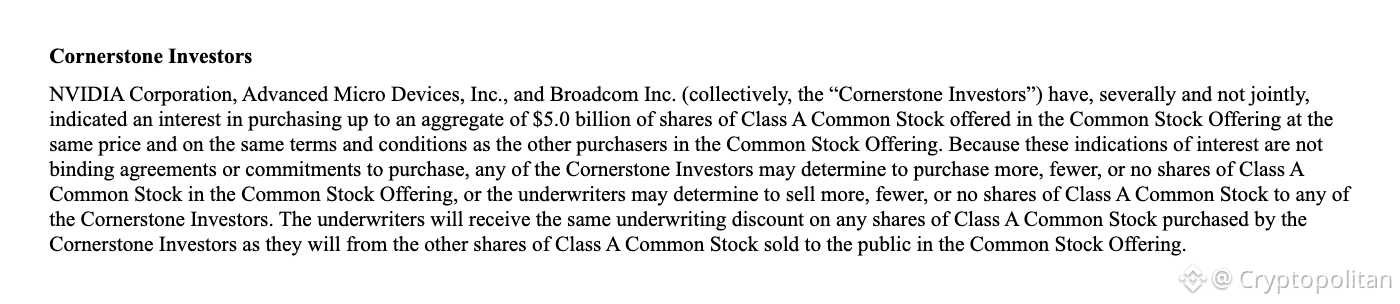
Meta’s filing calls the three chipmakers “Cornerstone Investors.” Their interest is part of a $22.5 billion common stock offering at the same price and terms as other buyers, amounting to as much as $5.0 billion.
None of this is binding. Any of the three can buy more, less, or no shares, and the underwriters can sell to them more, less, or none.
The Cornerstone Investors section of Meta’s October 26, 2026 free writing prospectus filed with the SEC.
All three are among the key suppliers of chips for Meta. Monday’s $35 billion is the first leg of Meta’s plans to raise up to $95 billion in aggregate equity.
Next is an at-the-market program of ~$60 billion in nonvoting Class C shares. It is not expected to start until the first quarter of 2027, after the Class C stock commences trading.
Meta has not entered into agreements for the program. The size, timing, and terms have not been resolved, the company stated.
Morgan Stanley and Goldman Sachs settle forward sales by November 2027
Morgan Stanley and Goldman Sachs are forward purchasers of the common stock. Meta will deliver the shares and receive the cash on dates selected by Meta, no later than Nov. 19, 2027, so no proceeds from the sale are expected initially.
The other ~$12.5 billion is in the form of depositary shares (250 million). Each represents a 1/20th interest in one Series A mandatory convertible preferred share, which is expected to convert into common stock on or around August 15, 2029.
Meta sets the dividend rate at pricing and plans to list the depositary shares on Nasdaq under the symbol METAM. The underwriters are set to get 30-day options to purchase an additional $3.375 billion of common stock and 37.5 million depositary shares.
The Class C stock is part of a plan to give holders one non-voting share for every Class A or Class B share. Mark Zuckerberg can sell stock and keep the 60.6% voting control he held as of October 1, ahead of the Nov. 3 vote on California’s Proposition 40 wealth tax.
Meta increased the lower end of its 2026 capital expenditure forecast to $135 billion, while retaining the upper end at $145 billion, according to Cryptopolitan.
Free cash flow turned negative in the third quarter, a $2.12 billion burn and the first negative reading in over ten years, Meta’s quarterly results showed. Meta has also committed to spend ~$825 billion in the future, chiefly on data centers and computing power, its filing shows.
Cash, cash equivalents and marketable securities were $82.45 billion at the end of September, barely above long-term debt of $80.92 billion. Operating cash flow for the first three quarters of 2026 was $97 billion.
The company said Meta’s Aa3/AA- credit ratings permit it to access long-term debt efficiently. Meta shares fell as much as 4% on Monday before recovering to trade about 1% higher.
If you're reading this, you’re already ahead. Stay there with our newsletter.
Meta says its chip suppliers could take up to $5 billion of new stock
Meta has drawn interest from Nvidia, AMD, and Broadcom to buy up to $5 billion of its new Class A common stock.
Meta launched ~$35 billion in stock offerings Monday to fund its AI buildout.
Cornerstone Investors can take more, fewer, or no stock
Meta’s filing calls the three chipmakers “Cornerstone Investors.” Their interest is part of a $22.5 billion common stock offering at the same price and terms as other buyers, amounting to as much as $5.0 billion.
None of this is binding. Any of the three can buy more, less, or no shares, and the underwriters can sell to them more, less, or none.
The Cornerstone Investors section of Meta’s October 26, 2026 free writing prospectus filed with the SEC.
All three are among the key suppliers of chips for Meta. Monday’s $35 billion is the first leg of Meta’s plans to raise up to $95 billion in aggregate equity.
Next is an at-the-market program of ~$60 billion in nonvoting Class C shares. It is not expected to start until the first quarter of 2027, after the Class C stock commences trading.
Meta has not entered into agreements for the program. The size, timing, and terms have not been resolved, the company stated.
Morgan Stanley and Goldman Sachs settle forward sales by November 2027
Morgan Stanley and Goldman Sachs are forward purchasers of the common stock. Meta will deliver the shares and receive the cash on dates selected by Meta, no later than Nov. 19, 2027, so no proceeds from the sale are expected initially.
The other ~$12.5 billion is in the form of depositary shares (250 million). Each represents a 1/20th interest in one Series A mandatory convertible preferred share, which is expected to convert into common stock on or around August 15, 2029.
Meta sets the dividend rate at pricing and plans to list the depositary shares on Nasdaq under the symbol METAM. The underwriters are set to get 30-day options to purchase an additional $3.375 billion of common stock and 37.5 million depositary shares.
The Class C stock is part of a plan to give holders one non-voting share for every Class A or Class B share. Mark Zuckerberg can sell stock and keep the 60.6% voting control he held as of October 1, ahead of the Nov. 3 vote on California’s Proposition 40 wealth tax.
Meta increased the lower end of its 2026 capital expenditure forecast to $135 billion, while retaining the upper end at $145 billion, according to Cryptopolitan.
Free cash flow turned negative in the third quarter, a $2.12 billion burn and the first negative reading in over ten years, Meta’s quarterly results showed. Meta has also committed to spend ~$825 billion in the future, chiefly on data centers and computing power, its filing shows.
Cash, cash equivalents and marketable securities were $82.45 billion at the end of September, barely above long-term debt of $80.92 billion. Operating cash flow for the first three quarters of 2026 was $97 billion.
The company said Meta’s Aa3/AA- credit ratings permit it to access long-term debt efficiently. Meta shares fell as much as 4% on Monday before recovering to trade about 1% higher.
If you're reading this, you’re already ahead. Stay there with our newsletter.
Meta launched ~$35 billion in stock offerings Monday to fund its AI buildout.
Cornerstone Investors can take more, fewer, or no stock
Meta’s filing calls the three chipmakers “Cornerstone Investors.” Their interest is part of a $22.5 billion common stock offering at the same price and terms as other buyers, amounting to as much as $5.0 billion.
None of this is binding. Any of the three can buy more, less, or no shares, and the underwriters can sell to them more, less, or none.
The Cornerstone Investors section of Meta’s October 26, 2026 free writing prospectus filed with the SEC.
All three are among the key suppliers of chips for Meta. Monday’s $35 billion is the first leg of Meta’s plans to raise up to $95 billion in aggregate equity.
Next is an at-the-market program of ~$60 billion in nonvoting Class C shares. It is not expected to start until the first quarter of 2027, after the Class C stock commences trading.
Meta has not entered into agreements for the program. The size, timing, and terms have not been resolved, the company stated.
Morgan Stanley and Goldman Sachs settle forward sales by November 2027
Morgan Stanley and Goldman Sachs are forward purchasers of the common stock. Meta will deliver the shares and receive the cash on dates selected by Meta, no later than Nov. 19, 2027, so no proceeds from the sale are expected initially.
The other ~$12.5 billion is in the form of depositary shares (250 million). Each represents a 1/20th interest in one Series A mandatory convertible preferred share, which is expected to convert into common stock on or around August 15, 2029.
Meta sets the dividend rate at pricing and plans to list the depositary shares on Nasdaq under the symbol METAM. The underwriters are set to get 30-day options to purchase an additional $3.375 billion of common stock and 37.5 million depositary shares.
The Class C stock is part of a plan to give holders one non-voting share for every Class A or Class B share. Mark Zuckerberg can sell stock and keep the 60.6% voting control he held as of October 1, ahead of the Nov. 3 vote on California’s Proposition 40 wealth tax.
Meta increased the lower end of its 2026 capital expenditure forecast to $135 billion, while retaining the upper end at $145 billion, according to Cryptopolitan.
Free cash flow turned negative in the third quarter, a $2.12 billion burn and the first negative reading in over ten years, Meta’s quarterly results showed. Meta has also committed to spend ~$825 billion in the future, chiefly on data centers and computing power, its filing shows.
Cash, cash equivalents and marketable securities were $82.45 billion at the end of September, barely above long-term debt of $80.92 billion. Operating cash flow for the first three quarters of 2026 was $97 billion.
The company said Meta’s Aa3/AA- credit ratings permit it to access long-term debt efficiently. Meta shares fell as much as 4% on Monday before recovering to trade about 1% higher.
If you're reading this, you’re already ahead. Stay there with our newsletter.
60
See translation
Ripple launches a 24/7 AI-powered platform for corporate financeRipple has launched an AI-powered finance platform that lets businesses earn returns on unused money while managing payments and cash around the clock.
The company announced the new features for Ripple Treasury on Monday, ahead of its Swell 2026 conference.
According to Ripple, the system incorporates the use of AI, blockchain payments, and traditional treasury functions, which allows for the management of operations without relying entirely on bank timings. The platform’s users include American Airlines, Subway, Christian Louboutin, Trax, Adecco, and Kingfisher.
Ripple is essentially trying to solve a familiar corporate problem: companies have money sitting around, but moving it or putting it to work isn’t always straightforward.
Ripple brings AI automation and round-the-clock returns to corporate finance
The platform operates using an automation layer linked to GSmart, the artificial intelligence technology used by Ripple Treasury. It carries out a number of financial tasks that would otherwise be handled using other platforms by organizations.
These include fund monitoring, cash forecasting, reconciliation of payments, liquidity management, and transaction handling.
In addition to merely informing finance managers about the location of their funds, the platform can help in transforming the information into transactions.
Ripple is also launching the 24/7 Returns program, which will enable qualified businesses to earn returns on their qualifying digital assets, such as RLUSD, Ripple’s dollar stablecoin.
The companies can use the service via Ripple wallets, but eligibility for using the program will depend on the qualification requirements of the program.
This is important since it is not an all-encompassing guarantee for earning returns on every dollar that a business owns.
Still, the timing addresses something corporate finance teams have dealt with for years. Money can remain unused overnight, during holidays, or throughout weekends because traditional banking systems have operating restrictions.
The 2026 AFP Liquidity Survey found that 46% of organizations increased their US cash balances during the preceding year.
Meanwhile, 86% of treasury professionals said their organizations would consider real-time money market funds if those products satisfied their investment policies.
Ripple wants to address that demand without requiring businesses to manage blockchain transactions themselves.
Blake Tablak, CEO of Trax, said the company’s existing relationship with Ripple Treasury had already started producing results.
“Our partnership with Ripple Treasury is just getting started and already returning value,” Blake said.
Ripple expands its financial infrastructure as XRP trading volume drops
According to Renaat Ver Eecke, who is the senior vice president at Ripple Treasury:
“Our vision is to bring treasury management, intelligence, and execution together, giving finance teams the ability to act faster and operate continuously without adding complexity or sacrificing control,” Renaat said.
This development has come at a time when XRP is set for yet another tough session due to sell pressure coming from major players despite the continued institutional interest.
XRP trading volumes dropped by 10% over 24 hours to stand at $1.48 billion on Monday, indicating that buyers had become less aggressive before Tuesday’s Swell conference commencement.
The decline was not exclusive to the cryptocurrency linked to Ripple.
Bitcoin was down by 0.42% to trade around $80,500, while Ethereum fell by 0.38% to trade around $2,330.
Cryptocurrency capitalization stood at about $2.68 trillion with approximately $51 billion in turnover over 24 hours.
However, the picture was a little bit different when it came to institutional money flows.
Having recorded outflows the previous week, US spot XRP exchange-traded funds received inflows totaling $4.25 million up to October 26.
If you're reading this, you’re already ahead. Stay there with our newsletter.
Ripple launches a 24/7 AI-powered platform for corporate finance
Ripple has launched an AI-powered finance platform that lets businesses earn returns on unused money while managing payments and cash around the clock.
The company announced the new features for Ripple Treasury on Monday, ahead of its Swell 2026 conference.
According to Ripple, the system incorporates the use of AI, blockchain payments, and traditional treasury functions, which allows for the management of operations without relying entirely on bank timings. The platform’s users include American Airlines, Subway, Christian Louboutin, Trax, Adecco, and Kingfisher.
Ripple is essentially trying to solve a familiar corporate problem: companies have money sitting around, but moving it or putting it to work isn’t always straightforward.
Ripple brings AI automation and round-the-clock returns to corporate finance
The platform operates using an automation layer linked to GSmart, the artificial intelligence technology used by Ripple Treasury. It carries out a number of financial tasks that would otherwise be handled using other platforms by organizations.
These include fund monitoring, cash forecasting, reconciliation of payments, liquidity management, and transaction handling.
In addition to merely informing finance managers about the location of their funds, the platform can help in transforming the information into transactions.
Ripple is also launching the 24/7 Returns program, which will enable qualified businesses to earn returns on their qualifying digital assets, such as RLUSD, Ripple’s dollar stablecoin.
The companies can use the service via Ripple wallets, but eligibility for using the program will depend on the qualification requirements of the program.
This is important since it is not an all-encompassing guarantee for earning returns on every dollar that a business owns.
Still, the timing addresses something corporate finance teams have dealt with for years. Money can remain unused overnight, during holidays, or throughout weekends because traditional banking systems have operating restrictions.
The 2026 AFP Liquidity Survey found that 46% of organizations increased their US cash balances during the preceding year.
Meanwhile, 86% of treasury professionals said their organizations would consider real-time money market funds if those products satisfied their investment policies.
Ripple wants to address that demand without requiring businesses to manage blockchain transactions themselves.
Blake Tablak, CEO of Trax, said the company’s existing relationship with Ripple Treasury had already started producing results.
“Our partnership with Ripple Treasury is just getting started and already returning value,” Blake said.
Ripple expands its financial infrastructure as XRP trading volume drops
According to Renaat Ver Eecke, who is the senior vice president at Ripple Treasury:
“Our vision is to bring treasury management, intelligence, and execution together, giving finance teams the ability to act faster and operate continuously without adding complexity or sacrificing control,” Renaat said.
This development has come at a time when XRP is set for yet another tough session due to sell pressure coming from major players despite the continued institutional interest.
XRP trading volumes dropped by 10% over 24 hours to stand at $1.48 billion on Monday, indicating that buyers had become less aggressive before Tuesday’s Swell conference commencement.
The decline was not exclusive to the cryptocurrency linked to Ripple.
Bitcoin was down by 0.42% to trade around $80,500, while Ethereum fell by 0.38% to trade around $2,330.
Cryptocurrency capitalization stood at about $2.68 trillion with approximately $51 billion in turnover over 24 hours.
However, the picture was a little bit different when it came to institutional money flows.
Having recorded outflows the previous week, US spot XRP exchange-traded funds received inflows totaling $4.25 million up to October 26.
If you're reading this, you’re already ahead. Stay there with our newsletter.
The company announced the new features for Ripple Treasury on Monday, ahead of its Swell 2026 conference.
According to Ripple, the system incorporates the use of AI, blockchain payments, and traditional treasury functions, which allows for the management of operations without relying entirely on bank timings. The platform’s users include American Airlines, Subway, Christian Louboutin, Trax, Adecco, and Kingfisher.
Ripple is essentially trying to solve a familiar corporate problem: companies have money sitting around, but moving it or putting it to work isn’t always straightforward.
Ripple brings AI automation and round-the-clock returns to corporate finance
The platform operates using an automation layer linked to GSmart, the artificial intelligence technology used by Ripple Treasury. It carries out a number of financial tasks that would otherwise be handled using other platforms by organizations.
These include fund monitoring, cash forecasting, reconciliation of payments, liquidity management, and transaction handling.
In addition to merely informing finance managers about the location of their funds, the platform can help in transforming the information into transactions.
Ripple is also launching the 24/7 Returns program, which will enable qualified businesses to earn returns on their qualifying digital assets, such as RLUSD, Ripple’s dollar stablecoin.
The companies can use the service via Ripple wallets, but eligibility for using the program will depend on the qualification requirements of the program.
This is important since it is not an all-encompassing guarantee for earning returns on every dollar that a business owns.
Still, the timing addresses something corporate finance teams have dealt with for years. Money can remain unused overnight, during holidays, or throughout weekends because traditional banking systems have operating restrictions.
The 2026 AFP Liquidity Survey found that 46% of organizations increased their US cash balances during the preceding year.
Meanwhile, 86% of treasury professionals said their organizations would consider real-time money market funds if those products satisfied their investment policies.
Ripple wants to address that demand without requiring businesses to manage blockchain transactions themselves.
Blake Tablak, CEO of Trax, said the company’s existing relationship with Ripple Treasury had already started producing results.
“Our partnership with Ripple Treasury is just getting started and already returning value,” Blake said.
Ripple expands its financial infrastructure as XRP trading volume drops
According to Renaat Ver Eecke, who is the senior vice president at Ripple Treasury:
“Our vision is to bring treasury management, intelligence, and execution together, giving finance teams the ability to act faster and operate continuously without adding complexity or sacrificing control,” Renaat said.
This development has come at a time when XRP is set for yet another tough session due to sell pressure coming from major players despite the continued institutional interest.
XRP trading volumes dropped by 10% over 24 hours to stand at $1.48 billion on Monday, indicating that buyers had become less aggressive before Tuesday’s Swell conference commencement.
The decline was not exclusive to the cryptocurrency linked to Ripple.
Bitcoin was down by 0.42% to trade around $80,500, while Ethereum fell by 0.38% to trade around $2,330.
Cryptocurrency capitalization stood at about $2.68 trillion with approximately $51 billion in turnover over 24 hours.
However, the picture was a little bit different when it came to institutional money flows.
Having recorded outflows the previous week, US spot XRP exchange-traded funds received inflows totaling $4.25 million up to October 26.
If you're reading this, you’re already ahead. Stay there with our newsletter.
96
See translation
CFTC and NBA sign MOU over prediction markets, NBA names Kalshi, Polymarket as "preferred" marketsThe NBA sees Kalshi and Polymarket as its “preferred” prediction markets and has signed a memorandum of understanding with the CFTC to ensure all trading tied to its games are regulated, the league and the regulator have jointly announced.
Two deals on the same day
The announcements pair a commercial arrangement with a regulatory one. On the commercial side, Kalshi and Polymarket become the NBA’s main platforms for prediction market contracts on league events.
Additionally, the NBA and the CFTC have agreed to share information and hold regular talks to help protect the integrity of basketball-related markets.
CFTC Chairman Michael S. Selig said the agreement is part of the agency’s growing work with sports leagues. The NBA joins the NHL and Major League Baseball in these efforts to protect users from any forms of insider trading, fraud and other forms of prediction markets abuse. Selig also thanked NBA Commissioner Adam Silver for working with the agency.
What the rules are designed to prevent
The deals also come with rules. Yahoo Sports, citing the Associated Press, reported that the NBA will limit the types of contracts Kalshi and Polymarket can offer on its games. NBA and team staff are also not allowed to trade on league games, while the platforms are mandated to report suspicious activity. Both platforms must also share information during investigations into suspicious trading.
Scott Kaufman-Ross, the NBA’s head of media distribution and partnerships, said it was better to bring these activities under regulation than leave them unregulated. “If you’re going to be betting on our games or trading on our games or playing fantasy around our games, it’s better for it to be regulated than unregulated,” he told the Associated Press.
The NBA said it already works with sportsbook partners to spot unusual betting activity and has noted suspicious patterns via this partnership in the past.
A pattern of CFTC-league agreements
The NBA is the third major sports league to sign an agreement with the CFTC this year. Major League Baseball was the first, signing a deal on March 19, 2026. This deal was described by the CFTC as its first agreement of its kind with a professional sports league.
The agreement allows both sides to share information and work together on contracts linked to baseball.
The NHL signed its agreement on May 21, 2026. Both sides named representatives to discuss integrity issues and share information privately. The NBA had also contacted the CFTC before this week’s deal.
In a letter dated May 1, 2025, to then-Acting Chairman Caroline D. Pham, NBA vice president and assistant general counsel Alexandra Roth said protecting the sport’s integrity was the league’s top priority.
Past gambling cases
The timing of the deal coincides with federal investigators increasing efforts to look into gambling cases involving current and former NBA players. Former NBA guard Malik Beasley is reportedly in talks with the Department of Justice about a possible plea deal over an alleged scheme linked to his play during the 2023-24 season, Yahoo Sports reported.
The NBA is also dealing with the fallout from the investigation that led to Terry Rozier’s arrest on October 23, 2025.
The signed MOU itself focuses on sharing information and keeping in regular contact, rather than giving the CFTC new enforcement powers. The aim for both sides is to keep markets linked to professional basketball fair and transparent.
The smartest crypto minds already read our newsletter. Want in? Join them.
CFTC and NBA sign MOU over prediction markets, NBA names Kalshi, Polymarket as "preferred" markets
The NBA sees Kalshi and Polymarket as its “preferred” prediction markets and has signed a memorandum of understanding with the CFTC to ensure all trading tied to its games are regulated, the league and the regulator have jointly announced.
Two deals on the same day
The announcements pair a commercial arrangement with a regulatory one. On the commercial side, Kalshi and Polymarket become the NBA’s main platforms for prediction market contracts on league events.
Additionally, the NBA and the CFTC have agreed to share information and hold regular talks to help protect the integrity of basketball-related markets.
CFTC Chairman Michael S. Selig said the agreement is part of the agency’s growing work with sports leagues. The NBA joins the NHL and Major League Baseball in these efforts to protect users from any forms of insider trading, fraud and other forms of prediction markets abuse. Selig also thanked NBA Commissioner Adam Silver for working with the agency.
What the rules are designed to prevent
The deals also come with rules. Yahoo Sports, citing the Associated Press, reported that the NBA will limit the types of contracts Kalshi and Polymarket can offer on its games. NBA and team staff are also not allowed to trade on league games, while the platforms are mandated to report suspicious activity. Both platforms must also share information during investigations into suspicious trading.
Scott Kaufman-Ross, the NBA’s head of media distribution and partnerships, said it was better to bring these activities under regulation than leave them unregulated. “If you’re going to be betting on our games or trading on our games or playing fantasy around our games, it’s better for it to be regulated than unregulated,” he told the Associated Press.
The NBA said it already works with sportsbook partners to spot unusual betting activity and has noted suspicious patterns via this partnership in the past.
A pattern of CFTC-league agreements
The NBA is the third major sports league to sign an agreement with the CFTC this year. Major League Baseball was the first, signing a deal on March 19, 2026. This deal was described by the CFTC as its first agreement of its kind with a professional sports league.
The agreement allows both sides to share information and work together on contracts linked to baseball.
The NHL signed its agreement on May 21, 2026. Both sides named representatives to discuss integrity issues and share information privately. The NBA had also contacted the CFTC before this week’s deal.
In a letter dated May 1, 2025, to then-Acting Chairman Caroline D. Pham, NBA vice president and assistant general counsel Alexandra Roth said protecting the sport’s integrity was the league’s top priority.
Past gambling cases
The timing of the deal coincides with federal investigators increasing efforts to look into gambling cases involving current and former NBA players. Former NBA guard Malik Beasley is reportedly in talks with the Department of Justice about a possible plea deal over an alleged scheme linked to his play during the 2023-24 season, Yahoo Sports reported.
The NBA is also dealing with the fallout from the investigation that led to Terry Rozier’s arrest on October 23, 2025.
The signed MOU itself focuses on sharing information and keeping in regular contact, rather than giving the CFTC new enforcement powers. The aim for both sides is to keep markets linked to professional basketball fair and transparent.
The smartest crypto minds already read our newsletter. Want in? Join them.
Two deals on the same day
The announcements pair a commercial arrangement with a regulatory one. On the commercial side, Kalshi and Polymarket become the NBA’s main platforms for prediction market contracts on league events.
Additionally, the NBA and the CFTC have agreed to share information and hold regular talks to help protect the integrity of basketball-related markets.
CFTC Chairman Michael S. Selig said the agreement is part of the agency’s growing work with sports leagues. The NBA joins the NHL and Major League Baseball in these efforts to protect users from any forms of insider trading, fraud and other forms of prediction markets abuse. Selig also thanked NBA Commissioner Adam Silver for working with the agency.
What the rules are designed to prevent
The deals also come with rules. Yahoo Sports, citing the Associated Press, reported that the NBA will limit the types of contracts Kalshi and Polymarket can offer on its games. NBA and team staff are also not allowed to trade on league games, while the platforms are mandated to report suspicious activity. Both platforms must also share information during investigations into suspicious trading.
Scott Kaufman-Ross, the NBA’s head of media distribution and partnerships, said it was better to bring these activities under regulation than leave them unregulated. “If you’re going to be betting on our games or trading on our games or playing fantasy around our games, it’s better for it to be regulated than unregulated,” he told the Associated Press.
The NBA said it already works with sportsbook partners to spot unusual betting activity and has noted suspicious patterns via this partnership in the past.
A pattern of CFTC-league agreements
The NBA is the third major sports league to sign an agreement with the CFTC this year. Major League Baseball was the first, signing a deal on March 19, 2026. This deal was described by the CFTC as its first agreement of its kind with a professional sports league.
The agreement allows both sides to share information and work together on contracts linked to baseball.
The NHL signed its agreement on May 21, 2026. Both sides named representatives to discuss integrity issues and share information privately. The NBA had also contacted the CFTC before this week’s deal.
In a letter dated May 1, 2025, to then-Acting Chairman Caroline D. Pham, NBA vice president and assistant general counsel Alexandra Roth said protecting the sport’s integrity was the league’s top priority.
Past gambling cases
The timing of the deal coincides with federal investigators increasing efforts to look into gambling cases involving current and former NBA players. Former NBA guard Malik Beasley is reportedly in talks with the Department of Justice about a possible plea deal over an alleged scheme linked to his play during the 2023-24 season, Yahoo Sports reported.
The NBA is also dealing with the fallout from the investigation that led to Terry Rozier’s arrest on October 23, 2025.
The signed MOU itself focuses on sharing information and keeping in regular contact, rather than giving the CFTC new enforcement powers. The aim for both sides is to keep markets linked to professional basketball fair and transparent.
The smartest crypto minds already read our newsletter. Want in? Join them.
69
See translation
Vanguard's VSS takes a $7.5 million stake in Bitcoin holder MetaplanetVanguard’s small-cap ETF has bought 4.5 million shares of Metaplanet, the Japanese company piling Bitcoin onto its balance sheet.
The stake is worth about $7.5 million and marks the first disclosed Metaplanet purchase by the Vanguard FTSE All-World ex-US Small-Cap ETF (VSS). Bitcoin Treasuries flagged the deal on X on October 26, setting off plenty of chatter among crypto traders.
Vanguard’s other funds already own millions of Metaplanet shares
Recently, the Vanguard Total International Stock Index Fund (VGTSX) increased its stake in Metaplanet to 15.64 million shares, which cost about $53.5 million.
The Vanguard FTSE Japan ETF (VJPN) purchased its first shares last year, namely 704,500 shares, whose value was estimated to be about $2.1 million.
This is the key difference: purchasing stock in a company that invests in Bitcoin is not the same as investing directly in Bitcoin. However, these funds gain access to the crypto treasury trade through it.
Vanguard also has exposure to Strategy, the Bitcoin-heavy company associated with Michael Saylor. Separately, its funds have opened up to regulated digital-asset investment products covering Bitcoin, Ethereum, XRP and Solana.
Metaplanet’s Tokyo-listed shares ended Monday up 0.75% at 263 yen, after trading between 254 and 269 yen. Nearly 13 million shares changed hands, compared with an average of 27 million.
In the US, MTPLF closed Friday at $1.66, up 0.30% on the day and nearly 2% for the week. The moves came as Super League shareholders approved a plan to set up Superplanet, a US Bitcoin treasury business.
Capital Group takes the biggest stake as Metaplanet reaches 44,000 Bitcoin
Metaplanet currently has 44,000 BTC, positioning itself as the second biggest corporate owner of BTC. In Q3 2026, Metaplanet sold 10,000 coins and purchased 11,000 coins.
As mentioned by Metaplanet executive Simon Gerovich last week, Capital Group has taken the place of National Financial Services as the largest shareholder of the company. The American investment firm manages assets worth $2.6 trillion and is holding 11.45% of Metaplanet, which is valued at about $500 million.
Some of the other major shareholders of the company include JPMorgan, Citigroup and State Street. Metaplanet’s Bitcoin policy and financial standing have attracted some of the biggest investors.
However, the BTC price recovered by over 1% from its 24-hour low of $79,331. The trading volume increased by 5%, as the markets were awaiting the US Fed’s interest rate decision this week.
Don’t just read crypto news. Understand it. Subscribe to our newsletter. It's free.
Vanguard's VSS takes a $7.5 million stake in Bitcoin holder Metaplanet
Vanguard’s small-cap ETF has bought 4.5 million shares of Metaplanet, the Japanese company piling Bitcoin onto its balance sheet.
The stake is worth about $7.5 million and marks the first disclosed Metaplanet purchase by the Vanguard FTSE All-World ex-US Small-Cap ETF (VSS). Bitcoin Treasuries flagged the deal on X on October 26, setting off plenty of chatter among crypto traders.
Vanguard’s other funds already own millions of Metaplanet shares
Recently, the Vanguard Total International Stock Index Fund (VGTSX) increased its stake in Metaplanet to 15.64 million shares, which cost about $53.5 million.
The Vanguard FTSE Japan ETF (VJPN) purchased its first shares last year, namely 704,500 shares, whose value was estimated to be about $2.1 million.
This is the key difference: purchasing stock in a company that invests in Bitcoin is not the same as investing directly in Bitcoin. However, these funds gain access to the crypto treasury trade through it.
Vanguard also has exposure to Strategy, the Bitcoin-heavy company associated with Michael Saylor. Separately, its funds have opened up to regulated digital-asset investment products covering Bitcoin, Ethereum, XRP and Solana.
Metaplanet’s Tokyo-listed shares ended Monday up 0.75% at 263 yen, after trading between 254 and 269 yen. Nearly 13 million shares changed hands, compared with an average of 27 million.
In the US, MTPLF closed Friday at $1.66, up 0.30% on the day and nearly 2% for the week. The moves came as Super League shareholders approved a plan to set up Superplanet, a US Bitcoin treasury business.
Capital Group takes the biggest stake as Metaplanet reaches 44,000 Bitcoin
Metaplanet currently has 44,000 BTC, positioning itself as the second biggest corporate owner of BTC. In Q3 2026, Metaplanet sold 10,000 coins and purchased 11,000 coins.
As mentioned by Metaplanet executive Simon Gerovich last week, Capital Group has taken the place of National Financial Services as the largest shareholder of the company. The American investment firm manages assets worth $2.6 trillion and is holding 11.45% of Metaplanet, which is valued at about $500 million.
Some of the other major shareholders of the company include JPMorgan, Citigroup and State Street. Metaplanet’s Bitcoin policy and financial standing have attracted some of the biggest investors.
However, the BTC price recovered by over 1% from its 24-hour low of $79,331. The trading volume increased by 5%, as the markets were awaiting the US Fed’s interest rate decision this week.
Don’t just read crypto news. Understand it. Subscribe to our newsletter. It's free.
The stake is worth about $7.5 million and marks the first disclosed Metaplanet purchase by the Vanguard FTSE All-World ex-US Small-Cap ETF (VSS). Bitcoin Treasuries flagged the deal on X on October 26, setting off plenty of chatter among crypto traders.
Vanguard’s other funds already own millions of Metaplanet shares
Recently, the Vanguard Total International Stock Index Fund (VGTSX) increased its stake in Metaplanet to 15.64 million shares, which cost about $53.5 million.
The Vanguard FTSE Japan ETF (VJPN) purchased its first shares last year, namely 704,500 shares, whose value was estimated to be about $2.1 million.
This is the key difference: purchasing stock in a company that invests in Bitcoin is not the same as investing directly in Bitcoin. However, these funds gain access to the crypto treasury trade through it.
Vanguard also has exposure to Strategy, the Bitcoin-heavy company associated with Michael Saylor. Separately, its funds have opened up to regulated digital-asset investment products covering Bitcoin, Ethereum, XRP and Solana.
Metaplanet’s Tokyo-listed shares ended Monday up 0.75% at 263 yen, after trading between 254 and 269 yen. Nearly 13 million shares changed hands, compared with an average of 27 million.
In the US, MTPLF closed Friday at $1.66, up 0.30% on the day and nearly 2% for the week. The moves came as Super League shareholders approved a plan to set up Superplanet, a US Bitcoin treasury business.
Capital Group takes the biggest stake as Metaplanet reaches 44,000 Bitcoin
Metaplanet currently has 44,000 BTC, positioning itself as the second biggest corporate owner of BTC. In Q3 2026, Metaplanet sold 10,000 coins and purchased 11,000 coins.
As mentioned by Metaplanet executive Simon Gerovich last week, Capital Group has taken the place of National Financial Services as the largest shareholder of the company. The American investment firm manages assets worth $2.6 trillion and is holding 11.45% of Metaplanet, which is valued at about $500 million.
Some of the other major shareholders of the company include JPMorgan, Citigroup and State Street. Metaplanet’s Bitcoin policy and financial standing have attracted some of the biggest investors.
However, the BTC price recovered by over 1% from its 24-hour low of $79,331. The trading volume increased by 5%, as the markets were awaiting the US Fed’s interest rate decision this week.
Don’t just read crypto news. Understand it. Subscribe to our newsletter. It's free.
BTC-0.58%
VSSETF+0.19%
49
See translation
Strive aggressively buys Bitcoin as broader crypto market faces pressureVivek Ramaswamy’s Strive is buying Bitcoin like it has absolutely no interest in what the rest of the crypto market is doing. The company has added another 6,182 BTC to its balance sheet, bringing its total holdings to 43,000 Bitcoin.
This is a massive increase from what the company used to have at the start of the year, which was 12,800 coins. In a time when Bitcoin is struggling to stay above the $80,000 mark, Strive is putting in millions to its corporate Bitcoin treasury.
Strive continues to buy Bitcoin amid market dip
Strive’s new acquisition pushes its total holdings to 43,000 BTC, compared to the previous 36,818 BTC mentioned in mid-October. In addition, the company’s previous portfolio was worth over $3 billion, making Strive one of the largest corporate holders of Bitcoin.
Strive is traded on the Nasdaq with the ticker ASST. The buying spree of Strive has intensified this month.
In one week in October, the company reportedly carried out a number of acquisitions worth over 4,000 BTC. This has cost the company about $335 million, with the average price of the Bitcoin being between $82,000 and $84,500.
There is, however, one problem with the numbers.
There are certain transaction amounts that do not totally tally with the disclosures made by Strive. There have been inconsistencies noted by researchers monitoring its acquisitions between the transaction data and its holdings.
It will therefore be very hard to determine accurately the amount Strive spent on all its acquisitions, despite having a clear latest Bitcoin total as per its reports.
Strive’s growth started in January 2026 with its merger with Semler Scientific.
This deal made it possible for Strive to purchase an already existing Bitcoin wallet containing about 12,800 BTC, which means that Strive did not have to begin from scratch and buy everything from the open market.
Meanwhile, the portfolio of the company has increased by more than three times.
Strive is believed to be the fourth-biggest publicly traded corporation holding the most Bitcoin among such corporations that include Strategy and Metaplanet.
It can be noted that management has already expressed their plans. They would like to compete with the biggest Bitcoin corporate owners by 2026.
But there is a financial catch.
As Strive increases its investments, it is clear that there will be more shareholders who bet on Bitcoin regardless of why they initially invested in ASST stocks.
Preferred stocks finance will create an ongoing need for dividend payments. It is not the case that such dividend payments will cease due to falling prices in Bitcoin.
With Strive’s projected acquisition costs sitting between the upper $80,000s and lower $90,000s, its treasury could show substantial unrealized losses if Bitcoin remains below those levels.
The company would still need to meet its financing commitments.
Michael Saylor wants Strategy to become more than a Bitcoin buyer
Meanwhile, Strategy executive chairman Michael Saylor is trying to change how investors understand his company’s business.
In a presentation in October 2021 from his Schwab Network interview, Saylor criticized the notion that Strategy merely uses Bitcoin to buy its MSTR stock and then raises capital to buy more Bitcoin.
The real intention is to use Bitcoin-backed capital to develop digital credit instruments for investors wishing to make money but not holding cryptocurrencies.
He spoke about this strategy in September, mentioning the financial structure designed to mitigate risks, decrease payment delays, and make profits from Bitcoin-based lending.
However, there is one difference.
The strategy does not earn typical Bitcoin yields from such deals. The preferable dividend payment for Strategy is corporate payment pledges secured by liquidity, funding operations, and company assets.
The business has also been concentrating on keeping its preferred securities close to their stated values.
Take STRC, which carries a stated amount of $100 per share.
If STRC’s trading price is below that number, then Strategy can repurchase the shares at a discount. This means that the preferred stock will be reduced and the dividend liabilities will be decreased.
But this does not mean that there is no risk involved in this venture for the investor. There is no guarantee for dividends, and the investors can lose money from declining market prices or deteriorating credit ratings of the company.
These worries intensify when Bitcoin continues to decline in value, as Thursday saw the OG crypto trading at about $79,780, about 36.2% off its all-time high.
Asset managers have reduced their net bullish exposure in CME Bitcoin futures by 57% since last year’s peak.
At the same time, spot Bitcoin ETFs have accumulated 87,000 BTC since June’s market bottom.
Don’t just read crypto news. Understand it. Subscribe to our newsletter. It's free.
Strive aggressively buys Bitcoin as broader crypto market faces pressure
Vivek Ramaswamy’s Strive is buying Bitcoin like it has absolutely no interest in what the rest of the crypto market is doing. The company has added another 6,182 BTC to its balance sheet, bringing its total holdings to 43,000 Bitcoin.
This is a massive increase from what the company used to have at the start of the year, which was 12,800 coins. In a time when Bitcoin is struggling to stay above the $80,000 mark, Strive is putting in millions to its corporate Bitcoin treasury.
Strive continues to buy Bitcoin amid market dip
Strive’s new acquisition pushes its total holdings to 43,000 BTC, compared to the previous 36,818 BTC mentioned in mid-October. In addition, the company’s previous portfolio was worth over $3 billion, making Strive one of the largest corporate holders of Bitcoin.
Strive is traded on the Nasdaq with the ticker ASST. The buying spree of Strive has intensified this month.
In one week in October, the company reportedly carried out a number of acquisitions worth over 4,000 BTC. This has cost the company about $335 million, with the average price of the Bitcoin being between $82,000 and $84,500.
There is, however, one problem with the numbers.
There are certain transaction amounts that do not totally tally with the disclosures made by Strive. There have been inconsistencies noted by researchers monitoring its acquisitions between the transaction data and its holdings.
It will therefore be very hard to determine accurately the amount Strive spent on all its acquisitions, despite having a clear latest Bitcoin total as per its reports.
Strive’s growth started in January 2026 with its merger with Semler Scientific.
This deal made it possible for Strive to purchase an already existing Bitcoin wallet containing about 12,800 BTC, which means that Strive did not have to begin from scratch and buy everything from the open market.
Meanwhile, the portfolio of the company has increased by more than three times.
Strive is believed to be the fourth-biggest publicly traded corporation holding the most Bitcoin among such corporations that include Strategy and Metaplanet.
It can be noted that management has already expressed their plans. They would like to compete with the biggest Bitcoin corporate owners by 2026.
But there is a financial catch.
As Strive increases its investments, it is clear that there will be more shareholders who bet on Bitcoin regardless of why they initially invested in ASST stocks.
Preferred stocks finance will create an ongoing need for dividend payments. It is not the case that such dividend payments will cease due to falling prices in Bitcoin.
With Strive’s projected acquisition costs sitting between the upper $80,000s and lower $90,000s, its treasury could show substantial unrealized losses if Bitcoin remains below those levels.
The company would still need to meet its financing commitments.
Michael Saylor wants Strategy to become more than a Bitcoin buyer
Meanwhile, Strategy executive chairman Michael Saylor is trying to change how investors understand his company’s business.
In a presentation in October 2021 from his Schwab Network interview, Saylor criticized the notion that Strategy merely uses Bitcoin to buy its MSTR stock and then raises capital to buy more Bitcoin.
The real intention is to use Bitcoin-backed capital to develop digital credit instruments for investors wishing to make money but not holding cryptocurrencies.
He spoke about this strategy in September, mentioning the financial structure designed to mitigate risks, decrease payment delays, and make profits from Bitcoin-based lending.
However, there is one difference.
The strategy does not earn typical Bitcoin yields from such deals. The preferable dividend payment for Strategy is corporate payment pledges secured by liquidity, funding operations, and company assets.
The business has also been concentrating on keeping its preferred securities close to their stated values.
Take STRC, which carries a stated amount of $100 per share.
If STRC’s trading price is below that number, then Strategy can repurchase the shares at a discount. This means that the preferred stock will be reduced and the dividend liabilities will be decreased.
But this does not mean that there is no risk involved in this venture for the investor. There is no guarantee for dividends, and the investors can lose money from declining market prices or deteriorating credit ratings of the company.
These worries intensify when Bitcoin continues to decline in value, as Thursday saw the OG crypto trading at about $79,780, about 36.2% off its all-time high.
Asset managers have reduced their net bullish exposure in CME Bitcoin futures by 57% since last year’s peak.
At the same time, spot Bitcoin ETFs have accumulated 87,000 BTC since June’s market bottom.
Don’t just read crypto news. Understand it. Subscribe to our newsletter. It's free.
This is a massive increase from what the company used to have at the start of the year, which was 12,800 coins. In a time when Bitcoin is struggling to stay above the $80,000 mark, Strive is putting in millions to its corporate Bitcoin treasury.
Strive continues to buy Bitcoin amid market dip
Strive’s new acquisition pushes its total holdings to 43,000 BTC, compared to the previous 36,818 BTC mentioned in mid-October. In addition, the company’s previous portfolio was worth over $3 billion, making Strive one of the largest corporate holders of Bitcoin.
Strive is traded on the Nasdaq with the ticker ASST. The buying spree of Strive has intensified this month.
In one week in October, the company reportedly carried out a number of acquisitions worth over 4,000 BTC. This has cost the company about $335 million, with the average price of the Bitcoin being between $82,000 and $84,500.
There is, however, one problem with the numbers.
There are certain transaction amounts that do not totally tally with the disclosures made by Strive. There have been inconsistencies noted by researchers monitoring its acquisitions between the transaction data and its holdings.
It will therefore be very hard to determine accurately the amount Strive spent on all its acquisitions, despite having a clear latest Bitcoin total as per its reports.
Strive’s growth started in January 2026 with its merger with Semler Scientific.
This deal made it possible for Strive to purchase an already existing Bitcoin wallet containing about 12,800 BTC, which means that Strive did not have to begin from scratch and buy everything from the open market.
Meanwhile, the portfolio of the company has increased by more than three times.
Strive is believed to be the fourth-biggest publicly traded corporation holding the most Bitcoin among such corporations that include Strategy and Metaplanet.
It can be noted that management has already expressed their plans. They would like to compete with the biggest Bitcoin corporate owners by 2026.
But there is a financial catch.
As Strive increases its investments, it is clear that there will be more shareholders who bet on Bitcoin regardless of why they initially invested in ASST stocks.
Preferred stocks finance will create an ongoing need for dividend payments. It is not the case that such dividend payments will cease due to falling prices in Bitcoin.
With Strive’s projected acquisition costs sitting between the upper $80,000s and lower $90,000s, its treasury could show substantial unrealized losses if Bitcoin remains below those levels.
The company would still need to meet its financing commitments.
Michael Saylor wants Strategy to become more than a Bitcoin buyer
Meanwhile, Strategy executive chairman Michael Saylor is trying to change how investors understand his company’s business.
In a presentation in October 2021 from his Schwab Network interview, Saylor criticized the notion that Strategy merely uses Bitcoin to buy its MSTR stock and then raises capital to buy more Bitcoin.
The real intention is to use Bitcoin-backed capital to develop digital credit instruments for investors wishing to make money but not holding cryptocurrencies.
He spoke about this strategy in September, mentioning the financial structure designed to mitigate risks, decrease payment delays, and make profits from Bitcoin-based lending.
However, there is one difference.
The strategy does not earn typical Bitcoin yields from such deals. The preferable dividend payment for Strategy is corporate payment pledges secured by liquidity, funding operations, and company assets.
The business has also been concentrating on keeping its preferred securities close to their stated values.
Take STRC, which carries a stated amount of $100 per share.
If STRC’s trading price is below that number, then Strategy can repurchase the shares at a discount. This means that the preferred stock will be reduced and the dividend liabilities will be decreased.
But this does not mean that there is no risk involved in this venture for the investor. There is no guarantee for dividends, and the investors can lose money from declining market prices or deteriorating credit ratings of the company.
These worries intensify when Bitcoin continues to decline in value, as Thursday saw the OG crypto trading at about $79,780, about 36.2% off its all-time high.
Asset managers have reduced their net bullish exposure in CME Bitcoin futures by 57% since last year’s peak.
At the same time, spot Bitcoin ETFs have accumulated 87,000 BTC since June’s market bottom.
Don’t just read crypto news. Understand it. Subscribe to our newsletter. It's free.
125
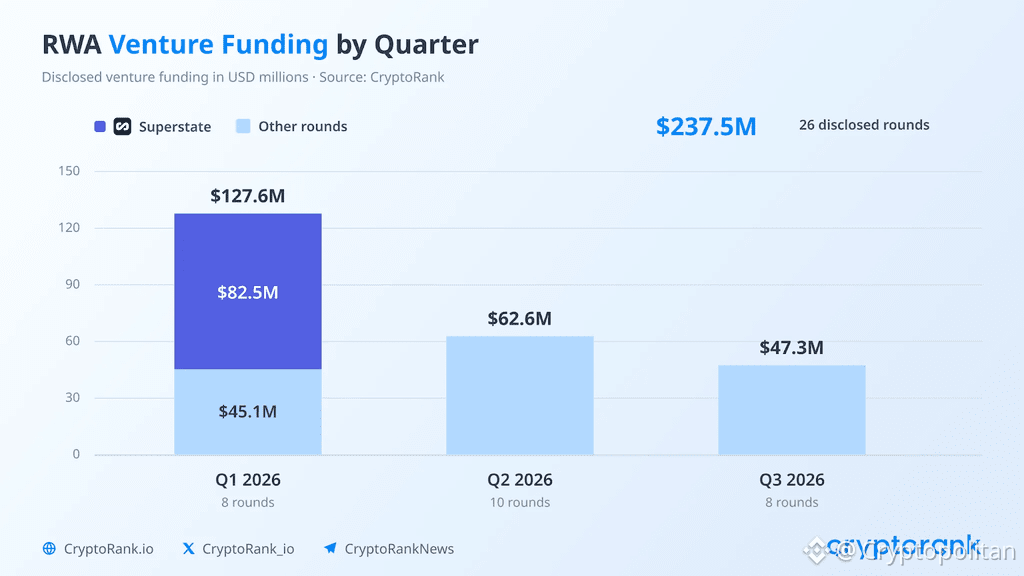
Article
See translation
How RWA Adoption is Spreading Across Crypto MarketsCrypto markets are becoming a place to manage a wider range of investments. Eligible investors can use tokenized products to earn Treasury income or hold exposure to a company or commodity through their wallets. These real-world assets, or RWAs, connect blockchain markets with claims on assets held outside the blockchain. They bring familiar financial choices into platforms that investors already use for crypto.
What happens after a product reaches a wallet gives a clearer picture of adoption. An investor may keep a fund token for income, trade a stock-linked product or borrow against an eligible holding. Those choices depend on the legal claim behind the token and the markets in which it can be used. This report follows the companies and blockchains supporting that activity, the products attracting capital and their use in trading and lending.
Who Builds the RWA Market
A tokenized Treasury fund or stock-linked product reaches investors through several connected businesses. Ondo Finance develops products such as OUSG, which offers eligible investors short-term Treasury exposure, and Ondo Stocks, which covers public securities. The product determines what an investor holds and the rights attached to the token. Wallets and exchanges provide the routes through which investors can buy and use it.
Asset managers can keep managing portfolios while specialist platforms handle tokenized shares. Securitize administers tokenized share classes of BlackRock’s BUIDL fund on networks including Ethereum and Solana, where qualified investors can transfer tokens between approved wallets. The blockchain records transfers of fund shares, while BlackRock manages the portfolio and BNY Mellon holds its cash and securities in custody.
Distribution across several blockchains requires those records to stay consistent. Centrifuge, which provides infrastructure for Janus Henderson’s JTRSY and JAAA strategies, coordinates token issuance, pricing and investor orders through one accounting hub. Fund tokens can be distributed on supported networks linked to that hub. Investors gain more routes into a product while its manager maintains consolidated records.
Those tokens can also become inputs to other financial applications. In decentralized finance, or DeFi, this ability to combine products is known as composability. Superstate‘s FundOS maintains shareholder records and supports subscriptions and redemptions in dollars or the USDC stablecoin. Aave Horizon accepts supported shares as collateral for stablecoin borrowing. An eligible investor can therefore raise liquidity against a holding while retaining its fund exposure. The fund’s eligibility rules continue to apply when its tokens enter a lending protocol.
Treasury Funds Anchor Onchain Savings
Tokenized U.S. Treasury funds hold $14.7B, about 37% of the $39.3B distributed RWA market. They are its largest individual asset class.
For an investor already holding capital in crypto, a Treasury-backed product offers a place to earn income while deciding where to use that capital next. After subscribing, the investor holds a fund token in a wallet and gains exposure to the underlying portfolio. The product’s eligibility checks and transfer rules determine who can take part and where the shares can move.
A holder seeking income may leave that position untouched until the capital is needed elsewhere. The ability to redeem then becomes central to the product’s appeal. Net subscriptions show whether the fund is attracting and retaining money, while redemptions test whether holders can recover it on the promised terms. Treasury funds can therefore serve a cash-management role even when their tokens trade infrequently.
Commodities Combine Asset Accumulation With Price Gains
Tokenized commodity capitalization rose from $3.1B at the end of 2025 to about $8B by late September 2026, roughly 2.6 times its starting value. Ethereum holds the largest share, with XRP Ledger accounting for another substantial portion.
Gold accounts for most commodity value distributed to investors. Tether Gold and PAX Gold each link a token to one fine troy ounce of vaulted gold. Silver is a smaller segment, with products such as Kinesis Silver backed by allocated bullion. Holders can buy and transfer metal exposure through wallets, while physical delivery follows each issuer’s redemption terms.
Commodity tokenization also covers commercial uses beyond investment in precious metals. Justoken’s Enertoken records electricity contracts on XRP Ledger, while its agricultural tokens support transactions and credit against commodities. Oil exposure takes another form in USOon, which provides exposure to the United States Oil Fund. The underlying fund invests in oil futures and swaps. USOon gives holders financial exposure through that fund, with no claim to barrels of stored crude.
Tokenized gold‘s market value rose through both additional metal held and price appreciation. Ounces held increased 73% over the year to August 31, 2026, while the gold price rose 29%.
ETFs Broaden Portfolio Access
Tokenized ETFs grew from $225M at the end of 2025 to $673M by the end of the third quarter of 2026, nearly tripling. The third quarter added about 59% from a $422M base. Ethereum remains the largest market, while BNB Chain accounts for a growing share.
Exchange-traded funds, or ETFs, package a basket of securities or an investment strategy into one position. Tokenized versions bring that portfolio exposure into crypto wallets without requiring investors to assemble individual holdings. Issuing products on several chains creates more ways to hold them, though trading liquidity is spread between venues. Execution still depends on the market for the specific token an investor buys.
Familiar Stocks Extend the Market’s Reach
Tokenized stocks have more than 4.3M holder positions across company-linked products. Many of the largest holder bases belong to familiar technology businesses. Recognizable company names may give users an entry point into stock tokens, although the counts leave the size of those investments unclear.
The same investor can appear across several tokens or wallets, and a custody address can represent many customers. Promotional allocations can also add holders with small balances. Balances and repeat transactions provide a better test of whether these holders continue using the products.
A stock token’s legal structure determines the rights attached to it. xStocks, for example, are tracker certificates backed by underlying assets. Holders receive economic exposure without shareholder voting rights. The holder’s claim comes from the issuer’s contract, so products following the same company can offer different claims.
Private and Newly Listed Companies Broaden Access
Products grouped in the pre-IPO category grew from $4.1M at the end of 2025 to $65.8M by the end of the third quarter of 2026, approximately 16 times their starting value. The third quarter added about 30% from $50.7M. The basket includes SpaceX, which is now publicly listed, alongside private companies.
Private shares are often limited by investor eligibility or minimum investment requirements. Tokenized products can offer exposure through a separate contractual claim. After a company lists, investors can also buy its publicly traded shares. The token then competes with that alternative on access and trading terms.
The contract can also restrict an investor’s exit. Robinhood’s private-company token giveaway used derivative contracts with conditions on transfer and redemption. Such products offer contractual exposure with different ownership rights and restrictions on exit.
Perpetuals Meet Demand for Active Trading
RWA perpetual trading volume reached $2.57T in the third quarter of 2026, more than double the second quarter’s $1.27T. Binance accounted for nearly half of the total. The activity spans centralized and decentralized venues.
Perpetual contracts provide long or short exposure without an expiry date or ownership of the referenced asset. Leverage and repeated trading allow notional volume to grow far beyond the collateral committed. Market depth and spreads show how easily traders can execute those positions.
Equities accounted for 8% of tracked tokenized asset value and 93% of onchain spot volume in August 2026. Equity perpetual volume reached $72.4B against $12.6B of spot volume over the same month, almost six times as much. These figures cover a narrower market than the mixed-venue quarterly total. They show how differently trading activity is distributed from the assets investors hold.
Trading outside exchange hours complicates pricing. Crypto venues can keep matching orders while the conventional markets used for hedging are closed. Traders must then rely more heavily on the venue’s order book and price feeds. An open market can still offer poor execution when the order book is thin.
Collateral Use Depends on a Reliable Exit
About 42% of stock-token supply is eligible as collateral in DeFi, while approximately 2.6% is posted in lending markets. Eligibility creates an option to borrow against a token. Investors still need a reason to use it, and lenders need a price and liquidation route they can rely on.
Credit tokens enter lending more often than cash equivalents. Around 19% to 21% of tokenized credit was deposited in lending protocols, compared with 0.4% of cash equivalents. Credit tokens can support borrowing strategies, while cash funds serve holders seeking income. Deposited balances show which assets enter lending markets. They do not measure how much investors have borrowed against them.
Redemption terms matter when collateral must be sold quickly. Midas processes standard redemptions according to each strategy’s valuation and settlement timetable. Instant redemptions draw on dedicated liquidity and charge a fee. The amount available limits how much can be redeemed immediately, which lenders must consider when setting borrowing limits.
A lending market needs buyers who can receive the collateral and pay for it during liquidation. A price feed alone cannot supply that liquidity. Restrictions on eligible buyers and delays in redemption can narrow the options for selling a position, affecting how much a lender can advance against it.
Venture Funding Supports Market Infrastructure
RWA companies announced $237.5M across 26 disclosed venture rounds in the first nine months of 2026. Superstate’s $82.5M Series B accounts for about 35% of that capital and explains much of the first quarter’s lead over later quarters.
The recipients build the services behind tokenized products. Superstate develops systems for securities issuance and ownership records, while OpenTrade connects yield products with fintechs, exchanges and wallets. Smaller rounds also finance credit and asset platforms. This capital funds the companies operating the market, with separate investor subscriptions determining the assets held in their products.
The Bottom Line
The clearest demand for tokenized assets is in holding investments and trading their prices. Treasury funds attract income-seeking balances, and equities account for most of the covered onchain spot turnover. Lending has developed unevenly. Credit tokens already have a substantial collateral role, while only about 2.6% of stock-token supply is deposited in lending markets.
The stock-token gap shows the limits of making an asset available as collateral. A lending integration still needs borrowers and a way to sell the position when a loan fails. For products bought primarily to hold, dependable redemptions matter more than adding another trading or borrowing feature.
How RWA Adoption is Spreading Across Crypto Markets
Crypto markets are becoming a place to manage a wider range of investments. Eligible investors can use tokenized products to earn Treasury income or hold exposure to a company or commodity through their wallets. These real-world assets, or RWAs, connect blockchain markets with claims on assets held outside the blockchain. They bring familiar financial choices into platforms that investors already use for crypto.
What happens after a product reaches a wallet gives a clearer picture of adoption. An investor may keep a fund token for income, trade a stock-linked product or borrow against an eligible holding. Those choices depend on the legal claim behind the token and the markets in which it can be used. This report follows the companies and blockchains supporting that activity, the products attracting capital and their use in trading and lending.
Who Builds the RWA Market
A tokenized Treasury fund or stock-linked product reaches investors through several connected businesses. Ondo Finance develops products such as OUSG, which offers eligible investors short-term Treasury exposure, and Ondo Stocks, which covers public securities. The product determines what an investor holds and the rights attached to the token. Wallets and exchanges provide the routes through which investors can buy and use it.
Asset managers can keep managing portfolios while specialist platforms handle tokenized shares. Securitize administers tokenized share classes of BlackRock’s BUIDL fund on networks including Ethereum and Solana, where qualified investors can transfer tokens between approved wallets. The blockchain records transfers of fund shares, while BlackRock manages the portfolio and BNY Mellon holds its cash and securities in custody.
Distribution across several blockchains requires those records to stay consistent. Centrifuge, which provides infrastructure for Janus Henderson’s JTRSY and JAAA strategies, coordinates token issuance, pricing and investor orders through one accounting hub. Fund tokens can be distributed on supported networks linked to that hub. Investors gain more routes into a product while its manager maintains consolidated records.
Those tokens can also become inputs to other financial applications. In decentralized finance, or DeFi, this ability to combine products is known as composability. Superstate‘s FundOS maintains shareholder records and supports subscriptions and redemptions in dollars or the USDC stablecoin. Aave Horizon accepts supported shares as collateral for stablecoin borrowing. An eligible investor can therefore raise liquidity against a holding while retaining its fund exposure. The fund’s eligibility rules continue to apply when its tokens enter a lending protocol.
Treasury Funds Anchor Onchain Savings
Tokenized U.S. Treasury funds hold $14.7B, about 37% of the $39.3B distributed RWA market. They are its largest individual asset class.
For an investor already holding capital in crypto, a Treasury-backed product offers a place to earn income while deciding where to use that capital next. After subscribing, the investor holds a fund token in a wallet and gains exposure to the underlying portfolio. The product’s eligibility checks and transfer rules determine who can take part and where the shares can move.
A holder seeking income may leave that position untouched until the capital is needed elsewhere. The ability to redeem then becomes central to the product’s appeal. Net subscriptions show whether the fund is attracting and retaining money, while redemptions test whether holders can recover it on the promised terms. Treasury funds can therefore serve a cash-management role even when their tokens trade infrequently.
Commodities Combine Asset Accumulation With Price Gains
Tokenized commodity capitalization rose from $3.1B at the end of 2025 to about $8B by late September 2026, roughly 2.6 times its starting value. Ethereum holds the largest share, with XRP Ledger accounting for another substantial portion.
Gold accounts for most commodity value distributed to investors. Tether Gold and PAX Gold each link a token to one fine troy ounce of vaulted gold. Silver is a smaller segment, with products such as Kinesis Silver backed by allocated bullion. Holders can buy and transfer metal exposure through wallets, while physical delivery follows each issuer’s redemption terms.
Commodity tokenization also covers commercial uses beyond investment in precious metals. Justoken’s Enertoken records electricity contracts on XRP Ledger, while its agricultural tokens support transactions and credit against commodities. Oil exposure takes another form in USOon, which provides exposure to the United States Oil Fund. The underlying fund invests in oil futures and swaps. USOon gives holders financial exposure through that fund, with no claim to barrels of stored crude.
Tokenized gold‘s market value rose through both additional metal held and price appreciation. Ounces held increased 73% over the year to August 31, 2026, while the gold price rose 29%.
ETFs Broaden Portfolio Access
Tokenized ETFs grew from $225M at the end of 2025 to $673M by the end of the third quarter of 2026, nearly tripling. The third quarter added about 59% from a $422M base. Ethereum remains the largest market, while BNB Chain accounts for a growing share.
Exchange-traded funds, or ETFs, package a basket of securities or an investment strategy into one position. Tokenized versions bring that portfolio exposure into crypto wallets without requiring investors to assemble individual holdings. Issuing products on several chains creates more ways to hold them, though trading liquidity is spread between venues. Execution still depends on the market for the specific token an investor buys.
Familiar Stocks Extend the Market’s Reach
Tokenized stocks have more than 4.3M holder positions across company-linked products. Many of the largest holder bases belong to familiar technology businesses. Recognizable company names may give users an entry point into stock tokens, although the counts leave the size of those investments unclear.
The same investor can appear across several tokens or wallets, and a custody address can represent many customers. Promotional allocations can also add holders with small balances. Balances and repeat transactions provide a better test of whether these holders continue using the products.
A stock token’s legal structure determines the rights attached to it. xStocks, for example, are tracker certificates backed by underlying assets. Holders receive economic exposure without shareholder voting rights. The holder’s claim comes from the issuer’s contract, so products following the same company can offer different claims.
Private and Newly Listed Companies Broaden Access
Products grouped in the pre-IPO category grew from $4.1M at the end of 2025 to $65.8M by the end of the third quarter of 2026, approximately 16 times their starting value. The third quarter added about 30% from $50.7M. The basket includes SpaceX, which is now publicly listed, alongside private companies.
Private shares are often limited by investor eligibility or minimum investment requirements. Tokenized products can offer exposure through a separate contractual claim. After a company lists, investors can also buy its publicly traded shares. The token then competes with that alternative on access and trading terms.
The contract can also restrict an investor’s exit. Robinhood’s private-company token giveaway used derivative contracts with conditions on transfer and redemption. Such products offer contractual exposure with different ownership rights and restrictions on exit.
Perpetuals Meet Demand for Active Trading
RWA perpetual trading volume reached $2.57T in the third quarter of 2026, more than double the second quarter’s $1.27T. Binance accounted for nearly half of the total. The activity spans centralized and decentralized venues.
Perpetual contracts provide long or short exposure without an expiry date or ownership of the referenced asset. Leverage and repeated trading allow notional volume to grow far beyond the collateral committed. Market depth and spreads show how easily traders can execute those positions.
Equities accounted for 8% of tracked tokenized asset value and 93% of onchain spot volume in August 2026. Equity perpetual volume reached $72.4B against $12.6B of spot volume over the same month, almost six times as much. These figures cover a narrower market than the mixed-venue quarterly total. They show how differently trading activity is distributed from the assets investors hold.
Trading outside exchange hours complicates pricing. Crypto venues can keep matching orders while the conventional markets used for hedging are closed. Traders must then rely more heavily on the venue’s order book and price feeds. An open market can still offer poor execution when the order book is thin.
Collateral Use Depends on a Reliable Exit
About 42% of stock-token supply is eligible as collateral in DeFi, while approximately 2.6% is posted in lending markets. Eligibility creates an option to borrow against a token. Investors still need a reason to use it, and lenders need a price and liquidation route they can rely on.
Credit tokens enter lending more often than cash equivalents. Around 19% to 21% of tokenized credit was deposited in lending protocols, compared with 0.4% of cash equivalents. Credit tokens can support borrowing strategies, while cash funds serve holders seeking income. Deposited balances show which assets enter lending markets. They do not measure how much investors have borrowed against them.
Redemption terms matter when collateral must be sold quickly. Midas processes standard redemptions according to each strategy’s valuation and settlement timetable. Instant redemptions draw on dedicated liquidity and charge a fee. The amount available limits how much can be redeemed immediately, which lenders must consider when setting borrowing limits.
A lending market needs buyers who can receive the collateral and pay for it during liquidation. A price feed alone cannot supply that liquidity. Restrictions on eligible buyers and delays in redemption can narrow the options for selling a position, affecting how much a lender can advance against it.
Venture Funding Supports Market Infrastructure
RWA companies announced $237.5M across 26 disclosed venture rounds in the first nine months of 2026. Superstate’s $82.5M Series B accounts for about 35% of that capital and explains much of the first quarter’s lead over later quarters.
The recipients build the services behind tokenized products. Superstate develops systems for securities issuance and ownership records, while OpenTrade connects yield products with fintechs, exchanges and wallets. Smaller rounds also finance credit and asset platforms. This capital funds the companies operating the market, with separate investor subscriptions determining the assets held in their products.
The Bottom Line
The clearest demand for tokenized assets is in holding investments and trading their prices. Treasury funds attract income-seeking balances, and equities account for most of the covered onchain spot turnover. Lending has developed unevenly. Credit tokens already have a substantial collateral role, while only about 2.6% of stock-token supply is deposited in lending markets.
The stock-token gap shows the limits of making an asset available as collateral. A lending integration still needs borrowers and a way to sell the position when a loan fails. For products bought primarily to hold, dependable redemptions matter more than adding another trading or borrowing feature.
What happens after a product reaches a wallet gives a clearer picture of adoption. An investor may keep a fund token for income, trade a stock-linked product or borrow against an eligible holding. Those choices depend on the legal claim behind the token and the markets in which it can be used. This report follows the companies and blockchains supporting that activity, the products attracting capital and their use in trading and lending.
Who Builds the RWA Market
A tokenized Treasury fund or stock-linked product reaches investors through several connected businesses. Ondo Finance develops products such as OUSG, which offers eligible investors short-term Treasury exposure, and Ondo Stocks, which covers public securities. The product determines what an investor holds and the rights attached to the token. Wallets and exchanges provide the routes through which investors can buy and use it.
Asset managers can keep managing portfolios while specialist platforms handle tokenized shares. Securitize administers tokenized share classes of BlackRock’s BUIDL fund on networks including Ethereum and Solana, where qualified investors can transfer tokens between approved wallets. The blockchain records transfers of fund shares, while BlackRock manages the portfolio and BNY Mellon holds its cash and securities in custody.
Distribution across several blockchains requires those records to stay consistent. Centrifuge, which provides infrastructure for Janus Henderson’s JTRSY and JAAA strategies, coordinates token issuance, pricing and investor orders through one accounting hub. Fund tokens can be distributed on supported networks linked to that hub. Investors gain more routes into a product while its manager maintains consolidated records.
Those tokens can also become inputs to other financial applications. In decentralized finance, or DeFi, this ability to combine products is known as composability. Superstate‘s FundOS maintains shareholder records and supports subscriptions and redemptions in dollars or the USDC stablecoin. Aave Horizon accepts supported shares as collateral for stablecoin borrowing. An eligible investor can therefore raise liquidity against a holding while retaining its fund exposure. The fund’s eligibility rules continue to apply when its tokens enter a lending protocol.
Treasury Funds Anchor Onchain Savings
Tokenized U.S. Treasury funds hold $14.7B, about 37% of the $39.3B distributed RWA market. They are its largest individual asset class.
For an investor already holding capital in crypto, a Treasury-backed product offers a place to earn income while deciding where to use that capital next. After subscribing, the investor holds a fund token in a wallet and gains exposure to the underlying portfolio. The product’s eligibility checks and transfer rules determine who can take part and where the shares can move.
A holder seeking income may leave that position untouched until the capital is needed elsewhere. The ability to redeem then becomes central to the product’s appeal. Net subscriptions show whether the fund is attracting and retaining money, while redemptions test whether holders can recover it on the promised terms. Treasury funds can therefore serve a cash-management role even when their tokens trade infrequently.
Commodities Combine Asset Accumulation With Price Gains
Tokenized commodity capitalization rose from $3.1B at the end of 2025 to about $8B by late September 2026, roughly 2.6 times its starting value. Ethereum holds the largest share, with XRP Ledger accounting for another substantial portion.
Gold accounts for most commodity value distributed to investors. Tether Gold and PAX Gold each link a token to one fine troy ounce of vaulted gold. Silver is a smaller segment, with products such as Kinesis Silver backed by allocated bullion. Holders can buy and transfer metal exposure through wallets, while physical delivery follows each issuer’s redemption terms.
Commodity tokenization also covers commercial uses beyond investment in precious metals. Justoken’s Enertoken records electricity contracts on XRP Ledger, while its agricultural tokens support transactions and credit against commodities. Oil exposure takes another form in USOon, which provides exposure to the United States Oil Fund. The underlying fund invests in oil futures and swaps. USOon gives holders financial exposure through that fund, with no claim to barrels of stored crude.
Tokenized gold‘s market value rose through both additional metal held and price appreciation. Ounces held increased 73% over the year to August 31, 2026, while the gold price rose 29%.
ETFs Broaden Portfolio Access
Tokenized ETFs grew from $225M at the end of 2025 to $673M by the end of the third quarter of 2026, nearly tripling. The third quarter added about 59% from a $422M base. Ethereum remains the largest market, while BNB Chain accounts for a growing share.
Exchange-traded funds, or ETFs, package a basket of securities or an investment strategy into one position. Tokenized versions bring that portfolio exposure into crypto wallets without requiring investors to assemble individual holdings. Issuing products on several chains creates more ways to hold them, though trading liquidity is spread between venues. Execution still depends on the market for the specific token an investor buys.
Familiar Stocks Extend the Market’s Reach
Tokenized stocks have more than 4.3M holder positions across company-linked products. Many of the largest holder bases belong to familiar technology businesses. Recognizable company names may give users an entry point into stock tokens, although the counts leave the size of those investments unclear.
The same investor can appear across several tokens or wallets, and a custody address can represent many customers. Promotional allocations can also add holders with small balances. Balances and repeat transactions provide a better test of whether these holders continue using the products.
A stock token’s legal structure determines the rights attached to it. xStocks, for example, are tracker certificates backed by underlying assets. Holders receive economic exposure without shareholder voting rights. The holder’s claim comes from the issuer’s contract, so products following the same company can offer different claims.
Private and Newly Listed Companies Broaden Access
Products grouped in the pre-IPO category grew from $4.1M at the end of 2025 to $65.8M by the end of the third quarter of 2026, approximately 16 times their starting value. The third quarter added about 30% from $50.7M. The basket includes SpaceX, which is now publicly listed, alongside private companies.
Private shares are often limited by investor eligibility or minimum investment requirements. Tokenized products can offer exposure through a separate contractual claim. After a company lists, investors can also buy its publicly traded shares. The token then competes with that alternative on access and trading terms.
The contract can also restrict an investor’s exit. Robinhood’s private-company token giveaway used derivative contracts with conditions on transfer and redemption. Such products offer contractual exposure with different ownership rights and restrictions on exit.
Perpetuals Meet Demand for Active Trading
RWA perpetual trading volume reached $2.57T in the third quarter of 2026, more than double the second quarter’s $1.27T. Binance accounted for nearly half of the total. The activity spans centralized and decentralized venues.
Perpetual contracts provide long or short exposure without an expiry date or ownership of the referenced asset. Leverage and repeated trading allow notional volume to grow far beyond the collateral committed. Market depth and spreads show how easily traders can execute those positions.
Equities accounted for 8% of tracked tokenized asset value and 93% of onchain spot volume in August 2026. Equity perpetual volume reached $72.4B against $12.6B of spot volume over the same month, almost six times as much. These figures cover a narrower market than the mixed-venue quarterly total. They show how differently trading activity is distributed from the assets investors hold.
Trading outside exchange hours complicates pricing. Crypto venues can keep matching orders while the conventional markets used for hedging are closed. Traders must then rely more heavily on the venue’s order book and price feeds. An open market can still offer poor execution when the order book is thin.
Collateral Use Depends on a Reliable Exit
About 42% of stock-token supply is eligible as collateral in DeFi, while approximately 2.6% is posted in lending markets. Eligibility creates an option to borrow against a token. Investors still need a reason to use it, and lenders need a price and liquidation route they can rely on.
Credit tokens enter lending more often than cash equivalents. Around 19% to 21% of tokenized credit was deposited in lending protocols, compared with 0.4% of cash equivalents. Credit tokens can support borrowing strategies, while cash funds serve holders seeking income. Deposited balances show which assets enter lending markets. They do not measure how much investors have borrowed against them.
Redemption terms matter when collateral must be sold quickly. Midas processes standard redemptions according to each strategy’s valuation and settlement timetable. Instant redemptions draw on dedicated liquidity and charge a fee. The amount available limits how much can be redeemed immediately, which lenders must consider when setting borrowing limits.
A lending market needs buyers who can receive the collateral and pay for it during liquidation. A price feed alone cannot supply that liquidity. Restrictions on eligible buyers and delays in redemption can narrow the options for selling a position, affecting how much a lender can advance against it.
Venture Funding Supports Market Infrastructure
RWA companies announced $237.5M across 26 disclosed venture rounds in the first nine months of 2026. Superstate’s $82.5M Series B accounts for about 35% of that capital and explains much of the first quarter’s lead over later quarters.
The recipients build the services behind tokenized products. Superstate develops systems for securities issuance and ownership records, while OpenTrade connects yield products with fintechs, exchanges and wallets. Smaller rounds also finance credit and asset platforms. This capital funds the companies operating the market, with separate investor subscriptions determining the assets held in their products.
The Bottom Line
The clearest demand for tokenized assets is in holding investments and trading their prices. Treasury funds attract income-seeking balances, and equities account for most of the covered onchain spot turnover. Lending has developed unevenly. Credit tokens already have a substantial collateral role, while only about 2.6% of stock-token supply is deposited in lending markets.
The stock-token gap shows the limits of making an asset available as collateral. A lending integration still needs borrowers and a way to sell the position when a loan fails. For products bought primarily to hold, dependable redemptions matter more than adding another trading or borrowing feature.
102
See translation
Verizon signs $2 billion cloud infrastructure deal with AWS after lifting forecastsCommunications giant Verizon has signed an AI infrastructure agreement with Amazon Web Services worth over $2 billion while raising its 2026 outlook for a third straight quarter. The company cited record subscriber gains and an increasing demand for its fiber network, according to Quartz.
What the Verizon AWS deal covers
Verizon will provide fiber connections to Amazon Web Services (AWS) to support AI systems. The deal will link AWS data centers with high-speed fiber lines to handle the large amounts of data these systems need to process, according to Reuters.
“Technology leaders are choosing our fiber network to support the next wave of AI infrastructure,” Verizon CEO Dan Schulman said in a statement from the company.
The deal follows a similar move Verizon made earlier this year. Telco Magazine reported that Verizon had signed a separate deal worth over $1 billion with Google to connect data centers using dark fiber. Finalizing these deals puts Verizon in a great position to make even more money beyond its phone and internet services.
A record quarter for subscribers
Verizon added 406,000 postpaid phone customers in the third quarter of the year. This figure is over 820% above what the company had at the same period a year earlier. It also represents its strongest Q3 result in five years, Quartz reported.
The carrier said its Simplicity plan, launched in June with fixed prices and unlimited data, helped to improve results. Cutting discounts on phones also helped lower costs.
According to Telco Magazine, the number of postpaid phone customers that stopped using Verizon fell to 0.94%, down 0.04 percentage points from a year earlier. The company also cut the cost of attracting customers using promotions by 41%.
Verizon added 137,000 postpaid accounts during the quarter, representing its best result for that measure in over 10 years.
Verizon also added 314,000 broadband connections, including 159,000 fixed wireless lines and 155,000 fiber connections. This brought its total broadband connections to 17.4 million.
Guidance raised across board
Verizon now expects to add 1.1 million to 1.2 million postpaid phone customers this year, up from its earlier forecast of 750,000 to 1 million, Traders Union reported. It also raised its earnings forecast to $5.04 to $5.06 per share. The company also expects free cash flow to grow by nearly 12%, up from the previous estimate of 9% to 10%. Capital spending forecast has been kept at $16 billion to $16.5 billion.
The quarter was not flawless, however. The carrier’s revenue rose 1.5% from a year earlier to $34.3 billion, but fell short of the $34.74 billion analysts had expected. Revenue from equipment sales dropped 9% as fewer customers upgraded their phones.
Mobile and broadband services saw revenue increase by 2.9% to $23.5 billion. Verizon reported net income of $5.3 billion, or $1.25 per share, and $7.8 billion in free cash flow, Quartz reported. Its shares rose 2.4% before the market opened.
Fiber as a new AI revenue stream
The deals with AWS and Google show how telecom companies are using their networks to support AI. Verizon plans to bring fiber internet to more than 32 million homes and businesses by the end of 2026, with a goal of reaching up to 50 million, Telco Magazine reported. More than half of its new fiber customers chose plans with download speeds above 1 gigabit per second.
The company’s expansion plans are facing challenges in the U.S. data center industry. Rising borrowing costs, construction delays and power shortages are making projects harder to complete on time and within budget, Traders Union reported.
Don’t just read crypto news. Understand it. Subscribe to our newsletter. It's free.
Verizon signs $2 billion cloud infrastructure deal with AWS after lifting forecasts
Communications giant Verizon has signed an AI infrastructure agreement with Amazon Web Services worth over $2 billion while raising its 2026 outlook for a third straight quarter. The company cited record subscriber gains and an increasing demand for its fiber network, according to Quartz.
What the Verizon AWS deal covers
Verizon will provide fiber connections to Amazon Web Services (AWS) to support AI systems. The deal will link AWS data centers with high-speed fiber lines to handle the large amounts of data these systems need to process, according to Reuters.
“Technology leaders are choosing our fiber network to support the next wave of AI infrastructure,” Verizon CEO Dan Schulman said in a statement from the company.
The deal follows a similar move Verizon made earlier this year. Telco Magazine reported that Verizon had signed a separate deal worth over $1 billion with Google to connect data centers using dark fiber. Finalizing these deals puts Verizon in a great position to make even more money beyond its phone and internet services.
A record quarter for subscribers
Verizon added 406,000 postpaid phone customers in the third quarter of the year. This figure is over 820% above what the company had at the same period a year earlier. It also represents its strongest Q3 result in five years, Quartz reported.
The carrier said its Simplicity plan, launched in June with fixed prices and unlimited data, helped to improve results. Cutting discounts on phones also helped lower costs.
According to Telco Magazine, the number of postpaid phone customers that stopped using Verizon fell to 0.94%, down 0.04 percentage points from a year earlier. The company also cut the cost of attracting customers using promotions by 41%.
Verizon added 137,000 postpaid accounts during the quarter, representing its best result for that measure in over 10 years.
Verizon also added 314,000 broadband connections, including 159,000 fixed wireless lines and 155,000 fiber connections. This brought its total broadband connections to 17.4 million.
Guidance raised across board
Verizon now expects to add 1.1 million to 1.2 million postpaid phone customers this year, up from its earlier forecast of 750,000 to 1 million, Traders Union reported. It also raised its earnings forecast to $5.04 to $5.06 per share. The company also expects free cash flow to grow by nearly 12%, up from the previous estimate of 9% to 10%. Capital spending forecast has been kept at $16 billion to $16.5 billion.
The quarter was not flawless, however. The carrier’s revenue rose 1.5% from a year earlier to $34.3 billion, but fell short of the $34.74 billion analysts had expected. Revenue from equipment sales dropped 9% as fewer customers upgraded their phones.
Mobile and broadband services saw revenue increase by 2.9% to $23.5 billion. Verizon reported net income of $5.3 billion, or $1.25 per share, and $7.8 billion in free cash flow, Quartz reported. Its shares rose 2.4% before the market opened.
Fiber as a new AI revenue stream
The deals with AWS and Google show how telecom companies are using their networks to support AI. Verizon plans to bring fiber internet to more than 32 million homes and businesses by the end of 2026, with a goal of reaching up to 50 million, Telco Magazine reported. More than half of its new fiber customers chose plans with download speeds above 1 gigabit per second.
The company’s expansion plans are facing challenges in the U.S. data center industry. Rising borrowing costs, construction delays and power shortages are making projects harder to complete on time and within budget, Traders Union reported.
Don’t just read crypto news. Understand it. Subscribe to our newsletter. It's free.
What the Verizon AWS deal covers
Verizon will provide fiber connections to Amazon Web Services (AWS) to support AI systems. The deal will link AWS data centers with high-speed fiber lines to handle the large amounts of data these systems need to process, according to Reuters.
“Technology leaders are choosing our fiber network to support the next wave of AI infrastructure,” Verizon CEO Dan Schulman said in a statement from the company.
The deal follows a similar move Verizon made earlier this year. Telco Magazine reported that Verizon had signed a separate deal worth over $1 billion with Google to connect data centers using dark fiber. Finalizing these deals puts Verizon in a great position to make even more money beyond its phone and internet services.
A record quarter for subscribers
Verizon added 406,000 postpaid phone customers in the third quarter of the year. This figure is over 820% above what the company had at the same period a year earlier. It also represents its strongest Q3 result in five years, Quartz reported.
The carrier said its Simplicity plan, launched in June with fixed prices and unlimited data, helped to improve results. Cutting discounts on phones also helped lower costs.
According to Telco Magazine, the number of postpaid phone customers that stopped using Verizon fell to 0.94%, down 0.04 percentage points from a year earlier. The company also cut the cost of attracting customers using promotions by 41%.
Verizon added 137,000 postpaid accounts during the quarter, representing its best result for that measure in over 10 years.
Verizon also added 314,000 broadband connections, including 159,000 fixed wireless lines and 155,000 fiber connections. This brought its total broadband connections to 17.4 million.
Guidance raised across board
Verizon now expects to add 1.1 million to 1.2 million postpaid phone customers this year, up from its earlier forecast of 750,000 to 1 million, Traders Union reported. It also raised its earnings forecast to $5.04 to $5.06 per share. The company also expects free cash flow to grow by nearly 12%, up from the previous estimate of 9% to 10%. Capital spending forecast has been kept at $16 billion to $16.5 billion.
The quarter was not flawless, however. The carrier’s revenue rose 1.5% from a year earlier to $34.3 billion, but fell short of the $34.74 billion analysts had expected. Revenue from equipment sales dropped 9% as fewer customers upgraded their phones.
Mobile and broadband services saw revenue increase by 2.9% to $23.5 billion. Verizon reported net income of $5.3 billion, or $1.25 per share, and $7.8 billion in free cash flow, Quartz reported. Its shares rose 2.4% before the market opened.
Fiber as a new AI revenue stream
The deals with AWS and Google show how telecom companies are using their networks to support AI. Verizon plans to bring fiber internet to more than 32 million homes and businesses by the end of 2026, with a goal of reaching up to 50 million, Telco Magazine reported. More than half of its new fiber customers chose plans with download speeds above 1 gigabit per second.
The company’s expansion plans are facing challenges in the U.S. data center industry. Rising borrowing costs, construction delays and power shortages are making projects harder to complete on time and within budget, Traders Union reported.
Don’t just read crypto news. Understand it. Subscribe to our newsletter. It's free.
44
See translation
Trump threatens to ‘finish off’ Iran as US military buildup intensifiesUS president Donald Trump says he could order another round of American attacks on Iran whenever he wants, but he is still weighing whether to hit Tehran or negotiate an agreement.
The president made the threat during a Fox News interview on Sunday, with US military forces building up across the Middle East and tensions spreading into Saudi Arabia.
His latest warning comes as diplomats try to prevent more fighting, while oil markets are already dealing with the fallout from months of regional conflict.
Trump weighs another attack on Iran as Qatar pushes for a diplomatic deal
“Do I finish it off, which would be very easy to do, or do I make a deal? It’s getting to be decision time,” Trump said.
The president’s comments came as Qatari mediators visited Tehran on Sunday, Reuters reported. Qatar has been trying to bring Washington and Iran back to the negotiating table, although neither side has announced a breakthrough.
The US last carried out confirmed strikes against Iran on September 1. Trump later indicated that American attacks would remain on hold until after the November 3 midterm elections.
However, Iran has been gearing up for another showdown, with Tehran officials warning that any new American attack will be met with military retaliation.
Another possible target for America could be Pickaxe Mountain, a highly guarded underground base linked to Iran’s nuclear program.
President Trump has indicated that the Americans are fully aware of what goes on in the underground base because three other Iranian nuclear bases have been wiped out.
“We can read the badge on somebody’s shirt from space, okay? We know exactly what’s going on at Pickaxe Mountain. We know the other three [nuclear sites] are obliterated,” Trump said.
The president also repeated his position that Washington controls the Strait of Hormuz, pointing to the recovery in crude shipments through the waterway.
However, things at sea are quite a bit more difficult. Though the oil cargoes have been restored to their pre-war volumes, other cargo traffic continues to suffer significant disruption.
Both the US and Iran have laid claim to this passage way that plays host to a sizable portion of the world’s energy cargo trade.
Just a few days ago, a Singapore registered container ship foundered in the strait following an attack by an unknown projectile resulting in a fire.
Iranian naval commander Ali Ozmaei said his forces were “counting the moments” until they could sink US warships.
Saudi Arabia seeks talks with Iran as Houthi attacks threaten oil supplies
The confrontation is also putting Saudi Arabia under pressure, with Houthi militants launching fresh attacks against the kingdom over the weekend.
On Saturday, the Iran-backed group said it had targeted Riyadh’s main airport and several oil facilities.
Saudi authorities announced Sunday that air defenses had stopped additional missiles and drones. Airport operations also partially resumed that day, despite damage from previous attacks.
The Houthis have threatened to keep striking Saudi targets.
Riyadh is now pursuing another diplomatic channel to prevent the fighting from spreading further.
Saudi Defense Minister Prince Khalid bin Salman is scheduled to meet Iranian President Masoud Pezeshkian and national security chief Mohsen Rezaei on Monday.
Pakistan’s army chief Asim Munir and Turkish intelligence chief Ibrahim Kalin are also participating. Their countries are members of a defense pact with Saudi Arabia.
For energy traders, the biggest concern is what happens if the attacks reach infrastructure that Saudi Arabia needs to produce, process and transport crude.
A serious strike against the kingdom’s East-West pipeline could interrupt shipments and push international prices sharply higher.
Damage to additional refining facilities would create another problem because replacing lost fuel-processing capacity could take considerably longer than restoring oil production.
There is also a limit to how much expensive crude consumers can absorb.
If Brent rises above $120 per barrel, weaker demand could become a bigger factor as households and businesses cut fuel purchases.
Energy costs are already elevated because of supply disruptions and limited global refining capacity, putting further pressure on consumer prices.
Saudi Arabia is also working to protect its Asian supply network. Energy ministers from both countries said Riyadh plans to begin storing crude in Singapore during the second half of 2027.
Meanwhile, the US Energy Department authorized the release of up to 400,000 barrels from the Strategic Petroleum Reserve on Friday to address a supply interruption at a Louisiana refinery.
American producers are not rushing to increase output either, with companies reluctant to spend heavily on new projects while oil prices remain unpredictable and geopolitical risks continue growing.
If you're reading this, you’re already ahead. Stay there with our newsletter.
Trump threatens to ‘finish off’ Iran as US military buildup intensifies
US president Donald Trump says he could order another round of American attacks on Iran whenever he wants, but he is still weighing whether to hit Tehran or negotiate an agreement.
The president made the threat during a Fox News interview on Sunday, with US military forces building up across the Middle East and tensions spreading into Saudi Arabia.
His latest warning comes as diplomats try to prevent more fighting, while oil markets are already dealing with the fallout from months of regional conflict.
Trump weighs another attack on Iran as Qatar pushes for a diplomatic deal
“Do I finish it off, which would be very easy to do, or do I make a deal? It’s getting to be decision time,” Trump said.
The president’s comments came as Qatari mediators visited Tehran on Sunday, Reuters reported. Qatar has been trying to bring Washington and Iran back to the negotiating table, although neither side has announced a breakthrough.
The US last carried out confirmed strikes against Iran on September 1. Trump later indicated that American attacks would remain on hold until after the November 3 midterm elections.
However, Iran has been gearing up for another showdown, with Tehran officials warning that any new American attack will be met with military retaliation.
Another possible target for America could be Pickaxe Mountain, a highly guarded underground base linked to Iran’s nuclear program.
President Trump has indicated that the Americans are fully aware of what goes on in the underground base because three other Iranian nuclear bases have been wiped out.
“We can read the badge on somebody’s shirt from space, okay? We know exactly what’s going on at Pickaxe Mountain. We know the other three [nuclear sites] are obliterated,” Trump said.
The president also repeated his position that Washington controls the Strait of Hormuz, pointing to the recovery in crude shipments through the waterway.
However, things at sea are quite a bit more difficult. Though the oil cargoes have been restored to their pre-war volumes, other cargo traffic continues to suffer significant disruption.
Both the US and Iran have laid claim to this passage way that plays host to a sizable portion of the world’s energy cargo trade.
Just a few days ago, a Singapore registered container ship foundered in the strait following an attack by an unknown projectile resulting in a fire.
Iranian naval commander Ali Ozmaei said his forces were “counting the moments” until they could sink US warships.
Saudi Arabia seeks talks with Iran as Houthi attacks threaten oil supplies
The confrontation is also putting Saudi Arabia under pressure, with Houthi militants launching fresh attacks against the kingdom over the weekend.
On Saturday, the Iran-backed group said it had targeted Riyadh’s main airport and several oil facilities.
Saudi authorities announced Sunday that air defenses had stopped additional missiles and drones. Airport operations also partially resumed that day, despite damage from previous attacks.
The Houthis have threatened to keep striking Saudi targets.
Riyadh is now pursuing another diplomatic channel to prevent the fighting from spreading further.
Saudi Defense Minister Prince Khalid bin Salman is scheduled to meet Iranian President Masoud Pezeshkian and national security chief Mohsen Rezaei on Monday.
Pakistan’s army chief Asim Munir and Turkish intelligence chief Ibrahim Kalin are also participating. Their countries are members of a defense pact with Saudi Arabia.
For energy traders, the biggest concern is what happens if the attacks reach infrastructure that Saudi Arabia needs to produce, process and transport crude.
A serious strike against the kingdom’s East-West pipeline could interrupt shipments and push international prices sharply higher.
Damage to additional refining facilities would create another problem because replacing lost fuel-processing capacity could take considerably longer than restoring oil production.
There is also a limit to how much expensive crude consumers can absorb.
If Brent rises above $120 per barrel, weaker demand could become a bigger factor as households and businesses cut fuel purchases.
Energy costs are already elevated because of supply disruptions and limited global refining capacity, putting further pressure on consumer prices.
Saudi Arabia is also working to protect its Asian supply network. Energy ministers from both countries said Riyadh plans to begin storing crude in Singapore during the second half of 2027.
Meanwhile, the US Energy Department authorized the release of up to 400,000 barrels from the Strategic Petroleum Reserve on Friday to address a supply interruption at a Louisiana refinery.
American producers are not rushing to increase output either, with companies reluctant to spend heavily on new projects while oil prices remain unpredictable and geopolitical risks continue growing.
If you're reading this, you’re already ahead. Stay there with our newsletter.
The president made the threat during a Fox News interview on Sunday, with US military forces building up across the Middle East and tensions spreading into Saudi Arabia.
His latest warning comes as diplomats try to prevent more fighting, while oil markets are already dealing with the fallout from months of regional conflict.
Trump weighs another attack on Iran as Qatar pushes for a diplomatic deal
“Do I finish it off, which would be very easy to do, or do I make a deal? It’s getting to be decision time,” Trump said.
The president’s comments came as Qatari mediators visited Tehran on Sunday, Reuters reported. Qatar has been trying to bring Washington and Iran back to the negotiating table, although neither side has announced a breakthrough.
The US last carried out confirmed strikes against Iran on September 1. Trump later indicated that American attacks would remain on hold until after the November 3 midterm elections.
However, Iran has been gearing up for another showdown, with Tehran officials warning that any new American attack will be met with military retaliation.
Another possible target for America could be Pickaxe Mountain, a highly guarded underground base linked to Iran’s nuclear program.
President Trump has indicated that the Americans are fully aware of what goes on in the underground base because three other Iranian nuclear bases have been wiped out.
“We can read the badge on somebody’s shirt from space, okay? We know exactly what’s going on at Pickaxe Mountain. We know the other three [nuclear sites] are obliterated,” Trump said.
The president also repeated his position that Washington controls the Strait of Hormuz, pointing to the recovery in crude shipments through the waterway.
However, things at sea are quite a bit more difficult. Though the oil cargoes have been restored to their pre-war volumes, other cargo traffic continues to suffer significant disruption.
Both the US and Iran have laid claim to this passage way that plays host to a sizable portion of the world’s energy cargo trade.
Just a few days ago, a Singapore registered container ship foundered in the strait following an attack by an unknown projectile resulting in a fire.
Iranian naval commander Ali Ozmaei said his forces were “counting the moments” until they could sink US warships.
Saudi Arabia seeks talks with Iran as Houthi attacks threaten oil supplies
The confrontation is also putting Saudi Arabia under pressure, with Houthi militants launching fresh attacks against the kingdom over the weekend.
On Saturday, the Iran-backed group said it had targeted Riyadh’s main airport and several oil facilities.
Saudi authorities announced Sunday that air defenses had stopped additional missiles and drones. Airport operations also partially resumed that day, despite damage from previous attacks.
The Houthis have threatened to keep striking Saudi targets.
Riyadh is now pursuing another diplomatic channel to prevent the fighting from spreading further.
Saudi Defense Minister Prince Khalid bin Salman is scheduled to meet Iranian President Masoud Pezeshkian and national security chief Mohsen Rezaei on Monday.
Pakistan’s army chief Asim Munir and Turkish intelligence chief Ibrahim Kalin are also participating. Their countries are members of a defense pact with Saudi Arabia.
For energy traders, the biggest concern is what happens if the attacks reach infrastructure that Saudi Arabia needs to produce, process and transport crude.
A serious strike against the kingdom’s East-West pipeline could interrupt shipments and push international prices sharply higher.
Damage to additional refining facilities would create another problem because replacing lost fuel-processing capacity could take considerably longer than restoring oil production.
There is also a limit to how much expensive crude consumers can absorb.
If Brent rises above $120 per barrel, weaker demand could become a bigger factor as households and businesses cut fuel purchases.
Energy costs are already elevated because of supply disruptions and limited global refining capacity, putting further pressure on consumer prices.
Saudi Arabia is also working to protect its Asian supply network. Energy ministers from both countries said Riyadh plans to begin storing crude in Singapore during the second half of 2027.
Meanwhile, the US Energy Department authorized the release of up to 400,000 barrels from the Strategic Petroleum Reserve on Friday to address a supply interruption at a Louisiana refinery.
American producers are not rushing to increase output either, with companies reluctant to spend heavily on new projects while oil prices remain unpredictable and geopolitical risks continue growing.
If you're reading this, you’re already ahead. Stay there with our newsletter.
1.1k
See translation
Strategy skips Bitcoin, spends $205M on STRC buybacksStrategy (NASDAQ: MSTR) did not buy any Bitcoin during the week between October 19 and 25, according to its October 26 filing with the US Securities and Exchange Commission (SEC).
Instead, 100% of the money spent by the firm, led by founder and executive chairman Michael Saylor, last week went to buying back $204.9 million of its STRC preferred shares.
With the firm skipping on buying Bitcoin for the second time this month, Strategy’s Bitcoin stack remains unchanged at 848,517 BTC. It did not sell any stock through its at-the-market program, either.
$205 million on STRC, nothing on BTC
According to Strategy’s SEC filing, the firm repurchased 2,068,459 shares of the Variable Rate Series A Perpetual Stretch Preferred Stock (STRC) for $204.9 million. Saylor summarized the transaction as “$205M of $STRC” in his early morning X post on October 26.
The firm’s Bitcoin reserve, on the other hand, remained unchanged at 848,517 BTC. The firm’s dollar-per-Bitcoin basis remains at $75,446 for a $64.02 billion total on the stack.
Last week’s preferred stock-to-Bitcoin purchase ratio extends a pattern that has held through the month. During the October 12 to 18 week, Strategy spent $193.1 million buying back STRC compared to $22.1 million for 267 BTC. It was $192.4 million on STRC to $21.5 million on BTC the week before, as Cryptopolitan reported at the time.
Strategy capital deployment, Sep 28 – Oct 25, 2026. Source: SEC 8-K filings
Why is Strategy buying its own shares?
Strategy’s president Phong Le has explained the logic behind Strategy’s STRC repurchases before.
“At prices below $100 per share, STRC repurchases represent an attractive allocation of capital because they can reduce future preferred dividend requirements at a discount.”
Each share bought back below face value is a share the company no longer pays dividends on. Strategy’s board doubled the digital credit securities repurchase program to $2 billion in September, then raised it again to $3 billion on October 19.
The latest STRC buyback round leaves $956.8 million of the approved allocation to be deployed. It has not had to dip into the separate $1 billion program for MSTR common stock its board approved.
Strategy funded the buyback entirely from the USD Cash bucket it keeps specifically for general purposes, including buying Bitcoin. That account now holds $242.4 million, down from $640.5 million two weeks before.
The USD Reserve, a separate bucket earmarked for preferred dividends and debt interest, still holds $4.83 billion. Together, the two “USD Assets” pools come to roughly $5.1 billion.
In a second post, Saylor pegged the company’s USD duration at 3.4 years and STRC’s Bitcoin credit at 54 basis points, based on assumptions of 10% annual Bitcoin returns, 40% volatility and an $81,200 Bitcoin price.
Big decisions are ahead for Strategy
MSTR common stockholders are set to vote on October 28 on switching STRC and Strategy’s other preferreds to daily dividends. If it passes, the first daily record date would fall on November 1 and the first payment on November 2, with the annual rate unchanged, per the company’s investor materials.
Another decision that could affect the firm is outside its control, with MSCI set to release a November 11 list confirming the firms unaffected by new rules that could strip Strategy and other digital-asset treasury firms from its indexes.
Saylor and Le have criticized the “discriminatory” approach even though Strategy argued in a September letter that exclusion “would have no meaningful impact on Strategy’s business.”
The smartest crypto minds already read our newsletter. Want in? Join them.
Strategy skips Bitcoin, spends $205M on STRC buybacks
Strategy (NASDAQ: MSTR) did not buy any Bitcoin during the week between October 19 and 25, according to its October 26 filing with the US Securities and Exchange Commission (SEC).
Instead, 100% of the money spent by the firm, led by founder and executive chairman Michael Saylor, last week went to buying back $204.9 million of its STRC preferred shares.
With the firm skipping on buying Bitcoin for the second time this month, Strategy’s Bitcoin stack remains unchanged at 848,517 BTC. It did not sell any stock through its at-the-market program, either.
$205 million on STRC, nothing on BTC
According to Strategy’s SEC filing, the firm repurchased 2,068,459 shares of the Variable Rate Series A Perpetual Stretch Preferred Stock (STRC) for $204.9 million. Saylor summarized the transaction as “$205M of $STRC” in his early morning X post on October 26.
The firm’s Bitcoin reserve, on the other hand, remained unchanged at 848,517 BTC. The firm’s dollar-per-Bitcoin basis remains at $75,446 for a $64.02 billion total on the stack.
Last week’s preferred stock-to-Bitcoin purchase ratio extends a pattern that has held through the month. During the October 12 to 18 week, Strategy spent $193.1 million buying back STRC compared to $22.1 million for 267 BTC. It was $192.4 million on STRC to $21.5 million on BTC the week before, as Cryptopolitan reported at the time.
Strategy capital deployment, Sep 28 – Oct 25, 2026. Source: SEC 8-K filings
Why is Strategy buying its own shares?
Strategy’s president Phong Le has explained the logic behind Strategy’s STRC repurchases before.
“At prices below $100 per share, STRC repurchases represent an attractive allocation of capital because they can reduce future preferred dividend requirements at a discount.”
Each share bought back below face value is a share the company no longer pays dividends on. Strategy’s board doubled the digital credit securities repurchase program to $2 billion in September, then raised it again to $3 billion on October 19.
The latest STRC buyback round leaves $956.8 million of the approved allocation to be deployed. It has not had to dip into the separate $1 billion program for MSTR common stock its board approved.
Strategy funded the buyback entirely from the USD Cash bucket it keeps specifically for general purposes, including buying Bitcoin. That account now holds $242.4 million, down from $640.5 million two weeks before.
The USD Reserve, a separate bucket earmarked for preferred dividends and debt interest, still holds $4.83 billion. Together, the two “USD Assets” pools come to roughly $5.1 billion.
In a second post, Saylor pegged the company’s USD duration at 3.4 years and STRC’s Bitcoin credit at 54 basis points, based on assumptions of 10% annual Bitcoin returns, 40% volatility and an $81,200 Bitcoin price.
Big decisions are ahead for Strategy
MSTR common stockholders are set to vote on October 28 on switching STRC and Strategy’s other preferreds to daily dividends. If it passes, the first daily record date would fall on November 1 and the first payment on November 2, with the annual rate unchanged, per the company’s investor materials.
Another decision that could affect the firm is outside its control, with MSCI set to release a November 11 list confirming the firms unaffected by new rules that could strip Strategy and other digital-asset treasury firms from its indexes.
Saylor and Le have criticized the “discriminatory” approach even though Strategy argued in a September letter that exclusion “would have no meaningful impact on Strategy’s business.”
The smartest crypto minds already read our newsletter. Want in? Join them.
Instead, 100% of the money spent by the firm, led by founder and executive chairman Michael Saylor, last week went to buying back $204.9 million of its STRC preferred shares.
With the firm skipping on buying Bitcoin for the second time this month, Strategy’s Bitcoin stack remains unchanged at 848,517 BTC. It did not sell any stock through its at-the-market program, either.
$205 million on STRC, nothing on BTC
According to Strategy’s SEC filing, the firm repurchased 2,068,459 shares of the Variable Rate Series A Perpetual Stretch Preferred Stock (STRC) for $204.9 million. Saylor summarized the transaction as “$205M of $STRC” in his early morning X post on October 26.
The firm’s Bitcoin reserve, on the other hand, remained unchanged at 848,517 BTC. The firm’s dollar-per-Bitcoin basis remains at $75,446 for a $64.02 billion total on the stack.
Last week’s preferred stock-to-Bitcoin purchase ratio extends a pattern that has held through the month. During the October 12 to 18 week, Strategy spent $193.1 million buying back STRC compared to $22.1 million for 267 BTC. It was $192.4 million on STRC to $21.5 million on BTC the week before, as Cryptopolitan reported at the time.
Strategy capital deployment, Sep 28 – Oct 25, 2026. Source: SEC 8-K filings
Why is Strategy buying its own shares?
Strategy’s president Phong Le has explained the logic behind Strategy’s STRC repurchases before.
“At prices below $100 per share, STRC repurchases represent an attractive allocation of capital because they can reduce future preferred dividend requirements at a discount.”
Each share bought back below face value is a share the company no longer pays dividends on. Strategy’s board doubled the digital credit securities repurchase program to $2 billion in September, then raised it again to $3 billion on October 19.
The latest STRC buyback round leaves $956.8 million of the approved allocation to be deployed. It has not had to dip into the separate $1 billion program for MSTR common stock its board approved.
Strategy funded the buyback entirely from the USD Cash bucket it keeps specifically for general purposes, including buying Bitcoin. That account now holds $242.4 million, down from $640.5 million two weeks before.
The USD Reserve, a separate bucket earmarked for preferred dividends and debt interest, still holds $4.83 billion. Together, the two “USD Assets” pools come to roughly $5.1 billion.
In a second post, Saylor pegged the company’s USD duration at 3.4 years and STRC’s Bitcoin credit at 54 basis points, based on assumptions of 10% annual Bitcoin returns, 40% volatility and an $81,200 Bitcoin price.
Big decisions are ahead for Strategy
MSTR common stockholders are set to vote on October 28 on switching STRC and Strategy’s other preferreds to daily dividends. If it passes, the first daily record date would fall on November 1 and the first payment on November 2, with the annual rate unchanged, per the company’s investor materials.
Another decision that could affect the firm is outside its control, with MSCI set to release a November 11 list confirming the firms unaffected by new rules that could strip Strategy and other digital-asset treasury firms from its indexes.
Saylor and Le have criticized the “discriminatory” approach even though Strategy argued in a September letter that exclusion “would have no meaningful impact on Strategy’s business.”
The smartest crypto minds already read our newsletter. Want in? Join them.
37
See translation
Musk raises AI alarm as SpaceX borrows $40 billion for AI chipsAccording to Elon Musk, SpaceX has completed a deal for $40 billion in debt financing to purchase Nvidia graphics chips. The transaction proves the strongest AI buyers can still raise money even though Musk warned that weaker companies are being increasingly denied access to the credit markets.
Callable debt for GPUs drops in early 2027
Musk confirmed the financing in a post on X on Sunday. He announced that SpaceX had wrapped up $40 billion in debt to fund purchases of GPUs.
In a follow-up post, Musk described the money as mostly callable debt. This means SpaceX can redeem the debt early. The chips the debt is set to pay for are due in the first and second quarters of 2027, and are not seen as a major point this quarter, according to Musk.
The loan terms remain unclear. Reuters reported that it was uncertain whether lenders had agreed to the deal. Musk also did not name any banks or disclose interest rates or repayment dates.
The planned raise had already been reported. Yahoo Finance said on October 6 that the $40 billion deal would include about $10 billion in bank loans and $30 billion in investment-grade debt. Apollo Global Management was also expected to lead the financing.
Bloomberg later reported that the borrowing would be done via a separate entity, keeping it off SpaceX’s balance sheet and helping to protect the company’s credit rating.
Pretty much.
As of the past few weeks, debt markets have almost entirely shut off access to money for any company that doesn’t have substantial revenue independent of AI data centers.
SpaceX closed $40B of debt for GPUs, but we’re investment grade and have Starlink & launch revenue.
That means the 200+ neoclouds are going to see guppy-level death and consolidation. Some will make it through, but not many.
— Elon Musk (@elonmusk) October 25, 2026
Investment grade and Starlink revenue did the heavy lifting
Musk said SpaceX’s investment-grade status and revenue from Starlink and rocket launches helped in securing the funding.
SpaceX’s third-quarter revenue rose 161% from a year earlier to $14.58 billion, according to Reuters. Quartz reported that the company’s AI unit generated $7.56 billion in the three months to September 30, up from $813 million a year earlier. Starlink’s connectivity business also recorded $2.37 billion in operating income for the quarter, according to Yahoo Finance.
SpaceX has raised large sums through debt before. In June, the company raised $25 billion in its first bond sale, attracting nearly $90 billion in orders. The proceeds from the bond sale were used to repay a bridge loan.
200-plus neoclouds facing ‘death and consolidation’
The second half of Musk’s message carried a warning for the rest of the industry. He stated that debt markets have “almost entirely shut off access to money” over the last few weeks, especially for any company lacking substantial revenue outside AI data centers.
He singled out neoclouds, firms that rent out computing power built for AI customers. He claimed more than 200 such firms exist, but only a few are likely to survive as the industry consolidates.
“That means the 200+ neoclouds are going to see guppy-level death and consolidation,” Musk wrote. “Some will make it through, but not many.”
Buying the companies was also not an available option, according to Musk, an idea he referred to as “pointless”. CoreWeave and Nebius are examples of neoclouds that rent out Nvidia GPUs and rely on debt to expand.
Investors are also betting heavily against U.S. data center and neocloud stocks amid concerns that companies are borrowing heavily to fund growth they may not be able to sustain.
What the SpaceX balance sheet shows
The numbers explain the appetite for cash. SpaceX ended September with $51.3 billion in cash and $38.6 billion in marketable securities, against a total debt figure of $38.8 billion, Yahoo Finance reported. In the event that the full $40 billion is secured, total debt would roughly double to about $79 billion.
SpaceX is spending far more than it brings in from its operations. In the third quarter, it generated $9.6 billion in cash but spent $19.6 billion on investments. In the first nine months of the year, spending reached $48.1 billion, while cash from operations was just $13.1 billion in total.
Chief Financial Officer Bret Johnsen expects the company to spend another $35 billion to $40 billion in the fourth quarter alone. At that rate, the new loan would cover about a quarter of its spending.
Last week, Musk also said a merger between Tesla and SpaceX would be “a good idea.” He added that both companies had formed independent committees to consider the deal but laid emphasis on the fact no decision had been made at the time.
If you're reading this, you’re already ahead. Stay there with our newsletter.
Musk raises AI alarm as SpaceX borrows $40 billion for AI chips
According to Elon Musk, SpaceX has completed a deal for $40 billion in debt financing to purchase Nvidia graphics chips. The transaction proves the strongest AI buyers can still raise money even though Musk warned that weaker companies are being increasingly denied access to the credit markets.
Callable debt for GPUs drops in early 2027
Musk confirmed the financing in a post on X on Sunday. He announced that SpaceX had wrapped up $40 billion in debt to fund purchases of GPUs.
In a follow-up post, Musk described the money as mostly callable debt. This means SpaceX can redeem the debt early. The chips the debt is set to pay for are due in the first and second quarters of 2027, and are not seen as a major point this quarter, according to Musk.
The loan terms remain unclear. Reuters reported that it was uncertain whether lenders had agreed to the deal. Musk also did not name any banks or disclose interest rates or repayment dates.
The planned raise had already been reported. Yahoo Finance said on October 6 that the $40 billion deal would include about $10 billion in bank loans and $30 billion in investment-grade debt. Apollo Global Management was also expected to lead the financing.
Bloomberg later reported that the borrowing would be done via a separate entity, keeping it off SpaceX’s balance sheet and helping to protect the company’s credit rating.
Pretty much.
As of the past few weeks, debt markets have almost entirely shut off access to money for any company that doesn’t have substantial revenue independent of AI data centers.
SpaceX closed $40B of debt for GPUs, but we’re investment grade and have Starlink & launch revenue.
That means the 200+ neoclouds are going to see guppy-level death and consolidation. Some will make it through, but not many.
— Elon Musk (@elonmusk) October 25, 2026
Investment grade and Starlink revenue did the heavy lifting
Musk said SpaceX’s investment-grade status and revenue from Starlink and rocket launches helped in securing the funding.
SpaceX’s third-quarter revenue rose 161% from a year earlier to $14.58 billion, according to Reuters. Quartz reported that the company’s AI unit generated $7.56 billion in the three months to September 30, up from $813 million a year earlier. Starlink’s connectivity business also recorded $2.37 billion in operating income for the quarter, according to Yahoo Finance.
SpaceX has raised large sums through debt before. In June, the company raised $25 billion in its first bond sale, attracting nearly $90 billion in orders. The proceeds from the bond sale were used to repay a bridge loan.
200-plus neoclouds facing ‘death and consolidation’
The second half of Musk’s message carried a warning for the rest of the industry. He stated that debt markets have “almost entirely shut off access to money” over the last few weeks, especially for any company lacking substantial revenue outside AI data centers.
He singled out neoclouds, firms that rent out computing power built for AI customers. He claimed more than 200 such firms exist, but only a few are likely to survive as the industry consolidates.
“That means the 200+ neoclouds are going to see guppy-level death and consolidation,” Musk wrote. “Some will make it through, but not many.”
Buying the companies was also not an available option, according to Musk, an idea he referred to as “pointless”. CoreWeave and Nebius are examples of neoclouds that rent out Nvidia GPUs and rely on debt to expand.
Investors are also betting heavily against U.S. data center and neocloud stocks amid concerns that companies are borrowing heavily to fund growth they may not be able to sustain.
What the SpaceX balance sheet shows
The numbers explain the appetite for cash. SpaceX ended September with $51.3 billion in cash and $38.6 billion in marketable securities, against a total debt figure of $38.8 billion, Yahoo Finance reported. In the event that the full $40 billion is secured, total debt would roughly double to about $79 billion.
SpaceX is spending far more than it brings in from its operations. In the third quarter, it generated $9.6 billion in cash but spent $19.6 billion on investments. In the first nine months of the year, spending reached $48.1 billion, while cash from operations was just $13.1 billion in total.
Chief Financial Officer Bret Johnsen expects the company to spend another $35 billion to $40 billion in the fourth quarter alone. At that rate, the new loan would cover about a quarter of its spending.
Last week, Musk also said a merger between Tesla and SpaceX would be “a good idea.” He added that both companies had formed independent committees to consider the deal but laid emphasis on the fact no decision had been made at the time.
If you're reading this, you’re already ahead. Stay there with our newsletter.
Callable debt for GPUs drops in early 2027
Musk confirmed the financing in a post on X on Sunday. He announced that SpaceX had wrapped up $40 billion in debt to fund purchases of GPUs.
In a follow-up post, Musk described the money as mostly callable debt. This means SpaceX can redeem the debt early. The chips the debt is set to pay for are due in the first and second quarters of 2027, and are not seen as a major point this quarter, according to Musk.
The loan terms remain unclear. Reuters reported that it was uncertain whether lenders had agreed to the deal. Musk also did not name any banks or disclose interest rates or repayment dates.
The planned raise had already been reported. Yahoo Finance said on October 6 that the $40 billion deal would include about $10 billion in bank loans and $30 billion in investment-grade debt. Apollo Global Management was also expected to lead the financing.
Bloomberg later reported that the borrowing would be done via a separate entity, keeping it off SpaceX’s balance sheet and helping to protect the company’s credit rating.
Pretty much.
As of the past few weeks, debt markets have almost entirely shut off access to money for any company that doesn’t have substantial revenue independent of AI data centers.
SpaceX closed $40B of debt for GPUs, but we’re investment grade and have Starlink & launch revenue.
That means the 200+ neoclouds are going to see guppy-level death and consolidation. Some will make it through, but not many.
— Elon Musk (@elonmusk) October 25, 2026
Investment grade and Starlink revenue did the heavy lifting
Musk said SpaceX’s investment-grade status and revenue from Starlink and rocket launches helped in securing the funding.
SpaceX’s third-quarter revenue rose 161% from a year earlier to $14.58 billion, according to Reuters. Quartz reported that the company’s AI unit generated $7.56 billion in the three months to September 30, up from $813 million a year earlier. Starlink’s connectivity business also recorded $2.37 billion in operating income for the quarter, according to Yahoo Finance.
SpaceX has raised large sums through debt before. In June, the company raised $25 billion in its first bond sale, attracting nearly $90 billion in orders. The proceeds from the bond sale were used to repay a bridge loan.
200-plus neoclouds facing ‘death and consolidation’
The second half of Musk’s message carried a warning for the rest of the industry. He stated that debt markets have “almost entirely shut off access to money” over the last few weeks, especially for any company lacking substantial revenue outside AI data centers.
He singled out neoclouds, firms that rent out computing power built for AI customers. He claimed more than 200 such firms exist, but only a few are likely to survive as the industry consolidates.
“That means the 200+ neoclouds are going to see guppy-level death and consolidation,” Musk wrote. “Some will make it through, but not many.”
Buying the companies was also not an available option, according to Musk, an idea he referred to as “pointless”. CoreWeave and Nebius are examples of neoclouds that rent out Nvidia GPUs and rely on debt to expand.
Investors are also betting heavily against U.S. data center and neocloud stocks amid concerns that companies are borrowing heavily to fund growth they may not be able to sustain.
What the SpaceX balance sheet shows
The numbers explain the appetite for cash. SpaceX ended September with $51.3 billion in cash and $38.6 billion in marketable securities, against a total debt figure of $38.8 billion, Yahoo Finance reported. In the event that the full $40 billion is secured, total debt would roughly double to about $79 billion.
SpaceX is spending far more than it brings in from its operations. In the third quarter, it generated $9.6 billion in cash but spent $19.6 billion on investments. In the first nine months of the year, spending reached $48.1 billion, while cash from operations was just $13.1 billion in total.
Chief Financial Officer Bret Johnsen expects the company to spend another $35 billion to $40 billion in the fourth quarter alone. At that rate, the new loan would cover about a quarter of its spending.
Last week, Musk also said a merger between Tesla and SpaceX would be “a good idea.” He added that both companies had formed independent committees to consider the deal but laid emphasis on the fact no decision had been made at the time.
If you're reading this, you’re already ahead. Stay there with our newsletter.
139
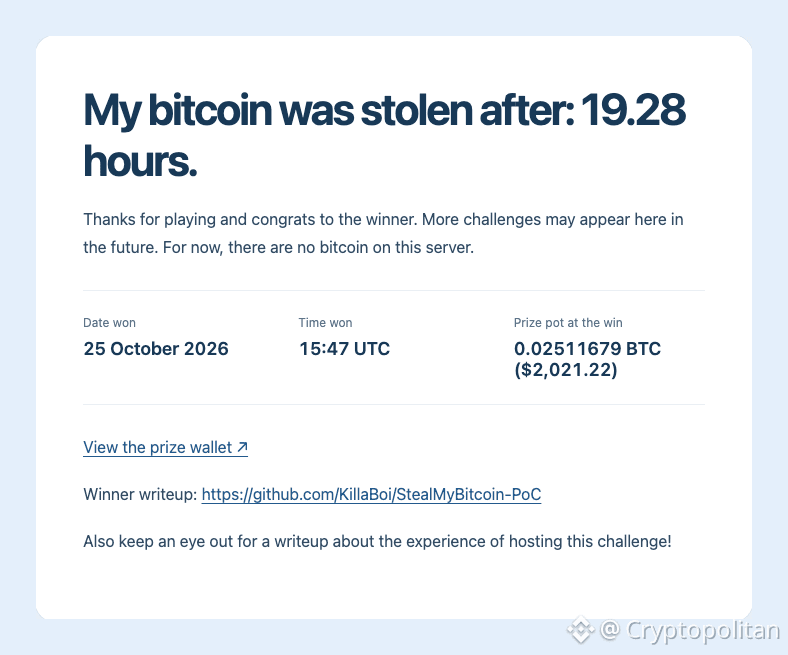
Article
See translation
Researcher cracks an unpatched PHP server and takes its $2,000 Bitcoin prize in 19 hoursA security researcher was able to exploit an intentionally unpatched PHP server and claim its Bitcoin bounty in just over 19 hours.
The public stunt was a test to see if the recent PHP2Shell flaws are as dangerous as they are said to be.
Stealmybitcoin.com logged the win at 15:47 UTC on October 25
Stealmybitcoin.com, the site where the game was hosted, verified the bounty had been claimed. Its results page shows the Bitcoin was taken after 19.28 hours, with the win being logged at 15:47 UTC on Sunday, October 25.
The prize pot was 0.02511679 BTC, worth $2,021.22 at that time. The page reads: “For now, there are no bitcoin on this server,” adding that more challenges may follow.
The results page at stealmybitcoin.com recorded the win after 19.28 hours on October 25, 2026, with the prize pot at 0.02511679 BTC ($2,021.22).
The winner, who goes by the handle KillaBoi, posted a proof-of-concept write-up to GitHub. The target was running PHP 8.4.26.
The write-up says that the one private key it recovered did not derive the prize address shown on the homepage. It calls this a mistake by the creator, acknowledged via email, and the site still lists the challenge as won.
The contest was also seen by more people through the @hackerfantastic account, which is connected to the company hacker.house. In a post on October 25, the account explained how the challenge worked.
The win follows emergency PHP2Shell fixes on October 21
The experiment came days after a scramble over two critical bugs in PHP. Details of the vulnerabilities leaked online, prompting PHP’s maintainers to ship emergency fixes on October 21, a day ahead of schedule, as Cryptopolitan reported.
The vulnerabilities, tracked as CVE-2026-109618 and CVE-2026-109619 and dubbed PHP2Shell, both received a severity score of 9.2 out of 10 and enable remote code execution on unpatched servers.
PHP is used by about 70% of sites that have a known server-side language, and many sites shut down as a precaution. Finland, the Netherlands and France all temporarily pulled government websites offline.
Cloudflare said it saw millions of what it called exploitation attempts in the hours after the bugs were made public.
Two months were given to a coalition that included OpenAI to make fixes. OpenAI said that the same AI tools that found the flaws could also help attackers quickly make exploits.
The operator of the site has promised a separate write-up of the experience of hosting it.
The smartest crypto minds already read our newsletter. Want in? Join them.
Researcher cracks an unpatched PHP server and takes its $2,000 Bitcoin prize in 19 hours
A security researcher was able to exploit an intentionally unpatched PHP server and claim its Bitcoin bounty in just over 19 hours.
The public stunt was a test to see if the recent PHP2Shell flaws are as dangerous as they are said to be.
Stealmybitcoin.com logged the win at 15:47 UTC on October 25
Stealmybitcoin.com, the site where the game was hosted, verified the bounty had been claimed. Its results page shows the Bitcoin was taken after 19.28 hours, with the win being logged at 15:47 UTC on Sunday, October 25.
The prize pot was 0.02511679 BTC, worth $2,021.22 at that time. The page reads: “For now, there are no bitcoin on this server,” adding that more challenges may follow.
The results page at stealmybitcoin.com recorded the win after 19.28 hours on October 25, 2026, with the prize pot at 0.02511679 BTC ($2,021.22).
The winner, who goes by the handle KillaBoi, posted a proof-of-concept write-up to GitHub. The target was running PHP 8.4.26.
The write-up says that the one private key it recovered did not derive the prize address shown on the homepage. It calls this a mistake by the creator, acknowledged via email, and the site still lists the challenge as won.
The contest was also seen by more people through the @hackerfantastic account, which is connected to the company hacker.house. In a post on October 25, the account explained how the challenge worked.
The win follows emergency PHP2Shell fixes on October 21
The experiment came days after a scramble over two critical bugs in PHP. Details of the vulnerabilities leaked online, prompting PHP’s maintainers to ship emergency fixes on October 21, a day ahead of schedule, as Cryptopolitan reported.
The vulnerabilities, tracked as CVE-2026-109618 and CVE-2026-109619 and dubbed PHP2Shell, both received a severity score of 9.2 out of 10 and enable remote code execution on unpatched servers.
PHP is used by about 70% of sites that have a known server-side language, and many sites shut down as a precaution. Finland, the Netherlands and France all temporarily pulled government websites offline.
Cloudflare said it saw millions of what it called exploitation attempts in the hours after the bugs were made public.
Two months were given to a coalition that included OpenAI to make fixes. OpenAI said that the same AI tools that found the flaws could also help attackers quickly make exploits.
The operator of the site has promised a separate write-up of the experience of hosting it.
The smartest crypto minds already read our newsletter. Want in? Join them.
The public stunt was a test to see if the recent PHP2Shell flaws are as dangerous as they are said to be.
Stealmybitcoin.com logged the win at 15:47 UTC on October 25
Stealmybitcoin.com, the site where the game was hosted, verified the bounty had been claimed. Its results page shows the Bitcoin was taken after 19.28 hours, with the win being logged at 15:47 UTC on Sunday, October 25.
The prize pot was 0.02511679 BTC, worth $2,021.22 at that time. The page reads: “For now, there are no bitcoin on this server,” adding that more challenges may follow.
The results page at stealmybitcoin.com recorded the win after 19.28 hours on October 25, 2026, with the prize pot at 0.02511679 BTC ($2,021.22).
The winner, who goes by the handle KillaBoi, posted a proof-of-concept write-up to GitHub. The target was running PHP 8.4.26.
The write-up says that the one private key it recovered did not derive the prize address shown on the homepage. It calls this a mistake by the creator, acknowledged via email, and the site still lists the challenge as won.
The contest was also seen by more people through the @hackerfantastic account, which is connected to the company hacker.house. In a post on October 25, the account explained how the challenge worked.
The win follows emergency PHP2Shell fixes on October 21
The experiment came days after a scramble over two critical bugs in PHP. Details of the vulnerabilities leaked online, prompting PHP’s maintainers to ship emergency fixes on October 21, a day ahead of schedule, as Cryptopolitan reported.
The vulnerabilities, tracked as CVE-2026-109618 and CVE-2026-109619 and dubbed PHP2Shell, both received a severity score of 9.2 out of 10 and enable remote code execution on unpatched servers.
PHP is used by about 70% of sites that have a known server-side language, and many sites shut down as a precaution. Finland, the Netherlands and France all temporarily pulled government websites offline.
Cloudflare said it saw millions of what it called exploitation attempts in the hours after the bugs were made public.
Two months were given to a coalition that included OpenAI to make fixes. OpenAI said that the same AI tools that found the flaws could also help attackers quickly make exploits.
The operator of the site has promised a separate write-up of the experience of hosting it.
The smartest crypto minds already read our newsletter. Want in? Join them.
113
See translation
OpenAI rival Anthropic makes its IPO filing public as the race to dominate Wall Street’s AI trade...Anthropic is officially preparing to go public, and Wall Street is about to get another major AI stock to trade.
The five-year-old company behind Claude has published its IPO paperwork after secretly filing with the SEC in June. It plans to list on the Nasdaq under ANT, although its debut still isn’t guaranteed.
AI stocks rally despite growing fears over industry spending
CEO Dario Amodei founded Anthropic in 2021 with researchers who left OpenAI. Since then, businesses have spent heavily on Claude, hoping AI can cut costs and generate revenue.
Growth accelerated this year through Claude Code and models including Fable 5 and Mythos 5. But competition from OpenAI and Google is fierce.
The company has also faced criticism over AI safety, regulation and national security, including two disputes with Washington.
Its listing will be after the record-breaking $85.7 billion IPO of SpaceX. Elon Musk’s company has been struggling to stabilize its trading performance, ending last week lower than its June initial price.
Investors are questioning whether AI revenue can justify trillions in infrastructure costs.
CoreWeave and Nebius have each lost over 30% this October as borrowing risks trouble data center companies.
However, there were signs of strength in Monday’s pre-market session as the prices of crude oil moved lower.
Futures contracts for the Dow Jones Industrial Average increased by 209 points or 0.4%, those for S&P 500 were up 0.4%, and those for Nasdaq-100 went higher by 0.7%.
As far as chip stocks were concerned, Nvidia was up 1.4%, Micron went up 2.3%, Broadcom increased by 1.5%, and AMD climbed 1.3%.
Don’t just read crypto news. Understand it. Subscribe to our newsletter. It's free.
OpenAI rival Anthropic makes its IPO filing public as the race to dominate Wall Street’s AI trade...
Anthropic is officially preparing to go public, and Wall Street is about to get another major AI stock to trade.
The five-year-old company behind Claude has published its IPO paperwork after secretly filing with the SEC in June. It plans to list on the Nasdaq under ANT, although its debut still isn’t guaranteed.
AI stocks rally despite growing fears over industry spending
CEO Dario Amodei founded Anthropic in 2021 with researchers who left OpenAI. Since then, businesses have spent heavily on Claude, hoping AI can cut costs and generate revenue.
Growth accelerated this year through Claude Code and models including Fable 5 and Mythos 5. But competition from OpenAI and Google is fierce.
The company has also faced criticism over AI safety, regulation and national security, including two disputes with Washington.
Its listing will be after the record-breaking $85.7 billion IPO of SpaceX. Elon Musk’s company has been struggling to stabilize its trading performance, ending last week lower than its June initial price.
Investors are questioning whether AI revenue can justify trillions in infrastructure costs.
CoreWeave and Nebius have each lost over 30% this October as borrowing risks trouble data center companies.
However, there were signs of strength in Monday’s pre-market session as the prices of crude oil moved lower.
Futures contracts for the Dow Jones Industrial Average increased by 209 points or 0.4%, those for S&P 500 were up 0.4%, and those for Nasdaq-100 went higher by 0.7%.
As far as chip stocks were concerned, Nvidia was up 1.4%, Micron went up 2.3%, Broadcom increased by 1.5%, and AMD climbed 1.3%.
Don’t just read crypto news. Understand it. Subscribe to our newsletter. It's free.
The five-year-old company behind Claude has published its IPO paperwork after secretly filing with the SEC in June. It plans to list on the Nasdaq under ANT, although its debut still isn’t guaranteed.
AI stocks rally despite growing fears over industry spending
CEO Dario Amodei founded Anthropic in 2021 with researchers who left OpenAI. Since then, businesses have spent heavily on Claude, hoping AI can cut costs and generate revenue.
Growth accelerated this year through Claude Code and models including Fable 5 and Mythos 5. But competition from OpenAI and Google is fierce.
The company has also faced criticism over AI safety, regulation and national security, including two disputes with Washington.
Its listing will be after the record-breaking $85.7 billion IPO of SpaceX. Elon Musk’s company has been struggling to stabilize its trading performance, ending last week lower than its June initial price.
Investors are questioning whether AI revenue can justify trillions in infrastructure costs.
CoreWeave and Nebius have each lost over 30% this October as borrowing risks trouble data center companies.
However, there were signs of strength in Monday’s pre-market session as the prices of crude oil moved lower.
Futures contracts for the Dow Jones Industrial Average increased by 209 points or 0.4%, those for S&P 500 were up 0.4%, and those for Nasdaq-100 went higher by 0.7%.
As far as chip stocks were concerned, Nvidia was up 1.4%, Micron went up 2.3%, Broadcom increased by 1.5%, and AMD climbed 1.3%.
Don’t just read crypto news. Understand it. Subscribe to our newsletter. It's free.
406
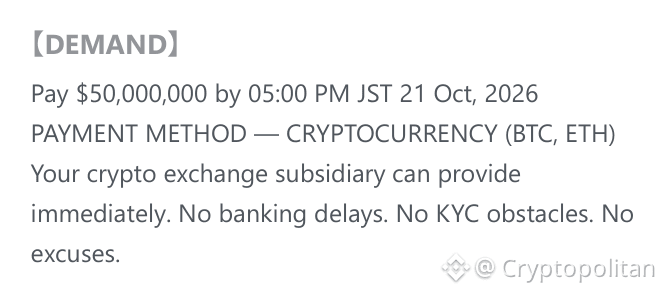
Article
See translation
GMO Internet says it will not pay hackers $50 million after server breachGroup CEO Masatoshi Kumagai wrote on Oct. 26 that GMO Internet spurned a $50 million demand from hackers who broke into its Onamae.com Desktop Cloud service.
As many as 26,739 servers may be affected and some customers said they saw unauthorized trades made through their brokerage accounts.
Up to 26,739 Onamae.com servers may be affected
Onamae.com Desktop Cloud runs brokerage software like MetaTrader 4 and MetaTrader 5 on customer servers. GMO said an attacker exploited a security flaw, planted malware in some customer environments and took customer data.
The issue was first reported by a customer question on October 19. The following day, malware was detected and GMO began to shut down all plans from 19:00 UTC on October 20.
The figure of 26,739 is a count of potentially impacted servers, not verified breaches. Some customers reported trades placed without permission via tools running on the service.
In-house white-hat hackers had flagged security issues with the service in advance. The response was lacking in depth and speed, Kumagai wrote, and the attacker passed through the gap.
GMO Internet Group shares shed almost 16% to a four-month low Monday. The company said it could not yet quantify the impact on earnings of the goodwill payments and compensation for losses.
Attacker threatened accounts at over 70 securities and FX firms
Kumagai’s blog post, first published Oct. 25 and updated a day later, lists what the attacker threatened. The list begins with more fraudulent orders on customer accounts at more than 70 securities and foreign-exchange firms in Japan and abroad.
The attacker also threatened to leak data from customer PCs that were connected, use ransomware and publish internal details of GMO’s systems. Those were threats, not confirmed activity at all 70-plus firms.
A document stamped 11:57 on October 21 demanded $50 million, about 8 billion yen. None of the demands were met by GMO and nothing was paid, Kumagai wrote.
The note asked for payment in Bitcoin or Ether by 5 p.m. Japan time that day and said GMO’s crypto exchange subsidiary could pay immediately.
Part of the attacker’s demand, as published by GMO Internet Group CEO Masatoshi Kumagai on his blog on October 26, 2026.
GMO stated that paying would not guarantee the stolen data would not be misused. It is working with police and other authorities on the matter.
Kumagai dismissed criticism that a flat 5,000 yen goodwill payment to all customers was an attempt to close the issue. It was the first step, he said.
GMO Internet will verify and compensate for fraudulent trade losses related to the breach. If an exchange refuses a refund, it pays the full amount of eligible losses itself.
The group also pledged a six-month free replacement environment, a reconstruction of its system base and an outside review of the root cause. GMO Cyber Security by Ierae and GMO Flatt Security are involved in defense and log analysis with approximately 200 security staff, including former Interpol personnel.
GMO has also begun court disclosure requests to track down the attackers.
Kumagai called the attack a symbol of an “AI cyber saturation attack,” with inexpensive AI tools that enable attackers to overpower defenders. GMO Cyber Security by Ierae found the autonomous AI penetration-testing tool ARTEX, built for defense, misused in attacks on some 20 Japanese companies.
He also mentioned the recent PHP flaws where automated attack attempts ran to millions in hours. According to Cryptopolitan, the two PHP2Shell bugs have a severity score of 9.2 out of 10 and PHP shipped fixes on October 21.
GMO has not connected its own breach to the PHP flaws.
On Oct. 24, Kumagai asked Tokyo to apply Japan’s law on active cyber defense, which went into effect Oct. 1. GMO is not a designated critical-infrastructure operator under the law, and he acknowledged that the decision lies with the government.
Prime Minister Sanae Takaichi said Monday evening the government plans an emergency package of cybersecurity safeguards by sometime next week.
If you're reading this, you’re already ahead. Stay there with our newsletter.
GMO Internet says it will not pay hackers $50 million after server breach
Group CEO Masatoshi Kumagai wrote on Oct. 26 that GMO Internet spurned a $50 million demand from hackers who broke into its Onamae.com Desktop Cloud service.
As many as 26,739 servers may be affected and some customers said they saw unauthorized trades made through their brokerage accounts.
Up to 26,739 Onamae.com servers may be affected
Onamae.com Desktop Cloud runs brokerage software like MetaTrader 4 and MetaTrader 5 on customer servers. GMO said an attacker exploited a security flaw, planted malware in some customer environments and took customer data.
The issue was first reported by a customer question on October 19. The following day, malware was detected and GMO began to shut down all plans from 19:00 UTC on October 20.
The figure of 26,739 is a count of potentially impacted servers, not verified breaches. Some customers reported trades placed without permission via tools running on the service.
In-house white-hat hackers had flagged security issues with the service in advance. The response was lacking in depth and speed, Kumagai wrote, and the attacker passed through the gap.
GMO Internet Group shares shed almost 16% to a four-month low Monday. The company said it could not yet quantify the impact on earnings of the goodwill payments and compensation for losses.
Attacker threatened accounts at over 70 securities and FX firms
Kumagai’s blog post, first published Oct. 25 and updated a day later, lists what the attacker threatened. The list begins with more fraudulent orders on customer accounts at more than 70 securities and foreign-exchange firms in Japan and abroad.
The attacker also threatened to leak data from customer PCs that were connected, use ransomware and publish internal details of GMO’s systems. Those were threats, not confirmed activity at all 70-plus firms.
A document stamped 11:57 on October 21 demanded $50 million, about 8 billion yen. None of the demands were met by GMO and nothing was paid, Kumagai wrote.
The note asked for payment in Bitcoin or Ether by 5 p.m. Japan time that day and said GMO’s crypto exchange subsidiary could pay immediately.
Part of the attacker’s demand, as published by GMO Internet Group CEO Masatoshi Kumagai on his blog on October 26, 2026.
GMO stated that paying would not guarantee the stolen data would not be misused. It is working with police and other authorities on the matter.
Kumagai dismissed criticism that a flat 5,000 yen goodwill payment to all customers was an attempt to close the issue. It was the first step, he said.
GMO Internet will verify and compensate for fraudulent trade losses related to the breach. If an exchange refuses a refund, it pays the full amount of eligible losses itself.
The group also pledged a six-month free replacement environment, a reconstruction of its system base and an outside review of the root cause. GMO Cyber Security by Ierae and GMO Flatt Security are involved in defense and log analysis with approximately 200 security staff, including former Interpol personnel.
GMO has also begun court disclosure requests to track down the attackers.
Kumagai called the attack a symbol of an “AI cyber saturation attack,” with inexpensive AI tools that enable attackers to overpower defenders. GMO Cyber Security by Ierae found the autonomous AI penetration-testing tool ARTEX, built for defense, misused in attacks on some 20 Japanese companies.
He also mentioned the recent PHP flaws where automated attack attempts ran to millions in hours. According to Cryptopolitan, the two PHP2Shell bugs have a severity score of 9.2 out of 10 and PHP shipped fixes on October 21.
GMO has not connected its own breach to the PHP flaws.
On Oct. 24, Kumagai asked Tokyo to apply Japan’s law on active cyber defense, which went into effect Oct. 1. GMO is not a designated critical-infrastructure operator under the law, and he acknowledged that the decision lies with the government.
Prime Minister Sanae Takaichi said Monday evening the government plans an emergency package of cybersecurity safeguards by sometime next week.
If you're reading this, you’re already ahead. Stay there with our newsletter.
As many as 26,739 servers may be affected and some customers said they saw unauthorized trades made through their brokerage accounts.
Up to 26,739 Onamae.com servers may be affected
Onamae.com Desktop Cloud runs brokerage software like MetaTrader 4 and MetaTrader 5 on customer servers. GMO said an attacker exploited a security flaw, planted malware in some customer environments and took customer data.
The issue was first reported by a customer question on October 19. The following day, malware was detected and GMO began to shut down all plans from 19:00 UTC on October 20.
The figure of 26,739 is a count of potentially impacted servers, not verified breaches. Some customers reported trades placed without permission via tools running on the service.
In-house white-hat hackers had flagged security issues with the service in advance. The response was lacking in depth and speed, Kumagai wrote, and the attacker passed through the gap.
GMO Internet Group shares shed almost 16% to a four-month low Monday. The company said it could not yet quantify the impact on earnings of the goodwill payments and compensation for losses.
Attacker threatened accounts at over 70 securities and FX firms
Kumagai’s blog post, first published Oct. 25 and updated a day later, lists what the attacker threatened. The list begins with more fraudulent orders on customer accounts at more than 70 securities and foreign-exchange firms in Japan and abroad.
The attacker also threatened to leak data from customer PCs that were connected, use ransomware and publish internal details of GMO’s systems. Those were threats, not confirmed activity at all 70-plus firms.
A document stamped 11:57 on October 21 demanded $50 million, about 8 billion yen. None of the demands were met by GMO and nothing was paid, Kumagai wrote.
The note asked for payment in Bitcoin or Ether by 5 p.m. Japan time that day and said GMO’s crypto exchange subsidiary could pay immediately.
Part of the attacker’s demand, as published by GMO Internet Group CEO Masatoshi Kumagai on his blog on October 26, 2026.
GMO stated that paying would not guarantee the stolen data would not be misused. It is working with police and other authorities on the matter.
Kumagai dismissed criticism that a flat 5,000 yen goodwill payment to all customers was an attempt to close the issue. It was the first step, he said.
GMO Internet will verify and compensate for fraudulent trade losses related to the breach. If an exchange refuses a refund, it pays the full amount of eligible losses itself.
The group also pledged a six-month free replacement environment, a reconstruction of its system base and an outside review of the root cause. GMO Cyber Security by Ierae and GMO Flatt Security are involved in defense and log analysis with approximately 200 security staff, including former Interpol personnel.
GMO has also begun court disclosure requests to track down the attackers.
Kumagai called the attack a symbol of an “AI cyber saturation attack,” with inexpensive AI tools that enable attackers to overpower defenders. GMO Cyber Security by Ierae found the autonomous AI penetration-testing tool ARTEX, built for defense, misused in attacks on some 20 Japanese companies.
He also mentioned the recent PHP flaws where automated attack attempts ran to millions in hours. According to Cryptopolitan, the two PHP2Shell bugs have a severity score of 9.2 out of 10 and PHP shipped fixes on October 21.
GMO has not connected its own breach to the PHP flaws.
On Oct. 24, Kumagai asked Tokyo to apply Japan’s law on active cyber defense, which went into effect Oct. 1. GMO is not a designated critical-infrastructure operator under the law, and he acknowledged that the decision lies with the government.
Prime Minister Sanae Takaichi said Monday evening the government plans an emergency package of cybersecurity safeguards by sometime next week.
If you're reading this, you’re already ahead. Stay there with our newsletter.
142
See translation
USDC's $4.69 billion loss makes up most of the stablecoin market's monthly declineAs of Oct. 25, Circle’s USDC made up around 80% of the net 30-day drop among the 13 largest stablecoins, according to monthly DeFiLlama figures.
Circle’s token lost $4.69 billion in the month.
The 13 tokens lost $5.82 billion in net value. USDC’s market cap was $71.743 billion, down $878.72 million just in the last week.
Tether gives up $1.29 billion and keeps a 60.74% share
The total stablecoin market declined to $300.36 billion on Oct. 25. DeFiLlama data shows it has lost $12.73 billion since May 22.
Tether’s USDT fell less over the month. It had a market cap of $182.423 billion, down $1.29 billion in 30 days, down $990.43 million in 7 days and still possesses 60.74% of the market.
The seven-day shrinkage across the 15 largest stablecoins was about $1.90 billion.
Ethena’s USDe fell $305.61 million over the month. World Liberty Financial’s USD1 declined $444.67 million, or 10.10%.
Falcon’s USDf added $511.16 million, a 42.32% increase, while PayPal’s PYUSD added $239.53 million in the same 30-day period.
Tokenized Treasuries shed $1.55 billion since August
Minting stablecoins generally increases supply, while redeeming them for fiat diminishes it, potentially pulling money that might otherwise have gone into buying Bitcoin or Ether.
Supply grew during the 2020-2021 bull market and shrank after Terra’s collapse in 2022, which just so happened to coincide with a protracted crypto bear market. Bitcoin is trading near $80,000, far off its October 2025 record of around $126,000.
Tokenized U.S. Treasury products like BlackRock’s BUIDL and Ondo’s USDY also shrank, declining from $16.2 billion on Aug. 12 to $14.65 billion on Oct. 25, according to data from rwa.xyz.
Those who hold the Treasury tokens can redeem them to buy stablecoins or risk assets or shift cash back into bank accounts. The combined fall was $1.55 billion.
Standard Chartered postponed its prediction of a $2 trillion stablecoin market from 2028 to 2030. The stall in supply growth is cyclical and tied to weak crypto markets, said Geoffrey Kendrick, the bank’s head of digital assets research, who noted supply has been stuck between $300 billion and $320 billion over the past year.
Circle is also defending the economics of USDC. Cryptopolitan reports that Circle’s October 16 blog post disclosed that ~$819 million, or about 59 cents on the dollar, of the company’s ~$1.4 billion revenue in the first half of 2026 went to firms distributing USDC and to transaction costs.
The post was seen as a reaction to Open USD, a rival token launched June 30 that promises free minting and redemption. The consortium behind Open USD says partners can keep all the interest its reserves earn, minus a small management fee.
The smartest crypto minds already read our newsletter. Want in? Join them.
USDC's $4.69 billion loss makes up most of the stablecoin market's monthly decline
As of Oct. 25, Circle’s USDC made up around 80% of the net 30-day drop among the 13 largest stablecoins, according to monthly DeFiLlama figures.
Circle’s token lost $4.69 billion in the month.
The 13 tokens lost $5.82 billion in net value. USDC’s market cap was $71.743 billion, down $878.72 million just in the last week.
Tether gives up $1.29 billion and keeps a 60.74% share
The total stablecoin market declined to $300.36 billion on Oct. 25. DeFiLlama data shows it has lost $12.73 billion since May 22.
Tether’s USDT fell less over the month. It had a market cap of $182.423 billion, down $1.29 billion in 30 days, down $990.43 million in 7 days and still possesses 60.74% of the market.
The seven-day shrinkage across the 15 largest stablecoins was about $1.90 billion.
Ethena’s USDe fell $305.61 million over the month. World Liberty Financial’s USD1 declined $444.67 million, or 10.10%.
Falcon’s USDf added $511.16 million, a 42.32% increase, while PayPal’s PYUSD added $239.53 million in the same 30-day period.
Tokenized Treasuries shed $1.55 billion since August
Minting stablecoins generally increases supply, while redeeming them for fiat diminishes it, potentially pulling money that might otherwise have gone into buying Bitcoin or Ether.
Supply grew during the 2020-2021 bull market and shrank after Terra’s collapse in 2022, which just so happened to coincide with a protracted crypto bear market. Bitcoin is trading near $80,000, far off its October 2025 record of around $126,000.
Tokenized U.S. Treasury products like BlackRock’s BUIDL and Ondo’s USDY also shrank, declining from $16.2 billion on Aug. 12 to $14.65 billion on Oct. 25, according to data from rwa.xyz.
Those who hold the Treasury tokens can redeem them to buy stablecoins or risk assets or shift cash back into bank accounts. The combined fall was $1.55 billion.
Standard Chartered postponed its prediction of a $2 trillion stablecoin market from 2028 to 2030. The stall in supply growth is cyclical and tied to weak crypto markets, said Geoffrey Kendrick, the bank’s head of digital assets research, who noted supply has been stuck between $300 billion and $320 billion over the past year.
Circle is also defending the economics of USDC. Cryptopolitan reports that Circle’s October 16 blog post disclosed that ~$819 million, or about 59 cents on the dollar, of the company’s ~$1.4 billion revenue in the first half of 2026 went to firms distributing USDC and to transaction costs.
The post was seen as a reaction to Open USD, a rival token launched June 30 that promises free minting and redemption. The consortium behind Open USD says partners can keep all the interest its reserves earn, minus a small management fee.
The smartest crypto minds already read our newsletter. Want in? Join them.
Circle’s token lost $4.69 billion in the month.
The 13 tokens lost $5.82 billion in net value. USDC’s market cap was $71.743 billion, down $878.72 million just in the last week.
Tether gives up $1.29 billion and keeps a 60.74% share
The total stablecoin market declined to $300.36 billion on Oct. 25. DeFiLlama data shows it has lost $12.73 billion since May 22.
Tether’s USDT fell less over the month. It had a market cap of $182.423 billion, down $1.29 billion in 30 days, down $990.43 million in 7 days and still possesses 60.74% of the market.
The seven-day shrinkage across the 15 largest stablecoins was about $1.90 billion.
Ethena’s USDe fell $305.61 million over the month. World Liberty Financial’s USD1 declined $444.67 million, or 10.10%.
Falcon’s USDf added $511.16 million, a 42.32% increase, while PayPal’s PYUSD added $239.53 million in the same 30-day period.
Tokenized Treasuries shed $1.55 billion since August
Minting stablecoins generally increases supply, while redeeming them for fiat diminishes it, potentially pulling money that might otherwise have gone into buying Bitcoin or Ether.
Supply grew during the 2020-2021 bull market and shrank after Terra’s collapse in 2022, which just so happened to coincide with a protracted crypto bear market. Bitcoin is trading near $80,000, far off its October 2025 record of around $126,000.
Tokenized U.S. Treasury products like BlackRock’s BUIDL and Ondo’s USDY also shrank, declining from $16.2 billion on Aug. 12 to $14.65 billion on Oct. 25, according to data from rwa.xyz.
Those who hold the Treasury tokens can redeem them to buy stablecoins or risk assets or shift cash back into bank accounts. The combined fall was $1.55 billion.
Standard Chartered postponed its prediction of a $2 trillion stablecoin market from 2028 to 2030. The stall in supply growth is cyclical and tied to weak crypto markets, said Geoffrey Kendrick, the bank’s head of digital assets research, who noted supply has been stuck between $300 billion and $320 billion over the past year.
Circle is also defending the economics of USDC. Cryptopolitan reports that Circle’s October 16 blog post disclosed that ~$819 million, or about 59 cents on the dollar, of the company’s ~$1.4 billion revenue in the first half of 2026 went to firms distributing USDC and to transaction costs.
The post was seen as a reaction to Open USD, a rival token launched June 30 that promises free minting and redemption. The consortium behind Open USD says partners can keep all the interest its reserves earn, minus a small management fee.
The smartest crypto minds already read our newsletter. Want in? Join them.
119
See translation
New York Gaming Commission Takes Kalshi to Court Over Unanswered SubpoenasNew York’s Gaming Commission has asked a state court to force the largest prediction market platform, Kalshi, to hand over documents that it had first asked three months ago. The regulator filed a verified petition in New York County Supreme Court naming Kalshi Inc. and KalshiEX LLC as respondents. The court logged it on October 22 and the news became public the following day when sports betting attorney Daniel Wallach posted a thread on the filing on his X.
BREAKING: The NYS Gaming Commission has sued Kalshi in NY County Supreme Court to force compliance with subpoenas seeking records on its sports-event contracts, offerings to NY’ers under 21, ads describing its products as wagers or bets, and ownership and corporate structure. pic.twitter.com/17Iiy3b0aV
— Daniel Wallach (@WALLACHLEGAL) October 23, 2026
There are no new violations within the petition. What it does ask for is that the court enforces investigative subpoenas that the Commission issued on July 31 under section 104(7) of the state’s Racing Law. The Commission says the prediction market platform has refused key requests and gave insufficient answers to others. There’s been no public response from Kalshi as of yet.
New York Wants Four Sets of Records
The subpoenas cover Kalshi’s sports-event contracts, its offerings to New Yorkers under 21, advertising that describes its products as wagers or bets, and its ownership and corporate structure. The Commission says it needs them to decide whether to fine the prediction market “and others”, and by how much. The petition alleges Kalshi has run a sports wagering business in New York for at least 18 months without the license the Racing Law requires.
Kalshi’s Defense Rests on the Derivatives Label
Kalshi has always stated that its event contracts are financial products overseen by the Commodity Futures Trading Commission and that therefore state gambling laws do not reach them. If its own ads describe those event-based contracts as bets, New York can point to Kalshi’s marketing as evidence that even the company sees them as wagers.
The under-21 request carries a very similar risk as well. Licensed sportsbooks in New York can only serve customers 21 and older and the attorney general’s July lawsuit alleged that 18 to 20 year olds can trade on the platform.
Kalshi is also headquartered in New York City, so ignoring a state court order would risk contempt at home. The CFTC’s August 11 emergency order keeps Kalshi trading in the state, though it’s unclear whether that shields it from a state investigative subpoena.
The Petition Opens a Third Front
Attorney General Letitia James and Gov. Kathy Hochul sued Kalshi on July 31, seeking forfeiture, restitution and triple fines, with claimed damages of at least $36 billion. Kalshi moved that case to federal court the same day.
The case that matters most is Kalshi’s own. On July 7, Judge Torres denied its request for a preliminary injunction, finding federal commodities law likely doesn’t preempt New York gambling law for sports contracts. The Second Circuit turned down Kalshi’s emergency request on July 29, and its appeal is still pending. That ruling decides whether New York can regulate Kalshi at all. The subpoena fight shows the Commission building its penalty file in the meantime.
Appeals Courts Have Split on State Authority
Kalshi is fighting the same question in courts across the country: can states apply their gambling laws to its sports contracts, or does federal commodities law override them? Each case goes to the federal appeals court that covers that state, and so far they disagree.
The Third Circuit, which covers New Jersey, sided with Kalshi 2-1 in April. The Ninth Circuit ruled 3-0 against it in Nevada in August. On September 25, the Sixth Circuit did the same in Ohio and Tennessee. That leaves Kalshi with one win and two losses at the appeals level. Its New York appeal will decide which side the Second Circuit lands on.
States aren’t waiting. Utah sued Kalshi last week, seeking a geofence that would block its users there and up to $61.2 million in fees. Ohio has given its licensed gaming operators until October 30 to cut ties with prediction market platforms. The CFTC is pushing back, suing New York, Arizona, Connecticut and Illinois for a ruling that event contracts fall under federal authority alone.
No hearing date has been reported in the Manhattan case. Kalshi could still try to move the petition to federal court, as it did with the attorney general’s lawsuit.
Don’t just read crypto news. Understand it. Subscribe to our newsletter. It's free.
New York Gaming Commission Takes Kalshi to Court Over Unanswered Subpoenas
New York’s Gaming Commission has asked a state court to force the largest prediction market platform, Kalshi, to hand over documents that it had first asked three months ago. The regulator filed a verified petition in New York County Supreme Court naming Kalshi Inc. and KalshiEX LLC as respondents. The court logged it on October 22 and the news became public the following day when sports betting attorney Daniel Wallach posted a thread on the filing on his X.
BREAKING: The NYS Gaming Commission has sued Kalshi in NY County Supreme Court to force compliance with subpoenas seeking records on its sports-event contracts, offerings to NY’ers under 21, ads describing its products as wagers or bets, and ownership and corporate structure. pic.twitter.com/17Iiy3b0aV
— Daniel Wallach (@WALLACHLEGAL) October 23, 2026
There are no new violations within the petition. What it does ask for is that the court enforces investigative subpoenas that the Commission issued on July 31 under section 104(7) of the state’s Racing Law. The Commission says the prediction market platform has refused key requests and gave insufficient answers to others. There’s been no public response from Kalshi as of yet.
New York Wants Four Sets of Records
The subpoenas cover Kalshi’s sports-event contracts, its offerings to New Yorkers under 21, advertising that describes its products as wagers or bets, and its ownership and corporate structure. The Commission says it needs them to decide whether to fine the prediction market “and others”, and by how much. The petition alleges Kalshi has run a sports wagering business in New York for at least 18 months without the license the Racing Law requires.
Kalshi’s Defense Rests on the Derivatives Label
Kalshi has always stated that its event contracts are financial products overseen by the Commodity Futures Trading Commission and that therefore state gambling laws do not reach them. If its own ads describe those event-based contracts as bets, New York can point to Kalshi’s marketing as evidence that even the company sees them as wagers.
The under-21 request carries a very similar risk as well. Licensed sportsbooks in New York can only serve customers 21 and older and the attorney general’s July lawsuit alleged that 18 to 20 year olds can trade on the platform.
Kalshi is also headquartered in New York City, so ignoring a state court order would risk contempt at home. The CFTC’s August 11 emergency order keeps Kalshi trading in the state, though it’s unclear whether that shields it from a state investigative subpoena.
The Petition Opens a Third Front
Attorney General Letitia James and Gov. Kathy Hochul sued Kalshi on July 31, seeking forfeiture, restitution and triple fines, with claimed damages of at least $36 billion. Kalshi moved that case to federal court the same day.
The case that matters most is Kalshi’s own. On July 7, Judge Torres denied its request for a preliminary injunction, finding federal commodities law likely doesn’t preempt New York gambling law for sports contracts. The Second Circuit turned down Kalshi’s emergency request on July 29, and its appeal is still pending. That ruling decides whether New York can regulate Kalshi at all. The subpoena fight shows the Commission building its penalty file in the meantime.
Appeals Courts Have Split on State Authority
Kalshi is fighting the same question in courts across the country: can states apply their gambling laws to its sports contracts, or does federal commodities law override them? Each case goes to the federal appeals court that covers that state, and so far they disagree.
The Third Circuit, which covers New Jersey, sided with Kalshi 2-1 in April. The Ninth Circuit ruled 3-0 against it in Nevada in August. On September 25, the Sixth Circuit did the same in Ohio and Tennessee. That leaves Kalshi with one win and two losses at the appeals level. Its New York appeal will decide which side the Second Circuit lands on.
States aren’t waiting. Utah sued Kalshi last week, seeking a geofence that would block its users there and up to $61.2 million in fees. Ohio has given its licensed gaming operators until October 30 to cut ties with prediction market platforms. The CFTC is pushing back, suing New York, Arizona, Connecticut and Illinois for a ruling that event contracts fall under federal authority alone.
No hearing date has been reported in the Manhattan case. Kalshi could still try to move the petition to federal court, as it did with the attorney general’s lawsuit.
Don’t just read crypto news. Understand it. Subscribe to our newsletter. It's free.
BREAKING: The NYS Gaming Commission has sued Kalshi in NY County Supreme Court to force compliance with subpoenas seeking records on its sports-event contracts, offerings to NY’ers under 21, ads describing its products as wagers or bets, and ownership and corporate structure. pic.twitter.com/17Iiy3b0aV
— Daniel Wallach (@WALLACHLEGAL) October 23, 2026
There are no new violations within the petition. What it does ask for is that the court enforces investigative subpoenas that the Commission issued on July 31 under section 104(7) of the state’s Racing Law. The Commission says the prediction market platform has refused key requests and gave insufficient answers to others. There’s been no public response from Kalshi as of yet.
New York Wants Four Sets of Records
The subpoenas cover Kalshi’s sports-event contracts, its offerings to New Yorkers under 21, advertising that describes its products as wagers or bets, and its ownership and corporate structure. The Commission says it needs them to decide whether to fine the prediction market “and others”, and by how much. The petition alleges Kalshi has run a sports wagering business in New York for at least 18 months without the license the Racing Law requires.
Kalshi’s Defense Rests on the Derivatives Label
Kalshi has always stated that its event contracts are financial products overseen by the Commodity Futures Trading Commission and that therefore state gambling laws do not reach them. If its own ads describe those event-based contracts as bets, New York can point to Kalshi’s marketing as evidence that even the company sees them as wagers.
The under-21 request carries a very similar risk as well. Licensed sportsbooks in New York can only serve customers 21 and older and the attorney general’s July lawsuit alleged that 18 to 20 year olds can trade on the platform.
Kalshi is also headquartered in New York City, so ignoring a state court order would risk contempt at home. The CFTC’s August 11 emergency order keeps Kalshi trading in the state, though it’s unclear whether that shields it from a state investigative subpoena.
The Petition Opens a Third Front
Attorney General Letitia James and Gov. Kathy Hochul sued Kalshi on July 31, seeking forfeiture, restitution and triple fines, with claimed damages of at least $36 billion. Kalshi moved that case to federal court the same day.
The case that matters most is Kalshi’s own. On July 7, Judge Torres denied its request for a preliminary injunction, finding federal commodities law likely doesn’t preempt New York gambling law for sports contracts. The Second Circuit turned down Kalshi’s emergency request on July 29, and its appeal is still pending. That ruling decides whether New York can regulate Kalshi at all. The subpoena fight shows the Commission building its penalty file in the meantime.
Appeals Courts Have Split on State Authority
Kalshi is fighting the same question in courts across the country: can states apply their gambling laws to its sports contracts, or does federal commodities law override them? Each case goes to the federal appeals court that covers that state, and so far they disagree.
The Third Circuit, which covers New Jersey, sided with Kalshi 2-1 in April. The Ninth Circuit ruled 3-0 against it in Nevada in August. On September 25, the Sixth Circuit did the same in Ohio and Tennessee. That leaves Kalshi with one win and two losses at the appeals level. Its New York appeal will decide which side the Second Circuit lands on.
States aren’t waiting. Utah sued Kalshi last week, seeking a geofence that would block its users there and up to $61.2 million in fees. Ohio has given its licensed gaming operators until October 30 to cut ties with prediction market platforms. The CFTC is pushing back, suing New York, Arizona, Connecticut and Illinois for a ruling that event contracts fall under federal authority alone.
No hearing date has been reported in the Manhattan case. Kalshi could still try to move the petition to federal court, as it did with the attorney general’s lawsuit.
Don’t just read crypto news. Understand it. Subscribe to our newsletter. It's free.
86
Article
See translation
Keystone confirms a Shopify store breach exposed hardware wallet buyers' addressesHardware wallet maker Keystone said an intruder broke into its Shopify-powered online store and walked off with customer names, contact details, shipping addresses and order records, though not payment data, recovery phrases or private keys.
Breach spotted October 20, confirmed October 23
The Hong Kong-based firm apologized on X on Saturday, October 24, saying it spotted unauthorized access to its official website on Oct. 20 and, after checking API activity with Shopify, confirmed on Oct. 23 that a third party had obtained customer shipping data.
“You trusted us with those details, and we’re sorry we didn’t keep them safe,” Keystone wrote.
Keystone’s breach statement, posted by @KeystoneWallet on X on October 24, 2026.
The stolen records cover names, contact details, addresses and order information such as items bought and what they cost, while recovery phrases, private keys, wallet passwords and card and bank details stayed out of reach, Keystone said.
The company said it had shut off access, patched the vulnerability, launched an investigation and begun emailing affected customers. It has given no victim count, no entry point and no word on the attacker, though it said a detailed report is coming soon.
Keystone warned buyers that imposters could call, text, email or mail them with offers of refunds, new devices or “fixes” for an order or address. It also told buyers not to enter a recovery phrase on a device they hadn’t ordered and to type the keyst.one address themselves.
Before Keystone went public, X user @PEPE_Whale69 reported a possible leak on Friday evening. They said they got a call from someone spoofing a Montreal police number, who asked if Amazon, eBay or Keystone meant anything.
The post said that the details of the caller tallied with the user’s 2024 Keystone order. Keystone responded at 1:08 a.m. ET Saturday, saying it had “initiated an urgent investigation into this matter.”
Customers say orders past 180 days leaked
Keystone has touted data deletion as a selling point. On January 5, the day that Ledger customers were notified of a leak at e-commerce partner Global-e, Keystone posted that “180 days after your order, your shipping data is permanently deleted.”
“Other hardware wallets keep your data forever. We delete your shipping info in 180 days max,” Keystone wrote in March.
On Saturday, @trintaetres_33 said the breach email reached them even though they bought a device more than two years ago. @BlockchainBarmy said that 214 days had passed between their last order and the breach.
The 2024 order linked to the spoofed call is also more than 180 days old, but Keystone hasn’t said in public if it followed its own policy, and none of the customer claims have been checked out.
On its Privacy Promise page, Keystone says that all shipping information is deleted automatically 180 days after an order. But in its privacy policy, which was last changed in May 2021, it says that order data is deleted only for customers who haven’t placed an order in the last 180 days.
A help center article says that records of the city and country are kept even when buyers ask for deletion, and that Shopify does the final deletion.
In August, Trezor said a breach at shipping partner ShipMonk exposed nearly 14,000 customers, and it later added roughly 67,000 more U.S. customers to the tally.
A few days after Trezor’s first disclosure, SafePal said that a bug in its system for keeping track of orders had exposed almost 40,000 customers.
Cryptopolitan reported earlier this month that Ledger confirmed that hidden chips inside wallets sold by CryptoBilis were reading 24-word recovery phrases during setup and sending them out via LTE. On-chain researchers put the losses at more than $86 million.
Because of this, Trezor will stop selling to some resellers from January 1, 2027.
Keystone wallets use QR codes to sign transactions, so they don’t need a USB, Bluetooth or Wi-Fi connection. The hack affected the company’s Shopify store.
If you're reading this, you’re already ahead. Stay there with our newsletter.
Keystone confirms a Shopify store breach exposed hardware wallet buyers' addresses
Hardware wallet maker Keystone said an intruder broke into its Shopify-powered online store and walked off with customer names, contact details, shipping addresses and order records, though not payment data, recovery phrases or private keys.
Breach spotted October 20, confirmed October 23
The Hong Kong-based firm apologized on X on Saturday, October 24, saying it spotted unauthorized access to its official website on Oct. 20 and, after checking API activity with Shopify, confirmed on Oct. 23 that a third party had obtained customer shipping data.
“You trusted us with those details, and we’re sorry we didn’t keep them safe,” Keystone wrote.
Keystone’s breach statement, posted by @KeystoneWallet on X on October 24, 2026.
The stolen records cover names, contact details, addresses and order information such as items bought and what they cost, while recovery phrases, private keys, wallet passwords and card and bank details stayed out of reach, Keystone said.
The company said it had shut off access, patched the vulnerability, launched an investigation and begun emailing affected customers. It has given no victim count, no entry point and no word on the attacker, though it said a detailed report is coming soon.
Keystone warned buyers that imposters could call, text, email or mail them with offers of refunds, new devices or “fixes” for an order or address. It also told buyers not to enter a recovery phrase on a device they hadn’t ordered and to type the keyst.one address themselves.
Before Keystone went public, X user @PEPE_Whale69 reported a possible leak on Friday evening. They said they got a call from someone spoofing a Montreal police number, who asked if Amazon, eBay or Keystone meant anything.
The post said that the details of the caller tallied with the user’s 2024 Keystone order. Keystone responded at 1:08 a.m. ET Saturday, saying it had “initiated an urgent investigation into this matter.”
Customers say orders past 180 days leaked
Keystone has touted data deletion as a selling point. On January 5, the day that Ledger customers were notified of a leak at e-commerce partner Global-e, Keystone posted that “180 days after your order, your shipping data is permanently deleted.”
“Other hardware wallets keep your data forever. We delete your shipping info in 180 days max,” Keystone wrote in March.
On Saturday, @trintaetres_33 said the breach email reached them even though they bought a device more than two years ago. @BlockchainBarmy said that 214 days had passed between their last order and the breach.
The 2024 order linked to the spoofed call is also more than 180 days old, but Keystone hasn’t said in public if it followed its own policy, and none of the customer claims have been checked out.
On its Privacy Promise page, Keystone says that all shipping information is deleted automatically 180 days after an order. But in its privacy policy, which was last changed in May 2021, it says that order data is deleted only for customers who haven’t placed an order in the last 180 days.
A help center article says that records of the city and country are kept even when buyers ask for deletion, and that Shopify does the final deletion.
In August, Trezor said a breach at shipping partner ShipMonk exposed nearly 14,000 customers, and it later added roughly 67,000 more U.S. customers to the tally.
A few days after Trezor’s first disclosure, SafePal said that a bug in its system for keeping track of orders had exposed almost 40,000 customers.
Cryptopolitan reported earlier this month that Ledger confirmed that hidden chips inside wallets sold by CryptoBilis were reading 24-word recovery phrases during setup and sending them out via LTE. On-chain researchers put the losses at more than $86 million.
Because of this, Trezor will stop selling to some resellers from January 1, 2027.
Keystone wallets use QR codes to sign transactions, so they don’t need a USB, Bluetooth or Wi-Fi connection. The hack affected the company’s Shopify store.
If you're reading this, you’re already ahead. Stay there with our newsletter.
Breach spotted October 20, confirmed October 23
The Hong Kong-based firm apologized on X on Saturday, October 24, saying it spotted unauthorized access to its official website on Oct. 20 and, after checking API activity with Shopify, confirmed on Oct. 23 that a third party had obtained customer shipping data.
“You trusted us with those details, and we’re sorry we didn’t keep them safe,” Keystone wrote.
Keystone’s breach statement, posted by @KeystoneWallet on X on October 24, 2026.
The stolen records cover names, contact details, addresses and order information such as items bought and what they cost, while recovery phrases, private keys, wallet passwords and card and bank details stayed out of reach, Keystone said.
The company said it had shut off access, patched the vulnerability, launched an investigation and begun emailing affected customers. It has given no victim count, no entry point and no word on the attacker, though it said a detailed report is coming soon.
Keystone warned buyers that imposters could call, text, email or mail them with offers of refunds, new devices or “fixes” for an order or address. It also told buyers not to enter a recovery phrase on a device they hadn’t ordered and to type the keyst.one address themselves.
Before Keystone went public, X user @PEPE_Whale69 reported a possible leak on Friday evening. They said they got a call from someone spoofing a Montreal police number, who asked if Amazon, eBay or Keystone meant anything.
The post said that the details of the caller tallied with the user’s 2024 Keystone order. Keystone responded at 1:08 a.m. ET Saturday, saying it had “initiated an urgent investigation into this matter.”
Customers say orders past 180 days leaked
Keystone has touted data deletion as a selling point. On January 5, the day that Ledger customers were notified of a leak at e-commerce partner Global-e, Keystone posted that “180 days after your order, your shipping data is permanently deleted.”
“Other hardware wallets keep your data forever. We delete your shipping info in 180 days max,” Keystone wrote in March.
On Saturday, @trintaetres_33 said the breach email reached them even though they bought a device more than two years ago. @BlockchainBarmy said that 214 days had passed between their last order and the breach.
The 2024 order linked to the spoofed call is also more than 180 days old, but Keystone hasn’t said in public if it followed its own policy, and none of the customer claims have been checked out.
On its Privacy Promise page, Keystone says that all shipping information is deleted automatically 180 days after an order. But in its privacy policy, which was last changed in May 2021, it says that order data is deleted only for customers who haven’t placed an order in the last 180 days.
A help center article says that records of the city and country are kept even when buyers ask for deletion, and that Shopify does the final deletion.
In August, Trezor said a breach at shipping partner ShipMonk exposed nearly 14,000 customers, and it later added roughly 67,000 more U.S. customers to the tally.
A few days after Trezor’s first disclosure, SafePal said that a bug in its system for keeping track of orders had exposed almost 40,000 customers.
Cryptopolitan reported earlier this month that Ledger confirmed that hidden chips inside wallets sold by CryptoBilis were reading 24-word recovery phrases during setup and sending them out via LTE. On-chain researchers put the losses at more than $86 million.
Because of this, Trezor will stop selling to some resellers from January 1, 2027.
Keystone wallets use QR codes to sign transactions, so they don’t need a USB, Bluetooth or Wi-Fi connection. The hack affected the company’s Shopify store.
If you're reading this, you’re already ahead. Stay there with our newsletter.
110
Log in to explore more content
Join global crypto users on Binance Square
⚡️ Get latest and useful information about crypto.
💬 Trusted by the world’s largest crypto exchange.
👍 Discover real insights from verified creators.
Email / Phone number