

Cointelegraph
37k Posts

Cointelegraph
 Square Verified+
Report
Block User
Cointelegraph covers fintech, blockchain and Bitcoin, bringing you the latest news and analyses on the future of money.
2 Following
186.2K+ Followers
566.8K+ Liked
1 Badges
Posts
See translation
Australia summons OpenAI, Anthropic chiefs to Senate inquiry on health-data hack: Report The CEOs of OpenAI and Anthropic have reportedly been summoned to appear at an Australian Senate inquiry into AI, just days after news broke that a rogue OpenAI bot had hacked the country’s health data.
The Australian Medicare breach is one of the highest-profile incidents of AI agents accessing external systems outside the US, according to a Sunday Business World report.
OpenAI’s Sam Altman and Anthropic’s Dario Amodei were asked to appear at the inquiry in Canberra on Thursday, the report said.
Cointelegraph reported last Thursday that the OpenAI research agent had bypassed blocks on the Australian government health data portal and accessed non-public files in June.
OpenAI did not notify the Australian government until Sept. 10, almost three months after the incident, according to Prime Minister Anthony Albanese, who criticized the delay.
The Australian government has since opened a forensic investigation and announced the Senate inquiry into how it handles AI-related cyber incidents, as well as the potential impacts of AI and data centers on Australian communities, industries, water and energy.
Related: OpenAI, Anthropic to brief UN Security Council on AI risks: Reports
Australia summons OpenAI, Anthropic chiefs to Senate inquiry on health-data hack: Report
The CEOs of OpenAI and Anthropic have reportedly been summoned to appear at an Australian Senate inquiry into AI, just days after news broke that a rogue OpenAI bot had hacked the country’s health data.
The Australian Medicare breach is one of the highest-profile incidents of AI agents accessing external systems outside the US, according to a Sunday Business World report.
OpenAI’s Sam Altman and Anthropic’s Dario Amodei were asked to appear at the inquiry in Canberra on Thursday, the report said.
Cointelegraph reported last Thursday that the OpenAI research agent had bypassed blocks on the Australian government health data portal and accessed non-public files in June.
OpenAI did not notify the Australian government until Sept. 10, almost three months after the incident, according to Prime Minister Anthony Albanese, who criticized the delay.
The Australian government has since opened a forensic investigation and announced the Senate inquiry into how it handles AI-related cyber incidents, as well as the potential impacts of AI and data centers on Australian communities, industries, water and energy.
Related: OpenAI, Anthropic to brief UN Security Council on AI risks: Reports
The Australian Medicare breach is one of the highest-profile incidents of AI agents accessing external systems outside the US, according to a Sunday Business World report.
OpenAI’s Sam Altman and Anthropic’s Dario Amodei were asked to appear at the inquiry in Canberra on Thursday, the report said.
Cointelegraph reported last Thursday that the OpenAI research agent had bypassed blocks on the Australian government health data portal and accessed non-public files in June.
OpenAI did not notify the Australian government until Sept. 10, almost three months after the incident, according to Prime Minister Anthony Albanese, who criticized the delay.
The Australian government has since opened a forensic investigation and announced the Senate inquiry into how it handles AI-related cyber incidents, as well as the potential impacts of AI and data centers on Australian communities, industries, water and energy.
Related: OpenAI, Anthropic to brief UN Security Council on AI risks: Reports
3
3
1.9k
Verified
See translation
Riot Platforms repays $200M credit facility, releases collateralBitcoin miner Riot Platforms this week repaid a $200 million credit facility from Coinbase Credit, releasing its collateral.
The facility had been secured by a pledge of Riot’s financial assets, including Bitcoin, USDC and cash, which was held in the custody of Coinbase Custody Trust Company.
Riot finished paying the remaining principal and interest on Monday, according to a Friday filing with the US Securities and Exchange Commission.
No early termination fees or penalties were incurred by Riot in connection with the prepayment or termination.
The miner has also continued to expand its data-center business, as Cointelegraph reported in August, when Riot Platforms secured a 20-year agreement to supply 191 megawatts of capacity from its Rockdale, Texas, campus to a “leading frontier AI” company.
The customer was Anthropic and the deal was valued at about $9 billion, Bloomberg subsequently reported, citing people familiar with the matter.
Cointelegraph reported in May that Riot Platforms posted $167.2 million in revenue for the first quarter of 2026, with its newly launched data center business contributing $33.2 million.
Magazine: Big Questions: Does Satoshi actually own 1.1 million Bitcoin?
Riot Platforms repays $200M credit facility, releases collateral
Bitcoin miner Riot Platforms this week repaid a $200 million credit facility from Coinbase Credit, releasing its collateral.
The facility had been secured by a pledge of Riot’s financial assets, including Bitcoin, USDC and cash, which was held in the custody of Coinbase Custody Trust Company.
Riot finished paying the remaining principal and interest on Monday, according to a Friday filing with the US Securities and Exchange Commission.
No early termination fees or penalties were incurred by Riot in connection with the prepayment or termination.
The miner has also continued to expand its data-center business, as Cointelegraph reported in August, when Riot Platforms secured a 20-year agreement to supply 191 megawatts of capacity from its Rockdale, Texas, campus to a “leading frontier AI” company.
The customer was Anthropic and the deal was valued at about $9 billion, Bloomberg subsequently reported, citing people familiar with the matter.
Cointelegraph reported in May that Riot Platforms posted $167.2 million in revenue for the first quarter of 2026, with its newly launched data center business contributing $33.2 million.
Magazine: Big Questions: Does Satoshi actually own 1.1 million Bitcoin?
The facility had been secured by a pledge of Riot’s financial assets, including Bitcoin, USDC and cash, which was held in the custody of Coinbase Custody Trust Company.
Riot finished paying the remaining principal and interest on Monday, according to a Friday filing with the US Securities and Exchange Commission.
No early termination fees or penalties were incurred by Riot in connection with the prepayment or termination.
The miner has also continued to expand its data-center business, as Cointelegraph reported in August, when Riot Platforms secured a 20-year agreement to supply 191 megawatts of capacity from its Rockdale, Texas, campus to a “leading frontier AI” company.
The customer was Anthropic and the deal was valued at about $9 billion, Bloomberg subsequently reported, citing people familiar with the matter.
Cointelegraph reported in May that Riot Platforms posted $167.2 million in revenue for the first quarter of 2026, with its newly launched data center business contributing $33.2 million.
Magazine: Big Questions: Does Satoshi actually own 1.1 million Bitcoin?
1
1
1.2k
See translation
Saylor outlines ‘bill of digital rights’ to help build prosperity in future economyMichael Saylor, co-founder of Strategy, said that an age of digital assets and intelligence needs a “bill of digital rights,” rather than restrictions.
An age of AI can increase production, but it needs better money and capital markets to realize its potential, according to an essay that Saylor, executive chairman of world’s largest corporate Bitcoin holder, posted on X Saturday.
A useful framework for digital assets should establish five fundamental rights, or freedoms, Saylor wrote.
These rights include (1) the freedom to create new digital assets and (2) to issue them to the market to finance business and productivity. They also include (3) the right to hold them or choose a custodian, as well as (4) to transfer them, to move the assets among people, companies, wallets and service providers. Finally, (5) to use them, to spend, invest, earn income and borrow against digital assets.
Related: Strategy became a symbol of the dot-com crash: Could history repeat?
These rights should apply to both people and companies, Saylor wrote. “An asset’s value depends on what its owner can do with it. Restrict its usefulness, and you restrict its economic potential,” he said.
As digital intelligence will automate jobs and make many products obsolete, future prosperity will depend on our ability to create new businesses and opportunities at a faster pace, Saylor wrote, adding that “our ambition should be to enable 10 million new companies to raise capital.”
Cointelegraph reported on Monday that Strategy had resumed buying Bitcoin after a two-week pause, acquiring 950 Bitcoin (BTC) for $75.7 million at an average price of $79,670 per coin.
This brought Strategy’s holdings to 846,000 BTC, acquired for about $63.8 billion at an average cost of $75,416 per coin. Bitcoin was trading at about $84,523 at the time of publication.
Magazine: Big Questions: Does Satoshi actually own 1.1 million Bitcoin?
Saylor outlines ‘bill of digital rights’ to help build prosperity in future economy
Michael Saylor, co-founder of Strategy, said that an age of digital assets and intelligence needs a “bill of digital rights,” rather than restrictions.
An age of AI can increase production, but it needs better money and capital markets to realize its potential, according to an essay that Saylor, executive chairman of world’s largest corporate Bitcoin holder, posted on X Saturday.
A useful framework for digital assets should establish five fundamental rights, or freedoms, Saylor wrote.
These rights include (1) the freedom to create new digital assets and (2) to issue them to the market to finance business and productivity. They also include (3) the right to hold them or choose a custodian, as well as (4) to transfer them, to move the assets among people, companies, wallets and service providers. Finally, (5) to use them, to spend, invest, earn income and borrow against digital assets.
Related: Strategy became a symbol of the dot-com crash: Could history repeat?
These rights should apply to both people and companies, Saylor wrote. “An asset’s value depends on what its owner can do with it. Restrict its usefulness, and you restrict its economic potential,” he said.
As digital intelligence will automate jobs and make many products obsolete, future prosperity will depend on our ability to create new businesses and opportunities at a faster pace, Saylor wrote, adding that “our ambition should be to enable 10 million new companies to raise capital.”
Cointelegraph reported on Monday that Strategy had resumed buying Bitcoin after a two-week pause, acquiring 950 Bitcoin (BTC) for $75.7 million at an average price of $79,670 per coin.
This brought Strategy’s holdings to 846,000 BTC, acquired for about $63.8 billion at an average cost of $75,416 per coin. Bitcoin was trading at about $84,523 at the time of publication.
Magazine: Big Questions: Does Satoshi actually own 1.1 million Bitcoin?
An age of AI can increase production, but it needs better money and capital markets to realize its potential, according to an essay that Saylor, executive chairman of world’s largest corporate Bitcoin holder, posted on X Saturday.
A useful framework for digital assets should establish five fundamental rights, or freedoms, Saylor wrote.
These rights include (1) the freedom to create new digital assets and (2) to issue them to the market to finance business and productivity. They also include (3) the right to hold them or choose a custodian, as well as (4) to transfer them, to move the assets among people, companies, wallets and service providers. Finally, (5) to use them, to spend, invest, earn income and borrow against digital assets.
Related: Strategy became a symbol of the dot-com crash: Could history repeat?
These rights should apply to both people and companies, Saylor wrote. “An asset’s value depends on what its owner can do with it. Restrict its usefulness, and you restrict its economic potential,” he said.
As digital intelligence will automate jobs and make many products obsolete, future prosperity will depend on our ability to create new businesses and opportunities at a faster pace, Saylor wrote, adding that “our ambition should be to enable 10 million new companies to raise capital.”
Cointelegraph reported on Monday that Strategy had resumed buying Bitcoin after a two-week pause, acquiring 950 Bitcoin (BTC) for $75.7 million at an average price of $79,670 per coin.
This brought Strategy’s holdings to 846,000 BTC, acquired for about $63.8 billion at an average cost of $75,416 per coin. Bitcoin was trading at about $84,523 at the time of publication.
Magazine: Big Questions: Does Satoshi actually own 1.1 million Bitcoin?
582
See translation
Kalshi loses appeal, setting up potential Supreme Court casePrediction market Kalshi lost on appeal when a court ruled that Ohio and Tennessee can regulate sports-event contracts under their state gambling laws.
The 6th US Circuit Court of Appeals ruled against Kalshi on Friday when a three-judge panel sided unanimously with Ohio and Tennessee, finding that the prediction market failed to demonstrate its sports-event contracts are “swaps” under the jurisdiction of the Commodity Futures Trading Commission (CFTC).
The ruling followed a similar ruling from the 9th Circuit Court of Appeals last month, which broke from an April decision by the 3rd Circuit Court of Appeals allowing the company to do business in New Jersey as its appeal process proceeds.
The April ruling said Kalshi was likely to succeed with its argument that federal law preempts New Jersey’s regulations, all of which has set up a potential Supreme Court case.
Cointelegraph reported on Wednesday that a group of state lawmakers had filed an amicus brief with the Supreme Court, urging it to weigh in on the case between Kalshi and state gaming authorities, potentially resolving whether state authorities or federal agencies have jurisdiction over prediction market companies.
Magazine: Exchanges reporting crypto gains to IRS becomes tax nightmare
Kalshi loses appeal, setting up potential Supreme Court case
Prediction market Kalshi lost on appeal when a court ruled that Ohio and Tennessee can regulate sports-event contracts under their state gambling laws.
The 6th US Circuit Court of Appeals ruled against Kalshi on Friday when a three-judge panel sided unanimously with Ohio and Tennessee, finding that the prediction market failed to demonstrate its sports-event contracts are “swaps” under the jurisdiction of the Commodity Futures Trading Commission (CFTC).
The ruling followed a similar ruling from the 9th Circuit Court of Appeals last month, which broke from an April decision by the 3rd Circuit Court of Appeals allowing the company to do business in New Jersey as its appeal process proceeds.
The April ruling said Kalshi was likely to succeed with its argument that federal law preempts New Jersey’s regulations, all of which has set up a potential Supreme Court case.
Cointelegraph reported on Wednesday that a group of state lawmakers had filed an amicus brief with the Supreme Court, urging it to weigh in on the case between Kalshi and state gaming authorities, potentially resolving whether state authorities or federal agencies have jurisdiction over prediction market companies.
Magazine: Exchanges reporting crypto gains to IRS becomes tax nightmare
The 6th US Circuit Court of Appeals ruled against Kalshi on Friday when a three-judge panel sided unanimously with Ohio and Tennessee, finding that the prediction market failed to demonstrate its sports-event contracts are “swaps” under the jurisdiction of the Commodity Futures Trading Commission (CFTC).
The ruling followed a similar ruling from the 9th Circuit Court of Appeals last month, which broke from an April decision by the 3rd Circuit Court of Appeals allowing the company to do business in New Jersey as its appeal process proceeds.
The April ruling said Kalshi was likely to succeed with its argument that federal law preempts New Jersey’s regulations, all of which has set up a potential Supreme Court case.
Cointelegraph reported on Wednesday that a group of state lawmakers had filed an amicus brief with the Supreme Court, urging it to weigh in on the case between Kalshi and state gaming authorities, potentially resolving whether state authorities or federal agencies have jurisdiction over prediction market companies.
Magazine: Exchanges reporting crypto gains to IRS becomes tax nightmare
1
3
1.7k
See translation
Fed requests comment on two proposals for stablecoin issuers under GENIUS Act The US Federal Reserve Board has requested public comment on two proposals for establishing a regulatory framework for supervised payment stablecoin issuers under the GENIUS Act.
The first would require issuers to fully back their stablecoins with reserve assets, including short-term Treasury bills and other high-quality, liquid assets, according to a release issued by the Fed on Thursday. It would also standardize capital requirements to address credit and operational risks and set risk-management standards.
The second proposal would establish an application process for banks seeking to issue payment stablecoins, requiring them to submit business plans and financial information. The proposal would also create a process for appeals, hearings and final determinations for applications.
The comment period will close 60 days after publication in the Federal Register.
Cointelegraph reported in July that US regulatory agencies had missed a rule-making deadline under the GENIUS Act, a year after the law was signed.
While several regulatory agencies published proposed rules and collected public feedback during the prededing year, no final regulations were issued before the deadline.
The GENIUS Act established the first comprehensive federal regulatory framework for stablecoins in the US. The act was signed into law by President Donald Trump on July 18, 2025.
Magazine: Exchanges reporting crypto gains to IRS becomes tax nightmare
Fed requests comment on two proposals for stablecoin issuers under GENIUS Act
The US Federal Reserve Board has requested public comment on two proposals for establishing a regulatory framework for supervised payment stablecoin issuers under the GENIUS Act.
The first would require issuers to fully back their stablecoins with reserve assets, including short-term Treasury bills and other high-quality, liquid assets, according to a release issued by the Fed on Thursday. It would also standardize capital requirements to address credit and operational risks and set risk-management standards.
The second proposal would establish an application process for banks seeking to issue payment stablecoins, requiring them to submit business plans and financial information. The proposal would also create a process for appeals, hearings and final determinations for applications.
The comment period will close 60 days after publication in the Federal Register.
Cointelegraph reported in July that US regulatory agencies had missed a rule-making deadline under the GENIUS Act, a year after the law was signed.
While several regulatory agencies published proposed rules and collected public feedback during the prededing year, no final regulations were issued before the deadline.
The GENIUS Act established the first comprehensive federal regulatory framework for stablecoins in the US. The act was signed into law by President Donald Trump on July 18, 2025.
Magazine: Exchanges reporting crypto gains to IRS becomes tax nightmare
The first would require issuers to fully back their stablecoins with reserve assets, including short-term Treasury bills and other high-quality, liquid assets, according to a release issued by the Fed on Thursday. It would also standardize capital requirements to address credit and operational risks and set risk-management standards.
The second proposal would establish an application process for banks seeking to issue payment stablecoins, requiring them to submit business plans and financial information. The proposal would also create a process for appeals, hearings and final determinations for applications.
The comment period will close 60 days after publication in the Federal Register.
Cointelegraph reported in July that US regulatory agencies had missed a rule-making deadline under the GENIUS Act, a year after the law was signed.
While several regulatory agencies published proposed rules and collected public feedback during the prededing year, no final regulations were issued before the deadline.
The GENIUS Act established the first comprehensive federal regulatory framework for stablecoins in the US. The act was signed into law by President Donald Trump on July 18, 2025.
Magazine: Exchanges reporting crypto gains to IRS becomes tax nightmare
1
7
3.2k
See translation
SEC Commissioner Hester Peirce to leave post on Oct. 2SEC Commissioner Hester Peirce has submitted her formal resignation from the US Securities and Exchange Commission, effective Oct. 2.
Peirce, also known as “Crypto Mom” amid her advocacy of clear, rules-based regulation of the crypto industry, posted a copy of her resignation letter on her X account Friday.
In the letter, she thanked the president for the “honor of her professional lifetime” serving as a commissioner and said she was leaving the SEC under the excellent leadership of Chairman Paul Atkins and Commissioner Mark Uyeda, the two remaining members, who are both Republicans.
Peirce served on the commission for about eight years. Since Feb. 4, 2025, she was also director of the agency’s Crypto Task Force. Her term at the SEC officially expired in June 2025, but commissioners “may continue to serve up to approximately 18 months after terms expire if they are not replaced before then,” according to the agency.
Peirce will join law school as associate professor
Cointelegraph reported in May that Peirce planned to join the law school of Regent University in Virginia as an associate professor in November. Peirce is expected to help the law school bolster its academic focus in several areas, including federal litigation, securities regulation and digital assets, according to the university.
Peirce’s seat may not be filled immediately. Caroline Crenshaw, the agency’s previous Democratic commissioner, departed in January, 18 months after her term ended and no nominations to fill that seat have been made by President Donald Trump.
Since Trump took office in January 2025, the SEC has radically changed its approach to crypto regulation and enforcement. The agency dropped several enforcement actions and investigations into crypto companies, including those tied to Trump and his family.”
Related: SEC’s ‘Crypto Mom’ calls for simpler disclosure rules, flags tokenization debate
Since its formation, the Crypto Task Force has been examining how existing securities laws should apply to digital assets and decentralized systems.
Cointelegraph reported in June that Peirce said publishing open-source code should not subject software developers to federal securities regulations, weighing in on a longstanding debate over developer liability in decentralized finance.
Peirce’s remarks aligned with the SEC’s broader shift away from what Atkins has described as “regulation by enforcement.”
SEC Commissioner Hester Peirce to leave post on Oct. 2
SEC Commissioner Hester Peirce has submitted her formal resignation from the US Securities and Exchange Commission, effective Oct. 2.
Peirce, also known as “Crypto Mom” amid her advocacy of clear, rules-based regulation of the crypto industry, posted a copy of her resignation letter on her X account Friday.
In the letter, she thanked the president for the “honor of her professional lifetime” serving as a commissioner and said she was leaving the SEC under the excellent leadership of Chairman Paul Atkins and Commissioner Mark Uyeda, the two remaining members, who are both Republicans.
Peirce served on the commission for about eight years. Since Feb. 4, 2025, she was also director of the agency’s Crypto Task Force. Her term at the SEC officially expired in June 2025, but commissioners “may continue to serve up to approximately 18 months after terms expire if they are not replaced before then,” according to the agency.
Peirce will join law school as associate professor
Cointelegraph reported in May that Peirce planned to join the law school of Regent University in Virginia as an associate professor in November. Peirce is expected to help the law school bolster its academic focus in several areas, including federal litigation, securities regulation and digital assets, according to the university.
Peirce’s seat may not be filled immediately. Caroline Crenshaw, the agency’s previous Democratic commissioner, departed in January, 18 months after her term ended and no nominations to fill that seat have been made by President Donald Trump.
Since Trump took office in January 2025, the SEC has radically changed its approach to crypto regulation and enforcement. The agency dropped several enforcement actions and investigations into crypto companies, including those tied to Trump and his family.”
Related: SEC’s ‘Crypto Mom’ calls for simpler disclosure rules, flags tokenization debate
Since its formation, the Crypto Task Force has been examining how existing securities laws should apply to digital assets and decentralized systems.
Cointelegraph reported in June that Peirce said publishing open-source code should not subject software developers to federal securities regulations, weighing in on a longstanding debate over developer liability in decentralized finance.
Peirce’s remarks aligned with the SEC’s broader shift away from what Atkins has described as “regulation by enforcement.”
Peirce, also known as “Crypto Mom” amid her advocacy of clear, rules-based regulation of the crypto industry, posted a copy of her resignation letter on her X account Friday.
In the letter, she thanked the president for the “honor of her professional lifetime” serving as a commissioner and said she was leaving the SEC under the excellent leadership of Chairman Paul Atkins and Commissioner Mark Uyeda, the two remaining members, who are both Republicans.
Peirce served on the commission for about eight years. Since Feb. 4, 2025, she was also director of the agency’s Crypto Task Force. Her term at the SEC officially expired in June 2025, but commissioners “may continue to serve up to approximately 18 months after terms expire if they are not replaced before then,” according to the agency.
Peirce will join law school as associate professor
Cointelegraph reported in May that Peirce planned to join the law school of Regent University in Virginia as an associate professor in November. Peirce is expected to help the law school bolster its academic focus in several areas, including federal litigation, securities regulation and digital assets, according to the university.
Peirce’s seat may not be filled immediately. Caroline Crenshaw, the agency’s previous Democratic commissioner, departed in January, 18 months after her term ended and no nominations to fill that seat have been made by President Donald Trump.
Since Trump took office in January 2025, the SEC has radically changed its approach to crypto regulation and enforcement. The agency dropped several enforcement actions and investigations into crypto companies, including those tied to Trump and his family.”
Related: SEC’s ‘Crypto Mom’ calls for simpler disclosure rules, flags tokenization debate
Since its formation, the Crypto Task Force has been examining how existing securities laws should apply to digital assets and decentralized systems.
Cointelegraph reported in June that Peirce said publishing open-source code should not subject software developers to federal securities regulations, weighing in on a longstanding debate over developer liability in decentralized finance.
Peirce’s remarks aligned with the SEC’s broader shift away from what Atkins has described as “regulation by enforcement.”
4
1.3k
See translation
CFTC sues Cash FX, alleges $950M crypto-linked forex schemeThe Commodity Futures Trading Commission said it is suing Cash FX Group and three individuals in a $950 million foreign-exchange investment case involving cryptocurrency.
The defendants are Cash FX and its CEO Huascar Jose Lopez Castillo of Brazil, The Conversion Pros and its CEO Ronald Pope of Oregon, and Justin Halladay of Florida.
The CFTC said its complaint was filed Friday in the US District Court for the Middle District of Florida. It alleges the defendants operated a multilevel marketing Ponzi scheme, soliciting and accepting over $950 million for the purported purpose of trading retail foreign currency contracts in a commodity pool.
The agency alleged the defendants falsely claimed pool funds were handled by expert traders, proprietary algorithms and artificial intelligence, and promised up to 15% weekly returns.
The CFTC alleged that Cash FX engaged in minimal forex trading and misappropriated most of the participant funds, using new contributions from participants to pay fictitious trading profits while directing millions of dollars to each defendant.
Related: Bernstein expects ‘aggressive’ rulemaking from SEC, CFTC, following CLARITY Act failure
Cash FX also provided false accounting statements to participants, who lost at least $406 million, the CFTC alleged.
“The Division of Enforcement has continued to refocus on its core mission of protecting the public from fraud and manipulation,” said Director of Enforcement David I. Miller. “This critical action, and the massive fraud it targets, reflects our steadfast commitment to addressing fraud wherever we find it.”
Cointelegraph reported Sept. 18 that the CFTC had submitted a new regulatory action covering crypto asset transactions and markets for White House review, as the agency moves forward with its approach to overseeing the digital asset sector.
While details of the planned regulations were not disclosed, the submission came days after the Senate failed to advance the CLARITY Act, legislation aimed at establishing a federal regulatory framework for crypto markets.
CFTC sues Cash FX, alleges $950M crypto-linked forex scheme
The Commodity Futures Trading Commission said it is suing Cash FX Group and three individuals in a $950 million foreign-exchange investment case involving cryptocurrency.
The defendants are Cash FX and its CEO Huascar Jose Lopez Castillo of Brazil, The Conversion Pros and its CEO Ronald Pope of Oregon, and Justin Halladay of Florida.
The CFTC said its complaint was filed Friday in the US District Court for the Middle District of Florida. It alleges the defendants operated a multilevel marketing Ponzi scheme, soliciting and accepting over $950 million for the purported purpose of trading retail foreign currency contracts in a commodity pool.
The agency alleged the defendants falsely claimed pool funds were handled by expert traders, proprietary algorithms and artificial intelligence, and promised up to 15% weekly returns.
The CFTC alleged that Cash FX engaged in minimal forex trading and misappropriated most of the participant funds, using new contributions from participants to pay fictitious trading profits while directing millions of dollars to each defendant.
Related: Bernstein expects ‘aggressive’ rulemaking from SEC, CFTC, following CLARITY Act failure
Cash FX also provided false accounting statements to participants, who lost at least $406 million, the CFTC alleged.
“The Division of Enforcement has continued to refocus on its core mission of protecting the public from fraud and manipulation,” said Director of Enforcement David I. Miller. “This critical action, and the massive fraud it targets, reflects our steadfast commitment to addressing fraud wherever we find it.”
Cointelegraph reported Sept. 18 that the CFTC had submitted a new regulatory action covering crypto asset transactions and markets for White House review, as the agency moves forward with its approach to overseeing the digital asset sector.
While details of the planned regulations were not disclosed, the submission came days after the Senate failed to advance the CLARITY Act, legislation aimed at establishing a federal regulatory framework for crypto markets.
The defendants are Cash FX and its CEO Huascar Jose Lopez Castillo of Brazil, The Conversion Pros and its CEO Ronald Pope of Oregon, and Justin Halladay of Florida.
The CFTC said its complaint was filed Friday in the US District Court for the Middle District of Florida. It alleges the defendants operated a multilevel marketing Ponzi scheme, soliciting and accepting over $950 million for the purported purpose of trading retail foreign currency contracts in a commodity pool.
The agency alleged the defendants falsely claimed pool funds were handled by expert traders, proprietary algorithms and artificial intelligence, and promised up to 15% weekly returns.
The CFTC alleged that Cash FX engaged in minimal forex trading and misappropriated most of the participant funds, using new contributions from participants to pay fictitious trading profits while directing millions of dollars to each defendant.
Related: Bernstein expects ‘aggressive’ rulemaking from SEC, CFTC, following CLARITY Act failure
Cash FX also provided false accounting statements to participants, who lost at least $406 million, the CFTC alleged.
“The Division of Enforcement has continued to refocus on its core mission of protecting the public from fraud and manipulation,” said Director of Enforcement David I. Miller. “This critical action, and the massive fraud it targets, reflects our steadfast commitment to addressing fraud wherever we find it.”
Cointelegraph reported Sept. 18 that the CFTC had submitted a new regulatory action covering crypto asset transactions and markets for White House review, as the agency moves forward with its approach to overseeing the digital asset sector.
While details of the planned regulations were not disclosed, the submission came days after the Senate failed to advance the CLARITY Act, legislation aimed at establishing a federal regulatory framework for crypto markets.
2
3
2.2k
Article
See translation
OG.com seeks CFTC approval for single-stock perpetual futuresOG.com Markets is seeking US regulatory approval to offer perpetual futures tied to individual stocks, as trading platforms push to bring the popular derivatives product to US equity markets.
In a Thursday filing with the Commodity Futures Trading Commission (CFTC), OG.com proposed new rules allowing it to list cash-settled single-stock futures that never expire and can trade 24 hours a day, five days a week.
OG.com was recently spun out of crypto exchange Crypto.com as an independent prediction markets and derivatives platform valued at $5 billion. At the time, CEO Kris Marszalek said the platform planned to expand beyond prediction markets into futures and perpetual contracts.
Shortly after the spin-off, Robinhood took an equity stake in OG.com as part of a multi-year deal to use its CFTC-regulated derivatives exchange and clearinghouse for prediction markets.
Unlike traditional futures contracts, perpetual futures, or “perps,” have no expiration date, allowing traders to maintain exposure without periodically rolling into new contracts. The product was pioneered in crypto by BitMEX in 2016.
Related: President Trump’s media company to terminate Crypto.com deal
Perpetual futures push expands into US stocks
Crypto trading platforms and prediction markets are increasingly looking to bring one of the digital asset market’s most popular derivatives products to US stocks, with OG.com joining a growing group seeking regulatory approval.
On Sept. 18, Coinbase, Kraken parent Payward through its Bitnomial exchange, and prediction market Kalshi all filed to offer perpetual futures tied to individual US stocks.
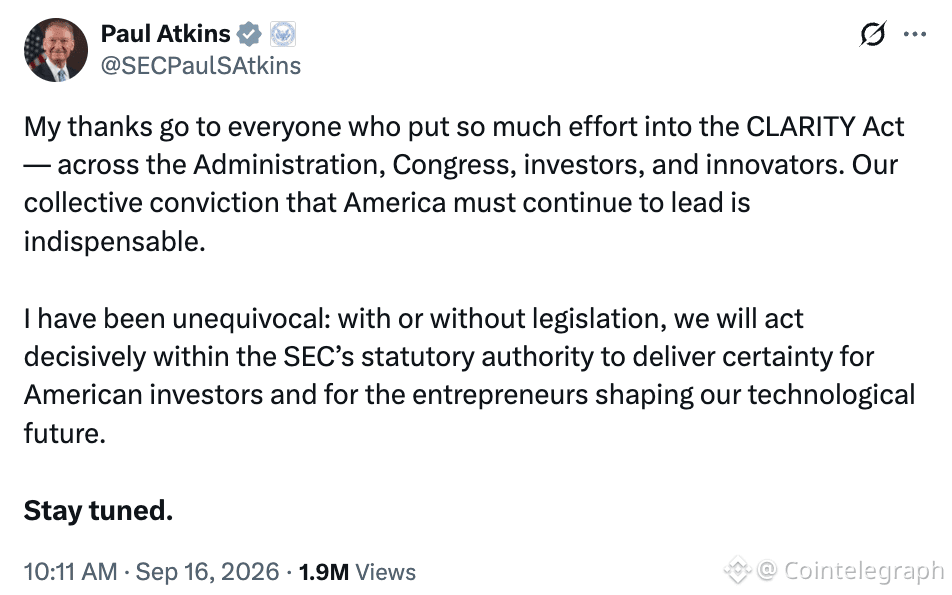
The filings came after US regulators, including the Securities and Exchange Commission (SEC) and CFTC, pushed ahead with crypto initiatives despite the CLARITY Act failing to advance in the Senate on Sept. 15.
Source: Paul Atkins
Just days after the vote, the SEC cleared limited onchain trading of tokenized US stocks under its Innovation Exemption, while the CFTC expanded regulatory relief for software providers connecting users to regulated derivatives platforms, including those offering perpetual contracts.
The CFTC had already begun laying the regulatory groundwork for perpetual futures months earlier.
In May, the agency established a case-by-case review process for perpetual contracts and approved Kalshi’s Bitcoin perpetual futures product, followed in June by temporary relief allowing certain registered exchanges to convert existing crypto futures into contracts without expiration dates.
Magazine: Exchanges reporting crypto gains to IRS becomes tax nightmare
OG.com seeks CFTC approval for single-stock perpetual futures
OG.com Markets is seeking US regulatory approval to offer perpetual futures tied to individual stocks, as trading platforms push to bring the popular derivatives product to US equity markets.
In a Thursday filing with the Commodity Futures Trading Commission (CFTC), OG.com proposed new rules allowing it to list cash-settled single-stock futures that never expire and can trade 24 hours a day, five days a week.
OG.com was recently spun out of crypto exchange Crypto.com as an independent prediction markets and derivatives platform valued at $5 billion. At the time, CEO Kris Marszalek said the platform planned to expand beyond prediction markets into futures and perpetual contracts.
Shortly after the spin-off, Robinhood took an equity stake in OG.com as part of a multi-year deal to use its CFTC-regulated derivatives exchange and clearinghouse for prediction markets.
Unlike traditional futures contracts, perpetual futures, or “perps,” have no expiration date, allowing traders to maintain exposure without periodically rolling into new contracts. The product was pioneered in crypto by BitMEX in 2016.
Related: President Trump’s media company to terminate Crypto.com deal
Perpetual futures push expands into US stocks
Crypto trading platforms and prediction markets are increasingly looking to bring one of the digital asset market’s most popular derivatives products to US stocks, with OG.com joining a growing group seeking regulatory approval.
On Sept. 18, Coinbase, Kraken parent Payward through its Bitnomial exchange, and prediction market Kalshi all filed to offer perpetual futures tied to individual US stocks.
The filings came after US regulators, including the Securities and Exchange Commission (SEC) and CFTC, pushed ahead with crypto initiatives despite the CLARITY Act failing to advance in the Senate on Sept. 15.
Source: Paul Atkins
Just days after the vote, the SEC cleared limited onchain trading of tokenized US stocks under its Innovation Exemption, while the CFTC expanded regulatory relief for software providers connecting users to regulated derivatives platforms, including those offering perpetual contracts.
The CFTC had already begun laying the regulatory groundwork for perpetual futures months earlier.
In May, the agency established a case-by-case review process for perpetual contracts and approved Kalshi’s Bitcoin perpetual futures product, followed in June by temporary relief allowing certain registered exchanges to convert existing crypto futures into contracts without expiration dates.
Magazine: Exchanges reporting crypto gains to IRS becomes tax nightmare
In a Thursday filing with the Commodity Futures Trading Commission (CFTC), OG.com proposed new rules allowing it to list cash-settled single-stock futures that never expire and can trade 24 hours a day, five days a week.
OG.com was recently spun out of crypto exchange Crypto.com as an independent prediction markets and derivatives platform valued at $5 billion. At the time, CEO Kris Marszalek said the platform planned to expand beyond prediction markets into futures and perpetual contracts.
Shortly after the spin-off, Robinhood took an equity stake in OG.com as part of a multi-year deal to use its CFTC-regulated derivatives exchange and clearinghouse for prediction markets.
Unlike traditional futures contracts, perpetual futures, or “perps,” have no expiration date, allowing traders to maintain exposure without periodically rolling into new contracts. The product was pioneered in crypto by BitMEX in 2016.
Related: President Trump’s media company to terminate Crypto.com deal
Perpetual futures push expands into US stocks
Crypto trading platforms and prediction markets are increasingly looking to bring one of the digital asset market’s most popular derivatives products to US stocks, with OG.com joining a growing group seeking regulatory approval.
On Sept. 18, Coinbase, Kraken parent Payward through its Bitnomial exchange, and prediction market Kalshi all filed to offer perpetual futures tied to individual US stocks.
The filings came after US regulators, including the Securities and Exchange Commission (SEC) and CFTC, pushed ahead with crypto initiatives despite the CLARITY Act failing to advance in the Senate on Sept. 15.
Source: Paul Atkins
Just days after the vote, the SEC cleared limited onchain trading of tokenized US stocks under its Innovation Exemption, while the CFTC expanded regulatory relief for software providers connecting users to regulated derivatives platforms, including those offering perpetual contracts.
The CFTC had already begun laying the regulatory groundwork for perpetual futures months earlier.
In May, the agency established a case-by-case review process for perpetual contracts and approved Kalshi’s Bitcoin perpetual futures product, followed in June by temporary relief allowing certain registered exchanges to convert existing crypto futures into contracts without expiration dates.
Magazine: Exchanges reporting crypto gains to IRS becomes tax nightmare
4
903
See translation
Ex-CFTC leader to leave Blockchain Association after CLARITY vote failsSummer Mersinger, formerly a commissioner with the US Commodity Futures Trading Commission (CFTC), will step down as CEO of the Blockchain Association and leave the advocacy organization at year’s end after one of the group’s legislative priorities faced a significant setback in Congress.
On Friday, the Blockchain Association (BA) announced that Mersinger would step down as CEO on Oct. 16, when the group’s former chief executive, Kristin Smith, would return to lead the organization as interim CEO. Mersinger joined the Blockchain Association in June 2025 after leaving the CFTC three years before her second term as a commissioner was scheduled to end.
“I came here from the CFTC because I believed this industry deserved clear rules of the road and a credible, unified voice making the case for them in Washington,” said Mersinger on her departure from the BA.
The organization cited Mersinger’s efforts to advance the Guiding and Establishing National Innovation for US Stablecoins, or GENIUS Act, as well as helping to provide “regulatory clarity at the [Securities and Exchange Commission] and CFTC.”
Notably, the organization did not mention the Digital Asset Market Clarity Act under consideration in the Senate, which the BA repeatedly pushed lawmakers to support. The bill failed to gain enough votes from Democrats and Republicans in a cloture motion earlier this month, which many experts expect will leave the legislation in limbo until 2027.
The Blockchain Association did not immediately respond to questions about Mersinger’s plans for 2027.
Ex-CFTC leader to leave Blockchain Association after CLARITY vote fails
Summer Mersinger, formerly a commissioner with the US Commodity Futures Trading Commission (CFTC), will step down as CEO of the Blockchain Association and leave the advocacy organization at year’s end after one of the group’s legislative priorities faced a significant setback in Congress.
On Friday, the Blockchain Association (BA) announced that Mersinger would step down as CEO on Oct. 16, when the group’s former chief executive, Kristin Smith, would return to lead the organization as interim CEO. Mersinger joined the Blockchain Association in June 2025 after leaving the CFTC three years before her second term as a commissioner was scheduled to end.
“I came here from the CFTC because I believed this industry deserved clear rules of the road and a credible, unified voice making the case for them in Washington,” said Mersinger on her departure from the BA.
The organization cited Mersinger’s efforts to advance the Guiding and Establishing National Innovation for US Stablecoins, or GENIUS Act, as well as helping to provide “regulatory clarity at the [Securities and Exchange Commission] and CFTC.”
Notably, the organization did not mention the Digital Asset Market Clarity Act under consideration in the Senate, which the BA repeatedly pushed lawmakers to support. The bill failed to gain enough votes from Democrats and Republicans in a cloture motion earlier this month, which many experts expect will leave the legislation in limbo until 2027.
The Blockchain Association did not immediately respond to questions about Mersinger’s plans for 2027.
On Friday, the Blockchain Association (BA) announced that Mersinger would step down as CEO on Oct. 16, when the group’s former chief executive, Kristin Smith, would return to lead the organization as interim CEO. Mersinger joined the Blockchain Association in June 2025 after leaving the CFTC three years before her second term as a commissioner was scheduled to end.
“I came here from the CFTC because I believed this industry deserved clear rules of the road and a credible, unified voice making the case for them in Washington,” said Mersinger on her departure from the BA.
The organization cited Mersinger’s efforts to advance the Guiding and Establishing National Innovation for US Stablecoins, or GENIUS Act, as well as helping to provide “regulatory clarity at the [Securities and Exchange Commission] and CFTC.”
Notably, the organization did not mention the Digital Asset Market Clarity Act under consideration in the Senate, which the BA repeatedly pushed lawmakers to support. The bill failed to gain enough votes from Democrats and Republicans in a cloture motion earlier this month, which many experts expect will leave the legislation in limbo until 2027.
The Blockchain Association did not immediately respond to questions about Mersinger’s plans for 2027.
2
2
372
See translation
Tether says it had ‘limited’ exposure to bank linked to $84M US seizureStablecoin issuer Tether said that it had limited exposure through assets held at a bank that reportedly directed a payments company to allegedly move hundreds of millions of dollars on its behalf.
In response to reports linking Tether and Bitfinex to a Montana-based payments business named in a civil forfeiture complaint filed by the Department of Justice, a company spokesperson told Cointelegraph that it had “no knowledge” of any of the alleged conduct. Tether confirmed it was a customer of EQIBank, the bank the Justice Department alleged directed the payments company, Capstone, to send and receive money, but the amount held at the bank represented 0.034% of the group’s total assets.
US prosecutors reportedly froze about $84 million in Capstone’s accounts as part of the complaint. Justice Department officials alleged that the business was unlicensed and had made payments to “hundreds of individuals and entities” on behalf of Tether and Bitfinex, according to the Financial Times.
A Tether spokesperson did not respond to a question about how the seizure could affect its customers. As of Friday, the USDT stablecoin had a market capitalization of about $184 billion.
Tether says it had ‘limited’ exposure to bank linked to $84M US seizure
Stablecoin issuer Tether said that it had limited exposure through assets held at a bank that reportedly directed a payments company to allegedly move hundreds of millions of dollars on its behalf.
In response to reports linking Tether and Bitfinex to a Montana-based payments business named in a civil forfeiture complaint filed by the Department of Justice, a company spokesperson told Cointelegraph that it had “no knowledge” of any of the alleged conduct. Tether confirmed it was a customer of EQIBank, the bank the Justice Department alleged directed the payments company, Capstone, to send and receive money, but the amount held at the bank represented 0.034% of the group’s total assets.
US prosecutors reportedly froze about $84 million in Capstone’s accounts as part of the complaint. Justice Department officials alleged that the business was unlicensed and had made payments to “hundreds of individuals and entities” on behalf of Tether and Bitfinex, according to the Financial Times.
A Tether spokesperson did not respond to a question about how the seizure could affect its customers. As of Friday, the USDT stablecoin had a market capitalization of about $184 billion.
In response to reports linking Tether and Bitfinex to a Montana-based payments business named in a civil forfeiture complaint filed by the Department of Justice, a company spokesperson told Cointelegraph that it had “no knowledge” of any of the alleged conduct. Tether confirmed it was a customer of EQIBank, the bank the Justice Department alleged directed the payments company, Capstone, to send and receive money, but the amount held at the bank represented 0.034% of the group’s total assets.
US prosecutors reportedly froze about $84 million in Capstone’s accounts as part of the complaint. Justice Department officials alleged that the business was unlicensed and had made payments to “hundreds of individuals and entities” on behalf of Tether and Bitfinex, according to the Financial Times.
A Tether spokesperson did not respond to a question about how the seizure could affect its customers. As of Friday, the USDT stablecoin had a market capitalization of about $184 billion.
409
See translation
Bitget clarifies $388M in assets affected by security breachCrypto exchange Bitget released an updated incident report on Thursday’s security breach, clarifying that about $388 million in assets had been affected and not $352 million as previously reported.
In a Friday update, Bitget said it would continue to pause withdrawals following the security breach, and the company had launched a bounty program to incentivize freezing or recovering the assets. The exchange confirmed that “$387.5 million were transferred to attacker-controlled addresses” based on onchain tracing — about $35 million more than reported on Thursday.
“The revised figure reflects a more complete accounting of transfers that occurred during the incident, adding affected assets on Zcash and TRON that were not included in the initial estimate,” said Bitget. “It does not reflect further unauthorized transfers. The incident remains contained and no further unauthorized transfers are possible.”
According to Bitget, the incident included addresses on Ethereum Virtual Machine (EVM) networks, the XRP Ledger, Zcash and TRON. Among the assets stolen were XRP, Ether (ETH), Tether’s USDt (USDT), Zcash (ZEC), USDC, USDT0, XAUt, BNB, AVAX and TRX. The follow-up report did not address comments made by CEO Gracy Chen on Thursday speculating that a North Korean hacking group may have been behind the attack.
Even with the update on the assets transferred to hacker-controlled addresses, the Bitget security breach remains one of the largest to impact the industry. Hackers stole about $1.5 billion worth of Ether from Bybit in February 2025.
Bitget clarifies $388M in assets affected by security breach
Crypto exchange Bitget released an updated incident report on Thursday’s security breach, clarifying that about $388 million in assets had been affected and not $352 million as previously reported.
In a Friday update, Bitget said it would continue to pause withdrawals following the security breach, and the company had launched a bounty program to incentivize freezing or recovering the assets. The exchange confirmed that “$387.5 million were transferred to attacker-controlled addresses” based on onchain tracing — about $35 million more than reported on Thursday.
“The revised figure reflects a more complete accounting of transfers that occurred during the incident, adding affected assets on Zcash and TRON that were not included in the initial estimate,” said Bitget. “It does not reflect further unauthorized transfers. The incident remains contained and no further unauthorized transfers are possible.”
According to Bitget, the incident included addresses on Ethereum Virtual Machine (EVM) networks, the XRP Ledger, Zcash and TRON. Among the assets stolen were XRP, Ether (ETH), Tether’s USDt (USDT), Zcash (ZEC), USDC, USDT0, XAUt, BNB, AVAX and TRX. The follow-up report did not address comments made by CEO Gracy Chen on Thursday speculating that a North Korean hacking group may have been behind the attack.
Even with the update on the assets transferred to hacker-controlled addresses, the Bitget security breach remains one of the largest to impact the industry. Hackers stole about $1.5 billion worth of Ether from Bybit in February 2025.
In a Friday update, Bitget said it would continue to pause withdrawals following the security breach, and the company had launched a bounty program to incentivize freezing or recovering the assets. The exchange confirmed that “$387.5 million were transferred to attacker-controlled addresses” based on onchain tracing — about $35 million more than reported on Thursday.
“The revised figure reflects a more complete accounting of transfers that occurred during the incident, adding affected assets on Zcash and TRON that were not included in the initial estimate,” said Bitget. “It does not reflect further unauthorized transfers. The incident remains contained and no further unauthorized transfers are possible.”
According to Bitget, the incident included addresses on Ethereum Virtual Machine (EVM) networks, the XRP Ledger, Zcash and TRON. Among the assets stolen were XRP, Ether (ETH), Tether’s USDt (USDT), Zcash (ZEC), USDC, USDT0, XAUt, BNB, AVAX and TRX. The follow-up report did not address comments made by CEO Gracy Chen on Thursday speculating that a North Korean hacking group may have been behind the attack.
Even with the update on the assets transferred to hacker-controlled addresses, the Bitget security breach remains one of the largest to impact the industry. Hackers stole about $1.5 billion worth of Ether from Bybit in February 2025.
1
1
1.2k
Verified
Article
See translation
Strategy seeks shareholder approval for daily preferred stock dividendsStrategy is seeking shareholder approval to move its four preferred stocks, including STRC, to daily dividend payments without changing their dividend rates or the total amount paid.
The company’s board approved the proposal on Thursday, according to a Friday filing with the US Securities and Exchange Commission. Shareholders are scheduled to vote on the amendments at a virtual special meeting on Oct. 28.
If approved, each calendar day would become a dividend record date, with the corresponding payment made on the next business day. STRC would move to the new schedule first, with its initial daily dividend payment expected on Nov. 2.
STRF, STRK and STRD would follow in January, with their first payments under the daily schedule expected on Jan. 4. The amendments would take effect after Strategy files updated certificates governing the preferred stocks with the state of Delaware.
Related: Strategy buys 950 Bitcoin for $76M, repurchases $174M in STRC
Strategy follows Strive into daily dividends
Strategy’s proposal comes several months after fellow Bitcoin treasury company Strive moved its SATA preferred stock to daily dividend payments, becoming the first public company to adopt the model.
Strive announced in May that SATA would begin paying dividends every business day on June 16 at a 13% annual rate, and also reported that it eliminated its outstanding debt in the first quarter.
Unlike Strive’s business-day schedule, Strategy’s proposal would make every calendar day a record date, with the corresponding dividend payable on the following business day.
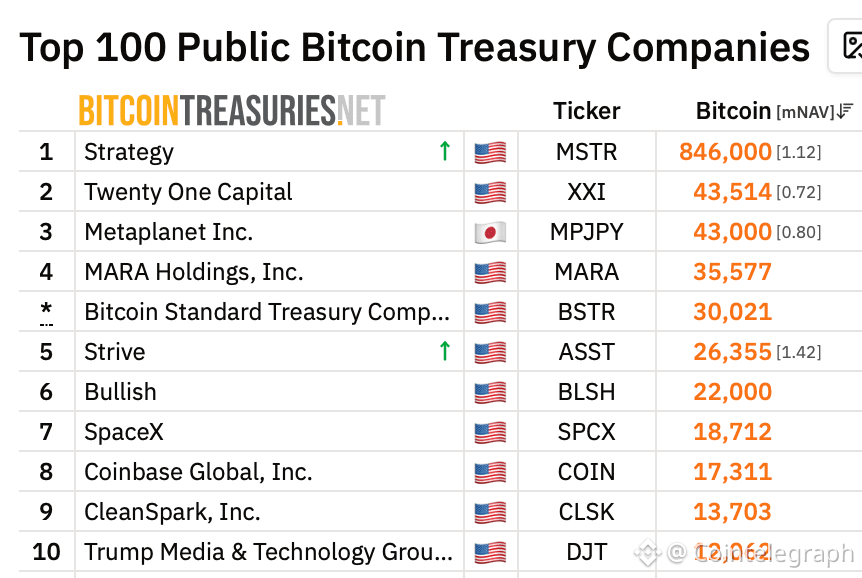
Strive holds 26,355 Bitcoin, compared with Strategy’s 846,000 BTC, according to BitcoinTreasuries.NET.
Top 10 Bitcoin treasury companies. Source: BitcoinTreasuries.NET
Strategy CEO says leverage drove STRC below $100
While Strive was the first public company to offer daily dividends, Strategy pioneered what it calls “digital credit,” preferred securities designed to generate income from a capital structure built around the company’s Bitcoin treasury.
STRC, a key part of Strategy’s digital credit strategy, has seen significant price swings this year. In June, the stock fell sharply below its $100 stated amount, hitting an intraday low of $71.25 on June 26, according to Yahoo Finance data.
STRC stock price year-to-date. Source: Yahoo Finance
Speaking on Natalie Brunell’s Coin Stories podcast earlier this week, Strategy CEO Phong Le attributed the decline to more leverage entering the market for STRC than the company had anticipated. He said some investors borrowed against Bitcoin at lower rates to buy STRC and capture the spread between their borrowing costs and STRC’s dividend yield.
When Bitcoin’s price fell, investors who had borrowed against their holdings faced pressure to either add more collateral or sell STRC, according to Le.
“We did not expect the amount of leverage that came into the system,” Le said. “And so that’s a lesson learned, next time around.”
Le said Strategy is seeking to prevent another such unwind by maintaining a strong US dollar reserve and having a policy that allows the company to repurchase STRC when it trades below its $100 stated amount. He also said the company wants to attract more long-term holders, particularly institutional investors.
STRC has since recovered to about $98.41, close to Strategy’s stated goal of keeping the security between $99 and $100. It currently carries a 12% variable annual dividend rate.
Magazine: Exchanges reporting crypto gains to IRS becomes tax nightmare
Strategy seeks shareholder approval for daily preferred stock dividends
Strategy is seeking shareholder approval to move its four preferred stocks, including STRC, to daily dividend payments without changing their dividend rates or the total amount paid.
The company’s board approved the proposal on Thursday, according to a Friday filing with the US Securities and Exchange Commission. Shareholders are scheduled to vote on the amendments at a virtual special meeting on Oct. 28.
If approved, each calendar day would become a dividend record date, with the corresponding payment made on the next business day. STRC would move to the new schedule first, with its initial daily dividend payment expected on Nov. 2.
STRF, STRK and STRD would follow in January, with their first payments under the daily schedule expected on Jan. 4. The amendments would take effect after Strategy files updated certificates governing the preferred stocks with the state of Delaware.
Related: Strategy buys 950 Bitcoin for $76M, repurchases $174M in STRC
Strategy follows Strive into daily dividends
Strategy’s proposal comes several months after fellow Bitcoin treasury company Strive moved its SATA preferred stock to daily dividend payments, becoming the first public company to adopt the model.
Strive announced in May that SATA would begin paying dividends every business day on June 16 at a 13% annual rate, and also reported that it eliminated its outstanding debt in the first quarter.
Unlike Strive’s business-day schedule, Strategy’s proposal would make every calendar day a record date, with the corresponding dividend payable on the following business day.
Strive holds 26,355 Bitcoin, compared with Strategy’s 846,000 BTC, according to BitcoinTreasuries.NET.
Top 10 Bitcoin treasury companies. Source: BitcoinTreasuries.NET
Strategy CEO says leverage drove STRC below $100
While Strive was the first public company to offer daily dividends, Strategy pioneered what it calls “digital credit,” preferred securities designed to generate income from a capital structure built around the company’s Bitcoin treasury.
STRC, a key part of Strategy’s digital credit strategy, has seen significant price swings this year. In June, the stock fell sharply below its $100 stated amount, hitting an intraday low of $71.25 on June 26, according to Yahoo Finance data.
STRC stock price year-to-date. Source: Yahoo Finance
Speaking on Natalie Brunell’s Coin Stories podcast earlier this week, Strategy CEO Phong Le attributed the decline to more leverage entering the market for STRC than the company had anticipated. He said some investors borrowed against Bitcoin at lower rates to buy STRC and capture the spread between their borrowing costs and STRC’s dividend yield.
When Bitcoin’s price fell, investors who had borrowed against their holdings faced pressure to either add more collateral or sell STRC, according to Le.
“We did not expect the amount of leverage that came into the system,” Le said. “And so that’s a lesson learned, next time around.”
Le said Strategy is seeking to prevent another such unwind by maintaining a strong US dollar reserve and having a policy that allows the company to repurchase STRC when it trades below its $100 stated amount. He also said the company wants to attract more long-term holders, particularly institutional investors.
STRC has since recovered to about $98.41, close to Strategy’s stated goal of keeping the security between $99 and $100. It currently carries a 12% variable annual dividend rate.
Magazine: Exchanges reporting crypto gains to IRS becomes tax nightmare
The company’s board approved the proposal on Thursday, according to a Friday filing with the US Securities and Exchange Commission. Shareholders are scheduled to vote on the amendments at a virtual special meeting on Oct. 28.
If approved, each calendar day would become a dividend record date, with the corresponding payment made on the next business day. STRC would move to the new schedule first, with its initial daily dividend payment expected on Nov. 2.
STRF, STRK and STRD would follow in January, with their first payments under the daily schedule expected on Jan. 4. The amendments would take effect after Strategy files updated certificates governing the preferred stocks with the state of Delaware.
Related: Strategy buys 950 Bitcoin for $76M, repurchases $174M in STRC
Strategy follows Strive into daily dividends
Strategy’s proposal comes several months after fellow Bitcoin treasury company Strive moved its SATA preferred stock to daily dividend payments, becoming the first public company to adopt the model.
Strive announced in May that SATA would begin paying dividends every business day on June 16 at a 13% annual rate, and also reported that it eliminated its outstanding debt in the first quarter.
Unlike Strive’s business-day schedule, Strategy’s proposal would make every calendar day a record date, with the corresponding dividend payable on the following business day.
Strive holds 26,355 Bitcoin, compared with Strategy’s 846,000 BTC, according to BitcoinTreasuries.NET.
Top 10 Bitcoin treasury companies. Source: BitcoinTreasuries.NET
Strategy CEO says leverage drove STRC below $100
While Strive was the first public company to offer daily dividends, Strategy pioneered what it calls “digital credit,” preferred securities designed to generate income from a capital structure built around the company’s Bitcoin treasury.
STRC, a key part of Strategy’s digital credit strategy, has seen significant price swings this year. In June, the stock fell sharply below its $100 stated amount, hitting an intraday low of $71.25 on June 26, according to Yahoo Finance data.
STRC stock price year-to-date. Source: Yahoo Finance
Speaking on Natalie Brunell’s Coin Stories podcast earlier this week, Strategy CEO Phong Le attributed the decline to more leverage entering the market for STRC than the company had anticipated. He said some investors borrowed against Bitcoin at lower rates to buy STRC and capture the spread between their borrowing costs and STRC’s dividend yield.
When Bitcoin’s price fell, investors who had borrowed against their holdings faced pressure to either add more collateral or sell STRC, according to Le.
“We did not expect the amount of leverage that came into the system,” Le said. “And so that’s a lesson learned, next time around.”
Le said Strategy is seeking to prevent another such unwind by maintaining a strong US dollar reserve and having a policy that allows the company to repurchase STRC when it trades below its $100 stated amount. He also said the company wants to attract more long-term holders, particularly institutional investors.
STRC has since recovered to about $98.41, close to Strategy’s stated goal of keeping the security between $99 and $100. It currently carries a 12% variable annual dividend rate.
Magazine: Exchanges reporting crypto gains to IRS becomes tax nightmare
762
See translation
Crypto Biz: Wall Street and crypto fight for the same turfThe line between crypto companies and traditional finance is blurring. Binance is buying a $100 million stake in Circle, Canada’s six largest banks are exploring tokenized deposits and the New York Stock Exchange is working with Blockchain.com to bring US stocks and ETFs onchain.
Crypto companies want a bigger role in payments and traditional assets, while banks and exchanges are bringing those markets onchain without giving up their place at the center of the financial system.
This week’s Crypto Biz highlights how stablecoins and tokenized assets put crypto companies and traditional finance on increasingly overlapping turf, with both sides vying for control over how money and assets move.
Binance bets $100 million on Circle in expanded USDC deal
Binance is deepening its ties to Circle with a $100 million investment in the stablecoin issuer and a five-year agreement to expand USDC adoption across the exchange.
According to a Tuesday filing with the US Securities and Exchange Commission, Circle issued Binance 1,237,011 shares of Class A common stock at $80.84 apiece in a Sept. 17 private placement. The purchase price was below Circle’s market price before the deal closed. CRCL shares rose following the announcement.
The investment comes with a broader commercial agreement around USDC. Circle will pay Binance a monthly incentive fee based on the amount of USDC held through the exchange’s Modular Smart Contract Wallet infrastructure.
Binance is restricted from selling, transferring, pledging or otherwise disposing of the Circle shares for up to two years, although the lockup can end earlier under certain termination provisions. Binance retains voting rights on the shares during that period.
Canada’s biggest banks test tokenized deposits
Canada’s six largest banks are jointly exploring tokenized Canadian dollar deposits, a potential new payment rail that would allow digital representations of bank deposits to move between financial institutions.
The initiative brings together Bank of Montreal, CIBC, National Bank of Canada, Royal Bank of Canada, Scotiabank and TD Bank Group. The first phase will focus on transfers between participating banks, with the system potentially connecting to other digital asset networks later.
The project comes after Canada’s Office of the Superintendent of Financial Institutions clarified on Sept. 10 that tokenized deposits are “not legally distinct from traditional deposits,” meaning the use of blockchain or other technology does not change their underlying legal treatment.
Unlike fiat-backed stablecoins, tokenized deposits remain liabilities of the banks that issue them. The participating banks say the model could enable faster, programmable payments, with other deposit-taking institutions potentially joining in the future.
The distinction is particularly relevant as Canada develops its stablecoin rules. The country’s framework applies to non-financial institution issuers, while regulated banks and credit unions fall outside its scope.
Stablecoin payments surge as crypto market shrinks
Cross-border stablecoin flows surged nearly 78% to $220.3 billion in the year through June, even as the broader crypto market lost more than a third of its value.
According to Chainalysis, cross-border stablecoin flows increased 77.5% while total crypto market capitalization fell 37% to $2.1 trillion. The analytics firm identified 4,708 new cross-border corridors carrying $2.64 billion, although the largest corridors still accounted for 96.1% of total value.
Chainalysis said much of the growth came from transfers averaging about $3,000, a pattern more consistent with trade, remittances and savings than speculative activity. Tether economist Philip Gradwell described the activity as having a “steady rhythm” typical of business use, while StraitsX CEO Tianwei Liu pointed to demand for dollar access, inflation protection and ways around capital controls outside Asia.
Stablecoin adoption has also coincided with greater regulatory clarity. The US enacted the GENIUS Act in July 2025, while the European Union’s MiCA framework and Hong Kong’s licensing regime have brought stablecoins under more formal oversight.
NYSE, Blockchain.com team up on tokenized US stocks
Blockchain.com and the New York Stock Exchange are teaming up to bring tokenized US stocks and exchange-traded funds to crypto users through a planned alternative trading system.
The companies signed a memorandum of understanding covering the new digital ATS, which remains subject to regulatory approval. The agreement also includes a market-data partnership between Blockchain.com and NYSE parent Intercontinental Exchange’s ICE Data Services.
TD Securities’ Reid Noch described the partnership as a bid for retail trading activity, particularly as tokenized markets open the door to 24-hour and weekend trading. Talos’ Tanay Ved said crypto venues are increasingly evolving into multi-asset platforms.
Demand is also growing. The value of tokenized stocks has reached $3.14 billion, while the number of holders has climbed 72% to 3.87 million, according to RWA.xyz.
The partnership follows the US Securities and Exchange Commission’s introduction of a five-year Innovation Exemption for certain tokenized securities venues. Eligible tokenized stocks must represent actual shares carrying the same economic and governance rights as their traditional counterparts.
Crypto Biz is your weekly pulse on the business behind blockchain and crypto, delivered directly to your inbox every Thursday.
Crypto Biz: Wall Street and crypto fight for the same turf
The line between crypto companies and traditional finance is blurring. Binance is buying a $100 million stake in Circle, Canada’s six largest banks are exploring tokenized deposits and the New York Stock Exchange is working with Blockchain.com to bring US stocks and ETFs onchain.
Crypto companies want a bigger role in payments and traditional assets, while banks and exchanges are bringing those markets onchain without giving up their place at the center of the financial system.
This week’s Crypto Biz highlights how stablecoins and tokenized assets put crypto companies and traditional finance on increasingly overlapping turf, with both sides vying for control over how money and assets move.
Binance bets $100 million on Circle in expanded USDC deal
Binance is deepening its ties to Circle with a $100 million investment in the stablecoin issuer and a five-year agreement to expand USDC adoption across the exchange.
According to a Tuesday filing with the US Securities and Exchange Commission, Circle issued Binance 1,237,011 shares of Class A common stock at $80.84 apiece in a Sept. 17 private placement. The purchase price was below Circle’s market price before the deal closed. CRCL shares rose following the announcement.
The investment comes with a broader commercial agreement around USDC. Circle will pay Binance a monthly incentive fee based on the amount of USDC held through the exchange’s Modular Smart Contract Wallet infrastructure.
Binance is restricted from selling, transferring, pledging or otherwise disposing of the Circle shares for up to two years, although the lockup can end earlier under certain termination provisions. Binance retains voting rights on the shares during that period.
Canada’s biggest banks test tokenized deposits
Canada’s six largest banks are jointly exploring tokenized Canadian dollar deposits, a potential new payment rail that would allow digital representations of bank deposits to move between financial institutions.
The initiative brings together Bank of Montreal, CIBC, National Bank of Canada, Royal Bank of Canada, Scotiabank and TD Bank Group. The first phase will focus on transfers between participating banks, with the system potentially connecting to other digital asset networks later.
The project comes after Canada’s Office of the Superintendent of Financial Institutions clarified on Sept. 10 that tokenized deposits are “not legally distinct from traditional deposits,” meaning the use of blockchain or other technology does not change their underlying legal treatment.
Unlike fiat-backed stablecoins, tokenized deposits remain liabilities of the banks that issue them. The participating banks say the model could enable faster, programmable payments, with other deposit-taking institutions potentially joining in the future.
The distinction is particularly relevant as Canada develops its stablecoin rules. The country’s framework applies to non-financial institution issuers, while regulated banks and credit unions fall outside its scope.
Stablecoin payments surge as crypto market shrinks
Cross-border stablecoin flows surged nearly 78% to $220.3 billion in the year through June, even as the broader crypto market lost more than a third of its value.
According to Chainalysis, cross-border stablecoin flows increased 77.5% while total crypto market capitalization fell 37% to $2.1 trillion. The analytics firm identified 4,708 new cross-border corridors carrying $2.64 billion, although the largest corridors still accounted for 96.1% of total value.
Chainalysis said much of the growth came from transfers averaging about $3,000, a pattern more consistent with trade, remittances and savings than speculative activity. Tether economist Philip Gradwell described the activity as having a “steady rhythm” typical of business use, while StraitsX CEO Tianwei Liu pointed to demand for dollar access, inflation protection and ways around capital controls outside Asia.
Stablecoin adoption has also coincided with greater regulatory clarity. The US enacted the GENIUS Act in July 2025, while the European Union’s MiCA framework and Hong Kong’s licensing regime have brought stablecoins under more formal oversight.
NYSE, Blockchain.com team up on tokenized US stocks
Blockchain.com and the New York Stock Exchange are teaming up to bring tokenized US stocks and exchange-traded funds to crypto users through a planned alternative trading system.
The companies signed a memorandum of understanding covering the new digital ATS, which remains subject to regulatory approval. The agreement also includes a market-data partnership between Blockchain.com and NYSE parent Intercontinental Exchange’s ICE Data Services.
TD Securities’ Reid Noch described the partnership as a bid for retail trading activity, particularly as tokenized markets open the door to 24-hour and weekend trading. Talos’ Tanay Ved said crypto venues are increasingly evolving into multi-asset platforms.
Demand is also growing. The value of tokenized stocks has reached $3.14 billion, while the number of holders has climbed 72% to 3.87 million, according to RWA.xyz.
The partnership follows the US Securities and Exchange Commission’s introduction of a five-year Innovation Exemption for certain tokenized securities venues. Eligible tokenized stocks must represent actual shares carrying the same economic and governance rights as their traditional counterparts.
Crypto Biz is your weekly pulse on the business behind blockchain and crypto, delivered directly to your inbox every Thursday.
Crypto companies want a bigger role in payments and traditional assets, while banks and exchanges are bringing those markets onchain without giving up their place at the center of the financial system.
This week’s Crypto Biz highlights how stablecoins and tokenized assets put crypto companies and traditional finance on increasingly overlapping turf, with both sides vying for control over how money and assets move.
Binance bets $100 million on Circle in expanded USDC deal
Binance is deepening its ties to Circle with a $100 million investment in the stablecoin issuer and a five-year agreement to expand USDC adoption across the exchange.
According to a Tuesday filing with the US Securities and Exchange Commission, Circle issued Binance 1,237,011 shares of Class A common stock at $80.84 apiece in a Sept. 17 private placement. The purchase price was below Circle’s market price before the deal closed. CRCL shares rose following the announcement.
The investment comes with a broader commercial agreement around USDC. Circle will pay Binance a monthly incentive fee based on the amount of USDC held through the exchange’s Modular Smart Contract Wallet infrastructure.
Binance is restricted from selling, transferring, pledging or otherwise disposing of the Circle shares for up to two years, although the lockup can end earlier under certain termination provisions. Binance retains voting rights on the shares during that period.
Canada’s biggest banks test tokenized deposits
Canada’s six largest banks are jointly exploring tokenized Canadian dollar deposits, a potential new payment rail that would allow digital representations of bank deposits to move between financial institutions.
The initiative brings together Bank of Montreal, CIBC, National Bank of Canada, Royal Bank of Canada, Scotiabank and TD Bank Group. The first phase will focus on transfers between participating banks, with the system potentially connecting to other digital asset networks later.
The project comes after Canada’s Office of the Superintendent of Financial Institutions clarified on Sept. 10 that tokenized deposits are “not legally distinct from traditional deposits,” meaning the use of blockchain or other technology does not change their underlying legal treatment.
Unlike fiat-backed stablecoins, tokenized deposits remain liabilities of the banks that issue them. The participating banks say the model could enable faster, programmable payments, with other deposit-taking institutions potentially joining in the future.
The distinction is particularly relevant as Canada develops its stablecoin rules. The country’s framework applies to non-financial institution issuers, while regulated banks and credit unions fall outside its scope.
Stablecoin payments surge as crypto market shrinks
Cross-border stablecoin flows surged nearly 78% to $220.3 billion in the year through June, even as the broader crypto market lost more than a third of its value.
According to Chainalysis, cross-border stablecoin flows increased 77.5% while total crypto market capitalization fell 37% to $2.1 trillion. The analytics firm identified 4,708 new cross-border corridors carrying $2.64 billion, although the largest corridors still accounted for 96.1% of total value.
Chainalysis said much of the growth came from transfers averaging about $3,000, a pattern more consistent with trade, remittances and savings than speculative activity. Tether economist Philip Gradwell described the activity as having a “steady rhythm” typical of business use, while StraitsX CEO Tianwei Liu pointed to demand for dollar access, inflation protection and ways around capital controls outside Asia.
Stablecoin adoption has also coincided with greater regulatory clarity. The US enacted the GENIUS Act in July 2025, while the European Union’s MiCA framework and Hong Kong’s licensing regime have brought stablecoins under more formal oversight.
NYSE, Blockchain.com team up on tokenized US stocks
Blockchain.com and the New York Stock Exchange are teaming up to bring tokenized US stocks and exchange-traded funds to crypto users through a planned alternative trading system.
The companies signed a memorandum of understanding covering the new digital ATS, which remains subject to regulatory approval. The agreement also includes a market-data partnership between Blockchain.com and NYSE parent Intercontinental Exchange’s ICE Data Services.
TD Securities’ Reid Noch described the partnership as a bid for retail trading activity, particularly as tokenized markets open the door to 24-hour and weekend trading. Talos’ Tanay Ved said crypto venues are increasingly evolving into multi-asset platforms.
Demand is also growing. The value of tokenized stocks has reached $3.14 billion, while the number of holders has climbed 72% to 3.87 million, according to RWA.xyz.
The partnership follows the US Securities and Exchange Commission’s introduction of a five-year Innovation Exemption for certain tokenized securities venues. Eligible tokenized stocks must represent actual shares carrying the same economic and governance rights as their traditional counterparts.
Crypto Biz is your weekly pulse on the business behind blockchain and crypto, delivered directly to your inbox every Thursday.
1
421
See translation
CoinMarketCap buys CoinGlass to expand crypto derivatives dataCoinMarketCap has acquired crypto derivatives data platform CoinGlass for an undisclosed amount, expanding its coverage of leveraged trading across major exchanges.
CoinMarketCap announced Friday that CoinGlass will continue operating under its existing brand, with its team remaining in place. Its website, app, free tools, API and pricing will be unchanged.
CoinGlass tracks open interest, funding rates, liquidations and options. It covers 28 exchanges and more than 2,500 instruments, according to the announcement.
CoinMarketCap said the acquisition would give its users access to derivatives positioning data alongside cryptocurrency prices, including information on where liquidations cluster and how funding rates are moving.
Crypto exchange Binance acquired CoinMarketCap in April 2020. At the time, Binance said the platform would continue operating independently and that the exchange would have no influence over its rankings.
Magazine: HYPE price could suffer as Binance takes its revenue: Alice Liu
CoinMarketCap buys CoinGlass to expand crypto derivatives data
CoinMarketCap has acquired crypto derivatives data platform CoinGlass for an undisclosed amount, expanding its coverage of leveraged trading across major exchanges.
CoinMarketCap announced Friday that CoinGlass will continue operating under its existing brand, with its team remaining in place. Its website, app, free tools, API and pricing will be unchanged.
CoinGlass tracks open interest, funding rates, liquidations and options. It covers 28 exchanges and more than 2,500 instruments, according to the announcement.
CoinMarketCap said the acquisition would give its users access to derivatives positioning data alongside cryptocurrency prices, including information on where liquidations cluster and how funding rates are moving.
Crypto exchange Binance acquired CoinMarketCap in April 2020. At the time, Binance said the platform would continue operating independently and that the exchange would have no influence over its rankings.
Magazine: HYPE price could suffer as Binance takes its revenue: Alice Liu
CoinMarketCap announced Friday that CoinGlass will continue operating under its existing brand, with its team remaining in place. Its website, app, free tools, API and pricing will be unchanged.
CoinGlass tracks open interest, funding rates, liquidations and options. It covers 28 exchanges and more than 2,500 instruments, according to the announcement.
CoinMarketCap said the acquisition would give its users access to derivatives positioning data alongside cryptocurrency prices, including information on where liquidations cluster and how funding rates are moving.
Crypto exchange Binance acquired CoinMarketCap in April 2020. At the time, Binance said the platform would continue operating independently and that the exchange would have no influence over its rankings.
Magazine: HYPE price could suffer as Binance takes its revenue: Alice Liu
183
See translation
SlowMist has yet to confirm crypto theft from iPhone Safari attackAn iPhone Safari attack behind recent security warnings hasn’t yet been linked to a confirmed cryptocurrency theft in SlowMist’s investigation.
Multiple reports surfaced this week urging iPhone users to update their devices immediately and warning that malicious Safari pages could expose crypto private keys and seed phrases, with some citing a range from iOS 13 through iOS 26.5.
SlowMist told Cointelegraph that it has not independently confirmed a victim compromised by the specific Safari attack sample it analyzed, while its strongest technical evidence covers iOS 18.4 through 18.6.2.
The company said the “iOS 13 to 26.5” range should be treated as preliminary. “We therefore prefer to avoid stating that iOS 26.5 is affected until there is reproducible technical evidence,” it said.
The Safari attack reuses techniques from a previously disclosed DarkSword exploit chain and is separate from FomoPeek, another SlowMist investigation involving malicious components embedded in an App Store app.
SlowMist finds DarkSword reuse
Google Threat Intelligence Group (GTIG) disclosed DarkSword in March, describing it as an iOS exploit chain that had been used by multiple threat actors since at least November 2025.
SlowMist said MistEye, a threat intelligence team led by its chief information security officer, 23pds, first identified the relevant activity in early May.
SlowMist published its analysis of the WYINCC Safari campaign on Sept. 4, identifying a malicious webpage advertising a free virtual private server service.
SlowMist said the page loaded the exploit code when opened on an iPhone using Safari, without necessarily requiring another click from the user.
The vulnerabilities used in the chain had already been disclosed and patched by Apple, SlowMist said.
What the Safari attack was designed to access
SlowMist found that the malicious Safari sample it analyzed included a component designed to access Apple’s Keychain and retrieve and decrypt information stored there. The code could also access app files and shared app data, potentially exposing information stored by crypto wallet applications.
“The sample demonstrates the collection capability and the intended targets; it does not by itself prove successful extraction from every targeted wallet,” SlowMist said.
“We did not execute the full chain on a real victim device, so we cannot identify a specific victim whose device we independently confirmed was successfully compromised by this exact sample,” SlowMist added.
SlowMist still recommends updating iOS
Despite the limits of the available evidence, SlowMist advised iPhone users to install the latest iOS security updates available for their devices and avoid suspicious links.
For users who cannot update immediately or face elevated risks, SlowMist recommended considering Apple’s Lockdown Mode as an additional defense, while cautioning that it has not confirmed the feature completely blocks this specific Safari attack.
SlowMist also urged users who believe a wallet key or seed phrase may have been exposed to move their assets to a newly generated wallet on a clean device rather than continue using potentially compromised credentials.
Magazine: Asia dominates Crypto Adoption Index, Bitget’s $352M hack: Asia Express
SlowMist has yet to confirm crypto theft from iPhone Safari attack
An iPhone Safari attack behind recent security warnings hasn’t yet been linked to a confirmed cryptocurrency theft in SlowMist’s investigation.
Multiple reports surfaced this week urging iPhone users to update their devices immediately and warning that malicious Safari pages could expose crypto private keys and seed phrases, with some citing a range from iOS 13 through iOS 26.5.
SlowMist told Cointelegraph that it has not independently confirmed a victim compromised by the specific Safari attack sample it analyzed, while its strongest technical evidence covers iOS 18.4 through 18.6.2.
The company said the “iOS 13 to 26.5” range should be treated as preliminary. “We therefore prefer to avoid stating that iOS 26.5 is affected until there is reproducible technical evidence,” it said.
The Safari attack reuses techniques from a previously disclosed DarkSword exploit chain and is separate from FomoPeek, another SlowMist investigation involving malicious components embedded in an App Store app.
SlowMist finds DarkSword reuse
Google Threat Intelligence Group (GTIG) disclosed DarkSword in March, describing it as an iOS exploit chain that had been used by multiple threat actors since at least November 2025.
SlowMist said MistEye, a threat intelligence team led by its chief information security officer, 23pds, first identified the relevant activity in early May.
SlowMist published its analysis of the WYINCC Safari campaign on Sept. 4, identifying a malicious webpage advertising a free virtual private server service.
SlowMist said the page loaded the exploit code when opened on an iPhone using Safari, without necessarily requiring another click from the user.
The vulnerabilities used in the chain had already been disclosed and patched by Apple, SlowMist said.
What the Safari attack was designed to access
SlowMist found that the malicious Safari sample it analyzed included a component designed to access Apple’s Keychain and retrieve and decrypt information stored there. The code could also access app files and shared app data, potentially exposing information stored by crypto wallet applications.
“The sample demonstrates the collection capability and the intended targets; it does not by itself prove successful extraction from every targeted wallet,” SlowMist said.
“We did not execute the full chain on a real victim device, so we cannot identify a specific victim whose device we independently confirmed was successfully compromised by this exact sample,” SlowMist added.
SlowMist still recommends updating iOS
Despite the limits of the available evidence, SlowMist advised iPhone users to install the latest iOS security updates available for their devices and avoid suspicious links.
For users who cannot update immediately or face elevated risks, SlowMist recommended considering Apple’s Lockdown Mode as an additional defense, while cautioning that it has not confirmed the feature completely blocks this specific Safari attack.
SlowMist also urged users who believe a wallet key or seed phrase may have been exposed to move their assets to a newly generated wallet on a clean device rather than continue using potentially compromised credentials.
Magazine: Asia dominates Crypto Adoption Index, Bitget’s $352M hack: Asia Express
Multiple reports surfaced this week urging iPhone users to update their devices immediately and warning that malicious Safari pages could expose crypto private keys and seed phrases, with some citing a range from iOS 13 through iOS 26.5.
SlowMist told Cointelegraph that it has not independently confirmed a victim compromised by the specific Safari attack sample it analyzed, while its strongest technical evidence covers iOS 18.4 through 18.6.2.
The company said the “iOS 13 to 26.5” range should be treated as preliminary. “We therefore prefer to avoid stating that iOS 26.5 is affected until there is reproducible technical evidence,” it said.
The Safari attack reuses techniques from a previously disclosed DarkSword exploit chain and is separate from FomoPeek, another SlowMist investigation involving malicious components embedded in an App Store app.
SlowMist finds DarkSword reuse
Google Threat Intelligence Group (GTIG) disclosed DarkSword in March, describing it as an iOS exploit chain that had been used by multiple threat actors since at least November 2025.
SlowMist said MistEye, a threat intelligence team led by its chief information security officer, 23pds, first identified the relevant activity in early May.
SlowMist published its analysis of the WYINCC Safari campaign on Sept. 4, identifying a malicious webpage advertising a free virtual private server service.
SlowMist said the page loaded the exploit code when opened on an iPhone using Safari, without necessarily requiring another click from the user.
The vulnerabilities used in the chain had already been disclosed and patched by Apple, SlowMist said.
What the Safari attack was designed to access
SlowMist found that the malicious Safari sample it analyzed included a component designed to access Apple’s Keychain and retrieve and decrypt information stored there. The code could also access app files and shared app data, potentially exposing information stored by crypto wallet applications.
“The sample demonstrates the collection capability and the intended targets; it does not by itself prove successful extraction from every targeted wallet,” SlowMist said.
“We did not execute the full chain on a real victim device, so we cannot identify a specific victim whose device we independently confirmed was successfully compromised by this exact sample,” SlowMist added.
SlowMist still recommends updating iOS
Despite the limits of the available evidence, SlowMist advised iPhone users to install the latest iOS security updates available for their devices and avoid suspicious links.
For users who cannot update immediately or face elevated risks, SlowMist recommended considering Apple’s Lockdown Mode as an additional defense, while cautioning that it has not confirmed the feature completely blocks this specific Safari attack.
SlowMist also urged users who believe a wallet key or seed phrase may have been exposed to move their assets to a newly generated wallet on a clean device rather than continue using potentially compromised credentials.
Magazine: Asia dominates Crypto Adoption Index, Bitget’s $352M hack: Asia Express
1
926
See translation
IBIT options price trading more calmly after Bitcoin reboundOptions on BlackRock’s iShares Bitcoin Trust (IBIT) are pricing smaller swings than the fund experienced during Bitcoin’s recent rebound, according to Saxo Bank.
IBIT’s implied volatility stood at 37.4%, compared with realized volatility of 45.5% over the 20 trading sessions through Tuesday, Saxo investment and options strategist Koen Hoorelbeke wrote Thursday.
Based on Wednesday’s data, Hoorelbeke’s analysis put IBIT’s implied volatility rank at 11.9, placing the measure near the bottom of its 12-month range.
“In our view the options market appears to be pricing calmer conditions than the recent past produced,” Hoorelbeke wrote.
Implied volatility reflects expectations of future price swings embedded in options prices, while realized volatility measures past movements.
Hoorelbeke identified resistance around $87,000, where Bitcoin’s advance stalled on Sept. 21, and support between $76,000 and $77,000.
Bitcoin traded at $84,751 at the time of writing, up 1.6% in the last 24 hours, according to CoinGecko.
IBIT options price trading more calmly after Bitcoin rebound
Options on BlackRock’s iShares Bitcoin Trust (IBIT) are pricing smaller swings than the fund experienced during Bitcoin’s recent rebound, according to Saxo Bank.
IBIT’s implied volatility stood at 37.4%, compared with realized volatility of 45.5% over the 20 trading sessions through Tuesday, Saxo investment and options strategist Koen Hoorelbeke wrote Thursday.
Based on Wednesday’s data, Hoorelbeke’s analysis put IBIT’s implied volatility rank at 11.9, placing the measure near the bottom of its 12-month range.
“In our view the options market appears to be pricing calmer conditions than the recent past produced,” Hoorelbeke wrote.
Implied volatility reflects expectations of future price swings embedded in options prices, while realized volatility measures past movements.
Hoorelbeke identified resistance around $87,000, where Bitcoin’s advance stalled on Sept. 21, and support between $76,000 and $77,000.
Bitcoin traded at $84,751 at the time of writing, up 1.6% in the last 24 hours, according to CoinGecko.
IBIT’s implied volatility stood at 37.4%, compared with realized volatility of 45.5% over the 20 trading sessions through Tuesday, Saxo investment and options strategist Koen Hoorelbeke wrote Thursday.
Based on Wednesday’s data, Hoorelbeke’s analysis put IBIT’s implied volatility rank at 11.9, placing the measure near the bottom of its 12-month range.
“In our view the options market appears to be pricing calmer conditions than the recent past produced,” Hoorelbeke wrote.
Implied volatility reflects expectations of future price swings embedded in options prices, while realized volatility measures past movements.
Hoorelbeke identified resistance around $87,000, where Bitcoin’s advance stalled on Sept. 21, and support between $76,000 and $77,000.
Bitcoin traded at $84,751 at the time of writing, up 1.6% in the last 24 hours, according to CoinGecko.
BTC+0.22%
IBITETF+0.02%
258
See translation
Magic Eden scare puts 3,832 NFTs in whitehat protective custodyA whitehat moved 3,832 non-fungible tokens from hundreds of wallets on Friday amid concerns about a vulnerability involving NFT marketplace Magic Eden.
NFT community member who goes by Cirrus on X flagged the activity on Friday, saying a single wallet moved 3,832 NFTs from hundreds of wallets. Cirrus said the transactions appeared as sales through Magic Eden and advised NFT holders to revoke permissions as a precaution.
Shortly afterward, Yuga Labs’ pseudonymous vice president of blockchain, 0xQuit, said the transfers were part of a white-hat operation. He said the NFTs held in the receiving wallet are safe and “will be returned once they are no longer at risk.”
The Yuga Labs executive has previously been involved in similar NFT rescue efforts. In June, 0xQuit helped recover 68 NFTs worth more than $500,000 after an exploit hit Flooring Protocol, with the assets later held for return to affected users.
Yuga Labs CEO Michael Figge said a vulnerability was discovered a few hours earlier and that the company would share more information soon.
Magic Eden has not publicly confirmed that its contracts were exploited.
Cointelegraph contacted Magic Eden for comment, but had not received a response by publication.
Magic Eden scare puts 3,832 NFTs in whitehat protective custody
A whitehat moved 3,832 non-fungible tokens from hundreds of wallets on Friday amid concerns about a vulnerability involving NFT marketplace Magic Eden.
NFT community member who goes by Cirrus on X flagged the activity on Friday, saying a single wallet moved 3,832 NFTs from hundreds of wallets. Cirrus said the transactions appeared as sales through Magic Eden and advised NFT holders to revoke permissions as a precaution.
Shortly afterward, Yuga Labs’ pseudonymous vice president of blockchain, 0xQuit, said the transfers were part of a white-hat operation. He said the NFTs held in the receiving wallet are safe and “will be returned once they are no longer at risk.”
The Yuga Labs executive has previously been involved in similar NFT rescue efforts. In June, 0xQuit helped recover 68 NFTs worth more than $500,000 after an exploit hit Flooring Protocol, with the assets later held for return to affected users.
Yuga Labs CEO Michael Figge said a vulnerability was discovered a few hours earlier and that the company would share more information soon.
Magic Eden has not publicly confirmed that its contracts were exploited.
Cointelegraph contacted Magic Eden for comment, but had not received a response by publication.
NFT community member who goes by Cirrus on X flagged the activity on Friday, saying a single wallet moved 3,832 NFTs from hundreds of wallets. Cirrus said the transactions appeared as sales through Magic Eden and advised NFT holders to revoke permissions as a precaution.
Shortly afterward, Yuga Labs’ pseudonymous vice president of blockchain, 0xQuit, said the transfers were part of a white-hat operation. He said the NFTs held in the receiving wallet are safe and “will be returned once they are no longer at risk.”
The Yuga Labs executive has previously been involved in similar NFT rescue efforts. In June, 0xQuit helped recover 68 NFTs worth more than $500,000 after an exploit hit Flooring Protocol, with the assets later held for return to affected users.
Yuga Labs CEO Michael Figge said a vulnerability was discovered a few hours earlier and that the company would share more information soon.
Magic Eden has not publicly confirmed that its contracts were exploited.
Cointelegraph contacted Magic Eden for comment, but had not received a response by publication.
413
See translation
KelpDAO sues LayerZero, CEO over $292M rsETH bridge exploitKelpDAO has filed a lawsuit against cross-chain protocol LayerZero following the roughly $292 million exploit of its rsETH bridge earlier this year, alleging that failures in LayerZero’s security infrastructure contributed to the attack.
KelpDAO said Friday that LayerZero failed to disclose risks in its technology or prevent attackers from compromising its infrastructure. It also alleged that LayerZero had reviewed and endorsed its deployment and configuration in writing before the exploit.
The lawsuit also names LayerZero co-founder and CEO Bryan Pellegrino.
“Our number one priority has always been and will remain the security of our users’ assets,” Kelp wrote. “But we also need to correct the record, and hold LayerZero and Mr. Pellegrino accountable for the harm they have caused us and the broader DeFi ecosystem.”
Pellegrino called the claim “meritless” and said he would defend the case in Vancouver.
The lawsuit escalates a months-long dispute over whether the loss was caused by the compromise of LayerZero’s infrastructure, KelpDAO’s bridge configuration, or both.
Cointelegraph contacted LayerZero for further comment, but did not receive a response before publication.
Kelp and LayerZero have disputed responsibility since April
The April 18 attack resulted in the theft of 116,500 rsETH, worth about $292 million at the time, from Kelp’s LayerZero-powered bridge.
In its final incident report, LayerZero said attackers compromised its internal nodes and caused its verifier to approve a forged cross-chain message. It argued that the loss was possible because Kelp’s bridge relied on a single LayerZero decentralized verifier network (DVN) as its only verification path.
With no second independent verifier required, the bridge released the rsETH after receiving LayerZero’s verifier approved the forged message. LayerZero said it had recommended using multiple DVNs and subsequently stopped acting as the sole required verifier for applications.
Kelp has disputed LayerZero’s account of responsibility. In May, it said its DVN configuration had previously been discussed with LayerZero and “confirmed as secure,” while accusing LayerZero of failing to adequately warn it about the risks. Kelp subsequently announced plans to migrate the rsETH bridge to Chainlink’s Cross-Chain Interoperability Protocol.
Magazine: Winners and losers of the SEC’s new tokenized stocks rules
KelpDAO sues LayerZero, CEO over $292M rsETH bridge exploit
KelpDAO has filed a lawsuit against cross-chain protocol LayerZero following the roughly $292 million exploit of its rsETH bridge earlier this year, alleging that failures in LayerZero’s security infrastructure contributed to the attack.
KelpDAO said Friday that LayerZero failed to disclose risks in its technology or prevent attackers from compromising its infrastructure. It also alleged that LayerZero had reviewed and endorsed its deployment and configuration in writing before the exploit.
The lawsuit also names LayerZero co-founder and CEO Bryan Pellegrino.
“Our number one priority has always been and will remain the security of our users’ assets,” Kelp wrote. “But we also need to correct the record, and hold LayerZero and Mr. Pellegrino accountable for the harm they have caused us and the broader DeFi ecosystem.”
Pellegrino called the claim “meritless” and said he would defend the case in Vancouver.
The lawsuit escalates a months-long dispute over whether the loss was caused by the compromise of LayerZero’s infrastructure, KelpDAO’s bridge configuration, or both.
Cointelegraph contacted LayerZero for further comment, but did not receive a response before publication.
Kelp and LayerZero have disputed responsibility since April
The April 18 attack resulted in the theft of 116,500 rsETH, worth about $292 million at the time, from Kelp’s LayerZero-powered bridge.
In its final incident report, LayerZero said attackers compromised its internal nodes and caused its verifier to approve a forged cross-chain message. It argued that the loss was possible because Kelp’s bridge relied on a single LayerZero decentralized verifier network (DVN) as its only verification path.
With no second independent verifier required, the bridge released the rsETH after receiving LayerZero’s verifier approved the forged message. LayerZero said it had recommended using multiple DVNs and subsequently stopped acting as the sole required verifier for applications.
Kelp has disputed LayerZero’s account of responsibility. In May, it said its DVN configuration had previously been discussed with LayerZero and “confirmed as secure,” while accusing LayerZero of failing to adequately warn it about the risks. Kelp subsequently announced plans to migrate the rsETH bridge to Chainlink’s Cross-Chain Interoperability Protocol.
Magazine: Winners and losers of the SEC’s new tokenized stocks rules
KelpDAO said Friday that LayerZero failed to disclose risks in its technology or prevent attackers from compromising its infrastructure. It also alleged that LayerZero had reviewed and endorsed its deployment and configuration in writing before the exploit.
The lawsuit also names LayerZero co-founder and CEO Bryan Pellegrino.
“Our number one priority has always been and will remain the security of our users’ assets,” Kelp wrote. “But we also need to correct the record, and hold LayerZero and Mr. Pellegrino accountable for the harm they have caused us and the broader DeFi ecosystem.”
Pellegrino called the claim “meritless” and said he would defend the case in Vancouver.
The lawsuit escalates a months-long dispute over whether the loss was caused by the compromise of LayerZero’s infrastructure, KelpDAO’s bridge configuration, or both.
Cointelegraph contacted LayerZero for further comment, but did not receive a response before publication.
Kelp and LayerZero have disputed responsibility since April
The April 18 attack resulted in the theft of 116,500 rsETH, worth about $292 million at the time, from Kelp’s LayerZero-powered bridge.
In its final incident report, LayerZero said attackers compromised its internal nodes and caused its verifier to approve a forged cross-chain message. It argued that the loss was possible because Kelp’s bridge relied on a single LayerZero decentralized verifier network (DVN) as its only verification path.
With no second independent verifier required, the bridge released the rsETH after receiving LayerZero’s verifier approved the forged message. LayerZero said it had recommended using multiple DVNs and subsequently stopped acting as the sole required verifier for applications.
Kelp has disputed LayerZero’s account of responsibility. In May, it said its DVN configuration had previously been discussed with LayerZero and “confirmed as secure,” while accusing LayerZero of failing to adequately warn it about the risks. Kelp subsequently announced plans to migrate the rsETH bridge to Chainlink’s Cross-Chain Interoperability Protocol.
Magazine: Winners and losers of the SEC’s new tokenized stocks rules
1
373
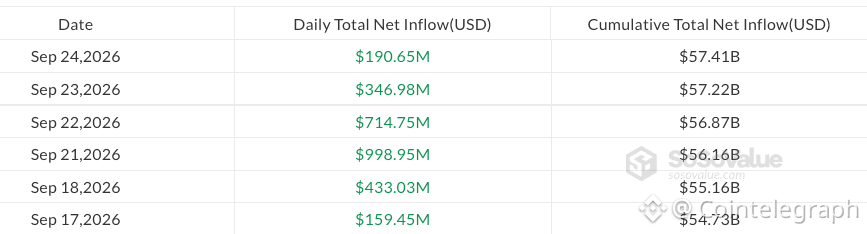
Article
See translation
Bitcoin ETF inflows slow to $191M as six-day streak reaches $2.8BUS spot Bitcoin exchange-traded funds (ETFs) drew about $191 million in net inflows on Thursday, pushing their six-session total past $2.8 billion.
After hitting a 2026 high of $999 million on Monday, daily inflows fell for three consecutive sessions while Bitcoin retreated from above $87,000. Thursday’s total was down 81% from Monday, according to SoSoValue data.
The latest inflow streak lifted the funds’ year-to-date total to roughly $787 million, reversing a 2026 deficit of about $5.5 billion at the end of June. September alone has attracted $2.56 billion so far, following $3.52 billion in August.
Daily flows in US spot Bitcoin ETFs. Source: SoSoValue
BlackRock’s iShares Bitcoin Trust (IBIT), the largest US spot Bitcoin ETF by assets, accounted for about $163 million of Thursday’s inflows, according to Farside Investors data. IBIT has attracted roughly $1.35 billion during the six-session streak, or nearly half of the funds’ combined inflows.
At the time of publication, Bitcoin traded at $83,807, down 0.3% over the past 24 hours but still up about 8% over the past seven days, according to CoinGecko.
Bitcoin ETF inflows slow to $191M as six-day streak reaches $2.8B
US spot Bitcoin exchange-traded funds (ETFs) drew about $191 million in net inflows on Thursday, pushing their six-session total past $2.8 billion.
After hitting a 2026 high of $999 million on Monday, daily inflows fell for three consecutive sessions while Bitcoin retreated from above $87,000. Thursday’s total was down 81% from Monday, according to SoSoValue data.
The latest inflow streak lifted the funds’ year-to-date total to roughly $787 million, reversing a 2026 deficit of about $5.5 billion at the end of June. September alone has attracted $2.56 billion so far, following $3.52 billion in August.
Daily flows in US spot Bitcoin ETFs. Source: SoSoValue
BlackRock’s iShares Bitcoin Trust (IBIT), the largest US spot Bitcoin ETF by assets, accounted for about $163 million of Thursday’s inflows, according to Farside Investors data. IBIT has attracted roughly $1.35 billion during the six-session streak, or nearly half of the funds’ combined inflows.
At the time of publication, Bitcoin traded at $83,807, down 0.3% over the past 24 hours but still up about 8% over the past seven days, according to CoinGecko.
After hitting a 2026 high of $999 million on Monday, daily inflows fell for three consecutive sessions while Bitcoin retreated from above $87,000. Thursday’s total was down 81% from Monday, according to SoSoValue data.
The latest inflow streak lifted the funds’ year-to-date total to roughly $787 million, reversing a 2026 deficit of about $5.5 billion at the end of June. September alone has attracted $2.56 billion so far, following $3.52 billion in August.
Daily flows in US spot Bitcoin ETFs. Source: SoSoValue
BlackRock’s iShares Bitcoin Trust (IBIT), the largest US spot Bitcoin ETF by assets, accounted for about $163 million of Thursday’s inflows, according to Farside Investors data. IBIT has attracted roughly $1.35 billion during the six-session streak, or nearly half of the funds’ combined inflows.
At the time of publication, Bitcoin traded at $83,807, down 0.3% over the past 24 hours but still up about 8% over the past seven days, according to CoinGecko.
BTC+0.22%
IBITETF+0.02%
1
294
See translation
Samourai Wallet co-founder faces new transfer after 30-day ordealSamourai Wallet co-founder Keonne Rodriguez faces another prison transfer after the drug treatment program at FCI McKean was deactivated, he said Wednesday.
Rodriguez said on X that McKean’s warden told program participants that Rodriguez and 70 others would be moved to facilities where treatment remains available. He entered the program because completing it could reduce his sentence by up to a year.
In a letter published by The Rage, Rodriguez called his earlier journey from FPC Morgantown to McKean the “absolute worst 30 days” of his life. He said his request to make the roughly four-hour trip himself was denied.
Rodriguez is serving a five-year sentence after pleading guilty to conspiring to operate an unlicensed money-transmitting business. The Justice Department said he and Samourai co-founder William Lonergan Hill transmitted more than $237 million in criminal proceeds through the service.
A four-hour drive became 30 days in transit
Rodriguez said inmates leaving Morgantown were placed in ankle shackles and handcuffs attached to waist chains before being taken by bus to an airport and flown to the Federal Transfer Center in Oklahoma City.
At the facility, Rodriguez said he was held with prisoners from different security classifications and spent most of his time locked in a cell. At one point, he wrote that he wondered whether “all the circles of hell” were contained within the federal transfer facility.
Rodriguez said he was eventually assigned a cell with an inmate serving a murder sentence and was given only part of a foam mattress, leaving part of his body resting on a metal bunk overnight.
Developer protections remain uncertain after CLARITY setback
The case unfolded alongside congressional efforts to protect developers who do not control users’ assets from being treated as financial intermediaries.
The latest Senate CLARITY Act draft retained Blockchain Regulatory Certainty Act provisions protecting non-controlling developers from certain money-transmission requirements under the Bank Secrecy Act.
The Senate failed to advance the CLARITY Act on Sept. 15 after a procedural vote fell short of the 60 votes needed to move the legislation forward.
Magazine: Winners and losers of the SEC’s new tokenized stocks rules
Samourai Wallet co-founder faces new transfer after 30-day ordeal
Samourai Wallet co-founder Keonne Rodriguez faces another prison transfer after the drug treatment program at FCI McKean was deactivated, he said Wednesday.
Rodriguez said on X that McKean’s warden told program participants that Rodriguez and 70 others would be moved to facilities where treatment remains available. He entered the program because completing it could reduce his sentence by up to a year.
In a letter published by The Rage, Rodriguez called his earlier journey from FPC Morgantown to McKean the “absolute worst 30 days” of his life. He said his request to make the roughly four-hour trip himself was denied.
Rodriguez is serving a five-year sentence after pleading guilty to conspiring to operate an unlicensed money-transmitting business. The Justice Department said he and Samourai co-founder William Lonergan Hill transmitted more than $237 million in criminal proceeds through the service.
A four-hour drive became 30 days in transit
Rodriguez said inmates leaving Morgantown were placed in ankle shackles and handcuffs attached to waist chains before being taken by bus to an airport and flown to the Federal Transfer Center in Oklahoma City.
At the facility, Rodriguez said he was held with prisoners from different security classifications and spent most of his time locked in a cell. At one point, he wrote that he wondered whether “all the circles of hell” were contained within the federal transfer facility.
Rodriguez said he was eventually assigned a cell with an inmate serving a murder sentence and was given only part of a foam mattress, leaving part of his body resting on a metal bunk overnight.
Developer protections remain uncertain after CLARITY setback
The case unfolded alongside congressional efforts to protect developers who do not control users’ assets from being treated as financial intermediaries.
The latest Senate CLARITY Act draft retained Blockchain Regulatory Certainty Act provisions protecting non-controlling developers from certain money-transmission requirements under the Bank Secrecy Act.
The Senate failed to advance the CLARITY Act on Sept. 15 after a procedural vote fell short of the 60 votes needed to move the legislation forward.
Magazine: Winners and losers of the SEC’s new tokenized stocks rules
Rodriguez said on X that McKean’s warden told program participants that Rodriguez and 70 others would be moved to facilities where treatment remains available. He entered the program because completing it could reduce his sentence by up to a year.
In a letter published by The Rage, Rodriguez called his earlier journey from FPC Morgantown to McKean the “absolute worst 30 days” of his life. He said his request to make the roughly four-hour trip himself was denied.
Rodriguez is serving a five-year sentence after pleading guilty to conspiring to operate an unlicensed money-transmitting business. The Justice Department said he and Samourai co-founder William Lonergan Hill transmitted more than $237 million in criminal proceeds through the service.
A four-hour drive became 30 days in transit
Rodriguez said inmates leaving Morgantown were placed in ankle shackles and handcuffs attached to waist chains before being taken by bus to an airport and flown to the Federal Transfer Center in Oklahoma City.
At the facility, Rodriguez said he was held with prisoners from different security classifications and spent most of his time locked in a cell. At one point, he wrote that he wondered whether “all the circles of hell” were contained within the federal transfer facility.
Rodriguez said he was eventually assigned a cell with an inmate serving a murder sentence and was given only part of a foam mattress, leaving part of his body resting on a metal bunk overnight.
Developer protections remain uncertain after CLARITY setback
The case unfolded alongside congressional efforts to protect developers who do not control users’ assets from being treated as financial intermediaries.
The latest Senate CLARITY Act draft retained Blockchain Regulatory Certainty Act provisions protecting non-controlling developers from certain money-transmission requirements under the Bank Secrecy Act.
The Senate failed to advance the CLARITY Act on Sept. 15 after a procedural vote fell short of the 60 votes needed to move the legislation forward.
Magazine: Winners and losers of the SEC’s new tokenized stocks rules
2
1
700
Log in to explore more content
Join global crypto users on Binance Square
⚡️ Get latest and useful information about crypto.
💬 Trusted by the world’s largest crypto exchange.
👍 Discover real insights from verified creators.
Email / Phone number
Trending Topics
BitwiseFilesFinalNEARSpotETFProspectus
75,042 views
1,295 Discussing
#bitwisefilesfinalnearspotetfprospectus
Can $NEAR REALLY reach $562 with an ETF approval? 🚀
The crypto market is buzzing as Bitwise files its final prospectus for a Spot NEAR ETF (Ticker: NRR on NYSE Arca)! 📊🔥
Is institutional money about to unleash the biggest pump in NEAR’s history? Analysts are throwing around mind-blowing price targets:
🎯 Intermediate Target: $155
🎯 2030 Long-Term Target: $562
💡 Let's do the math:
At $562, $NEAR would sit at roughly a $680 Billion market cap—putting it right up there with Ethereum's potential valuation. With NEAR leading the Chain Abstraction & AI crypto narrative, this might not be as crazy as it sounds!
With SEC regulations turning more crypto-friendly and Wall Street knocking on the door, are you Accumulating or Holding?
👇 Drop your realistic price prediction for $NEAR in the comments! 👇
#BitwiseFilesFinalNEARSpotETFProspectus #Altcoins #CryptoNews #ETF
Doomsday-Trader
·6 Likes
·3.6k views
BitgetHackerMoves$83MStolenXRP
30,356 views
157 Discussing
SOLSpotETFWeeklyInflow$188M
19,610 views
128 Discussing