
區塊101
38 Posts

區塊101
加密貨幣、Web3 與全球投資|Bitcoin・Crypto・市場分析・投資觀察
幣安推薦邀請碼 BNLOVER
6 Following
71 Followers
36 Liked
Posts
All
Quotes
Videos

ChatGPT Images 2.5 has been updated, but after testing it myself, what I feel most isn’t the speed—it’s “image consistency.”
This time, OpenAI made several important upgrades to ChatGPT Images:
• Officially, image generation speed is up to 50% faster
• Improved consistency of people, characters, and objects
• More precise local edits
• During multi-turn edits, it can better maintain the original composition and visual elements
• Added Sketch, allowing you to generate a complete image directly from a rough sketch
• Added Templates and a function to edit annotations within images
In actual use, I don’t feel that the generation speed has improved noticeably right now, but “consistency” really has.
Before, a common problem with AI image generation was:
The first image looks great—but once you ask it to modify just a small detail, the person, composition, text, and even other things you didn’t intend to change could also get altered.
Images 2.5 clearly improves this.
This might be even more important than simply being “50% faster.”
Because AI image generation already has the ability to produce a beautiful image; what truly affects workflow efficiency is whether you can continuously refine the same image while maintaining consistency in the person, composition, and brand elements.
The next stage of competition for AI image models may not be just about who can draw more beautifully, but about who can genuinely fit into the design workflow.
#AI #ChatGPT #OpenAI #AIGC
This time, OpenAI made several important upgrades to ChatGPT Images:
• Officially, image generation speed is up to 50% faster
• Improved consistency of people, characters, and objects
• More precise local edits
• During multi-turn edits, it can better maintain the original composition and visual elements
• Added Sketch, allowing you to generate a complete image directly from a rough sketch
• Added Templates and a function to edit annotations within images
In actual use, I don’t feel that the generation speed has improved noticeably right now, but “consistency” really has.
Before, a common problem with AI image generation was:
The first image looks great—but once you ask it to modify just a small detail, the person, composition, text, and even other things you didn’t intend to change could also get altered.
Images 2.5 clearly improves this.
This might be even more important than simply being “50% faster.”
Because AI image generation already has the ability to produce a beautiful image; what truly affects workflow efficiency is whether you can continuously refine the same image while maintaining consistency in the person, composition, and brand elements.
The next stage of competition for AI image models may not be just about who can draw more beautifully, but about who can genuinely fit into the design workflow.
#AI #ChatGPT #OpenAI #AIGC
☀️ Block 101|Market Morning News
Past 24H:
① Liquid attackers returned 3,400 BTC, retaining about 600 BTC for further patching and later return
② Cronos rolled back and recovered $110 million; $9.19 million still remains unrecovered
③ Visa launches on-chain lending, with transaction volume increasing by 200%
Past 24H:
① Liquid attackers returned 3,400 BTC, retaining about 600 BTC for further patching and later return
② Cronos rolled back and recovered $110 million; $9.19 million still remains unrecovered
③ Visa launches on-chain lending, with transaction volume increasing by 200%
After Astra’s launch, a noteworthy phenomenon has emerged in the market:
Capital is once again starting to focus on memory.
This actually reflects that the AI investment theme is becoming more mature.
In the first phase, everyone was asking:
“Who can provide the strongest AI GPU?”
But once AI compute capacity continues to expand, the question gradually shifts to:
“If we have the GPUs, how do we feed data in quickly?”
As models grow larger, the required HBM, DRAM, storage, and high-speed interconnects also increase.
And then, further down the line, we’ll run into issues like power, cooling, and data center capacity.
So when researching AI investments, there’s a very practical way to think about it:
Don’t keep looking for the “next NVIDIA.” Instead, look for the next bottleneck in AI.
GPUs used to be the bottleneck.
Now, memory is being repriced by the market.
So what will the next bottleneck be?
#AI #Semiconductors #NVIDIA #Micron #USStocks
Capital is once again starting to focus on memory.
This actually reflects that the AI investment theme is becoming more mature.
In the first phase, everyone was asking:
“Who can provide the strongest AI GPU?”
But once AI compute capacity continues to expand, the question gradually shifts to:
“If we have the GPUs, how do we feed data in quickly?”
As models grow larger, the required HBM, DRAM, storage, and high-speed interconnects also increase.
And then, further down the line, we’ll run into issues like power, cooling, and data center capacity.
So when researching AI investments, there’s a very practical way to think about it:
Don’t keep looking for the “next NVIDIA.” Instead, look for the next bottleneck in AI.
GPUs used to be the bottleneck.
Now, memory is being repriced by the market.
So what will the next bottleneck be?
#AI #Semiconductors #NVIDIA #Micron #USStocks

🍎 Apple Autumn Event Countdown Is Underway!
Apple’s 2026 autumn event is coming soon, and this year, market attention may not be limited to the usual iPhone upgrade.
Current areas of focus include long-rumored first foldable iPhone, iPhone 18 Pro, as well as new products like the Apple Watch and AirPods.
But for investors, what truly matters isn’t just the new products themselves:
📱 Will the new iPhone trigger a new upgrade cycle?
🤖 Will Apple make bigger moves in the AI space?
💰 New product pricing and strategy for high-end models
📈 Can the new lineup reignite Apple’s growth?
🏭 How might Apple’s supply chain—including TSMC—be affected?
If Apple really launches its first foldable iPhone, would you buy it?
A. Yes—I’ve been waiting for Apple for a long time
B. I’ll decide after seeing the price
C. I’m not interested in foldable phones
⏰ Event time: 1:00 AM on September 10 (Taiwan time)
Block 101 will also continue to sort through the latest products and their impact on the market.
#Apple #AAPL #iPhone #TechStocks #USStocks #Investing
Apple’s 2026 autumn event is coming soon, and this year, market attention may not be limited to the usual iPhone upgrade.
Current areas of focus include long-rumored first foldable iPhone, iPhone 18 Pro, as well as new products like the Apple Watch and AirPods.
But for investors, what truly matters isn’t just the new products themselves:
📱 Will the new iPhone trigger a new upgrade cycle?
🤖 Will Apple make bigger moves in the AI space?
💰 New product pricing and strategy for high-end models
📈 Can the new lineup reignite Apple’s growth?
🏭 How might Apple’s supply chain—including TSMC—be affected?
If Apple really launches its first foldable iPhone, would you buy it?
A. Yes—I’ve been waiting for Apple for a long time
B. I’ll decide after seeing the price
C. I’m not interested in foldable phones
⏰ Event time: 1:00 AM on September 10 (Taiwan time)
Block 101 will also continue to sort through the latest products and their impact on the market.
#Apple #AAPL #iPhone #TechStocks #USStocks #Investing

What does it feel like to ride in the #Cybercab—without a steering wheel and without a brake pedal?
After reading reviews from passengers who boarded the first batch tested in Austin, there’s one line that sums it up: “Maximum tech vibe, but your palms are all sweat.”
Online sharp takes have already blown up:
“Before you even get in, you sign a disclaimer longer than a will. In essence: live and die as you will—if you’re unhappy, take it up with the AI.”
“Two people in a butterfly-door sports car staring at an enormous screen—the visuals feel like first class, but the heartbeat is like being on a roller coaster with no safety bar.”
“Your feet feel empty, the front seat is completely flat. When the car suddenly accelerates, your survival instincts go into overdrive, desperately looking for a pedal to press.”
“Extremely smooth—so smooth it’s even steadier than a human driver. But the moment you hit road work, your brain starts auto-playing your life like a bio-story.”
Doesn’t this scene feel awfully familiar to crypto people?
Handing your life to a “pure vision neural network (AI)” is like authorizing your entire net worth to an unaudited smart contract.
No steering wheel means your holdings have “no manual stop-loss button.” Code is law, and whether you crash depends entirely on the algorithm.
What Musk is selling isn’t just a taxi—it’s an “ultimate automated closed loop.” In the future, AI drives on the road, order matching is settled on-chain, and fares can be deducted anytime using Dogecoin or micro-payments.
Before, you mocked others for opening contracts like gambling. Now, once you sit in a Cybercab—even to go out and hail a ride—you’re using your own flesh and body to personally operate a hundred-times leveraged bet.
Would you dare get into an AI sports car that doesn’t even give you an emergency steering wheel?👇
After reading reviews from passengers who boarded the first batch tested in Austin, there’s one line that sums it up: “Maximum tech vibe, but your palms are all sweat.”
Online sharp takes have already blown up:
“Before you even get in, you sign a disclaimer longer than a will. In essence: live and die as you will—if you’re unhappy, take it up with the AI.”
“Two people in a butterfly-door sports car staring at an enormous screen—the visuals feel like first class, but the heartbeat is like being on a roller coaster with no safety bar.”
“Your feet feel empty, the front seat is completely flat. When the car suddenly accelerates, your survival instincts go into overdrive, desperately looking for a pedal to press.”
“Extremely smooth—so smooth it’s even steadier than a human driver. But the moment you hit road work, your brain starts auto-playing your life like a bio-story.”
Doesn’t this scene feel awfully familiar to crypto people?
Handing your life to a “pure vision neural network (AI)” is like authorizing your entire net worth to an unaudited smart contract.
No steering wheel means your holdings have “no manual stop-loss button.” Code is law, and whether you crash depends entirely on the algorithm.
What Musk is selling isn’t just a taxi—it’s an “ultimate automated closed loop.” In the future, AI drives on the road, order matching is settled on-chain, and fares can be deducted anytime using Dogecoin or micro-payments.
Before, you mocked others for opening contracts like gambling. Now, once you sit in a Cybercab—even to go out and hail a ride—you’re using your own flesh and body to personally operate a hundred-times leveraged bet.
Would you dare get into an AI sports car that doesn’t even give you an emergency steering wheel?👇

I helped a friend with something half a month ago: taking his child to Chiang Mai for a summer camp that he'd already registered for.
He couldn’t go, because his mother suddenly passed away, and he had to stay home to keep vigil and attend the funeral.
On a bench during a layover in Bangkok, the child was so tired that he fell asleep with his head resting on my leg. I took out my phone and checked my holdings. That stretch of the market was doing well—the account was in the green by even more, and there was even an early project that had sent out an airdrop.
Normally, I would’ve immediately taken a screenshot to post online or chat with my friend. But looking at the child sleeping soundly beside me, I only felt coldness and emptiness.
I’ve known this friend for ten years. In the past few years, in order to find opportunities in the circle and get back what he lost, he’d been glued to the charts day and night—going to meetups, pulling late nights, and even on holidays staring at his phone. He always said, “Once I make enough on this run, I’ll take the whole family out to vacation properly.”
In the end, the market turned, the opportunity arrived—but he didn’t get to wait for it.
I used to think financial freedom was the destination. Now I understand more and more: if the speed at which you make money can’t keep up with how fast your loved ones grow old, then what is the meaning of that string of numbers in your account?
After I got off the plane and handed the child over to the camp teacher, I called home.
Don’t wait until you’ve achieved financial freedom before you go live your life. Call your family a little more often. That window of time may close even faster than a bear market ends.
He couldn’t go, because his mother suddenly passed away, and he had to stay home to keep vigil and attend the funeral.
On a bench during a layover in Bangkok, the child was so tired that he fell asleep with his head resting on my leg. I took out my phone and checked my holdings. That stretch of the market was doing well—the account was in the green by even more, and there was even an early project that had sent out an airdrop.
Normally, I would’ve immediately taken a screenshot to post online or chat with my friend. But looking at the child sleeping soundly beside me, I only felt coldness and emptiness.
I’ve known this friend for ten years. In the past few years, in order to find opportunities in the circle and get back what he lost, he’d been glued to the charts day and night—going to meetups, pulling late nights, and even on holidays staring at his phone. He always said, “Once I make enough on this run, I’ll take the whole family out to vacation properly.”
In the end, the market turned, the opportunity arrived—but he didn’t get to wait for it.
I used to think financial freedom was the destination. Now I understand more and more: if the speed at which you make money can’t keep up with how fast your loved ones grow old, then what is the meaning of that string of numbers in your account?
After I got off the plane and handed the child over to the camp teacher, I called home.
Don’t wait until you’ve achieved financial freedom before you go live your life. Call your family a little more often. That window of time may close even faster than a bear market ends.

🚨 Breaking News|Goldman Sachs upgrades the market size for optical module market; rapid growth in demand for AI server optical modules. Goldman Sachs forecasts that 16T optical module demand will grow to 61%, reflecting that the expansion of AI servers is driving growth in optical communication hardware.
The CLARITY Act, simply put, is the U.S. getting ready to turn crypto’s "gray area" into black-and-white rules.
Who is a security, who is a commodity,
what the SEC regulates, what the CFTC regulates,
all of it is supposed to get an answer.
A lot of people only see it as a "regulatory tailwind."
I think the real thing to watch is not whether it will make BTC go up, but whether it will finally make Wall Street feel safe enough to move money in.
Because crypto has never lacked money.
What it lacks is the rules of the game that make big money willing to enter.
9/15 — that’s what’s worth watching.
Who is a security, who is a commodity,
what the SEC regulates, what the CFTC regulates,
all of it is supposed to get an answer.
A lot of people only see it as a "regulatory tailwind."
I think the real thing to watch is not whether it will make BTC go up, but whether it will finally make Wall Street feel safe enough to move money in.
Because crypto has never lacked money.
What it lacks is the rules of the game that make big money willing to enter.
9/15 — that’s what’s worth watching.

🚨 Breaking News | Jensen Huang announces GPT-6 Astra deployment with over 100,000 Blackwell GPUs, AGI has arrived OpenAI's latest GPT-6 Astra uses more than 100,000 Blackwell GPUs, with another 400,000 ready to go online. Why it matters: AI computing resources have increased significantly, driving the rapid development of artificial general intelligence technology.
ChatGPT is simply amazing!

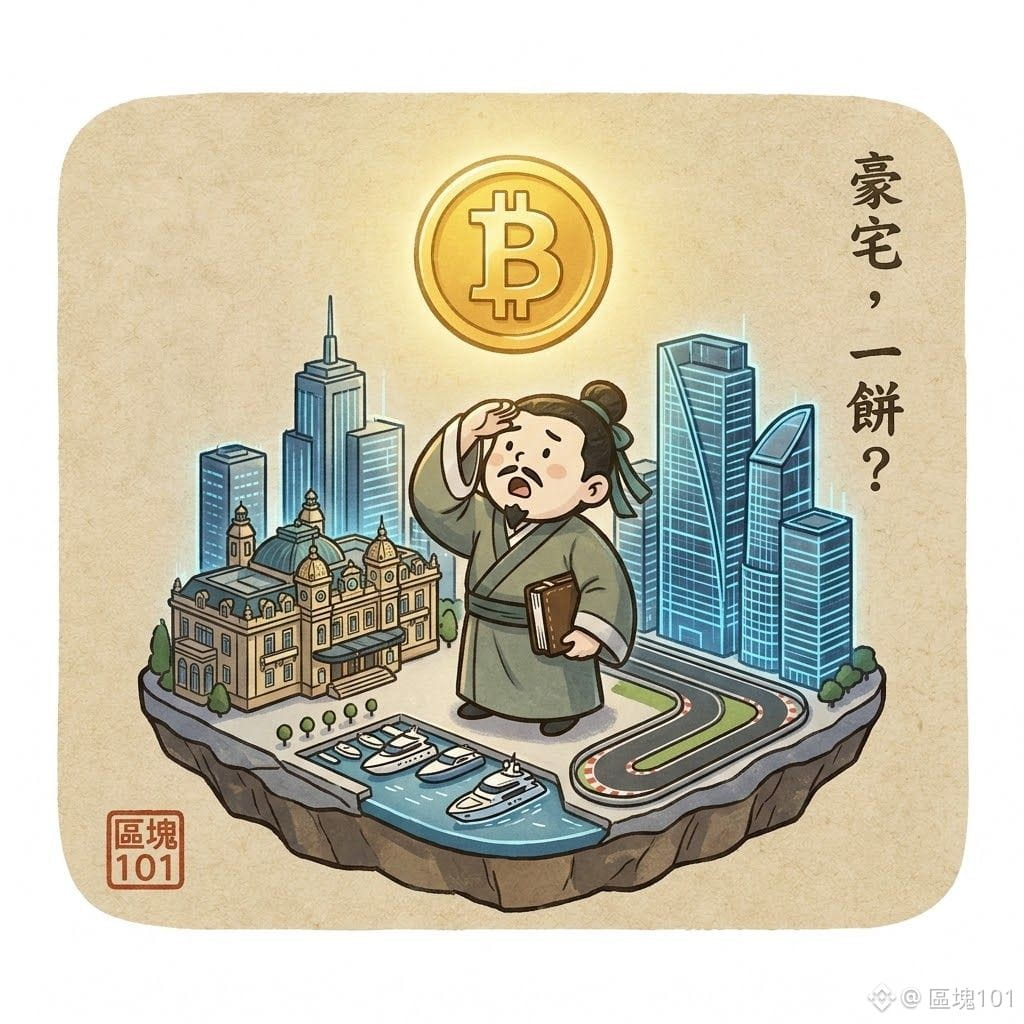
Stop calculating house prices in fiat—it only makes you more anxious.
Switch to Bitcoin units, and the world suddenly looks alarmingly "cheap."
Today I dug into global housing prices for you all. If you’re holding BTC, how many coins would it take to buy a 200-square-meter (about 2,150 sq ft) luxury apartment in prime central locations around the world?
(Estimated at $BTC ≈ $80,000, based on top-tier luxury properties in core districts only)
Monaco: ~138 BTC (the global tax haven for the ultra-rich—truly prestigious)
Hong Kong (Central/Mid-Levels): ~70 BTC (once the ceiling; now just a few dozen coins)
New York (Manhattan): ~63 BTC (next door to Wall Street elites)
London (Mayfair): ~55 BTC (the entry ticket to an old-money empire)
Singapore: ~50 BTC (the first choice for Web3 founders holding meetings)
Paris: ~48 BTC (the price of a view of the Eiffel Tower)
Shanghai (Lujiazui/Bund): ~45 BTC (same view as Tomson Riviera)
Taipei (Xinyi/Daan): ~38 BTC (a front-row spot for Taipei 101 fireworks)
Tokyo (Minato): ~36 BTC (after the yen’s depreciation, Tokyo is extremely good value)
Dubai: ~23 BTC (a tax-free paradise packed with Web3 acquaintances)
Bangkok: ~13 BTC (living like a boss in a top-tier affluent district)
After looking at these numbers, I came to only two conclusions:
Fiat is inflating, but the world is massively discounting itself in BTC. Ten years ago, buying a house in Bangkok cost over 1,000 BTC; now it’s only a dozen or so. Do you think homes got more expensive? No—the fiat currency is shrinking, and hard money is taking everything.
Concrete vs seed phrase: 200 square meters of concrete can’t be moved, and it still comes with annual property taxes and management fees; dozens of BTC can sit in a cold wallet, and you can take them across borders without even setting off a metal detector.
If we really reach the peak of a bull market and BTC surges to $200,000 or $500,000... maybe just 10 BTC could sweep Manhattan and London.
Which city could your BTC stack fully pay for a home in right now?
Switch to Bitcoin units, and the world suddenly looks alarmingly "cheap."
Today I dug into global housing prices for you all. If you’re holding BTC, how many coins would it take to buy a 200-square-meter (about 2,150 sq ft) luxury apartment in prime central locations around the world?
(Estimated at $BTC ≈ $80,000, based on top-tier luxury properties in core districts only)
Monaco: ~138 BTC (the global tax haven for the ultra-rich—truly prestigious)
Hong Kong (Central/Mid-Levels): ~70 BTC (once the ceiling; now just a few dozen coins)
New York (Manhattan): ~63 BTC (next door to Wall Street elites)
London (Mayfair): ~55 BTC (the entry ticket to an old-money empire)
Singapore: ~50 BTC (the first choice for Web3 founders holding meetings)
Paris: ~48 BTC (the price of a view of the Eiffel Tower)
Shanghai (Lujiazui/Bund): ~45 BTC (same view as Tomson Riviera)
Taipei (Xinyi/Daan): ~38 BTC (a front-row spot for Taipei 101 fireworks)
Tokyo (Minato): ~36 BTC (after the yen’s depreciation, Tokyo is extremely good value)
Dubai: ~23 BTC (a tax-free paradise packed with Web3 acquaintances)
Bangkok: ~13 BTC (living like a boss in a top-tier affluent district)
After looking at these numbers, I came to only two conclusions:
Fiat is inflating, but the world is massively discounting itself in BTC. Ten years ago, buying a house in Bangkok cost over 1,000 BTC; now it’s only a dozen or so. Do you think homes got more expensive? No—the fiat currency is shrinking, and hard money is taking everything.
Concrete vs seed phrase: 200 square meters of concrete can’t be moved, and it still comes with annual property taxes and management fees; dozens of BTC can sit in a cold wallet, and you can take them across borders without even setting off a metal detector.
If we really reach the peak of a bull market and BTC surges to $200,000 or $500,000... maybe just 10 BTC could sweep Manhattan and London.
Which city could your BTC stack fully pay for a home in right now?
🚨 Breaking News|U.S. August nonfarm payrolls far exceeded expectations, with employment rising by 162,000, well above the market forecast of 56,000; the unemployment rate remained at 4.1%.
After the strong jobs data was released, markets raised expectations again for a Fed rate hike in September; U.S. Treasury yields and the dollar rose, gold came under pressure, and U.S. stock futures weakened.
Why it matters: the labor market is stronger than expected, shifting September Fed policy pressure back toward inflation, and the upcoming CPI data will be key.
After the strong jobs data was released, markets raised expectations again for a Fed rate hike in September; U.S. Treasury yields and the dollar rose, gold came under pressure, and U.S. stock futures weakened.
Why it matters: the labor market is stronger than expected, shifting September Fed policy pressure back toward inflation, and the upcoming CPI data will be key.
🚨 Breaking News | U.S. regulators have preliminarily approved blockchain bank OpenReserve to operate. The U.S. Office of the Comptroller of the Currency has granted it a temporary banking license, making it a new member of the crypto-native banking sector.
A single long bullish candle for Bitcoin directly returned to $81,000, and within a few hours, shorts across the entire network were liquidated for nearly $100 million.
Yesterday, they were still shouting “September curse—breaks below 70,000,” but today they’ve already been pulled up by the roots. 🧵👇
Whenever the market gets choppy, the biggest mistake retail traders love to make is:
Treating “macroeconomic news” like the “trading bible,” and treating “casino leverage” like “asset allocation.”
Let’s see what lesson today’s squeeze between longs and shorts taught us:
1️⃣ A Federal Reserve official lets one slip—contract positions turn to mud. Yesterday the market was still anxious about the rate decision; today, the official casually makes a slightly dovish remark, and the main funds immediately hit back with a brutal long squeeze.
💡 The truth: Betting on high-multiple futures based on the Fed’s face is, in essence, a race to see whose inside-news signal arrives faster. Retail traders are always the last ones to get the news—entering the trade is handing liquidity to someone else.
2️⃣ ETF “whales” are accumulating on the dips, while “weeds” keep shuffling platforms. When retail is panicking and selling into fear—rushing to short to hedge—Bitcoin spot ETF quietly absorbs another over $100 million in chips in a single day.
💡 The truth: What institutions want is spot pricing power and long-term core holdings, while you care about the kind of 5-minute chart fluctuations. You’re gambling on big or small; the whales are moving bricks to build a treasury.
3️⃣ The only solution for “both longs and shorts suffer” is this: the script of holding steady in a choppy spot market is always—first kill the longs, then pump to squeeze the shorts, and finally harvest both directions. People who can sleep well in this kind of market are never the ones staring at 50x leverage until 3 a.m.,
Instead, they are:
🔹 Holding steady spot bags they can’t shake (50% of the portfolio)
🔹 Keeping 10%–20% in stablecoins, ready to DCA into extreme needle-like dips
🔹 Never chasing trades at the highest emotional peak
💡 Block 101’s proverb to avoid traps: “When it rises, you panic; when it falls, it breaks your heart—because you hold high-leverage. Calm as the clouds, fishing while you wait, only because there are truly big bags inside the box.”
Were you squeezed out on this rally? Or are you calmly holding spot and watching the show? Drop a comment below! Follow @Block 101—every day we break down real market power plays and asset self-defense skills ☕
Yesterday, they were still shouting “September curse—breaks below 70,000,” but today they’ve already been pulled up by the roots. 🧵👇
Whenever the market gets choppy, the biggest mistake retail traders love to make is:
Treating “macroeconomic news” like the “trading bible,” and treating “casino leverage” like “asset allocation.”
Let’s see what lesson today’s squeeze between longs and shorts taught us:
1️⃣ A Federal Reserve official lets one slip—contract positions turn to mud. Yesterday the market was still anxious about the rate decision; today, the official casually makes a slightly dovish remark, and the main funds immediately hit back with a brutal long squeeze.
💡 The truth: Betting on high-multiple futures based on the Fed’s face is, in essence, a race to see whose inside-news signal arrives faster. Retail traders are always the last ones to get the news—entering the trade is handing liquidity to someone else.
2️⃣ ETF “whales” are accumulating on the dips, while “weeds” keep shuffling platforms. When retail is panicking and selling into fear—rushing to short to hedge—Bitcoin spot ETF quietly absorbs another over $100 million in chips in a single day.
💡 The truth: What institutions want is spot pricing power and long-term core holdings, while you care about the kind of 5-minute chart fluctuations. You’re gambling on big or small; the whales are moving bricks to build a treasury.
3️⃣ The only solution for “both longs and shorts suffer” is this: the script of holding steady in a choppy spot market is always—first kill the longs, then pump to squeeze the shorts, and finally harvest both directions. People who can sleep well in this kind of market are never the ones staring at 50x leverage until 3 a.m.,
Instead, they are:
🔹 Holding steady spot bags they can’t shake (50% of the portfolio)
🔹 Keeping 10%–20% in stablecoins, ready to DCA into extreme needle-like dips
🔹 Never chasing trades at the highest emotional peak
💡 Block 101’s proverb to avoid traps: “When it rises, you panic; when it falls, it breaks your heart—because you hold high-leverage. Calm as the clouds, fishing while you wait, only because there are truly big bags inside the box.”
Were you squeezed out on this rally? Or are you calmly holding spot and watching the show? Drop a comment below! Follow @Block 101—every day we break down real market power plays and asset self-defense skills ☕

☀️ Block 101|Crypto Morning News (Past 24H):
① Bitcoin surged to $81,000, Ethereum broke through $2,500, and liquidations exceeded $434 million.
② Standard Chartered Bank launched spot trading for Bitcoin and Ethereum in the UAE.
③ The U.S. Department of Justice seized over $560,000 in crypto assets flowing to Hamas; the FBI took over the fundraising network.
① Bitcoin surged to $81,000, Ethereum broke through $2,500, and liquidations exceeded $434 million.
② Standard Chartered Bank launched spot trading for Bitcoin and Ethereum in the UAE.
③ The U.S. Department of Justice seized over $560,000 in crypto assets flowing to Hamas; the FBI took over the fundraising network.
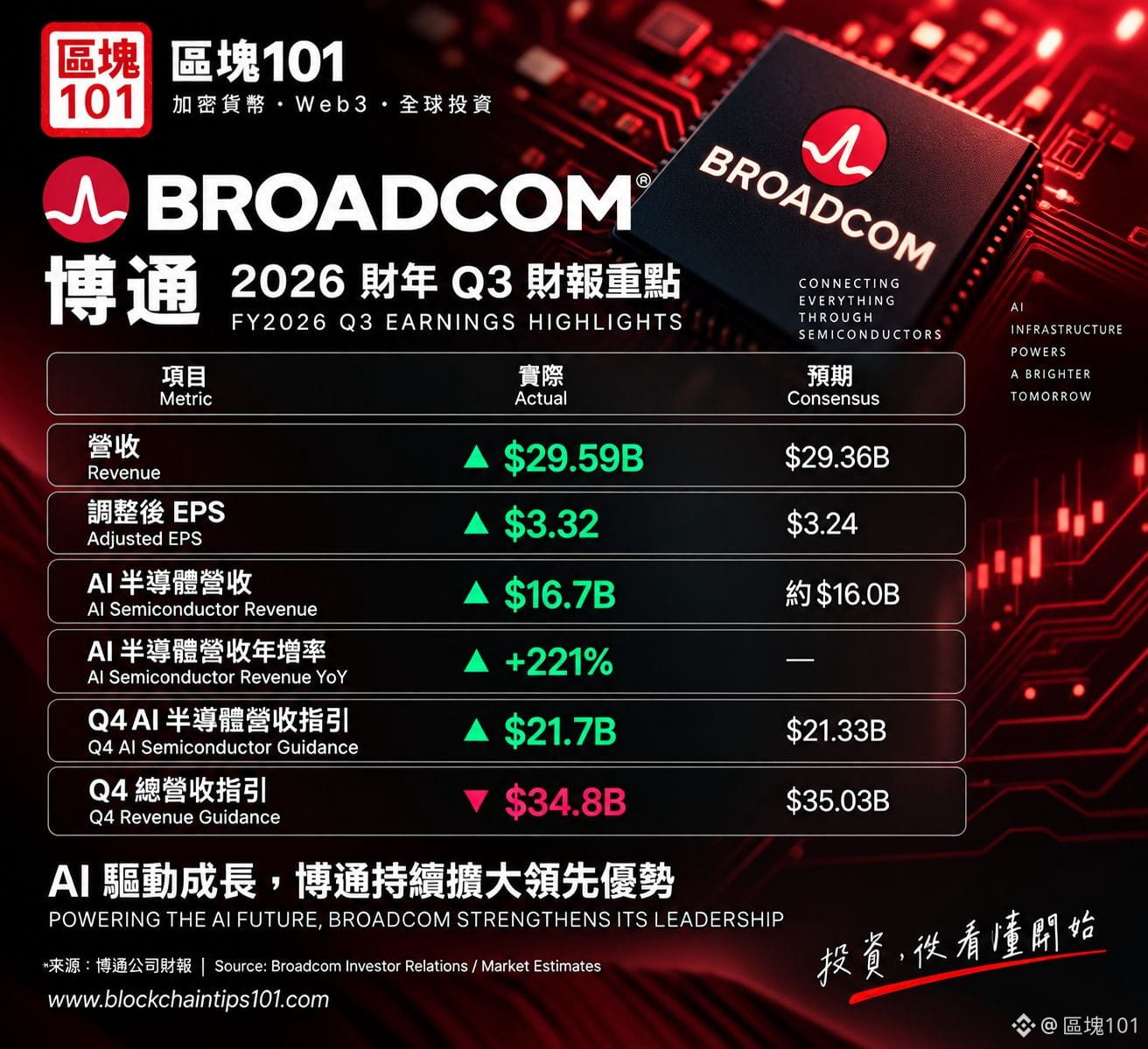
Broadcom’s AI business surges 221%—is the AI infrastructure boom still not over?
Broadcom’s latest FY2026 Q3 earnings report once again proves that AI capital expenditures remain strong:
Revenue: $29.59B
Adjusted EPS: $3.32
AI semiconductor revenue: $16.7B, up 221% year over year
Q4 AI semiconductor revenue guidance: $21.7B
What’s truly worth paying attention to are the last two figures.
Broadcom’s AI semiconductor revenue is expected to grow next quarter from $16.7B to $21.7B, indicating that major tech companies’ demand for AI compute, custom chips, and high-speed networking is still expanding rapidly.
This is also something crypto investors should pay attention to.
Because AI and Crypto are currently competing for the same set of core infrastructure: chips, compute, data centers, and power.
So by looking at the earnings reports of AI infrastructure companies like NVIDIA and Broadcom, you’re also effectively gauging the “temperature” of global compute-capex.
Our take:
The AI Trade isn’t over yet, but the market is gradually broadening from “buy NVIDIA” to the entire AI infrastructure supply chain.
$AVGO #Broadcom #AI #semiconductors #USstocks
Broadcom’s latest FY2026 Q3 earnings report once again proves that AI capital expenditures remain strong:
Revenue: $29.59B
Adjusted EPS: $3.32
AI semiconductor revenue: $16.7B, up 221% year over year
Q4 AI semiconductor revenue guidance: $21.7B
What’s truly worth paying attention to are the last two figures.
Broadcom’s AI semiconductor revenue is expected to grow next quarter from $16.7B to $21.7B, indicating that major tech companies’ demand for AI compute, custom chips, and high-speed networking is still expanding rapidly.
This is also something crypto investors should pay attention to.
Because AI and Crypto are currently competing for the same set of core infrastructure: chips, compute, data centers, and power.
So by looking at the earnings reports of AI infrastructure companies like NVIDIA and Broadcom, you’re also effectively gauging the “temperature” of global compute-capex.
Our take:
The AI Trade isn’t over yet, but the market is gradually broadening from “buy NVIDIA” to the entire AI infrastructure supply chain.
$AVGO #Broadcom #AI #semiconductors #USstocks
Nepal’s massive glacier collapse and flash floods swept away hydropower stations and roads, leaving thousands missing. In the face of natural disasters, life is heartbreakingly fragile. But after every major catastrophe, affected areas often face a second round of secondary disasters: “Banks are offline and paralyzed, international remittances are reviewed for a week, and private donations disappear into a black box with no clear whereabouts.” Many people ask: What can Web3 do besides trading coins? The answer lies in “humanitarian rescue for extreme disasters” 🧵👇
1️⃣ Golden 72 hours: code runs faster than banks When bridges in disaster areas break and power is damaged, traditional SWIFT wire transfers simply can’t keep up. In past Turkey earthquakes or international relief efforts, cross-border stablecoins (USDT/USDC) can reach front-line volunteer phones within seconds—enabling immediate purchases of drones, blankets, and drinking water.
2️⃣ Clarity in plain sight: erasing the “Red Cross black box” Every on-chain charitable payment, and every wallet address the funds go to, is公開 and transparent on the blockchain explorer. If intermediaries try to take a cut, their actions leave no hiding place in the chain records.
3️⃣ Smart contracts’ automated mega-disaster insurance (Parametric Insurance) Combined with satellite imagery and oracles, once the river water level exceeds the alert threshold, the smart contract automatically transfers compensation to affected users’ wallets—avoiding months of tedious assessment and claim verification.
💡 The original purpose of blockchain was never gambling, but to ensure that even when the internet is down, in war, or amid extreme calamities, individuals’ assets still have the resilience to cross borders and help save lives. We pray for the disaster-stricken, and we hope technology can illuminate more people in times of crisis.
1️⃣ Golden 72 hours: code runs faster than banks When bridges in disaster areas break and power is damaged, traditional SWIFT wire transfers simply can’t keep up. In past Turkey earthquakes or international relief efforts, cross-border stablecoins (USDT/USDC) can reach front-line volunteer phones within seconds—enabling immediate purchases of drones, blankets, and drinking water.
2️⃣ Clarity in plain sight: erasing the “Red Cross black box” Every on-chain charitable payment, and every wallet address the funds go to, is公開 and transparent on the blockchain explorer. If intermediaries try to take a cut, their actions leave no hiding place in the chain records.
3️⃣ Smart contracts’ automated mega-disaster insurance (Parametric Insurance) Combined with satellite imagery and oracles, once the river water level exceeds the alert threshold, the smart contract automatically transfers compensation to affected users’ wallets—avoiding months of tedious assessment and claim verification.
💡 The original purpose of blockchain was never gambling, but to ensure that even when the internet is down, in war, or amid extreme calamities, individuals’ assets still have the resilience to cross borders and help save lives. We pray for the disaster-stricken, and we hope technology can illuminate more people in times of crisis.

pessimistic

NANCY813
·
--
BullishToday, Binance life must perform well, only on Monday will there be buyers for spot $币安人生
#币安人生
#币安人生
See translation
😭😭😭

CelesseX
·
--
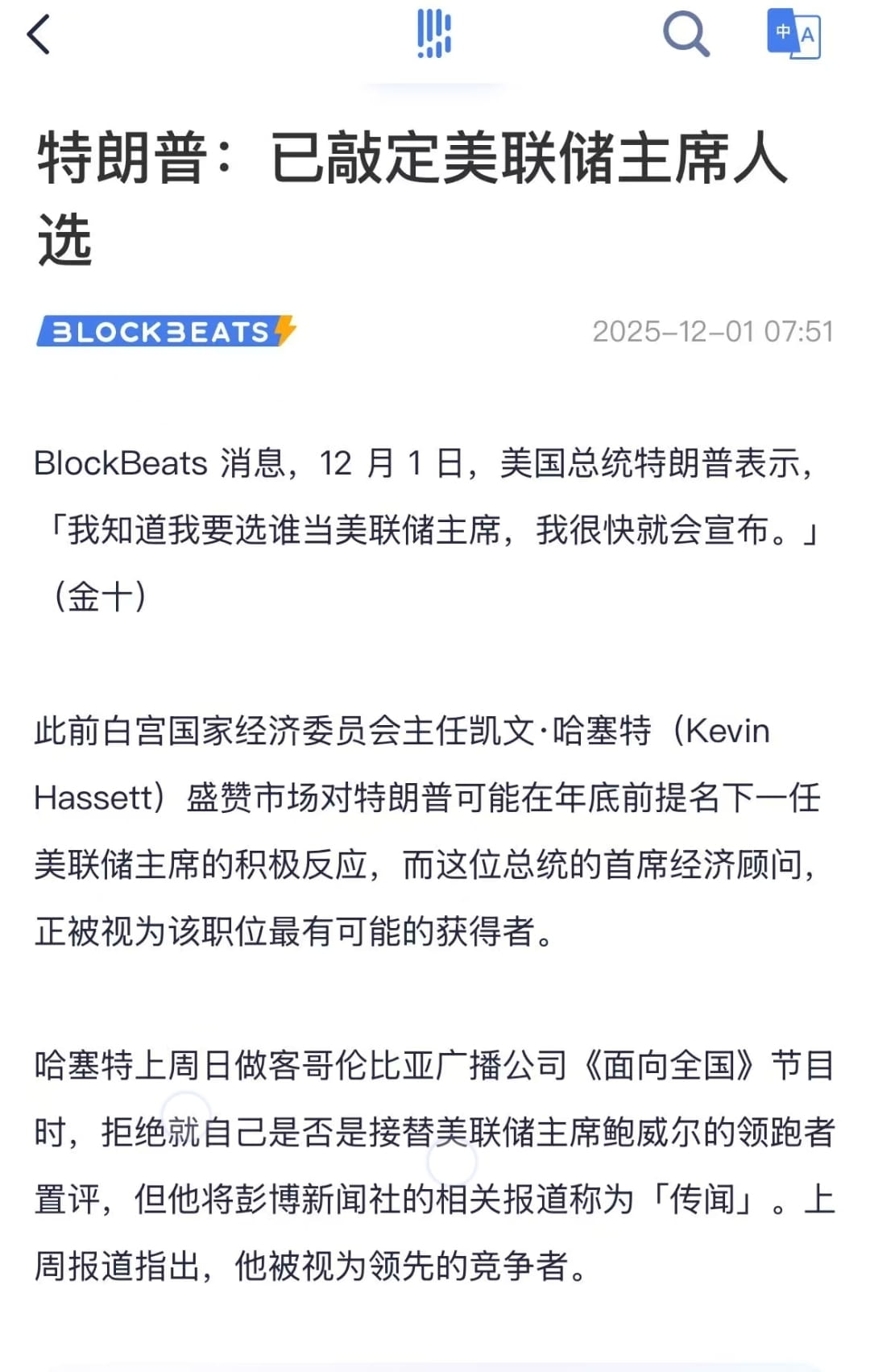
Why did the Federal Reserve drop like this when they changed personnel???
Log in to explore more content