
CryptoQuant Quicktake
8.8k Posts

CryptoQuant Quicktake
 Square Verified+
Report
Block User
CryptoQuant.com - Leading On-chain Data/Analytics Provider
0 Following
22.9K+ Followers
27.1K+ Liked
Posts

Article
See translation
Binance ETH Open Interest Rises Above Its 30-Day AverageData from Binance shows a notable rise in open interest for Ethereum contracts recently, coinciding with the recovery in ETH’s price and renewed activity in the derivatives market.
According to recent data, open interest stood at approximately $6.05 billion, compared with a 30-day moving average of about $5.77 billion, meaning that current levels exceed the recent average by roughly 4.7%. Meanwhile, the standard deviation stood at approximately $600.7 million, while the Z-score reached about 0.45.
This positive reading indicates that open interest has risen above its 30-day average, yet it remains far from the extreme levels that typically signal an exceptional surge in trader positioning or leverage usage.
This trend coincides with Ethereum trading near $2,400, following a period of market volatility over the past few months. The rise in open interest may reflect a return of liquidity and interest to ETH futures contracts, as traders prepare to open new positions amid improving price action.
However, a Z-score of 0.45 suggests that the current increase remains moderate and does not, on its own, clearly signal an overheated derivatives market. Therefore, monitoring open interest, trading volume, and funding rates will be crucial in determining whether this rise represents a sustainable buildup of positions or merely a temporary spike in trading activity.
Written by Arab Chain
Binance ETH Open Interest Rises Above Its 30-Day Average
Data from Binance shows a notable rise in open interest for Ethereum contracts recently, coinciding with the recovery in ETH’s price and renewed activity in the derivatives market.
According to recent data, open interest stood at approximately $6.05 billion, compared with a 30-day moving average of about $5.77 billion, meaning that current levels exceed the recent average by roughly 4.7%. Meanwhile, the standard deviation stood at approximately $600.7 million, while the Z-score reached about 0.45.
This positive reading indicates that open interest has risen above its 30-day average, yet it remains far from the extreme levels that typically signal an exceptional surge in trader positioning or leverage usage.
This trend coincides with Ethereum trading near $2,400, following a period of market volatility over the past few months. The rise in open interest may reflect a return of liquidity and interest to ETH futures contracts, as traders prepare to open new positions amid improving price action.
However, a Z-score of 0.45 suggests that the current increase remains moderate and does not, on its own, clearly signal an overheated derivatives market. Therefore, monitoring open interest, trading volume, and funding rates will be crucial in determining whether this rise represents a sustainable buildup of positions or merely a temporary spike in trading activity.
Written by Arab Chain
According to recent data, open interest stood at approximately $6.05 billion, compared with a 30-day moving average of about $5.77 billion, meaning that current levels exceed the recent average by roughly 4.7%. Meanwhile, the standard deviation stood at approximately $600.7 million, while the Z-score reached about 0.45.
This positive reading indicates that open interest has risen above its 30-day average, yet it remains far from the extreme levels that typically signal an exceptional surge in trader positioning or leverage usage.
This trend coincides with Ethereum trading near $2,400, following a period of market volatility over the past few months. The rise in open interest may reflect a return of liquidity and interest to ETH futures contracts, as traders prepare to open new positions amid improving price action.
However, a Z-score of 0.45 suggests that the current increase remains moderate and does not, on its own, clearly signal an overheated derivatives market. Therefore, monitoring open interest, trading volume, and funding rates will be crucial in determining whether this rise represents a sustainable buildup of positions or merely a temporary spike in trading activity.
Written by Arab Chain
133

Article
See translation
Bitcoin Traders Cut $842M in 7-Day Open Interest Across Five Exchanges As Binance Hits Deepest Dr...Bitcoin derivatives traders sharply reduced open positions across several major exchanges on September 11, with the combined seven-day open interest change across Binance, Bybit, Deribit, HTX and Bitfinex reaching approximately -$842 million.
The largest contraction came from traders on
Binance dropped to around -$400 million, marking its lowest point since July.
Bybit followed at around -$240 million, while
Deribit recorded -$96 million,
HTX Global -$72 million, and
Bitfinex about -$34 million.
Together, Binance and Bybit accounted for approximately 76% of the $842 million decline, highlighting where most of the reduction in open derivatives exposure was concentrated.
Gate.io stood out as the main exception.
Traders there increased seven-day open interest by approximately $125 million, diverging from the broader contraction seen across the other major venues.
The readings were recorded after Bitcoin touched the $77,000 area and during a sensitive macro window.
These readings came directly after the latest U.S. PPI release on September 10, which showed producer prices rising 0.4% month over month in August and 5.4% from a year earlier.
The data kept inflation concerns in focus ahead of another major macro test for markets.
The contraction in open interest also comes just hours before the release of August U.S. CPI data on September 11, placing the reduction in derivatives exposure between two closely watched inflation reports.
The timing suggests traders may be reducing risk ahead of potential volatility, although open interest alone cannot establish whether long or short positions were being closed.
Written by Amr Taha
Bitcoin Traders Cut $842M in 7-Day Open Interest Across Five Exchanges As Binance Hits Deepest Dr...
Bitcoin derivatives traders sharply reduced open positions across several major exchanges on September 11, with the combined seven-day open interest change across Binance, Bybit, Deribit, HTX and Bitfinex reaching approximately -$842 million.
The largest contraction came from traders on
Binance dropped to around -$400 million, marking its lowest point since July.
Bybit followed at around -$240 million, while
Deribit recorded -$96 million,
HTX Global -$72 million, and
Bitfinex about -$34 million.
Together, Binance and Bybit accounted for approximately 76% of the $842 million decline, highlighting where most of the reduction in open derivatives exposure was concentrated.
Gate.io stood out as the main exception.
Traders there increased seven-day open interest by approximately $125 million, diverging from the broader contraction seen across the other major venues.
The readings were recorded after Bitcoin touched the $77,000 area and during a sensitive macro window.
These readings came directly after the latest U.S. PPI release on September 10, which showed producer prices rising 0.4% month over month in August and 5.4% from a year earlier.
The data kept inflation concerns in focus ahead of another major macro test for markets.
The contraction in open interest also comes just hours before the release of August U.S. CPI data on September 11, placing the reduction in derivatives exposure between two closely watched inflation reports.
The timing suggests traders may be reducing risk ahead of potential volatility, although open interest alone cannot establish whether long or short positions were being closed.
Written by Amr Taha
The largest contraction came from traders on
Binance dropped to around -$400 million, marking its lowest point since July.
Bybit followed at around -$240 million, while
Deribit recorded -$96 million,
HTX Global -$72 million, and
Bitfinex about -$34 million.
Together, Binance and Bybit accounted for approximately 76% of the $842 million decline, highlighting where most of the reduction in open derivatives exposure was concentrated.
Gate.io stood out as the main exception.
Traders there increased seven-day open interest by approximately $125 million, diverging from the broader contraction seen across the other major venues.
The readings were recorded after Bitcoin touched the $77,000 area and during a sensitive macro window.
These readings came directly after the latest U.S. PPI release on September 10, which showed producer prices rising 0.4% month over month in August and 5.4% from a year earlier.
The data kept inflation concerns in focus ahead of another major macro test for markets.
The contraction in open interest also comes just hours before the release of August U.S. CPI data on September 11, placing the reduction in derivatives exposure between two closely watched inflation reports.
The timing suggests traders may be reducing risk ahead of potential volatility, although open interest alone cannot establish whether long or short positions were being closed.
Written by Amr Taha
127

Article
See translation
Institutional Liquidity Architecture and the Impending Supply Crunch in BitcoinThe pullback seen in the first quarter of 2026 was an aggressive flush targeting thin market liquidity and purging weak hands from the system. As the price drifted toward the $60K region, sharp red deviations on the Liquidity Friction Index clearly indicated margin liquidations and a sell-side pressure that fully dried up order book depth.
However, moving into the July–September 2026 window, the market structure shifted entirely. While price consolidated within the $80K range, the vertical surge in the 30-day Net Capital Inflow presented a textbook example of order book absorption. Despite the price not printing immediate new highs, sell-side liquidity across the order books was being absorbed on the spot side by OTC desks and institutional entities. This bullish divergence between the massive influx of fresh capital and the lagging price action confirms that whales and market makers were quietly elevating their cost basis.
Ultimately, the capital outflow phase has officially closed, giving way to aggressive spot accumulation. Even if technical resistances have yet to break, on-chain capital injection is running well ahead of price—pointing directly to an inevitable supply crunch and a sharp upward repricing move in the period ahead.
Written by FundingVest
Institutional Liquidity Architecture and the Impending Supply Crunch in Bitcoin
The pullback seen in the first quarter of 2026 was an aggressive flush targeting thin market liquidity and purging weak hands from the system. As the price drifted toward the $60K region, sharp red deviations on the Liquidity Friction Index clearly indicated margin liquidations and a sell-side pressure that fully dried up order book depth.
However, moving into the July–September 2026 window, the market structure shifted entirely. While price consolidated within the $80K range, the vertical surge in the 30-day Net Capital Inflow presented a textbook example of order book absorption. Despite the price not printing immediate new highs, sell-side liquidity across the order books was being absorbed on the spot side by OTC desks and institutional entities. This bullish divergence between the massive influx of fresh capital and the lagging price action confirms that whales and market makers were quietly elevating their cost basis.
Ultimately, the capital outflow phase has officially closed, giving way to aggressive spot accumulation. Even if technical resistances have yet to break, on-chain capital injection is running well ahead of price—pointing directly to an inevitable supply crunch and a sharp upward repricing move in the period ahead.
Written by FundingVest
However, moving into the July–September 2026 window, the market structure shifted entirely. While price consolidated within the $80K range, the vertical surge in the 30-day Net Capital Inflow presented a textbook example of order book absorption. Despite the price not printing immediate new highs, sell-side liquidity across the order books was being absorbed on the spot side by OTC desks and institutional entities. This bullish divergence between the massive influx of fresh capital and the lagging price action confirms that whales and market makers were quietly elevating their cost basis.
Ultimately, the capital outflow phase has officially closed, giving way to aggressive spot accumulation. Even if technical resistances have yet to break, on-chain capital injection is running well ahead of price—pointing directly to an inevitable supply crunch and a sharp upward repricing move in the period ahead.
Written by FundingVest
151
Partly True

Article
See translation
Binance's BTC Reserves Just Hit a 2-year HighBinance's BTC reserves have just hit a new record, reaching their highest level in two years.
Today, Binance holds more than 693 000 Bitcoin, representing roughly 30% of all Bitcoin held in the reserves of major exchanges.
Between late April and today alone, Binance's BTC reserves grew by 77 000 Bitcoin, a far-from-negligible increase over such a short period.
This growth is largely explained by investors taking advantage of May's rally, and then today's, to move their BTC onto an exchange in order to sell. Given Binance's particularly deep liquidity, it makes sense that the largest BTC flows in the market show up there.
Beyond these inflows, there's also the launch of the SAFU fund, which aimed to deploy $1B to acquire roughly 15,000 additional BTC, in a move meant to show support for the Bitcoin community during this correction phase.
One last factor that may have pushed investors to move their BTC to an exchange like Binance is security. Following the ColdCard incident, some may have chosen to send their Bitcoin to a third-party platform for added protection of their assets.
Still, this record is far from trivial, seeing BTC reserves climb this much deserves close attention, given the potential selling pressure it could represent for the market.
Written by Darkfost
Binance's BTC Reserves Just Hit a 2-year High
Binance's BTC reserves have just hit a new record, reaching their highest level in two years.
Today, Binance holds more than 693 000 Bitcoin, representing roughly 30% of all Bitcoin held in the reserves of major exchanges.
Between late April and today alone, Binance's BTC reserves grew by 77 000 Bitcoin, a far-from-negligible increase over such a short period.
This growth is largely explained by investors taking advantage of May's rally, and then today's, to move their BTC onto an exchange in order to sell. Given Binance's particularly deep liquidity, it makes sense that the largest BTC flows in the market show up there.
Beyond these inflows, there's also the launch of the SAFU fund, which aimed to deploy $1B to acquire roughly 15,000 additional BTC, in a move meant to show support for the Bitcoin community during this correction phase.
One last factor that may have pushed investors to move their BTC to an exchange like Binance is security. Following the ColdCard incident, some may have chosen to send their Bitcoin to a third-party platform for added protection of their assets.
Still, this record is far from trivial, seeing BTC reserves climb this much deserves close attention, given the potential selling pressure it could represent for the market.
Written by Darkfost
Today, Binance holds more than 693 000 Bitcoin, representing roughly 30% of all Bitcoin held in the reserves of major exchanges.
Between late April and today alone, Binance's BTC reserves grew by 77 000 Bitcoin, a far-from-negligible increase over such a short period.
This growth is largely explained by investors taking advantage of May's rally, and then today's, to move their BTC onto an exchange in order to sell. Given Binance's particularly deep liquidity, it makes sense that the largest BTC flows in the market show up there.
Beyond these inflows, there's also the launch of the SAFU fund, which aimed to deploy $1B to acquire roughly 15,000 additional BTC, in a move meant to show support for the Bitcoin community during this correction phase.
One last factor that may have pushed investors to move their BTC to an exchange like Binance is security. Following the ColdCard incident, some may have chosen to send their Bitcoin to a third-party platform for added protection of their assets.
Still, this record is far from trivial, seeing BTC reserves climb this much deserves close attention, given the potential selling pressure it could represent for the market.
Written by Darkfost
112

Article
See translation
Bitcoin: Decade-Old Supply Relocates While the Binance Dollar Buffer CompoundsObservation. Bitcoin closed at $78,315 on September 9 — 2.5% below the $80,336 print of September 6, holding a ~2.6% band since September 5. Aggregate exchange netflow averaged +669 BTC daily, up 259% WoW and 542% against the quarterly baseline.
Context. Spending from the 10y+ cohort averaged 469 BTC daily ($37.4M), +161% WoW. Yet the exchange-bound portion is negligible — 10y+ inflow to Coinbase averaged 0.88 BTC. The oldest supply appears to be relocating rather than being delivered, a distinction the percentage change alone would obscure.
Comparison. What reached venues came from a different tier: Coinbase inflows from entities holding 1k–10k BTC averaged 818 BTC daily (+370% WoW), and Coinbase netflow turned +1,020 BTC on September 9 after four sessions of drain. Binance absorbed +567 BTC daily, peaking at +1,912. Upbit (+116) and Bitget (+28) turned positive alongside — arrival looks broad rather than venue-specific.
The other side. Binance stablecoin netflow averaged +$52.7M daily (+52,300%), suggesting settled transfer value is thinning beneath a flat price.
Caveat. September 3–4 carry no prints; weekly means rest on five sessions. Binance age-band series (+5,536% WoW) sit on near-zero denominators and carry no information. Funding held 0.00–0.01, and the Coinbase Premium Index printed negative in each of the last five sessions.
What this may set up. Broad venue arrival alongside a compounding dollar buffer describes supply and purchasing capacity building simultaneously. Historically this configuration resolved through absorption and extended ranging more often than immediate direction. A firmer case may require the premium turning positive while netflow holds above zero — presently only the flow condition is present.
Written by CryptoOnchain
Bitcoin: Decade-Old Supply Relocates While the Binance Dollar Buffer Compounds
Observation. Bitcoin closed at $78,315 on September 9 — 2.5% below the $80,336 print of September 6, holding a ~2.6% band since September 5. Aggregate exchange netflow averaged +669 BTC daily, up 259% WoW and 542% against the quarterly baseline.
Context. Spending from the 10y+ cohort averaged 469 BTC daily ($37.4M), +161% WoW. Yet the exchange-bound portion is negligible — 10y+ inflow to Coinbase averaged 0.88 BTC. The oldest supply appears to be relocating rather than being delivered, a distinction the percentage change alone would obscure.
Comparison. What reached venues came from a different tier: Coinbase inflows from entities holding 1k–10k BTC averaged 818 BTC daily (+370% WoW), and Coinbase netflow turned +1,020 BTC on September 9 after four sessions of drain. Binance absorbed +567 BTC daily, peaking at +1,912. Upbit (+116) and Bitget (+28) turned positive alongside — arrival looks broad rather than venue-specific.
The other side. Binance stablecoin netflow averaged +$52.7M daily (+52,300%), suggesting settled transfer value is thinning beneath a flat price.
Caveat. September 3–4 carry no prints; weekly means rest on five sessions. Binance age-band series (+5,536% WoW) sit on near-zero denominators and carry no information. Funding held 0.00–0.01, and the Coinbase Premium Index printed negative in each of the last five sessions.
What this may set up. Broad venue arrival alongside a compounding dollar buffer describes supply and purchasing capacity building simultaneously. Historically this configuration resolved through absorption and extended ranging more often than immediate direction. A firmer case may require the premium turning positive while netflow holds above zero — presently only the flow condition is present.
Written by CryptoOnchain
Context. Spending from the 10y+ cohort averaged 469 BTC daily ($37.4M), +161% WoW. Yet the exchange-bound portion is negligible — 10y+ inflow to Coinbase averaged 0.88 BTC. The oldest supply appears to be relocating rather than being delivered, a distinction the percentage change alone would obscure.
Comparison. What reached venues came from a different tier: Coinbase inflows from entities holding 1k–10k BTC averaged 818 BTC daily (+370% WoW), and Coinbase netflow turned +1,020 BTC on September 9 after four sessions of drain. Binance absorbed +567 BTC daily, peaking at +1,912. Upbit (+116) and Bitget (+28) turned positive alongside — arrival looks broad rather than venue-specific.
The other side. Binance stablecoin netflow averaged +$52.7M daily (+52,300%), suggesting settled transfer value is thinning beneath a flat price.
Caveat. September 3–4 carry no prints; weekly means rest on five sessions. Binance age-band series (+5,536% WoW) sit on near-zero denominators and carry no information. Funding held 0.00–0.01, and the Coinbase Premium Index printed negative in each of the last five sessions.
What this may set up. Broad venue arrival alongside a compounding dollar buffer describes supply and purchasing capacity building simultaneously. Historically this configuration resolved through absorption and extended ranging more often than immediate direction. A firmer case may require the premium turning positive while netflow holds above zero — presently only the flow condition is present.
Written by CryptoOnchain
76

Article
See translation
Bitcoin Sales Absorption Deepens: Will the Correction Continue?Bitcoin entered a clear retracement after failing to breach the strong sell wall encountered in the $81.5K – $82K range. Following this sharp correction from the peak, the BTC price has pulled back to the $76.8K – $77.2K zone. Looking at the current market dynamics, the primary driver behind this decline appears to be heavy Sales Absorption taking place across major exchanges.
As the price declines, attempts by buyers to absorb liquidity are instantly met and swallowed by aggressive market sell orders. This absorption mechanism prevents bulls from gaining volume momentum while maintaining relentless downward pressure on the price.
A breakdown of exchange-specific absorption metrics reveals:
- Binance: Acts as the primary epicenter of sell-side absorption. The absorption metric on Binance has shifted heavily into negative territory, with selling pressure reaching $68M.
- Bybit & OKX: Secondary exchanges reflect a matching seller dominance. Bybit shows negative absorption hovering around $10M, further validating the downward trend.
Bears have taken full control of the market order book. With bulls remaining passive and incoming sell orders continuously absorbing bids, any upward bounce attempts remain weak and short-lived.
The Absorption Index functioning clearly in favor of sellers indicates that the market has not yet completed its search for a bottom. Unless absorption bars cross back into positive territory and buyers re-enter the market with strong volume, the overall direction remains DOWN.
- Bias / Direction: Downward (Bearish)
- Interim Target: Should the current selling pressure persist, a break below the $74,000 level is expected in the coming hours.
- Key Support Zone: If the correction deepens, the primary key support area to watch closely is the $72,000 – $73,000 range. Retracements toward this zone will serve as a crucial technical test level.
Written by FundingVest
Bitcoin Sales Absorption Deepens: Will the Correction Continue?
Bitcoin entered a clear retracement after failing to breach the strong sell wall encountered in the $81.5K – $82K range. Following this sharp correction from the peak, the BTC price has pulled back to the $76.8K – $77.2K zone. Looking at the current market dynamics, the primary driver behind this decline appears to be heavy Sales Absorption taking place across major exchanges.
As the price declines, attempts by buyers to absorb liquidity are instantly met and swallowed by aggressive market sell orders. This absorption mechanism prevents bulls from gaining volume momentum while maintaining relentless downward pressure on the price.
A breakdown of exchange-specific absorption metrics reveals:
- Binance: Acts as the primary epicenter of sell-side absorption. The absorption metric on Binance has shifted heavily into negative territory, with selling pressure reaching $68M.
- Bybit & OKX: Secondary exchanges reflect a matching seller dominance. Bybit shows negative absorption hovering around $10M, further validating the downward trend.
Bears have taken full control of the market order book. With bulls remaining passive and incoming sell orders continuously absorbing bids, any upward bounce attempts remain weak and short-lived.
The Absorption Index functioning clearly in favor of sellers indicates that the market has not yet completed its search for a bottom. Unless absorption bars cross back into positive territory and buyers re-enter the market with strong volume, the overall direction remains DOWN.
- Bias / Direction: Downward (Bearish)
- Interim Target: Should the current selling pressure persist, a break below the $74,000 level is expected in the coming hours.
- Key Support Zone: If the correction deepens, the primary key support area to watch closely is the $72,000 – $73,000 range. Retracements toward this zone will serve as a crucial technical test level.
Written by FundingVest
As the price declines, attempts by buyers to absorb liquidity are instantly met and swallowed by aggressive market sell orders. This absorption mechanism prevents bulls from gaining volume momentum while maintaining relentless downward pressure on the price.
A breakdown of exchange-specific absorption metrics reveals:
- Binance: Acts as the primary epicenter of sell-side absorption. The absorption metric on Binance has shifted heavily into negative territory, with selling pressure reaching $68M.
- Bybit & OKX: Secondary exchanges reflect a matching seller dominance. Bybit shows negative absorption hovering around $10M, further validating the downward trend.
Bears have taken full control of the market order book. With bulls remaining passive and incoming sell orders continuously absorbing bids, any upward bounce attempts remain weak and short-lived.
The Absorption Index functioning clearly in favor of sellers indicates that the market has not yet completed its search for a bottom. Unless absorption bars cross back into positive territory and buyers re-enter the market with strong volume, the overall direction remains DOWN.
- Bias / Direction: Downward (Bearish)
- Interim Target: Should the current selling pressure persist, a break below the $74,000 level is expected in the coming hours.
- Key Support Zone: If the correction deepens, the primary key support area to watch closely is the $72,000 – $73,000 range. Retracements toward this zone will serve as a crucial technical test level.
Written by FundingVest
90
Article
See translation
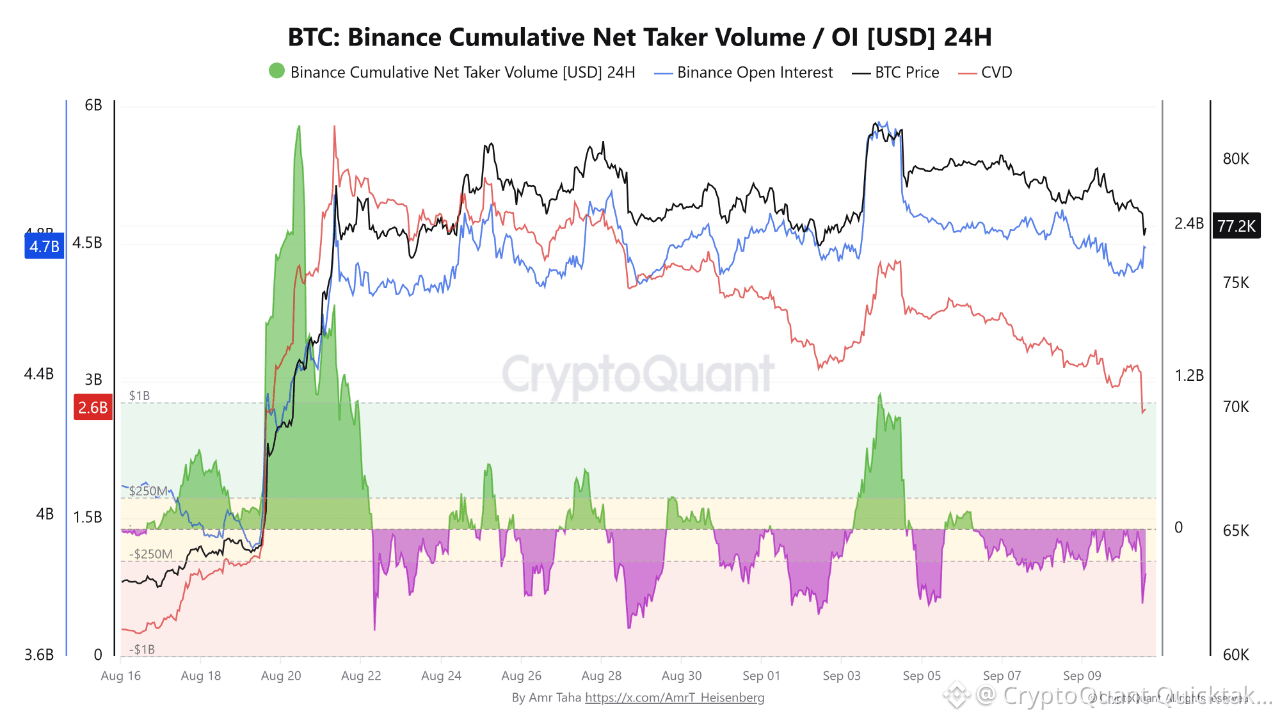
Bitcoin Derivatives Traders Turn Sharply Sell-Side As CVD Drops 54% While OI Falls Just 4%Bitcoin derivatives traders on Binance showed a sharp shift toward aggressive selling, with Net Taker Volume falling to -$440 million following the release of the U.S. August PPI data.
The broader change in trader behavior is even clearer in Cumulative Net Taker Volume.
CVD fell from $5.77 billion on August 21 to $2.67 billion today, a decline of roughly $3.1 billion, or 54%.
Yet Binance Bitcoin Open Interest remained relatively stable over the same period, easing from about $4.9 billion to $4.7 billion, a decline of only around 4%.
This creates a notable divergence: aggressive taker flow among derivatives traders deteriorated sharply while the overall amount of open derivatives positions changed very little.
In percentage terms, the decline in CVD was more than 13 times larger than the drop in Open Interest.
The latest -$440 million Net Taker Volume is also around 17% more negative than the -$376 million reading recorded on September 4, showing that sell-side taker activity among derivatives traders has intensified.
The move coincided with renewed macro uncertainty following the U.S. PPI release.
Derivatives traders on Binance turned noticeably more aggressive on the sell side as markets reevaluated the outlook for inflation and interest rates.
Despite this shift in derivatives trader behavior, Bitcoin has remained near $77,000, while Open Interest has stayed within a relatively narrow range.
This indicates that the increase in aggressive selling has not been accompanied by a comparable reduction in open positions or a similarly sharp decline in price.
For now, the clearest signal is the change in derivatives trader behavior: Bitcoin CVD among Binance traders has fallen more than 54% since August 21, while Open Interest has declined just 4%, pointing to a pronounced bearish shift in aggressive derivatives flow without a broad leverage reset.
Written by Amr Taha
Bitcoin Derivatives Traders Turn Sharply Sell-Side As CVD Drops 54% While OI Falls Just 4%
Bitcoin derivatives traders on Binance showed a sharp shift toward aggressive selling, with Net Taker Volume falling to -$440 million following the release of the U.S. August PPI data.
The broader change in trader behavior is even clearer in Cumulative Net Taker Volume.
CVD fell from $5.77 billion on August 21 to $2.67 billion today, a decline of roughly $3.1 billion, or 54%.
Yet Binance Bitcoin Open Interest remained relatively stable over the same period, easing from about $4.9 billion to $4.7 billion, a decline of only around 4%.
This creates a notable divergence: aggressive taker flow among derivatives traders deteriorated sharply while the overall amount of open derivatives positions changed very little.
In percentage terms, the decline in CVD was more than 13 times larger than the drop in Open Interest.
The latest -$440 million Net Taker Volume is also around 17% more negative than the -$376 million reading recorded on September 4, showing that sell-side taker activity among derivatives traders has intensified.
The move coincided with renewed macro uncertainty following the U.S. PPI release.
Derivatives traders on Binance turned noticeably more aggressive on the sell side as markets reevaluated the outlook for inflation and interest rates.
Despite this shift in derivatives trader behavior, Bitcoin has remained near $77,000, while Open Interest has stayed within a relatively narrow range.
This indicates that the increase in aggressive selling has not been accompanied by a comparable reduction in open positions or a similarly sharp decline in price.
For now, the clearest signal is the change in derivatives trader behavior: Bitcoin CVD among Binance traders has fallen more than 54% since August 21, while Open Interest has declined just 4%, pointing to a pronounced bearish shift in aggressive derivatives flow without a broad leverage reset.
Written by Amr Taha
The broader change in trader behavior is even clearer in Cumulative Net Taker Volume.
CVD fell from $5.77 billion on August 21 to $2.67 billion today, a decline of roughly $3.1 billion, or 54%.
Yet Binance Bitcoin Open Interest remained relatively stable over the same period, easing from about $4.9 billion to $4.7 billion, a decline of only around 4%.
This creates a notable divergence: aggressive taker flow among derivatives traders deteriorated sharply while the overall amount of open derivatives positions changed very little.
In percentage terms, the decline in CVD was more than 13 times larger than the drop in Open Interest.
The latest -$440 million Net Taker Volume is also around 17% more negative than the -$376 million reading recorded on September 4, showing that sell-side taker activity among derivatives traders has intensified.
The move coincided with renewed macro uncertainty following the U.S. PPI release.
Derivatives traders on Binance turned noticeably more aggressive on the sell side as markets reevaluated the outlook for inflation and interest rates.
Despite this shift in derivatives trader behavior, Bitcoin has remained near $77,000, while Open Interest has stayed within a relatively narrow range.
This indicates that the increase in aggressive selling has not been accompanied by a comparable reduction in open positions or a similarly sharp decline in price.
For now, the clearest signal is the change in derivatives trader behavior: Bitcoin CVD among Binance traders has fallen more than 54% since August 21, while Open Interest has declined just 4%, pointing to a pronounced bearish shift in aggressive derivatives flow without a broad leverage reset.
Written by Amr Taha
104
Article
See translation
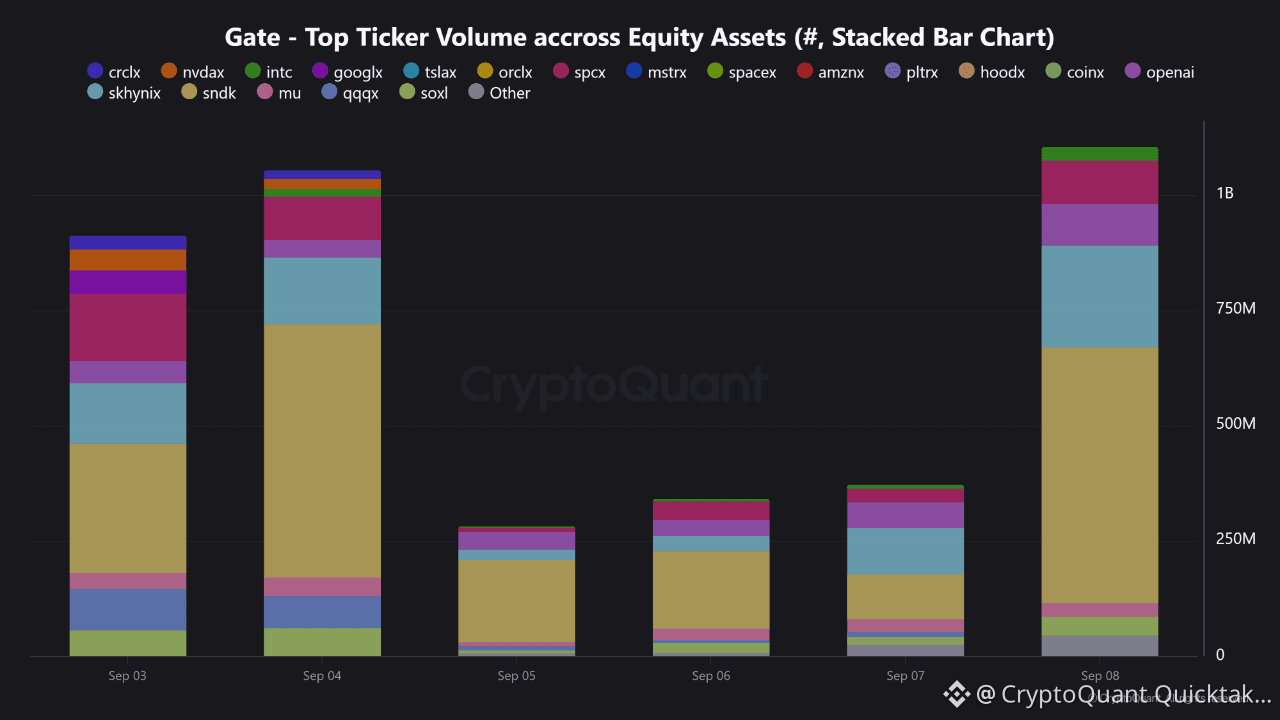
Gate’s Top Equity Tickers Drive Record TradFi VolumeGate’s equity activity is increasingly being driven by a small group of high conviction tickers.
In recent weeks, the platform’s leading TradFi equity names have generated significant trading volume. Since late July, Gate’s top equity tickers have consistently recorded more than $10B in weekly volume. One recent week exceeded $20B, marking a new platform high and a 94% week over week increase.
The standout names include:
SNDK (SanDisk) led with an exceptional single day volume of more than $3.6B.
SPCX (SpaceX) and SK Hynix regularly recorded daily volumes above $500M.
NVDAX (Nvidia) remains one of the most consistently traded U.S. technology equities on the platform.
This concentration is not random. Strong performance in AI, memory, and technology stocks appears to be attracting crypto native capital seeking direct equity exposure without leaving the Gate ecosystem.
The result is a clear concentration of liquidity around a handful of high growth names, with AI, semiconductor, and technology stocks becoming major contributors to Gate’s equity volume.
Gate’s combination of real stock access, tokenized gStocks, and 24/7 trading is helping translate strong equity performance into sustained ticker level liquidity.
The takeaway: Gate’s leading equity books are moving beyond experimentation and becoming an increasingly important driver of its TradFi activity.
Written by theophiluspep
Gate’s Top Equity Tickers Drive Record TradFi Volume
Gate’s equity activity is increasingly being driven by a small group of high conviction tickers.
In recent weeks, the platform’s leading TradFi equity names have generated significant trading volume. Since late July, Gate’s top equity tickers have consistently recorded more than $10B in weekly volume. One recent week exceeded $20B, marking a new platform high and a 94% week over week increase.
The standout names include:
SNDK (SanDisk) led with an exceptional single day volume of more than $3.6B.
SPCX (SpaceX) and SK Hynix regularly recorded daily volumes above $500M.
NVDAX (Nvidia) remains one of the most consistently traded U.S. technology equities on the platform.
This concentration is not random. Strong performance in AI, memory, and technology stocks appears to be attracting crypto native capital seeking direct equity exposure without leaving the Gate ecosystem.
The result is a clear concentration of liquidity around a handful of high growth names, with AI, semiconductor, and technology stocks becoming major contributors to Gate’s equity volume.
Gate’s combination of real stock access, tokenized gStocks, and 24/7 trading is helping translate strong equity performance into sustained ticker level liquidity.
The takeaway: Gate’s leading equity books are moving beyond experimentation and becoming an increasingly important driver of its TradFi activity.
Written by theophiluspep
In recent weeks, the platform’s leading TradFi equity names have generated significant trading volume. Since late July, Gate’s top equity tickers have consistently recorded more than $10B in weekly volume. One recent week exceeded $20B, marking a new platform high and a 94% week over week increase.
The standout names include:
SNDK (SanDisk) led with an exceptional single day volume of more than $3.6B.
SPCX (SpaceX) and SK Hynix regularly recorded daily volumes above $500M.
NVDAX (Nvidia) remains one of the most consistently traded U.S. technology equities on the platform.
This concentration is not random. Strong performance in AI, memory, and technology stocks appears to be attracting crypto native capital seeking direct equity exposure without leaving the Gate ecosystem.
The result is a clear concentration of liquidity around a handful of high growth names, with AI, semiconductor, and technology stocks becoming major contributors to Gate’s equity volume.
Gate’s combination of real stock access, tokenized gStocks, and 24/7 trading is helping translate strong equity performance into sustained ticker level liquidity.
The takeaway: Gate’s leading equity books are moving beyond experimentation and becoming an increasingly important driver of its TradFi activity.
Written by theophiluspep
134
Article
See translation
Bitcoin Reserves on Binance Have Reached a Dangerous LevelBitcoin is showing a strong recovery, but recent data suggests that profit taking may already be starting.
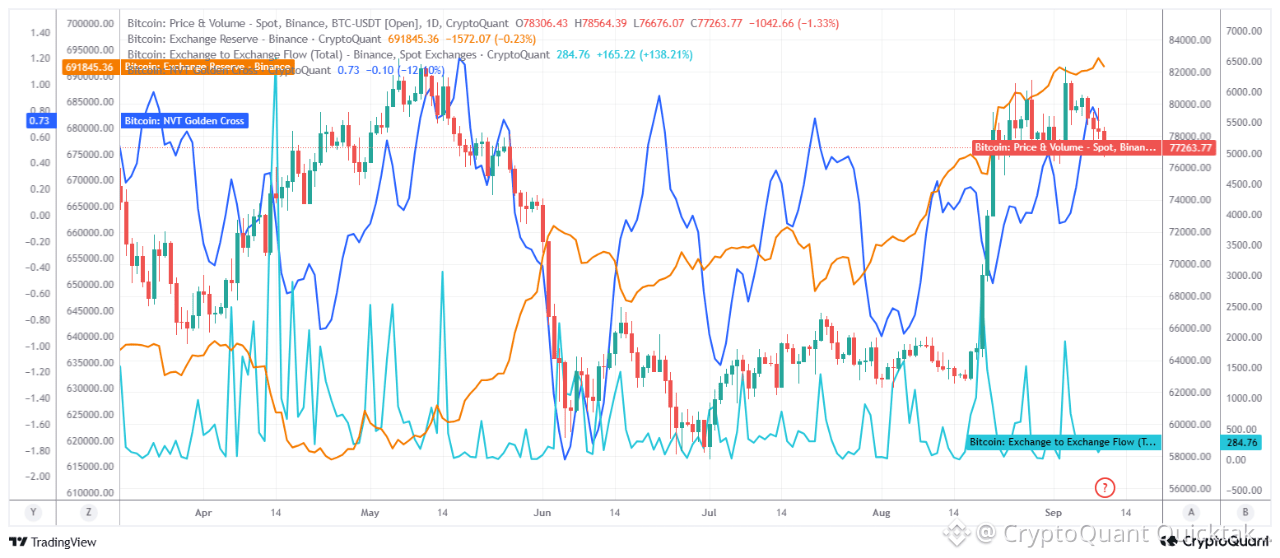
Binance’s total BTC reserve stands at 691,845 BTC, which is a medium term warning signal. The reserve has generally been rising since May, creating a cautious picture from the supply side. While BTC rallied in late August and early September, Binance’s reserves remained elevated. This divergence suggests that even if the rally continues, the risk of profit taking or a sharp pullback may be increasing.
Binance cross exchange transfer volume has also jumped to 284.76 BTC, up 138% daily. If transfer flows continue to increase while price weakens around a critical area, market volatility could rise. Previous major turquoise spikes on the chart have, at times, coincided with sharp price movements.
From a valuation perspective, however, Bitcoin is not showing an overheating signal yet.
NVT Golden Cross: 0.73 Historically, deeply negative NVT Golden Cross readings have appeared near market bottoms, while strong positive spikes have indicated greater overheating. At 0.73, the indicator is neither extremely low nor excessively high. It remains in a neutral to positive zone, with no clear overvaluation warning.
This does not mean BTC must rise from $77K. It simply suggests that the current pullback is not yet confirmed as a major valuation driven top by NVT.
The broader trend from the June lows remains upward. NVT is not overheated, and Binance’s reserve has seen a small decline over the past day.
However, Binance’s monthly reserve trend has risen significantly and remains elevated. BTC was rejected from the $82K–$83K area, while cross-exchange flows are picking up again.
For now, Bitcoin appears to be at a decision point around $77K. If short term selling pressure strengthens, the $72K–$74K zone could become the next target.
Written by PelinayPA
Bitcoin Reserves on Binance Have Reached a Dangerous Level
Bitcoin is showing a strong recovery, but recent data suggests that profit taking may already be starting.
Binance’s total BTC reserve stands at 691,845 BTC, which is a medium term warning signal. The reserve has generally been rising since May, creating a cautious picture from the supply side. While BTC rallied in late August and early September, Binance’s reserves remained elevated. This divergence suggests that even if the rally continues, the risk of profit taking or a sharp pullback may be increasing.
Binance cross exchange transfer volume has also jumped to 284.76 BTC, up 138% daily. If transfer flows continue to increase while price weakens around a critical area, market volatility could rise. Previous major turquoise spikes on the chart have, at times, coincided with sharp price movements.
From a valuation perspective, however, Bitcoin is not showing an overheating signal yet.
NVT Golden Cross: 0.73 Historically, deeply negative NVT Golden Cross readings have appeared near market bottoms, while strong positive spikes have indicated greater overheating. At 0.73, the indicator is neither extremely low nor excessively high. It remains in a neutral to positive zone, with no clear overvaluation warning.
This does not mean BTC must rise from $77K. It simply suggests that the current pullback is not yet confirmed as a major valuation driven top by NVT.
The broader trend from the June lows remains upward. NVT is not overheated, and Binance’s reserve has seen a small decline over the past day.
However, Binance’s monthly reserve trend has risen significantly and remains elevated. BTC was rejected from the $82K–$83K area, while cross-exchange flows are picking up again.
For now, Bitcoin appears to be at a decision point around $77K. If short term selling pressure strengthens, the $72K–$74K zone could become the next target.
Written by PelinayPA
Binance’s total BTC reserve stands at 691,845 BTC, which is a medium term warning signal. The reserve has generally been rising since May, creating a cautious picture from the supply side. While BTC rallied in late August and early September, Binance’s reserves remained elevated. This divergence suggests that even if the rally continues, the risk of profit taking or a sharp pullback may be increasing.
Binance cross exchange transfer volume has also jumped to 284.76 BTC, up 138% daily. If transfer flows continue to increase while price weakens around a critical area, market volatility could rise. Previous major turquoise spikes on the chart have, at times, coincided with sharp price movements.
From a valuation perspective, however, Bitcoin is not showing an overheating signal yet.
NVT Golden Cross: 0.73 Historically, deeply negative NVT Golden Cross readings have appeared near market bottoms, while strong positive spikes have indicated greater overheating. At 0.73, the indicator is neither extremely low nor excessively high. It remains in a neutral to positive zone, with no clear overvaluation warning.
This does not mean BTC must rise from $77K. It simply suggests that the current pullback is not yet confirmed as a major valuation driven top by NVT.
The broader trend from the June lows remains upward. NVT is not overheated, and Binance’s reserve has seen a small decline over the past day.
However, Binance’s monthly reserve trend has risen significantly and remains elevated. BTC was rejected from the $82K–$83K area, while cross-exchange flows are picking up again.
For now, Bitcoin appears to be at a decision point around $77K. If short term selling pressure strengthens, the $72K–$74K zone could become the next target.
Written by PelinayPA
125
Article
See translation
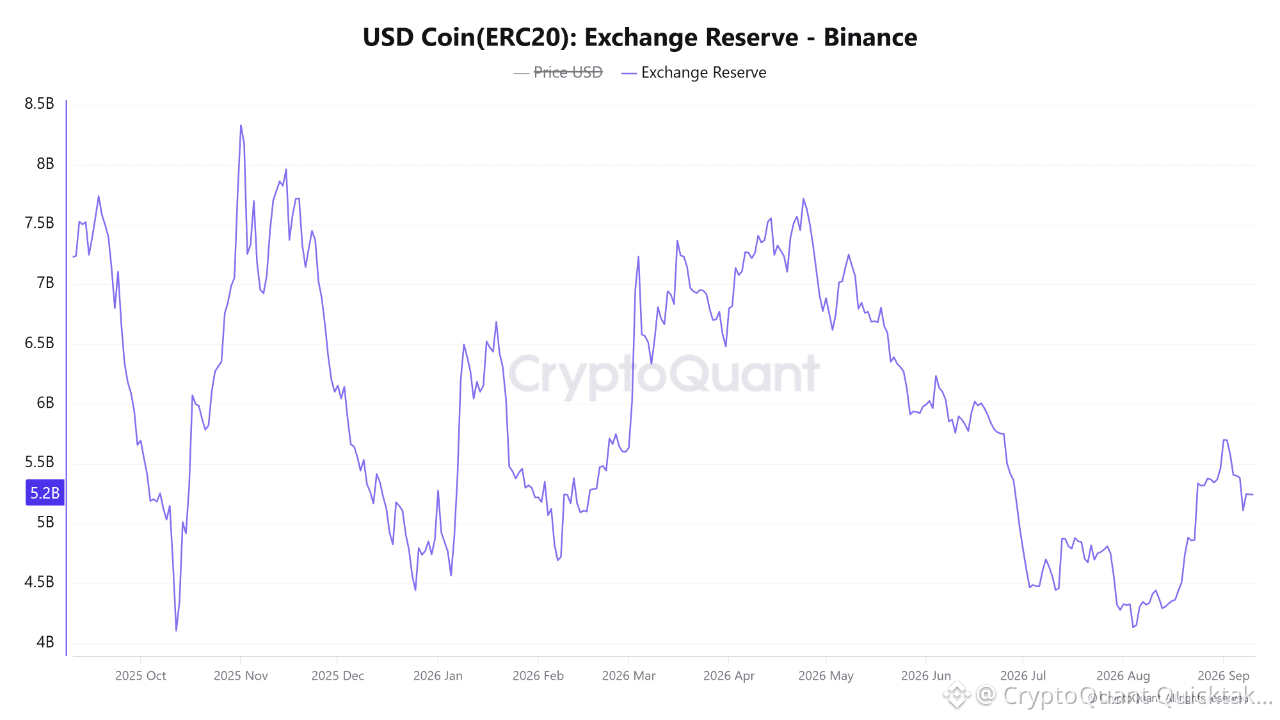
USDC Reserves on Binance Just Bounced Back.USDC mostly represents institutional money and size traders. When this reserve sat at the lows throughout July and August, the market barely had any real support. Seeing USDC flow back onto the exchange in less than a month shows a noticeable amount of cash is sitting ready in accounts again.
Capital isn't just sitting in cold wallets anymore—it's moving onto CEXs. That means people are willing to take on custody risk to wait for an opportunity.
It builds a thick buy-side liquidity cushion right on Binance. Whether this dry powder actually gets deployed to push prices up right away is hard to say. But at least the market isn't completely running on fumes like it was a few weeks ago.
Having cash parked on the exchange is where the story starts.
Written by Rei Researcher
USDC Reserves on Binance Just Bounced Back.
USDC mostly represents institutional money and size traders. When this reserve sat at the lows throughout July and August, the market barely had any real support. Seeing USDC flow back onto the exchange in less than a month shows a noticeable amount of cash is sitting ready in accounts again.
Capital isn't just sitting in cold wallets anymore—it's moving onto CEXs. That means people are willing to take on custody risk to wait for an opportunity.
It builds a thick buy-side liquidity cushion right on Binance. Whether this dry powder actually gets deployed to push prices up right away is hard to say. But at least the market isn't completely running on fumes like it was a few weeks ago.
Having cash parked on the exchange is where the story starts.
Written by Rei Researcher
Capital isn't just sitting in cold wallets anymore—it's moving onto CEXs. That means people are willing to take on custody risk to wait for an opportunity.
It builds a thick buy-side liquidity cushion right on Binance. Whether this dry powder actually gets deployed to push prices up right away is hard to say. But at least the market isn't completely running on fumes like it was a few weeks ago.
Having cash parked on the exchange is where the story starts.
Written by Rei Researcher
51
Article
See translation
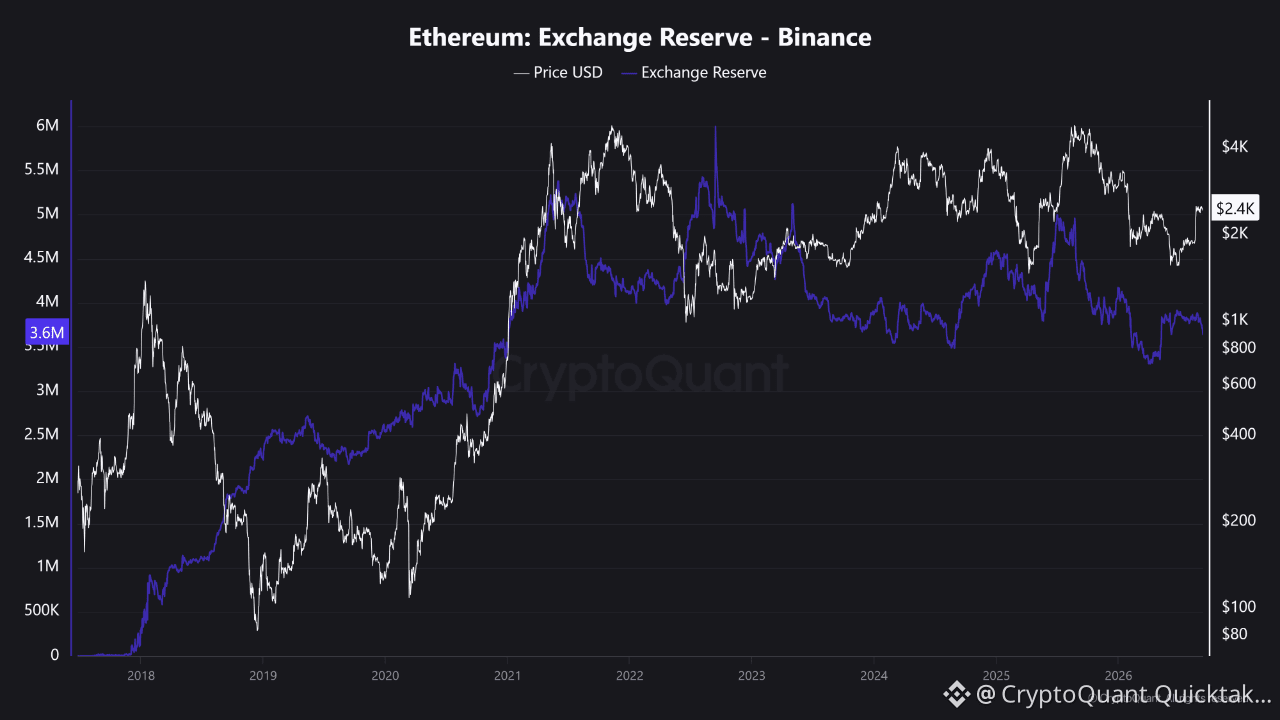
Binance ETH Reserves Drop to 3 Month Low As Staking Hits Record 35.9%Ethereum is consolidating around the $2,420 to $2,470 range after recent volatility, while a notable supply signal is emerging on Binance.
CryptoQuant data shows that Binance ETH reserves have fallen to approximately 3.74M ETH, the lowest level in three months. This decline is part of a broader reduction in exchange held ETH, with total reserves across major exchanges recently reaching a multi year low of approximately 14.88M ETH.
The decline on Binance matters because it reduces the amount of ETH immediately available for selling on one of the world's largest exchanges by trading volume. When ETH moves from exchanges into self custody or staking, the amount of liquid supply available for short term selling generally decreases.
This reserve decline coincides with a record level of Ethereum staking. Approximately 43.1M ETH, or 35.91% of circulating supply, is now staked, marking an all time high. More ETH is therefore being locked into the network rather than remaining readily available for sale on exchanges.
On the derivatives side, Binance continues to hold a significant share of ETH open interest at around $5.6B, while long positioning remains dominant. The combination of falling exchange reserves, record staking, and elevated but not extreme leverage points to a market where liquid ETH supply is gradually tightening as price consolidates.
If Binance ETH reserves continue to decline while staking remains elevated, the structural supply picture for Ethereum could improve further. The key metrics to watch are continued negative exchange netflows and whether spot demand begins absorbing the remaining available liquidity.
Written by theophiluspep
Binance ETH Reserves Drop to 3 Month Low As Staking Hits Record 35.9%
Ethereum is consolidating around the $2,420 to $2,470 range after recent volatility, while a notable supply signal is emerging on Binance.
CryptoQuant data shows that Binance ETH reserves have fallen to approximately 3.74M ETH, the lowest level in three months. This decline is part of a broader reduction in exchange held ETH, with total reserves across major exchanges recently reaching a multi year low of approximately 14.88M ETH.
The decline on Binance matters because it reduces the amount of ETH immediately available for selling on one of the world's largest exchanges by trading volume. When ETH moves from exchanges into self custody or staking, the amount of liquid supply available for short term selling generally decreases.
This reserve decline coincides with a record level of Ethereum staking. Approximately 43.1M ETH, or 35.91% of circulating supply, is now staked, marking an all time high. More ETH is therefore being locked into the network rather than remaining readily available for sale on exchanges.
On the derivatives side, Binance continues to hold a significant share of ETH open interest at around $5.6B, while long positioning remains dominant. The combination of falling exchange reserves, record staking, and elevated but not extreme leverage points to a market where liquid ETH supply is gradually tightening as price consolidates.
If Binance ETH reserves continue to decline while staking remains elevated, the structural supply picture for Ethereum could improve further. The key metrics to watch are continued negative exchange netflows and whether spot demand begins absorbing the remaining available liquidity.
Written by theophiluspep
CryptoQuant data shows that Binance ETH reserves have fallen to approximately 3.74M ETH, the lowest level in three months. This decline is part of a broader reduction in exchange held ETH, with total reserves across major exchanges recently reaching a multi year low of approximately 14.88M ETH.
The decline on Binance matters because it reduces the amount of ETH immediately available for selling on one of the world's largest exchanges by trading volume. When ETH moves from exchanges into self custody or staking, the amount of liquid supply available for short term selling generally decreases.
This reserve decline coincides with a record level of Ethereum staking. Approximately 43.1M ETH, or 35.91% of circulating supply, is now staked, marking an all time high. More ETH is therefore being locked into the network rather than remaining readily available for sale on exchanges.
On the derivatives side, Binance continues to hold a significant share of ETH open interest at around $5.6B, while long positioning remains dominant. The combination of falling exchange reserves, record staking, and elevated but not extreme leverage points to a market where liquid ETH supply is gradually tightening as price consolidates.
If Binance ETH reserves continue to decline while staking remains elevated, the structural supply picture for Ethereum could improve further. The key metrics to watch are continued negative exchange netflows and whether spot demand begins absorbing the remaining available liquidity.
Written by theophiluspep
140
Article
See translation
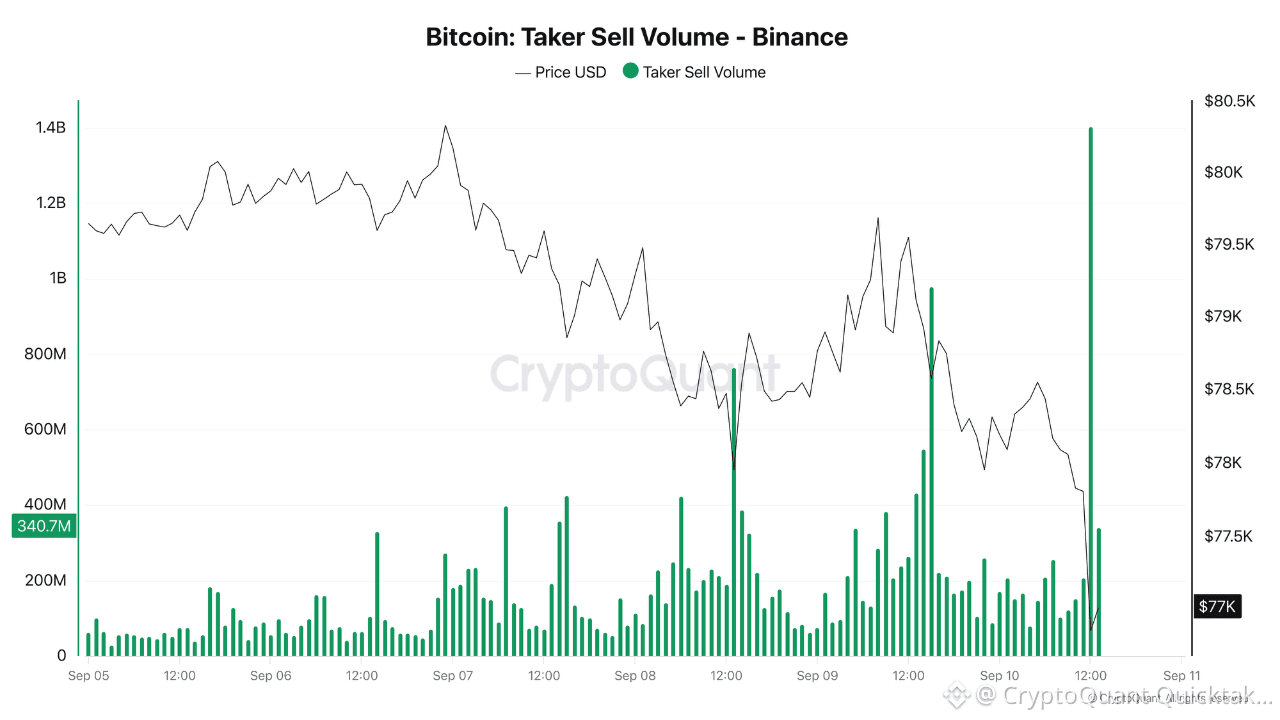
ECB Hike + Hot US PPI Send Bitcoin Futures Into Sell-off ModeThis afternoon, markets faced two rather negative pieces of news.
The first is the 0.25bps rate hike announced by the ECB. This is the second rate hike of the year, driven by concerns over rising inflation.
We also just got US Producer Price Index (PPI) figures, which came in stronger than expected. Core PPI, which excludes food and energy, rose to 4.6% YoY versus 4.5% expected, and headline PPI came in at 5.4% versus 5.1% expected.
These figures add to fears of intensifying inflation, something the markets immediately priced in.
This can be seen in the Bitcoin futures market, where Taker sell volume surged to over $1.4 billion on Binance in that hour alone.
This sudden spike in selling pressure on futures reflects real investor concern, as they prefer to hedge by betting on a Bitcoin downside. The move was also accompanied by more than $60 million liquidated on Bitcoin in under an hour.
Written by Darkfost
ECB Hike + Hot US PPI Send Bitcoin Futures Into Sell-off Mode
This afternoon, markets faced two rather negative pieces of news.
The first is the 0.25bps rate hike announced by the ECB. This is the second rate hike of the year, driven by concerns over rising inflation.
We also just got US Producer Price Index (PPI) figures, which came in stronger than expected. Core PPI, which excludes food and energy, rose to 4.6% YoY versus 4.5% expected, and headline PPI came in at 5.4% versus 5.1% expected.
These figures add to fears of intensifying inflation, something the markets immediately priced in.
This can be seen in the Bitcoin futures market, where Taker sell volume surged to over $1.4 billion on Binance in that hour alone.
This sudden spike in selling pressure on futures reflects real investor concern, as they prefer to hedge by betting on a Bitcoin downside. The move was also accompanied by more than $60 million liquidated on Bitcoin in under an hour.
Written by Darkfost
The first is the 0.25bps rate hike announced by the ECB. This is the second rate hike of the year, driven by concerns over rising inflation.
We also just got US Producer Price Index (PPI) figures, which came in stronger than expected. Core PPI, which excludes food and energy, rose to 4.6% YoY versus 4.5% expected, and headline PPI came in at 5.4% versus 5.1% expected.
These figures add to fears of intensifying inflation, something the markets immediately priced in.
This can be seen in the Bitcoin futures market, where Taker sell volume surged to over $1.4 billion on Binance in that hour alone.
This sudden spike in selling pressure on futures reflects real investor concern, as they prefer to hedge by betting on a Bitcoin downside. The move was also accompanied by more than $60 million liquidated on Bitcoin in under an hour.
Written by Darkfost
95
Article
See translation
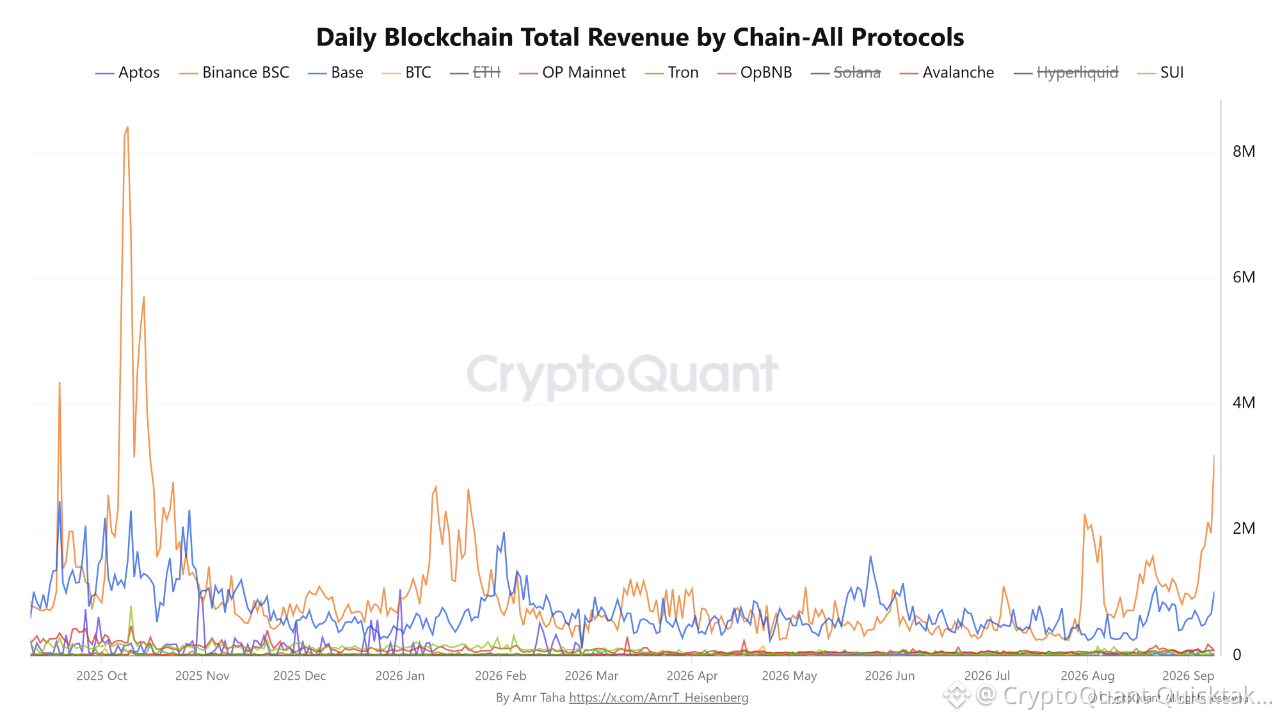
BNB Chain Protocol Revenue Jumps 42% to Highest Level Since October 2025BNB Smart Chain’s daily total revenue climbed to $3.2M on September 9, its highest level since October 2025, marking a sharp increase in fee-generating activity across All Protocols on the network.
The latest reading is roughly 42% above the $2.25M recorded on July 31, when Bitcoin traded near $62.4K.
Over the same period, BTC rose about 26% to $78.4K, meaning BSC protocols revenue expanded considerably faster than Bitcoin’s price.
The current level also stands around 19% above the $2.68 million recorded on January 12, even though Bitcoin is now roughly 14% below its January 12 price of $91.2K.
The divergence suggests that the latest increase in BSC protocol revenue is not simply tracking Bitcoin’s price direction.
The expansion is also visible on Base.
Daily protocol revenue reached approximately $1.02M on September 9, up from about $347,000 on July 31 — an increase of roughly 194%, or nearly 3x, in just over five weeks.
Higher protocols revenue generally reflects stronger fee-generating activity across decentralized exchanges, token launches, derivatives, lending platforms and other on-chain applications.
Revenue can increase alongside greater activity from both retail traders and larger investors, but the market implications can differ depending on which group is driving that activity.
Periods of stronger whale participation can be more consistent with constructive subsequent price behavior, particularly when larger holders absorb supply during weaker market phases.
In contrast, sharp retail-led activity near market tops can coincide with distribution from larger holders into rising retail demand, while near market bottoms the opposite dynamic may emerge as larger investors accumulate supply sold by weaker retail participants. Revenue alone, however, does not identify which investor cohort is responsible for the activity.
For now, the clearest signal is the scale of the increase itself: BSC revenue has reached its strongest level in nearly a year.
Written by Amr Taha
BNB Chain Protocol Revenue Jumps 42% to Highest Level Since October 2025
BNB Smart Chain’s daily total revenue climbed to $3.2M on September 9, its highest level since October 2025, marking a sharp increase in fee-generating activity across All Protocols on the network.
The latest reading is roughly 42% above the $2.25M recorded on July 31, when Bitcoin traded near $62.4K.
Over the same period, BTC rose about 26% to $78.4K, meaning BSC protocols revenue expanded considerably faster than Bitcoin’s price.
The current level also stands around 19% above the $2.68 million recorded on January 12, even though Bitcoin is now roughly 14% below its January 12 price of $91.2K.
The divergence suggests that the latest increase in BSC protocol revenue is not simply tracking Bitcoin’s price direction.
The expansion is also visible on Base.
Daily protocol revenue reached approximately $1.02M on September 9, up from about $347,000 on July 31 — an increase of roughly 194%, or nearly 3x, in just over five weeks.
Higher protocols revenue generally reflects stronger fee-generating activity across decentralized exchanges, token launches, derivatives, lending platforms and other on-chain applications.
Revenue can increase alongside greater activity from both retail traders and larger investors, but the market implications can differ depending on which group is driving that activity.
Periods of stronger whale participation can be more consistent with constructive subsequent price behavior, particularly when larger holders absorb supply during weaker market phases.
In contrast, sharp retail-led activity near market tops can coincide with distribution from larger holders into rising retail demand, while near market bottoms the opposite dynamic may emerge as larger investors accumulate supply sold by weaker retail participants. Revenue alone, however, does not identify which investor cohort is responsible for the activity.
For now, the clearest signal is the scale of the increase itself: BSC revenue has reached its strongest level in nearly a year.
Written by Amr Taha
The latest reading is roughly 42% above the $2.25M recorded on July 31, when Bitcoin traded near $62.4K.
Over the same period, BTC rose about 26% to $78.4K, meaning BSC protocols revenue expanded considerably faster than Bitcoin’s price.
The current level also stands around 19% above the $2.68 million recorded on January 12, even though Bitcoin is now roughly 14% below its January 12 price of $91.2K.
The divergence suggests that the latest increase in BSC protocol revenue is not simply tracking Bitcoin’s price direction.
The expansion is also visible on Base.
Daily protocol revenue reached approximately $1.02M on September 9, up from about $347,000 on July 31 — an increase of roughly 194%, or nearly 3x, in just over five weeks.
Higher protocols revenue generally reflects stronger fee-generating activity across decentralized exchanges, token launches, derivatives, lending platforms and other on-chain applications.
Revenue can increase alongside greater activity from both retail traders and larger investors, but the market implications can differ depending on which group is driving that activity.
Periods of stronger whale participation can be more consistent with constructive subsequent price behavior, particularly when larger holders absorb supply during weaker market phases.
In contrast, sharp retail-led activity near market tops can coincide with distribution from larger holders into rising retail demand, while near market bottoms the opposite dynamic may emerge as larger investors accumulate supply sold by weaker retail participants. Revenue alone, however, does not identify which investor cohort is responsible for the activity.
For now, the clearest signal is the scale of the increase itself: BSC revenue has reached its strongest level in nearly a year.
Written by Amr Taha
134
Article
See translation
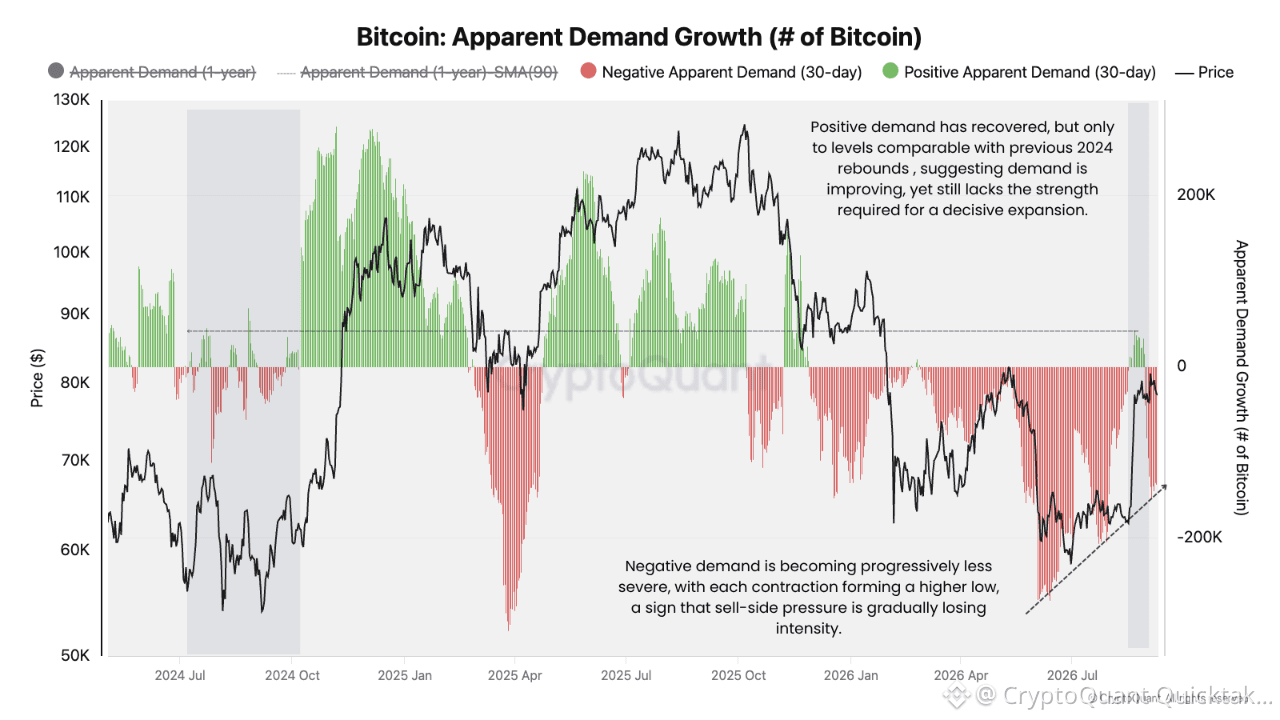
Bitcoin Demand Is Stabilizing. Now It Needs ConvictionBitcoin’s apparent demand structure is beginning to improve, but the market is not yet showing the type of demand expansion normally associated with a sustained bullish regime.
Apparent Demand is designed to capture whether new Bitcoin supply is being absorbed by the market. In practical terms, positive readings point to net demand expansion, while negative readings indicate that available supply is exceeding the amount being absorbed.
The most constructive development is occurring on the negative side of the metric.
Since the deep contraction registered around May–June, successive negative-demand troughs have become progressively shallower. The higher-low structure suggests that the imbalance beneath price is improving: each new contraction is requiring less demand destruction than the previous one.
That is an important characteristic of a market moving away from a bearish regime. But there is another side to the signal.
The recent return of positive apparent demand has so far reached only levels comparable with relatively modest rebounds seen during 2024. It remains far from the stronger and more persistent demand expansions visible during the major advances of late 2024 and 2025.
Bitcoin may be transitioning from demand contraction into demand stabilization, rather than already entering demand expansion. Price can recover during that transition because the marginal imbalance between supply and demand is improving.
But for a durable upside leg, the market likely needs a sustained positive demand, progressively higher demand peaks, and enough liquidity and investor conviction to absorb supply consistently rather than temporarily.
Written by MorenoDV_
Bitcoin Demand Is Stabilizing. Now It Needs Conviction
Bitcoin’s apparent demand structure is beginning to improve, but the market is not yet showing the type of demand expansion normally associated with a sustained bullish regime.
Apparent Demand is designed to capture whether new Bitcoin supply is being absorbed by the market. In practical terms, positive readings point to net demand expansion, while negative readings indicate that available supply is exceeding the amount being absorbed.
The most constructive development is occurring on the negative side of the metric.
Since the deep contraction registered around May–June, successive negative-demand troughs have become progressively shallower. The higher-low structure suggests that the imbalance beneath price is improving: each new contraction is requiring less demand destruction than the previous one.
That is an important characteristic of a market moving away from a bearish regime. But there is another side to the signal.
The recent return of positive apparent demand has so far reached only levels comparable with relatively modest rebounds seen during 2024. It remains far from the stronger and more persistent demand expansions visible during the major advances of late 2024 and 2025.
Bitcoin may be transitioning from demand contraction into demand stabilization, rather than already entering demand expansion. Price can recover during that transition because the marginal imbalance between supply and demand is improving.
But for a durable upside leg, the market likely needs a sustained positive demand, progressively higher demand peaks, and enough liquidity and investor conviction to absorb supply consistently rather than temporarily.
Written by MorenoDV_
Apparent Demand is designed to capture whether new Bitcoin supply is being absorbed by the market. In practical terms, positive readings point to net demand expansion, while negative readings indicate that available supply is exceeding the amount being absorbed.
The most constructive development is occurring on the negative side of the metric.
Since the deep contraction registered around May–June, successive negative-demand troughs have become progressively shallower. The higher-low structure suggests that the imbalance beneath price is improving: each new contraction is requiring less demand destruction than the previous one.
That is an important characteristic of a market moving away from a bearish regime. But there is another side to the signal.
The recent return of positive apparent demand has so far reached only levels comparable with relatively modest rebounds seen during 2024. It remains far from the stronger and more persistent demand expansions visible during the major advances of late 2024 and 2025.
Bitcoin may be transitioning from demand contraction into demand stabilization, rather than already entering demand expansion. Price can recover during that transition because the marginal imbalance between supply and demand is improving.
But for a durable upside leg, the market likely needs a sustained positive demand, progressively higher demand peaks, and enough liquidity and investor conviction to absorb supply consistently rather than temporarily.
Written by MorenoDV_
103
Article
See translation
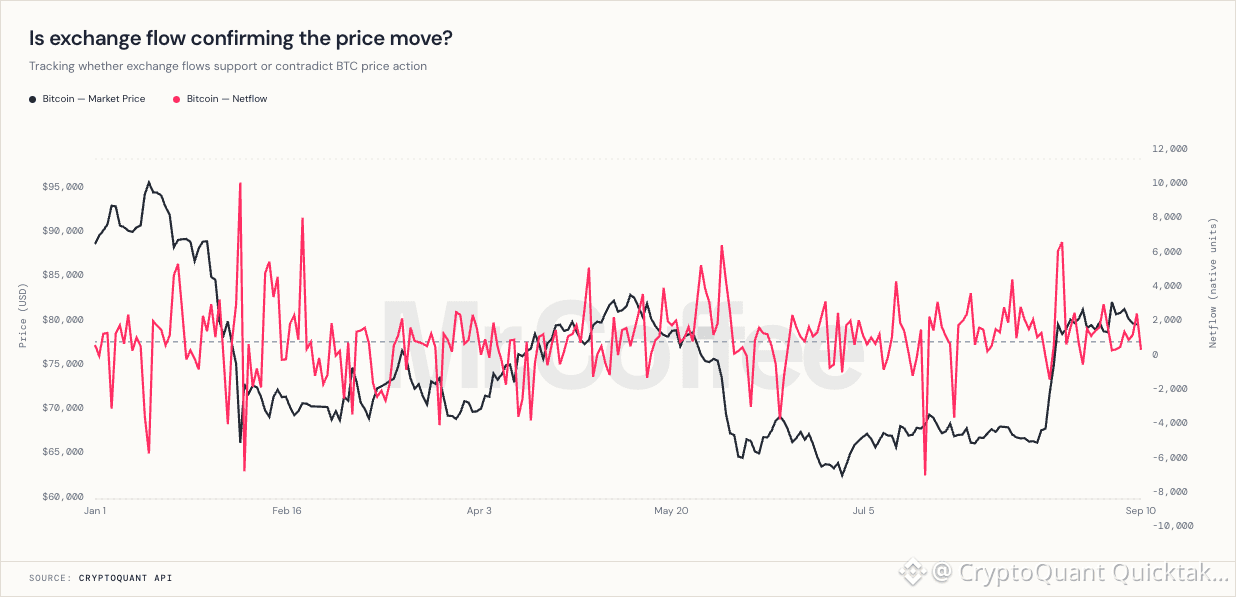
Is Exchange Flow Confirming the Price Move?BTC is back above $80K, but something feels a little off
Exchange netflow just printed another pretty big spike, and we saw similar spikes during the May to July selloff
Obviously, this doesn't mean BTC is about to dump, but seeing these big inflows while price keeps pushing higher is something I don't want to ignore
Could be sellers taking advantage of the strength, or maybe the market just absorbs all this flow and keeps pushing
Curious to see which one plays out
Written by nocoffeenobrain
Is Exchange Flow Confirming the Price Move?
BTC is back above $80K, but something feels a little off
Exchange netflow just printed another pretty big spike, and we saw similar spikes during the May to July selloff
Obviously, this doesn't mean BTC is about to dump, but seeing these big inflows while price keeps pushing higher is something I don't want to ignore
Could be sellers taking advantage of the strength, or maybe the market just absorbs all this flow and keeps pushing
Curious to see which one plays out
Written by nocoffeenobrain
Exchange netflow just printed another pretty big spike, and we saw similar spikes during the May to July selloff
Obviously, this doesn't mean BTC is about to dump, but seeing these big inflows while price keeps pushing higher is something I don't want to ignore
Could be sellers taking advantage of the strength, or maybe the market just absorbs all this flow and keeps pushing
Curious to see which one plays out
Written by nocoffeenobrain
1
1
226
Article
See translation
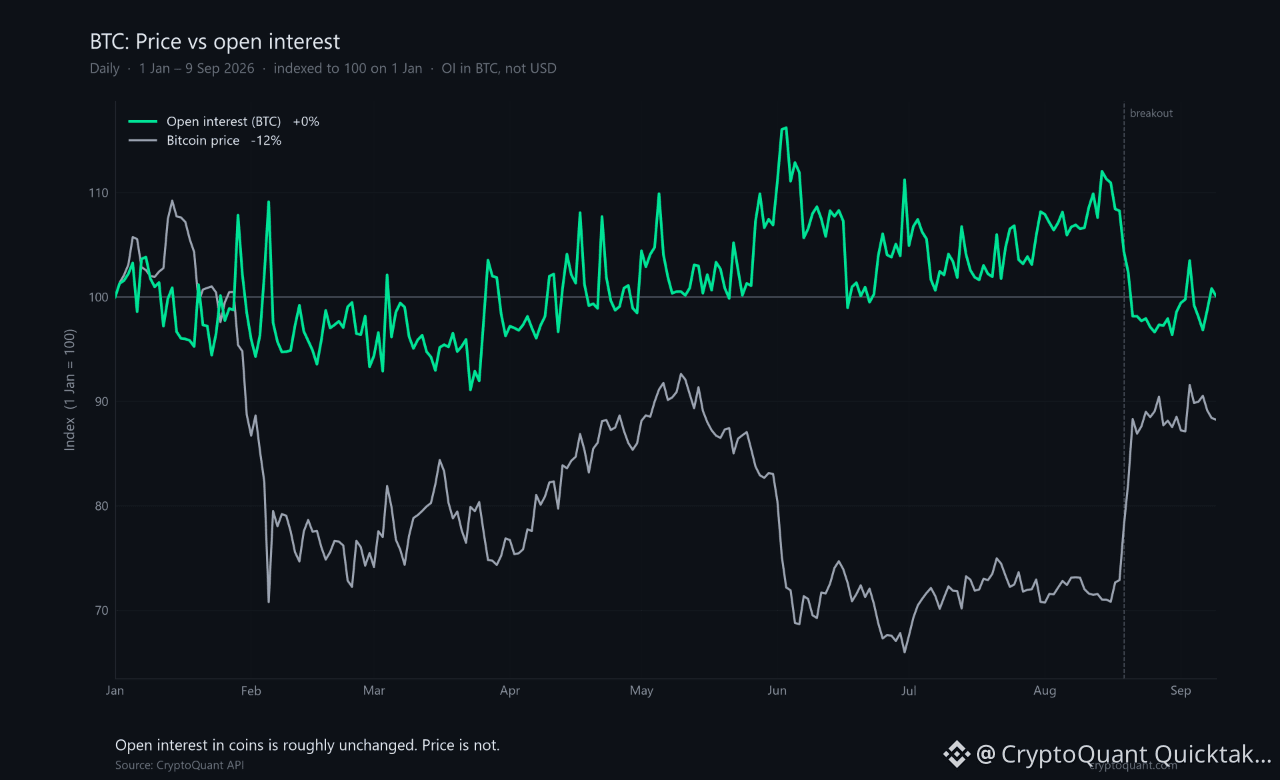
Since January, Bitcoin Is Down About 12%. Open Interest in Coins Is Not.From 1 January to 9 September, indexed to 100: price finished around 88, open interest in BTC around 100. Same amount of bitcoin sitting in perps. Very different price. The June low took price near $58.5k. The August breakout tagged $80k twice. Neither move shows up as a lasting shift in coin-denominated OI.
USD open interest looks glued to price. That is mostly the unit. When notional is measured in dollars, OI rises when price rises even if nobody opened a larger coin position. Divide by price and the bet size in BTC barely trended. It chopped around the same level. It did not explode with the August breakout, and it did not collapse with the June low.
That does not mean leverage cannot matter next week. It means 2026 so far does not look like a year driven by a bigger pile of BTC in futures. Spot supply did more of the work than a growing perp book.
Written by 우민규 Woominkyu
Since January, Bitcoin Is Down About 12%. Open Interest in Coins Is Not.
From 1 January to 9 September, indexed to 100: price finished around 88, open interest in BTC around 100. Same amount of bitcoin sitting in perps. Very different price. The June low took price near $58.5k. The August breakout tagged $80k twice. Neither move shows up as a lasting shift in coin-denominated OI.
USD open interest looks glued to price. That is mostly the unit. When notional is measured in dollars, OI rises when price rises even if nobody opened a larger coin position. Divide by price and the bet size in BTC barely trended. It chopped around the same level. It did not explode with the August breakout, and it did not collapse with the June low.
That does not mean leverage cannot matter next week. It means 2026 so far does not look like a year driven by a bigger pile of BTC in futures. Spot supply did more of the work than a growing perp book.
Written by 우민규 Woominkyu
USD open interest looks glued to price. That is mostly the unit. When notional is measured in dollars, OI rises when price rises even if nobody opened a larger coin position. Divide by price and the bet size in BTC barely trended. It chopped around the same level. It did not explode with the August breakout, and it did not collapse with the June low.
That does not mean leverage cannot matter next week. It means 2026 so far does not look like a year driven by a bigger pile of BTC in futures. Spot supply did more of the work than a growing perp book.
Written by 우민규 Woominkyu
122
Article
See translation
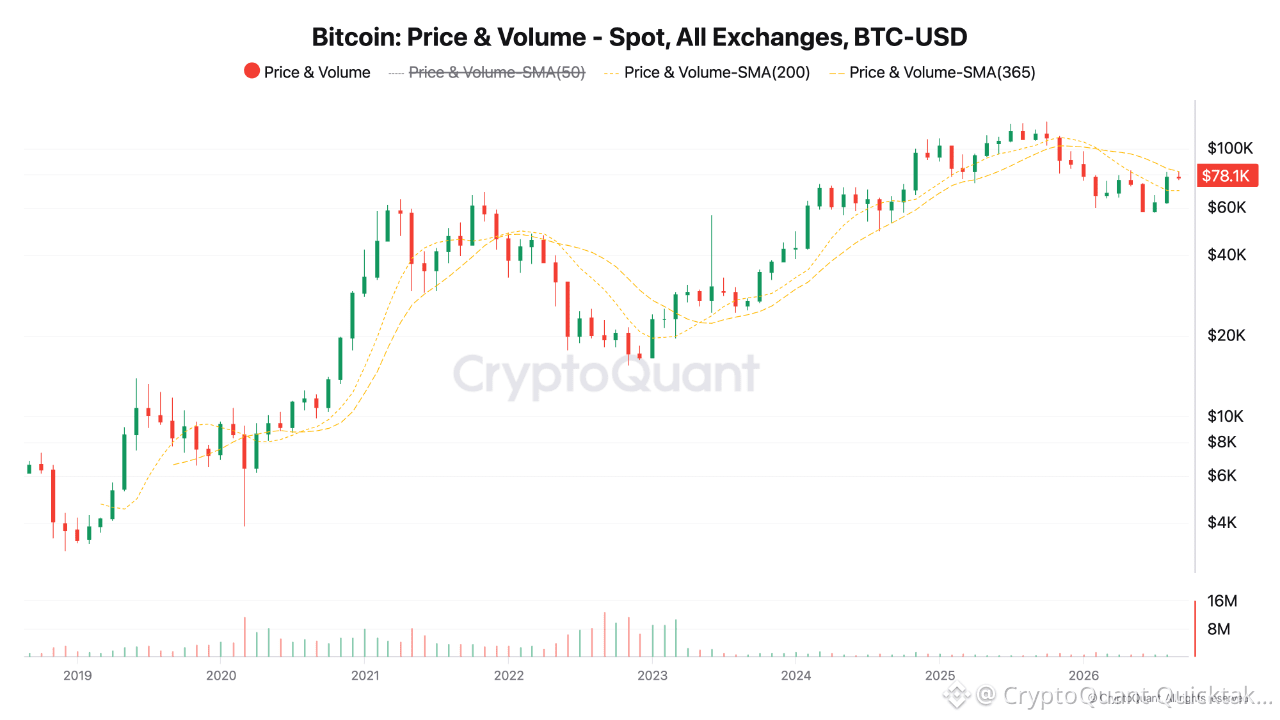
Real Recovery or Unfinished Business?Bitcoin has reclaimed both its 200-day SMA and 200-week MA after briefly breaking below the latter in early June and consolidating near it for nearly two months. The breakout came on August 19, but resistance at the 365-day SMA (~$82K) has already rejected one test: price spiked to $82,293 on September 3 before pulling back toward $79,000.
On-chain, price remains above both the Short-Term and Long-Term Holder Realized Price. STH-SOPR sits near 1.00 — breakeven. LTH-SOPR is more telling: it spent most of 2026 below 1, meaning long-term holders were realizing losses, not profits, for much of the year. Only the past two weeks have shown readings above 1 (1.20 on Sept 8), still volatile — it dropped to 0.89 the next day. NUPL sits at 0.32, in the Optimism zone: sentiment has turned positive but is far from euphoric.
The August 19-21 breakout carries a mechanical signature: roughly 17K BTC in short positions were liquidated over those three days, while aggregate exchange open interest fell rather than rose, pointing to forced short covering rather than fresh leveraged demand.
The squeeze did pull in real spot follow-through, but Spot Taker CVD (90-day) shows the spot momentum has not yet returned since May-June this year.
Bottom line: Bitcoin is attempting to leave the bottom, not confirming it. Reclaiming both 200-period MAs and holding above Realized Price levels are constructive. But until Spot Taker CVD 90-Day turns positive again and the 365-day SMA is reclaimed on a close, this remains an unconfirmed recovery attempt IMO.
Written by Crypto Mommy
Real Recovery or Unfinished Business?
Bitcoin has reclaimed both its 200-day SMA and 200-week MA after briefly breaking below the latter in early June and consolidating near it for nearly two months. The breakout came on August 19, but resistance at the 365-day SMA (~$82K) has already rejected one test: price spiked to $82,293 on September 3 before pulling back toward $79,000.
On-chain, price remains above both the Short-Term and Long-Term Holder Realized Price. STH-SOPR sits near 1.00 — breakeven. LTH-SOPR is more telling: it spent most of 2026 below 1, meaning long-term holders were realizing losses, not profits, for much of the year. Only the past two weeks have shown readings above 1 (1.20 on Sept 8), still volatile — it dropped to 0.89 the next day. NUPL sits at 0.32, in the Optimism zone: sentiment has turned positive but is far from euphoric.
The August 19-21 breakout carries a mechanical signature: roughly 17K BTC in short positions were liquidated over those three days, while aggregate exchange open interest fell rather than rose, pointing to forced short covering rather than fresh leveraged demand.
The squeeze did pull in real spot follow-through, but Spot Taker CVD (90-day) shows the spot momentum has not yet returned since May-June this year.
Bottom line: Bitcoin is attempting to leave the bottom, not confirming it. Reclaiming both 200-period MAs and holding above Realized Price levels are constructive. But until Spot Taker CVD 90-Day turns positive again and the 365-day SMA is reclaimed on a close, this remains an unconfirmed recovery attempt IMO.
Written by Crypto Mommy
On-chain, price remains above both the Short-Term and Long-Term Holder Realized Price. STH-SOPR sits near 1.00 — breakeven. LTH-SOPR is more telling: it spent most of 2026 below 1, meaning long-term holders were realizing losses, not profits, for much of the year. Only the past two weeks have shown readings above 1 (1.20 on Sept 8), still volatile — it dropped to 0.89 the next day. NUPL sits at 0.32, in the Optimism zone: sentiment has turned positive but is far from euphoric.
The August 19-21 breakout carries a mechanical signature: roughly 17K BTC in short positions were liquidated over those three days, while aggregate exchange open interest fell rather than rose, pointing to forced short covering rather than fresh leveraged demand.
The squeeze did pull in real spot follow-through, but Spot Taker CVD (90-day) shows the spot momentum has not yet returned since May-June this year.
Bottom line: Bitcoin is attempting to leave the bottom, not confirming it. Reclaiming both 200-period MAs and holding above Realized Price levels are constructive. But until Spot Taker CVD 90-Day turns positive again and the 365-day SMA is reclaimed on a close, this remains an unconfirmed recovery attempt IMO.
Written by Crypto Mommy
118
Article
See translation
"I'm the House Now ! "An iconic line from Treasury Secretary Scott Bessent regarding the U.S. intervention on the Yen.
At the same time, Bessent announced that the U.S. Treasury Department would buy more than $6 billion in 10- to 20-year treasury bonds, an announcement meant to curb the explosive upward trend in bond yields.
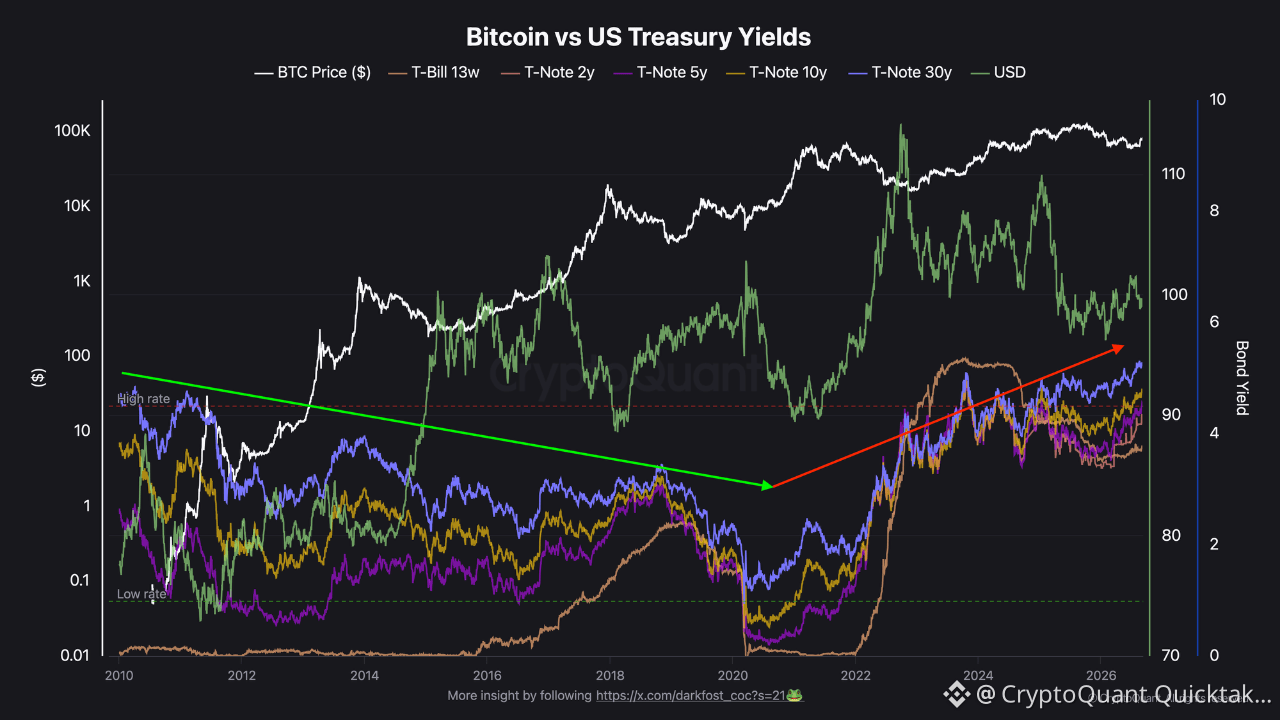
An announcement that turned out to be fairly disappointing for many, to the point that the U.S. 10Y is approaching 5% and its last 2023 high, a level similar to that of 2008. The same goes for the U.S. 20Y, which has now been trading above 5% since July.
Beyond this disappointment, the conflict with Iran is intensifying and pushing Brent crude back above $100, further fueling inflation concerns, which in turn is eroding investor confidence even more.
The momentum Bitcoin is trying to build is therefore unfolding against a very complex macroeconomic backdrop. Since 2021, the underlying trend in bond yields has been upward, a dynamic quite different from what Bitcoin had experienced since its inception.
It's therefore easy to understand that liquidity is tightening even further, but there's still one positive point worth noting.
The DXY, which had been on a positive trajectory since July 2025, is showing signs of weakness, slipping back below the $100 mark. A genuine break below its 180-day average, sitting at $99, would bring some relief.
Still, Bitcoin continues to face a tense economic and geopolitical environment that has likely weighed on its performance this cycle.
Written by Darkfost
"I'm the House Now ! "
An iconic line from Treasury Secretary Scott Bessent regarding the U.S. intervention on the Yen.
At the same time, Bessent announced that the U.S. Treasury Department would buy more than $6 billion in 10- to 20-year treasury bonds, an announcement meant to curb the explosive upward trend in bond yields.
An announcement that turned out to be fairly disappointing for many, to the point that the U.S. 10Y is approaching 5% and its last 2023 high, a level similar to that of 2008. The same goes for the U.S. 20Y, which has now been trading above 5% since July.
Beyond this disappointment, the conflict with Iran is intensifying and pushing Brent crude back above $100, further fueling inflation concerns, which in turn is eroding investor confidence even more.
The momentum Bitcoin is trying to build is therefore unfolding against a very complex macroeconomic backdrop. Since 2021, the underlying trend in bond yields has been upward, a dynamic quite different from what Bitcoin had experienced since its inception.
It's therefore easy to understand that liquidity is tightening even further, but there's still one positive point worth noting.
The DXY, which had been on a positive trajectory since July 2025, is showing signs of weakness, slipping back below the $100 mark. A genuine break below its 180-day average, sitting at $99, would bring some relief.
Still, Bitcoin continues to face a tense economic and geopolitical environment that has likely weighed on its performance this cycle.
Written by Darkfost
At the same time, Bessent announced that the U.S. Treasury Department would buy more than $6 billion in 10- to 20-year treasury bonds, an announcement meant to curb the explosive upward trend in bond yields.
An announcement that turned out to be fairly disappointing for many, to the point that the U.S. 10Y is approaching 5% and its last 2023 high, a level similar to that of 2008. The same goes for the U.S. 20Y, which has now been trading above 5% since July.
Beyond this disappointment, the conflict with Iran is intensifying and pushing Brent crude back above $100, further fueling inflation concerns, which in turn is eroding investor confidence even more.
The momentum Bitcoin is trying to build is therefore unfolding against a very complex macroeconomic backdrop. Since 2021, the underlying trend in bond yields has been upward, a dynamic quite different from what Bitcoin had experienced since its inception.
It's therefore easy to understand that liquidity is tightening even further, but there's still one positive point worth noting.
The DXY, which had been on a positive trajectory since July 2025, is showing signs of weakness, slipping back below the $100 mark. A genuine break below its 180-day average, sitting at $99, would bring some relief.
Still, Bitcoin continues to face a tense economic and geopolitical environment that has likely weighed on its performance this cycle.
Written by Darkfost
189
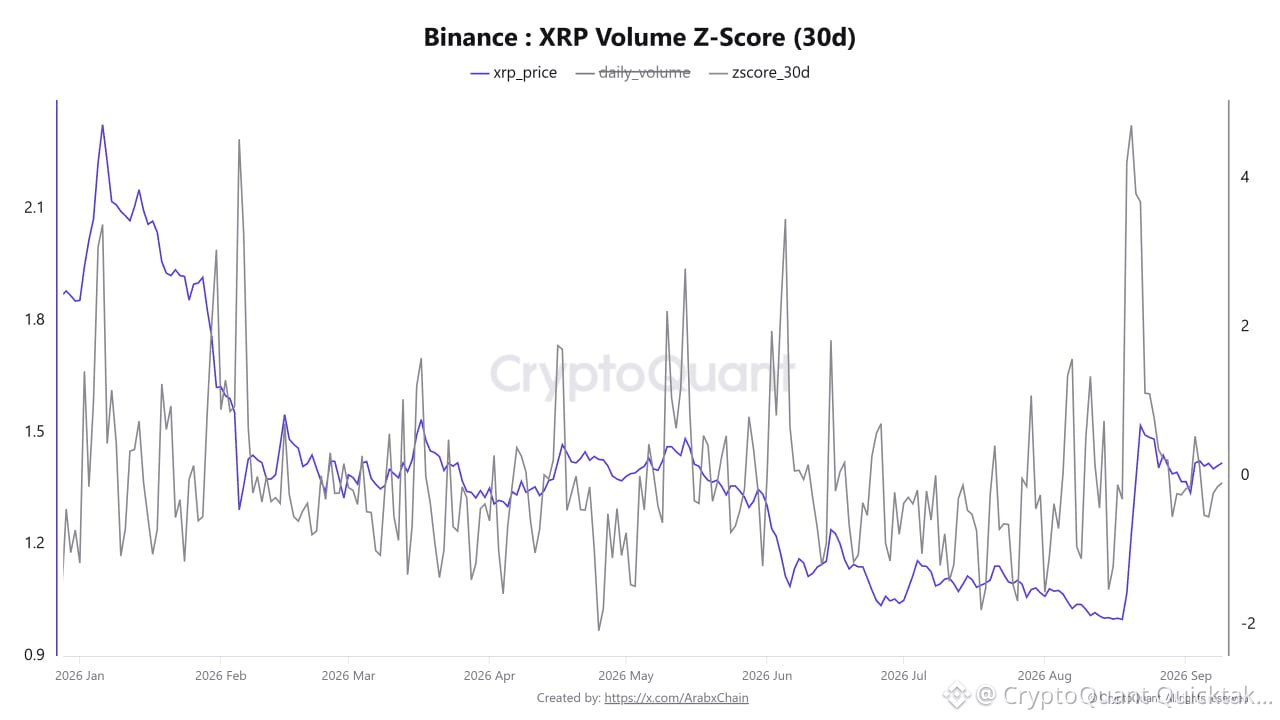
Article
See translation
XRP Trading Volume Z-Score Declines on Binance As Activity Coolshe Binance XRP Volume Z-Score (30d) indicator shows a decline in momentum in XRP trading volumes on the Binance platform, following a surge in market activity during the second half of August. Data indicates that the Z-Score peaked above 4, coinciding with XRP’s price rise from near $1.00 to over $1.40, reflecting an exceptional spike in trading volume relative to the 30-day average.
However, the indicator subsequently entered a downward trend and is currently hovering near zero. It stood at approximately -0.09 on September 9, while the XRP price stabilized around $1.419. This level implies that current trading volume is very close to the average for the measured period, showing no significant positive or negative deviation from typical activity.
This decline in the Z-Score does not necessarily signal weakness in XRP’s price; rather, it indicates a decline in the exceptional trading volume momentum observed in August. Furthermore, the price’s stability near $1.40, despite trading volumes returning to normal levels, may reflect a consolidation phase as the market awaits a new catalyst.
Consequently, for XRP’s upward trend to continue, it is crucial to monitor whether trading volumes expand again and push the Z-Score into positive territory, which could support sustained momentum. Conversely, if the indicator remains near zero or slips into negative territory, it could signal subdued activity and weakening short-term price momentum.
Written by Arab Chain
XRP Trading Volume Z-Score Declines on Binance As Activity Cools
he Binance XRP Volume Z-Score (30d) indicator shows a decline in momentum in XRP trading volumes on the Binance platform, following a surge in market activity during the second half of August. Data indicates that the Z-Score peaked above 4, coinciding with XRP’s price rise from near $1.00 to over $1.40, reflecting an exceptional spike in trading volume relative to the 30-day average.
However, the indicator subsequently entered a downward trend and is currently hovering near zero. It stood at approximately -0.09 on September 9, while the XRP price stabilized around $1.419. This level implies that current trading volume is very close to the average for the measured period, showing no significant positive or negative deviation from typical activity.
This decline in the Z-Score does not necessarily signal weakness in XRP’s price; rather, it indicates a decline in the exceptional trading volume momentum observed in August. Furthermore, the price’s stability near $1.40, despite trading volumes returning to normal levels, may reflect a consolidation phase as the market awaits a new catalyst.
Consequently, for XRP’s upward trend to continue, it is crucial to monitor whether trading volumes expand again and push the Z-Score into positive territory, which could support sustained momentum. Conversely, if the indicator remains near zero or slips into negative territory, it could signal subdued activity and weakening short-term price momentum.
Written by Arab Chain
However, the indicator subsequently entered a downward trend and is currently hovering near zero. It stood at approximately -0.09 on September 9, while the XRP price stabilized around $1.419. This level implies that current trading volume is very close to the average for the measured period, showing no significant positive or negative deviation from typical activity.
This decline in the Z-Score does not necessarily signal weakness in XRP’s price; rather, it indicates a decline in the exceptional trading volume momentum observed in August. Furthermore, the price’s stability near $1.40, despite trading volumes returning to normal levels, may reflect a consolidation phase as the market awaits a new catalyst.
Consequently, for XRP’s upward trend to continue, it is crucial to monitor whether trading volumes expand again and push the Z-Score into positive territory, which could support sustained momentum. Conversely, if the indicator remains near zero or slips into negative territory, it could signal subdued activity and weakening short-term price momentum.
Written by Arab Chain
196
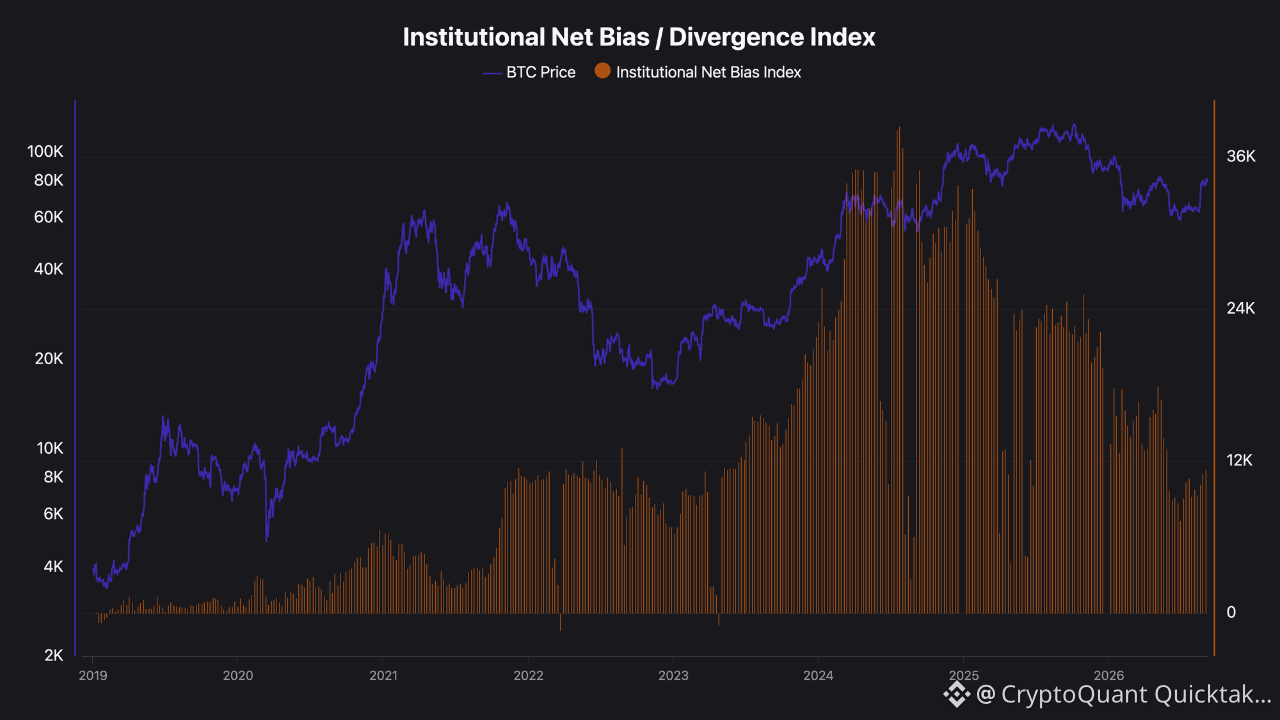
Article
See translation
Institutional Trap or the Final Bottom? What the Net Bias Index Tells Us About BTCAs Bitcoin approaches the end of its bear market phase, the institutional Net Bias Index on the CME side has pulled back to the bottom levels seen during 2021–2022. American institutional investors, hedge funds, and asset management firms periodically restructure and rebalance their positions.
During the 2022 macro bottom, Bitcoin plummeted to around $15K while the Net Bias Index dipped to the 8K–10K range. Currently, Bitcoin is trading around the $78K mark with the institutional Net Bias Index sitting at 11K—a metric that actually dropped as low as 8K when Bitcoin was at $60K.
As a reminder, this metric is a composite scoring index calculated by tracking spot ETF flows, OTC trading volumes, and institutional wallet movements.
Data shows that hedge fund firms have significantly reduced their open short positions, signaling that selling pressure on Bitcoin is fading by the day. Overall, the broader picture looks promising. Even if we encounter another dip test or re-test after September, Bitcoin is poised to resume its upward trajectory once spot buying demand confirms strength.
Written by FundingVest
Institutional Trap or the Final Bottom? What the Net Bias Index Tells Us About BTC
As Bitcoin approaches the end of its bear market phase, the institutional Net Bias Index on the CME side has pulled back to the bottom levels seen during 2021–2022. American institutional investors, hedge funds, and asset management firms periodically restructure and rebalance their positions.
During the 2022 macro bottom, Bitcoin plummeted to around $15K while the Net Bias Index dipped to the 8K–10K range. Currently, Bitcoin is trading around the $78K mark with the institutional Net Bias Index sitting at 11K—a metric that actually dropped as low as 8K when Bitcoin was at $60K.
As a reminder, this metric is a composite scoring index calculated by tracking spot ETF flows, OTC trading volumes, and institutional wallet movements.
Data shows that hedge fund firms have significantly reduced their open short positions, signaling that selling pressure on Bitcoin is fading by the day. Overall, the broader picture looks promising. Even if we encounter another dip test or re-test after September, Bitcoin is poised to resume its upward trajectory once spot buying demand confirms strength.
Written by FundingVest
During the 2022 macro bottom, Bitcoin plummeted to around $15K while the Net Bias Index dipped to the 8K–10K range. Currently, Bitcoin is trading around the $78K mark with the institutional Net Bias Index sitting at 11K—a metric that actually dropped as low as 8K when Bitcoin was at $60K.
As a reminder, this metric is a composite scoring index calculated by tracking spot ETF flows, OTC trading volumes, and institutional wallet movements.
Data shows that hedge fund firms have significantly reduced their open short positions, signaling that selling pressure on Bitcoin is fading by the day. Overall, the broader picture looks promising. Even if we encounter another dip test or re-test after September, Bitcoin is poised to resume its upward trajectory once spot buying demand confirms strength.
Written by FundingVest
140
Log in to explore more content
Join global crypto users on Binance Square
⚡️ Get latest and useful information about crypto.
💬 Trusted by the world’s largest crypto exchange.
👍 Discover real insights from verified creators.
Email / Phone number
Trending Topics
CPIWatch
86.2M views
499,665 Discussing
Share & Win Traffic Reward in our Trending Hashtag Campaign
✨Topic: Will CPI Trigger Rate Hike?
👉How to Join:
Publish a short post or article with hashtag #CPIWatch
Create content based on the below two angles:
- Nonfarm payrolls beat expectations and CPI is around the corner, do you think the Fed will hike or hold the rate?
- Bullish or bearish? Share your take and showcase your stocks or gold trade/holdings with our trade sharing widget.
🚀Campaign Period:
- 2026-09-11 3:00 - 2026-09-12 9:00 UTC
🎁Reward:
- Qualified posts that comply with the above guidelines and contain more than 100 words will be reviewed and may receive a random traffic boost of 500 to 3,000 views. You will receive a notification from your feed secretary if your post is selected.
- Get a chance to have your article featured on Binance Square Official
Need ideas for your post? Visit the topic page #CPIWatch or the Square Guide on How to Post for Better Reach.
Binance Square Official
·281 Likes
·482.7k views
CLARITYActRevisionToRuleNonDeFiControllers
0 views
0 Discussing
TencentBackedEnflameToStartTradingAfter$911MIPO
100 views
5 Discussing