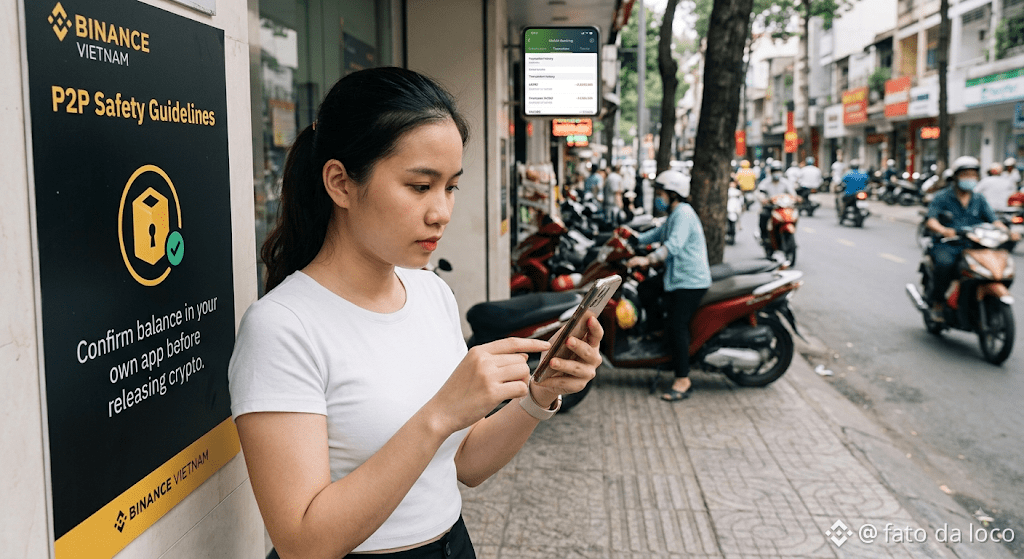
Trading Binance P2P from my phone between meetings taught me to build habits that don't depend on having time to think things through slowly. Binance P2P holds a seller's crypto in escrow until the buyer's payment is verified, requires every account to complete KYC, gives each order its own chat, and offers a dispute appeal if a trade needs Binance to step in and review the details. That protection only holds while the entire trade stays inside Binance P2P, so a message asking to settle things through a personal contact instead is really a request to walk away from every safeguard you have. Even on my phone I check a counterparty's order count, completion rate, and account age first, and I treat spoofed looking notifications, rushed requests, and unverifiable proof as reasons to stop rather than push forward. I never release without confirming the balance in my own banking app, and I keep organized screenshots of every trade in case support needs them.
The habit that matters most on mobile is this: I never trust a push notification alone. A notification can be spoofed or simply wrong, so before releasing any crypto I open my actual banking app, not the alert, and check the real balance and transaction history myself. I learned this after a buyer sent a screenshot of what looked like a bank notification, timestamped and formatted convincingly, while my real account showed nothing at all. Small screen, big decision, so I built a 2-minute rule: verify the name, confirm the funds landed in my own app, screenshot the order and chat, then release, no exceptions even when I'm walking somewhere or between calls. I also keep my archive of past trades organized by date right on my phone, because if support ever needs details for a dispute, having the order ID and screenshots ready saves everyone time and takes the guesswork out of remembering what actually happened.
#binancep2pantoan @Binance Vietnam $GPS
The habit that matters most on mobile is this: I never trust a push notification alone. A notification can be spoofed or simply wrong, so before releasing any crypto I open my actual banking app, not the alert, and check the real balance and transaction history myself. I learned this after a buyer sent a screenshot of what looked like a bank notification, timestamped and formatted convincingly, while my real account showed nothing at all. Small screen, big decision, so I built a 2-minute rule: verify the name, confirm the funds landed in my own app, screenshot the order and chat, then release, no exceptions even when I'm walking somewhere or between calls. I also keep my archive of past trades organized by date right on my phone, because if support ever needs details for a dispute, having the order ID and screenshots ready saves everyone time and takes the guesswork out of remembering what actually happened.
#binancep2pantoan @Binance Vietnam $GPS