


Interview and editing: Jaleel, BlockBeats
Compiled by: Sharon, BlockBeats
The heat of the Metaverse has long passed, but the flames are still gathering strength, waiting for the next explosion point. Behind the many flames, innovators who focus on the construction of Metaverse infrastructure have become the key force driving the ecosystem forward.
As one of the important players in the field of Metaverse, Web3.0 and artificial intelligence infrastructure, Vertex Network originated from Vertex Labs and provides the industry with a new solution of decentralized real-time edge rendering technology. Developers can use its decentralized real-time edge rendering and AI computing power for migration, integration and streaming, providing opportunities for more brands, artists and creators to enter the Metaverse.
Vertex Network is an AI computing network company that provides decentralized real-time edge rendering. At present, Vertex Network believes that it is unrealistic for a single public chain like Ethereum to carry the transactions and ecological applications of the Metaverse. Problems such as high Ethereum gas and slow confirmation speed have caused some projects to stop development. For users, it is extremely difficult to deploy complex smart contracts to purchase NFTs and mint coins. Sometimes the fees paid by users are even ten times the Ethereum gas fee, and ordinary users cannot afford the transaction costs.
Since the start of business in the first quarter of 2022, Vertex Network has gone through the first development and allocation of hardware resources, core technology testing, and completion of the RAAS scheduling system. Now, Vertex Network is about to release RAAS V2, which also means that a new development node will be opened.
On September 27, BlockBeats interviewed Vertex Network CMO Leslie during the "EDGE Summit" in Hong Kong to gain an in-depth understanding of the development status of Vertex Network.
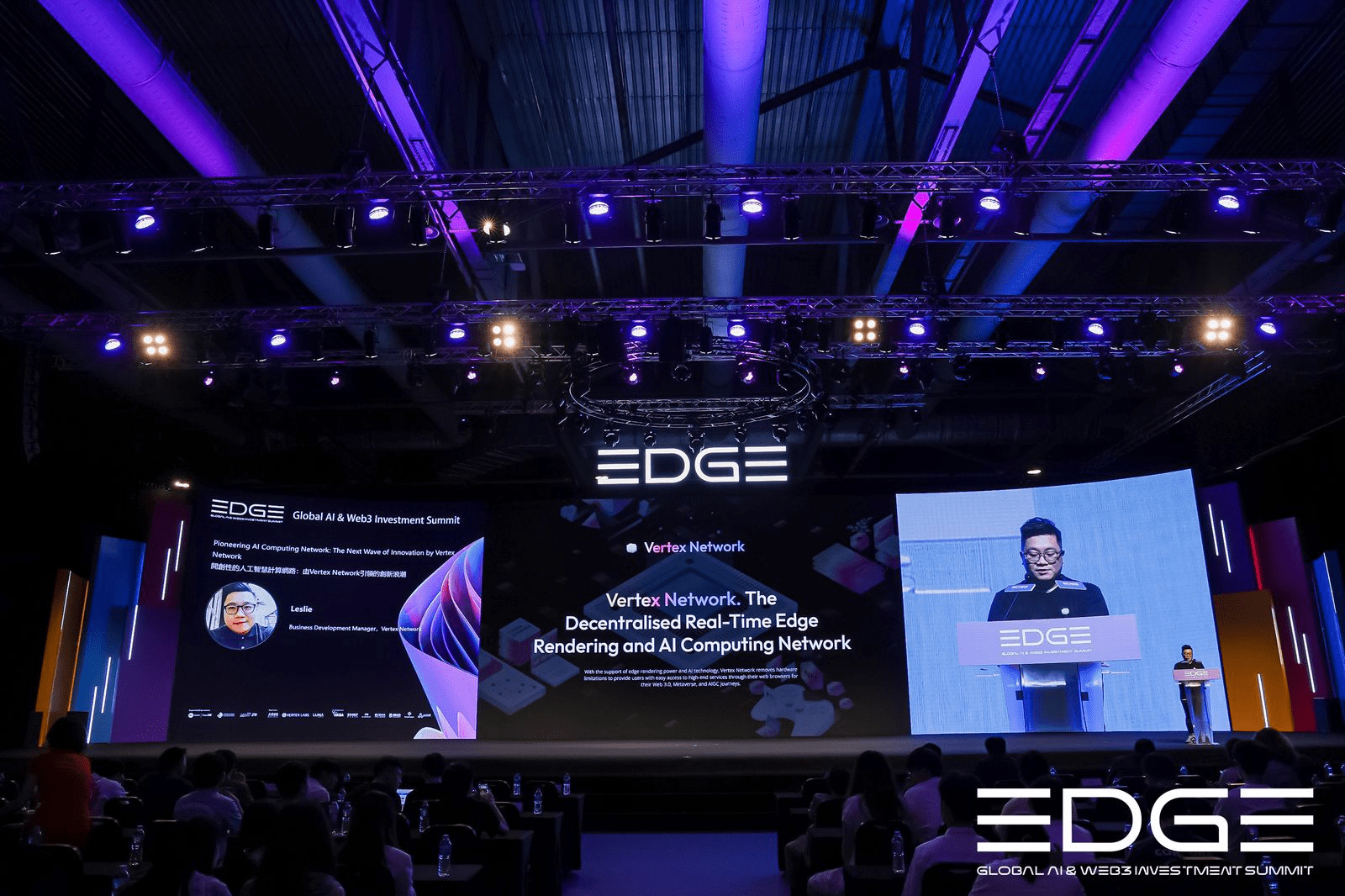
Leslie delivered a speech at the EDGE Summit in Hong Kong
BlockBeats: Please introduce yourself, including your professional experience, and the original intention of founding Vertex Network.
Leslie: I’m Leslie, CMO (Chief Marketing Officer) of Vertex Network, and I have extensive experience in video games and blockchain. Vertex Network was founded on our shared vision of how to integrate AI computing into everyday life. We recognized that there was a lot of untapped potential in edge rendering technology, so we set out to create Vertex Network, a platform that would not only overcome current limitations, but also take us into a new era of possibilities.
We believe that the power of AI computing and edge rendering belongs to users, and we also want users to experience AI more closely. Therefore, creating Vertex Network is not just a technical effort. We believe it is a commitment to making cutting-edge AI computing accessible to the public, and Vertex Network is the embodiment of this belief.
Edge rendering technology will play an important role
Edge computing is the product of network evolution and cloud computing technology development. It provides users with computing, storage, network and other infrastructure services. By deploying and running applications, users will be able to use edge cloud services. Compared with the centralized deployment mode of traditional cloud computing, edge computing solves the problems of latency and large aggregated traffic, and also provides better support for low latency and high bandwidth services.
At the resource level, this is a new option for deploying blockchain nodes. Blockchain can share edge computing node resources with business applications, saving cloud resources. Blockchain nodes and applications are also quickly deployed on edge nodes or clouds in the form of software, benefiting from high deployment efficiency; at the data transmission level, since the edge computing platform is close to the user side, the latency will be greatly reduced compared to data transmission to the cloud, and from the user's perspective, the transmission path is more controllable. Optimization strategies can also be used to cache commonly used ledger data, account status and other data to improve communication efficiency and reduce data transmission delays.
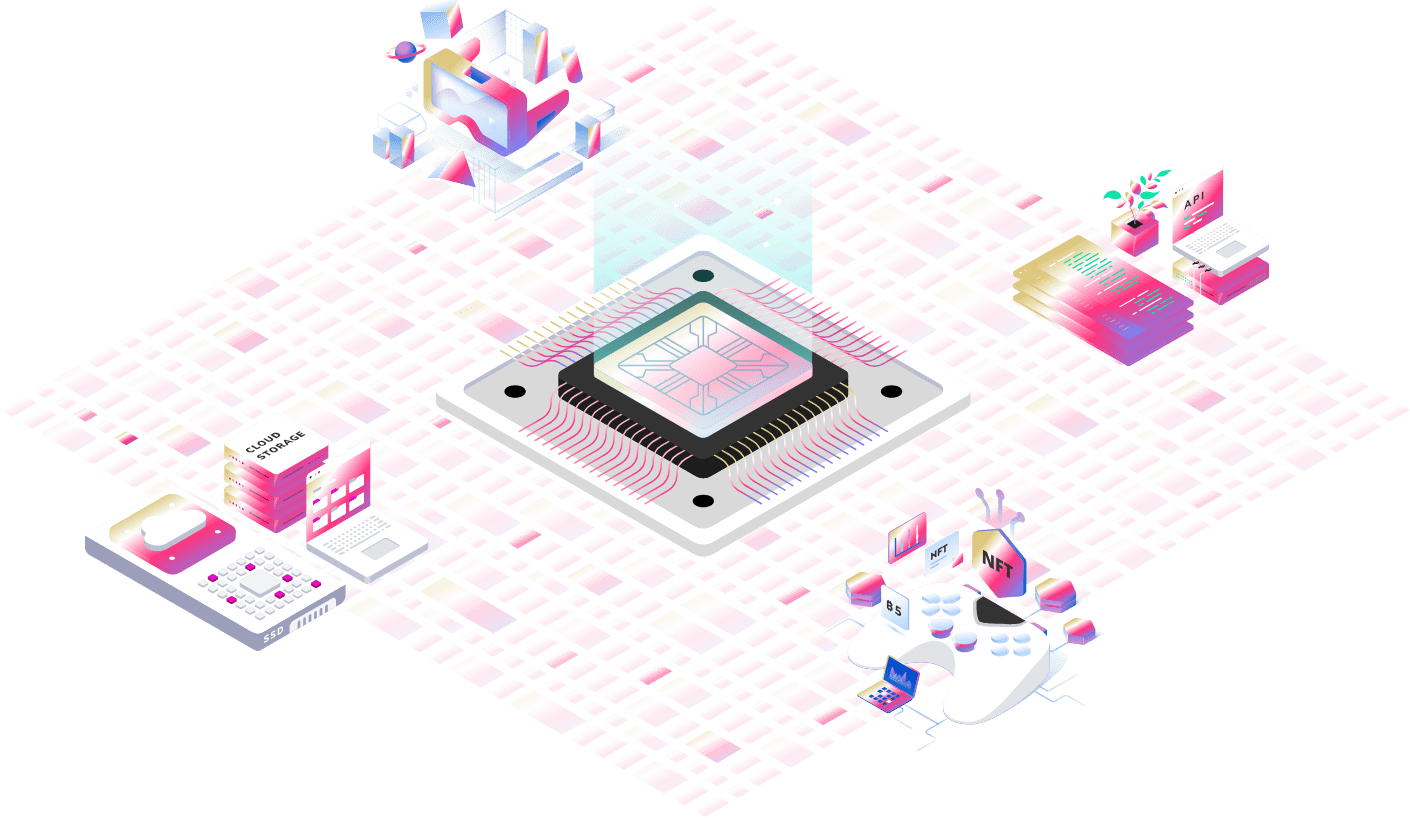
By leveraging edge rendering capabilities and AI technology to provide high-end services, users can access advanced applications without expensive hardware. Developers can upload their applications, and hardware owners can rent out computing power to earn revenue. Solutions include edge XR for immersive VR, edge desktop for GPU cloud services, edge distribution for cost-effective content delivery, and edge hosting for scalable computing.
BlockBeats: What problems can Vertex Network’s edge computing and AI technologies help solve? What advantages do they provide compared to traditional centralized services?
Leslie: Vertex Network's edge computing and AI technologies solve a variety of critical problems, especially in the fields of AI computing and cloud gaming. We have made significant progress in ensuring seamless, real-time access to high-end services. Currently, we are in the first phase and continue to develop to further improve our products in AI computing, cloud gaming, and.
Vertex Network provides higher security, lower latency, and improved scalability compared to centralized services. This means users have a smoother, faster cloud gaming experience. In addition, our technology allows for efficient resource allocation, making high-end services reach a wider audience.
BlockBeats: What fields can Vertex Network be applied to? How to attract developers and users?
Leslie: Vertex Network is applicable to a variety of industries, from the metaverse and digital art to cloud gaming experiences, including immersive AI-driven applications and cloud gaming platforms. We attract developers through an open platform, providing tools and resources to create innovative applications. Users can access high-end services without expensive hardware.
The potential impact of the Vertex Network on future network service models, especially cloud gaming, is enormous. It introduces a paradigm shift towards decentralized edge computing, which is particularly important for real-time experiences in cloud gaming environments. This not only improves efficiency and security, but also makes cutting-edge technology accessible to everyone, ensuring that cloud gaming experiences are borderless.
BlockBeats: Vertex Network was incubated by Vertex Labs, which also incubated Caduceus, LightCycle, Hape, etc. In the current era of Web 3.0 and the Metaverse, what important role does Vertex Network play?
Leslie: In the era of Web 3.0 and the Metaverse, edge rendering technology is particularly important in the cloud gaming environment and will play a decisive role. It meets the needs of real-time high-fidelity experience in virtual environments, which is critical to cloud gaming platforms. In addition, our need for robust, decentralized network infrastructure has never been so urgent, and Vertex Network is at the forefront of this field.
The Metaverse may still be in a long cycle
The current development of the Metaverse is still in a cycle that may be relatively long. During this cycle, after the heat fades, construction will become the focus. As Nasdaq said in a previous article: "Although the cryptocurrency winter continues, builders will continue to build and innovators will continue to innovate. Now is the time to look for investment opportunities and start-ups that are working hard now and will contribute to the development of the industry in the future."
Related reading: "Nasdaq: Review of Metaverse Venture Capital in 2022 and Prediction of Trends in 2023"
Leslie also expressed the same view. He believes that the current Metaverse industry has both opportunities and challenges, and what Vertex Network needs to do is to provide better innovative solutions for the industry.
BlockBeats: What do you think of the current development of the Metaverse and GameFi?
Leslie: The Metaverse and GameFi space is currently at an exciting stage of development. We have witnessed a series of remarkable innovations that are redefining digital entertainment and gaming experiences. The concept of the Metaverse integrates the virtual world with the real world, providing users with unprecedented interactivity and participation. Just like what we saw at the conference, LightCycle and Robbie Williams' AR Show. GameFi (Game Finance) provides players with the opportunity to earn real value in the game, driving the further development of the gaming industry. With the continuous development of AI, I believe it will have a significant impact on the development of the Metaverse and GameFi, and improve the experience and lower the threshold for users to enter the Metaverse and GameFi.
BlockBeats: In your opinion, what kind of basic technology can play a decisive role in the development of Web3.0 and the Metaverse? In other words, what new demands does the Web3.0 and Metaverse era put forward for network infrastructure?
Leslie: Foundational technologies play an important role in shaping the development of Web3.0 and the Metaverse. Especially in cloud gaming, technologies related to edge rendering and AI computing play a decisive role. These advances enable real-time, high-quality experiences, which are critical to the success of cloud gaming platforms. The Web3.0 era requires a decentralized, secure, and efficient network infrastructure, which is exactly what Vertex Network provides at its core.
BlockBeats: What do you think of the current stage of development of the Metaverse and Web3.0? Is this stage like the Internet era in 2000?
Leslie: The current stage of development of the Metaverse and Web3.0 has shown us a new paradigm for the digital world. The potential is huge. We are in a critical period of change similar to the Internet era in 2000. We are witnessing the early stages of a revolution that will redefine the way we interact with the digital space. As Vertex Network, we firmly believe that this era marks a deeper integration of humans and technology. As the forefront of Web3.0, the Metaverse is not only a virtual game space, but also a carrier for innovation, communication and value creation. At this stage of development, we have seen the digital economy system that people have established in the virtual world, and we have also witnessed that the concept of decentralization and user sovereignty has gained more and more recognition.
As a leader in cutting-edge technology, Vertex Network is committed to integrating AI computing, edge rendering, and cloud gaming technologies into this new digital ecosystem. We believe that in the Web3.0 era, edge rendering technology will play a vital role in providing users with a more efficient and immersive experience. We will continue to be committed to building an open, secure, and innovative digital world, providing users with a more diverse experience and creative space. In the eyes of Vertex Network, the current stage of development of the Metaverse and Web3.0 is a process of common growth, and we look forward to working with more like-minded partners to jointly shape the future of this digital era.
BlockBeats: It seems that we have passed the hottest stage of the Metaverse. Why did Vertex Network choose to continue to develop at this time?
Leslie: Timing is critical in any development effort. While the Metaverse has certainly received a lot of attention, it’s important to recognize that it is an evolving environment. By choosing this moment to continue development, Vertex Network is strategically positioning itself to be at the forefront of these innovations. We believe the convergence of edge computing, AI, and cloud gaming will redefine what’s possible in the Metaverse, and we’re excited to be a part of this journey.
BlockBeats: What are the short-term and long-term plans for Vertex Network? Does Vertex Network have any development plans in the Asian market? Do you want to say anything to Chinese users?
Leslie: In the short term, Vertex Network is focused on further enhancing the capabilities of our platform, especially in cloud gaming, edge rendering, and AI computing. We are actively expanding our developer ecosystem and building strategic partnerships to expand the impact of our technology.
In the long term, our vision includes a global expansion strategy with a special focus on the Asian market. We recognize the huge potential and dynamic growth in this region and we are committed to tailoring our solutions to the specific needs of users and businesses here. To our Asian users, we sincerely thank you for your support. We know that Asian countries have millions of gamers. We are committed to providing cutting-edge solutions to meet or even exceed expectations.