
#bitfinex
bitfinex
238,378 views
433 Discussing
Hot
Latest

·
--
🦁 No. 7 — UNUS SED LEO (LEO)
💎 Exchange token #Bitfinex
UNUS SED LEO was launched in 2019. It is a utility token for the iFinex ecosystem, a company associated with the Bitfinex cryptocurrency exchange.
LEO’s main purpose is to provide users with additional benefits when using the platform.
🔹 What is LEO used for?
Token holders can receive discounts on certain Bitfinex trading and financial fees. The more tokens a user holds, the more benefits may be available.
🔥 Fun fact
#LEO has a token buyback and burn mechanism. iFinex uses a portion of its revenue to buy LEO on the market and then destroy the tokens.
This reduces the number of coins in circulation and is part of the project’s economic model.
🦁 Why is #LEO interesting?
Unlike many cryptocurrencies built around their own blockchain network, LEO is closely tied to the day-to-day operations of a real cryptocurrency exchange.
⚠️ However, the token’s value depends on demand, market conditions, and the development of the Bitfinex ecosystem. Burning coins does not guarantee a price increase.
🚀 ©CrYpTo_JaN_ — 20,000 crypto stories. Let’s explore the crypto world together!

70

·
--
See translation
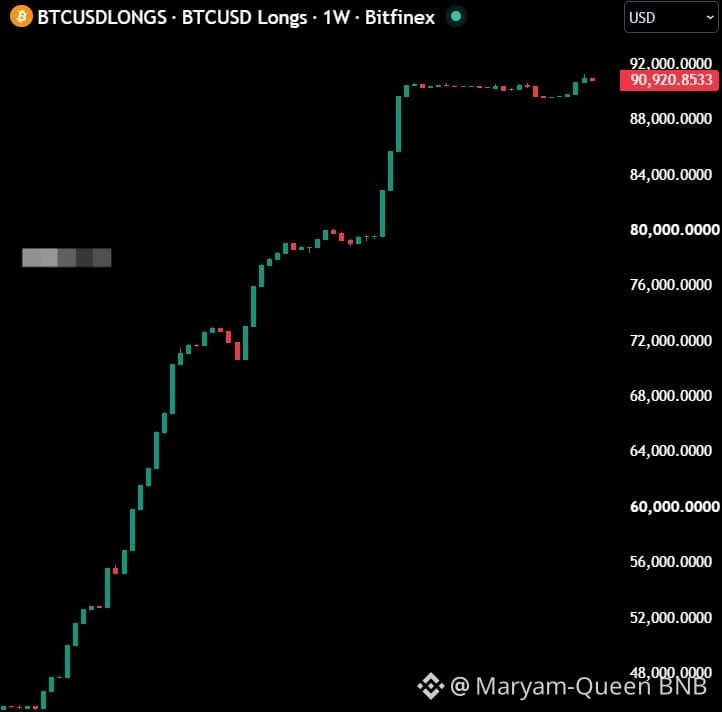
Bitfinex $BTC longs are sitting at a 3-year high. Everyone's leaning the same way, and that makes me nervous.
I've been watching Bitcoin long enough to notice a pattern. The big moves rarely start while the crowd is comfortable. They start after the pain, when those longs get closed out in a hurry and the late buyers get shaken loose. That's when the real rally gets room to run.
So I'm not rushing in here. I'm waiting to see if that flush actually happens, because that's the moment I'd want to be paying attention.
DYOR.
What's your opinion?
#Bitcoin #BTC #Bitfinex #Crypto
{future}(BTCUSDT)
Bitfinex $BTC longs are sitting at a 3-year high. Everyone's leaning the same way, and that makes me nervous.
I've been watching Bitcoin long enough to notice a pattern. The big moves rarely start while the crowd is comfortable. They start after the pain, when those longs get closed out in a hurry and the late buyers get shaken loose. That's when the real rally gets room to run.
So I'm not rushing in here. I'm waiting to see if that flush actually happens, because that's the moment I'd want to be paying attention.
DYOR.
What's your opinion?
#Bitcoin #BTC #Bitfinex #Crypto
SpaceTime Anylise:
Never ever 2028 btc pump high
1
2
42

First capital raise for Bitcoin and dollar funds on Bitfinex… What’s next?The LBAF Bitcoin Yield Fund and the Crest dollar fund completed their first capital raise on Bitfinex Securities, marking a development in yield instruments tied to $BTC.
The move means Bitcoin yield products are finding their way onto regulated platforms, alongside a dollar fund.
However, the amount raised was not disclosed in the available information, so the true level of demand remains uncertain.
First capital raise for Bitcoin and dollar funds on Bitfinex… What’s next?
The LBAF Bitcoin Yield Fund and the Crest dollar fund completed their first capital raise on Bitfinex Securities, marking a development in yield instruments tied to $BTC .
The move means Bitcoin yield products are finding their way onto regulated platforms, alongside a dollar fund.
However, the amount raised was not disclosed in the available information, so the true level of demand remains uncertain.
The move means Bitcoin yield products are finding their way onto regulated platforms, alongside a dollar fund.
However, the amount raised was not disclosed in the available information, so the true level of demand remains uncertain.
12

Ash Crypto has 2.15 million followers. One line—"They 100% know something"—got 35,000 views. Twelve minutes later, accounts were reposting it word for word, with 🚨BREAKING slapped on the front.
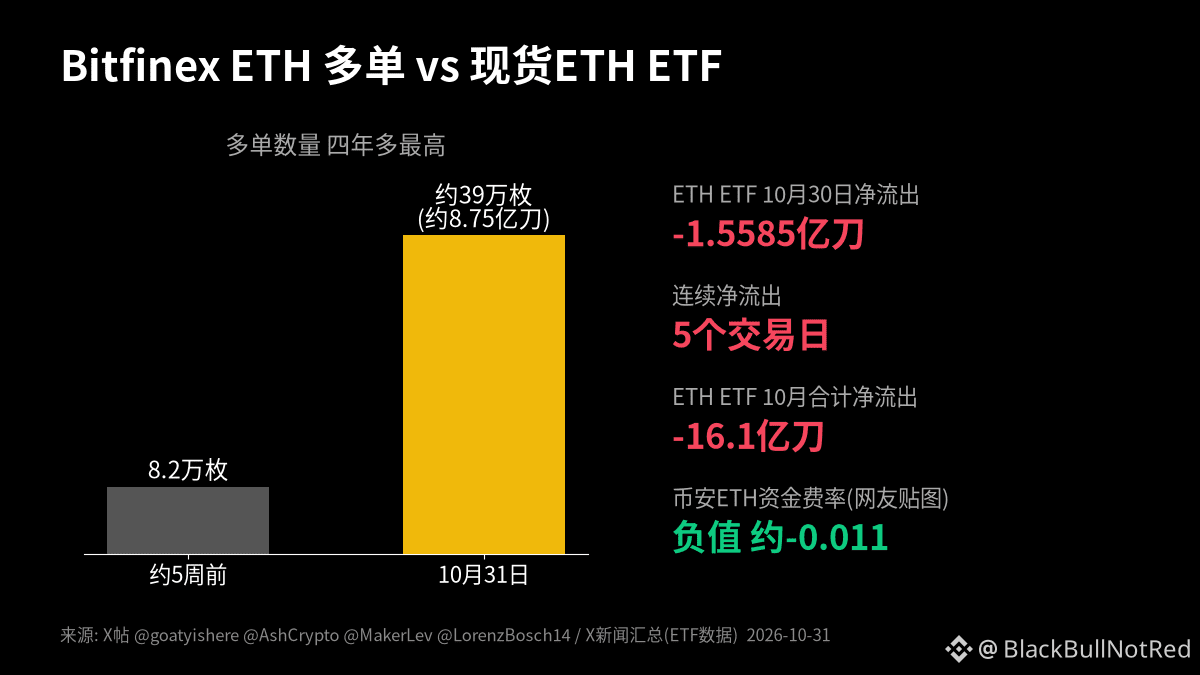
There’s nothing wrong with the data itself: ETH margin longs on Bitfinex have climbed from around 82,000 to roughly 390,000 over the past few weeks, the highest in more than four years. Some put the value at around $875 million. The last time positions piled up like this was June 2022, after which ETH doubled. That line has now become a shield for every account calling for a rally.
But I genuinely don’t understand where “100% know” came from.
These Bitfinex positions are leveraged margin longs, not spot buying. At the same time, Binance ETH perpetual funding rates were negative; someone posted a figure of about -0.011. Perpetuals leaning bearish while Bitfinex leans bullish—one of the simplest explanations is that someone borrowed coins to go long while opening a short on the other side in perpetuals to hedge or collect funding. If you mistake the hedging leg for a whale betting on a rally, that’s just your own imagination.
Meanwhile, real money is flowing out. Spot ETH ETFs saw $155.85 million in net outflows on October 30, their fifth consecutive day of outflows, bringing October’s total to $1.61 billion. ETH is hovering around $2,240, and it just lost two 50-week moving averages on the weekly chart.
I’m not saying it has to fall. It’s just that the same indicator had someone posting yesterday, “After Bitfinex longs hit a new high, the market dumped.” Once crowded longs break support, they become the perfect fuel.
Post a screenshot with “They definitely know something,” and if you’re right, you’re a prophet; if you’re wrong, you’re not responsible. The whale might be right, but the people hyping the trade are making money from your clicks, not from that position.
#ETH #Bitfinex
90

·
--
Article
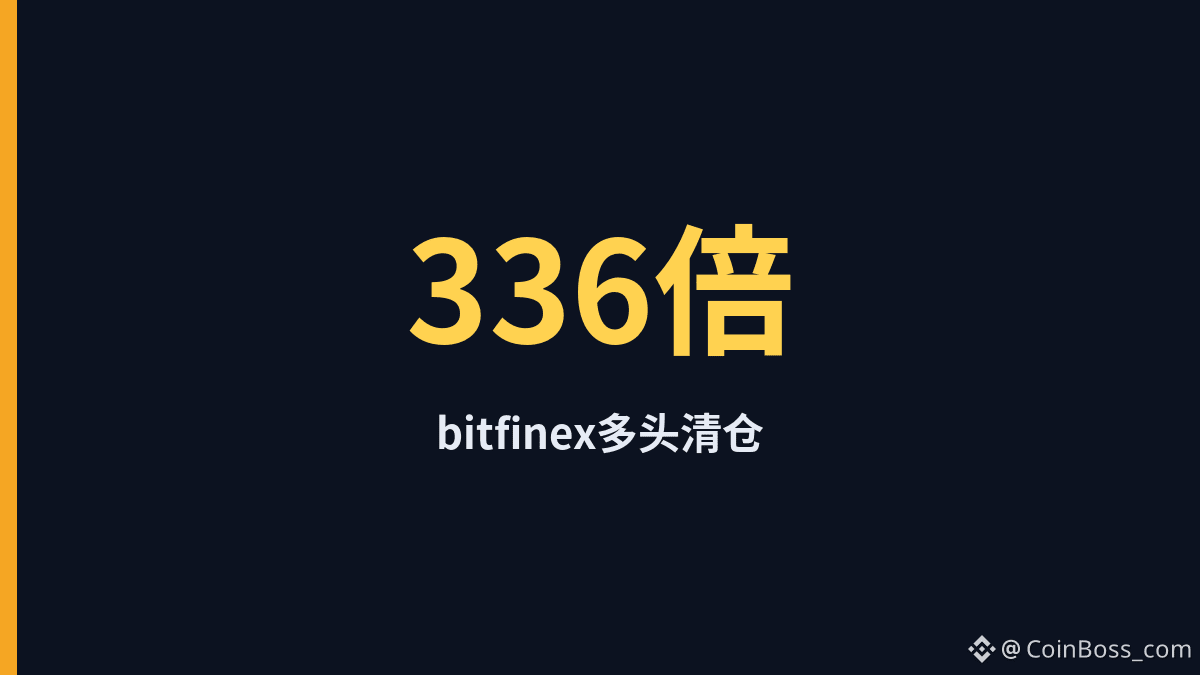
Over the past 24 hours, Bitfinex long liquidations outpaced short liquidations by about 336 timesOn Bitfinex over the past 24 hours, long liquidations totaled about $83,000, while short liquidations were only about $247—roughly a 336-fold difference.
#bitfinex #交易所 #Liquidations
About $82,900 in long positions and about $247 in short positions—roughly 336 times as much. On Bitfinex, total liquidations in the same window were about $83,100 across 20 trades.
Among exchanges, Bitfinex liquidated about 336 times as much in long positions as in short positions—is this position buildup too lopsided?
View in real time: https://www.coinboss.com/liquidations
Over the past 24 hours, Bitfinex long liquidations outpaced short liquidations by about 336 times
On Bitfinex over the past 24 hours, long liquidations totaled about $83,000, while short liquidations were only about $247—roughly a 336-fold difference.
#bitfinex #交易所 #Liquidations
About $82,900 in long positions and about $247 in short positions—roughly 336 times as much. On Bitfinex, total liquidations in the same window were about $83,100 across 20 trades.
Among exchanges, Bitfinex liquidated about 336 times as much in long positions as in short positions—is this position buildup too lopsided?
View in real time: https://www.coinboss.com/liquidations
4

·
--
Bitfinex Securities launched tokenized notes linked to companies that are strongly betting on $BTC.
These are five instruments backed by shares from the ORO II fund.
They are available to non-U.S. investors.
The interesting part is that you can trade them using dollars, $USDT, or directly with $BTC.
It’s another step toward integrating traditional assets with the crypto market.
What do you think of this investment format?
#Bitcoin #RWA #Bitfinex
Bitfinex Securities launched tokenized notes linked to companies that are strongly betting on $BTC .
These are five instruments backed by shares from the ORO II fund.
They are available to non-U.S. investors.
The interesting part is that you can trade them using dollars, $USDT, or directly with $BTC .
It’s another step toward integrating traditional assets with the crypto market.
What do you think of this investment format?
#Bitcoin #RWA #Bitfinex

118

💡 Bitfinex Securities lists premium notes linked to Strategy and Metaplanet
Bitfinex Securities announced the listing of five premium notes backed by equities, issued through the ORO II fund in Luxembourg. These notes will be available for trading against the US dollar, USDT, and bitcoin for eligible non-US investors, representing a development in the securitization of traditional assets on the blockchain.
━━━━━━━━━━━━━━
📊 Impact: 📈 High
🏷️ OTHER
#Bitfinex #Tokenization #Strategy #Metaplanet #DigitalAssets
📰 Source: cointelegraph.com
21


See translation
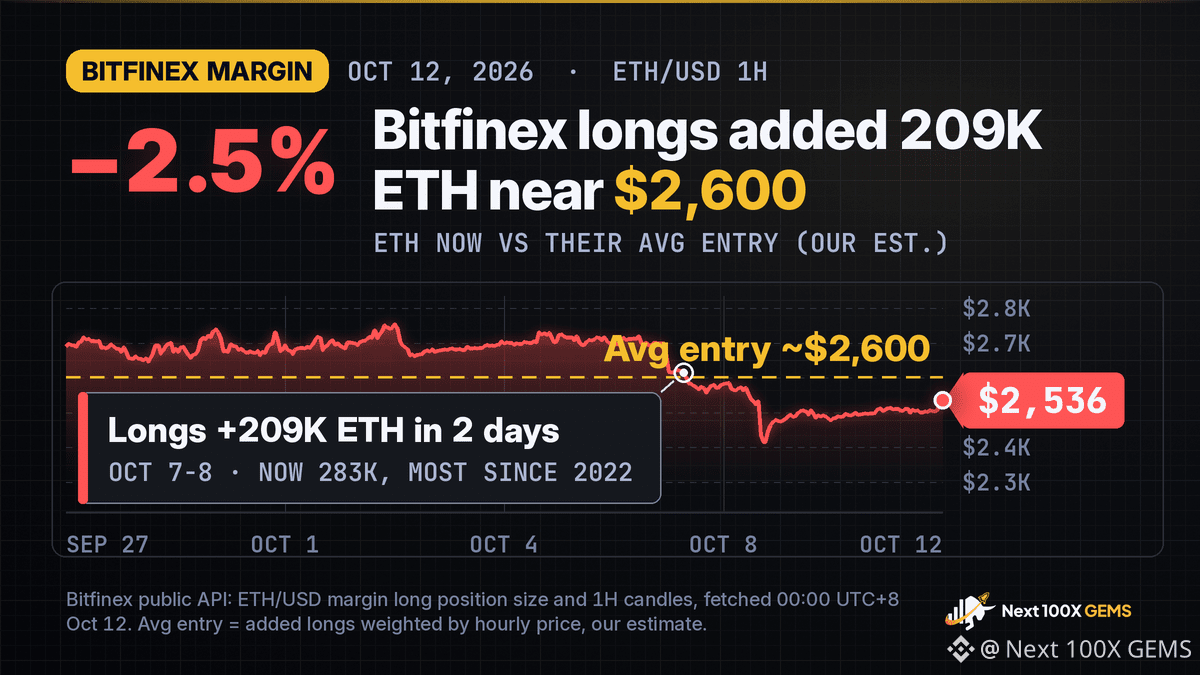
Bitfinex margin traders added about 209,000 ETH of longs on Oct 7 and 8, roughly $544M. By our math their average entry was near $2,600. ETH trades near $2,535 now, roughly 2.5% under that.
We pulled Bitfinex's hourly position data. Longs sat near 96,000 ETH on Oct 6, climbed hour after hour from early Oct 7 (UTC+8) and peaked near 304,000 ETH on Oct 8. About 20,000 ETH of that closed within two hours around midnight UTC+8, when ETH dropped from about $2,530 to $2,405. The rest hasn't moved since: 283,400 ETH today, the most since August 2022.
The other side is almost empty. Shorts are about 3,500 ETH, so longs outnumber them 80 to 1. In late September shorts were above 73,000 ETH.
Margin longs on one exchange can be hedged somewhere else, so this isn't proof of a straight bet on price. It is about $719M of positions sitting a few percent below where most of it was opened.
The biggest ETH long bet on Bitfinex since 2022 is underwater.
$ETH
#Ethereum #Bitfinex
NFA. DYOR.
214

See translation
Seized Bitcoin from the old Bitfinex hack is not automatically a market dump, even though that is the story most traders are already pricing in.
If you have been trying to time an exit on $BTC, this is the kind of headline that gets people out first and checking the wallet path later. You sell the fear, the coins never reach an order book, and you are left chasing a move that was only a custody shuffle.
The billion-dollar question is still where those coins go next. The 2025 restitution process calls for Bitcoin seized directly from the hack wallet to be returned to Bitfinex in kind, which weakens the reserve-overhang idea for this specific tranche. A transfer into Bitfinex custody carries less immediate market risk than an open-market sale. Those are not the same event, and treating them as one is how people donate their position.
The bearish signal is narrower than the headlines. If the next hop is an exchange venue set up for liquidation, that is when supply can actually hit price. Until that shows up, spot Bitcoin ETF selling looks more concrete, with US funds already the ones shedding Bitcoin while everyone stares at the restitution wallets. $LEO sits on the receiving side of an in-kind return, so the path matters more than the scary wallet label.
Where do you think this tranche goes from here?
#Bitcoin #OnChain #Bitfinex
Seized Bitcoin from the old Bitfinex hack is not automatically a market dump, even though that is the story most traders are already pricing in.
If you have been trying to time an exit on $BTC , this is the kind of headline that gets people out first and checking the wallet path later. You sell the fear, the coins never reach an order book, and you are left chasing a move that was only a custody shuffle.
The billion-dollar question is still where those coins go next. The 2025 restitution process calls for Bitcoin seized directly from the hack wallet to be returned to Bitfinex in kind, which weakens the reserve-overhang idea for this specific tranche. A transfer into Bitfinex custody carries less immediate market risk than an open-market sale. Those are not the same event, and treating them as one is how people donate their position.
The bearish signal is narrower than the headlines. If the next hop is an exchange venue set up for liquidation, that is when supply can actually hit price. Until that shows up, spot Bitcoin ETF selling looks more concrete, with US funds already the ones shedding Bitcoin while everyone stares at the restitution wallets. $LEO sits on the receiving side of an in-kind return, so the path matters more than the scary wallet label.
Where do you think this tranche goes from here?
#Bitcoin #OnChain #Bitfinex
11

·
--
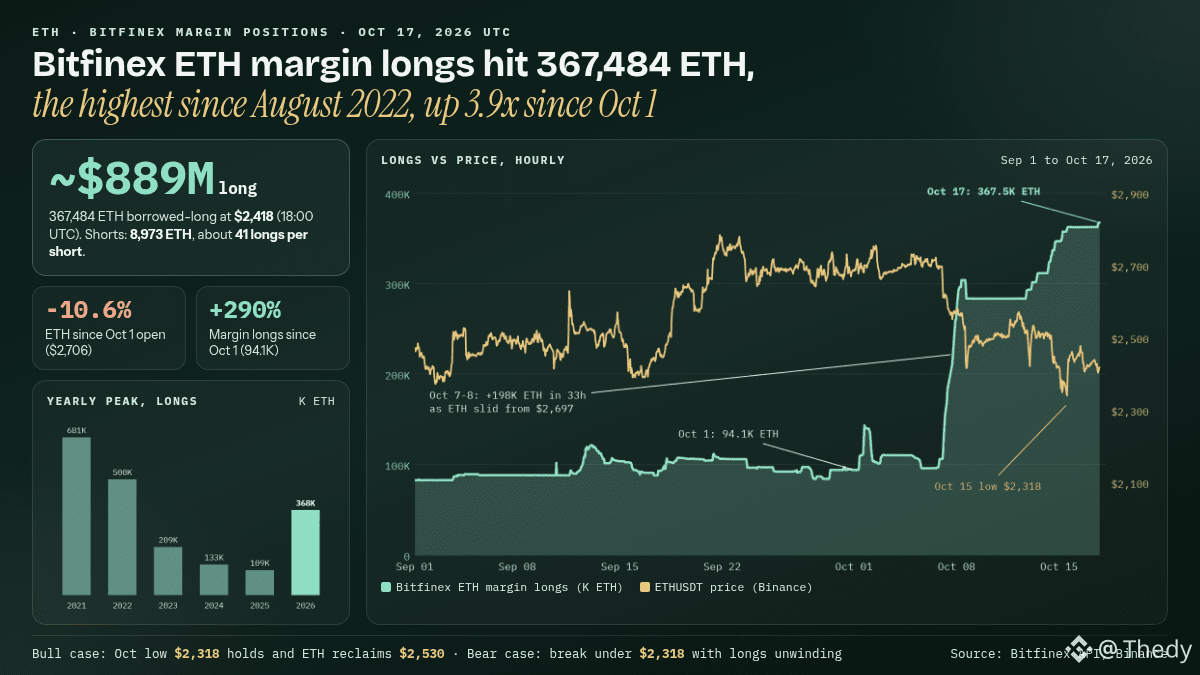
Bitfinex margin longs $ETH have just reached 367,484 ETH as of 17/10 at 18:00 UTC, their highest level since August 5, 2022, according to Bitfinex’s public API. That’s about $889M at the current price.
The chart is moving against the trend. On October 1, these positions stood at 94,117 ETH. They have nearly quadrupled (+290%) while ETH has lost 10.6% since the start of the month, falling from $2,706 to $2,418 on Binance.
The buying came in two waves. On 7 and 8/10, +198,000 ETH in 33 hours, while ETH slipped from $2,697 to $2,570. Then from 13 to 16/10, another +69,000 ETH around the month’s low ($2,318 on 15/10). On the other side, there were only 8,973 ETH in shorts, or about 41 longs for every short. For context, the series record is still far away: 681,000 ETH in June 2021.
Meanwhile, US spot ETH ETFs saw another $69.7M in outflows on 16/10, according to Farside. Buyers using leverage on Bitfinex are taking the exact opposite position.
My take, with one caveat: some of these longs may be hedged with shorts on perpetuals elsewhere (a funding trade), so this isn’t necessarily a pure directional bet. But accumulating this much in the middle of a decline looks more like buying the dip than panic.
Two scenarios to watch:
- October’s low at $2,318 holds and ETH regains $2,530 (the 14/10 high): these buyers will have been early and right, and there are very few shorts left to squeeze.
- A close below $2,318: keep an eye on the Bitfinex tally. On 8/10, it had already fallen from 304,000 to 284,000 ETH during the drop below $2,450. If it falls again, these longs become selling pressure.
Whales accumulating at the right time, or fuel for a liquidation if $2,318 breaks: how do you read these 367,000 ETH bought on margin?
#ETH #Bitfinex
32

·
--
“Bitfinex Securities opens subscriptions for CMCC tokenized funds: USD version + $BTC version”There’s another tokenized fund offering that can be checked out directly.
Bitfinex Securities has opened subscriptions for two quantitative feeder funds from CMCC Global: Crest (USD-denominated) and the Liberty Bitcoin Accumulation Fund (LBAF, denominated in $BTC ). The official subscription page shows the offering is set to open around October 11, with the subscription window running until around October 29. Crypto Briefing and others, citing a press release, report that these are the first tokenized “funds of funds” under El Salvador’s digital asset framework.
Tokenized through Tether’s Hadron, with a Cayman Islands SPC segregated portfolio structure underneath. Minimum investment starts at one token—about $10 for Crest (the page displays $USDT) and about 0.0001 $BTC for LBAF. The strategies focus on market-neutral approaches such as funding-rate arbitrage, market making, and cross-exchange/DeFi arbitrage—not simply betting on price direction. LBAF targets net annualized returns of 8%–12% (denominated in $BTC ); this is a target, not a guarantee.
“Bitfinex Securities opens subscriptions for CMCC tokenized funds: USD version + $BTC version”
There’s another tokenized fund offering that can be checked out directly.
Bitfinex Securities has opened subscriptions for two quantitative feeder funds from CMCC Global: Crest (USD-denominated) and the Liberty Bitcoin Accumulation Fund (LBAF, denominated in $BTC ). The official subscription page shows the offering is set to open around October 11, with the subscription window running until around October 29. Crypto Briefing and others, citing a press release, report that these are the first tokenized “funds of funds” under El Salvador’s digital asset framework.
Tokenized through Tether’s Hadron, with a Cayman Islands SPC segregated portfolio structure underneath. Minimum investment starts at one token—about $10 for Crest (the page displays $USDT) and about 0.0001 $BTC for LBAF. The strategies focus on market-neutral approaches such as funding-rate arbitrage, market making, and cross-exchange/DeFi arbitrage—not simply betting on price direction. LBAF targets net annualized returns of 8%–12% (denominated in $BTC ); this is a target, not a guarantee.
135

·
--
🚨 WHALE ETH MOVES $171 MILLION TO BITFINEX AFTER 5 YEARS
An Ethereum wallet that had been inactive for over five years suddenly came back to life, transferring 86,481 ETH worth about $171.57 million to Bitfinex.
This massive movement has caught the attention of traders and on-chain analysts, as transfers from old wallets are often monitored for potential signals of significant market activity.
#ETH #Ethereum #Bitfinex #crypto #BlackRockCryptoDown17PctYTD $BTC $ETH


139

New on-chain investigation findings: an address marked by Nansen as “US government-held Bitfinex hacker confiscated funds” has just transferred approximately 296,700 USDT to Coinbase Prime.
The amount isn’t particularly astonishing, but the signal is worth watching—transfers from addresses like this in the past often correspond to over-the-counter liquidation or the progression of judicial proceedings. Coinbase Prime, as a compliant large-transaction channel, typically implies institutional settlement rather than an immediate sell-off that would hit the market.
Key observation points:
1. A single transfer of nearly 300,000 USDT looks like a probing move—watch whether there are subsequent, consecutive disbursements
2. Government-side funds flowing to the Prime platform likely have limited impact on spot prices in the short term, but it may affect market sentiment and expectations
3. The Bitfinex hacker case involves assets on a massive scale; any on-chain activity could be amplified and interpreted by algorithms and traders
For holders, the focus isn’t just on this one transfer, but whether this address enters a “continuous moving” phase. It’s recommended to monitor the subsequent transfer frequency of addresses from the same source and to cluster their destination addresses.
#USDT #链上追踪 #Bitfinex
29

·
--
U.S. government-related addresses have taken another new step.
According to Onchain Lens monitoring, an address labeled by Nansen as “storing U.S. government-seized Bitfinex hacker funds” has just transferred approximately 296,700 USDT to Coinbase Prime.
The amount isn’t particularly large, but the signal is worth noting:
- Addresses like this are generally viewed as “government wallets.” When funds flow to Coinbase Prime, it typically suggests use of institutional-level channels—possibly liquidation, custody adjustments, or preparation for subsequent actions;
- In the Bitfinex hacker case, recovered assets have historically been moved out in multiple batches, and each transfer tends to spark market speculation about potential sell pressure;
- Compared with BTC, the move of USDT directly into an exchange leaves less room for interpretation. It looks more like fund operations or counterparty settlement.
In the short term, there’s no need to over-interpret this single transfer of 300,000. However, it’s recommended to continue monitoring the subsequent activities of the same cluster of addresses—especially whether any BTC outflows accompany it. Every movement from a government address is an amplifier of on-chain sentiment.
#USDT #Bitfinex #on-chain tracking
25

·
--
Came across this on Decrypt: On Thursday, a U.S. government-linked wallet transferred about 12,267 $BTC (worth roughly $1.01 billion) seized in the Bitfinex hacking case to a new address in one go.
Arkham data shows that almost all of it landed at unlabeled addresses, with a tiny amount sent to a second wallet. That same week, about $119 million in USDT and roughly 2,574 BTC were routed through to Coinbase Prime—which also provides custody services, so a deposit doesn’t necessarily mean a sale.
These coins came from the roughly 94,000 BTC seized from Ilya Lichtenstein and Heather Morgan in 2022. A March 2025 executive order required forfeited bitcoin to go into the Strategic Bitcoin Reserve and, in principle, not be sold. According to Arkham, the government still holds around 307,000 BTC.
Large on-chain transfers can be alarming, but this one looks more like a reserve or custody reshuffle. Don’t assume a sell-off every time you see “government wallet on the move.”
$BTC #比特币 #Bitfinex #U.S.

134



·
--
Bearish
Verified
3,974 BTC
That’s how much of the transfer the U.S. government made to Coinbase Prime yesterday came from the Bitfinex hack. The entire transfer was about $565.87M, with another 657.92 BTC and 750.19 WBTC tracing back to FTX/Alameda.
Yesterday I wrote about 833.6 BTC, and the “the government is dumping its reserves” narrative practically suggests itself. But:
- In the Bitfinex case, the court ordered the same bitcoins returned to the exchange, not the money from selling them. That’s how the October 6 transfer was explained, and yesterday’s looks the same.
- Coinbase Prime has been the Marshals’ regular custodian since 2024.
- The executive order prohibits selling reserve BTC, but victim restitution and court orders are explicit exceptions.
They moved $BTC
{future}(BTCUSDT)
to Prime — that doesn’t mean they’ve sold it. And if a sale does happen, the blockchain won’t show it.
I’m not personally invested in bitcoin; my BNB is in Simple Earn Flexible, and government transfers don’t make it twitch.
#bitcoin #Bitfinex #FTX
3,974 BTC
That’s how much of the transfer the U.S. government made to Coinbase Prime yesterday came from the Bitfinex hack. The entire transfer was about $565.87M, with another 657.92 BTC and 750.19 WBTC tracing back to FTX/Alameda.
Yesterday I wrote about 833.6 BTC, and the “the government is dumping its reserves” narrative practically suggests itself. But:
- In the Bitfinex case, the court ordered the same bitcoins returned to the exchange, not the money from selling them. That’s how the October 6 transfer was explained, and yesterday’s looks the same.
- Coinbase Prime has been the Marshals’ regular custodian since 2024.
- The executive order prohibits selling reserve BTC, but victim restitution and court orders are explicit exceptions.
They moved $BTC
to Prime — that doesn’t mean they’ve sold it. And if a sale does happen, the blockchain won’t show it.
I’m not personally invested in bitcoin; my BNB is in Simple Earn Flexible, and government transfers don’t make it twitch.
#bitcoin #Bitfinex #FTX
4
736

See translation
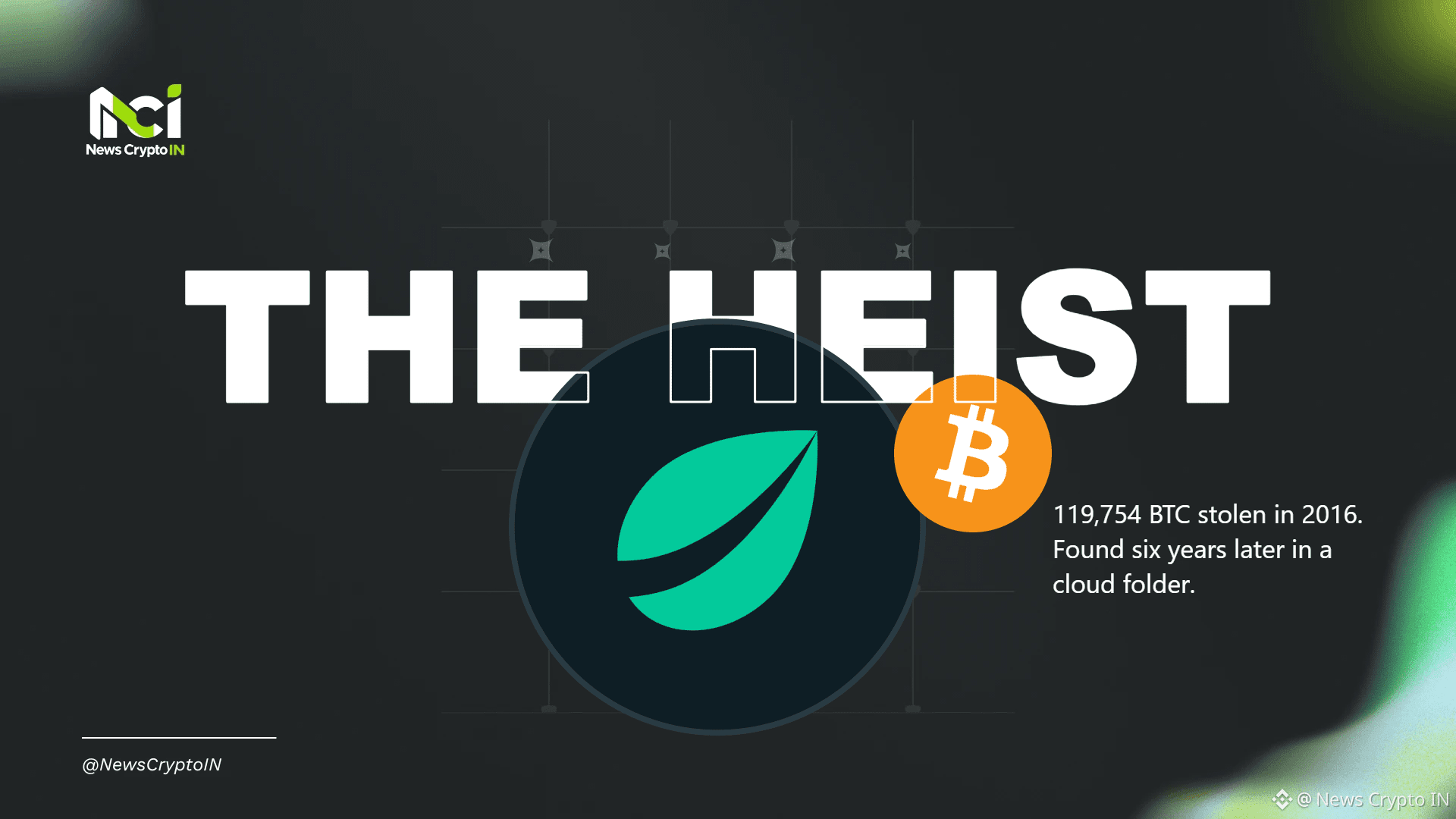
The Heist That Waited Six Years
August 2, 2016. Inside Bitfinex, one of the biggest bitcoin exchanges of its time, about 2,000 fake transactions were quietly approved. They moved 119,754 BTC, then worth around $71M, into a single wallet.
Bitfinex cut every customer's balance by 36%, even untouched accounts, and handed out "BFX" IOU tokens. By April 2017 it had bought them all back. The exchange survived. The bitcoin was gone.
For years, the coins mostly sat still. The thief was patient.
He was Ilya Lichtenstein, a quiet tech entrepreneur in New York. His wife, Heather Morgan, was the loud one: startup founder, columnist, and aspiring rapper "Razzlekhan". They looked like an eccentric Manhattan couple. In reality, they were slowly washing the biggest pile of stolen bitcoin ever.
Fake identities. Exchange accounts with false details. Scripts firing off tiny automated transfers. Coins routed through the darknet market AlphaBay. Some turned into gold coins, which Morgan admitted to burying.
But the blockchain never forgets. The trail finally led to the couple's cloud storage, and to a file listing the wallets along with their private keys.
On February 8, 2022, both were arrested. The US seized about 94,000 BTC, worth $3.6B that day, the largest financial seizure in DOJ history.
The twist came in 2023: Lichtenstein pleaded guilty and admitted he was the hacker himself, working alone. In November 2024 he got five years, Morgan 18 months. Netflix turned it into "Biggest Heist Ever".
In 2025, a court ruled Bitfinex the victim entitled to the coins, now worth billions. Morgan was released in late 2025, and Lichtenstein walked out early on January 2, 2026.
What broke the case wasn't a genius exploit. It was a file in the cloud. On-chain, nothing truly disappears. It just waits for someone to look.
Enjoyed this story? Like and follow for more true crypto stories.
#Bitfinex #CryptoHack
2
264

·
--
See translation
Hackers Stole 119,756 Bitcoin In 2016. It Took The DOJ Six Years To Trace It.On August 2, 2016, someone drained 119,756 Bitcoin out of Bitfinex, one of the largest exchanges in the world at the time. At the price that day, the loss came to roughly $72 million. Today that same pile of coins is worth many times more.
Bitfinex didn't quietly stick a handful of unlucky users with the loss. Every account on the platform took the same haircut, about 36% of whatever balance sat there that morning, whether those funds were anywhere near the hacked wallet or not. In exchange, the company issued a new token called BFX, one BFX for every dollar lost, redeemable later at a fixed dollar price or convertible into shares of Bitfinex's parent company, iFinex. Within eight months, every BFX token had been made whole, either bought back at full value or swapped for equity.
That part of the story usually gets forgotten. What people remember is that the stolen coins vanished into the blockchain and nobody expected to see them again.
They sat mostly untouched for over five years, moving in small amounts here and there, enough to keep investigators watching but not enough to break the trail. Then in February 2022, the Department of Justice announced it had traced a huge share of the stolen funds to a New York couple and seized Bitcoin worth close to $3.6 billion at the time, the largest financial seizure in the agency's history at that point. One of the suspects had built a strange public trail of rap videos and posts online for years while allegedly sitting on a fortune stolen from an exchange hack. Both pleaded guilty to money laundering conspiracy in 2023.
The gap between the theft and the seizure says something worth sitting with. Six years is a long time to hide anything on a ledger where every transaction stays permanently visible to anyone who wants to look. Blockchain forensics firms and government investigators spent that entire stretch mapping wallet clusters, watching exchange deposits, and waiting for a mistake. Eventually one came.
Even after the seizure, the story hasn't fully closed. As of early 2025, Bitfinex and individual account holders were fighting in court over whether the recovered coins should go back to the exchange in-kind, meaning the actual Bitcoin itself, or get shared with the customers who took the original 36% haircut, while the government itself had asked the court to approve in-kind restitution to Bitfinex. That distinction is worth billions given how far Bitcoin has moved since the seizure. Bitfinex has argued it's owed the coins themselves as the original victim, and courts have been sorting through exactly who counts as a victim in a hack that technically hit every user's balance at once.
Bitcoin sits at $76,426 today. The 2016 hack is a reminder that exchange security failures don't disappear once the immediate panic fades. They turn into multi-year investigations, legal fights over what a victim is owed, and a permanent case study in how visible a blockchain really is once someone with enough resources decides to follow it.
It also raises a question that never fully goes away for anyone holding funds on a centralized exchange. The coins are recoverable in theory, eventually, if investigators get lucky and have years to spend. That's a very different thing from your funds being safe today.
Would you have kept trading on an exchange right after a hack like that, waiting years for a resolution most users never got to see up close?
Personal view, not advice. Do your own research.
#Bitcoin #Bitfinex
Hackers Stole 119,756 Bitcoin In 2016. It Took The DOJ Six Years To Trace It.
On August 2, 2016, someone drained 119,756 Bitcoin out of Bitfinex, one of the largest exchanges in the world at the time. At the price that day, the loss came to roughly $72 million. Today that same pile of coins is worth many times more.
Bitfinex didn't quietly stick a handful of unlucky users with the loss. Every account on the platform took the same haircut, about 36% of whatever balance sat there that morning, whether those funds were anywhere near the hacked wallet or not. In exchange, the company issued a new token called BFX, one BFX for every dollar lost, redeemable later at a fixed dollar price or convertible into shares of Bitfinex's parent company, iFinex. Within eight months, every BFX token had been made whole, either bought back at full value or swapped for equity.
That part of the story usually gets forgotten. What people remember is that the stolen coins vanished into the blockchain and nobody expected to see them again.
They sat mostly untouched for over five years, moving in small amounts here and there, enough to keep investigators watching but not enough to break the trail. Then in February 2022, the Department of Justice announced it had traced a huge share of the stolen funds to a New York couple and seized Bitcoin worth close to $3.6 billion at the time, the largest financial seizure in the agency's history at that point. One of the suspects had built a strange public trail of rap videos and posts online for years while allegedly sitting on a fortune stolen from an exchange hack. Both pleaded guilty to money laundering conspiracy in 2023.
The gap between the theft and the seizure says something worth sitting with. Six years is a long time to hide anything on a ledger where every transaction stays permanently visible to anyone who wants to look. Blockchain forensics firms and government investigators spent that entire stretch mapping wallet clusters, watching exchange deposits, and waiting for a mistake. Eventually one came.
Even after the seizure, the story hasn't fully closed. As of early 2025, Bitfinex and individual account holders were fighting in court over whether the recovered coins should go back to the exchange in-kind, meaning the actual Bitcoin itself, or get shared with the customers who took the original 36% haircut, while the government itself had asked the court to approve in-kind restitution to Bitfinex. That distinction is worth billions given how far Bitcoin has moved since the seizure. Bitfinex has argued it's owed the coins themselves as the original victim, and courts have been sorting through exactly who counts as a victim in a hack that technically hit every user's balance at once.
Bitcoin sits at $76,426 today. The 2016 hack is a reminder that exchange security failures don't disappear once the immediate panic fades. They turn into multi-year investigations, legal fights over what a victim is owed, and a permanent case study in how visible a blockchain really is once someone with enough resources decides to follow it.
It also raises a question that never fully goes away for anyone holding funds on a centralized exchange. The coins are recoverable in theory, eventually, if investigators get lucky and have years to spend. That's a very different thing from your funds being safe today.
Would you have kept trading on an exchange right after a hack like that, waiting years for a resolution most users never got to see up close?
Personal view, not advice. Do your own research.
#Bitcoin #Bitfinex
1k
·
--
See translation
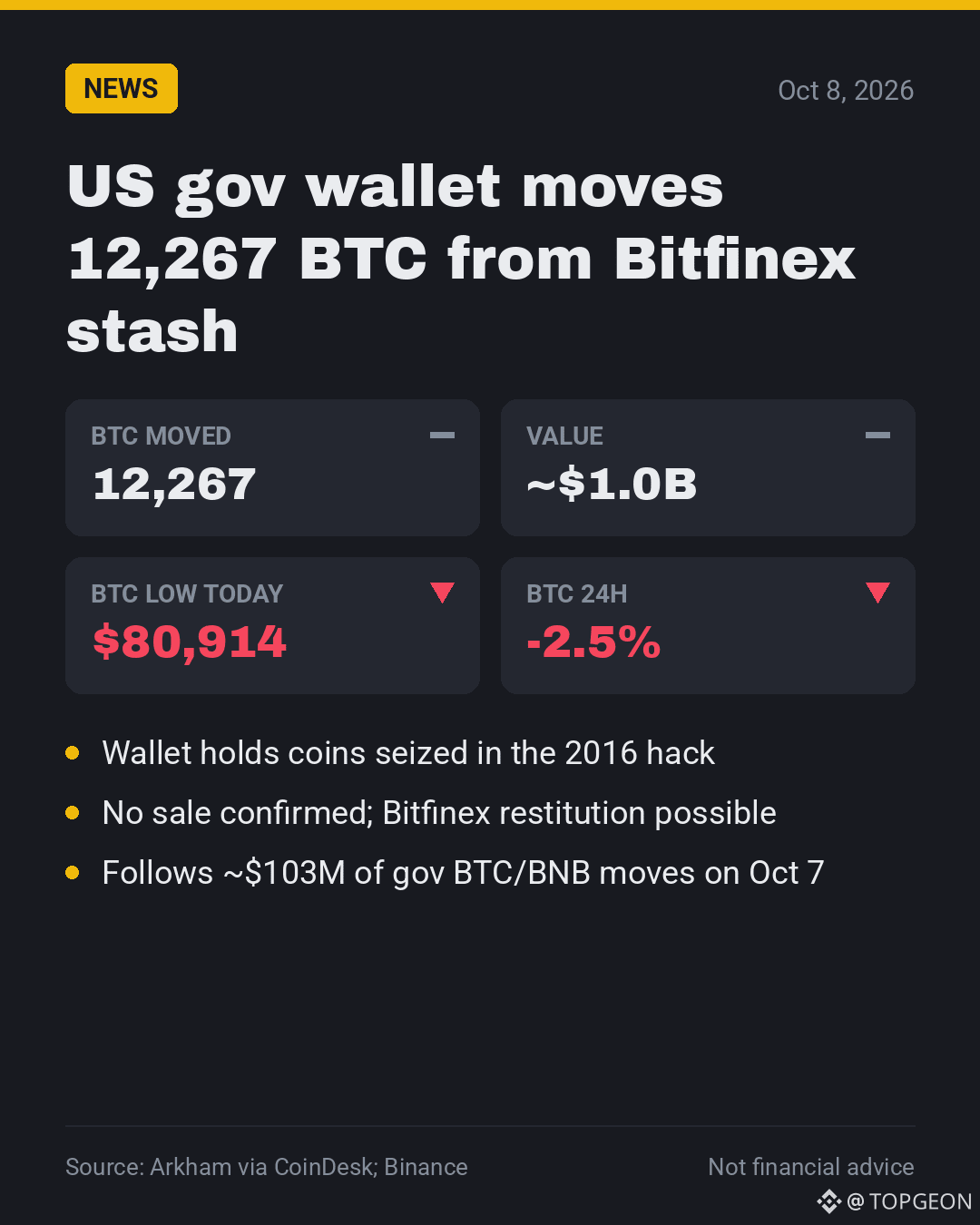
🚨 $BTC hits $80,914 as a US gov wallet moves ~$1B
• 12,267 BTC left the seized Bitfinex-hack wallet (Arkham)
• No sale confirmed; court-ordered return to Bitfinex is possible
• About 10x the ~$103M gov BTC/BNB move on Oct 7
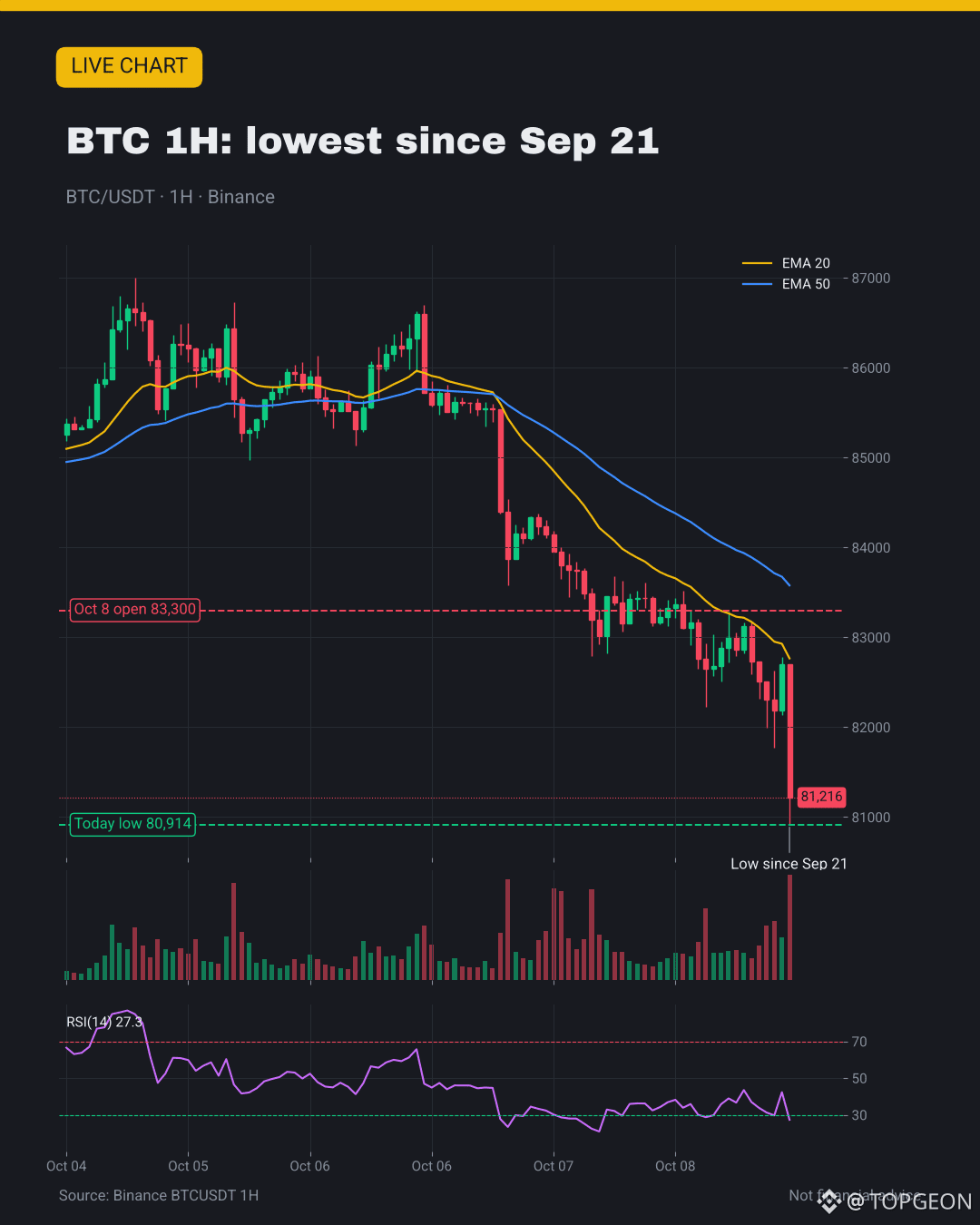
• BTC $81.2K (-2.5%), lowest since Sep 21 · 1H RSI 27
🎯 My take: reclaiming $82.8K (1H EMA 20) eases it; lose $80.9K → $80K
💬 Custody shuffle or real supply hitting the market? 👇
#Bitcoin #Bitfinex #OnChain
68
Log in to explore more content
Join global crypto users on Binance Square
⚡️ Get latest and useful information about crypto.
💬 Trusted by the world’s largest crypto exchange.
👍 Discover real insights from verified creators.
Email / Phone number
Trending Topics
1
#XRPDropsToTwoYearLowNear87Cents
0 views
0 Discussing
2
#BitcoinFallsBelow$57KToTwoYearLow
0 views
0 Discussing
3
#NvidiaLoses$2.7TrillionInMonthAndAHalf
82 views
17 Discussing
4
#CanBTCReboundAfterFallingBelow60K?
477,933 views
2,117 Discussing
5
#GlobalStocksFaceLongestLosingStreakSince2023
164,781 views
1,471 Discussing
6
#BlackRockIBITPostsRecord$541MSingleDayOutflow
7,371 views
47 Discussing
7
#AnthropicPlungesTowardIPOPriceonDay2
78,782 views
841 Discussing
8
#TwentyOneCapitalAdds172.25BTC
30,258 views
374 Discussing
9
#HKBillWouldExcludeTokenizedDepositsFromVirtualAssets
2,974 views
39 Discussing
10
#BNBDropsBelow540USDTWith8.46%DailyDecline
46,202 views
427 Discussing