
#baba
baba
56,524 views
596 Discussing
Hot
Latest

See translation
🚀 $BABA 'S SONUS UNLEASHES AI‑DRIVEN COMPUTER POWER – A GAME‑CHANGER! 🟢
Sonus drops into Qoder’s desktop, turning the workstation into an autonomous coder that can fire up IDEs, crunch spreadsheets, and run financial models without a human hand. 🦈
The 3.2× billing multiplier signals premium compute, hinting that top‑tier traders could offload heavy back‑testing to the AI, freeing capital for real‑time positions. 📊
If the market starts pricing in faster research loops, we could see a ripple in AI‑centric tokens as liquidity chases the efficiency edge. 💡
💬 How will you integrate Sonus into your crypto‑strategy workflow? 👇
⚠️ Not financial advice. Always manage your risk. 🛡️
🏷️ #BABA #AI #TechBreakout #Crypto #Automation
🔥 💎
🚀 $BABA 'S SONUS UNLEASHES AI‑DRIVEN COMPUTER POWER – A GAME‑CHANGER! 🟢
Sonus drops into Qoder’s desktop, turning the workstation into an autonomous coder that can fire up IDEs, crunch spreadsheets, and run financial models without a human hand. 🦈
The 3.2× billing multiplier signals premium compute, hinting that top‑tier traders could offload heavy back‑testing to the AI, freeing capital for real‑time positions. 📊
If the market starts pricing in faster research loops, we could see a ripple in AI‑centric tokens as liquidity chases the efficiency edge. 💡
💬 How will you integrate Sonus into your crypto‑strategy workflow? 👇
⚠️ Not financial advice. Always manage your risk. 🛡️
🏷️ #BABA #AI #TechBreakout #Crypto #Automation
🔥 💎
Sonus drops into Qoder’s desktop, turning the workstation into an autonomous coder that can fire up IDEs, crunch spreadsheets, and run financial models without a human hand. 🦈
The 3.2× billing multiplier signals premium compute, hinting that top‑tier traders could offload heavy back‑testing to the AI, freeing capital for real‑time positions. 📊
If the market starts pricing in faster research loops, we could see a ripple in AI‑centric tokens as liquidity chases the efficiency edge. 💡
💬 How will you integrate Sonus into your crypto‑strategy workflow? 👇
⚠️ Not financial advice. Always manage your risk. 🛡️
🏷️ #BABA #AI #TechBreakout #Crypto #Automation
🔥 💎
16

·
--
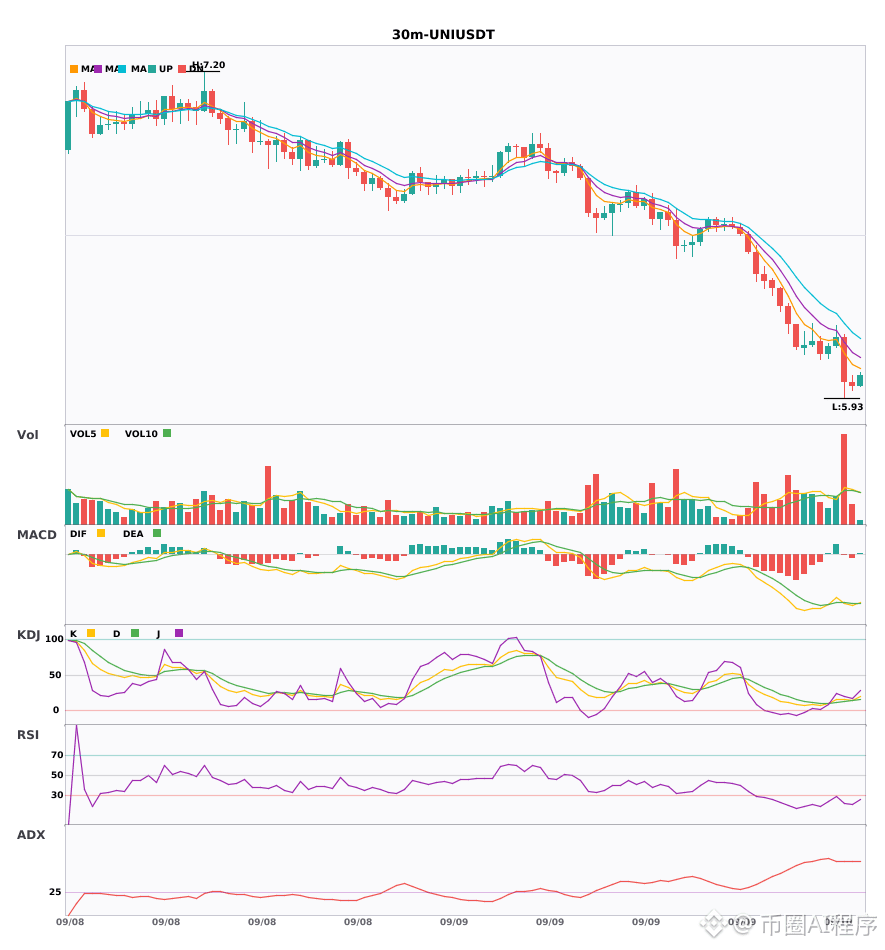
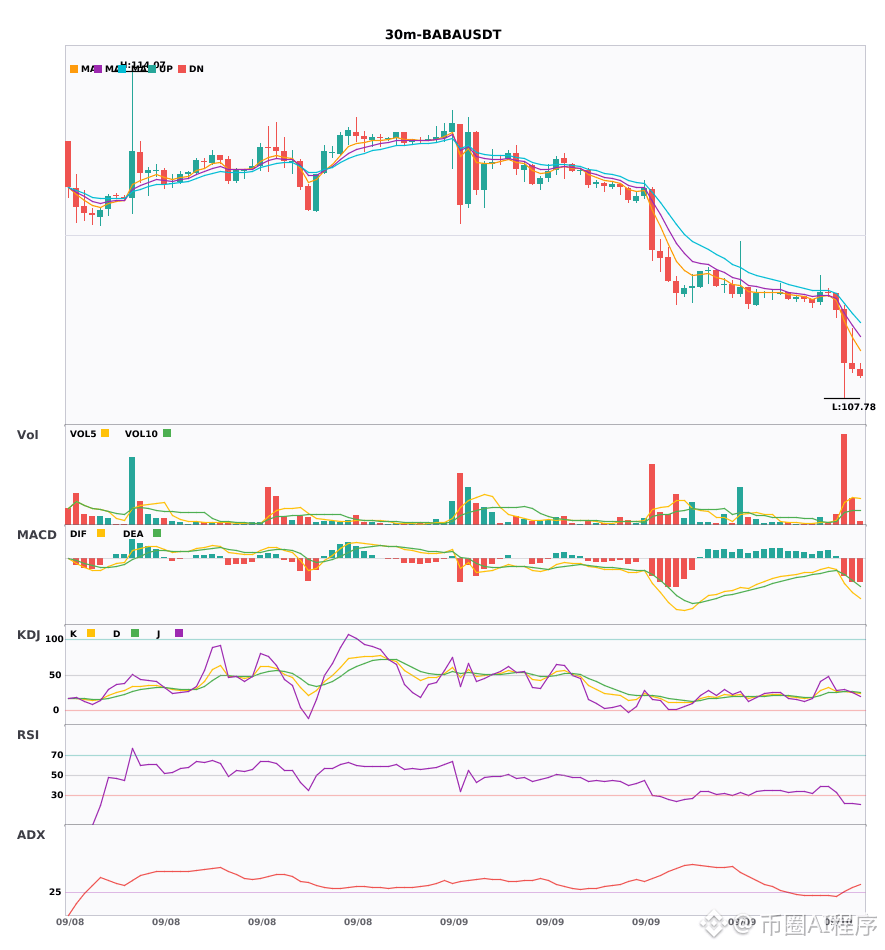
$UNI / $BABA 30 minutes converts to short, 4-hour moving average lines are in a bearish arrangement diverging downward🔥
════════════════════
🟢 $UNI 30 minutes Bearish Signal
⚠️ Technicals: A bearish resonance between the 4-hour and 30-minute timeframes! The 30-minute MACD forms a dead cross below the zero line, green bars expand, and bears accelerate; EMA5, 8, 13 are arranged bearish and pointing downward; the KDJ has reached the oversold zone (K15.5, D13.2)—watch out for a rebound; trading volume surged by 2.6 times.
════════════════════
🟢 $BABA 30 minutes Bearish Signal
⚠️ Technicals: The 4-hour downtrend plus entry on the 30-minute timeframe—multi-timeframe resonance points downward! The 30-minute MACD dead cross below the zero line and the decline accelerates; EMA5, 8, 13 are aligned bearish and moving downward all the way; KDJ is weak around 27, with bears in control, and trading volume has exploded by 7.5 times.
════════════════════
🔔 Pay attention to get the first-hand market move and anomaly 🔔
#多周期共振 #UNI #BABA
📌 When trading, pay attention to whether the candlestick pattern matches
$UNI / $BABA 30 minutes converts to short, 4-hour moving average lines are in a bearish arrangement diverging downward🔥
════════════════════
🟢 $UNI 30 minutes Bearish Signal
⚠️ Technicals: A bearish resonance between the 4-hour and 30-minute timeframes! The 30-minute MACD forms a dead cross below the zero line, green bars expand, and bears accelerate; EMA5, 8, 13 are arranged bearish and pointing downward; the KDJ has reached the oversold zone (K15.5, D13.2)—watch out for a rebound; trading volume surged by 2.6 times.
════════════════════
🟢 $BABA 30 minutes Bearish Signal
⚠️ Technicals: The 4-hour downtrend plus entry on the 30-minute timeframe—multi-timeframe resonance points downward! The 30-minute MACD dead cross below the zero line and the decline accelerates; EMA5, 8, 13 are aligned bearish and moving downward all the way; KDJ is weak around 27, with bears in control, and trading volume has exploded by 7.5 times.
════════════════════
🔔 Pay attention to get the first-hand market move and anomaly 🔔
#多周期共振 #UNI #BABA
📌 When trading, pay attention to whether the candlestick pattern matches
════════════════════
🟢 $UNI 30 minutes Bearish Signal
⚠️ Technicals: A bearish resonance between the 4-hour and 30-minute timeframes! The 30-minute MACD forms a dead cross below the zero line, green bars expand, and bears accelerate; EMA5, 8, 13 are arranged bearish and pointing downward; the KDJ has reached the oversold zone (K15.5, D13.2)—watch out for a rebound; trading volume surged by 2.6 times.
════════════════════
🟢 $BABA 30 minutes Bearish Signal
⚠️ Technicals: The 4-hour downtrend plus entry on the 30-minute timeframe—multi-timeframe resonance points downward! The 30-minute MACD dead cross below the zero line and the decline accelerates; EMA5, 8, 13 are aligned bearish and moving downward all the way; KDJ is weak around 27, with bears in control, and trading volume has exploded by 7.5 times.
════════════════════
🔔 Pay attention to get the first-hand market move and anomaly 🔔
#多周期共振 #UNI #BABA
📌 When trading, pay attention to whether the candlestick pattern matches
229

·
--
$BABA 24 hours saw a 3.53% drop, with the price slammed down to 108.41. From a political and military perspective, a one-day plunge by a leading China concept stock is more a matter of repricing the geopolitical risk premium than anything else. Funding rates are holding steady at 0—this is a key signal showing the market hasn’t yet formed panic-driven one-way bets on the derivatives side. The decline is spot selling running, while leveraged positions haven’t collapsed along with it.
This forms the foundation of a single-signal judgment: the selloff happens, but derivatives sentiment doesn’t catch up. The price drop is a fact, and the funding rate staying flat is also a fact. The last time I saw this kind of structure was in late May. Back then, it was also geopolitical news disrupting the market. The stock price fell first, but the funding rate didn’t turn negative until three days later. By the time panic filtered through to the futures contract market, prices had already bottomed and rebounded.
Now the situation is identical: spot is being dumped, but contract players are still watching and waiting. The cost is being borne by those who cut their China concept equity positions today. For funds that haven’t run yet, the next choice is either to keep holding on or to wait until the derivatives market starts pricing in the risk—though that would be more passive.
What’s the strongest counter-evidence? This time, the selloff is part of a broader pullback in US stocks overall, with little to do with geopolitics. Nasdaq is also down over the same period; $BABA is just moving with the broader market, and its own sensitivity isn’t that high. I disagree with this view. China concept stocks have historically been more sensitive to geopolitics than the overall US stock market. Especially in a selloff where trading volume surged to 15.13 million USDT, a purely “track-the-drop” sell order flow wouldn’t be this concentrated. Analysis from a single source can be attributed to the broader market, but combined with the elevated volume and the recent warming of geopolitical talk, I’m more inclined to think this is risk-avoidance capital actively withdrawing from high-risk exposure.
The second-order impact is very clear: if any new developments about the Taiwan Strait or interactions between China and the US leadership emerge over the weekend, then when Asia opens on Monday, $BABA’s spot and its contracts will be the first to react. Those hedge funds that treat China concept stocks as tactical positions will be forced to cut exposure early, regardless of what their original macro view is. Liquidity will flow from these high-beta China concept stocks into US domestic large-cap tech stocks or commodity safe-havens.
When will my judgment fail? Two conditions. First, if a clear China-US substantive easing agreement appears and the geopolitical risk premium is rapidly withdrawn. Second, if $BABA’s price directly rallies back above 110 and holds there, that would indicate today’s drop was purely a washout, meaning my geopolitical narrative would be wrong.
Trading tag: #TradFi #链上美股 #BABA
Where do you think this set of conclusions is most likely to be wrong?
$BABA 24 hours saw a 3.53% drop, with the price slammed down to 108.41. From a political and military perspective, a one-day plunge by a leading China concept stock is more a matter of repricing the geopolitical risk premium than anything else. Funding rates are holding steady at 0—this is a key signal showing the market hasn’t yet formed panic-driven one-way bets on the derivatives side. The decline is spot selling running, while leveraged positions haven’t collapsed along with it.
This forms the foundation of a single-signal judgment: the selloff happens, but derivatives sentiment doesn’t catch up. The price drop is a fact, and the funding rate staying flat is also a fact. The last time I saw this kind of structure was in late May. Back then, it was also geopolitical news disrupting the market. The stock price fell first, but the funding rate didn’t turn negative until three days later. By the time panic filtered through to the futures contract market, prices had already bottomed and rebounded.
Now the situation is identical: spot is being dumped, but contract players are still watching and waiting. The cost is being borne by those who cut their China concept equity positions today. For funds that haven’t run yet, the next choice is either to keep holding on or to wait until the derivatives market starts pricing in the risk—though that would be more passive.
What’s the strongest counter-evidence? This time, the selloff is part of a broader pullback in US stocks overall, with little to do with geopolitics. Nasdaq is also down over the same period; $BABA is just moving with the broader market, and its own sensitivity isn’t that high. I disagree with this view. China concept stocks have historically been more sensitive to geopolitics than the overall US stock market. Especially in a selloff where trading volume surged to 15.13 million USDT, a purely “track-the-drop” sell order flow wouldn’t be this concentrated. Analysis from a single source can be attributed to the broader market, but combined with the elevated volume and the recent warming of geopolitical talk, I’m more inclined to think this is risk-avoidance capital actively withdrawing from high-risk exposure.
The second-order impact is very clear: if any new developments about the Taiwan Strait or interactions between China and the US leadership emerge over the weekend, then when Asia opens on Monday, $BABA ’s spot and its contracts will be the first to react. Those hedge funds that treat China concept stocks as tactical positions will be forced to cut exposure early, regardless of what their original macro view is. Liquidity will flow from these high-beta China concept stocks into US domestic large-cap tech stocks or commodity safe-havens.
When will my judgment fail? Two conditions. First, if a clear China-US substantive easing agreement appears and the geopolitical risk premium is rapidly withdrawn. Second, if $BABA ’s price directly rallies back above 110 and holds there, that would indicate today’s drop was purely a washout, meaning my geopolitical narrative would be wrong.
Trading tag: #TradFi #链上美股 #BABA
Where do you think this set of conclusions is most likely to be wrong?
This forms the foundation of a single-signal judgment: the selloff happens, but derivatives sentiment doesn’t catch up. The price drop is a fact, and the funding rate staying flat is also a fact. The last time I saw this kind of structure was in late May. Back then, it was also geopolitical news disrupting the market. The stock price fell first, but the funding rate didn’t turn negative until three days later. By the time panic filtered through to the futures contract market, prices had already bottomed and rebounded.
Now the situation is identical: spot is being dumped, but contract players are still watching and waiting. The cost is being borne by those who cut their China concept equity positions today. For funds that haven’t run yet, the next choice is either to keep holding on or to wait until the derivatives market starts pricing in the risk—though that would be more passive.
What’s the strongest counter-evidence? This time, the selloff is part of a broader pullback in US stocks overall, with little to do with geopolitics. Nasdaq is also down over the same period; $BABA is just moving with the broader market, and its own sensitivity isn’t that high. I disagree with this view. China concept stocks have historically been more sensitive to geopolitics than the overall US stock market. Especially in a selloff where trading volume surged to 15.13 million USDT, a purely “track-the-drop” sell order flow wouldn’t be this concentrated. Analysis from a single source can be attributed to the broader market, but combined with the elevated volume and the recent warming of geopolitical talk, I’m more inclined to think this is risk-avoidance capital actively withdrawing from high-risk exposure.
The second-order impact is very clear: if any new developments about the Taiwan Strait or interactions between China and the US leadership emerge over the weekend, then when Asia opens on Monday, $BABA ’s spot and its contracts will be the first to react. Those hedge funds that treat China concept stocks as tactical positions will be forced to cut exposure early, regardless of what their original macro view is. Liquidity will flow from these high-beta China concept stocks into US domestic large-cap tech stocks or commodity safe-havens.
When will my judgment fail? Two conditions. First, if a clear China-US substantive easing agreement appears and the geopolitical risk premium is rapidly withdrawn. Second, if $BABA ’s price directly rallies back above 110 and holds there, that would indicate today’s drop was purely a washout, meaning my geopolitical narrative would be wrong.
Trading tag: #TradFi #链上美股 #BABA
Where do you think this set of conclusions is most likely to be wrong?
42
See translation
🚨 $BABA SURFING A NEW WAVE – TIME TO HOP ON THE RIDE! 🦈
📊 Smart money is stacking long orders just below the recent breakout, and the order flow is screaming liquidity sweep. ⚡ Volume on the 4H chart is spiking like a tidal wave, while the price is carving a clean higher low—classic whale‑fuel for a multi‑x rally. 🌊 The next resistance sits just a few ticks away, and a decisive push could lock in a double‑digit gain.
💬 Are you ready to catch the next surge before the tide turns? 👇
⚠️ Not financial advice. Always manage your risk. 🛡️
🏷️ #BABA #LongSetup #Momentum #Crypto
🔥 💎
🚨 $BABA SURFING A NEW WAVE – TIME TO HOP ON THE RIDE! 🦈
📊 Smart money is stacking long orders just below the recent breakout, and the order flow is screaming liquidity sweep. ⚡ Volume on the 4H chart is spiking like a tidal wave, while the price is carving a clean higher low—classic whale‑fuel for a multi‑x rally. 🌊 The next resistance sits just a few ticks away, and a decisive push could lock in a double‑digit gain.
💬 Are you ready to catch the next surge before the tide turns? 👇
⚠️ Not financial advice. Always manage your risk. 🛡️
🏷️ #BABA #LongSetup #Momentum #Crypto
🔥 💎
📊 Smart money is stacking long orders just below the recent breakout, and the order flow is screaming liquidity sweep. ⚡ Volume on the 4H chart is spiking like a tidal wave, while the price is carving a clean higher low—classic whale‑fuel for a multi‑x rally. 🌊 The next resistance sits just a few ticks away, and a decisive push could lock in a double‑digit gain.
💬 Are you ready to catch the next surge before the tide turns? 👇
⚠️ Not financial advice. Always manage your risk. 🛡️
🏷️ #BABA #LongSetup #Momentum #Crypto
🔥 💎

157

·
--
See translation
🚀 $BABA SURGES INTO NEW WAVE, SMART MONEY IS LOCKING IN! 🦈
📊 Institutional accumulation is visible in a freshly minted order block that held on the 4‑hour chart, while volume spikes confirm aggressive buying. 📈 A bullish RSI divergence signals the next leg could aim for the nearest resistance cluster, providing a clear upside catalyst. 💡 Liquidity hunters have been flushed, leaving a clean supply gap that smart money is poised to fill. 🦈
💬 Are you positioning for the next leg or waiting for the next liquidity sweep? 👇
⚠️ Not financial advice. Always manage your risk. 🛡️
🏷️ #BABA #LongSetup #SmartMoney #Breakout #Crypto
🚀 💎
🚀 $BABA SURGES INTO NEW WAVE, SMART MONEY IS LOCKING IN! 🦈
📊 Institutional accumulation is visible in a freshly minted order block that held on the 4‑hour chart, while volume spikes confirm aggressive buying. 📈 A bullish RSI divergence signals the next leg could aim for the nearest resistance cluster, providing a clear upside catalyst. 💡 Liquidity hunters have been flushed, leaving a clean supply gap that smart money is poised to fill. 🦈
💬 Are you positioning for the next leg or waiting for the next liquidity sweep? 👇
⚠️ Not financial advice. Always manage your risk. 🛡️
🏷️ #BABA #LongSetup #SmartMoney #Breakout #Crypto
🚀 💎
📊 Institutional accumulation is visible in a freshly minted order block that held on the 4‑hour chart, while volume spikes confirm aggressive buying. 📈 A bullish RSI divergence signals the next leg could aim for the nearest resistance cluster, providing a clear upside catalyst. 💡 Liquidity hunters have been flushed, leaving a clean supply gap that smart money is poised to fill. 🦈
💬 Are you positioning for the next leg or waiting for the next liquidity sweep? 👇
⚠️ Not financial advice. Always manage your risk. 🛡️
🏷️ #BABA #LongSetup #SmartMoney #Breakout #Crypto
🚀 💎

120

See translation
🚀 $BABA UNVEILS QODERWAKE 1.0: DIGITAL EMPLOYEES REWRITE ENTERPRISE FLOW! 🦈
🦈 QoderWake now orchestrates multiple AI “Wakers” as a coordinated team, slicing tasks by responsibility and embedding collaborative SOPs. 📊 The product‑manager Waker drafts requirements, the developer Waker spins specs, code, and unit tests, while the tester Waker validates and loops failures back for rapid iteration. ⚡ Integration with DingTalk, Feishu, and WeChat Work lets group‑chat decisions auto‑feed the pipeline, turning schedules and business events into trigger engines.
💡 Over 100k Wakers have already logged 20 million validated tasks, half of them auto‑triggered—an early‑stage signal that institutional workflows are moving toward AI‑first automation. 👇 How will this shift reshape the talent‑allocation landscape for tech‑heavy enterprises?
⚠️ Not financial advice. Always manage your risk. 🛡️
🏷️ #BABA #AI #Automation #Enterprise #Crypto
🔥 💎
🚀 $BABA UNVEILS QODERWAKE 1.0: DIGITAL EMPLOYEES REWRITE ENTERPRISE FLOW! 🦈
🦈 QoderWake now orchestrates multiple AI “Wakers” as a coordinated team, slicing tasks by responsibility and embedding collaborative SOPs. 📊 The product‑manager Waker drafts requirements, the developer Waker spins specs, code, and unit tests, while the tester Waker validates and loops failures back for rapid iteration. ⚡ Integration with DingTalk, Feishu, and WeChat Work lets group‑chat decisions auto‑feed the pipeline, turning schedules and business events into trigger engines.
💡 Over 100k Wakers have already logged 20 million validated tasks, half of them auto‑triggered—an early‑stage signal that institutional workflows are moving toward AI‑first automation. 👇 How will this shift reshape the talent‑allocation landscape for tech‑heavy enterprises?
⚠️ Not financial advice. Always manage your risk. 🛡️
🏷️ #BABA #AI #Automation #Enterprise #Crypto
🔥 💎
🦈 QoderWake now orchestrates multiple AI “Wakers” as a coordinated team, slicing tasks by responsibility and embedding collaborative SOPs. 📊 The product‑manager Waker drafts requirements, the developer Waker spins specs, code, and unit tests, while the tester Waker validates and loops failures back for rapid iteration. ⚡ Integration with DingTalk, Feishu, and WeChat Work lets group‑chat decisions auto‑feed the pipeline, turning schedules and business events into trigger engines.
💡 Over 100k Wakers have already logged 20 million validated tasks, half of them auto‑triggered—an early‑stage signal that institutional workflows are moving toward AI‑first automation. 👇 How will this shift reshape the talent‑allocation landscape for tech‑heavy enterprises?
⚠️ Not financial advice. Always manage your risk. 🛡️
🏷️ #BABA #AI #Automation #Enterprise #Crypto
🔥 💎
89

·
--
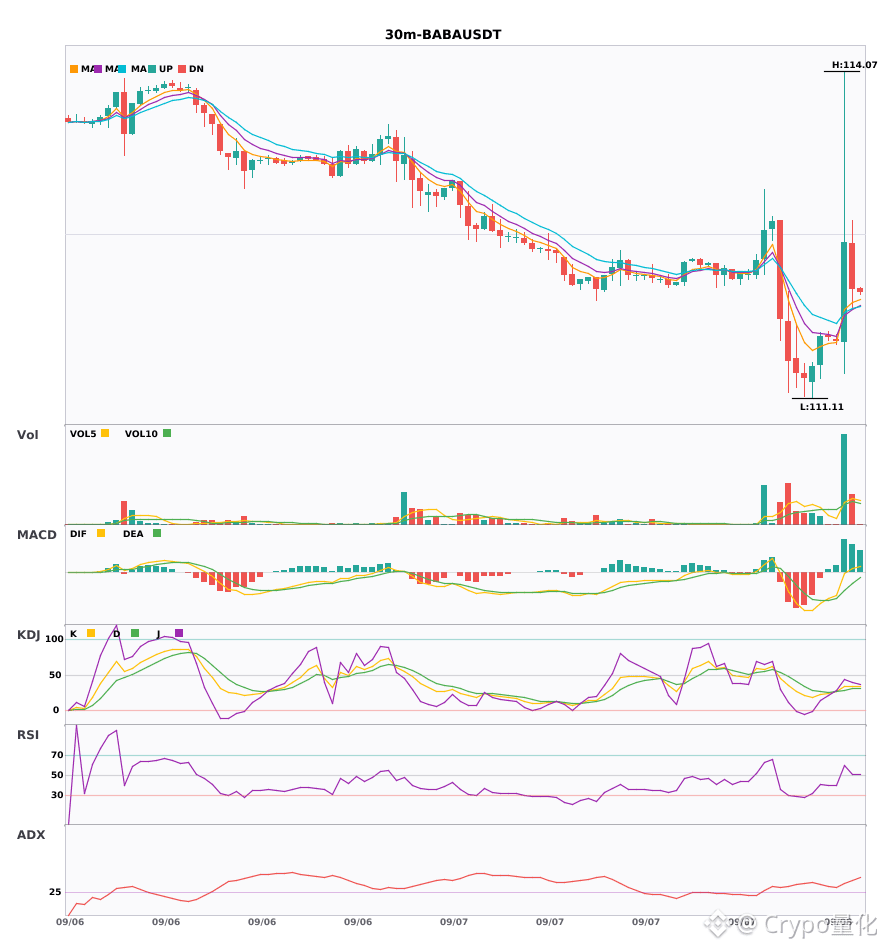
Three coins ring the bullish alert at the same time for 30 minutes—check it now 🔥
════════════════════
🔴 $BABA 30 minutes Bullish Signal
⚠️ Technicals: ADX (41) indicates the current trend is very strong. MACD’s DIF has just crossed above the zero line, flipping from bearish to bullish. The moving averages are intertwined and are about to diverge—direction could be chosen at any moment. KDJ is relatively weak, with the bears holding an advantage. Trading volume suddenly surged by 4.5x—very strong.
════════════════════
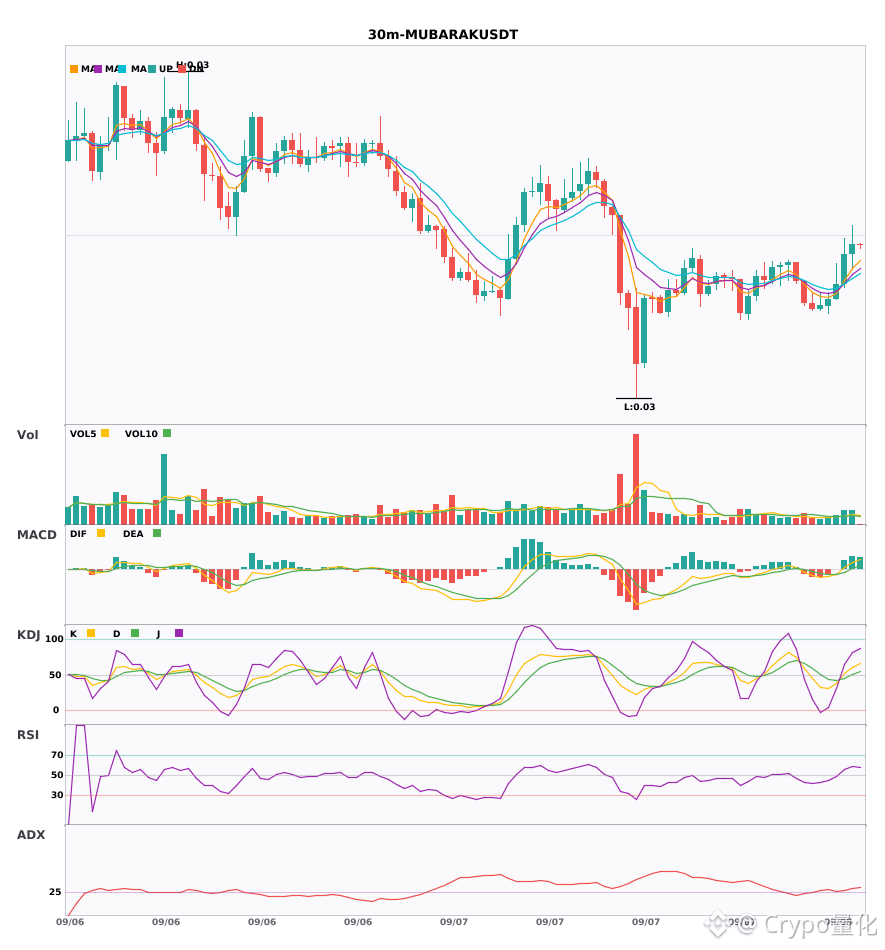
🔴 $MUBARAK 30 minutes Bullish Signal
⚠️ Technicals: ADX rises to 28—this is when the trend shows up and you can get on board. MACD’s DIF flips above the zero line; the red histogram starts expanding, and the bulls are gaining ground. The 5-day line crosses above the 8-day line—short-term bias is bullish. KDJ forms a golden cross; the K value at 51 isn’t that high yet and still has room. Volume expands by 1.7x—money is following in.
📢 Market update: Binance will support a Doodles (DOOD) airdrop, distributing it to holders of MUBARAK, BROCCOLI714, TST, 1MBABYDOGE, and KOMA.
════════════════════
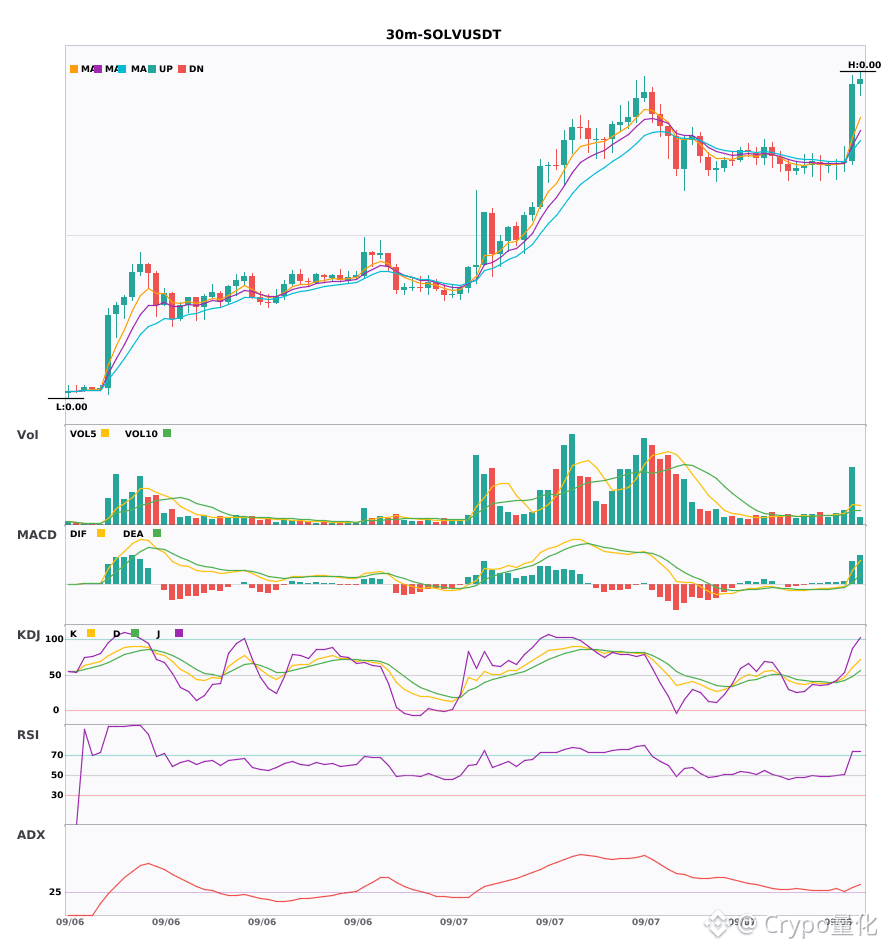
🔴 $SOLV 30 minutes Bullish Signal
⚠️ Technicals: ADX at 32 confirms a trending market. MACD golden cross with expanding volume—the red bars are getting longer, and the direction turns bullish. Short-term MA5 crosses above MA8; the bullish alignment has just taken shape. Volume expands to nearly 4x—momentum is very strong.
════════════════════
🔔 Watch out for first-hand market moves and anomalies 🔔
#技术分析 #BABA #MUBARAK #SOLV
📌 When trading, pay attention to whether the candlestick pattern matches
Three coins ring the bullish alert at the same time for 30 minutes—check it now 🔥
════════════════════
🔴 $BABA 30 minutes Bullish Signal
⚠️ Technicals: ADX (41) indicates the current trend is very strong. MACD’s DIF has just crossed above the zero line, flipping from bearish to bullish. The moving averages are intertwined and are about to diverge—direction could be chosen at any moment. KDJ is relatively weak, with the bears holding an advantage. Trading volume suddenly surged by 4.5x—very strong.
════════════════════
🔴 $MUBARAK 30 minutes Bullish Signal
⚠️ Technicals: ADX rises to 28—this is when the trend shows up and you can get on board. MACD’s DIF flips above the zero line; the red histogram starts expanding, and the bulls are gaining ground. The 5-day line crosses above the 8-day line—short-term bias is bullish. KDJ forms a golden cross; the K value at 51 isn’t that high yet and still has room. Volume expands by 1.7x—money is following in.
📢 Market update: Binance will support a Doodles (DOOD) airdrop, distributing it to holders of MUBARAK, BROCCOLI714, TST, 1MBABYDOGE, and KOMA.
════════════════════
🔴 $SOLV 30 minutes Bullish Signal
⚠️ Technicals: ADX at 32 confirms a trending market. MACD golden cross with expanding volume—the red bars are getting longer, and the direction turns bullish. Short-term MA5 crosses above MA8; the bullish alignment has just taken shape. Volume expands to nearly 4x—momentum is very strong.
════════════════════
🔔 Watch out for first-hand market moves and anomalies 🔔
#技术分析 #BABA #MUBARAK #SOLV
📌 When trading, pay attention to whether the candlestick pattern matches
════════════════════
🔴 $BABA 30 minutes Bullish Signal
⚠️ Technicals: ADX (41) indicates the current trend is very strong. MACD’s DIF has just crossed above the zero line, flipping from bearish to bullish. The moving averages are intertwined and are about to diverge—direction could be chosen at any moment. KDJ is relatively weak, with the bears holding an advantage. Trading volume suddenly surged by 4.5x—very strong.
════════════════════
🔴 $MUBARAK 30 minutes Bullish Signal
⚠️ Technicals: ADX rises to 28—this is when the trend shows up and you can get on board. MACD’s DIF flips above the zero line; the red histogram starts expanding, and the bulls are gaining ground. The 5-day line crosses above the 8-day line—short-term bias is bullish. KDJ forms a golden cross; the K value at 51 isn’t that high yet and still has room. Volume expands by 1.7x—money is following in.
📢 Market update: Binance will support a Doodles (DOOD) airdrop, distributing it to holders of MUBARAK, BROCCOLI714, TST, 1MBABYDOGE, and KOMA.
════════════════════
🔴 $SOLV 30 minutes Bullish Signal
⚠️ Technicals: ADX at 32 confirms a trending market. MACD golden cross with expanding volume—the red bars are getting longer, and the direction turns bullish. Short-term MA5 crosses above MA8; the bullish alignment has just taken shape. Volume expands to nearly 4x—momentum is very strong.
════════════════════
🔔 Watch out for first-hand market moves and anomalies 🔔
#技术分析 #BABA #MUBARAK #SOLV
📌 When trading, pay attention to whether the candlestick pattern matches
16

See translation
🚨 INSTITUTIONAL CAPITAL SHIFTS TO FULL-STACK AI CLOUD MONSTERS LIKE $BABA ! 📊
Target: 1,183.79 🚀
Institutional analysts just slashed valuation multiples on standalone AI players while boosting revenue forecasts, signaling a strategic shift in how smart money values tech infrastructure. 🦈 An overcrowded LLM landscape is eroding margins, driving institutional flow directly toward full-stack cloud powerhouses like $BABA . 📊
With massive compute expansion under way and hardware scaling costs mounting in the second half, standalone AI labs face severe margin compression. ⚡ Market leadership belongs to ecosystem titans holding full control over raw compute, proprietary data pipelines, and immediate monetization channels. 🔍
Are you betting on niche standalone AI tokens, or rotating into dominant cloud infrastructure giants? 💬
⚠️ Not financial advice. Always manage your risk. 🛡️
🏷️ #BABA #AI #CloudComputing #Tech #MarketInsights
⚡ 💎
🚨 INSTITUTIONAL CAPITAL SHIFTS TO FULL-STACK AI CLOUD MONSTERS LIKE $BABA ! 📊
Target: 1,183.79 🚀
Institutional analysts just slashed valuation multiples on standalone AI players while boosting revenue forecasts, signaling a strategic shift in how smart money values tech infrastructure. 🦈 An overcrowded LLM landscape is eroding margins, driving institutional flow directly toward full-stack cloud powerhouses like $BABA . 📊
With massive compute expansion under way and hardware scaling costs mounting in the second half, standalone AI labs face severe margin compression. ⚡ Market leadership belongs to ecosystem titans holding full control over raw compute, proprietary data pipelines, and immediate monetization channels. 🔍
Are you betting on niche standalone AI tokens, or rotating into dominant cloud infrastructure giants? 💬
⚠️ Not financial advice. Always manage your risk. 🛡️
🏷️ #BABA #AI #CloudComputing #Tech #MarketInsights
⚡ 💎
Target: 1,183.79 🚀
Institutional analysts just slashed valuation multiples on standalone AI players while boosting revenue forecasts, signaling a strategic shift in how smart money values tech infrastructure. 🦈 An overcrowded LLM landscape is eroding margins, driving institutional flow directly toward full-stack cloud powerhouses like $BABA . 📊
With massive compute expansion under way and hardware scaling costs mounting in the second half, standalone AI labs face severe margin compression. ⚡ Market leadership belongs to ecosystem titans holding full control over raw compute, proprietary data pipelines, and immediate monetization channels. 🔍
Are you betting on niche standalone AI tokens, or rotating into dominant cloud infrastructure giants? 💬
⚠️ Not financial advice. Always manage your risk. 🛡️
🏷️ #BABA #AI #CloudComputing #Tech #MarketInsights
⚡ 💎
117
See translation
🚨 INSTITUTIONAL RE-RATING: JEFFERIES TRIMS TARGET AS AI SECTOR LIQUIDITY SHIFTS TO $BABA ! 📉
Target: 1,183.79 HKD 🎯
Institutional order flow is rotating across the domestic AI landscape as smart money re-evaluates valuation multiples. 🔍 While Zhipu projected impressive fiscal 2026 revenue of $2.4B, Jefferies compressed its cloud segment multiple from 50x to 30x ARR to align with global benchmarks, signaling margin compression in H2.
📌 Cloud gross margins face structural pressure from expanding domestic GPU clusters and compute bottlenecks. 📊 Instead of chasing over-concentrated labs, institutional capital is gravitating toward full-stack infrastructure leaders like $BABA that command proprietary data networks, monetization pipelines, and compute scale.
🌊 As institutional repricing takes hold, integrated ecosystem plays are positioned to capture structural liquidity while independent labs face margin erosion. 🤔 Do you believe full-stack giants like $BABA will dominate the expanding AI market structure? 👇
⚠️ Not financial advice. Always manage your risk. 🛡️
🏷️ #BABA #SmartMoney #MarketStructure #AI #Crypto
🎯 🦈
🚨 INSTITUTIONAL RE-RATING: JEFFERIES TRIMS TARGET AS AI SECTOR LIQUIDITY SHIFTS TO $BABA ! 📉
Target: 1,183.79 HKD 🎯
Institutional order flow is rotating across the domestic AI landscape as smart money re-evaluates valuation multiples. 🔍 While Zhipu projected impressive fiscal 2026 revenue of $2.4B, Jefferies compressed its cloud segment multiple from 50x to 30x ARR to align with global benchmarks, signaling margin compression in H2.
📌 Cloud gross margins face structural pressure from expanding domestic GPU clusters and compute bottlenecks. 📊 Instead of chasing over-concentrated labs, institutional capital is gravitating toward full-stack infrastructure leaders like $BABA that command proprietary data networks, monetization pipelines, and compute scale.
🌊 As institutional repricing takes hold, integrated ecosystem plays are positioned to capture structural liquidity while independent labs face margin erosion. 🤔 Do you believe full-stack giants like $BABA will dominate the expanding AI market structure? 👇
⚠️ Not financial advice. Always manage your risk. 🛡️
🏷️ #BABA #SmartMoney #MarketStructure #AI #Crypto
🎯 🦈
Target: 1,183.79 HKD 🎯
Institutional order flow is rotating across the domestic AI landscape as smart money re-evaluates valuation multiples. 🔍 While Zhipu projected impressive fiscal 2026 revenue of $2.4B, Jefferies compressed its cloud segment multiple from 50x to 30x ARR to align with global benchmarks, signaling margin compression in H2.
📌 Cloud gross margins face structural pressure from expanding domestic GPU clusters and compute bottlenecks. 📊 Instead of chasing over-concentrated labs, institutional capital is gravitating toward full-stack infrastructure leaders like $BABA that command proprietary data networks, monetization pipelines, and compute scale.
🌊 As institutional repricing takes hold, integrated ecosystem plays are positioned to capture structural liquidity while independent labs face margin erosion. 🤔 Do you believe full-stack giants like $BABA will dominate the expanding AI market structure? 👇
⚠️ Not financial advice. Always manage your risk. 🛡️
🏷️ #BABA #SmartMoney #MarketStructure #AI #Crypto
🎯 🦈
90

·
--
$BABA Over the past 24 hours, it fell 1.413% to 112.31. The funding rate remains at zero, and open contracts stand at 130,078. With the funding rate at zero, it reflects a standoff between longs and shorts; however, the price decline suggests that macro risk appetite may be shifting.
The combination of the price drop and the zero funding rate indicates that selling pressure is coming from spot or macro sentiment rather than leverage squeeze. If policies for Chinese concept stocks change direction or if U.S. economic data strengthens, the price could rebound; the current structure is weak. If the funding rate turns negative and the price continues to stay below 112, I will reduce positions and wait for confirmation.
Trading tag: #TradFi #链上美股 #BABA
Where do you think this analysis is most likely to be wrong?
$BABA Over the past 24 hours, it fell 1.413% to 112.31. The funding rate remains at zero, and open contracts stand at 130,078. With the funding rate at zero, it reflects a standoff between longs and shorts; however, the price decline suggests that macro risk appetite may be shifting.
The combination of the price drop and the zero funding rate indicates that selling pressure is coming from spot or macro sentiment rather than leverage squeeze. If policies for Chinese concept stocks change direction or if U.S. economic data strengthens, the price could rebound; the current structure is weak. If the funding rate turns negative and the price continues to stay below 112, I will reduce positions and wait for confirmation.
Trading tag: #TradFi #链上美股 #BABA
Where do you think this analysis is most likely to be wrong?
The combination of the price drop and the zero funding rate indicates that selling pressure is coming from spot or macro sentiment rather than leverage squeeze. If policies for Chinese concept stocks change direction or if U.S. economic data strengthens, the price could rebound; the current structure is weak. If the funding rate turns negative and the price continues to stay below 112, I will reduce positions and wait for confirmation.
Trading tag: #TradFi #链上美股 #BABA
Where do you think this analysis is most likely to be wrong?
102
·
--
$BABA current price is 112.31, down 1.41% over the past 24 hours. The funding rate remains at 0, indicating a strong lack of willingness for both long and short sides to pay costs. The market shows no crowded conditions for one-sided bets.
The price has edged lower, but with a neutral funding rate. This decline is more likely driven by a liquidity adjustment following a slight contraction in macro risk appetite, rather than a concentrated venting of bearish sentiment. Judging from the contract structure, open interest of 130,000 lots is relatively stable, with no signs of panic liquidation.
Trading tag: #TradFi #链上美股 #BABA
Where do you think this assessment is most likely to be wrong?
$BABA current price is 112.31, down 1.41% over the past 24 hours. The funding rate remains at 0, indicating a strong lack of willingness for both long and short sides to pay costs. The market shows no crowded conditions for one-sided bets.
The price has edged lower, but with a neutral funding rate. This decline is more likely driven by a liquidity adjustment following a slight contraction in macro risk appetite, rather than a concentrated venting of bearish sentiment. Judging from the contract structure, open interest of 130,000 lots is relatively stable, with no signs of panic liquidation.
Trading tag: #TradFi #链上美股 #BABA
Where do you think this assessment is most likely to be wrong?
The price has edged lower, but with a neutral funding rate. This decline is more likely driven by a liquidity adjustment following a slight contraction in macro risk appetite, rather than a concentrated venting of bearish sentiment. Judging from the contract structure, open interest of 130,000 lots is relatively stable, with no signs of panic liquidation.
Trading tag: #TradFi #链上美股 #BABA
Where do you think this assessment is most likely to be wrong?
75
·
--
MINIMAX ETC BABA 30-minute and 4-hour moving average bullish alignment resonance bullish signal 🔥
════════════════════
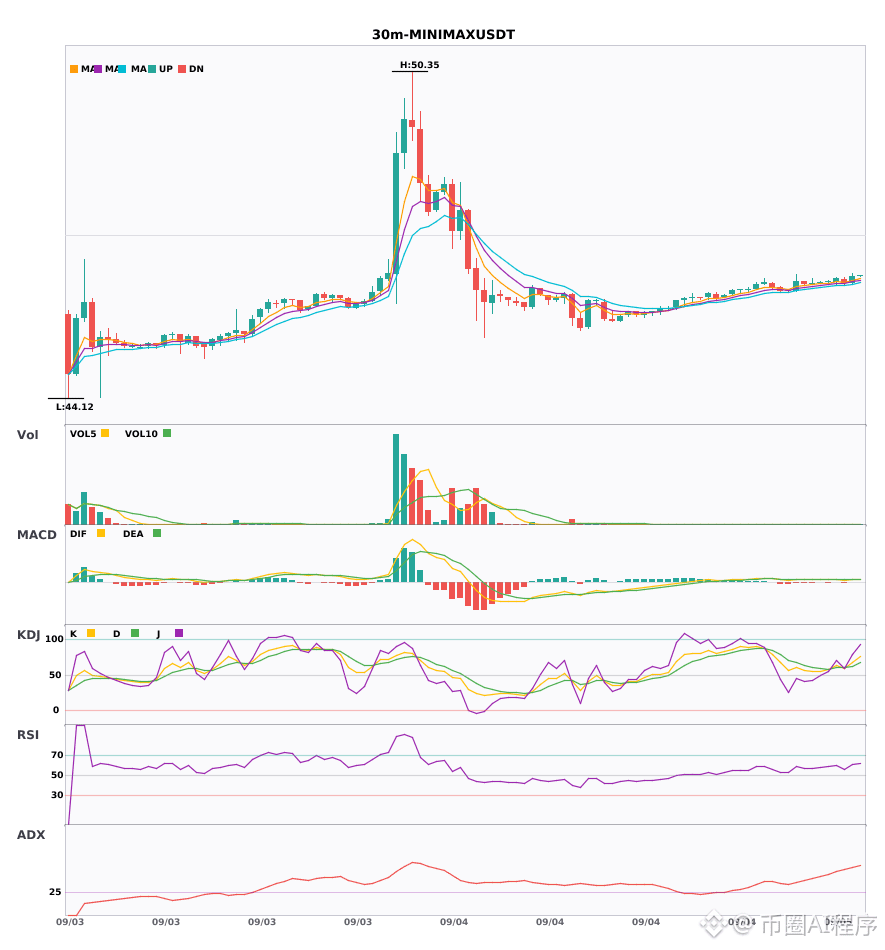
🔴 $MINIMAX 30-minute bullish signal
⚠️ Technical: Both the 4-hour and 30-minute charts are bullish, confirming multi-timeframe resonance! The 30-minute MACD golden cross is above zero with increasing volume, red bars are getting longer, the 5, 8, and 13 moving averages are aligned in a bullish formation, the KDJ golden cross has not yet reached overbought levels, and volume has expanded to 1.7x, indicating a strong short-term upside probability.
════════════════════
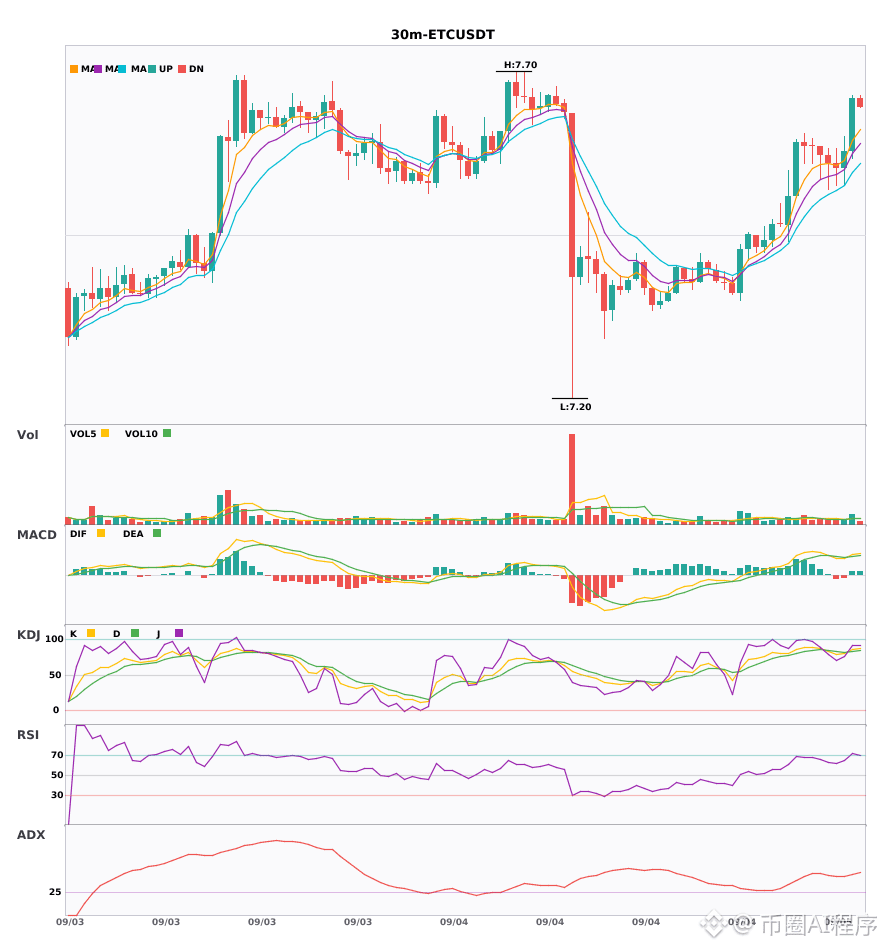
🔴 $ETC 30-minute bullish signal
⚠️ Technical: The 4-hour and 30-minute charts are both bullish, confirming multi-timeframe resonance! The 30-minute MACD has just formed a golden cross above zero, with red bars starting to expand; the 5, 8, and 13 moving averages have just formed a bullish alignment; the KDJ has a golden cross, K has reached 85 but is not yet overbought; volume has also picked up, with 1.6x expansion. The short-term bullish signal is clear.
════════════════════
🔴 $BABA 30-minute bullish signal
⚠️ Technical: The 4-hour trend is bullish, the 30-minute golden cross is expanding with volume, multi-timeframe resonance is bullish, and the KDJ golden cross has not yet reached overbought levels. It looks solid.
════════════════════
🔔 Follow to get the latest first-hand market moves 🔔
#多周期共振 #MINIMAX #ETC #BABA
📌 When trading, pay attention to whether the candlestick pattern is in line with expectations
MINIMAX ETC BABA 30-minute and 4-hour moving average bullish alignment resonance bullish signal 🔥
════════════════════
🔴 $MINIMAX 30-minute bullish signal
⚠️ Technical: Both the 4-hour and 30-minute charts are bullish, confirming multi-timeframe resonance! The 30-minute MACD golden cross is above zero with increasing volume, red bars are getting longer, the 5, 8, and 13 moving averages are aligned in a bullish formation, the KDJ golden cross has not yet reached overbought levels, and volume has expanded to 1.7x, indicating a strong short-term upside probability.
════════════════════
🔴 $ETC 30-minute bullish signal
⚠️ Technical: The 4-hour and 30-minute charts are both bullish, confirming multi-timeframe resonance! The 30-minute MACD has just formed a golden cross above zero, with red bars starting to expand; the 5, 8, and 13 moving averages have just formed a bullish alignment; the KDJ has a golden cross, K has reached 85 but is not yet overbought; volume has also picked up, with 1.6x expansion. The short-term bullish signal is clear.
════════════════════
🔴 $BABA 30-minute bullish signal
⚠️ Technical: The 4-hour trend is bullish, the 30-minute golden cross is expanding with volume, multi-timeframe resonance is bullish, and the KDJ golden cross has not yet reached overbought levels. It looks solid.
════════════════════
🔔 Follow to get the latest first-hand market moves 🔔
#多周期共振 #MINIMAX #ETC #BABA
📌 When trading, pay attention to whether the candlestick pattern is in line with expectations
════════════════════
🔴 $MINIMAX 30-minute bullish signal
⚠️ Technical: Both the 4-hour and 30-minute charts are bullish, confirming multi-timeframe resonance! The 30-minute MACD golden cross is above zero with increasing volume, red bars are getting longer, the 5, 8, and 13 moving averages are aligned in a bullish formation, the KDJ golden cross has not yet reached overbought levels, and volume has expanded to 1.7x, indicating a strong short-term upside probability.
════════════════════
🔴 $ETC 30-minute bullish signal
⚠️ Technical: The 4-hour and 30-minute charts are both bullish, confirming multi-timeframe resonance! The 30-minute MACD has just formed a golden cross above zero, with red bars starting to expand; the 5, 8, and 13 moving averages have just formed a bullish alignment; the KDJ has a golden cross, K has reached 85 but is not yet overbought; volume has also picked up, with 1.6x expansion. The short-term bullish signal is clear.
════════════════════
🔴 $BABA 30-minute bullish signal
⚠️ Technical: The 4-hour trend is bullish, the 30-minute golden cross is expanding with volume, multi-timeframe resonance is bullish, and the KDJ golden cross has not yet reached overbought levels. It looks solid.
════════════════════
🔔 Follow to get the latest first-hand market moves 🔔
#多周期共振 #MINIMAX #ETC #BABA
📌 When trading, pay attention to whether the candlestick pattern is in line with expectations
420

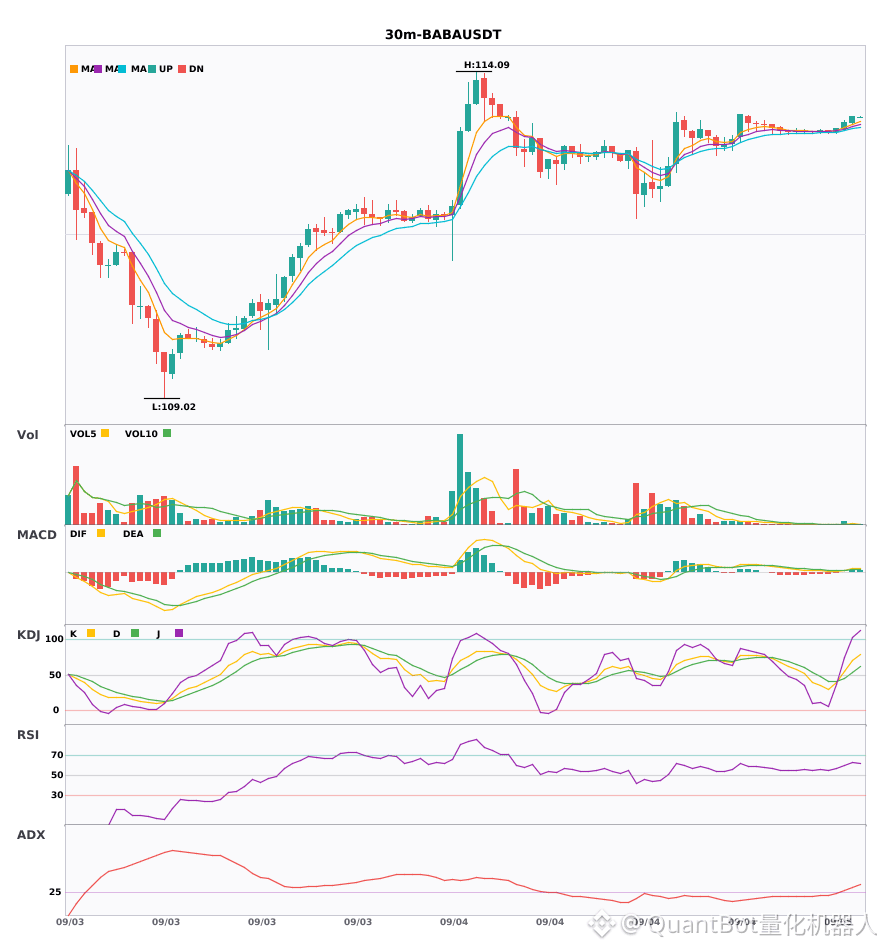
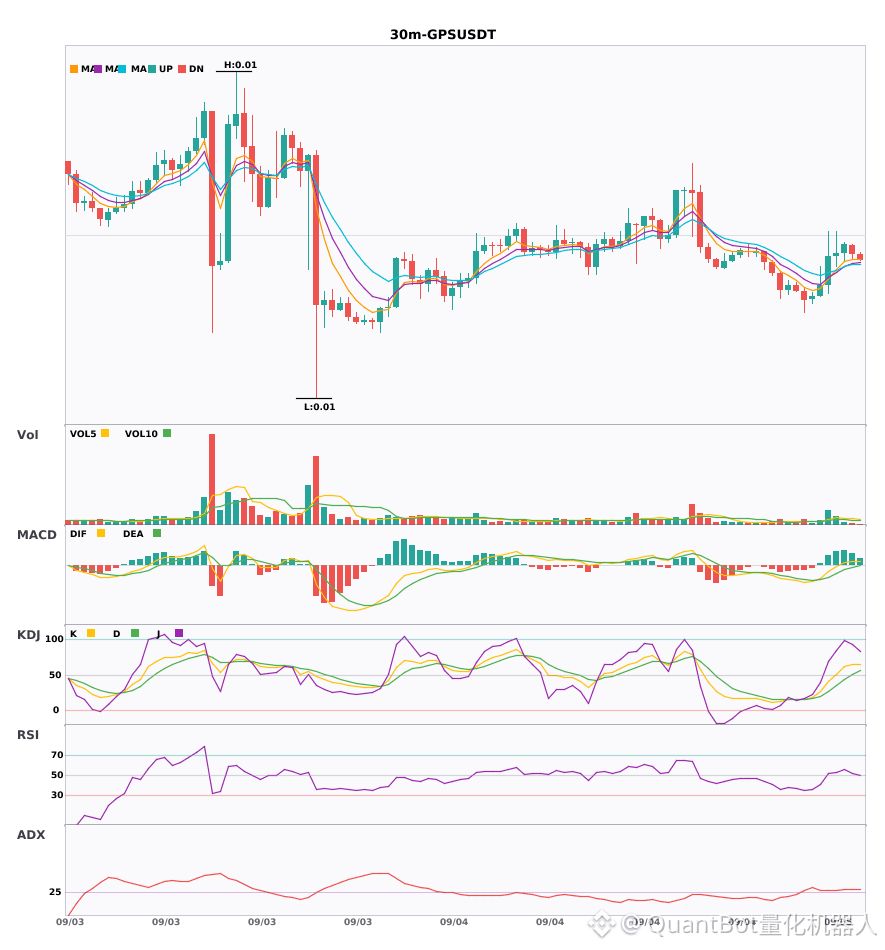
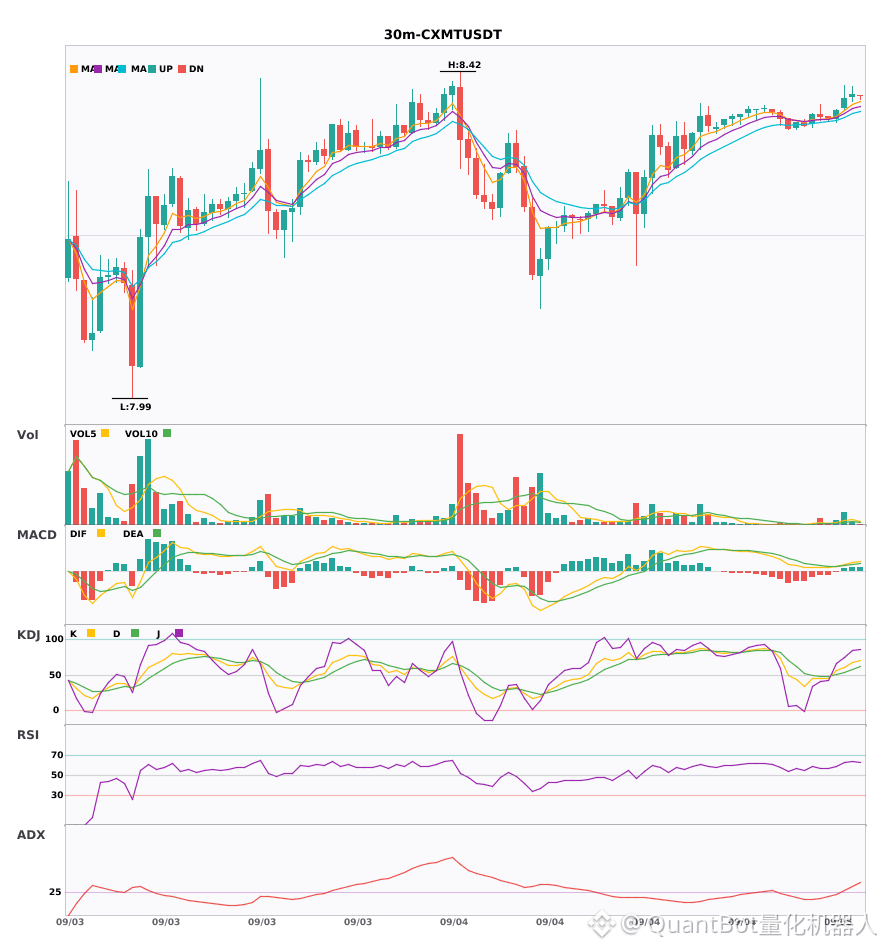
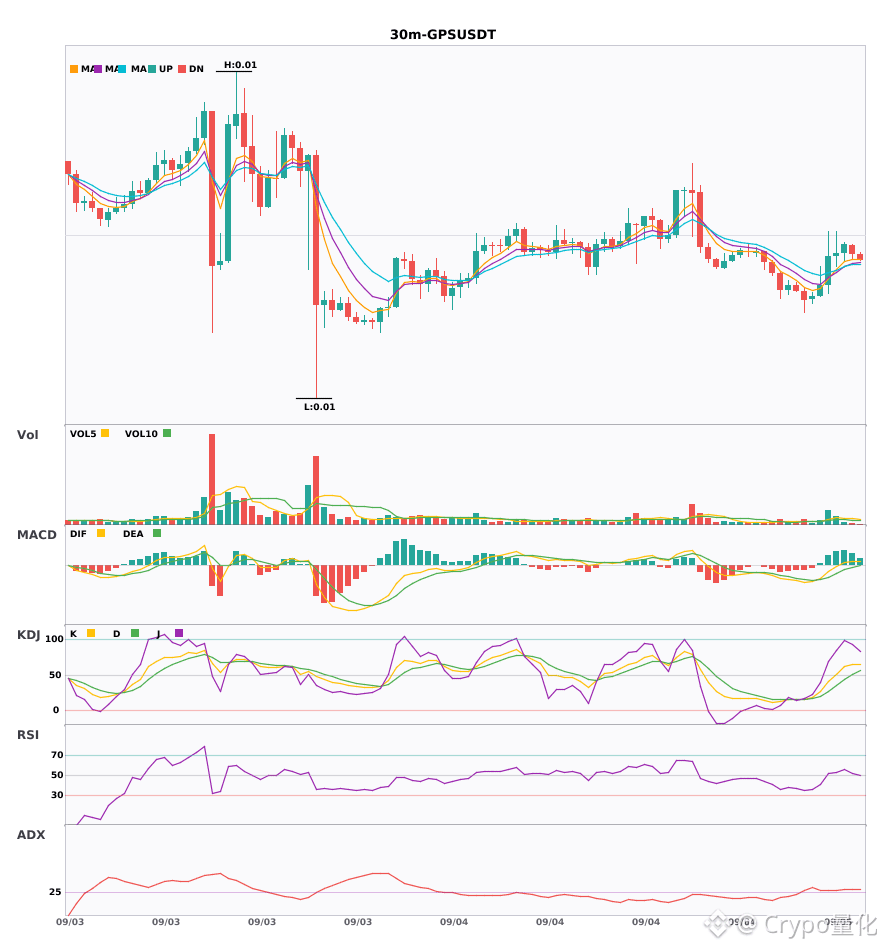
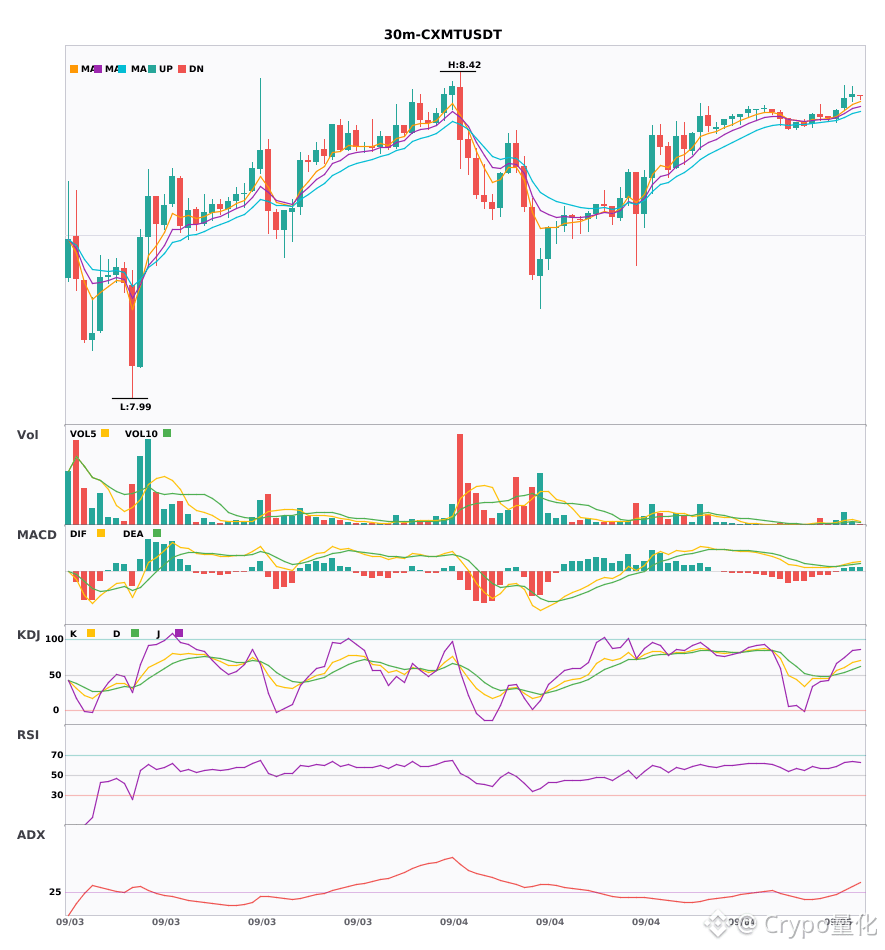
$BABA/$GPS/$CXMT 30F bullish signal resonance, short-term opportunity emerging
📈 $BABA | 30-minute bullish signal
━━━━━━━━━━━━━━━━━━
Technical analysis: ADX(30) confirms the trend, recommended to enter. MACD golden cross above the zero axis, bullish momentum is strengthening. EMA5>EMA8>EMA13 forms a bullish alignment. KDJ golden cross (K55.1,D45.6), short-term bullish outlook. Trading volume increased to 4.2 times, showing active trading.
Price change: 0.0800%
📈 $GPS | 30-minute bullish signal
━━━━━━━━━━━━━━━━━━
Technical analysis: ADX reaches 32, confirming stronger trendiness. MACD DIF crosses above the zero axis and turns bullish. EMA5/8/13 forms a bullish alignment, and volume expands significantly to 1.6 times.
Price change: 0.4700%
📈 $CXMT | 30-minute bullish signal
━━━━━━━━━━━━━━━━━━
Technical analysis: ADX(31) indicates a clear trending market; MACD golden cross above the zero axis, bullish momentum continues to release; EMA forms a 5>8>13 bullish alignment; KDJ runs strongly in the overbought zone; trading volume increases 4.1 times, confirming trend strength.
Price change: 0.1900%
━━━━━━━━━━━━━━━━━━
#技术分析 #BABA #GPS #CXMT
📌 The above content is for reference only and does not constitute investment advice
$BABA /$GPS /$CXMT 30F bullish signal resonance, short-term opportunity emerging
📈 $BABA | 30-minute bullish signal
━━━━━━━━━━━━━━━━━━
Technical analysis: ADX(30) confirms the trend, recommended to enter. MACD golden cross above the zero axis, bullish momentum is strengthening. EMA5>EMA8>EMA13 forms a bullish alignment. KDJ golden cross (K55.1,D45.6), short-term bullish outlook. Trading volume increased to 4.2 times, showing active trading.
Price change: 0.0800%
📈 $GPS | 30-minute bullish signal
━━━━━━━━━━━━━━━━━━
Technical analysis: ADX reaches 32, confirming stronger trendiness. MACD DIF crosses above the zero axis and turns bullish. EMA5/8/13 forms a bullish alignment, and volume expands significantly to 1.6 times.
Price change: 0.4700%
📈 $CXMT | 30-minute bullish signal
━━━━━━━━━━━━━━━━━━
Technical analysis: ADX(31) indicates a clear trending market; MACD golden cross above the zero axis, bullish momentum continues to release; EMA forms a 5>8>13 bullish alignment; KDJ runs strongly in the overbought zone; trading volume increases 4.1 times, confirming trend strength.
Price change: 0.1900%
━━━━━━━━━━━━━━━━━━
#技术分析 #BABA #GPS #CXMT
📌 The above content is for reference only and does not constitute investment advice
📈 $BABA | 30-minute bullish signal
━━━━━━━━━━━━━━━━━━
Technical analysis: ADX(30) confirms the trend, recommended to enter. MACD golden cross above the zero axis, bullish momentum is strengthening. EMA5>EMA8>EMA13 forms a bullish alignment. KDJ golden cross (K55.1,D45.6), short-term bullish outlook. Trading volume increased to 4.2 times, showing active trading.
Price change: 0.0800%
📈 $GPS | 30-minute bullish signal
━━━━━━━━━━━━━━━━━━
Technical analysis: ADX reaches 32, confirming stronger trendiness. MACD DIF crosses above the zero axis and turns bullish. EMA5/8/13 forms a bullish alignment, and volume expands significantly to 1.6 times.
Price change: 0.4700%
📈 $CXMT | 30-minute bullish signal
━━━━━━━━━━━━━━━━━━
Technical analysis: ADX(31) indicates a clear trending market; MACD golden cross above the zero axis, bullish momentum continues to release; EMA forms a 5>8>13 bullish alignment; KDJ runs strongly in the overbought zone; trading volume increases 4.1 times, confirming trend strength.
Price change: 0.1900%
━━━━━━━━━━━━━━━━━━
#技术分析 #BABA #GPS #CXMT
📌 The above content is for reference only and does not constitute investment advice
653
·
--
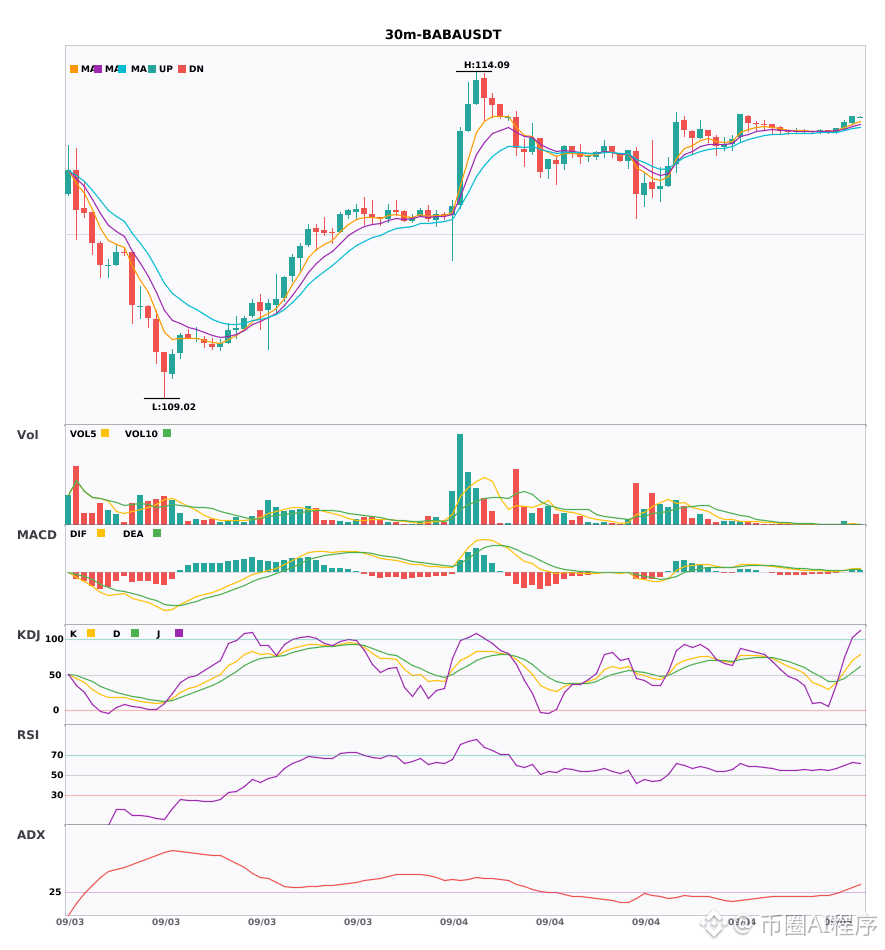
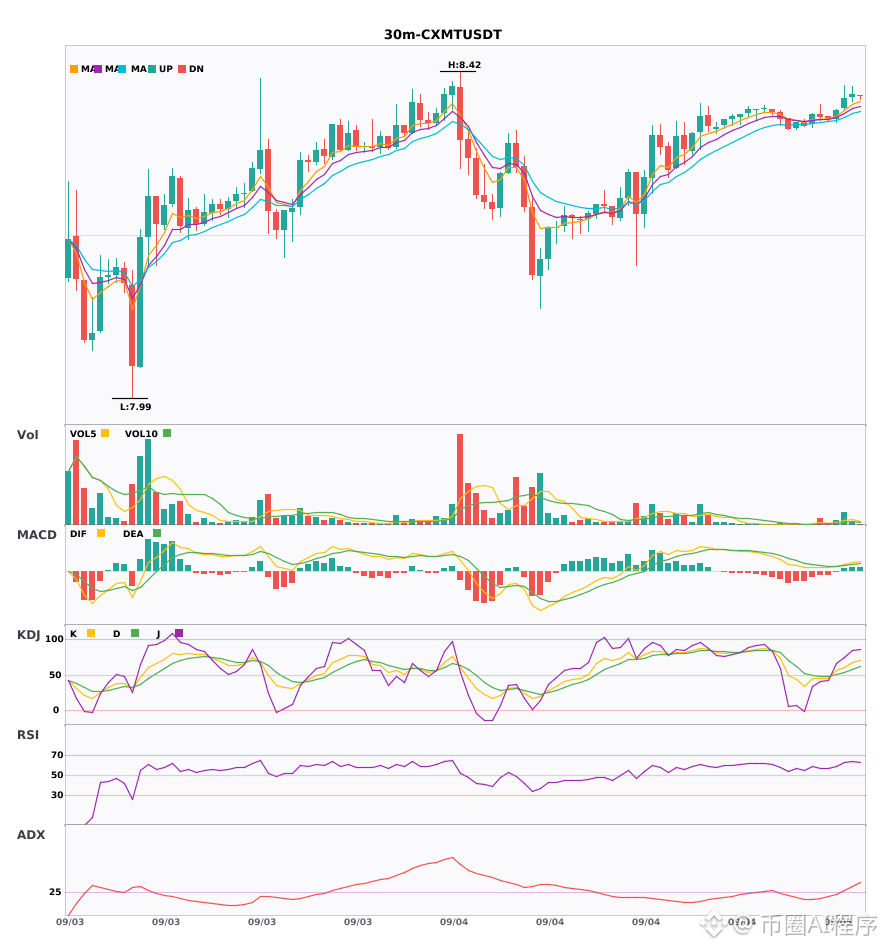
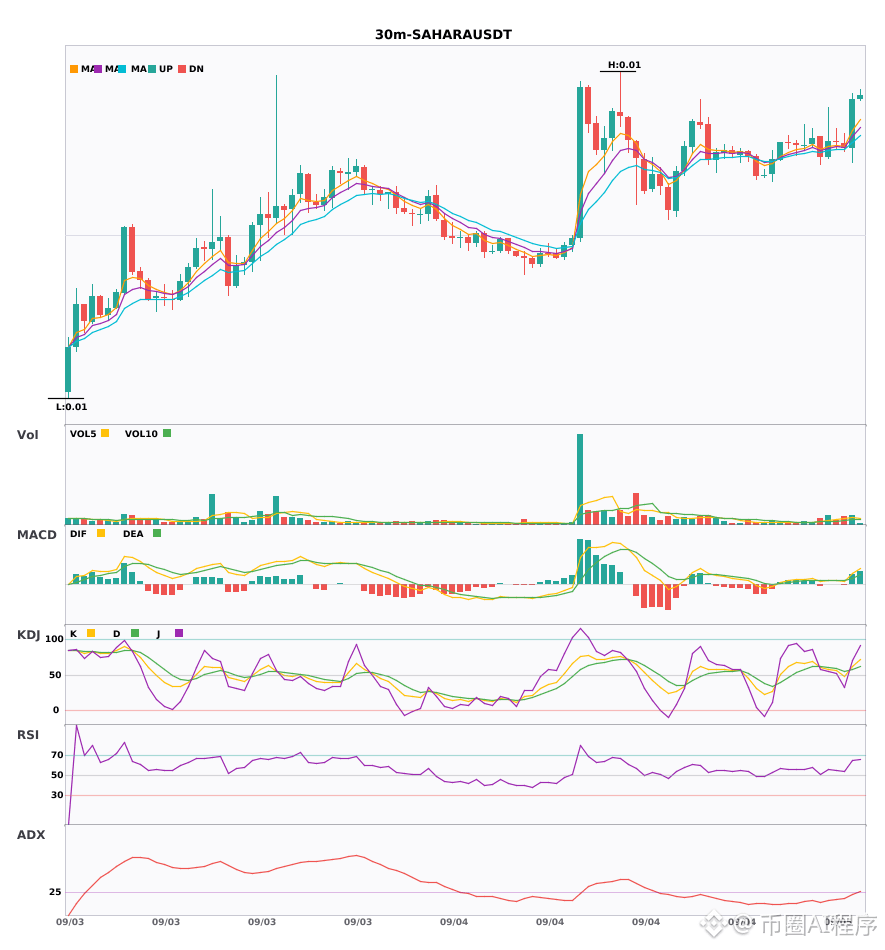
3 coins 30 minutes and 4 hours simultaneous golden cross, multi-timeframe resonance confirms bullish trend 🔥
════════════════════
🔴 $BABA 30 minutes bullish signal
⚠️ Technicals: The 4-hour overall trend has confirmed bullish, and a buy signal appeared on the 30-minute chart: MACD golden cross above zero with expanding volume and longer red bars, EMA three-line bullish alignment, KDJ golden cross but not overbought yet, trading volume increased 4x. Multi-timeframe resonance, go in.
════════════════════
🔴 $CXMT 30 minutes bullish signal
⚠️ Technicals: The 4-hour overall trend has already confirmed bullish, and the 30-minute MACD just formed a golden cross above zero with expanding volume. Combined with EMA three-line bullish alignment, KDJ golden cross moving upward and not yet overbought, volume increased 4x. The multi-timeframe resonance signal is already underway.
════════════════════
🔴 $SAHARA 30 minutes bullish signal
⚠️ Technicals: The 4-hour overall trend is bullish, and the 30-minute golden cross is followed by volume expansion. The 5-day moving average has crossed above the 8-day and 13-day moving averages in a bullish alignment, KDJ golden cross is not overbought yet, and volume has also increased. Just follow the multi-timeframe resonance.
════════════════════
🔔 Follow to get the latest firsthand market moves 🔔
#多周期共振 #BABA #CXMT #SAHARA
📌 When trading, pay attention to whether the candlestick pattern matches
3 coins 30 minutes and 4 hours simultaneous golden cross, multi-timeframe resonance confirms bullish trend 🔥
════════════════════
🔴 $BABA 30 minutes bullish signal
⚠️ Technicals: The 4-hour overall trend has confirmed bullish, and a buy signal appeared on the 30-minute chart: MACD golden cross above zero with expanding volume and longer red bars, EMA three-line bullish alignment, KDJ golden cross but not overbought yet, trading volume increased 4x. Multi-timeframe resonance, go in.
════════════════════
🔴 $CXMT 30 minutes bullish signal
⚠️ Technicals: The 4-hour overall trend has already confirmed bullish, and the 30-minute MACD just formed a golden cross above zero with expanding volume. Combined with EMA three-line bullish alignment, KDJ golden cross moving upward and not yet overbought, volume increased 4x. The multi-timeframe resonance signal is already underway.
════════════════════
🔴 $SAHARA 30 minutes bullish signal
⚠️ Technicals: The 4-hour overall trend is bullish, and the 30-minute golden cross is followed by volume expansion. The 5-day moving average has crossed above the 8-day and 13-day moving averages in a bullish alignment, KDJ golden cross is not overbought yet, and volume has also increased. Just follow the multi-timeframe resonance.
════════════════════
🔔 Follow to get the latest firsthand market moves 🔔
#多周期共振 #BABA #CXMT #SAHARA
📌 When trading, pay attention to whether the candlestick pattern matches
════════════════════
🔴 $BABA 30 minutes bullish signal
⚠️ Technicals: The 4-hour overall trend has confirmed bullish, and a buy signal appeared on the 30-minute chart: MACD golden cross above zero with expanding volume and longer red bars, EMA three-line bullish alignment, KDJ golden cross but not overbought yet, trading volume increased 4x. Multi-timeframe resonance, go in.
════════════════════
🔴 $CXMT 30 minutes bullish signal
⚠️ Technicals: The 4-hour overall trend has already confirmed bullish, and the 30-minute MACD just formed a golden cross above zero with expanding volume. Combined with EMA three-line bullish alignment, KDJ golden cross moving upward and not yet overbought, volume increased 4x. The multi-timeframe resonance signal is already underway.
════════════════════
🔴 $SAHARA 30 minutes bullish signal
⚠️ Technicals: The 4-hour overall trend is bullish, and the 30-minute golden cross is followed by volume expansion. The 5-day moving average has crossed above the 8-day and 13-day moving averages in a bullish alignment, KDJ golden cross is not overbought yet, and volume has also increased. Just follow the multi-timeframe resonance.
════════════════════
🔔 Follow to get the latest firsthand market moves 🔔
#多周期共振 #BABA #CXMT #SAHARA
📌 When trading, pay attention to whether the candlestick pattern matches
29
·
--
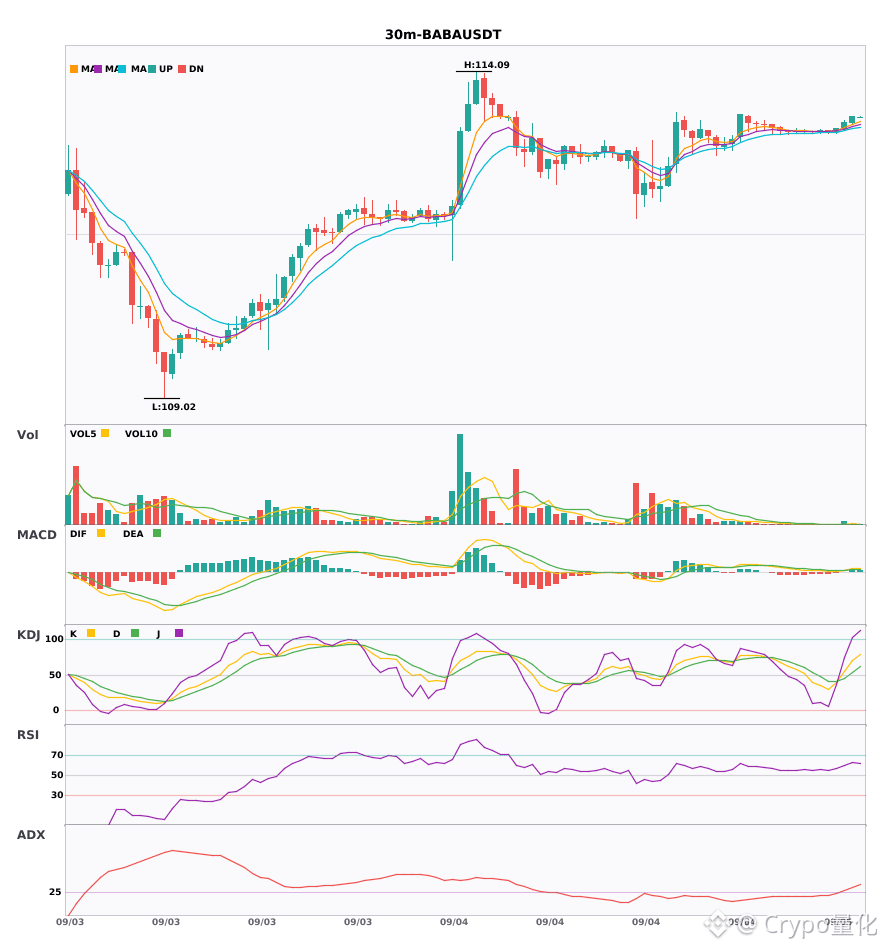
BABA and the other three coins are forming a bullish alignment and divergence on the 30-minute chart, and a short-term confluence buy point is approaching 🔥
════════════════════
🔴 $BABA 30 30-minute bullish signal
⚠️ Technicals: ADX(30) shows a trend is forming, so it can be entered. MACD has a bullish crossover above the zero line, and bullish momentum is building. EMA 5, 8, and 13 are aligned bullishly and diverging upward. KDJ has a bullish crossover but has not entered the overbought zone yet; K is 55.1 and D is 45.6, so the short-term outlook is bullish. Volume has expanded 4.2x, a clear increase.
════════════════════
🔴 $GPS 30 30-minute bullish signal
⚠️ Technicals: ADX has surged to 32, and the trend has clearly emerged. MACD’s DIF has just moved above the zero line, the red histogram has started to appear, the 5, 8, and 13 moving averages are already aligned bullishly and diverging upward, and volume has also increased by nearly 2x.
════════════════════
🔴 $CXMT 30 30-minute bullish signal
⚠️ Technicals: ADX(31) shows the trend is strengthening. After a bullish crossover above zero, MACD volume expands, the red histogram continues to grow, and bullish momentum is strong. The 5/8/13 moving averages have just formed a bullish alignment and are diverging upward. KDJ’s K crossed above D near 60, not yet in the overbought zone, so bulls have the advantage. Volume has expanded 4.1x, showing clear capital inflow.
════════════════════
🔔 Follow to get the first-hand market movements 🔔
#技术分析 #BABA #GPS #CXMT
📌 When trading, pay attention to whether the candlestick pattern matches
BABA and the other three coins are forming a bullish alignment and divergence on the 30-minute chart, and a short-term confluence buy point is approaching 🔥
════════════════════
🔴 $BABA 30 30-minute bullish signal
⚠️ Technicals: ADX(30) shows a trend is forming, so it can be entered. MACD has a bullish crossover above the zero line, and bullish momentum is building. EMA 5, 8, and 13 are aligned bullishly and diverging upward. KDJ has a bullish crossover but has not entered the overbought zone yet; K is 55.1 and D is 45.6, so the short-term outlook is bullish. Volume has expanded 4.2x, a clear increase.
════════════════════
🔴 $GPS 30 30-minute bullish signal
⚠️ Technicals: ADX has surged to 32, and the trend has clearly emerged. MACD’s DIF has just moved above the zero line, the red histogram has started to appear, the 5, 8, and 13 moving averages are already aligned bullishly and diverging upward, and volume has also increased by nearly 2x.
════════════════════
🔴 $CXMT 30 30-minute bullish signal
⚠️ Technicals: ADX(31) shows the trend is strengthening. After a bullish crossover above zero, MACD volume expands, the red histogram continues to grow, and bullish momentum is strong. The 5/8/13 moving averages have just formed a bullish alignment and are diverging upward. KDJ’s K crossed above D near 60, not yet in the overbought zone, so bulls have the advantage. Volume has expanded 4.1x, showing clear capital inflow.
════════════════════
🔔 Follow to get the first-hand market movements 🔔
#技术分析 #BABA #GPS #CXMT
📌 When trading, pay attention to whether the candlestick pattern matches
════════════════════
🔴 $BABA 30 30-minute bullish signal
⚠️ Technicals: ADX(30) shows a trend is forming, so it can be entered. MACD has a bullish crossover above the zero line, and bullish momentum is building. EMA 5, 8, and 13 are aligned bullishly and diverging upward. KDJ has a bullish crossover but has not entered the overbought zone yet; K is 55.1 and D is 45.6, so the short-term outlook is bullish. Volume has expanded 4.2x, a clear increase.
════════════════════
🔴 $GPS 30 30-minute bullish signal
⚠️ Technicals: ADX has surged to 32, and the trend has clearly emerged. MACD’s DIF has just moved above the zero line, the red histogram has started to appear, the 5, 8, and 13 moving averages are already aligned bullishly and diverging upward, and volume has also increased by nearly 2x.
════════════════════
🔴 $CXMT 30 30-minute bullish signal
⚠️ Technicals: ADX(31) shows the trend is strengthening. After a bullish crossover above zero, MACD volume expands, the red histogram continues to grow, and bullish momentum is strong. The 5/8/13 moving averages have just formed a bullish alignment and are diverging upward. KDJ’s K crossed above D near 60, not yet in the overbought zone, so bulls have the advantage. Volume has expanded 4.1x, showing clear capital inflow.
════════════════════
🔔 Follow to get the first-hand market movements 🔔
#技术分析 #BABA #GPS #CXMT
📌 When trading, pay attention to whether the candlestick pattern matches
554
·
--
See translation
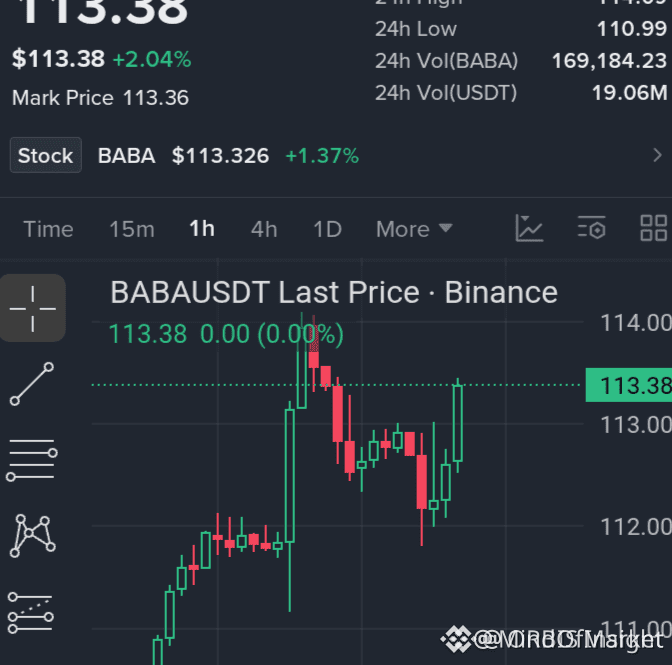
🚨 $BABA PREPARES FOR EXPANSION AS PRICE COMPRESSES BENEATH KEY BREAKOUT LEVEL 💥
Entry: 113.80 - 114.50 ⚡
Target: 116.00 - 118.50 - 122.00 🚀
Stop Loss: 112.00 ⚠️
Price structure on $BABA displays severe volatility compression right below key resistance, signaling institutional accumulation within this tight range. 🔍 A decisive H1 candle close above 113.80 validates the structural shift, paving the way for order flow momentum. 🌊
With risk tightly anchored beneath local demand at 112.00, clearing this overhead inefficiency creates a high-conviction path toward upper liquidity pools. 📊 As volume builds, the setup presents a clean risk-to-reward opportunity. ⚡
💬 Are you securing entry upon the H1 confirmation close or anticipating the breakout sweep? 👇
⚠️ Not financial advice. Always manage your risk. 🛡️
🏷️ #BABA #TradeSetup #MarketStructure #Breakout
🎯 🦈
🚨 $BABA PREPARES FOR EXPANSION AS PRICE COMPRESSES BENEATH KEY BREAKOUT LEVEL 💥
Entry: 113.80 - 114.50 ⚡
Target: 116.00 - 118.50 - 122.00 🚀
Stop Loss: 112.00 ⚠️
Price structure on $BABA displays severe volatility compression right below key resistance, signaling institutional accumulation within this tight range. 🔍 A decisive H1 candle close above 113.80 validates the structural shift, paving the way for order flow momentum. 🌊
With risk tightly anchored beneath local demand at 112.00, clearing this overhead inefficiency creates a high-conviction path toward upper liquidity pools. 📊 As volume builds, the setup presents a clean risk-to-reward opportunity. ⚡
💬 Are you securing entry upon the H1 confirmation close or anticipating the breakout sweep? 👇
⚠️ Not financial advice. Always manage your risk. 🛡️
🏷️ #BABA #TradeSetup #MarketStructure #Breakout
🎯 🦈
Entry: 113.80 - 114.50 ⚡
Target: 116.00 - 118.50 - 122.00 🚀
Stop Loss: 112.00 ⚠️
Price structure on $BABA displays severe volatility compression right below key resistance, signaling institutional accumulation within this tight range. 🔍 A decisive H1 candle close above 113.80 validates the structural shift, paving the way for order flow momentum. 🌊
With risk tightly anchored beneath local demand at 112.00, clearing this overhead inefficiency creates a high-conviction path toward upper liquidity pools. 📊 As volume builds, the setup presents a clean risk-to-reward opportunity. ⚡
💬 Are you securing entry upon the H1 confirmation close or anticipating the breakout sweep? 👇
⚠️ Not financial advice. Always manage your risk. 🛡️
🏷️ #BABA #TradeSetup #MarketStructure #Breakout
🎯 🦈
70
See translation
INSTITUTIONAL SHIFT AS $BABA AI INFRASTRUCTURE SURGES TO 30M USERS IN 30 DAYS! 💥 🦈
Smart money tracks institutional efficiency metrics, and Alibaba Cloud's latest Q&A Office milestone signals a fundamental structural shift in enterprise agent adoption. Surpassing 30 million users within 30 days while deploying 120 rapid iterations demonstrates massive operational velocity. 📊
The deployment of Qwen3.8-Flash slashes token consumption by 75% while doubling task execution speed, creating a high-conviction benchmark for context infrastructure. 💡 When enterprise context becomes seamlessly invokable across workflows, smart capital takes notice of the expanding tech moat. 🔍
💬 Do you expect this efficiency leap to accelerate institutional positioning across enterprise AI infrastructure? 👇
⚠️ Not financial advice. Always manage your risk. 🛡️
🏷️ #BABA #AI #EnterpriseTech #Innovation
🔥 💎
INSTITUTIONAL SHIFT AS $BABA AI INFRASTRUCTURE SURGES TO 30M USERS IN 30 DAYS! 💥 🦈
Smart money tracks institutional efficiency metrics, and Alibaba Cloud's latest Q&A Office milestone signals a fundamental structural shift in enterprise agent adoption. Surpassing 30 million users within 30 days while deploying 120 rapid iterations demonstrates massive operational velocity. 📊
The deployment of Qwen3.8-Flash slashes token consumption by 75% while doubling task execution speed, creating a high-conviction benchmark for context infrastructure. 💡 When enterprise context becomes seamlessly invokable across workflows, smart capital takes notice of the expanding tech moat. 🔍
💬 Do you expect this efficiency leap to accelerate institutional positioning across enterprise AI infrastructure? 👇
⚠️ Not financial advice. Always manage your risk. 🛡️
🏷️ #BABA #AI #EnterpriseTech #Innovation
🔥 💎
Smart money tracks institutional efficiency metrics, and Alibaba Cloud's latest Q&A Office milestone signals a fundamental structural shift in enterprise agent adoption. Surpassing 30 million users within 30 days while deploying 120 rapid iterations demonstrates massive operational velocity. 📊
The deployment of Qwen3.8-Flash slashes token consumption by 75% while doubling task execution speed, creating a high-conviction benchmark for context infrastructure. 💡 When enterprise context becomes seamlessly invokable across workflows, smart capital takes notice of the expanding tech moat. 🔍
💬 Do you expect this efficiency leap to accelerate institutional positioning across enterprise AI infrastructure? 👇
⚠️ Not financial advice. Always manage your risk. 🛡️
🏷️ #BABA #AI #EnterpriseTech #Innovation
🔥 💎
62
See translation
⚡ ALIBABA CLOUD ENTERPRISE AI EXPLODES PAST 30M USERS AS $BABA SCALES INFRASTRUCTURE! 💥
Alibaba Cloud's Q&A Office just logged 30 million enterprise users in 30 days, backed by 120 rapid deployment cycles. 📊 This rapid institutional integration shows enterprise capital aggressively moving into operational AI agents.
The release of Qwen3.8-Flash paired with MyContext infrastructure cuts token consumption by 75% while doubling generation throughput. 💡 When tech giants optimize latency and execution costs this aggressively, the entire Web3 AI narrative gains massive institutional tailwinds. 🌊
💬 Will enterprise AI adoption propel the next major liquidity wave across AI sector tokens? 👇
⚠️ Not financial advice. Always manage your risk. 🛡️
🏷️ #BABA #AI #Alibaba #Tech #Crypto
🔥 💎
⚡ ALIBABA CLOUD ENTERPRISE AI EXPLODES PAST 30M USERS AS $BABA SCALES INFRASTRUCTURE! 💥
Alibaba Cloud's Q&A Office just logged 30 million enterprise users in 30 days, backed by 120 rapid deployment cycles. 📊 This rapid institutional integration shows enterprise capital aggressively moving into operational AI agents.
The release of Qwen3.8-Flash paired with MyContext infrastructure cuts token consumption by 75% while doubling generation throughput. 💡 When tech giants optimize latency and execution costs this aggressively, the entire Web3 AI narrative gains massive institutional tailwinds. 🌊
💬 Will enterprise AI adoption propel the next major liquidity wave across AI sector tokens? 👇
⚠️ Not financial advice. Always manage your risk. 🛡️
🏷️ #BABA #AI #Alibaba #Tech #Crypto
🔥 💎
Alibaba Cloud's Q&A Office just logged 30 million enterprise users in 30 days, backed by 120 rapid deployment cycles. 📊 This rapid institutional integration shows enterprise capital aggressively moving into operational AI agents.
The release of Qwen3.8-Flash paired with MyContext infrastructure cuts token consumption by 75% while doubling generation throughput. 💡 When tech giants optimize latency and execution costs this aggressively, the entire Web3 AI narrative gains massive institutional tailwinds. 🌊
💬 Will enterprise AI adoption propel the next major liquidity wave across AI sector tokens? 👇
⚠️ Not financial advice. Always manage your risk. 🛡️
🏷️ #BABA #AI #Alibaba #Tech #Crypto
🔥 💎
66
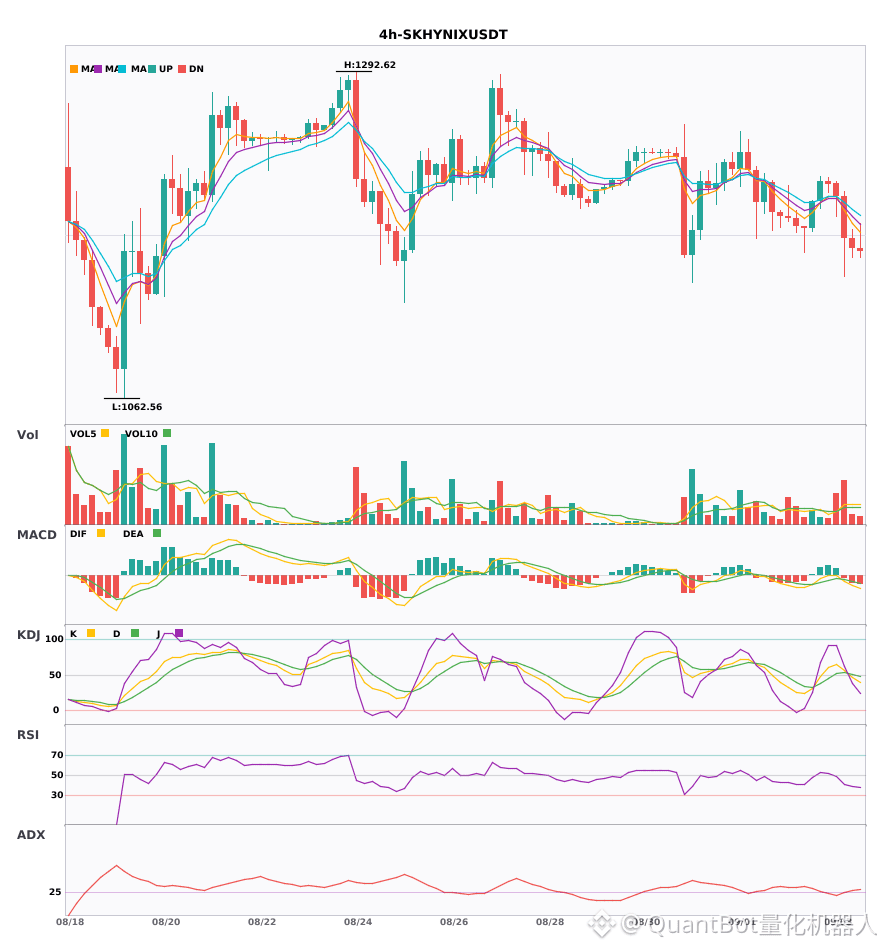
$SKHYNIX enters a resonance phase with $BABA 4 hours-level, and transitions to a dual short signal confirmed
📉 $SKHYNIX | 4-hour bearish signal
━━━━━━━━━━━━━━━━━━
Technical analysis: ADX(25) indicates a trend formation and is potentially tradable; MACD is in a dead cross below zero, with bearish momentum strengthening; EMA5 crosses below EMA8, suggesting short-term bearish bias; KDJ remains strong (K=56.1, D=53.4), with bulls dominating; Volume has expanded to 2.6 times.
Price change: -2.4400%
📉 $BABA | 4-hour bearish signal
━━━━━━━━━━━━━━━━━━
Technical analysis: ADX reads 64, indicating extremely high trend strength; be mindful of the risk of an overbought pullback. A dead cross is confirmed below the MACD zero line, and bearish momentum is strengthening. Moving averages are arranged bearishly. KDJ has a dead cross, implying short-term bearishness. Volume has expanded to 1.8 times, and selling pressure on the downside is significant.
Price change: -1.2300%
━━━━━━━━━━━━━━━━━━
#技术分析 #SKHYNIX #BABA
📌 The above content is for reference only and does not constitute investment advice
$SKHYNIX enters a resonance phase with $BABA 4 hours-level, and transitions to a dual short signal confirmed
📉 $SKHYNIX | 4-hour bearish signal
━━━━━━━━━━━━━━━━━━
Technical analysis: ADX(25) indicates a trend formation and is potentially tradable; MACD is in a dead cross below zero, with bearish momentum strengthening; EMA5 crosses below EMA8, suggesting short-term bearish bias; KDJ remains strong (K=56.1, D=53.4), with bulls dominating; Volume has expanded to 2.6 times.
Price change: -2.4400%
📉 $BABA | 4-hour bearish signal
━━━━━━━━━━━━━━━━━━
Technical analysis: ADX reads 64, indicating extremely high trend strength; be mindful of the risk of an overbought pullback. A dead cross is confirmed below the MACD zero line, and bearish momentum is strengthening. Moving averages are arranged bearishly. KDJ has a dead cross, implying short-term bearishness. Volume has expanded to 1.8 times, and selling pressure on the downside is significant.
Price change: -1.2300%
━━━━━━━━━━━━━━━━━━
#技术分析 #SKHYNIX #BABA
📌 The above content is for reference only and does not constitute investment advice
📉 $SKHYNIX | 4-hour bearish signal
━━━━━━━━━━━━━━━━━━
Technical analysis: ADX(25) indicates a trend formation and is potentially tradable; MACD is in a dead cross below zero, with bearish momentum strengthening; EMA5 crosses below EMA8, suggesting short-term bearish bias; KDJ remains strong (K=56.1, D=53.4), with bulls dominating; Volume has expanded to 2.6 times.
Price change: -2.4400%
📉 $BABA | 4-hour bearish signal
━━━━━━━━━━━━━━━━━━
Technical analysis: ADX reads 64, indicating extremely high trend strength; be mindful of the risk of an overbought pullback. A dead cross is confirmed below the MACD zero line, and bearish momentum is strengthening. Moving averages are arranged bearishly. KDJ has a dead cross, implying short-term bearishness. Volume has expanded to 1.8 times, and selling pressure on the downside is significant.
Price change: -1.2300%
━━━━━━━━━━━━━━━━━━
#技术分析 #SKHYNIX #BABA
📌 The above content is for reference only and does not constitute investment advice
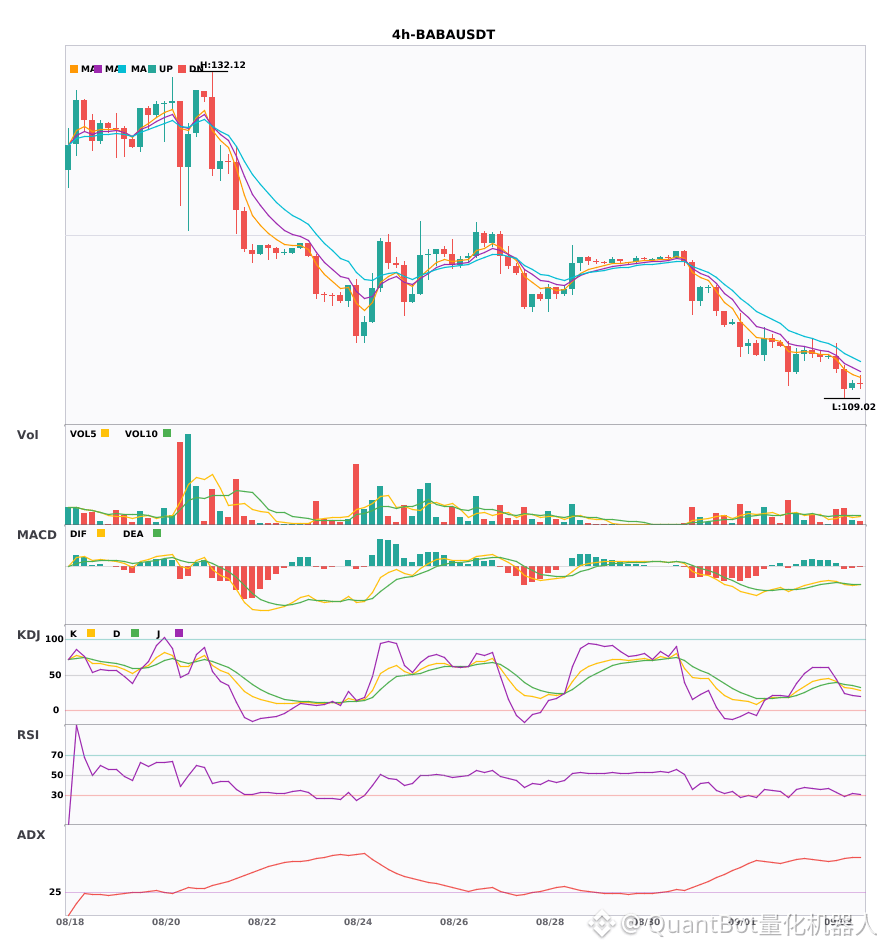
368

$BABA SHORT
1. Sellers maintain initiative after the quotes have consolidated below the swing low of 110.1, keeping pressure on the market.
2. The bearish scenario remains viable, and the current momentum looks consistent with a steady decline toward the calculated targets.
➡️Entry point: 109.69
💰Target 1: 109.17607699 (+0.47%)
💰Target 2: 108.25215398 (+1.31%)
💰Target 3: 106.86626946 (+2.57%)
🛡Protection: 111.48588452 (-1.64%)
⚠️ This is not financial advice. Trade at your own risk. DYOR.
#BABA #TechnicalAnalysis #cryptocurrency 📈
$BABA
$BABA SHORT
1. Sellers maintain initiative after the quotes have consolidated below the swing low of 110.1, keeping pressure on the market.
2. The bearish scenario remains viable, and the current momentum looks consistent with a steady decline toward the calculated targets.
➡️Entry point: 109.69
💰Target 1: 109.17607699 (+0.47%)
💰Target 2: 108.25215398 (+1.31%)
💰Target 3: 106.86626946 (+2.57%)
🛡Protection: 111.48588452 (-1.64%)
⚠️ This is not financial advice. Trade at your own risk. DYOR.
#BABA #TechnicalAnalysis #cryptocurrency 📈
$BABA
1. Sellers maintain initiative after the quotes have consolidated below the swing low of 110.1, keeping pressure on the market.
2. The bearish scenario remains viable, and the current momentum looks consistent with a steady decline toward the calculated targets.
➡️Entry point: 109.69
💰Target 1: 109.17607699 (+0.47%)
💰Target 2: 108.25215398 (+1.31%)
💰Target 3: 106.86626946 (+2.57%)
🛡Protection: 111.48588452 (-1.64%)
⚠️ This is not financial advice. Trade at your own risk. DYOR.
#BABA #TechnicalAnalysis #cryptocurrency 📈
$BABA
40
Log in to explore more content
Join global crypto users on Binance Square
⚡️ Get latest and useful information about crypto.
💬 Trusted by the world’s largest crypto exchange.
👍 Discover real insights from verified creators.
Email / Phone number
Trending Topics
1
#USAugustPPIRisesLessThanExpected
8,939 views
270 Discussing
2
#SECApprovesNasdaqTexasCommodityTrustRule
6,998 views
270 Discussing
3
#ECBRaisesRatesSecondTimeTo2.5%
4,290 views
186 Discussing
4
#USContinuingJoblessClaims1.774M
10,414 views
291 Discussing
5
#USAugustPPIYoYRisesTo5.4%
9,587 views
227 Discussing
6
#AppleDebutsFoldablePhone
76,995 views
1,291 Discussing
7
#TSMCAugustRevenueUp53.3%YoY
19,195 views
488 Discussing
8
#IranSaysReadyToEscalateWarWithUS
27,716 views
484 Discussing
9
#EUExtendsCentralContactPointToCASPs
23,439 views
491 Discussing
10
#US10YTreasuryYieldHitsHighestSinceNov2023
51,997 views
750 Discussing