
#sxt
sxt
3.2M views
7,704 Discussing
Hot
Latest

Verified
See translation
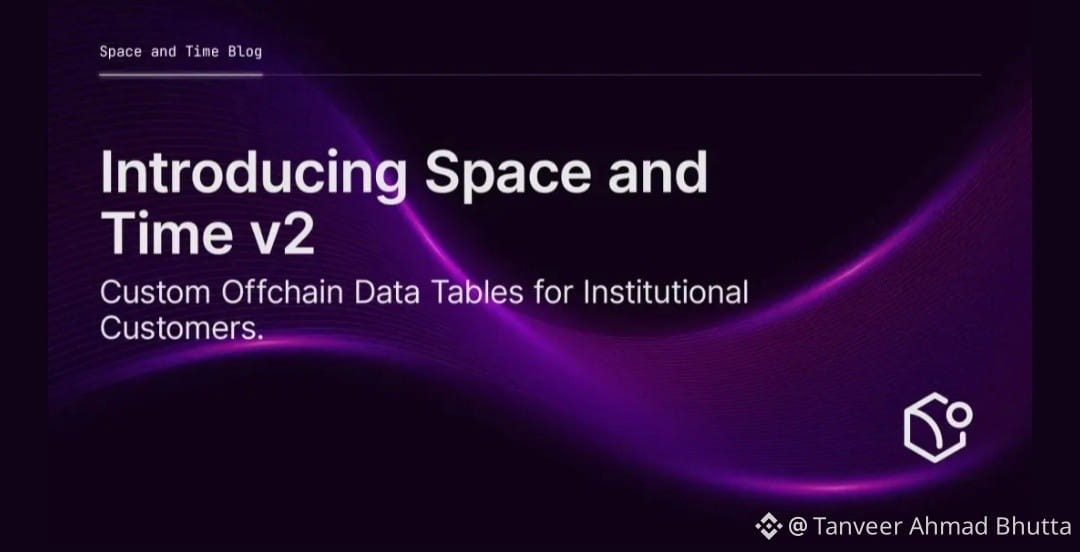
Space and Time has released mainnet v2, enabling institutional customers to secure offchain asset data for tokenized assets through custom data tables . The upgrade addresses a critical risk: institutions previously connected data onchain via centralized legacy infrastructure, where wrong, stale, or tampered data could misprice tokenized assets and trigger irreversible settlement errors .
With v2, banks, asset managers, exchanges, and enterprises can verify and securely connect offchain financial data to smart contracts, supporting more reliable tokenized assets and stablecoin initiatives . The feature is now permissionlessly available . Space and Time data solutions have already been adopted by major banks and Microsoft, which integrated Space and Time data into its Fabric product earlier this year .
#SXT $SXT @SpaceandTimeDB
Space and Time has released mainnet v2, enabling institutional customers to secure offchain asset data for tokenized assets through custom data tables . The upgrade addresses a critical risk: institutions previously connected data onchain via centralized legacy infrastructure, where wrong, stale, or tampered data could misprice tokenized assets and trigger irreversible settlement errors .
With v2, banks, asset managers, exchanges, and enterprises can verify and securely connect offchain financial data to smart contracts, supporting more reliable tokenized assets and stablecoin initiatives . The feature is now permissionlessly available . Space and Time data solutions have already been adopted by major banks and Microsoft, which integrated Space and Time data into its Fabric product earlier this year .
#SXT $SXT @SpaceandTime
291


·
--
See translation
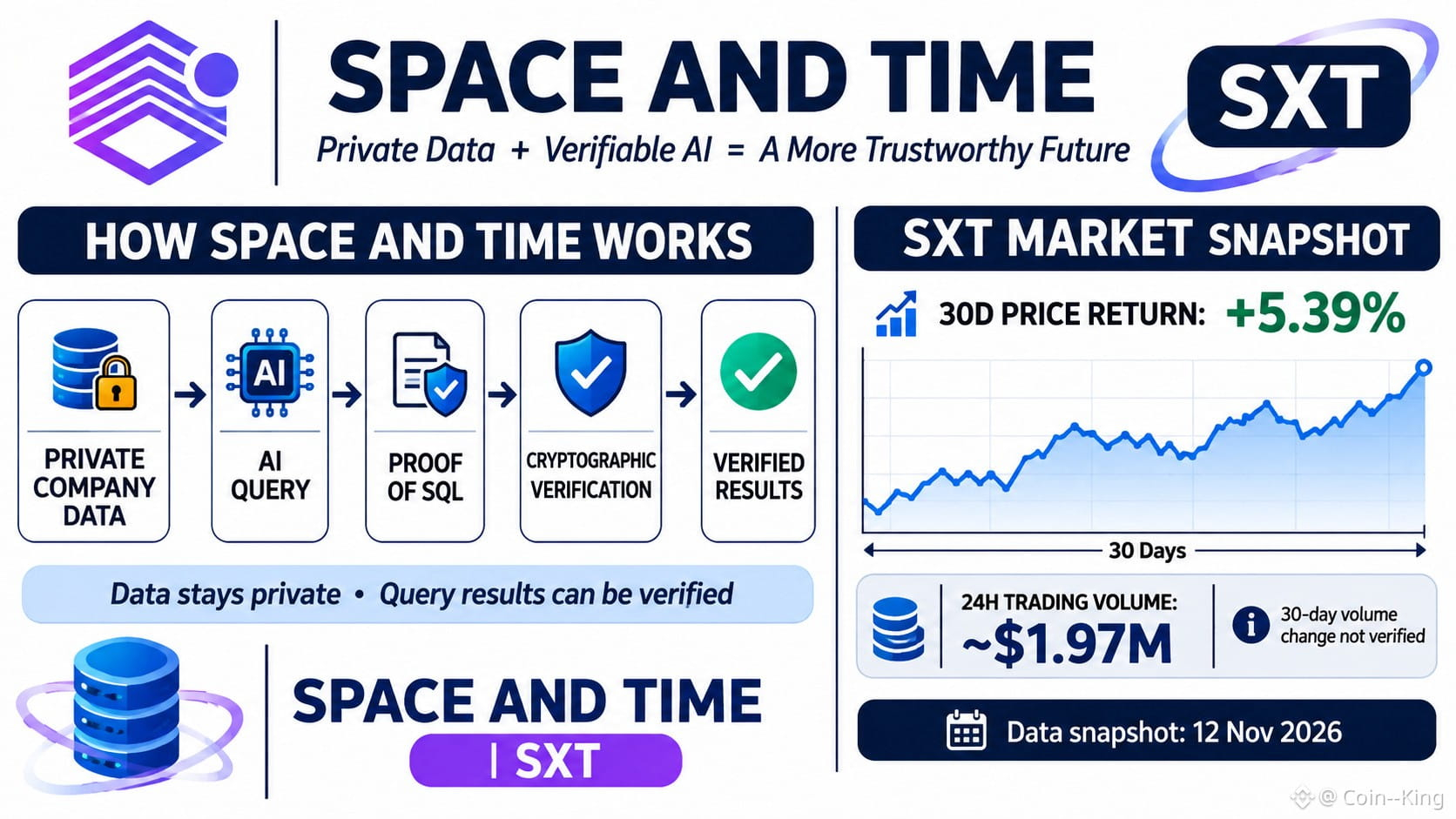
I have been looking more closely at the connection between AI and private company data, and I think there's a problem people don't discuss enough.
AI can process huge amounts of information, but when that information belongs to banks, businesses, or financial institutions, sharing it becomes difficult. Nobody wants to expose sensitive records just to get an answer from an AI system.
This is where I find Space and Time interesting.
Its Proof of SQL technology takes a different approach. A company can keep its data private while generating cryptographic proofs that show its database queries were executed correctly. Think of it like checking a receipt without needing access to the entire cash register.
For me, the real value isn't simply making AI faster. It's making the results easier to verify without handing over control of private information.
Still, there are things I'm watching closely. Generating proofs doesn't make incorrect source data magically accurate. Integration costs, processing demands, and real enterprise usage will also decide how far this can go.
SXT also needs consistent demand from actual workloads, not just attention around the AI narrative.
I'm curious how the community sees this: will companies eventually prioritize verifiable AI results, or will data privacy remain their biggest concern?
#sxt $SXT @SpaceandTimeDB
I have been looking more closely at the connection between AI and private company data, and I think there's a problem people don't discuss enough.
AI can process huge amounts of information, but when that information belongs to banks, businesses, or financial institutions, sharing it becomes difficult. Nobody wants to expose sensitive records just to get an answer from an AI system.
This is where I find Space and Time interesting.
Its Proof of SQL technology takes a different approach. A company can keep its data private while generating cryptographic proofs that show its database queries were executed correctly. Think of it like checking a receipt without needing access to the entire cash register.
For me, the real value isn't simply making AI faster. It's making the results easier to verify without handing over control of private information.
Still, there are things I'm watching closely. Generating proofs doesn't make incorrect source data magically accurate. Integration costs, processing demands, and real enterprise usage will also decide how far this can go.
SXT also needs consistent demand from actual workloads, not just attention around the AI narrative.
I'm curious how the community sees this: will companies eventually prioritize verifiable AI results, or will data privacy remain their biggest concern?
#sxt $SXT @SpaceandTime
1
329

·
--
Bullish
See translation
I've been thinking about one thing lately: AI is growing fast, but how do we know the data behind its answers can actually be trusted?
This is where @SpaceandTimeDB caught my attention.
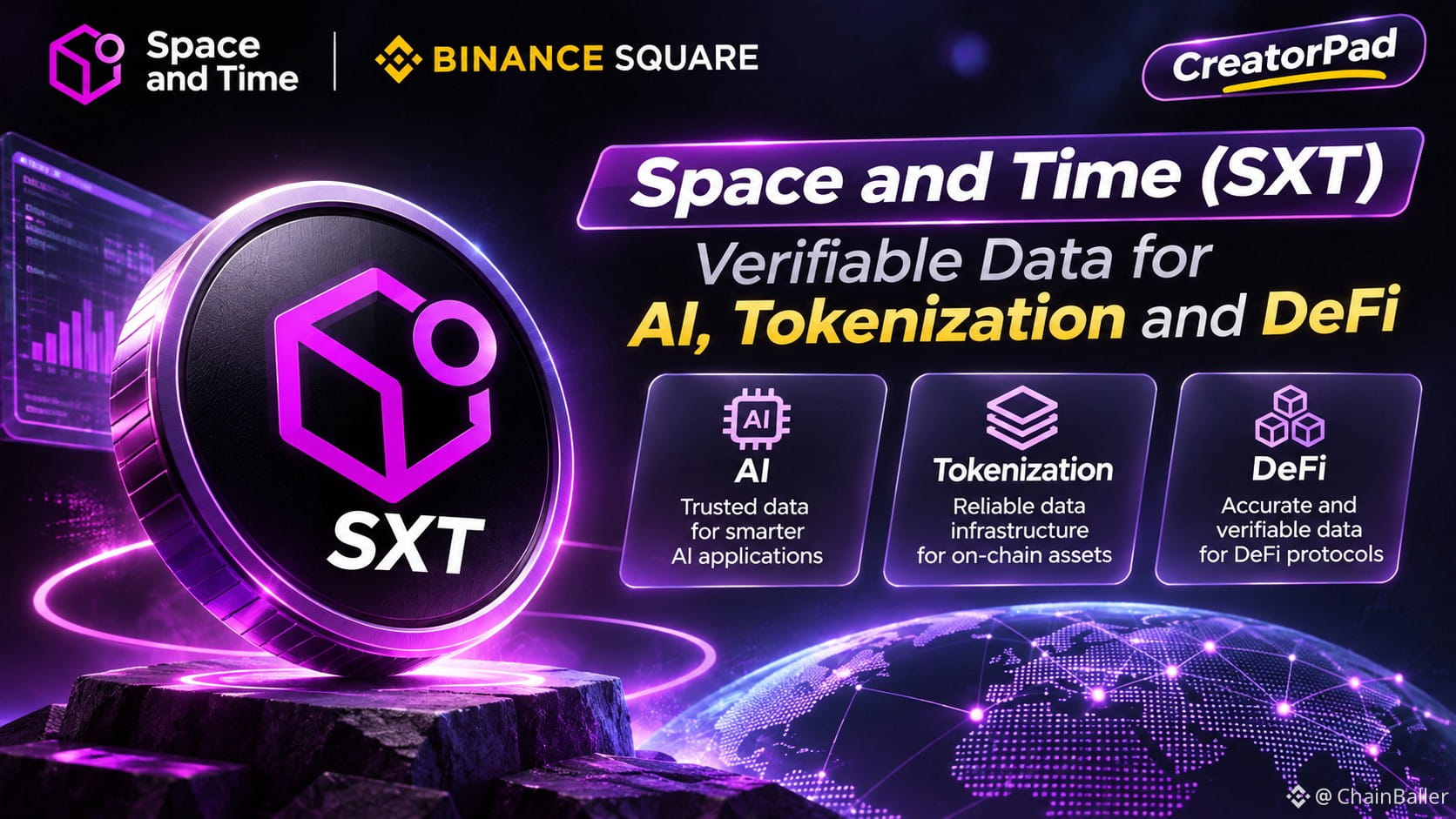
Space and Time ($SXT ) is building a decentralized data platform focused on verifiable data. The idea is to let applications query data while using cryptographic proofs to verify the results.
I see three interesting areas where this technology could matter:
AI: AI applications need reliable data. Verifiable queries can help bring more transparency to the information they use.
Tokenization: Tokenized assets need trustworthy data infrastructure. Verification can play an important role in making these systems more transparent.
DeFi: DeFi protocols depend on accurate information. Data integrity is not something the ecosystem can afford to ignore.
What interests me most is the bigger picture.
Blockchain isn't just about moving tokens around. Building infrastructure that makes information verifiable could be just as important for the next generation of applications.
That's why I'm keeping an eye on Space and Time and its progress.
The real question is how widely this technology can be adopted.
#sxt $SXT @SpaceandTimeDB
I've been thinking about one thing lately: AI is growing fast, but how do we know the data behind its answers can actually be trusted?
This is where @SpaceandTime caught my attention.
Space and Time ($SXT ) is building a decentralized data platform focused on verifiable data. The idea is to let applications query data while using cryptographic proofs to verify the results.
I see three interesting areas where this technology could matter:
AI: AI applications need reliable data. Verifiable queries can help bring more transparency to the information they use.
Tokenization: Tokenized assets need trustworthy data infrastructure. Verification can play an important role in making these systems more transparent.
DeFi: DeFi protocols depend on accurate information. Data integrity is not something the ecosystem can afford to ignore.
What interests me most is the bigger picture.
Blockchain isn't just about moving tokens around. Building infrastructure that makes information verifiable could be just as important for the next generation of applications.
That's why I'm keeping an eye on Space and Time and its progress.
The real question is how widely this technology can be adopted.
#sxt $SXT @SpaceandTime
1
125

·
--
Bullish
Verified
See translation
I don’t know… at first, I wasn't sure how important Space and Time could become. But the more I looked into it, the more I understood the problem it is trying to solve.
Blockchain applications need reliable data, but accessing information is not the same as proving that information is correct. This is where Space and Time takes an interesting approach.
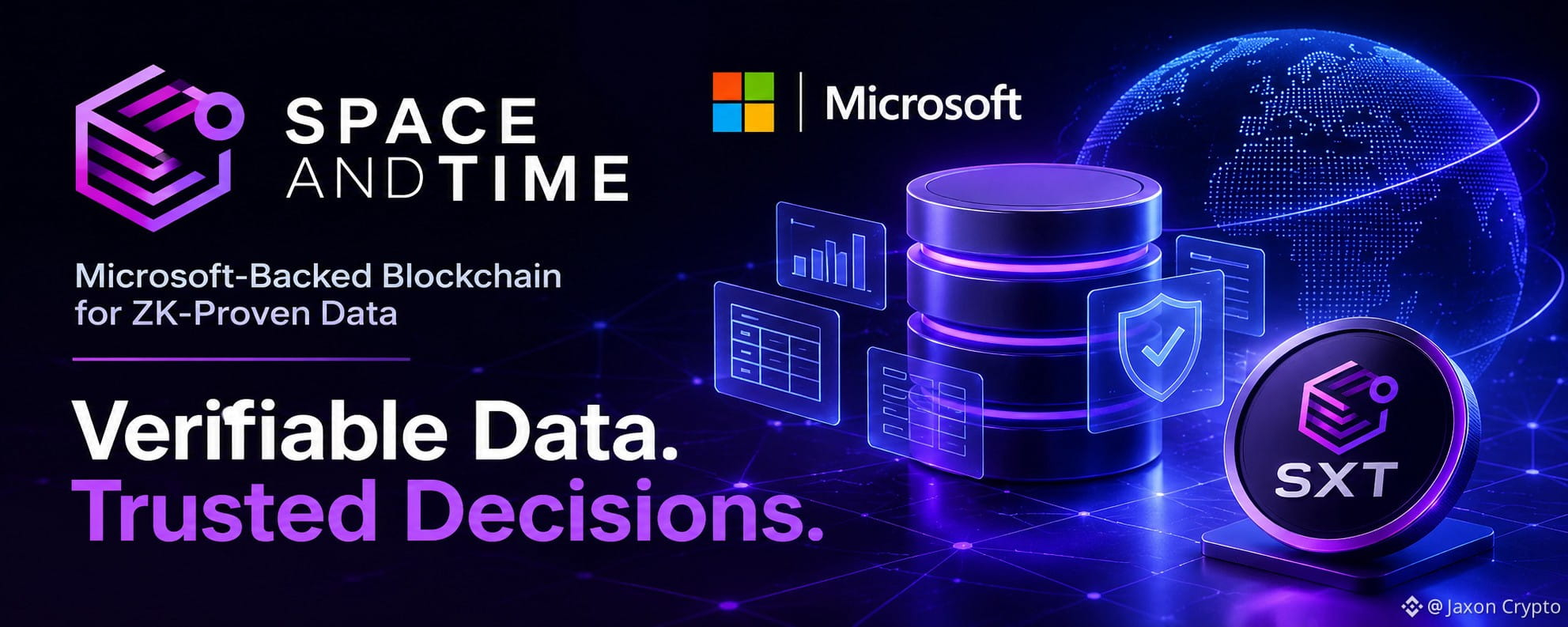
Backed by Microsoft, Space and Time combines blockchain infrastructure, SQL queries, and zero-knowledge proofs to make data and computations independently verifiable. Its Proof of SQL technology allows applications to verify query results without repeating the entire calculation.
What interests me most is the balance between scalability, security, and decentralization. Processing large datasets efficiently is important, but maintaining trust in the information is equally important. Space and Time is trying to bring both together, although coordination, data quality, and adoption remain real challenges.
SXT, its native token, supports network payments and participant incentives, helping coordinate the infrastructure.
I believe the bigger question is whether developers and businesses will use verifiable data infrastructure in their everyday operations. The technology has an interesting foundation, but long-term adoption will matter more than promises.
I'm still watching how this develops. Sometimes the most important blockchain infrastructure is not what users see, but what allows them to trust the information behind every decision.
#sxt $SXT @SpaceandTimeDB
I don’t know… at first, I wasn't sure how important Space and Time could become. But the more I looked into it, the more I understood the problem it is trying to solve.
Blockchain applications need reliable data, but accessing information is not the same as proving that information is correct. This is where Space and Time takes an interesting approach.
Backed by Microsoft, Space and Time combines blockchain infrastructure, SQL queries, and zero-knowledge proofs to make data and computations independently verifiable. Its Proof of SQL technology allows applications to verify query results without repeating the entire calculation.
What interests me most is the balance between scalability, security, and decentralization. Processing large datasets efficiently is important, but maintaining trust in the information is equally important. Space and Time is trying to bring both together, although coordination, data quality, and adoption remain real challenges.
SXT, its native token, supports network payments and participant incentives, helping coordinate the infrastructure.
I believe the bigger question is whether developers and businesses will use verifiable data infrastructure in their everyday operations. The technology has an interesting foundation, but long-term adoption will matter more than promises.
I'm still watching how this develops. Sometimes the most important blockchain infrastructure is not what users see, but what allows them to trust the information behind every decision.
#sxt $SXT @SpaceandTime
BUII_X:
infrastructure is not what users see, but what allows them to trust the information behind every decision.
#sxt $SXT @SpaceandTime
18
13
1.4k

·
--
Bullish
See translation
Soon I will be the same place🫰🎊🎀
🚀 The future of AI, DeFi, and tokenization needs TRUSTED data!
That's exactly what @SpaceandTimeDB is building. 🔥
Space and Time powers verifiable data, bringing transparency and trust to the next generation of blockchain applications.
The future is verifiable. 🌐
#SXT $SXT
#sxt $SXT @SpaceandTimeDB
Soon I will be the same place🫰🎊🎀
🚀 The future of AI, DeFi, and tokenization needs TRUSTED data!
That's exactly what @SpaceandTime is building. 🔥
Space and Time powers verifiable data, bringing transparency and trust to the next generation of blockchain applications.
The future is verifiable. 🌐
#SXT $SXT
#sxt $SXT @SpaceandTime
🚀 The future of AI, DeFi, and tokenization needs TRUSTED data!
That's exactly what @SpaceandTime is building. 🔥
Space and Time powers verifiable data, bringing transparency and trust to the next generation of blockchain applications.
The future is verifiable. 🌐
#SXT $SXT
#sxt $SXT @SpaceandTime
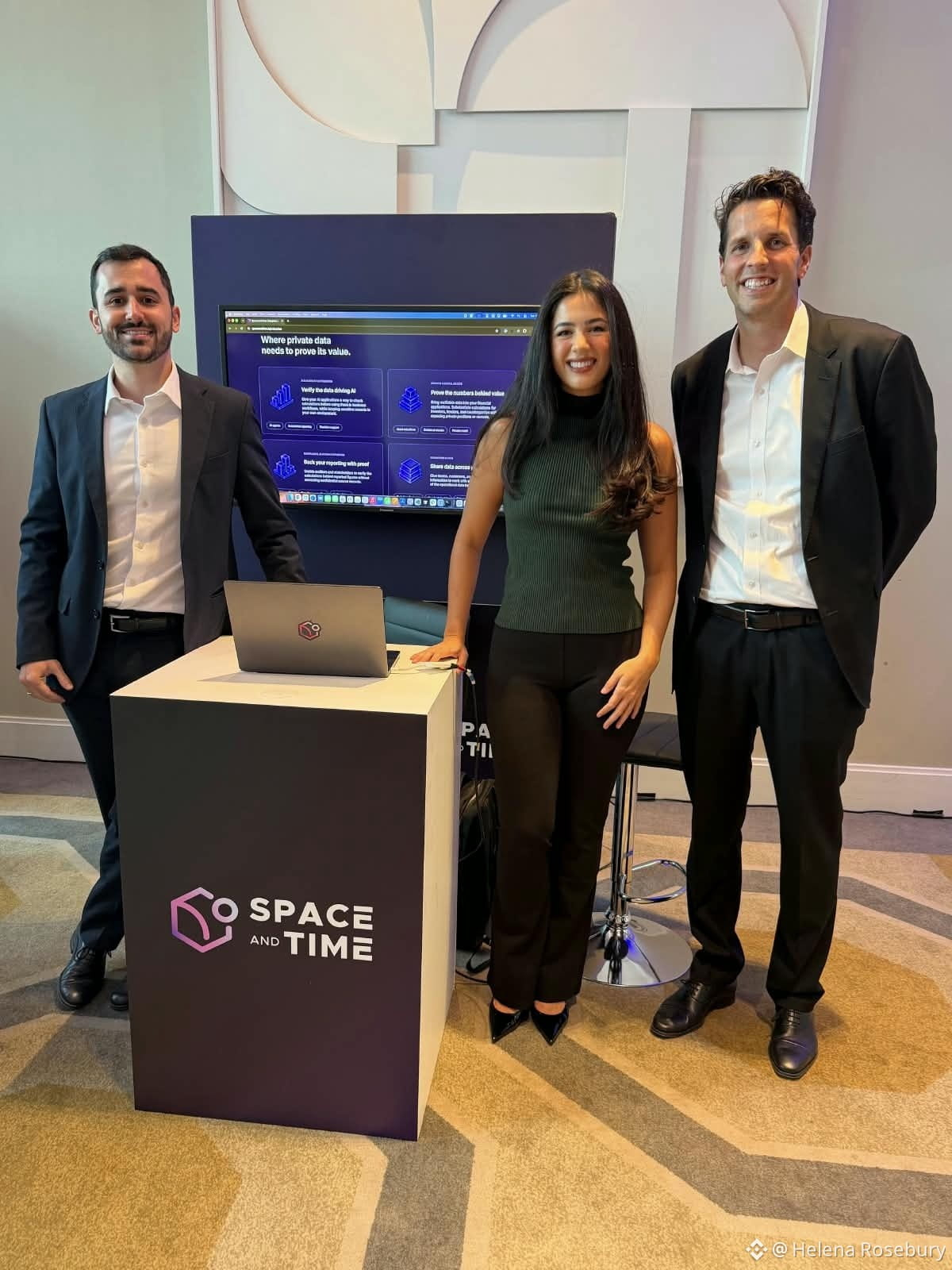

1
1.4k

·
--
See translation
Even though #SXT is mostly shown with price charts and liquidations the number that catches my eye is the one that everybody ignores: validator yield.
For February 2026 Space and Time’s Foundation has updated its estimates for validator yield from around seven point nine percent to around nine point seven percent per year not because the emission schedule changed. Because of real network activity, such as indexing, data insertion and zero‑knowledge queries that clients perform in return for $SXT .
The difference in validator yield is important.
Many tokens calculate staking yields in terms of inflation regardless of how they're used. Validator rewards of Space and Time are tied to fees for work so validator yield tells how much verifiable data the network processes for its AI, tokenization and DeFi clients.
In addition there is one cool thing happening underneath: the Genesis Validator Rewards Program, which offers up to 150 million SXT with a nine‑month lock‑up lets eligible stakers claim higher rewards, by running a Proof of SQL query on their own stake record the same technology that the network sells to everyone else.
The whole point of SXT is that the core idea of trustless verification is staking.
$SXT #SXT @SpaceandTimeDB
Even though #SXT is mostly shown with price charts and liquidations the number that catches my eye is the one that everybody ignores: validator yield.
For February 2026 Space and Time’s Foundation has updated its estimates for validator yield from around seven point nine percent to around nine point seven percent per year not because the emission schedule changed. Because of real network activity, such as indexing, data insertion and zero‑knowledge queries that clients perform in return for $SXT .
The difference in validator yield is important.
Many tokens calculate staking yields in terms of inflation regardless of how they're used. Validator rewards of Space and Time are tied to fees for work so validator yield tells how much verifiable data the network processes for its AI, tokenization and DeFi clients.
In addition there is one cool thing happening underneath: the Genesis Validator Rewards Program, which offers up to 150 million SXT with a nine‑month lock‑up lets eligible stakers claim higher rewards, by running a Proof of SQL query on their own stake record the same technology that the network sells to everyone else.
The whole point of SXT is that the core idea of trustless verification is staking.
$SXT #SXT @SpaceandTime
125

·
--
See translation
One thing I find interesting,As a content creator, I love exploring projects that are building real technology instead of simply
following market hype. One project that caught my attention is @SpaceandTimeDB
Tokenization is becoming an important part of the digital economy, but there is one thing we should never overlook: trustworthy data.
Imagine turning real-world assets like property into digital tokens. How can applications verify ownership records, transactions, and asset information with confidence?
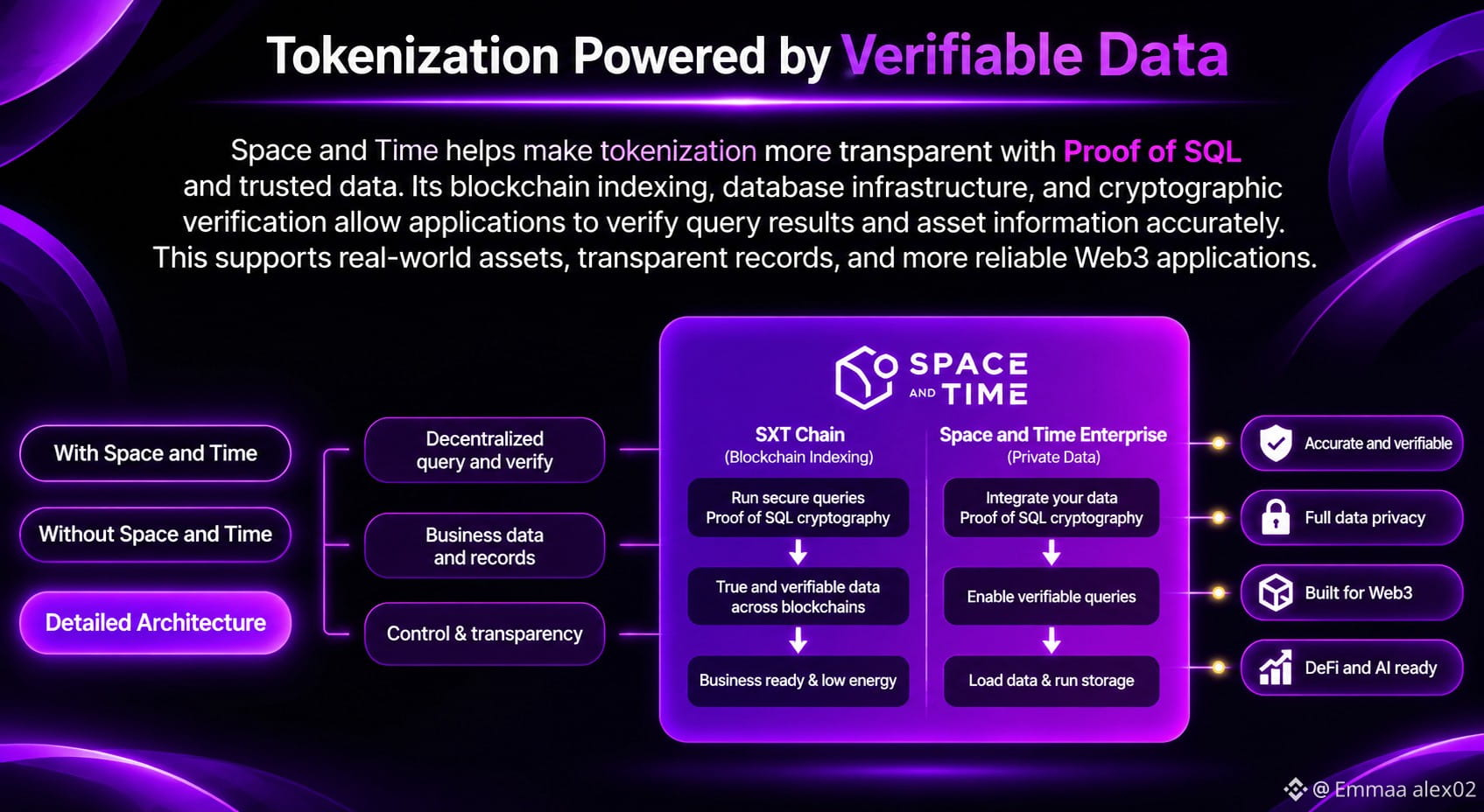
This is where @SpaceandTimeDB brings an interesting solution. Its Proof of SQL technology allows applications to verify SQL query results using cryptographic proofs.
This creates opportunities for more transparent and reliable tokenization applications, where data can be checked rather than blindly trusted.
I believe the future of Web3 needs more than digital assets. It needs verifiable information behind every important decision.
What do you think matters most for tokenization: transparency or data verification?
#sxt $SXT @SpaceandTimeDB
One thing I find interesting,As a content creator, I love exploring projects that are building real technology instead of simply
following market hype. One project that caught my attention is @SpaceandTime
Tokenization is becoming an important part of the digital economy, but there is one thing we should never overlook: trustworthy data.
Imagine turning real-world assets like property into digital tokens. How can applications verify ownership records, transactions, and asset information with confidence?
This is where @SpaceandTime brings an interesting solution. Its Proof of SQL technology allows applications to verify SQL query results using cryptographic proofs.
This creates opportunities for more transparent and reliable tokenization applications, where data can be checked rather than blindly trusted.
I believe the future of Web3 needs more than digital assets. It needs verifiable information behind every important decision.
What do you think matters most for tokenization: transparency or data verification?
#sxt $SXT @SpaceandTime
ICT Web3:
Tokenization has huge potential, but reliable data is what makes it truly valuable. Space and Time is working on an important piece of that future.
5
4
336

See translation
AI and finance are moving fast, but one thing still matters most: trust in the data.
That’s exactly where @SpaceandTimeDB is building something interesting.
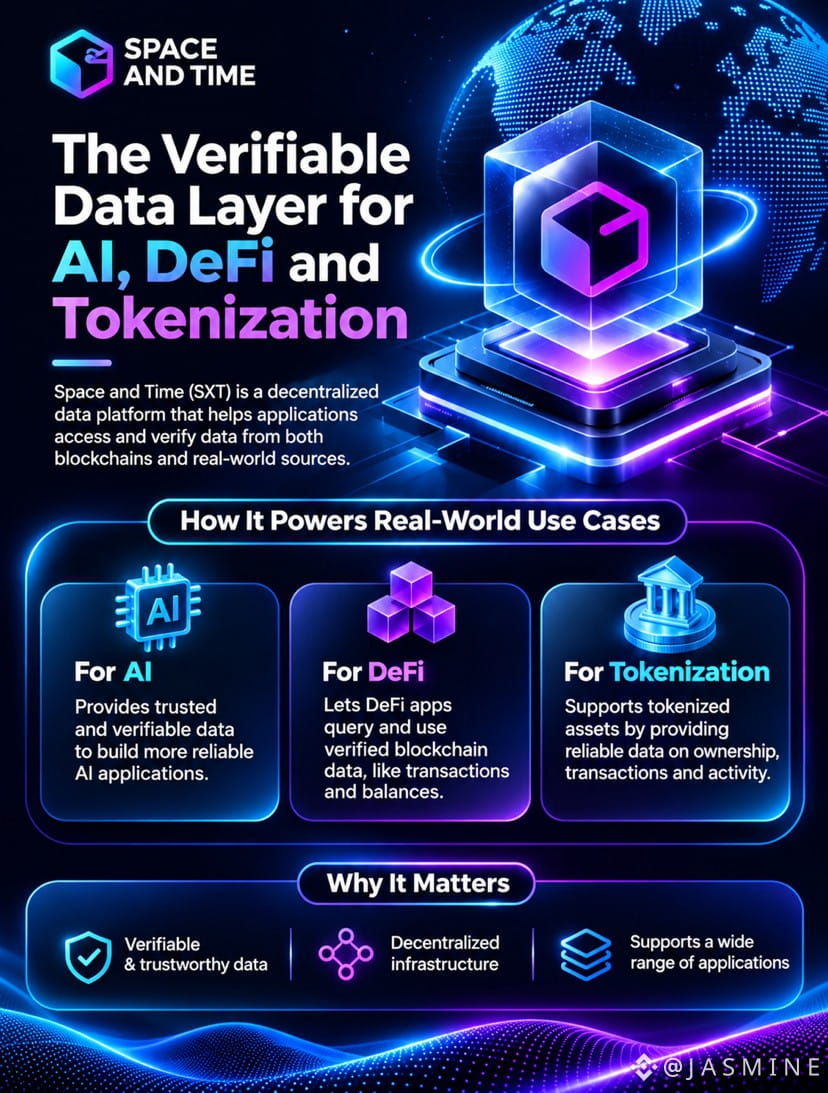
Its new Enterprise platform brings Proof of SQL into private business environments, allowing companies to verify calculations without exposing sensitive underlying data.
With partners like Maple Finance and Indomobil, Space and Time is expanding its reach beyond traditional blockchain use cases.
I think verifiable data infrastructure could become a major part of the next AI and RWA growth cycle.
Keeping an eye on $SXT #SXT
@SpaceandTimeDB 💜
AI and finance are moving fast, but one thing still matters most: trust in the data.
That’s exactly where @SpaceandTime is building something interesting.
Its new Enterprise platform brings Proof of SQL into private business environments, allowing companies to verify calculations without exposing sensitive underlying data.
With partners like Maple Finance and Indomobil, Space and Time is expanding its reach beyond traditional blockchain use cases.
I think verifiable data infrastructure could become a major part of the next AI and RWA growth cycle.
Keeping an eye on $SXT #SXT
@SpaceandTime 💜
Genny Cruz :
Enterprise adoption will need more than innovation. It needs proof, privacy and reliability.
4
3
86

·
--
Bullish
See translation
I used to think smart contracts were limited mainly by what they could execute onchain. But looking at what @SpaceandTimeDB is building made me realize the bigger limitation might be what they can actually access and verify.
A smart contract can follow rules perfectly, but asking it to process years of transaction history, cross-chain activity, or complex financial records is a different problem. Doing all of that directly onchain isn't practical.
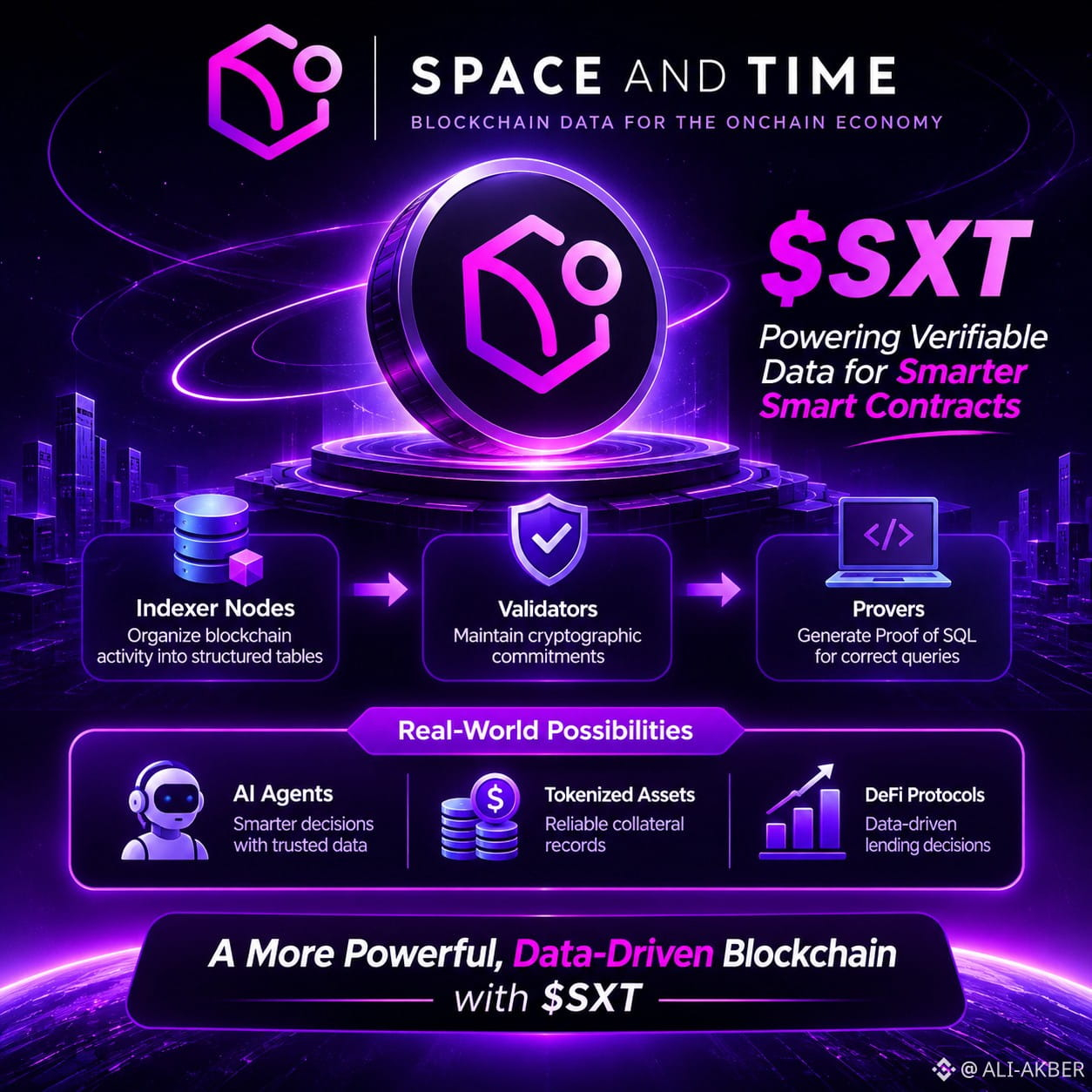
Space and Time approaches this by separating the heavy data work from verification. Indexer nodes organize blockchain activity into structured tables, Validators maintain cryptographic commitments, and Provers use Proof of SQL to generate proofs that supported queries were computed correctly.
What interests me is where those results could end up. An AI agent evaluating financial activity, a tokenized asset platform checking collateral records, or a DeFi protocol making lending decisions could all benefit from calculations they don't have to blindly trust.
$SXT connects this infrastructure to staking and network incentives, giving the system an economic layer alongside its cryptographic one.
But there's still a distinction worth keeping in mind. Verifying a calculation doesn't guarantee the data is fresh, and making complex information accessible doesn't mean the application using it is safe.
The potential advantage isn't that Space and Time removes every risk. It's that smart contracts could make more sophisticated decisions without having to perform every calculation themselves.
I keep wondering whether this becomes something developers genuinely need, or whether the complexity of integrating another infrastructure layer slows adoption before the benefits become obvious.
#sxt $SXT @SpaceandTimeDB #SXT
I used to think smart contracts were limited mainly by what they could execute onchain. But looking at what @SpaceandTime is building made me realize the bigger limitation might be what they can actually access and verify.
A smart contract can follow rules perfectly, but asking it to process years of transaction history, cross-chain activity, or complex financial records is a different problem. Doing all of that directly onchain isn't practical.
Space and Time approaches this by separating the heavy data work from verification. Indexer nodes organize blockchain activity into structured tables, Validators maintain cryptographic commitments, and Provers use Proof of SQL to generate proofs that supported queries were computed correctly.
What interests me is where those results could end up. An AI agent evaluating financial activity, a tokenized asset platform checking collateral records, or a DeFi protocol making lending decisions could all benefit from calculations they don't have to blindly trust.
$SXT connects this infrastructure to staking and network incentives, giving the system an economic layer alongside its cryptographic one.
But there's still a distinction worth keeping in mind. Verifying a calculation doesn't guarantee the data is fresh, and making complex information accessible doesn't mean the application using it is safe.
The potential advantage isn't that Space and Time removes every risk. It's that smart contracts could make more sophisticated decisions without having to perform every calculation themselves.
I keep wondering whether this becomes something developers genuinely need, or whether the complexity of integrating another infrastructure layer slows adoption before the benefits become obvious.
#sxt $SXT @SpaceandTime #SXT
1
187

·
--
Bearish
See translation
#sxt $SXT In the dynamic world of Web3, where data accuracy and security are paramount, Space and Time ($SXT) emerges as a true game-changer. As its core narrative states:
"Space and Time powers verifiable data for AI, tokenization, and DeFi"
This platform acts as a robust and undeniable bridge between blockchain and off-chain data.
Let's look at how these three major sectors are benefiting:
AI (Artificial Intelligence): Modern AI systems require accurate and transparent data without any manipulation. Space and Time ensures through cryptographic proofs that AI model data is 100% verifiable.
Tokenization: When real-world assets (RWAs) are converted into digital tokens, trust becomes an essential requirement. SXT makes this process transparent and secure.
DeFi (Decentralized Finance): Trustless compute and accurate data in financial protocols are indispensable for liquidity and risk management.
I have also secured my $SXT position in my portfolio! Be sure to check out @SpaceandTime to learn more about this@Square-Creator-a37e266c65da #SXTUSDT $SXT
{future}(SXTUSDT)
#CryptoSelloffTriggersMultipleWhaleLiquidations #WillFOMCMinutesReinforceRateHikeExpectations? #BitcoinActiveSupplyInProfitDropsBelow45%
#sxt $SXT In the dynamic world of Web3, where data accuracy and security are paramount, Space and Time ($SXT ) emerges as a true game-changer. As its core narrative states:
"Space and Time powers verifiable data for AI, tokenization, and DeFi"
This platform acts as a robust and undeniable bridge between blockchain and off-chain data.
Let's look at how these three major sectors are benefiting:
AI (Artificial Intelligence): Modern AI systems require accurate and transparent data without any manipulation. Space and Time ensures through cryptographic proofs that AI model data is 100% verifiable.
Tokenization: When real-world assets (RWAs) are converted into digital tokens, trust becomes an essential requirement. SXT makes this process transparent and secure.
DeFi (Decentralized Finance): Trustless compute and accurate data in financial protocols are indispensable for liquidity and risk management.
I have also secured my $SXT position in my portfolio! Be sure to check out @SpaceandTime to learn more about this@SXT #SXTUSDT $SXT
#CryptoSelloffTriggersMultipleWhaleLiquidations #WillFOMCMinutesReinforceRateHikeExpectations? #BitcoinActiveSupplyInProfitDropsBelow45%
1
94

·
--
See translation
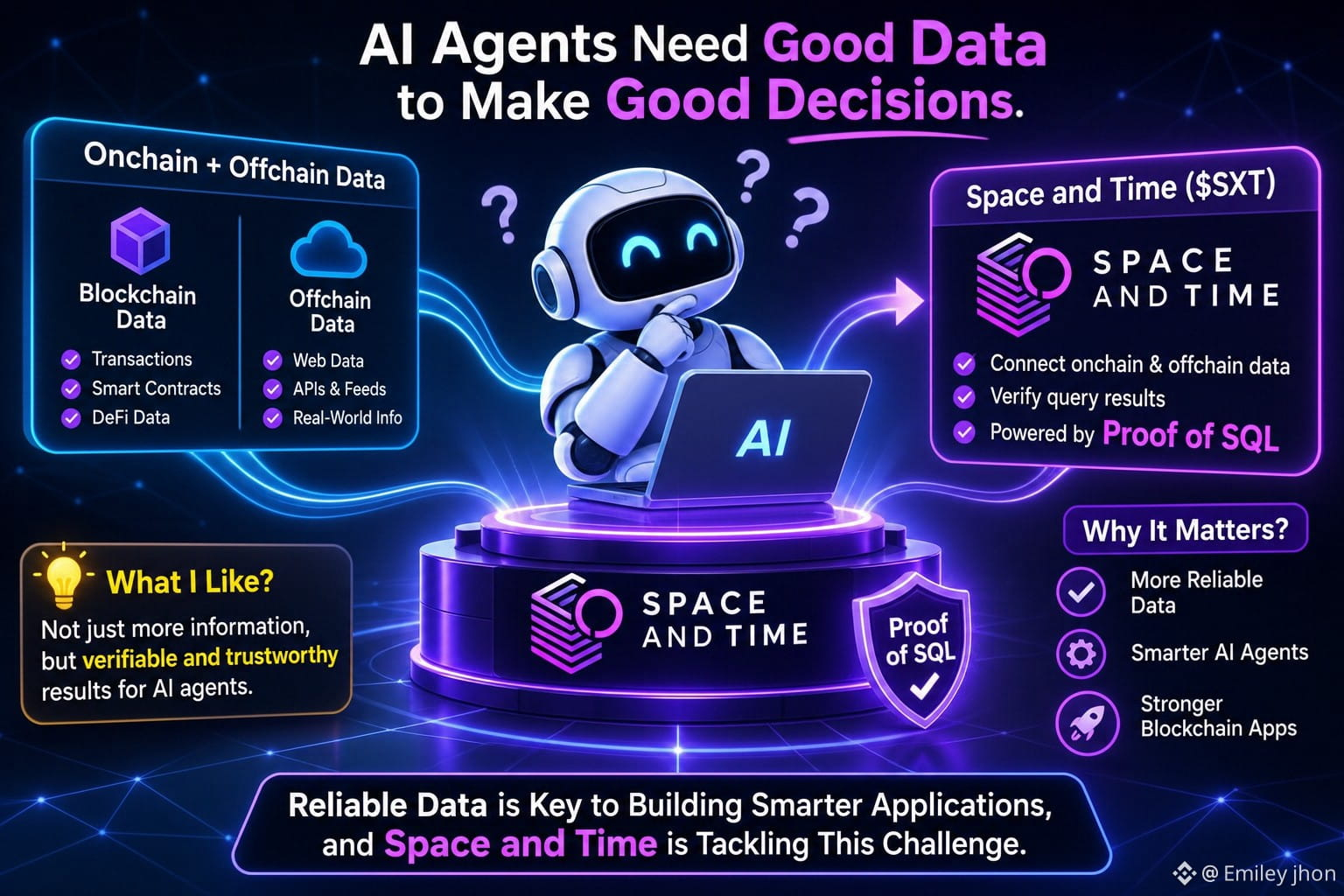
AI Agents Need Good Data to Make Good Decisions.
I've been thinking about how AI agents actually work. They can process information and complete tasks, but one thing matters a lot: where does their information come from, and can we really trust it?
This is one reason Space and Time ($SXT) caught my attention.
AI agents and blockchain applications don't always get their information from one place. Some data comes from the blockchain, while other information comes from offchain sources. Bringing everything together is useful, but making sure the results are correct is just as important.
That's where Space and Time comes in.
It focuses on connecting onchain and offchain data and making query results verifiable through its Proof of SQL technology.
What I like about this approach is that it isn't just about giving AI agents access to more information. It's also about helping developers check whether the results they use are actually correct.
I think this kind of infrastructure will become increasingly important as AI agents and blockchain applications develop.
For me, reliable data is a big part of building smarter applications, and Space and Time is working on exactly that challenge.
#sxt $SXT @SpaceandTimeDB
AI Agents Need Good Data to Make Good Decisions.
I've been thinking about how AI agents actually work. They can process information and complete tasks, but one thing matters a lot: where does their information come from, and can we really trust it?
This is one reason Space and Time ($SXT ) caught my attention.
AI agents and blockchain applications don't always get their information from one place. Some data comes from the blockchain, while other information comes from offchain sources. Bringing everything together is useful, but making sure the results are correct is just as important.
That's where Space and Time comes in.
It focuses on connecting onchain and offchain data and making query results verifiable through its Proof of SQL technology.
What I like about this approach is that it isn't just about giving AI agents access to more information. It's also about helping developers check whether the results they use are actually correct.
I think this kind of infrastructure will become increasingly important as AI agents and blockchain applications develop.
For me, reliable data is a big part of building smarter applications, and Space and Time is working on exactly that challenge.
#sxt $SXT @SpaceandTime
Aimaa_:
Proof of SQL makes data verification meaningful.
7
9
409

·
--
Bullish
See translation
🌌 HOW CAN AI, TOKENIZED ASSETS, AND DeFi OPERATE ON DATA THAT CAN ACTUALLY BE VERIFIED?
Imagine a financial world where AI makes decisions, real-world assets move across blockchains, and DeFi executes transactions in seconds.
But one question remains: Who verifies the data behind every decision?
AI can process millions of records, but intelligence means little without trustworthy inputs. Tokenized bonds need verifiable asset values and financial obligations. DeFi needs reliable data to manage lending, liquidity, and risk.
This is where Space and Time ($SXT ) introduces a different vision.
Not another application, but verifiable data infrastructure for tomorrow’s digital economy.
✨ AI – Verifiable Data for AI
AI agents need verifiable results to support decisions and automated actions.
✨ Tokenization – Verifiable Data for Tokenized Assets
RWA and regulated securities need reliable connections between off-chain financial records and on-chain activity, with transparency and privacy.
✨ DeFi – Verifiable Data for DeFi
Lending, collateral, liquidity, and risk management require accurate historical data and verifiable computations.
At the center is Proof of SQL, powered by cryptographic proofs and Zero-Knowledge technology, allowing applications to verify query results instead of blindly trusting data providers.
The bigger opportunity emerges where three pillars converge:
RWA × Regulated Securities × Privacy.
Tokenized finance needs more than digital ownership. It needs verifiable information, controlled disclosure, and infrastructure connecting traditional finance with on-chain execution.
That’s the bigger message behind $SXT
AI needs trustworthy intelligence. Tokenization needs verifiable assets. DeFi needs provable financial data. Space and Time aims to connect all three through one verifiable data layer.
This content is for informational purposes only and is not financial advice. Do your own research and trade responsibly.
#sxt $SXT @SpaceandTimeDB
🌌 HOW CAN AI, TOKENIZED ASSETS, AND DeFi OPERATE ON DATA THAT CAN ACTUALLY BE VERIFIED?
Imagine a financial world where AI makes decisions, real-world assets move across blockchains, and DeFi executes transactions in seconds.
But one question remains: Who verifies the data behind every decision?
AI can process millions of records, but intelligence means little without trustworthy inputs. Tokenized bonds need verifiable asset values and financial obligations. DeFi needs reliable data to manage lending, liquidity, and risk.
This is where Space and Time ($SXT ) introduces a different vision.
Not another application, but verifiable data infrastructure for tomorrow’s digital economy.
✨ AI – Verifiable Data for AI
AI agents need verifiable results to support decisions and automated actions.
✨ Tokenization – Verifiable Data for Tokenized Assets
RWA and regulated securities need reliable connections between off-chain financial records and on-chain activity, with transparency and privacy.
✨ DeFi – Verifiable Data for DeFi
Lending, collateral, liquidity, and risk management require accurate historical data and verifiable computations.
At the center is Proof of SQL, powered by cryptographic proofs and Zero-Knowledge technology, allowing applications to verify query results instead of blindly trusting data providers.
The bigger opportunity emerges where three pillars converge:
RWA × Regulated Securities × Privacy.
Tokenized finance needs more than digital ownership. It needs verifiable information, controlled disclosure, and infrastructure connecting traditional finance with on-chain execution.
That’s the bigger message behind $SXT
AI needs trustworthy intelligence. Tokenization needs verifiable assets. DeFi needs provable financial data. Space and Time aims to connect all three through one verifiable data layer.
This content is for informational purposes only and is not financial advice. Do your own research and trade responsibly.
#sxt $SXT @SpaceandTime

1
2
218
Verified
See translation
#sxt $SXT @SpaceandTimeDB
Does any protocol you use care how long you've been around?
Mine don't. I trade a lot, and on most pools I pay the same fee as a wallet that showed up yesterday. Reward programs are often run outside the contract. A team pulls the data, runs a script, posts a list. You trust the list.
That's the gap SXT goes after. With SXT, a smart contract can use proven results from historical activity to apply protocol rules. Proven means there's proof the answer is right. Is this wallet eligible for rewards? Does this trader get a loyalty discount based on past transactions? The contract checks. No list to trust.
There's something concrete behind it. The official Uniswap hooks materials describe templates that use historical-data queries to help decide swap-fee discounts. Hooks are just custom rules you attach to a pool. So a pool could say: this wallet's been trading here for months, lower the fee.
Now the skeptical part. A template isn't adoption. I don't know yet what it costs or how fast it runs, and I want to see live pools using it. Big promises are cheap. Still, I like the idea. It's plain and useful.
Don't judge SXT by the pitch. Find one live product using it and check it yourself.
#sxt $SXT @SpaceandTime
Does any protocol you use care how long you've been around?
Mine don't. I trade a lot, and on most pools I pay the same fee as a wallet that showed up yesterday. Reward programs are often run outside the contract. A team pulls the data, runs a script, posts a list. You trust the list.
That's the gap SXT goes after. With SXT, a smart contract can use proven results from historical activity to apply protocol rules. Proven means there's proof the answer is right. Is this wallet eligible for rewards? Does this trader get a loyalty discount based on past transactions? The contract checks. No list to trust.
There's something concrete behind it. The official Uniswap hooks materials describe templates that use historical-data queries to help decide swap-fee discounts. Hooks are just custom rules you attach to a pool. So a pool could say: this wallet's been trading here for months, lower the fee.
Now the skeptical part. A template isn't adoption. I don't know yet what it costs or how fast it runs, and I want to see live pools using it. Big promises are cheap. Still, I like the idea. It's plain and useful.
Don't judge SXT by the pitch. Find one live product using it and check it yourself.
crypto-MS:
This is an interesting real-world use case for verifiable data. Reward eligibility and loyalty-based fee discounts could make DeFi more personalized and transparent. The next step is proving that these integrations can work efficiently in live pools, not just in templates.
1
6
924

See translation
Verifiable data is the foundation of next-gen Web3 infrastructure, and @SpaceandTimeDB is leading the shift. 🚀
Backed by Microsoft, Space and Time delivers ZK-proven data that connects on-chain and off-chain ecosystems—powering trustless, verifiable data for AI, asset tokenization, and DeFi. By using zero-knowledge proofs, smart contracts and AI models can run complex queries at scale without compromising security or decentralization.
Bullish on the long-term utility of $SXT as demand for verifiable on-chain data continues to grow!
#sxt
Verifiable data is the foundation of next-gen Web3 infrastructure, and @SpaceandTime is leading the shift. 🚀
Backed by Microsoft, Space and Time delivers ZK-proven data that connects on-chain and off-chain ecosystems—powering trustless, verifiable data for AI, asset tokenization, and DeFi. By using zero-knowledge proofs, smart contracts and AI models can run complex queries at scale without compromising security or decentralization.
Bullish on the long-term utility of $SXT as demand for verifiable on-chain data continues to grow!
#sxt
1
108

·
--
Bullish
Verified
See translation
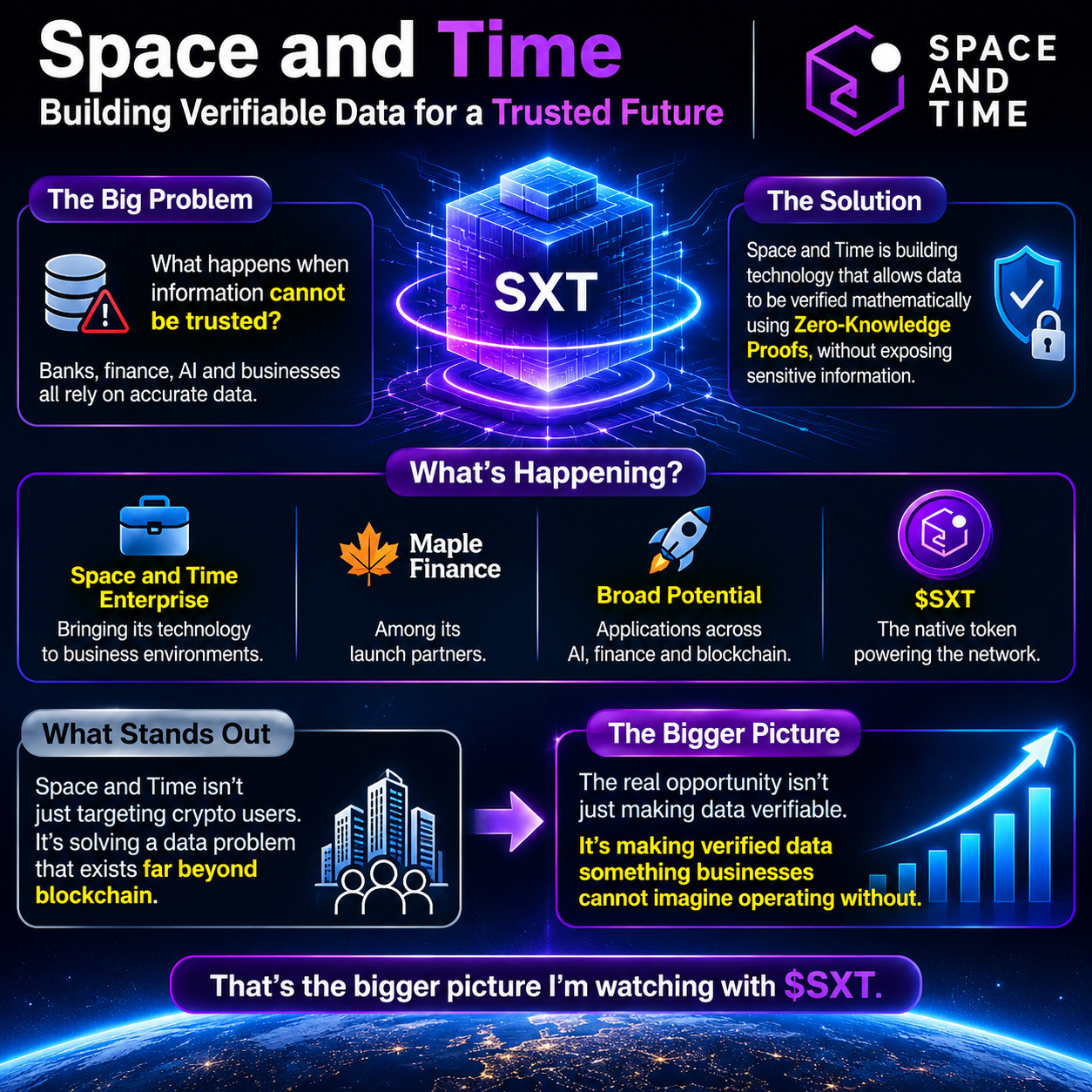
$SXT is working on a problem that could become impossible to ignore as AI and blockchain move further into everyday business.
Think about how much depends on accurate data. Banks, financial platforms, AI applications and businesses all make decisions based on information. But what happens when that information cannot be trusted?
This is where Space and Time gets interesting.
Backed by Microsoft, the project is building technology that allows data to be verified mathematically using zero-knowledge proofs, without exposing sensitive information.
And the progress is worth watching:
• Space and Time Enterprise is bringing its technology to business environments.
• Maple Finance is among its launch partners.
• Its infrastructure has potential applications across AI, finance and blockchain.
• $SXT is the native token powering the network.
What stands out to me is that Space and Time isn't simply trying to attract crypto users. It's addressing a data problem that exists far beyond crypto.
But I want to see more than impressive partnerships. I want to see developers building, companies integrating and actual demand for the network growing.
Because the real opportunity isn't just making data verifiable.
It's making verified data something businesses cannot imagine operating without.
That's the bigger picture I'm watching with SXT
#sxt $SXT @SpaceandTimeDB
$SXT is working on a problem that could become impossible to ignore as AI and blockchain move further into everyday business.
Think about how much depends on accurate data. Banks, financial platforms, AI applications and businesses all make decisions based on information. But what happens when that information cannot be trusted?
This is where Space and Time gets interesting.
Backed by Microsoft, the project is building technology that allows data to be verified mathematically using zero-knowledge proofs, without exposing sensitive information.
And the progress is worth watching:
• Space and Time Enterprise is bringing its technology to business environments.
• Maple Finance is among its launch partners.
• Its infrastructure has potential applications across AI, finance and blockchain.
• $SXT is the native token powering the network.
What stands out to me is that Space and Time isn't simply trying to attract crypto users. It's addressing a data problem that exists far beyond crypto.
But I want to see more than impressive partnerships. I want to see developers building, companies integrating and actual demand for the network growing.
Because the real opportunity isn't just making data verifiable.
It's making verified data something businesses cannot imagine operating without.
That's the bigger picture I'm watching with SXT
#sxt $SXT @SpaceandTime
Crypt0Rachel:
The biggest opportunity might be in industries that aren't even part of crypto yet.
55
60
10.1k

·
--
See translation
One of the biggest limits in DeFi lending is still data. Most protocols can only check simple onchain balances. Anything more complex (historical performance, multi-chain liquidity, offchain reserves, or risk metrics) usually needs a trusted oracle or just gets ignored. Space and Time opens that up. A lending market or vault can query things like “has this asset stayed above X liquidity and below Y drawdown over the last 60 days?” and receive a ZK proof the answer is correct. The contract verifies the proof and decides whether to allow the borrow or rebalance. No middleman, no “trust the feed.” That’s how you get more sophisticated DeFi without adding trust assumptions. Still slowly adding to my $SXT position while this develops. #SXT @SpaceandTimeDB
{future}(SXTUSDT)
One of the biggest limits in DeFi lending is still data. Most protocols can only check simple onchain balances. Anything more complex (historical performance, multi-chain liquidity, offchain reserves, or risk metrics) usually needs a trusted oracle or just gets ignored. Space and Time opens that up. A lending market or vault can query things like “has this asset stayed above X liquidity and below Y drawdown over the last 60 days?” and receive a ZK proof the answer is correct. The contract verifies the proof and decides whether to allow the borrow or rebalance. No middleman, no “trust the feed.” That’s how you get more sophisticated DeFi without adding trust assumptions. Still slowly adding to my $SXT position while this develops. #SXT @SpaceandTime
133

·
--
See translation
Before an AI agent or a DeFi protocol acts on a number, I want to know how that number was calculated.
That’s the practical appeal of @SpaceandTimeDB : verifiable data for AI, tokenization, and DeFi.
Its Proof of SQL produces cryptographic evidence that a query was computed correctly against committed data. Think of checking collateral totals for a lending app, reconciling records behind tokenized assets, or verifying figures supplied to an AI agent.
The part I find useful is giving applications a result they can check before acting on it. The original data and business assumptions still need scrutiny.
That’s the angle I’m watching with $SXT : whether verifiable calculations become part of everyday financial workflows.
#sxt $SXT @SpaceandTimeDB
Before an AI agent or a DeFi protocol acts on a number, I want to know how that number was calculated.
That’s the practical appeal of @SpaceandTime : verifiable data for AI, tokenization, and DeFi.
Its Proof of SQL produces cryptographic evidence that a query was computed correctly against committed data. Think of checking collateral totals for a lending app, reconciling records behind tokenized assets, or verifying figures supplied to an AI agent.
The part I find useful is giving applications a result they can check before acting on it. The original data and business assumptions still need scrutiny.
That’s the angle I’m watching with $SXT : whether verifiable calculations become part of everyday financial workflows.
#sxt $SXT @SpaceandTime
1
466

·
--
See translation
#sxt $SXT @SpaceandTimeDB
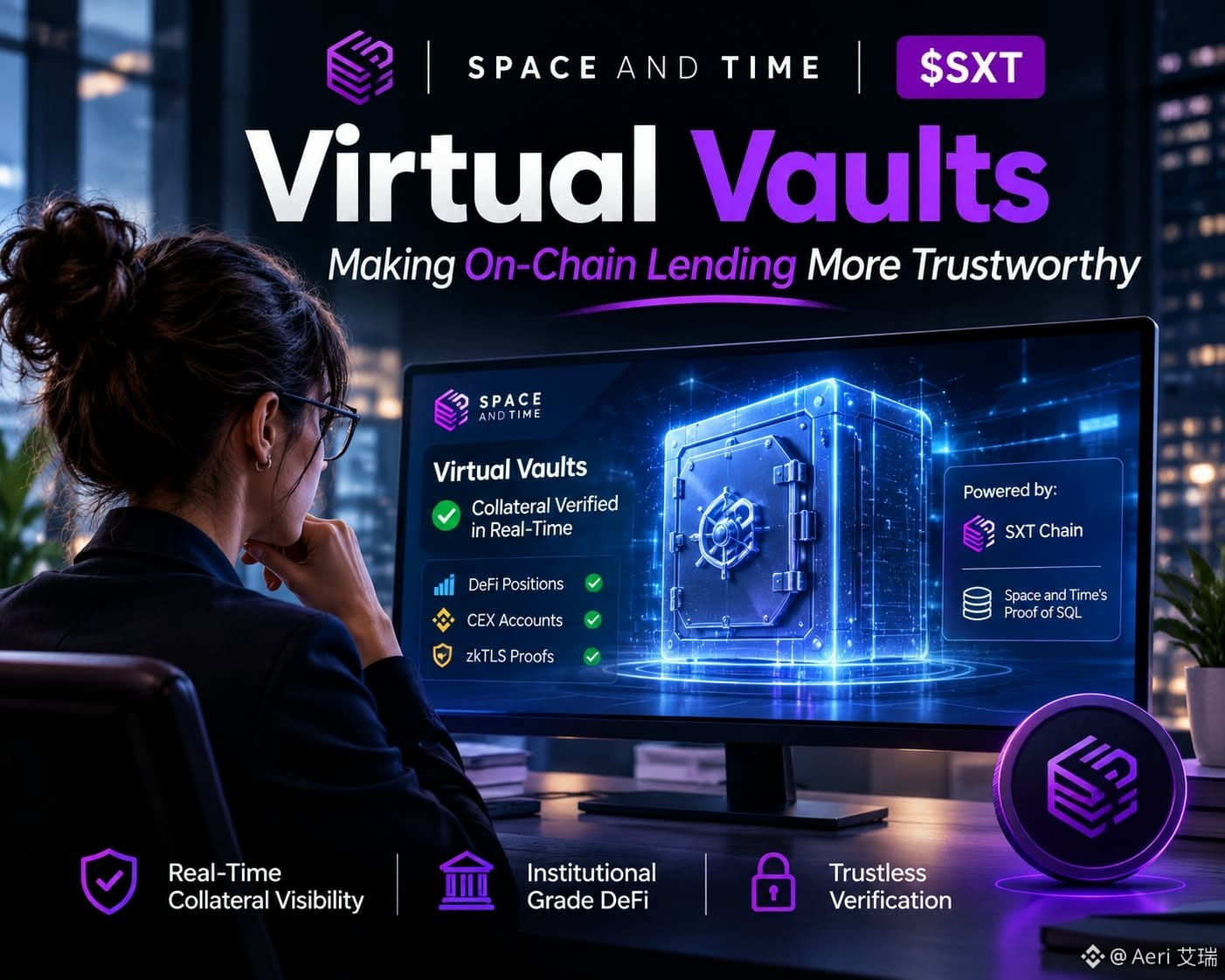
While most people will know $SXT from price charts, the project recently released a product that this hashtag does not mention very often Virtual Vaults, released in May 2026 for institutional on-chain lending.
The issue it solves is a particular one. Banks and lending desks that lend against the crypto assets of the borrower have always been dependent on attestations that were outdated at the moment they were read. The Virtual Vaults provide continuous and cryptographically validated visibility into the collateral of the borrower both in DeFi positions and centralized exchanges' accounts, with zkTLS signed proofs committed to tamper-proof tables on SXT Chain and running on Space and Time's Proof of SQL coprocessor.
This is the AI-Tokenization-DeFi story that is being delivered as a product rather than just a slide deck. Tokenized credit can only scale on-chain if the underlying collateral is verifiable on-chain rather than trust-based, and this is precisely what Virtual Vaults is designed to do for institutional counterparties who cannot function purely on trust.
Every single vault write, read, and verification goes through $SXT . The utility of the network to institutions is meant to be the thing that will keep the token relevant even after the charts have settled down.
#sxt $SXT @SpaceandTime
While most people will know $SXT from price charts, the project recently released a product that this hashtag does not mention very often Virtual Vaults, released in May 2026 for institutional on-chain lending.
The issue it solves is a particular one. Banks and lending desks that lend against the crypto assets of the borrower have always been dependent on attestations that were outdated at the moment they were read. The Virtual Vaults provide continuous and cryptographically validated visibility into the collateral of the borrower both in DeFi positions and centralized exchanges' accounts, with zkTLS signed proofs committed to tamper-proof tables on SXT Chain and running on Space and Time's Proof of SQL coprocessor.
This is the AI-Tokenization-DeFi story that is being delivered as a product rather than just a slide deck. Tokenized credit can only scale on-chain if the underlying collateral is verifiable on-chain rather than trust-based, and this is precisely what Virtual Vaults is designed to do for institutional counterparties who cannot function purely on trust.
Every single vault write, read, and verification goes through $SXT . The utility of the network to institutions is meant to be the thing that will keep the token relevant even after the charts have settled down.
1
313

·
--
See translation
🚨 $SXT SECURING INSTITUTIONAL AI WORKFLOWS WITH CRYPTOGRAPHIC PROOFS ⚡
Enterprise integration requires absolute data integrity when AI models evaluate confidential financial records. Through Proof of SQL infrastructure, $SXT enables verifiable computation without exposing sensitive corporate databases to the public ledger. 📊
Institutional adoption hinges on cryptographic certainty rather than blind trust assumptions. As automated reporting systems scale, verifiable computational frameworks form the bedrock of next-generation data architecture. 💡
💬 How quickly will enterprise compliance mandates force AI applications to adopt cryptographic verification? 👇
⚠️ Not financial advice. Always manage your risk. 🛡️
🏷️ #SXT #DataSecurity #Crypto #Infrastructure
🦈 🔒
8

See translation
#sxt $SXT @SpaceandTimeDB
Space and Time Is Building Verifiable Data For AI And DeFi
@SpaceandTime
Space and Time gives smart contracts and AI agents data they can verify on chain instead of trusting one central source
That matters for tokenization and DeFi where one wrong data point can move real money
I traded $SXT today and I am watching how verifiable data grows with AI demand
#SXT
#sxt $SXT @SpaceandTime
Space and Time Is Building Verifiable Data For AI And DeFi
@SpaceandTime
Space and Time gives smart contracts and AI agents data they can verify on chain instead of trusting one central source
That matters for tokenization and DeFi where one wrong data point can move real money
I traded $SXT today and I am watching how verifiable data grows with AI demand
#SXT
73
Log in to explore more content
Join global crypto users on Binance Square
⚡️ Get latest and useful information about crypto.
💬 Trusted by the world’s largest crypto exchange.
👍 Discover real insights from verified creators.
Email / Phone number
Trending Topics
1
#CryptoSelloffTriggersMultipleWhaleLiquidations
169,455 views
1,728 Discussing
2
#USSpotXRPETFsSeeLargestWeeklyOutflowIn8Months
153,290 views
1,528 Discussing
3
#WillFOMCMinutesReinforceRateHikeExpectations?
44,325 views
718 Discussing
4
#BitcoinActiveSupplyInProfitDropsBelow45%
229,133 views
1,780 Discussing
5
#TONStrategyReports$23.97MQ3NetLoss
20,028 views
148 Discussing
6
#KavaSaysAbnormalActivityLimitedToKavaLend
152,351 views
1,014 Discussing
7
#WORPTLetsTouristsConvertCryptoToThaiBaht
54,232 views
408 Discussing
8
#WhoWillSucceedJensenHuangatNvidia?
352,317 views
2,154 Discussing
9
#WhatWillDriveCryptoandStocks’NextRebound?
878,520 views
3,965 Discussing
10
#TradFiForBeginners
847,928 views
4,978 Discussing