

William Henry
19.6k Posts

William Henry
 Square Verified+
Report
Block User
Trader, Crypto Lover • LFG • 2025 Last Marketing. Forex X. @Wi_lliam_12 . X KITE-991244
Open Trade
Frequent Trader
2 Years
78 Following
45.0K+ Followers
65.0K+ Liked
Posts
Portfolio
All
Quotes
Live
·
--
Bearish
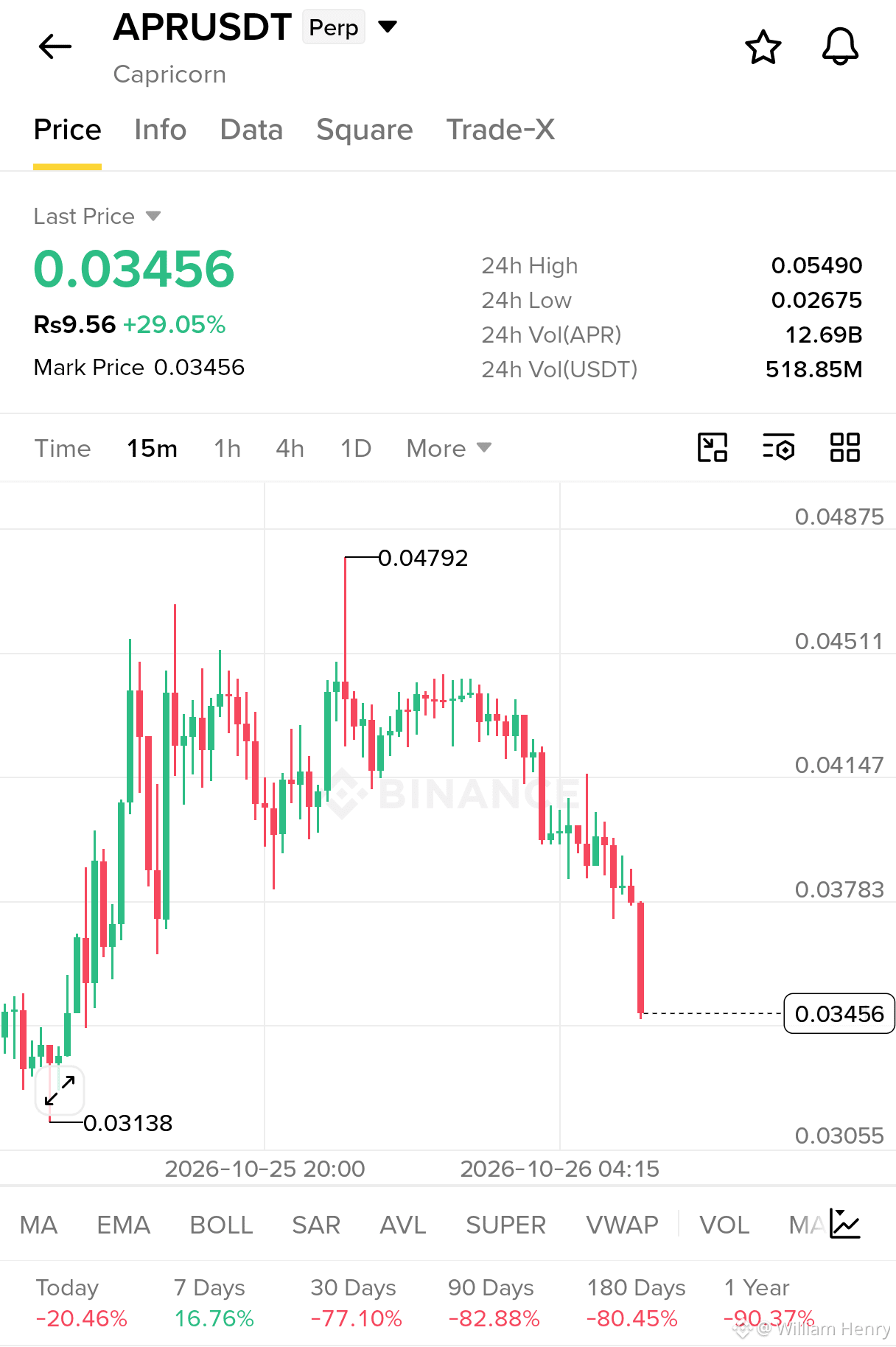
$APR is showing explosive volatility! APRUSDT is trading at $0.03456, up 29.05% in 24 hours, after reaching a high of $0.05490. But sellers are pushing hard on the 15M chart, with price dropping sharply from the recent consolidation zone.
Trade Setup
- Entry Zone: $0.03350–$0.03450 (only after support confirmation)
- Target 1: $0.03783
- Target 2: $0.04147
- Target 3: $0.04511
- Stop Loss: Below $0.03138
Why It's Worth Watching: APR has strong volatility, but bearish short-term momentum is clear. A confirmed bounce could bring buyers back, while a breakdown may lead to further downside. Wait for confirmation and manage risk carefully.
Watch $APR closely — the next move could be decisive!
{future}(APRUSDT)
$APR is showing explosive volatility! APRUSDT is trading at $0.03456, up 29.05% in 24 hours, after reaching a high of $0.05490. But sellers are pushing hard on the 15M chart, with price dropping sharply from the recent consolidation zone.
Trade Setup
- Entry Zone: $0.03350–$0.03450 (only after support confirmation)
- Target 1: $0.03783
- Target 2: $0.04147
- Target 3: $0.04511
- Stop Loss: Below $0.03138
Why It's Worth Watching: APR has strong volatility, but bearish short-term momentum is clear. A confirmed bounce could bring buyers back, while a breakdown may lead to further downside. Wait for confirmation and manage risk carefully.
Watch $APR closely — the next move could be decisive!
Trade Setup
- Entry Zone: $0.03350–$0.03450 (only after support confirmation)
- Target 1: $0.03783
- Target 2: $0.04147
- Target 3: $0.04511
- Stop Loss: Below $0.03138
Why It's Worth Watching: APR has strong volatility, but bearish short-term momentum is clear. A confirmed bounce could bring buyers back, while a breakdown may lead to further downside. Wait for confirmation and manage risk carefully.
Watch $APR closely — the next move could be decisive!
683
Trump’s oil warning is putting global markets on edge! Rising oil prices may be the cost of national security, but the real question is how long energy markets can handle the pressure. If tensions with Iran ease, oil could see a sharp decline. Until then, volatility remains in focus.
Will peace bring relief or will uncertainty keep markets on fire?
$BMT $TRUMP $BIRB
Trump’s oil warning is putting global markets on edge! Rising oil prices may be the cost of national security, but the real question is how long energy markets can handle the pressure. If tensions with Iran ease, oil could see a sharp decline. Until then, volatility remains in focus.
Will peace bring relief or will uncertainty keep markets on fire?
$BMT $TRUMP $BIRB
Will peace bring relief or will uncertainty keep markets on fire?
$BMT $TRUMP $BIRB

2
2k
·
--
Bullish
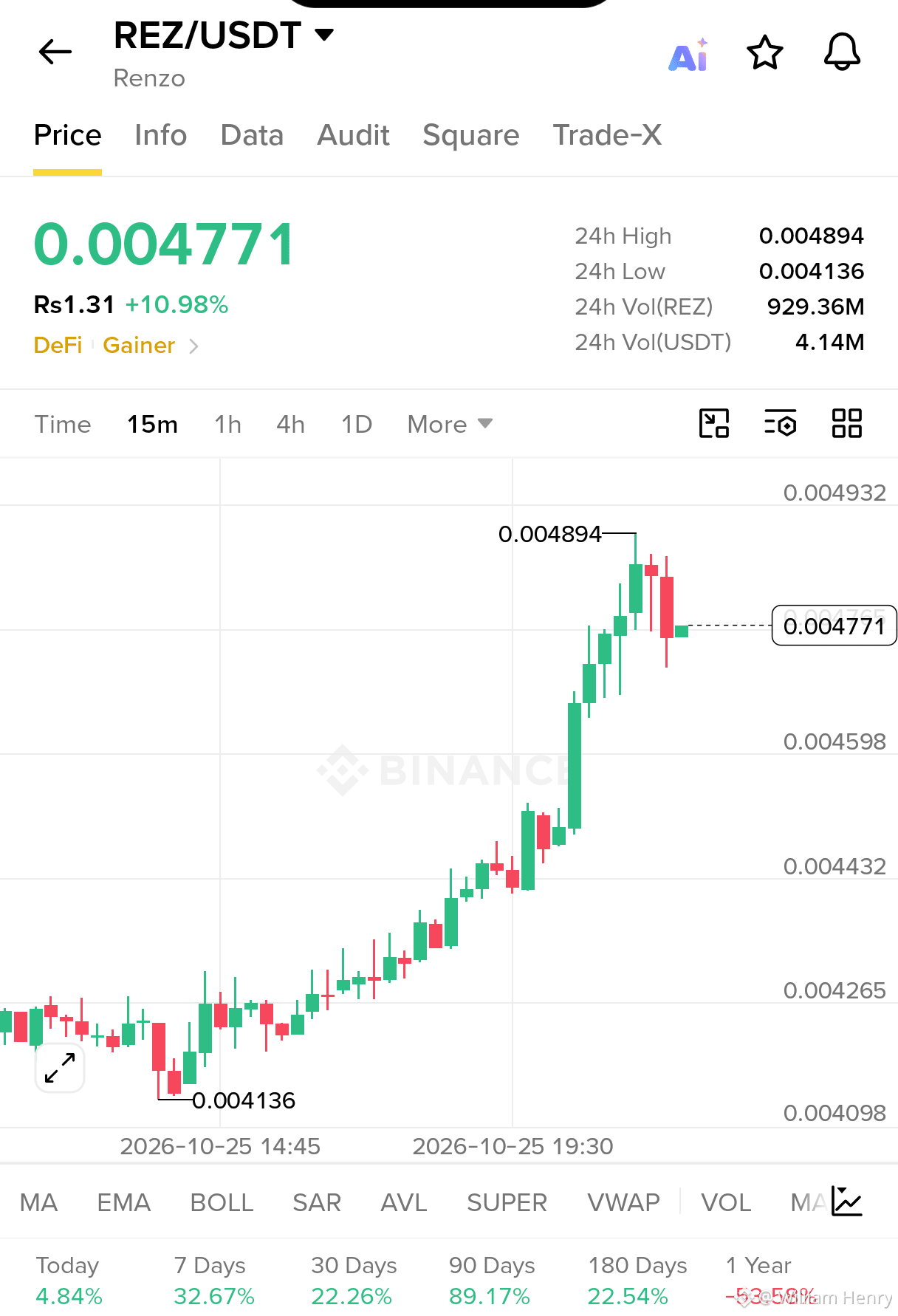
$REZ is looking strong on the 15M chart. Price is sitting at $0.004771, up 10.98%, after climbing from the $0.004136 low and reaching $0.004894. The move has been impressive, and buyers are still trying to hold their ground after the recent pullback.
Trade Setup
Entry Zone: $0.004700–$0.004771
Target 1: $0.004800
Target 2: $0.004894
Target 3: Above $0.004894 after a confirmed breakout
* Stop Loss: Set below confirmed support
The key level to watch is $0.004894. If REZ breaks above it with strong volume, we could see another push higher. If momentum fades, a pullback is still possible, so don't chase the move blindly.
Let's see if buyers can take REZ to the next level. Let's go $REZ
{future}(REZUSDT)
#BinancePick
$REZ is looking strong on the 15M chart. Price is sitting at $0.004771, up 10.98%, after climbing from the $0.004136 low and reaching $0.004894. The move has been impressive, and buyers are still trying to hold their ground after the recent pullback.
Trade Setup
Entry Zone: $0.004700–$0.004771
Target 1: $0.004800
Target 2: $0.004894
Target 3: Above $0.004894 after a confirmed breakout
* Stop Loss: Set below confirmed support
The key level to watch is $0.004894. If REZ breaks above it with strong volume, we could see another push higher. If momentum fades, a pullback is still possible, so don't chase the move blindly.
Let's see if buyers can take REZ to the next level. Let's go $REZ
#BinancePick
Trade Setup
Entry Zone: $0.004700–$0.004771
Target 1: $0.004800
Target 2: $0.004894
Target 3: Above $0.004894 after a confirmed breakout
* Stop Loss: Set below confirmed support
The key level to watch is $0.004894. If REZ breaks above it with strong volume, we could see another push higher. If momentum fades, a pullback is still possible, so don't chase the move blindly.
Let's see if buyers can take REZ to the next level. Let's go $REZ
#BinancePick
472
·
--
Bullish
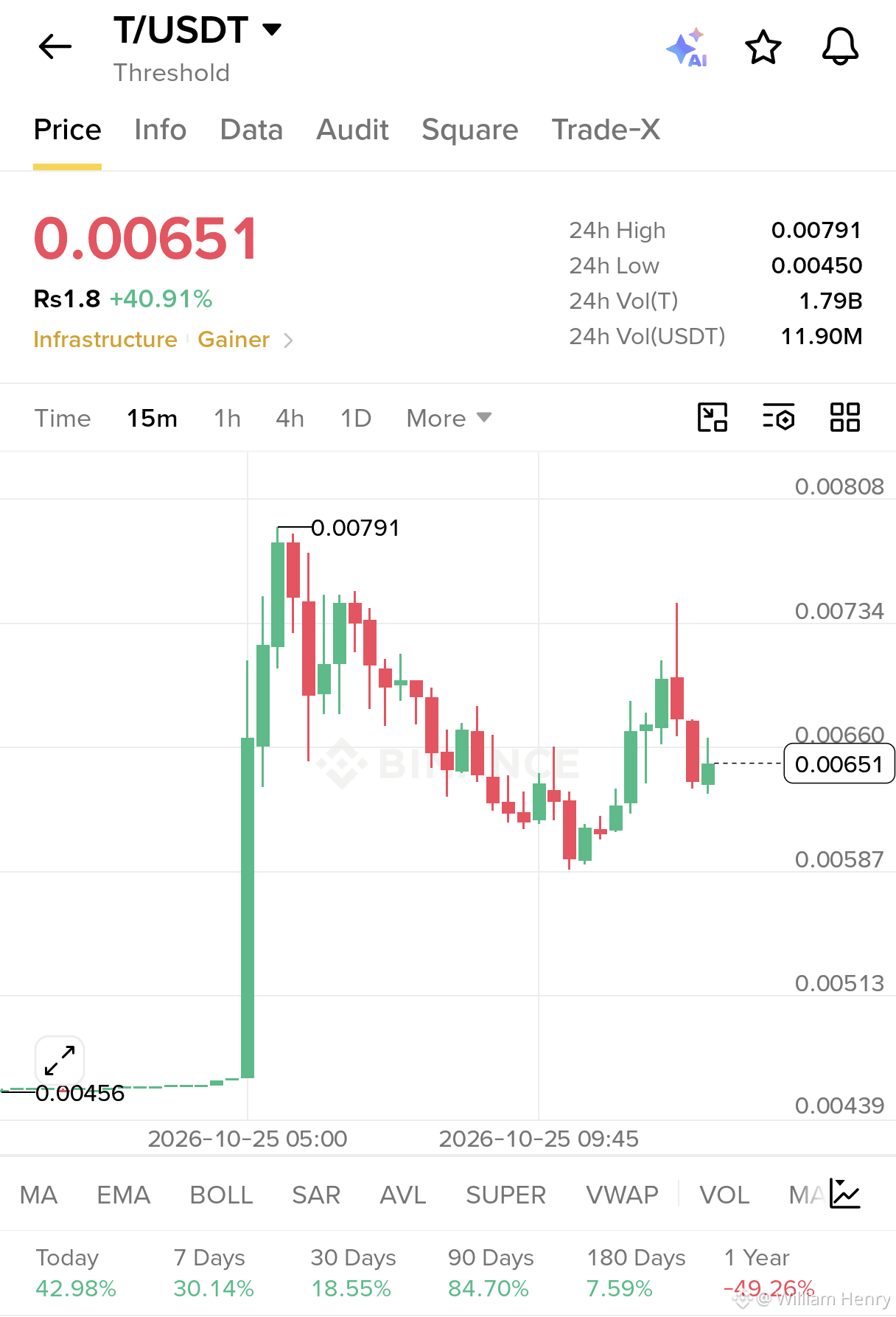
$T is showing explosive bullish momentum! Price surged from $0.00456 to a 24H high of $0.00791 and is now trading at $0.00651, up 40.91% in 24 hours. Volume has reached 11.90M USDT, keeping this breakout in focus.
Trade Setup
Entry Zone: $0.00630–$0.00650
Target 1: $0.00660
Target 2: $0.00690
Target 3: $0.00734
Stop Loss: $0.00585
A breakout above $0.00660 could open the door toward higher resistance, with $0.00791 as the major high to watch. Manage risk carefully as volatility remains high. $T is moving fast!
{future}(TUSDT)
$T is showing explosive bullish momentum! Price surged from $0.00456 to a 24H high of $0.00791 and is now trading at $0.00651, up 40.91% in 24 hours. Volume has reached 11.90M USDT, keeping this breakout in focus.
Trade Setup
Entry Zone: $0.00630–$0.00650
Target 1: $0.00660
Target 2: $0.00690
Target 3: $0.00734
Stop Loss: $0.00585
A breakout above $0.00660 could open the door toward higher resistance, with $0.00791 as the major high to watch. Manage risk carefully as volatility remains high. $T is moving fast!
Trade Setup
Entry Zone: $0.00630–$0.00650
Target 1: $0.00660
Target 2: $0.00690
Target 3: $0.00734
Stop Loss: $0.00585
A breakout above $0.00660 could open the door toward higher resistance, with $0.00791 as the major high to watch. Manage risk carefully as volatility remains high. $T is moving fast!
1
455
·
--
Bullish
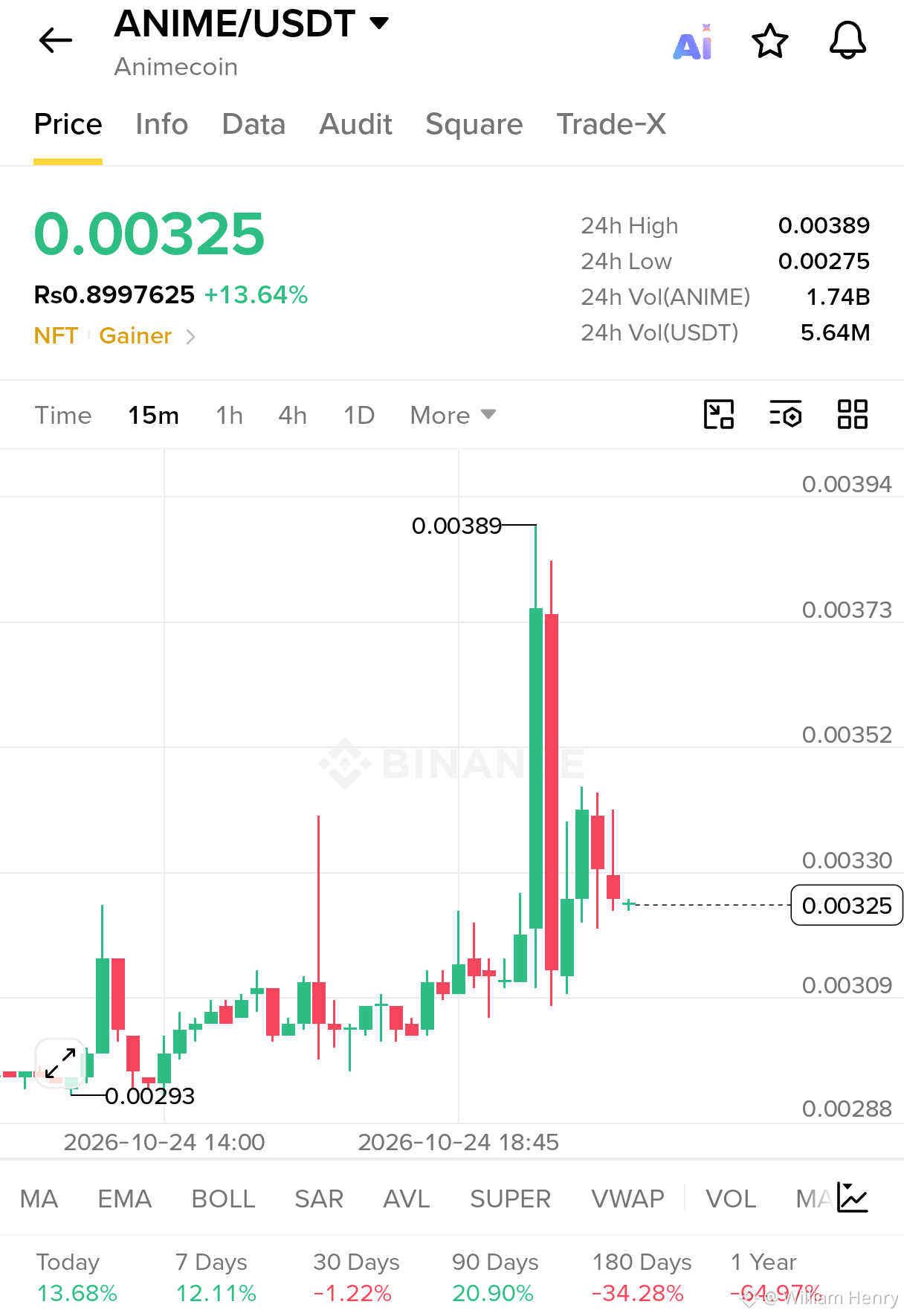
$ANIME is showing powerful bullish momentum! Price surged to $0.00389 and is now trading at $0.00325, up 13.64% in 24 hours. Buyers pushed a strong breakout, followed by a pullback. Can ANIME build momentum for another move higher?
Trade Setup
* Entry Zone: $0.00315–$0.00325
* Target 1: $0.00330
* Target 2: $0.00352
* Target 3: $0.00373
* Stop Loss: $0.00309
A breakout above $0.00330 could open the door toward higher resistance, while losing support may bring more downside. Watch volume and manage risk carefully. Let’s go $ANIME
{future}(ANIMEUSDT)
#BinancePick
$ANIME is showing powerful bullish momentum! Price surged to $0.00389 and is now trading at $0.00325, up 13.64% in 24 hours. Buyers pushed a strong breakout, followed by a pullback. Can ANIME build momentum for another move higher?
Trade Setup
* Entry Zone: $0.00315–$0.00325
* Target 1: $0.00330
* Target 2: $0.00352
* Target 3: $0.00373
* Stop Loss: $0.00309
A breakout above $0.00330 could open the door toward higher resistance, while losing support may bring more downside. Watch volume and manage risk carefully. Let’s go $ANIME
#BinancePick
Trade Setup
* Entry Zone: $0.00315–$0.00325
* Target 1: $0.00330
* Target 2: $0.00352
* Target 3: $0.00373
* Stop Loss: $0.00309
A breakout above $0.00330 could open the door toward higher resistance, while losing support may bring more downside. Watch volume and manage risk carefully. Let’s go $ANIME
#BinancePick
1
4
854
·
--
Bullish
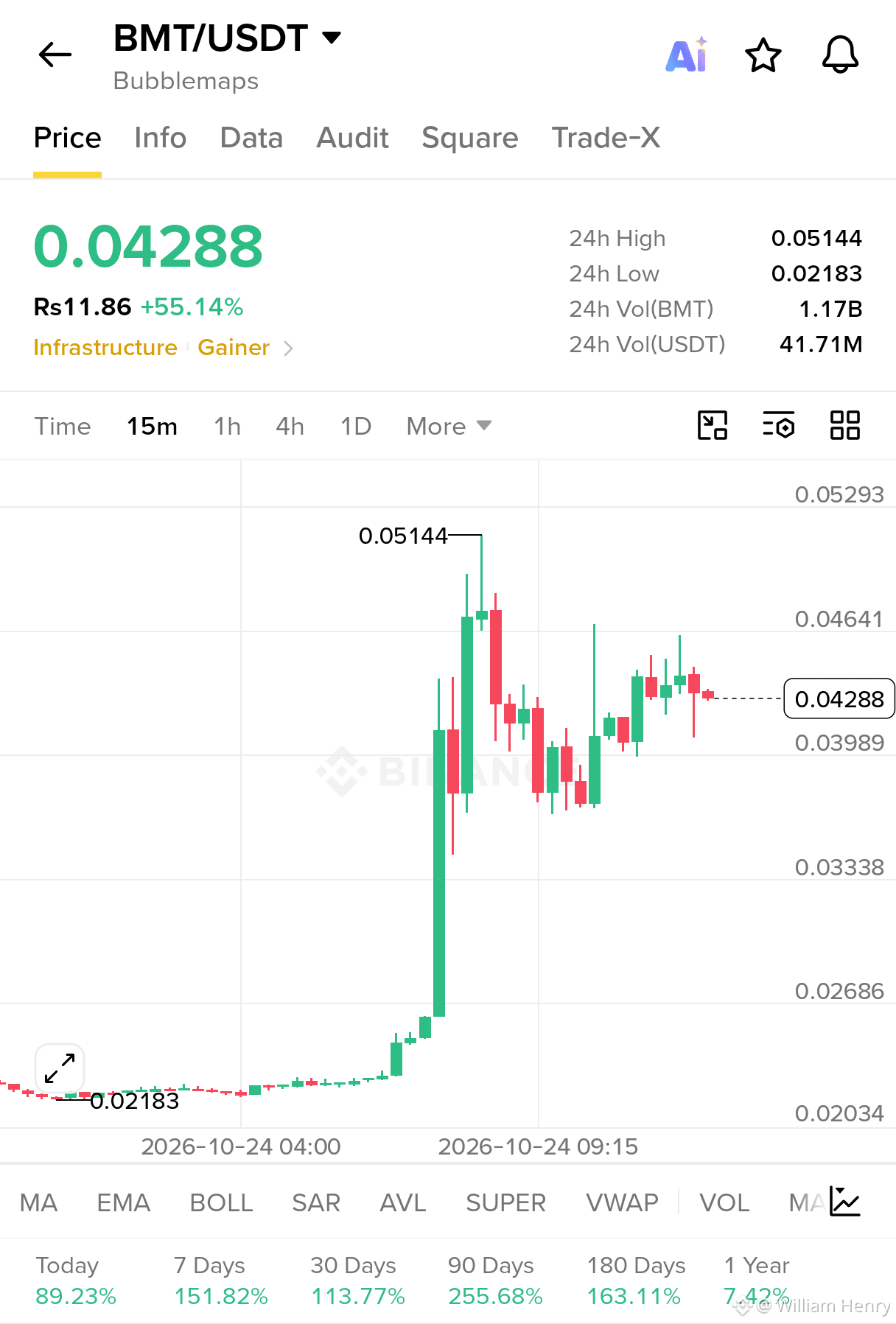
$BMT is showing explosive bullish momentum! Trading at $0.04288, up 55.14% in 24 hours, after surging from $0.02183 to a high of $0.05144. Buyers are holding strong after the massive breakout.
Trade Setup
Entry Zone: $0.04100–$0.04300
Target 1: $0.04600
Target 2: $0.04800
Target 3: $0.05144
Stop Loss: $0.03900
A breakout above $0.04641 could open the door to another rally toward $0.05144. Watch volume and manage risk as volatility remains high.
Let’s go, $BMT
{future}(BMTUSDT)
$BMT is showing explosive bullish momentum! Trading at $0.04288, up 55.14% in 24 hours, after surging from $0.02183 to a high of $0.05144. Buyers are holding strong after the massive breakout.
Trade Setup
Entry Zone: $0.04100–$0.04300
Target 1: $0.04600
Target 2: $0.04800
Target 3: $0.05144
Stop Loss: $0.03900
A breakout above $0.04641 could open the door to another rally toward $0.05144. Watch volume and manage risk as volatility remains high.
Let’s go, $BMT
Trade Setup
Entry Zone: $0.04100–$0.04300
Target 1: $0.04600
Target 2: $0.04800
Target 3: $0.05144
Stop Loss: $0.03900
A breakout above $0.04641 could open the door to another rally toward $0.05144. Watch volume and manage risk as volatility remains high.
Let’s go, $BMT
1
1k
Article
Halloween Memories: A Magical Night of Costumes, Decorations, Spooky Stories, and Unforgettable ExpeIntroduction: The Magic of Halloween
Halloween is one of the most exciting and fascinating celebrations of the year. It is a special time when ordinary streets transform into mysterious places filled with glowing pumpkins, colorful lights, spooky decorations, creative costumes, and the joyful sounds of children searching for candy. Every year, Halloween brings together families, friends, neighbors, and communities to celebrate imagination, creativity, and the playful side of fear. For many people, it is more than simply a holiday. It is an opportunity to create wonderful memories, experience thrilling adventures, tell mysterious stories, and enjoy moments that remain unforgettable long after the decorations have been put away.
When I think about Halloween, I imagine a cool autumn evening, the gentle rustling of dry leaves, the warm glow of candles inside carved pumpkins, and the excitement of preparing for a night full of surprises. Halloween has a unique atmosphere that is difficult to describe. It combines happiness with mystery, laughter with suspense, and beautiful decorations with frightening surprises. Even the simplest activities, such as choosing a costume, decorating a doorway, or telling a ghost story, can become extraordinary when they are part of the Halloween celebration.
Although I do not have personal childhood memories or real-life Halloween experiences, I can describe a fictional Halloween celebration in the style of a personal story. This imagined experience captures the feelings, traditions, and unforgettable moments that make Halloween so special to many people around the world.
Preparing for Halloween: The Beginning of the Excitement
My imagined Halloween celebration begins several days before October 31. The moment the calendar reaches the final week of October, excitement fills the air. Shops display orange and black decorations, supermarkets arrange colorful candies near their entrances, and houses begin to show signs of the approaching celebration. Some families hang artificial spiderwebs across their windows, while others place skeletons, witches, and ghost figures in their gardens.
The first task is deciding how to decorate the house. I imagine walking through a store filled with Halloween decorations, looking at everything from tiny pumpkin-shaped lights to enormous inflatable monsters. Some decorations are funny, while others are designed to frighten anyone who sees them after sunset.
After considering several ideas, I decide on a mysterious haunted-house theme. The front door will look like the entrance to an abandoned mansion, the windows will glow with orange light, and the garden will become a miniature graveyard. Artificial tombstones will stand among dry leaves, plastic bats will hang from tree branches, and a skeleton will sit in an old chair near the entrance.
The most exciting part is planning the lighting. Instead of using bright white bulbs, I choose dim purple and orange lights. Their unusual colors create long shadows across the walls and make familiar objects appear strangely unfamiliar. Even the hallway begins to look like a passage leading into another world.
As the decorations come together, the house gradually changes its personality. A simple living room becomes a mysterious chamber, and an ordinary doorway looks like the entrance to a secret adventure.
Choosing the Perfect Halloween Costume
One of the most enjoyable Halloween traditions is choosing a costume. The possibilities are almost endless. People dress as vampires, witches, ghosts, superheroes, fictional characters, monsters, historical figures, and even humorous versions of everyday objects.
For this imagined celebration, I choose a classic vampire costume with a modern twist. The outfit includes a long black coat, a dark red shirt, black trousers, polished shoes, and a dramatic cape. Pale makeup, carefully drawn shadows around the eyes, and small artificial vampire fangs complete the appearance.
The goal is not simply to look frightening. It is to create a character with a mysterious personality.
I practice standing in front of a mirror, adjusting the cape and experimenting with different expressions. Sometimes I look like a serious vampire from an old horror movie. At other times, the costume looks so dramatic that it becomes unintentionally funny. Those moments are part of the fun.
Friends might choose entirely different costumes. One could arrive dressed as a friendly ghost, another as a wicked witch, and someone else as a zombie wearing torn clothes covered in fake blood. A particularly creative friend might dress as a walking skeleton, with white bones painted across a completely black outfit.
The best costumes are not necessarily the most expensive. Sometimes the most memorable ones are handmade using old clothes, cardboard, face paint, and a little imagination. Halloween reminds everyone that creativity matters much more than the amount of money spent on an outfit.
Transforming the House into a Haunted Mansion
On Halloween afternoon, the real decorating begins. Everyone has a different responsibility, and the house becomes a busy workshop filled with laughter, conversation, and creative ideas.
The front porch receives the greatest attention because it is the first place visitors will see. A large carved pumpkin sits beside the entrance, its triangular eyes and crooked smile glowing from within. Smaller pumpkins are arranged along the steps, and artificial cobwebs cover the railing.
Inside the house, the decorations become even more elaborate.
Black paper bats are attached to the walls. Small plastic spiders hide behind picture frames. A white sheet is transformed into a floating ghost, suspended from the ceiling with nearly invisible thread. In one corner, a collection of old books, empty bottles, and flickering battery-operated candles creates the appearance of a mysterious laboratory.
The dining table receives a Halloween makeover as well. Orange napkins, black plates, pumpkin-shaped decorations, and small bowls of candy create a festive atmosphere. Homemade cookies are decorated with spiderweb patterns, while cupcakes are topped with chocolate frosting and tiny candy eyes.
One particularly creative decoration is a mirror surrounded by artificial cracks and dark fabric. A handwritten message beside it reads, “Look closely. Something may be looking back.”
Although everyone knows it is only a decoration, the mirror creates an unexpectedly eerie effect when the lights are dimmed.
By sunset, the transformation is complete. The house looks like a scene from a spooky movie, yet it remains warm and welcoming. The decorations are designed to create excitement rather than genuine fear, and everyone is eager to see how visitors will react.
The Arrival of Halloween Night
As evening approaches, the sky changes from pale blue to deep purple, and the last traces of daylight disappear behind the houses. Streetlights begin to shine, windows glow with colorful decorations, and the temperature becomes pleasantly cool.
This is the moment when Halloween truly comes alive.
Children dressed as superheroes, princesses, ghosts, witches, and monsters begin walking through the neighborhood. Some carry orange buckets shaped like pumpkins, while others hold small bags decorated with spooky pictures. Their laughter echoes along the sidewalks as they move from one decorated house to another.
Parents accompany younger children, taking photographs and making sure everyone stays safe. Teenagers gather in groups, comparing costumes and planning which houses to visit. Adults stand near their front doors, handing out candy and complimenting the most creative outfits.
The atmosphere feels completely different from an ordinary evening. Even familiar streets appear mysterious under the glow of orange lights.
I imagine standing near the front entrance in my vampire costume, welcoming visitors with a dramatic expression. When children approach, I suddenly raise my hands and say in a deep, theatrical voice, “Welcome to my haunted mansion!”
Some children laugh immediately. Others jump back in surprise before realizing that the frightening vampire is only pretending. Their reactions become one of the funniest parts of the evening.
Halloween is especially wonderful because it allows people to be playful without taking themselves too seriously. For one night, everyone can become someone or something completely different.
Trick-or-Treating: A Sweet Halloween Tradition
One of the most famous Halloween activities is trick-or-treating. Children visit participating homes, knock on doors, and say, “Trick or treat!” in exchange for candy or other small treats.
In my imagined story, joining the neighborhood trick-or-treating adventure becomes one of the highlights of the night.
A small group of friends gathers outside, each wearing a different costume. One carries a glowing lantern, another wears a long witch's hat, and a third has transformed into a mummy using strips of white fabric.
We walk along the street, admiring the decorations on every house. One home features a giant inflatable spider, while another has a motion-activated skeleton that suddenly moves whenever someone approaches. A third house plays eerie music through hidden speakers, making the entire garden feel like the entrance to a haunted forest.
At each participating home, the residents greet visitors with smiles and bowls of candy. Some offer chocolate bars, while others distribute colorful sweets, lollipops, or small packets of treats.
The most memorable house belongs to a neighbor who has created an elaborate haunted garden. Artificial fog drifts across the ground, purple lights illuminate the trees, and a recorded owl call sounds from somewhere in the darkness.
As we approach the entrance, a hidden decoration suddenly makes a creaking noise. Everyone stops for a moment. Then a mechanical skeleton rises from behind a tombstone, and the entire group bursts into laughter.
By the end of the walk, our bags are filled with candy, our feet are tired, and our faces hurt from smiling. The real reward is not simply the collection of sweets. It is the shared experience of exploring the neighborhood, admiring everyone's creativity, and enjoying the excitement of the night.
A Spooky Story by Candlelight
After returning home, the celebration moves into a quieter and more mysterious phase. The candy is placed on the table, the costumes are adjusted, and everyone gathers in the living room for a ghost-story session.
The overhead lights are switched off. Only a few battery-operated candles illuminate the room, creating soft shadows across the walls. Outside, the wind moves through the trees, and dry leaves scrape against the windows.
Someone suggests telling a frightening story.
The story I imagine telling is called The House at the End of Blackwood Lane.
Long ago, according to the fictional tale, there was an abandoned house at the end of a narrow country road. Nobody lived there, and the windows had been covered with old wooden boards. Local residents claimed that a light appeared in the upstairs bedroom every Halloween night, even though the building had no electricity.
One October evening, three curious friends decided to investigate. They carried flashlights and walked through the cold darkness until they reached the old house.
The front gate stood open.
Inside, the hallway smelled of damp wood and dust. Their footsteps echoed across the floorboards, and the beams of their flashlights revealed faded paintings hanging crookedly on the walls.
Then they heard a sound.
Tap.
Tap.
Tap.
It came from upstairs.
The friends looked at one another, unsure whether to continue. Finally, the bravest among them began climbing the staircase. Each step produced a long, unpleasant creak.
At the top of the stairs, they discovered a narrow corridor with three doors. The tapping seemed to come from behind the final door.
One friend reached for the handle.
Before the door could open, the tapping stopped.
A voice whispered from inside, “You are late.”
The friends froze.
Suddenly, every flashlight went dark.
For several seconds, the hallway remained completely silent. Then a pale light appeared beneath the door, growing brighter until the entire corridor was illuminated.
The friends ran downstairs, pushed through the front entrance, and escaped into the night without looking back.
The next morning, they returned with adults from the village. The house was exactly as they had left it, except for one strange detail: on the dusty floor outside the upstairs bedroom were three fresh footprints.
They led toward the door.
None led away from it.
The story ends without explaining what happened, leaving listeners to decide whether the experience was supernatural, imagined, or the result of something nobody had yet discovered.
When the story finishes, everyone in the living room sits silently for a moment. Then someone makes a joke about the tapping sound, and the tension disappears into laughter.
That is the beauty of Halloween storytelling. It allows people to experience fear in a safe environment, where the frightening moment can become a shared memory rather than a real danger.
Halloween Games and Friendly Competition
Halloween is not complete without games and playful competitions. Once the ghost stories finish, the living room becomes a place for activities that entertain people of different ages.
One popular game is the costume contest. Each participant takes a turn walking across the room while everyone else judges the creativity, originality, and overall appearance of the costume.
The vampire receives points for dramatic presentation. The witch wins praise for a handmade hat, while the skeleton impresses everyone with detailed face paint.
Rather than focusing only on appearance, the contest includes several categories: funniest costume, scariest costume, most creative costume, and best homemade outfit.
Another activity is a Halloween treasure hunt. Small paper clues are hidden throughout the house, leading participants from one room to another. Each clue contains a riddle or a mysterious message.
For example, one clue reads:
“I have a face but cannot smile. I have two hands but cannot clap. Find me where the hours quietly pass.”
The answer is a clock.
The next clue leads to a bookshelf, then to a decorated pumpkin, and finally to a hidden box filled with candy.
There is also a pumpkin-themed guessing game. A large jar is filled with small candies, and everyone estimates how many pieces it contains. The closest guess wins a small prize.
These activities demonstrate that Halloween does not need to involve expensive equipment or complicated arrangements. A few simple materials, some imagination, and a group of enthusiastic people are enough to create an enjoyable celebration.
Delicious Halloween Food and Treats
Food is another important part of the Halloween experience. The decorations may create the atmosphere, and the costumes may attract attention, but delicious snacks help bring everyone together.
For the imagined celebration, the kitchen becomes a place of creativity and experimentation.
Pumpkin-shaped cookies are prepared using orange icing and chocolate details. Chocolate cupcakes are decorated with tiny edible spiders. Popcorn is served in black-and-orange paper cups, while bowls of candy are placed around the room for guests to enjoy.
A large bowl of fruit punch provides a refreshing drink. For a more theatrical effect, the punch is served in a transparent container surrounded by artificial cobweb decorations. Small paper labels give ordinary refreshments mysterious names such as “Midnight Potion” and “Witch's Brew.”
Dinner is simple but festive. Homemade pizza is cut into small pieces, sandwiches are arranged in unusual shapes, and roasted pumpkin seeds are seasoned with salt and spices.
Everyone contributes something. One person prepares cookies, another arranges the snacks, and someone else takes photographs of the finished table.
The best part is not the appearance of the food but the conversations that take place around it. Friends discuss their costumes, compare their favorite decorations, and laugh about the funniest moments from trick-or-treating.
Food creates opportunities for people to slow down and enjoy one another's company. In the middle of an evening filled with excitement, these quieter moments often become the most comforting memories.
An Unexpected Sound in the Night
Every good Halloween story needs an unexpected moment.
In this fictional celebration, the most surprising incident occurs shortly before midnight.
The guests are sitting together in the living room when a strange scratching sound comes from the front door.
At first, everyone assumes that a branch is rubbing against the wood. The sound continues, however, becoming louder and more rhythmic.
Scratch.
Scratch.
Scratch.
Someone turns down the music.
Another person switches on a flashlight.
The room becomes quiet as everyone listens.
Then three slow knocks echo through the house.
Nobody immediately moves.
The decorations that seemed funny earlier now appear surprisingly convincing. The skeleton near the window casts a long shadow, and the orange pumpkin lights flicker across the floor.
Finally, one person walks toward the entrance and looks through the window.
There is nobody outside.
The door opens carefully, revealing an empty porch covered with dry leaves.
For a few seconds, the group wonders what caused the noise. Then a small cat emerges from behind a flowerpot, looks at everyone with complete indifference, and walks away.
The mysterious scratching sound has a perfectly ordinary explanation.
Everyone laughs, relieved that the unexpected visitor was an animal rather than a ghost. The moment becomes a favorite story to repeat later because it combines suspense, surprise, and humor.
It also illustrates something interesting about fear: when people cannot explain a sound or a shadow, their imaginations often create possibilities much more frightening than reality.
Halloween provides an opportunity to experience that feeling without placing anyone in actual danger.
Walking Through a Haunted Trail
Later in the evening, the group decides to visit a fictional community Halloween attraction known as the Haunted Forest Trail.
The trail winds through a small wooded area decorated with artificial tombstones, hanging lanterns, fog machines, and carefully arranged horror scenes. Volunteers dressed as monsters and ghosts hide behind trees and emerge at unexpected moments.
At the entrance, visitors receive a simple warning: stay on the marked path, do not touch the decorations, and remember that the frightening characters are performers.
The first section of the trail is surprisingly peaceful. Paper lanterns hang from branches, and a recorded wind sound creates the atmosphere of an abandoned forest.
Then a low growl comes from the darkness.
A figure wearing a torn cloak steps onto the path, raises its arms, and makes a dramatic noise. Someone in the group jumps backward, while another laughs so loudly that the performer breaks character for a moment.
Further along, the trail passes an abandoned-looking cabin. A flickering light shines through the window, and a mechanical figure moves behind a curtain.
The most effective scene involves a narrow passage lined with mirrors. The reflections make the corridor appear much longer than it actually is, creating the illusion that something is following the visitors.
Although the experience is frightening at times, everyone continues walking together.
That feeling of shared courage makes the attraction especially enjoyable. Nobody needs to be the bravest person in the group. It
#SEAPumpkinFrenzy
$IRYS $AKE
$LAB
Halloween Memories: A Magical Night of Costumes, Decorations, Spooky Stories, and Unforgettable Expe
Introduction: The Magic of Halloween
Halloween is one of the most exciting and fascinating celebrations of the year. It is a special time when ordinary streets transform into mysterious places filled with glowing pumpkins, colorful lights, spooky decorations, creative costumes, and the joyful sounds of children searching for candy. Every year, Halloween brings together families, friends, neighbors, and communities to celebrate imagination, creativity, and the playful side of fear. For many people, it is more than simply a holiday. It is an opportunity to create wonderful memories, experience thrilling adventures, tell mysterious stories, and enjoy moments that remain unforgettable long after the decorations have been put away.
When I think about Halloween, I imagine a cool autumn evening, the gentle rustling of dry leaves, the warm glow of candles inside carved pumpkins, and the excitement of preparing for a night full of surprises. Halloween has a unique atmosphere that is difficult to describe. It combines happiness with mystery, laughter with suspense, and beautiful decorations with frightening surprises. Even the simplest activities, such as choosing a costume, decorating a doorway, or telling a ghost story, can become extraordinary when they are part of the Halloween celebration.
Although I do not have personal childhood memories or real-life Halloween experiences, I can describe a fictional Halloween celebration in the style of a personal story. This imagined experience captures the feelings, traditions, and unforgettable moments that make Halloween so special to many people around the world.
Preparing for Halloween: The Beginning of the Excitement
My imagined Halloween celebration begins several days before October 31. The moment the calendar reaches the final week of October, excitement fills the air. Shops display orange and black decorations, supermarkets arrange colorful candies near their entrances, and houses begin to show signs of the approaching celebration. Some families hang artificial spiderwebs across their windows, while others place skeletons, witches, and ghost figures in their gardens.
The first task is deciding how to decorate the house. I imagine walking through a store filled with Halloween decorations, looking at everything from tiny pumpkin-shaped lights to enormous inflatable monsters. Some decorations are funny, while others are designed to frighten anyone who sees them after sunset.
After considering several ideas, I decide on a mysterious haunted-house theme. The front door will look like the entrance to an abandoned mansion, the windows will glow with orange light, and the garden will become a miniature graveyard. Artificial tombstones will stand among dry leaves, plastic bats will hang from tree branches, and a skeleton will sit in an old chair near the entrance.
The most exciting part is planning the lighting. Instead of using bright white bulbs, I choose dim purple and orange lights. Their unusual colors create long shadows across the walls and make familiar objects appear strangely unfamiliar. Even the hallway begins to look like a passage leading into another world.
As the decorations come together, the house gradually changes its personality. A simple living room becomes a mysterious chamber, and an ordinary doorway looks like the entrance to a secret adventure.
Choosing the Perfect Halloween Costume
One of the most enjoyable Halloween traditions is choosing a costume. The possibilities are almost endless. People dress as vampires, witches, ghosts, superheroes, fictional characters, monsters, historical figures, and even humorous versions of everyday objects.
For this imagined celebration, I choose a classic vampire costume with a modern twist. The outfit includes a long black coat, a dark red shirt, black trousers, polished shoes, and a dramatic cape. Pale makeup, carefully drawn shadows around the eyes, and small artificial vampire fangs complete the appearance.
The goal is not simply to look frightening. It is to create a character with a mysterious personality.
I practice standing in front of a mirror, adjusting the cape and experimenting with different expressions. Sometimes I look like a serious vampire from an old horror movie. At other times, the costume looks so dramatic that it becomes unintentionally funny. Those moments are part of the fun.
Friends might choose entirely different costumes. One could arrive dressed as a friendly ghost, another as a wicked witch, and someone else as a zombie wearing torn clothes covered in fake blood. A particularly creative friend might dress as a walking skeleton, with white bones painted across a completely black outfit.
The best costumes are not necessarily the most expensive. Sometimes the most memorable ones are handmade using old clothes, cardboard, face paint, and a little imagination. Halloween reminds everyone that creativity matters much more than the amount of money spent on an outfit.
Transforming the House into a Haunted Mansion
On Halloween afternoon, the real decorating begins. Everyone has a different responsibility, and the house becomes a busy workshop filled with laughter, conversation, and creative ideas.
The front porch receives the greatest attention because it is the first place visitors will see. A large carved pumpkin sits beside the entrance, its triangular eyes and crooked smile glowing from within. Smaller pumpkins are arranged along the steps, and artificial cobwebs cover the railing.
Inside the house, the decorations become even more elaborate.
Black paper bats are attached to the walls. Small plastic spiders hide behind picture frames. A white sheet is transformed into a floating ghost, suspended from the ceiling with nearly invisible thread. In one corner, a collection of old books, empty bottles, and flickering battery-operated candles creates the appearance of a mysterious laboratory.
The dining table receives a Halloween makeover as well. Orange napkins, black plates, pumpkin-shaped decorations, and small bowls of candy create a festive atmosphere. Homemade cookies are decorated with spiderweb patterns, while cupcakes are topped with chocolate frosting and tiny candy eyes.
One particularly creative decoration is a mirror surrounded by artificial cracks and dark fabric. A handwritten message beside it reads, “Look closely. Something may be looking back.”
Although everyone knows it is only a decoration, the mirror creates an unexpectedly eerie effect when the lights are dimmed.
By sunset, the transformation is complete. The house looks like a scene from a spooky movie, yet it remains warm and welcoming. The decorations are designed to create excitement rather than genuine fear, and everyone is eager to see how visitors will react.
The Arrival of Halloween Night
As evening approaches, the sky changes from pale blue to deep purple, and the last traces of daylight disappear behind the houses. Streetlights begin to shine, windows glow with colorful decorations, and the temperature becomes pleasantly cool.
This is the moment when Halloween truly comes alive.
Children dressed as superheroes, princesses, ghosts, witches, and monsters begin walking through the neighborhood. Some carry orange buckets shaped like pumpkins, while others hold small bags decorated with spooky pictures. Their laughter echoes along the sidewalks as they move from one decorated house to another.
Parents accompany younger children, taking photographs and making sure everyone stays safe. Teenagers gather in groups, comparing costumes and planning which houses to visit. Adults stand near their front doors, handing out candy and complimenting the most creative outfits.
The atmosphere feels completely different from an ordinary evening. Even familiar streets appear mysterious under the glow of orange lights.
I imagine standing near the front entrance in my vampire costume, welcoming visitors with a dramatic expression. When children approach, I suddenly raise my hands and say in a deep, theatrical voice, “Welcome to my haunted mansion!”
Some children laugh immediately. Others jump back in surprise before realizing that the frightening vampire is only pretending. Their reactions become one of the funniest parts of the evening.
Halloween is especially wonderful because it allows people to be playful without taking themselves too seriously. For one night, everyone can become someone or something completely different.
Trick-or-Treating: A Sweet Halloween Tradition
One of the most famous Halloween activities is trick-or-treating. Children visit participating homes, knock on doors, and say, “Trick or treat!” in exchange for candy or other small treats.
In my imagined story, joining the neighborhood trick-or-treating adventure becomes one of the highlights of the night.
A small group of friends gathers outside, each wearing a different costume. One carries a glowing lantern, another wears a long witch's hat, and a third has transformed into a mummy using strips of white fabric.
We walk along the street, admiring the decorations on every house. One home features a giant inflatable spider, while another has a motion-activated skeleton that suddenly moves whenever someone approaches. A third house plays eerie music through hidden speakers, making the entire garden feel like the entrance to a haunted forest.
At each participating home, the residents greet visitors with smiles and bowls of candy. Some offer chocolate bars, while others distribute colorful sweets, lollipops, or small packets of treats.
The most memorable house belongs to a neighbor who has created an elaborate haunted garden. Artificial fog drifts across the ground, purple lights illuminate the trees, and a recorded owl call sounds from somewhere in the darkness.
As we approach the entrance, a hidden decoration suddenly makes a creaking noise. Everyone stops for a moment. Then a mechanical skeleton rises from behind a tombstone, and the entire group bursts into laughter.
By the end of the walk, our bags are filled with candy, our feet are tired, and our faces hurt from smiling. The real reward is not simply the collection of sweets. It is the shared experience of exploring the neighborhood, admiring everyone's creativity, and enjoying the excitement of the night.
A Spooky Story by Candlelight
After returning home, the celebration moves into a quieter and more mysterious phase. The candy is placed on the table, the costumes are adjusted, and everyone gathers in the living room for a ghost-story session.
The overhead lights are switched off. Only a few battery-operated candles illuminate the room, creating soft shadows across the walls. Outside, the wind moves through the trees, and dry leaves scrape against the windows.
Someone suggests telling a frightening story.
The story I imagine telling is called The House at the End of Blackwood Lane.
Long ago, according to the fictional tale, there was an abandoned house at the end of a narrow country road. Nobody lived there, and the windows had been covered with old wooden boards. Local residents claimed that a light appeared in the upstairs bedroom every Halloween night, even though the building had no electricity.
One October evening, three curious friends decided to investigate. They carried flashlights and walked through the cold darkness until they reached the old house.
The front gate stood open.
Inside, the hallway smelled of damp wood and dust. Their footsteps echoed across the floorboards, and the beams of their flashlights revealed faded paintings hanging crookedly on the walls.
Then they heard a sound.
Tap.
Tap.
Tap.
It came from upstairs.
The friends looked at one another, unsure whether to continue. Finally, the bravest among them began climbing the staircase. Each step produced a long, unpleasant creak.
At the top of the stairs, they discovered a narrow corridor with three doors. The tapping seemed to come from behind the final door.
One friend reached for the handle.
Before the door could open, the tapping stopped.
A voice whispered from inside, “You are late.”
The friends froze.
Suddenly, every flashlight went dark.
For several seconds, the hallway remained completely silent. Then a pale light appeared beneath the door, growing brighter until the entire corridor was illuminated.
The friends ran downstairs, pushed through the front entrance, and escaped into the night without looking back.
The next morning, they returned with adults from the village. The house was exactly as they had left it, except for one strange detail: on the dusty floor outside the upstairs bedroom were three fresh footprints.
They led toward the door.
None led away from it.
The story ends without explaining what happened, leaving listeners to decide whether the experience was supernatural, imagined, or the result of something nobody had yet discovered.
When the story finishes, everyone in the living room sits silently for a moment. Then someone makes a joke about the tapping sound, and the tension disappears into laughter.
That is the beauty of Halloween storytelling. It allows people to experience fear in a safe environment, where the frightening moment can become a shared memory rather than a real danger.
Halloween Games and Friendly Competition
Halloween is not complete without games and playful competitions. Once the ghost stories finish, the living room becomes a place for activities that entertain people of different ages.
One popular game is the costume contest. Each participant takes a turn walking across the room while everyone else judges the creativity, originality, and overall appearance of the costume.
The vampire receives points for dramatic presentation. The witch wins praise for a handmade hat, while the skeleton impresses everyone with detailed face paint.
Rather than focusing only on appearance, the contest includes several categories: funniest costume, scariest costume, most creative costume, and best homemade outfit.
Another activity is a Halloween treasure hunt. Small paper clues are hidden throughout the house, leading participants from one room to another. Each clue contains a riddle or a mysterious message.
For example, one clue reads:
“I have a face but cannot smile. I have two hands but cannot clap. Find me where the hours quietly pass.”
The answer is a clock.
The next clue leads to a bookshelf, then to a decorated pumpkin, and finally to a hidden box filled with candy.
There is also a pumpkin-themed guessing game. A large jar is filled with small candies, and everyone estimates how many pieces it contains. The closest guess wins a small prize.
These activities demonstrate that Halloween does not need to involve expensive equipment or complicated arrangements. A few simple materials, some imagination, and a group of enthusiastic people are enough to create an enjoyable celebration.
Delicious Halloween Food and Treats
Food is another important part of the Halloween experience. The decorations may create the atmosphere, and the costumes may attract attention, but delicious snacks help bring everyone together.
For the imagined celebration, the kitchen becomes a place of creativity and experimentation.
Pumpkin-shaped cookies are prepared using orange icing and chocolate details. Chocolate cupcakes are decorated with tiny edible spiders. Popcorn is served in black-and-orange paper cups, while bowls of candy are placed around the room for guests to enjoy.
A large bowl of fruit punch provides a refreshing drink. For a more theatrical effect, the punch is served in a transparent container surrounded by artificial cobweb decorations. Small paper labels give ordinary refreshments mysterious names such as “Midnight Potion” and “Witch's Brew.”
Dinner is simple but festive. Homemade pizza is cut into small pieces, sandwiches are arranged in unusual shapes, and roasted pumpkin seeds are seasoned with salt and spices.
Everyone contributes something. One person prepares cookies, another arranges the snacks, and someone else takes photographs of the finished table.
The best part is not the appearance of the food but the conversations that take place around it. Friends discuss their costumes, compare their favorite decorations, and laugh about the funniest moments from trick-or-treating.
Food creates opportunities for people to slow down and enjoy one another's company. In the middle of an evening filled with excitement, these quieter moments often become the most comforting memories.
An Unexpected Sound in the Night
Every good Halloween story needs an unexpected moment.
In this fictional celebration, the most surprising incident occurs shortly before midnight.
The guests are sitting together in the living room when a strange scratching sound comes from the front door.
At first, everyone assumes that a branch is rubbing against the wood. The sound continues, however, becoming louder and more rhythmic.
Scratch.
Scratch.
Scratch.
Someone turns down the music.
Another person switches on a flashlight.
The room becomes quiet as everyone listens.
Then three slow knocks echo through the house.
Nobody immediately moves.
The decorations that seemed funny earlier now appear surprisingly convincing. The skeleton near the window casts a long shadow, and the orange pumpkin lights flicker across the floor.
Finally, one person walks toward the entrance and looks through the window.
There is nobody outside.
The door opens carefully, revealing an empty porch covered with dry leaves.
For a few seconds, the group wonders what caused the noise. Then a small cat emerges from behind a flowerpot, looks at everyone with complete indifference, and walks away.
The mysterious scratching sound has a perfectly ordinary explanation.
Everyone laughs, relieved that the unexpected visitor was an animal rather than a ghost. The moment becomes a favorite story to repeat later because it combines suspense, surprise, and humor.
It also illustrates something interesting about fear: when people cannot explain a sound or a shadow, their imaginations often create possibilities much more frightening than reality.
Halloween provides an opportunity to experience that feeling without placing anyone in actual danger.
Walking Through a Haunted Trail
Later in the evening, the group decides to visit a fictional community Halloween attraction known as the Haunted Forest Trail.
The trail winds through a small wooded area decorated with artificial tombstones, hanging lanterns, fog machines, and carefully arranged horror scenes. Volunteers dressed as monsters and ghosts hide behind trees and emerge at unexpected moments.
At the entrance, visitors receive a simple warning: stay on the marked path, do not touch the decorations, and remember that the frightening characters are performers.
The first section of the trail is surprisingly peaceful. Paper lanterns hang from branches, and a recorded wind sound creates the atmosphere of an abandoned forest.
Then a low growl comes from the darkness.
A figure wearing a torn cloak steps onto the path, raises its arms, and makes a dramatic noise. Someone in the group jumps backward, while another laughs so loudly that the performer breaks character for a moment.
Further along, the trail passes an abandoned-looking cabin. A flickering light shines through the window, and a mechanical figure moves behind a curtain.
The most effective scene involves a narrow passage lined with mirrors. The reflections make the corridor appear much longer than it actually is, creating the illusion that something is following the visitors.
Although the experience is frightening at times, everyone continues walking together.
That feeling of shared courage makes the attraction especially enjoyable. Nobody needs to be the bravest person in the group. It
#SEAPumpkinFrenzy
$IRYS $AKE
$LAB
Halloween is one of the most exciting and fascinating celebrations of the year. It is a special time when ordinary streets transform into mysterious places filled with glowing pumpkins, colorful lights, spooky decorations, creative costumes, and the joyful sounds of children searching for candy. Every year, Halloween brings together families, friends, neighbors, and communities to celebrate imagination, creativity, and the playful side of fear. For many people, it is more than simply a holiday. It is an opportunity to create wonderful memories, experience thrilling adventures, tell mysterious stories, and enjoy moments that remain unforgettable long after the decorations have been put away.
When I think about Halloween, I imagine a cool autumn evening, the gentle rustling of dry leaves, the warm glow of candles inside carved pumpkins, and the excitement of preparing for a night full of surprises. Halloween has a unique atmosphere that is difficult to describe. It combines happiness with mystery, laughter with suspense, and beautiful decorations with frightening surprises. Even the simplest activities, such as choosing a costume, decorating a doorway, or telling a ghost story, can become extraordinary when they are part of the Halloween celebration.
Although I do not have personal childhood memories or real-life Halloween experiences, I can describe a fictional Halloween celebration in the style of a personal story. This imagined experience captures the feelings, traditions, and unforgettable moments that make Halloween so special to many people around the world.
Preparing for Halloween: The Beginning of the Excitement
My imagined Halloween celebration begins several days before October 31. The moment the calendar reaches the final week of October, excitement fills the air. Shops display orange and black decorations, supermarkets arrange colorful candies near their entrances, and houses begin to show signs of the approaching celebration. Some families hang artificial spiderwebs across their windows, while others place skeletons, witches, and ghost figures in their gardens.
The first task is deciding how to decorate the house. I imagine walking through a store filled with Halloween decorations, looking at everything from tiny pumpkin-shaped lights to enormous inflatable monsters. Some decorations are funny, while others are designed to frighten anyone who sees them after sunset.
After considering several ideas, I decide on a mysterious haunted-house theme. The front door will look like the entrance to an abandoned mansion, the windows will glow with orange light, and the garden will become a miniature graveyard. Artificial tombstones will stand among dry leaves, plastic bats will hang from tree branches, and a skeleton will sit in an old chair near the entrance.
The most exciting part is planning the lighting. Instead of using bright white bulbs, I choose dim purple and orange lights. Their unusual colors create long shadows across the walls and make familiar objects appear strangely unfamiliar. Even the hallway begins to look like a passage leading into another world.
As the decorations come together, the house gradually changes its personality. A simple living room becomes a mysterious chamber, and an ordinary doorway looks like the entrance to a secret adventure.
Choosing the Perfect Halloween Costume
One of the most enjoyable Halloween traditions is choosing a costume. The possibilities are almost endless. People dress as vampires, witches, ghosts, superheroes, fictional characters, monsters, historical figures, and even humorous versions of everyday objects.
For this imagined celebration, I choose a classic vampire costume with a modern twist. The outfit includes a long black coat, a dark red shirt, black trousers, polished shoes, and a dramatic cape. Pale makeup, carefully drawn shadows around the eyes, and small artificial vampire fangs complete the appearance.
The goal is not simply to look frightening. It is to create a character with a mysterious personality.
I practice standing in front of a mirror, adjusting the cape and experimenting with different expressions. Sometimes I look like a serious vampire from an old horror movie. At other times, the costume looks so dramatic that it becomes unintentionally funny. Those moments are part of the fun.
Friends might choose entirely different costumes. One could arrive dressed as a friendly ghost, another as a wicked witch, and someone else as a zombie wearing torn clothes covered in fake blood. A particularly creative friend might dress as a walking skeleton, with white bones painted across a completely black outfit.
The best costumes are not necessarily the most expensive. Sometimes the most memorable ones are handmade using old clothes, cardboard, face paint, and a little imagination. Halloween reminds everyone that creativity matters much more than the amount of money spent on an outfit.
Transforming the House into a Haunted Mansion
On Halloween afternoon, the real decorating begins. Everyone has a different responsibility, and the house becomes a busy workshop filled with laughter, conversation, and creative ideas.
The front porch receives the greatest attention because it is the first place visitors will see. A large carved pumpkin sits beside the entrance, its triangular eyes and crooked smile glowing from within. Smaller pumpkins are arranged along the steps, and artificial cobwebs cover the railing.
Inside the house, the decorations become even more elaborate.
Black paper bats are attached to the walls. Small plastic spiders hide behind picture frames. A white sheet is transformed into a floating ghost, suspended from the ceiling with nearly invisible thread. In one corner, a collection of old books, empty bottles, and flickering battery-operated candles creates the appearance of a mysterious laboratory.
The dining table receives a Halloween makeover as well. Orange napkins, black plates, pumpkin-shaped decorations, and small bowls of candy create a festive atmosphere. Homemade cookies are decorated with spiderweb patterns, while cupcakes are topped with chocolate frosting and tiny candy eyes.
One particularly creative decoration is a mirror surrounded by artificial cracks and dark fabric. A handwritten message beside it reads, “Look closely. Something may be looking back.”
Although everyone knows it is only a decoration, the mirror creates an unexpectedly eerie effect when the lights are dimmed.
By sunset, the transformation is complete. The house looks like a scene from a spooky movie, yet it remains warm and welcoming. The decorations are designed to create excitement rather than genuine fear, and everyone is eager to see how visitors will react.
The Arrival of Halloween Night
As evening approaches, the sky changes from pale blue to deep purple, and the last traces of daylight disappear behind the houses. Streetlights begin to shine, windows glow with colorful decorations, and the temperature becomes pleasantly cool.
This is the moment when Halloween truly comes alive.
Children dressed as superheroes, princesses, ghosts, witches, and monsters begin walking through the neighborhood. Some carry orange buckets shaped like pumpkins, while others hold small bags decorated with spooky pictures. Their laughter echoes along the sidewalks as they move from one decorated house to another.
Parents accompany younger children, taking photographs and making sure everyone stays safe. Teenagers gather in groups, comparing costumes and planning which houses to visit. Adults stand near their front doors, handing out candy and complimenting the most creative outfits.
The atmosphere feels completely different from an ordinary evening. Even familiar streets appear mysterious under the glow of orange lights.
I imagine standing near the front entrance in my vampire costume, welcoming visitors with a dramatic expression. When children approach, I suddenly raise my hands and say in a deep, theatrical voice, “Welcome to my haunted mansion!”
Some children laugh immediately. Others jump back in surprise before realizing that the frightening vampire is only pretending. Their reactions become one of the funniest parts of the evening.
Halloween is especially wonderful because it allows people to be playful without taking themselves too seriously. For one night, everyone can become someone or something completely different.
Trick-or-Treating: A Sweet Halloween Tradition
One of the most famous Halloween activities is trick-or-treating. Children visit participating homes, knock on doors, and say, “Trick or treat!” in exchange for candy or other small treats.
In my imagined story, joining the neighborhood trick-or-treating adventure becomes one of the highlights of the night.
A small group of friends gathers outside, each wearing a different costume. One carries a glowing lantern, another wears a long witch's hat, and a third has transformed into a mummy using strips of white fabric.
We walk along the street, admiring the decorations on every house. One home features a giant inflatable spider, while another has a motion-activated skeleton that suddenly moves whenever someone approaches. A third house plays eerie music through hidden speakers, making the entire garden feel like the entrance to a haunted forest.
At each participating home, the residents greet visitors with smiles and bowls of candy. Some offer chocolate bars, while others distribute colorful sweets, lollipops, or small packets of treats.
The most memorable house belongs to a neighbor who has created an elaborate haunted garden. Artificial fog drifts across the ground, purple lights illuminate the trees, and a recorded owl call sounds from somewhere in the darkness.
As we approach the entrance, a hidden decoration suddenly makes a creaking noise. Everyone stops for a moment. Then a mechanical skeleton rises from behind a tombstone, and the entire group bursts into laughter.
By the end of the walk, our bags are filled with candy, our feet are tired, and our faces hurt from smiling. The real reward is not simply the collection of sweets. It is the shared experience of exploring the neighborhood, admiring everyone's creativity, and enjoying the excitement of the night.
A Spooky Story by Candlelight
After returning home, the celebration moves into a quieter and more mysterious phase. The candy is placed on the table, the costumes are adjusted, and everyone gathers in the living room for a ghost-story session.
The overhead lights are switched off. Only a few battery-operated candles illuminate the room, creating soft shadows across the walls. Outside, the wind moves through the trees, and dry leaves scrape against the windows.
Someone suggests telling a frightening story.
The story I imagine telling is called The House at the End of Blackwood Lane.
Long ago, according to the fictional tale, there was an abandoned house at the end of a narrow country road. Nobody lived there, and the windows had been covered with old wooden boards. Local residents claimed that a light appeared in the upstairs bedroom every Halloween night, even though the building had no electricity.
One October evening, three curious friends decided to investigate. They carried flashlights and walked through the cold darkness until they reached the old house.
The front gate stood open.
Inside, the hallway smelled of damp wood and dust. Their footsteps echoed across the floorboards, and the beams of their flashlights revealed faded paintings hanging crookedly on the walls.
Then they heard a sound.
Tap.
Tap.
Tap.
It came from upstairs.
The friends looked at one another, unsure whether to continue. Finally, the bravest among them began climbing the staircase. Each step produced a long, unpleasant creak.
At the top of the stairs, they discovered a narrow corridor with three doors. The tapping seemed to come from behind the final door.
One friend reached for the handle.
Before the door could open, the tapping stopped.
A voice whispered from inside, “You are late.”
The friends froze.
Suddenly, every flashlight went dark.
For several seconds, the hallway remained completely silent. Then a pale light appeared beneath the door, growing brighter until the entire corridor was illuminated.
The friends ran downstairs, pushed through the front entrance, and escaped into the night without looking back.
The next morning, they returned with adults from the village. The house was exactly as they had left it, except for one strange detail: on the dusty floor outside the upstairs bedroom were three fresh footprints.
They led toward the door.
None led away from it.
The story ends without explaining what happened, leaving listeners to decide whether the experience was supernatural, imagined, or the result of something nobody had yet discovered.
When the story finishes, everyone in the living room sits silently for a moment. Then someone makes a joke about the tapping sound, and the tension disappears into laughter.
That is the beauty of Halloween storytelling. It allows people to experience fear in a safe environment, where the frightening moment can become a shared memory rather than a real danger.
Halloween Games and Friendly Competition
Halloween is not complete without games and playful competitions. Once the ghost stories finish, the living room becomes a place for activities that entertain people of different ages.
One popular game is the costume contest. Each participant takes a turn walking across the room while everyone else judges the creativity, originality, and overall appearance of the costume.
The vampire receives points for dramatic presentation. The witch wins praise for a handmade hat, while the skeleton impresses everyone with detailed face paint.
Rather than focusing only on appearance, the contest includes several categories: funniest costume, scariest costume, most creative costume, and best homemade outfit.
Another activity is a Halloween treasure hunt. Small paper clues are hidden throughout the house, leading participants from one room to another. Each clue contains a riddle or a mysterious message.
For example, one clue reads:
“I have a face but cannot smile. I have two hands but cannot clap. Find me where the hours quietly pass.”
The answer is a clock.
The next clue leads to a bookshelf, then to a decorated pumpkin, and finally to a hidden box filled with candy.
There is also a pumpkin-themed guessing game. A large jar is filled with small candies, and everyone estimates how many pieces it contains. The closest guess wins a small prize.
These activities demonstrate that Halloween does not need to involve expensive equipment or complicated arrangements. A few simple materials, some imagination, and a group of enthusiastic people are enough to create an enjoyable celebration.
Delicious Halloween Food and Treats
Food is another important part of the Halloween experience. The decorations may create the atmosphere, and the costumes may attract attention, but delicious snacks help bring everyone together.
For the imagined celebration, the kitchen becomes a place of creativity and experimentation.
Pumpkin-shaped cookies are prepared using orange icing and chocolate details. Chocolate cupcakes are decorated with tiny edible spiders. Popcorn is served in black-and-orange paper cups, while bowls of candy are placed around the room for guests to enjoy.
A large bowl of fruit punch provides a refreshing drink. For a more theatrical effect, the punch is served in a transparent container surrounded by artificial cobweb decorations. Small paper labels give ordinary refreshments mysterious names such as “Midnight Potion” and “Witch's Brew.”
Dinner is simple but festive. Homemade pizza is cut into small pieces, sandwiches are arranged in unusual shapes, and roasted pumpkin seeds are seasoned with salt and spices.
Everyone contributes something. One person prepares cookies, another arranges the snacks, and someone else takes photographs of the finished table.
The best part is not the appearance of the food but the conversations that take place around it. Friends discuss their costumes, compare their favorite decorations, and laugh about the funniest moments from trick-or-treating.
Food creates opportunities for people to slow down and enjoy one another's company. In the middle of an evening filled with excitement, these quieter moments often become the most comforting memories.
An Unexpected Sound in the Night
Every good Halloween story needs an unexpected moment.
In this fictional celebration, the most surprising incident occurs shortly before midnight.
The guests are sitting together in the living room when a strange scratching sound comes from the front door.
At first, everyone assumes that a branch is rubbing against the wood. The sound continues, however, becoming louder and more rhythmic.
Scratch.
Scratch.
Scratch.
Someone turns down the music.
Another person switches on a flashlight.
The room becomes quiet as everyone listens.
Then three slow knocks echo through the house.
Nobody immediately moves.
The decorations that seemed funny earlier now appear surprisingly convincing. The skeleton near the window casts a long shadow, and the orange pumpkin lights flicker across the floor.
Finally, one person walks toward the entrance and looks through the window.
There is nobody outside.
The door opens carefully, revealing an empty porch covered with dry leaves.
For a few seconds, the group wonders what caused the noise. Then a small cat emerges from behind a flowerpot, looks at everyone with complete indifference, and walks away.
The mysterious scratching sound has a perfectly ordinary explanation.
Everyone laughs, relieved that the unexpected visitor was an animal rather than a ghost. The moment becomes a favorite story to repeat later because it combines suspense, surprise, and humor.
It also illustrates something interesting about fear: when people cannot explain a sound or a shadow, their imaginations often create possibilities much more frightening than reality.
Halloween provides an opportunity to experience that feeling without placing anyone in actual danger.
Walking Through a Haunted Trail
Later in the evening, the group decides to visit a fictional community Halloween attraction known as the Haunted Forest Trail.
The trail winds through a small wooded area decorated with artificial tombstones, hanging lanterns, fog machines, and carefully arranged horror scenes. Volunteers dressed as monsters and ghosts hide behind trees and emerge at unexpected moments.
At the entrance, visitors receive a simple warning: stay on the marked path, do not touch the decorations, and remember that the frightening characters are performers.
The first section of the trail is surprisingly peaceful. Paper lanterns hang from branches, and a recorded wind sound creates the atmosphere of an abandoned forest.
Then a low growl comes from the darkness.
A figure wearing a torn cloak steps onto the path, raises its arms, and makes a dramatic noise. Someone in the group jumps backward, while another laughs so loudly that the performer breaks character for a moment.
Further along, the trail passes an abandoned-looking cabin. A flickering light shines through the window, and a mechanical figure moves behind a curtain.
The most effective scene involves a narrow passage lined with mirrors. The reflections make the corridor appear much longer than it actually is, creating the illusion that something is following the visitors.
Although the experience is frightening at times, everyone continues walking together.
That feeling of shared courage makes the attraction especially enjoyable. Nobody needs to be the bravest person in the group. It
#SEAPumpkinFrenzy
$IRYS $AKE
$LAB
2
4
309
·
--
Bullish
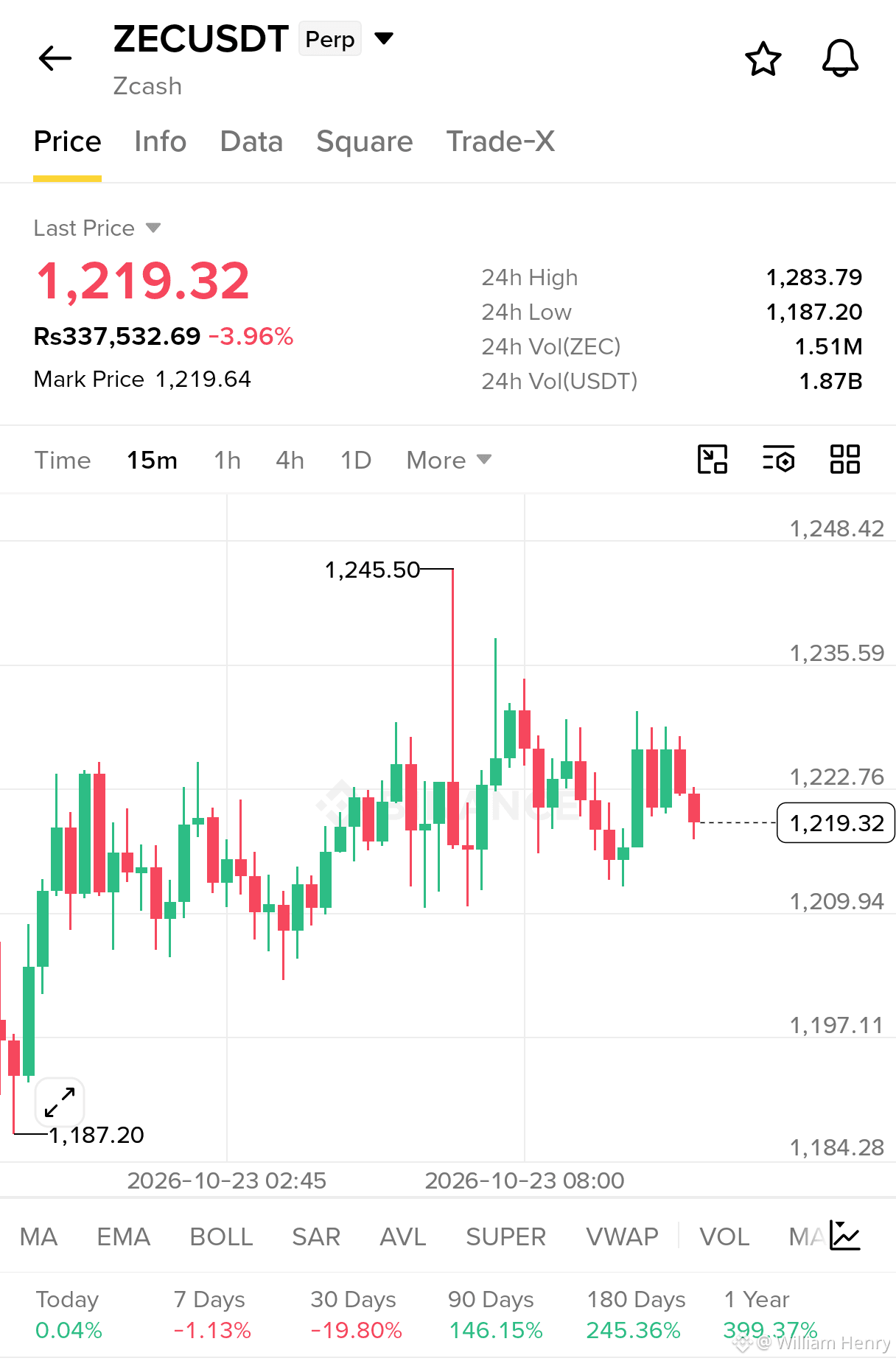
$ZEC is facing a key battle after pulling back from $1,245.50! Trading at $1,219.32, down 3.96%, ZEC is holding above the recent low of $1,187.20. On the 15m chart, volatility is high, and buyers need to reclaim $1,222–$1,228 to regain momentum.
Trade Setup
Entry Zone: $1,210–$1,220
Target 1: $1,228
Target 2: $1,235
Target 3: $1,245
Stop Loss: $1,205
A breakout above $1,228 could open the way toward $1,245, while losing $1,205 may bring renewed selling pressure. Watch volume and confirm the breakout before entering. Let's go $ZEC
{future}(ZECUSDT)
#BinancePick
$ZEC is facing a key battle after pulling back from $1,245.50! Trading at $1,219.32, down 3.96%, ZEC is holding above the recent low of $1,187.20. On the 15m chart, volatility is high, and buyers need to reclaim $1,222–$1,228 to regain momentum.
Trade Setup
Entry Zone: $1,210–$1,220
Target 1: $1,228
Target 2: $1,235
Target 3: $1,245
Stop Loss: $1,205
A breakout above $1,228 could open the way toward $1,245, while losing $1,205 may bring renewed selling pressure. Watch volume and confirm the breakout before entering. Let's go $ZEC
#BinancePick
Trade Setup
Entry Zone: $1,210–$1,220
Target 1: $1,228
Target 2: $1,235
Target 3: $1,245
Stop Loss: $1,205
A breakout above $1,228 could open the way toward $1,245, while losing $1,205 may bring renewed selling pressure. Watch volume and confirm the breakout before entering. Let's go $ZEC
#BinancePick
1
736
·
--
Bullish
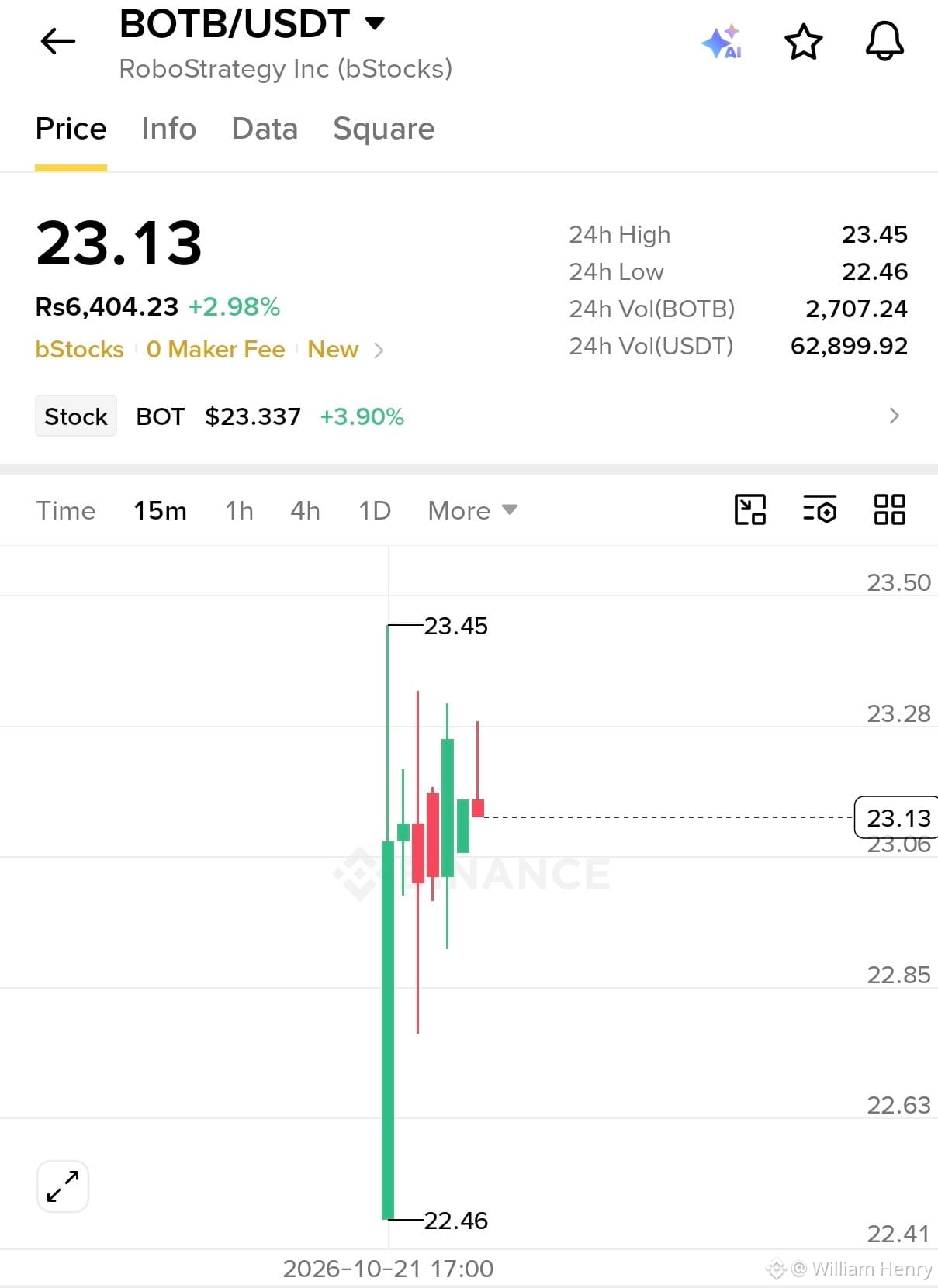
$BOTB is showing strong bullish momentum! Price surged from $22.46 to $23.45 and is now trading at $23.13, up +2.98%. Buyers are defending higher levels after a powerful 15-minute breakout!
Trade Setup
Entry Zone: $23.00–$23.10
Target 1: $23.28
Target 2: $23.45
Target 3: $23.60
Stop Loss: $22.85
A breakout above $23.45 could trigger another bullish leg. Watch volume and resistance closely, and manage risk. Bulls need to reclaim the high to keep the momentum alive! 🔥
{spot}(BOTBUSDT)
$BOTB is showing strong bullish momentum! Price surged from $22.46 to $23.45 and is now trading at $23.13, up +2.98%. Buyers are defending higher levels after a powerful 15-minute breakout!
Trade Setup
Entry Zone: $23.00–$23.10
Target 1: $23.28
Target 2: $23.45
Target 3: $23.60
Stop Loss: $22.85
A breakout above $23.45 could trigger another bullish leg. Watch volume and resistance closely, and manage risk. Bulls need to reclaim the high to keep the momentum alive! 🔥
Trade Setup
Entry Zone: $23.00–$23.10
Target 1: $23.28
Target 2: $23.45
Target 3: $23.60
Stop Loss: $22.85
A breakout above $23.45 could trigger another bullish leg. Watch volume and resistance closely, and manage risk. Bulls need to reclaim the high to keep the momentum alive! 🔥
1
11
6k
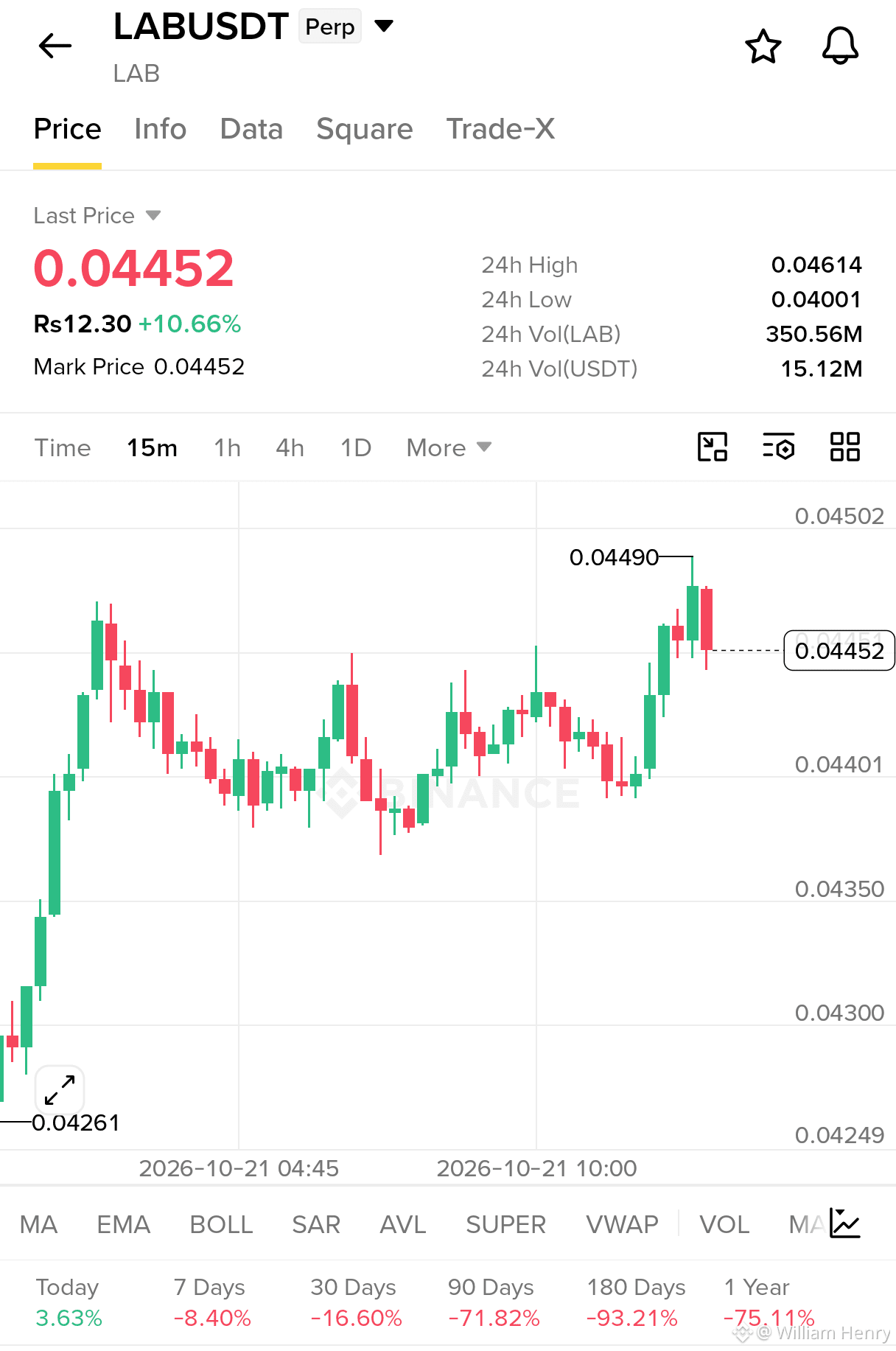
$LAB is showing powerful bullish momentum! 🔥 Price surged from 0.04261 to 0.04490, now trading at 0.04452 with a +10.66% gain in 24 hours. Buyers are stepping in strongly, and another breakout could push LAB higher!
Trade Setup
Entry Zone: 0.04410–0.04450
Target 1: 0.04490
Target 2: 0.04520
Target 3: 0.04614
Stop Loss: 0.04380
A breakout above 0.04490 could trigger the next bullish leg, while 0.04401 remains a key support to watch. Volume is active at 350.56M LAB. Stay alert for confirmation and manage risk carefully!
{future}(LABUSDT)
$LAB is showing powerful bullish momentum! 🔥 Price surged from 0.04261 to 0.04490, now trading at 0.04452 with a +10.66% gain in 24 hours. Buyers are stepping in strongly, and another breakout could push LAB higher!
Trade Setup
Entry Zone: 0.04410–0.04450
Target 1: 0.04490
Target 2: 0.04520
Target 3: 0.04614
Stop Loss: 0.04380
A breakout above 0.04490 could trigger the next bullish leg, while 0.04401 remains a key support to watch. Volume is active at 350.56M LAB. Stay alert for confirmation and manage risk carefully!
Trade Setup
Entry Zone: 0.04410–0.04450
Target 1: 0.04490
Target 2: 0.04520
Target 3: 0.04614
Stop Loss: 0.04380
A breakout above 0.04490 could trigger the next bullish leg, while 0.04401 remains a key support to watch. Volume is active at 350.56M LAB. Stay alert for confirmation and manage risk carefully!
1
2
945
·
--
Bullish
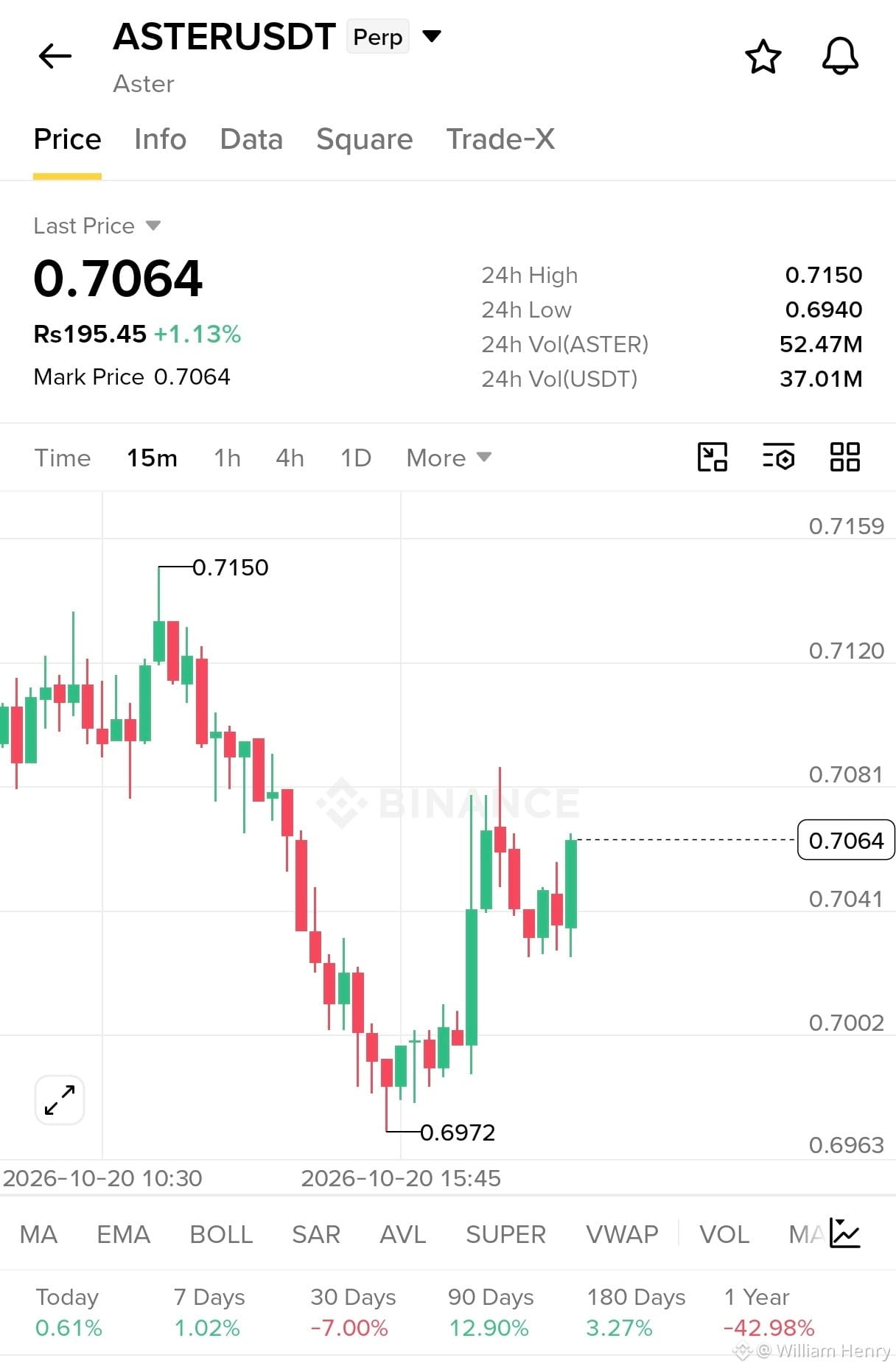
$ASTER is showing a strong recovery! 🚀 Trading at 0.7064 (+1.13%), price bounced from a low of 0.6972 and is pushing back toward resistance after a sharp dip.
Buyers are stepping in, but the next breakout will be key! 🔥
Trade Setup
Entry Zone: 0.7030 – 0.7065
Targets:
🎯 0.7081
🎯 0.7120
🎯 0.7150
Stop Loss: 0.6970
If $ASTER breaks above 0.7081 with strong volume, we could see a move toward 0.7120–0.7150. Watch support carefully and manage risk! 📈⚡
Let’s catch the next move!
{future}(ASTERUSDT)
$ASTER is showing a strong recovery! 🚀 Trading at 0.7064 (+1.13%), price bounced from a low of 0.6972 and is pushing back toward resistance after a sharp dip.
Buyers are stepping in, but the next breakout will be key! 🔥
Trade Setup
Entry Zone: 0.7030 – 0.7065
Targets:
🎯 0.7081
🎯 0.7120
🎯 0.7150
Stop Loss: 0.6970
If $ASTER breaks above 0.7081 with strong volume, we could see a move toward 0.7120–0.7150. Watch support carefully and manage risk! 📈⚡
Let’s catch the next move!
Buyers are stepping in, but the next breakout will be key! 🔥
Trade Setup
Entry Zone: 0.7030 – 0.7065
Targets:
🎯 0.7081
🎯 0.7120
🎯 0.7150
Stop Loss: 0.6970
If $ASTER breaks above 0.7081 with strong volume, we could see a move toward 0.7120–0.7150. Watch support carefully and manage risk! 📈⚡
Let’s catch the next move!
1
477
·
--
Bullish
$KITE and the agent economy.
The interesting question around Kite is not whether AI agents will transact, but who gets to control the money when they do. The market tends to focus on autonomous agents and machine-to-machine payments, but the more consequential problem is delegated authority. An agent that can act independently is useful; an agent that can spend without clearly defined boundaries is a liability.
One detail in Kite’s design stands out: Agent Passport spending sessions enforce owner-approved budgets, transaction limits, and permitted scopes. This matters more than another integration announcement because it addresses the point where autonomy becomes commercially risky: the moment money actually moves. The documentation also describes server-side enforcement at the funding stage, rather than relying solely on the agent’s own software to behave correctly.
That is a more defensible starting point than simply building payment rails and hoping demand follows. If businesses eventually allow agents to purchase services, access paid APIs, and execute workflows without human approval at every step, permission management could become a persistent infrastructure requirement.
Still, a sensible design is not proof of a durable network. Kite must demonstrate that developers adopt these controls because they solve real operational problems, not merely because they are available. It also needs to show that transaction activity creates meaningful economic value for the network and its token, rather than just generating activity around incentives.
My view is that Kite’s strongest thesis is controlled financial autonomy, not the broader agent-economy narrative. The next signal worth watching is repeat usage from real applications, followed by evidence of sustainable fee generation. Without those, the infrastructure story remains promising, but unproven.
@GoKiteAI $KITE #KiteBBW
$KITE and the agent economy.
The interesting question around Kite is not whether AI agents will transact, but who gets to control the money when they do. The market tends to focus on autonomous agents and machine-to-machine payments, but the more consequential problem is delegated authority. An agent that can act independently is useful; an agent that can spend without clearly defined boundaries is a liability.
One detail in Kite’s design stands out: Agent Passport spending sessions enforce owner-approved budgets, transaction limits, and permitted scopes. This matters more than another integration announcement because it addresses the point where autonomy becomes commercially risky: the moment money actually moves. The documentation also describes server-side enforcement at the funding stage, rather than relying solely on the agent’s own software to behave correctly.
That is a more defensible starting point than simply building payment rails and hoping demand follows. If businesses eventually allow agents to purchase services, access paid APIs, and execute workflows without human approval at every step, permission management could become a persistent infrastructure requirement.
Still, a sensible design is not proof of a durable network. Kite must demonstrate that developers adopt these controls because they solve real operational problems, not merely because they are available. It also needs to show that transaction activity creates meaningful economic value for the network and its token, rather than just generating activity around incentives.
My view is that Kite’s strongest thesis is controlled financial autonomy, not the broader agent-economy narrative. The next signal worth watching is repeat usage from real applications, followed by evidence of sustainable fee generation. Without those, the infrastructure story remains promising, but unproven.
@KITE AI 中文 $KITE #KiteBBW
The interesting question around Kite is not whether AI agents will transact, but who gets to control the money when they do. The market tends to focus on autonomous agents and machine-to-machine payments, but the more consequential problem is delegated authority. An agent that can act independently is useful; an agent that can spend without clearly defined boundaries is a liability.
One detail in Kite’s design stands out: Agent Passport spending sessions enforce owner-approved budgets, transaction limits, and permitted scopes. This matters more than another integration announcement because it addresses the point where autonomy becomes commercially risky: the moment money actually moves. The documentation also describes server-side enforcement at the funding stage, rather than relying solely on the agent’s own software to behave correctly.
That is a more defensible starting point than simply building payment rails and hoping demand follows. If businesses eventually allow agents to purchase services, access paid APIs, and execute workflows without human approval at every step, permission management could become a persistent infrastructure requirement.
Still, a sensible design is not proof of a durable network. Kite must demonstrate that developers adopt these controls because they solve real operational problems, not merely because they are available. It also needs to show that transaction activity creates meaningful economic value for the network and its token, rather than just generating activity around incentives.
My view is that Kite’s strongest thesis is controlled financial autonomy, not the broader agent-economy narrative. The next signal worth watching is repeat usage from real applications, followed by evidence of sustainable fee generation. Without those, the infrastructure story remains promising, but unproven.
@KITE AI 中文 $KITE #KiteBBW
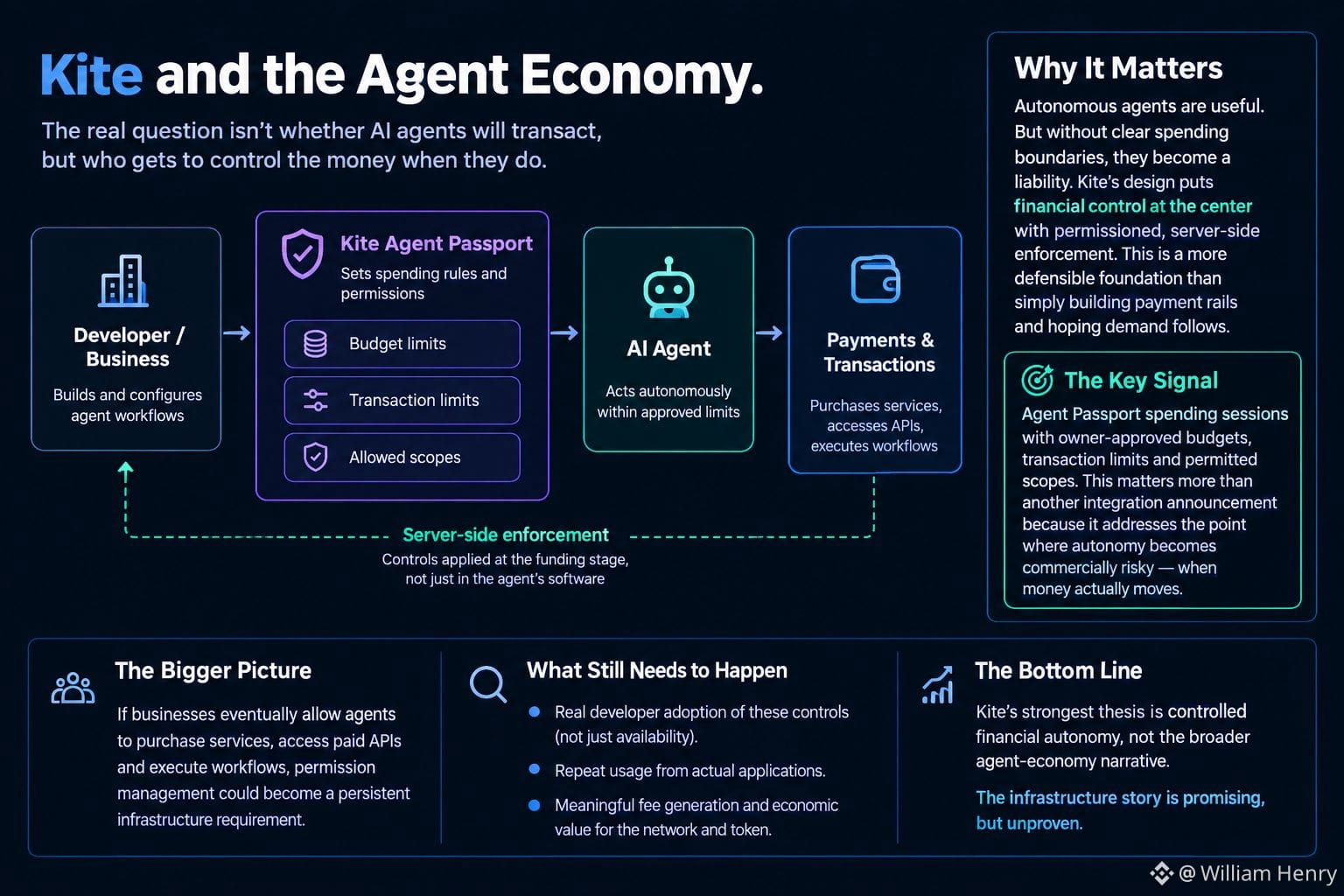
3
423
·
--
Bullish
$ZEC is showing powerful bullish momentum! Price surged from 1,048.09 to 1,190.94, now trading at 1,180.17 with a +3.01% gain. Buyers are pushing strong, and another breakout could send ZEC higher!
Trade Setup
Entry Zone: 1,170 – 1,180
Target 1: 1,195
Target 2: 1,210
Target 3: 1,230
Stop Loss: 1,155
A breakout above 1,190.94 could trigger the next bullish leg. Watch resistance closely and manage risk.
Let’s go $ZEC
{future}(ZECUSDT)
$ZEC is showing powerful bullish momentum! Price surged from 1,048.09 to 1,190.94, now trading at 1,180.17 with a +3.01% gain. Buyers are pushing strong, and another breakout could send ZEC higher!
Trade Setup
Entry Zone: 1,170 – 1,180
Target 1: 1,195
Target 2: 1,210
Target 3: 1,230
Stop Loss: 1,155
A breakout above 1,190.94 could trigger the next bullish leg. Watch resistance closely and manage risk.
Let’s go $ZEC
Trade Setup
Entry Zone: 1,170 – 1,180
Target 1: 1,195
Target 2: 1,210
Target 3: 1,230
Stop Loss: 1,155
A breakout above 1,190.94 could trigger the next bullish leg. Watch resistance closely and manage risk.
Let’s go $ZEC
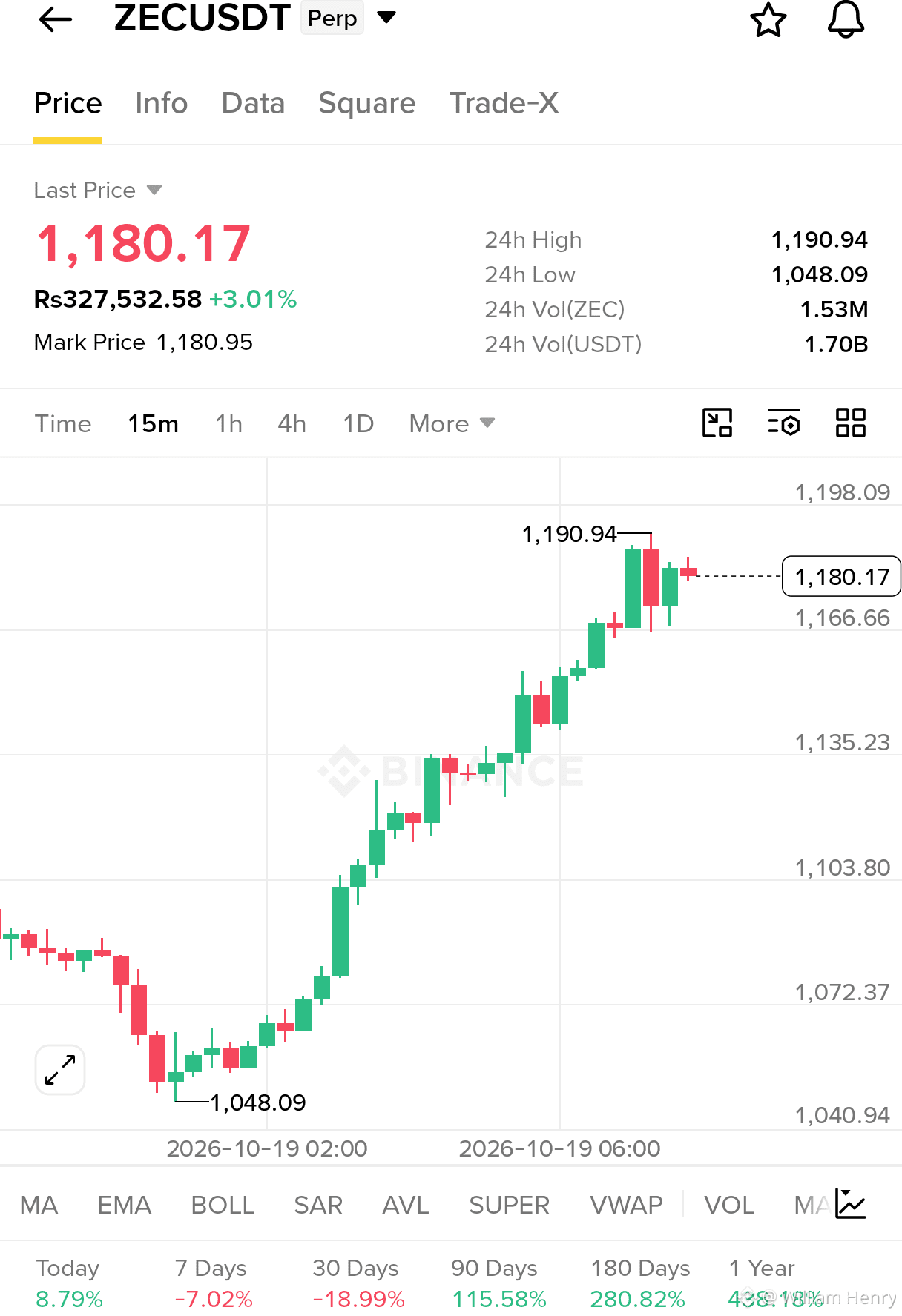
2
249
$LAB — BEARS IN CONTROL, BUT A BOUNCE IS BREWING!
Current Price: 0.04329 USDT
24H Change: -4.63%
24H High: 0.04595
24H Low: 0.04289
24H Volume: 119.44M LAB | 5.30M USDT
15M Trend: Bearish pressure with a small recovery from the 0.04289 support zone.
Support: 0.04289
Resistance: 0.04354 / 0.04391
Bullish Breakout: Above 0.04391
Bearish Breakdown: Below 0.04289
Watch the support closely! A breakout could spark momentum, but another rejection may trigger fresh downside.
Trade smart, manage risk, and wait for confirmation.
Let's go $LAB
{future}(LABUSDT)
#GrayscaleAndRepublicLaunchThreeCryptoFunds
$LAB — BEARS IN CONTROL, BUT A BOUNCE IS BREWING!
Current Price: 0.04329 USDT
24H Change: -4.63%
24H High: 0.04595
24H Low: 0.04289
24H Volume: 119.44M LAB | 5.30M USDT
15M Trend: Bearish pressure with a small recovery from the 0.04289 support zone.
Support: 0.04289
Resistance: 0.04354 / 0.04391
Bullish Breakout: Above 0.04391
Bearish Breakdown: Below 0.04289
Watch the support closely! A breakout could spark momentum, but another rejection may trigger fresh downside.
Trade smart, manage risk, and wait for confirmation.
Let's go $LAB
#GrayscaleAndRepublicLaunchThreeCryptoFunds
Current Price: 0.04329 USDT
24H Change: -4.63%
24H High: 0.04595
24H Low: 0.04289
24H Volume: 119.44M LAB | 5.30M USDT
15M Trend: Bearish pressure with a small recovery from the 0.04289 support zone.
Support: 0.04289
Resistance: 0.04354 / 0.04391
Bullish Breakout: Above 0.04391
Bearish Breakdown: Below 0.04289
Watch the support closely! A breakout could spark momentum, but another rejection may trigger fresh downside.
Trade smart, manage risk, and wait for confirmation.
Let's go $LAB
#GrayscaleAndRepublicLaunchThreeCryptoFunds
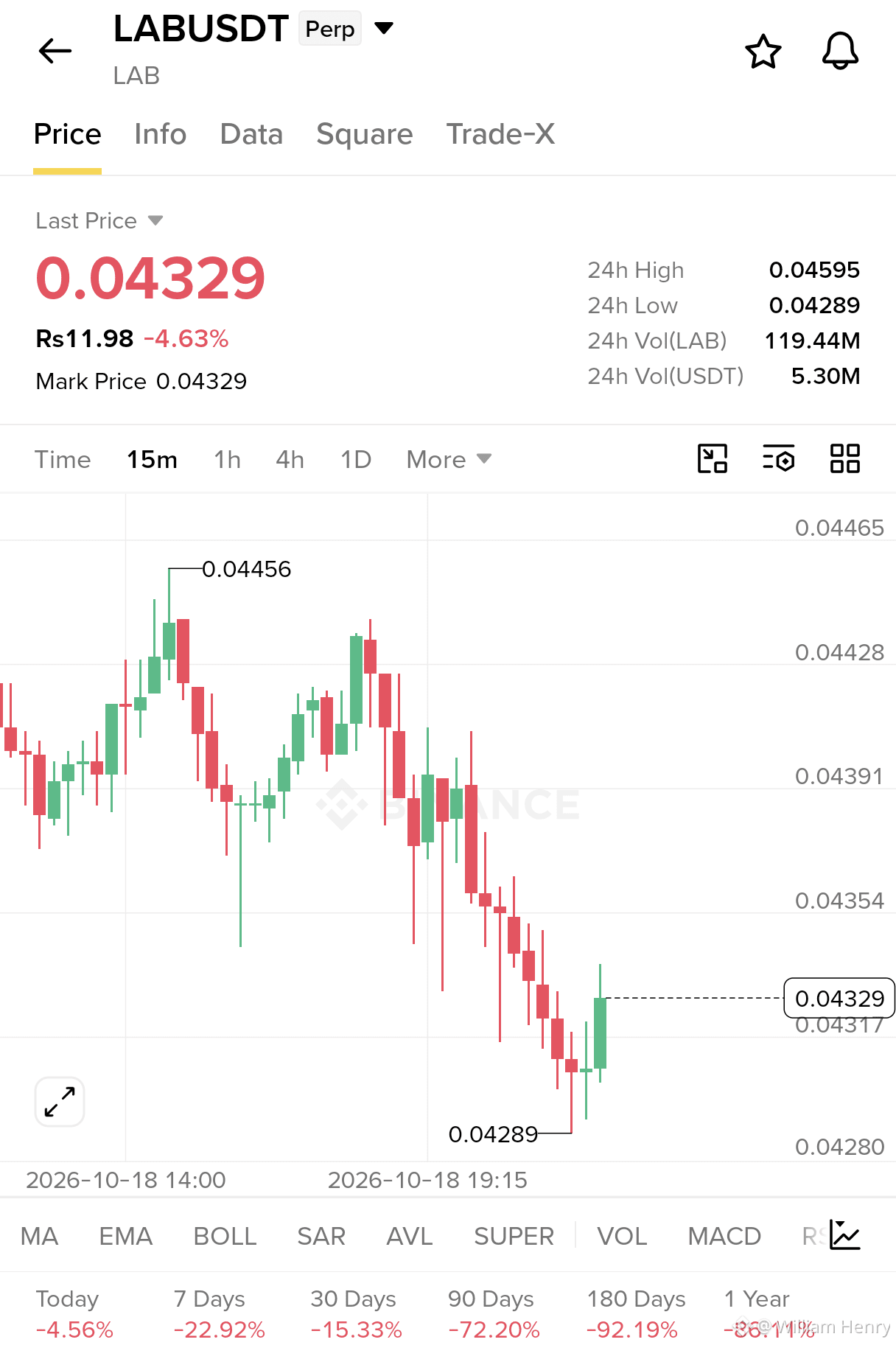
1
909
$BNB READY TO BREAK OUT? BULLS ARE FIGHTING BACK!
BNB: $720.18
24H High: $723.27 | Low: $710.15
Resistance: $723.27
Support: $718.04 / $715.19
Breakout Target: $725–$728
Downside Risk: $712–$710
24H Volume: $51.26M
SIGNAL: Bullish above $723.27 after a confirmed breakout; below $718, watch for weakness. Wait for candle confirmation and manage risk!
LET'S GO $BNB
{future}(BNBUSDT)
$BNB READY TO BREAK OUT? BULLS ARE FIGHTING BACK!
BNB: $720.18
24H High: $723.27 | Low: $710.15
Resistance: $723.27
Support: $718.04 / $715.19
Breakout Target: $725–$728
Downside Risk: $712–$710
24H Volume: $51.26M
SIGNAL: Bullish above $723.27 after a confirmed breakout; below $718, watch for weakness. Wait for candle confirmation and manage risk!
LET'S GO $BNB
BNB: $720.18
24H High: $723.27 | Low: $710.15
Resistance: $723.27
Support: $718.04 / $715.19
Breakout Target: $725–$728
Downside Risk: $712–$710
24H Volume: $51.26M
SIGNAL: Bullish above $723.27 after a confirmed breakout; below $718, watch for weakness. Wait for candle confirmation and manage risk!
LET'S GO $BNB
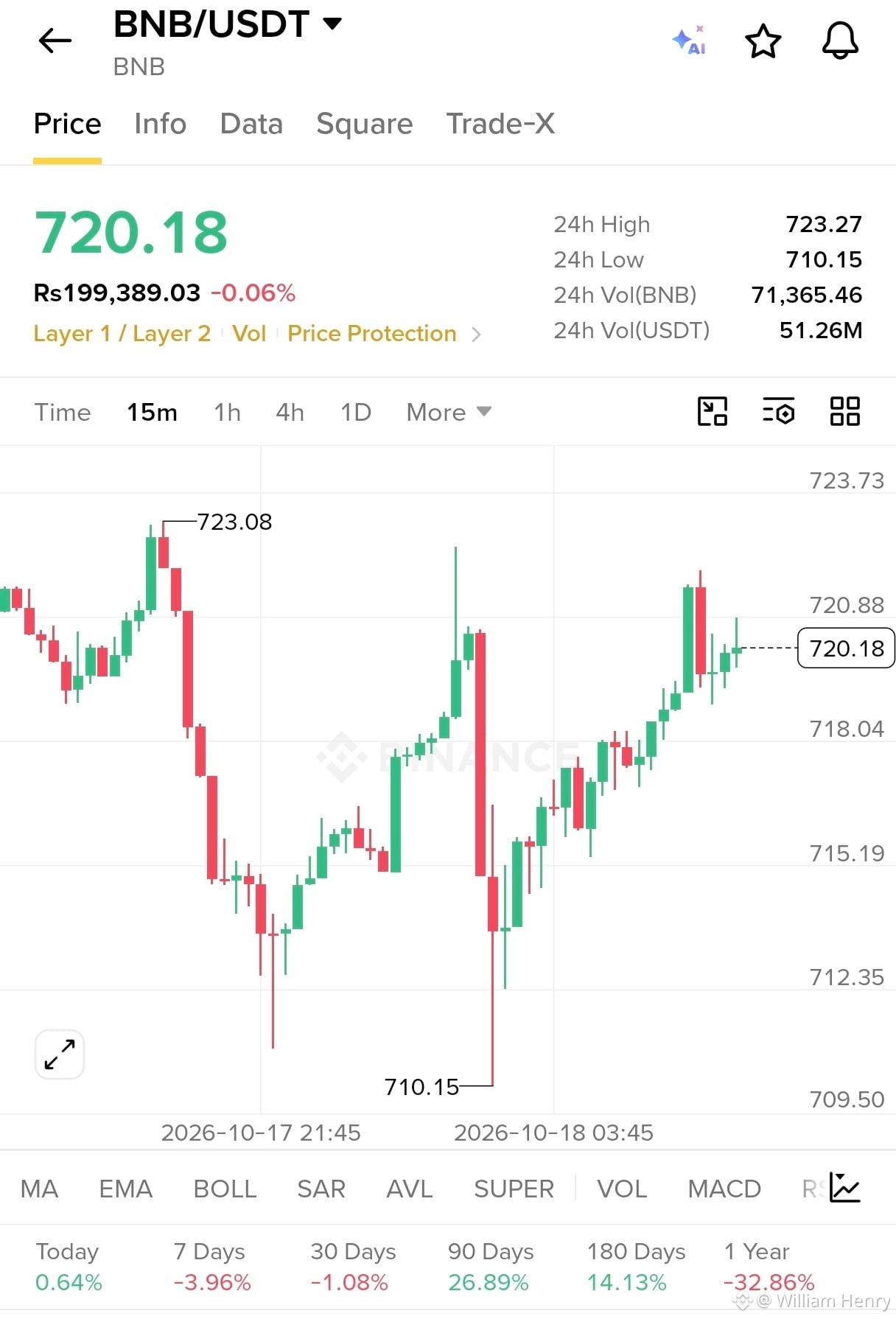
1
2
448
$ZEC is facing heavy selling pressure! Price is near $1,123 after a sharp drop from $1,184, with $1,111 as the key support to watch.
Support: $1,111
Resistance: $1,140–$1,156
A break below support could bring more downside, while a strong bounce may trigger a short-term recovery. Watch the next candles closely!
Let's go $ZEC
{future}(ZECUSDT)
$ZEC is facing heavy selling pressure! Price is near $1,123 after a sharp drop from $1,184, with $1,111 as the key support to watch.
Support: $1,111
Resistance: $1,140–$1,156
A break below support could bring more downside, while a strong bounce may trigger a short-term recovery. Watch the next candles closely!
Let's go $ZEC
Support: $1,111
Resistance: $1,140–$1,156
A break below support could bring more downside, while a strong bounce may trigger a short-term recovery. Watch the next candles closely!
Let's go $ZEC
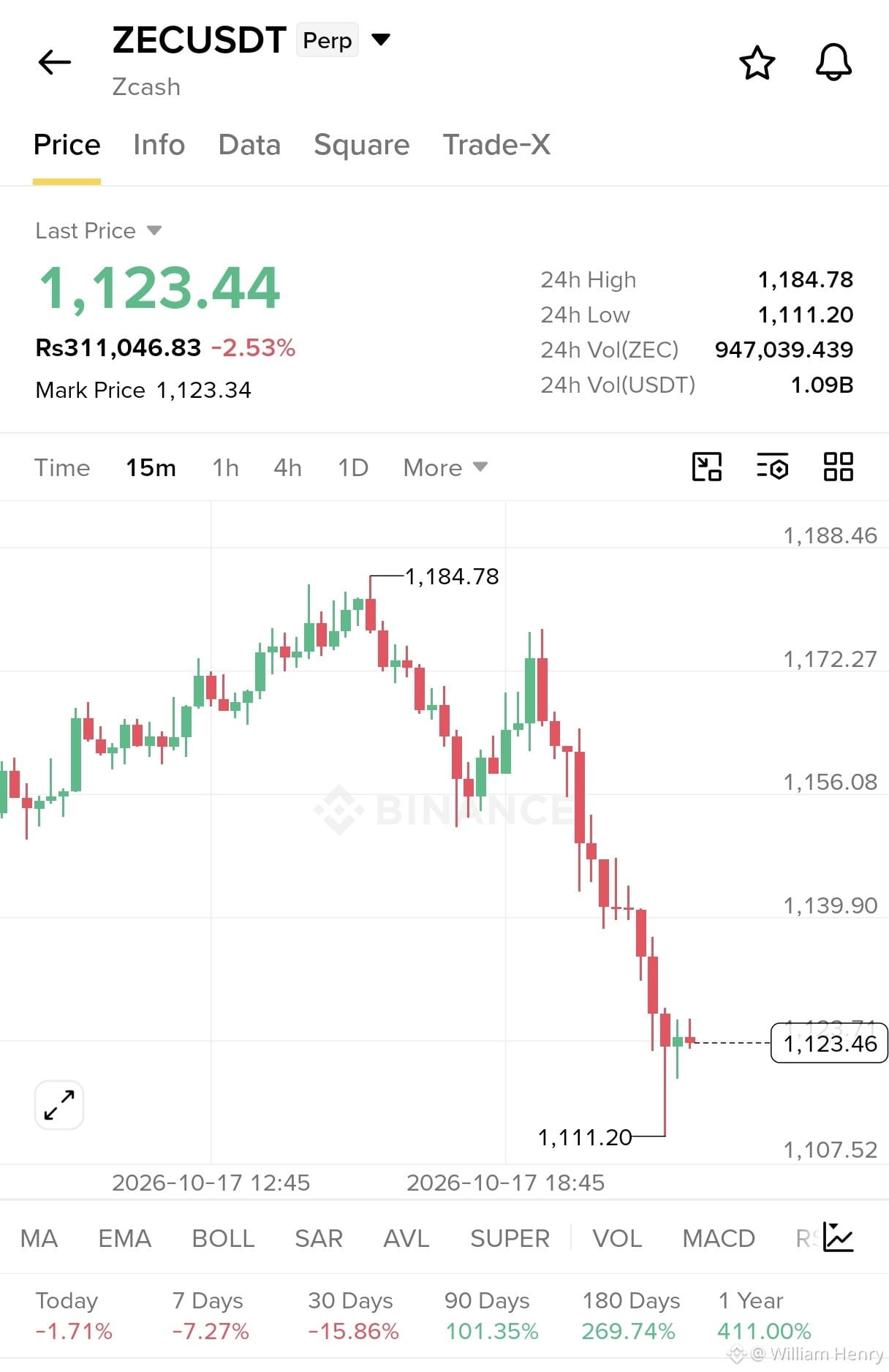
1
729
·
--
Bullish
$SPACE just blasted to 0.003990, up over +0.23% in a single day! From a low near 0.003809, it shot up to 0.003990 before cooling off slightly. Strong bullish candles with high volume show intense momentum — buyers are clearly in control.
Trade Setup 📊
• Entry Zone: 0.003915 – 0.003935
• Target 1 🎯: 0.003960
• Target 2 🎯: 0.003990
• Target 3 🎯: 0.004050
• Stop Loss: 0.003890
If $SPACE breaks above 0.003990 with volume, expect another explosive rally — momentum could push it deep into double digits fast.
Let’s go $SPACE
{future}(SPACEUSDT)
$SPACE just blasted to 0.003990, up over +0.23% in a single day! From a low near 0.003809, it shot up to 0.003990 before cooling off slightly. Strong bullish candles with high volume show intense momentum — buyers are clearly in control.
Trade Setup 📊
• Entry Zone: 0.003915 – 0.003935
• Target 1 🎯: 0.003960
• Target 2 🎯: 0.003990
• Target 3 🎯: 0.004050
• Stop Loss: 0.003890
If $SPACE breaks above 0.003990 with volume, expect another explosive rally — momentum could push it deep into double digits fast.
Let’s go $SPACE
Trade Setup 📊
• Entry Zone: 0.003915 – 0.003935
• Target 1 🎯: 0.003960
• Target 2 🎯: 0.003990
• Target 3 🎯: 0.004050
• Stop Loss: 0.003890
If $SPACE breaks above 0.003990 with volume, expect another explosive rally — momentum could push it deep into double digits fast.
Let’s go $SPACE
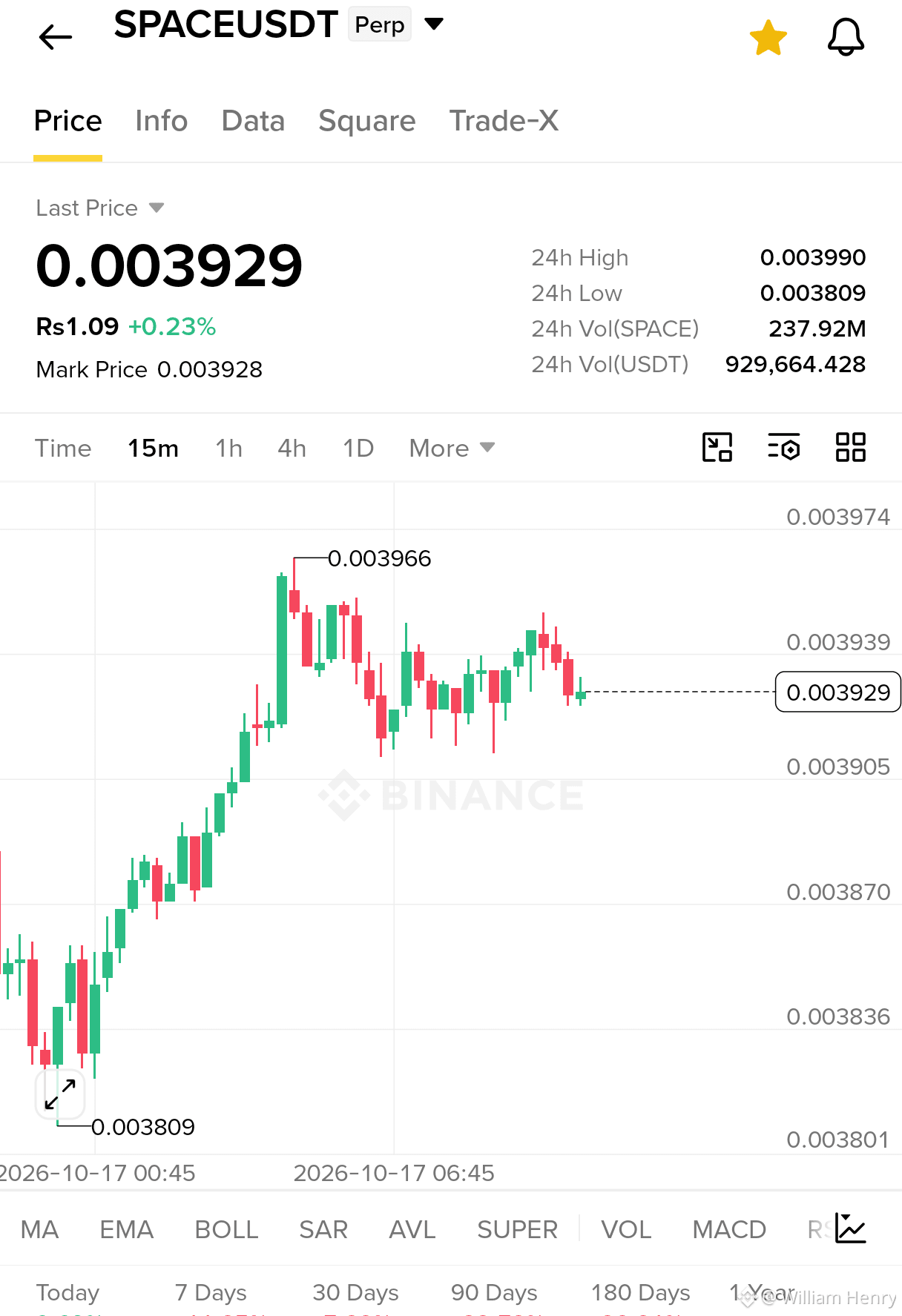
1
718
·
--
Bullish
Nillion is one of those projects I think the market might be looking at from the wrong angle. The interesting part isn’t just privacy, but whether it can become something developers genuinely rely on as AI agents start handling more sensitive data. That’s a real problem, but solving it technically is only half the battle. Getting people to actually use and pay for the solution is where things get interesting.
One thing that caught my attention is Blacklight and its focus on independent verification. For a project built around handling sensitive workloads, trust needs to come from more than promises. Giving the community a way to verify what’s happening feels like a meaningful step, even if it’s still early.
I’m also cautious about reading too much into user numbers or activity alone. A network can attract attention without creating lasting demand. What matters more is whether developers keep building on it when incentives aren’t the main reason to stay.
I can see why Nillion ’s approach could matter as AI becomes more connected to real financial and personal data. But I don’t think the market has enough evidence yet to say it will become essential infrastructure.
For me, the real signal to watch is simple: do people keep coming back because they need what Nillion offers, or because the project is getting attention right now? That difference will tell us a lot more than the narrative ever could.
#nil $NIL @nillionnetwork #NIL
Nillion is one of those projects I think the market might be looking at from the wrong angle. The interesting part isn’t just privacy, but whether it can become something developers genuinely rely on as AI agents start handling more sensitive data. That’s a real problem, but solving it technically is only half the battle. Getting people to actually use and pay for the solution is where things get interesting.
One thing that caught my attention is Blacklight and its focus on independent verification. For a project built around handling sensitive workloads, trust needs to come from more than promises. Giving the community a way to verify what’s happening feels like a meaningful step, even if it’s still early.
I’m also cautious about reading too much into user numbers or activity alone. A network can attract attention without creating lasting demand. What matters more is whether developers keep building on it when incentives aren’t the main reason to stay.
I can see why Nillion ’s approach could matter as AI becomes more connected to real financial and personal data. But I don’t think the market has enough evidence yet to say it will become essential infrastructure.
For me, the real signal to watch is simple: do people keep coming back because they need what Nillion offers, or because the project is getting attention right now? That difference will tell us a lot more than the narrative ever could.
#nil $NIL @Nillion #NIL
One thing that caught my attention is Blacklight and its focus on independent verification. For a project built around handling sensitive workloads, trust needs to come from more than promises. Giving the community a way to verify what’s happening feels like a meaningful step, even if it’s still early.
I’m also cautious about reading too much into user numbers or activity alone. A network can attract attention without creating lasting demand. What matters more is whether developers keep building on it when incentives aren’t the main reason to stay.
I can see why Nillion ’s approach could matter as AI becomes more connected to real financial and personal data. But I don’t think the market has enough evidence yet to say it will become essential infrastructure.
For me, the real signal to watch is simple: do people keep coming back because they need what Nillion offers, or because the project is getting attention right now? That difference will tell us a lot more than the narrative ever could.
#nil $NIL @Nillion #NIL

2
4
364
🚨 TRUMP SENDS A STRONG MESSAGE TO IRAN!
🇺🇸 Trump declares the Iran war will end “VERY SOON,” adding that it will end whenever he wants! His remarks have reignited global debate as tensions remain high and the world watches what happens next.
🌍 Will peace come soon, or will tensions escalate further? All eyes on the US and Iran!
$TRUMP
{future}(TRUMPUSDT)
#WarshPushesToScaleBackForwardGuidanceAndDotPlot #EtherTook60%OfCryptoLiquidations #BlackRockCryptoAssetsJump63% #CPIWatch
🚨 TRUMP SENDS A STRONG MESSAGE TO IRAN!
🇺🇸 Trump declares the Iran war will end “VERY SOON,” adding that it will end whenever he wants! His remarks have reignited global debate as tensions remain high and the world watches what happens next.
🌍 Will peace come soon, or will tensions escalate further? All eyes on the US and Iran!
$TRUMP
#WarshPushesToScaleBackForwardGuidanceAndDotPlot #EtherTook60%OfCryptoLiquidations #BlackRockCryptoAssetsJump63% #CPIWatch
🇺🇸 Trump declares the Iran war will end “VERY SOON,” adding that it will end whenever he wants! His remarks have reignited global debate as tensions remain high and the world watches what happens next.
🌍 Will peace come soon, or will tensions escalate further? All eyes on the US and Iran!
$TRUMP
#WarshPushesToScaleBackForwardGuidanceAndDotPlot #EtherTook60%OfCryptoLiquidations #BlackRockCryptoAssetsJump63% #CPIWatch

1
1k
$BTW is fighting back after a sharp correction! Currently near $1.90, down over -19.53% in 24 hours. From a low near $1.87, it reached $2.42 before cooling off slightly. A small rebound is emerging, but buyers need to reclaim key resistance to confirm bullish momentum.
Trade Setup 📊
• Entry Zone: $1.87 – $1.92
• Target 1 🎯: $2.00
• Target 2 🎯: $2.15
• Target 3 🎯: $2.42
• Stop Loss: $1.82
If $BTW breaks above $2.00 with volume, expect a potential recovery rally — momentum could push it toward higher resistance levels fast.
Let’s go $BTW
{future}(BTWUSDT)
#WarshPushesToScaleBackForwardGuidanceAndDotPlot
$BTW is fighting back after a sharp correction! Currently near $1.90, down over -19.53% in 24 hours. From a low near $1.87, it reached $2.42 before cooling off slightly. A small rebound is emerging, but buyers need to reclaim key resistance to confirm bullish momentum.
Trade Setup 📊
• Entry Zone: $1.87 – $1.92
• Target 1 🎯: $2.00
• Target 2 🎯: $2.15
• Target 3 🎯: $2.42
• Stop Loss: $1.82
If $BTW breaks above $2.00 with volume, expect a potential recovery rally — momentum could push it toward higher resistance levels fast.
Let’s go $BTW
#WarshPushesToScaleBackForwardGuidanceAndDotPlot
Trade Setup 📊
• Entry Zone: $1.87 – $1.92
• Target 1 🎯: $2.00
• Target 2 🎯: $2.15
• Target 3 🎯: $2.42
• Stop Loss: $1.82
If $BTW breaks above $2.00 with volume, expect a potential recovery rally — momentum could push it toward higher resistance levels fast.
Let’s go $BTW
#WarshPushesToScaleBackForwardGuidanceAndDotPlot
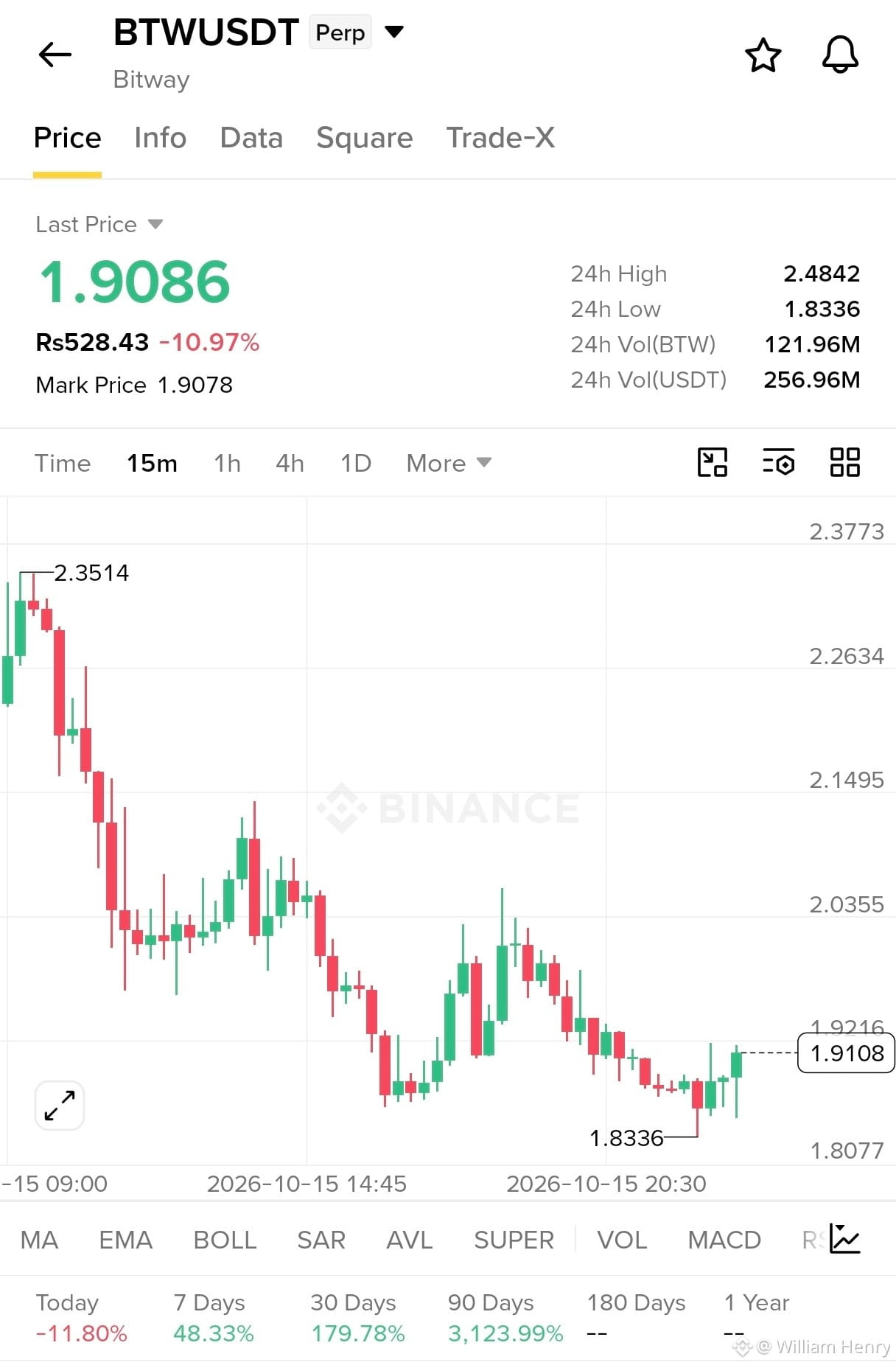
2
604
Log in to explore more content
Join global crypto users on Binance Square
⚡️ Get latest and useful information about crypto.
💬 Trusted by the world’s largest crypto exchange.
👍 Discover real insights from verified creators.
Email / Phone number